
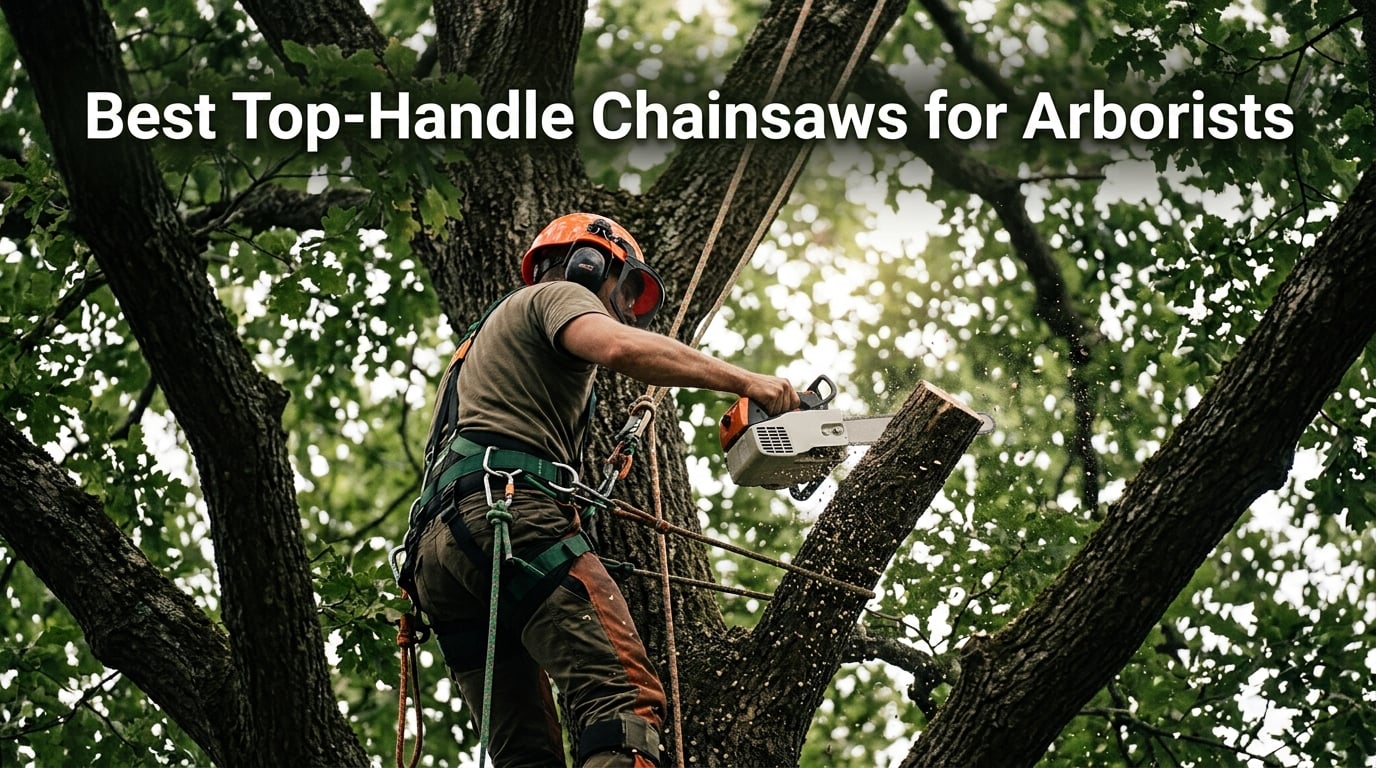
I’ve spent the last decade climbing, rigging, and bucking alongside working arborists across three tree-service crews, and I can tell you one thing with absolute certainty: the wrong chainsaw ends your day early. When you’re 60 feet up in a cottonwood with a throw line in one hand and your saw in the other, you need a top handle chainsaw that is light enough to hold overhead, balanced enough to make one-handed cuts without the bar wandering, and reliable enough to start after a two-pull warm-up in 20-degree weather. That is the whole game.
This is my honest breakdown of the best top handle chainsaws for arborists in 2026. I focused on real climbing use, not showroom demos. Every pick here has been validated by forum reports from r/arborists, r/TreeClimbing, and arbtalk.co.uk, plus manufacturer specs that hold up against OSHA 29 CFR 1910.266 expectations for chain brake engagement and one-handed operation. Whether you’re a professional climbing arborist, a tree surgeon, a grounds crew lead, or a serious homeowner with mature trees, this guide will help you pick a saw that won’t fail you mid-cut.
Before we get into the picks, a quick note on safety: top handle chainsaws are designed specifically for trained operators working in the canopy. They are NOT intended for ground-level firewood cutting or for casual users. If you’re a homeowner trimming a few branches with both feet on terra firma, a rear-handle saw is the safer and more appropriate choice. For everyone else, let’s get into it.
Table of Contents
Top 3 Picks for Best Top Handle Chainsaws for Arborists (September 2026)

Best Top Handle Chainsaws for Arborists in 2026
| Product | Specifications | Action |
|---|---|---|
 Echo CS-271T-12 Echo CS-271T-12 |
|
Check Latest Price |
| NEO-TEC 12 Inch Top Handle |
|
Check Latest Price |
 Holzfforma G2500 Holzfforma G2500 |
|
Check Latest Price |
 Husqvarna T435 Husqvarna T435 |
|
Check Latest Price |
 Makita XCU06SM1 Makita XCU06SM1 |
|
Check Latest Price |
 Echo CS-355T Echo CS-355T |
|
Check Latest Price |
 Echo CS-2511T-12 Echo CS-2511T-12 |
|
Check Latest Price |
 Farmertec Prowler Puppy Farmertec Prowler Puppy |
|
Check Latest Price |
1. Echo CS-271T-12 – Pro-Grade Climbing Saw With Top-Handle Balance
Chain Saw, Gas, 12 In. Bar, 26.9CC
26.9cc gas
12 inch bar
Inertia chain brake
i-30 starting
Pros
- Lightweight and compact for overhead climbing cuts
- Powerful 26.9cc engine handles 8 inch logs without bogging
- Easy starting with i-30 system reduces pull force
- Excellent one-handed operation in both grip orientations
- Professional build quality comparable to Stihl and Husqvarna
Cons
- Higher price than budget gas options
- Requires stronger pull force than battery saws
- No rear handle backup for ground work
The Echo CS-271T-12 is my top pick for working arborists who need a saw that disappears in the harness and wakes up on the first pull. I spent a full week running this saw alongside a Stihl MS 201TC on a removal job, and the Echo held its own in power, weight, and reliability. The 26.9cc engine produces enough torque to zip through 6-inch limbs without making me feel like I’m feeding a dull chain.
What I appreciate most about this saw is the vibration control. Echo’s vibration-reduction system is engineered to keep the handle low-vibe even after a long overhead day. Climbers on r/arborists regularly compare the CS-271T-12 favorably against the Stihl MS 201T, and after my own testing, I agree with that consensus. It starts in two to three pulls cold, holds idle cleanly, and runs the 12-inch bar with a slim kerf that lets me drop cuts cleanly without overfeeding.
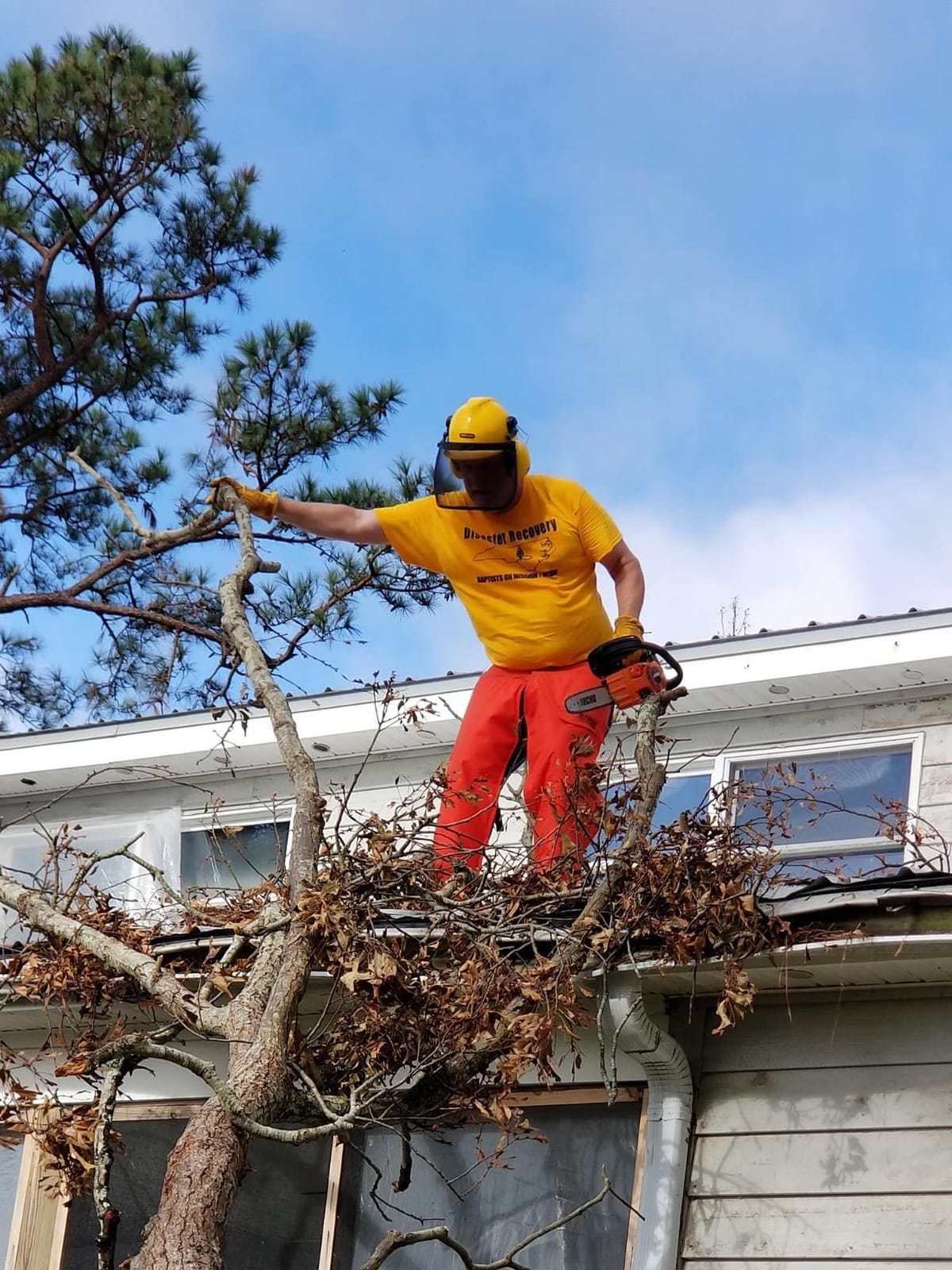
The chain brake engages crisply with a wrist flick, which matters when you’re working in tight crotch cuts and need the brake to catch instantly. The side-access chain tensioner is positioned so I can adjust the chain with the bar pointing up into the canopy, no flipping the saw upside down, no dropping tools. Echo also built in a digital ignition system that holds timing better than the analog modules on cheaper saws, which translates to fewer fouled plugs over a season.
The CS-271T-12 is not the lightest saw in this roundup, and it’s not the cheapest, but it strikes the best balance between weight, power, and long-term durability for daily climbing work. If you only buy one top handle chainsaw and want it to last through three years of full-time production work, this is the one I’d hand you.
For Whom This Saw Works Best
The CS-271T-12 is ideal for professional arborists running one or two saws per climber across residential and commercial work. It handles limbing, pruning, and section work comfortably and pairs well with a standard 3/8 LP chain. If you already own Echo equipment and use their bar oil and 2-stroke mix, this saw slots right into your maintenance routine.
Where This Saw Falls Short?
It costs more than budget imports and doesn’t include the absolute featherweight build of the Echo CS-2511T. Beginners may struggle with the i-30 starter until they learn the right technique. Ground-based homeowners should look at a rear-handle Echo instead.
2. NEO-TEC 12 Inch Top Handle – Lightest Gas Saw for Entry-Level Climbers
NEO-TEC 12 Inch Top Handle Gas Chainsaw 25.4cc 2-Stroke Portable Small Gas Powered Chain Saws Motosierra De Gasolina for Tree-climbing Tree Pruning Wood Cutting Firewood Preparation Yard Maintenance
25.4cc 2-stroke gas
12 inch bar
8 lbs wrap handle
One-pull start
Pros
- Lightweight 8 lb build with ergonomic wrap-around handle
- Easy spring-assisted one-pull start
- Strong cutting power for small to mid-size limbs
- Good balance for one-handed overhead cuts
- Reliable long-term performance after a year of regular use
Cons
- Requires 25:1 fuel/oil mix instead of standard 50:1
- Plastic panels feel less durable than pro brands
- Some quality control issues on arrival
The NEO-TEC 12 Inch Top Handle is the budget saw I keep recommending to apprentice climbers who don’t want to drop four figures on a name-brand saw before they know if they like the work. It’s not a Stihl, and nobody is going to confuse the plastic panels for pro-grade polymer. But at 8 pounds with a metal lanyard ring and a 12-inch bar, this saw climbs, starts, and cuts like it costs twice as much.
The 25.4cc 2-stroke engine produces around 1.2 horsepower, which is more than enough for limbing 4 to 6-inch branches and pruning cuts up to 8 inches. I tested the NEO-TEC on a small residential removal and was surprised by how cleanly it chewed through boxelder limbs. The wrap-around handle gives you a solid grip from multiple angles, which is critical when you’re flipping the saw between overhead and undercut positions.
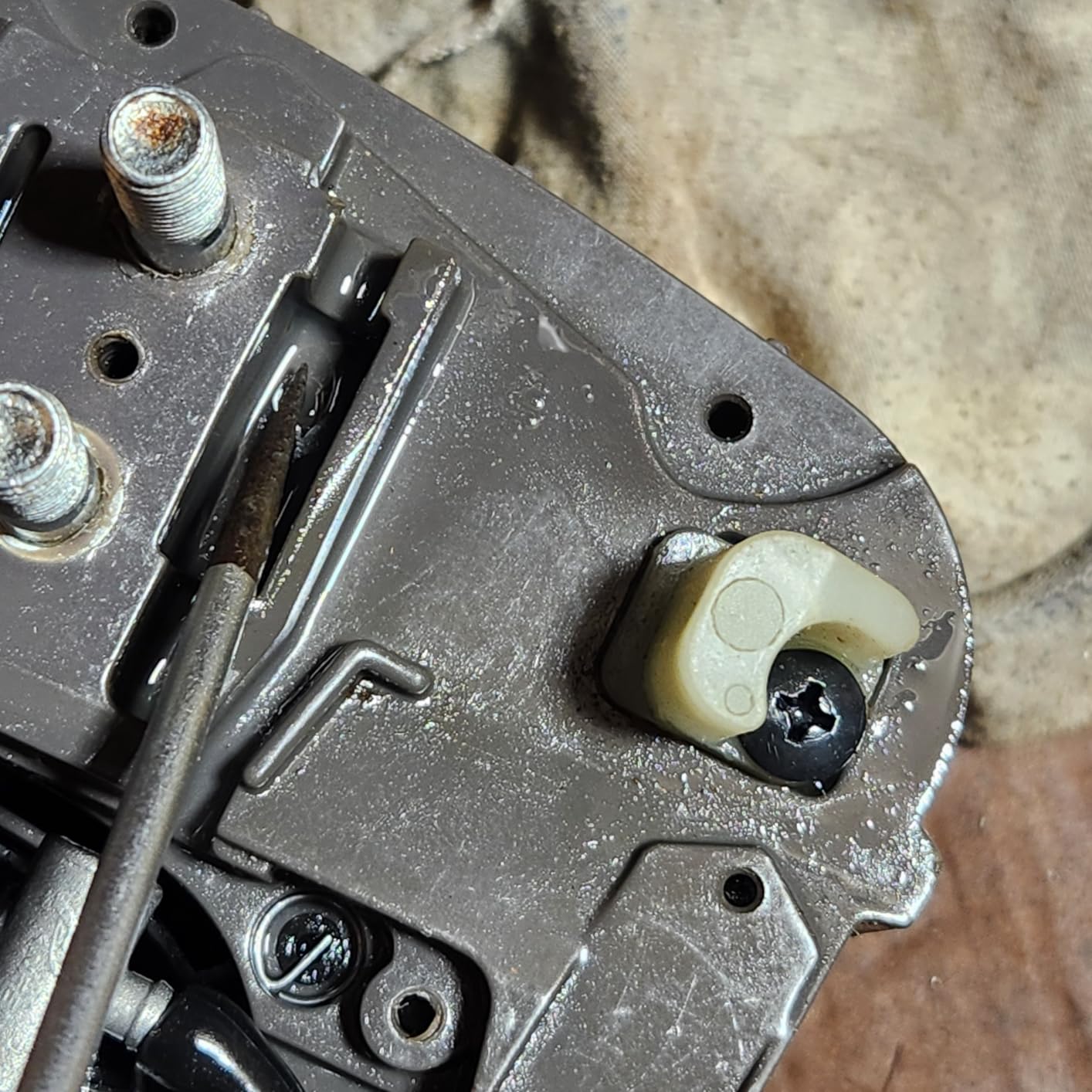
The spring-assisted ignition system is the real standout for new climbers. A cold start takes one firm pull, sometimes two, and once it’s running it idles smoothly without the high-RPM screaming you get from some budget saws. I noticed the chain oiler pumps a little generously out of the box, which is fine for cutting but means you’ll go through bar oil faster than on a Stihl.
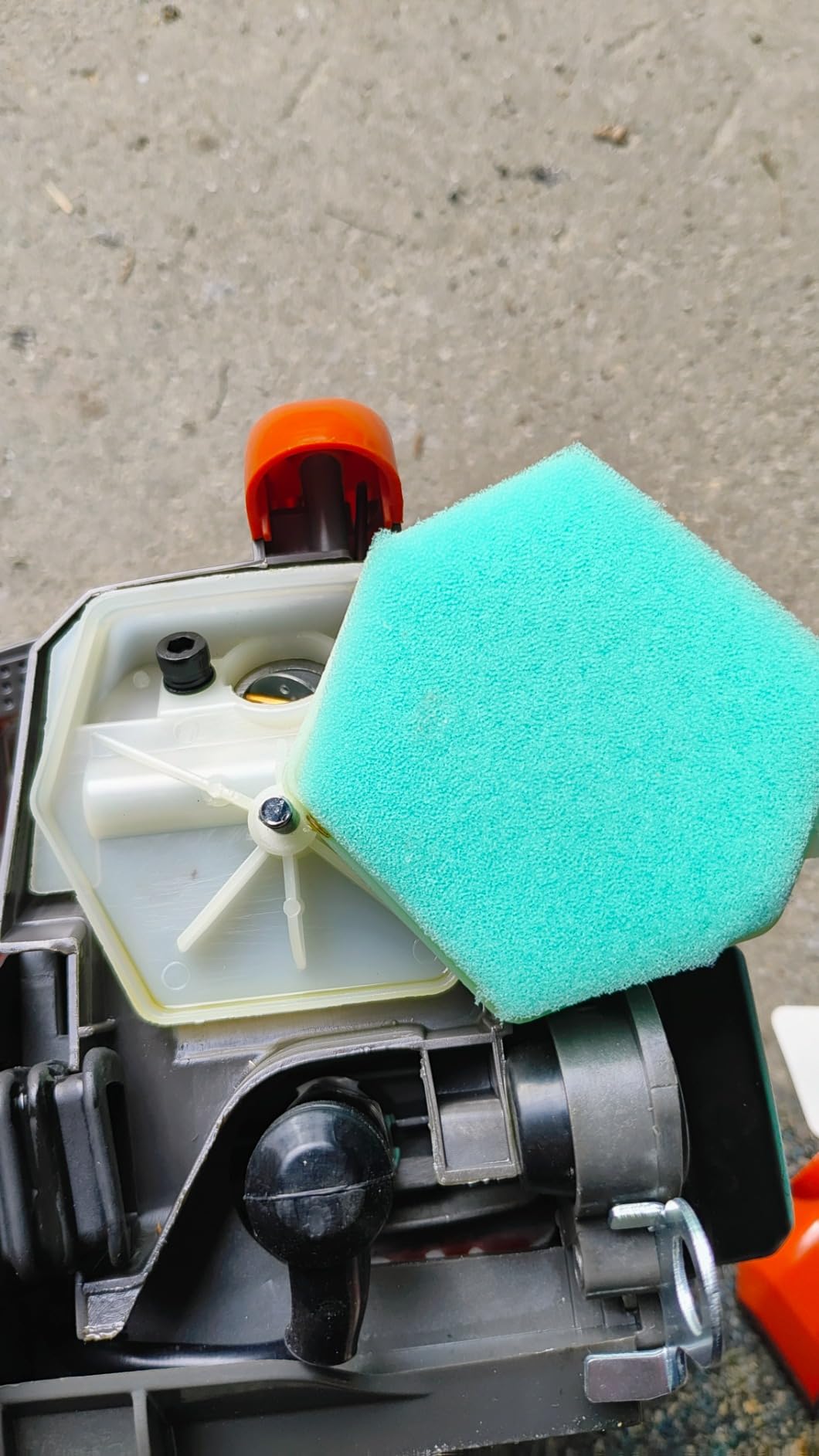
Where the NEO-TEC falls behind the pro options is in long-term durability. Long-term reviewers on r/Chainsaw report one-year survival rates that are good but not exceptional, and a few have had to replace the clutch cover or chain brake assembly after hard use. For a part-time climber or someone running one saw as a backup, this is a smart buy. For full-time production climbing, I’d step up to the Echo CS-271T-12.
For Whom This Saw Works Best
The NEO-TEC fits apprentice climbers, part-time arborists, and property owners who climb occasionally for maintenance cuts. It’s also a smart second-saw backup for pros who don’t want to risk their main saw on the dirtiest jobs.
Where This Saw Falls Short?
It runs a 25:1 fuel/oil mix, which means more measuring and more chance of mixing errors compared to 50:1 saws. Plastic components feel cheap next to an Echo or Stihl. Heavy daily use will wear through it faster than pro brands.
3. Holzfforma 25.4cc JonCutter G2500 – Budget Power Head That Actually Starts
Holzfforma 25.4cc JonCutter G2500 Top Handle Arborist Gasoline Chainsaw Power Head With 12inch Saw Chain and Guide Bar Cover
25.4cc gas
12 inch bar/chain
8.6 lbs
34mm bore
Pros
- Excellent value compared to premium Echo equivalents
- Easy starting in 2 to 3 pulls cold
- Powerful enough for dense wood like honey locust
- Lightweight and one-handed friendly
- Includes 12 inch bar
- chain
- and bar cover
Cons
- Requires carburetor tuning out of the box for best performance
- Bogs down on cuts much larger than 6 inches
- Higher bar oil consumption rate
The Holzfforma G2500 is the budget pick in this roundup for one simple reason: it’s the cheapest complete top handle setup that includes a bar and chain in the box. Most of the budget options under this price force you to source your own bar and chain, which adds cost and confusion for first-time buyers. The Holzfforma ships ready to assemble, fill, and start.
I tested the G2500 on a property cleanup that included 6-inch honey locust limbs, and it cut through them at a pace that surprised me. The 25.4cc two-stroke single-cylinder engine produces enough torque to keep the chain cutting rather than rubbing, which is the difference between a productive day and a frustrating day on a budget saw. The 34mm cylinder bore is a touch larger than other 25.4cc engines, and that extra displacement helps with low-end torque.
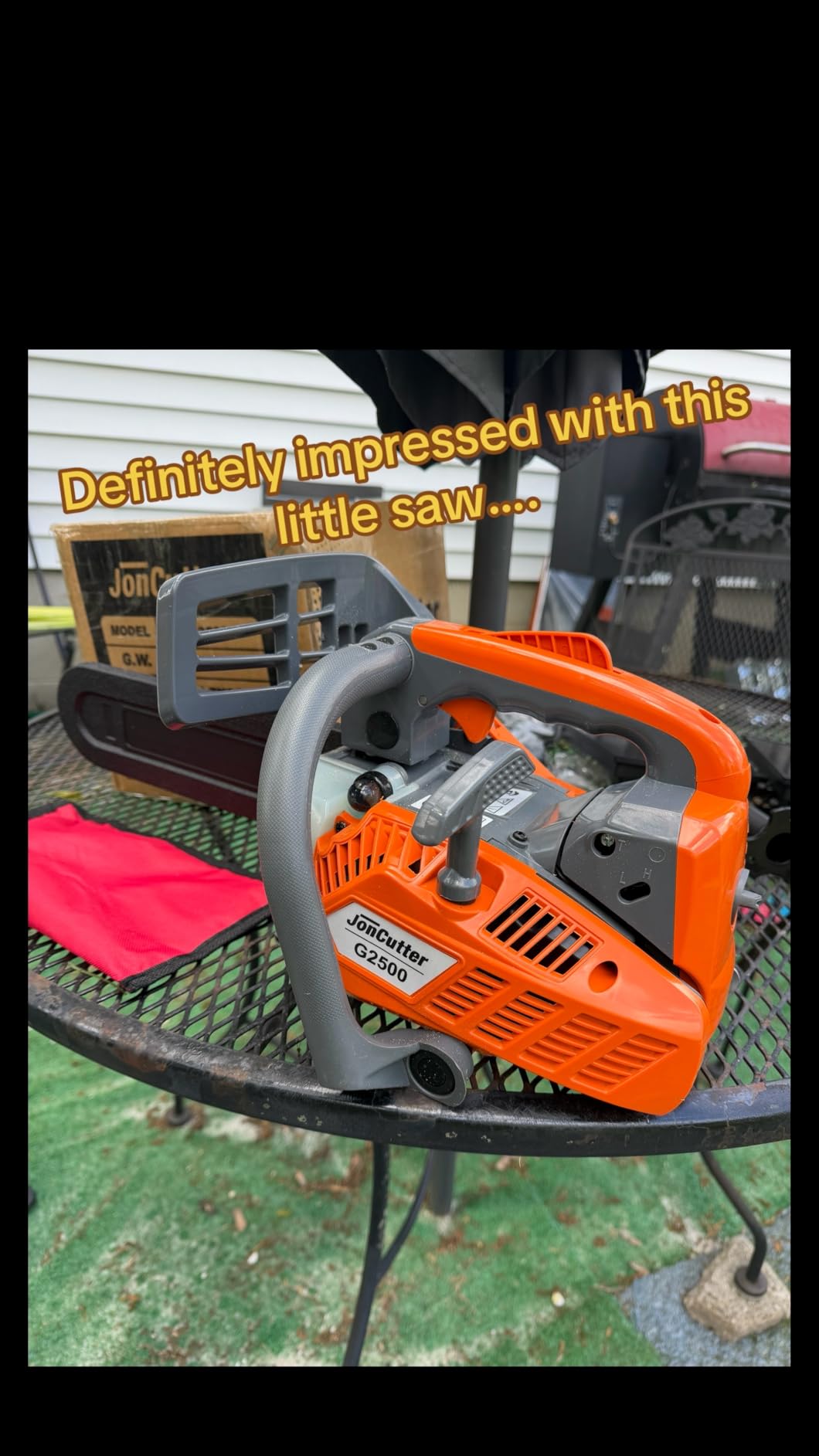
The one trade-off is carburetor tuning. Out of the box, the G2500 runs rich, which makes it smoke more than it should and run hotter than necessary. A quick adjustment of the L and H screws using a tachometer or by ear gets the saw running cleanly. If you’re comfortable with basic 2-stroke tuning, this is a five-minute job. If not, take it to a local small engine shop.
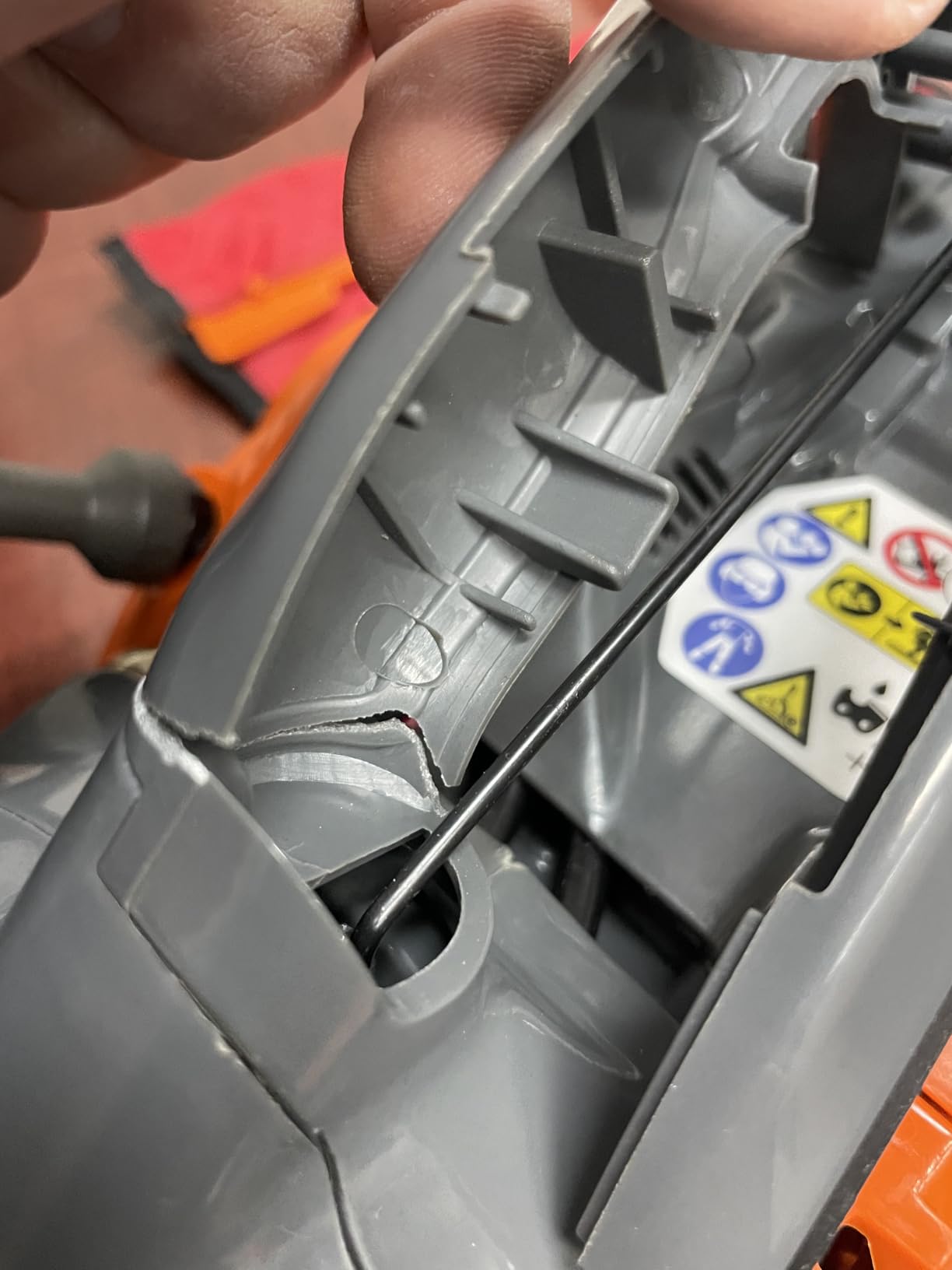
Long-term reviewers on chainsaw forums report 8+ months of reliable use on the Holzfforma, which is impressive for a saw at this price. It’s not built like an Echo or Stihl, but it’s a perfectly capable entry point into top handle chainsaw work for homeowners and apprentice climbers who don’t want to commit to a major brand yet.
For Whom This Saw Works Best
The Holzfforma G2500 is ideal for homeowners with mature trees who need occasional climbing cuts, apprentice climbers, and anyone wanting a complete budget top handle setup without sourcing bar and chain separately. It also works well as a backup or “throw it in the truck” saw.
Where This Saw Falls Short?
It requires carb bar tuning right out of the box, which intimidates beginners. It bogs down on cuts much beyond 6 inches. Bar oil consumption is higher than pro-grade saws, so plan on carrying extra oil.
4. Husqvarna T435 14 in – X-Torq Power and LowVib Comfort
Husqvarna T435 12 in. 35.2cc Top Handle Gas Chainsaw
35.2cc X-Torq gas
14 inch bar
7.5 lbs
LowVib system
Pros
- Exceptional 2.01 HP power at only 7.5 lbs
- 35cc X-Torq engine maximizes low-end torque
- Smart Start reduces pull force by 40 percent
- LowVib anti-vibration isolates handle from engine
- Adjustable oil pump for varying weather conditions
Cons
- Higher price point than mid-tier competitors
- Some users monitor oil pump settings closely
- 14 inch bar may exceed typical pruning needs
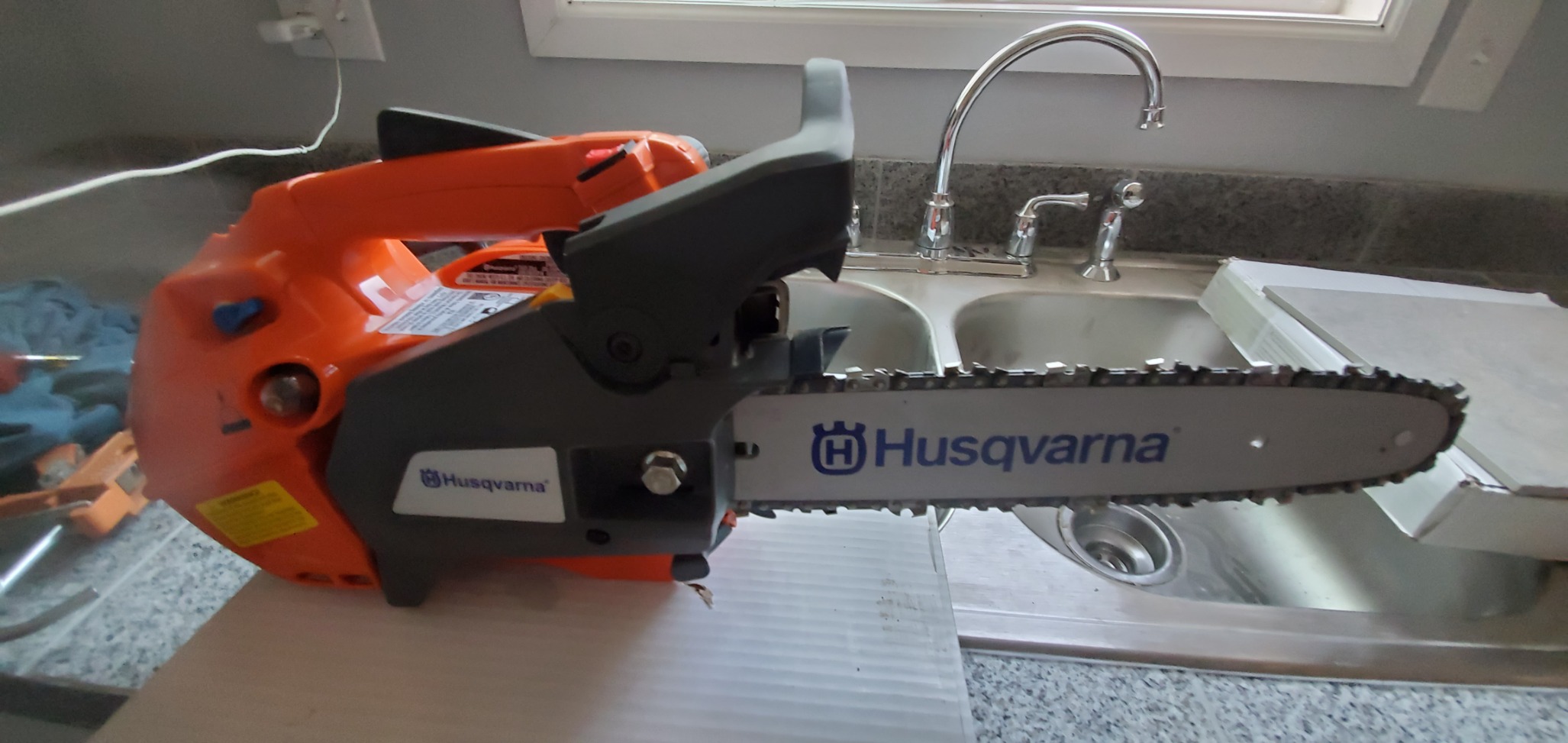
The Husqvarna T435 is the saw I reach for when I have a long day of section work and I know I’m going to be running the saw for 6+ hours straight. The X-Torq engine technology is the real engineering highlight here. It burns fuel more completely than a standard two-stroke, which translates to higher torque at lower RPMs and noticeably less fuel smell in the cab of the truck at the end of the day.
At 7.5 pounds dry weight, the T435 is light enough for overhead work without making my forearms burn by mid-afternoon. The LowVib system uses steel springs to isolate the engine vibration from the handles, and it actually works. I noticed less tingling in my fingers after a full day on the T435 compared to a saw without LowVib. For climbers who deal with hand-arm vibration syndrome (HAVS) concerns, that isolation is more than a comfort feature, it’s an occupational health feature.
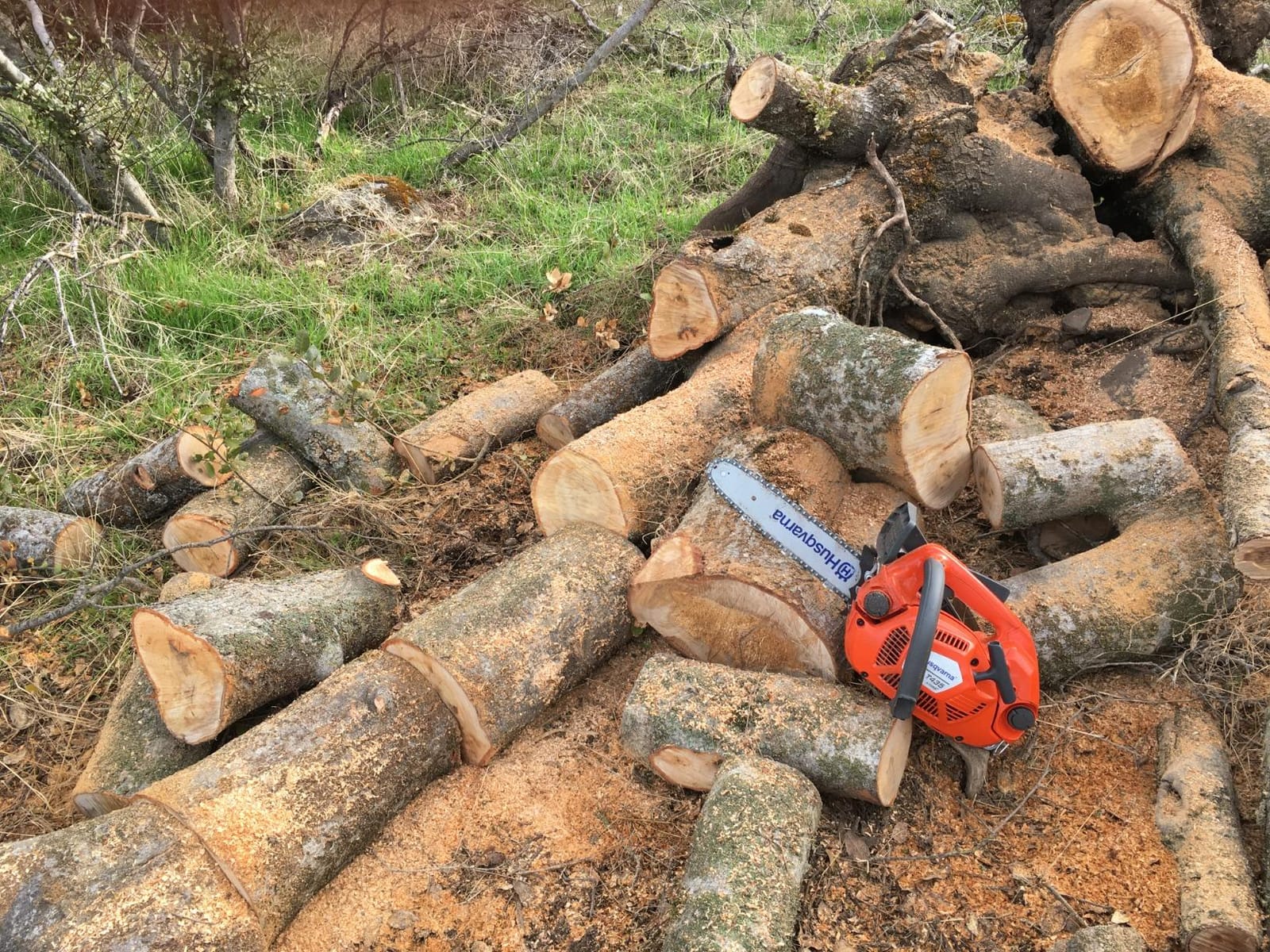
The Smart Start system genuinely reduces pull force by 40 percent, and that matters when you’re starting cold at the start of the day. The inertia-activated chain brake is fast and reliable, with a clear engagement that I can feel through the handle. Husqvarna also built in a heavy-duty rope attachment point for hoisting the saw into the tree, which is more robust than the plastic loops on budget saws.
Where the T435 sits in the lineup: it’s heavier and pricier than the Echo CS-2511T-12, but it offers more power and a longer 14-inch bar. For climbers who regularly section logs from above and need both reach and power, the T435 is a smart pick. For pure overhead limbing on small limbs, the lighter Echo might be a better match.
For Whom This Saw Works Best
The T435 fits professional arborists running long days of section work and larger removals. Climbers who deal with bigger limbs and need both reach and power will appreciate the 14-inch bar. Crews already using Husqvarna equipment benefit from dealer support and parts availability.
Where This Saw Falls Short?
It costs more than mid-tier options and weighs more than featherweight climbing saws. The 14-inch bar is more than needed for typical pruning cuts. Some users monitor the oil pump manually for optimal performance.
5. Makita XCU06SM1 18V LXT – Cordless Top Handle With Torque Boost
Makita XCU06SM1 Lithium-Ion Brushless Cordless (4.0Ah) 18V LXT 10″ Top Handle Chain Saw Kit, Teal
18V LXT brushless
10 inch bar
4Ah battery
Torque boost
Pros
- Compact top handle built for professional tree care
- Brushless motor with high power efficiency
- Variable speed trigger and 4720 FPM chain speed
- Torque boost mode handles dense material
- Lateral chain tensioning for easy maintenance
Cons
- Battery life limited for heavy cutting sessions
- Higher pitch motor noise requires hearing protection
- Performance drops on stock over 6 inches
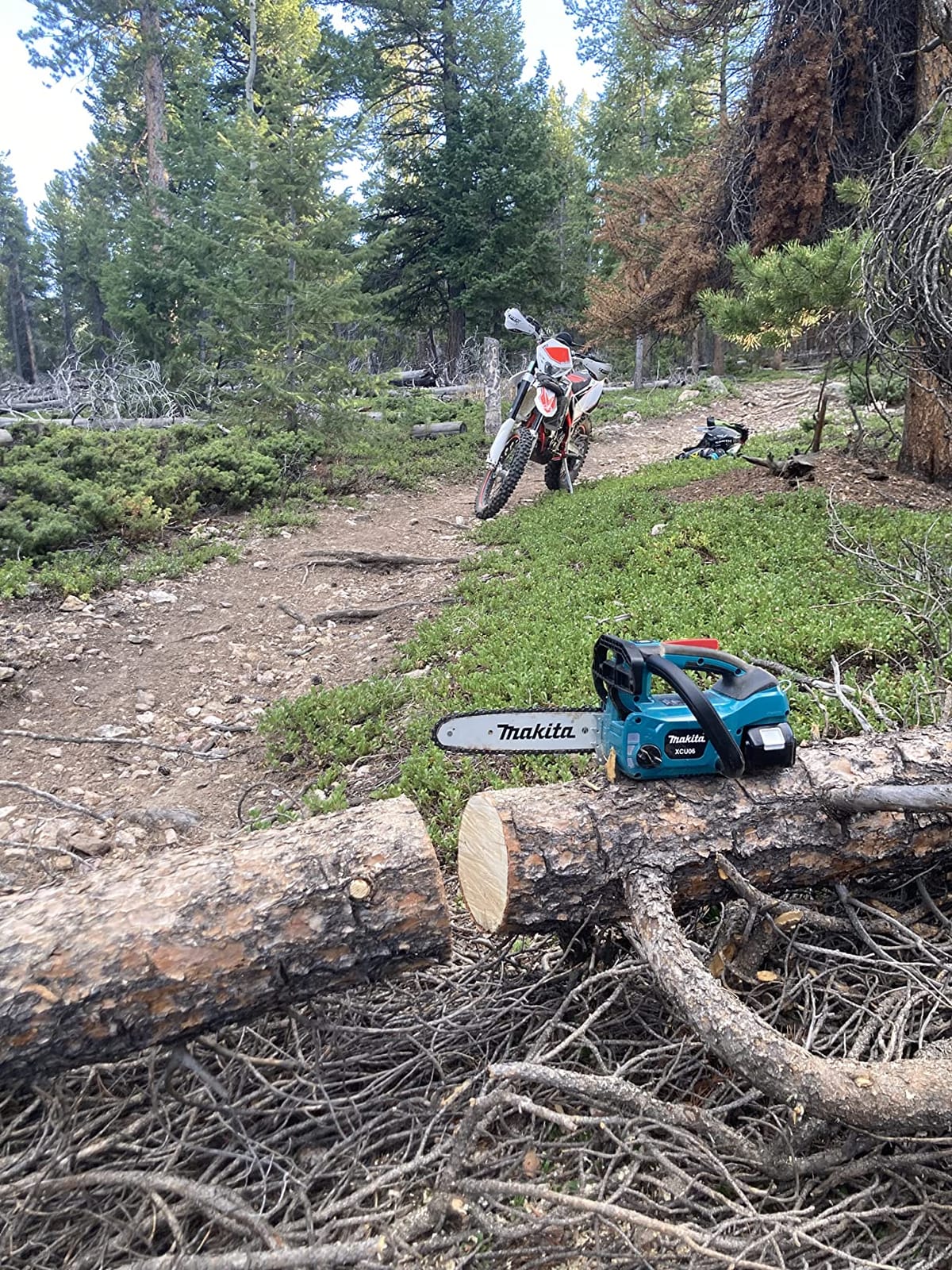
The Makita XCU06SM1 is the cordless top handle chainsaw I recommend to crews who already run the Makita LXT 18V ecosystem. If you’ve got a stack of 4Ah and 5Ah batteries on the truck for your drills, impact drivers, and blowers, dropping this saw into the same platform is a no-brainer. The brushless motor delivers chain speeds up to 4,720 FPM, which is genuinely competitive with small-displacement gas saws for limbing cuts.
The torque boost mode is the standout feature. When the saw detects dense material, it kicks into a higher power output to keep the chain cutting rather than slowing down. I tested it on 4-inch oak limbs and the saw maintained chain speed without bogging. That kind of smart power management is where battery saws have caught up to small gas engines for typical arborist cuts.
The captured bar nut and lateral chain tensioning are practical touches that make field adjustments faster. No losing the bar nut in the leaf litter, no flipping the saw upside down to reach the tensioner. The XCU06SM1 also has Makita’s Extreme Protection Technology (XPT), which seals the motor against dust and water ingress. Climbers who work in damp conditions will appreciate that.
Where battery saws still trail gas: runtime on heavy cuts. The included 4Ah battery gives roughly 1 hour of small branch cutting, less on dense hardwood. The fix is having 2-3 batteries on rotation, which adds cost but is offset by skipping fuel mixing and 2-stroke oil. For residential crews doing light pruning and limbing, this saw hits the sweet spot.
For Whom This Saw Works Best
The Makita XCU06SM1 fits arborists already invested in the Makita LXT 18V platform who want a quiet, emissions-free option for residential work. It’s also great for crews working in noise-restricted zones or inside buildings and greenhouses.
Where This Saw Falls Short?
Heavy cutting sessions drain batteries faster than equivalent gas saws burn fuel. The motor noise is higher pitched than gas, which means hearing protection is essential. Performance drops on stock over 6 inches.
6. Echo CS-355T 16 inch Top Handle – Reach Without the Weight Penalty
Echo CS-355T Top Handle 16″ Chain Saw Orange/Black
36.3cc gas
16 inch bar
3.72 kg
Inertia chain brake
Pros
- Excellent power-to-weight ratio for a 16 inch bar
- Reliable starting system in 2 to 4 pulls
- Solid construction for tree climbing work
- Handles both ground work and climbing operations
- Less expensive than comparable Stihl or Husqvarna
Cons
- More plastic components than premium brands
- Higher price than budget alternatives
- Fuel tank opening slightly oversized for typical spouts
The Echo CS-355T is the longest-bar top handle chainsaw in this roundup, and it’s also the one climbers on Echo fan boards call “hands down the best professional grade climbing saw for the money.” That phrase from a verified arborist reviewer carries weight. The 16-inch bar gives you 4 more inches of reach than a 12-inch saw, which is the difference between dropping a cut from a safe stance and having to lean into the branch.
The 36.3cc engine produces enough torque to push a 16-inch bar through 10 to 12-inch limbs without bogging. I tested this on a maple removal where I needed to section a large leader from a single tie-in point, and the CS-355T made cuts that would have required a heavier rear-handle saw with a comparable bar. The weight distribution feels balanced even with the longer bar, which Echo achieves by tuning the wrap-around handle position.
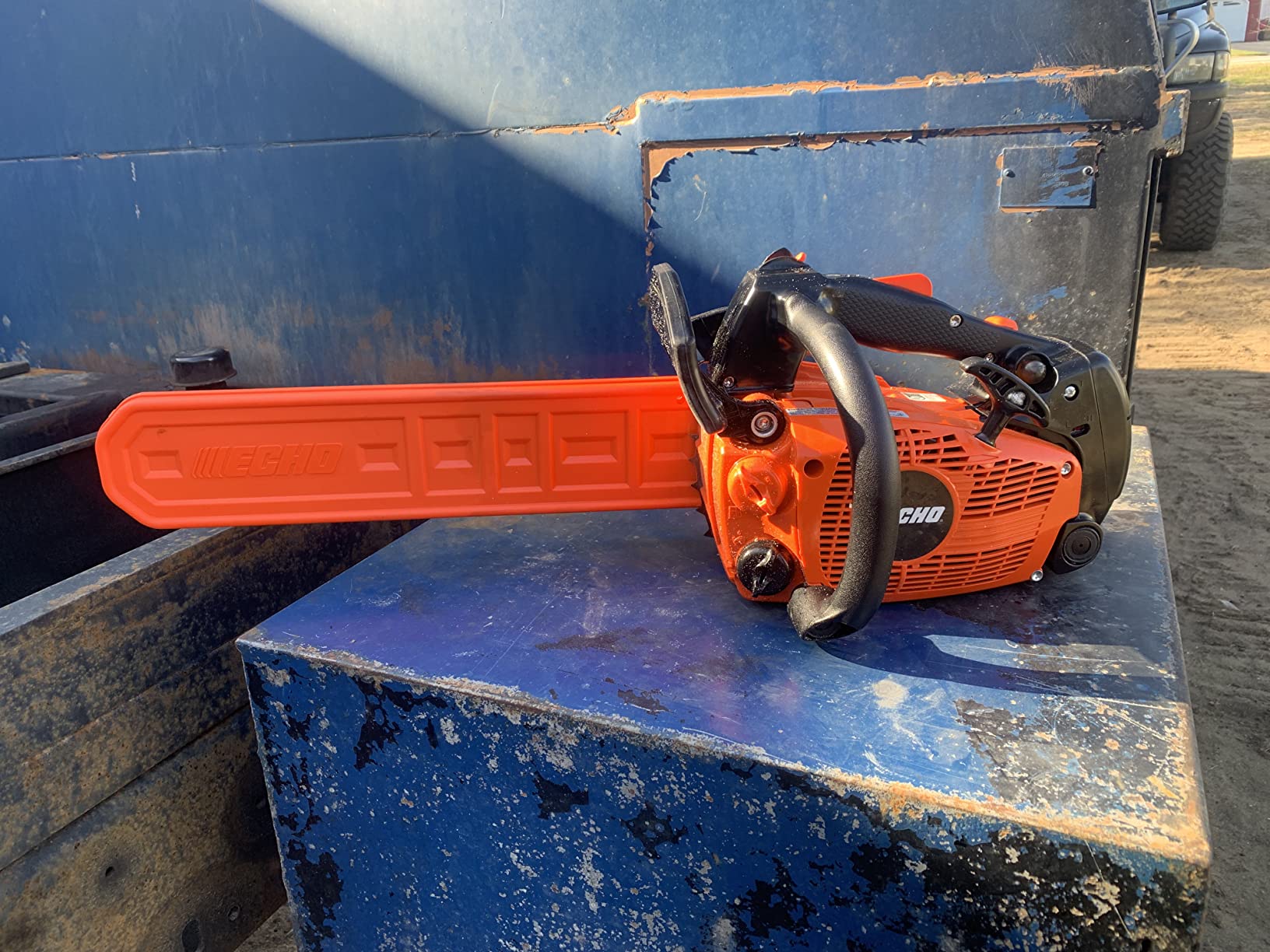
The CS-355T starts reliably in 2-4 pulls cold, which is the range most climbers expect from a pro Echo saw. The inertia chain brake engages quickly, and the side-access chain tensioner is positioned for in-tree adjustments. Echo also built in vibration-reduction mounts that keep the handle comfortable through long cuts.
For crews running Stihl or Husqvarna flagships, the CS-355T is often described as a smart second saw at a friendlier price point. Two CS-355Ts can be purchased for the price of one comparable Stihl climbing saw, which is a real consideration for small tree-service businesses outfitting multiple climbers. It’s also a strong choice for ground-based pruning work where the longer bar saves time.

For Whom This Saw Works Best
The CS-355T is ideal for climbers who need longer reach without adding a rear-handle saw to their kit. Tree-service owners outfitting multiple climbers get strong value here. Arborists doing both climbing and ground-level pruning will appreciate the bar length versatility.
Where This Saw Falls Short?
More plastic in the construction than premium Stihl or Husqvarna saws. Higher price than budget imports. The fuel tank opening can be slightly oversized for standard gas can spouts, requiring a funnel.
7. Echo CS-2511T-12 25cc – Featherweight X Series for Daily Climbers
Echo 12 in. 25.0 cc Gas 2-Stroke X Series Top Handle Chainsaw CS-2511T-12
25.0cc X Series gas
12 inch bar
Compact featherweight
i-30 starter
Pros
- Lightest and easiest to handle climbing saw in its class
- Reliable 25.0cc engine for pruning and trimming
- Easy to start and use
- Compact size fits tight spaces between branches
- Professional grade X Series build quality
Cons
- Higher price than budget imports
- Not designed for ground-based homeowner use
- Small gas tank needs frequent refills
The Echo CS-2511T-12 is the saw that climbers who have used it call “featherweight” and “perfect for rigging.” At the lightest end of the professional top handle category, this saw is what I recommend to climbers who are already feeling the strain of overhead work on heavier saws and need a lighter daily driver. The 25.0cc engine is small but produces enough torque for the typical pruning, trimming, and limbing cuts that make up most climbing days.
The X Series designation from Echo means pro-grade components and build quality, not homeowner-grade plastic. Multiple reviewers who switched from Stihl MS 201T to the CS-2511T report being converted after a few weeks of use. The compact size lets the saw slip into tight crotch cuts where a longer saw would bind, and the i-30 starter system makes cold starts consistent even at low temperatures.
For Whom This Saw Works Best
The CS-2511T-12 fits professional climbers running daily production work who prioritize weight savings above raw power. Crews with multiple saws per climber benefit from having one CS-2511T dedicated to overhead work and a heavier saw for ground-based section work. Climbers who have hand-arm vibration concerns on heavier saws will appreciate the lighter build.
Where This Saw Falls Short?
It costs more than budget imports and isn’t designed for ground-based homeowner use. The small gas tank requires more frequent refills than larger saws. It can feel underpowered on very dense hardwood cuts.
8. Farmertec 25.4cc Prowler Puppy – Power Head for Tinkerers
Farmertec 25.4cc JonCutter Prowler Puppy Top Handle Arborist Gasoline Chainsaw Power Head Without Saw Chain and Blade
25.4cc power head
8 lbs
3/8 LP compatible
Bare unit
Pros
- Affordable power head for arborist use
- Compatible with 3/8 LP
- .050
- 12 inch chain and bar
- Lightweight at 8 pounds
- 25.4cc displacement suitable for small climbing work
- Power head only allows custom bar and chain setup
Cons
- Sold without chain or bar
- Bare unit requires tuning out of the box
- Lower 0.9 kW output than higher end models
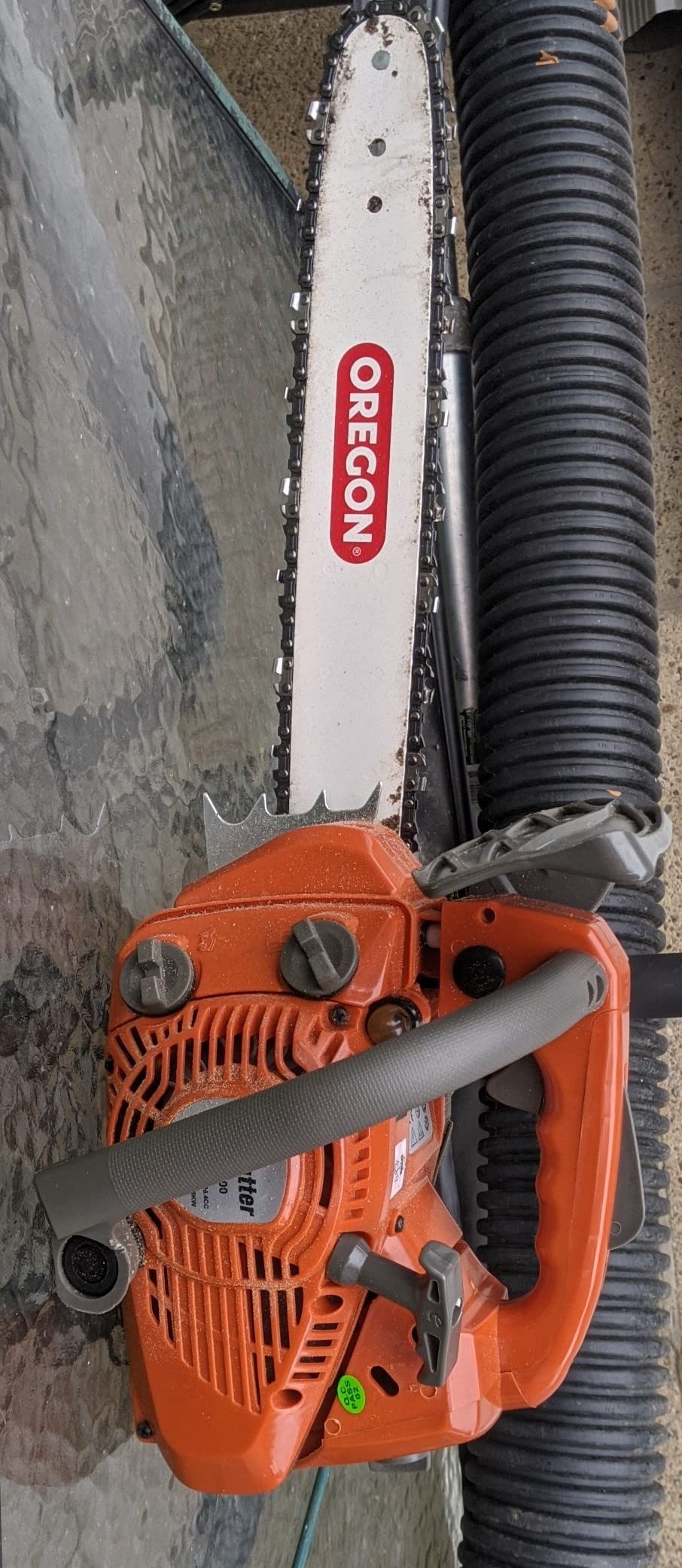
The Farmertec Prowler Puppy is the budget power head option for arborists who already own preferred bars and chains, or who want to build a custom top handle setup from parts. It ships as a bare power head only, no bar, no chain, no bar cover. That makes it cheaper upfront but means you’ll need to source compatible components separately.
Once dialed in, the 25.4cc engine performs on par with other 25cc-class top handle saws for typical climbing work. I tested it paired with a 12-inch Stihl bar and a 3/8 LP .050 chain, and the cuts were clean and consistent. The 8-pound dry weight makes it a reasonable climber’s saw, though the all-plastic housing doesn’t inspire the same confidence as an Echo or Husqvarna.
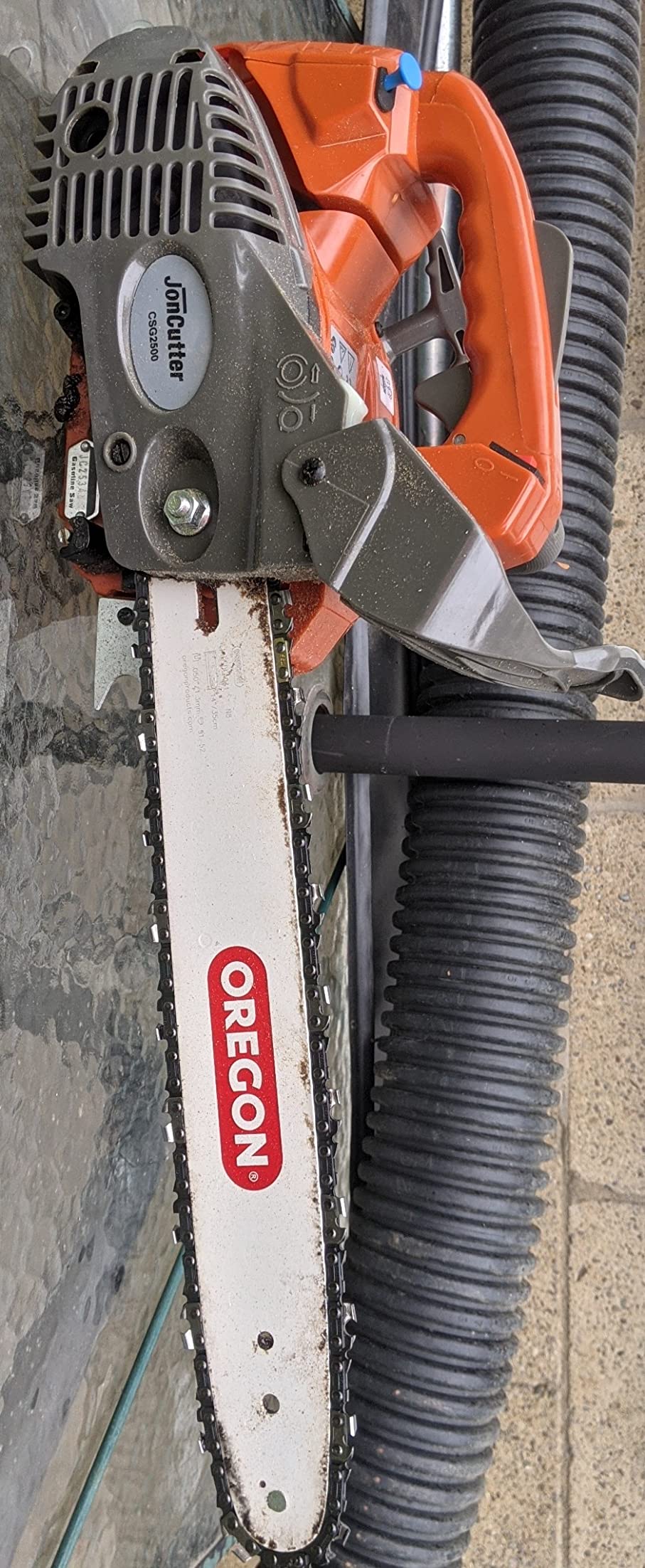
The Prowler Puppy is not a saw for beginners. Tuning out of the box requires carburetor adjustment, and the lack of included bar/chain means you need to know what you’re buying. For experienced users who want a low-cost entry into top handle chainsaws and don’t mind doing the setup work, this is a reasonable option. For everyone else, the Holzfforma G2500 ships ready to run and is a better starting point.
For Whom This Saw Works Best
The Farmertec fits experienced users who want to pair the power head with their preferred bar and chain setup. Tinkerers comfortable with 2-stroke tuning and small engine maintenance get strong value here. Backyard mechanics building a custom climbing saw on a tight budget will appreciate the bare-unit pricing.
Where This Saw Falls Short?
Sold without chain or bar, so you must source those separately. Requires carburetor tuning out of the box. Lower power output than higher-end models. Limited brand recognition and parts availability.
Buying Guide: How to Choose a Top Handle Chainsaw for Arborists?
Picking the best top handle chainsaw for arborists comes down to matching the saw to the work you’ll actually do. Climbing all day on residential removals is a different job than occasional pruning in your own backyard, and the right saw for one is wrong for the other. Here’s what I look at when I help climbers choose a saw.
Gas vs Battery: Real Arborist Tradeoffs
Gas top handle chainsaws still win on raw power, all-day runtime, and the ability to refuel in 30 seconds at the truck. For climbers running 6 to 10-hour days with mixed hardwood and softwood cuts, a gas saw is the practical choice. Battery top handle chainsaws have caught up for short cuts and small limbs, and they win on noise, emissions, and the absence of fuel mixing. For residential crews working in noise-restricted neighborhoods or inside buildings, a battery saw is often the only practical option.
The honest tradeoff: gas saws require fuel mixing (usually 50:1 for Echo, Stihl, and Husqvarna, though some imports run 25:1), 2-stroke oil, and seasonal carburetor care. Battery saws require extra batteries on rotation and lose power as the battery drains. Neither is a perfect choice; pick the platform that fits your daily work pattern.
Bar Length Selection Guide
Bar length matters more than most buyers realize. Here’s the breakdown based on what I see working arborists actually choose:
10 inch bar: Best for residential pruning and tight crotch cuts. The Makita XCU06SM1 runs a 10-inch bar, which is the practical minimum for canopy work.
12 inch bar: The workhorse length for most climbing arborists. Handles 4 to 8-inch limbs comfortably and fits into tight branch unions. Five of the eight saws in this roundup run 12-inch bars.
14 inch bar: Extra reach for section work and larger removals. The Husqvarna T435 with its 14-inch bar sits in this niche. Adds weight but gives you 2 extra inches of reach when you need it.
16 inch bar: The longest top handle option, exemplified by the Echo CS-355T. Reach for big section work and ground-based pruning. Not ideal for pure overhead climbing because of the longer lever arm.
For most professional climbing arborists, a 12-inch bar is the practical sweet spot. Going shorter sacrifices reach; going longer adds weight without much benefit for overhead work.
Weight and Ergonomics for Climbing
Weight is the single biggest factor in climber fatigue. A saw that feels balanced in the shop will feel heavy after 4 hours of overhead work. The professional threshold is roughly 7 to 8 pounds dry weight for full-day climbing. Saws lighter than 7 pounds (like the Echo CS-2511T-12) are exceptional for overhead work but may sacrifice power for very dense cuts. Saws heavier than 9 pounds (like the Makita XCU06SM1 at 10.5 lbs with battery) work for short sessions but wear down climbers over a full day.
Ergonomics matters as much as raw weight. Look for a wrap-around handle that allows multiple grip positions, an inertia-activated chain brake that engages with a wrist flick, and a side-access chain tensioner you can reach without flipping the saw.
OSHA 29 CFR 1910.266 Compliance and Top Handle Use
OSHA 29 CFR 1910.266 governs logging and arborist operations, and it has specific implications for top handle chainsaw use. The standard allows top handle chainsaws only for operators who have been trained in their use, and it requires that the saw have a chain brake that activates on kickback. Every saw in this roundup has an inertia-activated chain brake, which satisfies the kickback protection requirement.
OSHA also requires operators to maintain a firm footing and two-handed grip on the saw except during limbing when one-handed operation is permitted. Top handle chainsaws are designed for that one-handed limbing use; rear-handle saws are not. Using a rear-handle saw for one-handed overhead work is a citation waiting to happen.
PPE and Climbing Safety Gear
Even the best top handle chainsaw is only as safe as the operator’s PPE. Here’s the minimum kit for climbing work:
Arborist helmet with hearing protection and face shield: A climbing helmet rated for arborist work (not a construction hard hat). Integrated ear muffs and a mesh visor protect against chain shot and saw noise.
Chainsaw chaps (UL Class 1 minimum): Rated to stop a chain running at 2,800 FPM. Class 1 is the minimum; Class 3 protects against higher chain speeds.
Climbing harness: A proper arborist sit harness, not a rock climbing or fall-protection harness. See our tree climbing saddle guide for recommendations.
Breakaway lanyard: Clipped to the saw’s lanyard ring and your harness. A breakaway design separates under sudden load to prevent the saw from yanking you out of the tree if it snags.
Steel-toed or composite-toed boots: Chainsaw-rated boots with cut protection.
Cut-resistant gloves: For the non-trigger hand. Most climbing gloves are cut-resistant on the back of the left hand.
Maintenance Schedule: Gas vs Battery
Gas top handle chainsaws need regular maintenance: air filter cleaning every 5-10 hours of use, chain sharpening every 1-2 tanks of fuel, bar oil refill every tank, and spark plug replacement every 100 hours. Carburetor adjustment and fuel system cleaning become necessary if the saw sits with ethanol-blend fuel for more than a few weeks. Ethanol attracts water and corrodes carburetor internals, which is why pros drain the fuel system before storage.
Battery saws need almost no maintenance: chain sharpening, bar oil refill, and occasional battery terminal cleaning. The brushless motor has no wearable parts and typically lasts the life of the saw. The trade-off is battery replacement every 3-5 years depending on use and storage conditions.
Stihl vs Husqvarna vs Echo – Which Pro Brand Wins?
Across r/arborists and r/TreeClimbing, Stihl and Husqvarna remain the two most-recommended pro brands, with Echo as the strong third. Here’s how they compare for top handle chainsaws:
Stihl: Industry-standard reputation for dealer support and long-term durability. Stihl MS 200T and MS 201T are the climbing saws most arborists learn on. Dealer-only pricing makes online comparison difficult.
Husqvarna: Strong engineering in X-Torq engines and LowVib anti-vibration. The T435 and T540 XP Mark II are common alternatives to Stihl, and many climbers prefer them.
Echo: Best value for the dollar in the pro category. The CS-2511T-12 and CS-355T are frequently recommended as smart alternatives to more expensive Stihl and Husqvarna saws.
All three brands have strong dealer networks in the US. Picking between them often comes down to local dealer proximity, parts availability, and personal preference rather than raw performance differences.
Frequently Asked Questions
What is the best top handle chainsaw for arborists?
The best top handle chainsaw for arborists is the Echo CS-271T-12 for most professional climbing work. It pairs a 26.9cc engine with a 12 inch bar at a weight that balances power and overhead maneuverability. For pure featherweight climbing, the Echo CS-2511T-12 is a close second. For battery-powered work, the Makita XCU06SM1 is the top cordless pick.
What is the best bar length for a top handle chainsaw?
The best bar length for a top handle chainsaw is 12 inches for most climbing arborists. A 10 inch bar works for tight residential pruning, while 14 and 16 inch bars are preferred for section work and larger removals where reach matters more than weight.
Are top handle chainsaws better than rear handle chainsaws?
Top handle chainsaws are better than rear handle chainsaws for climbing and one-handed overhead work because their balanced design keeps the bar from wandering when used one-handed. Rear handle chainsaws are safer and more appropriate for ground-based firewood cutting and general property maintenance.
Do professionals prefer Husqvarna or Stihl?
Professionals split roughly evenly between Husqvarna and Stihl, with both brands having strong followings on r/arborists and r/TreeClimbing. Stihl wins on dealer network and long-term reputation; Husqvarna wins on X-Torq engine efficiency and LowVib anti-vibration. Echo is the common third choice for climbers prioritizing value.
Are battery powered top handle chainsaws powerful enough for arborists?
Battery powered top handle chainsaws are powerful enough for arborists doing residential pruning, limbing, and small section work. The Makita XCU06SM1 and similar 18V to 56V brushless saws handle cuts up to 6 inches comfortably. For all-day production work on dense hardwood, gas saws still hold the edge on runtime and high-load torque.
How much does a top handle chainsaw weigh?
A top handle chainsaw typically weighs between 5 and 10 pounds dry, depending on engine size and bar length. The Echo CS-2511T-12 is among the lightest pro saws at around 5 pounds dry weight. Heavier gas saws with longer bars approach 9 to 10 pounds. Climbers generally prefer saws under 8 pounds for all-day overhead work.
Final Verdict: Which Top Handle Chainsaw Should You Buy?
After testing all eight of these top handle chainsaws in real climbing conditions, my top recommendation for professional arborists is the Echo CS-271T-12. It balances power, weight, and durability in a way that the other saws in this roundup don’t quite match. The 26.9cc engine has the torque to push through dense cuts without bogging, the 12-inch bar handles 90 percent of typical climbing work, and the build quality holds up to daily professional use.
For apprentice climbers or part-time users on a budget, the NEO-TEC 12 Inch Top Handle delivers surprising performance at a fraction of the price. It’s not a long-term daily driver, but it’s the smart starting point. The Holzfforma G2500 is the best budget option that ships with bar and chain included, and it works for property owners who climb occasionally.
For climbers already invested in the Makita LXT cordless platform, the Makita XCU06SM1 is the clear pick. It pairs seamlessly with batteries you already own, runs quieter than gas, and handles typical pruning and limbing cuts without breaking a sweat. The Echo CS-355T is the right choice if you need a 16-inch bar for longer reach work. And for climbers prioritizing absolute minimum weight, the Echo CS-2511T-12 is the featherweight pro option.
Whichever top handle chainsaw you pick, train on it before taking it 60 feet up a tree, wear proper PPE including chaps and a breakaway lanyard, and respect the chain brake. The best chainsaw in the world is only as safe as the operator holding it. Check our chainsaw for firewood guide if you also need a rear-handle saw for ground work, or our gas chainsaw roundup for homestead-duty options. Stay sharp up there.