
The best thermal scope for coyote hunting depends on two things: your budget and the distance you actually shoot at. A hunter working creek beds and field edges inside 150 yards gets real value from an entry sensor, while anyone glassing CRP ground at 400 yards needs a 640-class core. Everything between those two situations is where most buyers regret their purchase.
We spent weeks putting these ten optics through real predator conditions and read the owner feedback closely, because the gap between a marketing detection number and what you can identify in the field is the single most expensive surprise in this hobby. Coyotes are most active from dusk through the night, they are among the wariest animals you will ever call to, and identification, not detection, is what decides whether a shot is a shot or a guess.
Before the list, one correction that shows up in almost every forum thread we read: a thermal scope does not see through vegetation. Neither does night vision. A coyote behind six feet of brush stays hidden, and no sensor tier changes that. What a thermal does give you is total darkness performance, meaning it works when there is no moon, no starlight worth mentioning, and no legal artificial light source. If a buyer expects brush penetration, that is the wrong tool and the wrong expectation.
If you are still building out your kit, our picks for the best thermal monoculars for predator hunting cover the scanning side of the night, and our guide to rifle scopes for deer hunting covers the daylight glass that pairs well with a thermal.
Table of Contents
Top 3 Picks for Coyote Hunting (October 2026)

The Rattler V2 takes the top slot because it is the only optic here with a large body of owner feedback behind it, and that feedback stays positive across seasons. The HS225 is the most flexible design in the group. The Thermion 2 Pro is the one to buy if your shots live past 300 yards and you refuse to compromise on the image.
Best Thermal Scopes for Coyote Hunting at a Glance
Every scope below is in the analysis with its own section further down. Read the table as a shortlist, not a ranking, because the right pick depends on terrain, mounting setup, and how far you are willing to walk before you shoot.
| Product | Specifications | Action |
|---|---|---|
| AGM Rattler V2 TS25-256 |
|
Check Latest Price |
 DNT Optics Hydra HS225 DNT Optics Hydra HS225 |
|
Check Latest Price |
| Pulsar Thermion 2 Pro |
|
Check Latest Price |
 AGM Adder TS50-384 AGM Adder TS50-384 |
|
Check Latest Price |
 ATN Thor LTV 256 ATN Thor LTV 256 |
|
Check Latest Price |
 ATN Thor 5 LRF 4-16x ATN Thor 5 LRF 4-16x |
|
Check Latest Price |
 DNT Optics Hydra-LRF HS635R DNT Optics Hydra-LRF HS635R |
|
Check Latest Price |
 AGM Rattler V3 TS25-384 AGM Rattler V3 TS25-384 |
|
Check Latest Price |
 DNT Optics Hydra HS325 DNT Optics Hydra HS325 |
|
Check Latest Price |
 ATN Tico 6 Clip-On ATN Tico 6 Clip-On |
|
Check Latest Price |
1. AGM Rattler V2 TS25-256 – The Most Proven Entry Scope in the Group
AGM Global Vision Rattler V2 25-256 Thermal Scope High-Sensitivity Sensor
256x192 12um sensor
25mm lens 3.5x base
28x digital zoom
1250 yd detection
11.5 hr runtime
6.34 oz
Pros
- Widest owner feedback base in the group at 265 reviews
- Two rechargeable batteries and a full kit in the box
- Quick-detach mount holds zero between rifles
- Works handheld on the 1/4-20 thread
- IP67 sealed and rated to -22F
Cons
- 3.5x base magnification is tight in close cover
- No daylight mode makes target correlation harder
- Menus take practice for a first-time thermal user
This is the scope we kept reaching for during close-range work. Sitting in a CRP stand with an AR or a short bolt gun, the 3.5x base magnification frames a field edge without any hunting for magnification, and the image holds together well enough to sort a coyote from a deer in the first few seconds of contact.
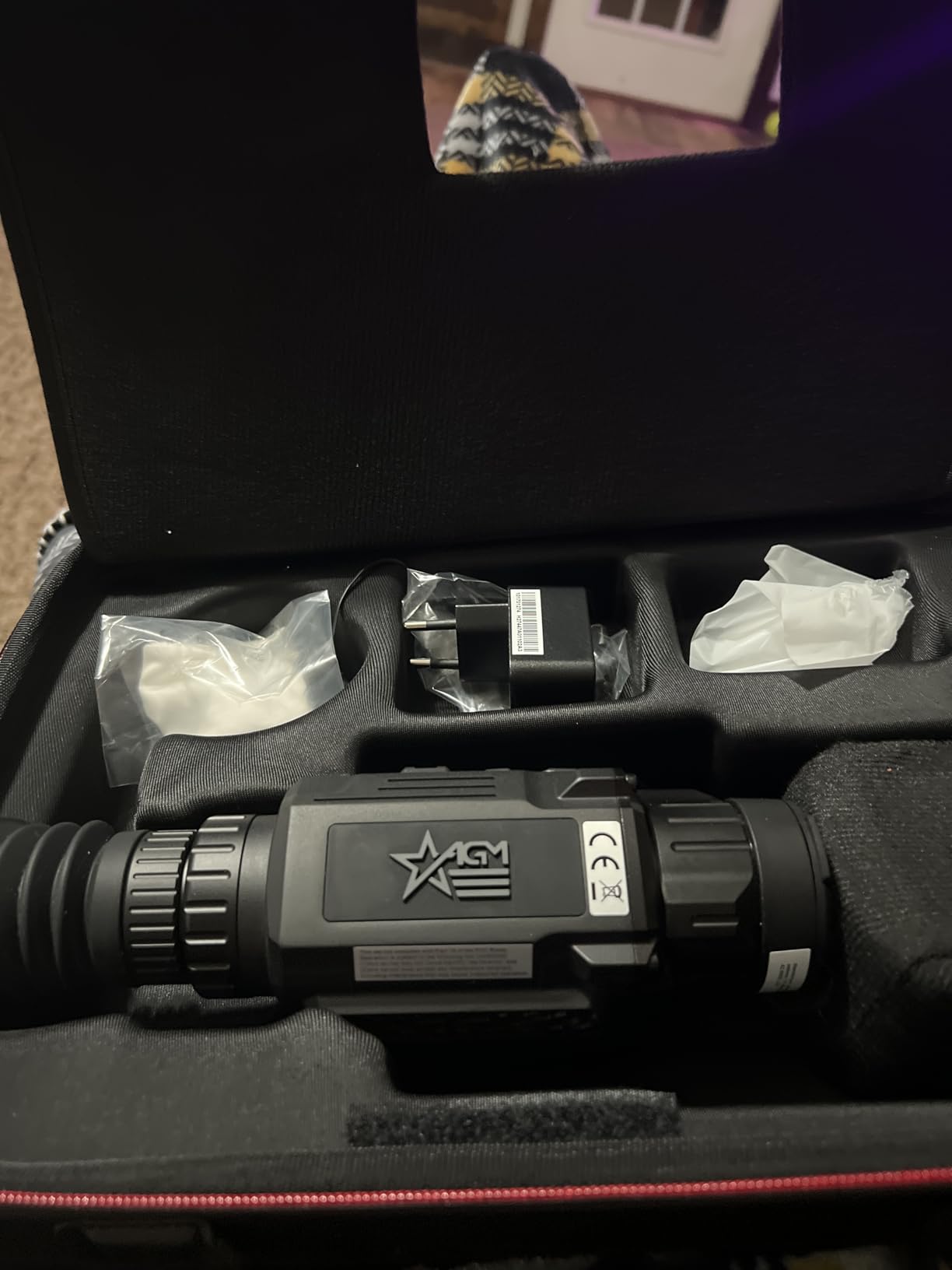
Owners across hundreds of reviews describe the same pattern: clarity that is genuinely good for an entry sensor, a battery system they stopped thinking about, and a quick-detach mount that lets them swap to a daytime setup without re-zeroing. The included kit is unusually complete, with a case, two batteries, a charger, and a lens cloth.
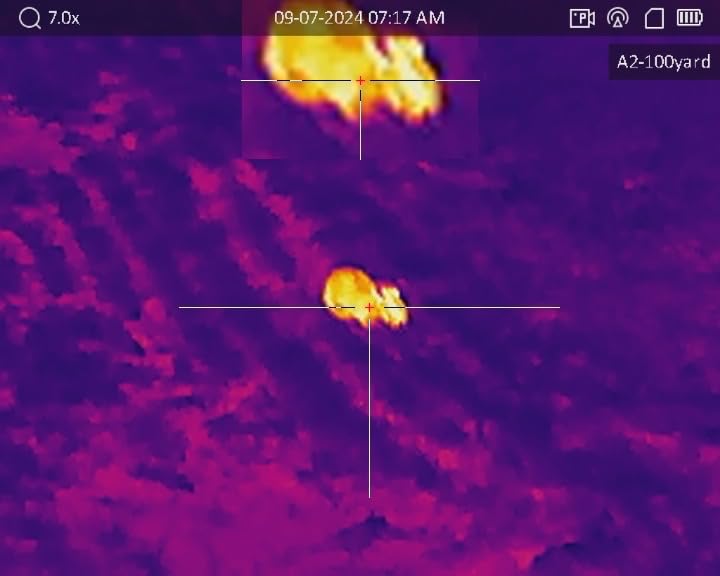
Where the spec sheet matters most is the 11.5 hour rated runtime from the removable power system. Two batteries mean you can work a full pre-dawn sit, swap in a fresh pack, and still be on glass at dusk. For a hunter who does repeated predator control work rather than one trip a season, that removes a real source of stress.
Detection is rated to 1250 yards, which is a marketing figure and should be read as such. What matters for coyotes is that the 256×192 core resolves a moving warm body cleanly at close to medium range, which covers the overwhelming majority of stand-and-call and spot-and-stalk situations where most people shoot.
The 12-micron sensor with an OLED display keeps the picture contrast high in the cold clear conditions that give a thermal its best performance, and the 10 reticle options plus stadiametric rangefinder cover most of what a predator shooter needs without extra gear.
Who the Rattler V2 suits?
This is the pick for a hunter who wants one dependable thermal and does not want to research sensor specifications for a month. The 6.34 ounce weight is easy on a light rifle, and the fact that it can come off the rifle and work as a handheld monocular means one device covers both the scan and the shot.
It also suits anyone working water, where movement near the edge of a timber string and out to 100 or 150 yards is the normal engagement distance, and where a narrow field of view is not a disadvantage.
Where the Rattler V2 falls short?
The 3.5x base magnification is the honest limitation. If your calling spots put coyotes at 250 yards or more in open ground, you will spend a lot of time in digital zoom, and a 256×192 sensor has a hard ceiling on how much detail survives that zoom.
There is also no daylight or nightlight mode, which makes it harder to correlate what you see in the thermal with a landmark you know. Several first-time owners reported brief frame freezes, and the included soft case is not waterproof.
2. DNT Optics Hydra HS225 – The Most Flexible Design in the List
DNT Optics Hydra HS225 Thermal Scope, 256×192 25mm, High-Sensitivity Sensor
256x192 12um sensor
NETD 25mK or better
50fps
3x-12x steps
6061 aluminum
13.1 oz
Pros
- Switches between rifle scope
- clip-on and handheld monocular
- NETD 25mK with 50fps is strong for a 256 core
- Two batteries with quick-swap capability
- Recoil rated to .50 BMG
- Enhance mode separates animals from background
Cons
- 256x192 turns distant targets into indistinct blobs
- Heavier than other entry scopes
- Menus need practice to learn
The three-in-one design is the real story here. The same body runs as a standalone rifle scope, clips in front of a day optic, or comes off entirely and works as a handheld monocular, and for a hunter who moves between a truck, a treestand, and a field edge that flexibility removes a lot of duplicated gear.
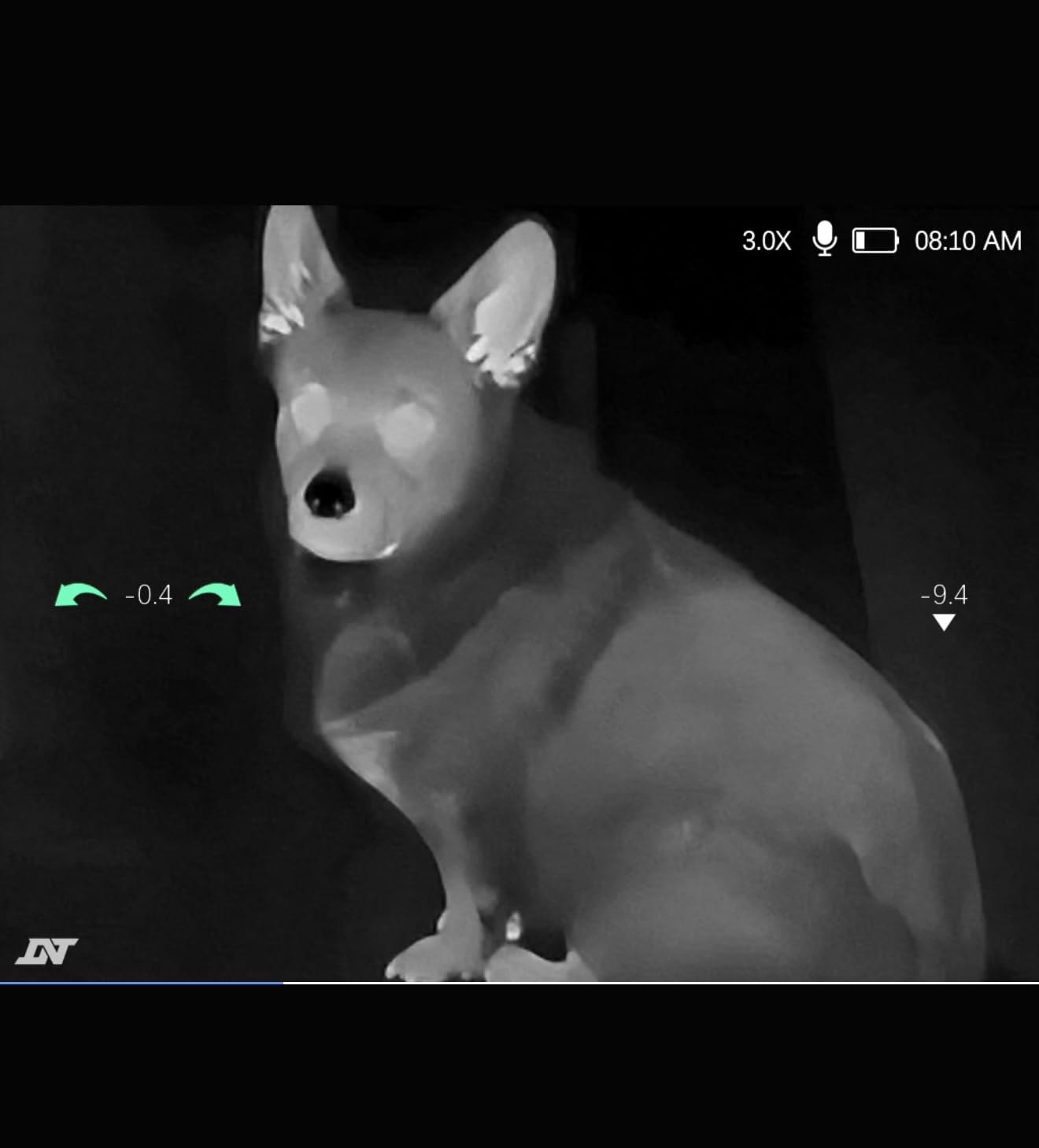
Owners repeatedly report detection results that surprised them for the money, with several describing it as their primary optic after comparing it against units costing far more. The Enhance mode is the setting to live in when a coyote is against a warm background.
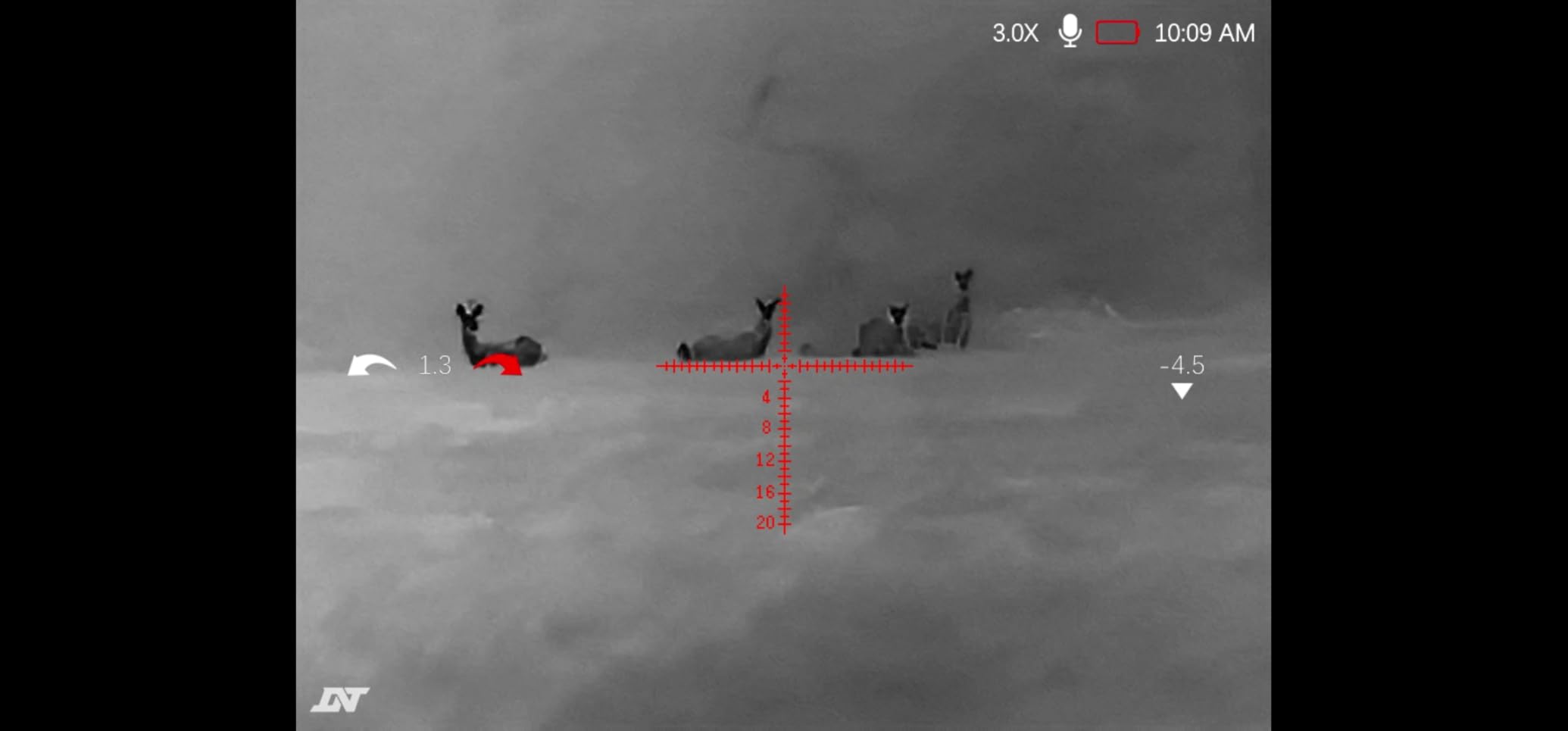
The 50fps frame rate is a genuine advantage for tracking a coyote that breaks and runs. A fast-moving animal at 25Hz smears, and the difference between a smearing image and a clean one often decides whether you identify the animal before it reaches the treeline.
Construction is where this scope separates from the plastic competition. The 6061 aircraft-grade aluminum body is IP67 sealed and recoil rated, and that matters on a hunting rifle that gets dropped, leaned on, and rained on across a season.
Magnification steps at 3x, 4.5x, 6x, 9x, and 12x give more usable framing options than the fixed 3.5x base on simpler entry scopes, and the AI super resolution algorithm is doing real work at the upper steps.
Who the HS225 suits?
This suits hunters who want to own one thermal device rather than a scope plus a separate handheld. If you already have a good day scope, the clip-on mode means you keep your existing zero and glass for daylight work and add thermal capability in seconds at the truck.
It also suits anyone who cares more about build quality and recoil rating than about shaving an ounce off the front of the rifle.
Where the HS225 falls short?
The 256×192 sensor is the limit. At extended range the picture becomes a blob, and no amount of processing fixes a sensor that has run out of detail. If your typical coyote shot is past 150 yards, this is the wrong tier.
At 13.1 ounces it is heavier than other entry scopes, and the control layout takes practice. The review record is thin, with only 45 ratings, and 14 percent of those are one-star, so treat the average as provisional rather than settled.
3. Pulsar Thermion 2 Pro – The Long-Range Workhorse
Pulsar Thermion 2 XQ50 Pro Thermal Riflescope
384x288 microbolometer
Germanium optics
2000 yd detection
2x-10x
Magnesium alloy
2 lb
Pros
- 384x288 sensor gives real identification detail at distance
- Germanium optics and magnesium body feel premium
- Picture-in-picture zeroing is simple and effective
- Stream Vision 2 app moves video to a phone
- IPX7 rated for immersion and rain
Cons
- Two pounds of scope changes how a rifle carries
- App setup and firmware updates are fiddly
- Picatinny-only mounting limits some platforms
This is the first scope in the list where the sensor resolution starts doing the job people expect a thermal to do. A 384×288 microbolometer with germanium optics gives you enough detail to look at a distant shape and say coyote, rather than large warm animal, which is the whole point of shooting at distance.
Pulsar scopes have a strong reputation among experienced thermal hunters, and that reputation shows up in how owners describe this one, with the emphasis on detection range in complete darkness and a build that shrugs off weather. The magnesium alloy body is a step up in perceived durability from polymer housings.
The picture-in-picture zeroing mode is an underrated feature. It gives you a magnified window inside the wider scene, so you can confirm a zero without losing your target view, which saves real time on a first cold night with a new rifle and a new optic.
Magnification runs 2x to 10x, and at 2x you get a wide view for scanning a field. That low end matters more than buyers expect, because scanning wide to find the animal and then zooming to identify it is the standard coyote sequence.
Stream Vision 2 over Wi-Fi handles video and image transfer, and the mil-dot and ballistic reticle options suit shooters who want a traditional aiming solution layered on a digital sight.
Who the Thermion 2 Pro suits?
This is the one for CRP country, wide-open pasture ground, and anyone who regularly identifies coyotes past 200 yards. If you hunt where a lost shot is a wasted night, the sensor tier pays for itself quickly.
It also suits a hunter who wants one scope for all predator work, since the 2x low end handles close quarters and the top of the range handles distant work without a second optic.
Where the Thermion 2 Pro falls short?
Two pounds is heavy. That is fine on a heavy bolt-action build, but on a light AR or a carbine it changes how the rifle hangs in a sitting position and how quickly you transition off a rest.
The app ecosystem is a real friction point. Owners describe setup and firmware updates as fiddly, and if you are not going to use the phone features, you are carrying complexity you do not need. Mounting is Picatinny-only on this configuration, which limits some platform options.
4. AGM Adder TS50-384 – All-Night Battery and a 50mm Lens
AGM Global Vision Adder 50-384 Thermal Imaging Riflescope for Hunting
384x288 12um sensor
50mm germanium lens
4x-32x digital
15 hr battery
30mm ADM QD mount
2 lb
Pros
- Longest rated runtime in the group at 15 hours
- 50mm lens gathers light for a brighter image
- 30mm one-piece quick-detach mount swaps rifles easily
- Digital boresight makes setup fast
- 5 year manufacturer warranty
Cons
- Control knob is very sensitive and bumps easily while walking
- Moisture in the air visibly degrades the image
- Two pounds is heavy on a light rifle
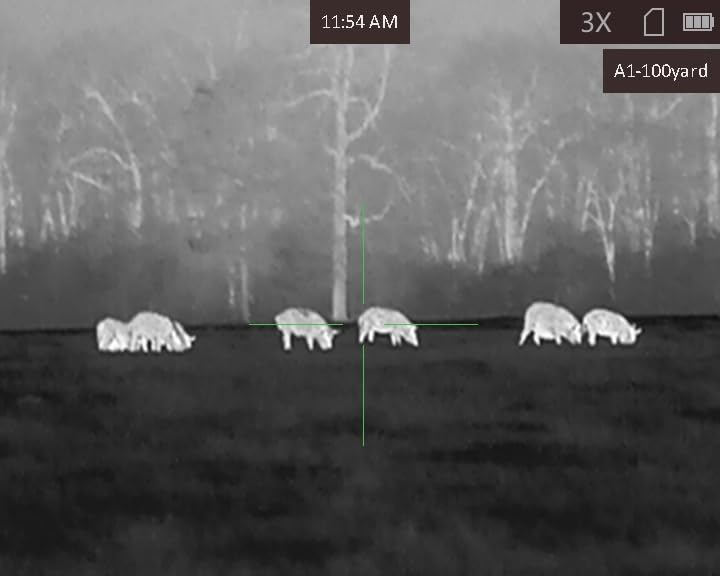
The Adder is built around a 50mm germanium objective, and that lens diameter is the quiet reason the image looks brighter and more contrasty than scopes with smaller glass. On a night with a clear sky and a cold ground, a large objective gives you the headroom to hold detail instead of squinting at a dim picture.
Several owners describe this scope as ideal for coyote hunting specifically, which tracks with the 4x base magnification. That is a narrow start for close work, but it is exactly the right framing for the field-edge shots that make up most of a coyote season.
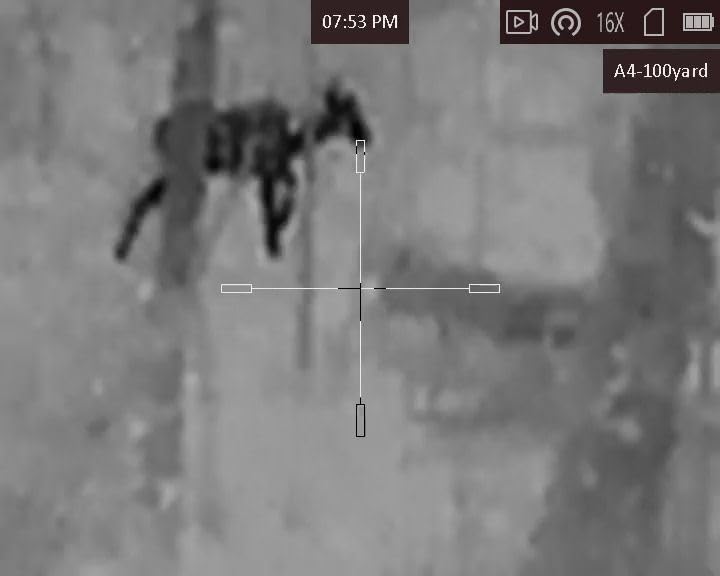
The 15 hour rated battery is the headline. For a hunter who does dawn-to-dawn sits, or who works predator control on a schedule, a single charge covering a full night changes how you plan a trip. It removes the spare-battery discipline that most thermals force on you.
The one-piece 30mm American Defense Manufacturing quick-detach mount is a genuine convenience. It drops into standard 30mm ring positions on multiple rifles, so you can move the optic between a bolt gun and an AR without pulling a wrench.
Field of view is 5.4 by 4.0 degrees, which is tight, and the 4x to 32x range is mostly digital beyond the base power. Treat the digital steps as useful for confirming identity, not for reaching a distant target.
Who the Adder suits?
This suits the patient hunter who sits on a calling point for hours and wants the image to look good at 2am. The long runtime means you can leave it powered while you handle the call, the rifle, and the coffee without watching the battery gauge.
It also suits anyone who runs multiple rifles and already works in 30mm rings, since the quick-detach mount makes the whole rig simple.
Where the Adder falls short?
The control knob is the most repeated complaint. Owners report that it is so sensitive that a slung rifle bumping the scope drops it into the menu, and fumbling through menus at 2am in the cold is the exact scenario the optic was bought for.
Several owners also note that moisture in the air noticeably degrades clarity, which is physics rather than a defect. Humid nights are a genuine limitation for any thermal, and this scope makes it obvious enough to plan around.
5. ATN Thor LTV 256 – Lightest Optic and Easiest Controls
ATN Thor LTV Ultra-Light Weight Thermal Scope. The Thor LTVs are Premium Thermal Scopes for Hunting That utilize Advanced Thermal Vision. Easy to use Advanced Thermal Scopes
256 12um sensor
60Hz refresh
1.5x-4.5x
One Shot Zero
1.4 lb total
30mm rings
Pros
- Lightest full scope here at 1.4 pounds
- 60Hz refresh gives clean tracking of a running coyote
- One Shot Zero makes field zeroing fast
- SharpIR processing beats what the raw sensor suggests
- User-friendly menus and setup
Cons
- 256 resolution cannot always identify species
- 1.5x-4.5x range limits long shots
- Some first-time owners hit zeroing questions
Weight is the first thing you notice with this scope. At 1.4 pounds including rings, it is the optic here that will not meaningfully change how a lightweight hunting rifle carries, and for anyone walking into timber or brush to shoot a coyote at 40 yards, that is worth more than another tier of sensor resolution.
The 60Hz refresh rate is the other standout. That is the highest frame rate in this group, and it is the number that matters when a coyote decides to run instead of hold. A high refresh rate keeps the image stable so you can keep the animal in the center of the frame through a turn.
Owners frequently single out the user-friendly menus and report buying a second unit, which is a strong signal. The controls do not get in the way at night, and that is a bigger practical advantage than any spec on the list.
Who the Thor LTV suits?
This is the close-quarters scope. A 1.5x wide start with 4.5x at the top is designed for brushy timber, draw edges, and the 30 to 80 yard shots that happen when a coyote is working a rabbit field a few feet from your stand.
It also suits anyone switching from daylight glass, because One Shot Zero and simple menus mean a first thermal experience is not a frustrating one.
Where the Thor LTV falls short?
The 256×192 core cannot always tell you what you are looking at. Owners are clear that low resolution means you cannot always identify antlers or narrow down species, and that is exactly the limitation that matters when the only thing out there is a coyote and a deer.
The narrow magnification range is the other limit, since 1.5x to 4.5x simply cannot reach a distant animal. Several first-time owners also reported questions about the zeroing process even with One Shot Zero.
6. ATN Thor 5 LRF 4-16x – Rangefinder and Ballistics in One Unit
ATN Thor 5 LRF Smart HD Thermal Scope w/Ultra Sensative Gen 5 Sensor, Video Rec, Built in LRF, Ballistic Calculator, RAV
320x240 12um sensor
4x-16x magnification
Integrated LRF
Ballistic calculator
2.1 lb
Pros
- LRF and ballistic calculator replace separate rangefinder and drop unit
- Crisp image that owners compare favorably to the prior generation
- Lightweight for a smart scope with an LRF
- Custom reticle editor
- ATN support assists with setup and pairing
Cons
- Only 11 reviews so far reliability data is thin
- Wi-Fi and app dependence adds setup complexity
- ITAR restrictions limit some support and use
The argument for this scope is consolidation. A built-in laser rangefinder and an advanced ballistic calculator mean you are not juggling a separate rangefinder and a drop-adjusted reticle at 2am, and experienced thermal hunters increasingly treat an integrated LRF as close to mandatory rather than a luxury.
Owners consistently describe the picture as visibly better than the previous generation, and first-time thermal buyers particularly value confirming a distance without leaving the sighting picture. That confidence matters, because a coyote at an unknown range in the dark is a range problem before it is an aiming problem.
Custom reticle editing, HD video recording, and smartphone control round out a feature set that covers calling, shooting, and reviewing a shot afterward from one device.
Who the Thor 5 LRF suits?
This suits a hunter who wants a single box to handle scanning, range confirmation, and the drop correction for a modern flat-trajectory cartridge. If you are pairing a thermal with an AR platform in .308 or a similar rifle, having a matched weapon profile ready in the device is a real convenience.
It also suits someone comfortable with app-based setup, since the smartphone features are a large part of what the scope offers.
Where the Thor 5 LRF falls short?
The review record is thin, with only 11 ratings, so long-term reliability data is limited. Bluetooth pairing and firmware issues are the most common complaints in this category of smart scope, and the app dependence means a failed update can affect features you need in the field.
At 320×240 the sensor sits between the entry and mid tiers, so you are not buying this for resolution. If your priority is long-range identification rather than features, a 384 or 640 core serves you better.
7. DNT Optics Hydra-LRF HS635R – The Only 640-Resolution Scope Here
DNT Optics HS635R Hydra-LRF 640×512 35mm Thermal Scope, Hunting Riflescope
640x512 12um sensor
NETD 18mK or better
35mm lens 1.5x-6x
LRF 5-1300 yd
IP67
1.6 lb
Pros
- Only 640x512 core in the group with a 18mK or better noise floor
- LRF and ballistic calculator with drop compensation
- Switches between standalone
- clip-on and handheld modes
- 1.6 pounds suits a portable setup
- Two batteries and QDM150 mount included
Cons
- Only 8 reviews available so field data is limited
- QDM150 mount listed as a separate accessory in some configurations
A 640×512 sensor with a noise floor of 18mK or better is the highest-detail core in this roundup, and detail is the entire reason to spend more on a thermal. Owners describe sharp, high-contrast images and the ability to identify an animal rather than guess at it, which is the difference we care about when a coyote is standing broadside at range.
The super resolution algorithm pushing toward 960-equivalent detail at 6x is a processing trick, and processing cannot create information the sensor missed. Even so, owners report the zoomed image holds up better than expected for a compact unit.
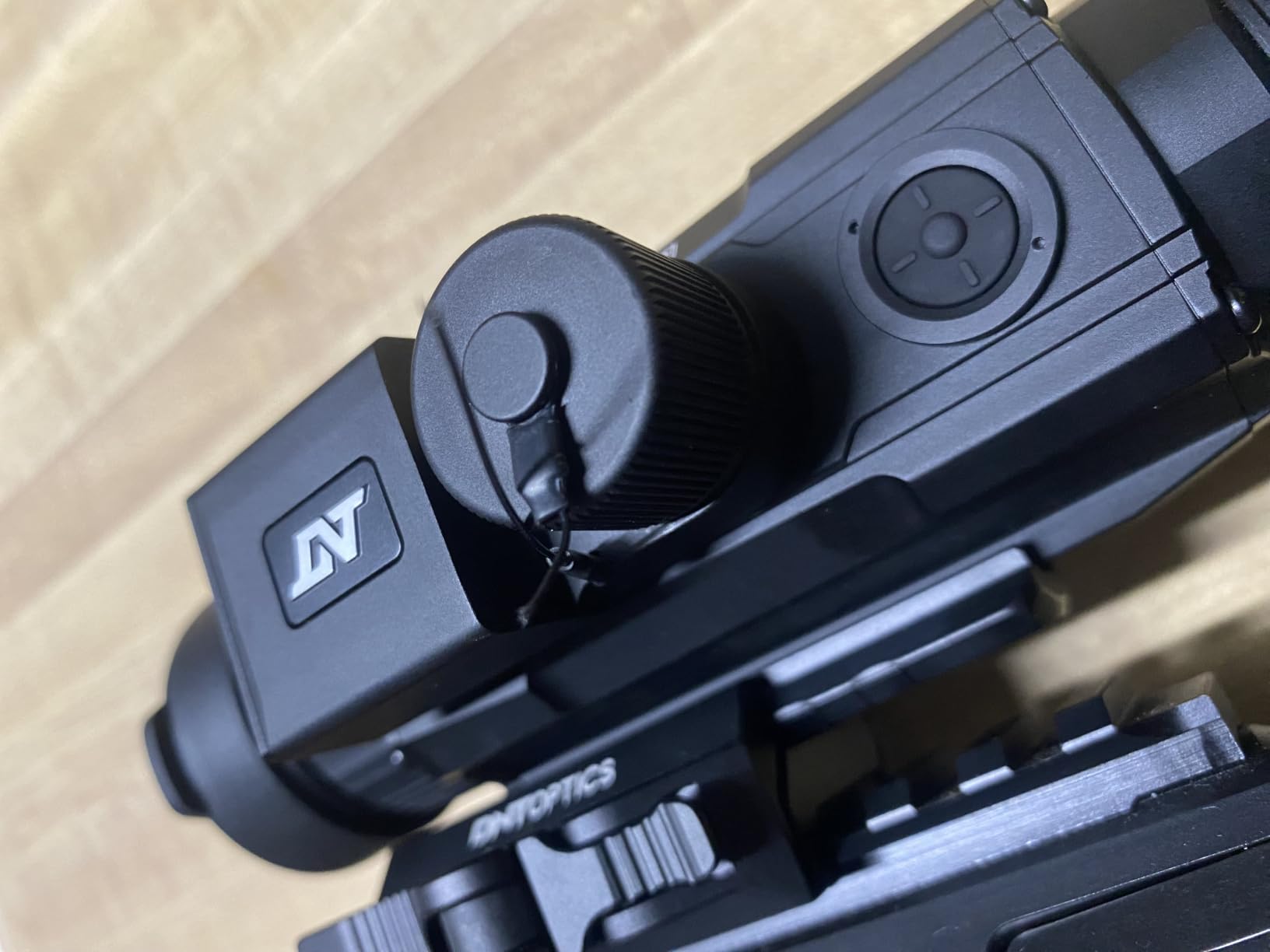
The laser rangefinder measures from 5 to 1300 yards with an onboard ballistic calculator, and profiles can be edited on the device or through the app. That covers the full range of a coyote hunt, from a 60 yard rabbit field to a long glass across open pasture.
At 1.6 pounds with an IP67 rating and a recoil rating to .50 BMG, this is a serious tool in a compact package. The QDM150 quick-detach mount is the hinge that makes the three-role design work in practice.
Magnification runs 1.5x to 6x, and that 1.5x base is worth noting. It is a genuine wide start for scanning, which pairs naturally with the handheld mode.
Who the Hydra-LRF suits?
This suits anyone whose shots live past 300 yards, which in practice means CRP ground, western CRP, and any wide-open field where you want to call a coyote, watch it stand, and positively identify it before deciding on a shot.
It also suits a hunter building a modular kit, since the same unit works as a handheld scanner, a clip-on in front of day glass, and a standalone scope.
Where the Hydra-LRF falls short?
With only 8 reviews, the field reliability record is limited, and you are buying into a newer platform with a smaller support history than the established brands in this list.
Some configurations list the QDM150 mount as a separate accessory, so confirm what ships in the box before you plan a clip-on setup around it. The 6x digital ceiling is also modest for a 640-class core, so this is an identification tool rather than a long-range magnification tool.
8. AGM Rattler V3 TS25-384 – Built for Cold Hands
AGM Global Vision Rattler V3 25-384 Thermal Scope Ultra-Sensitive Sensor
384x288 12um sensor
NETD under 15mK
1920x1080 OLED
2.5x-20x
6.34 oz
Pros
- Sub-15mK sensor gives strong coyote and hog detection
- 1080p OLED makes target ID easier than lower-res units
- Oversized glove-friendly buttons and manual focus ring
- Shot-activated recording with audio
- Two batteries and a case included
Cons
- Only 9 reviews so long-term data is thin
- Interface takes practice to learn
- 13 percent of reviews are one-star
This scope is designed around the part of the hunt that actually goes wrong, which is the two hours before dawn in January when your hands are cold and you are trying to work a menu. The oversized buttons and the manual focus ring exist specifically for that, and glove-friendly controls are the detail that separates a scope you can use from a scope you fight.
The jump from the 256 sensor in the Rattler V2 to a 384×288 core with a sub-15mK noise floor is the substantive upgrade. Owners describe noticeably better picture quality and easier target identification, and the 1920×1080 OLED display gives you a sharper image to work with than lower-resolution units in the same class.
Magnification runs 2.5x to 20x on a 25mm objective, which gives a wider working range than most of the entry scopes here while staying light at 6.34 ounces.
Who the Rattler V3 suits?
This suits anyone hunting through the cold months in the northern half of the country, where the nights when you can see coyotes are also the nights when bare fingers cannot work a small button. The controls are the selling point as much as the sensor.
It also suits a hunter stepping up from an entry 256 scope who wants 384-class identification ability without carrying a two-pound optic.
Where the Rattler V3 falls short?
The review base is very small, at nine ratings, and 13 percent of those are one-star, the highest negative share in this group. That is a mixed and unfinished record, and we would not call it proven.
The interface also takes practice, and while a 25mm objective is a good light-gathering compromise, you will have less low-light headroom than a scope with a 35mm or 50mm lens.
9. DNT Optics Hydra HS325 – The Mid-Tier Multi-Role Mount
DNT Optics Hydra HS325 Thermal Scope, 384×288 25mm, High-Sensitivity Sensor
384x288 12um sensor
NETD 18mK or better
50fps
2x-8x
6061 aluminum
13.4 oz
Pros
- Three-in-one mounting across scope
- clip-on and handheld
- 384x288 core with 18mK or better sensitivity at 50fps
- AI super resolution keeps digital zoom usable
- IP67 aluminum body rated to .50 BMG recoil
- Quick-detach mount for fast rifle changes
Cons
- Only 7 reviews the smallest sample in the pool
- 19 percent of reviews are one-star
- On the heavy side for a 25mm scope
The HS325 is the 384×288 step up in the DNT Hydra line, and it pairs that larger core with the same three-in-one mounting concept. For a hunter who already owns a decent day scope, that combination is unusual at this level: real identification resolution plus the ability to add and remove thermal capability in seconds.
At 50fps with a noise floor of 18mK or better, this is a solid spec sheet for a coyote hunter who wants headroom beyond entry level. Magnification steps at 2x, 3x, 4x, 6x, and 8x give a sensible spread from scanning to identifying.
The 6061 aluminum body, IP67 sealing, and recoil rating to .50 BMG describe a scope built to live on a working rifle rather than sit on a shelf between seasons.
Who the HS325 suits?
This suits the modular hunter, someone who wants one thermal device that covers a handheld scan, a clip-on on daytime glass, and a standalone scope, and who wants more sensor detail than an entry 256 core provides.
It also suits a hunter building toward a 640-class setup and wants to learn the DNT mounting system first, since the quick-detach approach carries between roles.
Where the HS325 falls short?
Seven reviews is the smallest sample in this roundup, and 19 percent of those are one-star. The 4.2 average is provisional, and we would want a larger record before calling this a proven optic.
At 13.4 ounces on a 25mm lens, the weight-to-glass ratio is unbalanced compared with lighter scopes here, and the app-based live streaming is another layer of complexity you only benefit from if you use it.
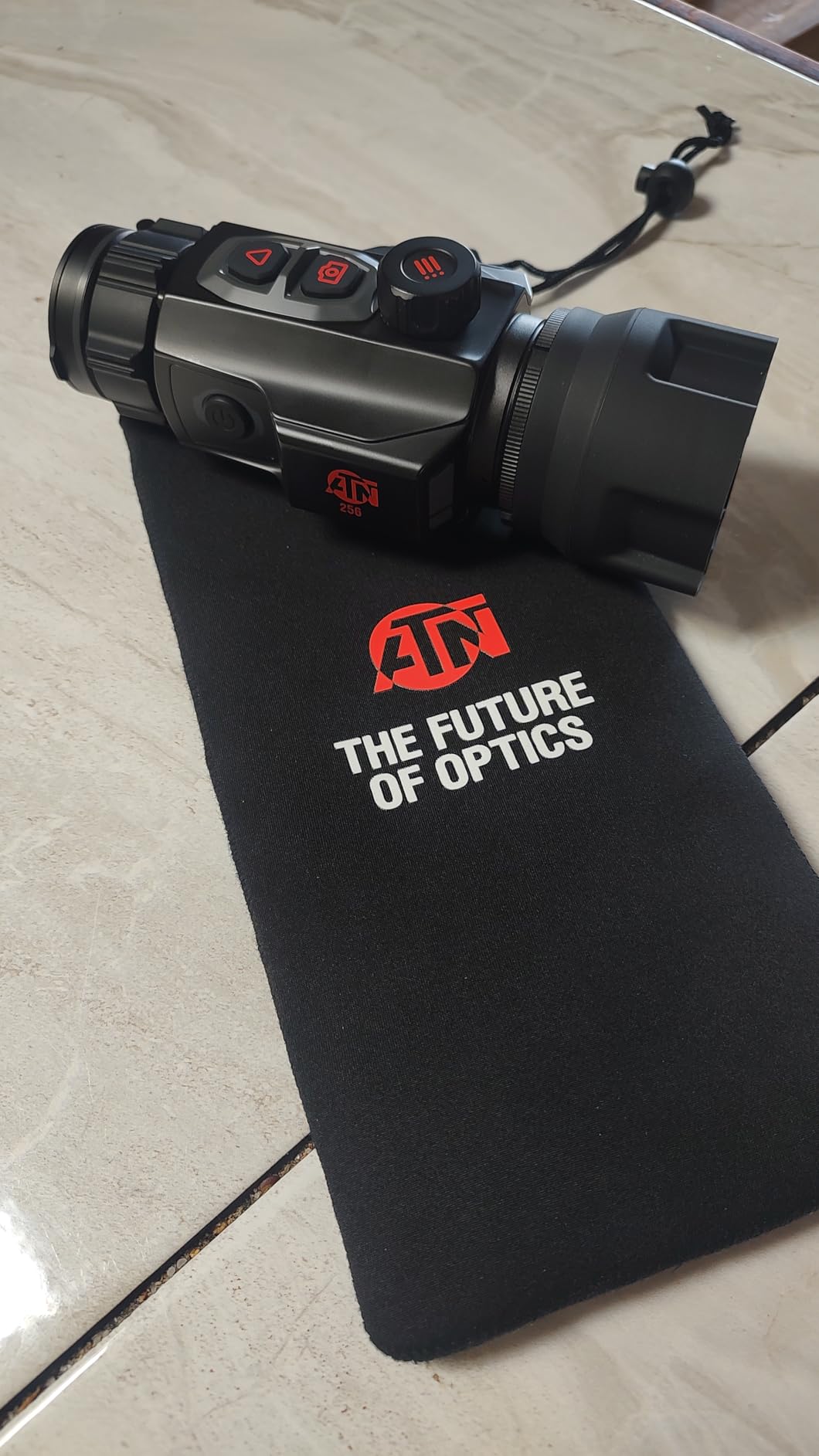
10. ATN Tico 6 Clip-On – Keep Your Day Scope and Add Thermal
ATN Tico 6 Thermal Imaging Clip-On Scope Attachment, 256×192, Coyote & Hog
256x192 sensor
NETD 20mK
1x-8x
0.32 in 800x600 OLED
Doubles as monocular
1.1 lb
Pros
- Keeps your existing day scope and adds thermal in seconds
- No re-zero when mounted or removed
- Works as a clip-on or a handheld monocular
- Hot point tracking helps identify moving animals
- Lightest option here at 1.1 pounds
Cons
- 256x192 produces soft images at long range
- 20mK NETD is less sensitive than higher-tier sensors
- Needs an adapter and spacer for some scopes
The clip-on approach answers a question most roundups ignore. If you already own a day scope you trust, a clip-on thermal lets you keep that glass, keep your zero, and add thermal capability only when you need it, without committing to a second dedicated night optic or re-zeroing anything.
Several owners describe exactly this setup as a practical coyote and hog configuration. Hot point tracking and recoil-activated recording help you confirm what you just shot, and the ability to pull the unit and use it as a handheld monocular means it works as a scanner too.
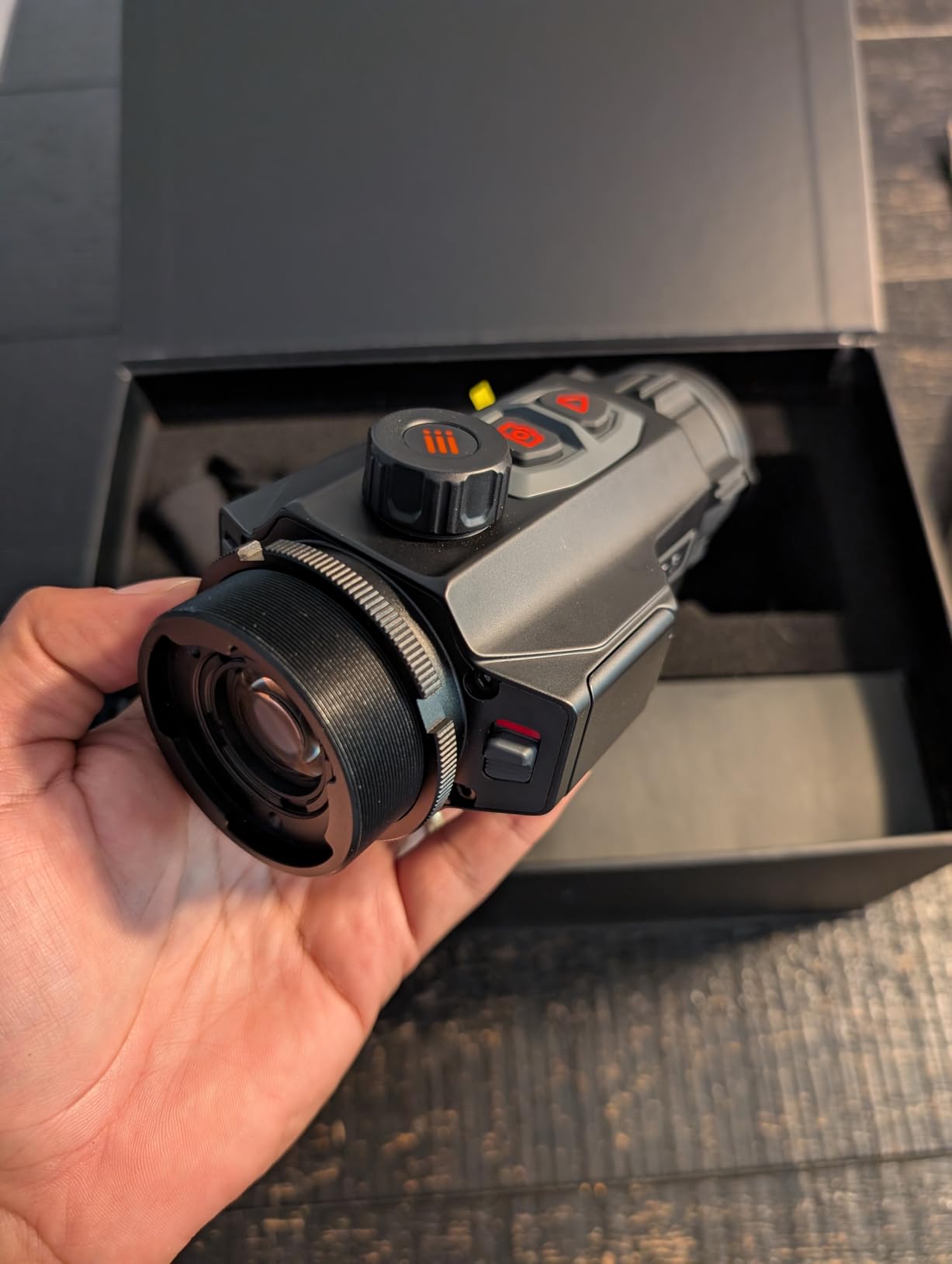
Mechanically, the Tico 6 sits in front of an existing scope and leaves the reticle, magnification, and zero untouched. That matters more than it sounds, because re-zeroing thermal optics in the field is a miserable job and most of us have done it at least once.
At 1.1 pounds it is the lightest unit in the roundup, and it mounts to Picatinny with the included adapter and spacer. SharpIR enhancement and selectable color palettes are useful for separating a coyote from a warm background.
Who the Tico 6 suits?
This suits hunters who shoot during the day and hunt coyotes at night with the same rifle, and who would rather not own two optics. It also suits anyone who wants a thermal they can carry in a pocket as a scanner and put on the gun when the light goes.
It is a sensible first thermal for a hunter who is not yet sure how much night hunting they will do, since the commitment is smaller than a full scope.
Where the Tico 6 falls short?
The 256×192 sensor produces soft images at long range, and a 20mK noise floor is less sensitive than higher-tier cores. If your shots are past 150 yards, this is not the tool.
Fitment is the other practical issue, since some existing scopes need an adapter and spacer to clear the clip-on body. Check your eye relief and objective clearance before you commit, and expect the added length in front of the rifle to affect how it rides in a rest.
Monocular, Clip-On or Full Tube Scope?
Most people end up using two devices, and the reason shows up in the field. A handheld monocular is how you find the animal, because scanning a wide area on glass mounted to a rifle is slow and tiring. A rifle scope is how you shoot it, because you cannot hold a rifle on target and a monocular to your eye at the same time. Owners on r/ThermalHunting describe running a monocular for scanning and a scope for shooting as the standard pattern, and that is the setup we would build.
A clip-on thermal sits in the middle. It preserves your day scope and your zero, and it converts to a handheld unit, which makes it the most economical entry point. Its cost is field of view and eye relief, because a clip-on is always looking through your existing optic.
A standalone tube is the cleanest sighting picture and the widest field of view, and it is the only option that gives you a true 1x wide start for close work. If you hunt exclusively at night, this is the right answer.
Thermal vs Night Vision for Coyote Hunting
Thermal wins the night. It needs no moonlight at all, so it works on a dark overcast night when an image intensifier is effectively blind, and it is far less affected by the headlamp glare and background light that ruin night vision in areas with roads and houses.
Night vision still wins on detail and depth perception. Image intensifiers resolve edges, textures, and shape better than any thermal at the same price, which helps you judge a shot and identify an animal against a busy background. Generations two through three are the ones worth owning today.
Neither technology sees through vegetation. That is the most persistent myth in these forums and it costs buyers real money and real trips. If a coyote is behind brush, it is hidden from you, and no sensor tier changes that.
Our recommendation is to use both if you can afford it, and to pick thermal first if you can only afford one. Coyotes are hardest to find and hardest to positively identify in total darkness, and that is the problem thermal solves.
Field Realities That Decide a Coyote Hunt
Detection range is a marketing number, and identification range is the number that decides your hunt. A manufacturer claiming 2000 yards is describing the distance at which a large warm object produces a signal. Being able to look at that signal and say with confidence that it is a coyote happens at a fraction of that distance, and that gap is where buyer regret lives. Judge a scope by the detail it gives you on an identified animal, not by the figure on the box.
Cold weather derates batteries hard, and the manufacturer runtime assumes comfortable temperatures. A scope rated for 11 or 15 hours may give you noticeably less on a January pre-dawn sit, which is why removable batteries matter. Carry a spare pack, or plan on powering through a USB-C bank, and treat the rating as a warm-weather figure.
Humid and foggy nights are the hardest conditions for any thermal, because water in the air blunts the contrast between an animal and a background. The same owners who rate a scope highly on a cold clear night report clarity dropping in moisture, regardless of what they paid. Cold, dry, clear nights give a thermal its best image, and a hot summer night with a warm ground gives it the worst.
Two habits do more for your hunt than any spec. Raise contrast and brightness to push the warm ground down so animals stand out against a darker field, and scan slowly. Fast pans lose animals, and the ones that break and run are exactly the ones you already missed twice.
How to Choose a Thermal Scope for Coyotes?
Sensor resolution is the first filter. A 256×192 core finds animals and gives you a shape, which is enough inside roughly 150 yards. A 384×288 core is the practical minimum for coyote work, because it starts resolving fur line, tail, and leg detail that let you confirm species. A 640×512 core is what you want when shots live past 300 yards, and it is the single biggest jump in identification ability available.
NETD, measured in millikelvins, is the noise floor. Lower numbers are better, and this is the spec almost nobody explains. It measures how small a temperature difference the sensor can pick out, so a scope with a lower figure can separate a warm animal from a warm background in tougher conditions. Below 25mK is a good entry-level figure, under 20mK is a solid mid-tier, and sub-15mK is a strong sensitivity class.
Lens diameter decides how the image looks at night. A 25mm lens is a sensible compromise for close work. A 35mm gathers more light and helps at range, and a 50mm gives the brightest image of the three, which is why the Adder reads so well on a cold clear night.
Base magnification is more important than maximum magnification. You need a wide start to scan and find the animal, and digital zoom does not add information the sensor never captured. A 1.5x to 2.5x base is a good working start, and anything above 4x is fine only if you shoot at close range.
Refresh rate matters when the coyote runs. 25Hz and 30Hz are workable for a standing animal. 50Hz and 60Hz keep a running coyote sharp, and the difference is obvious when a dog breaks from cover.
An integrated LRF has become close to mandatory. Distance is the first problem with a night shot, and a built-in rangefinder with a ballistic calculator solves it inside the sighting picture. If you are pairing a thermal with a flat-trajectory cartridge, match the weapon profile properly before you rely on drop data.
Battery design matters more than the rated hours. Removable batteries beat a single internal cell, because a dead internal battery ends your night. A scope you can swap in the dark with gloves on is worth more than several extra hours of headline runtime.
Weight and mounting decide whether you shoot well. A two-pound scope on a light rifle changes your hold and your cheek weld, and the failure shows up as a group that is not where you expect. Scopes under a pound and a half are easy on any rifle, and check the ring standard, since 30mm rings and a Weaver or Picatinny mount are not interchangeable.
Caliber matters less than people think. Coyotes are taken with the same cartridges used for deer and varmint, and the scope influences caliber choice mainly through mounting, torque limits, and the ballistic profile you load into the device. Pick the rifle you already shoot well, then match the scope weight to it.
Two related reads are worth your time if you are building a full night kit. Our guide to spotting scopes for western hunting covers daytime glassing at long range, and our picks for crossbow scopes apply if you mix archery into the same predator season.
One legal note before you buy. Thermal imaging is broadly legal for coyote hunting across most US states, but a small number of states restrict night-vision or illuminated optics during hunting seasons. Confirm the current rule with your state wildlife agency before you plan a trip around an optic.
Frequently Asked Questions
What is the best caliber for coyote hunting during thermals?
Caliber choice is driven by the rifle you already shoot, not by the optic. Coyotes are taken with common rimmed and bolt-action cartridges, and the thermal scope affects that decision mainly through weight, mounting standards, and the need to load a matched weapon profile into any ballistic calculator. Pick a rifle that balances well with your scope and zero it properly before the season.
What is the best thermal scope for coyote hunting on a budget?
Budget tier means an entry 256×192 core, and the honest expectation is coyote identification at close to medium range, roughly inside 150 yards, not at long distance. The AGM Rattler V2 and the ATN Thor LTV are the strongest entries in that band, with the Thor LTV lighter and the Rattler offering a wider kit. If you can stretch into 384×288, your identification range expands considerably.
What is better, thermal or night vision for coyote hunting?
Thermal is better for finding and identifying coyotes in total darkness, because it needs no moonlight and is unaffected by ambient light. Night vision gives better edge detail, texture, and depth perception, which helps with shot placement, but it goes blind on dark overcast nights. Neither one sees through brush or vegetation. If you can only buy one, buy thermal for coyotes.
What’s the best scope for coyote hunting?
For night and low-light coyote hunting, a thermal riflescope is the right answer, because coyotes are most active after dark and a thermal detects heat rather than amplifying whatever light happens to be available. The right tier depends on your shooting distance, with a 384×288 core as the practical minimum for coyote identification and a 640×512 core for long-range work.
Can thermal scopes see through trees and brush?
No. A thermal scope detects differences in heat, and dense vegetation blocks that heat before it reaches the sensor, so a coyote behind brush is as hidden from a thermal as it is from night vision. What a thermal does give you is the ability to see in total darkness, in fog, and where moonlight is unreliable. Expect to lose any animal that has cover between it and you.
Final Verdict
The best thermal scopes for coyote hunting come down to honest expectations about distance. Shoot inside 150 yards and the AGM Rattler V2 is the pick, with the ATN Thor LTV as the lighter alternative and the ATN Tico 6 if you want to keep your day scope. Work past 300 yards and you want a 640 core, which puts the DNT Hydra-LRF HS635R at the front of the field. For the middle of the spectrum, the Pulsar Thermion 2 Pro is the scope we would put on a rifle and leave there for a decade.
Whatever you choose, carry spare batteries, scan slowly, and treat detection numbers as marketing. The animal you can positively identify is the only one that counts.