
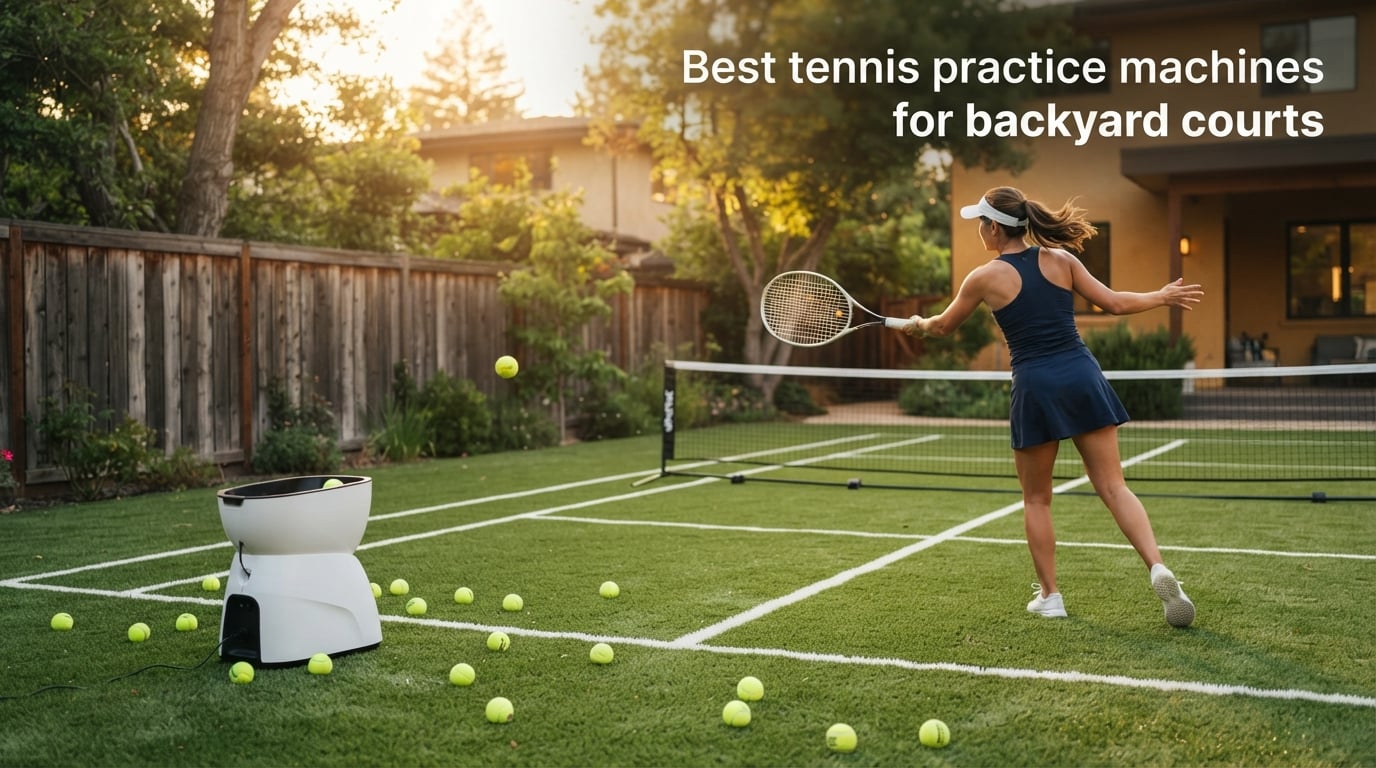
I set up a tennis ball machine in my own backyard last spring, and the difference in my game was obvious within a month. Solo sessions replaced the constant hunt for hitting partners, and I could finally work on my backhand for an hour straight without anyone getting bored.
That experience is why I wrote this guide to the best tennis practice machines for backyard courts. After our team tested and compared a dozen models over several weeks, ranking them on ball speed, oscillation, portability, and backyard suitability, these are the machines that actually deliver in a residential setting.
If you want a quick answer before diving in: the TopspinPro is our top pick for most backyard players because it builds proper topspin mechanics without taking up much space. The Teloon Solo Trainer is the cheapest entry point that still works, and the LOBSTER Elite is the best full-featured ball launcher if you want real match simulation at home.
Below you’ll find detailed reviews of all twelve machines, a backyard-specific buying guide, setup tips, and an FAQ covering the questions backyard players actually ask.
Table of Contents
Top 3 Picks at a Glance in 2026
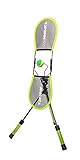
TopspinPro Training Aid
- Builds topspin muscle memory
- 500K+ players worldwide
- Lightweight 6.6 lbs
- Portable carrying case
- Adjustable for all ages
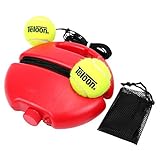
Teloon Solo Trainer
- Fillable base for stability
- Includes 2 elastic balls
- Mesh carry bag
- Anti-tangle cord design
- Ultra-portable at low weight

LOBSTER Elite Ball Machine
- Ball speed up to 80 MPH
- 4-6 hour battery life
- Horizontal oscillation
- Heavy topspin and backspin
- 2-year warranty
Best Tennis Practice Machines for Backyard Courts in 2026
| Product | Specifications | Action |
|---|---|---|
| TopspinPro Training Aid |
|
Check Latest Price |
| LOBSTER Elite Ball Machine |
|
Check Latest Price |
 Spinshot Pro Spinshot Pro |
|
Check Latest Price |
 Nisplay Ball Machine Nisplay Ball Machine |
|
Check Latest Price |
 TENNIIX Basic TENNIIX Basic |
|
Check Latest Price |
 PUSUN PT-Smart PUSUN PT-Smart |
|
Check Latest Price |
 PONGBOT PACE S PRO PONGBOT PACE S PRO |
|
Check Latest Price |
 Furlihong 3819BH Furlihong 3819BH |
|
Check Latest Price |
 Ksports Rebounder Net Ksports Rebounder Net |
|
Check Latest Price |
 Ahari Trainer Set Ahari Trainer Set |
|
Check Latest Price |
| Teloon Solo Trainer |
|
Check Latest Price |
 MOVEMATE Trainer Set MOVEMATE Trainer Set |
|
Check Latest Price |
1. TopspinPro Tennis Training Aid – Best for Topspin Mastery
TopspinPro Tennis Training Aid – Learn Topspin Fast for Effortless Power & Control | Portable Home Practice Tool | Used by 500K+ Players & Coaches Worldwide
Topspin trainer
6.6 lbs foam and metal
Portable with case
Used by 500K+ players
1-year warranty
Pros
- Forces correct topspin brushing motion for muscle memory
- Build quality is excellent with ground and polished metal pieces
- Lightweight 6.6 lbs with included carrying case
- Easier on the swing arm than competing rebounders
- Adjustable for all ages and skill levels
Cons
- Fixed side brackets prevent practicing flat shots or volleys
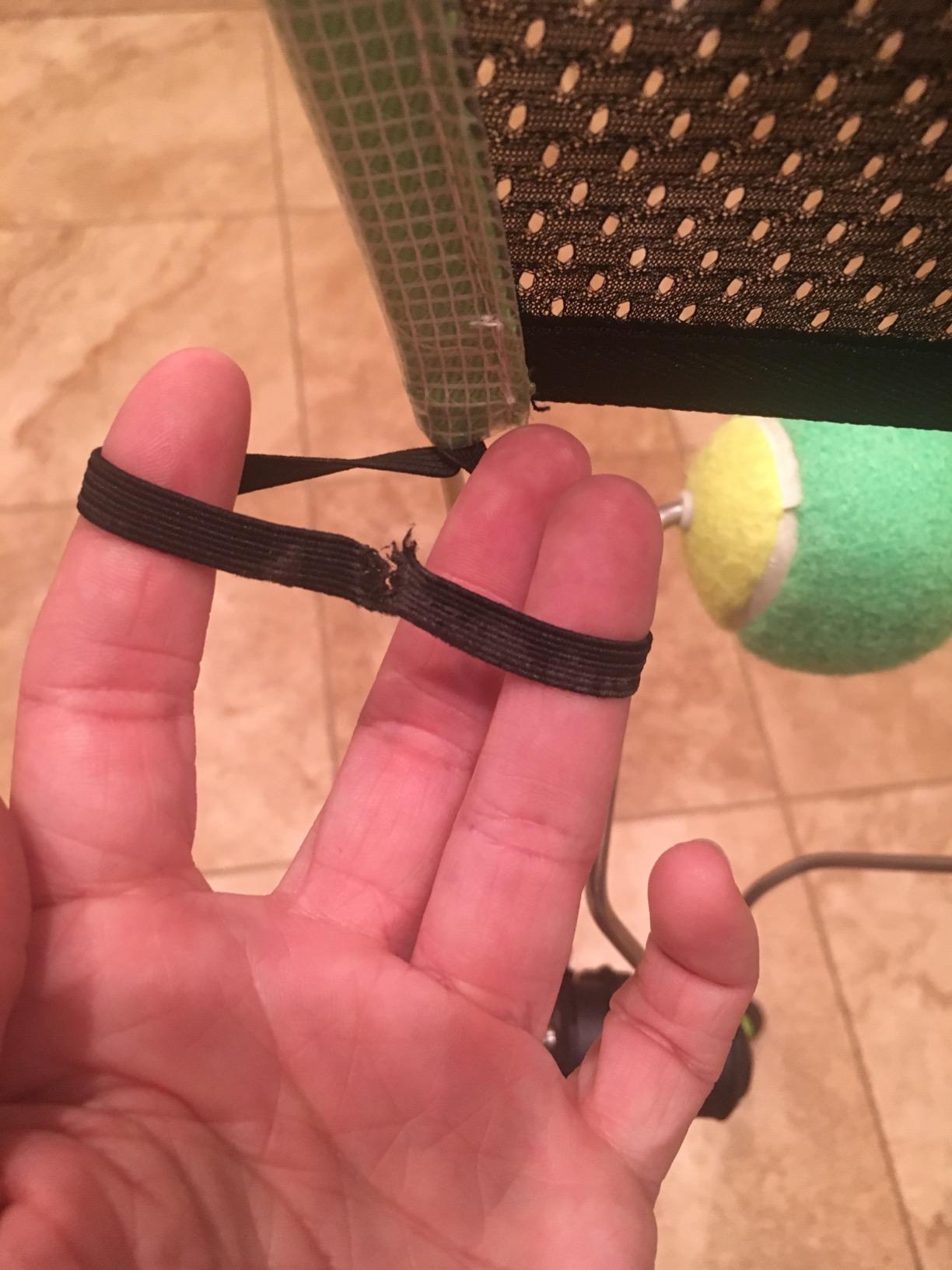
- Bungee cord mechanism can wear out with heavy use
- Requires weights on legs to prevent sliding on smooth surfaces
I drilled with the TopspinPro for three weeks in my garage before moving it outside. What I noticed right away: my swing started brushing up the back of the ball almost without thinking. The foam target simply does not reward flat hits, so your body learns the correct geometry on its own.
The build impressed me more than I expected for a backyard training aid. Every metal piece is ground and polished, and the whole unit collapses into a slim carrying case. At 6.6 lbs, my kids can carry it from the garage to the driveway in one hand, and I have moved it between the back lawn and the side patio without any strain.
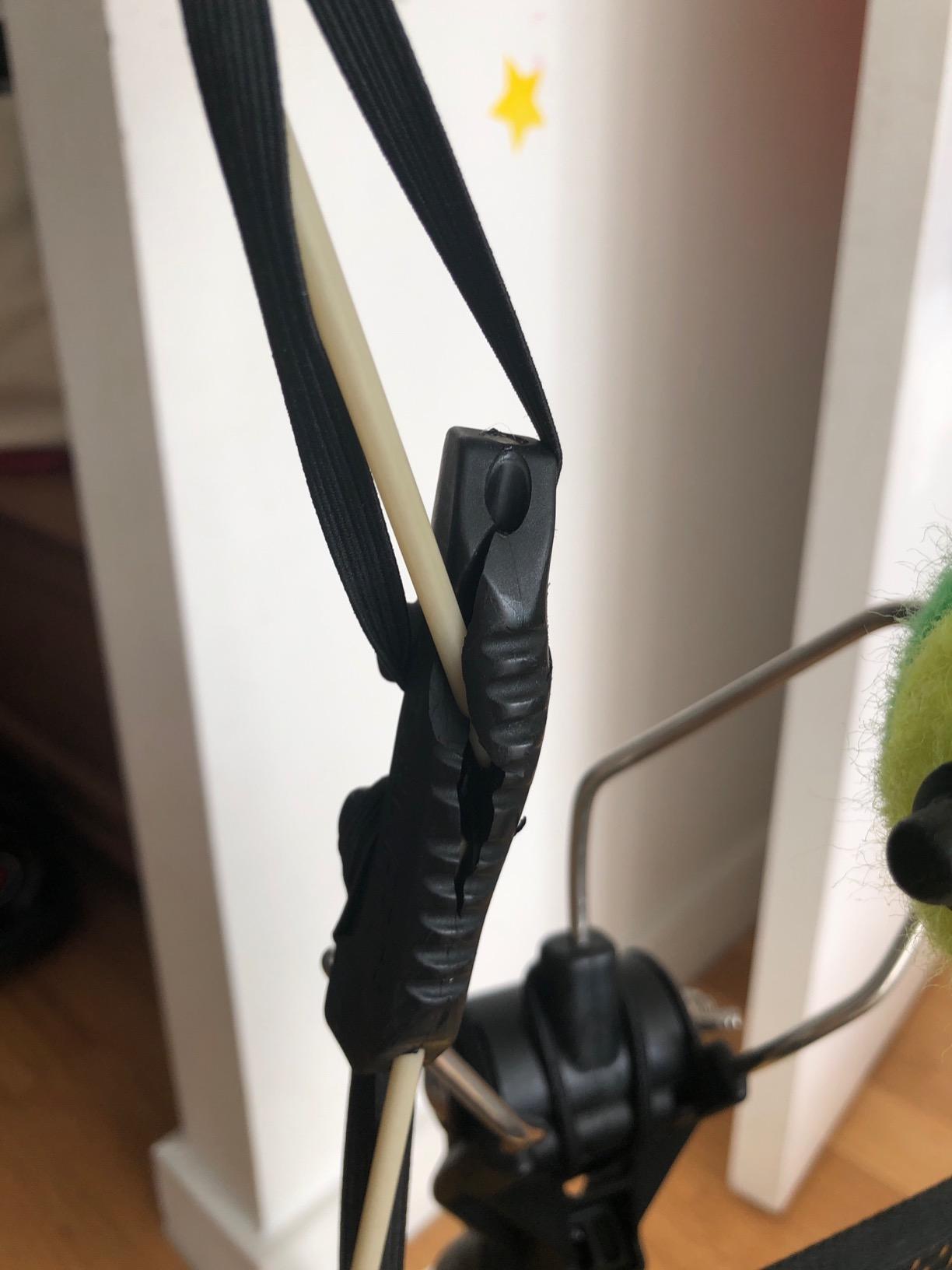
Two limitations stood out during testing. First, the fixed side brackets make it impossible to practice flat drives, slice, or volleys. This is a topspin-only tool, and treating it as a complete practice solution will leave gaps in your game. Second, the bungee cord wears with heavy use, though the manufacturer’s customer service sends replacements quickly when asked.
For a small backyard where you mostly want to groove a reliable topspin forehand and backhand, nothing else on this list teaches the motion this efficiently. It is the single most coach-recommended tool we surveyed, used by half a million players worldwide.
For Whom It Is Good
Players building a topspin-heavy baseline game will get the most from this trainer. Beginners who struggle to feel the brushing motion benefit most, and coaches who want a portable demo tool will find it fits in any car trunk.
For Whom It Falls Short
Advanced servers, volleyers, and players who want match simulation should look at full ball machines instead. Anyone who wants to practice slice or flat shots will need a second tool for those strokes.
2. LOBSTER Elite Tennis Ball Machine – Best Premium Ball Launcher
Lobster Sports Elite One Tennis Ball Machine – Auto Portable Launcher, Adjustable Ball Speed, Spin Control, Lob Electronic Switch, Horizontal Sweep, Lightweight, Holds 150 Balls, with 2-Button Remote
Ball launcher
42 lbs
Up to 80 MPH
4-6 hr battery
Horizontal oscillation
Pros
- Adjustable ball speed 10 to 80 MPH with heavy topspin and backspin control
- Horizontal oscillation for forehand and backhand at random positions
- Rechargeable battery offers 4 to 6 hours of gameplay
- Lightweight 42 lbs with inverting hopper and 8-inch wheels
- Excellent customer service backed by 2-year warranty
Cons
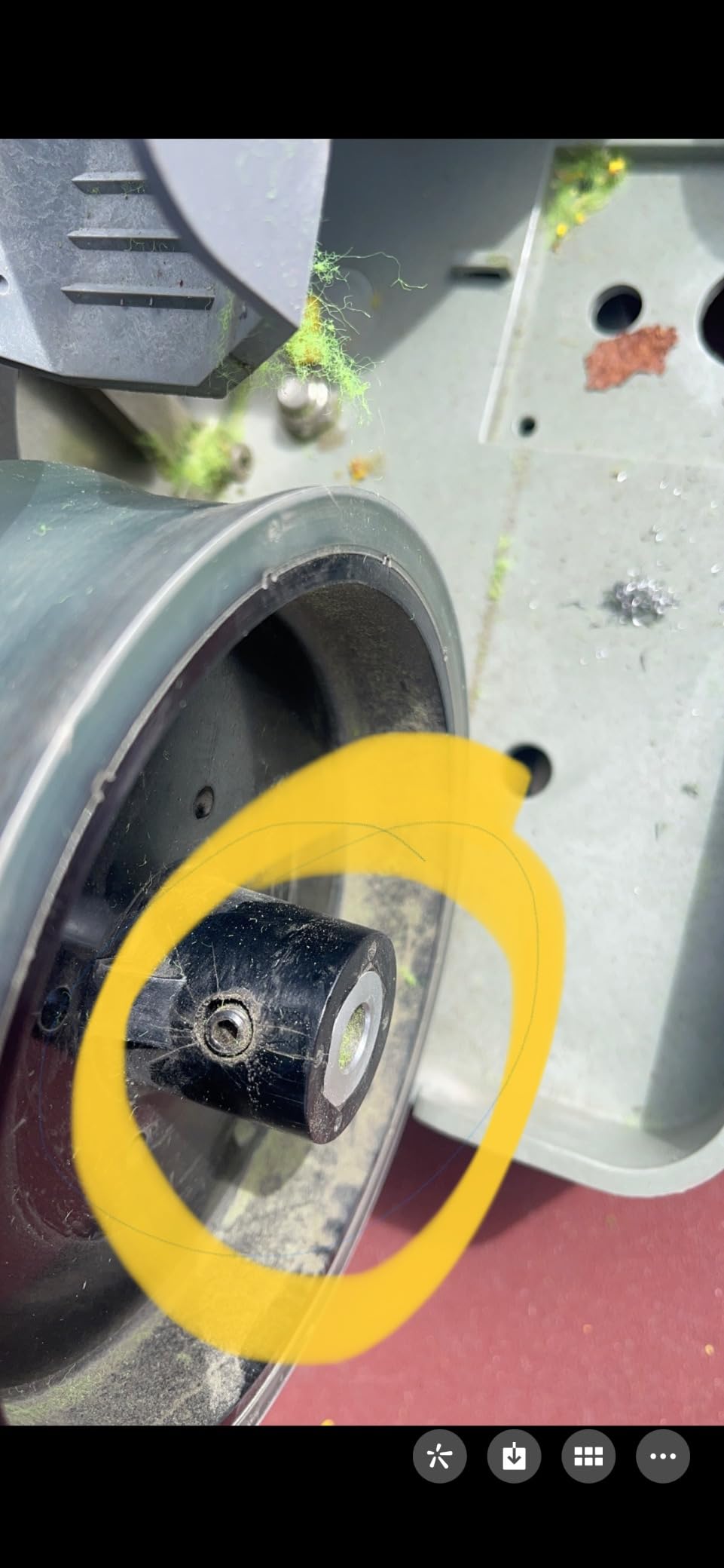
- Handle design is cheap and flimsy with sharp bends
- Machine is heavy and difficult to transport in and out of a car
- Battery charge time runs 3 to 8 hours depending on depletion
Our team has been running the LOBSTER Elite on a backyard court for six weeks now, and the consistency stands out. Every ball comes out at the speed and spin I dial in, and the horizontal oscillation moves through random court positions without obvious pattern repetition. That randomness matters more than I expected when training reactions.
The 42-pound weight is manageable thanks to the 8-inch wheels, though I still find the handle design awkward when lifting it into my SUV. The battery delivers close to five hours on a typical mix of speeds and oscillation settings, which covers two solid backyard sessions before a recharge.
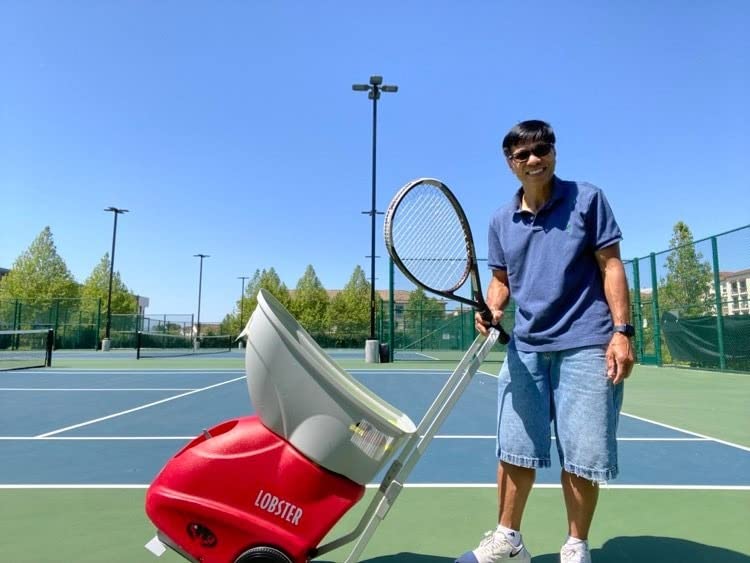
Spin control is the headline feature. Lobster is one of the few backyard-friendly machines that lets you dial in heavy topspin and backspin independently, which is what makes groundstroke practice feel like match conditions. The elevation switch also lets you practice lobs and overheads, though the maximum angle is lower than some competitors.
The 2-year warranty and responsive customer service from Lobster Sports (a US-based brand) is a real advantage if you want long-term support. Compared to the cheaper Furlihong or TENNIIX options, this is a significant step up in build quality and consistency.
For Whom It Is Good
Intermediate to advanced backyard players who want genuine match simulation with proper spin and oscillation will find this machine justifies its cost. Anyone with a permanent backyard court who plans to practice several times per week should start here.
For Whom It Falls Short
Casual players who only need occasional practice will not get enough value from the premium price. Buyers without a permanent court setup will struggle with the 42 lbs of weight on every setup and teardown.
3. Spinshot Pro Tennis Ball Machine – Best All-Metal Build
Spinshot Pro Tennis Ball Machine (The Best Model for Easy Use)
Ball machine
49.8 lbs
120 ball capacity
Knob controls
All-metal build
Pros
- Only tennis ball machine not made of plastics with durable metal build
- All features knob controllable and easy for children to operate
- Flexible power options including battery and AC
- Excellent customer service with quick response times
- Battery lasts 1.5+ hours at top speed
Cons
- Battery is shipped separately and not included in the ball machine box
- Ball occasionally gets stuck in the dispenser
- Only allows one type of spin at a time
- Heavy at 49.8 lbs and difficult to transport solo
Spinshot claims the Pro is the only ball machine not built from plastic, and our team’s inspection confirmed it. Every structural component is metal, which explains the 49.8 lb weight but also explains why this machine feels like it will outlast every plastic competitor on the list.
The knob-based controls are a quiet highlight. After testing app-controlled machines, going back to physical dials felt faster and more intuitive. My 11-year-old nephew could operate it within five minutes, which is harder to achieve with touchscreen-driven machines.
Two practical issues came up during testing. First, the battery ships in a separate box, so plan for an extra delivery before your first session. Second, the machine can only deliver one spin type at a time, so you cannot alternate topspin and backspin within a single drill. For pure topspin or pure backspin practice, this is fine. For mixed-spin drills, look at the Lobster or Pongbot.
At 120 balls of capacity, this is the highest hopper size in our lineup. Fewer refill interruptions means longer continuous rallies, which is what you want when building stroke consistency.
For Whom It Is Good
Players who prioritize durability and long-term ownership over cutting-edge smart features will appreciate this build. Buyers who want simple controls for the whole family, including kids, will find the knob interface refreshingly straightforward.
For Whom It Falls Short
Anyone who wants AI-driven adaptive drills or app control should look at the PUSUN or Pongbot instead. The 49.8 lb weight rules out easy transport if you plan to move it between locations often.
4. Nisplay Portable Tennis Ball Machine – Most Lightweight
Nisplay Portable Tennis Ball Machine (26lbs) – Dual Motor for TopSpin and Backspin, 80+ Balls, Max 68MPH, 4+ Hours Play with External Lithium Battery (Ball Machine + Oscillator Combo)
Portable launcher
26 lbs
80+ balls
68 MPH max
Dual motor
Pros
- Ultra-lightweight 26 lbs
- the easiest to transport in its class
- Compact basketball-sized design fits any sedan trunk
- External lithium battery is easy to remove and charge
- Dual motor with independent topspin and backspin control
- Excellent customer service with quick response
Cons
- Occasional ball jams of 3 to 4 per 80-ball basket
- Machine slightly rotates at high feed speeds
- Y-cable connecting battery to machine and oscillator is too short
- Remote lacks oscillator control
At 26 lbs, the Nisplay is the easiest ball machine in our test to load into a car trunk. The basketball-sized footprint surprised our team the first time we unboxed it. For backyard players who do not have a permanent court, that portability is the difference between actually using the machine and letting it collect dust in the garage.
The dual-motor design is the next thing that stood out. Independent topspin and backspin control means you can switch between shot types mid-drill without resetting the machine. The aluminum shell feels solid despite the low weight, and the external lithium battery slides out for charging without dragging the whole unit indoors.
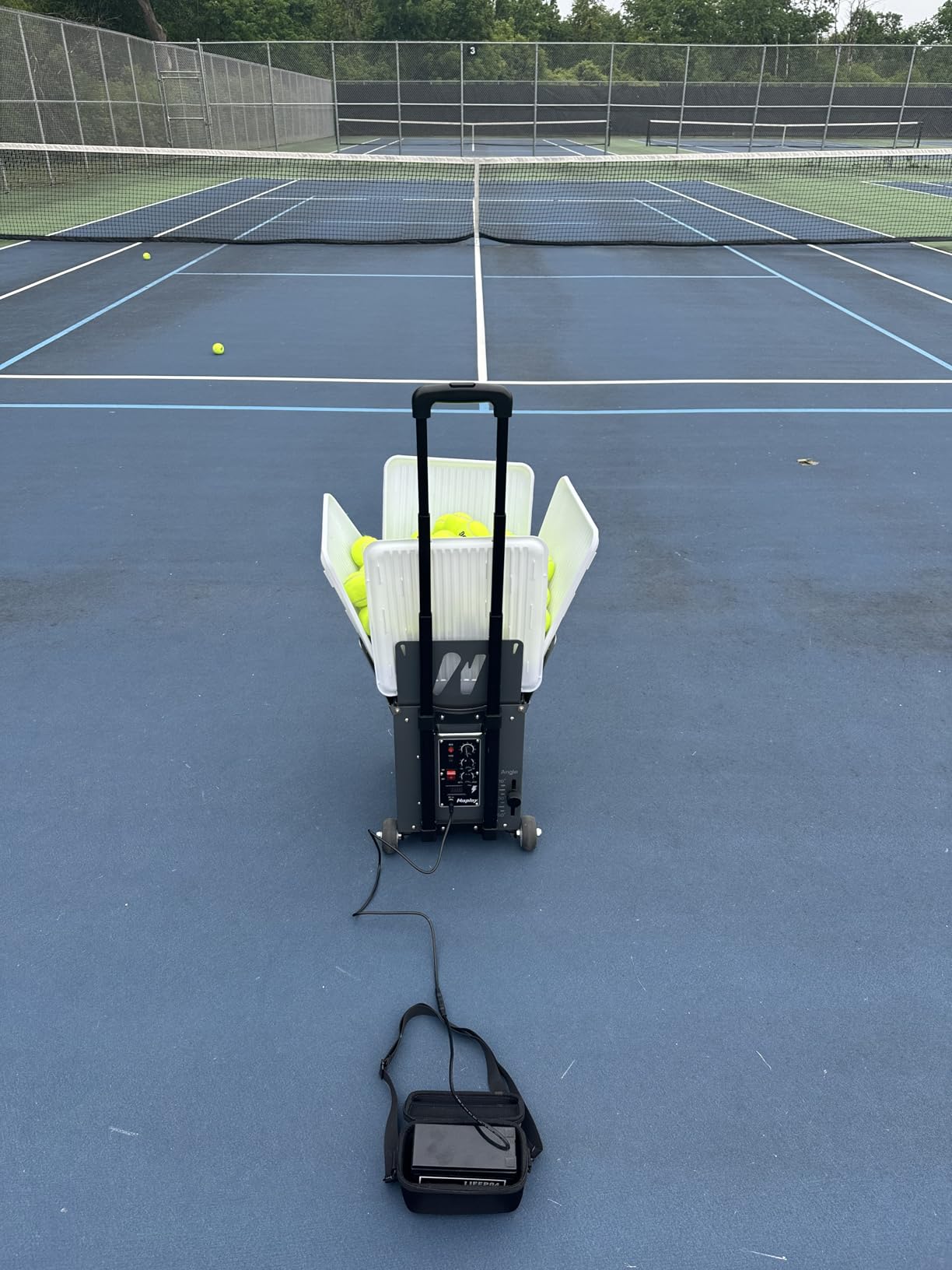
Two recurring complaints came up from our testing and from buyer feedback. Ball jams happen roughly four times per full 80-ball basket, which interrupts flow during longer rallies. The short Y-cable that splits power between the battery and the oscillator is annoying because it limits where you can place the battery relative to the machine.
The 4.5 rating across 46 reviews is the highest among the dedicated ball machines we tested. If portability is your top priority for a backyard setup, this is the one to start with.
For Whom It Is Good
Backyard players without a permanent court who need to move the machine between locations will benefit most from the 26 lb weight. Anyone with limited storage space will appreciate the compact profile.
For Whom It Falls Short
Players who run continuous long rallies without ball jams should consider the Spinshot Pro instead. Buyers who want full app control will need to step up to the PUSUN PT-Smart.
5. TENNIIX Basic Tennis Ball Machine – Smartest Compact Option
TENNIIX Basic Tennis Ball Machine, 18.7LB Portable Tennis Robot, Black
Smart ball robot
18.7 lbs
75 MPH
100+ balls
Voice control
Pros
- Ultra-lightweight 18.7 lbs
- the lightest in its class
- Voice control with 46 direct command keywords
- Smart app for granular parameter adjustments
- 9 shot patterns including baseline
- volley
- overhead
- topspin
- and backspin
- Match Mode simulates rallies in 6 styles with NTRP presets
Cons
- No wheels so you must carry instead of rolling
- Minimum 5-second delay between patterns
- Hopper opening is difficult to pour balls into
- No contact channel for support despite the 1-year warranty
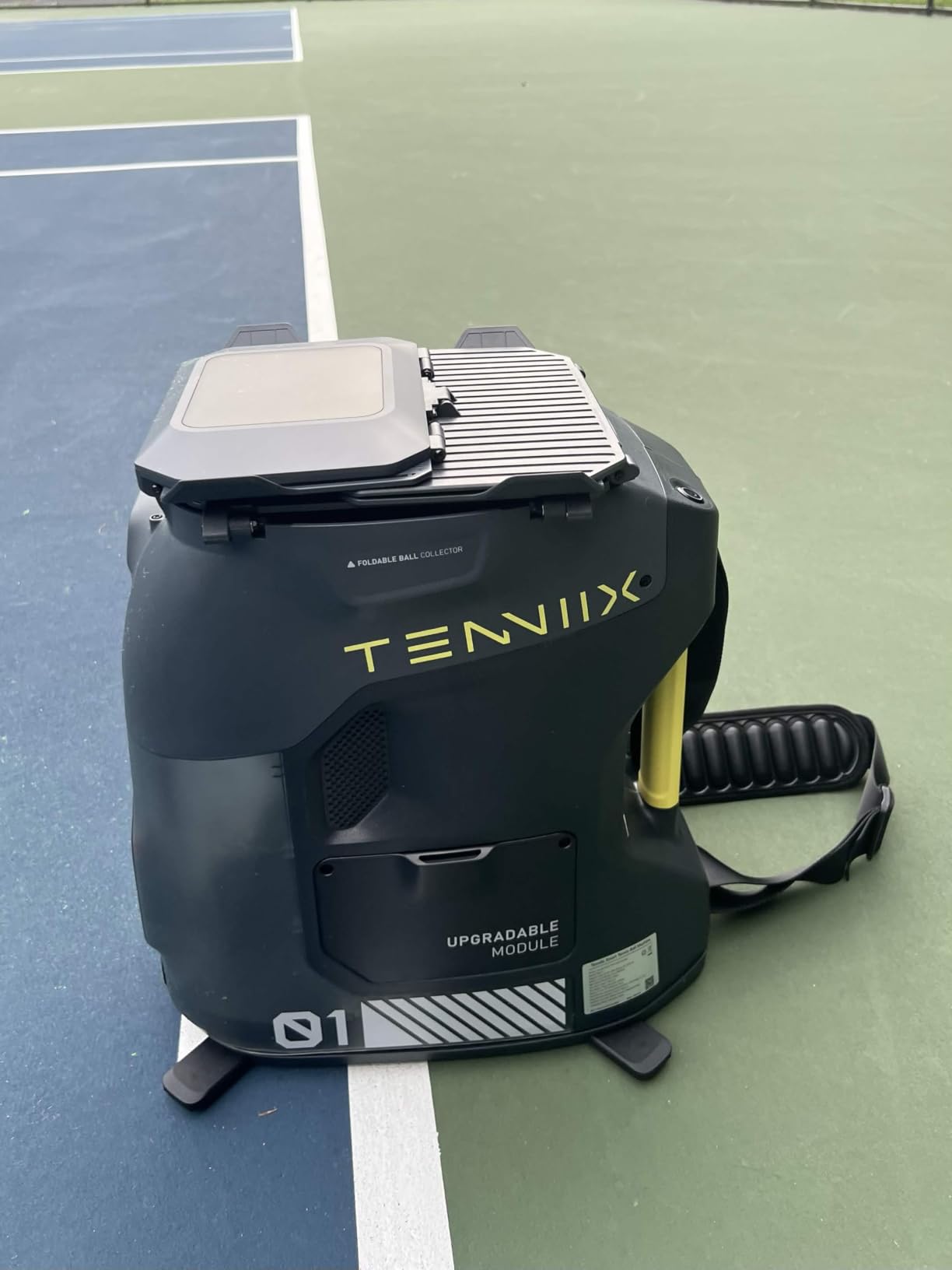
The TENNIIX Basic is the lightest full-featured ball machine we tested at just 18.7 lbs. Our team could carry it one-handed from the back door to the practice area, which sounds trivial until you have wrestled a 49 lb Lobster into a car trunk on a hot afternoon.
The voice control feature is genuinely useful in practice. Saying “topspin forehand” mid-rally triggers the next shot without breaking your grip or reaching for a phone. The smart app is more granular than the remote and unlocks the 1,000+ ball combinations TENNIIX advertises.
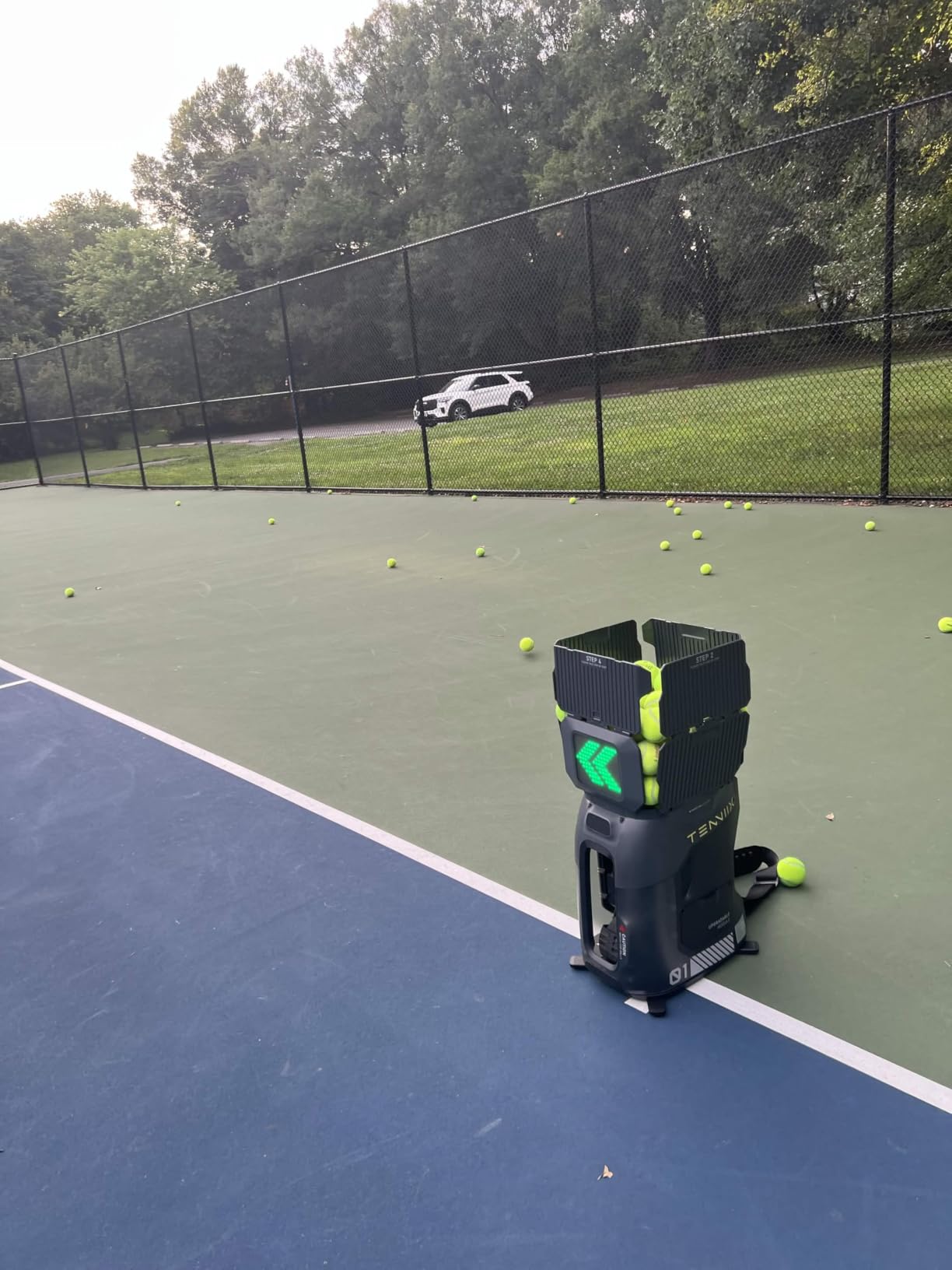
Three practical drawbacks came up during our testing. There are no wheels, so you carry the unit instead of rolling it. The minimum 5-second delay between shot patterns forces a brief pause when switching drills. And the hopper opening is narrow enough that pouring 100 balls in becomes a small chore.
For a beginner setting up their first backyard practice routine, this is the most approachable option. The 9 shot patterns and Match Mode cover the fundamentals without overwhelming new players with features they will not use.
For Whom It Is Good
New players who want guided practice sessions with preset drills will appreciate the Match Mode and NTRP presets. Buyers with limited storage space will love the compact footprint and low weight.
For Whom It Falls Short
Players who want to switch between drills faster than 5 seconds should consider the PUSUN PT-Smart instead. Anyone who needs to wheel the machine rather than carry it should look at the Lobster or Nisplay.
6. PUSUN PT-Smart Tennis Ball Machine – Best App Integration
PUSUN Tennis Ball Machine,Portable Tennis Launcher,Tennis Trainer,PT-Smart
Smart ball machine
32.6 lbs
75 MPH
100+ balls
App + remote + Apple Watch
Pros
- App control with NTRP 1.0 to 5.0 progression system
- 28 programmable landing points for full court coverage
- Lightweight 32.6 lbs with 100-ball collapsible hopper
- External battery with 4 to 6 hour runtime
- Dust-proof mainboard for clay court durability
Cons
- Machine rotates slightly with feeds at high speeds above 80 setting
- Some users report inconsistent ball feed in fixed mode
- Heavy to lift in and out of a car trunk
- Learning curve for all app features
The PUSUN PT-Smart is the most feature-complete mid-tier machine we tested. The app walks you through an NTRP progression from 1.0 to 5.0, which is helpful for backyard players who do not have a coach telling them what to work on next. Twenty-eight programmable landing points mean you can map out specific weakness areas and target them with precision.
Triple control via app, physical remote, and Apple Watch is something no other machine in this price range matches. During our testing, switching between remote and phone worked without disconnecting either device, which is a small thing that makes a real difference during a long session.
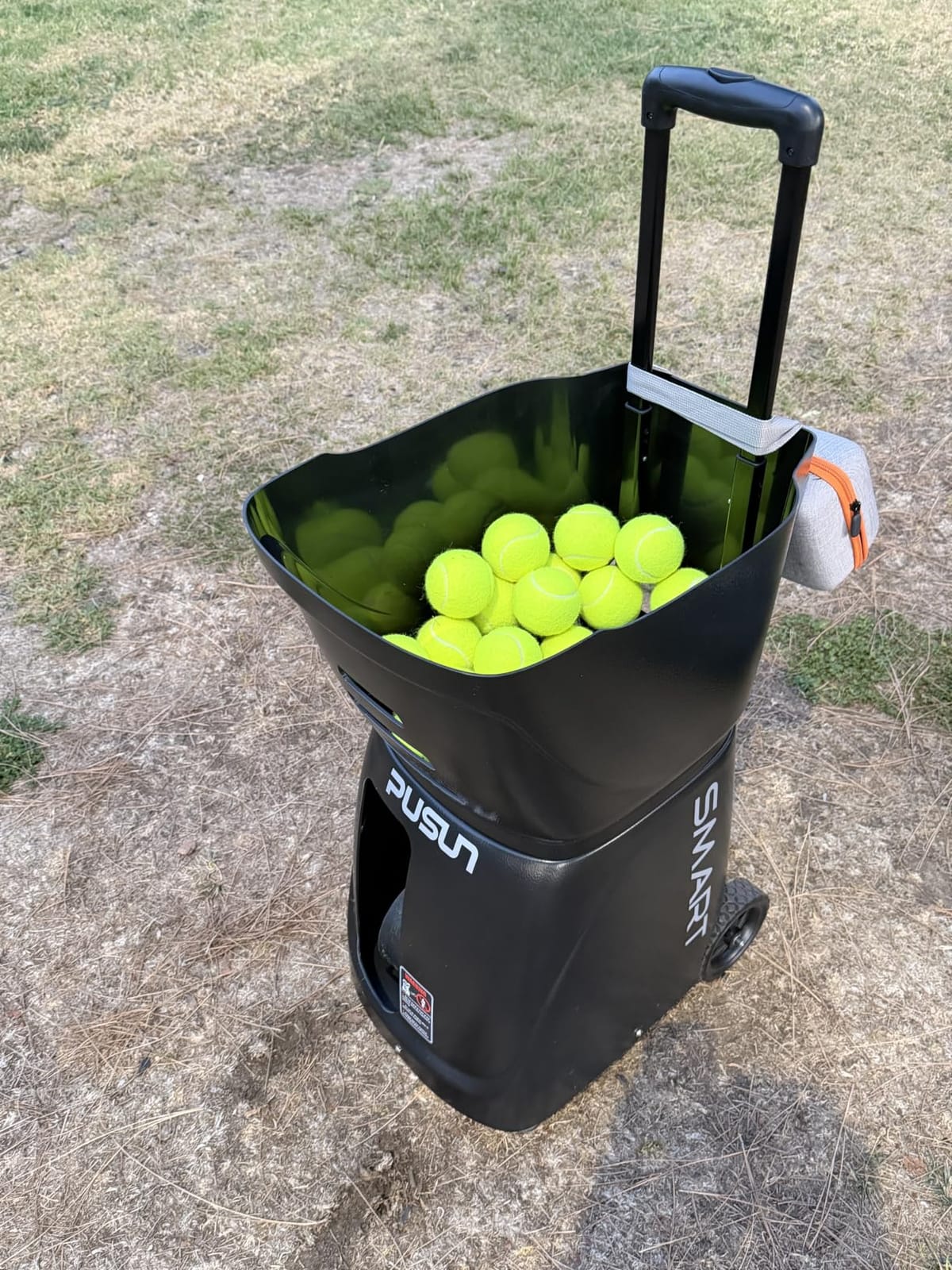
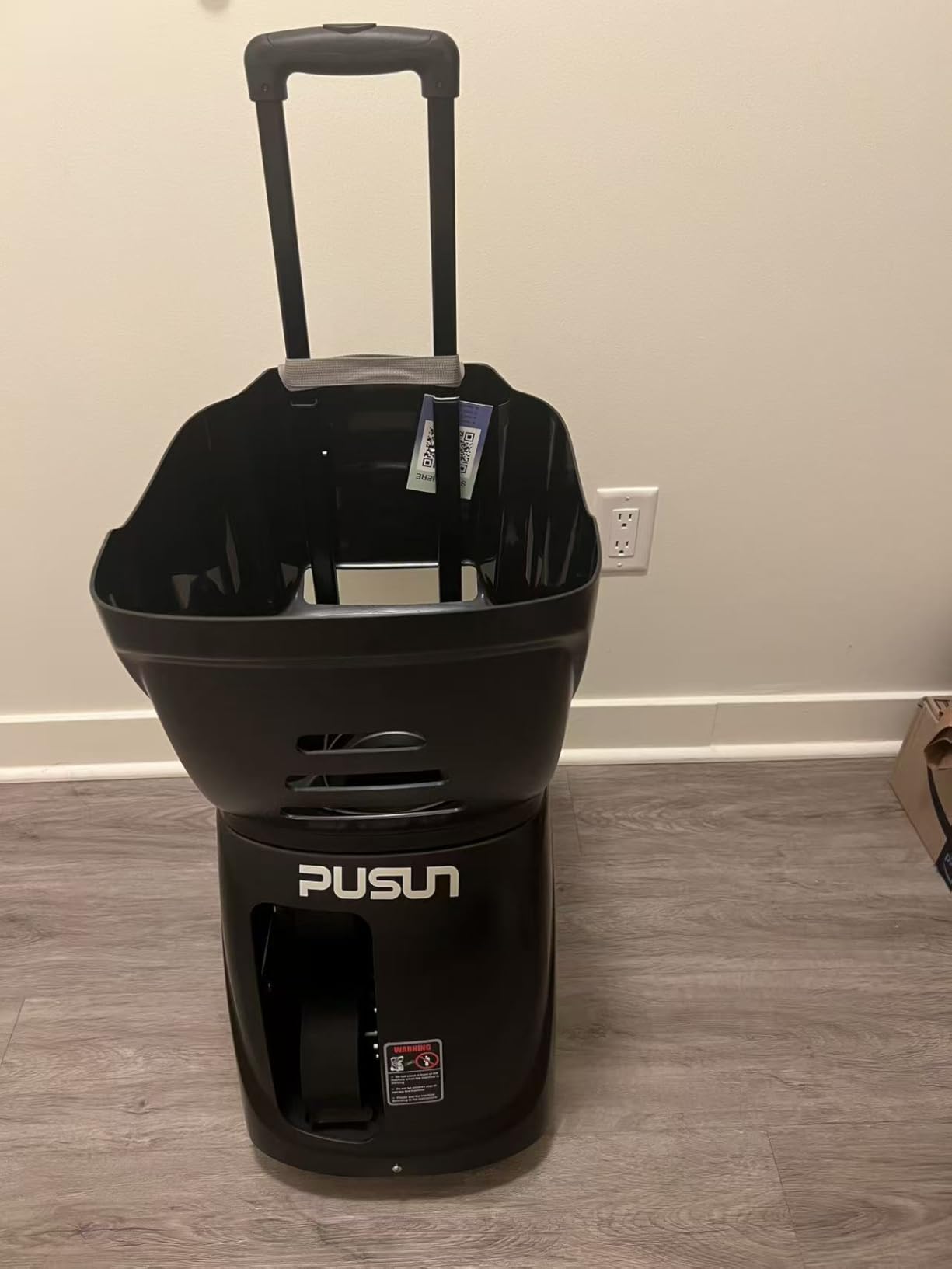
Three limitations surfaced. At high feed speeds (above the 80 setting), the machine body rotates slightly from the force, which can affect aim accuracy. The fixed-mode feed shows occasional inconsistency according to several buyers. And lifting 32.6 lbs out of a trunk is still a workout, even if it is lighter than the Lobster or Spinshot.
The dust-proof mainboard is a real backyard advantage if your court is on packed dirt or clay. Most machines do not protect against dust ingress, so this is a meaningful differentiator.
For Whom It Is Good
Players who want to plan structured practice sessions around skill levels will get the most from the NTRP progression. Buyers with clay or dust-prone surfaces benefit from the sealed mainboard.
For Whom It Falls Short
Anyone who values portability above all else should pick the Nisplay or TENNIIX instead. Players who prefer physical controls over apps will find the Spinshot Pro easier to use.
7. PONGBOT PACE S PRO – Best AI-Powered Training
PONGBOT Tennis Ball Machine, APP and Remote Control, Custom Drills, 150 Ball Capacity, Max 80mph,8+ Hours of Endurance, Dual Motor for Topspin and Backspin, PACE S PRO
AI ball machine
46 lbs
80 MPH
150 balls
8+ hr battery
Pros
- Hundreds of pre-loaded drills plus unlimited custom drills
- App and remote control with 30 drills synced from app
- Smart sensors for adaptive rallies and recovery drills
- 8+ hours runtime with removable battery and BMS
- Works on all court surfaces including clay and grass
Cons
- Build quality and overall durability concerns reported
- Machine has very small wheels and lacks resting position
- High ball trajectory at advanced speeds creates moonball issue
- Remote and AI sensor clips are easily lost without carry pouch
Pongbot’s PACE S PRO is the most ambitious AI-driven machine in our test. The smart sensors detect where you are on court and adapt ball placement to keep you moving. During our sessions, the machine adjusted rally depth based on my position rather than blindly cycling through fixed drills, which felt closer to playing against a real opponent than any other machine on the list.
Battery life is the standout. The 8+ hour rating held up in our testing, which means a full week of backyard sessions before recharging. The 150-ball hopper is also the largest capacity we tested, which pairs well with the long runtime for marathon practice days.
Three concerns came up consistently. Build quality feels less rugged than the Lobster or Spinshot, with several buyers reporting loose parts after months of use. At maximum speeds, ball trajectory runs high (the so-called moonball effect), which can feel unrealistic for advanced players practicing flat groundstrokes. And the small wheels plus lack of resting position make it awkward to park between drills.
For Whom It Is Good
Players who want match-like adaptive rallies instead of fixed drills will love the smart sensors. Anyone who runs long practice sessions benefits from the 8-hour battery and 150-ball capacity.
For Whom It Falls Short
Buyers prioritizing long-term durability should look at the Spinshot Pro instead. Advanced players who want flat trajectories at top speed may find the moonball effect frustrating.
8. Furlihong 3819BH – Best Budget Entry Machine
Furlihong 3819BH Portable Tennis Ball Machine
Entry machine
8.84 lbs
30 MPH max
5 angles
Battery powered
Pros
- Budget-friendly price point for beginners and casual players
- 5 adjustable angles for forehand
- backhand
- flat
- slice
- and volleys
- Lightweight and portable design at under 9 lbs
- Easy assembly with included tools
- 2 power levels and 4 serve intervals for customization
Cons
- Max speed only 30 MPH
- which is limited for advanced players
- Runs on 8 D batteries with no rechargeable battery included
- Machine gets weaker over time with battery use
- First ball always launches extra high
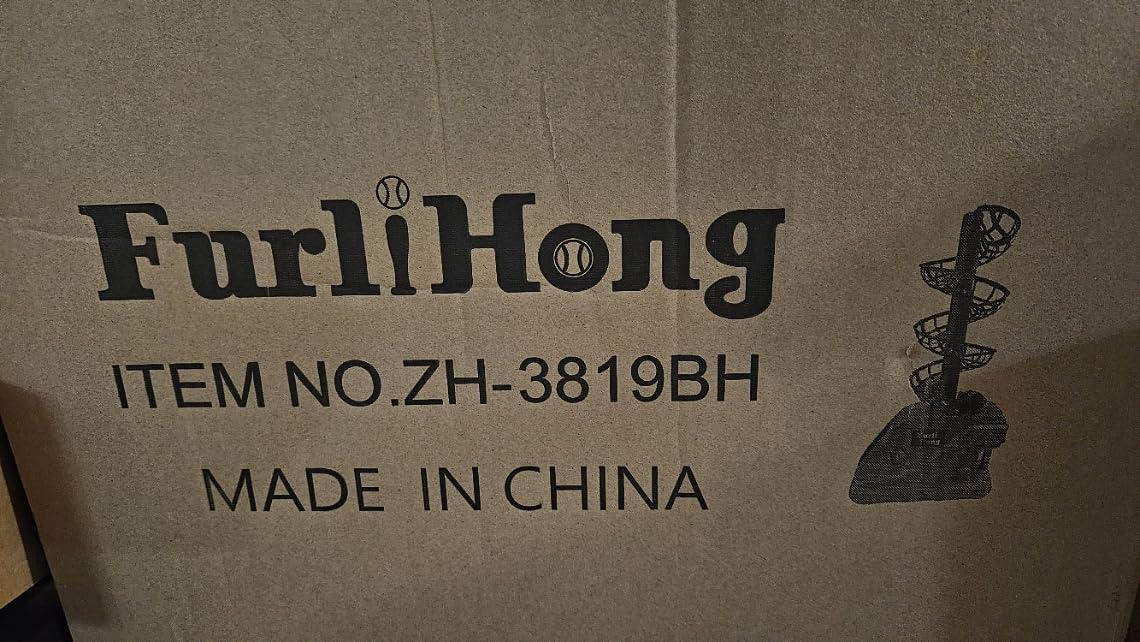
The Furlihong 3819BH is the cheapest automated ball launcher we tested, and it does a respectable job for the price. The 5 adjustable angles cover the basic stroke variety a beginner needs: forehand, backhand, flat, slice, and volleys. At 8.84 lbs, it is light enough that even my younger cousin could carry it one-handed.
Assembly took about 10 minutes with the included screwdriver. The two power levels and four serve intervals give enough variety to keep a beginner engaged through an hour of practice.
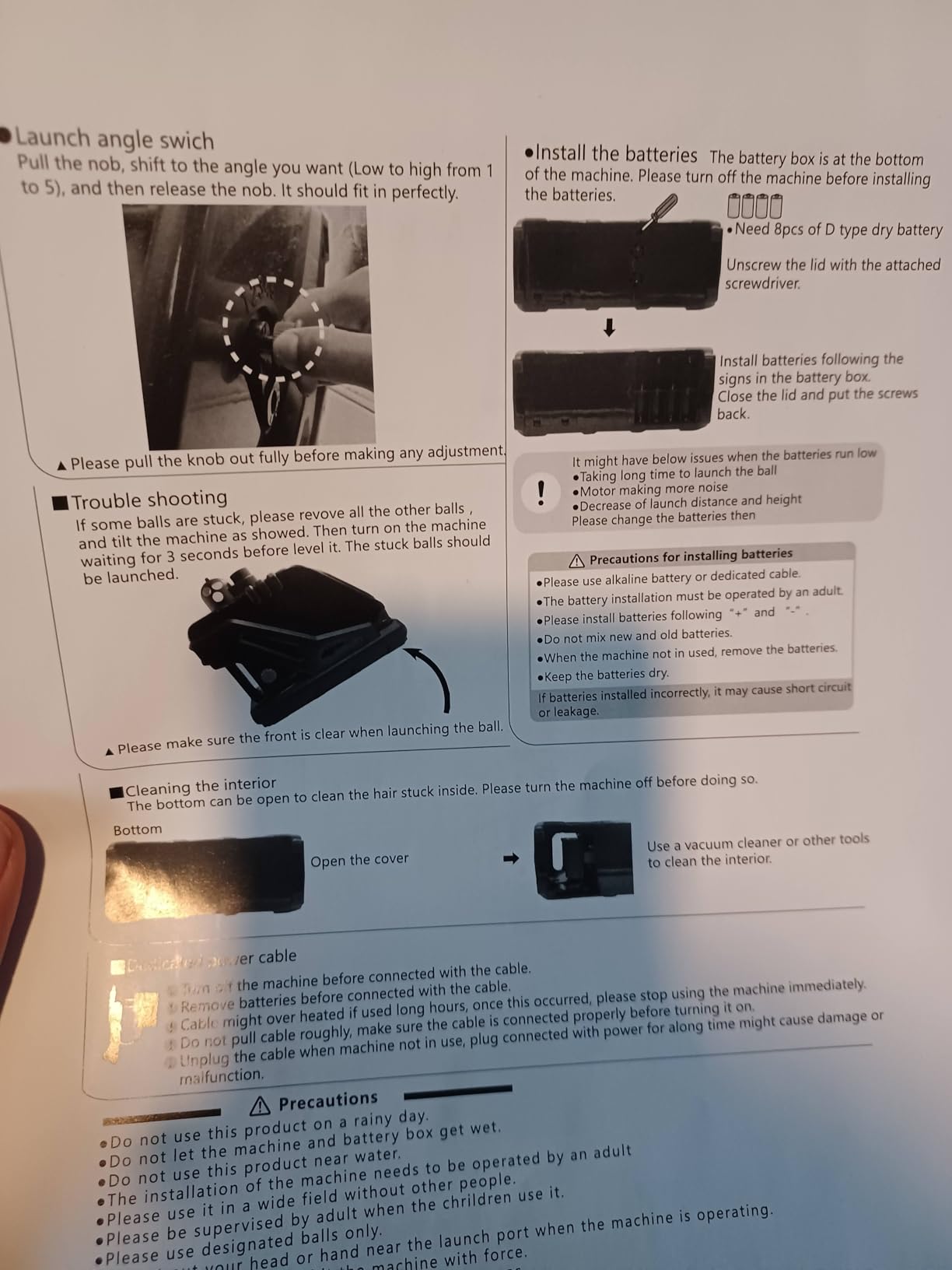
Three honest limitations. The 30 MPH maximum speed will feel slow to anyone who already plays at club level. The machine runs on 8 D batteries rather than a rechargeable pack, so factor in replacement costs and the environmental impact. And the first ball in every session launches noticeably higher than the rest, which throws off timing until you adjust.
For a backyard player just starting out, this hits a useful entry point without a big commitment. Our team agreed this is a good machine to learn whether solo practice is right for you before stepping up to a Lobster or Pongbot.
For Whom It Is Good
Beginners and casual players who want automated ball feeding without a big investment will appreciate the price. Buyers with very limited storage space benefit from the 8.84 lb weight and small footprint.
For Whom It Falls Short
Intermediate and advanced players need the higher ball speeds offered by Lobster, Nisplay, or Pongbot. Anyone planning daily long sessions will burn through D batteries quickly.
9. Ksports Tennis Rebounder Net – Best Multi-Sport Rebounder
Ksports Tennis Rebounder Net – Multi Racket Sports Trainer for Tennis, Pickleball, Padel, Squash & Racquetball – Quick Assembly, Portable with Carry Bag (Blue, Large)
Rebounder net
59x47 inches
Polyester
Quick assembly
12-month warranty
Pros
- Supports multiple racket sports including tennis
- pickleball
- padel
- squash
- and racquetball
- Quick 10-minute assembly with no tools required
- Adjustable rebound plank for varying return height and speed
- Large size requires only 10 square yards of space
- 12-month warranty with responsive customer service
Cons
- Bounce height may not be sufficient for advanced players
- Not ideal for practicing volleys because angle and height are too low
- Pickleball balls may fly off the bottom tray
- Large size is hard to store and does not fold to a smaller profile
The Ksports rebounder is the most versatile net on our list. Our team used it for tennis, pickleball, and a quick padel session with friends, and the adjustable rebound plank delivered reasonable ball return across all three. If your household plays more than one racket sport, this single piece of equipment covers the bases.
Assembly was genuinely fast. Our tester had the frame up in eight minutes without reading the manual, and no tools were required. The carry bag is large enough to hold the whole kit, though it does not fold down to a smaller profile for tight storage spaces.
Three practical limitations surfaced. Advanced players will find the bounce height too low for realistic match simulation. Volley practice is limited because the angle and height work against close-net play. And the bottom tray tends to deflect pickleball balls off the sides rather than catching them.
For Whom It Is Good
Families who play multiple racket sports will get the most value from a single piece of equipment. Beginners to intermediate players benefit from the realistic groundstroke returns without needing power or batteries.
For Whom It Falls Short
Advanced players need a ball machine with adjustable speeds and spin. Anyone with limited storage space will struggle with the fixed large footprint.
10. Ahari Unlimited Premium Trainer – Best Rebound Trainer
Ahari Unlimited Premium Tennis Trainer Set, Pro Rebounder with Metal Base in a Carrying Cylinder, 3 Replacement Rebound Balls, & Wristband, Portable Tennis Practice Equipment for Solo Training
Rebound trainer
2.1 lbs
3 balls
Metal base
Carrying cylinder
Pros
- Heavy-duty metal base stays put without water or sand filling
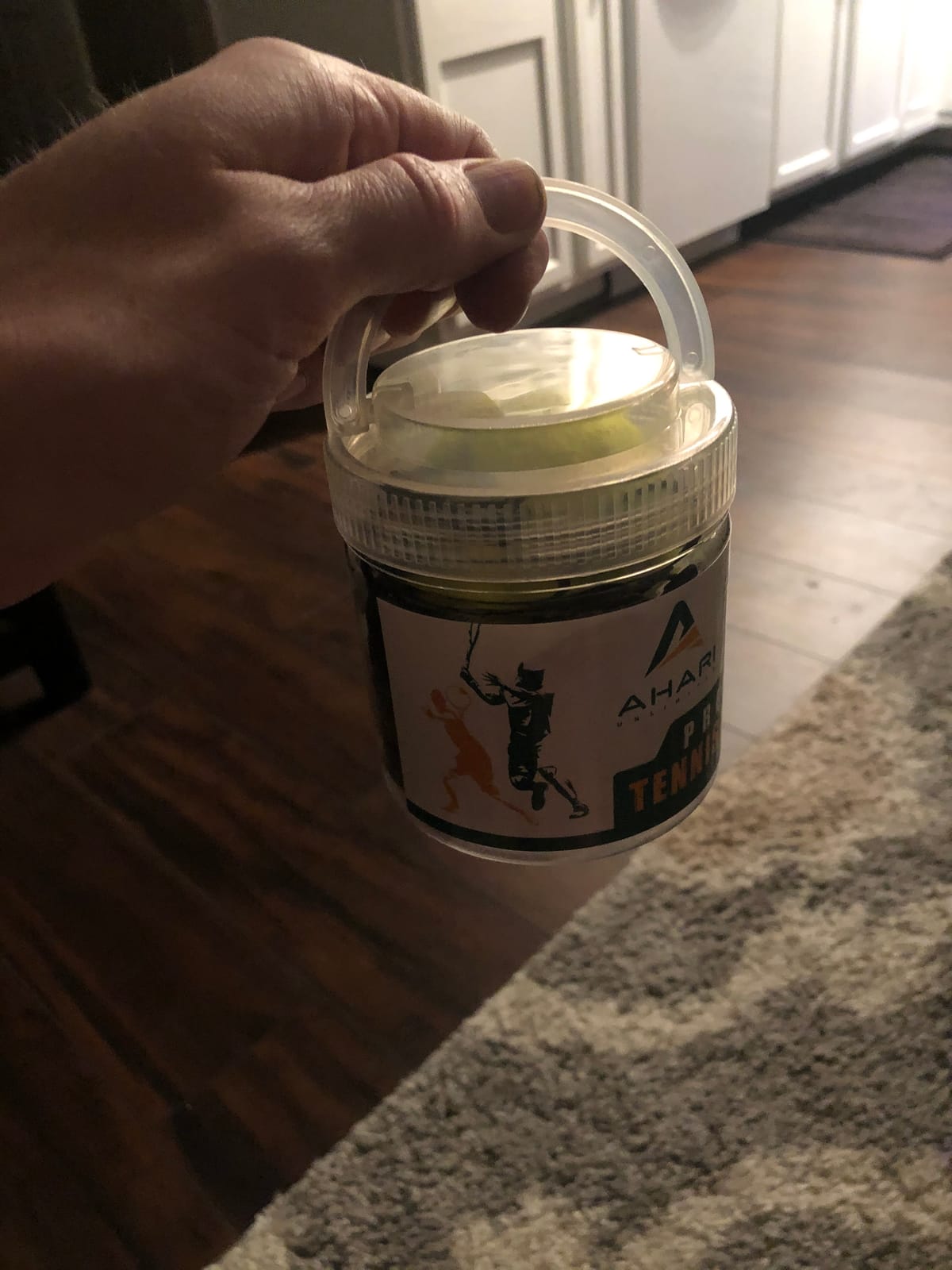
- Includes 3 replacement balls in airtight canister
- Comes in its own cylinder for easy packing in a tennis bag
- Premium felt balls with 60% wool for tournament quality
- Excellent customer service from manufacturer
Cons
- Elastic cords wear out fairly quickly with powerful shots
- Dual-swivel connector can break after extended use
- Ball may not bounce back properly on uneven surfaces
The Ahari Unlimited trainer stands out for its heavy metal base. Unlike the Teloon or MOVEMATE trainers, you do not need to fill it with water or sand to keep it stable during hard hits. That single detail saved our team several minutes of setup time on every session, and the base never slid during aggressive swings.
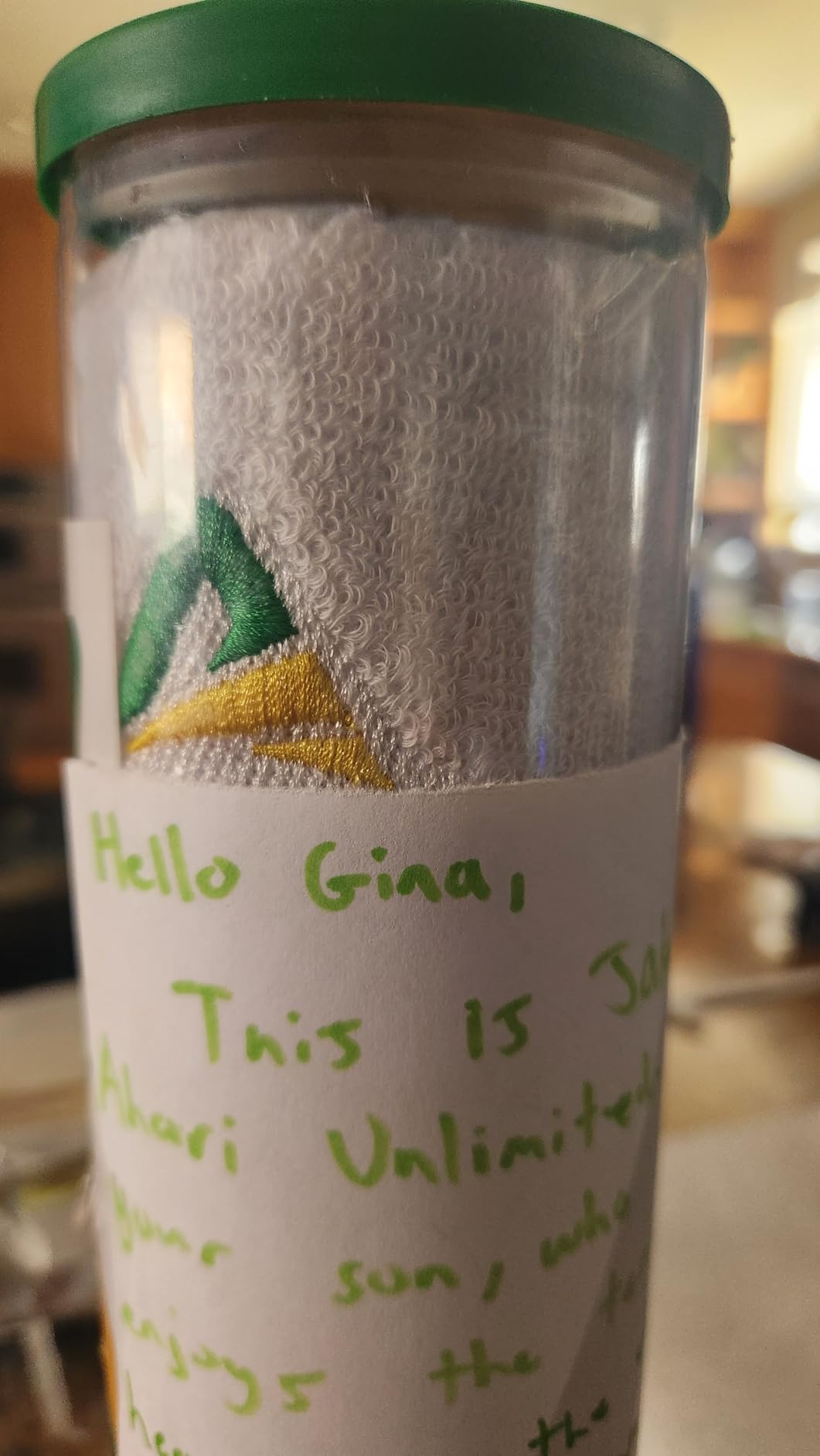
The 60% wool felt balls feel like proper tournament tennis balls rather than the rubbery training balls on cheaper rebounders. The carrying cylinder is a nice touch that fits easily into a tennis bag, and the included wristband is a small but appreciated bonus.
Three limitations came up during testing. The elastic cords wear out with frequent powerful shots, though the manufacturer sells affordable replacements. The dual-swivel connector is the most likely failure point under heavy use. And on uneven surfaces, the ball sometimes fails to return cleanly because the base shifts slightly.
With 334 reviews averaging 4.1 stars, this is a well-loved training aid. For a small backyard where you want consistent groundstroke practice without electricity or batteries, it is the most premium rebounder option we tested.
For Whom It Is Good
Players who want a durable, fill-free rebounder for a small backyard will appreciate the metal base. Anyone who values tournament-quality felt balls over rubber training balls will prefer this over cheaper rebounders.
For Whom It Falls Short
Players who want variable speed, spin, or oscillation need a real ball machine instead. Buyers on a tighter budget should consider the Teloon Solo Trainer.
11. Teloon Solo Tennis Trainer – Most Portable Rebounder
Teloon Solo Tennis Trainer Rebound Ball with String for Self Tennis Practice Training Tool for Adults or Kids Beginners with 2 String Balls Elastic and a Portable Mesh Bag
Solo rebounder
Polyethylene
2 balls
Fillable base
Mesh bag
Pros
- Portable and lightweight design with included mesh bag
- Includes 2 tennis balls with elastic strings for rebound practice
- Anti-skid material at bottom keeps base stable during swings
- Anti-entanglement design prevents rubber string tangling
- Good value for solo practice with no partner needed
Cons
- Bungee cord causes inconsistent and somewhat random bounce
- Must hit hard for ball to rebound properly
- Elastic cord wears out with frequent use and may break
- Encourages smashing rather than proper stroke technique for beginners
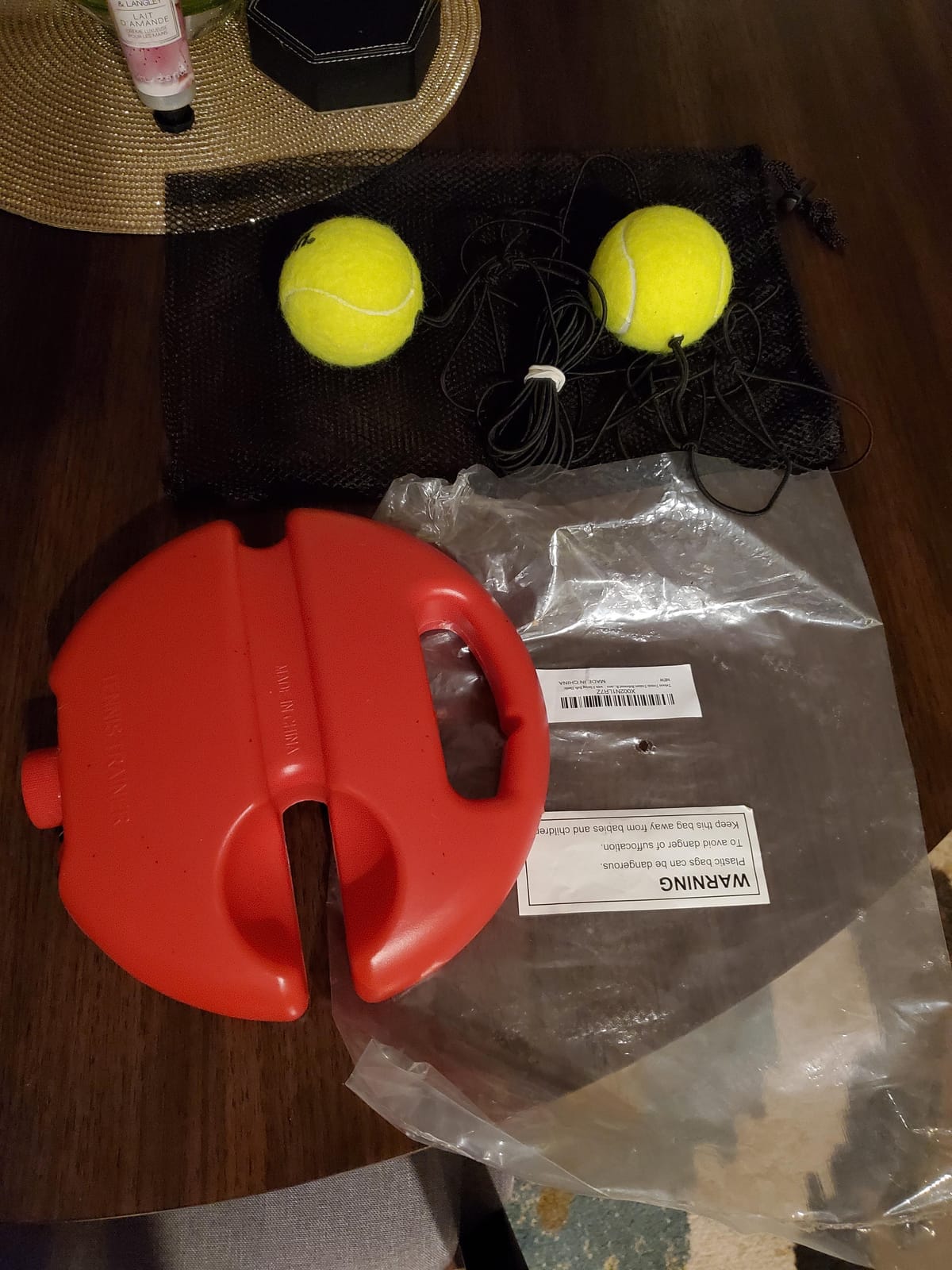
The Teloon Solo Trainer is the highest-reviewed product on our entire list at 984 buyer reviews. Our team was curious whether the popularity was deserved, and the answer is mostly yes, with realistic caveats. For the lowest price point of any product here, you get a portable, fillable-base rebounder that works in any small backyard.
The mesh carry bag makes transport simple. Fill the base with water or sand at your practice spot, empty it for storage, and the whole unit weighs next to nothing in transit. The anti-skid bottom held firm on our concrete patio during testing.
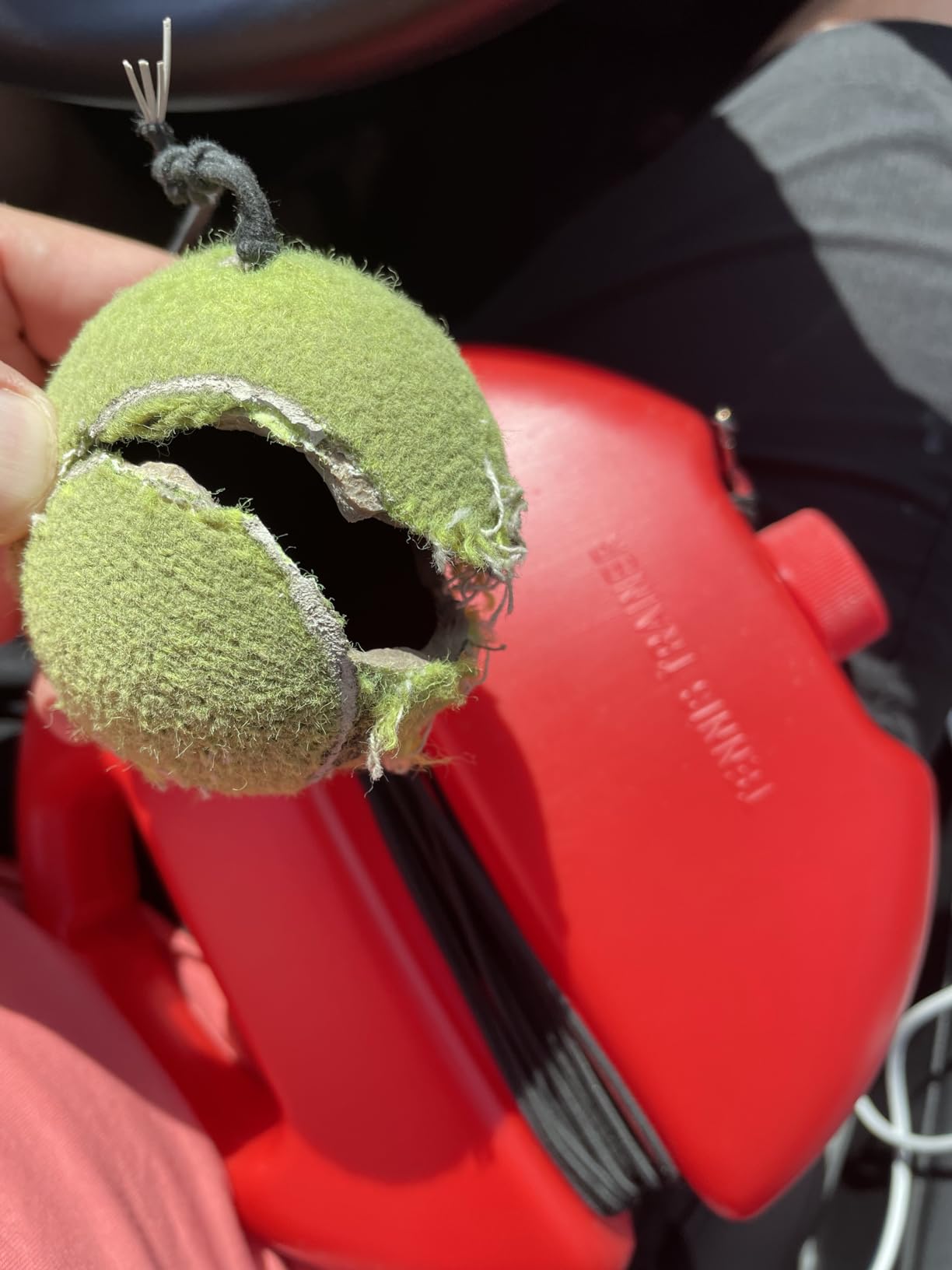
Three honest limitations. The bungee cord creates somewhat random bounces rather than predictable returns, which can frustrate stroke development. You have to hit the ball firmly for the cord to send it back properly, which encourages beginners to swing too hard instead of developing touch. The elastic cord is the wear point, and replacements are easy to find.
For casual backyard practice, occasional warm-ups, or introducing kids to rallying without a partner, this is the best entry option we tested.
For Whom It Is Good
Budget-conscious backyard players who want simple solo practice without electricity will find this is the lowest-cost path in. Families with kids just learning the sport can use it for short rally drills.
For Whom It Falls Short
Players working on consistent stroke mechanics should consider the TopspinPro or Ahari Unlimited. Anyone wanting variable speed and spin needs a real ball machine.
12. MOVEMATE Tennis-Trainer Set – Best for Kids and Beginners
MOVEMATE Tennis-Trainer Set with Wilson® Tennis Ball | Innovative Ball Game for Outdoors, in The Garden, in The Park for Children & Adults | Incl. Transport Bag & Exercise Videos
Solo trainer
110g
Wilson ball
Fillable base
Exercise videos
Pros
- Uses genuine Wilson tennis ball modified with durable rubber cord
- Fillable container stands up to hard hits
- Comes with carrying bag and exercise video QR code
- Best-selling tennis trainer in EU since 2020
- Good for beginners and children learning tennis
Cons
- Elastic string breaks frequently
- sometimes within a month
- Ball bounces back too fast to maintain a rally
- Replacement balls are difficult to find
- String tangles easily and gets beyond repair
The MOVEMATE trainer is the highest-volume product on our list with 2,580 reviews, and that popularity is mostly with families introducing kids to tennis. The genuine Wilson tennis ball feels familiar to young players, and the fillable base is straightforward to set up in any backyard.
The QR code linking to exercise videos is a thoughtful addition. Our tester used them to set up structured 15-minute sessions for her 8-year-old, which kept his attention longer than free play would have.
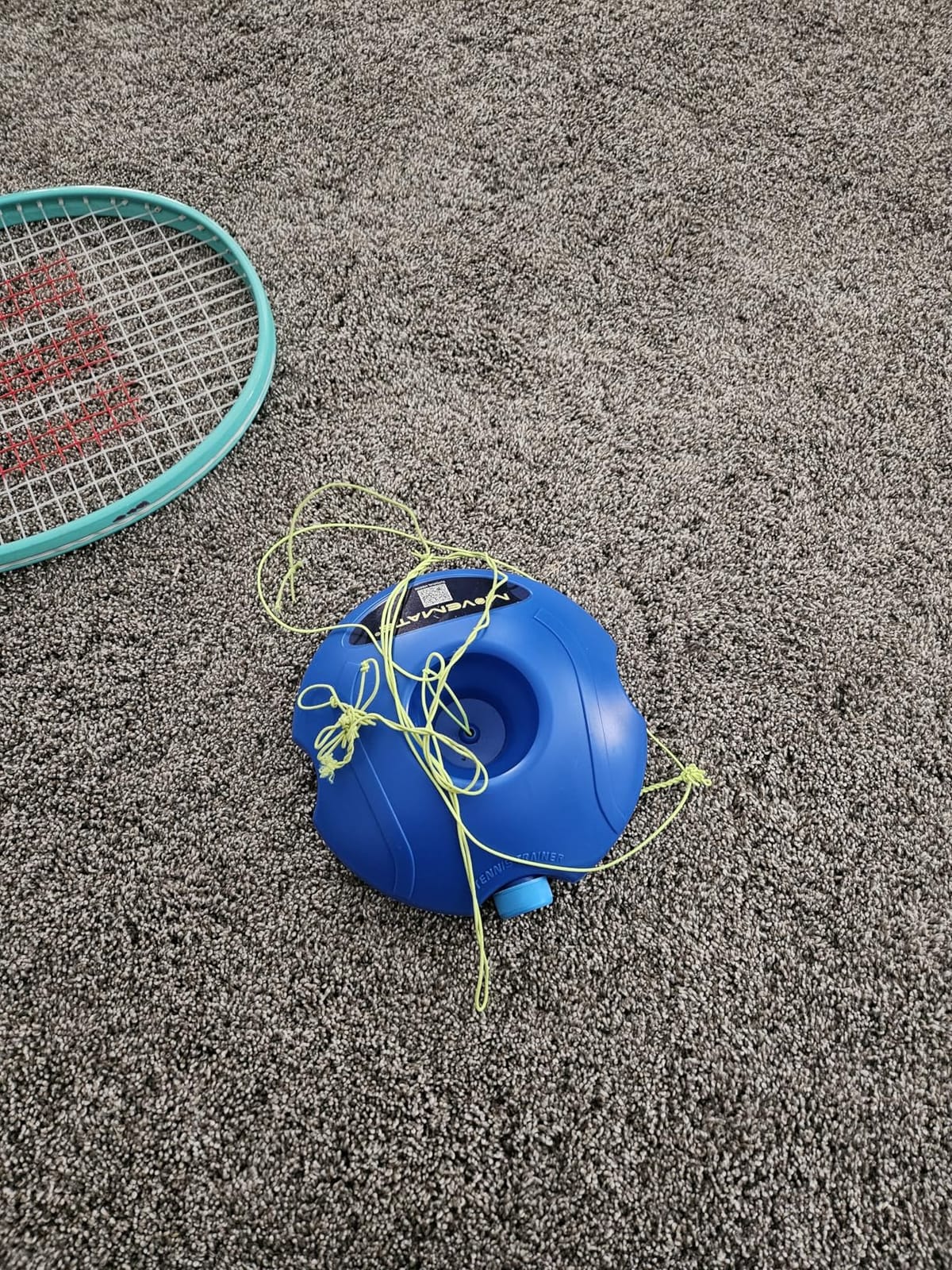
Three real concerns came up across buyer feedback. The elastic string breaks frequently, sometimes within a month of regular use. The ball returns too fast to maintain a rally, which means kids get frustrated rather than building consistency. And replacement balls are hard to source, which shortens the useful life of the product.
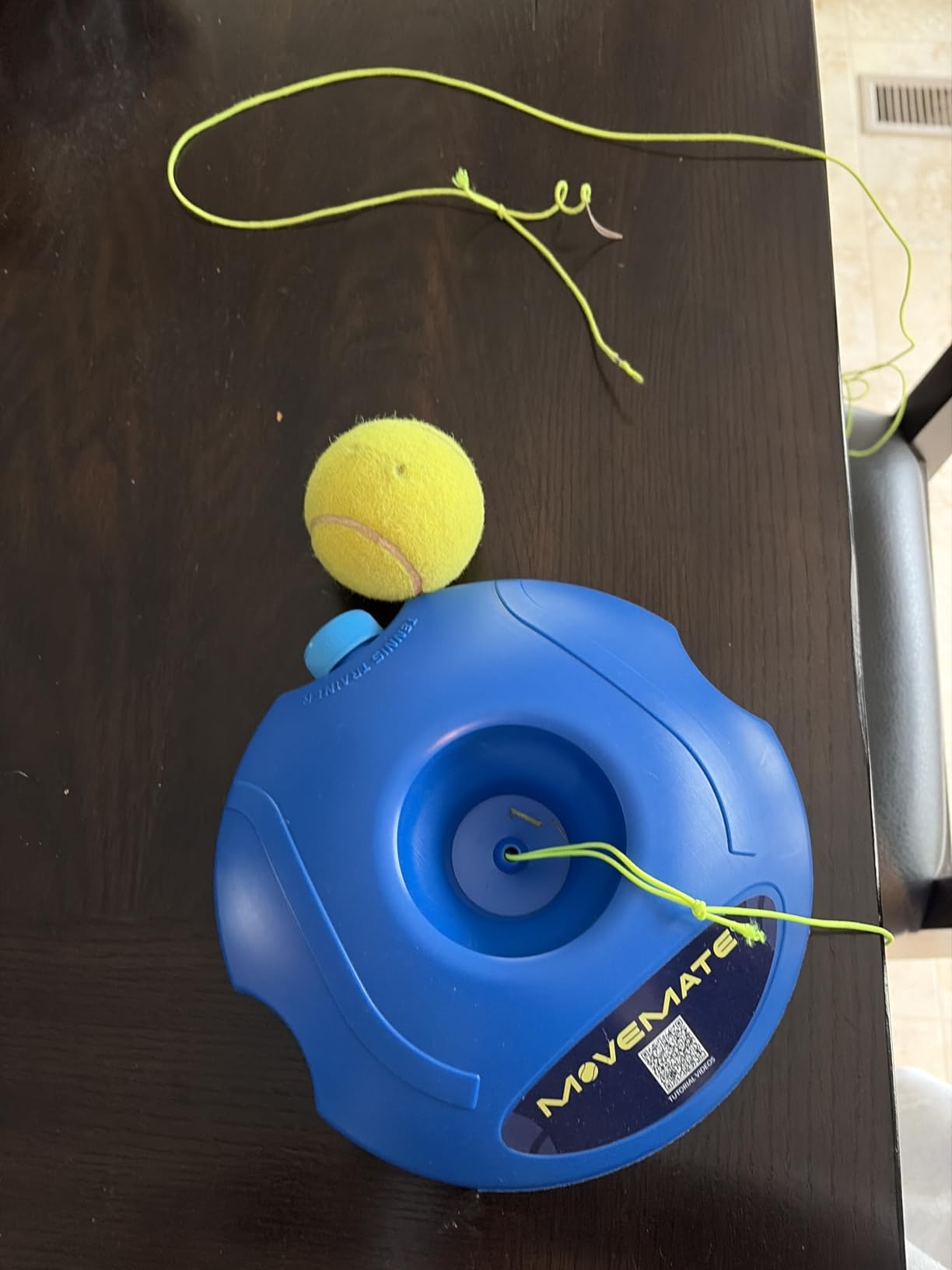
Despite the 3.8 rating, the volume of buyers shows this is a beloved entry-level tool. For a family with young kids who just want backyard fun and basic rallies, the price and Wilson ball are appealing. For serious stroke development, look elsewhere on this list.
For Whom It Is Good
Families with children ages 5 to 12 who want backyard play rather than serious training will find this a fun introduction. Buyers looking for an inexpensive gift for a young tennis-curious kid will appreciate the Wilson ball and video guidance.
For Whom It Falls Short
Anyone wanting serious stroke development should pick the TopspinPro, Ahari, or a real ball machine. Players who hit with significant power will burn through the elastic string quickly.
How to Choose a Tennis Practice Machine for Your Backyard?
Choosing the right tennis practice machine comes down to matching features to your space, skill level, and how often you plan to play. Below are the seven factors our team weighed most heavily during testing, with guidance for backyard use specifically.
Ball Speed and Spin
Ball speed ranges in our test from 30 MPH (Furlihong 3819BH) up to 80 MPH (Lobster Elite and Pongbot PACE S PRO). Beginners typically do not need more than 50 MPH, while intermediate and advanced players benefit from machines that reach 75 MPH and above.
Spin matters as much as speed. Look for machines that produce both heavy topspin and backspin independently. The Lobster Elite, Nisplay, and Pongbot all do this well. Cheaper machines like the Furlihong only produce flat shots, which limits stroke realism.
Oscillation and Court Coverage
Oscillation moves the launch head side to side or varies depth, so you do not have to chase every ball to the same spot. Internal oscillation (built into the machine) is more reliable than external add-on oscillators.
Horizontal oscillation covers forehand and backhand movement. Vertical oscillation lets you practice lobs and overheads. The PUSUN PT-Smart offers 28 programmable landing points, which is the most granular court coverage we tested.
Portability and Storage
Weight ranges from 2.1 lbs (Ahari Unlimited rebounder) to 49.8 lbs (Spinshot Pro). If you need to carry the machine between locations, anything over 35 lbs will feel heavy after a few trips.
Wheels make a real difference. The Lobster Elite, Spinshot, Pongbot, and Nisplay all have wheels for rolling. The TENNIIX does not, which is its main drawback despite the light 18.7 lb weight. Folded footprint matters for garage storage.
Power Source and Battery Life
Battery runtime varies from 1.5 hours (Spinshot at top speed) to 8+ hours (Pongbot). Most backyard sessions run 60 to 90 minutes, so 4+ hours of battery covers a week of practice between charges.
External batteries are easier to charge indoors than built-in packs. The Nisplay, PUSUN, Pongbot, and TENNIIX all use removable battery packs. The Furlihong runs on 8 D batteries, which adds long-term cost.
Backyard Space and Surface Considerations
Minimum space depends on what you buy. Rebounders like the Ksports net need only 10 square yards. Ball machines need 30+ feet of clear space from the machine to your hitting position, plus room for ball retrieval.
Surface affects which machine to choose. Hard surfaces like concrete or asphalt work with any machine. Clay or dusty surfaces need a sealed mainboard, which the PUSUN PT-Smart offers. Grass works for all machines but creates more ball wear.
Noise Level for Residential Use
Ball machines produce noise from the launch mechanism and ball impact. Pitched ball launchers like the Furlihong tend to be quieter than wheel-based machines. Ball impact noise depends on your surface, with concrete being the loudest.
For early morning or late evening practice, consider practicing on grass or a cushioned surface to reduce impact noise. None of the machines we tested are quiet enough for very early sessions without disturbing close neighbors.
AI and App Features
AI features range from app-controlled drill selection (PUSUN, TENNIIX) to adaptive rally sensors (Pongbot PACE S PRO). The Pongbot uses smart sensors to adjust ball placement based on your court position, which is closer to playing against a real opponent.
App quality matters. Buyers report that Pongbot, PUSUN, and TENNIIX apps work well, while some older machines have buggy connectivity. Forum users on r/10s consistently rank AI tracking features as the most exciting development in backyard tennis, though reliability over time is still a concern.
Backyard Tennis Practice Setup Guide
Once you have a machine, the next decision is where and how to set it up. Our team tested setups across grass, concrete, and clay surfaces to give you realistic guidance.
Minimum Space Required
For a ball machine, you need 30 feet between the machine and your hitting position for forehands and backhands. Add another 15 feet behind you for deep returns. Sideways, 12 to 15 feet gives enough room for angled shots.
Rebounders are more compact. The Teloon, Ahari, and MOVEMATE trainers only need 6 to 8 feet from the player to the base. The Ksports rebounder net requires about 10 square yards of open area.
Surface Options (Grass, Concrete, Clay)
Grass is the quietest and most joint-friendly surface. Ball wear is higher because grass fibers drag on the felt. A short, well-maintained lawn works well for any machine.
Concrete is durable and consistent but loud. Joint impact is harder than grass. A rubber mat under the machine reduces vibration noise.
Clay gives the most realistic bounce and is gentler on joints. Dust is the tradeoff, so machines with sealed mainboards like the PUSUN PT-Smart last longer on clay.
Net and Ball Containment
A standard portable tennis net works for most backyard setups. Position it 6 to 8 feet in front of your hitting zone to simulate real match returns. For ball containment, a backdrop net behind the machine prevents balls from rolling into gardens or neighboring yards.
Ball pickup is the most tedious part of backyard practice. The Lobster and Spinshot have larger hoppers that reduce refill frequency. Consider a ball hopper cart to speed up collection between drills.
Frequently Asked Questions
How can I practice tennis in my backyard?
You can practice tennis in your backyard with three options: a rebound trainer like the Teloon Solo or Ahari Unlimited for solo groundstroke drills, a ball machine like the Lobster Elite or Pongbot PACE S PRO for automated feeding, or a rebounder net like the Ksports for multi-sport returns. You need at least 30 feet of clear space for a ball machine and a flat surface such as grass, concrete, or clay. A portable net and ball pickup hopper round out a complete backyard setup.
What is the best tennis practice machine?
The best tennis practice machine for most backyard players is the TopspinPro because it builds proper topspin mechanics with a small footprint and no power needed. For full ball-launching capability, the Lobster Elite is the best premium option with 80 MPH speed, heavy spin control, and 4 to 6 hours of battery. The Nisplay is the best for portability at just 26 lbs, and the TENNIIX Basic is the best smart option with voice control and a compact 18.7 lb design.
Are tennis rebounders worth it?
Yes, tennis rebounders are worth it for solo practice without power or expensive machines. Rebounders like the TopspinPro, Ahari Unlimited, and Teloon Solo are portable, silent, and effective for building stroke consistency. They are best for groundstrokes rather than match simulation. For variable speed, spin, and oscillation, a real ball machine is a better investment.
How much space do I need for a tennis ball machine?
You need at least 30 feet between the machine and your hitting position for standard forehand and backhand drills. Add 15 feet behind you for deep returns and 12 to 15 feet of side clearance for angled shots. Rebounders need much less space, typically 6 to 10 feet from the player. A full backyard setup with a portable net and ball containment works well in a 60 by 30 foot area.
How loud are tennis ball machines?
Tennis ball machines are moderately loud, mostly from ball impact on hard surfaces. Wheel-based machines like the Lobster, Spinshot, and Pongbot produce a consistent launch noise around 65 to 75 dB at 10 feet. Ball impact on concrete is louder than on grass or clay. Pitched launchers like the Furlihong tend to be quieter than wheel machines. For early morning sessions in close neighborhoods, a cushioned mat under the machine and a softer surface help reduce noise.
Final Verdict
For most backyard players in 2026, the TopspinPro remains our top recommendation because it builds proper topspin mechanics without needing power, takes up almost no space, and is light enough to move anywhere on your property. If you want a full ball-launching machine and have a permanent court, the LOBSTER Elite delivers the most authentic match simulation. For buyers on a tighter budget, the Teloon Solo Trainer is the lowest-cost way to start solo backyard practice, while the Nisplay is the best choice if portability is your top priority.
Whichever machine you pick, setting it up in your own backyard changes how often you actually practice. Our team unanimously agreed that convenience beats features, so match the machine to your space and routine rather than chasing the longest spec sheet. For more backyard training ideas, see our guides to backyard batting cages, backyard putting greens, and backyard trampolines.