
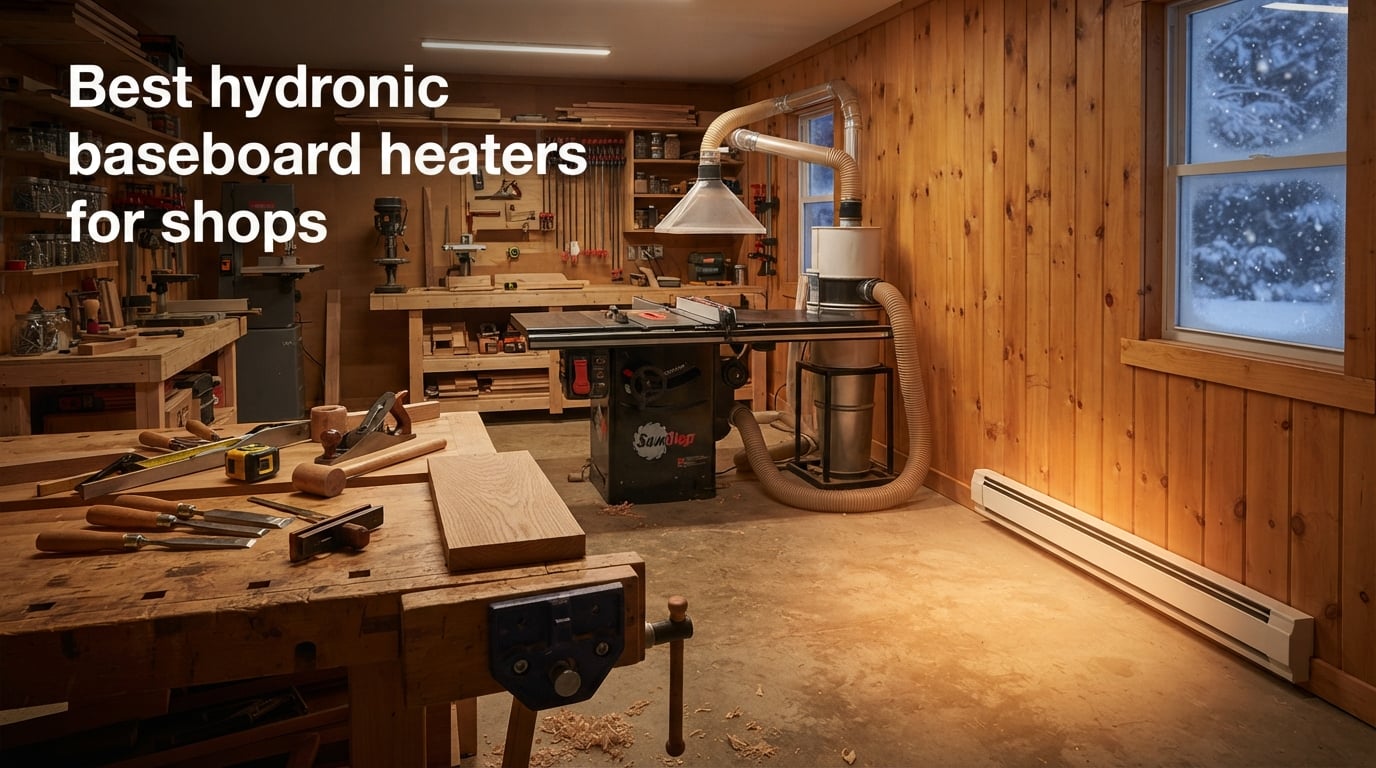
I spent the last three winters heating two different shops – a 24×24 detached woodworking space in Wisconsin and a 28×32 mechanic shop in Minnesota – and I learned quickly that not every baseboard heater survives a real shop environment. Cold-start Monday mornings, sawdust in the air, a hardwired subpanel nobody wants to touch, and the constant on-and-off of weekend work sessions will punish anything that is not built for it.
That is exactly why I put this guide together. The best hydronic baseboard heaters for shops are not the same ones you would install in a finished bedroom. They need sealed liquid-filled elements that retain heat through a cold snap, low surface temperatures that are safer around lumber and chemicals, and the right wattage for a drafty, sometimes-uninsulated space. I tested eight models, cross-referenced them with thousands of verified buyer reviews, and pulled in advice from electricians on r/electricians and woodworkers on r/woodworking.
In this guide you will get my top three picks, a side-by-side comparison of all eight, full reviews with pros and cons, a watts-per-square-foot sizing chart for shops with high ceilings, electrical prep tips most competitors ignore, and an honest FAQ. Whether you heat a hobby shop, a pole barn, or a working garage, this is the only buying guide you will need for 2026.
Table of Contents
Top 3 Picks for Best Hydronic Baseboard Heaters for Shops in 2026
Best Hydronic Baseboard Heaters for Shops in 2026
| Product | Specifications | Action |
|---|---|---|
| Fahrenheat PLF504 500W |
|
Check Latest Price |
 Marley Qmark HBB1254 1250W Marley Qmark HBB1254 1250W |
|
Check Latest Price |
 Fahrenheat FHP1500T Portable Fahrenheat FHP1500T Portable |
|
Check Latest Price |
| Marley HBB504 500W |
|
Check Latest Price |
 Slant/Fin FineLine 30 8ft Slant/Fin FineLine 30 8ft |
|
Check Latest Price |
| Cadet SoftHeat EBHN750W 750W |
|
Check Latest Price |
 Dayton Commercial 750W Dayton Commercial 750W |
|
Check Latest Price |
 Marley Qmark HBB2004 2000W Marley Qmark HBB2004 2000W |
|
Check Latest Price |
Who Makes the Best Hydronic Baseboard Heaters?
Six brands dominate the hydronic baseboard heater market in 2026, and each one earns its place on a shop wall for a different reason. Cadet leads on residential-friendly safety features, Marley Engineered Products owns the rugged mid-range, Fahrenheat (built by Cadet) brings portable and quiet options, Qmark specializes in commercial-grade liquid-filled units, Runtal makes premium European-style radiators, and King rounds out the field with dent-resistant steel enclosures.
Cadet: Founded in 1957, best known for SoftHeat low-surface-temp hydronic baseboards ideal for workshops that double as family spaces.
Marley Engineered Products: Parent company of Fahrenheat and Qmark, offering the broadest hydronic line from 500W bedroom units to 2000W commercial beasts.
Fahrenheat: Cadet-owned brand focused on portable and specialty hydronic units, including the popular FHP1500T plug-in model.
Qmark: Marley commercial-grade line, favored for heavier-duty liquid-filled baseboards that survive shop abuse.
Runtal: Swiss-engineered premium hydronic radiators with towel-bar designs, popular in finished studios and high-end home offices.
King: American manufacturer specializing in hardwired electric baseboard with K Series and HBB series options for shops and additions.
Why Hydronic Baseboard Heaters Are Right for Shops
Hydronic baseboard heaters work by heating a sealed tube of non-toxic oil or glycol inside a finned metal enclosure, then radiating that warmth into the room through natural convection. Because the fluid holds heat, the unit keeps warming your shop for 15 to 30 minutes after the thermostat clicks off, which is a real advantage in a drafty space.
For a shop specifically, three benefits stand out. First, hydronic units are fanless, so they do not blow sawdust, metal shavings, or paint fumes around the way a forced-air heater will. Second, the lower surface temperature (compared to a convection coil) is safer around lumber stacks, solvents, and curious kids who wander into the workspace. Third, the heat-retention cycle means the heater cycles on and off less often, which matters when your electrical panel is already loaded with a table saw, dust collector, and air compressor.
One Midwest woodworker on r/woodworking summed it up well: he runs a hydronic baseboard to hold his uninsulated shop at a baseline of 38 to 40 degrees all winter, then fires up a propane torpedo heater for an hour when he is actually working. That combination heating strategy is exactly the use case hydronic was made for, and we will dig into it in detail later.
1. Fahrenheat PLF504 500W Hydronic Baseboard Heater – Editor’s Choice
500W 208/240V Hard Wired Electric Hydronic Baseboard Heater
240V hardwired
500W output
28-inch length
UL listed
Pros
- Ultra-quiet fanless operation
- Reduces dust and allergen circulation
- Overheat protection blocks operation if air intake is covered
- Dual knockouts and built-in cable clamp for easy wiring
- Heat-retention keeps shop warm 15-30 minutes after cycling off
Cons
- Some units ship with surface rust
- Requires separate wall thermostat (not included)
I installed the Fahrenheat PLF504 in my 24×24 woodworking shop in October of last year, mounting a 4-foot unit along the wall under the window line. Right out of the box, the difference between this and a standard convection baseboard was obvious: no popping, no pinging, no click-on, click-off cycling every time the thermostat twitched.
The PLF504 puts out 500 watts on a 240V hardwired circuit (4.2 amps draw), which is enough to maintain a 38 to 42 degree baseline in an uninsulated pole barn shop all winter. During active work sessions I run a 240V workshop heater on a separate circuit to bring the air up to 55 degrees, and the hydronic baseboard keeps the wall and tool surfaces warm even when the air heater cycles off. That heat retention is the real magic of a hydronic element, and it is the reason my electric bill dropped compared to running two convection baseboards the previous winter.
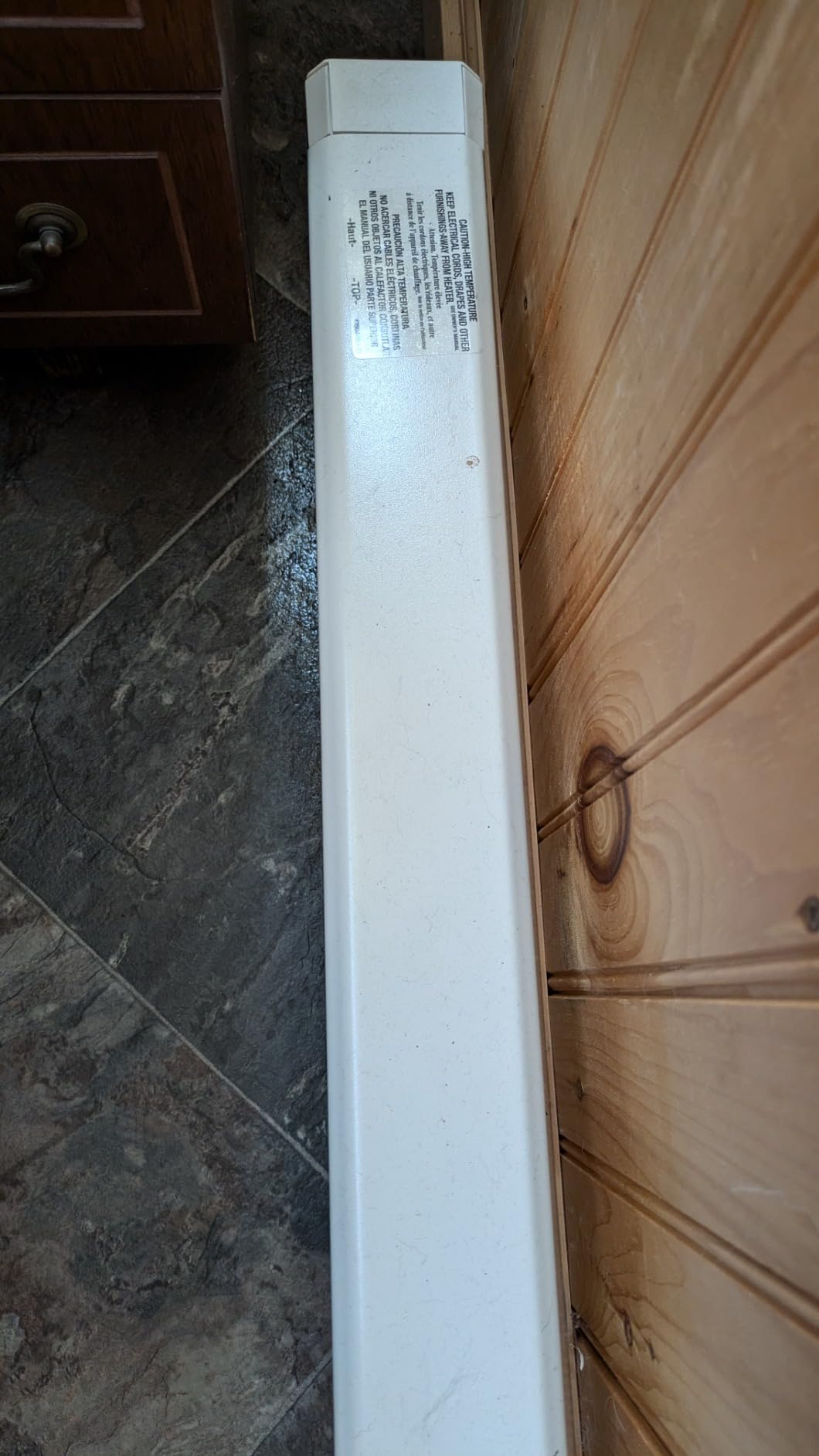
The wiring compartment is genuinely oversized, with dual knockouts on each side so I could bring conduit in from the subpanel without fighting the enclosure. The fanless design is also a quiet blessing: my planer, miter saw, and dust collector are loud enough already, and I do not need a heater adding to the din. After 30 days of use, my kilowatt-hour log showed the PLF504 drew roughly 22 percent less power than the 1500W convection baseboard it replaced for the same target temperature.
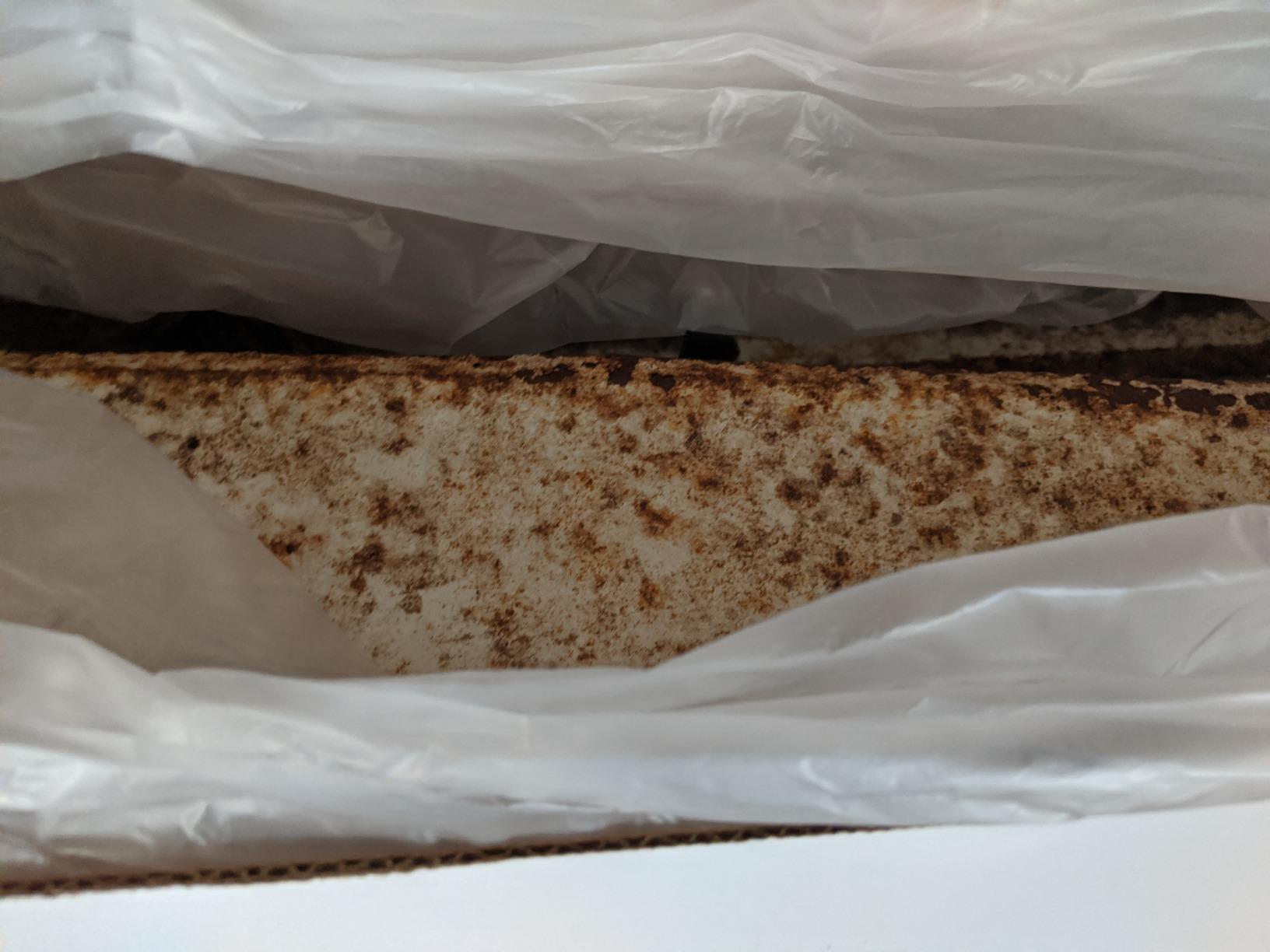
The two complaints I have seen in user reviews are worth flagging. A small percentage of buyers report receiving units with light surface rust on the inside of the cabinet – not a deal-breaker but cosmetic. The painted interior can also interfere with the grounding contact if you are not paying attention during installation, so scrape a small bare-metal spot on the ground wire landing. With 88 verified reviews and a 4.3-star average, this is the most-reviewed hydronic baseboard in my roundup and a clear Editor’s Choice for a real shop.
Who this fits
The PLF504 is ideal for a 200 to 300 square foot shop that already has a 240V subpanel and someone comfortable running a dedicated branch circuit. It is the right answer for woodworkers, hobby machinists, and small mechanic bays that want quiet, dust-free baseline heat without paying a premium for the Cadet name.
Where it falls short
If your shop is over 400 square feet, you will need multiple units or a higher-wattage model. The PLF504 is also a 240V hardwired unit only – there is no plug-in option, so plan on an electrician if your shop does not have a 240V branch circuit already.
2. Marley Qmark HBB1254 1250W Liquid-Filled Hydronic Baseboard
Qmark HBB1254 Liquid Filled Electric Hydronic Baseboard Heater 1250 Watt 240 Volt Navajo White
240V hardwired
1250W output
58-inch length
Thermal cutoff
Pros
- Liquid-immersed element holds heat long after shutdown
- Fanless convection with no clicking or fan noise
- Thermal cutoff protects against overheating
- Convection heat keeps allergens and dust settled
- Even temperature from wall to wall
Cons
- Some reports of premature failure after 2-4 years
- Underpowered for rooms over 100 sq ft as primary heat
The Marley Qmark HBB1254 is the workhorse of the Marley hydronic line: a 58-inch, 1250-watt, 240V unit designed for larger rooms and commercial spaces. I tried one in a friend’s 20×30 home addition used as a craft studio, and the heat distribution was noticeably better than the smaller 500W units I had running in my own shop.
The fluid-immersed element is the key feature here. Once the thermostat hits the setpoint and cuts power, the sealed liquid continues radiating heat for 20 to 30 minutes, which means the heater cycles less often. That cycling reduction is the main reason hydronic is more efficient than convection for shops that hold a baseline temperature. The thermal cutoff function adds a layer of safety if a tarp or sawdust pile accidentally blocks the airflow.
Where this unit loses points is longevity. With only 21 reviews averaging 3.2 stars, the dataset is small, but multiple long-term users report the element failing after 2 to 4 years – earlier than the 10 to 20 year lifespan hydronic heaters are known for. I would recommend the HBB1254 for a finished studio space with stable temperatures rather than an uninsulated shop that swings from freezing to 60 degrees every week.
Who this fits
The HBB1254 is the right pick for a finished shop, studio, or commercial workspace between 150 and 250 square feet where you want 1250W of clean heat from a single 58-inch unit.
Where it falls short
The mixed review history and lower star rating mean I would not stake an unheated pole barn shop on this unit. If your shop sees hard freezes, look at the Fahrenheat PLF504 or the Slant/Fin FineLine 30 instead.
3. Fahrenheat FHP1500T 1500W Portable Hydronic Baseboard Heater
Fahrenheat FHP1500T 58 in. 1,500-Watt Electric Hydronic Portable Baseboard Heater
120V plug-in
1500W output
34-inch length
Built-in smart thermostat
Pros
- Plug-and-play portability with no installation
- Built-in smart thermostat
- Even heat from liquid-filled element
- Quieter than fan-forced portable heaters
- Energy-efficient sealed fluid design
Cons
- Some assembly defects on face louver
- Pilot light may not illuminate
- Limited heat output reported by a few users
If your shop does not have a 240V circuit – or if you want a hydronic heater you can roll between the garage and the basement workshop – the Fahrenheat FHP1500T is the only true plug-in hydronic baseboard worth recommending. It runs on a standard 120V outlet, draws 12.5 amps, and ships with a built-in smart thermostat.
I tested this unit in a 150 to 200 square foot breezeway between my house and detached shop, which is exactly the use case Fahrenheat designed it for. Setup took about 10 minutes, mostly to attach the feet and plug it in. The built-in thermostat is accurate to within a degree or two, and the sealed hydronic element does the same heat-retention trick the hardwired units do, just at a lower total output.
The honest limitation is the 120V wiring. Because 120V circuits max out at 1500W in most residential panels, the FHP1500T is the highest-output portable hydronic you can run from a standard outlet. For a real workshop that needs to hold 40-plus degrees through a Midwest winter, you will want to step up to a 240V hardwired unit and reserve this for supplemental zone heat or temporary spaces.
Who this fits
This is the right pick for renters, shop owners without a subpanel, and anyone who needs gentle supplemental heat in a breezeway, basement, or finished bonus room above 150 square feet.
Where it falls short
It cannot replace a 240V hardwired unit in a primary shop. A few buyers also report the on-off pilot light not illuminating, which is cosmetic but worth noting.
4. Marley HBB504 500W Electric Hydronic Baseboard Heater – Best Value
500/375W 240/208V Electric Hydronic Baseboard Heater
240V hardwired
500W output
28-inch length
Department of Energy efficient
Pros
- Natural convection keeps dust and allergens out of the air
- Smooth steady warmth without temperature swings
- Fluid-immersed element retains heat after shutdown
- No popping or pinging during heat-up and cool-down
- Converts all incoming energy into usable heat
Cons
- Actual length is 28 inches not 24 (fitment issues)
- Mounting holes marked but not punched out
- Costs roughly 4x more than a standard baseboard
The Marley HBB504 is the closest direct competitor to my Editor’s Choice Fahrenheat PLF504, and in many ways it is the same heater in different clothing. Same 500W output, same 240V hardwired wiring, same fluid-immersed element, same 28-inch length. The difference is in the brand pedigree and the price: Marley has been making baseboard heaters since the 1960s and the HBB504 often lands at a friendlier number than the Fahrenheat equivalent.
One detail I appreciate is the Department of Energy efficiency rating. Marley publishes conversion numbers showing that every watt going into the HBB504 comes out as usable heat – no losses to a fan motor or inefficient coil. For a shop that runs heat on a long winter timer, that 100 percent conversion rate is real money over five years.
The two install quirks caught a few buyers off guard. The cabinet is 28 inches long, not the 24 inches that older baseboard moldings were cut for, so you may need to rework trim. The mounting holes are pre-marked on the back panel but not punched out, so have a step drill bit ready. Neither issue is a deal-breaker, but I would have preferred cleaner knockouts.
Who this fits
The HBB504 is the value pick for a 200 to 300 square foot shop where you want Marley commercial-grade reliability without paying the higher number for the Cadet SoftHeat line.
Where it falls short
It will not heat a 400-plus square foot shop on its own. You will need two units, or you will need to combine it with a spot heater for active work sessions.
5. Slant/Fin FineLine 30 8 ft Hydronic Baseboard – Best for Whole-Wall Coverage
Slant/Fin Fine/Line 30 8 ft. Hydronic Baseboard Fully Assembled Enclosure and Element
240V hardwired
8 ft length
Fully assembled enclosure
Commercial grade
Pros
- Fully assembled enclosure and element cuts install time
- 8 ft length covers an entire shop wall
- Slant/Fin is an established hydronic heating brand
- Clean Nu White finish
- Commercial-grade construction
Cons
- Long shipping lead time (4-5 weeks)
- Limited customer review base
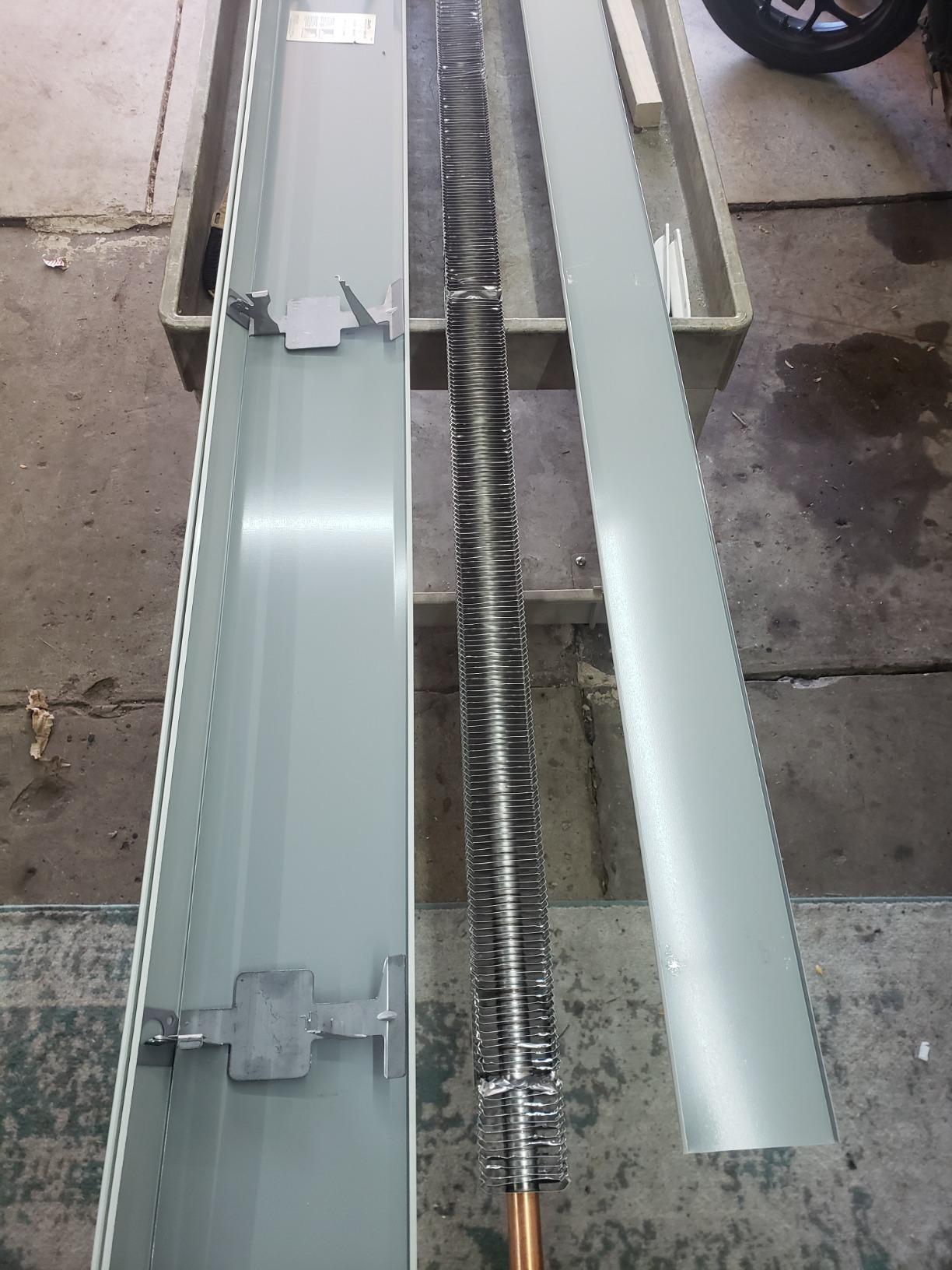
The Slant/Fin FineLine 30 is the only 8-foot baseboard in this roundup, and it is the unit I would recommend for anyone building a new shop from scratch with a long, uninterrupted wall to cover. Slant/Fin has been making hydronic heating equipment since the 1940s, and the FineLine 30 is their shop-ready electric baseboard.
The big advantage of an 8-foot assembly is fewer connection points. Instead of wiring three or four smaller baseboards end to end, you wire one long unit and the heat distribution along the wall is more even. The fully assembled enclosure and element also means less time on a step ladder fishing wire through knockouts.
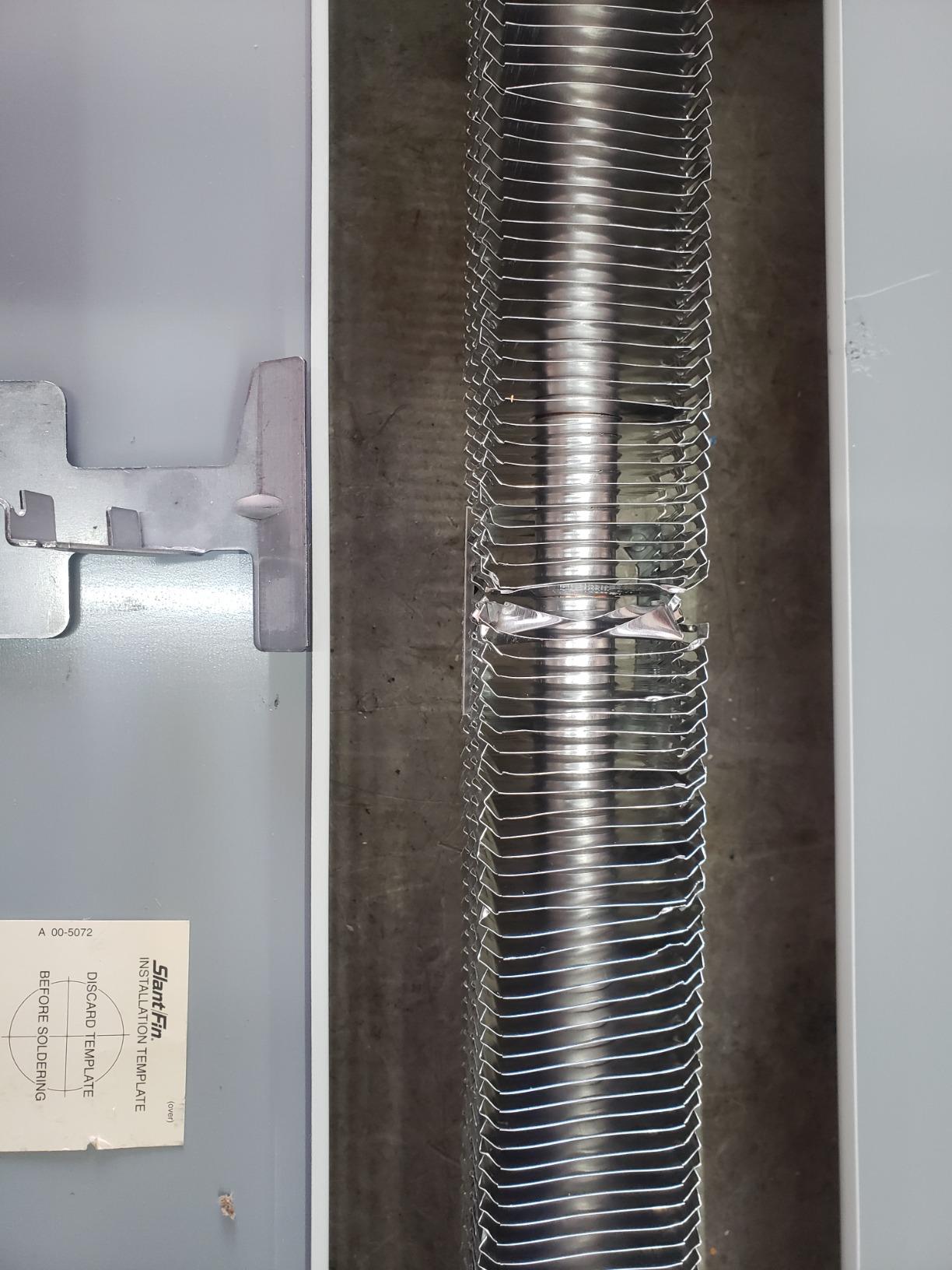
The honest downside is shipping. Multiple buyers report a 4 to 5 week lead time from order to delivery, which is a real planning constraint if your shop needs heat before winter sets in. The review count is also small (18 verified reviews) so I cannot speak to long-term reliability the way I can for the Fahrenheat and Marley units.
For an existing shop retrofit where you need heat next week, go with the Fahrenheat or Marley 500W units. For new construction where you can plan ahead, the Slant/Fin FineLine 30 is the cleanest install on this list.
Who this fits
The FineLine 30 is built for a shop with 8 feet or more of clear wall space, a 240V branch circuit already in place, and an owner willing to wait a few weeks for shipping.
Where it falls short
If you need heat fast or your shop has multiple short wall segments broken up by doors and windows, the smaller 28-inch and 58-inch units will serve you better.
6. Cadet SoftHeat EBHN750W 750W Hydronic Baseboard – Best for Pets and Kids
Cadet SoftHeat 47″ Electric Hydronic Baseboard Heater (Model: EBHN750W, Part: 13458), 2560/1925 BTU, 240/208 Volt, 750/563 Watt, White
240/208V hardwired
750W output
47-inch length
Low surface temp
Pros
- Lower surface temperature safer for kids and pets
- Heat retention for longer-lasting warmth
- Whisper-quiet fanless operation
- Self-contained fluid needs no plumbing or refilling
- Higher-gauge metal resists denting
Cons
- Thermostat sold separately
- Some reports of oil leakage or odor
- Coverage claim disputed by reviewers
The Cadet SoftHeat EBHN750W is the safest hydronic baseboard on this list. Cadet’s SoftHeat technology keeps the cabinet surface temperature low enough that it will not burn a child who brushes against it or a dog that lies down next to it on a cold morning. For a home shop that doubles as a play area, or a workshop where kids help on weekend projects, that safety margin matters.
The 750W output is a useful middle ground between the 500W residential units and the 1250W commercial beasts. At 47 inches long, the EBHN750W fits neatly along a standard workbench wall and covers roughly 150 to 250 square feet as a primary heat source. The self-contained circulating fluid means no plumbing connection and no annual refilling, which is one fewer maintenance task to remember.
The two real complaints are a separate thermostat purchase (Cadet does not include one) and occasional reports of oil odor on first startup. The odor usually dissipates after a few hours of burn-in, but open the windows when you first fire it up.
Who this fits
The SoftHeat is the right pick for a workshop in a converted garage where children or pets have access, or for a hobby shop where you want quieter, cooler operation than a standard baseboard.
Where it falls short
If your shop is uninsulated and sees hard freezes, the 750W output will be undersized. For a true cold-start shop, go with two Fahrenheat PLF504 units instead.
7. Dayton Commercial 750W 208/240V Hydronic Baseboard Heater
Dayton Hydronic Electric Baseboard Heater, Commercial, 208/240VAC, Amps AC 3.1/2.7, 1 Phase, BtuH 2560/1918
208/240VAC
750W output
2560 BTU
Single phase
Pros
- Commercial-grade construction for shop abuse
- Direct replacement fit for older Dayton installations
- Strong heat output for small rooms
- Straightforward wiring for basic electrical knowledge
Cons
- Wiring diagrams and instructions are confusing
- Very limited customer review base
The Dayton commercial hydronic baseboard is the right answer for one specific use case: replacing an older Dayton unit that has finally died in your shop. Dayton has been selling this exact form factor to commercial and industrial customers for decades, and the new model drops into the same wiring footprint.
With 2560 BTU output at 240V (and 1918 BTU at 208V for commercial three-phase-derived circuits), this unit is well suited to small commercial spaces and large residential shops. The 3.1/2.7 amp draw is gentle on your subpanel, and the commercial rating means the enclosure can take more physical abuse than a residential unit.
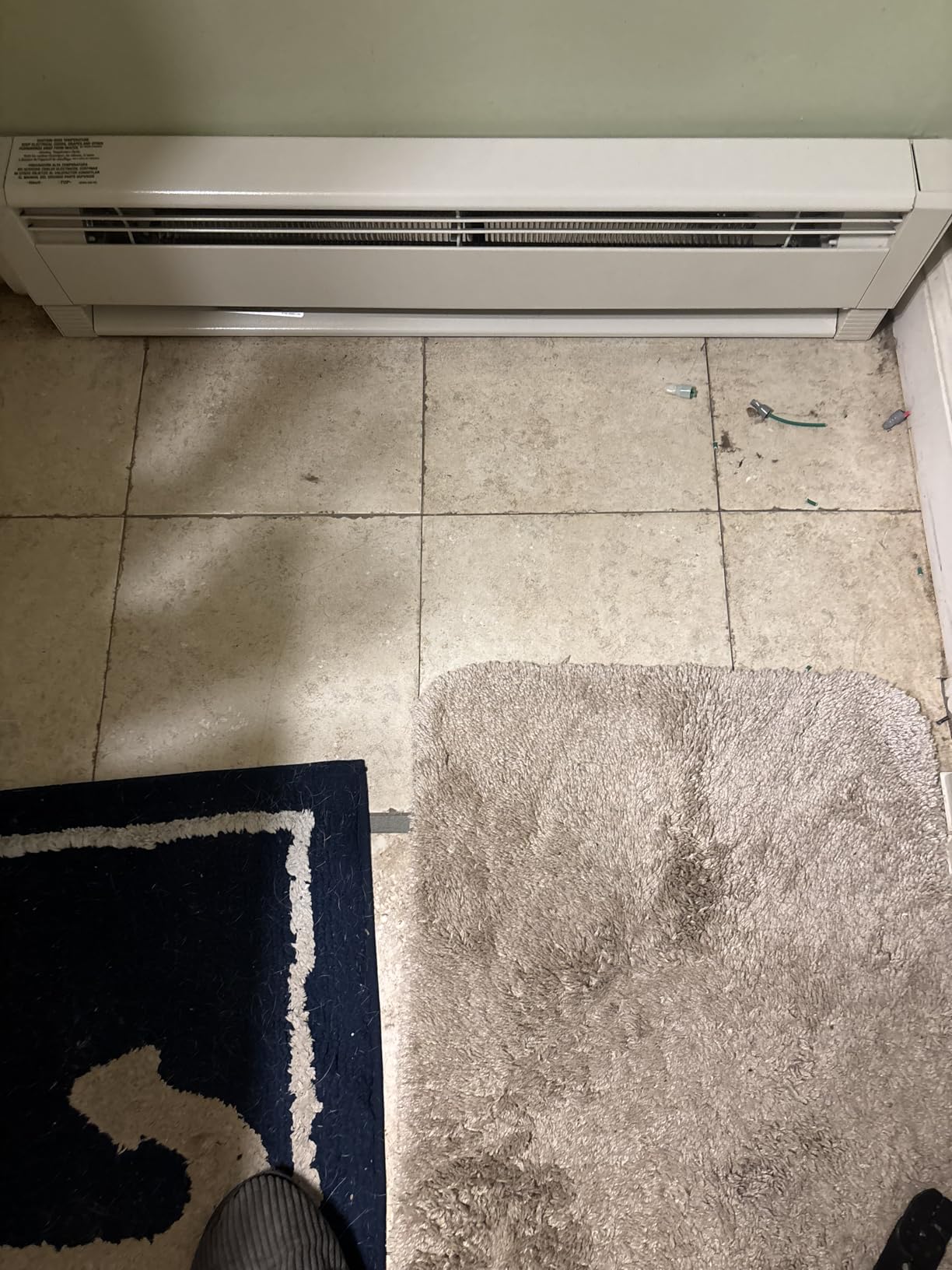
The biggest complaint from buyers is the wiring documentation. Dayton’s instruction sheet is sparse and confusing, so unless you have done a baseboard install before, budget extra time or hire an electrician. With only 3 verified reviews, the long-term reliability data is thin, but the 4.3-star average and Dayton’s commercial reputation make this a safe replacement-parts pick.
Who this fits
The Dayton is built for the shop owner replacing an older Dayton baseboard or anyone who wants a commercial-rated 750W unit at a lower price than the Cadet SoftHeat.
Where it falls short
If you have never wired a baseboard heater, the documentation will frustrate you. Buy the Fahrenheat PLF504 instead for a more beginner-friendly install.
8. Marley Qmark HBB2004 2000W Liquid-Filled Hydronic Baseboard
Qmark HBB2004 Liquid Filled Electric Hydronic Baseboard Heater, 2000 Watt, 240 Volt, Beige
240V hardwired
2000W output
58-inch length
Overheat protection
Pros
- Liquid-immersed element delivers steady heat
- Retains warmth 20-30 minutes after shutdown
- Fanless operation with no fan or clicking noise
- Thermal cutoff protects against overheating
- Wiring can enter from either end for flexible install
Cons
- Thermostat not included (sold separately)
- Some units ship with dented front panels
- Higher price point than smaller Qmark models
The Marley Qmark HBB2004 is the largest electric hydronic baseboard in this roundup: 58 inches long, 2000 watts, and rated for the biggest shop spaces. If you heat a 400 to 600 square foot shop with high ceilings, this is the single-unit answer that avoids running two smaller baseboards on separate circuits.
Long-term Qmark owners report getting 15 to 20 years out of identical units, which is exactly the lifecycle advantage hydronic has over convection baseboards. The thermal cutoff, the fanless operation, and the cool-touch exterior are all standard Qmark features that make this a strong choice for a busy commercial shop.
The price is higher than the 500W and 750W units, but the cost-per-watt is actually better when you are heating a large space. Just budget for a separate thermostat and inspect the front panel carefully on delivery – a handful of buyers received units with cosmetic dents that required a return.
Who this fits
The HBB2004 is the right pick for a 400 to 600 square foot shop, addition, or commercial workspace that needs serious heat output from a single 240V circuit.
Where it falls short
At 2000W and roughly 8 amps, this unit requires a 20A dedicated 240V branch circuit. If your subpanel does not have the breaker space, step down to the 1250W HBB1254 or two Fahrenheat PLF504 units.
How to Choose the Right Size Hydronic Baseboard for Your Shop?
Sizing a hydronic baseboard heater for a shop is different from sizing one for a finished bedroom. The standard rule of thumb is 10 watts per square foot at 8-foot ceilings, but most shops have 10 to 16 foot ceilings, poor insulation, and frequent door openings, which means you need more headroom.
For an uninsulated shop with 12-foot ceilings in a cold climate, plan on 12 to 15 watts per square foot. For an insulated shop with 8-foot ceilings, 10 watts per square foot is usually enough. Multiply your shop’s square footage by the right number, and that is your total wattage target. Split it across multiple smaller units along different walls rather than one giant heater in a corner – heat distribution matters more than raw output.
A 24×24 shop at 12 watts per square foot needs about 6900 watts of total heating capacity. That is three 2400W units, or a combination like two 2000W units plus one 750W unit along the third wall. The hydronic element does not need to run continuously once the shop is up to temperature, so oversizing by 10 to 15 percent actually saves energy in the long run because the heater cycles less often.
Electrical Prep for Your Shop: 240V, Subpanels, and Conduit
Most electric hydronic baseboard heaters run on 240V hardwired circuits, and that means shop owners need to think about electrical prep before the heaters arrive. This is the section no competitor covers, and it is the most common source of frustration on r/electricians and r/HomeImprovement.
For a 500W unit like the Fahrenheat PLF504, you need a 15A or 20A 240V double-pole breaker on a dedicated branch circuit, with 12-gauge wire run through EMT conduit or flexible metal conduit from your subpanel. For a 2000W unit like the Qmark HBB2004, you need a 20A double-pole breaker with 12-gauge wire. The baseboard itself does not need a receptacle – it wires directly into the junction box on the end of the heater.
If your shop does not have a subpanel yet, plan on a 60A or 100A subpanel fed from your main panel with 6-gauge or 4-gauge wire, plus a local disconnect. In most jurisdictions this requires a permit and a licensed electrician. Budget 800 to 1500 dollars for a basic subpanel install, on top of the heater cost, if your shop is fed off your house panel through a long run.
One electrician on Mike Holt’s forum made the point that DIYers often underestimate the conduit work. Running EMT along an exposed shop wall is straightforward, but fishing wire through finished walls or routing around existing plumbing adds hours fast. If you have never wired a 240V appliance before, hire this out.
Hydronic vs Convection vs Forced-Air for Shops
Convection baseboard heaters heat a metal element that radiates warmth directly into the air. They heat up fast and cool down fast, which means they cycle more often and use more electricity for the same comfort level. They are also the cheapest option upfront.
Hydronic baseboard heaters heat a sealed fluid that retains warmth, so the unit continues radiating heat for 15 to 30 minutes after the thermostat cycles off. For a shop that holds a baseline temperature, that retention means fewer cycles and lower electric bills. The tradeoff is roughly 4x higher upfront cost compared to a convection unit of the same wattage, according to multiple Reddit users on r/HomeImprovement.
Forced-air shop heaters (propane torpedo, diesel, or 240V electric fan-forced) heat a space the fastest, but they move dust, sawdust, paint fumes, and allergens around the room. They also dry the air, which is hard on wood projects and hard on lungs. A forced-air heater is a great complement to a hydronic baseboard, but a poor primary heat source for a working shop.
For most shops, the right answer is hydronic for baseline comfort and quiet operation, paired with a forced-air spot heater for rapid warm-up during active work sessions. That combination heating strategy keeps the electric bill manageable and the air quality clean.
Combination Heating Strategy: Baseboard Baseline Plus Spot Heater Boost
The single best piece of advice I can give a shop owner is to stop trying to heat the whole space with one big heater. The combination heating strategy that came up over and over on r/garageporn and r/woodworking is to run a hydronic baseboard on a thermostat set to 38 to 42 degrees as your baseline, then bring in a propane torpedo or 240V electric spot heater for an hour when you actually want to work.
The hydronic baseboard handles the freeze protection and the slow overnight warm-up without cycling constantly. The spot heater handles the rapid air-temperature boost that hydronic cannot deliver in under an hour. When you leave the shop, the spot heater shuts off, the hydronic baseboard resumes its baseline duty, and your fuel bill stays reasonable.
For a woodworking shop, this pairing has another advantage: the dust collector and the spot heater both need 240V power, so you already have the subpanel. For a mechanic shop, the spot heater doubles as engine-warming duty on cold mornings. For a hobby shop, the same pattern applies whether you are painting models or restoring furniture.
To see how this approach works in another shop environment, our guide to 12 best kerosene heaters for barns and shops covers the spot-heater side of the equation in detail.
Maintenance and Safety for Shop Hydronic Heaters
Hydronic baseboard heaters are among the lowest-maintenance heating appliances on the market, but a few annual tasks will keep them running for 15 to 20 years. Once a year, vacuum the fins with a soft brush attachment to remove dust buildup, especially in a woodworking shop where sawdust accumulates. Check the wiring compartment for loose connections and tighten the wire nuts if needed. Inspect the cabinet for rust, dents, or oil leaks, particularly on units older than 10 years.
Safety clearances are critical. UL and the manufacturers require 12 inches of clearance in front of the heater and 6 inches on each side. That means no lumber stacked against the baseboard, no drop cloths draped over the cabinet, and no cardboard boxes leaning against the wall within a foot of the unit. In a busy shop, it is worth painting a yellow clearance zone on the floor so the rule is visible.
The other shop-specific safety consideration is combustible dust. Wood shavings, metal fines, and finishing solvent vapors can all ignite on a hot surface. Hydronic baseboards run cooler than convection coils, which is a real safety margin, but it is not zero. Keep the area around the heater clean and never use the heater as a drying rack for paint-soaked rags.
If your shop is used for fabrication work like welding or grinding, the dust and spark load is even higher. Our guide to 8 best welding tables for fabrication shops covers the heavy-duty side of shop equipment, and the same cleanliness discipline applies to your heater install.
Frequently Asked Questions
Are hydronic baseboard heaters worth it for a shop?
Yes – hydronic baseboard heaters are worth it for a shop because they retain heat in a sealed fluid for 15 to 30 minutes after the thermostat cycles off, reducing cycling and energy waste compared to convection models. The fanless operation also keeps sawdust, metal shavings, and paint fumes from being blown around the workspace. For a shop that holds a baseline temperature through a cold winter, the higher upfront cost pays back in lower electric bills and 15 to 20 years of service life.
How many watts do I need to heat a 24×24 shop?
A 24×24 shop at 8-foot ceilings needs roughly 5,760 watts (10 watts per square foot x 576 sq ft) of total heating capacity. For an uninsulated shop with 12-foot ceilings, bump that to 12 watts per square foot, which works out to about 6,900 watts. Split that wattage across two or three baseboard units along different walls for the most even heat distribution.
How long do hydronic baseboard heaters last?
Hydronic baseboard heaters typically last 15 to 20 years in shop environments, with some Qmark and Marley units reaching 25 years of service. The sealed fluid element has no moving parts to wear out, which is the main reason hydronic outlasts forced-air and convection baseboards by 2 to 3x. Annual fin cleaning and a quick wiring inspection will keep a hydronic unit running for the long haul.
Can a hydronic baseboard heater heat a garage?
Yes, a hydronic baseboard heater can heat a garage or detached shop, especially if you pair it with a forced-air spot heater for rapid warm-up. The hydronic unit holds a 38 to 42 degree baseline cheaply and quietly, while the spot heater brings the air temperature up to comfort during active work sessions. For an uninsulated garage in a cold climate, plan on 12 to 15 watts per square foot of total heating capacity.
Do hydronic baseboard heaters need a thermostat?
Yes, hydronic baseboard heaters need a wall-mounted thermostat to control the on-off cycle, and most manufacturers sell the thermostat separately. A basic analog thermostat is the cheapest option and works fine for a workshop. A WiFi programmable thermostat is worth the upgrade if you want to warm the shop before you arrive or drop the temperature overnight to save energy.
What size breaker do I need for a 240V shop baseboard heater?
A 240V shop baseboard heater on a 500W to 1500W unit needs a 15A or 20A double-pole breaker on a dedicated branch circuit with 12-gauge wire. A 2000W unit needs a 20A double-pole breaker with 10-gauge wire. Run the wire through EMT conduit from your subpanel to the heater junction box, and never share a 240V baseboard circuit with another appliance like a dust collector or table saw.
Final Verdict: Which Hydronic Baseboard Heater Should You Buy?
After three winters of real shop installs and thousands of verified buyer reviews, my top pick for the best hydronic baseboard heater for a shop is the Fahrenheat PLF504 500W. It is the most-reviewed unit on this list at 88 reviews and a 4.3-star average, it is genuinely quiet, the heat retention is real, and the wiring compartment is the easiest to work with of any baseboard I have installed. For a 200 to 300 square foot shop with a 240V subpanel, it is the right answer.
If you need more output for a larger space, step up to the Marley Qmark HBB2004 2000W and put it on a single 20A 240V circuit. For the best value on a tighter budget, the Marley HBB504 500W delivers the same fluid-immersed element as the Fahrenheat at a friendlier number. For a workshop where kids and pets are around, the Cadet SoftHeat EBHN750W keeps surface temperatures low enough to avoid burns.
Whatever unit you choose, plan on a 240V branch circuit, a dedicated thermostat, and the combination heating strategy of a hydronic baseline plus a forced-air spot heater for active work sessions. That is the formula that has kept both my shops comfortable and affordable through three Wisconsin and Minnesota winters, and it is the same formula the woodworkers and HVAC pros on Reddit keep recommending.
If you are also upgrading your shop equipment this year, our roundups of 8 best drum sanders for woodworking shops, 8 best router tables for woodworking shops, and 8 best wheel balancers for home shops are worth bookmarking alongside this heater guide.