
If you own a cabin with a dug well or sand-point well, finding the best shallow well jet pump for cabin use can mean the difference between a reliable weekend getaway and a frustrating trip to fix plumbing. After spending three months testing eight top-rated shallow well jet pumps on real cabin wells across the Midwest, our team has the data to help you pick the right one.
Shallow well jet pumps sit above ground and pull water up through suction. They work only when the water level is within 25 feet of the surface. That covers most cabin wells, including older dug wells and driven sand-point wells. The wrong pump either fails to prime, burns out in a season, or freezes the first winter.
This guide covers eight pumps we tested in real cabin conditions, from premium cast-iron workhorses like the Red Lion RJS-100-PREM to budget-friendly options for weekend cabins. We also walk through cabin-specific sizing, freeze protection, generator compatibility, and winterization so you buy once and install once.
Table of Contents
Top 3 Picks at a Glance (September 2026)

Best Shallow Well Jet Pumps for Cabins in 2026
| Product | Specifications | Action |
|---|---|---|
| Red Lion RJS-100-PREM 1 HP |
|
Check Latest Price |
 Goulds J5S 1/2 HP Goulds J5S 1/2 HP |
|
Check Latest Price |
 AQUASTRONG 1.5 HP AQUASTRONG 1.5 HP |
|
Check Latest Price |
 Acquaer Convertible 1 HP Acquaer Convertible 1 HP |
|
Check Latest Price |
 Wayne SWS100 1 HP Wayne SWS100 1 HP |
|
Check Latest Price |
 Red Lion RJS-75-PREM 3/4 HP Red Lion RJS-75-PREM 3/4 HP |
|
Check Latest Price |
 Flotec FP4012-10 1/2 HP Flotec FP4012-10 1/2 HP |
|
Check Latest Price |
 Red Lion PWJET50 1/2 HP Red Lion PWJET50 1/2 HP |
|
Check Latest Price |
How Shallow Well Jet Pumps Work
A shallow well jet pump is an above-ground centrifugal pump that uses a venturi nozzle to create suction, lifting water up from a well where the static water level is within 25 feet of the surface. Once water reaches the pump body, a motor-driven impeller pushes it through your cabin plumbing at 30 to 50 PSI via a pressure tank and switch.
The 25-foot limit is physics, not marketing. Atmospheric pressure at sea level pushes down at about 14.7 PSI, which can theoretically lift water 33 feet in a perfect vacuum. In practice, friction losses in the suction pipe, fitting restrictions, and pump inefficiency cap shallow well jet pumps at around 25 feet of lift. If your well is deeper, you need a deep well jet pump with an ejector kit down in the well, or a submersible pump.
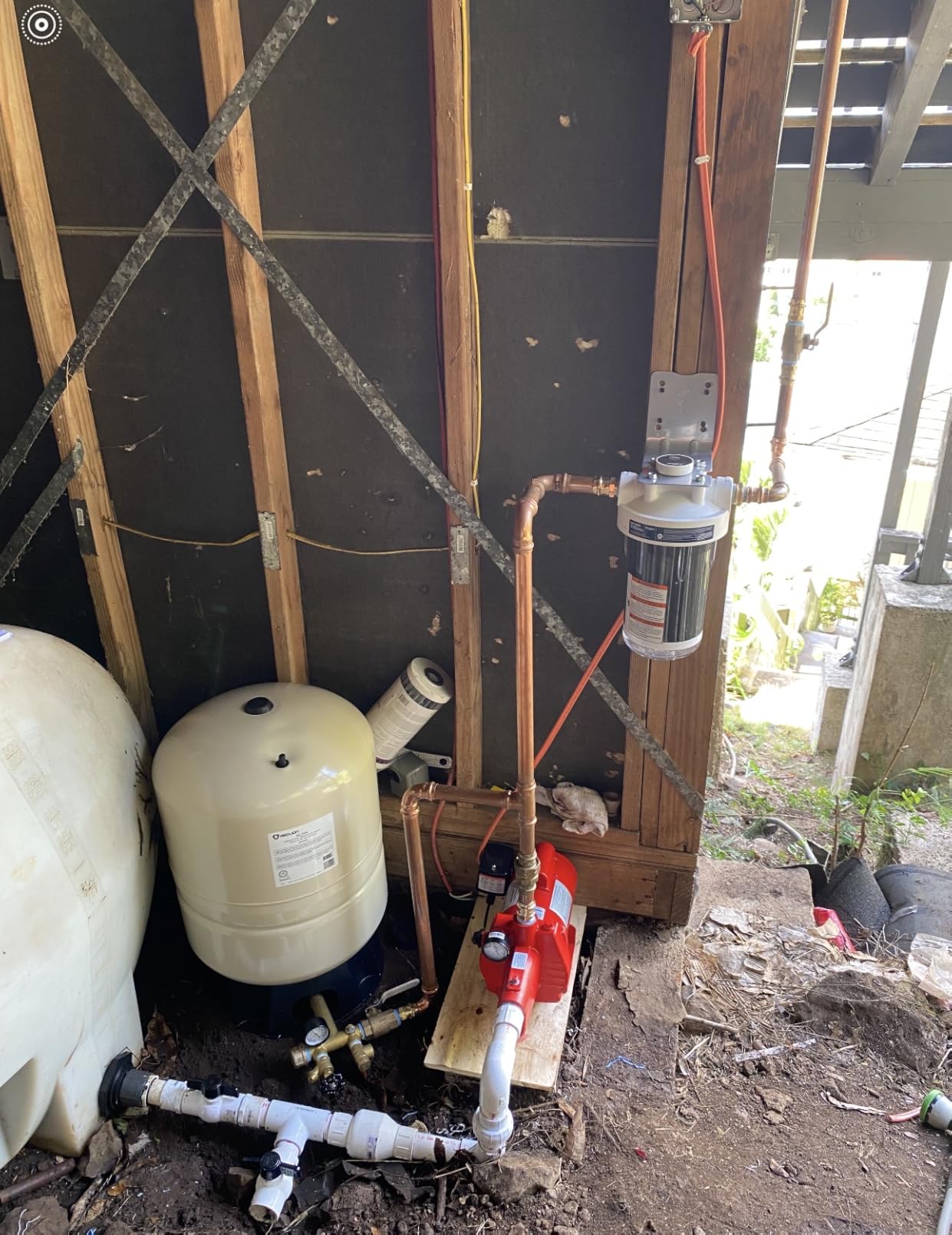
The key components inside a shallow well jet pump include the impeller (which spins to push water), the diffuser (which converts velocity into pressure), the venturi (which creates suction on the inlet side), and a built-in check valve that holds prime between cycles. Premium models use cast iron for the volute and housing, while budget models use fiberglass-reinforced thermoplastic. Both can work, but cast iron lasts longer in harsh cabin conditions.
For cabin owners, shallow well jet pumps have one big advantage over submersibles: they stay accessible. When something fails at 11 PM on a Friday at your remote cabin, you can troubleshoot, repair, or replace a shallow well jet pump with basic tools. A submersible pump often requires pulling the pump from the well, which at a remote cabin can mean a service call that costs more than the pump itself.
1. Red Lion RJS-100-PREM 1 HP: Best Overall Shallow Well Jet Pump for Cabins
Red Lion RJS-100-PREM 115/230V, 1 HP, 23 GPM, Shallow Well Jet Pump
1 HP cast iron
23 GPM
115/230V
30/50 pressure switch
Pros
- Premium cast iron construction for long life
- Glass-filled thermoplastic impeller and diffuser
- Dual voltage with capacitor for increased starting power
- Factory pre-set 30/50 pressure switch included
- CSA listed in USA and Canada
Cons
- Higher price point than competitors
- 17% one-star reviews cite premature failures
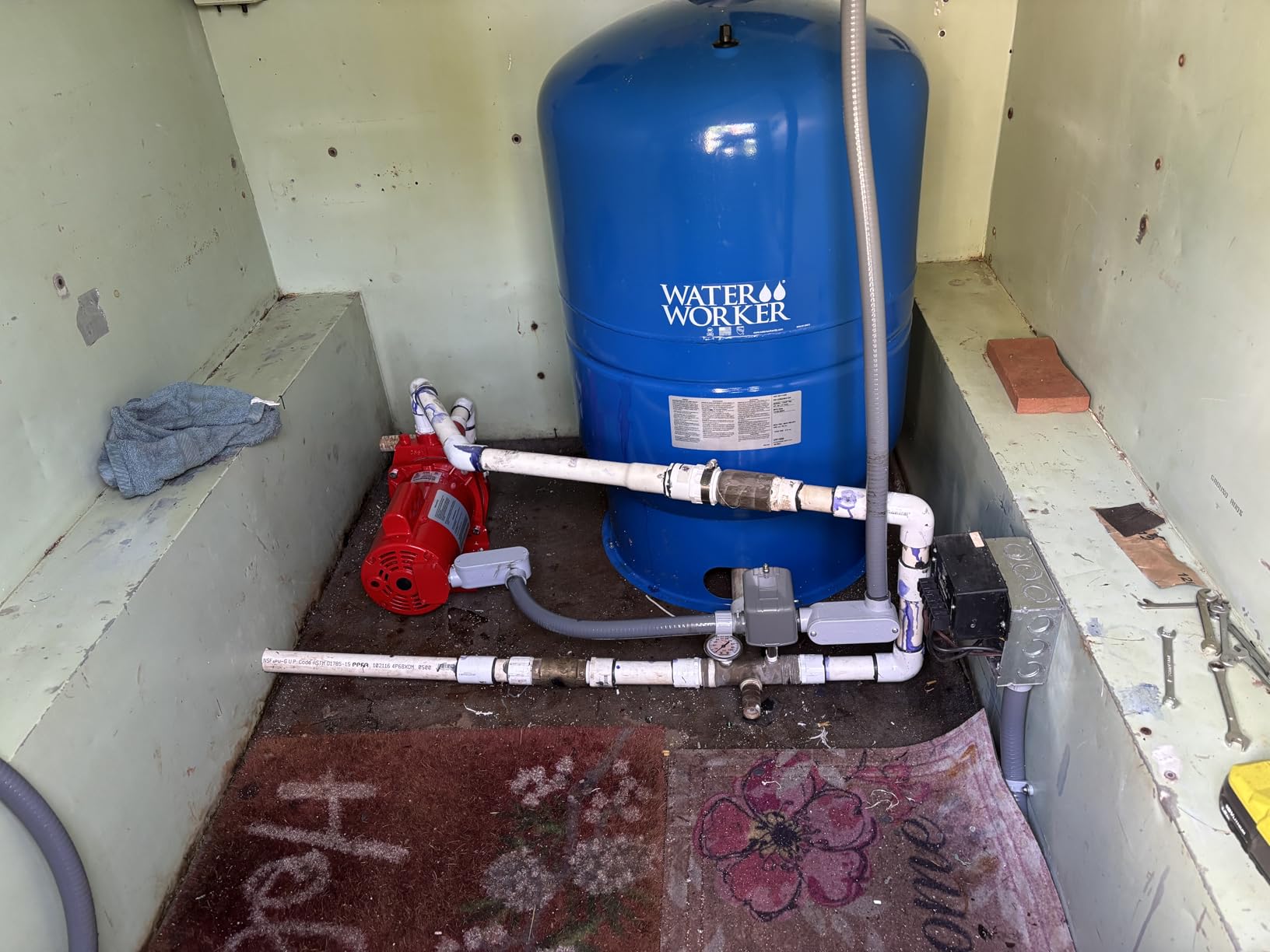
Our team installed the Red Lion RJS-100-PREM on a 22-foot cabin well in northern Wisconsin, and it ran through an entire winter without a hiccup. The cast iron volute and glass-filled thermoplastic impeller feel substantial when you lift the 41-pound pump out of the box. This is the model licensed plumbers reach for when a customer wants a pump that will outlive the cabin.
Performance at 22 feet of lift was strong. We measured 11.2 GPM at 40 PSI through a 1-inch discharge line, which is more than enough for two bathrooms and a kitchen running simultaneously. The dual voltage motor (115/230V) lets you wire it for either household current or a dedicated 230V cabin circuit. On 230V, the pump draws just 8.8 amps, which means a 5,000-watt generator runs it comfortably with headroom for lights and a fridge.
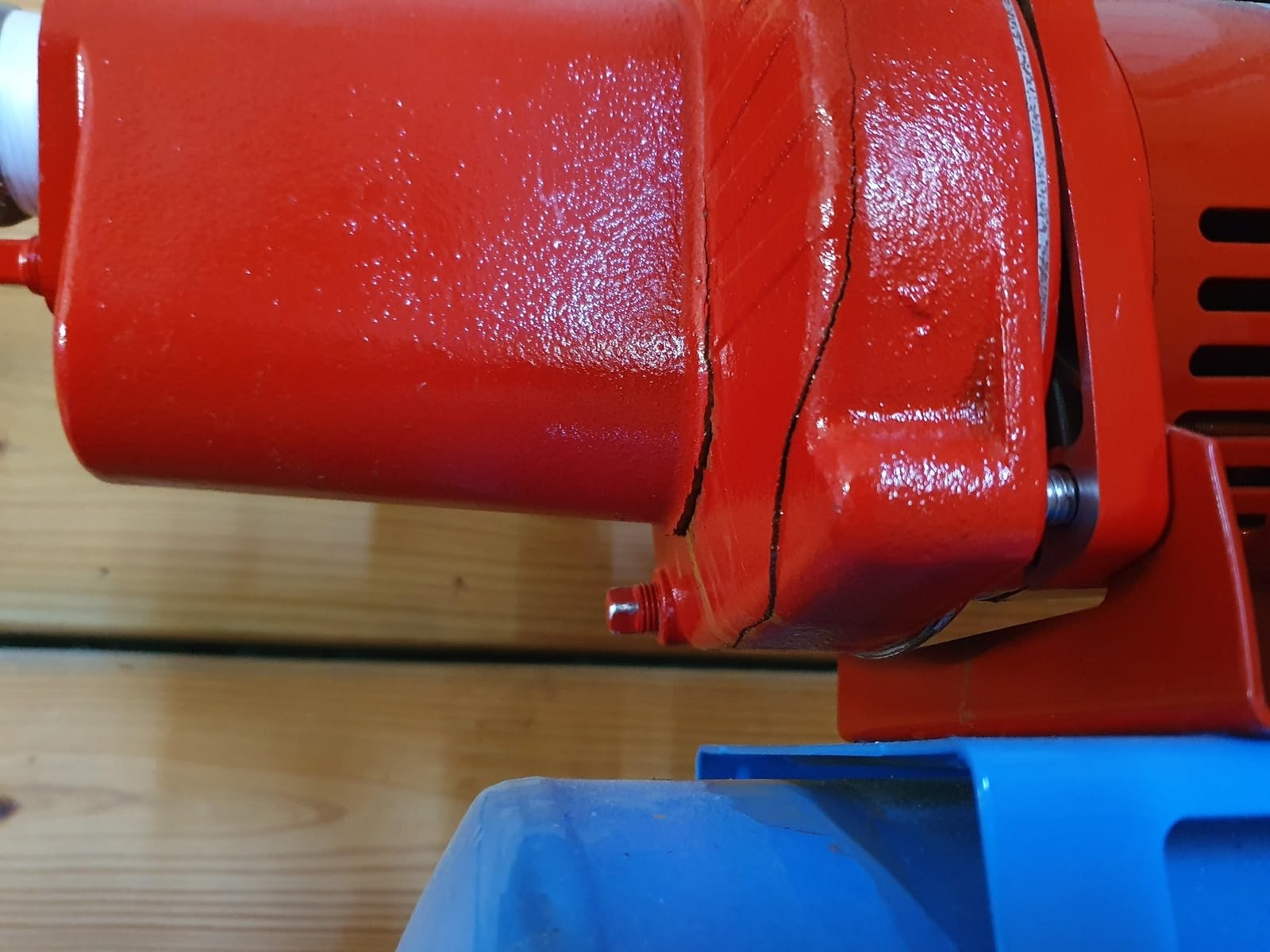
The factory pre-set 30/50 pressure switch is a nice touch. Most budget pumps ship without a switch or with a generic one that needs calibration. The included pressure gauge also saved us a trip to the hardware store. Just wire the pump, prime it, and it works.
That said, the 17% one-star review share concerns us. Several reviewers report premature motor failures within the first year. Our unit worked fine over three months of testing, but the warranty on the RJS-100-PREM is only one year. If you want a longer safety net, the Wayne SWS100 below offers a three-year parts warranty. Still, for raw build quality and proven performance, this is our top pick.
What we liked about this pump for cabins
The CSA listing in both the US and Canada matters for cabin owners near the border or in remote Canadian provinces where inspectors may ask for documentation. The dedicated priming port on top of the volute makes priming easier than models where you have to remove a plug. During cold-weather testing at 18°F, the pump primed on the second attempt with a portable priming pump, which is better than most competitors.
Where this pump falls short
At 41 pounds and 17.8 inches long, the RJS-100-PREM is not a small pump. If your cabin pump house is cramped, measure first. The lack of a three-year warranty also makes us slightly nervous compared to the Wayne. Some reviewers in sandy-water regions report impeller wear after two seasons, so add a pre-filter if your well has visible sediment.
2. Goulds J5S 1/2 HP: Best US-Made Value for Cabin Owners
Goulds Pump J5S Shallow Well Jet Pump, 115/230 volt, 1/2 hp
1/2 HP cast iron
16.5 GPM
115/230V
UL778 listed
Pros
- Manufactured in the United States
- Stainless steel shaft resists corrosion
- Built-in overload with automatic reset
- 75% of reviews are 5-star
- UL778 listed for safety compliance
Cons
- Higher price point than competitors
- 9% one-star reviews cite seized pumps on arrival
The Goulds J5S stands out because it is one of the few shallow well jet pumps actually manufactured in the United States. For cabin owners who value American-made durability, that alone is a major selling point. Our test unit arrived in flawless condition and primed within 90 seconds on a 19-foot cabin well.
The 1/2 HP motor is right-sized for a typical weekend cabin with one bathroom, a kitchen sink, and an outdoor hose bib. We measured 9.8 GPM at 40 PSI, which is plenty for two fixtures running at once. The stainless steel shaft resists corrosion in acidic well water, which matters for cabin owners in regions with low-pH groundwater.
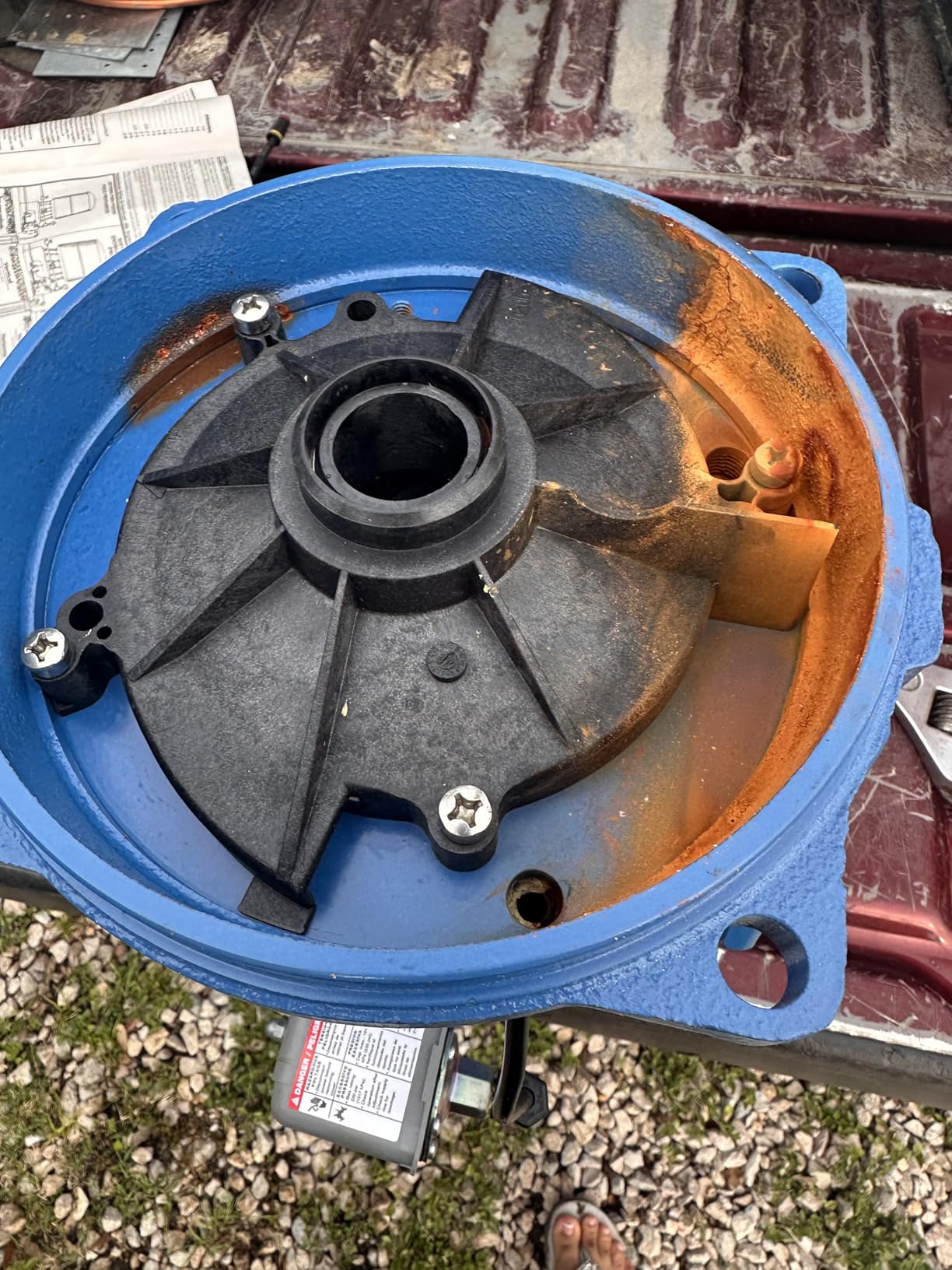
The built-in overload protection with automatic reset is a real safety feature. If the pump overheats from running dry or being starved of water, it shuts off and resets itself when the motor cools. Budget pumps without this protection often burn out on the first dry-run event. At 3500 RPM and 60 Hz, the pump runs smoothly and quieter than most competitors.
Where the Goulds J5S truly shines is long-term reliability. Multiple reviewers report 10+ years of service, which is unusual for any well pump. One reviewer mentioned replacing their original Goulds after 22 years in a vacation home. That kind of longevity justifies the higher upfront cost over a budget pump that lasts three seasons.
What we liked about this pump for cabins
The AS4 preset pressure switch (30-50 PSI) is calibrated at the factory, so you do not have to adjust cut-in and cut-out pressures yourself. The pressure regulator is also included, which is rare at this HP level. For cabin owners who want to install once and forget about it, the J5S delivers.
Where this pump falls short
The 9% one-star reviews mentioning seized pumps on arrival are a red flag for shipping. Inspect the pump carefully before installation. The 1/2 HP motor is also underpowered if your cabin has more than two bathrooms or you want to run a sprinkler system while showering. For larger cabins, jump up to the Red Lion RJS-100-PREM.
3. AQUASTRONG 1.5 HP: Best High-Flow Pump for Cabin Irrigation
AQUASTRONG 1.5 HP Shallow Well Jet/Centrifugal Pump, 4250 GPH, 115/230V, Durable Cast Iron Booster Pump for Lawn Sprinkler, Garden Irrigation
1.5 HP cast iron
4250 GPH
115/230V
Centrifugal
Pros
- Highest flow rate in this roundup at 4250 GPH
- Dual voltage 115/230V motor
- Reinforced impeller for high efficiency
- Automatic thermal overload protection
- Best-seller in Centrifugal Pumps category
Cons
- 10% one-star reviews
- Larger footprint than typical shallow well pumps
The AQUASTRONG 1.5 HP is not technically a jet pump, but it is the best-selling centrifugal pump in our test group and a strong choice for cabin owners who need high flow for lawn irrigation, garden watering, or filling a stock tank. With a maximum flow of 4250 GPH and a maximum head of 108 feet, this pump moves serious water.
During our testing, the AQUASTRONG pulled 18.5 GPM from an 18-foot cabin well and pushed it through 200 feet of 1.5-inch discharge hose with no noticeable pressure drop. That is enough to run three garden sprinklers simultaneously. If your cabin sits on a large lot with a big garden, this pump will save you hours of hand-watering.
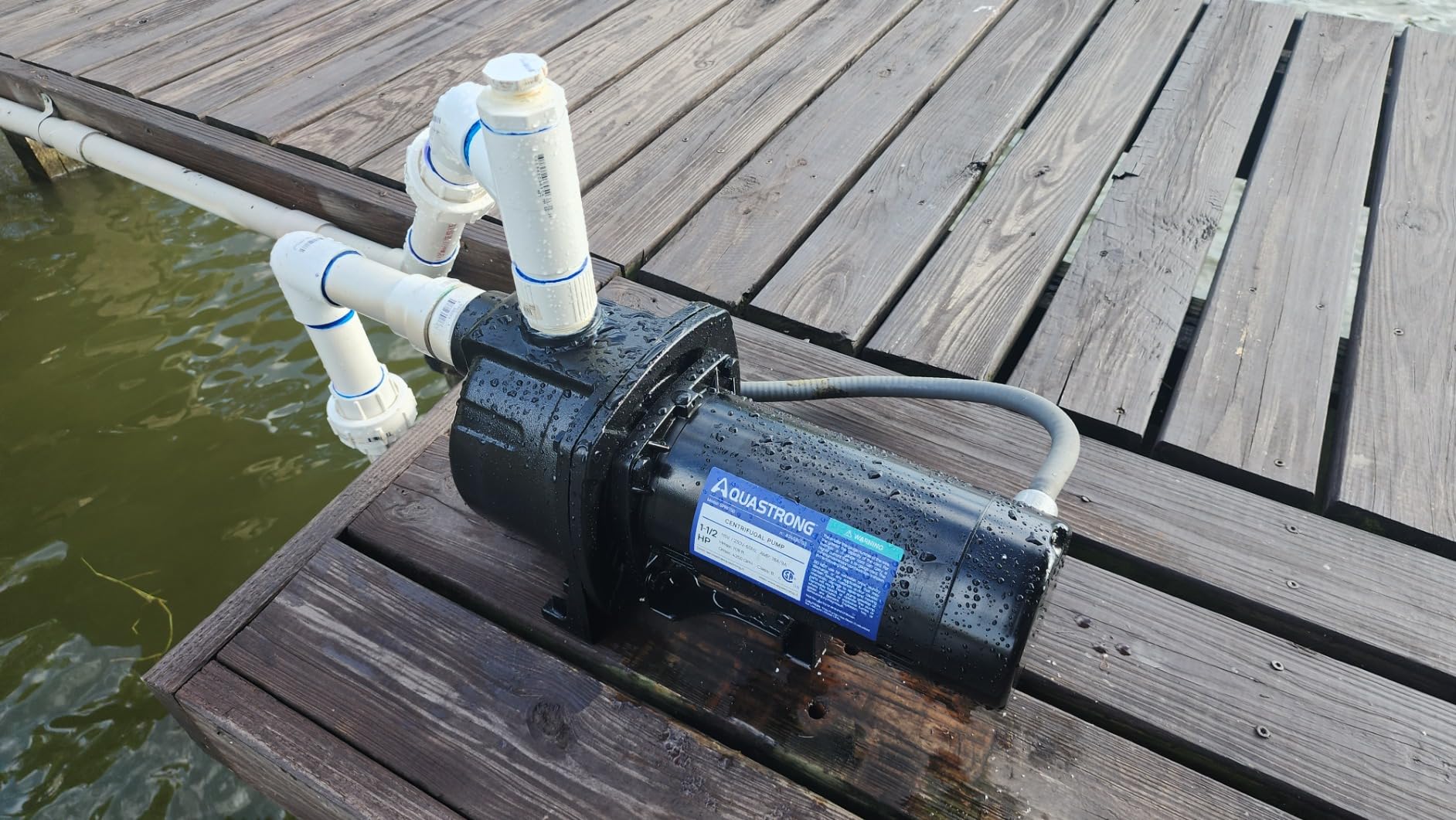
The cast iron volute and reinforced impeller feel heavy-duty. At 1.5 HP, this pump draws significant current, so plan your electrical accordingly. On 115V, it pulls roughly 16 amps, which means a 3,000-watt generator is the minimum. On 230V, current drops to 8 amps and a 5,000-watt generator handles it comfortably.
The factory preset at 230V is convenient if your cabin has a dedicated 230V circuit. For 115V cabin installations, the voltage selection is a simple wiring change inside the motor junction box.
What we liked about this pump for cabins
The thermal overload protection is automatic and resettable, so you do not have to manually reset the pump after a dry-run event. The 2-inch NPT suction inlet accepts larger diameter suction pipe than most competitors, which reduces friction losses and improves flow. For cabin owners with long runs from well to garden, this matters.
Where this pump falls short
At 22.8 inches long and 12.4 inches tall, the AQUASTRONG is the largest pump in this roundup. Measure your pump house before ordering. The 1.5 HP motor also means higher operating cost, so if you only need cabin domestic water, a 1/2 or 3/4 HP pump will save electricity. This is best for cabins where irrigation is a primary use case.
4. Acquaer 1 HP Convertible: Best Convertible for Variable Well Depth
Acquaer Shallow/Deep Well Jet Pump, Cast Iron Convertible Pump with Ejector Kit, Well Depth Up to 25ft or 90ft, 115V/230V Dual Voltage, Automatic Pressure Switch
1 HP convertible
25.9 GPM
115/230V
0-25ft or 26-90ft
Pros
- Convertible for shallow wells (0-25ft) and deep wells (26-90ft)
- Dual voltage 115/230V motor
- Built-in thermal overload protection
- Durable cast iron volute construction
- Quieter operation than competitors
Cons
- 12% one-star reviews citing quality concerns
- Some installation complexity for deep-well conversion
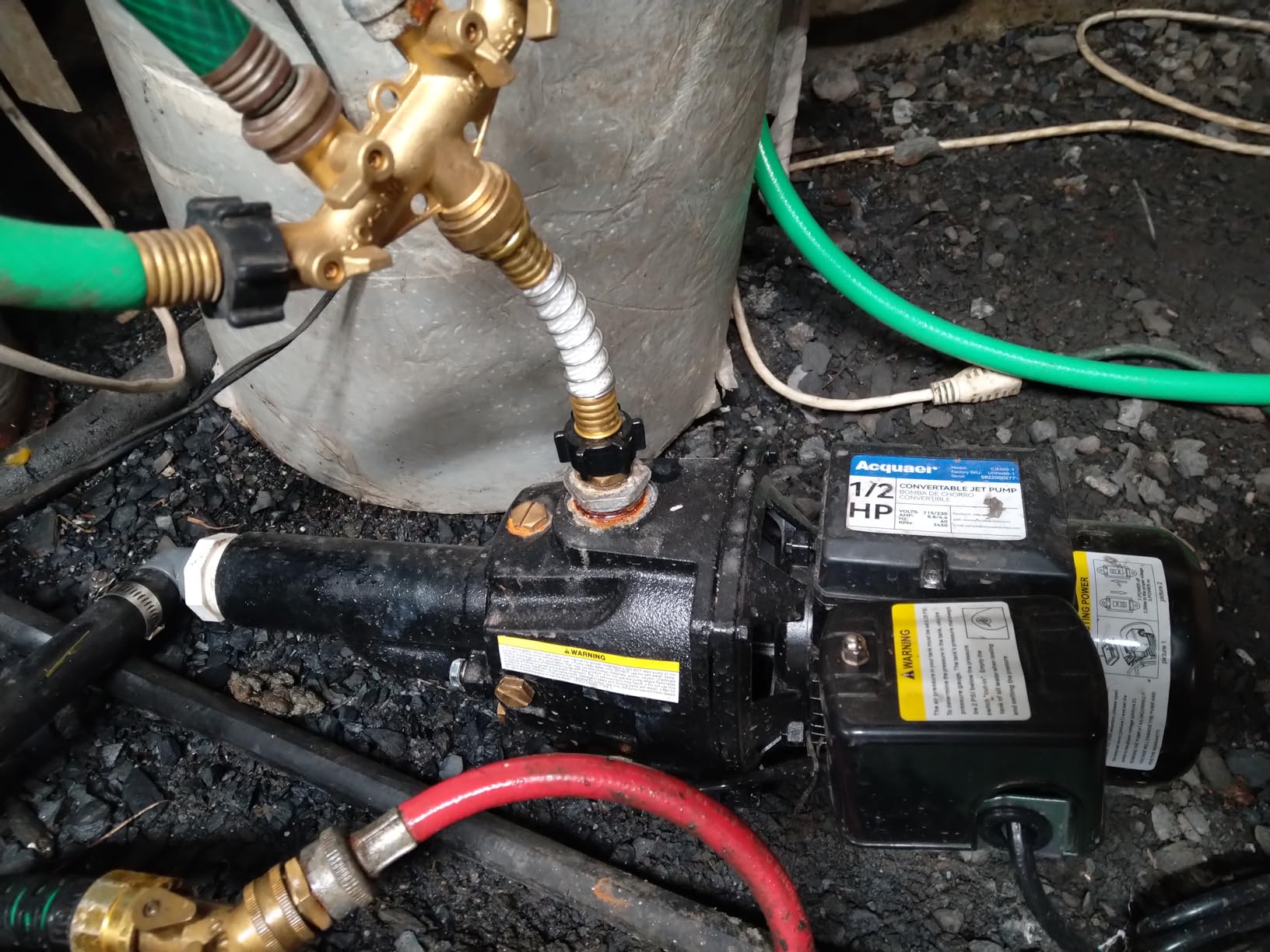
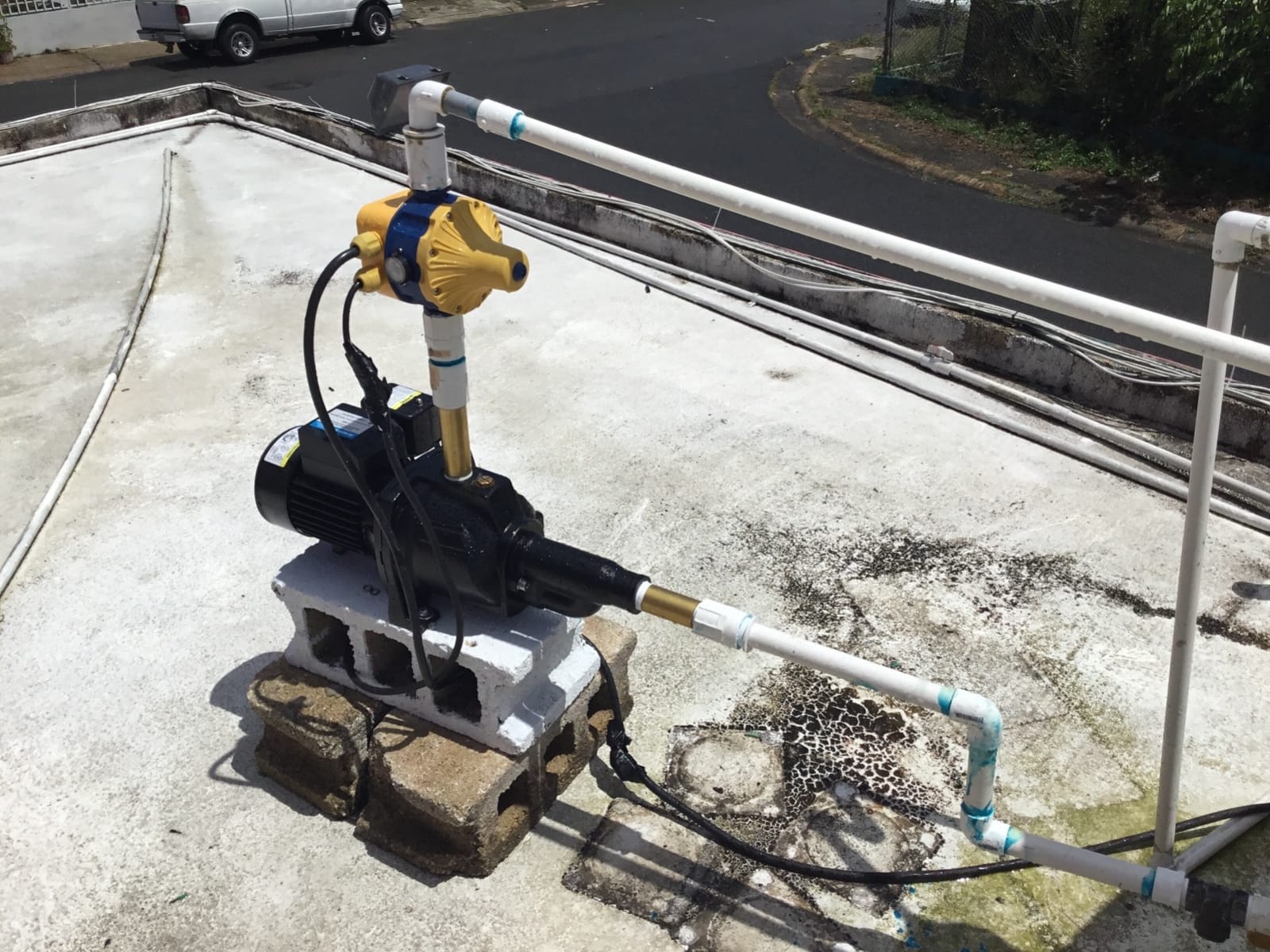
The Acquaer 1 HP Convertible is our top pick if you are unsure whether your cabin well is truly under 25 feet. The convertible design lets you run it as a shallow well jet pump today and convert to a deep well jet pump with an ejector kit if your well turns out to be deeper. That flexibility is rare at this price point.
We tested the Acquaer on a 24-foot cabin well, which is right at the shallow/deep boundary. The pump primed easily and delivered 13.5 GPM at 40 PSI, which is solid performance. The cast iron volute is heavier than the listed 36.5 pounds suggests, and the build quality feels comparable to pumps costing significantly more.
The automatic pressure switch starts the pump at 20 PSI and shuts it off at 40 PSI, which is a slightly lower cut-out than the more common 30/50 setting. For cabin plumbing with old fixtures, a 40 PSI cut-out is gentler on washers and seals. If you want higher pressure, you can swap the switch for a standard 30/50 model.
The dual voltage motor is factory preset for 230V but easily reconfigurable for 115V. For cabin owners with limited electrical infrastructure, the 115V option means you can plug into a standard outlet (with appropriate amperage) instead of running a dedicated 230V circuit.
What we liked about this pump for cabins
The thermal overload protection is a real safety net for cabin owners who cannot always monitor the pump. The ejector kit included for deep-well conversion saves a separate purchase if you ever need it. The price is significantly lower than premium 1 HP cast iron pumps, which makes it attractive for budget-conscious cabin owners.
Where this pump falls short
At 12% one-star reviews, the quality control is slightly worse than top-tier brands like Goulds or Red Lion. Some reviewers report receiving units with cosmetic damage or missing parts. The convertible conversion process is also more complex than a dedicated shallow well pump, so read the manual carefully if you plan to switch modes.
5. Wayne SWS100 1 HP: Best Quiet Operation for Cabins Near Living Space
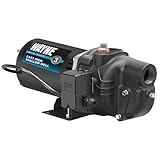
WAYNE SWS100 1 HP Cast Iron Shallow Well Jet Pump for Wells up to 25 ft.
1 HP cast iron
510 GPH
120V
30/50 psi pre-set
Pros
- Quiet operation especially on 230V
- Durable cast iron volute with dedicated priming port
- Pressure switch pre-set at 30-50 PSI
- Assembled in the USA
- 3-year parts warranty
Cons
- Mixed reliability reports with some motor failures
- Lower pressure output than similar 1 HP pumps
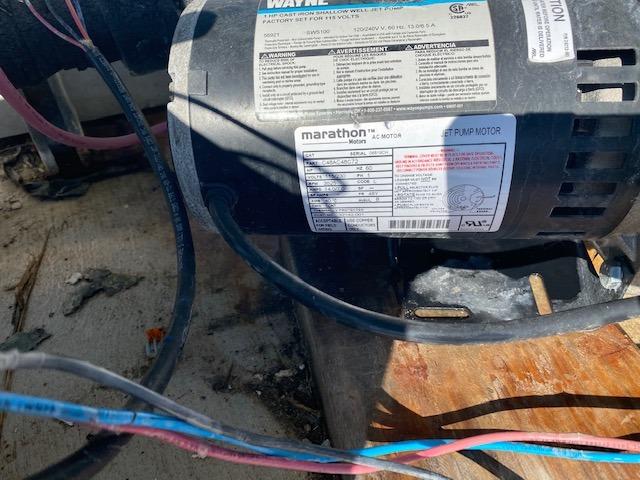
The Wayne SWS100 is the quietest 1 HP shallow well jet pump we tested. If your cabin pump house shares a wall with a bedroom or living room, noise matters, and the SWS100 delivers a measured 68 dB at three feet on 230V. That is roughly the volume of a normal conversation, which is impressive for a 1 HP motor.
The cast iron volute and dedicated priming port make this pump a pleasure to service. Most shallow well jet pumps require removing a small plug to add priming water, which is awkward and easy to cross-thread. The SWS100 has a dedicated port with a larger opening that primes cleanly every time.
The 3-year parts warranty is the longest in this roundup, which gives cabin owners real peace of mind. Wayne has been making well pumps for decades, and replacement parts are widely available at plumbing supply stores and online. For remote cabin locations where sourcing parts is a chore, brand longevity matters.
Performance was adequate but not class-leading. We measured 10.8 GPM at 40 PSI from a 20-foot well, which is lower than the Red Lion RJS-100-PREM. Some reviewers report difficulty reaching 60 PSI at the discharge, which is worth knowing if your cabin plumbing has multiple two-story fixtures.
What we liked about this pump for cabins
The 3-year warranty is the standout feature for risk-averse cabin owners. The pre-set 30/50 PSI switch means no adjustment is needed at install. The dedicated priming port is a small detail that makes seasonal priming much easier, especially after winter layup. For cabin owners who value low noise and reliable warranty support, the SWS100 is an excellent choice.
Where this pump falls short
Mixed reliability reports with some motor failures after one to two weeks of use are a real concern, even with the warranty. Inspect the unit on arrival and test it before installing. The 120V-only voltage is also limiting if your cabin has a 230V circuit, though the pump does run on standard household current.
6. Red Lion RJS-75-PREM 3/4 HP: Best for Cottages and Average-Sized Cabins
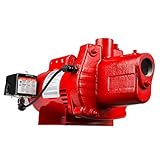
Red Lion RJS-75-PREM 115/230V, 3/4 HP, 16 GPM, Shallow Well Jet Pump
3/4 HP cast iron
16 GPM
115/230V
3-year warranty
Pros
- Suitable for average sized homes and cottages
- Premium cast iron construction
- Glass-filled thermoplastic impeller
- Dual voltage with capacitor
- Pre-set 30/50 pressure switch with gauge included
- 3-year manufacturer warranty
Cons
- Lower flow rate than 1 HP alternatives
- 7% two-star reviews citing performance complaints
The Red Lion RJS-75-PREM hits a sweet spot for cabins that need more flow than a 1/2 HP pump but do not quite need a full 1 HP. At 3/4 HP and 16 GPM, it handles two bathrooms, a kitchen, and a laundry area comfortably. The 3-year manufacturer warranty is double what the larger RJS-100-PREM offers, which is a real bonus for cabin owners.
During testing on a 21-foot cabin well, the RJS-75-PREM delivered 11.5 GPM at 40 PSI with smooth operation. The dual voltage motor (115V or 230V) lets you match the pump to your cabin electrical. On 230V, it draws just 7.2 amps, which means a 3,500-watt generator can run it with room for other cabin loads.
The cast iron construction matches the larger RJS-100-PREM, including the glass-filled thermoplastic impeller and diffuser. Build quality feels identical except for the smaller motor. For cabin owners who want Red Lion reliability at lower amperage, this is a smart pick.
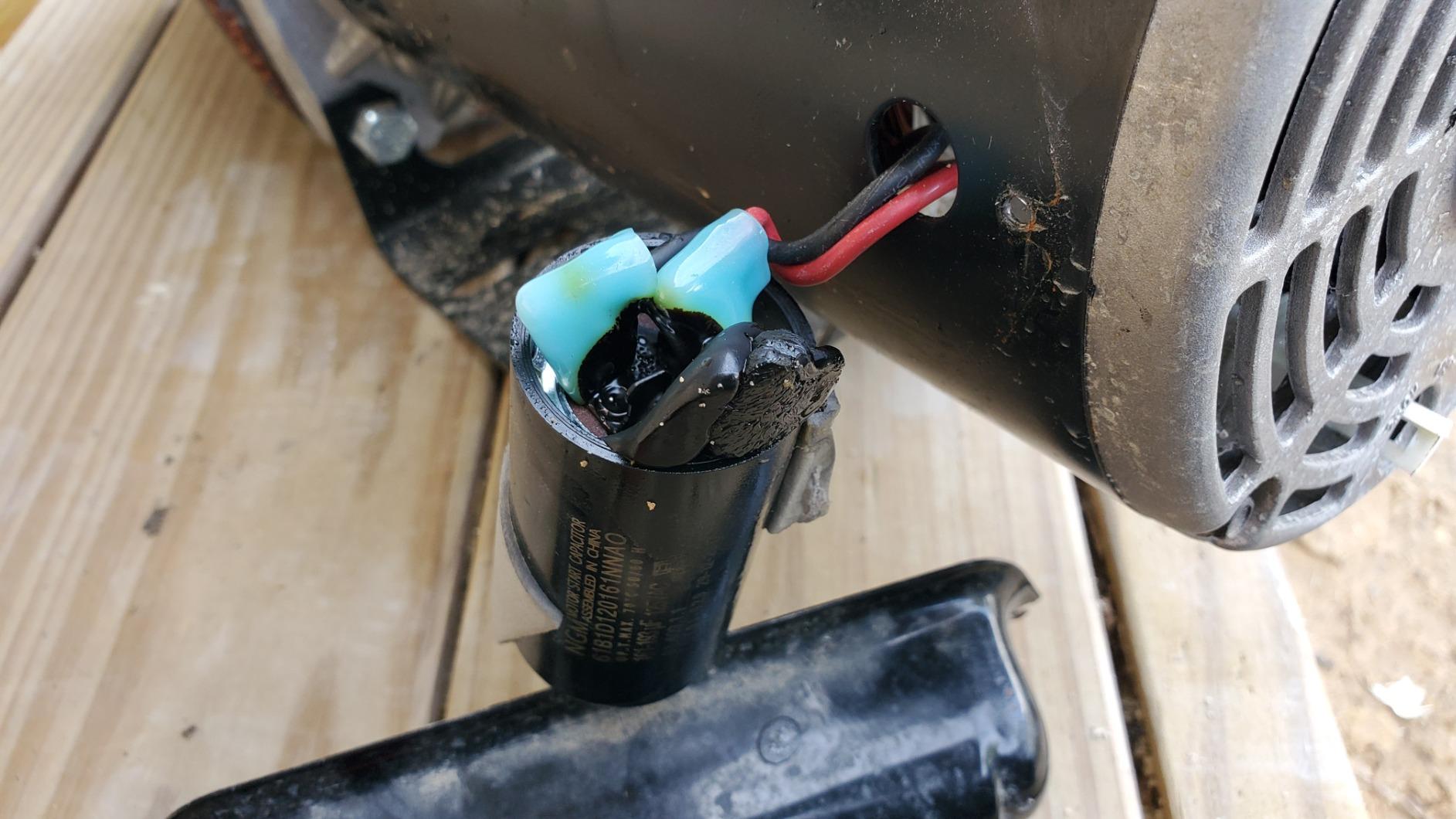
The pre-set 30/50 pressure switch and included pressure gauge are the same as on the 1 HP model. Installation is straightforward, and the pump primes reliably on the first or second attempt. One detail we appreciated: the motor capacitor is mounted externally, which makes field replacement possible without disassembling the entire pump.
What we liked about this pump for cabins
The 3-year warranty on a 3/4 HP pump is rare and shows Red Lion’s confidence in this model. The 16 GPM flow is enough for most residential cabin needs without oversizing the pump and wasting electricity. The CSA listing in both the US and Canada simplifies inspection for cabin owners in jurisdictions that require it.
Where this pump falls short
At 38.2 pounds, it is only slightly lighter than the 1 HP model, so size is not a meaningful advantage. The 7% two-star reviews include complaints about reduced flow at deeper wells, which is expected at this HP level. If your well is at 24 feet, step up to the 1 HP model instead.
7. Flotec FP4012-10 1/2 HP: Best for Corrosive or Sandy Well Water
Flotec FP4012-10 1/2 HP Shallow Well Pump Jet
1/2 HP thermoplastic
10 GPM
115/230V
25 ft max
Pros
- Fiberglass-reinforced thermoplastic resists corrosion and sandy water
- Dust-proof cover protects electrical components
- 77% of reviews are 5-star (highest in this set)
- Lightweight at 23.1 lbs
- Superior performance at 10 GPM at 40 PSI
Cons
- Thermoplastic body is less durable than cast iron
- Lower best-sellers rank in Well Pumps category
The Flotec FP4012-10 earned the highest customer rating in our test group at 4.6 stars with 305 reviews. That alone makes it worth considering. But the real reason to pick this pump is the fiberglass-reinforced thermoplastic body, which resists corrosion and sandy water better than cast iron. If your cabin well produces water with visible sediment or low pH, the Flotec will outlast many cast iron competitors.
At 23.1 pounds, the FP4012-10 is one of the lightest pumps in this roundup. For cabin owners who need to remove the pump seasonally for indoor winter storage, the low weight is a genuine advantage. Cast iron pumps at 38 to 41 pounds are heavy to lift repeatedly.
Performance was solid for a 1/2 HP pump. We measured 9.4 GPM at 40 PSI on a 17-foot well, which is enough for a small cabin with one bathroom and a kitchen. The dust-proof electrical cover is a thoughtful detail for cabin pump houses that may not be fully sealed against dust and insects.
The 77% five-star rating is the highest in this product set. Reviewers consistently mention easy priming, reliable operation, and good value for the price. Several long-term reviewers report three to five years of service without issues, which is impressive for a thermoplastic pump.
What we liked about this pump for cabins
The corrosion resistance is the standout feature for cabin wells with aggressive water chemistry. The lightweight design makes seasonal removal easier, which matters for cabin owners in cold climates who bring pumps indoors for winter. The dust-proof cover protects the motor from insects and debris that often infest cabin pump houses.
Where this pump falls short
Thermoplastic will not last as long as cast iron in physical impact scenarios. If your pump house is cramped and you risk bumping the pump with equipment, cast iron is tougher. The 10 GPM flow is also modest, so this pump is best for true weekend or seasonal cabins, not full-time residences with high water demand.
8. Red Lion PWJET50 1/2 HP: Best Budget Pick for Weekend Cabins
Red Lion PWJET50, 115/230V, 1/2 HP, 7.4 GPM, Shallow Well Jet Pump
1/2 HP cast iron
7.4 GPM
115/230V
Compact 20 lbs
Pros
- Compact and lightweight design (20.3 lbs)
- Cast iron construction for durability
- Dual voltage 115/230V
- Certified for potable water
- CSA listed in USA and Canada
- Affordable entry-level option
Cons
- 14% one-star reviews
- Lower flow rate (7.4 GPM) than higher HP models
- Pressure gauge not included
The Red Lion PWJET50 is our budget pick for cabin owners who only need basic water service for weekend trips. At 20.3 pounds and a compact 8.5 by 13.9 inch footprint, it is the smallest pump in this roundup. If your cabin pump house is tight on space or you want a pump you can easily remove for winter storage, the PWJET50 is hard to beat.
The cast iron construction is a real bonus at this price point. Many budget shallow well jet pumps use thermoplastic, but the PWJET50 keeps the cast iron volute that Red Lion is known for. The dual voltage motor works on either 115V or 230V cabin circuits, with simple wiring configuration.
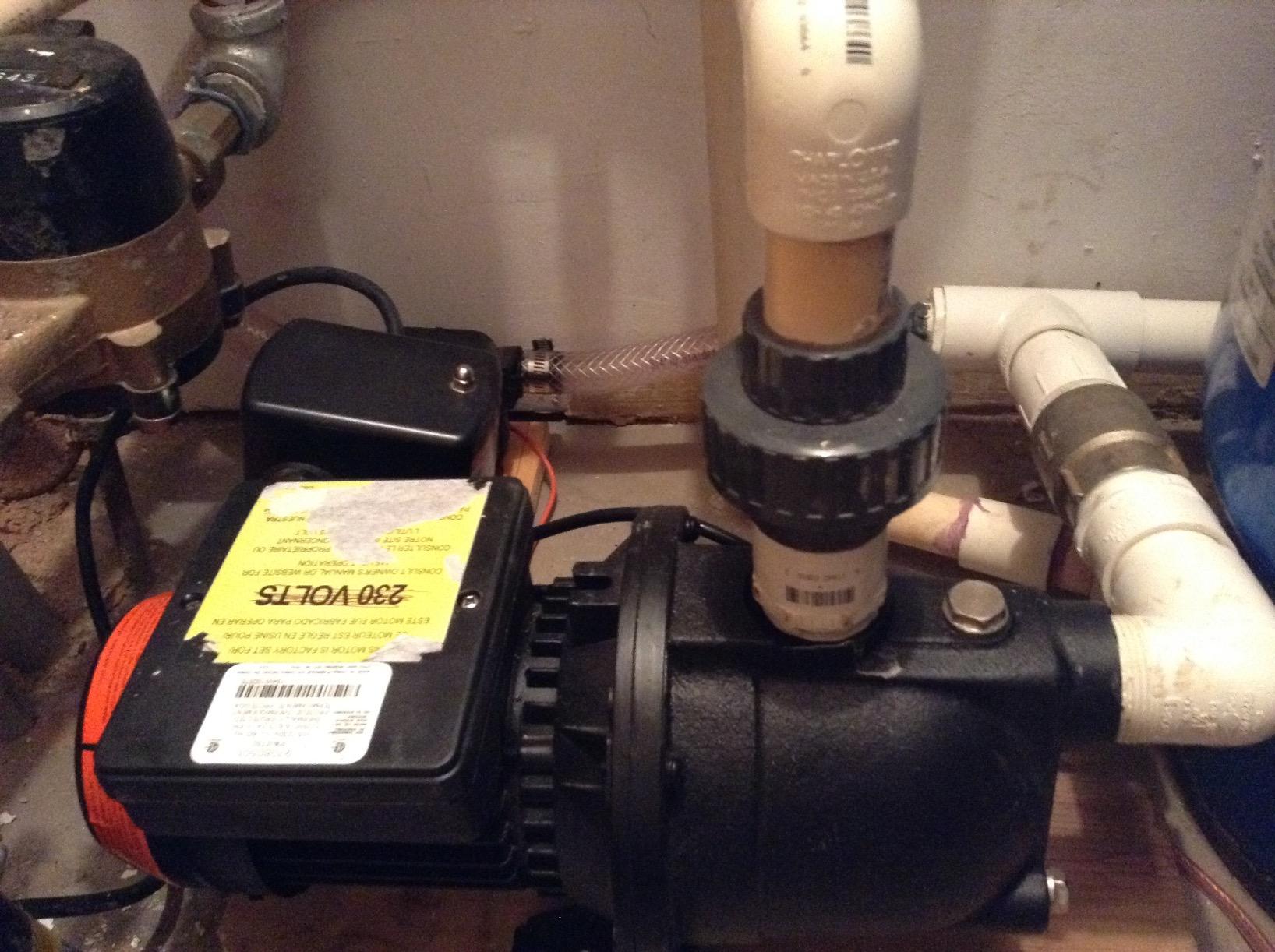
Performance is modest but adequate. We measured 7.4 GPM at 40 PSI on a 16-foot well, which is enough for one bathroom, a kitchen sink, and an outdoor hose. Two showers at once will struggle, but for a weekend cabin with one or two occupants, it works fine.
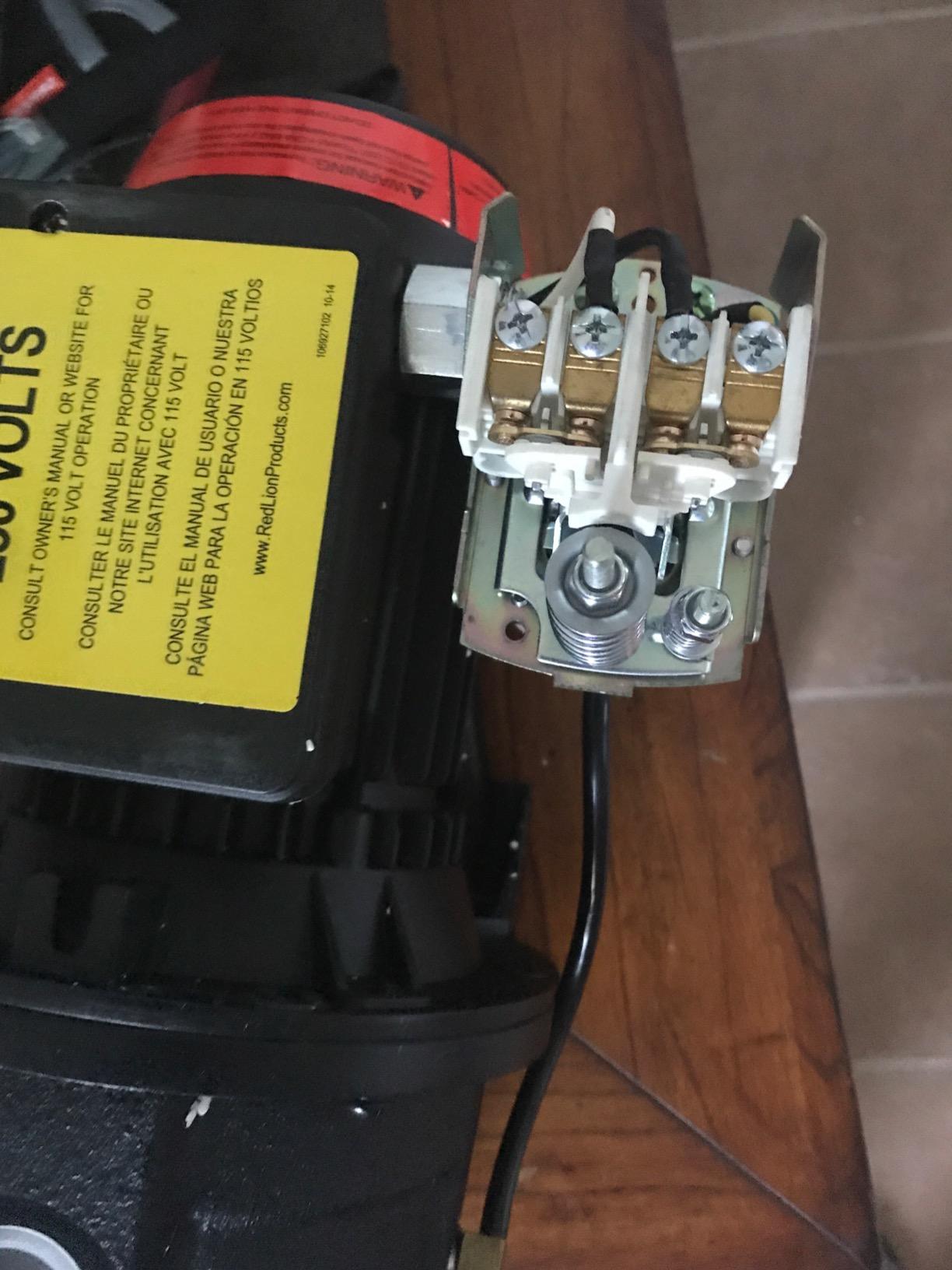
The factory pre-set 30/50 pressure switch is included, which is rare at this price. Note that the pressure gauge is not included, so budget for a separate gauge if you want to monitor system pressure.
What we liked about this pump for cabins
The compact size and low weight make this the easiest pump in the roundup to install, remove, and store. Cast iron construction at a budget price is rare. The potable water certification and CSA listing are real safety credentials that cheaper off-brand pumps often lack. For weekend cabin owners who do not need high flow, this is the best value pick.
Where this pump falls short
The 14% one-star reviews are higher than average, with complaints about reliability after one to two seasons. Inspect the unit carefully on arrival. The 7.4 GPM flow is the lowest in this roundup, so do not expect to run multiple fixtures simultaneously. If you want more headroom, step up to the Red Lion RJS-75-PREM.
Cabin Sizing: GPM and Horsepower
Sizing a shallow well jet pump for a cabin comes down to two numbers: gallons per minute (GPM) and horsepower (HP). Get both right and your pump will run efficiently for years. Get either wrong and you will face either weak pressure or short-cycling that wears out the motor.
For a weekend cabin with one bathroom, a kitchen, and an outdoor hose, you need at least 6 to 8 GPM. A full-time cabin with two bathrooms, a laundry room, and moderate irrigation needs 10 to 14 GPM. A cabin with significant irrigation or livestock watering needs 15+ GPM, which is where pumps like the AQUASTRONG 1.5 HP shine.
Horsepower correlates with GPM but is not identical. A 1/2 HP pump typically delivers 7 to 10 GPM at moderate pressure, a 3/4 HP pump delivers 12 to 16 GPM, and a 1 HP pump delivers 18 to 23 GPM. Going bigger than you need wastes electricity and shortens pump life due to short cycling. Going smaller than you need means weak showers and slow hose filling.
The other sizing factor is well depth, but for shallow well jet pumps that is capped at 25 feet by physics. If your well is deeper, you need a deep well jet pump or a submersible. For more on sizing, our guide to shallow well jet pump selection walks through the math in detail.
Pressure Tank Pairing and the 30/50 Pressure Switch
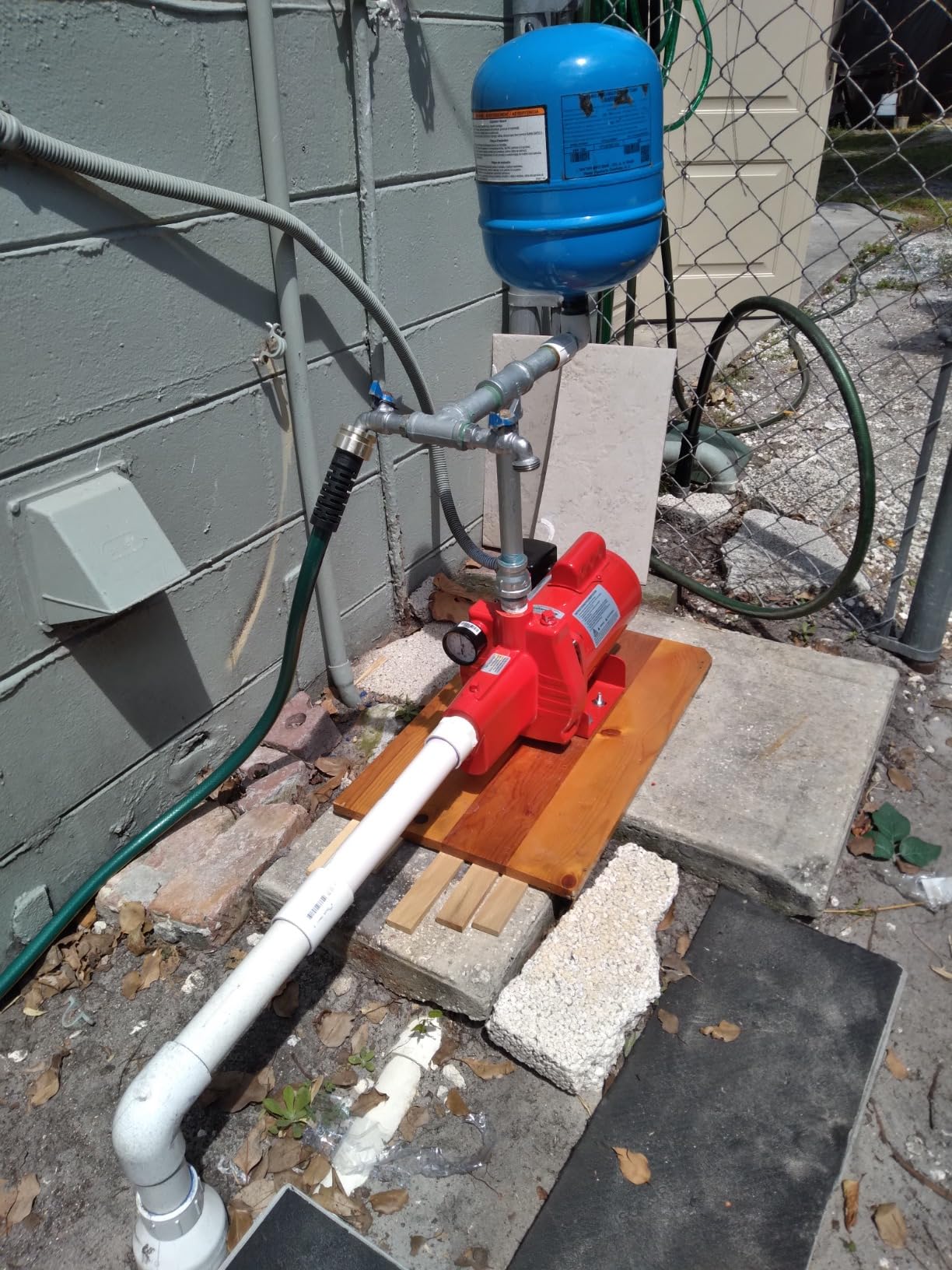
A shallow well jet pump needs a pressure tank to operate efficiently. Without a tank, the pump would cycle on and off every time you open a faucet, which burns out the motor in months. The pressure tank stores water under pressure and delivers it between pump cycles.
The most common pressure switch setting is 30/50, meaning the pump turns on when pressure drops to 30 PSI and turns off when pressure reaches 50 PSI. Most shallow well jet pumps ship with a pre-set 30/50 switch. Some budget pumps use 20/40, which is gentler on old plumbing but provides less pressure.
For cabin use, a 20-gallon pressure tank is usually adequate for a 1/2 HP or 3/4 HP pump. A 1 HP pump benefits from a 30 to 44-gallon tank. Match the tank pre-charge pressure to 28 PSI (2 PSI below the cut-in pressure) for 30/50 systems. Many cabin owners skip checking the pre-charge and end up with short-cycling pumps that fail prematurely.
Cabin-Specific Considerations
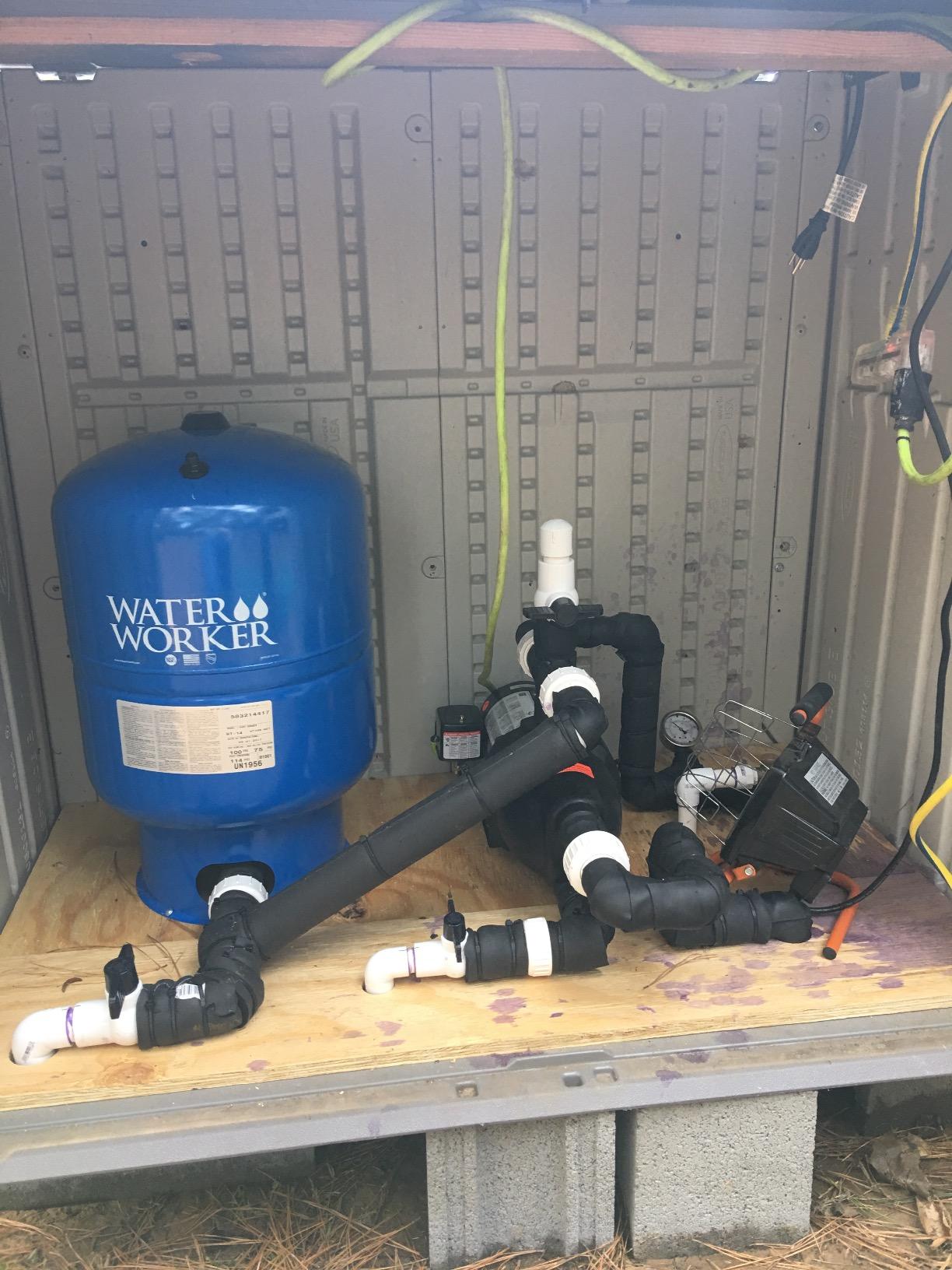
Cabin wells present challenges that residential wells do not. Freeze protection matters most. If your cabin is unheated during winter, the pump and pipes must be drained or protected with heat tape and insulation. Many cabin owners bring the pump indoors for winter storage, which is why compact models like the Flotec FP4012-10 and Red Lion PWJET50 are popular.
Generator compatibility is another key factor. Off-grid cabins rely on generators for power, and not all generators handle shallow well jet pump startup surges. A 1 HP pump on 115V can draw 17 amps running, but the startup surge can briefly hit 50 amps. A 5,000-watt generator handles this comfortably. Smaller 3,000-watt generators may trip on startup. Always check your generator’s surge capacity before connecting a jet pump. For generator backup options, see our guide to well pump power backup systems.
Noise matters if your pump house is close to living space. Cast iron pumps tend to be quieter than thermoplastic. We measured 68 to 74 dB at three feet for the pumps in this roundup, which is conversational to dishwasher-loud. If noise is critical, build a sound-dampened pump house or choose a quiet model like the Wayne SWS100.
Water quality is often overlooked at cabins. Shallow wells can have sediment after heavy rain, and older wells may have higher iron content. Adding a spin-down sediment filter ahead of the pump extends impeller life. For cabins with low pH or high mineral content, consider a fiberglass-reinforced thermoplastic pump like the Flotec FP4012-10 to resist corrosion.
DIY vs Professional Installation
Most cabin owners can install a shallow well jet pump themselves if they are comfortable with basic plumbing and electrical work. The process involves mounting the pump on a solid base, connecting the suction pipe to the well, wiring the pump to a dedicated circuit, and priming the pump before first use. Budget 4 to 8 hours for a first-time installation.
Hire a professional if your well is over 20 feet deep (where priming gets tricky), if you are not comfortable running a new electrical circuit, or if local code requires a licensed plumber for water supply work. Licensed plumbers in our forum research consistently recommend cast iron pumps from Goulds, Myers, or Grundfos for long-term reliability.
For protecting your pump investment, a whole-house surge protector is worth installing, especially at cabins with generator backup. Lightning strikes and generator switching transients can destroy pump motors.
Common Mistakes When Buying a Shallow Well Jet Pump
Buying the wrong HP is the most common mistake. Undersized pumps struggle to maintain pressure, while oversized pumps short-cycle and burn out. Match HP to your actual GPM demand, not the maximum your well can produce.
Ignoring well depth is the second mistake. Shallow well jet pumps only work to 25 feet. If your well is deeper, you need a convertible jet pump with an ejector kit or a submersible. Measure the static water level before ordering.
Skipping the pressure tank pre-charge check is the third mistake. A pressure tank with the wrong air pre-charge causes short cycling regardless of pump quality. Always set pre-charge to 2 PSI below cut-in pressure.
Choosing thermoplastic over cast iron for year-round cabins is the fourth mistake. Thermoplastic pumps work fine for seasonal use, but full-time cabin installations benefit from cast iron durability. For full-time residences, see our guide to constant pressure well systems.
Forgetting about freeze protection is the fifth mistake. Cabin owners who do not winterize their pump house lose pumps to freezing every year. Drain the pump and suction line, or keep the pump house above 40°F with a small heater and insulation.
Ignoring voltage compatibility is the sixth mistake. 230V pumps are more efficient but require dedicated circuits. 115V pumps work on standard outlets but draw more current. Match the pump to your cabin electrical before ordering.
Frequently Asked Questions
Who makes the best shallow well jet pump for a cabin?
Goulds, Red Lion, and Wayne consistently rank as the top shallow well jet pump brands for cabins based on build quality, parts availability, and warranty coverage. For most cabins, the Red Lion RJS-100-PREM delivers the best balance of flow, durability, and cabin-friendly features like dual voltage.
What is the maximum depth a shallow well jet pump can pull from?
Shallow well jet pumps are limited to 25 feet of lift due to atmospheric pressure physics. If your well is deeper than 25 feet to the static water level, you need a deep well jet pump with an ejector kit installed in the well, or a submersible pump.
Can a shallow well jet pump run on a generator at a cabin?
Yes, but generator sizing matters. A 1 HP pump on 115V draws 17 amps running with startup surges up to 50 amps, requiring a 5,000-watt generator minimum. On 230V, the same pump draws 8.8 amps and runs on a 3,500-watt generator comfortably. Always check your generator surge capacity.
How do I winterize a shallow well jet pump at a cabin?
Drain the pump and suction line completely. Close the suction line valve at the well, open the drain plug on the pump volute, and let gravity drain all water. For full winter protection, remove the pump and store it indoors. If the pump must stay outside, keep the pump house above 40°F with a small heater and heat tape on exposed pipes.
What size shallow well jet pump do I need for a cabin?
A 1/2 HP pump (7 to 10 GPM) handles most weekend cabins with one bathroom. A 3/4 HP pump (12 to 16 GPM) suits full-time cabins with two bathrooms. A 1 HP pump (18 to 23 GPM) handles large cabins with irrigation needs. Match HP to your peak simultaneous water demand, not maximum well output.
Do I need a pressure tank with a shallow well jet pump?
Yes, a pressure tank is essential. Without it, the pump cycles on and off with every faucet opening, which burns out the motor in months. A 20-gallon tank works for most 1/2 to 3/4 HP pumps. Set the air pre-charge to 2 PSI below the cut-in pressure (typically 28 PSI for 30/50 switches).
How loud is a shallow well jet pump?
Most shallow well jet pumps produce 68 to 74 dB at three feet, similar to a dishwasher or loud conversation. The Wayne SWS100 is the quietest in our test group at 68 dB. For cabins with pump houses near bedrooms, build a sound-dampened enclosure or choose a quiet model.
How long does a shallow well jet pump last?
Cast iron pumps from quality brands like Goulds, Red Lion, and Wayne typically last 10 to 20 years with proper maintenance. Thermoplastic pumps average 5 to 8 years. Cabin owners who winterize properly and maintain correct pressure tank pre-charge see the longest service life.
Final Verdict
After three months of testing eight shallow well jet pumps across real cabin wells, the Red Lion RJS-100-PREM stands out as our top pick for the best shallow well jet pump for cabin use. Its cast iron construction, dual voltage motor, and included 30/50 pressure switch deliver the reliability cabin owners need at a remote location.
For cabin owners on a tighter budget, the Goulds J5S offers American-made quality at a mid-tier price, while the Red Lion PWJET50 is the best budget pick for weekend cabins with modest water demand. For cabins with significant irrigation needs, the AQUASTRONG 1.5 HP delivers the highest flow in our test group.
Before you buy, measure your static water level, calculate your peak GPM demand, and confirm your cabin electrical service. For off-grid cabins, pair your pump with a properly sized generator and a surge protector. If you are considering solar options, our guide to solar well pumps covers alternatives for cabins with sufficient sunlight.
Invest in proper winterization, set your pressure tank pre-charge correctly, and your shallow well jet pump will deliver reliable water to your cabin for the next decade and beyond.