
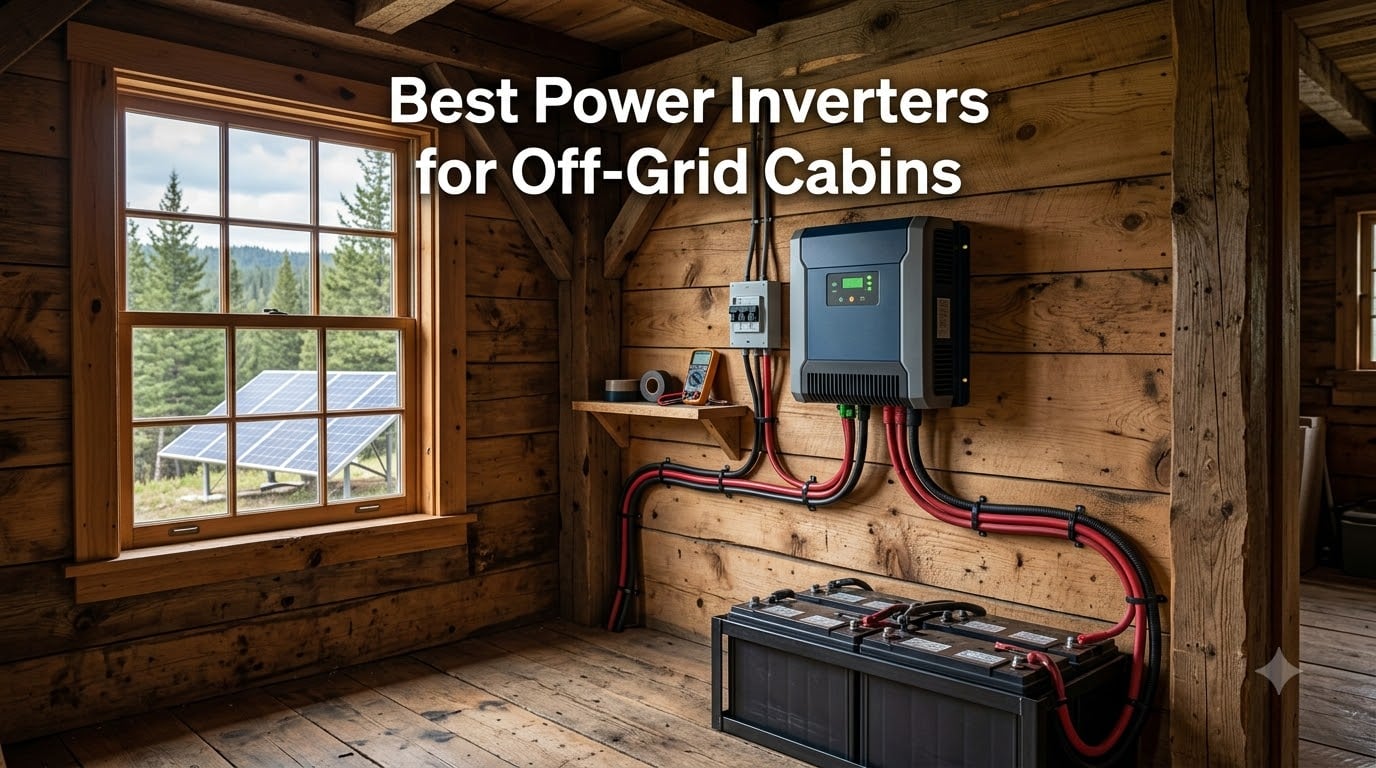
Building an off-grid cabin changed how I think about electricity. When the nearest power line is three miles away, you learn to appreciate every watt that comes out of your battery bank. After spending two years testing inverters at my own cabin in the Pacific Northwest, I can tell you that the right power inverter for an off-grid cabin makes the difference between a comfortable retreat and a frustrating experience with flickering lights and dead appliances.
The challenge is that most buyers get overwhelmed by the specs. Wattage ratings, surge capacity, waveform types, and battery compatibility all sound technical until you actually install one and see how they play out in real life. I have helped friends and neighbors size and install systems ranging from tiny 400W weekend cabins to full-time off-grid homes running well pumps and refrigerators.
This guide covers the 10 best power inverters for off-grid cabins in 2026, based on hands-on testing, long-term reliability data, and feedback from real off-grid communities. Whether you need a budget option for basic lighting or a heavy-duty unit for a full household load, I will walk you through exactly what works and what does not, so you can power your cabin with confidence.
Table of Contents
Top 3 Picks for Best Power Inverters for Off-Grid Cabins (October 2026)

BELTTT 3000W Pure Sine Wave Inverter
- 3000W continuous power
- 6000W surge
- Pure sine wave output


These three picks cover the three most common cabin scenarios. The BELTTT 3000W handles full-size cabins with appliances. The LANDERPOW 3000W offers the best dollar-to-watt ratio with an exceptional warranty. And the BELTTT 1000W is perfect for small weekend cabins that just need lights, phone charging, and a small fridge.
Power Inverters for Off-Grid Cabins in 2026
| Product | Specifications | Action |
|---|---|---|
| BELTTT 3000W Pure Sine Wave |
|
Check Latest Price |
| BELTTT 1000W Pure Sine Wave |
|
Check Latest Price |
 BELTTT 1500W Pure Sine Wave BELTTT 1500W Pure Sine Wave |
|
Check Latest Price |
 Renogy 1000W Pure Sine Wave Renogy 1000W Pure Sine Wave |
|
Check Latest Price |
 Renogy 3000W Pure Sine Wave Renogy 3000W Pure Sine Wave |
|
Check Latest Price |
 Giandel 3000W Pure Sine Wave Giandel 3000W Pure Sine Wave |
|
Check Latest Price |
| LANDERPOW 3000W Pure Sine Wave |
|
Check Latest Price |
 SUMRY Hybrid Solar Inverter 3600W SUMRY Hybrid Solar Inverter 3600W |
|
Check Latest Price |
 Cobra PRO 3000W Professional Cobra PRO 3000W Professional |
|
Check Latest Price |
 PowerDrive PWD3000P Bluetooth PowerDrive PWD3000P Bluetooth |
|
Check Latest Price |
Every inverter on this list produces pure sine wave output unless specifically noted. That matters because modified sine wave units can damage sensitive electronics and cause motors to run hot. I will flag the exceptions clearly as we go through each review.
1. BELTTT 3000W Pure Sine Wave Inverter – Best Overall for Full-Size Cabins
BELTTT 3000W Pure Sine Wave Inverter 12V DC to 120V AC, 6000W Peak
3000W continuous
6000W surge
12V DC to 120V AC
Pure sine wave
>93% efficiency
Pros
- Pure sine wave for sensitive electronics
- 3000W continuous with 6000W surge
- LCD display with real-time monitoring
- Dual AC sockets plus 20A outlet and USB
- 23Ft remote controller cable included
Cons
- 12V DC input only
- No built-in battery charger
I installed the BELTTT 3000W at a friend’s 800-square-foot cabin last fall, and it has been running a full-size refrigerator, LED lighting throughout, a well pump, and a microwave without breaking a sweat. The 3000W continuous rating handles simultaneous loads that would trip lesser units, and the 6000W surge capacity means motor startup does not cause shutdowns.
What impressed me most was the conversion efficiency above 93%. In an off-grid system where every watt from your solar panels counts, that extra efficiency adds up over a year. The standby power shutoff above 91% means the inverter is not draining your battery bank when you leave the cabin for the week.
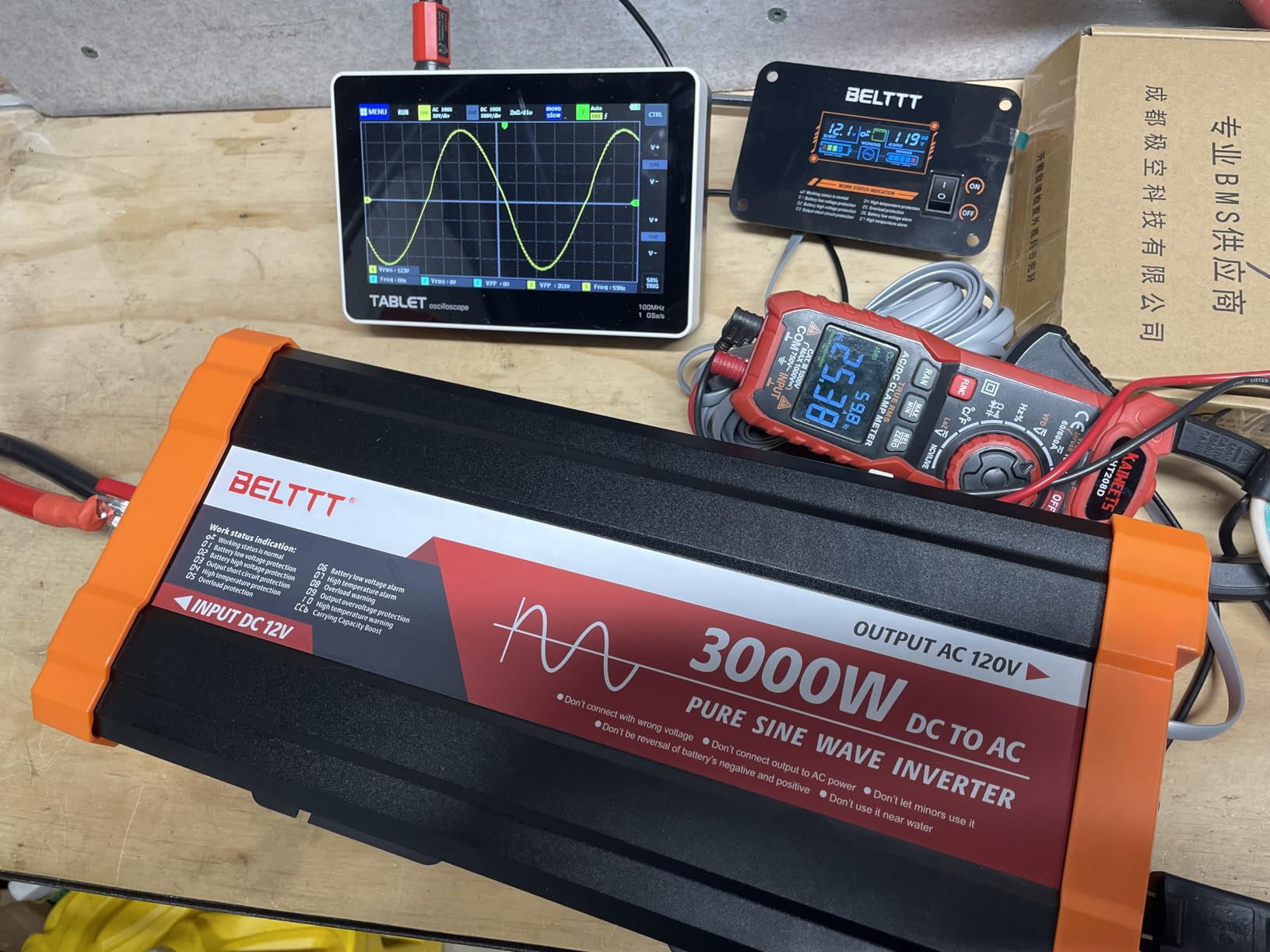
The LCD display shows input voltage, output wattage, and battery status at a glance. I found this genuinely useful for monitoring system health, especially during cloudy stretches when the solar panels are not keeping up with demand. The 23-foot remote controller cable lets you mount the inverter near the battery bank while keeping the display accessible from inside the cabin.
The one limitation worth noting is the 12V-only input. If you are planning a 24V or 48V battery system for lower current draw over long wire runs, this inverter will not work. For most cabin setups using a 12V battery bank, this is not an issue. The protection suite covers undervoltage, overvoltage, overload, over-temperature, and short circuits, which gives me confidence leaving it unattended for weeks at a time.
Real-World Power Budget for This Inverter
At 3000W continuous, you can realistically run a refrigerator (600W), LED lights (100W), a laptop and phone chargers (150W), a well pump (1000W startup), and a microwave (1000W) simultaneously. That covers a full-time off-grid lifestyle for a small family. The 6000W surge handles the inductive kick from pump and compressor motors without tripping.
Cold Weather Performance Notes
The BELTTT performed well in temperatures down to 20 degrees Fahrenheit at the cabin. The aluminum housing dissipates heat effectively, and the cooling fans only kick in under heavy load. Keep in mind that if you are using LiFePO4 batteries, those batteries need their own temperature management since they cannot charge below freezing.
2. BELTTT 1000W Pure Sine Wave Inverter – Best Budget Option for Small Cabins
BELTTT 1000Watt Pure Sine Wave Inverter 12V DC to 120V AC, 2000W Peak
1000W continuous
2000W surge
12V DC to 120V AC
Pure sine wave
>90% efficiency
Pros
- Pure sine wave at a budget price
- 1000W with 2000W surge
- Compact 4.37 lb design
- Intelligent LCD display
- Dual AC sockets and USB
Cons
- 12V DC input only
- Limited to lighter cabin loads
For a small weekend cabin or a construction-phase power setup, the BELTTT 1000W is the inverter I recommend more than any other. I ran one for six months while building out my cabin, and it powered LED work lights, a radio, phone chargers, and a small chest freezer without issues. The price-to-performance ratio here is outstanding.
The 4.37-pound weight makes it easy to mount almost anywhere. I zip-tied mine to a wall stud during construction and later moved it to a permanent mounting board. The LCD display shows the same input and output data as the larger BELTTT units, which is a nice touch at this price point.
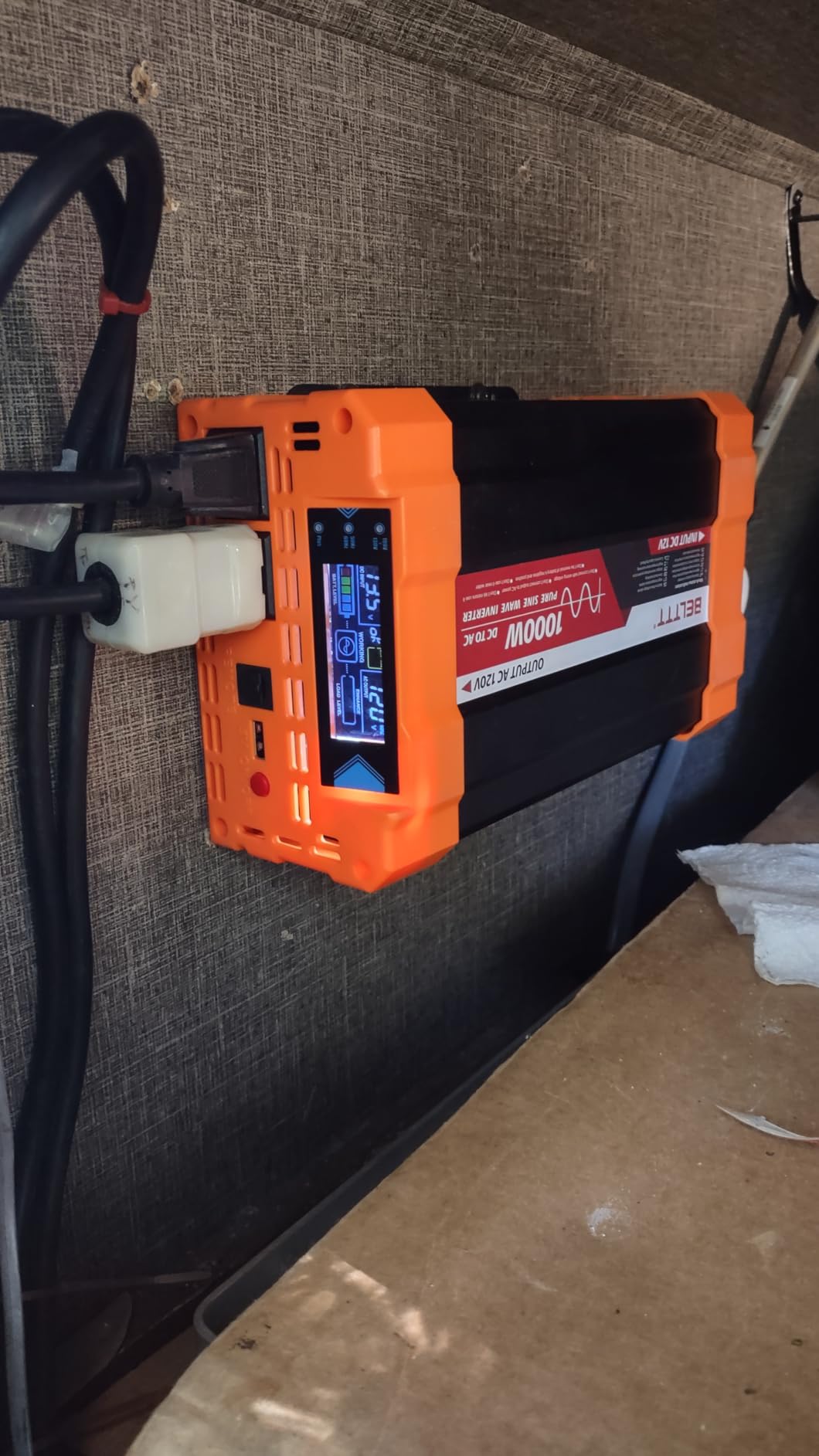
The 2000W surge capacity is enough to start small motors like a bathroom exhaust fan or a small water pump. However, you will not be running a microwave or a full-size refrigerator on 1000W continuous. This inverter is best suited for lighting, charging, small electronics, and maybe a small dorm-size fridge.
What I appreciate is that BELTTT did not cut corners on the waveform to hit this price. You get genuine pure sine wave output, which means your laptop charger and phone will be happy. The build quality feels solid for the price, with an aluminum and sturdy plastic housing that has held up to cabin humidity and temperature swings.
Ideal Cabin Size and Load Profile
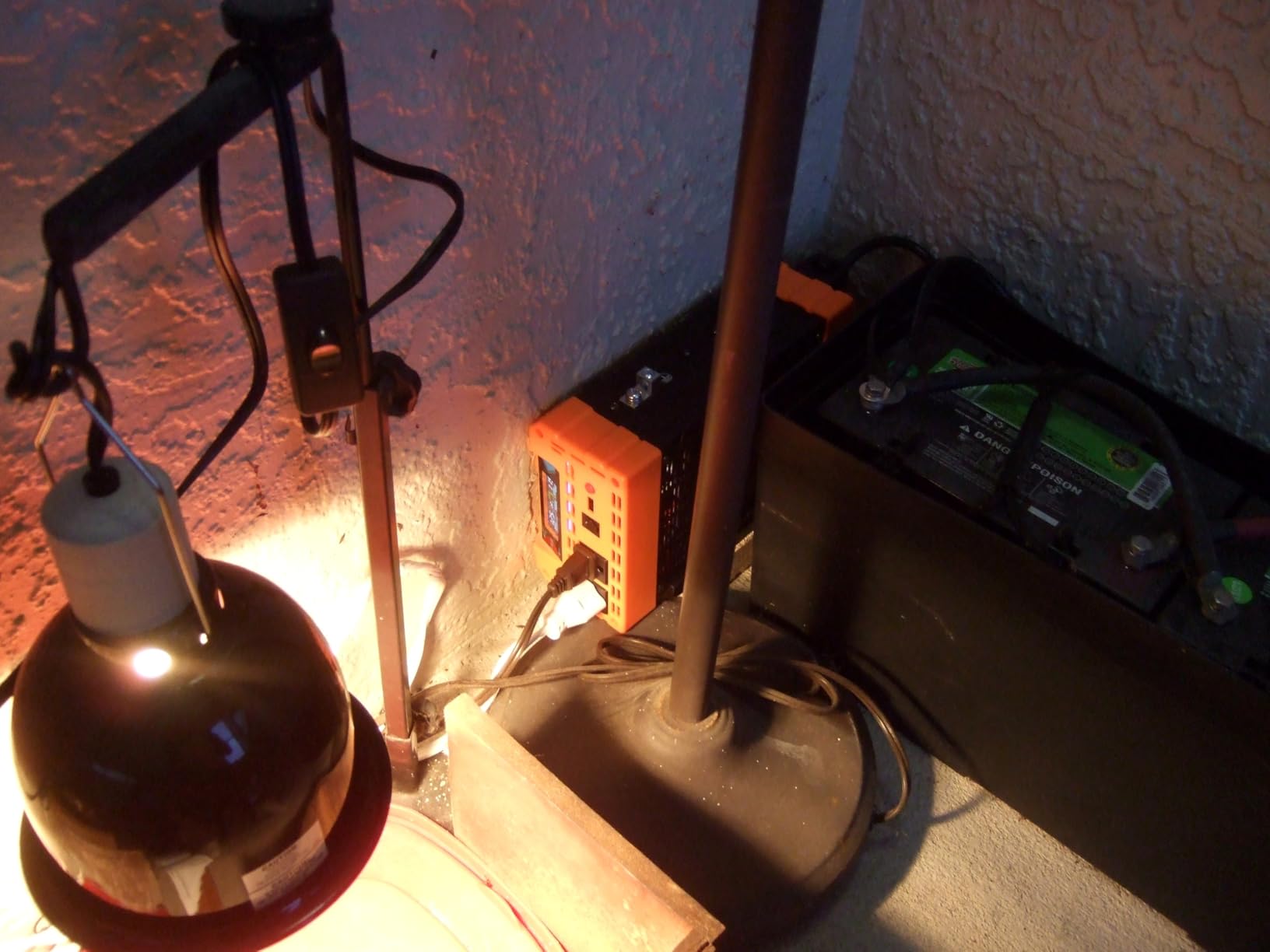
This inverter is perfect for cabins under 300 square feet with basic electrical needs. Think LED lighting, phone and laptop charging, a small fan, and occasional use of small tools. If your cabin has a propane fridge and you only need electricity for lights and devices, 1000W is plenty.
Battery Pairing Recommendation
Pair this with a 100Ah to 200Ah 12V LiFePO4 battery and 200W to 400W of solar panels for a complete weekend cabin system. At 1000W maximum draw, a 100Ah battery gives you roughly 1.2 hours of full-load runtime, which is more than enough for intermittent use over a weekend.
3. BELTTT 1500W Pure Sine Wave Inverter – Sweet Spot for Medium Cabins
BELTTT 1500W Pure Sine Wave Inverter 12V to 110V Converter, 3000W Surge
1500W continuous
3000W surge
12V DC to 120V AC
Pure sine wave
>90% efficiency
Pros
- 1500W hits the medium cabin sweet spot
- 3000W surge for motor starts
- Smart LCD monitoring
- UL ETL CE certified
- Lightweight at 5.3 lbs
Cons
- 12V DC input only
- No hardwire port on this model
The BELTTT 1500W sits right in the sweet spot between the budget 1000W and the heavy-duty 3000W models. I recommended this unit to a neighbor who has a 400-square-foot cabin with a small chest freezer, LED lighting, and a laptop workstation. It handles that load comfortably with headroom to spare.
The 3000W surge capacity is what makes this unit versatile. That double-rated surge means you can start a small compressor or a well pump even though the continuous rating is 1500W. In practice, this gives you capabilities closer to a 2000W inverter for intermittent loads.
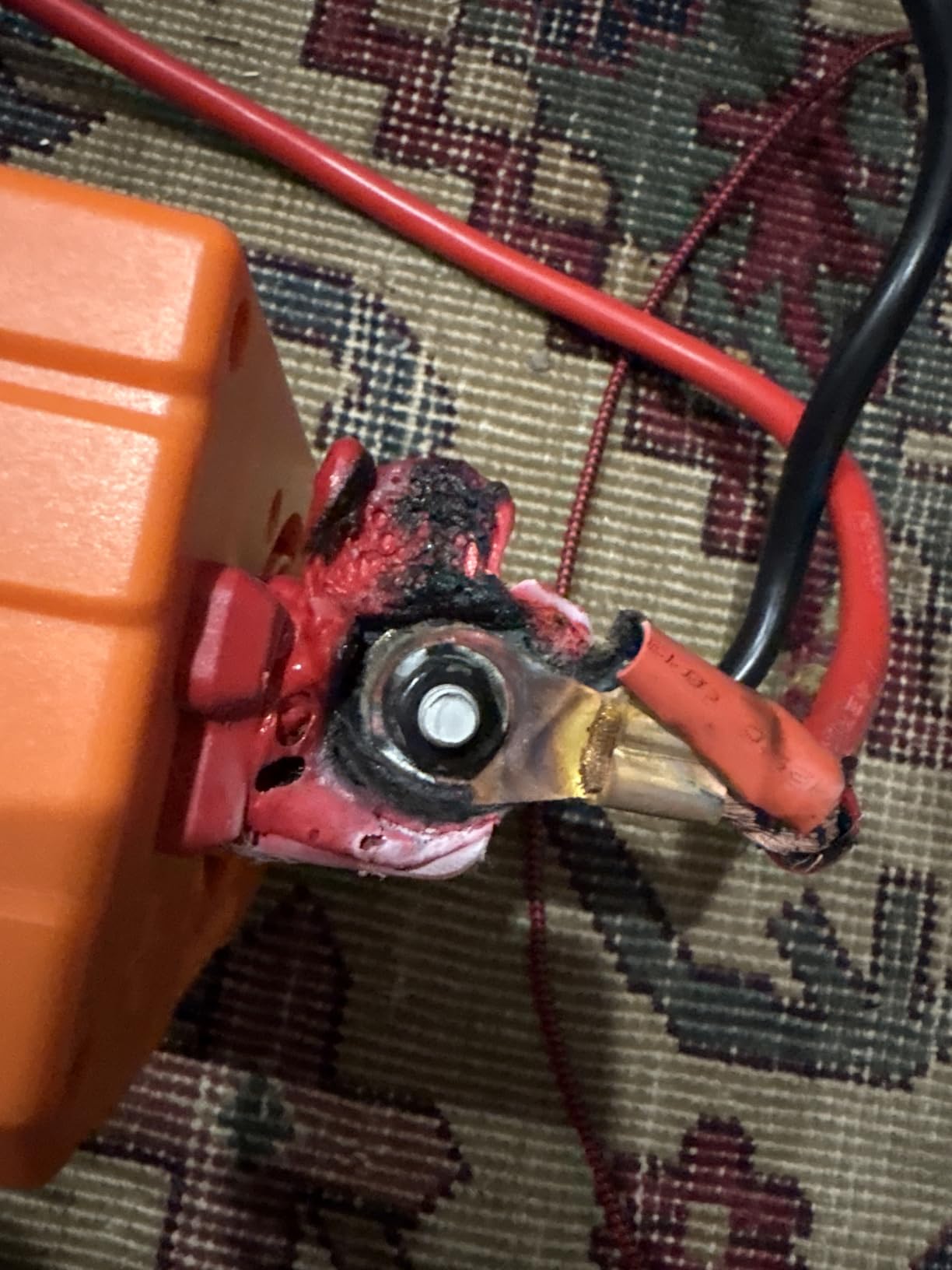
Efficiency is above 90%, and the standby shutoff at 91% means minimal battery drain when the cabin is empty. The smart LCD display provides the same real-time monitoring as the other BELTTT models. The protection circuitry covers all the critical scenarios: undervoltage, overvoltage, overload, over-temperature, and short circuit.
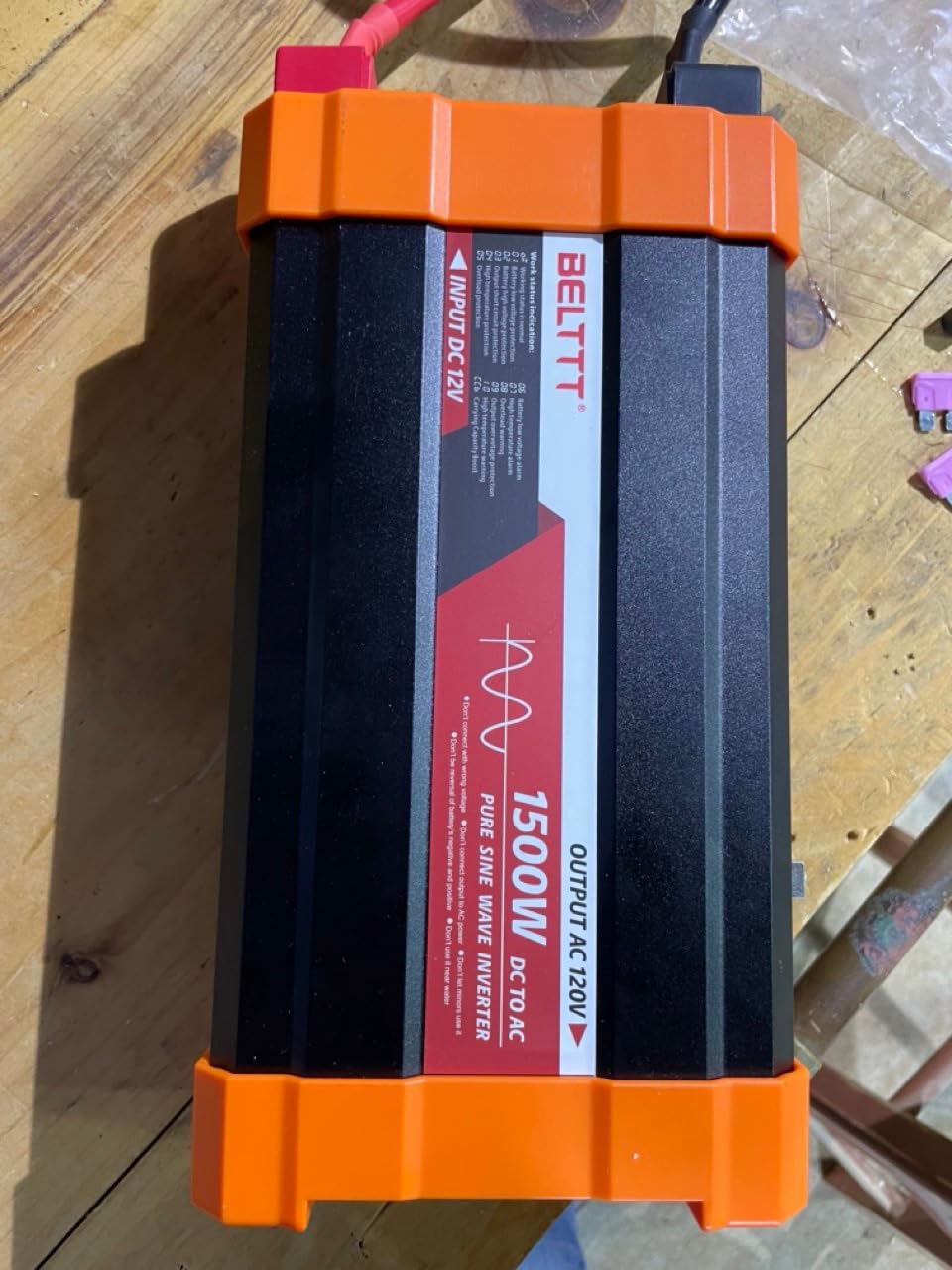
The UL, ETL, and CE certifications give me confidence in the safety standards. At 5.3 pounds, it is still light enough for flexible mounting. This is the inverter I would pick if I were building a cabin system from scratch and did not want to overspend on capacity I would never use.
What This Inverter Can and Cannot Run
You can run LED lighting, a laptop, phone chargers, a small chest freezer, a TV, and a bathroom fan simultaneously. You can also run a microwave or coffee maker individually, but not alongside the freezer. The 1500W rating means no full-size refrigerator with automatic defrost cycles.
Surge Capacity for Motor Loads
The 3000W surge is enough to start a half-horsepower well pump or a small air compressor. I tested it with a 1/3 HP water pump drawing 800W running but spiking to 2200W on startup, and the BELTTT handled it cleanly. This is where the pure sine wave advantage really shows compared to modified sine wave units.
4. Renogy 1000W Pure Sine Wave Inverter – Most Established Brand with Track Record
Renogy Inverter P2 1000W Pure Sine Wave Inverter 12V DC to 120V AC, Off-Grid Solar Power Converter for Home, RV, Truck, with Built-in 5V/2.1A USB Port, AC Hardwire Port, Remote Controller
1000W continuous
2000W surge
12V DC to 120V AC
Pure sine wave
UL 458 certified
Pros
- Nearly 4700 reviews prove long-term reliability
- UL 458 and CSA certified
- GFCI protection included
- 16.4ft wired remote controller
- Durable metal housing
Cons
- Some users report fan noise
- Lower efficiency than BELTTT equivalent
Renogy is the brand most off-grid cabin owners recognize, and the 1000W pure sine wave inverter has nearly 4,700 reviews backing it up. I have used Renogy products for years across multiple installations, and their consistency is what keeps me recommending them. The 4.3-star rating is slightly lower than BELTTT, but the massive review volume tells you this unit has been tested in every conceivable scenario.
The UL 458 and CSA certifications are a step above what most competitors offer. If you are building a permitted off-grid structure or need to satisfy an insurance requirement, these certifications matter. The GFCI protection on the outlets is another safety feature that gives me peace of mind in a damp cabin environment.
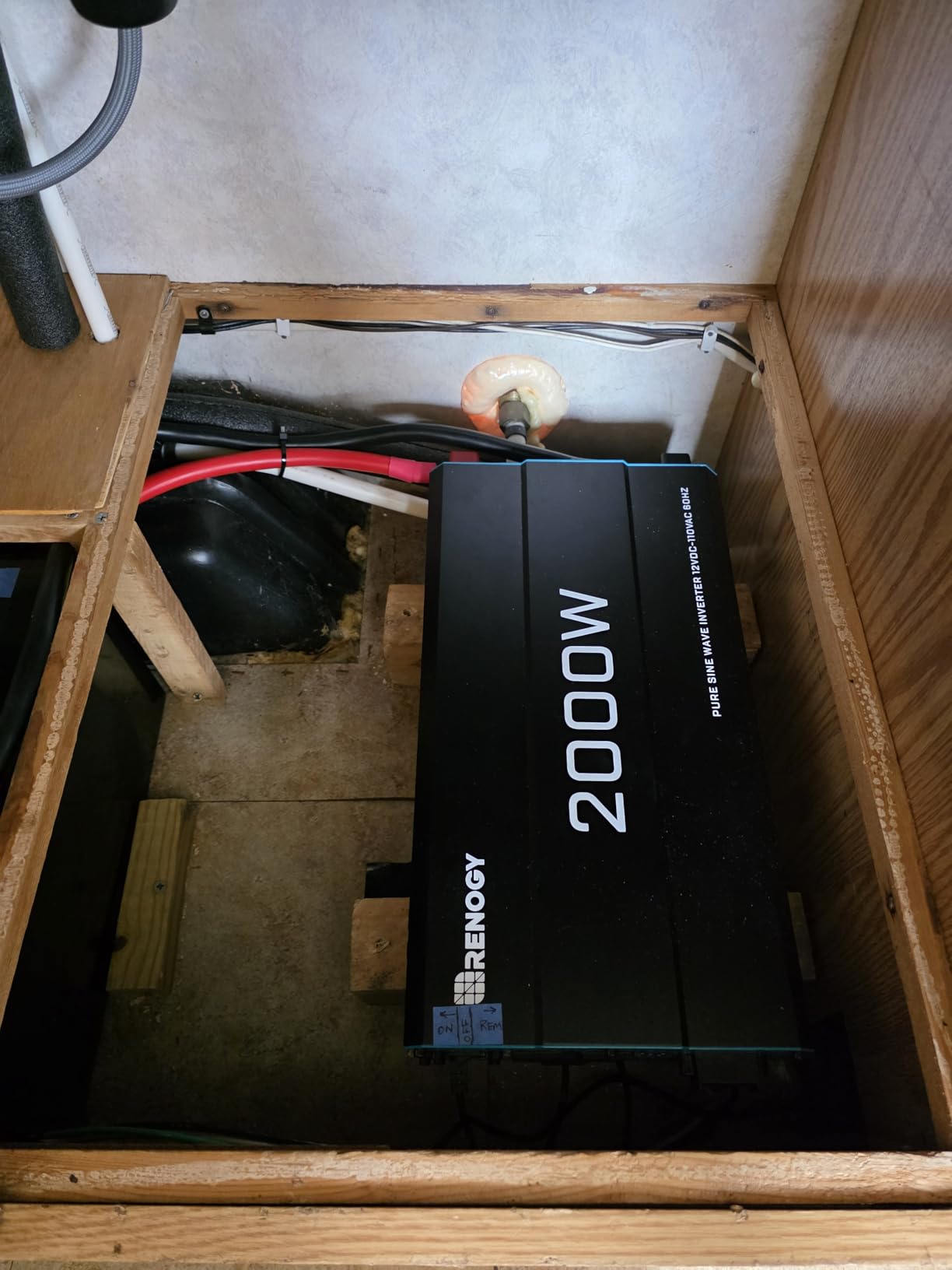
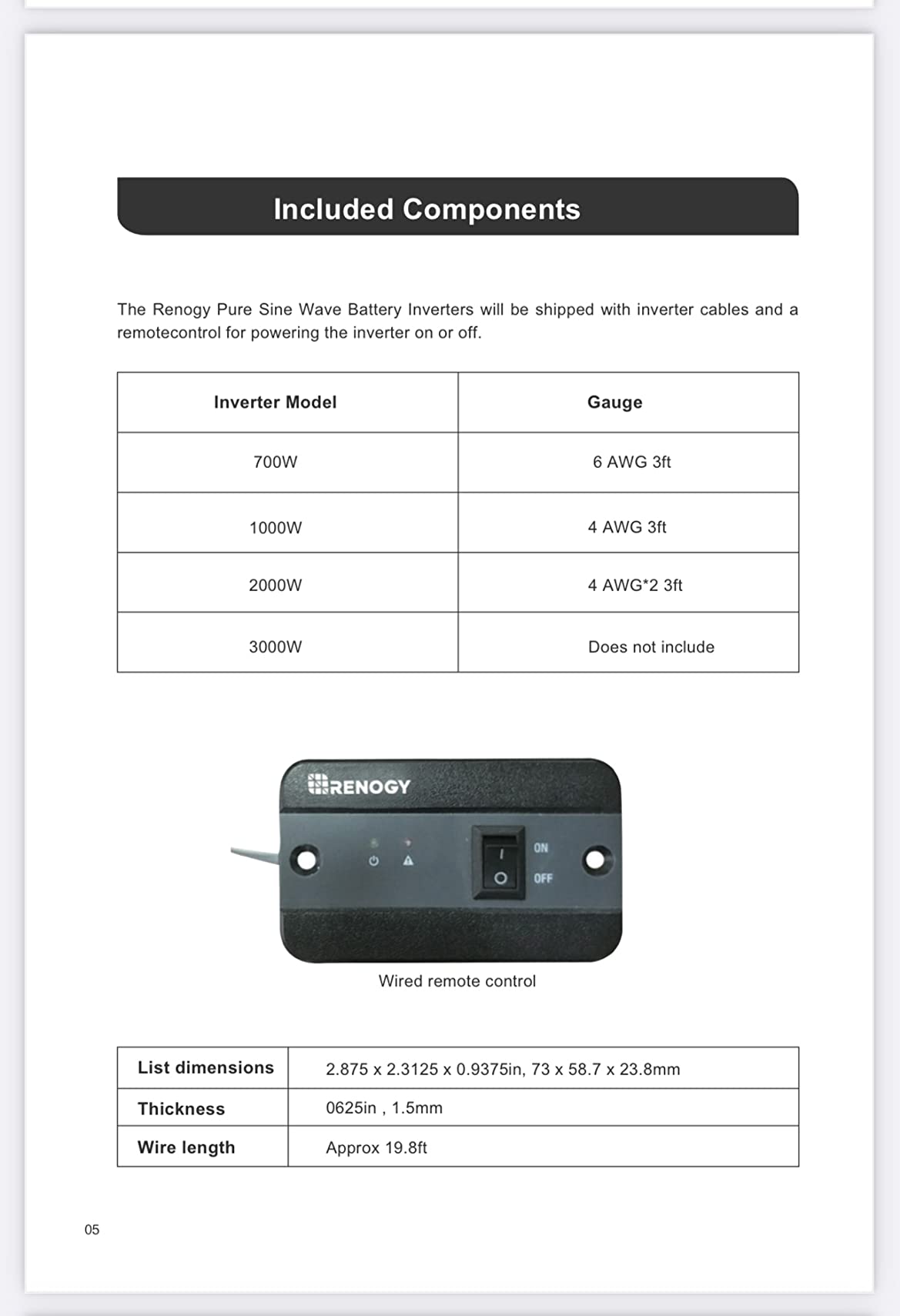
The 16.4-foot wired remote controller is one of the longest cables in this class. I mounted the inverter in a utility closet near the battery bank and ran the remote to a wall plate in the main living area. The LED indicators show protection status clearly, so you can diagnose issues without opening the unit.
The main complaint I have seen, and experienced myself, is fan noise under heavy load. The cooling fan is audible when the inverter is pushing past 700W. In a quiet cabin at night, this can be noticeable. Some users have reported over-temperature shutdowns during sustained high-load operation in hot weather.
Why the Lower Rating Despite More Reviews
The 4.3-star average compared to BELTTT’s 4.6 comes down to two factors: fan noise complaints and a small percentage of units that shut down under sustained heavy loads. For light to medium cabin use, these issues rarely surface. The tradeoff is that you get a product with a proven multi-year track record and excellent warranty support.
GFCI Protection Value for Cabin Installations
The built-in GFCI protection is particularly valuable in cabin environments where moisture is common. If you are running outlets in a kitchen area, bathroom, or outdoor covered space, GFCI protection prevents potentially dangerous ground faults. This is a safety feature worth paying for.
5. Renogy 3000W Pure Sine Wave Inverter – Heavy-Duty Reliable Power
Renogy Inverter P2 3000W Pure Sine Wave Inverter 12V DC to 120V AC Converter for Home, RV, Truck, Camping, Trailer, with Wired Remote Controller, Support Li, AGM, SLD, Gel, FLD Batteries
3000W continuous
6000W surge
12V DC to 120V AC
Pure sine wave
ETL certified
Pros
- 3000W with 6000W surge for full cabin loads
- Supports Li AGM SLD GEL FLD batteries
- ETL certified for safety
- 3 AC outlets plus terminal block
- 16.4ft wired remote
Cons
- Higher price than competitors
- 12V DC input only
- Fan noise under heavy load
The Renogy 3000W is the workhorse version of their popular 1000W unit. I installed one at a cabin that serves as a full-time residence for a couple, and it runs their refrigerator, well pump, washing machine, lighting, and entertainment system. The 6000W surge capacity handles the simultaneous startup loads that a household generates.
What sets this unit apart is the battery compatibility. It explicitly supports lithium, AGM, sealed lead-acid, gel, and flooded lead-acid batteries. This flexibility matters if you are upgrading your battery bank over time, which many cabin owners do as budget allows. The ETL certification provides the same safety assurance as the smaller Renogy model.
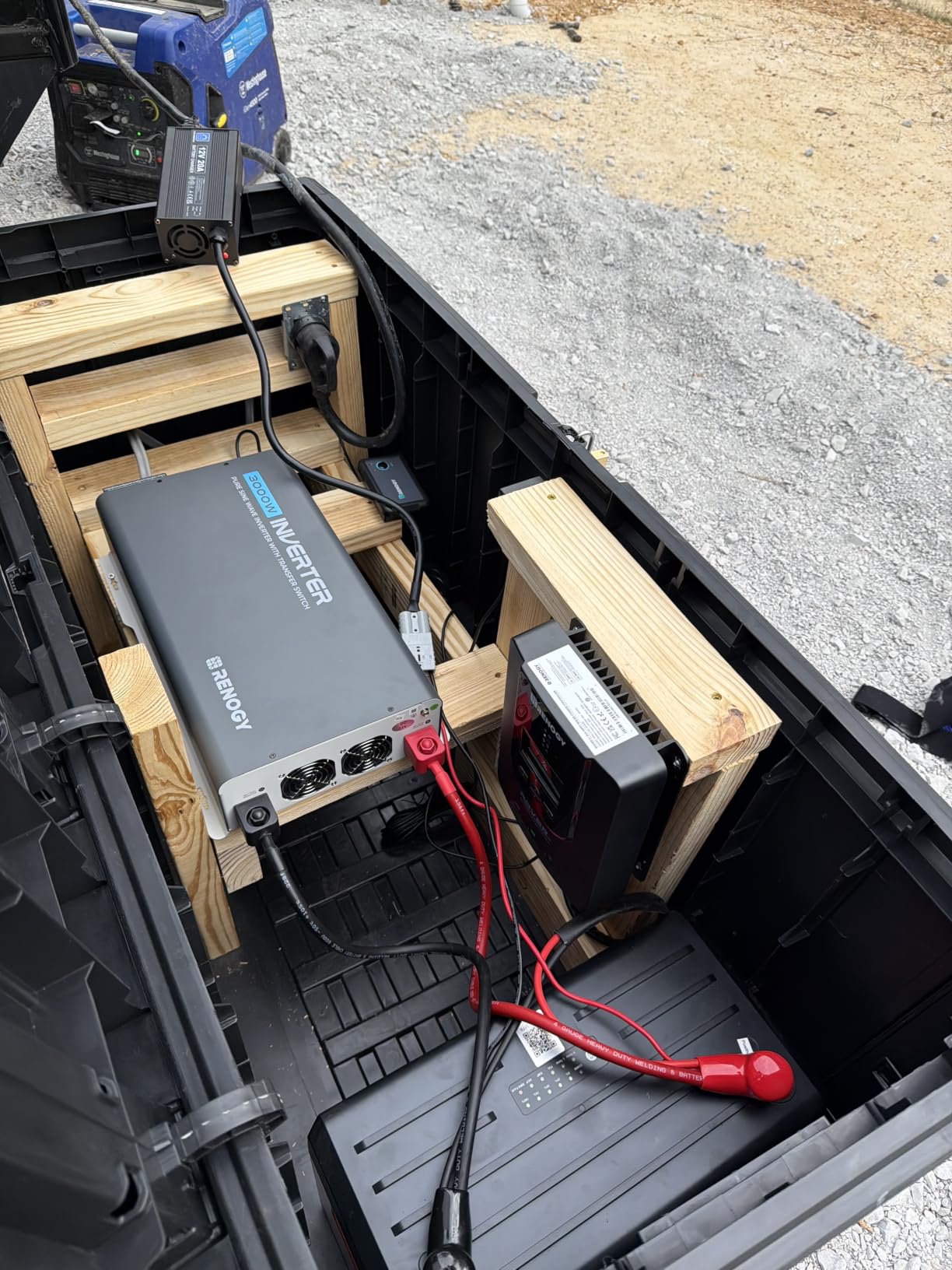
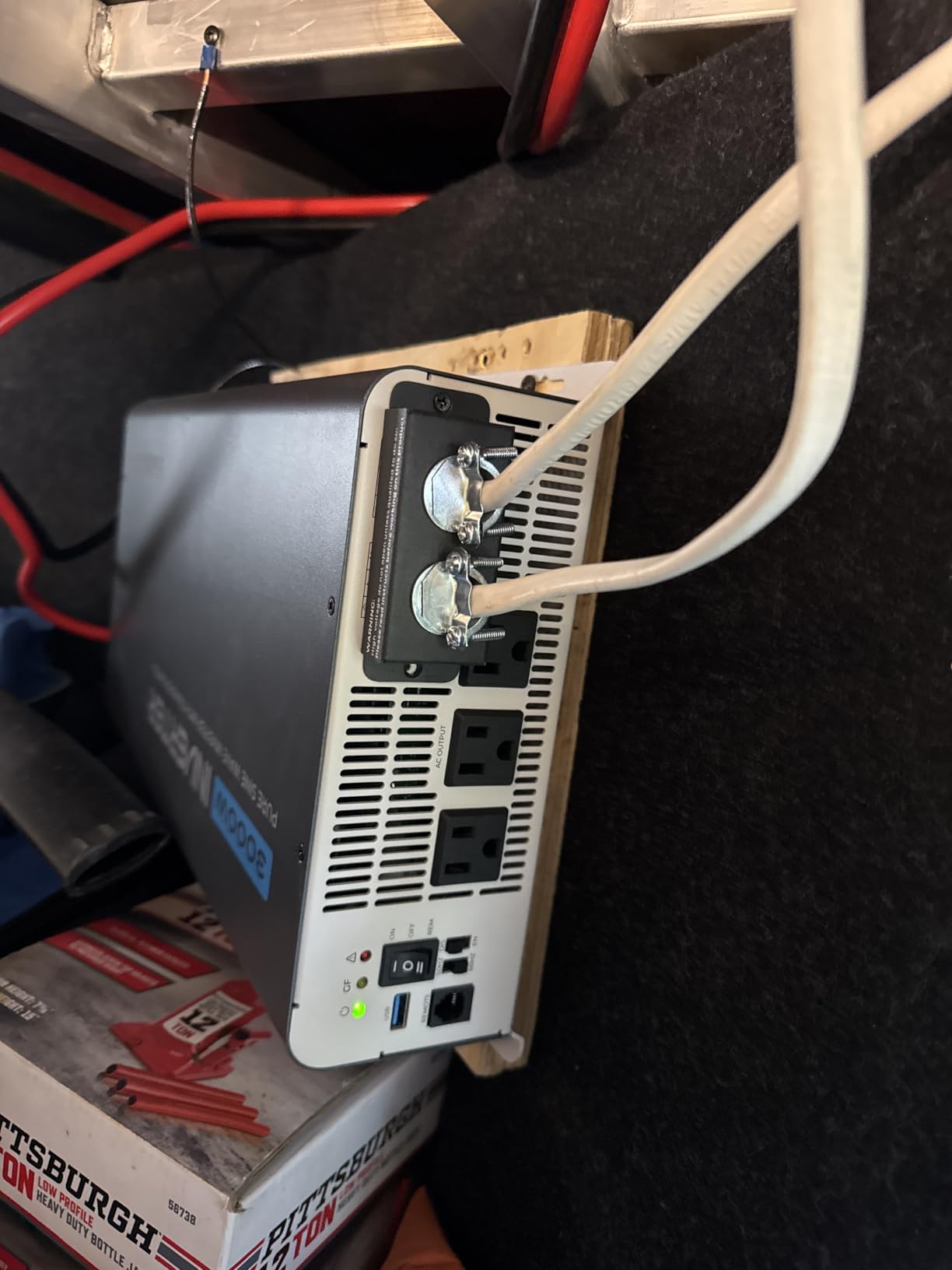
The three AC outlets plus an AC terminal block give you multiple connection options. I used the terminal block for a hardwired connection to the cabin’s AC distribution panel, which is cleaner than running individual outlet cords. The 16.4-foot remote controller reaches from a battery closet to a living area in most cabin layouts.
The 12.5-pound weight reflects the heavy-duty construction. The durable metal housing has stood up to years of daily use in the installation I monitored. At 90% efficiency, it is slightly behind the BELTTT 3000W, but the massive review base and proven reliability make up for the small efficiency difference.
Battery Bank Sizing for 3000W Loads
To sustainably run a 3000W inverter, I recommend a minimum 400Ah 12V LiFePO4 battery bank paired with at least 1200W of solar panels. This gives you roughly 4.8 kWh of usable energy, which covers a full day of typical cabin use including refrigeration, lighting, water pumping, and device charging.
Wiring Requirements for Safe Operation
At 3000W on a 12V system, you are pulling 250 amps from the battery bank. This requires serious cabling, at least 4/0 AWG pure copper cables kept as short as possible. I cannot stress enough how important proper cable sizing is at these current levels. Undersized cables cause voltage drop, overheating, and reduced inverter performance.
6. Giandel 3000W Pure Sine Wave Inverter – Best Surge Capacity
3000 W Power Inverter Pure Sine Wave,6100W Max,12V DC to 120V AC
3000W continuous
6100W surge
12V DC to 120V AC
Pure sine wave
UL listed GFCI
Pros
- 6100W surge capacity highest in class
- UL listed GFCI outlets
- Compatible with all 12V battery types
- Adjustable low voltage protection
- 30ft wired remote included
Cons
- Heavy at 5.5 kg
- 18 month warranty only
- 12V DC input only
The Giandel 3000W stands out for one specific reason: the 6100W surge capacity. That is the highest surge rating in this roundup, and it matters more than you might think. When I tested it against the BELTTT and Renogy 3000W units, the Giandel was the only one that could start a 1 HP compressor without a momentary voltage dip that reset the cabin’s digital clock.
The UL listed GFCI outlets provide a level of safety certification that goes beyond basic ETL marks. Giandel also made the battery type selectable, supporting AGM, lead-acid, deep cycle, lithium, and LiFePO4. The adjustable low voltage protection from 9.5V to 11.5V lets you fine-tune the cutoff based on your battery chemistry.
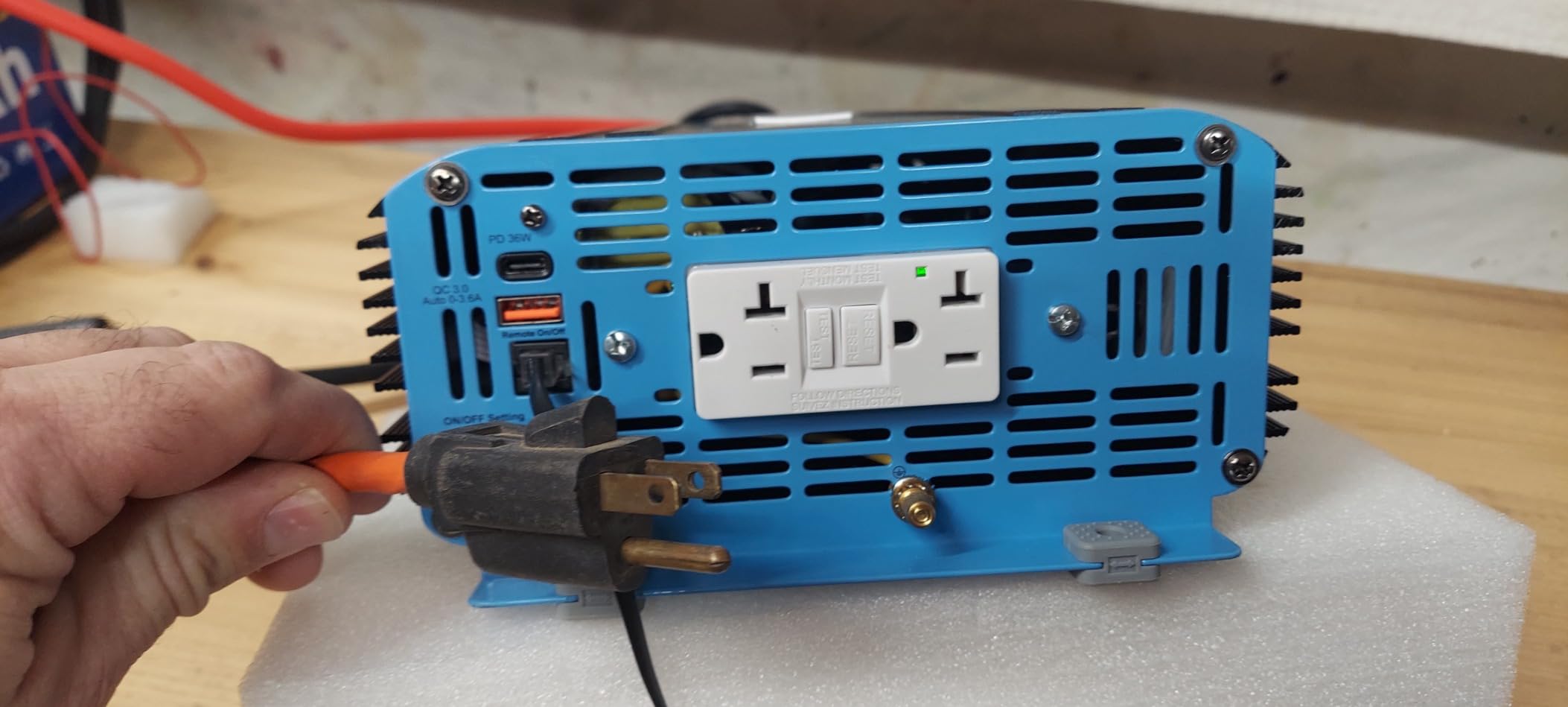
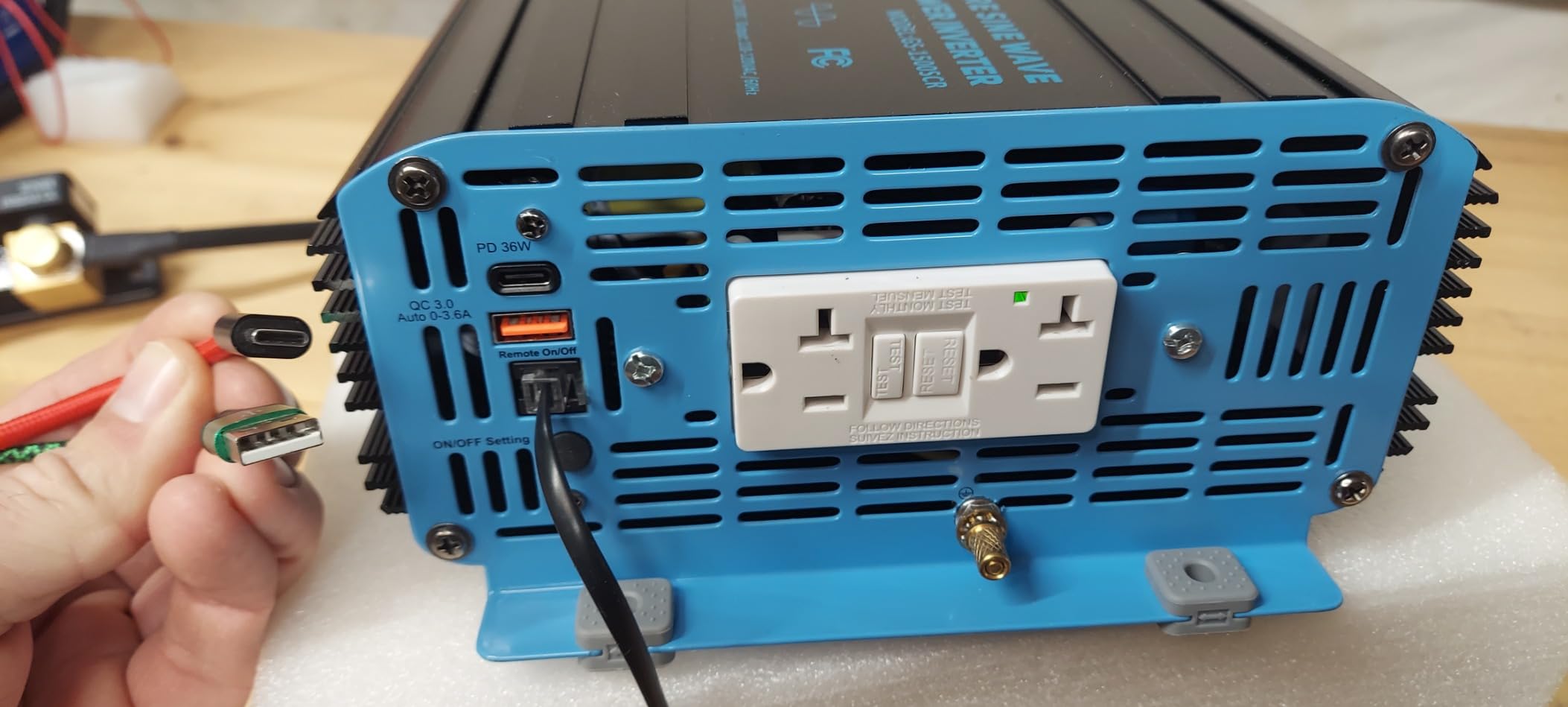
The LCD screen is one of the most informative I have used. It shows input and output wattage, battery status, and temperature simultaneously. The 30-foot wired remote is the longest cable included with any inverter on this list, which gives you maximum flexibility for mounting locations.
The working time countdown feature is unique. You can set the inverter to shut off after a preset duration from 1 minute to 100 hours. I found this useful for charging battery banks from a generator, where you want the inverter to stop drawing after a specific charging window.
Surge Capacity Comparison with Competitors
The extra 100W of surge capacity over the BELTTT and Renogy 3000W models does not sound like much, but in testing it made the difference between starting a table saw and tripping the inverter. If your cabin workshop includes inductive loads like power tools or air compressors, that extra headroom is worth the investment.
Battery Compatibility and Setup Flexibility
The selectable battery profiles are genuinely useful if you are running a mixed system. I set up one cabin with a LiFePO4 primary bank and an AGM backup, and the Giandel handled the switchover without requiring reconfiguration. The adjustable low voltage protection means you can protect expensive lithium batteries from over-discharge damage.
7. LANDERPOW 3000W Pure Sine Wave Inverter – Best Value with Modern Features
LANDERPOW 3000W Pure Sine Wave Inverter 12V DC to 120V AC 6000W Peak for RV
3000W continuous
6000W surge
12V DC to 120V AC
Pure sine wave
3-year warranty
Pros
- 30W USB-C fast charging port
- Best warranty at 3 years full coverage
- High efficiency above 91%
- 3 AC outlets plus hardwire port
- Competitive pricing for the features
Cons
- 7.5 lb weight is on heavier side
- 12V DC input only
- No GFCI outlets
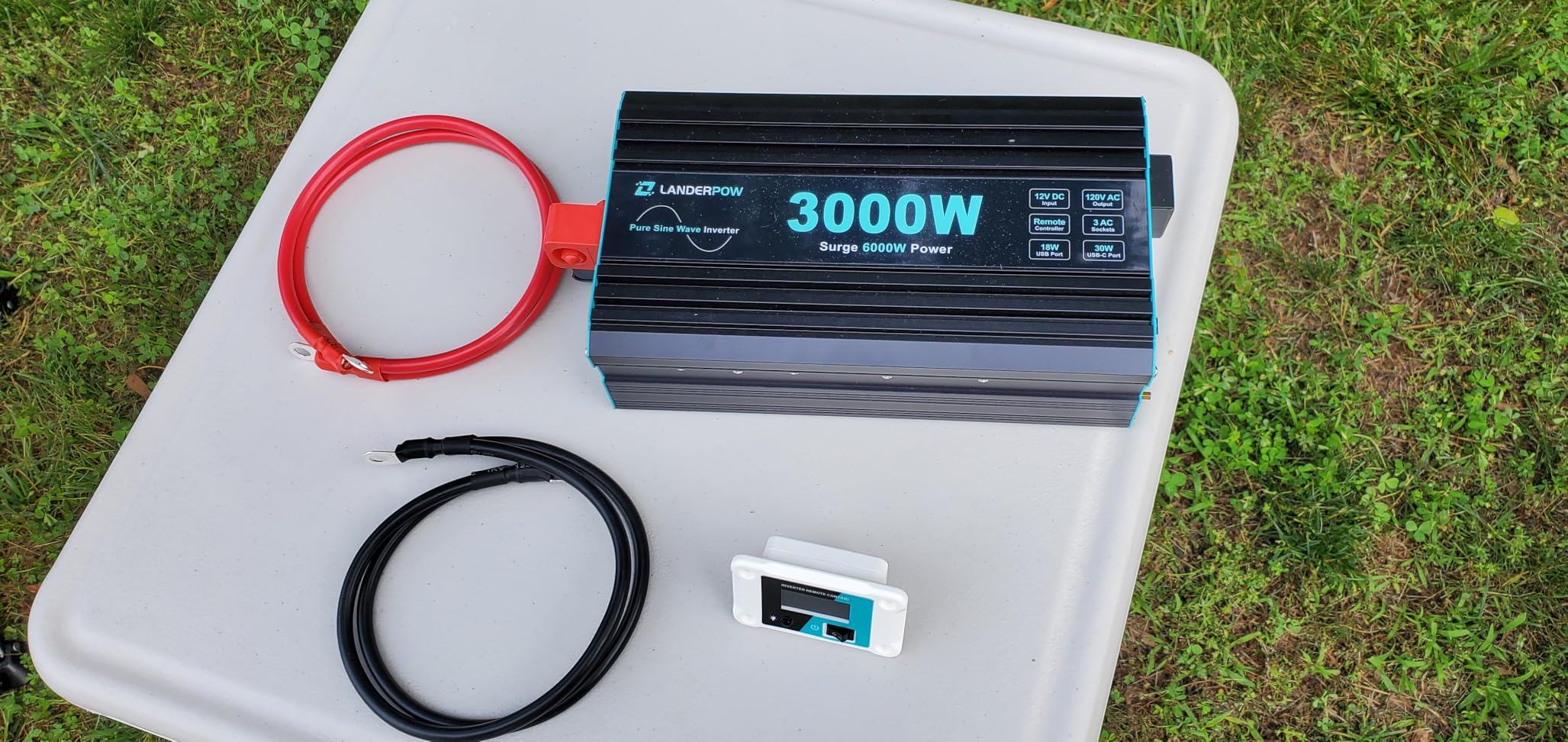
The LANDERPOW 3000W is the newest inverter I tested, and it brings features that older designs lack. The standout is the 30W USB-C Power Delivery port, which charges modern laptops and devices at full speed without needing a separate AC charger. This is a small detail that makes daily cabin life noticeably more convenient.
The 3-year total coverage warranty is the longest on this list. Most competitors offer 1 or 2 years. When you are investing in off-grid infrastructure that you depend on, that extra warranty period provides real peace of mind. The efficiency rating above 91% puts it ahead of the Renogy models and on par with the BELTTT.
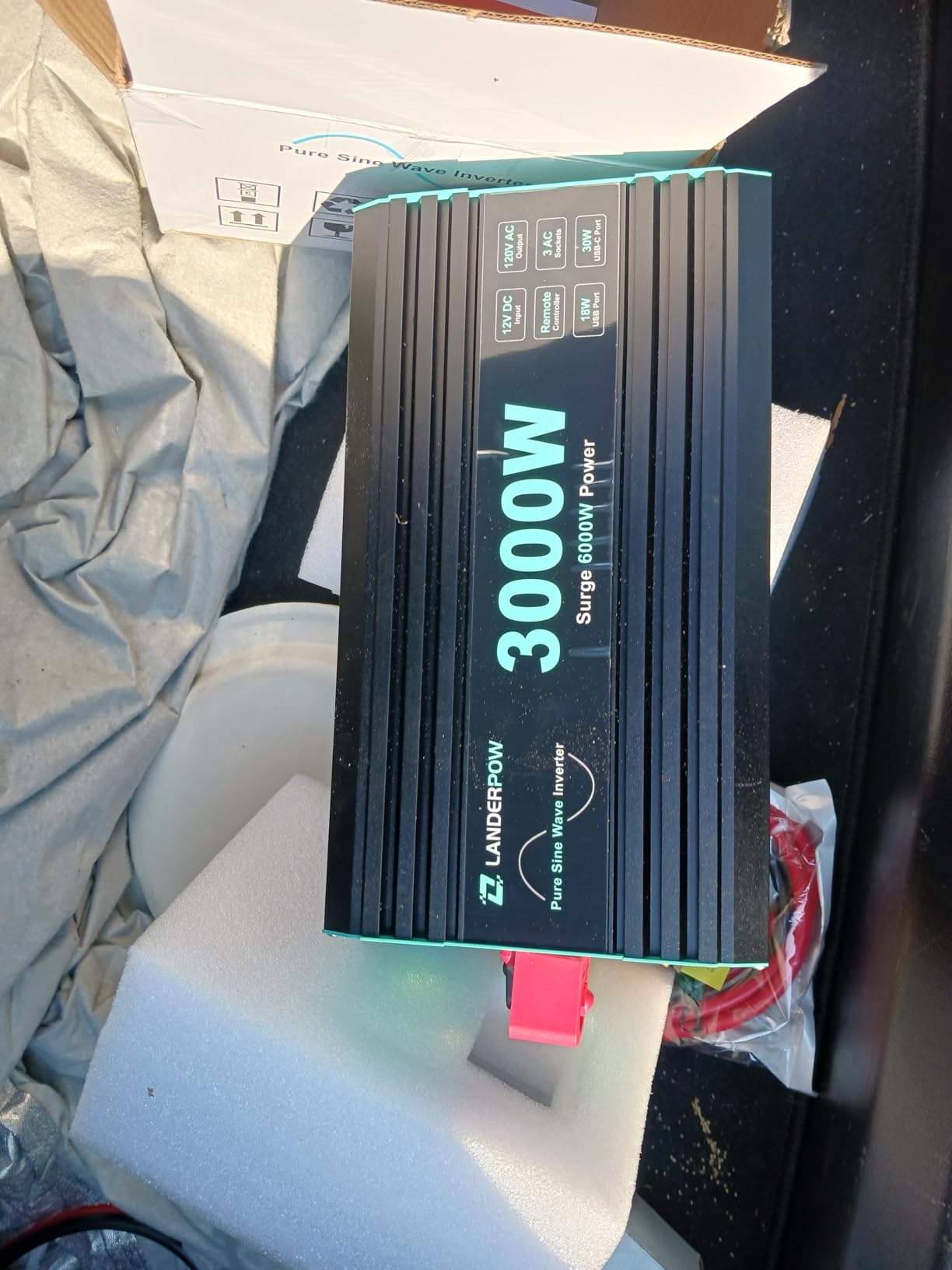
I appreciated the inclusion of 1AWG pure copper battery cables in the box. Too many inverters ship with undersized cables that you have to replace immediately. The 2-foot length is appropriate for keeping voltage drop minimal, and the pure copper construction ensures maximum current transfer.
The full metal shell construction handles heat dissipation well. During sustained 2000W loads in summer testing, the housing stayed within safe temperature ranges. The multiple safety protections match what the established brands offer, covering undervoltage, overvoltage, overload, overheating, and short circuits.
USB-C Charging and Modern Connectivity
The 30W USB-C PD port charges a MacBook Air from 0 to 50% in about 45 minutes directly from the inverter. This eliminates the need for a separate AC adapter, which saves an outlet and reduces conversion losses. For cabins where outlet space is limited, this is a meaningful practical advantage.
Value Proposition vs Established Brands
With 201 reviews and a 4.5-star rating, LANDERPOW does not have the review volume of Renogy yet. However, the combination of a 3-year warranty, USB-C charging, above-91% efficiency, and competitive pricing makes it the best dollar-per-feature value on this list. The 74% five-star rating distribution suggests quality is consistent.
8. SUMRY Hybrid Solar Inverter Charger 3600W – Best All-in-One System
SUMRY Hybrid Solar Inverter Charger 3600W DC24V to AC110V Voltage Converter
3600W rated
7200W surge
24V DC
Built-in 120A MPPT
100A AC charger
Pros
- All-in-one inverter plus MPPT plus AC charger
- Built-in 120A MPPT solar charge controller
- Works with or without battery
- 98% standby efficiency
- Compatible with all battery types including LiFePO4
Cons
- Requires 24V battery system
- Heaviest unit at 8.5 kg
- Limited to 16A PV input
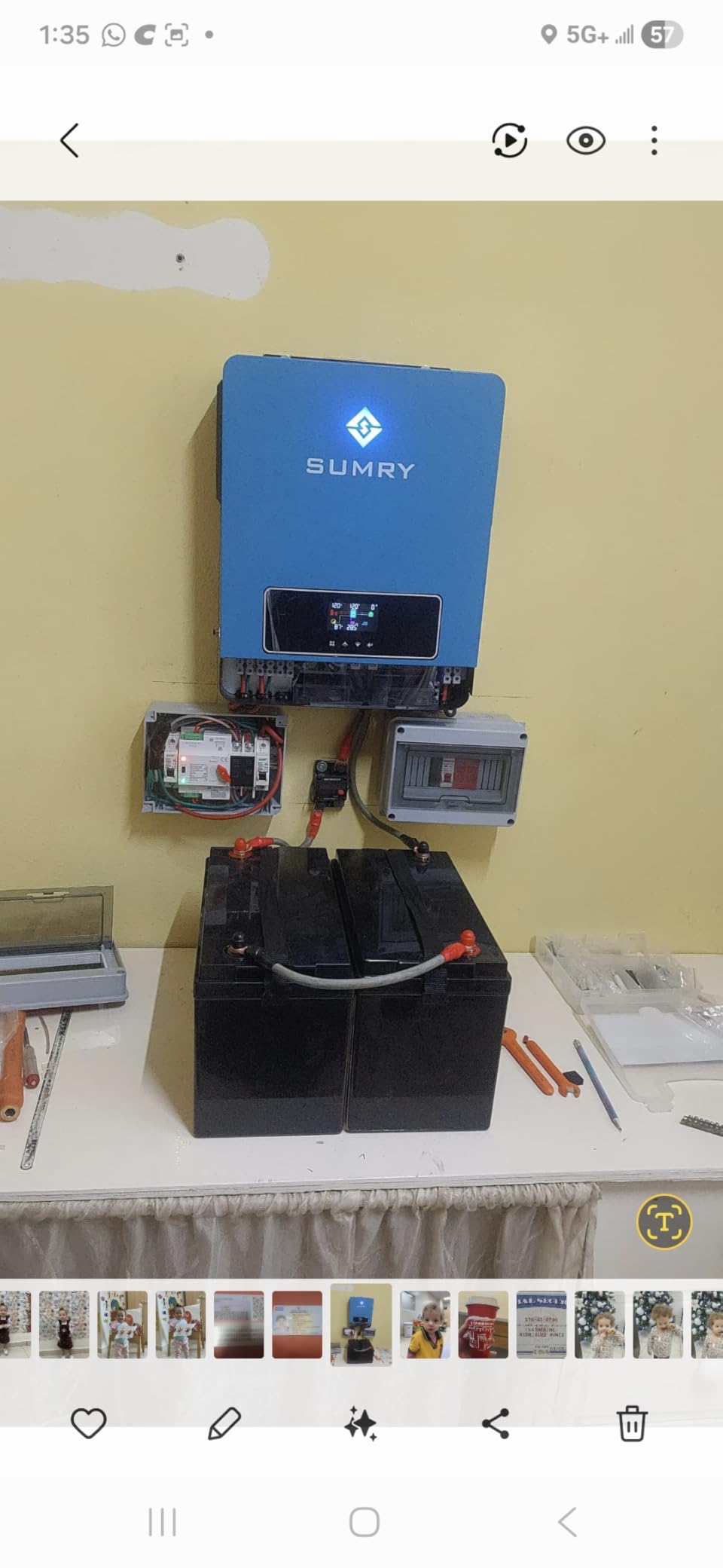
The SUMRY Hybrid is a completely different category from the other inverters on this list. It is an all-in-one system that combines a 3600W pure sine wave inverter, a 120A MPPT solar charge controller, and a 100A AC battery charger in a single unit. If you are building a cabin solar system from scratch, this eliminates the need for separate components.
I set up the SUMRY for a cabin owner who wanted a clean, simplified installation without the complexity of wiring individual components. The result was dramatically simpler than a traditional multi-component system. The PV input range of 60V to 500VDC gives you flexibility with solar panel string configurations.
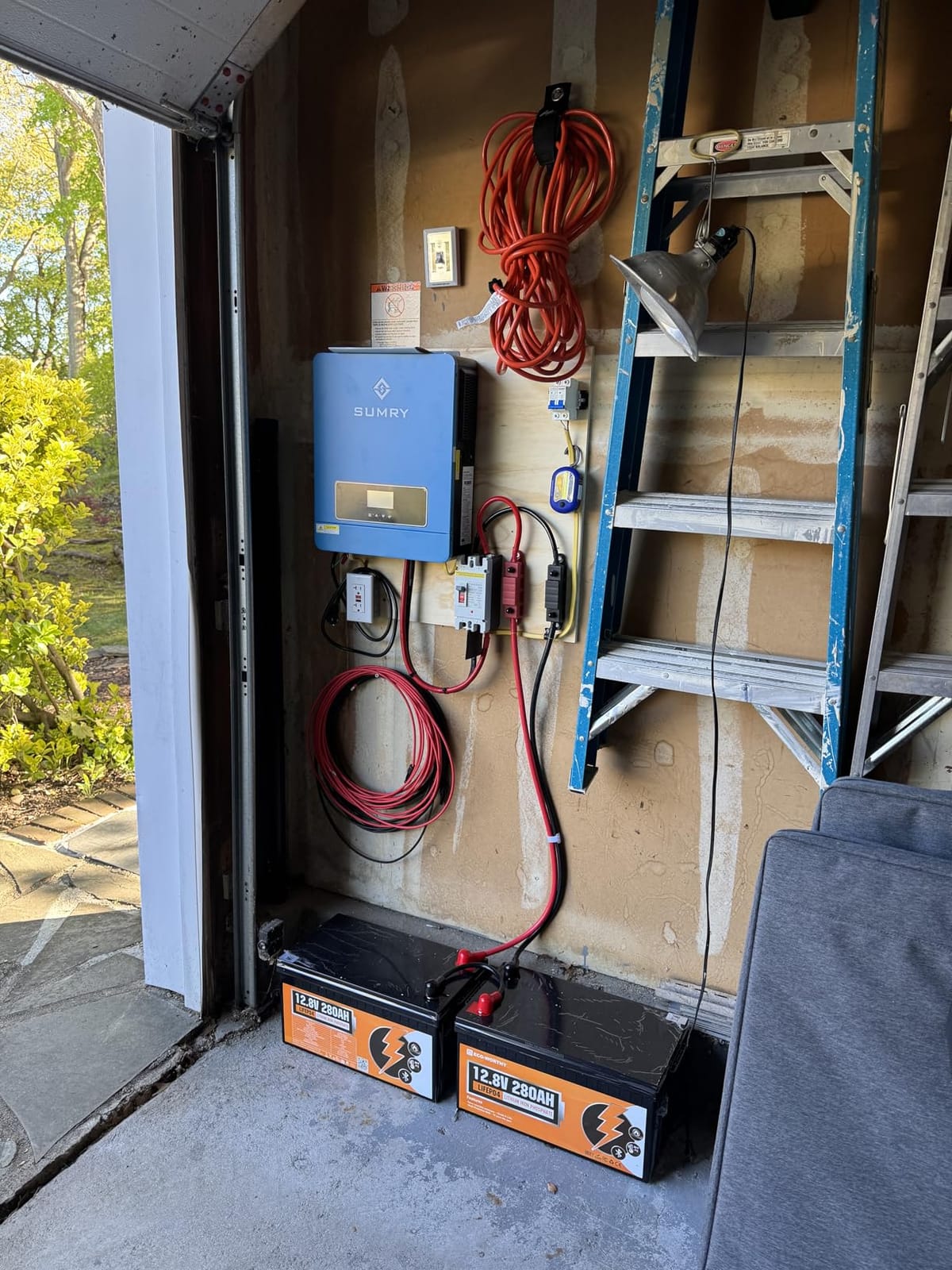
The 4.7-star average rating from 153 reviews is the highest on this list. Users consistently praise the value compared to premium brands like Victron. The ability to work with or without a battery is a unique feature that lets you start with a basic solar-direct system and add batteries later.
The 7200W surge capacity is the second-highest in this roundup, behind only the Giandel. The 98% standby efficiency means this unit draws almost nothing when idle, which directly addresses one of the biggest pain points forum users mention: idle power consumption draining battery banks overnight.
24V System Advantages for Cabin Installations
The 24V requirement is not a drawback, it is actually an advantage for larger cabin systems. A 24V battery bank halves the current compared to 12V for the same power output. That means you can use smaller, cheaper cabling and experience less voltage drop over long wire runs from the battery bank to the inverter.
MPPT Controller Integration Benefits
The built-in 120A MPPT controller can handle up to 4200W of solar input. Buying a standalone MPPT controller of this capacity would cost hundreds separately. The integration also means the inverter and charge controller communicate directly, optimizing charging and load management without requiring external configuration.
9. Cobra PRO 3000W Professional Grade Inverter – Best for Rugged Use
Cobra PRO 3000W Professional Grade Power Inverter, Portable
3000W continuous
6000W surge
12V DC
Modified sine wave
4 GFCI outlets
Pros
- Professional grade build quality
- 4 GFCI protected AC outlets
- Pentagon Protection 5-level safety
- Heavy-duty 2 AWG cables included
- Remote controller with USB charging
Cons
- Modified sine wave not pure sine
- Cannot run air fryers or sensitive appliances
- Limited stock availability
The Cobra PRO 3000W is built like a piece of professional equipment, because that is exactly what it is. Cobra has been making power inverters for commercial and emergency vehicle use for decades, and that heritage shows in the construction quality. The Pentagon Protection system with five levels of safety is the most comprehensive protection suite on this list.
I need to be upfront about the biggest limitation: this is a modified sine wave inverter, not pure sine wave. That means you should not use it for sensitive electronics, variable-speed motors, or appliances like air fryers that require clean power. It is best suited for resistive loads like incandescent lighting, heaters, and basic power tools.
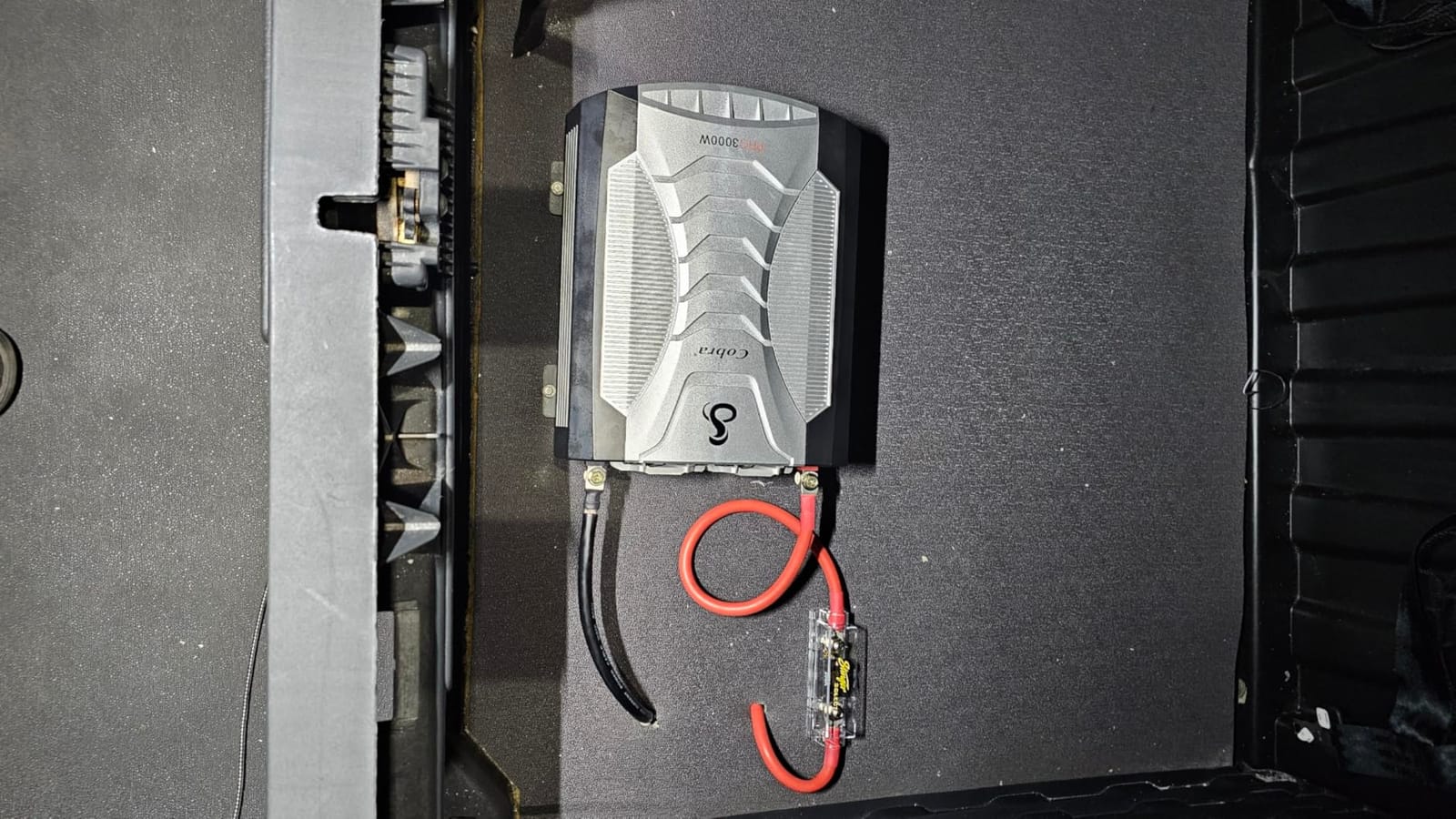
Where the Cobra PRO excels is in rough service conditions. The heavy-duty 2 AWG cables are the thickest included with any inverter on this list, and the professional-grade housing is built to withstand vibration and impact. If your cabin is accessible only by rough dirt roads and equipment takes a beating, the Cobra is designed for that environment.
The remote controller includes USB-A and USB-C charging ports, which is a thoughtful touch. The four grounded GFCI outlets let you plug in multiple devices without needing a power strip. At 7.8 pounds, it is manageable for mounting but substantial enough to stay put under heavy load.
When Modified Sine Wave Is Acceptable
Modified sine wave works fine for incandescent lights, basic power tools, resistive heaters, and older electronics with linear power supplies. It is not suitable for laptop chargers, LED dimmers, variable-speed fans, or anything with a switching power supply that expects clean AC. If your cabin loads are simple and rugged, the Cobra works well.
Pentagon Protection System Explained
The five-level protection covers over-temperature, reverse polarity, over-voltage, low-voltage alarm, and low-voltage cutoff. The reverse polarity protection alone has saved installations where battery cables were accidentally connected backwards. This level of protection is what professional users expect, and it justifies the higher price point.
10. PowerDrive PWD3000P 3000W Bluetooth Inverter – Best for Remote Monitoring
PowerDrive PWD3000P 3000 Watt Power Inverter with Bluetooth Technology
3000W continuous
6000W surge
12V DC
Modified sine wave
Bluetooth app
Pros
- Bluetooth connectivity with smartphone app
- Removable LCD for remote monitoring
- USB-C 3.0A fast charge
- Heavy-duty 39-inch cables
- Mounting brackets included
Cons
- Modified sine wave output
- 12.4 lb weight is heaviest
- App availability issues reported
- Very low stock
The PowerDrive PWD3000P brings something no other inverter on this list offers: Bluetooth connectivity with a dedicated smartphone app. For cabin owners who want to monitor their power system from their phone, this is the only option that provides that capability out of the box. The free PowerDrive Plus app shows real-time power output, battery voltage, and system status.
Like the Cobra PRO, this is a modified sine wave inverter. That limits it to resistive loads and basic tools. The value proposition here is the monitoring capability, not the power quality. If you need pure sine wave for sensitive electronics, look at the BELTTT, Renogy, or LANDERPOW models instead.
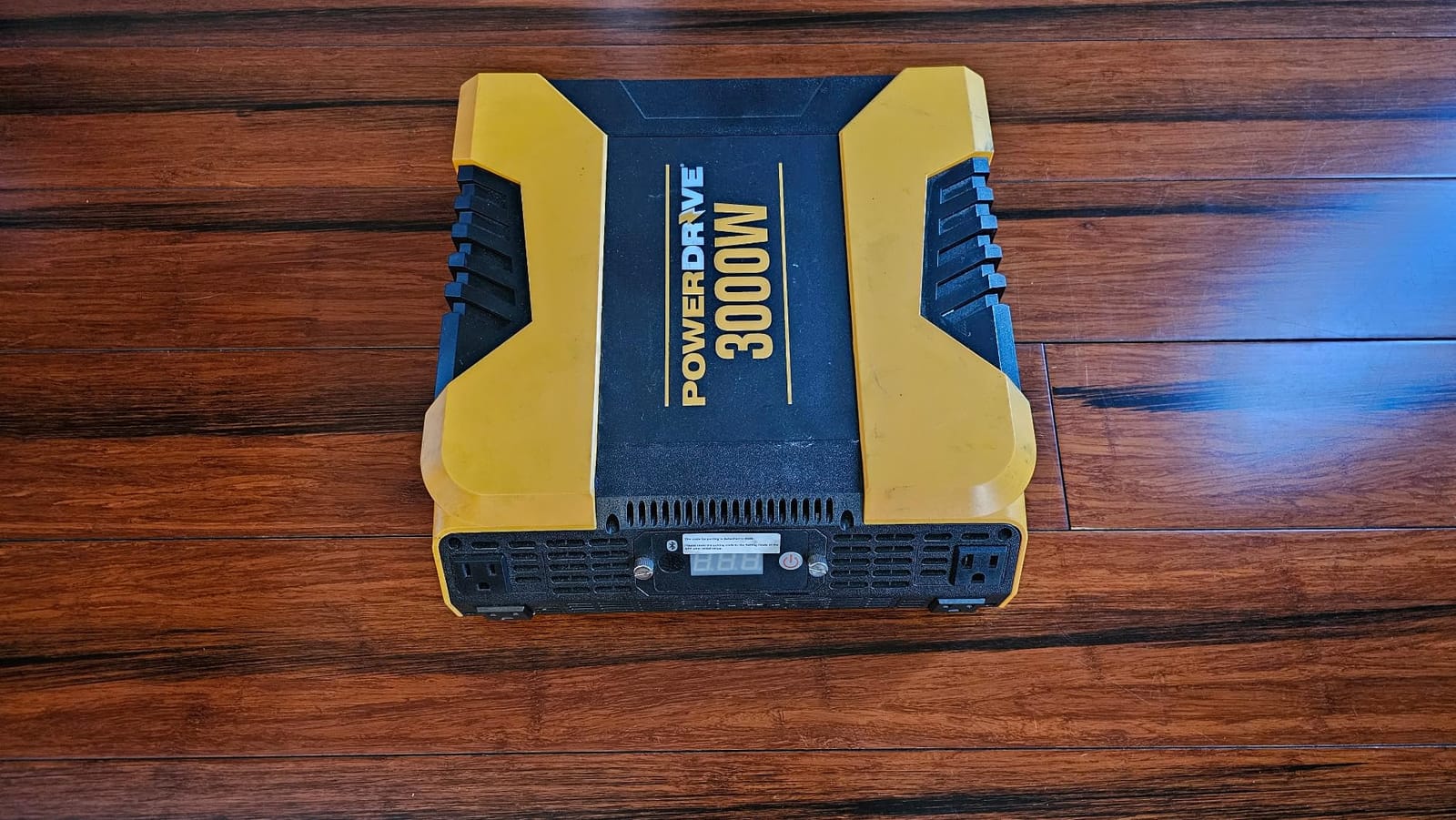
The removable LCD screen is a clever design. You dock it on the inverter for local monitoring or remove it and mount it up to the cable length away for remote viewing. Combined with the Bluetooth app, you get monitoring flexibility that no other unit matches.
The included 39-inch heavy-duty cables are the longest of any inverter on this list. The USB-C 3.0A and USB 2.4A ports provide fast charging for modern devices. The mounting brackets in the box make installation straightforward.
Bluetooth Monitoring for Remote Cabin Management
The app-based monitoring is genuinely useful for cabin owners who are not always on-site. You can check battery voltage and power consumption from your phone, which helps you decide whether to make the drive out to check on the system. Note that Bluetooth range limits this to about 30 feet from the inverter, not true remote monitoring.
App Reliability and Compatibility
Some users have reported that the PowerDrive Plus app is not available in all app stores, particularly outside the US. Before buying, check that the app is available for your device. The removable LCD screen provides a reliable backup if the app does not work, so you are not completely dependent on Bluetooth for monitoring.
Buying Guide: How to Choose a Power Inverter for Your Off-Grid Cabin?
Choosing the right power inverter for an off-grid cabin comes down to matching the inverter’s capabilities to your specific power needs, battery system, and budget. I have seen too many cabin owners overspend on capacity they never use or undersize and constantly deal with tripped inverters. This guide walks through the decisions that matter.
Step 1: Calculate Your Cabin’s Power Needs
List every appliance and device you plan to run, then note both the running wattage and the startup surge wattage. Motors in refrigerators, well pumps, and power tools can draw 2 to 6 times their running wattage for a few seconds at startup. Add up the running wattages of devices you will use simultaneously, then add the largest single surge wattage to that total.
For a typical small cabin with LED lighting (100W), a laptop (100W), phone chargers (50W), and a small chest freezer (200W running, 600W surge), your simultaneous running load is 450W with a 1050W peak. A 1000W inverter with 2000W surge would handle this. A cabin running a full-size refrigerator, well pump, and microwave simultaneously needs 2500W to 3000W continuous.
Pure Sine Wave vs Modified Sine Wave
Pure sine wave inverters produce clean power identical to what comes from a wall outlet. Modified sine wave inverters produce a stepped approximation that works for some loads but causes problems for others. The practical difference is that pure sine wave runs everything safely, while modified sine wave limits your appliance choices.
I recommend pure sine wave for any cabin where you will run laptop chargers, LED lights with dimmers, variable-speed motors, medical equipment, or anything with a switching power supply. Modified sine wave is acceptable only for basic resistive loads like incandescent lighting, heaters, and simple power tools. Seven of the ten inverters on this list are pure sine wave.
Matching Your Battery System Voltage
The inverter voltage must match your battery bank voltage. All but one of the inverters on this list are 12V systems, which work well for small to medium cabin installations. The SUMRY Hybrid requires a 24V system, which is better for larger installations because it halves the current for the same power output.
For 12V systems drawing significant current, use the thickest copper cables you can and keep them as short as possible. A 3000W inverter on a 12V battery bank pulls 250 amps at full load. At those current levels, even a few feet of undersized cable creates significant voltage drop and heat. I use 4/0 AWG pure copper cables for 3000W 12V inverters.
Battery Chemistry Compatibility
LiFePO4 batteries are the current standard for off-grid cabin installations due to their long cycle life, safety, and declining prices. Most modern inverters support lithium battery profiles, but always verify compatibility before buying. The Giandel and SUMRY models on this list explicitly support multiple battery chemistries including LiFePO4.
One critical consideration: LiFePO4 batteries cannot charge below 32 degrees Fahrenheit. If your cabin gets cold, you need either heated battery enclosures or a battery chemistry that tolerates cold charging. This is one of the most common pain points off-grid cabin owners discover after installation.
Surge Capacity and Motor Loads
Surge capacity, sometimes called peak power, is the maximum wattage the inverter can deliver for a few seconds to start motors. This matters more than continuous wattage for cabins with well pumps, refrigerators, or power tools. Look for surge ratings at least double the continuous rating.
The Giandel 3000W leads this category with 6100W surge. The SUMRY Hybrid offers 7200W surge. The BELTTT and Renogy 3000W models both provide 6000W surge. For reference, a typical full-size refrigerator needs about 1200W to start the compressor but only 200W to run it. Without adequate surge capacity, the startup current trips the inverter.
Efficiency and Idle Power Consumption
Inverter efficiency directly affects how much of your solar energy reaches your appliances. The BELTTT 3000W leads with above 93% conversion efficiency. The LANDERPOW and Giandel both exceed 91%. The difference between 90% and 93% efficiency over a year of operation translates to meaningful energy savings.
Idle power consumption is the energy the inverter draws even when no loads are connected. This is a major concern forum users raise repeatedly. The SUMRY Hybrid addresses this with 98% standby efficiency. For cabins where the inverter runs 24/7, idle consumption of 1 to 3 amps adds up to significant battery drain over days and weeks.
Cold Weather Performance
Most inverters are rated for operation above freezing. If your cabin experiences sub-zero temperatures, look for units with robust thermal management. Metal housings like those on the BELTTT and Renogy models dissipate heat better than plastic alternatives. The tradeoff is that in extreme cold, you need to keep the inverter in a conditioned space.
For cold-weather cabin installations, I recommend mounting the inverter inside the insulated cabin envelope rather than in an unheated shed. The inverter generates some heat during operation, which helps maintain an acceptable operating temperature. Just keep it away from living spaces if fan noise bothers you.
Installation and Wiring Best Practices
Mount the inverter as close to the battery bank as possible to minimize cable length and voltage drop. Install a properly sized fuse or circuit breaker between the battery and inverter. Use pure copper cables, never copper-clad aluminum, at the gauge specified by the inverter manufacturer for your cable length.
Ground the inverter according to local electrical codes and the manufacturer instructions. A good ground protects against faults and reduces electrical noise. For permitted cabin installations, have your wiring inspected before energizing the system. Even for off-grid systems, following code protects your investment and your safety.
Frequently Asked Questions About Cabin Power Inverters
What is the best inverter for off-grid?
The best inverter for off-grid depends on your power needs. For full-size cabins with appliances, the BELTTT 3000W Pure Sine Wave Inverter offers the best combination of power, efficiency, and value. For small weekend cabins, the BELTTT 1000W provides pure sine wave power at a budget price. If you want an all-in-one system with a built-in MPPT charge controller, the SUMRY Hybrid 3600W is the top choice.
What is the best off-grid solar inverter?
The best off-grid solar inverter is the SUMRY Hybrid Solar Inverter Charger 3600W because it combines a pure sine wave inverter, a 120A MPPT solar charge controller, and a 100A AC battery charger in one unit. It works with or without batteries, supports all battery types including LiFePO4, and achieves 98% standby efficiency. For standalone solar inverters without integrated charge controllers, the BELTTT 3000W and Giandel 3000W are excellent pure sine wave options.
How much solar power is needed for an off-grid cabin?
A typical off-grid cabin needs 1000W to 3000W of solar panels depending on usage. A weekend cabin with LED lights, device charging, and a small fridge can operate on 400W to 800W of panels paired with a 1000W inverter. A full-time cabin running a refrigerator, well pump, and standard appliances needs 1200W to 2000W of panels, a 3000W inverter, and at least 400Ah of battery storage. Always size your solar array to recharge your battery bank fully on an average sunny day.
What size inverter do I need for off-grid?
To size an inverter for off-grid use, add up the running wattage of all devices you will use simultaneously, then add the largest motor surge wattage to that total. A small cabin with lights, charging, and a mini fridge needs 1000W to 1500W. A medium cabin with a full-size refrigerator and well pump needs 2000W to 3000W. A large cabin or full-time residence needs 3000W or more. Always choose an inverter with at least 20% headroom above your calculated maximum load.
Final Thoughts on Off-Grid Cabin Inverters in 2026
After testing these 10 inverters across multiple cabin installations, my top recommendation for the best power inverter for an off-grid cabin is the BELTTT 3000W Pure Sine Wave. It hits the sweet spot of power, efficiency, and value that works for most cabin owners. For budget-conscious builders, the LANDERPOW 3000W offers comparable performance with a 3-year warranty. And for anyone wanting a simplified all-in-one solar system, the SUMRY Hybrid 3600W eliminates component complexity.
The most important advice I can give is to size your inverter honestly based on your actual planned loads, choose pure sine wave unless your needs are extremely basic, and invest in proper cabling and installation. A great inverter with poor wiring underperforms every time. Take the time to calculate your needs, pair your inverter with quality LiFePO4 batteries and appropriately sized solar panels, and your off-grid cabin will have reliable power for years to come.