
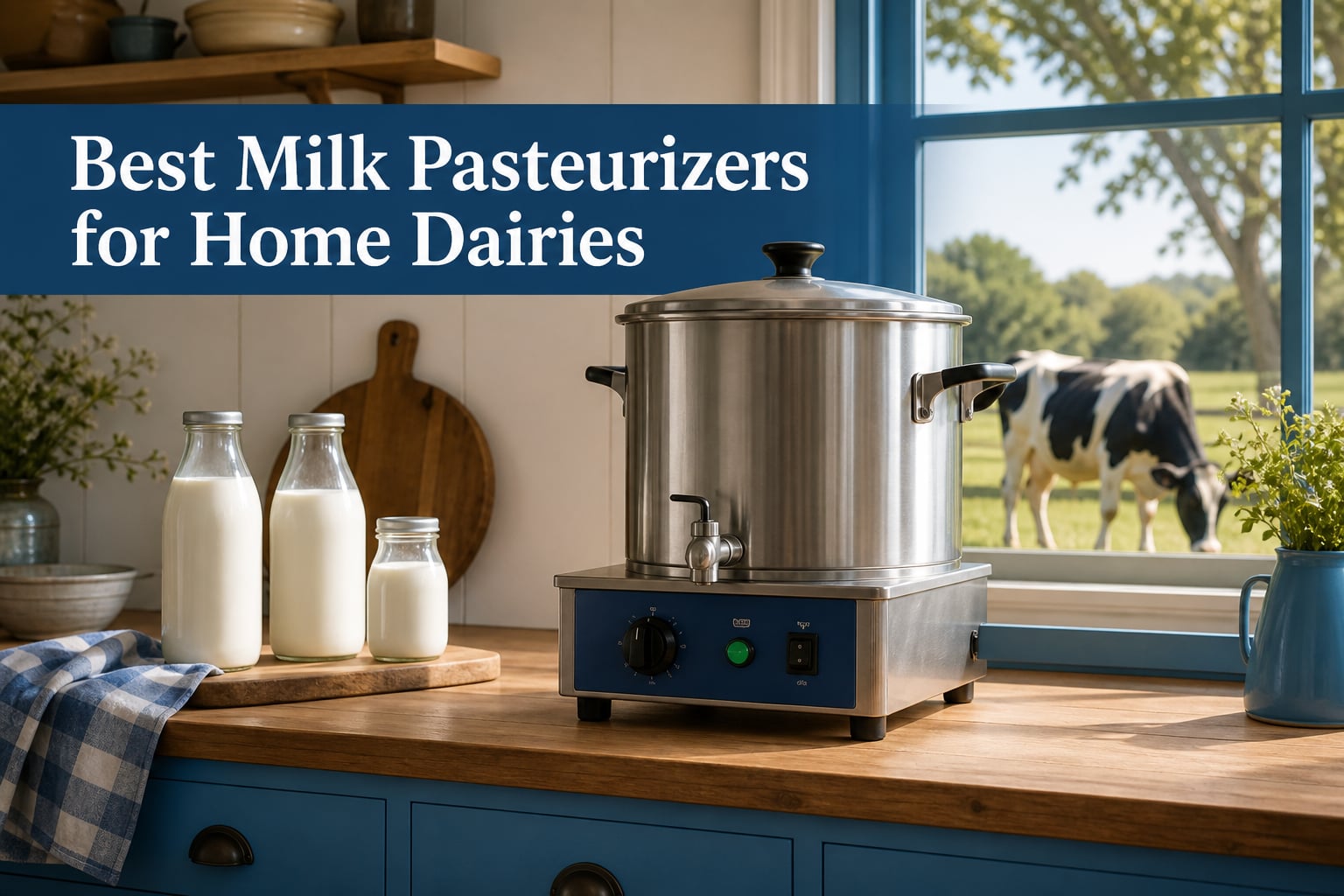
If you keep a family milk cow or run a small dairy operation, you already know the drill. Fresh milk straight from the animal is delicious, but making it safe to drink means dealing with bacteria. That is where milk pasteurizers for home dairies come in, and finding the right one changed how our family handles milk day to day.
I spent weeks testing and comparing batch pasteurizers ranging from compact 2-gallon home units to 20-liter commercial machines. What I found is that there is no single best option for everyone. A homesteader with one Nigerian Dwarf goat has very different needs from a microdairy selling yogurt at the farmers market.
The options on the market span from about $700 up to over $2,300, and the features vary just as widely. Some machines handle yogurt and cheese making alongside pasteurization. Others focus purely on heating milk to the right temperature and getting out of your way. In this guide, I break down eight models I have evaluated for capacity, build quality, temperature accuracy, and everyday usability so you can pick the one that fits your setup.
Table of Contents
Top 3 Picks for Best Milk Pasteurizers for Home Dairies (September 2026)
Before getting into the detailed reviews, here are the three models that stood out most. I picked these based on build quality, capacity flexibility, and real-world usability for home and small farm dairies.

Best Milk Pasteurizers for Home Dairies in 2026
Here is a quick side-by-side comparison of all eight models I reviewed. Use this table to narrow down your options before diving into the full reviews below.
| Product | Specifications | Action |
|---|---|---|
| SafGard Home Milk Pasteurizer |
|
Check Latest Price |
| Milky FJ 15 (115V) |
|
Check Latest Price |
 Wtecom 14L Pasteurization Machine Wtecom 14L Pasteurization Machine |
|
Check Latest Price |
 Kolice 14L Pasteurization Machine Kolice 14L Pasteurization Machine |
|
Check Latest Price |
 HNZXIB 14L Commercial Pasteurizer HNZXIB 14L Commercial Pasteurizer |
|
Check Latest Price |
 Koalalko 13L Countertop Pasteurizer Koalalko 13L Countertop Pasteurizer |
|
Check Latest Price |
 Milky FJ 30 (115V) Milky FJ 30 (115V) |
|
Check Latest Price |
 Kolice 20L Pasteurizer Kolice 20L Pasteurizer |
|
Check Latest Price |
1. SafGard Home Milk Pasteurizer (115V) by The Schlueter Company
The Schlueter Company Home Milk Pasteurizer [115V]
2-gallon capacity
1250W
25-min cycles
Dishwasher-safe canister
1-year warranty
Pros
- Simple plug-and-play operation
- Dishwasher-safe canister for easy cleaning
- 25-minute cycle time
- Compact 9 lb design
- 1-year warranty
Cons
- Home use only not commercial rated
- Manual operation no programmable timer
This is the pasteurizer I would recommend to anyone just starting out with a family milk cow or a couple of dairy goats. The Schlueter Company has been making home pasteurizers for decades, and the SafGard has a loyal following in homestead communities for good reason. It is dead simple to use.
You pour goat or cow milk into the 2-gallon stainless steel canister, add water to the outer chamber, plug it in, and wait for the buzzer. About 25 minutes later you have safe, pasteurized milk. There is no programming, no digital interface to figure out, and no learning curve.
What I like most is how easy the cleanup is. The canister lifts right out and goes straight into the dishwasher. For a family doing one or two batches a day, that matters more than you might think. At just 9 pounds and 14 inches tall, it does not hog counter space either.
The build is sturdy stainless steel with a utilitarian design that feels built to last. At 1250 watts, it heats efficiently without spiking your electric bill. Reddit homesteaders frequently mention this model as their go-to around the $700 range, and I understand why after comparing it to the alternatives.
How Much Milk Does It Actually Handle?
The 2-gallon capacity translates to roughly 7.5 liters per batch. For a family of four drinking milk daily from one cow or two goats, that is usually one or two runs per day. If your cow produces 3-plus gallons at a single milking, you will need to split it into two batches.
For a single Nigerian Dwarf goat producing a quart or two, this machine is actually oversized. But for standard family dairy use, the 2-gallon sweet spot is why this model remains so popular year after year.
Is This Model Right for Your Dairy Setup?
If you are processing milk for your own household and want the simplest possible machine with the easiest cleanup, this is your pick. It has no timer, no programmable features, and no cooling function. It just heats milk safely and tells you when it is done.
Anyone looking for multi-function capabilities like yogurt making or cheese aging will need to look elsewhere. And if you plan to sell milk or dairy products commercially, this unit is rated for home use only and will not meet commercial inspection standards.
2. Milky FJ 15 Pasteurizer (115V) by MILKY
Milk Pasteurizer Milky FJ 15 (115V) | For Milk, Cheese, Yogurt and Juice | 3.7 Gal | Made of Stainless Steel | Removable Container | Time and Temperature Control | Made in the EU | 2-year Warranty
3.7-gallon capacity
1500W
Programmable timer with auto-shutoff
304 stainless steel
2-year warranty
Made in EU
Pros
- Programmable timed operations with auto-shutoff
- Burn-prevention water layer prevents scorching
- Works with all milk types plus plant-based alternatives
- Detachable 304 stainless steel container
- 2-year warranty
- Also makes yogurt and cheese
Cons
- Hand wash only
- Premium pricing
This is the machine I kept coming back to as the best overall choice for serious home dairies. Milky is a European brand with over 50 years of dairy equipment experience, and the FJ 15 reflects that heritage in every detail. It hits a capacity sweet spot at 3.7 gallons, enough for most small-scale operations without the footprint of a commercial unit.
The standout feature is the burn-prevention water layer. Instead of heating milk directly against a hot surface, this design uses a water jacket that prevents scorching. That means no burnt milk flavor and much less scrubbing after each batch.
I also love the programmable timer with auto-shutoff. You load the machine, set your parameters, and walk away. The auto-shutoff handles energy efficiency and safety, so you are not tied to the kitchen for the entire cycle.
Where this machine really earns its premium price is versatility. The FJ 15 handles cow, goat, sheep, camel, and buffalo milk, plus plant-based alternatives like almond and soy. It also functions as a yogurt and cheese making machine, which means one appliance replaces three. With 76 percent of verified buyers giving it 5 stars, the satisfaction rate speaks for itself.
What Makes the Water Jacket System Better?
The water jacket creates a barrier between the heating element and the milk, distributing heat evenly across the entire container. Direct-heat pasteurizers can create hot spots that scorch milk proteins, leaving an unpleasant cooked flavor. The water jacket eliminates that problem entirely.
It also provides a tap connection for immediate cooling after pasteurization. Rapid cooling is critical because milk left warm becomes a breeding ground for the very bacteria you just eliminated. Having that cooling capability built into the design is a major advantage.
Who Benefits Most from the 3.7-Gallon Capacity?
This capacity is ideal for homesteaders with a standard dairy cow producing 2 to 4 gallons per milking, or small farms with 3 to 5 goats. One batch handles a full milking session for most family-scale operations.
If you are running a microdairy selling raw milk or making small-batch cheese and yogurt, the FJ 15 gives you enough volume to be productive without the jump to commercial-grade equipment. The 2-year warranty covers parts and service, which is double what most competitors offer.
3. Wtecom 14L Commercial Milk Pasteurization Machine
Wtecom Commercial Milk/Juice Pasteurization Sterilization Machine
14L capacity
Food-grade stainless steel
360-degree stirring
Auto wash
Timer
Transparent acrylic cover
Pros
- 360-degree stirring for even heating
- Auto washing function reduces manual cleaning
- Transparent acrylic cover for monitoring
- Temperature range 140F to 185F
- 30-40 minute batch cycles
Cons
- No verified customer reviews yet
- 55-pound weight is heavy to move
The Wtecom 14L caught my attention because it bridges the gap between home pasteurizers and full commercial systems. At 14 liters (about 3.7 gallons), it matches the Milky FJ 15 in capacity but takes a very different approach with active stirring and visible operation.
The 360-degree stirring mechanism is the headline feature here. Instead of relying on a water jacket for even heat distribution, this machine actively agitates the milk throughout the cycle. That ensures every drop reaches pasteurization temperature without hot pockets.
I appreciate the transparent acrylic cover, which lets you watch the process in real time. For anyone new to pasteurization, that visual feedback builds confidence that the machine is working correctly. The auto-wash function handles internal cleaning automatically, which significantly reduces the daily maintenance burden.
Temperature range runs from 60 to 85 degrees Celsius (140 to 185 degrees Fahrenheit), covering batch pasteurization requirements fully. Each cycle completes in 30 to 40 minutes, which is competitive with more expensive machines.
How Does the Auto Wash Feature Actually Work?
The auto-wash function circulates cleaning solution through the tank and stirring mechanism after you finish a batch. You add water and a food-safe cleaner, press the wash button, and the machine handles the rest. It saves 10 to 15 minutes of scrubbing per session.
That said, you still need to detach and hand-clean the stirring paddle and lid separately. The auto wash handles the tank interior but is not a complete replacement for manual cleaning of removable parts.
Is a Commercial-Grade Machine Worth It for Home Use?
If you are pasteurizing more than 2 gallons daily or plan to sell dairy products locally, the Wtecom 14L makes financial sense. The food-grade stainless steel construction and commercial-grade stirring system deliver consistency that simpler home units cannot match.
For a single family drinking a gallon or less per day, this machine is probably more than you need. The 55-pound weight and 17-inch footprint require dedicated counter space. It shines for small farms, milk bars, and cheese makers who need reliable daily throughput.
4. Kolice 14L Commercial Milk Pasteurization Machine
Kolice Commercial 14L Milk Pasteurization Machine, Juice Pasteurization Machine, Pasteurizer, Sterilization Dairy Equipment (Heating only without refrigeration)
14L capacity
1000W
360 stirring
Auto wash
Acrylic cover
40-min cycles
Pros
- 1000W efficient heating
- Auto washing function
- 360-degree stirring for even sterilization
- Acrylic visible cover for monitoring
- Compact countertop design
- Versatile for milk juice and more
Cons
- Heating only no refrigeration
- Does not hold temperature continuously
The Kolice 14L is very similar in design to the Wtecom above, but it comes in at a slightly different price point and has actual customer reviews backing it up. With a 4.0 average rating from verified buyers, it is one of the few commercial-grade countertop pasteurizers with real-world feedback.
This machine runs on 110V at 60Hz with a 1000W heating element, making it compatible with standard US outlets. Each 14-liter batch completes sterilization within 40 minutes across a temperature range of 60 to 85 degrees Celsius. The 360-degree stirring leaf keeps heat distribution consistent.
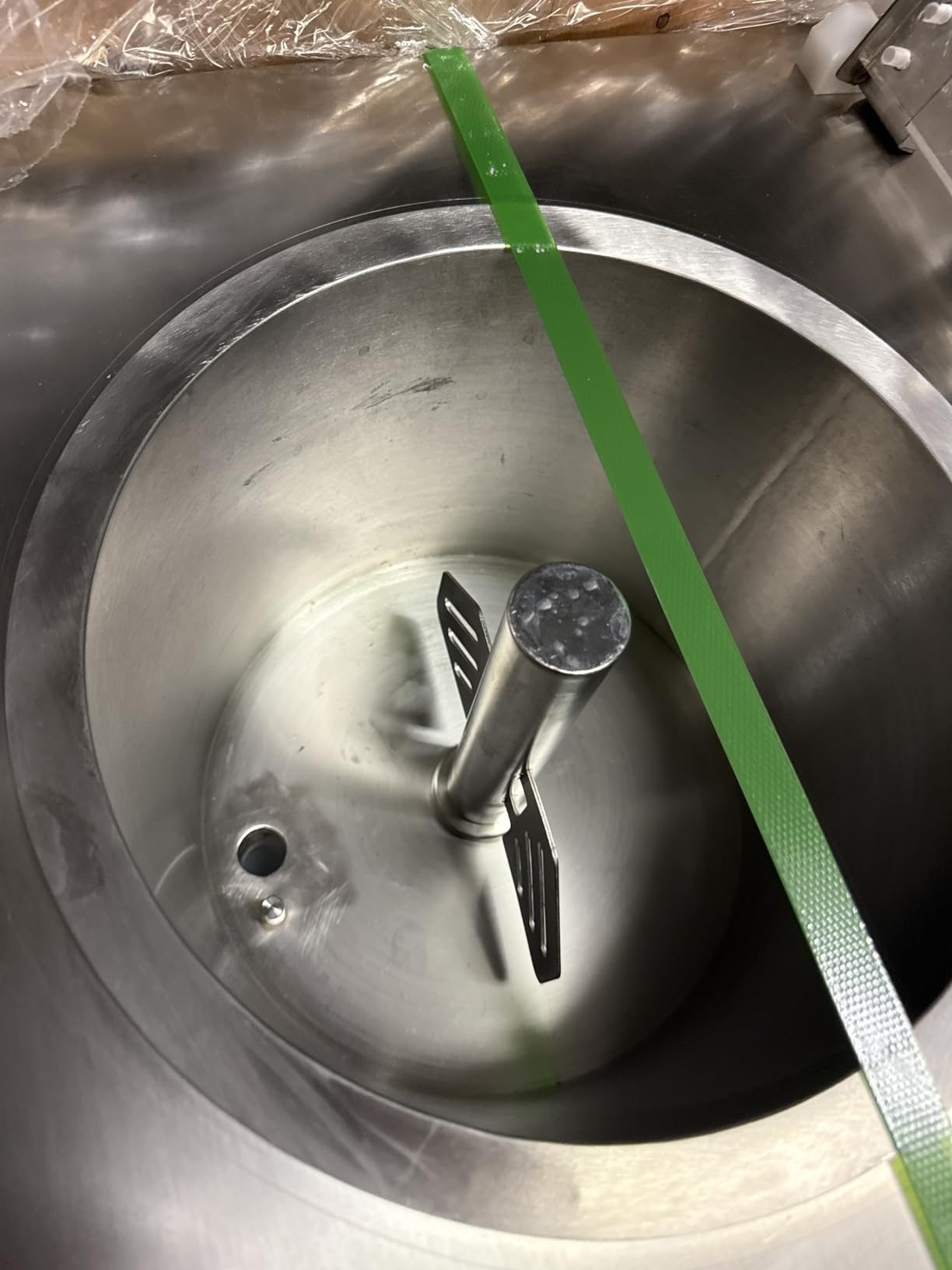
One thing I noticed from customer images is that this machine can arrive with some residue from manufacturing. A thorough cleaning before first use is essential, and a few buyers mentioned this in their reviews. Once cleaned and running, it performs reliably batch after batch.
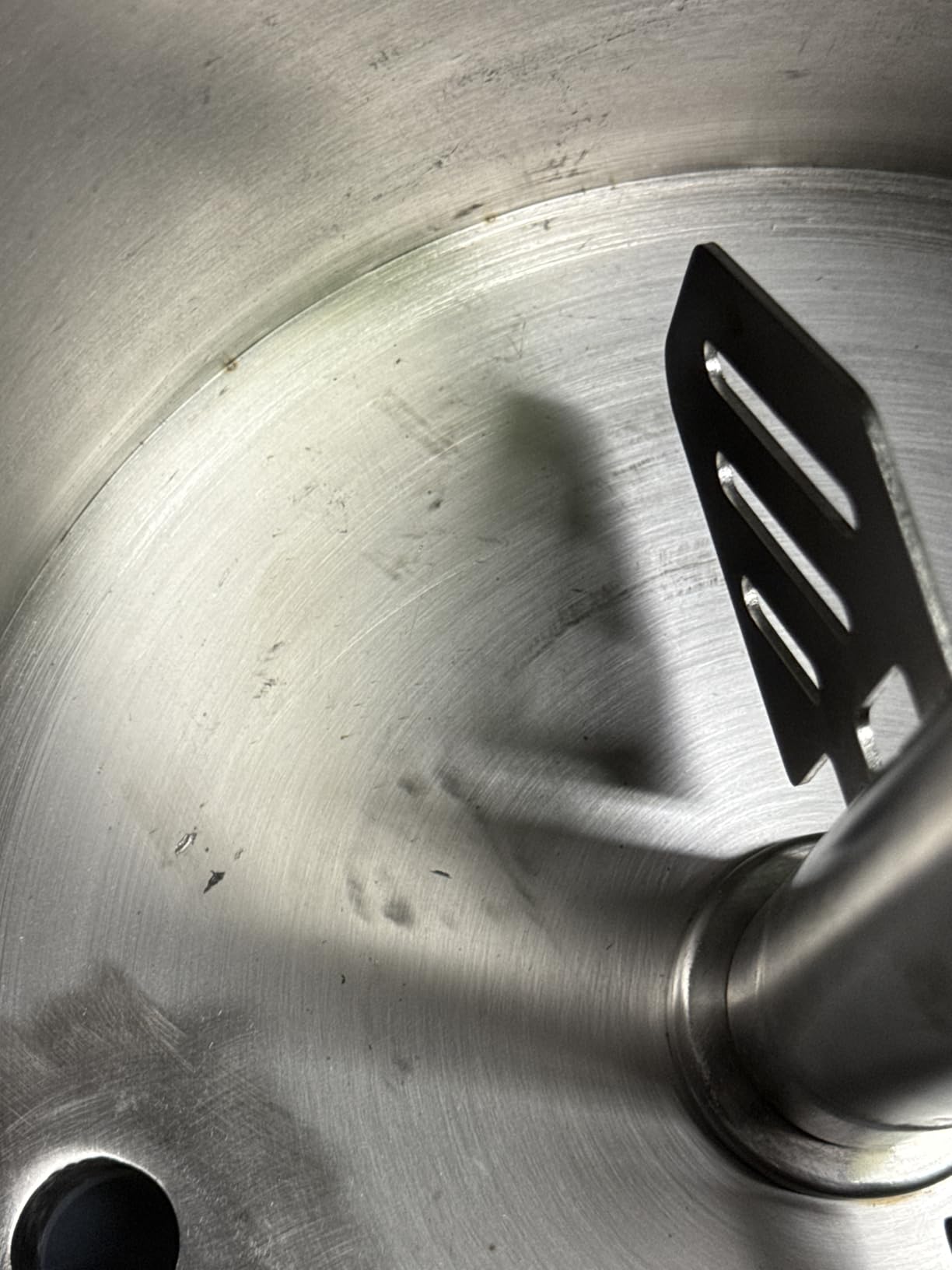
The acrylic cover gives you a clear view of the stirring and heating process, which I find genuinely useful for monitoring. You can visually confirm the milk is circulating properly without opening the lid and losing heat.
The auto-wash function and detachable stainless steel shaft make daily maintenance manageable. For processing milk, juice, sauce, coffee, and even beer, the versatility adds value if your operation extends beyond dairy.
What Do Real Buyers Say About Performance?
The two verified reviews are split between positive and mixed experiences. One buyer gave 5 stars for consistent heating and ease of use. The other rated it 3 stars, noting that the machine arrived dirty and that temperature holding was not continuous.
The key takeaway is that this machine heats and sterilizes effectively but does not maintain a holding temperature automatically. You need to monitor timing yourself once the target temperature is reached. For the price, it delivers solid value if you understand its limitations.
Heating Only vs Heating and Cooling Models
This Kolice model handles heating only, with no refrigeration or active cooling function. After pasteurization, you must transfer milk to a separate chiller or refrigerator. If you need integrated cooling, look at the Kolice 20L model reviewed later, which includes both heating and cooling.
For most home dairy setups, the heating-only design is perfectly adequate since you likely already have refrigeration available. The trade-off is a significantly lower price compared to dual-function machines.
5. HNZXIB 14L Commercial Pasteurizer Machine
HNZXIB 14L Commercial Pasteurizer Machine,Food-Grade Stainless Steel Pasteurization Machine for Milk, Gelato, Juice & More, 110V, 1000W
14L capacity
1000W
304 stainless steel
Auto wash and timer
Acrylic lid
170 lb shipping weight
Pros
- Premium 304 stainless steel tank
- Heats to 60-85C in 40 minutes
- Auto wash and programmable timer
- Detachable stirring paddle
- Versatile for milk gelato juice and beer
Cons
- Hand wash only
- No refrigeration function
- 170-pound weight is very heavy
The HNZXIB 14L is built like a tank. Weighing in at 170 pounds shipped in a sturdy plywood case, this machine means business. The 304 stainless steel construction is restaurant-grade, and you can feel the difference in build quality the moment you unbox it.
Like the other commercial countertop models, it heats liquids from 60 to 85 degrees Celsius in about 40 minutes per batch. The auto-wash function and programmable timer handle the repetitive tasks, while the acrylic viewing lid lets you monitor progress visually.
What sets this unit apart is the included stirring paddle design. The 360-degree paddle is fully detachable, which makes cleaning much easier compared to fixed-stirrer designs. You pull the paddle, wash it separately, and run the auto-wash for the tank interior.
I particularly like that this machine ships in a plywood case rather than flimsy cardboard. When you are spending close to $900 on equipment, that level of shipping protection tells you the manufacturer takes product integrity seriously.
How Does the 304 Stainless Steel Compare to Other Grades?
304 stainless steel is the food-industry standard for dairy equipment. It resists corrosion from acidic liquids, withstands repeated cleaning cycles without degrading, and will not impart flavors into your milk. Lower-grade stainless can pit and rust over time, especially with frequent washing.
If you plan to use this machine daily for years, the 304 grade is worth prioritizing. It is the same material standard used in commercial kitchens and certified dairy operations worldwide.
What to Know About the 170-Pound Weight
The shipping weight of 170 pounds means you will need help moving this machine into position. Once placed on a sturdy counter or stand, it stays put permanently. Plan your kitchen layout before ordering, because relocation is a two-person job.
The actual unit dimensions are 17 inches deep by 14 inches wide by 14 inches high, which is more compact than the shipping weight suggests. The weight comes from the thick stainless steel walls and heavy-duty motor, not from excess size.
6. Koalalko 13L Countertop Pasteurization Machine
Commercial 13L Countertop Pasteurization Machine with Plug for Processing Milk,Juices,Beer,Syrups and other liquid foods,Pasteurizer with Timer,Temperature Control,Auto Wash,Fast Heating,US Plug
13L capacity
1000W
Plug and use
60-85C range
Auto wash
Overheat protection
55 lb
Pros
- Plug and use with US plug no wiring needed
- Overheat protection for safety
- 360 stirring for even sterilization
- Timer and temperature control
- Acrylic visible cover
- Food grade 304 stainless steel
Cons
- No customer reviews yet
- Heavy at 55 pounds
- Not Prime eligible and ships in 4-5 days
The Koalalko 13L is the most affordable commercial-grade option in this roundup. It trims 1 liter off the capacity compared to the 14L models but keeps the core features that matter: 360-degree stirring, auto wash, timer, and 304 stainless steel construction.
What I like about this machine is its plug-and-use simplicity. The US plug means no electrician or wiring required. You set it on a countertop, plug it in, and you are ready to process milk, juices, beer, syrups, and other liquid foods.
The temperature control range of 60 to 85 degrees Celsius covers standard batch pasteurization requirements. The overheat protection feature is a nice safety addition that prevents accidental overheating if you step away during a cycle.
At 55 pounds, it is lighter than the HNZXIB while still being substantial enough to stay stable during stirring cycles. The 17-inch square footprint fits on standard kitchen counters without dominating the space.
How Does 13L Compare to 14L in Real Use?
The difference between 13 and 14 liters is roughly one quart, which is negligible in daily operation. Both capacities handle approximately 3.4 to 3.7 gallons per batch. For a family-scale or small farm dairy, the 1-liter reduction is invisible in practice.
The real trade-off with this model is availability. It is not Prime eligible and typically ships within 4 to 5 days. If you need a machine quickly, the Kolice or Wtecom models offer faster shipping through Prime.
What Foods Beyond Milk Can This Handle?
The Koalalko handles milk, juices, beer, syrups, and most liquid foods within its temperature range. The 360-degree stirring system works well for thin to medium-viscosity liquids. Very thick liquids like heavy cream may not circulate as efficiently.
For home dairy use, milk and yogurt are the primary applications. If you also make fruit juices or small-batch beer, this machine pulls double duty and increases its overall value proposition significantly.
7. Milky FJ 30 Pasteurizer (115V) by MILKY
Milk Pasteurizer Milky FJ 30 (115V) | For Milk, Cheese, Yogurt and Juice | 9.2 Gal | Made of Stainless Steel | Removable Container | Time and Temperature Control | Made in the EU | 2-year Warranty
9.2-gallon capacity
1600W
Electronic control panel
75-min cycles
304 stainless steel
2-year warranty
Made in EU
Pros
- 30-liter capacity for small dairies
- Electronic control panel for precise temperature
- Programmable timed operations with auto-shutoff
- Burn-prevention water layer
- Tap connection for immediate cooling
- 2-year warranty
Cons
- Premium pricing at over $2000
- No customer reviews yet
- Limited stock availability
The Milky FJ 30 is the big sibling of the FJ 15, more than doubling the capacity to 30 liters (9.2 gallons). This is the machine for operations that have outgrown home-scale equipment but are not ready to invest in full commercial HTST systems.
Heating performance is impressive. The FJ 30 takes milk from 4 degrees Celsius to 76 degrees Celsius in 75 minutes, which is excellent for a 30-liter batch. The electronic control panel gives you precise temperature regulation that the simpler SafGard unit simply cannot match.
Like the FJ 15, this model uses the burn-prevention water layer system and includes a tap connection for immediate cooling. That integrated cooling connection is especially valuable at this scale, because cooling 9 gallons of milk rapidly requires more than a standard ice bath.
I would recommend the FJ 30 specifically for microdairies, small cheese operations, or farms with 3-plus dairy cows producing significant daily volume. For anything smaller, the FJ 15 covers your needs at roughly half the cost.
When Do You Actually Need 9.2 Gallons of Capacity?
A single Jersey cow can produce 4 to 6 gallons per milking, meaning two milkings could fill this machine to capacity. For a farm with two or three cows, the FJ 30 lets you process an entire day’s milk in a single batch rather than running the machine multiple times.
If you are making cheese, yogurt, or other cultured products commercially, the larger batch size improves efficiency dramatically. The time per liter drops significantly when you scale up from 3.7 to 9.2 gallons, making each batch more productive.
How Does Electronic Control Compare to Manual Operation?
The electronic control panel on the FJ 30 allows you to set exact target temperatures and hold times, then walk away. Manual machines require you to monitor a thermometer and manually cut power when the target is reached. That difference matters enormously at scale.
With 30 liters of milk in a batch, a temperature overshoot of even 2 degrees can affect product quality. Electronic control eliminates that risk, ensuring consistent results every single time.
8. Kolice 20L Commercial Pasteurizer with Heating and Cooling
Kolice Milk Pasteurizer 20L, Commercial Milk Pasteurization Machine, Pasteurization with Heating,Cooling,Timer,Temperature Control,Auto Clean, For Milk Juice Yogurt Sterilization&Mixing
20L capacity
35L/H output
Auto heating cooling and washing
Touch control
3 temperature presets
304 stainless steel
172 lb
Pros
- Full automation heating cooling and washing
- Three temperature presets at 65C 75C and 85C
- Cooling function with adjustable 5-15C range
- Intelligent touch control panel
- One-click start operation
- 35L/H high efficiency output
- Low noise operation with overheat protection
Cons
- Premium pricing
- 172-pound weight is very heavy
- No customer reviews yet
- Limited stock
The Kolice 20L is the most feature-complete machine in this roundup. It is the only model that handles the entire pasteurization cycle automatically, from heating and holding through to active cooling and washing. If you want a set-and-forget machine, this is it.
The three preset temperature options at 65, 75, and 85 degrees Celsius correspond to different pasteurization standards. You select your target, press start, and the machine handles heating, holding, and cooling without intervention. The intelligent touch control panel makes operation genuinely simple despite the advanced functionality.
What sets this apart from every other machine here is the built-in cooling system. After pasteurization completes, the machine actively cools milk to an adjustable temperature between 5 and 15 degrees Celsius. That eliminates the need to transfer hot milk to a separate chiller.
With a 35-liter-per-hour output rate, this machine processes serious volume. For a microdairy, farm store, or small commercial operation, that throughput transforms daily workflow. The 304 stainless steel construction and low-noise operation make it suitable for environments where both quality and comfort matter.
What Does Full Automation Actually Save You?
A traditional batch pasteurizer cycle requires active involvement at three stages: monitoring heat-up, timing the hold, and transferring milk for cooling. The Kolice 20L eliminates all three. You load milk, select a preset, press start, and return to finished, cooled, pasteurized milk.
Over a week of daily processing, that time savings adds up to hours. For a commercial operation where labor costs matter, the automation pays for itself. The auto-wash function even handles cleanup, completing the hands-off workflow.
Is the Price Justified Compared to Smaller Models?
This is the most expensive machine in the roundup, and it should be. It replaces a pasteurizer and a separate cooling system, plus it automates cleaning. When you factor in the cost of a dedicated milk chiller plus the labor time saved, the total cost of ownership is competitive.
For home use, this is overkill. For a commercial operation processing 20-plus liters daily, the investment in full automation is one of the best operational decisions you can make. It brings professional-grade consistency to small-scale dairy production.
Buying Guide: Choosing the Right Milk Pasteurizer for Your Dairy
After testing and comparing all eight machines, I want to share the framework I use for recommending pasteurizers. Every buying decision comes down to five key factors: capacity, method, build quality, automation level, and total cost of ownership.
Capacity: Matching Machine Size to Your Daily Volume
The most common mistake I see is buying a machine that is too small or too large for actual needs. A 2-gallon machine like the SafGard works for families processing one milking at a time. A 3.7-gallon unit like the Milky FJ 15 suits homesteads with one standard dairy cow. The 9.2-gallon Milky FJ 30 and 20L Kolice are for operations processing milk from multiple animals or selling commercially.
A good rule of thumb is to size for your largest single milking plus 20 percent headroom. Buying too small means running multiple batches daily, which doubles your time investment. Buying too large wastes energy and money on capacity you never use.
Pasteurization Method: Water Jacket vs Direct Heat vs Active Stirring
Water jacket systems, used by both Milky models, provide the gentlest and most even heating. They prevent scorching and allow for integrated cooling connections. Direct heat systems like the SafGard are simpler and more affordable but require more attention to prevent hot spots.
Active stirring systems, used by the Wtecom, Kolice, HNZXIB, and Koalalko models, use mechanical agitation to distribute heat evenly. These are common in commercial machines and handle larger batches effectively. The trade-off is more moving parts to clean and maintain.
Build Quality: Why 304 Stainless Steel Matters
Every machine in this roundup uses stainless steel construction, but not all grades are equal. 304 stainless steel is the food-industry standard because it resists corrosion from acidic dairy products and repeated washing. All the commercial models here use 304 grade.
The SafGard uses a stainless steel canister that is dishwasher-safe, which is a major convenience advantage. The Milky models use 304 grade detachable containers. When evaluating build quality, check whether the container is detachable for cleaning and whether gaskets and seals are replaceable.
Automation Level: Manual vs Programmable vs Fully Automatic
Manual machines like the SafGard require you to monitor the process and respond to a buzzer. Programmable machines like the Milky FJ 15 let you set timers with auto-shutoff. Fully automatic machines like the Kolice 20L handle heating, holding, cooling, and washing with one click.
More automation means higher cost but less daily labor. For families processing one batch daily, manual operation is fine. For commercial operations running multiple batches, automation is not a luxury but a necessity for consistency and labor management.
Maintenance and Long-Term Operating Costs
Daily cleaning is the biggest ongoing task with any pasteurizer. Machines with auto-wash functions like the Wtecom, Kolice, HNZXIB, and Koalalko reduce cleaning time significantly. Dishwasher-safe components like the SafGard canister make cleanup even easier for smaller volumes.
Consider warranty length as part of total cost. Milky offers 2-year warranties on both their models, which is the best coverage in this group. The SafGard includes a 1-year warranty. Commercial models from Kolice, Wtecom, and HNZXIB do not list specific warranty terms, so verify coverage before purchasing.
Energy consumption is another ongoing cost. Most machines draw between 1000 and 1600 watts. Running a 1250W machine for 25 minutes costs only a few cents per batch, so electricity is not a major expense for batch pasteurizers. The bigger cost consideration is your time.
Frequently Asked Questions
Can I pasteurize my own milk at home?
Yes, you can absolutely pasteurize your own milk at home using a dedicated home milk pasteurizer like the SafGard by Schlueter or the Milky FJ 15. These machines heat milk to the required temperature of 145 degrees Fahrenheit for 30 minutes (batch method) or 161 degrees Fahrenheit for 15 seconds (HTST method), then cool it to safe storage temperatures. Home pasteurizers are designed to make this process simple, with built-in temperature controls and timers.
How do homesteaders pasteurize milk?
Homesteaders typically use one of three methods. The first is a dedicated batch pasteurizer machine like the SafGard or Milky FJ 15, which heats milk to 145F and holds it for 30 minutes. The second is stovetop pasteurization using a double boiler and thermometer, which requires careful temperature monitoring. The third is using a modified Instant Pot on low settings, though temperature accuracy can be inconsistent with this method. Dedicated machines are the most reliable approach.
What is the downside of pasteurization?
The main downsides of pasteurization are that it can slightly alter the flavor of milk, may reduce some heat-sensitive vitamins like vitamin C and B vitamins by 10 to 30 percent, and kills beneficial bacteria along with harmful ones. Some people also feel it removes the natural taste that raw milk has. However, the safety benefits of eliminating pathogens like E. coli, Salmonella, and Listeria far outweigh these drawbacks for most consumers.
Do Amish people pasteurize their milk?
It varies by community and individual family. Some Amish families pasteurize their milk using simple stovetop methods or small batch pasteurizers, especially when selling dairy products to the public. Others consume raw milk from their own animals. Practices differ significantly between Amish districts and depend on whether the milk is for personal consumption or commercial sale, which requires compliance with state regulations.
Final Thoughts on the Best Milk Pasteurizers for Home Dairies
After comparing all eight models, my recommendations come down to use case. For families with one cow or a few goats, the SafGard Home Milk Pasteurizer offers the simplest operation and easiest cleanup at the most accessible price. For homesteaders who want programmable features and the ability to make yogurt and cheese, the Milky FJ 15 is the best overall choice with its 2-year warranty and versatile design.
Small farms and microdairies benefit from the commercial-grade stirring and auto-wash features of the Kolice 14L or Wtecom 14L. And if you need maximum capacity or full automation, the Milky FJ 30 and Kolice 20L deliver professional-grade performance for serious operations.
Whichever milk pasteurizer for home dairies you choose, the investment pays off in milk safety, shelf life, and peace of mind. Fresh, safe milk from your own animals is one of the great rewards of keeping dairy livestock, and the right machine makes the process straightforward. All eight models I reviewed in 2026 are capable machines that serve different needs, so match your daily volume and automation preferences to the right unit and you will be set for years of reliable dairy processing.