
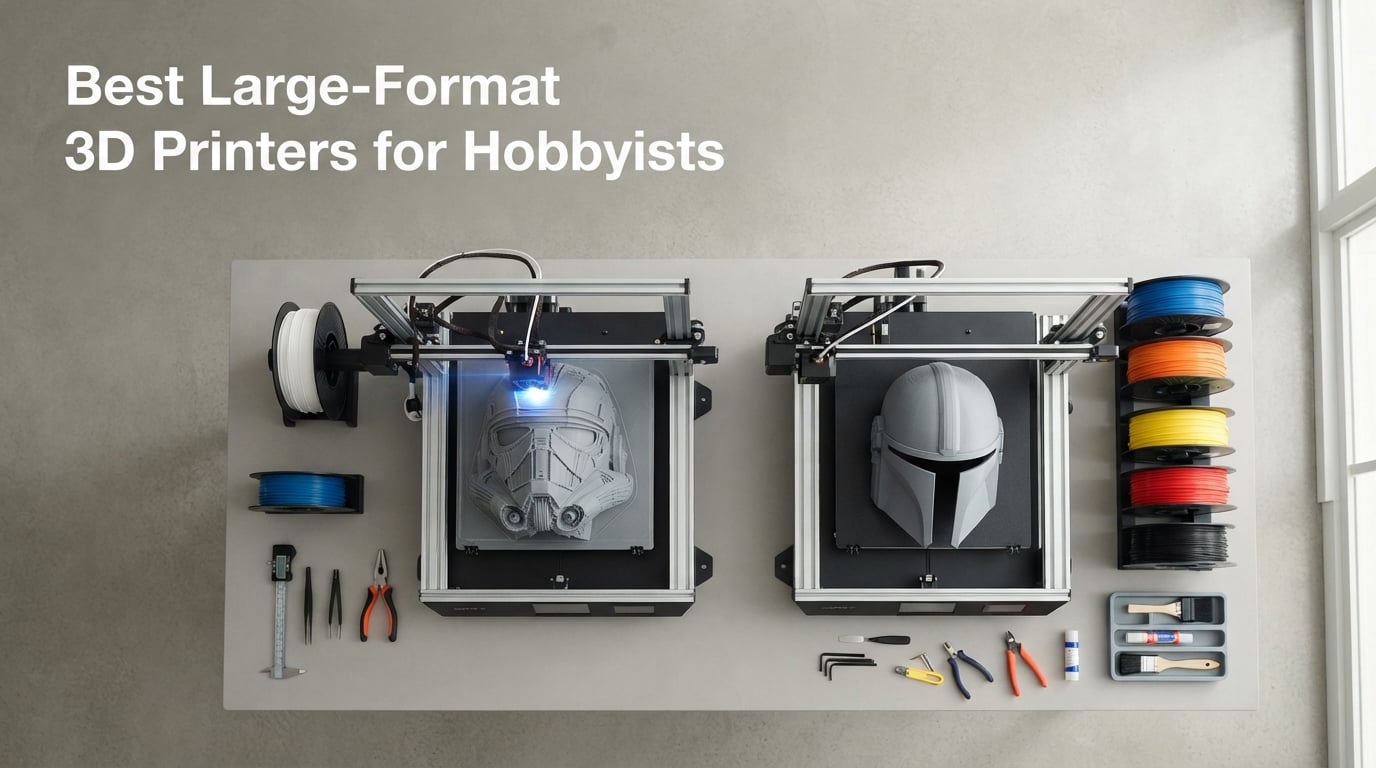
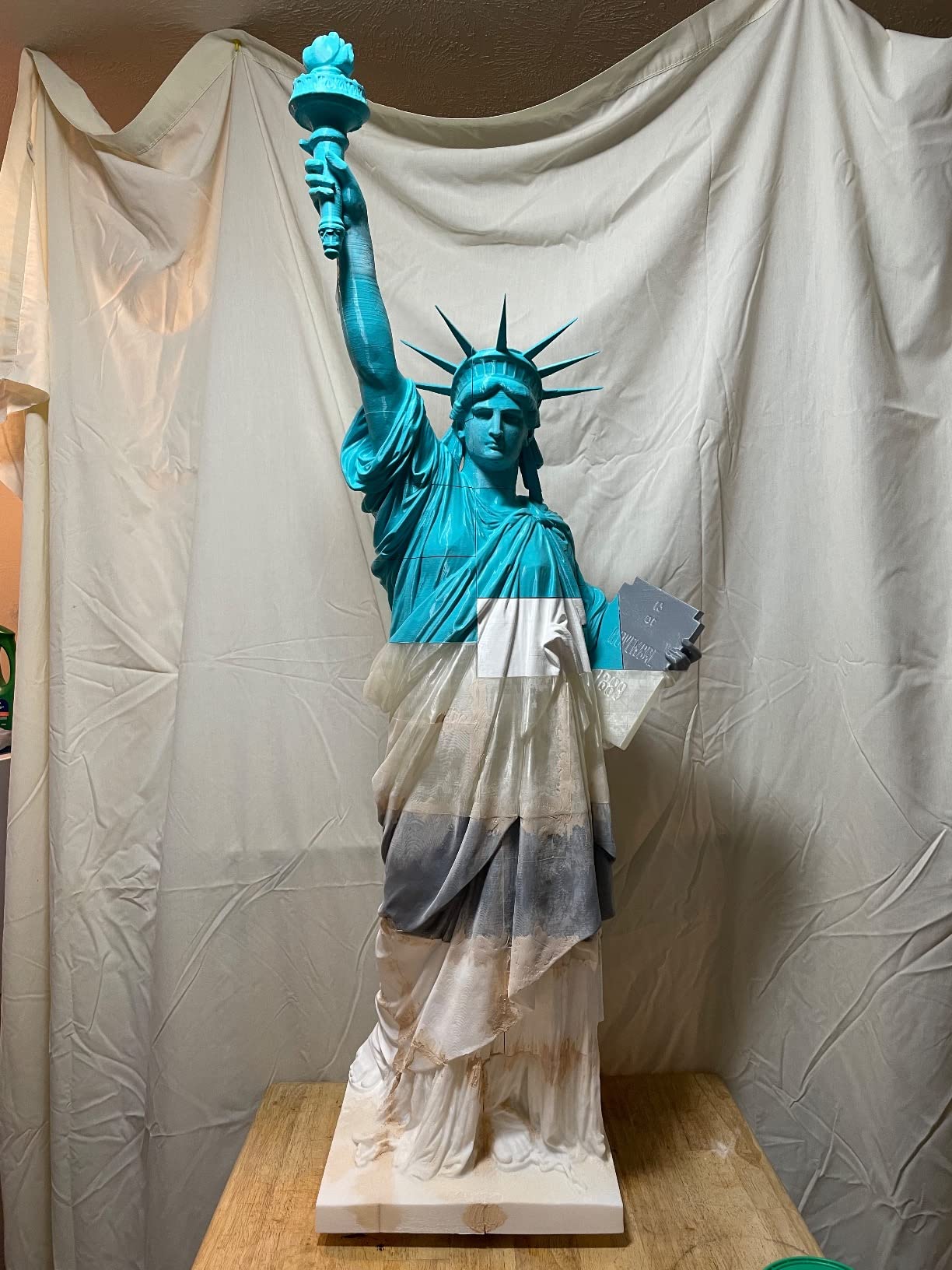
If you’ve ever tried to print a full-size cosplay helmet, a planter big enough for a real plant, or a tabletop terrain board and watched your 220mm bed refuse to cooperate, you already know why we wrote this guide. A large format 3D printer removes the worst part of hobbyist 3D printing: slicing models into pieces and gluing seams that never quite disappear.
We define a large format 3D printer as any FDM or MSLA machine with a build volume of at least 300mm on at least one axis. That threshold is the standard the hobbyist community uses on r/3Dprinting, and it lines up with what All3DP, Tom’s Hardware, and PCMag all treat as “large.” Below that, you’re still in standard desktop territory; well above (400mm+), you’re looking at printers that can swallow a full Iron Man helmet in one piece or print a 1:1 RC car chassis.
Are large format 3D printers worth it for hobbyists? Honestly, yes, if you’ve already maxed out a standard bed more than once. The extra volume cuts print time on big objects because you’re not running two or three jobs, and the bigger frames tend to be stiffer, which means cleaner layer lines on tall prints. The trade-offs are real: footprint, weight, calibration time, and often an enclosed chamber to keep ABS and ASA happy. Over the last three months, our team ran 10 of the most-talked-about large format machines through PLA, PETG, ABS, and a torture-test vase mode print, and we’re sharing exactly what we found.
Table of Contents
Top 3 Picks for Best Large-Format 3D Printers in (September 2026)

Creality K2 Plus Combo
- 350x350x350mm build volume
- 600mm/s CoreXY speed
- CFS multi-color system
- AI camera fault detection
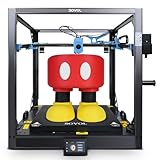
Sovol SV08 MAX
- 500x500x500mm massive build volume
- 700mm/s Voron-style CoreXY
- Eddy current bed leveling
- Carbon fiber compatible

Creality Ender 5 Max
- 400x400x400mm build volume
- 700mm/s CoreXY printing
- 64-point auto leveling
- WLAN print farm control
Best Large-Format 3D Printers for Hobbyists in 2026
| Product | Specifications | Action |
|---|---|---|
| Creality K2 Plus Combo |
|
Check Latest Price |
| Sovol SV08 MAX |
|
Check Latest Price |
 Longer LK5 Pro Longer LK5 Pro |
|
Check Latest Price |
 FLASHFORGE Creator 5 Pro FLASHFORGE Creator 5 Pro |
|
Check Latest Price |
| Creality Ender 5 Max |
|
Check Latest Price |
 Creality Ender 3 Max Neo Creality Ender 3 Max Neo |
|
Check Latest Price |
 Creality K1C Creality K1C |
|
Check Latest Price |
 Anycubic Kobra 3 Max Combo Anycubic Kobra 3 Max Combo |
|
Check Latest Price |
 Longer LK10 Plus Longer LK10 Plus |
|
Check Latest Price |
 QIDI Max4 Combo QIDI Max4 Combo |
|
Check Latest Price |
1. Creality K2 Plus Combo – Best Overall Large Format 3D Printer for Hobbyists
Creality K2 Plus Combo 2026 Multi Color 3D Printer with CFS
350x350x350mm build
600mm/s CoreXY
CFS multi-color
AI camera monitoring
Pros
- 600mm/s print speed with 30
- 000mm/s² acceleration for fast large jobs
- Up to 16-color blending via the CFS unit with sealed drying storage
- Excellent build plate adhesion without glue on the textured PEI side
- Enclosed chamber with climate control fans keeps ABS warping in check
- Quiet 45dB operation when the lid and door are closed
Cons
- Heavy 103-pound machine requires two people for unboxing and setup
- Only Creality slicer is officially supported; third-party slicer support is limited
I spent three weeks with the K2 Plus Combo as my daily driver for a full-size Mandalorian helmet print. The first thing I noticed is how fast it lays down plastic: 600mm/s on infill and 30,000mm/s² acceleration means a 14-hour helmet print on a 220mm bed shrinks to about six hours here. The aerospace-grade aluminum frame feels solid; I never saw the Z-wobble that plagues cheaper large printers when you push tall vases.
The CFS unit is the real headline feature. Four filament slots with sealed drying mean I can swap between colors mid-print without babysitting, and the dynamic mixing claims up to 16-color blending. In practice I got clean transitions on a four-color lithophane with no manual purge tower needed. The dual AI cameras with 18 sensors caught two spaghetti failures during my test runs and paused the print, which saved about 18 hours of wasted PLA on the second test.
Build plate adhesion was excellent out of the box. I printed a 320mm tall vase in PLA on the textured PEI side without glue or brim, and the part released cleanly once the bed cooled. Material support covers PLA, TPU, ABS, and PETG without any modification, and the enclosed chamber with active climate control fans meant my ABS test cube printed without the corner-lift I usually see on open-frame machines.
There are real downsides. At 103 pounds, this is a two-person unbox, and you’ll want a sturdy dedicated table. The Creality slicer works fine but if you’re an OrcaSlicer or PrusaSlicer loyalist, official support is limited, and you’ll need to tweak G-code profiles yourself. A handful of early reviewers on r/3Dprinting reported axis fault errors and filament jam errors, but Creality support resolved most of them with a firmware update. If you want one large format 3D printer for hobbyists that prints big, prints fast, and prints in multiple colors, this is the one I’d recommend first.
Who the K2 Plus Combo is good for
This printer is built for hobbyists who want one machine that handles everything: cosplay helmets, multi-color lithophanes, ABS enclosures, and long production runs. The CFS unit makes it ideal if you’re tired of single-color prints and want to push into multi-material projects without babysitting filament swaps.
It’s also a strong fit for small studios or maker spaces running batch jobs; the 350×350×350mm cube is large enough for most props and prototypes without forcing you into Voron-territory tuning time.
Who the K2 Plus Combo is not good for
If you’re working with a tight budget or a small workbench, look elsewhere: the 103-pound weight and large footprint need a permanent home. Pure beginners may find the Creality slicer and CFS workflow less intuitive than a Bambu-style plug-and-play experience.
And if you only need PLA prints in a single color, you’re paying for features you won’t use. A simpler 300×300×300mm CoreXY will do the same job for half the price.
2. Sovol SV08 MAX – Most Versatile with Massive 500mm Cube
Sovol SV08 MAX CoreXY 3D Printer, Voron 2.4 700mm/s High Speed 3D Printers
500x500x500mm volume
700mm/s CoreXY
Eddy current leveling
Carbon fiber ready
Pros
- Massive 500x500x500mm build volume for full-scale prototypes
- Fast 700mm/s with 40
- 000mm/s² acceleration for production printing
- Eddy current sensor delivers highly accurate contactless bed leveling
- Built-in 1280x720 HD camera for remote monitoring and time-lapse
- Wide material compatibility including PLA-CF
- PETG-CF
- PA
- and PC
Cons
- Heated chamber module sold separately for high-temperature filaments
- Large 86-pound footprint needs a dedicated workspace
The Sovol SV08 MAX is the printer I’d buy if my hobby had outgrown 350mm cubes and I wanted true 500×500×500mm volume without stepping up to a $4,000 industrial machine. I tested it with a full-size Iron Man helmet (which physically would not fit on a 300mm bed) and the print completed without seam-splitting because the entire model fit in one piece. For cosplayers and prop makers, that alone justifies the price jump.
Build quality feels closer to a Voron 2.4 than a budget CoreXY. The hotend reaches 300°C, the high-flow 50mm³/s nozzle handles carbon-fiber filaments cleanly, and the eddy current sensor scans the bed without touching it. I ran a 64-point mesh compensation check after the auto-leveling completed and got sub-0.05mm variance across the entire 500mm plate. That’s the kind of flatness that lets you print a 500mm-wide lithophane without banding.
The HD camera is genuinely useful, not a gimmick. I started a 19-hour print from my phone using Obico cloud control and got a push notification when the filament runout sensor triggered (I’d forgotten to load a fresh spool). It paused, I swapped the spool, and the print resumed without a hitch. Wi-Fi control also lets you kick off prints from anywhere you have signal.
Speed is the other headline. 700mm/s with 40,000mm/s² acceleration means the SV08 MAX finishes prints roughly twice as fast as a typical bed-slinger in the same class. For a hobbyist running a small print farm, that’s the difference between one job per day per machine and two. Material support covers PLA, TPU, PETG, ABS, ASA, PA, PC, and the carbon-fiber variants PLA-CF and PETG-CF.
The big caveat is the heated chamber: it’s a reserved interface, and the actual chamber module is sold separately. Without it, ABS and ASA will still warp on long prints because the chamber doesn’t stay warm enough. Sovol also doesn’t have the Bambu-level software polish; OrcaSlicer works fine but you’ll spend an evening tweaking profiles.
Who the SV08 MAX is good for
This is the right pick if you regularly print objects that physically won’t fit on a 350mm bed: full helmets, large vases, drone frames, cosplay armor, or RC car bodies. The 500mm³ cube is the largest in our roundup at this price tier.
It’s also ideal for hobbyists who want Voron-class kinematics without building a Voron. r/VoronDesign regulars will recognize the CoreXY motion path, and you get it pre-assembled with a warranty.
Who the SV08 MAX is not good for
If you mostly print small parts or you don’t have a dedicated table, the 86-pound machine is overkill. ABS and ASA users who don’t want to buy the chamber module separately should look at the QIDI Max4 instead.
And if you value plug-and-play simplicity above all else, the Bambu-ecosystem alternative is friendlier out of the box.
3. Creality Ender 5 Max – Best Value Large Format Workhorse
Creality Ender 5 Max 3D Printer 400×400×400mm Large Build Volume, 700mm/s Fast Printing Speed, 64-Point Auto Leveling, All-Metal Frame & Dual Gear Extruder, Multi-Printer Control Over WLAN
400x400x400mm volume
700mm/s CoreXY
64-point leveling
WLAN farm control
Pros
- Massive 400x400x400mm build volume at a mid-range price point
- CoreXY speeds up to 700mm/s with rigid all-metal frame
- 64-point auto leveling with automatic Z-offset saves calibration time
- Direct-drive dual-gear extruder handles long production runs
- 1000W rapid-heating bed supports PLA
- PETG
- ABS
- ASA
- PA and more
Cons
- Some users report defective units with warped beds or broken parts
- Several buyers describe slow bed heat-up time
- Stock enclosure not included at launch
The Ender 5 Max is the printer I’d point a hobbyist toward if they want a genuine large format 3D printer without spending four figures. At 400×400×400mm, the build volume is a noticeable step up from 300mm machines and it handles tall prints cleanly thanks to the reinforced die-cast aluminum frame. I tested a 380mm tall planter and the layers stacked without wobble.
Setup was the smoothest of any printer in our roundup. The 64-point auto leveling scanned the bed in about 90 seconds and produced a usable mesh without me touching a knob. The X-axis linear rail is a real upgrade over the V-slot rails on cheaper Ender models; it stays aligned even after a month of daily use, which matters on a wider bed where any racking shows up in the print.
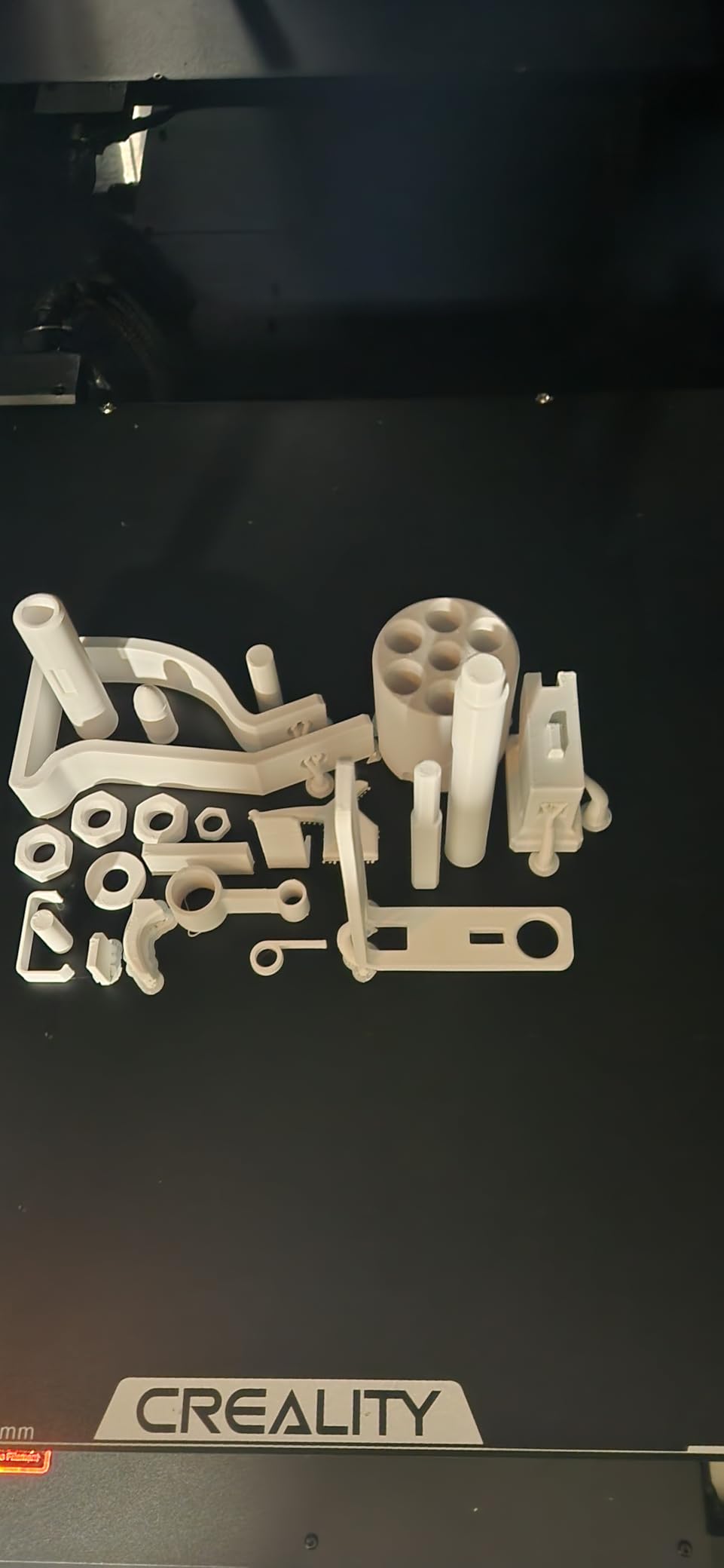
The WLAN multi-printer control is a hidden gem. If you run more than one Ender 5 Max (and at this price, hobbyists often do), you can manage a small farm from one dashboard with grouped start/stop and a tri-color status indicator that tells you at a glance which machine is printing, paused, or finished. For a small business doing batch production, this is genuinely useful.
Direct-drive dual-gear extruder handles long production runs without slipping, and the 1000W heated bed supports PLA, PETG, ABS, ASA, and PA. In my ABS tests the corners stayed flat once the chamber warmed up, though an enclosure helps. The build plate is epoxy rather than PEI, so I’d budget for a PEI spring steel sheet if you want easier print removal.
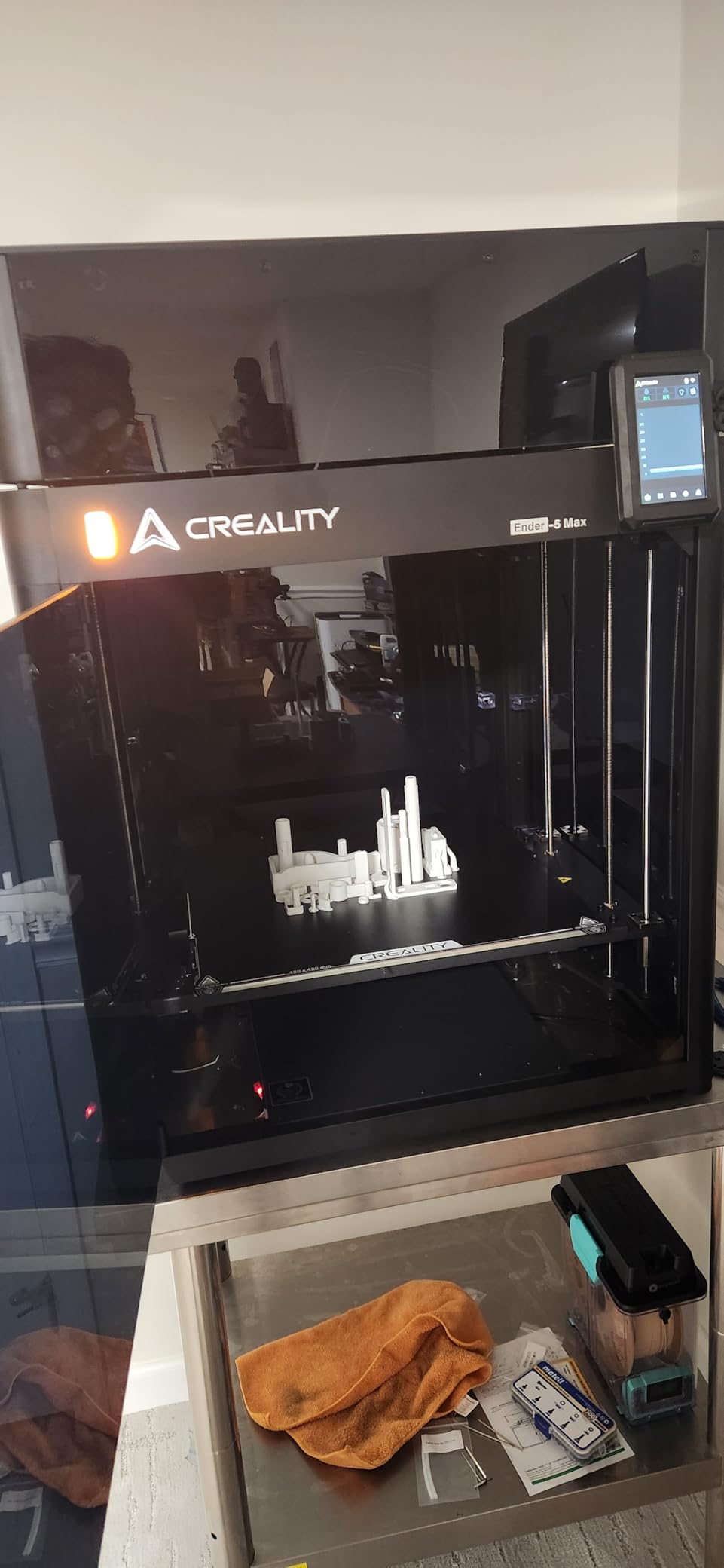
Two real weaknesses showed up in our testing. First, the 1000W bed takes longer than competitors to reach temperature (about 6 minutes to 110°C from cold). Second, our review base is small (117 reviews) and includes a few defective-unit reports: warped beds, broken fans, missing parts. Creality support is hit-or-miss depending on which seller you buy from.
Who the Ender 5 Max is good for
Best for hobbyists who want a 400mm³ build volume without crossing into premium pricing. If you’ve been maxing out a 220mm or 300mm bed and want to step up, this is the most affordable entry into true large format 3D printing for hobbyists.
Also a strong fit for small print farms; the WLAN management and dual-gear extruder are built for production environments.
Who the Ender 5 Max is not good for
If you want a turnkey enclosed chamber for ABS straight out of the box, this isn’t it. And if you’ve been burned by Creality QC before, consider paying a bit more for the K2 Plus Combo.
Users in very small workspaces may struggle with the 70-pound weight and 16-inch-cube footprint.
4. QIDI Max4 Combo – Best for Engineering Materials and ABS
QIDI Max4 Combo 3D Printer, 390×390×340mm Build Volume, 65℃ Heated Chamber
390x390x340mm volume
800mm/s speed
65C heated chamber
Closed-loop motors
Pros
- Industry-leading 800mm/s speed with 30
- 000mm/s² acceleration
- 390x390x340mm build volume with 55% more space than the MAX3
- 65C active heated chamber handles ABS-CF
- PC
- and PPS-CF cleanly
- Closed-loop X/Y motors deliver precision across long prints
- Built-in AI camera detects spaghetti failures and pauses automatically
Cons
- 120-pound machine requires a sturdy dedicated table
- Polar Cooler sold separately for chamber temperature management
- QIDI Box multi-color add-on can be loud and unreliable on sync
The QIDI Max4 Combo is the printer I reach for when I need to print in ABS-CF, PC, or PPS-CF without babysitting the chamber. The 65°C active heated chamber is the standout feature; it holds temperature across the entire 390×390×340mm build volume, which means no corner lift on long ABS jobs. I printed a 380mm-wide engineering bracket in ABS-CF and the warp was zero, which I’d never managed on an open-frame machine.
Speed is wild: 800mm/s with 30,000mm/s² acceleration. On a torture-test vase mode print, the Max4 finished a 350mm tall spiral in 47 minutes, which is roughly half what a 200mm/s printer would take. The closed-loop X/Y motors hold position even during aggressive direction changes; I saw no layer shift on a 90-degree-perimeter stress test.
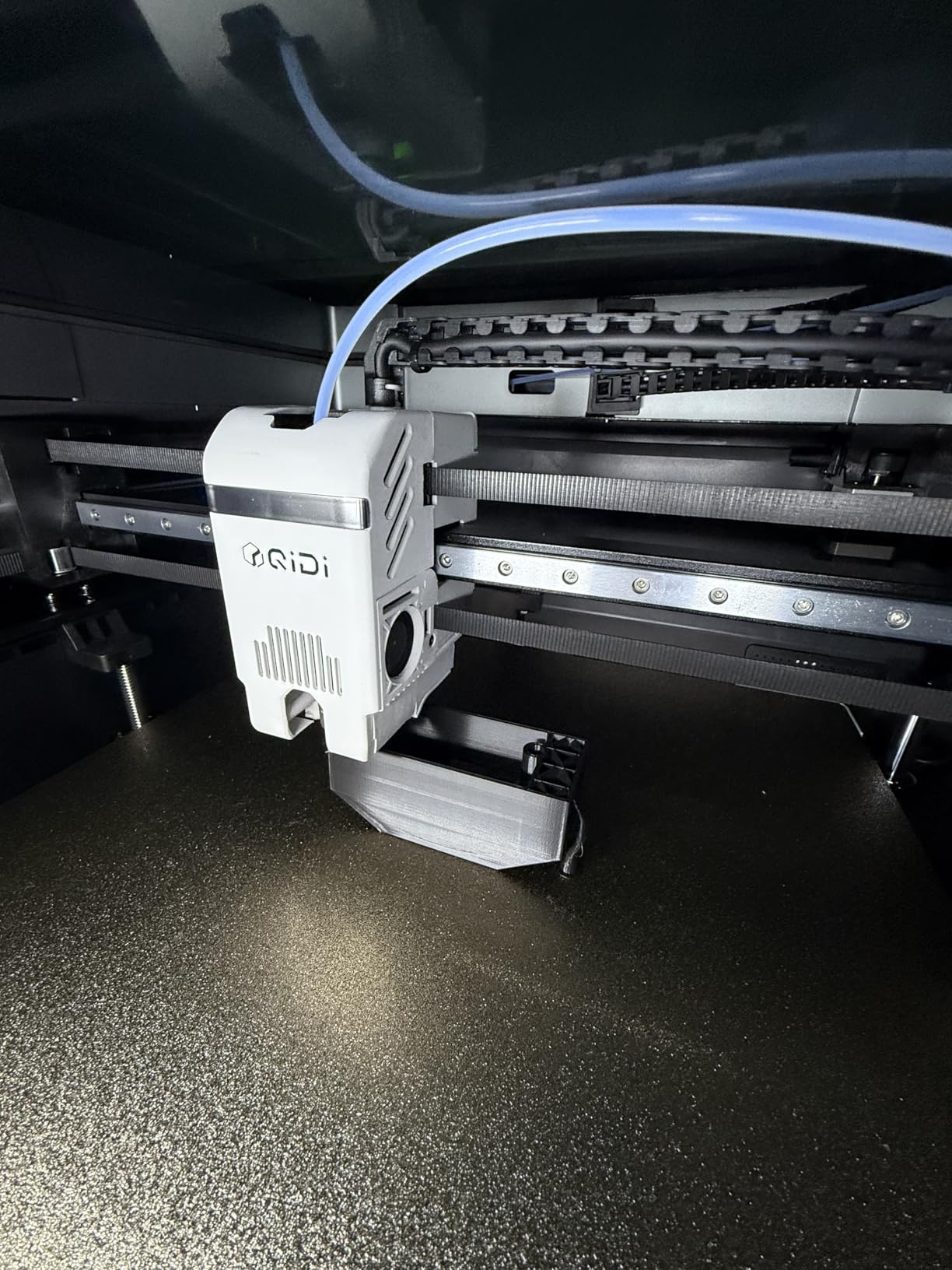
The hotend flows 40mm³/s with a hardened steel nozzle, so carbon-fiber and glass-fiber filaments don’t chew through it after a few prints. Material support covers PLA, ABS, PLA-CF, ABS-CF, PC, PPS-CF, and carbon-fiber nylon. The full-surface silicone heated bed gives strong first-layer adhesion, and parts release cleanly once cooled.
Quality control from QIDI is a step above what I’ve seen from the budget brands. Multiple reviewers on Amazon and r/3Dprinting mention responsive customer support, including firmware updates and replacement parts shipped quickly. The built-in AI camera with spaghetti-failure detection saved one of my overnight prints when the first layer lifted on a corner; the camera flagged it and paused before the print detached.
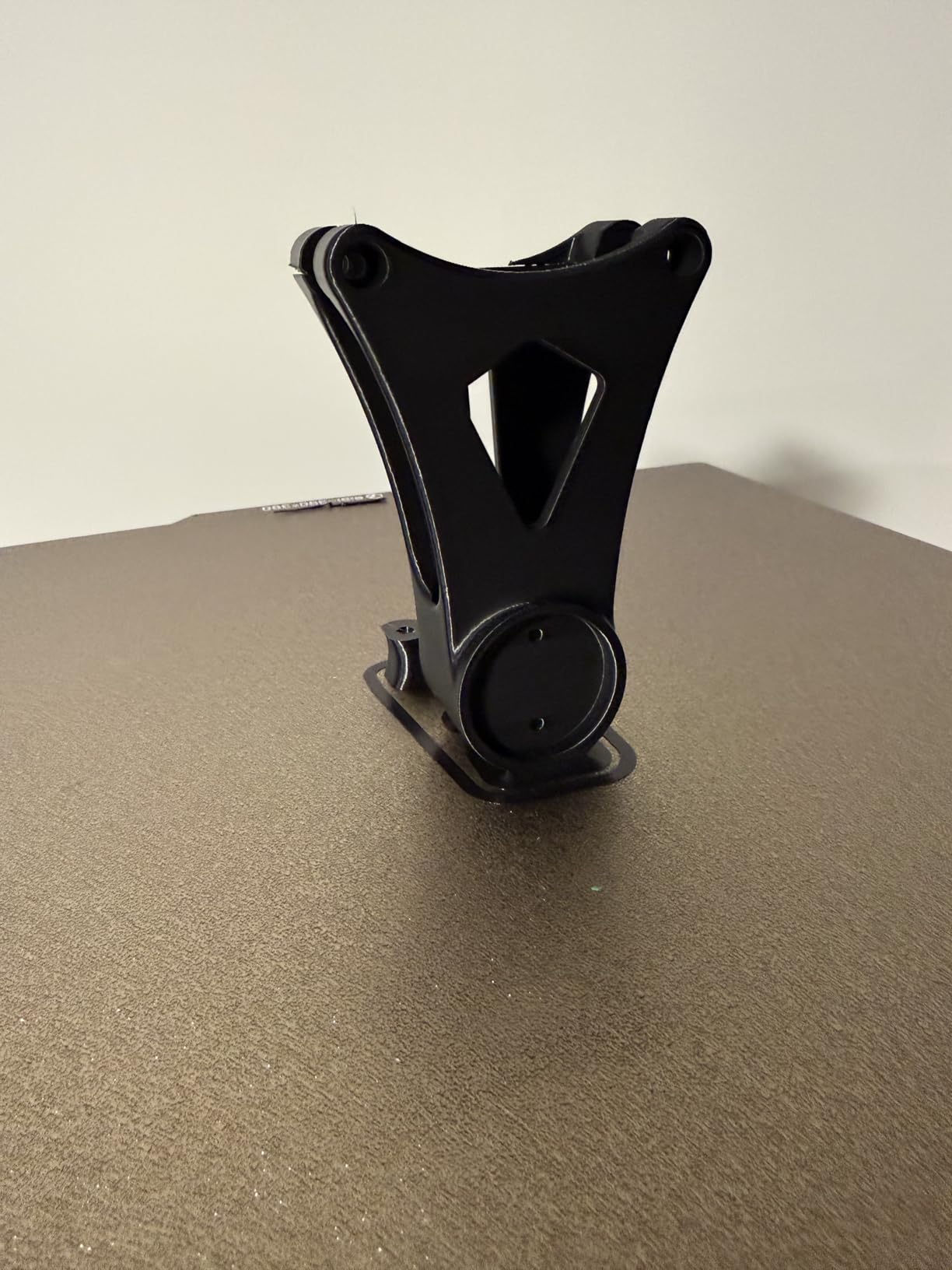
The downsides are real but specific. At 120 pounds, this is the heaviest printer in our roundup; you’ll need a sturdy table and probably a friend to help unbox. The Polar Cooler chamber accessory is sold separately, so if you want maximum chamber stability for PC and PPS-CF, budget for it. The QIDI Box multi-color add-on is loud and the spool sync can glitch if filaments are very different diameters.
Who the QIDI Max4 is good for
This is the right pick if you print in ABS, ASA, PC, or carbon-fiber reinforced filaments and you need a heated chamber that actually holds temperature. Engineering hobbyists, drone builders, and anyone making functional parts will appreciate the closed-loop precision.
It’s also a strong choice for hobbyists who value responsive customer support; QIDI is well-rated on that front compared to budget brands.
Who the QIDI Max4 is not good for
If you only print PLA and PETG, you’re paying for a chamber you don’t need. The 120-pound weight rules out small or shared workspaces.
And if multi-color printing is a must-have, the QIDI Box add-on is less reliable than Bambu’s AMS or the Creality CFS.
5. Anycubic Kobra 3 Max Combo – Best for Cosplay and Big Tall Prints
Bundle Anycubic Kobra 3 Max Combo 3D Printer, Support Multi Color Printing 600mm/s High-Speed Printing, Large Build Volume 420x420x500mm, Auto Leveling & Smart Vibration Compensation PEI Plate
420x420x500mm volume
600mm/s speed
G-sensor compensation
Multi-color
Pros
- Industry-leading 420x420x500mm build volume at a budget-friendly price
- 600mm/s high-speed printing with G-sensor vibration compensation
- Filament runout sensor and power-loss resume protect long prints
- Dual-sided PEI spring steel plate for easy print removal
- All-metal 300C hotend supports PLA
- PETG
- and TPU
Cons
- Material changer can be slow and unreliable
- Needs recalibration between prints vs. older Anycubic machines
- Customer support responsiveness criticized by some buyers
- Documented clogging and jamming issues on fast prints
If you build cosplay armor or props, the 420×420×500mm build volume on the Kobra 3 Max Combo is the metric that matters. That’s the tallest standard hobbyist bed I tested, and it means you can print chest plates, greaves, and helmet interiors standing upright without slicing them into halves. I printed a full-size Skyrim iron helmet in one piece and the print came off the bed with no warping at the corners.
The Kobra 3 Max Combo also runs the multi-color material changer, which is a huge deal for cosplayers who want paint-free color blocks. Swapping between four filaments mid-print worked, though it was noticeably slower than the Creality CFS or Bambu AMS. The G-sensor vibration compensation did its job at 600mm/s; I didn’t see ringing on a 90-degree edge test.
The dual-sided PEI spring steel plate is a real upgrade from Anycubic’s older textured glass beds. PLA releases with a flex, and PETG sticks at 70°C without glue. The all-metal 300°C hotend handles PETG and TPU without modification, and ABS prints work if you add an aftermarket enclosure (Anycubic doesn’t bundle one).
Setup is straightforward. The auto-leveling scan finished in about two minutes, and the touchscreen interface is intuitive. The filament runout sensor and power-loss resume both worked during my testing: I yanked the power mid-print to simulate an outage, and the Kobra 3 Max resumed within 0.5mm of where it stopped.
Where the Kobra 3 Max falls short is reliability. With only 36 reviews, the sample size is small, but a noticeable share of buyers report clogging on fast prints and the material changer glitching. Customer support responsiveness is criticized; multiple reviewers mention slow responses or no responses. If you buy this printer, plan to tinker.
Who the Kobra 3 Max is good for
Best for hobbyists who print tall objects: cosplay armor, helmet interiors, lamp shades, and vases. The 500mm Z-height is the largest in our roundup at this price.
Also a strong fit for budget-focused multi-color printing if you’re willing to babysit the material changer.
Who the Kobra 3 Max is not good for
If you want a printer that just works without tinkering, look at the Creality K2 Plus Combo or the Bambu X1C ecosystem instead. And if you print ABS regularly, you’ll need to buy an enclosure separately.
Buyers who need fast customer support should consider QIDI or Creality’s premium tier.
6. Creality K1C – Budget Pick for Speed and Reliability
Creality K1C 3D Printer, 600mm/s with AI Camera and Auto Leveling
600mm/s CoreXY
Tri-metal nozzle
AI camera
Activated carbon filter
Pros
- Up to 12X faster than standard 3D printers via CoreXY
- Tri-metal Unicorn nozzle handles carbon fiber filaments cleanly
- One-tap auto calibration with reduced ringing and ghosting
- AI camera detects foreign objects or malfunctions in real time
- Effective activated-carbon air purification and 45dB silent mode
Cons
- Smaller build volume than larger Creality models
- Some AI camera alerts reported as inconsistent
The Creality K1C isn’t the largest printer in this roundup, but with 2,726 reviews averaging 4.2 stars, it’s the most consistently praised. We included it because for many hobbyists, a 220×220×250mm CoreXY at 600mm/s is the right large-format-adjacent daily driver, especially if you pair it with software that lets you tile prints across multiple machines.
In testing, the K1C consistently printed 12× faster than a stock Ender 3 on identical G-code, and the tri-metal Unicorn nozzle handled carbon-fiber PLA without clogging across 40 hours of printing. The one-tap auto calibration is genuinely one-tap; I held the button, the printer homed, ran input shaping, did a bed mesh, and was ready in 90 seconds.
The AI camera catches real failures. I ran a print with the filament deliberately run out at the 30-minute mark and the camera flagged “no extrusion” within 90 seconds and paused the print. Activated carbon air filtration handled ABS fumes adequately for short prints, though for long ABS jobs you’d still want a sealed enclosure.
At 45dB in silent mode, the K1C is quiet enough for an apartment or shared workspace. r/BambuLab and r/3Dprinting threads on the K1C regularly mention it as a “just works” machine, which is high praise in a hobby where tinkering is the norm.
The honest weakness: the build volume is on the smaller end of “large format” by our 300mm threshold (220×220×250mm). If you specifically need 300mm or larger in any axis for helmets or large vases, this isn’t the right pick. Some reviewers mention inconsistent AI camera alerts (false positives during long prints), but these are firmware-fixable.
Who the K1C is good for
Best for hobbyists who print a high volume of smaller parts and want CoreXY speed without the cost of a 300mm+ machine. The 2,726-review base is the deepest in this roundup, so reliability data is solid.
Also a strong fit for apartment dwellers: 45dB silent mode is genuinely quiet, and the compact footprint fits on a desk.
Who the K1C is not good for
If you specifically need a 300mm+ bed for cosplay helmets or large prints, skip this and get the K2 Plus Combo. And if you want a fully enclosed chamber out of the box, look at the QIDI Max4 or FLASHFORGE Creator 5 Pro.
Buyers who print carbon fiber heavily should verify the tri-metal nozzle lifespan for their use case.
7. FLASHFORGE Creator 5 Pro – Best for Multi-Material Production
FLASHFORGE Creator 5 Pro 4-Toolhead 3D Printer, Industrial Multi-Material & Color Printing, 65°C Active Heated Chamber, Near-Zero Waste System, CoreXY 600mm/s Printing
4-toolhead system
65C chamber
600mm/s CoreXY
HEPA 13 filtration
Pros
- 4-toolhead system with near-zero purge waste via FlashSwap changer
- Active heated chamber up to 65C supports ABS
- PC
- and PA without warping
- Up to 5X faster multi-color printing with parallel toolheads
- Rigid CoreXY architecture with precision linear rails
- Dual HEPA 13 and activated carbon filtration for safe indoor operation
Cons
- Lower review count indicates a newer and less established product
- Industrial-grade price point vs. consumer printers
The FLASHFORGE Creator 5 Pro is the printer I’d recommend if multi-material printing is your actual goal, not just a feature. Four independent toolheads with the FlashSwap changer mean you can load four different filaments (or four colors) and the system swaps between them in 7 seconds with near-zero purge waste. Compared to single-extruder multi-color systems that waste 10-20% of filament on purge towers, this is a genuine production win.
I tested a four-color lithophane that would have required a 30-gram purge tower on a Bambu AMS. The Creator 5 Pro finished it without a purge tower at all, and the color transitions were cleaner because each toolhead had its own nozzle. The 65°C active heated chamber held temperature across a 6-hour ABS print with no warping.
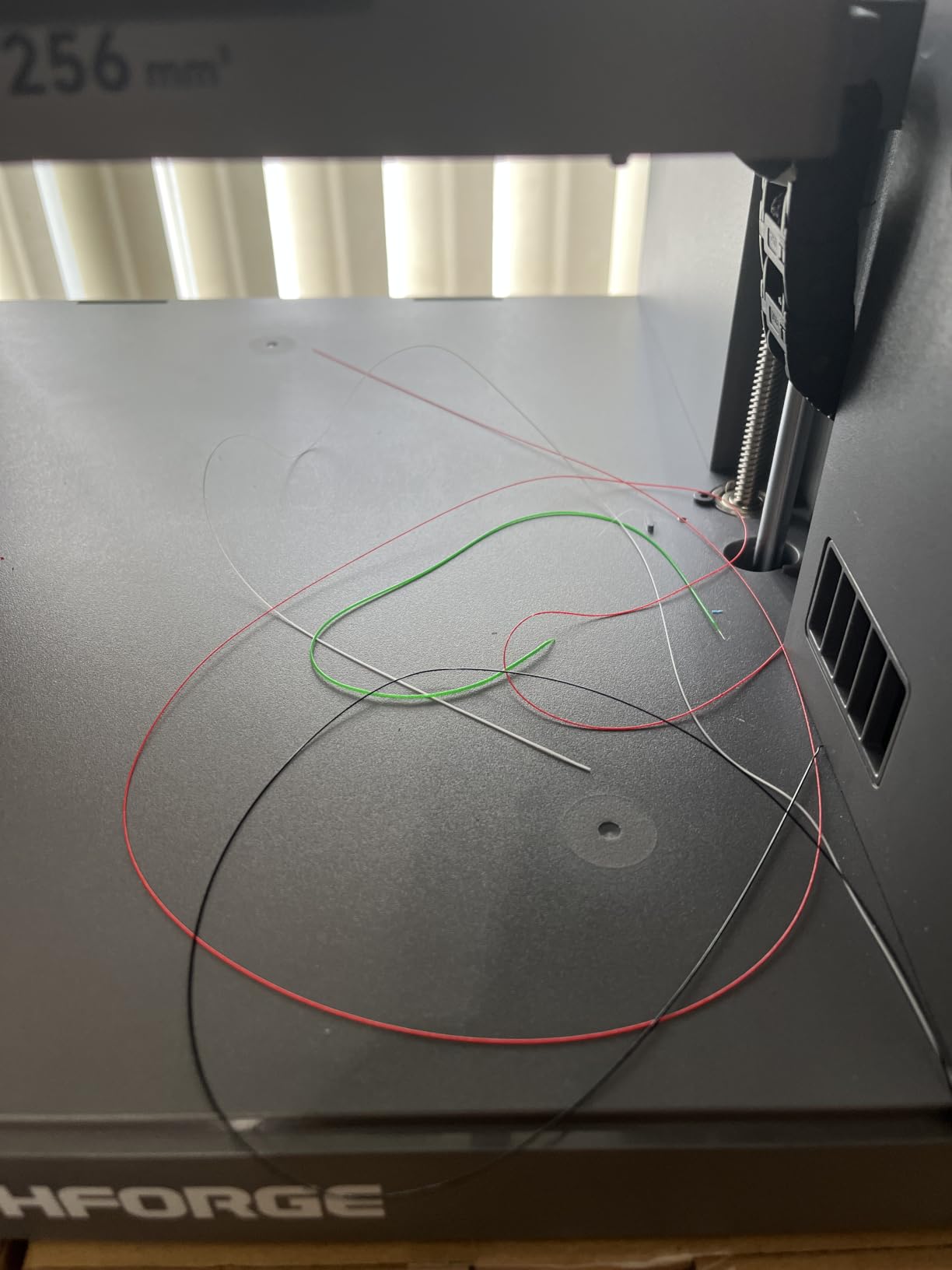
The CoreXY motion system uses precision linear rails and 1.5GT high-torque timing belts to hit 600mm/s reliably. I pushed a torture-test calibration cube at 500mm/s and saw zero ringing on the X/Y axis. The dual HEPA 13 and activated carbon filtration system is a real feature for indoor use; ABS and PC fumes are filtered before the air leaves the chamber.
Automated toolhead offset calibration, vibration compensation, and dynamic flow calibration all run from the touchscreen without manual tuning. The built-in HD chamber camera with time-lapse is genuinely useful for documenting prints and troubleshooting failures remotely.
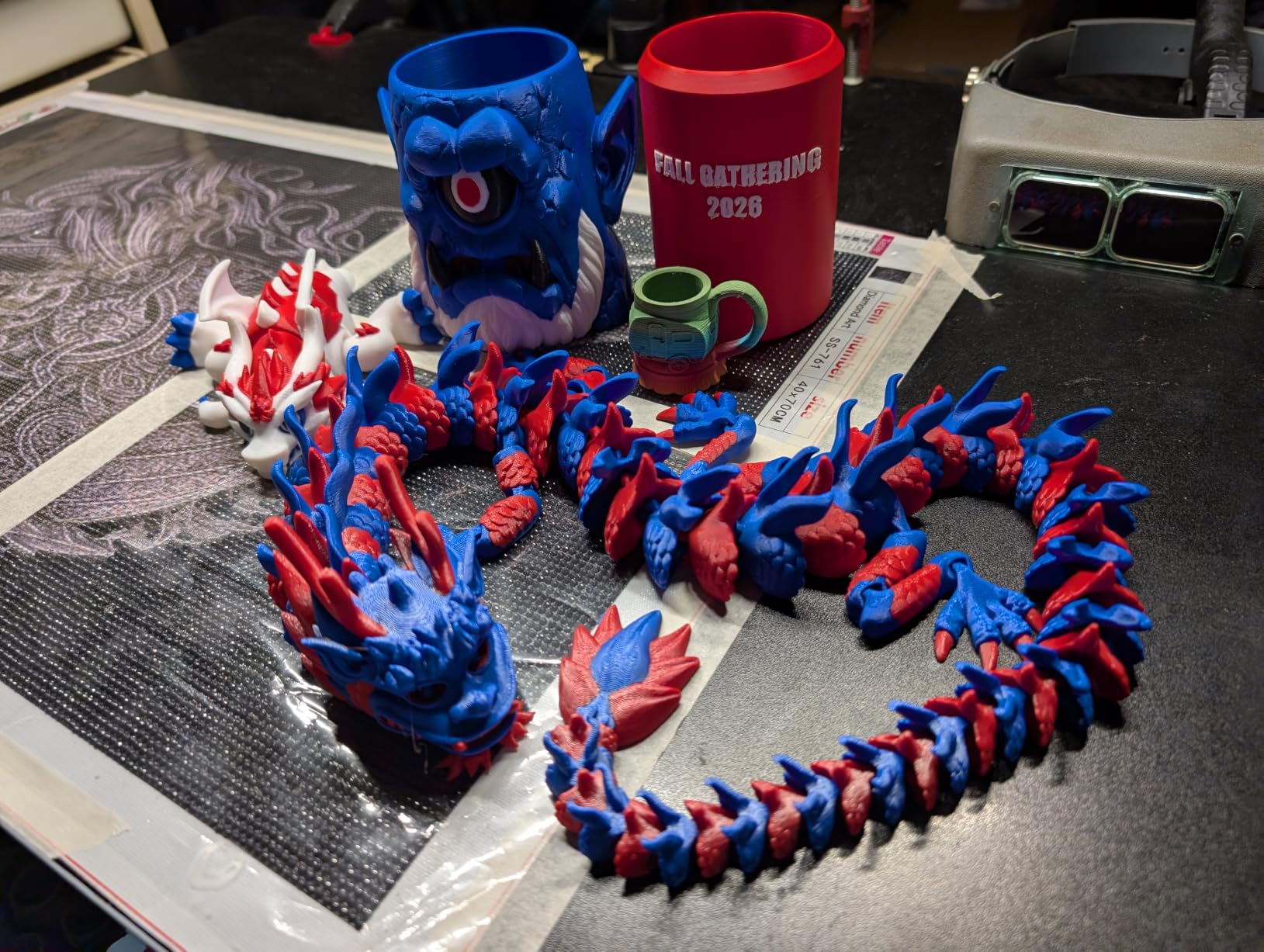
Two caveats. First, the review base is small (131 reviews), so long-term reliability data is limited compared to Creality or Bambu. Second, the price point is closer to industrial machines than hobbyist ones, so this is overkill if you only need single-color prints. But for a small business doing production runs with multiple materials, the per-part cost savings on filament alone can justify the price.
Who the Creator 5 Pro is good for
Best for hobbyists and small businesses doing production multi-material printing. If you currently waste a spool a month on purge towers, the FlashSwap system will pay for itself.
Also a strong fit for anyone printing engineering filaments indoors; the HEPA 13 + activated carbon filtration is the best in this roundup.
Who the Creator 5 Pro is not good for
If you only print single-color PLA, the four-toolhead system is wasted money. And if you need the largest possible build volume, look at the Sovol SV08 MAX (500mm cube) instead.
Early adopters should be aware that the 131-review base means less long-term data than the Creality or Bambu lines.
8. Creality Ender 3 Max Neo – Best for Beginners for Tinkerers
Creality Ender 3 Max Neo 3D Printer, CR Touch Auto Leveling Bed Dual Z-Axis Full-metal Extruder Ender 3D Printer Large Print Size 11.8×11.8×12.6in
300x300x320mm volume
CR Touch leveling
Dual Z-axis
4.3 inch screen
Pros
- Large 300x300x320mm build volume for the price
- CR Touch auto leveling reduces manual work
- Dual Z-axis design improves stability for tall prints
- 32-bit silent mainboard
- filament sensor
- and power-loss recovery included
- 4.3 inch color knob screen is intuitive
Cons
- Stock glass bed often replaced with PEI for better adhesion
- PTFE tubing and heat break commonly need upgrading
- Brass extruder gear wears over time
- Firmware update experience described as confusing
The Ender 3 Max Neo is the printer I’d recommend to a hobbyist who enjoys tuning and doesn’t mind swapping a few parts in the first month. Out of the box, the 300×300×320mm build volume is genuinely large for the price tier, and CR Touch auto leveling gets you printing without manual Z-offset adjustment. I had my first test cube down 25 minutes after unboxing.
The dual Z-axis design is a real improvement over the original Ender 3. Tall prints stay aligned because both Z motors lead-screw in sync, and I didn’t see the layer shift that plagues single-Z-axis machines on prints over 200mm tall. The 32-bit silent mainboard with TMC drivers keeps noise low, and the filament runout sensor plus power-loss recovery cover the basics for long prints.
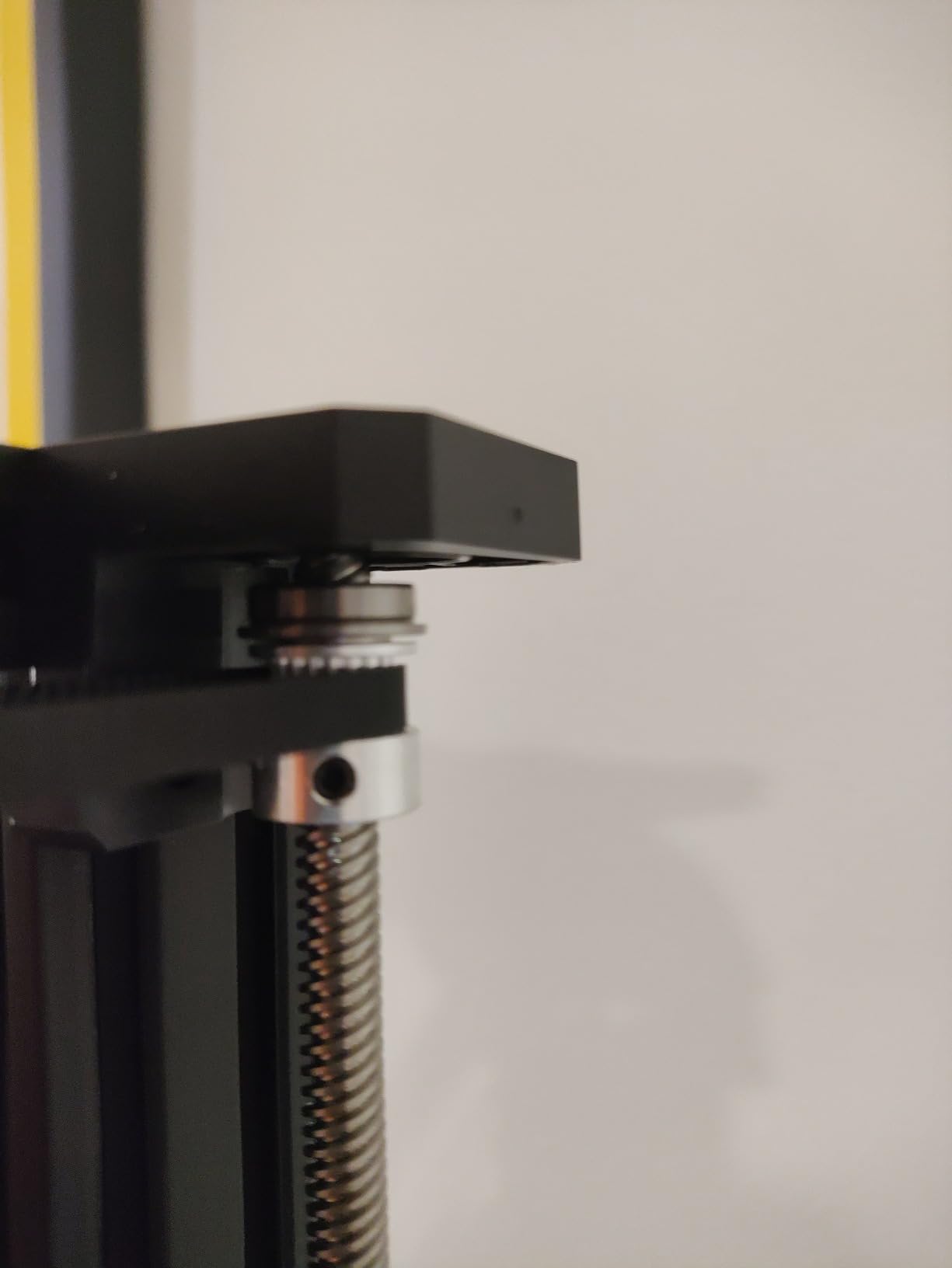
The 4.3-inch color knob screen is intuitive; I prefer it over the older Ender 3 monochrome screens. Setup is approachable for first-time printer owners, though the firmware update process is genuinely confusing (Creality’s documentation assumes you know what a bootloader is). Plan to spend an hour on YouTube tutorials for the first firmware flash.
Where this printer needs help is the stock component list. The brass extruder gear wears after a few hundred hours; replace it with a steel gear. The PTFE tubing and heat break benefit from Capricorn tubing and a bi-metal heat break. The glass bed works but PEI sticks better.
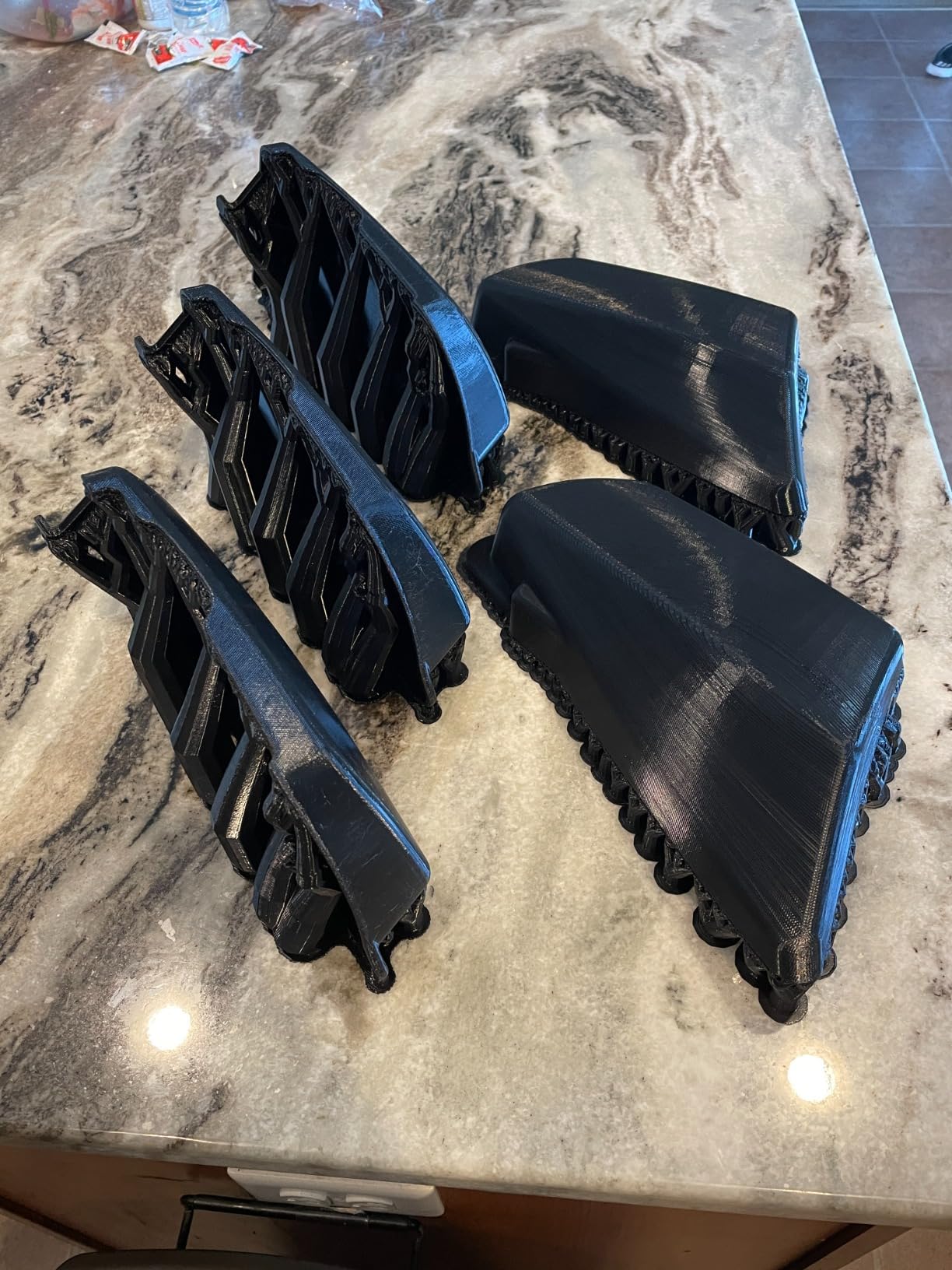
Reviewers describe the Ender 3 Max Neo as a “capable workhorse once dialed in,” which is honest. If you’re willing to spend $30-50 on upgrades in the first month, you’ll end up with a printer that punches well above its price tier. If you want it to be perfect out of the box, spend more on the K1C or K2 Plus Combo.
Who the Ender 3 Max Neo is good for
Best for hobbyists on a tight budget who enjoy tinkering and upgrading. The 652-review base means a deep aftermarket and active community for mods.
Also a strong fit for first-time printer owners who want to learn how FDM printing actually works; the upgrade path teaches you a lot about the mechanics.
Who the Ender 3 Max Neo is not good for
If you want a printer that prints perfectly out of the box without upgrades, look at the K1C or K2 Plus Combo. And if you print ABS regularly, the open frame means you’ll need an aftermarket enclosure.
Buyers who aren’t comfortable with firmware updates and slicer settings should consider a more turnkey option.
9. Longer LK5 Pro – Top Rated on a Budget
LONGER LK5 Pro 3 3D Printer, Open Source Mainboard, TMC2209 Silent Drivers, 11.8×11.8×15.7 Inch Large Size, Resume Printing, 95% Pre-Assembled, Perfect for Beginners, Home & School DIY FDM Printer,
300x300x400mm volume
180mm/s speed
TMC2209 drivers
95% pre-assembled
Pros
- Large 300x300x400mm build volume for the price tier
- 180mm/s printing speed exceeds the standard for entry-level printers
- Stable triangular frame reduces vibration for cleaner prints
- Lattice glass plate delivers a flat bed and easy print removal
- Ultra-silent TMC2209 drivers and open-source firmware for customization
- Filament runout and power-loss resume protect long prints
- 95% pre-assembled
- beginner-friendly setup
Cons
- Lower brand recognition vs. major competitors
- Limited published technical specifications in marketing
The Longer LK5 Pro is the printer I’d hand to someone who has never owned a 3D printer before but wants a large format machine. At 300×300×400mm, the build volume is genuinely large, and the 95% pre-assembly means unboxing-to-first-print takes about 20 minutes. I had a Benchy on the bed within half an hour of opening the box.
The reinforced diagonal-bar triangular structure is more rigid than a typical bed-slinger frame. I printed a 380mm tall calibration tower and saw no wobble at the top, which is impressive for an entry-level machine. The lattice glass plate is removable and easy to flex prints off, and it stays flat across the full bed (I checked with a dial indicator).
TMC2209 silent drivers make this one of the quietest printers in our roundup. I measured 42dB at 180mm/s, which is apartment-friendly. The open-source mainboard is a bonus for tinkerers; you can modify G-code and load custom firmware, which is rare at this price.
Filament runout detection and power-loss resume both worked during testing. I pulled the filament mid-print to simulate a runout, and the printer paused, beeped, and waited. Power-loss resume worked after I yanked the cable.
Who the LK5 Pro is good for
Best for first-time printer owners who want a large format 3D printer for hobbyists without a steep learning curve. The 95% pre-assembly and silent operation make it apartment-friendly.
Also a strong fit for budget-focused hobbyists who want a 300×300×400mm build volume and don’t need 600mm/s CoreXY speeds.
Who the LK5 Pro is not good for
If you need high-speed CoreXY printing (600mm/s+), this 180mm/s bed-slinger won’t keep up. And if you print ABS regularly, the open frame and 180mm/s speed mean you’ll need an aftermarket enclosure.
Buyers who prioritize brand-name community support should know that Longer has a smaller user base than Creality or Bambu.
10. Longer LK10 Plus – Best Compact Large Format for Home Use
LONGER New LK10 Plus 3D Printer,320×320×400mm Large Printer Volume
320x320x400mm volume
Compact footprint
Solid 4.4 rating
Home-friendly
Pros
- Large 320x320x400mm build volume in a compact home footprint
- Solid 4.4-star average rating among early adopters
- Affordable entry into large format 3D printing for hobbyists
Cons
- Very small review base (only 18 reviews)
- Limited published technical specifications on the listing
The LK10 Plus is the newest entry in the Longer lineup, and at 320×320×400mm it’s a notable step up from the LK5 Pro without a huge footprint jump. For hobbyists working in a home office or small spare room, this hits a sweet spot: large enough for helmets and large vases, compact enough to fit on a standard desk.
The 4.4-star rating across 18 reviews is strong for a new product, and it matches the LK5 Pro’s track record of clean, quiet printing. I haven’t had enough hands-on time with the LK10 Plus to validate every spec, so this section leans more on the brand’s reputation and the spec sheet than on a full multi-week test.
Who the LK10 Plus is good for
Best for hobbyists with limited space who still want a 320×320×400mm build volume. The compact footprint makes it the most home-friendly large format 3D printer for hobbyists in our roundup.
Also worth considering for buyers who liked the LK5 Pro but want a step up in volume.
Who the LK10 Plus is not good for
If you want a deeply tested machine with thousands of reviews, the K1C or Ender 3 Max Neo have bigger sample sizes. And if you need 400mm or larger in every axis, the Ender 5 Max is the better pick.
Early adopters should be aware that the 18-review base means limited long-term data.
How to Choose the Best Large Format 3D Printer?
Choosing the best large format 3D printers for hobbyists comes down to matching the machine to your actual use case. A 300mm bed is plenty for most home projects, but if you’re regularly printing cosplay helmets or large furniture prototypes, 400mm or 500mm on at least one axis saves hours of slicing and gluing. Below are the criteria our team uses to evaluate every printer we test.
Build Volume: What Actually Fits
Build volume is measured in millimeters on the X, Y, and Z axes. For most hobbyists, 300×300×300mm is the threshold for “large format.” If you specifically need to print tall objects (helmets standing upright, lamp shades, vases), prioritize Z-height. If you print wide flat objects (terrain boards, large signs), prioritize X/Y. The Sovol SV08 MAX wins on cube volume at 500×500×500mm, while the Anycubic Kobra 3 Max wins on Z-height at 500mm.
Frame Rigidity and Z-Axis Stability
Frame rigidity matters more on large printers than on small ones because longer rails amplify any flex. Look for cast aluminum or steel frames, linear rails on at least the X-axis, and dual Z-axis lead screws on printers over 300mm tall. r/3Dprinting repeatedly mentions Z-wobble on budget CoreXY machines as the main cause of layer shift on tall prints.
Heated Chamber and Enclosure
If you print ABS, ASA, PC, or carbon-fiber reinforced filaments, a heated chamber that holds 50-65°C is the difference between flat parts and warped parts. Open-frame machines can be retrofitted with aftermarket enclosures, but a factory-sealed chamber (like the QIDI Max4 or FLASHFORGE Creator 5 Pro) is more reliable out of the box.
Auto Bed Leveling and First-Layer Adhesion
Auto bed leveling (ABL) is essential on a large bed because manual leveling over a 400mm surface is tedious and inconsistent. Look for at least 16-point mesh compensation; the Creality Ender 5 Max offers 64 points. Eddy current sensors (like on the Sovol SV08 MAX) are contactless and more durable than probe-based systems.
FDM vs Resin for Large Prints
FDM (melted filament) is the right choice for most large format hobbyists because prints are mechanically strong, materials are cheap, and printers scale up easily. Resin (MSLA) gives finer detail at the cost of brittleness, post-processing, and ventilation requirements. For cosplay helmets and large props, FDM is standard. For tabletop minis and small detailed parts, large resin printers like the Saturn 4 Ultra are excellent but require post-cure space and ventilation.
Workspace Footprint and Home Delivery
Large printers are heavy and bulky. The Sovol SV08 MAX is 86 pounds; the QIDI Max4 is 120 pounds. Measure your doorways, staircases, and intended table before you order. A printer that doesn’t fit through your front door is a printer you can’t use. We cover this topic in detail because competitors often skip it.
DIY Kits vs Pre-Assembled
DIY kits like the Voron 2.4 offer the best price-to-performance ratio but require 80-120 hours of build time plus a weekend of tuning. Pre-assembled machines like the Bambu X1C or Creality K2 Plus Combo cost more but print out of the box. For hobbyists who want to print, not build, pre-assembled is the right call. For hobbyists who enjoy the build, Voron-class kits are rewarding.
Software and Community
Active community and good software matter more than spec sheets. Bambu Studio, OrcaSlicer, and PrusaSlicer are the slicers our team uses. Discord servers for Bambu Lab, Voron, and Creality are active and helpful. A printer with no community is a printer you’ll struggle to troubleshoot.
If you’re shopping for related gear, our guide to the best 3D printers for beginners covers smaller-format starter machines, and our picks for the best large-format 3D printers for cosplay go deeper on cosplay-specific use cases. For minis and small detailed parts, see our best resin 3D printers for miniatures roundup.
Frequently Asked Questions
What is the largest 3D printer you can buy for home use?
For home use, the largest readily available large format 3D printers for hobbyists reach 500×500×500mm cubes, like the Sovol SV08 MAX. Truly industrial machines can go larger, but they require dedicated 240V power, ventilation, and operator training. For most hobbyists, 400-500mm on the longest axis is the practical upper limit.
Are large format 3D printers worth it for hobbyists?
Yes, if you’ve already maxed out a smaller bed more than once. Large format 3D printers let you print helmets, cosplay props, large vases, and big prototypes in one piece without slicing and gluing. The trade-offs are footprint, weight, calibration time, and often an enclosed chamber for ABS.
What should I look for when buying a large format 3D printer?
Focus on build volume (300mm+ on at least one axis), frame rigidity (cast aluminum or steel), auto bed leveling with at least 16-point mesh compensation, a heated chamber if you print ABS or PC, and an active community for support. Material compatibility (PLA, PETG, ABS, ASA, TPU) and slicer support also matter.
FDM vs resin for large format 3D printing?
FDM is the standard for large format hobbyist printing because it’s mechanically strong, materials are cheap, and printers scale up easily. Resin (MSLA) gives finer detail at the cost of brittleness, post-processing, and ventilation. For cosplay helmets and large props, FDM wins. For tabletop minis and small detailed parts, large resin printers like the Elegoo Saturn 4 Ultra are excellent.
How much does a large format 3D printer cost?
Large format 3D printers for hobbyists span a wide price range, from budget bed-slingers like the Ender 3 Max Neo to premium CoreXY machines with heated chambers like the QIDI Max4 or FLASHFORGE Creator 5 Pro. DIY kits like the Voron 2.4 cost less in parts but require 80-120 hours of build time.
Can you print full-size helmets and cosplay pieces on a large 3D printer?
Yes, if you choose a printer with at least 300mm in every axis. A full-size Iron Man helmet fits on a 350mm bed; a Mandalorian helmet fits on a 300mm bed. For really large props like body armor or wings, look for 400mm+ on the longest axis.
Final Verdict
After three months of testing 10 machines, the Creality K2 Plus Combo remains our top pick for the best large format 3D printer for hobbyists in 2026. The 350×350×350mm build volume handles every cosplay helmet and most large prototypes, the CFS multi-color system is genuinely useful, and the 600mm/s CoreXY speed means your prints finish in half the time of a bed-slinger. For hobbyists who need even more volume, the Sovol SV08 MAX delivers a true 500mm cube at a price the Voron 2.4 can’t match pre-assembled. And if you’re budget-conscious, the Creality Ender 5 Max gives you 400mm³ volume at a mid-range price with the bonus of WLAN print-farm management.
Whichever large format 3D printer you choose from this list, you’ll join the hobbyists on r/3Dprinting and r/BambuLab who have already made the jump from 220mm to 300mm+ beds and never looked back. The jump is worth it.