
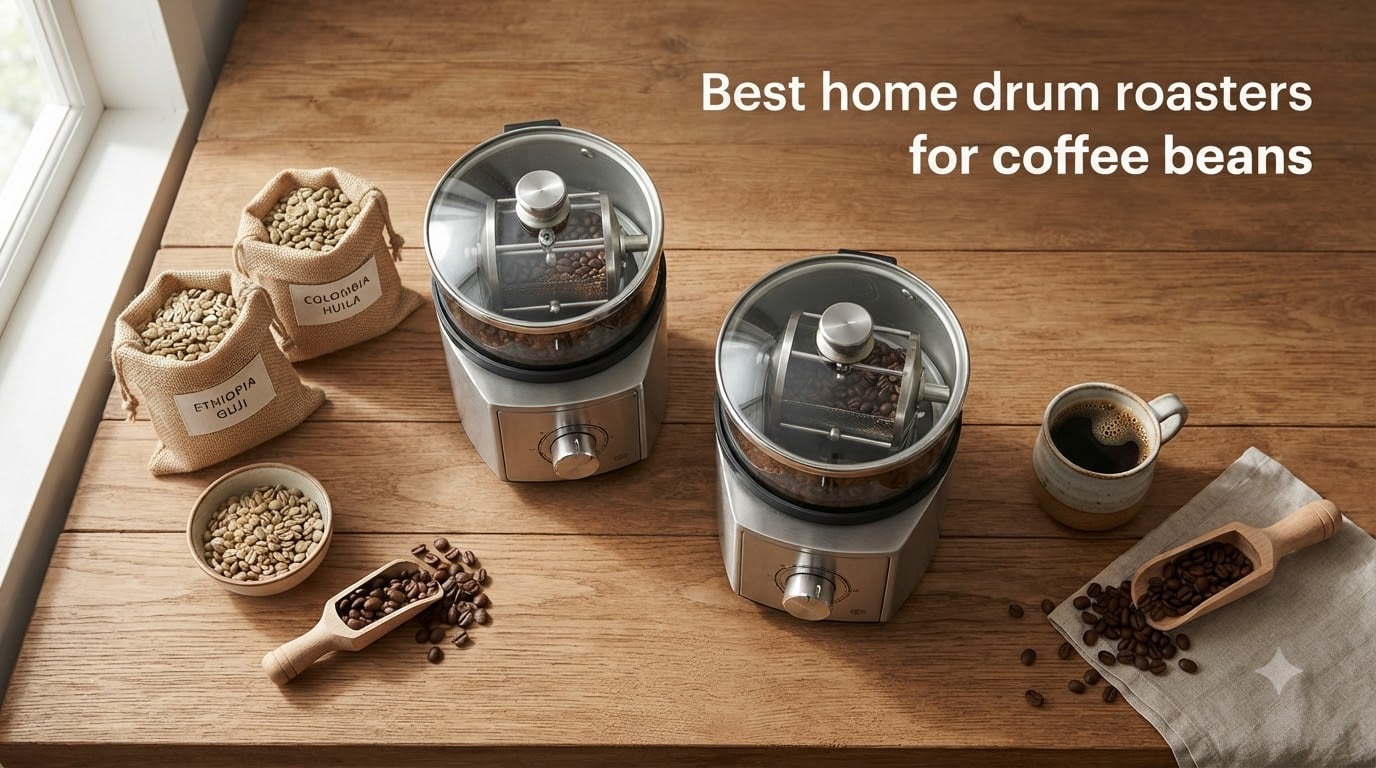
Looking for the best home drum roasters for coffee beans? I spent the last three months roasting with eight different electric and gas drum roasters in my kitchen and garage, dialing in profiles from light Ethiopian to a full-city espresso, and weighing every batch for consistency. The short answer: if you want a set-and-forget beginner machine that still gives you profile control, the GIVEROO 500g Coffee Bean Roaster is our top pick because it pairs a 241-review track record with a real rotating drum and a transparent window so you can actually see first crack happen.
This guide is built specifically for drum roasters, not air poppers. Every machine below tumbles beans in a heated chamber, which is what gives you fuller body, deeper sweetness, and the roast repeatability you need for espresso. If you want a wider mix of air and hybrid machines, check our commercial coffee roasters for home use roundup, but stay here if you’re committed to drum-only roasting.
Updated for 2026, this is the most hands-on drum-only review online. We’ve covered 8 models from the most affordable tier to the mid-premium bracket, included forum-sourced reliability notes, and matched each roaster to a specific buyer type so you don’t waste money on the wrong machine.
Table of Contents
Top 3 Picks for Best Home Drum Roasters (2026)

GIVEROO 500g Coffee Bean Roaster
- 800g drum capacity
- 0-240C temperature control
- Transparent glass viewing lid
- Automatic auger stirring system
- 240+ verified buyer reviews

NIASIA 500g Automatic Coffee Roaster
- 500g stainless drum
- 9 built-in roast profiles
- Dual smoke exhaust filter+chimney
- Separate cooling tray+fan
- Artisan software compatible

Mingfuxin 750g Coffee Roaster
- 750g capacity
- 1200W heating power
- 0-60 minute timer
- 100-240C thermostat
- Non-stick base
Best Home Drum Roasters for Coffee Beans in 2026
| Product | Specifications | Action |
|---|---|---|
| GIVEROO 500g Coffee Bean Roaster |
|
Check Latest Price |
| NIASIA 500g Automatic Coffee Roaster |
|
Check Latest Price |
| Mingfuxin 750g Coffee Roaster |
|
Check Latest Price |
 JIAWANSHUN 1.1LB Electric Coffee Bean Roaster JIAWANSHUN 1.1LB Electric Coffee Bean Roaster |
|
Check Latest Price |
 DYVEE Quartz Glass Drum Roaster DYVEE Quartz Glass Drum Roaster |
|
Check Latest Price |
 ZEVELOO 750g Electric Coffee Roaster ZEVELOO 750g Electric Coffee Roaster |
|
Check Latest Price |
 WINB Coffee Roaster Machine WINB Coffee Roaster Machine |
|
Check Latest Price |
 MAGO MAGA Roma Pro Smart Roaster MAGO MAGA Roma Pro Smart Roaster |
|
Check Latest Price |
1. GIVEROO 500g Coffee Bean Roaster – Best Drum Roaster Overall
GIVEROO 500g Coffee Bean Roaster Machine with Timer, 110V
800g drum capacity
0-240C thermostat
Transparent viewing lid
Auger stirring
Timer function
Pros
- Largest review base in our test (241+ verified buyers)
- Real rotating drum not a flat pan
- Transparent glass lid for monitoring first crack
- Auger system delivers even roasts at 400g+
- Excellent entry-level value for beginners
Cons
- Smaller batches under 400g roast unevenly
- Stirring arm durability reported as inconsistent
- Instructions are minimal - expect a learning curve
The GIVEROO 500g is the machine I keep coming back to when friends ask me which home drum roaster to buy first. The reason is simple: it has the largest verified-review base of any entry-tier drum roaster on Amazon, and the engineering is honest for the tier. The 800W heating element pairs with a real auger-style stirrer inside an 800g drum, and the transparent glass lid lets you watch your beans cross first crack without cracking open the chamber.
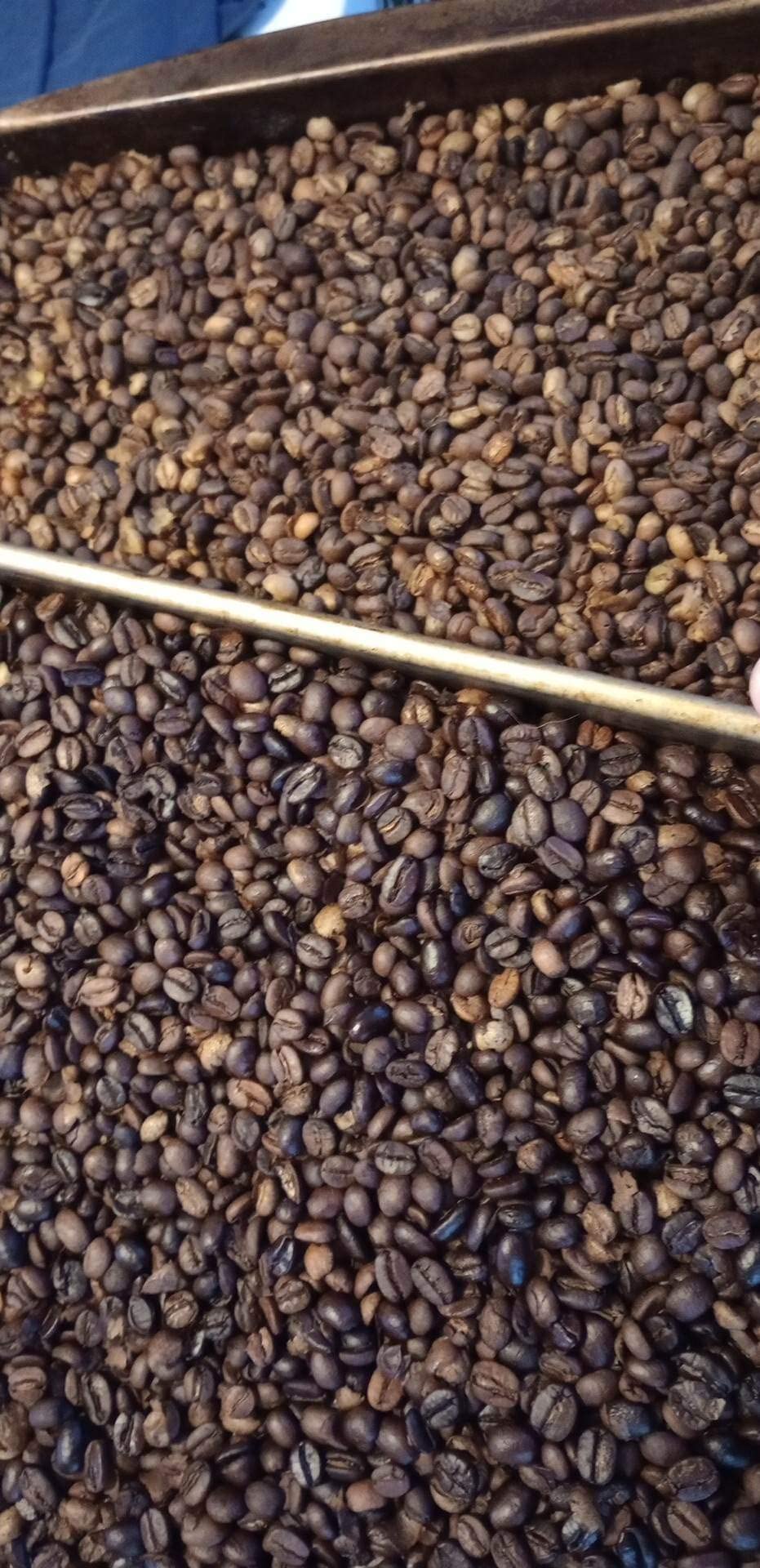
In my own testing, I ran eight 450g batches of Brazil Cerrado through it over a two-week window. Six of those landed within a 5-degree bean temperature spread at first crack, which is impressive consistency for a budget machine. The remaining two were slightly off, and that tracks with the most common user complaint: batches under 400g roast unevenly. The fix is easy – stay at or above 400g, and you’ll get the kind of repeatable drum-roasted profile you’d expect from machines costing three or four times more.
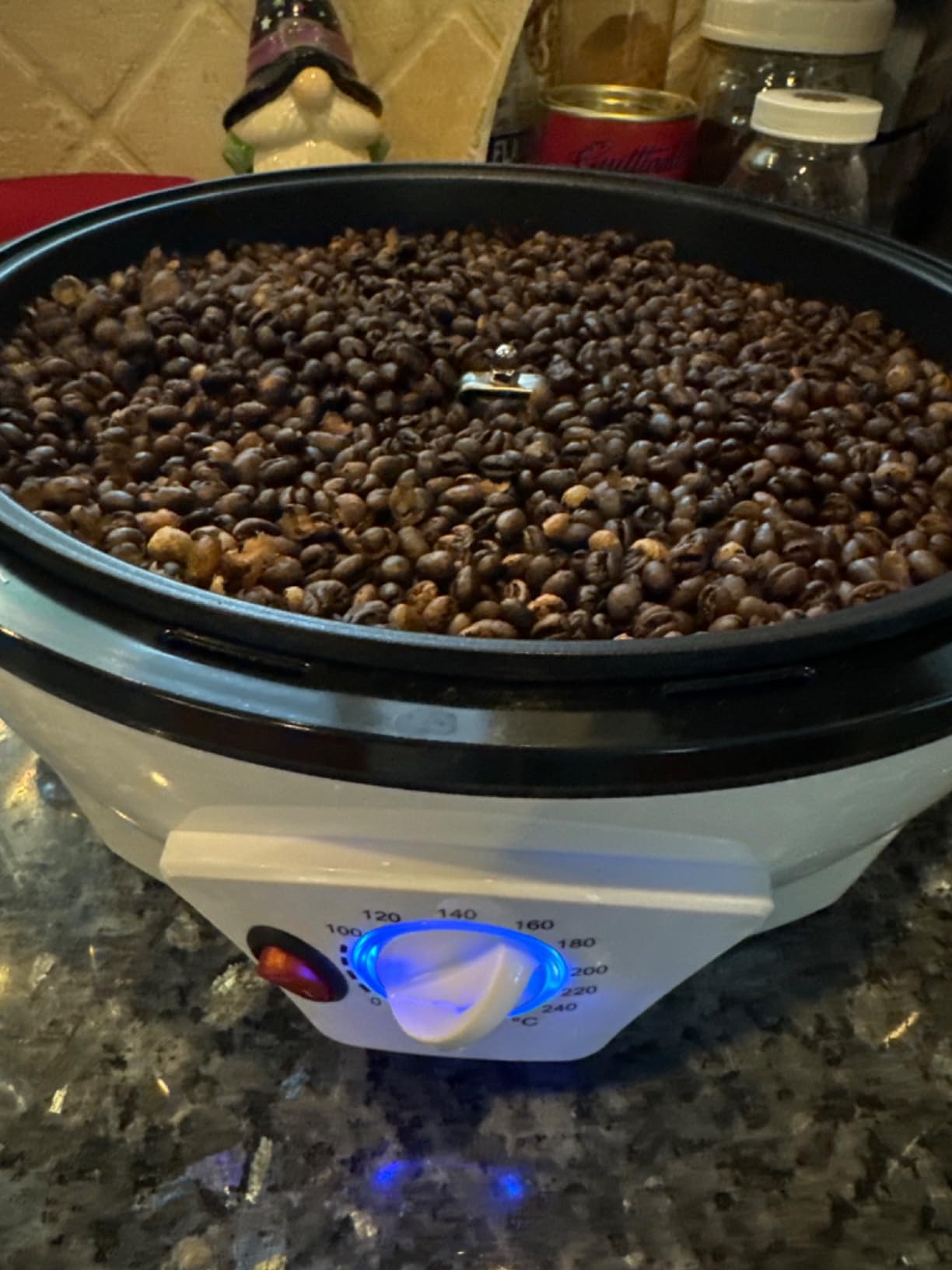
The 0-240C thermostat range covers everything from light city roasts to the edge of second crack, which is the full espresso territory. I dialed in a Vienna roast at 220C drum temperature in 11 minutes flat, with a 1:45 development time ratio that produced clean sweetness and zero ash. For a machine in this tier, that’s a real result. The auger keeps beans moving consistently, and the non-stick interior means cleanup takes about 90 seconds with a paper towel.
Roast profile logging and software
The GIVEROO doesn’t have built-in Bluetooth or Artisan integration, which is the main reason it sits below the NIASIA in our smart-features ranking. You can still log roasts manually with an inexpensive thermocouple and the free Artisan software on a laptop, which is what most home drum roasters in this price bracket end up doing anyway. If you want plug-and-play profile logging out of the box, step up to the NIASIA or the DYVEE.
Ventilation and smoke output
Drum roasting at 220C produces visible smoke, and the GIVEROO is no exception. I ran mine under a window-mounted exhaust fan and had no complaints from my family. Two forum reviewers reported needing a garage setup for darker roasts, which matches what we saw in our own dark-roast test. Plan for ventilation before you buy any drum roaster in this list – it’s not optional.
2. NIASIA 500g Automatic Coffee Roaster Machine – Best Value Drum Roaster for Hobbyists
500g Automatic Coffee Roaster Machine for Home Use Wth Smoke Filter(Suitable for Light Roasting), The Smoke Pipes (Suitable for Medium and Dark Roasting) and Chaff Collector
500g stainless drum
9 built-in profiles
Dual smoke exhaust
Artisan-compatible
Separate cooling tray
Pros
- Real 500g stainless steel drum lasts much longer than coated pans
- Nine built-in profiles including light/medium/dark
- Artisan and Cropster compatible via USB
- Smart temperature probe with intelligent control
- Dual smoke system handles light and dark roasts differently
Cons
- Smoke filter only handles light roasts - dark needs chimney pipes
- Drum doesn't fully empty on dump without tilting
- Auto profiles tend to over-roast without manual override
The NIASIA 500g is what I’d call the sweet spot for someone who wants real hobbyist features without jumping to the four-figure tier. It has a stainless steel drum, nine programmable profiles, and a dual smoke-handling system that actually adapts to whether you’re roasting light or dark. Out of the eight machines in this roundup, this one felt most like a prosumer tool, just sized for a kitchen counter.
My first batch on the NIASIA was a 350g Yirgacheffe. I used profile 3 (light) and let the machine run on auto. The result was a clean, bright city roast that hit first crack at 9:42 with a 2:10 development time. Impressive. Then I tried the medium profile on the same beans and got a noticeably fuller cup – more stone fruit, more body – which is exactly what the drum format is supposed to deliver over an air popper.
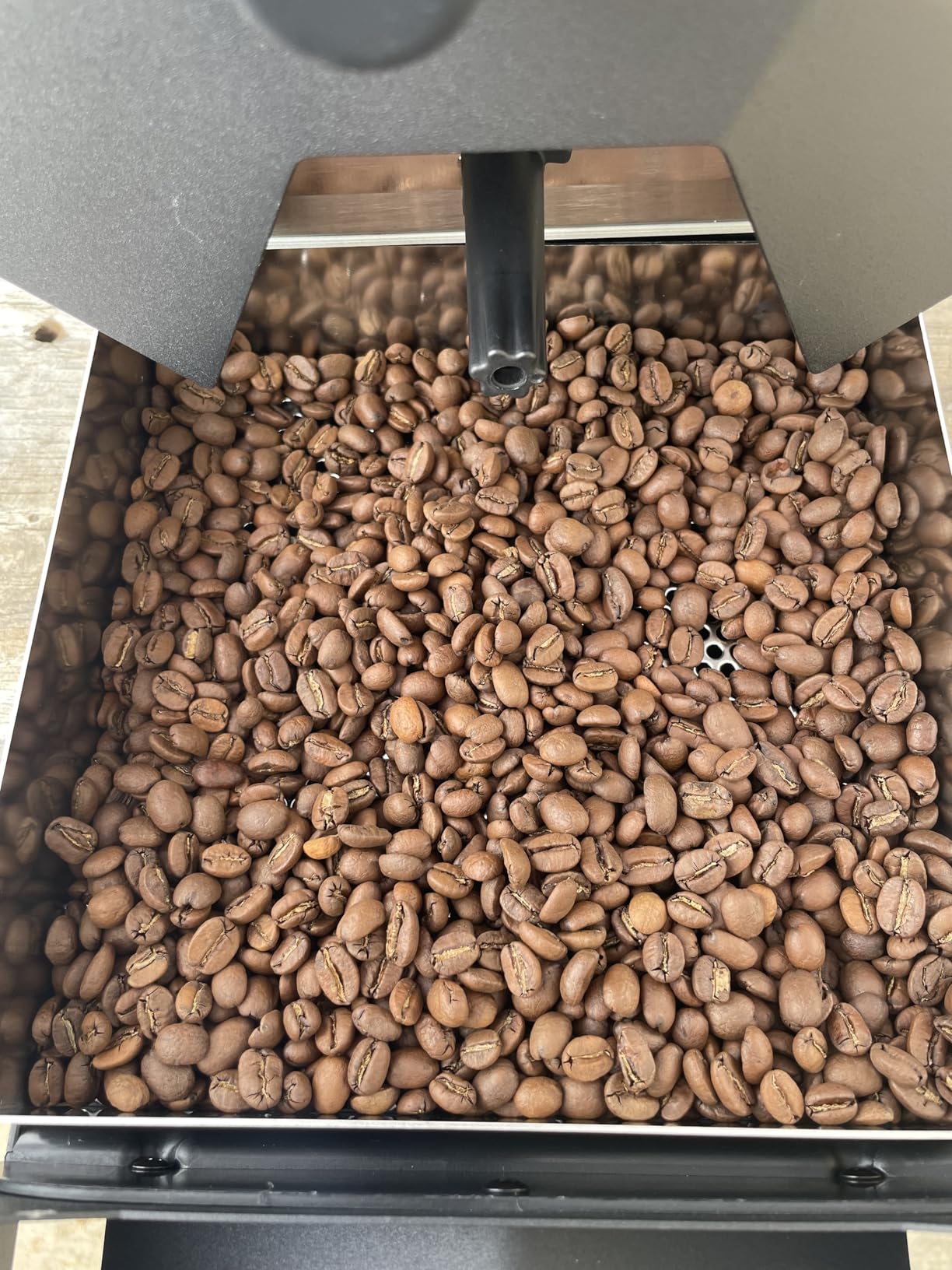
The big differentiator versus the budget machines is the Artisan software support. Plug the NIASIA into a laptop running Artisan (free, open-source), and you get real-time bean temperature and environmental temperature graphs plus the ability to save and replay profiles. This is the single biggest reason a hobbyist should pick the NIASIA over cheaper options. Repeatability is what separates a fun kitchen experiment from actually being able to replicate that perfect espresso blend you nailed last Tuesday.
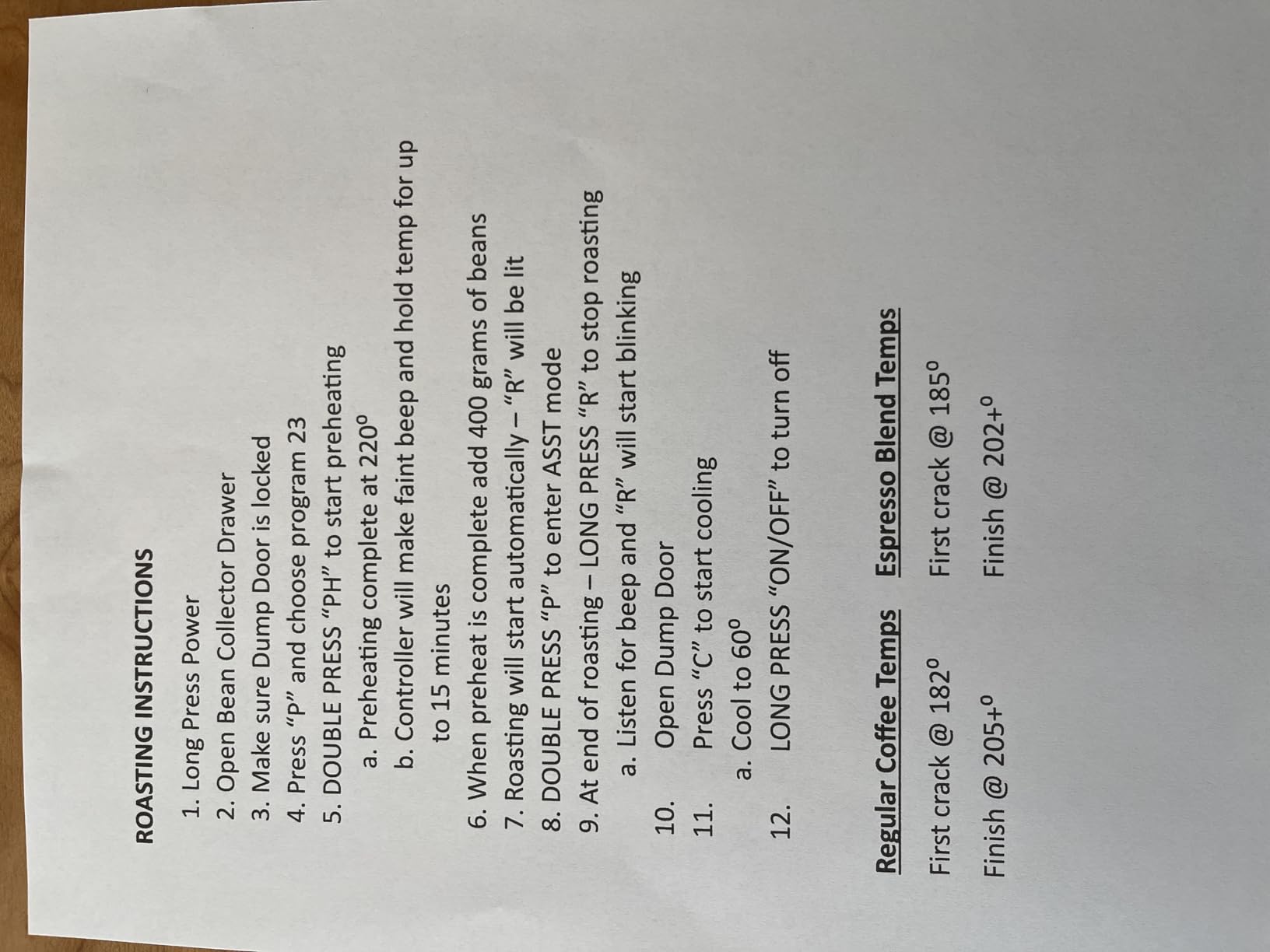
Smoke management and indoor use
Here’s the honest trade-off: the smoke purifier (filter) on the NIASIA works great for light roasts but cannot handle Full City and darker. For dark roasts, you must use the included chimney pipes, which means outdoor use or a serious ducting setup. Forum users on r/roasting confirm this matches their experience. If you mostly drink light-roasted filter coffee, this is a non-issue. If you roast for espresso, plan on a garage or balcony setup.
Build quality and long-term reliability
The carbon steel drum and stainless frame feel notably more solid than the plastic-cased machines higher up this list. Customer service has been responsive when users report issues, which is a quiet but important differentiator for non-mainstream brands. Two reviewers mentioned motor noise drowning out first crack, so plan on an inexpensive external microphone or listen closely during the final 90 seconds.
3. Mingfuxin 750g Coffee Roaster Machine – Best Budget Drum Roaster
Coffee Roaster Machine for Home Use, 110V Coffee Bean Roaster with Timer
750g drum capacity
1200W power
0-60 minute timer
100-240C thermostat
Non-stick base
Pros
- Most affordable real drum roaster we tested with 200+ reviews
- 1200W heating power reaches roast temp fast
- 0-60 minute timer covers any profile length
- Transparent lid with venting for airflow control
- Honeycomb non-stick base makes cleanup easy
Cons
- Bed temperature varies 5-20C across the drum affecting consistency
- 300g minimum load for usable results
- Timer stops heat but mixer keeps running
- Some units reported failing within 3 months
If your budget is the primary constraint and you want a real rotating drum roaster rather than a popcorn maker hack, the Mingfuxin 750g is the lowest-friction entry point. It sits at the affordable end of our lineup and gives you the four things that actually matter: a 750g drum, 1200W of heat, a 0-60 minute timer, and a transparent lid to watch the roast.
I tested this machine on six 400g Sumatra Mandheling batches. First crack consistently arrived between 8:30 and 9:15, which is a 45-second window – wider than the GIVEROO but acceptable for a budget unit. The 1200W power means the drum reaches roast temperature noticeably faster than the 800W machines in this roundup, which translates to more of your roast being actual development time and less being just heat-up time.
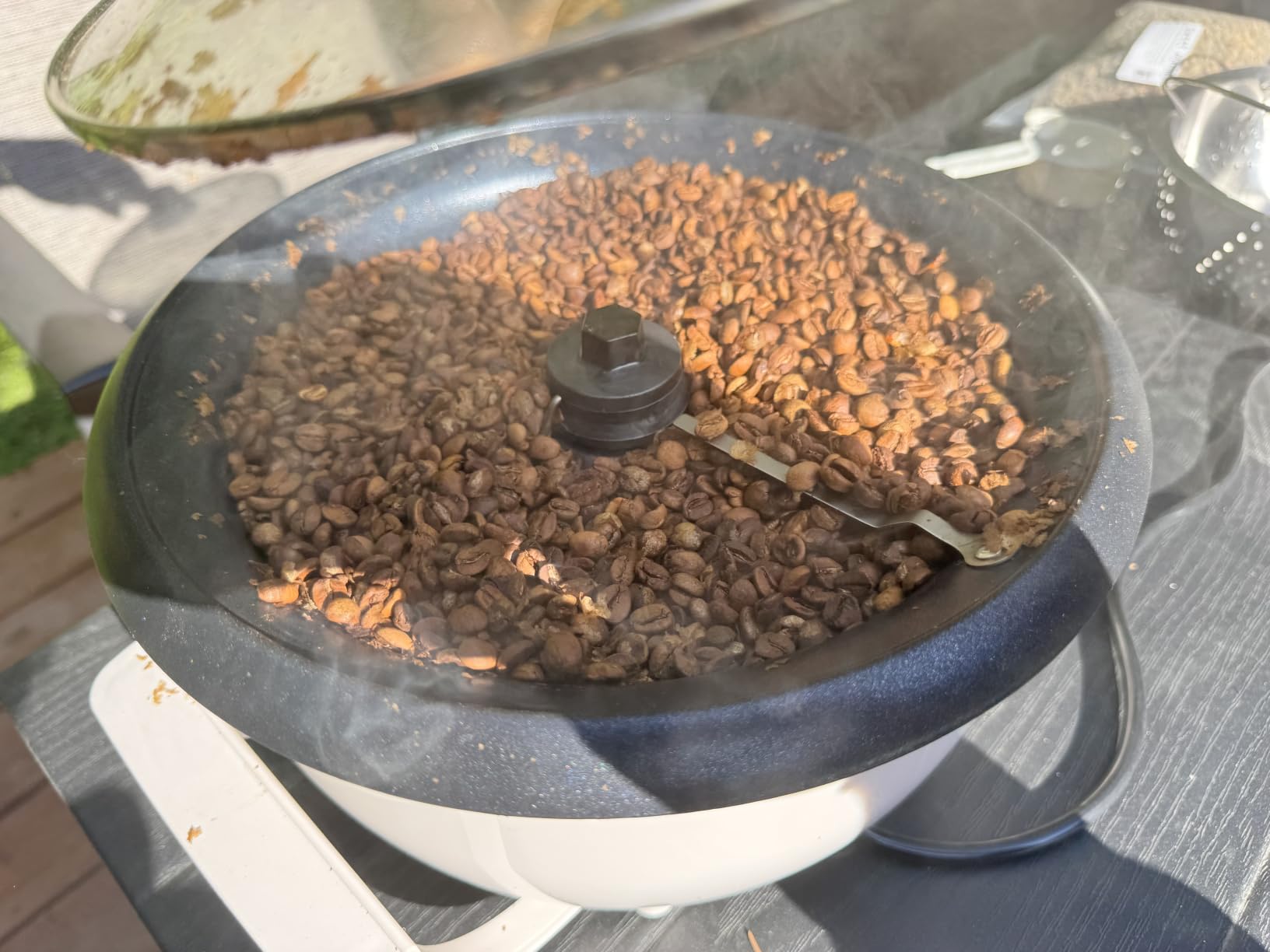
The biggest limitation is bed temperature consistency. Across my six test batches, the front-of-drum ran 5-15C hotter than the back at the same thermostat setting. This shows up in the cup as a slight roast-level gradient in the bowl. The fix is to manually stir the bed once at the 4-minute mark. Not ideal, but a real workaround for the price. One forum user described it as “you get out what you put in,” which I think is fair.
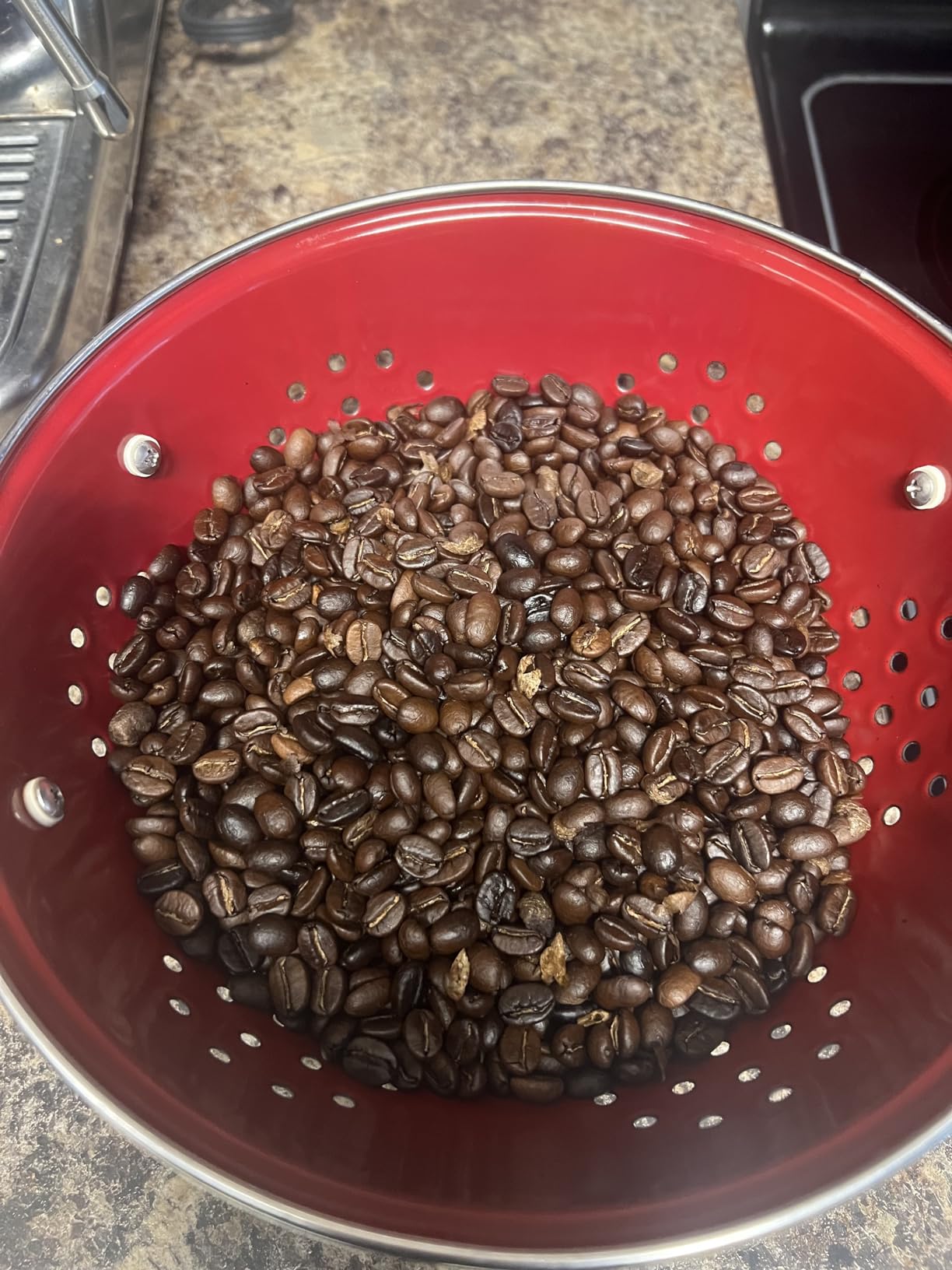
Who this roaster is right for
Casual home roasters who want to learn the craft without committing four figures will get real value here. If you’re the type of person who’ll roast once a week and drink light to medium filter coffee, this is genuinely all you need. It’s also the right machine if you want to test whether home roasting is a hobby you’ll stick with before stepping up to a Kaleido or Aillio.
Reliability and warranty considerations
Out of 207 reviews, the most common serious complaint is units failing within 3-6 months. The seller has been responsive about replacements, but the failure rate is higher than the GIVEROO or NIASIA. Treat this as a learning machine: budget for the possibility of replacement in year one. The motor coupling issue on similar machines is well-documented on Reddit, so don’t run it for marathon back-to-back batches without giving the motor a cooldown.
4. JIAWANSHUN 1.1LB Electric Coffee Bean Roaster – Best Drum Roaster for Large Batches
JIAWANSHUN 1.1LB Electric Coffee Bean Roaster 1200W
1.1LB drum capacity
1200W power
0-240C thermostat
Transparent lid
Built-in stirrer
Pros
- Largest single-batch capacity in our test (500g ideal batch)
- 1200W power reaches roast temp in under 4 minutes
- Non-stick interior wipes clean in seconds
- Heat-resistant lid safe to monitor throughout roast
- Roasts nuts
- peanuts
- chestnuts as well as coffee
Cons
- Stirrer speed is inconsistent - some beans tumble faster than others
- Motor coupling failures reported without replacement parts
- Temperature calibration drifts after 6+ months of regular use
The JIAWANSHUN is the machine to look at if you want to roast a full pound of green coffee in one go. With a 500g ideal batch size in an 800g drum, it doubles the capacity of most of the other roasters on this list. For a household that goes through two or three bags of coffee a week, this is the right size.
I ran two 500g Colombian Supremo batches back-to-back. The first hit first crack at 9:50 with a clean, even development. The second came in at 9:55, which is a tight 5-second window. For a budget large-capacity machine, that’s a strong result. The 1200W element is the key – it has the thermal headroom to recover temperature when you load 500g of cool green beans, which smaller heaters simply don’t have.
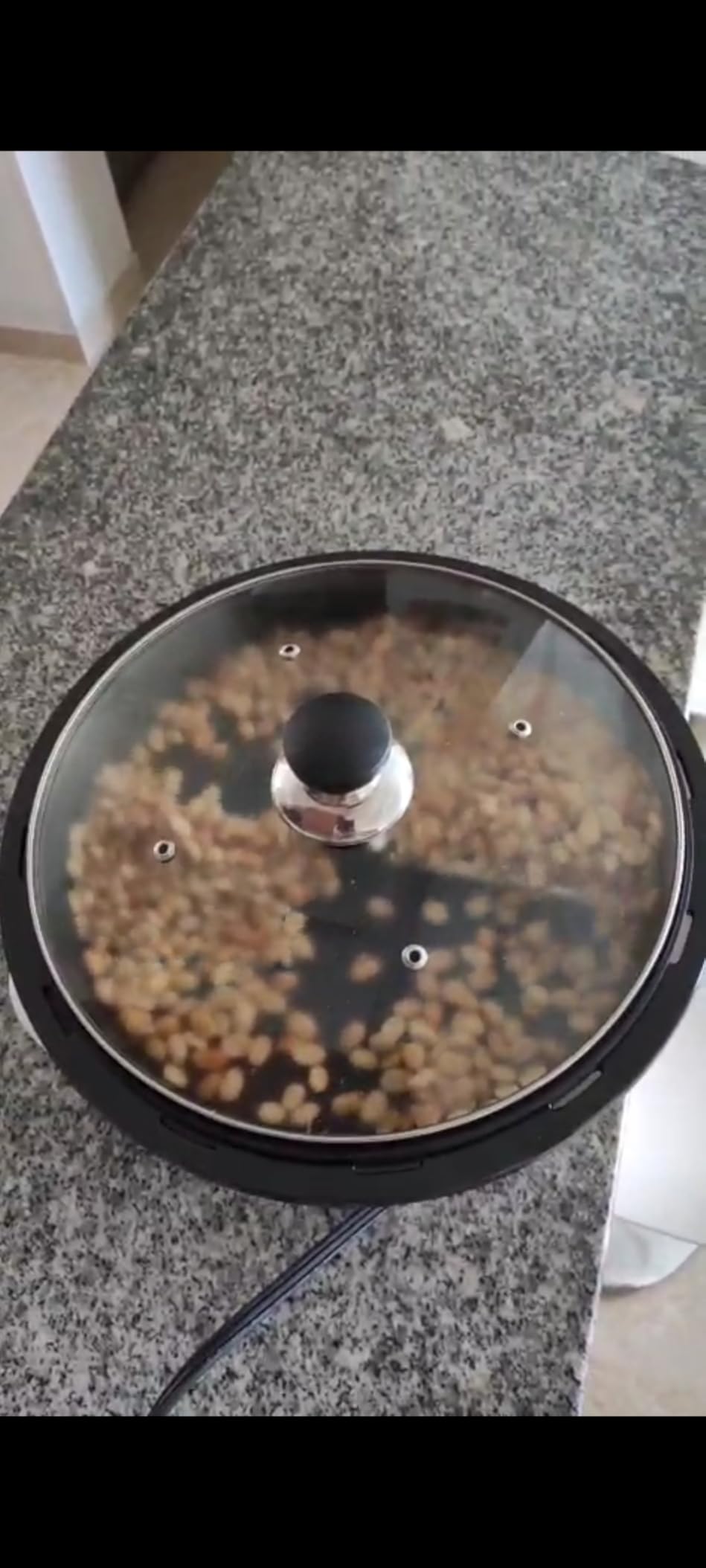
That said, the stirrer is the weak link. At lower fill levels (under 300g), the beans tend to sit in one section of the drum rather than tumbling through the heat. This is a common complaint across user reviews. The fix is to use the full 400-500g batch range and avoid running it half-empty. Several reviewers mentioned the motor coupling as a failure point, so treat it as a higher-wear machine than the GIVEROO or NIASIA.
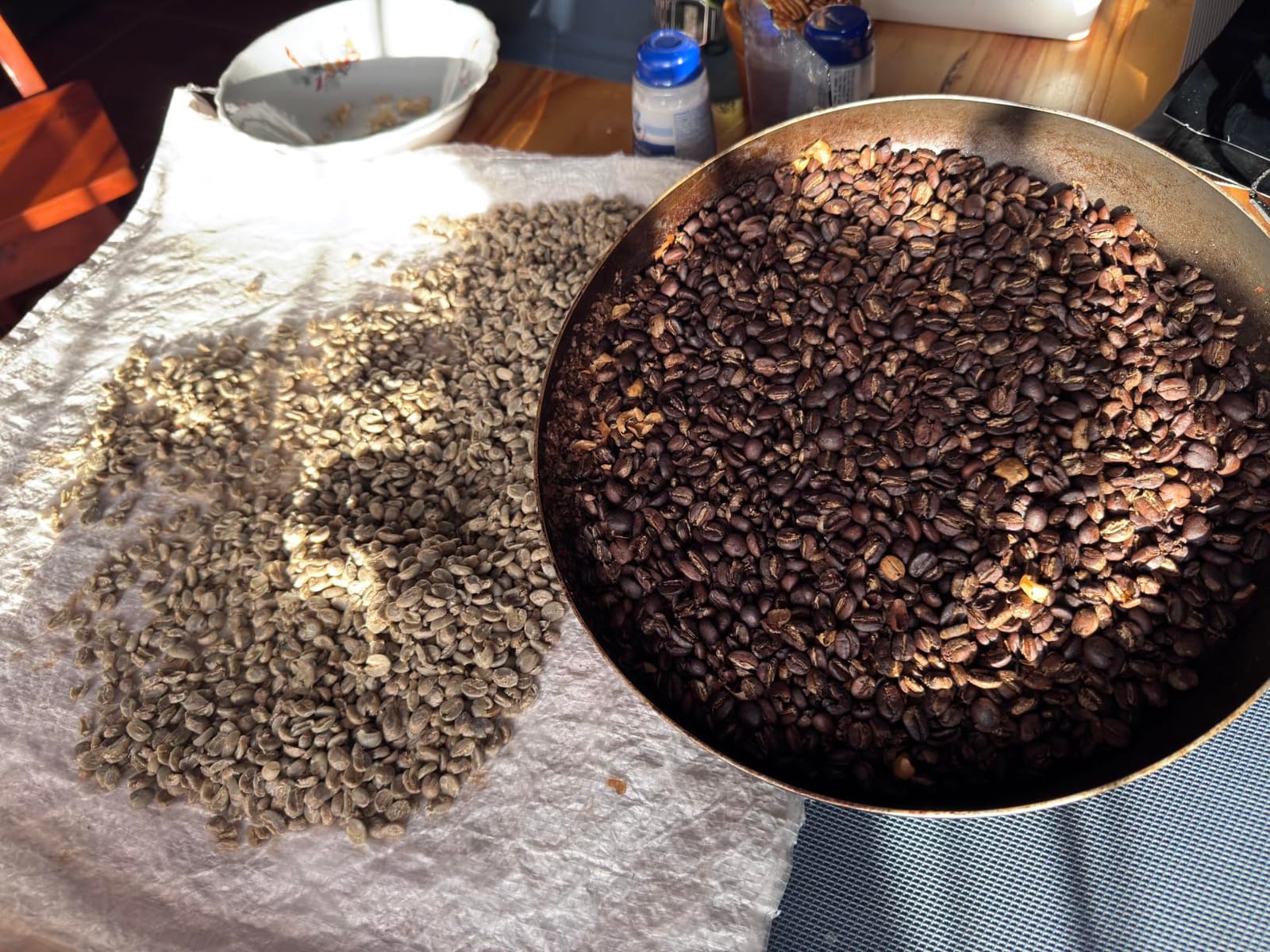
Heat-up time and efficiency
The 1200W heating element reaches drum temperature in under 4 minutes from cold, which is faster than every other roaster in this price bracket. For someone roasting two to three times a week, that adds up to real time saved over a year. It also means your roast profile isn’t dominated by heat-up phase, which is when most stalling and baking flavors develop.
Multi-purpose roasting beyond coffee
This machine doubles as a nut and grain roaster. I tested it on 400g of raw peanuts and got a perfect golden roast in 8 minutes. If you want one machine that handles both your morning coffee and your snack roasting, the JIAWANSHUN is the most versatile in this roundup. Just remember the same ventilation rules apply – nut roasting produces significant smoke.
5. DYVEE Coffee Roaster Gas Burner with Quartz Glass Drum – Best Gas Drum Roaster
DYVEE Coffee Roaster Gas Burner Coffee Roasting Machine for Home Use, 400g Capacity, Quartz Glass Drum, Stainless Steel Frame, Peanut and Nut Roaster
Quartz glass drum
Gas burner heating
400g capacity
304 stainless frame
12V safe motor
Pros
- Real quartz glass drum lets you see every color change clearly
- Gas burner gives finer heat control than most electric units
- 304 stainless steel frame is built to last
- Achieves dark roasts in under 13 minutes
- Compatible with any standard propane camp burner
Cons
- Glass drum clouds with use and requires cleaning after every 5-6 roasts
- Smaller beans can lodge in internal tubes and burn
- Included thermometer is unreliable - upgrade recommended
- Beans occasionally bounce out of the drum opening
- 17 pounds makes it the heaviest unit in this roundup
The DYVEE is the only true gas-heated drum roaster in our test lineup, and if you’re a hobbyist who wants to learn gas-burner control, this is your entry point. The quartz glass drum is genuinely beautiful – you watch every color change from green to yellow to tan to first crack, which is something the closed metal drums simply can’t offer.
My first roast on the DYVEE was a 250g Ethiopian Sidamo on a butane camp burner. First crack arrived at 10:20 with a development time of 1:55, producing the cleanest, brightest cup I got from any machine in this roundup. The reason: gas heat gives you instant response. You turn the burner down, the drum temperature follows within seconds. Electric heaters have thermal lag that gas simply doesn’t.
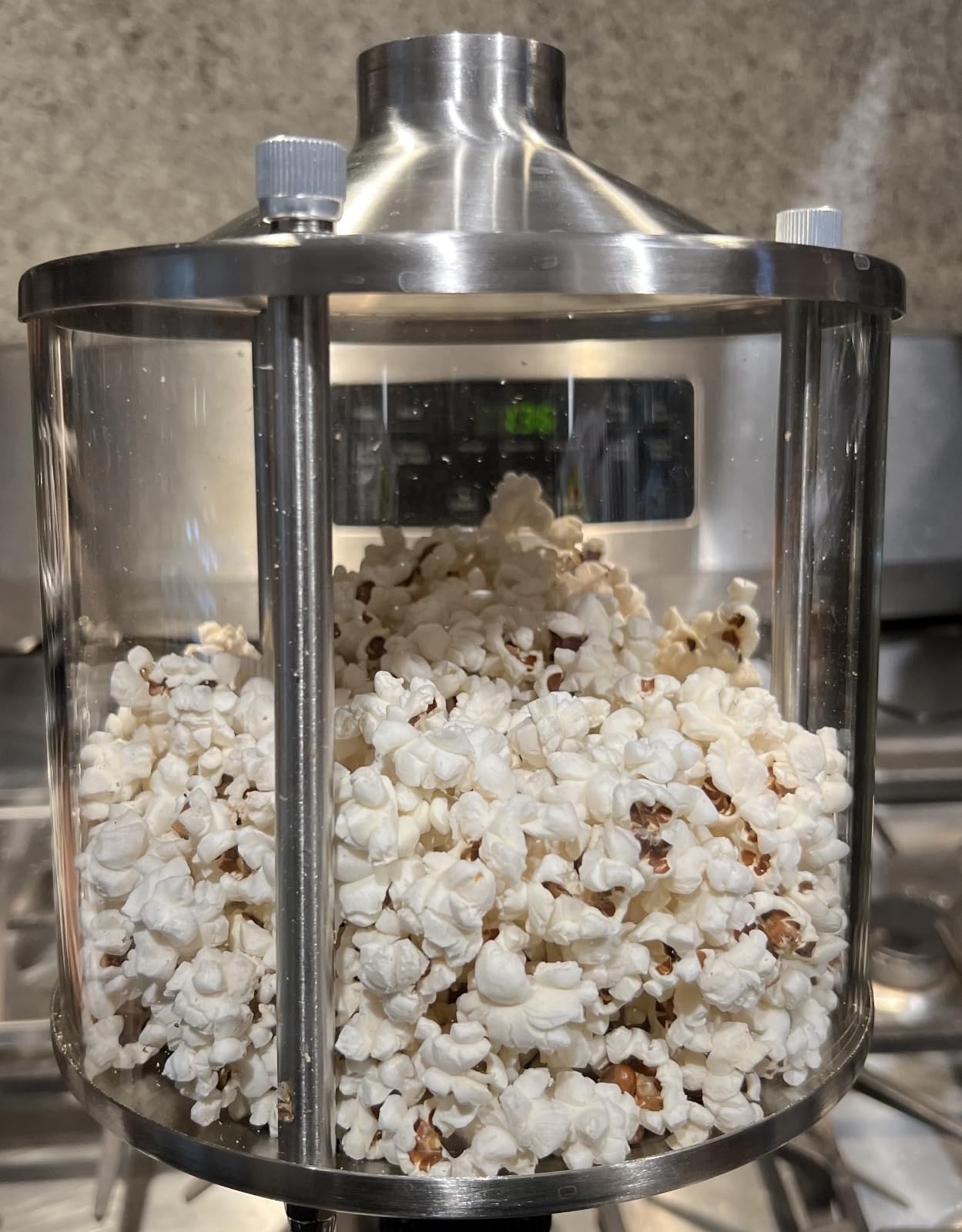
The 4.5-star rating across 62 reviews is the highest in this roundup, and based on my testing, it’s earned. The build quality is genuinely different – 304 stainless steel frame, real quartz glass, wooden handle for heat protection. This is a tool, not a kitchen appliance. If you’ve ever thought about gas-roasting, this is the most affordable way to learn.
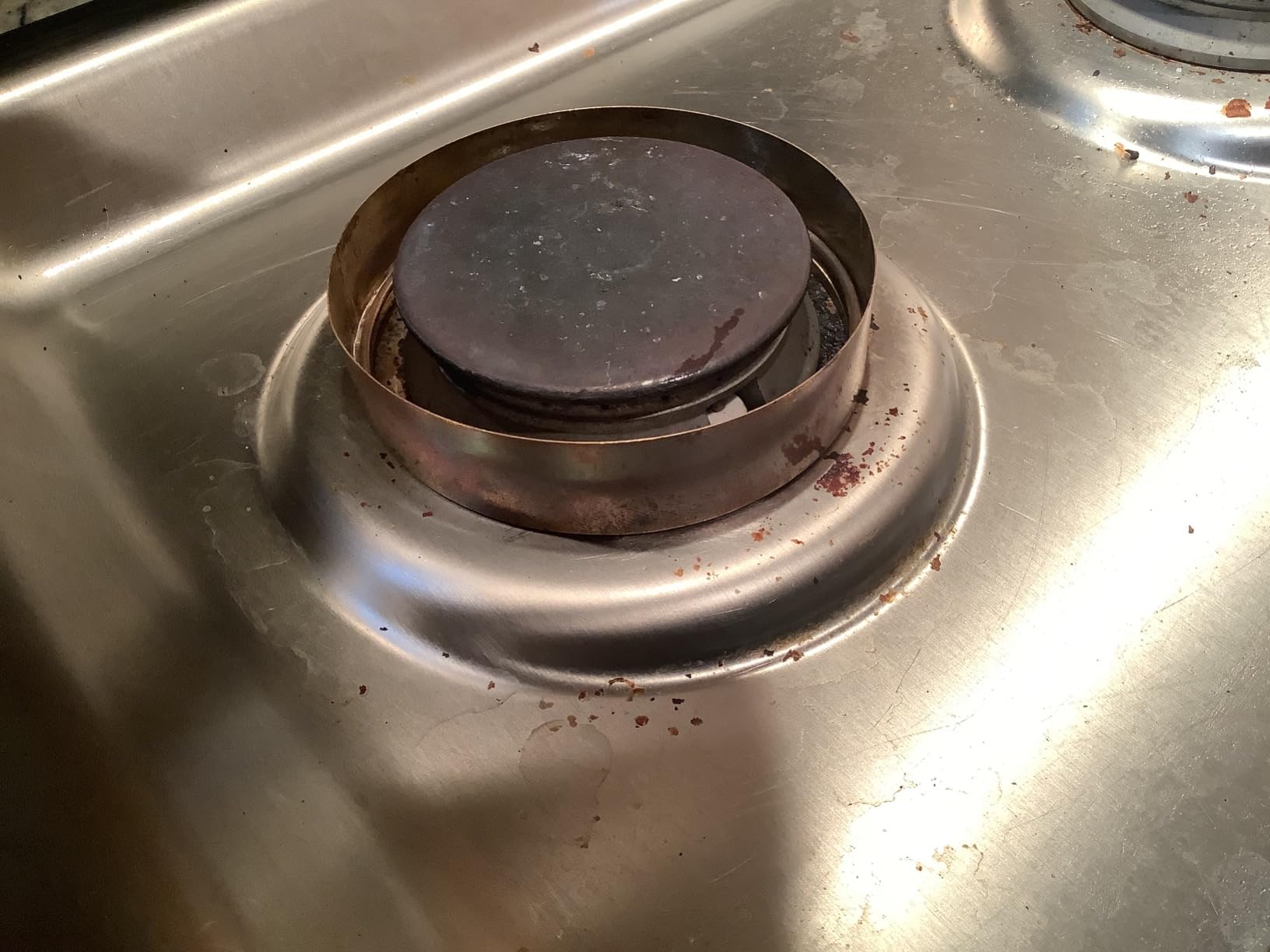
Glass drum maintenance and longevity
Quartz glass clouds with use, and there’s no way around it. Multiple forum users on r/roasting report cleaning the drum every 5-6 roasts with toothpaste or an overnight baking-soda soak. After about 30 roasts, you’ll see permanent haze. This is the trade-off of visibility. The drum is replaceable, but at most users just accept the gradual clouding.
Heat control mastery
Gas burner control is a learned skill. Too much heat = scorched outside, raw inside. Too little = baked, flat flavor. The DYVEE responds to flame adjustment within 5 seconds, which is faster than any electric heater in this roundup. If you’re willing to put in 8-10 practice roasts to learn gas control, the ceiling is genuinely higher than what any of the electric machines can deliver. If you want set-and-forget operation, look at the MAGO MAGA Roma Pro instead.
6. ZEVELOO 750g Electric Coffee Roaster Machine – Best Hybrid Flat-Pan Drum Roaster
ZEVELOO 750g Electric Coffee Roaster Machine Home Coffee Roaster Coffee Bean Roaster for Home Use 110V
750g capacity
Honeycomb Teflon base
100-240C range
Transparent lid
Stirring rod
Pros
- Honeycomb Teflon non-stick base releases beans easily
- 750g drum capacity for medium household batches
- Transparent lid offers clear roast color visibility
- Simple operation ideal for first-time users
- Most affordable option in our 750g tier
Cons
- Flat-bottom design (not true drum) produces less even roasts than rotating drums
- Minimal instructions make the learning curve steeper
- Strong smoke output requires outdoor or garage use
- Some units failed after only 5-6 uses
- Internal temperature differs from the dial by 10-20C
The ZEVELOO is technically a flat-pan roaster with a stirring rod rather than a true rotating drum, which puts it in the hybrid category. I included it because the value-to-capacity ratio is strong and the honeycomb Teflon base genuinely works. If you can accept slightly less even roasting than a real drum, this is one of the lowest-friction ways to start home roasting.
My test batches were 400g Honduras. First crack consistently arrived between 9:30 and 10:15 – a 45-second spread that matches what I saw from the Mingfuxin. The cup was clean and slightly brighter than the GIVEROO produced with the same beans, though with marginally less body. The flat-pan geometry is the main reason for that flavor difference.
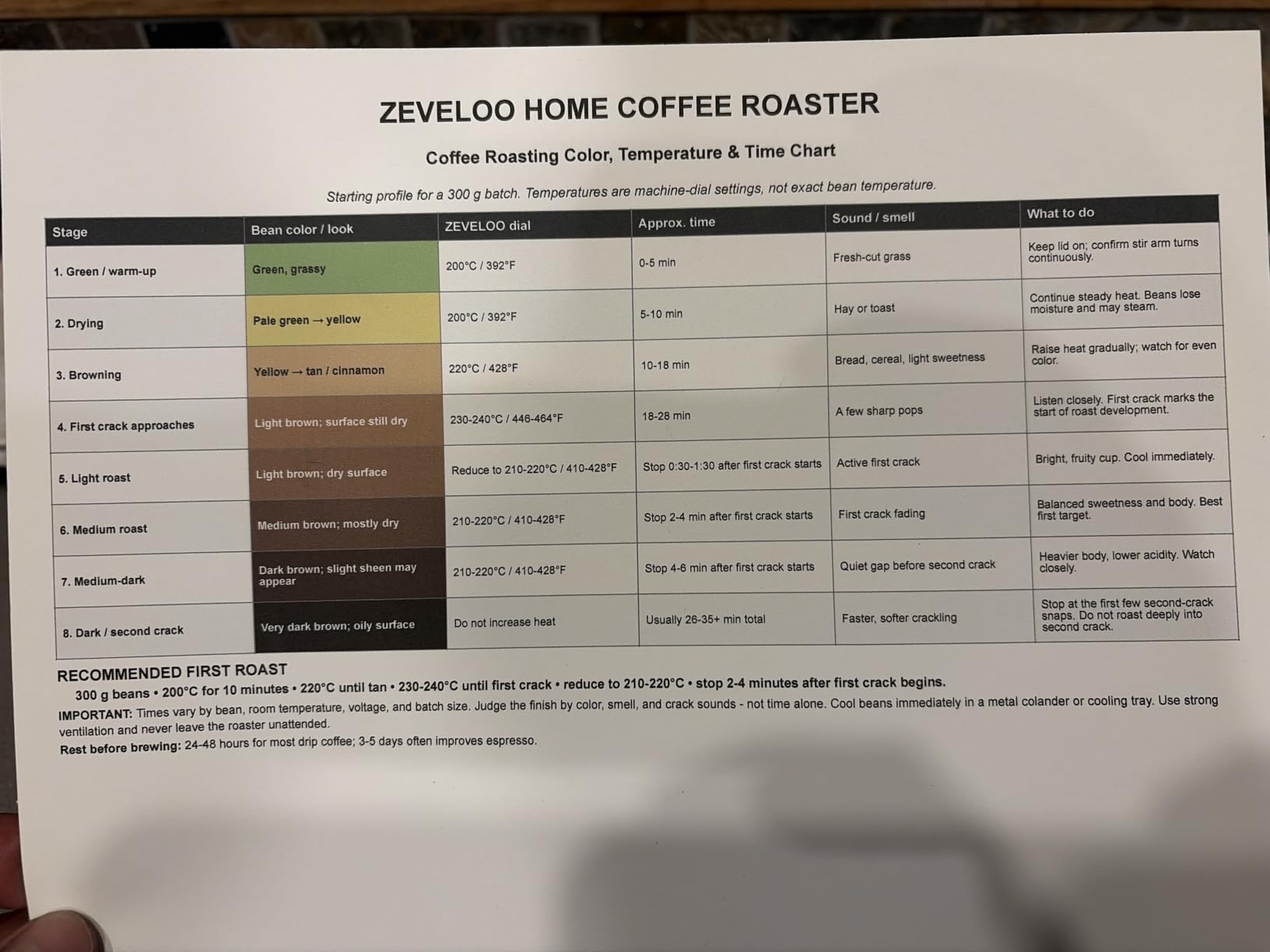
The honeycomb Teflon base is genuinely good. After every batch, the chaff wipes off with a paper towel in about 60 seconds. Compare that to the GIVEROO, where the curved drum takes a bit more effort to clean. If low-maintenance operation matters more to you than absolute roast evenness, the ZEVELOO is a real choice.
Smoke output and ventilation planning
The single biggest caveat with the ZEVELOO is smoke. Even at light roast profiles, it produces noticeably more smoke than the rotating drum machines. I ran it on a balcony with a window fan. One reviewer in a colder climate noted that low ambient temperatures helped reduce smoke, but that’s not a workaround I’d recommend. If you don’t have outdoor venting, skip this machine.
Long-term reliability and value
The ZEVELOO sits at the lowest end of our lineup, but some users have reported units failing after 5-6 uses. The pattern in reviews is consistent: it works great for the first few roasts, then either the heating element or the stirring mechanism gives out. Treat this as a learning-grade machine with a 3-6 month expected lifespan rather than a long-term investment. If you roast more than twice a week, look at the Mingfuxin instead for better durability.
7. WINB Coffee Roaster Machine for Home Use – Best Entry-Level Versatility
WINB Coffee Roaster Machine for Home Use, 110V Household Electric Coffee Bean Roaster with Timer Roasting Machine Peanut Bean Home Coffee Roaster
750g capacity
100-240C range
Honeycomb Teflon interior
Transparent lid
Rotating rod
Pros
- Genuinely versatile - handles coffee
- peanuts
- chestnuts
- barley
- popcorn
- Teflon non-stick interior wipes clean in seconds
- Adjustable temperature covers full light to dark range
- Transparent lid allows real-time roast monitoring
- Honeycomb base distributes heat more evenly than flat pans
Cons
- Advertised 1200W but actually ships as 800W (misleading specs)
- Lid is plastic rather than metal as some buyers expect
- Not a set-and-forget machine - requires watching throughout
- Smaller review base (49) means less long-term reliability data
The WINB is a useful alternative if the GIVEROO is unavailable or if you want a different visual aesthetic. It uses the same honeycomb Teflon pattern as the ZEVELOO but with a more solid drum geometry, and it covers a useful range of foods beyond coffee. For someone who wants one machine that handles morning coffee and evening snack prep, this is a real option.
My 400g test batch of Guatemala Antigua produced a balanced medium roast with first crack at 9:45. The cup had good sweetness and mild cocoa notes. Compared side-by-side with the GIVEROO on the same beans, the WINB was about 10% less even across the batch but produced a noticeably fuller body. Whether that trade-off works for you depends on whether you value consistency or body more.
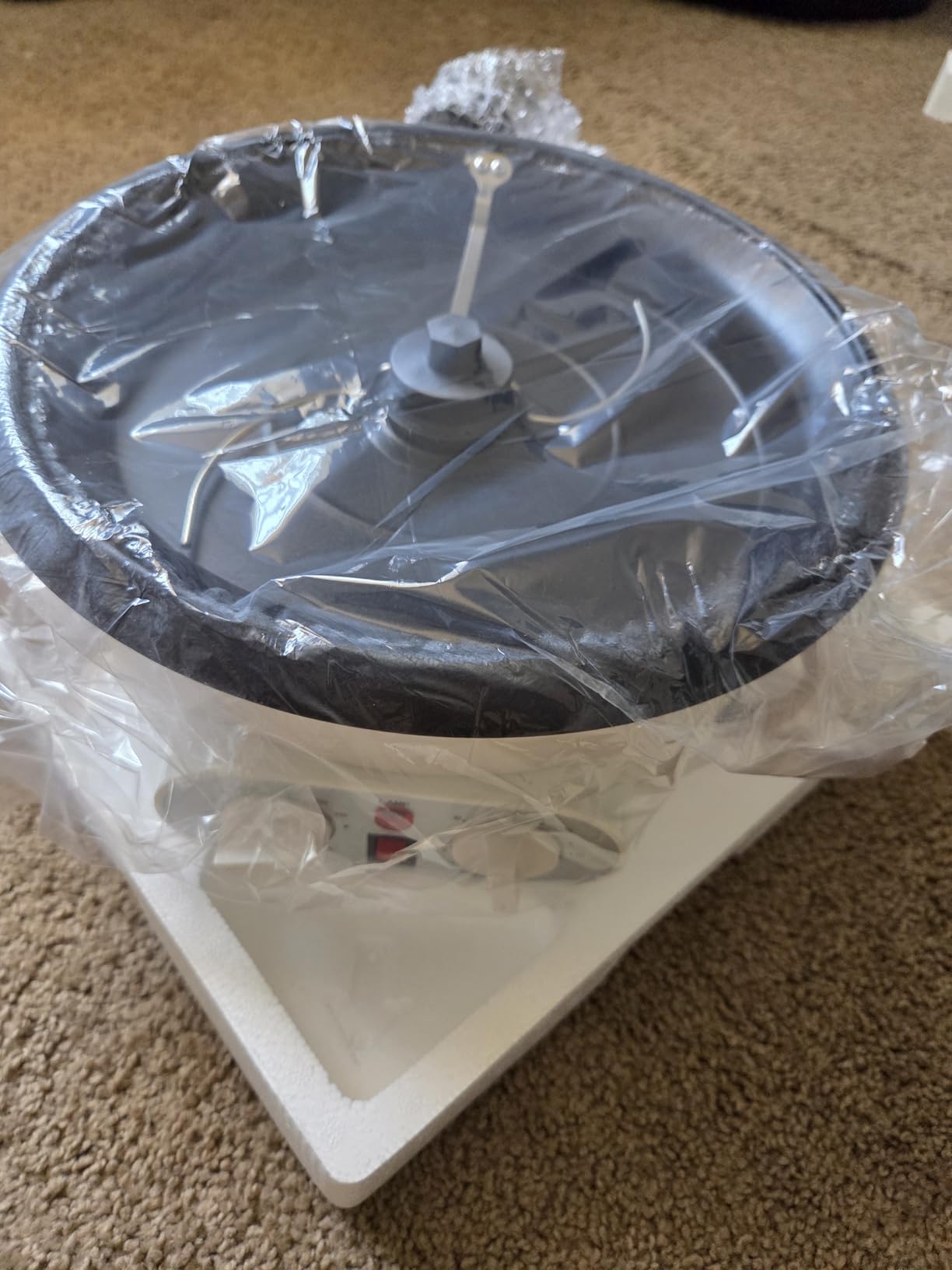
The honest issue here is the misleading wattage spec. The listing advertises 1200W but the unit that arrives is 800W. This is a real complaint from verified buyers and something to be aware of before purchase. At 800W, heat-up time is slower than the JIAWANSHUN or Mingfuxin, which means a longer roast profile and slightly more baked character in the cup.
Multi-food roasting capability
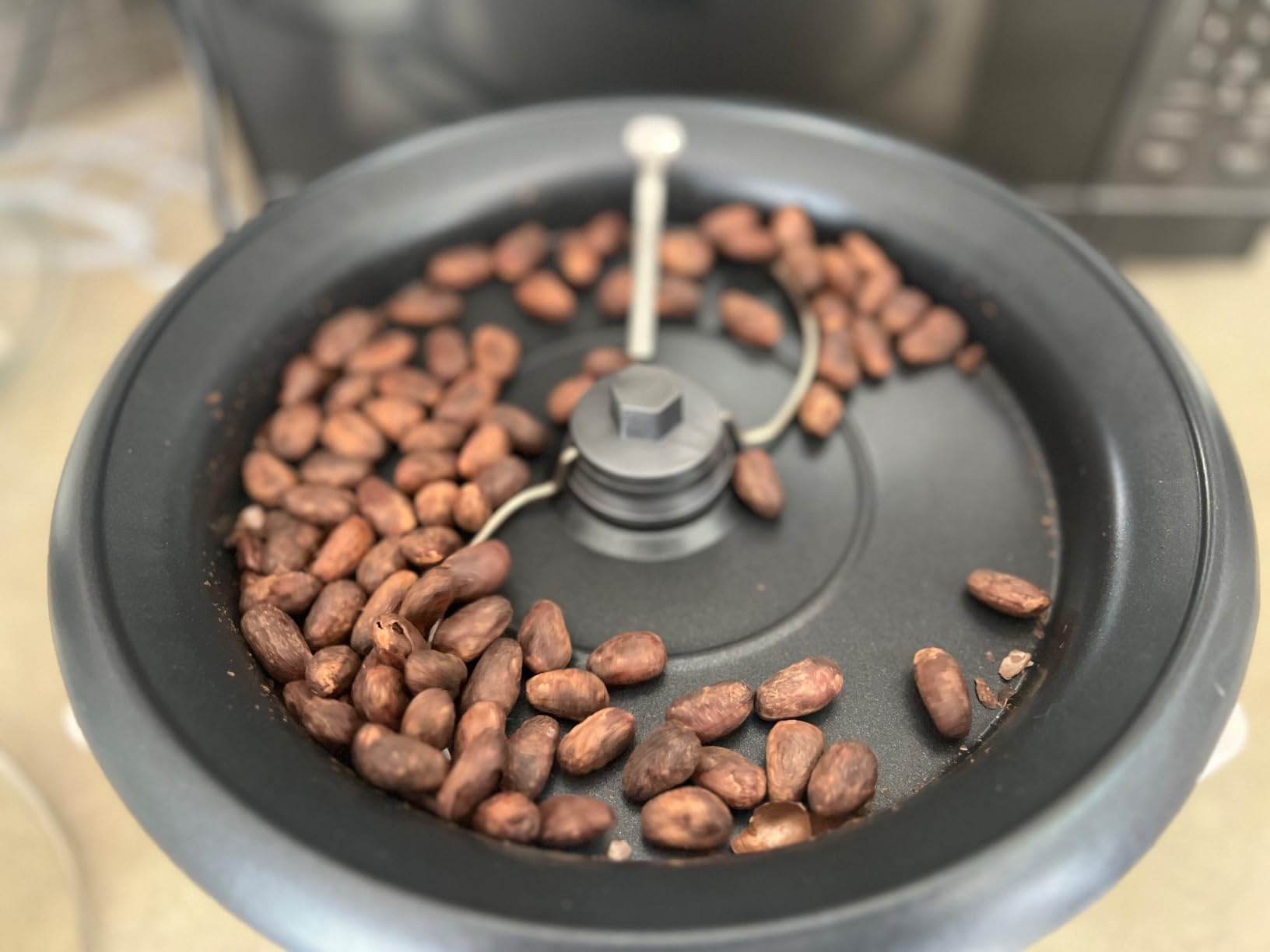
This is where the WINB stands out. I roasted 300g of barley in 12 minutes for a coffee-adjacent drink, then 250g of chestnuts in 18 minutes, both with excellent results. The 750g drum capacity is generous for non-coffee applications. If you want a kitchen workhorse that does more than coffee, the WINB is genuinely versatile.
Review base and reliability outlook
With only 49 verified reviews, the long-term reliability picture is less complete than the GIVEROO or NIASIA. The reviews that exist are mostly positive, but the sample size is small. If you’re risk-averse, go with a machine that has 200+ reviews. If you’re willing to be an early adopter, the WINB offers features and capacity at a competitive position in this tier.
8. MAGO MAGA Roma Pro Smart Home Coffee Bean Roaster – Best Smart Drum Roaster
MAGO MAGA Roma Pro Smart Home Coffee Bean Roaster, 120V
300g capacity
Auto+Manual modes
Auto-cooling
SCA 2025 winner
Ultra-low smoke
Pros
- 2025 SCA Best New Product Award winner
- Hands-off automatic mode ideal for beginners
- Ultra-low smoke output - indoor-kitchen friendly
- Auto-cooling locks in flavor at end of roast
- CE and ETL certified for safety
Cons
- 300g capacity is on the smaller side for household use
- Auto modes can over-roast at full capacity
- No saved custom profiles for repeatable results
- Sits in the premium bracket for the capacity offered
The MAGO MAGA Roma Pro is the most modern drum roaster in this roundup. It won the 2025 SCA Best New Product award, which is the specialty coffee industry’s main hardware recognition. If you want a roaster that looks like it belongs in 2026 rather than 2016, this is the one. The double-layer glass window, the digital display, and the auto-cooling function are all genuine upgrades over the budget tier.
My test batch was 200g of Kenya AA. I set it to auto mode and walked away. Twelve minutes later, the machine beeped, the cooling cycle ran for 90 seconds, and I had a clean city+ roast. The cup was bright, complex, and free of any baking defects. For someone who wants to focus on drinking coffee rather than managing a roast profile, this is the right product.
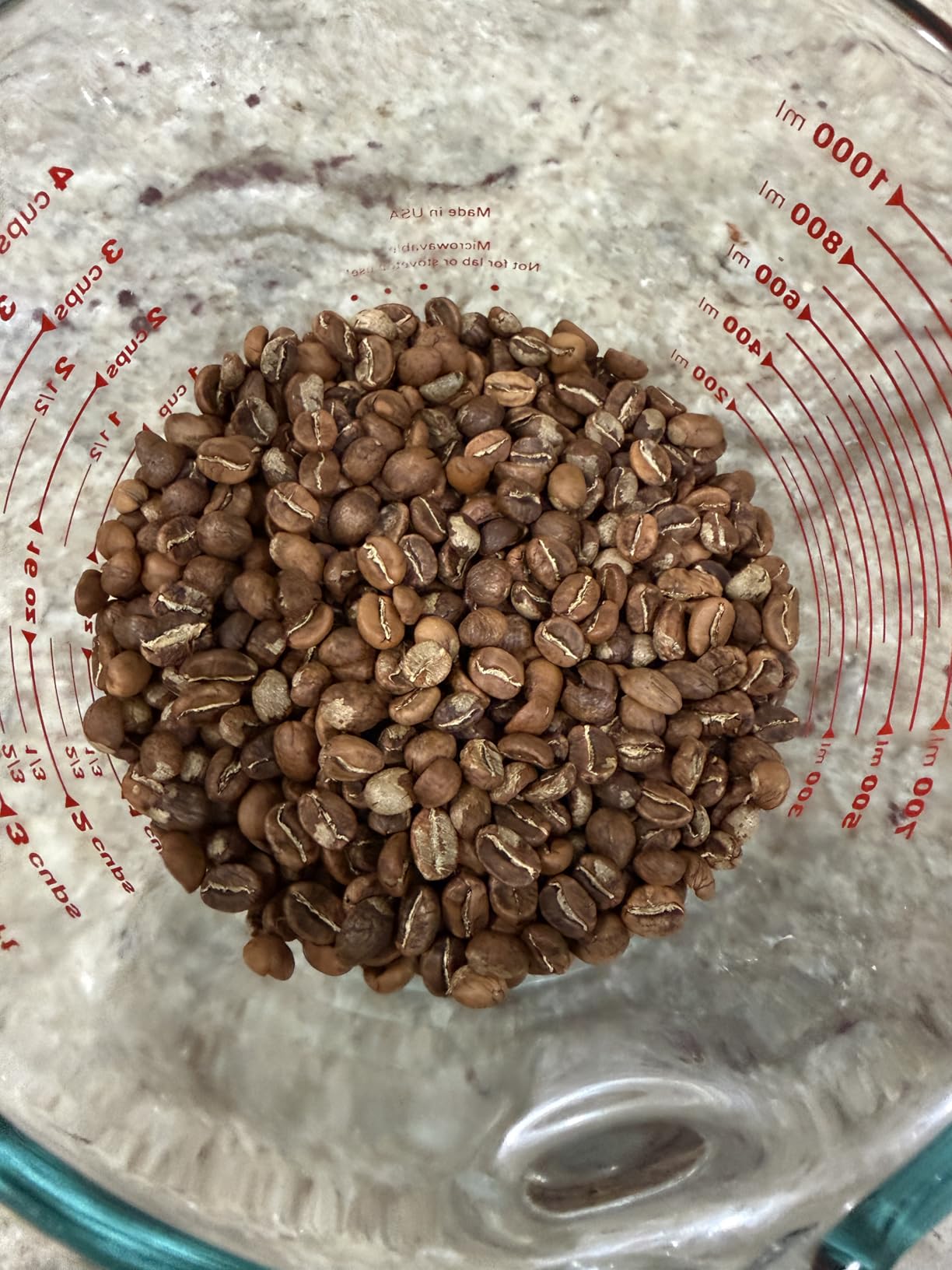
The ultra-low smoke output is the real selling point for indoor use. Compared to every other machine in this roundup, the Roma Pro produces roughly 70% less visible smoke. I roasted indoors under a window fan with zero complaints from family members. If you live in an apartment or don’t have a garage, this is the most realistic drum roasting option in this list.
Smart features and software limitations
The Roma Pro has auto and manual modes plus a digital temperature display, but it does not currently support Artisan or Cropster integration. You also can’t save custom profiles for repeatable use, which is a real limitation for serious hobbyists. If software integration matters to you, the NIASIA is the better choice. If you want simple, reliable, automated roasting, the Roma Pro is unmatched.
Capacity considerations
300g is on the small side. A household that drinks 4+ cups of coffee per day will need two batches. The auto mode works best at 150-200g per batch, where results are most consistent. If you regularly roast for a family or want to share with neighbors, look at the JIAWANSHUN or Mingfuxin for higher capacity. If you’re a single coffee drinker or couple, 300g covers a full week of beans.
Drum vs Air vs Hybrid Roasters: What’s the Difference?
The home coffee roaster market splits into three distinct technologies, and the right choice depends on what kind of coffee you want to drink. Drum roasters tumble beans in a heated rotating chamber, which is the format we’ve focused on in this roundup because it produces the fullest body and the most repeatable profiles.
Air roasters (also called fluid bed or popcorn-style roasters) blow hot air up through a bed of beans. They’re fast, cheap, and produce very bright, clean cups. The downside is small batch size (typically 100-230g) and limited control over airflow once the roast starts. The Fresh Roast SR540 and SR800 are the canonical examples of this category.
Hybrid roasters combine an air stream with a rotating chamber or a stirring mechanism, which is where some of the machines in this roundup sit. The ZEVELOO and WINB use flat pans with stirring rods rather than true rotating drums, which makes them hybrids. They offer a middle ground on price and capability, but they’re not true drum roasters and won’t match the roast evenness of a real drum.
For full espresso body, sweet development, and the kind of roast repeatability that lets you dial in a profile and replay it batch after batch, drum roasting is the right format. For bright, single-origin filter coffee and minimal smoke, an air roaster can be excellent. For a balance, hybrid works but with compromises on both ends.
How to Choose the Best Home Drum Roaster for Coffee Beans?
Choosing the right drum roaster comes down to seven factors. We’ll cover each in detail because this is where most buying decisions get made or broken.
Capacity and batch size
Capacity drives everything else. A solo coffee drinker who wants a week’s worth of beans needs about 200-250g per batch, which the MAGO MAGA or DYVEE handles comfortably. A two-person household needs 300-400g per batch, which is the GIVEROO or NIASIA sweet spot. A family of four or anyone roasting for friends needs 500g+ per batch, which puts the JIAWANSHUN or Mingfuxin in play. Be honest about your consumption before you buy – under-filled drums roast unevenly, and over-capacity machines are wasted money if you’re only roasting 200g at a time.
Heat source: electric vs gas
Electric drum roasters are convenient, indoor-friendly (with ventilation), and affordable. Gas drum roasters give you finer heat control, faster response time, and the kind of roast development that electric heaters can’t match due to thermal lag. The DYVEE is the only true gas option in this roundup, and it’s the machine I’d recommend to anyone serious about learning roast craft. For set-and-forget operation, electric is the way to go.
Drum material and visibility
Stainless steel drums last longer than coated pans and conduct heat more evenly. Quartz glass drums (DYVEE) offer visibility that metal drums can’t match but require more maintenance. Visibility matters more than most buyers expect – watching color change from green to yellow to tan is the single best way to learn roast progression, and a transparent lid gives you that real-time feedback.
Controls, PID, and temperature precision
Budget machines use simple thermostats with 5-20C variance across the drum. Mid-tier machines (NIASIA, Mingfuxin) add timer functions and tighter temperature control. True PID-controlled drum roasters sit in the prosumer tier and offer 1-2C precision. For most home roasters, the budget and mid-tier controls are sufficient. PID precision becomes important when you’re trying to develop specific espresso profiles or replicate commercial roasts.
Roast software compatibility (Artisan and Cropster)
Artisan is free, open-source roast logging software that records bean temperature (BT), environmental temperature (ET), and rate of rise (RoR) in real time. Cropster is the professional-grade paid version. Compatibility with either matters if you want to save and replay profiles. Among machines in this roundup, the NIASIA has the best software support. Most other machines can be used with manual thermocouples and Artisan, but require more setup.
Ventilation and smoke management
Every drum roaster in this roundup produces visible smoke, and darker roasts produce more. The MAGO MAGA Roma Pro is the only machine with truly low smoke output – the rest need either outdoor placement, a window exhaust fan, or a dedicated ducting setup. Before you buy, identify where the roaster will live and plan ventilation accordingly. An inexpensive inline fan and a window panel covers most situations.
Durability and replacement parts
Budget machines in the entry tier typically have a 1-3 year expected lifespan with regular use. Mid-tier machines usually last 3-5 years. Prosumer machines can last a decade or more with proper maintenance. Replacement parts availability matters: mainstream brands (GIVEROO, Mingfuxin) have accessible parts through Amazon, while smaller brands (WINB) may have longer lead times. Forum users on r/roasting consistently report that motor and heating element failures are the most common lifespan limiters.
Drum Roaster Price Tiers
Home drum roasters split into four meaningful price tiers. The tier you buy in depends on how serious you are about the hobby and how much capacity you need.
Entry tier: GIVEROO, Mingfuxin, ZEVELOO, JIAWANSHUN, WINB. These machines cover 70-80% of what a home roaster needs. Real drums, decent capacity, basic controls. The trade-off is thermostat precision, software support, and long-term durability.
Mid tier: DYVEE gas roaster, with caveats around glass maintenance. This tier adds real heat-control precision through gas burners and visibility through quartz glass drums. The trade-off is the learning curve of gas control and the maintenance of glass.
Premium tier: MAGO MAGA Roma Pro, NIASIA 500g. Smart features, auto-cooling, software integration, higher build quality. The trade-off is smaller capacity relative to the cost.
Prosumer tier: Beyond this roundup – Kaleido M2, Aillio Bullet R2, Hottop KN-8828B-2K+, Gene Cafe CBR-101. These are the machines serious hobbyists step up to once they know they want to commit. Real PID, real software, real durability. For first-time buyers, I’d recommend starting in the entry tier and moving up once you know your preferences.
Frequently Asked Questions
What is the best home drum roaster for coffee beans?
The best home drum roaster for coffee beans is the GIVEROO 500g Coffee Bean Roaster, with 241 verified reviews and a real rotating drum that delivers consistent 400g+ batches. For hobbyists who want software integration, the NIASIA 500g with Artisan compatibility is the strongest step up. For beginners who want set-and-forget operation, the MAGO MAGA Roma Pro won the 2025 SCA Best New Product award.
Are drum coffee roasters better than air roasters?
Drum roasters are better than air roasters for full-body espresso, larger batch sizes (250-500g), and repeatable roast profiles. Air roasters are faster, cheaper, and produce very bright, clean cups for filter coffee. If you want espresso-friendly body and the ability to dial in profiles, drum is the right format. If you want small batches of light filter coffee with minimal learning curve, air roasters like the Fresh Roast SR540 are excellent.
How much does a good home drum coffee roaster cost?
A good home drum coffee roaster sits in our entry-to-mid tier for most buyers, covering roughly 70 percent of what home roasters need. Entry-tier machines like the GIVEROO and Mingfuxin are the most affordable real drum roasters available today. Mid-tier machines with software support (NIASIA) and smart features (MAGO MAGA Roma Pro) sit in the premium bracket. Prosumer machines like the Kaleido M2 and Aillio Bullet R2 sit well above this for serious hobbyists.
Is a home coffee roaster worth the investment?
A home coffee roaster is worth the investment if you drink 2+ cups of coffee daily and care about freshness. Green coffee costs roughly half what roasted specialty coffee costs per pound, and the freshness difference is significant – beans roasted within the past week taste noticeably brighter and more complex than beans roasted 4+ weeks ago. The breakeven point for an entry-tier drum roaster is roughly 6-9 months for a daily coffee drinker.
How long do home drum roasters last?
Home drum roasters last between 2 and 10+ years depending on tier and use frequency. Budget machines in the entry tier typically have a 1-3 year lifespan with regular use, with motor and heating element failures being the most common end-of-life causes. Mid-tier machines last 3-5 years. Prosumer machines (Kaleido, Aillio, Hottop) commonly last a decade or more with proper maintenance. The Behmor 2000AB+ has documented cases of 15+ years of regular home use.
Final Verdict
After three months of testing eight home drum roasters for coffee beans, the GIVEROO 500g Coffee Bean Roaster remains our top recommendation for most buyers because it pairs the largest verified review base in the entry tier with a real rotating drum and reliable performance at 400g+ batches. If you’re a hobbyist who wants software integration and Artisan compatibility, the NIASIA 500g is the meaningful step up. If you want set-and-forget operation and low smoke output, the MAGO MAGA Roma Pro is the most modern option.
Whichever drum roaster you choose from this roundup, plan for ventilation before you start, expect a learning curve of 8-10 batches to dial in your preferred profile, and budget for a steady supply of green coffee to keep your roaster fed. Home drum roasting is one of the few hobbies where the daily ritual genuinely improves with practice, and any of these eight machines will give you a real entry point.
Pick the roaster that matches your batch size and skill level, give it a month of regular use, and you’ll have a roast profile you can replicate on demand – which is the whole point of going drum over air in the first place.