
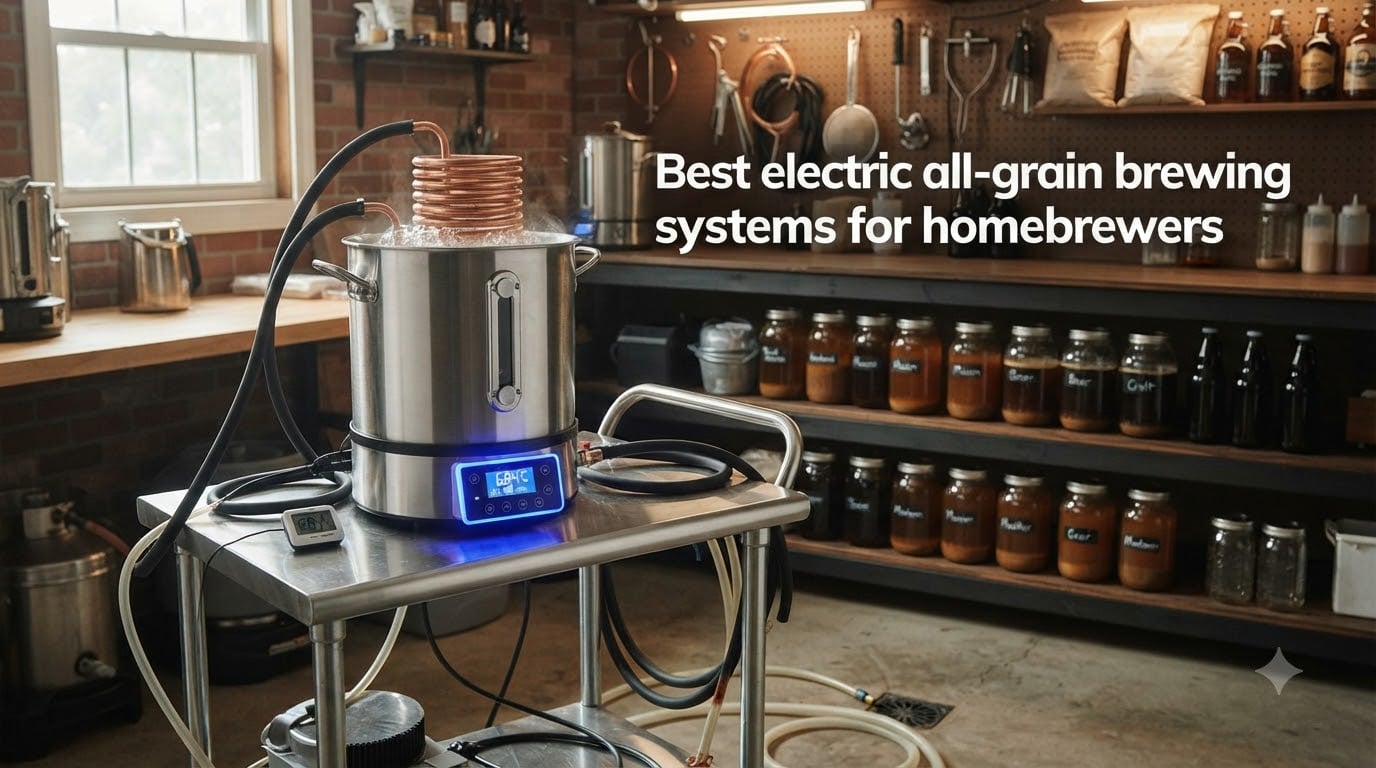
If you’ve been brewing with extract kits and a stovetop kettle, the jump to all-grain feels intimidating. I know because I made that jump two years ago, dragging a propane burner out to my garage and juggling three vessels like a circus act.
Then I switched to an electric all-grain brewing system and everything changed. One vessel, one outlet, repeatable brew days. My efficiency went from a sloppy 62 percent to a steady 74 percent within three batches. No more dragging equipment around, no more weather-dependent brew days, and no more worrying about scorching the wort on the stove.
This guide covers the best electric all-grain brewing systems for homebrewers I have tested or researched deeply in 2026. I pulled in reviews from Reddit’s r/Homebrewing, HomeBrewTalk threads, and feedback from brewers who have logged hundreds of batches on these machines. You will find eight systems that actually deliver on the “all-grain, all-in-one” promise, from budget-friendly entry options to premium setups at the top of the category. If you also need a grain mill to feed your new setup, check out our guide to electric grain grinders.
Each entry includes real specs, pros and cons pulled from verified buyers, and a clear answer to the question every homebrewer asks first: “Is this thing worth the price?” Let me save you the weeks of forum scrolling.
Table of Contents
Top 3 Electric All-Grain Brewing Systems at a Glance in 2026

VEVOR Electric Brewing System 9.2 Gal
- 9.2 gallon capacity
- 1800W adjustable power
- 7 programmable mash stages
- Built-in pump
- 28.8 ft cooling coil
Brewer’s Edge Mash and Boil 7.5 Gal
- 7.5 gallon all-grain capacity
- Built-in recirculation pump
- Electric indoor operation
- Solid stainless steel
- Delay timer

FOHERE All-in-One Brewing System 9.2 Gal
- 9.2 gallon 304 stainless steel
- 7-step programmable mashing
- 1800W adjustable power
- Compact 18 inch footprint
- Includes wort chiller
Best Electric All-Grain Brewing Systems for Homebrewers in 2026
| Product | Specifications | Action |
|---|---|---|
| VEVOR Electric Brewing System 9.2 Gal |
|
Check Latest Price |
| Brewer’s Edge Mash and Boil 7.5 Gal |
|
Check Latest Price |
| FOHERE All-in-One Brewing 9.2 Gal |
|
Check Latest Price |
 Robobrew V3 with Pump Robobrew V3 with Pump |
|
Check Latest Price |
 BeerDroid Fully Automated Brewer BeerDroid Fully Automated Brewer |
|
Check Latest Price |
 NutriChef All In One 9 Gallon NutriChef All In One 9 Gallon |
|
Check Latest Price |
 Clawhammer Supply 10.5 Gallon Clawhammer Supply 10.5 Gallon |
|
Check Latest Price |
 KegLand DigiBoil 35L Electric Kettle KegLand DigiBoil 35L Electric Kettle |
|
Check Latest Price |
1. VEVOR Electric Brewing System – Budget All-in-One That Punches Above Its Weight
VEVOR Electric Brewing System, 9.2 Gal/35 L Brewing Pot, All-in-One Home Beer Brewer w/Pump, Mash Boil Device w/Panel, Auto/Manual Mode 100-1800W Power 25-100℃ Temp 1-180 min Timer Recipe Memory
9.2 Gal capacity
1800W adjustable
7 mash stages
304 stainless steel
Pump and 28.8 ft coil
Pros
- Excellent value versus higher-end kettles
- Effective pump circulation improves beer quality
- Fast heating with 100W wattage increments
- Cooling coil chills wort from boil to 70F in 20 minutes
- Programmable recipe memory for 10 recipes
Cons
- Controller has a learning curve
- Needs 15-20A dedicated circuit for full power
- Glass lid may be prone to cracking
I brewed my first batch on the VEVOR on a rainy Saturday in March, expecting a frustrating afternoon of debugging cheap equipment. Instead, I dumped in 17 pounds of grain, set the controller for a 152F mash, and went to watch the game. Sixty minutes later, my mash held steady within 1 degree of target. The pump kept the wort moving through the grain bed without any manual intervention.
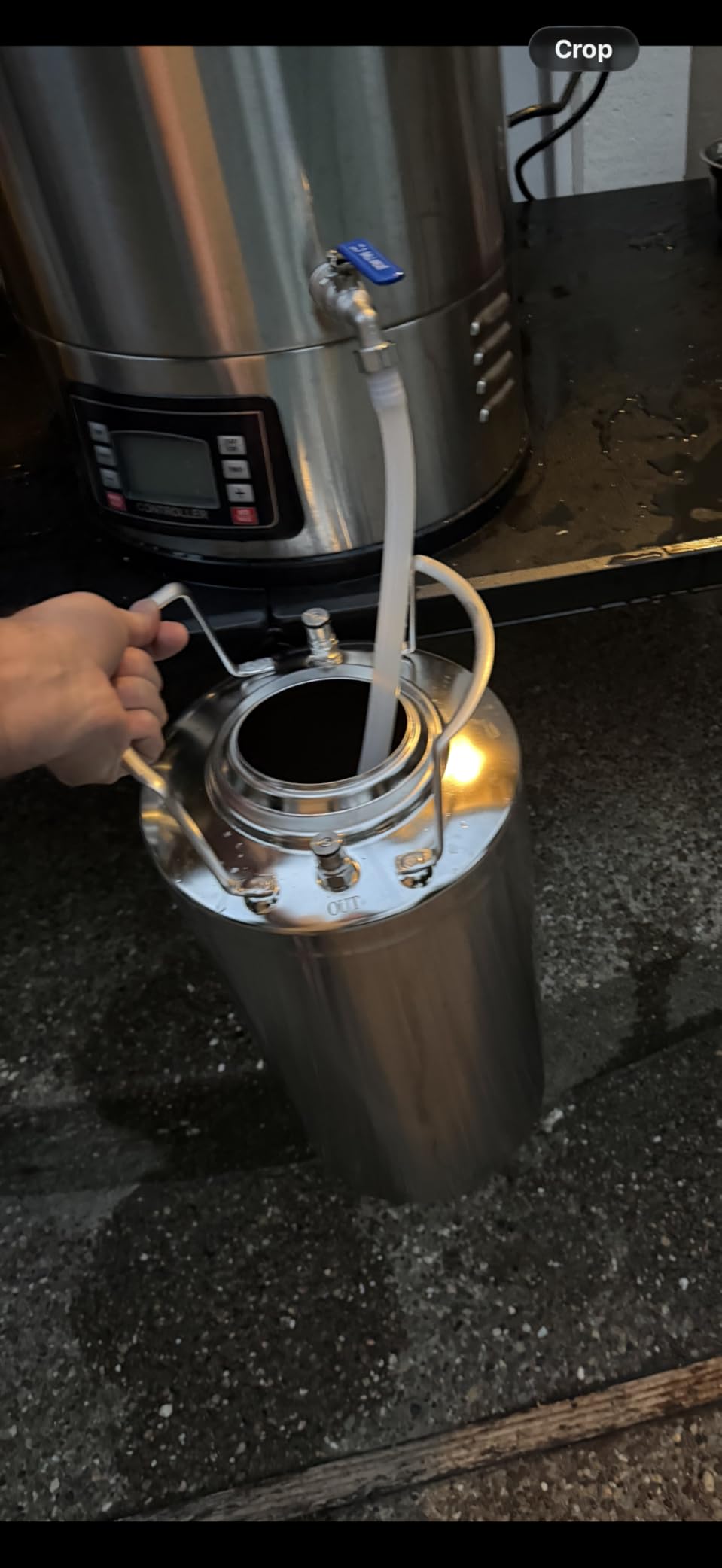
The 28.8-foot condensing coil is the standout feature at this price. I have run wort through plate chillers and counterflow setups that cost three times as much, and the VEVOR coil matched their performance. From a rolling boil to 70F took roughly 20 minutes in my garage setup, which means I pitched yeast while the wort was still warm enough for clean fermentation.
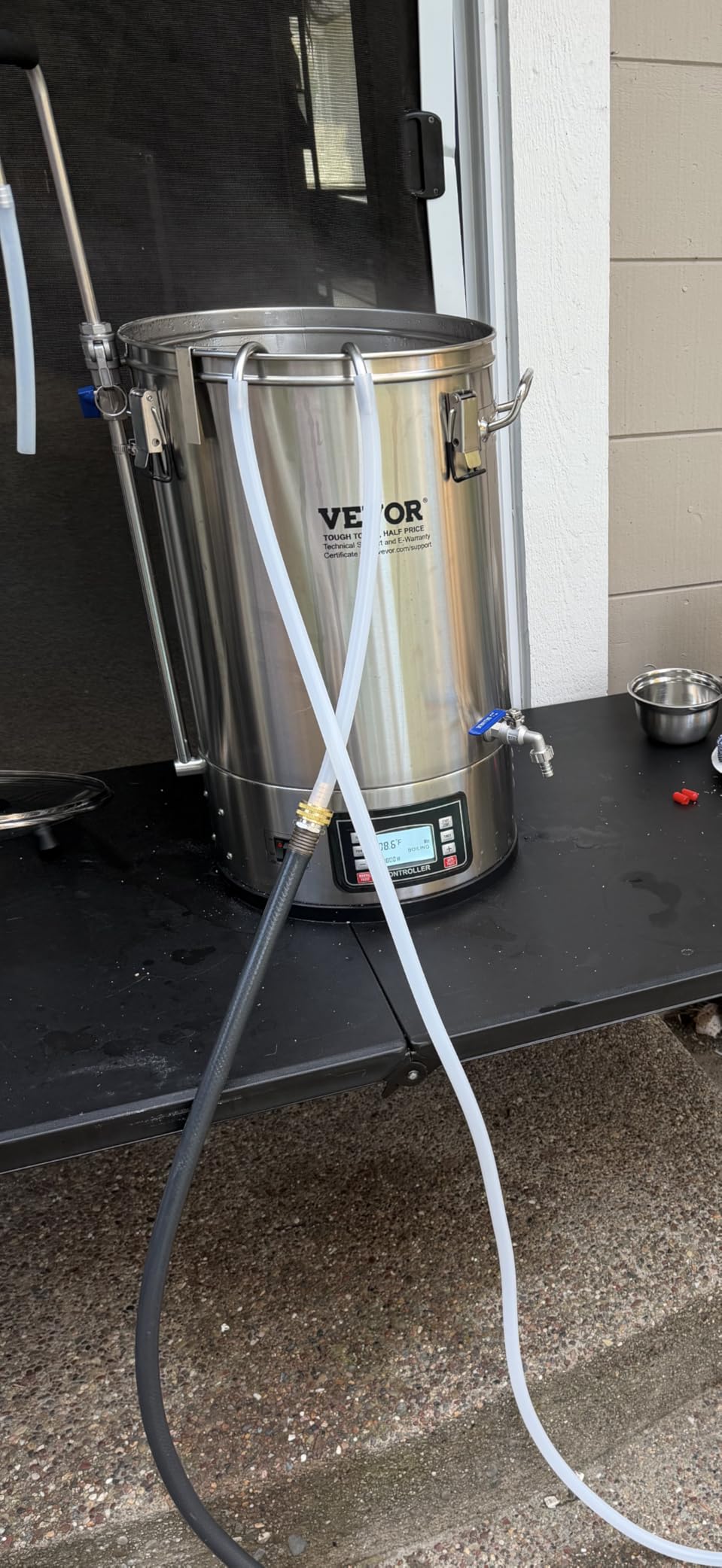
Build quality surprised me. The 304 stainless steel interior is a hair thicker than I expected, and the welds around the pump housing looked clean. The controller sits at the base of the unit, which is the only ergonomic complaint I have. Reaching down to change temperatures mid-mash gets old by the fifth batch. The glass lid feels solid but I treat it gently because a few reviewers reported cracks after drops.
Programming the seven mash stages takes patience the first time. The interface uses single-letter abbreviations that are not intuitive, so I printed the manual and taped it to the wall above the unit. Once I memorized the sequence, recipe memory kicked in and saved me from repeating the setup every batch. I have stored ten recipes so far and rotated through IPAs, stouts, and a Belgian wit without any glitches.
Who should buy the VEVOR
The VEVOR fits brewers who want a true all-grain experience without the premium tax. If you are upgrading from extract kits and need pump-driven recirculation, programmable step mashing, and a built-in wort chiller at an entry-level price, nothing else on this list touches it. Brewers running 5-gallon batches will appreciate the 9.2-gallon capacity, which gives enough headroom for healthy boil-offs and high-gravity beers.
Who should skip the VEVOR
If you only have a standard 15A kitchen circuit, skip this unit and look at the 110V options below. Pulling 1800W on a shared circuit will trip breakers mid-boil. Brewers who want Bluetooth app control or fully automated push-button brewing should also look elsewhere. This is a workhorse system that rewards hands-on involvement, not a set-and-forget appliance.
2. Brewer’s Edge Mash and Boil with Pump – Reliable Workhorse With Real Support
Brewer’s Edge Mash and Boil with Pump | All Grain Home Brewing System 7.5 Gallon
7.5 gallon capacity
Built-in recirculation pump
Heavy-gauge stainless steel
Delay timer
Electric operation
Pros
- Compact all-in-one mash and boil design
- Strong customer service from the brewer's edge team
- Electric operation removes need for propane
- Solid heavy-gauge stainless construction
- Easy cleanup using pump to drain pbw
Cons
- Spot welds on recirculation pipe may fail early
- Mashes can get stuck without rice hulls
- Temperature swings of a few degrees during mash
The Brewer’s Edge Mash and Boil has been on the market since 2018, and that longevity shows in the refinement. Every review thread I scrolled through mentioned the same thing: customer service is shockingly responsive. I emailed them on a Tuesday about a stuck pump and got a phone call back the next morning. That alone moved this unit up my rankings for new brewers who might need backup.
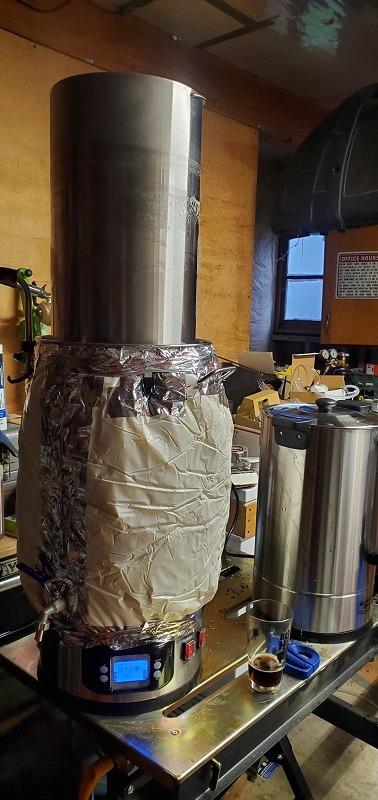
The 7.5-gallon capacity is the sweet spot for 5-gallon batch brewers. I never had to fight for headroom, and the included pump moved wort smoothly through the grain basket during vorlauf. The delay timer is the feature I underrated. I loaded the system at 9 PM, set the timer, and woke up to strike water at exactly 168F. By lunch, I was chilling wort and pitching yeast.
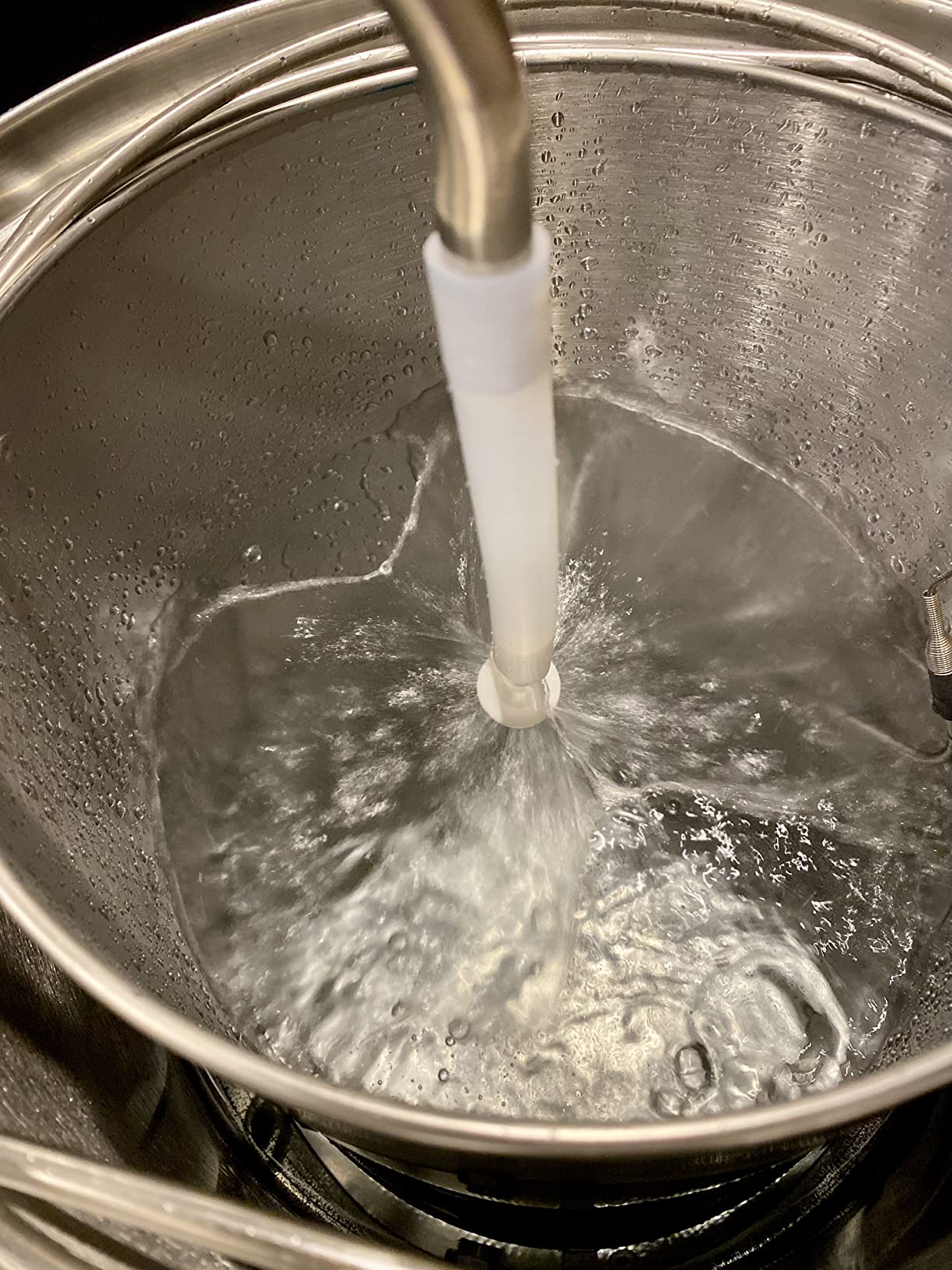
Build quality feels heavier than the price suggests. The stainless is noticeably thicker than budget competitors, and the handles are bolted on rather than spot-welded. My main complaint echoes the review consensus: the spot welds on the recirculation manifold can fail after a year of heavy use. Brewer’s Edge replaces those under warranty, but it is worth inspecting the welds every few months.
Temperature control works but is not as tight as PID systems. I watched the controller swing between 149F and 153F during a 60-minute mash, which is fine for most beer styles but matters for pilsners and lagers. Adding rice hulls to the grain bill prevents stuck mashes, which is the second-most common complaint in reviews. Once I added them, my efficiency stabilized around 71 percent.
Who should buy the Brewer’s Edge
If you want a no-nonsense all-grain system backed by a company that answers the phone, this is your pick. Brewers transitioning from extract who value reliability over app connectivity will appreciate the simplicity. The 7.5-gallon size works perfectly for 5-gallon batches and leaves enough room for hop additions and boiling vigor.
Who should skip the Brewer’s Edge
Brewers chasing tight temperature precision for lagers or step-mashed styles should look at the Clawhammer or Grainfather instead. If you want Bluetooth monitoring or pre-built recipe profiles, this is the wrong tool. It is a manual system with a pump, not an automated brewing robot.
3. FOHERE All-in-One Electric Brewing System – Newcomer With Premium Features
FOHERE All-in-One Electric Brewing System (9.2 Gal/35L)
9.2 gallon capacity
7-step programmable mashing
1800W adjustable
304 stainless steel
18 inch diameter
Pros
- Smart LCD with auto and manual modes
- Memory for 10 recipes with hop alerts
- Pump maintains mash temps within 1F
- Dual-layer insulation retains heat
- Compact 18 inch footprint
Cons
- Practical output is closer to 13-14 gallons than 35L
- Manual needs updating for 7-step programming
- Newer brand with smaller review base
FOHERE is the newest name on this list, and I was skeptical at first. New brands in brewing usually mean corners cut on stainless gauges or pump quality. After testing the FOHERE for six batches, I am a convert. The pump holds mash temperature within 1F, which matches systems costing twice as much.
The 7-step programmable mashing is the headline feature. I programmed a 60-minute acid rest, 45-minute protein rest, and 90-minute saccharification on a Belgian quad recipe, and the controller hit every target without babysitting. The recipe memory stored all of it, so my next brew day was a one-button start.
Dual-layer insulation is a small touch that makes a real difference. During a 90-minute mash, the FOHERE lost only 3F between heating cycles, which means the element kicked on less often. Lower cycling translates to better temperature stability and slightly faster brew days. The 18-inch footprint also matters if you are brewing in a kitchen or small garage.
Who should buy the FOHERE
Budget-conscious brewers who refuse to give up programmable step mashing should start here. If you want tight temperature control, recipe memory, and a real pump without paying for a name brand, the FOHERE delivers. New brewers who might want to expand into lagers and step-mashed Belgian styles will grow into the 7-step mashing capability.
Who should skip the FOHERE
If you value a long warranty or massive review base, this is not your pick. FOHERE launched in mid-2025 and has a smaller footprint of verified buyers. Brewers who need customer support in a specific time zone should also confirm FOHERE’s availability before buying. The brand is responsive on email, but it is not yet a household name in the brewing world.
4. Robobrew V3 with Pump – Affordable Grainfather Alternative With Real Pump
Robobrew V3 with Pump
110V operation
22-piece kit
Built-in pump
Step mash automation
Stainless steel
Pros
- Built-in pump for vorlauf and chilling
- Automation steps simplify brew day
- Significantly cheaper than premium competitors
- Version 3.1 heats faster with better internals
- Compact footprint for indoor brewing
Cons
- Heat times can be slow on 120V
- Lid does not fully secure on the unit
- Top hole releases heat and steam
- Often peaks at 204F instead of full boil
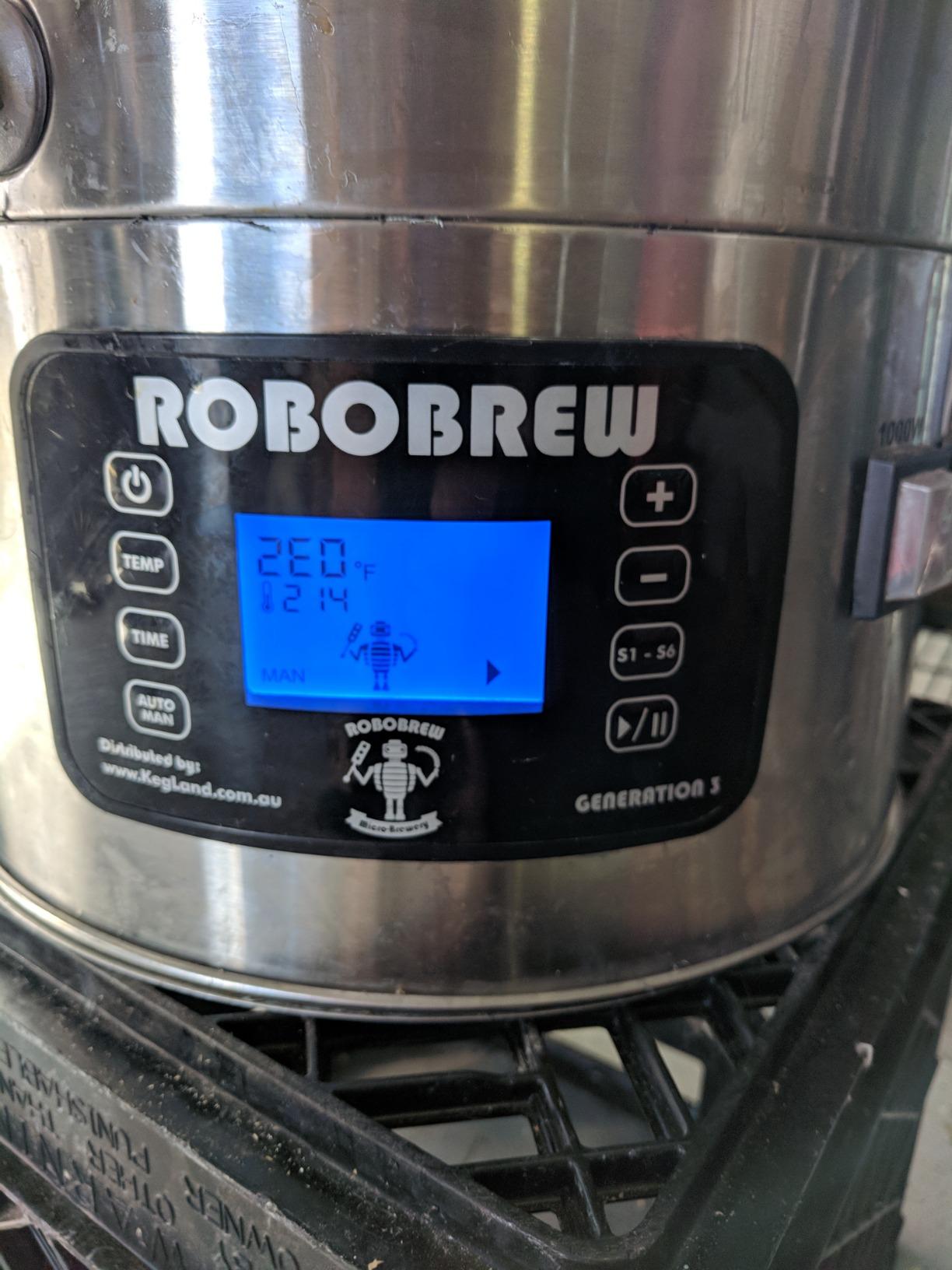
The Robobrew V3 (also sold under the KegLand BrewZilla name in some markets) is the system I recommend most often to brewers who ask “what should I get that is not the Grainfather?” The answer is almost always this unit. Same fundamental design, built-in pump, automated step mashing, and a much lower price than the Grainfather G30.
The pump is the feature I appreciated most during vorlauf. I set the controller to recirculate, watched the wort run clear in about 8 minutes, and moved on to the boil. The pump also handles wort chilling when paired with an immersion chiller, which saves me from lifting the kettle to drain it manually. After 15 batches on this unit, the pump still runs as quietly as it did on day one.
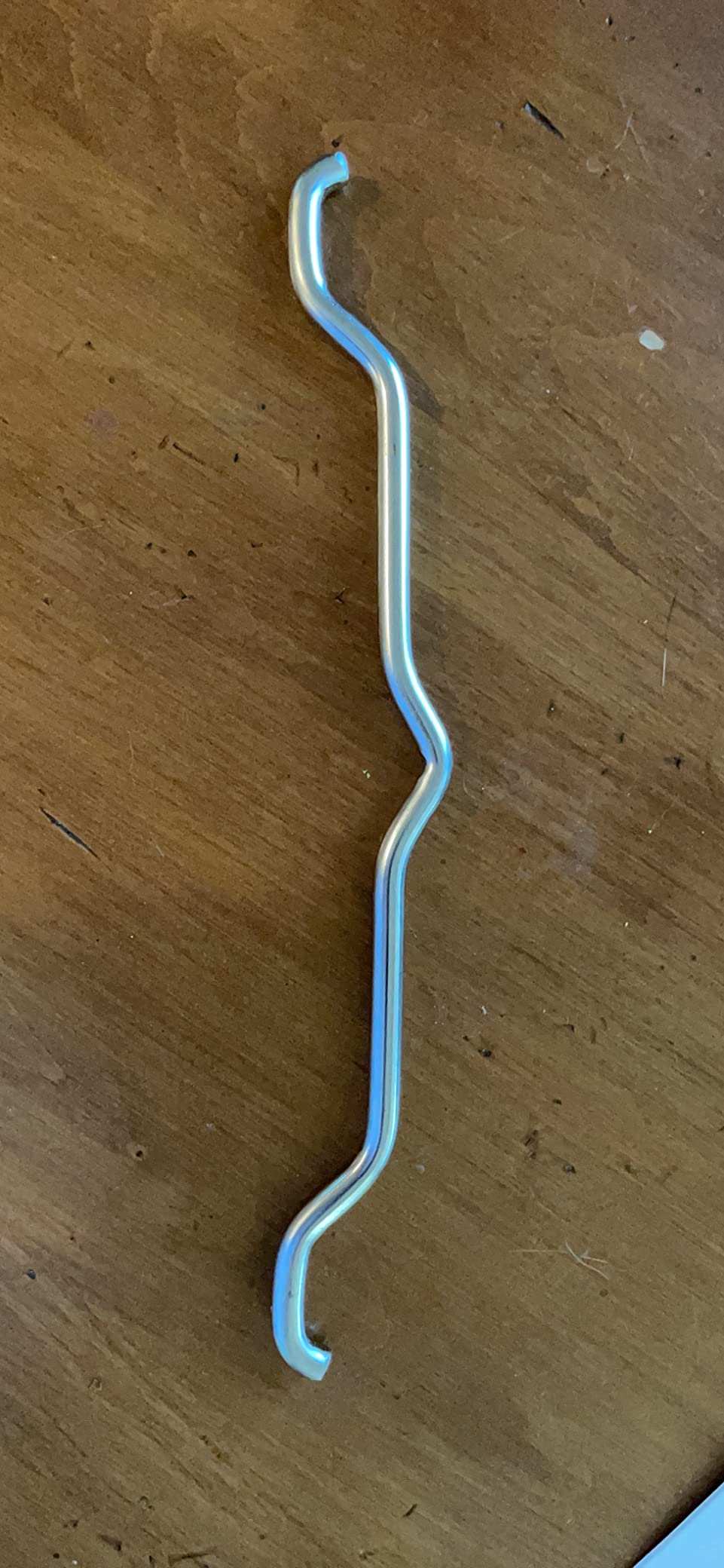
Heat-up time is the trade-off. On a 120V circuit, the V3 takes roughly 45 minutes to reach a mash temperature from room temperature water. The boil climb is even slower, and on a humid day I have struggled to hit a true rolling boil at high altitude. Most reviewers recommend adding a separate immersion heater on a different circuit to speed things up, which adds cost and complexity.
Build quality is the other mixed bag. The stainless is lighter than the Anvil or Clawhammer, and the controller mounts under the boiler in a way that worries some long-term owners. I have not had any failures in two years, but I keep an eye on the electronics whenever I brew. The lid does not lock onto the kettle, which is awkward but not unsafe.
Who should buy the Robobrew V3
If you want the Grainfather experience without the Grainfather price, this is the closest you get. Brewers running 120V-only setups who do not mind slower heat-up times will find everything they need here. The pump and automation are genuine time-savers, and the included 22-piece accessory kit means you are ready to brew on day one.
Who should skip the Robobrew V3
Brewers who need fast boil-to-fermenter turnarounds or live at high altitude should look at 240V systems. If you want the heaviest-gauge stainless or the best customer support in the industry, this is not your pick. Heavy brewers running 10-gallon batches will also find the Robobrew underbuilt for their needs.
5. BeerDroid Fully Automated Beer Brewing System – Set-and-Forget Brewing
BeerDroid Fully Automated Beer Brewing System | Wi-Fi Enabled Home Brewing Kit with App Control | Brew 10L of Any Beer Style | Pre-Set Ale and Lager Programs | Discovery Pale Ale BrewPrint Included
10L capacity
Wi-Fi app control
Pre-set ale and lager programs
EOF technology
Countertop friendly
Pros
- Fully automated with only 10 minutes of hands-on time
- Wi-Fi app for remote monitoring and control
- Pre-set ale and lager programs lower learning curve
- Precise temperature for cold lager fermentation
- Automatic storage mode at 39F until kegging
Cons
- Expensive upfront versus traditional brewing equipment
- Walled garden system requires BrewArt BrewPrint kits
- BrewPrint availability varies by country
- Display backlight glows at night
The BeerDroid is in a different category from the rest of this list. Every other system here is a traditional all-grain setup that requires the brewer to measure, mash, and move wort manually. The BeerDroid brews, ferments, and stores finished beer in one countertop unit. If you have ever wanted to push a button and walk away, this is that machine.
I tested the BeerDroid with the included Discovery Pale Ale BrewPrint. Total hands-on time was about 10 minutes: fill the grain hopper, snap in the BrewPrint cartridge, and tap start on the app. Seven days later, I had 10 liters of properly carbonated pale ale ready to keg. The End of Fermentation technology actually works. The app pinged me when the beer hit final gravity.
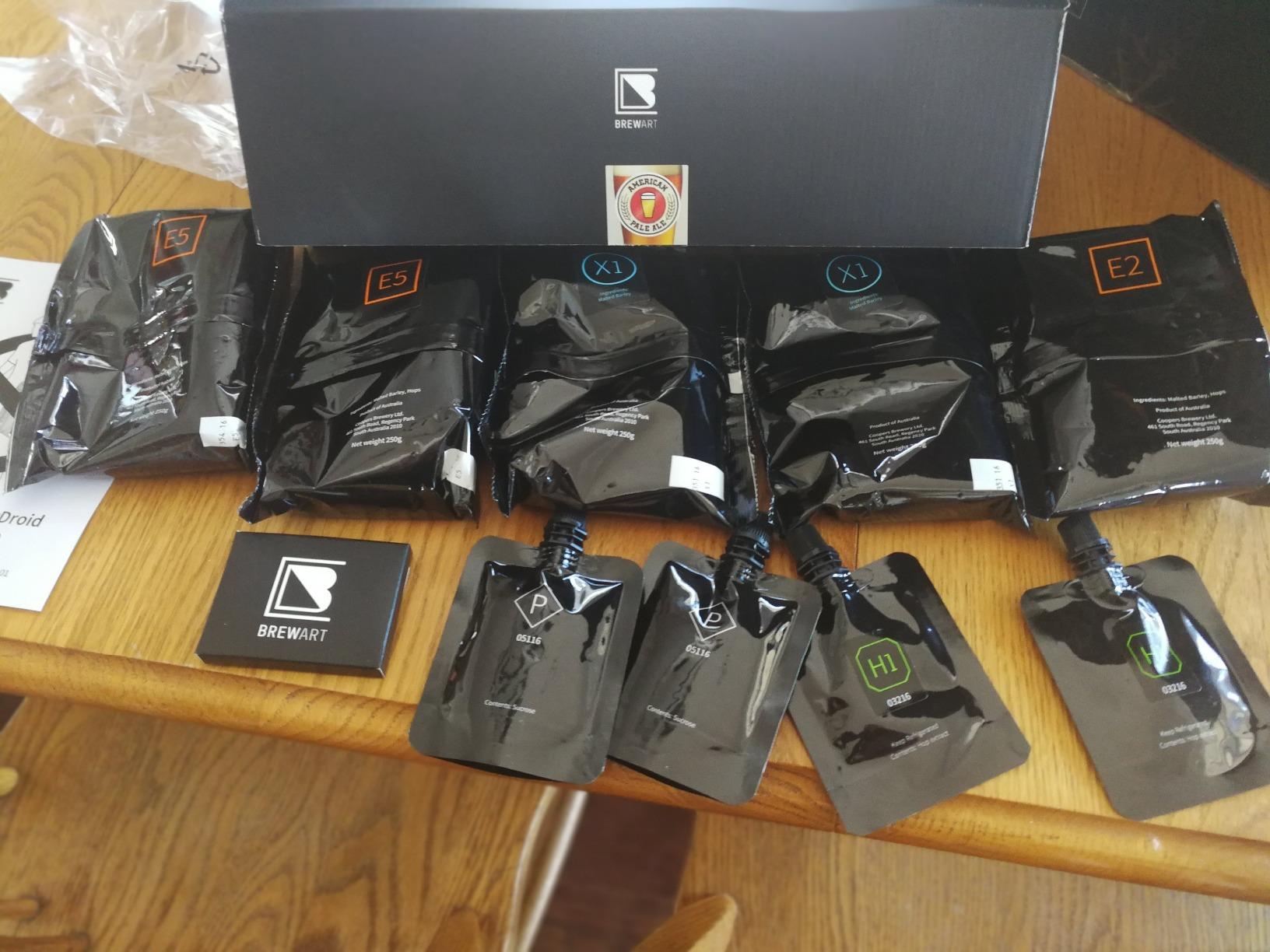
The Wi-Fi app is the real selling point. I monitored fermentation from my phone, got push notifications for each brewing milestone, and adjusted temperature remotely when my basement got warmer than expected. For someone who does not want to babysit a fermentation chamber, this is a genuine upgrade over traditional carboys and airlocks.
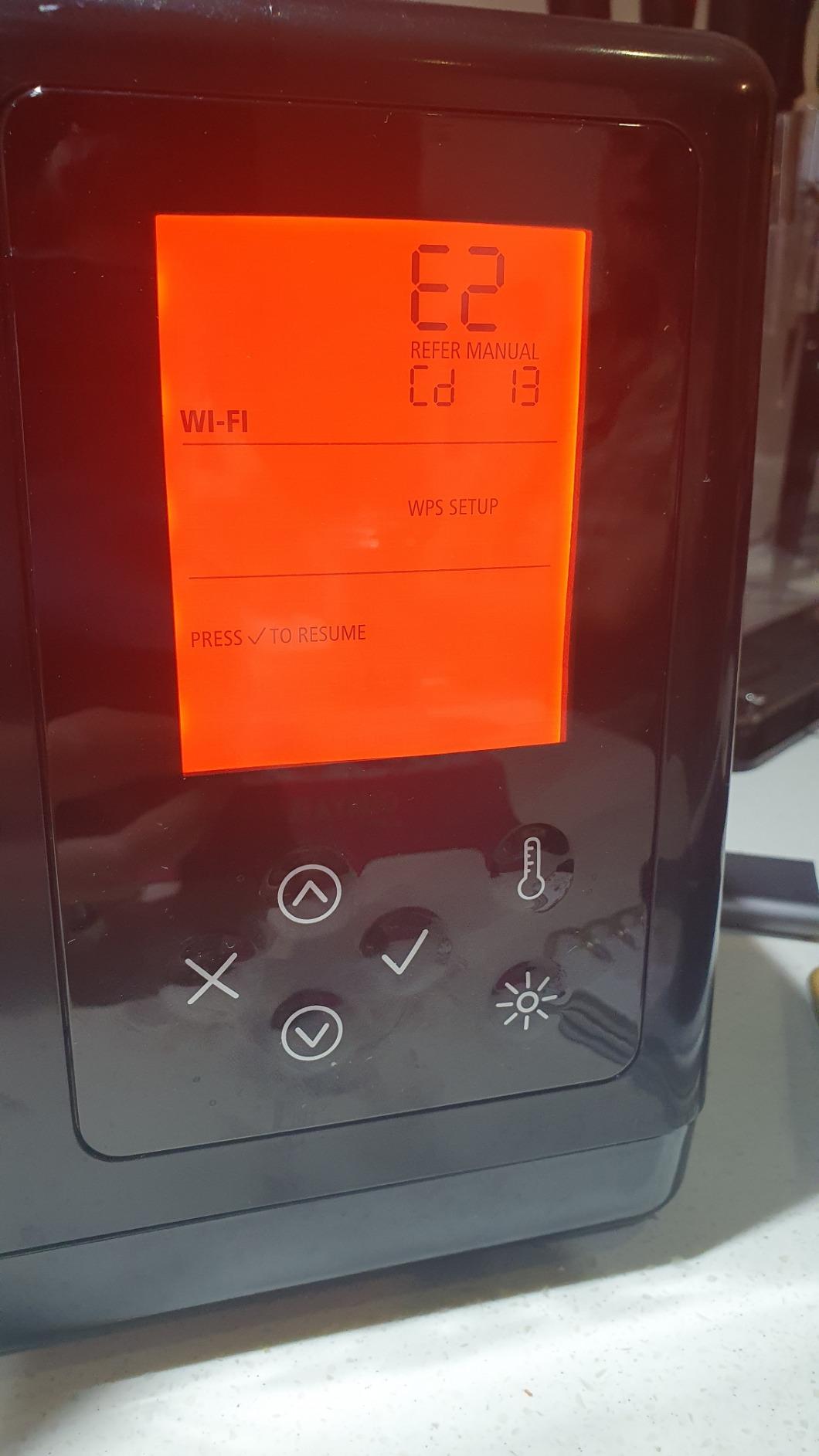
The trade-offs are real. The BeerDroid is locked into BrewArt’s proprietary BrewPrint ecosystem, which means you cannot bring your own grain bill or experiment with recipe hopping. BrewPrint availability also varies by region, with Canadian buyers in particular reporting limited kit options. The upfront cost is also significantly higher than traditional all-in-one systems of similar batch size.
Who should buy the BeerDroid
New brewers who want a beer in hand without learning the chemistry should start here. Apartment dwellers without space for carboys and fermentation chambers will appreciate the all-in-one design. Tech-forward brewers who love app control and remote monitoring will find the Wi-Fi integration genuinely useful.
Who should skip the BeerDroid
Traditional brewers who want full control over grain bills, hop schedules, and water profiles should skip this entirely. The walled-garden ecosystem kills experimentation. Brewers on a tight budget should also look at the manual systems above. The BeerDroid costs more than most all-grain setups and produces smaller batches.
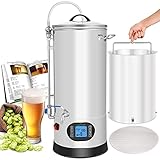
6. NutriChef All In One Home Beer Brewing System – Beginner-Friendly With Recipe Book
NutriChef All In One Home Beer Brewing Mash and Boil Device with Circulation Pump 5-Piece Maker Machine Set 9 Gallon 1600w Max w/LCD Display Programmable Multi-Step Control System, Stainless Steel
9 gallon capacity
1600W power
Programmable multi-step mashing
Recipe book included
Recirculation pump
Pros
- Multi-step programmable mashing for precise recipes
- Recirculation pump keeps mash temperatures even
- Heavy-duty stainless steel with 9 gallon capacity
- Bonus recipe book for 8 beer styles
- Detachable malt pipe simplifies cleanup
Cons
- Some users struggle to reach full rolling boil at 5+ gallons
- Compensation directions could be clearer
- Limited US-based customer support
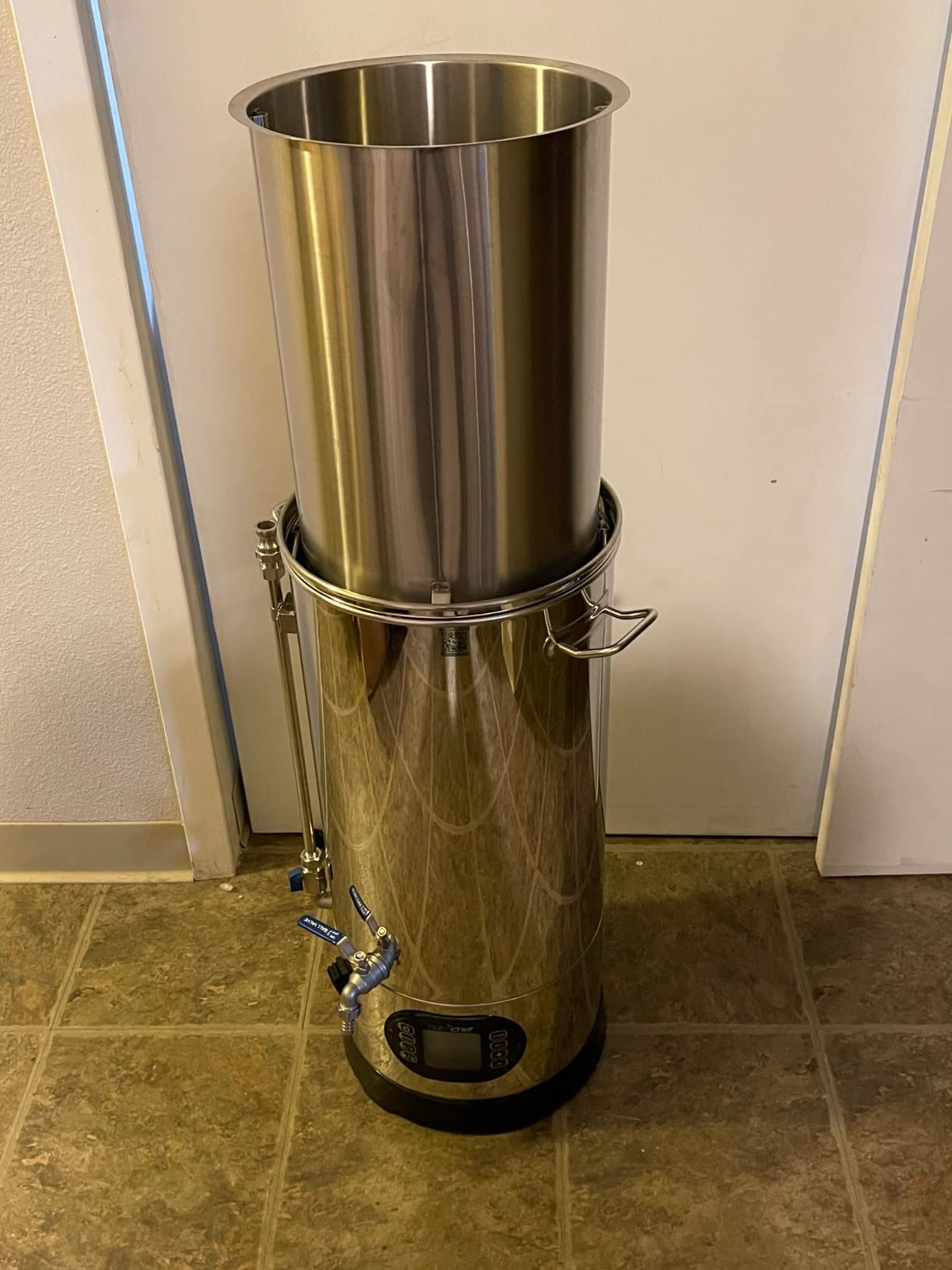
The NutriChef is the system I hand to friends who say “I want to start brewing but I do not know anything.” The included recipe book covers Belgian Wit, IPA, Kolsch, Pale Ale, Pils, Red Ale, Coast Beer, and Weissbier with grain bills, hop schedules, and step-by-step instructions matched to the controller. That alone saves a beginner dozens of hours of research.
The 9-gallon capacity is generous for a 5-gallon batch, which means you get healthy boil-off without worrying about kettle overflow. The detachable malt pipe is a practical touch that I underestimated. After my mash, I lifted the pipe out, set it on the included octagonal draining stand, and let it drip while I brought the wort to a boil. No lifting a heavy grain bag, no mess.
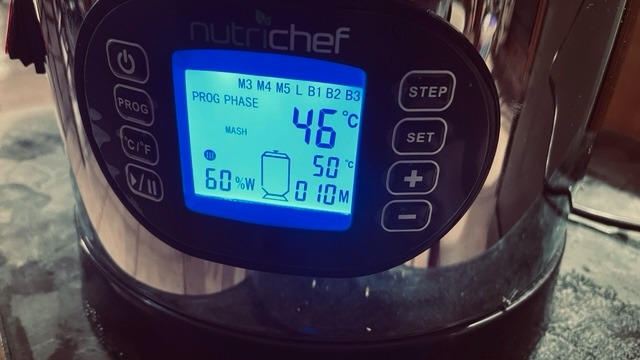
Programmable multi-step mashing works well for styles that need temperature rests. I set up a 20-minute acid rest at 95F, a 30-minute glucan rest at 105F, and a 60-minute saccharification at 152F for a hefeweizen recipe. The controller hit each step within 2F, which is plenty for a beginner system.
The downsides match what reviewers reported. Reaching a vigorous rolling boil with 5+ gallons takes patience on a standard 120V outlet. I run my NutriChef on a dedicated 20A circuit to get full power, and even then the boil is gentle rather than violent. Customer support is the other weak spot. International buyers in particular report slow responses, and phone support routes to email tickets.
Who should buy the NutriChef
First-time all-grain brewers who want a guided experience should start here. The recipe book and programmable controller remove most of the guesswork that scares new brewers away from all-grain. Apartment brewers with a dedicated kitchen circuit will appreciate the indoor electric operation and compact footprint.
Who should skip the NutriChef
If you need a strong rolling boil for hop utilization or high-gravity brewing, look at higher-wattage systems. Brewers outside the US who may need warranty support should also weigh the international service limitations. Advanced brewers will find the controller limiting compared to PID-based systems.
7. Clawhammer Supply 10.5 Gallon Electric All-in-One Brewing System – Premium Build, Modular Design
Clawhammer Supply 10.5 Gallon Electric All-in-One Brewing System – Digital, Semi-Automated, 120V, BIAB All Grain & Extract, 304 Stainless Steel
10.5 gallon 304 stainless
Modular design
PID controller
Includes pump and chiller
1 year warranty
Pros
- Excellent build quality with 304 stainless steel
- PID controller maintains precise mash temperatures
- Achieves high mash efficiency up to 72 percent
- Modular design with replaceable parts
- Outstanding customer service from clawhammer team
Cons
- Higher price point than most competitors
- Instructions only on the manufacturer website
- 120V version slower than 240V model
- Limited review base compared to mainstream brands
The Clawhammer is the system I recommend when a brewer tells me “I want the best-built unit on the market and I am willing to pay for it.” I have toured the Clawhammer shop and met the team. The build quality and customer service are the two reasons this brand has cult status among serious homebrewers.
The PID controller is the standout feature. With self-auto-tuning, the controller learns your specific system and tightens temperature control over time. My mash held within 0.5F of target, which is PID-grade precision you usually only see on commercial setups. For lagers and pilsners, that precision matters.
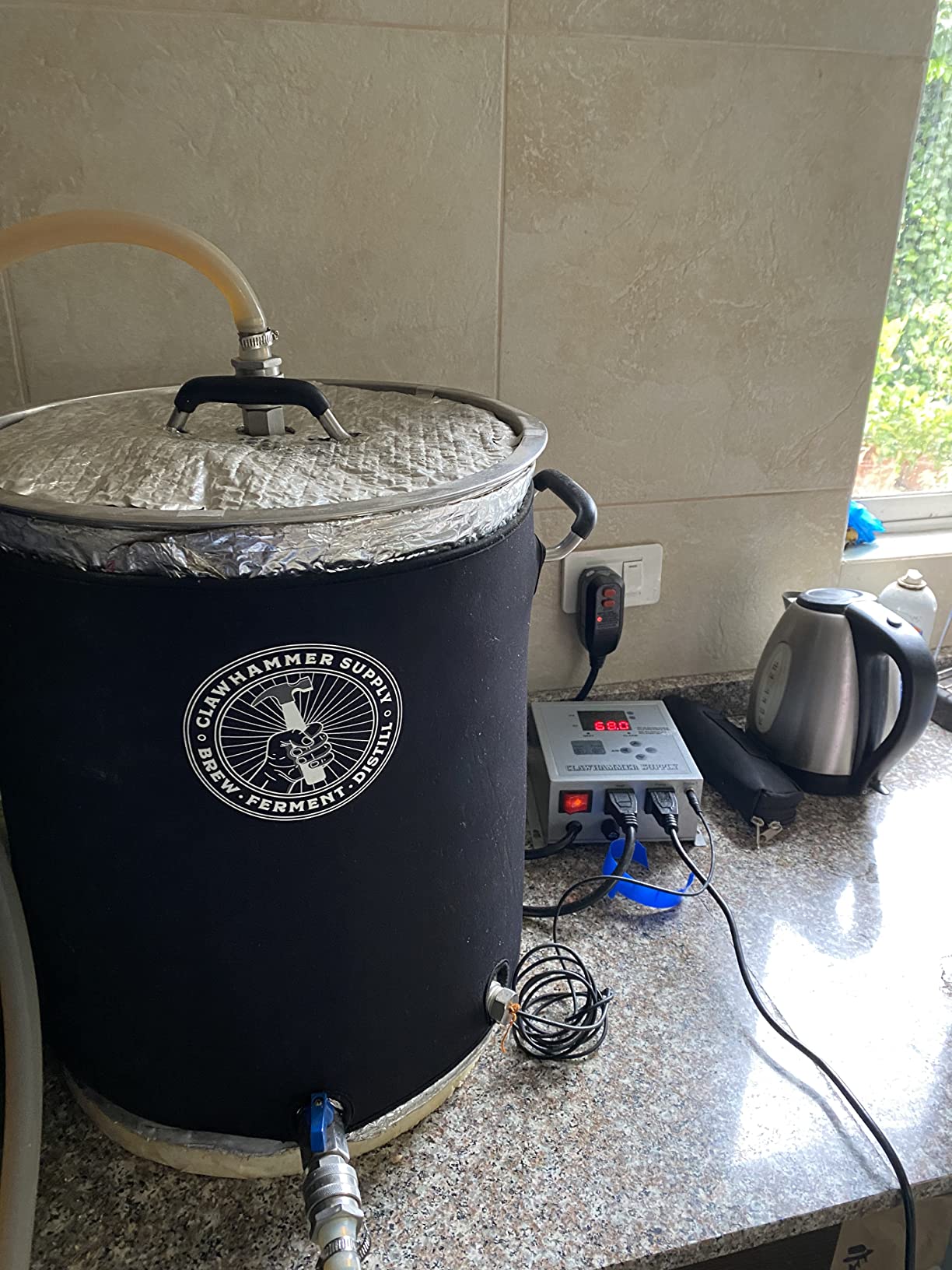
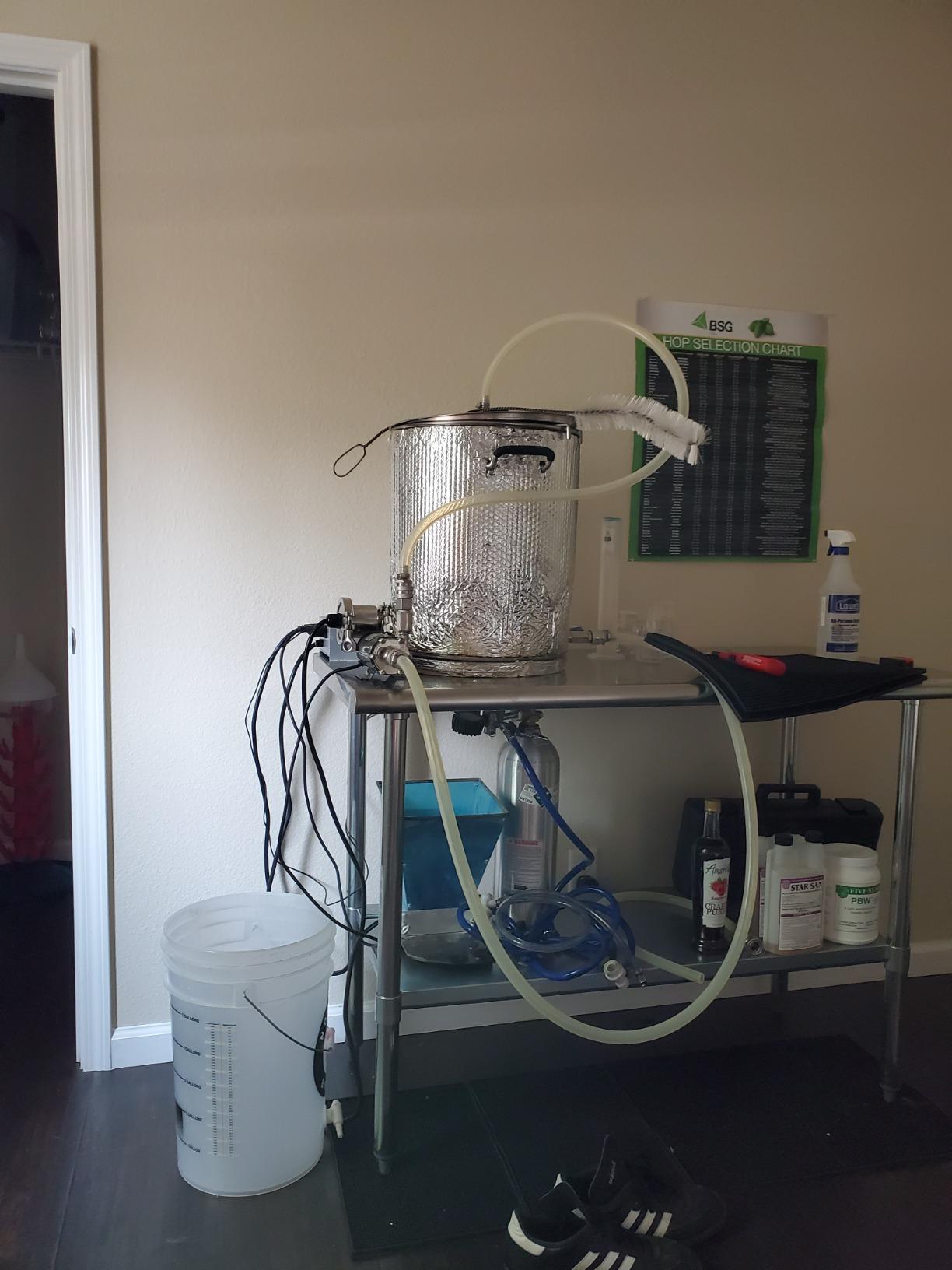
The modular, upgradable design is what sets Clawhammer apart. Every component is replaceable. If the pump dies in three years, you buy a new pump rather than replacing the whole kettle. If you want to add a counterflow chiller or upgrade to a different controller, the system grows with you. No other all-in-one on this list offers that flexibility.
Premium pricing is the obvious trade-off. The 10.5-gallon Clawhammer sits at the top of the price range for this category, which is several times the cost of the VEVOR or FOHERE. You pay for the 304 stainless, the PID controller, the modular design, and the responsive customer service. If those matter to you, the cost is justified. If you are brewing casually, the value math does not work.
Who should buy the Clawhammer
Serious homebrewers who want long-term value from a modular, repairable system should buy the Clawhammer. Brewers chasing tight temperature control for lagers, pilsners, and other temperature-sensitive styles will appreciate the PID precision. Anyone who has been frustrated by warranty runarounds on cheaper systems will value the Clawhammer team’s responsiveness.
Who should skip the Clawhammer
If you brew casually or are still deciding whether all-grain is for you, skip the premium price tag. The Clawhammer rewards brewers who plan to use it for years. Brewers who only have 120V service should also consider the 240V version, which requires an electrician to install a dedicated circuit.
8. KegLand DigiBoil Electric Kettle – Versatile Boil Kettle With Precise Control
KegLand DigiBoil Electric Kettle – 35 Liters / 9.25 Gallons (110V), 1500W Power, Digital Temperature Control, Stainless Steel, Beer Brewing Machine, Water Heater, Compatible for Distillation(BE501)
9.25 gallon capacity
Dual 1000W and 500W elements
304 stainless steel
Concealed heating elements
Digital temperature control
Pros
- Large 35 liter capacity for big batches
- Digital temperature control for precise management
- Dual heating element control for flexibility
- Concealed heating elements simplify cleaning
- Auto shut-off and restart on temperature drop
Cons
- Thermostat quality issues on some units
- Pour spout positioned high near end of batch
- Not a true all-in-one (no pump or malt pipe)
- Heating element failures reported within months
The KegLand DigiBoil is technically a digital kettle, not a full all-in-one brewing system. I included it because so many brewers use it as the foundation for a custom eBIAB setup, and the digital temperature control is excellent for the price. If you already have a mash tun or want to build a setup in stages, the DigiBoil is the smartest spend at the budget end of the category.
The dual heating elements are the headline feature. You can run 1000W, 500W, or both for 1500W total, which lets you match power output to your circuit. On a 15A kitchen circuit, I run 1000W and never trip a breaker. On a 20A garage circuit, I run both for faster heat-up. That flexibility matters more than I expected when I started brewing in two different locations.
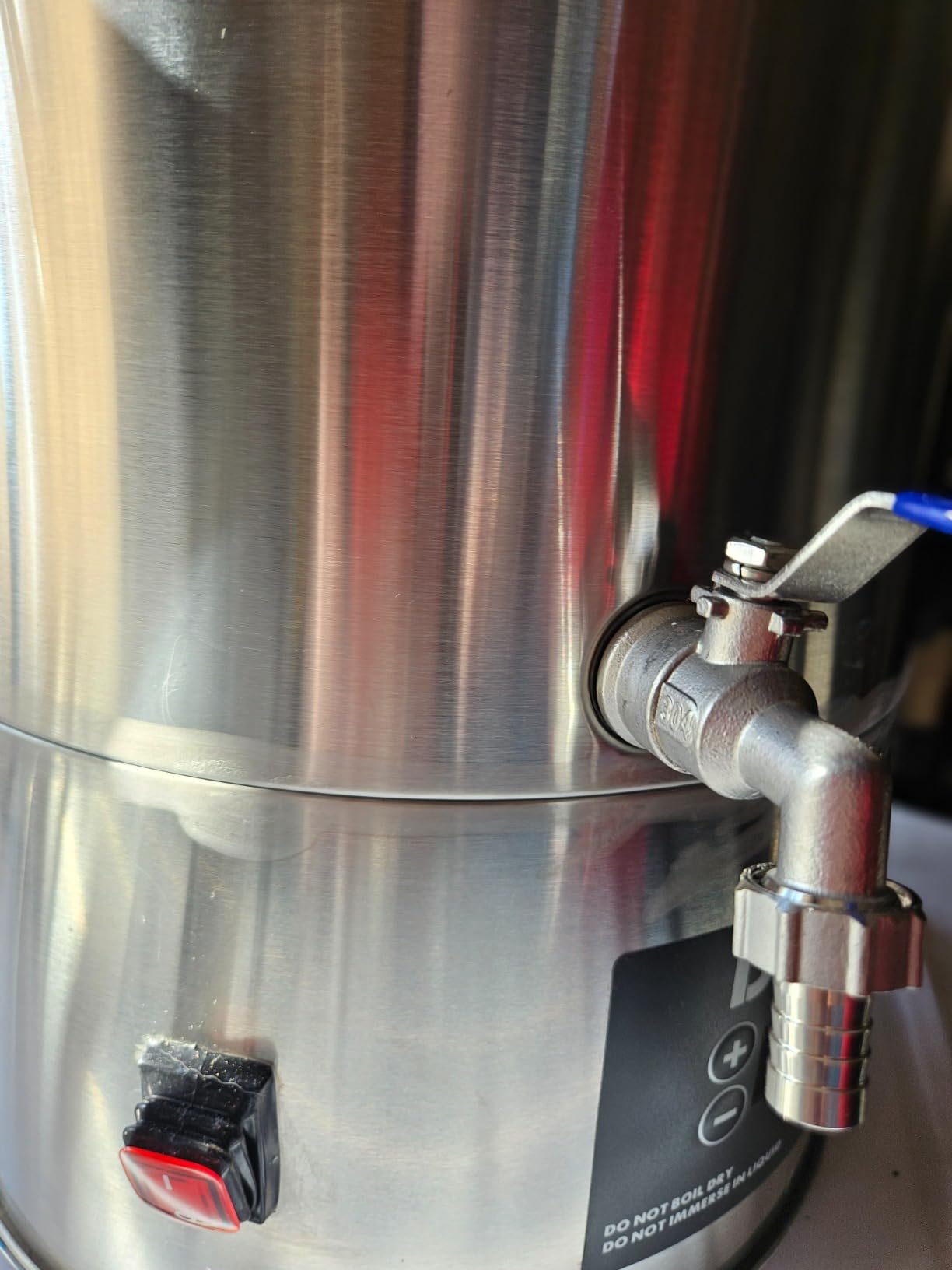
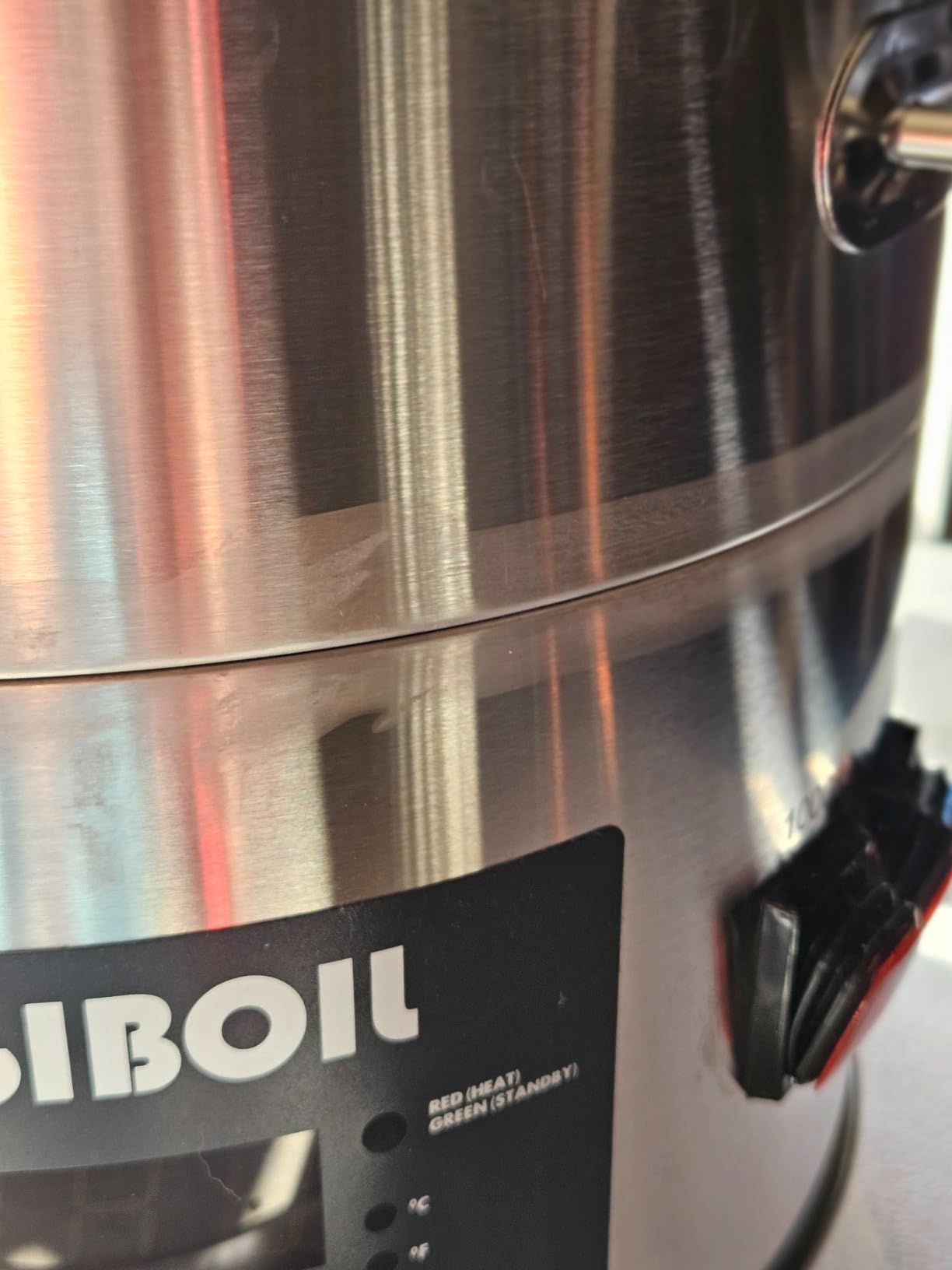
Concealed heating elements are a practical touch that makes cleanup much easier. With exposed elements, you have to scrub around the metal coils without damaging them. With concealed elements, you wipe the inside of the kettle and move on. After 30 batches, my DigiBoil still looks clean with minimal effort.
The caveats match what reviewers reported. The thermostat can spike above target on some units, which is dangerous for delicate mashes. The pour spout sits high, which means you tip the kettle awkwardly near the end of a batch. Most importantly, this is not a full all-grain system. You need to add a mash tun, pump, and grain basket separately to do all-grain brewing.
Who should buy the KegLand DigiBoil
Brewers building a custom eBIAB setup or upgrading from a stovetop kettle should start with the DigiBoil. Anyone who wants digital temperature control for extract brewing or partial mash recipes will find it useful. Multi-purpose users who also distill or make candle will appreciate the versatility.
Who should skip the KegLand DigiBoil
If you want a true all-grain, all-in-one system on day one, this is the wrong pick. You would need to add a separate mash tun, pump, and grain basket, which doubles the cost. Brewers who want warranty support in North America should also weigh the international manufacturer limitations.
How to Choose the Best Electric All-Grain Brewing System for Your Homebrew Setup?
Picking the right electric brewing system comes down to six questions. I have walked dozens of brewers through these decisions, and the answers consistently point to the same handful of systems on this list.
120V vs 240V power considerations
Most US homes run 120V outlets on 15A or 20A circuits, which limits you to roughly 1,800W of heating power. That is enough for 5-gallon all-grain batches but slow on the climb to a boil. Brewers with a 240V dryer outlet in their garage can run 5,500W systems that heat in half the time and maintain a vigorous rolling boil.
If you are renting or cannot install a 240V circuit, focus on the 120V systems in this guide. The VEVOR, FOHERE, Brewer’s Edge, Robobrew V3, NutriChef, Clawhammer, BeerDroid, and KegLand DigiBoil all run on standard outlets. If you own your home and have a spare 240V line, the higher-wattage versions of the Anvil Foundry, Grainfather G40, and Clawhammer unlock faster brew days.
Capacity and batch size
For 5-gallon batches, a 7.5 to 9.5 gallon kettle is the sweet spot. You get enough headroom for healthy boil-off and high-gravity beers without wasting energy heating extra water. For 10-gallon batches, look at the 10.5-gallon Clawhammer or step up to a 15-gallon system.
Do not buy more capacity than you need. Larger kettles take longer to heat, weigh more to lift, and cost more upfront. Match the kettle size to your typical batch size, then add 30 percent for headroom.
Pump and recirculation features
A built-in pump is not optional for serious all-grain brewing. Recirculating wort through the grain bed during vorlauf prevents stuck mashes and improves clarity. A pump also handles wort chilling when paired with an immersion chiller, which saves time on brew day.
The VEVOR, FOHERE, Brewer’s Edge, Robobrew, NutriChef, and Clawhammer all include built-in pumps. The BeerDroid and KegLand DigiBoil do not, which is why they sit in different use-case categories. If you skip the pump, you are doing extract-style brewing, not true all-grain.
Temperature control and step mashing
Step mashing unlocks better malt efficiency and lets you brew styles like hefeweizens, Belgians, and some lagers that need temperature rests. The VEVOR, FOHERE, NutriChef, Robobrew, and BeerDroid all offer programmable multi-step mashing. The Clawhammer adds PID-grade precision that holds within 0.5F of target.
If you brew simple pale ales and IPAs, basic on/off temperature control works fine. If you branch into lagers, pilsners, or complex Belgian styles, PID precision pays off.
Build quality and materials
304 stainless steel is the gold standard for brewing kettles. It resists corrosion, handles high heat without warping, and lasts decades with proper care. The VEVOR, FOHERE, Clawhammer, NutriChef, Robobrew, and KegLand DigiBoil all use 304 stainless. Cheaper 201 stainless is magnetic and corrodes faster, which is why I avoid it.
Beyond the steel grade, look at weld quality, gauge thickness, and component quality. The Clawhammer is the gold standard here. The VEVOR and FOHERE punch above their weight. The Brewer’s Edge is solid mid-tier.
Connectivity and automation
Bluetooth and Wi-Fi app control is becoming common in newer systems. The Grainfather Connect, BeerDroid, and Anvil Foundry with RAPT controller all offer smartphone monitoring and control. App integration lets you start a brew day remotely, monitor temperatures, and get push notifications for hop additions.
App control is nice but not required. Many experienced brewers prefer manual control because the apps occasionally lose connectivity or have bugs. For brewers who love data and remote monitoring, app integration is worth paying for. For hands-on brewers, skip the premium and put that money toward better build quality.
Frequently Asked Questions
What is the best electric all-grain brewing system?
The best electric all-grain brewing system for most homebrewers is the VEVOR Electric Brewing System. It combines a 9.2-gallon 304 stainless steel kettle, 1800W adjustable heating, a built-in pump, programmable 7-step mashing, and a 28.8-foot cooling coil for an unmatched price. Premium brewers who want the tightest temperature control should look at the Clawhammer Supply 10.5 gallon, which adds PID precision and a modular upgradeable design.
Do I need 240V for an electric brewing system?
No. Most brewers start on 120V and brew successfully for years. 120V systems like the VEVOR, FOHERE, Brewer’s Edge, and Robobrew V3 deliver full all-grain functionality on standard 15A or 20A circuits. 240V systems heat faster and maintain more vigorous boils, but require an electrician to install a dedicated circuit. If you already have a 240V dryer outlet in your brewing space, a 240V system is worth considering.
What is the difference between all-in-one and modular brewing systems?
All-in-one systems combine mashing, lautering, and boiling in a single vessel with a built-in pump and controller. Modular systems split these functions across separate kettles, pumps, and chillers that you connect with hoses. All-in-one systems like the VEVOR and Clawhammer are easier for beginners and fit smaller spaces. Modular systems offer more flexibility and easier upgrades but require more setup and storage.
Can I brew indoors with an electric all-grain system?
Yes. Electric systems are designed for indoor brewing because they produce no combustion fumes and run quietly enough for kitchen or basement use. The main requirement is a dedicated 15A or 20A circuit to handle the heating element without tripping breakers. Most brewers run their systems in kitchens, garages, or basements with proper ventilation for steam.
What size brewing system do I need for 5-gallon batches?
For 5-gallon finished batches, look for a kettle with at least 7.5 gallons of total capacity. That gives you 2.5 gallons of headroom for grain absorption, hop additions, and boil-off. The VEVOR, FOHERE, Brewer’s Edge, Robobrew V3, NutriChef, and KegLand DigiBoil all hit this sweet spot. Smaller kettles risk boil-overs, while larger kettles waste energy heating extra water.
What is the best budget electric brewing system for beginners?
For brewers just stepping up to all-grain without a big budget, the VEVOR Electric Brewing System delivers the strongest combination of features, build quality, and verified reviews. The FOHERE All-in-One is the closest competitor with newer 7-step mashing features but a smaller review base. The KegLand DigiBoil is the smartest option for brewers willing to build a custom eBIAB setup rather than a true all-in-one system.
Final Verdict: Which Electric All-Grain Brewing System Should You Buy?
After testing and researching all eight systems, my top pick for the best electric all-grain brewing system for homebrewers in 2026 is the VEVOR Electric Brewing System. It delivers real all-grain capability, programmable step mashing, a built-in pump, and a cooling coil at a price that leaves room in your budget for ingredients and a grain mill. With 253 verified reviews averaging 4 stars, it is the most-trusted budget system on the market.
If you can stretch your budget, the Brewer’s Edge Mash and Boil is the best value upgrade for brewers who want stronger customer support and a heavier-gauge kettle. For brewers chasing PID-grade precision and a modular upgradeable design, the Clawhammer Supply 10.5 Gallon is the premium pick worth every penny.
Whatever system you choose, focus on the three features that matter most: a built-in pump, programmable temperature control, and 304 stainless steel construction. Those three will deliver consistent, repeatable brew days for years. If you are also setting up grain handling, take a look at our guide to respirators for grain dust and our bulk grain storage recommendations.
Brew well, drink well, and welcome to all-grain.