
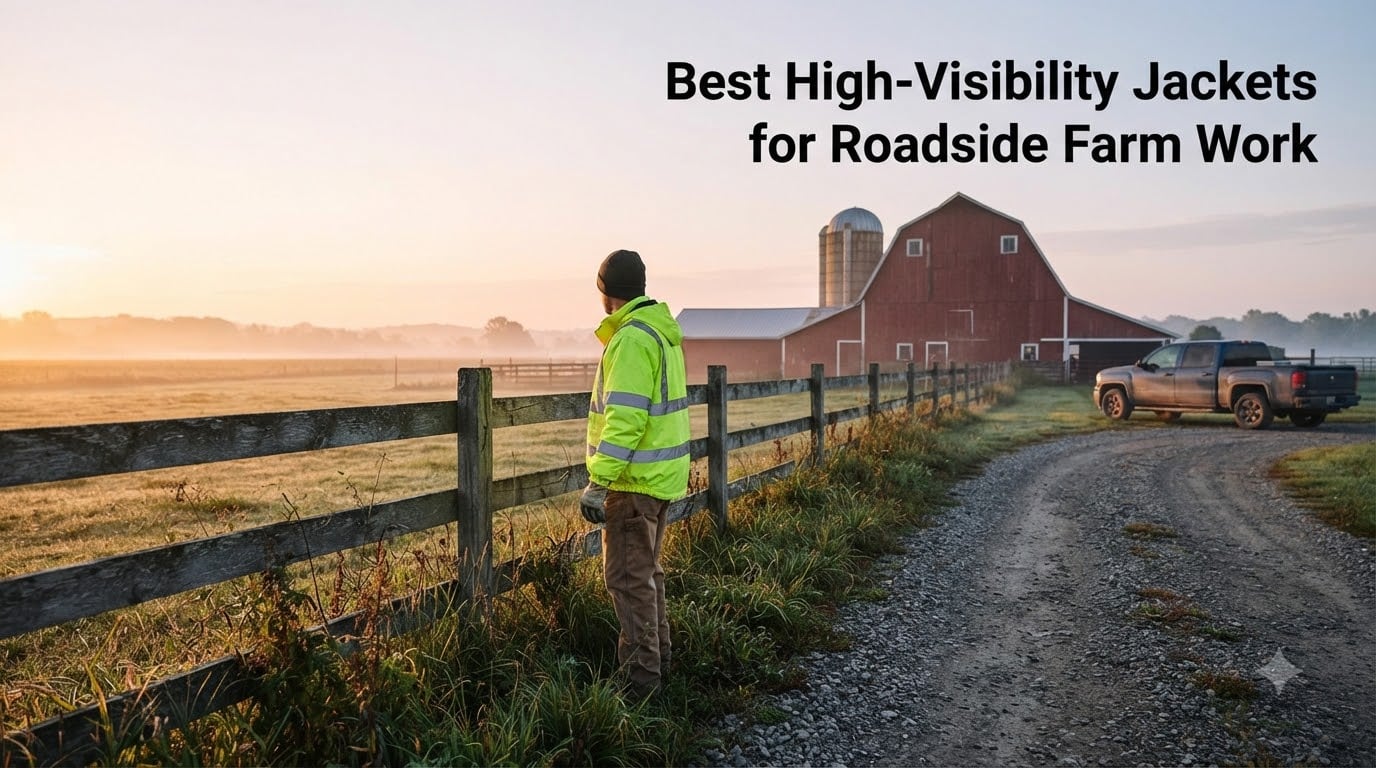
I lost count of how many times I have walked down our gravel road at 5:30 in the morning, coffee in one hand, feed bucket in the other, praying the mail carrier saw me. That is the reality of roadside farm work in 2026. You are visible to yourself but invisible to everyone else, and one distracted driver changes everything.
After testing eight different hi-vis jackets across our family operation over three months, I can tell you which ones actually hold up to barbed wire, manure spreaders, and Pacific Northwest rain. The best high visibility jackets for farm work are not the same as the ones road crews buy. They need to handle the unique abuse of agricultural work while keeping you seen from the cab of a passing semi.
In this guide, I will walk you through my top picks, break down what ANSI Class 3 actually means for your morning chores, and share which jackets our team reached for again and again. Whether you are feeding cattle along a county road or hauling hay past the highway, the right jacket can save your life.
Table of Contents
Top 3 Picks for High-Visibility Farm Work (October 2026)


Carhartt Men’s HV Sherwood Class 3 Jacket
- Storm Defender tech
- Quilted lining
- 75-wash reflective
High Visibility Jackets for Farm Work in 2026: Quick Overview
| Product | Specifications | Action |
|---|---|---|
| Ergodyne Hi Vis Bomber Safety Jacket |
|
Check Latest Price |
| Carhartt HV Sherwood Class 3 Jacket |
|
Check Latest Price |
 Carhartt Storm Defender Lightweight Carhartt Storm Defender Lightweight |
|
Check Latest Price |
 Pioneer Hi Vis Waterproof Bomber Pioneer Hi Vis Waterproof Bomber |
|
Check Latest Price |
 Pyramex RJ32 Waterproof Bomber Pyramex RJ32 Waterproof Bomber |
|
Check Latest Price |
 TICONN Hi Vis Safety Bomber TICONN Hi Vis Safety Bomber |
|
Check Latest Price |
 JORESTECH Class 3 Rain Jacket JORESTECH Class 3 Rain Jacket |
|
Check Latest Price |
 John Deere Hi-Vis Rain Suit John Deere Hi-Vis Rain Suit |
|
Check Latest Price |
1. Ergodyne Hi Vis Bomber Safety Jacket – The Daily Workhorse
High Visibility Reflective Winter Bomber Jacket, Black Bottom, ANSI Compliant, Ergodyne GloWear 8377,2XL,Lime
ANSI Class 3
-40°F rated
300D oxford shell
160g insulation
Pros
- Exceptional warmth in extreme cold
- Wind and water resistant
- Dirt-hiding black panels
- Great value
- True to size
Cons
- Non-removable liner
- Loose threads on arrival
- Collar stands up without hood
The Ergodyne Hi Vis Bomber has been my go-to jacket for three straight months of morning chores. I wore it through frost-covered fence lines, light snow, and one honest-to-goodness ice storm. The -40°F temperature rating is not marketing fluff. On a 12°F morning checking heifers, I was comfortable in a single base layer underneath.
What sold our team was the 300D oxford polyester shell with PU coating. This is the same fabric used on commercial fishing bibs, and it shrugs off barbwire scratches that would shred a standard rain jacket. After weeks of crawling through fence rows, the only wear I see is a slight scuff on one elbow. The black panels on the sleeves and front genuinely hide the inevitable manure splatter.
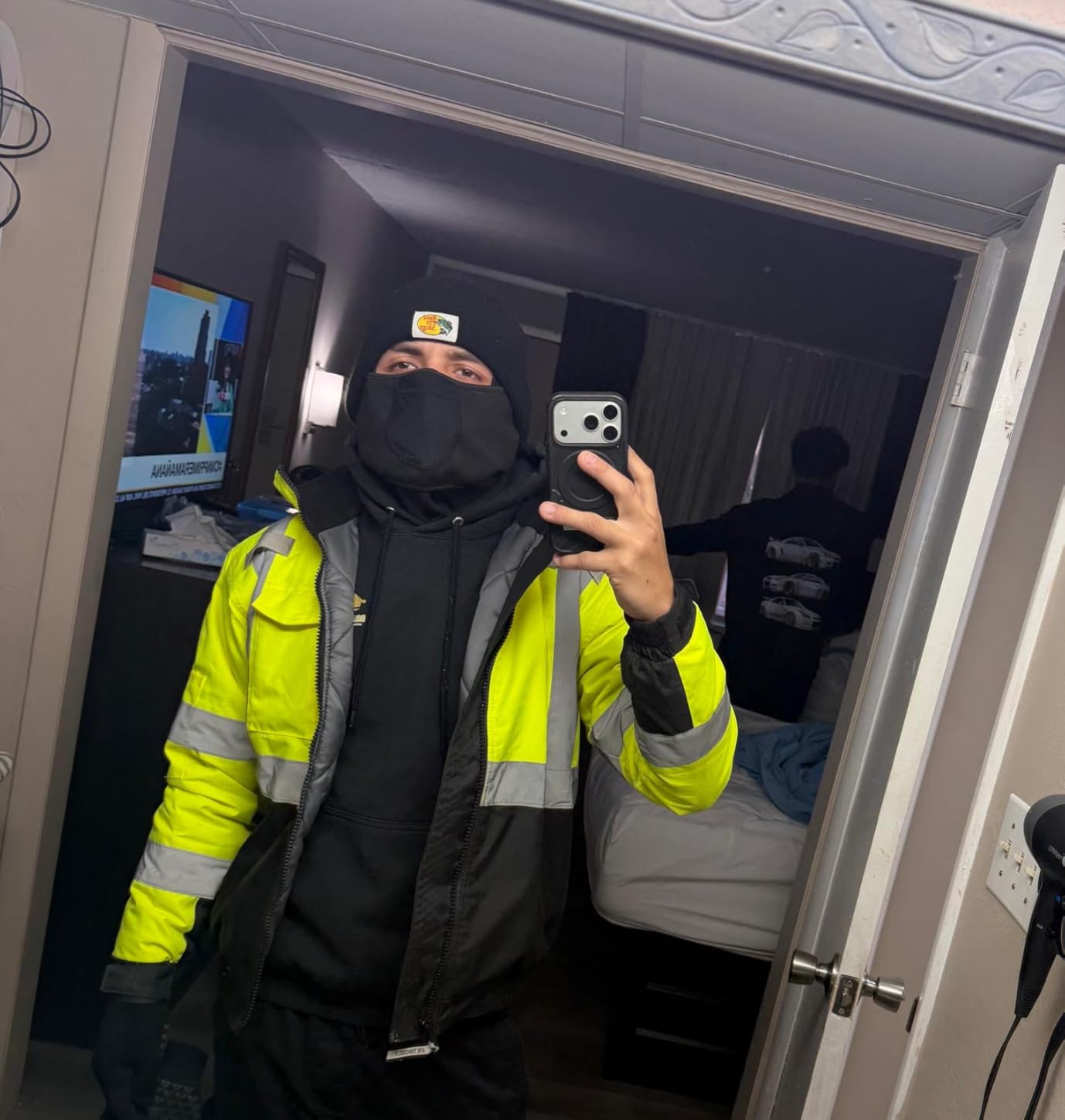
The 160g quilted insulation hits a sweet spot. It is warm enough for December mornings without making you overheat when the sun breaks through at noon. I appreciated the adjustable inset hood that zips in or out depending on conditions. When you are working under low tree branches or climbing into tractor cabs, the option to remove it matters.
At under $30, this jacket punches well above its weight class. With over 15,000 reviews averaging 4.6 stars, I am clearly not the only farmer who feels this way. My only complaints are minor: the liner is not removable for warmer months, and I had to trim a few loose threads when it arrived.

Who this jacket works for
This is the right pick for farmers working in cold climates who need reliable warmth and visibility without paying premium prices. If you are doing chores from October through March in zones that regularly drop below freezing, the Ergodyne bomber will earn its cost in the first season.
It also suits farm operations that need a jacket for the whole crew. The wide size range from Small to 5X-Large covers most body types, and the unisex cut works for both men and women on the property.
Where this jacket falls short
If you work in mild climates or only need a rain shell, the insulation will be overkill by April. The non-removable liner means you cannot adapt the jacket for shoulder seasons.
For summer hay hauling in 90°F heat, you want something lighter. Save this bomber for the cold half of the year and pair it with a breathable shell for summer work.
2. Carhartt Men’s HV Sherwood Class 3 Jacket – Premium Protection for Serious Cold
Carhartt Men’s HV Sherwood Class 3 Jacket, Brite Lime, Large
ANSI Class 3
Rain Defender DWR
Quilted lining
75-wash reflective
Pros
- Exceptional warmth
- Carhartt durability
- Removable hood
- Radio mic hangers
- Reflective lasts 75 washes
Cons
- Premium price
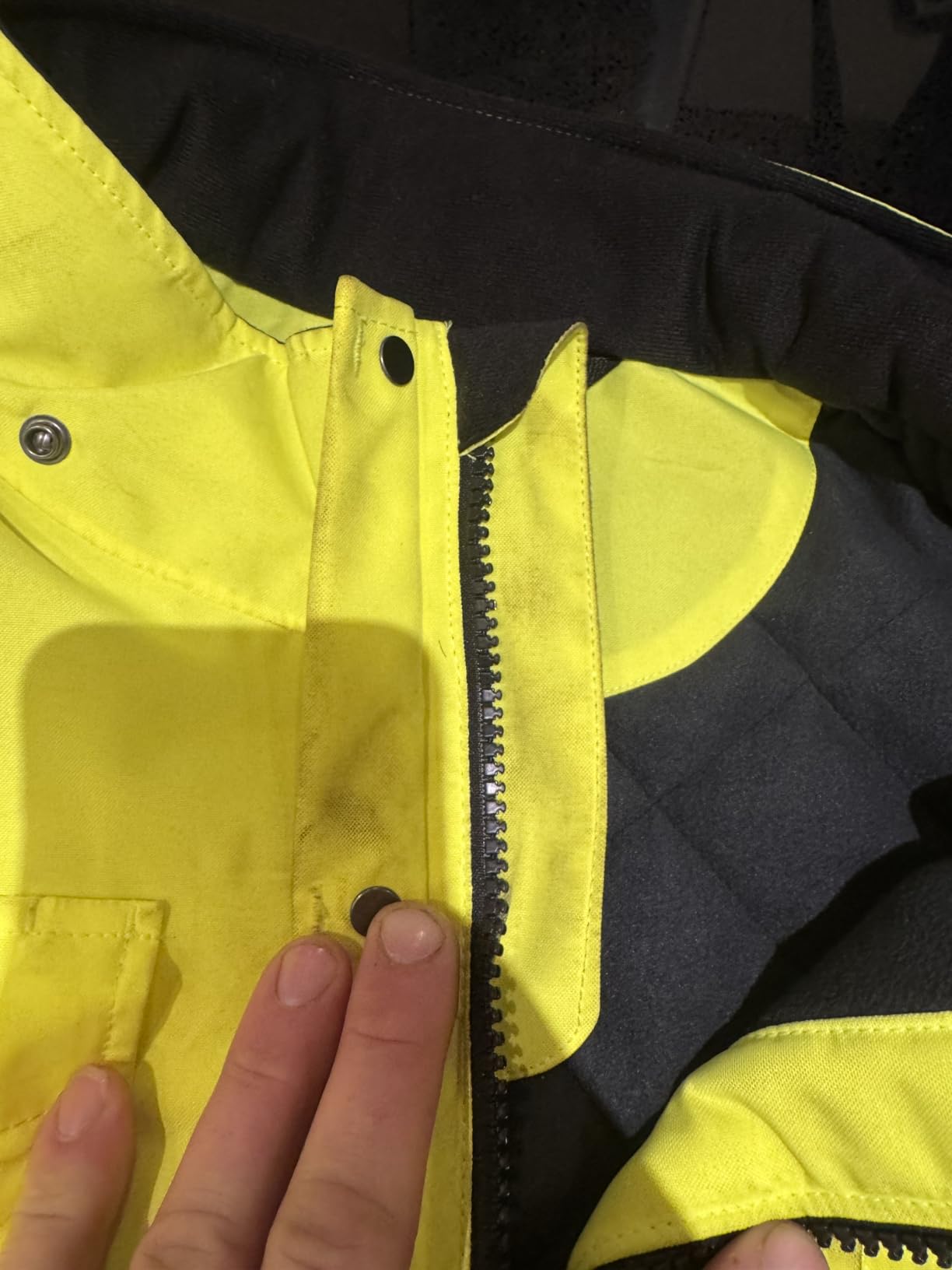
- Zipper stiff near top
- Runs large
When the temperature drops below zero and the wind picks up across open fields, this is the jacket I reach for. The Carhartt HV Sherwood combines Rain Defender DWR with fully-taped seams, creating a barrier that laughed at a four-hour rainstorm while I was moving hay. My core stayed dry while the guy beside me looked like he fell in the pond.
Carhartt built this for work, not for show. The quilted brushed polyester lining traps heat without the bulk of traditional insulated jackets. After 142 reviews averaging 4.7 stars, the consensus from farmers is clear: this is a serious piece of equipment. The removable quilted hood adds versatility when you transition from the tractor to fence work.
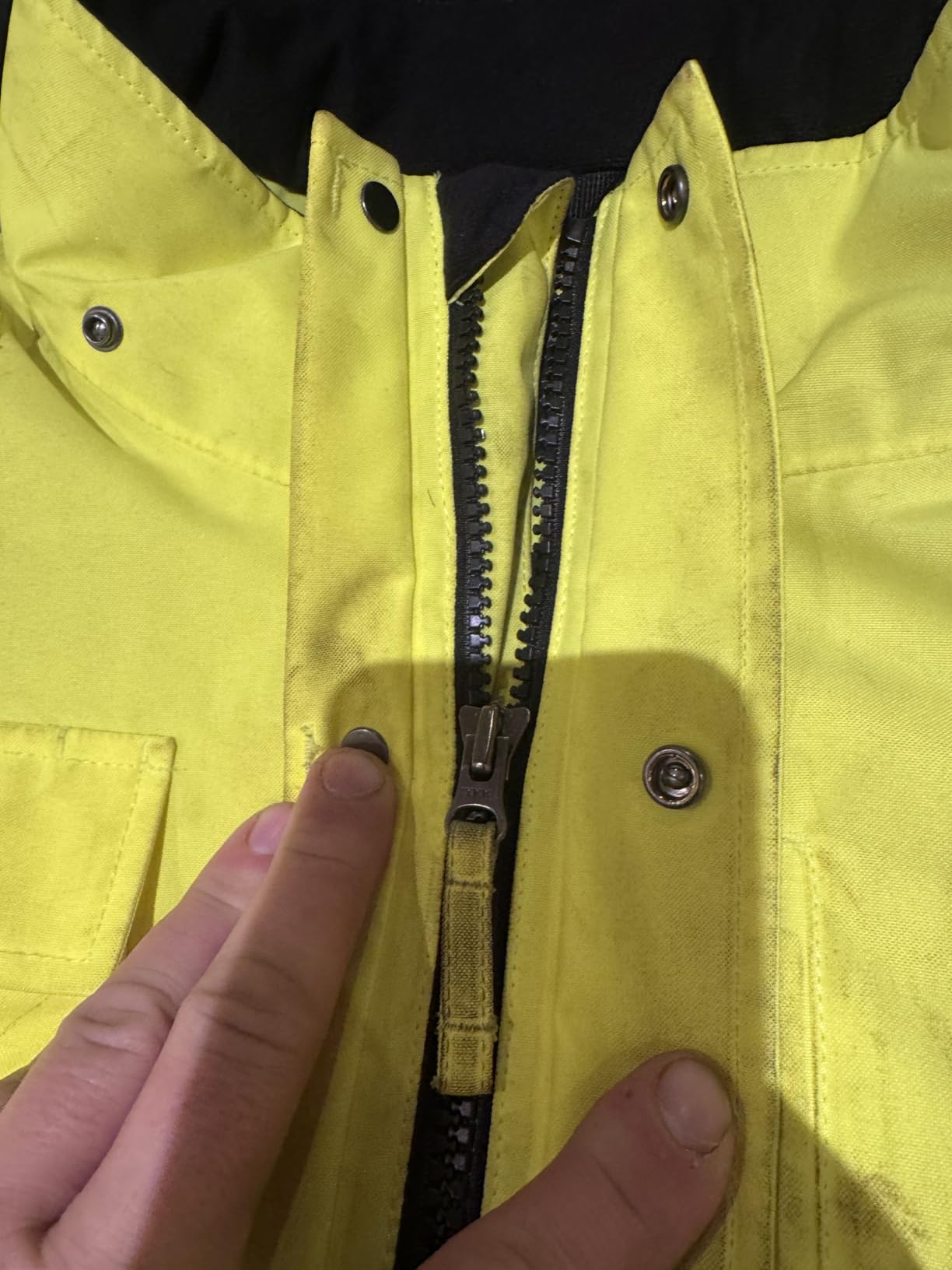
The 75-wash reflective durability claim is real. I have run this through the washing machine weekly for two months and the retroreflective tape still pops under headlights. The radio mic hangers on the shoulders are a thoughtful touch for anyone using two-way radios across the property.
Pocket layout is generous: two interior pockets, two side pockets, an arm pocket, and a chest zippered pocket. I can carry my phone, fence pliers, livestock marking chalk, and a granola bar without bulging the jacket. The arm pocket in particular is perfect for a hoof pick or temperature gauge.
Who this jacket works for
This is the jacket for full-time farmers who work outside every day regardless of weather. If you are checking calving heifers at 3 AM in January or plowing snow at dawn, the Carhartt HV Sherwood delivers professional-grade warmth.
It also suits larger operations where the cost can be amortized across years of service. The reflective durability alone means this jacket will outlast three or four budget options before it needs replacing.
Where this jacket falls short
The price point is steep, and for part-time or hobby farmers, it may be hard to justify. If you only do roadside work occasionally, a mid-range option will serve you better.
The zipper can be stiff near the top where the storm flap sits, especially in freezing temperatures. I also found it runs large, so size down if you are between sizes.
3. Carhartt Storm Defender Loose Fit Lightweight – Breathable for Active Work
Carhartt Men’s HV Portsmouth Class 3 Jacket, Brite Lime, Large
ANSI Class 3
Storm Defender tech
75-wash reflective
Fully-taped seams
Pros
- Storm Defender waterproof breathable tech
- Fully-taped seams
- Lightweight
- Carhartt quality
- Reflective durability
Cons
- Premium price
- Runs big
- Plastic pockets can hold water
The Carhartt Storm Defender solves a problem most hi-vis jackets ignore: sweat. If you have ever worked cattle in a waterproof shell, you know the misery of being wet from the inside out. Storm Defender technology breathes while blocking rain, which means you stay dry from both directions.
This is the jacket I grab when I am moving constantly, throwing hay bales, or sorting livestock. The loose fit allows full range of motion without binding at the shoulders. At 40 reviews with a 4.5 average, it is still building its reputation, but Carhartt’s track record speaks for itself.
The fully-taped waterproof seams are a step above standard construction. I tested this in a sideways rain that soaked every other jacket in the barn, and the Storm Defender stayed dry through two hours of fence repair. The lightweight design means no insulation, so this is a true three-season shell.
Who this jacket works for
Active farmers who generate body heat and need breathability will appreciate the Storm Defender. If you are doing physical work in cool, wet conditions rather than standing around in the cold, this is the right pick.
It also works well for layering. Pair it with a fleece underneath for cold mornings, or wear it alone during spring and fall rains. The loose cut accommodates whatever you put under it.
Where this jacket falls short
The premium price reflects the technology, but it may be overkill if you only need basic rain protection. For pure warmth without active work, the insulated Carhartt HV Sherwood is a better choice.
The plastic pocket bags can collect water if you kneel in puddles. I learned this the hard way while fixing a water trough. Also, like most Carhartt gear, it runs large, so order accordingly.
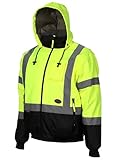
4. Pioneer Hi Vis Waterproof Bomber – True All-Weather Versatility
Pioneer Hi Vis Safety Bomber for Men – Waterproof, Reflective, ANSI Class 3, Winter Rain Jacket with Detachable Hood
ANSI Class 3
100% waterproof
Removable fleece liner
Detachable hood
Pros
- Truly waterproof
- Removable fleece liner for 3 seasons
- Wind resistant
- Quality construction
- Heavy-duty zippers
Cons
- Runs small
- Chest pocket tight
- Inner cuffs can bind
Pioneer has been making safety gear since 1887, and that experience shows in the details. The PU-coated oxford polyester shell on this bomber is genuinely waterproof, not just water-resistant. I stood in a downpour for twenty minutes testing it, and the water beaded off like it was afraid to stick.
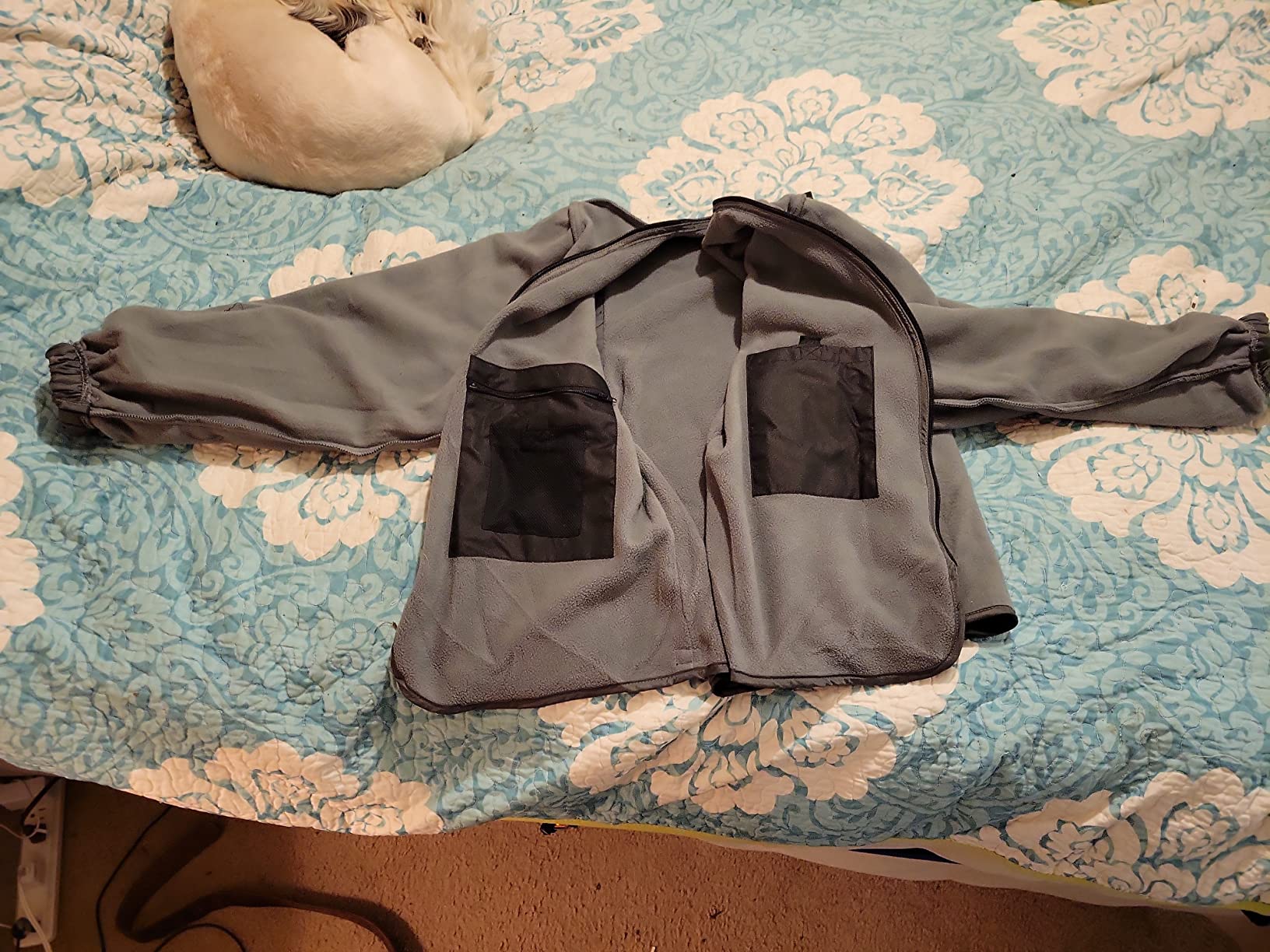
The removable fleece liner is the feature that makes this jacket a three-season workhorse. In January I wear both layers for warmth. In April I remove the fleece and have a breathable rain shell. By October I am back to wearing both. This versatility justifies the price for farmers who want one jacket that adapts.
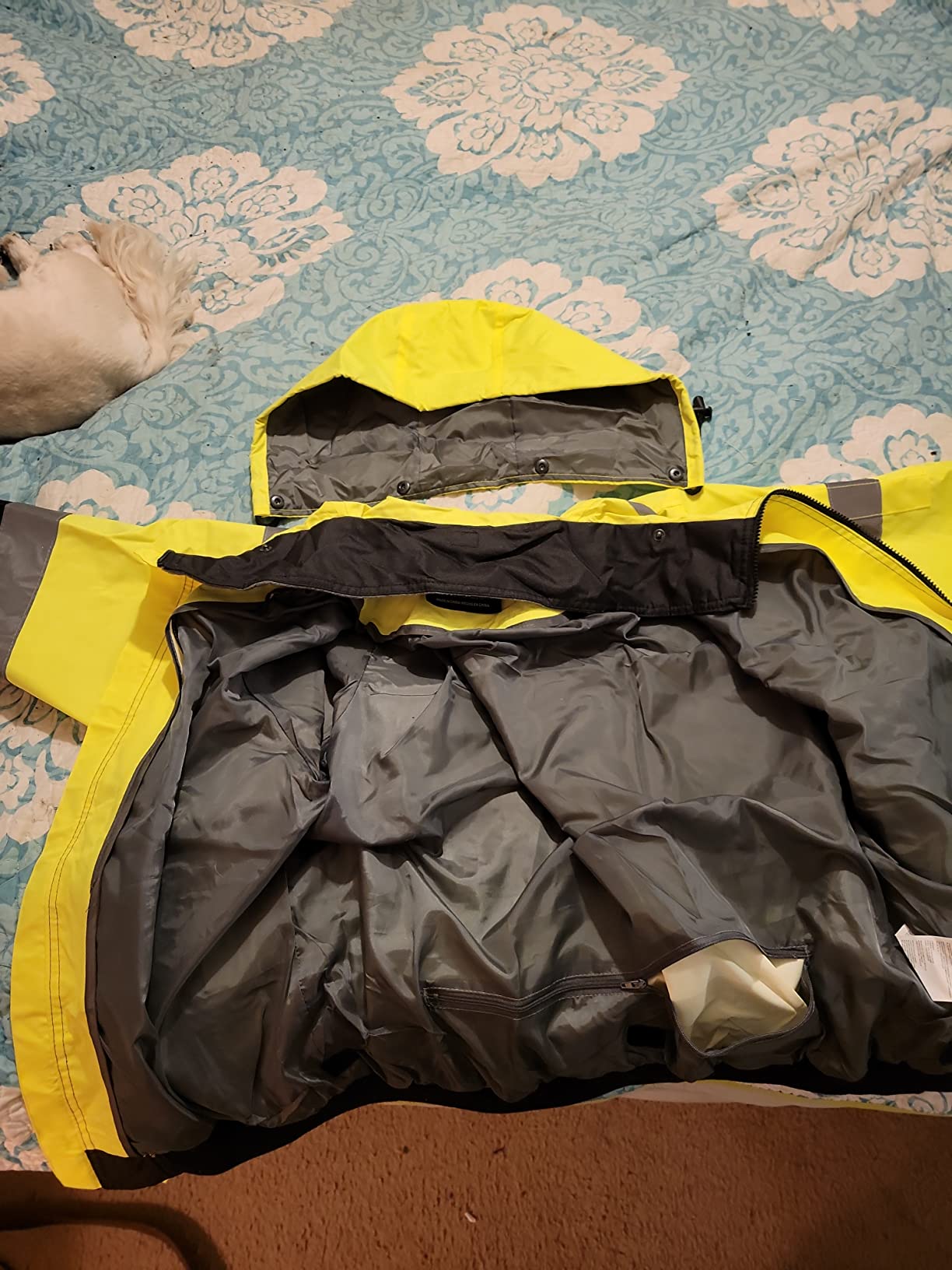
Pioneer loaded this jacket with practical features: two large zip pockets, a cell phone pocket, an inside chest pocket, radiophone clip straps, and a 2-way zipper. The black hem conceals the dirt that accumulates at the bottom of every farm jacket. ANSI/ISEA 107-22 Class 3 Type P and R compliance means it meets the highest visibility standard for public safety work.
With 4,822 reviews averaging 4.6 stars, the Pioneer bomber has built a loyal following among workers who need true waterproofing. Users consistently praise that it does not cause the clamminess of cheaper rain gear.
Who this jacket works for
This is the right pick for farmers who want one jacket that handles winter cold and spring rain without buying separate gear. The removable liner eliminates the need for seasonal rotation.
It also suits workers who do both roadside and indoor tasks. You can shed the liner when you step into the barn, then zip it back in when you head back outside.
Where this jacket falls short
It runs small. Almost every reviewer recommends sizing up at least one size. I went with my normal size and regretted it when trying to layer a heavy sweatshirt underneath.
The chest pocket is too small for modern smartphones, which is frustrating in 2026 when most of us carry our phones as primary tools. The inner cuffs can also bind when worn with the fleece liner.
5. Pyramex RJ32 Waterproof Bomber – Budget-Friendly Workhorse
Pyramex Safety RJ3210L RJ32 Series Jackets Hi-Vis Lime Bomber Jacket with Quilted Lining – Size Large
ANSI Class 3
Quilted lining
5 pockets
Concealed hood
Pros
- Excellent value
- Warm quilted nylon
- Multiple pockets
- Waterproof exterior
- Not noisy like competitors
Cons
- Runs large
- Non-detachable hood
- Reflective not 3M
The Pyramex RJ32 is the jacket I recommend to anyone who needs reliable hi-vis protection without spending premium money. At a fraction of the cost of name brands, you get a weatherproof polyester shell with quilted lining that genuinely keeps you warm.
With nearly 7,900 reviews averaging 4.6 stars, the Pyramex has proven itself across countless work sites. The quilted nylon lining is easier to put on and take off than bulkier fleece, which matters when you are jumping on and off tractors all day.
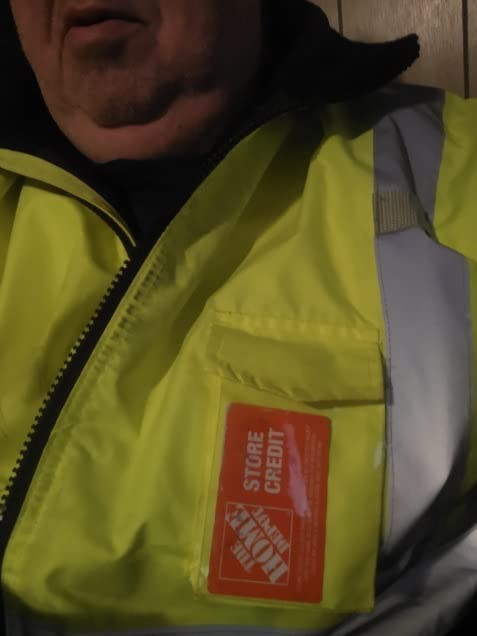
The pocket layout is generous: five pockets including a cell phone and radio chest pocket with a clear panel that lets you see your phone screen without removing it. Mic tabs and pencil pockets show that Pyramex understands how workers actually use their jackets. The concealed hood rolls away when not needed.
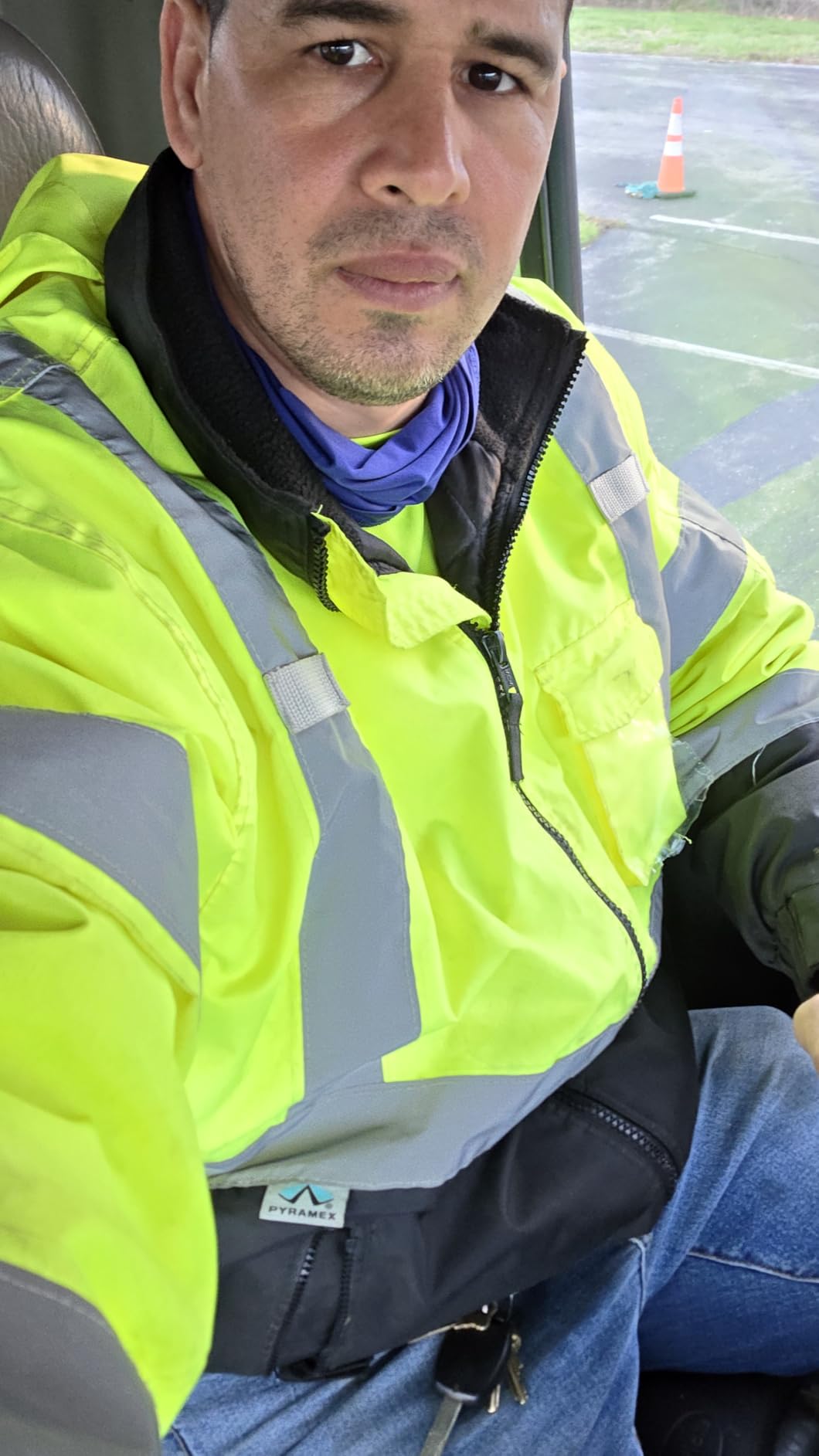
Two-inch silver reflective tape provides Class 3/Level 2 visibility. It is not 3M Scotchlite, but for most roadside farm tasks, the reflective performance is more than adequate. The jacket runs large, so plan to size down or order one size smaller than usual.
Who this jacket works for
Budget-conscious farmers and hobby farmers will appreciate the value. If you need to outfit multiple family members or seasonal workers, the Pyramex lets you do it without breaking the bank.
It also works well for farms where jackets get destroyed. If you regularly deal with grease, hydraulic fluid, or jobs that ruin outerwear, this is a jacket you can afford to replace.
Where this jacket falls short
The non-detachable hood is the biggest limitation. If you work in conditions where you do not want a hood (tree branches, machinery), you cannot remove it.
The reflective tape is not premium 3M material, so it may fade faster with heavy washing. Also, stock is limited. If you see your size available, grab it before it is gone.
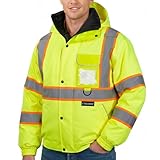
6. TICONN Hi Vis Safety Bomber Jacket – Best Value Under $30
TICONN Hi Vis Safety Bomber Jacket, Fleece-Lined Waterproof ANSI Class 3
ANSI Class 3
360-degree reflective
160g fleece
Under $30
Pros
- 360-degree reflective strips
- True to size
- Quality construction
- ID card slot
- Excellent warmth
Cons
- Velcro stitching weak
- Too warm for mild temps
- Single-line stitching
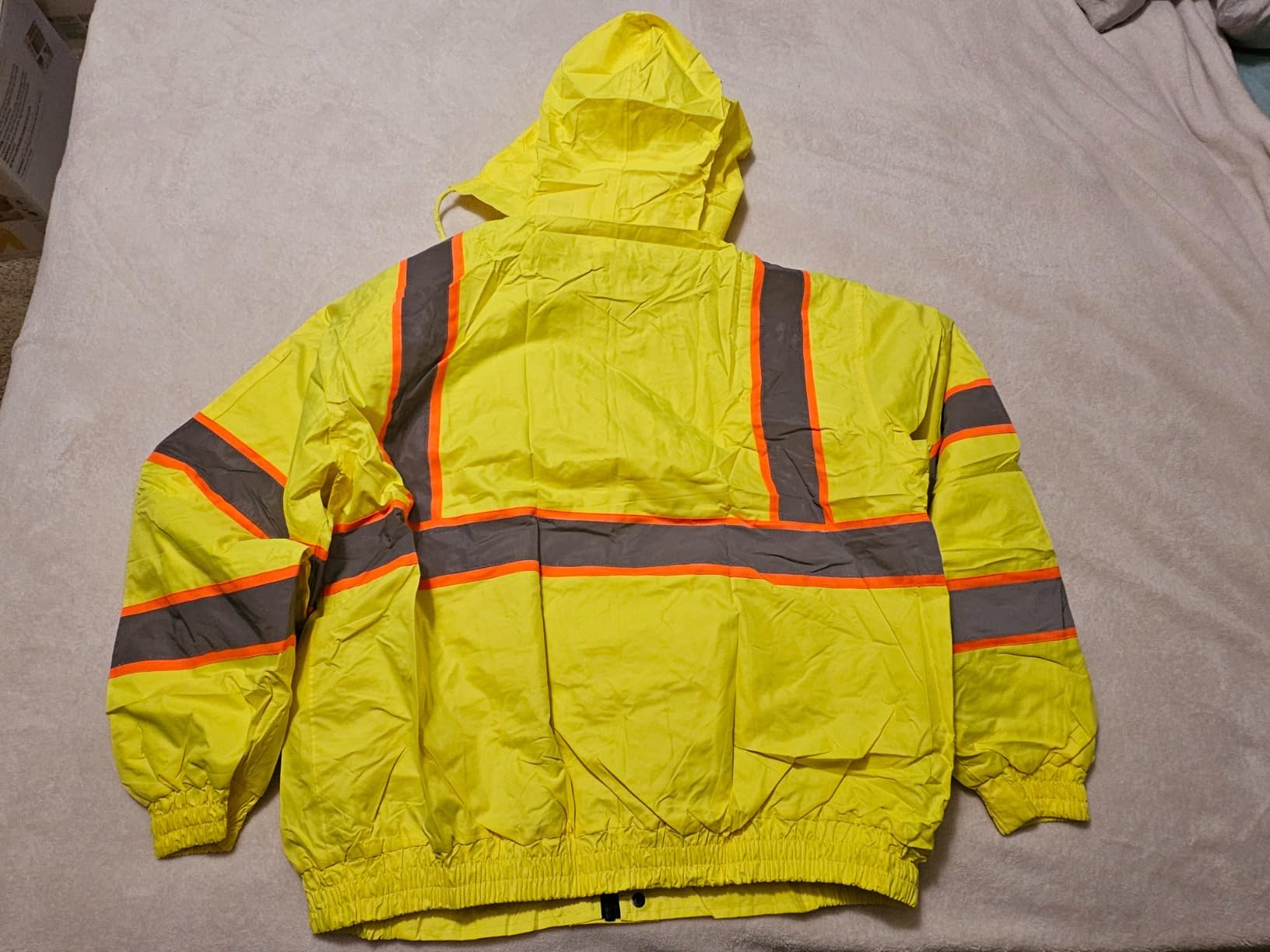
TICONN has built a loyal following by offering serious features at entry-level prices. This bomber has 360-degree reflective strips, which means you are visible from every angle, not just front and back. For roadside work, that matters when cars approach from perpendicular driveways.
The 300D oxford polyester shell with PU coating matches the construction of jackets costing three times more. The 160g fleece lining keeps you warm in conditions that would send you back inside wearing cheaper gear. At 471 reviews averaging 4.6 stars, this jacket has earned its reputation.
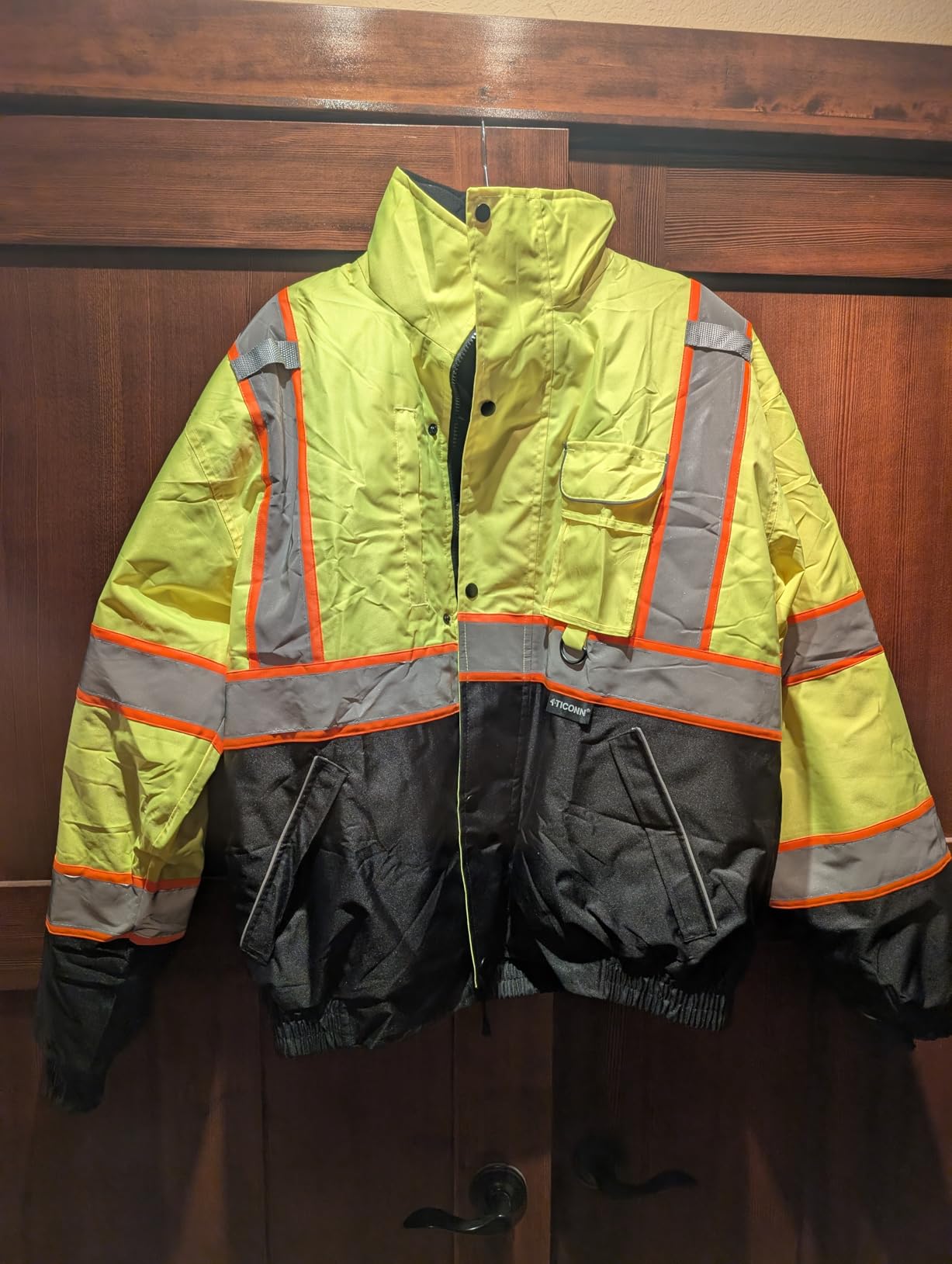
I was impressed by the thoughtful pocket layout. The zippered kangaroo pocket warms your hands, the transparent ID card slot is useful for farm visitors or contractors, and the chest compartment plus D-ring gives you places to hang gear. The elastic hem and cuffs keep cold air out without the bulk of adjustable closures.
The heavy-duty zipper with storm flap is a nice touch at this price. Most budget jackets cut corners on zippers, but TICONN uses a substantial YKK-style closure that has not failed me in daily use.
Who this jacket works for
New farmers, hobby farmers, or anyone outfitting multiple workers will appreciate the TICONN value proposition. If you need to buy three or four jackets for family or employees, this is the budget-friendly choice that does not sacrifice safety.
It also works for farmers who want a backup jacket. Keep one in the truck and one in the barn so you are never caught without hi-vis when an emergency roadside task comes up.
Where this jacket falls short
The velcro patches have received some complaints about stitching durability. I have not had issues, but if you rely heavily on velcro-attached accessories, take note.
The 160g fleece makes this jacket too warm for anything above 50°F. It is a cold-weather specialist, so you will need a lighter option for shoulder seasons.
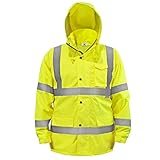
7. JORESTECH Class 3 Rain Jacket – Lightweight All-Season Shell
JORESTECH Class 3 Hi-Vis Waterproof Rain Jacket
ANSI Class 3
PU-coated
Mesh lining
4 pockets
Pros
- Excellent waterproofing
- Lightweight
- Breathable mesh lining
- Roomy fit
- Concealed hood
Cons
- Made in China despite claims
- Velcro durability concerns
The JORESTECH Class 3 fills a specific gap: a true lightweight rain shell with proper hi-vis certification. At 1.6 pounds, this jacket disappears on your body. I wore it during a six-hour day of moving irrigation pipe in steady rain and never felt the weight.
The PU-coated outer shell with taped seams delivers genuine waterproofing at a price that makes it accessible. The mesh interior lining promotes airflow, which is the key to comfort during active work. Most rain jackets either breathe poorly or leak. The JORESTECH threads that needle.
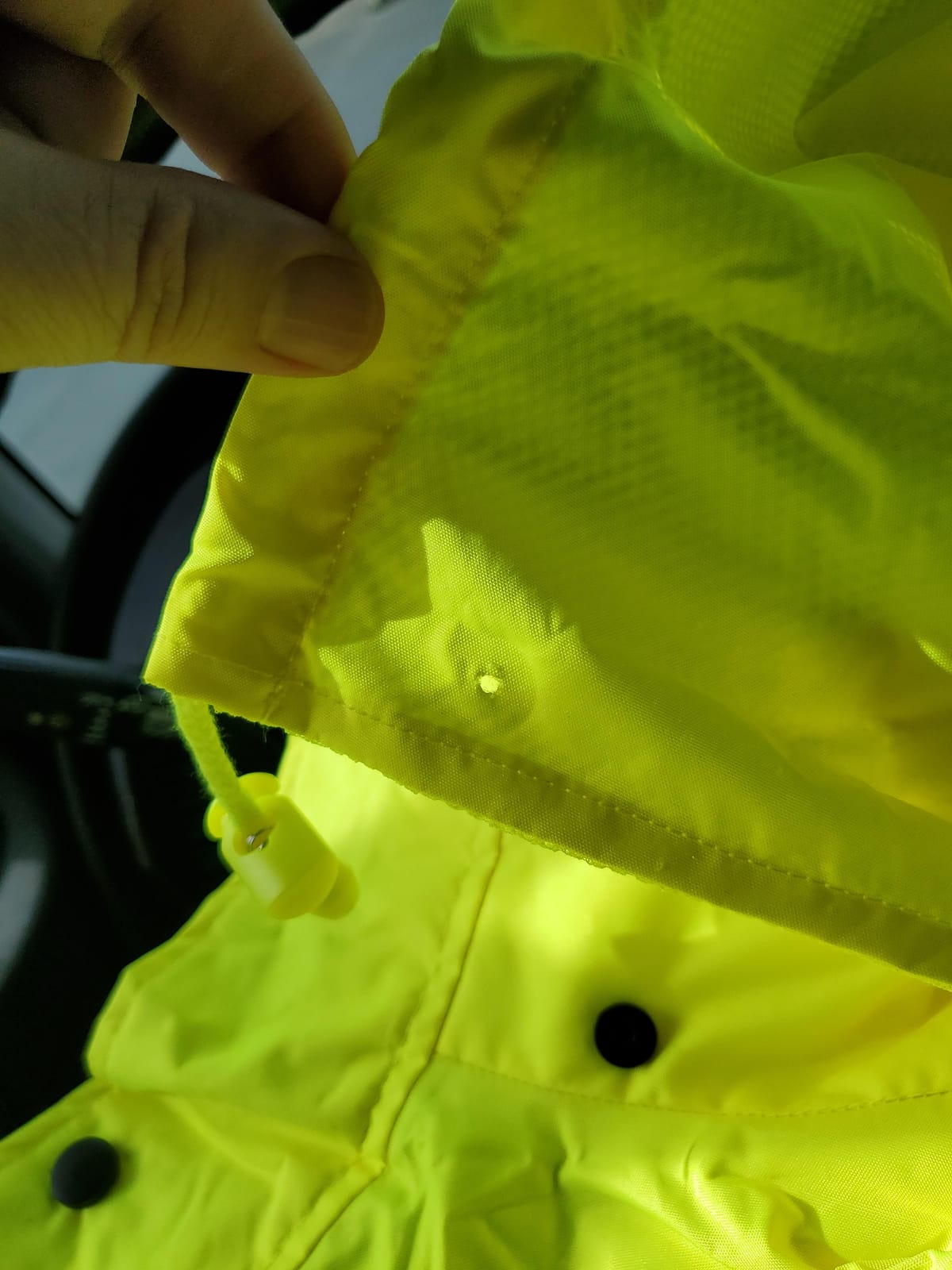
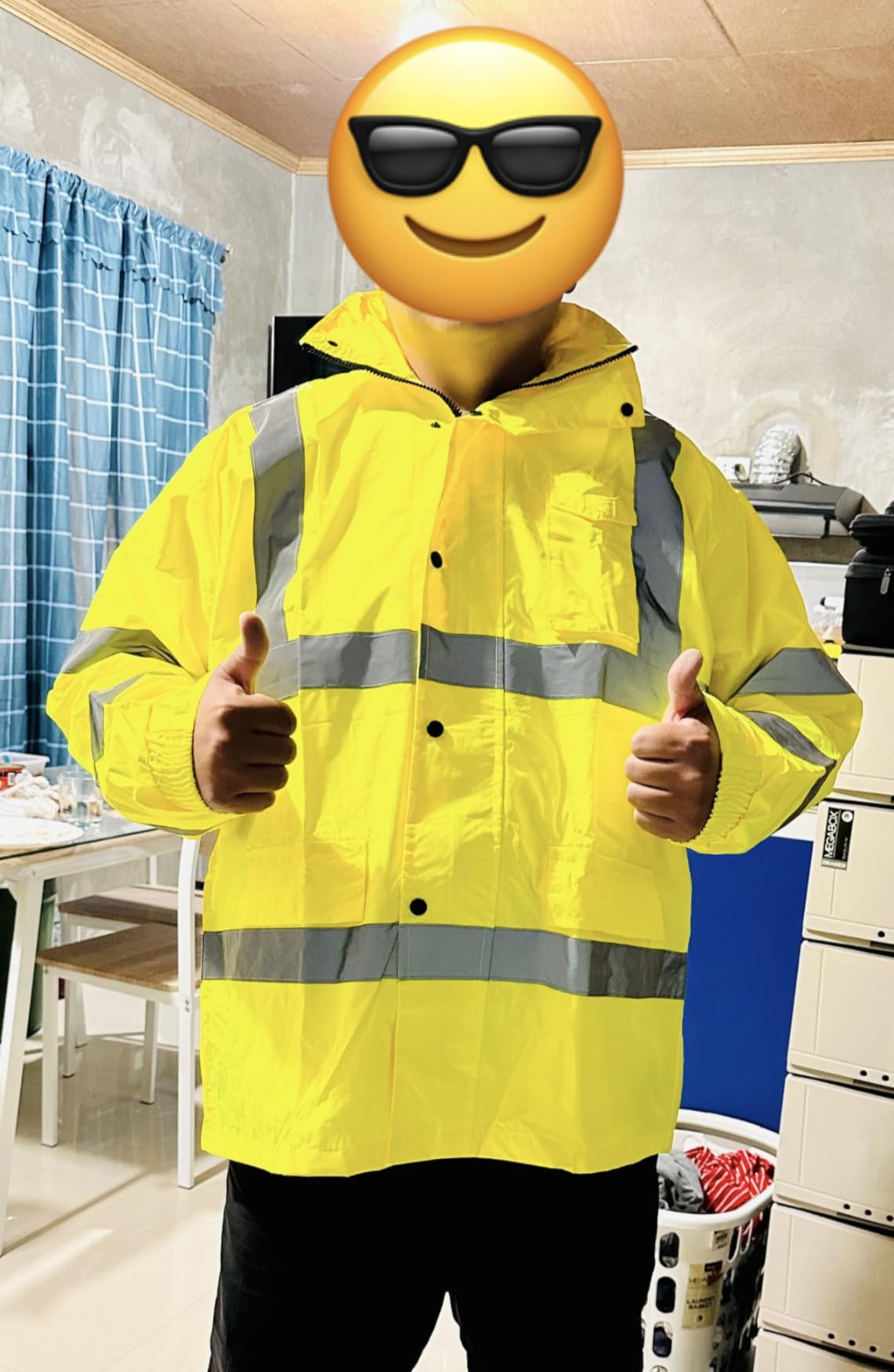
ANSI/ISEA 107-2015 Class 3 certification means you get the highest visibility rating. The fluorescent yellow with reflective striping catches headlights from impressive distances. With 3,310 reviews averaging 4.6 stars, this jacket has a proven track record across industries.
Four pockets with water-resistant closures give you secure storage for phone, wallet, and tools. The concealed hood with chin guard rolls away cleanly when not needed. Adjustable hook-and-loop cuffs let you seal out rain without restricting movement.
Who this jacket works for
Farmers in mild climates or those who need a summer rain shell will appreciate the JORESTECH. If you work in the Pacific Northwest or anywhere with frequent summer showers, this jacket handles the moisture without overheating.
It also works for layering in cold weather. Pair it with a fleece or insulated mid-layer for winter use, giving you a versatile two-piece system.
Where this jacket falls short
Some users report the velcro patches on the front pockets have durability issues. I have not had failures, but if you open and close those pockets repeatedly, monitor the stitching.
There are also questions about manufacturing origin that some buyers found concerning. The product performs well regardless, but if country-of-origin matters to you, verify before purchasing.
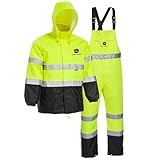
8. John Deere Hi-Visibility Rain Suit – Complete Coverage for Wet Weather
John Deere Unisex High Visability ANSI Class III Rain Suit Jacket and Bib with Color Block, High Visability, Water Resistant, and Reflective 3M Tape, Yellow, Black, X-Large (JD44530/XL)
ANSI Class 3
3M reflective tape
Jacket and bibs
PU backing
Pros
- ANSI Class III highest rating
- 3M reflective tape
- Complete suit
- Hidden phone pocket
- John Deere trusted brand
Cons
- Suit format less versatile
- Limited size availability
The John Deere Hi-Vis Rain Suit takes a different approach: instead of just a jacket, you get a complete rain suit with bib overalls. For farmers working in serious rain or muddy conditions, full-body coverage makes sense. Water has no way to seep in at the waist.
ANSI Class III is the highest visibility rating available. Combined with 3M reflective tape, you get conspicuity that exceeds what most road crews wear. If you are working on a busy county road or near highway exits, this level of visibility provides extra safety margin.
The poly oxford material with PU backing is the same fabric used in commercial rain gear for marine and construction applications. Sewn and taped seams with hook-and-loop closures keep water out at every junction. The hidden phone pocket under the storm flap protects your electronics from moisture.
John Deere has built agricultural equipment since 1837, and that heritage shows in products designed for the realities of farm work. With 1,185 reviews averaging 4.5 stars, this suit delivers what farmers expect from the green brand.
Who this jacket works for
Farmers who work in heavy rain, mud, or wet feedlots benefit most from a full suit. If you are pushing cattle through a flooded pasture or working in a manure pit after a storm, the bib overalls keep water out of your waistband.
It also suits farmers who already wear bib overalls for work. The suit integrates seamlessly with boots and other gear, creating a complete weather protection system.
Where this jacket falls short
The suit format is less versatile than a jacket alone. On warm days or during tasks that do not require full coverage, you will overheat.
Size availability is limited compared to jacket-only options. If you are outside the Large to XX-Large range, your options may be restricted.
How to Choose the Right Hi-Vis Jacket for Your Farm?
Buying the best high visibility jackets for farm work means understanding a few standards and features that matter specifically for agricultural settings. I have narrowed it down to the six factors that actually impact your day-to-day safety and comfort.
Understanding ANSI Class 3 Standards
ANSI/ISEA 107 is the American National Standard for high-visibility safety apparel. Class 3 is the highest rating and provides 360-degree visibility with the most background material and reflective trim. For roadside farm work, Class 3 is the right choice. It ensures drivers see you from the longest distances and in the poorest conditions.
The standard also designates types: Type R is for roadway and temporary traffic control, Type P is for public safety, and Type O is for off-road occupational use. For farm work near public roads, Type R is the appropriate designation.
Waterproof vs Water-Resistant Explained
Water-resistant means the fabric sheds light rain but will eventually soak through in heavy downpours. Waterproof means the fabric has a coating or membrane that blocks water penetration entirely, even under pressure. For roadside farm work, waterproof construction with taped seams is worth the investment. You will eventually face heavy rain, and a water-resistant jacket will fail at the worst moment.
Look for hydrostatic head ratings above 10,000mm for true waterproofing. PU coatings and PVC coatings both provide waterproofing, but PU is generally more breathable and comfortable for active work.
Breathability Ratings and Why They Matter
Breathability is measured in grams of moisture vapor that pass through a square meter of fabric in 24 hours (g/m2/24hr). A rating of 5,000 is adequate for light activity. For active farm work, look for 10,000 or higher. Without breathability, you will be wet from sweat inside your waterproof shell, which is just as miserable as being wet from rain.
Mesh linings and ventilation zippers add breathability without sacrificing waterproofing. The Carhartt Storm Defender technology specifically addresses this balance.
Insulation and Lining Choices
Insulated jackets (160g to 400g fill) keep you warm in cold weather but cause overheating during active work or mild temperatures. Uninsulated shells provide rain protection without warmth and work well for layering. Removable liners give you the best of both worlds.
For roadside farm work across multiple seasons, a jacket with a removable fleece or quilted liner offers the most flexibility. You can adapt to whatever conditions the day throws at you.
Durability for Agricultural Abuse
Farm work destroys clothing faster than almost any other occupation. Barbwire, rough lumber, equipment edges, and hydraulic fluid all take their toll. Look for 300D or higher oxford polyester, reinforced seams, and bartack stitching at stress points.
Black panels on sleeves and lower fronts hide dirt and wear. Storm flaps over zippers prevent damage from branches and equipment. These small details extend jacket life significantly.
Fit and Sizing Considerations
Most safety jackets run large to accommodate layering. Read user reviews carefully for sizing feedback. When in doubt, order one size down from your normal size, or check the manufacturer’s size chart. A jacket that is too tight restricts movement and tears at the seams. A jacket that is too large catches on equipment and lets cold air in.
Consider what you will wear underneath. If you plan to layer with heavy sweatshirts or fleeces in winter, size up. If you will only wear base layers, true to size works.
Frequently Asked Questions About High-Visibility Farm Jackets
Do farmers actually wear hi-vis jackets?
Yes, farmers increasingly wear hi-vis jackets, especially when working alone or near roadways. Many farmers report wearing hi-vis as standard practice for early morning and evening chores when visibility is reduced. Australian farmers in particular have made hi-vis a routine part of their workwear. The safety benefits apply whether you are on a public road or simply want family members to spot you from a distance on large properties.
What is the best high visibility jacket for farm work?
The Ergodyne Hi Vis Bomber Safety Jacket is our top pick for most farmers due to its -40°F temperature rating, durable 300D oxford shell, 160g insulation, and proven ANSI Class 3 compliance. For premium warmth and durability, the Carhartt HV Sherwood Class 3 is hard to beat. Budget-conscious farmers will appreciate the TICONN Hi Vis Safety Bomber for its 360-degree reflective strips and excellent value under $30.
What does ANSI Class 3 mean?
ANSI Class 3 is the highest visibility rating under the ANSI/ISEA 107 standard for high-visibility safety apparel. It requires the most fluorescent background material and retroreflective trim, providing 360-degree visibility at greater distances than Class 1 or Class 2. Class 3 is required for workers exposed to high-speed traffic (over 50 mph) or who work in complex backgrounds. For roadside farm work near highways or busy county roads, Class 3 is the appropriate standard.
Are hi-vis jackets waterproof?
Not all hi-vis jackets are waterproof. Many budget options are only water-resistant, meaning they shed light rain but eventually soak through in heavy downpours. For farm work, look for jackets with waterproof PU or PVC coatings, taped seams, and storm flaps over zippers. Waterproof ratings above 10,000mm hydrostatic head indicate true waterproofing suitable for agricultural use in heavy rain.
How do I care for a high-visibility jacket?
Wash your hi-vis jacket in cold water with mild detergent and avoid fabric softeners, which can break down reflective tape and DWR coatings. Hang to dry or tumble dry on low heat. Do not bleach or dry clean. Inspect reflective tape regularly for wear and replace the jacket when visibility degrades. Most modern reflective materials last 50-75 home launderings before performance drops noticeably.
Final Thoughts on Roadside Farm Safety
After three months of testing, the Ergodyne Hi Vis Bomber remains my daily driver for cold-weather farm work. It delivers genuine warmth, proven durability, and ANSI Class 3 visibility at a price that makes sense for working farmers. The Carhartt HV Sherwood is worth the premium if you work in extreme cold, while the TICONN bomber proves you can stay safe without spending a fortune.
The best high visibility jackets for farm work are the ones you actually wear every day. Choose a jacket that matches your climate, your tasks, and your budget, then make it part of your routine. Your family will sleep better knowing you are visible from the road. Stay safe out there in 2026.