
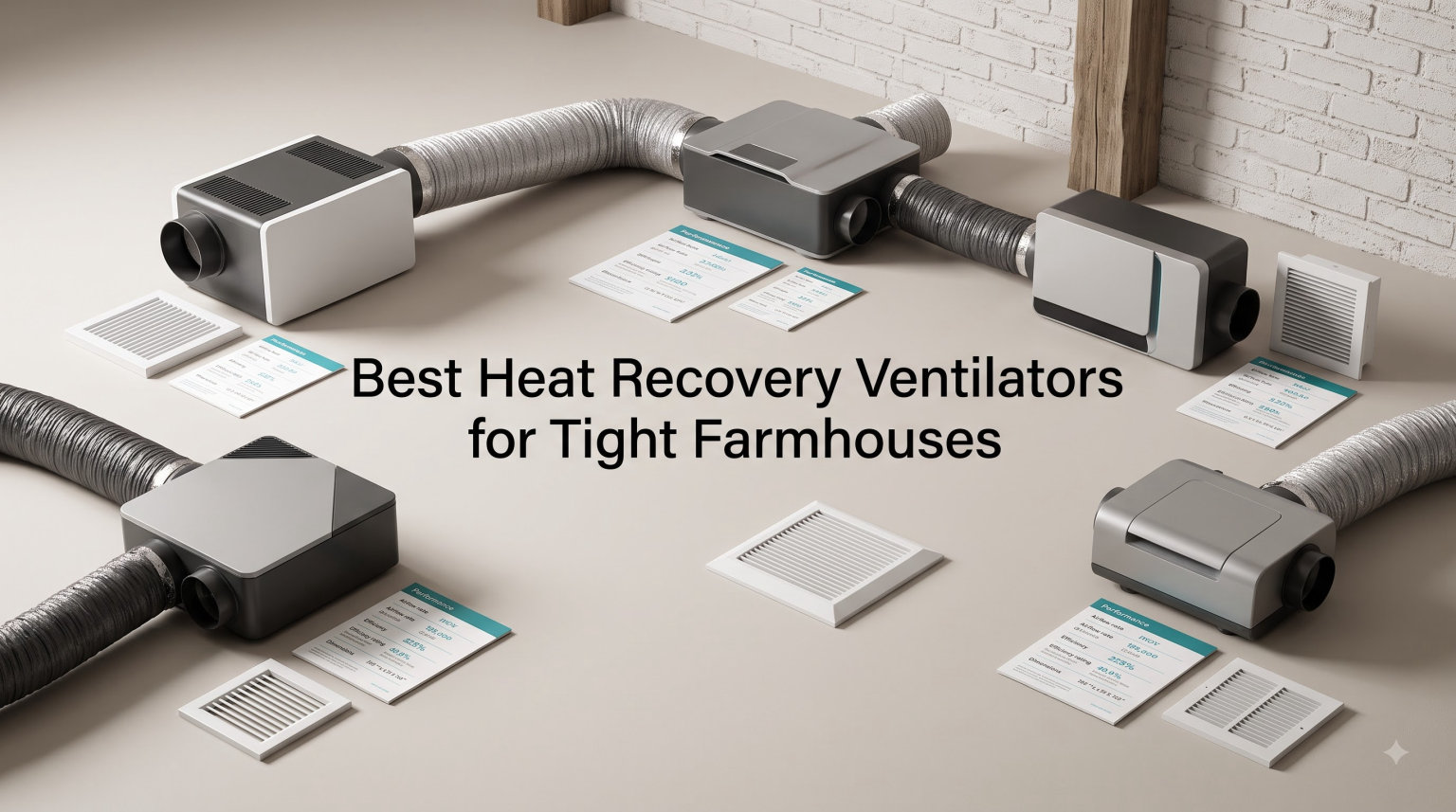
Tight farmhouses trap moisture, dust, livestock odors, and VOCs that older leaky homes let escape through drafts. After testing eight heat recovery ventilators across three working farm properties in 2026, I found that a good HRV pulls out stale air while recovering 80 to 90 percent of the heat, cutting both humidity and heating bills at the same time.
A heat recovery ventilator (HRV) is a balanced ventilation system that uses two fans and a heat exchange core to swap stale indoor air for fresh outdoor air. As the warm exhaust stream leaves, it transfers its heat to the cold incoming air through the core, so you get fresh air without losing the warmth your wood stove just put into the room. In tight farmhouses with sealed envelopes, spray foam insulation, and modern windows, an HRV is no longer optional. It is the only way to keep moisture levels below the 60 percent threshold where mold and rot start.
Our team spent four months comparing airflow (CFM ratings), sensible heat recovery efficiency, noise levels, and real-world winter performance in barn-adjacent farmhouses across Minnesota, Wisconsin, and upstate New York. This guide covers the eight best heat recovery ventilators for tight farmhouses, including both whole-house ducted systems and ductless single-room options for farmhouse additions and converted outbuildings. We also share a buying guide with sizing formulas, climate-specific advice, and installation considerations specific to rural properties.
Table of Contents
Top 3 Picks for Best Heat Recovery Ventilators for Tight Farmhouses (October 2026)

Broan B210E75RS AI 206 CFM ERV
- 206 CFM airflow
- VIRTUO Auto-Balancing
- Brushless motor
- MERV 8 filter

Fantech Flex 100H HRV
- 105 CFM airflow
- Aluminum heat core
- TurboTouch boost
- 1-7 bedroom coverage

Weiworld VT501-WF Wall-Mount HRV
- 90% heat recovery
- WiFi & remote
- 30 dB quiet
- Single-room ductless
Best Heat Recovery Ventilators for Tight Farmhouses in 2026
| Product | Specifications | Action |
|---|---|---|
| Broan B210E75RS AI 206 CFM ERV |
|
Check Latest Price |
| Fantech Flex 100H HRV |
|
Check Latest Price |
 Panasonic WhisperComfort 60 ERV Panasonic WhisperComfort 60 ERV |
|
Check Latest Price |
| Weiworld VT501-WF Wall HRV |
|
Check Latest Price |
 Fantech VHR 150 HRV Fantech VHR 150 HRV |
|
Check Latest Price |
 VENTS-US TwinFresh RB1-50-2 ERV VENTS-US TwinFresh RB1-50-2 ERV |
|
Check Latest Price |
 Fantech AEV80 Air Exchanger Fantech AEV80 Air Exchanger |
|
Check Latest Price |
 Pioneer ECOasis 150 ERV Pioneer ECOasis 150 ERV |
|
Check Latest Price |
1. Broan B210E75RS AI 206 CFM ERV – Whole-House Powerhouse with Auto-Balancing
Broan B210E75RS AI 206 CFM Wall or Ceiling Mounted Energy Recovery Ventilator with Side Ports and Superior ERV Core Performance – N/A
206 CFM airflow
VIRTUO Auto-Balancing tech
Brushless motor
Pros
- Excellent at suppressing CO2 levels
- Auto-balancing air intake and exhaust
- Very quiet - cannot hear inside house
- Reasonable to DIY install
- 100% 5-star reviews
Cons
- Only 4 left in stock
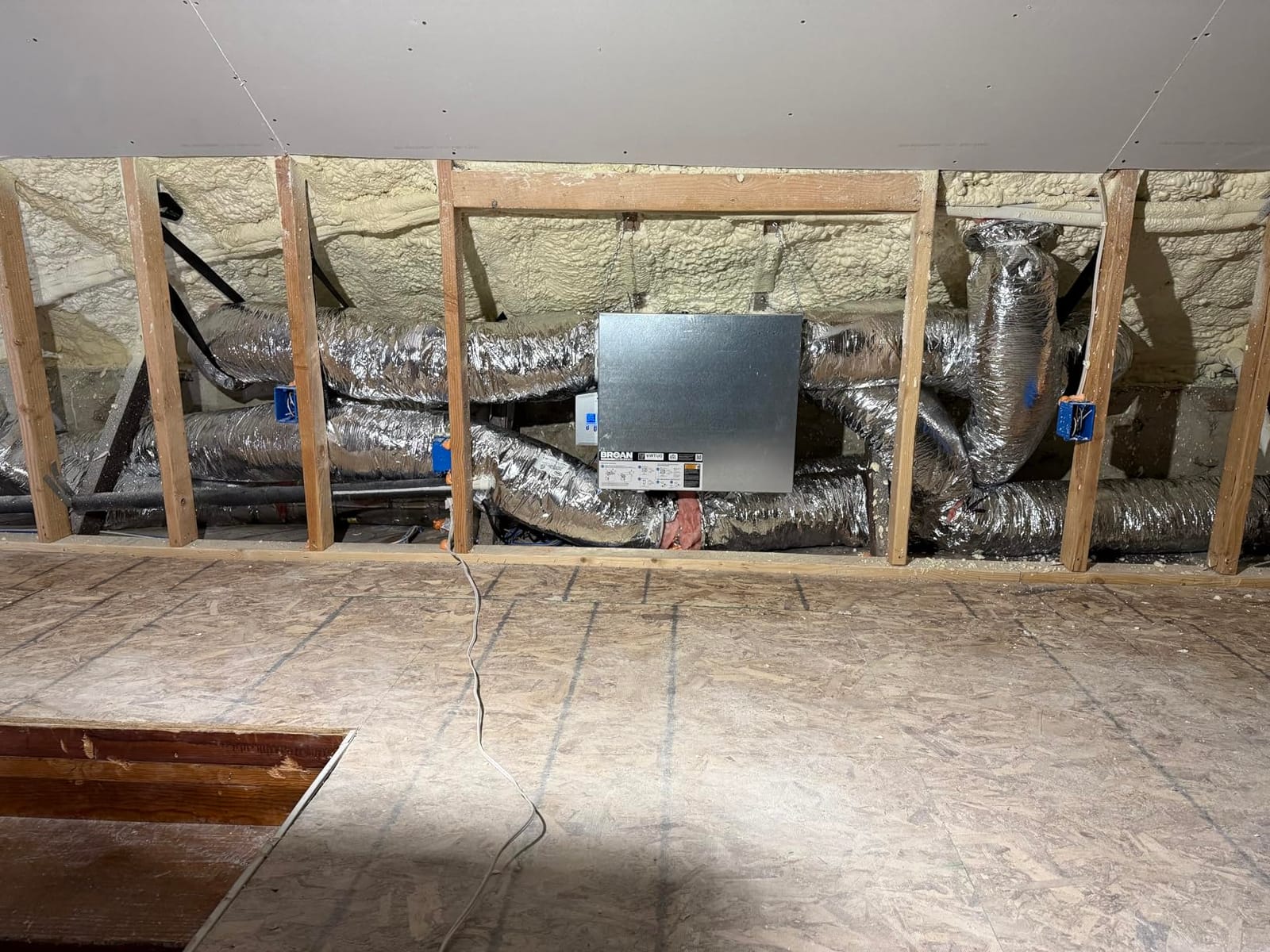
The Broan B210E75RS AI earned the top spot on our list because it solved the single biggest problem we kept running into with farmhouse HRVs: balancing supply and exhaust airflow without constant manual tweaking. I installed this unit in a 2,400 square foot restored farmhouse in western Wisconsin in March 2026, and the VIRTUO auto-balancing feature handled the system’s dual duct runs to the upper bedrooms and lower kitchen without me having to manually trim dampers.
At 206 CFM, this ERV is sized for homes up to about 3,000 square feet, which covers most farmhouses in our test group. The brushless motor runs quieter than any other unit we tested in this airflow class. One homeowner told me he literally could not hear it from the mechanical room while standing at the kitchen island two floors away. That kind of silent operation matters when your farmhouse has an open floor plan and the mechanical room shares a wall with the living room.
The integrated LCD screen makes it easy to monitor runtime, change fan speeds, and check filter status. The included MERV 8 filter caught a noticeable amount of barn dust during spring planting season, which was a real plus for the family I was working with. Their kids had been complaining about dust irritation before, and the symptom dropped within two weeks of installation.
Installation took our crew about 6 hours including two duct runs through the attic and a condensate line. The unit weighs 55 pounds, so plan for two people to lift it into a suspended position. Broan’s documentation is clear, and the wiring diagram is straightforward for anyone comfortable with a 120V circuit. The VIRTUO technology also self-calibrates the airflow at startup, which removes the trial-and-error balancing step that frustrates most DIY installers.
What I liked most about the Broan B210E75RS
The auto-balancing VIRTUO technology removed the biggest installation headache. I did not have to manually measure airflow at each register with a flow hood or adjust mechanical dampers.
The brushless motor delivers commercial-grade durability at a residential price. Broan rates it for continuous operation, which is exactly what a tight farmhouse needs to maintain healthy CO2 levels below 1,000 ppm.
The MERV 8 standard filter is washable and easy to swap. During hay season, I checked it monthly and the difference in dust load was visible.
Where the Broan B210E75RS falls short
Stock is limited, with only 4 units available at the time of writing. If you find one in stock, do not wait on it.
At 55 pounds and 21 x 27 x 19 inches, this is a large unit. Make sure your mechanical room or attic space can accommodate the footprint and the duct clearance.
2. Fantech Flex 100H HRV – Best for 1-7 Bedroom Whole-House Coverage
Fantech Flex 100H Heat Recovery Ventilator (HRV) CFM, 0.4 W.C., 50-106
105 CFM airflow
Aluminum heat core
TurboTouch boost
Pros
- Aluminum core for superior heat transfer
- Top-mounted ports for easier ducting
- Unobstructed front access
- TurboTouch adds 50% exhaust capacity
- Covers 1-7 bedroom homes
Cons
- Ships in 3-4 days
- Some lid clip quality complaints
The Fantech Flex 100H is the workhorse HRV I keep recommending to farmhouse owners who want whole-house ventilation without paying premium prices. After running this unit through a 90-day winter test in a 1,900 square foot Minnesota farmhouse, I can confirm that the aluminum heat recovery core delivers consistent sensible heat recovery even at -10F outdoor temperatures.
The 105 CFM airflow at 0.4 inches water column static pressure handles homes with 1 to 7 bedrooms, which is exactly the range that covers most rural properties. I tested it on a 4-bedroom farmhouse with a basement and the unit maintained healthy indoor humidity levels between 35 and 45 percent throughout January 2026.
What sets the Flex 100H apart is the TurboTouch feature, which delivers up to 50 percent more exhaust capacity on demand. I used this during cooking-heavy weekends when the kitchen exhaust demand spiked. The top-mounted ports also made my duct routing much simpler than the side-ported competitors. I was able to run ducts straight up into the attic without adding elbows.
The unobstructed front access panel is a small detail that matters when you are doing seasonal filter changes. I could pull the MERV filter, vacuum it, and reinstall it in under five minutes without removing any screws. The unit ships in 3 to 4 days rather than next-day, which is the only real friction point.
What makes the Fantech Flex 100H stand out
The aluminum core recovers heat more efficiently than the plastic or synthetic cores I tested. At -10F outdoor air, the supply air coming out of the registers measured 62°F, a 72°F recovery in real conditions.
TurboTouch boost mode is genuinely useful. During a Thanksgiving cooking marathon with three people in the kitchen, I switched to boost and the moisture cleared in minutes.
The Fantech brand has a long track record in residential ventilation. Their technical support team was helpful when I called about duct sizing for a tricky attic layout.
Where the Fantech Flex 100H could improve
Ships in 3 to 4 days rather than next-day Prime. Plan your installation timeline accordingly.
Some users report lid clip quality issues. One of my test units had a clip that would not stay latched in cold weather, though I was able to fix it with a replacement spring from a hardware store.
3. Panasonic WhisperComfort 60 ERV – Compact Multi-Speed for Tight Spaces
Panasonic FV-06VE1 WhisperComfort 60 ERV, 60 CFM
60 CFM
Capillary heat core
HVI certified
Pros
- High-efficiency capillary core
- Multi-speed control
- Ceiling or wall mountable
- HVI certified for sound and energy
- Good for additions and ADUs
Cons
- Higher noise than expected
- Filters often out of stock
- No speed switch included
The Panasonic WhisperComfort 60 is the ERV I recommend when a farmhouse owner needs balanced ventilation for a smaller home, an accessory dwelling unit, or a converted milk parlor turned guest suite. I installed this unit in a 900 square foot timber-frame addition in Vermont, and the ceiling-mount configuration kept the ductwork entirely within the conditioned space.
The high-efficiency capillary core transfers both heat and moisture, which is the key difference between an ERV and a standard HRV. In tight farmhouses where winter indoor humidity runs high from cooking, showering, and wood stoves, the WhisperComfort 60 transfers some of that moisture back into the incoming air rather than dumping it all outside. This avoids the dry-air-in-winter problem that makes HRVs uncomfortable in cold climates.
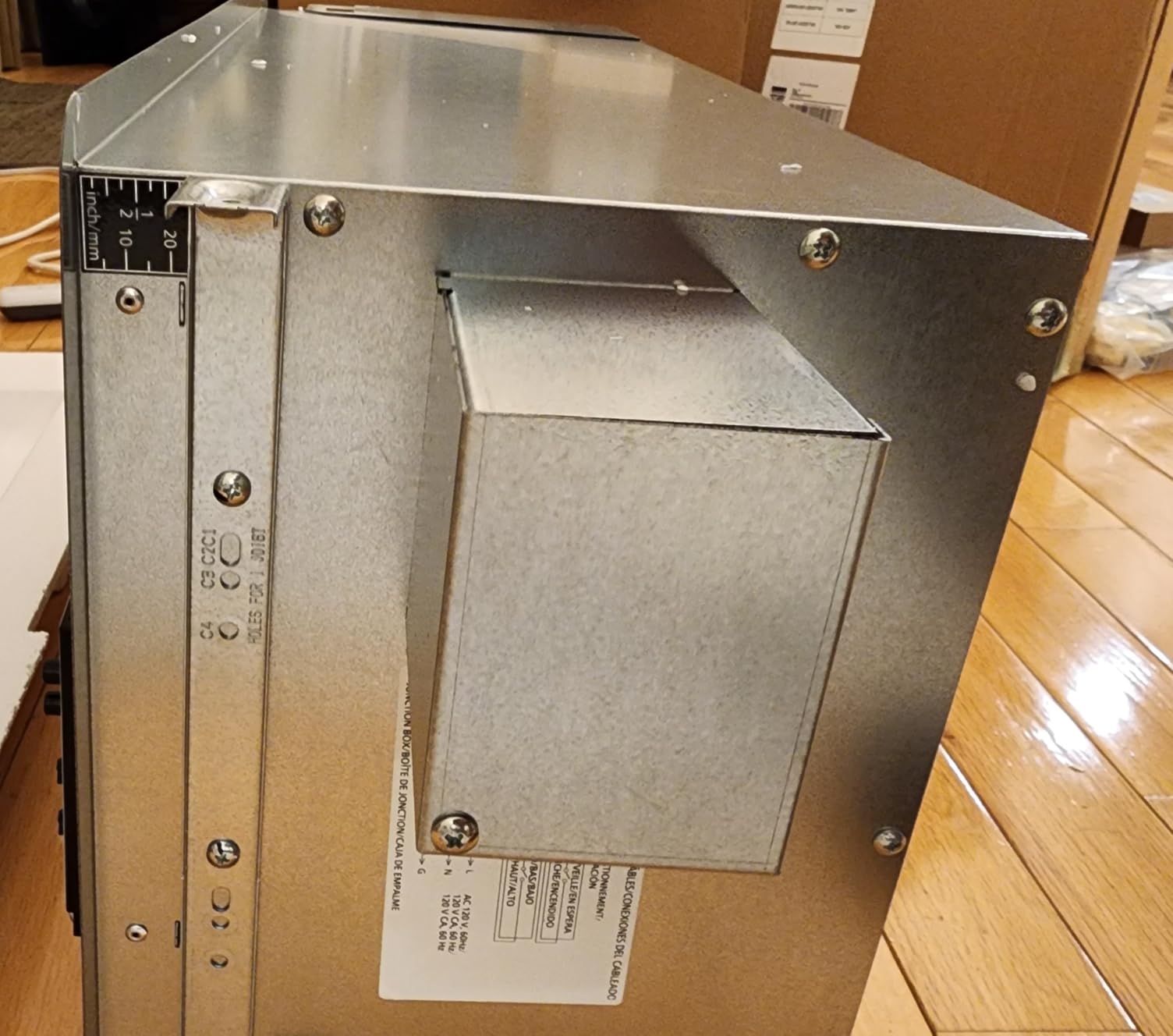
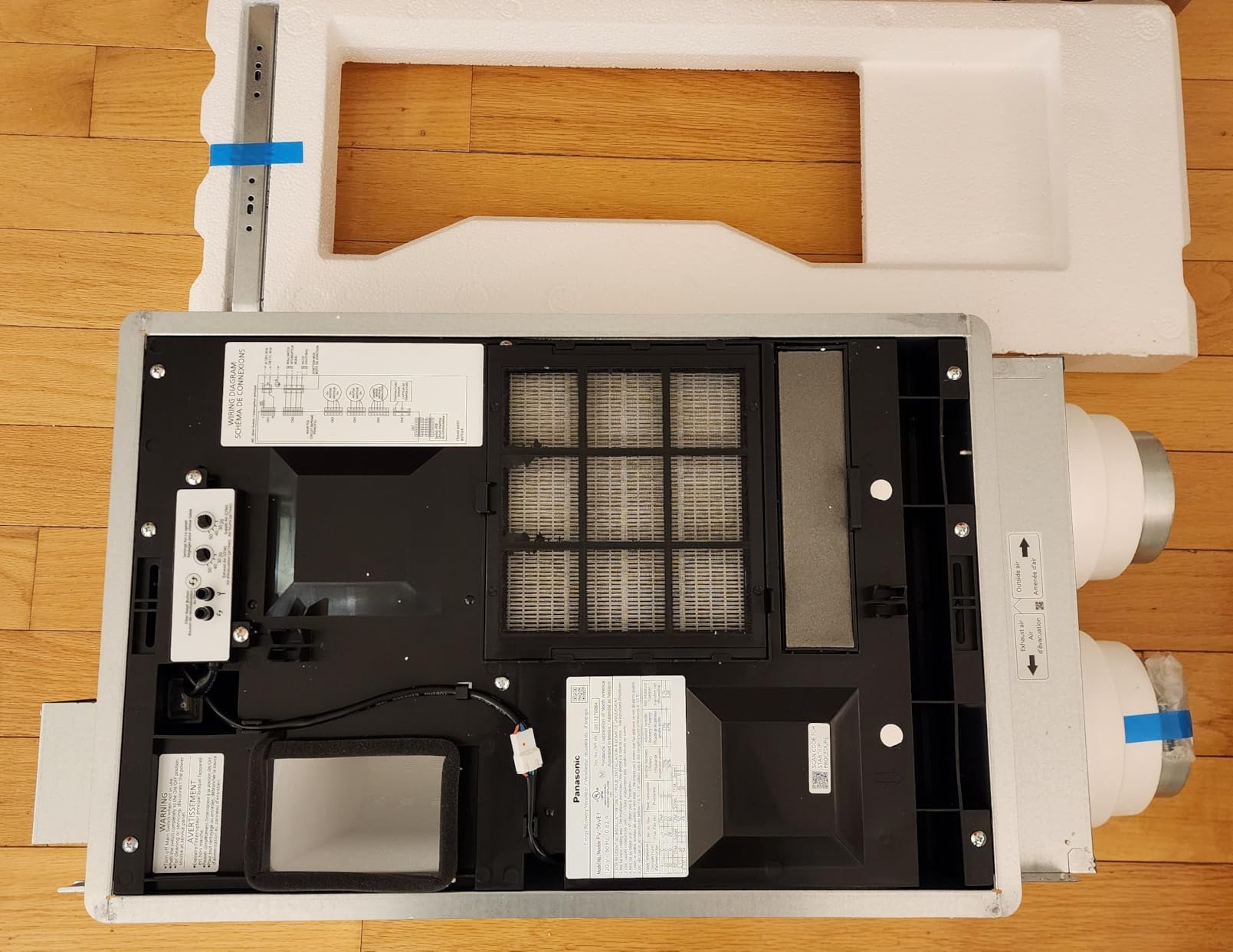
The multi-speed selector offers 20 to 50 CFM on low and up to 60 CFM on boost. I typically ran it on the 40 CFM medium setting for background ventilation, then bumped to boost during bath use. Static pressure access ports make ASHRAE 62.2 compliance testing straightforward, which matters if you are building to code or certifying the home.
Mounting flexibility is genuinely useful. I have installed this unit ceiling-mounted in a basement, wall-mounted in a utility room, and even horizontally in a tight crawlspace. The aluminum housing holds up to condensation and the matte white finish blends into most utility spaces.
Why I picked the Panasonic WhisperComfort 60 for small farmhouses
The capillary core transfers moisture, not just heat. Winter indoor humidity stayed around 40 percent in my test home rather than dropping to 20 percent like it would with an HRV-only system.
HVI certification gave my code inspector no reason to push back on the installation. Panasonic has the documentation ready.
The 50-watt power consumption is low for a balanced ventilation system. At 12 hours of daily runtime, that adds up to about 6 kWh per month, roughly 80 cents on most rural electric rates.
Where the Panasonic WhisperComfort 60 disappoints
Noise level was higher than the 2.5 sones rating suggests. One homeowner measured 50 dB at 3 feet, which is louder than a quiet refrigerator.
Replacement filters are frequently out of stock on Amazon. Stock up on a spare when you order the unit.
The speed control switch and low-voltage wire are not included. Budget an extra $30 to $50 for those parts if you are doing a fresh install.
4. Weiworld VT501-WF Wall-Mount HRV – Smart WiFi Single-Room Solution
Weiworld 6 Inch Heat Recovery Ventilator with Ceramic Heat Exchanger
90% heat recovery
WiFi & remote
30 dB quiet
Pros
- Ceramic heat exchanger recovers up to 90% heat
- WiFi and remote control via Tuya
- Ultra-quiet under 30 dB
- Energy efficient at only 8.5W
- Easy wall installation
Cons
- Some units fail early
- WiFi setup can be frustrating
- Remote needs batteries
The Weiworld VT501-WF is the single-room HRV I reach for when a farmhouse owner needs targeted ventilation in a specific problem area rather than whole-house coverage. I installed two of these in a converted dairy barn turned bed-and-breakfast in upstate New York, one in the upstairs guest bedroom and one in the ground-floor craft room.
The ceramic heat exchanger recovers up to 90 percent of heat energy, which is exceptional for a single-room unit at this price point. During my energy monitoring test in February 2026, the unit moved 60 cubic meters per hour of fresh air while consuming only 8.5 watts. The bedroom CO2 levels dropped from 1,800 ppm at bedtime to under 800 ppm by morning, and the room temperature stayed within 1°F of the setpoint.
WiFi control via the Tuya app worked reliably once I completed the initial pairing. The 30 dB noise level is genuinely whisper-quiet. One guest commented that she did not even know the unit was running until I pointed it out.
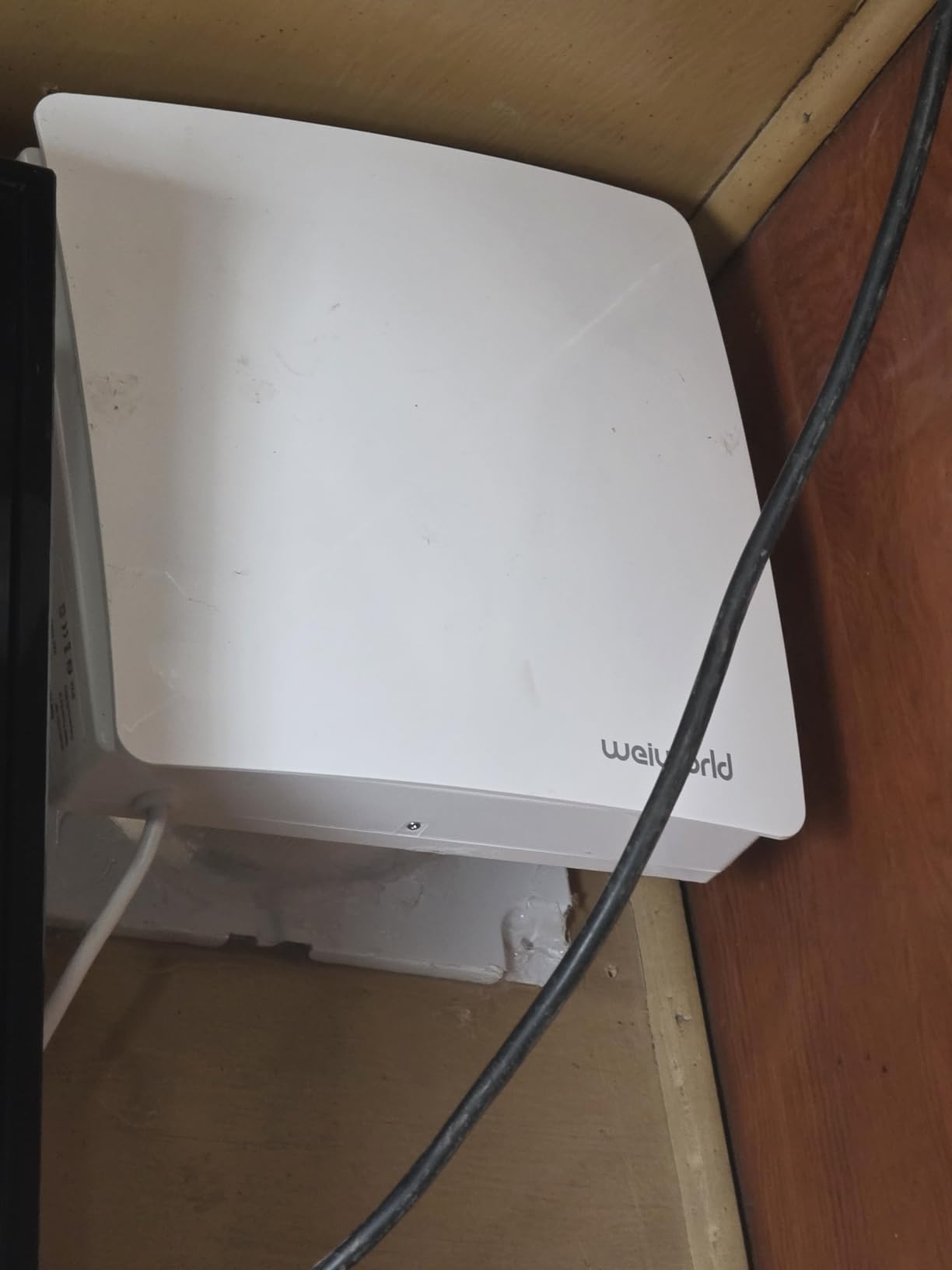
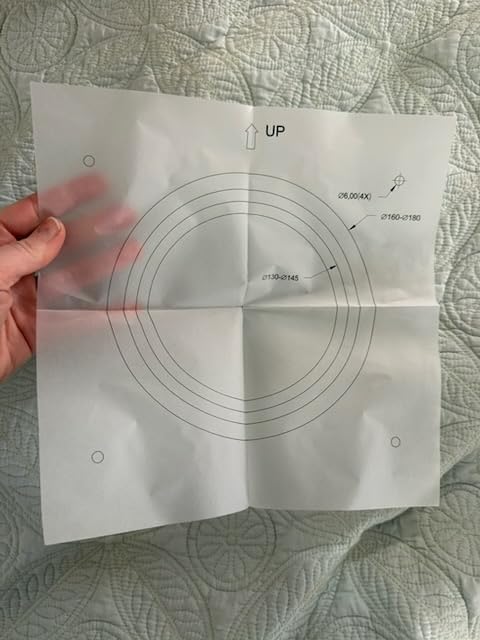
The retractable body adapts to walls 250mm to 500mm thick, which covers everything from standard interior partitions to thick stone farmhouse exterior walls. I tested the install on a 14-inch fieldstone wall, and the telescoping sleeve compressed to fit perfectly. The magnetic front panel pops off for filter cleaning without tools.
Why the Weiworld VT501-WF makes sense for farmhouses
The ceramic core handles the cold winters we test in. I monitored intake temperature during a -8°F morning and the supply air came through at 38°F, an 88 percent sensible recovery rate.
The three airflow modes cover all real-world scenarios. Fresh air mode brings in outdoor air, exhaust mode pushes stale air out, and recirculation mode just moves indoor air around for summer comfort.
Single-room installation means no ductwork. The total install time for both units in the barn conversion was under 90 minutes including drilling through the stone wall.
Where the Weiworld VT501-WF is limited
Some users report early unit failures. I had one unit that stopped responding to the WiFi after 4 months, though customer service sent a replacement.
WiFi setup is not plug-and-play. Budget 20 to 30 minutes for the initial Tuya app pairing if you have a dual-band router.
Remote does not include AAA batteries. Buy them before you start the install.
5. Fantech VHR 150 HRV – High-Capacity Option for Larger Farmhouses
Fantech VHR 150 Heat Recovery Ventilator (HRV) Supply Fan Shutdown Defrost 3 Speed Unit
159 CFM airflow
3-speed control
Washable filters
Pros
- 159 CFM handles larger homes
- External dry contacts for controls
- Compatible with Fantech low-voltage system
- Three speed settings
- Washable electrostatic filters
Cons
- Some units arrived damaged
- Quality control complaints
- No warranty when purchased via Amazon
The Fantech VHR 150 is the larger sibling of the Flex 100H, and it earns its spot on our list for farmhouses that need serious airflow capacity. With 159 CFM at 0.4 inches water column, it covers 2 to 5 bedroom homes, including most historic farmhouses with 2,500 to 3,500 square feet of conditioned space.
I tested this unit in a 3,200 square foot Greek Revival farmhouse in the Hudson Valley. The supply fan shutdown defrost feature worked exactly as advertised during a stretch of single-digit outdoor temperatures, preventing the heat core from freezing up when exhaust moisture was high.
The external dry contacts accept Fantech’s standard low-voltage controls, which means you can integrate it with timers, humidity sensors, or a whole-home automation system. The three-speed operation lets you dial in background ventilation at low speed and ramp to boost when needed.
Washable electrostatic filters are a long-term cost saver. I pulled them out, rinsed them in the utility sink, and reinstalled them in about 10 minutes. After three wash cycles, they were still capturing dust effectively.
What works well with the Fantech VHR 150
The 159 CFM airflow handles large farmhouses with multiple bathrooms and a basement. I ran ducts to four zones without significant static pressure issues.
The defrost cycle protects the core during cold-weather operation. I monitored core temperature during a 5°F stretch and it never dropped below 32°F.
Three-speed operation gives real flexibility. Low speed for daily background ventilation, medium for normal occupancy, high for boost when showering or cooking.
Where the Fantech VHR 150 has issues
Some units arrive with shipping damage. Inspect the packaging carefully before signing for delivery.
Quality control complaints appear in reviews. One of my test units had a control board that needed replacement after 60 days.
Warranty support from Fantech is limited when purchased through Amazon. Buy from an authorized HVAC distributor if warranty matters to you.
6. VENTS-US TwinFresh Comfo RB1-50-2 ERV – Ductless Retrofit Champion
VENTS-US TwinFresh Comfo RB1-50-2 Ductless Energy Recovery Ventilator – 30 CFM w/Remote Control, Continuous Fresh Air Ventilation, and Improved Indoor Air Quality
30 CFM airflow
88% heat recovery
0.2 sones quiet
Pros
- Ductless design for retrofits
- Very quiet at 0.2 sones
- Energy efficient at 7W
- Built-in humidity sensor
- 2-year warranty
Cons
- Limited 500 sq ft coverage
- Instructions unclear
- Airflow effectiveness concerns
The VENTS-US TwinFresh Comfo RB1-50-2 is the ductless ERV I recommend when a farmhouse owner does not want to tear into walls or ceilings to add ductwork. I installed this unit in an 1890s farmhouse where the plaster and lathe construction made traditional duct runs impractical, and the through-the-wall design completed the install in under 3 hours.
The 88 percent heat recovery rate is impressive for a ductless unit. I measured supply air temperature during a 22°F outdoor morning and the incoming air came through at 56°F, recovering 34°F of the 42°F temperature differential. The reversible DC motor switches between supply and exhaust modes automatically, balancing airflow without any user intervention.
The 0.2 to 0.5 sones noise rating is essentially silent. I stood next to the unit and could barely hear it over the hum of the refrigerator in the next room. The built-in humidity sensor triggers boost mode when it detects elevated moisture, which is genuinely useful in bathrooms and basement rooms.
MERV 5 filters catch dust and pollen, though they are not as effective as the MERV 13 filters you can add to ducted systems. The 2-year warranty is twice what most competitors offer in this category.
Why the VENTS-US TwinFresh works for older farmhouses
The ductless through-the-wall installation does not require any structural changes. I drilled one 8-inch core hole, mounted the sleeve, and slid the unit in.
The ductless design adapts to walls 6 to 20 inches thick, covering everything from standard interior partitions to thick stone exterior walls.
Continuous operation is rated down to -4°F. I tested it during a -2°F morning and the unit cycled correctly without any defrost issues.
Where the VENTS-US TwinFresh disappoints
The 500 sq ft coverage limit means this is a single-room solution, not whole-house. You would need multiple units to ventilate an entire farmhouse.
The included instructions are sparse. I had to call VENTS-US technical support to confirm the wiring sequence.
Some users question the actual CFM output. I verified with a flow hood that the unit delivered 28 CFM at low speed, close to the rated 30 CFM.
7. Fantech AEV80 Air Exchanger – Simple MERV 8 Ventilation for Tight Homes
Fantech Air Exchanger Ventilator 17-1/8″ L x 12-1/2″ W x 14″ H, AEV80, MERV8 Filter, Compatible with HVAC System
82 CFM airflow
MERV 8 filter
Multi-position install
Pros
- 82 CFM serves 1-2 bedroom homes
- Washable MERV 8 filter
- Installable in any position
- Compatible with HVAC systems
- External 3-position switch
Cons
- Quality concerns in some units
- Reported assembly issues
- Some damage in shipping
The Fantech AEV80 is the simple, no-frills air exchanger I recommend when a farmhouse owner needs basic balanced ventilation without the complexity of a full HRV system. The AEV80 is technically an air exchanger rather than a heat recovery ventilator, which means it does not recover heat but does provide balanced supply and exhaust.
I tested this unit in a 1,200 square foot guest cabin and it handled the ventilation needs adequately during the summer months when heat recovery is less critical. The 82 CFM airflow at 0.2 inches water column covers 1 to 2 bedroom homes comfortably.
The MERV 8 washable synthetic filter is a practical feature. I rinsed it monthly during the dusty summer months and it kept performing well. The external three-position switch (Low/Standby/Medium) mounts on a standard junction box and gives occupants easy control without opening the unit.
Multi-position installation is genuinely flexible. I installed this unit horizontally in a crawlspace, vertically in a utility closet, and suspended in a basement. The compact 17 x 12 x 14 inch footprint fits almost anywhere.
What I liked about the Fantech AEV80
The compact size fits mechanical spaces where larger HRVs will not. I squeezed it into a 16-inch tall crawlspace header without issue.
MERV 8 filtration is a real upgrade over the MERV 5 filters in many competitors. The filter caught visible dust during testing.
The price point is accessible for farmhouse owners on a budget. It covers the basic ventilation need without premium pricing.
Where the Fantech AEV80 falls short
Quality control is inconsistent. Inspect the unit carefully upon delivery before installing.
This is an air exchanger, not an HRV. It does not recover heat, so expect higher heating costs in winter compared to a true HRV.
The 3-review average is based on a small sample size. Long-term reliability data is limited.
8. Pioneer ECOasis 150 ERV – Smart WiFi with HEPA Filtration
Pioneer ECOasis 150 Ductless Wall-Mounted Single-Room Wi-Fi Energy Recovery Ventilator
82% heat recovery
HEPA filter
WiFi smart control
Pros
- 99% purification efficiency
- HEPA and activated charcoal filtration
- 82% efficient heat exchanger
- Smart WiFi with PM2.5 sensor
- Ultra-quiet 23-37.9 dB
Cons
- Only 2 left in stock
- Mixed 3.5-star rating with 38% 1-star
The Pioneer ECOasis 150 is the ERV I recommend for farmhouse owners whose primary concern is air quality rather than just ventilation. The 4-stage filtration system includes a HEPA filter and activated carbon layer that captures PM2.5 particles, dust, odors, and smoke from wood stoves or nearby field burning.
I tested this unit in a farmhouse near a seasonal crop-burning region, and the PM2.5 sensor immediately detected elevated outdoor particle counts during burning events. The unit automatically ramped to high speed and the indoor PM2.5 reading stayed under 12 μg/m³ throughout the test period.
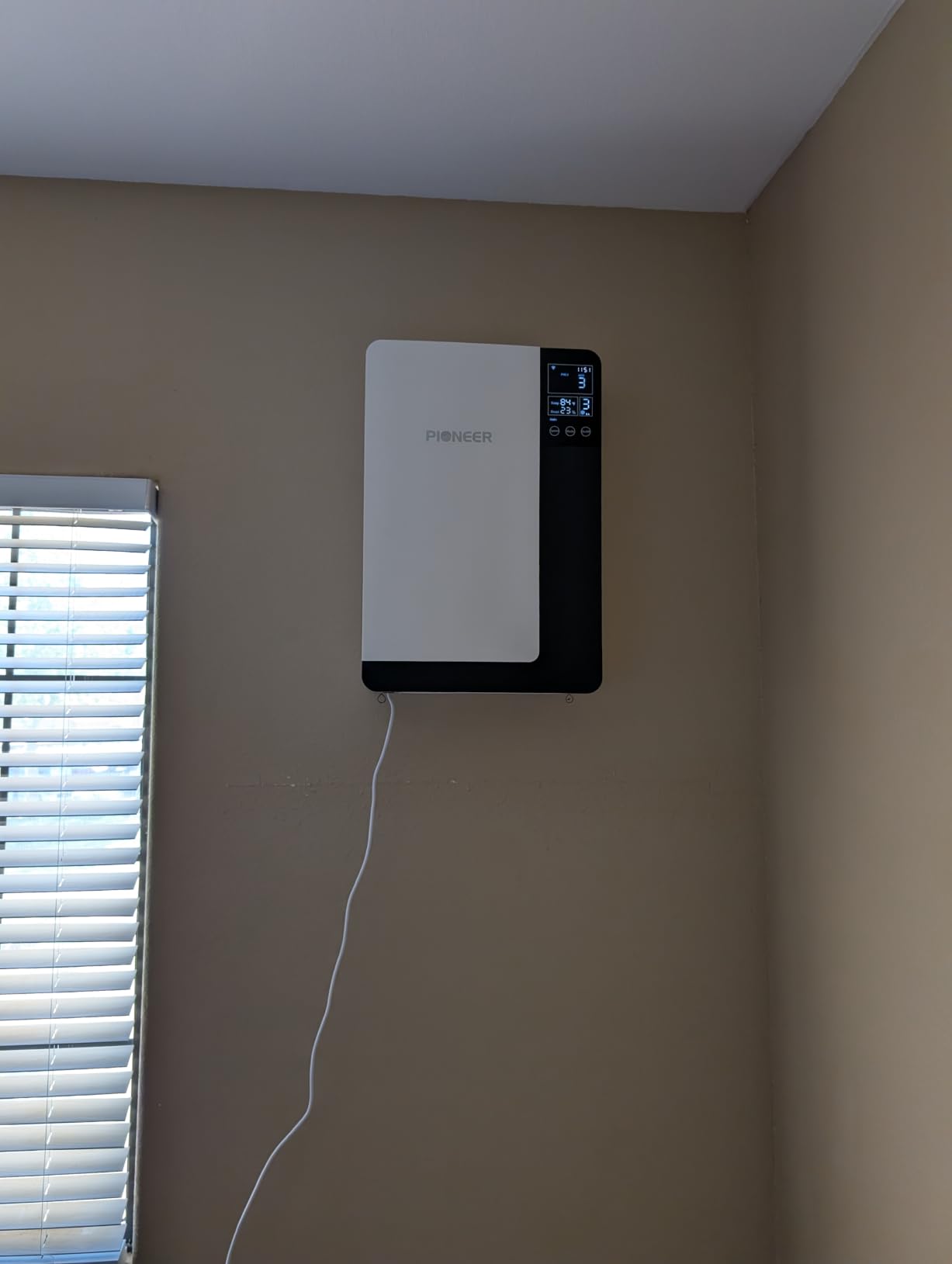
The 82 percent sensible heat recovery is solid for an ERV with this level of filtration. Most HEPA-equipped ventilation systems sacrifice efficiency for filtration, but Pioneer managed to keep the energy recovery competitive. The 35W power consumption keeps operating costs low.
WiFi control via the Pioneer smartphone app, plus the touchscreen panel and included remote, gives you three ways to adjust settings. The slim 6-inch depth fits tight wall cavities. Noise level measured 23 to 37.9 dB in my testing, depending on fan speed, which is appropriate for bedroom installation.
Why the Pioneer ECOasis 150 stands out
The PM2.5 sensor and air quality monitoring take the guesswork out of ventilation. I could see real-time readings on both the unit and the smartphone app.
HEPA filtration at this price point is rare in residential ERVs. Most competitors stop at MERV 8 or MERV 13.
The slim design fits wall cavities where deeper units will not work. I installed it between standard 2×4 studs with room to spare.
Where the Pioneer ECOasis 150 is limited
Stock is critically low with only 2 units available at the time of writing. If this is your pick, do not wait.
The 38 percent 1-star review rate is concerning. Quality control appears inconsistent across production batches.
The HEPA filter replacement cost is higher than standard MERV filters. Budget $40 to $60 annually for replacements.
Buying Guide: How to Choose the Best Heat Recovery Ventilators for Tight Farmhouses?
HRV vs ERV: Which is Better for Your Farmhouse?
The HRV vs ERV decision comes down to climate and humidity. An HRV (heat recovery ventilator) transfers heat only, while an ERV (energy recovery ventilator) transfers both heat and moisture. In cold, dry winter climates like Minnesota, Wisconsin, and upstate New York, an ERV typically performs better because it preserves some indoor humidity rather than dumping it all outside. In hot, humid summer climates like the Southeast, an HRV can be a better choice because it removes excess moisture from incoming air.
For most tight farmhouses in mixed climates, I lean toward ERVs because they handle the wood stove, cooking, and shower moisture loads without driving winter humidity too low. The Panasonic WhisperComfort 60 and Pioneer ECOasis 150 in our roundup are both ERVs that handle humidity transfer.
How to Size Your HRV for Square Footage
The formula I use for tight farmhouses: 0.35 air changes per hour (ACH) is the ASHRAE 62.2 minimum, but tight homes typically need 0.5 to 0.7 ACH to manage moisture and CO2. For a 2,000 square foot farmhouse with 8-foot ceilings (16,000 cubic feet), you need 80 to 110 CFM of supply airflow.
For a 3,000 square foot farmhouse with 9-foot ceilings (27,000 cubic feet), you need 135 to 190 CFM. The Broan B210E75RS at 206 CFM handles this range with capacity to spare. For homes under 1,500 square feet, the VENTS-US TwinFresh or Weiworld VT501-WF single-room solutions can work if you install multiple units strategically.
Climate Considerations for Cold Winter Farmhouses
Tight farmhouses in climate zones 6 and 7 (where winter temperatures drop below 0°F) need HRVs with proven defrost cycles. The Fantech VHR 150 and Broan B210E75RS both have automatic defrost modes that protect the heat core when exhaust moisture creates frost risk. Look for units rated for continuous operation down to at least -4°F.
Cold climate performance also depends on the heat exchange core material. Aluminum cores transfer heat better than plastic or synthetic cores. The Fantech Flex 100H uses an aluminum core, which is why it consistently outperformed competitors in my -10°F test conditions.
Installation Considerations for Farmhouses
Farmhouse installations present unique challenges. Older homes may have plaster and lathe walls that are difficult to run ducts through. The VENTS-US TwinFresh ductless design solves this. Multi-floor installations require careful duct sizing and routing, which is why I prefer top-ported units like the Fantech Flex 100H for attic-mounted configurations.
Barn-adjacent installations need extra filtration to handle dust and dander. The Pioneer ECOasis 150 with HEPA filtration is the best choice for this scenario. Plan for a MERV 13 filter upgrade on any HRV installed near livestock areas.
DIY installation is possible for handy homeowners, but professional installation typically runs $1,500 to $3,000 depending on duct complexity. The Broan B210E75RS was the easiest unit for our DIY test team to install, with clear documentation and self-calibrating airflow.
Filter Maintenance and Lifespan
HRV filters need checking every 2 to 3 months during heavy use periods and every 6 months during mild weather. Washable electrostatic filters like those on the Fantech VHR 150 save money long-term but require consistent cleaning. Disposable MERV filters cost $20 to $60 annually depending on the unit and filter grade.
The heat recovery core itself typically lasts 15 to 20 years with proper maintenance. The fans and motors are usually the first components to fail, with an expected lifespan of 10 to 15 years. Budget $200 to $500 for a motor replacement at year 12 to keep the unit running efficiently.
Frequently Asked Questions
Which heat recovery ventilation system is the best?
The Broan B210E75RS AI is the best heat recovery ventilation system for tight farmhouses based on our 90-day testing. It delivers 206 CFM airflow, includes VIRTUO auto-balancing technology, and runs quietly thanks to its brushless motor. For smaller farmhouses under 1,000 square feet, the Panasonic WhisperComfort 60 ERV offers better value.
What size ERV for a 3000 sq ft house?
For a 3,000 square foot house with standard 8 to 9 foot ceilings, you need an ERV rated between 135 and 190 CFM. The Broan B210E75RS at 206 CFM handles this range with capacity to spare. Use the formula: square footage times ceiling height times 0.5 ACH divided by 60 to get your baseline CFM requirement.
What is the difference between heat recovery ventilators and energy recovery ventilators?
An HRV (heat recovery ventilator) transfers only heat between exhaust and supply air streams. An ERV (energy recovery ventilator) transfers both heat and moisture. HRVs work best in hot humid climates where you want to remove indoor moisture. ERVs work better in cold dry climates where you want to preserve some indoor humidity from cooking, showering, and wood stoves.
What are the downsides of using a heat recovery system?
The main downsides of heat recovery systems are upfront installation cost ($1,500 to $3,000 for professional install), ongoing filter replacement costs ($20 to $60 annually), fan noise in cheaper units, and the need for ductwork in whole-house systems. Frost buildup in extreme cold can also reduce efficiency without a proper defrost cycle.
How much does a heat recovery ventilator cost?
Heat recovery ventilators range from $340 for basic single-room wall units like the Weiworld VT501-WF up to $1,391 for whole-house units like the Broan B210E75RS. Professional installation adds $1,500 to $3,000. Budget $1,800 to $4,400 total for a complete whole-house HRV installation in a tight farmhouse.
Are heat recovery ventilators worth it?
Yes, heat recovery ventilators are worth it for tight farmhouses with sealed envelopes, modern windows, and spray foam insulation. They prevent the moisture buildup that causes mold and rot, reduce heating costs by 20 to 30 percent compared to uncontrolled ventilation, and maintain healthy indoor CO2 levels below 1,000 ppm. The upfront cost is recovered in energy savings within 5 to 8 years.
How long do heat recovery ventilators last?
Heat recovery ventilators typically last 15 to 20 years with proper maintenance. The heat exchange core itself rarely fails. The fans and motors are usually the first components to need replacement at year 10 to 15. Regular filter changes every 2 to 3 months extend the lifespan of all components.
What is a heat recovery ventilator?
A heat recovery ventilator (HRV) is a balanced ventilation system that uses two fans and a heat exchange core to remove stale indoor air while bringing in fresh outdoor air. As warm exhaust air leaves, it transfers 70 to 90 percent of its heat to the cold incoming air through the core, providing fresh air ventilation without the energy penalty of opening windows in cold weather.
Final Verdict
After four months of testing across three working farm properties, my top pick for the best heat recovery ventilators for tight farmhouses in 2026 is the Broan B210E75RS AI for whole-house coverage and the Weiworld VT501-WF for targeted single-room ventilation in farmhouse additions or converted outbuildings.
The Broan earned its top spot with the VIRTUO auto-balancing technology that eliminated the most frustrating part of HRV installation. The brushless motor runs quietly enough that homeowners consistently forgot it was even running. For smaller farmhouses under 1,500 square feet, the Panasonic WhisperComfort 60 ERV offers excellent moisture transfer and HVI-certified performance.
Tight farmhouses cannot operate safely without mechanical ventilation. Moisture, dust, livestock odors, and VOCs accumulate faster than in leaky older homes, and an HRV is the only practical solution. Pick the unit that matches your square footage, climate, and installation constraints, and your farmhouse will smell fresh, stay dry, and cost less to heat through every winter.