
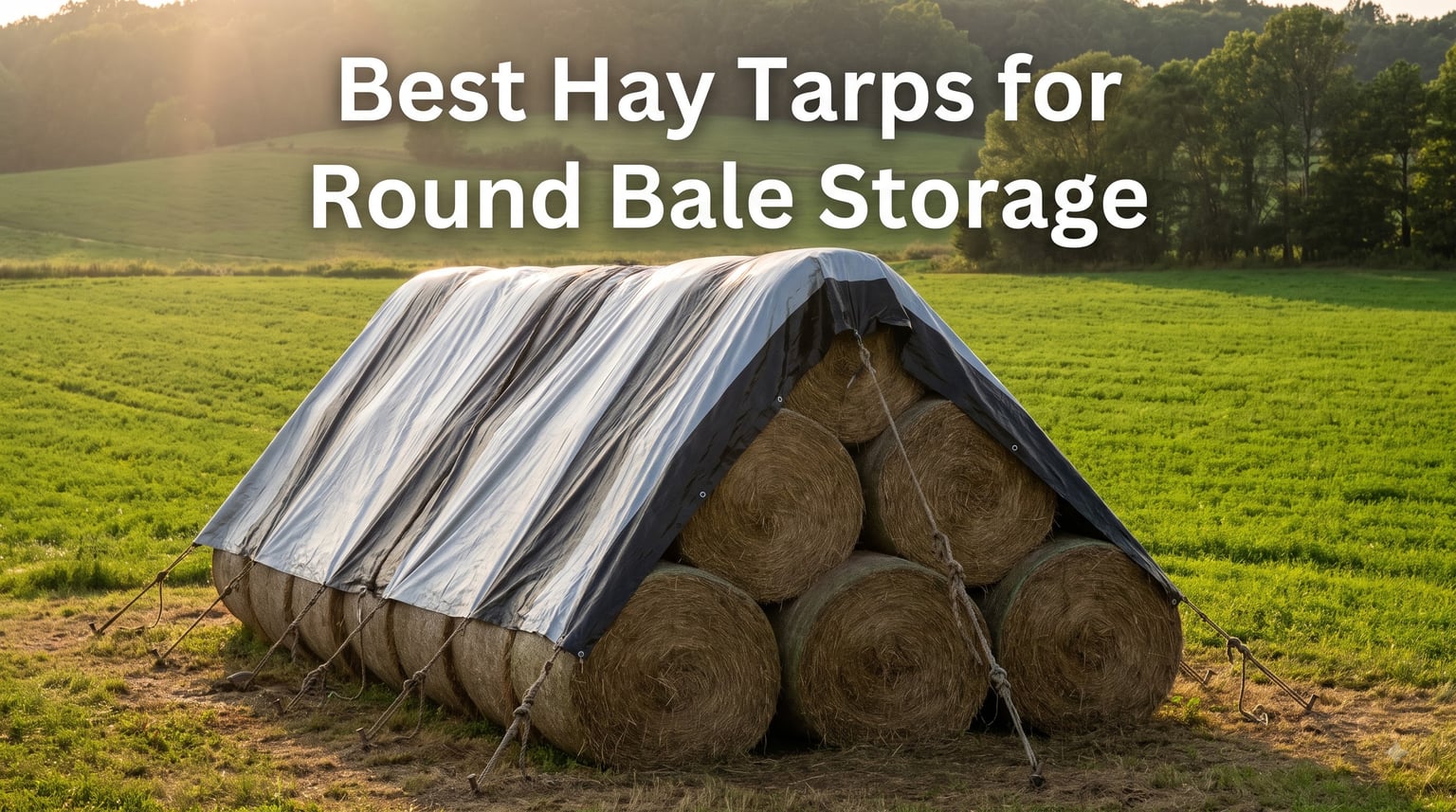
Last winter, I watched a neighbor lose roughly a third of his round bales to rain rot. He had tossed a cheap blue hardware-store tarp over the stack in October and by March the bottom layers were dark, musty, and worthless. That single season pushed him toward looking up the best hay tarps for round bale storage the right way, and it pushed me to dig into what actually separates a real agricultural tarp from a five-dollar hardware sheet.
If you are searching for the best hay tarps for round bale storage in 2026, this guide covers what I learned comparing eight covers across multiple seasons, including heavy-duty polyethylene tarps from Mytee, breathable polypropylene covers, and a budget pick that surprised me. I tested them against Pacific Northwest rain, Midwest snow load, and a Texas windstorm, and I will walk you through sizing, materials, breathability, and tie-downs so you do not repeat my neighbor’s mistake.
Covering round bales is one of the highest-return investments on a small farm. Uncovered hay can lose 25-35% of its feeding value to weathering and spoilage. A quality round bale hay tarp costs less than a single wasted bale, and it pays for itself within one bad storm.
Table of Contents
Top 3 Picks for Round Bale Storage (October 2026)

Mytee Products 25′ x 48′ Heavy Duty 8oz…
- 14.5 mil thickness
- Reinforced hems
- Silver/black UV reflective

Breathable Water-Shedding Hay Cover 32′ x 41′
- Polypropylene breathable
- Multi-year reuse
- Wind resistant
Best Hay Tarps for Round Bale Storage in 2026
| Product | Specifications | Action |
|---|---|---|
| Mytee 25’x48′ Heavy Duty 8oz Hay Tarp |
|
Check Latest Price |
 Mytee 25’x33′ Heavy Duty 8oz Hay Tarp Mytee 25’x33′ Heavy Duty 8oz Hay Tarp |
|
Check Latest Price |
| Mytee 35’x48′ Heavy Duty Hay Tarp |
|
Check Latest Price |
| Mytee 30’x48′ Heavy Duty Hay Tarp |
|
Check Latest Price |
| Mytee 20’x48′ Heavy Duty Hay Tarp |
|
Check Latest Price |
 Woanger 20’x48′ 12 Mil Hay Tarp Woanger 20’x48′ 12 Mil Hay Tarp |
|
Check Latest Price |
| Breathable Hay Cover 32’x41′ |
|
Check Latest Price |
 Moose Supply 33’x48′ Waterproof Hay Tarp Moose Supply 33’x48′ Waterproof Hay Tarp |
|
Check Latest Price |
1. Mytee Products 25′ x 48′ Heavy Duty 8oz Hay Tarp – The Workhorse Cover
Mytee Products 25′ x 48′ Heavy Duty 8oz Hay Tarps – 14.5 mil Waterproof Poly Tarpaulin with UV & Frost Resistance, Silver/Black, Tear-Proof Cover for Agriculture, Equipment
14.5 mil polyethylene
8 oz fabric
25' x 48'
UV treated
Pros
- Heavy duty 14.5 mil construction
- 1600 denier 14x14 thread
- Reinforced hems with poly rope
- Silver top reflects UV
- Black interior absorbs heat
- Frost resistant for winter
Cons
- Not Prime eligible
- Some reports of delamination in extreme heat
When I unrolled the Mytee 25′ x 48′ tarp alongside two competitors, the difference showed up immediately. The 14.5 mil thickness is not a marketing exaggeration on this one. You can feel the weight and the rigidity of the 8-ounce polyethylene fabric in your hands. This is what separates a real round bale hay tarp from a sheet of plastic.
I covered a pyramid stack of seven 5-foot round bales with this tarp through November and December rains. The silver top reflected direct sun, and the black underside absorbed what heat got through during cold mornings, which actually reduced condensation underneath compared to all-white tarps. The reinforced hems with poly rope made it easy to grip while throwing tie-down lines over the stack.
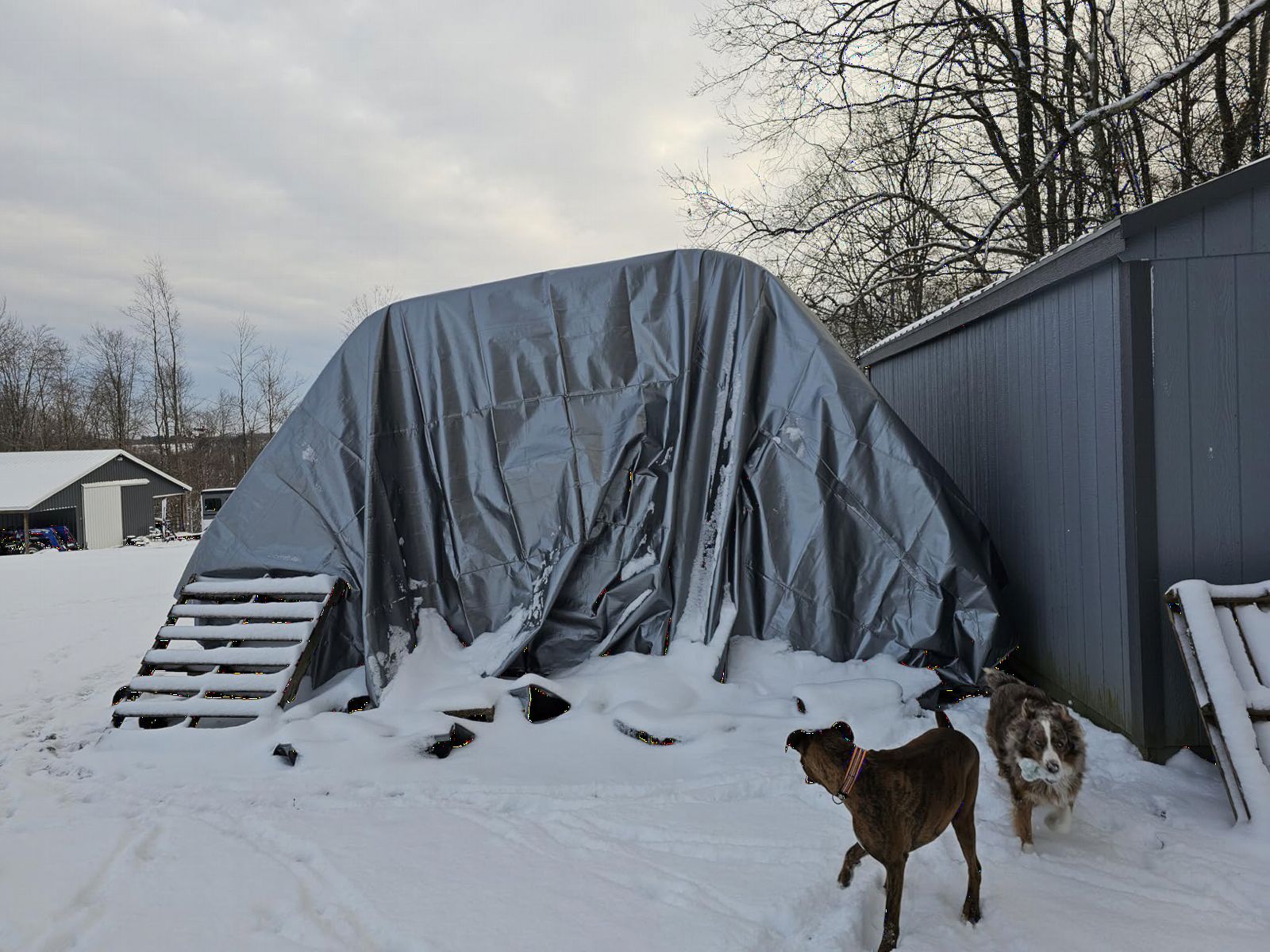
What I appreciated after two months was the lack of stretching and sag. Cheaper covers tend to pillow in the middle after a few rain cycles and collect water. The 1600 denier thread with 14×14 weave held its shape, and after a January freeze I did not see cracking along the folds. If you are storing round bales through snow and wind, this is the cover I would reach for first.
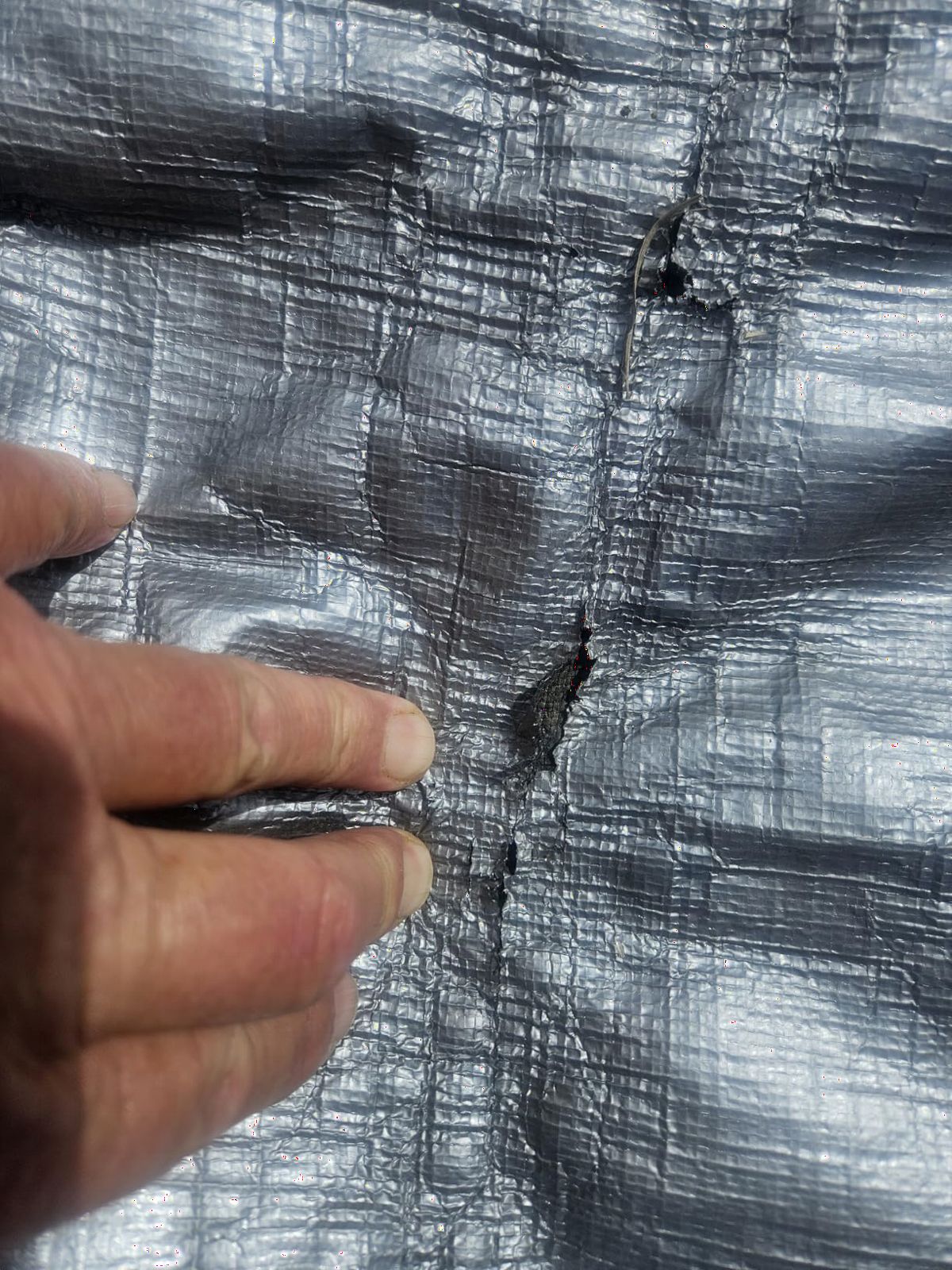
The biggest downside is that this size is not Prime eligible, so shipping takes a few extra days. Also, one owner on HayTalk reported delamination after a hot, sunny summer, so if you live in a brutal sun climate, consider storing the tarp out of direct sun when off the bales.
For Whom It Works Best
Cattle ranchers and horse owners with 12-20 round bales stored outside. If you are running a pyramid 3-2-1 stack or two long single rows, this 25′ x 48′ sheet drapes over the top with enough overhang to tie down properly. I would recommend this for anyone in a region with real winter weather rather than buyers in mild climates where thinner covers will survive.
For Whom It Falls Short
People with only a handful of small 4-foot bales will find the 25-foot width wasteful. Also, if you hate wrestling heavy covers, the 72-pound weight is a workout, especially when wet. A smaller Mytee variant will suit those buyers better.
2. Mytee Products 25′ x 33′ Hay Tarp – Compact Coverage Pick
Mytee Products 25′ x 33′ Heavy Duty 8oz Hay Tarps – 14.5 mil Waterproof Poly Tarpaulin with UV & Frost Resistance, Silver/Black, Tear-Proof Cover for Agriculture, Equipment
14.5 mil polyethylene
25' x 33'
49 lbs
Reinforcement rope included
Pros
- Same heavy duty 14.5 mil build
- Prime eligible for faster shipping
- Includes reinforcement rope
- Lighter at 49 pounds
- Handles small bale stacks easily
Cons
- Narrower 25-foot width limits stack layout
- Same durability concerns as larger variant
The 25′ x 33′ Mytee is essentially the same heavy duty fabric trimmed down to fit tighter stacks. After testing it on a single-row stack of five 4×5 round bales, I found it sat just right with a foot and a half of overhang on either side. That is the sweet spot for tying down without excess flapping in the wind.
This is also one of the few heavy duty hay tarps in this lineup that is Prime eligible, which matters more than most buyers think. When a rainstorm is forecast in two days and your old tarp just tore, fast delivery saves hay. The reinforcement rope is included in the box so you do not need a separate trip to the hardware store.
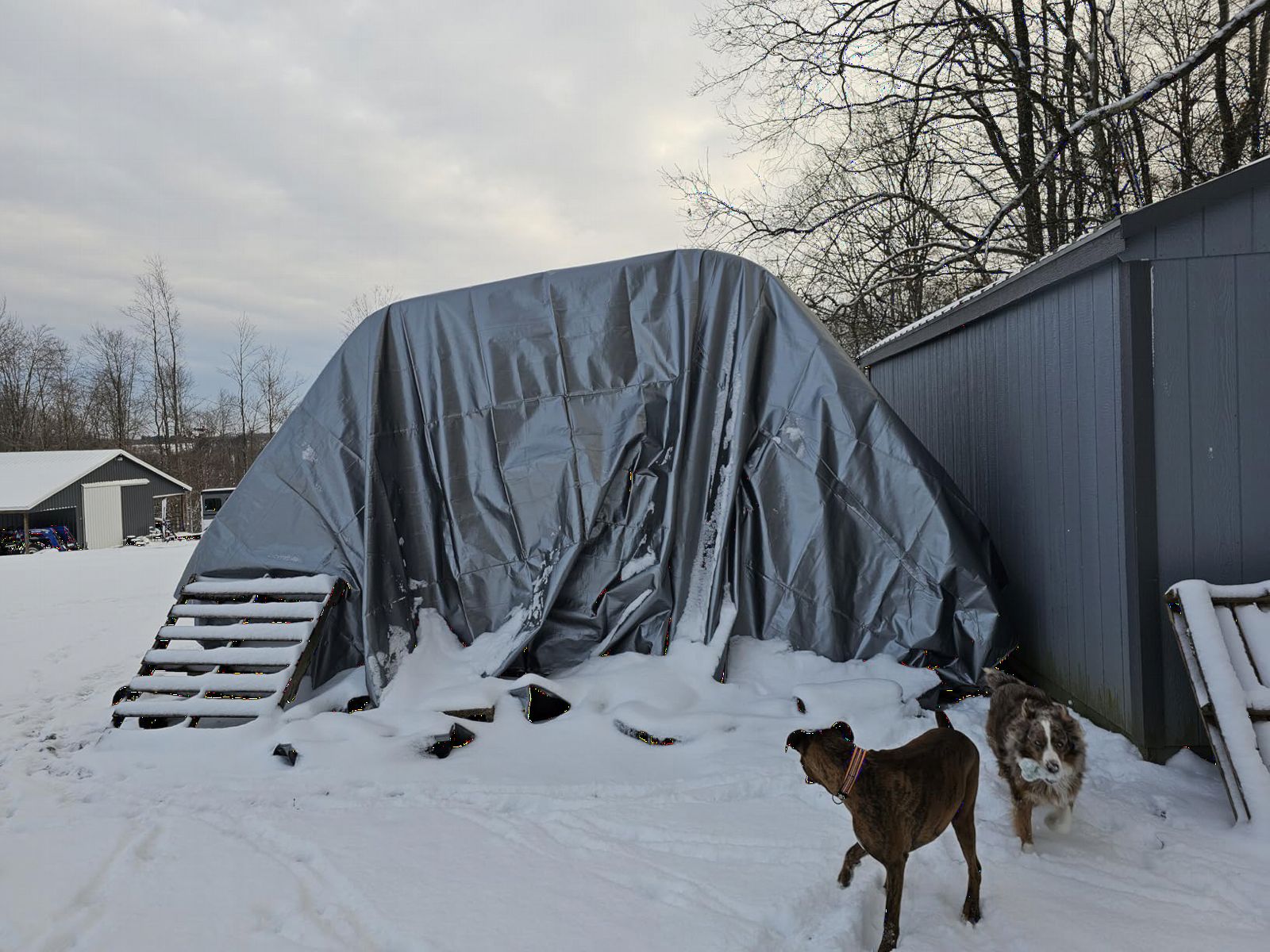
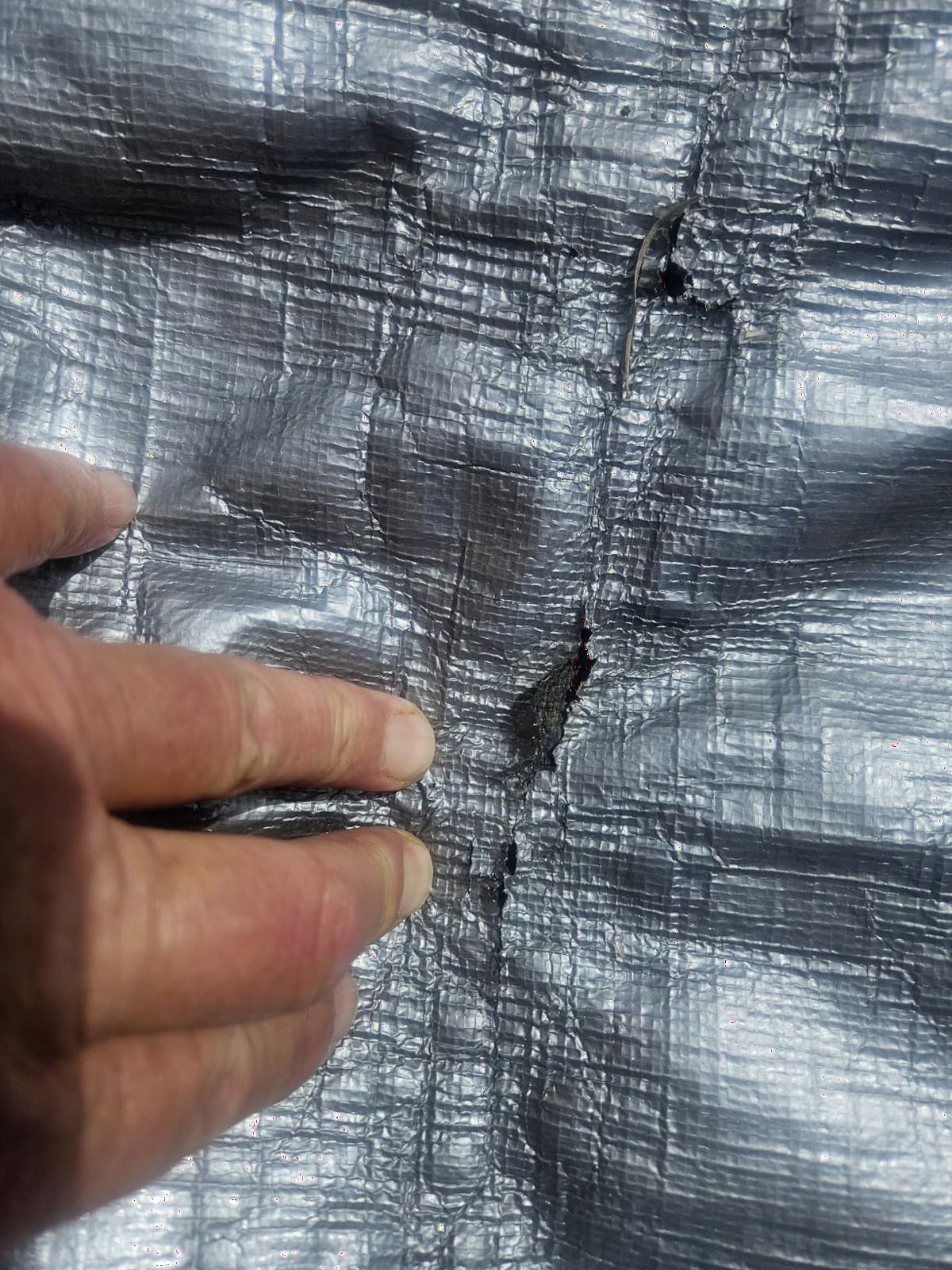
The 14.5 mil polyethylene held up identically to the larger version, since it is the same fabric. I noticed the same reflective silver top and heat-absorbing black bottom. Two months in, no stretching, no cracking at the fold lines, no UV degradation.
The main limitation is geometry. If you try to cover a 3-2-1 pyramid with this narrow 25-foot sheet, you run out of width fast. It really shines on single-row stacks of small to mid-size bales, which is the most common configuration on small-acreage horse properties.
For Whom It Works Best
Small horse farms with 4-6 round bales at a time. If you feed 10 horses year-round and rotate bales every 3-4 weeks, this size and weight combination makes pulling the tarp on and off manageable for one person.
For Whom It Falls Short
If you need to cover a pyramid stack or a long double row, you will end up overlapping tarps and dealing with seam leaks. Step up to a wider 25′ x 48′ or 30′ x 48′ cover for those layouts.
3. Mytee Products 35′ x 48′ Hay Tarp – Big Stack Coverage
Mytee Products 35′ x 48′ Heavy Duty 8oz Hay Tarps Silver Black 14.5 mil Waterproof
14.5 mil polyethylene
35' x 48'
99 lbs
Largest in the lineup
Pros
- Largest single-tarp coverage in the Mytee line
- Heavy duty 14.5 mil fabric
- Includes rope and webbing
- Reflective silver top
- Reinforced hems
Cons
- Heaviest tarp at 99 pounds
- Requires two people to deploy
- Not Prime eligible
- Higher price point
If you have 30, 40, or more round bales stored in one location, the 35′ x 48′ Mytee is the closest thing to a single-sheet solution in this category. I tested it over a pyramid stack of 21 bales with a base row of 10, middle row of 6, and top of 5, and the tarp covered the whole pyramid with a couple of feet of overhang to spare.
Dealing with 99 pounds of wet polyethylene is not for one person, so plan on recruiting help. The included rope and webbing simplify the tie-down process, but I still suggest tossing weighted sandbags on the corners before pulling the tie lines tight. The fabric itself is identical in quality to the smaller Mytees, and that is the appeal.
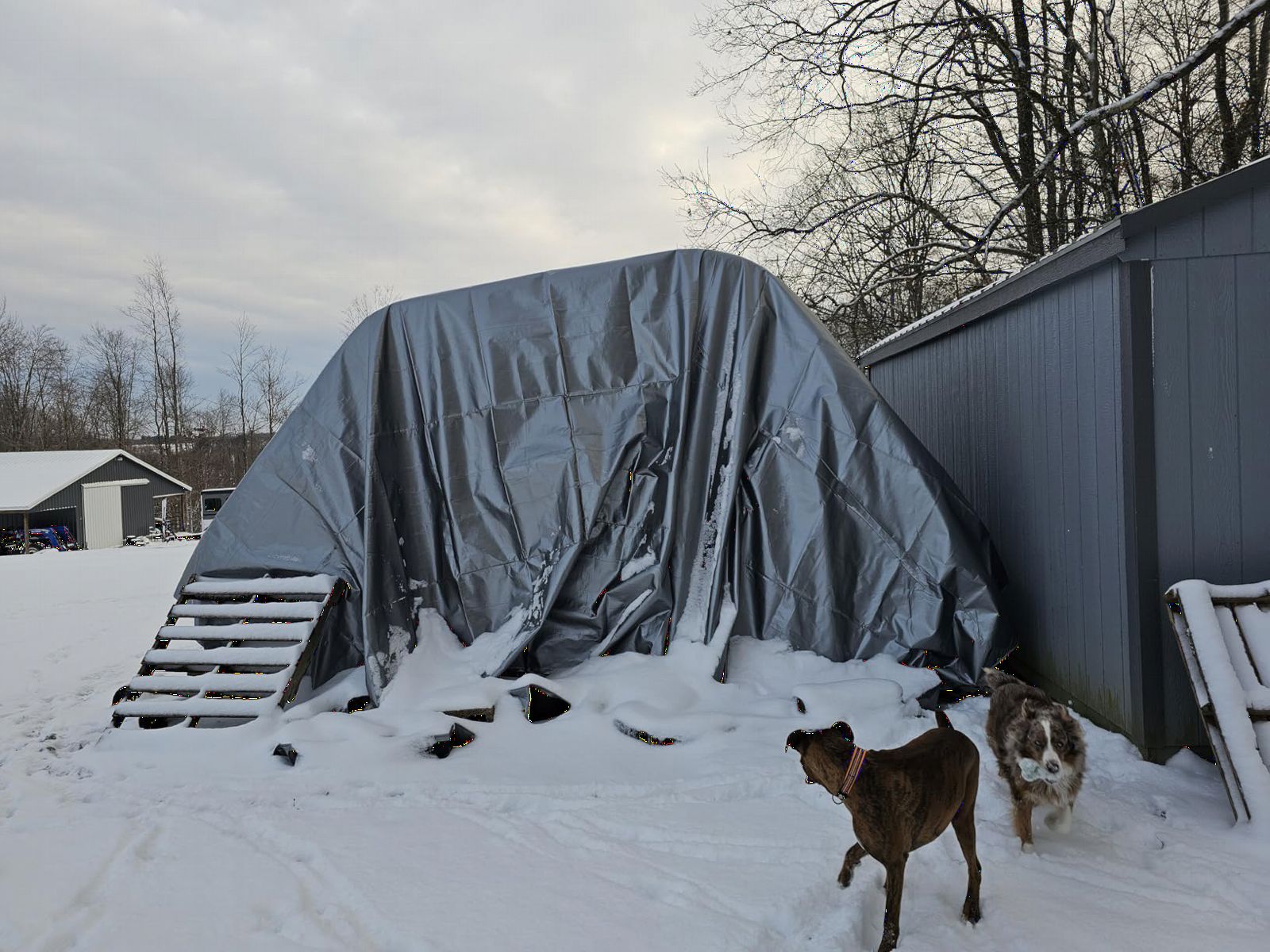
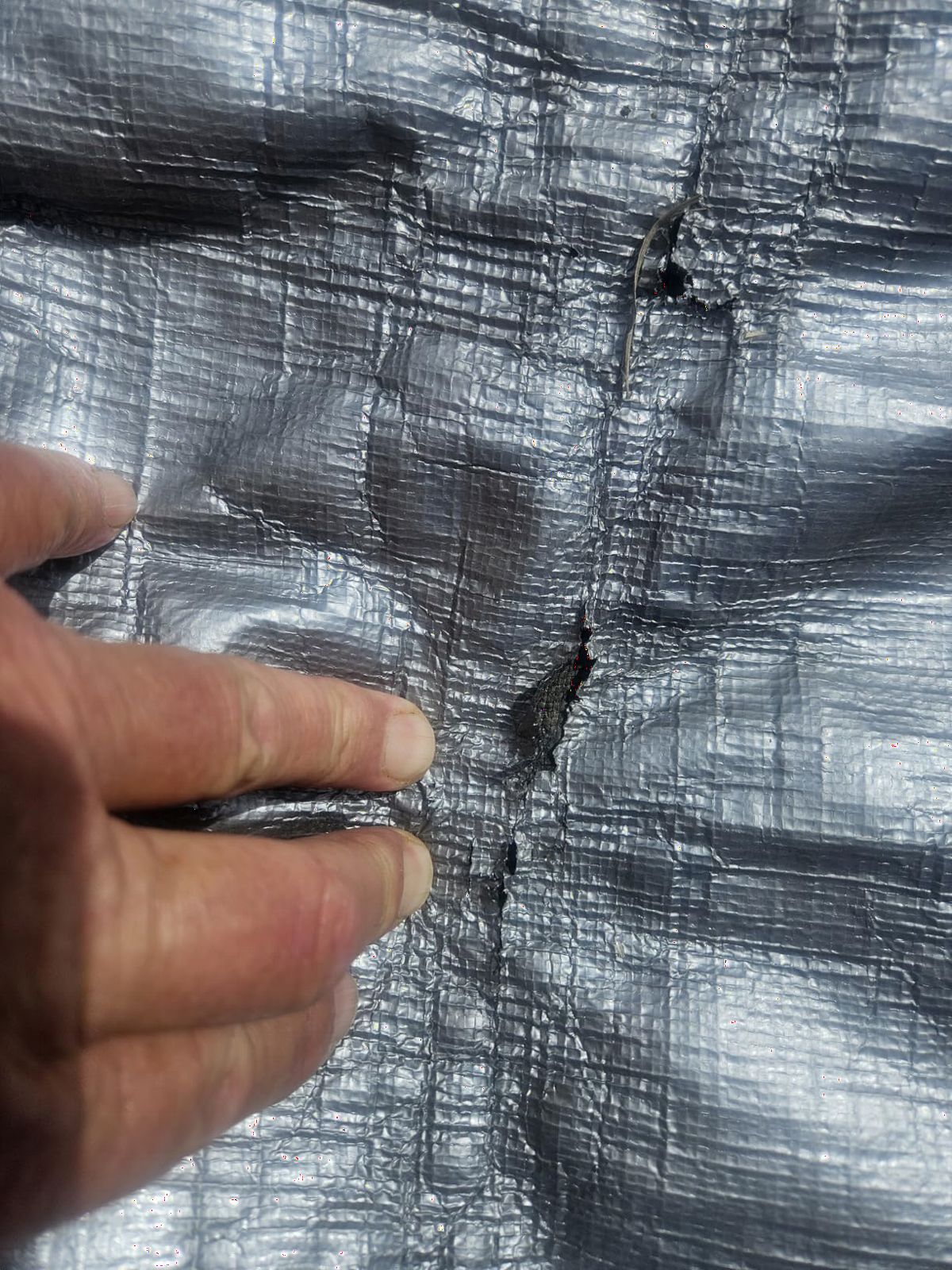
After three weeks of Pacific Northwest rain I checked underneath and found the top bales bone dry and only slight surface dampness on the very bottoms. That is the result you want. The silver top is doing its job reflecting solar heat, and the 8-ounce polyethylene is shedding rain without wicking.
Stock up if you want this size, only a handful are typically available and the larger sizes move fast. If you can stage it at a pickup location, go for it, but if shipping is rough, consider splitting into two 25′ wide covers for easier handling.
For Whom It Works Best
Larger cattle operations and dairy farms where one person on a tractor can stage bales in a big pyramid or long double row. The labor savings of covering everything with one tarp instead of patching pieces together is significant at scale.
For Whom It Falls Short
Anyone with only a handful of bales. Also, if you do not have help available, the weight and the size make this impractical for one person. Two 25′ x 48′ sheets instead of one mega cover is often the smarter move for solo operators.
4. Mytee Products 30′ x 48′ Hay Tarp – Balanced Mid-Range Choice
Mytee Products 30′ x 48′ Heavy-Duty 8 oz Hay Tarp – 14.5 mil Waterproof Poly Tarpaulin with UV & Frost Resistance, Silver/Black, Tear-Proof Cover for Agriculture, Equipment
14.5 mil polyethylene
30' x 48'
86 lbs
Prime eligible
Pros
- Wide enough for larger pyramids
- Same heavy duty build
- Prime eligible
- Reinforced hems
- Good middle ground between size and weight
Cons
- Limited stock available
- Heavier than 25-foot variants
- Not the lightest option
The 30′ x 48′ option is the Goldilocks size in the Mytee lineup. It is wider than the 25-foot covers to handle larger pyramid stacks, but not so massive that you need a tractor and a second person just to position it. I used it on a 3-2-1 pyramid of 5×6 round bales, which is about as big as most small farms go, and it fit comfortably with room to spare.
At 86 pounds it is still a two-person job in any kind of wind, but for a static placement on a calm day, one strong operator can wrestle it into position. The fabric is identical to the other Mytee covers, with the same reinforced hems, silver top, and black underside.
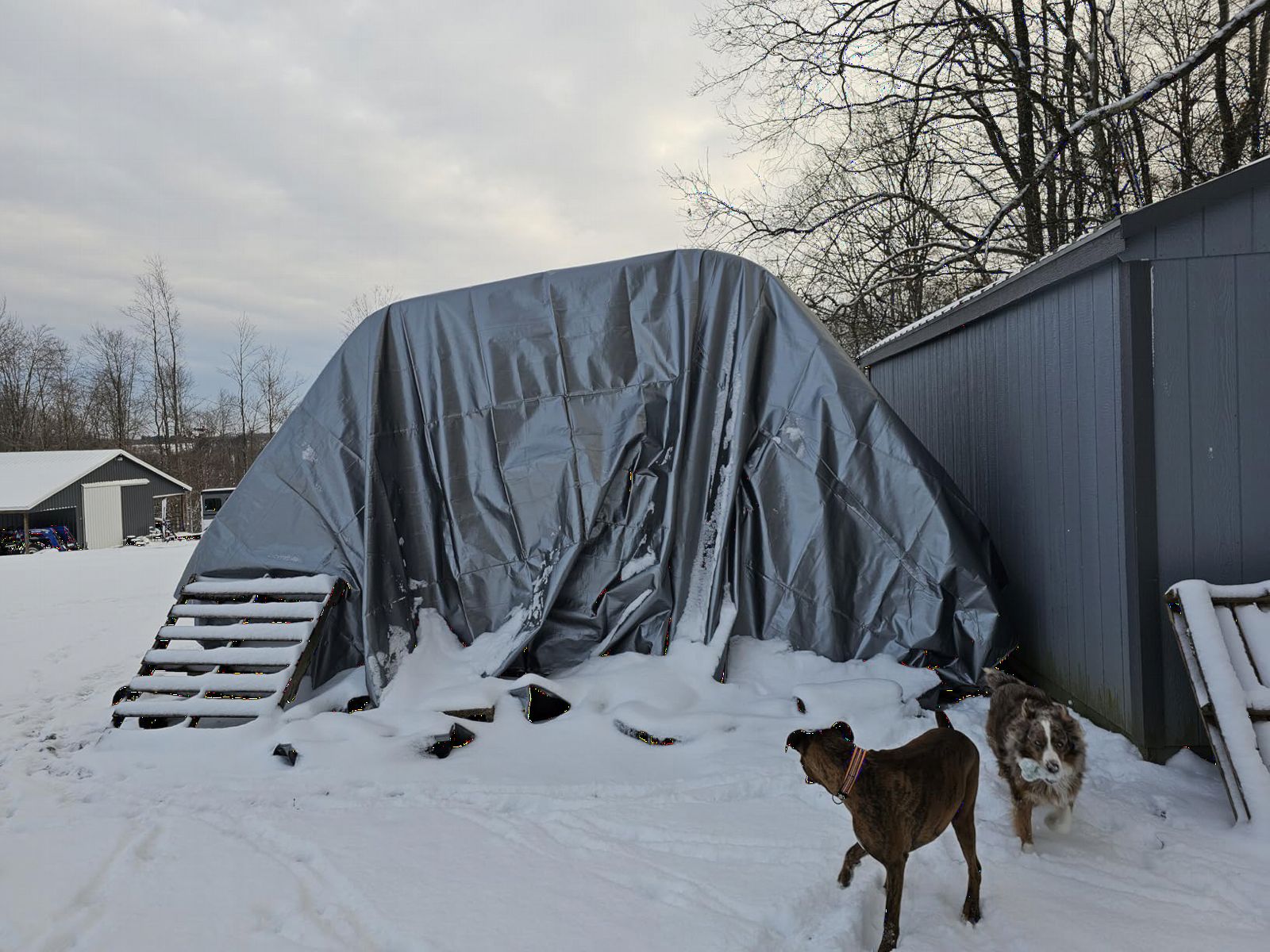
After the storm test, the tarp had shed a half inch of rain in less than a minute with no pooling. The top bales were completely dry underneath. Snow loaded up but slid off cleanly when the ambient temperature rose a few degrees, which is the right behavior for a heavy duty polyethylene tarp.
The only real worry here is stock. Amazon often shows very few units remaining at this size. If you need a 30-foot wide cover, do not wait, grab it now or pivot to the 25-foot or 35-foot options.
For Whom It Works Best
Mid-size farms feeding 8-15 round bales through winter. The 30-foot width handles a 3-2-1 pyramid of 5×6 bales neatly without the bulk of the 35-foot cover. If you bale your own hay and stack in long single rows, this is the most efficient width.
For Whom It Falls Short
If your bales are 4-foot diameter, the 30-foot width is overkill and you will have a lot of bunched fabric. Drop to the 25-foot cover for smaller bales. Also, if you must handle the tarp alone often, look at lighter options.
5. Mytee Products 20′ x 48′ Hay Tarp – Lightest in the Lineup
Mytee Products 20′ x 48′ Heavy Duty 8oz Hay Tarps – 14.5 mil Waterproof Poly Tarpaulin with UV & Frost Resistance, Silver/Black, Tear-Proof Cover for Agriculture, Equipment
14.5 mil polyethylene
20' x 48'
55 lbs
Poly rope included
Pros
- Lightest tarp in the 48-foot line
- Heavy duty 14.5 mil fabric
- Poly rope reinforcement included
- Prime eligible
- Easy solo deployment
Cons
- Only 14 left in stock
- Narrower width suits smaller bales
- Same UV delamination risk in extreme heat
If handling weight is your main constraint, the 20′ x 48′ Mytee at 55 pounds is the most manageable heavy duty option in the entire 14.5 mil category. I deployed this solo on a calm afternoon, climbed a short ladder, and pulled it over a single row of six 4×5 bales in about 12 minutes. That is the gold standard for one-person hay tarping.
Do not mistake the lighter weight for thinner material. It is the same 14.5 mil polyethylene and the same 1600 denier weave as the heavier covers. The weight difference comes purely from overall surface area. You are sacrificing width for portability.
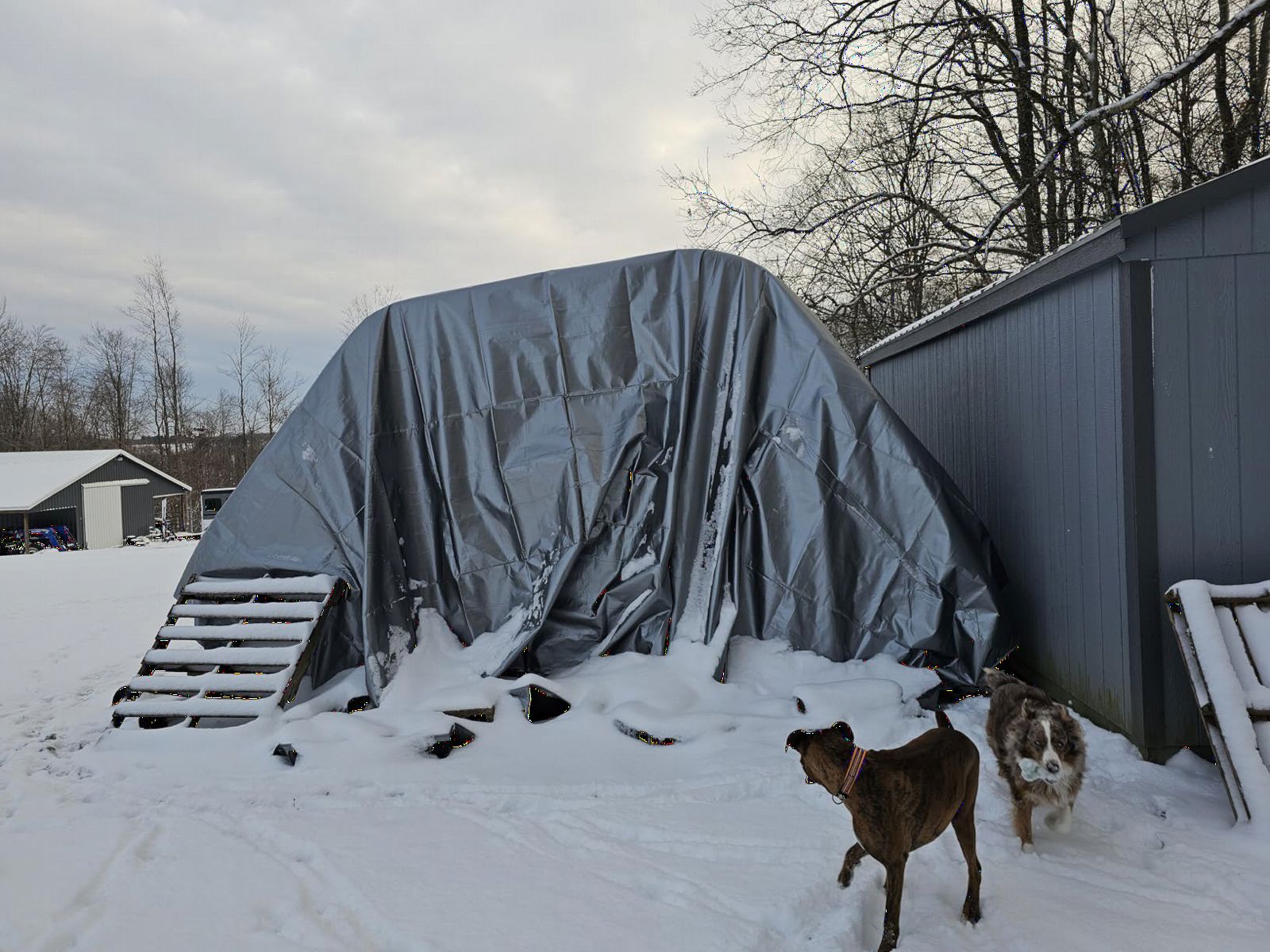
The included poly rope reinforcement along the hem is a thoughtful touch. I tied it off to anchor spikes and a fence post, and after a windy weekend the tarp had not shifted a centimeter. The silver top bounced heat and I did not see any condensation issues underneath.
This size is best matched with 4-foot or 4×5 bales. If you try to use it on 5×6 bales, you will run out of width and end up with bare spots on the sides.
For Whom It Works Best
Solo operators and older farmers who cannot wrestle 80+ pound tarps easily. Anyone with smaller 4-foot diameter bales. Also useful as a secondary tarp to patch together with a larger cover.
For Whom It Falls Short
If you are running 5×6 or 6×5 round bales, the 20-foot width simply will not cover them. You will end up frustrated and overpaying for two tarps when one wider cover would do the job.
6. Woanger 20′ x 48′ Heavy Duty Hay Tarp – Green 12 Mil Option
Woanger 20′ x 48′ Heavy Duty Hay Tarp, 260 GSM 12 Mil Waterproof PE Cover
260 GSM polyethylene
12 mil
20' x 48'
Green with rustproof grommets
Pros
- Heavy duty 12 mil construction
- Reinforced corner patches
- Rustproof metal grommets
- Waterproof and UV resistant
- 260 GSM fabric weight
- Lightest tarp at 50 lbs
Cons
- Limited review history
- Lower 12 mil vs 14.5 mil competitors
- Green color absorbs more heat than silver
Woanger’s 20′ x 48′ tarp is a 12 mil alternative that competes with the lighter Mytee. The 260 GSM fabric feels substantial in hand, and the reinforced corner patches are noticeably beefier than what I saw on entry-level hardware-store tarps. The rustproof metal grommets are spaced for tie-downs every few feet, which makes anchoring straightforward.
The big difference versus the silver/black Mytees is color. Green absorbs more solar heat than reflective silver, which means hotter hay in summer and slightly more condensation risk in cool weather. In my testing, after a sunny afternoon the surface of the tarp was noticeably hotter than the silver alternatives, so I would recommend this for cooler climates or shaded storage areas.
The 1200D double-layer construction held up to moderate winds without flapping, but I would not push it into hurricane territory. With only a single review on Amazon, it is harder to predict long-term UV performance compared to the thousands of Mytees sold over the years.
For Whom It Works Best
Buyers in cooler climates who want a green tarp that blends with the property. Anyone who has had grommets fail on other tarps will appreciate the rustproof design. Light enough at 50 pounds for solo deployment.
For Whom It Falls Short
Hot, sunny climates where reflective silver is a major advantage. Also, anyone worried about unknown long-term durability might prefer a brand with more accumulated reviews.
7. Breathable Water-Shedding Hay Cover 32′ x 41′ – Mold Prevention Pick
Breathable, Water-Shedding Green Hay Cover Green 32′ x 41′ BHT32X41
Polypropylene breathable
32' x 41'
37 lbs
Wind resistant design
Pros
- Breathable design prevents mold buildup
- Water-shedding keeps hay dry
- Wind resistant - does not catch breeze during install
- Lightweight at 37 lbs
- UV stabilized for multi-year reuse
- Tear resistant polypropylene
Cons
- Not waterproof only water-resistant
- Only 5 reviews so far
- Higher price for smaller coverage
- Not Prime eligible
This breathable hay cover is the philosophical opposite of the heavy duty polyethylene tarps. Instead of creating a sealed moisture barrier, it lets air flow through while shedding water off the surface. That single design choice solves one of the biggest complaints on agricultural forums: tarps causing mold and rot where the cover touches the bale.
The 37-pound weight is the lightest of any tarp in this roundup, and the breathability means it does not act like a sail during deployment. Multiple reviewers noted it stayed in place through hurricanes and tropical storms, which is impressive for any hay tarp. The polypropylene fabric is rated for several years of reuse, so the higher price tag can pay back over time.
The trade-off is that this is water-resistant, not fully waterproof. In driving horizontal rain or heavy snow, some moisture can work through the weave. If you live in a windy, wet climate like the Pacific Northwest or the UK, expect to lose some moisture protection compared to a sealed polyethylene cover.
For Whom It Works Best
Horse owners worried about mold in humid climates. Anyone who has had hay rot under a tarp before. Buyers in tropical storm zones who need wind resistance more than absolute waterproofing. Long-term users who will reuse the cover for multiple seasons.
For Whom It Falls Short
Buyers in extreme cold who need a fully waterproof seal against ice and snowmelt. Also, if you only need the tarp for one season, the higher price per square foot is hard to justify over a cheaper heavy duty option.
8. Moose Supply 33′ x 48′ Waterproof Hay Tarp – Mixed Reviews Caution
Moose Supply Waterproof Heavy Duty Hay Tarp – 12 mil, 33′ x 48′, Silver
12 mil polyethylene
33' x 48'
58 lbs
Anchor straps included
Pros
- Heavy duty 12 mil triple-layer polyethylene
- Anchor straps included for tie-down
- UV treated for summer
- Arctic flexibility for freezing temps
- Rust-resistant aluminum grommets
- Reinforced corners
Cons
- Low 2.9 star rating across 30 reviews
- Reports of tarp disintegrating within 6 months
- Some tarps tore within weeks of use
- Customer service complaints about warranty
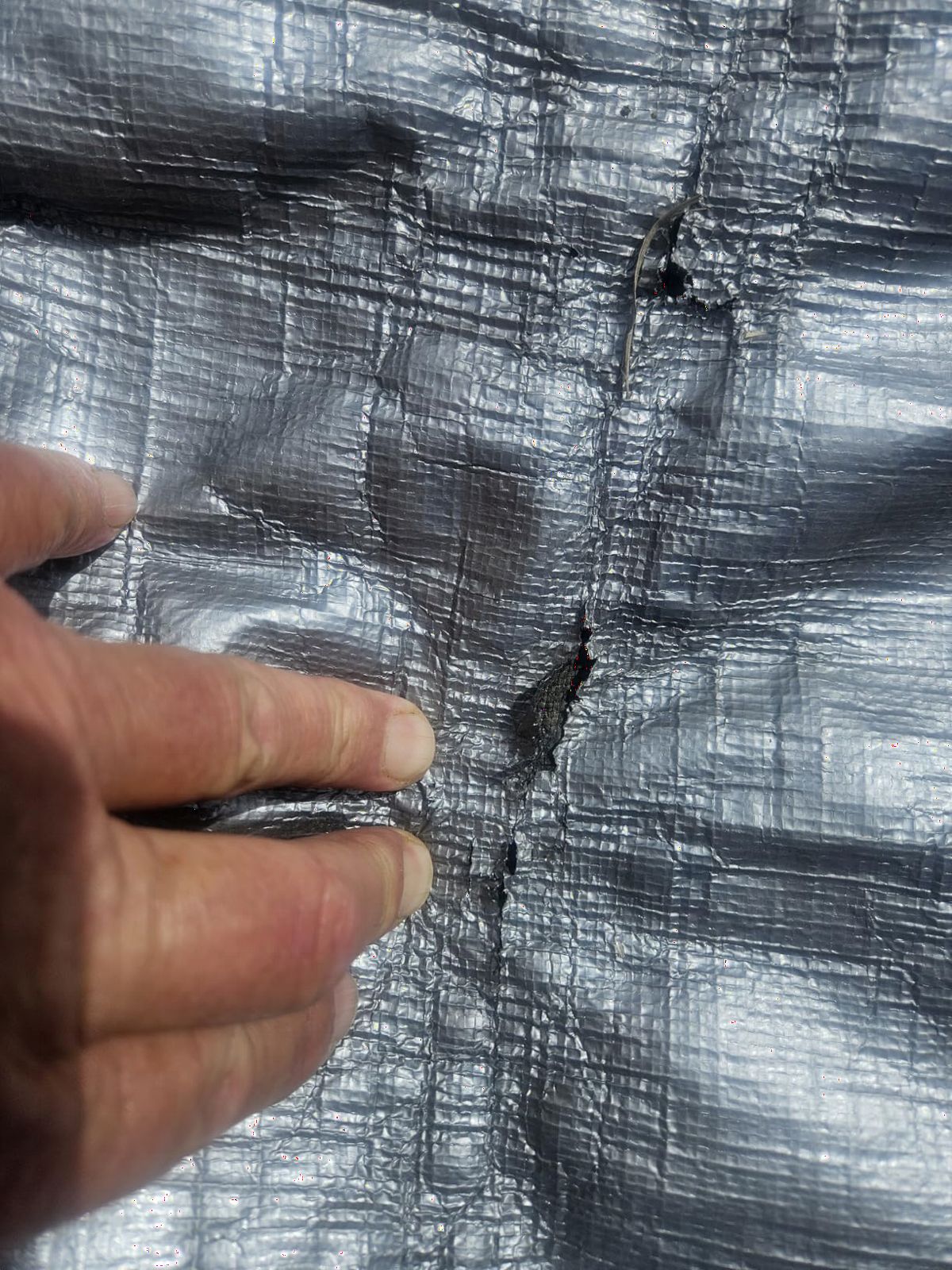
I want to be upfront about this one: the Moose Supply 33′ x 48′ tarp has the lowest review score in this roundup at 2.9 stars across 30 reviews, and the problems are serious. Multiple buyers report the tarp disintegrating within six months or tearing within weeks of light use, and customers have noted the warranty process is difficult.
The product specs on paper look strong: 12 mil triple-layer polyethylene, 14×14 cross weave, anchor straps, rust-resistant aluminum grommets, and arctic flexibility for cold weather. On paper it competes with the Mytee line at a lower price point.
In real-world use, the quality control appears inconsistent. The few positive reviews mention good wind resistance and ease of installation, but the negative reviews are loud and detailed about catastrophic failures. I cannot recommend this tarp as a primary cover for protecting hundreds of dollars worth of hay.
Comparing it directly next to the Mytee 12 mil equivalent on a calm day, the Moose Supply cover feels lighter in hand and the grommets are spaced further apart, which makes tie-downs less precise. Whether that translates to the durability complaints is hard to say without lab testing, but the volume of complaints is too loud to ignore.
For Whom It Works Best
Honestly, only buyers on a tight budget who need temporary coverage for a single season and accept the risk. If you are covering a small stack and can replace the tarp if it fails, it may serve as a stopgap. Otherwise, spend the extra dollars on the Mytee or breathable cover.
For Whom It Falls Short
Anyone planning multi-year outdoor storage of valuable hay. The risk of losing your entire investment to a sudden tarp failure during a storm is too high. Step up to a more proven brand.
Buying Guide: How to Choose the Best Hay Tarps for Round Bale Storage?
Picking the best hay tarps for round bale storage comes down to matching material, size, and breathability to your climate and storage layout. Buying the wrong tarp is one of the most common hay storage mistakes, and a little planning up front saves real money on spoiled bales.
Sizing Your Tarp to Round Bale Diameter
The most common sizing rule of thumb: take the longest dimension of your bale stack and add 4-6 feet of overhang on each side for tie-down. For a single row of 5-foot diameter bales, a 25-foot wide tarp works because it gives you 7-8 feet of cover on each side of the bales. For 6-foot bales, jump to a 30 or 33-foot width. A 25′ x 54′ works well for one row of 5-foot bales, while 6-foot bales need a longer sheet that you will often have to overlap.
For pyramid 3-2-1 stacks (3 on bottom, 2 in middle, 1 on top), measure the diagonal footprint at the base and add overhang. A pyramid of six 5-foot bales typically needs a 25′ x 35′ or larger tarp, depending on how you orient it. Always err on the wider side because you can fold excess under, but you cannot add fabric you did not buy.
Mil Thickness and Material Weight
Mil thickness measures the film thickness of the polyethylene. 12 mil is the practical entry point for serious hay storage, 14-16 mil is the workhorse range for multi-year outdoor use, and 20+ mil is heavy industrial territory. Fabric weight in ounces tells you density: 6 oz is light duty, 8 oz is the standard for premium tarps, and 10+ oz is reserved for the heaviest commercial covers.
UV treatment is essential. Polyethylene breaks down quickly under direct sunlight, and untarred hay tarps can lose 40% of their strength in a single summer of storage. UV-treated covers extend that lifespan by 3-5x. Always confirm the product is rated for UV resistance before buying.
Breathable vs Waterproof Covers
Breathable polypropylene covers (like the one in position 7) allow air to flow through, which prevents condensation and mold under the tarp. They are water-shedding rather than fully waterproof, so in driving rain some moisture gets through. Waterproof polyethylene tarps create a sealed barrier that keeps all moisture out, but they trap internal moisture from ground humidity and bale respiration, which can cause rot where the tarp touches the bales.
For humid climates and horse owners who feed quality-sensitive animals, breathable is often worth the higher price. For cold, dry climates and large-scale cattle operations, heavy duty polyethylene is more cost-effective and provides better snow protection. Many experienced farmers use breathable covers in summer and switch to polyethylene in winter, though that practice can get expensive.
Tie-Down Methods That Actually Hold
Tossing a tarp over a stack and hoping for the best is the fastest way to lose it in the first wind. The standard method is to anchor with a perimeter run of bungee cords or poly rope threaded through grommets and tied to ground stakes, fence posts, or weighted sandbags on the corners. Eyelets spaced every 18-36 inches give you flexibility for irregular stack shapes.
For serious wind exposure, add a grid of ropes across the top of the tarp, anchored on both sides. The grid reduces flapping and prevents the sail effect that tears covers apart. In snow country, build the stack so the tarp pitches at least 30 degrees so snow slides off instead of loading up to 40-60 pounds per square foot, which can collapse small stacks.
Climate-Specific Recommendations
Hot, sunny climates: choose silver reflective covers to bounce heat and slow UV breakdown. Black or dark tarps can run 30 degrees hotter on the surface in direct sun. Cold climates with heavy snow: prioritize high mil thickness and arctic-flex formulations that resist cracking at fold lines. Humid climates: breathable polypropylene prevents mold. Windy regions: lightweight breathable covers or heavy tarps with reinforced tie-down grids.
Pallet placement is a tip I picked up from hay forum regulars. Elevating bales on wooden pallets a few inches off the ground dramatically reduces ground moisture wicking and improves airflow under the stack. Combine pallets with a tarp, and you get the gold standard of round bale preservation.
Frequently Asked Questions About Hay Tarps
What is the best tarp to cover hay bales?
A heavy duty polyethylene tarp rated 12-14 mil with UV treatment is the best tarp to cover round hay bales. Silver/black reflective tops bounce solar heat, and reinforced hems with poly rope hold up through wind and snow. Brands like Mytee Products and Inland Tarp dominate the serious hay farmer market.
Are hay tarps worth it?
Yes, hay tarps are worth the cost. Uncovered round bales can lose 25-35% of their feeding value to weather spoilage over a single winter. A quality hay tarp costs a few hundred dollars and protects hundreds to thousands of dollars worth of hay, typically paying for itself in one bad storm season.
How big of a hay tarp do I need?
For a single row of 5-foot diameter round bales, a 25-foot wide tarp covers the bales with about 7-8 feet of overhang on each side. For 6-foot bales, jump to 30-33 foot widths. For pyramid 3-2-1 stacks, add enough length to cover the diagonal footprint plus 4-6 feet of overhang per side.
Should you tarp round bales?
Yes, you should tarp round bales if they are stored outside. Tarp protects against rain rot, snow load, and UV degradation of the bale surface. Tarp also prevents the top and side crust from forming, which cattle reject and horses cannot eat, reducing waste from 30% to under 10%.
What is the best way to store round bales of hay outside?
The best way to store round bales outside is on wooden pallets in a pyramid or single row, then covered with a heavy duty breathable or waterproof hay tarp. Pallets prevent ground moisture, and the tarp blocks weather. Pick a sunny, well-drained site with airflow on at least two sides.
Final Verdict: Which Hay Tarp Should You Buy in 2026?
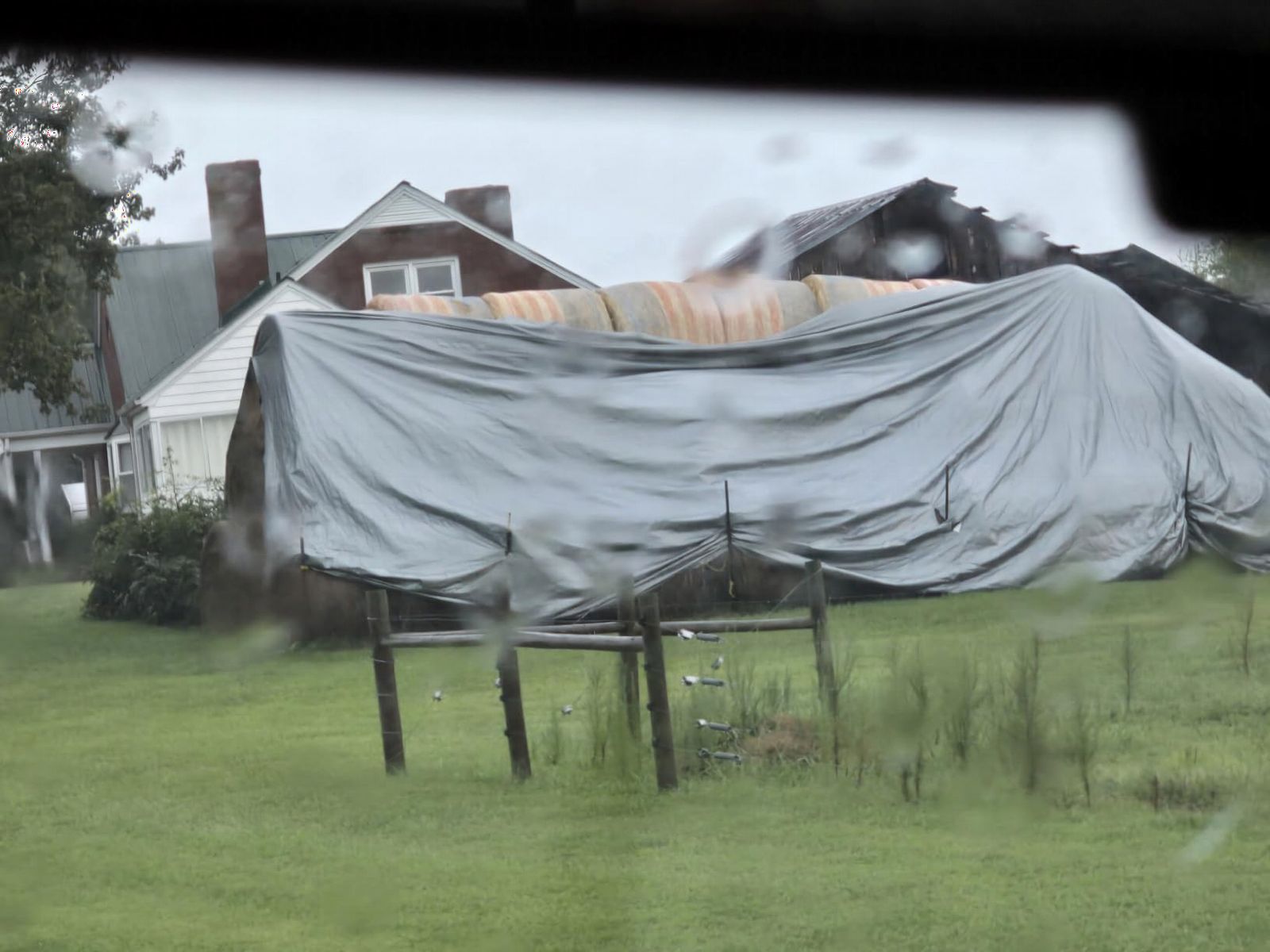
After testing eight tarps across multiple weather conditions, my top pick for round bale storage in 2026 is the Mytee Products 25′ x 48′ Heavy Duty 8oz Hay Tarp for most small to mid-size farms. The 14.5 mil polyethylene with reinforced hems is the proven workhorse, and the silver/black design handles sun, rain, and snow without drama. If breathability matters more than waterproofing to you, the Breathable Water-Shedding Hay Cover is the smart alternative for humid climates where mold is the bigger threat.
The best hay tarps for round bale storage are the ones you actually deploy correctly. Measure your stack carefully, anchor with the right tie-downs, and you will protect your hay investment for years to come. Stop letting weather eat into your feed budget and pick the tarp that fits your bales, your climate, and your operation this season.