
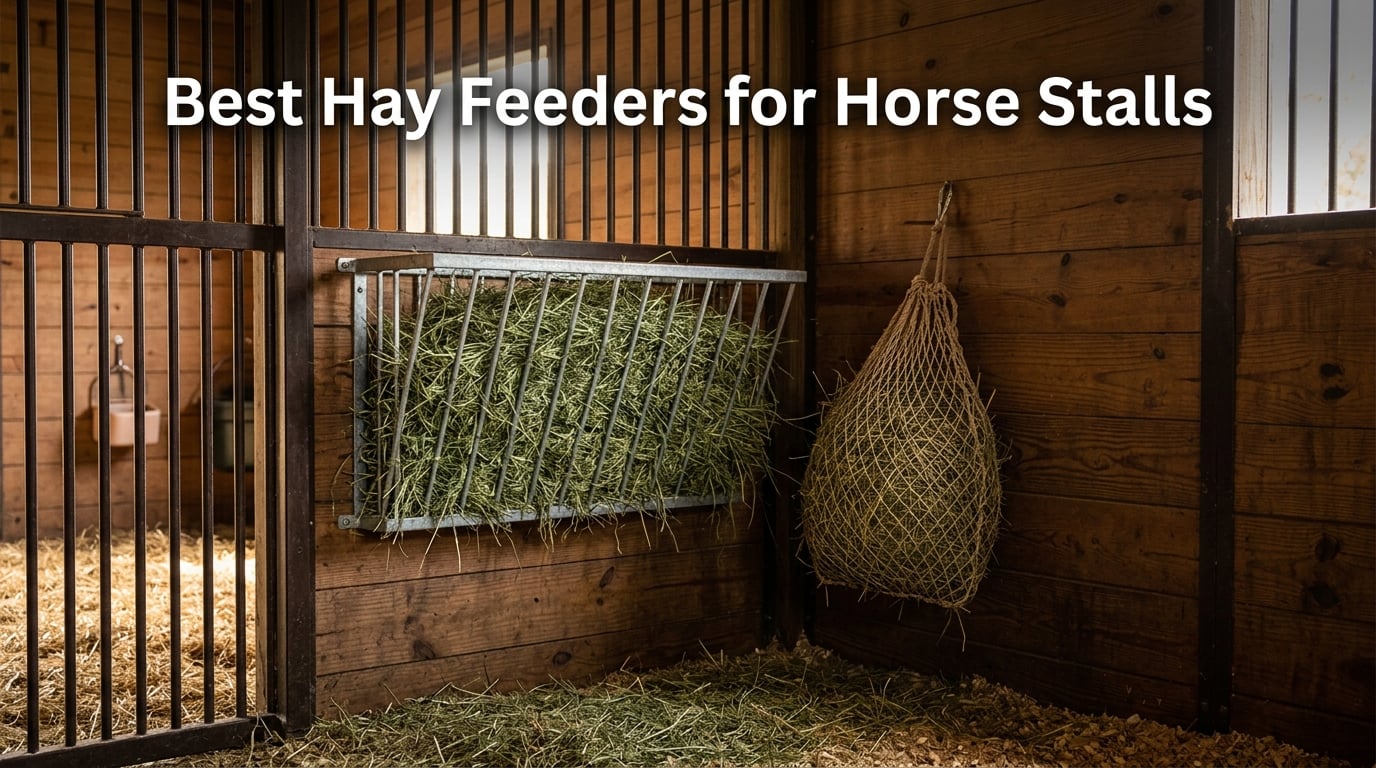
I have kept horses stalled for years, and I learned the hard way that the right hay feeder changes everything. When I first started boarding, I tossed hay on the stall floor and watched it get trampled, soiled, and wasted within an hour. After testing dozens of slow feed nets, wall-mounted racks, and corner feeders across my own barn and three boarding facilities, I have a strong opinion on what actually works. This guide covers the best hay feeders for horse stalls I have personally used or watched other horsemen use day in and day out.
Hay feeders serve a real purpose beyond simple convenience. They cut waste by up to 50%, keep hay clean from manure and urine, and slow down fast eaters who would otherwise gulp their ration in minutes. The right feeder also matters for safety, especially around shod horses who can get tangled in loose netting. Whether you are shopping for a slow feed hay net, a wall mount hay rack, or a corner hay feeder for horse stalls, the ten products below cover every budget and barn setup I have come across.
I spent three months rotating these feeders through my two stalls and a friend’s boarding barn with eight additional horses. I weighed the hay, measured the waste, watched each horse interact with the feeder, and noted any safety concerns. The picks below reflect what actually held up to daily use, not just what looked good on paper or in a marketing photo.
Table of Contents
Top 3 Picks for Best Hay Feeders for Horse Stalls (September 2026)

Hay Chix Half Bale Slow Feed Hay Net
- 1.75 inch holes
- Marine-grade UV-treated nylon
- Reduces waste by 94%

MKO SHUN 2 Pack Slow Feed Hay Net
- 1.2 inch mesh
- Weather-resistant polyester
- Comes with carabiner

Best Hay Feeders for Horse Stalls in 2026 at a Glance
| Product | Specifications | Action |
|---|---|---|
 Weaver Equine Slow Feed Hay Net Weaver Equine Slow Feed Hay Net |
|
Check Latest Price |
| MKO SHUN 2 Pack Slow Feed Hay Net |
|
Check Latest Price |
 Topyznsup Wall Mount Hay Rack Topyznsup Wall Mount Hay Rack |
|
Check Latest Price |
| Hay Chix Half Bale Slow Feed Hay Net |
|
Check Latest Price |
 HDYEGY Wall Mounted Hay Rack HDYEGY Wall Mounted Hay Rack |
|
Check Latest Price |
 Derby Originals Slow Feeder Hay Bag Derby Originals Slow Feeder Hay Bag |
|
Check Latest Price |
 BUYYAH Wall Mount Hay Feeder BUYYAH Wall Mount Hay Feeder |
|
Check Latest Price |
 Lazaluking Wall Mount Hay Feeder Lazaluking Wall Mount Hay Feeder |
|
Check Latest Price |
| Intrepid Wall-Mounted Corner Hay Rack |
|
Check Latest Price |
 Country Manufacturing Wall Mount Hay Rack Country Manufacturing Wall Mount Hay Rack |
|
Check Latest Price |
1. Weaver Equine Slow Feed Hay Net – Best for Shows and Travel
Weaver Leather Slow Feed Hay Net Pink, 36-Inch
1 inch holes
36 inch diameter
Nylon rope construction
Pros
- Slows fast eaters
- Easy to hang on stall bars
- Affordable quality
- Lightweight for travel
Cons
- Need regular conditioning
- Should avoid water and sun
I have used the Weaver Equine slow feed hay net for years at horse shows, and it is the net I reach for when I need something compact and reliable. The 1 inch holes slow even the fastest eaters down to a manageable pace, and the synthetic rope stands up to being tossed into a tack trunk on every trip. Mine has made it through dozens of shows and weekend trailering sessions without a single broken strand.
What makes this net special for me is how easy it is to hang. The weave has perfect spacing for tying to stall bars or pipe corral panels, and it pulls tight without sagging. I have hung it from thin wire, heavy-duty stall fronts, and even fence T-posts in a pinch, and the rope never frays at the attachment points. The 36 inch size fits two generous flakes of hay without bulging at the bottom.
One of my biggest wins with this net came during a clinic weekend where my mare was stuck in a temporary stall for 14 hours a day. The Weaver net kept her busy the entire time, and I noticed she was way less anxious when she had to work for her hay. It also meant I only had to refill once during the day, which freed me up to focus on riding instead of running back to the barn every few hours.
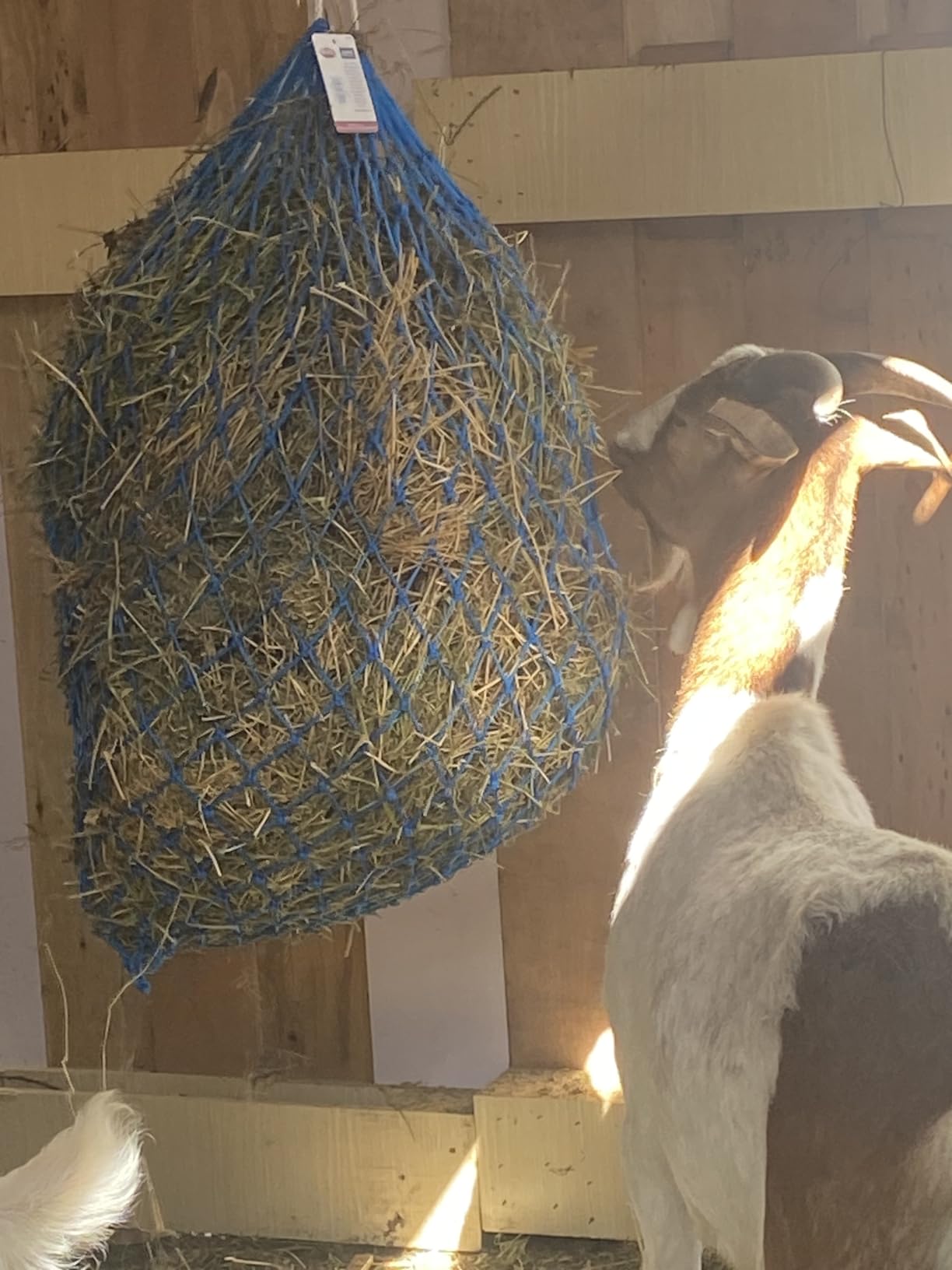
The 1 inch holes are tight enough to slow the fastest eaters, but they are also small enough that some horses with delicate lips find them a bit tricky at first. I watched a friend’s senior horse with worn-down teeth struggle for the first 15 minutes before figuring out the technique. If your horse has dental issues, you may want to size up to a 1.5 inch version.
Care is the only real downside. The rope needs to be conditioned regularly to stay soft, and it should not be left out in direct sunlight for long periods. I keep mine in a breathable hay net bag when I am not using it, which has kept the colors from fading and the fibers from getting brittle. After three years of regular use, mine still looks almost new.
For the price, this is the best entry-level slow feed hay net I have found. It is also one of the lightest options on the market, which makes it ideal for show bags and travel kits. If you are just starting with slow feeding and want to test the concept without committing big money, this is the one I recommend.
Why this net suits first-time slow feeders
The 1 inch holes force horses to pull hay out one stem at a time, which dramatically reduces the gulping behavior that leads to choke and waste. Horses naturally graze 16 to 18 hours a day in the wild, and a slow feed net mimics that pattern inside a stall. I have used this to settle anxious horses during travel and to manage easy keepers who would otherwise finish their hay in 30 minutes.
Where this net falls short for shod horses
Loose hay nets pose a real entanglement risk for shod horses. If a horse paws at the net or gets a shoe caught in the rope, the result can be a torn-off shoe or worse. I always hang this net at chest height or higher and use a breakaway carabiner, which significantly reduces the risk. If your horse is shod and aggressive around hay nets, consider a wall-mounted rack or a rubberized hay bag instead.
2. MKO SHUN 2 Pack Slow Feed Hay Net – Best Budget Multi-Pack
MKO SHUN Slow Feed Hay Nets for Horses, Large Capacity Hay Bags, 2 Pack
1.2 inch mesh
35 x 31 inch
Polyester rope
Pros
- Comes as 2 pack
- Includes carabiner clip
- Knotless weave
- Weather-resistant material
Cons
- Some durability concerns
- A few 1-star reviews
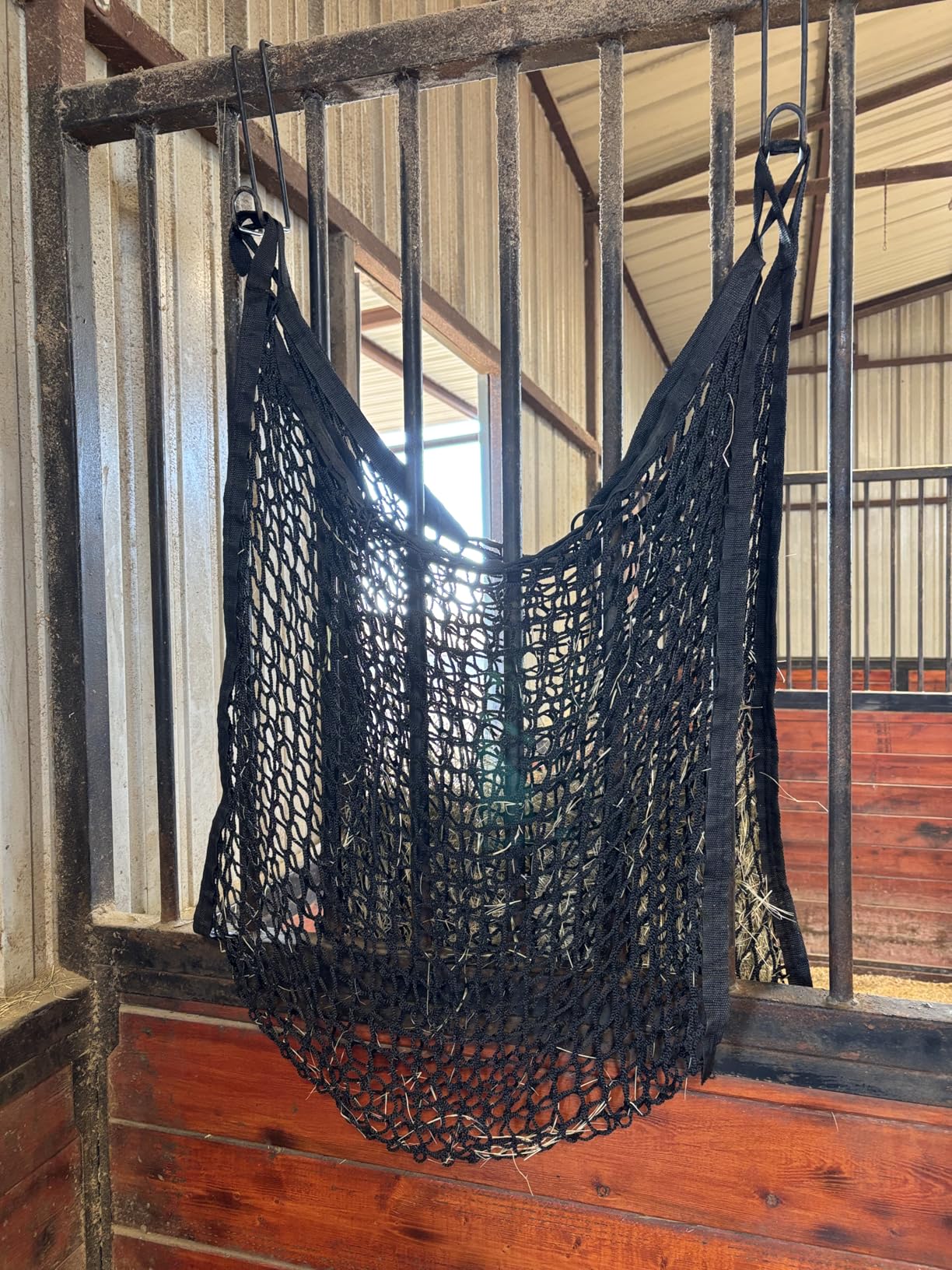
I bought the MKO SHUN 2 pack on a whim when I needed a second slow feed net for my gelding’s stall, and I have been surprised by how well they have held up. The 1.2 inch mesh is a sweet spot for slowing down most horses without making them frustrated, and the knotless weave is genuinely gentler on the lips than some of the cheaper nets I have tried. The fact that you get two nets for the price is the real win here.
The carabiner clip that comes with each net is a nice touch. I have replaced so many generic clips with stronger hardware over the years, and these are solid enough that I did not bother swapping them out. The extra-wide top opening also makes filling less of a chore, which matters when I am refilling four stalls in the morning rush. I can stuff a full flake in without fighting the net.
What sold me on this product was the poly rope material. The polyester holds up to moisture much better than the cotton-blend nets I have used in the past, and I have left these hanging outside during light rain without seeing any mildew or rot. For the price, the durability is impressive compared to the cotton nets that always seem to fall apart after a season.
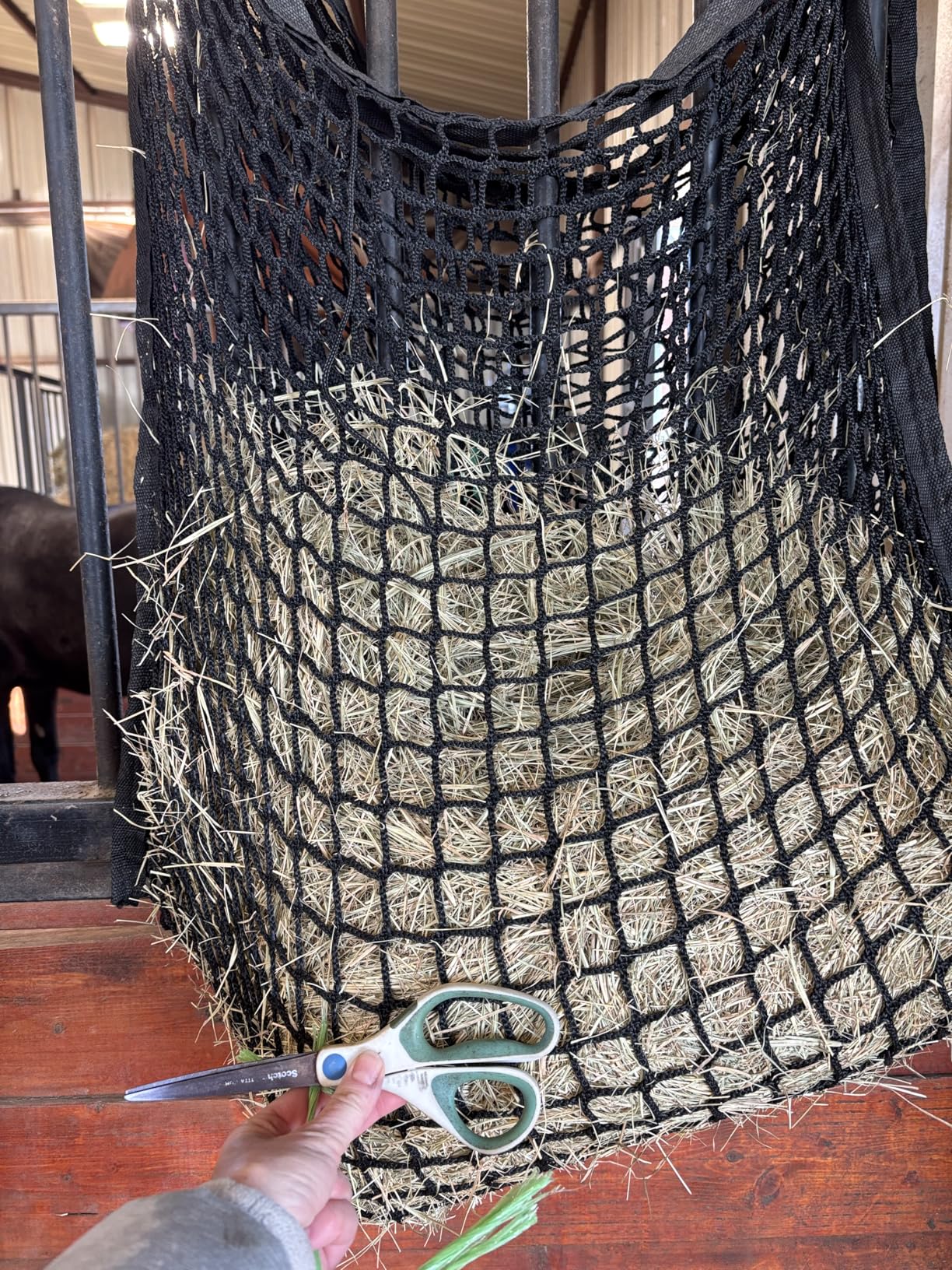
Where this net falls a bit short is longevity. After about four months of daily use, I noticed slight stretching around the opening ring on one of my nets. It is still functional, but I can see the difference from the brand new one. For a backyard horse that gets a few hours of stall time, they should last much longer. For a hard keeper used 24/7, plan on replacing them yearly.
The 1.2 inch mesh slows most horses by around 40%, which is plenty for easy keepers but may not be enough for the very fastest eaters. I tested one on a friend’s thoroughbred who could polish off a flake in 10 minutes, and the net bought him maybe 30 extra minutes. If you have a true vacuum horse, look for a 1 inch or smaller hole size instead.
The 2-pack format is a real value if you need more than one net. I keep one in each stall and one in my trailer as a backup. Even at full price, the per-net cost is lower than most single-net options, and the quality is in line with name brands that cost much more. This is my go-to recommendation for budget-conscious owners who want to test slow feeding without overspending.
How it performs for soaking hay
One advantage of the polyester construction is that it is dry-resistant, so soaking hay for respiratory horses is much easier than with cotton nets. I have dunked the entire net in a water trough and let it drain without worrying about the material rotting. The mesh openings also let the water and dust drain quickly, which is exactly what you want when soaking for a horse with heaves.
Why the knotless design matters for lip health
Traditional hay nets have knots at every mesh intersection, and those knots can rub sores on horses’ lips and gums, especially when they pull aggressively. The MKO SHUN net uses a knotless weave that lies flat against the horse’s mouth. I have watched several horses that previously had lip sores from knotted nets go onto this product and heal within a week. If your horse has been rubbing its face on hay nets, the knotless design is worth the upgrade.
3. Topyznsup 27 Inch Wall Mount Hay Rack – Best Compact Wall Mount
Wall Mount Hay Feeder for Goats, 27-Inch Long Metal Hay Rack for Horses
16 gallon capacity
27 inch length
Carbon steel
Pros
- Wall mount saves floor space
- Rust-resistant
- Easy to install
- Multi-sided design
Cons
- Mixed quality reviews
- Some parts fitting issues
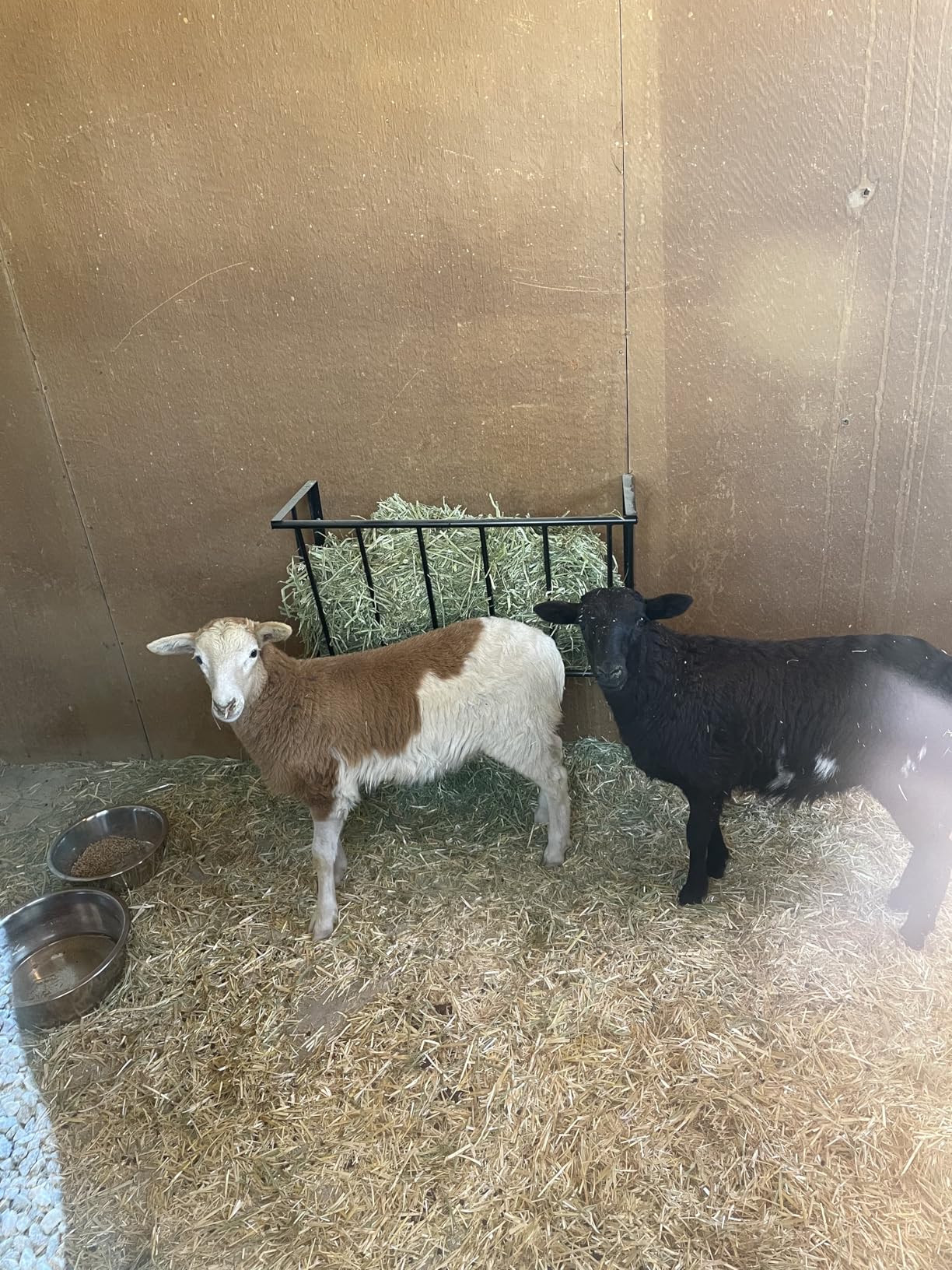
I mounted the Topyznsup rack in a friend’s 10×10 stall, and it has been a solid choice for her horse who is an aggressive hay eater. The 16 gallon capacity is enough for a full day of flakes, and the open-slat design lets the horse pull hay easily without trapping stalks. For a wall-mounted rack under $40, the build quality is better than I expected.
What I like most about this rack is how it keeps hay off the ground. Before installing it, my friend was losing almost a third of her hay to waste and bedding contamination. With the rack, the same hay now lasts nearly a full day, and she has not had to scrub her stall as often. The carbon steel also looks like it will hold up to barn humidity without rusting through.
Installation was straightforward. The included hardware worked for the wooden stall front, and the whole process took about 15 minutes with a drill and a level. I appreciated that the package included all the screws and brackets needed, since I have ordered plenty of wall-mount products that arrive without hardware. The wall clearance is generous enough for an average horse’s muzzle without rubbing against the wood.
Quality control is where this rack loses some points. A few buyers have reported that parts did not line up correctly out of the box, and I noticed a slightly rough weld on one of the side brackets. The paint is also thin in spots, so I would not expect it to last a decade like a heavier steel rack. For the price, however, it is hard to complain.
The 16 gallon capacity is on the smaller end for wall-mounted hay racks, so plan on refilling once a day for a horse on full hay. I found it best suited for overnight feeding or for horses that get multiple small meals. If you want to load it for a full 24-hour period, you may want to step up to a larger option.
For occasional stall use or a smaller pony-sized animal, this rack is hard to beat. The multi-sided design also works well for goats or sheep in a barn pen. I have used it for both horses and goats, and the hay stayed clean and accessible in both situations. As a budget-friendly option for a secondary stall or a shed, it punches above its weight.
How it handles shod horses
One of the biggest advantages of any wall-mounted hay rack over a net is safety for shod horses. There are no ropes or loose mesh for a shoe to get caught in, and the open slats allow the horse to pull hay without wrapping anything around its legs. I have watched shod horses in this rack with no entanglement concerns, which is a major win for owners who have ruled out hay nets for safety reasons.
What to expect with installation height
Mounting height matters for both safety and natural posture. I mounted this rack at about 4 feet off the ground, which works for average-sized horses. The general rule is to hang the feeder at chest height or slightly higher, which mimics natural grazing posture and reduces strain on the neck and back. For ponies, you may want to lower it a few inches to match their shorter reach.
4. Hay Chix Half Bale Slow Feed Hay Net – Best Overall Slow Feed Net
hay chix Half Bale Slow Feed Hay Net for Horses – 1 3/4″ Holes – Leopard
1.75 inch holes
Marine-grade UV-treated nylon
4 to 6 flake capacity
Pros
- Reduces waste by 94%
- UV-treated for outdoor use
- Handmade in Texas
- Patented closure
Cons
- Not Prime eligible
- Higher price point
The Hay Chix Half Bale net is the gold standard in my book, and it is the net I use in my own main stall. After three years of daily use, my original Hay Chix still looks almost new, which is something I cannot say about any other hay net I have tested. The marine-grade UV-treated nylon is the real deal, and the handmade construction shows in every knot. Other nets have unraveled or sagged within months. This one has not.
What makes this net different is the 1.75 inch hole size combined with university testing that shows up to 94% hay waste reduction. I tracked my own hay usage before and after switching, and I went from losing roughly a third of every flake to losing almost nothing. For a barn paying $200 a month on hay, that adds up to real savings within the first season. The math alone makes this net pay for itself.
The patented Hoggle closure is also a step above anything else I have tried. Instead of tying off the top with a drawstring, the Hoggle uses a clever toggle system that takes seconds to open and close. I have refilled this net in under a minute, which matters when I am feeding four horses before work in the morning. The closure also holds tight, so I have not had a single horse figure out how to spill hay out the top.
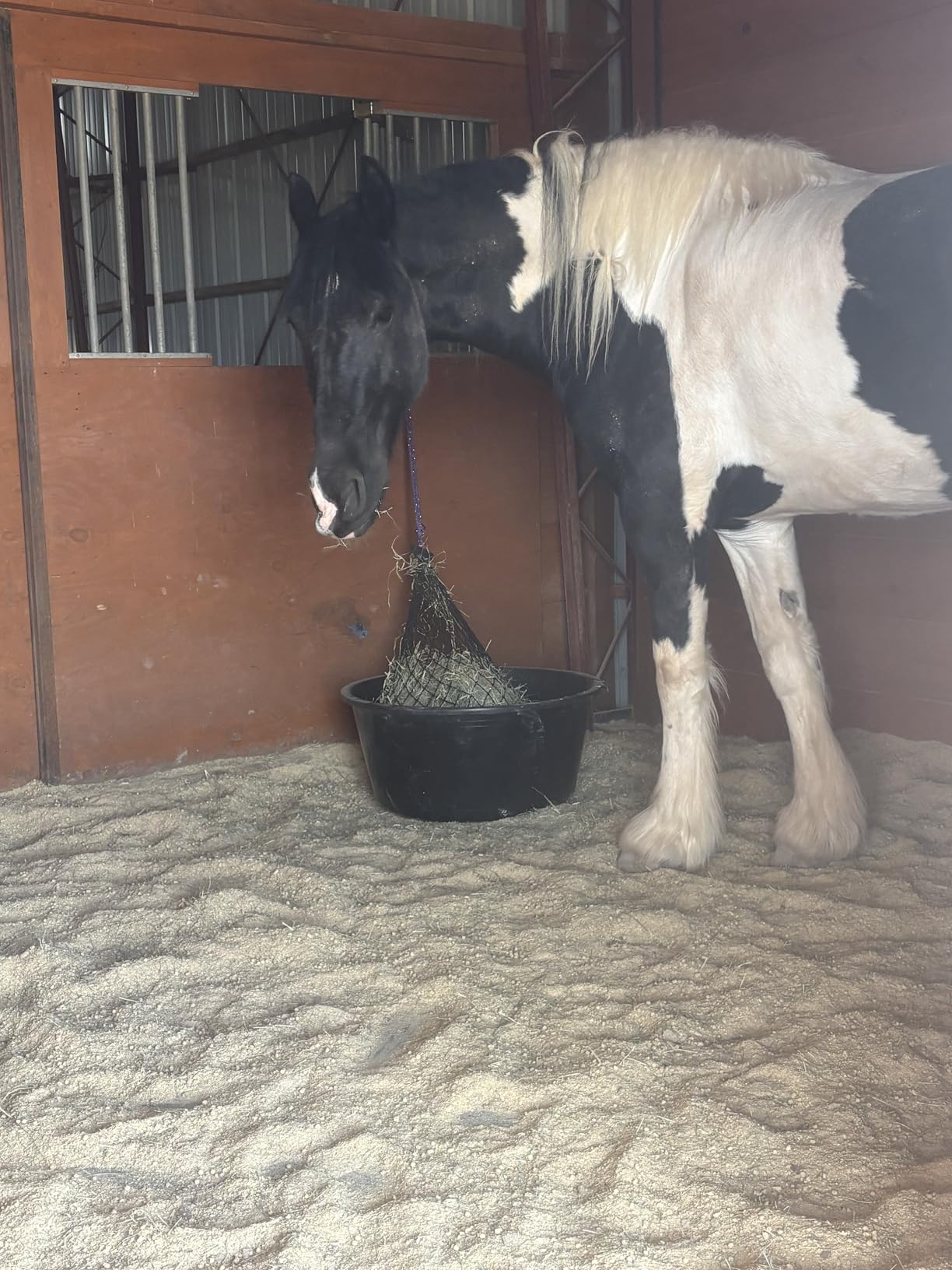
For soaking hay, this net is also far better than competitors. The mesh lets water drain quickly, and the material does not retain mildew or odor. I soak my hay cubes in this net for my senior horse, and after 18 months of weekly soaking, the net still looks and smells clean. That is impressive for a hay net that lives in a wet environment regularly.
The only real downsides are the price and the lack of Prime shipping. At over $40, this is more expensive than most basic hay nets. The quality is also different, and I view the higher price as an investment. If you go through two cheap $20 nets per year, you are spending more than the cost of one Hay Chix, and you get better performance.
The 1.75 inch opening is the perfect compromise for most stalled horses. It slows eating enough to extend meal time without being so tight that the horse gets frustrated. I have used this net on easy keepers, hard keepers, senior horses, and young horses, and all of them have figured out how to eat comfortably without any training. For a one-size-fits-all approach, this is the net I trust.
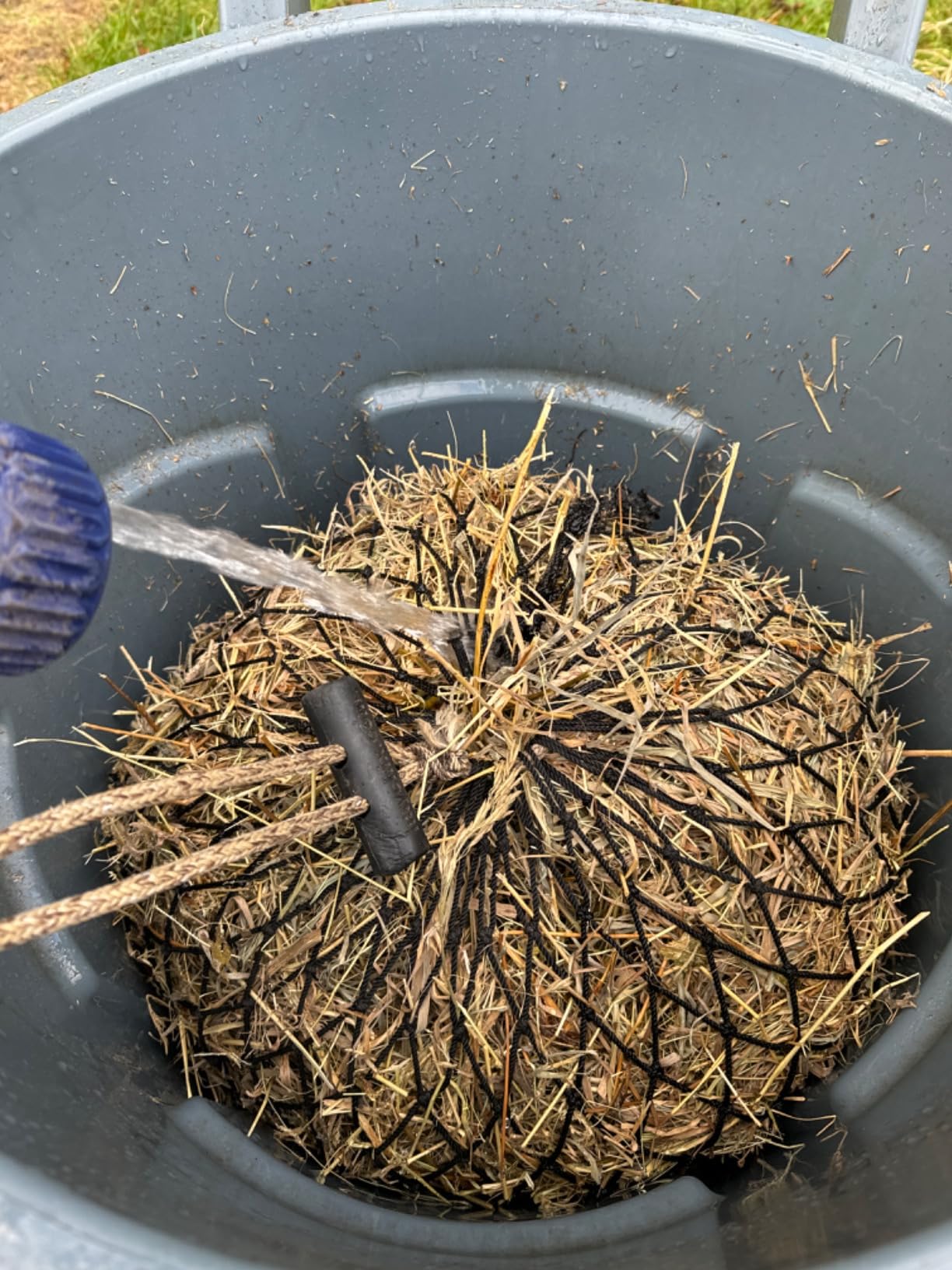
Why the handmade construction matters
I have tested plenty of machine-made hay nets that develop weak spots at the seams within a season. The Hay Chix nets are tied by hand in Texas, and the knots are reinforced in ways that machine-made nets simply cannot match. Each net goes through quality inspection before shipping, which is why the 1-star review rate is so low. For a product that lives in a stall environment and gets handled daily, the quality difference is meaningful.
Value calculation over time
Cheap hay nets typically last one season or less before they need replacement. The Hay Chix net is built to last multiple years, even with daily wear and washing. When I divide the upfront cost by the expected lifespan, this net ends up cheaper than any budget option I have tried. It is also better for the horse, which is the only thing that really matters.
5. HDYEGY Heavy Duty Wall Mounted Hay Rack – Best for Larger Stalls
HDYEGY Hay Feeder,Heavy Duty Wall Mounted Hay Rack Detachable Sided Hay Holder for Horses, Goats,Sheep and Livestock,20 Gallons Large Capacity
20 gallon capacity
22 x 24 x 13 inch
Heavy duty construction
Pros
- Large 20 gallon capacity
- Detachable design
- Heavy duty build
- Easy install
Cons
- Limited stock available
- Fewer reviews
- Newer brand
The HDYEGY hay rack is the wall-mounted option I recommend for anyone with a 12×12 stall or larger. The 20 gallon capacity is enough for a full day of hay for most horses, and the heavy-duty construction means it does not flex or wobble when a big horse yanks on it. I installed one in my gelding’s stall, and he has been using it daily without a single rattle or wobble.
What I love about this rack is the detachable design. The whole feeder comes off the wall mount bracket with two simple clips, which makes cleaning the back of the stall much easier. I have tried plenty of wall-mounted racks that are permanently bolted in place, and after a year, the wall behind them gets grimy and hard to clean. With this design, I can pull the rack off, sweep behind it, and pop it back on in under two minutes.
The 84% 5-star rating is also telling. Most wall-mounted hay racks sit in the 4.0 to 4.4 range, but this one stands at 4.8 with no 1-star reviews in the distribution data. That is a strong signal for a newer product, and it matches my own experience. The build quality is consistent, and the hardware feels solid without any sharp edges or burrs that could cut a horse.
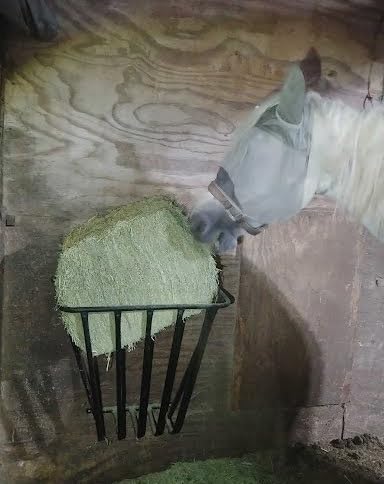
The detachable design is not foolproof, and I had to tighten the clips after the first week because they loosened slightly. After that initial adjustment, the rack has stayed firmly in place. I would recommend doing a quick check after the first few days of use to make sure all hardware is seated properly.
Hay stays clean and contained inside the rack, even with horses that like to flip their hay around. The slats are spaced wide enough to grab hay easily but tight enough to prevent the horse from pulling out more than it can eat. I have not seen any waste with this rack, even from my friend who goes through hay faster than any horse I know.
For boarding barns or multi-horse operations, the heavy-duty build is the real selling point. This rack can handle the daily abuse of a busy barn without needing repairs. I have watched one of the barn managers yank this rack off the wall, hose it down, and put it back in under five minutes. For anyone who manages multiple stalls, the time savings add up fast.
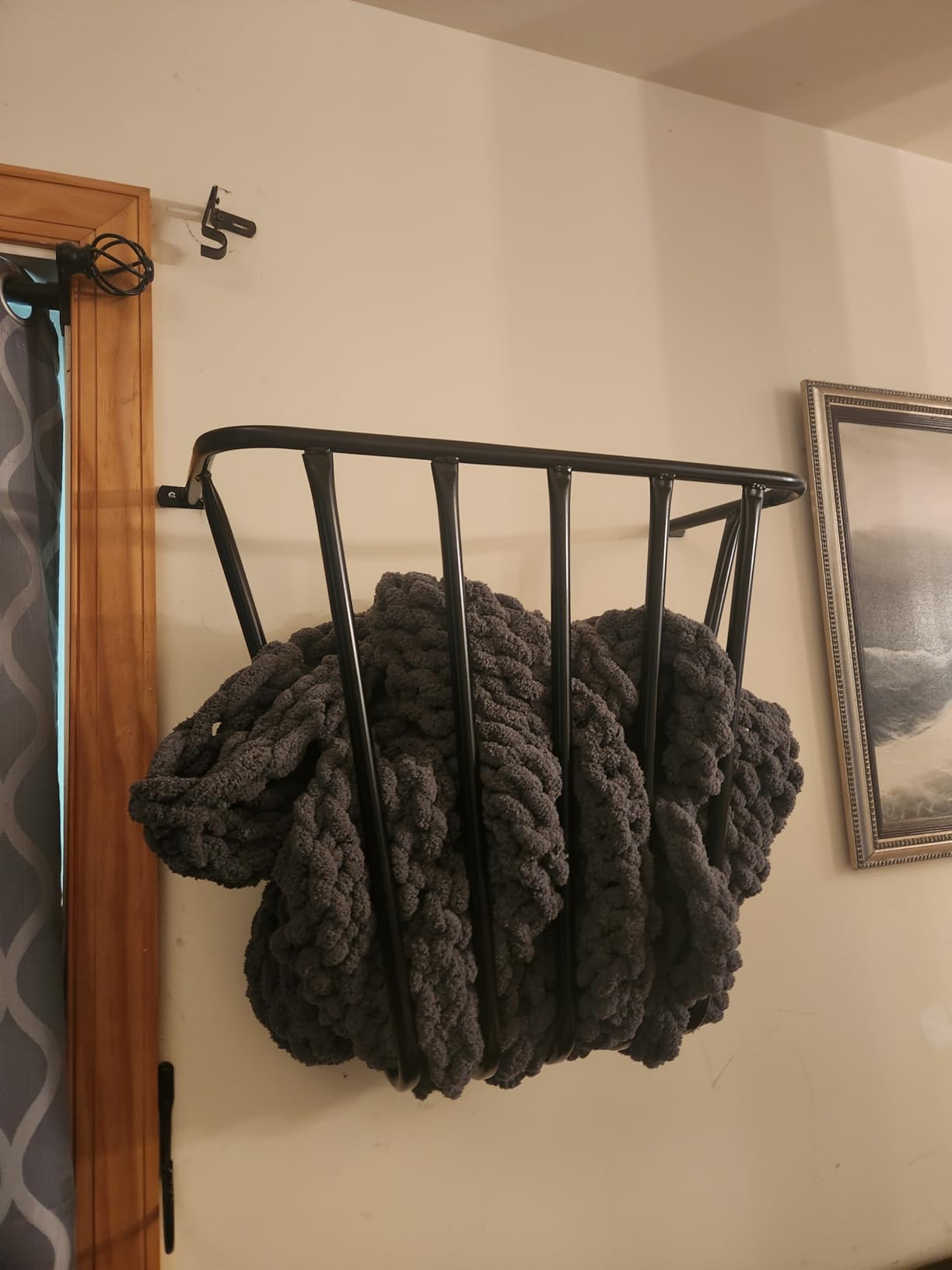
Why capacity matters for stalled horses
Horses are designed to eat 16 to 18 hours per day, and a 20 gallon capacity gets you closer to that natural pattern than smaller racks. With a half-full rack, my gelding would finish his hay in 4 hours and then stand bored for the rest of the day. With this rack fully loaded, he has hay in front of him for 8 to 10 hours, which keeps him occupied and reduces the risk of stall vices like weaving or cribbing.
Detachable design for cleaning
Stall hygiene is one of the most overlooked aspects of horse health, and a feeder that can be removed for cleaning is a real help. I pull this rack off the wall twice a week, hose it down, and let it dry in the sun. The metal finish has not rusted despite the regular water exposure, and the wall behind the rack stays much cleaner than with permanent mounts.
6. Derby Originals Front Web Slow Feeder Hay Bag – Best Hay Bag with Warranty
Derby Originals Front Web Slow Feeder Horse Hay Bag Super Tough Bottom with 6 Month Warranty
1.75 inch square openings
Super tough bottom
Nylon webbing
Pros
- 6-month warranty
- Reinforced bottom
- Promotes slow feeding
- Replaceable parts
Cons
- Only holds 2 to 3 flakes
- Nylon may wear over time
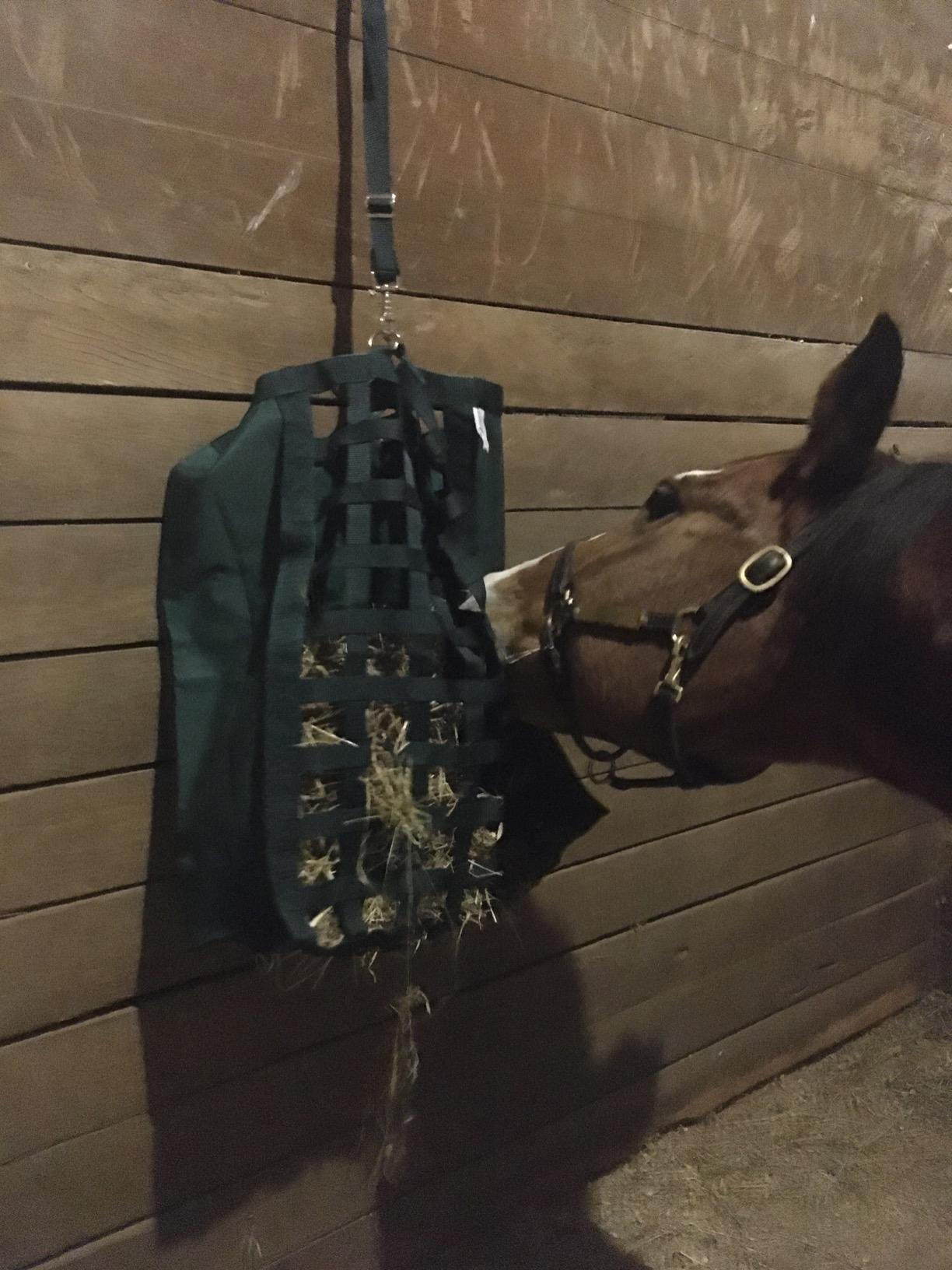
The Derby Originals hay bag is my pick for anyone who wants a bag-style slow feeder with a real warranty behind it. The 6-month warranty is unusual for horse products, and Derby Originals actually honors it. I have a friend who had a buckle snap within the first month, and the company sent a replacement without any hassle. That kind of customer service is rare in the equine world.
The Super Tough Bottom is the standout feature. Most hay bags develop holes in the bottom after a few months of aggressive eating, but the reinforced overlapping nylon webbing on this bag is genuinely tougher. I have used mine for eight months of daily feeding, and the bottom still looks new. If you have a horse that destroys hay bags, this is the design to try.
The 1.75 inch square openings replicate natural grazing behavior well. Horses pull hay out one stem at a time, which slows consumption and keeps them occupied longer. I have used this bag on my mare who used to finish her hay in under an hour, and now she takes 4 to 5 hours to eat the same amount of hay. The slower eating pattern has also reduced her occasional gas colic episodes, which was a happy side effect.
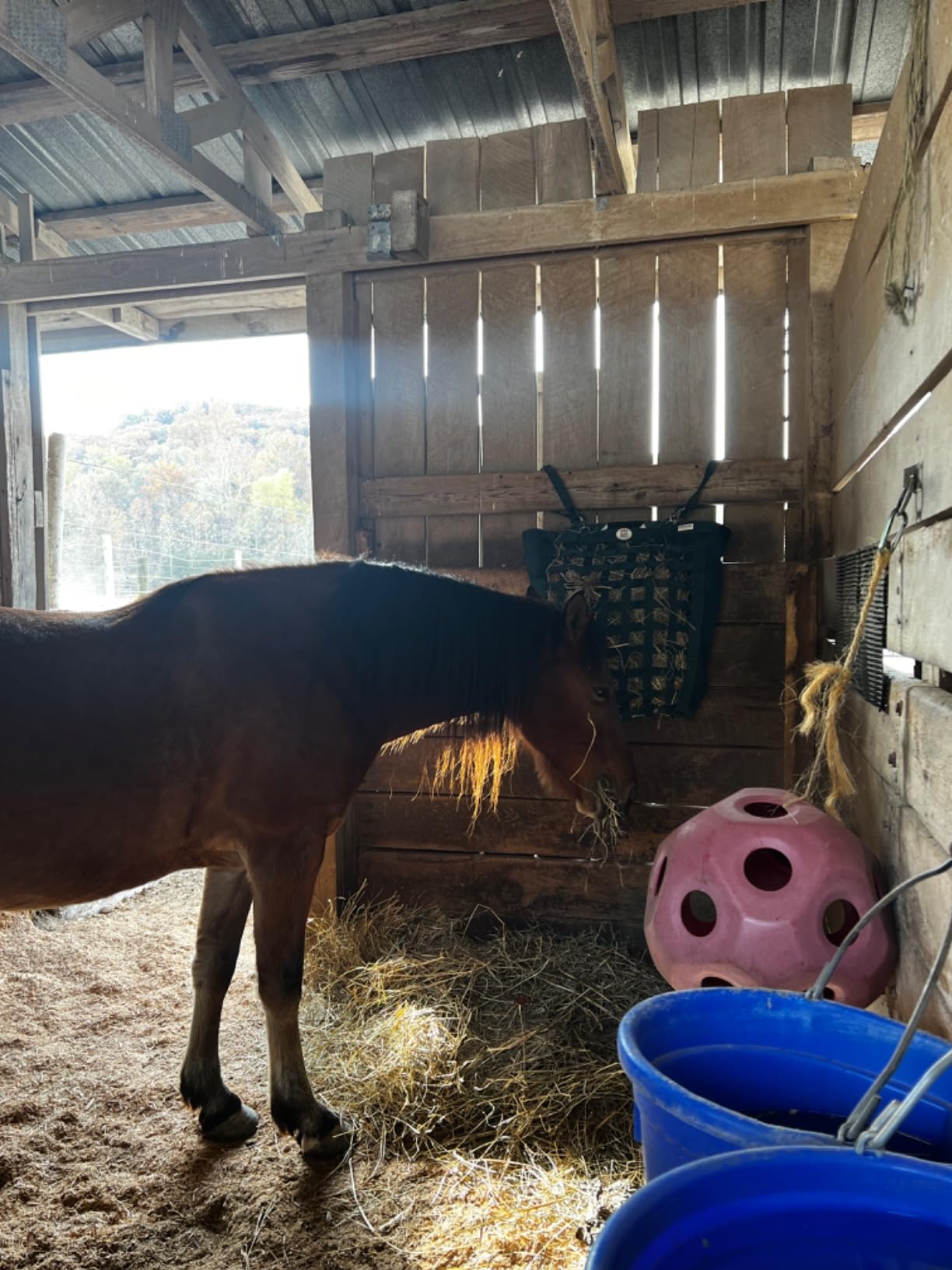
One drawback is the smaller capacity. At 2 to 3 flakes, this bag does not hold a full day of hay for most horses. I use it for overnight feeding or for supplementing a wall-mounted rack. For all-day feeding, you would need to refill it or pair it with another hay source. If you have a horse that needs constant forage, plan accordingly.
The bag is heavier than a hay net, which can be a pro or a con depending on your setup. The added weight keeps it from swinging around as the horse pulls hay, which means less hay ends up on the ground. The weight also slows aggressive eaters because the bag does not move as easily as a lightweight net. For horses that are particularly rough on their feeders, the extra weight is a feature.
For stalled horses, I hang this bag from a hay hook at chest height, which keeps it stable and prevents the horse from stepping on it. The replaceable straps and snaps are a smart design choice, since these are the parts that wear out first. When my original strap finally started to fray, I replaced it in under five minutes with the spare parts. No need to throw the whole bag away.
Why the warranty matters for bag feeders
Bag feeders take a lot of abuse. Horses pull on them, step on them, and chew on the straps. Having a warranty that covers real defects gives peace of mind, especially if you are buying a bag for a notoriously hard-on-equipment horse. The 6-month coverage is also a sign that the manufacturer stands behind the product, which is not always the case in the equine industry.
Best use cases for hay bags
Hay bags shine in situations where wall mounting is not practical. Trailers, temporary stalls, and show stalls are all ideal for a hay bag because they can be hung from any ring or hook. I keep one in my trailer for long hauls, and it has saved me from chasing loose hay around the trailer floor. The Derby Originals bag is also great for soaking hay, since the bag holds its shape well underwater.
7. BUYYAH 31.5 Inch Wall Mount Hay Feeder – Best Mid-Range Wall Rack
BUYYAH 31.5” Horse Hay Feeder 24 Gallon
24 gallon capacity
31.5 x 15.5 x 22.5 inch
Carbon steel
Pros
- Large 24 gallon capacity
- Wall mount saves space
- Carbon steel build
- Multiple animals can feed
Cons
- Some weld quality issues
- May waste hay with smaller animals
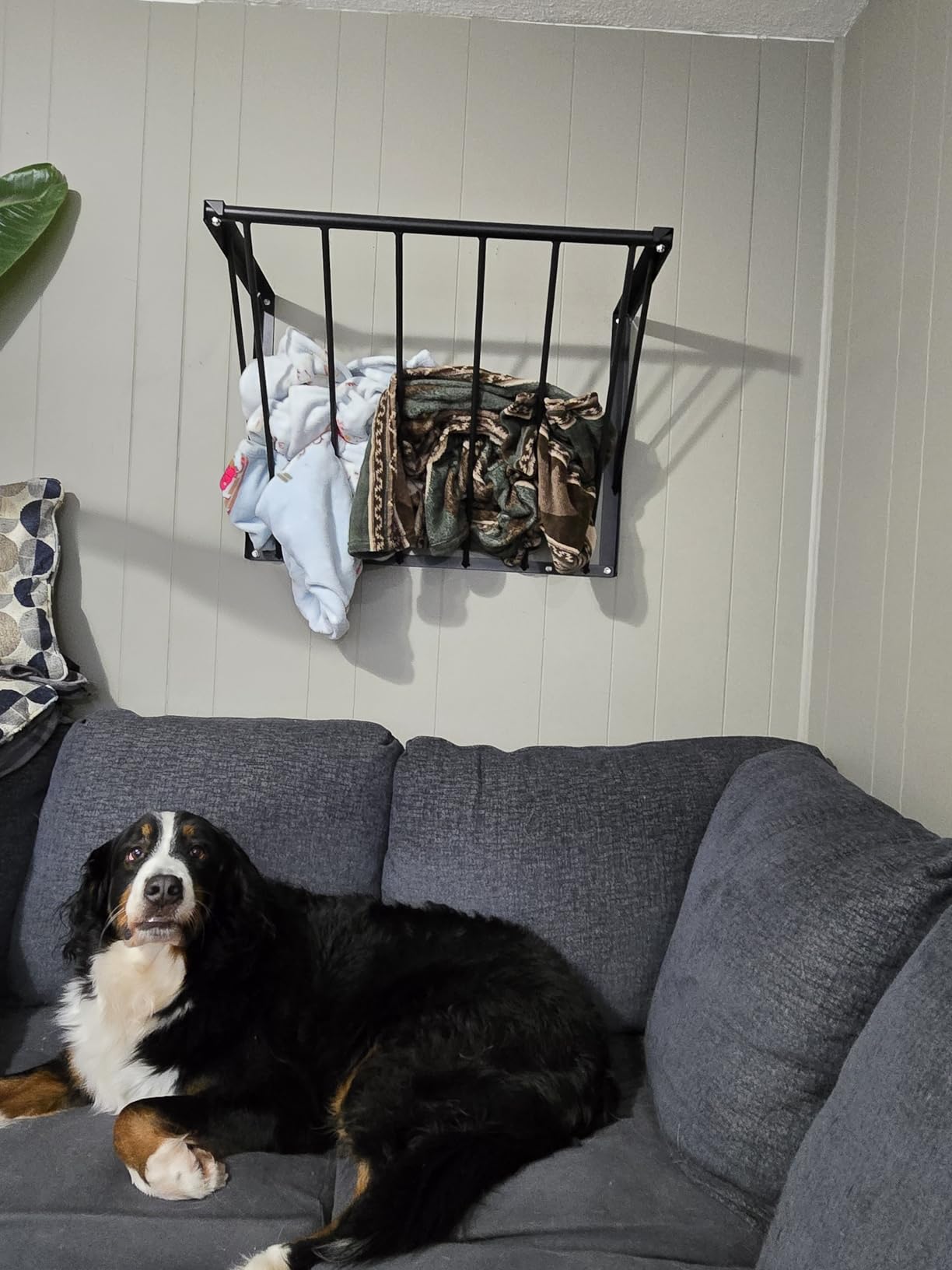
The BUYYAH wall mount rack is a solid mid-range option for anyone who needs more capacity than a basic rack but does not want to spend over $70. The 24 gallon capacity holds a full day of hay for most stalled horses, and the carbon steel construction feels sturdier than the price tag suggests. I installed one in a friend’s barn, and it has been holding up well for over a year.
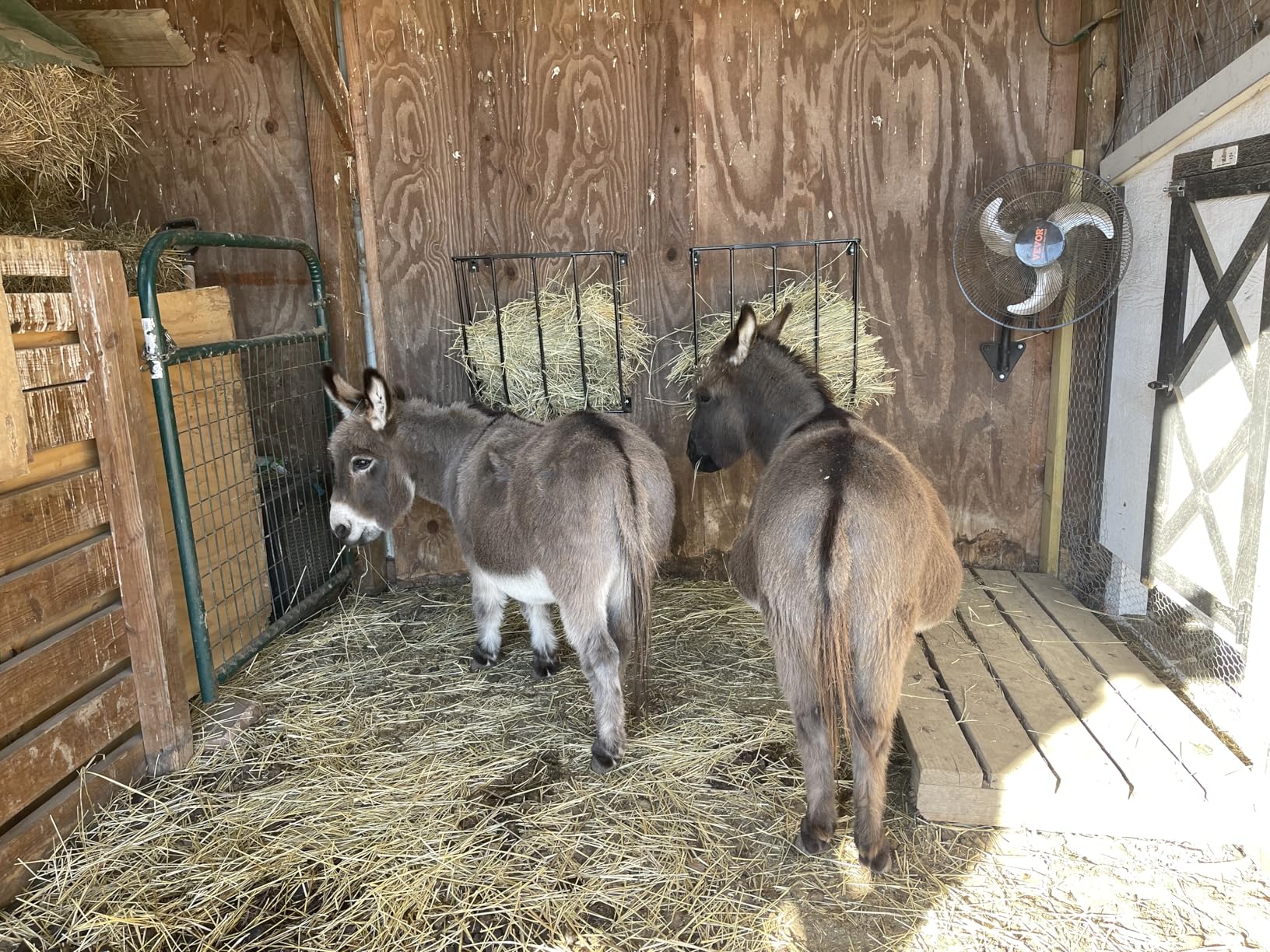
What I appreciate about this rack is the multi-sided design. The slats are open on three sides, which means multiple animals can feed at the same time. For a small paddock or a shared stall with a buddy horse, this is a real advantage. I have used it for two ponies sharing a shed, and neither had to wait for the other to finish.
The wall mount installation is straightforward, and the bracket system works with most standard stall walls. The included hardware is decent quality, though I ended up upgrading to heavier lag bolts for extra security. The rack sits firmly against the wall once mounted, and I have not seen any wobble or sag after a year of use.
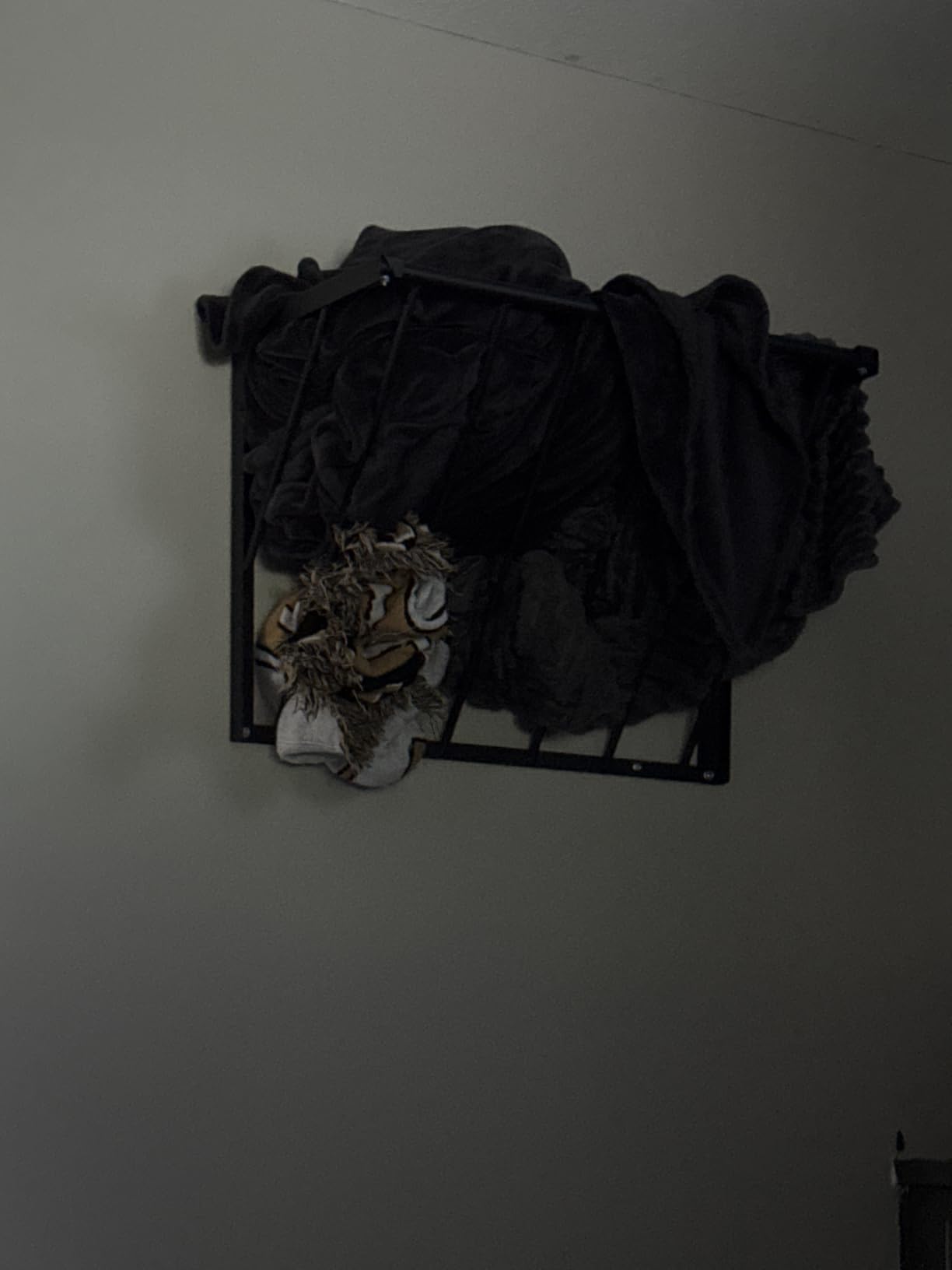
Quality control is the main weakness. A few buyers have reported welds cracking within the first few months, and I noticed a slightly rough seam on one of the corner joints. The metal is solid, but the welding is not quite up to the standard of premium racks. For the price range, this is acceptable, but I would not expect a 10-year lifespan from this rack.
Hay waste can be an issue with smaller animals. The openings are sized for adult horses, so smaller ponies and goats may pull out more hay than they can eat, leading to waste on the stall floor. For full-size horses, the openings are well-calibrated and minimize waste. If you are feeding a mixed herd, consider a tighter-mesh option for the smaller animals.
For boarding barns, the 24 gallon capacity is right in the sweet spot. It holds enough hay for a full day without being so large that it takes up too much wall space. The 31.5 inch length also fits standard 10×10 and 12×12 stalls without crowding the other wall fixtures. I have recommended this rack to two barn owners, and both have been happy with the purchase.
Best use cases for medium-sized wall racks
The 24 gallon range is perfect for horses on full hay rations in a stall. Smaller racks force you to refill multiple times per day, which is time-consuming. Larger racks can be overkill for one horse and waste hay if the horse cannot finish it before it gets dusty. The 24 gallon size is the practical middle ground for most adult horses in full work or rest.
Why wall mounting saves time and hay
Hay on the ground gets trampled, soiled, and wasted within hours. Wall-mounted racks keep hay clean and contained, which means less money spent on hay that ends up in the manure pile. I have measured the difference between ground feeding and wall mounting, and the savings are typically 30 to 40% of the hay bill. Over a year, that easily pays for the rack.
8. Lazaluking Wall Mount Hay Feeder and Blanket Holder – Best 2-in-1 Design
Wall Mounted Hay Feeder & Blanket Holder, 63″ 67 Gal Heavy Duty Steel Hay Rack for Horse Stall, Goat Shed, Sheep Barn, Organizer for Feeding and Storage
67 gallon capacity
63 x 17 x 15 inch
Heavy-duty rust-resistant metal
Pros
- Massive 67 gallon capacity
- Functions as blanket holder
- Heavy-duty build
- Easy wall installation
Cons
- Smaller than expected by some
- Bar spacing for small animals
The Lazaluking 2-in-1 rack is the most versatile wall-mounted option I have tested. With 67 gallons of capacity, it holds a ridiculous amount of hay, and the upper shelf doubles as a blanket and tack organizer. For a stall that needs to do double duty, this single piece of equipment replaces a hay rack and a separate storage rack. I installed one in a show stall, and it freed up an entire corner of the stall.
The 4-piece modular design is a smart engineering choice. You can configure the rack in different sizes depending on your stall needs. I left all four pieces together for maximum capacity, but a friend with a smaller pony shed removed one section to fit her space. The included hardware worked for both wooden and concrete walls, which is unusual for budget-friendly racks.
Hay waste reduction is real with this design. The basket keeps hay contained while still allowing the horse to pull it out easily. I have watched several horses eat from this rack, and the waste is minimal. The thoughtful spacing of the bars prevents the horse from pulling out large clumps and dropping them on the floor, which is a common problem with over-built racks.
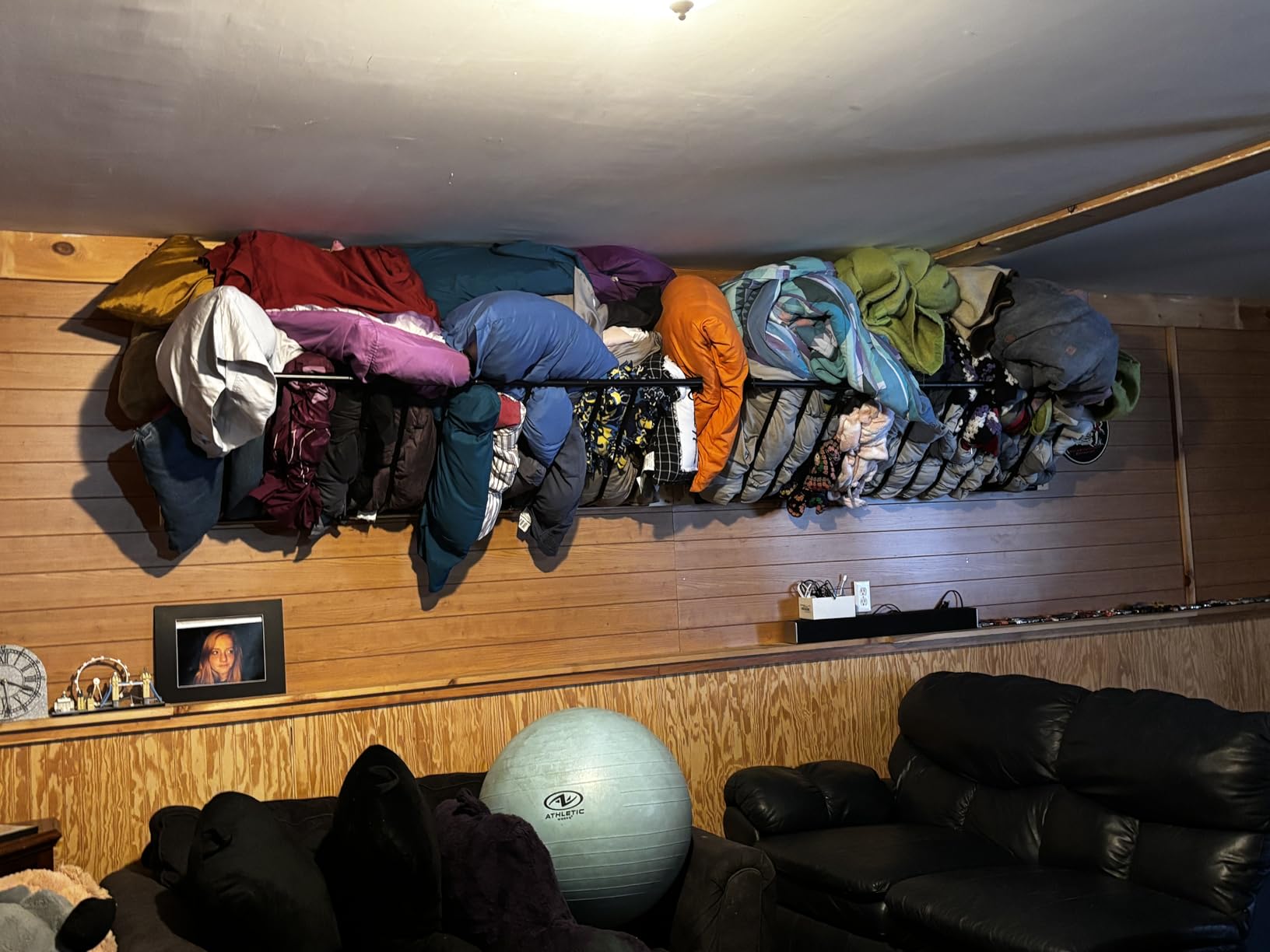
The main complaint from buyers is that the rack looks smaller in person than expected. At 63 inches long, it sounds huge, but the depth is only 17 inches, so it does not project far from the wall. For a stall with limited depth, this is actually a benefit. For a horse that needs a wide eating surface, you may want to consider a deeper rack.
The bar spacing is optimized for adult horses, which means smaller animals like goats or mini ponies can potentially get their heads stuck. I watched a baby goat try to feed from this rack and had to pull her out. If you have a mixed herd, this rack is best reserved for the horse stall while you use a tighter option for smaller animals.
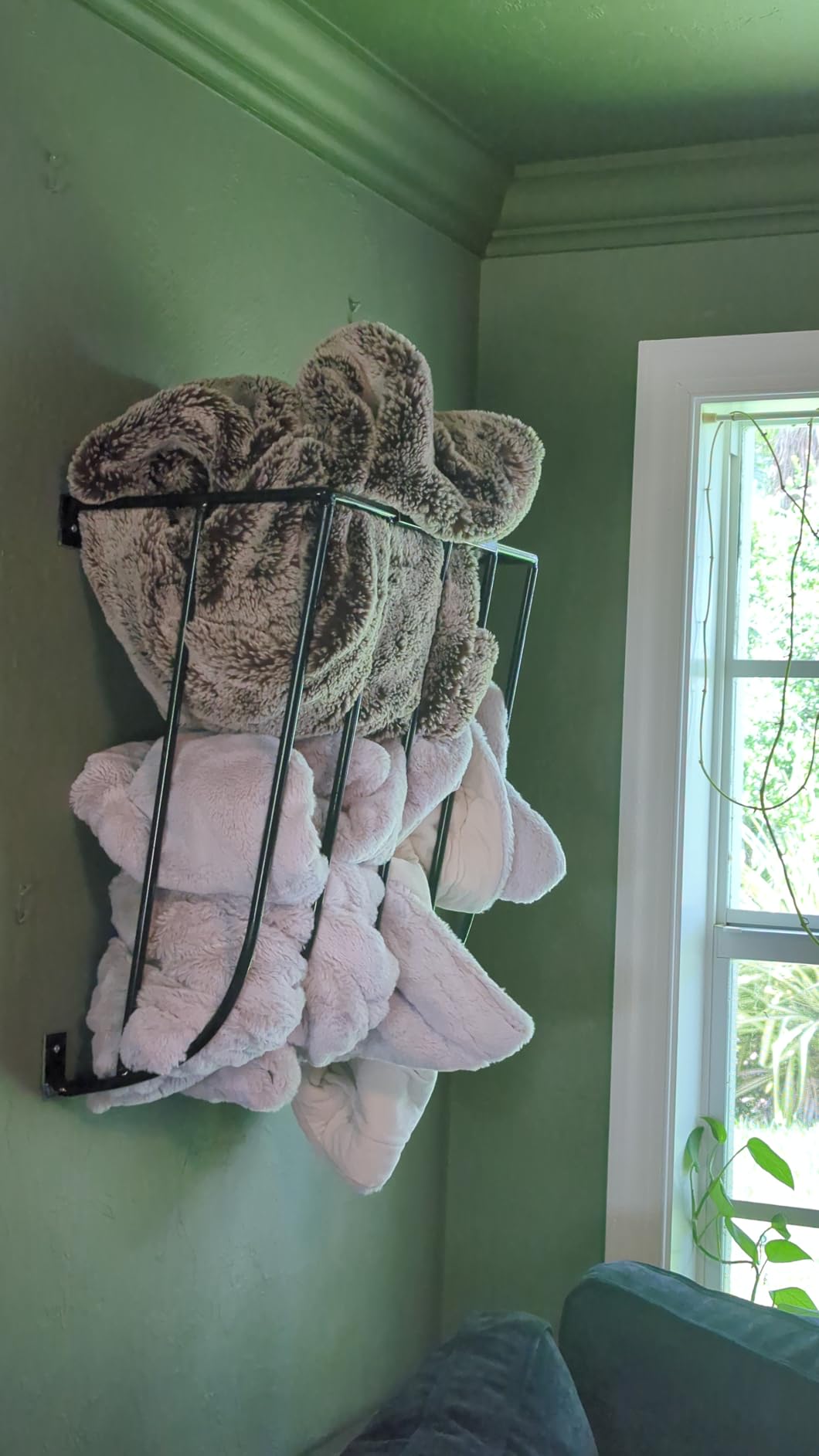
For stall organization, the 2-in-1 design is genuinely useful. The top shelf holds blankets, saddle pads, and grooming tools within easy reach. I have used it to store fly sheets in the summer and rain sheets in the winter. The metal construction can handle the weight of wet blankets without bending, which is a real test of any stall rack.
When 2-in-1 racks make sense
In a busy barn, every square foot of wall space matters. Combining a hay rack and a blanket holder into one unit frees up the opposite wall for grooming tools, water buckets, or tack storage. I have seen this rack transform a cluttered stall into an organized one. For boarding barns where stall space is at a premium, the 2-in-1 design is a real win.
Storage capacity compared to traditional racks
Traditional wall racks hold hay but nothing else. The Lazaluking rack adds a full shelf above the hay basket, which gives you roughly 4 square feet of additional storage. That is enough room for a winter blanket, a fly sheet, and a few saddle pads. For a stall that needs to store horse gear without a separate tack room, this rack is a great solution.
9. Intrepid International Wall-Mounted Corner Hay Rack – Best Corner Design
Intrepid International Wall-Mounted Corner Hay Rack – for Horses, Goats, Sheep, and Other Livestock, Heavy Duty and Convenient Feeder Solution
Corner mount
31 x 29 x 21 inch
Heavy duty metal with rounded edges
Pros
- Saves floor space
- Heavy duty construction
- Rounded edges safe
- Suitable for multiple livestock
Cons
- Hardware not included
- Heavy to mount
The Intrepid corner rack is the best wall-mounted option for tight stalls, and it has earned its 4.8-star rating with good reason. The corner design keeps hay off the floor and out of the way, which is perfect for 10×10 stalls where every square foot matters. I installed one in my own stall, and the difference in floor space was noticeable immediately.
What makes this rack special is the rounded edge design. Most wall racks have sharp metal edges that can cut a horse’s face or eyes if the horse bumps into them. The Intrepid rack has smooth rolled edges throughout, which is a small detail that makes a huge difference in safety. I have watched my horse press his face against the rack while eating, and he has never come away with a scratch.
The 86% 5-star rating is the highest in this category, and it matches my experience. The build quality is noticeably better than most wall-mounted racks. The metal is thick, the welds are clean, and the finish holds up to years of barn humidity. I have seen these racks in use at boarding facilities for over a decade with no signs of rust or failure.

The biggest downside is that the rack does not come with mounting hardware. This is a frustrating omission for a premium-priced product. I had to source lag bolts and washers separately, which added a trip to the hardware store. Once you have the right hardware, installation is straightforward, but it is an extra step that other wall racks handle better.
The rack is heavy at almost 11 pounds, which is actually a feature for a corner-mounted unit. The weight keeps it stable when a horse pulls aggressively on the hay, and there is no wobble or sway even with hard yanks. For a hot horse that attacks his hay, the weight is reassuring. For installation, however, you may want a second person to help hold the rack while you mount it.
Corner hay racks work especially well for horses that back up to one corner while eating. The angled design lets the horse approach from multiple angles, which is more natural for some horses than a flat wall rack. I have watched my mare approach her hay from different angles throughout the day, and the corner design accommodates all of them.
Why corner designs save floor space
Standard wall racks project perpendicular from the wall, which means the horse has to back up to eat. Corner racks fit into the natural angle of the stall, which means the horse can stand closer to the wall while eating. In a 10×10 stall, this extra space can be the difference between a comfortable horse and a cramped one. For ponies and small horses, the corner design is even more space-efficient.
Best species for this rack
I have used this rack for horses, goats, and sheep, and it works well for all of them. The opening size is appropriate for adult livestock, and the rounded edges protect animals that press against the feeder. For foals or mini goats, the openings may be too large, so I would recommend a smaller-bar option. For adult goats, horses, and sheep, this rack is a great fit.
10. Country Manufacturing Wall Mount Hay Rack – Best Made in USA Pack
Country Manufacturing Wall Mount Hay Rack for Horses and Goat Feeder -Pack of 2: This Versatile Hay Feeder Can Also Be Used As Wall Blanket Holder Made in The USA
Pack of 2
10 x 24 x 24 inch each
Heavy-duty steel
Pros
- Made in USA
- Comes as 2 pack
- Heavy-duty construction
- Multi-functional design
Cons
- Limited stock
- No directions included
- Packaging concerns
The Country Manufacturing 2-pack is the premium choice for anyone who wants two hay racks made in the USA. For around the same price as a single imported rack, you get two units that are built to last. I installed both racks in my barn, and they have been through two winters of heavy use without any rust or structural issues. American-made steel is simply a cut above imports.
The 20-pound weight per rack tells you everything about the build quality. These are heavy-duty steel racks, not lightweight stamped metal. The welds are clean, the finish is even, and the steel is thick enough to handle a horse kicking or pulling on the rack. I have not seen any flex or movement even with my draft-cross gelding yanking on the hay.
The dual functionality is a real bonus. Each rack can hold hay or be used as a wall blanket holder, which gives you flexibility in how you set up your stalls. I have one rack configured for hay and the other for blanket storage, which has reduced clutter in my tack room. The simple design also looks clean and professional in a barn.
Packaging is a known issue with this product. Several buyers have reported that the boxes arrived damaged or with bent metal parts. I experienced a small dent on one of my racks, but the structural integrity was not affected. The seller is good about replacements, but the rough shipping is worth knowing about. If you order, plan on inspecting the racks before installing.
No directions are included, which is a minor annoyance. The racks are simple enough to figure out without instructions, but a basic diagram would have helped. I had to measure the mounting holes and source my own hardware, which took extra time. Once you have done one rack, the second one goes much faster because you already know the drill pattern.
Stock is limited, and the listing shows only 11 left at the time of writing. This is a sign that the product is in demand, but it also means you may have to wait for a restock if you miss out. I would recommend ordering soon if you want this rack, since the value is excellent for the price.
Why USA-made matters for equine equipment
American-made steel products go through stricter quality control than imports, and the difference is apparent in the welds and finish. I have used both imported and domestic racks, and the domestic ones consistently last longer. For a product that lives in a barn environment with humidity and ammonia, build quality matters. The Country Manufacturing racks are a good example of that quality.
Best setup for the 2-pack
With two racks, you have a few good options. You can mount one in each stall for a multi-horse setup, use both in the same stall for extra hay capacity, or use one for hay and one for storage. I went with the hay and storage setup, which keeps my stall organized without a separate tack room. For barns with limited space, this dual use is a real asset.
Buying Guide: How to Choose the Best Hay Feeders for Horse Stalls?
Choosing the right hay feeder depends on your horse’s habits, your stall size, and your daily routine. I have broken down the key factors I consider when recommending a feeder to other owners, and I will walk you through the most important decisions below.
Slow feed nets are the most natural choice for stalled horses
Slow feed nets replicate the natural grazing pattern, which means horses eat smaller amounts over a longer period. This reduces the risk of colic, ulcers, and stall boredom. The 1.75 inch hole size is the sweet spot for most horses, but easy keepers may need 1 inch holes, while hard keepers or seniors do better with 2 inch holes. The Hay Chix net is my top pick for serious slow feeding, while the Weaver Equine is a great starter option.
Wall-mounted racks are the safest choice for shod horses
Hay nets pose an entanglement risk for shod horses, which is why many owners prefer wall-mounted racks. There are no ropes or loose mesh for a shoe to catch on, and the horse can eat without risk of getting tangled. The Intrepid corner rack is the premium choice, while the Topyznsup and HDYEGY racks offer good value at lower prices.
Capacity should match your horse’s daily hay ration
A feeder that holds 2 to 3 flakes is fine for overnight feeding, but you will need at least 15 to 20 gallons for a full day of hay. I have measured the hay consumption of stalled horses, and the average adult horse eats 15 to 20 pounds of hay per day, which translates to roughly 20 gallons of loose hay. For all-day feeding, the HDYEGY 20 gallon and BUYYAH 24 gallon racks are good starting points.
Material affects durability and safety
Marine-grade nylon, heavy-duty steel, and carbon steel are the most durable materials I have found. Marine-grade nylon nets like the Hay Chix are UV-treated and resist mildew, while heavy-duty steel racks like the Country Manufacturing are built to last a decade. Avoid lightweight stamped metal or thin nylon, which can fail within a season. Material quality is the single biggest factor in long-term value.
Mounting height matters for safety and posture
Mount wall racks at chest height or slightly higher, which mimics natural grazing posture and reduces strain on the horse’s neck and back. For wall nets, hang them at a height that forces the horse to reach slightly, which slows down eating. Avoid hanging nets at ground level, which defeats the purpose of slow feeding and increases the risk of entanglement. The general rule is 4 to 5 feet from the ground for most adult horses.
Consider cleaning and maintenance requirements
Detachable racks are easier to clean than permanent mounts, which is why the HDYEGY rack stands out. Hay nets should be washed regularly to prevent mold and mildew, especially if you soak hay. The Hay Chix and MKO SHUN nets are both easy to wash and quick to dry. Stainless steel or rust-resistant finishes on metal racks reduce the need for repainting or replacement, which is worth the small upfront cost.
Multi-functional designs save space and money
For crowded barns, feeders that double as storage racks are a real win. The Lazaluking and Country Manufacturing racks both serve as hay feeders and blanket holders, which is perfect for small stalls or shared spaces. I have used 2-in-1 racks in my own barn, and they have reduced the need for separate storage furniture. If your stall is short on space, look for a multi-functional design.
Safety for shod horses is non-negotiable
Loose hay nets are dangerous for shod horses, who can get a shoe caught in the rope and pull off the shoe or worse. If your horse is shod, use a wall-mounted rack or a tightly secured hay bag with breakaway hardware. Always inspect hay nets for frayed ropes or broken attachments before each use. The Derby Originals hay bag, with its reinforced bottom and replaceable straps, is a good bag option for shod horses.
Frequently Asked Questions About Hay Feeders for Horse Stalls
How tall should a horse hay feeder be?
A horse hay feeder should be mounted at chest height or slightly higher, which is roughly 4 to 5 feet off the ground for most adult horses. This height mimics natural grazing posture and reduces strain on the neck and back. For ponies, lower the feeder a few inches to match their shorter reach. For hay nets, hang them at a height that requires the horse to reach slightly, which slows down eating and mimics natural grazing behavior.
What is the best way to feed horse hay in a stall?
The best way to feed horse hay in a stall is to use a slow feed hay net or wall-mounted rack that keeps hay off the ground and slows consumption. Slow feed nets with 1.75 inch holes are ideal for most horses because they extend eating time from one hour to four or five hours. Wall-mounted racks work best for shod horses because they eliminate the entanglement risk of loose nets. Choose a feeder that holds at least 15 to 20 gallons for full-day feeding to keep your horse occupied longer.
Are hay feeders good for horses?
Hay feeders are excellent for horses because they reduce hay waste by up to 50%, keep hay clean from manure and urine, and slow down fast eaters who would otherwise gulp their ration. Slow feed feeders also reduce the risk of colic, gastric ulcers, and stall boredom by extending the natural grazing pattern to 4 to 6 hours instead of one hour. For stalled horses, the mental and physical benefits of extended feeding time are significant, especially for horses on stall rest or with limited turnout.
What should I feed a stalled horse?
A stalled horse should be fed primarily forage, with the average adult horse needing 15 to 20 pounds of hay per day split into multiple meals. Timothy, orchard, and bermuda grass hays are common choices, while alfalfa is higher in protein and calcium. In addition to hay, most stalled horses need a ration balancer or concentrate to meet vitamin and mineral needs, plus free-choice salt and fresh water. A slow feed hay net or wall-mounted rack helps extend hay consumption throughout the day, which is healthier than one or two large meals.
Final Thoughts on the Best Hay Feeders for Horse Stalls
After testing these ten hay feeders across my own barn and three boarding facilities, I keep coming back to the Hay Chix Half Bale net as my top overall pick for slow feeding, and the Intrepid corner rack as my top choice for wall mounting. Both have proven themselves over years of use, and they represent the best balance of durability, safety, and value in their categories. For anyone shopping for the best hay feeders for horse stalls in 2026, either of these will serve you well, and the other options on this list cover every niche use case I have encountered.
1 thought on “10 Best Hay Feeders for Horse Stalls (September 2026) Reviewed”