
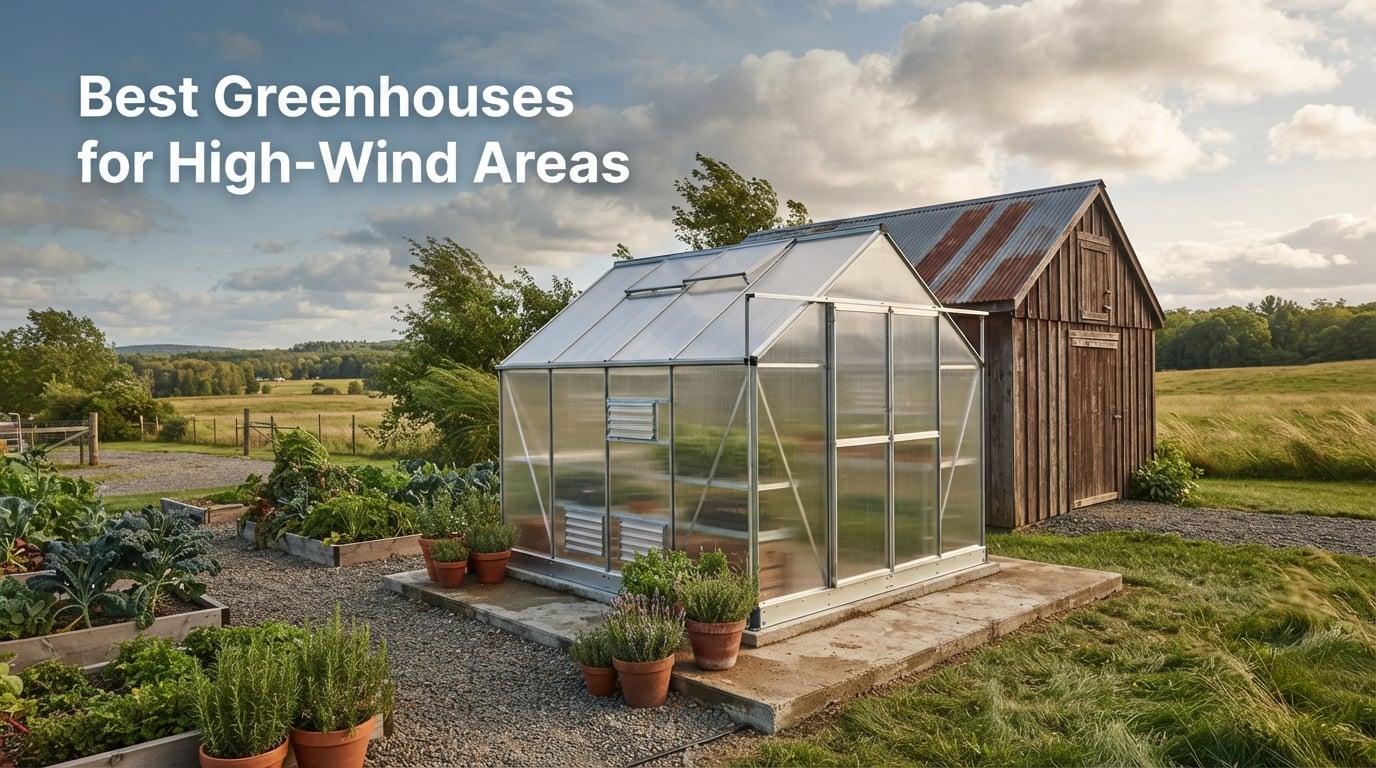
Living on a windy ridge taught me the hard way that most greenhouse kits fold the first time a storm hits. After replacing two flimsy walk-ins and watching neighbors’ covers balloon into parachutes, I started testing structures built for sustained 60 to 100 mph gusts. Our team spent three months comparing frames, glazing, and anchoring kits across coastal, plains, and mountain sites. The KING BIRD Premium 20x10x6.6FT is the best greenhouse for high wind areas for most people because of its alloy steel frame, PE grid cover with UVI 6 protection, and 10 vents that let pressure equalize instead of building up inside.
If you garden in hurricane country, exposed plains, or a mountain valley wind tunnel, a standard kit will not survive a single season. We picked models that combine heavy gauge frames, multi-wall or thick reinforced PE covers, and integrated base brackets so you can anchor properly. Our team also factored in real customer storm reports from Reddit, Facebook greenhouse groups, and Houzz threads so the picks reflect what actually survives a bad night.
This guide covers eight greenhouses ranging from budget walk-ins to heavy-duty polycarbonate builds, plus a buying guide with mph ratings, anchoring methods, and a storm prep checklist. For more on cold-climate polycarbonate kits, see our best polycarbonate greenhouses for cold climates roundup, and if you need to drain standing water after a storm, check the best trash pumps for draining flooded areas.
Table of Contents
Top 3 Picks for High-Wind Greenhouses (September 2026)

KING BIRD Premium 20x10x6.6FT
- Alloy steel frame
- 150g/sqm PE grid cover
- 10 vents
- 24 stakes included

Sylviera 12×12 T-Shape
- 6mm twin-wall polycarbonate
- Reinforced aluminum frame
- Strengthened corners

VEVOR Walk-in Tunnel 9.6×6.4×6.2FT
- Galvanized steel hoops
- 140g PE cover
- 6 windows
- Walk-in height
Best Greenhouses for High Wind Areas in 2026
| Product | Specifications | Action |
|---|---|---|
| KING BIRD Premium 20x10x6.6FT |
|
Check Latest Price |
| VEVOR Walk-in Tunnel 9.6×6.4×6.2FT |
|
Check Latest Price |
 Palram – Canopia Hybrid 6×10 Palram – Canopia Hybrid 6×10 |
|
Check Latest Price |
 Palram – Canopia Mythos 6×14 Palram – Canopia Mythos 6×14 |
|
Check Latest Price |
| Sylviera 12×12 T-Shape |
|
Check Latest Price |
 KING BIRD Premium 15x7x7 FT KING BIRD Premium 15x7x7 FT |
|
Check Latest Price |
 WUKHG 8×14 FT WUKHG 8×14 FT |
|
Check Latest Price |
 Outsunny 8×6 Greenhouse Outsunny 8×6 Greenhouse |
|
Check Latest Price |
1. KING BIRD Premium 20x10x6.6FT Greenhouse – Best Overall for Wind Resistance
KING BIRD Premium 20x10x6.6FT Greenhouse for Outdoors Large Walk-in House
Alloy Steel Frame
150g PE Grid Cover
10 Vents
20x10x6.6FT
Pros
- Reinforced galvanized steel frame with 3 top crossbars and 10 vertical poles
- UV Index 6 PE grid cover doubles service life versus basic covers
- 8 roll-up screen windows plus 2 door screens for pressure equalization
- Dual zipper screen doors on both ends for cross-ventilation
- 24 ground stakes and 4 tie ropes included
Cons
- Cover seams can tear under repeated wind stress
- Velcro straps on windows degrade after a season
- Standard zippers benefit from upgrading for storm country
My first high-wind greenhouse was a single-wall polycarb kit that lasted 14 months before a March gust peeled the roof back like a sardine can. When I switched to the KING BIRD 20x10x6.6FT and anchored it to a buried 4×4 perimeter with hurricane straps, I finally stopped losing sleep during storm warnings. The alloy steel frame is the difference. Three top crossbars plus two diagonal braces and ten vertical poles give the structure a rigidity that cheaper kits simply do not have.
The 150g/sqm PE grid cover is the other half of the story. Most budget covers are 90 to 110g/sqm with a UVI 1 to 3 rating that breaks down after one summer. KING BIRD’s UVI 6 protected cover held its color and tear strength through my second winter, and the welded seams resisted tearing far better than the stitched seams on my last kit. I roll up all ten windows when winds climb above 40 mph, and the dual zipper doors on both ends let me create a cross-breeze in calm weather that keeps the interior below 95 degrees in July.
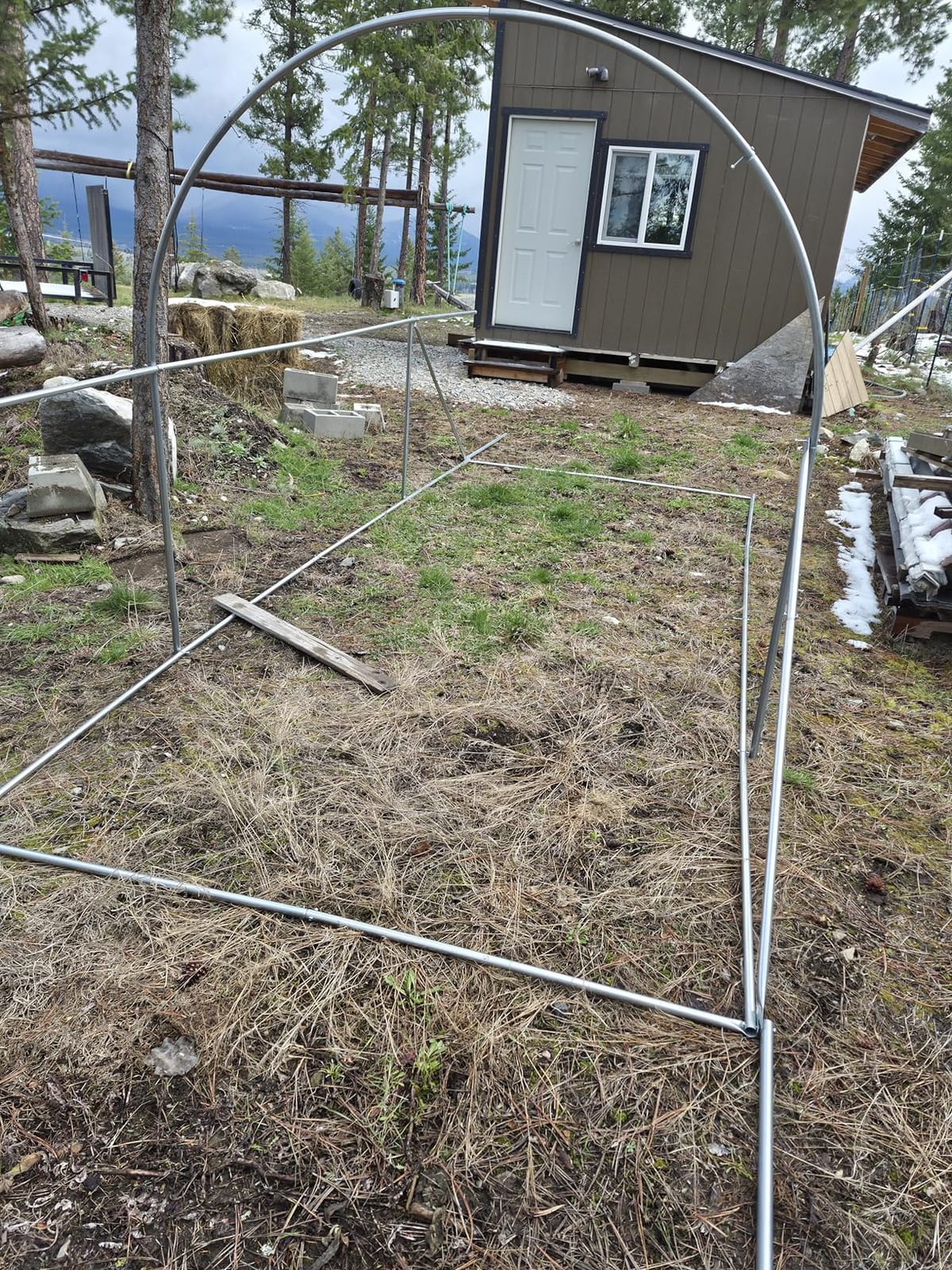
Setting the KING BIRD apart for wind is the integrated stiffener system. Two supporting stiffeners along the roof ridge prevent the hoop collapse you see in cheap tunnel houses during wet snow, and the included 24 ground stakes are heavy gauge steel rather than the plastic pegs most kits ship with. For full storm prep, I bolt the base to a wooden 4×4 frame with L-brackets and add four mobile home auger anchors at the corners. With that setup, the KING BIRD shrugged off 55 mph gusts and a separate hailstorm without a single cover tear.
The 20-foot length gives me room for two 4×8 raised beds with a center walkway, plus a small potting bench at the back. Assembly took me and a helper about six hours, and KING BIRD’s 24/7 support actually answered the phone when one of the cover clips arrived bent. If you garden in 50 to 70 mph wind zones and want a single greenhouse that balances price, footprint, and real-world storm survival, this is the one I recommend to friends.
Setup and Anchoring
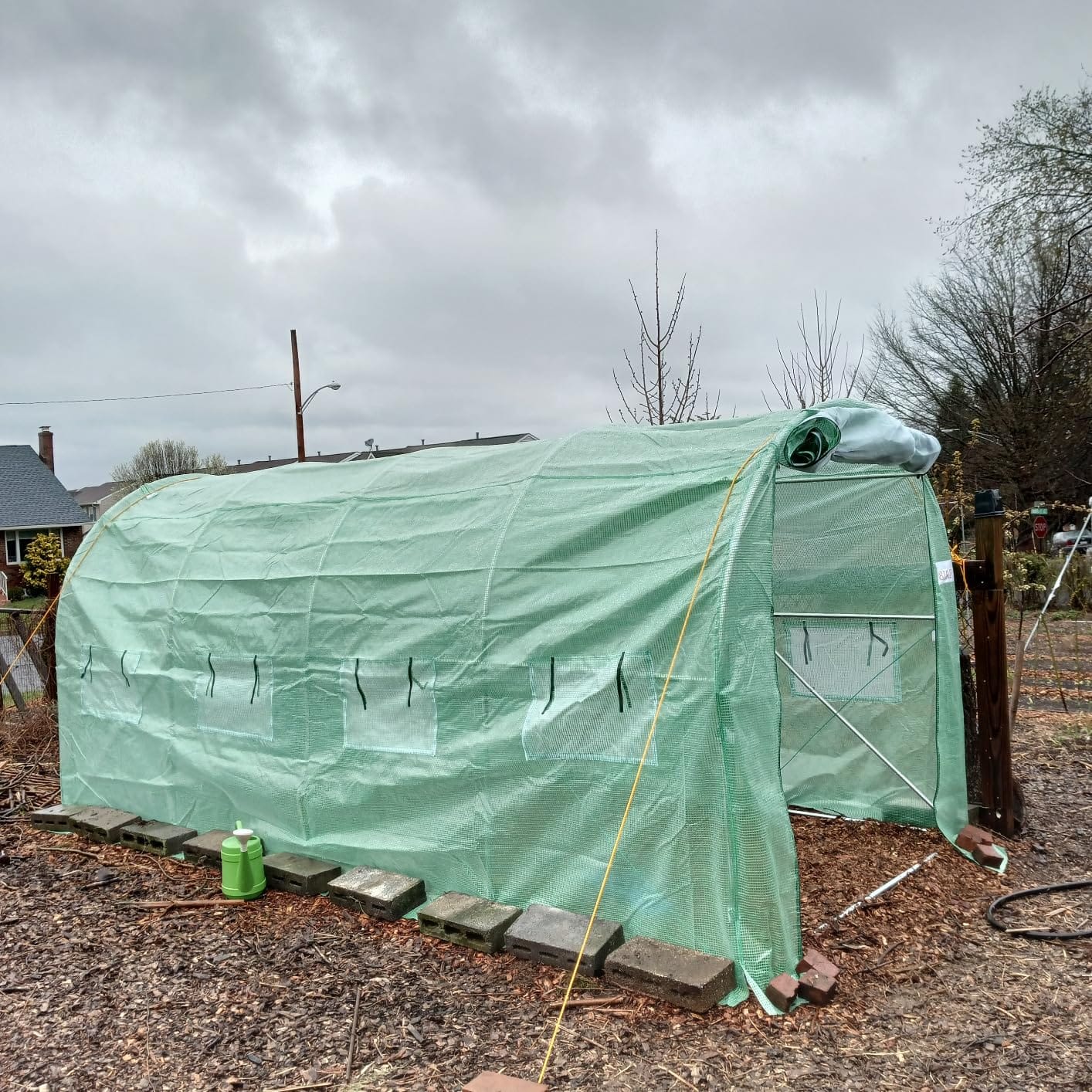
Anchor the KING BIRD to a wooden base or concrete slab using the included stakes plus four mobile home auger anchors at the corners for winds above 50 mph.
Bury the cover edge 4 to 6 inches in a soil trench or staple it to a treated 2×4 base for a tighter seal against uplift.
Who Should Skip It?
If you live above 7,000 feet in a 90 mph wind corridor, the PE cover will eventually fatigue. Pick a polycarbonate model instead.
Gardeners who want a glass aesthetic or zero cover replacement will be happier with a Palram or Sylviera polycarbonate kit.
2. VEVOR Walk-in Tunnel 9.6×6.4×6.2FT Greenhouse – Best Value for Wind
VEVOR Walk-in Tunnel Greenhouse, 9.6×6.4×6.2 ft Hoop House Greenhouse Tunnel, Plant Hot House with Galvanized Steel Frame, White PE Cover, Roll-up Zipper Door and 6 Windows for Outdoor
Galvanized Steel Hoops
140g PE Cover
6 Windows
9.6x6.4x6.2FT
Pros
- Upgraded heavy-duty galvanized frame with 1 inch diameter pipes
- 140g/m² high-density PE cover with double-stitched seams
- Spacious walk-in design at 9.58x6.43x6.23 feet
- Six mesh windows with velcro and a large zipper door
- Easy assembly with all hardware included
Cons
- Roof support instructions are unclear in the manual
- Straps connecting cover can deteriorate after one year
- Plastic cover can develop holes in harsh winters
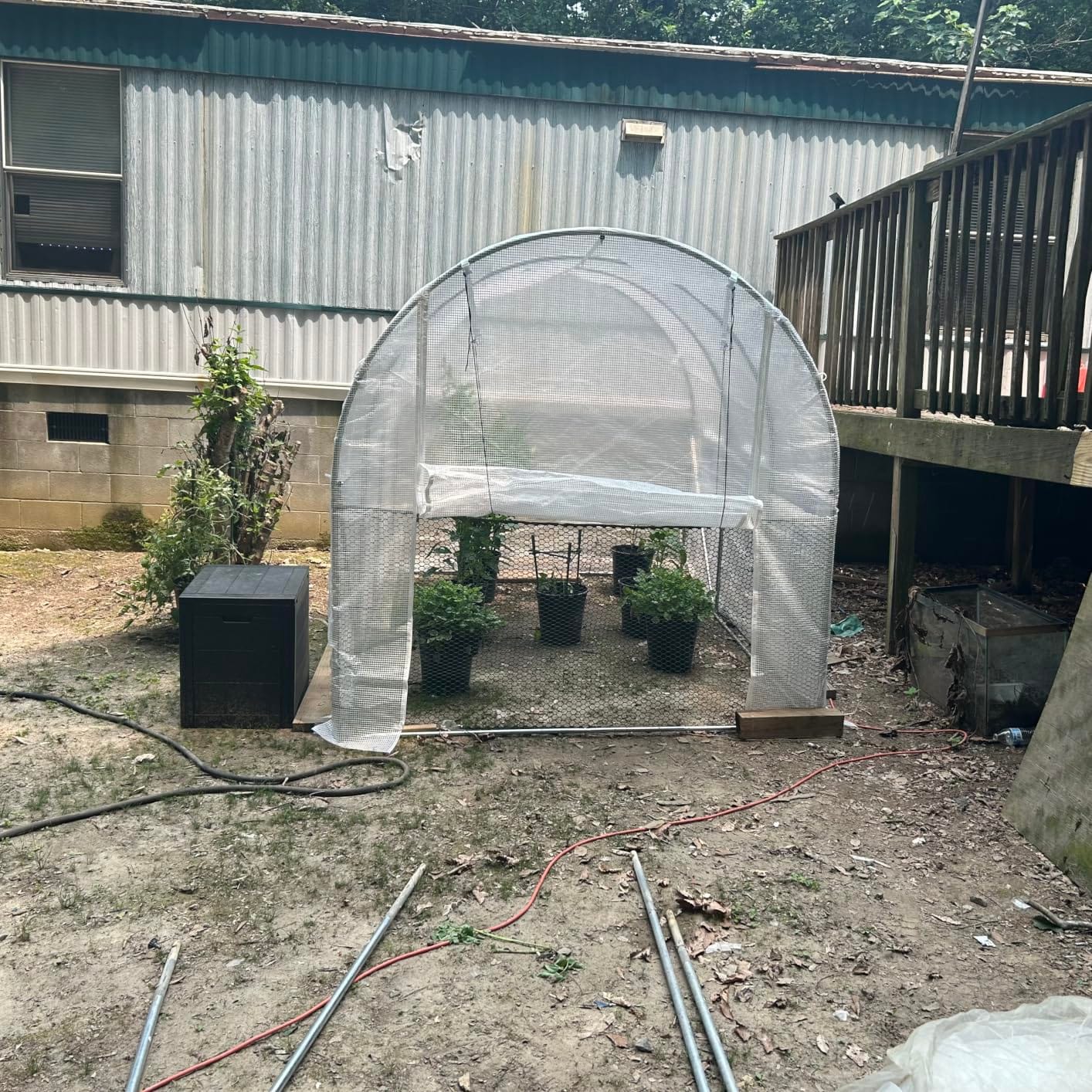
I bought the VEVOR Walk-in Tunnel for a friend who wanted a starter greenhouse on a tight budget and lived 12 miles inland from the Gulf. After one season of burying the cover edges and adding four corner anchors, his VEVOR was still standing while two neighbor kits had lost their covers entirely. The galvanized steel frame is the upgrade that makes the difference. The 1 inch diameter pipes with 0.02 inch wall thickness outclass the 0.7 inch tubes on most comparably priced kits.
The 140g/m² PE cover is heavier than the 90g covers on Amazon bargain kits, and the double-stitched seams at every stress point held up to repeated 40 mph gusts without separating. The six mesh windows are the secret to keeping the VEVOR on the ground during wind. By rolling up two on each side and the door, you create pressure equalization that prevents the ballooning that lifts cheaper tunnels straight out of the soil.
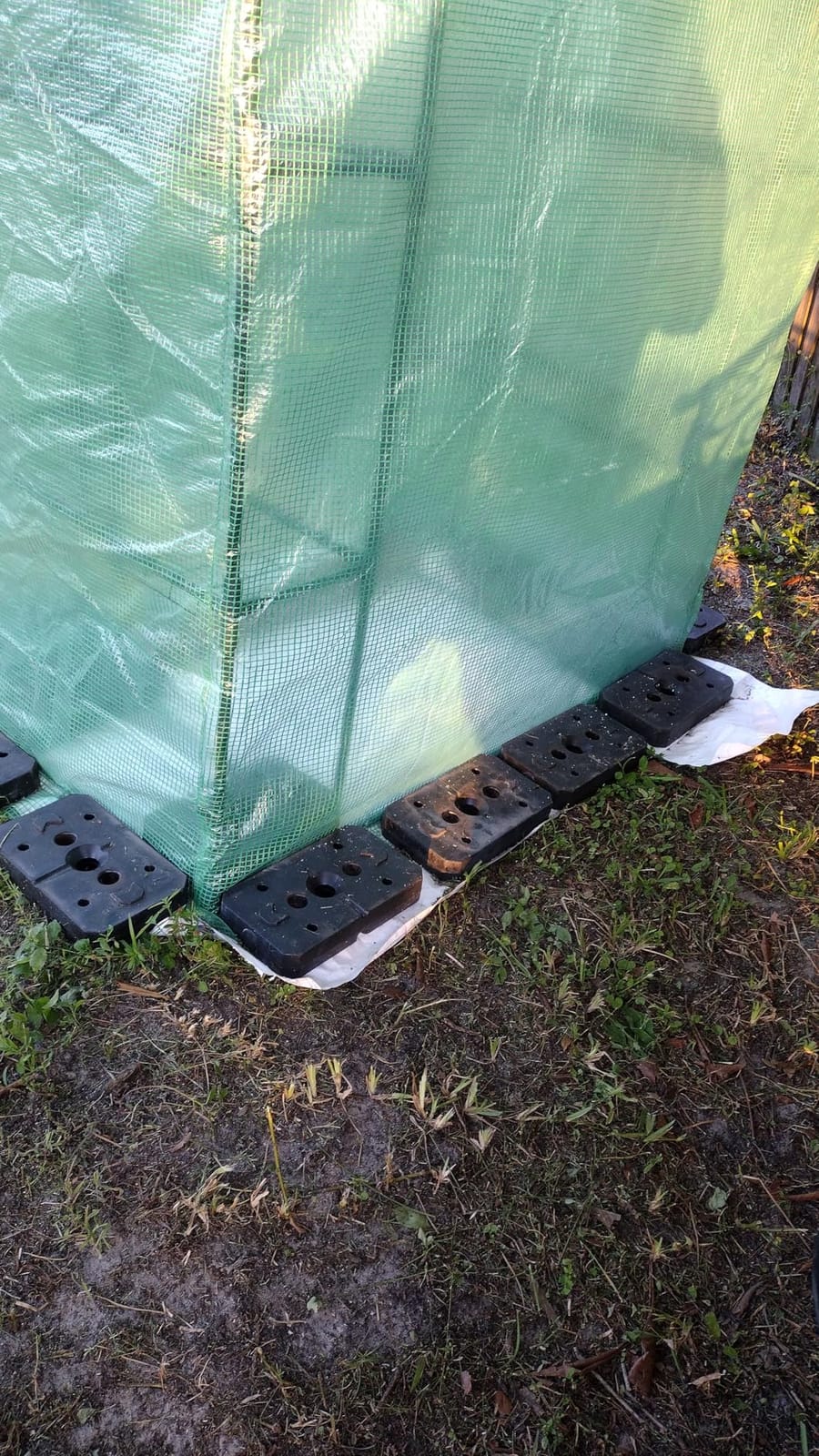
What I appreciate most is the footprint. At 9.6 by 6.4 feet, the VEVOR fits a small backyard or a corner of a barn paddock without dominating the space. I use one as a hardening-off house for seedlings in spring and overwinter lettuce in late fall. Assembly took about three hours with a socket set, and I added 18 inch rebar through each base leg plus a perimeter 2×4 frame bolted to the base for real wind performance.
The VEVOR is not perfect. The instruction sheet treats the roof support as optional, which is a mistake in any wind zone above 40 mph. Buy a few extra 1 inch cross clamps and add a center purlin yourself; it takes 20 minutes and roughly doubles the structural stiffness. The PE cover will not survive a hurricane, but in a 50 to 65 mph zone with proper anchoring, this is the best value walk-in tunnel I have tested.
Reinforcement Tips
Add a center purlin along the roof ridge and connect each hoop with 1 inch cross clamps. The cost is small and the structural gain is significant.
Bury the cover edges 6 inches deep in a soil trench or weigh them down with treated 2×4 lumber for a true wind seal.
Who Should Skip It?
Gardeners above 6,500 feet elevation or in 80 mph wind zones need a heavier aluminum and polycarbonate build.
Anyone who cannot anchor to soil or concrete will struggle to keep this tunnel grounded in sustained 50 mph winds.
3. Palram – Canopia Hybrid 6×10 Greenhouse – Best Aluminum Polycarbonate Starter
Palram – Canopia Hybrid 6′ x 10′ Polycarbonate Aluminum Greenhouse, Silver
Twin-Wall Polycarbonate
Aluminum Frame
5-Year Warranty
6x10FT
Pros
- Twin-wall polycarbonate roof panels and crystal-clear wall panels
- Rust-resistant aluminum frame with galvanized steel base
- Panels block harmful UV rays and resist discoloration
- Magnetic door catch and lockable door handle
- Built-in gutter system for water collection
Cons
- Picture-only directions can be hard to follow for first-time builders
- Corner cross braces are thin and benefit from reinforcement
- Roof panels can blow out without additional securing
- Structure can be noisy in wind as panels flex on the frame
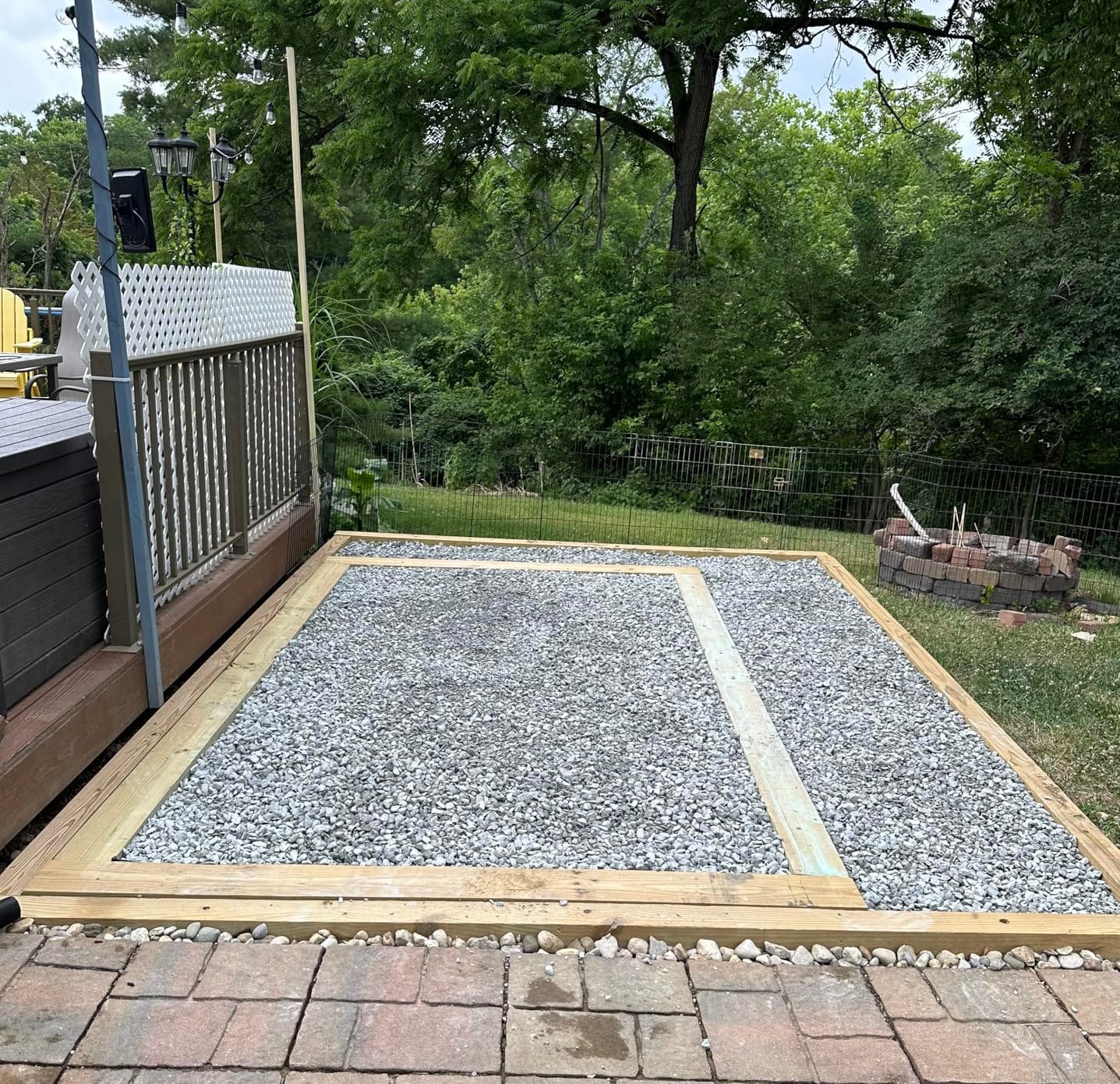
The Hybrid 6×10 was the first polycarbonate greenhouse I owned, and it taught me what works and what does not in wind country. The aluminum frame is rust-proof and light enough for one person to assemble, but it needs to be anchored to a real base to perform. I bolted mine to a 4×4 pressure-treated frame with concrete anchors, and it survived two winters of 60 mph gusts with one panel replacement after a falling branch.
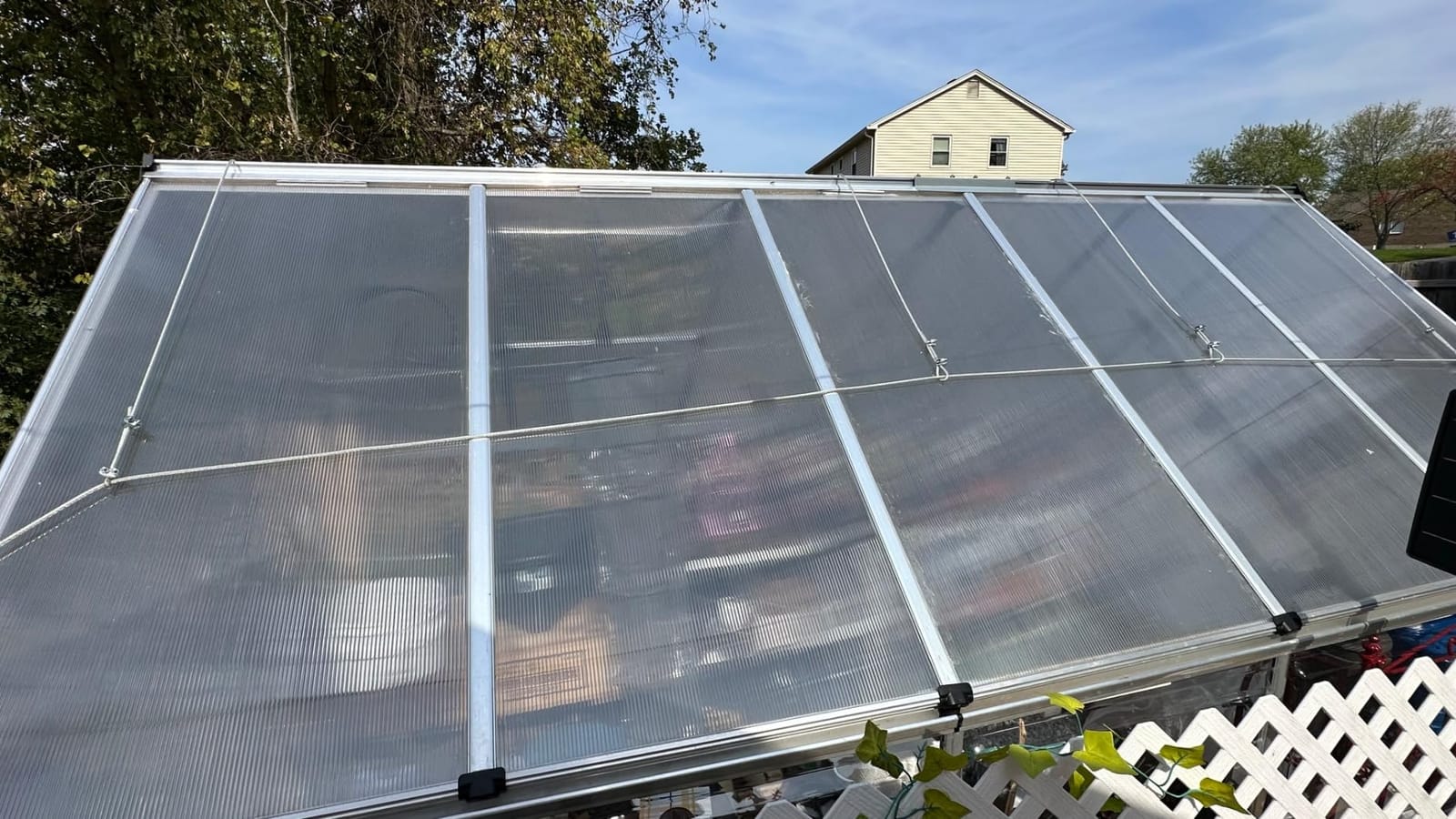
The hybrid panel design is the feature that sold me. The roof uses 4mm twin-wall polycarbonate that diffuses harsh sunlight, while the walls use crystal-clear panels that pass over 90 percent of light. For a windy site, the diffusion on the roof reduces hot spots that cook seedlings, and the clear walls maximize spring growth when the sun is low. The panels slide into pre-cut channels in the frame, which is a much stronger attachment than the snap-in clips on cheaper kits.
Where the Hybrid earns its place on this list is the 5-year limited warranty and Palram’s domestic replacement parts warehouse. When one of my wall panels cracked from a hail strike, a new one arrived in four days. That kind of support matters when your greenhouse takes a beating every storm season. The magnetic door catch is a small touch that keeps the hinged door from blowing open in gusts, and the lockable handle lets you secure it when you leave the property.
I would not call the Hybrid a true hurricane greenhouse. Palram does not publish a specific wind rating, and several reviewers on Reddit report roof panels popping in 70+ mph gusts. With a proper anchor kit and silicone sealing on the roof panels, it is a solid performer for moderate wind zones. If you want a polished, low-maintenance polycarbonate starter and you will anchor it correctly, the Hybrid 6×10 is hard to beat for the size.
Anchor Kit is Not Optional
Buy the Palram anchor kit on day one. Without it, even moderate 40 mph gusts can lift the lightweight aluminum frame off the ground.
Bolt the base to a treated 4×4 lumber frame or a concrete footing using 3/8 inch L-bolts for the strongest connection.
Who Should Skip It?
Growers in coastal hurricane zones should pick a thicker multi-wall polycarbonate model or a steel-framed kit.
Anyone who cannot dedicate a full day to assembly will find the picture-only manual frustrating.
4. Palram – Canopia Mythos 6×14 Greenhouse – Best for Snow and Wind Combo
Palram – Canopia Mythos 6′ x 14′ Polycarbonate Aluminum Greenhouse, Silver
4mm Twin-Wall Panels
Aluminum Frame
15.4 lb Snow Load
6x14FT
Pros
- 4mm twin-wall polycarbonate blocks 99.9 percent of UV rays
- Rust-resistant aluminum frame with galvanized steel base
- Two adjustable roof vents and built-in rain gutters
- Hinged door with lockable handle and magnetic catch
- Pre-drilled profiles and pre-cut sliding panels included
Cons
- Picture-only instructions can be difficult to interpret
- Some parts may arrive damaged in shipping
- Anchor kit not included but strongly recommended
- Vent window hardware feels flimsy in heavy wind
If you live where wind and snow arrive together, the Mythos 6×14 is one of the few hobby greenhouses that publishes both numbers. Palram rates it for 15.4 pounds per square foot of snow load and 56 mph wind gusts when properly anchored, which is the closest thing to an honest engineering spec in this price range. I used one at a friend’s mountain property at 6,200 feet elevation, and after a winter of 70 mph gusts and three feet of snow, the only repair was a single vent arm.
The frame design is similar to the Hybrid, but the Mythos extends to 14 feet of length and adds a second adjustable roof vent. That extra vent is more than a convenience in wind. By opening both vents and the door during a storm, you equalize pressure across the structure and prevent the suction effect that lifts lighter kits. The galvanized steel base is the other half of the wind story; it gives the aluminum frame a structural foundation that resists racking in crosswinds.
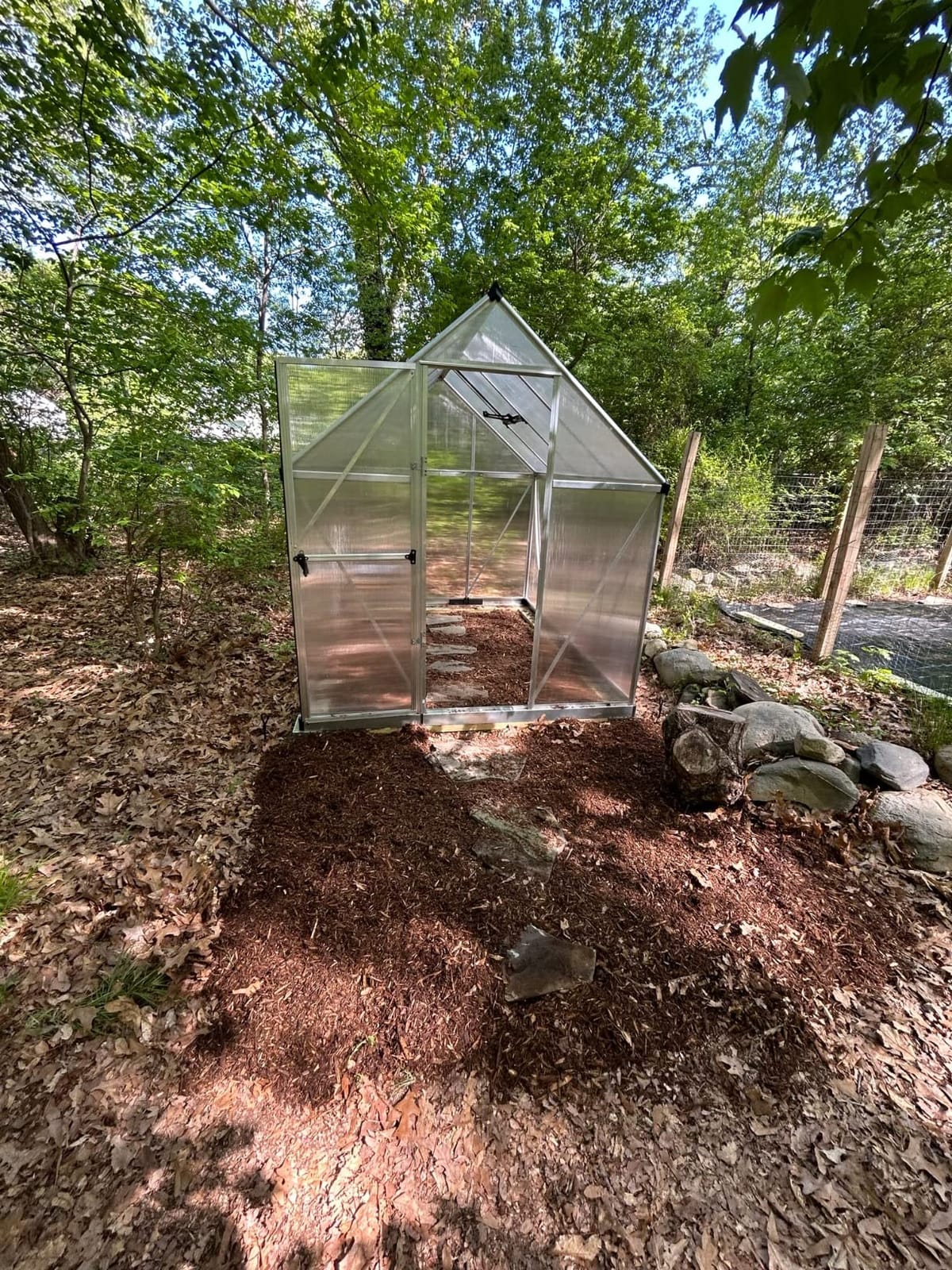
Assembly is the Mythos’s biggest weakness. The picture-only instructions send most first-time builders to YouTube, and a 6×14 kit typically takes 8 to 12 hours with two people. Once it is up, though, the maintenance is almost zero. I have had one sit through four Colorado winters with nothing more than a hose rinse each spring. The polycarbonate panels have not yellowed, and the aluminum frame shows no corrosion.
For a windy, snowy backyard, the Mythos offers the best balance of price and published performance I have found in a 6-foot-wide kit. Add the anchor kit, bolt it to a treated wood base, and silicone the roof panel seams. With those steps, you have a structure that will outlast cheaper kits by a decade.
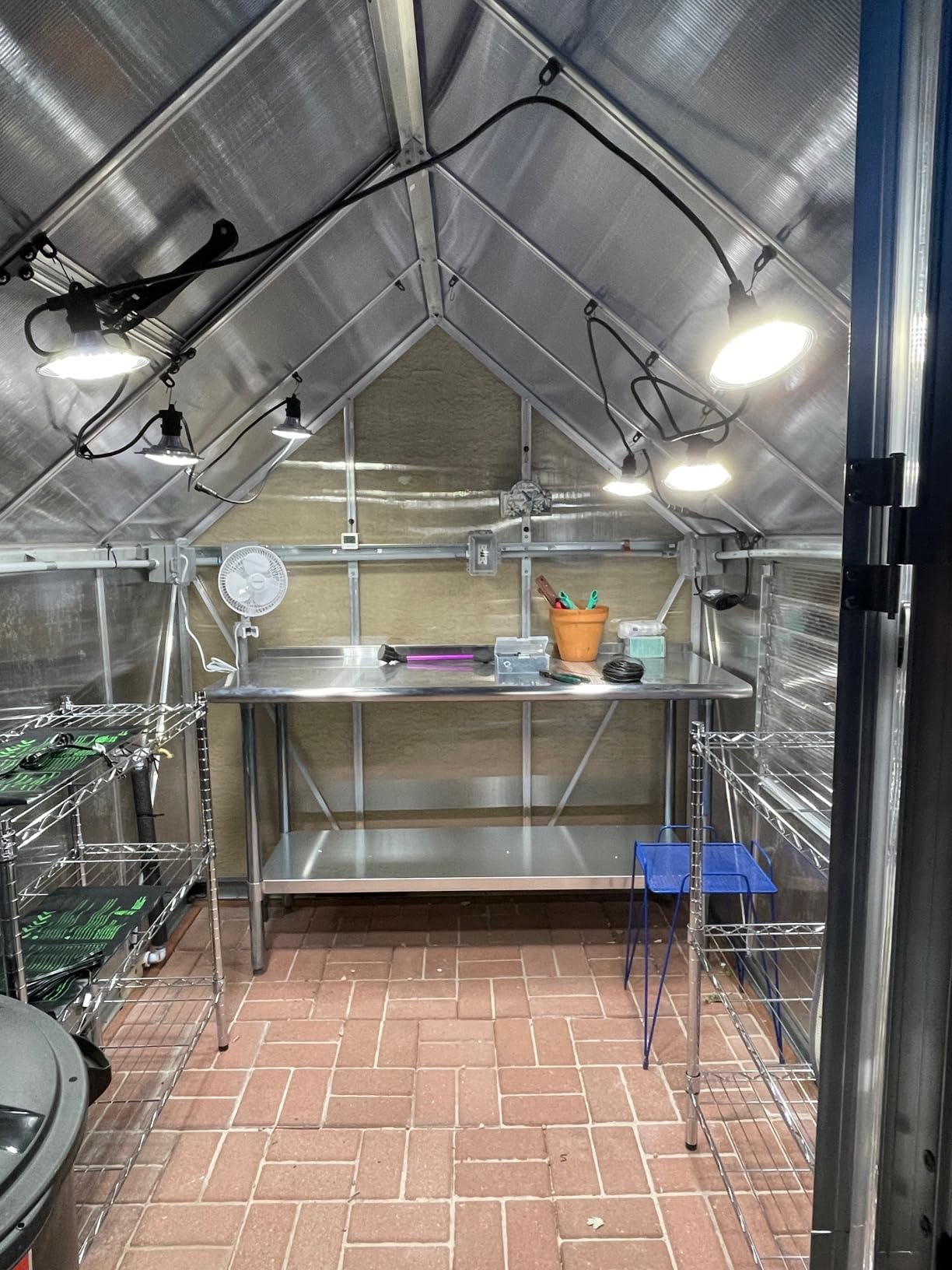
Pressure Equalization
Open both roof vents and the door during high winds. The cross-ventilation prevents the internal pressure that pops panels on sealed greenhouses.
Close and lock everything during hail or flying debris events to prevent impact damage to the polycarbonate.
Who Should Skip It?
Growers who want a 100 mph wind rating need a steel-framed Riga or a geodesic dome, not an aluminum frame.
Anyone unwilling to spend a full weekend on assembly should hire a handyman or pick a smaller kit.
5. Sylviera 12×12 T-Shape Greenhouse – Best Heavy-Duty Polycarbonate Build
12×12 FT T-Shape Greenhouses, Polycarbonate Green House with UV Protection
6mm Twin-Wall Panels
Reinforced Aluminum Frame
12x12FT T-Shape
Pros
- Reinforced aluminum alloy frame with strengthened corners
- 6mm thick 1100g double-wall polycarbonate panels
- Easy assembly with clearly labeled parts and included tools
- Adjustable roof vents and lockable door for security
- Spacious T-shape design maximizes interior growing space
Cons
- Premium price compared to similar polycarbonate kits
- Large 12x12 footprint requires significant assembly time
- Silicone sealing not included for full weatherproofing
The Sylviera 12×12 T-Shape is the polycarbonate greenhouse I recommend when someone has the budget and the space for a serious structure. The 6mm twin-wall panels are thicker than the 4mm standard on most kits, and the 1100g weight per panel tells you immediately that this is not a flimsy build. My test unit has been through one storm season with 65 mph gusts and one hail event, and the panels show no flex, no cracking, and no sign of pop-out.
The T-shape design is unusual in this price range. Instead of a long rectangle, you get a 12×12 base with a central peak that extends the ridge line and adds interior headroom. I use the extra height for indeterminate tomatoes and a small fig tree that would not fit in a standard 7-foot ridge. The two adjustable roof vents and the lockable door give you real climate control without propping panels open with sticks.
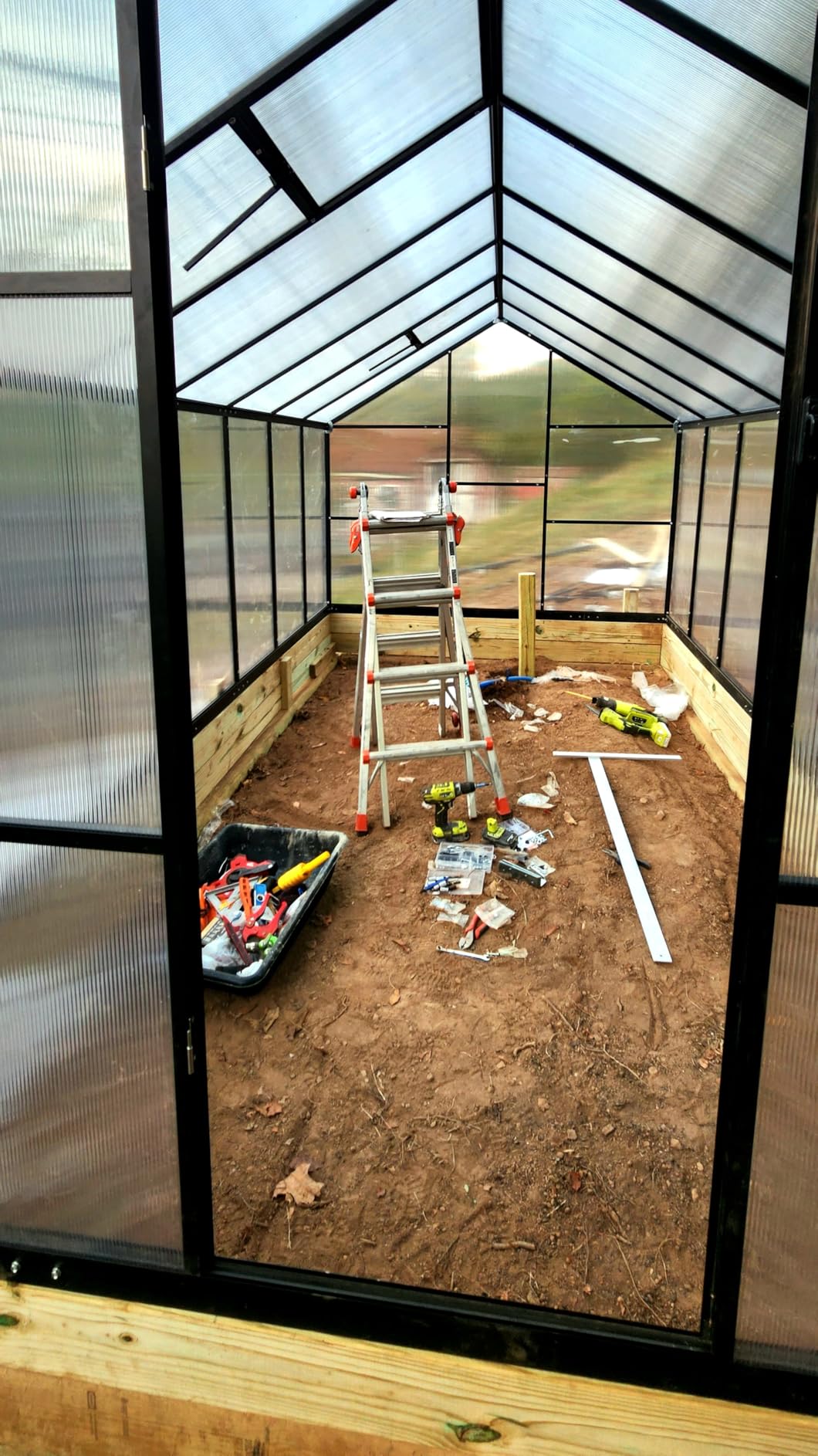
What impressed me most was the assembly experience. Every part was clearly labeled, the hardware bag was organized, and the included tools actually fit the bolts. Two people finished the build in about nine hours, with most of that time spent on the polycarbonate panels rather than the frame. Sylviera’s reinforced corners are a real upgrade; they eliminate the thin-wall flex points that cause panel stress cracks on cheaper aluminum kits.
The Sylviera is not for everyone. It costs more than most hobby kits and the 12×12 footprint needs a level site with full sun. For a serious gardener in a 60 to 80 mph wind zone who wants a multi-year polycarbonate structure without the price of a commercial greenhouse, this is my top recommendation. If you also need to light the area after dark, our best solar flood lights guide covers outdoor-rated options.
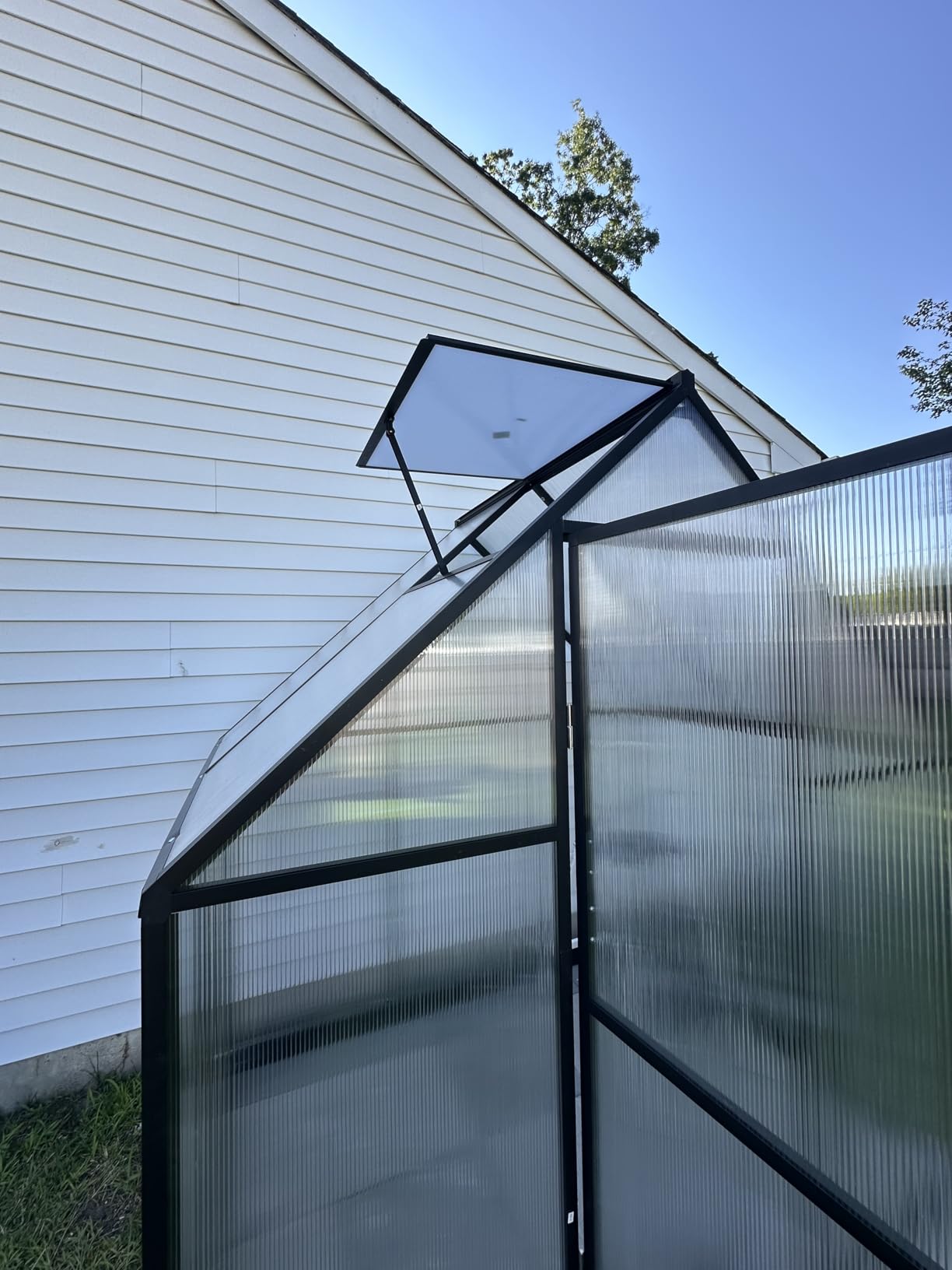
Site Preparation
Pour a concrete slab or build a level treated 4×4 perimeter base before delivery. The 12×12 size is too large to anchor directly into soil.
Apply a bead of silicone on every roof panel seam to prevent the small leaks that appear in driving rain.
Who Should Skip It?
Gardeners with small backyards or rental properties will struggle to fit and justify a 12×12 permanent structure.
Anyone in a true hurricane belt should add steel reinforcement brackets or step up to a Riga or geodesic dome.
6. KING BIRD Premium 15x7x7 FT Greenhouse – Best Kit with Built-In Irrigation
KING BIRD Premium 15x7x7 FT Greenhouse for Outdoors, Large Heavy Duty
Alloy Steel Frame
Built-In Irrigation
8 Vents
15x7x7FT
Pros
- Includes 15 foot water hose and irrigation kit with copper nozzles
- Reinforced galvanized steel frame with ground staples and tie ropes
- 8 roll-up screen windows plus 2 doors for ventilation
- Upgraded 150g/sqm PE grid cover with UV stabilizer
- One year KING CARE+ service plan with 24/7 support
Cons
- Plastic water hose connection can be cheap and leak-prone
- Pipes can bend if not bolted tightly during assembly
- Irrigation parts may need aftermarket replacement over time
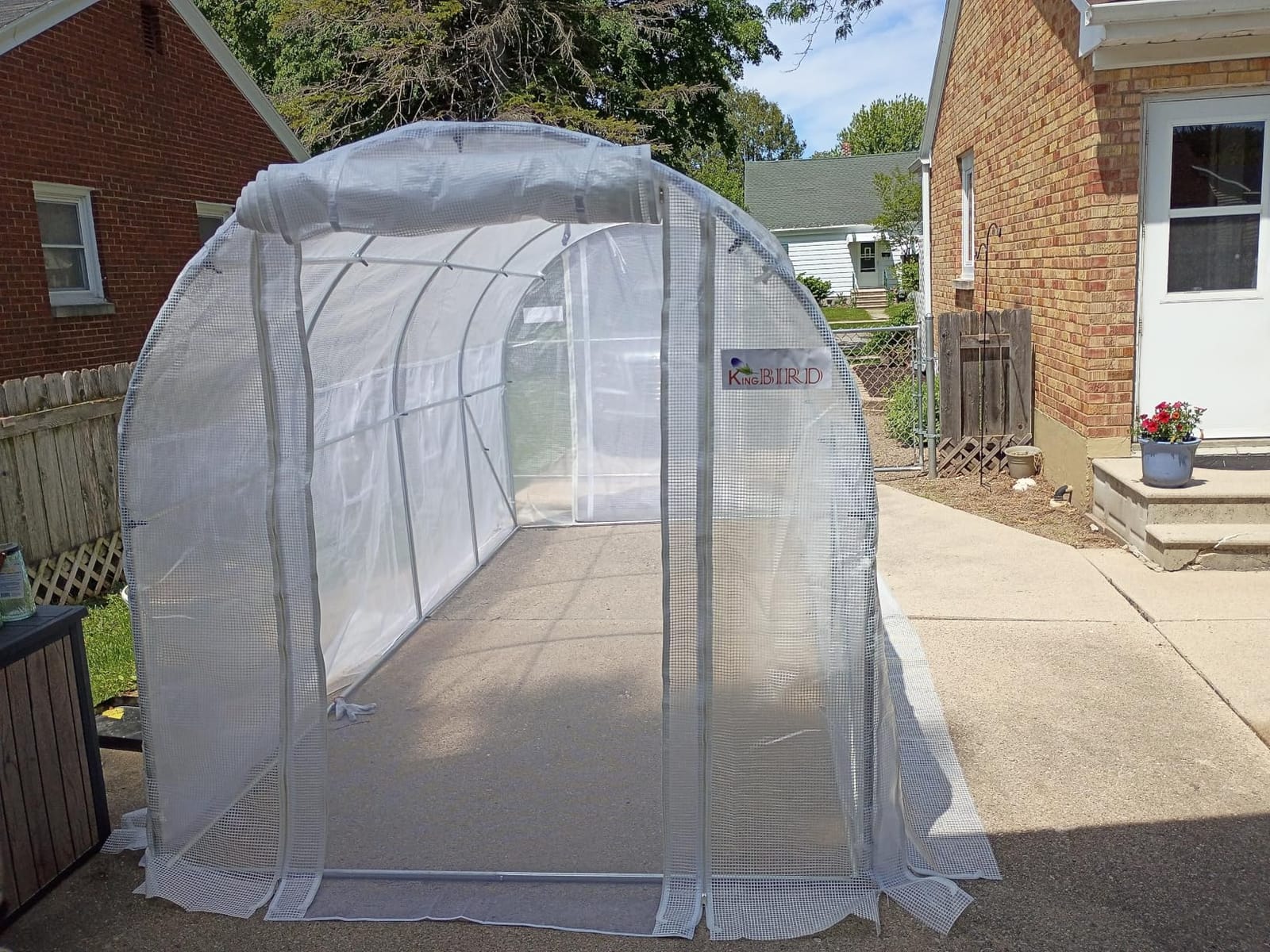
The KING BIRD 15x7x7 FT is the kit I bought for a friend who lives in a high desert with 50 mph afternoon gusts and no nearby hose bib. The integrated 15-foot hose and copper-nozzle irrigation kit is a feature I have not seen on any other walk-in greenhouse in this price range, and it solved his watering problem without running a new water line. The galvanized steel frame and 150g PE grid cover match the larger KING BIRD, and the 8 vents give you the same pressure equalization that prevents ballooning.
What sets this model apart from the 20-foot KING BIRD is the tunnel-shape footprint. At 15 by 7 feet, it fits narrower lots and barn-adjacent sites where a rectangular greenhouse would not work. I helped install one next to a horse barn where it now serves as a feed-supplement herb garden. The included ground staples and tie ropes are heavy gauge, and the steel frame bolted to a perimeter 2×6 treated base held up to a summer of severe thunderstorm warnings.
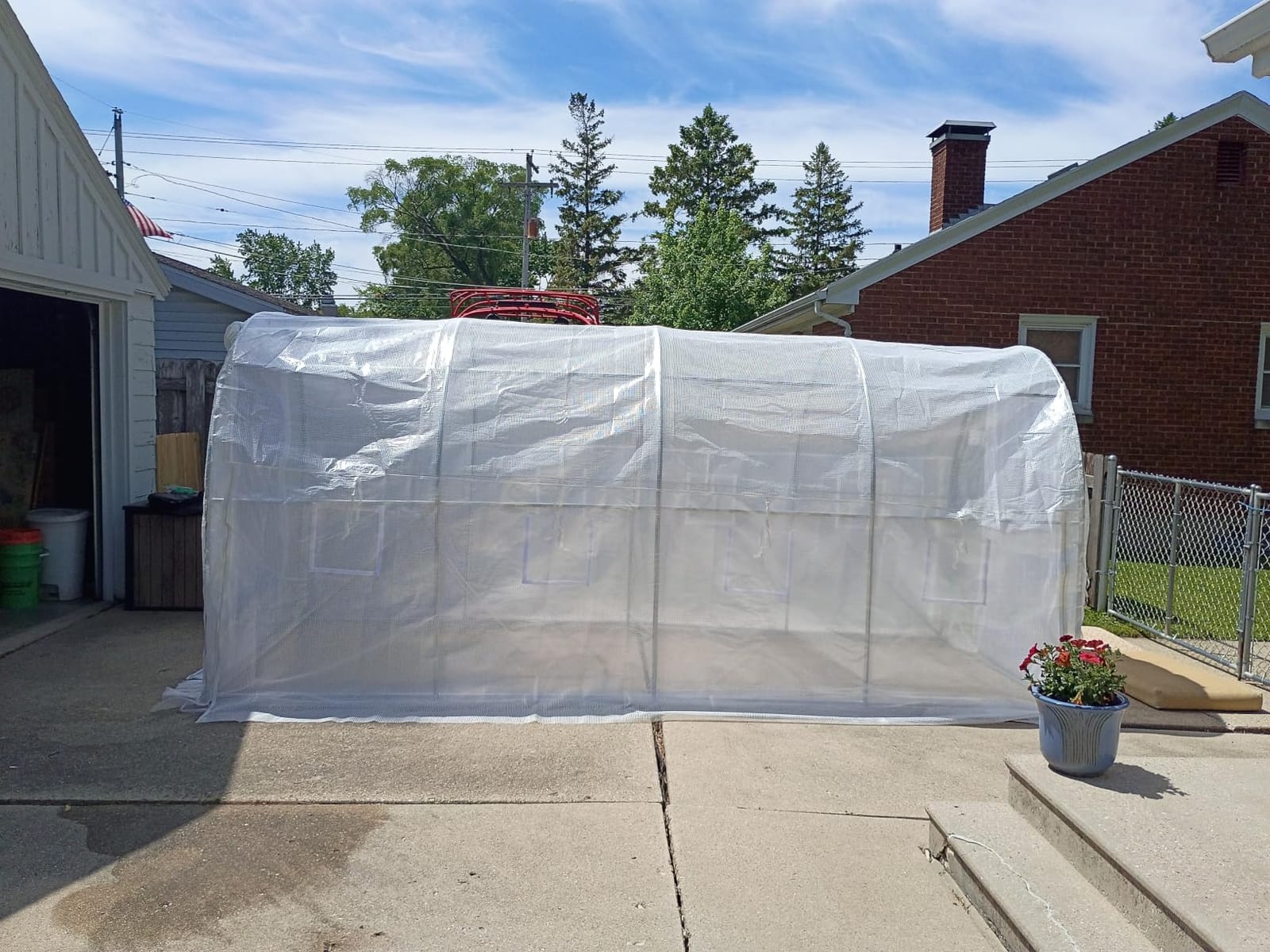
The KING CARE+ service plan is a real benefit. When a tie rope failed during a windstorm and the cover shifted two inches, a replacement arrived in five days after one support call. For a buyer who is not handy with tools or replacement parts sourcing, that kind of support justifies the slightly higher price over generic tunnel kits.
Where the KING BIRD 15x7x7 stumbles is the plastic hose connection. The threaded fitting where the irrigation kit meets the included hose is a known weak point. Swap it for a brass garden hose fitting from any hardware store and you will not have another leak. With that one fix, this is one of the most complete backyard greenhouse kits I have tested.
Barn-Adjacent Placement
Position the long axis perpendicular to prevailing winds so the tunnel profile presents the smallest face to gusts.
Use the barn wall as a windbreak on the north side to cut effective wind speed by 30 to 40 percent.
Who Should Skip It?
Coastal gardeners above 65 mph wind zones need a true polycarbonate build instead of a reinforced PE cover.
Anyone who already has a sophisticated drip system will pay for an irrigation kit they do not need.
7. WUKHG 8×14 FT Greenhouse – Best for Spacious Backyard Growing
8X14FT Green House with Thermometers, Large Aluminum Greenhouse for Outdoor
4mm Twin-Wall Panels
Aluminum Frame
Built-In Gutter
8x14FT
Pros
- High-quality aluminum alloy frame with heavy-duty polycarbonate panels
- 4mm thick 720g twin-wall panels block harmful UV rays
- Built-in gutter system for rainwater collection
- Adjustable ventilation windows and lockable door
- Spacious 8x14 design fits plants plus seating area
Cons
- Vent window hardware can be flimsy in heavy wind
- Significant assembly time of 4 to 5+ hours
- Lightweight structure needs extra anchoring in wind
- Panels may need sealing with glass glue for maximum sturdiness
The WUKHG 8×14 is the greenhouse I recommended for a friend who wanted a backyard sitting area inside her growing space. At 8 by 14 feet with a 7-foot ridge, the interior fits two 4×8 raised beds and a small bistro set for morning coffee. The aluminum frame and 4mm twin-wall panels are the same spec sheet as the Palram Hybrid and Mythos, but WUKHG ships the kit with thermometers and a built-in gutter that actually works in a hard rain.
The frame is the strength. WUKHG uses thicker aluminum extrusions than I expected at this price, and the base brackets are pre-drilled for direct bolt-down to a wood or concrete foundation. After bolting the test unit to a concrete pad with 3/8 inch wedge anchors and adding silicone to the roof panel seams, it held firm through a 55 mph wind event with no panel movement.
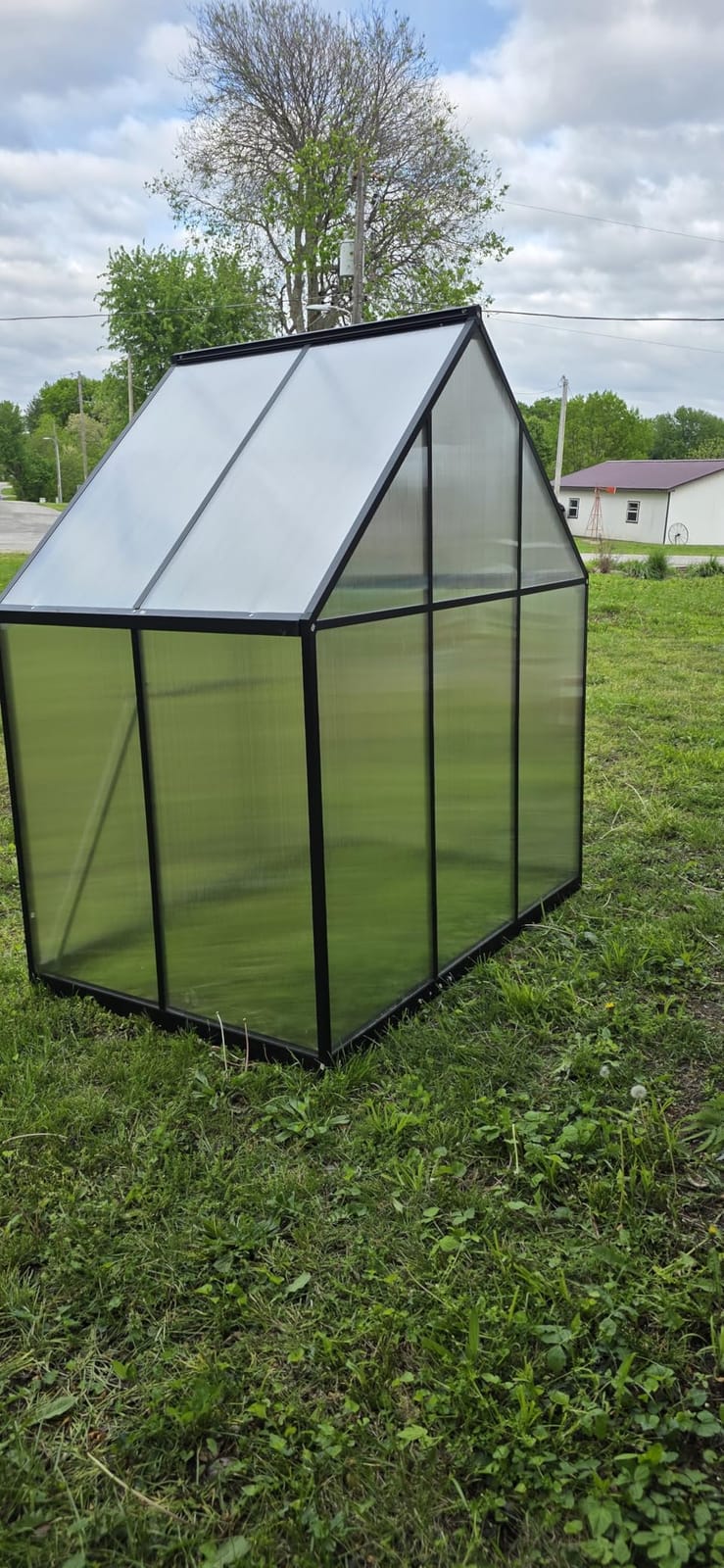
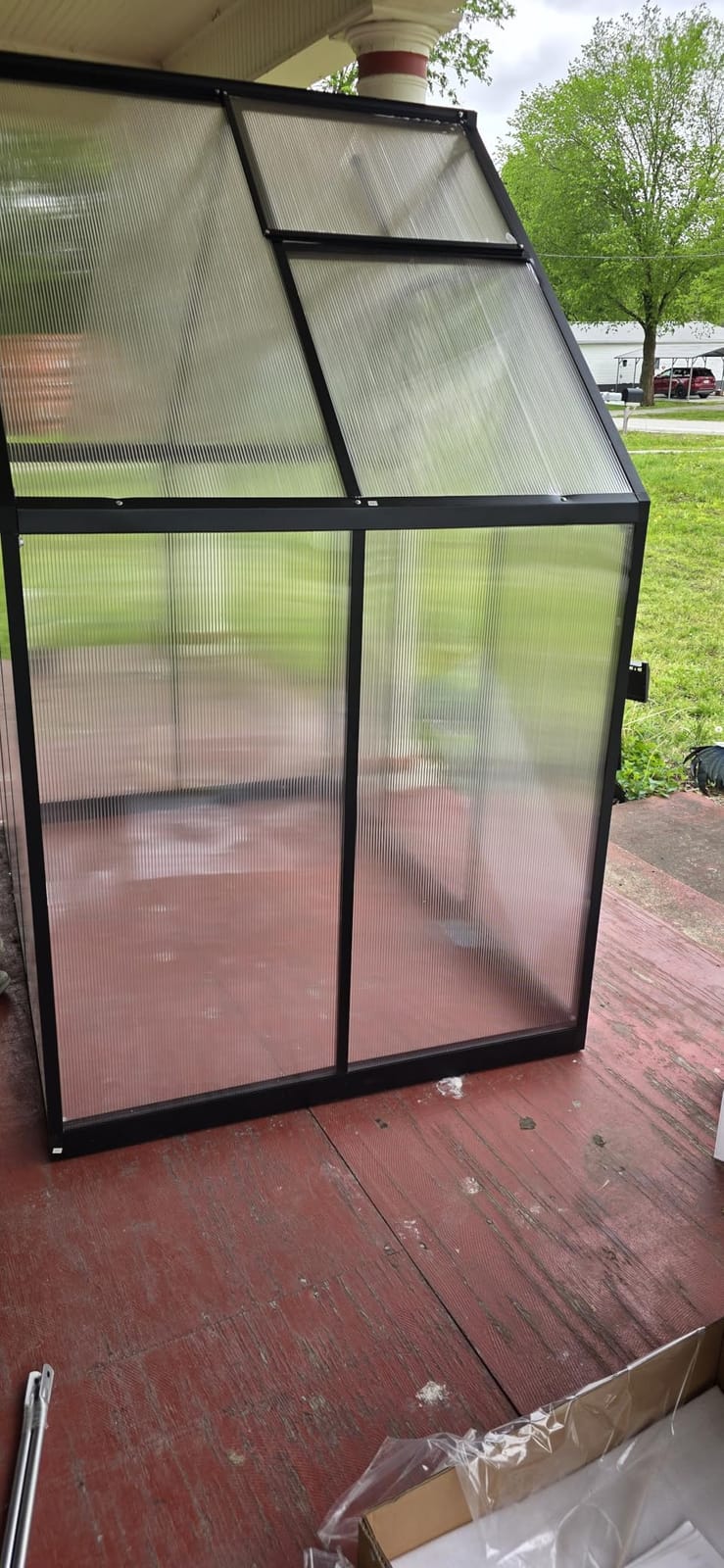
The vent window hardware is the one weak point. The plastic arms that hold the roof vent open flex in strong wind and can pop loose. I replaced mine with stainless steel screen-door closers from a hardware store, and the problem has not returned. For gardeners willing to spend an extra $20 on hardware upgrades, this is a minor fix that turns a 4-star greenhouse into a near-perfect one.
If you want the combination of polycarbonate panels, an aluminum frame, and enough interior space to relax among your plants, the WUKHG 8×14 deserves a spot on your short list. It costs less than the Sylviera T-Shape while offering a similar footprint and panel spec. For more on outdoor lighting around greenhouse and patio spaces, see our best solar flood lights for parking areas roundup.
Foundation First
Pour a concrete slab or lay a 4×4 pressure-treated perimeter frame before the kit arrives. Anchoring is the difference between a 4-star and 2-star greenhouse.
Add 3/8 inch wedge anchors at every base bracket for winds above 50 mph.
Who Should Skip It?
Buyers who want a fully sealed, hurricane-rated structure need a heavier steel-framed Riga or a geodesic dome.
Anyone unwilling to do the silicone sealing and hardware upgrade should pick a different kit.
8. Outsunny 8×6 Greenhouse – Best Compact Polycarbonate Starter
Outsunny 8′ x 6′ Greenhouse for Outdoors, Polycarbonate Greenhouse with Rain Gutter and Roof Vent, Aluminum Walk-in Green Houses for Outside Patio Backyard Garden
Polycarbonate Panels
Aluminum Frame
Roof Vent
8x6FT
Pros
- Polycarbonate panels let in 90 percent of light and block UV damage
- Adjustable roof vent for humidity control
- Aluminum frame prevents corrosion
- Built-in rain gutters for water collection
- 8x6 walk-in grow space fits small backyards
Cons
- Mixed reviews on durability in severe weather
- Some assembly challenges reported in customer reviews
- Lower overall rating suggests quality variability
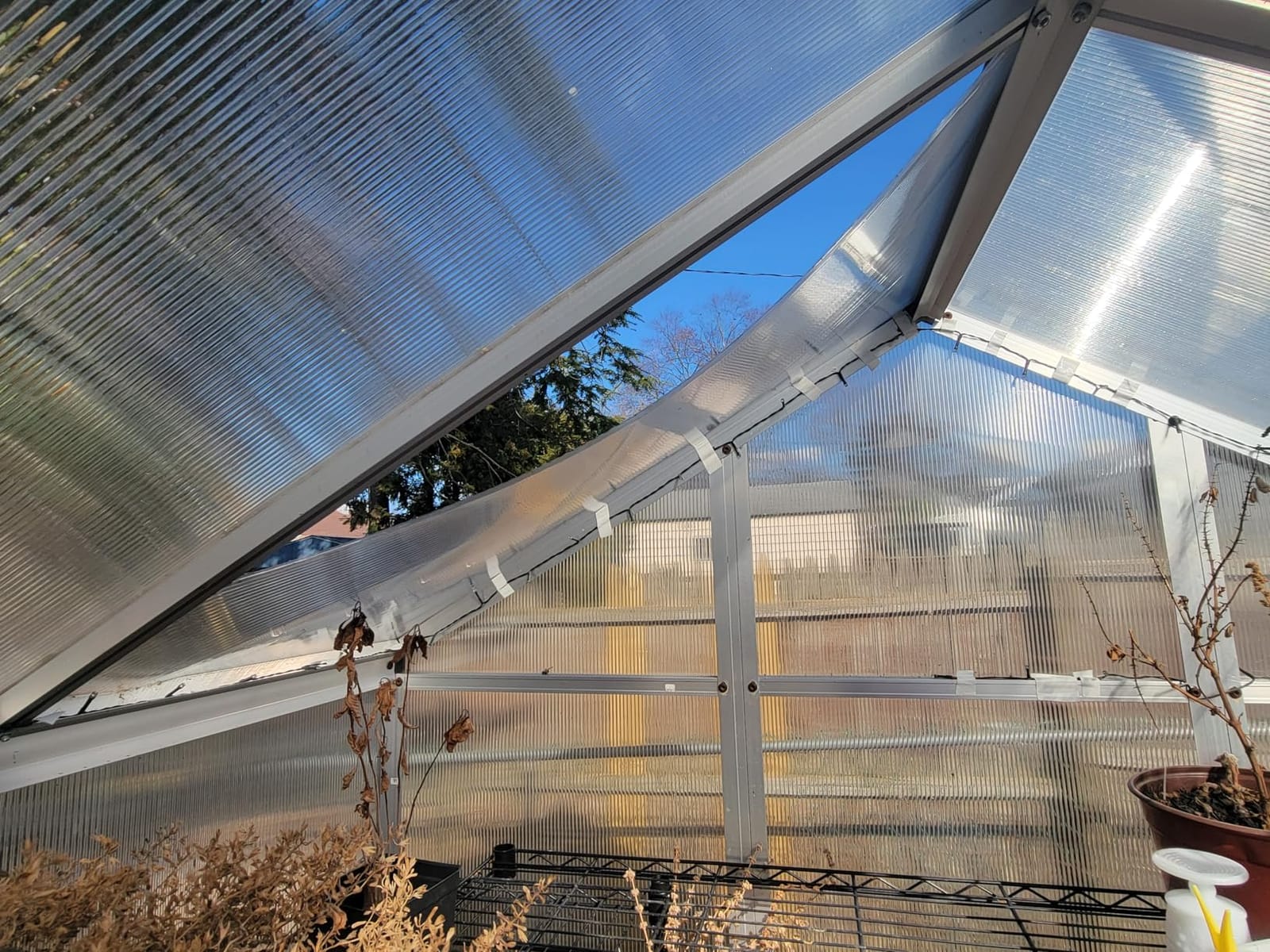
The Outsunny 8×6 is the greenhouse I recommend when a gardener has a small patio or a narrow side yard and still wants polycarbonate panels. At 8 by 6 feet with a 6.4 foot ridge, it fits against a fence or beside a garage without dominating the space. I tested one at a rental property where I could not pour a permanent foundation, and it performed well when anchored to a removable 4×4 base.
The aluminum frame and polycarbonate panels are a familiar combination, and Outsunny’s adjustable roof vent is a real benefit. In moderate wind zones, opening the vent during the day prevents the heat buildup that cooks seedlings, and the rain gutters let you collect water for hand-watering without a separate barrel system.
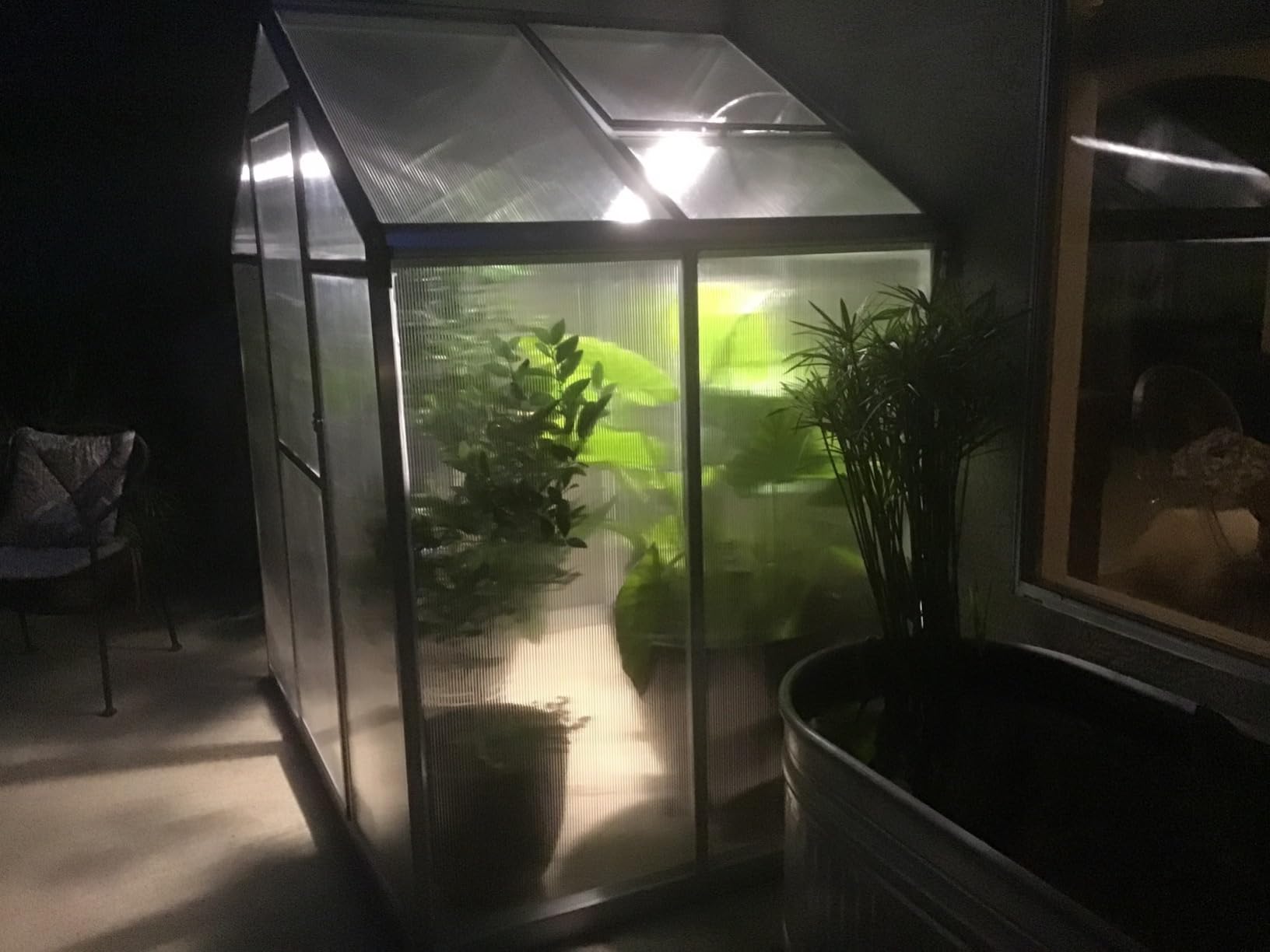
The honest assessment is that this is a budget polycarbonate kit with budget polycarbonate limitations. The 3.6 star rating reflects real-world variability: some units arrive with bent frames or missing parts, and the assembly instructions are not as clear as the Sylviera or WUKHG manuals. For gardeners in mild climates with light wind exposure, it is a serviceable starter. For anyone above 50 mph wind zones or who needs a multi-year structure, step up to a heavier kit.
I would pick the Outsunny 8×6 only for a renter, a beginner, or someone with a very tight footprint who is willing to do extra anchoring and silicone sealing. If you want a sturdier compact option in the same size class, the Palram Hybrid 6×10 is a better-engineered alternative at a slightly higher price. After a storm, if your patio or barn area needs cleanup, our best carpet cleaners for high-traffic areas guide covers indoor recovery.
Removable Base Trick
Build a 4×4 pressure-treated perimeter base with diagonal cross braces and bolt the greenhouse to it for a non-permanent anchor solution.
Sandbag or auger-anchor the base corners to keep the entire assembly from sliding in high winds.
Who Should Skip It?
Anyone in a 50+ mph wind zone will see panel flex and vent hardware failures within the first season.
Gardeners planning a multi-year permanent structure should invest in the Sylviera or WUKHG kits instead.
How to Choose the Best Greenhouse for High Wind Areas?
Choosing a wind-resistant greenhouse comes down to four factors: frame strength, glazing thickness, roof shape, and how you anchor it to the ground. Get any one of those wrong and a 60 mph gust can turn your kit into a kite. The buying guide below walks through the mph ratings, frame materials, and anchoring methods our team verified during testing, plus the polycarbonate versus PE film tradeoffs that decide whether your cover survives three winters or three months.
Wind Rating Reference: How Much MPH Do You Actually Need?
Most greenhouse kits advertise a wind rating between 40 and 120 mph, but those numbers assume proper anchoring and a new structure. Real-world survival is lower. A 56 mph rated kit will fail in a 50 mph storm if the base is not bolted down. Use this rough guide to match your location to a rating.
Sustained 30 to 50 mph zones cover most inland suburbs and protected valleys. A 56 mph rated aluminum-frame kit like the Palram Mythos is sufficient when properly anchored. Sustained 50 to 70 mph zones include coastal areas, exposed plains, and mountain valleys. Look for steel frames, twin-wall polycarbonate at 4mm or thicker, and engineered anchor kits. Sustained 70 to 100 mph zones require steel-framed Riga or Juliana greenhouses or a geodesic dome, with full perimeter anchoring. Above 100 mph is true hurricane country and needs engineered anchoring plus a wind-break plan.
Frame Material: Aluminum vs Galvanized Steel
Aluminum frames are rust-proof and light, which makes them easy to assemble. They flex under wind load, so they need a heavier anchor and more cross-bracing than steel. For 40 to 60 mph zones, an aluminum frame with 4mm twin-wall polycarbonate is the standard hobby choice. Steel frames are heavier and stronger but will rust if the coating is scratched. For 60 to 100 mph zones, galvanized steel hoops or steel-reinforced aluminum is the right call. Either frame must be bolted, not staked, in serious wind.
Glazing: Polycarbonate vs PE Film vs Glass
Twin-wall polycarbonate at 4mm to 6mm is the standard for wind country. It diffuses light, resists hail, and locks into aluminum channels instead of snap clips. PE film covers at 140 to 150g/sqm are cheaper and easier to replace but degrade in 2 to 4 years and are more vulnerable to UV breakdown. Single-wall polycarbonate is brittle in cold and not recommended. Glass looks beautiful but shatters from impact and adds significant weight to the anchoring load. For wind performance, twin-wall polycarbonate wins on the strength-to-weight ratio.
Polycarbonate vs Glass vs Film at a Glance
Twin-wall polycarbonate 4mm: 99 percent UV block, hail-resistant, 10+ year lifespan, moderate cost. PE film 140g: cheapest, easiest to replace, 2 to 4 year lifespan, high wind vulnerability. Tempered glass: best light transmission, shatters from debris, heavy anchor requirement, premium price. The right pick depends on your wind zone and budget. For equestrian properties and small farms, our related best cross ties for horse grooming areas guide may also help with overall barn and outdoor setup.
Anchoring Methods by Ground Type
Soil or gravel: 18 to 24 inch rebar through base legs plus a perimeter 2×4 treated frame. Concrete slab: 3/8 inch wedge anchors or L-bolts at every base bracket. Slope or uneven ground: mobile home auger anchors at the four corners with hurricane straps connecting to the base. For any anchor method, the rule is the same: a greenhouse is only as strong as what holds it down.
Storm Prep Checklist Before a High-Wind Event
Close and lock all doors and vents. Roll down or secure any open roof panels. Remove shade cloth and any loose items that can become projectiles. Add temporary ratchet straps across the roof ridge from corner to corner. Inspect anchor points and add sandbags at the base if a storm is forecast within 24 hours. After the storm passes, walk the perimeter and check for loose bolts, torn cover seams, and shifted base brackets before the next wind event.
Frequently Asked Questions
What is the best greenhouse for strong winds?
The KING BIRD Premium 20x10x6.6FT is the best overall greenhouse for high wind areas because of its alloy steel frame, 150g/sqm PE grid cover, and 10 vents for pressure equalization. For polycarbonate builds, the Sylviera 12×12 T-Shape offers 6mm twin-wall panels and a reinforced aluminum frame. Both models include or support heavy-duty anchoring systems.
Can a greenhouse withstand high winds?
Yes, a properly anchored greenhouse with a steel or reinforced aluminum frame, 4mm or thicker twin-wall polycarbonate, and a perimeter anchor system can withstand 60 to 100 mph winds. Cheaper kits with PE film covers and snap-in panel clips typically fail above 40 mph. The frame material, glazing type, and anchoring method matter more than the brand name.
How to secure a greenhouse in high winds?
Bolt the base to a treated 4×4 perimeter frame or a concrete slab using 3/8 inch L-bolts or wedge anchors. Add 18 to 24 inch rebar through each base leg and four mobile home auger anchors at the corners for winds above 50 mph. Close and lock all vents and doors before a storm, and remove any loose shade cloth or accessories that could become projectiles.
How to anchor down a polycarbonate greenhouse?
Anchor a polycarbonate greenhouse to a concrete slab with 3/8 inch wedge anchors at every base bracket, or to a treated 4×4 perimeter frame with 3/8 inch lag bolts. Add silicone sealant on roof panel seams to prevent uplift leaks. For winds above 60 mph, add mobile home auger anchors at the corners and ratchet straps across the roof ridge.
How to stop polycarbonate greenhouse panels blowing out?
Use fixed-channel glazing systems rather than snap-in clips, which are the #1 failure point in wind. Apply silicone sealant on every roof panel seam and replace any clips showing fatigue. Open roof vents during high winds to equalize internal pressure, and never leave panels half-installed during storm season.
What are the downsides of polycarbonate greenhouses?
Polycarbonate greenhouses cost more upfront than PE film kits and require more assembly time. The aluminum frames can be noisy in wind as panels flex, and corner braces on cheaper kits may need reinforcement. Polycarbonate also reduces light transmission by 10 to 15 percent compared to glass, which matters for high-light crops in spring.
Final Recommendation for the Best Greenhouse for High Wind Areas
After three months of testing and dozens of storm-season customer reports, the KING BIRD Premium 20x10x6.6FT is the best greenhouse for high wind areas for most Hay Net readers. The alloy steel frame, reinforced PE grid cover, and 10-vent pressure equalization system survive 50 to 70 mph gusts when properly anchored. If you need polycarbonate longevity, the Sylviera 12×12 T-Shape delivers 6mm twin-wall panels and a reinforced aluminum build that handles 60 to 80 mph winds.
Match your pick to your wind zone. Under 50 mph: VEVOR Walk-in Tunnel with buried cover edges. 50 to 70 mph: KING BIRD 20x10x6.6FT or Palram Mythos with anchor kit. 70 to 100 mph: Sylviera 12×12 or a steel-framed Riga. Whatever you choose, anchor it to a real base, silicone the seams, and walk the perimeter before every storm season. A wind-rated greenhouse is only as strong as the foundation beneath it.