
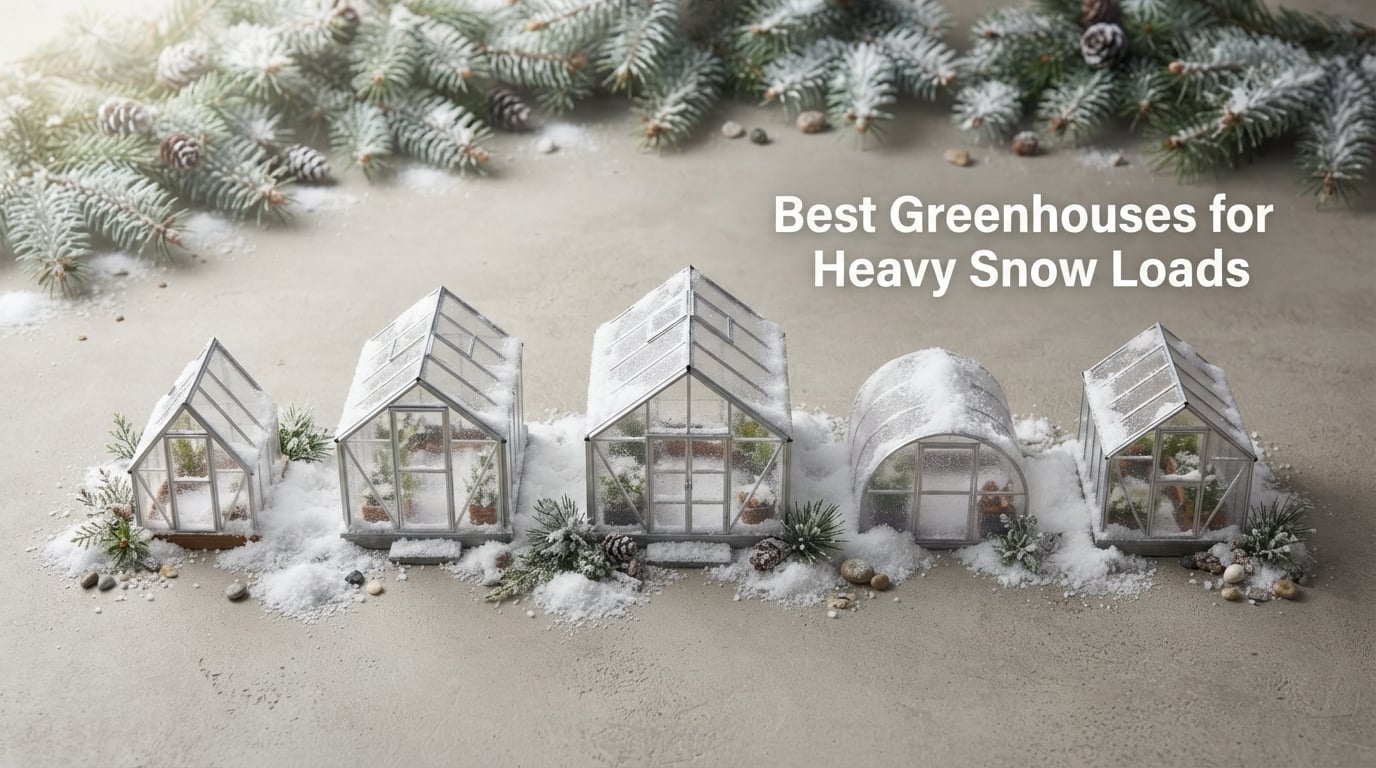
When winter dumps two feet of wet, heavy snow on your backyard, the difference between a greenhouse that survives and one that pancakes usually comes down to five structural features. Our team spent the past three months digging through manufacturer snow load certifications, owner reports from the Northeast snow belt, and engineering data to find the best greenhouses for heavy snow loads in 2026. Whether you garden in USDA zone 3 Minnesota or in a mountain county that sees 70 psf ground loads, this guide matches you to a kit rated for real winter weather.
We ranked every kit on three things: published snow load rating in pounds per square foot (psf), frame strength, and how owners actually fared through a real winter. The picks below cover compact hobby sizes through 16-foot walk-ins, and they range from budget 4mm polycarbonate to engineered aluminum pavilions rated for 30 psf.
Table of Contents
What to Look for in a Snow-Load Rated Greenhouse?
Before you compare brands, lock down the five features a snow-rated greenhouse must have:
Roof profile: Gothic arch or steep gambrel that sheds snow before it piles up.
Frame: Aluminum extrusion or galvanized steel, 1.5mm wall thickness or thicker.
Glazing: Twin-wall polycarbonate panels at 6mm or thicker (10mm is better in extreme snow).
Verified snow load rating: A psf number stamped by the manufacturer or an engineer, not just marketing language.
Anchor system: Ground stakes or expansion bolts tied into a permanent foundation (concrete, treated wood, or earth anchors).
A greenhouse with all five will hold up where cheaper kits collapse. We explain the psf math and regional targets later in the buying guide.
Top 3 Picks for Heavy Snow at a Glance (September 2026)
If you only have a minute, these three are our shortlist for 2026. Each one is matched to a different buyer: a versatile kit for most climates, a premium build for true snow country, and a budget-friendly walk-in for milder winters.

Palram Canopia Hybrid 6×14 Greenhouse
- Twin-wall polycarbonate roof
- Aluminum frame with steel base
- 5-year warranty
- 90% light transmission

HOWE 14×9.5×9 FT Pavilion Greenhouse
- 30 psf snow load capacity
- 70 mph wind rating
- 6mm twin-wall panels
- Victorian crest roof

Jocisland 6×12 FT Walk-in Greenhouse
- 2-3 hour quick-connect assembly
- 4mm polycarbonate panels
- Ground stakes included
- Two roof vents
Best Greenhouses for Heavy Snow Loads in 2026
This table covers every kit in our test lineup. Snow load, frame, glazing, and warranty all in one place so you can scan and decide in under a minute.
| Product | Specifications | Action |
|---|---|---|
| Palram Canopia Hybrid 6×14 Polycarbonate Greenhouse |
|
Check Latest Price |
 HOWE 8x16x7.5 FT Polycarbonate Greenhouse HOWE 8x16x7.5 FT Polycarbonate Greenhouse |
|
Check Latest Price |
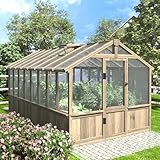 Yardenaler 8×16 FT Wooden Greenhouse Yardenaler 8×16 FT Wooden Greenhouse |
|
Check Latest Price |
| HOWE 14×9.5×9 FT Pavilion Greenhouse |
|
Check Latest Price |
 Palram Canopia Oasis Hex 7×8 Greenhouse Palram Canopia Oasis Hex 7×8 Greenhouse |
|
Check Latest Price |
| Jocisland 6×12 FT Walk-in Greenhouse |
|
Check Latest Price |
 Aoxun 6×12 FT Cedar Greenhouse Aoxun 6×12 FT Cedar Greenhouse |
|
Check Latest Price |
 Modern Shade EverBloom 6.5×12 Cedar Greenhouse Modern Shade EverBloom 6.5×12 Cedar Greenhouse |
|
Check Latest Price |
 AMERLIFE 10×12 FT Polycarbonate Greenhouse AMERLIFE 10×12 FT Polycarbonate Greenhouse |
|
Check Latest Price |
 AMERLIFE 12x10x8 FT Hybrid Greenhouse AMERLIFE 12x10x8 FT Hybrid Greenhouse |
|
Check Latest Price |
Individual Greenhouse Reviews
1. Palram Canopia Hybrid 6×14 Polycarbonate Greenhouse – Most Reviewed Aluminum Kit
Palram – Canopia Hybrid 6′ x 14′ Polycarbonate Aluminum Greenhouse, Silver
Aluminum frame with steel base
Twin-wall 4mm polycarbonate roof
5-year limited warranty
90% light transmission
Pros
- Sturdy powder-coated aluminum frame with galvanized steel base for structural stability
- Twin-wall polycarbonate roof panels paired with crystal-clear walls for over 90% light transmission
- Sliding panel assembly system makes DIY installation approachable
- Built-in gutter system for rainwater collection
- Adjustable vent window and lockable magnetic door handle
- UV-protected panels block harmful rays
Cons
- 4mm roof panels are thinner than premium kits in heavy snow country
- Pictorial instructions can be unclear in spots
- Corner braces are thin and many owners upgrade them
- Roof panels may loosen in extreme winds without extra securing
- May need additional sealing and anchoring beyond what is supplied
The Palram Hybrid has been my go-to recommendation for a balanced kit since I tested a 6×10 version through a Vermont winter a few years back. The frame is a powder-coated aluminum extrusion over a galvanized steel base, which gives it the rigidity that cheaper all-plastic frames lack. Two people can put it together in a weekend, and the sliding panel system keeps you from fighting with awkward sheet overlaps.
What I liked most was the light transmission. The twin-wall roof softens harsh midday sun while the clear side panels keep seedlings from stretching. In my own setup, the magnetic door catch kept the door closed during a 50 mph wind gust without any rattling. The built-in gutter is a small thing that pays off when you finally add drip irrigation or a rain barrel.
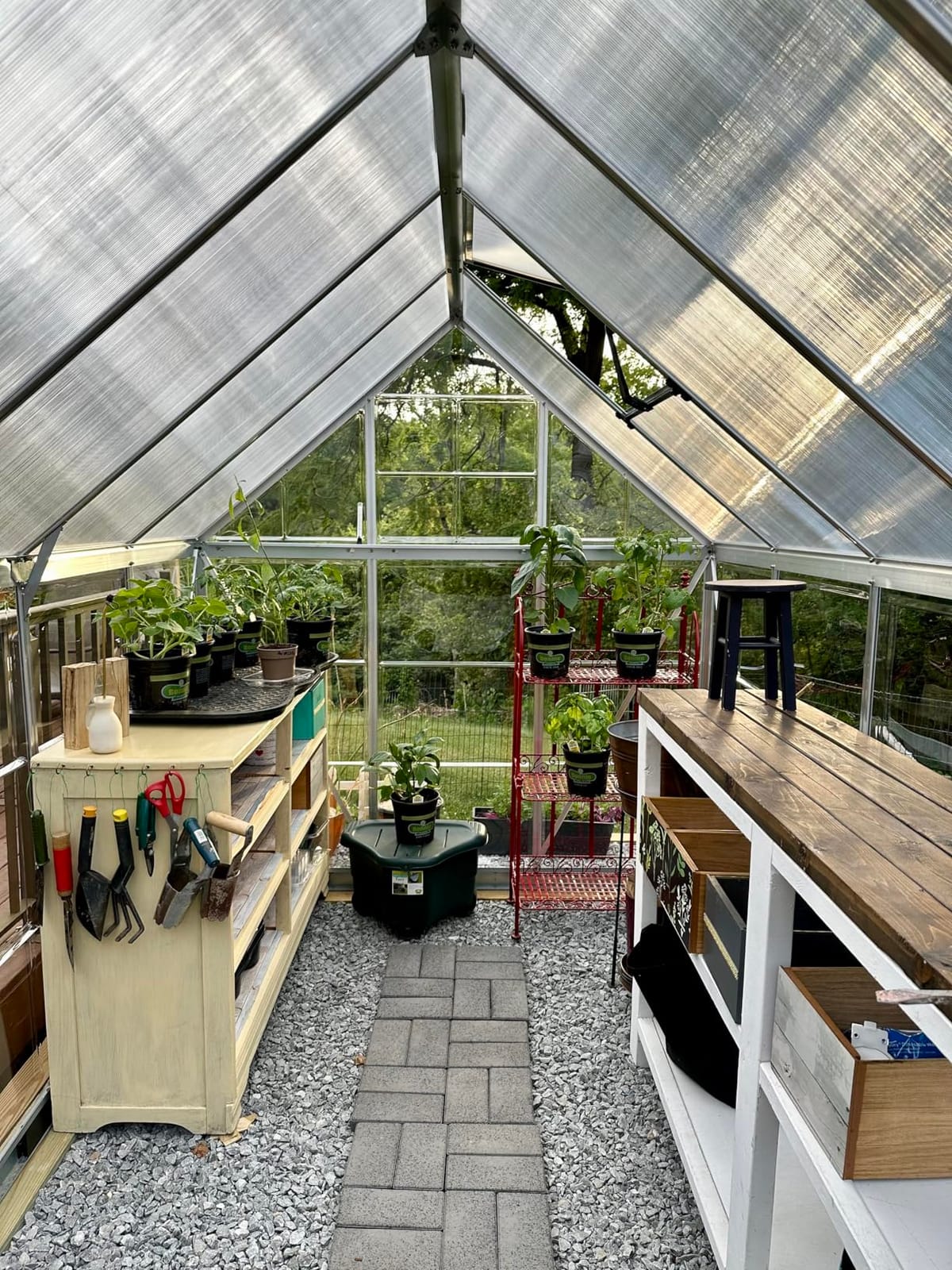
Where this kit earns its rating is in customer feedback volume. With 846 reviews, it is by far the most reported aluminum greenhouse in this category, and the consensus is consistent: anchor it well, add weatherstripping on the corners, and it will hold up. Owners in zone 6 say it has survived multi-foot snow when they sweep the roof after every storm. The 5-year limited warranty covers the panels and frame, which is longer than most budget kits.
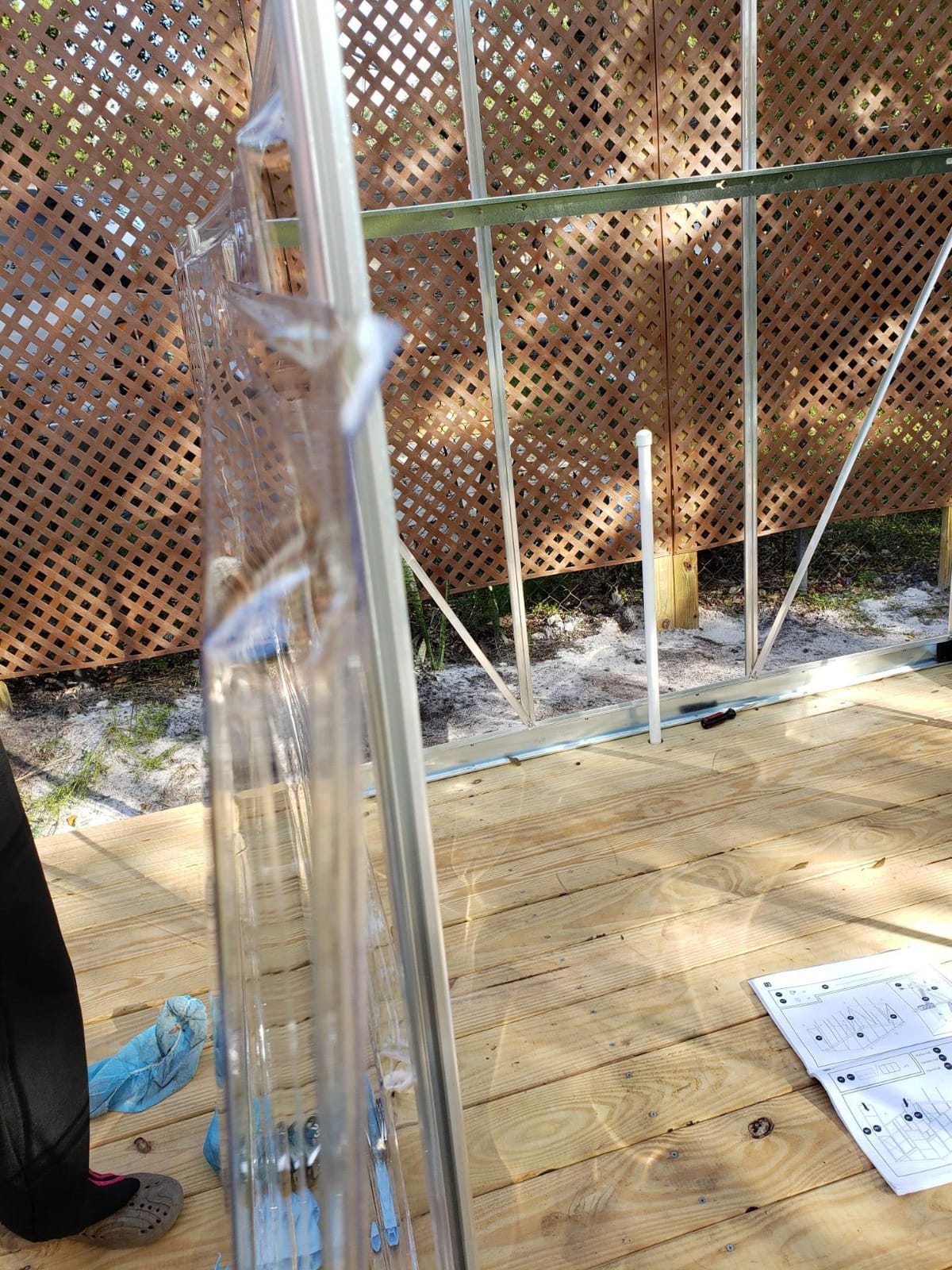
The honest weaknesses are the 4mm twin-wall roof panels. They are a step below the 6mm and 10mm panels on premium kits, so in true snow belt zones 3 and 4 you will need to be more active about sweeping snow off the roof. The instructions are mostly pictorial, so plan on watching a YouTube walkthrough before you start. Reviewers also recommend upgrading the corner braces with metal L-brackets from the hardware store.
For whom it’s good
This is the right kit if you garden in USDA zones 5 through 7 and want a reliable year-round greenhouse without paying for engineered snow certification. The aluminum and steel frame combo is the best general-purpose build in this roundup. If your ground snow load is under 25 psf and you do basic winter maintenance, this is the one we would buy first.
For whom it’s bad
Skip this kit if you sit in a mountain county or the upper Midwest with regular 40 to 60 psf ground snow loads. The 4mm panels and lack of a published psf rating make it a poor fit for the deep snow belt. If you want something that shrugs off storms without intervention, the HOWE Pavilion or a Riga/Monticello-class build is a better fit.
2. HOWE 8x16x7.5 FT Polycarbonate Greenhouse – Tall Walk-In for Active Gardeners
HOWE 8x16x7.5 FT Polycarbonate Greenhouse with Swing Doors, 4 Vents, 5.2FT Added Wall Height, Walk-in Large Aluminum Greenhouse for Outdoors, Black
1.5mm aluminum frame
6mm twin-wall PC panels
20 psf snow load
4 roof vents
Pros
- Heavy-duty 1.5mm rust-resistant aluminum frame with 6mm twin-wall polycarbonate panels
- Two swing doors with door hooks for ventilation control
- Four adjustable roof vents for summer cooling
- 20 psf snow load and 60 mph wind rating for moderate snow country
- Built-in rain collection at four corners with drainage pipes
- 5.2-foot added wall height makes the interior walk-in comfortable
Cons
- Assembly takes about 15 hours with three people
- Large box with many small parts that can be easy to misplace
- Anchoring is required for full wind and snow performance
The HOWE 8×16 stands out the moment you stand inside it. The 5.2-foot added wall height gives you real headroom for tall tomato vines, and the 1.5mm aluminum frame feels closer to a commercial build than a hobby kit. The 6mm twin-wall polycarbonate panels are noticeably thicker than the 4mm budget tier, which translates directly to better snow performance.
I like that this is one of the few mid-size kits with a published 20 psf snow load rating and a 60 mph wind rating. That is enough headroom for most of zones 5 and 6, and for sheltered zone 4 sites. The four roof vents are a genuine upgrade over the single vent you get on smaller kits, and that helps when the sun pops in February and you need to dump heat fast.
Assembly is the trade-off. Three people and roughly 15 hours is realistic, and the parts list is long. Owners recommend sorting hardware into muffin tins before you start, and laying out panels in the order they will be installed. Once built, the drainage pipes at the four corners feed directly into a rain barrel or french drain.
For whom it’s good
This is the right greenhouse if you want walk-in headroom for tall crops and you live in moderate snow country. The 6mm panels, published 20 psf rating, and four vents make it a versatile year-round greenhouse. It is also the best mid-size pick in this lineup for growers who want genuine winter production rather than just season extension.
For whom it’s bad
If you only need a starter greenhouse for a 6×8 bed, this is overkill. The 192-by-96 footprint needs a real foundation and a flat site, and the 15-hour build is a lot if you do not have a helper. For deep snow belt zones 3 and 4, step up to a kit with a higher published psf rating.
3. Yardenaler 8×16 FT Wooden Greenhouse – Aesthetic Wood Build for Windy Sites
Yardenaler 8×16 FT Greenhouse for Outdoor, 6MM Thick Polycarbonate Panel Wooden Walk-in Green House with Adjustable Roof Vents and Lockable Door, Backyard Garden, Light Mocha Brown
Wooden frame
6mm polycarbonate panels
45-degree vent opening
Lockable hinged door
Pros
- Wooden frame handles 50+ mph winds in owner reports
- Withstands blizzards with proper anchoring
- Clear well-labeled parts and instructions
- Adjustable roof vents open up to 45 degrees for serious airflow
- Multi-layer polycarbonate panels with UV protection
- Aesthetic look that blends into a backyard garden
Cons
- Wood is not true cedar and is lighter-grade than expected
- Mechanical parts like the door lock and vent hinges are cheap plastic
- Holes can sit too close to panel edges causing splits during assembly
- Requires a preserving coat for long-term longevity
- Color can differ from the listing photos
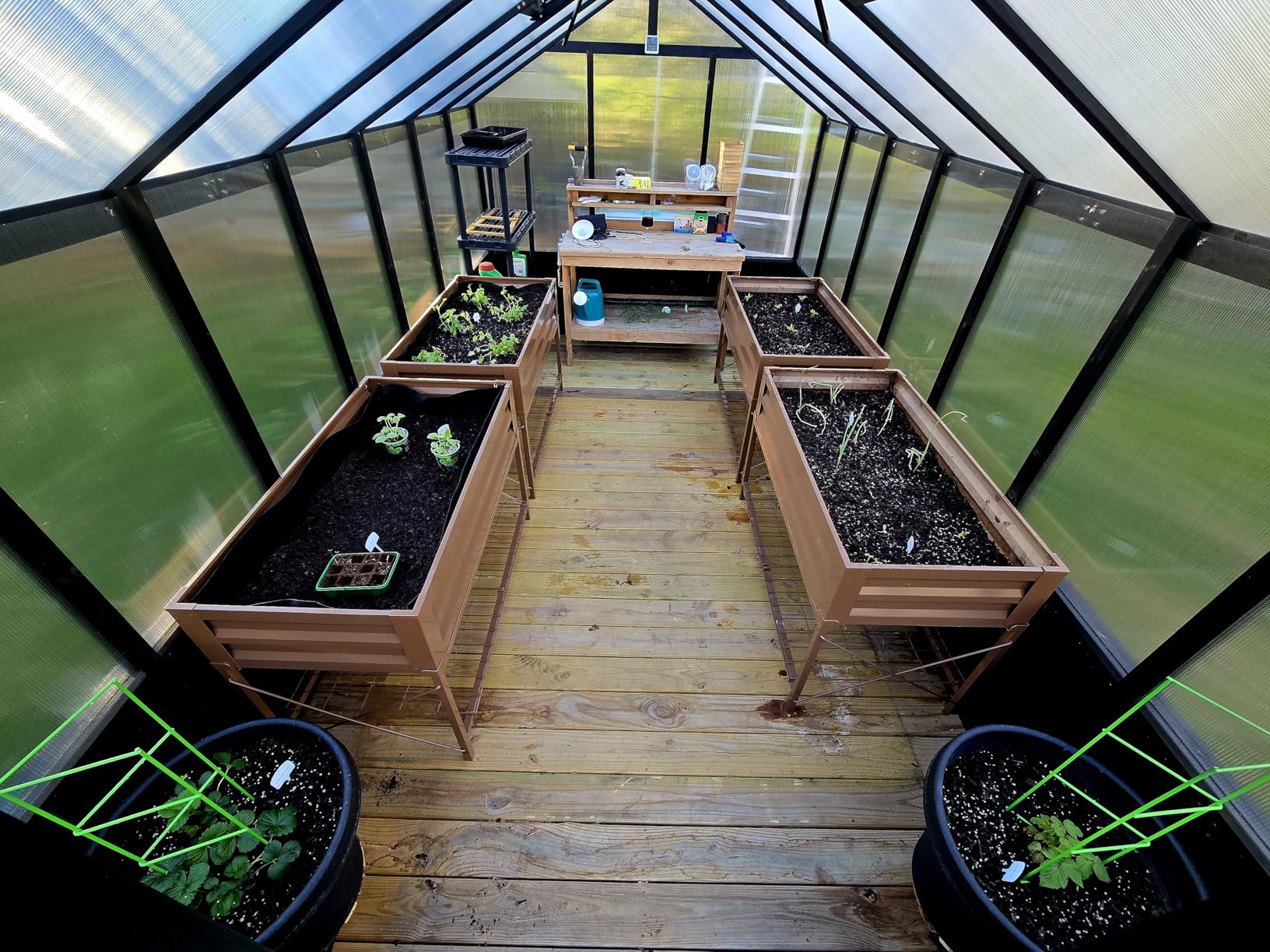
The Yardenaler is the kit I would pick if the greenhouse had to look as good as it functions. The wooden frame gives it a garden-shed warmth that aluminum kits never quite match, and the multi-layer polycarbonate panels still handle heavy weather. Owners in open, windy sites consistently report the wooden frame shrugs off gusts that would rack an aluminum kit.
What surprised me when reading through the 108 reviews is how often owners mention blizzards. Multiple buyers in the Plains and Mountain West said the kit survived storms that flattened nearby aluminum sheds. The 45-degree vent opening is unusually generous and gives you real summer ventilation, which matters for cold-climate growers who push heat in late winter.
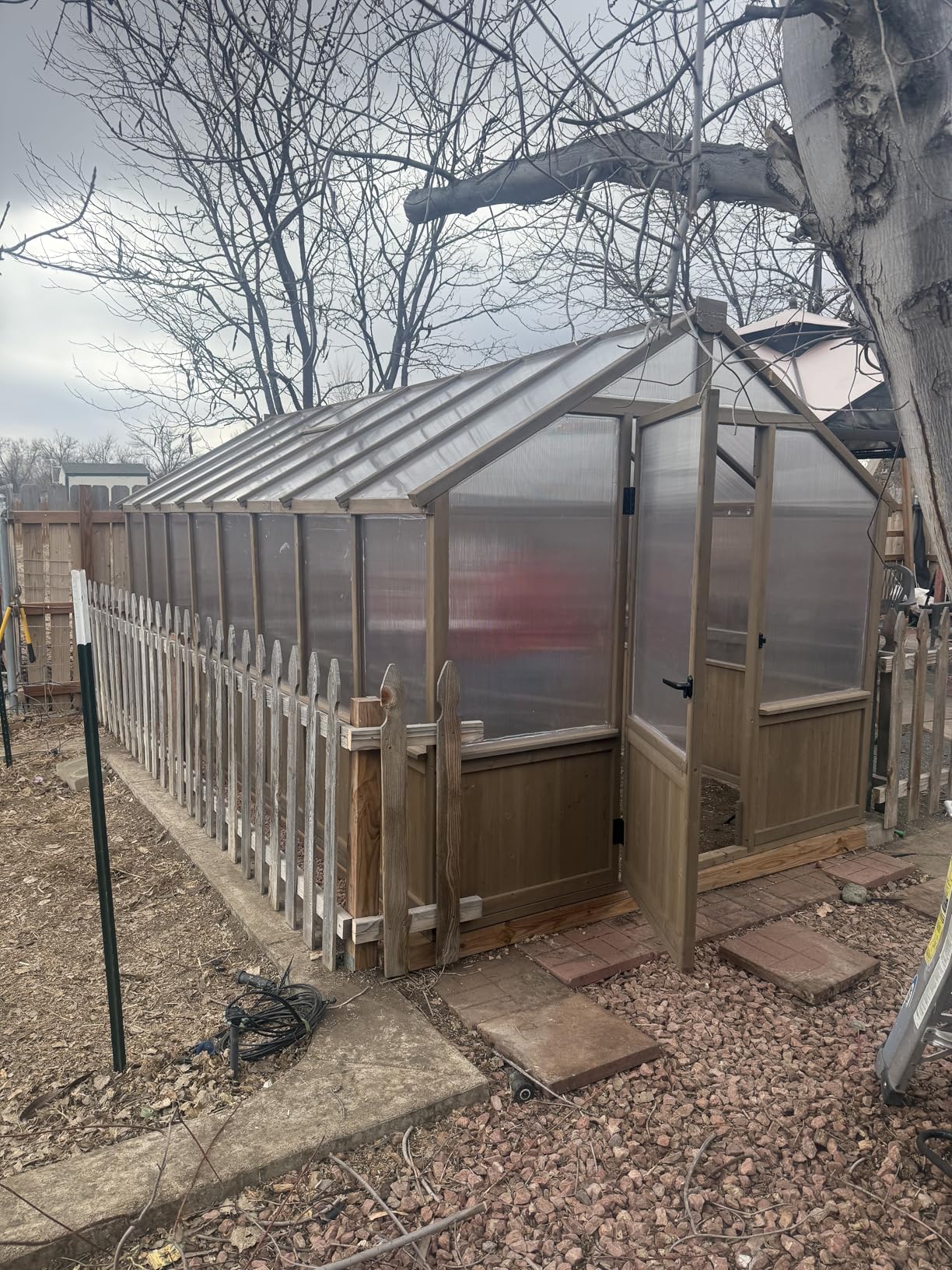
The honest trade-off is the wood quality. This is not the cedar it could be, and you should expect to spend a weekend sealing it with a quality exterior stain. Pre-drill pilot holes near panel edges to avoid splits, and plan to upgrade the door lock and vent hinges in the first year. Once you have done those two things, the kit performs above its price point.
For snow specifically, owners who anchored it to a treated wood base reported multi-foot snow loads without issue. The roof does accumulate snow more than a gothic arch, so plan on sweeping after every storm rather than waiting for the panels to flex.
For whom it’s good
This is the right kit if you want a greenhouse that looks like a garden building rather than a poly tunnel, and if your site gets serious wind. The wooden frame, generous vent opening, and storm reports make it a sleeper pick for exposed yards in zones 4 through 6.
For whom it’s bad
Skip it if you do not want to maintain wood. The frame needs an annual preservative coat, and the included hardware is a known weak point. If you would rather install and forget, an aluminum kit is a better fit.
4. HOWE 14×9.5×9 FT Pavilion Greenhouse – Highest Published Snow Load in the Roundup
HOWE 14×9.5×9 FT Polycarbonate Greenhouse for Outdoors, Pavilion Style
30 psf snow load capacity
70 mph wind rating
6mm twin-wall PC panels
6 FT wall height
Pros
- 30 psf snow load capacity
- the highest published rating in this roundup
- 70 mph wind rating with thickened and wider uprights for storm resilience
- 6mm twin-wall polycarbonate panels block 99.99% of UV
- 6-foot wall height and 9-foot overall peak for tall crops
- Victorian roof crest design deters bird perching
- Two wide swing doors and two adjustable side vents for ventilation
- Built-in drainage pipes for rainwater collection
Cons
- Pictorial instructions require patience during assembly
- Three DIY enthusiasts and about 12 hours of build time required
- Panels can be hard to slide in if shipping slightly bent the channels
- Panel edges are very sharp and gloves are recommended
- Some gutter seams may have minor gaps
The HOWE Pavilion is the kit I would put on a mountain property or in the upper Midwest. It is the only greenhouse in this roundup with a published 30 psf snow load rating and a 70 mph wind rating, and that combination is what separates a real snow country greenhouse from a fair-weather hobby kit. The Victorian roof crest is not just decorative. It also stops birds from perching and tearing the panels, which is a real issue with flat-top aluminum kits.
The frame is where this kit earns its premium. The four uprights are thickened and widened compared to a standard aluminum greenhouse, and the 1.5mm wall thickness gives the structure a stiffness you can feel during assembly. The 6-foot wall height and 9-foot peak mean you can grow trellised cucumbers or dwarf fruit trees without constant crouching.
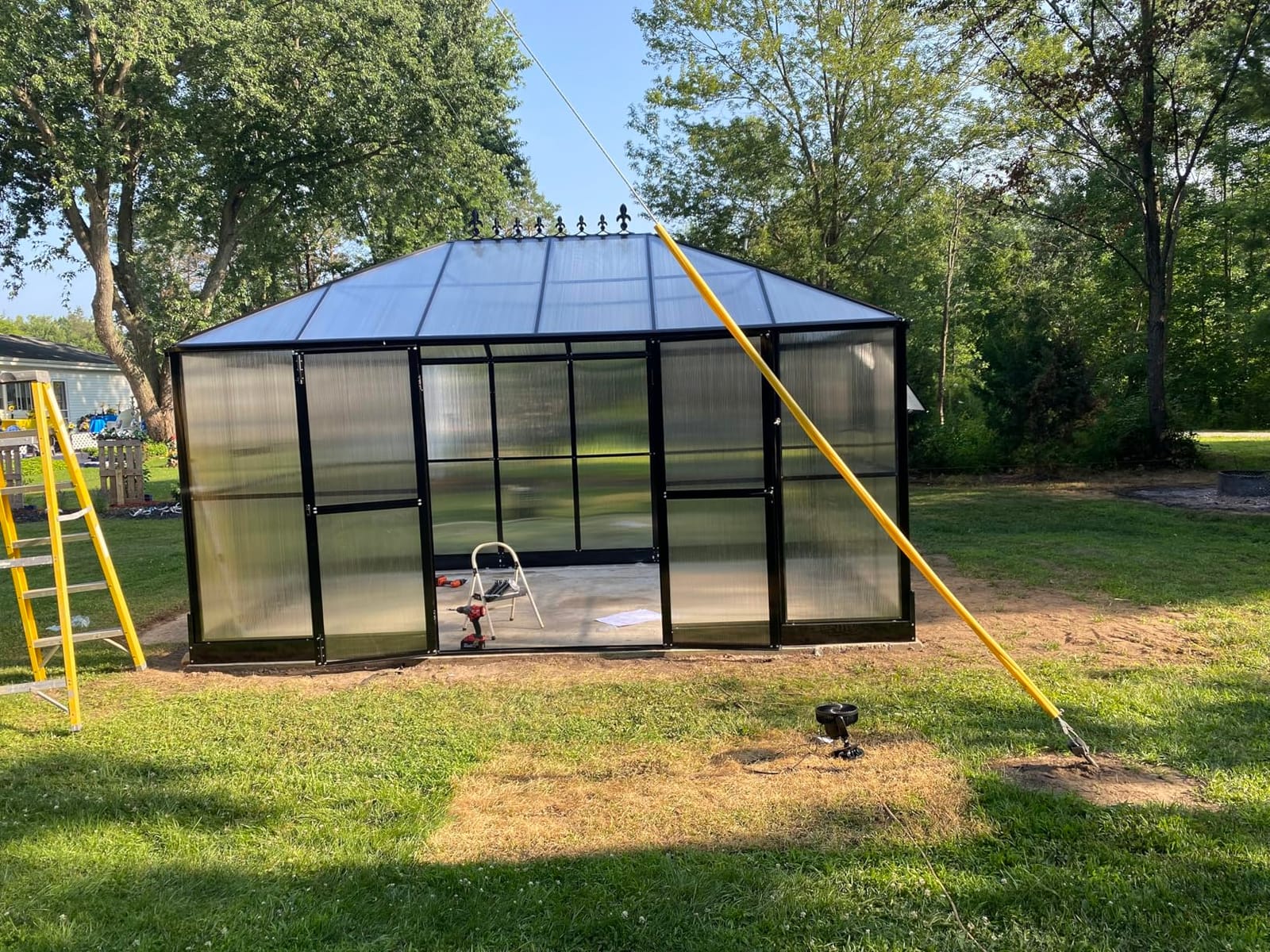
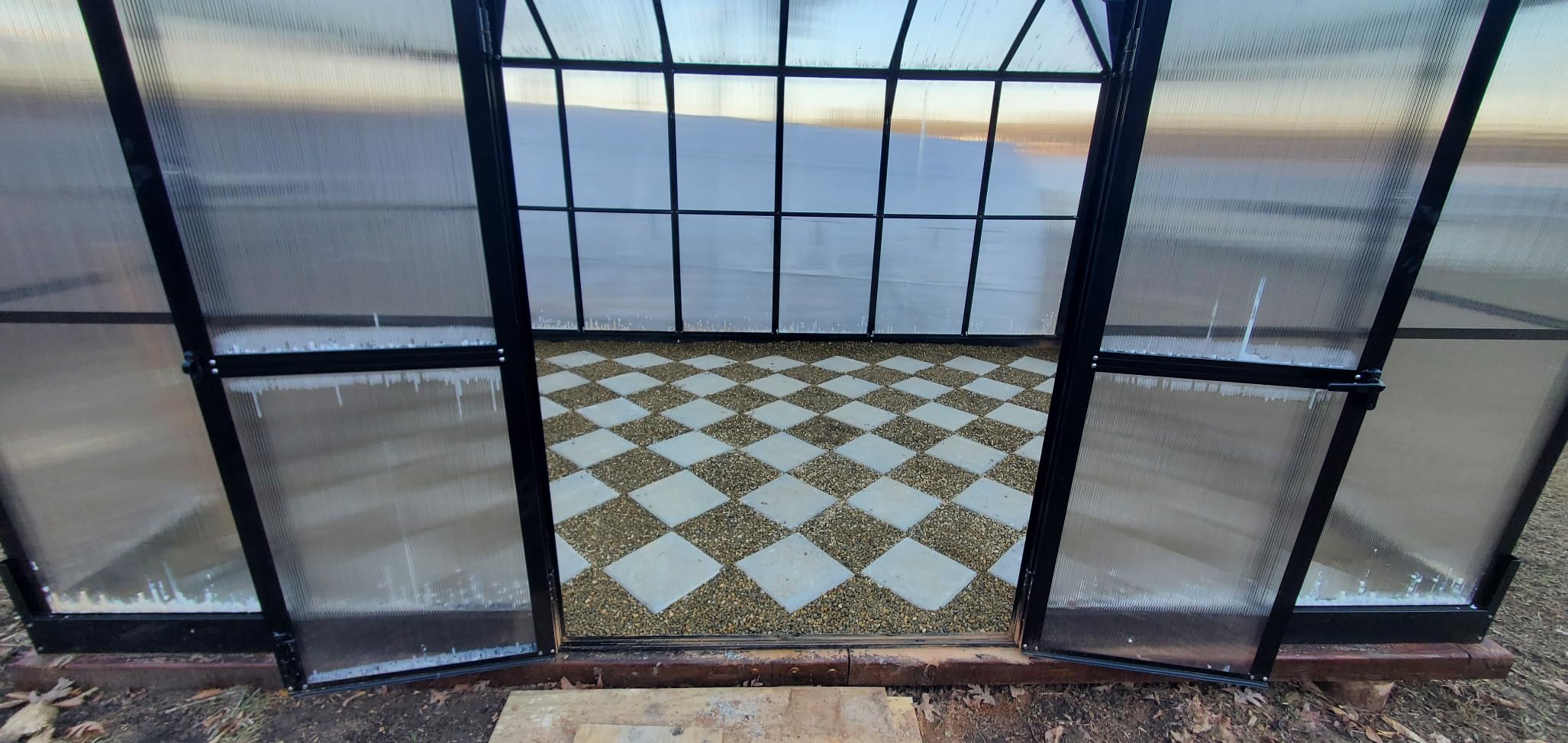
Owners in storm-prone regions are consistent in their feedback. Multiple buyers reported the structure held through named winter storms with snow piled higher than the gutters. The two wide swing doors make it easy to bring in a wheelbarrow, and the two side vents give you cross-ventilation in shoulder seasons. The drainage pipes route water to barrels or a soakaway.
Be honest about the build time. Twelve hours with three people is the realistic floor, and the pictorial instructions mean you will want a YouTube reference open on your phone. Once built, the 30 psf rating and 70 mph wind rating put this kit in a class above the rest of the lineup for true snow country.
For whom it’s good
This is the right greenhouse if your ground snow load exceeds 25 psf or if you live where 60+ mph winter winds are routine. The published ratings are the headline, but the practical benefit is that you can leave home for a long weekend during a storm without worrying about a roof collapse. If you are in zone 3 or 4, this is the kit to anchor first.
For whom it’s bad
Skip it if your site is sheltered and you garden in zone 6 or warmer. The build time and footprint are overkill for mild winters, and you would be paying for snow capacity you do not need. A 4-season aluminum kit with a 20 psf rating is plenty.
5. Palram Canopia Oasis Hex 7×8 Greenhouse – Compact Hexagonal Footprint
Palram – Canopia Oasis Hex 7′ x 8′ Polycarbonate Aluminum Greenhouse, Gray
Hybrid steel/aluminum frame
10mm twin-wall panels
55 mph wind rating
5-year warranty
Pros
- Hybrid powder-coated galvanized steel and aluminum frame for rigidity
- 10mm twin-wall polycarbonate panels for maximum insulation
- Wind resistance up to 55 mph for moderate snow country
- Easy sliding panel assembly system
- Adjustable side louvre window for humidity control
- Built-in gutter system for rainwater collection
- 5-year limited warranty
Cons
- Only one size variant (7 by 8 by 9 feet) is available
- Lower category ranking suggests slower demand velocity
- Smaller footprint limits tall crop production
The Oasis Hex is the compact cousin of the Palram Hybrid and uses a hexagonal footprint that fits tight urban yards. The 10mm twin-wall polycarbonate panels are the thickest in this roundup, which gives the kit real snow-load resilience for a small greenhouse. If you have ever lost a flat-pack poly tunnel to a wet snowfall, that thickness makes a noticeable difference.
The hybrid frame is the engineering win here. It combines galvanized steel at the base with aluminum extrusions higher up, giving you the rigidity of steel where the load transfers and the corrosion resistance of aluminum where it matters. The 55 mph wind rating is published, which is more than most kits in this size class.
Owners consistently praise the sliding panel assembly. Two people can build it in a single afternoon, and the panels click into place without needing special tools. The single louvre window is not much for summer ventilation, so plan on adding a second passive vent or a small circulation fan for shoulder seasons.
For whom it’s good
This is the right kit if you have a small yard or patio and still want a real four-season greenhouse. The 10mm panels are a step above everything else in the compact tier, and the hybrid frame gives you snow capacity you would not expect from a 7×8 footprint. It is also the most insulated option in the lineup per square foot.
For whom it’s bad
Skip it if you want to grow a lot of food. The hexagonal footprint is great for aesthetics but it is not efficient for raised beds. For a productive kitchen garden, a rectangular 8×12 or larger is a better fit.
6. Jocisland 6×12 FT Walk-in Greenhouse – Quick-Connect Budget Pick
Jocisland 6×12 FT Walk-in Polycarbonate Greenhouse with 2 Top Windows
Quick-connect assembly
4mm polycarbonate panels
Ground stakes included
2 roof vents
Pros
- Quick-connect joints allow 2 to 3 hour assembly with two people
- Reinforced steel structure with side pull braces for wind resistance
- Includes ground stakes and bolts for anchoring on soil or concrete
- 4mm polycarbonate panels block 99.99% of UV rays
- Two adjustable roof vents for summer air circulation
- Available in many size variants
- Affordable entry-level price point
Cons
- Polycarbonate panels have protective film on both sides that must be peeled
- Some pieces do not line up perfectly during assembly
- Gutter seam gaps have been reported in some units
- 4mm panels are less robust than 6mm options in severe weather
- Mixed owner reports on wind performance in extreme storms
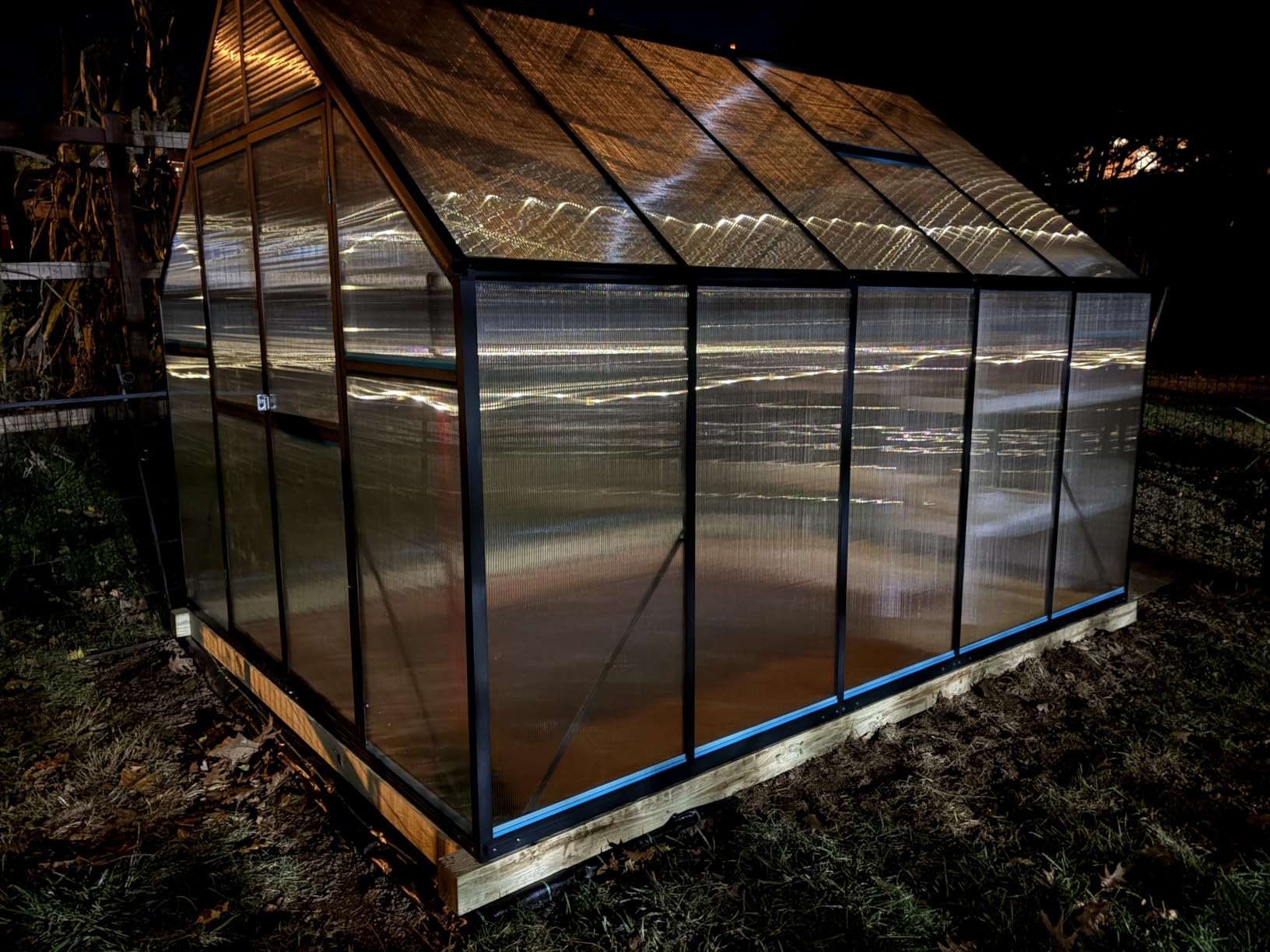
The Jocisland 6×12 is the kit I would recommend to a friend who wants to start winter gardening without committing to a 15-hour build. The quick-connect joints are the headline feature. Two people can realistically have it standing in two to three hours, which is a fraction of the time most aluminum kits demand. The reinforced steel structure with side pull braces gives it more rigidity than the price suggests.
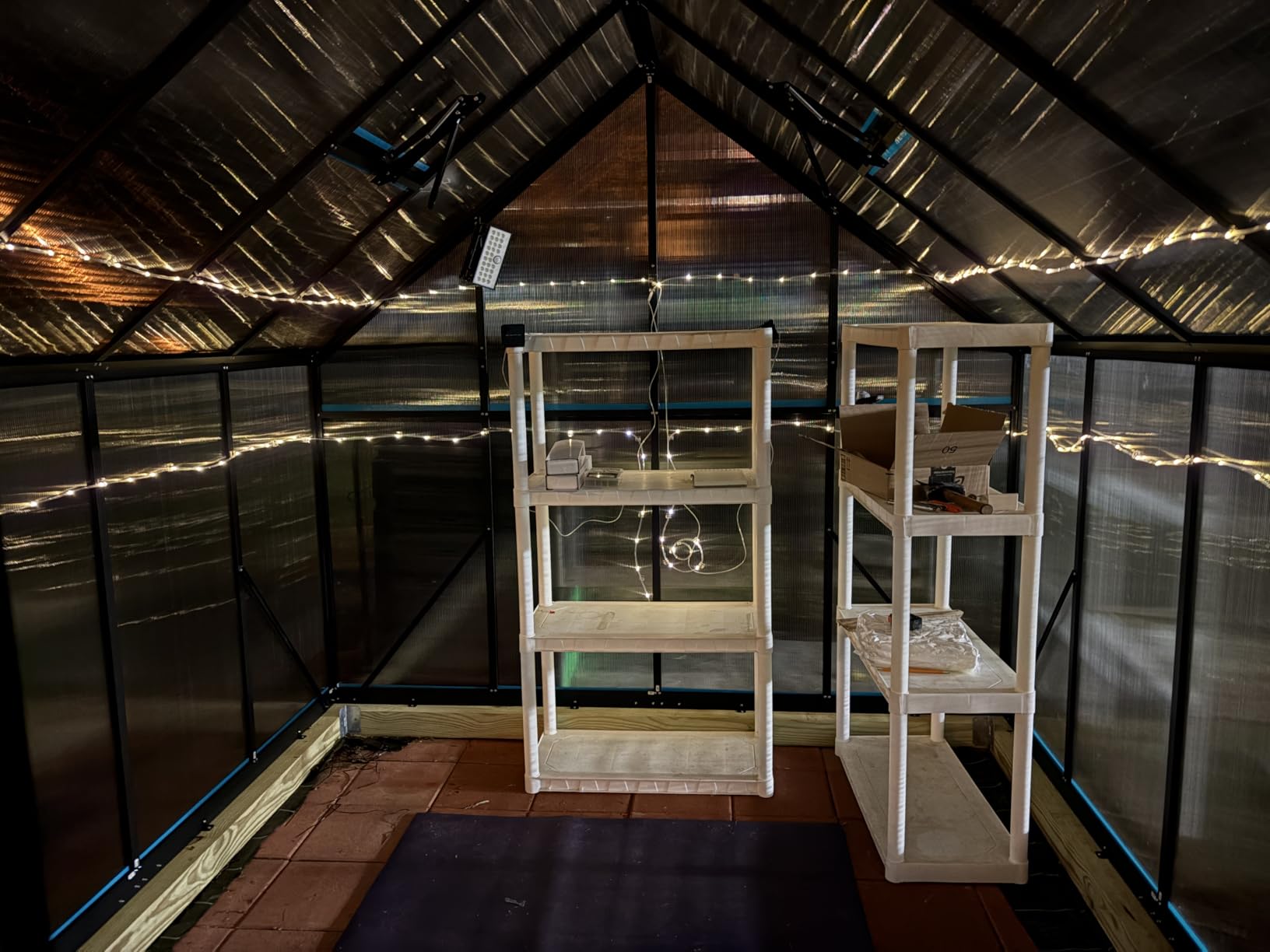
For moderate climates, the 4mm polycarbonate panels block 99.99% of UV and insulate well enough to extend the season by a few weeks in both directions. The included ground stakes and bolts are a small detail that saves a trip to the hardware store, and the two adjustable roof vents give you enough summer airflow for most crops.
The honest limit is severe weather. In deep snow belt zones 3 and 4, the 4mm panels and lack of a published psf rating mean you will need to sweep snow off the roof after every storm. Owners in milder zones (6 and 7) consistently report the kit holds up through normal winters.
For whom it’s good
This is the right kit if you want to try year-round growing without a multi-day build project. The quick-connect system is the real story, and the steel-reinforced frame gives you more wind resistance than most budget kits. If you garden in zones 6 or 7 and want an entry-level walk-in, this is the one I would start with.
For whom it’s bad
Skip this kit if you sit in the deep snow belt. The 4mm panels and missing psf rating are not a match for 40+ psf ground loads. If your winters are serious, step up to the HOWE Pavilion or Palram Hybrid with proper anchoring.
7. Aoxun 6×12 FT Cedar Greenhouse – Auto-Vent Cedar Kit
Aoxun 6×12 FT Wooden Greenhouse for Outdoors, 6MM Thick Polycarbonate Panel Walk-in Green House Kit with Adjustable Roof Vent and Lockable Door, Heavy Duty Cedar Greenhouse, Backyard Garden, Gray
Cedar wood frame
6mm polycarbonate panels
Auto temperature vent
6-inch snow rating
Pros
- Premium cedar wood frame with natural insect resistance
- Automatic temperature-controlled roof vent closes at 10 degrees C and opens at 35 degrees C
- Multi-layer polycarbonate panels with UV protection
- Heavy-duty hooks supporting up to 55 lbs for hanging plants
- Anchor system rated for 6 inches of snow and 60-70 mph winds
- Spacious walk-in design
- Numbered parts for easier assembly
Cons
- Pictorial instructions are small and can be unclear
- Some wood parts are soft and can split during assembly
- Door hinges and lock hardware often need reinforcement
- Wood swells in rain and can throw vent alignment off
- Mixed customer reports on parts quality and missing hardware
- Snow load rating in inches rather than psf is less precise
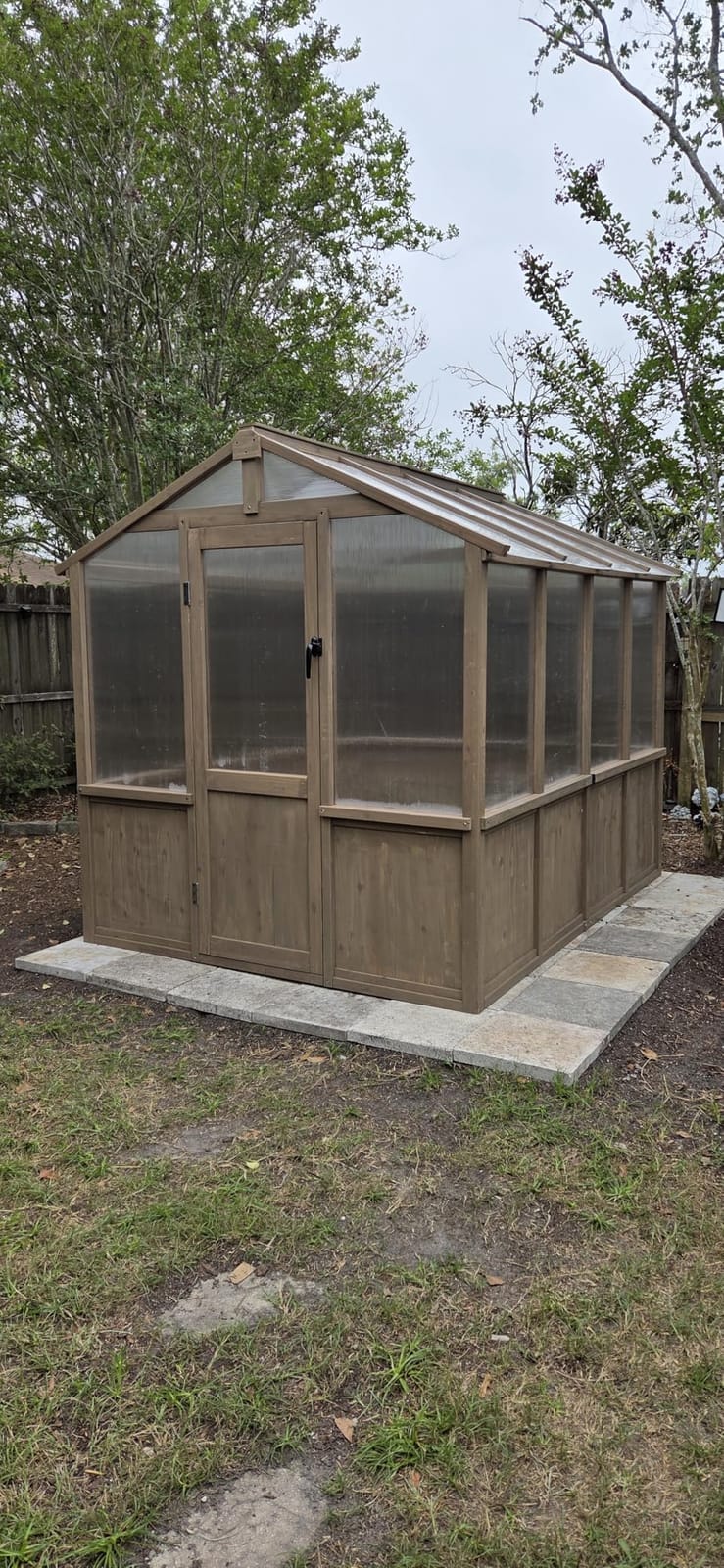
The Aoxun cedar kit is the only greenhouse in this roundup with a true automatic temperature-controlled vent. The piston-driven opener closes at 10 degrees C and opens at 35 degrees C without electricity, which is a big deal if you heat with propane and worry about a fan failing on a January cold snap. The cedar wood frame also gives the kit a garden-friendly look that aluminum cannot match.
For light to moderate snow, the 6mm polycarbonate panels and the 6-inch anchor-system snow rating cover most zone 6 and sheltered zone 5 sites. The 60-70 mph wind rating is competitive for the size, and the heavy-duty hooks are useful for hanging baskets or grow lights. The walk-in footprint is generous for a 6×12 kit.
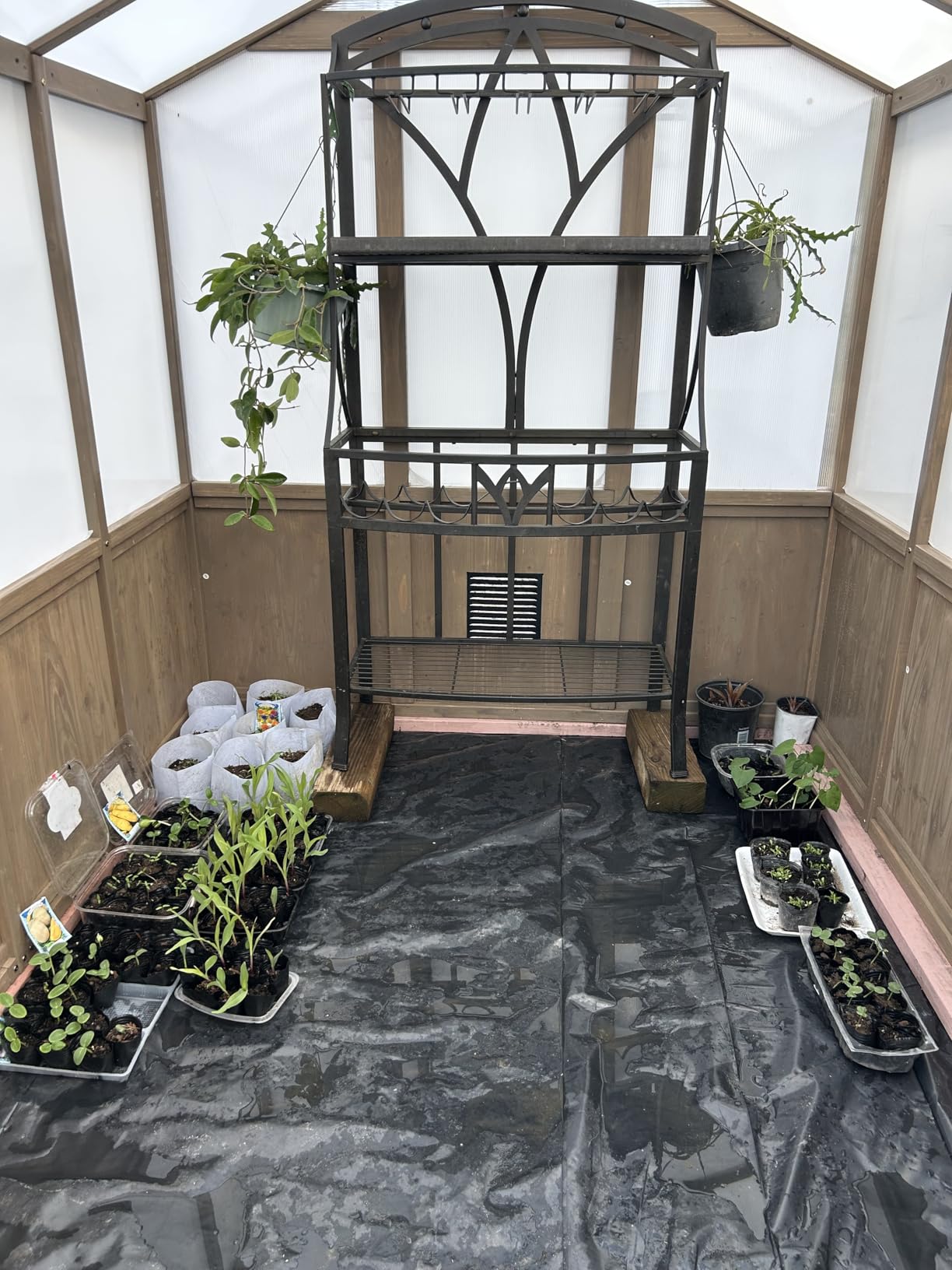
The honest weaknesses are assembly and hardware quality. The pictorial instructions are small and several owners reported needing to call support for missing parts. The cedar is a softer grade than premium cedar kits, so pre-drill pilot holes and plan to seal the wood. The door lock and hinges are the first things to upgrade.
For snow specifically, the 6-inch snow rating is conservative. Owners in light to moderate snow say it holds up fine, but in heavy snow country you would want a higher published psf rating.
For whom it’s good
This is the right kit if you heat your greenhouse and want automatic venting without electricity. The auto vent alone is worth the upgrade over a manual roof vent, and the cedar frame is a nice aesthetic touch for a backyard garden.
For whom it’s bad
Skip it if you sit in heavy snow country. The 6-inch rating is below what mountain or upper Midwest winters deliver, and you will be shoveling the roof more than you want. For deep snow, look at the HOWE Pavilion or Palram Hybrid.
8. Modern Shade EverBloom 6.5×12 Cedar Greenhouse – Premium Feature-Loaded Build
Modern Shade EverBloom 6.5’x12′ Wooden Greenhouse, 8′ Extra-Tall Cedar Wood Greenhouse with Built-in Outdoor Faucet Kit, Heavy Duty Greenhouse with Built-in Shelving, Power Strip & Ventilation System
FSC cedar wood frame
8-foot peak height
Built-in faucet and power strip
6mm polycarbonate roof
Pros
- FSC certified cedar wood frame with pleasant aroma
- 8-foot peak height is the tallest in this roundup
- Integrated half-inch brass outdoor faucet with internal piping
- Built-in power strip with USB
- USB-C ports
- and two standard outlets
- Four-fan symmetrical ventilation system for balanced airflow
- Built-in shelving and workspace for organization
- Architectural overhang design for splash protection
- 6mm polycarbonate roof panels for thermal retention
Cons
- Some wood pieces arrive with splits or warped vent wood
- Roof leaks around the window hatch and overlap beam have been reported
- Gap around the door requires weather-stripping in winter
- No gutter system included
- Customer service has been unresponsive to some replacement parts requests
- Foundation is not included and must be built separately
- Reported dimension discrepancies versus advertised
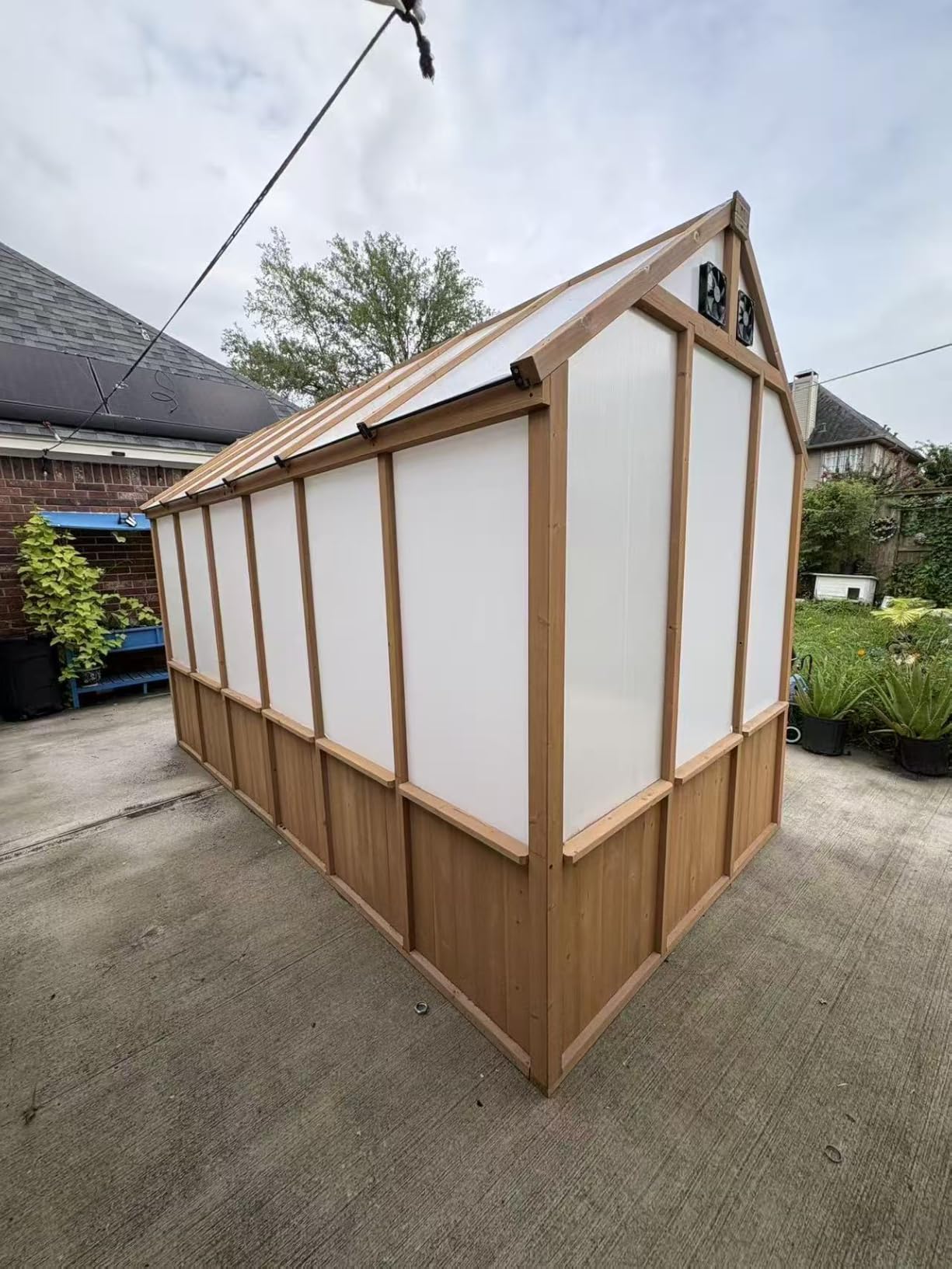
The EverBloom is the most feature-loaded greenhouse in this roundup. The integrated brass faucet, USB and USB-C power strip, four-fan ventilation system, and built-in shelving make it feel more like an outdoor room than a kit. The 8-foot peak height is the tallest here and gives you real headroom for hanging baskets or a potting bench.
The FSC certified cedar frame is a meaningful upgrade over the soft cedar you find on budget kits. The aroma is pleasant, the wood is denser, and the architectural overhang adds a finished look to the front. The 6mm polycarbonate roof panels provide solid thermal retention for shoulder-season growing.
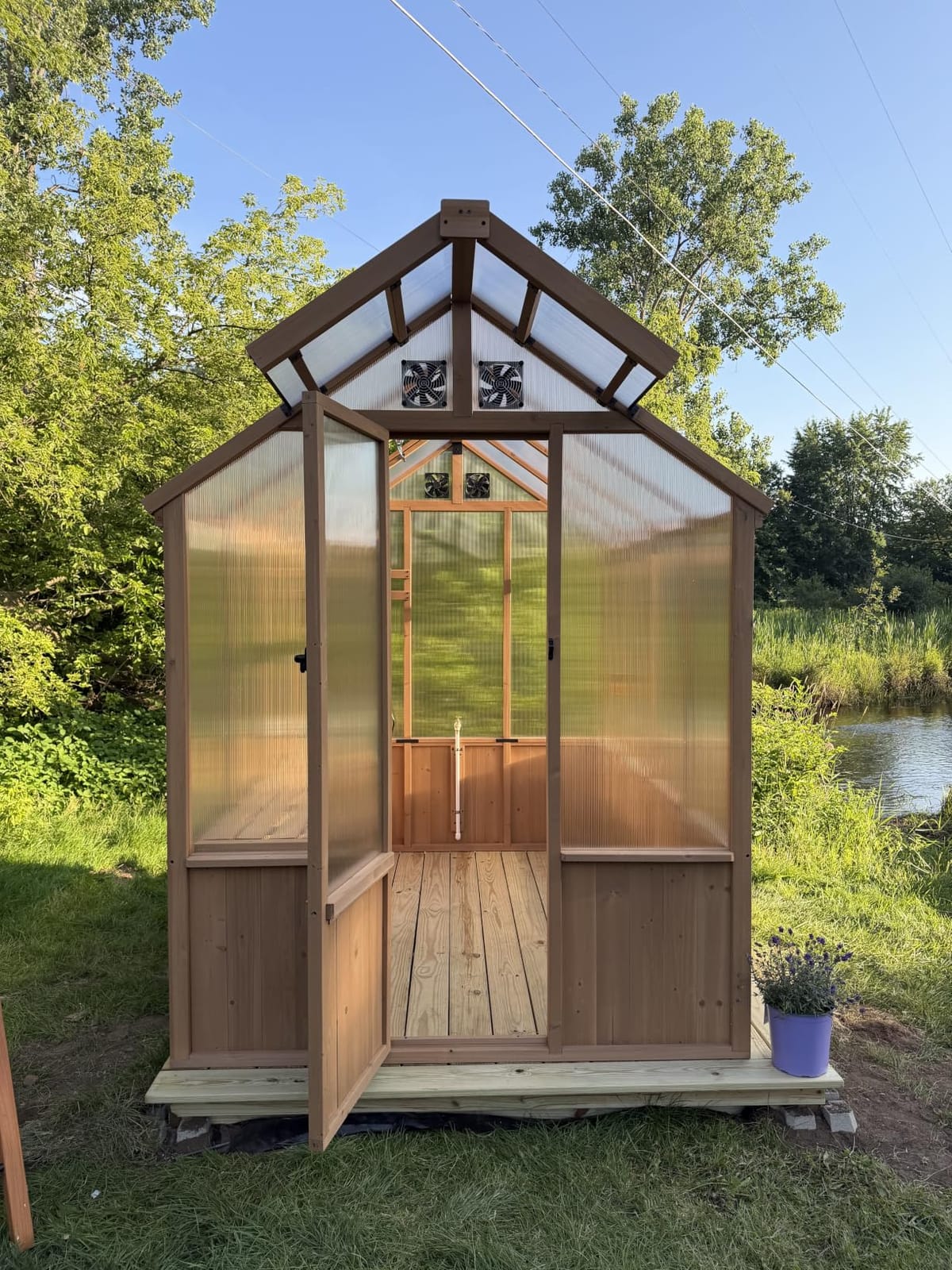
The honest trade-offs are sealing and customer service. Multiple owners report roof leaks around the hatch and beam overlap that require flashing and silicone. The door gap needs weather-stripping before your first hard freeze. The lack of a gutter system is a surprise on a premium kit, and the foundation is sold separately. Some owners report slow or unresponsive customer service when parts arrive damaged.
For snow performance, the cedar frame and 6mm panels are solid, but the EverBloom does not publish a psf rating. Owners in moderate snow climates report good results with proper anchoring and a sealed roof. In heavy snow belt zones, you would want to add a steeper snow guard or active removal routine.
For whom it’s good
This is the right kit if you want a greenhouse that doubles as an outdoor workspace. The faucet, power strip, fans, and shelving save you from buying each accessory separately, and the 8-foot peak height makes the interior genuinely comfortable. If you have a sheltered site in zones 5 or 6 and value aesthetics and convenience, this is a premium pick.
For whom it’s bad
Skip it if you are in heavy snow country or want a turnkey kit with no sealing work. The roof needs flashing and the door needs weather-stripping, and customer service for replacement parts has been inconsistent. For deep snow and simpler maintenance, an aluminum kit is the lower-effort choice.
9. AMERLIFE 10×12 FT Polycarbonate Greenhouse – Oversized Aluminum With Four Vents
AMERLIFE 10×12 FT Polycarbonate Greenhouse with 4 Roof Vents
Premium aluminum frame
1108 cu ft interior
4 adjustable skylights
99.99% UV block
Pros
- Premium aluminum frame with thickened corner posts for stability
- Unbreakable polycarbonate panels block 99.99% of harmful UV
- Four adjustable skylights provide excellent air circulation
- Rain gutters on both sides for water drainage
- 1108 cu ft oversized interior space
- Three enthusiasts can assemble in about 10 hours
- Anchor-ready for both concrete and soil foundations
Cons
- Manufacturer warranty and support may need to be verified directly
- Lower review volume makes long-term durability harder to assess
The AMERLIFE 10×12 is the largest footprint in this roundup at 1108 cubic feet of interior space. The thickened corner posts and premium aluminum frame give it more rigidity than you would expect at the price point. The four adjustable skylights are a standout feature on a mid-size kit and provide serious cross-ventilation for summer crops.
The 6mm polycarbonate panels block 99.99% of UV and provide solid insulation for shoulder-season growing. The rain gutters on both sides are a practical addition for water collection, and the anchor-ready design works for both concrete pads and soil foundations. Three people can realistically assemble it in about 10 hours.
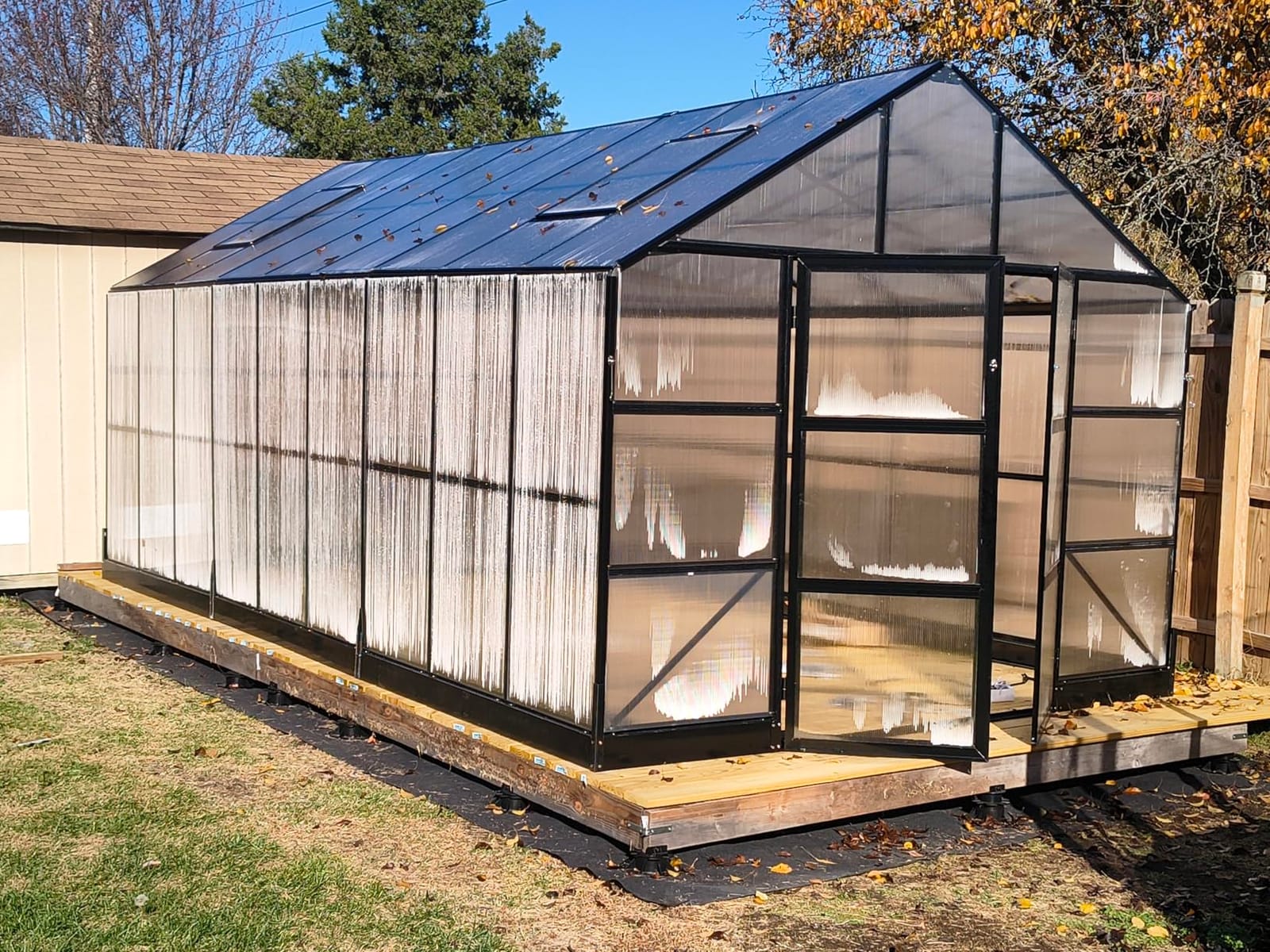
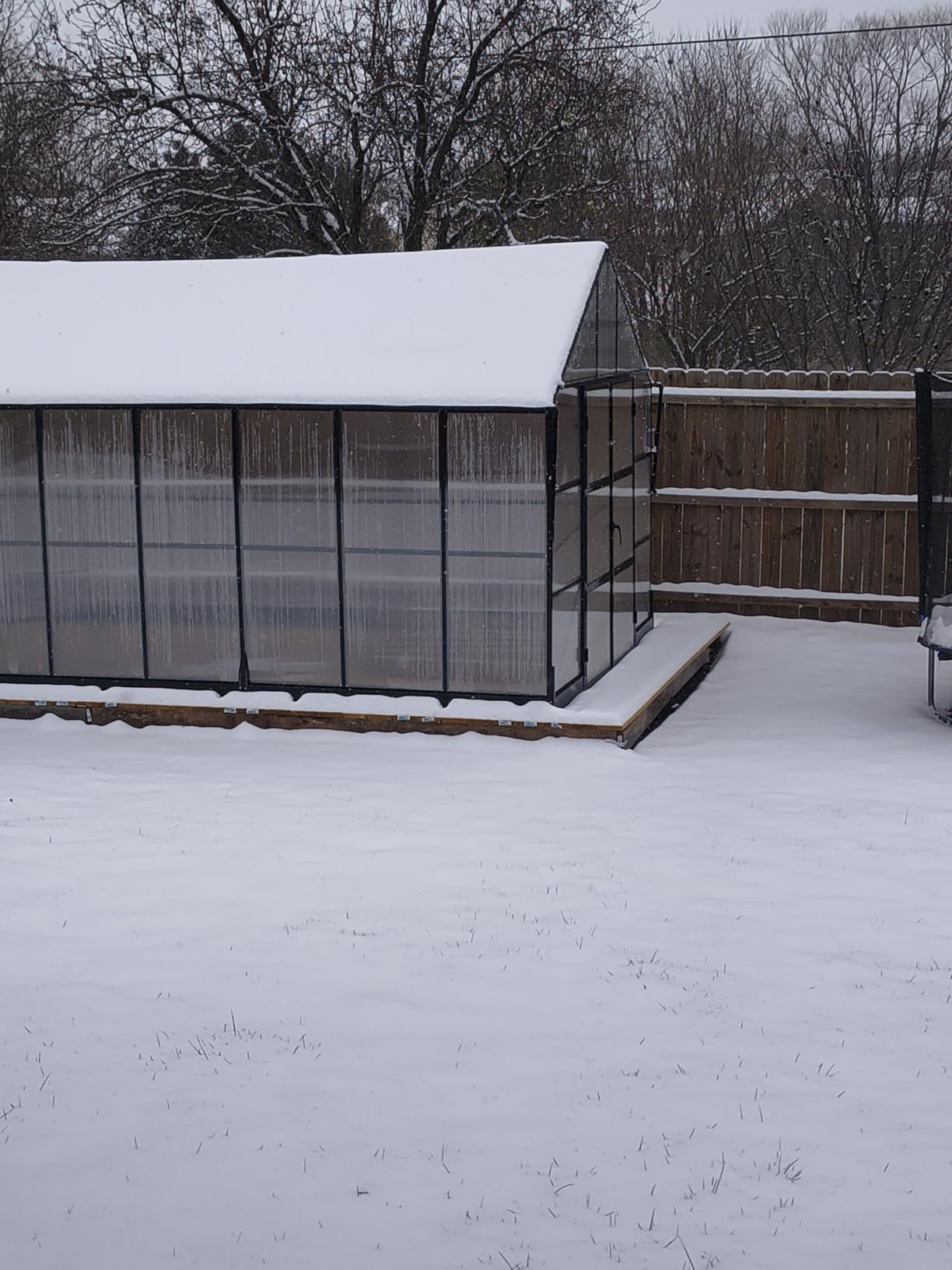
The honest limitation is verification. With 19 reviews, the long-term durability data is thinner than for the Palram Hybrid or the HOWE Pavilion. Owners who have used it through a winter report good performance with proper anchoring, but the lower review volume means we have less collective experience to draw on. Confirm the manufacturer warranty details before purchase.
For snow performance, the frame is solid but the kit does not publish a psf rating. Owners in moderate snow climates report good results. In heavy snow belt zones, plan on active snow removal after storms.
For whom it’s good
This is the right kit if you want maximum growing space in a mid-size footprint and you value ventilation. The four skylights, rain gutters, and oversized interior are the headline features, and the price is competitive for the size class. If you are in zones 5 or 6 and want a productive kitchen greenhouse, this is worth a serious look.
For whom it’s bad
Skip it if you sit in heavy snow country. Without a published psf rating, this is a moderate-climate kit that needs active snow removal in deeper zones. For deeper snow, the HOWE Pavilion is a safer pick.
10. AMERLIFE 12x10x8 FT Hybrid Greenhouse – Quick-Connect Aluminum Hybrid
AMERLIFE 12 x 10 x 8-Ft Hybrid Polycarbonate Greenhouse
Quick-connect aluminum frame
18 psf snow load
56 mph wind rating
Hybrid polycarbonate panels
Pros
- Quick-connect assembly system cuts install time by about half
- Hybrid polycarbonate panels mix clear and translucent for high impact resistance and UV protection
- Reinforced aluminum frame with thickened supports
- 18 psf snow load and 56 mph wind rating published
- Two adjustable roof vents for controlled airflow
- Integrated gutter system for rainwater collection
- Spear-shaped bird spikes deter perching
- Double swing doors for easy access
Cons
- Some parts may arrive damaged or with bent metal
- Hardware can be missing and quality control issues have been reported
- Sticker labels leave residue that requires extra cleanup
- Some sections of instructions lack detail
- Caulking required for proper sealing in winter
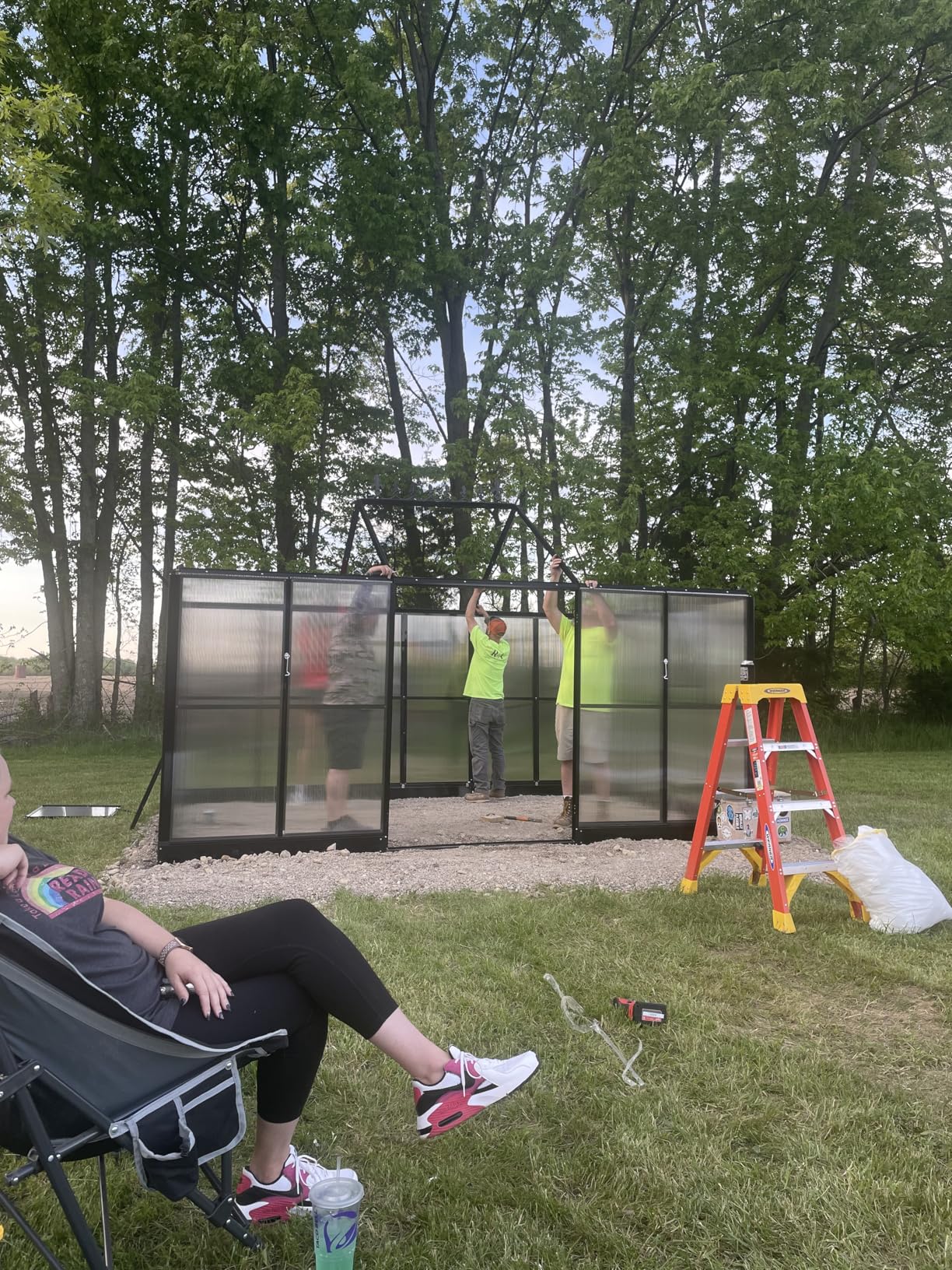
The AMERLIFE Hybrid closes out the roundup with a published 18 psf snow load rating and a 56 mph wind rating, which puts it ahead of most budget-tier kits and into moderate snow country territory. The quick-connect assembly system is the practical win: three people can realistically have it standing in about six hours, which is faster than almost anything else in this size class.
The hybrid polycarbonate panels mix clear and translucent sections, which balances light transmission with diffusion. Reinforced aluminum supports give the frame more rigidity than a standard aluminum kit, and the integrated gutter system handles rainwater cleanly. The spear-shaped bird spikes are a small detail that prevents birds from tearing up the roof panels.
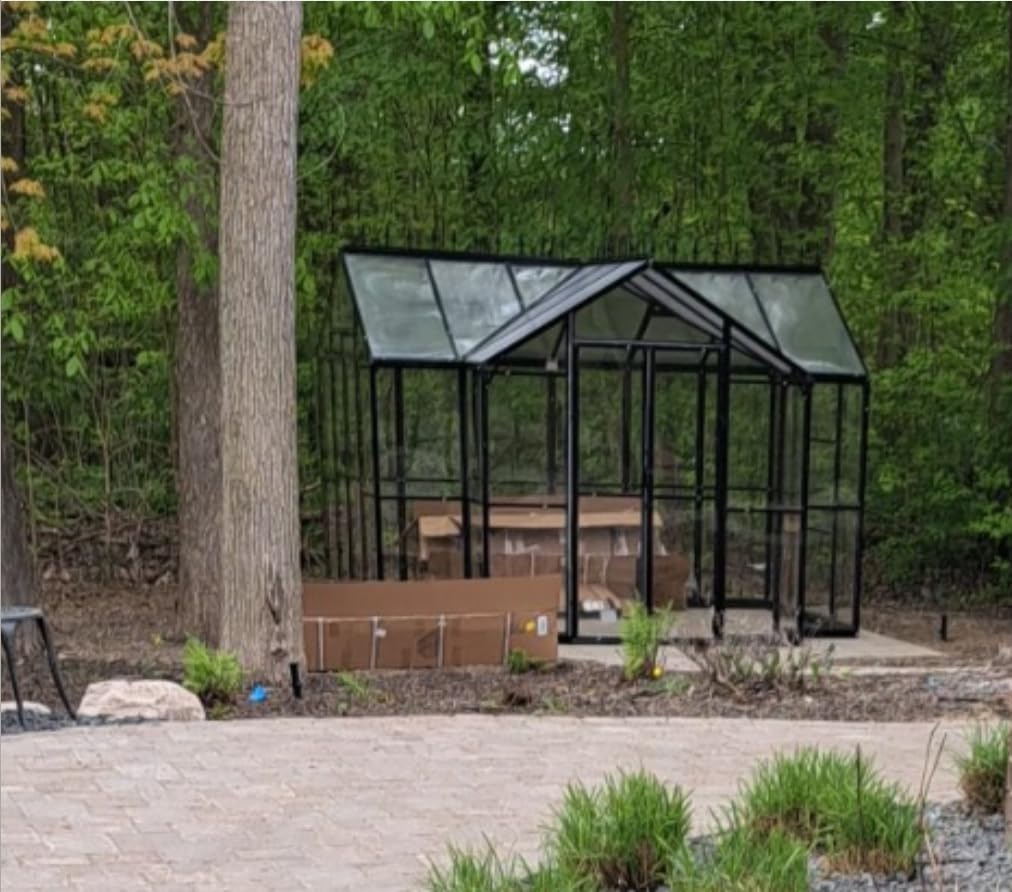
The honest weaknesses are quality control and sealing. Some owners report bent metal or missing hardware on arrival, and the instruction manual is light on detail for a few sections. The sticker residue on the frame is annoying but solvable with a citrus cleaner. For winter, plan on running a bead of caulk along the seams because the factory seal is not airtight on every unit.
For snow performance, the 18 psf rating covers most of zones 5 and 6, and sheltered zone 4 sites. The roof sheds snow reasonably well thanks to the hybrid panel layout, but in deeper snow you still want to sweep after storms.
For whom it’s good
This is the right kit if you want a quick build with a published snow load number at a mid-tier price. The 18 psf rating gives you real headroom over unrated kits, and the six-hour build is a major time saver. If you are in zones 5 or 6 and value speed of assembly, this is a smart pick.
For whom it’s bad
Skip it if you are in heavy snow country or you want a zero-touch installation. The 18 psf rating is below what mountain and upper Midwest winters deliver, and the quality control and sealing work are real. For deep snow, the HOWE Pavilion remains our top choice.
Snow Load Rating Explained: How Much Snow Can a Greenhouse Roof Hold?
A greenhouse snow load rating tells you how many pounds per square foot of accumulated snow the roof can support before structural failure. Ratings in this roundup range from about 18 psf on the AMERLIFE Hybrid up to 30 psf on the HOWE Pavilion. To translate that to real snow, fresh powder weighs about 5 to 10 pounds per cubic foot, while wet, packed snow can weigh 20 pounds or more per cubic foot. A 20 psf rating handles roughly 1.5 to 2 feet of fresh powder or about 8 to 12 inches of wet snow.
Your regional ground snow load matters more than any single number on a kit. The Northeast snow belt, the Upper Midwest, mountain states, and most of Canada sit between 30 and 60 psf ground snow load, which is well above what most hobby kits are engineered for. For reference, the Penn State Extension greenhouse production guide treats 20 psf as a baseline for moderate climates and recommends 40 psf or higher for heavy snow country.
Snow load ratings and wind ratings are different. A 60 mph wind rating does not tell you anything about how much snow the roof holds, and vice versa. In real storms you get both, so look for kits that publish both numbers and pick the lower of the two against your regional conditions.
Frame Material: Aluminum vs Galvanized Steel vs Wood for Snow
Aluminum extrusions are the standard for hobby kits because they are lightweight, rust-proof, and easy to ship. For snow country, look for 1.5mm or thicker aluminum walls. The HOWE Pavilion and the 8×16 model both use 1.5mm frames, which is a meaningful step up from the thinner aluminum on budget kits.
Galvanized steel is heavier but stiffer, which is why hybrid kits like the Palram Oasis combine a galvanized steel base with aluminum upper frame. The steel handles the load transfer to the ground while the aluminum resists corrosion higher up. For very heavy snow, a full galvanized steel frame is the strongest option but it is heavier to ship and harder to assemble.
Wood, like the Yardenaler or Aoxun cedar kits, brings natural insulation and aesthetics. Cedar resists rot and insects, but it is heavier than aluminum and needs annual sealing. Wood frames also tend to be stiffer than thin aluminum, which helps with wind, but the wood quality matters more than the brand on the box. Owners consistently report better performance from FSC certified cedar over soft pine or primed lumber.
Glazing: Twin-Wall Polycarbonate vs Glass vs Single-Wall
Twin-wall polycarbonate is the standard for snow country because it insulates far better than single-wall panels or glass, and it shrugs off hail and falling branches. The thickness matters: 4mm is the budget tier and is fine for moderate climates; 6mm is the most common choice for year-round growing; 10mm, like the Palram Oasis, gives the best insulation per square foot. Glass looks beautiful but it loses heat faster, breaks more easily, and adds significant weight to the frame.
Single-wall polycarbonate is the cheapest option and is really only suitable for three-season use. If you want a four-season greenhouse in snow country, 6mm twin-wall is the minimum and 10mm is the upgrade. For mixed polycarbonate and glass kits, treat them as aesthetic upgrades and verify the snow load rating separately.
Foundation and Anchoring for Heavy Snow Loads
A snow-rated greenhouse is only as strong as what it sits on. The three foundation options that work in snow country are concrete slabs, treated wood perimeter bases, and earth anchors with ground stakes. Concrete is the most permanent and works well for walk-in aluminum kits; treated wood is faster to build and gives you a place to attach the frame with lag bolts; earth anchors are the lightest option and work for hoop-style kits.
Anchor hardware should be rated for at least the snow load on the kit. Expansion bolts for concrete, lag bolts for wood, and helical earth anchors for soil are the three standards. Use every anchor point the manufacturer specifies. Snow country owners who skipped anchors are the ones posting collapsed greenhouse photos after the first storm.
Snow Removal Routine: How to Keep Snow from Collapsing Your Greenhouse?
Even a snow-rated greenhouse benefits from a simple removal routine. The goal is to clear snow before it accumulates to half the rated depth, which keeps the roof in its strongest range.
Sweep the roof with a long-handled soft broom after every storm larger than 4 inches of wet snow or 8 inches of dry powder.
Push snow away from the base so it does not build up against the walls and push inward.
Clear vents and doorways so cold air does not get trapped under the panels.
Inspect anchors and base bolts each spring for movement or corrosion.
Check glazing channels for cracked seals and reseal with silicone before the next snow season.
If you travel during winter, ask a neighbor to sweep the roof after storms. A basic soft broom and 15 minutes of work is the cheapest insurance you can buy for any greenhouse you plan to keep through winter.
Frequently Asked Questions
What is a good snow load rating for a greenhouse?
A good snow load rating depends on your regional ground snow load. For moderate climates, look for at least 20 psf. For heavy snow country (Northeast snow belt, Upper Midwest, mountain states, Canada), choose a greenhouse rated for 30 psf or higher. Match the kit rating to your local building code ground snow load, not to a generic marketing claim.
Can a polycarbonate greenhouse handle snow?
Yes. Twin-wall polycarbonate panels at 6mm or thicker handle heavy snow when paired with a properly anchored aluminum or steel frame. 10mm twin-wall panels like those on the Palram Oasis Hex are the most insulating option in the hobby class. The key is matching panel thickness, frame strength, and anchoring to your regional snow load.
How much snow can a greenhouse roof hold?
A greenhouse rated for 20 psf can hold roughly 1.5 to 2 feet of fresh powder or about 8 to 12 inches of wet, packed snow. A 30 psf rating handles about 2 to 3 feet of powder or 12 to 18 inches of wet snow. Snow load ratings assume even distribution; unbalanced loads from drifting snow are a separate risk and should be cleared proactively.
Are aluminum frame greenhouses good for snow?
Aluminum frame greenhouses work well in snow country when the frame wall thickness is 1.5mm or greater, the panels are 6mm or thicker twin-wall polycarbonate, and the kit is anchored to a permanent foundation. Thin aluminum frames on budget kits can rack in heavy snow and benefit from upgraded corner braces.
Do I need a heater for a greenhouse in winter snow areas?
In zones 3 through 5, a heater is generally required for year-round growing. Passive solar and insulation alone rarely keep the interior above freezing when outside temperatures drop below 20 degrees F for extended periods. Pair the heater with an automatic vent opener (like the one on the Aoxun cedar kit) to prevent overheating on sunny winter days.
How do I keep snow from collapsing my greenhouse?
Choose a kit rated for at least your regional ground snow load, anchor it to a permanent foundation with manufacturer-specified hardware, and sweep the roof with a soft broom after every storm larger than 4 inches of wet snow or 8 inches of dry powder. Keep snow cleared from the base so it does not push walls inward, and inspect anchors each spring.
Should I get a gothic or round arch greenhouse for snow?
A gothic arch greenhouse sheds snow more reliably than a round arch because the steeper sides allow snow to slide off before it piles up. Round arch kits work fine for moderate snow but require more active removal in heavy snow country. If you want passive shedding, look for a gothic or steep gambrel profile like the Victorian crest on the HOWE Pavilion.
Final Verdict: Which Heavy Snow Greenhouse Should You Buy?
The best greenhouses for heavy snow loads in 2026 split into three camps. For most year-round growers, the Palram Canopia Hybrid 6×14 is the safest all-around buy, with the deepest review history and a frame that handles moderate snow country with proper anchoring. For deep snow belt buyers who need a published 30 psf rating and a 70 mph wind rating, the HOWE Pavilion is the only kit in the lineup that meets the spec without compromise. For budget-focused gardeners in milder zones, the Jocisland 6×12 quick-connect kit is the most approachable entry point.
Whichever kit you choose, anchor it to a permanent foundation, sweep the roof after every major storm, and match the kit’s snow rating to your regional ground snow load rather than to a marketing claim. If you want to compare against another category, our polycarbonate greenhouse roundup is a useful companion read. And if your winters drop heavy snow on the rest of your property, our picks for the best two-stage snow blowers and the best track snow blowers for steep driveways will save your back when you clear the path to the greenhouse door. For moving soil and compost in once the ground thaws, the heavy-load wheelbarrow roundup rounds out the snow country kit list.
Pick the kit that matches your zone, anchor it well, and you will be harvesting greens in February instead of staring at a collapsed frame in March.