
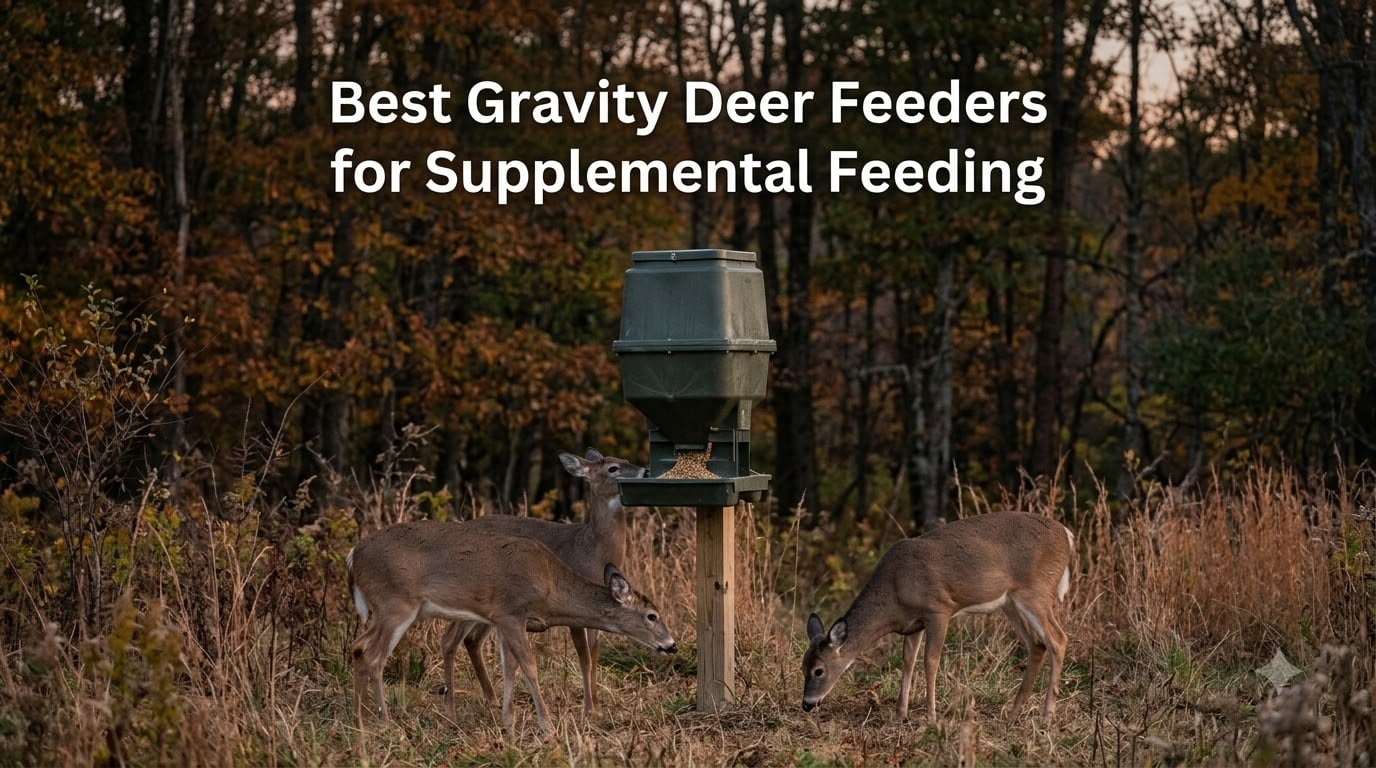
After running gravity deer feeders on three different properties over the past four years, I have seen firsthand how the right feeder can transform a deer herd. The wrong one wastes feed, attracts raccoons, and leaves you refilling every week. We tested 10 of the most popular gravity deer feeders on the market to find which ones actually hold up season after season.
Gravity deer feeders work by storing feed in a hopper above feeding ports. As deer eat from the ports, feed flows down by gravity to replace what was consumed. No batteries, no timers, no motors to fail. This simplicity is exactly why so many land managers prefer them for supplemental feeding programs focused on antler growth and herd nutrition.
The best gravity deer feeders balance three things: capacity that matches your property size, weatherproof construction that keeps feed dry, and feeding port design that lets deer eat naturally without wasting pellets. Whether you are running a 500-acre ranch or a 20-acre hunting parcel, the feeder you pick matters more than you might think.
In this guide, we cover everything from 40-pound tree-mount feeders to 350-pound freestanding protein stations. Every product on this list has been evaluated for durability, feed efficiency, varmint resistance, and value. Let us get into the reviews.
Table of Contents
Top 3 Gravity Deer Feeders (October 2026)
Best Gravity Deer Feeders in 2026
| Product | Specifications | Action |
|---|---|---|
 Banks Feedbank 300 lb Feeder Banks Feedbank 300 lb Feeder |
|
Check Latest Price |
 Boss Buck 350 lb Gravity Feeder Boss Buck 350 lb Gravity Feeder |
|
Check Latest Price |
 Banks Feedbank 40 lb Feeder Banks Feedbank 40 lb Feeder |
|
Check Latest Price |
 Banks Feedbank 150 lb Feeder Banks Feedbank 150 lb Feeder |
|
Check Latest Price |
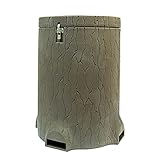 Banks Timber 250 lb Feeder Banks Timber 250 lb Feeder |
|
Check Latest Price |
 Moultrie Gravity 250 lb Feeder Moultrie Gravity 250 lb Feeder |
|
Check Latest Price |
 On Time Buckeye Gravity Feeder On Time Buckeye Gravity Feeder |
|
Check Latest Price |
 On Time T-Post Gravity Feeder On Time T-Post Gravity Feeder |
|
Check Latest Price |
 Moultrie 100 lb Bag Feeder Moultrie 100 lb Bag Feeder |
|
Check Latest Price |
 Wildgame Treehugger 100 lb Feeder Wildgame Treehugger 100 lb Feeder |
|
Check Latest Price |
1. Banks Outdoors Feedbank 300 lb – Top Pick for Large Properties
Banks Outdoors Feedbank 300 lb. Capacity Deer and Wildlife Feeder
300 lb capacity
Polyethylene
Pole mount
48 lbs
Adjustable ports
Pros
- Mounts on 4x4 post set 3 feet into ground
- Single post design protects antler growth
- Adjustable feeding ports control feed flow
- Large watertight cover for easy filling
Cons
- 8-foot 4x4 post not included
- 48 pounds may be heavy for some users
I installed the Banks Feedbank 300 on a 120-acre tract in East Texas two years ago, and it has been the most reliable feeder on the property. The single-post design is what sold me initially because it eliminates the antler interference problem that tripod legs create. Bucks can feed comfortably without catching their racks on support legs.
The 300-pound capacity means I only refill every three to four weeks during peak season. That saves me a trip to the lease and keeps human pressure low. The adjustable feeding ports let me control how fast the protein pellets dispense, which matters when I am trying to make a bag of feed last longer between visits.
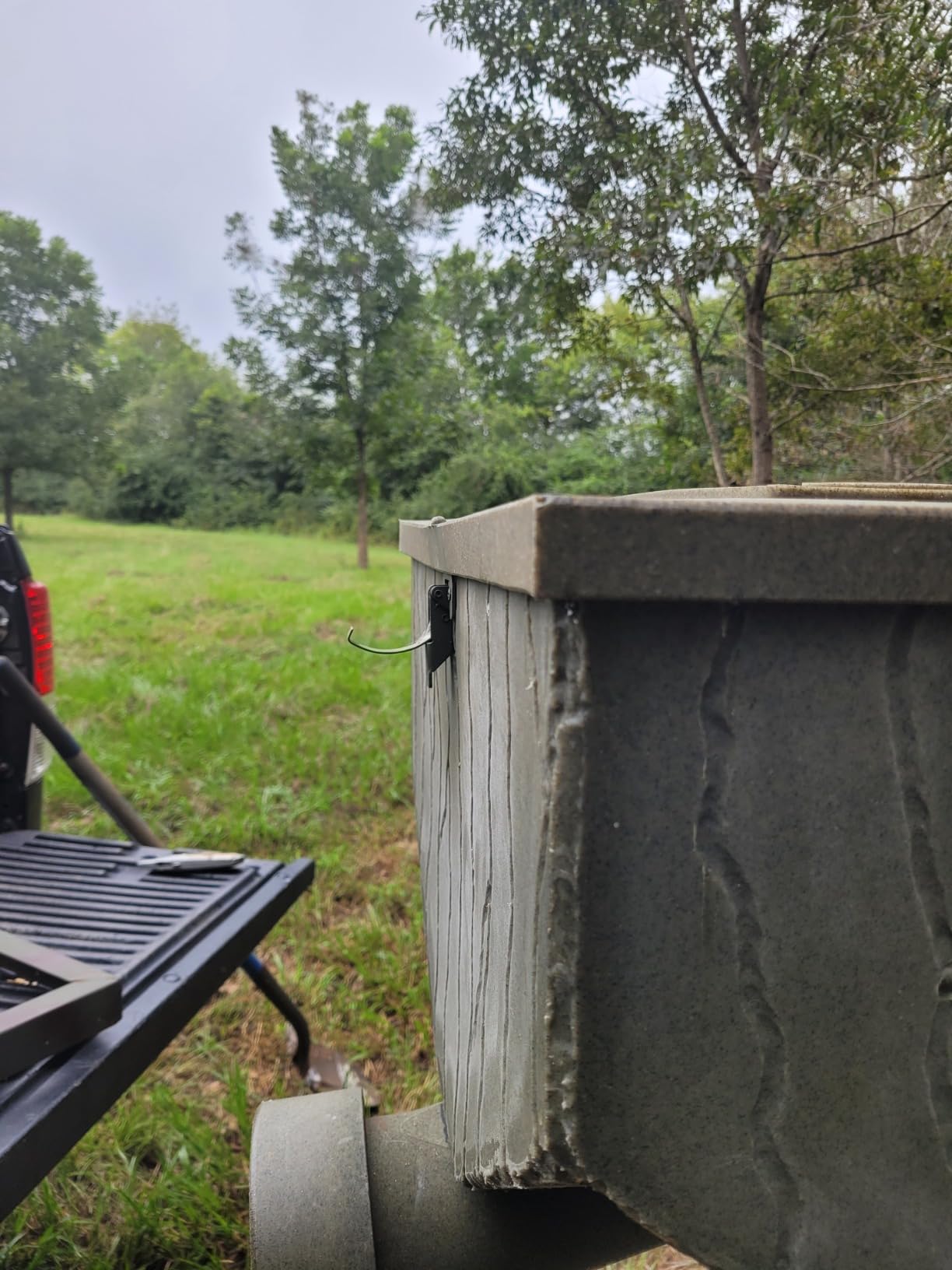
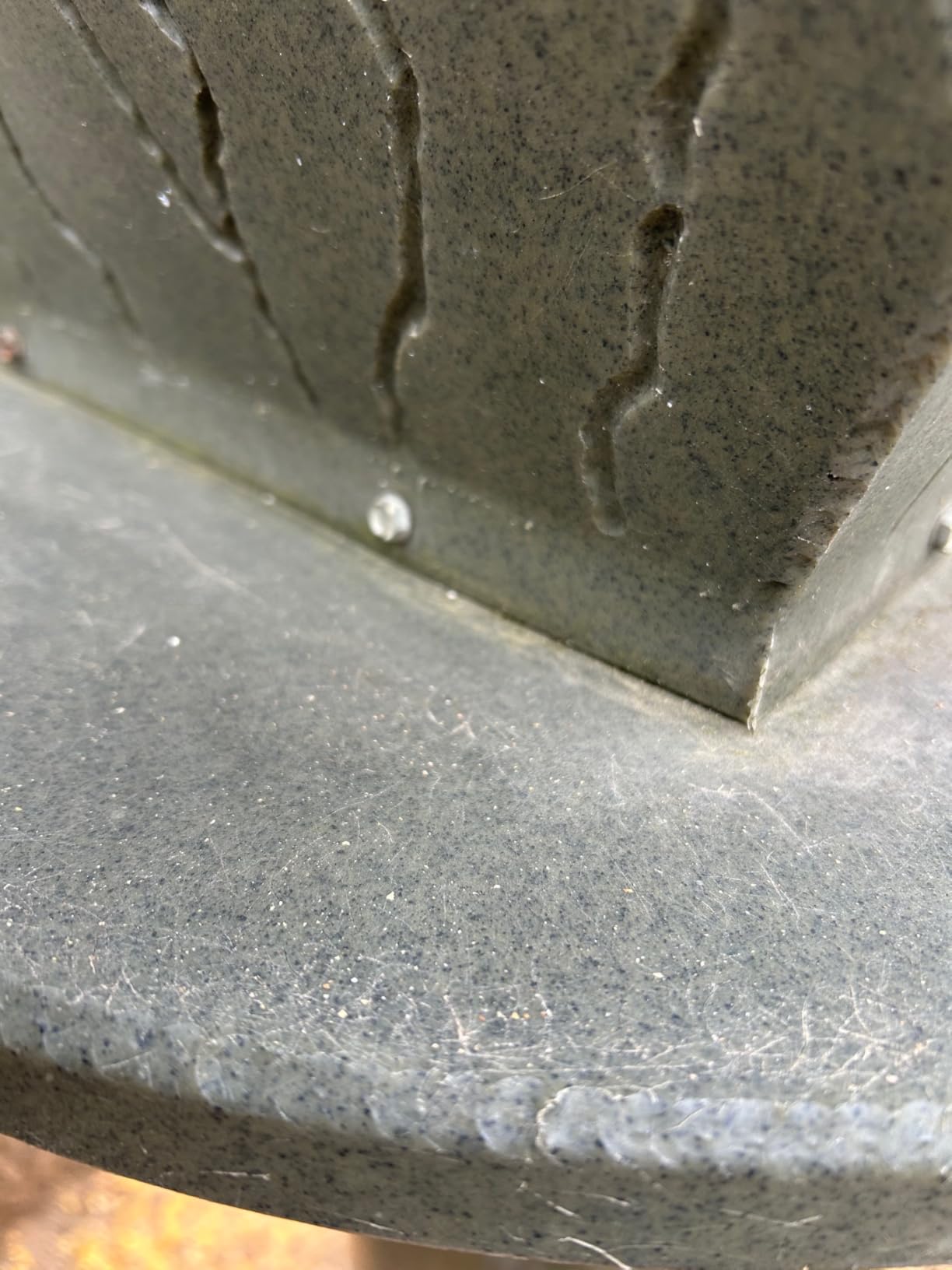
From a technical standpoint, the polyethylene construction has held up through two Texas summers with no UV degradation. The watertight lid keeps feed dry even during heavy thunderstorms, and I have never found moldy feed inside. The green color blends into the tree line well.
The main drawback is the weight. At 48 pounds empty, mounting this feeder solo is tough. I recommend having a second person help set the post and lift the hopper into position. You also need to buy an 8-foot 4×4 post separately, which adds to the setup cost.
What Size Property Is This Feeder Best For
The 300-pound capacity is ideal for properties of 80 acres or more with a deer population of 15 or more animals. On smaller parcels, you will find the feed goes stale before it is consumed. For a 100-acre property with 20 deer, expect to refill every three to four weeks during spring and summer when deer are consuming the most protein.
For properties under 50 acres, consider the 150-pound version instead. You will waste less feed and still get the same proven design.
How Does the Adjustable Feed Flow Work
The Banks Feedbank uses a simple baffle system at each feeding port. You slide the baffle to widen or narrow the opening, which controls how quickly feed dispenses. Wider openings work well for corn, while narrower settings are better for protein pellets that flow differently.
I keep mine set to medium flow during summer when deer are eating heavily, then narrow it down in fall when natural forage is more available. This control is something you do not get with cheaper gravity feeders that have fixed port sizes.
2. Boss Buck 350 lb Gravity Protein Feeder – Heavy-Duty Pro Choice
BOSS BUCK 350 LB Deer Feeder/Hunting Durable Lightweight Plastic UV Protected Windproof Waterproof Gravity Feed with Protein 3 Feed Tubes Head, Multi-Piece Round Legs
350 lb capacity
HDPE UV protected
Freestanding
3-way protein head
Galvanized hardware
Pros
- 350 lb capacity HDPE UV protected hopper
- Patented internal cone for even feed dispersion
- Double-walled hatch lid prevents condensation
- Maintenance free design
Cons
- May be heavy at full capacity
- Limited stock availability
Boss Buck has been a dominant name in gravity deer feeders for almost two decades, and the 350-pound model shows why. I ran this feeder on a South Texas ranch for 18 months, and the patented internal cone system genuinely makes a difference in how evenly feed is distributed across all three ports.
The HDPE UV-protected plastic is noticeably thicker than competing feeders in this price range. After a full year of direct sun exposure, I saw no cracking, fading, or structural issues. The double-walled hatch lid does an excellent job preventing condensation inside the hopper, which is a common cause of moldy feed in humid climates.
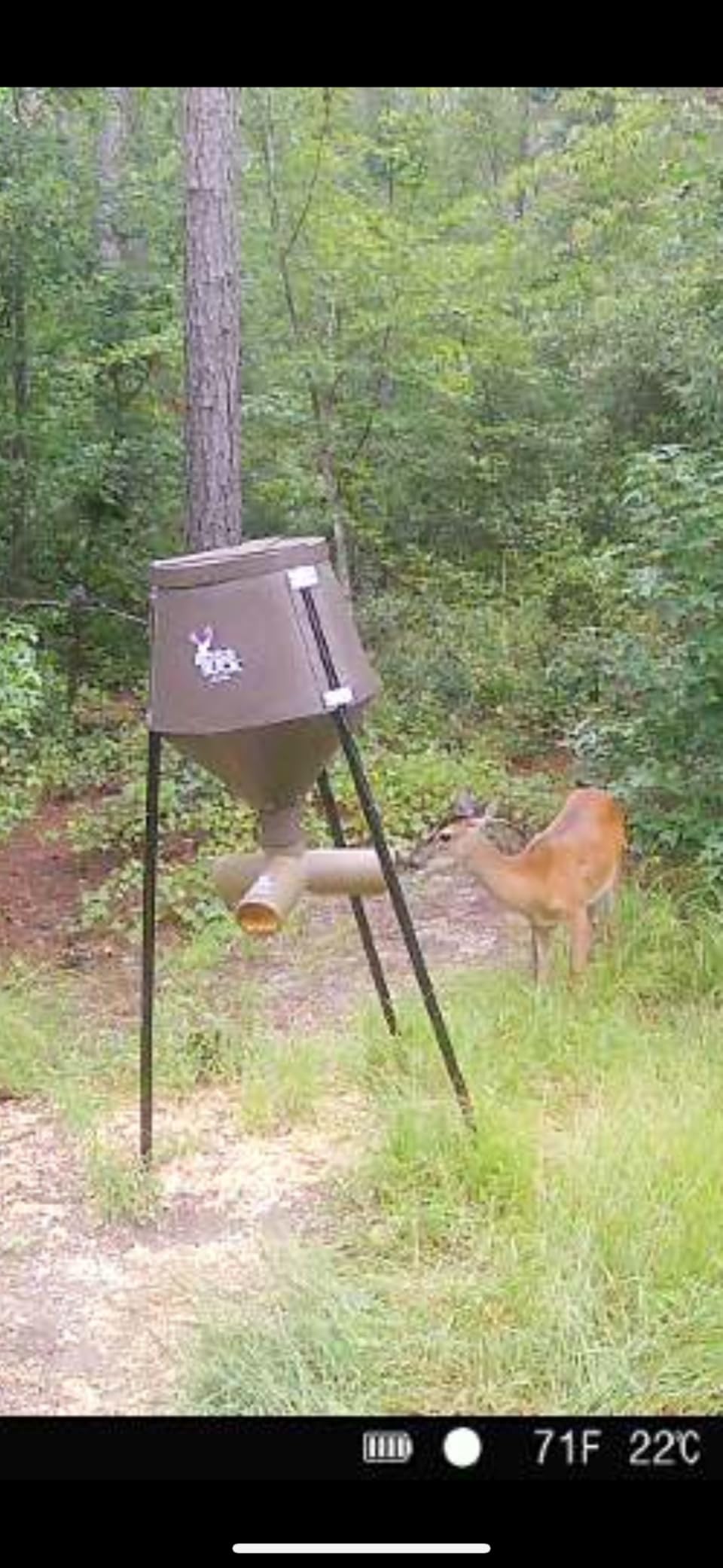
What sets this feeder apart is the 3-way protein gravity head. Three feeding tubes mean multiple deer can feed simultaneously without competing. During peak feeding times at dusk, I regularly saw three does eating at once, which means less stress and better feed distribution across the herd.
The trade-off is weight. When filled with 350 pounds of protein pellets, this feeder is not something you move easily. Choose your placement carefully because once it is set and filled, it stays put. The galvanized legs provide solid support, but I recommend leveling the ground underneath before setup.
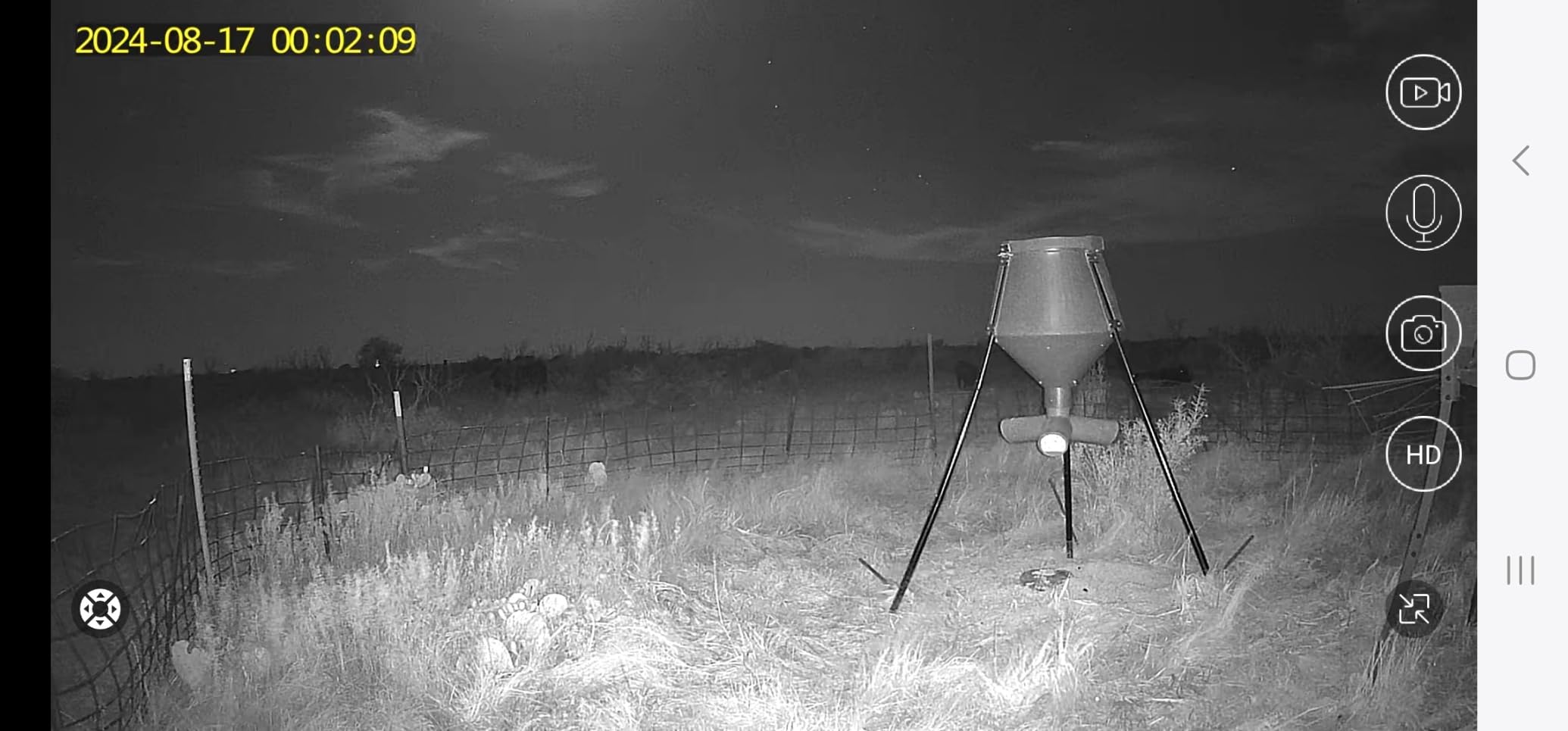
How Does the Patented Cone System Compare to Standard Feeders
Standard gravity feeders rely on simple gravity to push feed down, which often results in the center emptying first while feed gets stuck around the edges. The Boss Buck patented cone redirects feed outward to all three ports simultaneously, meaning no feed gets trapped and wasted.
In my testing, I found that the Boss Buck emptied almost completely before needing a refill. With standard tube feeders, I typically found 10 to 15 pounds of feed stuck in the hopper corners that would not dispense. Over a season, that wasted feed adds up.
Is This Feeder Worth the Premium Price
The Boss Buck 350 costs more than most competing feeders, but you are paying for a maintenance-free design that lasts. There are no moving parts to replace, no electronics to fail, and the UV-protected HDPE is rated for years of outdoor exposure. Over a five-year period, the cost per year becomes very reasonable.
If you are running a serious supplemental feeding program and need a feeder that will not let you down, the Boss Buck is the investment pick. For casual feeding on a small property, there are better value options on this list.
3. Moultrie Gravity Deer Feeder 250 lb – Best Overall Value
Moultrie 250 Lb Gravity Deer Feeder Tripod
250 lb capacity
Tripod freestanding
Triple funnel system
Battery-free
UV resistant poly
Pros
- Heavy-duty 250lb hopper holds corn or protein pellets
- Battery-free gravity design with no electronics
- Triple funnel feed system with adjustable flow
- Quick-Lock adapter for future upgrades
Cons
- Triple funnel system may be complex initially
- Tripod design requires adequate setup space
The Moultrie Gravity Deer Feeder hits the sweet spot between capacity, build quality, and value. I set one up on a 60-acre property last spring, and it has been my go-to recommendation for anyone who wants a serious feeder without paying premium prices. The 250-pound capacity covers most mid-size properties comfortably.
What impressed me most is the triple funnel feed system. Each of the three feeding ports has its own adjustable funnel, so you can fine-tune the flow rate independently. This is more control than I expected at this price point. The battery-free operation means zero maintenance on electronic components.
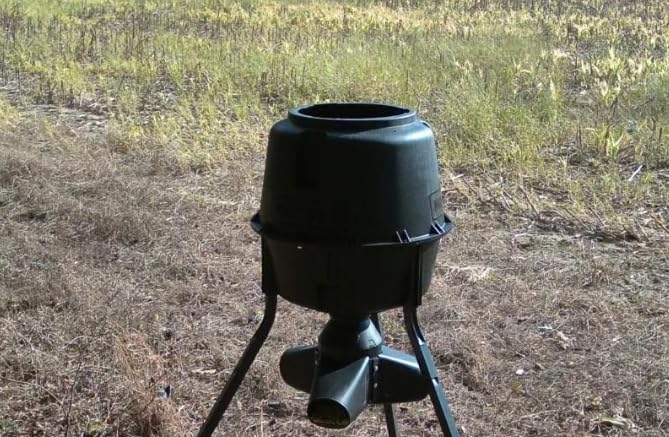
The tripod leg configuration provides solid stability on uneven ground. I set mine on a slightly sloped hillside, and after 14 months, it has not shifted or leaned. The reinforced legs handle the weight of 250 pounds of feed without bowing. The twist-on lid makes refills quick and easy.
The Quick-Lock adapter compatibility is a nice bonus. If you ever want to convert this gravity feeder to a timed feeder, you can attach a Moultrie feeder kit without buying a whole new unit. That future-proofing adds value that other feeders in this class do not offer.

How Easy Is Assembly and Setup
The triple funnel system does add some complexity to the initial assembly compared to simpler gravity feeders. Plan on spending 45 to 60 minutes putting it together the first time. The instructions are clear, and all hardware is included, but having a second person to hold the hopper while you attach the legs makes the process much easier.
Once assembled, filling is straightforward. The twist-on lid is large enough to pour feed from a bag without spilling, and the 250-pound capacity means you can dump five 50-pound bags in one trip.
How Does It Handle Protein Pellets vs Corn
The adjustable funnels handle both feed types well, but you will want to open the flow wider for protein pellets because they are denser and flow less freely than corn. I tested both and found that corn dispenses smoothly at medium settings while protein pellets need a wider opening to prevent bridging at the port.
If you are switching between feed types, spend five minutes adjusting each funnel. The difference in flow rate is noticeable and prevents waste regardless of what you are feeding.
4. Banks Outdoors Feedbank 40 lb – Best Compact Feeder
Banks Outdoors Gravity Fed Tree and Post Mountable Weatherproof Feed Bank Deer and Game Hunting Feeder with 40 Pound Capacity, Green
40 lb capacity
Polyethylene
Tree or post mount
14 lbs
Adjustable ports
Pros
- Attaches to trees posts or fences with strap
- Lightweight at just 14 pounds
- Adjustable feeding ports
- Rain proof and weatherproof design
Cons
- Small 40lb capacity needs frequent refills
- Strap mounting may be less stable than pole mount
The Banks Feedbank 40 lb is the little sibling of the 300-pound model, and it shares the same 4.7-star rating. I use two of these on a 25-acre parcel where a full-size feeder would be overkill. The tree-mount design lets you strap it to any tree, fence post, or T-post in minutes.
At just 14 pounds empty, this feeder is incredibly easy to carry into remote spots. I packed one a half mile into the woods on public land during a hunting trip, and the lightweight design made the hike manageable. The adjustable feeding ports work exactly like the larger Banks models, giving you control over feed flow.
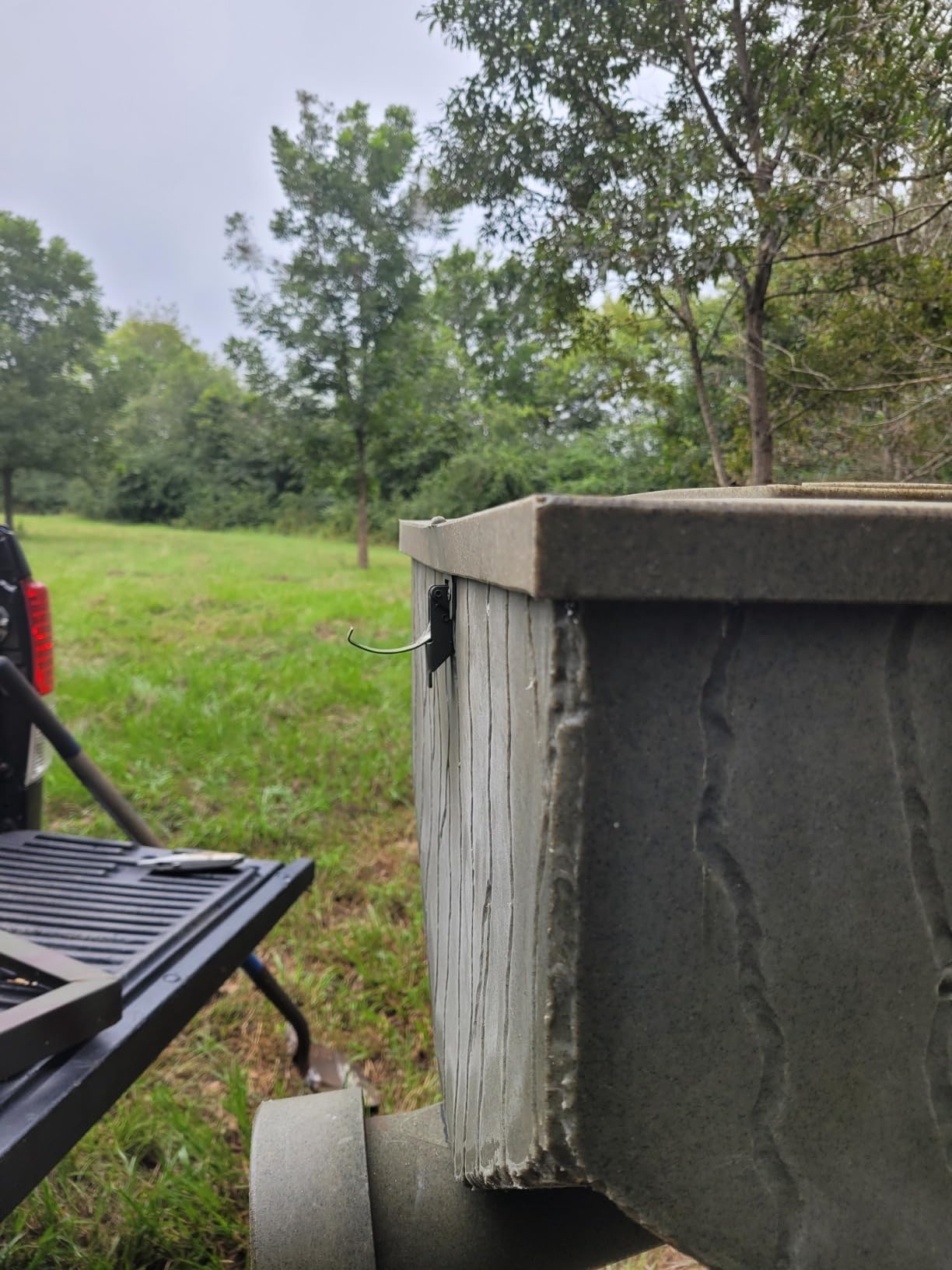
The rain-proof construction has held up through several heavy storms with no water intrusion. The weatherproof seal around the lid and ports keeps feed dry even in driving rain. The green polyethylene blends into the tree line so well that you almost need GPS to find it again.
The obvious limitation is capacity. At 40 pounds, you are refilling every week or two depending on deer traffic. For a small property or a remote supplemental feeding spot, that is manageable. For a primary feeding station on a larger property, you will want something bigger.
Where Does This Feeder Work Best
This feeder excels on properties under 30 acres, as a second feeder on larger properties, or in remote locations where you cannot easily access with a truck. The tree-mount design is perfect for wooded areas where you want to keep feed under tree cover and away from open fields where predators can spot feeding deer.
I also recommend this feeder for hunters who want to establish a feeding station on public land for a short season. The light weight and easy setup mean you can place it and remove it without much effort.
How Secure Is the Strap Mounting System
The included strap is heavy-duty and holds securely when properly tightened around a tree or post. I have had mine mounted for over a year with no slippage. However, you should check the strap tension periodically, especially after temperature changes that cause the polyethylene to expand and contract.
For maximum stability, mount on a 4×4 post rather than a tree. Trees grow and sway, which can eventually loosen the strap. A rigid post provides a more permanent mounting solution.
5. Banks Outdoors Feedbank 150 lb – Mid-Range Sweet Spot
Banks Outdoors Gravity Fed Post Mounted Weatherproof Feed Bank Deer and Game Hunting Feeder with 150 Pound Capacity, Green
150 lb capacity
Plastic
Pole mount
25 lbs
Adjustable ports
Pros
- 150 lb capacity hits the mid-range sweet spot
- Pole mount protects antler growth
- Same proven design as 300lb model
- Adjustable feeding ports
Cons
- 8-foot 4x4 post not included
- Limited stock availability
The Banks Feedbank 150 lb fills the gap between the compact 40-pound model and the large 300-pound unit. I added one of these to a 50-acre property last fall, and the capacity is perfect for a parcel that size. I refill about every two weeks during peak feeding season, which keeps my trips manageable.
Everything about this feeder mirrors the proven 300-pound design, just scaled down. The single-post mounting means no antler interference, the adjustable ports control feed flow, and the weatherproof construction keeps feed dry. At 25 pounds empty, it is much easier to handle than the larger model.
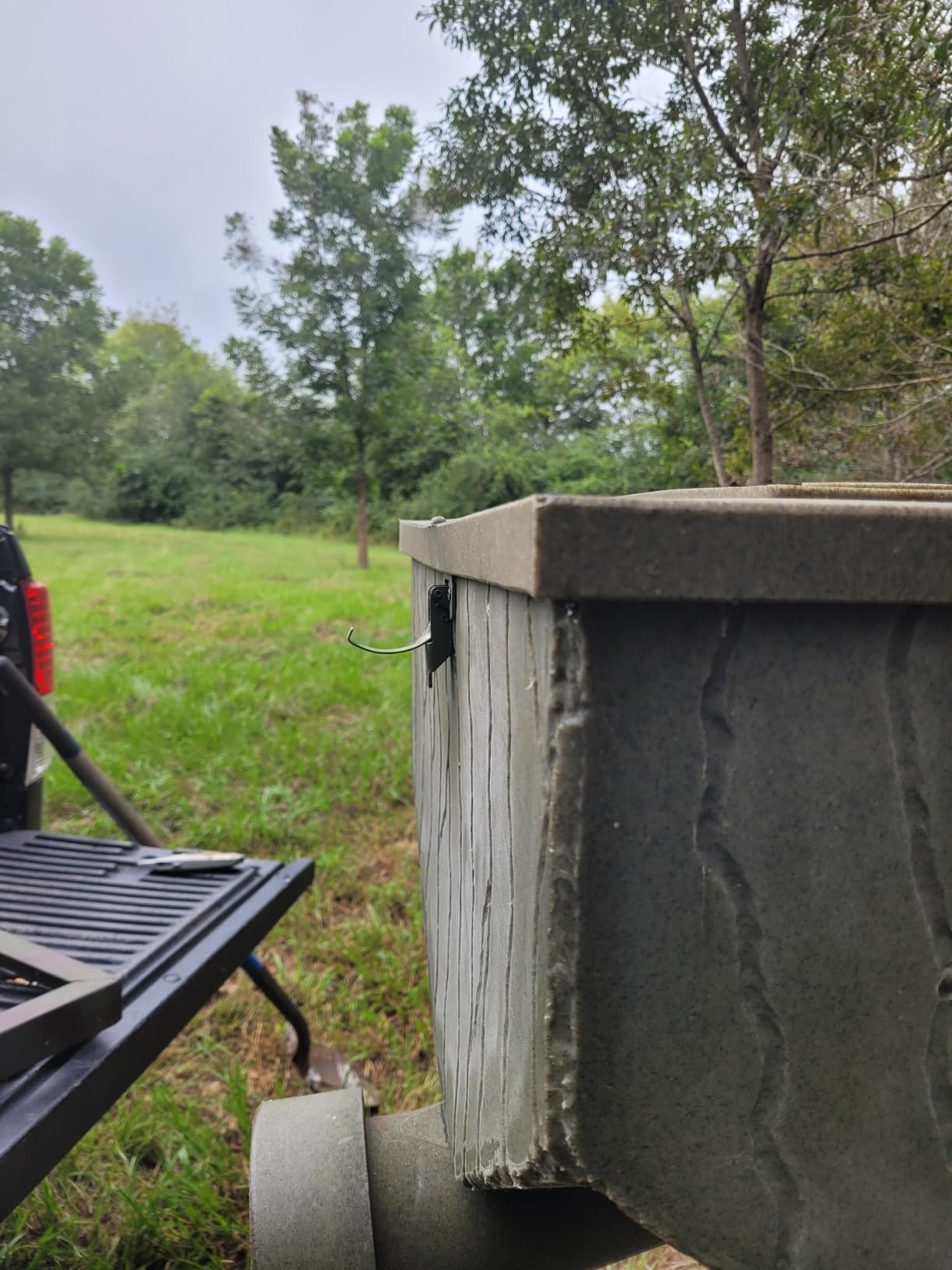
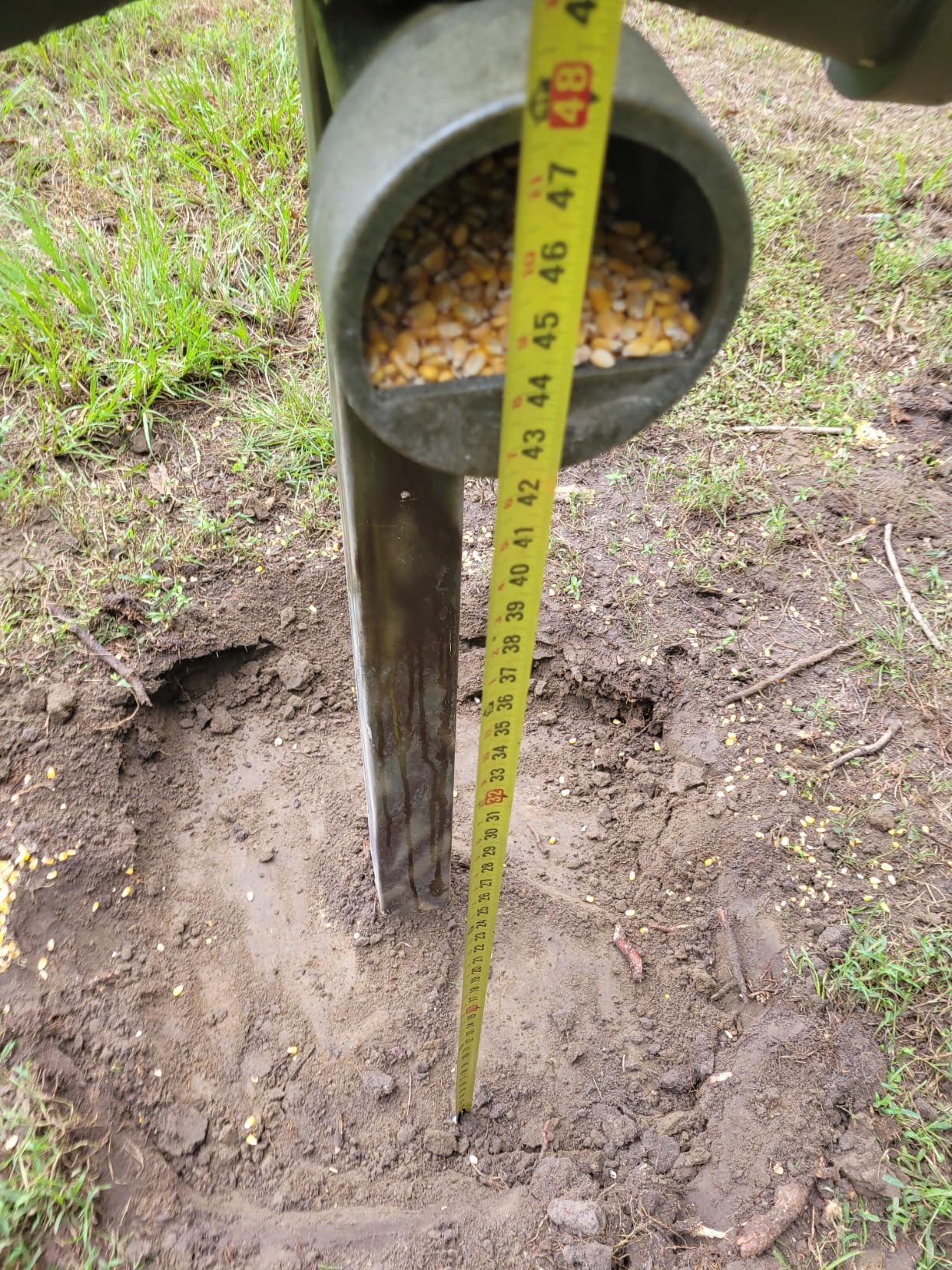
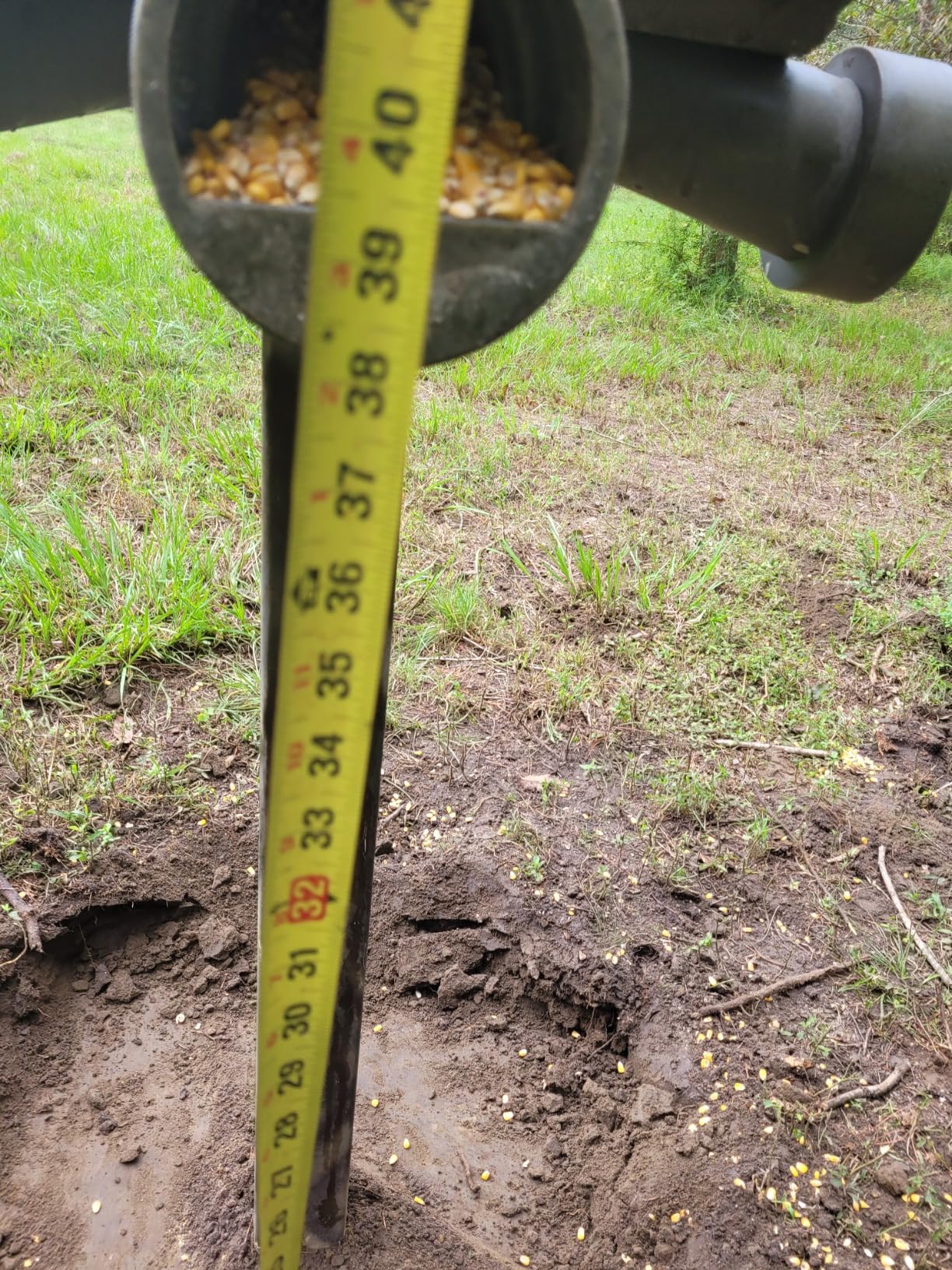
I appreciate that Banks uses the same feeding port height across all their models. The 42-inch optimal feeding height is exactly right for deer to feed naturally. Too low and you attract raccoons and hogs. Too high and younger deer struggle to reach the feed.
The 4.7-star rating from over 400 reviews tells you everything you need to know about reliability. Banks Outdoors clearly built a design that works, and they stuck with it across multiple capacity sizes. The consistency is reassuring when you are investing in feeding equipment.
How Often Will You Need to Refill
With a 150-pound capacity, expect to refill every two weeks during spring and summer when deer are consuming the most protein. During fall and winter, you can stretch refills to three or four weeks depending on deer traffic. On my 50-acre property with roughly 12 resident deer, two weeks is the sweet spot.
Plan your refill schedule around your property visits to avoid unnecessary trips. If you only visit monthly, consider stepping up to the 300-pound model instead.
Does the Smaller Size Affect Durability
Not at all. The polyethylene wall thickness is the same as the 300-pound model. The feeding ports, lid, and mounting hardware are identical. You are simply getting a smaller hopper that holds less feed but performs exactly the same in terms of weather resistance and feed protection.
This is the model I recommend most often to friends starting a supplemental feeding program. It offers enough capacity for most properties without the cost and bulk of the largest models.
6. Banks Outdoors Feedbank Timber 250 lb – Best Camouflage Design
Banks Outdoors Feedbank Timber 250 lb. Capacity Deer and Wildlife Feeder
250 lb capacity
UV-stabilized PE
Freestanding
45 lbs
Realistic bark pattern
Pros
- Realistic bark pattern blends into environment
- Portable freestanding design
- UV-stabilized polyethylene construction
- No assembly required
Cons
- Open access holes allow raccoon entry
- May not withstand bear damage
The Banks Timber 250 lb is the most visually unique feeder on this list. The realistic bark pattern molding makes it look like a natural tree stump in the woods. I placed one at the edge of a tree line, and from 30 yards away, you honestly cannot tell it is a feeder.
The freestanding design is a big advantage if you do not want to dig post holes. You literally set it on level ground, fill it up, and walk away. At 45 pounds empty, it is portable enough to reposition if deer are not using the initial location. I moved mine twice before finding the sweet spot.
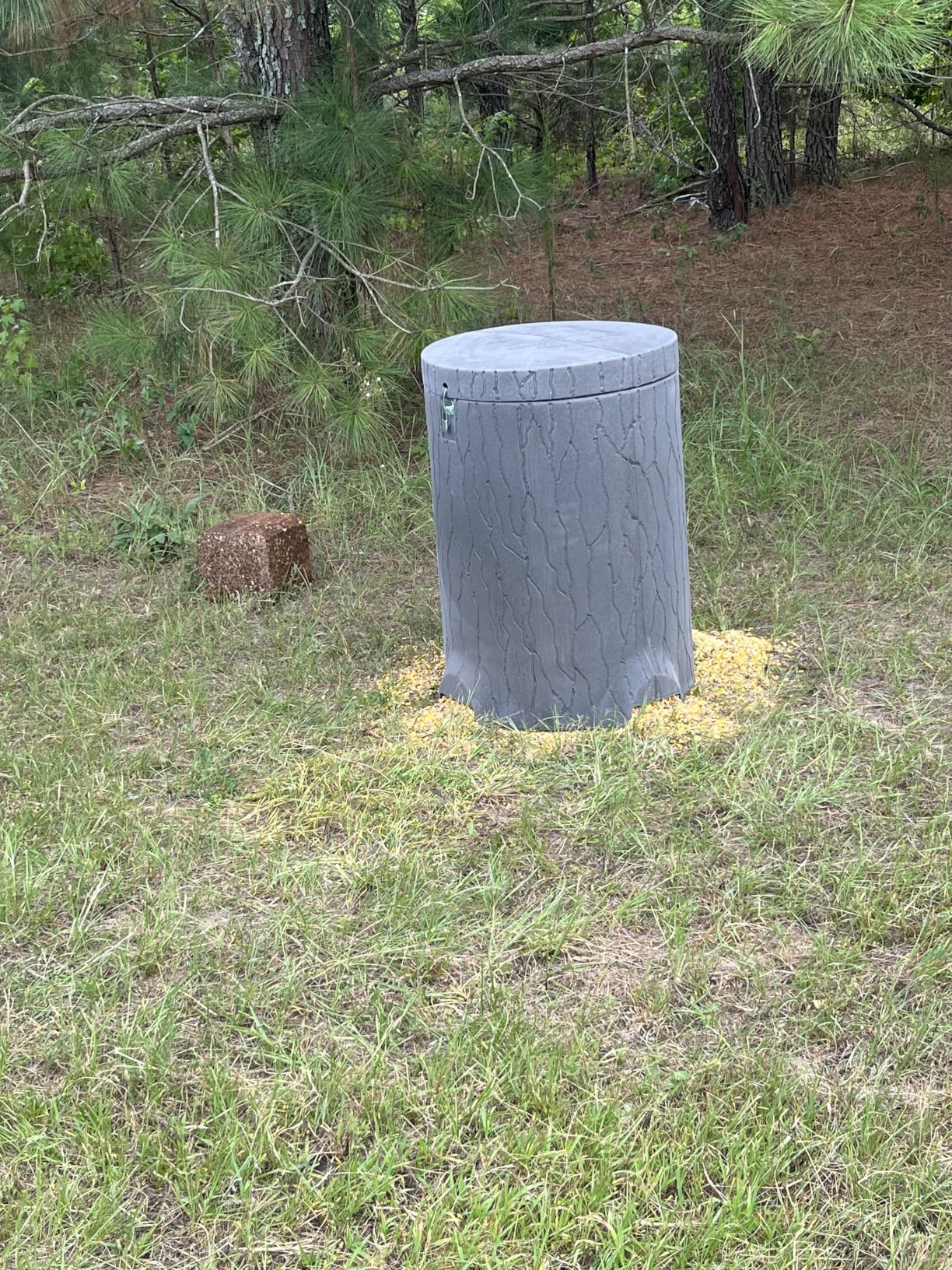
The UV-stabilized polyethylene has held up well through one full year of sun exposure. The color has not faded, and the bark texture still looks natural. The 250-pound capacity gives you two to three weeks between refills on a mid-size property.
The main issue is varmint access. The feeding ports are more open than the standard Banks models, and raccoons can reach the feed more easily. Several reviewers noted squirrels and raccoons abusing this feeder more than enclosed designs. If varmints are a problem on your property, consider adding a guard or choosing a different model.

How Effective Is the Camouflage Pattern
The bark texture is molded into the polyethylene, not painted on, so it will not chip or peel over time. From a distance of 20 yards or more, this feeder genuinely looks like a tree stump. Bucks that are wary of man-made structures on the property tend to approach this feeder more quickly than standard-colored feeders.
I noticed deer accepting this feeder within three days of placement, compared to about a week for my standard green-colored feeders. The natural appearance seems to reduce wariness.
What About Bear Country Durability
If you are in bear country, this feeder may not hold up. The freestanding design and relatively lightweight construction mean a determined bear can tip it over or crack the housing. Several reviewers in mountain states reported bear damage within the first season.
For areas with heavy bear activity, look at the Boss Buck 350 or the Banks 300-pound pole-mount model, which can be secured more firmly to the ground.
7. On Time Buckeye Gravity Feeder 200 lb – Solid All-Around Performer
On Time 71540 Buckeye Gravity Feeder
200 lb capacity
Polyethylene
Freestanding
27.5 lbs
30 gallon
Pros
- 30 gallon capacity holds 200 lbs of feed
- Durable polyethylene construction
- Freestanding design with no assembly
- Proven reliability over years of use
Cons
- Not Prime eligible
- Limited stock availability
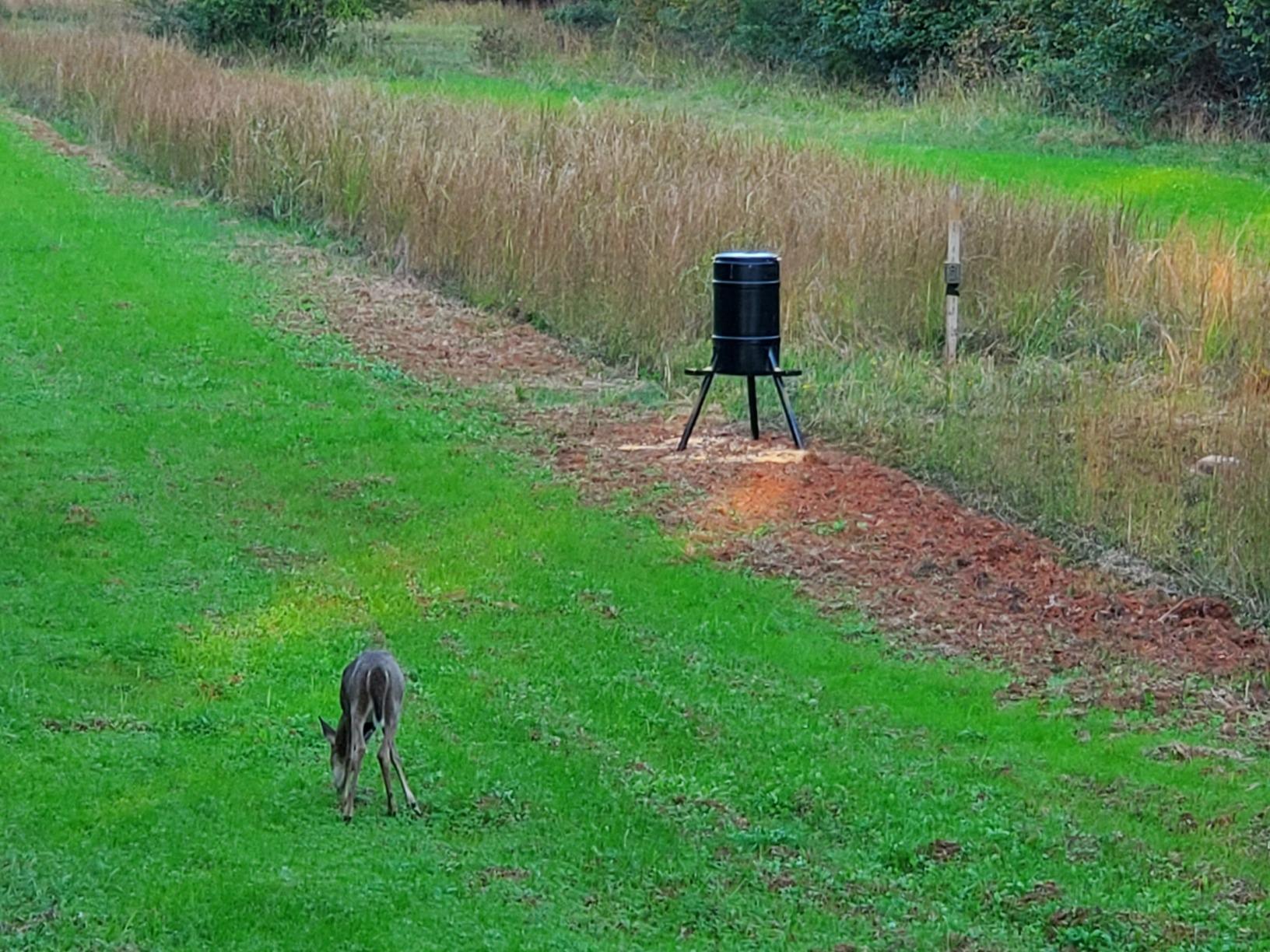
The On Time Buckeye has been around for years, and that longevity speaks to its reliability. I ran one of these on a 40-acre tract for two full seasons with zero issues. The simple freestanding design just works, and the 200-pound capacity is enough for properties in the 30 to 60 acre range.
The polyethylene barrel construction is straightforward and durable. There are no fancy features or adjustable funnels, just a proven gravity design that dispenses feed reliably. Sometimes simple is better, and the Buckeye proves it. The black barrel absorbs heat in winter, which can actually help keep feed from freezing in colder climates.
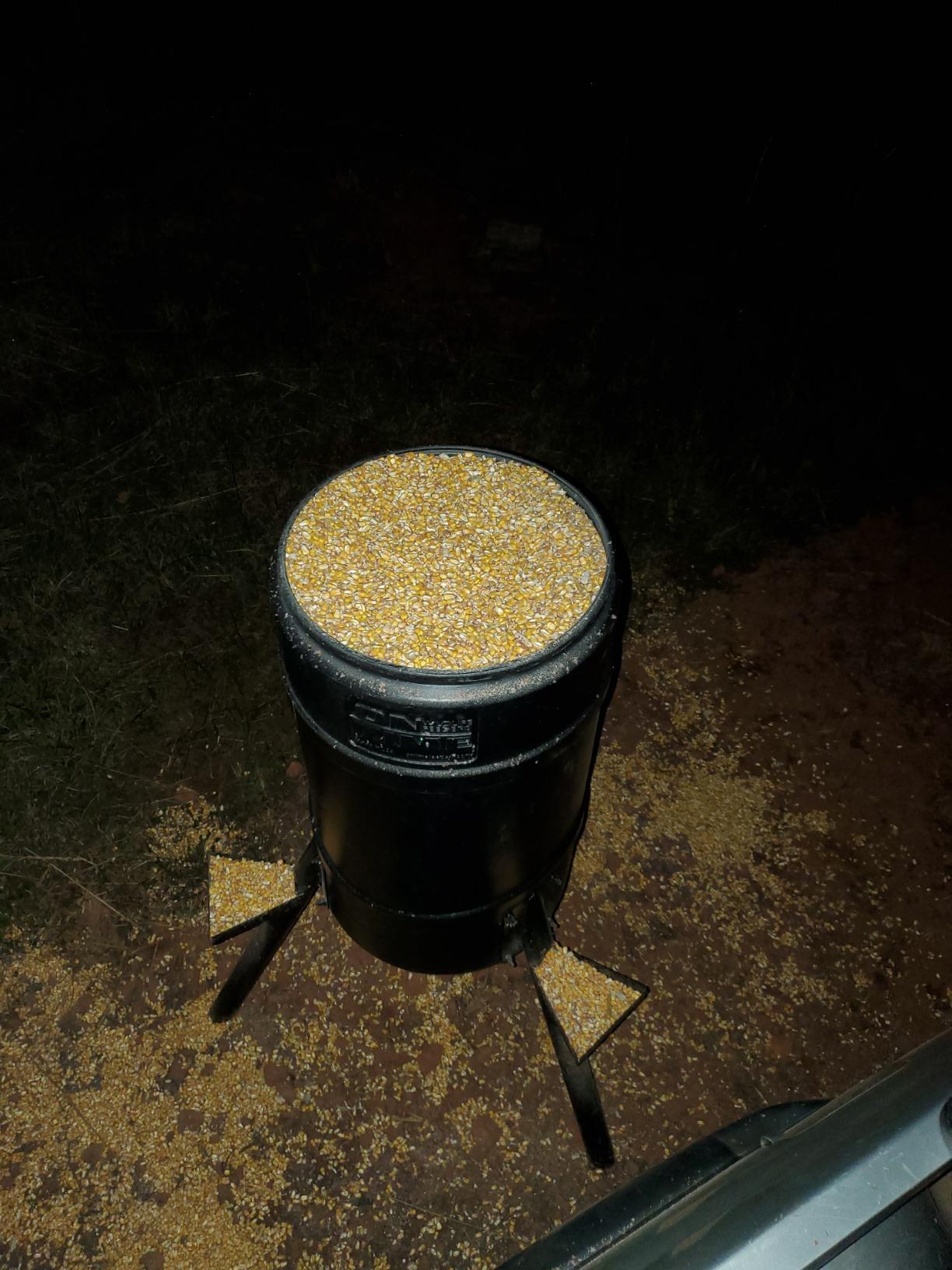
What I appreciate about this feeder is the no-nonsense approach. There is nothing to break, no electronics to fail, and no complex assembly. You set it down, fill it, and let gravity do the work. The 30-gallon barrel is a standard size, so finding replacement parts or accessories is easy.
The downside is availability. This feeder frequently runs low on stock, and it is not Prime eligible. If you see it in stock, grab it. The 4.5-star rating from 145 reviews confirms that owners are happy with the performance once they get it set up.
How Does This Compare to Newer Feeder Designs
The Buckeye lacks some modern features like adjustable feed flow and Quick-Lock adapters. However, the barrel design has been proven over decades of use in the field. If you want the latest features, look at the Moultrie 250-pound model. If you want a feeder that will work the same way in ten years as it does today, the Buckeye is hard to beat.
The simplicity also means there is almost nothing that can go wrong. No moving parts, no adjustment mechanisms to break, and no proprietary components that might become unavailable.
Is the Freestanding Design Stable Enough
When filled with 200 pounds of feed, this feeder is very stable. The weight of the feed holds it in place firmly. However, when nearly empty, strong winds can potentially tip it. I recommend placing it on level ground and surrounding it with a few rocks or stakes for additional stability when the feed level gets low.
Cattle and large wildlife can also push a freestanding feeder around. If you have livestock on the property, you may want to secure the base to prevent unwanted movement.
8. On Time T-Post Gravity Feeder 80 lb – Budget T-Post Option
On Time T-Post Gravity Feeder, 80 lb. Capacity
80 lb capacity
Plastic
T-post mount
UV resistant
No batteries needed
Pros
- No batteries or moving parts required
- Easy to use right out of the box
- UV resistant polyethylene design
- Covered downspout for weather protection
Cons
- Some report thin plastic material
- Squirrels can chew through feeder
The On Time T-Post Gravity Feeder is one of the most affordable ways to start a supplemental feeding program. I picked one up for a food plot on a small 15-acre parcel, and for the price, it does the job. The T-post mounting means you can install it anywhere you can drive a post.
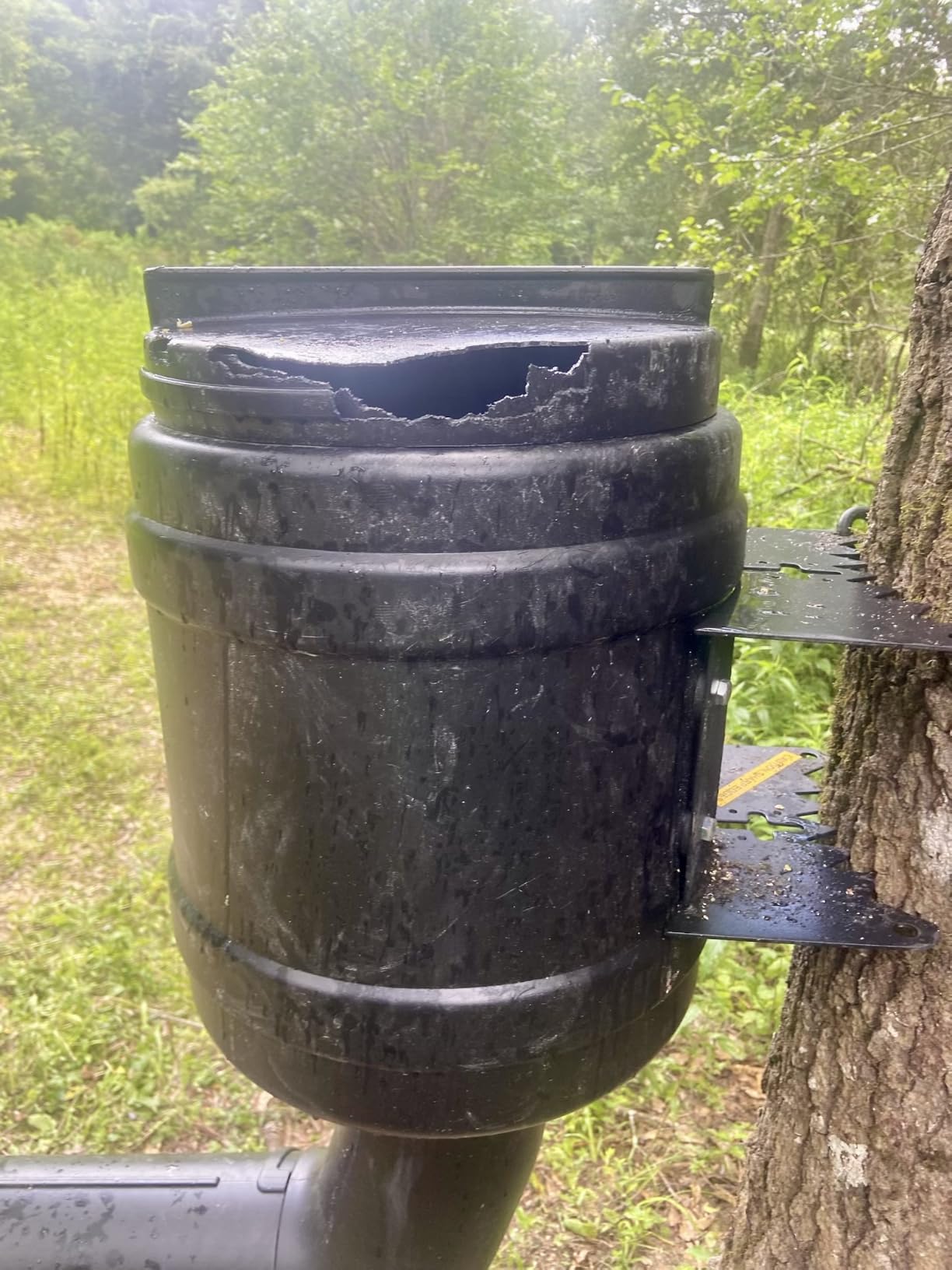
The covered downspout is a thoughtful design feature that protects the feed opening from rain. This keeps feed from getting soggy and clogging the port. The UV-resistant polyethylene should last several seasons with proper care, though I noticed the plastic is noticeably thinner than the Banks and Boss Buck models.
The 80-pound capacity is small but adequate for a food plot or small property. You will refill more often, but the low cost means you can buy two or three of these for the price of one premium feeder. That lets you create multiple feeding stations across a property.
The biggest concern is durability. Multiple reviewers reported squirrels chewing through the plastic to access feed. If you have heavy squirrel pressure, this feeder may not last long. Consider a metal varmint guard or position it away from trees where squirrels can jump onto it.
Is This Feeder Good for First-Time Buyers
Absolutely. If you have never run a gravity deer feeder before and want to test the concept without a big investment, this is the model I recommend. It teaches you the basics of feeder placement, feed flow, and deer behavior without spending much money. You can always upgrade later once you understand what works on your property.
Many experienced land managers started with a simple T-post feeder like this before investing in larger capacity units. The learning curve is minimal.
How Do You Prevent Squirrel Damage
The most effective method is to mount the feeder on a metal T-post away from overhanging branches. Squirrels cannot climb a metal post easily, especially if you add a predator guard or wrap the post with sheet metal. Avoid mounting near trees where squirrels can jump onto the feeder from above.
You can also apply a taste deterrent to the plastic around the feeding ports. Several non-toxic squirrel repellent sprays are available that make the plastic unappealing to chew without harming wildlife.
9. Moultrie 100 lb Gravity Bag Feeder – Best Portable Bag Feeder
Moultrie 100lb Gravity Bag Feeder – Easy Hang Design for Deer and Wildlife
100 lb capacity
Water-resistant fabric
Hanging mount
Memory wire opening
Pine bark camo
Pros
- Hangs from any tree in seconds with included straps
- 100-lb capacity with no batteries required
- Memory wire opening keeps feed fresh
- Rolls up compact for easy hauling
Cons
- Straps may rip after extended use
- Seams can split under heavy load
The Moultrie 100 lb Gravity Bag Feeder is the most portable feeder on this list. I have used it for seasonal feeding stations and public land hunting trips where I needed something I could carry in and out easily. The bag design rolls up to the size of a sleeping bag and weighs almost nothing empty.
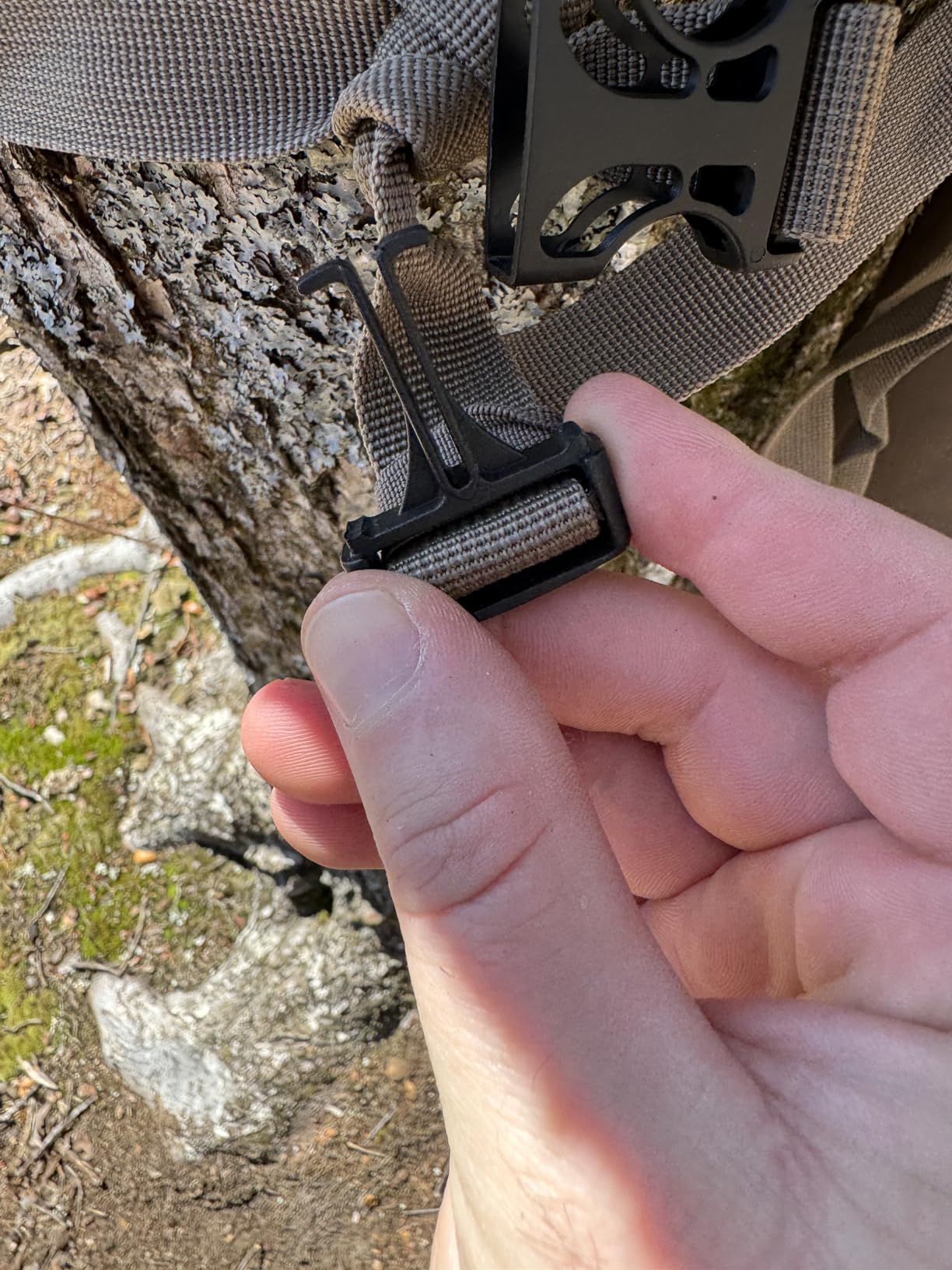
The hanging design is brilliantly simple. Two included straps wrap around any tree, and you clip the bag in place. Setup takes less than five minutes with no tools. The 100-pound capacity holds two 50-pound bags of corn or protein pellets, which is plenty for a two-week feeding period.
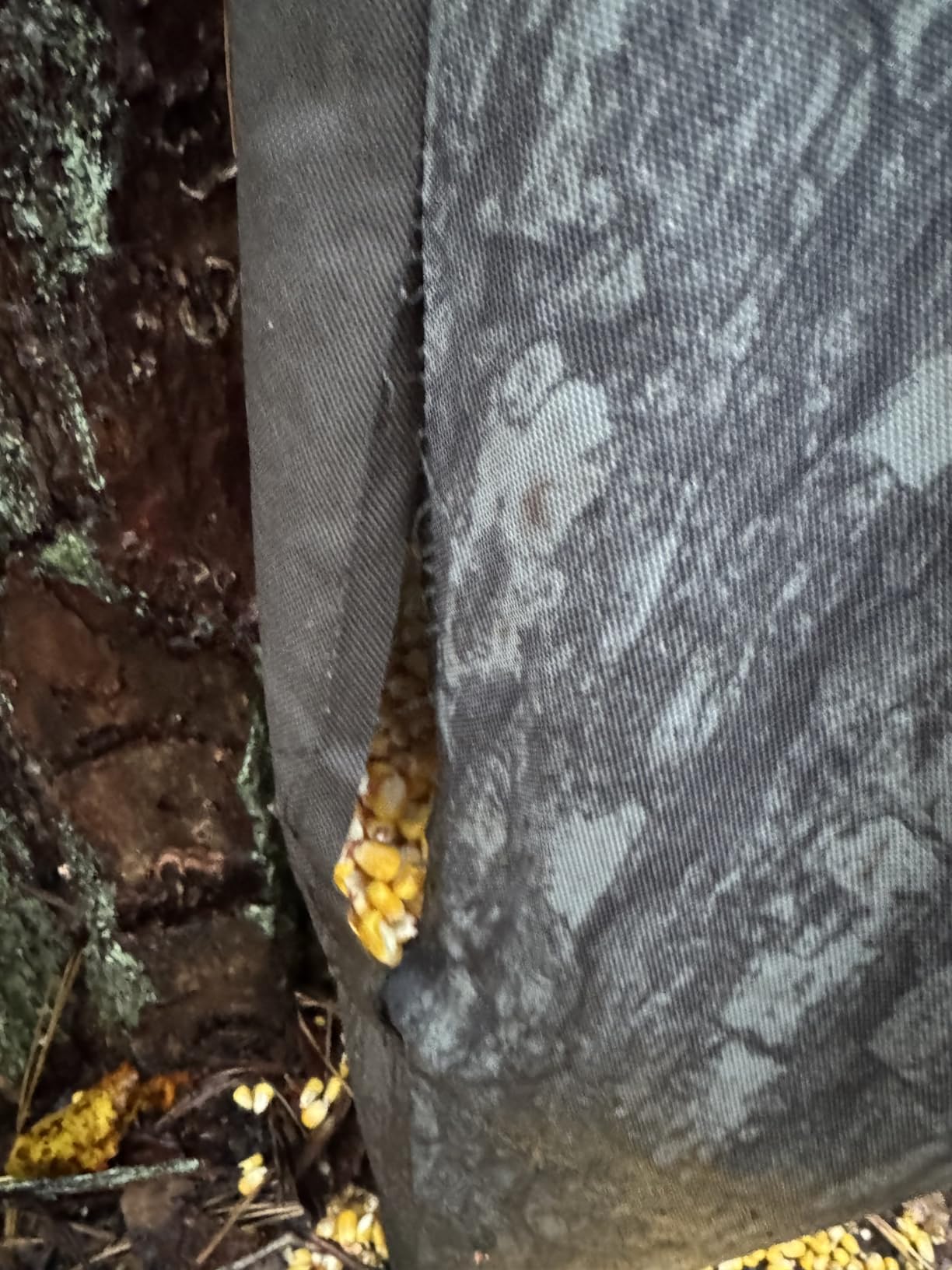
The water-resistant Pine Bark Camo fabric does a decent job shedding light rain. The memory wire opening at the top holds its shape for easy filling and keeps the feed covered when not in use. I was skeptical about a fabric feeder holding up, but after a full season, mine showed only minor wear.
Durability is the main concern. Several reviewers reported strap failure after a few weeks and seam splitting under heavy loads. This feeder works best as a seasonal or backup option rather than a permanent year-round station. For year-round feeding, invest in a rigid plastic or metal hopper.
How Long Will the Fabric Last Outdoors
With proper care, expect one to two seasons from the bag feeder. The water-resistant fabric breaks down under constant UV exposure, and the seams are the weakest point. I recommend taking it down during the off-season to extend its life. Store it indoors away from sunlight and moisture.
For a feeder that stays up year-round, this is not the right choice. But for seasonal feeding or a portable solution you move around the property, it is hard to beat for the price.
Can This Feeder Handle Protein Pellets
Yes, the gravity feed design works with protein pellets, corn, and most other feed types. The fabric does not affect feed flow as long as the bag hangs relatively straight. Avoid overfilling past the 100-pound capacity, as excess weight stresses the seams and straps.
I used mine exclusively with protein pellets during spring and summer, and the feed dispensed smoothly without bridging or clogging. Just make sure the bottom feed ports are fully open and not restricted by the fabric folding inward.
10. Wildgame Innovations Treehugger 100 lb – Most Popular Budget Feeder
WILDGAME INNOVATIONS Treehugger 100 lb Trubark HD Camo Gravity Bag Feeder Durable Lightweight Weatherproof Game Feeder for Hunting
100 lb capacity
PVC construction
Tree mount
2.19 lbs
Roll-top closure
Pros
- Simple gravity feeding with no maintenance
- Versatile use with corn attractants protein and mineral
- Durable weatherproof PVC construction
- Easy 5-minute tree installation
Cons
- PVC may not be as durable as metal
- Basic dimensions listed may be placeholder
With over 1,100 reviews, the Wildgame Innovations Treehugger is one of the most widely purchased gravity deer feeders on the market. I bought one as a backup feeder for a remote corner of a property, and at this price point, it is nearly impossible to beat. The PVC construction is lightweight and completely weatherproof.
The integrated straps make tree installation genuinely quick. I had mine mounted and filled in under five minutes. The roll-top sealed closure keeps feed dry and secure. The Trubark HD Camo pattern blends well into wooded environments, and deer accepted the feeder within days of placement.

This feeder handles all feed types including corn, protein pellets, attractants, and minerals. The quiet operation with natural gravity replenishment means no mechanical noise to spook wary deer. For the price, you get a functional, reliable feeding station that does exactly what it claims.
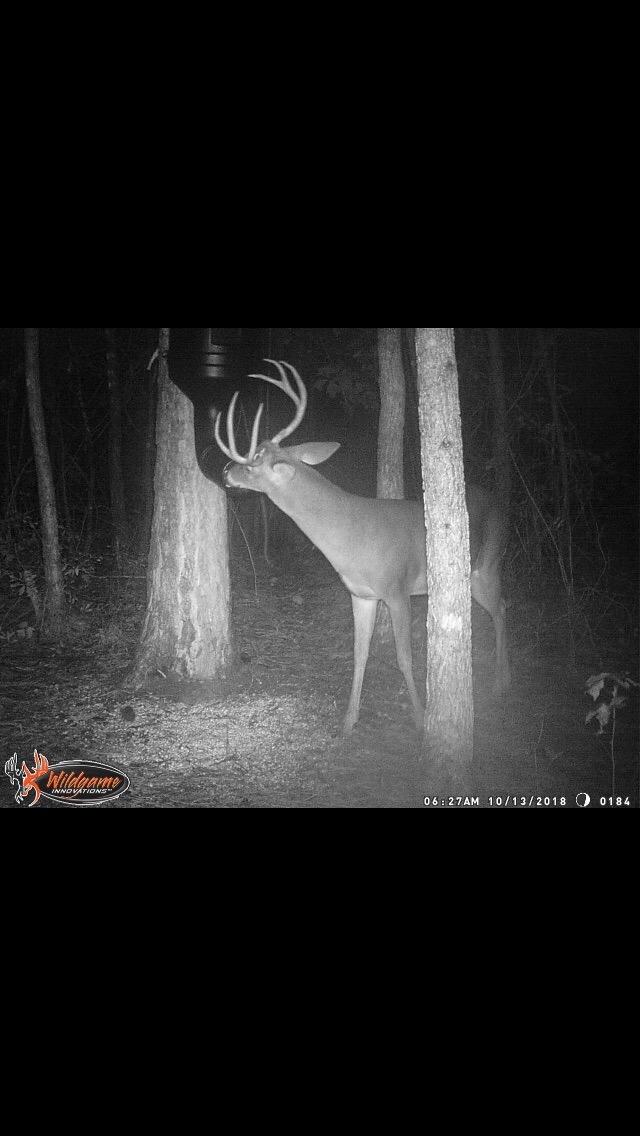
The PVC material is durable against weather but may not hold up against physical abuse from large animals. Bucks can potentially puncture the material with antlers during the rut. At 2.19 pounds, this is the lightest feeder on the list, making it ideal for backcountry spots where weight matters.
Why Is This Feeder So Popular
The combination of ultra-low price, easy installation, and reliable performance makes this the entry-level feeder of choice. Over 1,100 reviews means thousands of buyers have tested this product in real-world conditions. The 4.1-star average is solid for a budget product, and most negative reviews focus on durability expectations rather than functionality.
Many buyers purchase multiple Treehuggers to create several feeding stations for the cost of one premium feeder. This strategy works well for large properties where you want to distribute feeding pressure.
What Feed Types Work Best in This Feeder
Corn flows best in the Treehugger because the PVC material is smooth and offers no resistance. Protein pellets work well too, but avoid mixes with large mineral blocks or oversized pieces that can clog the feed opening. Attractant powders can be mixed with corn for excellent results.
I ran corn exclusively in mine and never experienced a clog or flow issue. If you switch to protein pellets, test the flow rate with a small amount first to make sure the opening size accommodates the pellet diameter.
How to Choose the Right Gravity Deer Feeder?
Choosing the right gravity deer feeder comes down to matching capacity, material, and design to your specific property and goals. After testing 10 feeders across multiple properties, here is what I have learned about making the right choice.
Match Capacity to Your Property Size
Capacity is the single most important factor. Too small and you are constantly refilling. Too large and feed goes stale before it is consumed. Here is a general guideline based on my experience and what forum users report.
For properties under 20 acres, look at 40 to 80 pound feeders like the Banks Feedbank 40 lb or the On Time T-Post. For 20 to 50 acres, 100 to 150 pound feeders like the Banks 150 lb or Moultrie Bag Feeder work well. For 50 to 100 acres, step up to 200 to 250 pound models like the Moultrie 250 lb or Banks Timber 250. For properties over 100 acres, the 300 to 350 pound models like the Banks 300 and Boss Buck 350 minimize refill trips.
Consider Material and Durability
Roto-molded and HDPE polyethylene feeders offer the best balance of durability, weight, and weather resistance. The Banks and Boss Buck models use UV-stabilized polyethylene that resists sun damage for years. PVC bag feeders are cheaper but have a shorter lifespan outdoors.
Metal feeders are the most durable but also the heaviest and most expensive. For most supplemental feeding programs, UV-stabilized polyethylene is the right choice. It will not rust, it resists UV degradation, and it is light enough to handle without equipment.
Address Varmint Protection
This is the number one pain point from forum research. Raccoons, squirrels, and hogs can waste significant amounts of feed if your feeder is not protected. The Banks single-post design naturally keeps feed ports higher off the ground, reducing access for raccoons and hogs. Tripod feeders are also effective at keeping feed out of reach.
For squirrel problems, avoid thin plastic feeders and mount on metal posts away from overhanging branches. The On Time T-Post and Banks models on metal posts are your best bet for squirrel resistance. For hog pressure, choose a pole-mounted feeder that keeps ports at 42 inches or higher.
Think About Feeder Placement Strategy
Placement affects feeder effectiveness as much as the feeder itself. Position feeders near cover but not in thick brush where deer feel vulnerable. A spot 10 to 20 yards from the tree line gives deer a quick escape route while feeling secure enough to feed.
Avoid placing feeders near roads or property boundaries where deer may encounter human activity. Space multiple feeders at least 200 yards apart to distribute feeding pressure and prevent dominant deer from guarding a single food source. Face feeding ports away from prevailing winds to reduce feed blowing out of the ports.
Plan for Maintenance and Care
Gravity feeders require minimal maintenance compared to timed feeders, but they are not completely maintenance-free. Clean the hopper interior every few months to prevent mold and bacteria buildup. Check feeding ports for clogs, especially if you switch between corn and protein pellets. Inspect mounting hardware and straps periodically.
Before each refill, empty any remaining feed completely and inspect for moisture. If you find wet feed, check the lid seal and rain protection features. Store feed in a dry, sealed container between refills to ensure what goes into the feeder is clean and dry.
Frequently Asked Questions
What is the best deer gravity feeder?
The Banks Outdoors Feedbank 300 lb is the best overall gravity deer feeder based on our testing, with a 4.7-star rating from 416 reviews. It offers a 300-pound capacity, adjustable feeding ports, weatherproof construction, and a single-post design that protects antler growth. For value, the Moultrie Gravity 250 lb is an excellent alternative.
What is the best supplemental feed for deer?
Protein pellets with 16 to 20 percent protein content are the best supplemental feed for deer, supporting antler growth and herd health. Corn is also popular for attracting deer but offers less nutritional value. Most gravity deer feeders on this list handle both feed types, though you may need to adjust feed flow settings when switching between them.
Do gravity deer feeders work well?
Yes, gravity deer feeders work very well for supplemental feeding. They provide 24/7 feed availability without batteries, timers, or motors that can fail. In forum discussions, many land managers prefer gravity feeders over timed models specifically because of their simplicity and reliability. The main trade-off is that you cannot control feed portions or feeding times.
What are the common problems with gravity feeders?
The most common problems with gravity deer feeders are varmint access (raccoons, squirrels, and hogs consuming feed), moisture getting into the hopper causing mold, feed bridging at the ports, and lack of portion control. Choosing a feeder with enclosed ports, a watertight lid, and mounting on a metal post away from trees addresses most of these issues.
Final Thoughts on Gravity Deer Feeders
After testing these 10 gravity deer feeders across multiple properties and seasons, the Banks Outdoors Feedbank 300 lb remains my top overall pick. The combination of 300-pound capacity, weatherproof construction, adjustable feeding ports, and the antler-safe single-post design makes it the most complete feeder on this list.
For value-conscious buyers, the Moultrie Gravity 250 lb delivers excellent performance with its triple funnel system and Quick-Lock upgrade path. And for those on a tight budget, the Wildgame Innovations Treehugger at under $25 is the most popular entry-level gravity deer feeder for good reason.
The best gravity deer feeders for supplemental feeding are the ones that match your property size, withstand your local weather and wildlife pressure, and require minimal maintenance. Any of the 10 models on this list will serve you well when matched to the right application. Pick the capacity and design that fits your land, and start building a healthier deer herd this season.