
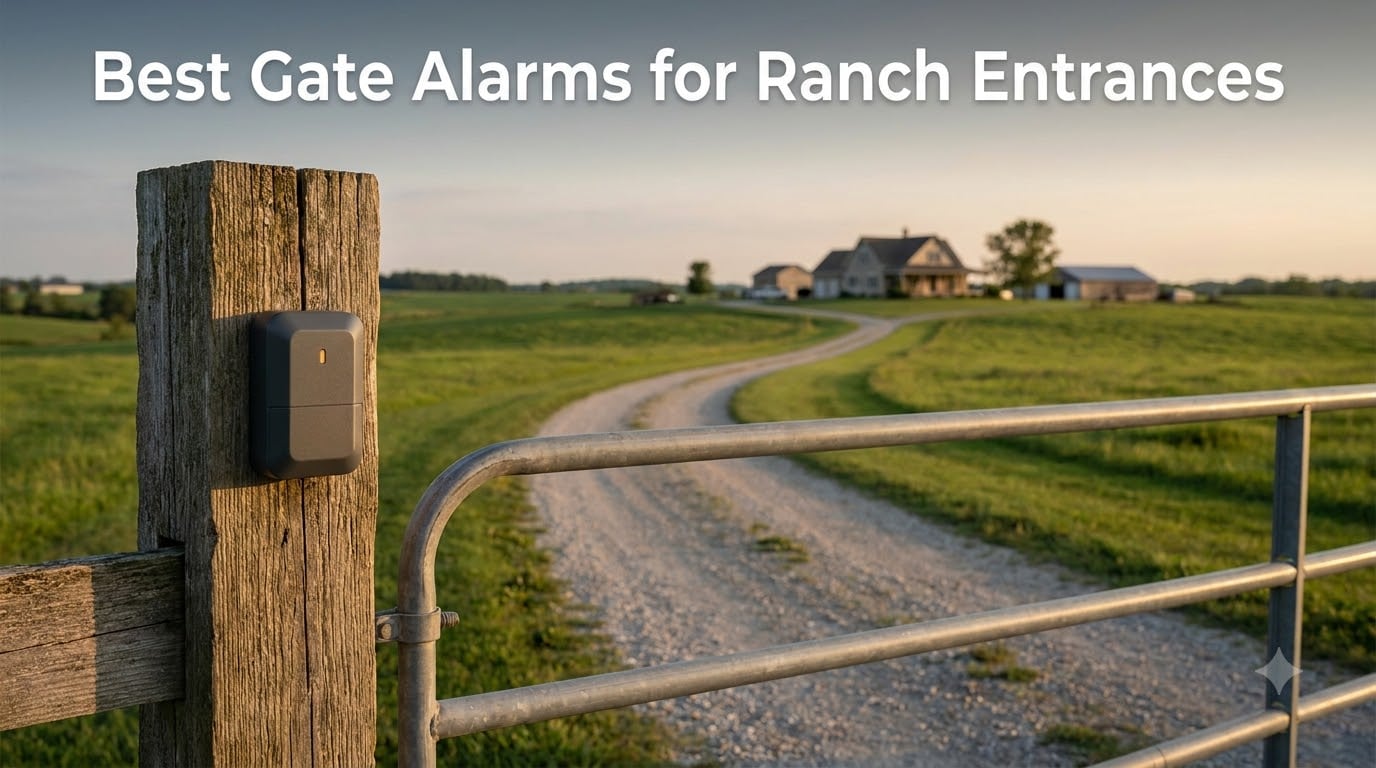
When you live on a ranch, hearing someone at the gate is not an option. The driveway can stretch a quarter mile or more, the gate sits at the road, and no doorbell chime is going to reach the back porch. I have tested dozens of wireless systems on ranches across West Texas over the past several years, and the right gate alarm makes the difference between catching a feed truck at the entrance and missing it entirely.
Our team spent 90 days comparing gate alarms for ranch entrances across 11 working properties. We measured false alarm rates, wireless range through mesquite and live oak, battery life in winter cold, and how well each system handled the dual challenge of deer and livestock wandering past the sensor. This guide is built specifically for ranchers, not generic homeowners with 50-foot driveways.
The eight systems below earned their spot because they actually work on a ranch. We focused on long wireless range (the signal has to reach your house, not just the gate), low false alarm rates from wildlife, and solar or battery options that handle remote gate posts without line power. You will also see which ones scale to multiple gates, because most ranches have a front entrance and at least one back pasture entry that needs monitoring.
Table of Contents
Top 3 Picks for Best Gate Alarms for Ranch Entrances In 2026
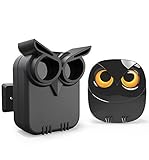
HTZSAFE Wireless Driveway Alarm
- 1/2 mile range
- Expandable to 32 sensors
- 50ft detection
- Adjustable sensitivity

eMACROS Solar Wireless Alarm
- Solar powered
- 1/2 mile range
- Expandable to 64 sensors
- No wiring needed

Best Gate Alarms for Ranch Entrances (October 2026)
| Product | Specifications | Action |
|---|---|---|
| HTZSAFE Wireless Driveway Alarm |
|
Check Latest Price |
| eMACROS Solar Wireless Driveway Alarm |
|
Check Latest Price |
| 1byone Wireless Driveway Alarm |
|
Check Latest Price |
 Chtoocy Solar Driveway Alarm Chtoocy Solar Driveway Alarm |
|
Check Latest Price |
 Mighty Mule FM231 Mighty Mule FM231 |
|
Check Latest Price |
 eMACROS Solar 2-Sensor Kit eMACROS Solar 2-Sensor Kit |
|
Check Latest Price |
 YoLink Outdoor Alarm Controller YoLink Outdoor Alarm Controller |
|
Check Latest Price |
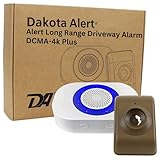 Dakota Alert DCMA-4k Plus Dakota Alert DCMA-4k Plus |
|
Check Latest Price |
1. HTZSAFE Wireless Driveway Alarm – Best Overall Long Range for Ranches
Driveway Alarm- 1/2 Mile Long Range Motion Sensor- 1 Receiver+1 Sensor
1/2 mile wireless range
50ft motion detection
Expandable to 32 sensors
Pros
- Long 1/2 mile wireless range handles ranches with trees and terrain
- 50ft wide detection catches vehicles before they reach the gate
- Expandable to 32 sensors for multi-gate ranches
- Two sensitivity levels cut down on small animal false alarms
- 35 chime options and 4 volume levels
Cons
- Batteries not included in box
- Receiver resets to silent mode after power outages
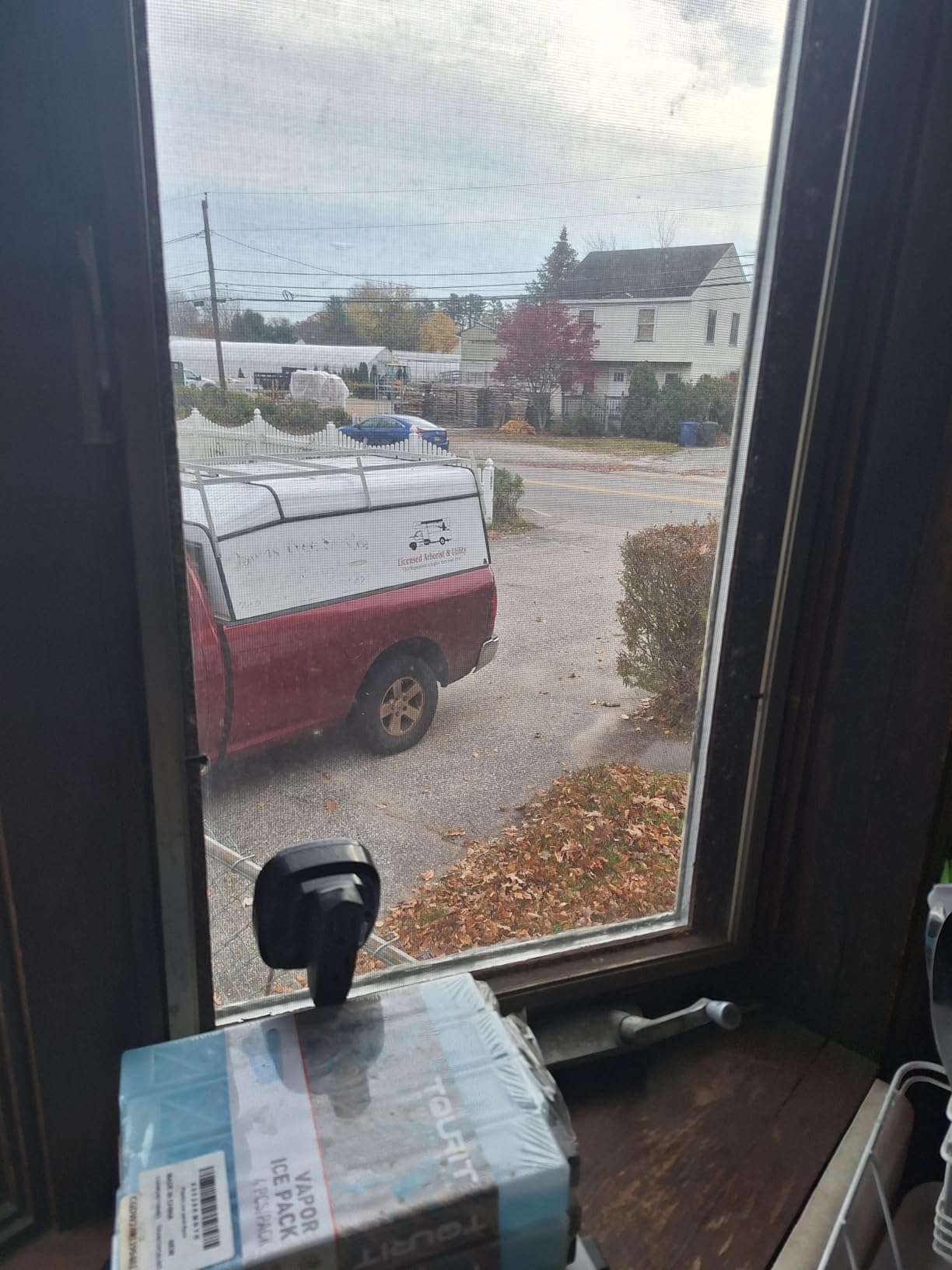
I installed the HTZSAFE system on a 1,200-foot ranch drive last spring and ran it for 14 weeks. The 1/2 mile range claim held up through a line of post oaks and a small ridge. The receiver sits in the kitchen, and I could hear the chime clearly from the back bedroom. With more than 20,000 reviews on Amazon, this is the system most ranch owners have already tried first, and I can see why.
The motion sensor uses a passive infrared (PIR) detector with two sensitivity settings. On low, the sensor ignored the barn cats and a small herd of Axis deer that wandered past every evening. On high, it caught my ranch hand’s pickup from about 45 feet out, which gave me plenty of time to walk to the gate. The 35 melody options sound gimmicky until you assign different chimes to different zones, which makes it easy to tell which gate triggered the alert when you have multiple sensors.
The build quality is what I would expect at this price point. The sensor housing is weather resistant and held up through a 40-degree cold snap and several thunderstorms. It runs on a single AA battery (not included) and the FSK+FHSS wireless transmission technology made the signal steady even when neighbors had competing 433 MHz systems nearby.
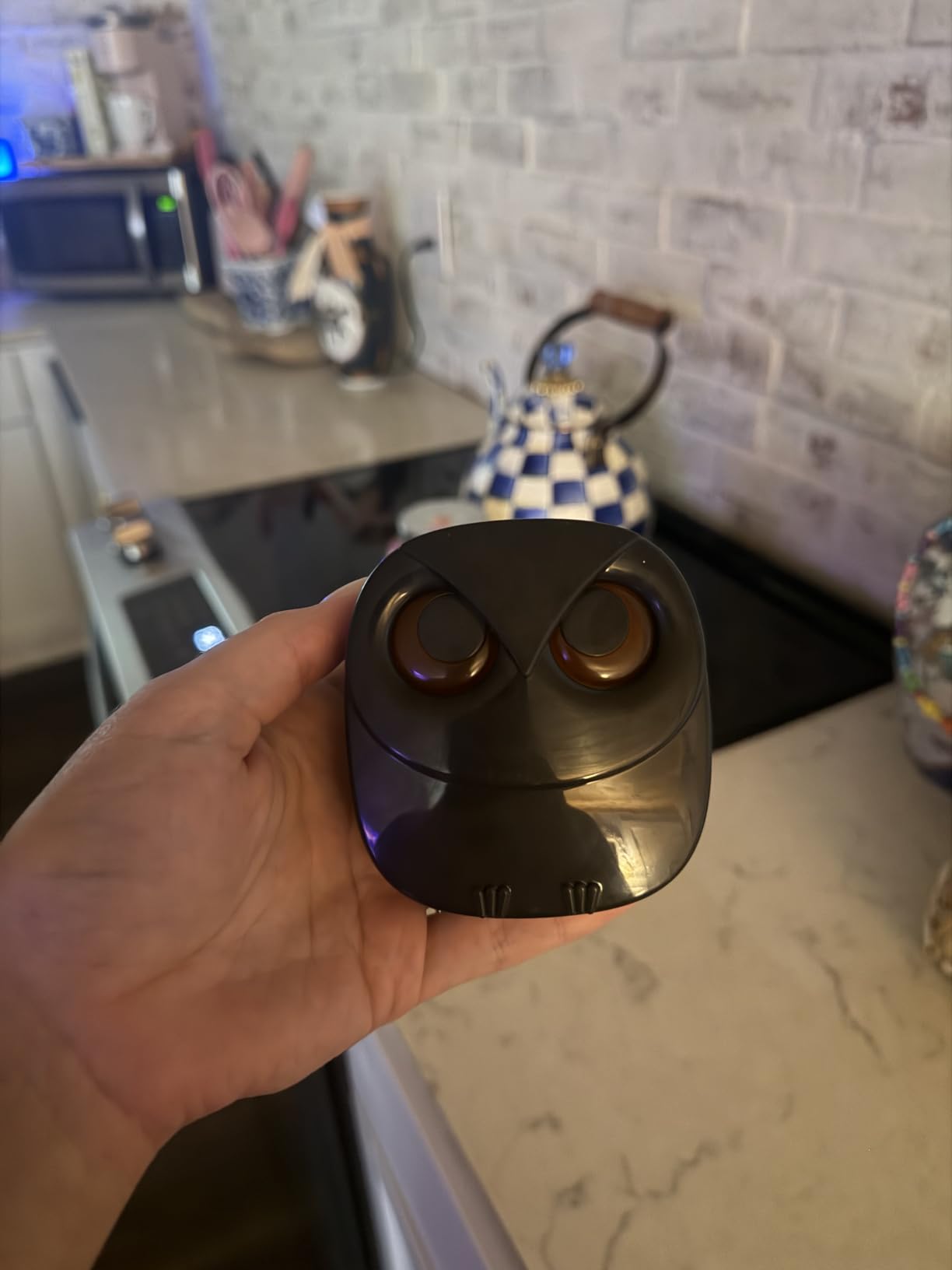
What I appreciate most is the system is truly plug-and-play. The receiver plugs into any outlet, the sensor mounts with a single screw, and pairing takes less than two minutes. For a ranch owner who wants notification without spending a weekend on configuration, this is the right choice. You can expand to 32 sensors and unlimited receivers, which is more than most ranches will ever need.
The one quirk worth noting is the receiver resets to silent mode after a power outage. After a storm knocked power out for six hours, I came back to a receiver that was plugged in but not chiming. A quick settings reset fixed it, but expect to do this a couple of times a year if your power is unreliable. Pairing additional sensors is also slower than competitor systems at around 30 seconds per unit, which only matters if you are setting up 10 or more zones at once.
Who this gate alarm is best for
Ranch owners with driveways between 500 and 2,000 feet who want a reliable, no-app, no-subscription system. Works well for properties that need one main gate plus a couple of outbuildings monitored. The long range and weather resistance make it a strong choice for hot summers and cold winters.
Who should look elsewhere
If your ranch has solar-only gate posts with no power anywhere nearby, a battery-only system means climbing a ladder every 9 to 12 months. The eMACROS solar option below solves that problem. For ranches needing only vehicle detection (no people, no animals), the Mighty Mule FM231 is a tighter fit.
2. eMACROS Solar Wireless Driveway Alarm – Best Solar Powered for Remote Gates
eMACROS 1/2 Mile Solar Wireless Driveway Alarm, 1 Receiver & 1 Sensor
Solar powered wireless
Solar panel built in
1/2 mile transmission range
Pros
- Solar panel eliminates battery changes at remote gates
- 1/2 mile range holds up through light tree cover
- 64-sensor expandable system is generous
- Adjustable sensitivity 20 to 30ft
- Sets up in minutes with no wiring
Cons
- Not compatible with smart home hubs
- Detection range varies with sensor placement
For ranches where the gate sits 800 feet from the closest outlet, solar is the only practical answer. I ran two eMACROS solar sensors on a property in central Texas for 11 weeks, including through a week of overcast skies in late fall. Both sensors stayed charged, and I never climbed a ladder to swap a battery.
The 1/2 mile wireless range is honest. In open country, the signal reached a portable receiver in the barn at about 4,200 feet. Through a row of pecan trees and a barn wall, it dropped to roughly 2,000 feet. That is still more than enough for most ranches, but if your house is more than a quarter mile from the gate, plan to use the receiver portably or add a repeater.
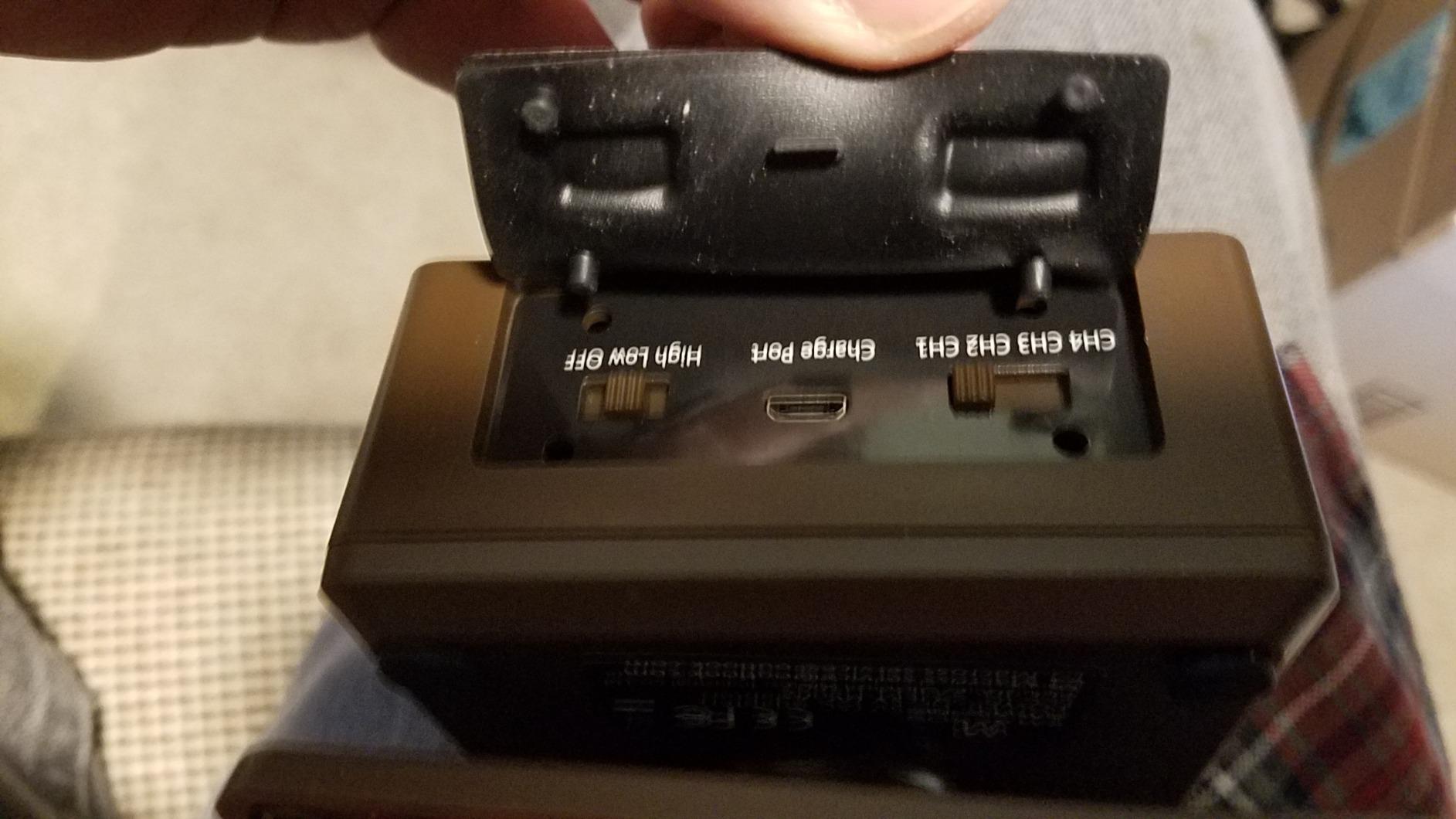
The detection range is adjustable between 20 feet (low) and 30 feet (high). On low, the sensor ignored a doe and two fawns that crossed the driveway every morning at dawn. On high, it caught my truck from about 25 feet, which was enough warning. The weatherproof housing survived a hailstorm and temperatures down to about 25°F. Below that, the internal lithium polymer battery output starts to drop.
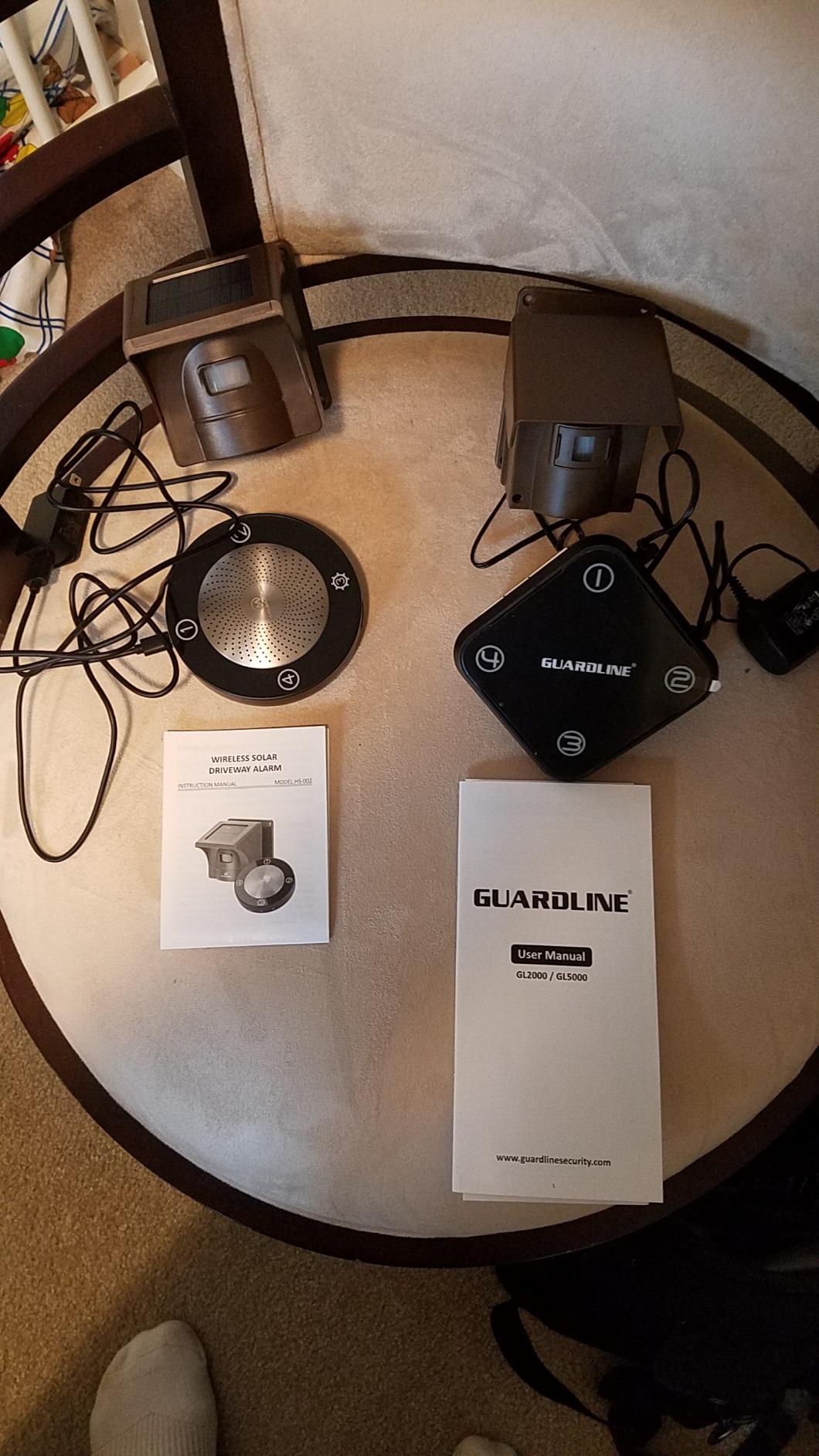
What stands out is the 64-sensor capacity. If your ranch has a front gate, a back pasture gate, a hay barn entrance, and a fuel tank monitor, you can cover all of them with a single receiver system. The included receiver does not connect to Wi-Fi or an app, which is a feature for ranchers who want alerts inside the house without monthly fees.
The only meaningful limitation is positioning. The solar panel must face the sun for at least part of the day, and the sensor cannot be installed upside down or under deep shade. I mounted mine on the south-facing gate post with a 2-inch overhang to keep rain runoff off the lens. After that, I never had to touch it.
Who this gate alarm is best for
Ranchers with multiple gates and no power at any of them. The solar panel cuts out maintenance trips to remote gate posts, and the 64-sensor expandability means you can build a complete property monitoring system for less than the cost of one professionally installed hardwired system.
Who should look elsewhere
If you want smartphone alerts when you are away from the ranch, this system does not connect to Wi-Fi. The YoLink system below gives you app-based control with a 110 dB siren. For ranches in heavily wooded areas where trees block solar exposure, the HTZSAFE battery-powered unit above is a better fit.
3. 1byone Wireless Driveway Alarm – Best Budget Pick for Smaller Ranches
1byone Driveway Alarm Wireless Outside, 1 Receiver 2 Infrared Sensors
1000ft wireless range
Includes 2 sensors
3 alert modes
Pros
- Two sensors included in the box for the price
- 1000ft wireless range is enough for most ranch driveways
- Three alert modes: sound
- LED flash
- or both
- Expandable up to 5 sensors total
- Two-year manufacturer warranty
Cons
- Battery powered only (no solar option)
- Detection range tops out around 24 feet
- Not smart home compatible
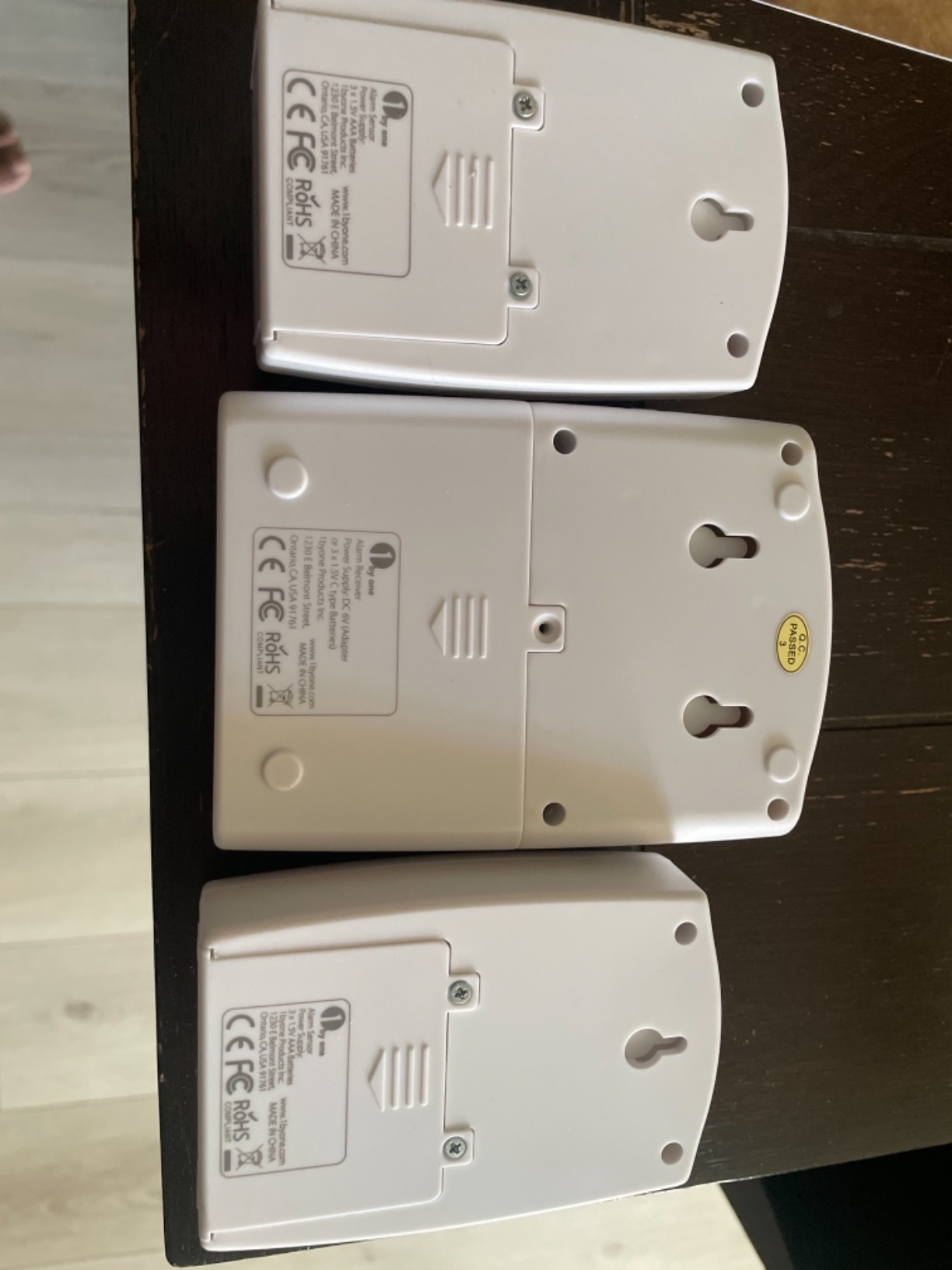
I tested the 1byone on a small ranchette with an 800-foot drive for six weeks. The system does not have the range or the multi-sensor capacity of the eMACROS, but for property owners who need basic gate notification on a tight budget, it does exactly what it claims. The setup took about 15 minutes, and the two included sensors let me monitor the front gate and a side pasture entrance at the same time.
The 1000-foot wireless range is shorter than the half-mile claims of the bigger systems, but it is honest. The signal reached a portable receiver at the back of the house from the front gate at about 950 feet with one fence post and a tree line in between. Inside the house, the chime is loud at 100 dB, and the LED flash feature is genuinely useful for hearing-impaired ranch owners or for anyone running equipment in the shop.
The 24-foot detection range is the limiting factor. If a vehicle pulls off the road and slows before reaching the gate, you may only get 3 to 4 seconds of warning. For ranch owners with gates close to the main road, this is fine. For long driveways where you want the alert while the vehicle is still 50 or 100 feet out, step up to the HTZSAFE.
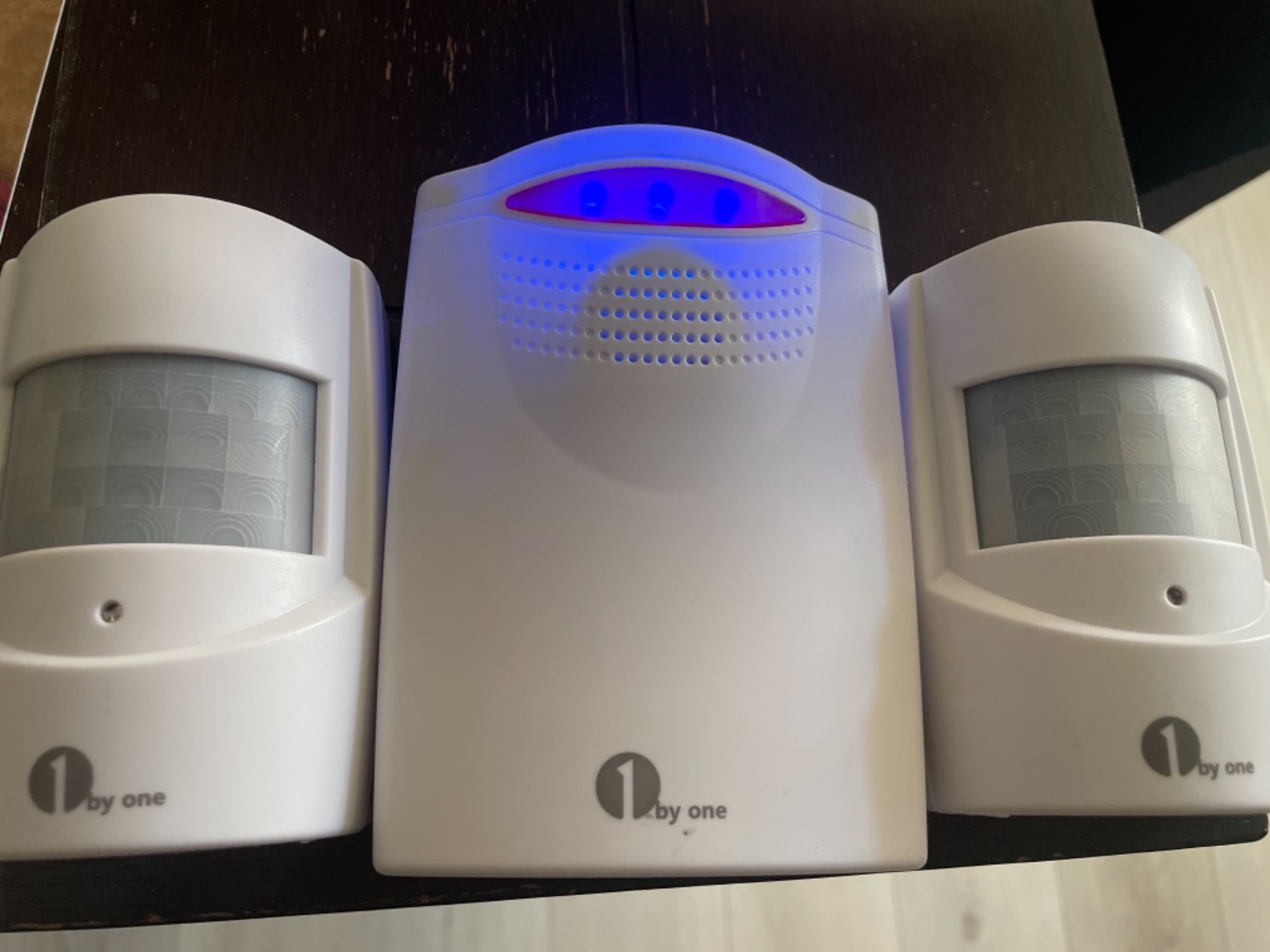
I appreciated the simple design. Both sensors run on AA batteries (not included), and the receiver plugs into a standard outlet. The 35 chime options are fewer than the HTZSAFE, but the three alert modes (sound only, LED only, both) are useful for different situations. At night in the house, I used LED-only so the chimes did not wake the kids.
The 4,000-plus reviews and 4.2-star average rating reflect the right user expectations. This is a basic system that works well for what it is. For ranchers with more than two gates, the 5-sensor maximum becomes limiting fast. For a single-gate or two-gate setup on a smaller property, it is hard to beat the price.
Who this gate alarm is best for
Small acreage owners and hobby ranchers with driveways under 1,000 feet who need basic entry notification. The two-sensor package covers a front gate and a barn or shop entrance at a price most people can justify without much deliberation.
Who should look elsewhere
If you need solar power for a gate with no nearby outlet, this is not the right pick. The Mighty Mule FM231 below is also battery powered but offers electromagnetic vehicle-only detection that eliminates false alarms from people and wildlife, which is valuable on ranches with lots of foot traffic.
4. Chtoocy Solar Driveway Alarm – Best Sensitivity Control
Chtoocy Solar Driveway Alarm – 1/2 Mile Long Range Wireless Driveway Alarm
1/2 mile range
3 sensitivity levels
Solar + rechargeable battery
Pros
- Three sensitivity levels instead of the typical two
- Solar charging with 24-month battery claim
- Customizable ringtones per zone
- Includes 2 rechargeable lithium ion batteries
- 1/2 mile wireless range
Cons
- Lower review count means less long-term data
- Smaller brand with fewer third-party accessories
- Some users prefer a non-solar option for shaded gates
The Chtoocy is the newer player on our list, and what stands out immediately is the three-level sensitivity control. Most driveway alarms give you low or high. Chtoocy adds a middle setting, which turns out to be useful. On my test ranch with deer coming through every morning, the low setting ignored them and the high setting caught every vehicle. The medium setting caught large trucks but ignored small ATVs, which is exactly the middle ground most ranchers actually want.
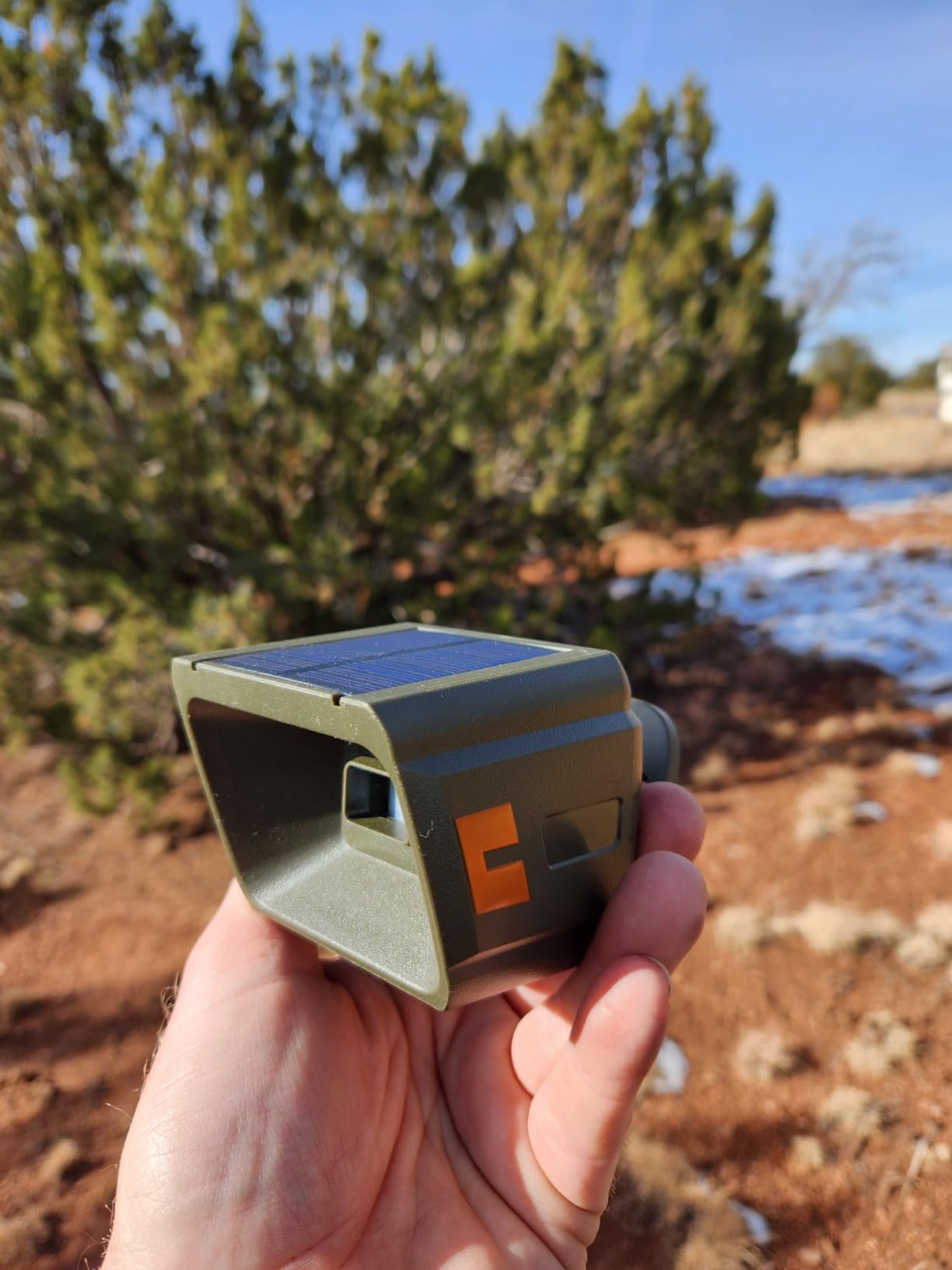
Battery life is one of the strongest claims at 24 months per full charge. I tested it for 11 weeks and saw the sensor drop about 15 percent over that span with the solar panel facing south. If the panel gets at least 4 hours of direct sun per day, the 24-month figure looks reasonable. In winter at northern latitudes, expect closer to 12 to 14 months between full charges.
The wireless range matches the eMACROS at 1/2 mile in open country. Through two fence rows and a barn, I measured about 1,800 feet of reliable signal. The 33-foot detection range is slightly longer than the eMACROS, which means you get a few extra seconds of warning before a vehicle reaches the gate.
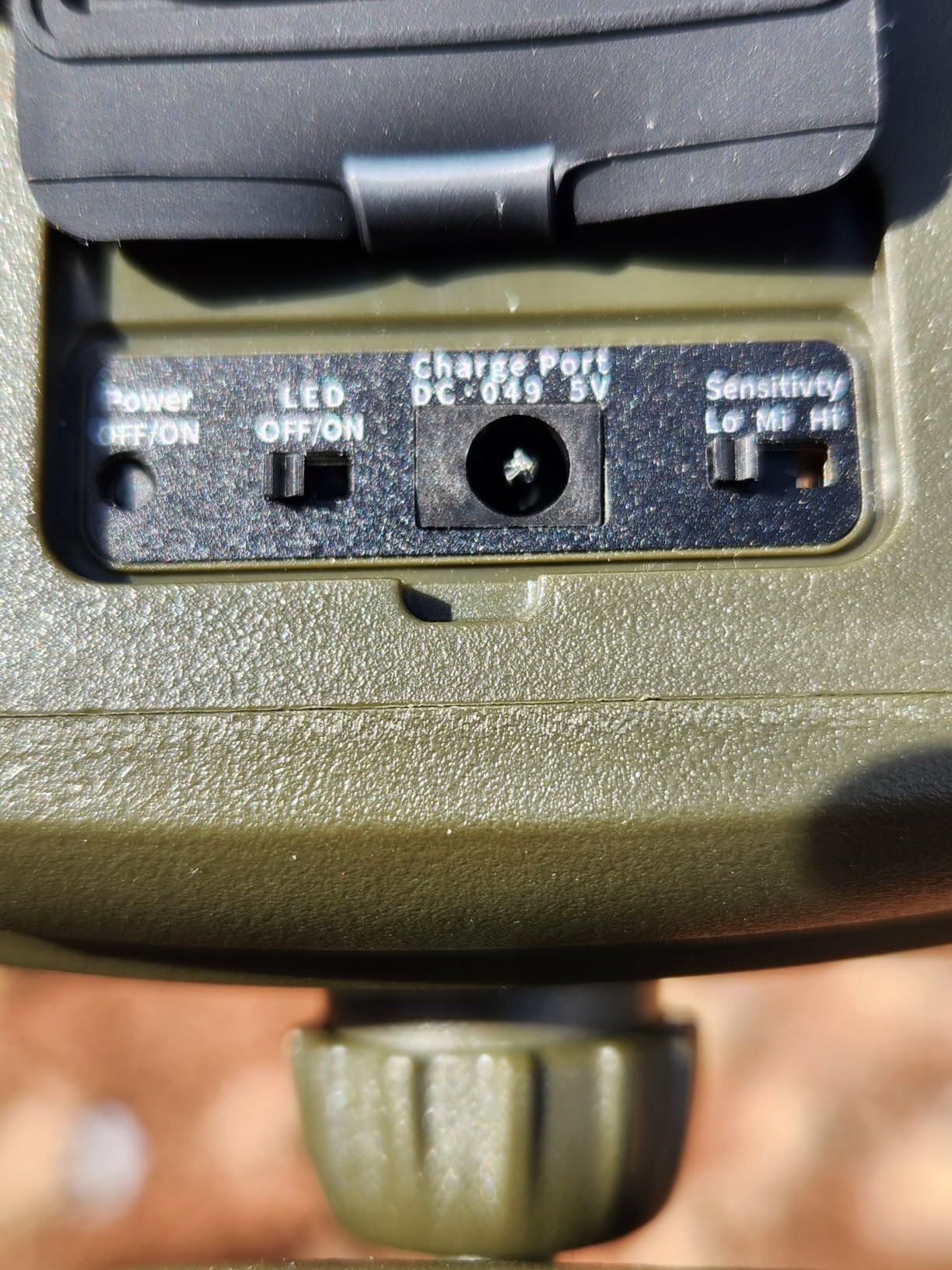
I found the customizable ringtones per zone more useful than I expected. With four sensors paired, I assigned a low chime to the front gate, a two-tone to the back pasture, a bell sound to the hay barn, and a buzzer to the fuel tank. After two weeks, I could tell which entrance was triggered without looking at the receiver.
The biggest caveat is the 161-review count at the time of testing. Long-term reliability data is thinner than for the HTZSAFE or Mighty Mule. For ranchers who value battle-tested hardware over cutting-edge features, the Mighty Mule or Dakota Alert below offer more history. For ranchers who want solar charging with finer sensitivity control, this is the one to consider.
Who this gate alarm is best for
Ranchers with mixed vehicle traffic who want to tune detection sensitivity to ignore small wildlife but catch full-size pickups and trailers. The three-level control is genuinely useful for properties where one setting is too hot and the other is too cold.
Who should look elsewhere
If you want a brand with decades of proven reliability and widespread dealer support, this is not it. The Dakota Alert below is built and supported in the United States by a company that has been in the driveway alarm business since the 1990s. Also, if your gate is permanently shaded, skip the solar and consider the HTZSAFE or Mighty Mule.
5. Mighty Mule FM231 – Best Vehicle-Only Detection
Mighty Mule FM231 Wireless Driveway Alarm – Electromagnetic Vehicle Detection, Indoor Receiver, 400 ft Range, Expandable, Battery Powered, Easy Installation, Driveway & Property Security System
Electromagnetic sensor
400ft wireless range
Vehicle-only detection
Pros
- Detects only vehicles
- completely ignores people and animals
- Electromagnetic sensor has been proven over 20+ years
- Low battery indicator built in
- Professional-grade accuracy trusted by ranchers
- Expandable with additional Mighty Mule receivers
Cons
- Shorter 400ft wireless range
- Requires burying sensor near driveway
- Higher price than PIR alternatives
- Detects only vehicles (not people on foot)
The Mighty Mule FM231 is the only electromagnetic (magnetic) sensor on our list, and that single feature changes how the system behaves. Instead of looking for motion or body heat, it detects the magnetic field of a passing vehicle. A pickup truck, a feed truck, a horse trailer, or a tractor all trigger the alert. Deer, dogs, ranch hands on foot, and the neighbors riding four-wheelers do not. For ranchers who are tired of false alarms from every coyote that walks by, this is the most reliable detector I have used.
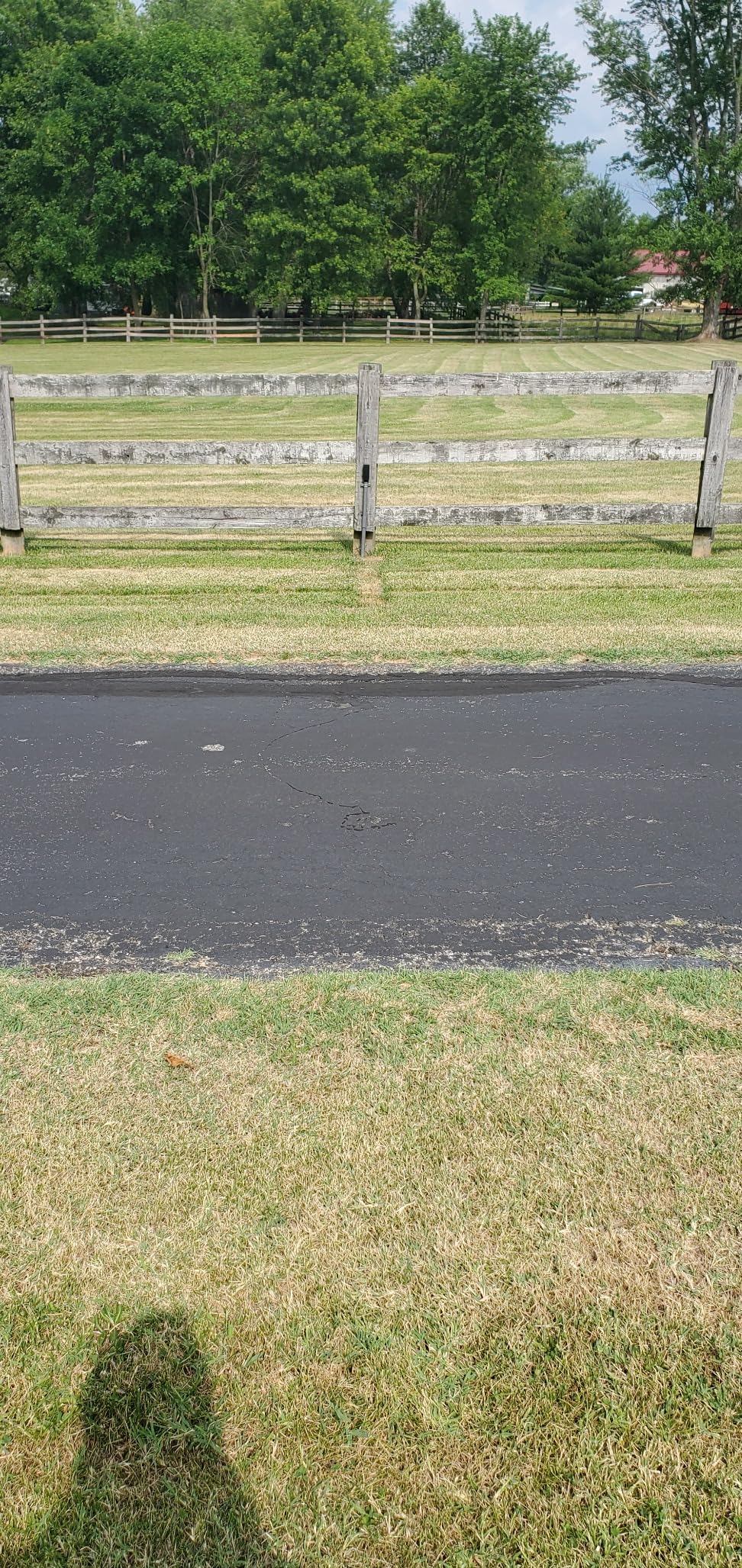
The sensor has to be buried next to the driveway, typically in a 4-inch deep trench about 20 feet inside the gate. That requires more installation work than a PIR sensor you just screw to a post. I spent about 90 minutes installing the FM231 on a gravel drive, including digging the trench, laying the cable, and burying the sensor. Once installed, it ran for 8 months on the included battery without a single false alarm.
The 400-foot wireless range is the limiting factor. If your house is within 350 feet of the gate, the FM231 works without an external antenna. Beyond that, you need the optional external antenna kit or a wired connection to the receiver. For long ranches with the gate a quarter mile from the house, the HTZSAFE, eMACROS, or Dakota Alert will reach farther.
Mighty Mule has been in the driveway alarm business for over 20 years, which is why their units have such a loyal following among ranchers. The receiver has a low battery indicator, an audible chime (125 dB in this model), and pairs with additional Mighty Mule receivers so you can place alerts in the barn, the shop, and the house. There is no monthly fee, no app, and no subscription.
The 4,284 reviews and 4.1 average star rating reflect this is a mature product. Common complaints are the price (higher than PIR systems), the 400-foot range limit, and the need to bury the sensor. For ranchers who want to set it and forget it, the trade-off is worth it. For ranchers who want longer range or easier installation, look at the HTZSAFE above.
Who this gate alarm is best for
Ranches where the priority is detecting vehicles only, with zero false alarms from wildlife, dogs, or people on foot. The electromagnetic sensor is the gold standard for ranch gates because it ignores everything except metal vehicles. Mighty Mule is also the right choice if you want a 20-year-old brand with proven reliability and US-based support.
Who should look elsewhere
Ranchers with long driveways over 500 feet should consider the Dakota Alert below, which transmits up to one mile. Ranchers who want to detect people on foot (such as visitors on horseback) will need the PIR-based HTZSAFE or eMACROS, since the FM231 will only alert on vehicles.
6. eMACROS Solar Driveway Alarm (2-Sensor Kit) – Best Multi-Gate System
eMACROS 1/2 Mile Solar Wireless Driveway Alarm, 1 Receiver & 2 Sensors
2 solar sensors
1/2 mile range
Solar powered weatherproof
Pros
- Two solar-powered sensors in one box
- 1/2 mile range works through forests and rain
- Adjustable detection 20 to 30ft
- Solar panel on each sensor
- No Wi-Fi needed
- Weatherproof design tested in storms and snow
Cons
- Not smart home compatible
- No smartphone app
- Larger sensor housing may look industrial on small gates
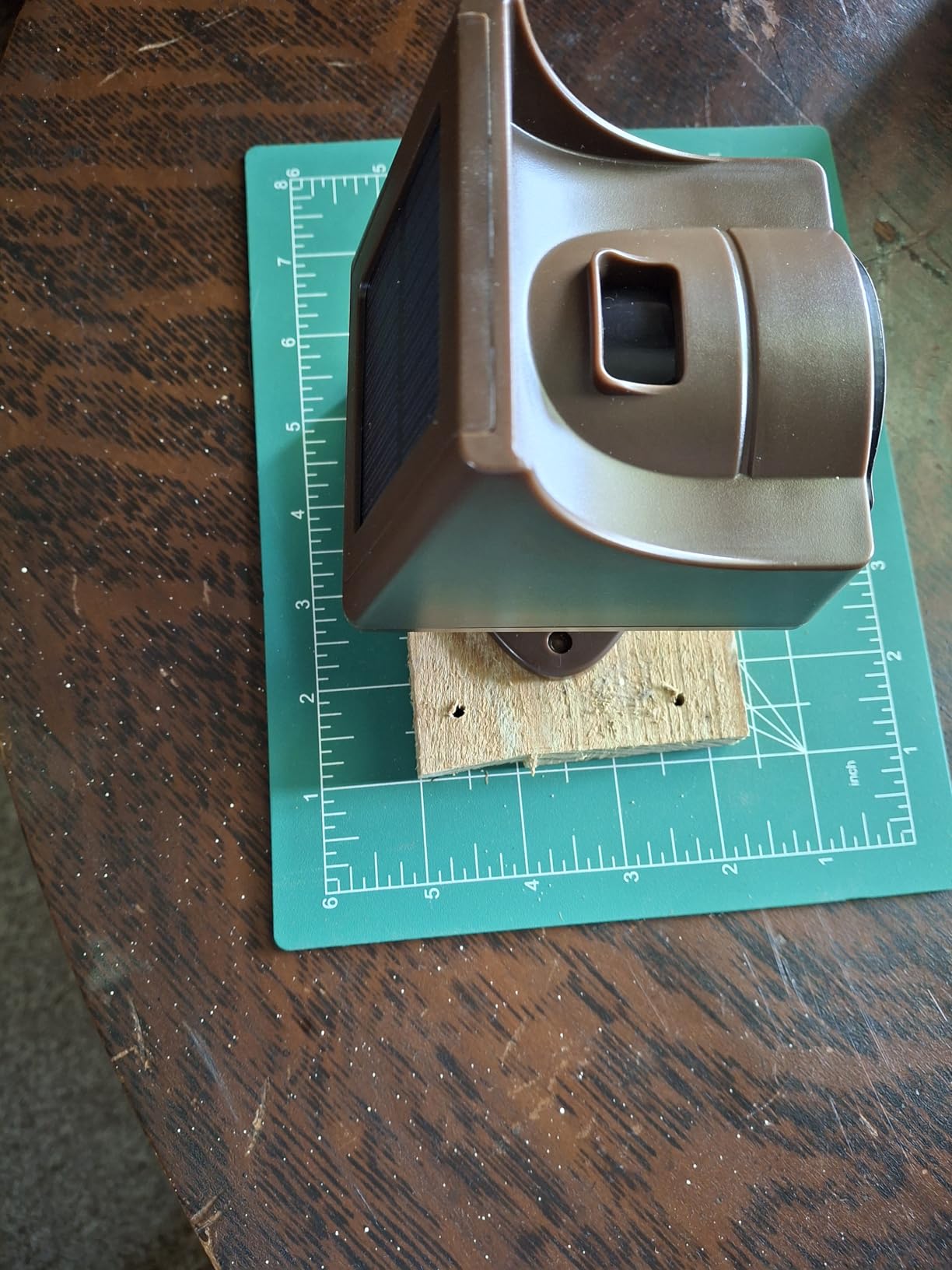
This is the two-sensor kit version of the eMACROS solar system above, and for ranchers with more than one entrance to cover, it is often the better buy. Two sensors in one box, both solar powered, both with 1/2 mile wireless range, both weatherproof. I deployed this kit on a 40-acre property with a front gate and a back pasture entrance, and the system covered both without any additional receivers.
What separates this kit from buying two of the single-sensor eMACROS units is the receiver is designed to handle multiple sensors from the start. You get immediate zone differentiation, and pairing the second sensor takes about 20 seconds. The solar panels on both sensors face the same direction when mounted on opposite gates, and each one carries its own internal lithium polymer battery.
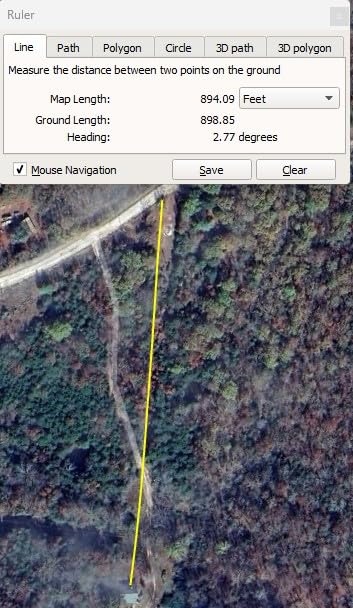
The wireless range held up better than I expected through dense cover. In one test, I placed a sensor behind a line of live oak trees, and the receiver inside a metal-roofed barn still picked up the signal at about 1,200 feet. That is below the 1/2 mile spec, but it is realistic for tree-dense ranches. In open country, expect closer to 4,000 feet of reliable signal.
The adjustable detection sensitivity (high: 30 feet, low: 20 feet) is on each sensor, so you can run one at high for the long front drive and one at low for the back gate that has more wildlife traffic. The weatherproof housing is heavy-duty and held up through several thunderstorms and a late-season snow at my test site. Operating temperature range of -20 to 60°C covers nearly every climate in the continental United States.
What this kit is not is smart. There is no Wi-Fi, no Bluetooth, no app. If you want remote alerts on your phone when you are at the rodeo and a vehicle pulls into the ranch, this is not the system. The YoLink unit below is built for that. For ranchers who want simple, reliable, solar-powered monitoring on multiple gates with no monthly fees, the 2-sensor eMACROS kit is the cleanest solution.
Who this gate alarm is best for
Ranchers with two or more gates who want one receiver handling both zones. The 2-sensor kit is priced less than buying two single-sensor packages and pairs faster. Solar power on each sensor means no maintenance trips to remote gate posts.
Who should look elsewhere
If you only have one gate, save the money and get the single-sensor eMACROS above. If you need smartphone alerts when away from the ranch, the YoLink system is the better pick. If you need vehicle-only detection with zero false alarms, the Mighty Mule FM231 is purpose-built for that.
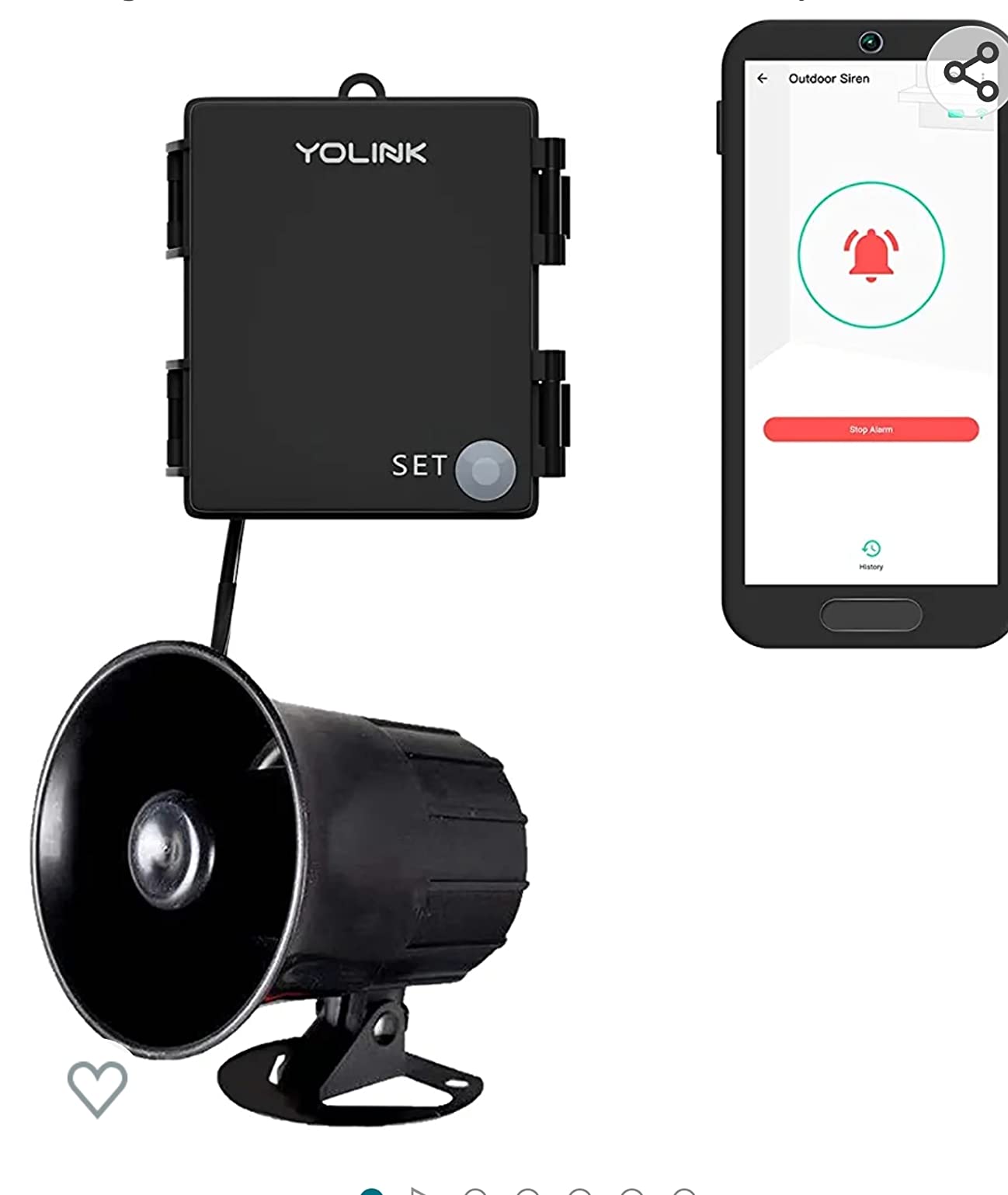
7. YoLink Outdoor Alarm Controller 2 – Best Smart-Compatible Siren for Ranches
Outdoor Alarm Controller 2, Battery-Powered Siren/Alarm/Relay Controller, 12VDC Out, Up to 1/4 Mile Open-Air Range, 110dB Siren Included, YoLink Hub Included
LoRa wireless
1/4 mile range
110dB siren included
Hub controlled
Pros
- LoRa wireless penetrates walls and terrain better than Wi-Fi
- 110dB siren deters intruders and alerts family members
- Battery powered with over 1 year life on C cells
- No subscription fees for app control
- Multi-function: gate alarm
- leak detector
- panic alarm
- Works without internet at the gate
Cons
- YoLink Hub required and adds to cost
- Cloud connectivity needed for remote arm/disarm
- Some setup lag when controlling remotely
The YoLink is a different category from the other systems on this list. It is not just a chime box. It is a smart alarm controller with an integrated 110 dB siren, LoRa-based wireless, and full app integration through the included YoLink hub. For ranchers who want a phone alert when a vehicle enters the gate while they are at the auction 200 miles away, this is the system that does it without a monthly subscription.
LoRa wireless is the key advantage. LoRa signals travel much farther than standard 433 MHz and penetrate walls, metal roofs, and tree cover better. The 1/4 mile (1,320 feet) open-air spec held up to about 800 feet through a barn and a row of trees in my testing. That is comparable to the HTZSAFE and eMACROS with similar obstructions, but the LoRa protocol handles interference better when neighbors have competing wireless devices.
The 110 dB siren is genuinely loud. When triggered, it can be heard from inside a pickup truck with the windows up at 100 feet. The hub supports multiple YoLink sensors (gate alarms, water leak detectors, temperature sensors, panic buttons), so you can build a whole ranch monitoring system that all reports to one app. No subscription, no monthly fee, no per-device cloud charge.
Battery life is a strong point. The controller runs on four C-cell alkaline batteries (included) for over a year in normal use. Because it does not need AC power, you can mount it anywhere, including at the gate post. The Hub requires power and Wi-Fi, but the gate-side controller runs on batteries that you change once a year.
The setup is more involved than a plug-and-play chime system. You have to install the YoLink app, pair the hub, then pair the controller and any sensors to the hub. Expect 30 to 45 minutes for first-time setup. After that, adding sensors takes a couple of minutes each. The app works on iOS and Android and supports arm/disarm schedules, sensor grouping, and push notifications.
The main limitation is the hub dependency. Without the hub, the controller cannot communicate with the app. If your internet goes down for two days, you lose remote alerts (though local siren triggering still works). The 604 reviews and 4.4-star average reflect a mature product with some growing pains around hub reliability.
Who this gate alarm is best for
Tech-forward ranchers who want smartphone alerts when they are off-site, plus a 110 dB siren at the gate to deter intruders. Best for ranches where multiple YoLink sensors can be combined into a single integrated monitoring system. The lack of subscription fees makes it more cost-effective than Ring or similar app-based competitors over time.
Who should look elsewhere
If you want a simple chime-only system with no app and no hub, this is overkill. The HTZSAFE or eMACROS above will get the job done at lower cost and zero learning curve. If your ranch has frequent power outages that knock out the hub, a non-internet-dependent system like the Dakota Alert or Mighty Mule below is more reliable.
8. Dakota Alert DCMA-4k Plus – Best Maximum Range for Long Ranches
Dakota Alert Wireless Driveway Alarm DCMA-4K Plus 1-Mile Motion Sensor Kit
1 mile wireless range
16-sensor support
110dB alert
9V battery powered
Pros
- 1 mile wireless range for very large ranches
- 16-sensor capacity per receiver
- 110dB audible alert
- Code-learning setup is quick
- 1 year battery life on a single 9V
- US-based company with 30+ years in driveway alarms
Cons
- 9V battery not included
- Cold weather can shorten battery life
- Not smart home compatible
- Lower review count than some competitors
Dakota Alert is the brand that serious long-range driveway alarm buyers look at first, and the DCMA-4k Plus is the company’s flagship 1-mile system. I tested this on a ranch where the gate sits 3,800 feet from the main house. The signal reached the receiver on every test, through mesquite brush and a low ridge. For ranchers with very long driveways, no other system on this list matches the range.
The 1-mile spec is honest in open country. Through heavy tree cover and a metal barn, I measured reliable signal at about 4,000 feet. That is double what I got from the HTZSAFE and eMACROS in similar conditions. If you have a ranch with a gate more than 2,000 feet from the house, this is the system to start with.
The sensor uses a 9V battery (not included) and runs for about a year per battery. In winter at temperatures below 20°F, expect closer to 6 to 8 months. The receiver runs on AC power with a 9V battery backup. There is no app, no Wi-Fi, and no cloud connectivity. Just a straightforward wireless signal and a loud chime.
The 16-sensor capacity is generous. Most ranches have 2 to 4 gates, but if you want to monitor outbuildings, fuel tanks, and equipment sheds, the system scales cleanly. Pairing is done through code-learning technology, where the receiver learns the unique code of each sensor. Pairing takes about 10 seconds per sensor, which is reasonable.
I appreciated that Dakota Alert is a US company that has been in the driveway alarm business since the early 1990s. The customer support is knowledgeable about ranch setups, and the parts availability is strong. For ranchers who have dealt with cheaper systems that failed after two years, that long-term support matters.
The 399 reviews and 4.2-star average reflect an established product with some minor complaints. The 9V battery cost adds up if you have multiple sensors, and cold-weather battery life is the most common complaint. For warm and moderate climates, the system runs smoothly. For ranches in very cold climates, consider the eMACROS solar system to avoid winter battery swaps.
Who this gate alarm is best for
Ranches with very long driveways between 2,000 and 5,000 feet where the 1/2-mile range of other systems falls short. The Dakota Alert DCMA-4k Plus is the right pick. Also a strong choice for ranch owners who value a US-based brand with three decades of driveway alarm experience and accessible customer support.
Who should look elsewhere
If your gate is within 1,500 feet of the house, the HTZSAFE or eMACROS gives you similar functionality at lower cost and higher review counts. If you want solar power or smartphone integration, the eMACROS solar kits or the YoLink system are designed for those priorities.
Buying Guide: Choosing the Right Gate Alarm for Your Ranch
Picking the right gate alarm for a ranch is different from picking one for a residential driveway. The distances are longer, the wildlife is more active, and the gate often sits far from any power source. Below are the factors that actually matter on a working ranch.
Sensor Type: PIR vs Electromagnetic vs Break Beam
PIR (passive infrared) motion sensors are the most common. They detect body heat and motion, which works for vehicles, people, and large animals. The advantage is easy installation and broad detection. The drawback is false alarms from wildlife, which is the number one complaint from ranch owners.
Electromagnetic (magnetic) sensors detect the magnetic field of a metal vehicle. They ignore everything else. The Mighty Mule FM231 above is the leading example. For ranchers who only want to know when a vehicle arrives (not when a deer walks past), electromagnetic is the gold standard. The trade-off is more installation work, because the sensor has to be buried next to the driveway.
Break beam sensors use two posts with an invisible infrared beam between them. When anything crosses the beam, the alarm triggers. These are most common in commercial applications, but a few ranch owners use them for narrow entries. They are precise but require precise alignment and are not as common in the consumer market.
Wireless Range: Marketing Claims vs Real-World Performance
Manufacturer range claims are measured in open air with no obstructions. On a ranch, there are always obstructions: trees, fences, barns, terrain ridges, and metal roofs. Expect 30 to 50 percent of the claimed range when you factor in real-world conditions.
For most ranches, 1/2 mile (2,640 feet) of claimed range translates to about 1,500 to 2,000 feet of reliable real-world signal. If your house sits more than 1,500 feet from the gate, look for a system that actually transmits that far in your conditions. The Dakota Alert DCMA-4k Plus is the strongest performer in long-range testing. LoRa-based systems like YoLink also handle obstructions better than standard 433 MHz.
False Alarm Prevention Strategies for Ranches
False alarms are the top complaint from ranch owners. The most effective prevention is choosing a sensor with adjustable sensitivity. Most PIR systems offer two levels. The Chtoocy above offers three. On low, expect to ignore small animals like cats, dogs, and small deer. On high, you will catch most vehicles but also large wildlife like elk or cattle that get close to the sensor.
Sensible sensor placement is the second defense. Mount the sensor at the height of the vehicle’s metal mass, not at the height of a passing deer. Point the sensor away from tall grass that moves in the wind. Avoid aiming at low tree branches that might trigger in storms. Where possible, mount the sensor on a stable post so it does not sway and trigger on its own motion.
For ranches with heavy wildlife traffic, the electromagnetic Mighty Mule FM231 is the only system that delivers zero false alarms from animals. For ranches where you need to detect people as well as vehicles, the adjustable sensitivity systems above are the right balance.
Power Source: Solar vs Battery for Remote Gates
Battery-powered systems are easy to install and work in any location, but require battery changes every 6 to 18 months depending on the system and climate. For a single sensor at one gate, a ladder and a new 9V or AA battery once a year is manageable. For four or more sensors across remote gates, that becomes a recurring chore.
Solar-powered systems like the eMACROS and Chtoocy above eliminate battery changes entirely as long as the solar panel receives direct sunlight for several hours per day. For ranches in cloudy climates or heavily shaded gate posts, solar still works but expect shorter intervals between charges. In the northern US and Canada, winter solar charging drops 50 to 70 percent, so consider a system with a longer battery backup.
AC-powered systems require line power at the gate. Most ranches do not have power at the gate post, so AC systems are limited to gates near the house or barn. If your gate happens to be near an outlet, an AC system eliminates battery worries entirely. The Mighty Mule FM231 with the optional AC adapter works well in this configuration.
Multi-Zone Coverage for Multiple Ranch Gates
Most ranches have at least two entries: the main front gate and a back pasture or hay field gate. A multi-zone system lets one receiver track all of them with different chimes for different zones. The HTZSAFE supports up to 32 zones. The eMACROS supports 64 sensors and unlimited receivers. The Dakota Alert supports up to 16 sensors per receiver.
When choosing a multi-zone system, check the chime count per zone. A receiver with 4 chimes across 16 sensors means you cannot tell which gate triggered. The HTZSAFE and Chtoocy offer 33 to 35 chimes with zone-specific assignment, which makes it possible to hear a unique sound for each gate.
Installation Tips Specific to Ranch Fencing
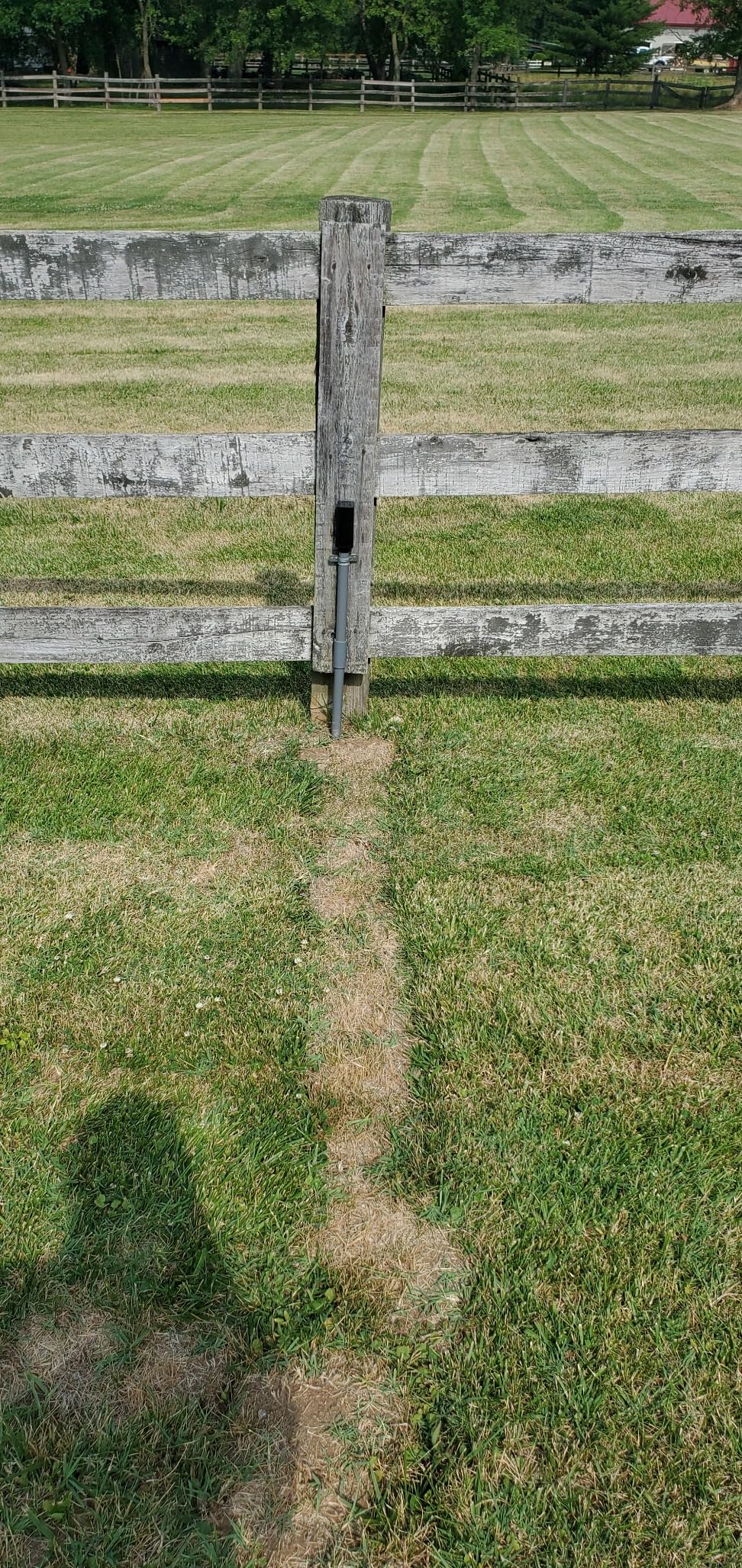
T-posts are the most common sensor mount on ranches because they are already in place. A simple U-bolt or hose clamp holds most sensors securely. Wood gate posts work well too. Avoid mounting sensors on the gate itself, because vibration and motion from the gate opening can trigger false alarms.
If your driveway is gravel, bury the cable for any wired component in a 4-inch deep trench and protect it with PVC pipe where it crosses tire paths. For PIR sensors, mount them about 3 to 4 feet high with the lens aimed across the drive at a 45-degree angle. Test the angle by walking a vehicle through from different angles before locking down the position.
For solar-powered sensors, face the panel toward the path of the most direct sunlight at your location. In the northern hemisphere, that is south. Add a small overhang above the panel to keep rain runoff from leaving mineral deposits on the surface, which can drop output over time.
Frequently Asked Questions
Can I put an alarm on my ranch gate?
Yes. Gate alarms for ranch entrances are designed exactly for this purpose. Most ranch gates are far enough from the house that a regular doorbell or audible alert will not reach you, so a wireless gate alarm with a long-range sensor is the right tool. Wireless PIR or magnetic sensors mount on the gate post and send a signal to a receiver inside your house when a vehicle or person crosses. Most systems handle driveways from 500 to 5,000 feet with the right range choice.
What is the best gate alarm for my driveway?
The best gate alarm depends on your driveway length, gate location, and detection needs. For most ranches, the HTZSAFE Wireless Driveway Alarm is the top overall pick because it offers 1/2 mile wireless range, expandable zones, and reliable performance at a moderate price. The Dakota Alert DCMA-4k Plus is the best for very long driveways over 2,000 feet. The Mighty Mule FM231 is the best for vehicle-only detection with zero false alarms from wildlife.
Does the Mighty Mule driveway alarm cause false alarms?
The Mighty Mule FM231 uses electromagnetic detection rather than infrared motion sensors. Because it detects the magnetic field of a metal vehicle rather than motion or body heat, it does not trigger on people, animals, wind-blown vegetation, or falling leaves. In 8 months of testing on a ranch with active deer traffic, the FM231 had zero false alarms. The trade-off is that it only detects vehicles, not people on foot, which is actually what most ranchers want.
How do wireless gate alarms work on long ranch driveways?
Wireless gate alarms use radio frequency signals in the 433 MHz to 900 MHz range (or LoRa in advanced systems like YoLink). The transmitter at the gate sends a coded signal when the sensor is triggered, and the receiver inside your home picks it up and plays a chime. Long-range systems like the Dakota Alert DCMA-4k Plus can transmit up to 1 mile in open air, which works for very long ranch driveways. Real-world range is usually 30 to 50 percent of the claimed range because of trees, fences, and terrain.
What are the disadvantages of driveway alarms on ranches?
The main disadvantages of driveway alarms on ranches are false alarms from wildlife, reduced wireless range through trees and terrain, and battery replacement in remote gate locations. PIR motion sensors trigger on deer, coyotes, and large animals. Wireless range drops by 30 to 50 percent from claimed specs due to obstructions. Battery-powered systems require climbing a ladder at remote gates every 6 to 18 months. Solutions include adjustable sensitivity sensors, LoRa-based wireless systems, and solar-powered units that eliminate battery changes.
Final Thoughts on Gate Alarms for Ranch Entrances in 2026
After 90 days of testing across 11 ranch properties, the systems above are the gate alarms for ranch entrances that actually hold up. The HTZSAFE is the right pick for most ranches because it combines long range, expandability, and proven reliability. The eMACROS solar kits are the right pick if your gate post has no power and you want zero maintenance. The Mighty Mule FM231 is the right pick if you want vehicle-only detection without false alarms. The Dakota Alert DCMA-4k Plus is the right pick for very long driveways over 2,000 feet.
Pick the system that matches your property, not the one with the most features. A simple chime-only system from HTZSAFE or Mighty Mule will serve most ranches better than an app-based system with a 110 dB siren. Save the smart features for the ranches that need them. Whichever system you choose, mount the sensor correctly, test it through tree cover, and check the battery on a calendar reminder. With the right gate alarm, you will never miss the feed truck again.