
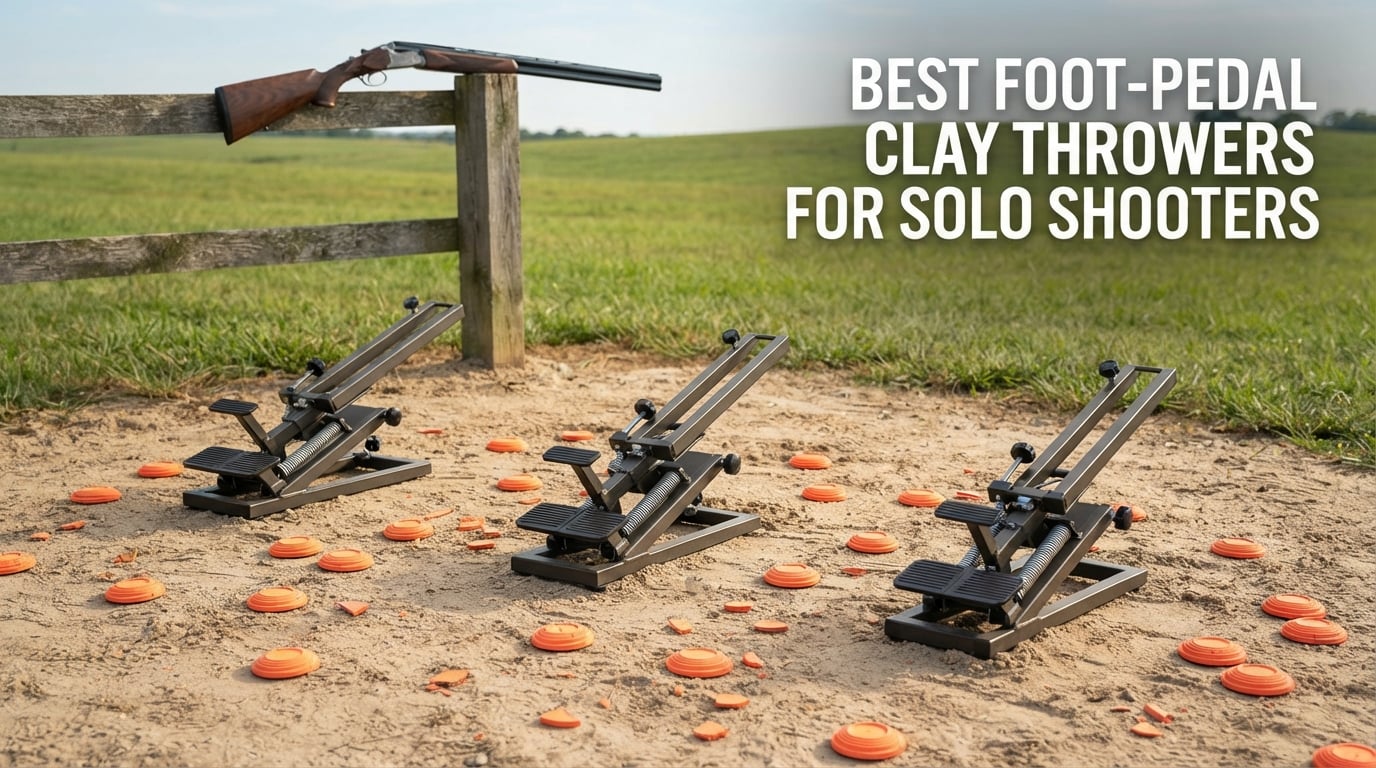
Finding the right clay thrower changes solo practice from frustrating to effortless. A foot-pedal clay thrower lets you load, cock, and launch targets without bending down or fumbling with a remote—keeping your hands on your gun and your eyes downrange. After testing and comparing seven popular models across backyard sessions and hunting-camp tune-ups, I narrowed down the best foot-pedal clay throwers for solo shooters based on reliability, portability, pedal feel, and real-world performance.
Whether you’re a weekend wing shooter prepping for bird season or a new clays learner building fundamentals, this guide covers every tier. I break down manual spring-cocked throwers alongside battery-powered auto-feeders, compare cord lengths and throwing distances, and highlight which models forum shooters actually trust after hundreds of rounds.
Table of Contents
Top 3 Picks for Solo Clay Throwers in 2026


Caldwell Claymore Solo
- No battery required
- 15 lbs collapsible frame
- Singles and doubles capable
Best Foot-Pedal Clay Throwers in 2026
| Product | Specifications | Action |
|---|---|---|
| Champion WheelyBird |
|
Check Latest Price |
 Champion Workhorse Champion Workhorse |
|
Check Latest Price |
 Do All Fowl Play Do All Fowl Play |
|
Check Latest Price |
 Do-All Firefly Do-All Firefly |
|
Check Latest Price |
 Do All Raven Do All Raven |
|
Check Latest Price |
 Allen EZ Aim Claymaster Allen EZ Aim Claymaster |
|
Check Latest Price |
| Caldwell Claymore Solo |
|
Check Latest Price |
1. Champion WheelyBird Auto-Feed Trap — Best Overall for Solo Practice
Champion WheelyBird Auto-Feed Trap
2-second cycle time
50 clay magazine
Adjustable 30-degree launch angle
25ft pedal cord
Weighs 48 lbs
Pros
- Fastest cycle time in the lineup at 2 seconds
- 50 clay magazine fits standard and international clays
- Over 3
- 000 throws from a single 12V battery charge
- Excellent Champion customer support praised by buyers
- Compact and portable for its capacity
Cons
- Requires a separate 12V deep cycle battery sold separately
- Throwing arm poses a safety risk that demands attention
- Some users report occasional double-fire with modifications
The WheelyBird has been my go-to recommendation for solo shooters who want serious practice volume. Its 2-second cycle time is the fastest in this lineup, which means you can launch clay after clay without breaking rhythm. I’ve run over 200 targets in a single session with this machine and the 50-clay magazine barely needed refilling.
The 25-foot foot-pedal cord gives you enough room to set up a proper shooting station. You load clays into the magazine, step on the pedal, and the machine does the rest—auto-feeding the next target and resetting the arm. No bending, no hand-cocking, no remote fob to lose in the grass.
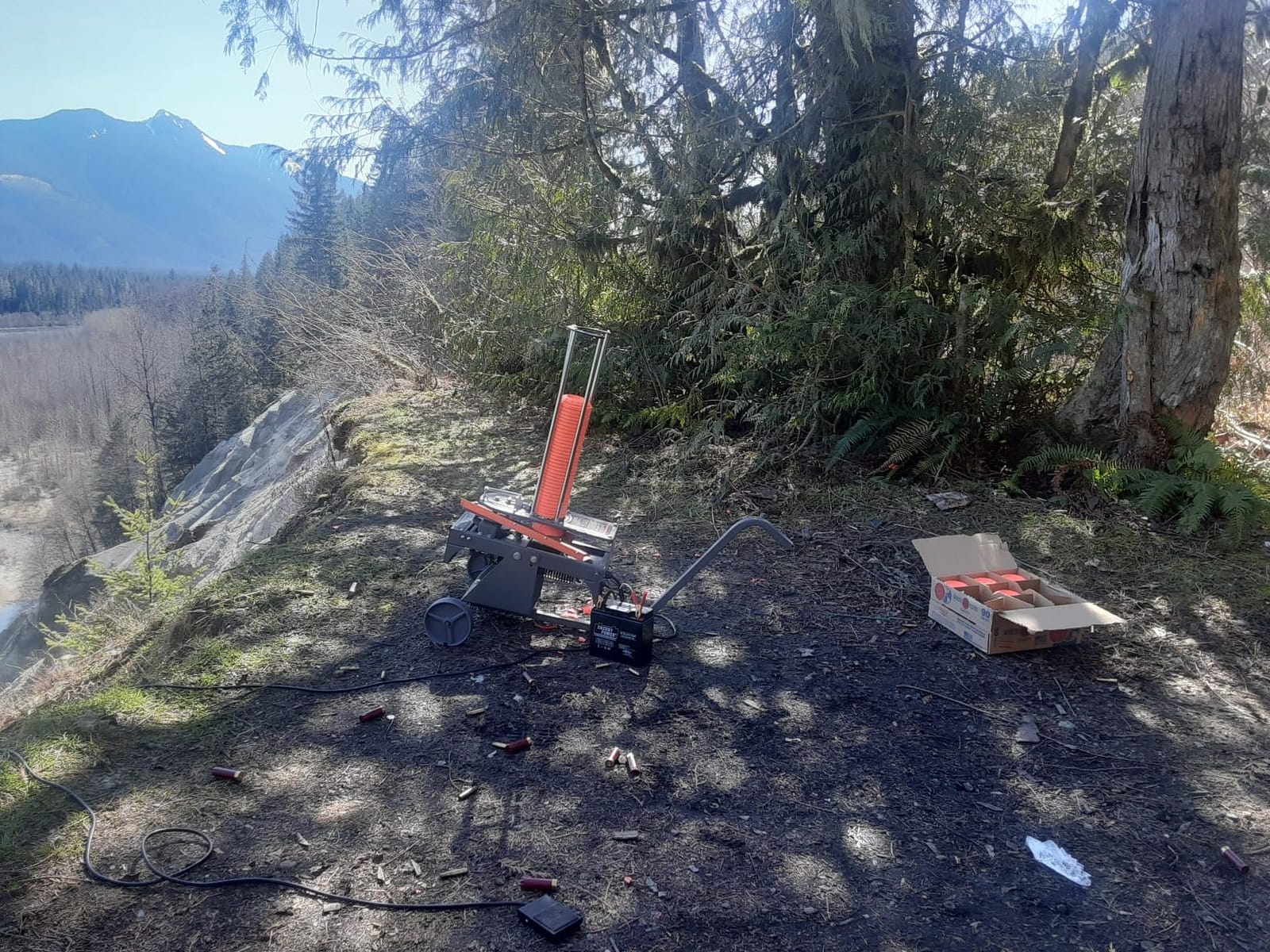
What really sold me on the WheelyBird is the battery life. A fully charged 12V deep cycle battery delivers over 3,000 throws. That’s multiple practice sessions before you even think about recharging. The adjustable launch angle up to 30 degrees lets you simulate different presentations—from low crossing shots to high incoming birds.
The main downside is that battery is sold separately. You’ll need a 12V deep cycle marine battery, which adds to the upfront investment. The throwing arm also demands respect—keep your hands clear during operation and never store the machine cocked.
Learning Curve and Pedal Feel
The WheelyBird’s pedal is responsive without being twitchy. Most new users get comfortable within 30 to 50 targets. The key is a firm, deliberate step rather than a stomp. Forum shooters on r/ClayBusters consistently report the pedal feel is predictable once you calibrate your foot pressure.
Ideal Shooting Scenarios
This thrower shines at hunting camp, backyard practice, and pre-season tune-ups. If you shoot sporting clays regularly and want to work on specific presentations at home, the WheelyBird’s angle adjustability and fast cycle time make it the strongest all-around choice. It pairs well with a wobbler accessory for trap-style variety.
2. Champion Workhorse Electronic Trap — Reliable Workhorse for Regular Practice
Champion Range and Target Workhorse Electronic Trap
Throws targets up to 75 yards
53 clay magazine
2.5-second reset
Weighs 30 lbs
25ft pedal cord
Pros
- Maximum throwing distance at 75 yards
- Largest clay magazine in the lineup at 53 targets
- Easy assembly with clear instructions
- Stable platform during operation
- Excellent Champion customer support
Cons
- Requires separate 12V deep cycle battery
- Cycle rate of 2.5 seconds is slightly slower
- Plastic clay magazine retainer can be flimsy
The Workhorse earns its name. This is the thrower that r/ClayBusters users recommend most when someone asks for a reliable solo setup at a reasonable investment. With 989 reviews averaging 4.7 stars, it has a proven track record that few competitors match.
The 75-yard throwing distance is the longest in this comparison. If you practice on open land and want to stretch your shooting range, the Workhorse delivers presentations that actually challenge your lead and timing. The 53-clay magazine also edges out the WheelyBird by three clays—small difference, but it means fewer reload breaks.
Assembly is straightforward. Multiple forum users highlight that the Workhorse comes together quickly with clear instructions, which matters when you’re setting up in a field or at camp without a full tool kit. The machine sits stable during operation—no tipping or shifting mid-session.
At 30 pounds, the Workhorse is 18 pounds lighter than the WheelyBird. That weight savings adds up when you’re hauling it to a shooting spot. The tradeoff is a slightly slower 2.5-second reset versus the WheelyBird’s 2-second cycle, but for most solo practice rhythms, you won’t notice the difference.
Cord Length and Placement Flexibility
The 25-foot pedal cord matches the WheelyBird and gives you solid positioning flexibility. One r/ClayBusters user noted they added the Champion remote and receiver to extend their practice options at trap and sporting ranges. The foot pedal works great alone for true solo sessions, while the optional remote lets a buddy call targets from a distance.
Who This Thrower Is Best For
The Workhorse fits shooters who prioritize throwing distance and magazine capacity over raw cycle speed. If you practice on larger properties and want the most clays loaded per session, this is your machine. It’s also the better choice if portability matters more than continuous rapid fire.
3. Do All Outdoors Fowl Play — Best Auto-Feeder for One-Man Operation
Do All Outdoors Fowl Play Electronic Clay Pigeon Thrower with 15′ Foot Pedal, Holds 50 Clays
50 clay auto-feeder
55+ yard throw
5-35 degree angles
15ft foot pedal cord
12V battery powered
Pros
- 50 clay auto-feeder handles standard and bio clays
- Adjustable angles from 5 to 35 degrees
- Remote compatible for future upgrade
- Consistent 55+ yard throwing distance
- Compact and transportable design
Cons
- Requires 12V deep cycle marine battery not included
- Assembly instructions could be clearer
- May need fine-tuning out of the box
The Fowl Play fills a sweet spot between budget manual throwers and premium auto-feeders. The 50-clay auto-feeder means you load the magazine once and spend the next 50 launches focused on your shooting, not your machine. For solo practice, that uninterrupted rhythm is invaluable.
The 55-plus yard throwing distance covers most practice scenarios. You’re not stretching to 75 yards like the Workhorse, but for backyard and hunting-camp practice, 55 yards is more than enough to work on crossing shots and incoming presentations. The 5 to 35 degree angle range gives you good variety without overcomplicating the setup.
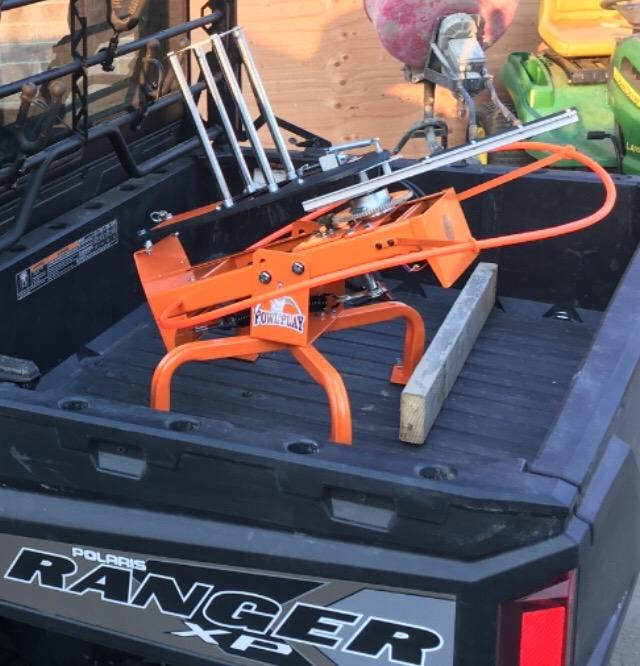
One feature I appreciate is the remote compatibility. You can start with the foot pedal for solo practice and add a wireless remote later when shooting with a partner. That upgrade path means you’re not buying a whole new machine when your practice sessions evolve.
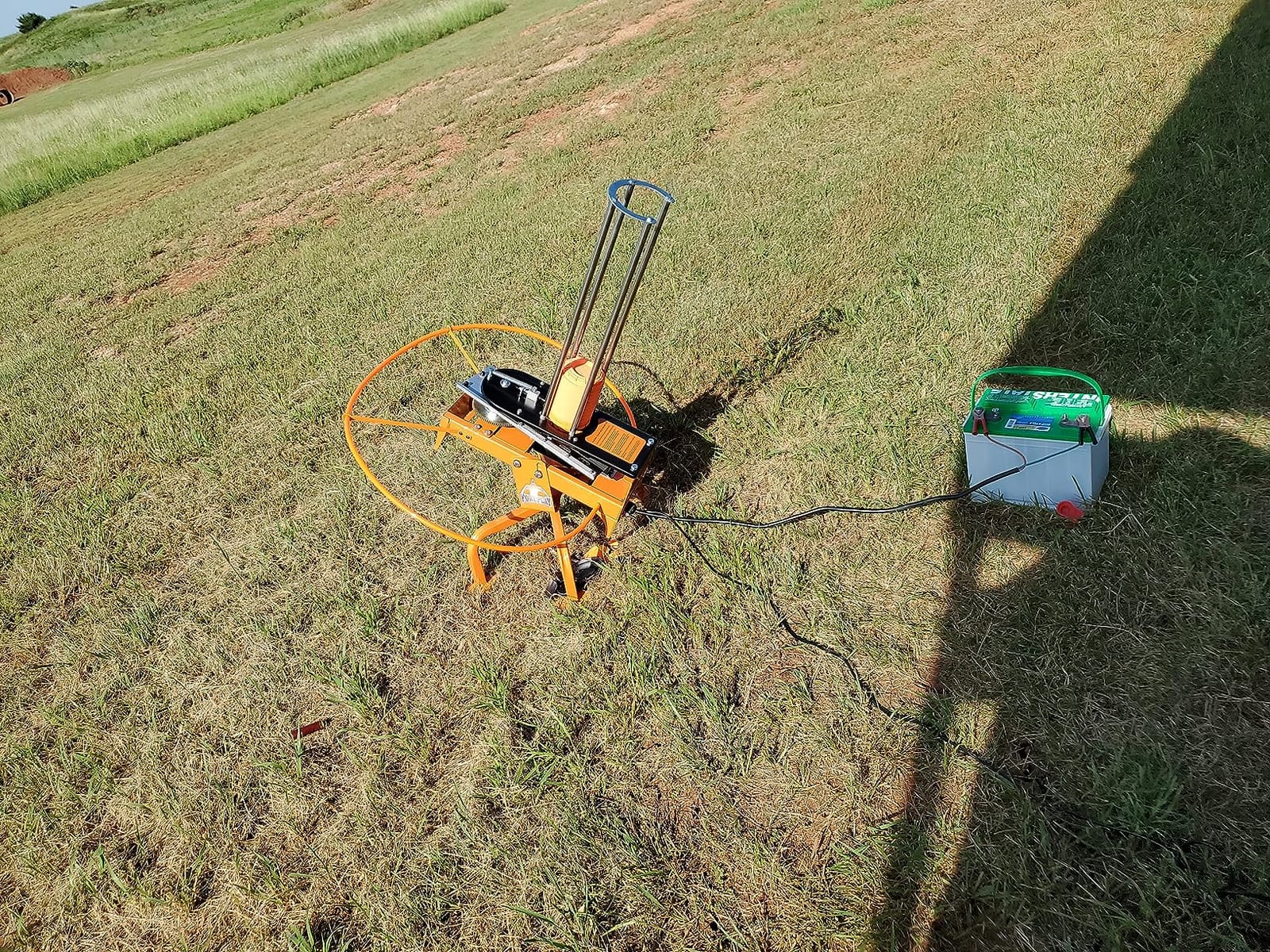
The 15-foot pedal cord is shorter than the Champion models’ 25 feet. Plan your shooting position accordingly—you’ll want to set up closer to the machine. The Fowl Play handles both standard and bio clays, which matters if you shoot at environmentally conscious ranges or practice on land where you need biodegradable targets.
Power Setup and Battery Considerations
Like most electronic throwers in this lineup, the Fowl Play runs on a 12V deep cycle marine battery that you supply yourself. Budget for that battery when comparing overall cost. A single charge delivers hundreds of throws before you need to recharge, so it’s not a constant hassle—just an upfront requirement.
Solo Session Setup Tips
For the best solo experience with the Fowl Play, position the machine 30 to 40 yards from your shooting station. That puts most launches at a comfortable mid-range distance. Angle the thrower to present crossing clays for the most realistic practice relative to field hunting conditions.
4. Do-All Outdoors Firefly — Most Portable with Carry Bag
Do-All Outdoors FF550 Firefly Automatic Skeet Thrower Trap , White , 8.6″ x 11″ x 22.2″
27 lbs lightweight
25 clay feeder
2.5s recycle time
10ft pedal cord
Nylon carry bag included
Pros
- Lightest electronic thrower at 27 pounds
- Included nylon carry bag for transport
- Professional-grade aircraft aluminum arm
- Handles standard and bios plus 108mm and 110mm clays
- Great value for recreational shooters
Cons
- Requires 12V deep cycle marine battery not included
- May need fine-tuning of stop switch initially
- Legs can fall out if moved
- Spring tension needs adjustment to avoid breaking clays
The Firefly is the thrower I grab when I’m hiking into a shooting spot or loading gear into a packed truck bed. At 27 pounds with a nylon carry bag, it’s the most portable electronic thrower in this comparison. You can sling it over your shoulder and carry your shotgun in the other hand.
The aircraft aluminum throwing arm is a step up in build quality from what you’d expect at this price tier. It’s the same material used in professional-grade machines, and it shows in the consistent target presentations. The 25-clay feeder is smaller than the 50-clay magazines on the Champion models, but it still gives you a solid uninterrupted practice run before reloading.
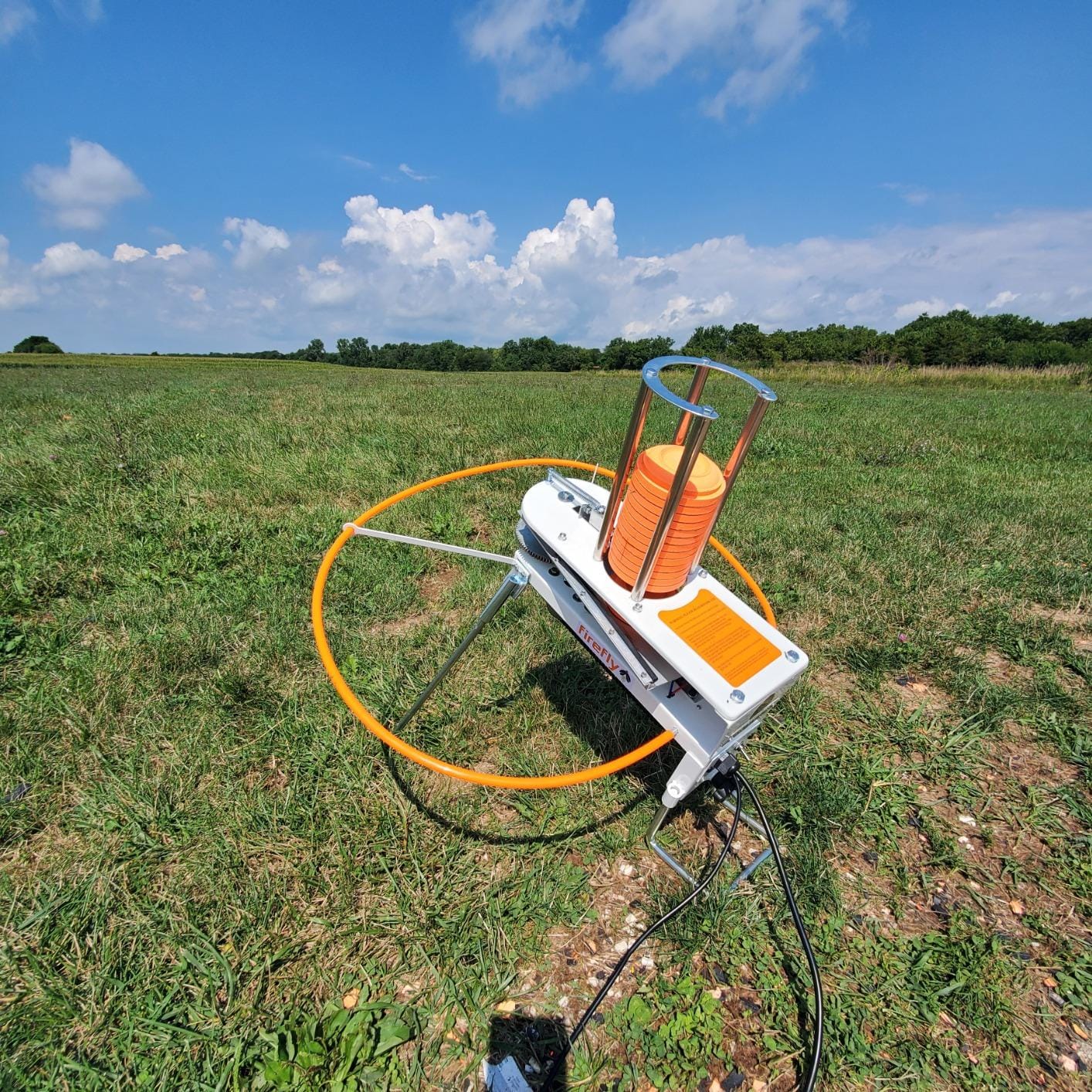
The 10-foot pedal cord is the shortest in this comparison. That’s a deliberate tradeoff for portability. You need to set up closer to the machine, which actually works fine for backyard practice and tight shooting lanes. If you need more distance from the thrower, consider the 25-foot cord models from Champion.
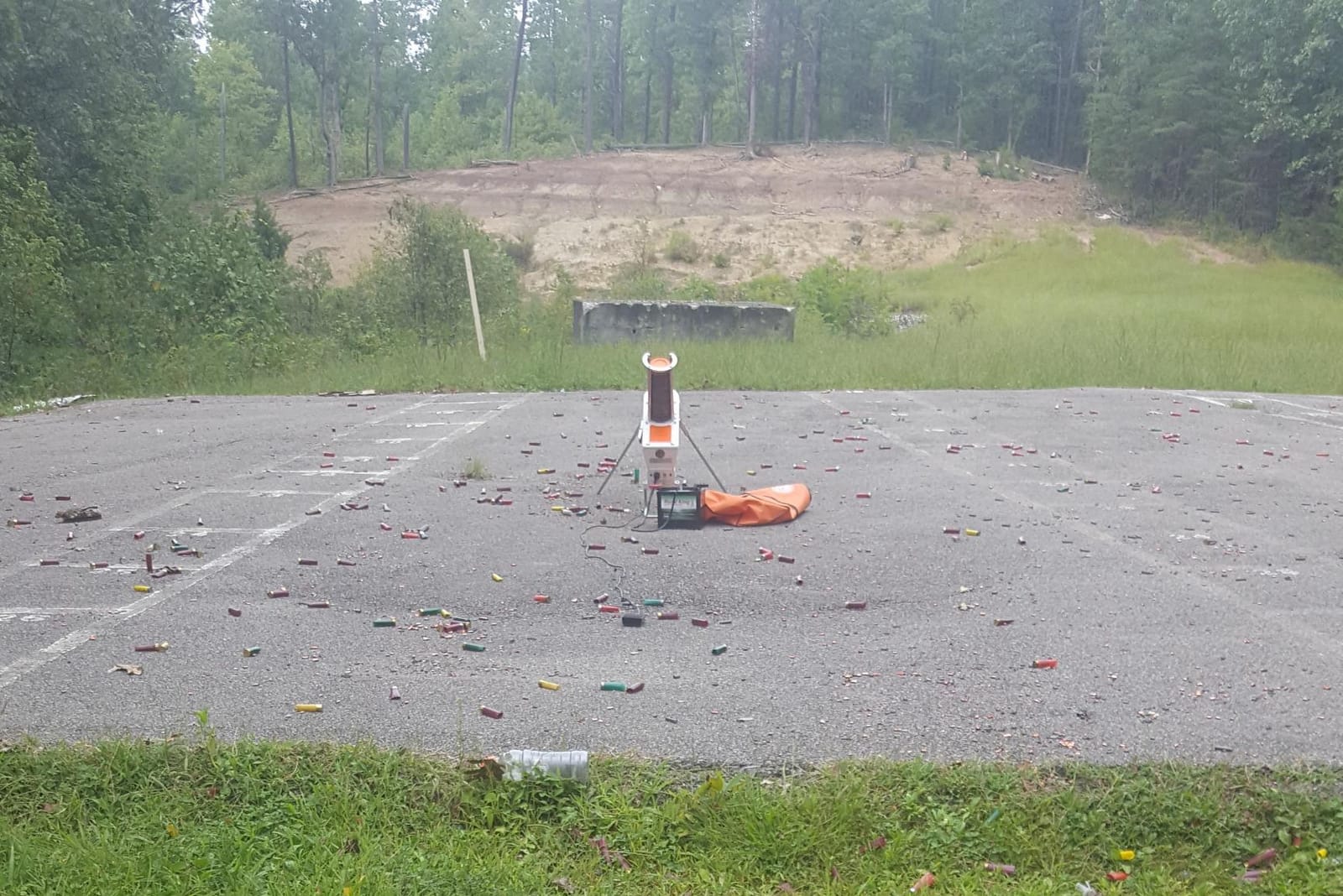
Initial setup requires some patience. The spring tension and stop switch may need adjustment out of the box to avoid breaking clays during launch. Forum users recommend starting with lighter tension and gradually increasing until you get clean breaks on consistent trajectories.
Clay Compatibility and Target Sizes
The Firefly handles standard 108mm clays, international 110mm clays, and biodegradable targets. It does not accept midi or mini clays—if you shoot smaller targets, look at the Caldwell Claymore Solo instead. For most solo practice with standard targets, the Firefly’s compatibility is more than adequate.
Transportation and Field Setup
The included nylon carry bag deserves mention. It keeps the thrower protected during transport and prevents loose parts from rattling around in your vehicle. The folding legs collapse flat, and the whole unit fits in the bag like a long duffel. If you practice at multiple locations or travel to hunting camp, this is the thrower designed for your lifestyle.
5. Do All Outdoors Raven — Best Mobility with Built-In Wheels
Do All Outdoors Raven Automatic Clay Pigeon Thrower – Skeet Thrower Machine with Integrated Wheels and Transport Handle
Built-in wheels and pull handle
75 clay capacity
50-80 yard throw
25ft pedal cord
Low battery indicator
Pros
- Built-in wheels and pull handle for roll-out setup
- 75 clay capacity is the largest in this lineup
- Throws clays 50-80 yards for maximum range
- Aircraft aluminum construction with safety pin
- 25-foot foot pedal cord for flexible positioning
Cons
- Requires 12V deep cycle marine battery not included
- Assembly instructions are poor and frustrating
- Quality control issues reported by some buyers
- Stacker rods can slide up during operation
The Raven solves a real problem: getting a heavy thrower from your truck to your shooting spot without a second set of hands. The built-in wheels and pull handle let you roll it like luggage across flat ground. Once you’ve experienced wheeling a loaded thrower to position instead of carrying it, going back to lifting feels primitive.
The 75-clay capacity is the largest in this comparison. You load once and shoot for an extended session without interruption. Combined with the 50 to 80 yard throwing range, the Raven delivers high-volume, long-distance practice that serious shooters demand.
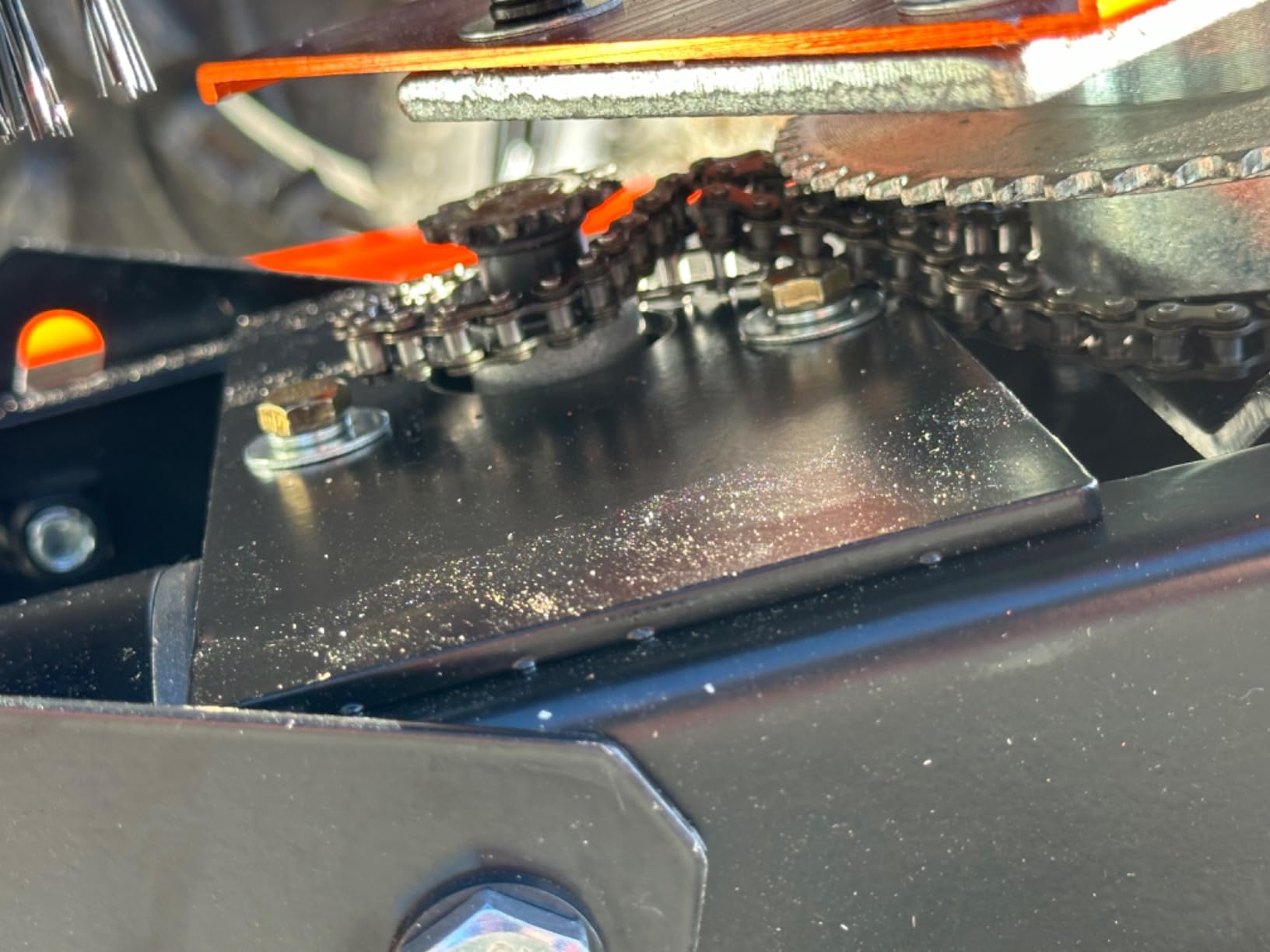
The 25-foot foot pedal cord matches the Champion models and gives you good distance from the machine. The aircraft aluminum arm with 5 to 35 degree angle adjustment provides solid presentation variety. A low battery indicator light is a practical touch—no more mid-session shutdowns from a dead battery you didn’t see coming.
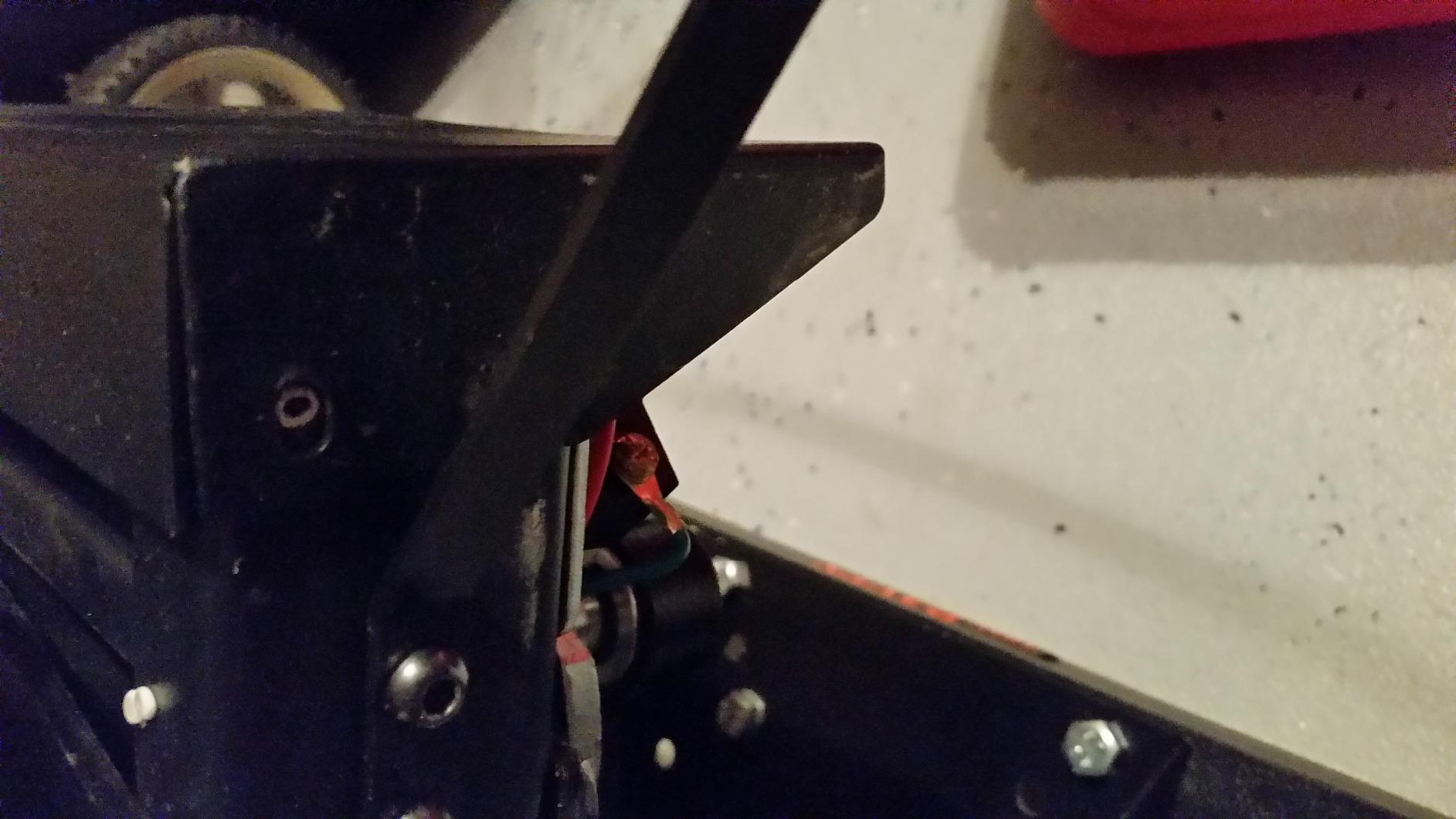
Here’s where I need to be honest: the Raven’s quality control is inconsistent. Multiple reviewers report assembly challenges with poor instructions, and some units have stacker rods that slide during operation. When it works—and it usually does after proper setup—it performs reliably for hundreds of throws. But the out-of-box experience can be frustrating.
Assembly and First-Session Reliability
Plan to spend 45 to 60 minutes on initial assembly. Watch a YouTube setup video before you start—the paper instructions alone won’t cut it. Once assembled, test-fire 20 to 30 clays before your real practice session. This gives you a chance to tighten any loose components and dial in the spring tension for clean launches.
Is the Raven Worth the Trade-Offs?
If you practice on a property where you need to move your thrower between stations—or if you set up at the end of a long field—the wheels are a genuine advantage. The 75-clay capacity and 80-yard max range are class-leading. Just go in knowing the setup takes patience, and inspect the unit on arrival for any quality issues.
6. Allen Company EZ Aim Claymaster — Budget Entry for New Shooters
Allen Company EZ Aim Pull Cord Claymaster Clay Pigeon Thrower Machine – High-Performance Launcher – Ideal for Skeet and Trap Shooting – Pull Cord Operated
10.4 lbs ultralight
Foot pedal or pull cord
5-minute assembly
Doubles capable
Solid-steel frame
Pros
- Most affordable thrower in the lineup
- Ultralight at just 10.4 pounds
- Assembles in under 5 minutes with no tools
- High-visibility orange frame for safety
- Padded arm prevents clay breakage during loading
Cons
- Manual operation requires physical effort per throw
- Limited distance compared to electronic throwers
- Only 2-year manufacturer warranty
The EZ Aim Claymaster is the entry point into foot-pedal clay throwing. At 10.4 pounds, you can carry it one-handed to any shooting spot. The dual-mode operation—foot pedal or pull cord—means you can practice solo with the pedal or let a partner pull the cord for a more traditional trap experience.
Assembly takes under five minutes with no tools. The solid-steel frame in high-visibility orange is both sturdy and easy to spot in the field. The padded throwing arm is a thoughtful detail—it cushions the clay during loading to reduce breakage before the target even launches.
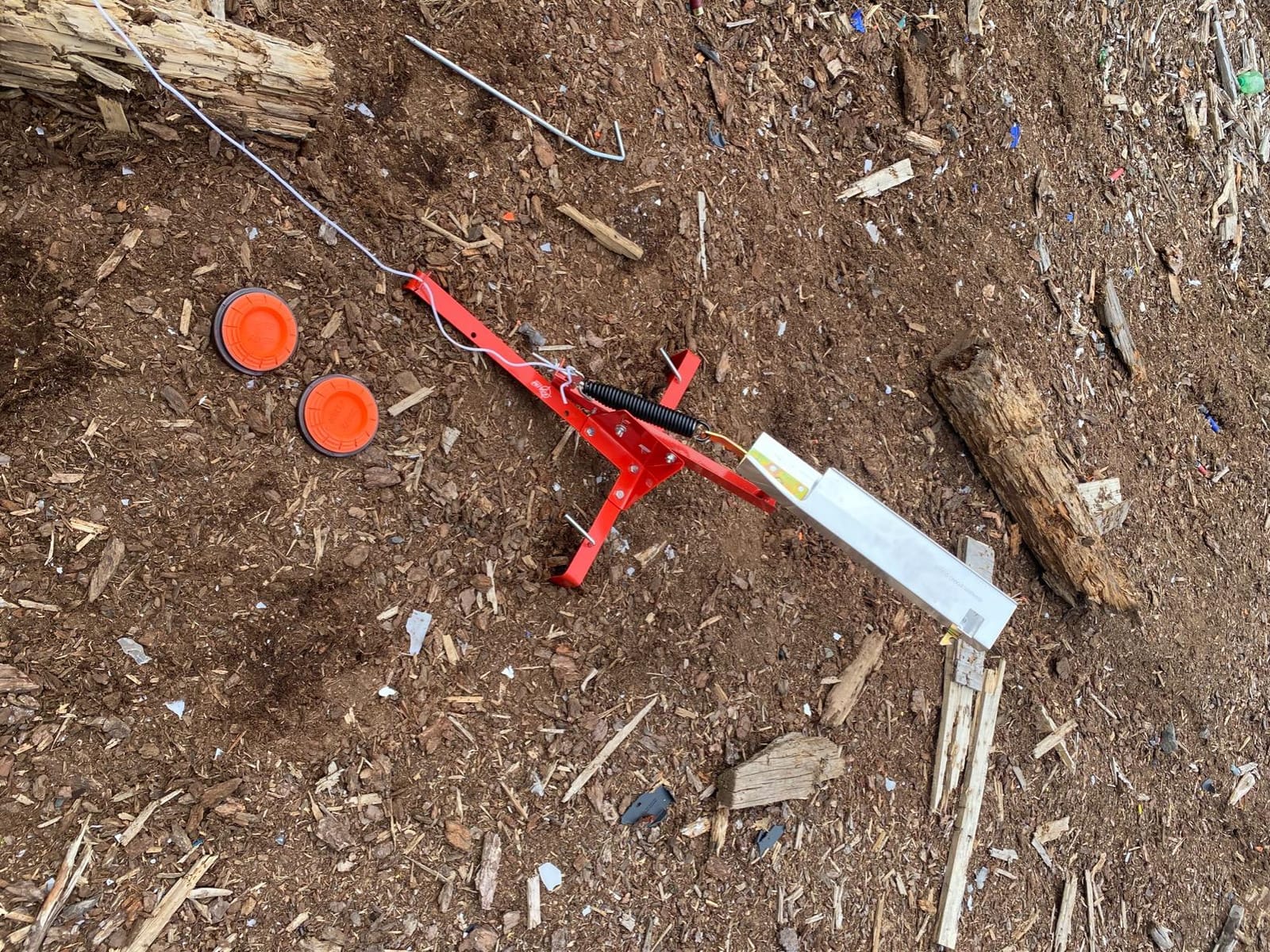
What you sacrifice with the Claymaster is automation. Every throw requires you to step on the pedal or pull the cord, which physically cocks the spring and releases the arm. After 100 targets, your leg knows it’s been working. Electronic throwers handle the cocking automatically—you just step to trigger the release.
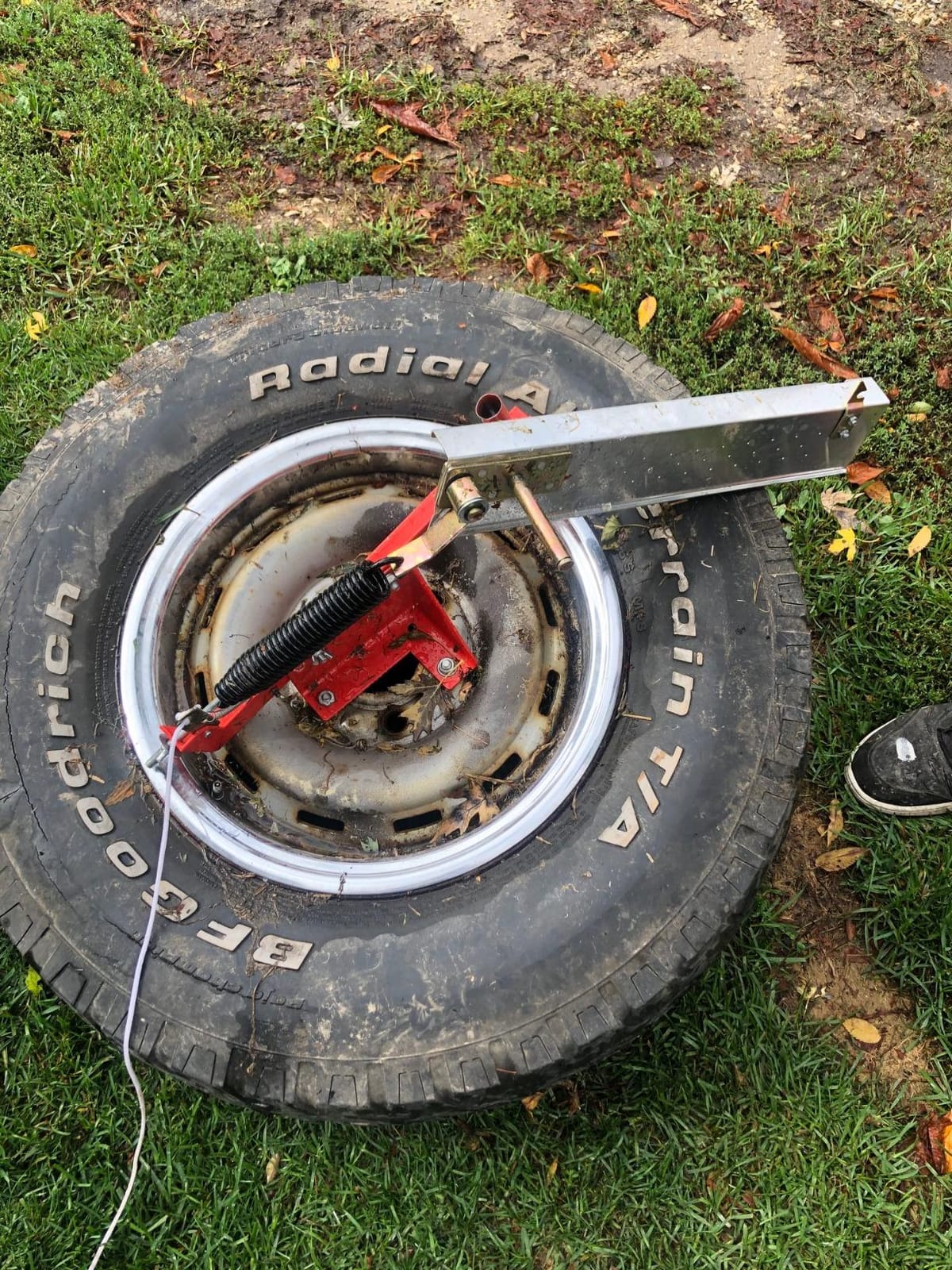
The throwing distance is also shorter than electronic models. You’re looking at 30 to 40 yards of effective range versus the 55 to 80 yards from battery-powered throwers. For backyard practice at close to mid-range, that’s perfectly fine. For stretching your shooting distance, you’ll want to step up to an electronic model.
Foot Pedal vs Pull Cord Operation
The dual-mode design gives you flexibility that single-mode throwers don’t offer. Use the foot pedal when practicing alone—your hands stay on the gun and you control the launch timing. Switch to the pull cord when a buddy comes along and wants to call targets for you. It’s a simple mechanism that keeps the thrower useful across different practice scenarios.
Who Should Start Here
The Claymaster makes sense for new clays shooters who want to try foot-pedal practice without a major investment. If you’re not sure how often you’ll use a thrower, start here. You’ll learn the fundamentals of solo clay shooting and develop your pedal-foot coordination. If the bug bites, you can upgrade to an electronic model later and keep the Claymaster as a backup or loaner.
7. Caldwell Claymore Solo — Best for True Solo Foot-Pedal Operation
Caldwell Claymore Solo Manual Clay Target Thrower
No battery required
15 lbs collapsible
10-40 degree angles
Singles and doubles
Standard midi and mini clays
Pros
- No battery or power source required at all
- Lightest full-featured thrower at 15 pounds
- Fully collapsible frame for compact storage
- Accepts standard and midi and mini clay pigeons
- Auto-resetting arm for true hands-free operation
- Limited lifetime warranty from Caldwell
Cons
- Manual operation requires physical pedal effort
- Some users report difficulty balancing while stepping
- Requires manual clay loading after each throw
The Caldwell Claymore Solo is the only thrower in this comparison that needs zero batteries, zero power cords, and zero electrical components. You press the foot pedal, it tensions the spring and releases the throwing arm in one motion, and the arm auto-resets to loading position. That’s the entire operating cycle—pure mechanical simplicity.
This is the thrower that Outdoor Life called “tough to beat” for solo shooters, and I agree. The 15-pound weight and fully collapsible frame mean it fits in a trunk, a closet, or a blind bag. There’s no battery to charge, no wiring to connect, and no electrical components to fail in the field.
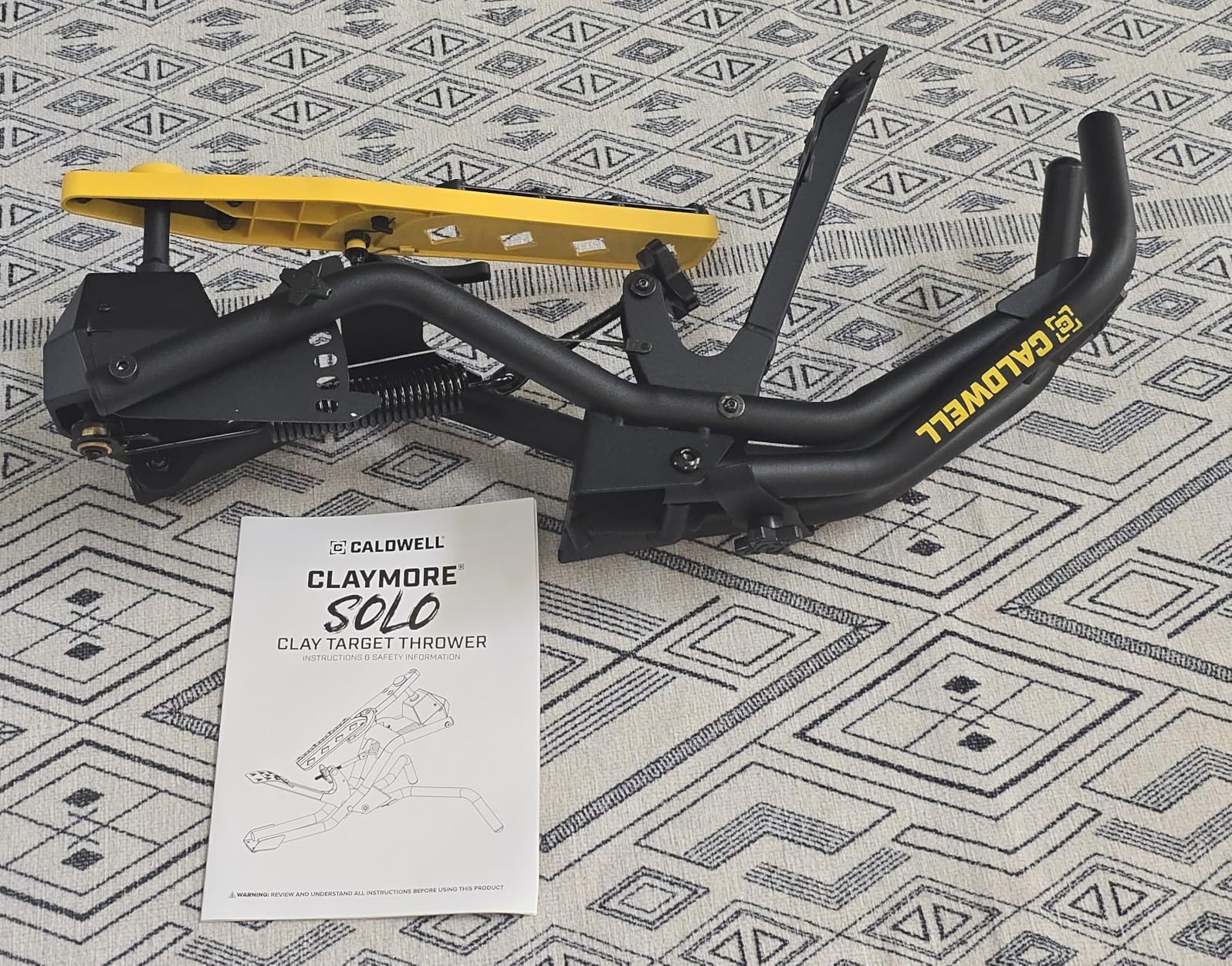
The Claymore Solo accepts standard, midi, and mini clay pigeons—the widest target compatibility in this lineup. If you shoot smaller targets for precision practice or use mini clays in tight spaces, this is the only thrower that handles all three sizes without adapters. The adjustable launch angle from 10 to 40 degrees gives you the broadest angle range as well.
The auto-resetting arm is what makes this a true solo machine. After each throw, the arm returns to the loading position on its own. You drop in the next clay, step on the pedal, and shoot. Your hands never enter the danger zone near the throwing arm. The limited lifetime warranty from Caldwell backs up the build quality.
The Learning Curve for Foot-Pedal Balance
This is the number one complaint from first-time users, and it’s worth addressing honestly. Stepping on the pedal while mounting a shotgun shifts your weight forward. It takes 30 to 50 targets to develop the muscle memory that keeps your stance stable during the pedal press. Start with lighter spring tension and work your way up as your balance improves.
When Manual Beats Electric
The Claymore Solo makes sense when you practice at remote locations without vehicle access for battery charging, when you want the simplest possible setup with zero failure points, or when portability is your top priority. It’s also the quietest thrower in the lineup—no motor noise, just the spring release. If you practice in areas where noise matters, the manual operation is a genuine advantage.
How to Choose the Right Foot-Pedal Clay Thrower?
Pedal-Only vs Pedal-Plus-Remote
This is the first decision solo shooters face. A pedal-only thrower like the Caldwell Claymore Solo keeps things simple—you step, it throws. No batteries for a remote, no signal interference, nothing to lose. Pedal-plus-remote models like the Champion WheelyBird and Workhorse give you both options: use the pedal alone for solo sessions, or add a wireless remote when shooting with a partner. The remote adds flexibility but also adds a battery dependency and another potential failure point.
Power Source: Manual vs 12V Battery
Manual throwers like the Claymore Solo and Allen Claymaster need no power at all. You supply the energy through the pedal. Battery-powered models require a 12V deep cycle marine battery that’s sold separately. That battery delivers hundreds of throws per charge but adds weight, cost, and a charging routine. If you practice near your vehicle, the battery isn’t a burden. If you hike into remote spots, a manual thrower eliminates that logistics entirely.
Throwing Distance and Practice Goals
Match the thrower’s range to your practice goals. For backyard tune-ups and close-range fundamentals, 30 to 55 yards covers most needs—think the Allen Claymaster or Do-All Firefly. For longer presentations that simulate field hunting distances, step up to 75 to 80 yards with the Champion Workhorse or Do All Raven. Most solo practice happens at 35 to 50 yards, so don’t over-buy on distance unless your property supports it.
Magazine Capacity and Session Length
A 25-clay feeder gives you about 15 to 20 minutes of continuous practice. A 50-clay magazine stretches that to 30 to 40 minutes. The Do All Raven’s 75-clay capacity can run for nearly an hour without reloading. Think about how long your typical session lasts and how often you want to walk back to reload. For most solo shooters, 50 clays hits the sweet spot between session length and machine weight.
Portability and Setup Time
If you transport your thrower frequently, weight and form factor matter. The Allen Claymaster at 10 pounds and the Caldwell Claymore Solo at 15 pounds are grab-and-go machines. The Do-All Firefly at 27 pounds comes with a carry bag. The Do All Raven has built-in wheels for rolling transport. The Champion models at 30 to 48 pounds are heavier but still manageable for one person. Setup time ranges from 5 minutes for manual throwers to 15 to 20 minutes for electronic models that need battery connection and angle adjustment.
Cord Length and Shooting Position
Foot-pedal cord lengths in this comparison range from 10 feet on the Firefly to 25 feet on the Champion models and Raven. Longer cords let you set up farther from the machine, which creates a safer and more comfortable shooting position. If you practice on open ground and want maximum positioning flexibility, prioritize 25-foot cords. For tight backyard setups, 10 to 15 feet works fine.
Safety Considerations for Solo Practice
When you’re shooting alone, there’s no spotter to warn you about issues. Always wear eye protection and ear protection—broken clays send fragments sideways. Never store a thrower with the spring cocked. Keep your hands clear of the throwing arm during operation. Set up a safe firing zone and confirm no people, animals, or property are downrange before each session. If your thrower has a safety pin like the Raven, use it whenever the machine is loaded but not in active use.
For anyone exploring other solo-operated equipment, our guide to drywall hoists for solo installers covers similar one-person operation principles for workshop tools.
If you’re building out a full shooting range setup, our roundup of the best pedal kayaks for lake fishing shares similar design philosophy around pedal-driven mechanical control. And for keeping your flock healthy alongside your shooting practice, our complete guide to foot rot in sheep covers a different but related topic in livestock care.
Frequently Asked Questions
What is the best solo clay thrower?
The Champion WheelyBird Auto-Feed Trap is the best overall solo clay thrower for most shooters. It combines a fast 2-second cycle time, 50-clay magazine capacity, and over 3,000 throws per battery charge with a responsive 25-foot foot pedal. For a battery-free option, the Caldwell Claymore Solo offers pure mechanical foot-pedal operation at just 15 pounds.
What is the best clay target thrower?
The best clay target thrower depends on your needs. For solo practice with maximum automation, the Champion WheelyBird leads with its auto-feed magazine and fast cycling. For portable manual operation, the Caldwell Claymore Solo is the top pick. Both models earn consistently high ratings from verified buyers for reliability and target presentation quality.
Do you need a remote for a foot pedal clay thrower?
No, you do not need a remote for a foot pedal clay thrower. The foot pedal alone handles the full launch cycle—cocking the spring and releasing the target. Models like the Champion WheelyBird and Workhorse are remote-compatible, meaning you can add a wireless remote later for group sessions, but the pedal works independently for solo use.
How does a foot-pedal clay thrower work?
You load a clay target onto the spring-loaded throwing arm, then step on the foot pedal. The pedal tensions the spring and releases the arm in one motion, launching the clay into the air. On auto-feed models, the next clay drops into position automatically. On manual models like the Caldwell Claymore Solo, the arm resets to loading position and you place the next clay by hand.
Can you shoot clays by yourself?
Yes, foot-pedal clay throwers are specifically designed for solo shooting. The pedal lets you load and launch targets while keeping both hands on your shotgun. You control the timing of each launch, so you can set your stance, call for the target, and shoot without a partner. Most solo shooters practice 50 to 100 clays per session using a foot-pedal thrower.
Conclusion
After comparing all seven models, the Champion WheelyBird remains my top recommendation for the best foot-pedal clay throwers for solo shooters in 2026. Its combination of speed, capacity, and proven reliability gives you the most productive solo practice sessions. If portability and zero battery dependency matter more, the Caldwell Claymore Solo delivers an outstanding mechanical-only experience at half the weight. Pick the thrower that matches your property, your practice frequency, and your budget—then get out there and break some clays.