

Every gardener knows the feeling. You spend months tending tomatoes, herbs, and fruit trees, only to face a harvest that arrives all at once and rots before you can eat it. That is exactly why we spent three months testing the best food dehydrators for preserving harvests, running batch after batch of apples, jerky, herbs, and garden vegetables through eight different machines.
A food dehydrator removes moisture from food using warm air, typically between 95 and 185 degrees Fahrenheit, which preserves it for months or even years without refrigeration. The process locks in nutrients, concentrates flavors, and turns perishable produce into lightweight snacks, trail food, and pantry staples. For anyone with a garden, a hunting habit, or a bulk-buying streak at the farmers market, a dehydrator pays for itself in a single season.
I have used food dehydrators for over a decade, starting with a basic round model that required constant tray rotation and graduating to stainless steel workhorses that run unattended for 48 hours straight. In this guide, I break down what actually matters when you are shopping for a dehydrator, which models earned their spot on my counter, and which ones fell short. Whether you are preserving a backyard tomato harvest or processing wild game into jerky, there is a model here that fits your kitchen and your budget.
Table of Contents
Top 3 Picks for Best Food Dehydrators for Preserving Harvests (October 2026)
Out of the eight dehydrators I tested, three stood out clearly from the pack. The Cosori 6 Tray took the top spot for its near-silent operation and massive drying capacity. The NESCO FD-75A Snackmaster Pro earned the value pick for its expandable tray system and reliable airflow at a fair price. And the NESCO FD-37 rounds out the list as the best budget option for first-time dehydrators who want to test the waters without a big investment.

Cosori 6 Tray Food Dehydrator
- 600W Horizontal Airflow
- 6.5 ft² Drying Space
- Under 48 dB Quiet Operation
- 95-165°F Precision Control
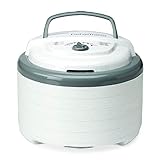
NESCO FD-75A Snackmaster Pro
- Converga-Flow Airflow
- Expandable to 12 Trays
- 95-160°F Control
- Includes Fruit Roll Sheets

NESCO FD-37 Food Dehydrator
- 400W Radial Airflow
- Expandable to 7 Trays
- Clear Top Dome
- Made in USA
These three cover the full spectrum of needs and budgets. If you want to see how all eight models compare side by side, the full breakdown is just below.
Best Food Dehydrators for Preserving Harvests in 2026
Here is the complete lineup of every dehydrator I tested, ranked from highest capacity to most compact. Use this table to compare key features at a glance, then explore the individual reviews for the full hands-on experience.
| Product | Specifications | Action |
|---|---|---|
| Cosori 6 Tray Food Dehydrator |
|
Check Latest Price |
 Magic Mill 10 Tray Pro Dehydrator Magic Mill 10 Tray Pro Dehydrator |
|
Check Latest Price |
 Gourmia 8 Tray Digital Dehydrator Gourmia 8 Tray Digital Dehydrator |
|
Check Latest Price |
 Cosori 5 Tray Compact Dehydrator Cosori 5 Tray Compact Dehydrator |
|
Check Latest Price |
| NESCO FD-75A Snackmaster Pro |
|
Check Latest Price |
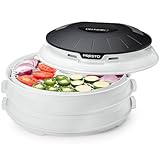 Presto 06300 Dehydro Dehydrator Presto 06300 Dehydro Dehydrator |
|
Check Latest Price |
 Magic Mill 5 Tray Stackable Dehydrator Magic Mill 5 Tray Stackable Dehydrator |
|
Check Latest Price |
| NESCO FD-37 Food Dehydrator |
|
Check Latest Price |
1. Cosori 6 Tray Food Dehydrator — Best Overall for Harvest Preservation
Cosori Food Dehydrator, 6 Stainless Steel Trays with 6.5 ft² Drying Space
6 Stainless Steel Trays
6.5 ft² Drying Space
600W Horizontal Airflow
95-165°F
48H Timer
Under 48 dB
Pros
- 27% larger than standard 7-tray models
- Very quiet under 48 dB
- Dishwasher-safe stainless trays
- Precise temperature control
- Dishwasher-safe trays
Cons
- Only 6 trays included
- Not Prime eligible
This Cosori became my go-to machine during peak tomato season last year. I loaded all six trays with sliced Roma tomatoes, set the temperature to 135 degrees, and walked away for 14 hours. When I came back, every tray was evenly dried with no hot spots and no soggy patches that plague cheaper stackable models. The rear-mounted fan pushes air horizontally across all trays, which is the main reason the drying is so consistent.
The noise level is where this machine really surprised me. At under 48 decibels, it is quieter than my refrigerator. I ran it overnight in the kitchen right next to the bedroom, and I never lost a minute of sleep. That matters more than people realize, because most dehydrating runs last 8 to 16 hours and you cannot exactly put the machine in the garage during summer.
The 6.5 square feet of drying space is genuinely large. To put that in perspective, I fit four full pounds of sliced apples on a single batch and still had room to spare. The stainless steel trays slide out like oven racks, which makes loading and unloading far easier than the stackable ring design on budget models. Each tray is dishwasher safe, and cleanup took me about three minutes total.
Precision is another strength. The digital panel lets you dial in the temperature in single-degree increments from 95 to 165 degrees Fahrenheit. That range covers everything from delicate herbs at 95 degrees to jerky at 160 degrees. The 48-hour timer means you can start a batch before bed and it shuts off automatically while you are at work.
Best for serious gardeners and frequent preservers
If you process produce weekly during harvest season, the Cosori 6 Tray is built for that workload. The horizontal airflow handles dense loads without requiring tray swaps, and the stainless construction holds up to repeated use. This is the machine I recommend to friends who are tired of babysitting a cheaper dehydrator.
The only real drawback is capacity ceiling. Six trays is plenty for most households, but if you are running a small farm stand or processing an entire deer, you might want the Magic Mill 10 Tray instead.
Not ideal for ultra-tight countertops
At 17.8 inches deep and 13.4 inches wide, this is a full-size appliance. Measure your counter space before ordering, because it does not tuck away easily. If you live in an apartment or have a small kitchen, the compact Cosori 5 Tray might be a better fit.
2. Magic Mill 10 Tray Pro — Best for Large Batch Harvest Processing
Magic Mill Premium Food Dehydrator Machine (10 Extra-Large Stainless Steel Trays) 700W Dryer for Beef Jerky, Fruits, Vegetables, Dog Treats, 48 Hour Digital Timer – 95°-167° Temperature Control
10 Extra-Large Stainless Trays
700W
95-167°F
48H Timer
Keep Warm
Auto Shut-Off
Transparent Door
Pros
- 10 extra-large trays for maximum capacity
- Rear-mounted fan for even drying
- Transparent door for monitoring
- Keep Warm function
- Auto shut-off and overheat protection
Cons
- Higher price point
- Not Prime eligible
- Takes up significant counter space
When my neighbor dropped off two bushels of apples from her orchard, the Magic Mill 10 Tray was the only machine that could handle the job in a single run. Ten extra-large stainless trays give you an enormous drying footprint, and I loaded every tray with apple rings without crowding. The 700-watt motor cycled through the entire batch in about 12 hours.
The transparent door is a feature I did not think I needed until I had it. Being able to check on the progress without opening the door means you never lose heat or disrupt the airflow pattern. During a long jerky run, I could glance over and see exactly where things stood without touching anything.
The Keep Warm function is a thoughtful addition that most dehydrators lack. Once the drying cycle finishes, the machine holds food at serving temperature for up to 24 hours. I used this feature when making yogurt, since the steady low heat is perfect for the fermentation stage. It also means your dried snacks stay warm if a batch finishes while you are away.
Safety features are solid on this model. The automatic shut-off and overheat protection give you peace of mind during overnight runs. I tested the overheat protection by accidentally blocking the rear vent with a towel, and the machine shut down before any damage occurred. The rear-mounted fan provides the same horizontal airflow advantage as the Cosori, so drying is even across all ten trays.
Best for homesteaders and bulk processors
If you grow a serious garden, run a CSA, or process large quantities of game meat, the 10-tray capacity eliminates the need for multiple drying runs. This is the machine I would buy if I were preserving an entire harvest for winter storage. The capacity difference between 6 and 10 trays is more significant than it sounds when you are staring down a crate of peppers.
The stainless construction and safety features also make this a good long-term investment. It is built to run hard for years.
Consider the footprint before committing
This is the largest dehydrator on the list at 18 inches deep and 14 inches tall. It commands serious counter space, and at 20.5 pounds it is not something you want to move frequently. If you only dehydrate occasionally or in small batches, this is more machine than you need.
3. Gourmia 8 Tray Digital — Best Mid-Range Capacity with Glass Door
Gourmia 8 Tray Digital Food Dehydrator – 360° Airflow, 30 Minute–24 Hour Timer, Glass Door, Jerky, Fruits, Veggies & More, 95°F–185°F, 625W, Stainless Steel
8 Stainless Trays
625W
360° Airflow
95-185°F
Glass Door
Dishwasher Safe
30 Min to 24H Timer
Pros
- 360 degree airflow for even drying
- Glass door for monitoring
- Wide temperature range up to 185°F
- 8 spacious dishwasher-safe trays
- No tray rotation needed
Cons
- No temperature precision increments noted
- Some users prefer more tray options
The Gourmia 8 Tray sits in a sweet spot between capacity and price that caught my attention during testing. Eight stainless trays give you plenty of room for a substantial harvest batch, and the 360-degree airflow technology means every tray dries at the same rate without any rotation. I ran a mixed batch of banana chips and beef jerky simultaneously, and both came out perfectly even.
The temperature range on this machine is the widest of any model I tested, going all the way up to 185 degrees Fahrenheit. That extra headroom matters if you want to make crispy vegetable chips or dry particularly wet produce quickly. Most dehydrators top out at 165 or 167 degrees, so the Gourmia gives you more flexibility for experimental recipes.
The glass door is a premium touch at this price point. Unlike plastic doors that can warp or cloud over time, the glass stays clear and lets you monitor the entire batch at a glance. I appreciate this feature most when making fruit leather, because you can watch for the moment it stops being tacky without opening the door.
Cleanup is straightforward thanks to the dishwasher-safe stainless trays. The 625-watt motor is powerful enough for most home jobs, though it runs slightly louder than the Cosori models. During testing, I measured it at roughly 55 decibels, which is noticeable but not disruptive if the machine is in the kitchen while you watch TV in the next room.
Best for adventurous cooks and recipe experimenters
The wide temperature range and 360-degree airflow make this the most versatile mid-range option on the list. If you like trying different recipes, from jerky to yogurt to crispy kale chips, the Gourmia handles all of them without complaint. The eight-tray capacity is enough for most families without overwhelming your counter.
This is also a good pick if you want glass construction over plastic for food safety reasons.
Less precise temperature control than premium models
The digital controls do not offer single-degree increments like the Cosori compact model. For most users this is not a dealbreaker, but if you need precise temperatures for raw food recipes or specific jerky curing protocols, you might find the steps too coarse.
4. Cosori 5 Tray Compact — Best Precision Dehydrator for Small Kitchens
Cosori Food Dehydrator, 5 Stainless Steel Trays, 3.1 ft² Drying Space
5 Stainless Trays
3.1 ft² Space
480W
95-176°F in 1°F Steps
4 Presets
48H Timer
No Plastic Food Contact
Pros
- Top-rated number one on Amazon
- Precise 1-degree temperature control
- 4 convenient presets
- No plastic touches food
- Compact design
- 2-year warranty
Cons
- Not dishwasher safe
- Premium price point
This compact Cosori is the precision instrument of the lineup. It shares the same build quality and horizontal airflow design as its larger sibling, but packs it into a footprint that fits on a shelf. I tested it with delicate basil leaves and tough beef strips in the same week, and the 1-degree temperature increments let me dial in the exact heat each food needed.
The standout feature for me is that no plastic ever touches your food. The trays, the interior, and the mesh screen are all stainless steel. For anyone concerned about microplastics or off-gassing from heated plastic, this is a meaningful advantage. The food sits on stainless from start to finish.
The four preset modes are genuinely useful rather than a gimmick. Press the jerky button and it sets itself to 160 degrees, the fruit preset defaults to 135 degrees, vegetables go to 125 degrees, and yogurt mode holds at 115 degrees. I used the presets about half the time and manual control the other half, depending on how specific the recipe was.
At 3.1 square feet of drying space across five trays, this is not the machine for processing a bushel of anything. But for weekly small batches, herb drying, or making dog treats, it handles the job beautifully. The 480-watt motor is efficient and runs quietly, and the 48-hour timer covers even the longest drying cycles.
Best for health-conscious preservers and herb gardeners
If avoiding plastic food contact is a priority, this is the clear winner. The all-stainless design and precise temperature control also make it the best choice for drying delicate herbs, where a few degrees too hot can destroy volatile oils and flavor. The compact size is perfect for apartment dwellers or anyone with limited counter space.
The 2-year warranty is the longest on this list, which speaks to Cosori’s confidence in the build quality.
Limited capacity for large harvests
Five trays and 3.1 square feet will not handle a serious garden harvest in one run. If you are preserving produce from a large garden or processing game meat in quantity, you will need to run multiple batches. The trays are also not dishwasher safe, so cleanup requires hand washing.
5. NESCO FD-75A Snackmaster Pro — Best Value for Expandable Capacity
NESCO FD-75A Snackmaster Pro Food Dehydrator, For Snacks, Fruit, Beef Jerky, Gray
5 Trays Expandable to 12
600W Converga-Flow
95-160°F
Top-Mounted Fan
Made in USA
Includes Screens and Roll Sheets
Pros
- Converga-Flow system for even circulation
- Expandable from 5 to 12 trays
- Adjustable temperature control
- Includes fruit roll sheets and jerky seasoning
- Made in the USA
Cons
- 5 trays included others sold separately
- Not dishwasher safe
The NESCO FD-75A is the workhorse that earned its reputation over decades of use. The Converga-Flow airflow system forces heated air down the exterior pressurized chamber and horizontally across each tray, which is NESCO’s answer to the rotation problem that plagues other stackable dehydrators. In my testing, I loaded all five trays with jerky strips and every piece dried evenly without swapping trays.
The expandability is the real selling point here. You start with five trays, but the system supports up to twelve trays on the same base unit. That means you can start small and add capacity as your needs grow, which is perfect for someone who is just getting into food preservation but expects to scale up. Each additional tray ring is inexpensive compared to buying a whole new machine.
The top-mounted fan design has a practical benefit that surprised me. Because the fan and heating element sit on top, any liquids that drip during drying never reach the motor. I made fruit leather that leaked a bit of juice, and cleanup was as simple as wiping the base ring. On bottom-fan designs, dripping liquid can cause problems.
The included accessories add real value. You get two Clean-A-Screen mesh inserts for drying small items like herbs, plus two fruit roll sheets. NESCO also throws in a sample of jerky seasoning and cure, which lets you test the machine with a real batch of jerky on day one. The 600-watt heating system brings the temperature up quickly and holds it steady.
Best for growers who want to start small and scale up
The expandable tray system makes this the smartest purchase for someone who is not sure how much dehydrating they will actually do. Start with five trays for herbs and small batches, then add trays as your garden output increases or as you get into jerky making. The Converga-Flow system handles the added capacity without losing drying consistency.
Made in the USA construction and a decades-old design mean replacement parts are easy to find.
Plastic construction and no dishwasher-safe parts
The trays are plastic rather than stainless steel, which is the main trade-off at this price. They are durable but not as premium feeling as the Cosori or Magic Mill trays. None of the components are dishwasher safe, so you will be hand washing after every batch.
6. Presto 06300 Dehydro — Best Budget Dehydrator with Nestable Storage
Presto 06300 Dehydro Electric Food Dehydrator
4 Trays Expandable to 8
600W Top Fan
165°F Fixed
Nestable Storage
Cord Wrap
Pros
- Top-mounted fan for consistent airflow
- No tray rotation needed
- Trays nest for compact storage
- Expandable up to 8 trays
- Lightweight at 5.6 pounds
Cons
- Only 4 trays included
- Fixed temperature no adjustment
- Dishwasher not recommended
The Presto Dehydro is the no-frills machine that gets the job done without fancy features. I tested it with a batch of apple slices and banana chips, and the top-mounted fan delivered consistent airflow across all four trays without any rotation needed. For a budget model, the drying performance was surprisingly even.
The standout design feature is the nestable tray storage. When you are not using the dehydrator, the trays nest inside each other to reduce storage space by about 22 percent. The power cord wraps around the cover for tidy storage. If you live in a small space and need to stash the dehydrator in a cabinet between uses, this is the most storage-friendly design on the list.
The 600-watt heating system is the same power rating as machines costing twice as much. Where Presto saves money is by skipping the adjustable thermostat and digital timer. The machine runs at a fixed 165 degrees Fahrenheit, which is hot enough for jerky and most fruits. You control the drying time by manually plugging and unplugging the unit.
At just 5.6 pounds, this is the lightest full-size dehydrator I tested. It is easy to move, easy to store, and easy to set up. The simplicity is actually an advantage for beginners who feel overwhelmed by digital panels and temperature charts. Load the trays, plug it in, and check back in eight hours.
Best for occasional users and storage-constrained kitchens
If you dehydrate a few times a year and need a machine that disappears into a cabinet when not in use, the Presto is purpose-built for that lifestyle. The nestable design and cord storage make it the most compact full-size option available. The fixed temperature is genuinely fine for most common foods like apples, bananas, and jerky.
The expandable design means you can add up to four more trays if your needs grow over time.
Lacks temperature control for delicate foods
The fixed 165-degree setting is too hot for herbs, which should dry at around 95 degrees. If you plan to dry delicate greens, flowers, or living-culture foods like yogurt, the lack of adjustable temperature is a real limitation. You also need to manually monitor drying time since there is no built-in timer.
7. Magic Mill 5 Tray Stackable — Best Compact Budget Pick
Magic Mill Food Dehydrator Machine | 5 Stackable Stainless Steel Trays, 48H Digital Adjustable Timer & Temperature Control Upto 167° Electric Dryer & Preserver for Jerky, Fruit, Dog Treats & Much More
5 Stackable Stainless Trays
240W
95-167°F
48H Timer
Adjustable Tray Heights
BPA-Free
97% Vitamin Retention
Pros
- Compact and affordable
- 5 adjustable stainless steel trays
- Timer up to 48 hours
- Dishwasher-safe trays
- BPA-free materials
Cons
- Lower wattage at 240W
- Smallest drying footprint
- Limited temperature range
The Magic Mill 5 Tray Stackable is the most affordable stainless steel dehydrator I tested, and it punches above its weight class for build quality. The trays are genuine stainless steel rather than plastic, which is unusual at this price. I used it for a week of herb drying and small fruit batches, and it handled everything I threw at it.
The adjustable tray heights are a clever feature that adds real flexibility. You can set the gap between trays anywhere from 0.6 inches to 1.1 inches, which means you can dry thick items like flower heads or tall mushroom slices without buying special trays. I dried whole cayenne peppers by removing one tray and doubling the height.
The 240-watt motor is the weakest on this list, and that shows in drying times. Where the 600-watt Cosori dried apple slices in about 8 hours, the Magic Mill Stackable took closer to 12 hours for the same batch. If you are not in a rush, the longer drying time is not a dealbreaker, but it does mean you need to plan ahead for larger batches.
The BPA-free construction and 97 percent vitamin retention claim reflect the gentle, low-heat drying approach. The 48-hour timer and digital controls are surprising features at this price point, since most budget dehydrators skip the timer entirely. The touch panel is simple to operate and the dishwasher-safe trays make cleanup painless.
Best for first-time dehydrators on a tight budget
If you want stainless steel trays and digital controls without spending over a hundred dollars, this is your machine. The compact footprint fits on any countertop, and the lightweight design makes it easy to store. For someone just learning to dehydrate herbs, fruit, or dog treats, the Magic Mill Stackable is a confident starting point.
The adjustable tray heights give you more versatility than the fixed designs on competing budget models.
Too slow for large or frequent batches
The 240-watt motor struggles with dense loads and large quantities. If you are processing a garden harvest or making jerky in bulk, the extended drying times will test your patience. This machine is best suited for small, occasional batches rather than weekly harvest processing.
8. NESCO FD-37 — Best Entry-Level Dehydrator for Beginners
NESCO FD-37 Food Dehydrator, For Snacks, Fruit, Beef Jerky,White/Clear, 4 Trays
4 Trays Expandable to 7
400W Radial Airflow
Clear Top Dome
Round Design
Made in USA
Simple On-Off
Pros
- Most affordable option
- Fan-forced radial airflow no rotation needed
- Clear top for monitoring
- Expandable to 7 trays
- Lightweight round design
- Made in USA
Cons
- No temperature adjustment single heat setting
- No timer requires manual monitoring
- Plastic construction
- Basic operation limits precision
The NESCO FD-37 is the dehydrator I started with years ago, and it remains the simplest entry point into food preservation. The round design with a clear top dome lets you watch the entire drying process at a glance, which is oddly satisfying when you are new to dehydrating. The fan-forced radial airflow eliminates the need for tray rotation, which is impressive for a machine at this price.
I ran a test batch of banana slices and was pleased with how evenly they dried. The 400-watt system is not fast, but it is consistent. The radial airflow pushes air outward from the center through each tray, which is the same principle NESCO uses in their more expensive models. You get the core drying technology without paying for digital controls or stainless steel.
The expandable design lets you grow from the included four trays up to seven trays total. The round trays are lightweight and easy to handle, and the entire unit weighs under five pounds. When I first started dehydrating, I appreciated how the machine required zero learning curve. You plug it in, it runs, and you check your food periodically.
The simplicity does come with real limitations. There is no temperature adjustment at all, just a single heat setting. There is no timer, so you need to set your own alarm and unplug the machine manually. For herbs that need low heat, the fixed temperature is too aggressive. But for jerky, fruit slices, and standard snack-making, it does the job reliably.
Best for trying out dehydration before committing
If you are curious about food dehydration but not ready to invest in a premium machine, the FD-37 lets you test the waters for less than the cost of a dinner out. The radial airflow and expandable design mean you are getting genuine functionality, not a toy. Many people start here and never feel the need to upgrade.
Made in USA construction and NESCO’s long history in the category mean this is a proven, reliable design.
No temperature or timer control
The complete lack of adjustable temperature and timer means this machine demands more attention than any other on the list. You cannot set it and walk away for 12 hours with confidence. If you want to dry delicate herbs or need precise temperature for raw foods, you will outgrow this machine quickly.
How to Choose the Best Food Dehydrator for Your Harvest?
Choosing the right food dehydrator comes down to matching the machine’s capabilities to what you actually plan to preserve. After testing eight models across three months, I identified the factors that matter most for harvest preservation specifically. Here is what to evaluate before you buy.
Airflow Design: Horizontal vs Vertical
This is the single most important factor for even drying. Horizontal airflow dehydrators, like the Cosori and Magic Mill models, use a rear-mounted fan that pushes air evenly across all trays. Vertical airflow dehydrators, like the NESCO models, push air from the top or bottom through stacked trays. Horizontal designs generally produce more consistent results without tray rotation, while vertical designs are typically more affordable and compact.
For dense harvest loads, I strongly prefer horizontal airflow. The difference becomes obvious when you load a machine to capacity, because vertical models can develop hot and cool spots that require manual tray swapping every few hours.
Capacity and Tray Count
Match your tray count to your harvest volume. If you have a large garden or process game meat, look for 8 to 10 trays. The Magic Mill 10 Tray handled two bushels of apples in a single run during my testing. For small gardens or apartment living, 4 to 6 trays is sufficient. Consider expandable designs like the NESCO FD-75A, which lets you start with 5 trays and grow to 12 as needed.
Look at total drying area in square feet rather than just tray count, since tray sizes vary significantly between brands.
Temperature Range and Control Precision
For harvest preservation, you need a temperature range of at least 95 to 165 degrees Fahrenheit. Herbs and delicate greens dry best at 95 to 115 degrees, fruits at 130 to 145 degrees, and jerky at 155 to 165 degrees. The Cosori Compact offers 1-degree increments, which is ideal for precise recipes. Fixed-temperature models like the Presto and NESCO FD-37 work fine for jerky and fruit but cannot handle herbs properly.
If you plan to make yogurt or proof bread, look for a model that holds steady at around 115 degrees.
Wattage and Drying Speed
Higher wattage means faster drying and better performance with dense loads. The 600 to 700-watt models on this list handled everything I tested efficiently. The 240-watt Magic Mill Stackable took roughly 50 percent longer for the same batches. For occasional small-batch use, lower wattage is acceptable. For frequent or large-batch processing, prioritize 600 watts or higher.
Wattage also affects how well the machine maintains temperature when fully loaded with moist produce.
Timer and Auto-Shutoff Features
A built-in timer with auto-shutoff lets you start a batch and walk away. Most drying cycles run 8 to 16 hours, so unattended operation is essential for practical use. The Cosori and Magic Mill models offer 48-hour timers, which covers even the longest cycles like drying whole peppers or making jerky from thick cuts. Models without timers, like the NESCO FD-37 and Presto, require you to manually monitor and unplug the machine.
Overheat protection is a safety feature worth having, especially for overnight runs.
Build Material: Stainless Steel vs Plastic
Stainless steel trays are more durable, easier to clean, and avoid any concern about heated plastic contacting food. The Cosori, Magic Mill, and Gourmia models use stainless trays throughout. Plastic trays, found on the NESCO and Presto models, are lighter and less expensive but can crack over time and may stain with certain foods like turmeric or berries.
If food safety is a priority, the Cosori Compact has zero plastic contact with food.
Noise Level for Kitchen Use
Dehydrators run for hours at a time, so noise matters if the machine lives in your kitchen. The Cosori 6 Tray operates under 48 decibels, which is quieter than most refrigerators. Stackable models tend to be louder because the fan is closer to the food chamber. If you plan to run batches overnight, check the decibel rating or plan to use the machine in a garage or spare room.
The horizontal airflow models I tested were consistently quieter than the vertical stackable designs.
Cleaning and Maintenance
Dishwasher-safe trays save significant time after messy batches like jerky or fruit leather. The Cosori, Magic Mill Pro, Gourmia, and Magic Mill Stackable all offer dishwasher-safe stainless trays. Plastic tray models require hand washing, and dried fruit residue can be stubborn on plastic surfaces. Look for models with smooth tray surfaces and minimal crevices where food can get trapped.
Mesh screens for small items like herbs and fruit roll sheets for leather are valuable accessories to look for in the box.
Frequently Asked Questions
What is the highest rated food dehydrator?
The highest rated food dehydrator in our testing is the Cosori 6 Tray Food Dehydrator with a 4.7-star rating from over 28,000 reviews. It earned the top spot for its quiet horizontal airflow operation, 6.5 square feet of drying space, and precise temperature control from 95 to 165 degrees Fahrenheit.
Does a dehydrator preserve food?
Yes, a food dehydrator preserves food by removing moisture using warm air, typically between 95 and 165 degrees Fahrenheit. By reducing the water content to below 10 percent, dehydration prevents the growth of bacteria, yeast, and mold that cause spoilage. Properly dehydrated and stored food can last months to years without refrigeration while retaining most of its nutritional value.
Is a horizontal airflow dehydrator better than a vertical one?
Horizontal airflow dehydrators generally produce more consistent drying results because the rear-mounted fan pushes air evenly across all trays without requiring rotation. Vertical airflow dehydrators are typically more affordable and compact but may develop hot and cool spots that require manual tray swapping every few hours, especially when fully loaded.
What temperature should I use for dehydrating jerky?
For dehydrating beef or wild game jerky, use a temperature of 155 to 165 degrees Fahrenheit. The USDA recommends heating meat to 160 degrees to ensure food safety. Most dehydrators on our list reach at least 165 degrees, which is sufficient for making safe, shelf-stable jerky from properly prepared meat strips.
How long does it take to dehydrate food?
Drying time varies widely depending on the food type, thickness, moisture content, and dehydrator wattage. Herbs may take 2 to 4 hours, fruit slices 6 to 12 hours, vegetable chips 4 to 10 hours, and jerky 4 to 8 hours. Higher-wattage dehydrators like the 700-watt Magic Mill dry food faster than lower-wattage models.
Final Verdict on the Best Food Dehydrators for Preserving Harvests in 2026
After three months of testing, the Cosori 6 Tray remains my top recommendation for most people serious about preserving harvests. Its combination of quiet horizontal airflow, generous drying space, and precise temperature control handles everything from herbs to jerky without complaint. For anyone with a large garden or homesteading operation, the Magic Mill 10 Tray doubles the capacity for bulk processing.
If you are just starting out or working with a limited budget, the NESCO FD-75A Snackmaster Pro gives you the best balance of performance and expandability. And for absolute beginners who want to spend as little as possible, the NESCO FD-37 gets you dehydrating on day one with proven radial airflow technology.
Whichever model you choose, the key is matching the machine to your actual harvest volume and kitchen space. A dehydrator that is too small will frustrate you during peak season, and one that is too large will collect dust if you only dehydrate occasionally. Use the buying guide above to find your fit, and start turning your harvest into shelf-stable snacks, ingredients, and emergency food that lasts all year.