
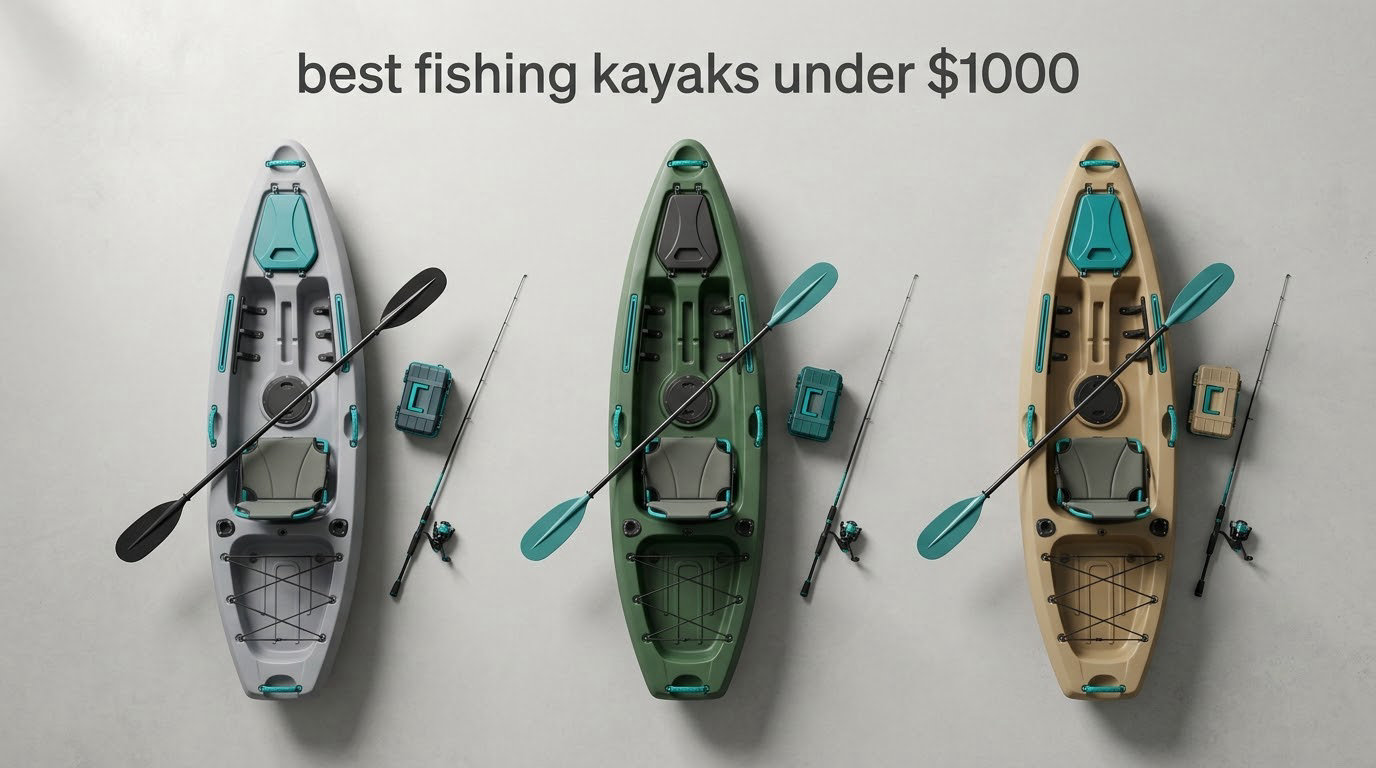
If you want the short answer, the Lifetime Tamarack Angler 100 is the best fishing kayak in this budget for most people, the Pelican Catch Mode 110 is the widest and most adjustable platform in the group, and the Pelican Sentinel 100X is the one you can carry solo without planning a trip around it. Each one lands well inside the ceiling, and each is backed by hundreds or thousands of owner reviews rather than marketing copy.
I spend a lot of time reading owner reviews on this budget tier, and the pattern is remarkably consistent. What anglers actually care about is stability, seat comfort over a long day, and the feature set you get for the money: rod holders, storage, tracks, and a rudder. Speed and novelty gadgets rank well behind those three. That is the same set of qualities buyers are told to look for, and it is how I ranked the ten kayaks below.
What you can and cannot buy at this budget matters as much as what you can. Rotomolded polyethylene angling sit-on-tops in the 10 to 12.5 foot range, with a usable weight capacity between 275 and 375 pounds, are abundant here. Premium angler kayaks with pedal drives, framed seats, and live wells from brands like Bonafide, Jackson, and Old Town’s PDL line start well above this tier, so a simple trade-up is not on the table. What you get here is an excellent hull and a well-fitted cockpit, not a boat. If you are still narrowing down where you will fish, our guide to kayaks for farm ponds and small lakes covers the shorter, flatter water where most budget paddlers start.
Every price and spec below was checked against current listings in October 2026, and every rating and review count is copied from the live product page rather than estimated.
Table of Contents
Top 3 Best Fishing Kayaks Under $1000 (October 2026)
These three cover the three distinct use cases I keep seeing: one boat for everything, one platform that lets you stand and cast, and one you can carry by yourself.

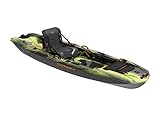
Pelican Catch Mode 110
- 10 ft 8 in sit-on-top
- 375 lb capacity
- 2 rigging tracks
- adjustable seat

If you only have time for one, take the Tamarack. If you plan to stand up and cast more than you plan to sit, the Catch Mode 110 is the better boat. If the drive to the launch is longer than the paddle, the Sentinel 100X is the sensible answer.
The 10 Best Fishing Kayaks Under 1000 at a Glance
Prices and ratings as of October 2026. Every kayak listed here is paddle-powered and inside the budget ceiling.
| Product | Specifications | Action |
|---|---|---|
| Lifetime Tamarack Angler 100 |
|
Check Latest Price |
| Pelican Sentinel 100X |
|
Check Latest Price |
| Pelican Catch Mode 110 |
|
Check Latest Price |
 Perception Flash 9.5 Perception Flash 9.5 |
|
Check Latest Price |
 Perception Sound 10.5 Perception Sound 10.5 |
|
Check Latest Price |
 Perception Pescador Pro 12 Perception Pescador Pro 12 |
|
Check Latest Price |
 Pelican Catch Classic Angler Pelican Catch Classic Angler |
|
Check Latest Price |
 BKC Brooklyn 12.5 BKC Brooklyn 12.5 |
|
Check Latest Price |
 Lifetime Triton Angler 100 Lifetime Triton Angler 100 |
|
Check Latest Price |
 Lifetime Yukon Angler 116 Lifetime Yukon Angler 116 |
|
Check Latest Price |
Two of the ten are sit-insides. If you have never paddled a sit-inside, read section four and five carefully before choosing one, because the trade against a sit-on-top is comfort and dry feet in exchange for everything that makes a fishing kayak comfortable.
1. Lifetime Tamarack Angler 100 – the all-round winner
Lifetime Muskie Angler Sit-On-Top Kayak with Paddle, Tan, 120″
10 ft sit-on-top
275 lb capacity
51 lb
rotomolded HDPE
paddle included
Pros
- Stable flat bottom with a sharp bow and skeg
- Light at 51 lb for solo roof loading
- Paddle and paddle keeper in the box
- Three rod holders and two storage compartments
- Five-year limited warranty
Cons
- Stock paddle is flimsy and short
- Plastic seat connector clips bend under load
- Cup inserts for storage compartments not included
This is the kayak I keep coming back to, and it wins here on the strength of review volume rather than a headline spec. With more than 1300 owner reviews at 4.4 stars, it has the deepest well of real-world feedback of anything on this list, and that feedback is unusually consistent. Owners describe the same wide, flat, stable platform, the same sharp bow that carries speed, and the same skeg that straightens the tracking.
It is also the rare budget angler kayak that ships with a paddle. The paddle is the weak point, and nearly every owner replaces it with a longer fishing paddle, but you can launch the same afternoon you unbox it. Front and rear T-handles, multiple footrest positions, and a 51 lb hull make it a one-person carry to a car roof.
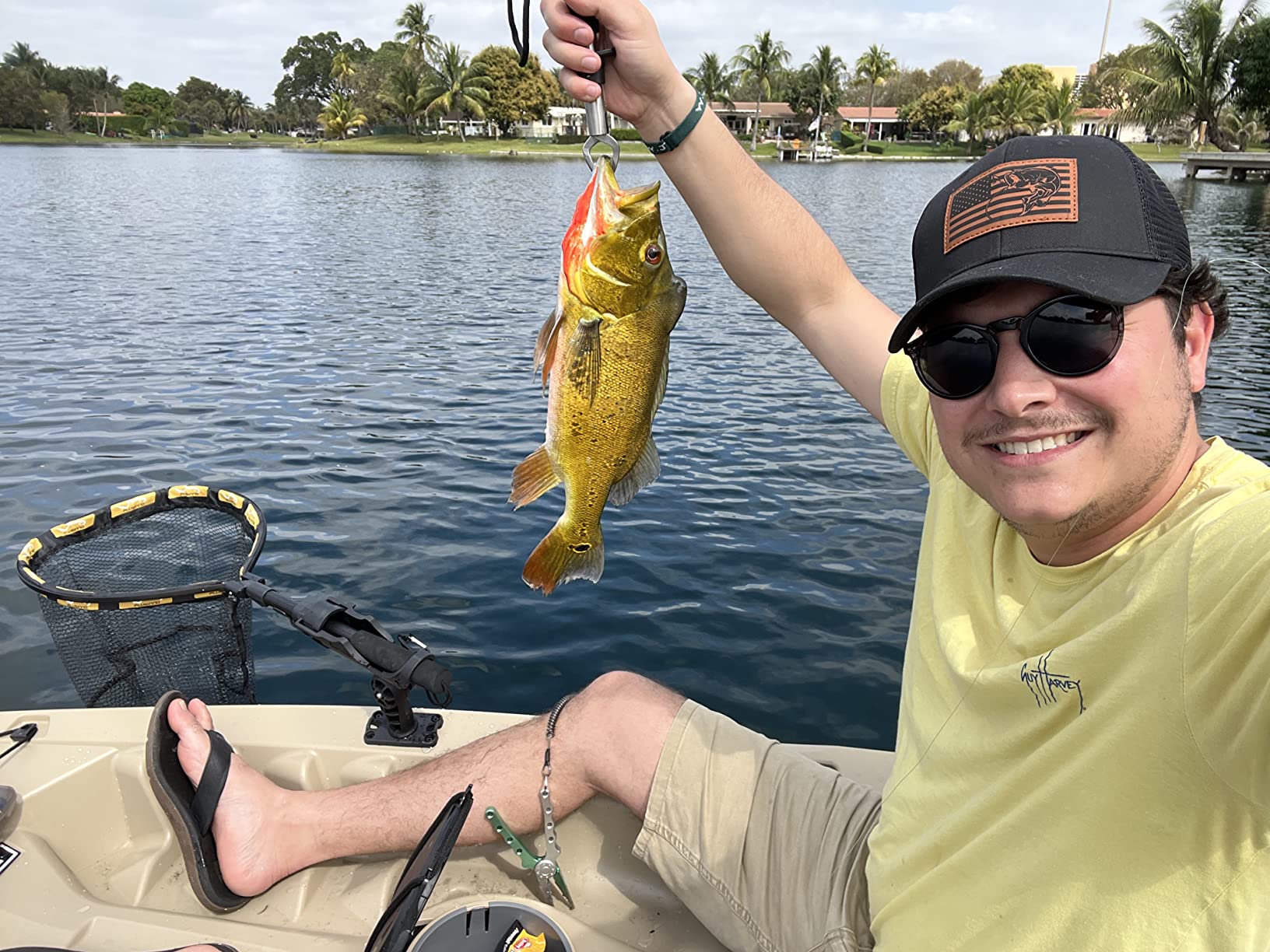
The two most common complaints are both hardware, and both have cheap fixes. The molded plastic seat connector clips bend out of their slot under load, and owners routinely swap in aluminum clips. The cup-holder inserts for the rear and center storage compartments are not in the box, which is a five-minute parts run. Reviewers also mention that the soft bottom plastic scuffs on asphalt ramps, so a keel guard is worth adding if you launch from pavement.
What nobody complains about is the hull. Owners who have owned several kayaks call out the durability of the rotomolded high-density polyethylene, and many of them have upgraded the seat to a stadium-style chair for long sessions, which tells you the base platform is solid enough to build on.
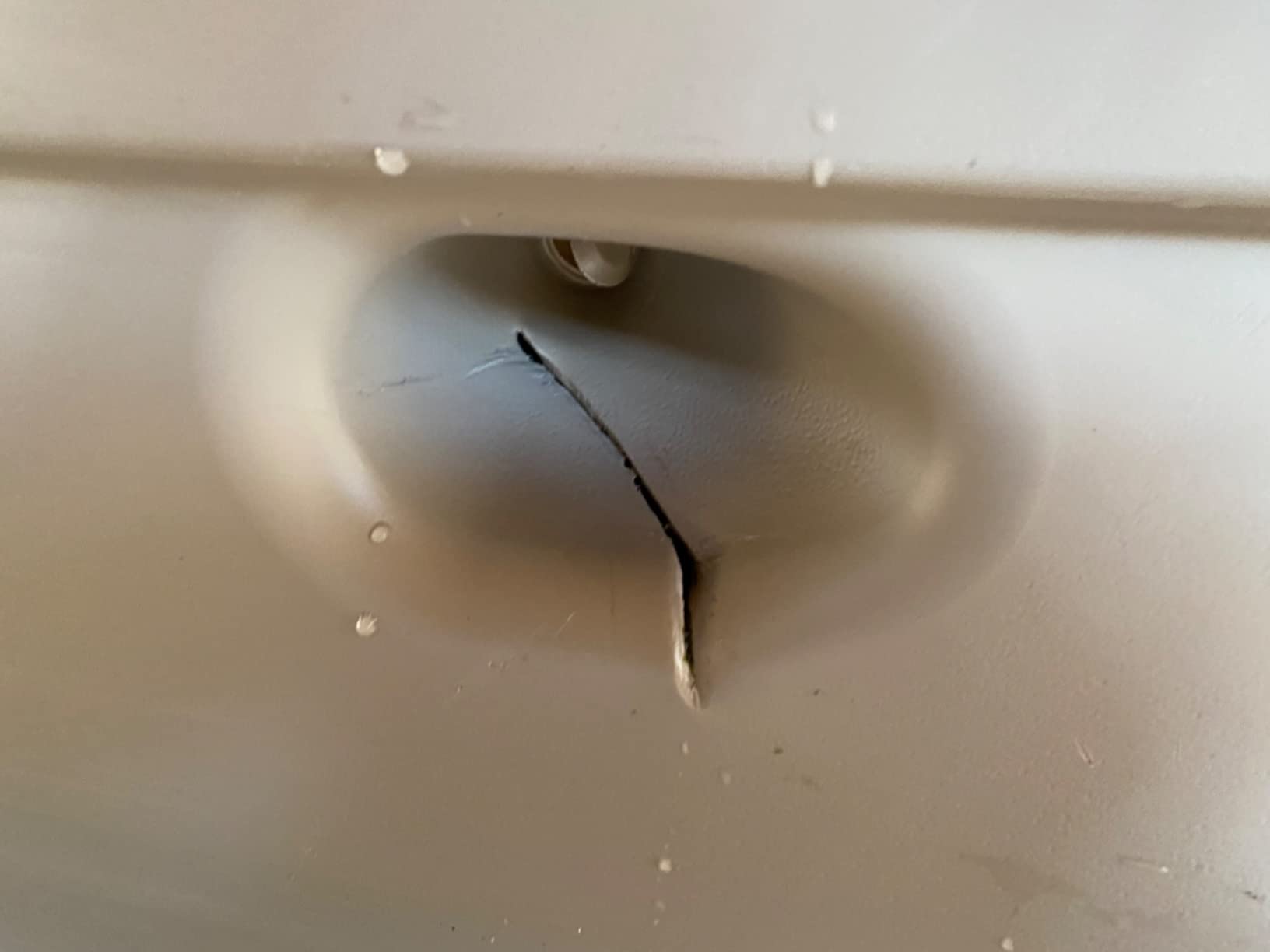
Who this hull suits?
A solo angler on a lake or slow river who carries gear alone and wants a forgiving boat. The 275 lb rating is fine for an angler up to roughly 200 pounds plus a moderate gear load, and the 31 inch beam gives a stable platform for casting from a seated or kneeling position.
Who should pass on it?
Anyone over 200 pounds who wants to stand and cast regularly, or anyone planning to run a trolling motor. The rating is 275 lb, which leaves less headroom once a battery, cooler, and tackle are aboard. If you want a standing platform, look at the Pelican Catch Mode 110 instead.
2. Pelican Sentinel 100X – the lightest carry with a real seat
Pelican Sentinel 100X – Angler Sit on top Fishing Kayak – Forest Mist – Lightweight – Ergolounge™ Seating System – 10 ft, Sentinel 100X Angler Fishing Kayak
9 ft 6 in sit-on-top
44.6 lb
275 lb capacity
ErgoLounge seat
ExoPak storage
Pros
- Lightest hull in the group at 44.6 lb
- ErgoLounge seat with a high wide backrest
- Four rod holders including two vertical
- ExoPak packs at home and drops in
- Under 10 ft fits most roof racks
Cons
- 275 lb capacity is the lowest in the group
- 9 ft 6 in length feels twitchy in wind and chop
At 44.6 lb this is the kayak I can walk out to a launch alone without a second trip, and at 9 feet 6 inches it fits in a garage and on a roof rack without drama. For anyone who fishes alone from a shoreline launch, that combination matters more than a tenth of a foot of extra length.
The seat is the headline. The ErgoLounge system has extra-thick cushioning and an extra high, wide padded backrest, and reviewers consistently describe it as the most comfortable seat in this group for a sit-on-top at this price. The ExoPak removable storage compartment is genuinely useful: you load it in the house, carry it to the water, and drop it into the kayak. It also carries two vertical rod holders, giving four in total with the two flush mounts.
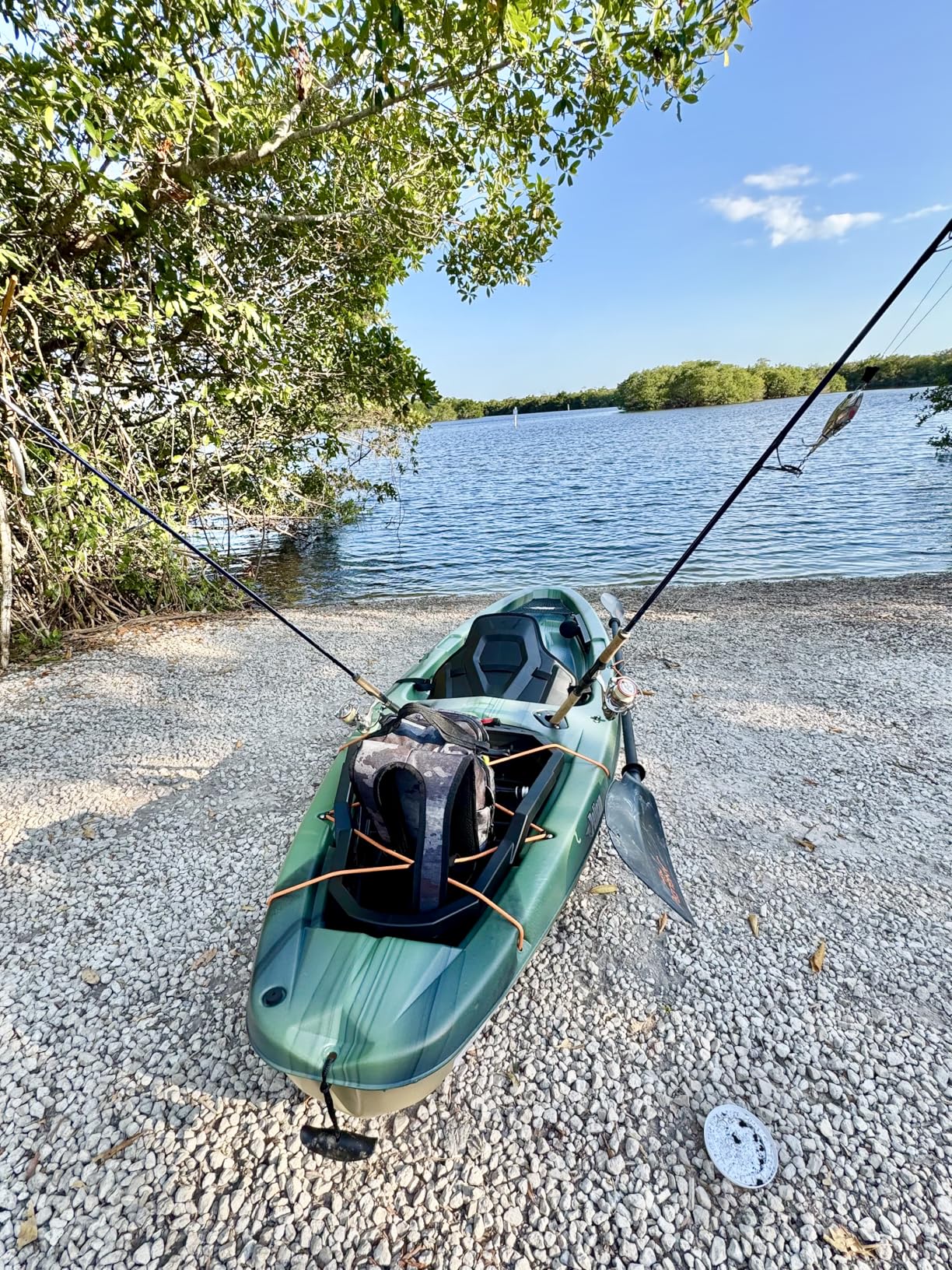
The reservation in the reviews is the 275 lb rating, the lowest here, and it is worth taking seriously. A 175 pound angler in a sweater with a day bag is comfortably inside that. A 200 pound angler with two tackle boxes and a cooler is close to the line, and you will feel it in the freeboard. The other recurring note is that a hull this short and this light moves more in a crosswind than the longer models here.
Owners also note the molded-in side carrying handles, which is a small detail that makes the difference between a one-person lift and an awkward shoulder.
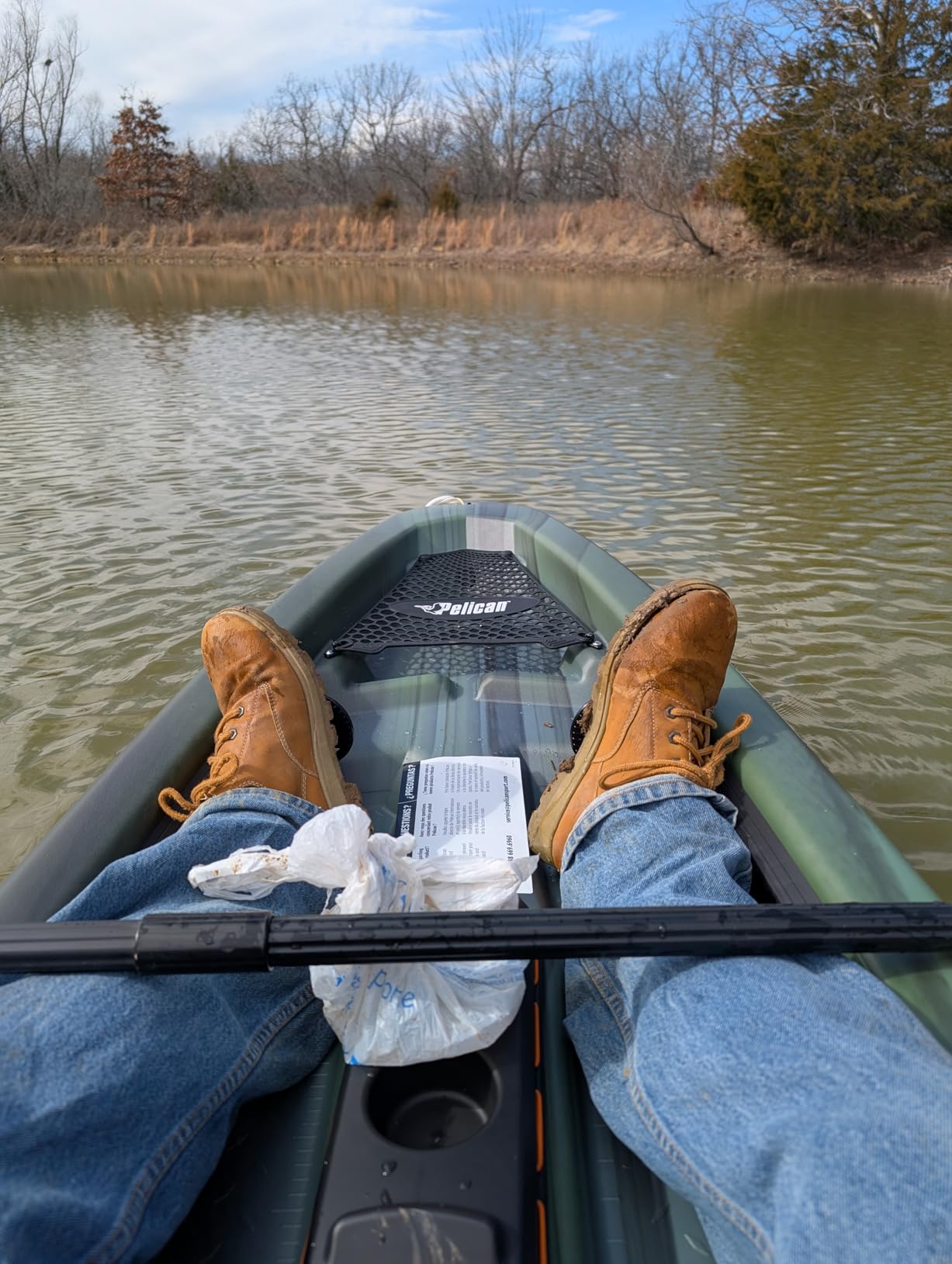
Who this hull suits?
Solo paddlers under about 180 pounds who walk their kayak to the water, fish protected lakes, and want a comfortable seat more than they want tracking. It is also the easiest of the ten to store in a small garage.
Who should pass on it?
Anglers over 200 pounds, and anyone fishing exposed water where a short, light hull will get pushed. In wind, reach for a 10-foot-plus model with a skeg and a heavier hull.
3. Pelican Catch Mode 110 – the widest, most adjustable platform
Pelican Catch Mode 110 Fishing Kayak – Premium Angler Kayak with Lawnchair seat – 10.5 Ft., Venom
10 ft 8 in sit-on-top
375 lb capacity
75 lb
Ergoboost seat
2 rigging tracks
Pros
- Highest customer rating in the group at 4.6 stars
- Adjustable Ergoboost seat raises sightlines
- Two 4 inch rigging tracks for accessories
- Retractable stern skeg tracks in wind
- 375 lb capacity handles angler plus gear
Cons
- Heaviest sit-on-top here at 75 lb
- Large footprint needs a full-size rack
This is the highest-rated kayak in the group at 4.6 stars, and the reason is the seat. The Ergoboost system adjusts to raise you higher in the cockpit, which does three things at once: you see further over the water, your legs sit in a better angle for casting, and you can shift position when you want to move fast. Buyers who came from a fixed low seat describe it as the feature that changed how long they can stay out.
At 34.5 inches wide and 128 inches long, this is a big hull with a 375 lb capacity. That combination is what makes it the most genuinely stand-capable boat here. The two 4-inch rigging tracks are the other reason it earns its place, because they accept standard accessories rather than forcing you into a proprietary system. Three flush-mount rod holders, a retractable stern skeg for windy days, and anti-slip traction pads with a built-in ruler round out the platform.
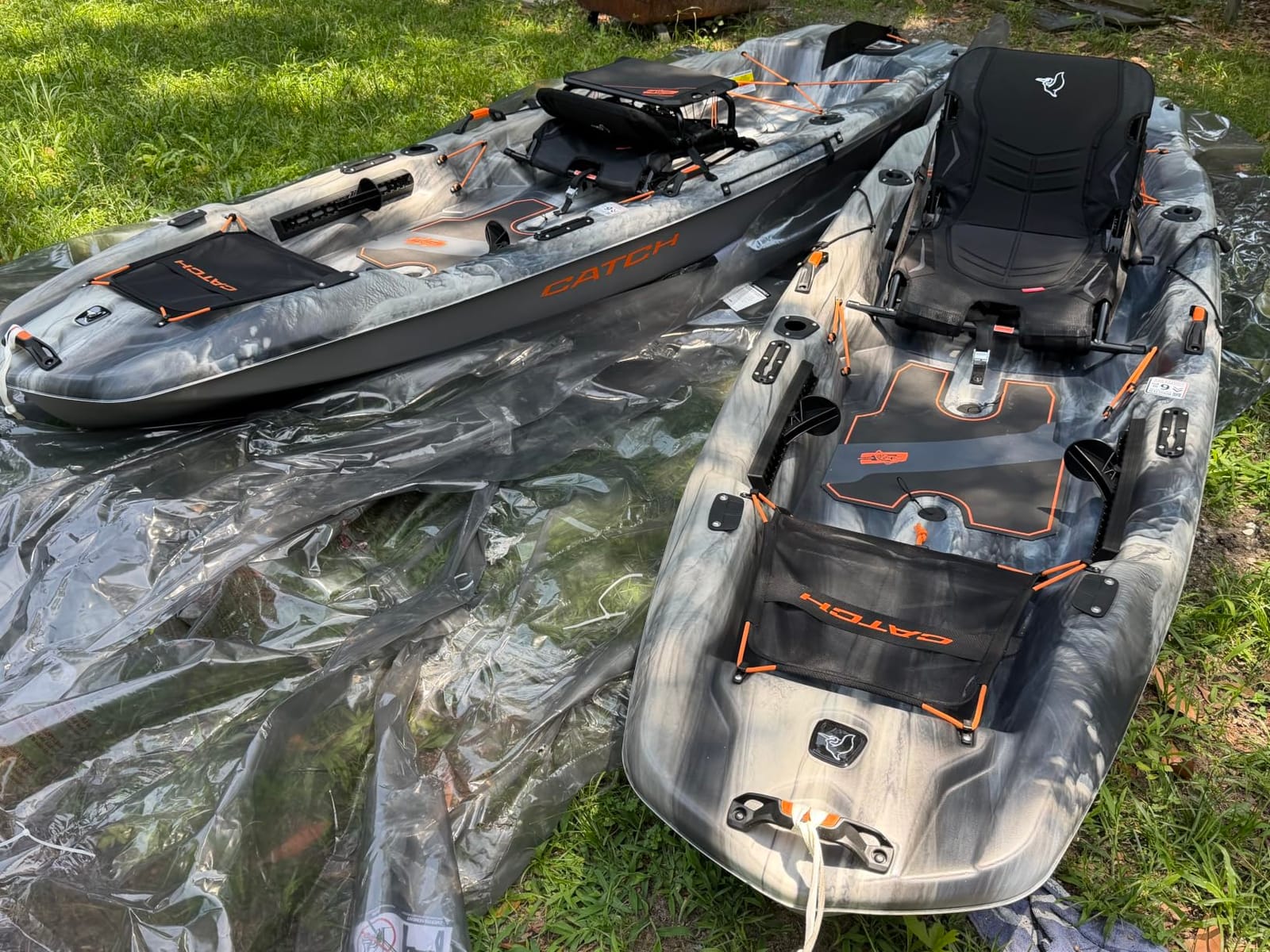
The cost is weight. At 75 lb it is the heaviest sit-on-top in this roundup, and solo roof loading is a real chore. The footprint is also large, so it needs a proper roof rack and a longer garage. Owners who carry it solo report it is manageable if you use the grab points, but it is not a one-person walk-out boat.
That trade is why I did not put it first despite the best rating. If you will have a second person or a cart at the launch, the Catch Mode 110 is the most capable hull for under 1000 dollars. If you carry everything yourself, the weight works against everything it does well.

Who this hull suits?
Anglers around 200 to 250 pounds who want to stand and cast, who like a raised sightline, and who plan to add accessories later. The 375 lb rating leaves real headroom for a cooler, battery, and a full tackle spread.
Who should pass on it?
Solo paddlers with a long carry, a small vehicle, and limited garage space. Reviewers repeatedly cite weight as the only meaningful drawback, and it is a genuine one. If you also fish cold water where you are adding a dry suit to the load, the total weight is worth thinking through first.
4. Perception Flash 9.5 – the pick for a sit-inside cockpit
Perception Kayaks Flash 9.5 | Sit Inside Kayak for Fishing and Fun | Two Rod Holders | Multi-Function Dash | 9′ 6″ | Sunset
9 ft 6 in sit-inside
41 lb
325 lb capacity
rod holders
rear storage
Pros
- Lightest hull in the group at 41 lb
- Cockpit keeps paddlers dry in chop and cool air
- Quick handling on lakes rivers and bays
- Built-in rod holders and rear storage
- Adjustable foot braces fit a range of sizes
Cons
- Sit-inside is not a standing casting platform
- 28.5 inch beam is the least stable standing
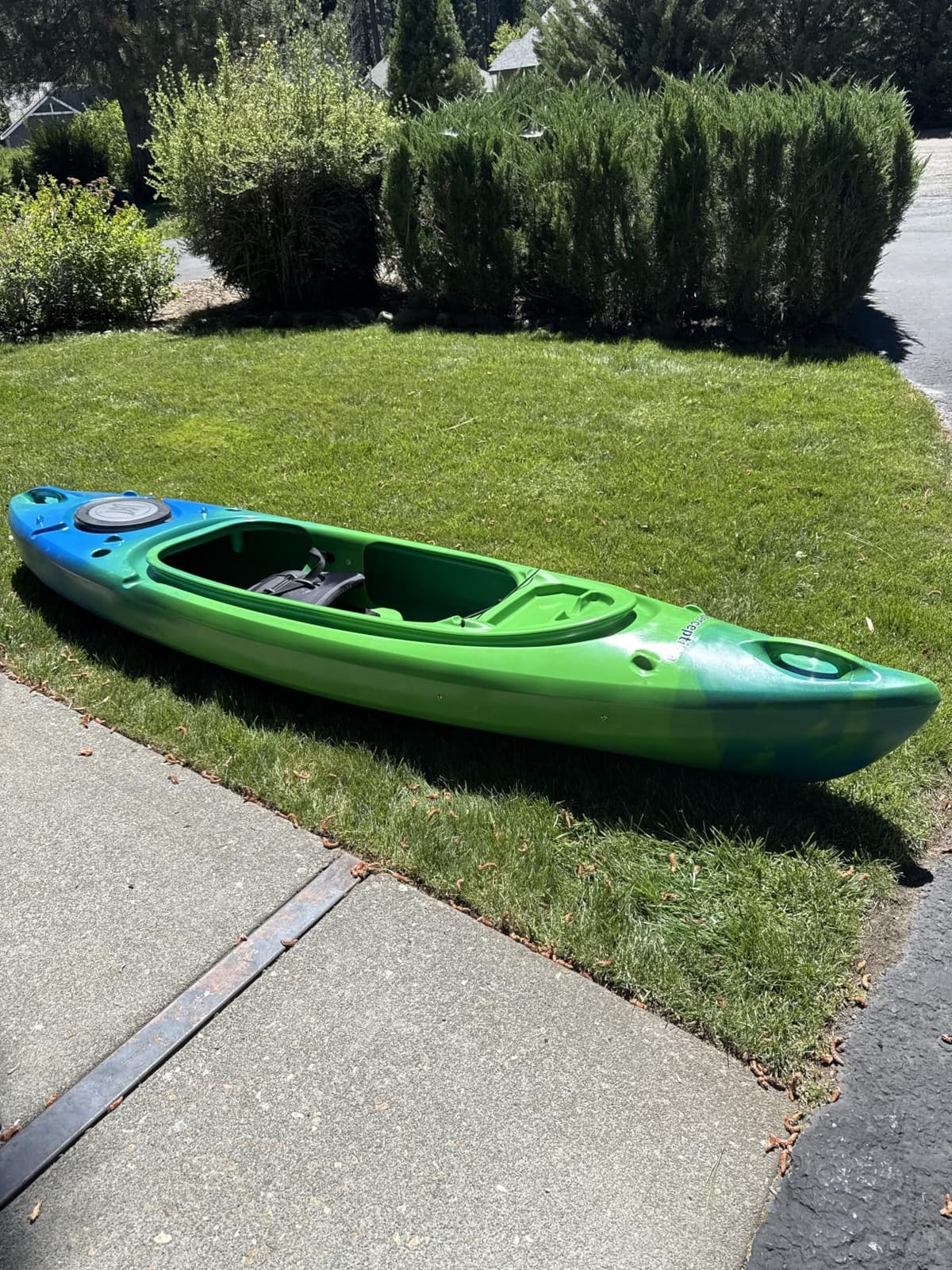
This is the option for anglers who fish in cool weather, in chop, or in spring, and who would rather stay dry than stand up. At 41 lb it is the lightest hull in the entire group, and the sit-inside cockpit keeps water off you where a sit-on-top gets soaked from the knees down within an hour.
Buyers value the handling. The spec sheet describes a high initial stability hull with quick, nimble steering, and reviewers back that up, calling it easy to shoulder to the water and easy to maneuver in lakes, slow rivers, and sheltered bays. Built-in rod holders and a rear storage compartment mean it functions as a fishing boat rather than a rec kayak with a clip-on. A 325 lb rating covers a wide range of paddler sizes, and adjustable foot braces help close the gap.
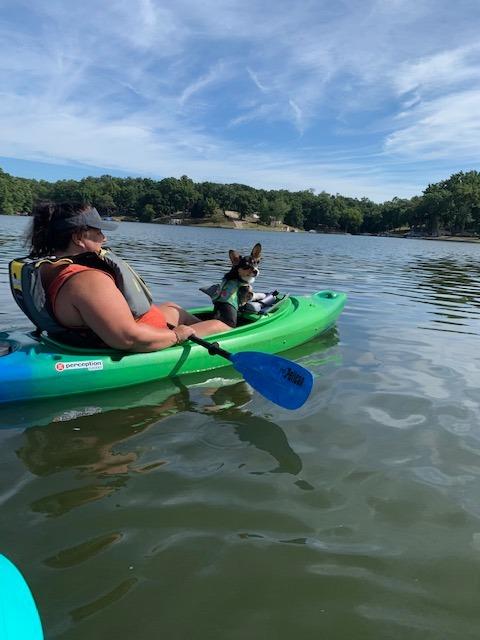
The trade is the cockpit. A sit-inside is not a standing platform by design, and the 28.5 inch beam is the narrowest here, so casting happens seated or with a brace. Reviewers are straightforward about that. If you need to stand to cast, this is the wrong boat and no amount of adjustment changes it.
There is a second consideration: spray. In real conditions the deck takes water in waves even in a sit-inside, and spray skirts are not in the box. Budget for one if you fish open water.
Who this hull suits?
Solo anglers who want to stay dry, who carry their kayak over distance, and who fish small lakes, slow rivers, and sheltered coastal bays in shoulder seasons. The 325 lb rating is more generous than the price suggests.
Who should pass on it?
Anyone whose fishing depends on standing casts, and anyone fishing water with real wave height who does not own a spray skirt. A 41 lb hull is also light enough to feel twitchy in a strong crosswind, which is the other common note in reviews.
5. Perception Sound 10.5 – the roomy sit-inside for larger paddlers
Perception Kayaks Sound Sit Inside for Recreation
10 ft 6 in sit-inside
335 lb capacity
23-3/4 in cockpit
tri-keel hull
Pros
- Widest cockpit in the group at 23-3/4 inches
- Tri-keel hull tracks and steers smoothly
- Zone Seat with an adjustable backrest
- Quick-adjust footrests fit a range of sizes
- Large rear open storage fits a cooler crate
Cons
- Sit-inside gives no stand-up casting platform
- Perception Solo Mount accessories sold separately
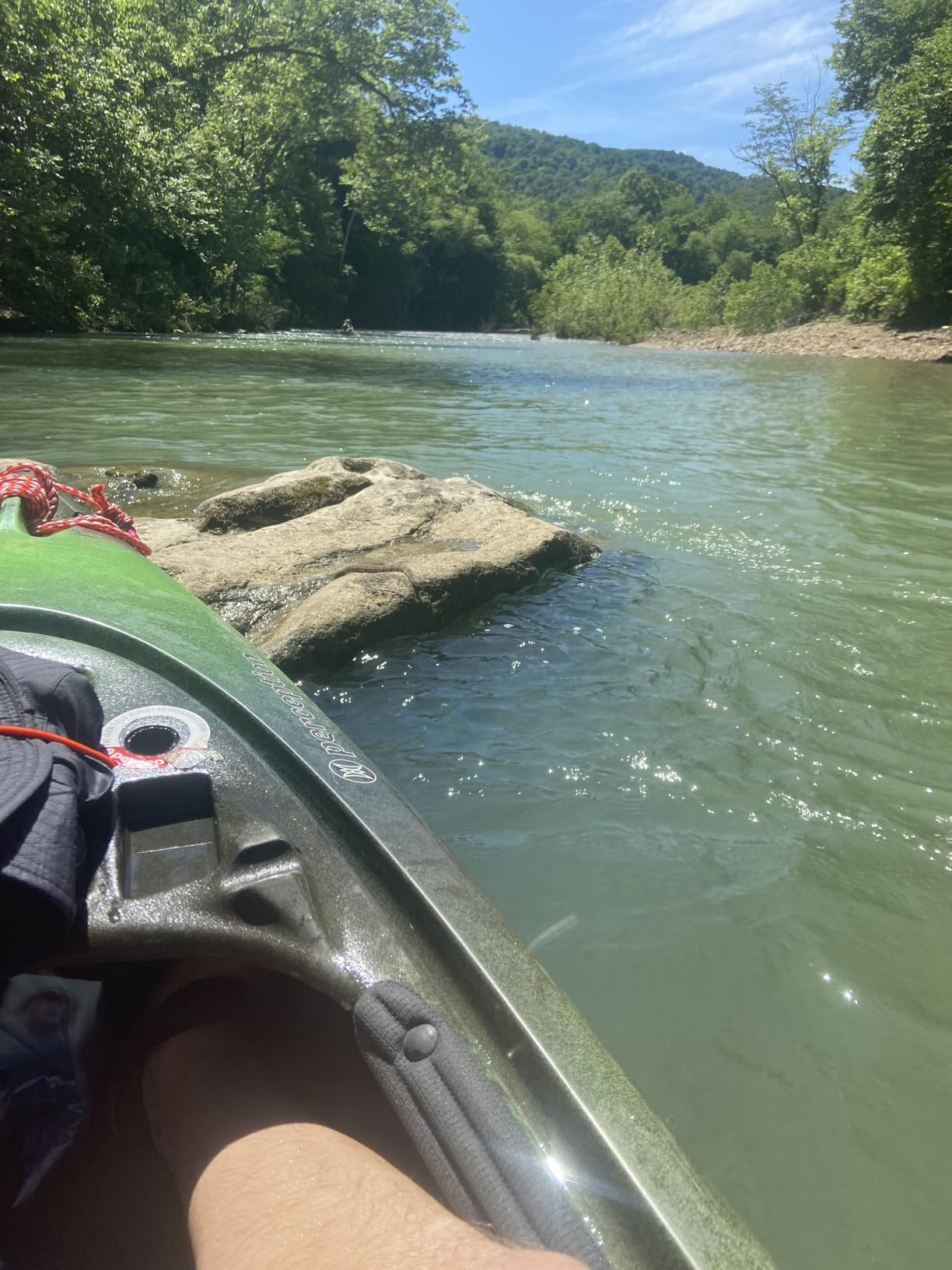
The Sound 10.5 exists for a specific problem, and it is the one forum anglers ask about most at this budget: what fits a bigger paddler. The cockpit measures 23-3/4 inches wide on a boat that is 29-1/2 inches across, which gives you room to move your knees and change position through a long day without fighting the hull. The quick-adjust footrests reinforce that intent for a wide range of body sizes.
The tri-keel hull is the technical story here. It is designed to give smooth tracking and steering on lakes, ponds, slow rivers, and calm coastal water, and reviews center on steady tracking rather than outright speed. The extra-cushy ergonomic Zone Seat has an adjustable backrest, and the large rear open storage is sized for a cooler fishing crate rather than a small tackle bag. Two molded-in rod holders sit up front.

Two things to know. First, this is a sit-inside, so the casting platform is seated. The cockpit is wide, which makes it comfortable to brace and pivot, but it is not a stand-up boat. Second, the dashboard takes Perception’s Solo Mount accessory system, and those accessories are sold separately, so budget for a rail or track solution if you want one.
With 87 reviews the feedback pool is smaller than the leaders, but the comments that exist are consistent: bigger paddlers like bigger cockpits, and this delivers one at a sit-inside price.
Who this hull suits?
Anglers around 200 pounds and up who want a dry cockpit, who are not going to stand to cast, and who want rear storage large enough for a cooler crate. At 46 lb it also carries more easily than the sit-on-tops in this group.
Who should pass on it?
Anglers who cast standing, and anyone who wants a factory accessory ecosystem included in the box. The Solo Mount system being separate means a real out-of-pocket cost for the setup you actually want.
6. Perception Pescador Pro 12 – the lawn chair seat and big storage
perception Pescador Pro 12 | Sit on Top Fishing Kayak with Adjustable Lawn Chair Seat | Large Front and Rear Storage | 12′ | Dapper
12 ft sit-on-top
375 lb capacity
64 lb
lawn chair seat
large storage
Pros
- Adjustable lawn chair seat beats standard seats
- Large front and rear storage for coolers
- 12 ft length covers ground faster
- 375 lb capacity suits larger paddlers
- Five-year hull and deck warranty
Cons
- 64 lb and 12 ft means a two-person carry
- Cockpit gets wet without scupper plugs
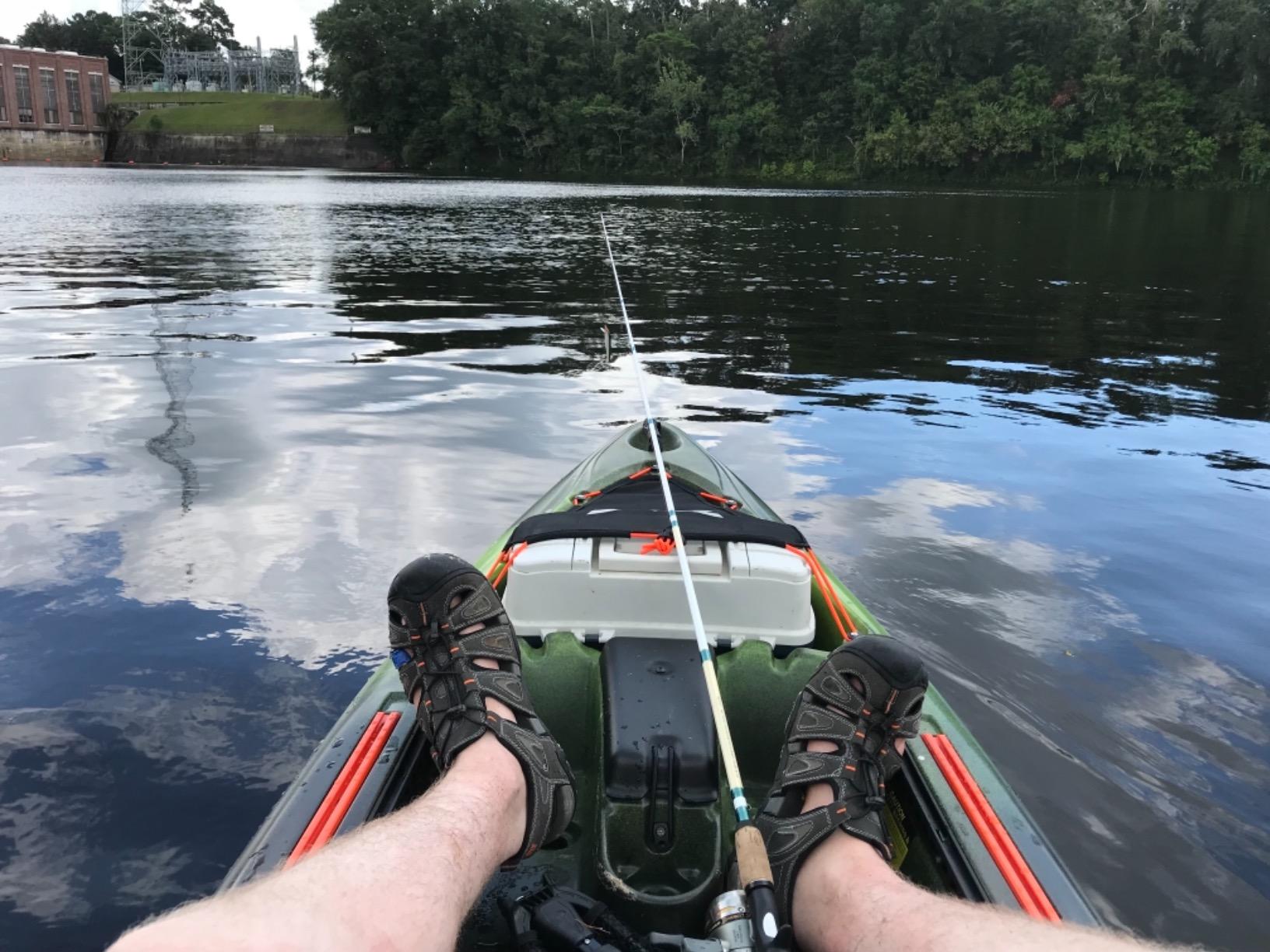
There is a specific reason this kayak has a devoted following among people who fish all day, and it is the seat. The adjustable lawn chair seat is a step above the flat bench and raised-frame seats most sit-on-tops in this price range use, and owners consistently name it as the reason they can stay out from dawn to dusk. The front and rear storage areas are also larger than anything else in this group, which is what makes a long day possible with a cooler aboard.
At 12 feet, it is the longest single-person hull here and the fastest on a long paddle. Perception states it is made in the USA for lakes, slow-moving rivers, and calm coastal environments, and the five-year warranty covers hull and deck against material and manufacturing defects. The 375 lb rating and 64 lb boat weight put it in the same class as the Catch Mode 110 with about ten inches less length.
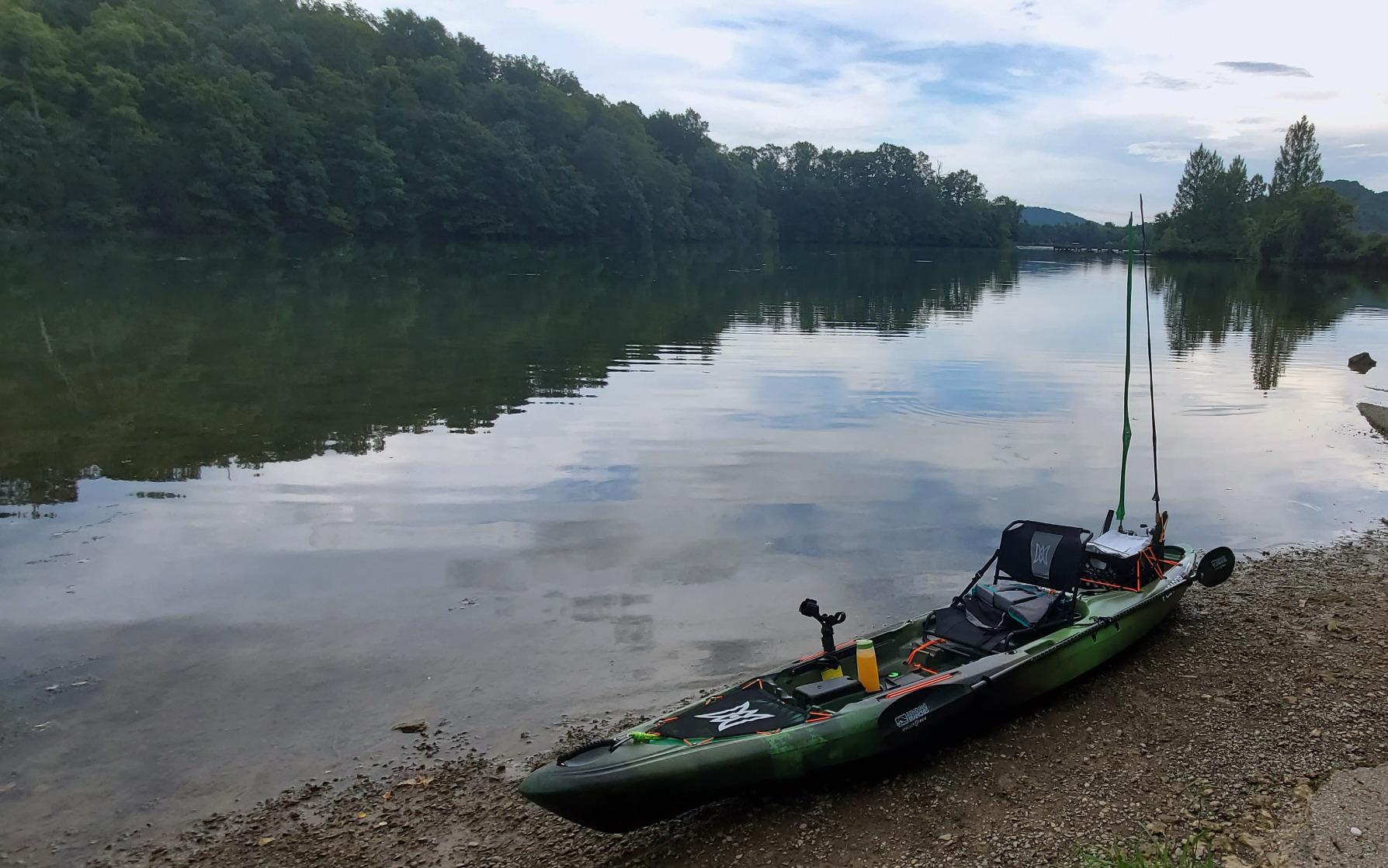
The cost is that 12 feet and 64 lb together is a two-person carry in most cases. That single fact removes it from contention for a lot of solo paddlers. The other recurring note is water in the cockpit: on a sit-on-top you either fit scupper plugs or you accept wet feet, and the plugs are a small, worthwhile purchase.
If you have a cart, a second person, or a short carry from a truck bed, the tracking and speed advantage of a 12-footer is real and you will notice it on every trip.
Who this hull suits?
Anglers who fish long days, carry a cooler and a lot of tackle, and want the most comfortable seat in a sit-on-top at this price. The 375 lb rating also covers a larger paddler comfortably.
Who should pass on it?
Anyone who has to load a kayak onto a car roof alone regularly, and anyone with limited storage space. It is the biggest single-person boat here at 12 feet, and length compounds every garage and rack problem. Our guide to kayak trailers for hauling multiple kayaks is worth a look if the second set of hands is not available.
7. Pelican Catch Classic Angler – the narrowest-gap stand-up hull
Pelican Catch Classic 100 Angler – Sit-on-Top Fishing Kayak – Ergocast Dual Position Seating System – 10 ft
10 ft sit-on-top
34 in beam
350 lb capacity
dual rails
locking hatch
Pros
- 34 inch beam gives a stable standing platform
- 350 lb rating handled angler plus gear easily
- Ergocast seat adjusts high or low
- Dual accessory rails for custom rigging
- Locking bow hatch and a dedicated paddle holder
Cons
- Scupper holes take on water if plugs are missing
- Does not track like a 12 ft kayak
- Some hulls arrive with scratches or dings
The 34 inch beam is the number that matters on this boat. It is tied for the widest platform in the group, and combined with a 350 lb rating it gives a 200 pound angler real margin to stand up, shift weight, and cast without immediately going over. Owners who bought it for standing casts report that it holds its position, and one reviewer describes running a 250 pound angler plus 50 pounds of gear without issue.
The Ergocast Classic seat is adjustable to a high or low position with different levels of support, which lets you drop low for stability or raise up for a sightline. Dual accessory rails open up custom setups, and the storage side is unusually complete for the money: a locking front bow hatch and a dedicated paddle holder that frees both hands when you are working a rod.
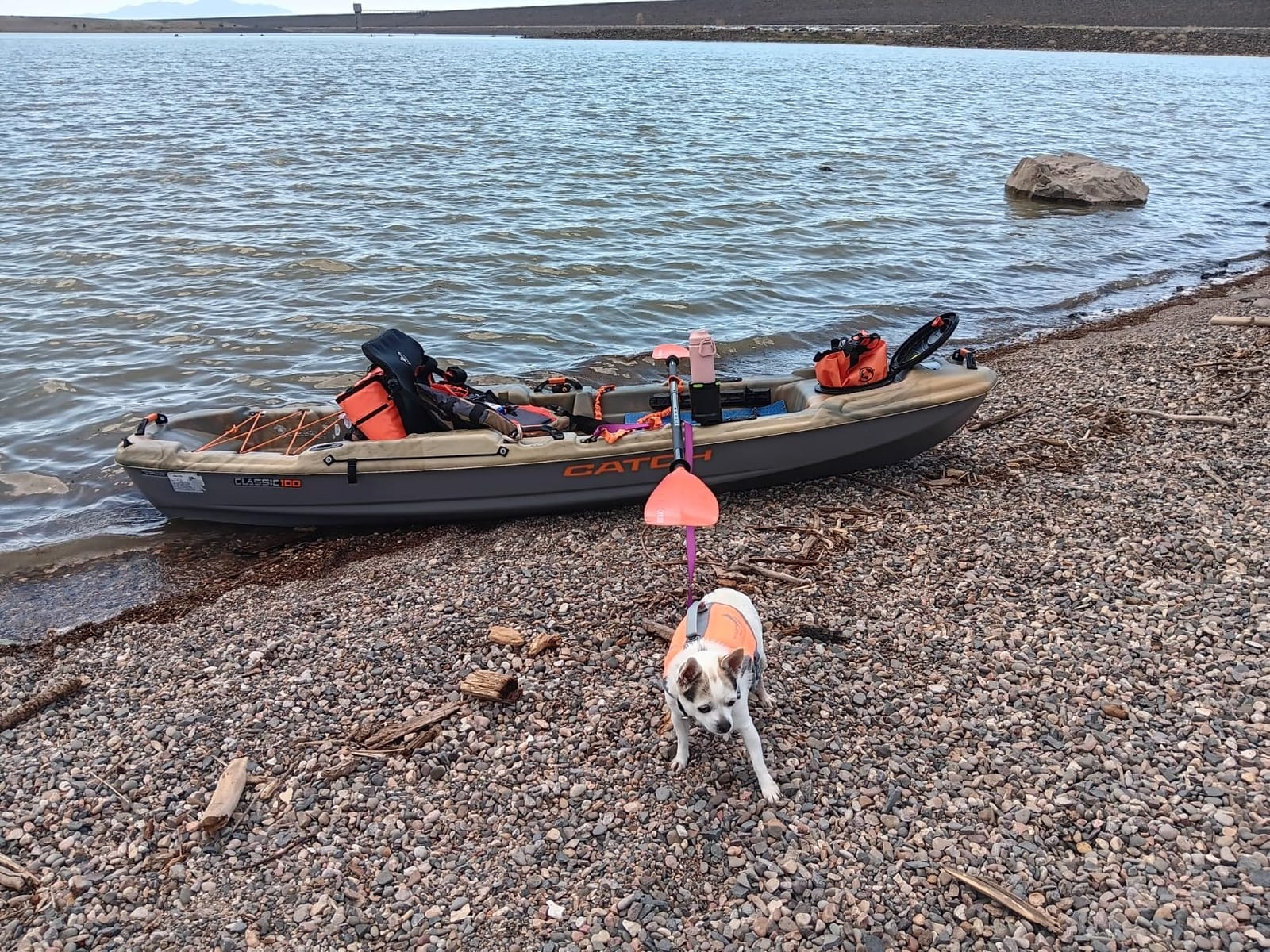
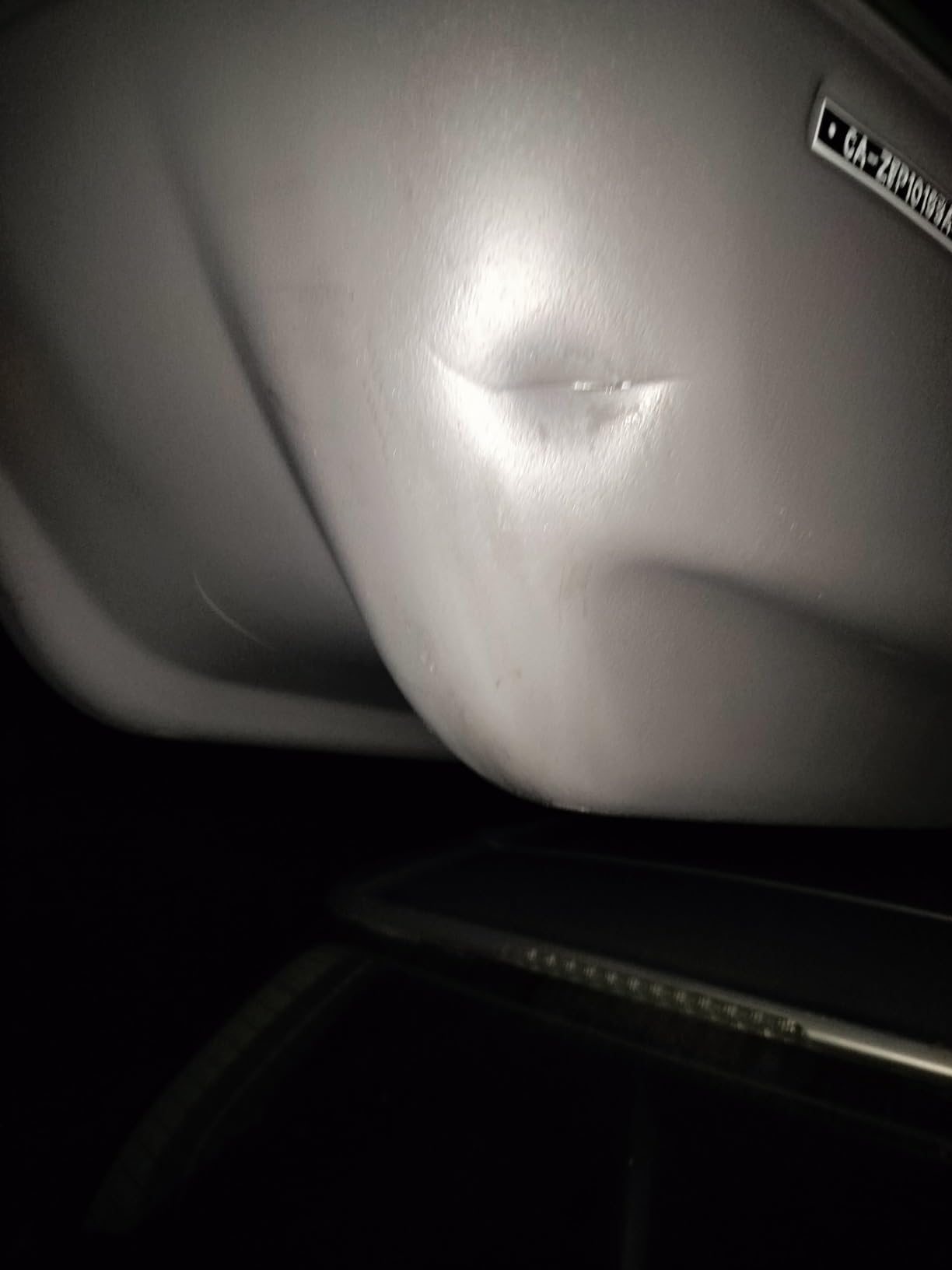
At 4.2 stars this has the second-lowest rating here, and the reviews explain why in a fairly narrow band. The open scupper holes will take on water if the plugs are missing or leak, and one owner reported a broken foot support letting the hull take on water at 200 lb. The wide hull also does not track like a 12-footer, which is the direct cost of the stability you are buying. A few buyers report scratches or dings on arrival.
Fit the scupper plugs on day one and inspect the foot supports before you launch. Those two steps address most of the complaints in the review set.
Who this hull suits?
Anglers under 200 pounds whose main technique is standing casts, and anyone who wants a wide platform for balance in wind or chop without moving up to a 12-foot hull. At 57 lb it is a manageable solo carry.
Who should pass on it?
Anglers who need to cover distance quickly on a long paddle, since the wide hull is a compromise. If you want both speed and standing room, the Catch Mode 110 stretches a little further while keeping a wide beam.
8. BKC Brooklyn 12.5 – the only tandem in the group
BKC Brooklyn 12.5 Tandem Fishing Kayak, 2 to 3 Person Sit-on-Top
12.5 ft tandem
595 lb capacity
6 rod holders
2 seats and paddles
34 in beam
Pros
- Seats two adults plus a child or extra gear
- Six rod holders including two articulating
- 595 lb capacity handles multiple passengers
- Two memory foam seats and two paddles included
- Built-in trolling motor mount area
Cons
- Lowest average rating in the group at 4.1 stars
- 70 lb hull is the hardest solo carry
- Bulk hull is awkward to store or carry alone
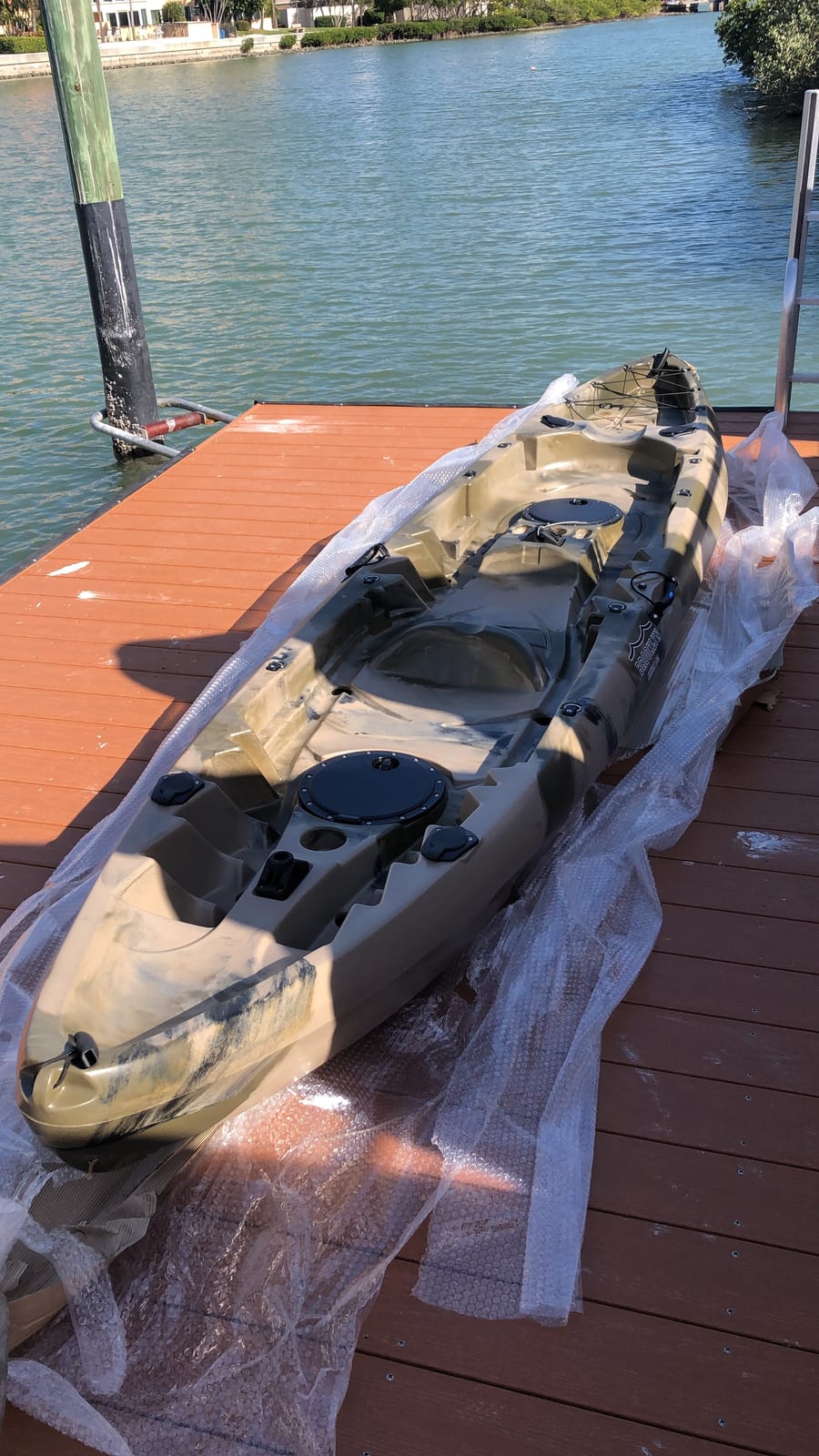
Everything else here is a solo boat, so if you want to bring a second angler, a child, or a dog, this is your only option inside the budget. At 12.5 feet it seats two adults with room for a third smaller passenger or a serious gear load, and the 595 lb capacity is more than triple what most single-person hulls here are rated for.
The angling hardware is unusually complete. Six rod holders, split between four flush mounts and two articulating holders, is the highest count in this roundup and gives you real flexibility for trolling or running multiple lines. The wide 34 inch beam is there for balance when standing or in rough water, and the rotomolded single-piece HDPE hull is impact and UV resistant. Both padded memory foam seats and two lightweight paddles are in the box, along with a built-in trolling motor mount area, though the motor itself is not included.
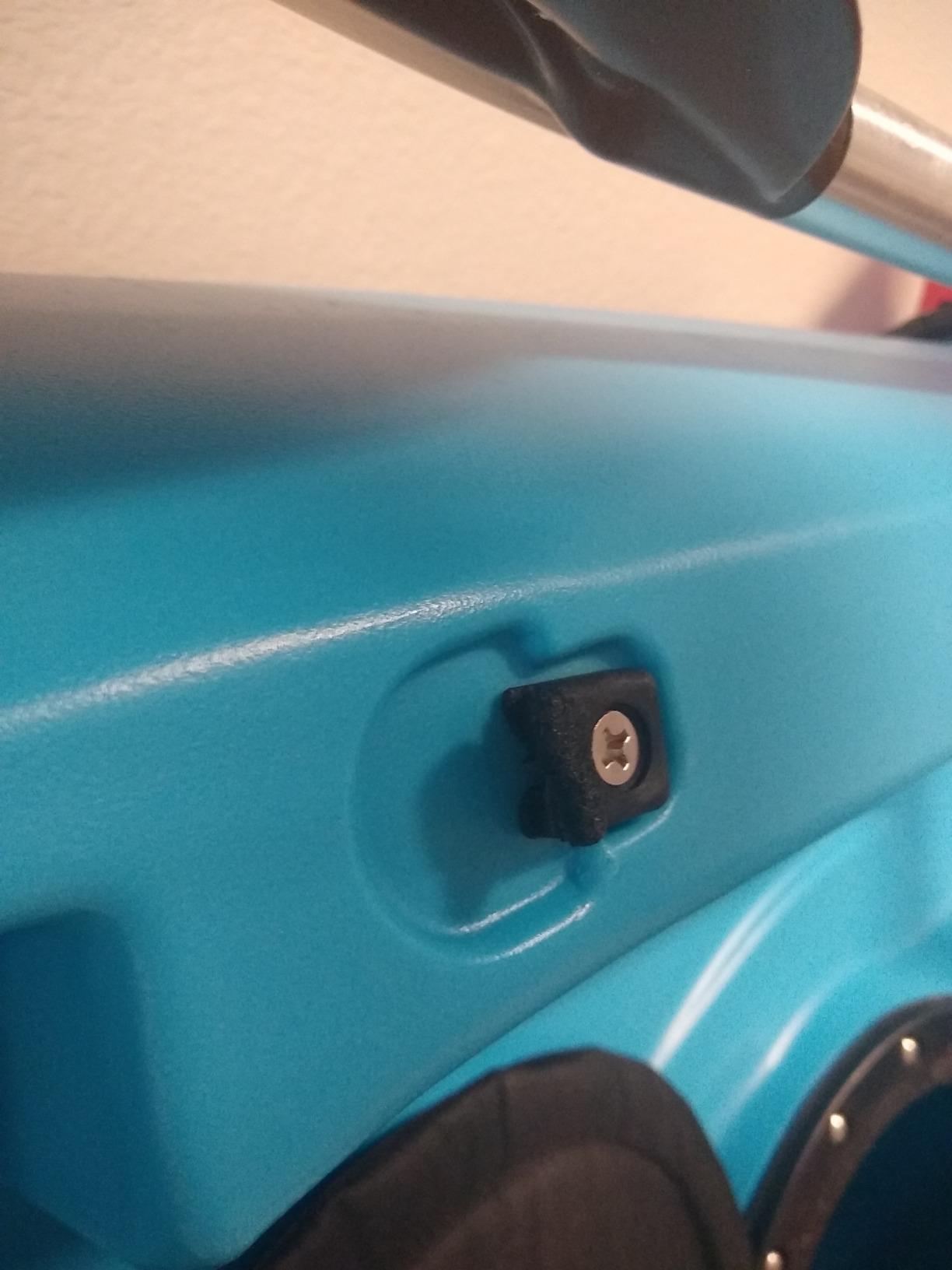
The 4.1 star rating is the lowest here, and about 12 percent of reviews are one star. The complaints cluster rather than spread: the 70 lb hull is the heaviest in the group, the 12.5 foot length is awkward in a small garage, and solo handling is a genuine struggle. Owners also report variability between units, so inspect on arrival.
None of that is a defect. It is the price of a boat that carries two people and 595 lb. If you do not need a second seat, any of the nine solo models will serve you better.
Who this hull suits?
Two anglers splitting the cost, a parent with a child, or one angler who wants a second seat for a dog. The 595 lb rating also makes it the natural choice for anyone loading heavy tackle or a battery setup for trolling.
Who should pass on it?
Solo paddlers, period. The weight, length, and lowest rating in the group all point the same direction. Also consider the storage situation, because a 12.5 foot hull needs real floor space.
9. Lifetime Triton Angler 100 – the beginner-friendly stable hull
LIFETIME Triton Angler 100 Fishing Kayak, Olive Green
10 ft sit-on-top
275 lb capacity
49 lb
integrated skeg
self-bailing scuppers
Pros
- Several owners call it the most stable kayak they have paddled
- 49 lb is easy to move solo
- Self-bailing scuppers drain the cockpit
- Tankwell bungee lacing secures gear
- Good durability and balance for beginners
Cons
- Seat cushion reported to rip on long trips
- Seat buckles are hard to source as replacements
- Sits high and gets pushed sideways by wind
Stability is the reason this one comes up so often for first-time paddlers. Several owners describe it as the most stable kayak they have paddled, and the integrated skeg is the physical explanation. Self-bailing scupper holes drain the cockpit and tankwell, which means you are not bailing water for the first hour of every trip, and the tankwell bungee lacing gives you somewhere to secure a cooler or a wet jacket.
At 49 lb it moves easily, multiple footrest positions cover a range of rider sizes, and rod holders are built in. The 275 lb rating is the same as the Tamarack, so treat it as a boat for an angler in the same weight band.
The seat is the weak point, and this is the one to be honest about. Reviewers report the seat cushion ripping and lower back discomfort on long trips, caused by a low seating position and a weak back strap. If your plan is eight hours on the water, budget for a replacement seat or a backrest upgrade before you buy. Seat buckles are also reported as easy to lose and hard to source.
Two more notes. It sits high in the water and tracks less well than the skegged models, so wind can push it sideways. And no paddle is included, unlike the Tamarack, so build that into your first purchase.
Who this hull suits?
New paddlers on sheltered lakes and ponds who want maximum initial stability and a self-bailing cockpit. Owners also praise it as a good first durable kayak that tolerates beginner handling.
Who should pass on it?
Anglers who fish long days in a seat-dependent position, given the reported back discomfort, and anyone fishing exposed water where a high-sitting hull with modest tracking is a problem. Add a paddle and a seat solution to the cost, and it becomes a strong buy.
10. Lifetime Yukon Angler 116 – the one to rig with tracks
Lifetime Fishing Kayak, Yukon Angler 116
11 ft 6 in sit-on-top
350 lb capacity
two universal tracks
transducer ready
78 lb
Pros
- Two 12 inch sections of universal track for accessories
- Transducer ready with scupper mounts for a fish finder
- Stability strap assists stand-up casting
- Foam-reinforced deck adds strength and buoyancy
- Tankwell fits a cooler or a dog
Cons
- Heaviest hull in the group at 78 lb
- Skeg wheel is the weakest part and can fail
- Rudder and paddle sold separately
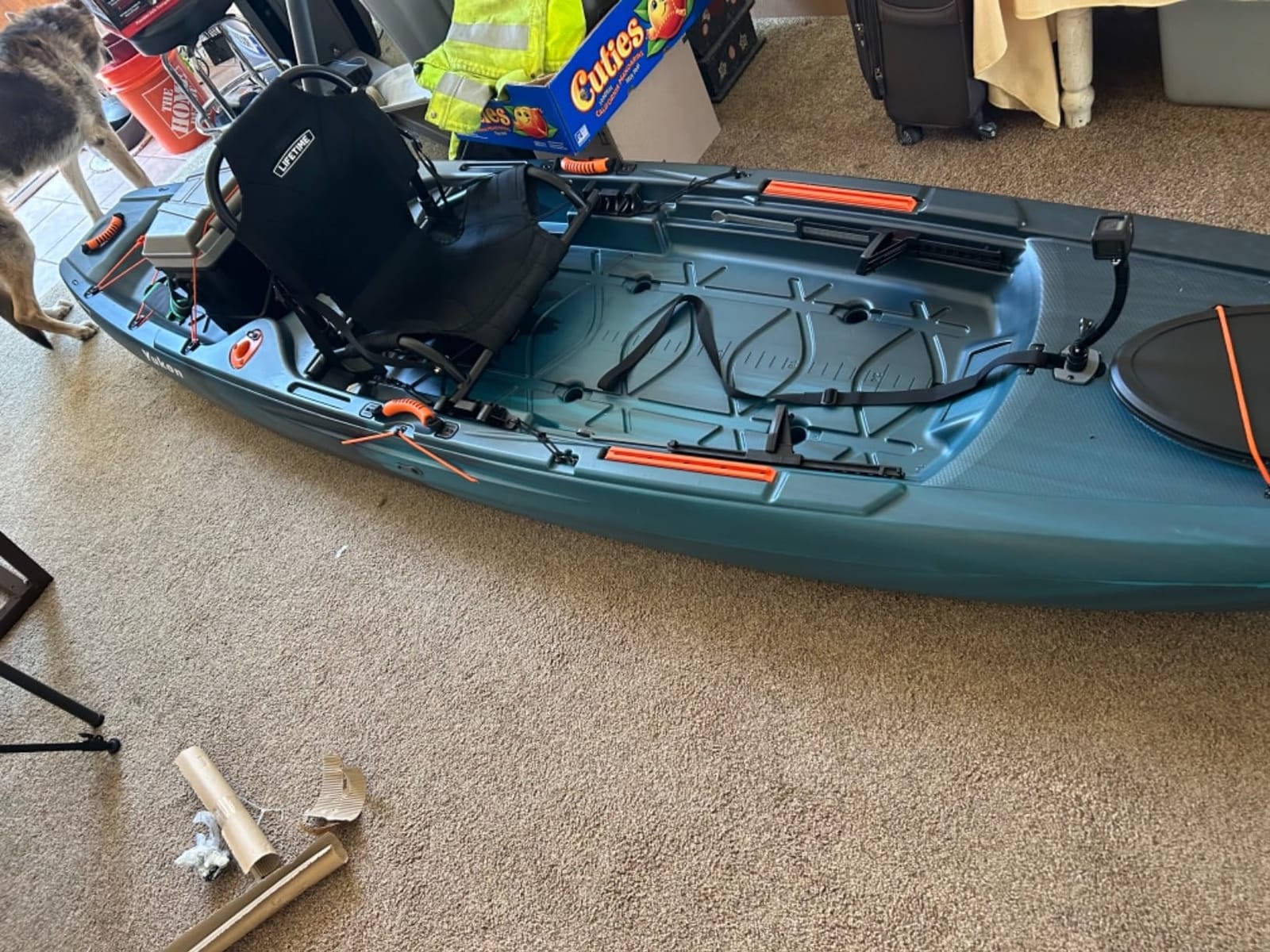
If your plan is to add electronics and accessories over time, the Yukon Angler 116 is the only boat in this group built around that. Two 12-inch sections of universal track run along the deck, which is a standard format that accepts third-party accessory hardware rather than a proprietary mount. It is also transducer ready, with the self-bailing scupper layout designed to accept common scupper-mounted transducers, so a fish finder is a straightforward install.
It is genuinely overbuilt for the class, in the sense owners use the word. The foam-reinforced deck adds floor strength and buoyancy, the adjustable frame seat switches between a high fishing position and a reclined one, and a stability strap assists with stand-up casting on a high-initial-stability hull. The tankwell takes a cooler or a dog, and there is a molded-in 28-inch ruler for measuring fish. Eight self-bailing scuppers, a side drain plug, and a side drain system handle water.
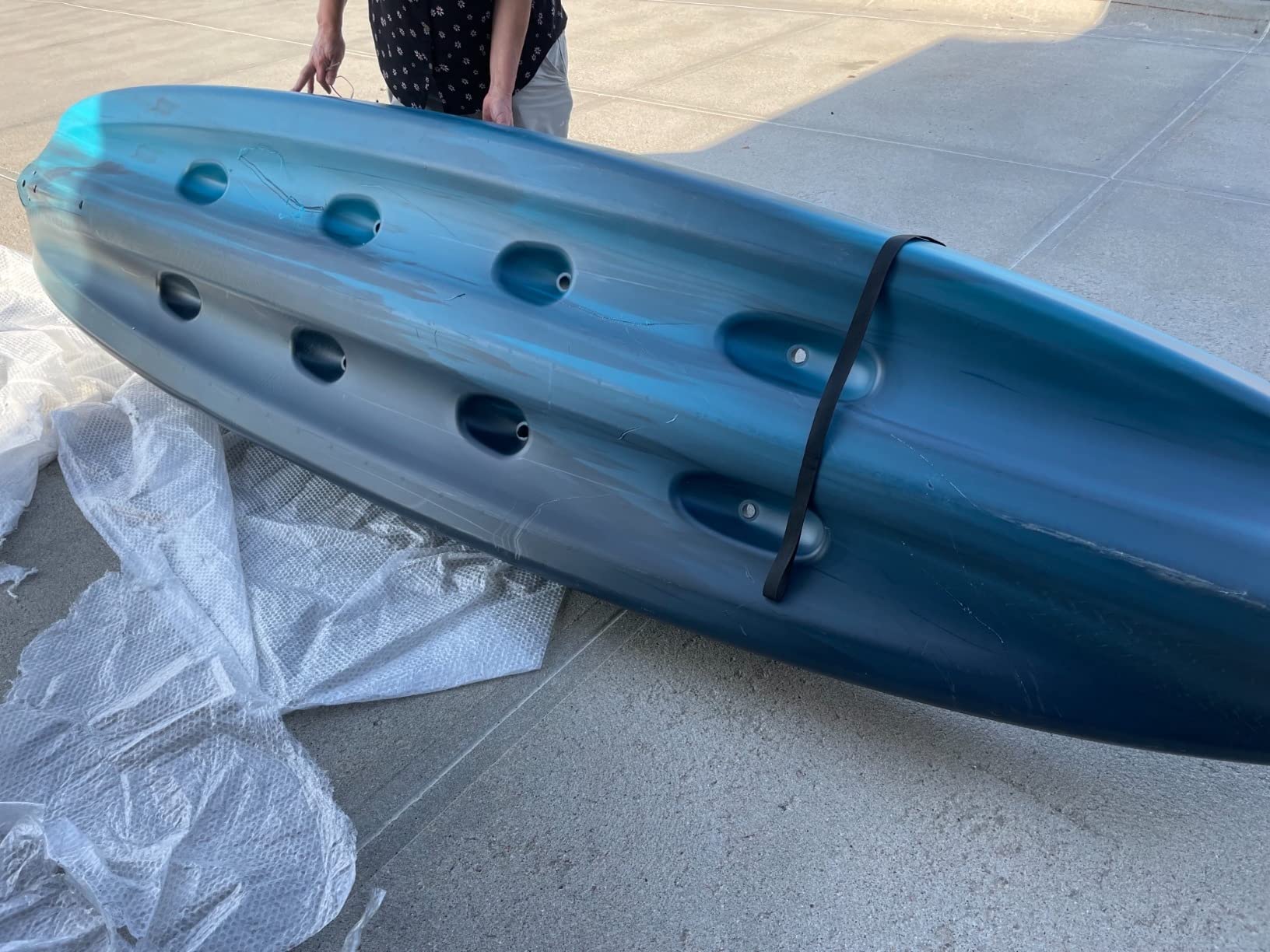
At 78 lb it is the heaviest hull in the group, and the reviews are blunt about what that means after a long paddle to a steep bank. The skeg wheel is the other repeated complaint, described as cheap and hard to balance with a loaded boat, with one owner reporting losing the whole assembly on the water. That is the part to reinforce or replace before it fails on you.
Also note the paddle is not included and the rudder is not included, even though the hull is rudder ready. Several owners report boats arriving scratched or with broken wheel components, so inspect the skeg assembly on arrival.
Who this hull suits?
Anglers in the 200 to 250 pound range who want to add a fish finder, tracks, and a full accessory setup over the life of the boat, and who have a cart or a second person for transport. The 350 lb rating and the reinforced deck give real capacity for a heavy rig.
Who should pass on it?
Anyone carrying solo from a shoreline launch, at 78 lb, and anyone not prepared to reinforce or replace the skeg wheel. It is also among the costlier setups once you add the paddle, rudder, and accessories, which is worth weighing against the simpler hulls here.
What to Look for Before You Buy a Fishing Kayak Under 1000?
Every kayak above is a rotomolded polyethylene hull, which is the single-piece molded plastic that defines this price tier. It is dent-resistant, cheap relative to composite or rotomolded ABS, and tough enough to drag onto a gravel ramp. Nearly every product in this budget shares it, so it is not a useful differentiator. Focus instead on the things below.
Stand-up casting and why beam width decides it
Primary stability is how steady a kayak feels when you are sitting still, and secondary stability is how it behaves when you lean or start to rise. Standing to cast depends almost entirely on secondary stability, which is driven by beam width. The widest hulls here are the Pelican Catch Classic Angler and the BKC Brooklyn at 34 inches, with the Catch Mode 110 close behind at 34.5 inches. The narrowest are the sit-insides, and the 28.5 inch beam of the Perception Flash is the reason it is not a standing boat.
The practical rule is that you can stand semi-upright and cast from a wide sit-on-top with a stability strap, which is exactly what the Yukon Angler 116 is built for. You cannot do it from a 28 inch sit-inside. Budget for a strap, a paddle leash, and practice before you rely on it in wind.
Sit-on-top or sit-inside: which one suits your water?
A sit-on-top is easier to get in and out of, easier to cast from, and self-draining with scupper plugs. A sit-inside keeps you dry, is lighter, and is often more efficient on the paddle. Most anglers who fish cold water, calm coastal bays, or shoulder seasons end up preferring a sit-inside, and everyone else ends up in a sit-on-top.
Watch the freeboard on sit-on-tops. In a wide hull, water comes over the deck edge faster than most buyers expect until the scupper plugs go in. For rivers, the sit-insides here are the better choice, and the Perception models are the only ones rated for slow rivers and calm coastal water by their manufacturer.
Weight capacity is a ceiling, not a target
This is the most misunderstood spec in the category, and it is the number forum buyers check first. A 275 lb rating is not a comfortable boat for a 275 lb angler, because the rating includes your gear, and a full day of tackle, a cooler, water, and a battery can add 40 to 60 lb. Ratings in this group run from 275 lb on the Lifetime and Pelican Sentinel models to 375 lb on the Catch Mode 110 and the Pescador Pro 12, with the tandem at 595 lb.
A reasonable rule from this list: if you are at or above 200 lb, look at the 350 lb and 375 lb hulls, which are the Catch Classic, Catch Mode 110, Pescador Pro 12, Yukon Angler 116, and the Brooklyn tandem. If you are under 180 lb, any of the ten will carry you with room to spare, and you can prioritize seat comfort instead.
Paddle or pedal drive at this budget
This is the axis the budget makes hardest. Genuine pedal-drive angler kayaks with hands-free steering and fish-finder integration start well above one thousand dollars, so inside this ceiling you are choosing between a paddle with a rudder and a much cheaper system. Our guide to pedal kayaks for lake fishing explains what pedal drive actually buys you once you are ready to move up.
At this tier, a paddle plus a rudder is the right call for most anglers, because it keeps the purchase price low and the failure points few. Choose the pedal route only if you fish alone, cover long distances, and already know you will still be fishing in five years.
Saltwater, rivers and cold water caveats
Not every hull in this roundup is a saltwater boat, and the difference matters. Perception states their fishing models are made for lakes, slow-moving rivers, and calm coastal environments, which is the clearest manufacturer guidance available here. Sit-on-tops with self-bailing scuppers and a skeg handle chop and light chop better than a short, light hull. Inshore water, tidal current, and any surf are outside what any of these are designed for.
Cold water changes the priority order completely. Once you add a dry suit, a helmet for whitewater kayaking, and a mid-layer, your load climbs fast, and the 275 lb models stop making sense. If you fish cold water regularly, buy the capacity and skip the weight savings.
What the full rig costs on top of the hull?
A hull at the top of this range is not a boat you can launch on its own. Budget for a paddle if one is not included, which is the case on four of the ten models here. Add a PFD you are actually willing to wear, a rudder if the hull is not rudder ready, scupper plugs, and an anchor system for fishing structure. If you carry more than about 55 lb, a kayak cart stops being a luxury and becomes a tool.
Fish finders and live wells are also in this conversation. If you want a fish finder, a transducer-ready hull saves installation money. If you want a live well, expect to look above this budget. Keeping fish cold on a long day is more often handled with a cooler and ice than with a well, and our guide to marine coolers for kayaks covers that side of it.
New or used: buying out of season
The recurring piece of advice across fishing kayak communities is consistent: if you do not fish year round, buying used is the smarter move. A lightly used angler kayak from a few seasons ago loses a meaningful share of its value while the hull, the seat, and the fittings are the parts most likely to be near-new anyway. The two things to inspect carefully on a used boat are the seat and seat hardware, and any cracks or repairs around the skeg or rudder mount.
Buying off-season also works if you buy new. The practical benefit is selection rather than price: end-of-run models, older colorways, and discontinued configurations are easier to find when dealers are clearing inventory.
Frequently Asked Questions
What is the best fishing kayak under 1000 dollars?
The Lifetime Tamarack Angler 100 is the best all-round choice, with the most owner reviews of any kayak here and a stable flat-bottom hull, a paddle in the box, and a 51 lb weight you can load solo. The Pelican Catch Mode 110 is the best for standing casts and larger anglers, and the Pelican Sentinel 100X is the best if carrying solo matters most to you.
Which of these kayaks is the most stable for fishing?
Stability at this budget comes down to beam width. The Pelican Catch Classic Angler and the BKC Brooklyn are both 34 inches wide, and the Pelican Catch Mode 110 is 34.5 inches, so those three stand up and cast best. The Lifetime Yukon Angler 116 adds a stability strap specifically for stand-up casting. The narrowest hull here, the Perception Flash 9.5 at 28.5 inches, is a seated platform.
What size kayak is best for a 200 pound angler?
For an angler around 200 pounds, look at hulls rated 350 pounds or more rather than the 275 pound models, because your gear load counts against the rating. The Pelican Catch Mode 110 and the Perception Pescador Pro 12 are rated at 375 pounds, the Pelican Catch Classic Angler and the Lifetime Yukon Angler 116 at 350 pounds, and the BKC Brooklyn tandem at 595 pounds. Check that the seat and footrests adjust to your size as well.
Should I buy a 10 foot or 12 foot fishing kayak?
A 12 foot hull tracks straighter and covers ground faster, which matters on long paddles and in current, but it is heavier and harder to store. A 10 foot sit-on-top is easier to carry, easier to maneuver, and often cheaper. The Perception Pescador Pro 12 at 12 feet and the Pelican Catch Mode 110 at 10 feet 8 inches are the two ends of that trade in this group.
What color kayak is best for fishing?
Color is mostly cosmetic at this price, and the one real exception is safety. A bright hull is easier for other boaters to see in low light and mist, and a camo pattern is useful where bird pressure is the concern. Do not pick a color for warmth, because hull temperature in cold water is a function of the paddler rather than the paint.
Final Verdict on the Best Fishing Kayaks Under 1000
The Lifetime Tamarack Angler 100 takes the top spot for the best fishing kayak under 1000 dollars because it is the one boat here that owners have tested hardest and complain about least. The 10 foot hull, 275 lb rating, 51 lb weight, and included paddle cover the majority of solo freshwater anglers, and the fixes its reviews suggest are cheap parts rather than a different kayak.
Buy the Pelican Catch Mode 110 instead if you are 200 pounds or over, if you want to stand and cast, or if you plan to add accessories on tracks. Buy the Pelican Sentinel 100X if you carry your kayak alone and want a comfortable seat. And if you are adding a fish finder rather than just a rod holder, the Lifetime Yukon Angler 116 is built for the rig.
Every price and rating on this page was checked in October 2026. Use the buttons to confirm current pricing before you buy, and remember that the paddle, PFD, anchor, and cart are part of the real cost of getting on the water.