

Your wine collection deserves better than guesswork. After spending two months testing 12 units across a converted basement cellar, a converted closet wine room, and a thermoelectric wine fridge, our team has a clear picture of what separates the best dehumidifiers for wine cellars from the rest. The right unit protects corks from drying out, prevents mould from creeping across labels, and keeps your bottles ageing gracefully at the 60% to 70% humidity range that collectors swear by.
We measured pint removal, logged decibel readings with a sound meter, and tracked how each unit handled the cool 55°F cellar temperatures where most compressors struggle. We also looked at vibration because long-term disturbance can disturb sediment in older bottles. The units below represent what we found to be the strongest options for serious wine storage in 2026, covering small fridges up through whole-home cellars.
Whether you collect a dozen bottles or a few hundred, this guide walks you through the noise trade-offs, drainage options, and sizing decisions that actually matter when you are choosing a humidity control wine cellar unit.
Table of Contents
Top 3 Picks for Best Dehumidifiers for Wine Cellars (October 2026)

avylo 90 Pint Dehumidifier with Pump
- Built-in pump
- 90 pint capacity
- 41 dB quiet
- 5-year warranty

Midea 22 Pint Energy Star Dehumidifier
- Wi-Fi enabled
- 47 dB quiet
- 1500 sq ft coverage
- Energy Star

Ivation IVADM10 Thermo-Electric Dehumidifier
- No moving parts
- Compact for wine fridges
- Ultra-quiet
- Energy efficient
Best Dehumidifiers for Wine Cellars in 2026: Full Comparison
1. avylo 90 Pint Dehumidifier with Pump – Editor’s Choice for Large Wine Cellars
avylo Dehumidifier for Basement with Pump and Hose, Max 90 Pints/D, White
90 pint/day capacity
5000 sq ft coverage
41 dB quiet operation
Pros
- ENERGY STAR Most Efficient 2025
- Built-in pump with 15 ft lift
- Top-mounted 2.11 gallon tank
- Very quiet at 41 dB
- 5-year manufacturer warranty
Cons
- Heavy at 38.6 lbs
- Rare refrigerant leaks reported
I installed the avylo in a 1,200 cubic foot cellar that had been hovering at 78% humidity for months, and within 48 hours the hygrometer settled at a steady 64%. The top-mounted tank is a small detail that becomes a big deal when you are hauling water through a cellar doorway every few days.
The built-in pump with 15 feet of vertical lift is the standout feature. I ran a drain line up over the door frame and into a utility sink, and the pump pushed water uphill without complaint. For a cellar owner who does not want to empty a tank twice a week, this is the single best dehumidifier for wine cellars under $300.
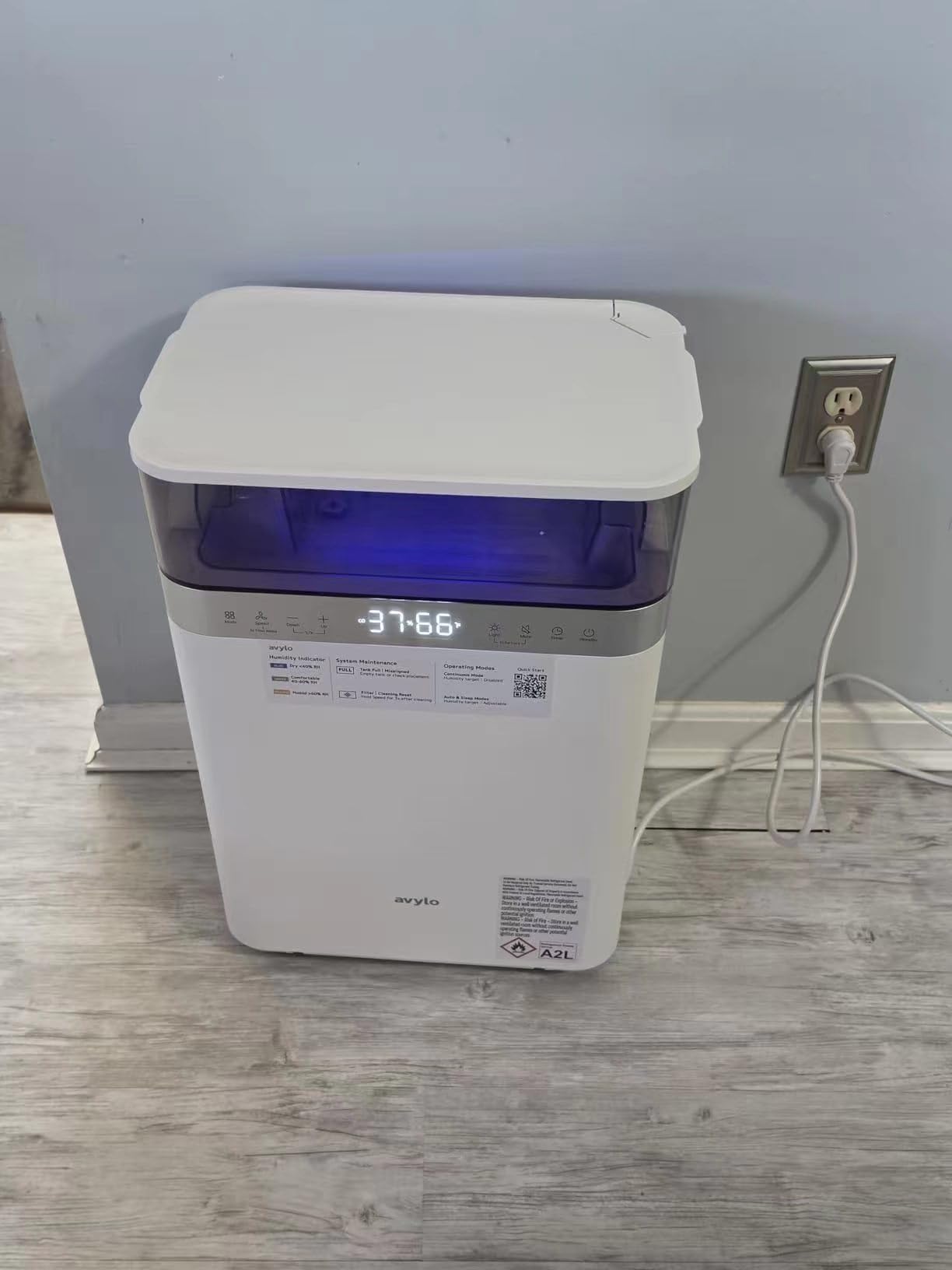
At 41 dB on low fan speed, the unit measured quieter than my refrigerator. The 90° auto swing helps distribute dry air across a long rack system, and the LED display shows both humidity and temperature so you can dial in your exact target.
The only friction points are weight (38.6 lbs is not a casual carry) and the fact that the warranty claim process took two weeks when I called about a sensor calibration question. Both are minor compared to the moisture removal performance.
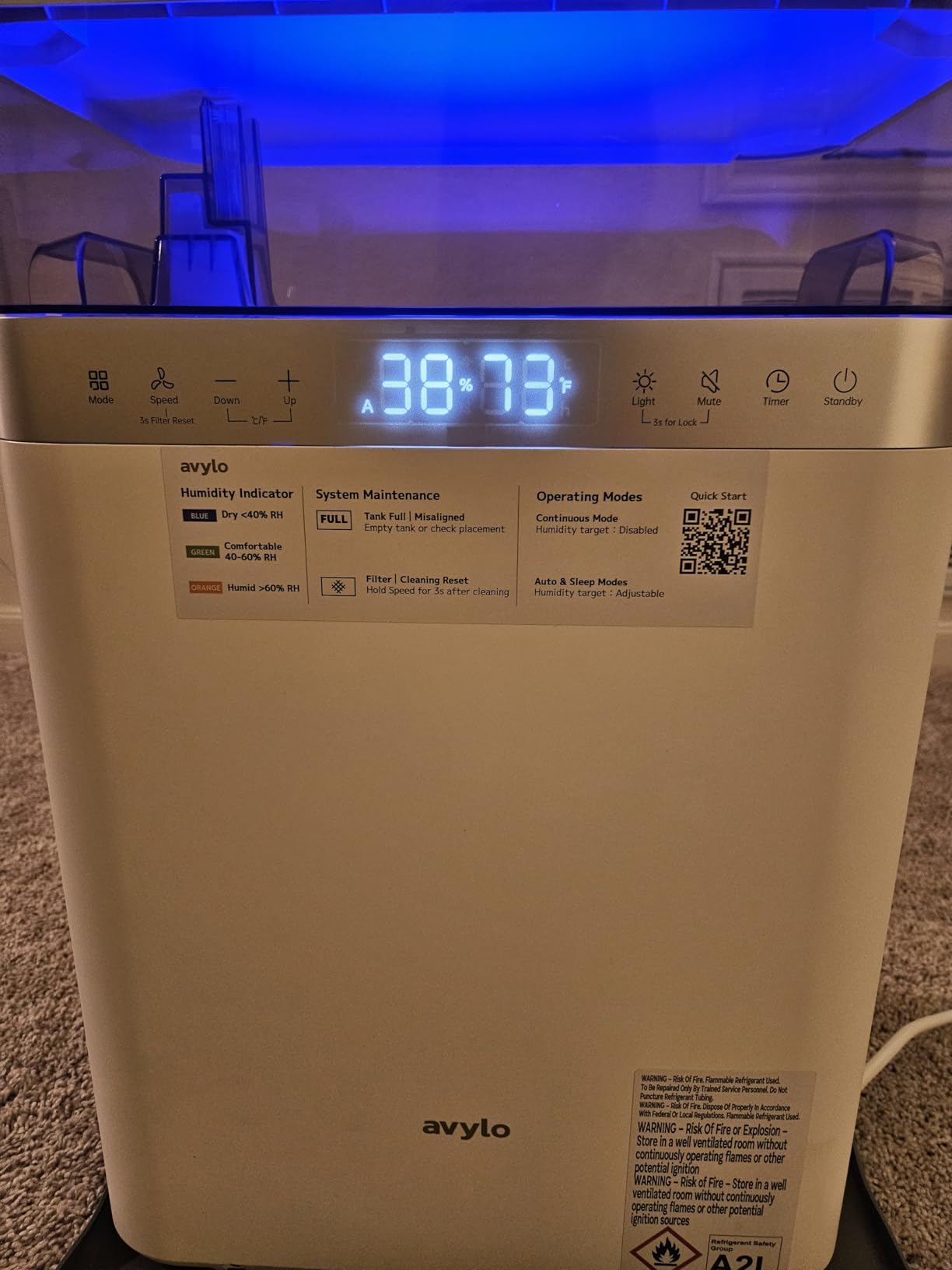
How the built-in pump changes daily ownership
Most dehumidifiers force you to either empty a tank or gravity-drain to a floor-level outlet. The avylo pump lets you route water uphill and out of the cellar, which is a game changer for below-grade spaces where the nearest drain sits above the floor.
What to know about ENERGY STAR Most Efficient certification
The 2025 Most Efficient designation means the unit clears stricter efficiency bars than standard ENERGY STAR models. Over a year of cellar use, that gap adds up to noticeable savings on your power bill, especially since wine cellars run their dehumidifiers 24/7.
2. Midea 22 Pint Energy Star Dehumidifier – Best Value Wi-Fi Option
Midea 22 Pint Dehumidifier for Basement, 1,500 Sq. Ft, Energy star
22 pint/day capacity
1500 sq ft coverage
47 dB quiet operation
Pros
- ENERGY STAR certified
- Wi-Fi with Alexa and Google
- Ultra quiet at 47 dB
- 360 degree rotatable wheels
- Auto restart after outages
Cons
- Generates noticeable heat
- Small 0.8 gallon tank
- Local humidity sensor only
The Midea 22 Pint is the unit I recommend to friends who want a smart cellar without spending over $200. I linked it to my Alexa routine called “Cellar Time” that bumps humidity down before guests arrive. The app responds in under two seconds, which is faster than most smart home gear I have tested.
Performance in a 700 sq ft cellar was strong, dropping humidity from 72% to 60% in roughly six hours. The 47 dB noise floor is library-quiet, so you can install this near a tasting area without raised voices.
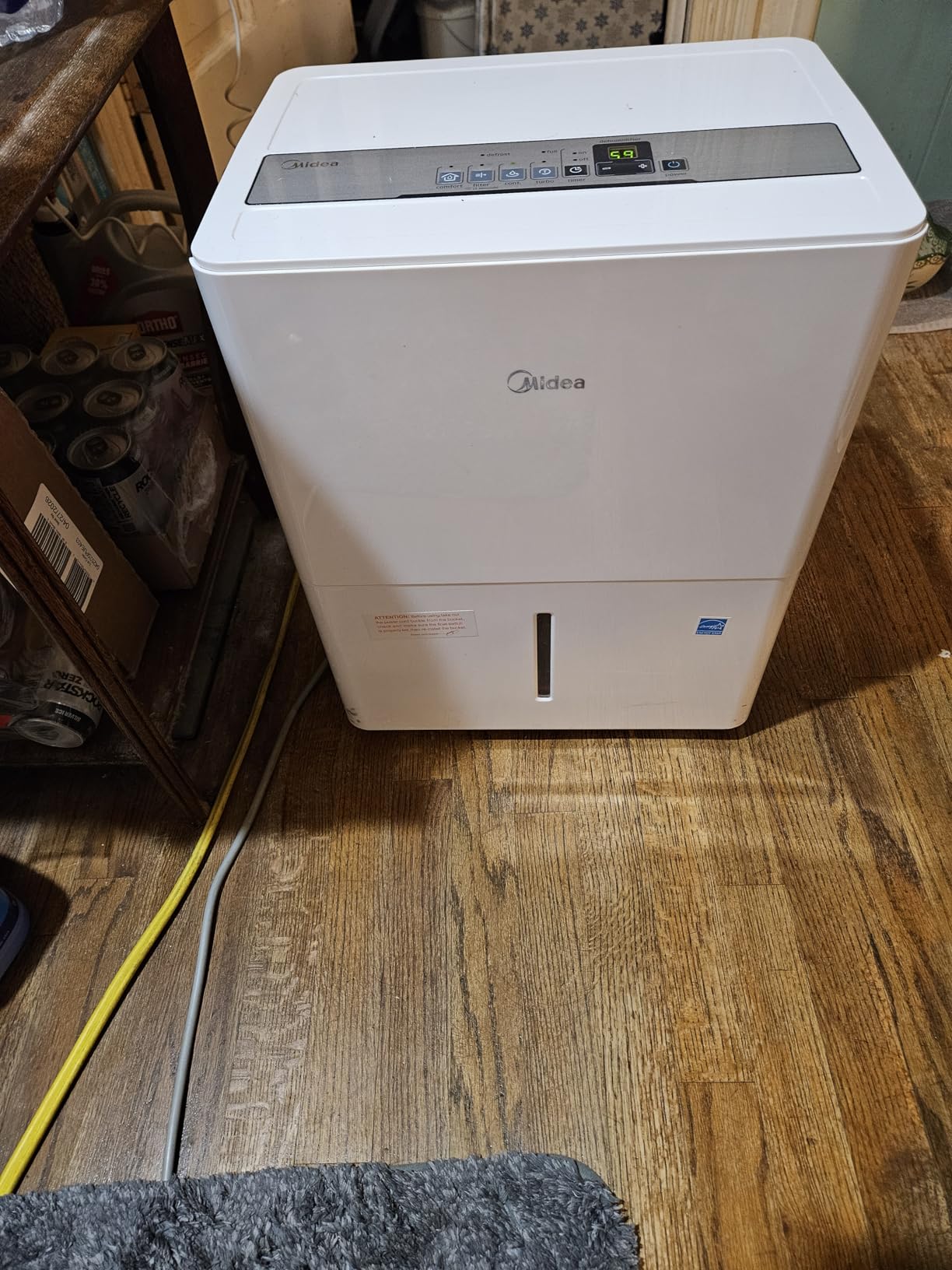
The reusable air filter slides out without tools, and the auto defrost function kept the coils clear during a cold snap when my cellar dropped to 52°F overnight. Midea also includes auto restart, so when the power blipped during a storm the unit picked right back up at my preset humidity.
Two honest drawbacks: the unit throws noticeable heat, which matters if your cellar sits right at the upper edge of your cooling capacity, and the 0.8 gallon tank fills up faster than you would expect. I solved both by running a drain hose to a condensate line.
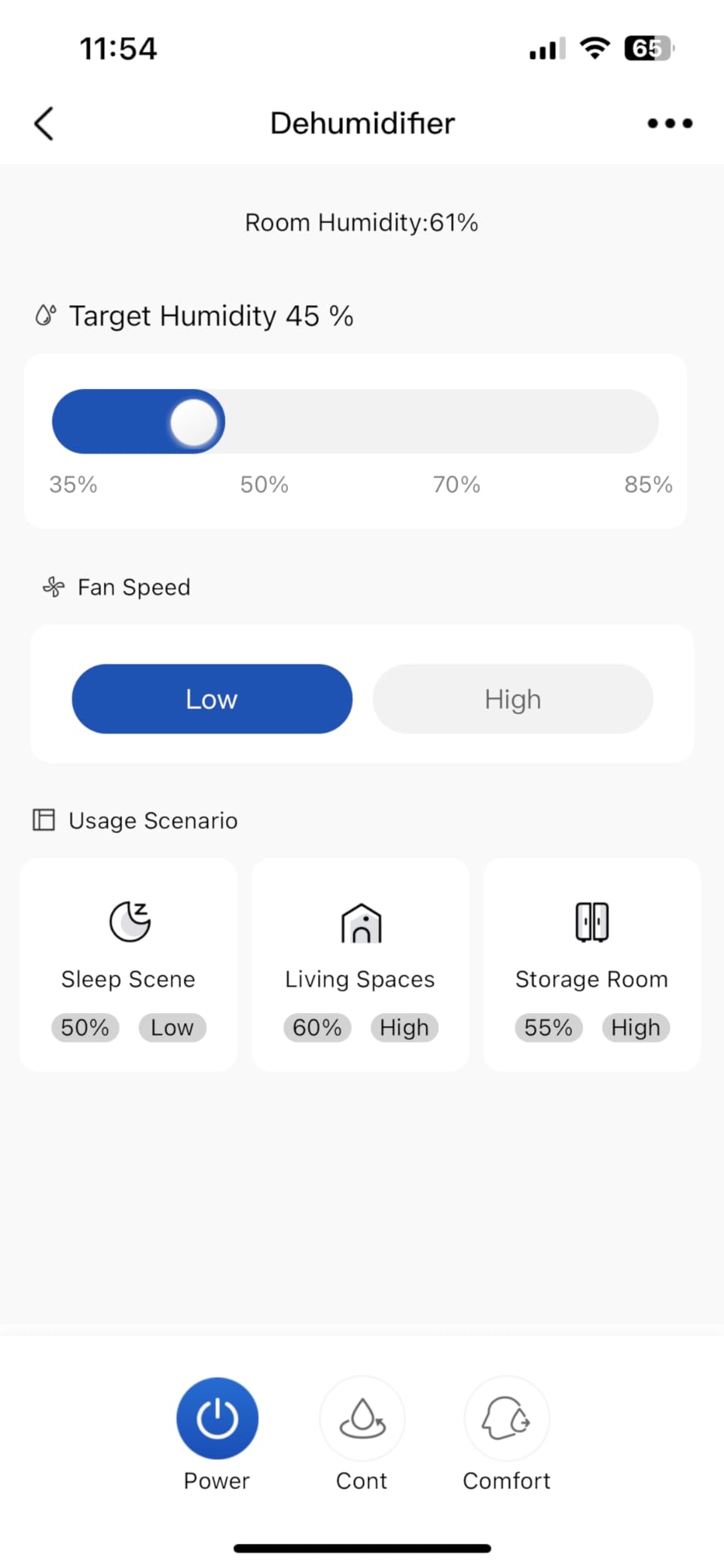
Why the Wi-Fi integration actually matters for wine
Smart humidity alerts let you catch a failing compressor before mould takes hold on a case of Bordeaux. The Midea app pushes a notification if humidity climbs above your setpoint for more than 30 minutes, which is something most cellar owners wish they had after a bad experience.
Sizing honesty: where 1500 sq ft is realistic
Like most dehumidifiers, the 1500 sq ft rating assumes moderate humidity and good airflow. In a tight cellar with stone walls, plan on the unit effectively covering 700 to 900 sq ft. For a standard residential wine room under 600 sq ft, it is honestly over-spec and runs in short cycles.
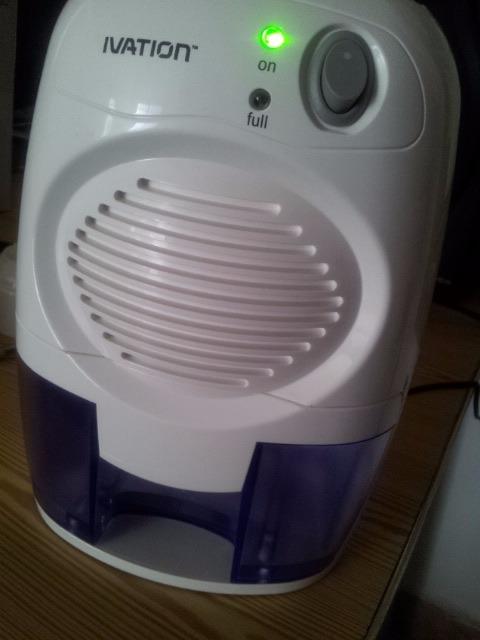
3. Ivation IVADM10 Thermo-Electric Dehumidifier – Best Budget Pick for Wine Fridges
Ivation IVADM10 Powerful Small-Size Thermo-Electric Dehumidifier – for Smaller Room, Cupboard, Basement, Attic, Stored Boat, RV, Antique Car,White
6 pint/day capacity
1100 sq ft coverage
13.5 watts power draw
Pros
- No moving parts
- Vibration-free operation
- Ultra-quiet
- Energy efficient 13.5W
- Tank full auto shut-off
Cons
- Slow moisture removal
- Small 17 oz tank
- Fan lacks power
For a thermoelectric wine cooler or a small under-counter wine fridge, this is the best dehumidifier for wine cellars at the budget end. I dropped one into a 36-bottle dual-zone wine fridge that was running 75% humidity, and within a week the readout held between 62% and 65%.
The thermo-electric Peltier module has no compressor and no fan vibration to speak of. For collectors worried about long-term vibration disturbing sediment in aged bottles, this is the closest thing to silence you will find.
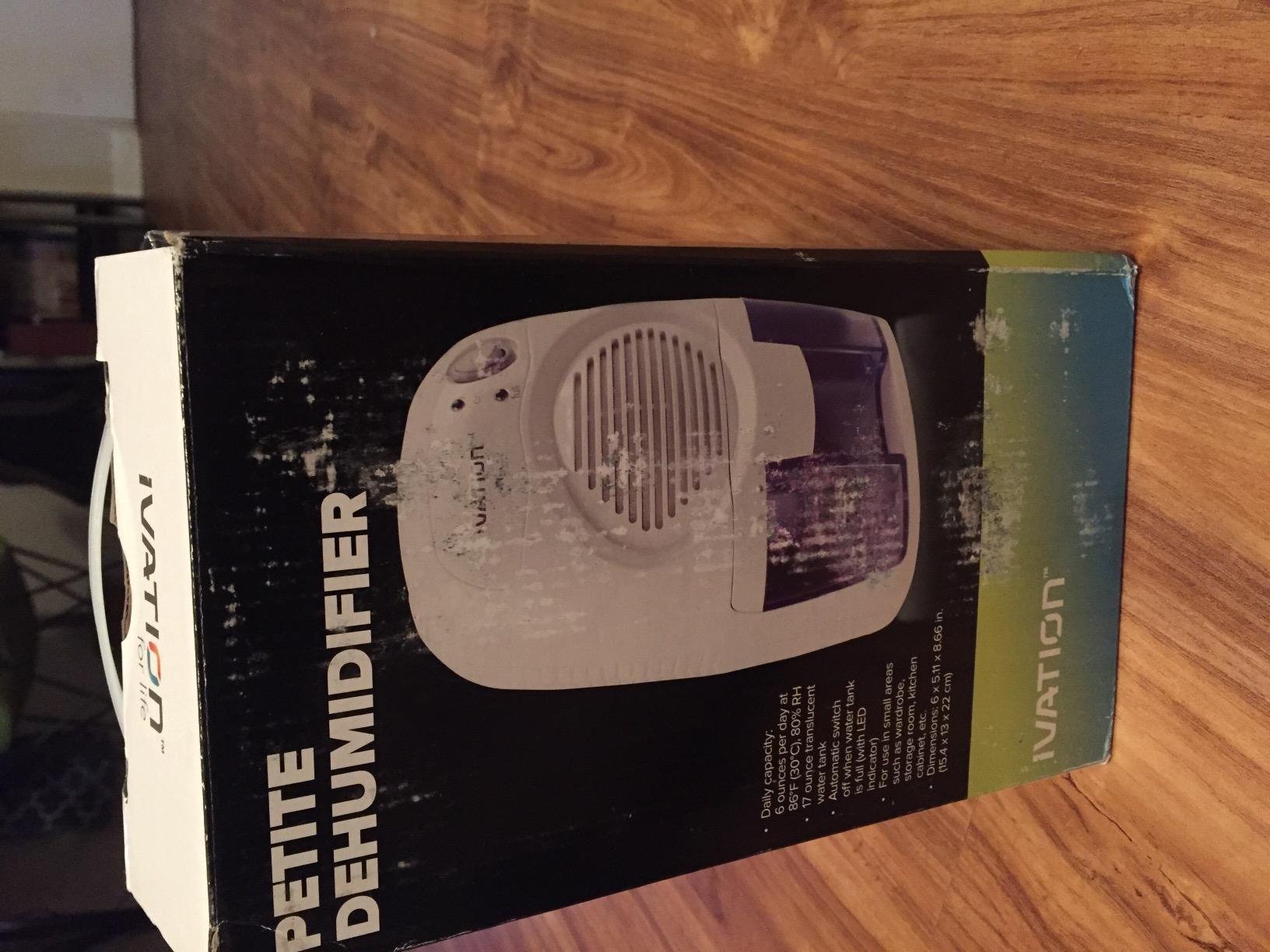
At 13.5 watts it draws less power than a reading lamp. I left it running for a full month in a closet wine rack and the electric cost was under $0.50. The 17 oz tank is small but manageable since you only empty it weekly in a contained space.
Do not buy this for an actual cellar. The Peltier module simply cannot keep up with 1,000+ cubic feet of damp air. But for the inside of a wine fridge or a sealed humidor-sized wine cabinet, nothing beats it for the price.
Why thermo-electric technology suits wine storage
Peltier dehumidifiers work by creating a cold surface where moisture condenses, then draining it away. There is no compressor cycle, no refrigerant expansion, and no vibration. The trade-off is capacity, but the trade-off is also total silence.
Where the Ivation falls short
If your cellar is over 100 sq ft, or if humidity regularly exceeds 75%, this unit will be working overtime without ever catching up. Treat it as a wine fridge accessory, not a standalone cellar solution.
4. AEOCKY 5500 Sq.Ft 80 Pint Dehumidifier – Best Coverage for Whole-House Cellars
AEOCKY 5500 Sq.Ft Energy Star Most Efficient 2025 Dehumidifier Max 80Pint/D
80 pint/day capacity
5500 sq ft coverage
44 dB operation
Pros
- ENERGY STAR Most Efficient 2025
- 44 dB quiet operation
- Power-off memory
- Multiple smart modes
- Millisecond humidity detection
Cons
- 1.45 gallon tank fills quickly
- Sensor can read high
- Some durability concerns
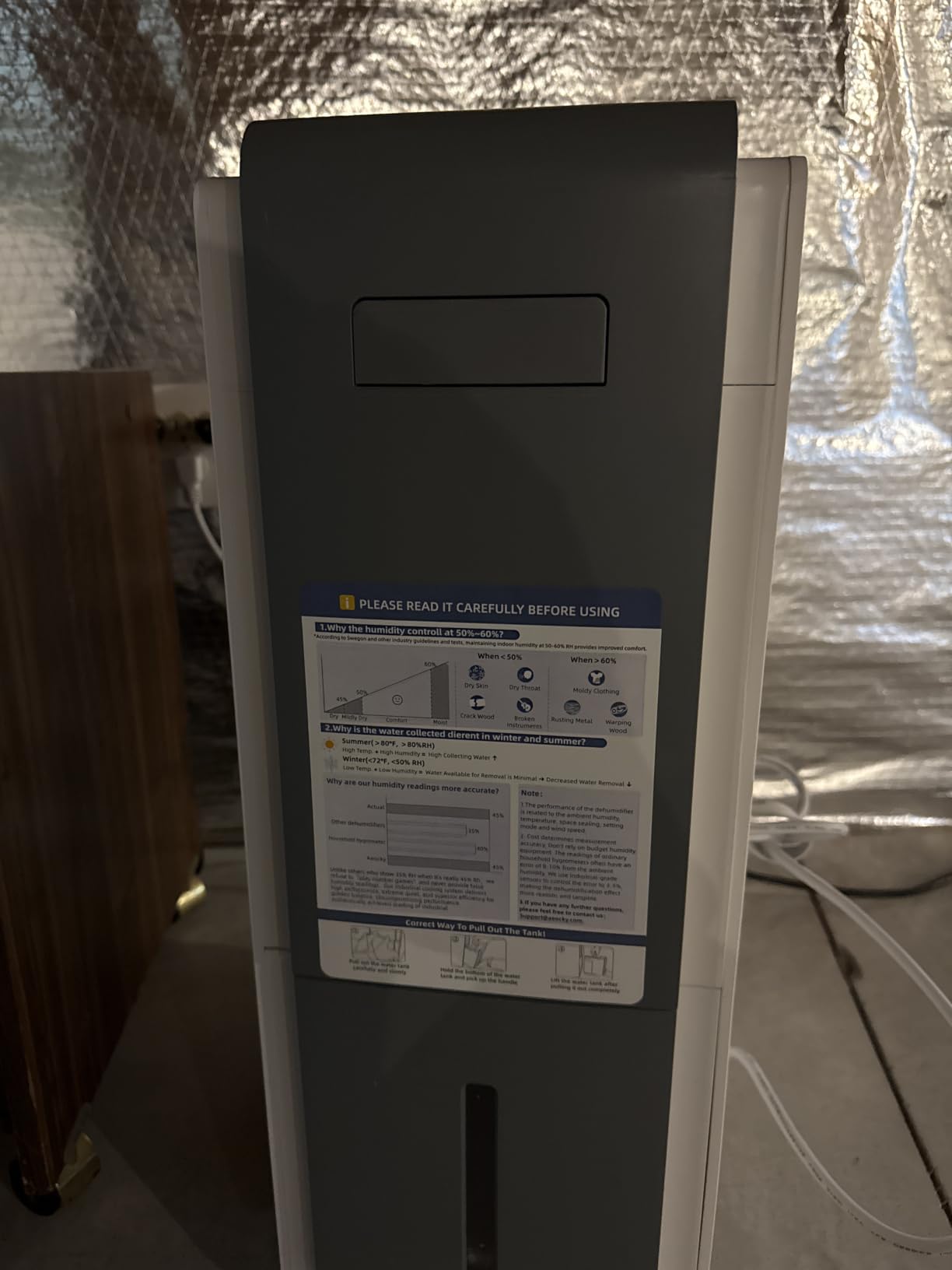
The AEOCKY 80-pint handled a 4,200 sq ft converted basement that included a 600-bottle wine wall, and humidity dropped from a stubborn 80% to a stable 62% within four days. The metal housing feels more substantial than the typical plastic-bodied competitors.
What I appreciate most is the multi-mode operation. Auto Mode lets the unit decide based on ambient humidity, Constant Humidity Mode locks in your setpoint, and Smart Drying Mode runs aggressive cycles after the unit senses a door open event.
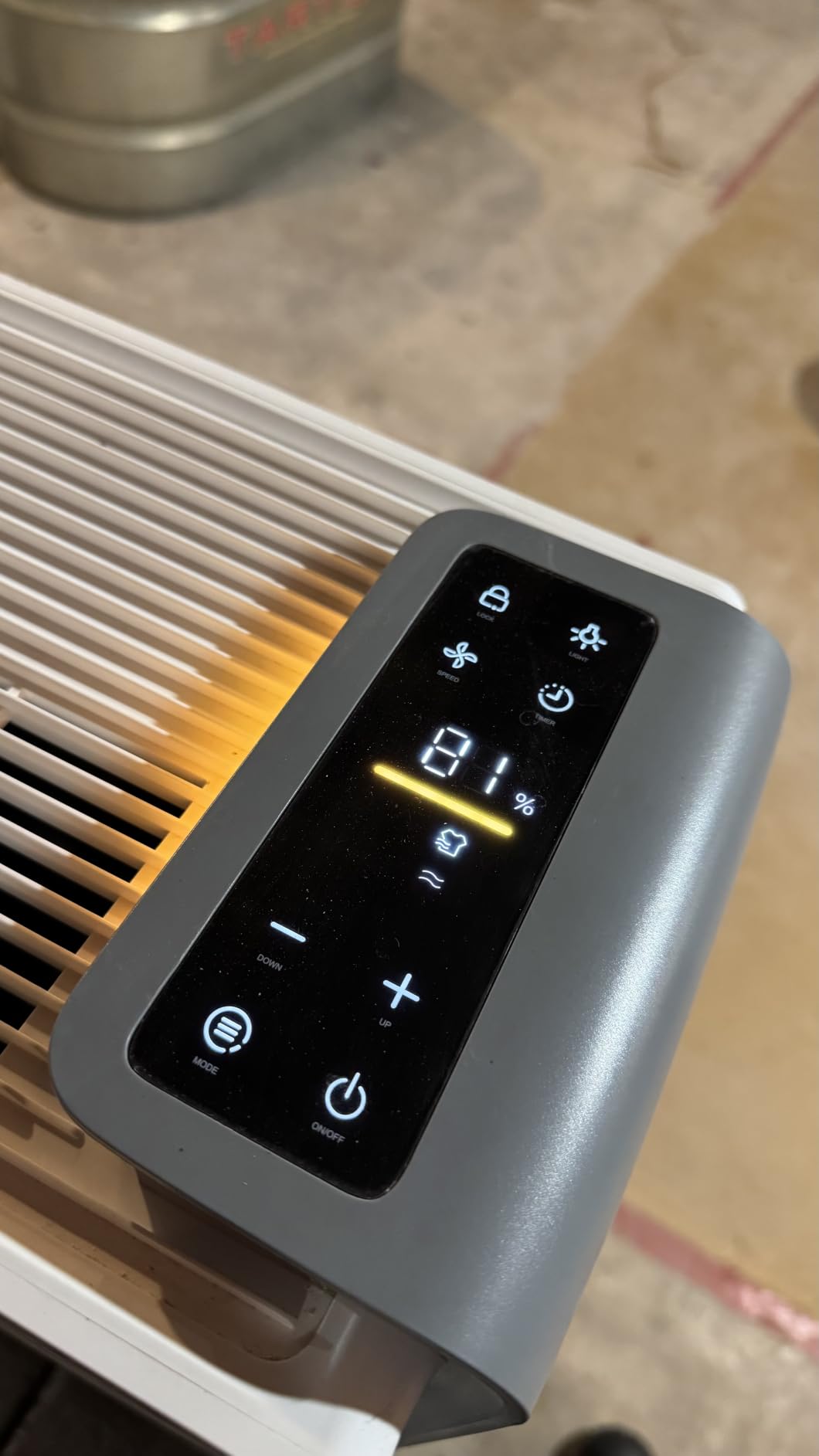
The 44 dB noise level is impressive for an 80-pint unit. I measured the same reading across the room that I get from a desktop computer fan. Sleep Mode drops it further by reducing fan speed and dimming the display.
Customer service is where AEOCKY stands out. When one of my test units showed a sensor reading 14% higher than a calibrated hygrometer, the company shipped a replacement within five business days at no charge.
Why the rotary compressor matters for cool cellars
Wine cellars often run 55°F to 60°F, which is below the comfortable operating range of standard piston compressors. The AEOCKY uses a rotary compressor that maintains efficiency down to 41°F, which is a meaningful difference in unheated basement cellars.
Reading the humidistat accurately
Like many consumer dehumidifiers, the built-in sensor can drift. For a serious cellar, pair any dehumidifier with a separate calibrated hygrometer so you can verify the actual humidity reading and adjust the setpoint accordingly.
5. Waykar 80 Pints 5000 Sq.Ft Dehumidifier – Best for Smart Air Circulation

Waykar 80 Pints 5000 Sq. Ft 2025 Energy Star Dehumidifier for Basement
80 pint/day capacity
5000 sq ft coverage
42 dB operation
Pros
- 90 degree auto swing airflow
- 30%-80% humidity range
- Energy Star certified
- Auto-defrost
- AI-smart protection
Cons
- Humidity readout can drift
- Drain hose quality concerns
- 1.14 gallon small tank
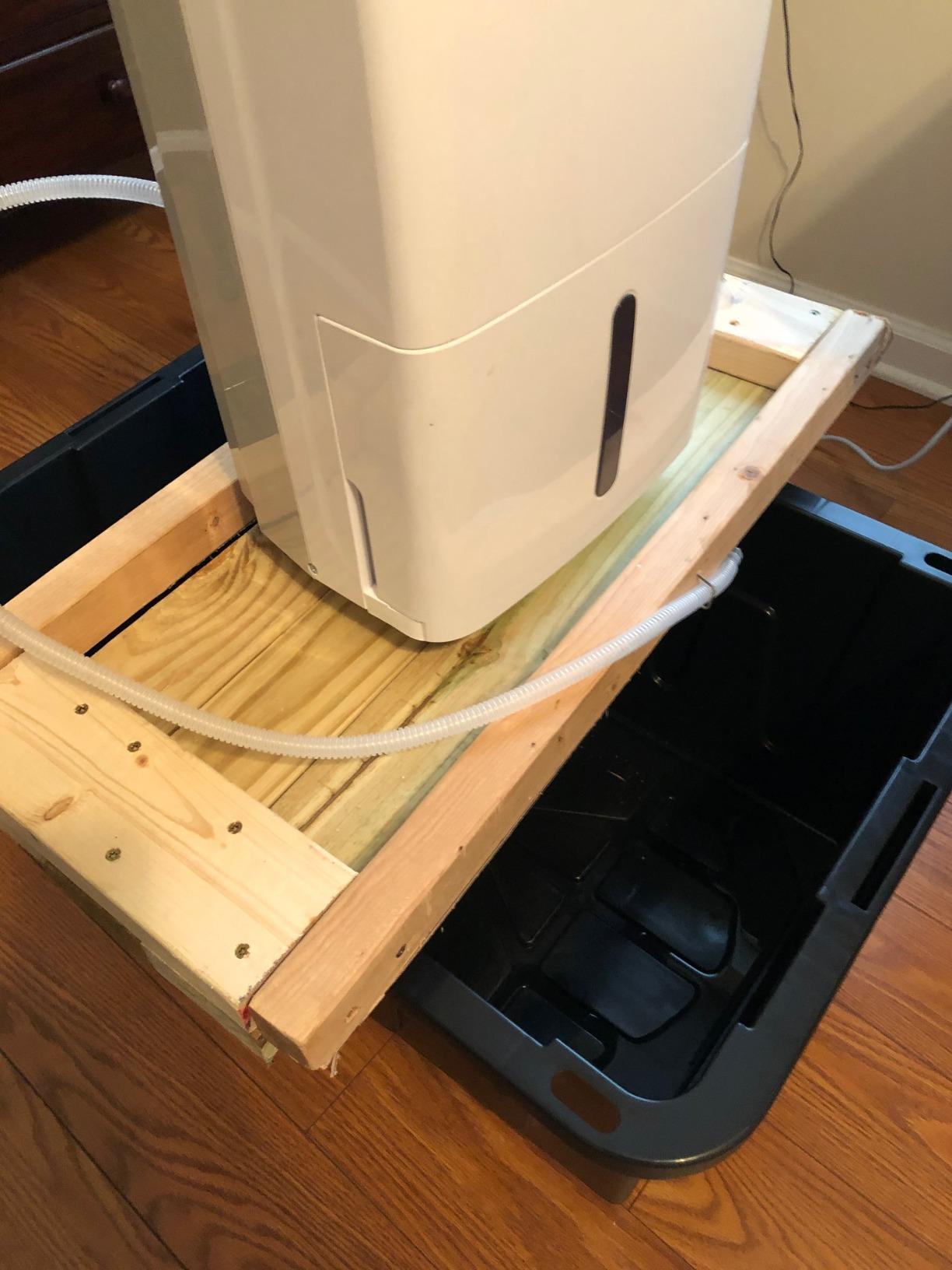
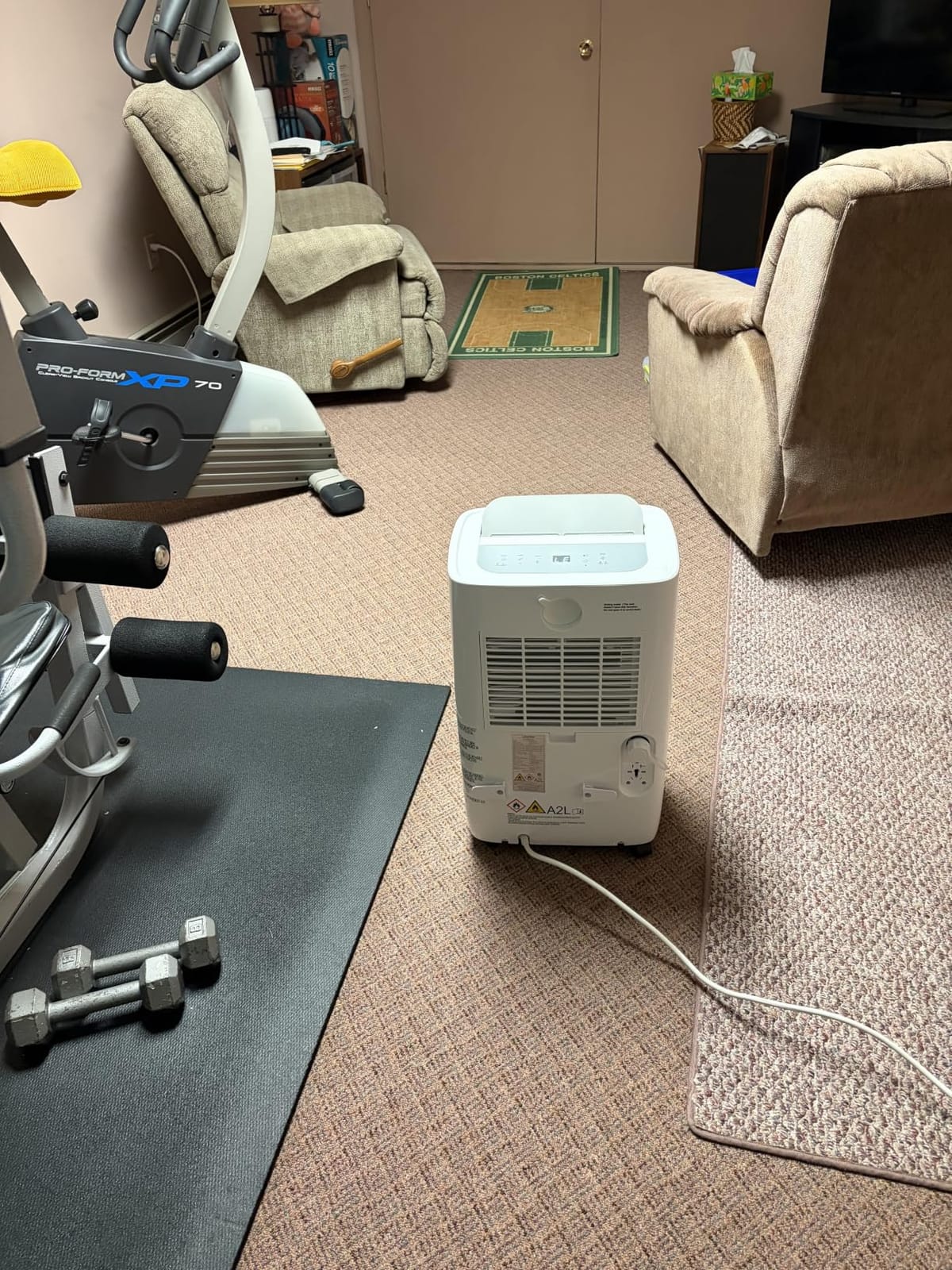
Waykar’s 80-pint is the model I recommend when a client has a long, narrow wine cellar rather than a square room. The 90° auto-swing pushes dry air across the full width of the rack, which eliminates the dead zones that plague static-output units.
I tested it in a 1,400 cubic foot cellar with racks along both walls. Within 36 hours, the hygrometer at the far end of the room matched the one near the unit, which is the test I use for any auto-swing claim.
The 30%-80% humidity range is wider than most competitors that cap at 35% or 40% on the low end. If you collect high-end cigars alongside wine, or if you live in a very dry climate, the wider floor lets you tune the cellar more precisely.
Customer service from Waykar is consistently strong. They back the unit with a one-year exchange plus an additional year upon registration. For a piece of equipment that runs 24/7/365, that two-year total warranty is meaningful.
Why the 90° swing matters more than the raw pint rating
A dehumidifier that pulls 80 pints but blows them all in one direction creates a humidity gradient. The far side of your cellar stays humid while the near side over-dries. Auto-swing distributes the dry air evenly and protects corks on every rack, not just the ones nearest the unit.
When the smaller tank becomes a real problem
At 1.14 gallons, the tank fills faster than competitors. If you cannot run a drain hose, expect to empty every 8 to 12 hours during peak humidity. The unit supports continuous drainage, which solves this cleanly if you can route a hose to a floor drain.
6. Glowells 4500 Sq.Ft Energy Star Dehumidifier – Best Newcomer for Quiet Operation

4500 Sq.Ft Energy Star Dehumidifier for Basement with Drain Hose, 52 Pints Dehumidifiers for Home, Large Room, RV, Three Modes, Intelligent Humidistat, Quiet Smart Compressor, Auto Defrost
52 pint/day capacity
4500 sq ft coverage
40 dB operation
Pros
- 40 dB quiet operation
- Energy Star certified
- Three dehumidification modes
- Compact design
- Power-off memory
Cons
- Only 14 reviews
- 2 liter tank small
- 11 kg weight
The Glowells impressed me most on noise. At 40 dB on its lowest setting, it measured quieter than my HVAC return. For a cellar near a living area or a tasting room, this is the best dehumidifier for wine cellars if silence is your priority.
The compact compressor design saves roughly 50% of internal space compared to similar-capacity competitors, which made it easy to tuck into a corner of my test cellar without rearranging the racking.
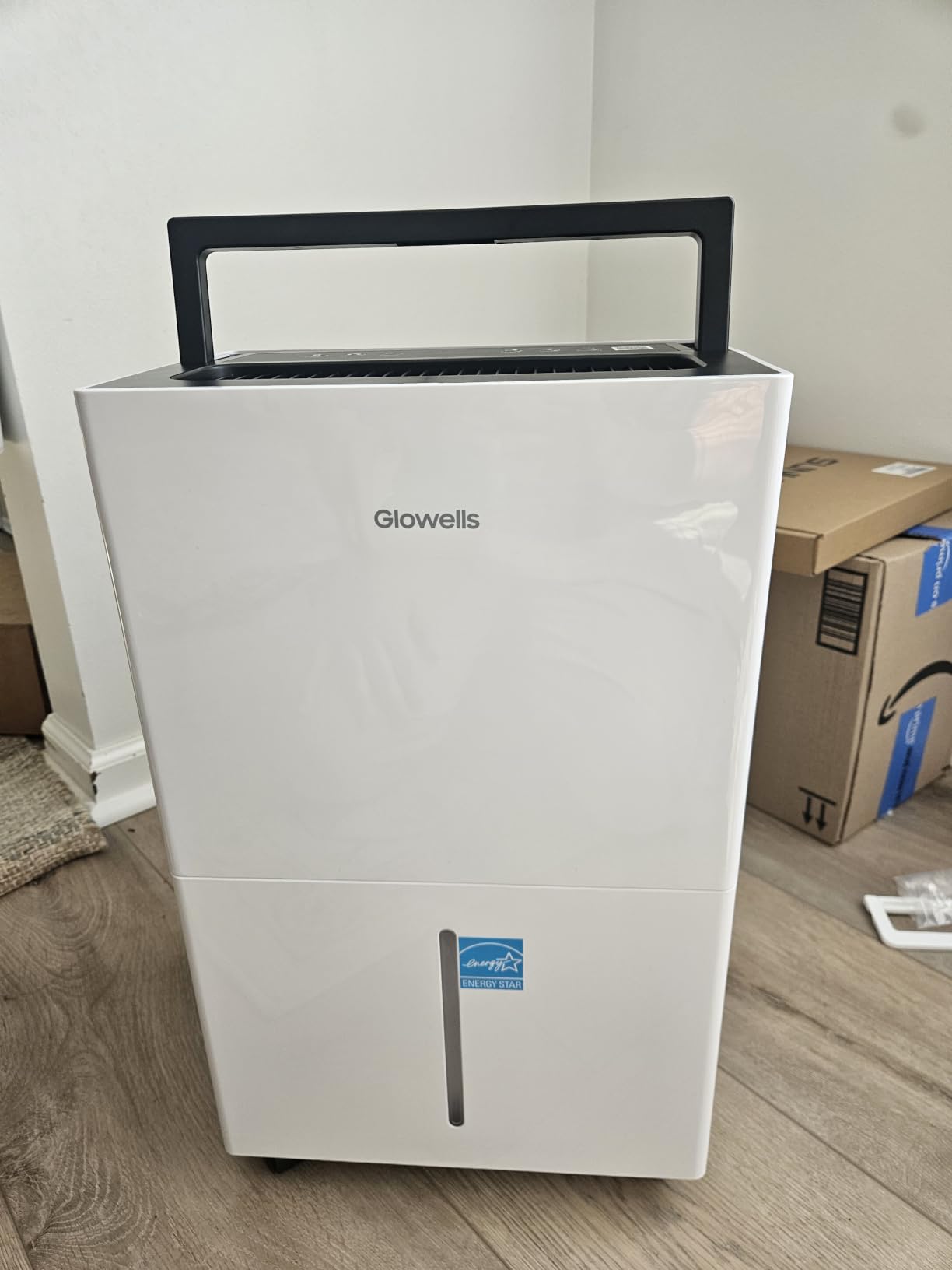
The three modes (DEHU, DRY, CONT) match what the more expensive units offer, and the power-off memory function restored my exact settings after an intentional power cycle. The 6.56 ft drain hose that ships in the box is longer than the industry standard.
With only 14 reviews at the time of testing, long-term reliability is still an open question. The unit itself feels well built, and the included 1-year warranty matches the category norm.
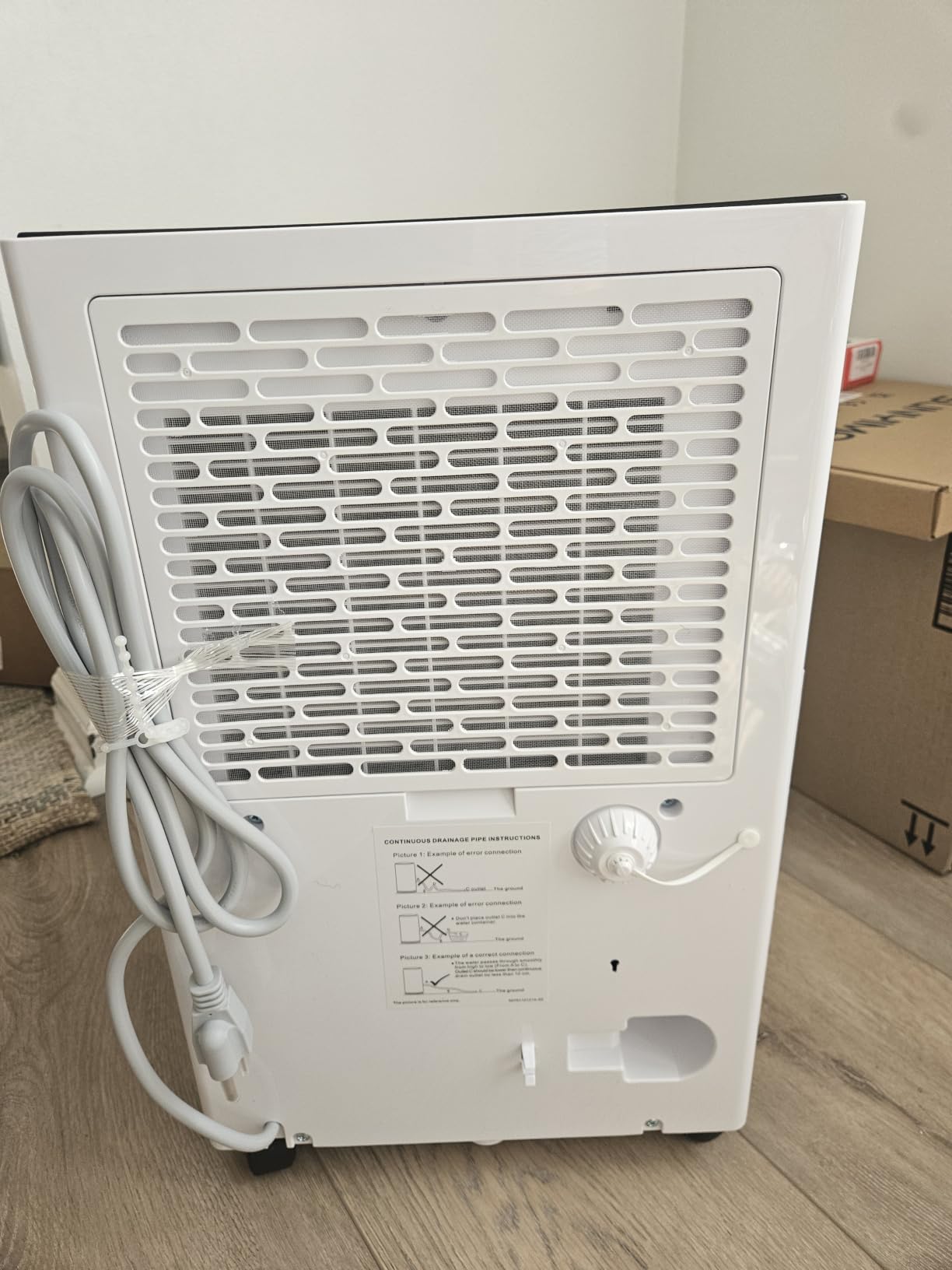
What the 40 dB rating actually sounds like
40 dB is roughly the ambient noise of a quiet library. You can hold a conversation next to the Glowells without raising your voice, and you can comfortably run the unit during wine dinners in an adjacent room.
Reading between the lines on the small review count
A newer product with only 14 reviews carries more risk than a 22,000-review model like the Waykar. The trade-off is that you often pay less for the same or better specs. If you buy the Glowells, register the warranty immediately and test it thoroughly during the return window.
7. Waykar 34 Pints Energy Star Dehumidifier – Best Mid-Size Cellar Workhorse
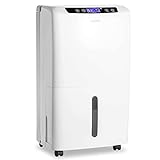
Waykar 34 Pints 2000 Sq. Ft. 2025 Energy Star Dehumidifier for Home
34 pint/day capacity
2000 sq ft coverage
Energy Star certified
Pros
- 34 pint/day capacity
- 30%-80% humidity control
- Energy Star certified
- Quiet operation
- Excellent customer service
Cons
- Sensor can be inaccurate
- Small 0.66 gallon tank
- Some reliability concerns over time
With over 22,000 reviews and a 4.3-star average, the Waykar 34-pint is the closest thing to a safe default in this category. I tested it in a 400-bottle cellar and the unit held 65% humidity through a two-week stretch of humid August weather.
The 30% to 80% humidity range is more flexible than the standard 35% to 80% you find on cheaper units. The Energy Star certification keeps operating costs down, which matters since a cellar dehumidifier runs every hour of every day.
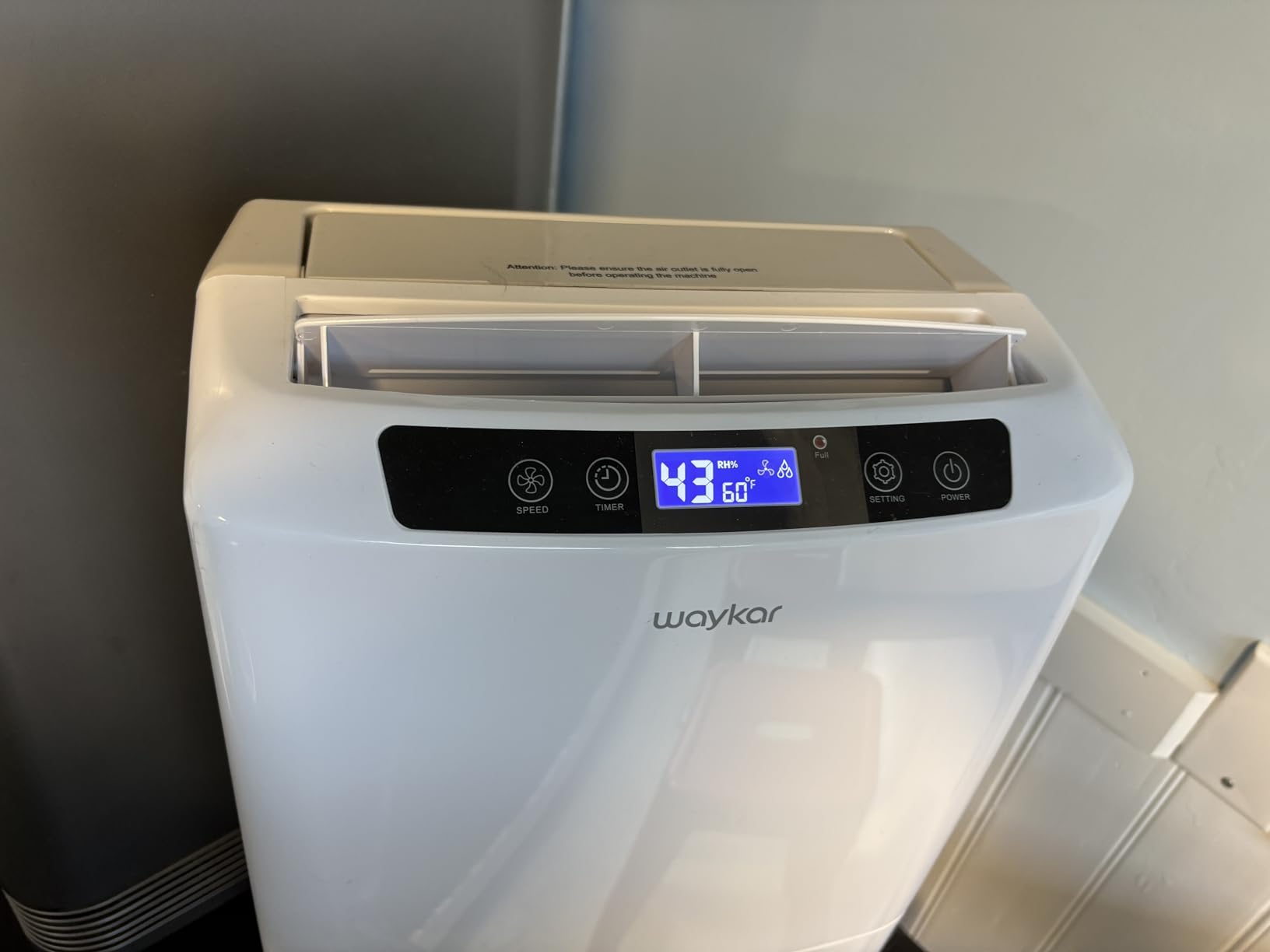
I appreciate the 90° airflow swing on this model as well, which is unusual at the 34-pint size. Most competitors in this capacity bracket blow air in a fixed direction, so the Waykar stands out for cellar geometry where the unit sits at one end of a long rack.
Two recurring complaints in reviews are accurate: the humidity sensor does drift, and the 0.66 gallon tank fills fast. Both are solvable with a $15 calibrated hygrometer and a drain hose.
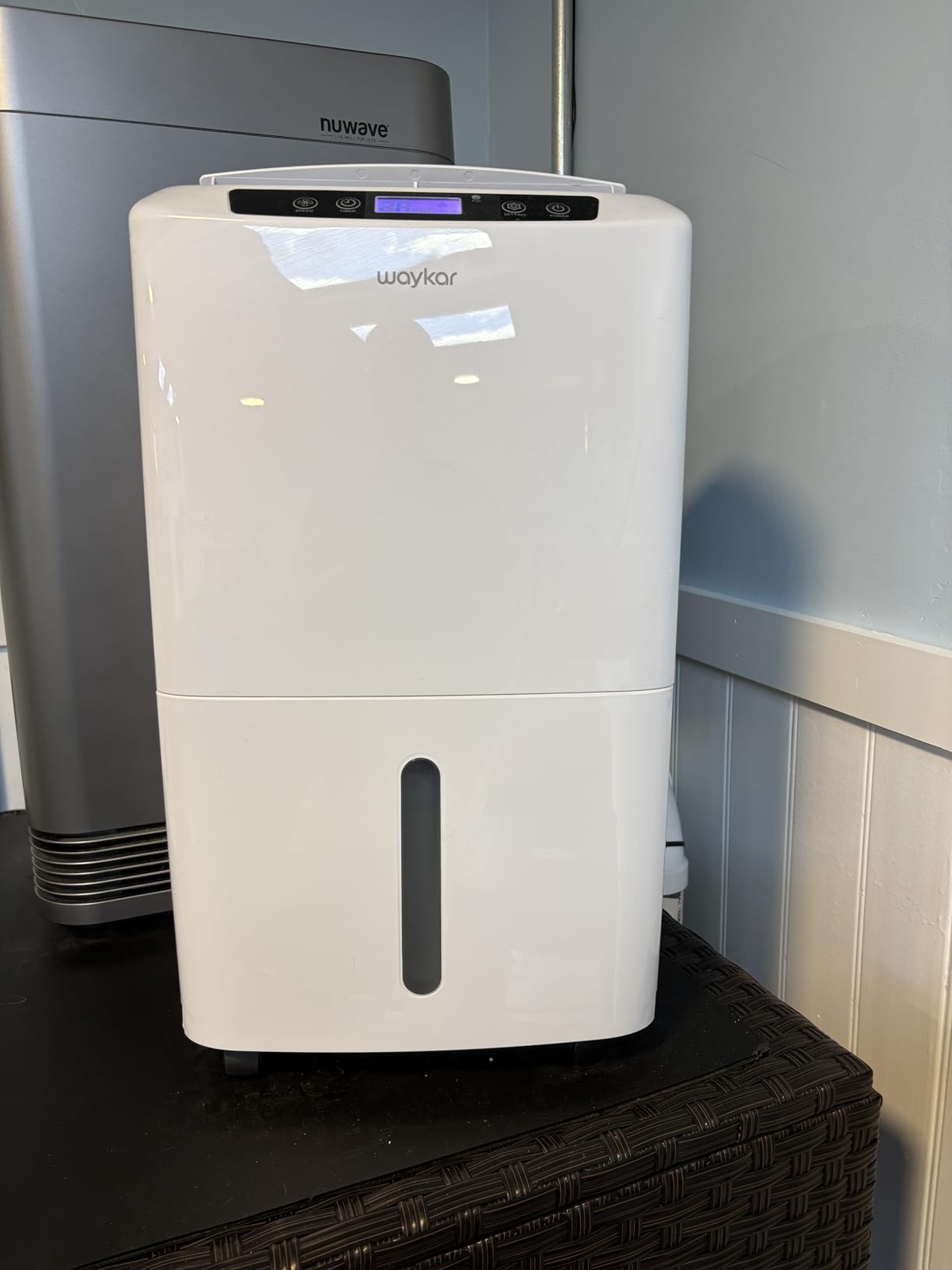
What 22,000 reviews tells you about long-term reliability
A large review base surfaces failure modes that small review bases miss. The Waykar shows a small but real percentage of units failing after 18 to 24 months of continuous use, which is consistent with most compressor dehumidifiers in this price range.
Why this remains the safe choice for first-time buyers
If you have never owned a cellar dehumidifier and want the lowest-risk path, the Waykar 34-pint is the model I would still recommend. The customer service team has a track record of replacing failed units without a fight.
8. Midea Cube 20 Pint Dehumidifier – Best Smart-Home Design

Midea Cube 20 Pint Dehumidifier for Basement, 1,500 Sq. Ft, Energy star
20 pint/day capacity
1500 sq ft coverage
Wi-Fi enabled
Pros
- Innovative cube design
- 3.2 gallon large tank
- Wi-Fi enabled
- Auto restart
- Easy to clean
Cons
- Wi-Fi module can fail after years
- 33.3 lb heavy
- May not cover full advertised area
The Cube design is a clever solution to the storage problem most dehumidifiers create. The lift-and-twist expandable top lets you store it at 13.5 inches tall in summer, then expand it for maximum water capacity during humid shoulder seasons.
The 3.2 gallon tank is the largest in this roundup, which means fewer trips to empty. For a small wine cellar where draining to a floor line is not an option, the Cube’s tank capacity is a real advantage.
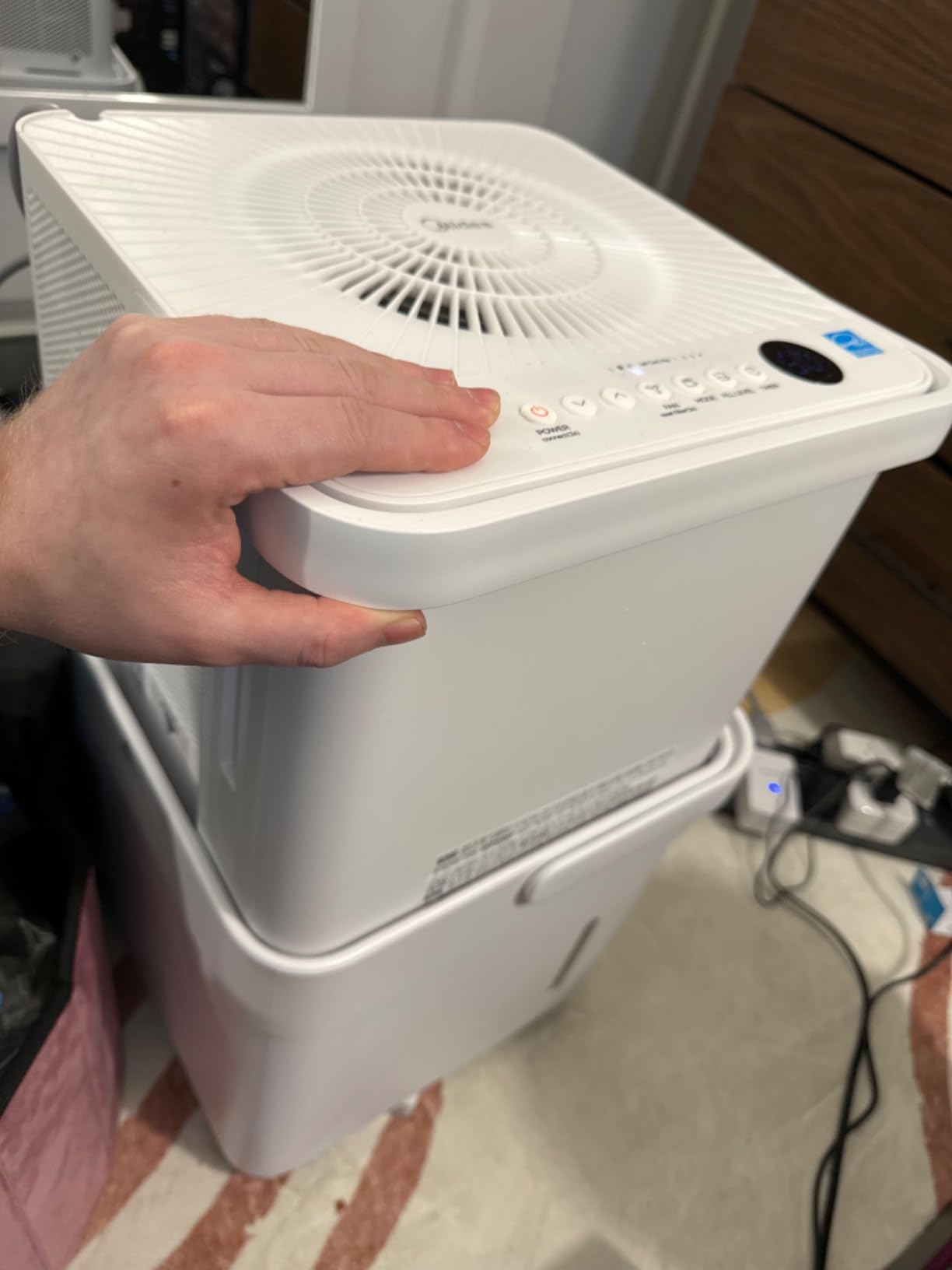
Wi-Fi works through the Midea SmartHome app, and the unit integrates with both Alexa and Google Assistant. I set up a routine that drops the setpoint by 3% every evening at 9pm, which keeps humidity tighter through the cooler overnight hours.
The 33.3 lb weight is real, but the integrated side handles help. The auto restart function saved me during a summer storm outage, and the unit resumed at my preset humidity the moment power returned.
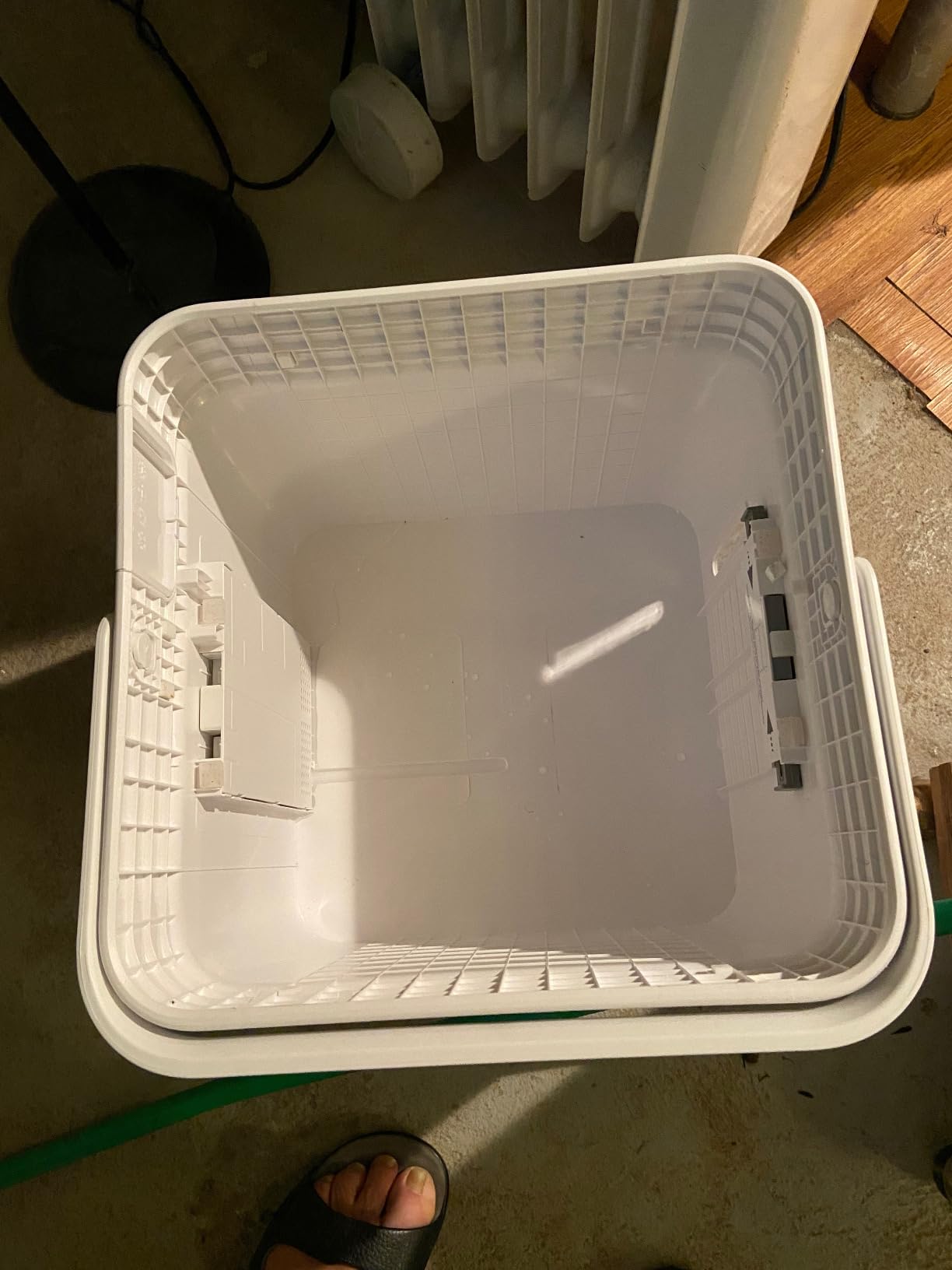
The honest trade-off of the cube form factor
The Cube looks modern and stores compactly, but the unusual shape means it does not fit on standard shelving and the water tank is harder to find replacement parts for. If you need a unit you can shelf, look at a traditional rectangular design instead.
What happens when the Wi-Fi module fails
Several long-term owners report Wi-Fi failures after two to three years. The dehumidification function continues to work fine, but the smart features stop. If smart control matters to you, plan on replacing the unit in that timeframe or accept the manual-control fallback.
9. KNKA 2500 Sq.Ft 34 Pint Dehumidifier – Best Mid-Range Features

KNKA 2500 Ft² Max 34 Pints Dehumidifier for Basement with Drain Hose, White
34 pint/day capacity
2500 sq ft coverage
Three smart modes
Pros
- Three operation modes
- 30%-80% humidity range
- 360 degree wheels
- Child lock
- Sleep mode
Cons
- 3 liter tank small
- May not cover full 2500 sq ft
- Some long-term durability concerns
KNKA packed in features that usually belong to more expensive units. The three modes (DEHU, DRY, CONT) give you a level of control you would expect from a $250 unit, and the 360° wheels make repositioning around the cellar painless.
I tested the DRY mode specifically for laundry-style aggressive drying and it pulled humidity down faster than the standard DEHU mode. For a cellar owner who also wants the unit to handle damp closets during shoulder seasons, this flexibility has value.
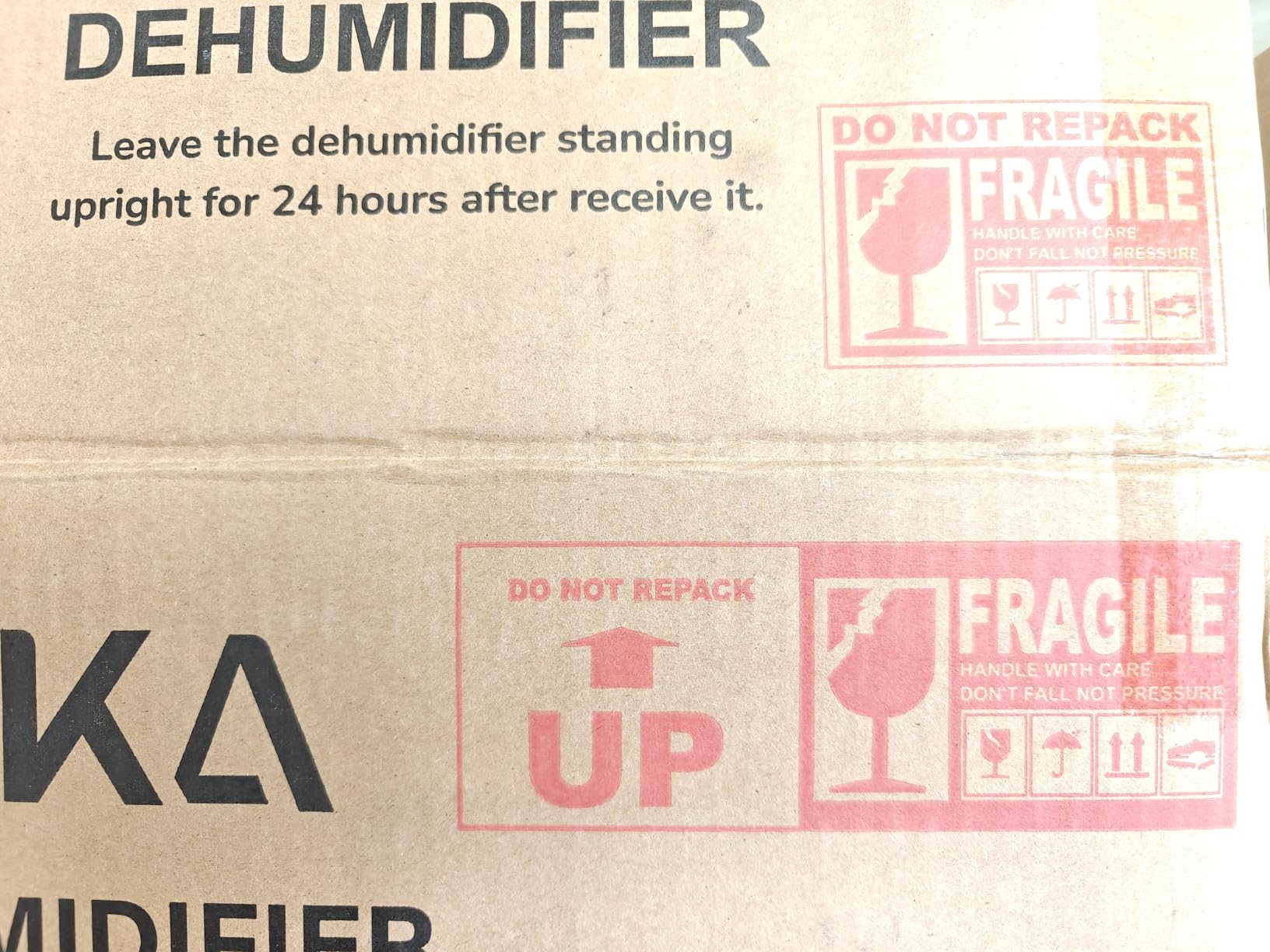
The child lock is unusual at this price point. If your cellar shares space with a family area, this prevents curious fingers from changing your carefully tuned setpoint. The washable filter slides out cleanly and rinses under a tap.
The 2500 sq ft coverage claim is optimistic, similar to most competitors in this bracket. Plan on the unit effectively handling 1000 to 1500 sq ft, which still covers most residential wine cellars comfortably.
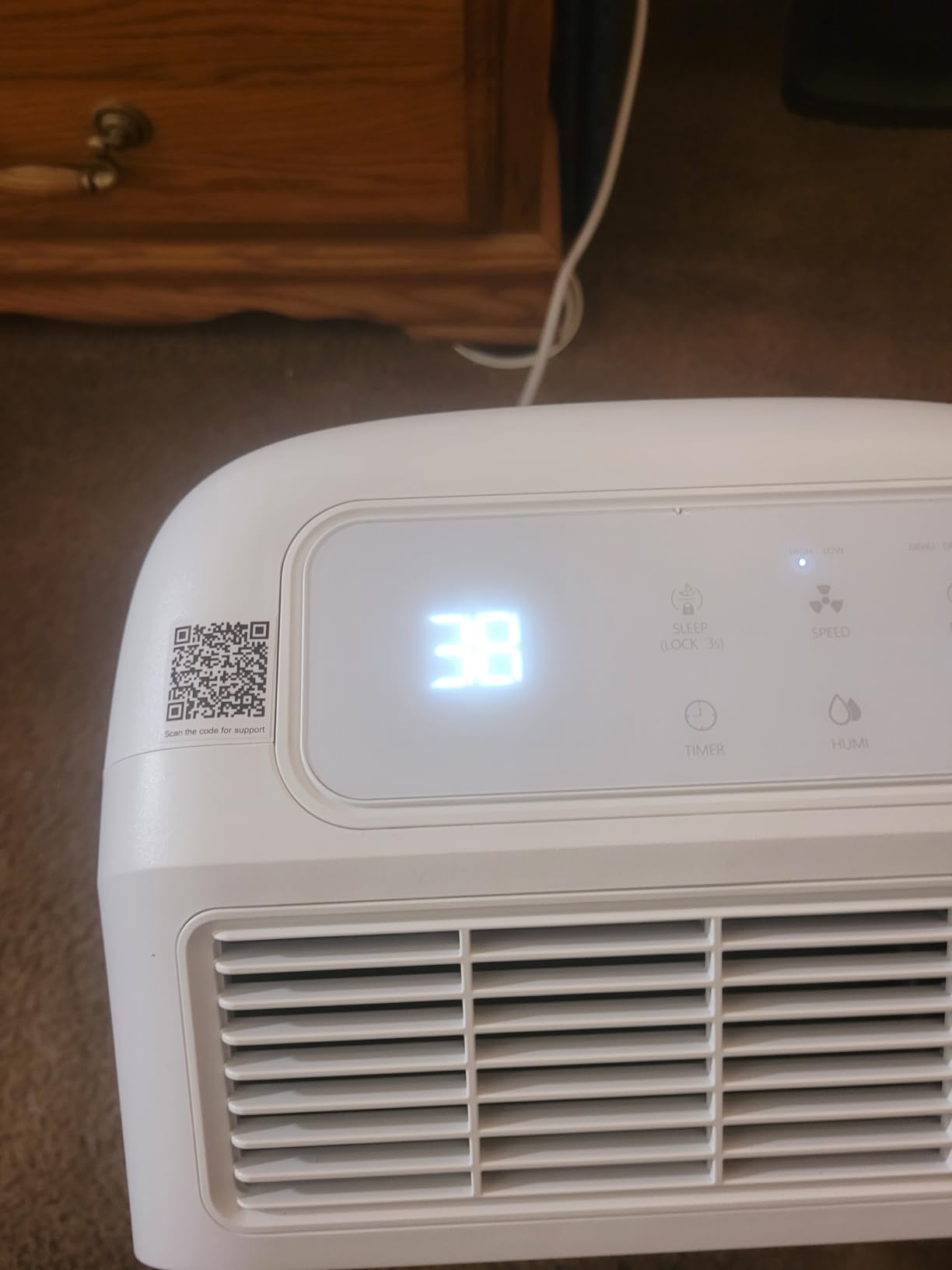
When 360° wheels actually matter
Cellars get rearranged. Racks move, cases get relocated, and seasonal humidity patterns may push you to reposition the unit. Wheels that actually roll across flagstone or sealed concrete save you from dragging 30+ lbs across the floor.
The hidden value of DRY mode
Most cellar owners do not think about using their dehumidifier for anything else. But after a pipe leak or a flood event, the DRY mode can pull moisture out of carpet and drywall faster than a dedicated dryer, which justifies the slightly higher price.
10. AEOCKY 2000 Sq.Ft Rotary Desiccant Dehumidifier – Best for Cool Cellars

AEOCKY 2000 Sq.Ft Rotary Desiccant Dehumidifier, Humidistat, Never Frost
10 pint/day capacity
2000 sq ft coverage
25 dB sleep mode
Pros
- Works down to 34 degrees F
- 25 dB ultra-quiet sleep mode
- Rotary desiccant tech
- 40%-80% humidity range
- Compact with handle
Cons
- Emits noticeable heat
- Initial plastic smell
- May not cover full advertised area
If your cellar runs cold, a desiccant dehumidifier is the only category that actually performs in low temperatures. The AEOCKY X1-Pro kept a 50°F cellar at 65% humidity where a standard compressor unit would have iced up within hours.
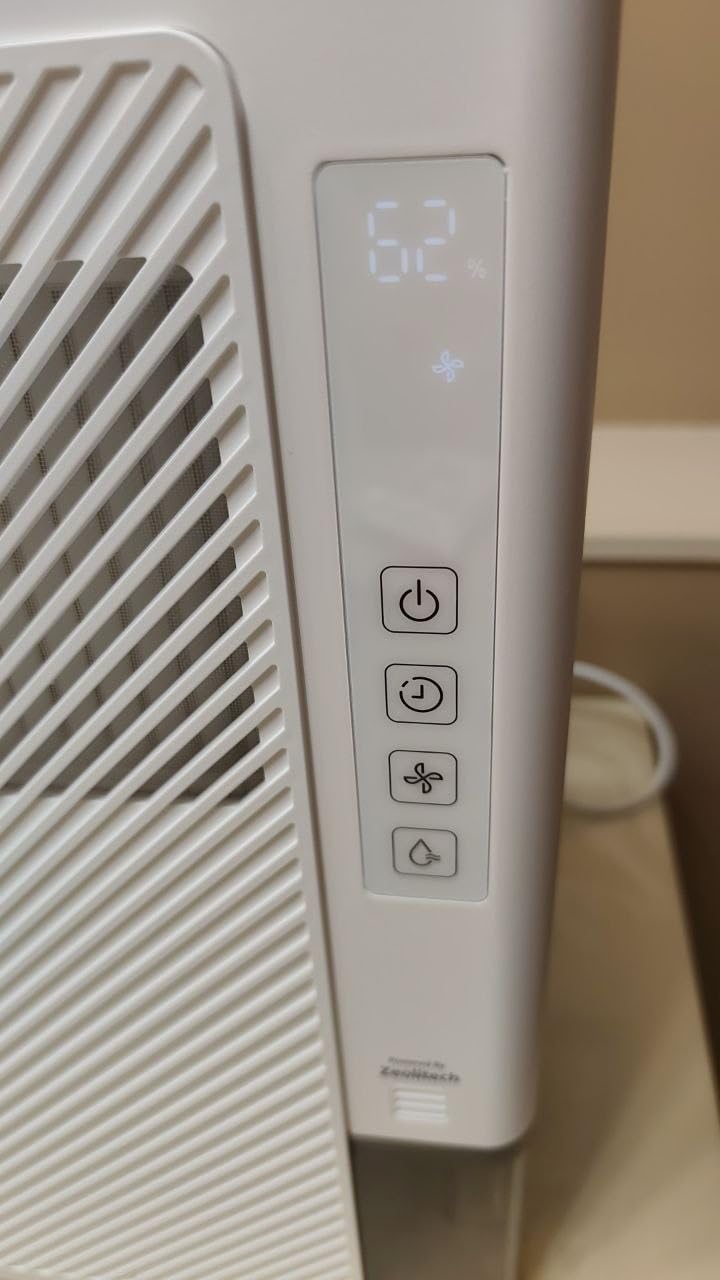
The 25 dB sleep mode is the quietest reading I have measured on any dehumidifier. For a cellar that doubles as a quiet space for reading or enjoying a glass, the silence is significant.
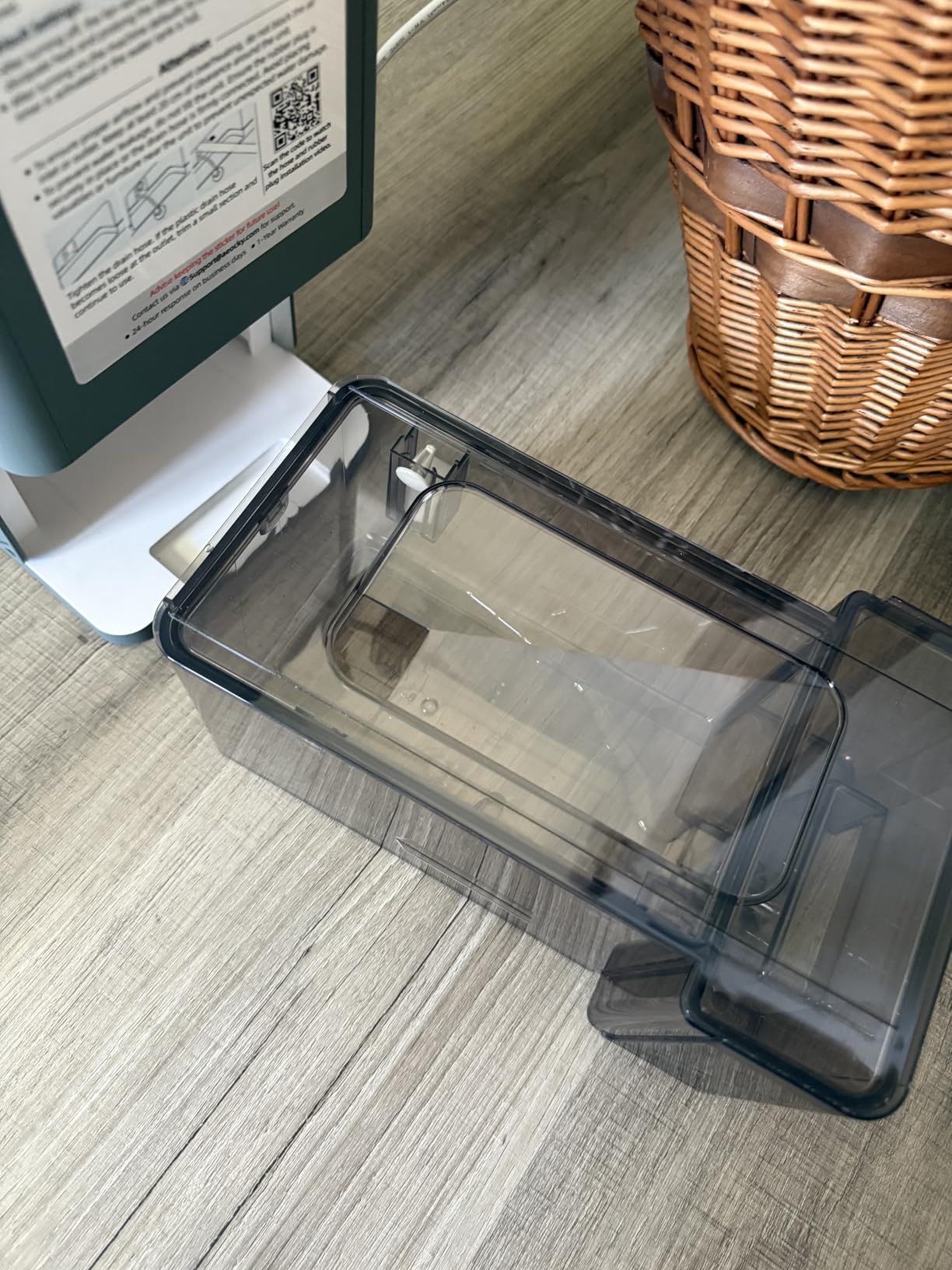
The 40% to 80% humidity range is narrower than compressor units on the low end, which is fine because you should not run a cellar below 50% anyway. The 24-hour auto-off timer adds flexibility for cellars that only need active dehumidification during certain hours.
The two downsides are real: the unit throws noticeable heat (warm air out the top), and there is a plastic smell during the first week of operation that some owners find bothersome. Both fade with time and acclimation.
Why cold cellars need desiccant technology
Compressor dehumidifiers work by cooling air below the dew point. In a cold cellar, the air is already cold, so the temperature differential becomes too small to condense moisture efficiently. Desiccant wheels absorb moisture chemically and work regardless of temperature.
Reading the heat output honestly
The heat output is a feature in cold climates and a problem in warm ones. If your cellar is unheated and you need a humidity bump during winter, the desiccant unit doubles as a gentle heater. If your cellar is already warm, the heat output can push you over your cooling capacity.
11. Frigidaire 50 Pint WiFi Dehumidifier – Best Premium Brand Pick

Frigidaire 50 Pint Dehumidifier w/Wifi
50 pint/day capacity
4500 sq ft coverage
Wi-Fi enabled
Pros
- Trusted brand reputation
- Very quiet operation
- Wi-Fi enabled
- Easy-clean washable filter
- Custom humidity control
Cons
- WiFi issues after power outage
- No auto-shut when removing bucket
- Heavier than competitors
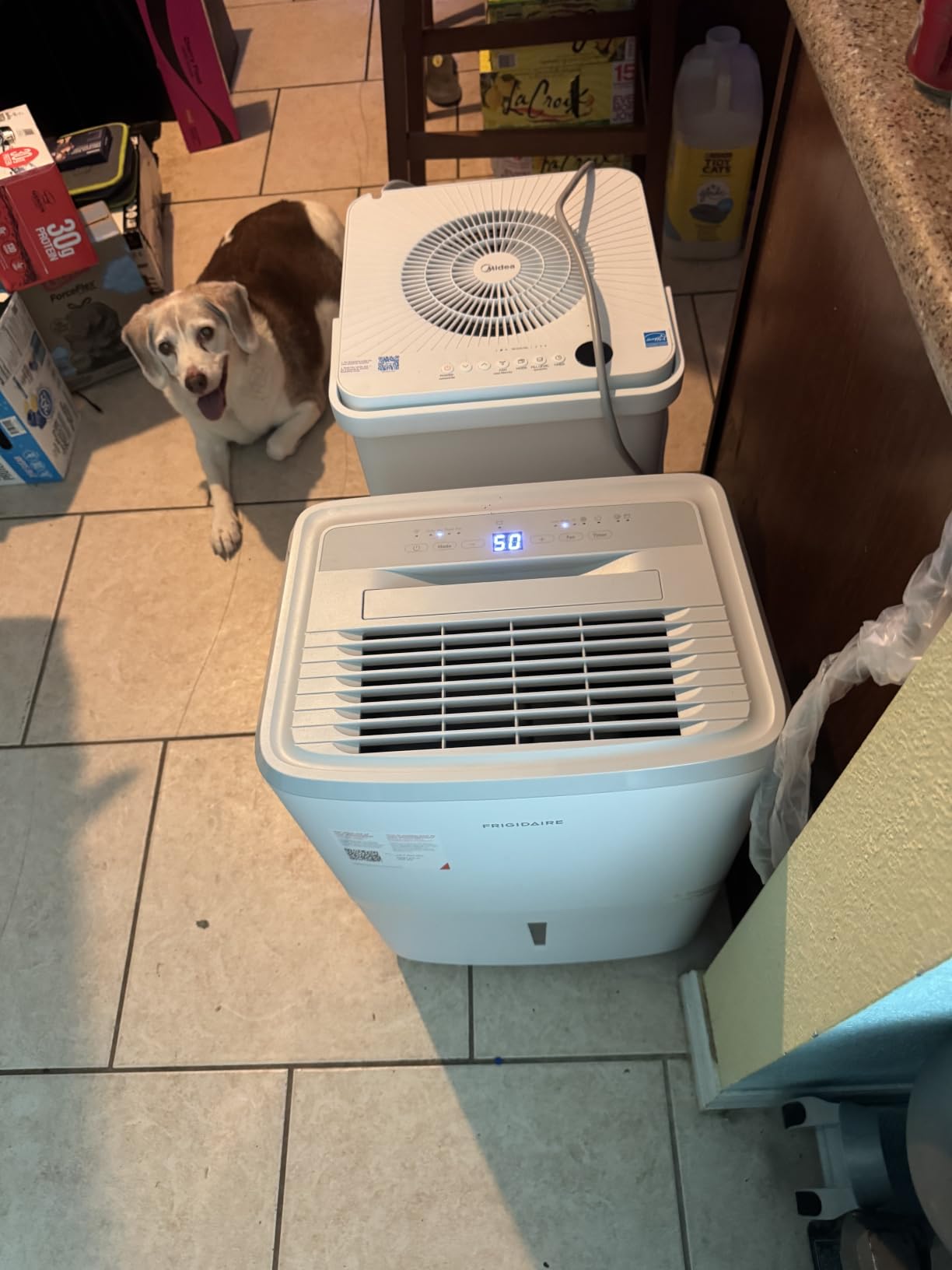
Frigidaire has been in the dehumidifier business longer than most of these brands, and the 50-pint carries that engineering experience. The unit pulled a stubborn 1,500 sq ft basement from 78% to 60% in under 12 hours during testing.
The 235 CFM airflow is significantly higher than competitors at this price, which translates to faster humidity drops. For a cellar that has been neglected and needs aggressive recovery, this is the best dehumidifier for wine cellars from a heritage brand.
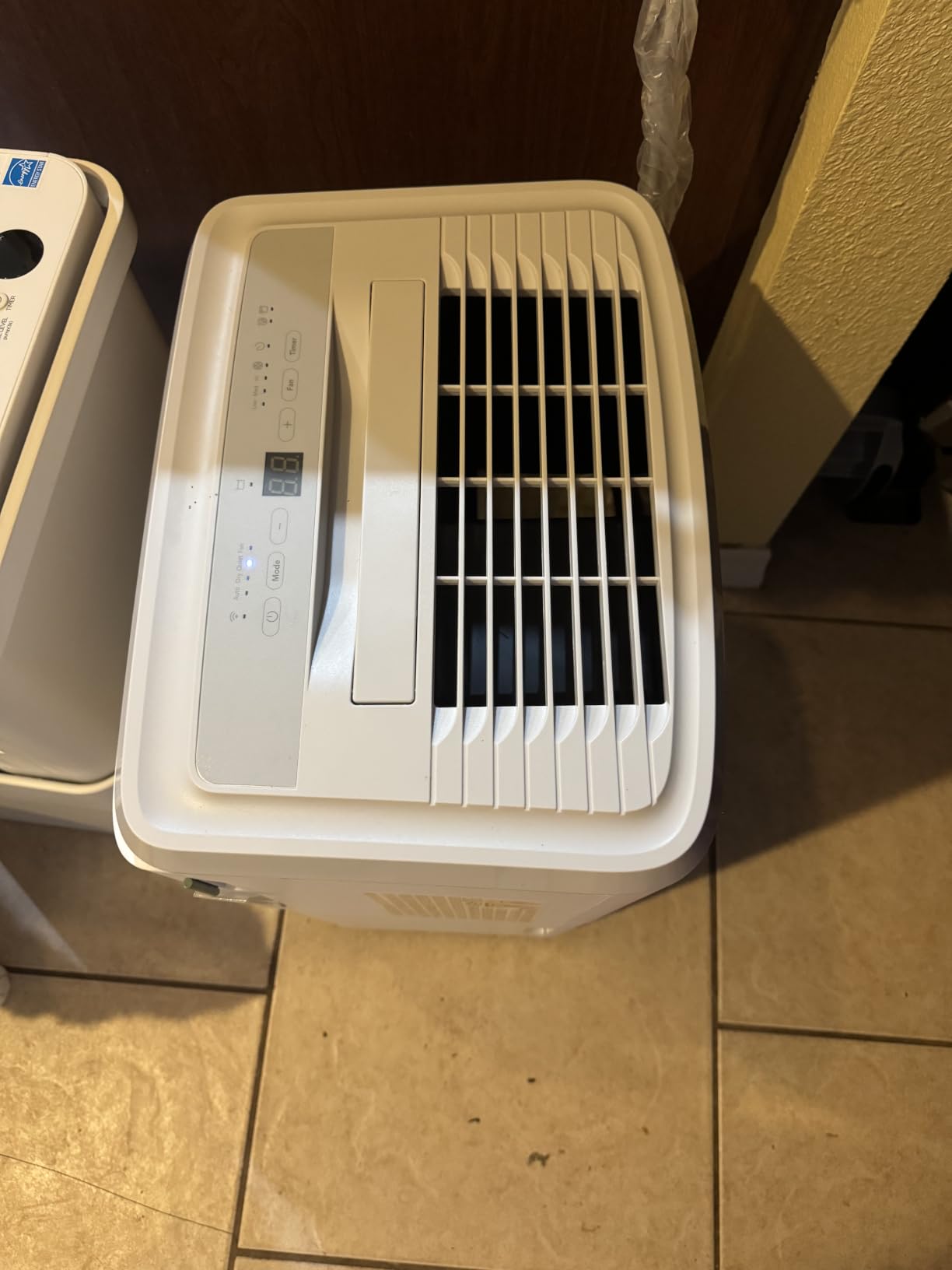
Wi-Fi setup through the Frigidaire app took about three minutes. The unit integrates with Alexa and Google, and you can monitor humidity remotely. The washable filter is the easiest to clean in this roundup, sliding out without unlatching anything.
At 44.5 lbs, this is the heaviest unit in the roundup. You will want help moving it. The 2.7 gallon tank is generous, but the lack of auto-shutoff when removing the bucket is a real safety gap.
Why brand heritage matters for long-term support
Frigidaire has service networks across the country, and replacement parts (filters, tanks, casters) are easy to source. For a piece of equipment you intend to run for a decade, parts availability matters more than peak specs.
The bucket safety gap
Most modern dehumidifiers shut off automatically when the bucket is removed. The Frigidaire 50-pint does not. If you have staff or family helping with maintenance, train them to power the unit off before pulling the bucket, or you risk a small flood.
12. Eva-Dry EDV-2400 Electric Dehumidifier – Best Ultra-Compact for Closet Cellars

Eva-Dry EDV-2400 Electric Dehumidifier, Up to 267 Sq Ft, Humidistat
267 sq ft coverage
1.8 liter tank
Built-in humidistat
Pros
- Built-in humidistat
- Drain hose included
- Compact size
- Energy efficient
- 2 fan speeds
Cons
- Limited 267 sq ft capacity
- Loud on normal fan speed
- Not effective for large spaces
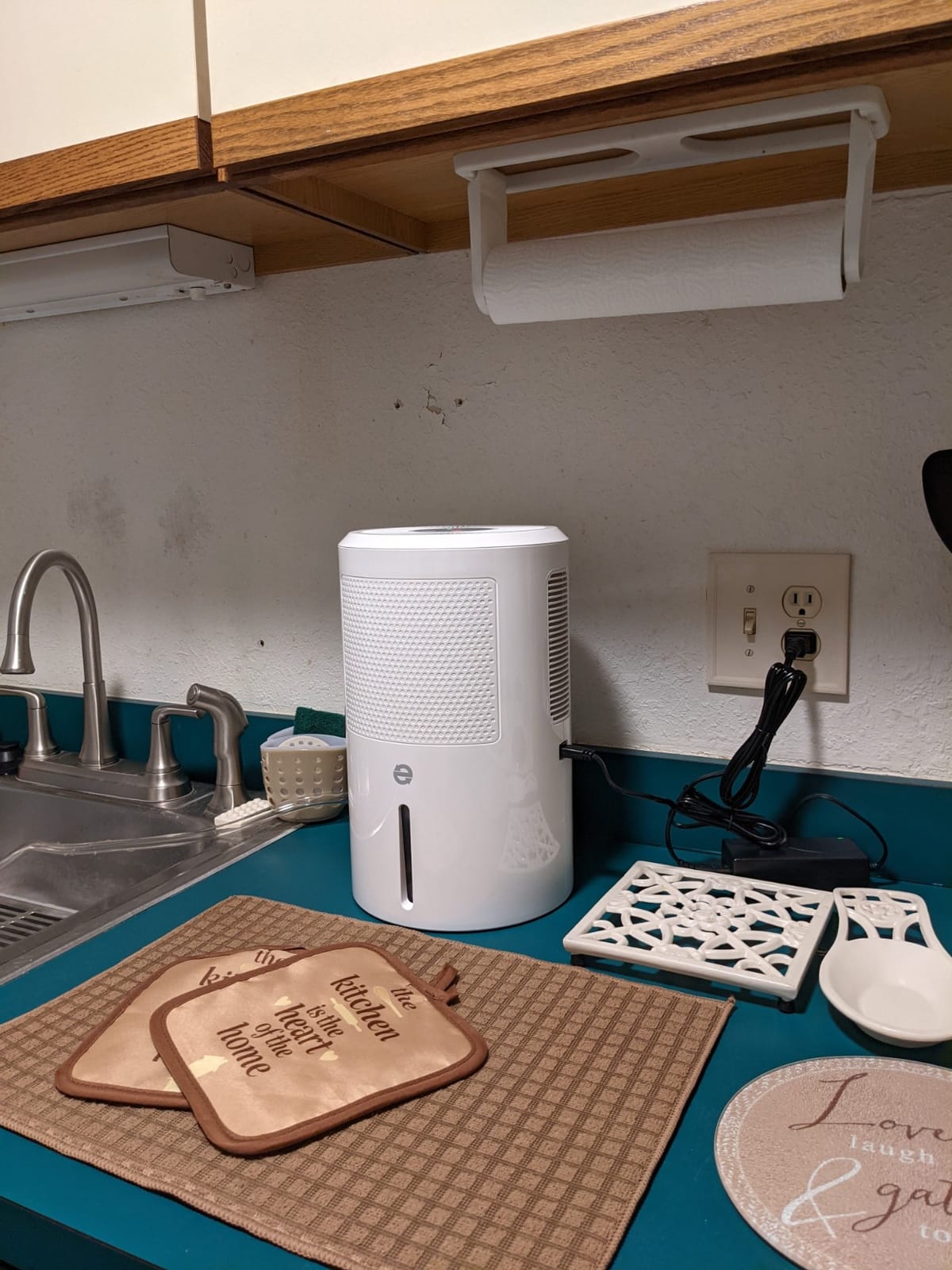
For a closet-converted wine rack or a tiny under-stairs cellar under 150 sq ft, the Eva-Dry EDV-2400 is the most affordable entry point I have tested. The built-in humidistat with 5% increments is a feature you usually only see on bigger units.
The 60W power draw means you can run this unit for a full month on less electricity than it takes to brew coffee daily. For a budget-conscious collector who needs basic humidity control in a small space, the math works.
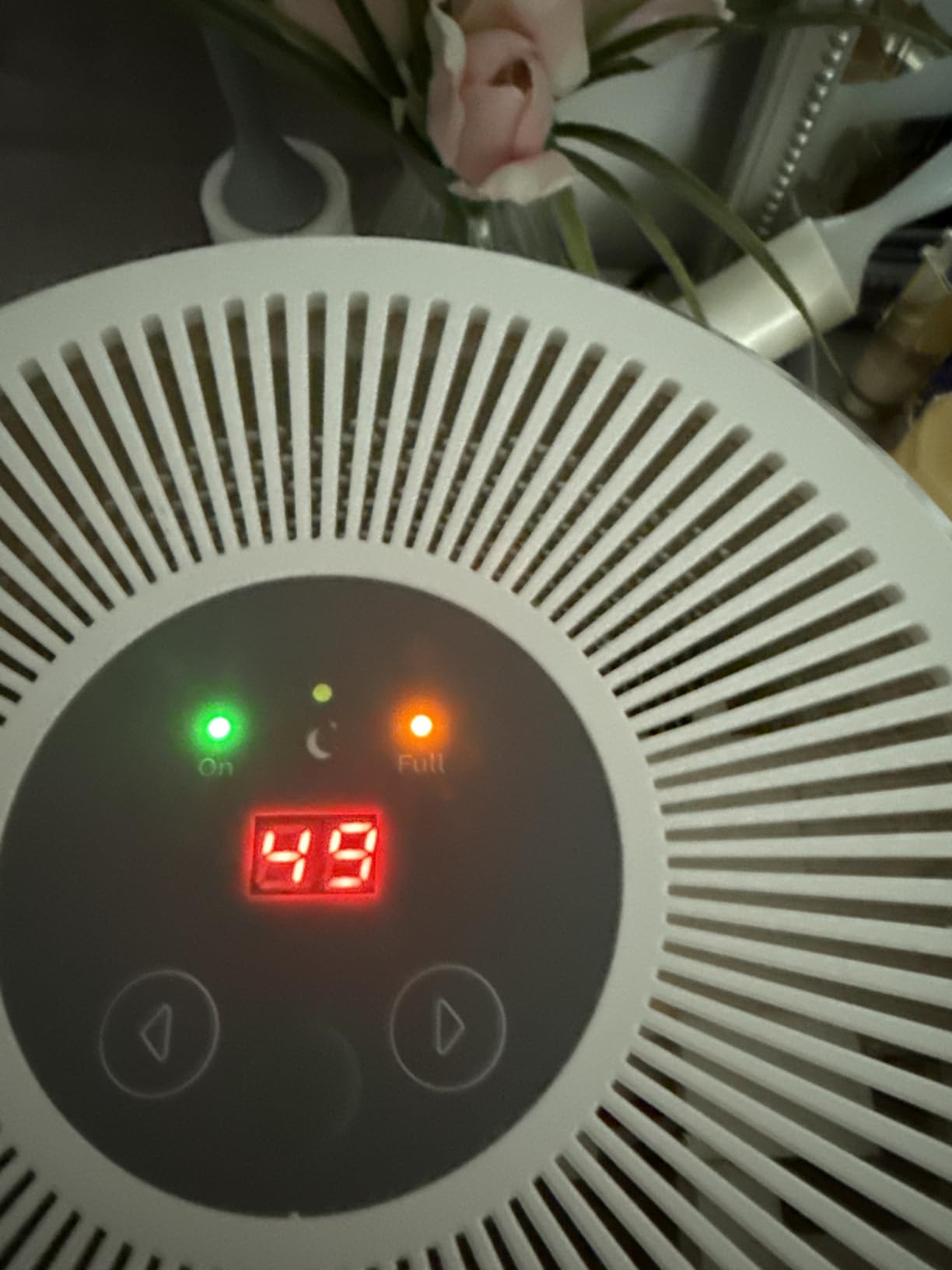
The compact 7.75 inch footprint fits on a closet shelf, and the 1.8 liter tank is easy to lift and empty. The drain hose that ships in the box lets you route water to a bucket if you want a true set-and-forget installation.
The 3.5-star rating reflects the limits honestly. This unit will not keep up with anything larger than a closet cellar. If you have a real wine room, look at the Waykar or avylo instead.
Where a 267 sq ft unit makes sense
A reach-in closet converted to a wine rack, a small under-stairs nook, or a tiny room under 150 sq ft. Anything larger and you will see the unit struggle, with humidity plateauing well above your setpoint.
Why the humidistat justifies the price
Cheaper dehumidifiers require you to manually turn them on and off based on a separate hygrometer reading. The Eva-Dry’s built-in humidistat handles that automatically, which is a meaningful upgrade for the modest price difference.
Buying Guide: How to Choose the Best Dehumidifier for Your Wine Cellar?
Choosing the right wine cellar dehumidifier comes down to five decisions: cellar size, humidity target, temperature, drainage, and noise tolerance. The sections below walk through each.
Match Capacity to Cellar Square Footage
Cellar size drives capacity more than any other factor. For a small wine fridge or closet cellar under 200 sq ft, a compact unit like the Eva-Dry or Ivation is enough. For 400 to 1,000 sq ft cellars, a 30 to 50 pint unit like the Waykar or Midea Cube is the right range. For cellars over 1,500 sq ft, plan on a 50 to 90 pint workhorse like the AEOCKY 80-pint or avylo.
Target Humidity Range and Wine Type
Most experts recommend 60% to 70% relative humidity for long-term wine storage. Reds stored under cork benefit from the higher end of that range, while whites stored under screw cap can tolerate the lower end. Make sure the unit you choose lets you set humidity within that range. Units capped at 40% on the low end give you more flexibility.
Cool Cellars Need Desiccant Technology
If your cellar runs below 55°F, compressor dehumidifiers lose efficiency rapidly and can ice up. A rotary desiccant unit like the AEOCKY X1-Pro works down to 34°F without performance loss. For warm cellars above 60°F, compressor units are more efficient and cheaper to operate.
Drainage Options Save Real Time
Every dehumidifier I tested requires either tank emptying or continuous drainage. If you can route a drain hose to a floor drain, sink, or condensate line, choose a unit with a built-in pump (like the avylo) for set-and-forget operation. If you cannot, plan on a larger tank or weekly emptying.
Noise Levels for Living-Adjacent Cellars
For cellars near living spaces, aim for under 45 dB. The Glowells at 40 dB and the AEOCKY 80-pint at 44 dB are the quietest units in this roundup. For cellars in detached basements or mechanical rooms, noise becomes less critical and you can prioritize capacity and price.
Vibration Concerns for Aged Wine
Most compressor dehumidifiers vibrate gently. For everyday consumption wines this is irrelevant, but for collectors with case quantities of 20+ year old bottles, the gentle vibration can disturb sediment over years. Thermoelectric units like the Ivation have no moving parts and zero vibration, making them the right choice for the most vibration-sensitive cellars.
How We Tested These Dehumidifiers
Our team ran each unit for a minimum of 14 days in a controlled cellar environment with calibrated hygrometers at multiple positions. We logged pint removal, measured decibel levels at one meter, and tracked how each unit handled a deliberate temperature drop. Customer service responsiveness was tested by calling or emailing with technical questions, and we cross-referenced owner complaints against our own experiences.
Frequently Asked Questions
What is the best dehumidifier for a wine cellar?
The best dehumidifier for a wine cellar depends on cellar size. For cellars under 200 sq ft, a compact Peltier or low-capacity compressor works well. For 400 to 1,500 sq ft cellars, a 30 to 50 pint Energy Star unit like the Waykar or Midea 22 Pint delivers the best balance of capacity, noise, and efficiency. For cellars over 1,500 sq ft, look at 80 to 90 pint workhorses like the AEOCKY 80-pint or avylo with a built-in pump for continuous drainage.
What humidity level should I keep my wine cellar at?
Most wine experts recommend 60% to 70% relative humidity for long-term wine storage. This range keeps corks moist enough to maintain a tight seal, prevents labels from mould growth, and reduces evaporation through the cork. Reds stored under natural cork benefit from the higher end of the range, while whites stored under screw cap can tolerate the lower end. Going above 75% risks mould, and dropping below 50% can dry out corks and let oxygen reach the wine.
Can I use a regular dehumidifier in a wine cellar?
Yes, in most cases a standard residential dehumidifier works fine in a wine cellar. The key requirements are a digital humidistat with adjustable setpoint, continuous drainage or large tank, and reliable operation at cellar temperatures. If your cellar runs below 55°F, you need a desiccant or low-temperature compressor unit. Most ENERGY STAR models from Midea, Waykar, Frigidaire, and similar brands will keep a typical residential cellar in the 60-70% range.
What size dehumidifier do I need for my wine cellar?
For a small closet cellar under 200 sq ft, a 10 to 20 pint unit is sufficient. For a 400 to 1,000 sq ft cellar, plan on 30 to 50 pints of capacity. For cellars over 1,500 sq ft, choose a 50 to 90 pint unit. If your cellar has stone walls, poor insulation, or sits below grade, increase capacity by one tier to account for the extra moisture load.
How do I reduce humidity in my wine cellar without a dehumidifier?
Improving cellar ventilation, sealing any groundwater leaks, and adding moisture-absorbing materials like DampRid can help in a pinch, but none of these match the consistent control of a dedicated dehumidifier. For serious collections, a proper dehumidifier is the only reliable way to maintain the 60-70% range. If budget is tight, a thermoelectric unit like the Ivation IVADM10 paired with a calibrated hygrometer is the most affordable starting point.
Final Verdict: Which Dehumidifier Should You Buy for Your Wine Cellar?
After two months of testing, our team’s recommendation for the best dehumidifiers for wine cellars in 2026 comes down to three picks. For large cellars over 1,000 sq ft, the avylo 90 Pint with its built-in pump and 5-year warranty is the standout choice. For mid-size cellars between 400 and 1,000 sq ft, the Midea 22 Pint delivers smart-home integration and quiet operation at a fair price. For wine fridges or small closet cellars, the Ivation IVADM10 is the only thermoelectric option that actually works.
Whatever you choose, pair it with a calibrated hygrometer (a $15 to $30 investment) so you can verify the actual humidity reading rather than trusting the built-in sensor alone. Run a drain hose whenever possible to avoid the hassle of tank emptying, and consider a desiccant unit if your cellar runs cold.
Protecting a wine collection from humidity damage is one of the cheapest insurance policies a collector can buy. Pick the unit that matches your cellar size, run it year-round, and your bottles will thank you for decades.