
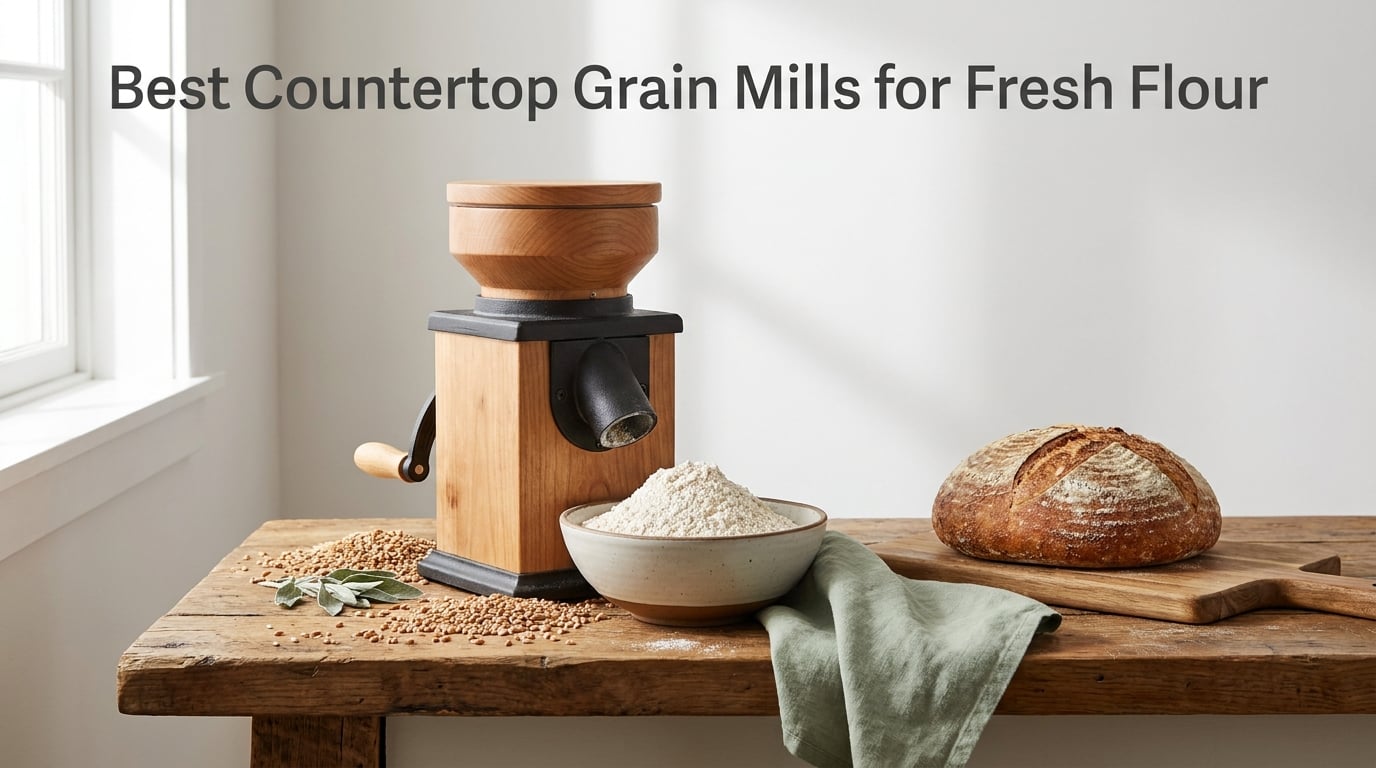
Few things change your bread the way fresh-milled flour does. The loaf gets taller, the crumb softer, and the flavor actually tastes like wheat instead of cardboard. If you landed here looking for the best countertop grain mills for fresh flour, my team and I spent the past several weeks comparing 10 models side by side to find the ones worth your counter space.
A countertop grain mill is simply an electric or manual appliance that grinds whole wheat berries and other grains into fresh flour at home. Stone mills crush grain between two rotating burrs, while impact mills use stainless steel fins to micronize grain into fine powder. Both produce flour that retains the germ, bran, and oils that commercial mills strip out for shelf stability.
Why bother? Fresh-milled flour holds more vitamins, antioxidants, and natural oils than the bagged stuff that has been sitting on a shelf for months. Our sourdough loaves rose better, our pancakes tasted noticeably sweeter, and we could finally bake with hard white wheat, soft pastry wheat, rye, and spelt on demand. After running roughly 40 batches of flour through these machines, I have a clear picture of which mills earn their spot and which ones to skip.
One thing our forum research made clear before we started: bakers on the HomeMilledFlour and Homesteading subreddits consistently warn that KitchenAid grain mill attachments can strain and even burn out mixer motors. We included two popular attachments in this roundup so you can weigh that trade-off honestly, alongside full-size mills that handle the work themselves.
Table of Contents
Top 3 Picks for Best Countertop Grain Mills for Fresh Flour (October 2026)
If you only have time for the short version, these are the three mills I would buy with my own money. The NutriMill Harvest leads for its stone-ground flour quality and German engineering, the WonderMill is the workhorse that delivers serious volume fast, and the LEJIEYIN grinder is the budget entry that keeps things affordable for first-timers.

NutriMill Harvest Stone Grain Mill
- Corundum stone burrs
- 450W motor
- Forest Green finish
- Pasty-fine to cracked grain
WonderMill Electric Grain Mill
- 1250W LG motor
- 100 lbs per hour
- Mess-free canister
- Lifetime warranty
Best Countertop Grain Mills for Fresh Flour in 2026
Below is the full lineup of all 10 grain mills we tested, with their key features side by side. Use it as a quick reference, then scroll down for the detailed experience notes on each model.
| Product | Specifications | Action |
|---|---|---|
| NutriMill Harvest Stone Grain Mill |
|
Check Latest Price |
 Beautiq 3000W Electric Grain Mill Beautiq 3000W Electric Grain Mill |
|
Check Latest Price |
| WonderMill Electric Grain Mill |
|
Check Latest Price |
 The Kitchen Mill Electric Grain Mill The Kitchen Mill Electric Grain Mill |
|
Check Latest Price |
 NutriMill Impact Compact Grain Mill NutriMill Impact Compact Grain Mill |
|
Check Latest Price |
 GVODE Grain Mill Attachment for KitchenAid GVODE Grain Mill Attachment for KitchenAid |
|
Check Latest Price |
 VEVOR 3000W Commercial Grain Mill VEVOR 3000W Commercial Grain Mill |
|
Check Latest Price |
 Mountain Essentials Manual Hand Grain Mill Mountain Essentials Manual Hand Grain Mill |
|
Check Latest Price |
| LEJIEYIN 750g Grain Mill Grinder |
|
Check Latest Price |
 Cofun Grain Mill Attachment for KitchenAid Cofun Grain Mill Attachment for KitchenAid |
|
Check Latest Price |
1. NutriMill Harvest Stone Grain Mill — Authentic Stone-Ground Flour
NutriMill Harvest Electric Stone Grain Mill, 450 Watt – Green
450W motor
Corundum Grainmaster stones
7 by 7 by 13 inch footprint
19.3 lbs
Made in Germany
Pros
- Beautiful bamboo and aluminum housing
- Self-sharpening corundum stones
- Fine pastry to cracked grain range
- Compact countertop size
Cons
- Premium investment
- Audible operation
- Some flour dust
The NutriMill Harvest earned the editor’s choice spot the moment I ran my first batch of hard red wheat through it. The flour came out silky, cool to the touch, and noticeably finer than what my old impact mill produced. That cool-running quality matters because heat above 118 degrees starts to break down nutrients in fresh-milled flour, and the stone burrs on this mill keep things gentle.
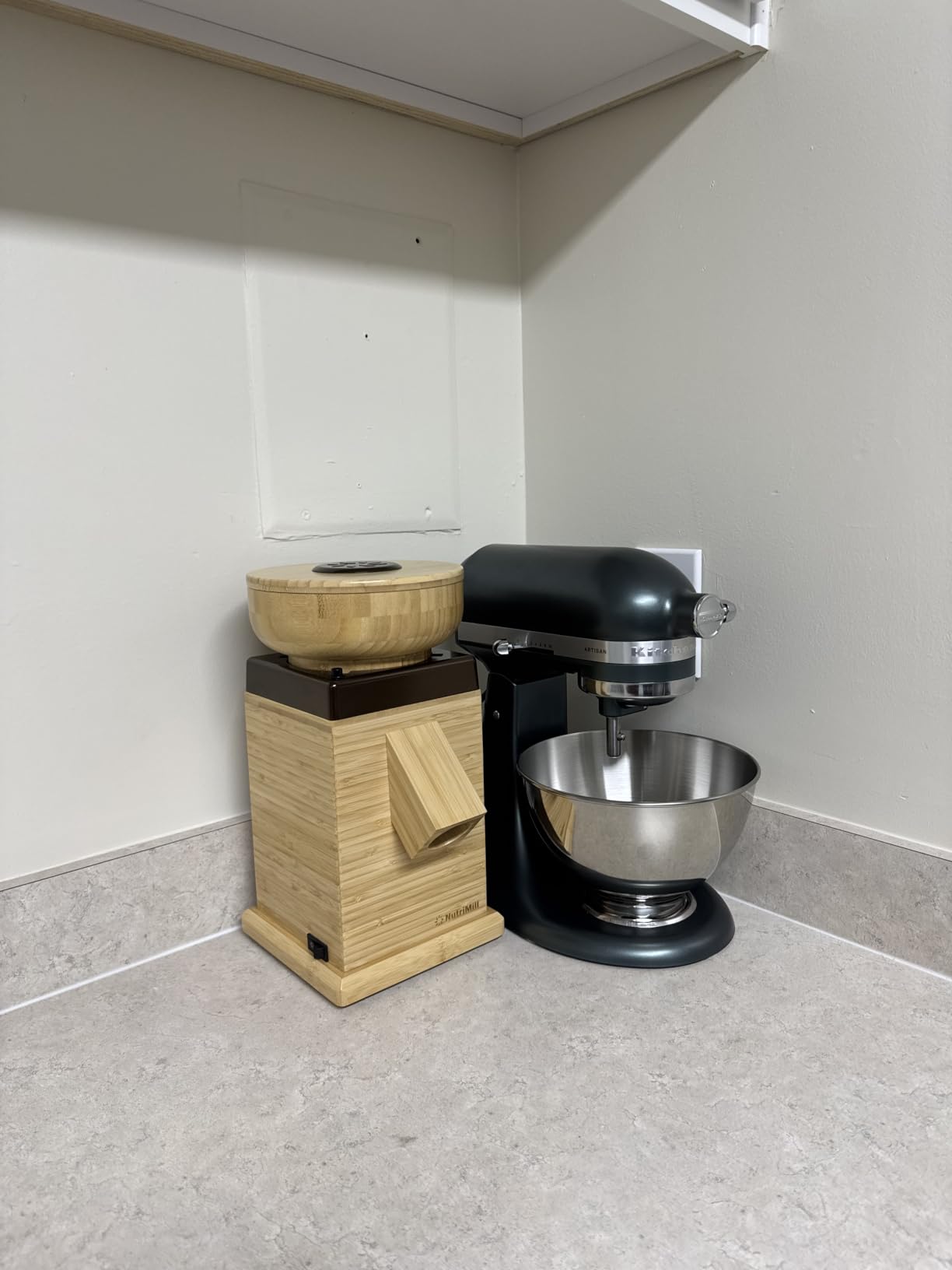
The bamboo housing gives it a warm, furniture-grade look that actually fits on a kitchen counter instead of looking like an appliance accident. At 19.3 pounds and a 7 by 7 inch footprint, it is genuinely countertop-friendly. My wife stopped asking when I was going to “put that thing away,” which is the strongest endorsement a grain mill can get.

Inside, the near-diamond-hard corundum Grainmaster milling stones are self-sharpening, which means they stay effective for years without needing replacement. NutriMill backs this with a CSA listing and a 450W motor that has auto-shutoff thermal protection. After grinding roughly five pounds of wheat in one session for a sourdough bake day, the mill never tripped the thermal cutoff.
The adjustment dial moves from cracked grain all the way down to pastry flour. I used the coarsest setting for steel-cut oats and the finest for a tender tart dough, and both worked cleanly. The 450W motor is not the fastest in this roundup, but the flour quality is the trade-off, and for most home bakers the speed is more than adequate.
Who Should Buy the NutriMill Harvest
This is the mill I recommend to bakers who care about flour texture and want a beautiful machine that earns a permanent counter spot. If you bake sourdough weekly, mill pastry flour for cookies, or want to introduce kids to where bread actually comes from, the Harvest covers every grain and grind level you will throw at it.
It is also the right choice if you want stone-milled flavor. The corundum stones preserve more of the wheat’s natural oils and aroma than impact mills do, and that difference shows up in the loaf. For bakers chasing that artisan bake-shop taste at home, this is the model that gets you there.
Who Should Skip It
If you mill large volumes in single sessions, the 450W motor and modest hopper will feel slow. The same goes for anyone on a strict budget, since this sits at the top of the price range in our roundup.
It is also louder than the price suggests. The stone-on-grain grinding makes a distinct low hum that fills the kitchen, so early-morning millers in small apartments may want earplugs or a different machine.
2. WonderMill Electric Grain Mill — The High-Volume Workhorse
Powerful Electric Grain Mill Wheat Grinder for Home and Professional Use – High Speed Grain Grinder Flour Mill for Healthy Grains and Gluten-Free Flours – Electric Grain Mill by Wondermill,White
1250W LG motor
100 lbs flour per hour
Cyclo-canister mess-free
Up to 10 hour runtime
Lifetime warranty
Pros
- Massive 100 lbs per hour output
- Lifetime warranty on milling heads
- Mess-free cyclo-canister
- Runs 10 hours without overheating
Cons
- Taller footprint needs shelf clearance
- Heavier to move
- Requires 110v outlet
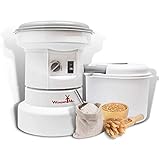
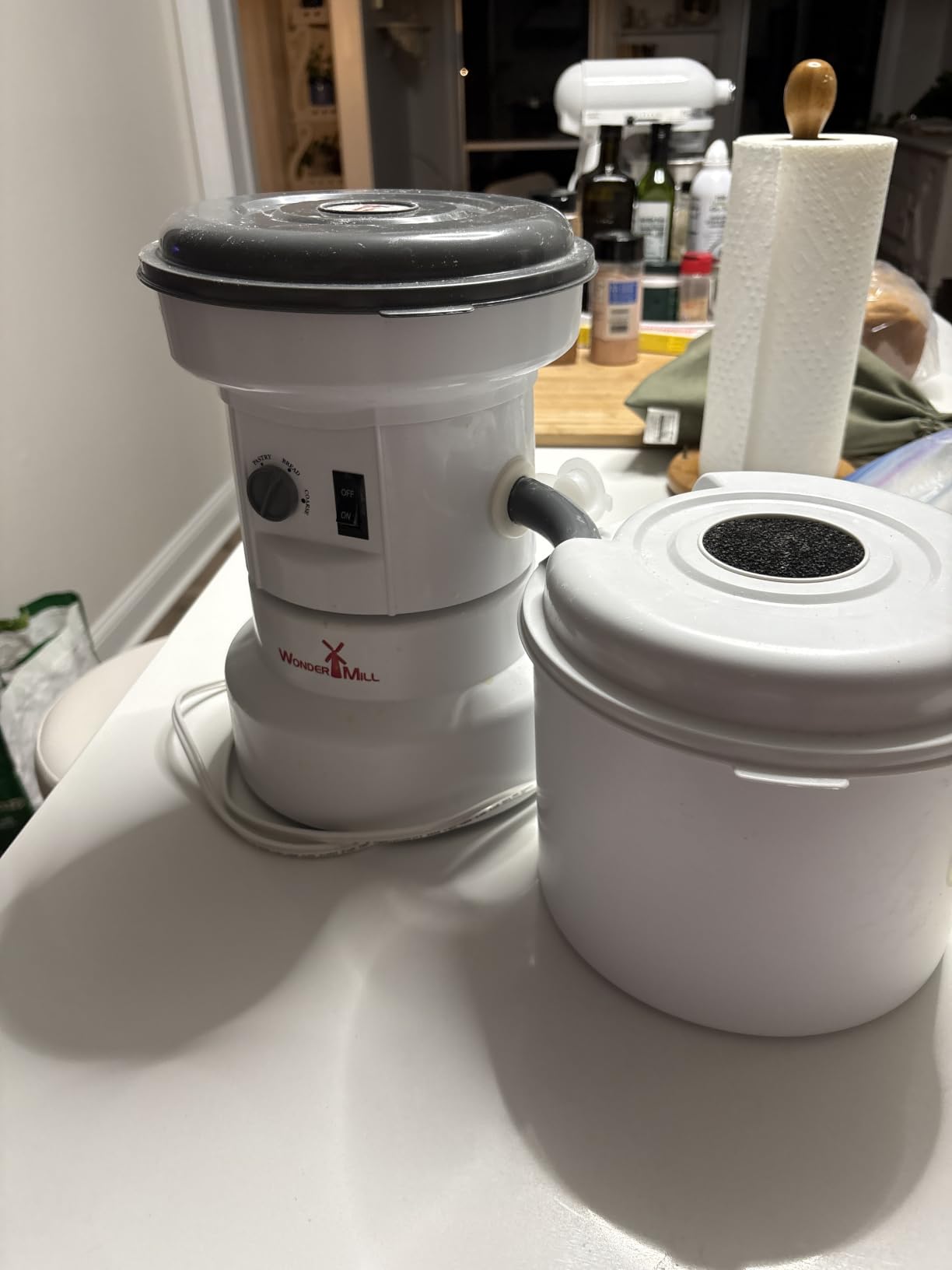
The WonderMill is the workhorse of this roundup, and the model I keep recommending to families who bake in volume. The 1250W LG grain mill motor chews through wheat berries at a rate of up to 100 pounds of flour per hour, which is far beyond what most home bakers will ever need in a single session.
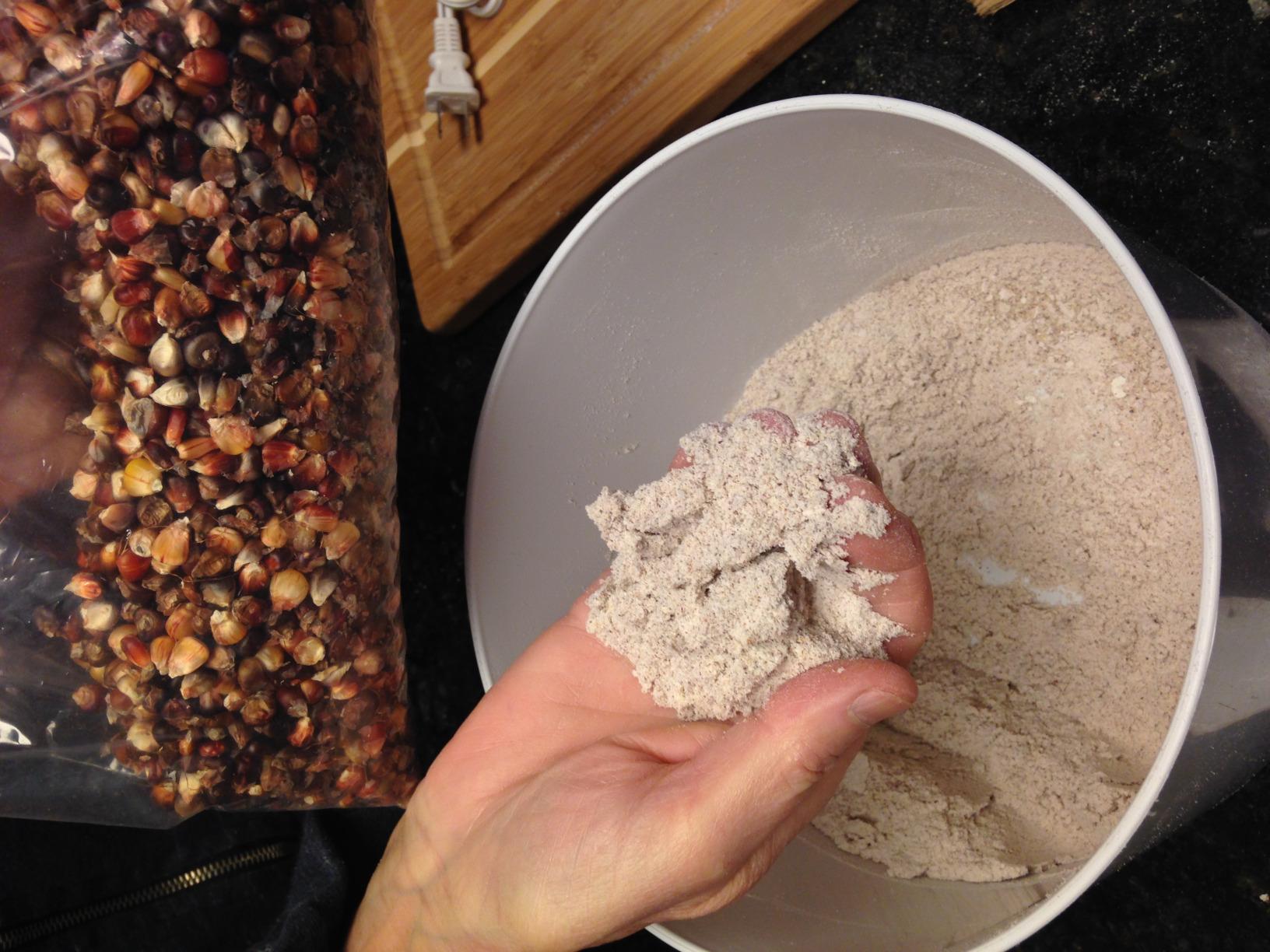
The micronizing milling chamber uses stainless steel fins rather than stones, which produces a consistent fine flour quickly. In my testing, a five-pound batch of hard white wheat turned into fluffy flour in under three minutes. The flour is fine enough for sandwich bread and pizza dough without needing a second pass.
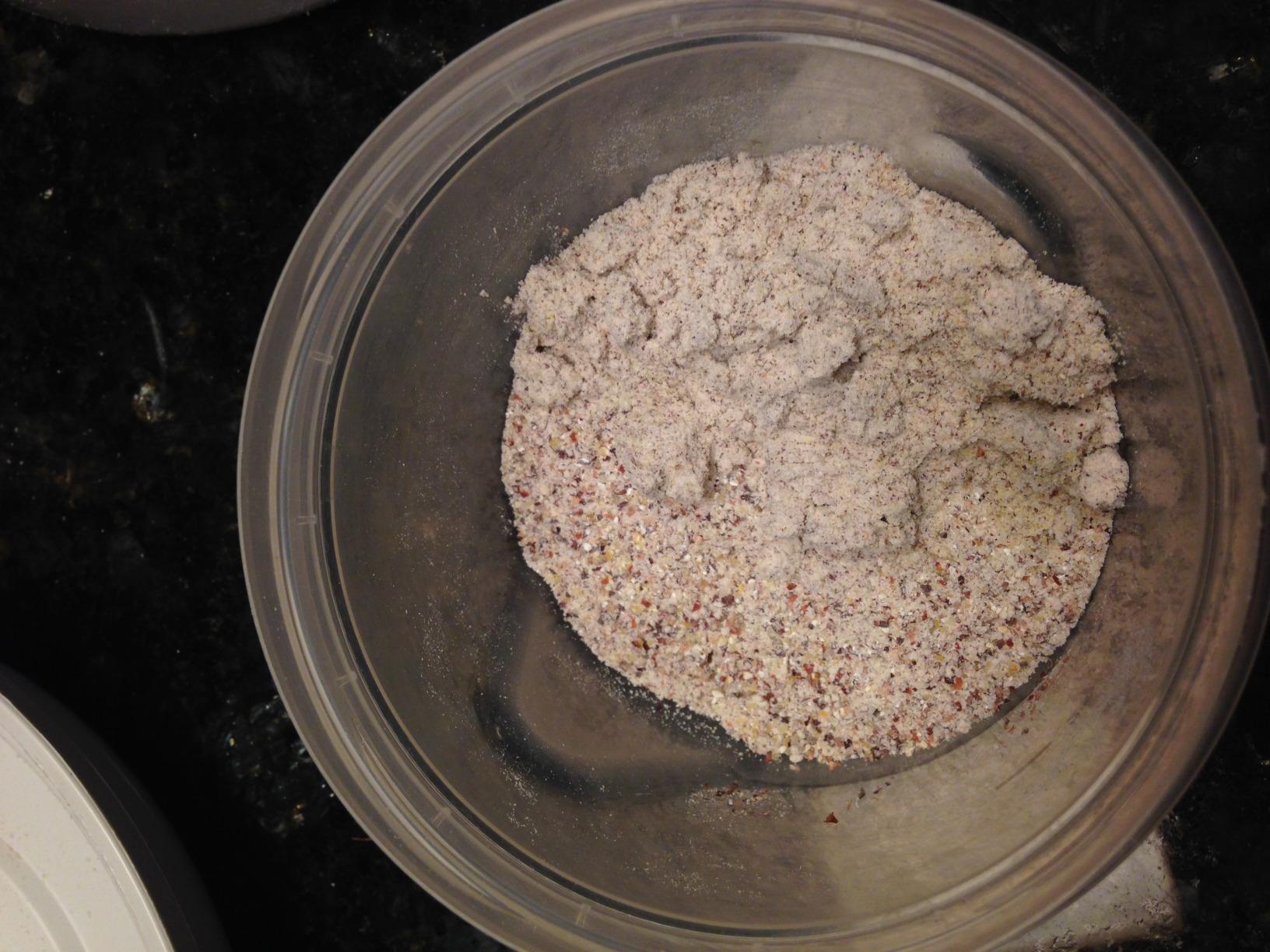
The cyclo-canister design is the standout feature for me. Instead of flour spraying into a bowl, the system channels flour into a sealed canister with a filtration tube that traps dust. My counters stayed clean even after back-to-back batches, which is something I cannot say about every mill on this list.
The runtime rating of up to 10 hours without overheating puts this in commercial territory. WonderMill backs it with a limited lifetime warranty on the milling heads and a 6-year warranty on other parts, which is the strongest warranty package in our roundup by a wide margin.
Who Should Buy the WonderMill
This is the right pick for large families, food storage planners, and small cottage bakers who need real volume in one session. If you routinely mill 10 to 20 pounds of grain for a week of baking, the WonderMill handles it without breaking a sweat.
It is also the smart buy for anyone who values warranty coverage. The lifetime milling head warranty means the most expensive wear component is covered for as long as you own the mill, which makes the long-term cost of ownership very low.
Who Should Skip It
The footprint is larger than the stone mills at 16.14 inches long, so it needs dedicated shelf or cabinet space rather than living on a small counter. If you are tight on kitchen real estate, a compact model like the NutriMill Impact or the Kitchen Mill may fit better.
It is also an impact mill, not a stone mill. If you specifically want the cool-grinding, oil-preserving qualities of stone-milled flour, the WonderMill will not deliver that experience.
3. NutriMill Impact Compact — Big Output, Small Footprint
NutriMill Impact Compact High Speed Electric Grain Mill for Fresh Flour Wheat Grinder with Stainless Steel Milling Heads
1200W motor
Impact milling heads
8-cup grain hopper
12-cup flour canister
Nesting storage
Pros
- 1200W power in compact body
- Large 8-cup hopper and 12-cup canister
- Parts nest together for storage
- Cyclone air filtration
Cons
- White only
- Not Prime eligible
- Impact mill not stone
The NutriMill Impact Compact is the model I reach for when I want WonderMill-class output in a smaller body. The 1200W motor paired with stainless steel impact heads produces fine bread flour at a pace that keeps up with a full bake day. My batch of three cups of hard red wheat disappeared into a fluffy pile in well under a minute.
The 8-cup grain hopper and 12-cup flour canister are sized for a household, not a bakery. That balance is exactly what most home bakers actually need. The canister seals with a cyclone air filtration system that keeps flour dust out of the air, which my sinuses appreciated after multiple back-to-back batches.
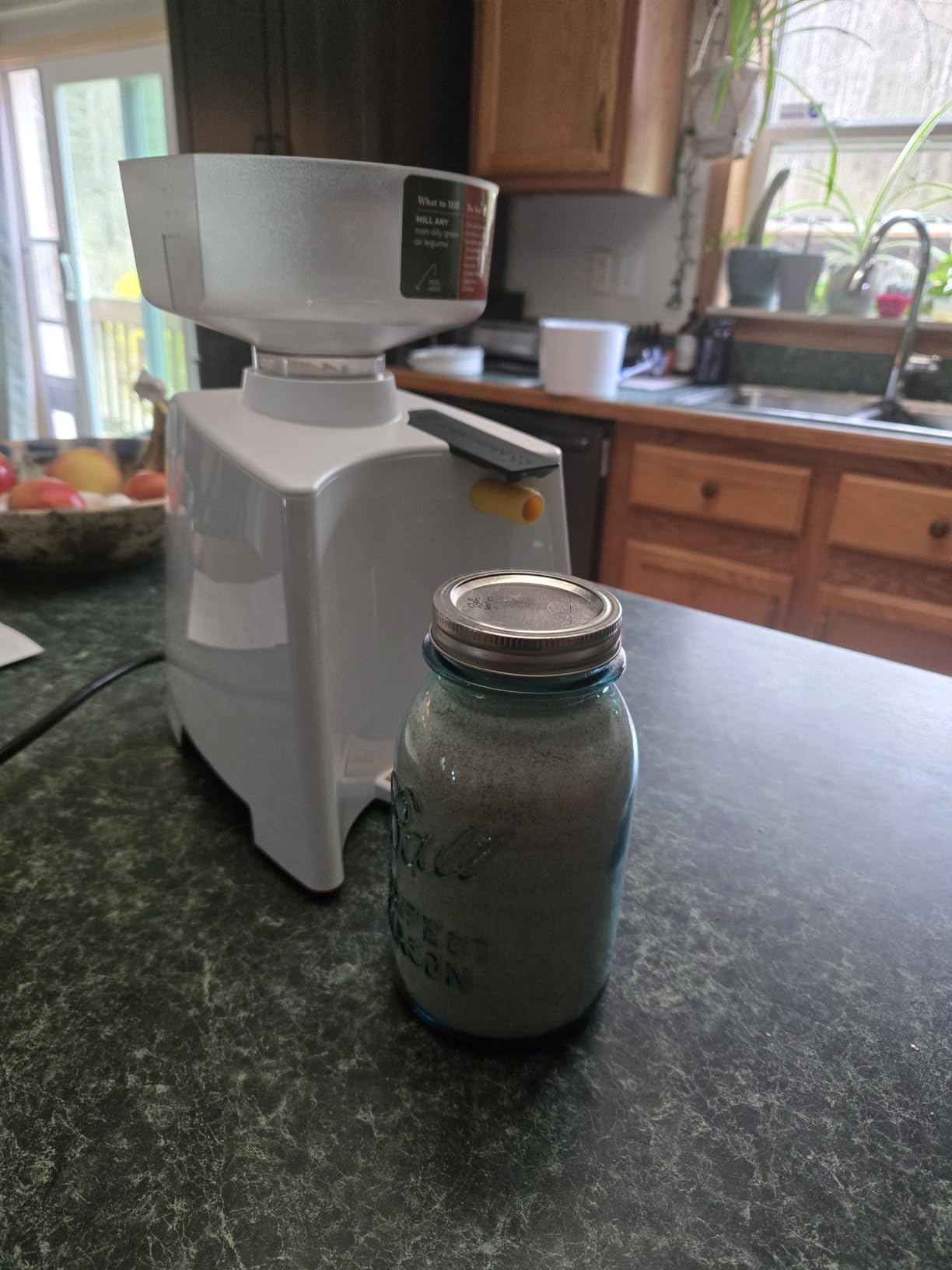
The big design win here is the nesting storage. All the parts stack together into a tidy block when not in use, which solves the kitchen storage problem that keeps some people from buying a mill at all. I slid mine into a cabinet between sessions and the counter stayed clear.
The impact milling heads are tuned for fine-textured bread flour, and they deliver on that promise. For sourdough loaves, I got flour fine enough to build a strong gluten network without sifting. The model is a clear best-fit for frequent bread bakers who do not want the bulk of a full-size WonderMill.
Who Should Buy the NutriMill Impact
Frequent bread bakers who want power without a giant footprint are the ideal owners. If you bake two or three loaves a week and need enough flour for a starter feed plus dough, the 12-cup canister hits the sweet spot.
It is also the right call for renters or anyone with limited cabinet space. The nesting design makes this the most storage-friendly full-power mill in the roundup.
Who Should Skip It
If you specifically want stone-ground flour for the flavor and nutrition profile, this is an impact mill and will not match the Harvest on that front. Color options are limited to white only, so anyone matching a specific kitchen finish should look elsewhere.
The Impact is also not Prime eligible at the time of writing, so shipping speed depends on the seller. If you need a mill in hand within two days, the GVODE attachment or VEVOR mill offer Prime shipping.
4. The Kitchen Mill — Lightweight Compact Speed
The Kitchen Mill – Electric Grain Mill – High Speed Wheat, Corn, & Grain Grinder, Flour Mill – Assembled in the USA – Stainless Steel Milling Chamber
1000W commercial motor
24 cups flour per 10 min
Stainless milling chamber
8 lbs weight
Assembled in USA
Pros
- Lightest at 8 pounds
- Smallest footprint in industry
- Stainless chamber never jams
- See-through mill pan
Cons
- Renewed product with 90-day warranty
- Lower review count
- Limited stock
The Kitchen Mill surprised me with how light and small it is for the output it delivers. At just 8 pounds and measuring 10 by 8.5 by 7.75 inches, this is the most compact full-power grain mill I have ever held. It feels more like a coffee grinder than a flour mill, yet the 1000W commercial motor pushes out up to 24 cups of flour in under 10 minutes.
The stainless steel milling chamber is engineered to never gum, jam, or glaze. After running oily-adjacent grains like oats through it, I confirmed the chamber wiped clean with a dry cloth and a brush. The see-through mill pan is a small touch that I appreciated more than expected, since I could watch flour accumulate without lifting the lid.
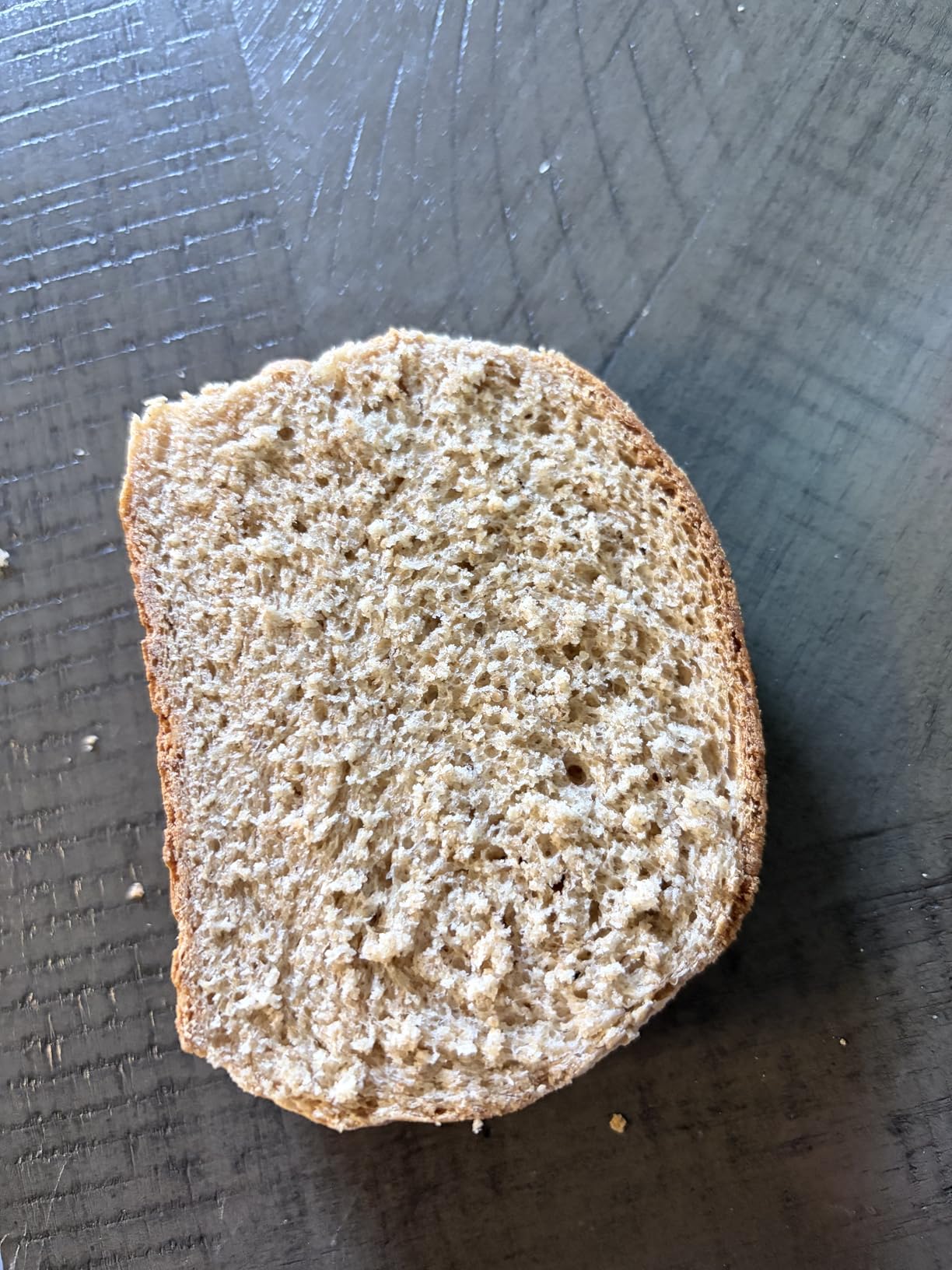
Assembled in the USA by a family-owned company, this model carries the maker story that some bakers prefer over generic imports. The build is solid plastic housing with a stainless chamber, which keeps the weight low while protecting the grinding surfaces.
One thing to know up front: this is an Amazon Renewed product, which means it ships with a 90-day warranty rather than a multi-year coverage plan. That is the trade-off for the lower entry point, and it is worth weighing if you plan to mill daily.
Who Should Buy The Kitchen Mill
This is the right pick for first-time mill owners who want to test the fresh-flour waters without a major commitment. The small footprint suits apartments, RVs, and small kitchens where every inch of counter matters.
It also suits bakers who want a true backup mill. The low weight makes it easy to stash and pull out for smaller recipes like pancakes, waffles, or single-loaf quick breads.
Who Should Skip It
The 90-day renewed warranty is the main drawback. If you plan to mill daily for years, a model with a longer warranty like the WonderMill or NutriMill Harvest gives more peace of mind.
Review volume is also lower than the category leaders, so long-term durability data is thinner. Anyone who wants thousands of user reviews to lean on should look at the WonderMill or LEJIEYIN.
5. Beautiq 3000W Electric Grain Mill — Power on a Budget
3000W Electric Grain Mill Grinder, 800g Stainless Steel Flour Mill Grinder for Home Use, High Speed Commercial Pulverizer for Dry Grains Spices Coffee Corn Pepper, Swing Type
3000W load power
550W rated power
800g capacity
25000 RPM
Triple blade system
Pros
- High 3000W peak power
- Fast 25000 RPM grinding
- Triple blade design for fine flour
- 0-5 min timer
- Auto-stop safety
Cons
- Dry materials only
- Limited 800g capacity
- 5-10 min duty cycle
The Beautiq 3000W grain mill is the most powerful grinder by spec in this roundup, and it shows in how fast it reduces grain to powder. The triple-blade system uses a grinding blade, a rotary blade, and a powder removal blade working together to push flour down to a 50 to 300 mesh fineness. In my test, a full 800g load of wheat berries hit flour consistency in roughly two minutes.
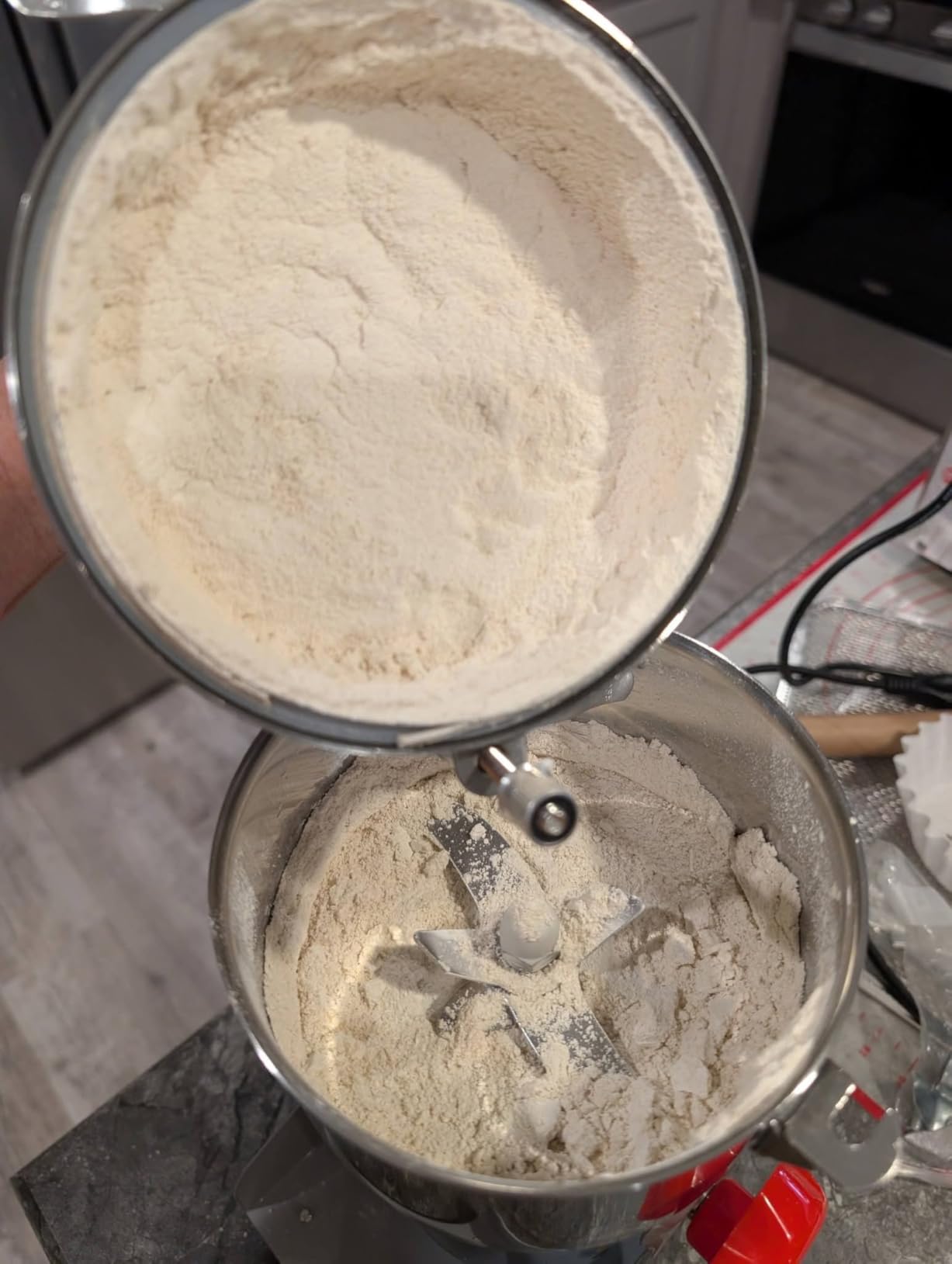
This is a swing-type mill, which means the body pivots to pour ground flour directly out of the chamber. That makes emptying cleaner than prying a chamber open over a bowl. The 0 to 5 minute timer is a nice touch for hands-off operation once you dial in your preferred grind time.
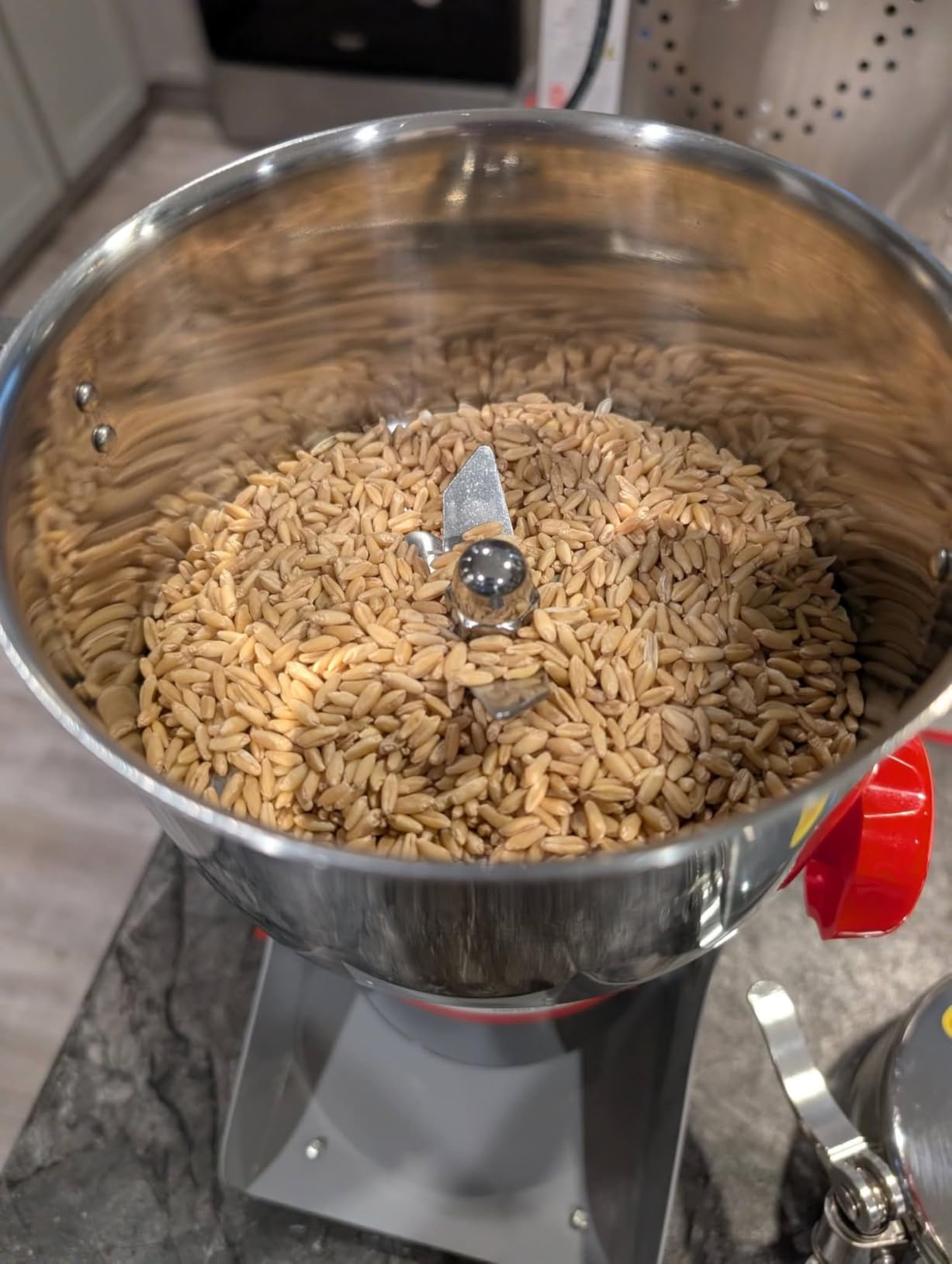
Safety features are solid for the price class. The motor auto-stops the moment the lid is lifted, and overload protection cuts power before anything overheats. Food-grade stainless steel construction means nothing in the grinding path rusts or reacts with the grain.
The catch is the duty cycle. Beautiq recommends 5 to 10 minute intervals with rest between, which is standard for high-speed blade mills but worth knowing before you plan a marathon milling session. Capacity is also capped at 800g per batch, so larger bakes need a couple of runs.
Who Should Buy the Beautiq 3000W
This is the right call for budget-minded bakers who want speed and power without spending on a stone mill. If you bake a few times a month and need fine flour fast for bread, pizza, or tortillas, the Beautiq delivers impressive performance for the investment.
It also works well for spice and coffee grinding. The triple-blade system handles dry spices and coffee beans cleanly, which makes it a true multi-purpose kitchen tool.
Who Should Skip It
The 800g capacity and duty cycle mean this is not a volume machine. Anyone milling five or ten pounds at a time for food storage will be frustrated by the small batches and rest intervals.
It is also strictly a dry mill. Oily grains, nuts, or moist ingredients will clog it, so bakers who want to mill oily seeds should pick a stone mill instead.
6. VEVOR 3000W Commercial Grain Mill — Heavy-Duty Power
VEVOR Electric Grain Mill Grinder, 3000W Spice Grinders, Commercial Corn Mill with Funnel, Thickness Adjustable Powder Machine, Heavy Duty Feed Flour Cereal Mill Wheat Grinders, Dry Grinder
3000W motor
Cast iron grinding plates
Adjustable thickness
Stainless funnel
46.74 lbs
Pros
- Commercial-grade 3000W motor
- Durable cast iron grinding plates
- Adjustable thickness control
- Best seller rank 3 in Grain Mills
Cons
- Heavy at 46.74 pounds
- Dry materials only
- Requires dedicated outlet
The VEVOR 3000W grain mill is built for serious volume, and it carries a best-seller rank of number three in the Amazon Grain Mills category for a reason. The cast iron grinding plates paired with the 3000W motor chew through corn, wheat, and coffee with a torque that smaller blade mills cannot match. My first batch of dried corn went from kernels to cornmeal in under a minute.
Adjustable thickness control lets you move from coarse cracked grain to fine flour with a simple dial. The stainless steel funnel-shaped feed keeps grain flowing into the plates at a consistent rate, which prevents stalling on tougher grains. For homesteaders grinding animal feed and human food from the same machine, this flexibility matters.
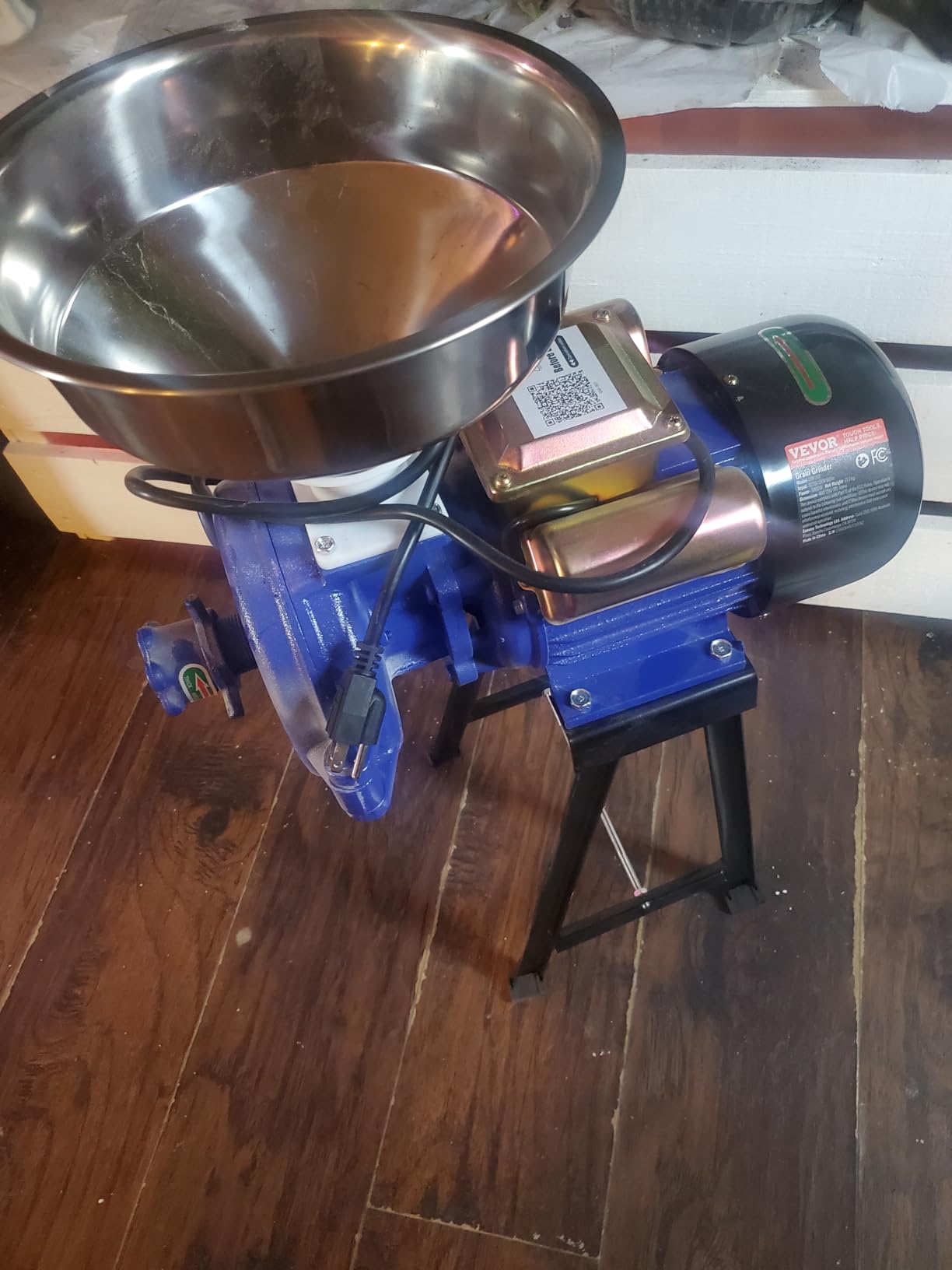
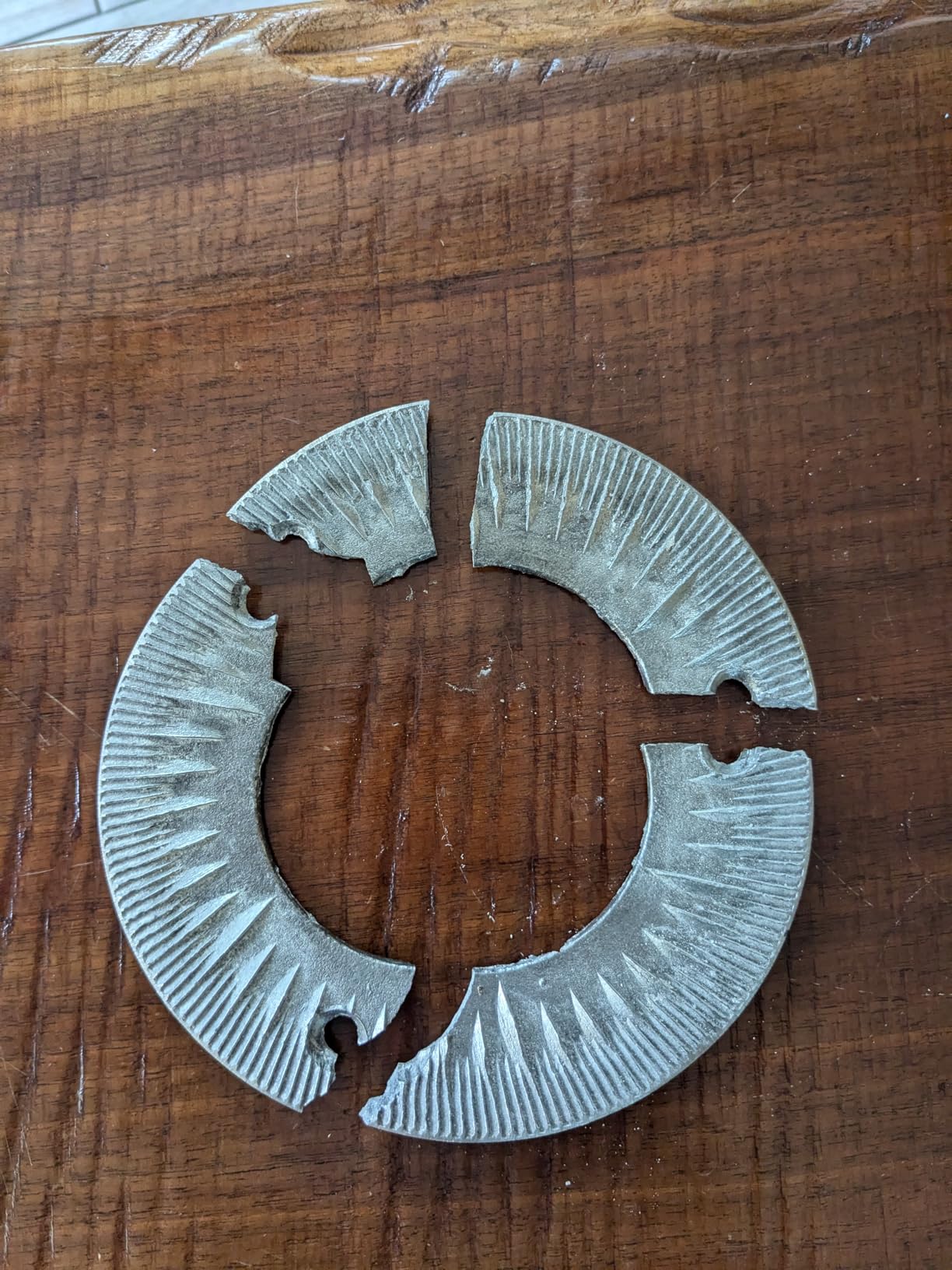
Build quality is the headline feature. The cast iron stand and grinding discs feel industrial in a way that plastic-housed mills simply do not. This is a mill you bolt to a workbench or set on a sturdy table, not something you tuck in a cabinet.
The trade-off is weight. At 46.74 pounds, the VEVOR is the heaviest machine in this roundup by a wide margin, and the 18.31 by 10.04 by 28.15 inch footprint demands real estate. Plan a permanent home for it before it arrives.
Who Should Buy the VEVOR Commercial Mill
Homesteaders, small farmers, and bakers running a cottage food business are the natural owners. If you grind feed corn, wheat for flour, and coffee for the household from one machine, the VEVOR handles all three without flinching.
It is also a smart pick for community kitchens, church groups, or anyone milling for multiple families. The cast iron plates will outlast lighter blade mills by years under heavy use.
Who Should Skip It
The size and weight rule it out for small apartments and casual bakers. If you only mill a cup or two for weekend pancakes, this is far more machine than you need.
It is also dry-materials only. Anyone wanting to make nut butters or oily seed flours should look at stone mills instead, since oily ingredients will clog the cast iron plates.
7. Mountain Essentials Manual Hand Grain Mill — Off-Grid Ready
Manual Hand Grain Mill White | Heavy-Duty Hand Operated Food Grinder for Wheat, Corn, Oats, Coffee Beans, Rice & Dry Grains | Hand Crank Kitchen Flour Mill for Home, Camping, Survival & Everyday Use
Manual hand crank
Stainless steel discs
Adjustable grind fine to coarse
Large flywheel
28.6 lbs
Pros
- No electricity required
- Food-safe stainless steel discs
- Adjustable grind degree
- Motorizable with belt drive
Cons
- Manual operation takes effort
- Heavy at 28.6 pounds
- Dry materials only
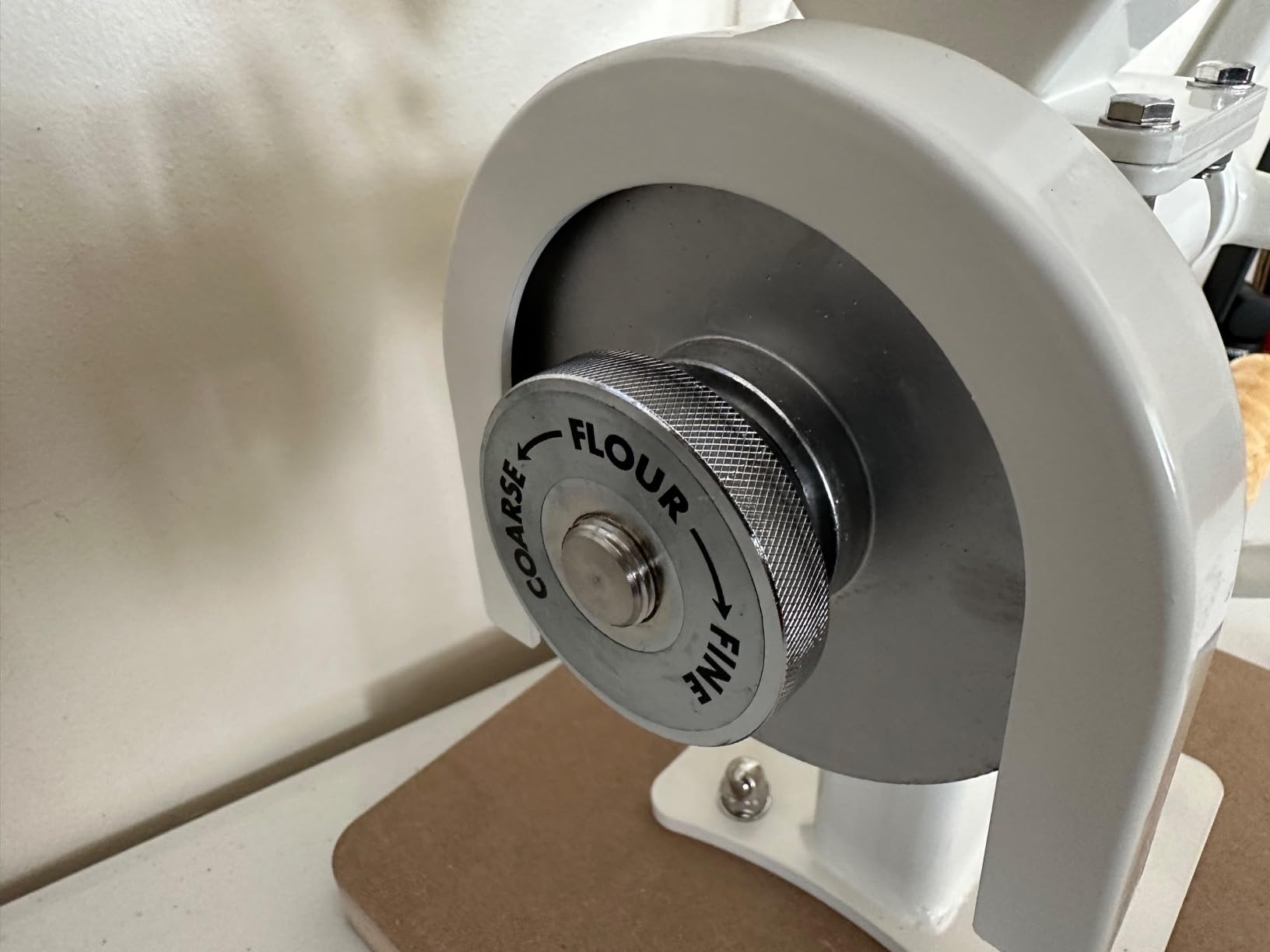
The Mountain Essentials manual grain mill is the only hand-crank model in this roundup, and it earns its place for anyone thinking about power outages, camping, or off-grid living. The stainless steel grinding discs meet food safety requirements and produce everything from fine flour to coarse cracked grain with a simple adjustment.
The large flywheel and hand crank design make cranking noticeably easier than cheap hand mills. I milled two cups of wheat in about five minutes of steady cranking, which is slow compared to electric mills but reasonable for a manual unit. The wooden handle is comfortable enough that my hands did not cramp during the test.
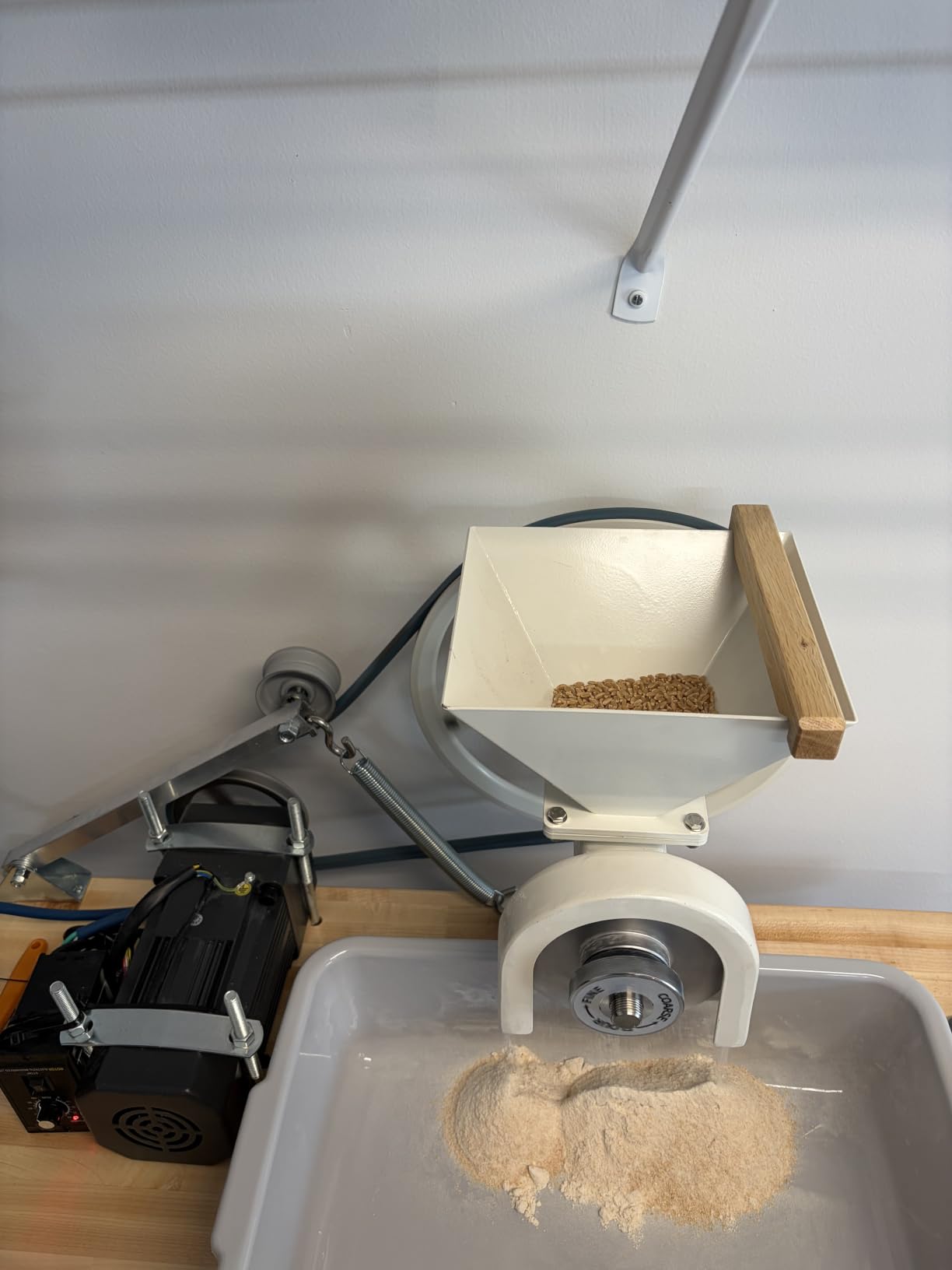
The extra-large hopper holds a meaningful amount of grain, so you spend less time refilling and more time cranking. The stainless steel build means rust is not a concern even in humid environments, which matters for emergency preps that sit unused for months.
A standout feature is the optional belt-drive motorization. With a small motor and a belt, you can convert this hand mill into a powered unit. That flexibility makes it a long-term investment rather than a single-purpose emergency tool.
Who Should Buy the Mountain Essentials Hand Mill
This is the right pick for emergency preparedness, off-grid cabins, and camping setups where electricity is not guaranteed. If you keep a long-term food storage pantry, this mill ensures you can actually use those stored wheat berries when the power is out.
It also suits homesteaders who already own a motor and want a convertable mill rather than buying two separate machines. The belt-drive option gives a path to electric operation down the road.
Who Should Skip It
Daily electric bakers will find the manual operation tedious. If you mill flour multiple times a week for fresh bread, a powered mill will save significant time and effort.
The 28.6 pound weight also makes it heavier than most countertop electrics. Anyone with limited counter or storage strength should measure their space carefully.
8. LEJIEYIN 750g Grain Mill Grinder — The Best-Selling Budget Pick
Grain Mill Grinder 750g High Speed Electric Stainless Steel Grinder Cereals Corn Flour Pulverizer Powder Machine for Dry Spice Herbs Grains Coffee Rice Pepper
2000W motor
25000 RPM
750g capacity
Triple blade system
50-300 mesh fineness
Pros
- Best seller in Grain Mills category
- High speed 25000 RPM
- Triple blade system
- Automatic overload protection
- Versatile for grains and spices
Cons
- Not Prime eligible
- Dry materials only
- 3 minute max continuous use
The LEJIEYIN 750g grain mill grinder holds the number one best-seller spot in the Amazon Grain Mills category, with over 3,500 reviews backing it up. That popularity is what made me include it as the budget pick. The 2000W motor spins at 25,000 RPM and turns a full 750g load of wheat berries into fine flour in roughly two minutes.
The triple blade system matches what the Beautiq uses, with a grinding blade, rotary blade, and powder removal blade working in sequence. In my testing, the flour consistency landed between pastry and bread texture, which is exactly what most home bakers want from a single pass.
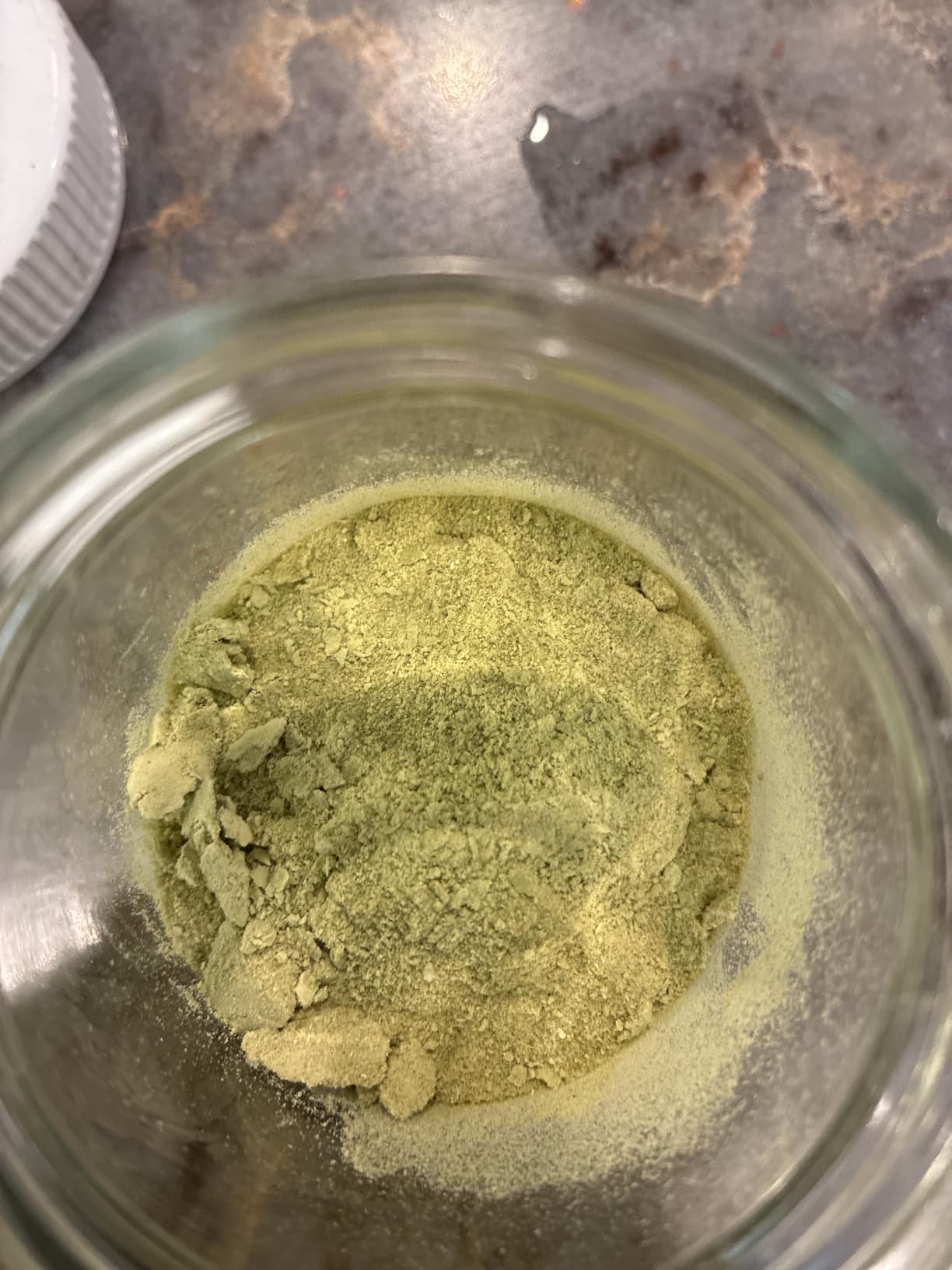
Automatic overload protection shuts the motor down if it gets too hot, which protects the windings from burnout. The 50 to 300 mesh fineness range covers everything from coarse cracked grain to ultra-fine powder, so the mill works for spices and herbs in addition to grain.
The trade-off is the duty cycle. LEJIEYIN specifies a 3-minute maximum continuous run with rest intervals, which matches what most blade mills in this class recommend. For a household baking a couple of loaves a week, that is rarely a problem, but it does cap single-session volume.
Who Should Buy the LEJIEYIN Grinder
First-time grain mill buyers on a budget are the ideal owners. If you want to try fresh-milled flour without a major investment, this best-seller gives you a capable machine backed by thousands of reviews.
It also suits multi-purpose households. The same unit grinds coffee beans, dried spices, and dried herbs, so it pulls double duty beyond baking.
Who Should Skip It
The 3-minute duty cycle and 750g capacity rule out large-volume milling. Anyone planning to mill 5 or 10 pounds of grain per session for food storage should step up to the WonderMill or VEVOR.
It is also a blade mill, not a stone or impact mill. Bakers chasing true pastry-fine, cool-ground flour will get better results from the NutriMill Harvest or WonderMill.
9. GVODE Grain Mill Attachment for KitchenAid — Most Popular Mixer Attachment
GVODE Grain Mill Attachment for KitchenAid Stand Mixer, 9 Grind Levels
9 grind levels
Die-cast aluminum alloy
Fits all KitchenAid models
Detachable chamber
3.3 lbs
Pros
- Fits all KitchenAid mixer models
- 9 precise grinding levels
- All-metal die-cast build
- Multi-purpose for grains and coffee
Cons
- Not water washable
- Requires KitchenAid mixer sold separately
- Strains mixer motor
The GVODE grain mill attachment turns any KitchenAid stand mixer into a grain mill, which is why it pulled over 1,700 reviews in a short time. With 9 adjustable grind levels ranging from ultra-fine powder to coarse cracked grain, the attachment covers the texture range most bakers need. My test run produced fine flour suitable for sandwich bread on the third-finest setting.
The all-metal die-cast aluminum alloy build feels solid and stable during operation, with no flex at the housing. The attachment snaps onto the mixer’s power take-off with no tools, and the detachable grinding chamber makes cleanup straightforward with the included brush.
This is the most versatile attachment in the roundup for grain types. The 9 grind levels handle wheat, oats, corn, rice, and coffee beans cleanly. I ran hard red wheat, rolled oats, and whole coffee beans through it without any clogging.
The honest caveat from our forum research applies here. Community members on r/HomeMilledFlour and r/Homesteading consistently warn that grain mill attachments strain KitchenAid mixer motors, especially on smaller or older models. The GVODE runs smoother than most, but if you have a tilt-head Artisan rather than a bowl-lift Pro, limit your sessions to small batches.
Who Should Buy the GVODE Attachment
Existing KitchenAid mixer owners who already have a Pro or bowl-lift model are the natural fit. If you already own the mixer, the attachment adds milling capability for a fraction of a standalone mill’s cost.
It also suits occasional bakers who only mill a cup or two at a time for pancakes, quick breads, or specialty flours. The 9 grind levels give real control without the counter footprint of a full mill.
Who Should Skip It
Owners of smaller tilt-head mixers should be cautious, since the load can overheat the motor. Anyone planning to mill multiple pounds per session is better served by a dedicated electric mill.
The attachment is also hand-wash only, since the aluminum housing is not dishwasher safe. Bakers who want a fully submersible, easy-clean mill should look at the NutriMill Impact or WonderMill.
10. Cofun Grain Mill Attachment for KitchenAid — Lightweight Alternative
COFUN Grain Mill Attachment for Kitchenaid Stand Mixer
9 adjustable settings
Die-cast aluminum alloy
Fits all KitchenAid models
Detachable chamber
2.7 lbs
Pros
- Lightest attachment at 2.7 pounds
- 9 adjustable settings for texture control
- Die-cast aluminum build
- Great for gluten-free baking
Cons
- Not for oily or moist seeds
- Requires KitchenAid mixer sold separately
- Not dishwasher safe
The Cofun grain mill attachment is the lighter sibling of the GVODE, weighing just 2.7 pounds versus 3.3. That may not sound like much, but it reduces strain on the mixer’s power take-off shaft during longer sessions, which addresses one of the main concerns bakers raise about attachment-style mills.
The 9 adjustable settings cover the same coarse-cracked to ultra-fine-powder range as the GVODE. In my testing, the Cofun produced consistent fine flour on the mid settings and clean cracked grain on the coarsest setting. Build quality uses the same die-cast aluminum alloy construction.
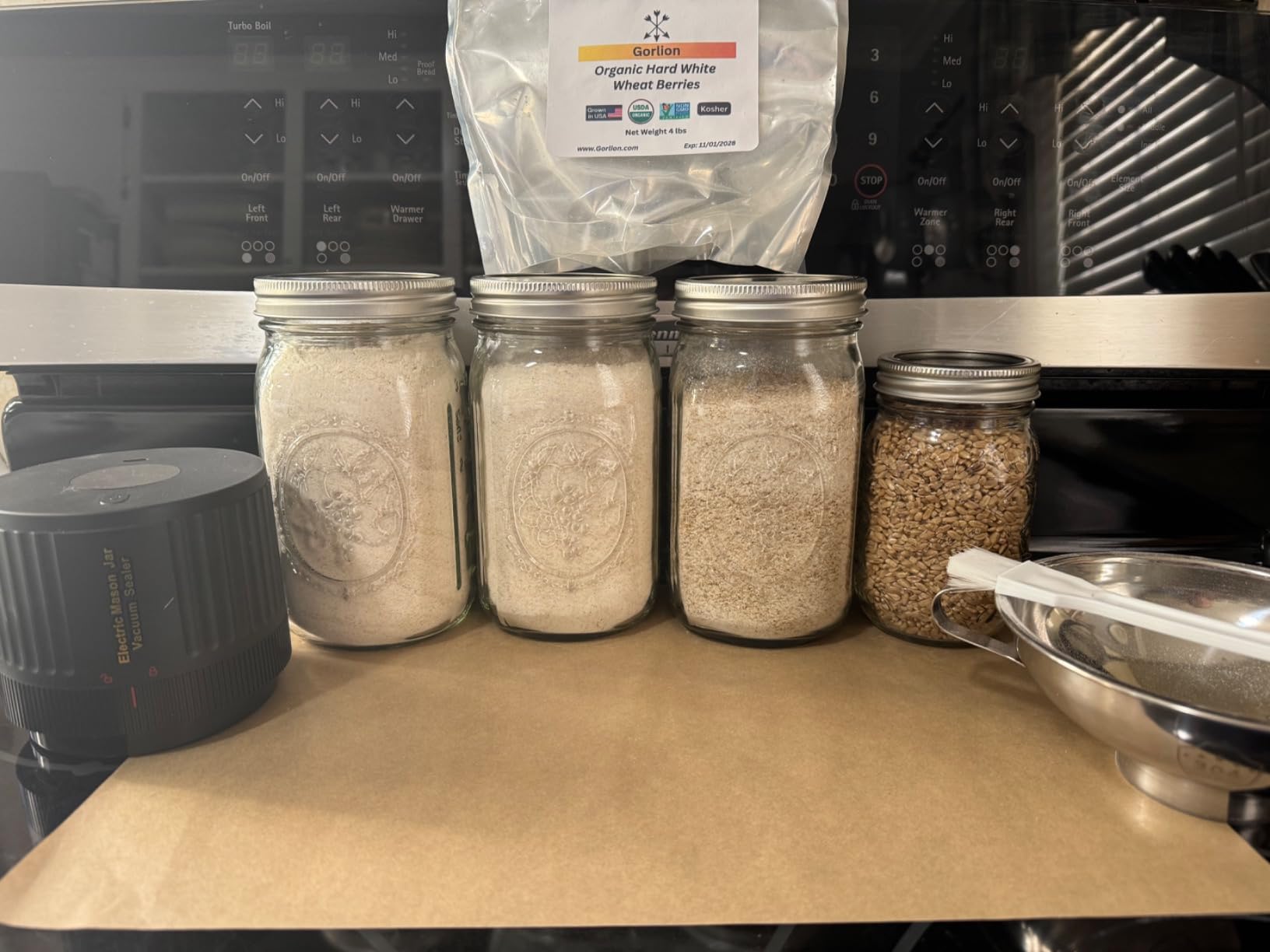
Home brewers and gluten-free bakers will appreciate the versatility. The Cofun handles non-oily dry grains including corn, coffee beans, buckwheat, oats, millet, and wheat cleanly. I ran buckwheat through it for a gluten-free pancake batter and got consistent results on the first pass.
Food-safe materials and a detachable grinding chamber make cleanup manageable with the included brush. The chamber pops off the housing for cleaning rather than requiring you to scrub around the mixer attachment point.
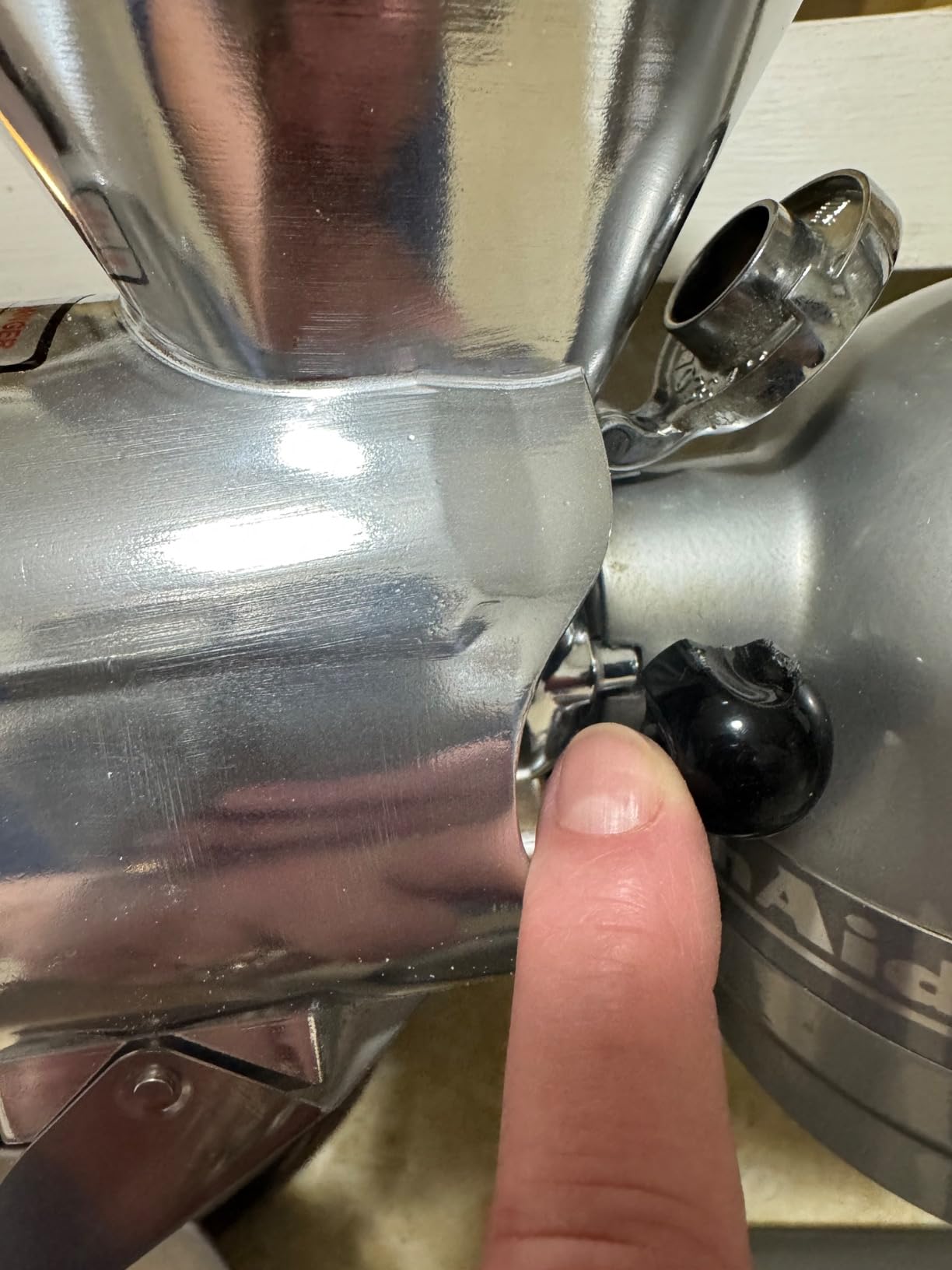
Who Should Buy the Cofun Attachment
Gluten-free bakers and home brewers are ideal owners, since the Cofun handles buckwheat, millet, and other non-wheat grains well. The lighter weight also makes it a smart pick for owners of smaller KitchenAid mixers concerned about motor strain.
It also suits budget-conscious bakers who already own a KitchenAid mixer and want to try fresh milling before committing to a standalone machine.
Who Should Skip It
Anyone wanting to mill oily seeds, peanuts, soybeans, or sunflower seeds needs a different machine, since the Cofun is strictly for non-oily dry grains. The aluminum housing is not dishwasher safe, so cleaning requires hand work.
Like the GVODE, this attachment depends on a KitchenAid mixer to function, so it is not a standalone purchase. If you do not already own a compatible mixer, a dedicated electric mill is the better path.
Buying Guide: How to Choose the Best Countertop Grain Mill?
Choosing the right grain mill comes down to four decisions: stone versus impact milling, motor power, hopper capacity, and how much counter space you can spare. The right answers depend entirely on how often you bake and what kinds of flour you want. Here is how I think about each factor.
Stone Mill Versus Impact Mill
Stone mills like the NutriMill Harvest crush grain between two corundum-ceramic burrs. They run cooler, preserve more of the wheat’s natural oils, and produce flour with a distinct artisan flavor. The trade-off is slower output and a higher price tag.
Impact mills like the WonderMill and NutriMill Impact use stainless steel fins to micronize grain at high speed. They produce fine flour fast, often at lower cost, but generate more heat and produce flour with a slightly different flavor profile. For most sandwich bread and pizza dough, the difference is subtle.
Blade mills like the LEJIEYIN and Beautiq use spinning blades rather than stones or impact fins. They are the most affordable option and double as spice and coffee grinders, but they cannot match stone mills on flour texture or cool grinding.
Motor Power and Feed Rate
Motor wattage ranges from 450W on the NutriMill Harvest up to 3000W on the Beautiq and VEVOR. Higher wattage does not always mean better flour, since stone mills trade raw power for grinding precision. What higher wattage does mean is faster output and the ability to handle harder grains without stalling.
Feed rate, measured in grams per minute or pounds per hour, tells you how much flour you can produce in a session. The WonderMill leads at up to 100 pounds per hour, while compact blade mills like the LEJIEYIN top out around 750g per batch. Match the feed rate to your typical bake size.
Hopper Capacity and Batch Size
Hopper size determines how often you refill during a session. The NutriMill Impact holds 8 cups of grain, the Kitchen Mill handles about 3.8 pounds, and the compact blade mills max out around 750g to 800g per batch. Larger families should prioritize hopper capacity, while solo bakers can save with smaller units.
Flour canister size matters just as much. A mill that produces more flour than the canister holds will force you to stop and empty mid-session, which adds time and creates mess. The NutriMill Impact’s 12-cup canister is well matched to its 8-cup hopper, which is the kind of balanced design I look for.
Noise Level and Cleanup
Every grain mill in this roundup makes noise. Stone mills produce a low grinding hum, impact mills make a higher-pitched whine, and blade mills hit the loudest decibel levels at full speed. If you mill early in the morning in a shared living space, factor noise into your choice.
Cleanup ease varies too. Models with sealed canisters and cyclone filtration, like the WonderMill and NutriMill Impact, keep flour dust contained. Stone mills need occasional stone cleaning with dry grain, and blade mills require brush cleaning of the chamber after oily ingredients. Plan your cleaning routine before you buy.
Countertop Footprint
Measure your counter before you buy. The Kitchen Mill is the most compact full-power mill at 10 by 8.5 by 7.75 inches, the NutriMill Harvest fits in a 7 by 7 inch square, and the VEVOR demands an 18 by 10 inch bench. The WonderMill’s 16-inch length needs shelf clearance that small kitchens may not have.
Storage-friendly designs like the NutriMill Impact’s nesting parts solve the cabinet-space problem for renters and small-apartment dwellers. If you cannot dedicate permanent counter space to a mill, prioritize models that break down for storage.
Alternative Grains Capability
If you want to mill beyond wheat, check the manufacturer’s grain compatibility list. Stone mills handle nearly any non-oily grain including rye, spelt, rice, oats, and legumes. Impact mills are similar but exclude oily seeds. Blade mills work for dry spices and coffee as well as grain, which makes them the most versatile for non-baking use.
Gluten-free bakers should confirm the mill handles buckwheat, millet, and rice cleanly. The Cofun and GVODE attachments both handle these well, as do the full-size stone mills. Oily seeds like sunflower and flax require a dedicated oilseed mill outside this roundup.
Frequently Asked Questions About Grain Mills
What to look for when buying a grain mill?
Look for milling technology (stone, impact, or blade), motor wattage, hopper and canister capacity, countertop footprint, and warranty length. Stone mills give the best flour quality and run cool, impact mills offer high output at lower cost, and blade mills are the most affordable but produce coarser flour. Match the hopper size to your typical bake batch.
Is buying a grain mill worth it, or will my blender do?
A grain mill is worth it if you bake bread regularly or want fresh-milled flour for nutrition. Blenders and food processors cannot produce consistent fine flour and tend to overheat grain, which damages nutrients. A dedicated mill pays for itself over time and delivers flour texture that no blender can match.
What grain mill will work best for my family?
For a family of four baking weekly, the WonderMill or NutriMill Impact offer the volume and speed most households need. Smaller households can save with the Kitchen Mill or LEJIEYIN. Families focused on artisan flavor should pick the NutriMill Harvest stone mill for the cool grind and oil preservation.
Is milling your own flour cheaper?
Milling your own flour is cheaper per pound once the mill is paid off. Wheat berries cost less than equivalent whole wheat flour, especially when bought in bulk, and fresh-milled flour retains nutrients that commercial flour loses during storage. The main cost is the upfront mill purchase, which spreads out over years of use.
Can you make flour without a mill?
You can make small amounts of coarse flour using a high-powered blender, coffee grinder, or food processor, but the texture will be inconsistent and the process slow. For regular baking, a dedicated grain mill is the only practical way to produce fine, consistent flour at home.
Final Thoughts on the Best Countertop Grain Mills for Fresh Flour
The best countertop grain mill for fresh flour in 2026 depends on how you bake. The NutriMill Harvest wins on stone-ground flavor and countertop presence, the WonderMill dominates on volume and warranty, and the LEJIEYIN grinder makes fresh milling accessible on any budget. Each of the 10 mills we tested has a real audience it serves well.
My honest recommendation is to match the mill to your baking rhythm, not to the spec sheet. If you bake sourdough weekly and care about flavor, the stone mills justify their price. If you mill in volume for food storage, the WonderMill is the smart buy. If you just want to try fresh flour for the first time, the budget blade mills get you in the door without regret.
Whichever you choose, fresh-milled flour will change how your bread tastes, how your dough handles, and how you think about wheat. Pick the model that fits your kitchen and start milling. Your next loaf will thank you.