

Short answer: the DEWALT DCS570B is the best cordless circular saw for most jobsites because it pairs a brushless motor with an electric brake, a 57 degree bevel and a 7-1/4 in. blade at a weight you can carry all day. The DEWALT DCS577B is the pick when you are cutting 6×6 beams and stair stringers. The Milwaukee 2830-20 is the rear-handle answer for crews that break down lumber all shift. Below that, we break down ten saws by the job each one actually does.
Cordless saws stopped being a compromise a while ago. Every saw in this roundup has a brushless motor, an electronic brake and enough cut depth to handle dimensional lumber, and the top four here run 5,500 RPM or faster. What separates them on a real site is not raw speed. It is cut depth at 90 degrees, guard behavior on a compound cut, whether the shoe drags, and how the saw feels after hour six.
That is the angle we took here. Instead of ranking ten saws on a single number, we sorted them around the work a framing crew, a remodel crew and a one-man crew actually do. If you want the machine that handles hip roof compound cuts without a guard hang-up, jump to the task matrix below. If you want the best value in the list, it is number seven. If you want to know which battery ecosystem to commit to before you buy anything else, the platform section is the part worth reading.
One thing we will say up front because it decides most purchases: platform fit beats benchmark performance. The forums are consistent on this. If your crew already runs M18 packs, the Milwaukee saws are the smarter buy even if a competitor edges them on paper. You will find the same argument in our guides to other saw classes, like our concrete saw roundup for slabs and our brick saw picks for masonry. The tooling ecosystem is the real decision.
Everything below was last checked in October 2026 and reflects the current state of the cordless circular saw market. Models refresh quickly in this category, so treat the specs as a snapshot and the verdicts as the durable part.
Table of Contents
Top 3 Cordless Circular Saws For Jobsites (October 2026)
These are the three we would put on a truck first, and the three most crews end up with once they compare everything else.

DEWALT DCS570B 7-1/4 in
- 5500 RPM brushless
- 2-9/16 in cut at 90 degrees
- 57 degree bevel
- Electric brake

Milwaukee 2830-20 Rear Handle
- Rear-handle grip
- 5800 RPM cutting speed
- Blade light and brake
- Pairs with 12.0 Ah M18

DEWALT DCS577B 60V MAX
- 5800 RPM
- 2-7/16 in cut at 90 degrees
- Magnesium shoe
- Dust blower and rafter hook
All 10 Cordless Circular Saws Compared Side by Side in 2026
Every saw below with its blade size, no-load speed, cut depth at 90 degrees, bevel capacity, listed weight, warranty and the class of work it fits best.
| Product | Specifications | Action |
|---|---|---|
| DEWALT DCS570B 20V MAX 7-1/4 in |
|
Check Latest Price |
| DEWALT DCS577B 60V MAX 7-1/4 in |
|
Check Latest Price |
| Milwaukee 2830-20 Rear Handle |
|
Check Latest Price |
 Milwaukee 2631-20 Brushless 7-1/4 in Milwaukee 2631-20 Brushless 7-1/4 in |
|
Check Latest Price |
 Makita XSR01Z 18V X2 Rear Handle Makita XSR01Z 18V X2 Rear Handle |
|
Check Latest Price |
 DEWALT DCS590B 20V MAX XR DEWALT DCS590B 20V MAX XR |
|
Check Latest Price |
 CRAFTSMAN CMCS551B V20 7-1/4 in CRAFTSMAN CMCS551B V20 7-1/4 in |
|
Check Latest Price |
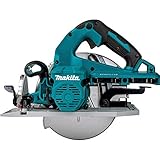 Makita XSH06Z 18V X2 LXT 7-1/4 in Makita XSH06Z 18V X2 LXT 7-1/4 in |
|
Check Latest Price |
 Metabo HPT C3607DWAQ4 36V Rear Handle Metabo HPT C3607DWAQ4 36V Rear Handle |
|
Check Latest Price |
 SKIL CR5429B-20 40V Rear Handle Kit SKIL CR5429B-20 40V Rear Handle Kit |
|
Check Latest Price |
How We Chose These Saws for Jobsite Duty?
We built this list around a fixed set of criteria rather than a benchmark score, because a jobsite saw is judged on the worst ten minutes of the day, not the best one. Here is the filter we applied to every model.
1. Cut depth at 90 degrees, not marketing torque figures. A saw that cuts 2-9/16 in. handles 3x material in one pass. A saw listed at 2-7/16 in. does not, and on dimensional lumber that difference shows up as a second pass on every cut. Headline wattage and MWO numbers are not comparable between brands, so we ignored them except as a sanity check on whether a motor is undersized for its class.
2. No-load blade speed and whether the motor holds it under load. Everything in this group runs between 5,000 and 6,000 RPM. The spread matters more on softwood and sheet goods than on hardwood, and a saw that drops RPM on a long cut is the one that heats up your battery and your hand.
3. Weight with a battery installed, not bare weight. Listed weights in this category are frequently bare-tool figures that flatter the saw. We flagged the two-battery designs and the big rear-handle saws accordingly, because 10 lb bare becomes something else once two packs are seated.
4. Electric brake, rafter hook and dust port. These three features are the practical definition of jobsite-ready. The brake is a kickback control and a productivity feature. The rafter hook is how the saw lives on a belt or a ladder. The dust port is what makes indoor cutting survivable.
5. Bevel capacity with positive stops. Anything at 53 degrees or above with detents at 22.5 and 45 gets used for sheathing, siding and roofing work, not just rough breakdown.
We also cross-checked owner feedback on guard behavior and shoe friction, because those two complaints appear more often in reviews than any spec-driven dissatisfaction we found. Where a platform lock-in affects the buying decision, we say so rather than pretending a cross-brand recommendation is realistic.
1. DEWALT DCS570B 7-1/4 in Brushless with Electric Brake – Best All-Round Jobsite Saw
DEWALT 20V MAX Circular Saw Cordless with Brake, 7-1/4 Inch, Tool Only (DCS570B)
5500 RPM brushless
2-9/16 in cut at 90 deg
57 deg bevel
7.5 lb bare
Pros
- Holds 5500 RPM under load
- Electric brake for clean controlled cuts
- Bevel detents at 22.5 and 45 degrees
- Work LED lights the cut line
- Rigid magnesium shoe
Cons
- Base plate depth markings hard to read
- Shoe guide line slightly off the blade line
- Needs a 5 Ah or larger pack for heavy cuts
This is the saw we hand to a framer who has never asked us for a recommendation. It has the largest review base in the group by a wide margin, and the pattern in that review base is consistency: owners describe it as the cordless saw that finally replaced the corded one in their truck.
The 5500 RPM brushless motor is the reason. It holds speed under load, which is the difference between a cut that finishes and a cut that stalls halfway through a 2×10. At 2-9/16 inches of depth at 90 degrees it clears 3x material in a single pass, so there is no second pass and no flipping of the board.
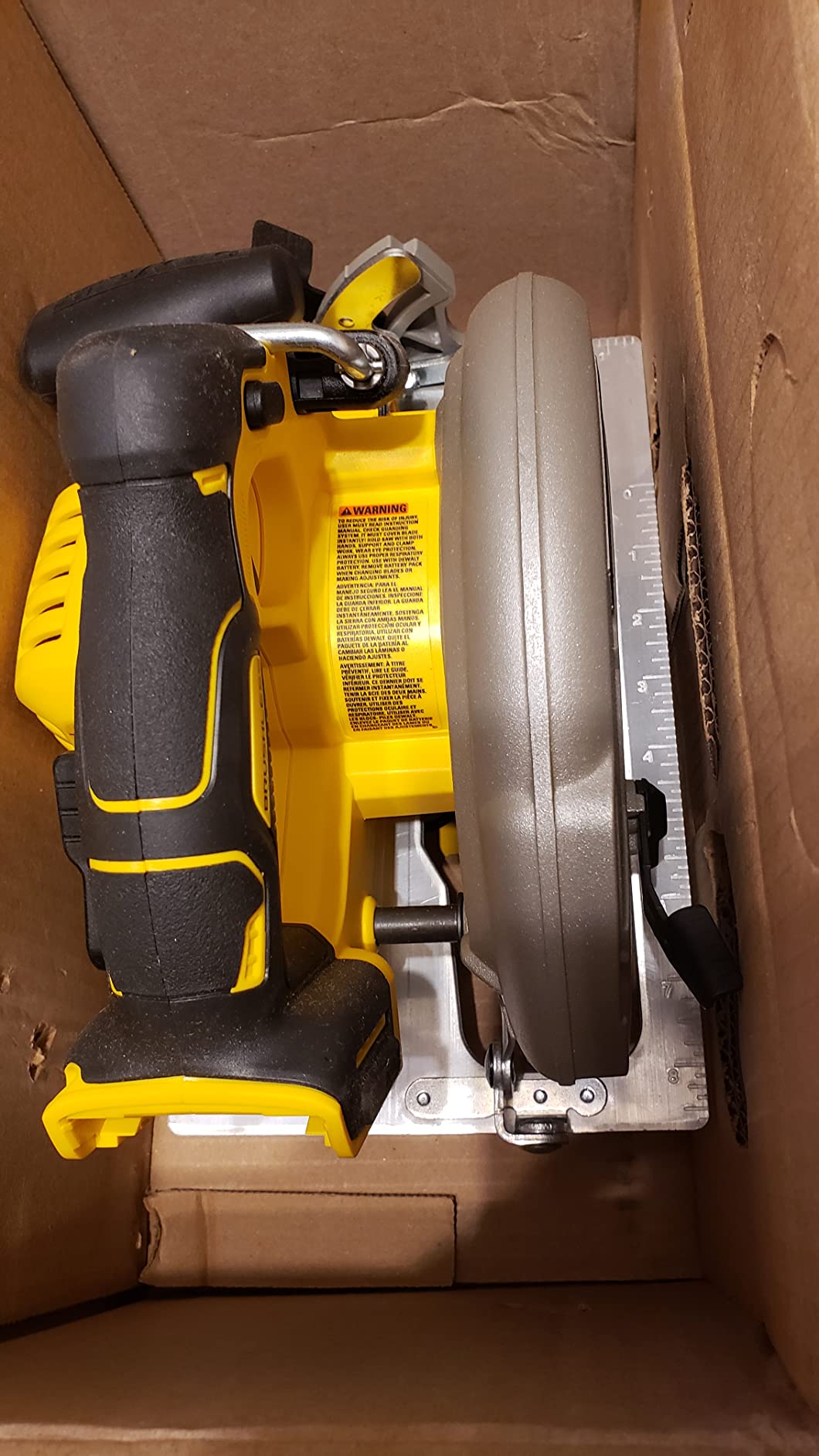
The electric brake is the feature owners mention most and competitors leave off. It stops the blade the moment you release the trigger, which cuts down splintering on sheet goods and stops a spinning blade from coasting into a stud or a ladder. The 57 degree bevel is the widest capacity on a standard sidewinder in this list, and the detents at 22.5 and 45 degrees make repeat cuts quick.
Roughly 330 crosscuts in 2×4 pine per charge is a real number for a full morning of layout work. The LED work light and the onboard blade wrench are small quality-of-life wins that add up when you are changing blades in bad light six times a day.
What holds up on a real site?
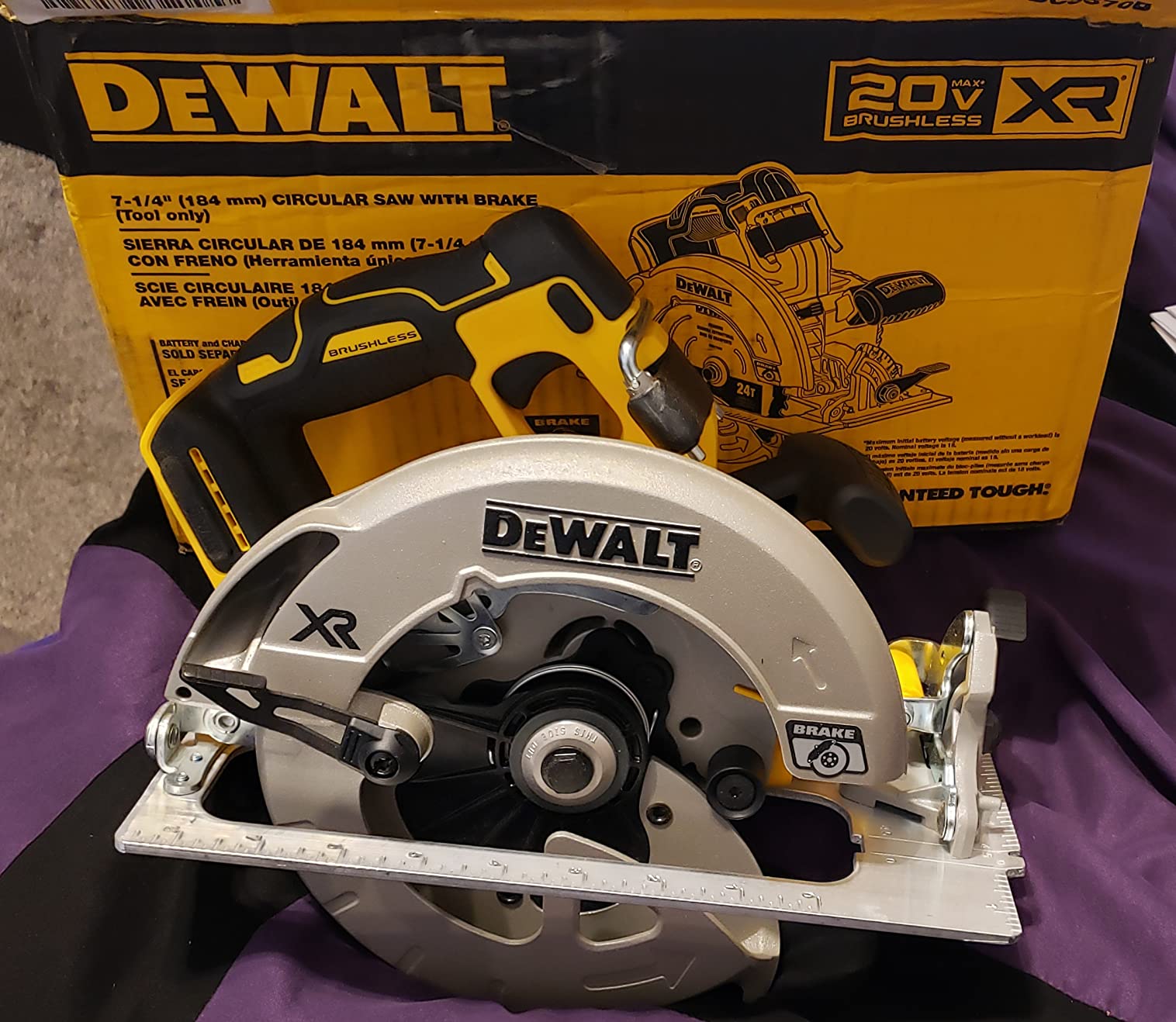
The magnesium shoe is rigid enough that the saw tracks straight through sheet goods without wandering, which matters when you are trying to follow a chalk line on OSB in wind. Bevel detents hold their setting, and the depth stop is repeatable once you find your reference mark.
Owner reports consistently describe clean, square cuts in dimensional pine and plywood, and most compare the cut quality favorably to their old corded saw. The brake earns its keep on finish carpentry, not just framing.
Where it falls short?
The base plate depth markings are hard to read, and several owners note that the guide line on the shoe does not sit exactly over the blade. Neither issue is a dealbreaker, but on a saw you will use all day both are small annoyances that a better plate would solve.
A 7-1/4 in. blade leaves roughly three-quarters of an inch through a 4×4, so structural timber still means two passes. And the saw asks for a 5 Ah pack or better to stay ahead under sustained load, which matters if you are buying the bare tool and pairing it with a smaller pack you already own.
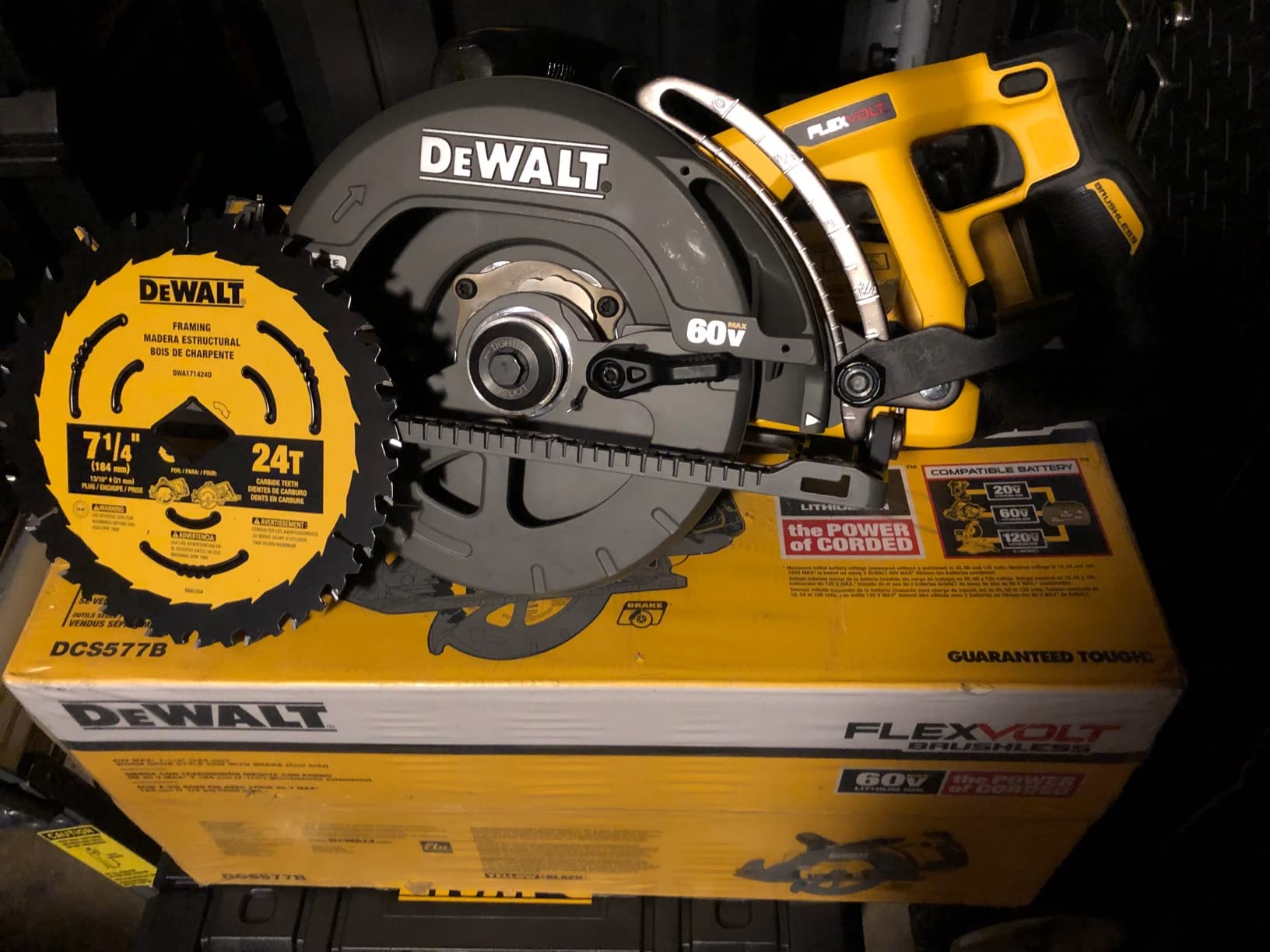
2. DEWALT DCS577B FLEXVOLT 60V MAX 7-1/4 in – Best for Heavy Timber
DEWALT FLEXVOLT 60V MAX* Circular Saw for Framing, 7-1/4-Inch, Tool Only (DCS577B)
5800 RPM,2-7/16 in cut at 90 deg
53 deg bevel
10.9 lb
FLEXVOLT 60V MAX only
Pros
- Class-leading torque on 6x6 and stringers
- Carbide-tipped blade included
- Blade on far side gives a clear sight line
- Integrated dust blower and rafter hook
Cons
- Among the heaviest saws here
- Only takes FLEXVOLT 60V MAX packs
- Small shoe on rough lumber
When a crew tells us they are cutting beams, posts and stair stringers rather than 2x lumber, this is the saw we point at. The 60V MAX platform gives it a torque margin that the 20V saws in this list cannot match, and owners consistently report it pushing through treated pine and thick dimensional lumber without bogging down.
The blade is mounted on the far side of the motor from the rear-positioned handle, which leaves the sight line between the operator and the cut. For a framer laying out walls or cutting a stack of stringers to a line, that alone removes a lot of guesswork.
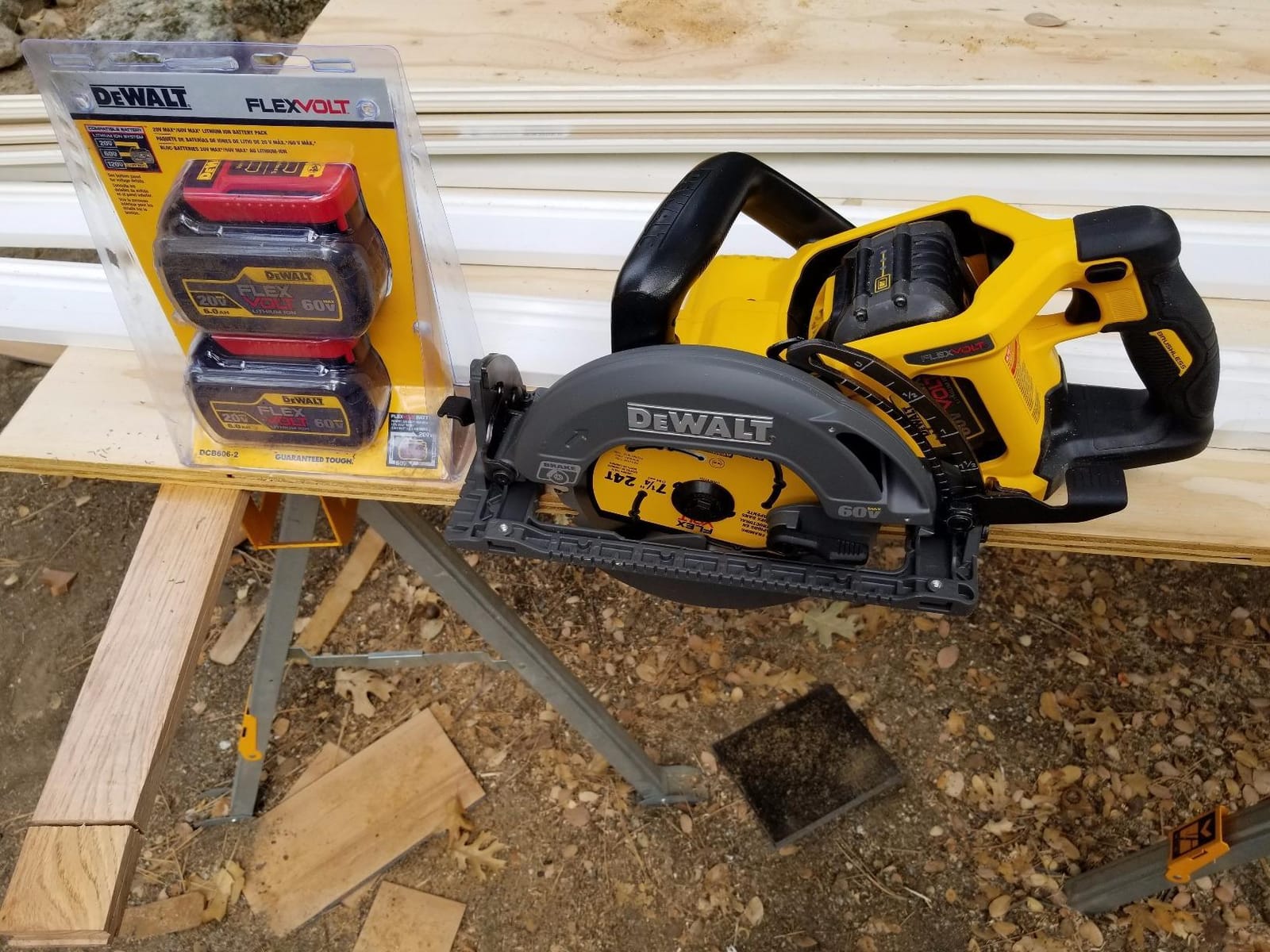
It ships with a carbide-tipped blade even as a bare tool, and it carries an integrated dust blower, an onboard wrench and a rafter hook. That is a genuinely complete package for a jobsite saw, and it removes two small errands from the first morning of work.
The compact magnesium shoe is designed to reduce surface area, which lowers drag on the cut. Reviewers describe the cut quality as notably smooth, particularly through treated material where a bigger plate tends to catch.
When this saw makes the case for itself?
Structural work. Six-by-six posts, glue-laminated stock, laminated beams, stair stringers and pressure-treated lumber all fall into the bucket where 20V saws start to feel the load. The 53 degree bevel covers sheathing and roofing work too.
For anyone already invested in the FLEXVOLT platform, the calculus is simple. The saw does more than the 20V models on heavy material and shares batteries with the rest of the high-voltage line.
What you give up for that torque?
At roughly 10.9 lb this is one of the heavier saws we tested, and that weight is felt most on overhead cuts, on ladders and in the last two hours of a shift. It is a saw that rewards a full pack and punishes an empty one.
It accepts only FLEXVOLT 60V MAX packs, not standard 20V MAX batteries, which makes it a platform commitment rather than a tool purchase. The shoe is also smaller than a traditional sidewinder plate, which gives you less bearing surface on rough, splinter-prone lumber. One reviewer also found the safety switch felt thin.
3. Milwaukee 2830-20 Rear Handle 7-1/4 in – Best Rear-Handle Jobsite Saw
Milwaukee 2830-20 Circular Saw Rear Handle 7-1/4″
Rear-handle 7-1/4 in
5800 RPM
24 tooth blade
M18 high output preferred
Pros
- Full-handle control on rips and crosscuts
- Cuts 2x4 and plywood cleanly
- Built to survive constant site use
- Blade light and quick blade stop
Cons
- Weak on smaller 5.0 Ah packs
- Bulkier around the battery bay
- Bare tool only
- Safety trigger takes time to learn
This is the saw that shows up in almost every discussion of cordless rear-handles, and the reason is simple: it puts two hands on the tool. For a crew breaking down lumber all shift, that grip is the feature everything else is built around.
At 5800 RPM with a 24 tooth blade, it cuts 2×4, plywood and even aluminum tubing without complaint. Owners with long careers behind them describe the cut quality as equal to or better than the corded worm drive saws they used to carry, with none of the cord to trip over on a pile of material.
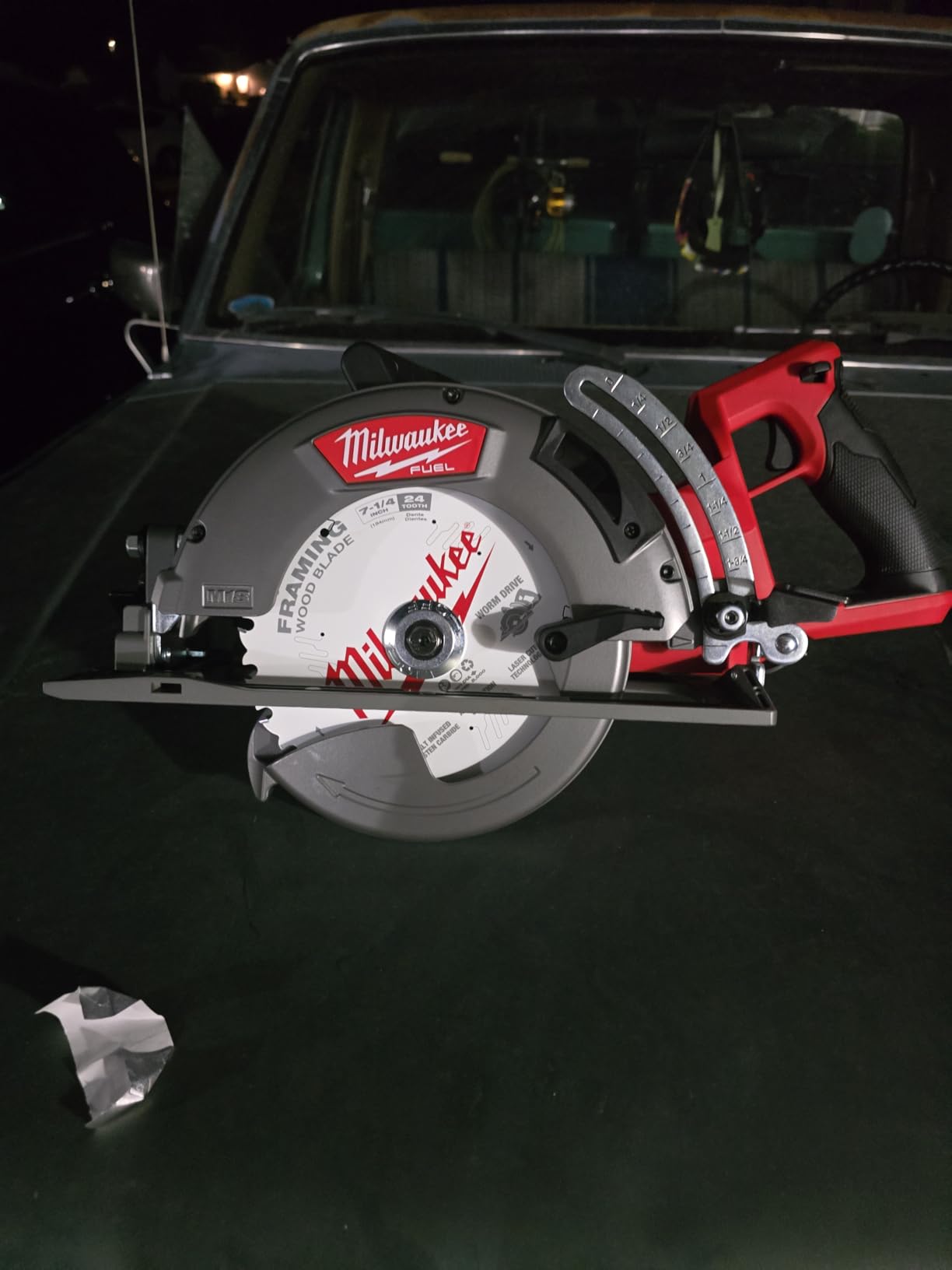
The blade sits on the far side with the handle at the rear, so straight cuts are easy with one hand or two. The magnesium handle construction is the part that survives the truck, and the blade light is praised by people cutting in crawl spaces and at dusk.
It is a bare tool, and that is the single most repeated complaint in the reviews. You need an M18 pack and a charger to use it, which is fine if your crew already runs M18 and a real hassle if it does not.
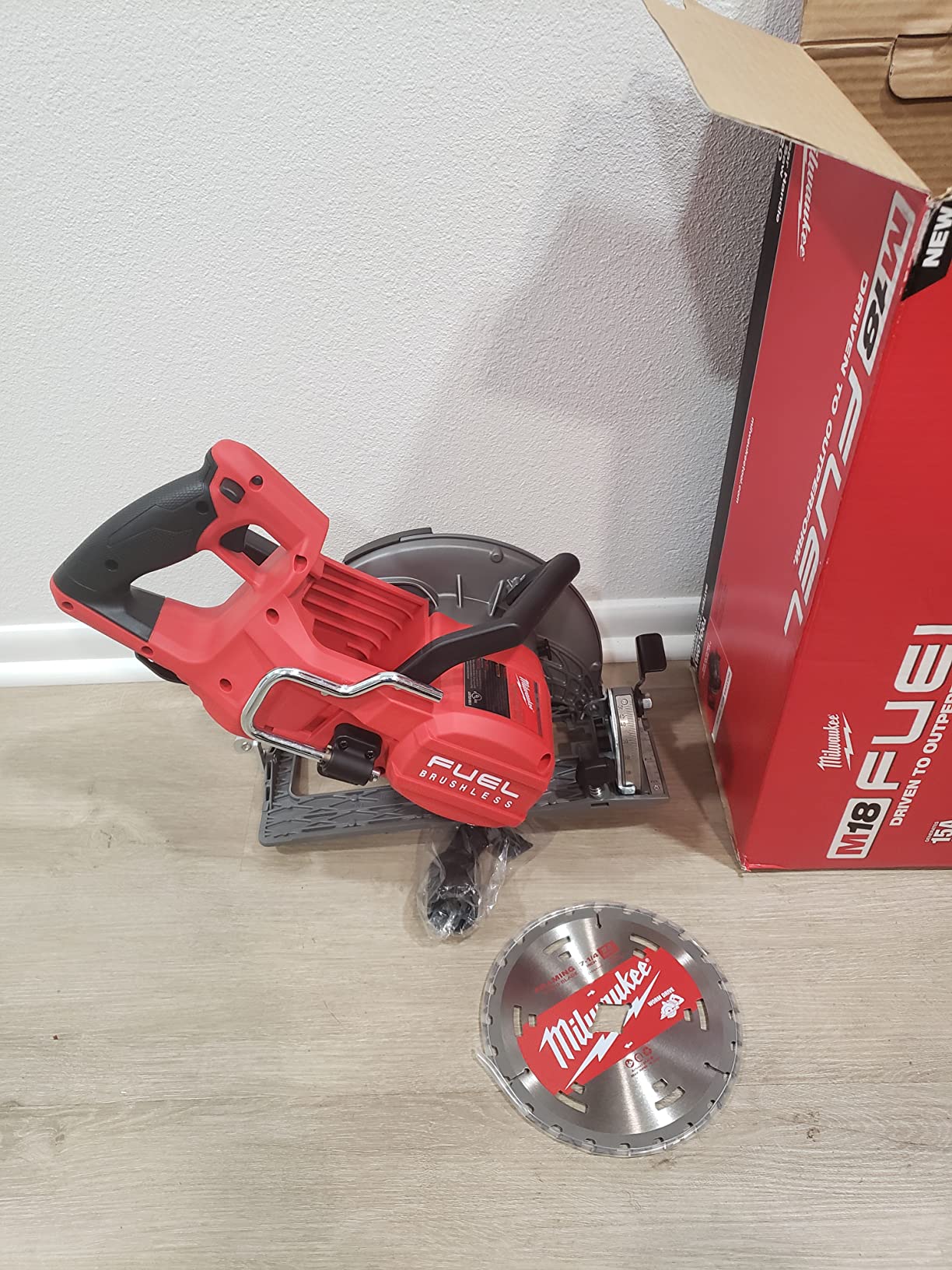
Who this is built for?
Framers and remodelers who spend the day breaking down dimensional lumber. The two-handed rear grip makes a long day of repetitive cuts far more manageable, and the ambidextrous trigger means the saw works for people who hold differently.
If you are on a platform with 12.0 Ah high output packs, this saw unlocks its full performance. That pairing is the buying decision, and it is worth getting right.
Where the reviews get unhappy?
Battery size dominates the complaints. On 5.0 Ah packs the saw binds up on thick material, and reviewers who started on small packs and upgraded report a night-and-day difference.
Around the battery bay it is bulkier and heavier than the compact sidewinders, and the ambidextrous safety trigger takes some getting used to. For finish work the sidewinder format still cuts cleaner, which is why experienced framers tend to carry one of each.
4. Milwaukee 2631-20 M18 Brushless 7-1/4 in – Best Lightweight Site Saw
Milwaukee M18 BRUSHLESS 7-1/4″ CIRCULAR SAW – BARE
5000 RPM brushless
7.2 lb bare
Electric brake
Magnesium guards
Pros
- Lightest saw in the roundup at 7.2 lb
- Brake and LED on a bare tool
- Magnesium guards add real durability
- Dust port on the guard
Cons
- 5000 RPM trails the field on tough cuts
- No battery or charger included
- Sidewinder depth on thick timber
At 7.2 pounds bare, this is the saw you can hold up overhead or work from a ladder all day without thinking about it. It is also one of the few bare tools in this roundup that ships with a brake, a dust port, an LED and a rafter hook, which makes it a genuinely complete site saw without a kit purchase.
The brushless motor and electric brake give controlled, splinter-free cuts, and the magnesium upper and lower guards add durability without pushing the weight up. Reviewers like this compact take on the 7-1/4 in. class, particularly people who move between the saw and other hand tools all day.
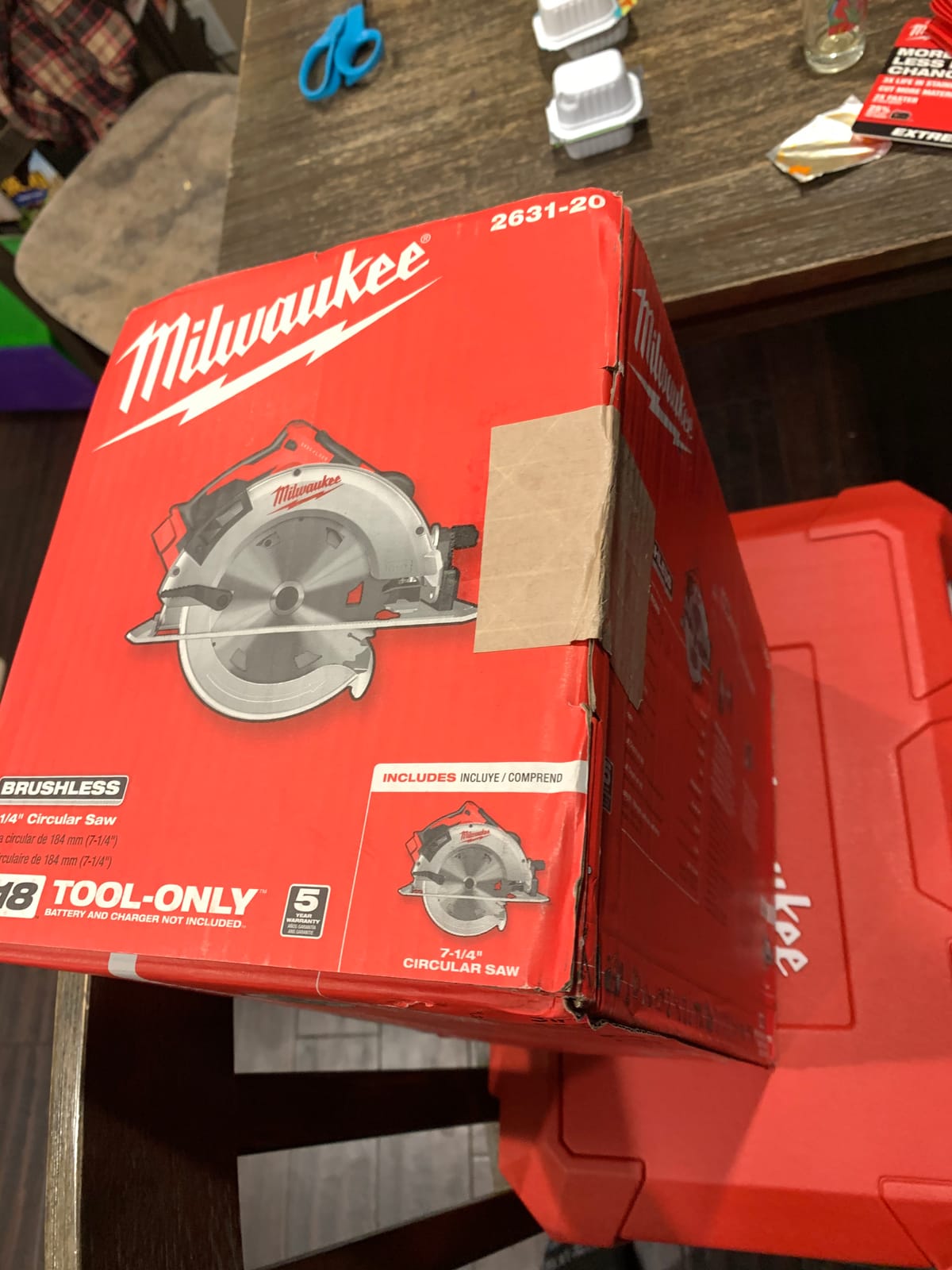
The LED work light improves visibility on the cut line, and the integrated dust port on the guard keeps the work area clearer when you are breaking down sheet goods. Both are small features that show up in the fourth hour of a day rather than the first.
For a first M18 purchase, this is an efficient way into the platform. You get the two features owners value most on cordless saws, the brake and the light, without paying for a kit you do not need.
Where the light weight pays off?
Overhead work, ladder work and finish carpentry all favor a lighter saw. Plywood on a bench, cabinet work and site trim are the tasks where a 7.2 lb tool is the difference between finishing the day and cutting corners.
It also travels well. If you are moving between jobsites and stowing the saw in a bag rather than a truck bed, the compact form factor is worth more than a few hundred RPM.
Where you will feel the compromise?
5,000 RPM is the lowest no-load speed in this group, and on tougher material that gap shows compared with the 5,500 to 6,000 RPM saws here. Reviewers note it is simply less suited to very thick timber than the 60V and 36V rear-handle models.
It is a bare tool, so a battery and charger are on you. And as a sidewinder it simply has less depth for structural material than anything with a rear grip. Buy it as the second saw, not the only one, if your work includes beams.
5. Makita XSR01Z 18V X2 LXT Rear Handle 7-1/4 in – Best for Makita Platform Owners
Makita XSR01Z 36V (18V X2) LXT® Brushless Rear Handle 7-1/4″ Circular Saw, Tool Only
Two LXT packs at 36V
5100 RPM
2-9/16 in at 90 deg
53 deg bevel
Pros
- Cuts 3x material in a single pass
- Automatic speed change during the cut
- No dedicated 36V pack required
- Die-cast magnesium base and guard
Cons
- Heaviest saw here at 12.1 lb
- Two batteries to buy and carry
- Long cuts can feel slower than higher-RPM rivals
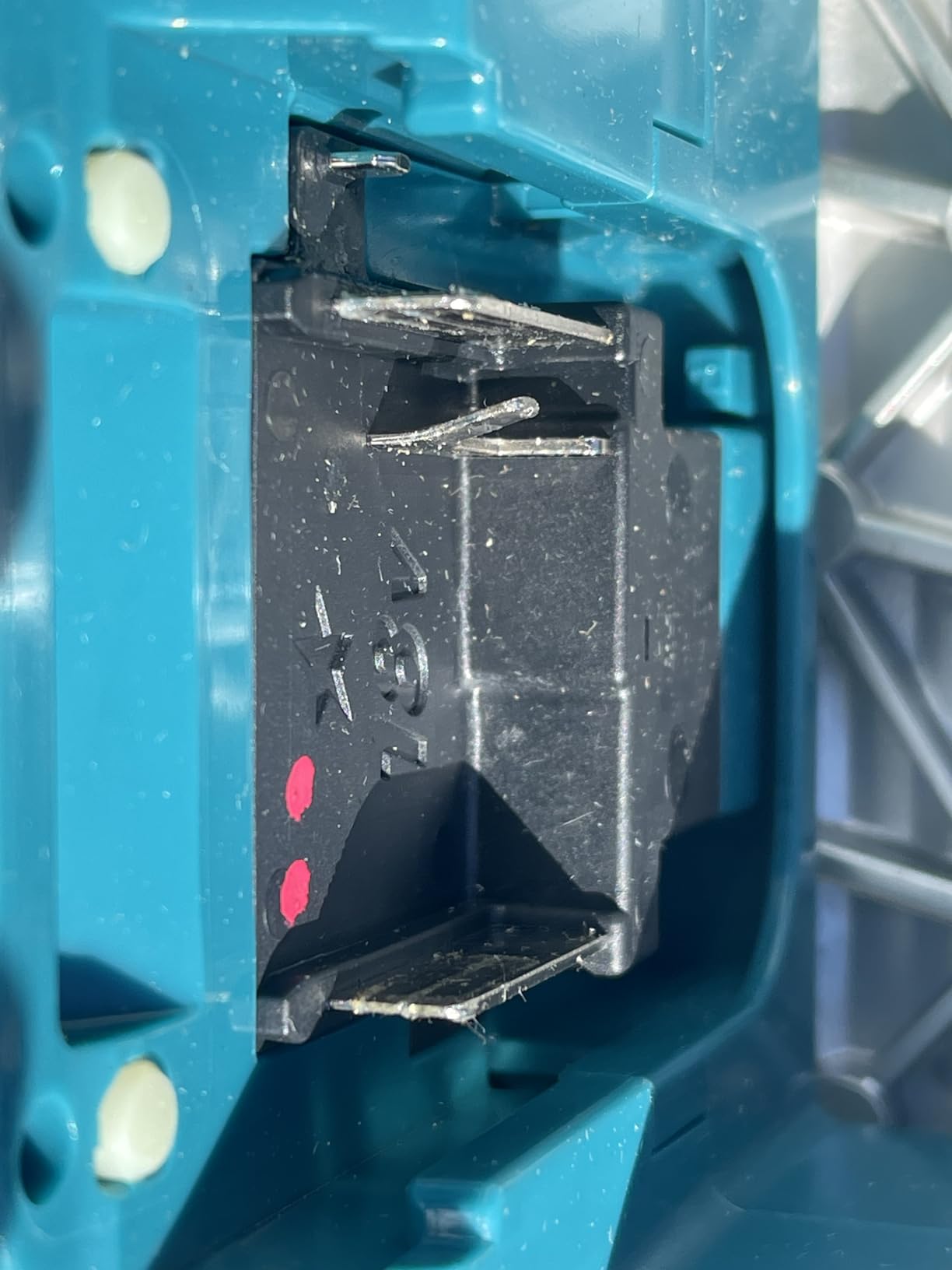
This is the saw Makita owners buy without being asked. It runs on two standard LXT batteries, one in each side of the handle, so the 36V-class power comes from packs you may already own rather than a proprietary pack that only fits this tool.
The electronically controlled brushless motor delivers 5,100 RPM and an automatic speed change function that adjusts speed and torque during the cut. At 2-9/16 inches of depth at 90 degrees it clears 3x material in one pass, which is the same capacity as the 20V class saws with a fraction of the effort.
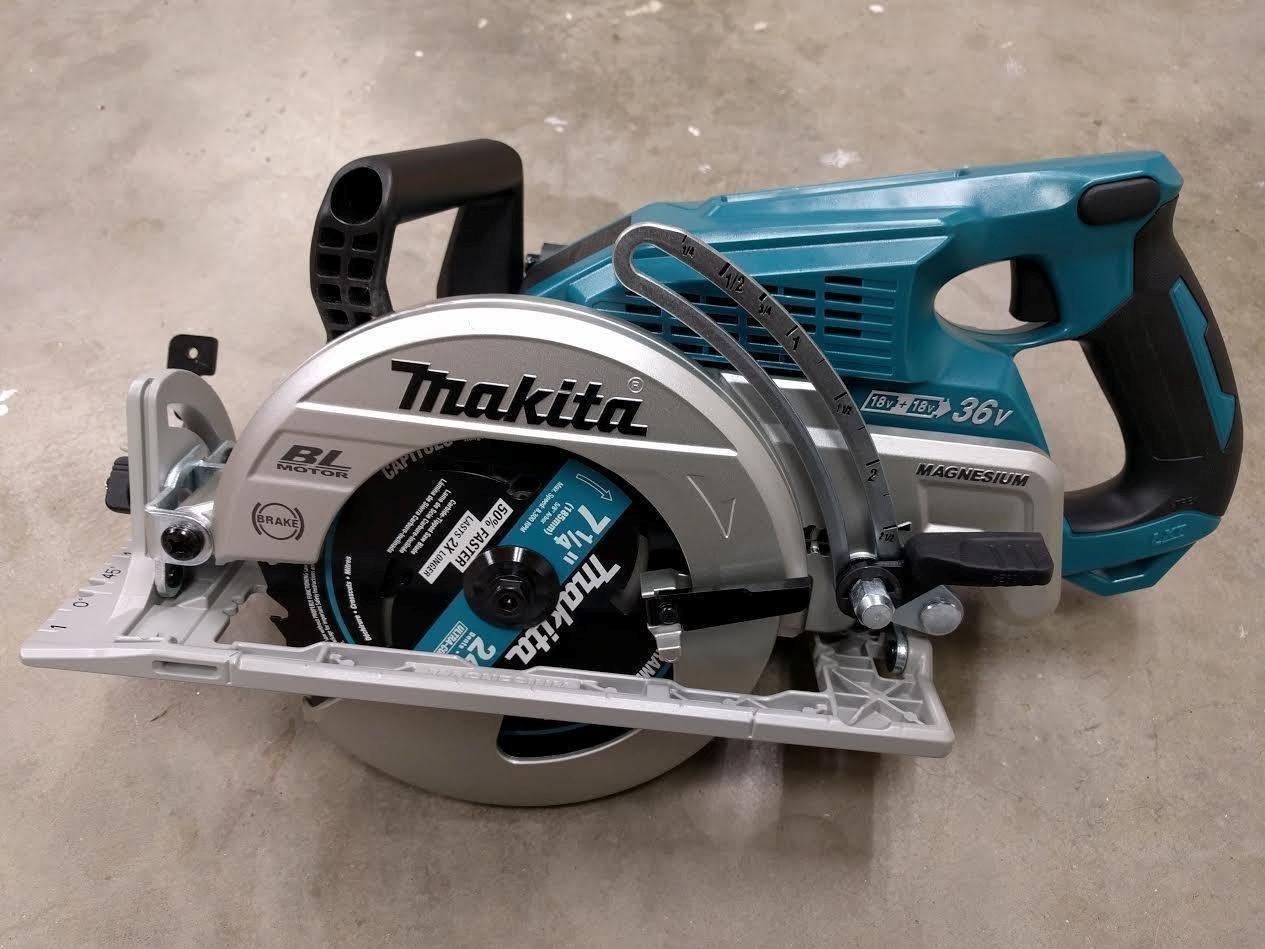
Rated at up to 558 crosscuts in 2×4 SPF and 291 in 2×10 SPF with two 5.0 Ah packs, the runtime figures are the ones that matter for a full day of layout. The die-cast magnesium base and blade guard, plus a die-cast aluminum blade cover and motor housing, give it a rigidity that reviewers consistently notice.
Positive bevel stops at 22.5, 45 and 53 degrees aid repeatability, and the electric brake is there for kickback control and cleaner cutoffs. Reviewers often describe worm-drive-like performance without a cord, which is high praise for a battery saw.
Why Makita crews gravitate to it?
The dual-battery arrangement means no new pack ecosystem. If you already own 18V LXT tools, this saw drops into a fleet you understand, and the packs swap between the saw and the rest of the line.
It is also a genuinely capable breakdown saw rather than a companion tool. The one-pass 3x capacity and the rigid magnesium base are what make it a primary saw rather than a second one.
The weight problem is real
At 12.1 pounds this is the heaviest saw we tested, and it is the first complaint in nearly every review. Overhead work and long sessions on a ladder are where users feel it, and two seated packs add bulk as well as mass.
Some owners find it slower to finish long cuts than the higher-RPM competitors, and you have to buy, carry and charge two packs. If you do not already own LXT batteries, the two-pack cost undercuts the value case for this saw considerably.
6. DEWALT DCS590B 20V MAX XR 7-1/4 in – Best 20V MAX Upgrade
DEWALT 20V MAX XR Brushless Cordless 7-1/4 in. Circular Saw, Tool Only (DCS590B)
1700 MWO brushless
5500 RPM
368 cuts per charge
9.88 lb
Pros
- Most powerful saw in the 20V MAX line
- 368 cuts per charge
- Thumb safety and blade lock button
- Good balance of torque and weight
Cons
- No rip fence included
- Base plate lacks grip when wet
- Sold as a tool only
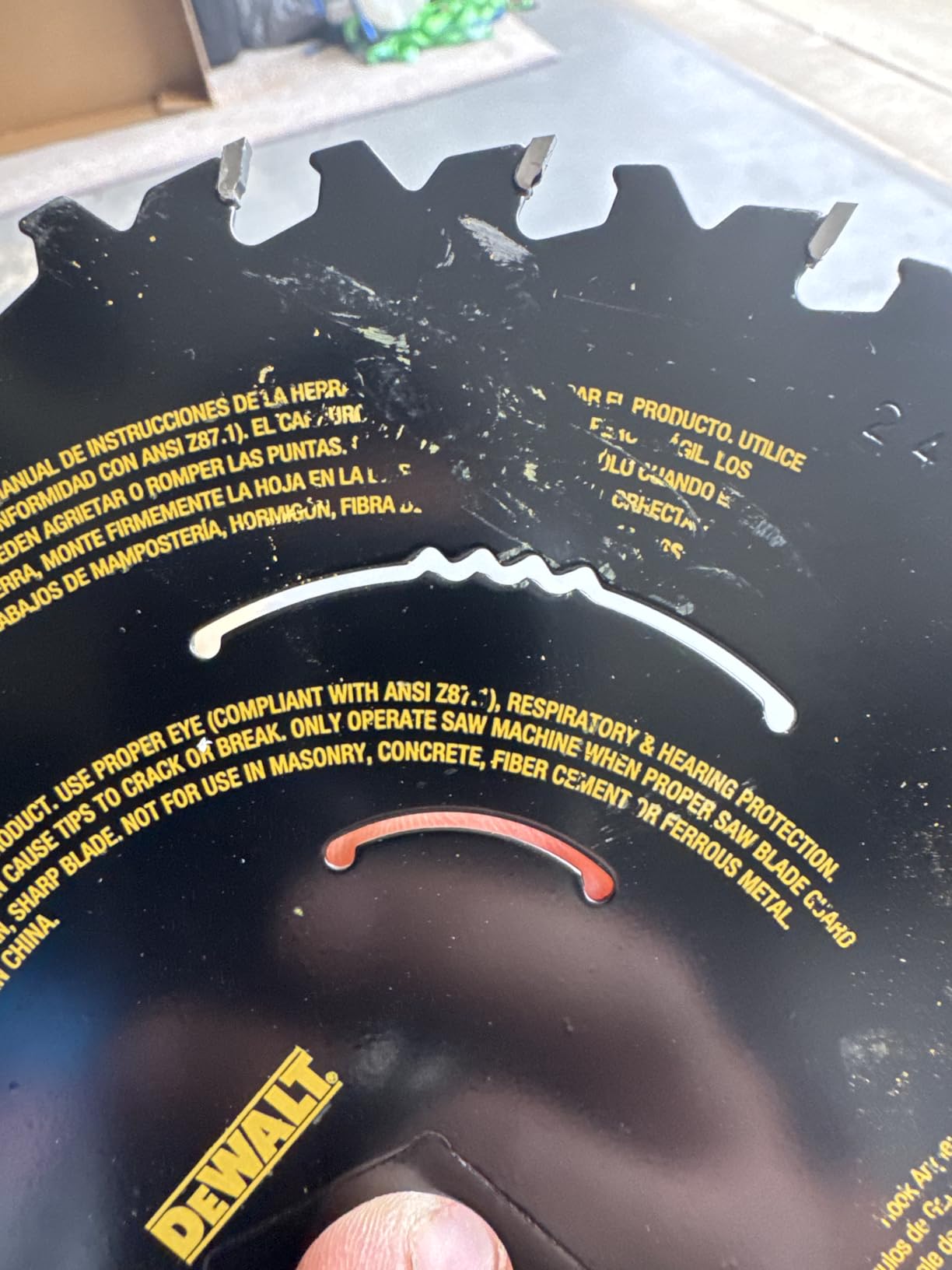
This is the newest saw in the roundup and the current top of the DeWalt 20V MAX circular saw line. Rated at up to 1,700 MWO with a brushless motor at 5,500 RPM, it is the version to buy new if you are standardizing on 20V MAX this year rather than three years from now.
Up to 368 cuts per charge is a meaningful jump for a 20V platform saw, and reviewers confirm it on material rather than in the spec sheet. One buyer described cutting 1/2 inch plywood and dimensional pine quickly and cleanly, which is the work this saw is aimed at.
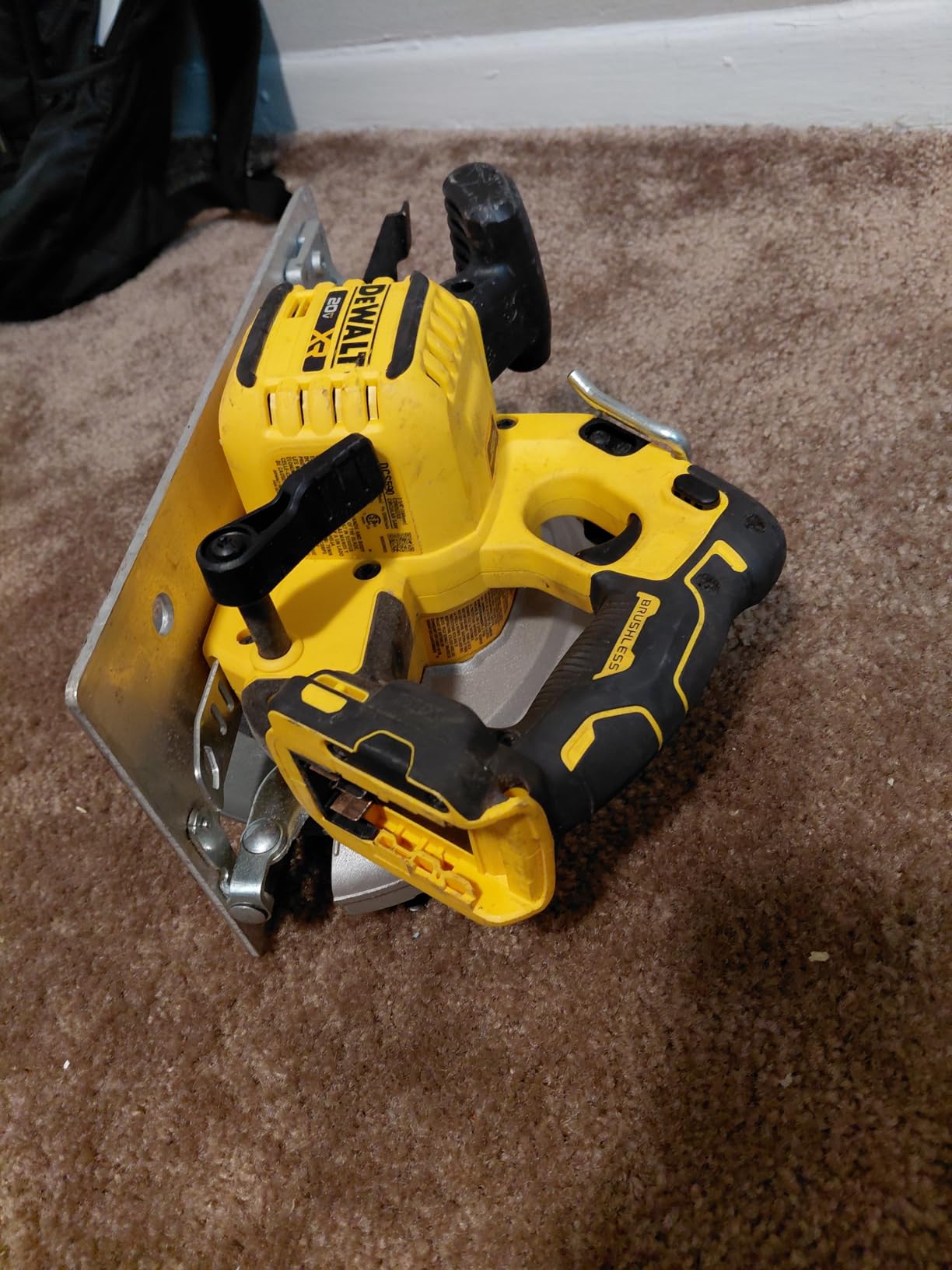
Depth of cut is 2-9/16 inches at 90 degrees and 2 inches at 45, so it handles 3x material at square and heavier material on a bevel. The automatic electric brake stops the blade from coasting after you release the trigger, and the deck markings are marked for both depth and bevel setup.
There is enough clearance under the deck to square a speed square against it for reliable 90 degree cuts, which is a nice detail that shows whoever laid this saw out actually used it.
Where it beats the older 20V saw?
Torque on thicker material, plainly. If you were on a 20V MAX saw with a brushed motor and felt it labor through pressure-treated pine, this is the step up. The brushless efficiency also stretches runtime, and the brake and blade lock make blade changes faster and safer.
It is a good fit for remodelers doing a mix of demolition and finish work, where one saw has to do sheet goods, trim lumber and sheathing.
What buyers complain about?
The loudest criticism by far is the missing rip fence, and at least one buyer treated that as a reason to return it. A rip fence is not essential if you own a guide, but it is a conspicuous omission at this level.
The base plate is not especially grippy on smooth or wet material, which is worth knowing before a wet-weather framing day. It is a bare tool, so a pack and charger come separately, and one buyer reported a unit arriving scuffed.
7. CRAFTSMAN CMCS551B V20 7-1/4 in – Budget Pick Cordless Circular Saw
CRAFTSMAN V20 RP Cordless Circular Saw, 7-1/4 inch, Tool Only (CMCS551B)
Brushless motor
56 deg bevel
LED light
9.3 lb
Pros
- Strong power for the money
- Nearly the widest bevel here at 56 degrees
- LED makes the cut line easy to follow
- Metal upper guard for durability
Cons
- 9.3 lb is heavy for a 20V saw
- Bare tool with no battery or charger
- Narrower saw line than major brands
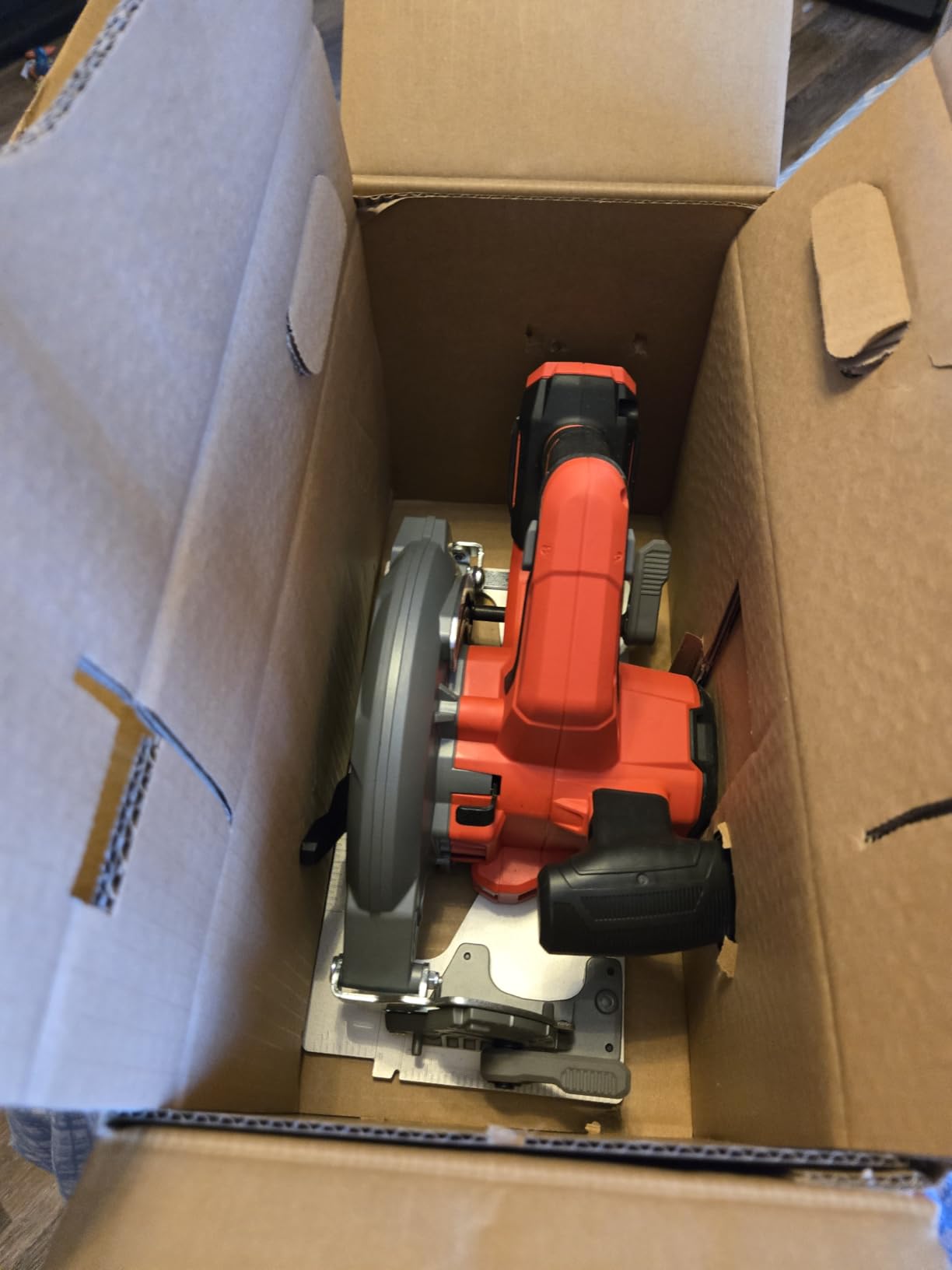
If you are starting a cordless platform and want a competent 7-1/4 in. saw without committing to one of the three big ecosystems, this is the value pick. The brushless motor is rated at up to 75 percent more power than a comparable brushed motor, and owners consistently report that it handles general framing adequately.
56 degree bevel is nearly the widest in this roundup, with positive stops at 22.5 and 45 degrees. That is genuinely useful for roofing, siding and sheathing work, and it is not a spec-sheet-only advantage in the way some numbers are.
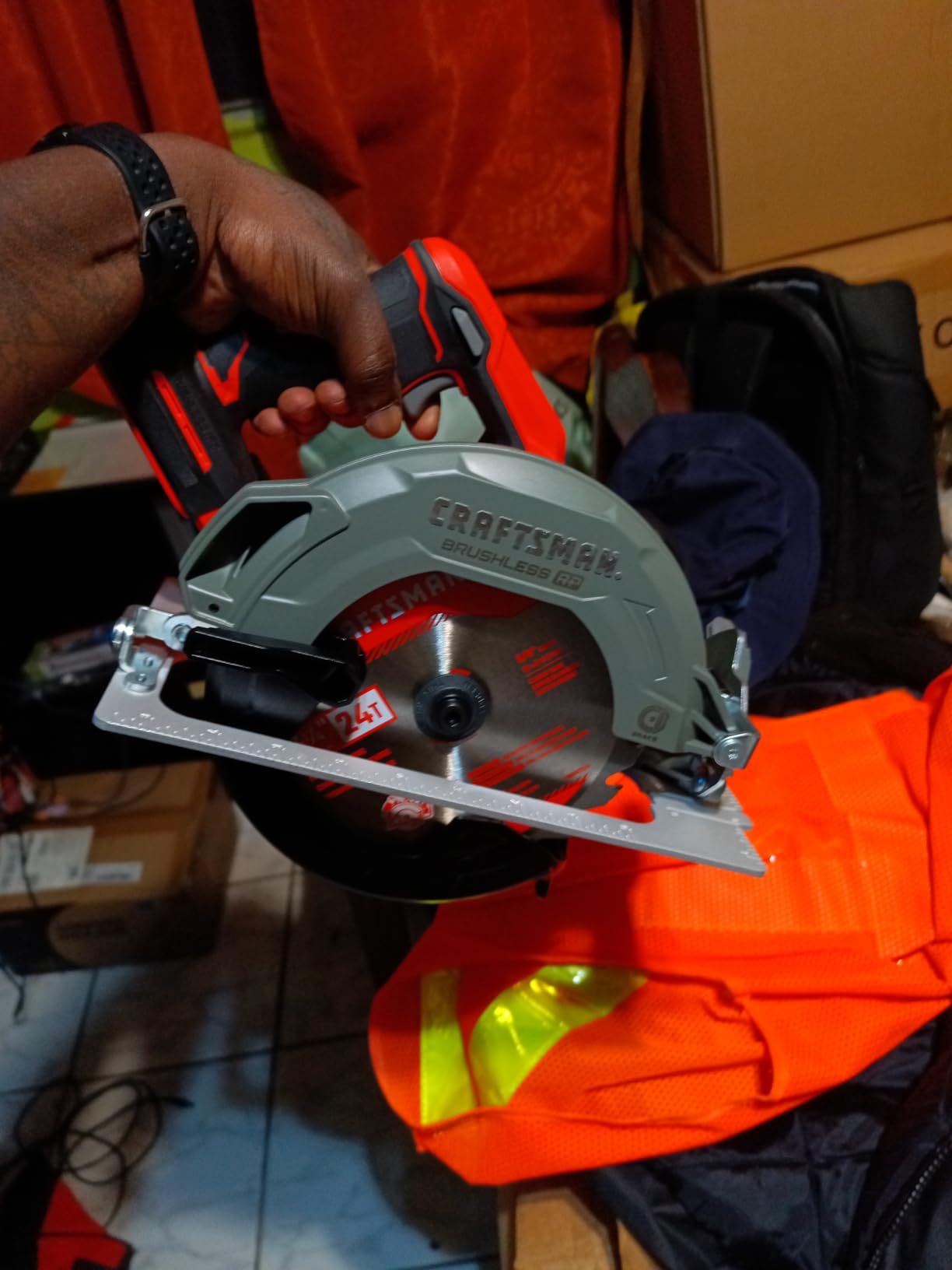
The LED work light is one of the more commonly praised features. It illuminates the cutting line and the surrounding work surface, which matters for anyone cutting in a basement or a framed-in space with no work light yet.
The metal upper guard adds real resilience for a tool that will get dropped and knocked off a scaffold. For a value entry, the feature list is longer than the price would suggest.
What you get for the money?
A brushless motor, a wide bevel with detents, a work light and a metal guard in a 7-1/4 in. sidewinder. For a crew member who needs a dedicated breakdown saw and is not the person choosing the fleet’s battery platform, that is a defensible buy.
Owners treat it as a capable budget alternative rather than a premium tool, and the sentiment is positive but measured. The finish quality does not match the 36V and 60V models on hardwood, but on dimensional lumber it holds up.
Where the compromises bite?
Nine pounds three ounces is heavy for a 20V saw, and it sits between the 7.5 lb class leaders and the bigger rear-handle tools. It is a bare tool with no battery, no charger and no case, so your real entry cost is higher than the saw number.
Two larger cautions. The V20 cordless saw line is narrower and harder to find at trade counters than the major platforms, which matters when a saw goes down mid-job. And cut finish and edge consistency are rated below the premium models by buyers who have used both.
8. Makita XSH06Z 18V X2 LXT 7-1/4 in – Fastest Cutting Speed on Two Batteries
Makita XSH06Z 18V X2 LXT® Lithium-Ion (36V) Brushless Cordless 7-1/4” Circular Saw, Tool Only
6000 RPM brushless
Two LXT packs
610 crosscuts per charge
10.4 lb
Pros
- Highest no-load speed here at 6000 RPM
- Carbide 7-1/4 in blade included
- Rubber overmold grip improves control
- Automatic speed change adapts torque
Cons
- 10.4 lb is heavy
- Requires two LXT batteries
- Bare tool with no battery or charger
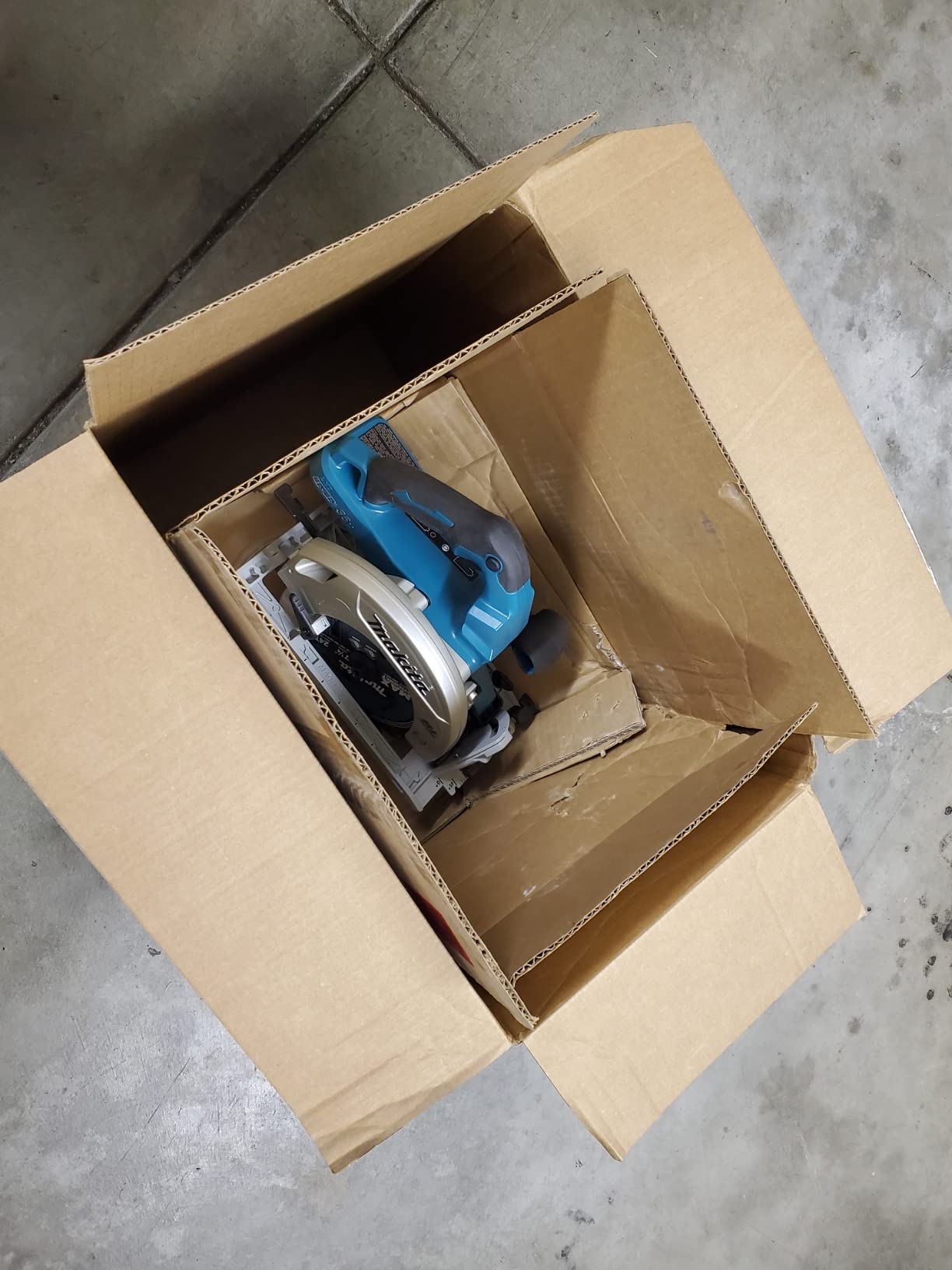
This is the speed pick. At 6,000 RPM no-load it runs faster than anything else in the roundup, and the electronically controlled brushless motor pairs that with an automatic speed change function that adjusts torque during the cut rather than just holding a fixed speed.
It is a sidewinder rather than a rear-handle, so it will not replace a big breakdown saw. What it does is move through crosscuts quickly, and the runtime figures back that up: up to 610 crosscuts in 2×4 SPF and 320 in 2×10 SPF with two 5.0 Ah packs, both the highest numbers in this group.

The bare-tool package includes a 7-1/4 in. 24 tooth carbide-tipped blade and a wrench, which is unusual at this price and means you are cutting on day one. The rubber overmold grip on the handle is a genuine improvement over the bare plastic handles on several competitors.
Owners report fast, clean cuts in dimensional lumber, and the brushless motor runs cooler and more efficiently, which is the mechanism behind the longer run time per charge.
Where high RPM actually matters?
Softwood crosscuts and repeated layout work, especially cutting a large number of 2x4s to the same length. The 2×10 crosscut figure of 320 per charge is the number that matters for a framing crew, and it leads the roundup.
It is also a good pairing with the rear-handle saw if you run Makita. The sidewinder handles the sheet goods, the trim and the light work while the big saw takes the lumber.
The weight and the two-pack reality
At 10.4 pounds it is heavy, and reviewers call that out repeatedly, particularly for overhead work and extended sessions. Rubber overmold helps with comfort but does not change the mass.
It also requires two LXT batteries, so you are buying and charging two packs. The upside is that they are standard LXT packs, not a dedicated 36V pack, which keeps the ownership cost down if you already run Makita.
9. Metabo HPT C3607DWAQ4 36V MultiVolt Rear Handle – Lightest Rear-Handle Saw
Metabo HPT 36V MultiVolt 7-1/4 Inch Rear Handle Circular Saw, Tool Only – No Battery, Lightest Weight in Its Class, 53° Bevel Capacity, High-Capacity Cutting, C3607DWAQ4
36V MultiVolt
5100 RPM
8.2 lb
Lifetime tool body warranty
Pros
- Lightest rear-handle saw in its class
- Handles 2x10 and 6x6 without losing power
- Well balanced with clear sight lines
- Lifetime tool body warranty
Cons
- Safety lock above the trigger is awkward
- Dust port discharges toward the operator
- MultiVolt packs less widely available
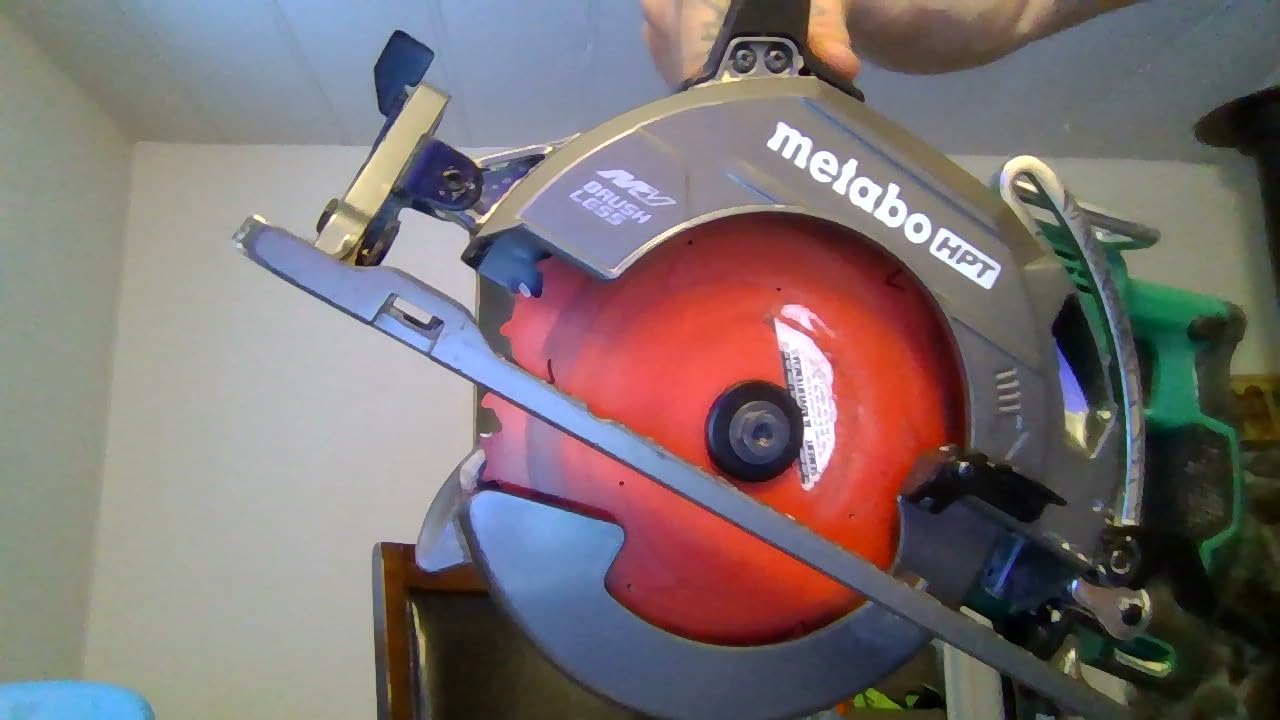
This is the saw that changes the argument against rear-handle saws. The complaint about the format is weight, and at 8.2 pounds this one is roughly two pounds lighter than the other rear-handle tools in this roundup. On a ladder or an overhead cut, that difference is not cosmetic.
Underneath it is a 36V MultiVolt brushless motor at up to 5,100 RPM. Owners report it cutting 2×10 and 6×6 PSL without losing power, and several say outright that it outperforms heavier rear-handle saws from Milwaukee and Makita on that material. The listed capacity covers up to five layers of half-inch and four layers of five-eighth inch OSB or plywood.
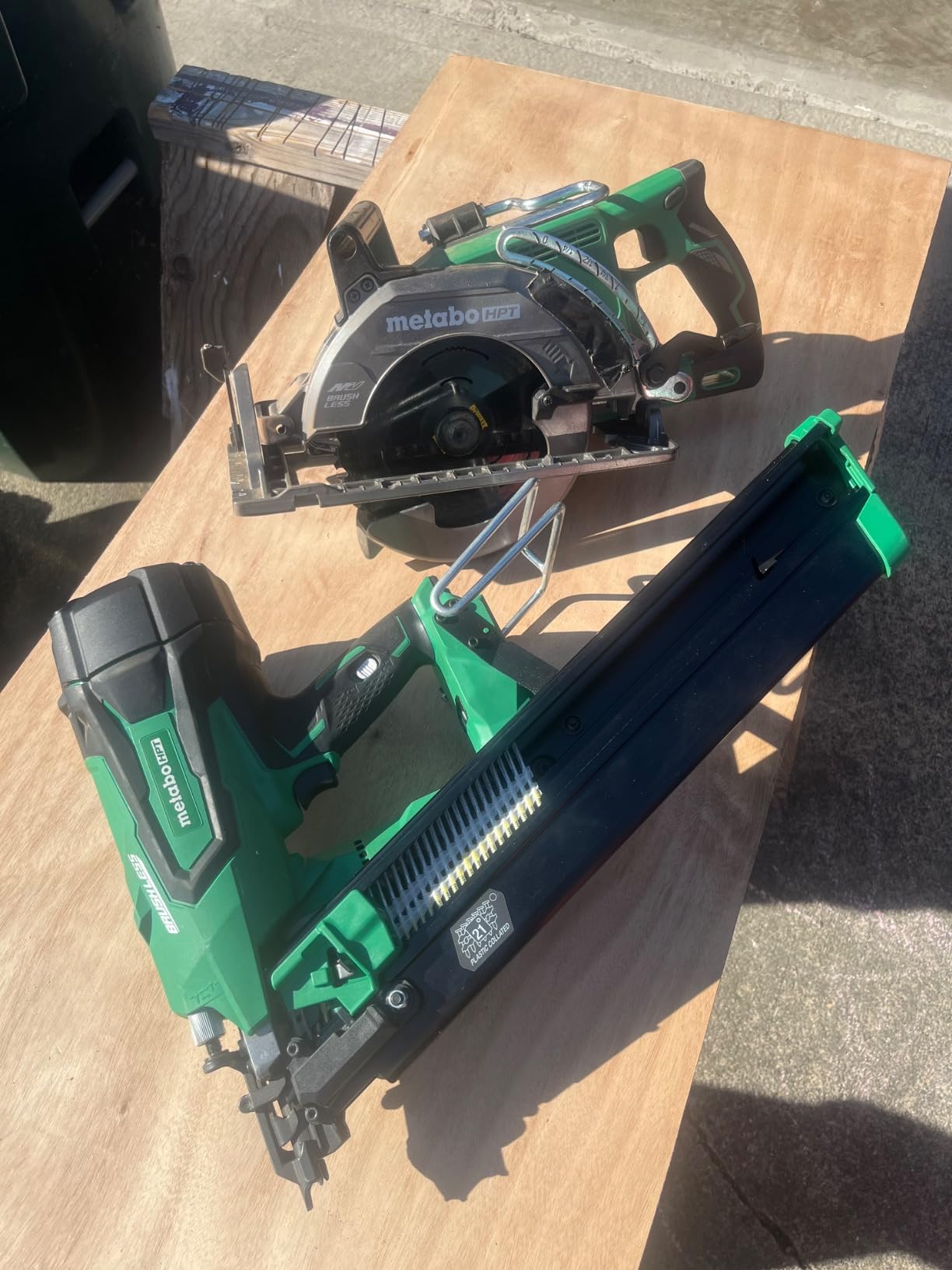
The balance and sight lines are praised as often as the weight. A rear-handle saw with a clear view of the cut line and a centered grip is a different cutting experience from a front-handled saw with a plate in the way.
Two things make this a serious buy rather than a novelty. The magazine-style MultiVolt packs are among the more affordable 36V options, and the lifetime tool body warranty removes the biggest objection a contractor has to a second-tier brand.
Who should buy this one?
Crews that work overhead, on ladders, or on anything requiring two-handed control without the fatigue. Overhead sheet work, soffits, stair construction and site trim are where the weight advantage pays out fastest.
It is also a good value line for anyone who wants 36V class cutting power without buying into a premium ecosystem, particularly given the lifetime body warranty.
Where the ergonomics fall short?
The safety lock sits above the trigger, and owners describe it as awkward to reach on every cut. Over a full shift that is a repetitive-motion annoyance, and it is the most consistent complaint in the reviews.
The dust port discharges sideways toward the operator rather than downward, which puts more sawdust in your face instead of on the ground. And as a rear-handle saw it still does not give the grip of a true worm drive on wet or splinter-prone material. MultiVolt packs are also less widely available than 18V platform packs.
10. SKIL CR5429B-20 40V PWR CORE 20 Rear Handle Kit – Best Ready-to-Go Kit
SKIL 2x20V PWR CORE 20 Brushless 7-1/4” Rear Handle Circular Saw Kit Includes Two 5.0Ah Batteries and Dual Port Auto PWR Jump Charger-CR5429B-20, Red
40V from two packs
5300 RPM
600 cuts per charge
Two batteries and charger
Pros
- Only kit here with two packs and a dual-port charger
- 0 to 25 percent in 15 minutes
- Good weight distribution for a rear-handle saw
- Cuts cleanly with enough power for general framing
Cons
- 10.2 lb before both batteries
- Included batteries reported to wear out fast
- Some packs lose charge while stored
- Support and warranty trail competitors
This is the only package in the roundup that arrives ready to work. Two 5.0 Ah packs, a dual-port charger, a 24 tooth carbide-tipped blade and the saw. For someone starting from nothing on a 40V line, that removes the single most common buyer mistake of buying a bare tool and then discovering what a full setup costs.
At 5,300 RPM from a digital brushless motor with intelligent power management, it delivers up to 600 cuts per charge on 2×4 SPF crosscuts and a 2-9/16 inch depth of cut that clears 3x material in a single pass. The dual-port PWR JUMP charger takes both packs from zero to 25 percent in 15 minutes and a full charge in under an hour.
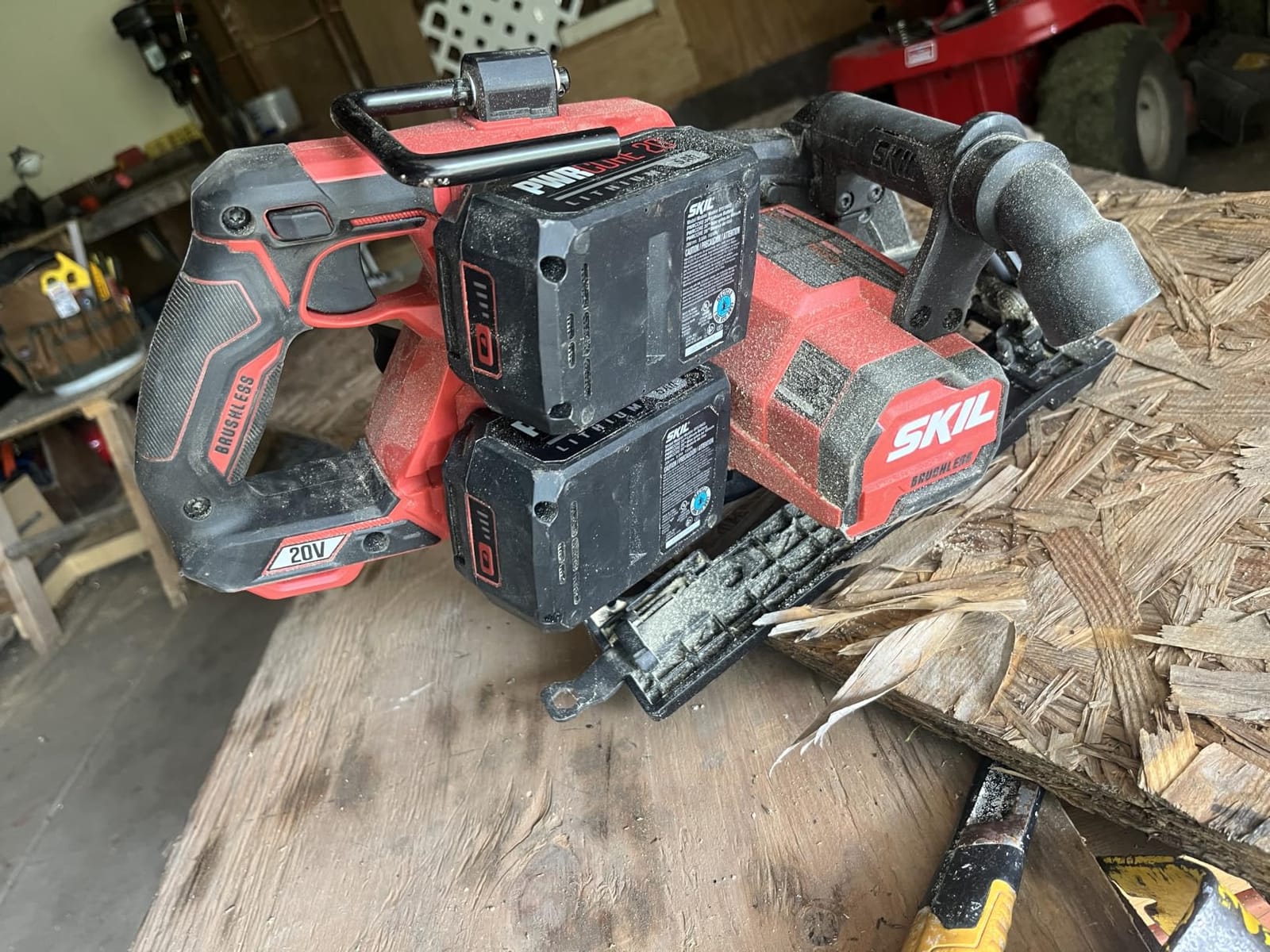
There is an adaptable dust port in the auxiliary handle that directs sawdust away from the work area, which is a nice touch for indoor work. The electric brake and the weight distribution of the rear-handle layout are both praised, and the balance is good for a saw in this class.
The battery cells are wrapped in cooling material, which the manufacturer credits for 25 percent longer run time and roughly double the expected battery life. That claim is worth watching in the field.
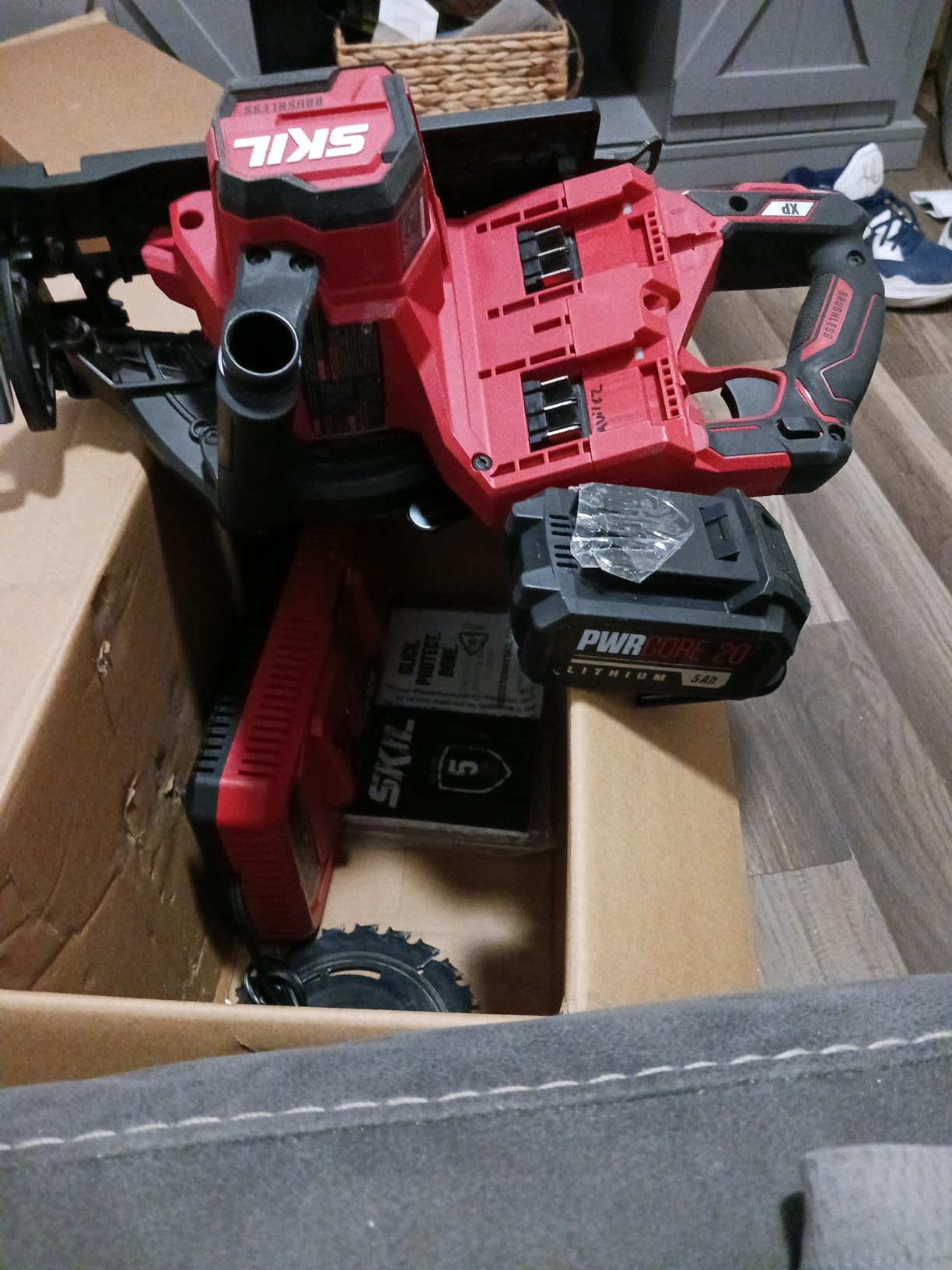
Why the kit format matters here?
Everything else in this roundup is a bare tool. That is the right call for crews with an existing platform, and the wrong call for anyone buying their first saw in a family. Here you get everything the saw needs on day one.
The fast charger is genuinely useful. A 15 minute top-up between layout and sheathing keeps a single saw working through a shift without a second pack in the rotation.
Where owner satisfaction drops?
This saw carries the lowest average rating in the group at 4.2, and the cause is consistent: the batteries. Multiple owners report the included packs degrading much faster than premium-brand packs, and some report batteries losing charge while sitting unused in the case.
At 10.2 pounds before you account for two seated packs, it is heavy for a full day of work. Support response and the 5 year registered warranty both trail the major brands, and if the packs do fail you are relying on the weaker of the two.
Which Cordless Circular Saw Does Which Jobsite Task Best?
Ranking a saw by cut speed alone tells you very little. The more useful question is which saw belongs in which crew member’s hand on a given day, and the answer changes completely between breakdown, sheet goods, compound cuts and finish work.
Rough framing and breaking down 2x lumber. A rear-handle saw wins here, because two hands on the tool is what makes a full day of repetitive breakdown work sustainable. The Milwaukee 2830-20 and the Metabo HPT C3607DWAQ4 are the two to choose between, and the deciding factor is weight tolerance: 8.2 pounds for overhead and ladder work, roughly 9.9 pounds for ground-level lumber work where grip matters more than mass. If the crew only ever cuts on the ground and nobody works overhead, the sidewinders are lighter and cheaper.
Structural lumber: posts, beams and stringers. Cut depth and torque matter more than anything else here. The DEWALT DCS577B at 60V MAX is the strongest pick in this roundup for 6×6 and treated structural stock. The DEWALT DCS590B and the DCS570B handle dimensional lumber and some 3x material in one pass, but a 4×4 will still mean a second pass at 7-1/4 inches.
Sheet goods, subfloor and OSB. Every saw here cuts OSB, and the difference is in finish quality and dust control. The Milwaukee 2631-20 has a dust port on the guard, the SKIL has an adaptable port in the auxiliary handle, and the DeWalt 60V saw has an integrated blower that keeps the cut line clear. For tear-out control, the electric brake on the two DeWalt 20V MAX saws, the Milwaukee 2631-20 and the Metabo HPT all help, because the blade stops instead of coasting through the exit side.
Hip roof and dormer compound cuts. This is the task that trips up rear-handle saws. A right-hand compound cut on a hip or a dormer needs the lower guard to move down with the saw instead of hanging up on the material, and guard hang-ups are the most common complaint we found anywhere in this research. If you stick-frame hips, test the specific saw on a scrap hip rafter before committing. Saws with a blade on the far side of the motor and a rear handle generally handle the cut line better, which favors the DCS577B, the 2830-20 and the Metabo HPT.
Pressure-treated decking and wet lumber. Here the shoe matters more than the motor. A small compact shoe like the DCS577B’s catches less water and less debris, but a larger plate gives more bearing surface. The bigger issue is carbide, not the saw: a framing blade dulls fast in treated material, and a fresh blade is the single biggest variable in cut quality.
Interior finish carpentry in occupied spaces. Weight, dust and finish quality. The Milwaukee 2631-20 at 7.2 pounds is the easiest to control on a bench or a ladder, its LED and brake help with clean cutoffs, and its dust port keeps the mess down. A fine-finish blade matters far more than any saw feature at this point in the job.
One-handed stake cutting and freehand points. A sidewinder is the right tool, not a rear-handle. The 2631-20 and the DCS570B are both light enough and compact enough to control with one hand while holding a story stick or a marked batten, and the DCS570B’s brake stops the blade cleanly at the end of a short cut.
Demo and renovation tear-out. Nail-embedded lumber is the hardest thing a cordless saw will face. Brushless saws in this group handle it, but the 60V MAX DCS577B and the 36V Makita XSR01Z have the torque margin, and the DeWalt DCS590B is the newest 20V option with modern torque headroom. Expect to swap blades often, and keep a demo blade separate from your framing blade so the fine teeth stay sharp.
Our related guides cover the saw classes on the other side of the shop, including our picks for the tile saws used on bathroom remodels, which is the job where dust control matters most of all.
Sidewinder or Rear-Handle: Which Style Fits Your Crew?
This is the first real decision in the category, and it is more regional and habitual than technical. West Coast framers have used rear-handle and worm-gear saws since the 1970s and will not switch. East Coast crews overwhelmingly run sidewinders. Both are correct for the work they do.
A sidewinder puts the motor beside the blade and the handle above the shoe, which means a compact tool, a low center of gravity and one-handed control. It is the better choice for sheet goods, finish work, overhead cuts and anything where you need to hold a batten or a marked line in one hand. It is also lighter, and lighter matters more than most buyers expect at hour seven.
A rear-handle saw puts both hands on a vertical grip with the battery or motor above it, giving you the control authority of a two-handed tool and a rafter hook for a belt. It cuts thicker material and feels more stable on heavy breakdown work. The cost is weight, bulk and a higher center of gravity, which is exactly why the Metabo HPT at 8.2 pounds is such a compelling entry into the format.
The honest answer, and the one most experienced framers give, is that professionals end up owning both. The big saw for breakdown, the smaller one for plywood and finish. If you are buying one saw, match it to the majority of your cuts rather than to your most dramatic ones. If you are buying two, buy one of each.
The Battery Platform Question Nobody Puts in a Roundup
Here is the part that determines your real cost of ownership, and it has nothing to do with cut speed. A bare tool is not a saw. A bare tool is a saw plus a battery, a charger, two spare blades and a dust adapter, and on some platforms the packs are the expensive part.
First, the naming confusion. 18V and 20V MAX are the same nominal voltage and mostly the same physical pack; the 20V MAX label is a marketing choice. When a forum thread asks whether 18V or 20V is better, the honest answer is that the meaningful differences are the cell format and the amp-hour capacity, not the number on the label.
Second, the two-battery designs. The Makita XSR01Z and XSH06Z take one LXT pack on each side, and the SKIL CR5429B-20 takes two PWR CORE 20 packs. That design is how they reach 36V and 40V class power without a proprietary pack, and it is why those saws are heavier. Budget for two good packs, not one.
Third, the high-voltage platforms. The DeWalt DCS577B runs on FLEXVOLT 60V MAX only. That saw is exceptional on heavy timber and a dead end if you were planning to standardize on 20V MAX across the rest of your tools. The Metabo HPT runs on 36V MultiVolt, and its magazine-style packs are among the more affordable high-voltage batteries, which is a real advantage for a buyer without an existing ecosystem.
Fourth, and most practically, the forums are unanimous: platform fit decides the purchase. M18 crews buy Milwaukee, LXT crews buy Makita, and the performance gap between these ten saws is far smaller than the gap between owning packs you already have and buying a second ecosystem from scratch. Six brands appear in this roundup, which is itself a signal about how the market has consolidated.
Our take: pick the platform first based on what your crew already owns or what your dealer services well, then choose within it. The 2 lb weight difference between the rear-handle saws in this list will not cost you a job. A dead battery ecosystem on day one will.
Which Blade You Keep on the Truck Matters More Than the Saw?
Most disappointing cuts are blade problems, not saw problems, and no saw fixes a dull blade. Every saw in this roundup takes a 7-1/4 in. blade, which is the single biggest reason that size dominates the professional cordless market. The 7-1/4 in. fits a 5/8 inch arbor, it is the size with the deepest blade availability, and it is the size every rental house stocks.
A 24 tooth framing blade is the right default for dimensional lumber and site work. Fewer teeth means a faster, more aggressive cut with more tear-out, which is exactly what you want on a rough framing cut and exactly what you do not want on a finish cut.
For plywood, subfloor and visible interior work, move up in tooth count. A 40 to 60 tooth blade cuts slower and leaves a much cleaner edge on sheet goods, at the cost of motor heat and a slower cut on framing lumber. Keeping one of each on the truck is standard practice among the crews whose opinions we leaned on.
Two more worth carrying: a fine finish blade for trim and cabinet work, and a demo blade for nail-embedded material. Plunge-cut and dado blades exist too, but those are specialty tools rather than truck staples.
For indoor work, the dust port matters more than most people expect. A shop vac adapter turns a dusty job into a manageable one, and several saws here have a port on the guard or in the auxiliary handle. If you plan to cut a lot of plywood inside an occupied building, factor the adapter into the purchase decision. For that kind of work our cordless pole saw guide covers the outdoor tree work side of the same dust problem.
How to Choose a Cordless Circular Saw for Jobsite Work?
Use these as a decision checklist, in order. The order matters, because each step eliminates options and saves you from comparing features that will not matter to your work.
1. Choose the platform before the saw. Look at what batteries your crew already owns, what your dealer carries and services well, and what the other tools on the truck need. Buying a second ecosystem is the most expensive mistake in this category, and it is a mistake made at the counter, not after the saw arrives.
2. Pick the style by the work. Sheet goods, finish and overhead work point to a sidewinder. Continuous breakdown of dimensional lumber points to a rear-handle. If the answer is genuinely both, plan to buy both.
3. Check cut depth at 90 degrees against your thickest material. 2-9/16 inches clears 3x lumber in one pass. 2-7/16 inches does not. If you cut posts or beams at all, this single spec should drive the shortlist more than any other.
4. Confirm bevel capacity and detents. Anything at 53 degrees or above with stops at 22.5 and 45 is materially more useful for sheathing, siding and roofing. Below 50 degrees you give up real capability.
5. Check weight with a battery, not bare. Ask for the weight with the pack you will actually use. A 10 lb saw on a 5 Ah pack and a 10 lb saw on two 12 Ah packs are not the same tool. If your work is overhead or on a ladder, subtract two pounds for every pound over 8.
6. Verify the electric brake. It is a kickback control and it stops splintering on sheet goods. On this list every saw except the Milwaukee 2830-20 listing and the bare-value options has one, and the differences are in how quickly it stops rather than whether it has it.
7. Look for a rafter hook and a dust port. These are the two features that decide whether a saw is pleasant to own over months rather than pleasant to unbox.
8. Verify blade availability for your size. A 7-1/4 in. blade is everywhere. If you are tempted by a 7-1/8 in. or an 8-1/4 in. rear-handle saw, price the blades and the bushings before you commit, because you will replace them several times a year and availability is not guaranteed.
9. Check the warranty and the service network. Most of these carry a 3 year limited warranty; the Metabo HPT carries a lifetime tool body warranty and the SKIL a 5 year registered warranty. For a contractor, a dealer who can service the tool locally is worth more than the extra year.
10. Price the complete setup. Saw, two batteries, a charger, two blades and a dust adapter. This is the real entry cost of any bare tool, and it changes the ranking. If a kit package gets you the same tool with the batteries included, that is often the smarter first purchase.
Frequently Asked Questions
What is the best size cordless circular saw for professional use?
For professional framing, 7-1/4 inches is the standard because it takes 2x lumber, sheet goods and pressure-treated boards, uses the most widely available blades, and still cuts 2x material at a bevel. A 6-1/2 inch saw cannot cut 2x lumber at an angle. Step up to 8-1/4 or 10-1/4 inches only if you regularly break down beams and posts.
What is the best cordless circular saw for the money?
The DEWALT DCS570B is the best value for most buyers because it combines a 5500 RPM brushless motor, an electric brake, a 57 degree bevel and 2-9/16 inches of cut depth at 7.5 pounds. The CRAFTSMAN CMCS551B costs less and adds a 56 degree bevel, but the narrower support network is the trade.
Is a DeWalt or Milwaukee circular saw better?
The performance difference between the two brands is smaller than the ecosystem difference. If your crew already owns 20V MAX or M18 packs, buy within that platform and the decision is made. The Milwaukee M18 brushless saw is lighter, while the DeWalt 20V MAX XR model has more torque on thick lumber. Both brake well and both have excellent blade availability.
Are battery-powered circular saws any good?
Yes for jobsite work. Every saw in this roundup has a brushless motor, an electric brake and enough cut depth to handle dimensional lumber, and the leaders run 5,500 RPM or faster. The remaining corded advantage is sustained deep cuts with no battery in the saw, plus the freedom of not managing packs at all.
Is a rear handle circular saw worth it?
Worth it if you break down lumber all day, since the two-handed grip and vertical handle make repetitive cuts far more manageable. Skip it for sheet goods, finish work or overhead cuts, where a compact sidewinder is lighter and easier to control. The weight penalty is real, so the lightest rear-handle option is the smart place to start.
How long does a cordless circular saw battery last on a job site?
On a 20V or 18V pack you can expect roughly 330 crosscuts in 2×4 pine on the DEWALT DCS570B, up to 368 cuts on the DCS590B, and up to 610 crosscuts in 2×4 SPF on the Makita XSH06Z running two LXT packs. Larger high-voltage packs, particularly M18 12.0 Ah, extend that further and keep a saw at full speed under load.
The Best Cordless Circular Saws for Jobsites, Final Word
The DEWALT DCS570B is the best cordless circular saw for most jobsites and the one we would put on a truck first. It has the largest review base in the category, a 5500 RPM brushless motor, an electric brake and a 57 degree bevel, and at 7.5 pounds it stays comfortable for a full shift.
Add the DCS577B if you cut beams and posts, a Milwaukee 2830-20 or Metabo HPT C3607DWAQ4 if you break down lumber all day, and the lightweight Milwaukee 2631-20 if you work overhead or indoors. Buy within the battery platform you already own, keep a framing blade and a fine-cut blade on the truck, and check the saw against your thickest material before you commit.
Spec pages in this category turn over fast, so re-check the details before you order, then pick the saw that matches the work you already have.