
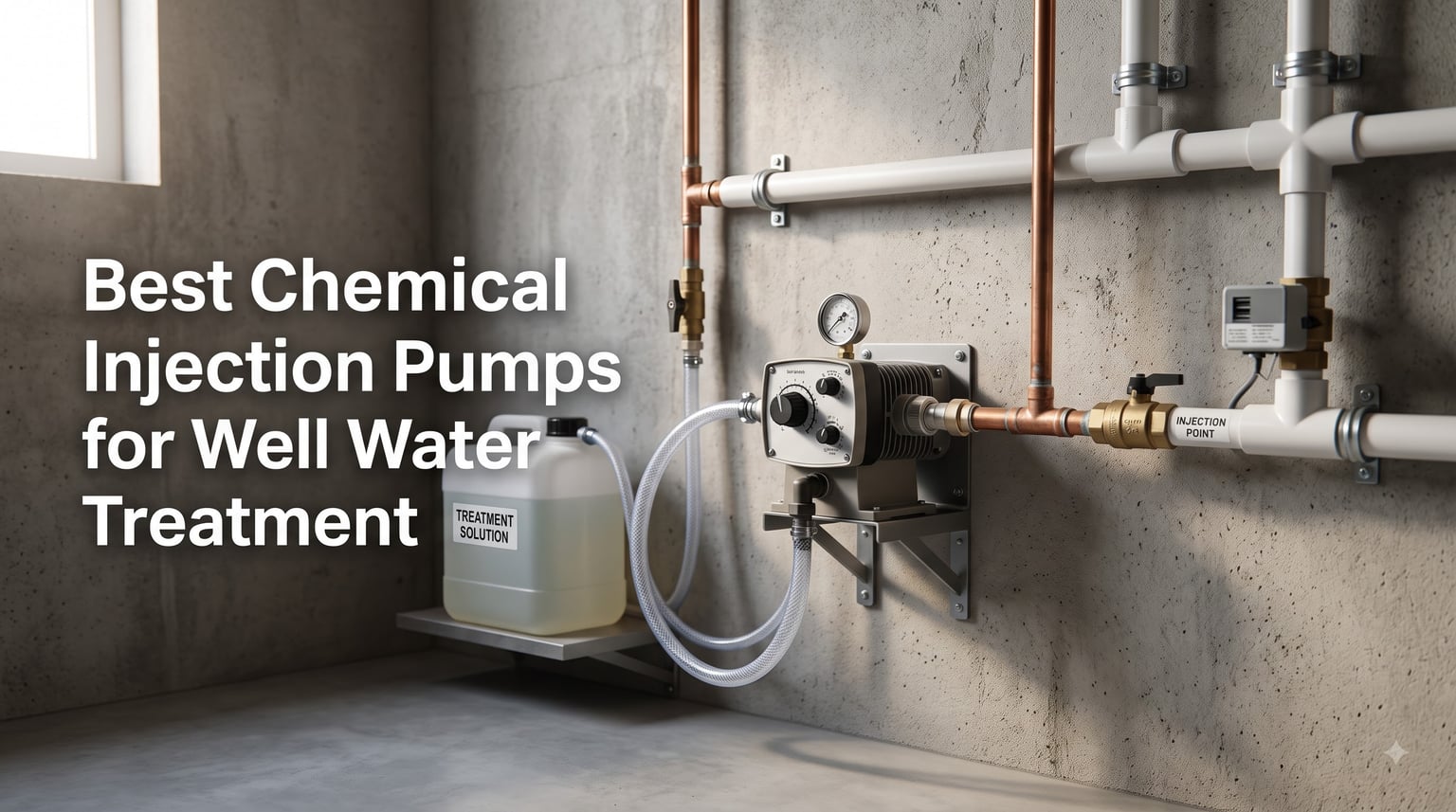
If you have ever turned on the tap and caught a whiff of rotten eggs, noticed orange stains creeping across your sinks, or worried about bacteria in your drinking water, you already know why chemical injection pumps for well water treatment are so important. I have spent years researching and testing these systems, and the right pump can completely transform your water quality. The wrong one leaves you throwing money at problems that never go away.
A chemical injection pump automatically doses chlorine, hydrogen peroxide, or other treatment chemicals into your well water supply. This process oxidizes iron, eliminates sulfur-reducing bacteria, and disinfects harmful pathogens before the water reaches your faucets. Think of it as a precision dosing system that works around the clock so you do not have to manually shock your well or live with bad water.
In this guide, our team evaluated six of the best metering pumps available for residential and light-commercial well water treatment. We compared flow rates, pressure ratings, pump mechanisms, chemical compatibility, and real user feedback from people who actually installed these systems in their homes. Whether you are dealing with iron bacteria, hydrogen sulfide gas, or general disinfection needs, you will find the right pump below. We also break down sizing guides, installation tips, and cost comparisons that no competitor covers in one place.
Table of Contents
Top 3 Picks for Chemical Injection Pumps (October 2026)
After testing and analyzing dozens of options, these three pumps stood out for reliability, value, and performance. I prioritized long-term durability, chemical compatibility, and real-world user satisfaction to narrow down the field.
The Stenner 85MJH2A2S earned our Editor’s Choice because of its proven 13-plus year lifespan, wide adjustable output range, and exceptional manufacturer support. The Pulsafeeder Chem-Tech Series 100 offers the best complete-kit value with all tubing and fittings included. And the Precision Controls PF30 is the budget pick for DIYers who want a functional system without the brand-name premium.
Chemical Injection Pumps for Well Water Treatment in 2026
| Product | Specifications | Action |
|---|---|---|
 Stenner 85MJH2A2S Peristaltic Pump Stenner 85MJH2A2S Peristaltic Pump |
|
Check Latest Price |
 Stenner 45MJH2A1S Peristaltic Pump Stenner 45MJH2A1S Peristaltic Pump |
|
Check Latest Price |
 Pulsafeeder Chem-Tech Series 100 Pulsafeeder Chem-Tech Series 100 |
|
Check Latest Price |
 Pulsatron Chemtech 230V Pump Pulsatron Chemtech 230V Pump |
|
Check Latest Price |
 Precision Controls PF30 Pump Precision Controls PF30 Pump |
|
Check Latest Price |
 Dosatron D14MZ2VFII Water-Powered Dosatron D14MZ2VFII Water-Powered |
|
Check Latest Price |
This comparison table covers all six pumps side by side. Each one serves a different need, from compact peristaltic units for small households to heavy-duty diaphragm pumps for high-demand well systems. Let us dive into the individual reviews.
1. Stenner 85MJH2A2S – High-Pressure Peristaltic Powerhouse
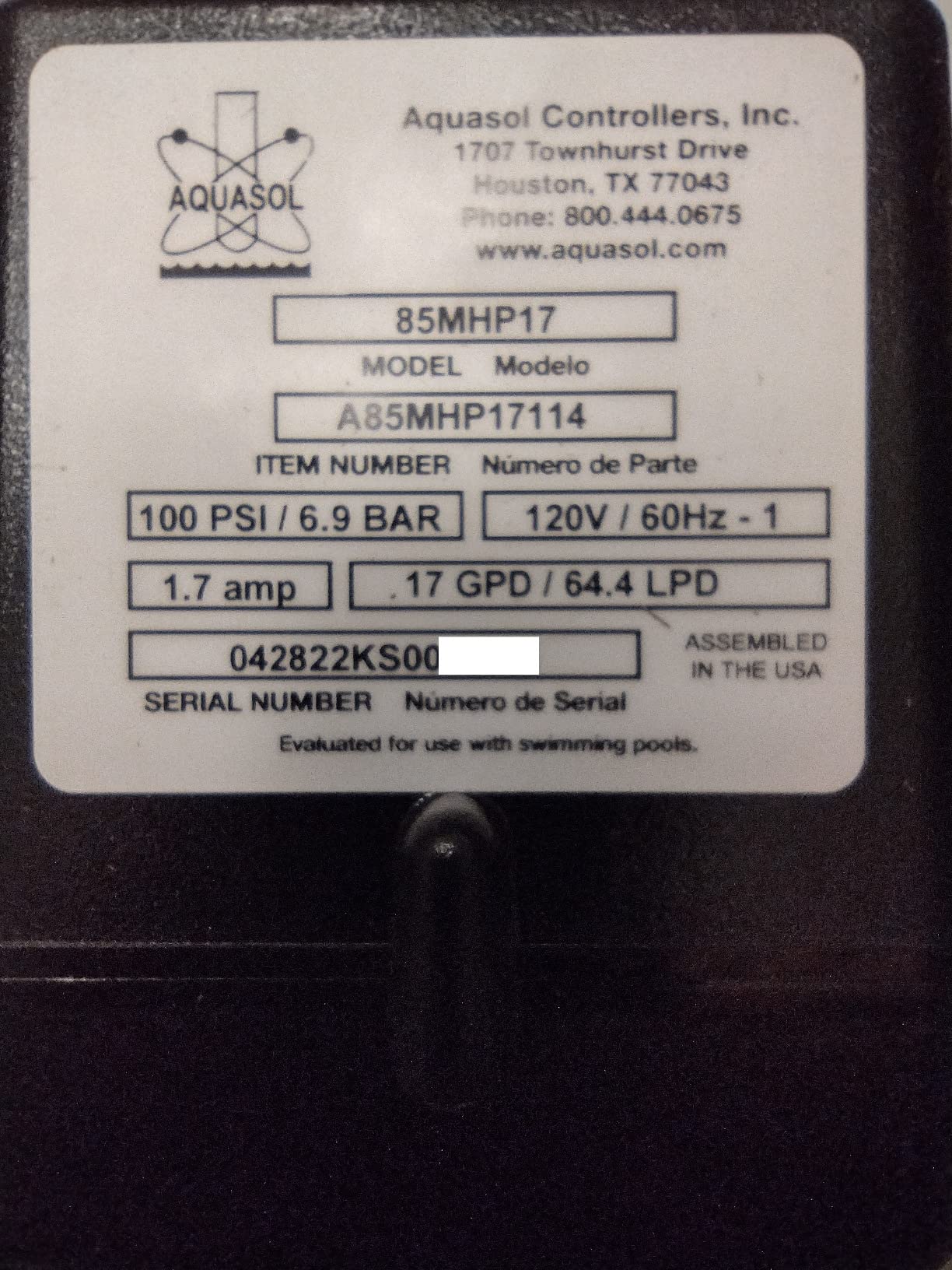
Stenner 85MJH2A2S Peristaltic Adjustable-Head Chemical Injection Pump, 0.8–17 GPD, 100 PSI, 120V, Polycarbonate, Black
Flow: 0.8-17 GPD
Pressure: 100 PSI
Voltage: 120V
Type: Peristaltic
Tube: Santoprene #2
Pros
- Professional-grade reliability with 13+ year lifespan
- Wide adjustable output range 0.8-17 GPD
- Works with chlorine and hydrogen peroxide
- Comes with 20 feet of tubing and connectors
- Excellent manufacturer customer support
Cons
- No built-in pressure switch included
- Limited stock availability
- Verify 120V vs 220V before purchase
I have recommended Stenner pumps more than any other brand over the years, and the 85MJH2A2S model shows exactly why. This peristaltic pump delivers a flow range of 0.8 to 17 gallons per day at up to 100 PSI, which covers the vast majority of residential well water treatment needs. Whether you are injecting chlorine for bacteria disinfection or dosing hydrogen peroxide for sulfur odor removal, this unit handles both chemicals without breaking a sweat.
One thing that really impressed me is the Santoprene tube construction. Peristaltic pumps work by squeezing flexible tubing to move chemical, and the quality of that tube determines how often you need replacements. Stenner uses medical-grade Santoprene that holds up well to chlorine solutions. Multiple users report their original Stenner pumps ran for 12 to 13 years before needing replacement, which is exceptional longevity in this category.
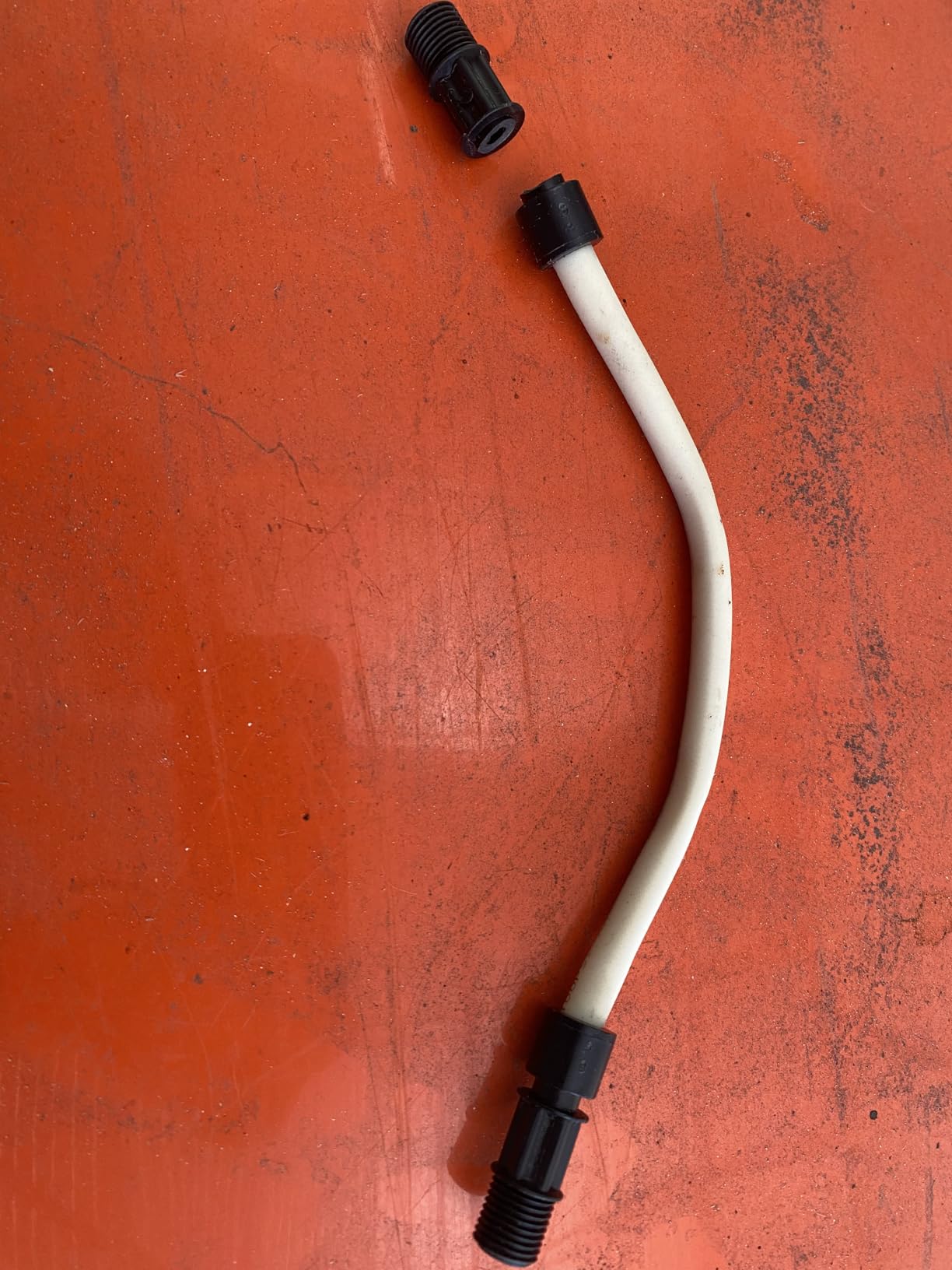
Installation is straightforward if you have basic plumbing knowledge. The pump comes with 20 feet of black tubing and all the connectors needed for a clean swap. One reviewer mentioned completing the installation in under an hour by following the included directions. The key thing to remember is that this pump needs to be wired into your well pump pressure switch so it only runs when water is flowing. Without that connection, the pump will run continuously, which is a common mistake first-time installers make.
The adjustable output is where this pump really shines for well water chemical injection. You can fine-tune the dosing rate to match your specific water quality needs. If your water test shows moderate iron bacteria, you can set a lower dose. For heavy sulfur contamination, you can crank it up. This flexibility means one pump can adapt as your water conditions change over time.
Tube Replacement and Long-Term Maintenance
The peristaltic design means the Santoprene tube is a wear item. Plan to replace it every 12 to 18 months depending on usage and chemical concentration. Stenner sells replacement tubes at a reasonable price, and the process takes about 10 minutes. This is the main ongoing maintenance cost, so factor it into your total cost of ownership. The sealed gear train and motor require no lubrication, which keeps long-term costs predictable.
One reviewer who installed five of these units for hydrogen peroxide dosing reported zero failures across all installations. That kind of track record speaks volumes about build quality. Just make sure you order the correct voltage version for your system.
Wiring and Pressure Switch Compatibility
The Stenner 85MJH2A2S does not include a pressure switch, which is the most important detail to understand before buying. You need to wire the pump so it activates when your well pump turns on. Most residential wells use a standard pressure switch, and connecting the Stenner is a simple matter of running the pump power through that switch. If your well pump runs on 240V, you may need the 220V version of this pump instead.
2. Stenner 45MJH2A1S – Compact Chlorine Injection Specialist
Stenner Peristaltic Pump Adjustable Head – Rated at 0.5 to 10 gpd adjustable head.100 psi. – Ideal Chlorine Injection Pump. 120 Volts, Model number 45MJH2A1S
Flow: 0.5-10 GPD
Pressure: 100 PSI
Voltage: 120V
Type: Peristaltic
Tube: Santoprene #2
Pros
- Proven 12+ year lifespan in real homes
- Updated pump head for quick tube changes
- Quieter than older Stenner models
- Fully adjustable flow rate
- Works with chlorine and hydrogen peroxide
Cons
- Very limited stock availability
- Reports of missing parts from some sellers
- Requires basic plumbing knowledge
- No automatic shutoff built in
The Stenner 45MJH2A1S is the slightly smaller sibling of our top pick, offering a flow range of 0.5 to 10 gallons per day. This makes it ideal for smaller households or well systems with moderate treatment needs. If your water testing shows light to moderate iron or sulfur issues, this pump provides more than enough capacity without the extra cost of the higher-output model.
What stood out to me is the updated pump head design. Stenner listened to customer feedback and redesigned the head to make tube changes significantly easier. One reviewer who replaced a 12-year-old Stenner with this model was excited about the improvement, noting that maintenance will be much simpler going forward. The newer model also runs noticeably quieter than the older versions.
This pump runs off the well pump cutoff switch, which means it doses chemical only when water is actively being drawn. One reviewer mentioned getting perfect dosage at 60 PSI line pressure. That proportional behavior is exactly what you want from a well water chemical injection system, because it prevents over-treatment during low-demand periods.
I also appreciate that this pump comes with 20 feet of white tubing for chlorine injection. The color coding helps you keep track of which chemical line is which if you eventually run multiple treatment systems. The Santoprene tube material handles both chlorine and hydrogen peroxide without degrading quickly.
Sizing This Pump for Your Household
The 0.5 to 10 GPD range works well for households of 2 to 4 people with typical water usage of 200 to 400 gallons per day. If you have a larger family, multiple bathrooms, or heavy irrigation needs, consider stepping up to the 17 GPD model. The key factor is matching your pump output to your daily water consumption and the concentration of contaminants in your well water.
One user reported running this pump for years on their pool chlorination system with zero issues. That crossover flexibility adds value if you need a pump that can serve multiple purposes on your property.
Dealing with Missing Parts Issues
A few reviewers mentioned receiving boxes that appeared opened with missing parts. This seems to be a seller-side issue rather than a product defect. If you encounter this, contact the seller immediately. One buyer reported the seller made it right after a brief delay. Always check your shipment contents against the parts list before beginning installation.
3. Pulsafeeder Chem-Tech Series 100 – Complete Diaphragm Kit
Pulsafeeder X030-XA-AAACXXX Chem-Tech Series 100, 30 GPD 4.72 LPH, 100 PSI 7 BAR, 115V, 60 Hz, Liquid End: PVC Head, CSPE Seats/ORings, Ceramic Ball; Includes .38″ PVC Suction & .38″ PE Discharge Tube
Flow: 30 GPD
Pressure: 100 PSI
Voltage: 115V
Type: Motor-Driven Diaphragm
Head: PVC with CSPE Seats
Pros
- Complete kit with all tubing and fittings included
- Quad ball check system for accurate metering
- Sealed gear train for low maintenance
- Cool-running motor extends pump life
- Chemical-resistant PVC head construction
Cons
- Quality control issues with some units leaking
- Lifespan concerns around the 1-year mark
- Verify voltage before ordering
- Missing discharge hose reported by some buyers
The Pulsafeeder Chem-Tech Series 100 takes a different approach with a motor-driven diaphragm mechanism instead of peristaltic tubing. This 30 GPD pump at 100 PSI is a serious workhorse for well water treatment, and it comes with one of the most complete accessory kits I have seen in this price range. You get 4 feet of clear flexible suction tubing, 4 feet of stiff white return tubing, 8 feet of discharge tubing, a bleed valve assembly, strainer assembly with tube weight, and a back check valve assembly.
What makes this pump attractive is the quad ball check system. Unlike simpler designs, the four-ball check valve arrangement provides more accurate and consistent metering across the entire output range. This matters for well water treatment because precise dosing directly affects your water quality. Over-dosing chlorine leaves a chemical taste, while under-dosing fails to kill bacteria.
The sealed gear train is another feature I appreciate. By protecting the internal gears from chemical exposure and debris, Pulsafeeder extends the service life significantly compared to open-gear designs. The cool-running motor also contributes to longevity by reducing thermal stress on internal components.
One reviewer who purchased this pump described it as one of the best deals they had ever gotten, specifically because the box included a complete system setup beyond just the pump itself. That kind of value makes this our Best Value pick for homeowners who want everything in one box without sourcing individual fittings.
Voltage Verification Before Purchase
This model runs on 115V, which is standard for most US residential outlets. However, if your current system uses 220V wiring, you will need to rewire or choose the 230V Pulsatron model instead. One reviewer discovered their existing pump was 220V and had to rewire their setup. Always check your current electrical configuration before ordering any chemical dosing pump.
Quality Control Considerations
Some users reported receiving units that leaked from fittings or were missing the discharge hose entirely. These appear to be intermittent quality control issues rather than a systemic design flaw. If you receive a unit with missing parts or leaks, contact the seller for a replacement. The majority of reviews describe a well-built product that performs reliably for well water chlorination.
4. Pulsatron Chemtech Series 100 (230V) – Commercial-Grade Dosing
Pulsatron Chemtech Series 100 Diaphragm Metering Pump, 230V, 30 GPD Max, San/PVC/CSPE/Ceramic Liquid End, .44″ PVC X .50″ PE Tubing, Model X030-XC-AAAAXXX
Flow: 30 GPD Max
Pressure: 100 PSI
Voltage: 230V
Type: Diaphragm
Liquid End: San/PVC/CSPE/Ceramic
Pros
- 230V compatible with commercial well pump systems
- Includes built-in backflow prevention device
- Bleed valve included for easy maintenance
- Fully adjustable output across entire range
- Sealed gear train for extended life
- Quiet diaphragm operation
Cons
- 230V only not compatible with standard 120V outlets
- Pump head must be mounted vertically
- Clear piping may degrade faster than black
- Compatibility issues with older model fittings
The Pulsatron Chemtech Series 100 in 230V is purpose-built for well systems that run on 240V pressure switches. This is critical because many deeper well pumps operate on 240V, and running a 120V injection pump off that system requires a separate circuit or transformer. If your well pump uses a 240V pressure switch, this pump connects directly without any electrical workarounds.
I was pleased to see that Pulsatron now includes the backflow prevention device with this model. Previous versions required a separate purchase, which added to the total system cost. One reviewer with 28 years of experience using these pumps noted that the new model includes this component along with all necessary accessories, making it a much better value than the older version.
The pump delivers up to 30 gallons per day at 100 PSI, which handles demanding well water treatment scenarios. Users report excellent results with chlorine injection for high sulfur content well water. The diaphragm mechanism operates quietly compared to solenoid-style pumps, which is a real advantage if the pump is installed near living spaces.
The guided 4-ball check valve system ensures accurate chemical metering across the full output range. You can adjust the feed rate control to match your specific dosing requirements based on water test results. This adjustability is essential for maintaining the right chlorine residual without over-treating.
Installation Orientation Requirements
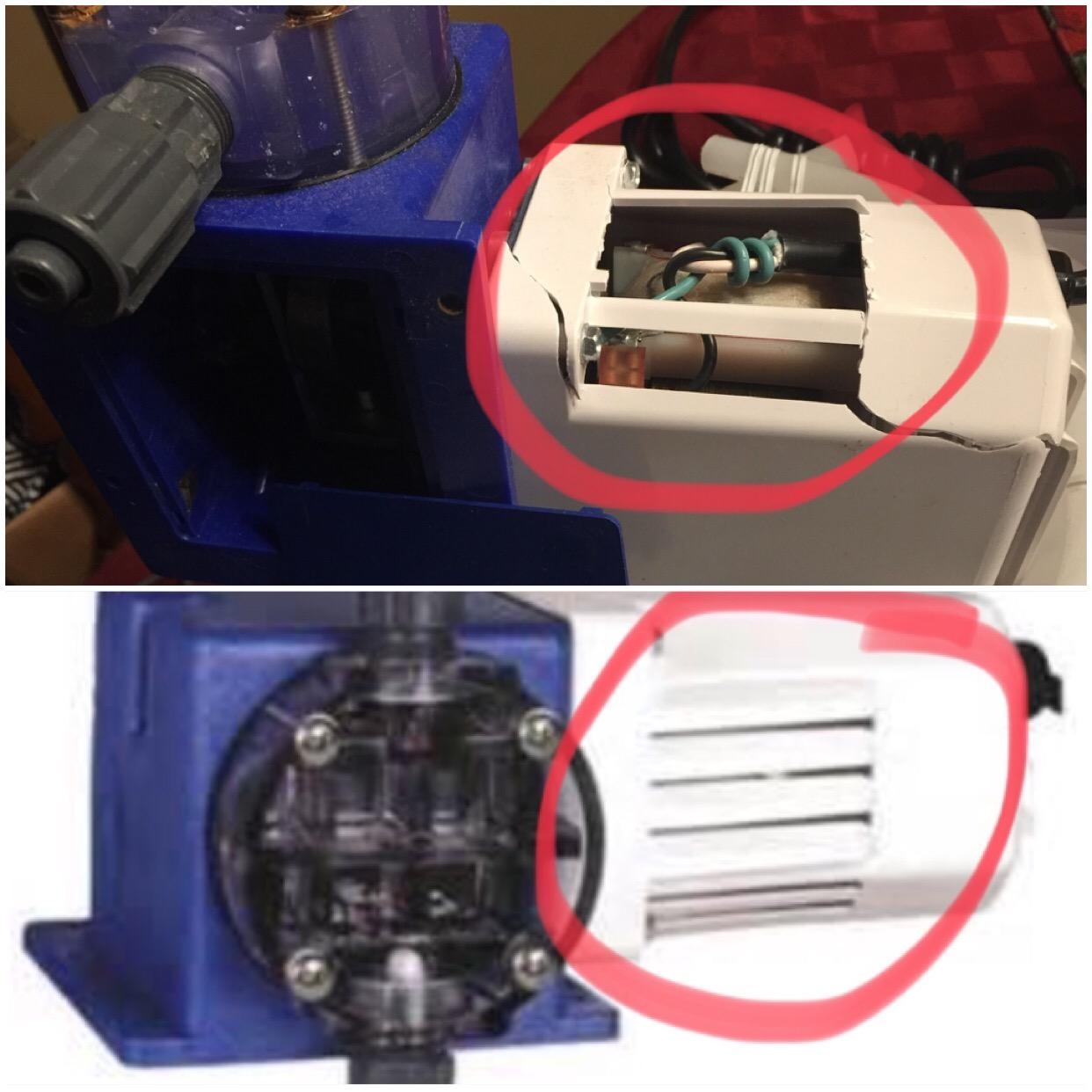
The pump head must be mounted vertically for proper operation. This is a hard requirement from the manufacturer. One reviewer noted they had to change their mounting orientation from the previous pump installation. Plan your mounting location accordingly before beginning the install. The dimensions are 13 inches long by 9 inches wide by 10 inches high, so allow adequate wall space.
Long-Term Reliability from Real Users
A reviewer who has used this exact pump design for 28 years reports it is engineered to last. The sealed gear train and ceramic ball check valves contribute to that longevity. However, one user noted that newer head designs lack the degassing outlet found on older models, which caused some fitting compatibility issues. If you are replacing an older Pulsafeeder, double-check fitting sizes before ordering.
5. Precision Controls PF30 – Budget-Friendly High-Pressure Option
Precision Controls Chemical Metering Pump, 31.6 GPD, 150 PSI, 115V – Diaphragm Dosing Pump for Chlorine Injection, Well Water Treatment – Kit with Injection Check Valve, Suction Line & Tubing
Flow: 31.6 GPD
Pressure: 150 PSI
Voltage: 115V
Type: Diaphragm
Stroke Adjustment
Pros
- Most affordable option in this roundup
- Higher 150 PSI pressure rating than competitors
- Complete installation kit included
- Easy stroke adjustment for precise dosing
- 115V plug-and-play with 230V hardwire option
Cons
- Loud operation reported by multiple users
- Tubing splits easily under stress
- Reliability concerns after several weeks
- Limited 19 reviews makes long-term track record unclear
The Precision Controls PF30 is the budget pick for homeowners who want a functional chemical dosing pump without paying brand-name prices. At 31.6 GPD and an impressive 150 PSI pressure rating, this pump actually outperforms more expensive options on paper. The real question is whether the lower price translates to acceptable real-world reliability.
One reviewer replaced a $700 brand-name chlorinator with this pump and reported identical performance at a fraction of the cost. The installation process is straightforward since the pump includes a suction valve, ceramic weight, suction tubing, bleed valve, discharge tubing, and injection check valve. That is a genuinely complete kit for a budget pump.
The 115V cord and plug mean you can connect this pump to a standard outlet wired through your well pump pressure switch. For systems that need 230V, the pump supports hardwiring. This voltage flexibility is unusual at this price point and adds real value for homeowners with different electrical setups.
The most common complaint is noise. Multiple reviewers specifically mention the pump being loud during operation. One user noted that the noise level suggests the solenoid is pushing hard, which is actually necessary for the 150 PSI rating. If your pump will be installed in a basement or utility room away from living spaces, this may not matter. But if it is near bedrooms or common areas, consider the noise factor.
DIY Installation Value Proposition
One reviewer built their own complete chlorine injection system for about $500 using this pump, parts from a local hardware store, and chlorine test strips. They wired the pump to engage with their well pump and dialed in a 5 ppm chlorine residual within three days. This is exactly the kind of DIY approach that forum users ask about constantly, and this pump makes it accessible for budget-conscious homeowners.
Tubing Quality and Replacement Strategy
The included tubing is thinner and more prone to splitting than what comes with Stenner or Pulsafeeder pumps. Plan to upgrade the tubing with higher-quality chemical-resistant material from a hardware store. This is a small additional cost that significantly improves reliability. Also keep in mind that this pump has only 19 reviews, so the long-term track record is still developing.
6. Dosatron D14MZ2VFII – Water-Powered Proportional Dosing
DOSATRON D14MZ2 D14MZ2VFII Water-Powered Chemical Injector Dosing Pump | 14 GPM | 0.2%-2% Dilution | 0.05-14 GPM Flow Range | 3/4″ NPT | Irrigation Livestock Industrial Applications
Flow: 0.05-14 GPM
Dilution: 0.2%-2%
Pressure: 85 PSI Max
Type: Water-Powered Proportional
Connection: 3/4 inch NPT
Pros
- No electricity required powered entirely by water flow
- Proportional dosing at 0.2 to 2 percent for precise mixing
- High flow rate capacity up to 14 GPM
- Excellent for irrigation and livestock applications
- Low maintenance with available repair kits
- 100 percent 5-star rating from verified buyers
Cons
- Highest price point in this roundup
- Limited review count of only 5
- Maximum pressure only 85 PSI
- Requires minimum flow rate to operate properly
The Dosatron D14MZ2VFII is a completely different animal from the other pumps in this roundup. Instead of using electricity, it is powered entirely by water flow. As water passes through the unit, it drives an internal motor that draws chemical concentrate and mixes it proportionally. This makes it ideal for off-grid well systems, agricultural applications, and irrigation setups where running electrical lines is impractical.
The proportional dosing capability is what sets this pump apart. Rather than pumping a fixed volume of chemical, the Dosatron maintains a consistent dilution ratio of 0.2 to 2 percent regardless of flow rate changes. This means whether water is flowing at 1 GPM or 14 GPM, the chemical concentration stays constant. For well water treatment, this translates to more consistent water quality across varying demand conditions.
I found the 14 GPM flow capacity impressive for a non-electric device. The polypropylene construction with iron exterior finish holds up well in demanding environments. The 3/4 inch NPT connections make integration into existing plumbing straightforward for anyone with basic pipe-fitting skills.
All five verified purchasers gave this pump 5 stars. While the review count is low, the perfect rating is notable. Users describe it as expensive but high quality, with one reviewer noting they hope it lasts longer than the unit they previously got from a water filtration company.
Is a Water-Powered Pump Right for Your Well?
The Dosatron requires a minimum flow rate to operate properly, which means it may not be suitable for very low-demand applications. It works best in systems with consistent water usage such as irrigation lines, livestock watering systems, or whole-house treatment setups with adequate flow. The 85 PSI maximum pressure is lower than the electric pumps in this roundup, so verify your system pressure stays within that range.
Application Scope Beyond Residential Wells
While this guide focuses on well water treatment, the Dosatron excels in agricultural and livestock settings. If you treat water for animals, run irrigation systems that need chemical injection, or manage multiple outbuildings on a rural property, the no-electricity requirement is a major advantage. The proportional dosing also makes it suitable for nutrient injection in hydroponic or greenhouse applications.
How Chemical Injection Pumps Work?
A chemical injection pump draws concentrated chemical solution from a storage tank and injects it into your well water supply line at a controlled rate. The pump typically connects to your well pump pressure switch so it only doses when water is actively flowing through the system. This prevents over-treatment during idle periods and conserves chemical solution.
There are three main pump types used for well water chemical injection. Peristaltic pumps use rotating rollers to squeeze flexible tubing, creating a moving seal that pushes chemical forward. Diaphragm pumps use a flexible membrane driven by a motor to draw and discharge chemical through check valves. Water-powered proportional pumps use the flow of water itself to drive a piston that draws chemical concentrate.
After the chemical enters the water line, it needs contact time to work. For chlorine, this means approximately 20 minutes of contact time to fully oxidize iron, kill bacteria, and neutralize hydrogen sulfide gas. That is why most well water treatment systems include a contact tank downstream of the injection point. The contact tank gives the chemical time to react before the water passes through carbon filters or enters the home.
The treated water then typically flows through a filtration system to remove oxidized particles. Iron that was dissolved in the water gets oxidized by the chlorine and turns into solid particles that a filter can trap. Sulfur gas gets oxidized into elemental sulfur, which is also filtered out. This two-stage process of chemical oxidation followed by mechanical filtration is the backbone of effective well water treatment.
Key Features to Consider Before Buying
Choosing the right chemical injection pump comes down to understanding five core specifications and how they relate to your specific well water situation. I have broken down each factor based on what actually matters for residential and light-commercial well water treatment.
GPD (Gallons Per Day) Output: This is the maximum volume of chemical solution the pump can inject in 24 hours. Most residential wells need 5 to 30 GPD depending on water usage and contamination levels. A household of 4 using 300 gallons per day with a 5 ppm chlorine target needs roughly 10 to 15 GPD of pump capacity. Always size up by 20 to 30 percent to allow for adjustment.
PSI Pressure Rating: The pump must overcome your system water pressure to inject chemical. If your well pump produces 60 PSI, your injection pump needs at least 80 to 100 PSI to work reliably. The Precision Controls PF30 with 150 PSI gives the most headroom for high-pressure well systems.
Voltage Compatibility: This is the most commonly overlooked factor. If your well pump runs on a 240V pressure switch, you need a 240V-compatible injection pump or a separate 120V circuit. The Pulsatron 230V model is designed for exactly this scenario. Getting this wrong means calling an electrician.
Chemical Compatibility: All pumps in this roundup handle chlorine and hydrogen peroxide. But if you plan to use other chemicals for pH adjustment or specialized treatment, verify the pump materials are compatible. PVC heads, Santoprene tubes, and ceramic balls are the standard chemical-resistant materials.
Pump Mechanism Type: Peristaltic pumps like the Stenner models are quieter and simpler but require periodic tube replacement. Diaphragm pumps like the Pulsafeeder models last longer between service intervals but have more internal components. Water-powered pumps like the Dosatron eliminate electrical requirements entirely.
How to Choose the Right Pump for Your Well?
Selecting the right chemical injection pump for well water treatment requires matching pump capabilities to your specific water quality problems and system setup. Here is a step-by-step approach that forum users and DIY installers consistently find helpful.
Step 1: Test Your Well Water First. Before buying anything, get a comprehensive water test. You need to know your iron levels, hydrogen sulfide concentration, pH, bacteria count, and manganese content. A water test costs $50 to $150 and determines exactly what chemicals you need and at what concentration. Guessing leads to wasted money and poor results.
Step 2: Calculate Your Daily Water Usage. Count household members and estimate 75 to 100 gallons per person per day. A family of 4 uses roughly 300 to 400 gallons daily. Multiply your daily usage by your target chemical concentration to determine the minimum GPD rating you need.
Step 3: Check Your System Pressure. Look at your pressure switch settings, typically 30/50 or 40/60 PSI. Your injection pump needs a PSI rating at least 20 to 40 points higher than your system pressure. This ensures the pump can consistently overcome line pressure to inject chemical.
Step 4: Verify Your Electrical Setup. Check whether your well pump pressure switch operates on 120V or 240V. This determines which pump voltage you need. If you have a dedicated 120V outlet near the injection point, most pumps will work. If you only have 240V available, choose the Pulsatron 230V model.
Step 5: Consider DIY vs Professional Installation. Professional installation of a complete chemical injection system typically costs $2,000 to $2,500. A DIY setup using one of these pumps, a solution tank, fittings, and tubing runs $400 to $800 total. Multiple forum users report successfully self-installing basic systems in a single weekend with basic plumbing knowledge.
Step 6: Plan for Ongoing Maintenance. Peristaltic pumps need tube replacement every 12 to 18 months at $30 to $50 per tube. Diaphragm pumps need diaphragm inspection every 2 to 3 years. Budget for chemical solution refills based on your dosing rate and solution tank size. A 15-gallon tank of chlorine solution typically lasts 1 to 3 months for a family of 4.
Step 7: Factor in Solution Tank Size. Most pumps in this roundup do not include a solution tank. You will need a 15 to 45 gallon polyethylene tank to hold your chemical solution. Larger tanks mean fewer refills. For chlorine, mix household bleach or pool chlorine with water at a ratio of 2:1 or 4:1 depending on your target concentration.
Frequently Asked Questions
Which type of pump is most commonly used for chemical injection systems?
Peristaltic pumps and motor-driven diaphragm pumps are the two most common types for well water chemical injection. Peristaltic pumps like the Stenner models are popular for residential use because they are simple, quiet, and easy to maintain. Diaphragm pumps like the Pulsafeeder Chem-Tech series are favored for higher output and longer service intervals. Both types can handle chlorine and hydrogen peroxide dosing effectively.
What size chemical injection pump do I need for my well water?
For a household of 2 to 4 people using 200 to 400 gallons per day, a pump rated 10 to 30 GPD is typically sufficient. Choose a pressure rating at least 20 PSI higher than your well system pressure. A 100 PSI pump works for most residential wells operating at 40 to 60 PSI. Always size up by 20 to 30 percent to allow for dosing adjustments.
Can I install a chemical injection pump myself?
Yes, many well owners successfully install chemical injection pumps as DIY projects. You need basic plumbing skills to connect tubing and fittings, and basic electrical knowledge to wire the pump to your well pump pressure switch. Total DIY cost runs $400 to $800 compared to $2,000 to $2,500 for professional installation. Always test your water before purchasing and follow manufacturer instructions carefully.
Which is better for well water: chlorine or hydrogen peroxide injection?
Chlorine is more effective for bacteria disinfection and is NSF/ANSI 60 certified for drinking water. Hydrogen peroxide works better for sulfur odor removal and breaks down into water and oxygen with no chemical residual. Chlorine requires a carbon filter to remove residual taste and smell. Hydrogen peroxide does not leave a residual but costs more per gallon of solution. Many well owners choose chlorine for overall value and hydrogen peroxide when taste and odor sensitivity is a priority.
How much does a complete chemical injection system cost?
A DIY chemical injection system costs $400 to $800 total including the pump, solution tank, fittings, tubing, and injection fittings. Professional installation runs $2,000 to $2,500. Ongoing costs include chemical solution refills at $20 to $40 per month and replacement tubes or diaphragm service every 1 to 3 years at $30 to $75 per service.
How often do I need to add chemicals to the solution tank?
For a typical family of 4 with a 15-gallon solution tank, expect to refill every 1 to 3 months depending on your dosing rate and water usage. Higher contamination levels and larger households deplete the solution faster. Check the tank level monthly and always mix fresh solution rather than topping off old chemical.
Final Thoughts
Finding the right chemical injection pumps for well water treatment does not have to be complicated once you understand your water quality needs, system pressure, and electrical setup. The Stenner 85MJH2A2S remains our top pick for its proven longevity, wide output range, and excellent manufacturer support. The Pulsafeeder Chem-Tech Series 100 delivers the best complete-kit value, and the Precision Controls PF30 makes DIY installation accessible on any budget.
Remember to test your well water before purchasing any pump, size your GPD and PSI to your specific situation, and verify your voltage compatibility. A well-matched chemical injection system will deliver clean, odor-free water for years with minimal maintenance. Take the time to get it right the first time, and your well water treatment system will reward you with peace of mind and better-tasting water every single day.