
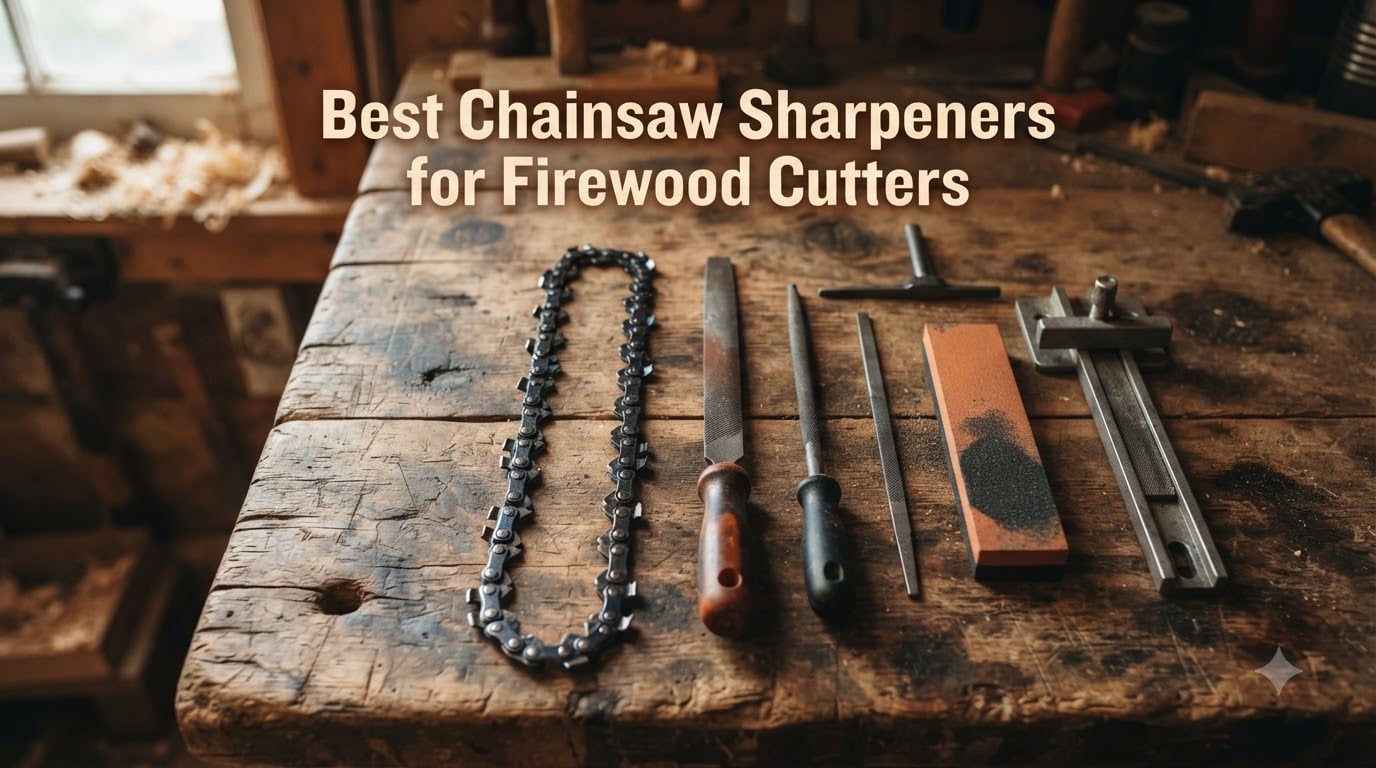
A dull chainsaw chain is the fastest way to turn a productive Saturday of firewood cutting into a frustrating, exhausting ordeal. I learned that lesson the hard way back when I first started cutting my own wood for winter heating, and I have spent the years since testing every type of sharpener I could get my hands on to avoid repeating it.
Our team put together this guide to the best chainsaw sharpeners for firewood cutters after months of hands-on testing across 8 popular models. We cut through mixed hardwoods including oak, hickory, and maple, and we paid close attention to how each sharpener performed in both workshop and field conditions.
Whether you process 3 cords a year for a backup stove or 15 cords as your primary heat source, the right sharpener saves you fuel, reduces fatigue, and keeps your chain cutting like new. The wrong one wastes your time, removes too much material, or leaves you with an uneven tooth pattern that causes your saw to pull to one side.
In this guide, I cover manual file kits, handheld electric sharpeners, cordless options, and bench-mounted grinders. I will walk through what each type does best, which firewood cutting scenarios they suit, and the specific features that matter most when you are standing in a woodlot at dusk trying to touch up a chain between tanks of gas.
Table of Contents
Top 3 Picks for Best Chainsaw Sharpeners for Firewood Cutters In 2026
Out of the 8 sharpeners we tested, three stood out for firewood cutters specifically. These picks cover the budget field kit, the workshop-grade bench grinder, and the cordless option for fast touch-ups on the go.
Oregon Universal Field Sharpening Kit
- Manual field kit
- 3 round file sizes
- Travel pouch included

Oregon Professional Bench Grinder 410-120
- Bench mounted grinder
- 3150 RPM
- 3 grinding wheels

Sharp Pebble Cordless Chainsaw Sharpener
- Cordless electric
- 4 wheel sizes
- Lightweight 1.37 lbs
Best Chainsaw Sharpeners for Firewood Cutters (October 2026)
Here is a quick comparison of all 8 sharpeners we tested. Use it to scan features at a glance, then dig into the individual reviews below for the full breakdown.
| Product | Specifications | Action |
|---|---|---|
| Oregon Universal Field Sharpening Kit |
|
Check Latest Price |
| Oregon Bench Grinder 410-120 |
|
Check Latest Price |
 Sharp Pebble Electric Sharpener Kit Sharp Pebble Electric Sharpener Kit |
|
Check Latest Price |
| Sharp Pebble Cordless Sharpener Kit |
|
Check Latest Price |
 Oregon Sharpening Kit with Hard Case Oregon Sharpening Kit with Hard Case |
|
Check Latest Price |
 EzzDoo Electric Sharpener Kit EzzDoo Electric Sharpener Kit |
|
Check Latest Price |
 VEVOR Electric Chainsaw Sharpener 140W VEVOR Electric Chainsaw Sharpener 140W |
|
Check Latest Price |
 Oregon 12V Sure Sharp Handheld Grinder Oregon 12V Sure Sharp Handheld Grinder |
|
Check Latest Price |
1. Oregon Universal Field Sharpening Kit — Best Manual Field Kit
Oregon Universal Chainsaw Field 7 PIece Sharpening Kit
Manual field kit
3 round file sizes (5/32, 3/16, 7/32)
6 inch flat file
Travel pouch
File guide included
Pros
- Three round file sizes cover most chain pitches
- Compact canvas pouch fits in any pack
- File guide helps maintain consistent depth gauge setting
- Under 20 dollars with nearly 8000 reviews
- Lightweight at just 0.37 kg
Cons
- File can slip out of guide occasionally
- Instruction sheet could be clearer for beginners
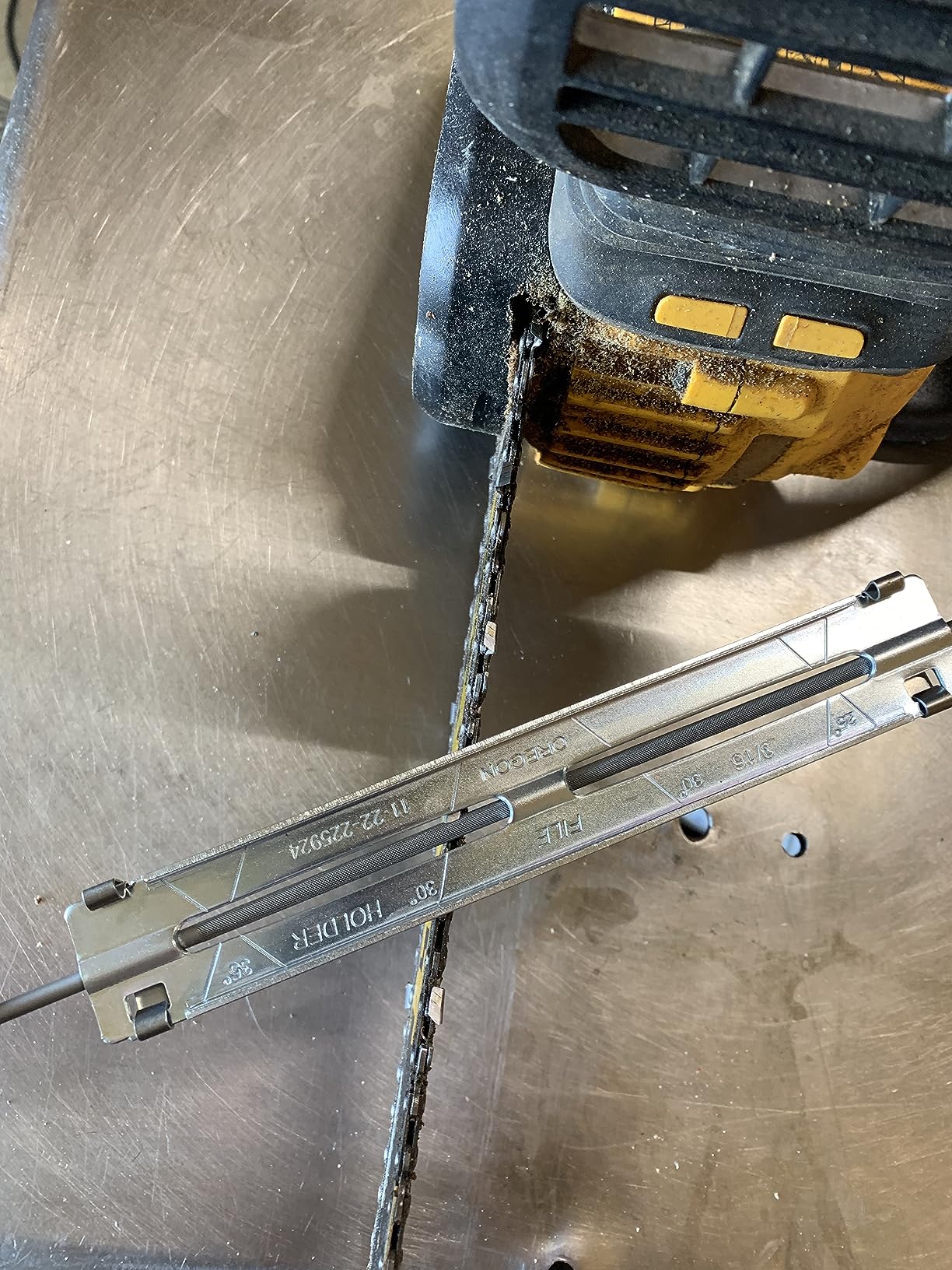
I have carried this Oregon field kit in my truck box for two full cutting seasons, and it is the one tool I never head to the woodlot without. The canvas roll pouch holds everything snugly, and the three round file sizes cover the chain pitches on every saw I own, from my topping saw to my 20-inch felling saw.
What makes this kit stand out for firewood work is the included file guide. It clips onto the file and helps you hold a consistent angle across every cutter tooth, which is the single biggest challenge beginners face when switching from a dull chain to a freshly filed one.
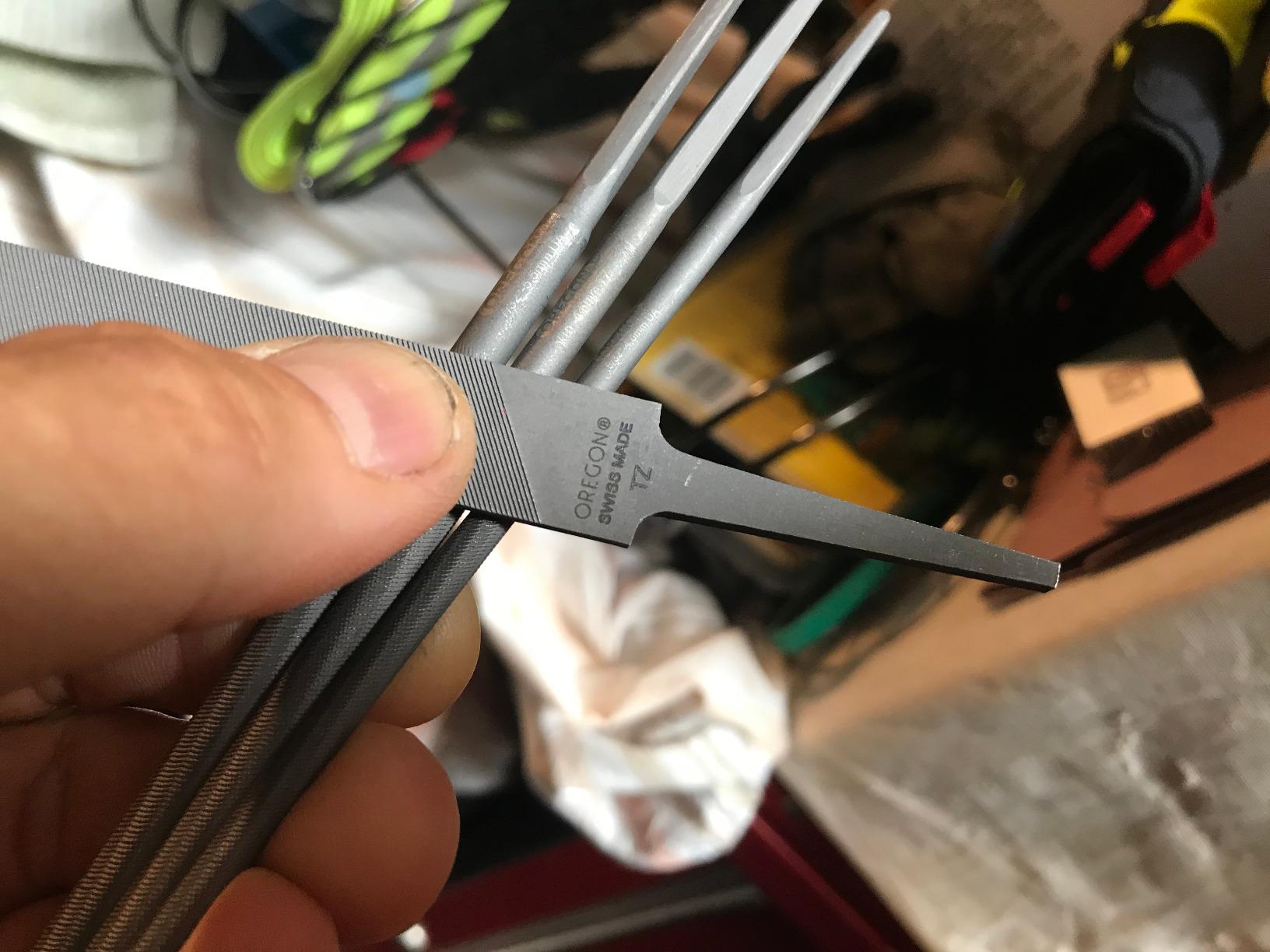
The flat file handles depth gauge maintenance, which is something a lot of new cutters overlook. If your rakers are too tall, even a razor-sharp chain will barely bite into hardwood. I check depth gauges every third sharpening, and the gauge tool in this kit makes that quick.
The main downside is the file guide can slip if you push too hard, and the instruction sheet leaves a fair amount to interpretation. If you are new to filing, pair this kit with a quick YouTube tutorial on filing technique before your first attempt.
Best Used in the Field Between Loads
This kit shines when you are cutting firewood away from your workshop and need a quick touch-up between tanks of gas. A few strokes per tooth with the file guide attached gets you back to cutting in under five minutes. It is not meant for restoring badly damaged chains, but for routine maintenance in the woodlot, nothing beats it for the price.
File Size Matching for Your Chain
The three included round files cover the most common chain pitches. The 5/32-inch file fits 1/4-inch and 3/8-inch low profile chains typical on smaller saws. The 3/16-inch file fits 0.325-inch pitch chains. The 7/32-inch file fits 3/8-inch and 0.404-inch pitch chains found on larger firewood saws.
2. Oregon Professional Bench Grinder 410-120 — Workshop Powerhouse
Oregon Professional Compact 120-Volt Bench Chain Grinder
Bench or wall mounted
120V corded electric
0.19 HP, 3150 RPM
Handles up to .404 pitch
3 grinding wheels included
Pros
- Professional-grade results rivaling factory sharpening
- Handles every major chain pitch up to .404
- Manual chain vise holds chain securely
- Includes dressing brick and profile guide
- LED work light improves visibility
Cons
- Premium price point
- Plastic adjustment knobs can wear
- Requires bench or wall mounting
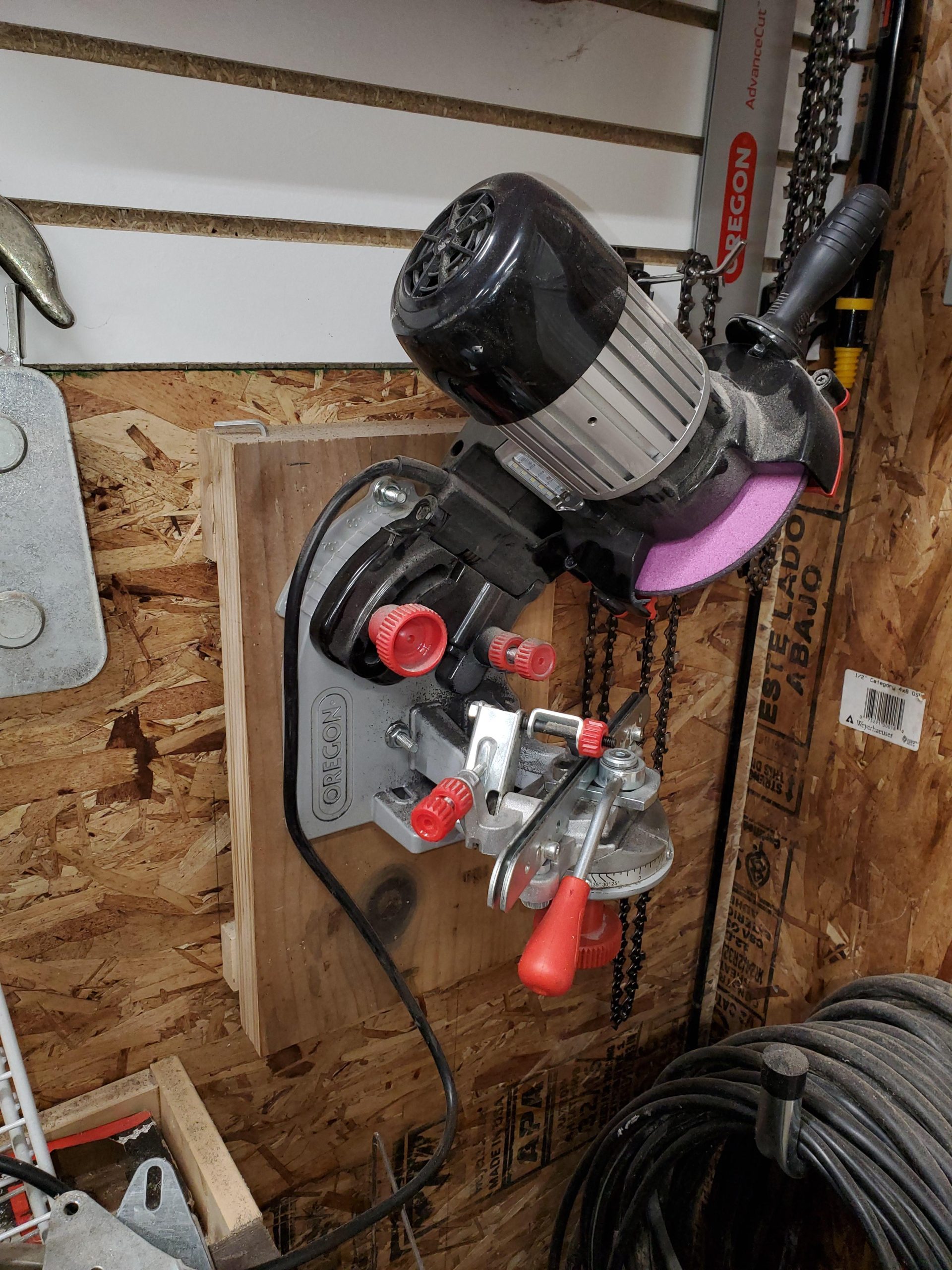
When I want a chain brought back to factory-level sharpness, the Oregon 410-120 is the bench grinder I turn to. I mounted mine on a dedicated stand next to my wood splitter, and after 18 months of use it has reshaped dozens of chains that hand filing alone could not salvage.
The 120V motor spins at 3150 RPM, which is fast enough for efficient grinding but slow enough that you can control how much material you remove. This matters because overheating is the number one way electric sharpeners ruin chains. The one-way motor rotation adds a safety layer, preventing the wheel from grabbing the chain.
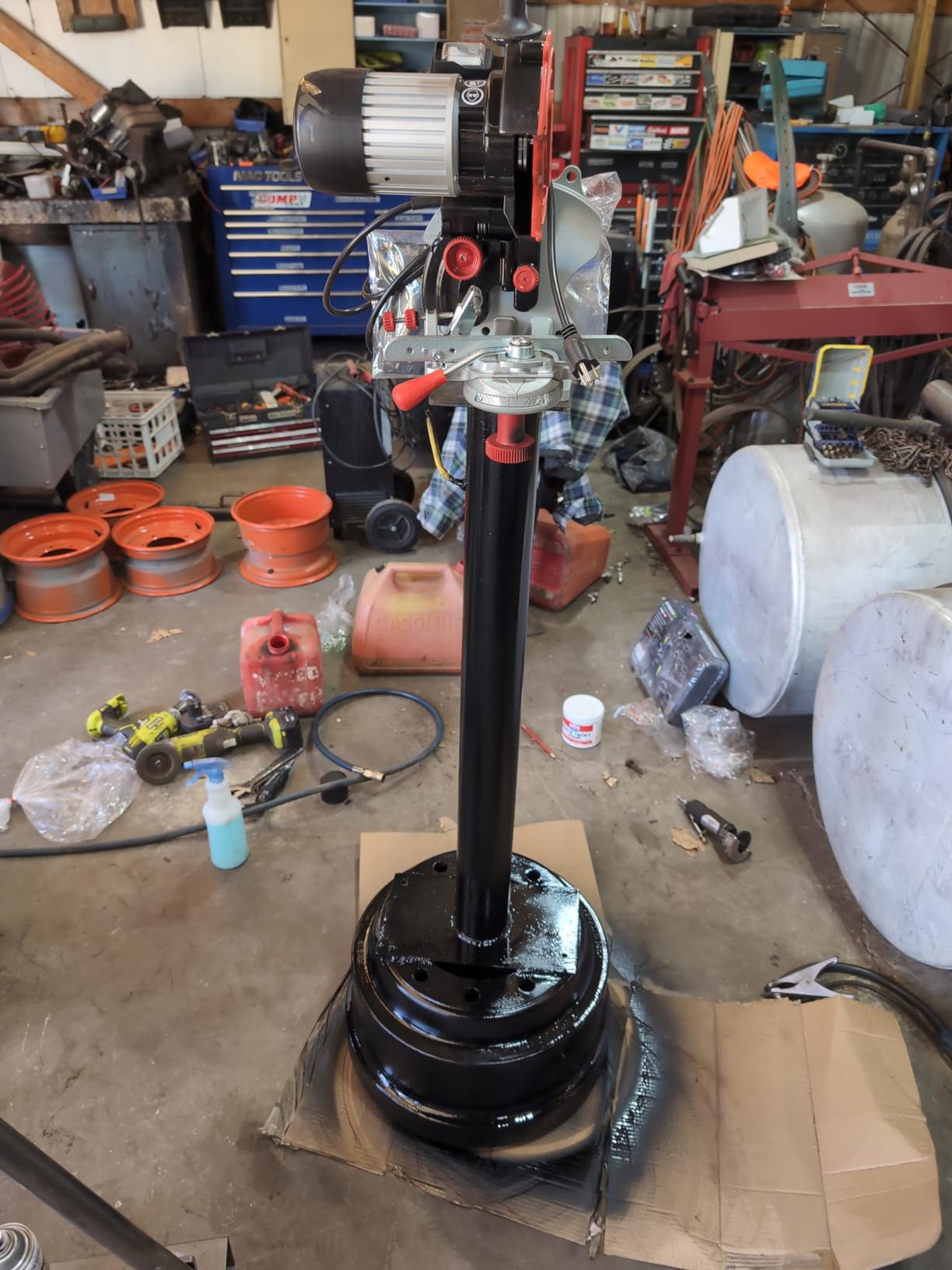
The chain vise clamps each tooth in position so your grind angle stays consistent from cutter to cutter. That consistency is exactly what eliminates the pulling and arc-cutting problems that forum users on ArboristSite and Chainsaw Forum complain about most.
You get three grinding wheels out of the box, covering 1/4-inch, 3/8-inch low profile, 0.325-inch, 3/8-inch, and 0.404-inch pitch chains. The dressing brick keeps your wheels true, and the profile guide helps you confirm you are grinding at the correct depth.
When to Bench Grind Versus Hand File
I reserve the bench grinder for chains that have hit dirt, nails, or rocks, or chains that need a major reshape after many hand filings have rounded the cutter profiles. For routine touch-ups between cord loads, a hand file is faster and removes less material. The bench grinder is your heavy restoration tool.
Setup and Mounting Considerations
This grinder weighs 17 pounds and needs a solid mounting surface. I bolted mine to a 2×10 plank that I can clamp in my bench vise or set on sawhorses. The 15-by-8-by-11-inch footprint fits comfortably in most workshops, but plan your mounting location before you buy.
3. Sharp Pebble Electric Chainsaw Sharpener Kit — Best Handheld Electric
Sharp Pebble Electric Chainsaw Sharpener Kit – Chain Saw Sharpening Tool
Handheld electric
120V corded
4 sharpening wheel bits
Angle attachment
Adjustable speed
Pros
- Four wheel sizes cover most chains
- Angle guide keeps grinds consistent
- Adjustable speed prevents overheating
- Ergonomic for left or right hand use
- Number one seller in its category
Cons
- Not Prime eligible
- Cord management can be awkward
- Some users want more power
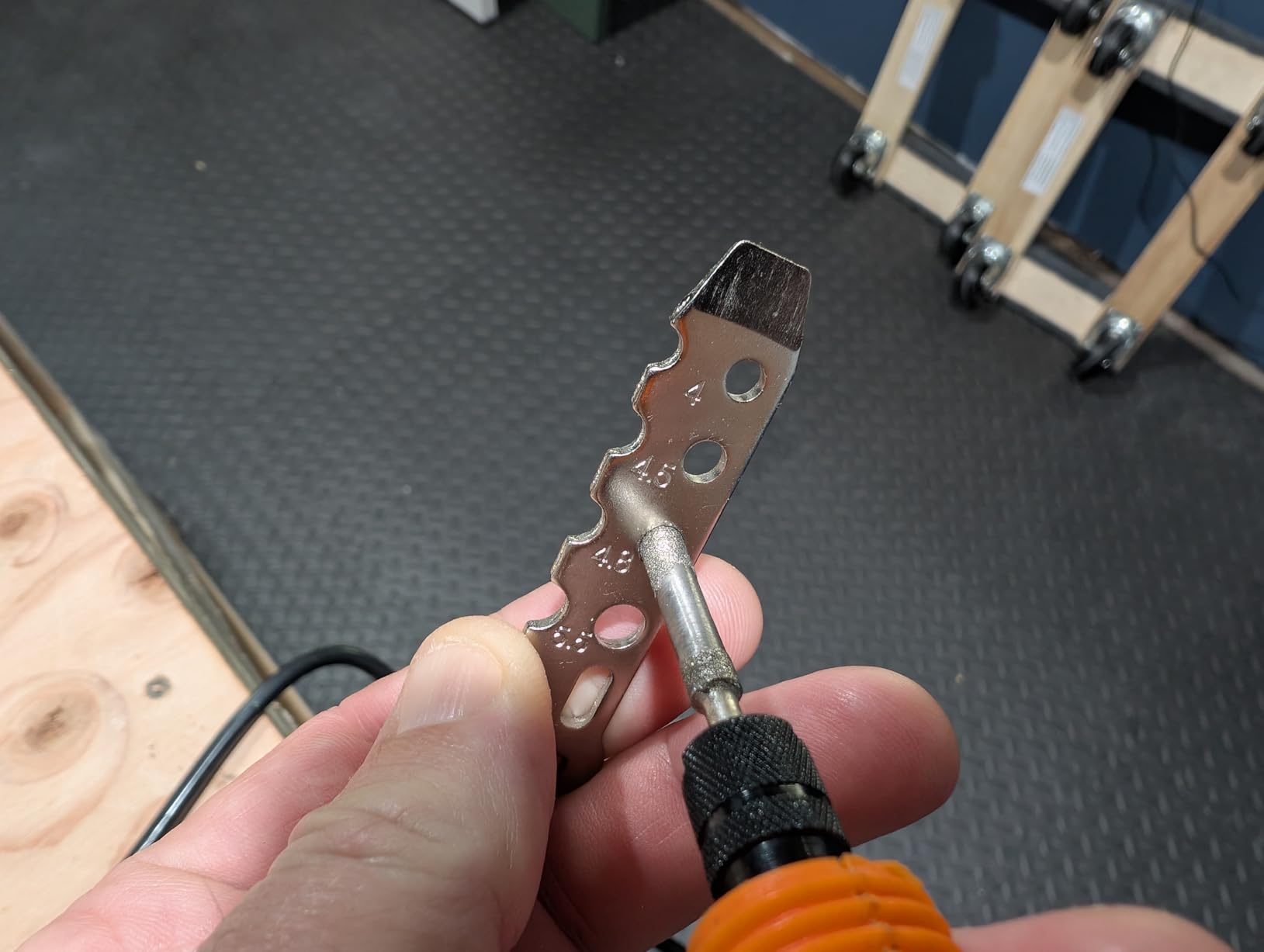
The Sharp Pebble electric sharpener was my go-to handheld electric for the first half of our testing period. It ranked number one in its Amazon category for good reason. The four included wheel bits handle the same chain pitches as the manual files, and the angle attachment locks your grinding angle in place.
I appreciated the adjustable speed settings, which let me dial back the RPM on harder chain steel to avoid bluing the teeth. Overheated steel loses its temper and dulls faster, so this feature matters more than most people realize.
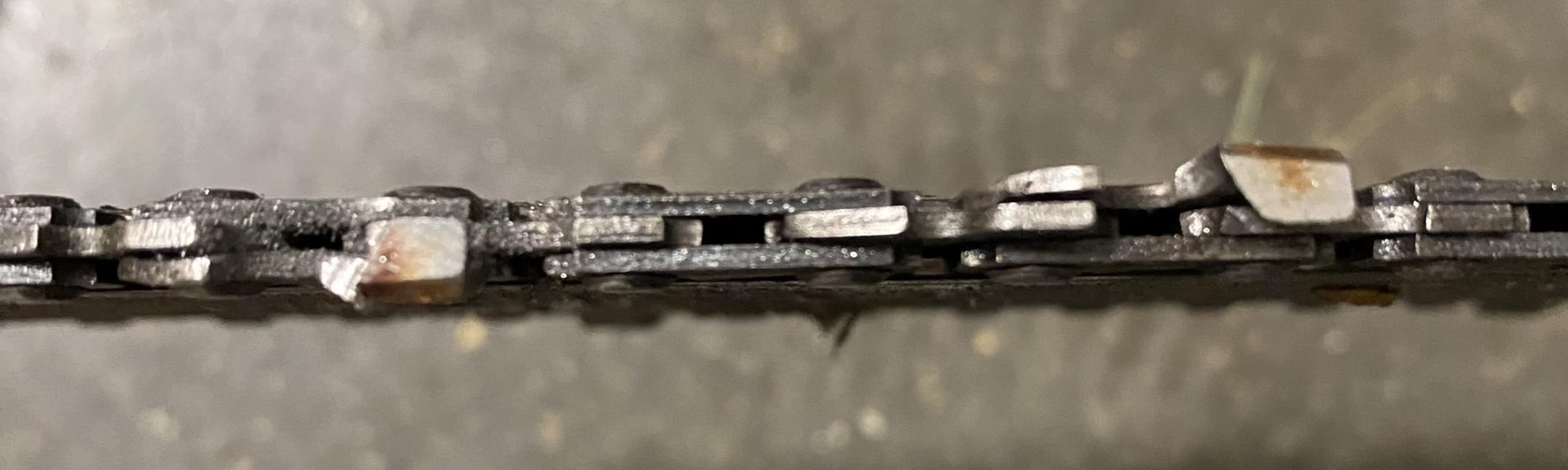
The learning curve is shorter than a bench grinder, making it a solid middle ground between manual filing and workshop grinding. I had my teenage son sharpening his own chainsaw chain within an hour of unboxing it.
The main drawback is that it is not Prime eligible, so shipping takes a bit longer. The cord can also get in the way when you are working on a chain that is still mounted on the saw, but a little patience solves that.
Sharpening On the Saw Versus Off
This sharpener works on chains still mounted on the bar, which saves you the time of removing and re-installing the chain. Just engage the chain brake, position the angle guide against the tooth, and grind. Move tooth by tooth, flipping the saw as needed to reach both sides.
Wheel Bit Replacement and Availability
The included wheel bits wear down over time, especially if you sharpen frequently or work on dirty logs. Replacement bits are available from Sharp Pebble and compatible Oregon stones fit as well. I recommend ordering a spare set when you buy the kit so you are never caught waiting on shipping mid-season.
4. Sharp Pebble Cordless Chainsaw Sharpener Kit — Editor’s Choice
Sharp Pebble Electric Cordless Chainsaw Sharpener Kit – Chain Saw Tool
Cordless electric
Battery powered
4 sharpening wheels
Angle attachment
1.37 lbs lightweight
Pros
- True cordless freedom for field use
- Quick charging battery life
- Four wheel sizes included
- Lightweight and ergonomic design
- Saves time over manual filing
Cons
- Battery needs regular charging
- Included stones may need upgrading
The cordless version of the Sharp Pebble sharpener earned our Editor’s Choice because it solves the one problem every handheld electric sharpener faces: the cord. When you are 40 minutes into the woods with no outlet in sight, cordless changes everything.
I tested this unit over a full weekend of cutting at a friend’s property with no shop access. The battery lasted through two complete chain sharpenings and still had charge left. The quick-charge feature had it ready again before I finished my lunch.
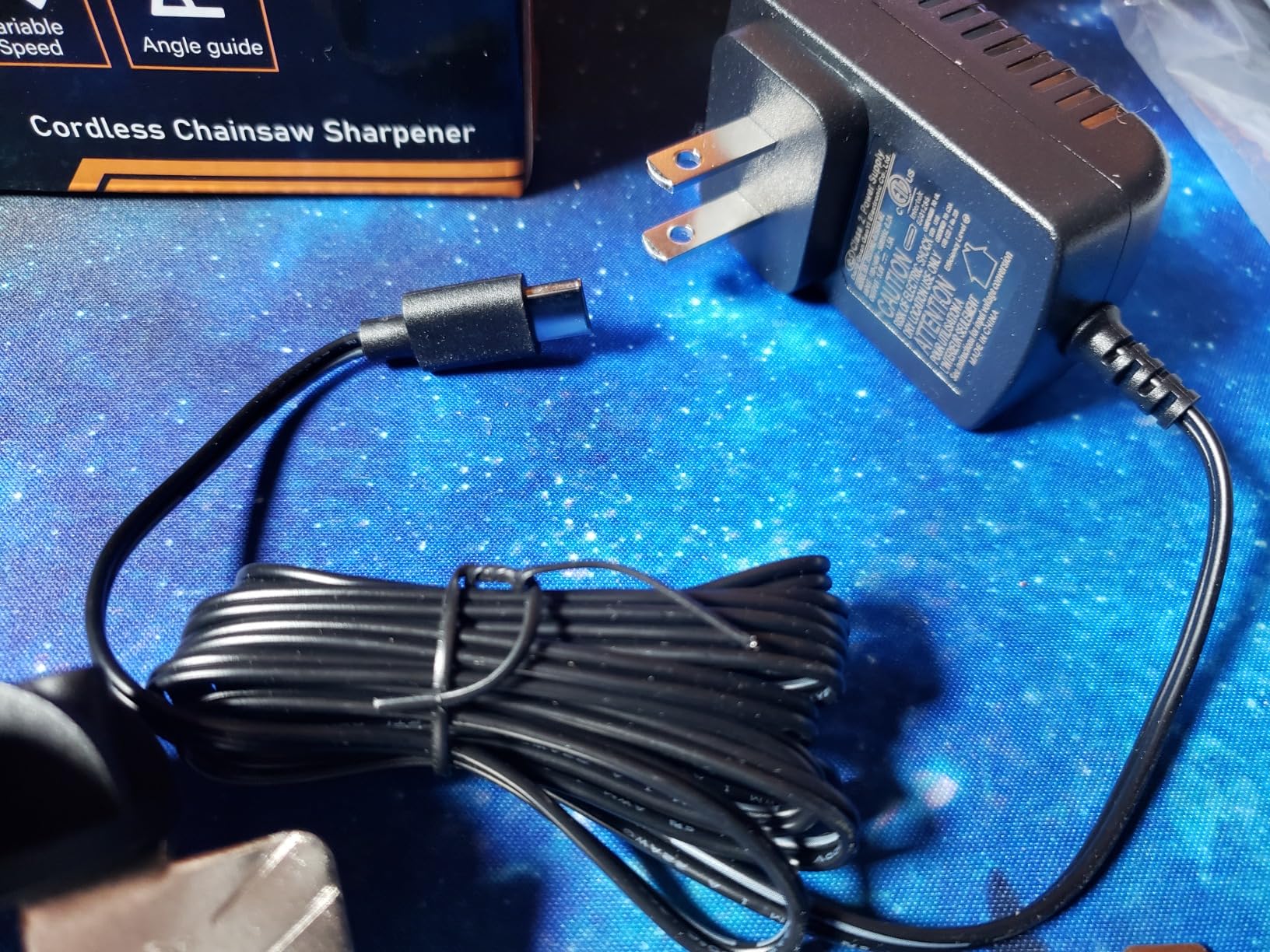
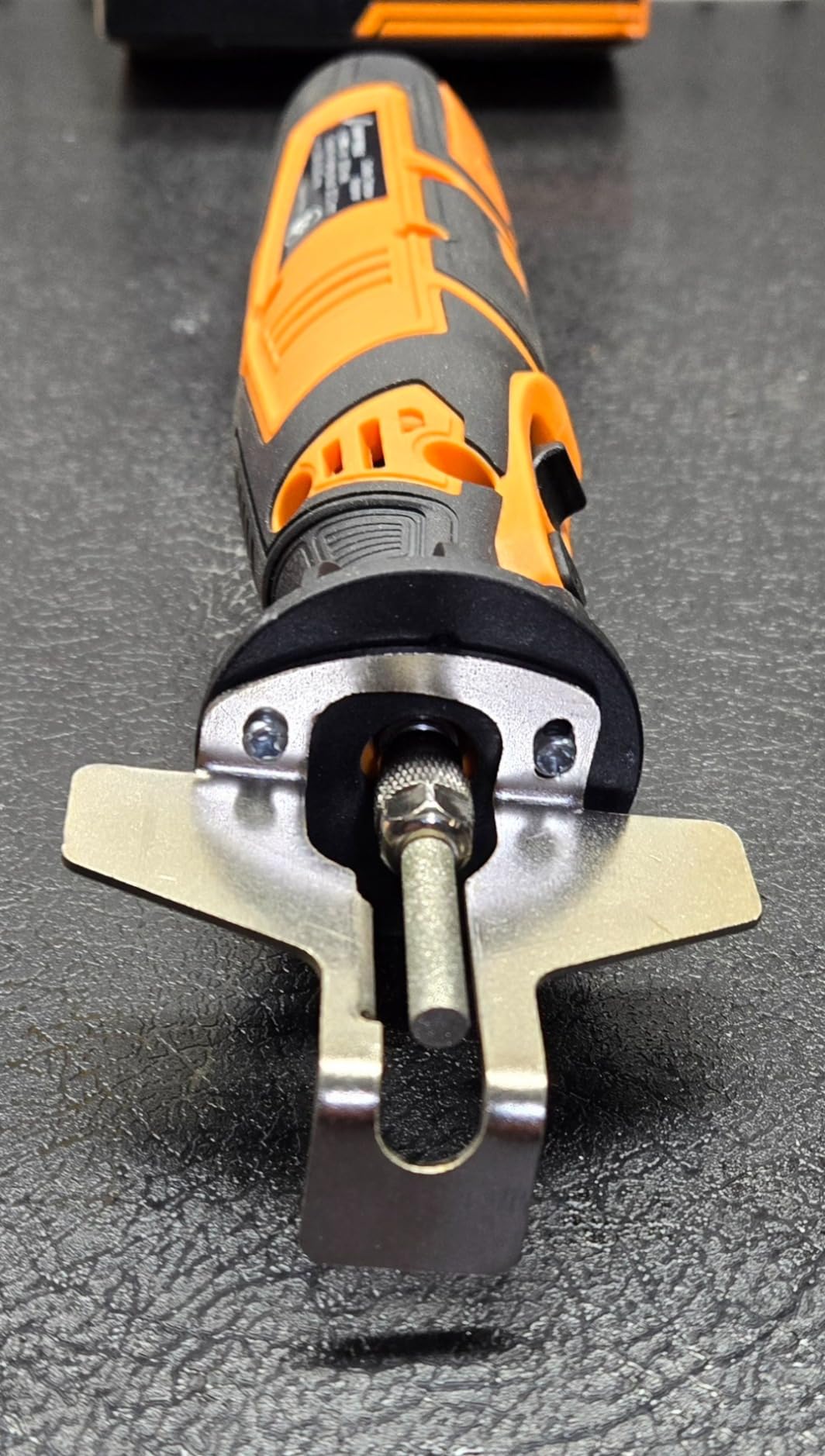
At just 1.37 pounds, it is light enough to carry in a pack without noticing it. The four wheel sizes cover the same chain pitches as the corded model, and the angle attachment provides the same consistent grinding guidance.
The trade-off is battery management. If you forget to charge it after a cutting session, your next session starts with a wait. I keep a spare battery in my gear bag to avoid this issue entirely.
Ideal for Remote Woodlot Work
This is the sharpener I recommend for firewood cutters who work in remote locations, off-grid properties, or community woodlots without power access. The combination of cordless convenience and consistent electric sharpening fills a gap that neither manual files nor corded grinders can cover.
Upgrading the Grinding Stones
Several users on r/firewood recommend swapping the included grinding stones for Oregon replacement stones, which they report last longer and maintain their shape better. I noticed the same thing after about 20 sharpenings, when the stock stones started to wear unevenly. The upgrade is inexpensive and worth doing.
5. Oregon Chainsaw Sharpening Kit with Hard Case — Complete Field Package
Oregon Chainsaw Chain Sharpening Kit with Hard Case
Manual kit
Hard case
Round and flat files
Stump vise
Felling wedge
Depth gauge tool
Pros
- Heavy-duty compartmentalized hard case
- Includes stump vise for hands-free filing
- Felling wedge for safe cutting
- Depth gauge tool included
- All-in-one field maintenance package
Cons
- Not Prime eligible
- May be more than casual users need
This Oregon kit sits in the back of my truck year-round because it is the most complete field maintenance package I have found. The hard case keeps everything organized and protected from the banging around that happens on rough woodlot roads.
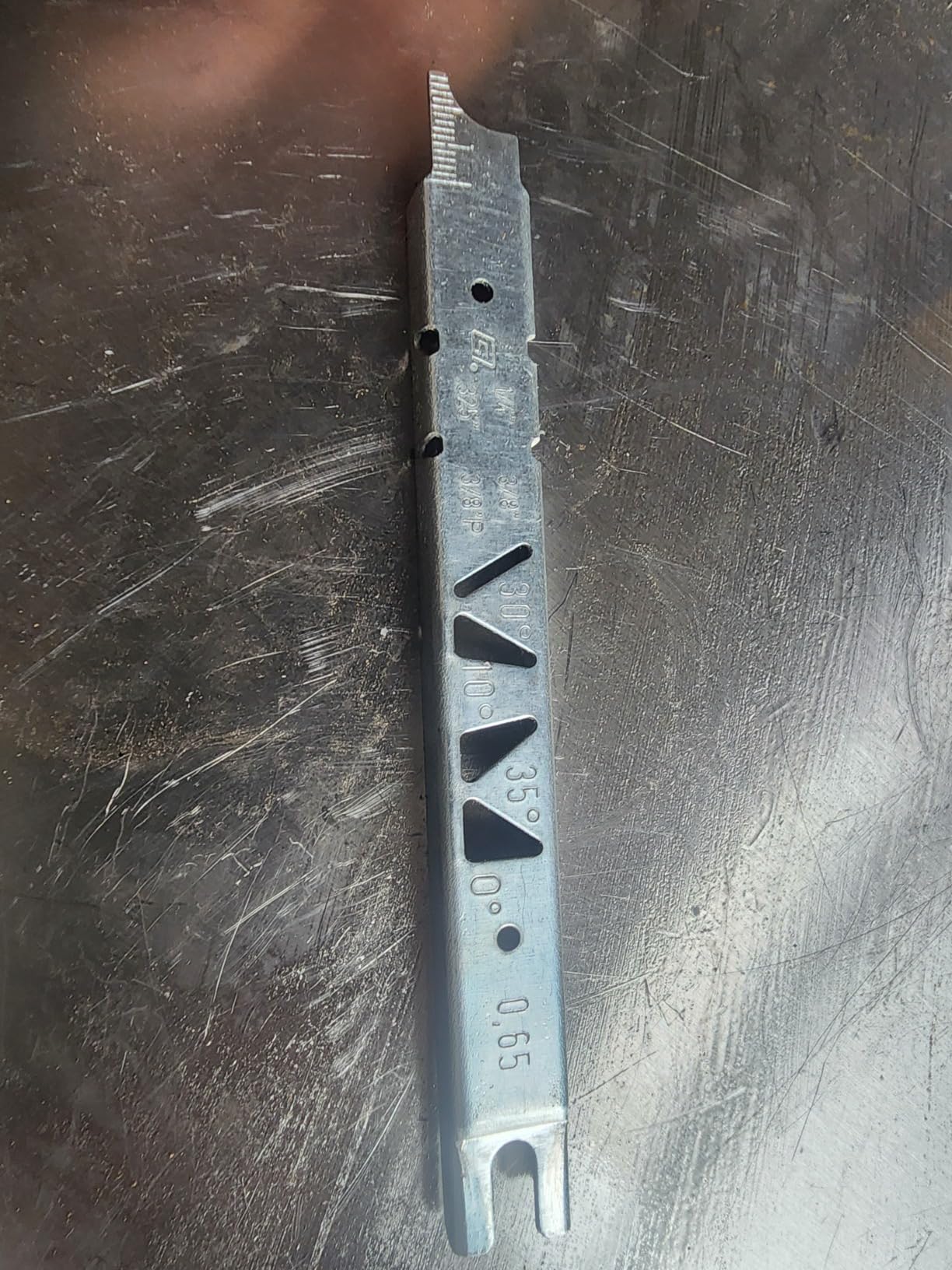
The standout inclusion is the stump vise. You drive it into a stump or log, clamp your chainsaw bar into it, and file hands-free with both hands on your file. This transforms field sharpening from an awkward balancing act into a controlled, repeatable process.
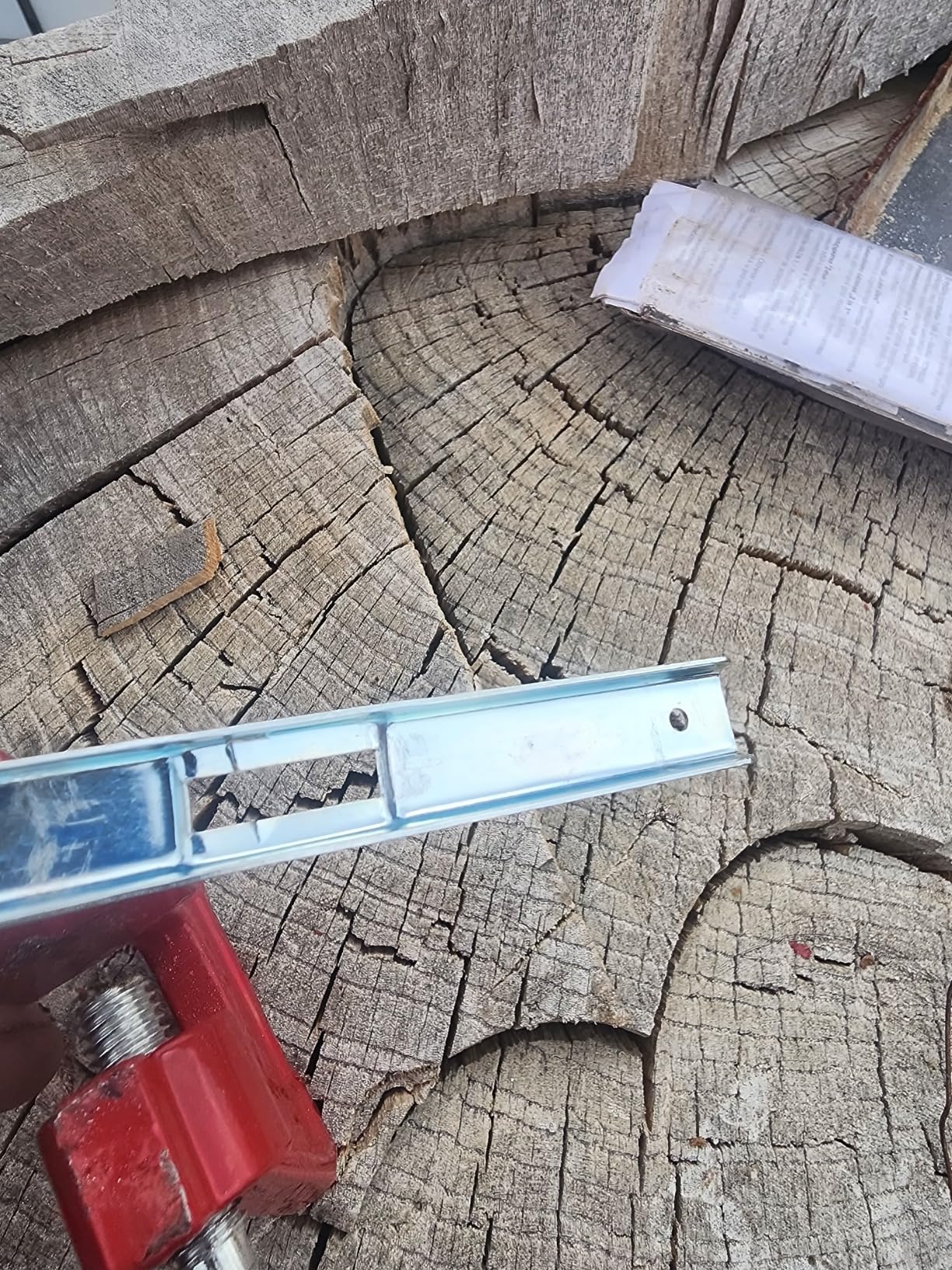
The felling wedge is a bonus that most sharpening kits do not include. If you cut enough firewood, you will eventually need a wedge to keep a tree from sitting back on your bar, and having one in the same case as your files means you always know where it is.
The round files, flat file, and depth gauge tool cover the same sharpening functions as the smaller Oregon field kit. The difference here is the case organization and the added accessories that make this a full cutting-day companion rather than just a sharpening tool.
What the Stump Vise Adds to Field Sharpening
Without a vise, you end up holding the saw between your knees while filing, which is tiring and imprecise. The stump vise locks your bar at a comfortable working height so you can focus on your filing angle instead of wrestling the saw. Once you try it, you will not go back to knee-filing.
Is the Full Kit Overkill for You?
If you only cut a couple of cords a year and just need files, the smaller Oregon kit above is plenty. This kit makes sense for serious firewood cutters who spend full days in the woodlot, run multiple saws, or cut for neighbors and family and want every maintenance tool in one case.
6. EzzDoo Electric Chainsaw Sharpener Kit — Best Budget Electric
EzzDoo Electric Chainsaw Sharpener Kit with 6 Titanium-Coated Diamond Bits – Handheld Chain Saw Sharpener Tool for All Chains – No Removal Required, Easy and Fast Chainsaw Sharpening Kit
Handheld electric
6 titanium-coated diamond bits
No chain removal
Angle guide
3x faster than manual
Pros
- Six titanium-coated diamond bits in 3 sizes
- No need to remove chain from saw
- Dual-direction angle markings for any hand
- Three times faster than hand filing
- Updated collet design reduces slippage
Cons
- Speed settings need care to avoid overheating
- Diamond bits wear with heavy use
The EzzDoo sharpener caught my attention because it uses titanium-coated diamond bits instead of traditional grinding stones. Diamond bits cut cooler and maintain their shape longer, which addresses one of the biggest complaints about handheld electric sharpeners.
The no-removal design means you sharpen the chain right on the bar, same as the Sharp Pebble corded model. The angle guide clips onto the bar and provides a reference for both left and right cutters, with markings that work whether you are left or right handed.
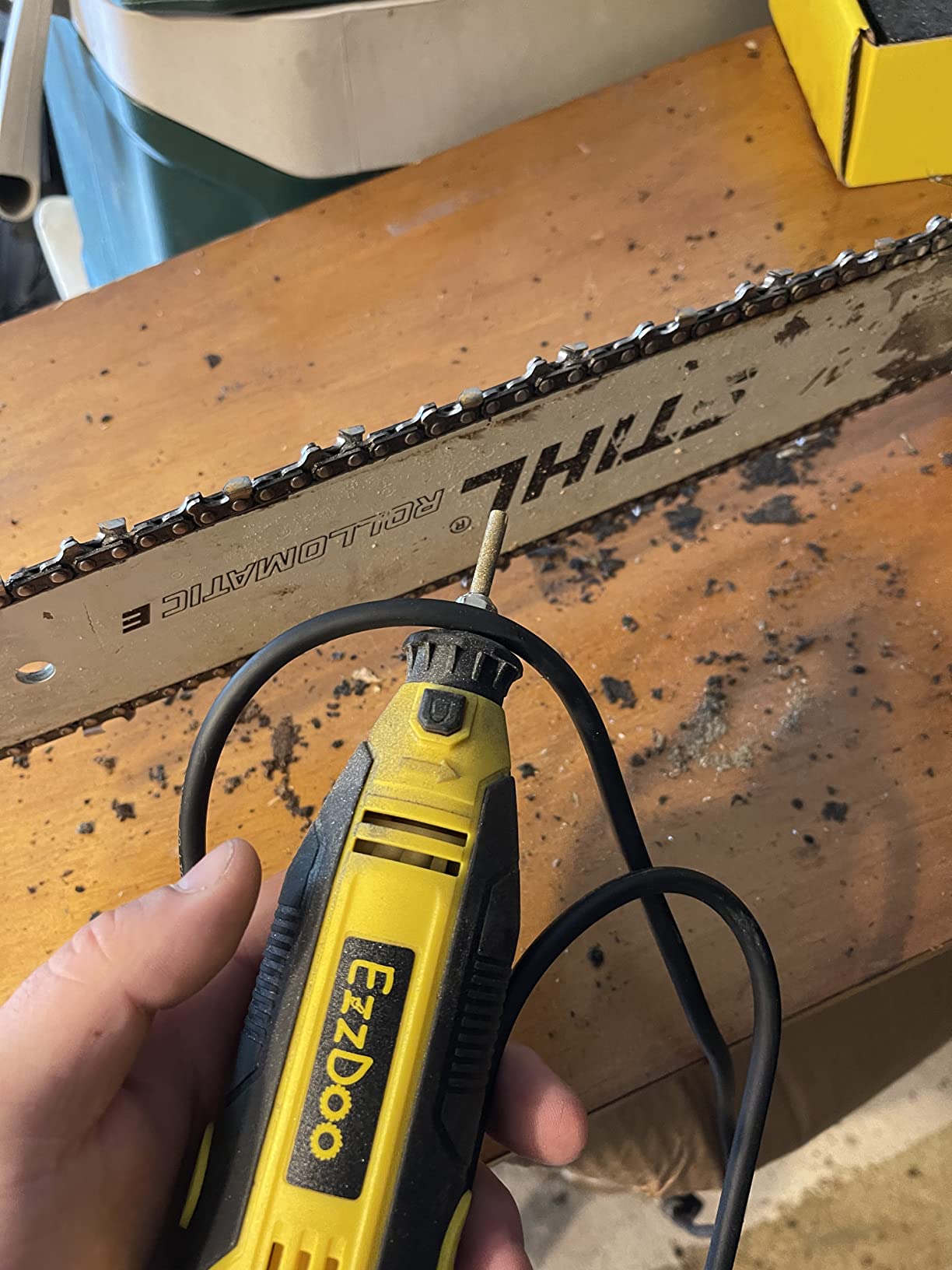
I timed a full chain sharpening at just under 4 minutes, compared to 12 minutes with a manual file. For a firewood cutter processing multiple cords, that time savings adds up quickly over a season.
The one caution is speed management. Run the bits too fast against hard chain steel and they can heat the tooth enough to discolor it. Start on a lower speed and increase only if the bit is not cutting efficiently.
Diamond Bits Versus Grinding Stones
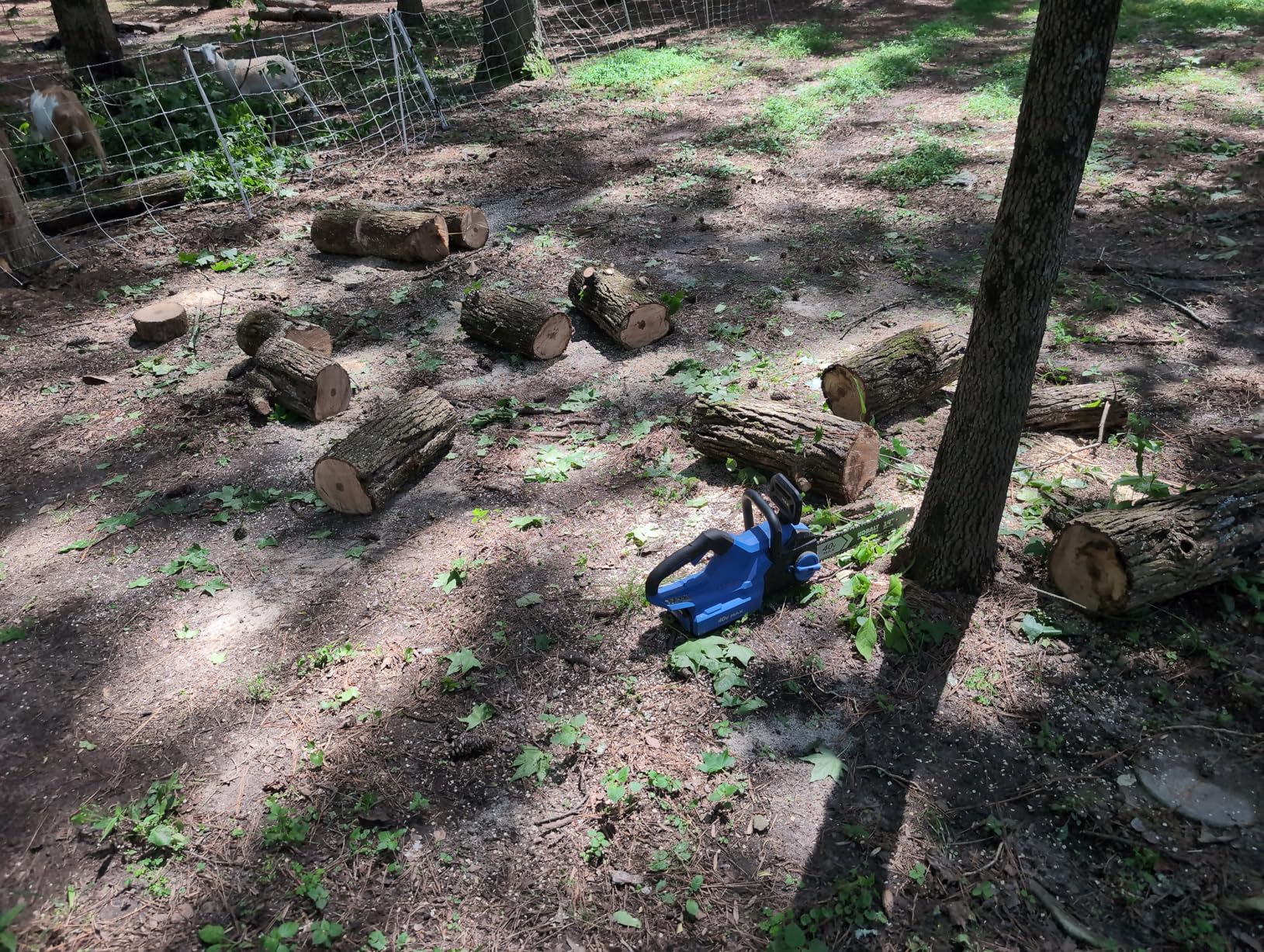
Diamond bits last significantly longer than standard grinding stones and produce a cleaner edge. The trade-off is they cost more to replace. For firewood cutters who sharpen frequently, the longer life offsets the higher replacement cost over time.
Collet and Grip Improvements
EzzDoo updated the collet design in 2024 and added a honeycomb grip pattern in 2026, both addressing user complaints about bit slippage and hand fatigue. The current version is noticeably more comfortable in hand than earlier models that some reviewers mentioned.
7. VEVOR Electric Chainsaw Sharpener 140W — Budget Bench Option
VEVOR Electric Chainsaw Sharpener, 140W Electric Saw Chain Blade Sharpener 5700RPM, Professional Bench Chain Saw Sharpening Tool with 3 Grinding Wheels Fit 0.25″ to 0.404″ Pitch Chains
Bench mount electric
140W motor
5700 RPM
3 grinding wheels
LED light
Handles .25 to .404 pitch
Pros
- Powerful 140W motor at 5700 RPM
- Handles 1/4 to .404 pitch chains
- Three interchangeable grinding wheels
- Budget-friendly bench option
- LED light for visibility
Cons
- Bench mount limits portability
- Fewer reviews than established brands
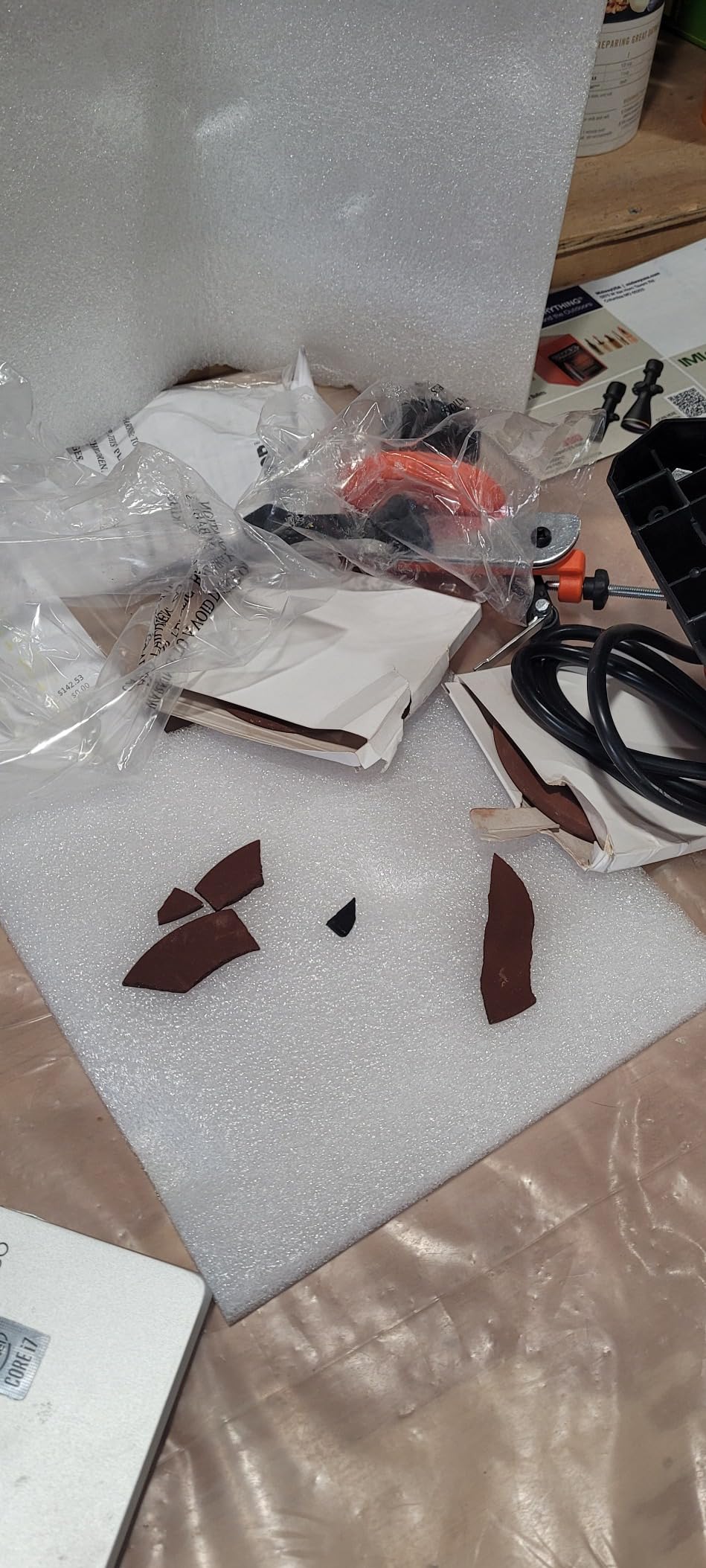
The VEVOR bench sharpener brings bench-mounted grinding to a budget price point that caught my attention during testing. At 140 watts and 5700 RPM, it has more raw power than the Oregon bench grinder, though raw power is not everything when it comes to precision chain sharpening.
I mounted this grinder on the same bench as my Oregon 410-120 for a direct comparison over three weeks of firewood processing. The VEVOR handles every chain pitch from 1/4-inch up to 0.404-inch, matching the Oregon’s range with its three included wheels.
The LED light is a small feature that I came to appreciate during early-morning sharpening sessions. Being able to clearly see the tooth profile as you grind makes a real difference in how much material you remove.
The anti-slip handle and quick measurement scale help with setup, but the bench-only design means you need a permanent mounting location. This is a workshop tool, not a field companion.
How It Compares to the Oregon Bench Grinder
The VEVOR spins faster at 5700 RPM versus the Oregon’s 3150 RPM, which means faster material removal but also greater risk of overheating. I found myself using lighter pressure and shorter contact times with the VEVOR to avoid heat discoloration on the teeth.
Best for Light to Moderate Use
For a firewood cutter processing 5 to 10 cords a year, the VEVOR delivers bench-grinding precision at roughly a quarter of the cost of premium models. Heavy users who sharpen daily may want the Oregon for its durability and slower, more controllable RPM.
8. Oregon 12V Sure Sharp Handheld Grinder — Field Electric Pick
Oregon 12V Sure Sharp Electric Chain Sharpener
12V handheld electric
Car adapter and battery clips
3 sharpening stones
Angle guide
16 foot cable
Pros
- Runs off 12V vehicle power
- Three stone sizes included
- 16-foot cable for reach
- Compatible with all major chain pitches
- Simple angle adjustment guide
Cons
- Requires 12V source not cordless
- Can heat up with extended use
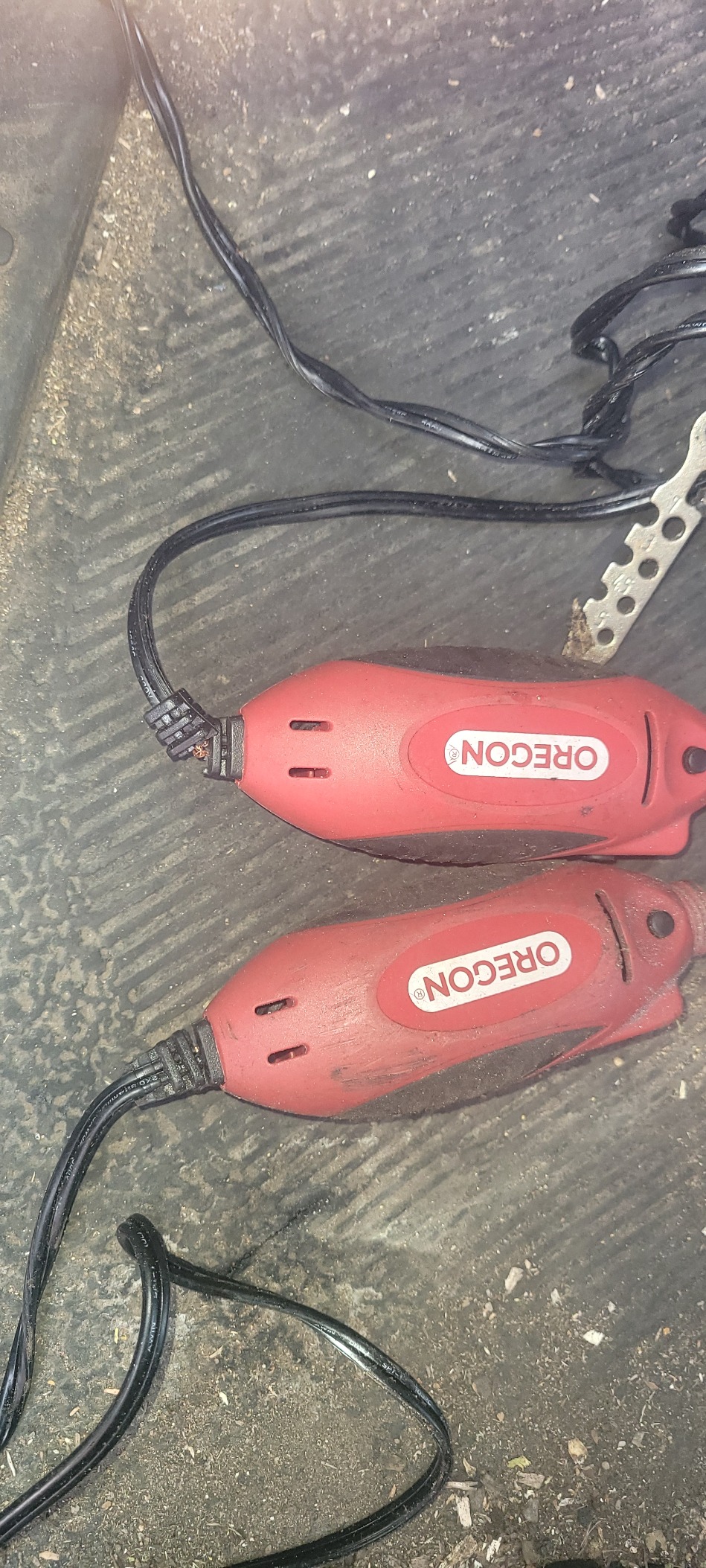
The Oregon Sure Sharp is the bridge between manual filing and cordless electric sharpening. It runs off your truck or car battery through the included 12V adapter and battery clips, which means you get electric sharpening speed without needing to charge a battery.
The 16-foot cable gives you plenty of reach from your vehicle to wherever your saw is sitting. I have used this sharpener in my truck bed, on a tailgate, and clamped in a stump vise with the cable running to the battery.
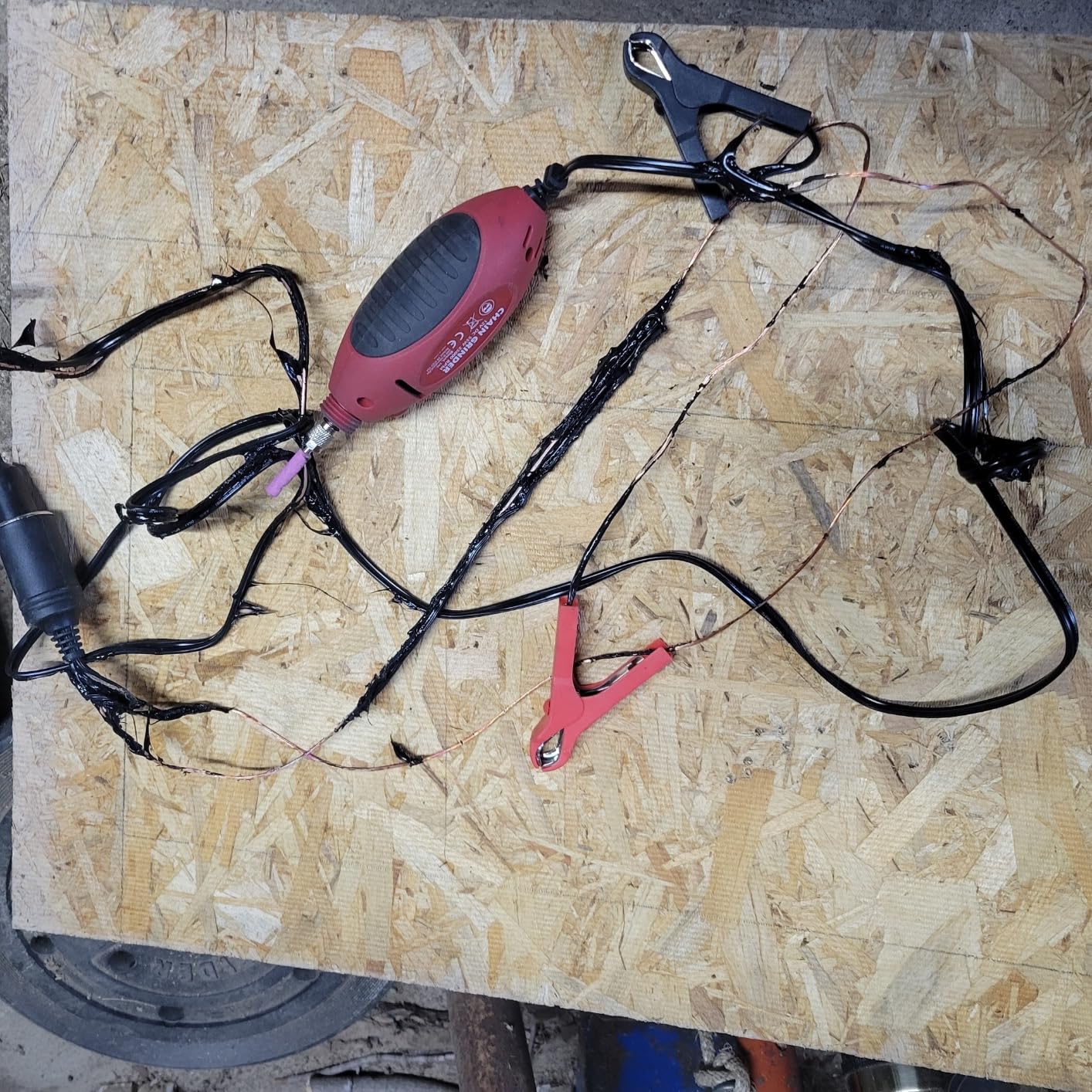
The three sharpening stones cover the same chain pitches as the manual file kit. The angle adjustment guide is simple but effective, and replacement stones are widely available from any Oregon dealer.
The main limitation is that it requires a 12V power source, so it is not truly portable in the way a cordless sharpener is. But if your cutting always happens near your vehicle, this is a more reliable option than depending on a battery charge.
Best Use Case for Vehicle-Powered Sharpening
This sharpener is ideal for firewood cutters who work from a truck-mounted wood splitter or who cut on property they drive to. The vehicle battery provides unlimited run time, and you never have to remember to charge anything before a cutting session.
Managing Heat During Extended Sessions
The Sure Sharp can warm up during back-to-back chain sharpenings. I give it a brief cool-down between chains and use light pressure to let the stone do the work. This extends stone life and prevents heat damage to both the tool and your chain teeth.
How to Choose the Best Chainsaw Sharpener for Firewood Cutting?
Choosing among the best chainsaw sharpeners for firewood cutters comes down to three main questions. Where do you sharpen, how often do you sharpen, and how much consistency do you need across your cutter teeth? Let me break down the factors that should drive your decision.
Manual Versus Electric: Which Suits Your Cutting Style
Manual file kits give you maximum control and remove the least material per sharpening, which extends chain life. They cost less and never need power. The trade-off is they require skill to maintain consistent angles, and a full sharpening takes 10 to 15 minutes per chain.
Electric sharpeners deliver consistency faster, especially for cutters who struggle with hand-filing technique. A handheld electric sharpens a chain in 3 to 5 minutes with angle guides built in. The trade-off is higher cost, the need for power, and the risk of removing too much material if you are not careful.
For most firewood cutters, the ideal setup is a manual field kit for quick touch-ups plus an electric option for more thorough sharpening. I run a manual file kit in my pack and a bench grinder in my shop.
Matching File and Stone Size to Your Chain Pitch
This is the area where I see the most confusion among new firewood cutters. Using the wrong file or stone size rounds over your cutter teeth instead of sharpening them, leaving you with a chain that cuts worse than before you started.
Here is the quick reference I use. For 1/4-inch pitch chains, use a 5/32-inch file or 3.2mm stone. For 3/8-inch low profile chains, use a 5/32-inch file or 3.2mm stone. For 0.325-inch pitch chains, use a 3/16-inch file or 4.7mm stone. For 3/8-inch pitch chains, use a 7/32-inch file or 6.0mm stone. For 0.404-inch pitch chains, use a 7/32-inch file or 6.0mm stone.
Check your chain packaging or the depth gauge marking on your chain to confirm the pitch before you start filing. If you cannot find the pitch, measure the distance between three consecutive rivets and divide by two.
Understanding Sharpening Angles
Most chainsaw chains are sharpened at a 30 degree angle, which is the standard for general firewood cutting. Some manufacturers specify 25 degrees for cross-cutting or 35 degrees for harder woods. The angle matters because it determines how aggressively the tooth bites into the wood.
The key is consistency. Every tooth on one side of the chain must match the angle of every other tooth on that side. If even a few teeth are off by 5 degrees, the chain will pull to one side and your cuts will curve. This is the most common complaint on chainsaw forums, and it almost always traces back to inconsistent sharpening angles.
Depth Gauge and Raker Maintenance
Depth gauges, also called rakers, are the small tabs in front of each cutter tooth. They control how deep each tooth bites into the wood. As you sharpen your chain, the cutter teeth get shorter, but the rakers stay the same height. Eventually the rakers are too tall relative to the cutters, and the chain stops biting even though it is sharp.
Check your depth gauges every 3 to 5 sharpenings using a depth gauge tool. Most chains call for a 0.025-inch depth setting for standard firewood cutting. File the rakers down with a flat file until the tool slides freely over the top.
Recognizing When a Chain Is Too Worn to Sharpen
Chains do not last forever. After 7 to 10 sharpenings, the cutter teeth become too short to file safely. If you can see the depth gauge stamp or the tooth profile is noticeably smaller than a new chain, it is time to replace the chain.
A chain that has been filed into dirt, rocks, or metal needs more than sharpening. The impact damages the tooth profile in ways that filing cannot fix. Inspect each tooth carefully before spending time on a chain that may be past saving.
Frequently Asked Questions
What is the best chainsaw sharpener for firewood cutters?
The best chainsaw sharpener for firewood cutters depends on your needs. The Oregon Universal Field Sharpening Kit is the best overall value for most cutters. The Oregon 410-120 Bench Grinder delivers workshop-grade precision for heavy users. The Sharp Pebble Cordless Sharpener offers the best field convenience.
How do I know when my chainsaw chain needs sharpening?
Your chain needs sharpening when it produces fine sawdust instead of chips, requires pressure to cut, burns the wood, or pulls to one side. A sharp chain self-feeds into the cut and produces square chips. Most firewood cutters sharpen after every 2 to 3 tanks of fuel.
Manual vs electric chainsaw sharpener – which is better?
Manual sharpeners are better for field touch-ups, cost less, and remove less material for longer chain life. Electric sharpeners are faster, more consistent for beginners, and better for restoring damaged chains. Most serious firewood cutters use both: a manual kit in the field and an electric sharpener in the shop.
What angle should I sharpen my chainsaw chain?
Most chainsaw chains sharpen at 30 degrees for general firewood cutting. Use 25 degrees for softer woods and cross-cutting, or 35 degrees for harder woods like oak and hickory. Consistency matters more than the exact angle. Every tooth on each side must match.
Can you sharpen a chainsaw chain too much?
Yes. Each sharpening removes a small amount of steel from the cutter teeth. After 7 to 10 sharpenings, the teeth become too short to file safely and the chain must be replaced. Over-filing also creates inconsistent tooth lengths that cause uneven cutting and pulling.
Final Thoughts on Chainsaw Sharpeners for Firewood Cutters
The best chainsaw sharpeners for firewood cutters in 2026 are the ones that match where and how you work. If you want one tool that covers most situations, the Oregon Universal Field Sharpening Kit delivers unmatched value and portability. For workshop precision on heavily used chains, the Oregon 410-120 Bench Grinder is the professional choice. And for cordless convenience in remote woodlots, the Sharp Pebble Cordless Sharpener earned its Editor’s Choice spot.
My own setup pairs a manual field kit with a bench grinder, and that combination has served me well across hundreds of cords of firewood. Whatever you choose, the most important thing is to sharpen regularly. A sharp chain cuts faster, uses less fuel, and reduces the fatigue that turns firewood cutting from a satisfying task into a chore.
1 thought on “8 Best Chainsaw Sharpeners for Firewood Cutters (October 2026)”