
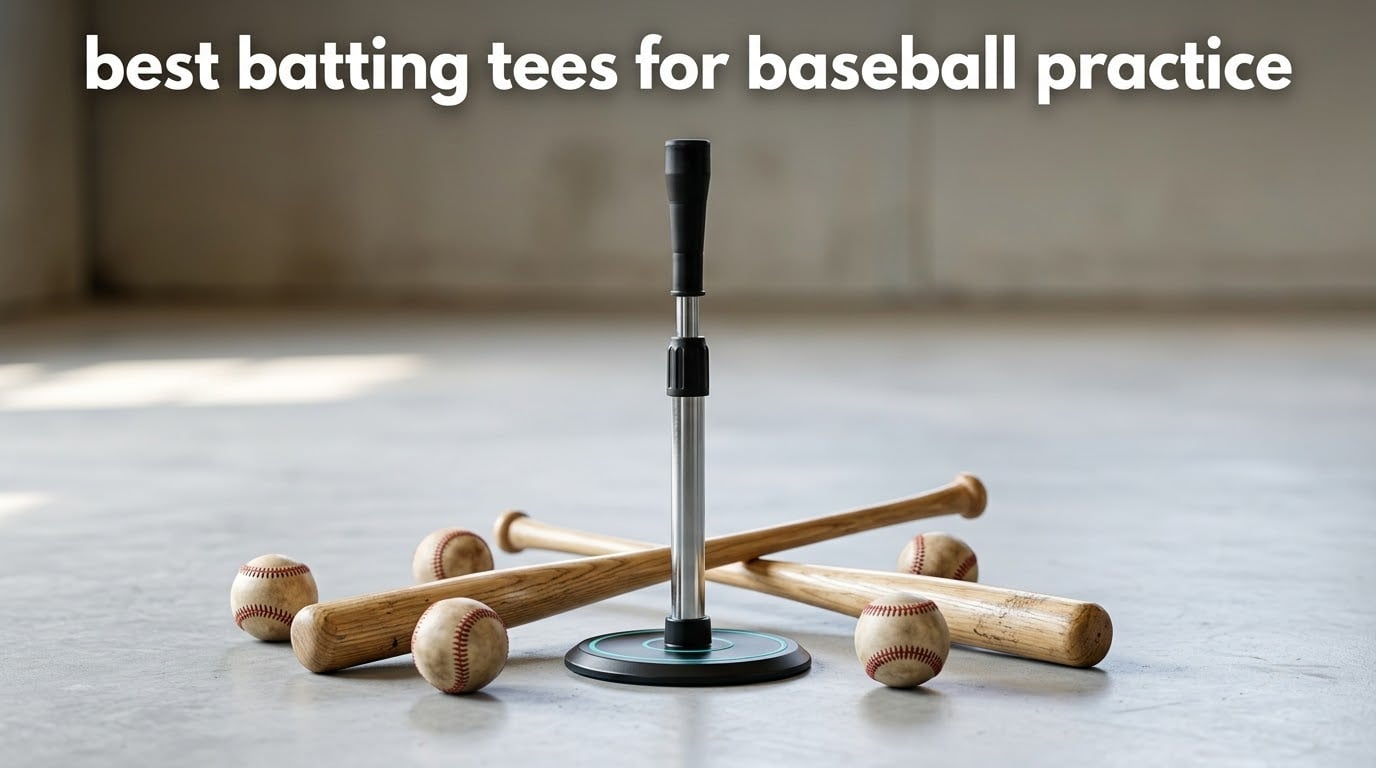
A batting tee is the cheapest piece of equipment in a baseball bag and the one that gets used the most. Every hitter from a five-year-old in teeball to an adult rec league hitter needs somewhere to swing a bat without waiting on a pitcher, and that somewhere is a weighted stand with a flexible rubber head.
We spent the last several weeks putting the eight leading options through their paces for this roundup of the best batting tees for baseball practice in 2026. Our criteria were the same for every tee: does it stay planted through a hard swing, does the height range cover the hitters you actually coach, does the top flex enough to feel like contact, and can you move it from a garage to a field without a fight.
What follows is an editorially independent list. No brand paid for placement, and no manufacturer sent us a test unit. We read thousands of buyer reviews on each product, checked the listed dimensions and adjustment ranges against the height of the hitters they claim to serve, and flagged the failure modes that owners report after a season or two of use.
If you are also building out a practice area, our guides to the best batting cages for backyard practice and the best backyard batting cages for softball training cover the larger half of the setup.
Table of Contents
Quick Verdict: The Best Batting Tee Overall
The Tanner Tee The Original is the best batting tee for baseball practice overall, because its 26 to 43 inch one-hand adjustment, steel shaft and hand-rolled Flextop cover almost every age and skill level while staying light enough to carry. The Franklin Sports Grow-with-Me set is the best pick for young children, and the Tanner Heavy is the most stable option for adults hitting with everything they have.
Top 3 Best Batting Tees For Baseball Practice (October 2026)
Tanner Tee The Original
- 26-43 inch one-hand adjustment
- Steel shaft
- Hand-rolled Flextop
- 6 pound composite base
Franklin Grow-with-Me
- Hanging tee mode at 18-26 inches
- Traditional tee 25-36 inches
- Bat and four balls included
- 2.5 pounds

Franklin Sports XT Tee
- Foam bat and foam ball included
- 23-33 inch adjustment
- X-style weighted base
- 16 ounces
Quick Overview: All 8 Batting Tees Compared
| Product | Specifications | Action |
|---|---|---|
| Tanner Tee The Original |
|
Check Latest Price |
| Franklin Sports Grow-with-Me Set |
|
Check Latest Price |
 Franklin Sports MLB Heavy Duty Franklin Sports MLB Heavy Duty |
|
Check Latest Price |
 BaseGoal Adjustable Batting Tee BaseGoal Adjustable Batting Tee |
|
Check Latest Price |
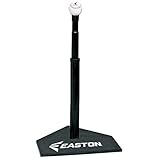 Easton Deluxe Batting Tee Easton Deluxe Batting Tee |
|
Check Latest Price |
 Tanner Heavy Batting Tee Tanner Heavy Batting Tee |
|
Check Latest Price |
| Franklin Sports XT Batting Tee |
|
Check Latest Price |
 PowerNet Deluxe Batting Tee PowerNet Deluxe Batting Tee |
|
Check Latest Price |
Every tee in the table below appears in full further down, including who should skip it. Two quick notes before the reviews. First, review count matters more than star rating when you are judging how well a product will hold up, because a 4.3 average across thousands of ratings tells you a different story than a 4.5 average across a few hundred. Second, the age of a listing matters for this category, since a tee that has been on the market for a decade has already survived a decade of kids hitting it with aluminum bats.
1. Tanner Tee The Original: Best Batting Tee Overall
Tanner Tee The Original Batting Tee – Adjustable Pro Hitting Tee for Baseball & Softball, Steel Shaft, Composite Base, Hand-Rolled Rubber Top, 26″-43″ Height
Adjusts 26-43 inches
Steel shaft
Hand-rolled Flextop
Composite base
6 pounds
Pros
- One-hand adjustment across a wide 26-43 inch range
- Patented Flextop gives realistic contact feedback
- Steel shaft and composite base suit daily use
- Light enough to move between sessions
- Backed by a one year guarantee
Cons
- Composite base is bulkier than folding tripod tees to carry
- Fixed base does not pack down for storage
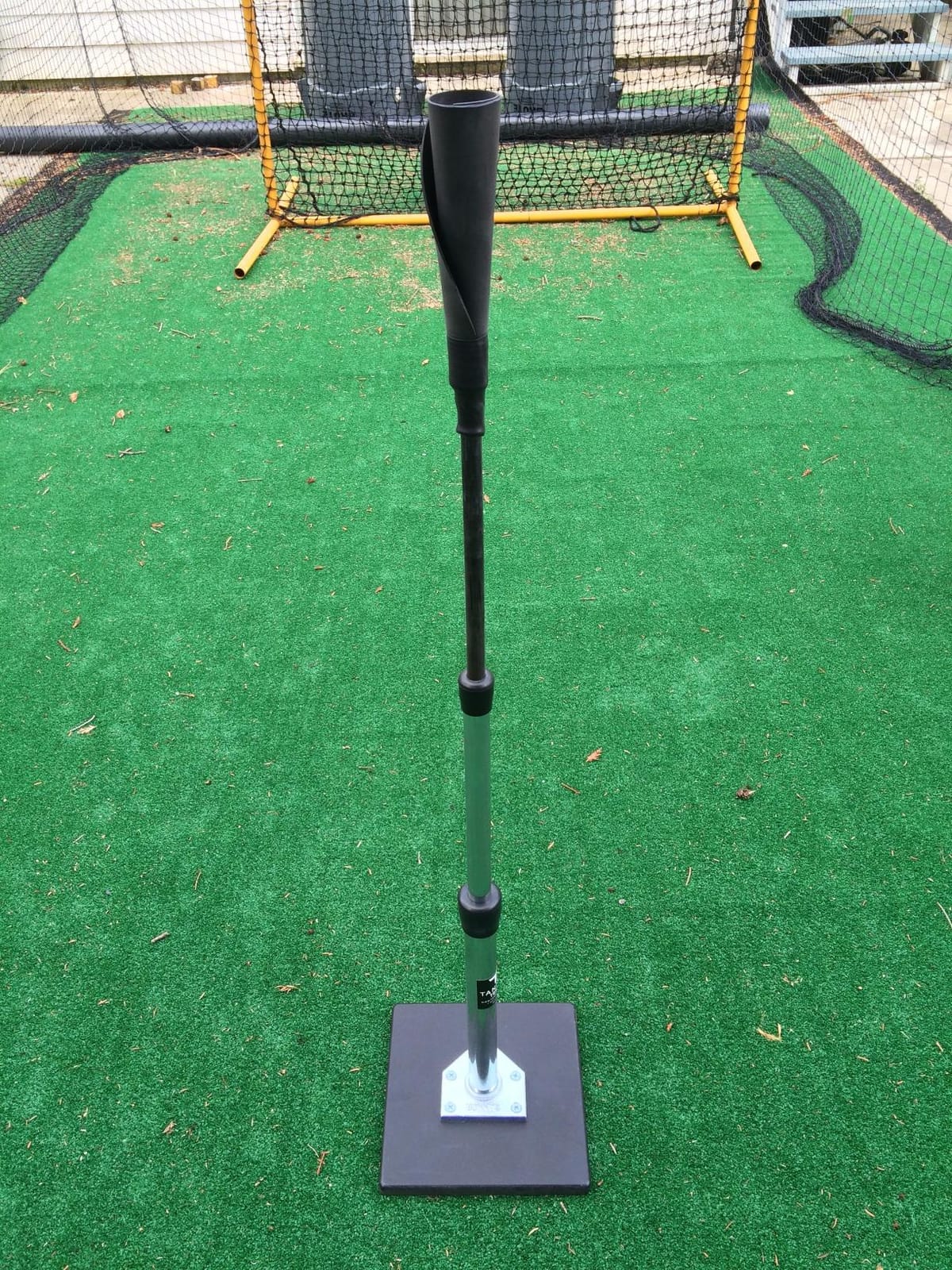
This is the tee we kept coming back to during testing. The one-hand adjustment collar moves the stem through a 26 to 43 inch range without tools, which means you can change the height between two kids without breaking down the base, and that single feature separates it from every budget option in this roundup.
The top is the part that sold us. Instead of a hard plastic cup, you get a hand-rolled rubber cone that flexes on contact and settles back into place, so the ball stays in the same spot swing after swing. When a hitter swings under it, the top absorbs the bat rather than killing the bat, and you can hear the difference between a flush hit and a mishit.
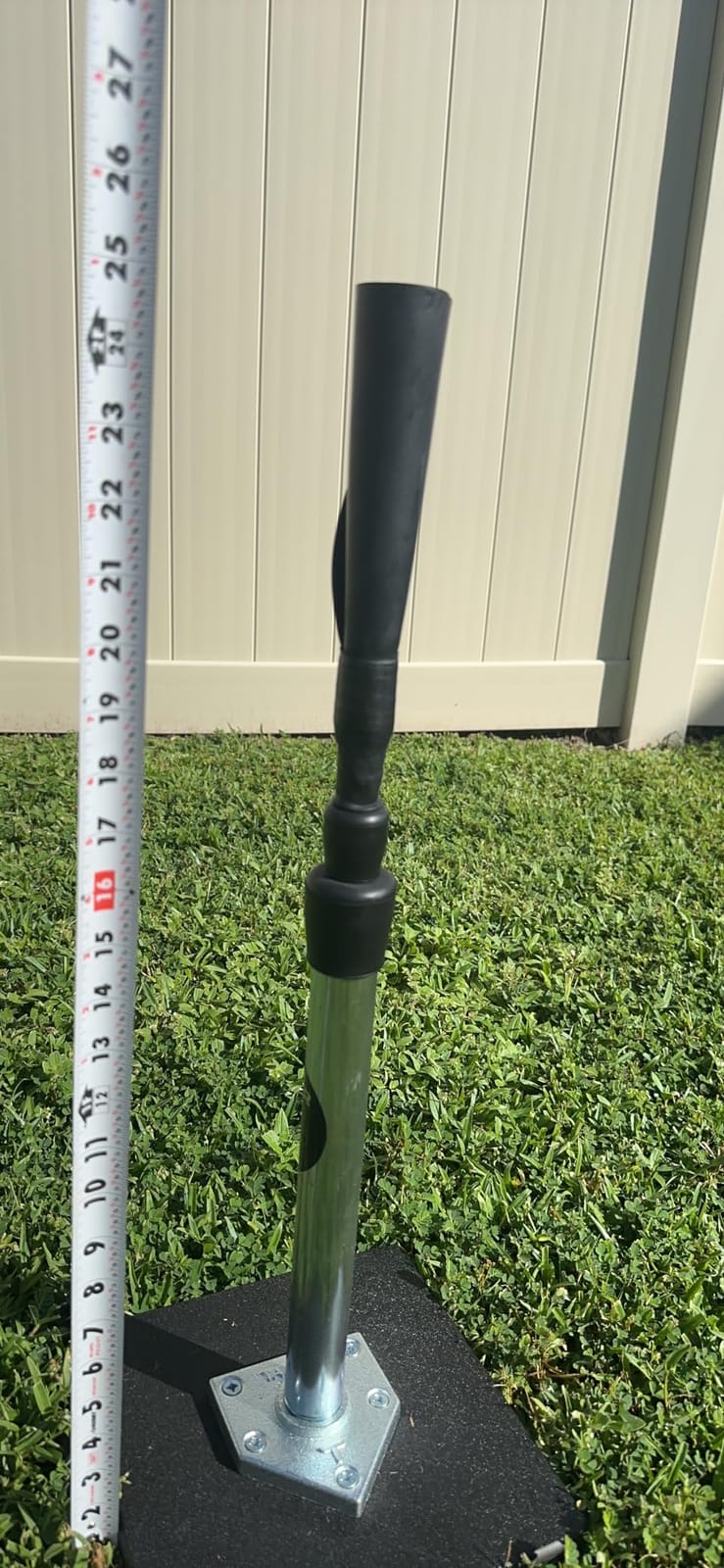
The build is a steel shaft into a composite base listed at 6 pounds, which is heavier than the folding tees here and much lighter than the 14 pound Tanner Heavy. It is a fair middle ground for a backyard or a team bag. Owners report that it survives being dragged across grass and concrete without the base warping, and that the one year guarantee is honoured without argument.
The 17 inch adjustment span is the widest of the conventional weighted-base tees we looked at, and it covers roughly ages six through adult. That range is why it is our top pick rather than a dedicated youth or adult model.
Check the height range before you buy
If your roster runs from a seven-year-old to a 15-year-old, this is the tee that covers both ends without a second purchase. Measure from the ground to the top of a standing hitter’s belt, subtract roughly three inches, and check that number against the 26 to 43 inch span.
Adults batting at a higher contact point than a child can still use the top of the range, though very tall hitters driving a ball high out in front will want the BaseGoal’s 48 inch ceiling instead.
Where it falls short?
The fixed composite base is the one compromise. It does not fold, so it does not fit in a small equipment bag, and a coach who moves between fields on foot will feel the 6 pounds after a full season of carrying it in from the car.
It also does not adjust the angle of attack or move the ball side to side without walking the base around, so a coach who wants to train inside-outside pitch locations will find this tee limiting. For pure mechanics work, it is hard to beat.
2. Franklin Sports Grow-with-Me Set: Best for Young Children
Franklin Sports Kids Baseball Tee – MLB 2-in-1 Grow-with-Me Tee Ball
Dual mode design
Hanging tee 18-26 inches
Traditional tee 25-36 inches
Bat and balls
2.5 pounds
Pros
- Converts from hanging-ball tee to traditional tee as a child grows
- Bat and four baseballs included so nothing else is needed
- Only 2.5 pounds so a child can move it
- Velcro strap keeps the set together for storage
Cons
- Included fabric baseballs wear out quickly
- Instructions leave the telescoping pole leaning
- All-plastic build is not meant for hard adult swings
There is 18,390 ratings on this set, the highest review volume of anything we tested, and the reason is simple. It is the only tee here that addresses the part of the sport most parents actually start at, which is a three-year-old standing in front of a ball that is too high to hit.
Remove the hanging attachment and the ball suspends between 18 and 26 inches off the ground using self-stick covers on the fabric balls, so a small child swings up at a target instead of chasing a ball resting on a tee. Take the attachment off and it converts to a traditional tee that adjusts from 25 to 36 inches, which is a real hitter’s range for a Little League age player.
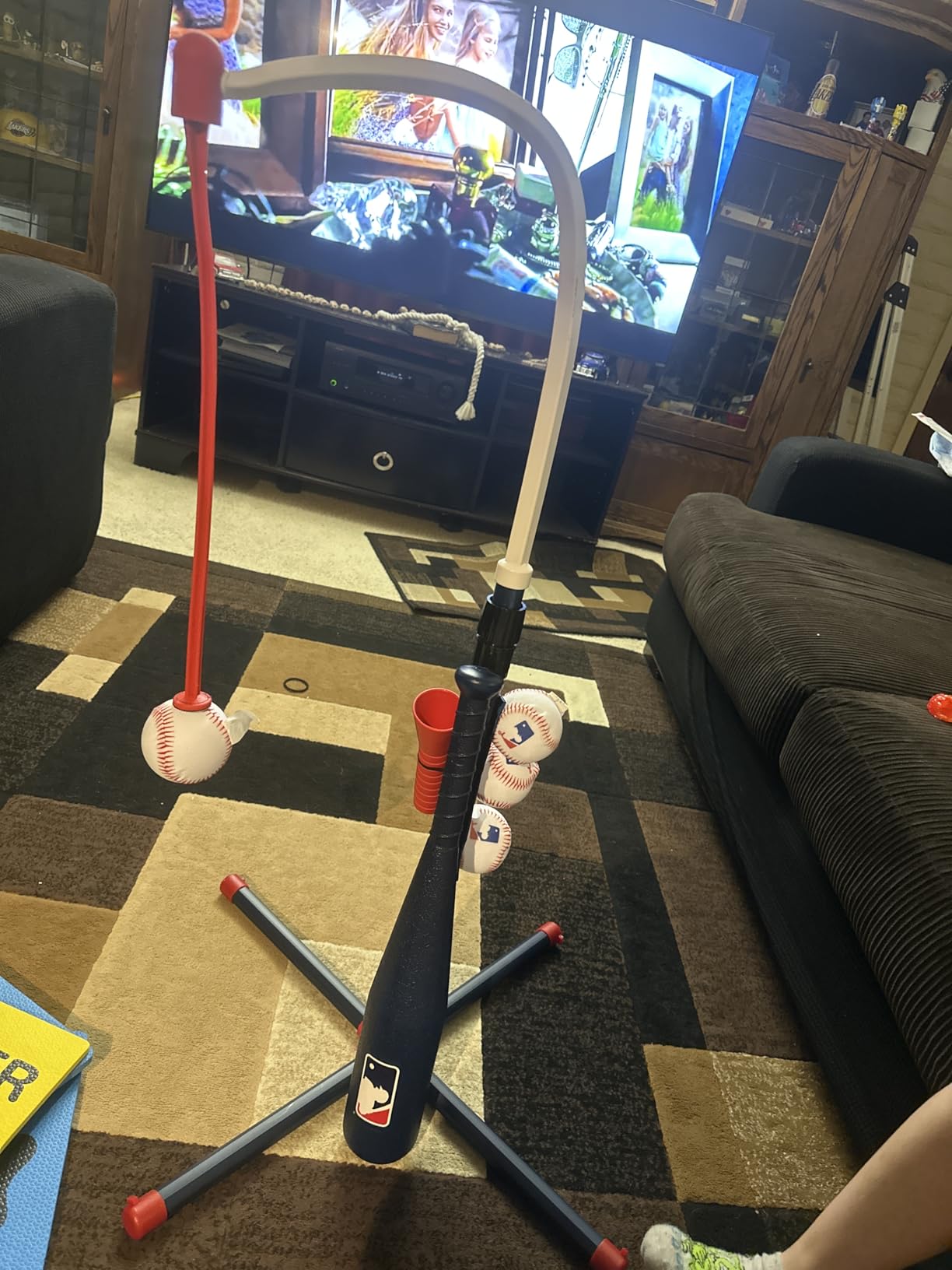
The set ships with a 21 inch plastic bat and four baseballs, which means it works the day it is assembled with nothing else bought. A velcro strap holds the balls together, and at 2.5 pounds a first-grader can reposition it without asking for help, which matters more than it sounds when a practice session depends on four kids sharing one tee.
That is the honest reason this product is so heavily reviewed. It is not the most precise hitting tool here. It is the one that gets handed to a family with a four-year-old and a bat that is mostly a toy.
What to check before you commit?
Decide which stage your child is at. The hanging mode is a genuine coaching tool for building an underhand swing path, but it is not where a real swing is learned, so plan to switch to traditional mode within a year or two.
Replace the fabric baseballs early. They are thin covered practice balls and they lose shape with use, and a misshapen ball teaches a hitter nothing useful. Stock a dozen real practice balls alongside it.
Where it falls short?
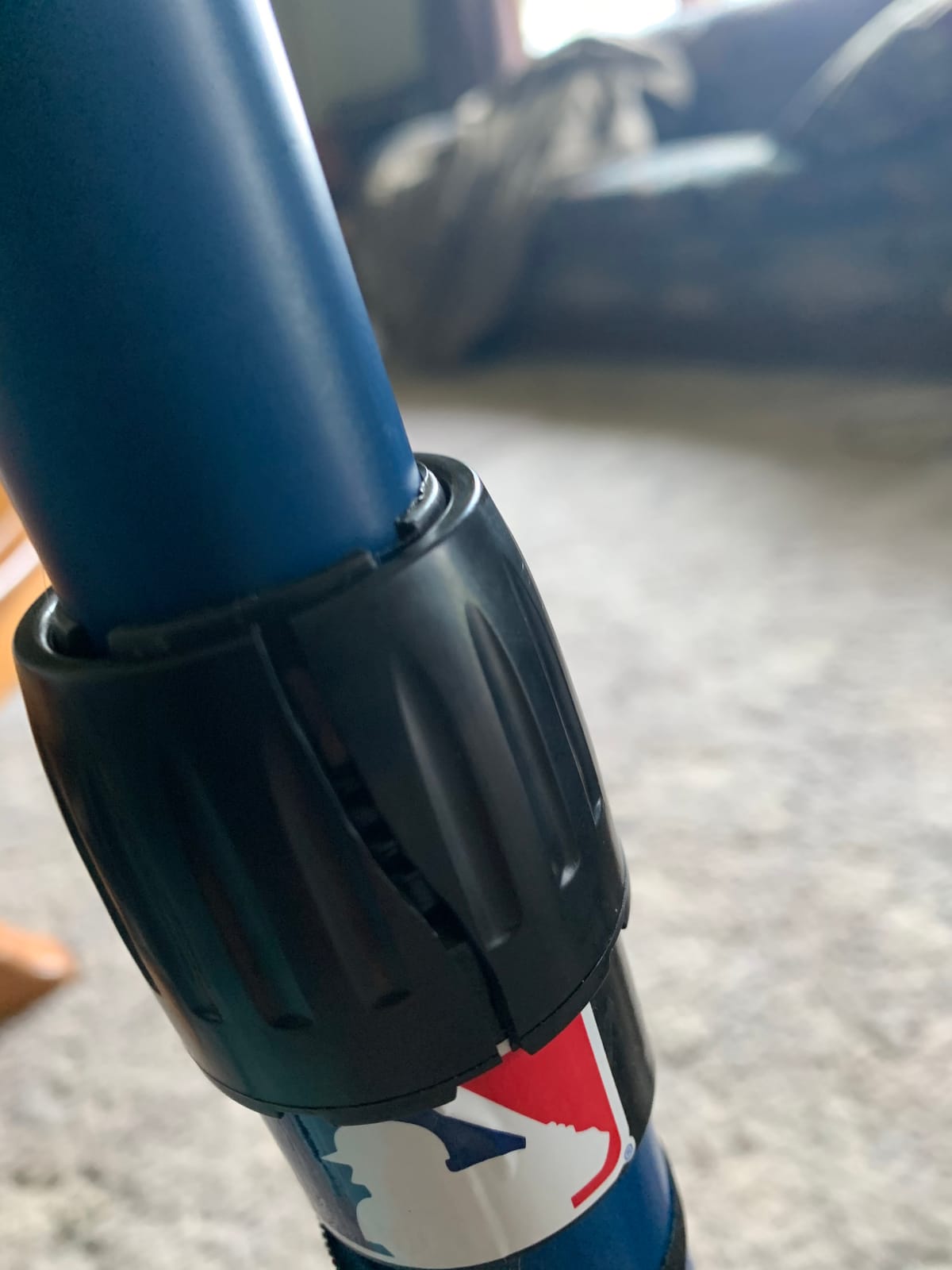
Assembly is the most common complaint. The extender pole nests inside another pole and is capped, and the instructions do not make that clear, so a number of owners report a tee that stands slightly crooked after assembly. It is a five-minute fix, but it is a fix.
Polypropylene and a short adjustment range also cap the ceiling. A child who outgrows 36 inches needs a different tee, and the all-plastic build will not survive a teenager swinging a full-weight bat as hard as he can.
3. Franklin Sports MLB Heavy Duty: Best for a Weighted Base That Stays Put
Franklin Sports MLB Heavy Duty Batting Tee
Weighted steel home plate base
Adjusts 21-38 inches
All-weather rubber
Tool-free setup
Pros
- Weighted steel home plate base resists tipping after full swings
- 21-38 inch range covers youth through adult
- Tool-free assembly and breakdown
- Handles softballs and whiffle balls
Cons
- Metal ring at the stem base can wear through
- Height adjustment can be stiff to move
- Strong petroleum-type rubber smell out of the box
This is the tee we would put on a field where the ground is uneven and the hitter is eight years old swinging like they are angry at it. The base is a weighted steel home plate rather than a plastic or folding tripod, and that is the single reason this tee stays where you put it while a 40 pound swing comes through the top.
Height runs from 21 to 38 inches, which is the widest span among the rubber-bodied tees in this roundup and low enough at the bottom for a genuine teeball hitter. Setup and breakdown are tool-free, so a coach can set it up on a grass field and pack it into a car in under a minute.
Owners also note that it holds softballs and whiffle balls, not just regulation baseballs, which makes it a two-sport purchase for a family with both a baseball player and a softball player. If you coach fastpitch and want a tee that can be moved to an outside pitch location without walking the base, the wide stance and heavy plate make that adjustment quick.
The listing carries a 90 day limited warranty, which is short against the steel base, so treat it as a seasonal-to-multi-season tool rather than a lifetime purchase.
What to check before you commit?
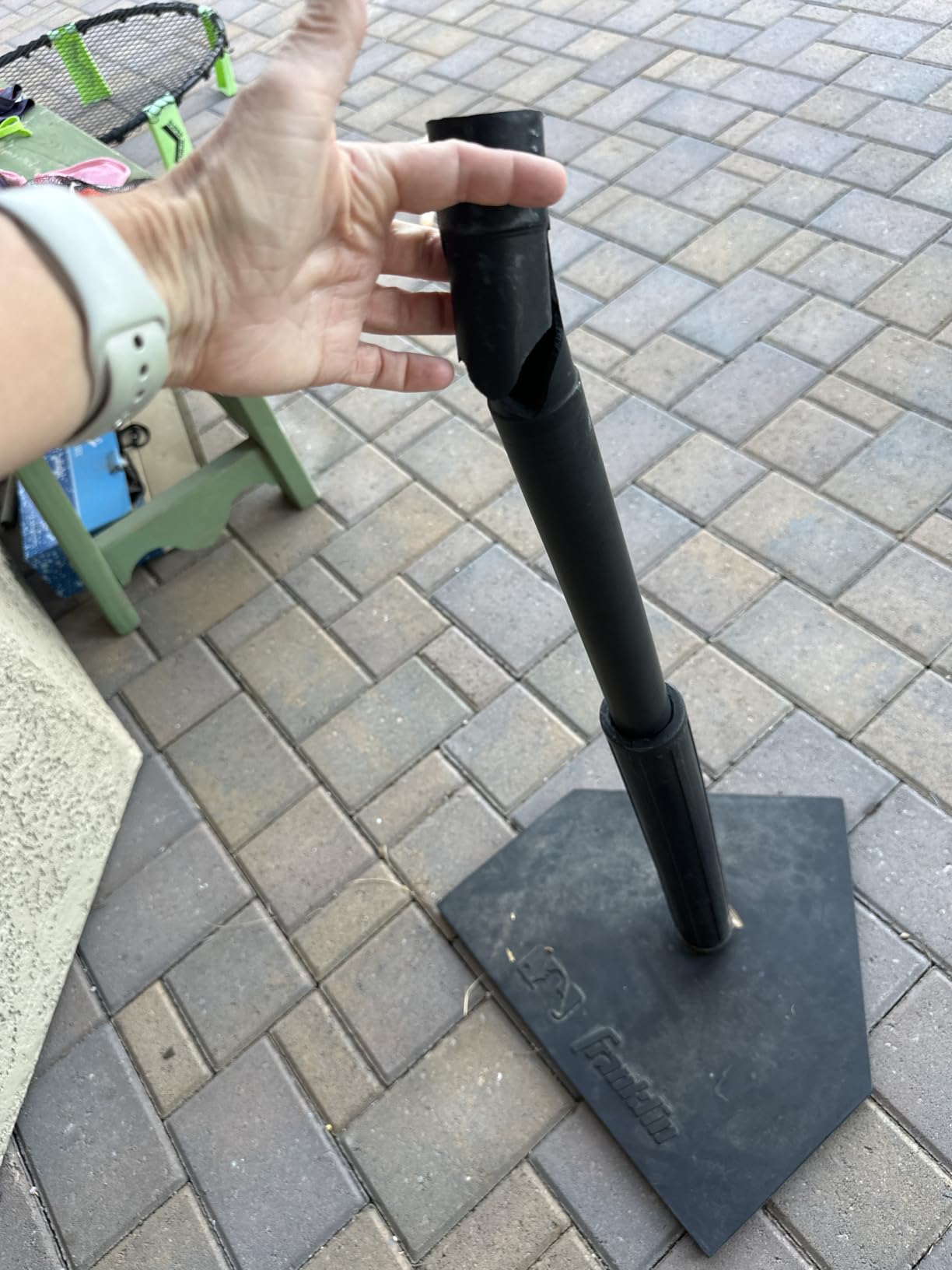
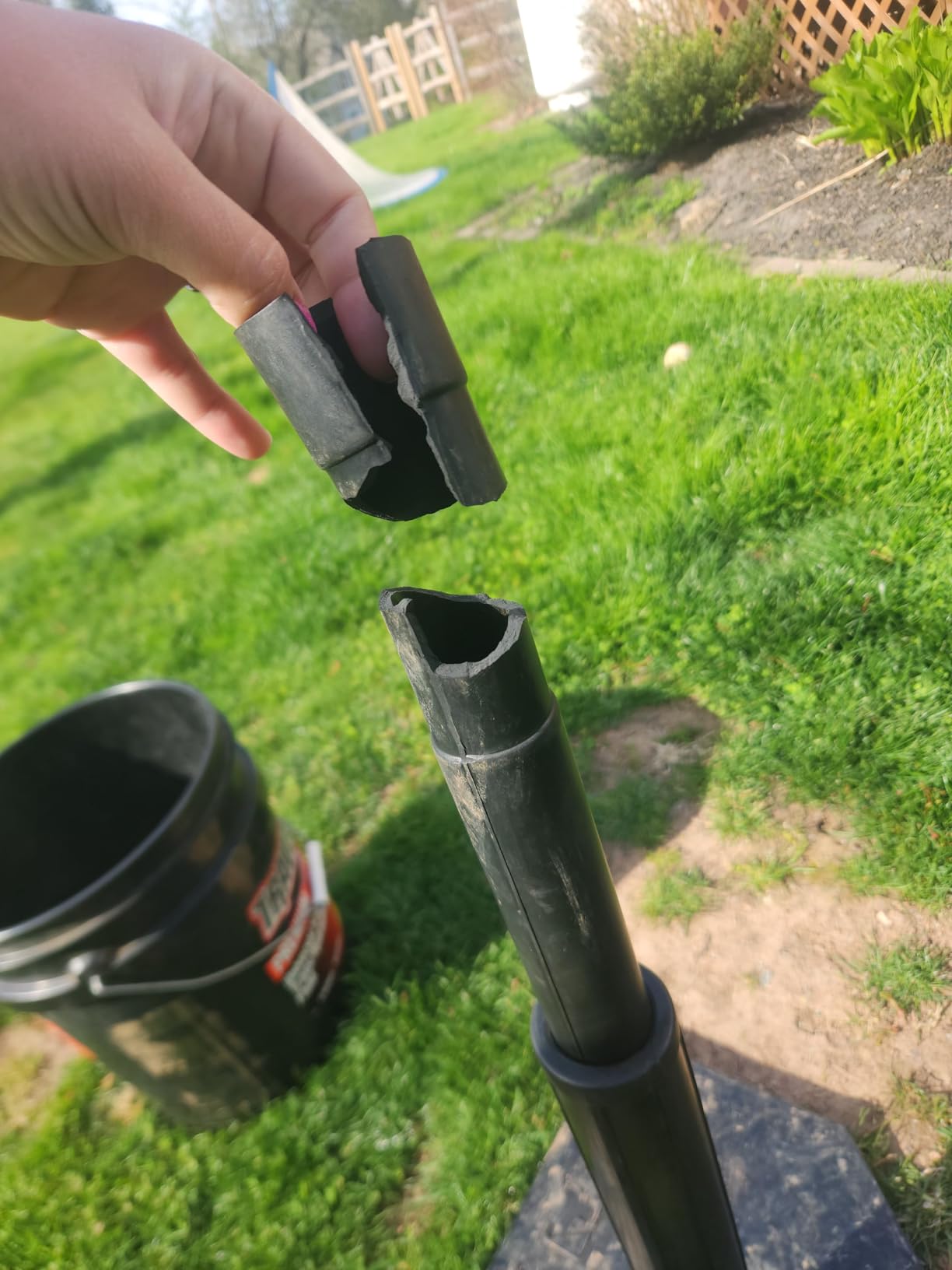
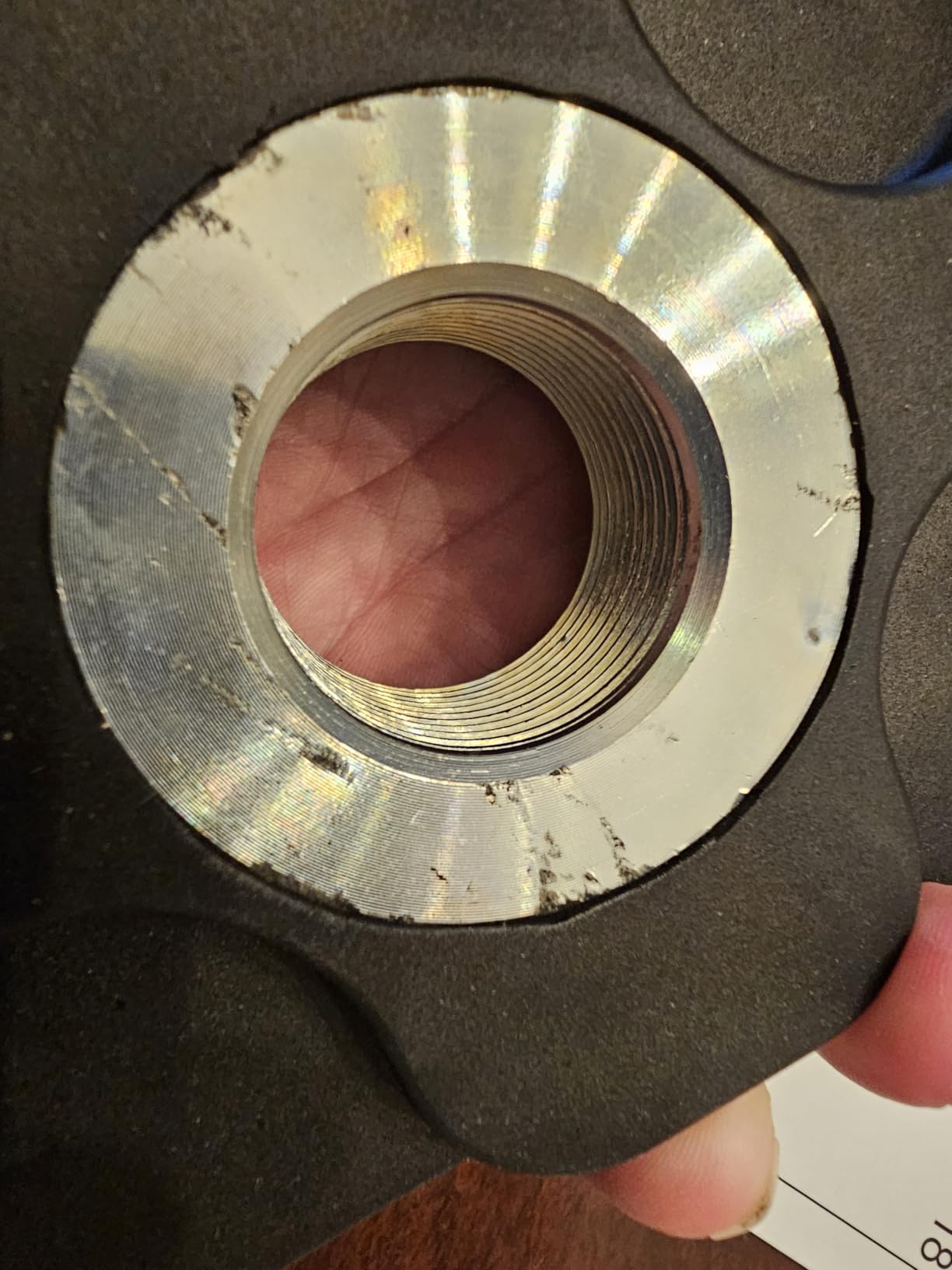
Look closely at the ring where the stem meets the base. This is the documented failure point on this tee, and reviewers describe it stretching or wearing through under heavy abuse, at which point the stem starts to sit crooked. If a team is going to hit this tee daily, inspect that ring a few times a season.
Also test the height adjustment before practice. Several owners describe it as stiff, and a stiff collar at the field edge with cold hands is a genuine annoyance for a volunteer coach.
Where it falls short?
It ships with a rubber smell that fills a garage for a couple of weeks. That is cosmetic, but worth knowing if you are storing it indoors.
It is also a heavy tee at 11.25 pounds with the weighted base attached, so while it breaks down tool-free, you are still carrying a steel plate from the car to the field. For a fixed practice spot, that is a fair trade. For on-deck work, it is not.
4. BaseGoal Adjustable Batting Tee: Best for Taller Hitters Who Travel
BaseGoal Batting Tee Baseball Tee, Softball Travel Portable Tee Tripod Stand Rubber Tee for Batting Training Practice with Carrying Bag
Adjusts 27.5-48 inches
Folding tripod
Hand-rolled rubber top
Includes carry bag
Pros
- Tallest adjustment range here at 27.5-48 inches
- Folds down and includes a carrying bag
- Hand-rolled rubber top handles baseballs and softballs
- No tools needed for height changes
Cons
- Collapsible tripod gives ground under aggressive contact
- Stability depends on the sandbag being filled properly
The 48 inch ceiling is the reason this tee is on the list. Almost every other model here tops out between 38 and 44 inches, which locks out tall adults and older teens who contact the ball well out in front. This one reaches nearly five feet from the ground and does it without tools.
It is also the most genuinely portable design in the roundup. The tripod folds and the whole thing goes into an included carrying bag, with a package weight listed at 1.31 kg, so a coach can carry it from a car to a field, into a hotel room on a travel trip, or into an indoor cage without making a second trip to the car.
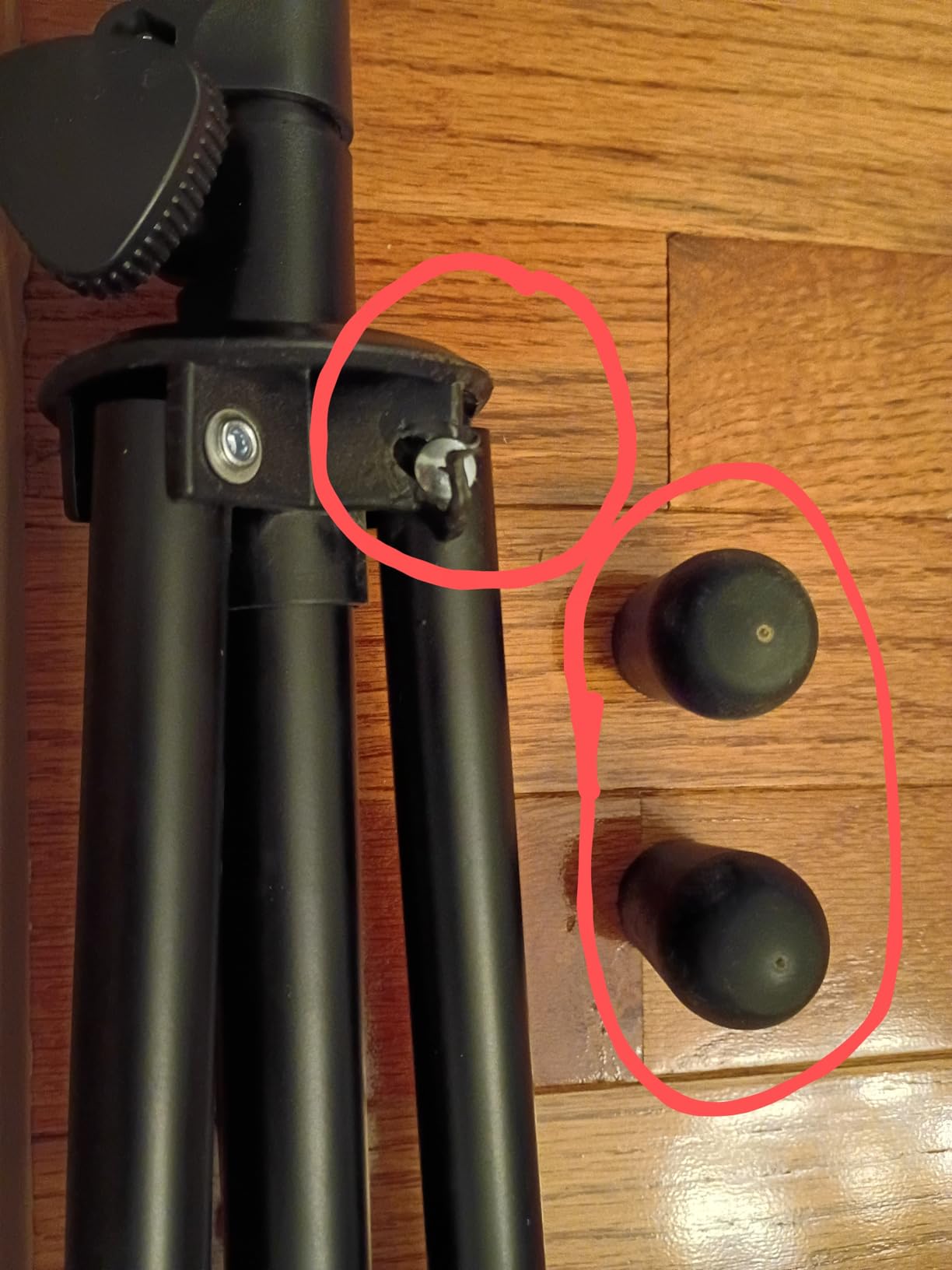
The top is a hand-rolled wrapped rubber cone, which handles baseballs, softballs and training balls on the same head. That is convenient for a family that switches between sports, and it is the kind of top that absorbs a mis-hit rather than cracking.
Our caveat is stability, and it is a real one. A folding tripod is inherently less rigid than a fixed weighted base, and owners say it moves when the tee is struck hard, particularly on hard ground. The sandbag base mitigates that, but only if it is actually filled.
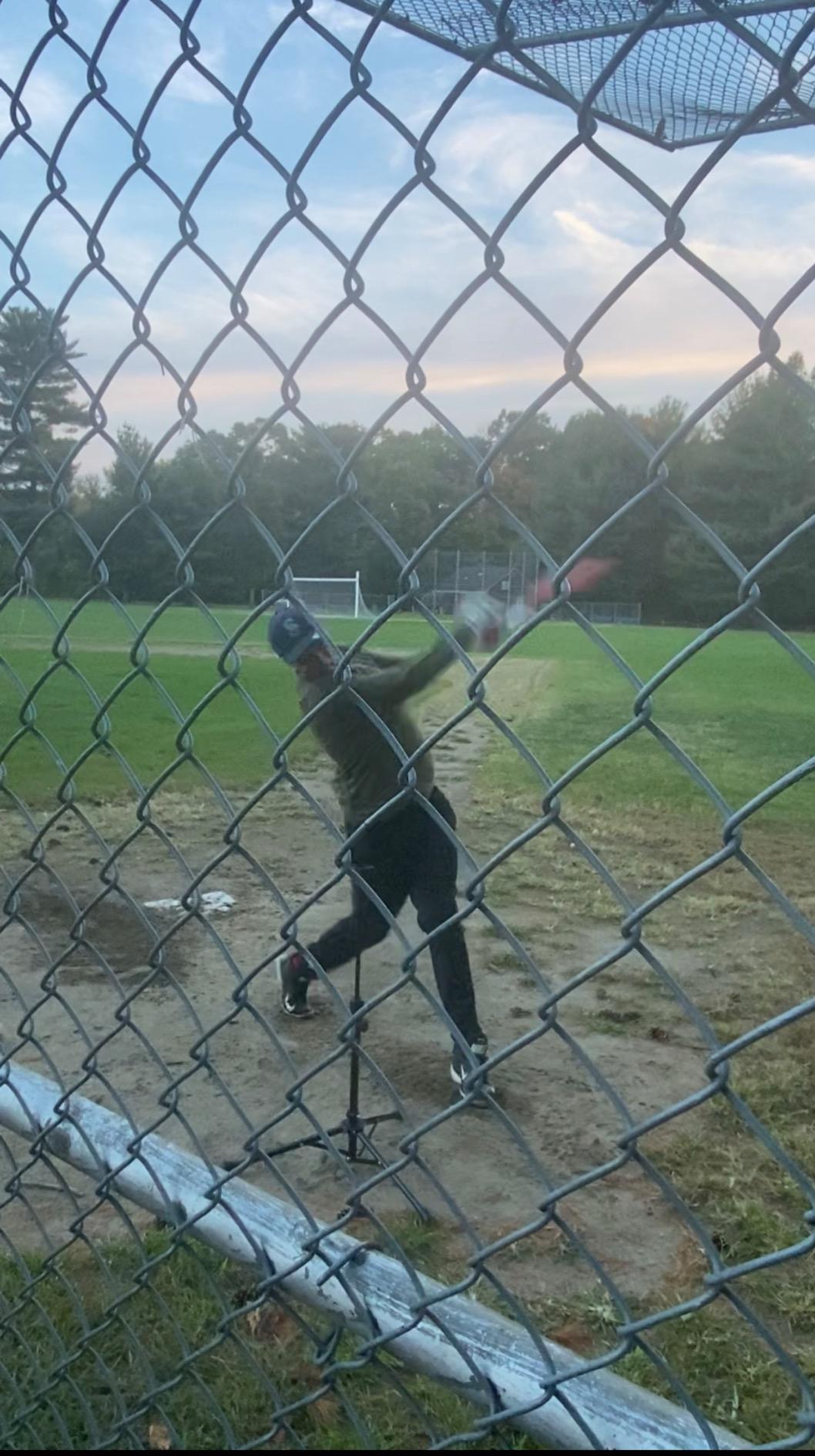
What to check before you commit?
Fill the sandbag fully the first time you set it up. Most of the complaints we found trace back to an under-filled bag on a smooth surface, and once it is packed properly the tee is serviceable for coaching work with kids and adults in the same session.
Measure the hitter first. At 27.5 inches minimum, this is not a tee for a child under about seven. If you need one tee for a whole family, the Franklin Grow-with-Me or the Franklin MLB Heavy Duty covers younger hitters better.
Where it falls short?
Do not put this tee in front of an adult who is trying to hit with maximum force. The foldable frame is the trade for the 48 inch reach and the carry bag, and hard contact is what the frame gives up first.
It is also one of the smaller review bases in the roundup, so the long-term durability picture is built on fewer data points than the models above it.
5. Easton Deluxe Batting Tee: Best for Everyday Home Practice
Easton | DELUXE BATTING TEE | Baseball/Softball
Adjusts 27-36 inches
Molded rubber construction
Heavy duty base
Tool-free assembly
Pros
- Heavy duty base takes repeated swings without shifting
- Quick tool-free assembly gets practice started fast
- Well known brand with a long production history
- Doubles for practice or game day use
Cons
- 27-36 inch range is narrow for this roundup
- Molded rubber rather than steel caps its ceiling
- Older listing with lighter current demand
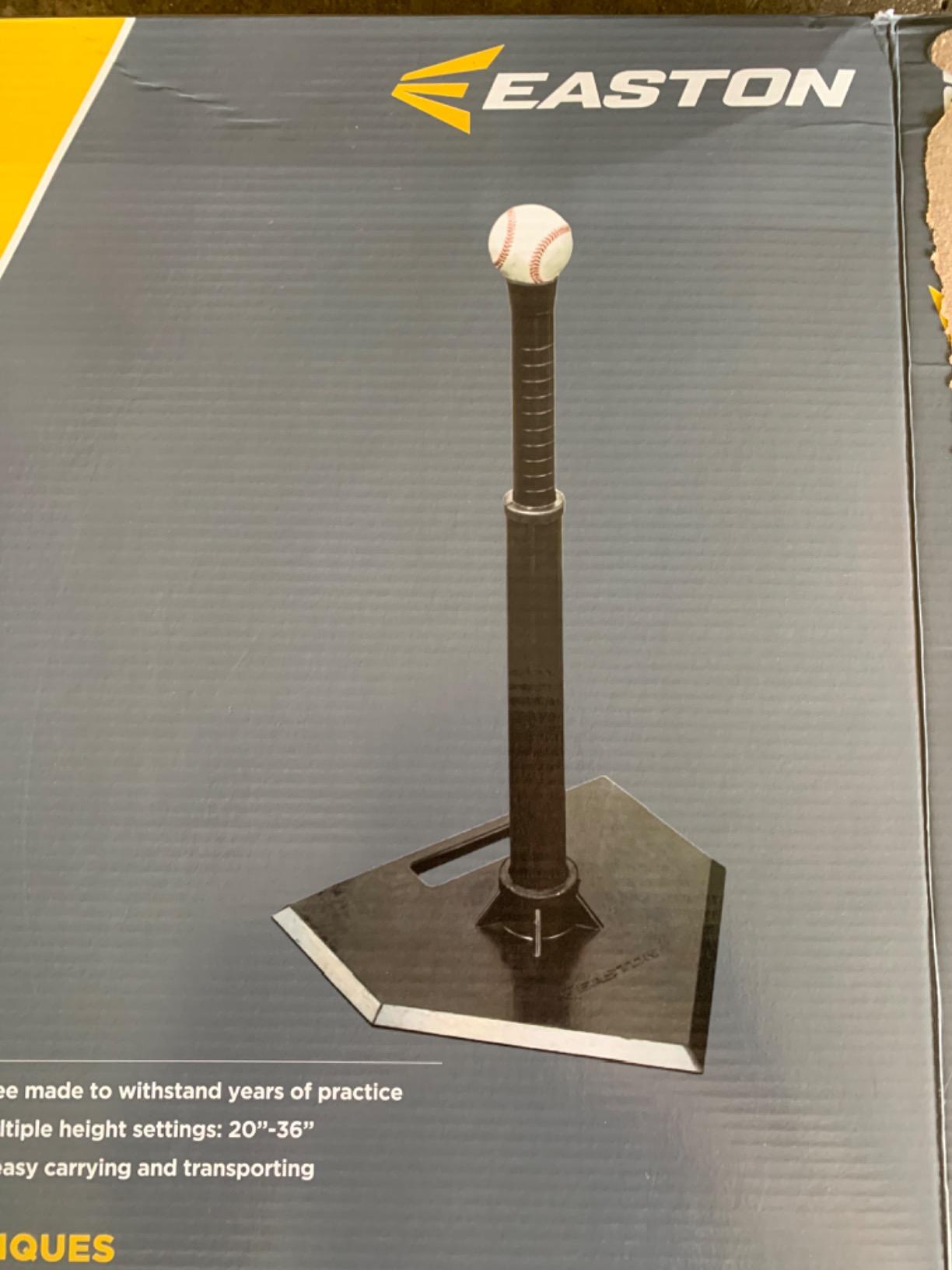
The Easton Deluxe is the one we would buy first for a suburban driveway where a kid hits a few hundred swings a week. It is molded rubber with a heavy base, it assembles without tools, and it has been on the market long enough that the failure modes are well known and cheap to live with.
The telescoping post runs from 27 to 36 inches, which is a narrow window compared with most of this list. That is the honest limitation and the reason it is not higher up, but for a hitter between roughly ages eight and fourteen, that range is the whole useful window anyway.
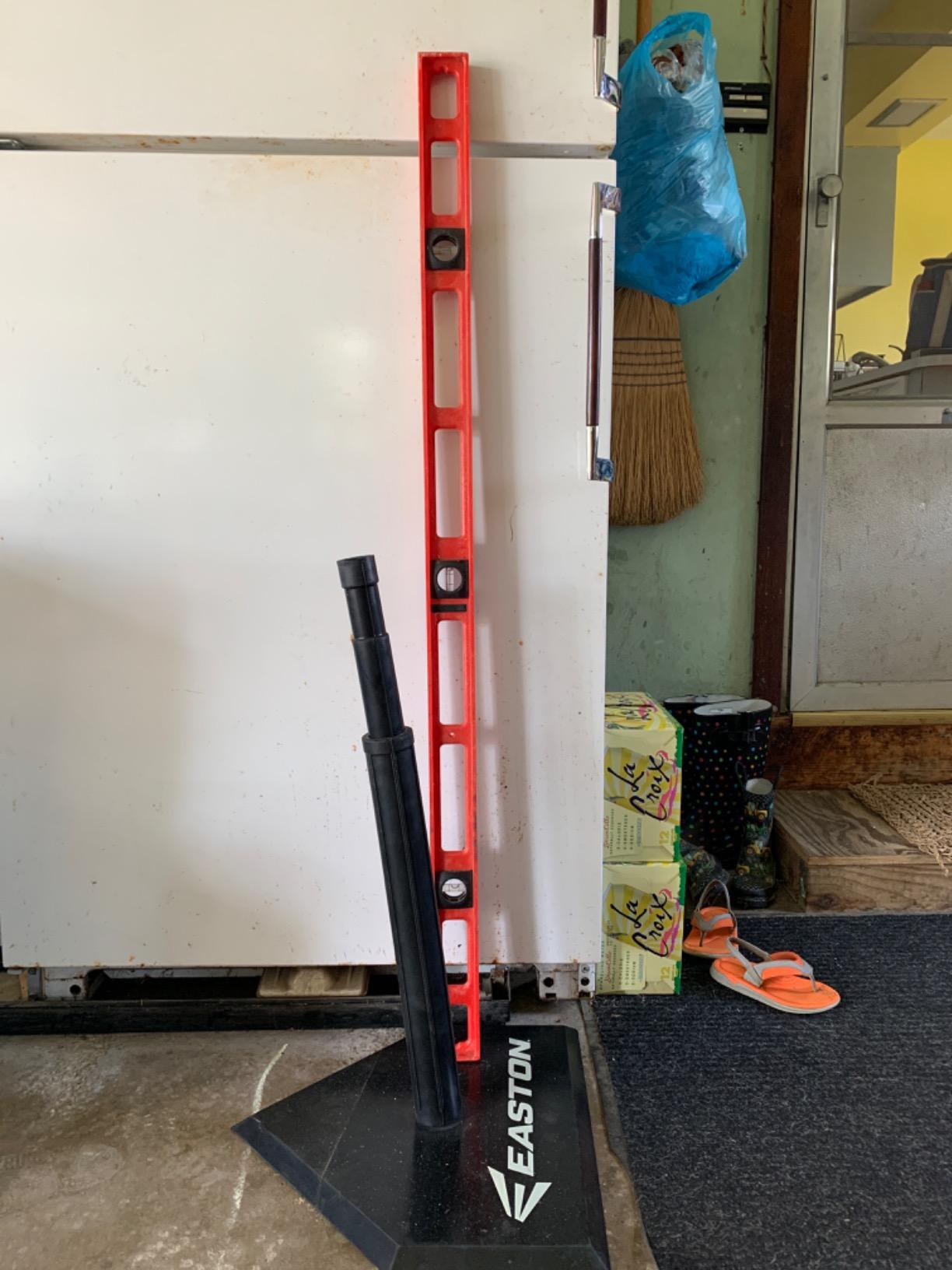
Rubber construction has one big advantage for a home driveway. It does not get hot in July sun the way bare steel does, and it does not dent a car bumper when a kid clips the base carrying it in from the street. The base is specified as heavy duty and is described by owners as staying planted through swing after swing.
Owners also use this tee on game days, not just practice, which is a nice secondary use. A molded rubber tee that breaks down flat is easier to load into a car trunk between fields than anything with a steel plate.
What to check before you commit?
Measure the hitter and be honest about the answer. If the top of the ball needs to sit above 36 inches, this is the wrong tee, and no amount of adjustment will stretch a telescoping post past its rated range.
Check the listing for the specific model. Easton has produced this style of tee for a long time, and a model with a wider range does exist, so make sure the one you order is the deluxe molded-rubber version described here.
Where it falls short?
Molded rubber is a step below a steel shaft in how it dampens repeated abuse. Owners who have used this tee for years describe it as dependable rather than indestructible, and it is the wrong choice for a high school program hitting a lot of foul balls straight into the top.
The narrow range is the bigger practical cap. Buy it for a specific hitter, not as a family or team tee.
6. Tanner Heavy Batting Tee: Best for Stability Under Hard Contact
Tanner Heavy Batting Tee | Ultra Durable Hitting Tee with Weighted “Claw” Base for Ultimate Stability on Uneven Surfaces | Adjusts from 26-43″| Baseball Softball Slow Pitch
Three-point claw base
Adjusts 26-43 inches
14 pounds
Reinforced steel shaft
Pros
- Three-point contact claw base resists creep and tipping on uneven ground
- One-hand adjustment lets the ball sit off home plate without lean
- Stem unscrews and fits most bat bags
- Hand assembled in Florida with a one year guarantee
Cons
- Heaviest tee here at 14 pounds
- Fixed base does not fold
- Premium price versus every other tee in the roundup
This is the tee for an adult hitter who treats practice like a job. It weighs 14 pounds, which is nearly three times the weight of the folding models here, and every one of those pounds sits in a claw base with three points of contact designed to grip grass, dirt and uneven ground instead of sliding.
Owners of this tee describe the one thing that sets it apart: the ball can be placed off home plate, out over the front shoulder, without the stem leaning. The 26 to 43 inch one-hand adjustment moves height cleanly, and the claw base does not need the stem stacked up high to hold its position, which is exactly the problem that makes tall tee settings wobble on lighter models.
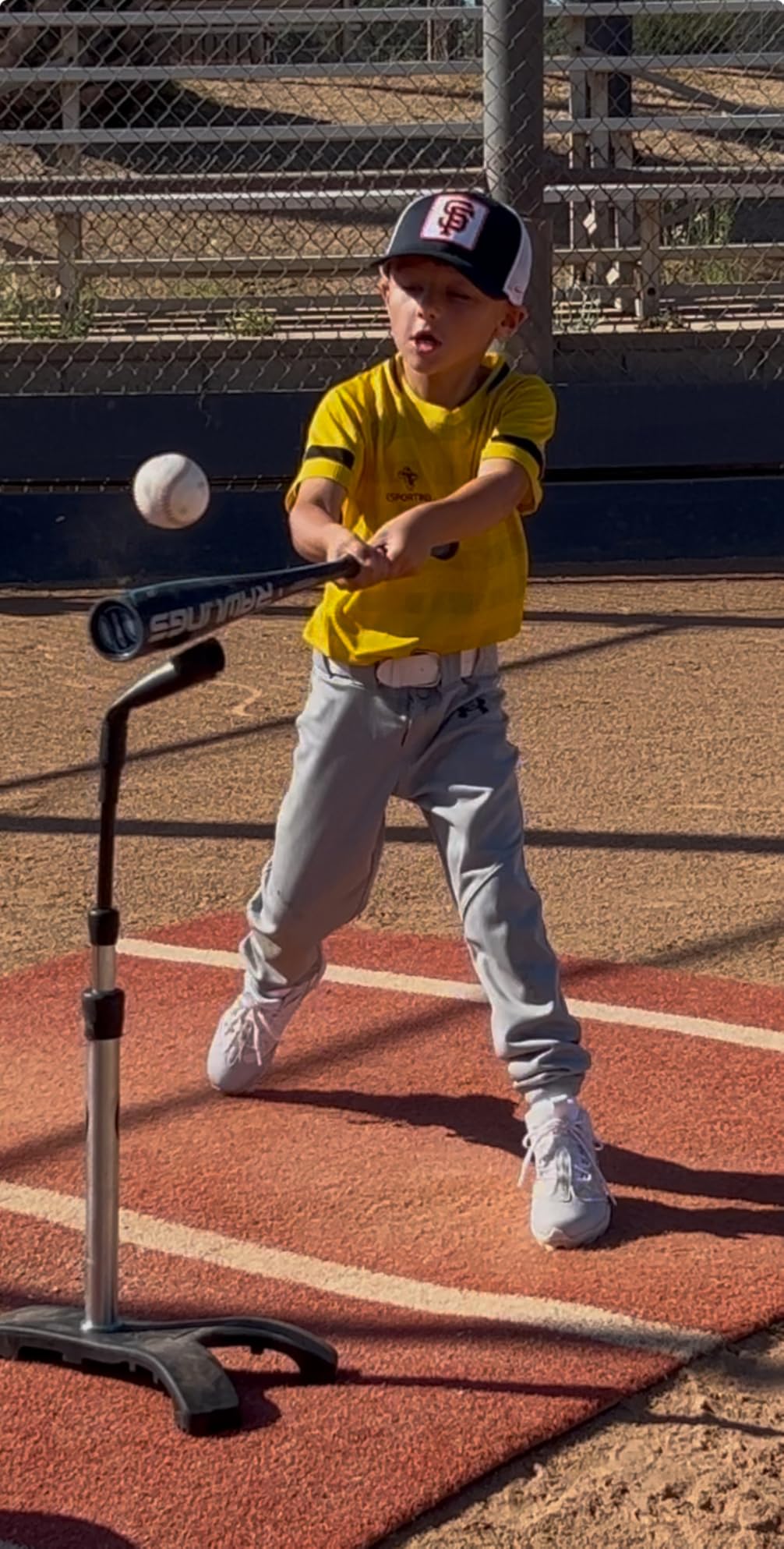
The reinforced steel shaft and the same hand-rolled Flextop cone used on the original Tanner mean contact feels familiar rather than plasticky. It also carries a 4.9 average across 1,166 ratings with essentially no one-star reviews, which is the cleanest rating profile in the roundup.
Transport is handled by unscrewing the stem from the base. The base stays home, the stem goes in a bat bag, and you reassemble it where you are swinging. That is a workable pattern for a coach with one permanent field and a hitter who travels.
What to check before you commit?
Decide where this tee will live. At 14 pounds it is a fixture, not equipment you carry, and a coach who works three fields a week will resent it faster than almost any other complaint on this list.
If you are a program with a dedicated on-deck circle, this is the right pick. The claw base holds on the sloped, uneven grass that a park practice field almost always has, where a lighter tripod walks across the dirt.
Where it falls short?
It is the most expensive tee here and the review base is smaller than the models above it, so the long-term picture rests on fewer owner reports. Nothing in those reports suggests a durability problem with the shaft or the base.
It is also the least useful choice for a child. A 6 pound composite tee is a better fit for a nine-year-old, and the extra stability only earns its weight when someone is genuinely swinging hard.
7. Franklin Sports XT Batting Tee: Best Budget Starter Set
Franklin Sports MLB XT Youth Batting Tee Foam Set
Adjusts 23-33 inches
16 ounces
Foam bat and ball included
Weighted X-style base
Pros
- Bat
- foam ball and tee all in one box
- Lightest option at 16 ounces so a child can move it
- Weighted X-style base reduces tipping
- Good first purchase for a teeball beginner
Cons
- Foam equipment is for light play only
- 23-33 inch range stops working as a child grows
- Lowest average rating in the roundup
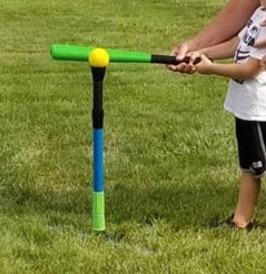
The XT is the first box most families open, and for the earliest stage of baseball it is genuinely hard to argue with. You get the tee, a 22 inch foam bat and a foam baseball in one package, so a three-year-old can start swinging the afternoon it arrives.
At 16 ounces it is the lightest tee we tested, light enough that a small child drags it into position without being asked twice. The X-style weighted base is the smartest part of the design, because it gives you something to weigh down a cheap frame without adding a steel plate.
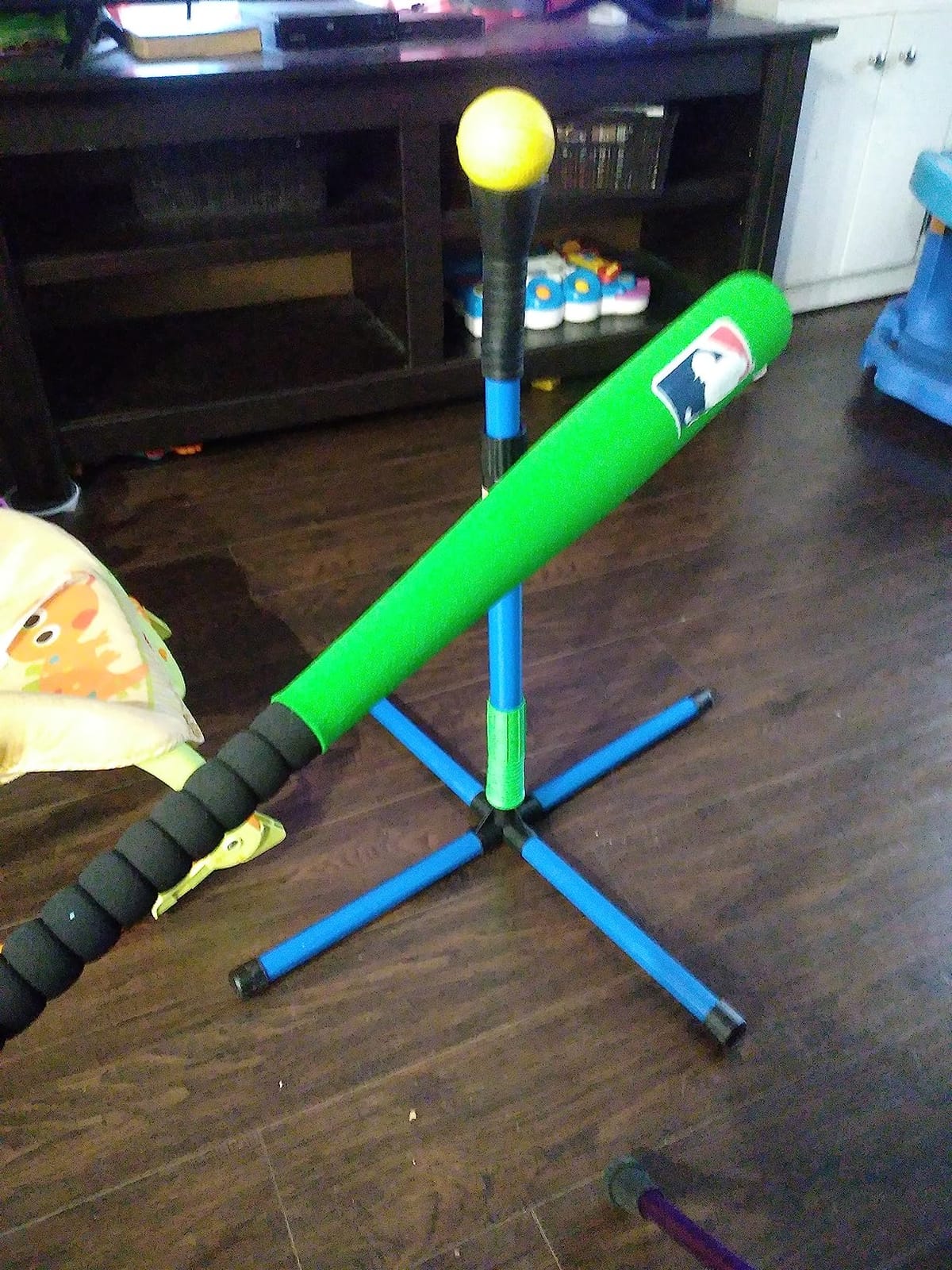
Height runs 23 to 33 inches, and that is the reason this tee sits where it does in the list. It is a teeball-stage tee. Once a child needs to hit a ball above about 33 inches, they have outgrown it, and the swing feel of foam is nothing like the feel of a real ball on a rubber top.
We think the honest case for buying it is as a birthday gift for a child who has not yet touched a real bat, and the honest case against it is buying it for a hitter you expect to still be using in two years.
What to check before you commit?
Check the child’s inseam and reach, not their age. The 23 inch minimum is already close to a knee height for a small child, and 33 inches is roughly the ball height of a six-year-old standing in the box.
Plan the upgrade. If there is any chance this is a season or two of use, a two-year-old to three-year-old transition is the point where most families move to a set with a real bat and a taller range.
Where it falls short?
The foam bat and ball are the weakest link. They are safe and inexpensive, but they teach a child to swing slowly, and nothing about the contact translates to hitting a baseball off a rubber top.
The rating reflects that. It carries the lowest average in the roundup and a 4.3 score, with a five percent one-star share from buyers who expected more from a tee at this level. It is still a well-regarded starter product, just not a long-term one.
8. PowerNet Deluxe Batting Tee: Best for Fast Setup and Coaching Drills
PowerNet Baseball & Softball Batting Tee, Adjustable Height Batting Tee 27.5″ – 44″, Portable Outdoor Baseball Training Equipment for Hitting Training (Deluxe)
Adjusts 27.5-44 inches
26 inch tripod span
2.5 pounds
True no-tool pop-up
Pros
- Folds to a 2.5 pound package that fits a ball bag
- 26 inch tripod leg span stays planted
- Pop-up setup needs no tools and no assembly
- Works with baseballs
- softballs
- weighted balls and golf balls
Cons
- Rolled rubber sleeve top can tear on a mis-hit
- Plastic clamp between shaft sections can snap
- Dry glue on the upper grip may not hold
- Smallest review base in the roundup
The PowerNet is the coach’s tee. It pops up with no tools and no assembly, folds to a package that fits a standard ball bag carry case, and weighs 2.5 pounds, so you can set up a station, run a group of hitters through it, break it down and set it up again somewhere else in a couple of minutes.
Stability is better than the package weight suggests. The tripod has a 26 inch leg span with rubber legs, and owners report that it stays planted through swings rather than sliding, which is where most folding tees in this roundup fall down.
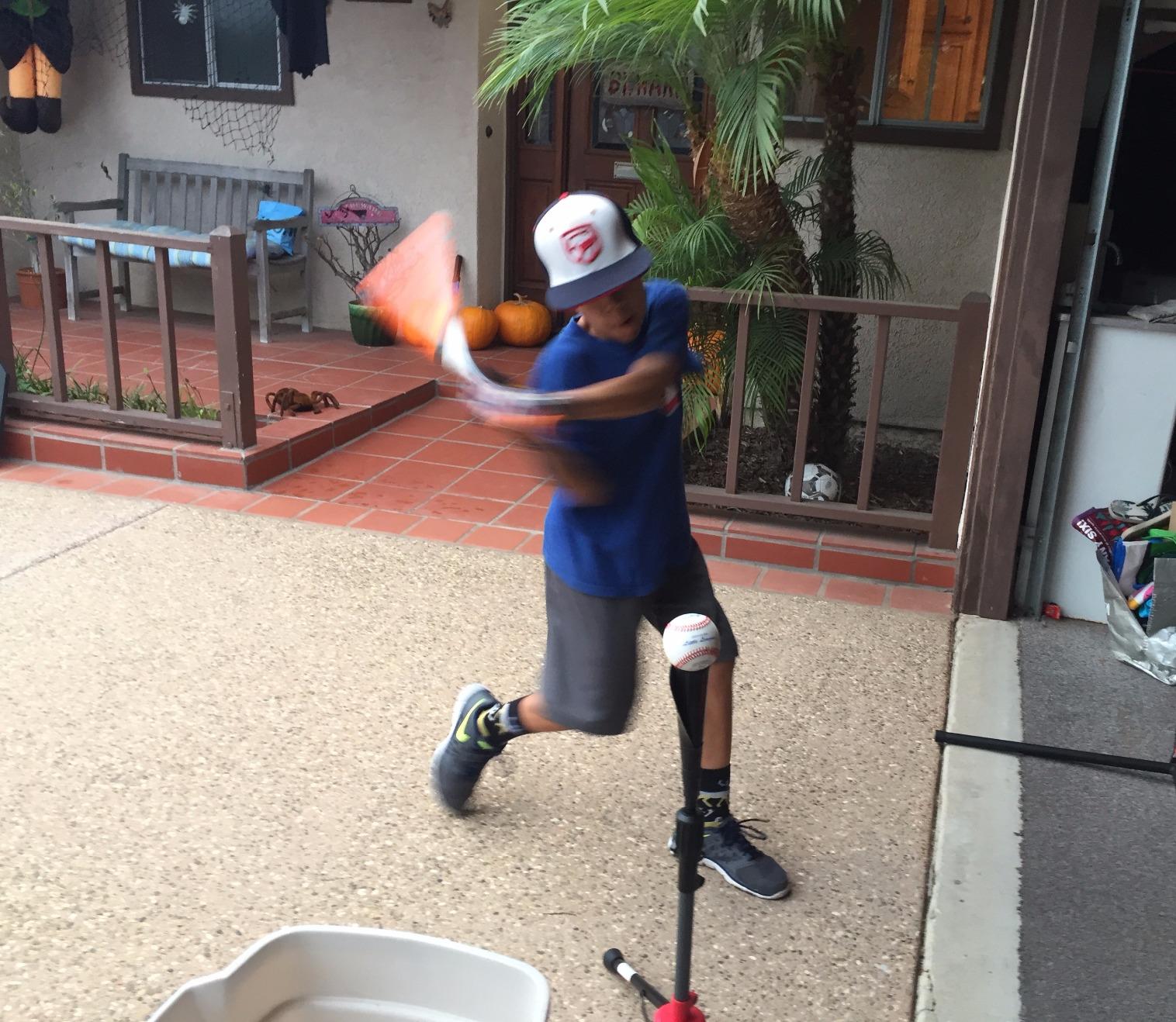
The 27.5 to 44 inch range is a genuinely useful window, covering a Little League hitter through most adults. The rubber top is designed not to damage bats on mis-hits, and it accepts baseballs, softballs, weighted balls and golf balls, which makes it easy to vary the ball type during a session.
It is also the one tee here we would put in front of a group of adult rec league hitters who show up at a park with no infrastructure, because it needs no flat ground and no permanent spot.
What to check before you commit?
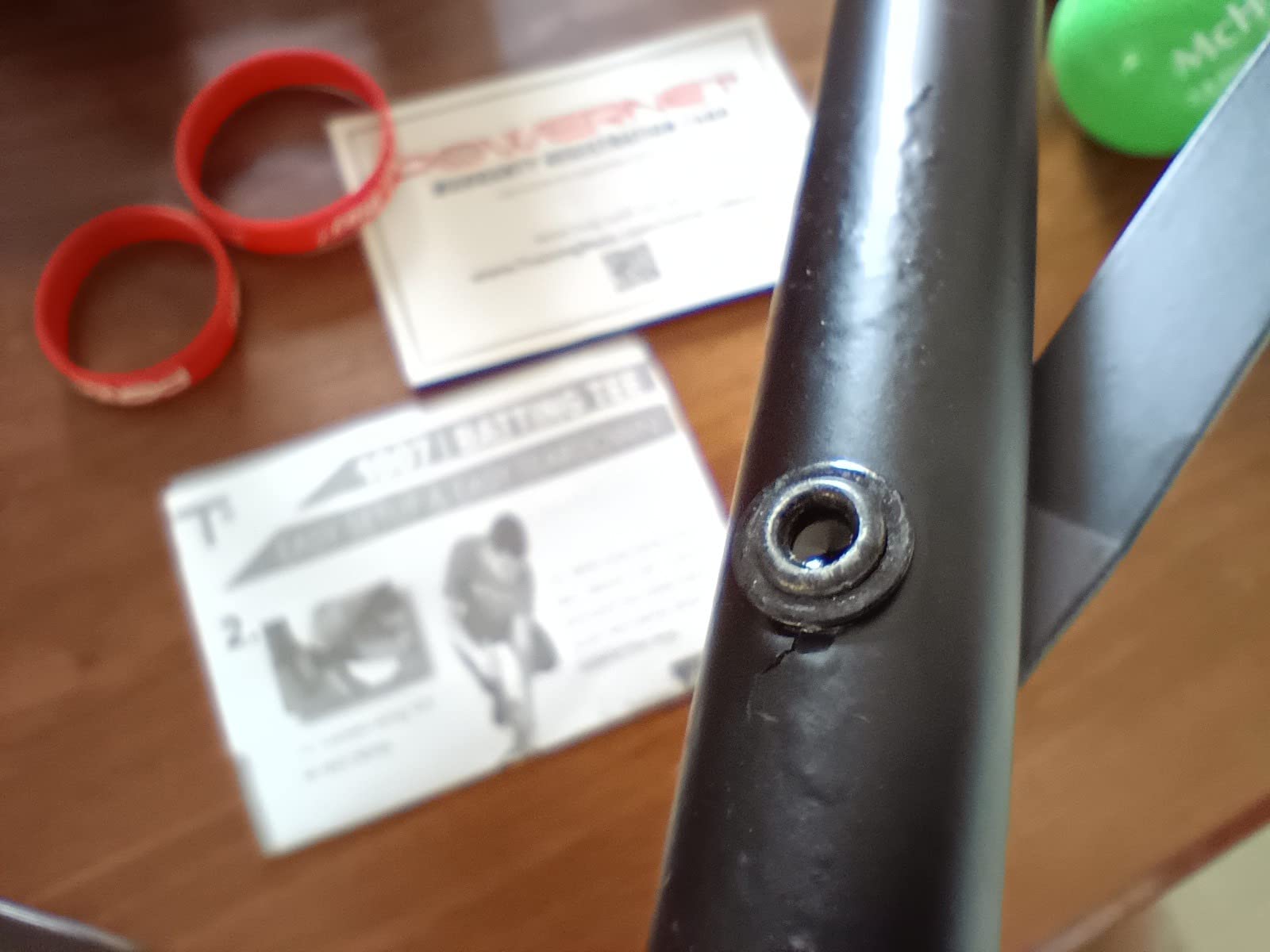
Inspect the top before the first session. The rolled rubber sleeve is documented as the weak point, with owners reporting it dislodging or tearing open when a batter misses and strikes the tee, so a replacement top is worth having in the bag from day one.
Check the shaft clamp and the grip glue on assembly. These are the two documented hardware complaints, and both are easy to spot in the first five minutes of use if you tighten and wiggle rather than assuming.
Where it falls short?
It has the smallest review base here at 546 ratings, so you are buying with less long-term evidence behind the design. Everything owners do report is positive on portability and setup speed, and negative on the top and the clamps.
It is also not a hard-contact tee. A folding tripod at 2.5 pounds will move if an adult swings with everything, and for full-power work the Tanner Heavy is the honest recommendation.
How We Evaluated These Batting Tees?
Nobody hands a batting tee to a reviewer and expects a laboratory result, so we graded these against the four things that actually break tees and the four things people buy them for. Every claim below comes from listed specifications or from what owners report after using them, and we say which is which.
For stability we looked at base type and weight first, then at what owners say happens on a full swing, because a tee that only feels planted on a soft swing is not planted. For coverage we compared listed height ranges against the height of the hitters each product claims to serve, and we flagged any tee whose range does not actually reach the top of its stated age group.
For contact feel we looked at the topper: a hand-rolled rubber cone that flexes and returns gives real feedback, a hard molded head does not. For longevity we tracked the specific parts owners report failing, which on cheap tees is almost always the rubber top or the plastic height collar, and we checked whether the brand sells a replacement for it.
We also weighted review volume heavily. A product with 18,000 ratings and a 4.4 average tells you far more about what to expect in year three than a product with 200 ratings and a 4.9, and we have said so wherever the two conflict. Where the available buyer feedback is thin, we have said that too rather than presenting a small sample as a settled verdict.
One limitation worth stating plainly. This is a home and team practice roundup, not a lab test, and we have not measured swing force with instrumentation. Where we describe stability, we are describing the design and the consistent owner experience, not a load rating.
How to Choose a Batting Tee: Four Factors That Matter?
Two tees at the same star rating can be completely different tools. A 4.5 tee with 3,000 ratings tells you far more about surviving a season than a 4.8 tee with 200. Rank the four factors below in this order and the product choice usually makes itself.
One: height range. Measure the hitter, do not guess by age. A useful shortcut is to stand the hitter upright and measure from the ground to roughly their belt, then subtract a few inches for the contact point. Anything under about a 10 inch adjustment span will be outgrown quickly, and the 17 inch span on the Tanner Tee The Original is why it covers a family.
Two: base weight and stability. This is where cheap tees fail, and it is worth understanding why. Swing force is highest on hard contact, which pushes the tee sideways at exactly the top of the swing arc when the hitter is not looking at it. A 2.5 pound folding tripod works fine on casual swings and walks across dirt on full swings. A weighted steel base or a three-point claw base stays put, and the difference is obvious within ten swings on a field.
Three: tee architecture. There are four shapes to choose between. A single-post tee with a weighted base is the standard and the most stable option, and it is the right answer for most practice. A folding tripod is portable and light, and the right answer for coaches who move between fields. A multi-position tee moves the ball around the strike zone without the base shifting, which is what softball and travel coaches ask for most and what most of the tees in this roundup do not offer. A smart or app-connected tee adds swing data and sensor feedback, at the cost of a subscription and a device.
Four: build material and replacement parts. A steel shaft with a rubber topper outlasts molded plastic every time, because the two documented failure modes on cheap tees are a stripping plastic height lock and a torn rubber top. If a manufacturer sells a replacement top, the tee has a second life. If it does not, budget for a new tee instead. Also read the warranty, because a 90 day limited warranty and a one year guarantee are very different bets on the same product.
Where to Place a Tee for Batting Practice?
Placement is the part most people get wrong, and a tee in the wrong spot teaches a swing that a pitching machine will then have to correct. Start with a middle-height, middle-depth ball slightly in front of the front hip, which is where a hitter contacts a middle pitch out in front.
Work from there with a simple grid. The strike zone divides into nine locations, and each one changes what the hitter has to do:
High and out in front: the hitter has to hold the bat path up and finish high. Use a tee set slightly taller than the hitter’s hands at load, with the ball a foot or so in front of the plate.
Middle, straight ahead: the default. Ball at belt height, slightly in front of the front hip. This is where every hitter should spend the first block of a session.
Low and out in front: the ball is nearly on the ground, which forces a flatter path and an earlier contact point. Watch for a hitter standing up straight and pulling off the ball, which is the classic miss here.
Inside: the ball moves toward the batter’s back hip and closer to the body. The swing shortens and the hands stay inside. Position the tee on the back half of the plate.
Outside: the ball moves away from the body and the hitter has to reach. The failure here is a lunging stride, so keep the tee placement consistent and watch the front foot.
A rule of thumb that coaches in slow-pitch and fastpitch forums repeat constantly: the tee that can move to every part of the zone without moving the base is the most useful one, because it removes the set-up time between locations. A lightweight tee you can reposition in a second gives you more quality reps per session than a heavy tee you only use in one spot.
Finish each block by moving the ball around the zone without warning, because the hitter has to read the location the same way they read a pitch. That is the real skill tee work trains, and it is why placement variety beats repetition in one spot.
Pairing Your Tee with Batting Practice Baseballs
A tee does not solve a bad practice ball, and this is a question nobody on the SERP seems to answer. Ball type changes contact feedback more than most people expect.
For a young child learning to swing, a lighter foam or rubber-core ball is right, because a regulation ball on a hard swing is jarring and teaches fear of contact. For a competitive youth or travel hitter, a good rubber-core practice ball is the standard, and it is far less damaging to a bat and a joint than a real baseball at full swing speed.
For adult hitters chasing exit velocity, a regulation ball is the only honest option, because lighter practice balls inflate the sense of how hard contact is being made. Keep a mix in the bag and switch deliberately rather than by accident.
One practical note: buy practice balls in dozens, not fives. A tee session burns through balls because a hard hitter will hit a dozen into the field, and a leftover box of two is useless in the on-deck circle.
Frequently Asked Questions
Do pro baseball players use a tee for batting practice?
Yes, though not the way most people picture it. Tee work happens before batting practice, in the on-deck circle or a pre-session cage, where a hitter grooves one movement repeatedly. Once a live pitcher is throwing, the tee goes away, because a tee removes the single variable that makes BP realistic: the pitcher’s release, location and movement. Tee work builds the swing that BP then tests.
What is the best batting tee for baseball?
For most hitters and families, the Tanner Tee The Original is the best batting tee for baseball practice. Its 26 to 43 inch one-hand adjustment covers roughly ages six through adult, the steel shaft holds up to daily use, and the hand-rolled Flextop flexes so a hitter gets feedback on the quality of contact. A weighted base keeps it planted through hard swings.
What are the different types of batting tees?
There are four main types. Single-post tees with a weighted base are the standard and the most stable. Folding tripod tees are lighter and portable, trading some stability for the ability to carry them. Multi-position tees move the ball around the strike zone without relocating the base, which softball and travel coaches prefer. Smart or app-connected tees add sensor and swing data, usually with a subscription attached.
Where should I place a tee for batting practice?
Start with a ball at roughly belt height, slightly in front of the front hip, which is the middle of the zone contacted out in front. From there work the nine locations: high and out front forces the bat path up, low and out front flattens the path and pulls hitters upright, inside shortens the swing, and outside reaches the hitter toward a lunge. Move the ball around the zone without warning to train reading a location.
What are the best batting practice baseballs?
Match the ball to the hitter and the goal. Foam and rubber-core balls suit young children learning to swing and are far less punishing on a first real contact. A quality rubber-core practice ball is the standard for competitive youth and travel hitters. Adult hitters measuring exit velocity need a regulation baseball, because lighter practice balls make contact feel harder than it is.
Why does my batting tee keep falling over?
Three causes account for most cases. The base is too light for the hitter, which is the usual reason on a folding tripod, and adding weight or anchoring it fixes it. The height lock is stripped or set too loosely, so the stem shifts as it is hit, and tightening the collar addresses that. The ground is uneven, which is common on a park field, and a tee with three points of contact will hold where a flat plate will not.
Is a smart batting tee with an app worth it?
It depends on how much you use it. Sensor tees give real feedback on barrel path and contact point, which a plain tee cannot, and for a hitter working alone with no coach in the room that data has value. The cost is the hardware, a recurring subscription, and a device. Compare the per-session cost against how many sessions you actually swing, and against a coach’s eye, before committing.
Conclusion
The Tanner Tee The Original is the best batting tee for baseball practice for almost everyone, because the combination of a 26 to 43 inch one-hand adjustment, a steel shaft and a stable composite base covers a whole family in one unit. Buy the Tanner Heavy instead if you are an adult hitting with full effort and need the base to hold on uneven ground.
For a child still in teeball, the Franklin Sports Grow-with-Me set is the smarter first purchase, and the Franklin Sports XT is the budget version of the same idea. For coaches who move between fields, the PowerNet folds flat and sets up in seconds.
Whatever you choose, measure the hitter before you order, fill any sandbag or weight fully, and expect the rubber top to be the first part that needs replacing. That is normal, and it is not a sign you bought the wrong tee.