
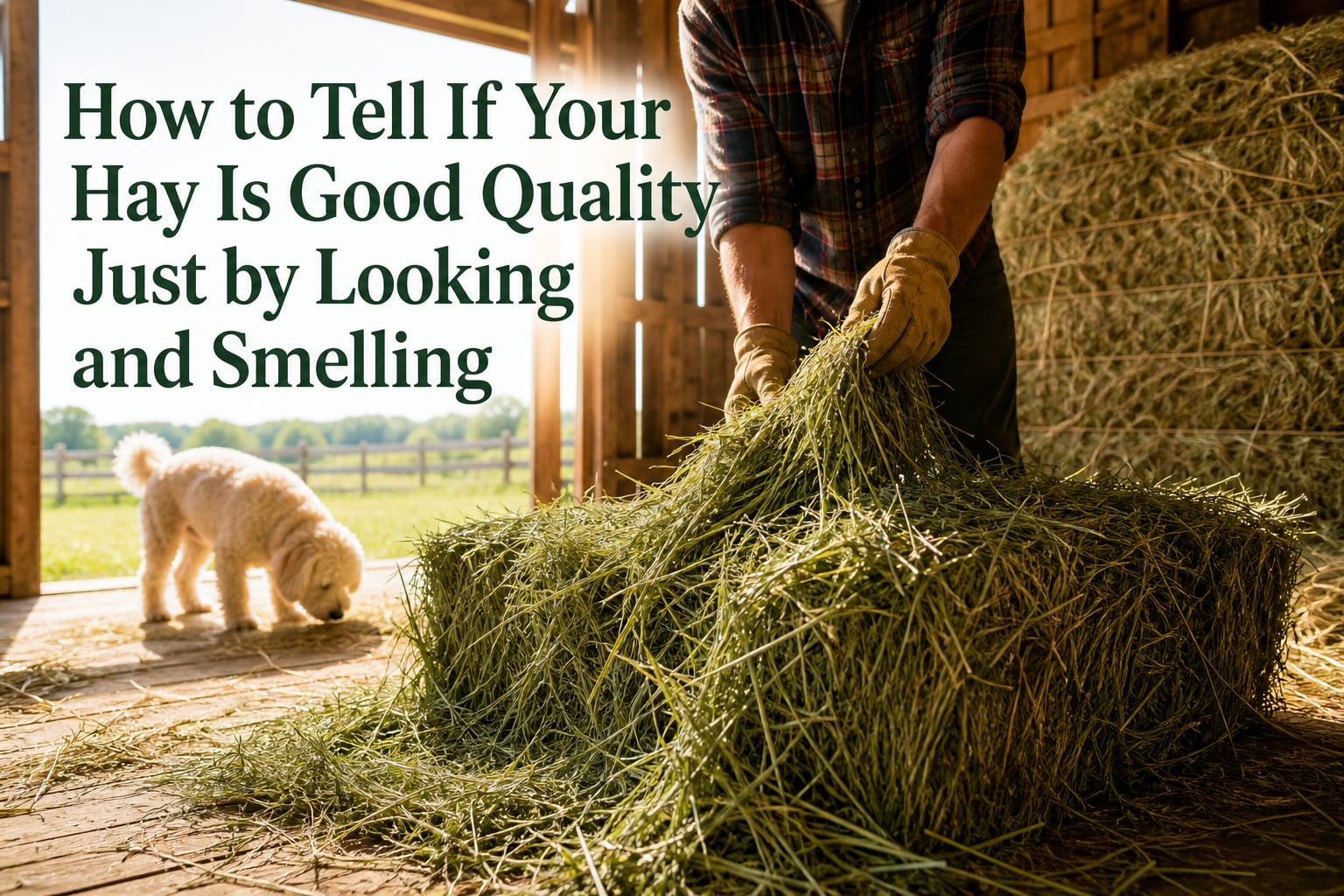
Hay is the cornerstone of livestock nutrition, and a single bad load can quietly drain body condition, raise vet bills, and shrink your winter feed supply. The good news is you don’t need a forage lab or a moisture meter to catch most problems before they reach your animals. With a careful eye and a confident nose, you can learn how to tell if hay is good quality in just a few minutes per bale.
This guide distills what extension services, hay growers, and seasoned horse and cattle owners have known for decades. I’ll walk you through color, odor, leaf-to-stem ratio, stem thickness, mold signs, hands-on field tests, and one critical safety warning every alfalfa buyer should know. We’ll wrap up with a quick reference checklist so you can sort good hay from bad hay before you unload a single bale.
Table of Contents
Color as a Quality Indicator: Green vs Yellow, Brown, and Bleached
Color is the fastest visual clue when evaluating hay quality. Bright green hay signals a recent cut, proper curing, and high vitamin A and E content. Yellow or tan hay usually means it sat in the sun too long, was field-cured past peak, or has aged in storage. Brown, gray, or black hay points to heat damage, fermentation, or outright rot.
A few real-world caveats matter here. The outside of a bale or stack can bleach significantly even when the inner flakes are still vividly green. Always break open a bale and check the core before judging color alone. Hay stored under a proper barn tarp or shed will hold its green color far longer than hay left uncovered, so storage history matters as much as the original cut.
What Different Colors Tell You
- Bright green: Fresh, leafy, high in nutrients, properly cured. The gold standard for horse hay and most livestock.
- Dull green to olive: Still acceptable; may be a few weeks old or sun-touched on the outside.
- Yellow or straw-colored: Older hay, lower vitamin A; usable for cattle and dry cows but less ideal for performance horses.
- Brown, dark brown, or black: Heat-damaged, moldy, or rotted. Do not feed to horses or other livestock.
Odor Assessment: Fresh and Sweet vs Musty and Moldy
Smell is your single best early-warning system for moisture problems in hay. Good hay carries a clean, slightly sweet, almost grassy scent that reminds you of a freshly mowed field. That pleasant aroma tells you the hay was cured at safe moisture levels and stored without fermentation.
Bad hay smells noticeably different, and you’ll know it the moment you flip a flake open. A musty, sour, or dusty smell indicates mold growth. A sharp tobacco-like or caramel odor means the bale heated during storage, often because it was baled too wet. There is also a chemical or metallic edge you sometimes catch on truly ruined hay. Any of these scents means the bale has lost nutritional value and may be unsafe to feed.
Quick Odor Reference
- Sweet, grassy, fresh: Safe and high quality.
- No smell at all: Often over-dried hay; nutritionally lower but generally safe if stored well.
- Musty, sour, dusty: Mold present; never feed to horses or pregnant animals.
- Tobacco-like or burned: Heat damage from moisture; lower protein and palatability.
Pro tip from the forum community: train your nose by cracking open a bale of hay you’ve already confirmed is good alongside an unknown bale. Comparing the two side by side makes subtle mustiness impossible to miss.
Leaf-to-Stem Ratio: Why It Matters
Leaves carry most of the protein, energy, and digestible nutrients in any hay crop, while stems are mostly fiber. A high leaf-to-stem ratio is one of the most reliable visual hay quality indicators you can use without equipment. Hold a forkful up and ask yourself whether the leaves outnumber and outweigh the stems. If the answer is yes, you are likely looking at premium forage.
You can also run a simple shake test. Grab a flake or handful and shake it firmly over a clean surface. A few leaves coming loose is normal, but if a noticeable shower of leaf material falls out, the hay was over-handled, baled too dry, and has already lost nutritional value before it ever reached your hay net. Hay that holds its leaves tightly together has been cut and cured at the right moisture and at the right maturity stage.
Stem Thickness and Maturity Stage
Stems tell the maturity story of hay more clearly than almost any other trait. Thin, pliable, and flexible stems signal that the forage was cut early, typically at the pre-bloom or early-bloom stage. These younger stems are more digestible and pair with a higher leaf-to-stem ratio. Thick, woody, or wiry stems mean the crop went past peak maturity, fiber content is up, and energy content is down.
Spotting Maturity at a Glance
- Grasses: Check seedheads. No visible seedheads means very early cut and high quality. Heavy seedhead formation means late cut and lower forage quality.
- Alfalfa: Look at bloom stage. Pre-bloom is peak nutrition; early bloom is the practical sweet spot; full bloom or beyond means coarser stems and lower protein.
- Clovers and mixed hay: Leafy cuttings without visible flower heads signal younger, more digestible forage.
For horse hay especially, fine stems under roughly a quarter inch in diameter are the practical target. Anything thicker tends to get sorted out and dropped on the stall floor rather than eaten.
Warning Signs of Mold, Dust, and Damage
Mold is the single biggest reason hay gets rejected, and rightly so. Moldy hay can cause colic, heaves, and reproductive losses in horses and serious digestive upset in cattle, goats, and rabbits. The visual warning signs include white, gray, or black fuzzy patches on leaves and stems. Dust that puffs off when you shake a flake often signals invisible mold spores, especially if the hay has a stale smell.
Damage shows up in other ways too. Foreign objects like wire, twine scraps, sticks, weeds, or even old nails sometimes end up in bales. Weeds such as hoary alyssum, ragwort, and certain nightshades are toxic to horses and should disqualify the bale entirely. Heat-damaged hay often looks tobacco-colored in the center of the bale and may feel noticeably warm to the touch. If you ever feel warmth in stored hay, separate the bale from the stack and check it again in 24 hours; spontaneous combustion is rare but not unheard of in tightly packed hay.
Field Tests: The Squeeze Test and Break Test
When you don’t have access to a forage lab, two simple field tests can confirm or override what your eyes and nose are telling you. Together they take about 30 seconds and are surprisingly accurate.
The Squeeze Test
- Pull a small handful from the center of a bale.
- Squeeze it firmly in your fist for 10 to 15 seconds.
- Release and look at your hand.
- A clean, dry hand with minimal residue means moisture is in the safe 12 to 16 percent range.
- Excessive dampness, grit, or heat in your palm means the bale was baled too wet or has started to compost.
The Break Test
- Take a few stems and bend them between your fingers.
- Good hay stems crack or break with a clean snap after several bends.
- If stems snap instantly on the first bend with no flexibility, the hay is over-dried and has lost nutrients.
- If stems bend without breaking or feel rubbery, the hay was baled too wet and may spoil in storage.
Combining these hands-on hay inspection tips with color, odor, and leaf checks gives you a 90-second evaluation that rivals a quick on-farm assessment.
Animal-Specific Considerations
Good hay for one species is not necessarily good hay for another. Horses are the most demanding hay buyers and need dust-free, mold-free, fine-stemmed hay with high leaf content. Even small amounts of mold can trigger heaves in sensitive horses, and dust alone reduces palatability and respiratory health.
Cattle and other large ruminants tolerate slightly more mature hay, some dust, and even mild surface mold that you would never feed to a horse. Beef cows on a maintenance diet do well on hay that would frustrate an equine nutritionist. Lactating dairy cows need higher-protein hay, usually in the form of quality alfalfa or a leafy grass mix.
Small animals like rabbits, guinea pigs, and small ruminants such as sheep and goats need fine-stemmed, leafy hay with very little dust. They eat close to the leaf and have sensitive respiratory systems, so clean second-cutting orchard grass or timothy is usually ideal. When in doubt, match the hay texture to the animal: finer for small mouths and lungs, coarser acceptable for cattle on maintenance diets.
Warning: Blister Beetles in Alfalfa
Blister beetles are the one contaminant every alfalfa buyer must actively screen for, especially when feeding horses. These beetles contain cantharidin, a toxin so potent that as few as five to ten beetles can kill an average-sized horse. Even non-lethal doses cause severe colic, urinary tract damage, and heart irregularities.
How to Spot Them
- Adult beetles are elongated, dark metallic green, gray, or striped, and roughly half an inch long.
- They often appear as crushed black or gray flakes inside hay once they have been baled.
- Risk is highest in first-cutting alfalfa and hay harvested from the south-central United States, though outbreaks occur in many regions.
Buy alfalfa hay only from growers who actively scout their fields and cut before bloom. Inspect hay visually before each feeding, especially if you grind or process it, since beetles blend in easily. Many experienced horse owners buy alfalfa exclusively from known suppliers with strict beetle-control programs for this exact reason.
Quick Reference Checklist: Good Hay vs Bad Hay
| Indicator | Good Quality | Poor Quality |
|---|---|---|
| Color | Bright green to olive green | Yellow, brown, black, or bleached white |
| Smell | Sweet, fresh, slightly grassy | Musty, sour, dusty, or tobacco-like |
| Leaf-to-stem ratio | Leaves dominate; minimal shatter | Stems dominate; lots of leaf loss |
| Stems | Fine, pliable, flexible | Thick, woody, brittle |
| Seedheads or blooms | Few or none visible | Heavy seedhead formation or full bloom |
| Mold | No visible mold; cool to the touch | Fuzzy patches, dust plumes, warm bale |
| Squeeze test | Hand is cool and dry afterward | Damp or gritty residue, heat |
| Foreign material | Free of weeds, wire, debris | Visible weeds, sticks, twine scraps |
Run this checklist on at least two or three bales per load before you commit to a purchase. Quality varies dramatically between bales, and a quick spot check saves you from stacking bad hay next to good.
Frequently Asked Questions
How to tell if hay is high quality?
High quality hay looks bright green, smells sweet and slightly grassy, has a high leaf-to-stem ratio, and has fine, pliable stems. It should be free of mold, dust, weeds, and foreign material, and a handful squeezed in your fist should feel cool and dry when you release it.
What does bad hay smell like?
Bad hay smells musty, sour, dusty, or like tobacco or burnt caramel. Any of those odors signals mold growth, heat damage, or fermentation, and the hay should not be fed to horses or other sensitive livestock.
What is the most visual indicator of hay quality?
Color is the single fastest visual indicator. Bright green hay is fresh and nutrient-rich, while yellow, brown, or black hay points to aging, sun bleaching, or moisture damage that has reduced quality.
What are the signs of bad quality horse hay?
Watch for brown or dark color, musty smell, visible mold, dust when shaken, thick woody stems, heavy seedhead formation, foreign weeds like ragwort, and any presence of blister beetles in alfalfa. Any one of these signs is a reason to reject the bale.
Can sun-bleached hay still be good?
Yes, sun-bleached hay can still be good. Always break open a bale and check the core color and smell before judging. Many bales bleach on the outside but stay green and leafy inside, especially when stored under cover.
Final Thoughts on Hay Quality
Learning how to tell if hay is good quality is one of the highest-return skills a livestock owner can build. You don’t need a forage lab for routine decisions; a careful eye, a confident sniff, and a 30-second squeeze-and-break test will catch most problems before they hit your hay net. Use the good hay vs bad hay checklist above as your standard inspection routine, and treat any sign of mold, dust, or blister beetles as an automatic rejection.
When hay quality is borderline or you’re feeding performance, lactating, or breeding animals, send a sample for lab forage analysis. The combination of in-barn sensory checks plus periodic lab work is the strongest approach and is the standard most experienced hay buyers and extension services recommend heading into 2026 and beyond.