
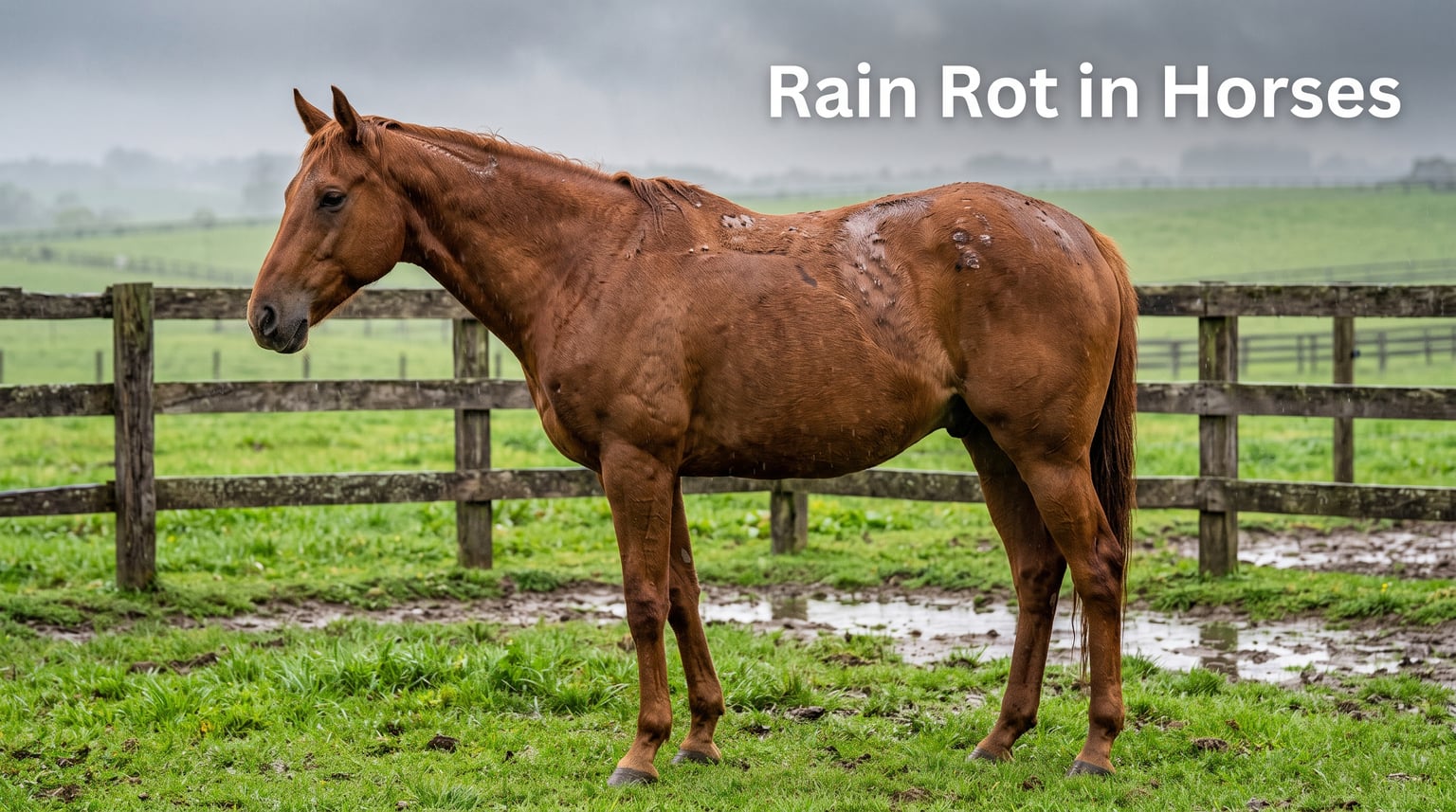
Rain rot in horses is one of those conditions that sneaks up on you fast, especially after a stretch of wet weather. One day your horse looks fine, and the next you’re running your hand down their back and feeling a line of crusty, matted scabs that weren’t there a week ago.
Also known as rain scald, mud fever, or dermatophilosis, this bacterial skin infection is extremely common in horses across all climates — but it is entirely treatable when you catch it early and handle it correctly.
In this guide, I’ll walk you through everything you need to know: what rain rot actually is, how to spot it, how to treat it step by step (including home remedies that horse owners swear by), and how to stop it from coming back.
Table of Contents
What Is Rain Rot in Horses?
Rain rot in horses is a bacterial skin infection caused by the organism Dermatophilus congolensis. Despite its name, Dermatophilus congolensis is not a fungus — it is a gram-positive actinomycete bacterium that behaves a bit like a mold by producing branching filaments and spores.
The condition goes by several names depending on where you live and which part of the horse is affected. You may hear it called rain scald, rain rot, mud fever, dew poisoning, cutaneous actinomycosis, or dermatophilosis. All of these refer to the same underlying infection.
What makes this organism so persistent is that it can live dormant on a horse’s skin without causing any visible harm. The problem begins when the skin stays wet for an extended period. Prolonged moisture softens the outer layer of the epidermis, creating tiny breaches that allow the dormant spores to penetrate and begin multiplying. Once active, the bacteria spread through the skin, producing the characteristic crusty lesions that give rain rot its distinctive look.
The Merck Veterinary Manual describes Dermatophilus congolensis as a worldwide pathogen that is particularly prevalent in tropical environments with high humidity and frequent rainfall. That said, you do not need to be in the tropics for your horse to develop rain rot — wet seasons, waterlogged paddocks, or even a poorly fitted blanket that traps moisture can trigger an outbreak anywhere.
Symptoms of Rain Rot in Horses
The first signs of rain rot are easy to miss. In the early stages, you might notice small raised bumps or tufts of matted hair along the horse’s back, shoulders, or hindquarters. These do not always look dramatic right away, but they signal that the infection is already underway.
As the condition progresses, the matted tufts develop into hard, crusty scabs. When you lift these scabs — which can feel painful for the horse — you will often find raw, moist, pink or red skin underneath. The removed scab frequently has a characteristic “paintbrush” appearance, with hair embedded in a flat crust that pulls away in a clump.
The most commonly affected areas include:
The back and topline (especially where a saddle sits)
The hindquarters and rump
The shoulders and neck
The pasterns and lower legs (this is sometimes called “mud fever” when it occurs here)
The muzzle and face (in horses exposed to heavy rain)
In mild cases, a horse may have only a few small scabby patches and show minimal discomfort. In more severe cases, the lesions can cover large areas of the body, the skin can become inflamed and weepy, and the horse may flinch when touched in affected areas.
When rain rot affects the lower legs — particularly the pasterns — it can cause enough swelling and pain to produce lameness. This is one reason the condition is sometimes called mud fever or scratches in that region, and it requires more aggressive treatment than back-area lesions.
It is worth knowing that rain rot can look very similar to ringworm, mange, or photosensitivity reactions. If you are unsure what you are dealing with, a veterinarian can quickly confirm the diagnosis.
What Causes Rain Rot in Horses
The root cause of rain rot is the activation of Dermatophilus congolensis spores that already exist on the horse’s skin. The question is what triggers them to become active and start infecting.
Prolonged moisture is by far the biggest trigger. When a horse spends hours or days with wet skin — whether from rain, heavy dew, sweating under a poorly breathable blanket, or standing in a muddy paddock — the epidermis weakens and the bacteria get their opening.
Other factors that increase a horse’s risk include:
Lack of shelter: Horses left in open fields during prolonged rain have the highest exposure.
Tack rubs and skin abrasions: A poorly fitted saddle pad or girth that rubs creates exactly the kind of skin breach bacteria need to enter.
Insect bites: Flies and other biting insects create micro-wounds that serve as entry points for bacteria.
Compromised immune system: Older horses, young foals, horses recovering from illness, or horses under nutritional stress are more susceptible.
Shared grooming tools and tack: The bacteria spread easily between horses through contaminated brushes, blankets, and equipment.
One common misconception is that only horses kept outside get rain rot. In reality, stabled horses can develop it too — from sweating under blankets, from contact with other infected horses, or from wet bedding in poorly ventilated stalls.
How Veterinarians Diagnose Rain Rot
In most cases, a veterinarian can diagnose rain rot through a straightforward clinical examination. The characteristic crusting scabs with the paintbrush appearance, combined with the horse’s history and the weather conditions, are usually enough to make a confident diagnosis.
When the presentation is unusual or the infection does not respond to standard treatment, a vet may take a skin scrape or do a direct impression smear of the underside of a removed scab. Under a microscope, the branching filaments of Dermatophilus congolensis are distinctive and unmistakable, appearing in a “railroad track” pattern.
In rare cases, a biopsy may be recommended — particularly if the infection is deep, extensive, or affecting unusual areas of the body. Culture and sensitivity testing can also be useful when the horse requires antibiotic therapy and the vet wants to confirm which antibiotics will be most effective.
It is worth distinguishing rain rot from a few similar-looking conditions. Ringworm (a fungal infection, not a worm) also causes circular patches of hair loss and crusty lesions, but the hair typically breaks off at the base rather than coming away in paintbrush-shaped clumps. Mange mites cause intense itching and scaling but usually affect different body regions. If there is any doubt, get a professional opinion — a wrong diagnosis leads to the wrong treatment.
How to Treat Rain Rot in Horses?
The good news is that most cases of rain rot respond well to straightforward treatment at home, as long as you are consistent. The goal is to remove the crusts, kill the bacteria, keep the area dry, and let the healthy skin heal underneath.
Step-by-Step Treatment Process
Move the horse out of wet conditions. This is the most important first step. Treatment will fail if the horse continues to stand in rain or mud. Get them into a clean, dry environment as quickly as possible.
Soften the scabs before removal. Do not try to pick dry scabs off — this is painful for the horse and can damage healing skin. Instead, wet the affected area with warm water or a diluted antimicrobial solution and let it soak for 5 to 10 minutes until the crusts soften.
Gently remove the scabs. Once softened, the crusts should lift away without much resistance. Wear disposable gloves throughout this process. This step is important because the bacteria live inside the scabs — leaving them in place slows healing significantly. Dispose of the removed scabs rather than leaving them on the ground.
Wash the area with an antimicrobial shampoo. Shampoos containing chlorhexidine or povidone-iodine are the most commonly recommended options. Lather the shampoo onto the affected areas, let it sit for 5 to 10 minutes, and rinse thoroughly. Repeat this step every 2 to 3 days.
Dry the area completely. This step is critical and often overlooked. After washing, pat the area dry with a clean towel and allow the horse to stand in dry conditions until the skin is fully dry before turning them out or blanketing.
Apply a topical treatment if needed. For more persistent or raw lesions, a topical antimicrobial or antifungal preparation may help speed recovery. Your vet can recommend what works best for your horse’s specific situation.
Disinfect all grooming tools. Brushes, combs, scrapers, and blankets that have contacted the infected horse should be cleaned and disinfected before use on other horses to prevent spread.
In mild cases, you may see significant improvement within 7 to 10 days of consistent treatment. More severe infections can take 3 to 4 weeks to fully resolve.
Home Remedies for Rain Rot
Horse owners on forums like Reddit’s equestrian communities and Chronofhorse regularly share home remedies that have worked for them. These are not replacements for proper veterinary care in serious cases, but for mild to moderate rain rot, some have a real track record.
Diluted Listerine is probably the most widely discussed home remedy. Many horse owners dilute original Listerine 50/50 with water and spray or wipe it onto affected areas after cleaning. The antiseptic properties of the original formula (containing thymol, eucalyptol, and menthol) appear to help inhibit bacterial growth. It is inexpensive and easy to apply — though some horses object to the scent.
Tea tree oil, diluted in a carrier oil or water, is another option that gets consistently positive mentions. Tea tree has genuine antibacterial properties, though you should always dilute it — concentrated tea tree oil can irritate a horse’s skin just as it can irritate human skin.
Some owners use a diluted povidone-iodine (Betadine) solution as a scrub, which aligns with what many vets recommend anyway. The key with any home remedy is consistency — one application rarely does the job.
When to Call the Vet
Most rain rot cases do not require a vet visit, but there are situations where professional help is the right call. Contact your veterinarian if:
The infection is spreading rapidly despite treatment
The horse develops swelling, heat, or obvious pain in the legs (which may indicate cellulitis)
Your horse is lame, running a fever, or showing signs of systemic illness
There is no improvement after 14 days of consistent treatment
The lesions are unusually deep, weeping, or affecting a large area of the body
You are dealing with a foal, a senior horse, or a horse with known immune system issues
In cases where oral antibiotics are needed, a vet will often prescribe penicillin, which is highly effective against Dermatophilus congolensis. This is not something you should attempt to source or administer without professional guidance.
Can You Ride a Horse with Rain Rot?
This is one of the most common questions horse owners ask, and the honest answer is: it depends on the location and severity of the lesions.
If the rain rot patches are on the topline, back, or girth area — anywhere that comes into contact with a saddle, saddle pad, or girth — you should not ride until those areas have healed. Placing tack over active lesions is painful for the horse and will irritate the skin further, potentially making the infection worse.
If the rain rot is in an area that tack does not contact — for example, on the hindquarters or lower neck — light work may be possible. But it is a good idea to give the horse a few days of rest regardless while you start treatment, particularly if they are clearly uncomfortable.
When you do return to riding, make sure all saddle pads and blankets are clean and dry, and check the horse’s skin carefully after each ride for any signs of irritation.
How to Prevent Rain Rot in Horses?
Prevention is far easier than treatment, and most cases of rain rot are avoidable with the right management practices. The central principle is straightforward: keep your horse’s skin dry and intact.
Here are the most effective prevention strategies:
Provide adequate shelter. Every horse should have access to a run-in shed or stable during wet weather. If your pasture does not have natural shelter, a simple three-sided run-in shed makes a significant difference.
Use breathable, well-fitted blankets. A waterproof turnout blanket keeps rain off the horse, but it must be breathable to prevent sweat and moisture from building up underneath. Check blanket fit regularly and remove it periodically to let the skin breathe.
Groom consistently. Regular grooming lets you inspect the skin early, before small patches develop into a full outbreak. Run your hands along the topline and check pasterns after every wet period.
Keep bedding and paddocks clean and dry. Muddy, waterlogged paddocks are a direct risk factor. Rotate turnout areas, add gravel to high-traffic zones, and keep stall bedding deep and dry.
Disinfect shared equipment. Grooming tools, brushes, and blankets should not be shared between horses without cleaning first. Rain rot spreads easily through contaminated equipment.
Control insects. Fly bites and insect wounds create skin breaches that bacteria use as entry points. Use appropriate fly protection during peak insect seasons.
Support immune health through nutrition. A horse on a balanced diet with adequate protein, vitamins, and minerals is better equipped to resist skin infections. If your horse has repeated bouts of rain rot, consider having their diet evaluated by an equine nutritionist.
Quarantine new arrivals. When bringing a new horse onto your property, keep them separate from the herd for at least 2 weeks and check their skin thoroughly before allowing contact with other horses.
Seasonal awareness matters too. Rain rot outbreaks peak in late autumn and spring in temperate climates — when wet weather is frequent and horses may not yet have adapted management routines to match. This is the time to be most diligent about checking skin condition after wet spells.
Is Rain Rot Contagious to Other Horses and Humans?
Rain rot is contagious between horses. Dermatophilus congolensis spreads through direct contact with infected skin, through shared grooming tools and tack, and through contact with contaminated bedding or fencing. A horse with active rain rot should have their own brushes, blankets, and other equipment that are not shared with healthy horses.
Isolation is a good precaution in a multi-horse barn, though complete separation is not always practical. At minimum, keep shared equipment clean and avoid using the same brush on an infected horse that you then use on a healthy one without disinfecting in between.
The risk to humans is low but not zero. Dermatophilus congolensis is considered a zoonotic organism, meaning it can technically infect people, particularly those with cuts or open wounds on their hands. In practice, human infections are rare and typically mild, but wearing gloves when handling infected horses and removing and treating scabs is a sensible precaution.
After handling an infected horse, wash your hands thoroughly. If you develop any skin irritation or lesions on your hands after exposure, mention the contact to your doctor.
Frequently Asked Questions
How do you get rid of rain rot on horses?
Get rid of rain rot by moving the horse to a dry environment, softening the scabs with warm water, gently removing them, scrubbing the area with an antimicrobial shampoo (chlorhexidine works well), and keeping the skin dry between treatments. Repeat the wash every 2 to 3 days. Most mild cases clear up within 7 to 14 days with consistent treatment.
Will rain rot heal on its own?
Rain rot can sometimes resolve on its own if the horse is moved out of wet conditions and the skin stays dry, but this is not reliable. The crusting scabs need to be removed for healing to occur — they trap bacteria against the skin. Active treatment almost always speeds recovery significantly and reduces the risk of spreading.
Can I ride a horse with rain rot?
You should avoid riding if rain rot lesions are under or near where the saddle, girth, or saddle pad sits. Placing tack over active lesions is painful and can worsen the infection. If the lesions are in areas that tack does not contact, light work may be possible, but give the horse a few days of rest while starting treatment.
What are the first signs of rain rot?
The first signs of rain rot are small raised bumps or tufts of matted hair along the horse’s back, topline, or lower legs. These tufts may feel slightly crusty when you run your hand along the coat. As the infection develops, the tufts harden into scabs that lift away with hair still attached in a paintbrush-like clump.
How long does it take to cure rain rot in horses?
With consistent treatment, mild rain rot typically improves within 7 to 14 days and fully resolves within 3 to 4 weeks. More severe cases, or cases where the horse cannot be kept consistently dry, may take longer. If there is no improvement after two weeks of proper treatment, contact your vet.
Does Listerine help rain rot?
Many horse owners report success using original Listerine diluted 50/50 with water as a topical spray or wipe for rain rot. The antiseptic ingredients in original Listerine — including thymol, eucalyptol, and menthol — can help inhibit bacterial growth on the skin surface. It is most useful for mild cases and should be used after softening and removing scabs, not instead of that step.
Is rain rot contagious to other horses?
Yes, rain rot is contagious between horses. Dermatophilus congolensis spreads through direct skin-to-skin contact, shared grooming tools, contaminated blankets and tack, and contact with infected bedding. Keep an infected horse’s equipment separate and disinfect shared items before using them on other horses.
What does rain rot look like on a horse?
Rain rot appears as clusters of crusty, matted scabs along the horse’s back, topline, hindquarters, or lower legs. When you pull the scabs away — which should be done gently after soaking — the underside of each crust has hair embedded in it, giving it a distinctive paintbrush or paint-brush appearance. The skin beneath is typically pink, raw, and moist.
Final Thoughts
Rain rot in horses is frustrating, but it is one of the most manageable skin conditions you will deal with as a horse owner. Catch it early, remove the scabs correctly, use an antimicrobial wash consistently, and keep the horse dry — those four steps resolve the vast majority of cases without any need for veterinary intervention.
Prevention is where the real win is. A horse with access to shelter, dry bedding, regular grooming checks, and well-fitted breathable blankets rarely develops a serious rain rot problem. Good basic management in 2026 goes a long way.
If you are dealing with a case that is spreading quickly, causing lameness, or not responding to treatment after two weeks, do not wait — get a vet involved. Rain rot itself is rarely dangerous, but secondary complications like cellulitis can become serious if left unchecked.