
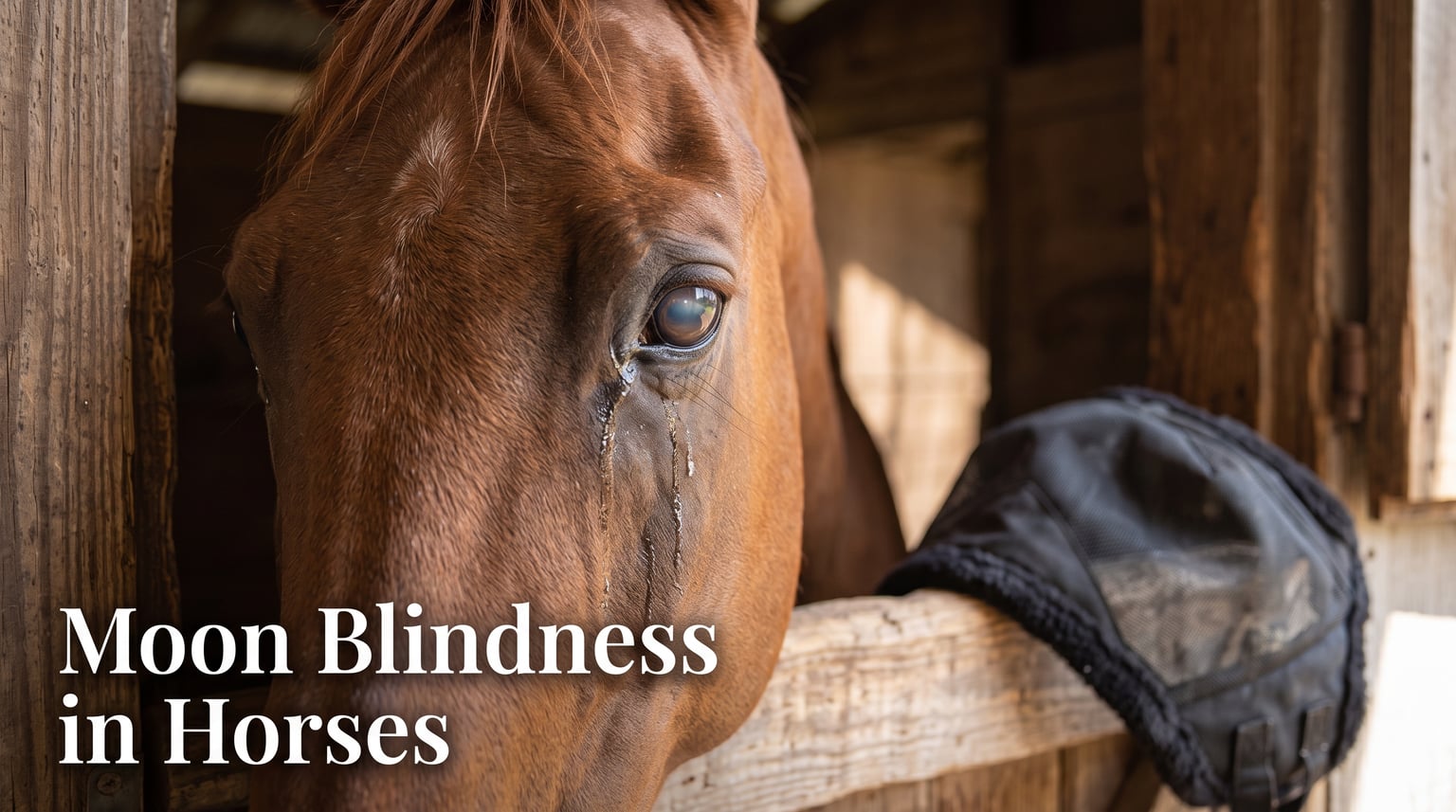
I remember the first time I watched a barn mate’s horse squint and water from one eye on a bright morning. Within a week, the eye looked cloudy. A few months later, the other eye started showing the same signs. That was my introduction to moon blindness in horses, the condition this guide is built around.
Equine recurrent uveitis, also called ERU or moon blindness, is the most common cause of blindness in horses worldwide. It affects an estimated 2 to 25 percent of horses globally. Some sources, like UC Davis’s Center for Equine Health, call it “the most common cause of vision loss in horses.” Because the disease is painful, progressive, and incurable, every owner should know how to spot it early and what to do next.
In this guide, I’ll walk you through what moon blindness actually is, the symptoms you can see from the ground, what causes it, how vets diagnose it, the treatment options available, and what the long-term outlook really looks like. I’ll also cover day-to-day management, share practical tips from other owners, and answer the questions I hear most often at the barn.
Table of Contents
What Is Moon Blindness in Horses?
Moon blindness in horses is an immune-mediated disease where the horse’s own immune system attacks the internal tissues of the eye, causing repeated bouts of painful inflammation inside the uveal tract. The uveal tract is the middle layer of the eye and includes the iris, ciliary body, and choroid. Each flare damages those structures, and the damage accumulates over time.
The condition is also called equine recurrent uveitis, ERU, or periodic ophthalmia. The historical name “moon blindness” comes from the old idea that episodes came and went with the phases of the moon, which turned out to be wrong, but the name stuck.
Three different clinical patterns show up in practice, and recognizing which one your horse has changes the treatment plan:
- Classic ERU: Clear acute flare-ups with obvious symptoms, separated by quiet periods that can last weeks to years. The inflammation looks dramatic, then settles down.
- Insidious ERU: Low-grade inflammation that smolders quietly, often without dramatic symptoms. Damage still happens, but owners may not notice until the eye is already cloudy or the horse starts bumping into things.
- Posterior ERU: Inflammation focused on the back of the eye, including the vitreous, retina, and choroid. Symptoms in the front of the eye can be subtle even as the back of the eye is being destroyed.
Appaloosas are most likely to develop insidious uveitis, while many Warmbloods and European breeds tend toward the posterior form. Classic ERU shows up across nearly every breed.
Symptoms of Moon Blindness in Horses
The symptoms of moon blindness in horses vary depending on whether you’re seeing an active flare or the long-term damage from past episodes. In an active flare, the signs are usually obvious within hours to a day. In a quiet period, you might only see the after-effects.
Common signs during an active flare include:
- Squinting or holding the eye partially closed (blepharospasm)
- Tearing or watery discharge, sometimes thick and mucoid
- Redness around the white of the eye and along the lid margins
- Cloudiness or a bluish haze across the cornea (corneal edema)
- Strong sensitivity to light (photophobia), so the horse turns away from bright sun
- A small or constricted pupil (miosis)
- Visible inflammation inside the eye, sometimes called aqueous flare
- Rubbing or pawing at the eye
Long-term signs build up after repeated flares. They include cataract formation, a shrunken or misshapen eye (phthisis bulbi), glaucoma, retinal detachment, and obvious vision loss. Some horses develop chronic scarring on the cornea that looks like a gray or white film.
If the condition only affects one eye, the horse can mask early symptoms well. The good eye does most of the seeing, and owners may not notice anything is wrong until the second eye starts showing signs.
Some horses also squint, tear, or look uncomfortable for reasons that aren’t ERU, like a scratched cornea, a foreign body, or seasonal allergies. Any time a horse has a painful, red, or cloudy eye, treat it as an emergency and call your vet the same day.
What Causes Moon Blindness in Horses?
The short answer is that moon blindness is an autoimmune disease, but several triggers are linked to it. The leading theory is that an initial insult to the eye, often a Leptospira bacterial infection, exposes internal eye tissues to the immune system. The immune system then mistakenly targets those tissues every time the horse faces future stress.
Leptospira is the bacterial genus most often tied to ERU. Horses pick it up from contaminated water, urine from infected wildlife, or wet pasture conditions. In some studies, horses with ERU are significantly more likely to test positive for Leptospira exposure than healthy horses. Once the bacteria reach the eye, they can hide inside the uveal tissues and keep the immune system activated for years.
Genetics also play a major role. Appaloosas carry a substantially higher risk than other breeds, somewhere around 8 times more likely to develop ERU than the general horse population. The link is tied to the LP gene (leopard complex), which is responsible for the Appaloosa’s spotted coat. The same gene appears connected to immune dysregulation in the eye.
Other breeds with elevated risk include:
- American Paint Horses
- Quarter Horses
- Thoroughbreds
- Warmbloods, especially in Europe
- Drafts and Standardbreds in some studies
Other triggers and contributing factors include trauma to the eye, migrating parasites or worm larvae, severe systemic illness, and stress. Horses in tropical or temperate climates with more standing water tend to have higher rates of Leptospira exposure, which lines up with higher ERU rates in those regions.
One of the most common questions I hear is whether moon blindness in horses is hereditary. The honest answer is yes and no. The disease itself isn’t passed directly from parent to foal, but the genetic predisposition, especially in Appaloosas, is inherited. That’s why responsible breeders often test or avoid breeding horses with a history of ERU.
How Vets Diagnose Moon Blindness in Horses
Diagnosis starts with a complete ophthalmic exam, ideally under both bright light and dim conditions. Your vet will look closely at the front of the eye, check pupil response, and examine the back of the eye with an ophthalmoscope.
Several tools help confirm ERU and rule out other causes:
- Tonometry: Measures intraocular pressure. Low pressure often points to active uveitis, while high pressure can suggest secondary glaucoma.
- Fluorescein staining: A dye test that reveals corneal ulcers or scratches, which can mimic some uveitis symptoms.
- Slit lamp examination: Lets the vet see inflammatory cells and protein in the anterior chamber, a sign called aqueous flare.
- Dilated fundus exam: Checks the retina and optic nerve for signs of posterior ERU.
- Blood work: Often includes Leptospira titers to look for evidence of prior bacterial exposure.
- Ocular ultrasound: Used when the eye is too cloudy to see inside, helping the vet assess the lens and retina.
One important diagnostic point: ERU is defined by recurrent episodes. A single bout of uveitis doesn’t qualify as ERU. The vet will look for either a documented history of past episodes or signs of past damage combined with current inflammation.
Treatment Options for Moon Blindness in Horses
Treatment has two goals: stop the current flare as fast as possible and reduce the chance of future episodes. There is no cure, but aggressive early treatment can preserve vision for years in many horses.
During an active flare, the standard medical protocol includes:
- Topical corticosteroids (such as prednisolone acetate or dexamethasone) to reduce inflammation inside the eye.
- Topical NSAIDs (such as flurbiprofen) for additional pain relief and inflammation control.
- Systemic NSAIDs like flunixin meglumine (Banamine) or phenylbutazone to manage pain and whole-body inflammation.
- Atropine to dilate the pupil, relieve ciliary muscle spasm, and prevent the iris from sticking to the lens (posterior synechia).
- Oral doxycycline in some cases, which has both anti-inflammatory and anti-Leptospira effects.
For horses with frequent flares despite good medical management, surgical options exist. These are typically performed by a veterinary ophthalmologist.
- Suprachoroidal cyclosporine implant: A tiny device placed behind the eye that slowly releases an immunosuppressant drug over several years. Studies suggest it can reduce flare frequency by more than half in many horses.
- Intravitreal gentamicin injection: Sometimes used in posterior ERU cases.
- Pars plana vitrectomy: Removes the vitreous gel from inside the eye to clear out inflammatory cells and debris. More invasive, but helpful for select cases.
When an eye becomes chronically painful, blind, and no longer responds to medication, enucleation (surgical removal of the eye) is the kindest option. Many horses recover quickly, adapt well, and return to normal activity. A blind horse with a comfortable eye is far better off than a horse with a painful, non-functional eye still in place.
Owners should also know that treatment costs add up. Repeated ophthalmic exams, long-term medications, and possible surgery can run into thousands of dollars over a horse’s lifetime. That doesn’t mean treatment isn’t worth it, but it should be part of the conversation with your vet from day one.
Management and Prevention of ERU
You can’t always prevent moon blindness, but good day-to-day management can reduce flare frequency and slow progression. Here’s the protocol I recommend and that most ophthalmologists agree with.
Use a UV-protective fly mask. Look for one rated at least 90% UV protection. Wear it during turnout in daylight hours, year-round. Many horses with ERU show fewer flares when their eyes are shielded from bright sun, glare, and wind.
Control flies aggressively. Flies irritate already-sensitive eyes and can introduce bacteria. Use fly spray, fly predators, manure management, and barrier protection. A well-fitted fly mask is the single most useful piece of gear.
Restrict access to standing water and ponds. Leptospira thrives in slow-moving or stagnant water contaminated by wildlife urine. Fence off ponds when possible and use clean troughs for drinking water.
Stay current on deworming and vaccinations. While no vaccine exists specifically for Leptospira in horses in the United States, overall immune health matters. Some farms also discuss Leptospira vaccination with their vet in high-risk regions.
Keep a flare log. Write down every flare, including date, weather, recent stress, what triggered it, and how long it lasted. Patterns show up fast. Many owners notice flares cluster around seasonal changes, transport, or competition stress.
Have an emergency plan. Know exactly where your vet’s after-hours number is, and keep a few doses of Banamine and atropine on hand if your vet recommends them. The faster you start treatment, the better the outcome.
For Appaloosa owners specifically, ask your vet about genetic testing. The LP gene test helps confirm breed and may flag higher-risk individuals early. It’s also a useful tool for breeding decisions.
Prognosis and Quality of Life for Horses with ERU
The honest prognosis for moon blindness in horses is guarded. Studies suggest roughly 56% of affected horses become blind in at least one eye, and about 60% cannot return to their previous level of work. Those numbers are sobering, but they don’t tell the whole story.
Many horses with well-managed ERU live full, comfortable lives for years after diagnosis. Early intervention is the single biggest factor. Horses that get prompt, aggressive treatment at the first sign of a flare tend to keep their vision longer than horses whose owners wait it out.
Pain control is just as important as vision. A horse with a chronically painful, blind eye has a poor quality of life, regardless of how well the other eye sees. In those cases, enucleation often produces a dramatic improvement. Owners regularly tell me their horse acts years younger after the offending eye is removed.
Blind horses adapt surprisingly well with consistent routines, safe pastures, and patient handling. They memorize their environment, recognize herd mates by sound and smell, and can enjoy turnout, light riding, or simply being a horse. The key is a calm, predictable setup and an owner committed to small daily adjustments.
Work with your vet to define clear quality-of-life markers for your specific horse: appetite, attitude, willingness to move, and comfort level during flares. When those markers consistently decline, it’s time to have an honest conversation about what’s next.
Frequently Asked Questions About Moon Blindness in Horses
Can a horse recover from moon blindness?
There is no cure for moon blindness, but horses can live comfortably and keep useful vision for years with aggressive early treatment and consistent management. Prompt treatment at the first sign of a flare is the single biggest factor in preserving vision. About 56% of affected horses eventually lose vision in at least one eye.
How to tell if a horse has moon blindness?
Watch for squinting, tearing, redness, cloudiness, and light sensitivity in one or both eyes. Other signs include a small or constricted pupil, swelling around the eye, and rubbing or pawing at the face. Any painful, red, or cloudy eye should be treated as an emergency and seen by a vet the same day, because early treatment makes a major difference.
Is moon blindness painful?
Yes. Moon blindness in horses is a painful condition. Inflammation inside the eye, ciliary muscle spasm, and secondary glaucoma all contribute to significant discomfort. Pain control with NSAIDs and atropine is a core part of every treatment plan.
How to treat moon blindness in horses?
Active flares are treated with topical corticosteroids, topical NSAIDs, systemic NSAIDs like flunixin meglumine, and atropine to dilate the pupil and relieve muscle spasm. Horses with frequent flares may benefit from a cyclosporine implant or vitrectomy. Long-term management includes UV-protective fly masks, fly control, and restricted access to standing water.
Is moon blindness in horses hereditary?
Moon blindness itself isn’t directly inherited, but the genetic predisposition is, especially in Appaloosas. Appaloosas are roughly 8 times more likely to develop ERU than the general horse population, and the risk is tied to the LP gene responsible for the spotted coat pattern. Responsible breeders typically avoid breeding horses with a history of ERU.
Can moon blindness be prevented?
It can’t always be prevented, but the risk can be reduced. Use UV-protective fly masks, control flies, fence off ponds and standing water, stay current on deworming, and have any eye issue checked by a vet right away. Appaloosa owners should ask about LP genetic testing and discuss breeding decisions with their vet.
Moon blindness in horses is one of those conditions that rewards early action and steady follow-through. The first flare is your signal to call your vet, start treatment, and put a long-term management plan in place. Most horses with ERU can stay comfortable and useful for years when owners take the diagnosis seriously.
If you suspect moon blindness in your horse, don’t wait. Reach out to your veterinarian or a board-certified equine ophthalmologist today. The sooner you act, the more vision you protect, and the better life your horse will have.