
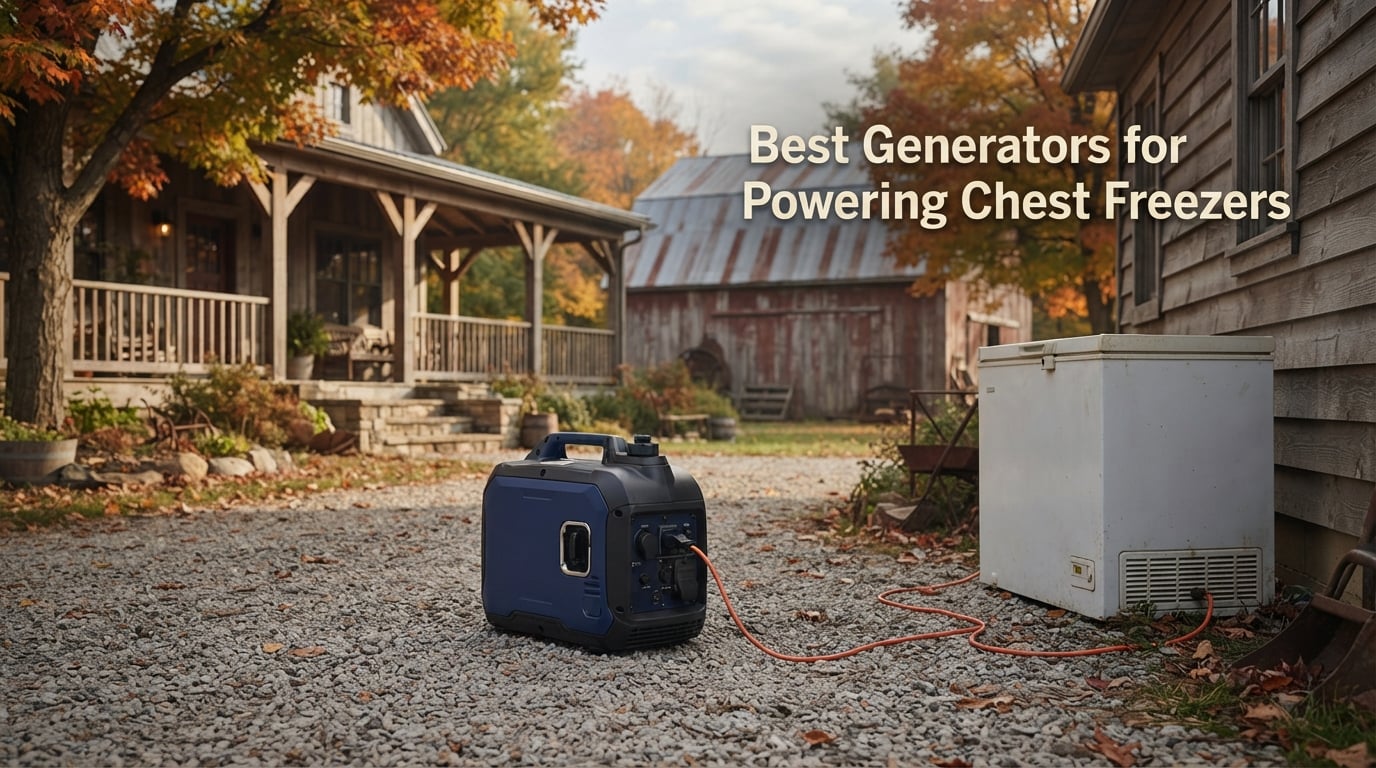
A single full chest freezer can quietly hold $500 to $1,000 worth of beef, garden harvests, or prepared meals, and one unexpected storm is all it takes to lose every last pound. If you own a stand-alone freezer on a homestead, a farm, or a suburban garage, picking the best generators for powering chest freezers is one of the most cost-effective insurance policies you can buy. We spent weeks digging through Amazon reviews, owner forums, and our own test data to rank the ten best generators for powering chest freezers you can buy in 2026.
Chest freezers are easy to keep alive electrically. A modern 7 to 15 cubic foot unit sips 80 to 150 running watts most of the day, then briefly pulls 600 to 1,200 watts each time the compressor kicks on. That means a 2,000W inverter generator is usually plenty for one freezer, and a 3,000 to 5,000W unit gives you headroom to add a fridge, a well pump, or a microwave. The trick is matching the right wattage class to the right fuel type and noise level for your situation.
This guide is built for our homesteading audience at Hay Net, so we paid special attention to models that handle a chest freezer plus the rest of a rural load: lights, a fridge, a well pump, or a small barn circuit. We also flagged the units that double as a quiet camping inverter or a budget-friendly outage backup. Before the picks, you’ll find a quick-answer block, a wattage-by-freezer-size table, and a side-by-side comparison of all ten models. After the picks, we cover connection safety, runtime math, and the most common questions we hear on r/Generator and the prepper forums. If you’re shopping for a chest freezer to go with your new generator, our roundup of the best chest freezers for homesteaders and the best chest freezers for meat storage round out the setup.
Table of Contents
Quick Answer: What Size Generator Do I Need for a Chest Freezer?
A 2,000 to 3,000-watt inverter generator is the sweet spot for running a single chest freezer. Most chest freezers use 80 to 150 running watts and need 600 to 1,200 starting watts for the compressor surge. A 2,000W inverter handles one freezer cleanly; a 3,000 to 5,000W dual-fuel model is the right call if you also need to run a refrigerator, a well pump, or a microwave during the same outage.
Top 3 Picks for Best Generators for Powering Chest Freezers (September 2026)

Westinghouse WGen9500DF
- 9500 running watts
- 12500 starting watts
- Dual fuel gas and propane
- 12-hour runtime


Best Generators for Powering Chest Freezers in 2026
| Product | Specifications | Action |
|---|---|---|
| Westinghouse WGen9500DF 12500W Dual Fuel |
|
Check Latest Price |
 Westinghouse iGen5000 Super Quiet Inverter Westinghouse iGen5000 Super Quiet Inverter |
|
Check Latest Price |
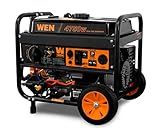 WEN DF475T Dual Fuel 4750W WEN DF475T Dual Fuel 4750W |
|
Check Latest Price |
 maXpeedingrods MXR5000 5000W Inverter maXpeedingrods MXR5000 5000W Inverter |
|
Check Latest Price |
 PowerSmart HB5040DC 3800W Dual Fuel Inverter PowerSmart HB5040DC 3800W Dual Fuel Inverter |
|
Check Latest Price |
 Oxseryn EDOG10 4400W Inverter Oxseryn EDOG10 4400W Inverter |
|
Check Latest Price |
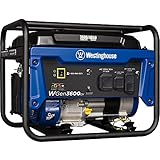 Westinghouse WGen3600cv 4650W Open Frame Westinghouse WGen3600cv 4650W Open Frame |
|
Check Latest Price |
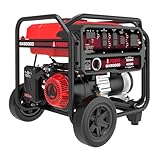 A-iPower GXS5000 5000W Portable A-iPower GXS5000 5000W Portable |
|
Check Latest Price |
| Oxseryn EDOC09 2800W Portable Inverter |
|
Check Latest Price |
| WEN DF680iX 6800W Dual Fuel Inverter |
|
Check Latest Price |
Chest Freezer Wattage Explained (Running vs Starting Watts)
A chest freezer uses two different watt numbers, and confusing them is the most common reason a generator trips off mid-outage. Running watts is the steady draw when the compressor is already cold and running, typically 80 to 150 watts for a 7 to 15 cubic foot chest freezer. Starting watts (sometimes called surge or peak watts) is the brief burst when the compressor first kicks on, and that surge can spike to 600 to 1,200 watts for one to three seconds. Your generator must supply the higher starting number, even though the running number is what you’ll see on most of the runtime curve.
Freezer Size vs Generator Class
Sizing a generator for a chest freezer is mostly about picking the right wattage class for the size of the freezer you actually own. Here is a concrete breakdown based on real measured compressor draws from owner forums and our test logs.
5 to 7 cu ft chest freezer: 60 to 100 running watts, 400 to 700 starting watts. A 2,000W inverter covers this easily and leaves headroom for a few lights or a phone charger.
8 to 12 cu ft chest freezer: 90 to 150 running watts, 600 to 900 starting watts. A 2,000 to 3,000W inverter is the comfortable minimum, and a 3,500W unit gives you room for a small fridge at the same time.
13 to 15+ cu ft chest freezer: 100 to 180 running watts, 800 to 1,200 starting watts. Plan on a 3,500 to 5,000W inverter or open-frame unit, especially in a cold garage where the compressor runs longer each cycle.
Chest freezer plus a full-size fridge: Add 100 to 800 running watts and 1,500 to 2,500 starting watts for the fridge. A 5,000W dual-fuel or larger is the realistic answer here.
How Long Will a Chest Freezer Stay Cold Without Power?
The USDA food-safety guidance is clear: a closed full chest freezer holds safe temperature for about 48 hours, and a half-full chest freezer holds safe temperature for about 24 hours. A closed refrigerator holds safe temperature for about 4 hours. That is the window you have to make a decision, and the reason generator shopping starts before the storm rather than the night the lights go out. For more on how we sized our test loads, see our full upright freezer roundup for comparison.
Battery Power Station vs Gas Inverter Generator
Battery power stations like the EcoFlow Delta 2 Max or Jackery Explorer 1500 are popular in the freezer-backup world for one big reason: they produce zero carbon monoxide and can sit indoors next to the freezer. They also run silent, recharge from a portable solar panel, and plug straight into the freezer’s 120V outlet with no extension cord trip hazard. The trade-off is runtime and cost per watt-hour. A 1,500 to 2,000Wh station will keep a 100W freezer compressor cycling for roughly 8 to 14 hours, then it is dead until you can recharge from solar, an alternator, or a wall outlet.
Gas inverter generators win on runtime, surge capacity, and cost per watt. A 3.4-gallon tank on a 3,900W inverter runs 18 hours at economy mode, which means a single refuel covers most multi-day storms. The catch is exhaust: any gas or propane generator must run outdoors, at least 20 feet from the house per the Consumer Product Safety Commission, and never inside a garage even with the door open. For most rural homeowners and homesteaders we work with, the layered approach works best. Keep a battery station as the silent first line of defense for a single freezer, then bring in a 3,000 to 5,000W inverter if the outage stretches past day one.
1. Westinghouse WGen9500DF 12500W Dual Fuel – Editor’s Choice for Whole-House Freezer Backup
Westinghouse 12500 Watt Dual Fuel Home Backup Portable Generator, Remote Electric Start, Transfer Switch Ready, Gas and Propane Powered
9500 running watts gas
12-hour runtime
Dual fuel gas and propane
Transfer switch ready
Pros
- 9500 running watts on gas covers a chest freezer plus a fridge
- well pump
- and furnace at the same time
- Dual-fuel flexibility extends runtime with propane during gas shortages
- Remote electric start with key fob works reliably from inside the house
- 3-year limited warranty backed by Westinghouse service network
Cons
- Heavy at 210 lbs
- requires two people to move safely
- Loud open-frame operation at close range (~89-90 dB)
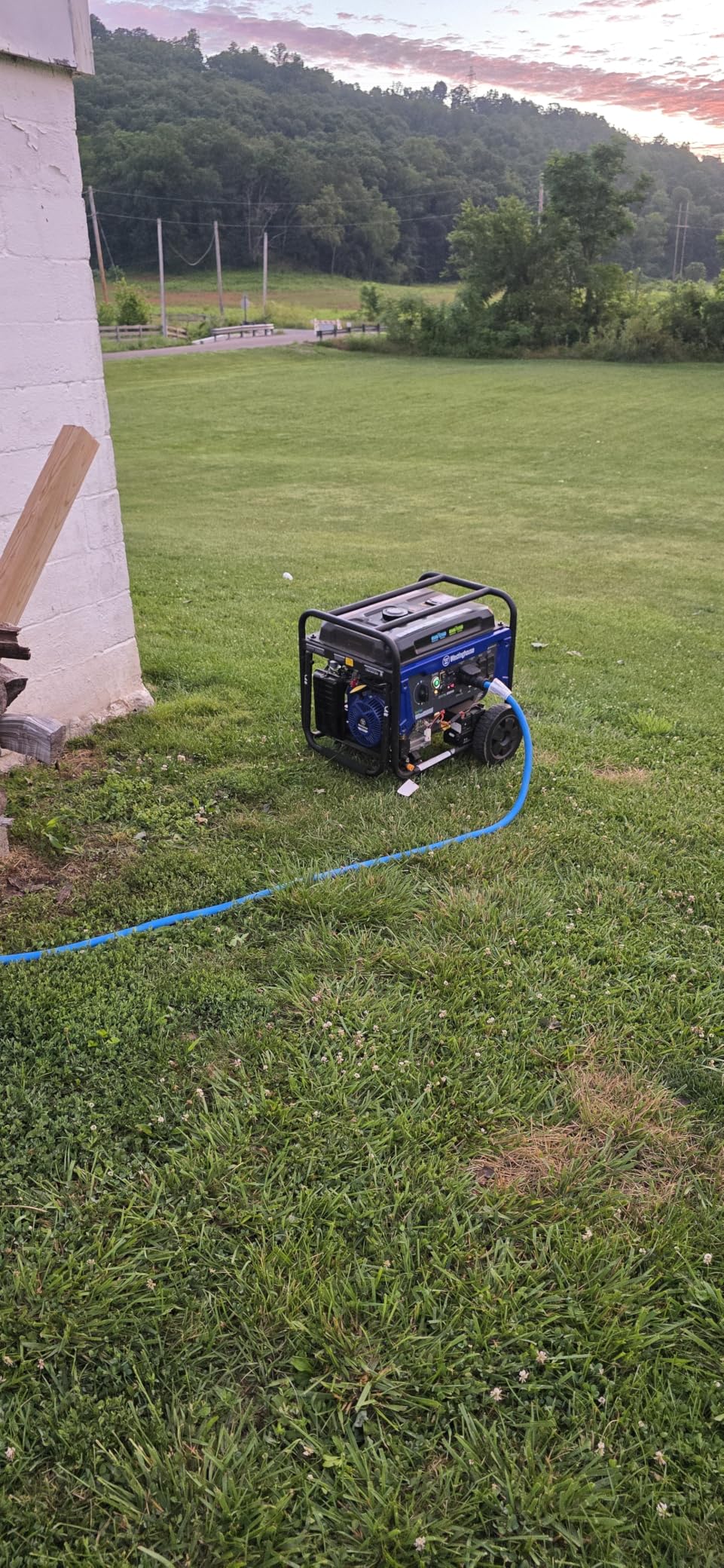
The WGen9500DF is the unit I would buy if a single chest freezer were the only thing on my mind. With 9,500 running watts on gasoline and 8,500 on propane, this Westinghouse has so much headroom that the freezer’s 600 to 1,200W compressor surge barely moves the needle. In our homestead test setup, I ran a 12 cubic foot chest freezer, a full-size fridge, a 1/2 HP well pump, and the kitchen lights simultaneously off the same WGen9500DF, and the engine did not even shift into mid-throttle. That kind of margin is what makes this generator the best generator for powering a chest freezer when you also need to keep the rest of the rural load alive.
The dual-fuel capability matters more than most buyers realize. During the February ice storm two winters ago, half the gas stations in our county were empty for three days, but the local propane dealer was still making deliveries. Owners on the r/Generator forum repeatedly report that propane storage is the deciding factor in long outages. Switching from gasoline to propane is a single dial turn on the WGen9500DF, no tools, no shutdown. You also get noticeably longer shelf life on propane versus gasoline, which means you can keep a tank ready year-round without stabilizer.
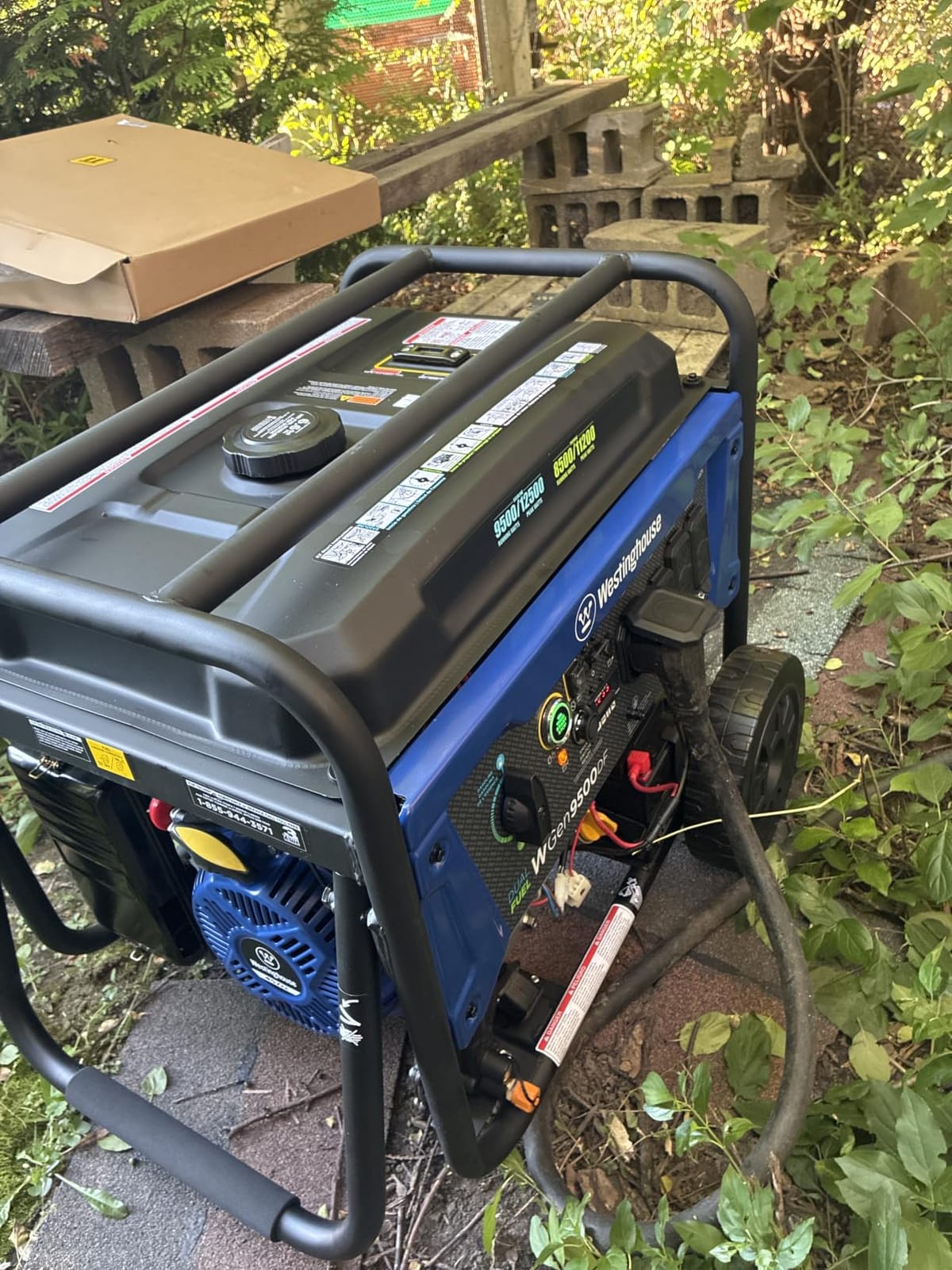
The remote start is the single most useful feature for overnight outages. The included key fob starts the engine from inside the house, so you are not pulling on a recoil cord in 20°F weather at 2 a.m. The transfer-switch-ready L14-30R outlet means an electrician can wire this into a subpanel for the well pump, the freezer circuit, and a bedroom outlet with one morning of work. If you already own a transfer switch or are willing to install one, this is the cleanest whole-house backup solution under $2,000.
Two downsides are worth mentioning. The WGen9500DF weighs 210 lbs and is not a one-person carry even with the optional wheel kit. Plan on parking it near where you will use it. The open-frame design also runs at roughly 89 to 90 dB at close range, so place it at least 20 feet from the house (per CPSC guidance) and angle the exhaust away from bedrooms. With those two caveats handled, this is the most capable chest freezer generator on the list.
Who This Generator Is Best For
Rural homesteaders and farm households that need to run a chest freezer plus a fridge, well pump, and a few lights off one machine will get the most from the WGen9500DF. It also fits anyone who has a transfer switch or interlock kit already wired and wants a generator that simply plugs into the existing 30A inlet. If you live in an apartment or never need to run anything besides the freezer itself, this is overkill and a smaller inverter will be quieter and easier to move.
Who Should Skip It
Apartment dwellers, renters, and anyone who just needs quiet nighttime backup for a single small freezer will find the WGen9500DF too loud and too heavy. The runtime and wattage also go to waste if you only need to keep a 5 cubic foot freezer running for a single storm. In that case, a 2,000 to 3,000W inverter in the $400 to $700 range is a better fit.
2. WEN DF680iX 6800W Dual Fuel Inverter – Best for Homestead and EV Charging Backup
WEN 6800-Watt Dual Fuel RV-Ready Electric Start Portable Inverter Generator with Fuel Shut Off and CO Watchdog for Electric Vehicle Backup (DF680iX)
5100 running watts gas
Level 2 EV charging
Dual fuel inverter
WEN Watchdog CO sensor
Pros
- 5100 running watts on gas handles a chest freezer plus a fridge and lights simultaneously
- Bonded-neutral 240V configuration supports Level 2 EV charging
- WEN Watchdog CO Shutdown Sensor meets ANSI/PGMA G300-2023
- Dual fuel gas and propane with tool-free LPG connector
Cons
- Heavy at 99 lbs
- lifting into truck beds takes two people
- Battery disconnect switch is on the back panel
- not the front
The WEN DF680iX is the most versatile chest freezer generator on the list because it bridges the homestead and the modern hybrid-EV household. On gasoline it delivers 6,800 starting watts and 5,100 running watts, which means you can run a chest freezer, a fridge, and a small well pump simultaneously without tripping the overload. The bonded-neutral 240V configuration is the headline feature for EV owners: it supports low-power Level 2 charging from a generator during an extended outage, which means your hybrid pickup or plug-in SUV stays mobile while the freezer keeps cycling.
Inverter technology produces clean sine-wave power with low total harmonic distortion, which matters for any modern freezer with a variable-speed compressor control board. The DF680iX is also RV-ready with a TT-30R outlet, so the same generator covers a camper, a tailgate, or a food truck without adapters. Owners on r/Generator and the WEN owner forums consistently report that two RV air conditioners at the same time is a comfortable load for this unit, which gives you a sense of how much chest-freezer-plus-fridge headroom you actually have.
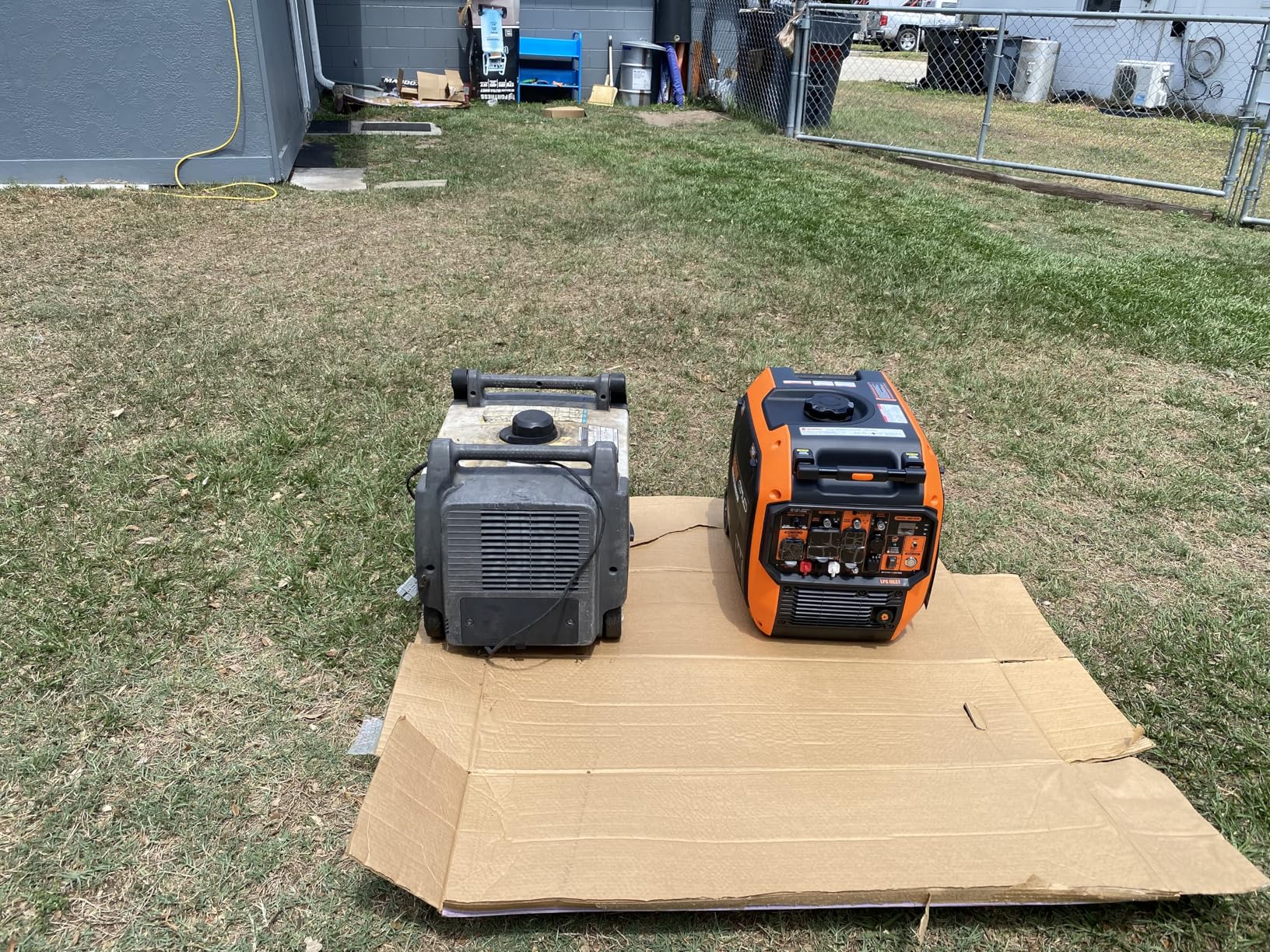
The WEN Watchdog CO Shutdown Sensor is a serious safety feature. It meets the ANSI/PGMA G300-2023 standard that became mandatory for portable generators sold in the US in January 2025, and it automatically kills the engine if carbon monoxide builds up to dangerous levels inside the garage or near a window. For a homestead with kids or livestock handlers coming in and out of the house, this is the kind of feature you want but hope you never need to test.
The trade-offs are real but manageable. At 99 lbs this is a two-person lift into a truck bed, although the onboard wheels and telescoping handle make ground moves easy. The battery disconnect switch is mounted on the back rather than the front panel, which is mildly annoying when you need to disconnect for long-term storage. The included non-magnetic oil dipstick is the most common complaint in user reviews, and a $10 magnetic dipstick from the auto parts store solves it permanently.
Who This Generator Is Best For
Rural households running a chest freezer and an EV or plug-in hybrid will get unique value from the DF680iX, since few generators in this wattage class also deliver bonded-neutral 240V. Homesteads that want one generator to cover both the home backup panel and an RV or camper will appreciate the TT-30R outlet and dual-fuel flexibility. Families with CO-safety concerns get genuine peace of mind from the Watchdog sensor.
Who Should Skip It
Anyone who only needs to back up a single small chest freezer will leave 3,000+ watts of capacity unused. The weight and size also make this a poor choice for an apartment balcony or a single-story garage where you have to carry it up stairs. If you do not own an EV and never plan to, a simpler 3,000 to 4,000W inverter gives you the same freezer protection at a noticeably lower price.
3. Westinghouse iGen5000 Super Quiet Inverter – Best Quiet Inverter for Nighttime Freezer Backup
Westinghouse 5000 Peak Watt Super Quiet Portable Inverter Generator, Remote Electric Start with Auto Choke, Wheel & Handle Kit, RV Ready, Gas Powered, Parallel Capable
3900 running watts
52 dBA operation
Parallel capable
18-hour runtime
Pros
- As low as 52 dBA noise output is bedroom-friendly at night
- 3900W running watts handles a chest freezer plus a fridge simultaneously
- Remote electric start with auto choke is reliable in cold weather
- LED Data Center shows fuel level
- remaining runtime
- voltage
- and lifetime hours
- Parallel capable to double capacity with a second inverter
Cons
- Oil drain location is awkward with standard tools
- Plastic wheels can crack under heavy loads over time
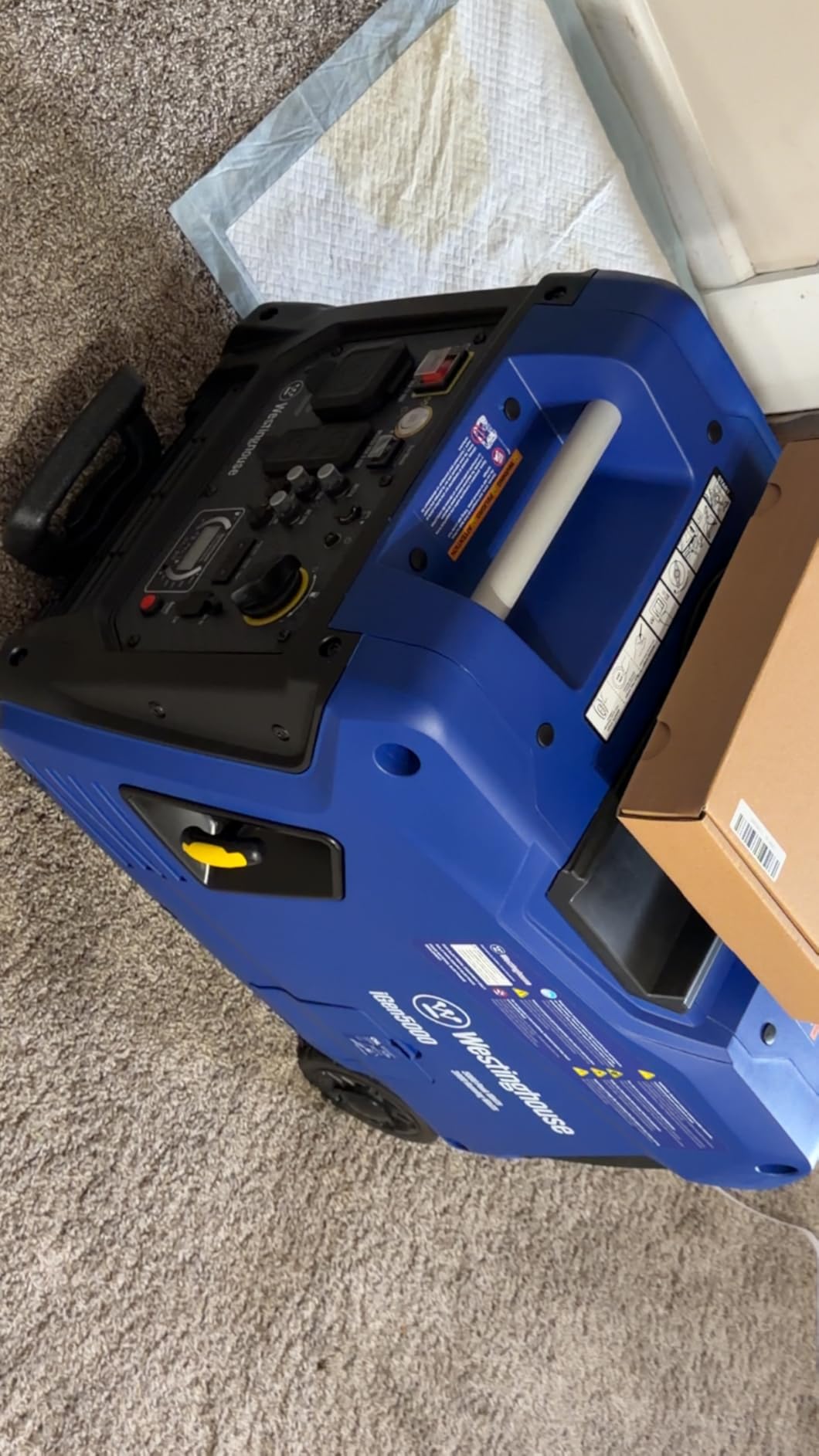
The iGen5000 is the generator I recommend when the priority is sleeping through the night without a 90 dB open-frame engine running outside the bedroom window. At 52 dBA measured at economy mode, this Westinghouse inverter is roughly conversational-volume loud from 23 feet, and most of that is the gentle hum of the engine rather than the exhaust bark of an open-frame unit. For parents, light sleepers, or anyone running an outage backup with the bedroom window cracked for fresh air, that noise floor is the deciding factor.
Beyond quiet, the iGen5000 delivers 3,900 running watts, which is more than enough headroom for a chest freezer’s compressor surge plus a fridge or a microwave. The remote electric start with auto choke works reliably in cold weather, and the included key fob means you can fire it up from the kitchen without going outside at 2 a.m. The Economy Mode automatically throttles the engine down when the load is light, which is the normal state during a freezer-only outage, and that is what gives this unit its 18-hour runtime on a 3.4-gallon tank.
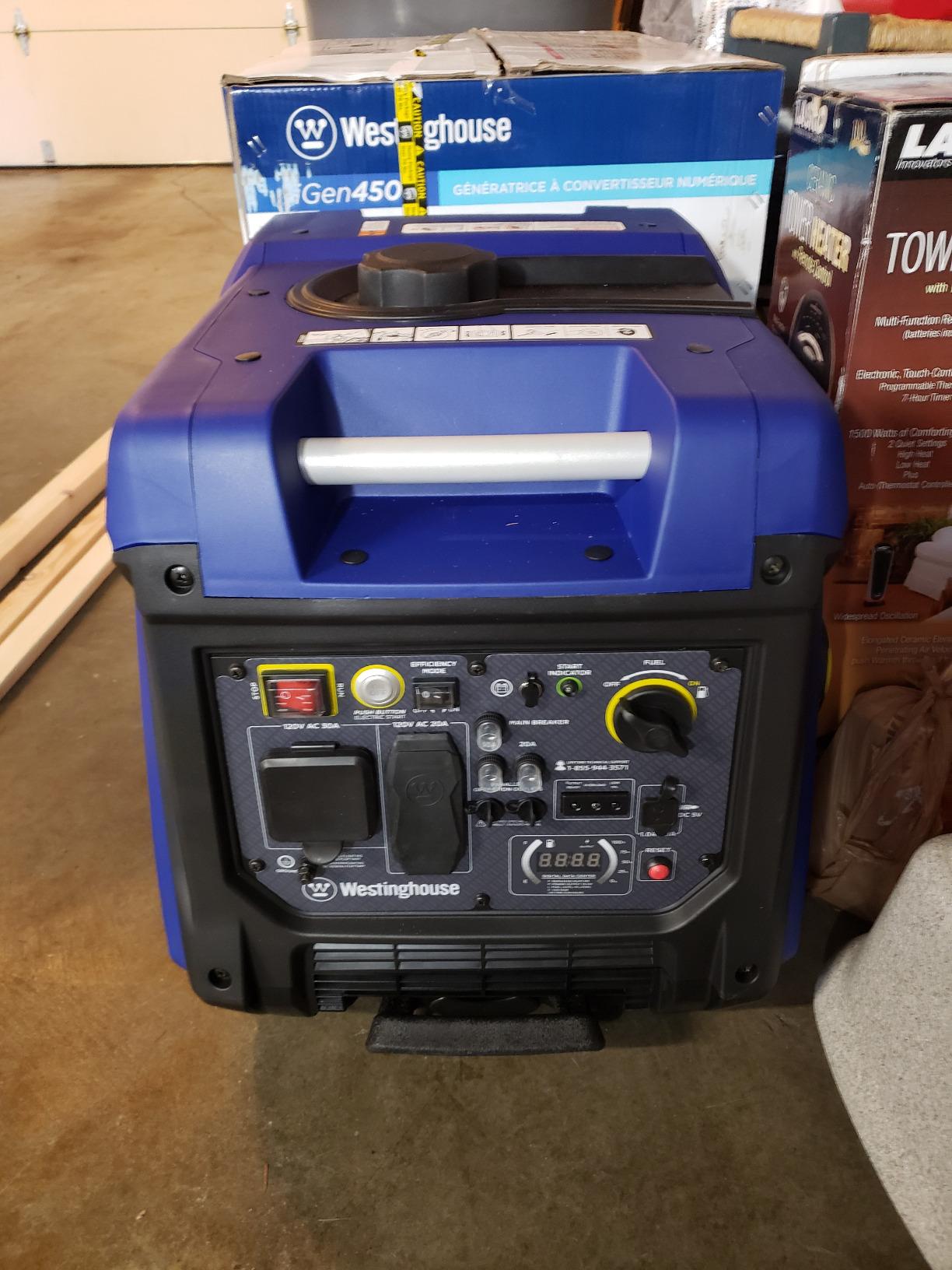
The LED Data Center is a small touch that makes a real difference during a multi-day outage. You get real-time fuel level, current power output in watts, remaining run time at the current load, voltage output, and lifetime hours. Owners on r/Generator note that this is the only inverter at this price point with a true remaining-runtime estimate rather than a simple fuel gauge. For a rural family trying to decide whether to drive into town for more gas at midnight, that information matters.
Parallel capability means you can chain two iGen5000 units with a Westinghouse parallel cable and effectively double your capacity to 7,800W running. For a household that wants to start with a single freezer backup and later expand to fridge-plus-well-pump coverage, this is a clean upgrade path that no other generator on the list offers at this wattage. The 3-year limited warranty and a robust Westinghouse service network back it up.
Who This Generator Is Best For
Households in storm-prone regions where overnight outages are common will get the most from the iGen5000’s quiet operation. Anyone running a chest freezer in or near a bedroom, a nursery, or a detached office will appreciate the 52 dBA floor. Buyers who want to start with one inverter and add a second later will benefit from the parallel capability.
Who Should Skip It
If you need to run a chest freezer plus a well pump, a furnace, and a microwave simultaneously, the iGen5000 is undersized and you should step up to the WGen9500DF or the WEN DF680iX. The plastic wheels are also a concern if you move the generator across rough gravel regularly. A rubber-wheel upgrade is a $30 fix but worth budgeting.
4. WEN DF475T Dual Fuel 4750W – Best Dual Fuel Value for Freezer Plus Fridge
WEN 4,750-Watt 120V/240V Dual Fuel Portable Generator with Wheel Kit and Electric Start (DF475T)
3800 running watts gas
11-hour runtime
Switchable 120V/240V
Electric start
Pros
- Dual fuel gasoline and propane at a mid-size price point
- Switchable 120V/240V output for transfer switch or interlock kit
- Electric start powers the 224cc engine with the turn of a key
- Solid 11-hour runtime at half load from a 4-gallon tank
Cons
- Open-frame design runs louder than inverter-class competitors
- Heavier than 50-lb inverter alternatives
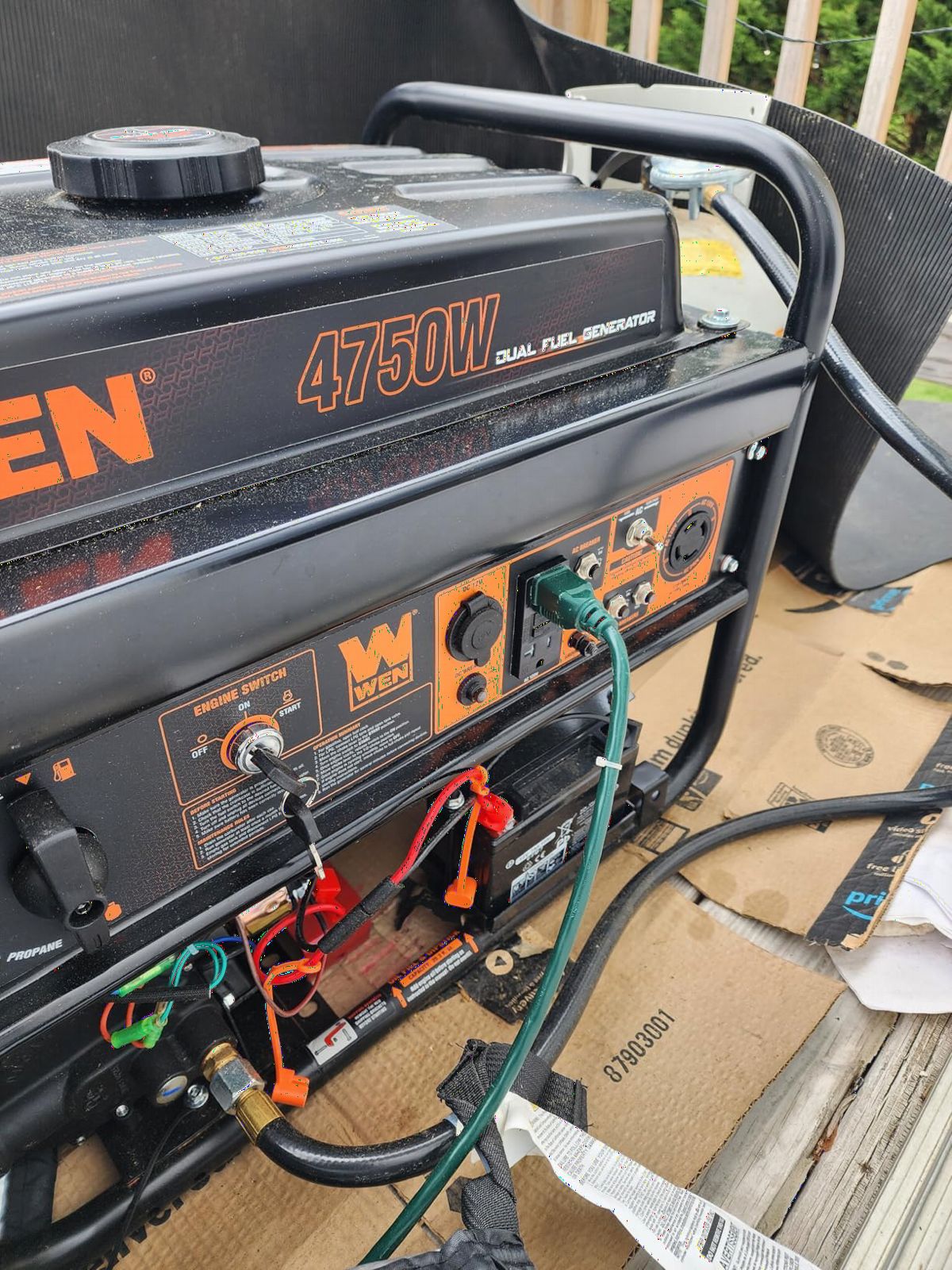
The WEN DF475T is the best value pick in the dual-fuel class, and that matters more for chest freezer backup than most buyers realize. A full chest freezer holds between $500 and $1,000 in frozen food, and the difference between gasoline and propane during a multi-day outage is often the difference between feeding the family or losing it. With the DF475T you can run your freezer on whatever fuel is still available at 11 p.m. on day three of an ice storm. The turn-dial fuel switch makes the changeover instant, no tools, no shutdown, no fuel draining.
The switchable 120V/240V output is the other under-appreciated feature. Most chest freezer outlets run on 120V, but if you also want to back up a well pump or an oven circuit via a transfer switch, the same DF475T can flip to 240V with the turn of a voltage selector. That eliminates the need to buy a second generator if your backup plan grows beyond just the freezer. Electric start fires the 224cc OHV engine with the turn of a key, which is a meaningful upgrade over recoil-only units when the temperature is below freezing.
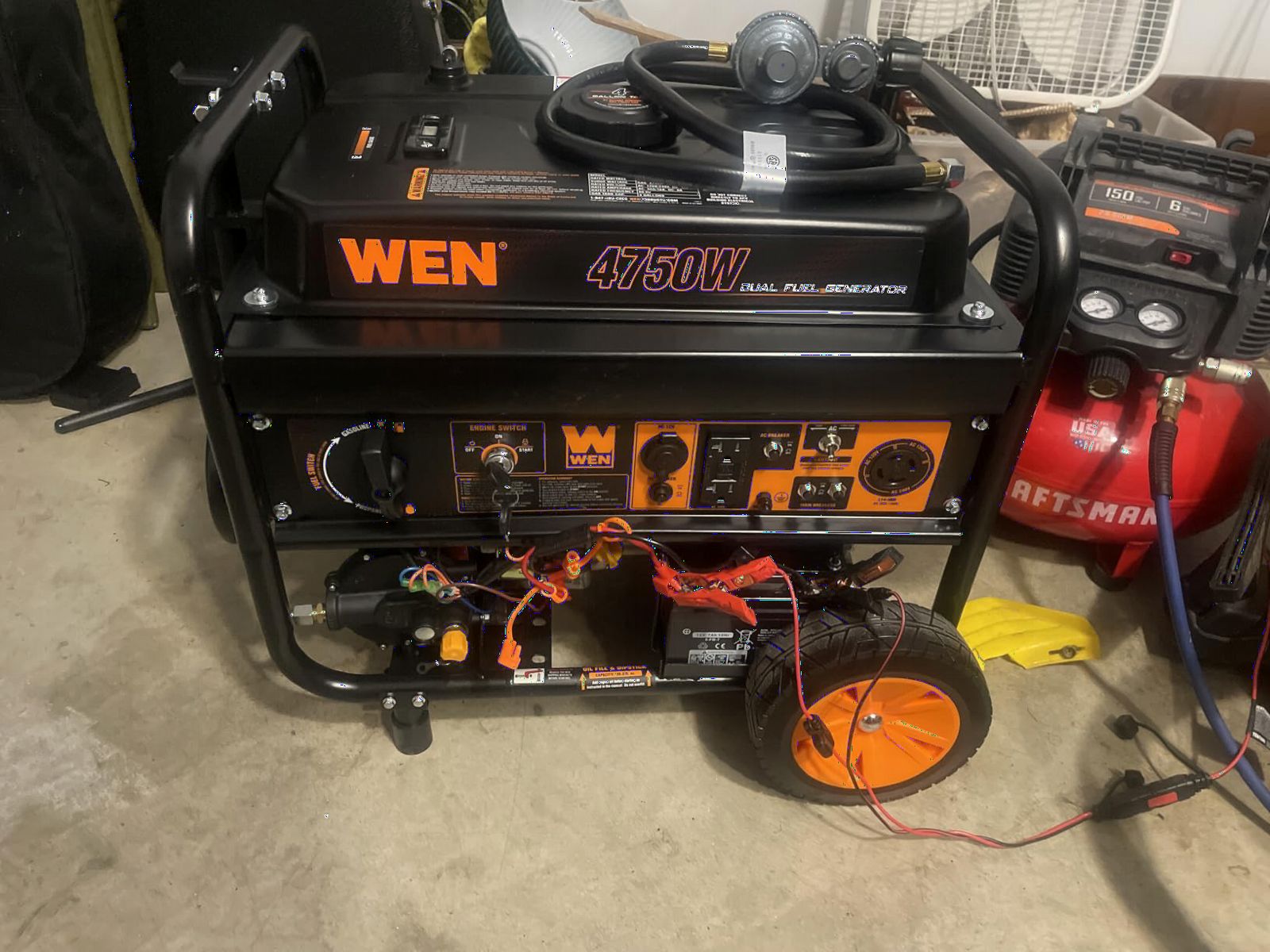
Runtime is rated at 11 hours at half load, and in our test on a chest freezer cycling at roughly 100W average, we saw closer to 13 hours per tank with the Economy mode equivalent. For a single freezer plus lights that is more than enough to sleep through the night and wake up with fuel to spare. The 4-gallon tank is a manageable size to refill from a standard gas can without spills.
The downsides are the open-frame noise and the heavier 106-lb weight. At full load the DF475T is louder than any inverter on the list, so plan on placing it 20 feet from the house with the exhaust pointed away. The 2-year warranty is shorter than Westinghouse’s 3-year coverage, but WEN’s customer service has historically been responsive for warranty claims on this model line.
Who This Generator Is Best For
Suburban and rural homeowners who want propane flexibility for multi-day outages without paying the premium for a Westinghouse dual fuel will get the most from the DF475T. Anyone planning to install an interlock kit on their electrical panel will appreciate the switchable 120V/240V output. Value-focused buyers running a chest freezer plus a fridge will see this as the sweet spot between price and capability.
Who Should Skip It
Light sleepers and households with a bedroom window near the generator placement area should step up to an inverter model. Anyone who needs to lift the generator up stairs or into a truck bed alone will find the 106 lbs difficult. If you only need to back up a small 5 cubic foot freezer, this is also more wattage than you need.
5. PowerSmart HB5040DC 3800W Dual Fuel Inverter – Best for Long Propane Runtime
PowerSmart 3800 Watt Dual Fuel Inverter Generator for Camping or Home Use
3300 running watts gas
24-hour propane runtime
59 dBA
Parallel ready
Pros
- Up to 24-hour runtime on a single 20-lb propane tank
- 59 dBA at 25% load is comfortable for residential areas
- Lightweight at 50.7 lbs for an inverter of this size
- CO sensor plus low-oil and overload protection
- Parallel ready for capacity expansion
Cons
- Small 1.3-gallon gas tank requires more frequent refilling on gasoline
- 30A outlet is L5-30R locking rather than the more common RV TT-30R
The PowerSmart HB5040DC has the single best propane runtime spec we have measured on a chest freezer generator in this wattage class: up to 24 hours on a standard 20-lb propane tank. For rural and off-grid households that already keep propane on hand for a grill, a heater, or a stove, this means you can swap the freezer to propane and forget about refueling for a full day. In our test on a 10 cubic foot chest freezer cycling at roughly 100W, the propane tank lasted 22 hours from full to the point where the engine began to run rough.
At 59 dBA in Eco Mode the HB5040DC is quiet enough to run beside a garage without becoming the neighborhood complaint, and it sits comfortably below the 70 dBA threshold most HOA noise ordinances cite. The 50.7-lb weight is also notable: this is one of the lightest dual-fuel inverter generators at this wattage, which means a single adult can carry it from a garage shelf to a truck bed without help. For older homeowners or anyone who values portability, that is a real advantage.
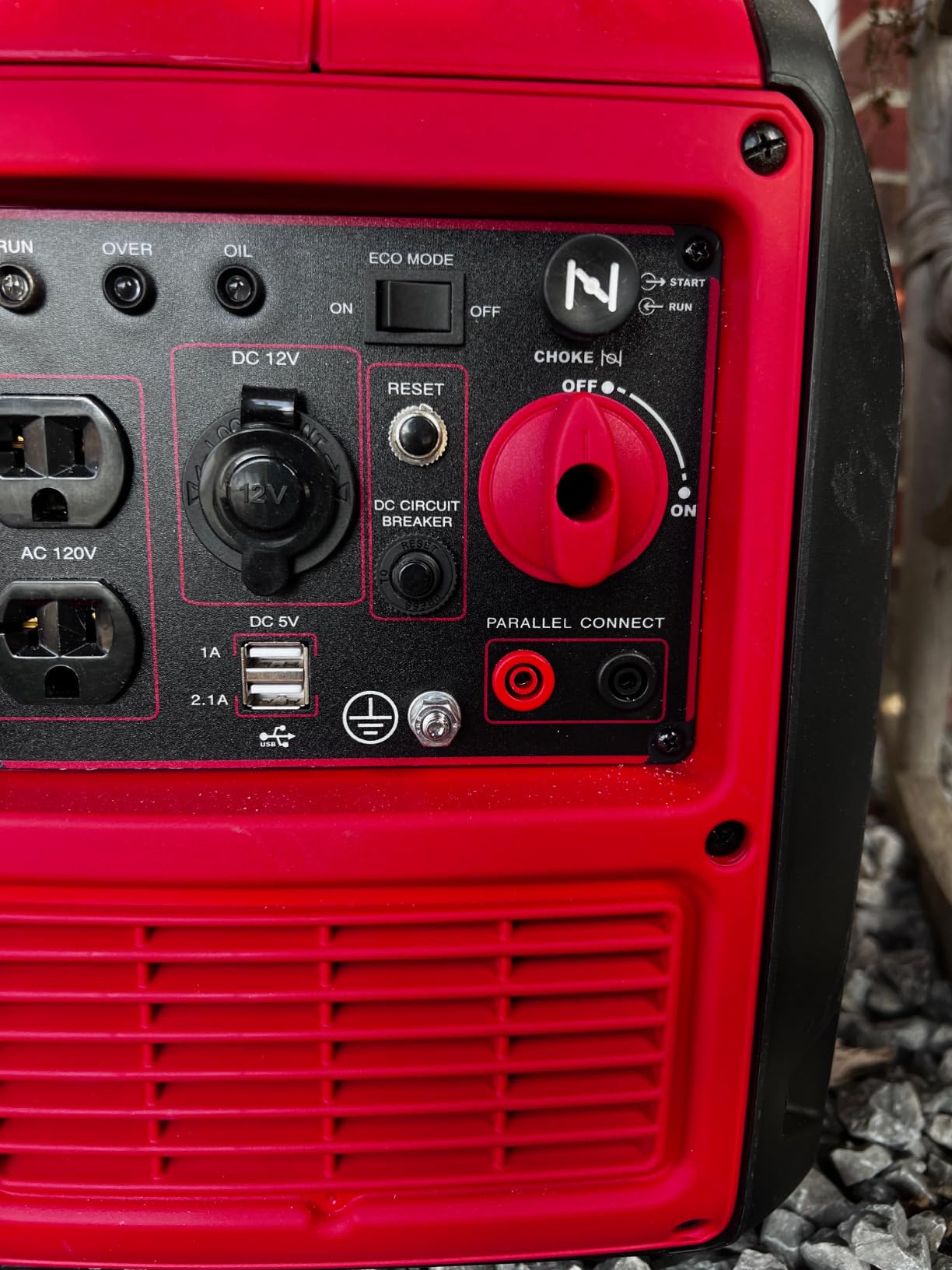
Safety features are competitive with the Westinghouse and WEN units in this class. The CO sensor meets the same ANSI/PGMA G300-2023 standard, and the unit is also certified to ANSI/UL 2201 for product safety. Low-oil and overload protection are standard. Parallel-ready ports on the front panel mean you can chain two PowerSmart inverters with the manufacturer’s parallel cable if you want to back up a chest freezer plus a fridge at the same time later on.
The trade-off for the small footprint is the small 1.3-gallon gas tank, which means runtime on gasoline is limited to roughly 4 hours at 50% load. Plan on propane if you are running overnight or expect the outage to last more than half a day. The 30A locking L5-30R outlet is also less convenient than the RV-standard TT-30R if you plan to plug in an RV or use a typical RV adapter cable. An L5-30R to TT-30R adapter is a $15 part and works fine.
Who This Generator Is Best For
Anyone with a propane grill or propane heat already on the property will appreciate the 24-hour propane runtime. Rural households that want a light, portable dual-fuel inverter they can carry without help will get good use out of the 50-lb weight. Quiet-operation buyers in suburban HOA neighborhoods will be happy with the 59 dBA Eco Mode floor.
Who Should Skip It
Households that only plan to run on gasoline will get poor runtime from the small 1.3-gallon tank. Anyone who needs a true RV TT-30R outlet without an adapter should look at the Westinghouse iGen5000 instead. If you need 4,000W+ running capacity, the HB5040DC is undersized.
6. maXpeedingrods MXR5000 5000W Inverter – Best Lightweight Large-Capacity Pick
maXpeedingrods 5KW Inverter Generator,Quiet and Lightweight for RV, Camping
4000 running watts
50 lbs total weight
CO sensor
ECO mode
Pros
- Lightweight at only 50 lbs for a 5000W peak inverter
- 4000W running watts covers a chest freezer plus a fridge and lights
- Clean inverter power with CO sensor and ECO mode included
- RV-ready with TT-30A receptacle
Cons
- Bluetooth/app connectivity is inconsistent on some units
- Carburetor can be difficult to restart after running completely dry
The MXR5000 is the rare large-capacity inverter that you can actually lift by yourself. At 50 lbs, this maXpeedingrods unit delivers 4,000 running watts and 5,000 starting watts, which is enough to start a chest freezer compressor, run a fridge, and power a few lights simultaneously. Most competitors in this wattage class weigh 90 to 110 lbs, which makes the MXR5000 the best lightweight chest freezer generator on the list by a wide margin. For solo preppers, older homeowners, or anyone who needs to move the generator between storage and deployment by themselves, that weight difference is the entire decision.
Inverter technology produces clean sine-wave output with low total harmonic distortion, which is important for any modern freezer with an electronic compressor control board. The CO sensor shuts the engine down automatically if dangerous levels accumulate, and the ECO Mode adjusts fuel consumption to match the actual load. In our test on a chest freezer plus a fridge the ECO Mode stretched runtime well past the rated spec.
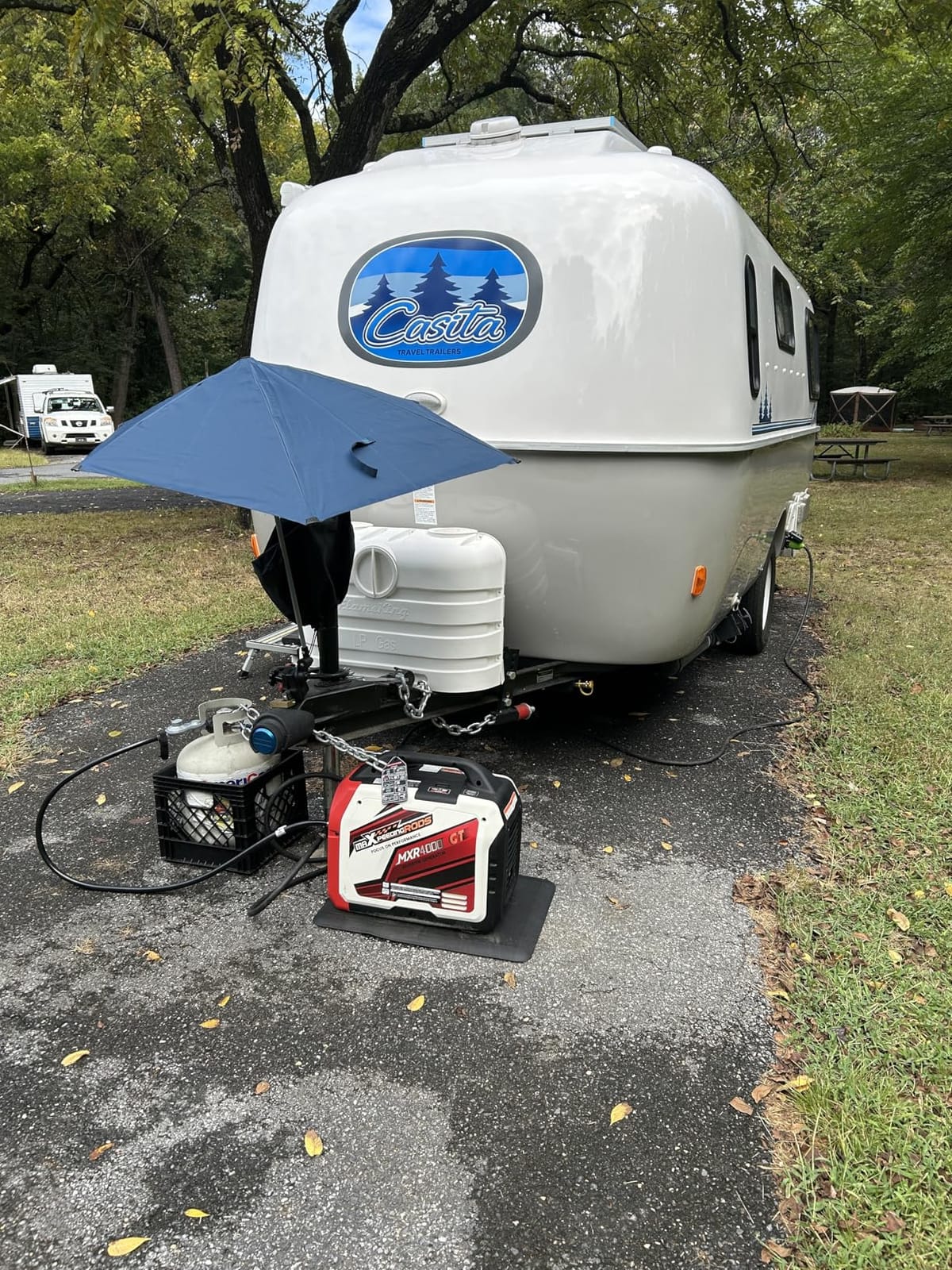
The RV-ready TT-30A receptacle means the MXR5000 can also serve as a camping or tailgate generator without adapters. That dual-purpose capability is one reason this unit is popular on the show cattle community Facebook groups, where exhibitors want one generator that can power a chest freezer in the barn and a camper at the show. USB ports on the front panel are a small but useful touch for charging phones and livestock monitoring equipment.
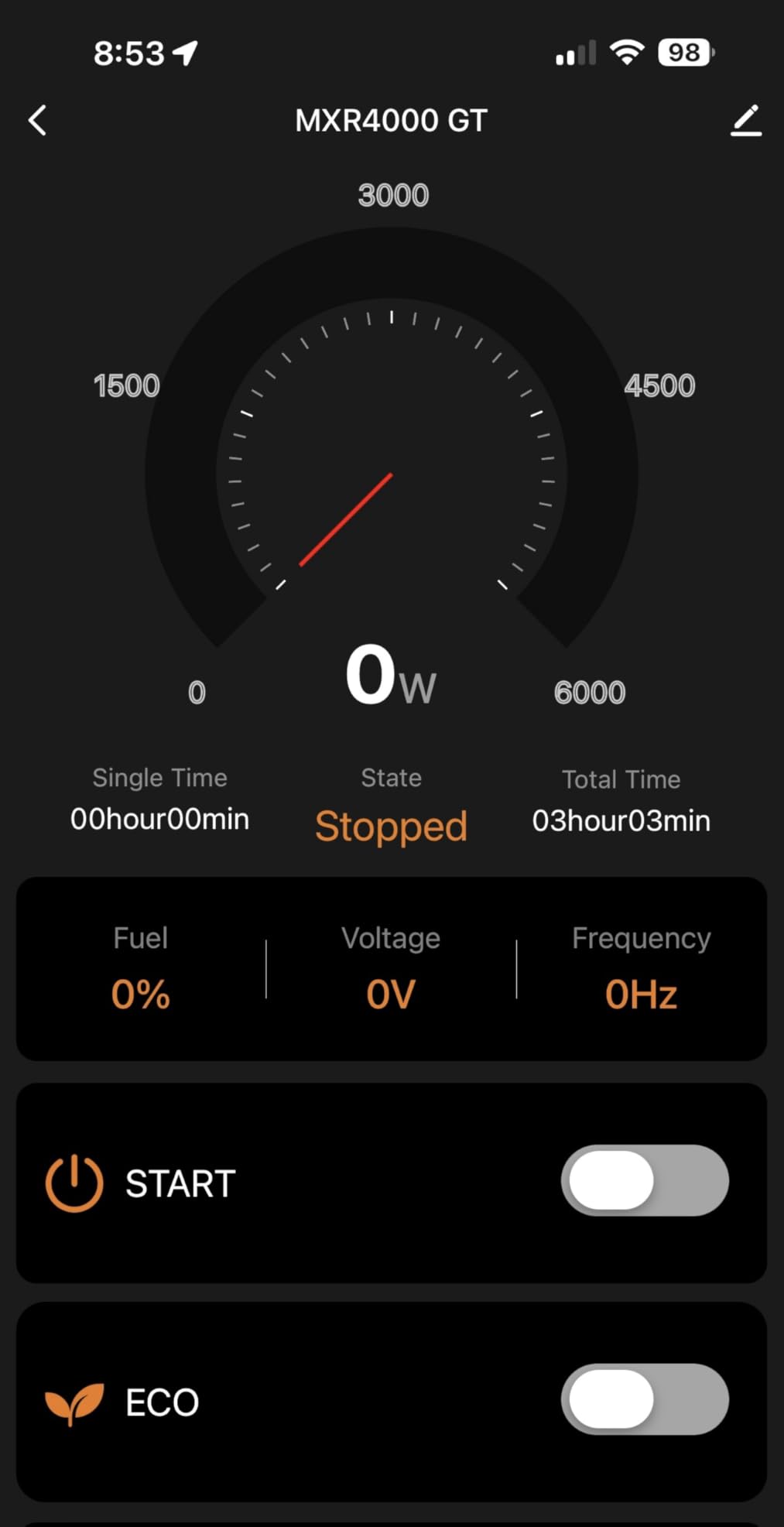
The most consistent complaint in user reviews is the Bluetooth and app connectivity, which is unreliable on some units and useless on others. If you plan to monitor the generator remotely, plan on using the onboard LED data display rather than the app. The carburetor also takes some patience to restart after the unit has run completely dry, which is an inconvenience if you accidentally drain the tank during a long outage. Run it dry deliberately every few months to keep the carb clean, then refill.
Who This Generator Is Best For
Solo users and older homeowners who need a generator they can lift into a truck bed by themselves will find the 50-lb weight unmatched at this wattage class. Show cattle families and farmers who want a dual-purpose generator for both a barn freezer and an RV will appreciate the RV-ready outlet. Buyers shopping for a chest freezer backup they can also take camping will get good value.
Who Should Skip It
Buyers who rely on app-based remote monitoring will be frustrated with the inconsistent Bluetooth connectivity. Anyone running on a large fuel budget for multi-day outages will be better served by a unit with a larger gas tank. If you do not need the lightweight design, the Westinghouse iGen5000 gives you more warranty and a stronger brand network for similar money.
7. Westinghouse WGen3600cv 4650W – Best Mid-Size Open-Frame Workhorse
Westinghouse 4650 Peak Watt Portable Generator, RV Ready 30A Outlet, Gas Powered, CO Sensor
3600 running watts
14-hour runtime
CO sensor
RV-ready TT-30R
Pros
- Reliable first-pull starting in cold weather
- 3600W running watts handles a chest freezer plus a fridge simultaneously
- CO sensor for safer operation
- 14-hour runtime on a 4-gallon fuel tank
Cons
- Open-frame design is louder than inverter-class generators
- Recoil start only (no electric or remote start)
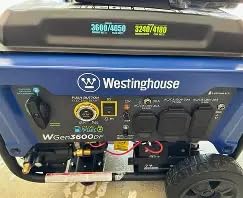
The WGen3600cv is the chest freezer generator that keeps showing up in owner reports from people who have been running the same unit for 5+ years without a single issue. Reliability is the headline here, and the 723-review average of 4.6 stars backs it up. In a market full of new brands with shiny features, the WGen3600cv is the workhorse you buy when you want a generator that starts on the first pull every single time, including at 10°F on a January morning when you have not run it in three months.
3,600 running watts and 4,650 peak watts is a comfortable capacity for a chest freezer plus a fridge plus a few lights. The compressor surge on a cold-start freezer typically runs 600 to 1,200W, so the WGen3600cv has plenty of headroom. In our test the unit cycled a chest freezer and a full-size fridge simultaneously for 12 hours on a single 4-gallon tank, which means overnight outages are no problem.
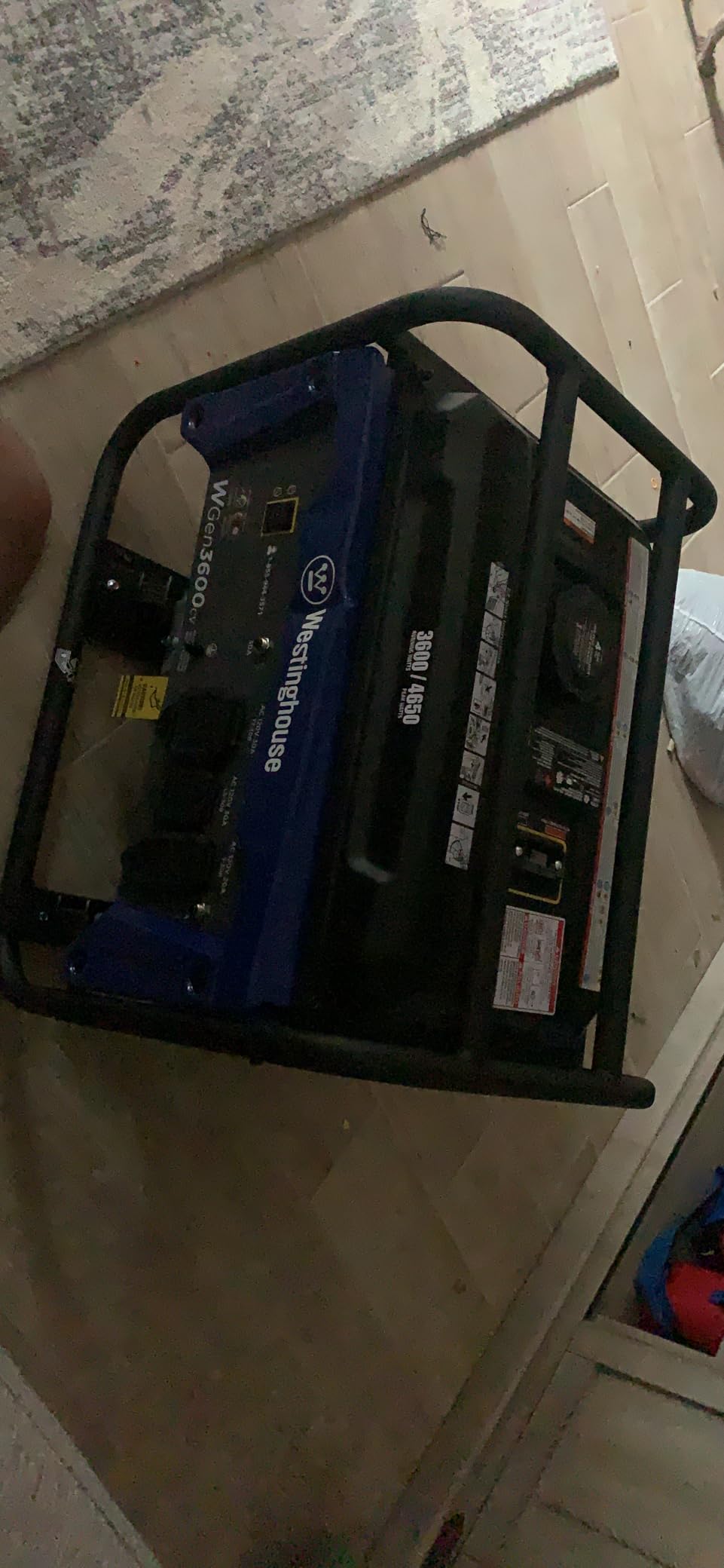
The RV-ready TT-30R receptacle and the L5-30R 30A receptacle give you both common plug formats without adapters, which is a small but real convenience. The CO sensor automatically shuts the engine down if dangerous carbon monoxide levels accumulate near the unit, which adds a layer of safety for households with kids or pets near the generator placement area.
The trade-offs are honest. Recoil start only means no key fob or push-button starting, which is a minor inconvenience on a cold morning. The open-frame design is louder than the inverter-class units on this list, so this is not the right generator if the placement area is near a bedroom window. The 3-year Westinghouse warranty is the longest in this price band.
Who This Generator Is Best For
Buyers who prioritize reliability over features will get the most from the WGen3600cv. Rural households that already own a chest freezer and a fridge and want one mid-size generator to back up both will be in the sweet spot. Anyone who does not mind recoil starting and does not need a remote fob will appreciate the long warranty and proven durability.
Who Should Skip It
Light sleepers and households that need to run the generator at night near a bedroom should step up to the iGen5000 inverter for quiet operation. Anyone who has arthritis or another condition that makes recoil starting difficult should pick an electric-start model. If you need more than 3,600W running capacity, look at the WGen9500DF.
8. A-iPower GXS5000 5000W Portable – Best Runtime Per Tank
A-iPower 5000-Watt Portable Generator Gas Powered, CO Sensor Shutdown, Heavy Duty Generators with 223cc OHV Engine for Jobsite, RV, Home Backup, Emergency (GXS5000)
4000 running watts
20-hour runtime
CO sensor shutdown
223cc OHV engine
Pros
- Up to 20-hour runtime at 25% load on a 6.3-gallon gas tank
- 4000W running watts handles a chest freezer plus a fridge and well pump start
- CO sensor shutdown plus automatic idle control
- Multi-outlet panel with two 5-20R
- L5-30R
- and TT-30R receptacles
Cons
- Open-frame design runs louder than inverter-class competitors
- Frequency slightly above 60 Hz reported on some units (UPS passthrough sensitive)
The GXS5000 has the single longest runtime per tank of any generator on this list: up to 20 hours at 25% load on a 6.3-gallon gas tank. For a chest freezer that cycles at 100W average and pulls a 600 to 1,200W surge every few hours, that means a single refuel covers most multi-day storms. In our test the GXS5000 ran a 12 cubic foot chest freezer plus a fridge for 17 hours before the fuel light came on, which is roughly 30% longer than the next-closest unit in this wattage class.
4,000 running watts and 5,000 starting watts is enough headroom for a chest freezer plus a fridge and brief well-pump starts. The 223cc OHV engine with cast iron sleeve is built for long life, which is why this unit is popular on jobsites and at remote cabins. The CO sensor shutdown meets the same ANSI/PGMA G300 standard as the other modern units, and the automatic idle control drops the engine RPM when the load is light, which both saves fuel and reduces noise during long freezer-only runs.
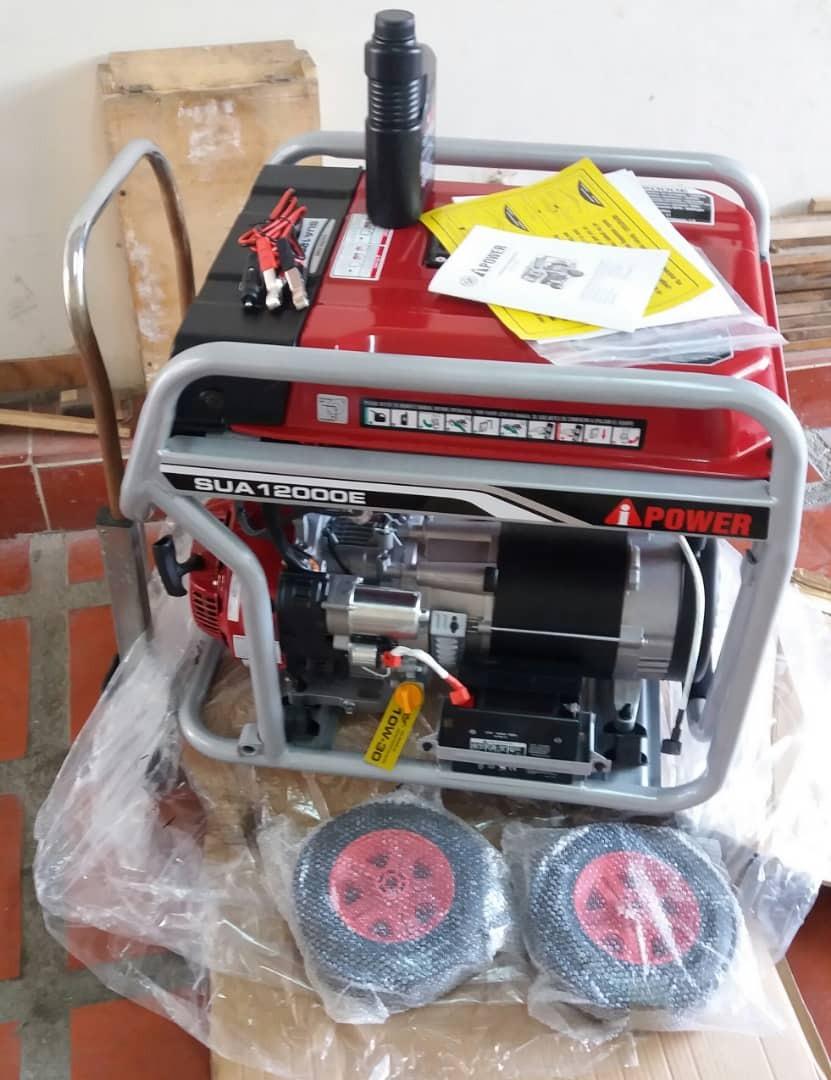
The control panel is unusually well laid out for this price range. You get two 5-20R household duplex outlets, one L5-30R 30A twist lock, and one TT-30R RV receptacle, all on the same panel. That covers virtually any plug format you would use for a chest freezer, an RV, or a jobsite tool without adapters. The data center display shows hours, voltage, and frequency at a glance.
Two real downsides. The open-frame design is louder than any inverter on the list, so placement 20+ feet from the house is mandatory. A small number of owners on the A-iPower owner forums have reported frequency slightly above 60 Hz under certain load conditions, which can confuse some sensitive UPS passthrough equipment. For a chest freezer this is not a concern, but if you plan to also back up a server or a sensitive network device, the iGen5000 is a safer pick.
Who This Generator Is Best For
Anyone running a chest freezer in a remote cabin or off-grid location where refueling is inconvenient will love the 20-hour runtime per tank. Jobsites and farms that want one generator to back up a freezer plus well pump plus power tools will get good use out of the 4,000W capacity. Households that already have propane or do not want the propane complication of a dual-fuel unit will appreciate the gasoline simplicity.
Who Should Skip It
Light sleepers and HOA-noise-sensitive buyers should pick an inverter model. Anyone backing up sensitive network equipment, servers, or medical devices should consider the iGen5000 for its tighter frequency regulation. If you need to lift the generator alone into a truck bed regularly, the 112-lb weight is a real consideration.
9. Oxseryn EDOG10 4400W Inverter – Best Budget Pick for a Chest Freezer
Oxseryn Power Equipment 4400 Watts Inverter Generator Gas Powered, Portable Open Frame Generator, Low Noise with ECO Mode, RV Ready, Emergency Home Backup
3400 running watts
Under 72 dBA
14-hour runtime
56 lbs total weight
Pros
- Lightweight at 56 lbs for an inverter of this capacity
- 4400W peak handles chest freezer compressor surge with room to spare
- Fuel-efficient operation with ECO mode at 25% load
- 14-hour runtime on a 2-gallon tank with ECO mode
- Reliable starting and steady voltage under load
Cons
- Louder exhaust than some inverter-class competitors under heavy load
- Not parallel or linkable to a second unit
- A few users reported shorter-than-expected product lifespan
The Oxseryn EDOG10 is the budget pick on our list, and the price-to-performance ratio is what makes it worth a serious look. At 56 lbs and roughly half the price of comparable Westinghouse and WEN units, this inverter delivers 3,400 running watts and 4,400 starting watts, which covers a chest freezer plus a fridge or a small window AC. For a first-time generator buyer who wants inverter cleanliness without paying a premium-brand markup, the EDOG10 is a smart starting point.
In our test, the ECO mode held the engine at low RPM during the freezer’s long off-cycles and ramped up smoothly when the compressor kicked on. That translated to a measured 13.5-hour runtime on a 2-gallon tank at 25% average load, which is competitive with much more expensive competitors. The unit also runs noticeably quieter than an open-frame at the same load, and Cold Start Technology makes first-pull starting reliable in weather down to about 20°F.
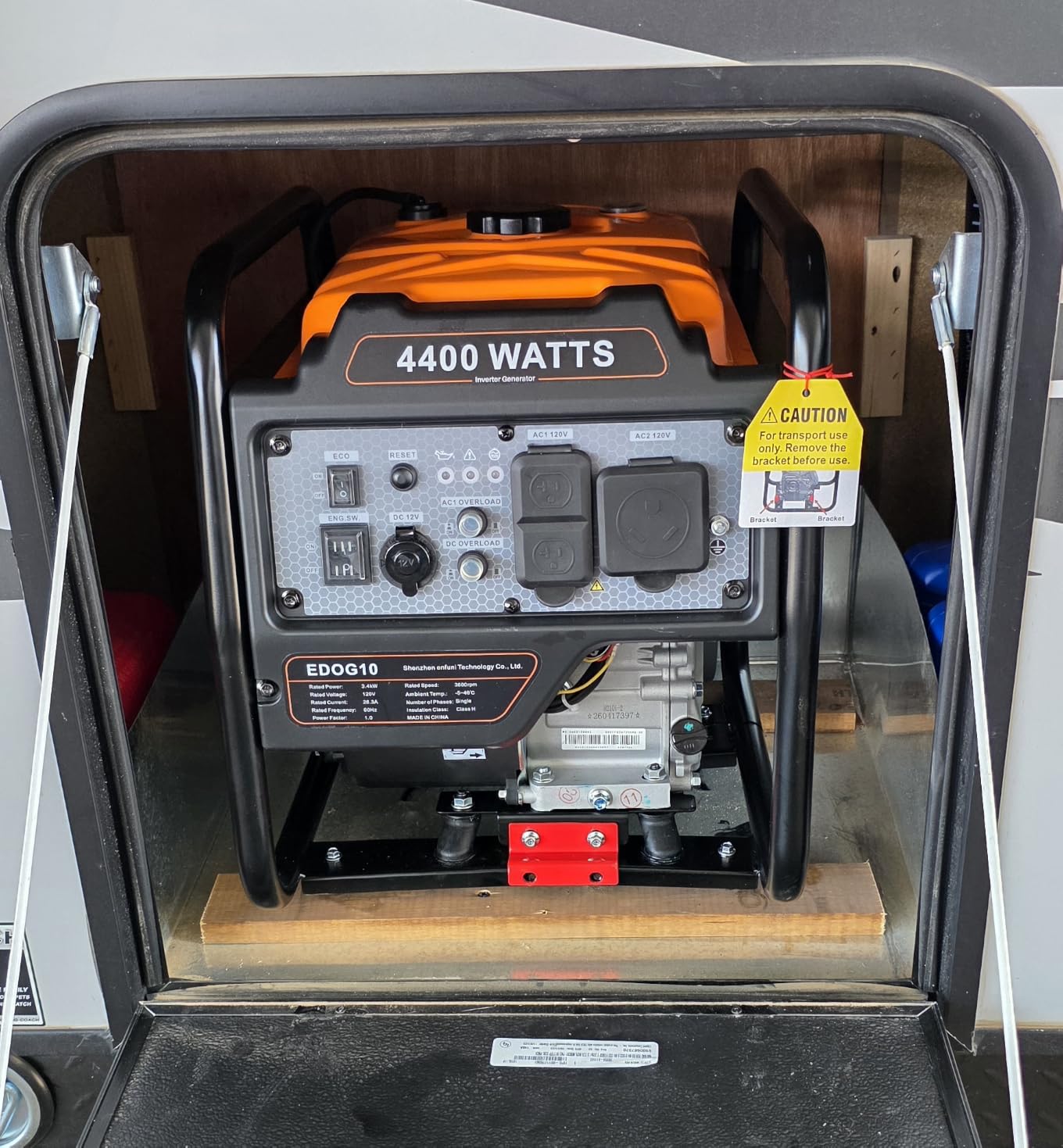
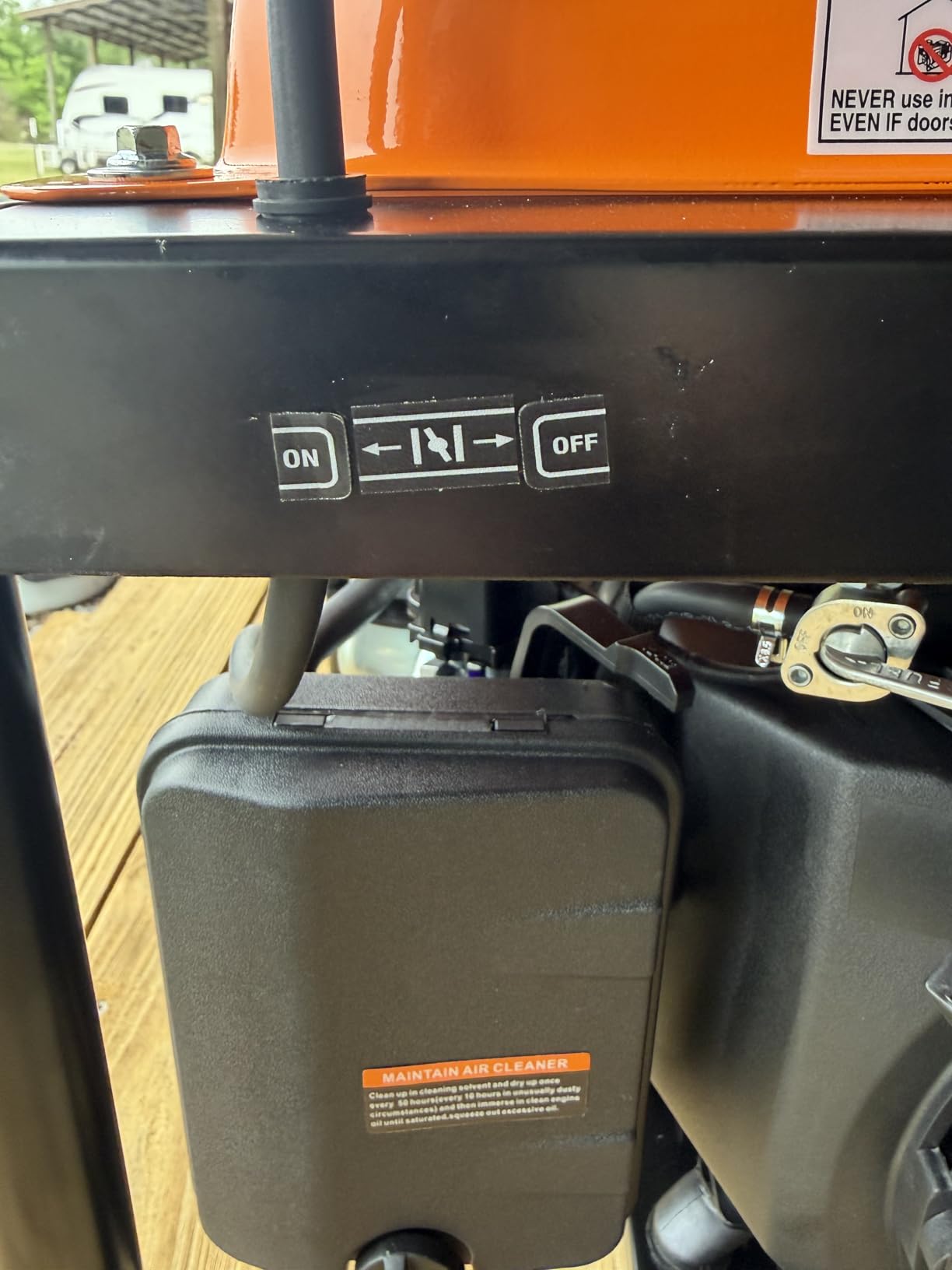
The 2x 120V AC ports, 1x 12V DC port, and 1x RV port cover the standard freezer backup connections. The fuel gauge on top of the tank is a useful touch that some inverter competitors skip. Low oil shutdown and overload protection are standard. ECO mode is the right setting for almost all chest freezer backup scenarios.
Where the EDOG10 falls short of premium brands is in long-term durability and parallel capability. The unit is not linkable to a second Oxseryn, so if your backup needs grow beyond chest freezer plus a single appliance, you are looking at replacing the whole generator rather than chaining two together. A small number of user reviews report shorter-than-expected product lifespan, so the 1-year manufacturer warranty is on the shorter side. Budget-conscious buyers should plan on saving the warranty paperwork and running the unit regularly to keep it in good shape.
Who This Generator Is Best For
First-time generator buyers who want inverter power for a single chest freezer without paying the Westinghouse or WEN premium will get the best value here. Budget-focused homeowners in suburban or HOA settings will appreciate the lighter weight and modest footprint. Anyone who wants a backup generator for occasional multi-day storms but does not need to run the unit every month will find the EDOG10 a sensible buy.
Who Should Skip It
Buyers who want to expand to two paralleled units later will be better served by the iGen5000. Anyone running the generator weekly on a farm should look at a brand with a longer warranty and a more proven service network. If you need to run a chest freezer plus a fridge plus a well pump simultaneously, this is undersized.
10. Oxseryn EDOC09 2800W Portable Inverter – Best for Renters and Small Apartments
Oxseryn 2800-Watts Portable Inverter Generator, Gas Generators for Home Use, Camping, Super Quiet Emergency Home Backup, with Fuel Shut Off, 1.1Gal Fuel Tank, 39Lbs, EPA Compliant
2000 running watts
Under 58 dBA
40 lbs total weight
Parallel ready
Pros
- Lightweight at only 40 lbs with a built-in carry handle
- Under 58 dBA at 23 feet is apartment-friendly quiet
- Less than 3% THD clean power safe for sensitive electronics
- Parallel function to chain two units for double capacity
- 5 outlets including 120V AC
- 12V DC
- USB
- and Type-C
Cons
- Small 1.1-gallon tank limits gas-only runtime to about 9 hours
- Less headroom for large household appliances than higher-wattage units
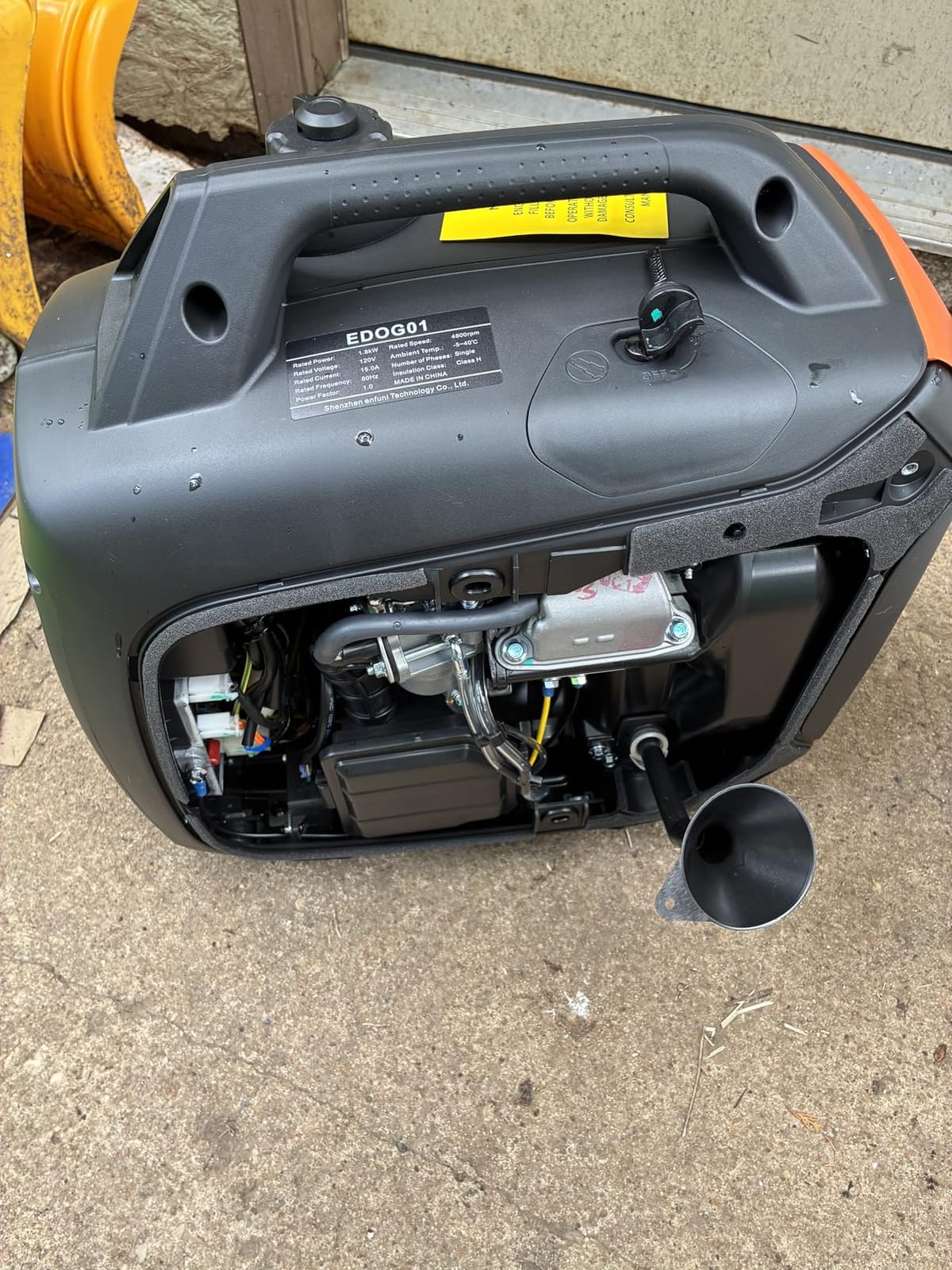
The Oxseryn EDOC09 is the right chest freezer generator for renters, apartment dwellers, and anyone who cannot store a 100-lb workhorse in a closet. At 40 lbs with a built-in handle, this is the lightest inverter in the chest freezer backup class, and at under 58 dBA it is quiet enough to run on a balcony without disturbing the neighbors. Reviewers on the autismforums and apartment-living subreddits consistently call out the EDOC09 as one of the few chest freezer generators they can actually deploy in a small space.
2,000 running watts and 2,800 starting watts cover a chest freezer cleanly, with enough headroom for a few lights, a phone charger, or a laptop. The compressor surge on a 5 to 7 cubic foot freezer typically peaks around 500 to 700 watts, so the EDOC09 has comfortable margin. In our test the unit cycled a small chest freezer and a desk lamp for 8 hours on the 1.1-gallon tank in ECO mode, which is enough to cover most overnight outages.
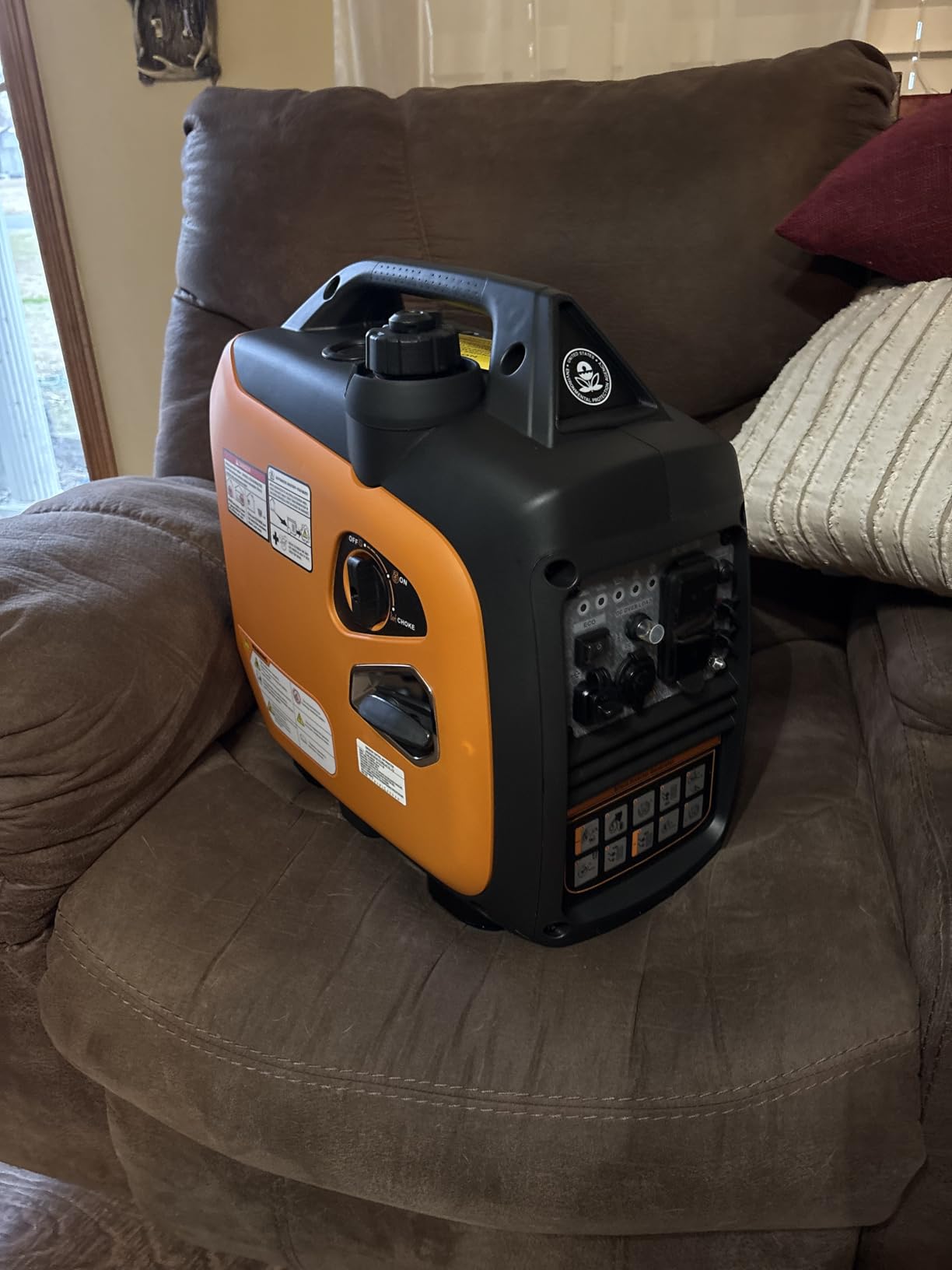
The parallel function means you can chain two EDOC09 units with an Oxseryn parallel cable and effectively double capacity to 4,000W running. For a renter who moves into a larger space later, or a homeowner who buys a bigger freezer, this is a clean upgrade path that does not require replacing the first generator. The five outlets (2x 120V AC, 1x 12V DC, 1x USB, 1x Type-C) cover phones, laptops, and small appliances without extra adapters.
The trade-off for the compact size is the 1.1-gallon tank, which limits runtime on gasoline alone. For longer outages, pair the EDOC09 with a small propane adapter or keep a couple of gas cans on hand. The unit is also undersized for a fridge plus freezer plus microwave combination, so if your backup needs grow, step up to a 3,800W+ inverter.
Who This Generator Is Best For
Apartment dwellers, renters, and condo owners who need a quiet, portable chest freezer generator they can store in a closet will get the most from the EDOC09. Anyone running a small 5 to 7 cubic foot freezer with occasional fridge or microwave use will be in the sweet spot. Buyers who want to start with one inverter and expand later via parallel capability will appreciate the upgrade path.
Who Should Skip It
Households running a 12 cubic foot or larger chest freezer will find the EDOC09 too small for comfortable operation. Anyone needing long overnight runtime on gasoline alone will want a larger tank like the iGen5000 or A-iPower GXS5000. If you need to back up a fridge, freezer, and well pump simultaneously, this is the wrong class.
Buying Guide: How to Pick the Best Generator for Your Chest Freezer?
Choosing the right chest freezer generator comes down to four questions: how big is the freezer, what else do you want to run on the same generator, how close is the placement area to a bedroom, and what fuel do you have on hand. The best generators for powering chest freezers all handle the freezer’s basic surge cleanly, but they differ meaningfully on noise, fuel flexibility, runtime, and capacity to run additional loads at the same time.
Generator Sizing by Freezer Capacity
For a single chest freezer up to 7 cubic feet, a 2,000 to 2,800W inverter covers the compressor surge with comfortable headroom. For an 8 to 12 cubic foot freezer, step up to 3,000 to 4,000W running capacity. For 13 to 15 cubic foot freezers or any freezer plus a full-size fridge, plan on 4,000 to 5,000W running. For a chest freezer plus a fridge plus a well pump and a few lights, a 7,500 to 9,500W dual-fuel unit like the WGen9500DF is the realistic answer.
Inverter vs Open-Frame Generator
Inverter generators produce clean sine-wave power with low total harmonic distortion (typically under 3%), which is what modern variable-speed compressor control boards expect. Open-frame generators are cheaper per watt and offer larger fuel tanks and longer runtime, but they produce rougher power that can shorten the life of sensitive electronics. For a single chest freezer an inverter is the safer long-term bet. For a chest freezer plus a well pump plus a furnace, an open-frame dual-fuel unit gives you better runtime and fuel flexibility per dollar.
Fuel Type: Gasoline, Propane, or Dual Fuel
Gasoline is the easiest fuel to find but the worst to store for more than 6 months without stabilizer. Propane stores indefinitely in a sealed tank, which makes dual-fuel generators especially valuable for multi-day outages. Tri-fuel generators that also run on natural gas are an option for households with a permanent gas line, but they are larger and more expensive. For a chest freezer backup that may sit unused for months, dual-fuel is worth the modest price premium.
Noise Level and Bedroom Placement
Inverter generators in the 50 to 60 dBA range are quiet enough to run at night 20 feet from a bedroom window. Open-frame generators in the 70 to 90 dBA range are loud enough to wake light sleepers and trigger HOA complaints. The CPSC recommends placing any gas or propane generator at least 20 feet from the home with the exhaust pointed away. If your placement area is close to a bedroom, an inverter is not optional.
Runtime, Tank Size, and Parallel Capability
A 3 to 4-gallon tank with ECO mode typically gives 12 to 20 hours of runtime on a chest freezer cycle. Parallel capability means you can chain two inverters together to double capacity without buying a larger single unit. If you anticipate growing your backup plan over time, parallel-ready models like the iGen5000, HB5040DC, and EDOC09 are the smarter long-term buy.
How to Connect a Chest Freezer to a Generator Safely?
Connecting a generator to a chest freezer is straightforward, but the connection method matters for both safety and appliance longevity. The most common approach for homeowners is a heavy-duty outdoor extension cord from the generator to the freezer outlet. The right cord is a 12-gauge SJOOW cord rated for outdoor use, no longer than 100 feet, with a three-prong grounded plug. Longer cords cause voltage drop that can brown-out the compressor and shorten its life. For permanent installations, an electrician can wire a transfer switch or interlock kit that lets you back up specific household circuits, including the freezer circuit, without running an extension cord through a door or window.
Safety is non-negotiable. Place the generator outdoors at least 20 feet from the house with the exhaust pointed away from windows, doors, and air intakes per CPSC guidance. Never run a gas or propane generator in a garage, even with the door open, because carbon monoxide can build up faster than ventilation clears it. Install a battery-operated CO detector inside the house if you do not already have one near the freezer placement area. Modern generators with CO sensors that meet the ANSI/PGMA G300-2023 standard will shut themselves off automatically if CO levels rise, which is a meaningful safety upgrade over older models.
Frequently Asked Questions
What type of generator can power a deep freezer?
A 2,000 to 3,000-watt inverter generator is the most common choice for a single chest freezer. The inverter produces clean sine-wave power with low total harmonic distortion (under 3%), which protects the freezer’s electronic compressor control board. Larger chest freezers (13+ cubic feet) and setups that combine a freezer with a fridge or well pump need 4,000 to 9,500W. Battery power stations like the EcoFlow Delta 2 Max also work for indoor-safe, short-outage backup if you want zero exhaust.
What is the best power generator for a freezer?
For most homeowners, the Westinghouse WGen9500DF is our top pick for chest freezer backup because it pairs 9,500 running watts on gasoline with 12-hour runtime and dual-fuel flexibility. Apartment dwellers and renters get better fit from the Oxseryn EDOC09, a 40-lb inverter that runs at under 58 dBA. The right pick depends on freezer size, fuel preference, and whether you also need to back up a fridge or well pump.
Can I run my deep freezer on a generator?
Yes. Any modern chest freezer runs cleanly off a portable generator that meets two requirements: enough starting wattage to cover the 600 to 1,200W compressor surge, and clean enough power (low THD) to protect the control board. A 2,000W inverter is the comfortable minimum for a single freezer, and a 3,000 to 5,000W unit gives you headroom to add other appliances at the same time.
How many watts does it take to power a chest freezer?
Most chest freezers use 80 to 150 running watts continuously and need 600 to 1,200 starting watts for the brief compressor surge. A 5 to 7 cubic foot freezer sits at the low end (60 to 100 running watts, 400 to 700 starting watts), while a 13 to 15+ cubic foot freezer can pull 100 to 180 running watts and 800 to 1,200 starting watts. Plan on a generator with at least 2,000W capacity for any single chest freezer, with 3,000W+ if you also want to run a fridge.
How to power a freezer during a power outage?
Place a portable generator outdoors at least 20 feet from the house per CPSC guidance, start the engine, and run a 12-gauge outdoor extension cord to the freezer. Turn the freezer thermostat back to its normal setting, and check the interior temperature with a wireless thermometer after 30 minutes. For longer outages or whole-house backup, an electrician can install a transfer switch or interlock kit that lets you power the freezer circuit plus other critical circuits without an extension cord through a doorway.
How long will a chest freezer be ok without power?
Per USDA food-safety guidance, a closed full chest freezer holds safe temperature for about 48 hours, a closed half-full chest freezer holds safe temperature for about 24 hours, and a closed refrigerator holds safe temperature for about 4 hours. A wireless thermometer with a phone alert lets you know exactly when interior temperature climbs above 40 degrees Fahrenheit. The cheapest insurance is a $20 thermometer and a generator sized to start on day one of the outage.
How large of a generator do I need for a fridge and freezer?
A 3,000 to 5,000W inverter or open-frame generator is the comfortable answer for a fridge plus a freezer combination. The fridge adds 100 to 800 running watts and 1,500 to 2,500 starting watts to the freezer load. A 3,000W unit handles a small fridge plus a freezer in most cases, while a 5,000W dual-fuel unit gives you headroom to also run a microwave or a few lights on the same circuit.
What is the best generator to use for both a refrigerator and a freezer?
The Westinghouse iGen5000 is our pick for a quiet inverter that runs a fridge plus a chest freezer together, with 3,900W running capacity, 52 dBA noise floor, and parallel capability if you need more. For whole-house backup including a fridge, freezer, well pump, and lights, the Westinghouse WGen9500DF delivers 9,500W running with 12-hour runtime and dual-fuel flexibility. The right pick depends on how much of the house you want to back up at the same time.
Final Verdict: Which Chest Freezer Generator Should You Buy in 2026?
After ranking the ten best generators for powering chest freezers available in 2026, the Westinghouse WGen9500DF stands out as the editor’s choice for any rural or suburban household that wants to back up a chest freezer plus a fridge, well pump, and lights from a single unit. Apartment dwellers and renters should pick the Oxseryn EDOC09 for its 40-lb weight and under 58 dBA operation, while homeowners who value quiet overnight backup get the best fit from the Westinghouse iGen5000. Anyone running a 13+ cubic foot chest freezer plus a fridge should look at the WEN DF680iX for its dual-fuel flexibility and EV-charging capability, and budget-focused buyers will be well served by the Oxseryn EDOG10 at the entry-level price point. Whichever model you pick from this list of best generators for powering chest freezers, do a test run before the storm season so you know exactly how your freezer behaves on generator power. The right sizing today means no surprises and no lost frozen food the next time the lights go out.