
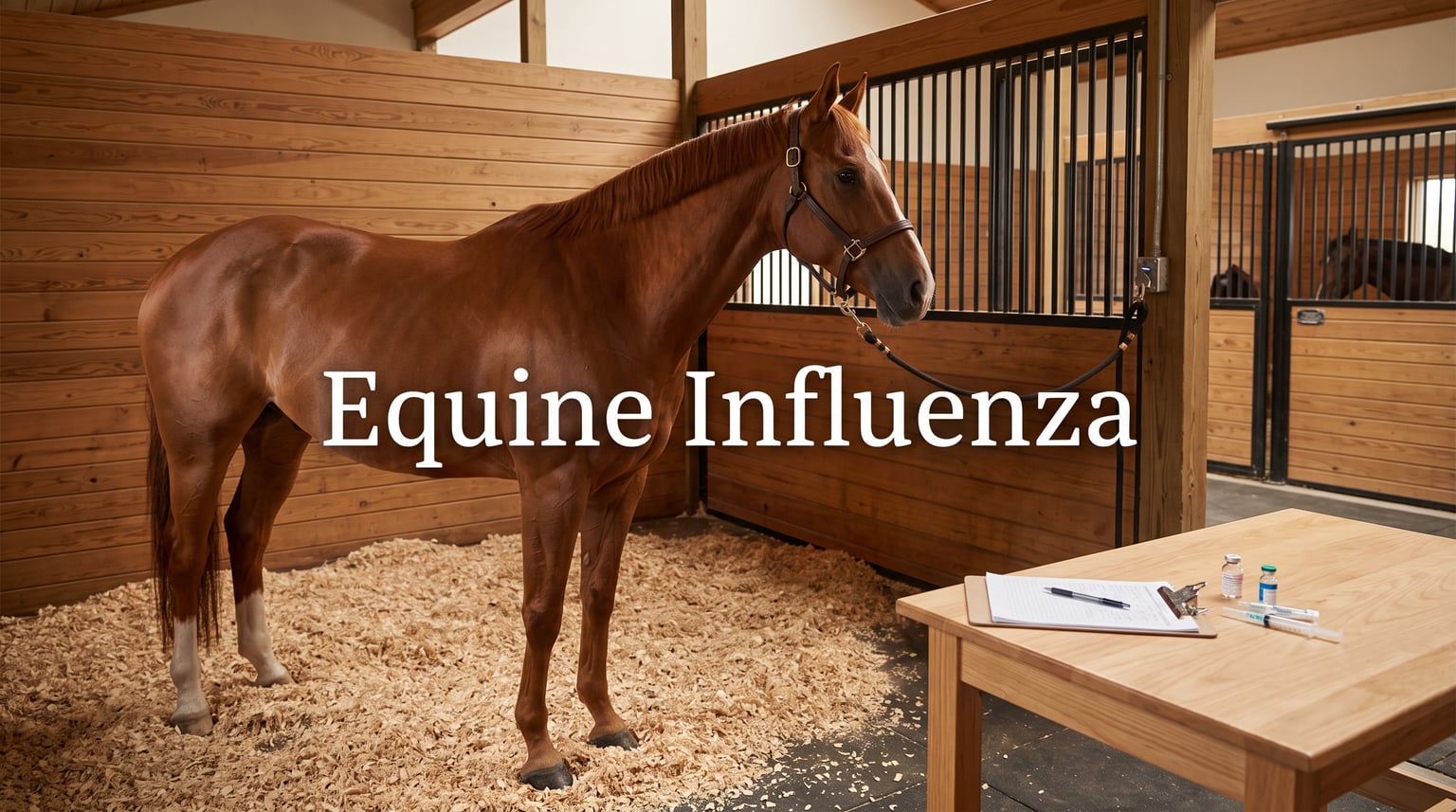
Equine influenza is the most contagious respiratory disease horses face, and it can sweep through a barn in days. I’ve worked with horse owners across the country who have dealt with outbreaks, and the same questions always come up: how do I know it’s flu and not something else, when can my horse go back to work, and could I catch it too? This guide answers all of that. We’ll cover what equine influenza is, the symptoms to watch for, how it spreads, what recovery actually looks like, and what you can do to protect your horse. By the end, you’ll have a clear plan for recognizing, treating, and preventing horse flu.
Table of Contents
What Is Equine Influenza?
Equine influenza is a highly contagious respiratory disease caused by influenza A viruses that infect horses, donkeys, mules, and zebras. The disease is sometimes called horse flu or equine flu, and it ranks as one of the most economically significant infections in the equine industry worldwide.
The virus behind equine influenza belongs to the Orthomyxovirus family. Two subtypes have been documented in horses:
H7N7 (subtype 1): First identified during a major outbreak in 1963. This strain has not been isolated from horses since the early 2000s and is now considered extinct in circulation.
H3N8 (subtype 2): Detected in 1963 in Miami and now the only strain circulating globally. It has split into two main lineages: the Eurasian lineage and the American/Florida sublineage, with Florida clade 1 and clade 2 strains being the most common today.
Equine influenza is endemic in most countries with significant horse populations. The exceptions are notable: New Zealand and Iceland have historically remained free of the disease thanks to strict import protocols and geographic isolation. Australia experienced a major outbreak in 2007 that cost over 1 billion dollars to contain, showing how disruptive this virus can be when it enters a naive population.
The virus attacks the ciliated epithelial cells lining the horse’s respiratory tract. Those cells normally clear debris and bacteria from the lungs. Once destroyed, the horse loses its primary defense against secondary infections, which is why influenza cases so often progress to bronchopneumonia if not managed carefully.
Symptoms and Clinical Signs of Equine Influenza
Clinical signs of equine influenza typically appear within 1 to 3 days of exposure. The dry cough is almost always the first thing owners notice, and it can be harsh enough to sound like the horse is choking.
The most common symptoms include:
High fever: Body temperature often climbs to 102 to 106°F (38.9 to 41.1°C). A fever above 104°F is a strong indicator of influenza rather than a mild cold.
Harsh, dry cough: A non-productive cough that can last 2 to 3 weeks. Horses often continue coughing for weeks after other symptoms resolve.
Clear nasal discharge: Initially watery, it can become thicker and yellow if secondary bacterial infection sets in.
Lethargy and depression: Horses appear dull, lose interest in food, and stand with their head down.
Watery eyes: Often accompanied by conjunctivitis.
Reduced appetite: Combined with fever, this leads to rapid weight loss in severe cases.
Swollen submandibular lymph nodes: The lymph nodes under the jaw may become enlarged and tender.
Muscle soreness and stiffness: Some horses develop distal limb edema or myositis.
Younger horses aged 1 to 5 years tend to get sicker than older horses with prior exposure. Horses with no vaccination history, those recently imported from endemic regions, and immunocompromised animals face the highest risk of severe disease.
Equine Influenza vs Strangles: Key Differences
This is the comparison horse owners ask about most. Both diseases cause respiratory symptoms and fever, but they’re caused by completely different organisms and require different management.
Cause: Equine influenza comes from an RNA virus (influenza A). Strangles is caused by the bacterium Streptococcus equi.
Cough: Influenza always produces a harsh, dry cough. Strangles often causes a cough but the dominant sign is nasal discharge and abscesses.
Abscesses: Influenza never causes abscesses. Strangles gets its name from the lymph node abscesses that can burst and discharge thick pus.
Nasal discharge: Influenza discharge starts clear and watery. Strangles discharge is typically thick, creamy yellow, and profuse.
Treatment: Influenza is managed with rest and supportive care. Strangles often requires antibiotics and abscess management.
Complications: Influenza can lead to bronchopneumonia. Strangles can lead to bastard strangles (abscesses in other organs) and purpura hemorrhagica.
If your horse has a cough with significant pus-like nasal discharge or visible jaw swelling, strangles is the more likely culprit and you should call your vet immediately.
How Equine Influenza Spreads?
Equine influenza spreads incredibly fast. The virus moves through aerosolized droplets from coughing, direct horse-to-horse contact, and contaminated objects called fomites. I’ve seen barn outbreaks where 80 percent of unvaccinated horses showed symptoms within 7 days of the first case.
Key transmission facts every owner should know:
Airborne distance: The virus can travel up to 150 feet (45 meters) through the air from a coughing horse. This is why isolating sick horses in a separate building (not just a separate stall) matters so much.
Indirect transmission: Grooming tools, water buckets, feed tubs, bridles, bits, and even your hands and clothing can carry the virus between horses.
Human handlers: People moving between horses can spread the virus on clothing, shoes, and equipment. The virus doesn’t infect humans, but you can carry it on your clothes.
Incubation period: Just 1 to 3 days from exposure to first symptoms, making outbreaks hard to contain.
Shedding period: Infected horses shed virus for 7 to 10 days in most cases, and some horses continue shedding for up to 14 days.
Competition horses, horses at boarding facilities, and show grounds are the highest-risk environments. The 1963 epidemic in the United States led to cancellation of race meetings, and outbreaks still cause major events to shut down today.
Diagnosing Equine Influenza
Diagnosing equine influenza starts with a physical exam and history. Your vet will look at the symptoms, ask about recent exposure to other horses, and check vaccination records. Lab testing confirms the diagnosis.
The most common diagnostic tools include:
PCR testing: A nasopharyngeal swab is the gold standard. Results are usually back within 24 to 48 hours and can detect the virus even before symptoms peak.
Viral isolation: Less commonly used today, but useful for tracking specific strains.
Serology: Paired blood samples taken 2 to 4 weeks apart can show rising antibody levels, confirming recent infection.
You should call your veterinarian if your horse has any combination of high fever (above 103°F), persistent harsh cough, thick nasal discharge, or difficulty breathing. Horses that stop eating or seem severely depressed also need immediate attention.
Warning signs that indicate your horse is getting worse rather than better include labored breathing, blue-tinged gums, fever that doesn’t respond to NSAIDs, and nasal discharge that turns thick and yellow-green. These suggest secondary bacterial pneumonia and require urgent veterinary care.
Treatment and Recovery
There’s no cure for viral equine influenza. Treatment focuses on supportive care, controlling fever, and preventing secondary infections while the horse’s immune system clears the virus. Most horses recover fully, but the recovery timeline is longer than many owners expect.
The standard treatment plan looks like this:
Complete stall rest: A minimum of 1 week of rest for every day the horse had a fever. A horse with 5 days of fever needs at least 5 weeks off.
NSAIDs: Non-steroidal anti-inflammatory drugs like phenylbutazone (Bute) or flunixin meglumine (Banamine) reduce fever and inflammation.
Fresh water and quality hay: Encourage eating and drinking to maintain hydration and gut motility.
Wet hay or steaming: Reduces dust that irritates damaged airways.
Antibiotics: Only prescribed if secondary bacterial infection develops. Routine antibiotics don’t help and can contribute to resistance.
Bronchodilators: In severe cases with airway constriction.
Recovery Timeline and Return to Work
Recovery from equine influenza takes time. Most horses start feeling better within 2 to 3 weeks, but the cough can linger for 6 weeks or longer. Full recovery of the respiratory lining takes 6 to 8 weeks in uncomplicated cases, and severe cases can require 6 months of careful rehab.
Here’s a general guideline for returning to work:
Week 1 after symptoms resolve: Stall rest with hand-walking only.
Week 2 to 3: Light walking under saddle for 15 to 20 minutes.
Week 4 to 6: Gradual increase in work intensity.
Week 8 onward: Full work for uncomplicated cases.
Horses that return to work too early are at much higher risk of developing chronic airway damage, exercise-induced pulmonary hemorrhage, or relapse. If you’re unsure when to bring your horse back, ask your vet to perform a follow-up lung exam.
Prevention: Vaccination and Biosecurity
Prevention is far better than treatment when it comes to equine influenza. Vaccination combined with solid biosecurity practices can reduce your horse’s risk dramatically and limit the spread when outbreaks occur.
Vaccination Guidelines
The American Association of Equine Practitioners (AAEP) recommends equine influenza vaccination for all horses. Core guidelines include:
Adult horses: Annual booster for low-risk horses. Horses at higher risk (competition, show, boarding) should receive boosters every 6 months.
Pregnant mares: Vaccinate at 4 to 6 weeks before foaling to pass antibodies to the foal through colostrum.
Foals: Start a primary series at 4 to 6 months of age, with boosters at 4 to 6 week intervals.
Vaccine types: Both injectable killed vaccines and intranasal modified-live vaccines are available. The intranasal version provides faster local immunity in the nasal passages.
Strain coverage: Modern vaccines include both Florida clade 1 and clade 2 strains, plus the Eurasian lineage.
No vaccine is 100 percent effective, but vaccinated horses typically experience milder symptoms and recover faster than unvaccinated horses.
Biosecurity Measures
Practical biosecurity for small barns and private operations includes:
Quarantine new arrivals: Isolate new horses for at least 14 days, ideally 21 days, before introducing them to the herd.
Separate equipment: Use separate water buckets, feed tubs, grooming tools, and tack for each horse.
Hand washing and boot changes: Anyone moving between horse groups should wash hands and change boots or use disinfectant footbaths.
Isolate sick horses immediately: Move affected horses to a separate building or end of the barn, ideally downwind of healthy horses.
Avoid shared water sources: Communal troughs can spread virus rapidly. Use individual buckets when possible.
Limit visitors during outbreaks: Restrict access to essential personnel only.
For horses traveling to shows or events, the AAEP and many organizations like the United States Equestrian Federation (USEF) require proof of influenza vaccination within the past 6 months. Check current requirements before you travel.
Frequently Asked Questions
Can horses recover from equine influenza?
Yes, the vast majority of horses recover fully from equine influenza. Most uncomplicated cases resolve within 2 to 3 weeks, though a dry cough can persist for 6 weeks or longer. Full recovery of the respiratory tract takes 6 to 8 weeks, and severe cases may require up to 6 months before the horse returns to full work. Recovery is faster and more complete in vaccinated horses.
How long is a horse contagious with equine influenza?
A horse with equine influenza is typically contagious for 7 to 10 days after the onset of fever, though some horses continue shedding virus for up to 14 days. The virus spreads through coughing droplets that can travel up to 150 feet, and via contaminated equipment, hands, and clothing. Isolating affected horses for at least 21 days after clinical signs resolve is the standard recommendation.
Is equine influenza the same as strangles?
No, equine influenza and strangles are different diseases. Influenza is caused by an influenza A virus (H3N8 subtype) and produces a harsh, dry cough with high fever. Strangles is a bacterial infection caused by Streptococcus equi that causes thick, yellow nasal discharge and abscesses in the lymph nodes under the jaw. The two require different treatments, so getting an accurate diagnosis from your vet matters.
Can equine influenza spread to humans?
No, equine influenza does not infect humans. The H3N8 strain that circulates in horses is adapted to equines and is considered a separate virus from human flu strains. People can, however, carry the virus on their hands, clothing, and equipment between horses, which is why hand washing and changing clothes matter when working with sick horses.
Final Thoughts
Equine influenza is a serious disease that demands respect, but it’s also highly manageable with the right plan. The keys to handling it well are early recognition, prompt veterinary care, patient recovery time, and consistent prevention through vaccination and biosecurity.
If you take one thing from this guide, take this: vaccinate your horse, isolate any new arrivals, and if you hear coughing in the barn, act fast. The 1 to 3 day incubation period means waiting even a day can mean the difference between one sick horse and ten.
Talk to your vet about an equine influenza vaccination plan that fits your horse’s risk level, and review your biosecurity practices at least once a year. Your horse’s lungs (and your training schedule) will thank you.