
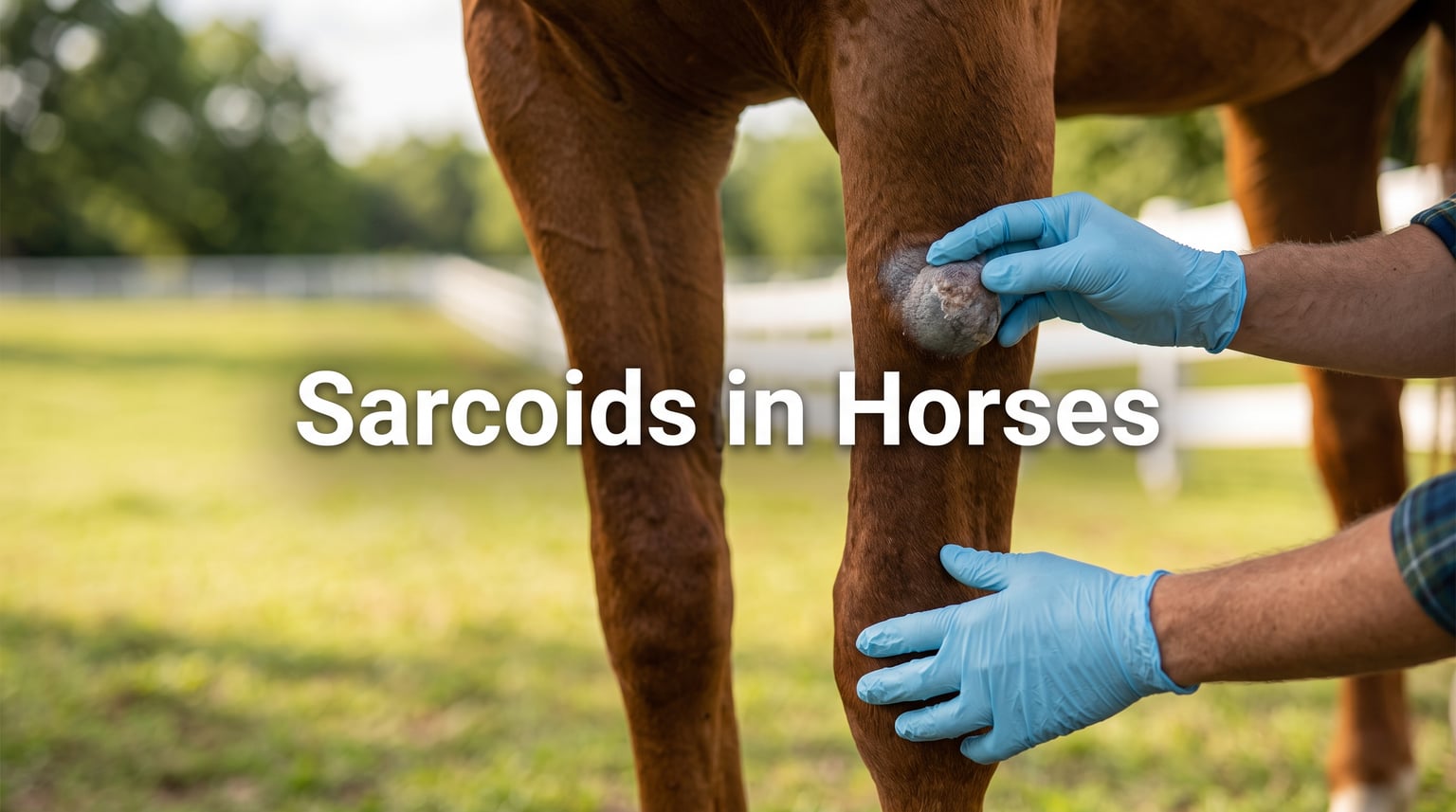
If your horse has developed an unusual skin growth, chances are you’re worried it might be sarcoids. Sarcoids in horses are the most commonly diagnosed skin tumors in equids, accounting for roughly 40% of all equine cancers.
I’ve spoken with dozens of owners and reviewed veterinary literature from UC Davis and the Royal Veterinary College to put together this guide. Whether you’re evaluating a new purchase, dealing with a fresh diagnosis, or trying to prevent recurrence, here’s what you need to know about sarcoids in horses in 2026.
Table of Contents
What Are Sarcoids in Horses?
Sarcoids are locally aggressive, non-metastatic skin tumors caused by bovine papillomavirus (BPV), most commonly types BPV-1 and BPV-2.
Despite the scary word “tumor,” sarcoids are usually benign and don’t spread to internal organs. The real concern is local damage. They can become ulcerated, bleed, interfere with tack, and in severe cases become locally invasive.
Research suggests between 1% and 11.5% of horses develop sarcoids in their lifetime, depending on the population studied. Geldings, Appaloosas, Quarter Horses, and Arabians appear more susceptible, though any horse can develop them.
The condition can appear at any age, but most cases show up in horses between 3 and 7 years old. Sarcoids often develop at sites of previous trauma or wounds, which is why some owners notice them months after a cut has already healed.
6 Types of Sarcoids in Horses (with Pictures)
Knowing the type matters because each behaves differently and responds to different treatments. The six recognized classifications include:
- Occult sarcoid: A flat, hairless patch that often looks like a mild abrasion or ringworm. These are the earliest stage and easiest to treat.
- Verrucous sarcoid: A wart-like, cauliflower-textured growth that sits on the skin surface. Common on the legs and flanks.
- Nodular sarcoid: Firm, well-defined lumps under intact skin. They can sit beneath the surface or break through the skin.
- Fibroblastic sarcoid: Fleshy, bleeding masses that often look aggressive and ulcerated. Frequently appear at wound sites.
- Mixed sarcoid: A combination of two or more types, most often verrucous and fibroblastic together.
- Malevolent sarcoid: Rare, invasive tumors that spread along lymphatic vessels and skin planes. The most challenging type to manage.
One owner I spoke with described her gelding’s sarcoid as “a wart that just wouldn’t quit growing back.” That perfectly captures the persistent nature of these tumors.
Because some sarcoids change appearance over time, your vet may classify the same lesion differently across visits. A small occult patch can develop into a verrucous or fibroblastic sarcoid within months, especially if the area is repeatedly irritated by tack or biting flies.
What Causes Sarcoids in Horses?
The root cause is bovine papillomavirus, which is strange because it primarily infects cattle. Horses become accidental hosts when BPV enters their skin through wounds, fly bites, or areas of broken skin.
Several factors raise a horse’s risk of developing sarcoids:
- Fly exposure: Biting flies can carry the virus between cattle and horses, or between horses.
- Skin trauma: Wounds, especially on the legs, chest, and sheath, are common sites.
- Genetics: Certain breeds carry higher susceptibility. Appaloosas, Quarter Horses, and Arabians appear most at risk.
- Age: Most sarcoids appear in horses between 3 and 7 years old, though they can develop at any age.
- Immune status: Horses with compromised immune systems seem more prone to severe forms.
Important note: sarcoids are not contagious between horses in the way respiratory viruses are. However, mechanical transmission (a brush, a fly, shared tack touching an active lesion) can spread the virus on the same horse to new wound sites.
Stress, poor nutrition, and underlying illness can weaken the immune system and make sarcoids more likely to develop or worsen. While diet alone cannot cure sarcoids, a balanced feeding program supports your horse’s natural defenses.
Signs and Symptoms of Equine Sarcoids
Spotting sarcoids early gives you the best shot at successful treatment. Watch for these signs:
- Hairless patches that don’t regrow with the season
- Small, raised bumps that look like warts or skin tags
- Wart-like growths that bleed easily when bumped by tack
- Ulcerated masses that bleed spontaneously
- Firm nodules under the skin that feel like a marble
- Sudden growth changes in an existing skin lesion
Common locations include the groin, sheath, udder, legs, face (especially around the eyes), neck, and chest. Any new skin change in these areas deserves a closer look.
If a sarcoid appears in a high-friction area like the girth or saddle region, it can interfere with tack fit and cause pain during work. Many owners first notice a sarcoid because their horse objects to being groomed or tacked up.
Sarcoids don’t usually cause systemic illness, so your horse will likely eat, drink, and behave normally even with multiple lesions. Lameness only develops if a sarcoid sits near a joint or tendon, which is rare.
How Are Sarcoids Diagnosed in Horses?
Your vet will typically start with a clinical examination. Sarcoids have characteristic appearances, and experienced equine vets often recognize them on sight.
For confirmation, your vet may recommend:
- Fine needle aspirate (FNA): A small needle collects cells from the mass for analysis.
- Biopsy: A tissue sample is sent for histological evaluation. This is the gold standard but can sometimes trigger sarcoid flare-ups, so vets are cautious about using it.
- PCR testing: Identifies the presence of BPV DNA in the tissue.
Many vets treat based on visual diagnosis alone when the lesion looks classic. A biopsy is usually reserved for unusual cases or when the diagnosis is unclear.
Your vet will also rule out other skin conditions that can mimic sarcoids, including melanomas, squamous cell carcinoma, habronemiasis (summer sores), and simple warts. Getting the correct diagnosis early avoids wasted treatment and unnecessary expense.
Treatment Options for Sarcoids in Horses
There’s no single “best” treatment because response varies by horse, location, and sarcoid type. Here’s a breakdown of the main options:
Surgical Removal
Traditional excision removes the tumor with a scalpel. Recurrence rates can be high (30-50%) if not combined with other treatments, but surgical removal paired with cisplatin beads or cryotherapy improves outcomes.
Cryotherapy
Freezing the sarcoid with liquid nitrogen kills the abnormal cells. It’s often used for smaller lesions and works well on the limbs and around the eyes. Multiple sessions may be needed.
Immunotherapy
Injections of immune-stimulating agents (like BCG or mycobacterial cell wall extracts) trigger the horse’s own immune system to attack the tumor. Best suited for periocular and nodular sarcoids.
Radiation Therapy
Brachytherapy delivers targeted radiation directly to the tumor. It has high success rates (around 80%) but is only available at specialized referral centers and is the most expensive option.
Topical Treatments
Products like Xxterra (bloodroot-based) and imiquimod cream (Aldara) can be applied at home. Owners report Xxterra causes discomfort for 1-3 days after application, but it shows success on certain sarcoid types. One forum user reported “89% improvement” using bloodroot extract products on a chest sarcoid.
Laser Ablation
Lasers (CO2 or diode) vaporize the sarcoid tissue. This is precise, reduces bleeding, and is good for facial or periocular cases.
Chemotherapy Injections
Cisplatin or 5-fluorouracil injections directly into the mass are options when surgery isn’t suitable. These are particularly helpful around the eye and for fibroblastic lesions.
Cost varies widely. Expect anywhere from a few hundred dollars for topical treatment to several thousand for surgery or radiation therapy. Always get a written estimate before proceeding.
Some insurance policies cover sarcoid treatment if it’s not a pre-existing condition. Read your policy carefully and notify your insurer when a sarcoid is first diagnosed, because failing to disclose a known condition can void future claims.
Recovery, Recurrence and Management
Sarcoids are frustratingly known for coming back. Recurrence rates depend heavily on the type, location, and treatment chosen. The Royal Veterinary College reports that even with aggressive treatment, some malevolent sarcoids recur.
After any treatment, monitor the area closely for:
- Regrowth at the original site
- New sarcoids appearing nearby
- Slow healing or persistent ulceration
Many horses require multiple rounds of treatment. Some owners manage sarcoids long-term with the “benign neglect” approach when lesions are stable, non-painful, and in low-friction locations. The horse still enjoys a good quality of life; the owner just monitors the situation.
It’s also normal for sarcoids to “look worse before they look better” during treatment, especially with topical options like Xxterra. Sloughing, scabbing, and swelling are expected.
Regular photo documentation helps you and your vet track changes over time. A monthly photo of each lesion in the same lighting and position is a simple way to spot regrowth early.
Prevention Strategies for Equine Sarcoids
You can’t fully prevent sarcoids because the virus is widespread, but you can reduce risk:
- Fly control: Use fly masks, sheets, and repellents during warm months, especially around wounds.
- Prompt wound care: Clean and cover any cut or scrape quickly to minimize virus entry points.
- Don’t share equipment between horses with active lesions.
- Immune support: Good nutrition, low stress, and regular deworming support overall immunity.
Buying a horse with sarcoids is a personal decision. Many horses live full, working lives with these tumors. Get a vet check and ask about the lesion’s history, type, and previous treatments before committing.
If you already own a horse with sarcoids, focus on the basics: fly control, clean wounds, good nutrition, and consistent vet check-ins. Most owners find their horse adapts well, and many sarcoids stay stable for years.
Frequently Asked Questions About Sarcoids in Horses
How to get rid of sarcoids on horses fast?
There is no guaranteed fast cure for sarcoids in horses. Cryotherapy and surgical removal are among the quickest options, but recurrence is common. Small, early occult sarcoids respond best to prompt treatment with topical or cryotherapy approaches.
How do you treat sarcoid in horses?
Treatment depends on the sarcoid type and location. Common options include surgical excision, cryotherapy, immunotherapy, radiation therapy, topical creams like Xxterra or imiquimod, laser ablation, and chemotherapy injections. Many cases benefit from combining two or more methods.
What causes horses to get sarcoids?
Sarcoids are caused by bovine papillomavirus (BPV-1 and BPV-2), which enters the skin through wounds or fly bites. Breed, age, immune status, and skin trauma all influence whether a horse develops sarcoids.
Are sarcoids in horses life threatening?
Most sarcoids in horses are not life threatening because they are non-metastatic. However, malevolent or aggressive fibroblastic sarcoids can become locally invasive, cause bleeding, infection, or interfere with vital functions, especially around the eyes.
Can sarcoids disappear in horses?
True spontaneous disappearance of sarcoids is rare, though some small occult sarcoids may regress on their own as a horse’s immune system matures. Most sarcoids either remain stable or grow over time, so active monitoring is recommended.
What happens if you don’t treat sarcoids in horses?
Untreated sarcoids may remain stable for years, grow slowly, or in some cases become more aggressive and invasive. Sarcoids in friction zones from tack or in the eye area often worsen without intervention, making treatment more difficult later.
Final Thoughts on Sarcoids in Horses
Sarcoids in horses are common, frustrating, and rarely simple. The good news is that with early identification, appropriate treatment, and good management, most horses with sarcoids go on to live full, comfortable lives.
If you suspect your horse has a sarcoid, your next step is to book a vet visit. Bring photos of any changes you’ve noticed over time, and ask about the specific type, location, and treatment options suited to your horse. With the right plan in 2026, you and your horse can handle this condition with confidence.