
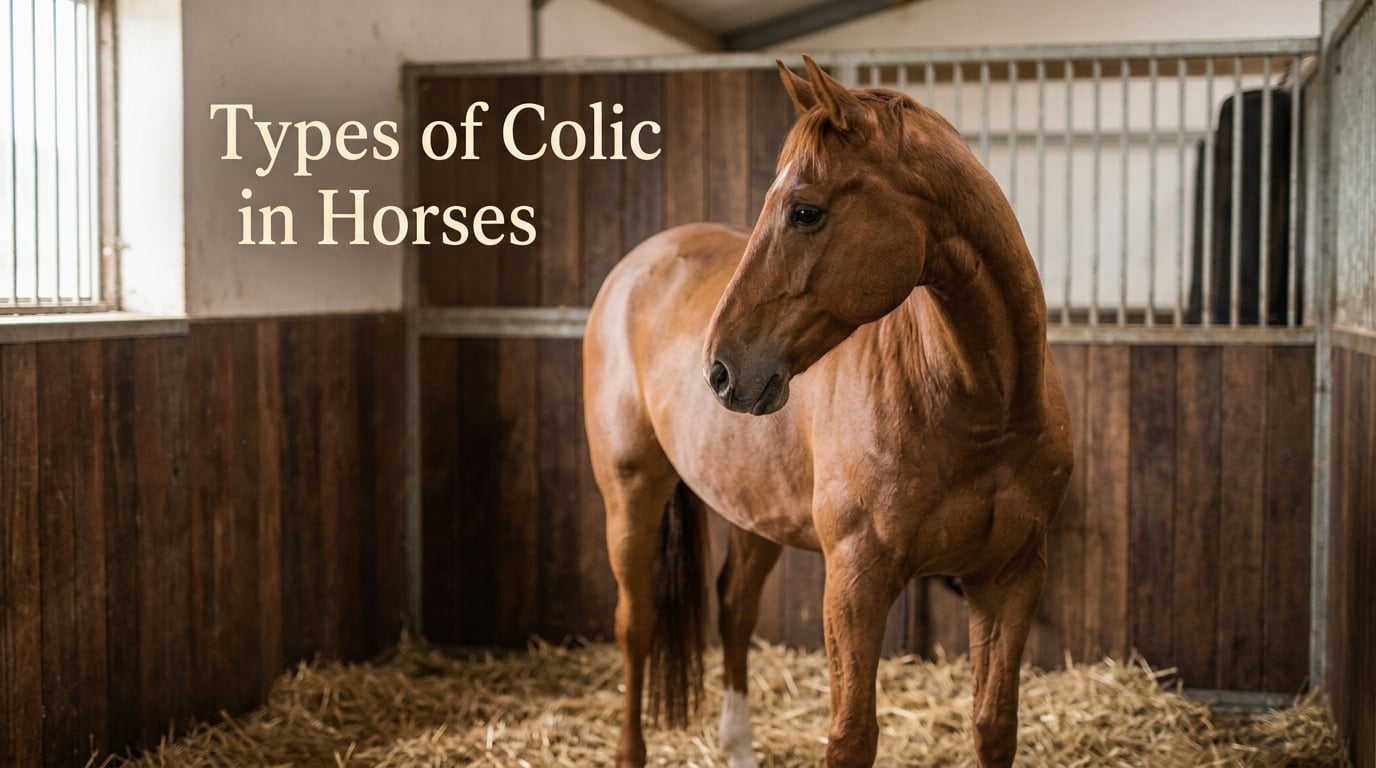
As horse owners, we know that colic remains one of the most frightening emergencies we can face. Understanding the different types of colic in horses could quite literally save your horse’s life. When abdominal pain strikes, knowing what you are dealing with helps you communicate effectively with your veterinarian and make better decisions under pressure.
Colic is not a single disease. It is a symptom of abdominal pain with many possible causes, ranging from simple gas buildup to life-threatening intestinal twisting. Each type requires different management, and recognizing which one your horse might have takes experience and veterinary expertise.
Table of Contents
What Is Colic in Horses?
Colic in horses describes any form of abdominal pain originating from the digestive system. The horse’s gastrointestinal tract is remarkably long and complex, stretching approximately 100 feet from stomach to rectum. Unlike humans, most of the horse’s intestines float freely inside the abdomen, held only by thin sheets of tissue called mesentery.
This anatomical design allows the intestines to shift and move, which creates vulnerability to displacement and twisting. When something disrupts normal intestinal function, whether a blockage, gas accumulation, or compromised blood supply, pain receptors in the gut wall trigger the distress signals we recognize as colic.
Common triggers include sudden dietary changes, poor-quality forage, parasites, dehydration, dental problems leading to improper chewing, and management factors like limited turnout or stress. Understanding these triggers helps you recognize situations that increase your horse’s risk.
Types of Colic in Horses
Veterinarians classify equine colic into several distinct categories. Knowing these types of colic in horses helps you understand the potential severity and urgency of the situation you are facing.
Spasmodic Colic
Spasmodic colic occurs when the intestinal muscles contract violently and repeatedly, causing cramp-like pain. The intestines essentially spasm, creating waves of contraction that distend the gut and trigger discomfort.
This type often develops after dietary indiscretion, such as a horse breaking into the grain bin or consuming lush spring grass. Stress, excitement, and worm burdens can also trigger spasmodic colic. The good news is that spasmodic colic typically responds well to antispasmodic medications like Buscopan, and most horses recover fully within hours.
Signs specific to spasmodic colic include intermittent pain that comes and goes, visible gut sounds as the intestine contracts forcefully, and a horse that may briefly look at its sides. The episodes tend to be relatively short but recurrent.
Gas Colic
Gas colic develops when fermenting food produces excessive gas, causing the intestines to distend and press against sensitive tissues. This distension creates discomfort ranging from mild to moderate, and in severe cases, the stretched gut wall can compromise blood flow.
Diet plays a significant role in gas colic. High-starch diets, poor-quality hay, and foods that ferment easily in the hindgut all contribute to gas production. Some horses are more prone to gas accumulation due to individual digestive physiology.
Affected horses typically show a distended abdomen, reduced appetite, and discomfort that builds gradually rather than appearing suddenly. Veterinarians often relieve gas colic by passing a nasogastric tube to release built-up gas, providing rapid relief in most cases.
Impaction Colic
Impaction colic happens when a mass of food, sand, or other material blocks the intestine, preventing passage of digesting food and gas. The blockage causes waste to back up, the intestine becomes inflamed, and pain intensifies as the gut tries unsuccessfully to move the impaction.
Dehydration is a major contributing factor because it makes intestinal contents dry and compacted. Horses on poor-quality forage, those who drink insufficient water in winter, and horses with dental problems that prevent proper chewing are all at higher risk. Sand accumulation in the gut, particularly in horses kept on sandy pastures, creates impaction that can be difficult to resolve.
Impaction colic requires more aggressive treatment than spasmodic or gas colic. Your veterinarian will likely administer fluids, electrolytes, and sometimes mineral oil via nasogastric tube to soften and move the blockage. Recovery can take several days, and severe impactions may require surgical intervention.
Displacement Colic
Displacement colic occurs when a portion of intestine moves to an abnormal position within the abdomen, creating a functional obstruction. The intestine twists or wraps around itself in ways that prevent normal passage of contents and can compromise blood supply.
The large colon is particularly vulnerable to displacement because it is relatively mobile and has natural flexures where it can kink or slide out of position. Factors like gas distension, poor abdominal muscle tone, and conformational traits can increase susceptibility to displacement.
Pain from displacement tends to be more persistent and often progressively worsens rather than coming in waves. Diagnosis typically requires rectal examination by your veterinarian, and surgical correction is often necessary to return the intestine to its proper position.
Sand Colic
Sand colic results from accumulation of sand and grit in the horse’s intestines, which irritates the gut lining and can cause impaction or even intestinal rupture in severe cases. Horses grazing on sandy pastures, those fed on sandy ground, or horses that ingest soil out of boredom are all at risk.
The sand acts as an abrasive, gradually accumulating over weeks or months. It settles in the ventral colon and cecum, where it irritates the delicate intestinal lining. This irritation reduces nutrient absorption, causes inflammation, and eventually creates the conditions for impaction.
Treatment involves aggressive fluid therapy, possible use of psyllium-based products to help move sand through the digestive tract, and in severe cases, surgery to remove accumulated material. Prevention is particularly important for sand colic, as it is a condition that often affects horses gradually over time.
Strangulation Colic
Strangulation colic represents the most severe and life-threatening form of equine colic. This occurs when blood supply to a portion of intestine is completely cut off, causing tissue death within hours if not treated immediately.
Strangulation can result from intestinal twisting (volvulus), where the bowel rotates on its mesenteric attachment, or from entrapment, where intestine becomes trapped in an abnormal opening. The horse’s mobile intestine and relatively weak mesenteric attachments make this type of colic a constant risk.
Signs of strangulation colic are severe and unrelenting. Pain does not respond well to typical analgesic treatment, and the horse’s condition deteriorates rapidly. This is a true emergency requiring immediate surgical intervention. Without prompt treatment, the affected intestinal tissue dies, toxins enter the bloodstream, and shock develops.
Surgery for strangulation colic involves removing the dead portion of intestine and reestablishing normal flow. Survival rates have improved significantly with advances in equine surgery, but outcomes depend heavily on how quickly the horse receives treatment.
Signs and Symptoms of Colic
Recognizing colic early significantly improves your horse’s chances of successful treatment. Symptoms range from subtle behavioral changes to obvious distress, and knowing what to watch for can make all the difference.
Early warning signs include decreased appetite, reduced or absent fecal output, resting more than usual, and a mildly tucked-up appearance. Your horse might seem slightly withdrawn or less interested in its surroundings. These subtle signs are easy to miss, particularly in horses who are normally laid-back or those stabled where you cannot observe them continuously.
More obvious symptoms include pawing at the ground repeatedly, turning to look at the flanks, curling the lip, stretching out as if to urinate without producing urine, kicking or nipping at the belly, and repeatedly lying down and getting back up. Rolling, especially violent rolling, indicates significant pain and warrants immediate veterinary attention.
Physical changes to monitor include increased heart rate (normal is 28-44 beats per minute for adult horses), gum color changes (pale or brick-red gums instead of healthy pink), and gut sounds. Either excessive gut sounds or complete silence can indicate problems. Your veterinarian will assess these factors along with other diagnostic findings to determine the type and severity of colic.
When to Call the Veterinarian
Some colic episodes resolve with minimal intervention, but determining which cases can be managed conservatively requires professional assessment. Calling your veterinarian promptly is always the safest choice when you suspect colic.
Contact your veterinarian immediately if your horse shows severe pain that does not respond to medication, attempts to lie down repeatedly or roll, has not passed manure for 24 hours, displays any signs of colic after recent dietary changes or transport, or shows additional symptoms like fever, rapid breathing, or abnormal gum color.
New horse owners often feel uncertain about whether their horse’s symptoms warrant an emergency call. When in doubt, make the call. Colic progresses unpredictably, and what starts as mild discomfort can become critical within hours. Your veterinarian would rather examine a horse that turns out to be fine than arrive too late to save a horse whose condition has deteriorated.
While waiting for the veterinarian, keep yourself safe and do not allow the horse to roll. Walking can help prevent dangerous rolling and may assist in moving intestinal gas. Offer water if the horse seems interested, but do not force food or medications unless specifically instructed by your veterinarian.
Treatment Options
Treatment for colic depends entirely on the type and severity. Your veterinarian will perform a thorough examination, which may include rectal palpation, nasogastric intubation, and possibly ultrasound or other diagnostics to determine the appropriate course of action.
Medical treatment addresses colic that does not require surgery. This typically involves pain management with medications like flunixin meglumine (Banamine) or butorphanol, along with treatments specific to the colic type. For gas colic, passing a nasogastric tube provides relief. For impaction colic, fluid therapy and stool softeners help move the blockage. Anti-spasmodic medications relieve spasmodic colic symptoms.
Surgical treatment becomes necessary when the intestine is twisted, displaced in a way that cannot be corrected medically, or when tissue damage has occurred. Equine colic surgery has become significantly more successful over the past two decades, with survival rates for straightforward cases now exceeding 80 percent. However, surgery is major intervention requiring careful consideration of costs, recovery time, and long-term prognosis.
After treatment, whether medical or surgical, recovery management plays a crucial role in preventing recurrence. Your veterinarian will recommend dietary adjustments, gradual return to normal feeding, appropriate exercise programs, and management changes specific to your horse’s risk factors.
Prevention Strategies
While not all colic can be prevented, management practices significantly reduce risk. Understanding the types of colic in horses and their causes helps you make informed decisions about prevention.
Provide consistent, high-quality forage and avoid sudden dietary changes. When changes are necessary, introduce new feeds gradually over 7-10 days. Ensure constant access to clean water, checking especially that it does not freeze in winter. Horses drink less in cold weather, increasing impaction risk.
Implement a regular deworming program based on fecal egg counts rather than arbitrary schedules. Internal parasites cause significant intestinal damage and can trigger colic. Good dental care ensures your horse chews forage properly, reducing the risk of impaction from poorly digested food particles.
Provide consistent exercise and turnout. Sedentary horses have higher colic rates than those with regular movement. If your horse must be stabled, ensure adequate roughage in the diet and consider adding a small amount of bran or vegetable oil to support gut motility.
For horses prone to sand colic, feed from troughs or mats rather than directly on sandy ground. Consider psyllium supplementation during high-risk periods. Discuss your horse’s specific risk factors with your veterinarian to develop a targeted prevention plan.
Frequently Asked Questions
What medicine do you give a horse for colic?
Common medications include flunixin meglumine (Banamine) for pain and inflammation, butorphanol for moderate pain, and Buscopan (hyoscine butylbromide) for spasmodic colic. All medications should be prescribed by your veterinarian, who will determine the appropriate drug and dosage based on your horse’s condition.
What can be mistaken for colic in horses?
Conditions that mimic colic include laminitis (founder), where horses shift weight to avoid hoof pain and may look uncomfortable, urinary tract problems, tying-up syndrome (exertional rhabdomyolysis), severe Potomac horse fever, and abdominal tumors. A thorough veterinary examination helps distinguish true colic from these conditions.
Can a horse survive colic without a vet?
Some mild cases of spasmodic or gas colic may resolve on their own, but determining severity without veterinary expertise is extremely risky. Colic can progress rapidly from minor to life-threatening. Prompt veterinary assessment ensures appropriate treatment and significantly improves outcomes.
How long can a horse live with colic?
The timeline depends entirely on the type and severity of colic. Mild gas colic may resolve within hours with treatment, while severe strangulation colic can become fatal within 12 hours without intervention. The phrase ‘time equals intestine’ reflects how critically important rapid treatment is for serious colic cases.
Conclusion
Understanding the types of colic in horses empowers you as a horse owner to recognize problems early and respond appropriately. While colic remains a serious concern, advances in veterinary medicine mean that most horses survive with prompt, appropriate treatment.
The key takeaways are simple: know your horse’s normal behavior, watch for early warning signs, contact your veterinarian promptly when colic is suspected, and maintain consistent management practices that reduce risk. With knowledge and vigilance, you give your horse the best possible protection against this unpredictable but manageable condition.