
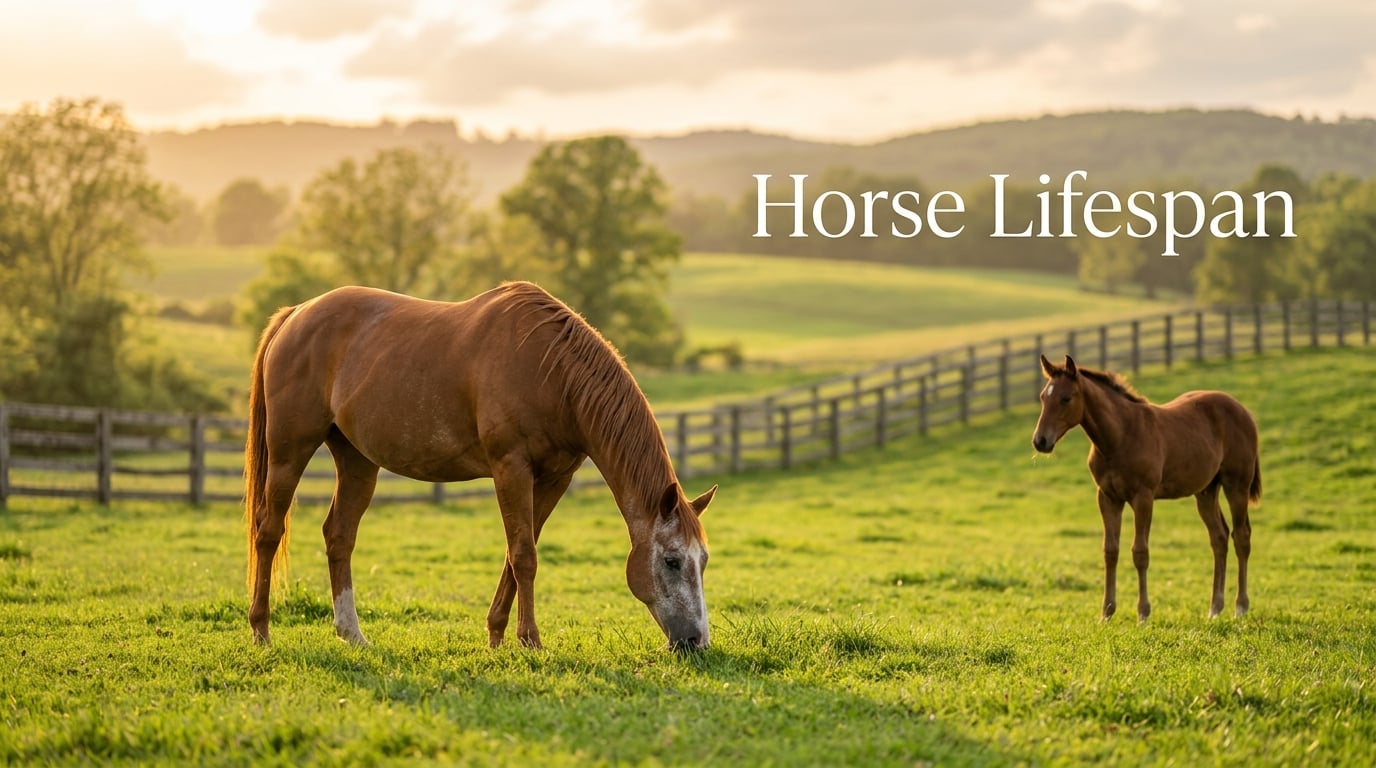
Most horses live between 25 and 30 years, but the average horse lifespan depends heavily on breed, care quality, and environment. As an owner and equine writer, I have followed well-managed horses that reached their late 20s and even pushed past 30 with proper nutrition, regular farrier work, and consistent veterinary checkups.
In this complete guide to horse lifespan, you will learn the realistic age range for domesticated horses, the six life stages your horse will pass through, and the seven factors that most influence longevity. I will also share a horse-to-human age conversion chart, research-backed cause of death statistics, and practical senior horse care tips you can apply right away to extend your horse’s healthy years.
Table of Contents
What Is the Average Horse Lifespan?
The average horse lifespan for a domesticated horse is 25 to 30 years. This figure reflects modern standards of equine veterinary care, balanced nutrition, and routine farrier work. Ponies and small breeds often live into their mid-30s, while larger draft breeds tend toward the shorter end of the range, sometimes 18 to 25 years.
The oldest verified horse in recorded history was Old Billy, an English barge horse born in 1760 who reportedly lived to 62 years. He worked the rivers of Woolston for nearly six decades, which gives an idea of how durable even working horses can be with steady care. More recently, a Welsh pony named Sugar Puff was verified by the Guinness Book of World Records at 56 years old in 2007. While these cases are exceptional, they show what is biologically possible when genetics, environment, and management all line up.
Research on equine mortality has identified the most common causes of death across thousands of horses. Colic, lameness, and old age are consistently the top three, with musculoskeletal and digestive issues together accounting for a large share of premature deaths. Knowing these patterns helps owners focus prevention where it matters most.
So can a horse live to 40 years old? Yes, though it is rare. Most horses that reach 40 do so under exceptional management with no major injuries, a controlled workload, and diligent senior care. For a typical owner, planning for 25 to 30 healthy years is realistic and helps with long-term budgeting, retirement planning, and emotional preparation.
Horse Life Stages From Birth to Senior Years
Horses age on a very different curve than humans. They reach skeletal maturity around 3 to 4 years old and are considered seniors once they pass 15 or 16. The classic 1/2/3 rule in horses is a simple guideline for introducing work: a horse is roughly one-third grown at 1 year old, two-thirds grown at 2, and fully grown at 3. Going beyond this rule with heavy riding, jumping, or racing before skeletal closure is one of the most common causes of joint damage in young performance horses.
Here is a quick breakdown of the six life stages every horse passes through:
- Newborn (0 to 3 months): Foals nurse frequently and should stand within an hour of birth. Growth is rapid during this phase, with the foal gaining up to 3 pounds per day on average.
- Weanling (3 to 6 months): Foals are separated from the mare and transitioned to forage and concentrate feeds. Creep feeding and careful parasite control begin in earnest.
- Yearling (1 to 2 years): Skeletal growth continues, but training should remain light to protect developing joints and growth plates.
- Youth (2 to 3 years): Most breeds begin groundwork, lunging, and light under-saddle work during this stage. Some breeders wait until age 3 for more demanding disciplines.
- Adult or Prime (4 to 15 years): These are the working prime years, when the horse is physically and mentally mature and capable of full athletic output.
- Senior or Geriatric (16 years and older): Roughly one-third of the average horse lifespan is spent in this stage, and care routines shift to support aging systems.
For owners who want to translate horse years into human terms, here is a simplified horse to human age conversion chart:
| Horse Age | Approximate Human Equivalent |
|---|---|
| 1 year | 6.5 years |
| 3 years | 18 years |
| 10 years | 35 years |
| 20 years | 60 years |
| 27 years | 78 years |
| 30 years | 85 years |
Note that the conversion is not linear. A 27 year old horse in human years is roughly equivalent to a person in their late 70s. This is why many owners consider a horse in its late teens as entering middle age, not old age, and begin preventive changes well before 25.
7 Key Factors That Affect Horse Lifespan
Two horses of the same breed can have wildly different lifespans depending on management. After comparing notes with several owners, reviewing equine research, and talking with veterinarians, I have found these seven factors have the biggest influence on horse longevity.
1. Breed and Size
Smaller breeds generally live longer. Ponies often reach 35 years, while most draft horses top out between 18 and 25. Arabians and many warmbloods sit comfortably in the 25 to 30 year range when well cared for. Larger horses carry more weight on their joints and tend to have a higher rate of musculoskeletal breakdown as they age.
2. Genetics and Heritable Conditions
Family history matters. If a horse’s parents and grandparents lived past 25 without major metabolic or cardiac issues, that foal has a genetic head start. Heritable conditions like HYPP in Quarter Horses, HERDA in stock horses, and certain cardiac anomalies can shorten lifespan dramatically and should be screened before purchase.
3. Nutrition and Body Condition
Research on causes of death in horses consistently points to colic, lameness, and chronic weight loss as leading contributors. A balanced diet with appropriate forage, controlled starch, and steady body condition score between 4 and 6 helps prevent the metabolic cascade that shortens lives. Overweight horses face higher insulin resistance risk, while underweight horses are more prone to immune suppression.
4. Veterinary Care
Annual vaccinations, dental floats, and parasite management are non-negotiable. Early detection of conditions like Cushing’s disease (PPID), insulin resistance, and equine asthma can add years to a horse’s life. Annual bloodwork on horses over 15 gives owners a baseline to compare future values against.
5. Dental Health
Horses’ teeth erupt continuously throughout life, roughly 2 to 3 millimeters per year. Sharp points and uneven wear can lead to choke, weight loss, and behavioral issues. A yearly dental exam by an equine dentist or veterinarian keeps the mouth functional and the horse properly nourished. Senior horses often need floating twice a year.
6. Hoof and Farrier Care
Consistent farrier work every 6 to 8 weeks prevents laminitis, hoof cracks, and imbalances that force horses into retirement earlier than necessary. Sole abscesses and white line disease caught early are often manageable, but neglected hoofs can end a horse’s riding career.
7. Exercise and Mental Engagement
Horses that receive consistent, appropriate exercise age better than sedentary pasture ornaments. Movement supports joint health, gut motility, and stable mental behavior. Horses stalled for long periods show higher rates of stable vices like weaving and cribbing, both of which correlate with stress-related wear on the body.
Senior Horse Care: 6 Tips to Extend Quality Years
Once your horse passes 16 or 17, the care routine needs to shift. After watching several horses slide into their senior years, I have landed on these six practical tips that consistently add comfortable years to a horse’s life.
Tip 1: Adjust the diet before weight loss appears. Senior horses often need soaked hay cubes, senior feed formulations, and added omega-3s. Waiting until ribs show means you have already lost muscle and body condition. I switch to senior feed gradually over 2 to 3 weeks to avoid digestive upset.
Tip 2: Schedule dental checks twice a year. Older horses lose chewing efficiency faster. Twice-yearly floats prevent choke and weight loss, and give the dentist a chance to spot early indicators of EOTRH or other dental disease.
Tip 3: Keep movement consistent. Daily turnout and light work preserve joint mobility. Twenty to thirty minutes of walking three to five times a week is usually safe for healthy seniors. Constant movement also reduces stocking up in the legs.
Tip 4: Monitor for PPID and insulin resistance. Cushing’s disease becomes common after age 15. Watch for a long hair coat that fails to shed, laminitis flare-ups, abnormal fat deposits over the crest and tailhead, and increased drinking or urination. A simple blood test through your vet can confirm the diagnosis and start treatment early.
Tip 5: Adjust workload gradually. A 25 year old horse can still be ridden if it has good body condition and no chronic lameness. Keep sessions short, work on flat ground, and skip jumping or heavy collection. Many senior horses do well with light trail rides and arena walking well into their late 20s.
Tip 6: Plan for the difficult decisions. Quality of life matters more than quantity. Track body condition, appetite, and comfort monthly so you can make informed choices when the time comes. Discussing humane endpoints with your vet before a crisis is far easier than making decisions in an emergency.
Wild Horse Lifespan vs Domestic Horses
Wild horses live shorter lives than domesticated horses, often 15 to 20 years on average. Without routine veterinary care, dental work, or supplemental feed in winter, they face challenges that domestic horses rarely encounter.
Predation by mountain lions, wolves, and bears claims foals and older horses. Food scarcity in winter can drop body condition dangerously low. Injuries from fighting, falls, or barbed wire often become fatal without treatment, and tooth problems that would be routinely floated in domestic horses can shorten wild lifespans through gradual malnutrition.
Mustangs and other feral herds can reach 20 years in protected environments like the Outer Banks of North Carolina, but the wild horse lifespan rarely matches the 25 to 30 year average of well-managed domestic horses. This gap underscores just how much human care extends equine life expectancy, and why topics like horse lifespan matter so much for owners who want their horses to live full lives.
Horse Lifespan FAQs
Can a horse live to 40 years old?
Yes, but it is uncommon. Most horses that reach 40 have exceptional genetics, lifelong high-quality care, and no major injuries or chronic disease. For the average horse, planning for 25 to 30 healthy years is realistic and far more typical.
What is the 1/2/3 rule in horses?
The 1/2/3 rule is a guideline for growth and workload: a horse is roughly one-third grown at 1 year old, two-thirds grown at 2, and fully grown at 3. It helps owners avoid overworking horses before their skeleton matures, which protects long-term joint health.
How old is a 27 year old horse in human years?
A 27 year old horse is roughly equivalent to a 78 year old person using the standard horse-to-human age conversion chart. The comparison is not exact, but it gives owners a useful framework for understanding senior care needs and adjusting diet, exercise, and veterinary care accordingly.
What is the oldest horse to ever live?
Old Billy, an English barge horse, is the oldest verified horse on record. Born in 1760, he reportedly lived to 62 years. Sugar Puff, a Welsh pony, held the modern record at 56 years old in 2007 according to the Guinness Book of World Records.
Can you still ride a 25 year old horse?
Many 25 year old horses can still be ridden if they have good body condition, no chronic lameness, and a clean bill of health from your veterinarian. Keep sessions short, ride on flat ground, and monitor closely for signs of discomfort or fatigue.
When is a horse considered old?
Most veterinarians consider horses senior once they reach 15 to 16 years old. From that point, more frequent dental checks, dietary adjustments, and screening for PPID are recommended to catch age-related conditions before they become serious.
Final Thoughts on Horse Lifespan
The horse lifespan is a gift that stretches across decades when we do our part. Average horses live 25 to 30 years, but the upper end of that range depends on smart nutrition, consistent veterinary care, and a willingness to adjust the routine as your horse ages. Treat each life stage with the awareness it requires and your horse will reward you with more healthy years than you might expect.
If you take one thing away from this guide on horse lifespan, let it be this: every year you invest in prevention is a year your horse gets to spend being a horse, and that is worth every bit of planning and care along the way.