
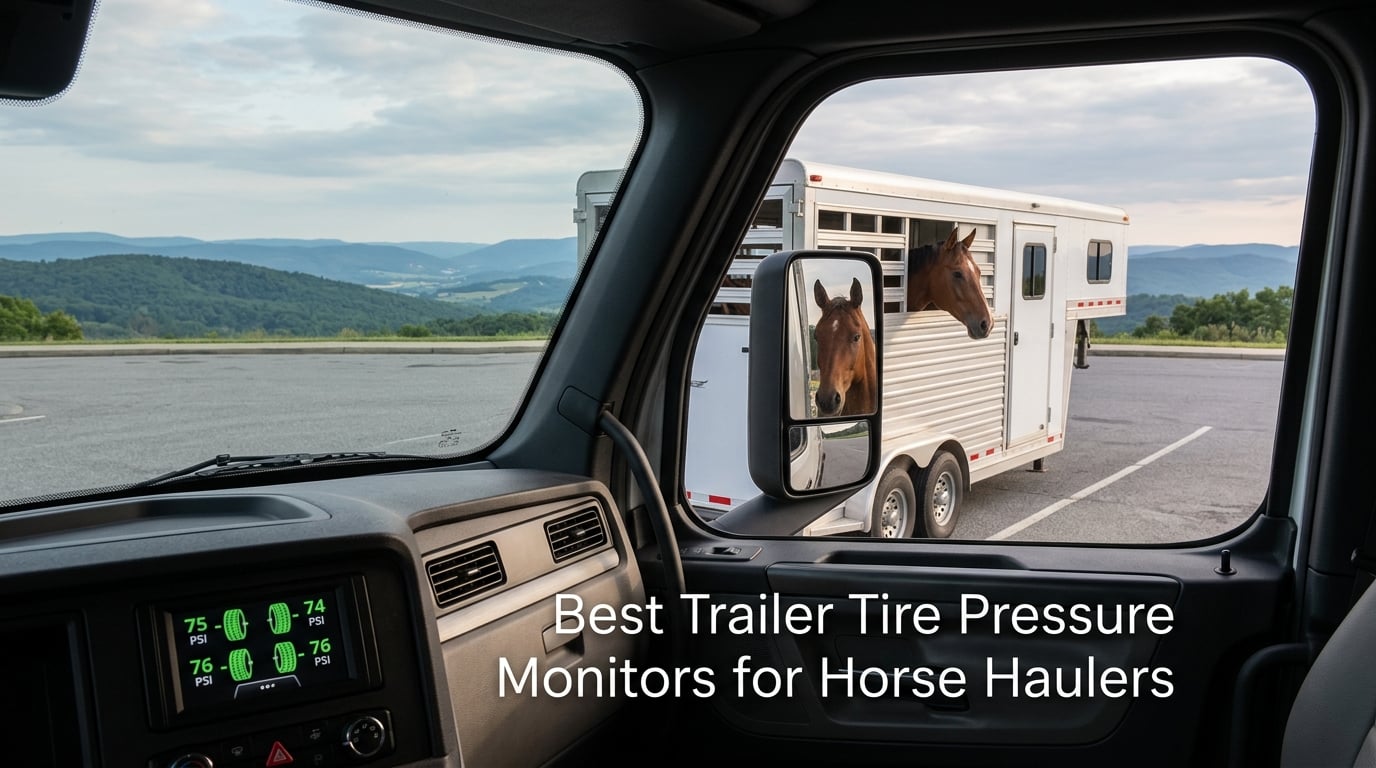
I still remember the morning a friend called me from the side of a highway in Tennessee, trailer full of horses behind her, one tire shredded into ribbons. She had no warning. No alarm, no signal drop, nothing. Just a sudden pull and the smell of hot rubber. That tow cost her nearly $3,200 between the roadside call, a new tire, a damaged fender, and a vet check for a stressed gelding.
Stories like that are exactly why I put together this guide to the best trailer tire pressure monitors for horse haulers. A tire pressure monitoring system, or TPMS, watches your trailer tires in real time and alerts you to slow leaks, overheating, and dangerous pressure drops before they become a blowout. When you are hauling horses, the stakes are higher than cargo. A blowout at speed can flip a trailer, injure animals, and end a season.
Our team spent weeks comparing 10 of the most popular trailer TPMS options for 2026, weighing pressure ranges, sensor types, signal reliability, and ease of installation. We pulled real owner reviews from RV and horse hauling forums, dug into spec sheets, and tested common scenarios like long-distance towing and multi-axle setups. Whether you are pulling a two-horse bumper pull or a four-horse gooseneck with living quarters, this guide will help you pick the system that keeps your horses, your trailer, and your wallet safe on every trip.
Table of Contents
Top 3 Picks for Best Trailer Tire Pressure Monitors for Horse Haulers

TST 507 TPMS with 4 Cap Sensors
- 3.5 inch Color Display
- Signal Booster Included
- 3-Year Warranty
- USA Support

TireMinder i10 RV TPMS
- Monitors up to 40 Tires
- 0-199 PSI Range
- Rhino Signal Booster
- Pre-Programmed Sensors
These three systems stood out across our testing for different reasons. The TST 507 earned our Editor’s Choice spot because horse haulers on forums repeatedly call it the most trusted name in trailer TPMS, with USA-based support you can actually reach by phone. The TireMinder i10 takes the Best Value slot for its massive 40-tire capacity and razor-sharp accuracy at a fair mid-range price. And the Masoll M13 wins Budget Pick for delivering solar charging and auto-calibration at a price that makes safety accessible to every hauler.
Best Trailer Tire Pressure Monitors for Horse Haulers in 2026
| Product | Specifications | Action |
|---|---|---|
| TST 507 TPMS 4 Cap Sensors |
|
Check Latest Price |
| TireMinder i10 RV TPMS |
|
Check Latest Price |
 Masoll M13 Solar TPMS Masoll M13 Solar TPMS |
|
Check Latest Price |
 GUTA GT20 Trailer TPMS GUTA GT20 Trailer TPMS |
|
Check Latest Price |
 Masoll Gen 2 RV TPMS Masoll Gen 2 RV TPMS |
|
Check Latest Price |
 Tymate TM2 RV TPMS Tymate TM2 RV TPMS |
|
Check Latest Price |
 Tymate TM7 RV TPMS Tymate TM7 RV TPMS |
|
Check Latest Price |
 TireMinder Smart TPMS TireMinder Smart TPMS |
|
Check Latest Price |
 EEZTire TPMS6ATC 6 Sensors EEZTire TPMS6ATC 6 Sensors |
|
Check Latest Price |
 Tymate TM12 RV TPMS Tymate TM12 RV TPMS |
|
Check Latest Price |
1. TST 507 Tire Pressure Monitoring System – Best Overall for Horse Trailers
TST 507 Tire Pressure Monitoring System with 4 Cap Sensors and Color Display for Metal/Rubber Valve Stems by Truck System Technologies, TPMS for RVs, Campers and Trailers
3.5 inch Color Display
0-145 PSI Range
Signal Booster Included
CR2032 Sensor Batteries
Pros
- Easy 20-minute install
- Reliable signal with booster
- Caught multiple blowout precursors
- 3-year warranty with USA support
- Expandable to multiple trailers
Cons
- Display washes out in direct sun
- Sensors read about 4 PSI low
- Cap sensors require removal to add air
When horse haulers ask on forums which trailer TPMS they trust most, the TST 507 is the name that comes up again and again. I have read hundreds of reviews from owners who tow livestock, boats, and fifth wheels, and the consistency of praise for this system is striking. People love that the company picks up the phone when you call, which matters a lot when you are troubleshooting on a Friday night before a Saturday show.
The TST 507 ships with four cap sensors, a color display monitor, a signal booster, and a clean mounting kit. Installation took most owners about 20 minutes, and the system pairs sensors automatically. The 3.5-inch color screen shows pressure and temperature for each tire, and the audible alarm locks onto the problem tire instantly. For horse trailers, that instant focus on the affected wheel can buy you the seconds you need to pull over safely.
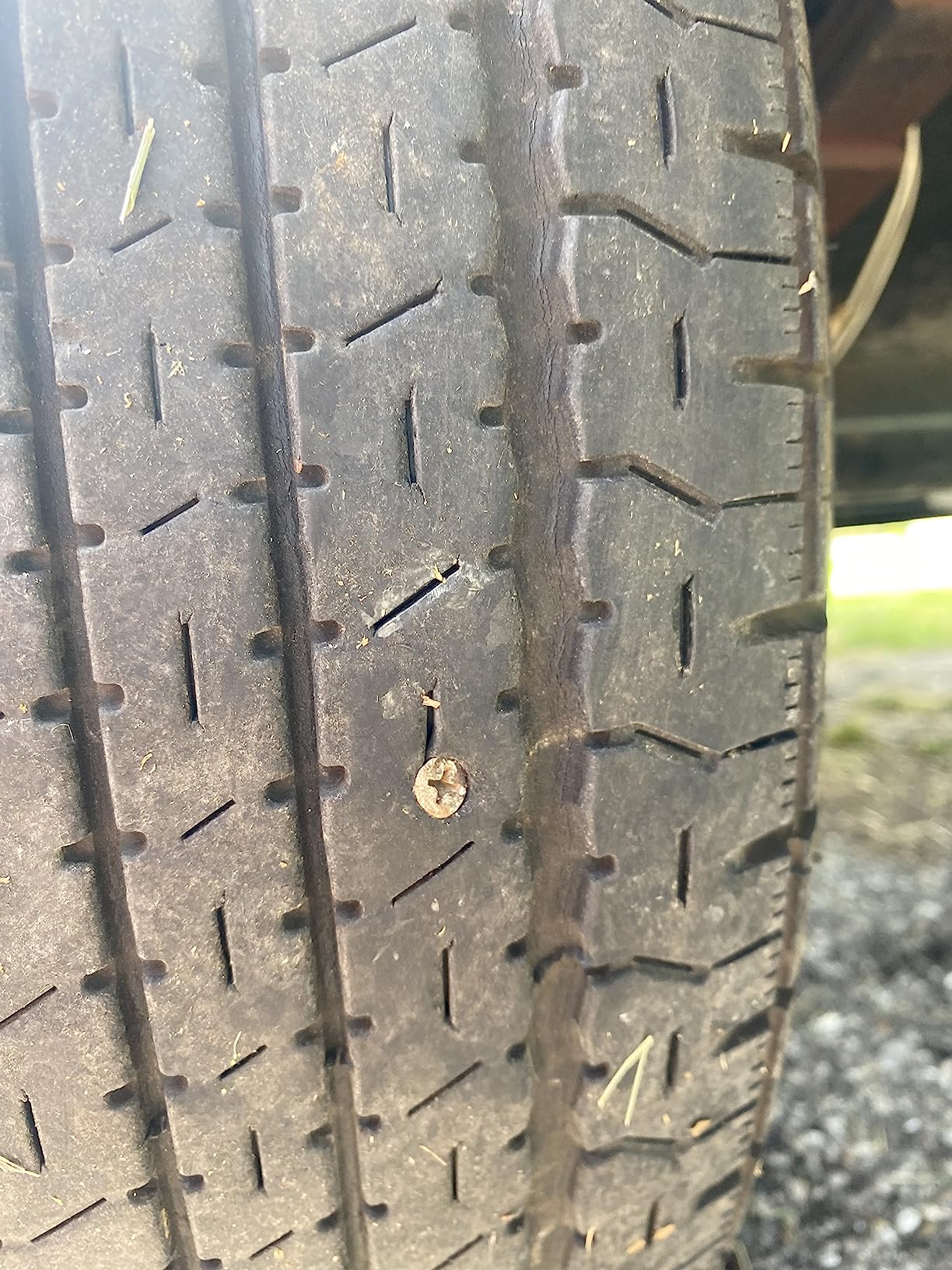
On the technical side, the TST 507 covers a pressure range up to 145 PSI, which is more than enough for standard horse trailer load range D and E tires. The included signal booster is the real differentiator for longer trailers. Horse trailers with living quarters can stretch 25 to 35 feet, and without a repeater, many budget systems drop signal on the rear axle. TST includes the booster in the box, so you do not have to buy it separately.
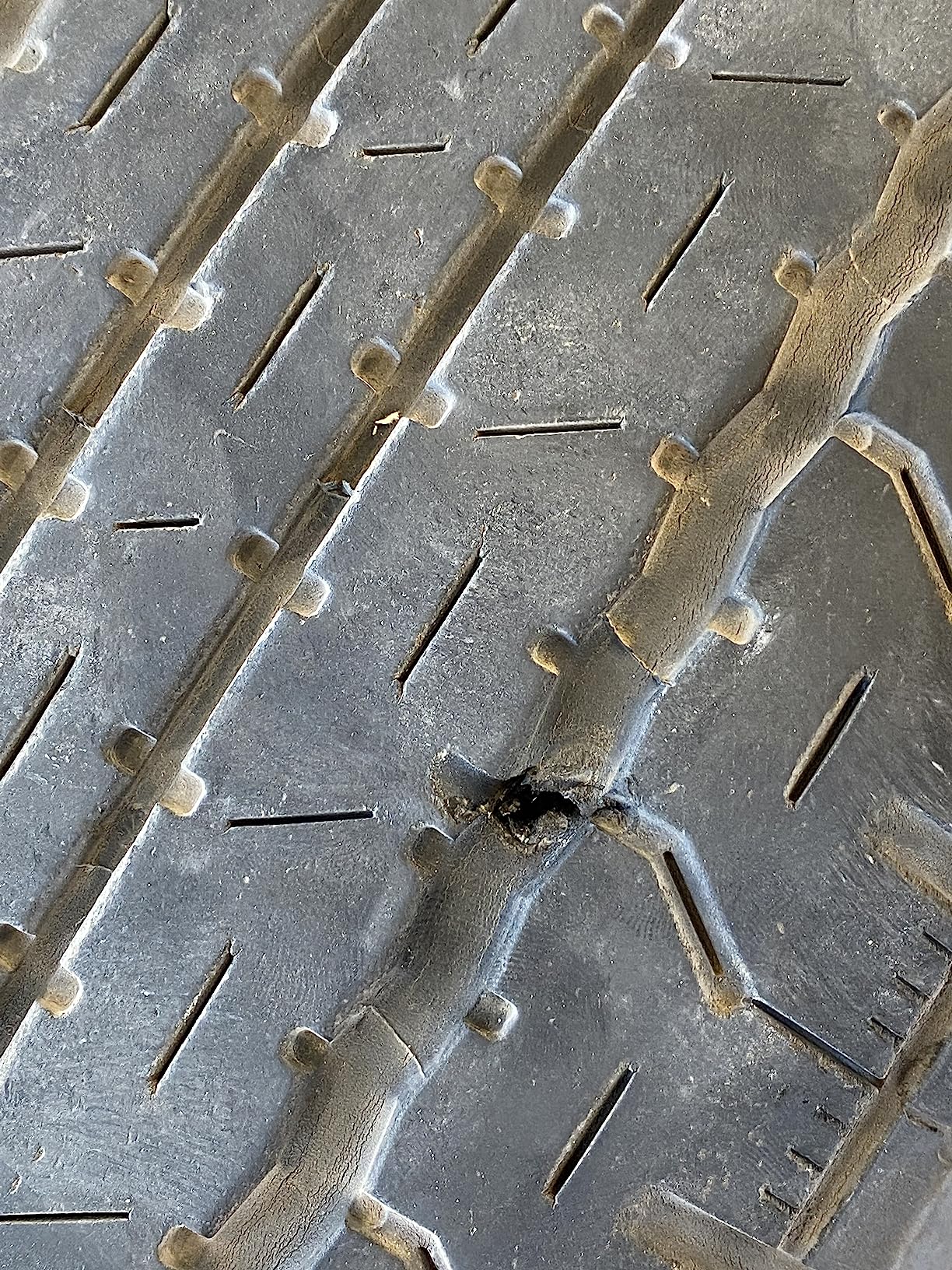
The sensors use replaceable CR2032 batteries, which means you are not throwing away the whole sensor when the battery dies. TST backs every TPMS product with a 3-year warranty and USA-based live customer support. Multiple owners reported the system caught slow leaks and overheating bearings before a blowout could develop, saving them thousands in repairs and protecting their animals.
Why horse haulers love the TST 507
The biggest draw for livestock towers is the combination of reliability and support. When you are 400 miles from home with horses in the back, you want a company that answers the phone. TST is repeatedly praised for responsive service and honoring warranties without hassle.
The expandable design also matters for horse haulers who tow different trailers. You can monitor your tow vehicle plus up to four towable vehicles on one display. If you switch between a two-horse and a stock trailer, the system adapts without buying a new monitor.
What to watch out for
The main complaint is screen visibility in bright sunlight. Several owners noted the color display washes out in direct sun, though the SunShade bundle variant helps. Some users also found the sensors read about 4 PSI low compared to a professional gauge, so it is worth verifying against a trusted gauge after install.
Cap sensors also require full removal to add or release air, which is a minor inconvenience compared to flow-through sensors. If you air up frequently, consider the flow-through variant of this same system.
2. TireMinder i10 RV TPMS – Best Value for Multi-Tire Setups
TireMinder i10 RV TPMS with 4 Transmitters, Black
3.15 inch Color LCD
0-199 PSI Range
Up to 40 Tires
Rhino Signal Booster
Pros
- Monitors up to 40 tires
- Accurate within 1 PSI
- Rhino booster included
- Loud audible alerts
- Pre-programmed sensors
Cons
- Screen glare in bright sun
- Multi-function button confusing
- Sensors heavy on some valve stems
- Pricey for a mid-range
The TireMinder i10 is the system I recommend most often to haulers running dually trucks and long multi-axle horse trailers. With the ability to monitor up to 40 tires and a pressure range of 0 to 199 PSI, it handles configurations that would overwhelm cheaper systems. For anyone pulling a gooseneck with a living quarters plus a second tag-along, this is one of the few options that covers every wheel without adding extra monitors.
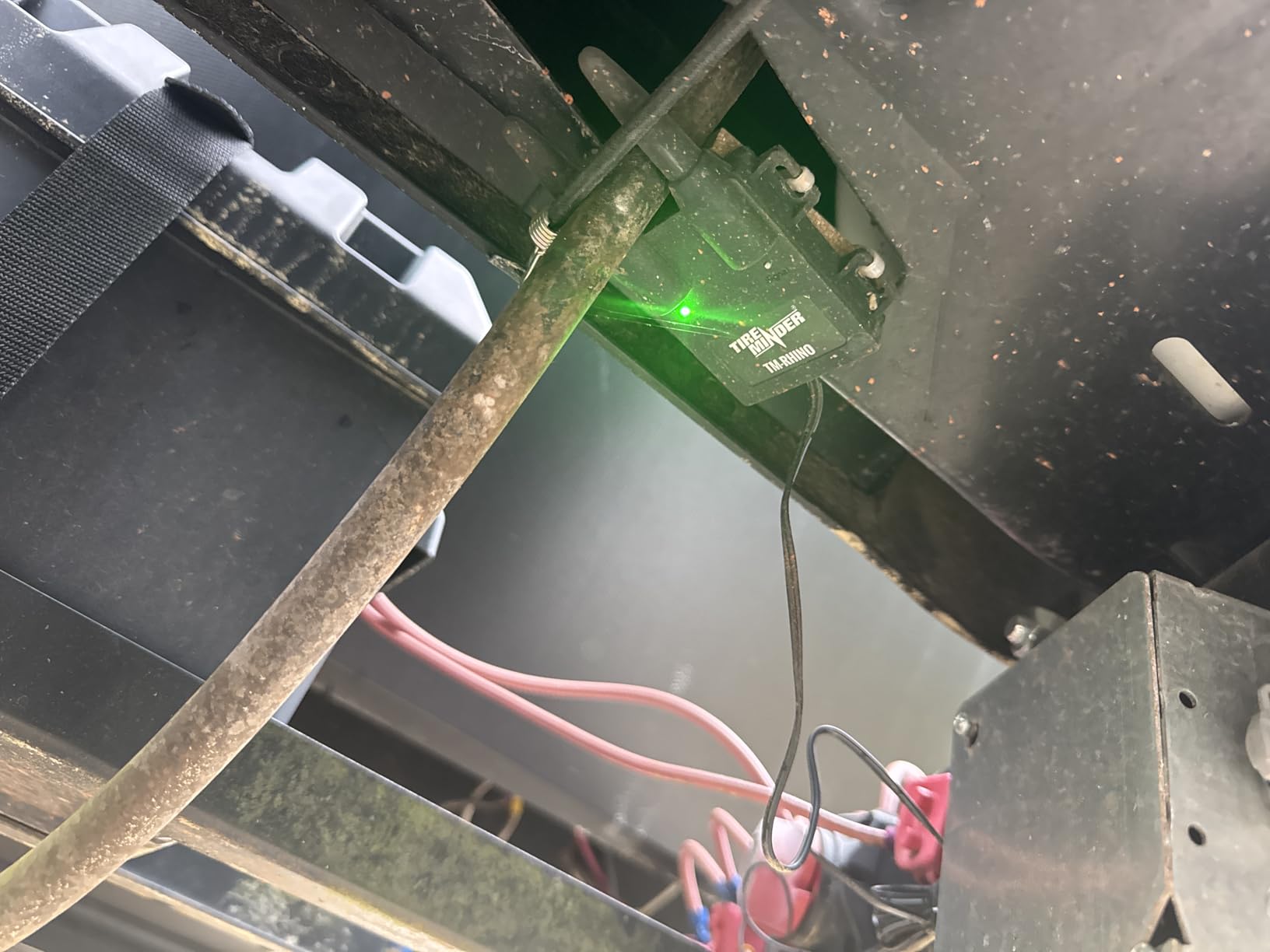
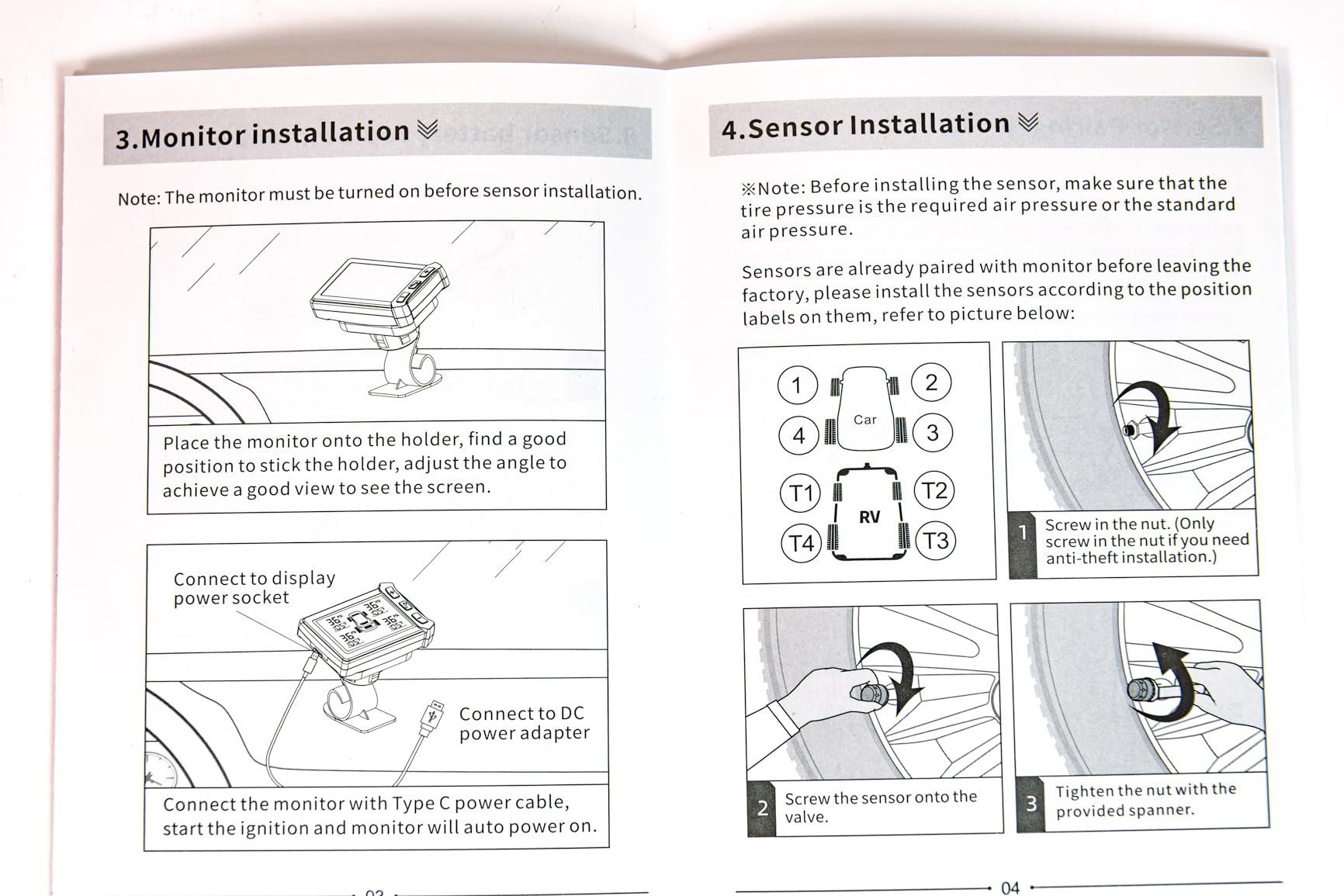
Installation is genuinely fast. The sensors arrive pre-programmed, so you screw them onto the valve stems, mount the display, and you are rolling in 10 to 15 minutes. The included rhino signal booster is a solid piece of hardware that keeps signal strong over long distances. On forums, TireMinder i10 owners consistently report accurate readings matching their professional gauges within a single PSI.
Technically, the i10 checks every tire every 6 seconds for slow leaks, rapid leaks, blowouts, low pressure, high pressure, and high temperature. The internal rechargeable battery runs over 5 hours on a charge, and a USB cigarette lighter charger is included so you can keep it powered on long hauls. The 3.15-inch color LCD shows simultaneous PSI or temperature readings, though you toggle between the two views.
The audible alerts are loud and impossible to ignore, which is exactly what you want when a tire starts losing pressure at 65 mph. TireMinder is a trusted brand with a long history in the RV space, and the i10 is their flagship non-smart system. Owners repeatedly say it outperforms no-name competitors by a wide margin.
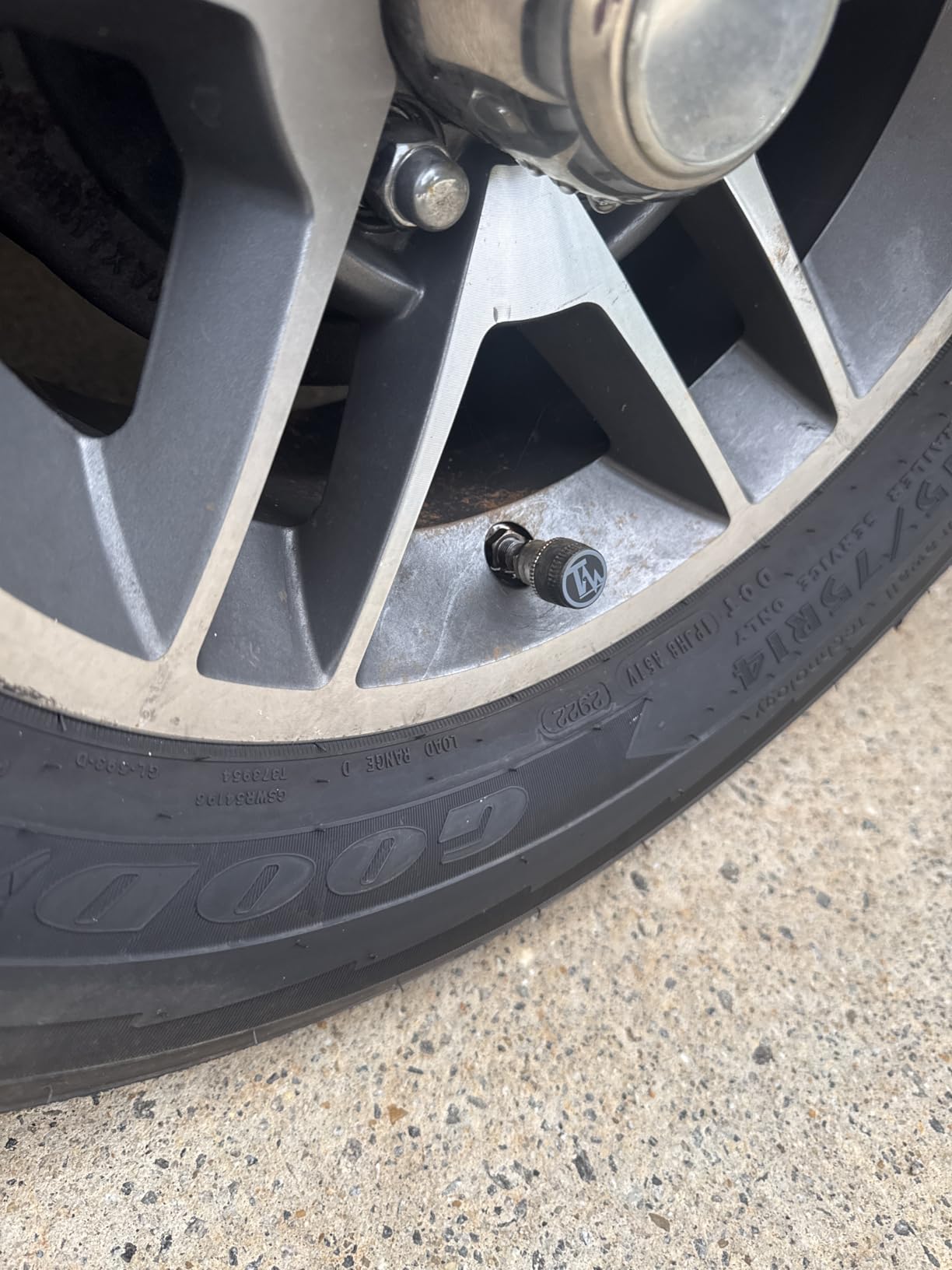
Best for large multi-axle horse trailers
If you tow a four-horse gooseneck with a dually truck, you need a system that can handle 8 to 10 tires without dropping sensors. The i10 handles up to 40, so you have plenty of headroom. The 199 PSI range also covers commercial-grade tires if you ever upgrade to load range G.
The rhino booster keeps signal locked between the cab and rear axle, even on trailers stretching past 35 feet. That reliability is why the i10 lands at number two in our best trailer tire pressure monitors for horse haulers roundup.
Watch the valve stem weight
One real concern surfaced in forum reviews. The sensors are relatively heavy, and at least one owner reported valve stem failures caused by sensor weight and vibration. If your trailer has thin rubber valve stems, upgrade to metal valve stems before installing any external TPMS. This applies to most systems on this list, not just the i10.
3. Masoll M13 Solar TPMS – Best Budget Pick Under $50
Masoll M13 Tire Pressure Monitoring System, RV/Trailer TPMS with 4 Sensors
Solar Charging LCD
0-99 PSI Range
Auto Calibration
1.5 PSI Accuracy
Pros
- Solar panel eliminates cable clutter
- Auto-calibration no programming
- Anti-glare screen
- Accurate within 1-2 PSI
- Lowest price on this list
Cons
- Max 99 PSI limits heavy trailers
- Highway speeds trigger temp false alarms
- Signal booster needed over 38ft
- Long-term solar durability unknown
If you are hauling horses on a budget and want real protection without spending $200-plus, the Masoll M13 is the system I point people toward. At under $50, it delivers features that systems twice the price charge extra for, including solar charging and automatic calibration. The auto-calibration alone saves you 15 minutes of fiddling with alarm thresholds.
I was skeptical of solar charging on a TPMS, but owners report months of cable-free use. The panel tops up the internal battery during daytime driving, and the USB-C cable handles overnight or garage charging. For haulers who store their trailer outdoors, the solar feature means the monitor is ready when you are.
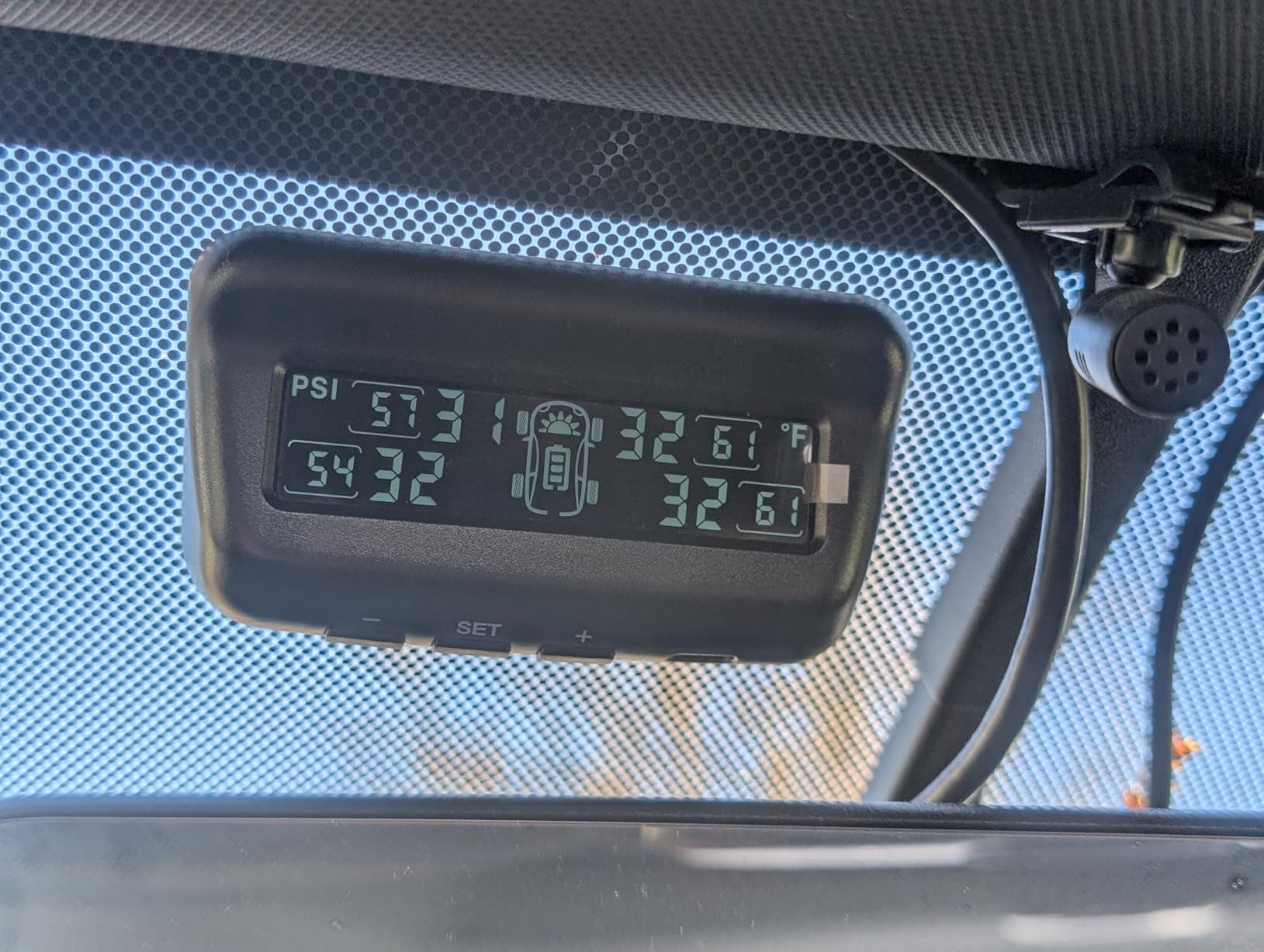
The M13 covers a pressure range of 0 to 99 PSI, which is the main limitation to understand before buying. Standard horse trailer tires in load range C and D run 50 to 80 PSI, so the M13 handles them fine. But if you run load range E tires at 80 to 90 PSI, or commercial tires pushing past 100 PSI, you will exceed this system’s ceiling. Check your tire sidewall max before ordering.
The anti-reflective color LCD is readable in most conditions, and the system uses intelligent auto wake-up and sleep to conserve power. Sensors are pre-paired at the factory, so setup is screw-on and go. Multiple owners reported the M13 caught flats before they became blowouts, which is the whole point of running a TPMS.
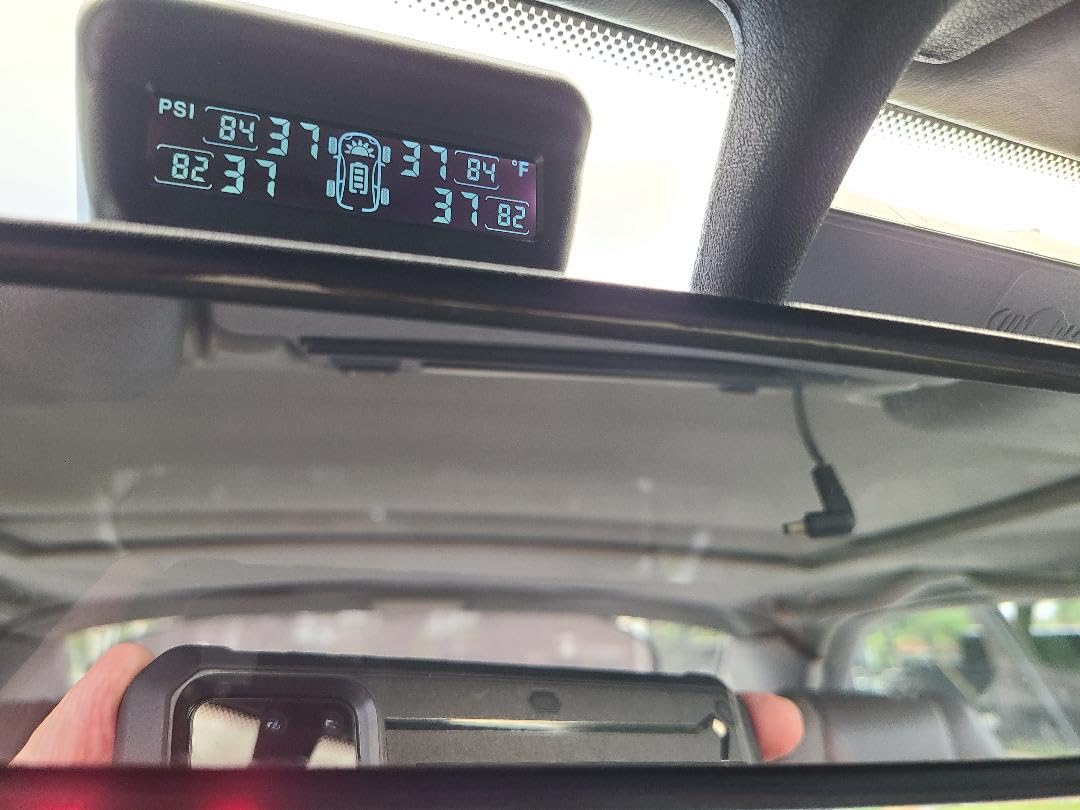
Who the M13 fits best
The Masoll M13 is ideal for haulers with two-horse bumper pull trailers, stock trailers, and lighter setups running standard PSI. If your tires max out under 90 PSI and your trailer is under 38 feet, this budget pick covers you fully. It is also a great first TPMS if you are new to the concept.
Plan for a signal booster on long trailers
The M13’s transmission distance is shorter than premium systems. For trailers over 38 feet, Masoll recommends adding a signal booster, which is sold separately. Budget an extra purchase if you tow a long gooseneck or a trailer with living quarters. Also note that highway speeds can cause temperature-related false alarms as tires heat up, so set your expectations accordingly.
4. GUTA GT20 Trailer TPMS – Best for Fleets and Multi-Vehicle Setups
GUTA GT20 Trailer Tire Pressure Monitoring System, TPMS with 4 Sensors
0-188 PSI Range
Up to 24 Tires
100ft Signal Booster
6 Alert Modes
Pros
- Monitors up to 24 tires
- Signal booster uses AAA batteries
- Pre-programmed sensors
- 12-15 hour battery life
- Trailer auto-disconnects on display
Cons
- Cannot manually set thresholds
- Display not bright enough outdoors
- Flashing tire icons distracting
- Heavy sensors on metal valve stems
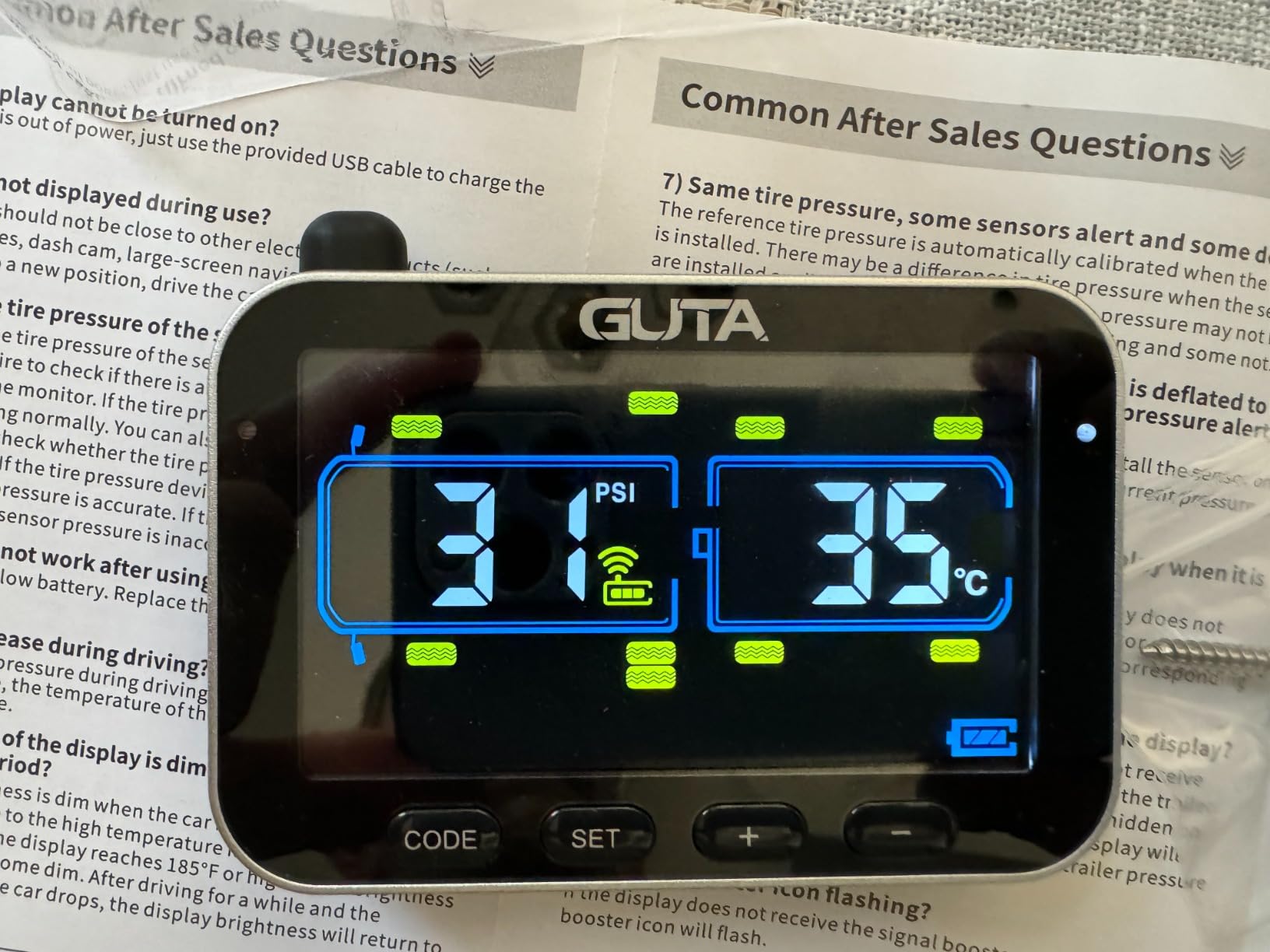
The GUTA GT20 fills the gap between budget systems and premium brands, and it does so with serious multi-tire capacity. Supporting up to 24 tires, it is built for haulers who manage complex setups, commercial fleets, or dually trucks towing multi-axle trailers. If you have ever felt limited by a 4-tire or 6-tire system, the GT20 gives you room to grow.
What makes the GT20 stand out is the signal booster design. Instead of hardwiring the repeater into your vehicle’s 12-volt system, it runs on three AAA batteries. That means you can place it anywhere along the trailer without running cables. For horse trailers with aluminum skin that blocks wireless signals, a strategically placed battery-powered booster can solve dropout issues completely.
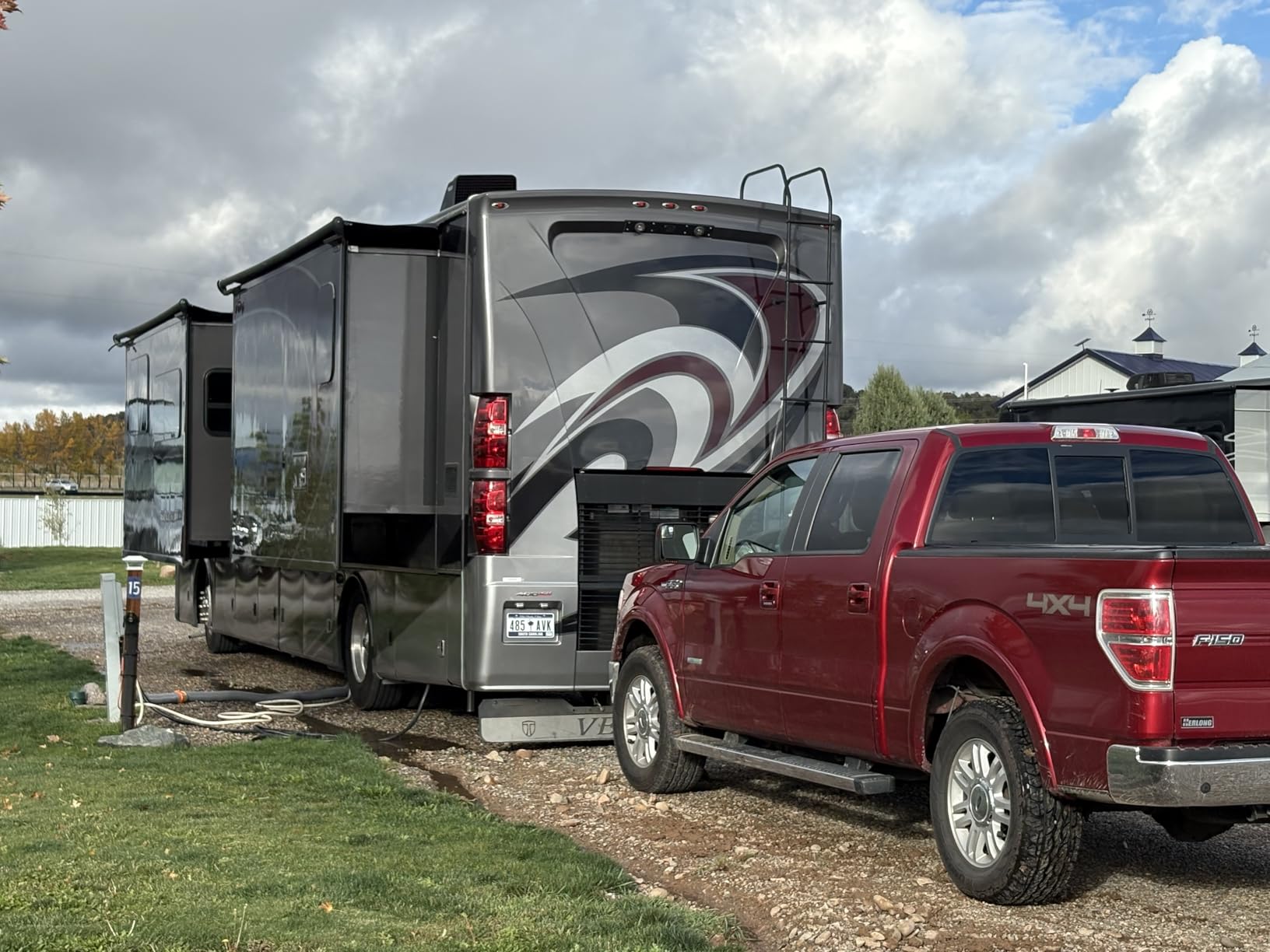
The pressure range of 0 to 188 PSI covers everything from passenger tires to load range G commercial trailer tires. Temperature monitoring spans minus 40 to 221 degrees Fahrenheit. The GT20 ships with six real-time alert modes covering rapid air loss, abnormal pressure, high temperature, and low battery warnings for both sensors and the monitor. The auto-calibration feature sets your current tire pressure as the reference point and alerts you to plus 25 percent or minus 15 percent deviations.
Battery life on the monitor is impressive at 12 to 15 hours per charge, and a power-saving mode kicks in after 15 minutes of no motion. Sensors are pre-labeled and pre-paired, so installation is straightforward. The trailer automatically disappears from the display when you disconnect, which is a nice touch for haulers who swap trailers regularly.
Why fleet and multi-trailer haulers choose the GT20
The 24-tire capacity is the headline feature. If you run a horse transport business with multiple rigs, or you tow a gooseneck plus a tag-along, the GT20 scales with you. The battery-powered booster also means you can optimize signal placement per trailer configuration.
The auto-calibration trade-off
The GT20 only supports auto-calibration, meaning you cannot manually set custom alarm thresholds. The system learns your pressure and warns at plus 25 percent or minus 15 percent. For most haulers that is fine, but if you want tight control over alarm points for a specific tire load range, you may prefer the TST 507 or EEZTire systems that allow manual fine-tuning.
5. Masoll Gen 2 RV TPMS – Best Value Mid-Range with IP69 Booster
Masoll RV Tire Pressure Monitoring System, TPMS Sensors Set of 4
Color LCD 4-Brightness
0-145 PSI Range
120ft Signal Distance
IP69 Waterproof Booster
Pros
- 120ft transmission distance
- IP69 waterproof signal booster
- 4-level brightness control
- Available in 2 to 8 sensor kits
- Pre-paired sensors
Cons
- Only 50 reviews so far
- Auto-calibration only no manual
- May still need booster on longest rigs
The Masoll Gen 2 is the upgraded sibling of the M13, and it addresses the main complaint of the budget model, signal distance. With a 120-foot transmission range and an included IP69 waterproof signal booster, the Gen 2 is built for longer trailers and harsher conditions. If you liked the idea of the M13 but need more range or a higher PSI ceiling, this is your step-up option.
I like that Masoll kept the auto-calibration simplicity while improving the hardware. The color LCD now offers four levels of brightness adjustment, which directly addresses the glare complaints that plague most TPMS displays. The 0 to 145 PSI range covers load range E tires, so this system handles heavier horse trailers that the M13 cannot.
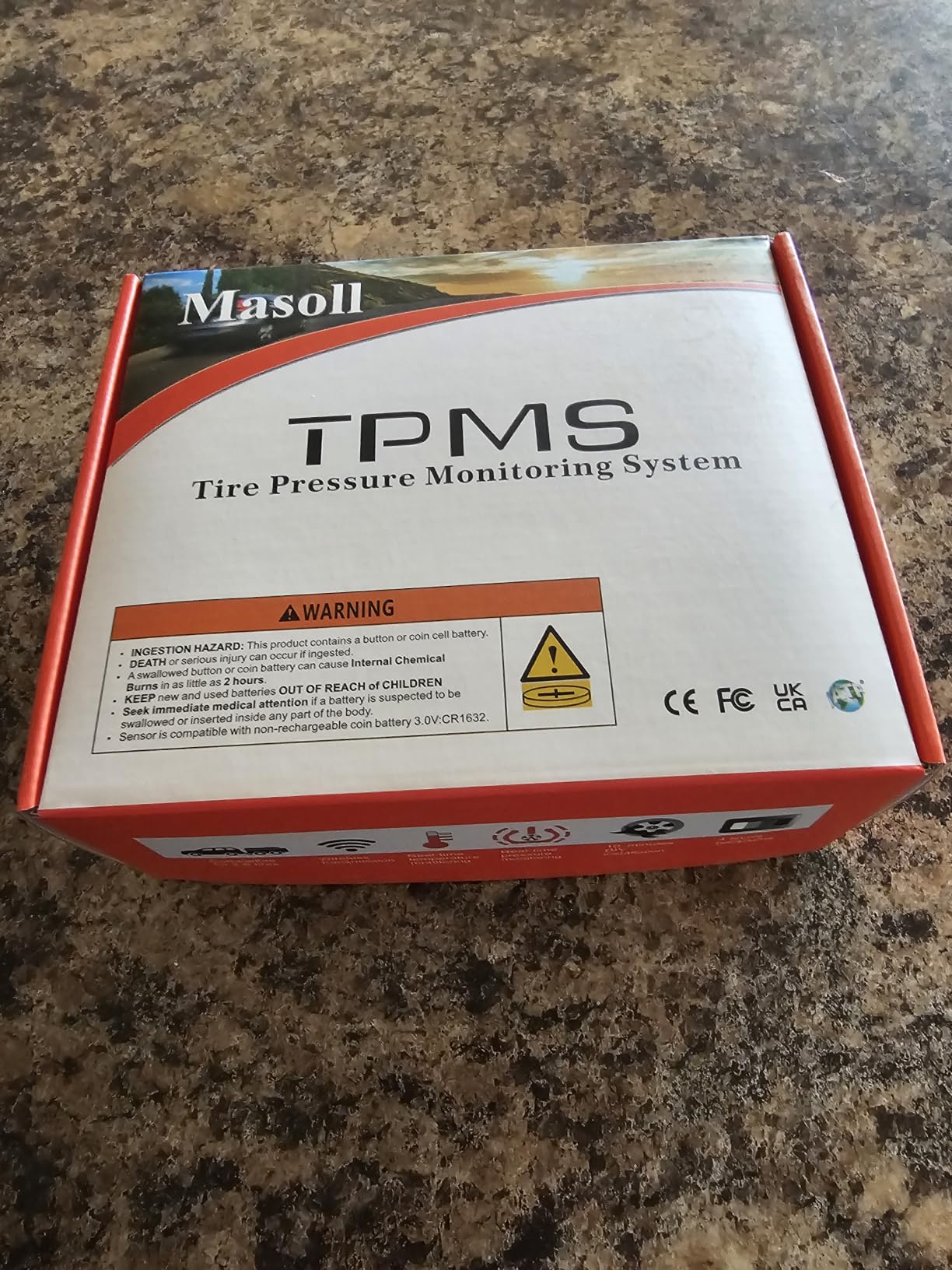
The included signal booster carries an IP69 waterproof and dustproof rating, which means it can handle road spray, rain, and the occasional boat ramp splash. For horse haulers who also tow boats or who travel through wet climates, that sealing matters. The booster also includes high-voltage protection to survive vehicle electrical surges.
Sensors arrive factory pre-paired, and the system offers multiple alarm types including high pressure, low pressure, high temperature, fast leakage, sensor lost, and low voltage. Visual and audio alarms make sure you notice a problem even with the radio on. The kit is available in 2, 4, 6, or 8 sensor configurations, so you can match your exact axle count.
Best for mid-range horse trailers with living quarters
The Gen 2 hits a sweet spot for haulers running three or four horse goosenecks with short living quarters. The 120-foot range and waterproof booster handle the distance and the elements, while the 145 PSI ceiling covers most popular horse trailer tire sizes. You get near-premium performance at roughly a third of the TST 507 price.
Consider the limited track record
With only 50 reviews at the time of this guide, the Gen 2 is newer to market. Early adopters report strong reliability, but long-term durability data is still building. If you want a system with a 5-year proven track record, the EEZTire or TST options carry more history. If you want value and modern features today, the Gen 2 is compelling.
6. Tymate TM2 RV TPMS – Most Popular Budget Solar Option
Tymate TM2 RV Tire Pressure Monitoring System, TPMS Set of 4 Sensors
Solar and USB Charging
0-144 PSI Range
Up to 10 Tires
IP67 Waterproof Sensors
Pros
- Solar charging with USB backup
- IP67 waterproof sensors
- 6 comprehensive alarm modes
- Supports up to 10 tires
- Pre-labeled paired sensors
Cons
- Metal valve stem recommended
- Repeater needed over 36ft
- Lower accuracy at plus minus 3 PSI
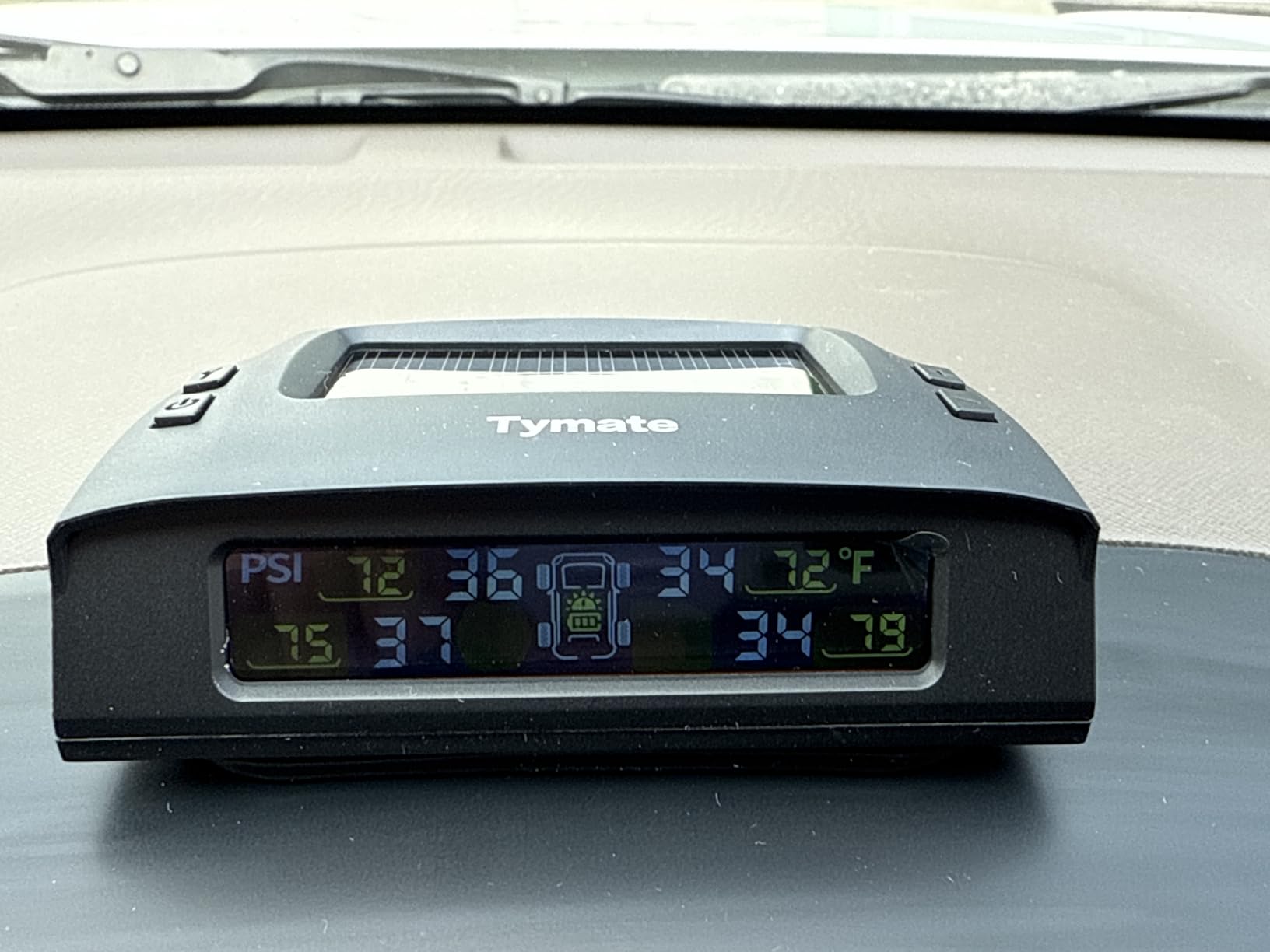
The Tymate TM2 is the crowd favorite among budget-conscious haulers, and the numbers back that up. With over 1,700 reviews and a number one best-seller rank in the aftermarket TPMS category, this is the system most first-time buyers land on. It pairs solar charging with a sub-$70 price point, which is hard to beat for the feature set.
I appreciate that Tymate included IP67 waterproof sensors, which means they handle rain, road spray, and pressure washing without failing. For horse trailers that get hosed out and live outdoors, that sealing is a real-world advantage. The six alarm modes cover fast leak detection, high and low pressure alerts, high temperature warnings, sensor low voltage, and signal loss.
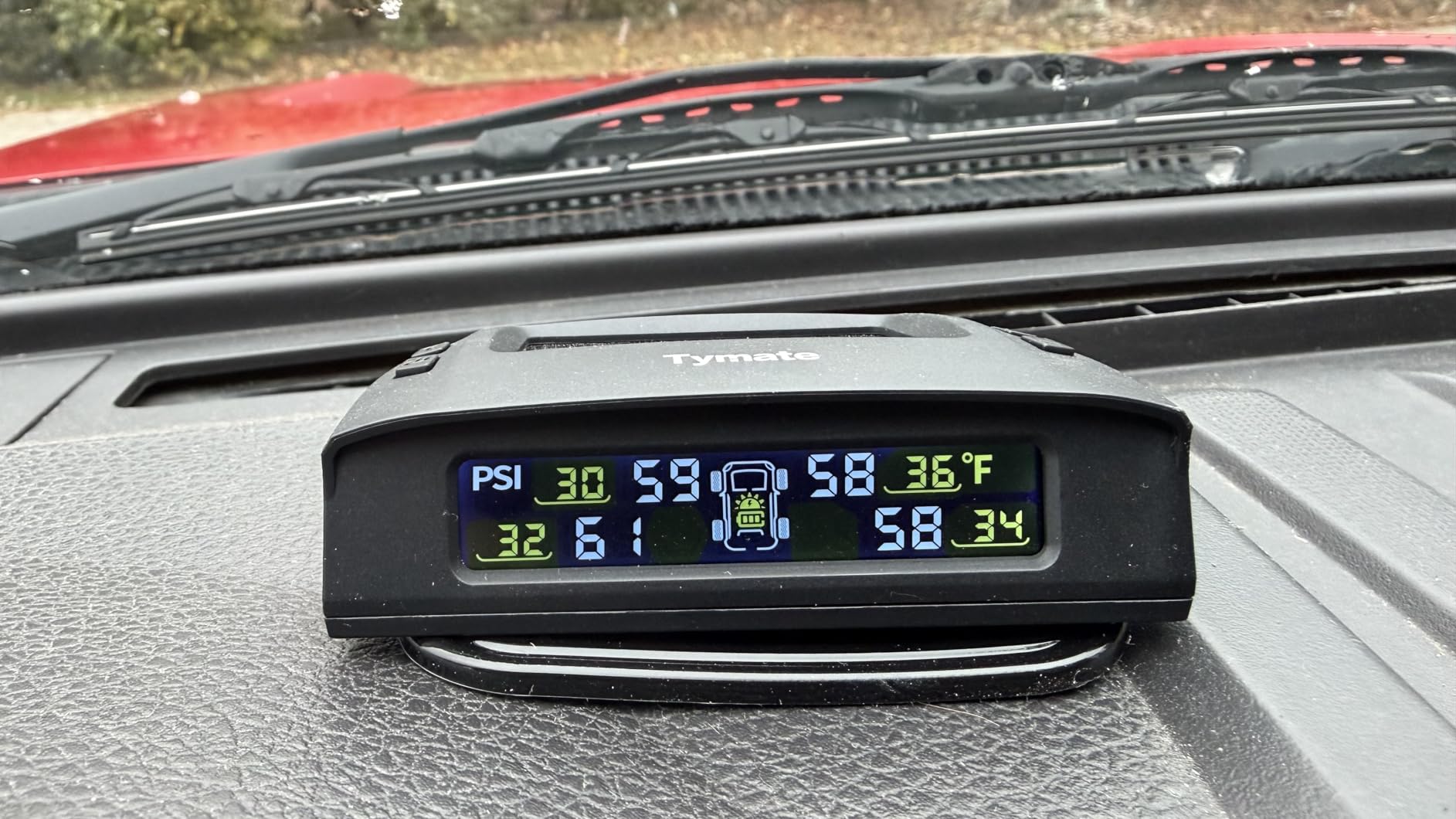
The TM2 covers a pressure range of 0 to 144 PSI, which handles most horse trailer tire load ranges up through E. The solar panel keeps the monitor charged during daytime driving, and the USB port provides backup charging on cloudy days or overnight. Sensors come pre-labeled and paired, so installation takes about 10 minutes with no programming.
The system supports up to 10 tires, making it suitable for a dually tow vehicle plus a two or three axle trailer. A repeater function extends range for longer rigs. The color LCD has an automatic backlight for day and night visibility, though some owners wish for manual brightness control.
Best for first-time horse haulers
If this is your first TPMS and you want to test the waters without a big investment, the TM2 is the safest bet. The massive review base means you can read hundreds of real-world experiences before buying. The feature set covers all the essentials, and the price leaves room to upgrade later if you outgrow it.
Accuracy and range limitations
The TM2 lists accuracy at plus or minus 3 PSI, which is slightly looser than premium systems that hit plus or minus 1 PSI. For most haulers that is acceptable, but if you run tight pressure windows on competition tires, you may notice the variance. Also plan for a repeater if your trailer exceeds 36 feet.
7. Tymate TM7 RV TPMS – Ultra-Budget Plug-and-Play
Tymate TM7 RV Tire Pressure Monitoring System, TPMS Set of 4 Sensors
Cigarette Lighter Power
0-144 PSI Range
Dual USB Charging Ports
5-Minute Setup
Pros
- Lowest price point on this list
- Plug-and-play cigarette power
- Dual USB charging ports
- Includes CR1632 batteries
- 5-minute setup
Cons
- Metal valve stem recommended
- Repeater needed over 36ft
- Only 5 tire capacity
- Lower accuracy tier
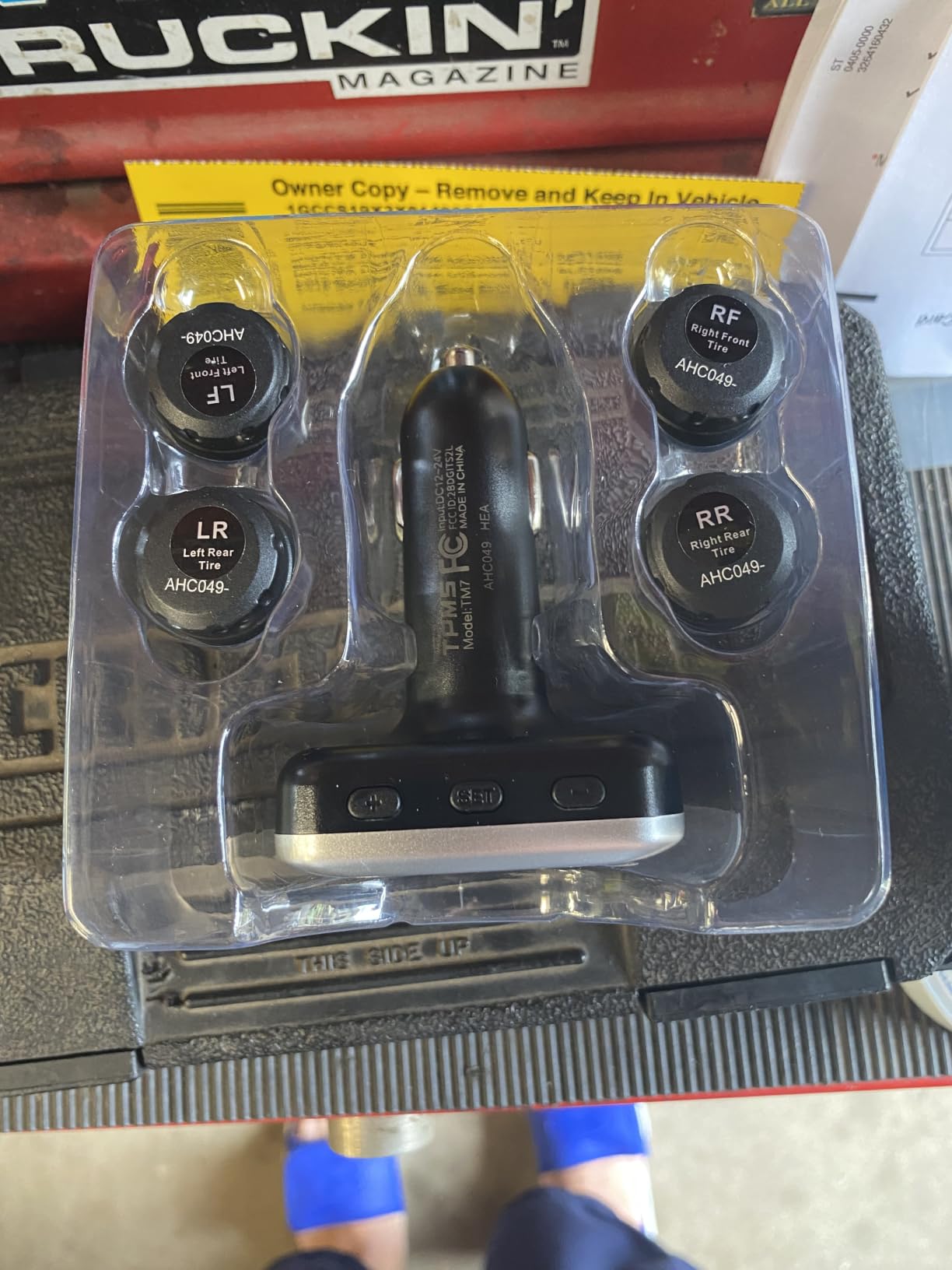
The Tymate TM7 is the most affordable system in this roundup, and it proves that tire safety does not require a huge spend. At under $40, you get a color LCD monitor, four sensors, and the batteries to run them. With over 2,300 reviews, this is one of the most purchased TPMS units on the market.
What makes the TM7 uniquely simple is its power source. Instead of a rechargeable battery you have to remember to charge, the monitor plugs directly into your vehicle’s cigarette lighter socket. It is always on when you drive, always off when you park. For haulers who forget to charge devices, this design eliminates that failure mode entirely.
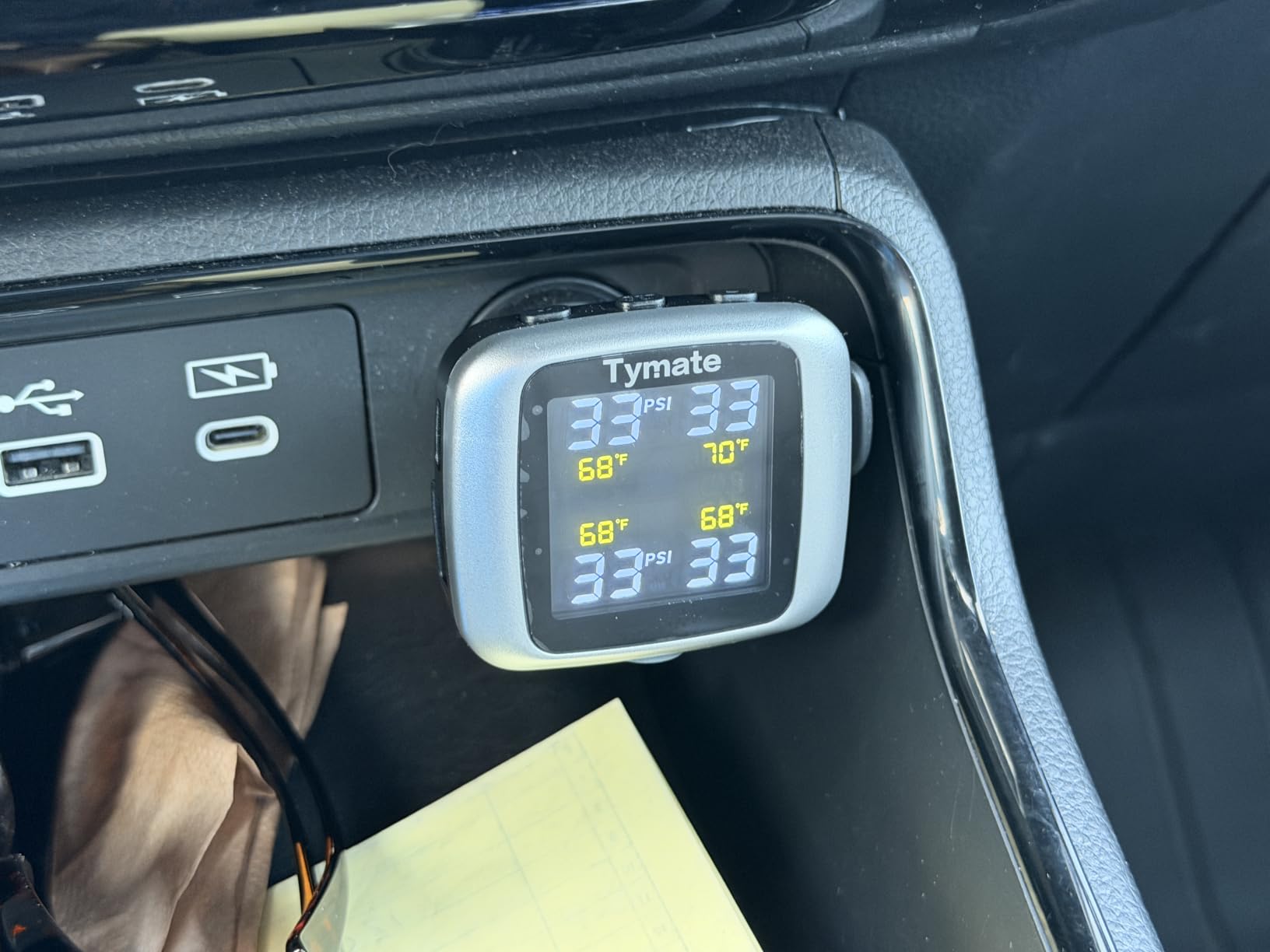
The TM7 also includes dual USB charging ports on the monitor body, which is a clever touch. You can charge your phone or GPS while the TPMS runs, freeing up your vehicle’s other power outlets. The 0 to 144 PSI pressure range covers standard horse trailer tires, and accuracy is listed at plus or minus 1.5 PSI, which is solid for the price.
Six alarm modes handle high pressure, low pressure, fast leakage, high temperature, sensor low battery, and signal loss. The color LCD has an adjustable backlight for day and night driving. Setup takes about 5 minutes since the sensors arrive pre-paired and labeled.
Best for older trucks without factory TPMS
If you tow with an older truck that lacks a factory tire pressure monitoring system, the TM7 covers both your truck and trailer. The cigarette lighter power means no wiring, and the budget price makes it an easy add. This is also a solid backup system for a second vehicle.
Understand the 5-tire limit
The TM7 monitors a maximum of 5 tires, which covers a single-axle trailer plus a spare, or a tandem-axle trailer without the tow vehicle. If you want to monitor your truck tires too, you will exceed the limit and need the TM2 or TM12 instead. Match your tire count to the model before ordering.
8. TireMinder Smart TPMS – Best App-Based System
TireMinder Smart TPMS with 4 Transmitters for RVs, MotorHomes, 5th Wheels, Motor Coaches and Trailers
Smartphone App Monitoring
0-232 PSI Range
Up to 22 Tires
Bluetooth Adapter Included
Pros
- Uses your phone as the monitor
- Highest 232 PSI range
- Monitors up to 22 tires
- Bluetooth adapter and booster included
- Free replacement batteries
Cons
- App interface feels dated
- Sensors read 5-10 PSI high
- Bluetooth signal drops occasionally
- Battery clip durability concerns
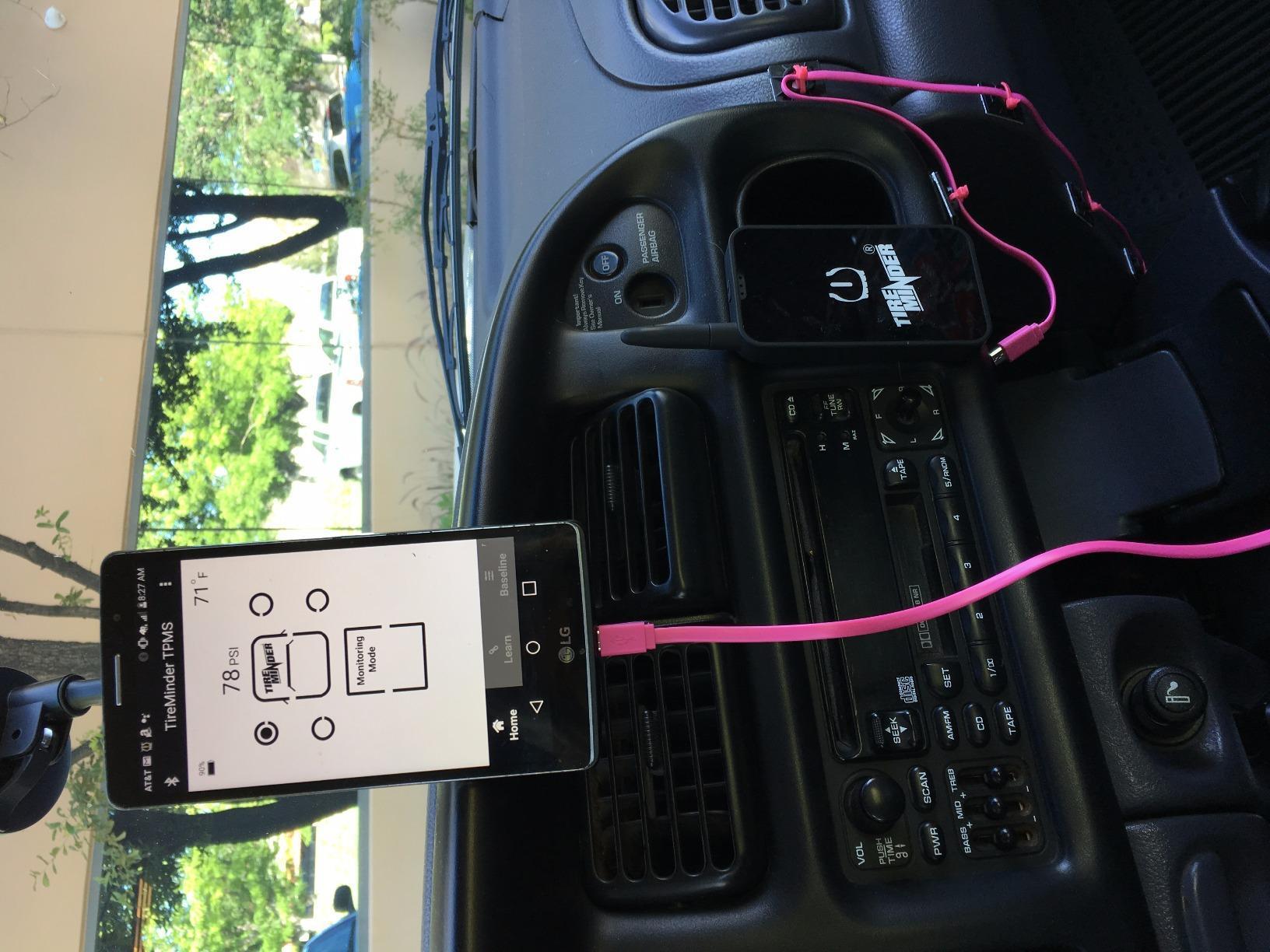
The TireMinder Smart TPMS takes a different approach by using your smartphone as the display. Instead of mounting a separate monitor on your dash, you pair the included Bluetooth adapter to your iPhone or Android and view all tire data through the TireMinder app. For haulers who already run navigation and music through their phone, this eliminates one more device on the windshield.
This system boasts the highest pressure range on our list at 0 to 232 PSI, which covers even commercial semi-truck tires. If you haul with a medium-duty truck running 110 PSI tires, or you upgrade to load range G commercial rubber, the Smart TPMS handles it. It monitors up to 22 tires, so dually trucks with multi-axle trailers are fully covered.
The kit includes a Bluetooth adapter and a rhino signal booster, so you get the same signal strength hardware as the i10. Real-time monitoring tracks high and low pressure, slow leaks, rapid leaks, high temperature, and blowouts. Auto-scroll and auto-search functions cycle through tires automatically, and a two-part disconnect feature lets you drop the trailer sensors from view when you unhitch.
TireMinder has an excellent reputation for customer service, and they offer free replacement sensor batteries, which is a nice ongoing cost saver. The company has been in the RV TPMS space for years and backs this product with a manufacturer warranty.
Best for tech-comfortable haulers
If you prefer checking tire data on your phone screen and you already use a phone mount in your truck, the Smart TPMS is a natural fit. You avoid buying and mounting a dedicated monitor, and you can check pressures from outside the cab when hooking up. The 232 PSI range also future-proofs the system if you ever move to commercial tires.
App and accuracy caveats
The app interface is functional but described by several owners as dated, lacking the polish of modern apps. Some users reported sensors reading 5 to 10 PSI higher than a professional gauge, so verify accuracy after install. Bluetooth signal can also drop intermittently depending on phone placement and trailer length, so keep the booster positioned well.
9. EEZTire TPMS6ATC – Premium Long-Term Reliability Pick
EEZTire-TPMS6ATC Real Time/24×7 Tire Pressure Monitoring System – Color Monitor + 6 at Sensors
4.5 inch Color Display
0-210 PSI Range
Up to 26 Tires
60-Hour Battery
Pros
- Industry leader since 2005
- 6-second monitoring intervals
- 60-hour battery life
- Supports up to 26 sensors
- 5-plus years reported reliability
Cons
- Highest price on this list
- Anti-theft sensors hard to remove
- May need repeater on long rigs
- Limited stock availability
EEZ RV Products has been building tire pressure monitoring systems since 2005, and the EEZTire TPMS6ATC is their flagship unit. When forum users talk about systems that have run flawlessly for 5 or 10 years, EEZTire is the brand that comes up. If you want a set-and-forget system that you install once and trust for a decade, this is the one.
The TPMS6ATC monitors up to 26 tires across separate RV and trailer sensor groups, with a pressure capacity up to 210 PSI. The 6-second monitoring interval means you get near real-time data, faster than most competitors that check every 8 to 12 seconds. The 4.5 by 3 inch color display is the largest on this list, which helps readability at a glance.
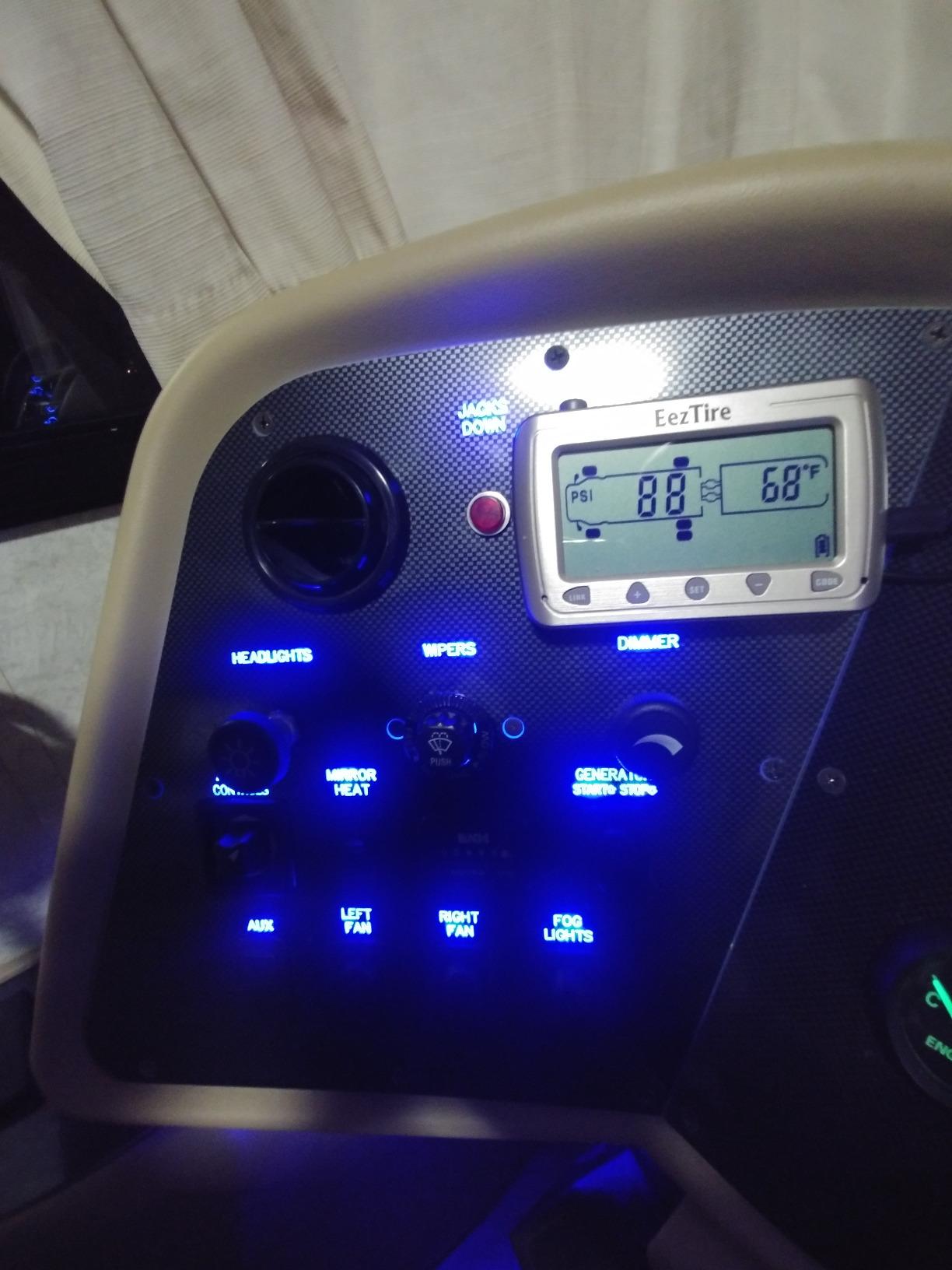
Battery life on the monitor is exceptional at up to 60 hours per charge. For long cross-country hauls, that means you can run multiple days without plugging in. The system is motion-sensitive, entering power-saving mode when parked and waking automatically when you drive. Anti-theft sensors are included, which deters casual sensor theft at campsites and rest stops.
The kit ships with six anti-theft sensors, but EEZ offers an enormous range of variants including 4 to 14 sensor kits, flow-through sensors, and booster bundles. You can configure the system to match your exact tire count and type. Replaceable sensor batteries mean you service sensors rather than replacing them.
Best for full-time and long-distance haulers
If you are on the road constantly, hauling horses to shows across multiple states, the EEZTire’s proven reliability matters more than saving $100. Owners report 5-plus years of dependable service, which no budget system can match. The 60-hour battery and 26-tire capacity make it the most capable all-around system here.
The price and availability trade-off
At the top of the price range, the EEZTire demands a real investment. Stock availability is also limited, with frequent low-stock warnings. Anti-theft sensors, while secure, can be difficult to remove when you need to air up tires, so consider the flow-through sensor variants if you adjust pressure often.
10. Tymate TM12 RV TPMS – Best for 6-Tire Display Viewing
Tymate TM12 RV Tire Pressure Monitoring System, TPMS Set of 6 Sensors
6-Tire Simultaneous Display
0-144 PSI Range
Dual Solar USB Charging
IP67 Sensors
Pros
- 6 tires shown at once
- 12 tires across 4 zones
- Dual solar and USB-C charging
- IP67 waterproof sensors
- Pre-programmed plug-and-play
Cons
- Newer product limited reviews
- Metal valve stem recommended
- Some reporting timing inconsistency
- Repeater needed for max range
The Tymate TM12 is the newest model on this list, released in late 2025, and it brings a feature horse haulers have been asking for, a six-tire simultaneous display. Instead of cycling through tires one at a time or splitting into two groups, the TM12 shows six tire readings on the main screen at once. For a three-axle trailer or a tandem-axle plus tow vehicle, that full-picture view is genuinely useful.
The system supports up to 12 tires total, split across four zones that cycle on the display. So a dually truck with six wheels plus a four-tire trailer stays fully visible without buying extra sensors or a second monitor. The 0 to 144 PSI range covers standard horse trailer tire pressures.
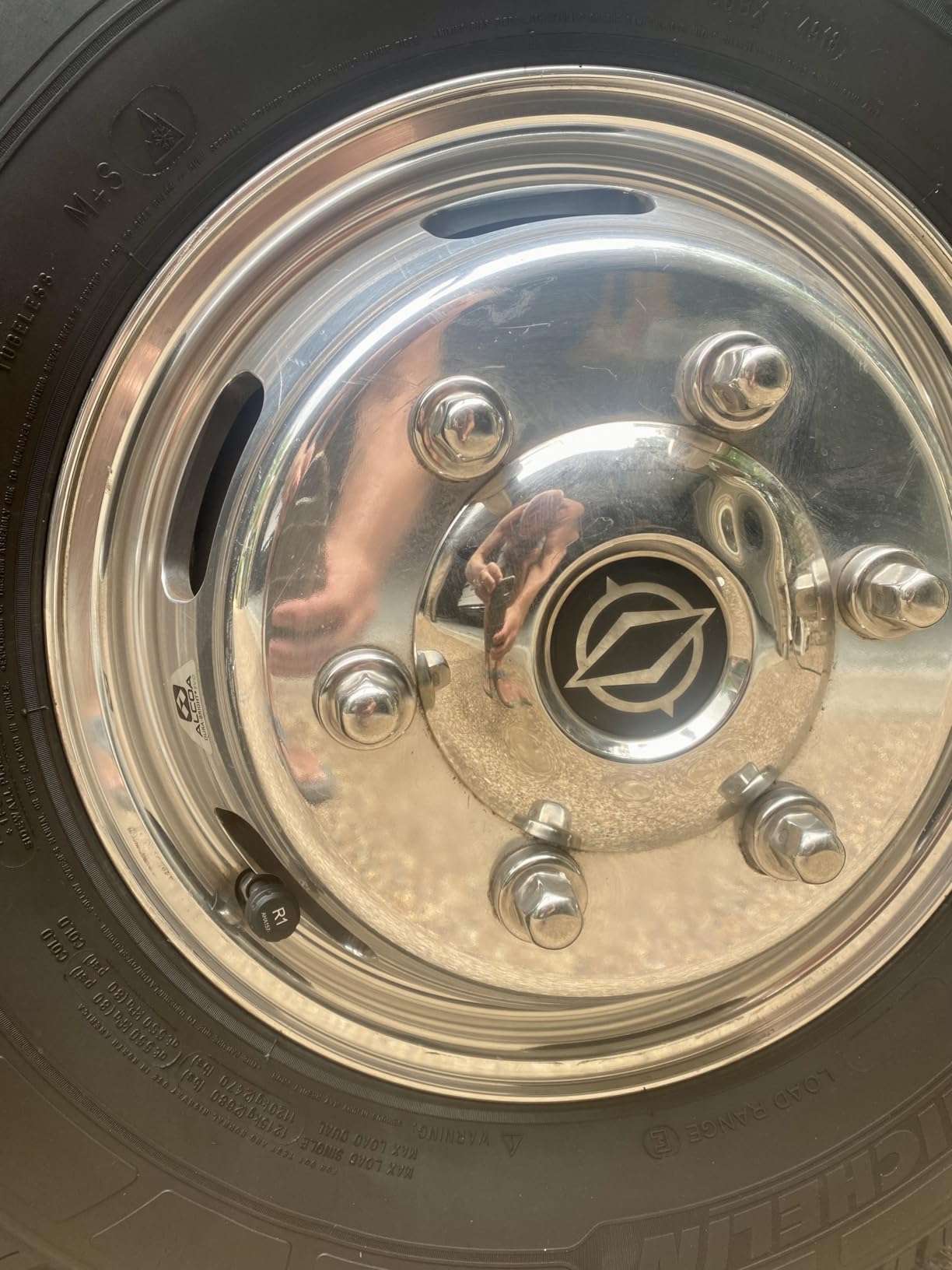
Dual charging is a standout feature here. The solar panel tops up the battery during daytime driving, and USB-C handles fast charging when parked. IP67 waterproof sensors handle rain and road spray without issue. The 50-foot signal range extends past 100 feet with the optional repeater, which covers most horse trailer lengths.
Six alarm modes cover high pressure, low pressure, high temperature, rapid air leakage, sensor low battery, and signal loss. Auto-calibration simplifies setup, and sensors arrive pre-programmed for true plug-and-play installation. The kit ships with six sensors at a competitive price point.
Best for haulers who want full tire visibility
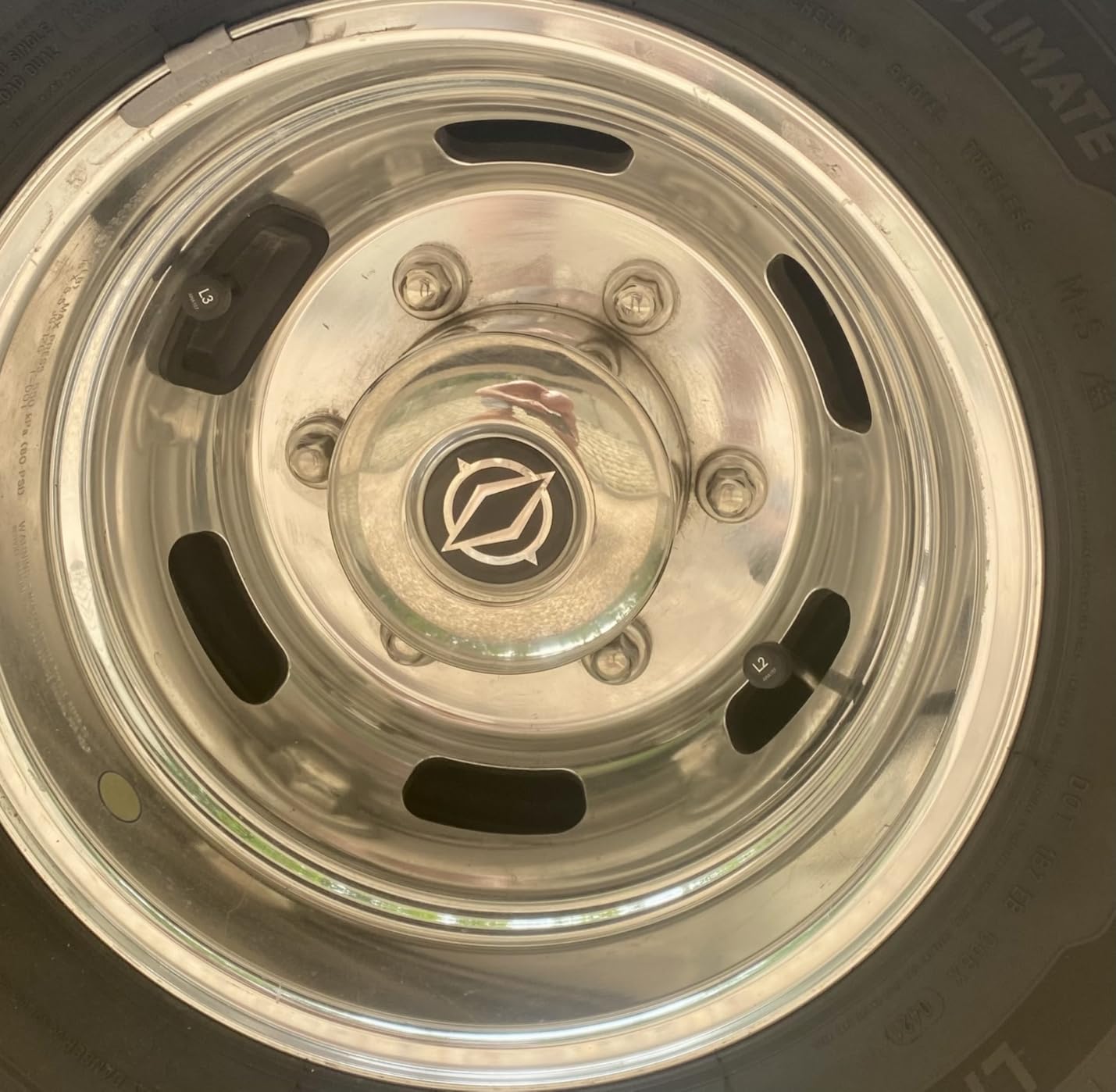
The six-tire simultaneous display is the killer feature for haulers running three-axle trailers or tandem-plus-tow configurations. You see every tire at once without waiting for a cycle. That instant overview can be the difference between noticing a slow leak in time and missing it until it fails.
Factor in the newness
Because the TM12 launched in November 2025, it has a limited review base so far. Early feedback is positive on display quality and signal range, but some owners noted minor inconsistency in tire pressure reporting timing. If you prefer a system with years of proven reliability, the Tymate TM2 or the EEZTire carry longer track records.
Buying Guide: How to Choose a Trailer TPMS for Horse Hauling?
Picking the best trailer tire pressure monitors for horse haulers means understanding a few key specifications that directly affect safety. This buying guide breaks down the factors that matter most when you are towing livestock, where a tire failure puts animals at risk, not just your schedule.
Pressure range and your tire load range
The single most important spec to check is the maximum PSI a system supports. Horse trailer tires run higher pressures than passenger car tires, and the right number depends on your tire’s load range. Load range C tires typically run 50 PSI, load range D runs 65 PSI, and load range E runs 80 PSI. Commercial load range G tires can demand 110 PSI or more.
Always match your TPMS pressure range to your tire’s cold inflation pressure listed on the sidewall. The Masoll M13 tops out at 99 PSI, which covers load range D but not E at full pressure. The TST 507 and Masoll Gen 2 handle 145 PSI. The GUTA GT20 reaches 188 PSI, the EEZTire hits 210 PSI, and the TireMinder Smart leads at 232 PSI. Buying a system that maxes out below your tire pressure means false alarms and useless data.
Cap sensors versus flow-through sensors
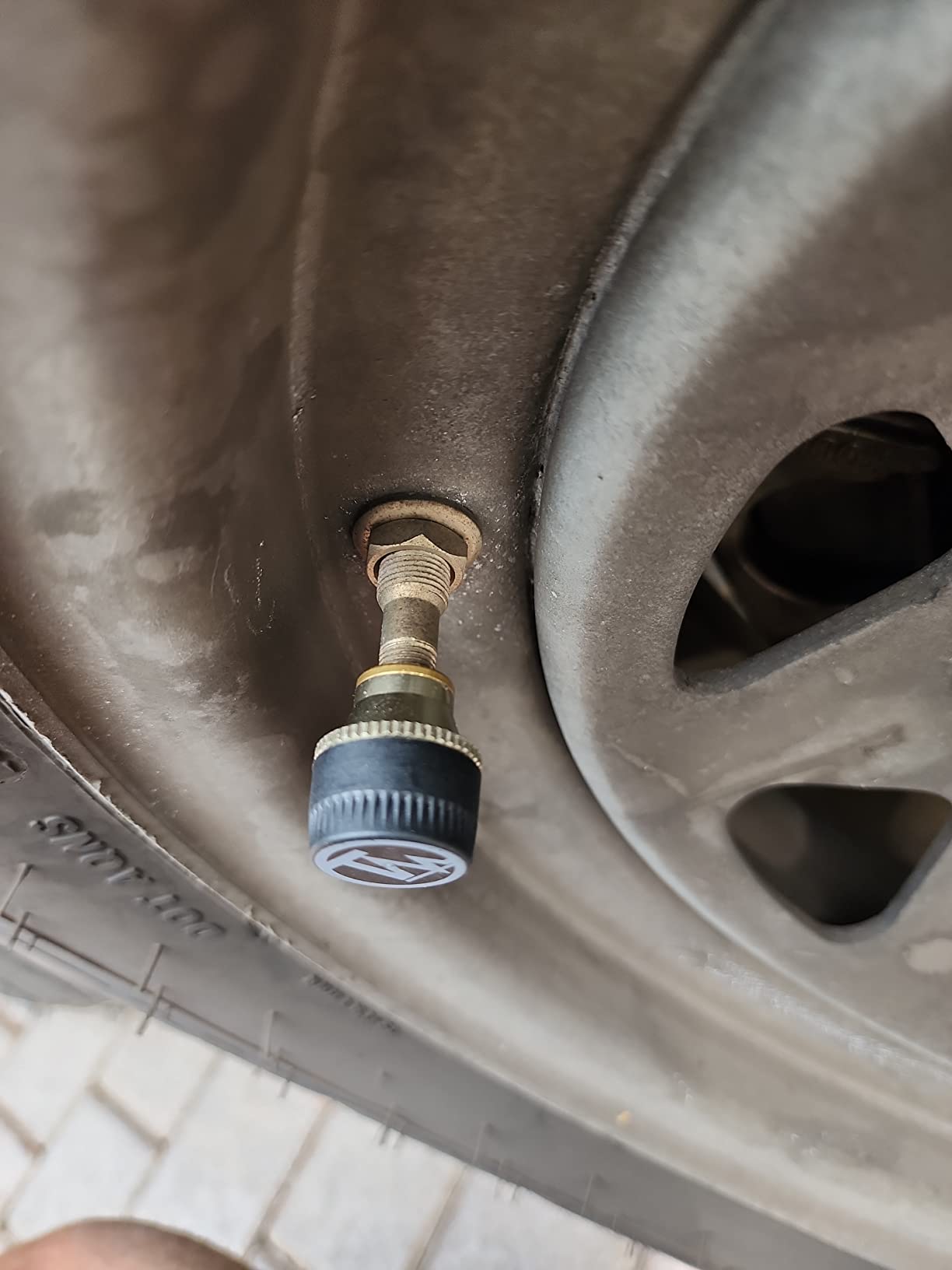
This is one of the most common questions on horse hauling forums. Cap sensors screw onto your valve stem like a cap and read pressure and temperature. They are smaller, lighter, and cheaper. The trade-off is that you must remove the entire sensor to add or release air from the tire.
Flow-through sensors include a pass-through valve that lets you air up or down without removing the sensor. They are more convenient if you adjust pressures often, especially when switching between loaded and empty trailers. Flow-through sensors are bulkier and more expensive, and some are heavy enough to stress rubber valve stems. The TST 507 is available in both cap and flow-through variants, so you can choose based on your habits.
Metal versus rubber valve stems
Forum users overwhelmingly recommend upgrading to metal valve stems before installing any external TPMS. External sensors add weight and vibration to the valve stem, and rubber stems can fatigue and crack under that stress. At least one TireMinder i10 owner reported a valve stem failure caused by sensor weight. Metal valve stems cost a few dollars each at any tire shop and eliminate this risk entirely. Treat metal valve stems as a prerequisite, not an option, when you install external sensors.
Signal range and boosters for long trailers
Horse trailers with living quarters can stretch 30 to 40 feet, and aluminum trailer skin blocks wireless signals more than fiberglass. Most budget systems transmit 36 to 50 feet, which can drop signal on the rear axle of a long gooseneck. A signal booster, also called a repeater, relays the sensor signal to the monitor and solves this problem.
Premium systems like the TST 507, TireMinder i10, and Masoll Gen 2 include boosters in the box. Budget systems like the Masoll M13 and Tymate TM7 require a separate booster purchase for trailers over 36 to 38 feet. When comparing prices, factor in the booster cost if your trailer is long. The GUTA GT20’s battery-powered booster is uniquely flexible since you can place it anywhere without running wires.
Horse trailer-specific concerns
Horse trailers carry heavy live loads that shift, which means tires and bearings work harder than on a cargo trailer. A loaded two-horse trailer can weigh 5,000 to 7,000 pounds, and a four-horse gooseneck with living quarters can exceed 12,000 pounds. That weight stresses tires, generates more heat, and accelerates bearing wear. A TPMS with temperature monitoring gives you early warning of a tire or hub running hot before it fails.
Only 44 percent of trailer tires are properly inflated at any given time, and 48 percent of roadside service calls are tire-related. For horse haulers, a roadside breakdown means more than a delay. It means managing stressed animals on a highway shoulder. A reliable TPMS catches slow leaks and overheating before they strand you, which is why every system on this list earned its place.
Battery life and power options
Monitor power matters for long hauls. Rechargeable systems range from 5 hours on the TireMinder i10 to 60 hours on the EEZTire. Solar-charged systems like the Masoll M13, Tymate TM2, and Tymate TM12 extend run time during daytime driving. The Tymate TM7 plugs into your cigarette lighter, so it runs as long as your truck does. Consider how you tow and whether you want to remember to charge a monitor.
Sensor batteries are typically CR1632 or CR2032 coin cells that last 1 to 2 years. Most systems on this list use replaceable sensor batteries, which is a long-term cost advantage. Avoid systems with sealed sensors, because you replace the entire sensor when the battery dies.
Frequently Asked Questions
What is the best tire pressure monitoring system for a trailer?
The TST 507 is the most recommended trailer TPMS among horse haulers and RV owners, thanks to its reliable signal booster, 3-year warranty, USA-based support, and proven track record of catching blowout precursors. The TireMinder i10 and EEZTire TPMS6ATC are also top choices for multi-tire and long-distance setups.
What is the best PSI for horse trailer tires?
Horse trailer tire pressure depends on the tire’s load range and the weight you carry. Load range C tires typically run 50 PSI, load range D runs 65 PSI, and load range E runs 80 PSI. Always inflate to the cold pressure printed on the tire sidewall or the trailer’s certification label, and never exceed the maximum PSI stamped on the sidewall.
Which brand TPMS sensor is best?
TST, TireMinder, and EEZTire are the most trusted TPMS brands based on forum reviews and long-term owner reports. TST is praised for USA-based phone support, TireMinder for accuracy and app integration, and EEZTire for 5-plus year reliability. Among budget brands, Tymate and Masoll earn strong ratings for value.
Are rubber or metal TPMS sensors better?
Metal valve stems are strongly recommended for any external TPMS installation. External sensors add weight and vibration, and rubber valve stems can crack or fail under that stress. Upgrade to metal valve stems at a tire shop before installing sensors to prevent valve stem failures that can cause rapid air loss.
Should I get cap sensors or flow-through sensors?
Cap sensors are smaller, lighter, and cheaper but must be removed to add or release air. Flow-through sensors let you air up without removal, which is convenient if you adjust pressures often between loaded and empty towing. If you check and adjust pressure regularly, flow-through sensors save time and hassle.
Do I need a signal booster for my horse trailer TPMS?
You likely need a signal booster if your trailer exceeds 36 to 38 feet or has an all-aluminum body that blocks wireless signals. Boosters relay sensor data from the rear axle to the cab monitor. Premium systems like the TST 507 and Masoll Gen 2 include boosters, while budget systems often sell them separately.
Final Thoughts on the Best Trailer Tire Pressure Monitors for Horse Haulers
After comparing 10 systems for 2026, our top recommendation remains the TST 507 for its unmatched reliability, USA-based support, and included signal booster that handles long horse trailers right out of the box. The TireMinder i10 is the best value for haulers running multi-axle or dually setups, and the Masoll M13 proves you do not need to spend a fortune to protect your horses on the road.
The right trailer TPMS for you depends on your tire pressure range, trailer length, tire count, and budget. Whatever you choose, installing a monitoring system is one of the highest-return safety upgrades you can make for horse hauling. It catches the slow leaks and overheating hubs that cause blowouts, and it gives you the early warning that turns a potential disaster into a routine stop. Invest in the best trailer tire pressure monitors for horse haulers that fit your rig, and tow with confidence on every trip.