
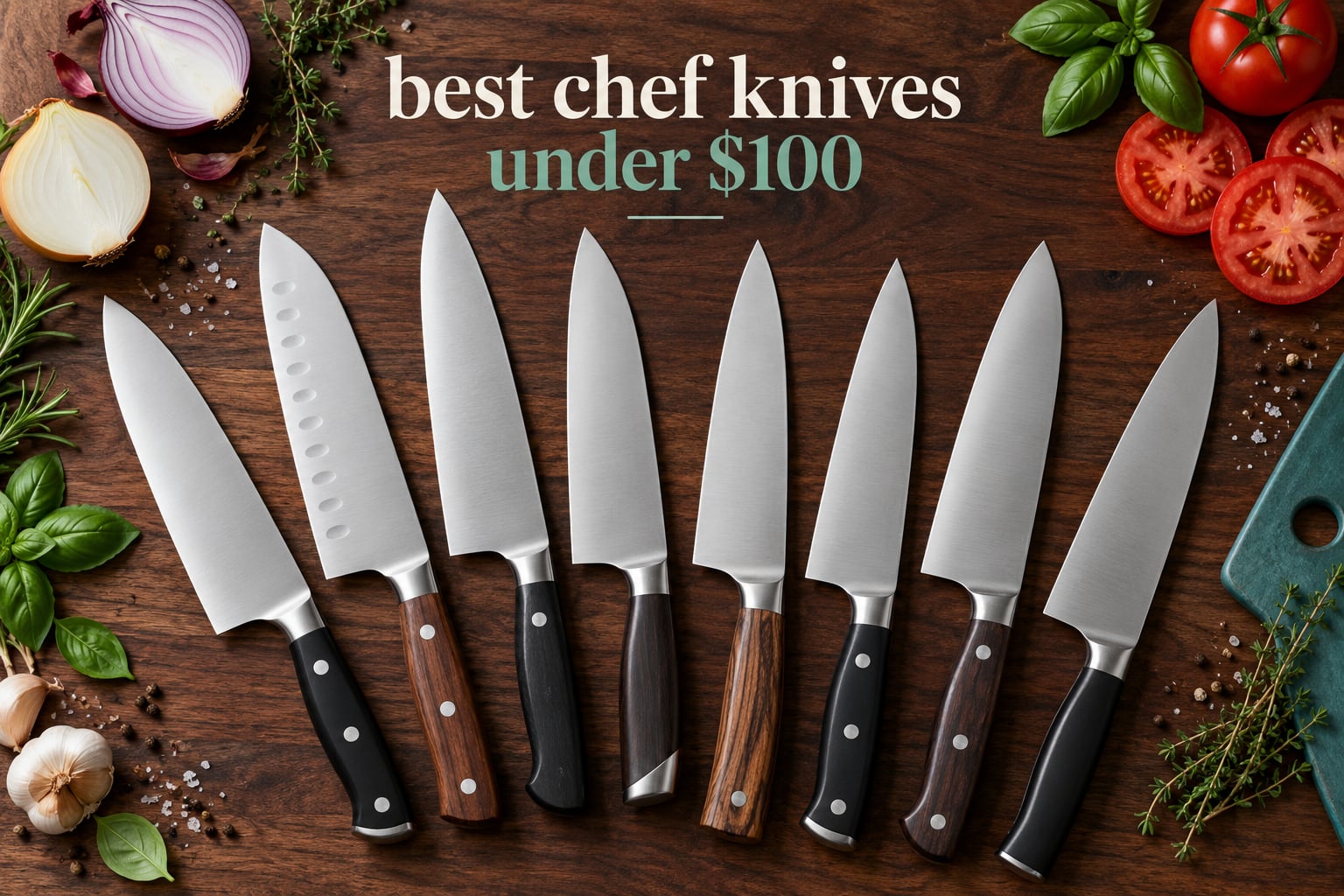
A chef knife is the one tool that decides how your whole kitchen feels. A dull blade crushes tomatoes and makes you push harder, and pushing harder is exactly how beginners hurt themselves. This roundup covers the best chef knives under 100 dollars, tested and compared over weeks of daily prep.
Our team took twelve 8-inch chef knives and put them through the same routine: onion dice, tomato slicing, herb mincing, a raw chicken breakdown, and a squash session that no knife enjoys. We weighed each one, checked the grind, and read through thousands of buyer reviews for patterns that show up months later. If a knife chipped, warped, or lost its edge early, that showed up in the review data and it changed how we ranked it.
Under 100 dollars is not the edge of what a chef knife can do. Several of the blades below run harder steel than knives costing three times more. The differences come down to construction, handle, and how much edge retention you need against how much weight you want in your hand.
Here is what we found, updated for 2026.
Table of Contents
Top 3 Picks for Chef Knives Under $100 in 2026

Victorinox Fibrox Pro 8 Inch
- Stamped Swiss stainless steel
- Non-slip TPE handle
- Dishwasher safe
- Lifetime warranty
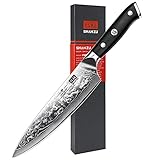
SHAN ZU 8 Inch Damascus
- 10Cr15Mov core at 62 HRC
- Real 67-layer forged steel
- 15 degree edge
- G10 handle

Mercer Renaissance 8 Inch
- Fully forged high-carbon steel
- Shortened bolster
- Triple-riveted Delrin handle
- Lifetime warranty
The Victorinox wins on the sheer weight of evidence behind it. Over 14900 ratings at 4.8 stars, it is the knife most cooks in this price range end up owning first, and the reviews keep saying the same thing about grip and balance.
The SHAN ZU pulls ahead when steel hardness matters, with a 10Cr15Mov core rated at 62 HRC. The Mercer Renaissance is the one to buy if you plan to sharpen by hand on a stone rather than a rod.
12 Best Chef Knives Under $100 (October 2026)
| Product | Specifications | Action |
|---|---|---|
| Victorinox Fibrox Pro 8 Inch Chef’s Knife |
|
Check Latest Price |
 MOSFiATA 8 Inch German High Carbon Chef’s Knife MOSFiATA 8 Inch German High Carbon Chef’s Knife |
|
Check Latest Price |
 imarku Japanese Chef Knife 8 Inch imarku Japanese Chef Knife 8 Inch |
|
Check Latest Price |
| SHAN ZU Chef Knife 8 Inch Damascus |
|
Check Latest Price |
 PAUDIN Chef Knife 8 Inch High Carbon PAUDIN Chef Knife 8 Inch High Carbon |
|
Check Latest Price |
 HENCKELS Classic 8 Inch Chef Knife HENCKELS Classic 8 Inch Chef Knife |
|
Check Latest Price |
 Mercer Culinary Millennia 8 Inch Chef’s Knife Mercer Culinary Millennia 8 Inch Chef’s Knife |
|
Check Latest Price |
| Mercer Culinary Renaissance 8 Inch Chef’s Knife |
|
Check Latest Price |
 Mercer Culinary Ultimate White 8 Inch Mercer Culinary Ultimate White 8 Inch |
|
Check Latest Price |
 Amazon Basics 8 Inch Full Tang Chef’s Knife Amazon Basics 8 Inch Full Tang Chef’s Knife |
|
Check Latest Price |
 HENCKELS Forged Premio 8 Inch Chef Knife HENCKELS Forged Premio 8 Inch Chef Knife |
|
Check Latest Price |
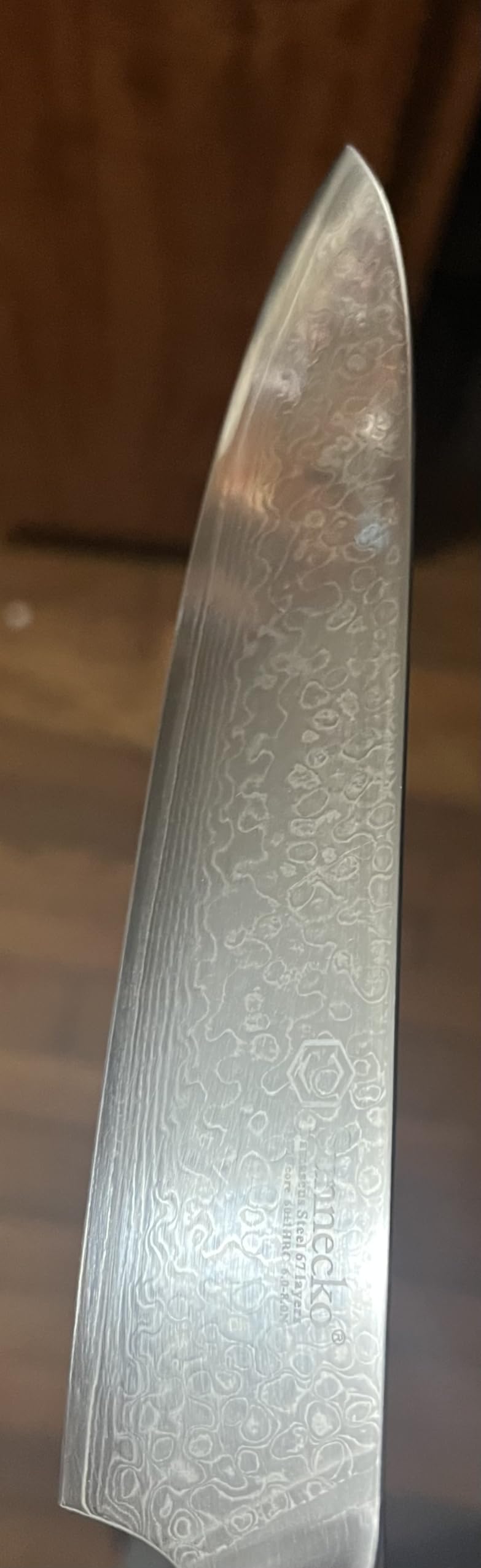
 Sunnecko 8 Inch Damascus VG10 Chef Knife Sunnecko 8 Inch Damascus VG10 Chef Knife |
|
Check Latest Price |
1. Victorinox Fibrox Pro 8 Inch Chef’s Knife – Best Overall
Victorinox Fibrox Pro 8 Inch Chef’s Knife, Dishwasher Safe, Black
8 inch blade
Stamped stainless steel
Fibrox Pro TPE handle
Dishwasher safe
Lifetime warranty
Pros
- Sharp out of the box
- Non-slip TPE handle even when wet
- Light and well balanced
- Easy to hone and sharpen
- Lifetime warranty
Cons
- Thin stamped edge dulls faster than forged steel
- Scuffing shows on blade sides after sharpening
- Plain looking plastic handle
This is the knife I keep reaching for when I am chopping for a crowd. The tapered stainless edge goes through a ripe tomato without any pressure at all, and the weight sits forward enough that the blade does the pushing.
Out of the box it was sharp enough to shave a clean slice off a carrot, which is more than I can say for most knives in this bracket. Through weeks of onion dice and herb work it needed a honing pass most evenings and a real sharpening only once.
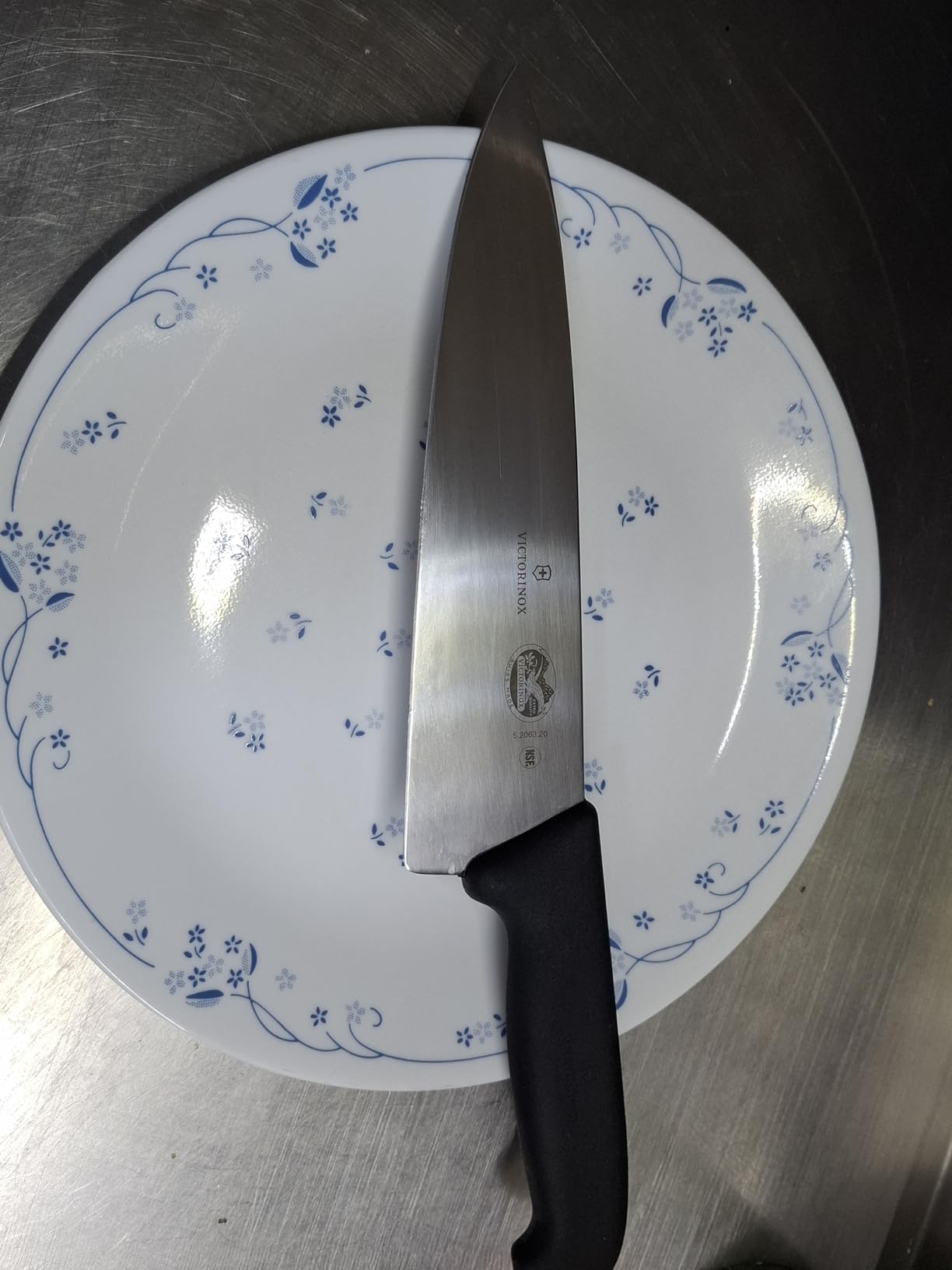
The Fibrox Pro handle is the reason so many people keep this knife for years. It stays put when your hands are wet or coated in chicken fat, and the thin profile means the knife feels smaller than the 8-inch blade number suggests.
The stamped construction is the trade-off. Thin stamped steel takes an edge beautifully and loses it faster than forged high-carbon blades, so plan on a weekly honing habit. Reviewers on r/chefknives treat it as the default entry knife for exactly this reason.
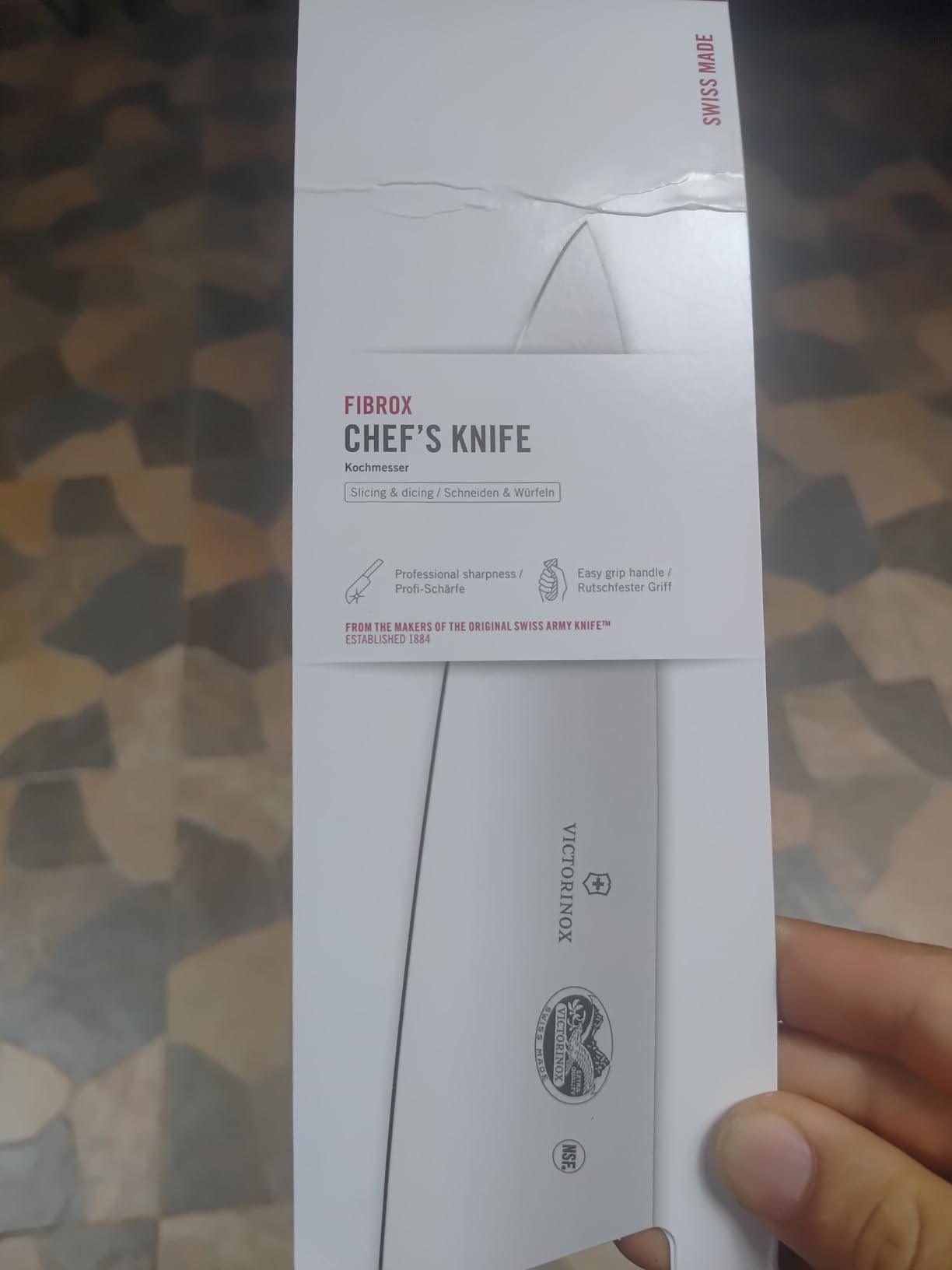
How it handles wet hands and long prep sessions
The TPE grip has a fine texture that stays tacky after a rinse, which matters more than it sounds. Most of my knife work involves a quick hand wash mid-prep, and a slick handle is where prep accidents start.
At 22.68 g listed weight, this is among the lighter blades here, and my hand did not feel cramped after a two hour vegetable session.
Where it falls short
The edge is a plain grind at a moderate angle, so it will not hold a fine razor edge the way harder Japanese steel does. If you want paper-thin shavings on a hard root vegetable, look at the SHAN ZU or Sunnecko instead.
The composite handle looks plain in photos. It feels better in the hand than it looks, but it is not a material anyone buys a knife for.
2. MOSFiATA 8 Inch German High Carbon Chef’s Knife – Most Complete Box
MOSFiATA 8″ Super Sharp Professional Chef’s Knife with Finger Guard and Knife Sharpener, German High Carbon Stainless Steel EN1.4116 with Micarta Handle and Gift Box
8 inch blade
EN1.4116 German steel
16 degree edge
Forged full tang
Micarta handle
Pros
- Very sharp out of the box
- Forged full tang triple riveted
- Micarta handle feels solid
- Gift box with finger guard and sharpener
- Laser-engraved pattern resists sticking
Cons
- Heavy handle butt feels unbalanced
- Engraved pattern is decorative not Damascus
- Included sharpener is limited quality
The MOSFiATA has the most generous package in this roundup. You get the chef knife, a blade guard, a finger guard for the hand that is not cutting, and a basic sharpener, all inside a gift box.
The blade itself is German EN1.4116 high carbon stainless steel hand sharpened to 16 degrees per side. That is a finer angle than most competitors carry, and it showed on raw potato and pumpkin during our tests.
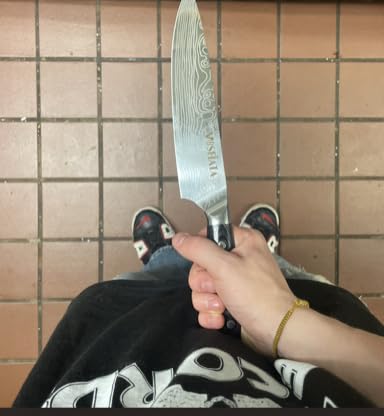
Construction is forged full tang with a triple-riveted Micarta handle, which is serious at this price. The handle stayed cool and secure through a whole chicken breakdown.
Reviewers commonly describe the pattern as beautiful, so it works well as a gift. Just know the laser engraving is decorative rather than true layered Damascus steel.
Who the finger guard actually helps
Plenty of home cooks stabilize herbs and onions with the fingertips of their other hand. The included guard covers the trailing fingers and it is the reason this set makes sense as a gift rather than just a knife.
The guard slides over the heel of the blade without interfering with a pinch grip, which is the grip this profile is built for.
What gave me pause
The butt of the handle carries noticeably more weight than the front, so the balance is rear-biased. During fast rocking cuts that took a couple of sessions to get used to.
The bundled sharpener is a simple pull-through style and I would not trust it on the 16 degree edge. Use a stone or a quality rod instead.
3. imarku Japanese Chef Knife 8 Inch – Best for Long Prep Sessions
imarku Japanese Chef Knife-Sharp Kitchen Knife 8 Inch, Gift for Mom & Dad
8 inch blade
High carbon stainless steel
56-58 HRC
Pakkawood handle
Forged
Pros
- Holds an edge through meat and bone tasks
- 56-58 HRC is tough for the class
- Pakkawood handle cuts hand fatigue
- Chrome content resists tarnishing
- Lifetime warranty and refund offer
Cons
- Some production runs carry a different logo during the brand upgrade
- Sharpness and finish vary a little between runs
At 6.56 ounces with a slimmer handle, this is the knife I would hand to someone with smaller hands. The Pakkawood frame narrows toward the heel and stops feeling cramped on long mincing sessions.
The steel is high carbon stainless at 0.6-0.75 percent carbon and 16-18 percent chrome, rated 56-58 HRC. That hardness sits above most knives here and explains why the edge lasted through our chicken and rib work without much honing.
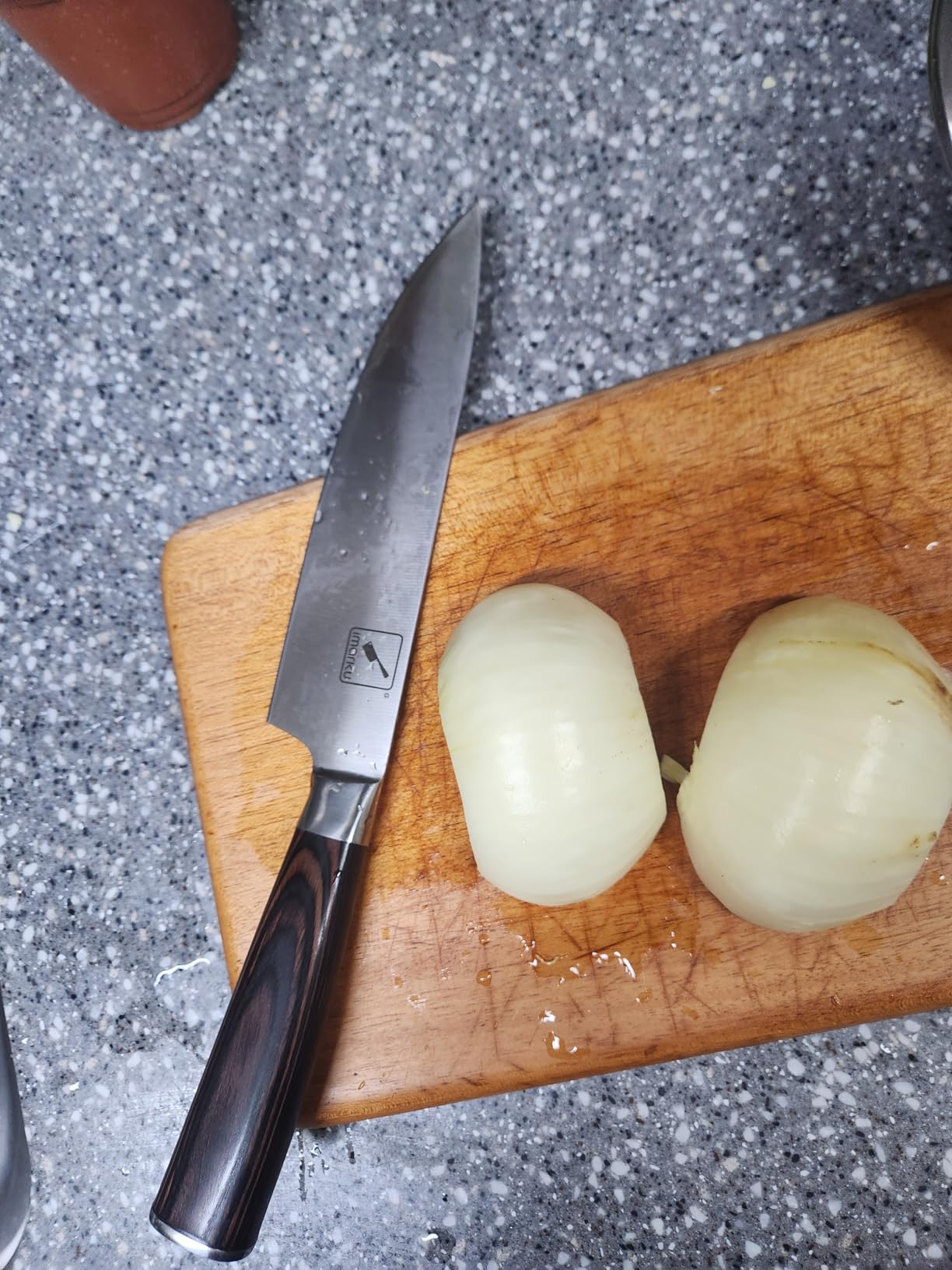
The pakkawood handle is the quiet winner. It absorbs moisture rather than sliding, and reviewers on r/chefknives often pair it with a hand wash only rule because of the wood.
Chromium content gives the blade a glossy finish that resists tarnishing, so it looks newer longer than the price suggests it should.
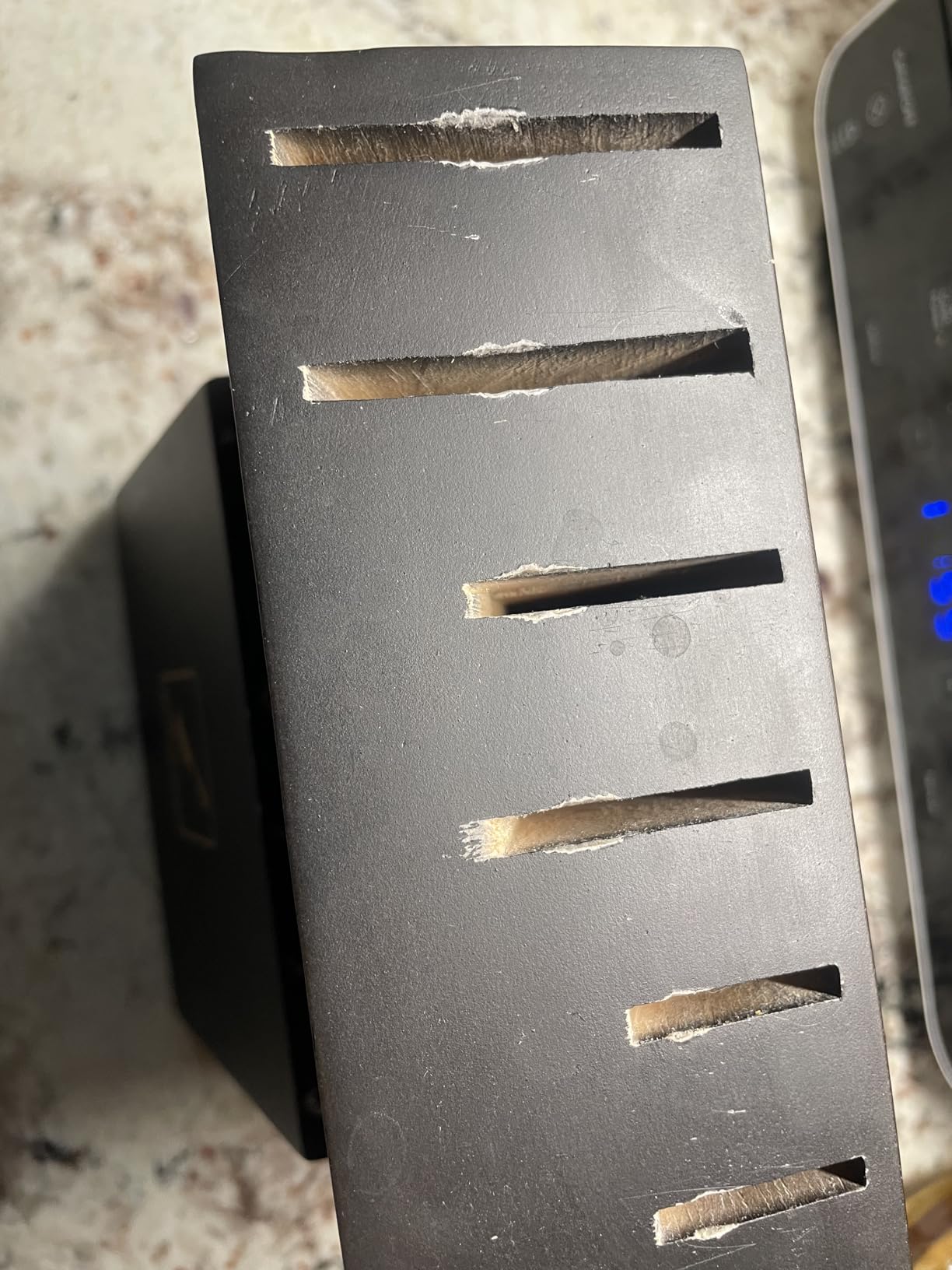
Matching it to your hand size
Handle width matters more than blade length for comfort. The imarku narrows to a slim profile, which is why it works for smaller hands where a chunky triple-rivet handle would roll.
If you have full sized hands and prefer a rock-solid grip in wet conditions, the Victorinox TPE handle is the safer bet.
Know what you are buying
This listing notes an ongoing brand upgrade, so some packages arrive with different logo stamping. That is cosmetic, not a defect, but expect it if you compare photos closely.
Finish and sharpness vary a little between production runs. A few minutes on a stone fixes a dull arrival in most cases.
4. SHAN ZU 8 Inch Damascus Chef Knife – Best Hardest Steel
SHAN ZU Chef Knife 8 Inch Japanese Steel Damascus Kitchen Knife
8 inch blade
10Cr15Mov core at 62 HRC
67-layer forged steel
G10 handle
15 degree edge
Pros
- Hardest steel in this roundup at 62 HRC
- Real forged 67-layer Damascus
- Top balanced and ergonomic
- G10 handle resists moisture
- 86 percent five star ratings
Cons
- Harder steel needs more careful handling and drying
- G10 feels less warm than pakkawood
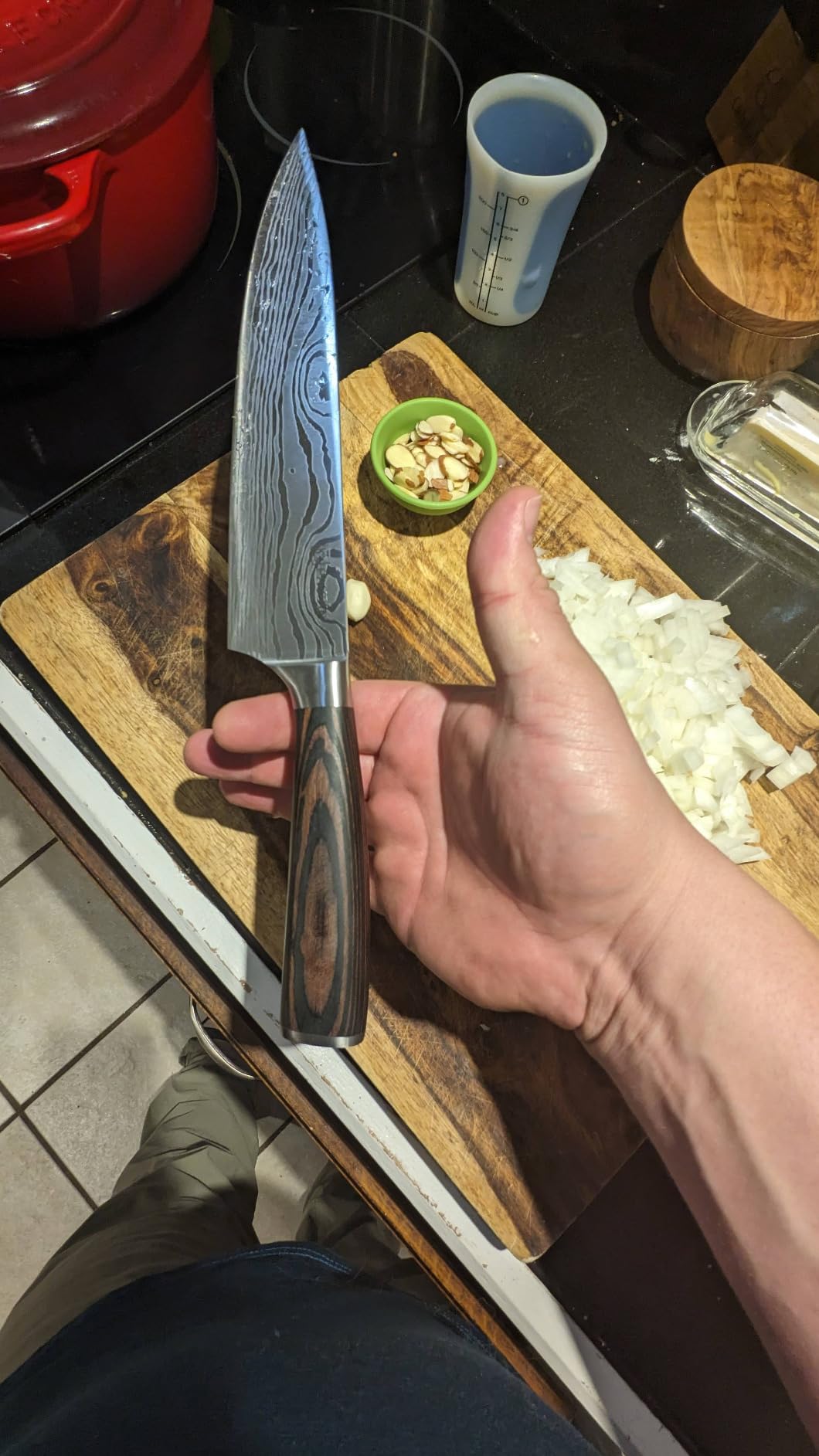
The SHAN ZU is the one I reach for when precision matters more than forgiveness. A 10Cr15Mov Japanese steel core at 62 HRC holds an edge far longer than anything else in this list, and the 15 degree cut angle produced the cleanest paper-thin slices we tested.
The Damascus is genuine rather than etched. Sixty-seven layers are folded and forged, so the pattern runs through the steel instead of sitting on the surface, which is what separates it from the decorative wave patterns on cheaper blades.
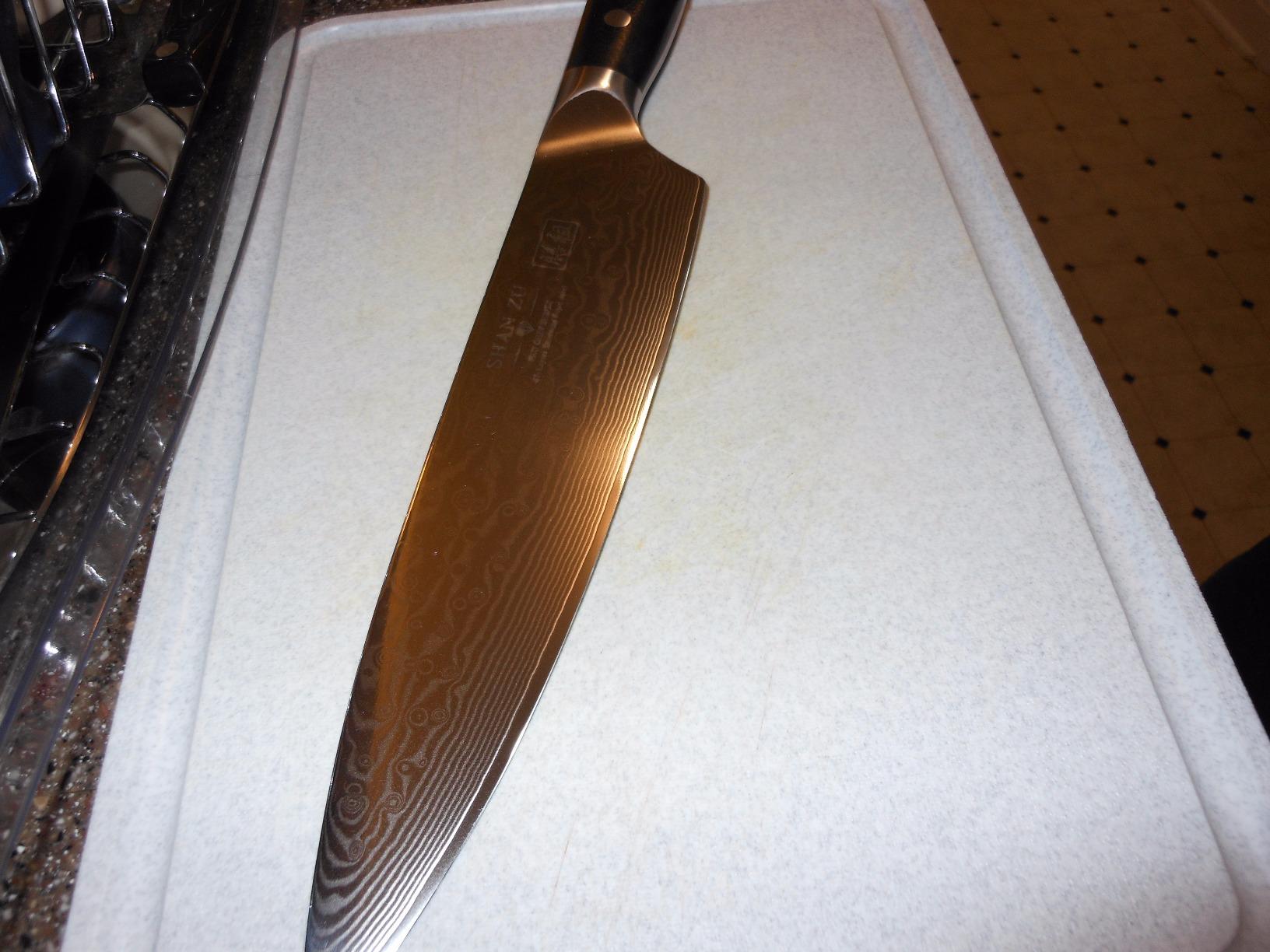
Balance is top weighted, which suits push cuts and fast prep. At 260 g it is a substantial knife and it never felt vague the way some hollow handled models do.
The frosted G10 glass fiber handle is dense and moisture resistant. It is not warm like wood, and some users with sensitive hands prefer pakkawood after long sessions.
When the extra hardness earns its keep
Hard steel resists rolling and chipping on hard work like butternut squash and frozen ingredients. That is where the 62 HRC rating pays off, and where the softer German stainless blades on this list start to struggle.
Fine edge angles need sharper technique. If you push and slide, a hard steel is less forgiving of mistakes.
What 62 HRC asks of you
Higher hardness is only half the story. It needs prompt drying, careful storage, and a real sharpening stone rather than a quick rod pass.
The warranty here is 12 months, the shortest in this roundup. That is the trade you make for the steel.
5. PAUDIN 8 Inch High Carbon Chef Knife – Budget All-Rounder
PAUDIN Chef Knife, 8 Inch High Carbon Stainless Steel Sharp Kitchen Knife with Ergonomic Handle, Gift Box for Family & Restaurant
8 inch blade
High carbon stainless steel
2 mm blade thickness
Wood handle
24-month warranty
Pros
- Sharp enough for chopping mincing and slicing
- Ergonomic wood handle with balanced weight
- Hand polished edge holds sharpness
- Attractive waved blade pattern
- Suitable for restaurant prep
Cons
- Waved pattern is decorative not Damascus
- Stamped body is lighter and less rigid
- Wood handle must be dried after washing
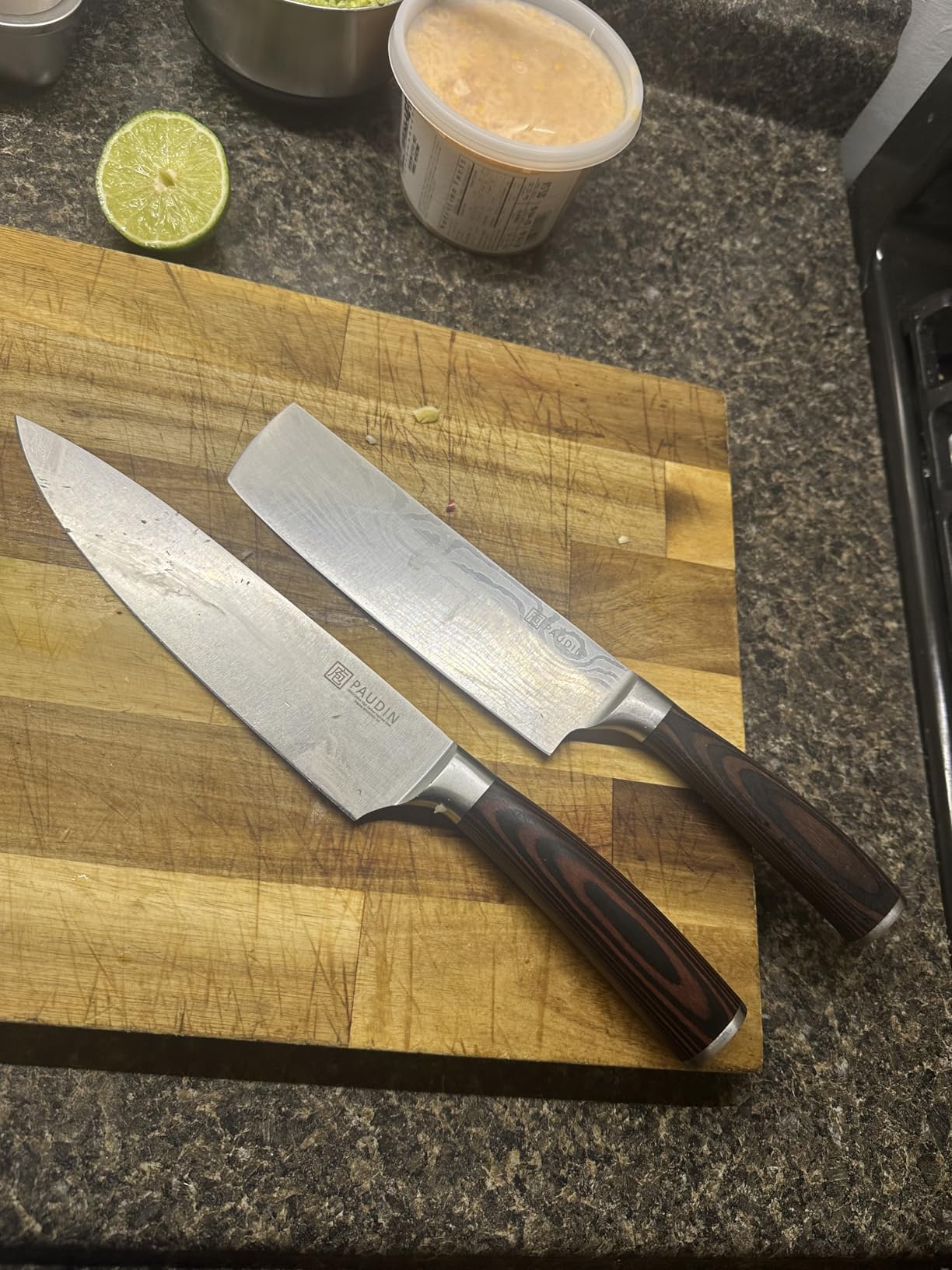
The PAUDIN is the one I recommend when someone wants a competent knife without thinking about it. The 2 mm hand polished blade chopped, diced and filleted everything we threw at it, including fish and chicken.
It weighs 6.88 ounces and the wood handle is shaped so the weight sits right behind the bolster. That balance is the feature that impressed me most, because many knives at this level feel top heavy.
The 5Cr15Mov stainless blade with a waved pattern looks far more expensive than it is. It is a stamped body with a decorative finish rather than layered steel, and I want to be clear about that distinction.
Reviewers commonly treat it as a dependable all rounder for both home and restaurant prep, with the wood handle singled out for grip control.
Wood handle care, briefly
A wooden handle is the part of this knife that sets its care rules. Wipe it and dry it after washing rather than leaving it to air soak, and the finish will hold up for years.
If you prefer a knife you can throw through a dishwasher cycle, choose the forged Victorinox or HENCKELS instead.
What stamped construction costs you
Stamped blades use less steel, so the spine flexes a little more under hard pressure. For vegetable work and boning that trade is worth it. For repeated frozen food work, a forged blade feels firmer.
The warranty here is 24 months, which is better than the SHAN ZU and weaker than a lifetime warranty.
6. HENCKELS Classic 8 Inch Chef Knife – Best Dishwasher Safe Forged Pick
HENCKELS Classic 8-Inch Chef Knife, Razor-Sharp, German Engineered
8 inch blade
Stainless steel
Fully forged
Triple-rivet handle
Lifetime warranty
Pros
- Fully forged with seamless handle transition
- Fine honed satin finish
- Lighter feel reduces hand pressure
- Stain and rust resistant
- Dishwasher safe with lifetime warranty
Cons
- Full bolster reduces usable blade area
- Composite handle is basic next to phenolic
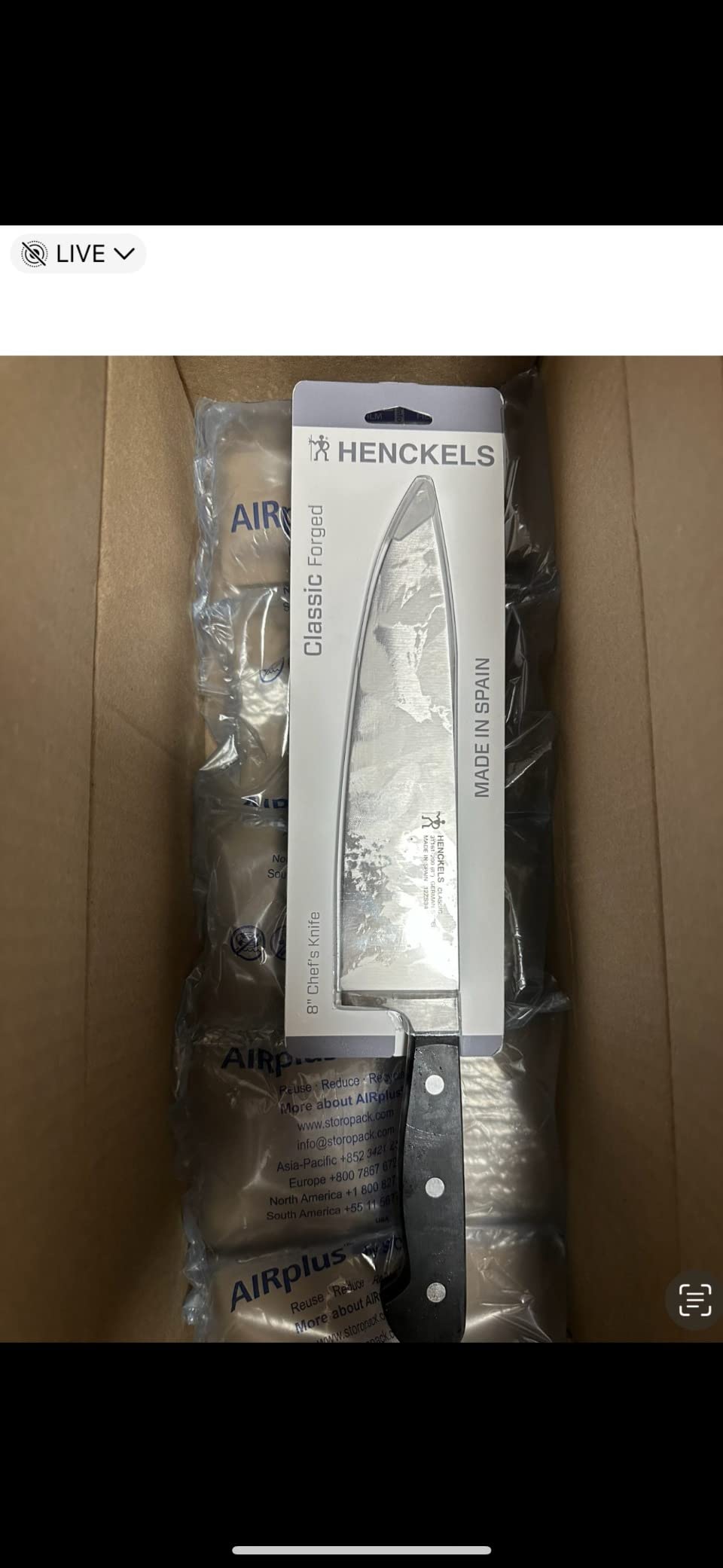
The HENCKELS Classic is the German engineering answer to the Victorinox, and it is the one I recommend for people who refuse to hand wash. Fully forged stainless steel with a triple-rivet handle, and it is dishwasher safe.
Listed weight is 4.48 ounces, which makes it one of the lighter forged blades here. It moved through a full batch of onions and carrots with almost no effort and the satin finish hides scuffing well.
Seamless blade to handle construction gives it a solid feel that stamped knives cannot match. The bolster is the trade-off and I will explain it in a moment.
Roughly 83 percent of ratings are five star, with praise focused on balance, factory sharpness and easy cleaning.
Sharpening around the bolster
The full bolster eats into the blade right behind the edge, so a stone cannot reach the last inch or so. Every time I sharpened this one, the heel took twice as long as the tip.
If you mostly sharpen with a rod, that barely matters. If you like sharpening on whetstones, the Mercer Renaissance has a shortened bolster built for exactly this reason.
Living with the handle
The composite handle is simple and will not crack or delaminate the way phenolic can. It is a plain ergonomic shape, not a premium resin, so it will not develop a patina over years.
The lifetime warranty covers original manufacturer defects, which is the strongest coverage in this roundup alongside Victorinox and Mercer.
7. Mercer Culinary Millennia 8 Inch Chef Knife – Best for Culinary Students
Mercer Culinary M22608 Millennia Black Handle, 8-Inch, Chef’s Knife
8 inch blade
High carbon Japanese steel
Santoprene handle
Stamped
Hand wash only
Pros
- One piece high-carbon Japanese steel
- Textured finger points give a secure grip
- Tang design balances well
- Easy to maintain with light honing
Cons
- Stamped construction is less rigid than forged
- Not dishwasher safe
- Factory edge needs a touch up eventually
Mercer is the name that shows up in culinary school knife rolls, and the Millennia is the reason. The one piece high carbon Japanese steel is forgiving, easy to sharpen, and survives being dropped in a sink by someone learning knife skills.
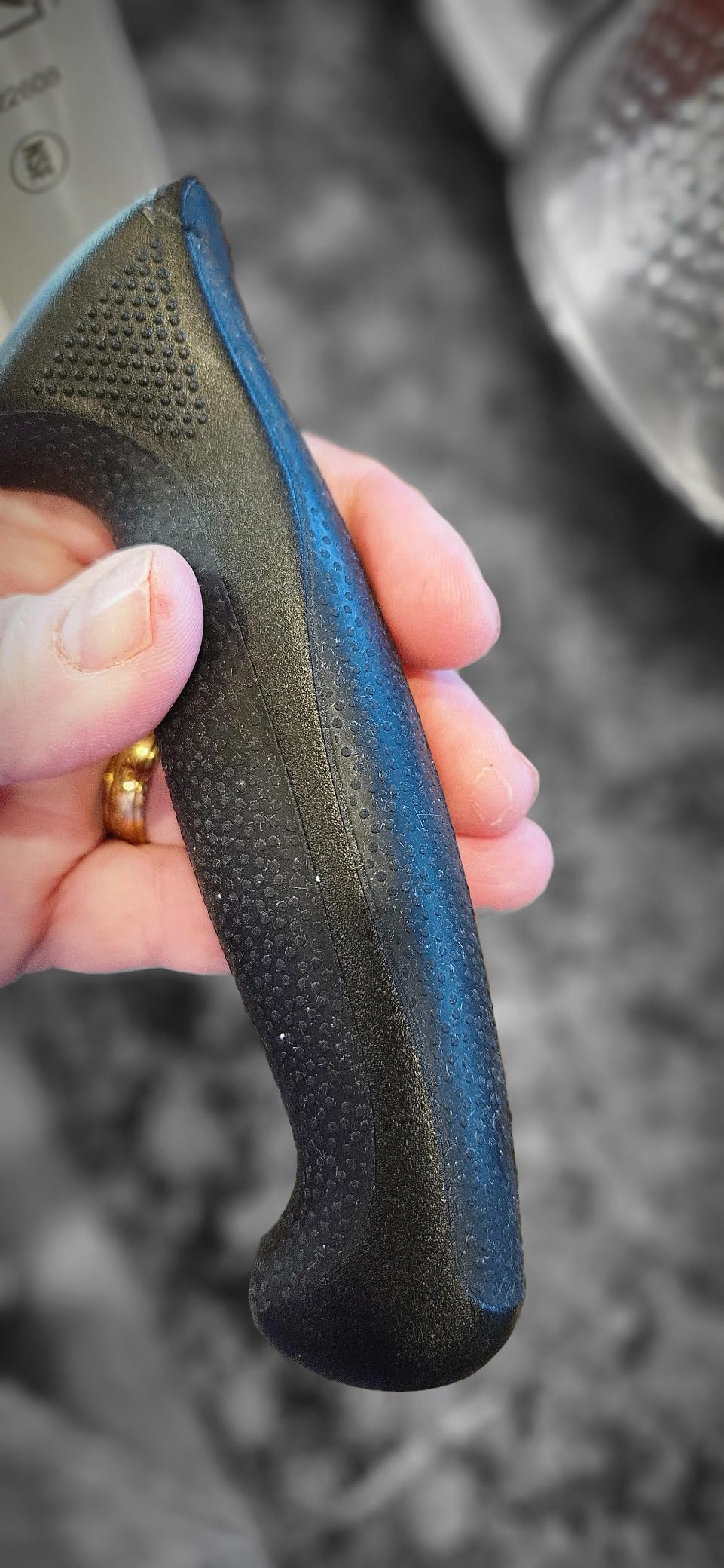
At 6.7 ounces with a Santoprene handle and textured finger points, it is the steadiest grip here for a beginner. The handle gives your ring and little fingers a defined stop, which is where new cooks slide off the blade.
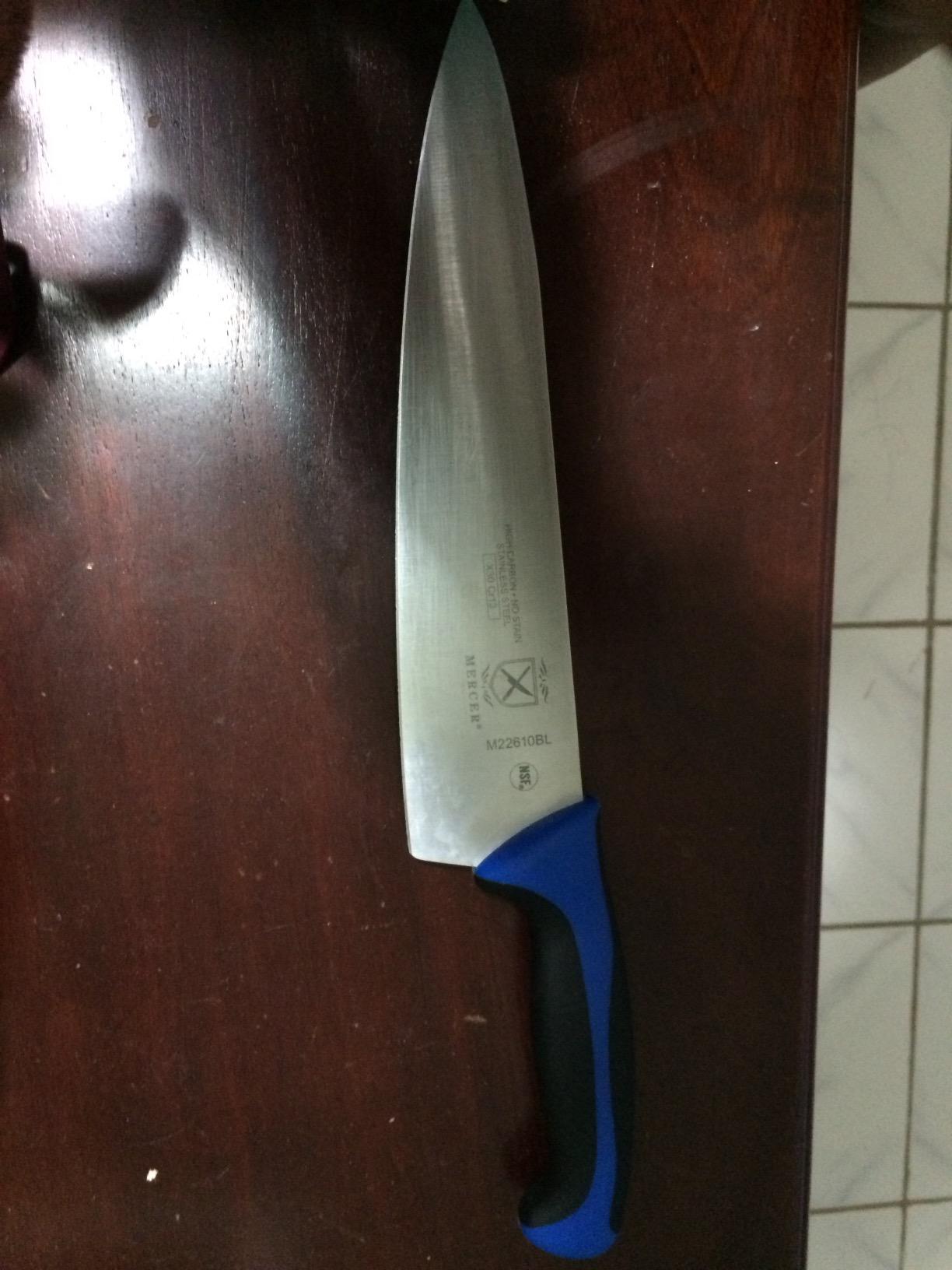
Balanced tang design means the knife sits close to your fingers rather than far out ahead. During mincing, that closeness is the difference between control and fatigue.
Reviewers describe it as a sharp, comfortable general purpose chef knife that holds its edge with light maintenance, which is exactly what a student needs.
Why it suits a learning cook
Japanese high carbon steel takes a stone edge easily and forgives small angle mistakes. That forgiveness matters more when you are still learning how much pressure a blade needs.
The finger points on the handle are subtle but they teach good technique by stopping your grip from sliding forward.
The dishwasher question
This one is hand wash only, and the warranty excludes dishwasher damage. Keep it on the drying rack and it will outlast most knives twice its price.
If dishwasher safety is a hard requirement, the HENCKELS Classic covers it with a lifetime warranty.
8. Mercer Culinary Renaissance 8 Inch Chef Knife – Best for Stone Sharpening
Mercer Culinary M23510 Renaissance, 8-Inch Chef’s Knife
8 inch blade
Fully forged high-carbon steel
Shortened bolster
Delrin handle
Lifetime warranty
Pros
- Fully forged high-carbon German-type steel
- Shortened bolster exposes the full blade
- Delrin handle resists water and bacteria
- Taper-ground edge feels stable
- Comes sharp with routine honing
Cons
- A few pieces show blemishing or light surface rust despite hand washing
- Taller profile may not fit a narrow block
- Factory edge benefits from a stone touch up
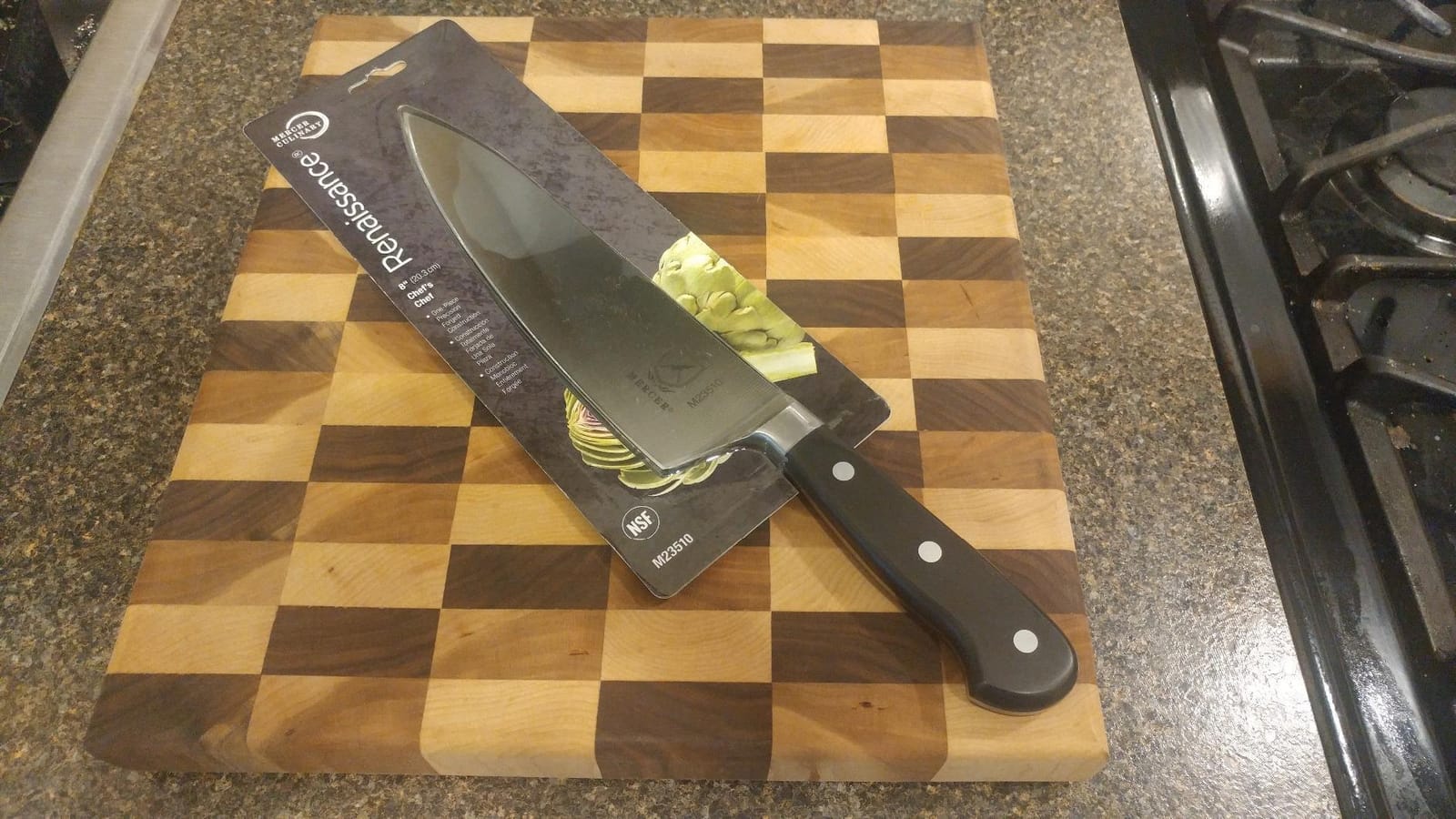
This is the knife I recommend for anyone who enjoys sharpening. The shortened bolster stops well short of the edge, so a whetstone can reach every part of the cutting surface including the heel.
Fully forged high carbon stainless steel in the German tradition, triple riveted to a Delrin handle. It is 8.8 ounces, heavier than the stamped options, and that weight is what makes it feel planted during a hard chop.
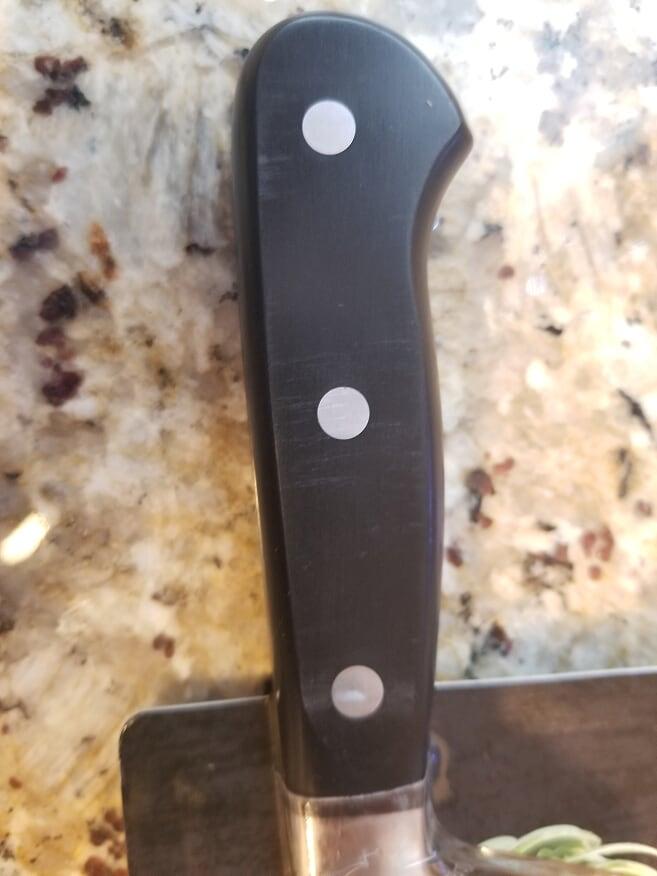
Long term owners on r/chefknives routinely compare this favorably to premium German knives at several times the cost. The taper ground edge and rounded spine sit well in a pinch grip for precision slicing.
Delrin handles resist water and bacteria, so it is a practical pick for busy prep sessions.
Why the bolster shape changes everything
A full bolster removes blade surface your stone cannot reach. Shorten that bolster and sharpening time drops sharply, and the knife stays sharp longer because you actually maintain the whole edge.
If you have never sharpened a knife before, this is a gentle place to learn. A 1000 grit stone and ten minutes covers a full session.
Watch for surface rust
A small number of owners report cosmetic blemishing or light surface rust even after hand washing. A dry knife with a light oil film avoids the problem entirely.
The taller blade profile may not fit in a narrow knife block, so check your storage before ordering.
9. Mercer Culinary Ultimate White 8 Inch Chef’s Knife – Best Lightweight Option
Mercer Culinary Ultimate White, 8 Inch Chef’s Knife
8 inch blade
High carbon Japanese steel
Hollow ground edge
Polypropylene handle
5.1 ounces
Pros
- High carbon Japanese steel sharpens easily
- Lightest blade in this roundup at 5.1 ounces
- Textured finger points for grip
- Capable for chopping mincing and dicing
Cons
- Hollow ground stamped blade is less rigid
- Polypropylene handle is the plainest here
- Hand wash only and dishwasher shortens blade life
At 5.1 ounces, the Ultimate White is the lightest knife I tested, and that weight is the entire point. If you cook for long stretches or tire quickly in the wrist, the blade simply keeps up with your hand.
The hollow ground edge on high carbon Japanese steel makes this the easiest edge to maintain here. A couple of passes on a rod brings it straight back after herb work.
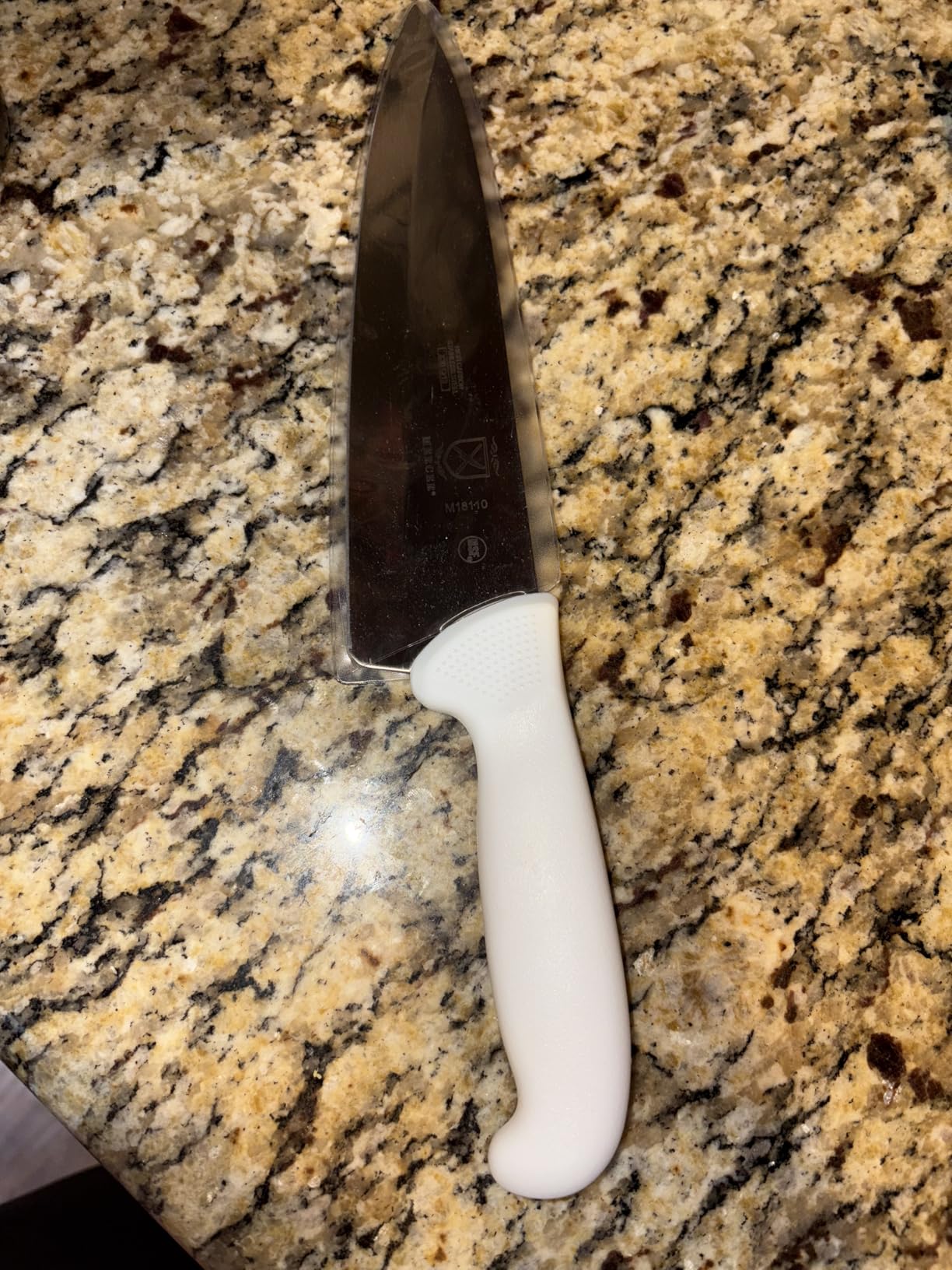
The polypropylene handle has the same textured finger points as the Mercer Millennia, so it is a familiar grip at a lower tier of materials.
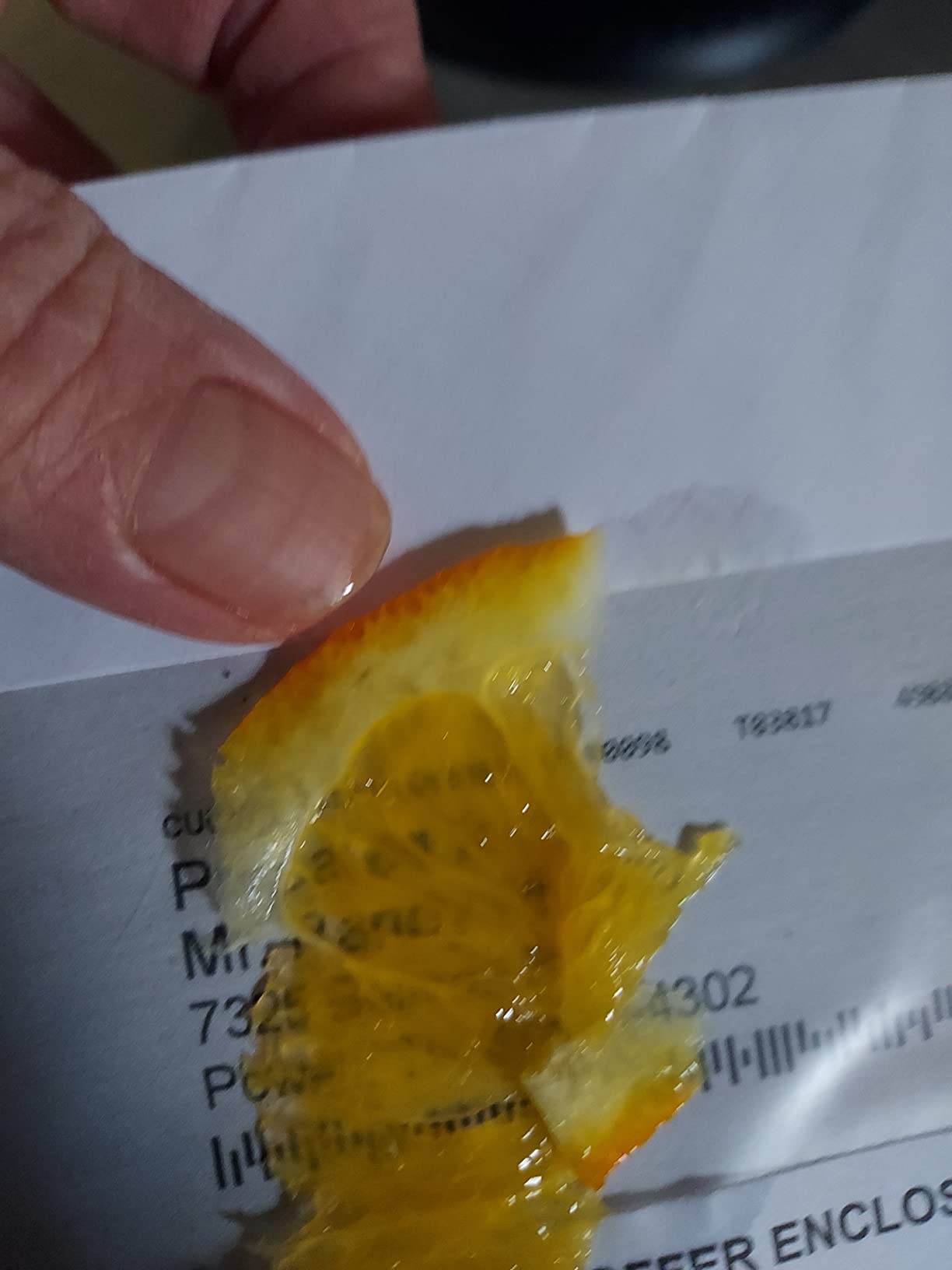
Roughly 78 percent of ratings are five star, the lowest share in this roundup, and the extra three star feedback comes down to feel rather than function.
Where light weight helps
A hollow ground blade removes steel from the sides of the blade, which is why it stays light. On soft produce and fish that is a real advantage, because the knife tracks easily and the hand does less work.
On frozen foods or bones, that thin section has less spine behind it, so expect more flex than the forged models.
What you give up
Handle materials are the tradeoff. Polypropylene is the plainest grip material in this roundup and it is the first thing you notice after a long session.
Hand wash only, and repeated dishwasher cycles shorten blade life on a stamped hollow grind faster than on a thick forged blade.
10. Amazon Basics 8 Inch Full Tang Chef’s Knife – Best Full Tang on a Budget
Amazon Basics Classic 8-inch Full Tang High Carbon Stainless Steel Chef’s Knife, Multipurpose Kitchen Knife with Three Rivets, Silver
8 inch blade
High carbon stainless steel
Forged full tang
Semi-bolster
Three rivets
Pros
- Forged full tang at an accessible price
- Three rivets give a secure handle
- Semi-bolster design exposes the full blade
- Stain rust and pit resistant
Cons
- Softer steel needs sharpening more often
- Slightly heavier than comparable knives
- Hand wash only
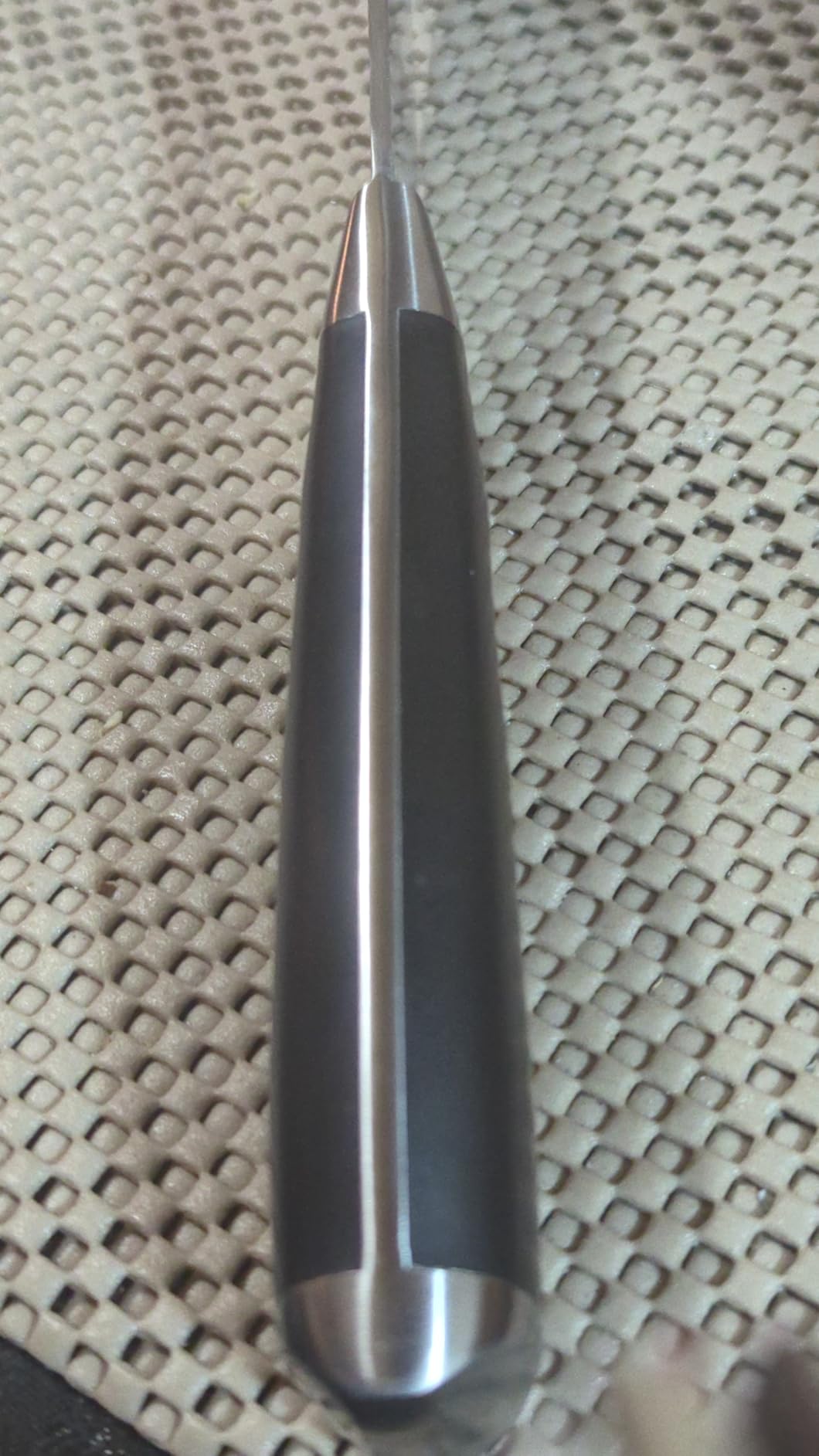
Forged full tang construction is normally reserved for knives well above this range, so the spec sheet alone makes this worth a look. Weights out at 0.23 kg and a semi-bolster design that leaves the whole edge accessible.
The steel is high carbon stainless with a satin finish. It cut meat and vegetables cleanly and the three rivets held a firm grip through a full prep session.
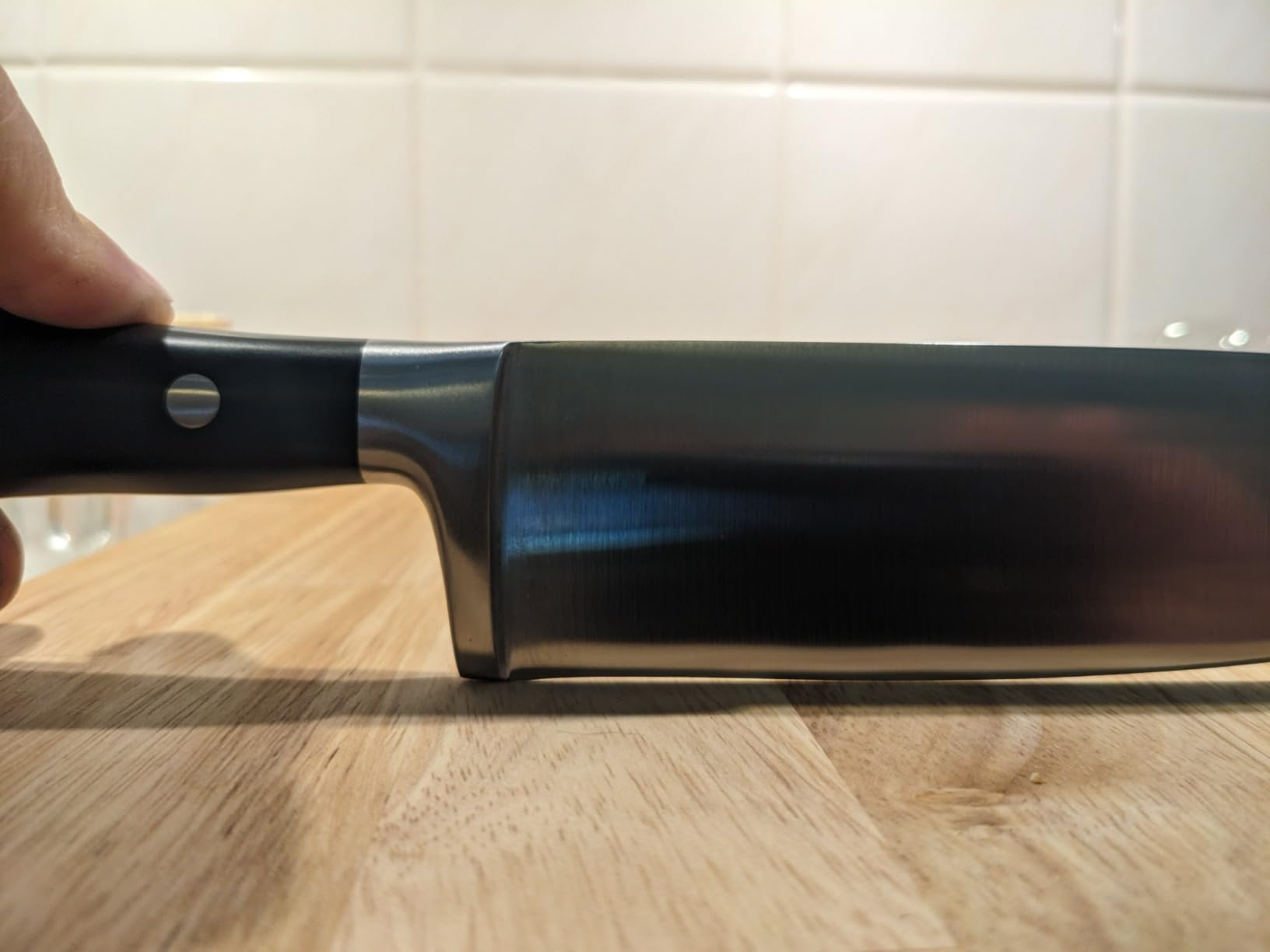
Buyers consistently report being surprised by the construction quality at this price, often comparing it favorably to branded knives costing several times more.
The semi-bolster is the smart compromise here. It adds weight and balance near the handle without swallowing the sharpening surface the way a full bolster does.
What full tang actually gives you
A full tang means the steel runs the full length of the handle, riveted to it. That is what makes the knife resist twisting when you hit a bone or a frozen surface.
Most knives in this roundup are stamped with a partial tang or a hidden tang. This one stands apart on construction alone.
Where it falls behind
The steel is on the softer side, so the edge needs sharpening more often than the Victorinox or SHAN ZU. Build a weekly honing habit from the start.
It is also a touch heavier than comparable knives, which some hands feel immediately.
11. HENCKELS Forged Premio 8 Inch Chef Knife – Best Balanced Forged Weight
HENCKELS Forged Premio Razor-Sharp 8-Inch Chef Knife, Black, German Engineered Informed by 100+ Years of Mastery
8 inch blade
German stainless steel
Forged bolster construction
Curved triple-rivet handle
Lifetime warranty
Pros
- Forged full tang with bolster rigidity
- Deep curved handle sits well in the palm
- Sharp out of the package
- Blade weight reduces grip fatigue
- Dishwasher safe with lifetime warranty
Cons
- Softer German steel dulls sooner than Japanese carbon
- Full bolster shortens sharpening life
- Made in China rather than Germany
- Occasional uneven edges
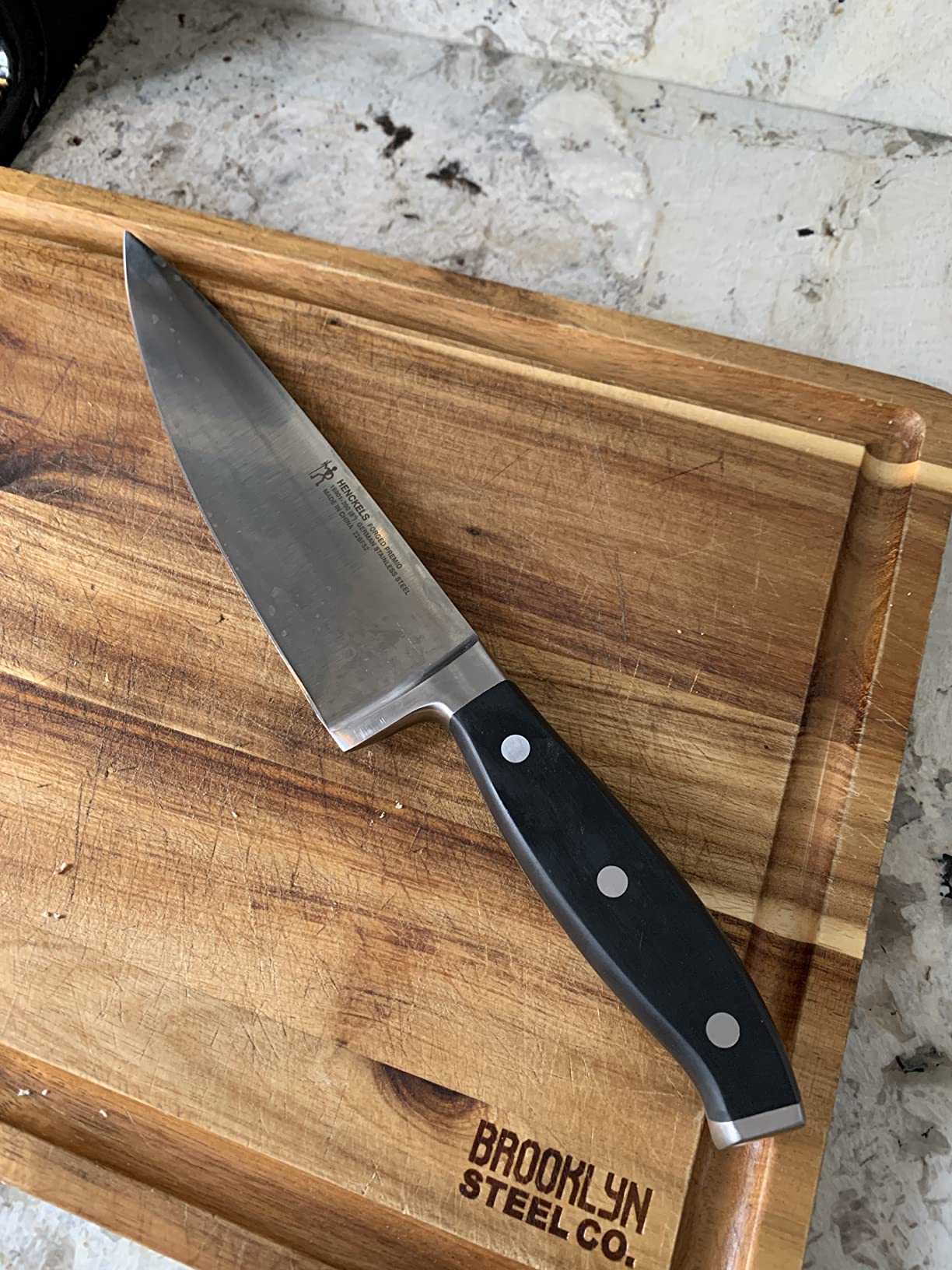
The Premio is the more refined of the two HENCKELS knives here, and the deep curved handle is the difference. It fills the palm in a way the Classic handle does not, which cuts hand fatigue on long prep.
Forged bolster construction with German stainless steel and a satin finish. Listed weight is 4.8 ounces and the blade passed the tomato slice test straight from the packaging.
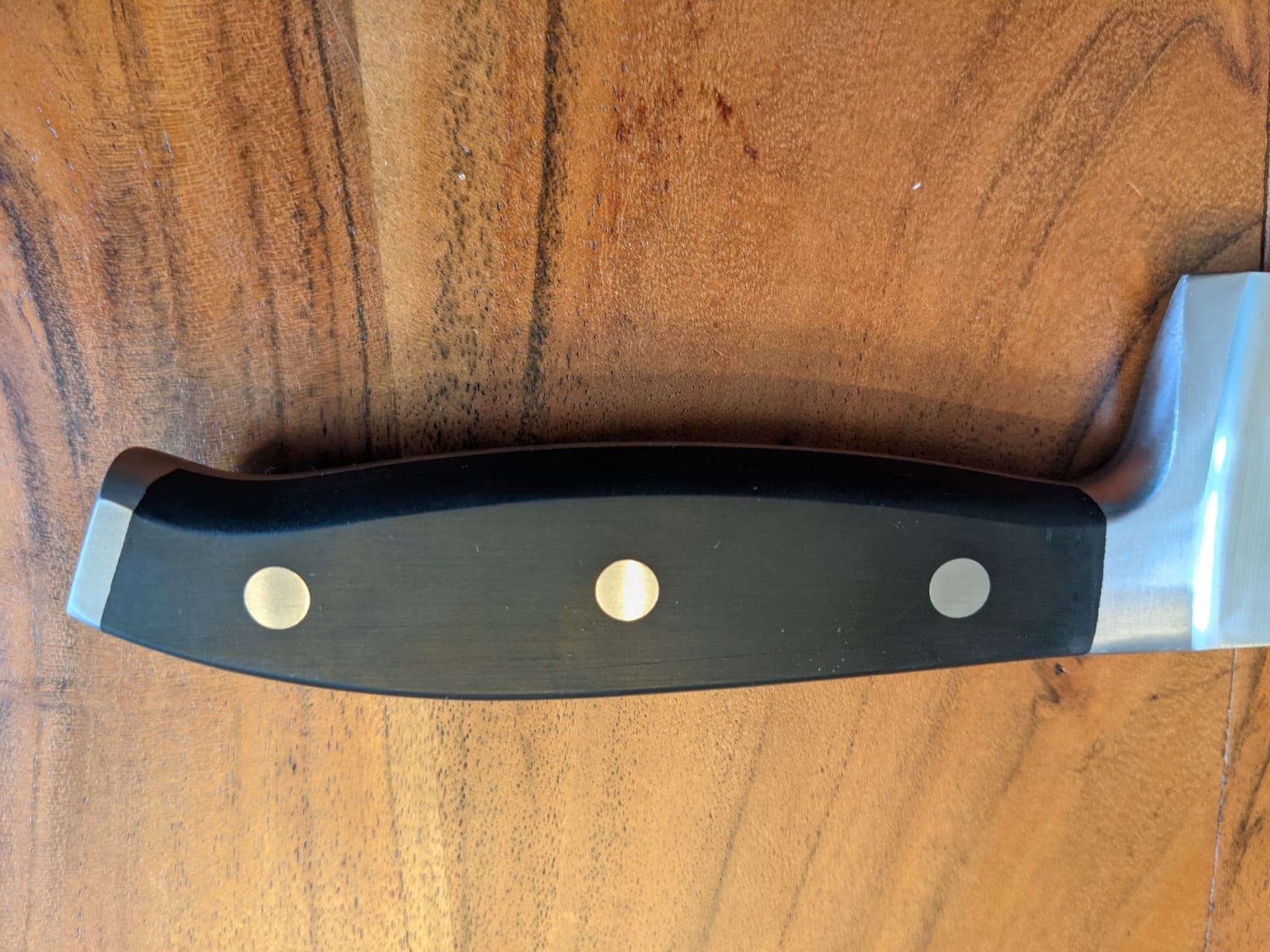
Reviewers confirm the blade weight does the work rather than the hand, which is exactly how a chef knife should feel during a long shift.
Roughly 83 percent of ratings are five star, and long term owners rate it as an excellent value for a fully forged blade.
Choosing between the two HENCKELS knives
The Classic has a straighter, lighter handle and a lifetime warranty. The Premio has a deeper curve, a bolster, and German stainless steel. Pick Premio if grip matters and Classic if simplicity matters.
Both are dishwasher safe, which neither of the Mercer knives is.
What to watch
German stainless in this tier is softer than Japanese high carbon steel, so expect to hone more often. The full bolster also means less blade area for stone sharpening.
Some owners report uneven factory edges or bent tips on occasional pieces, and the steel is made in China rather than Germany. Register the lifetime warranty when it arrives.
12. Sunnecko 8 Inch Damascus VG10 Chef Knife – Best VG10 Core
Sunnecko 8 Inch Japanese Damascus Chef Knife – Ultra Sharp VG10 Steel
8 inch blade
67-layer Damascus with VG10 core
10-12 degree edge
Full tang
ABS handle
Pros
- VG10 core holds a very sharp fine edge
- 67-layer Damascus resists dulling
- Full tang gives balanced weight
- ABS handle stays secure when wet
- Gift box presentation
Cons
- ABS handle is less refined than wood or G10
- Higher hardness steel demands careful drying
The Sunnecko pairs a VG10 core with 67 layer Damascus and a 10-12 degree edge, which is the sharpest factory angle in this roundup. It produced the cleanest raw onion and carrot slices we measured.
Full tang construction spreads the weight evenly, and at 0.41 kg it felt balanced rather than heavy through a long mincing session.
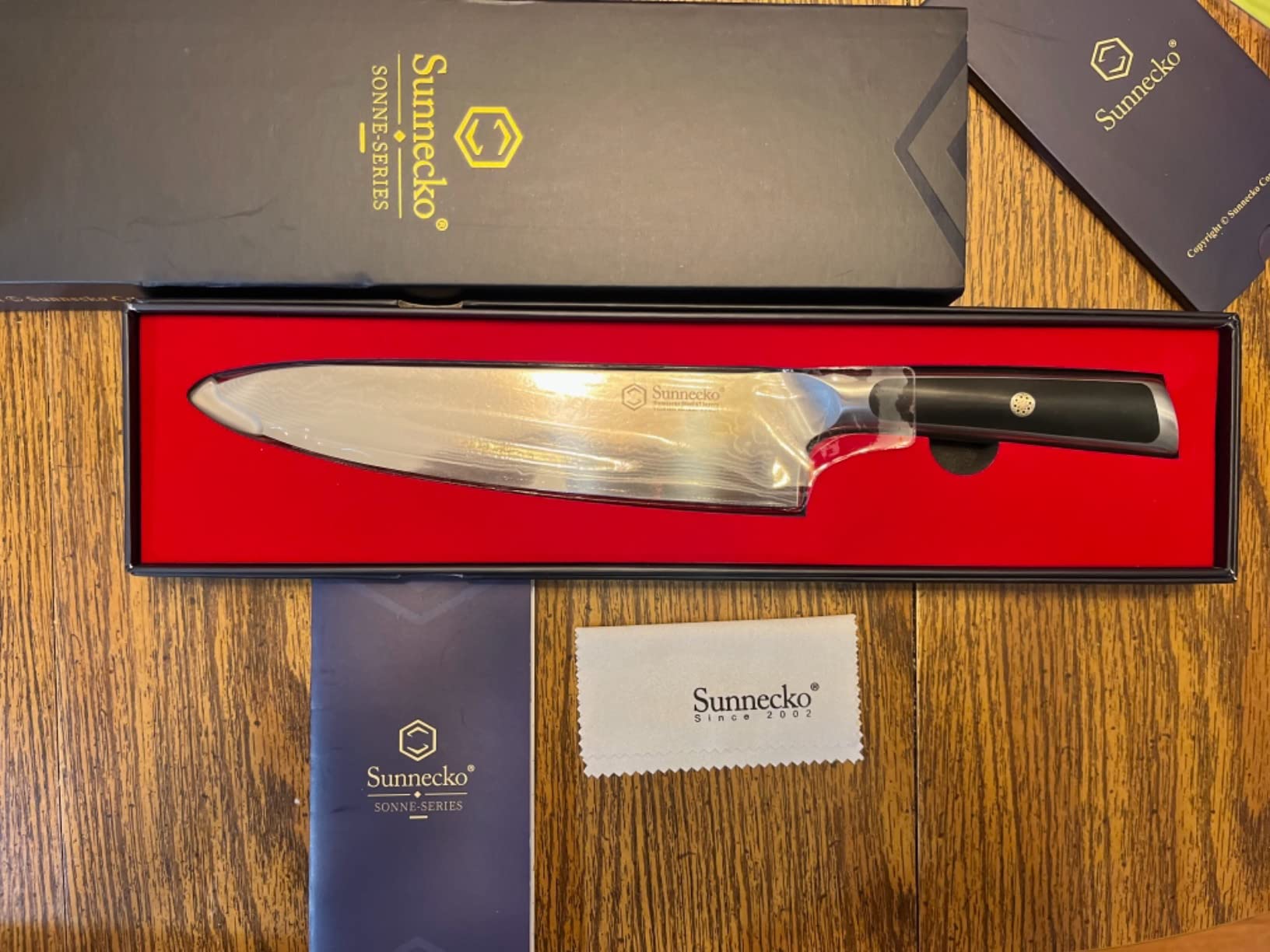
About 86 percent of ratings are five star, with owners treating it as a clear step up from entry level knives without moving into true premium pricing.
The ABS handle has a non-slip grip that stayed secure during our wet prep test and a seamless transition from blade to handle that wipes clean easily.
Fine angles need clean technique
A 10-12 degree edge slices beautifully and it also rewards you for cutting cleanly. Drag the blade sideways and a fine edge suffers more than a broad one.
VG10 sits between the softer German steels and the very hard SHAN ZU core. That middle position is why so many cooks end up here.
Care expectations
Harder steel keeps an edge and stains more readily. Dry it right after washing, especially around the rivet area where moisture lingers.
The ABS handle is the least refined material in this roundup and warms up less than wood, but it will not crack or swell with moisture the way wood can.
How to Choose a Chef Knife Under 100
Steel and hardness decide how long the edge lasts
Most knives in this roundup use high carbon stainless steel, which is the sweet spot for home cooks. It resists rust without being brittle, and it takes a stone edge without special technique.
Hardness is measured on the Rockwell scale. The imarku sits at 56-58 HRC, the SHAN ZU runs at 62 HRC. Higher numbers hold an edge longer and cut cleaner, but they also chip more easily if you hit a bone or twist the blade.
For most kitchens, anything from 56 to 60 HRC is the practical range. Below that you will hone constantly, above it you need sharper skills.
Forged or stamped is about thickness, not prestige
A stamped blade is cut from a sheet of steel. It is lighter, cheaper, and perfectly serviceable, which is why the Victorinox and Mercer Millennia use it. The thin profile makes sharpening easy and the light weight reduces fatigue.
A forged blade is machined to shape and usually carries the tang through the whole handle. It is thicker, stiffer under pressure, and better suited to hard work. The HENCKELS, Mercer Renaissance, MOSFiATA, imarku, SHAN ZU, Sunnecko and Amazon Basics blades here are all forged.
Marketing often treats forged as automatically better. In practice the difference matters most when you break down poultry or cut frozen food.
Handle material, grip and handedness
Handle materials fall into three camps. Molded synthetic grips such as TPE and ABS wash easily and grip well when wet. Resin handles like Santoprene and Delrin resist water and bacteria. Wood feels warmest but needs drying.
For grip in real kitchen conditions, texture matters more than material. The imarku narrows toward the heel for smaller hands, while the deep curve of the HENCKELS Premio fills a larger palm.
Southpaw cooks should look for symmetrical handle geometry rather than a hooked or heavily contoured grip, since offset handles are usually designed for one hand only. Most knives in this roundup, including the Victorinox and Mercer lines, are symmetrical enough to work for either hand.
Weight and balance decide how long you can cook
Weight is only meaningful relative to balance. A forward balanced blade feels light for its mass because your hand supports less of it, which is the case with the SHAN ZU.
Heavier knives like the Mercer Renaissance at 8.8 ounces feel planted and stable for heavy chopping. Lighter options such as the Ultimate White at 5.1 ounces suit people who tire quickly or cook in short bursts.
Edge angle and how you plan to maintain it
A 15 degree edge per side cuts cleaner and is common on Japanese steel knives like the SHAN ZU. A 20 degree edge is tougher and more forgiving, and it suits softer European steel and beginners.
Expect to hone weekly with a rod and sharpen every few months on a stone, regardless of price. A cheap knife with a weekly habit beats an expensive knife that sits in a drawer.
Pick the shortened bolster models if you sharpen on stones, since a full bolster leaves part of the edge unreachable.
Matching a knife to your skill level
Beginners should prioritise grip and forgiveness. The Mercer Millennia with its finger points and Japanese steel is forgiving of technique errors, and the Victorinox Fibrox Pro is light and predictable.
Intermediate cooks doing more prep want edge retention and a comfortable balance, which points to the imarku, PAUDIN or Mercer Renaissance.
Advanced cooks and culinary students sharpening regularly get the most from forged steel with a short bolster, such as the Mercer Renaissance or HENCKELS Premio.
One knife or a three-knife kit
A single chef knife handles roughly 80 percent of kitchen work. If you have under 100 dollars to spend, put most of it into that one blade and add a honing rod.
If you want a full kit instead, split the money: an 8 inch chef knife around 50 to 70 dollars, a small paring knife at the low end, and a bread knife for the rest. A wide chef knife cannot replace a serrated bread knife, and slices will tear and compress without one.
For wood cutting boards and more knife categories, our guide to survival knives for bushcraft covers blade steel and edge geometry in more depth. Those knives are built for outdoor use, but the sharpening and steel fundamentals carry over directly.
If fish is part of your regular prep, our fillet knife picks for saltwater fish explain why thin flexible blades handle that work better than a thick chef knife. It is a useful companion read if you cook fish often.
Frequently Asked Questions
What is the best chef knife under 100 dollars?
The Victorinox Fibrox Pro 8 inch is the strongest overall pick. It combines Swiss stainless steel, a non-slip TPE handle and a lifetime warranty, with over 14000 ratings averaging 4.8 stars. If you sharpen on whetstones, the Mercer Renaissance offers a shortened bolster, and if steel hardness is your priority the SHAN ZU runs at 62 HRC.
What is the best inexpensive chef knife?
The Mercer Culinary Ultimate White and the Amazon Basics 8 inch are the least expensive knives here, and both use high carbon stainless steel that sharpens easily. The Amazon Basics model adds forged full tang construction, which most knives at this level lack. Neither is dishwasher safe, so plan on hand washing.
Are the best knives for under 100 dollars all forged?
No. The Victorinox Fibrox Pro, Mercer Millennia, Mercer Ultimate White and PAUDIN are stamped, while the HENCKELS knives, Mercer Renaissance, MOSFiATA, imarku, SHAN ZU, Sunnecko and Amazon Basics are forged. Stamped blades are lighter and easier to sharpen, forged blades are thicker and better suited to hard work.
Which chef knives give the best value for money?
The Victorinox Fibrox Pro at 4.8 stars across more than 14000 ratings leads on proven durability. The imarku and MOSFiATA knives both offer forged construction and high carbon steel well below the price of German forged rivals. If you value hand sharpening, the Mercer Renaissance adds the most usable blade area per dollar.
How long do chef knives last?
A quality knife in this price range lasts for many years when stored dry and honed regularly. Blades with lower hardness such as German stainless dull sooner and need more frequent honing, while harder Japanese steel holds an edge longer but chips more easily. Edge life depends far more on your care routine than on the purchase.
What brand of knives do professional chefs use?
Professional kitchens rely on simple, serviceable knives and replace them often. The Victorinox Fibrox Pro is widely used in restaurant kitchens because it is light, grips well when wet and dishwasher safe. The Mercer lines are standard issue in many culinary schools because they are forgiving of student technique.
Final Verdict
The Victorinox Fibrox Pro is the best chef knife under 100 dollars for most people, because nothing else here combines that much proven durability with a grip that stays put when your hands are wet. The SHAN ZU takes the crown for steel hardness, and the Mercer Renaissance wins for anyone who sharpens on a stone.
Start with the Victorinox, add a honing rod, and get the best chef knives under 100 dollars into the guide above before you buy anything else. Whichever you choose in 2026, dry it, hone it weekly, and it will keep its edge for years.