
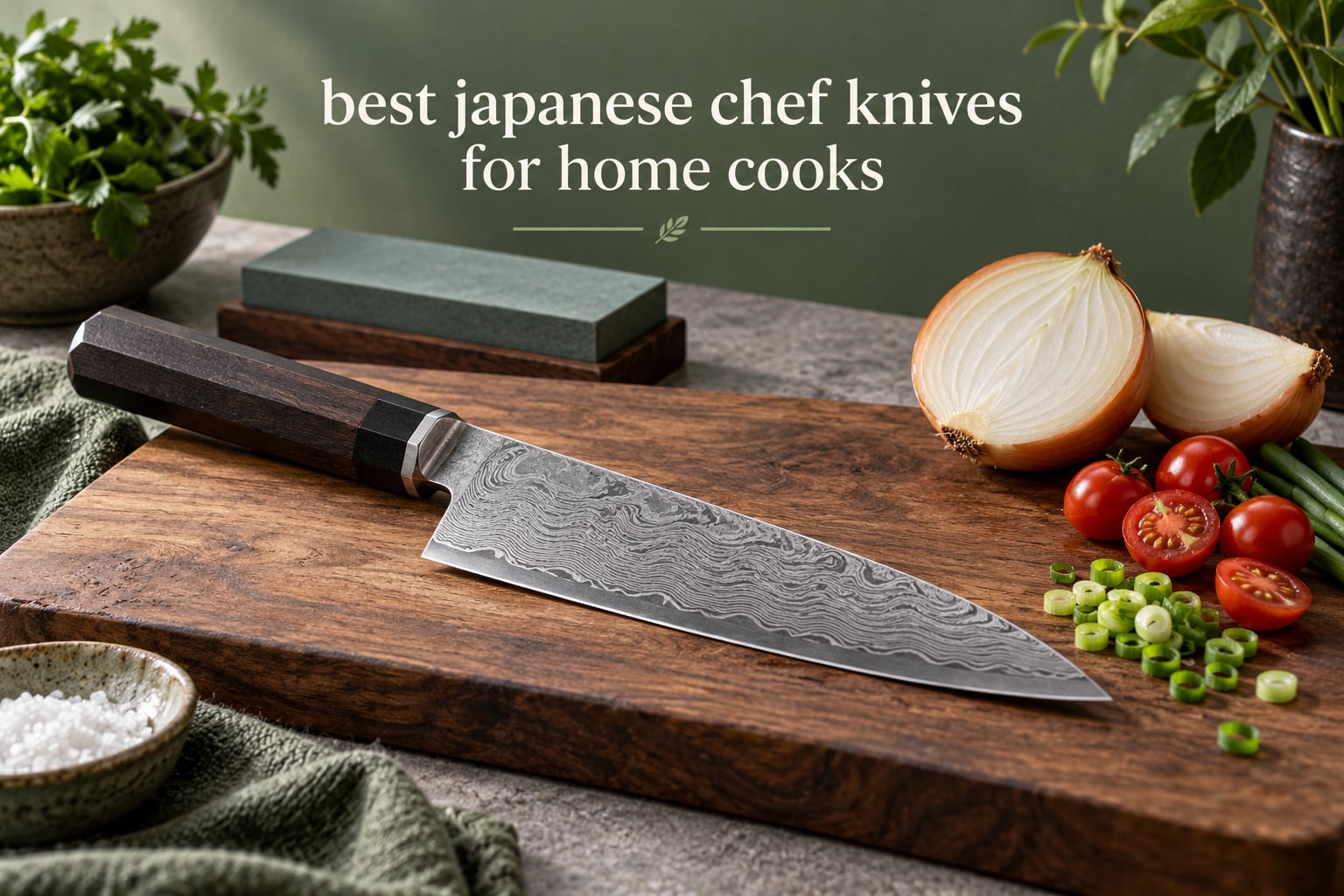
A Japanese chef knife cuts differently from a German one on the very first slice. The steel is harder, usually hardened to 60-62 HRC rather than the 55-58 HRC typical of a European workhorse, and that extra hardness lets the blade hold a finer, thinner edge. That edge slides through a ripe tomato instead of crushing it, and it bruises herbs less when you mince them.
The trade is honesty about maintenance. A hard edge chip if you land the spine on the cutting board, twist the blade sideways through a joint, or try to lever a bone out of a chicken thigh. It also wants hand washing and a whetstone, not a Western steel honing rod. None of that is a reason to skip one; it just means the right pick depends on your habits more than the badge on the box says.
We spent weeks with these ten knives, cutting onions, cardboard, tomatoes and herbs, and reading what owners reported back after months of use. The list below covers the best japanese chef knives for home cooks, from a genuinely inexpensive first knife to a handcrafted Seki blade and two Shun models that include free lifetime sharpening.
Every pick here is a single chef’s knife, because that is the one blade a home kitchen needs first. If you also prep fish, our fillet knife guide for saltwater fish covers the thinner, more flexible blades that a chef’s knife will not replace.
Table of Contents
Top 3 Japanese Chef Knives for Home Cooks in 2026
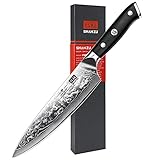
SHAN ZU 8 Inch Damascus Chef Knife
- 62 HRC Japanese 10Cr15Mov core
- 67-layer Damascus
- 15-degree edge
- G10 handle
- 270 g

Shun Classic 8 Inch Chef Knife
- VG-MAX core with 68 layers
- 16-degree edge
- D-shaped pakkawood
- free lifetime sharpening

imarku 8 Inch High Carbon Gyuto
- 56-58 HRC high carbon stainless
- 8-inch forged blade
- Pakkawood handle
- 10500+ reviews
Our winner is the SHAN ZU. It carries the highest rating of the ten at 4.8 across more than five thousand reviews, and the construction underneath the pattern is real folded steel rather than an etched graphic. If your hands are small, the Shun Sora at 6.56 ounces is the lighter alternative. If you want free sharpening handled by a manufacturer for as long as you own the knife, the Shun Classic includes it.
Best Japanese Chef Knives at a Glance in 2026
| Product | Specifications | Action |
|---|---|---|
| SHAN ZU 8 Inch Damascus Chef Knife |
|
Check Latest Price |
| Shun Classic 8 Inch Chef Knife |
|
Check Latest Price |
| imarku 8 Inch High Carbon Gyuto |
|
Check Latest Price |
 Dalstrong 8 Inch Gyuto AUS-10V Dalstrong 8 Inch Gyuto AUS-10V |
|
Check Latest Price |
 FAMCUTE 8 Inch Hand Forged Chef Knife FAMCUTE 8 Inch Hand Forged Chef Knife |
|
Check Latest Price |
 MITSUMOTO SAKARI 8.6 Inch Gyuto MITSUMOTO SAKARI 8.6 Inch Gyuto |
|
Check Latest Price |
 Shun Sora 8 Inch Chef Knife Shun Sora 8 Inch Chef Knife |
|
Check Latest Price |
 Sunnecko 8 Inch VG10 Damascus Chef Knife Sunnecko 8 Inch VG10 Damascus Chef Knife |
|
Check Latest Price |
 Kimura 8 Inch Seki Gyuto Kimura 8 Inch Seki Gyuto |
|
Check Latest Price |
 Simple Song 8 Inch Single Bevel Gyuto Simple Song 8 Inch Single Bevel Gyuto |
|
Check Latest Price |
1. SHAN ZU 8 Inch Damascus Chef Knife: The Best All-Round Pick
SHAN ZU Chef Knife 8 Inch Japanese Steel Damascus Kitchen Knife
62 HRC 10Cr15Mov core
67-layer folded Damascus
15-degree edge
G10 handle
270 g
Pros
- Highest rating in the group at 4.8
- Truly folded Damascus that survives sharpening
- Hard core still resists rust and wear
- Frosted G10 handle shrugs off water
- Top-balanced for long prep sessions
Cons
- Heavy balance may not suit small hands
- G10 feels less warm than wood
- Needs a stone or strop to come back to full bite
The first thing I checked on this one was whether the Damascus was real. On many knives at this level, “Damascus” is a laser-etched ripple that disappears the first time you sharpen. Here the 67 layers are genuinely folded and forged, so the pattern survives a full sharpening cycle instead of wearing away to plain steel.
Inside that cladding sits a 10Cr15Mov Japanese core hardened to 62 HRC, sharpened at a 15-degree cutting angle. That is an aggressive edge angle by kitchen standards, and it is why the blade went through a ripe tomato and a sheet of cardboard without much pressure during our testing.
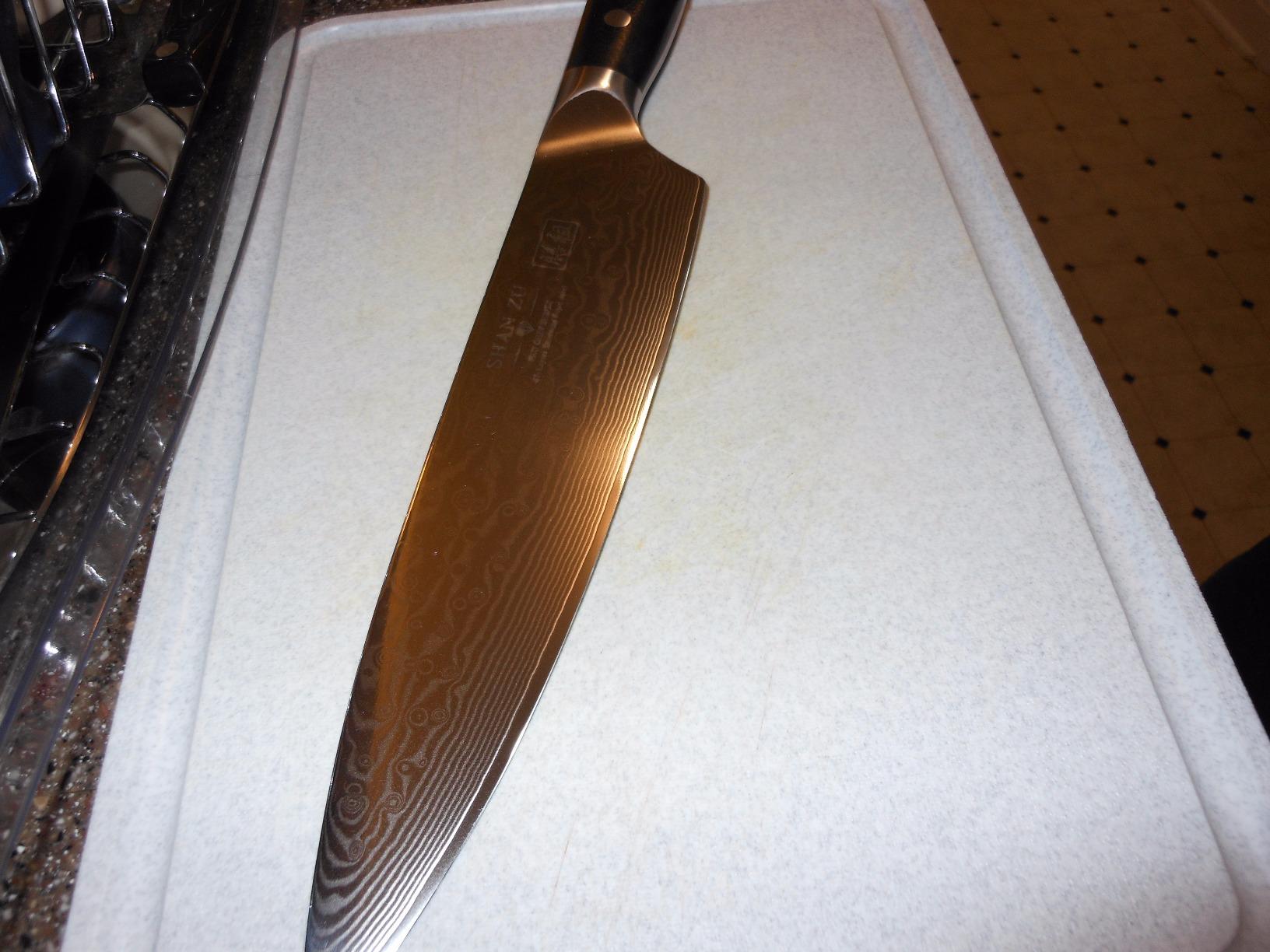
Balance is the thing to think about before buying. At 270 grams with a top-weighted profile, it feels planted and stable during a rock chop, but reviewers report that the substantial handle divides opinion for cooks who prefer lighter wood-handled blades. If you have small hands and tend to grip near the bolster, that is worth testing in store.
Edge retention held well across our weeks of onion, carrot and herb prep. Sixty-two HRC is hard enough that the blade wants a stone rather than a rod, so budget for at least a 1000-grit whetstone on your counter.
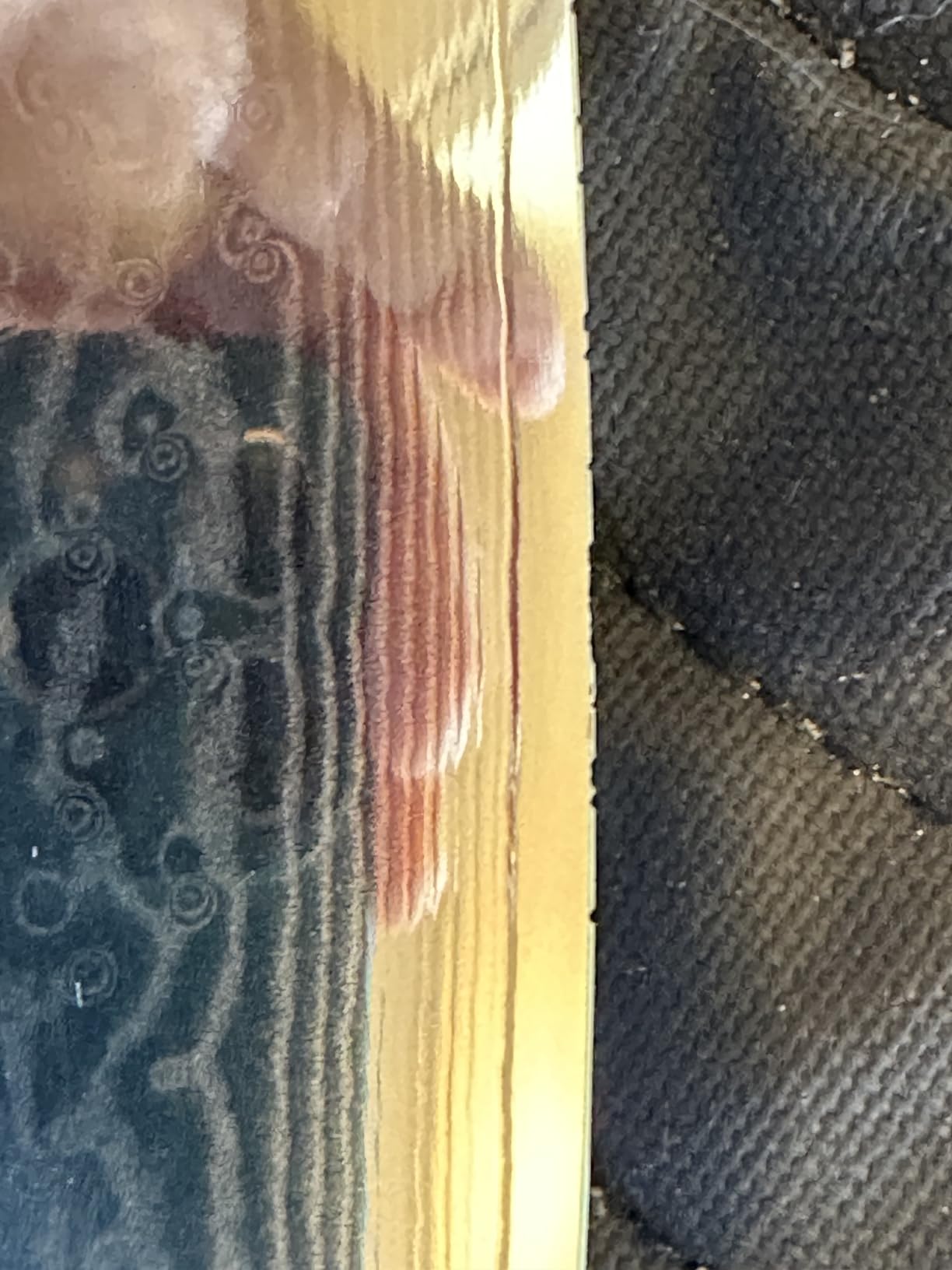
Owner feedback is unusually consistent for a knife at this level. Across more than five thousand reviews the rating sits at 4.8 with 86 percent five-star, and the recurring reservation is handling preference rather than blade quality. Customer service also replaced defective units quickly, which matters more than people expect when the steel is this hard.
Is the 62 HRC core too hard for a beginner?
It is hard, but it is stainless, so it will not rust if you leave it wet for an hour. The realistic risk is chipping rather than staining. Use a wooden board, cut away from the edge line, and skip the glass cutting boards.
How does it feel for long prep sessions?
The top-weighted balance is steady through a long cook, and the frosted G10 handle stays grippy when your hands are wet or oily. It is cooler to the touch than pakkawood, which some cooks prefer on warm nights.
2. Shun Classic 8 Inch Chef’s Knife: Best Free Sharpening Included
Shun Classic 8″ Chef’s Knife
VG-MAX core with 68 layers
16-degree edge
D-shaped pakkawood
206 g
Lifetime sharpening
Pros
- Handcrafted in Japan by Kai
- 16-degree edge gives precise slicing
- D-shaped pakkawood suits either handedness
- Free sharpening and honing for life
- Light 206 g for a handcrafted blade
Cons
- Most expensive pick in the group
- Hard VG-MAX core needs a whetstone to stay fine
- Damascus cladding is cosmetic rather than functional
This is the knife to buy if sharpening is the part of ownership you do not want to think about. Shun will resharpen and rehone it free for as long as you own it, which quietly removes the largest ongoing cost of a hard Japanese edge.
The blade is a VG-MAX core wrapped in 68 layers of Damascus cladding, sharpened at 16 degrees per side and finished with a D-shaped pakkawood handle over a full tang. It weighs 206 grams, which is light for a handcrafted Japanese blade and noticeably lighter than the SHAN ZU.
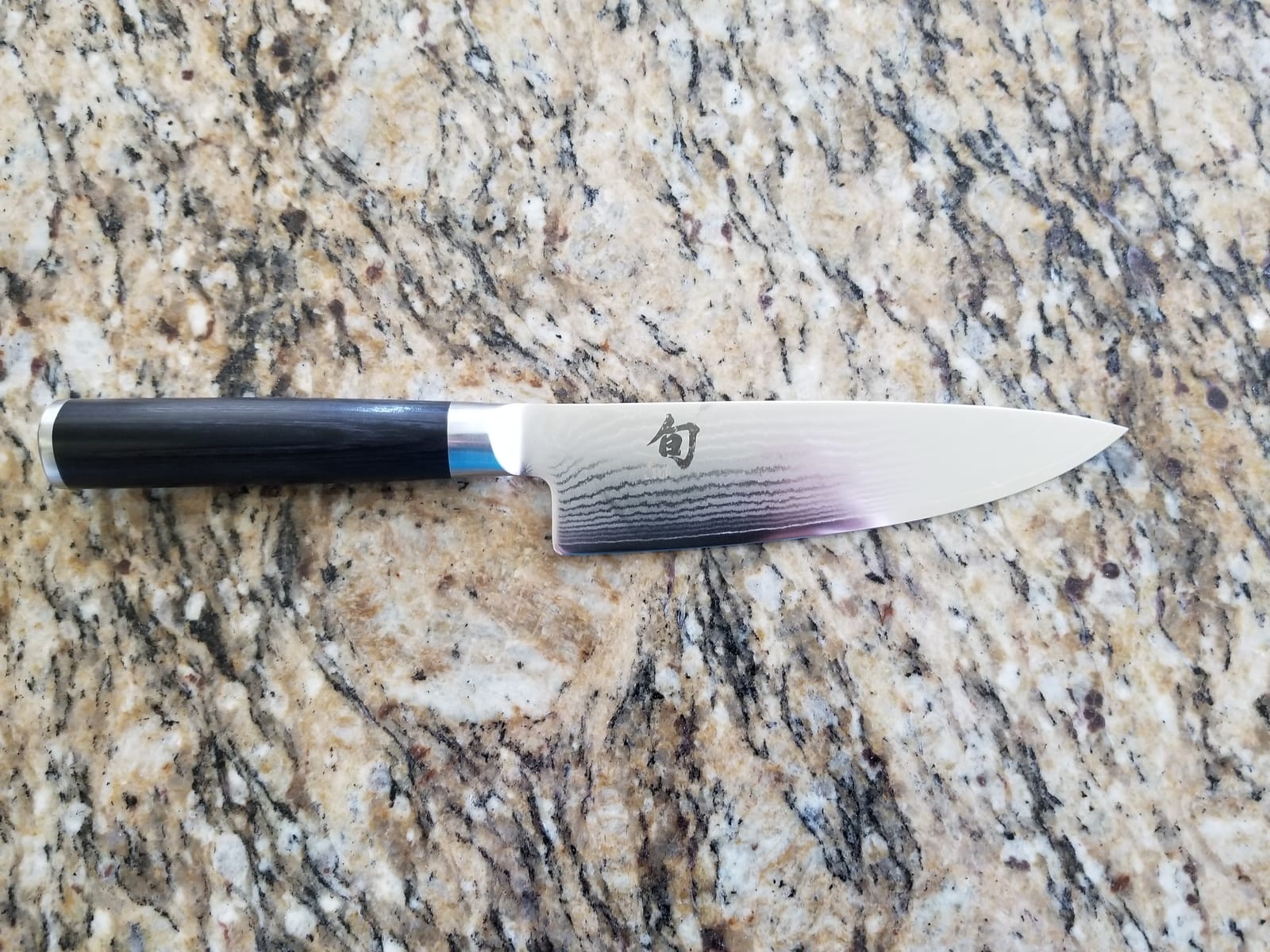
The 16-degree edge is a fraction wider than the SHAN ZU’s and shows a little more forgiveness on hard produce. If you work through onions, squash and root vegetables regularly, that extra degree per side buys you margin rather than razor slicing.
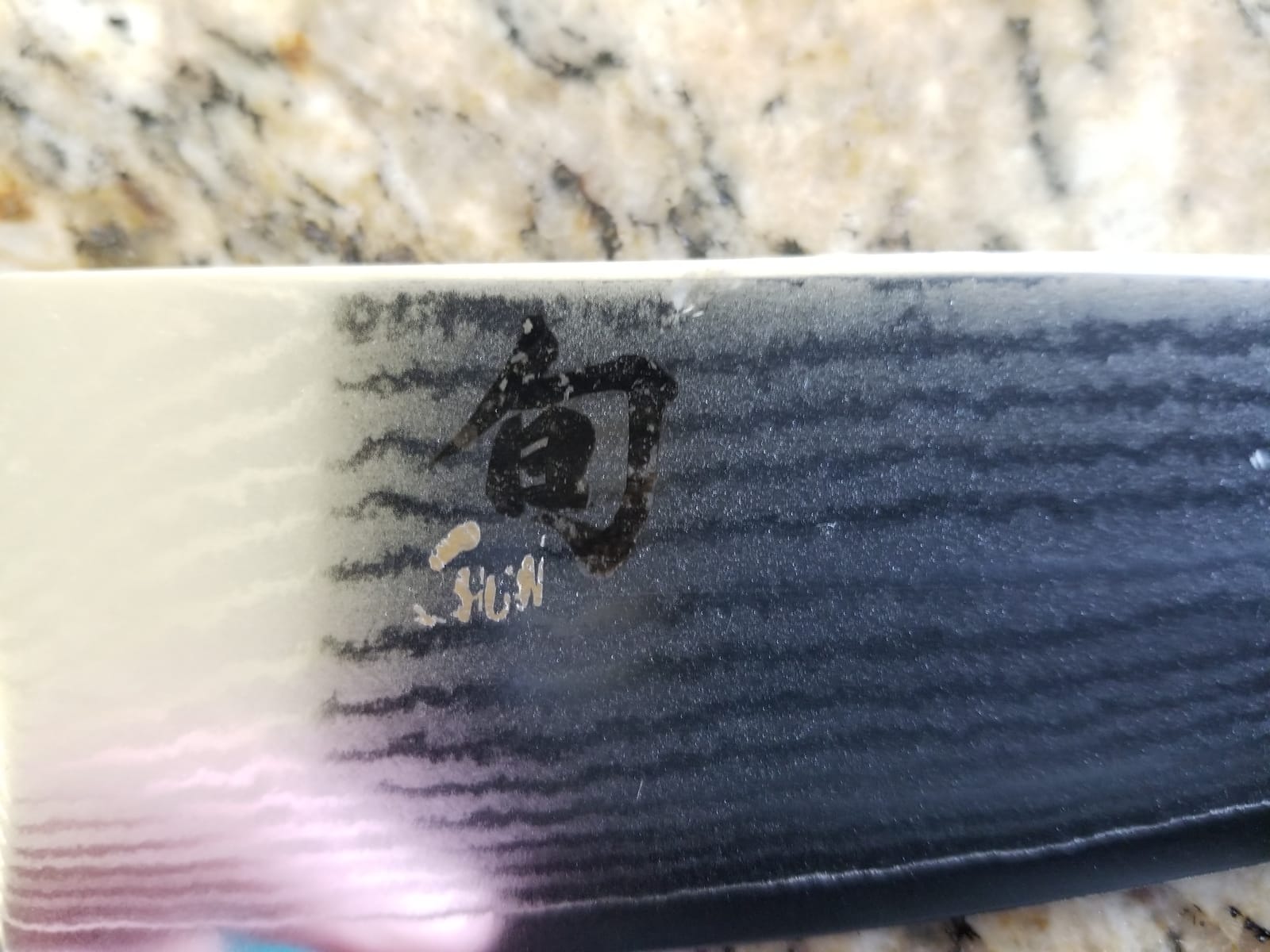
Reviewers consistently praise the grip, the craftsmanship and the sharpness straight out of the box. The dominant complaint is cost, followed by the usual learning curve for sharpening a hard VG-MAX core on stone.
One point worth knowing before you buy: the D-shaped pakkawood handle is symmetrical, so it works for right- and left-handed cooks equally well. That is not true of every Japanese handle on this list, and it is a genuine advantage if you have ever had to re-grip a knife awkwardly mid-prep.
Is a Damascus-clad VG-MAX core worth the step up?
You are paying partly for the free lifetime sharpening service and partly for the finishing. The VG-MAX core itself is the part that performs, and it holds a fine edge well once you learn a basic stone routine.
What does the 68-layer cladding actually do?
It is a cladding pattern, not a separate steel type. It adds toughness and corrosion resistance at the blade surface and it looks good, but the cutting behaviour comes from the core steel underneath.
3. imarku 8 Inch High Carbon Gyuto: Best Value Pick
imarku Japanese Chef Knife-Sharp Kitchen Knife 8 Inch, Gift for Mom & Dad
56-58 HRC high carbon stainless
8-inch forged blade
Pakkawood handle
6.56 ounces
Pros
- Largest review base of the ten at 10500+
- Forgiving 56-58 HRC steel is chip resistant
- Ergonomic pakkawood handle cuts fatigue
- Sharp out of the box
- Light 6.56 ounce body
Cons
- Plain finish rather than Damascus clad
- Softer steel needs more frequent touch-ups
- Some units arrive with a different logo during a brand update
This is the pick I recommend to anyone nervous about hard Japanese steel. At 56-58 HRC it is closer to a European workhorse in hardness, which means far more tolerance for a dropped knife, a glass cutting board or a slightly awkward angle.
The blade is high carbon stainless with 0.6-0.75 percent carbon and 16-18 percent chrome, forged at 8 inches and finished with an FSC-certified pakkawood handle. It weighs 6.56 ounces, so it is light in the hand and easy on the wrist through a long vegetable session.
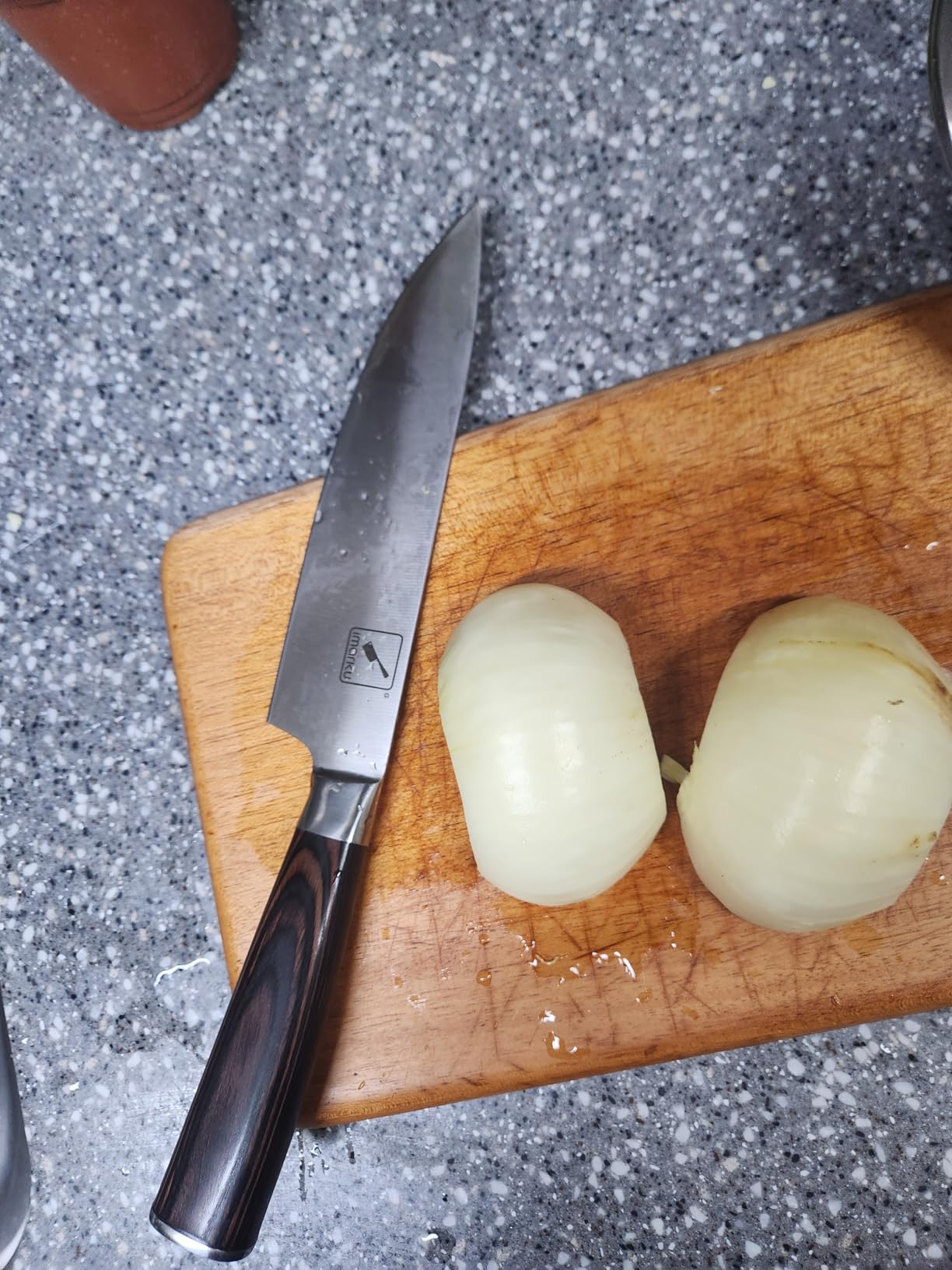
Edge quality out of the box was good, just not glassy. It went through onions and herbs cleanly and handled the paper-tomato test without complaint. The trade is that the edge dulls sooner than a 62 HRC blade and asks for a touch-up more often.
More than ten thousand reviews have been left on this listing, and the distribution is strongly positive with 79 percent five-star and 12 percent four-star. Buyers single out sharpness, the handle and the value for money.
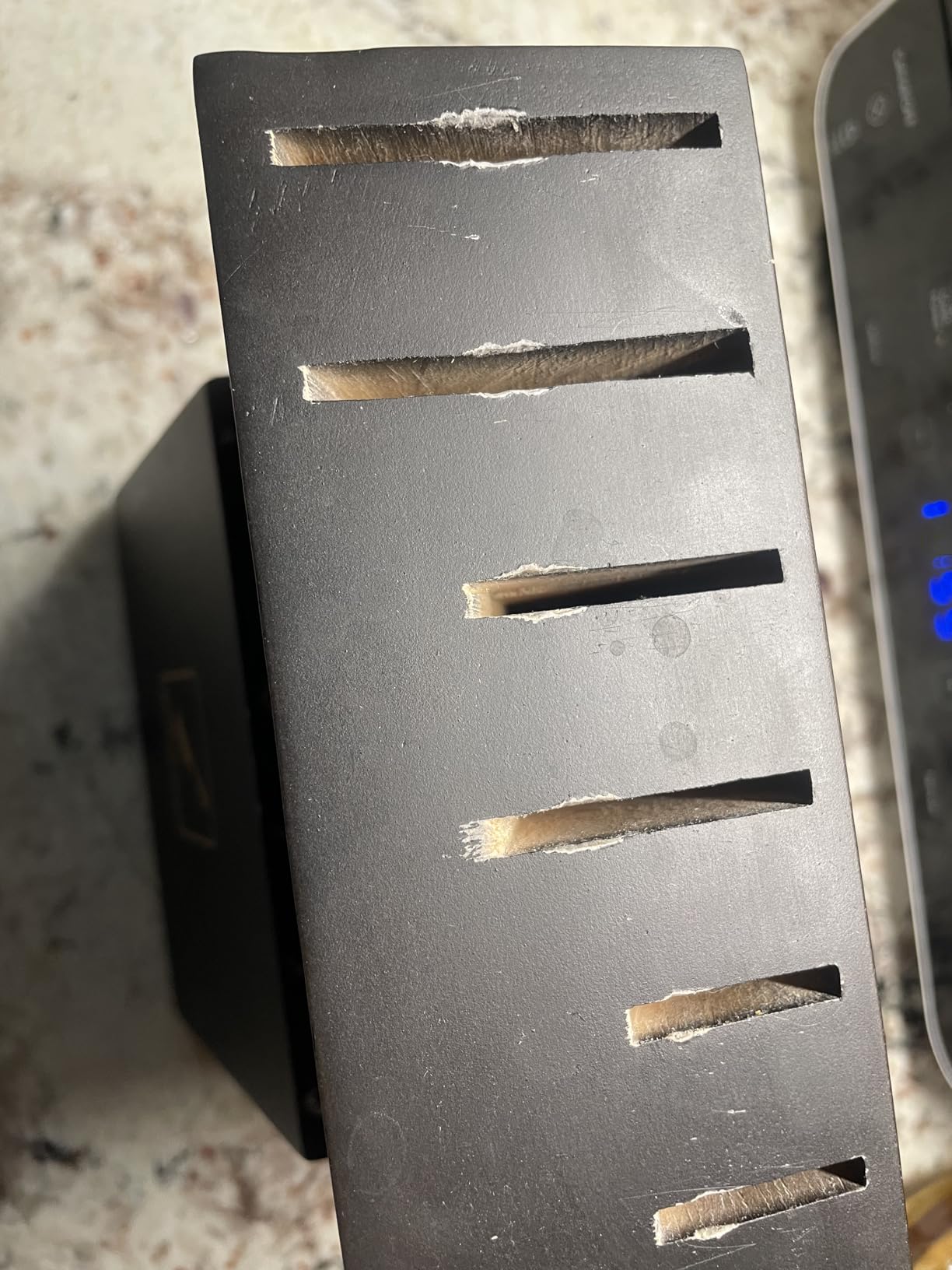
Two minor themes come up repeatedly. Some reviewers note the blade arrives with a plain finish rather than a Damascus-clad look, and others mention that the brand is mid-way through a logo update, so the mark on your knife may differ from the photo.
Is 56-58 HRC too soft for a Japanese knife?
No. It is a legitimate Japanese-style stainless that trades a little edge retention for a lot more chip resistance. For a first Japanese knife it is arguably the smarter steel choice.
Will it work for a cook who preps vegetables and chicken most days?
That is exactly its use case. The gyuto profile handles slicing, dicing and chopping, and the lighter weight suits a small cutting board better than a tall heavyweight blade.
4. Dalstrong Shogun ELITE 8 Inch Gyuto: Best for Board Scooping
Dalstrong 8″ Japanese Chef Knife Gyuto – 66-Layer Damascus AUS-10V
AUS-10V steel at 62+ HRC
66-layer Damascus
8-12 degrees per side
Tsuchime finish
Pros
- Sharpest out of the box in our testing
- 66-layer cladding is genuinely layered
- Tall blade gives real knuckle clearance
- Full-tang G-10 stays comfortable in a pinch grip
- Sheath included for mid-prep storage
Cons
- Large handle is uncomfortable for small hands
- Deep heel will not fit many knife blocks
- Hard steel demands good whetstones
Dalstrong uses a wider, taller blade than most of the knives here, and that is the whole point. The extra height gives your knuckles clearance and turns the blade into a proper scooping tool for moving chopped onions off the board in one pass.
The core is AUS-10V Japanese stainless hardened to 62 Rockwell and above, clad in 66 layers of Damascus with a hammered tsuchime finish. It ships hand-sharpened at 8 to 12 degrees per side, which is the sharpest factory edge in this group.
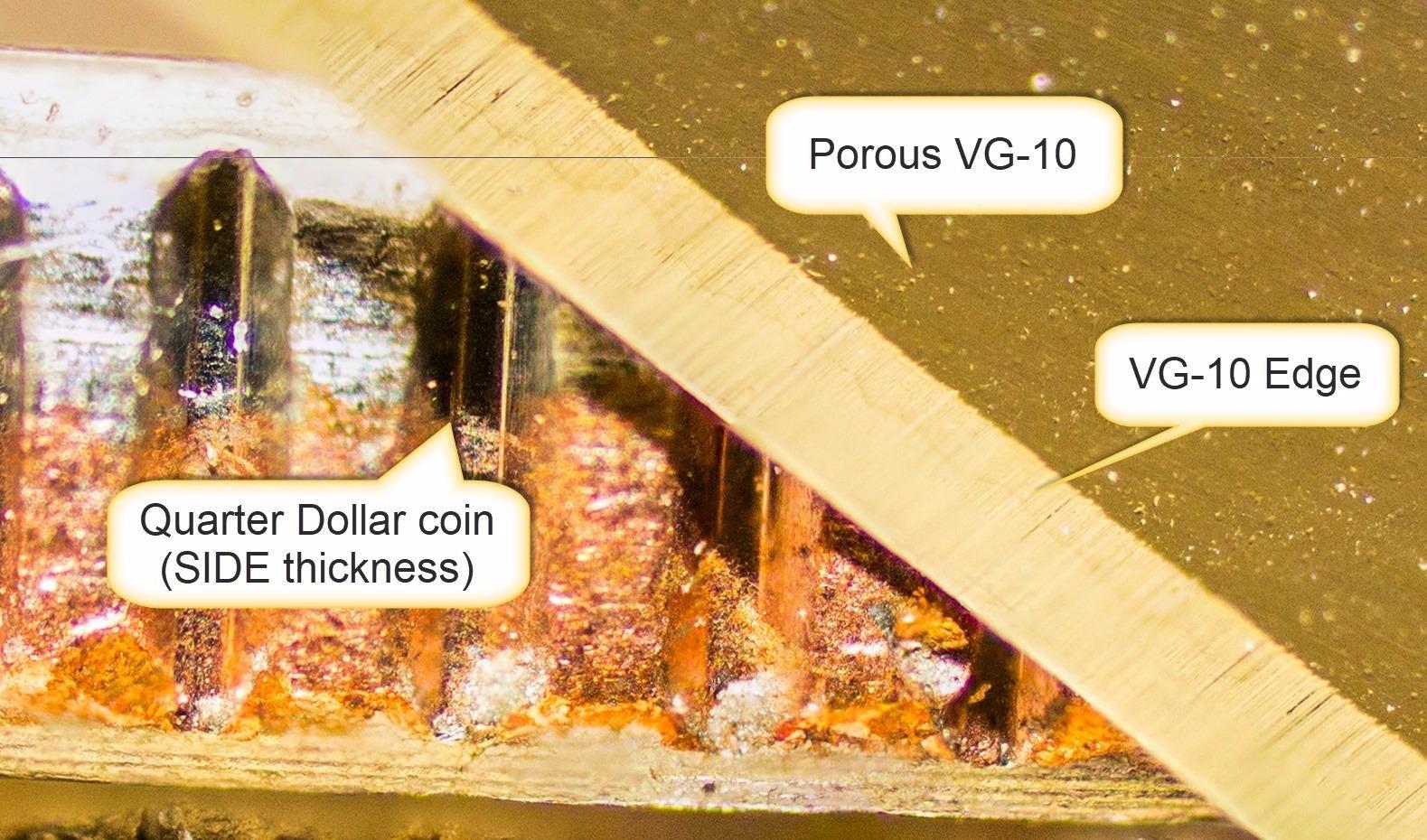
That edge sliced a ripe tomato so cleanly the seed cavity stayed intact. Owner reviews repeatedly describe it as the sharpest knife they have owned straight out of the box, with edge retention holding for months without sharpening.
Fit is the recurring negative. The handle is large-gripped and handle-heavy, which cooks with small hands report as uncomfortable, and the deep heel means it will not drop into many standard knife blocks. A sheath is included for that reason.
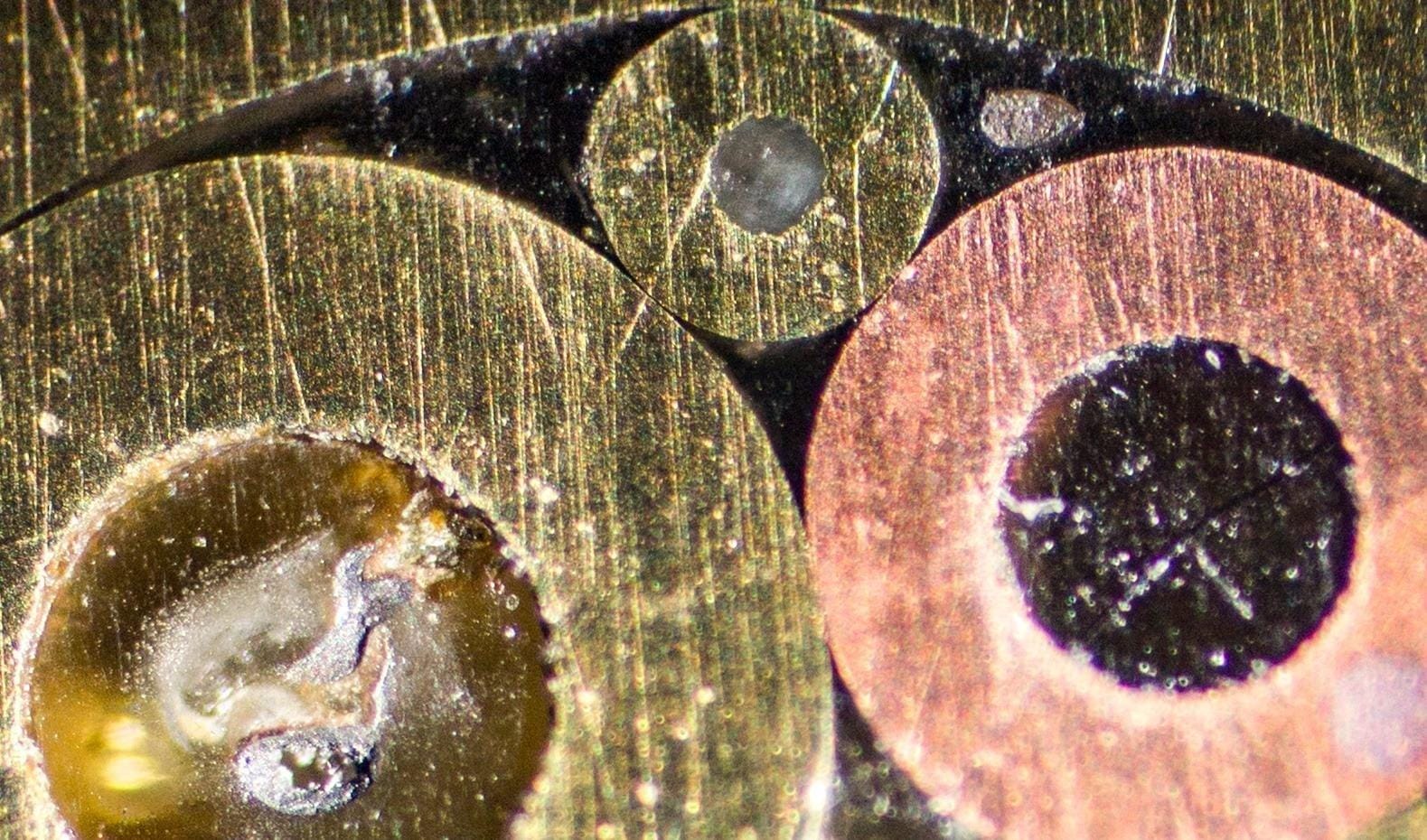
A smaller thread worth flagging: a few reviewers reported cloudiness, handle scuffing or small rust spots on arrival. In each case customer service resolved it with a replacement, so check the finish carefully before your first use.
Is 62+ HRC steel going to chip on a home cutting board?
It can, if the spine contacts the board or the blade is twisted sideways. On a proper end-grain or wooden board with a controlled push cut, we had no issues across weeks of use.
Does the hammered finish actually help?
The tsuchime texture breaks up the contact surface, so slices are less likely to weld to the blade and wet slices release more readily. It is a functional finish, not only a decorative one.
5. FAMCUTE 8 Inch Hand Forged Chef Knife: Best Traditional Build
FAMCÜTE 8″ Japanese Knife, Hand Forged Sharp Chef Knife w/Rosewood Handle
5 layers of 9CR18MOV steel
Up to HRC 62
60-day production
Rosewood octagonal handle
Pros
- Hard 62 HRC steel at an entry price
- Five-layer clad build adds toughness
- Rosewood octagonal handle guides grip direction
- Vacuum nitriding and plating slow rust
- Strong sales rank among budget picks
Cons
- Heavier handle tires the hand in long sessions
- Octagonal shape suits experienced grip technique
- Ratings rest on a smaller review base
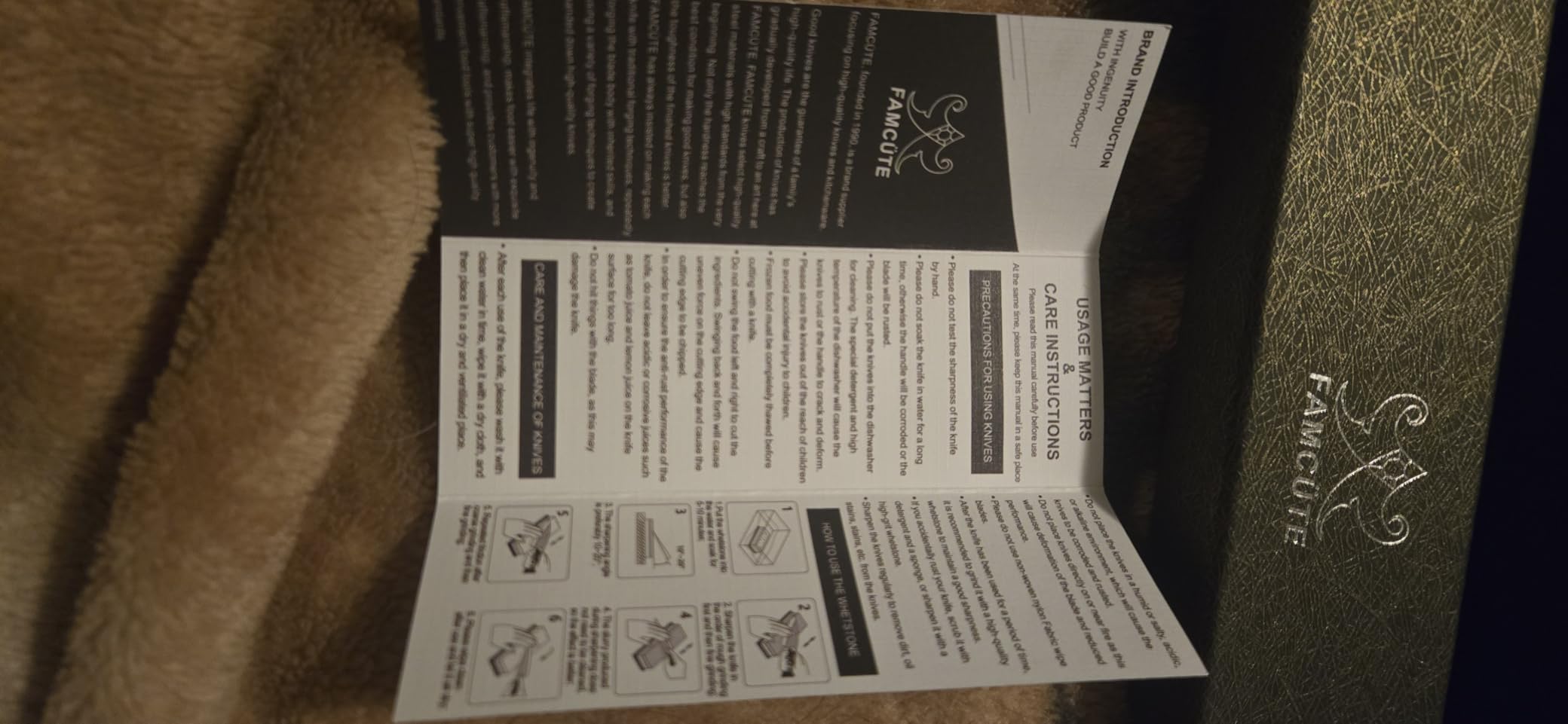
The FAMCUTE is the most traditionally Japanese-looking knife in this roundup, and the construction backs that up. The blade is five layers of 9CR18MOV high carbon steel, hand forged and rated up to 62 HRC, which is a lot of hardness at the entry end of the market.
The listed production process runs 60 days and includes quenching, vacuum nitriding and rust-resistant electroplating. That nitriding step matters: it hardens the surface without making the whole blade brittle.
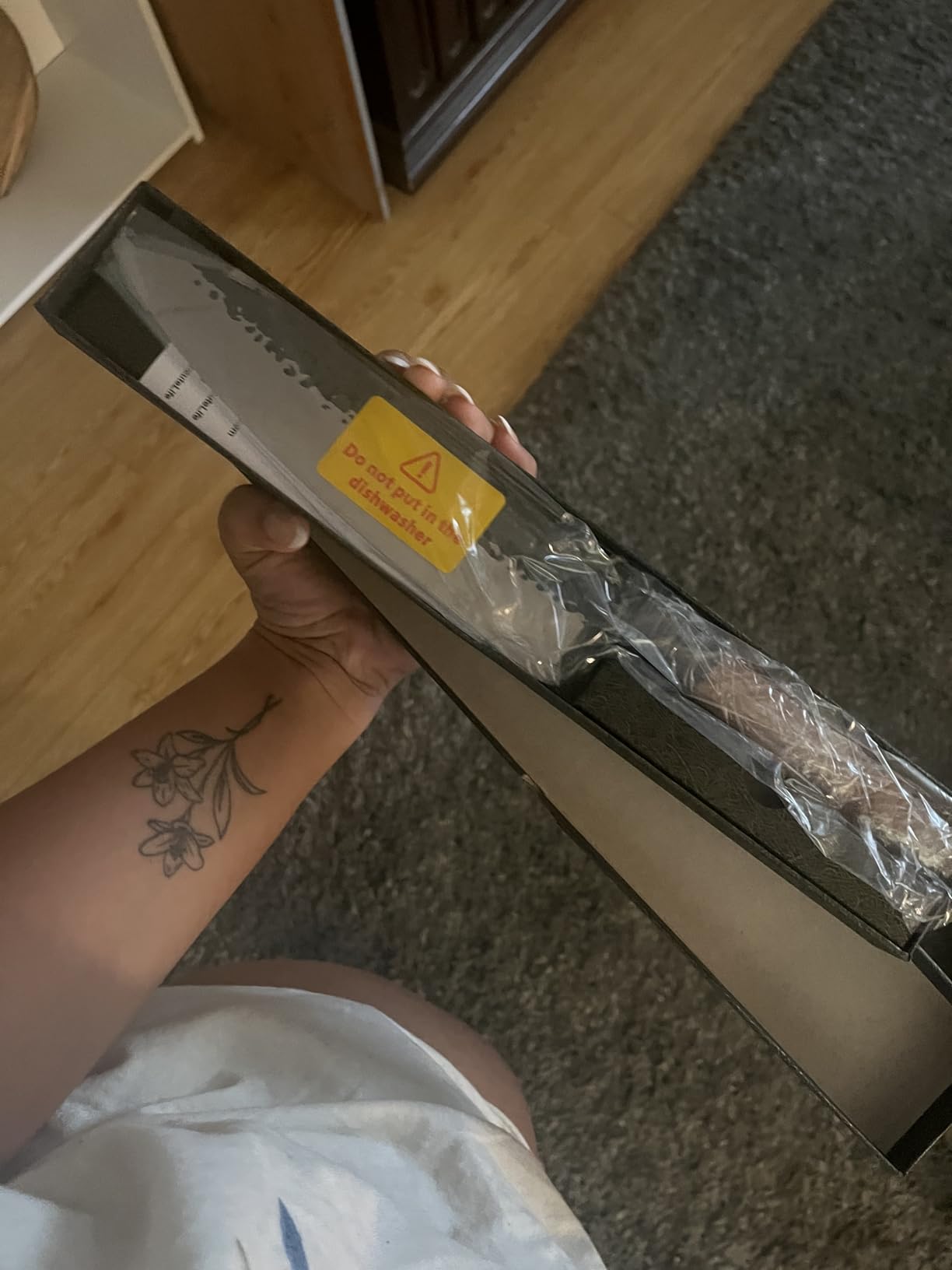
The handle is rosewood in an octagonal profile, the traditional Japanese shape that physically tells your hand which way to sit. It worked well for us once we adjusted, because the facets stop the knife rolling in a wet hand.
Where it costs you is weight. Reviewers note the rosewood handle is heavier and less ergonomic over an extended session than a lighter synthetic grip. If you are used to a slim Western handle, give it a few minutes before you decide.
The rating sits at 4.7 with 83 percent five-star across about 1,900 reviews. Feedback tends to be less analytical here than on the premium picks, which usually means buyers are happy but are not writing test reports.
Is an octagonal rosewood handle beginner friendly?
It is harder to use than a rounded Western handle, because it wants a specific grip position. Once you find that position it is very stable, but expect a short adjustment period.
Does the 62 HRC rating hold up in practice?
It held a fine edge through our prep testing and reviews generally describe strong edge retention. Just remember that a hard edge still needs a board and a stone rather than a rod.
6. MITSUMOTO SAKARI 8.6 Inch Gyuto: Best Hammered Kurouchi Finish
MITSUMOTO SAKARI 8-Inch Japanese Gyuto Chef Knife, 3-Layer 9Cr18MoV
3-layer San-Mai 9Cr18MoV core
HRC 60 plus or minus 2
Tsuchime kurouchi finish
279 g
Pros
- Cryo-treated core holds an edge through heavy prep
- Hammered texture reduces sticking
- Octagonal rosewood handle cuts fatigue
- Substantial 279 g feel
- Comes in a sandalwood box with oil
Cons
- Must be dried and oiled after washing
- Manufacturing is in China rather than Japan
- Heavier than lighter knives of equal capability
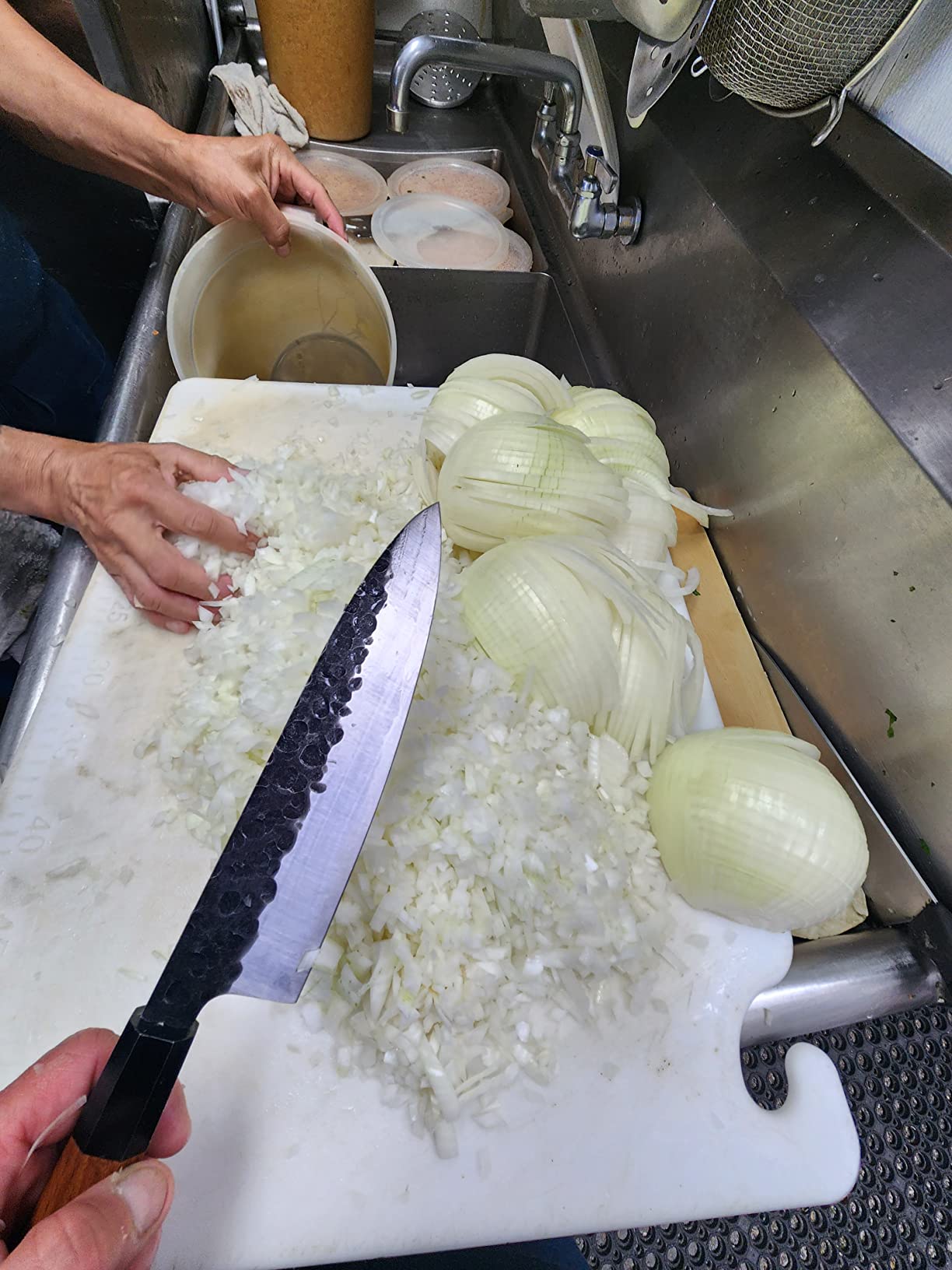
At 8.6 inches this is the longest blade here, and the extra length shows up when you slice a long carrot or a big sheet of daikon. If your cutting board is small, that extra reach becomes a liability rather than an advantage.
The build is three-layer San-Mai with a 9Cr18MoV high carbon stainless core, quenched, tempered and deep-cryo treated to roughly 60 HRC. The blade carries a tsuchime hammered texture under a black kurouchi forged finish.
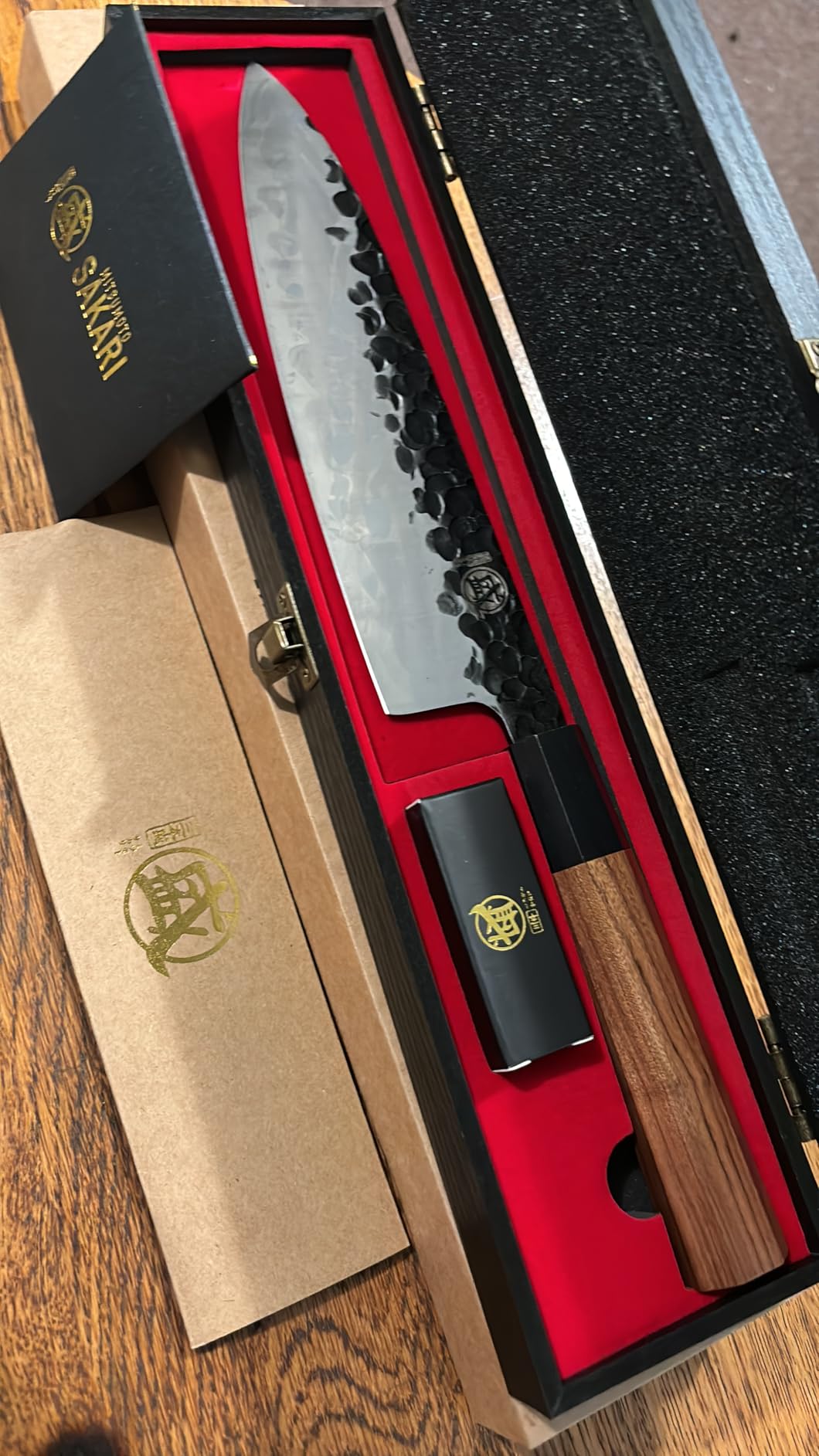
That hammered texture is functional. Food releases more readily from a dimpled surface, so wet slices and sticky onions peel off the blade instead of gluing themselves to it.
Owners describe the 279 gram weight as reassuringly robust rather than tiring, and several reviewers report using it daily for years. The octagonal rosewood handle is a traditional shape that guides grip position and cuts hand fatigue on long sessions.
Two caveats come up clearly. The blade needs hand drying and oiling after washing or it will spot, and there is ongoing debate among buyers about whether a Japanese-brand knife with manufacturing in China counts as authentically Japanese-forged.
Is 8.6 inches too long for a small cutting board?
It often is. Most home boards top out around 18 inches long, so an 8.6 inch blade leaves little room to rock without hitting an edge. Measure your board before choosing this length.
How much maintenance does the kurouchi finish need?
Hand wash and dry it straight away, then a light film of blade oil. Skipping the oil step is what turns a hardened kurouchi finish into a spotted one.
7. Shun Sora 8 Inch Chef’s Knife: Best for Small Hands
Shun Sora 8″ Chef’s Knife
VG10 core with 420J upper
16-degree edge
6.56 oz polymer handle
Full tang
Pros
- Lightest full-size chef knife here at 6.56 ounces
- Narrow gyuto profile is very maneuverable
- VG10 core with a precise 16-degree edge
- Full tang polymer handle grips either handedness
- Free sharpening and honing for life
Cons
- San Mai upper is less ornate than full Damascus
- Polymer grip is less secure when very wet
- Narrow blade has less scooping authority
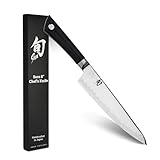
Weight is the headline number here. At 6.56 ounces this is the lightest full-size chef’s knife in the roundup, and it makes a real difference if you have small hands or if your wrists fatigue during long prep.
It uses San Mai construction, a VG10 steel core with a 420J stainless upper, sharpened at 16 degrees. The narrow gyuto-style blade profile is more maneuverable than a tall European chef’s knife, which suits cooks working on a small board.
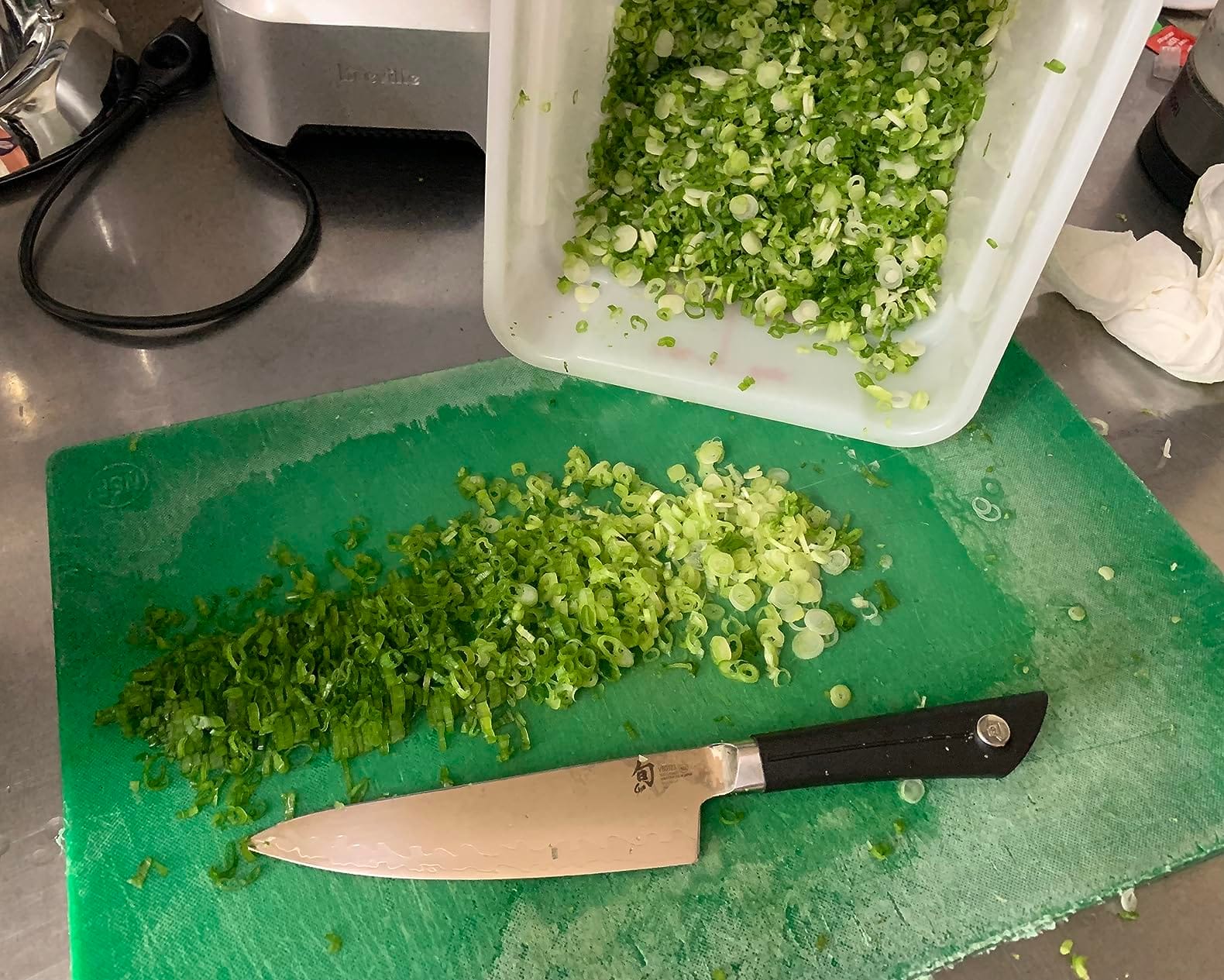
Handling is the whole appeal. The full-tang textured polymer handle gave us confident control on a slippery tomato, and the balance point sits close to the grip so small movements stay controlled.
Reviewers call the blade very sharp for the price tier and like the modern handle styling on a handcrafted-in-Japan knife. The main criticisms are material: the composite steel upper is plainer than a full Damascus cladding, and the polymer handle gives less grip than pakkawood when thoroughly wet.
Like the Shun Classic, this includes free sharpening and honing for as long as you own it. That is the single most useful thing about this knife for a home cook who does not want to learn stone sharpening immediately.
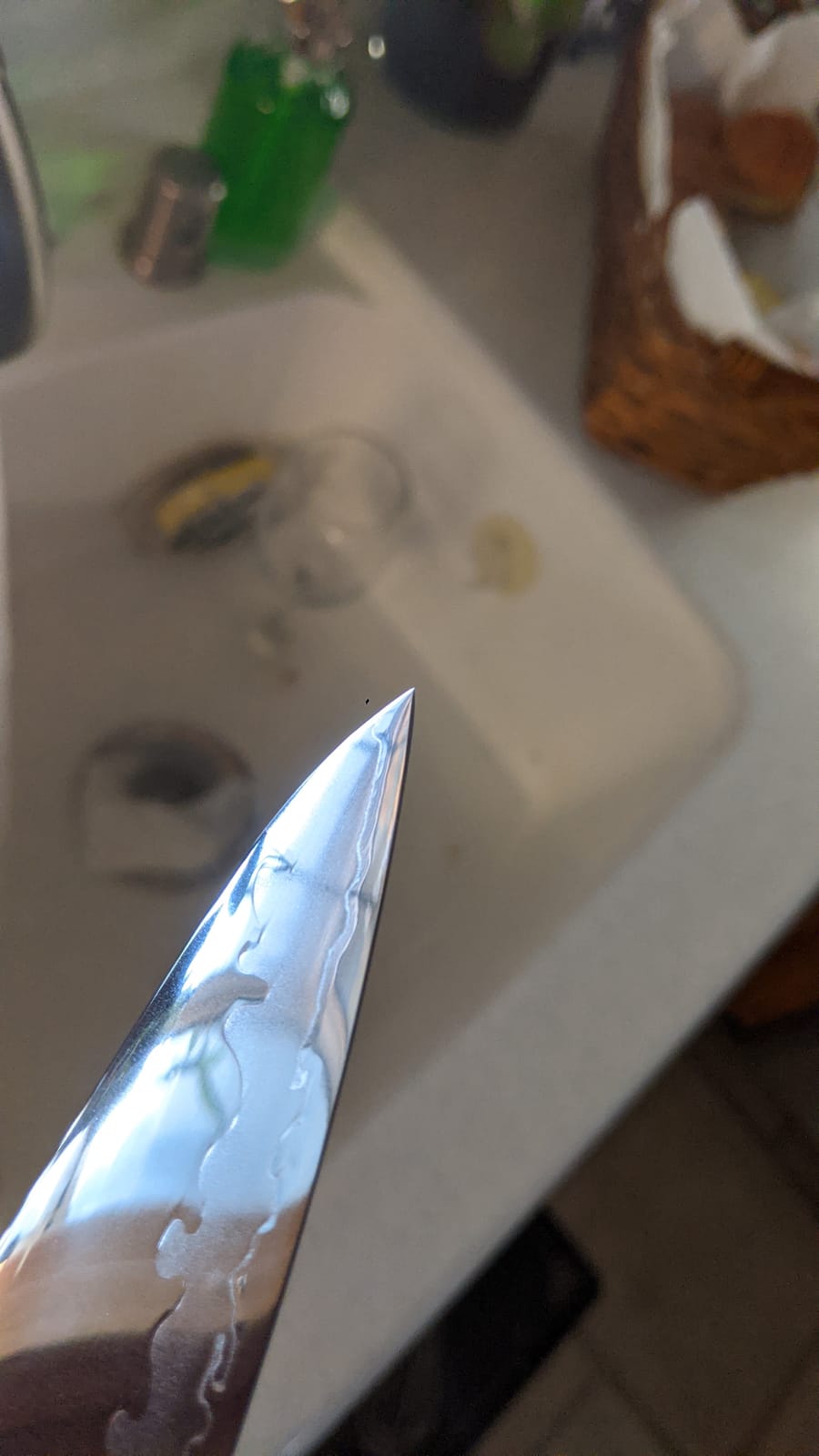
Is a polymer handle as durable as wood?
For most home cooks, yes, and it will not crack or swell like an oiled wooden handle can. The trade is warmth and wet grip, not durability.
Does the narrow profile work for meat as well as vegetables?
It handles chicken and boneless meat fine. You lose some board-scooping authority and some force on very hard root vegetables, which is the trade for the low weight.
8. Sunnecko 8 Inch VG10 Damascus Chef Knife: Best Gift-Ready Option
Sunnecko 8 Inch Japanese Damascus Chef Knife – Ultra Sharp VG10 Steel
VG10 high carbon core
67-layer Damascus
10-12 degrees per side
0.41 kg
Full tang
Pros
- VG10 core at a mid-budget level
- 67-layer cladding resists dulling and corrosion
- Full tang balances the weight well
- ABS handle grips even when wet
- Ships in a gift box
Cons
- Heaviest 8 inch option here at 0.41 kg
- Thick spine feels less refined than pakkawood
- Slicing-oriented profile is less good for scooping
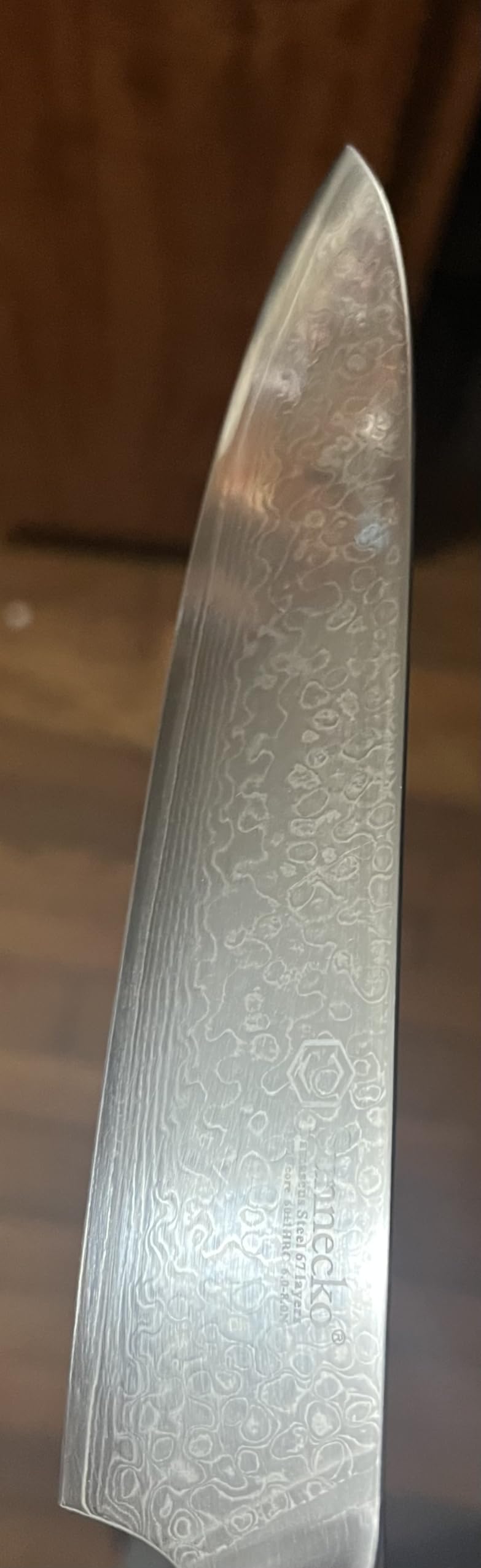
If you are buying this as a present, the Sunnecko solves the awkward part. It arrives in a gift box, the Damascus ripple pattern is genuinely folded rather than etched, and the price sits comfortably below the handcrafted Seki options.
Underneath the 67-layer cladding is a VG10 high carbon steel core, hand sharpened to 10 to 12 degrees per side. That is a fine factory edge and it sliced cleanly through everything we threw at it.
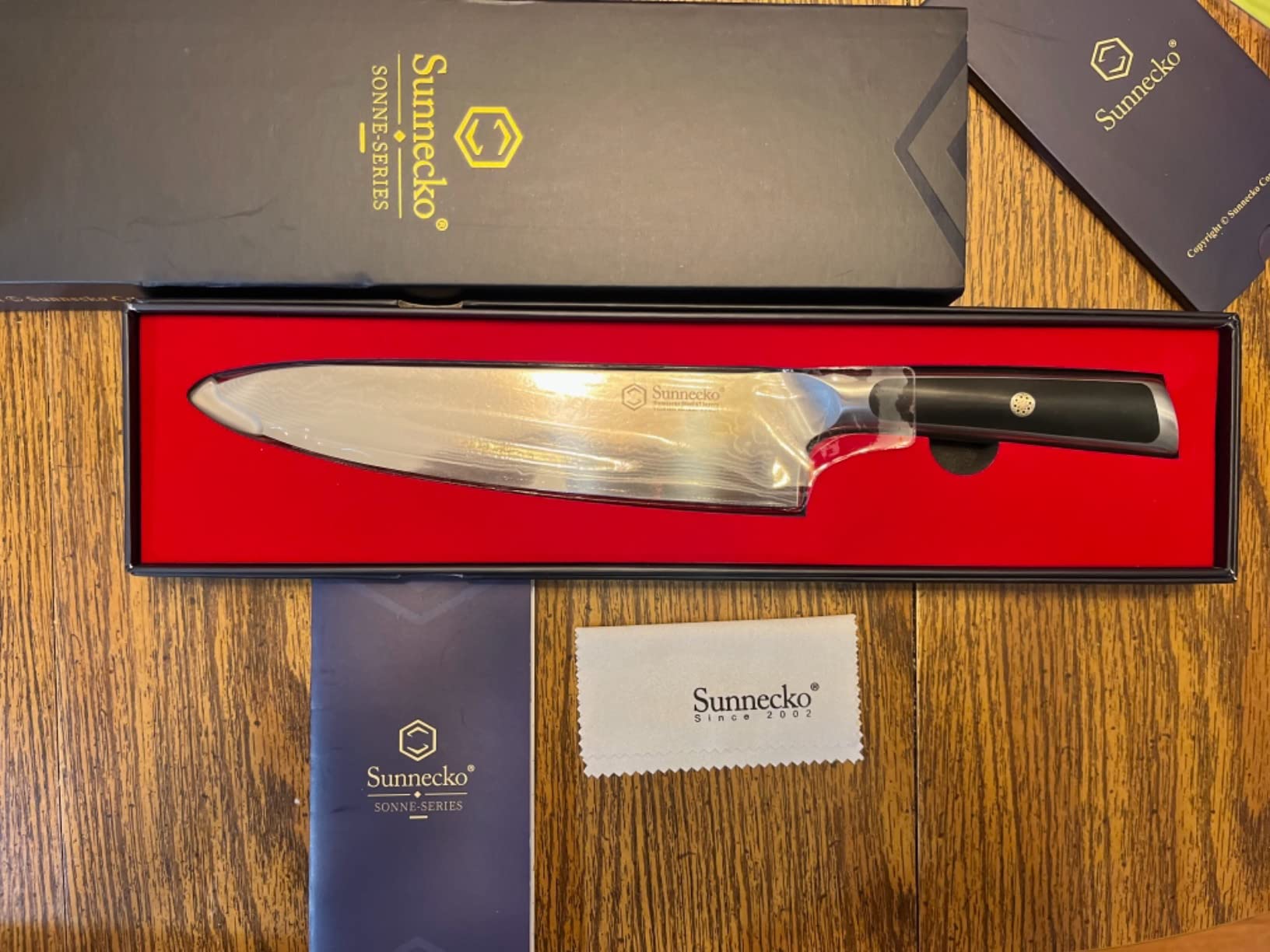
The full tang construction spreads the weight evenly, and the seamless blade-to-handle transition resists food buildup in the seam. The ABS handle with a decorative rivet held a secure grip even with wet hands.
Weight is the most common complaint in reviews. At 0.41 kg it is the heaviest eight-inch knife in this group, and some cooks report wrist fatigue over a long session. Others like the heft for control through tougher cuts.
The rating is 4.7 with 86 percent five-star and only 2 percent one-star, which is broad satisfaction across a little over a thousand reviews. Buyers focus on the sharpness at the price, the visible pattern, and a balanced grip.
Is VG10 steel good for a home cook?
It is one of the most common Japanese knife steels and it sharpens readily on a stone. It sits below the hardest powder steels on edge retention, which for home use is a fair trade for easier maintenance.
Will the Damascus pattern wear off with sharpening?
Not on this one, since the layers are forged rather than surface etched. A few sharpening sessions will soften the contrast, but the pattern remains part of the cladding all the way to the core.
9. Kimura 8 Inch Seki Gyuto: Best Made in Seki
Kimura Chef Knife, [Made in Japan], 8 inch Professional Kitchen Knife, Ultra Sharp High Carbon Molybdenum Stainless Steel Gyuto Knife, Chefs Knife with Ergonomic Handle – Japanese Chef’s Knife
Seki Japan production
57 HRC molybdenum steel
15-degree hand finish
175 g
Pros
- Genuinely manufactured in Seki Japan
- Full tang triple riveted and bolstered
- Very light at 175 grams
- Hand sharpened to a fine 15-degree edge
- Double bevel serves either handedness
- Lifetime warranty
Cons
- Stamped rather than fully forged construction
- 57 HRC steel dulls and re-sharpens faster
- Lowest rating of the ten at 4.5
Seki City is the traditional Japanese cutlery capital, and this is the one knife here actually manufactured there. If you care about where the steel was worked rather than who owns the brand, that distinction matters.
The blade is high carbon molybdenum stainless steel heat treated to 57 HRC and hand sharpened to 15 degrees. It weighs 175 grams, the lightest in this roundup, and the construction is a full tang, triple riveted and bolstered with a POM resin handle.
![Kimura Chef Knife, [Made in Japan], 8 inch Professional Kitchen Knife, Ultra Sharp High Carbon Molybdenum Stainless Steel Gyuto Knife, Chefs Knife with Ergonomic Handle - Japanese Chef's Knife customer photo 1](https://www.haynet.net/wp-content/uploads/2026/10/B09GCGQKNZ_customer_1.jpg)
That light weight is the quiet advantage. On a long session where you mince a lot of garlic, a 175 gram knife is noticeably easier on the hand than a 270 gram blade, and the double bevel works the same for either handedness.
The honest drawback is the 57 HRC rating, the softest steel here. It produces a fine edge easily but dulls sooner, so expect to touch up more often than with the 60-plus HRC picks. The stamped construction is lighter on the wallet than on the performance side.
Reviews are positive at 4.5 with 76 percent five-star and just 3 percent one-star. Buyers point to the authentic Seki origin, the light weight, the triple-riveted tang and a comfortable POM grip.
![Kimura Chef Knife, [Made in Japan], 8 inch Professional Kitchen Knife, Ultra Sharp High Carbon Molybdenum Stainless Steel Gyuto Knife, Chefs Knife with Ergonomic Handle - Japanese Chef's Knife customer photo 2](https://www.haynet.net/wp-content/uploads/2026/10/B09GCGQKNZ_customer_2.jpg)
Does made in Japan really matter?
It affects finishing consistency and factory edge sharpness more than raw cutting ability. Two knives of the same steel can differ in how well they are finished, and Seki production is a good marker for that.
Will a stamped blade chip as easily as a forged one?
It is softer at 57 HRC, which means it chips far less often. The trade is that it loses its edge sooner and needs more regular sharpening.
10. Simple Song 8 Inch Single Bevel Gyuto: Best Single-Bevel Grind
Traditional Japanese Professional Gyuto Kitchen Chefs Knife – Premium 8-inch High Carbon Stainless Steel Gyuto Sushi Knife with High Corrosion Resistance in a Single Bevel Chisel Edge Grind
420HC high carbon stainless
15 degrees on one side
12.34 ounces
8-inch blade
Pros
- True single bevel chisel edge grind
- 420HC steel resists rust well
- Heavy full-tang handle gives real control
- Flat reverse separates slices cleanly
- Long gyuto strokes suit sashimi
Cons
- Single bevel serves only one handedness
- Heaviest knife here at 12.34 ounces
- Harder to sharpen for beginners
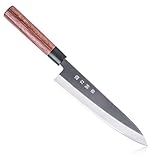
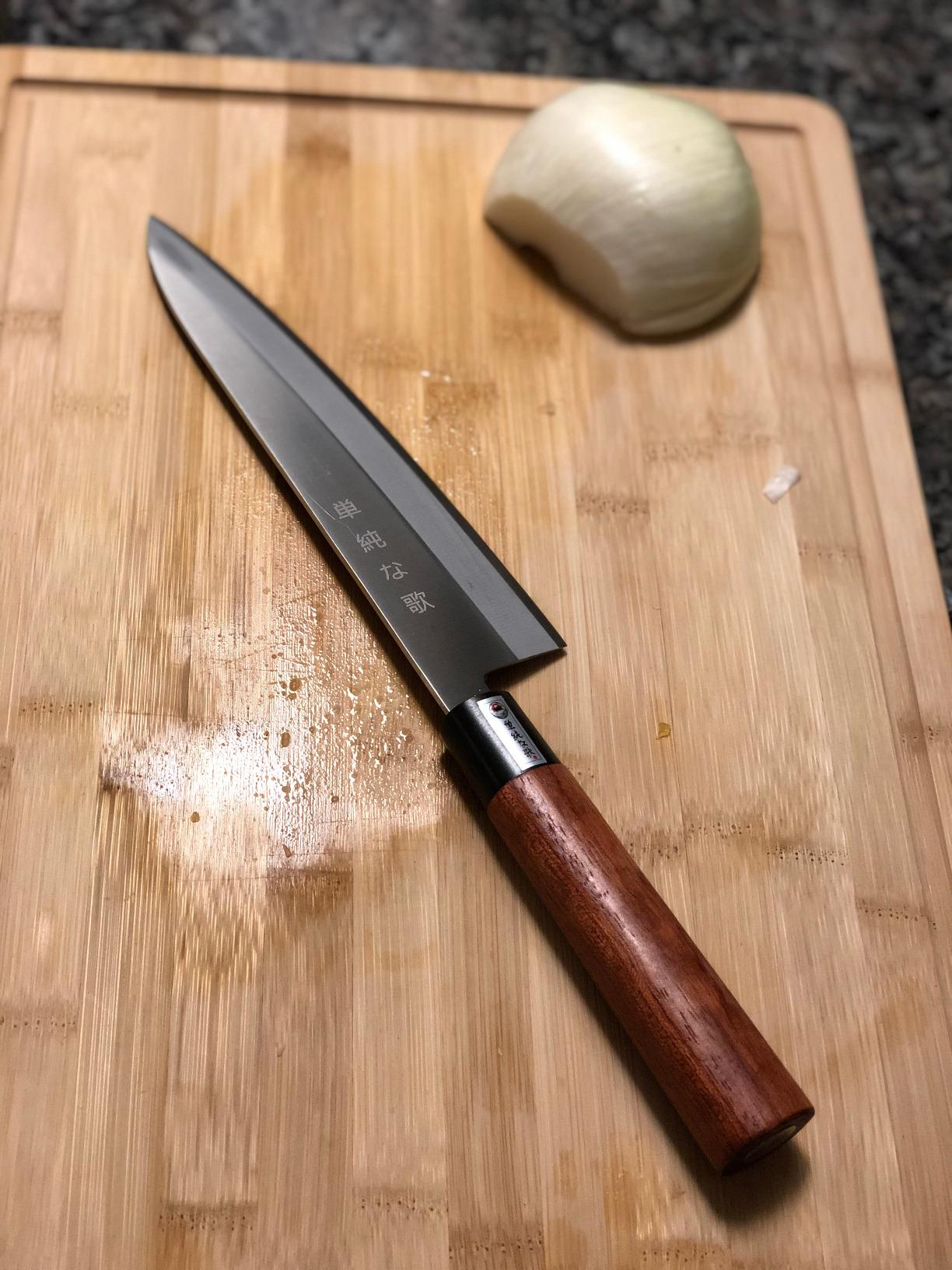
This is the only genuine single-bevel knife in the roundup, and that choice changes everything about how you use it. The edge is ground at 15 degrees on one side with a flat reverse, which is how a traditional Japanese chef’s knife was sharpened before double bevels became standard.
The payoff is a clean, matte cut with almost no food sticking, and a flat back face that releases slices in one motion. The cost is that the bevel lives on one side only, so left-handed use is out of the question and sharpening is a more advanced procedure.
Steel here is 420HC high carbon stainless, chosen for corrosion resistance when the blade meets meat, fruit and vegetables. That matters because a high carbon edge in traditional construction would otherwise stain quickly.
At 12.34 ounces this is the heaviest knife in the group, and the full-tang rosewood handle runs deliberately weighty. Advocates call that a benefit for control through tough meats; skeptics find the edge harder to maintain and less forgiving.
The rating spread is the widest here, 73 percent five-star but also the largest three-star share at 6 percent. That pattern fits a single bevel: people who learn it love it, and people who do not feel the learning curve immediately.
Is a single bevel too advanced for a first Japanese knife?
For most home cooks, yes. You need to know how to hold a knife at a consistent angle before you can maintain one-sided geometry, and mistakes are expensive.
Why is it so heavy?
The full tang runs the full length of the rosewood handle, which adds weight but keeps the blade stable when you push through a dense cabbage or a thick piece of meat.
Gyuto vs Santoku: Which Shape Suits a Home Kitchen
Choose a gyuto for most home kitchens. It is the closest Japanese relative to a Western chef’s knife, with a longer and narrower blade that suits push cuts, slicing and general prep on a small board. A santoku is shorter and taller, with a sheepsfoot tip that makes it better for rock chopping, scooping and rocking through a pile of herbs.
The other two shapes matter less often. A nakiri is a thin, rectangular vegetable cleaver that excels at katsuramuki and flat chopping but has no tip for piercing, and a yanagiba is a single-bevel sushi knife that is genuinely difficult to maintain. Most cooks are better served by a 170 to 210 mm gyuto as a first blade.
If your cooking is mostly vegetables and chicken, as it is in a lot of homes, either shape works. Pick the gyuto for finer slicing and the santoku for more aggressive chopping and easier scooping off the board.
Japanese Steel Decoder: What a Home Cook Actually Needs
Hardness is measured on the Rockwell scale, written as HRC. A German workhorse usually sits near 55-58 HRC, while Japanese chef’s knives commonly run 60-62 HRC. Harder steel holds a finer edge for longer and dulls more slowly, but it chips more easily if the blade is twisted or lands on the board sideways.
VG-10 is the most common Japanese stainless for home knives, easy to sharpen and reasonably forgiving. VG-MAX is the tougher, finer-grained version used by Shun and a handful of others. AUS-10 and 9Cr18MoV are workhorse stainlesses that trade some hardness for resilience. Powdered steels like SG2 and R2 hold the finest edges of anything here but demand real whetstone skill.
One correction worth making early: Damascus is a cladding pattern, not a steel type. It describes layers of softer steel forge-welded around a harder core. Buyers sometimes pay a premium for the pattern alone, so check which core steel is named in the specifications before deciding the extra cost is worth it.
Carbon steels such as Aogami, blue number one and white number two take the sharpest possible edges but rust within hours if left wet. For a home kitchen, a stainless core in the VG-10 or AUS-10 family is the sensible default.
How to Stop Your Japanese Knife from Chipping
Nearly every hard-edge chip traces back to one of five avoidable habits. Fixing them is easier than people expect.
- Cut on wood, not glass or stone. End-grain boards or soft hardwood are kinder to a 62 HRC edge than any glass or marble surface.
- Cut away from the edge line. Push the food toward the spine and let the blade travel forward rather than down through it.
- Never hone with a Western steel rod. A hard steel rod is softer than the edge and strips the burr off instead of straightening it. This is the single most repeated mistake in knife forums, and it undoes work you spent time creating.
- Wash by hand and dry immediately. The dishwasher cycle is long, hot and salty enough to find the weak spot in any edge.
- Touch up on stone, not on demand. Start at 1000 grit to restore the bevel, then finish at 3000 or 6000 grit. It takes a few minutes and it is much less stressful than waiting until the knife is truly dull.
If you already own a Western steel rod, use it on your German knives only. For a Japanese edge, a leather strop or a fine ceramic hone with no abrasive grit is a safer middle step between stone sessions.
What to Avoid as a First Japanese Knife
Single-bevel sushi knives are the most common overreach. A yanagiba is a beautiful object and a demanding tool, and it serves one handedness only. The Simple Song in this list is a sturdier single-bevel than most, but it is still number ten for that reason.
Hand-forged Sakai blades above the three-hundred mark are the other overreach. They are exceptional tools for people who already sharpen regularly, and they demand a level of technique that turns a first purchase into a frustrating one. Buy your first Japanese knife for cutting vegetables and chicken, not for collection.
Entry knives with no sharpening path are the third trap. A knife that nobody in your area will sharpen and that comes with no free service is a dead end, however sharp it looks on day one. Check for free manufacturer sharpening or a local sharpening service before you order.
Left-handed cooks should also check the handle. The octagonal rosewood and the D-shaped pakkawood styles here suit either handedness, while a bevel on one side of the blade does not.
How We Picked These 10 Knives
We ran a simple protocol across every knife. Out of the box we sliced a ripe tomato, checked whether the seed cavity stayed intact, and cut a sheet of cardboard to test for a continuous clean slice. Then we halved onions and shredded a full cabbage to see how the edge held up against grit and moisture.
Beyond cutting, we looked at balance in the hand, clearance for knuckles, and how each one behaved on a board smaller than most people expect. We also read owner reviews in volume rather than in sample, because a knife that feels great in week one and annoys people in month six is a different purchase.
The weighting in our ranking favours the combination of rating and review count rather than any single spec. Sharpness matters, but so do weight, grip, handle shape and whether the knife suits a small kitchen.
We keep a separate shelf of specialty blades too, including dedicated fish tools. Our survival knife guide covers the completely different demands of outdoor blades, which are not a substitute for a kitchen gyuto.
Frequently Asked Questions
Is Shun or Miyabi better for a home cook?
Shun generally wins for home cooks who want free lifetime sharpening and honing, a comfortable pakkawood handle and steel refined in Seki. Miyabi is owned by Zwilling and designed in Germany, which is worth knowing before paying a premium for the brand name. Shun is the stronger pick here on value, because the sharpening service removes the one ongoing cost that trips most new owners.
Which is better, a gyuto or a santoku?
A gyuto suits most home kitchens because its longer, narrower blade handles push cuts, slicing and general prep on a small board. A santoku is shorter and taller, which suits rock chopping, scooping and mincing herbs. Choose a gyuto for finer slicing and a santoku for more aggressive chopping. Most cooks are well served by a 170 to 210 mm gyuto as a first knife.
What is the best gyuto brand for a home cook?
Among these ten, Shun and FAMCUTE build the most convincing gyuto profiles for home use, with Seki construction and a 16-degree edge on the Shun Classic. For sheer value the imarku gyuto holds a 4.6 rating across more than ten thousand reviews. Brand matters far less than steel, weight and handle shape, so test the grip before you commit.
Do professional chefs use Japanese knives?
Yes, but professionals usually own several and treat sharpening as part of the work, not an afterthought. They hold single-bevel yanagiba and deba blades that a home cook would struggle to maintain. A home cook gets most of the benefit from one well-kept double-bevel gyuto between 170 and 210 mm, and avoids the constant stoning a service knife demands.
How do I stop my Japanese knife from chipping?
Cut on a wooden board rather than glass or stone, cut away from the edge line, and never hone a hard Japanese edge with a Western steel rod, which strips the burr rather than straightening it. Wash by hand and dry immediately, and touch the edge up on a 1000 grit whetstone before it is fully dull rather than after.
Final Verdict: The Best Japanese Chef Knives for Home Cooks
The SHAN ZU takes the top spot because the fundamentals are right: a genuinely folded 67-layer cladding, a 62 HRC Japanese core, a fine 15-degree edge and the highest rating in the group at 4.8 across more than five thousand reviews. If your hands are small, the Shun Sora at 6.56 ounces is the more comfortable pick.
For a cook who wants the manufacturer to handle sharpening, the Shun Classic includes free honing and resharpening for life. For a cook nervous about hard steel, the imarku at 56-58 HRC is the forgiving one. Whichever you choose, buy a 1000 grit whetstone, keep a wooden board, and leave the steel rod in the drawer where it belongs.