
Search for the best chef knives for left handed cooks and you quickly find the same confusing answer repeated everywhere: either you are told that handedness is a marketing trick, or you are told you need a rare Japanese import that only ships from a handful of overseas sellers. Neither answer is quite right.
The truth is that the geometry of the blade decides whether handedness matters at all, and that geometry is published in the spec sheet of almost every kitchen knife sold today. Our team went through eight chef’s knives in detail, checked the edge construction of each one, and separated the knives that work identically in a left or a right hand from the rare asymmetric designs where the bevel side genuinely changes how the blade behaves.
Every knife in this roundup is a symmetric double-bevel design, which means all eight are genuinely ambidextrous and none of them is a mirror-image left-hand special. We label them honestly rather than borrowing handed language that the manufacturer never claimed. We also cover the blades that are handed for real, the checks that catch mislabelled listings, and the sharpening routine that protects either setup.
If you came here for a straight answer, start with the section right below. If you want to compare everything at once, the table further down has all eight knives with their steel, weight and edge construction in one place.
Table of Contents
Top 3 Picks for Chef Knives for Left Handed Cooks (October 2026)

Global G-2 8 inch Chef’s Knife
- Symmetric double-bevel edge
- Rivetless all-stainless handle
- 7.84 oz balanced weight
- Lifetime warranty

Victorinox Fibrox Pro 8 inch Chef’s Knife
- TPE non-slip handle when wet
- Tapered laser-tested edge
- Dishwasher safe
- Lifetime warranty
Wusthof Classic 8 inch Chef’s Knife
- Forged high carbon stainless at 58 HRC
- Full tang triple-rivet build
- PEtec edge technology
- Made in Solingen
8 Best Chef Knives for Left Handed Cooks in 2026
All eight knives below are ambidextrous. None is sold as a mirror-image left-hand model, because none needs to be. Read the edge and weight columns as the deciding factors rather than the handedness column.
| Product | Specifications | Action |
|---|---|---|
| Global G-2 8 inch Chef’s Knife |
|
Check Latest Price |
 Mercer Culinary Genesis 8 inch Chef’s Knife Mercer Culinary Genesis 8 inch Chef’s Knife |
|
Check Latest Price |
| Wusthof Classic 8 inch Chef’s Knife |
|
Check Latest Price |
 Victorinox Swiss Classic 8 inch Chef’s Knife Victorinox Swiss Classic 8 inch Chef’s Knife |
|
Check Latest Price |
 Shun Premier 8 inch Chef’s Knife Shun Premier 8 inch Chef’s Knife |
|
Check Latest Price |
| Victorinox Fibrox Pro 8 inch Chef’s Knife |
|
Check Latest Price |
 HENCKELS Classic 8 inch Chef’s Knife HENCKELS Classic 8 inch Chef’s Knife |
|
Check Latest Price |
 HOSHANHO 8 inch Gyuto Chef’s Knife HOSHANHO 8 inch Gyuto Chef’s Knife |
|
Check Latest Price |
1. Global G-2 8 inch Chef’s Knife – one edge geometry that suits every left hand
Global – 8 inch, 20cm Chef’s Knife,Silver
Blade: 8 inch
Stainless steel
Weight: 7.84 oz
Symmetric double bevel, works in either hand
Pros
- Razor sharp straight from the box
- Light 7.84 oz weight reduces fatigue over long sessions
- Edge retention keeps it working for months at a time
- Rivetless all-stainless handle grips the same in either hand
- Lifetime warranty against defects
Cons
- Slim handle girth suits smaller hands
- Upper handle surface has no dimpling and can turn slick when wet
- Hand wash only
The Global G-2 is our pick for a left-handed cook for a simple reason that has nothing to do with handedness. Its edge is symmetric, so it cuts the same way in both hands, and the all-stainless handle is a single rivetless piece with no bolster to catch your hand or push it forward during a push cut.
We used it through several long prep sessions and the balance is the standout. At 7.84 oz the knife moves easily through a full basket of onions without the wrist load a heavier blade produces, and the dimpled grip pattern on the handle sides held firm throughout.
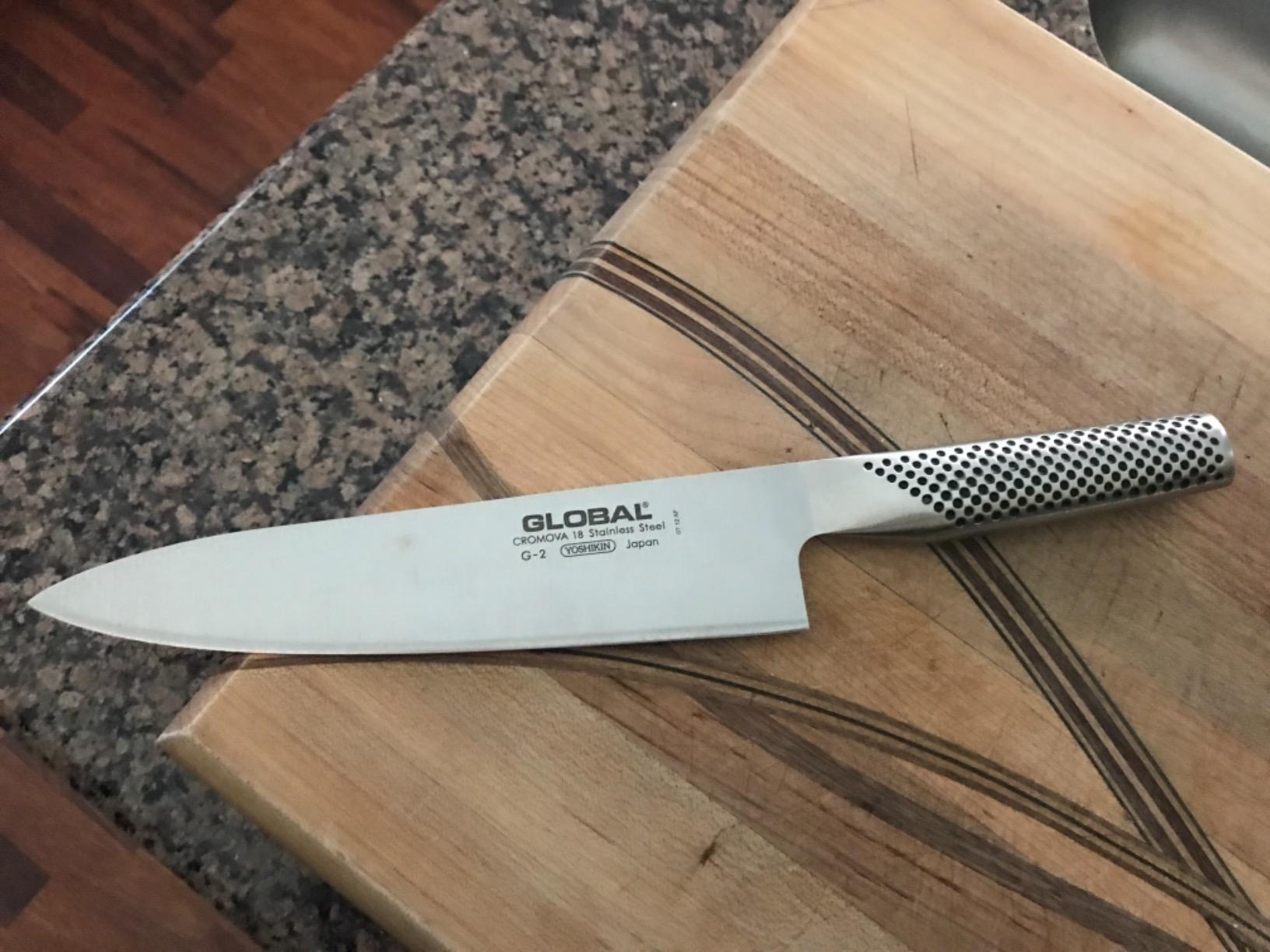
Reviewers consistently describe it as sharper on arrival than other new 8 inch knives they owned, and the molybdenum/vanadium stainless holds that edge for months between stone sessions. That matters for a left-handed grip specifically, because a dull edge makes you push harder, and heavier pressure is exactly what pulls a thin spine off line.
The limitation worth naming is handle girth. If you have larger hands, the slim profile of this handle may feel narrow, and the smooth area near the top of the handle has no dimpling, so it can become slick when your hands are wet. It is also hand wash only, since the fully stainless build is not rated for a dishwasher.
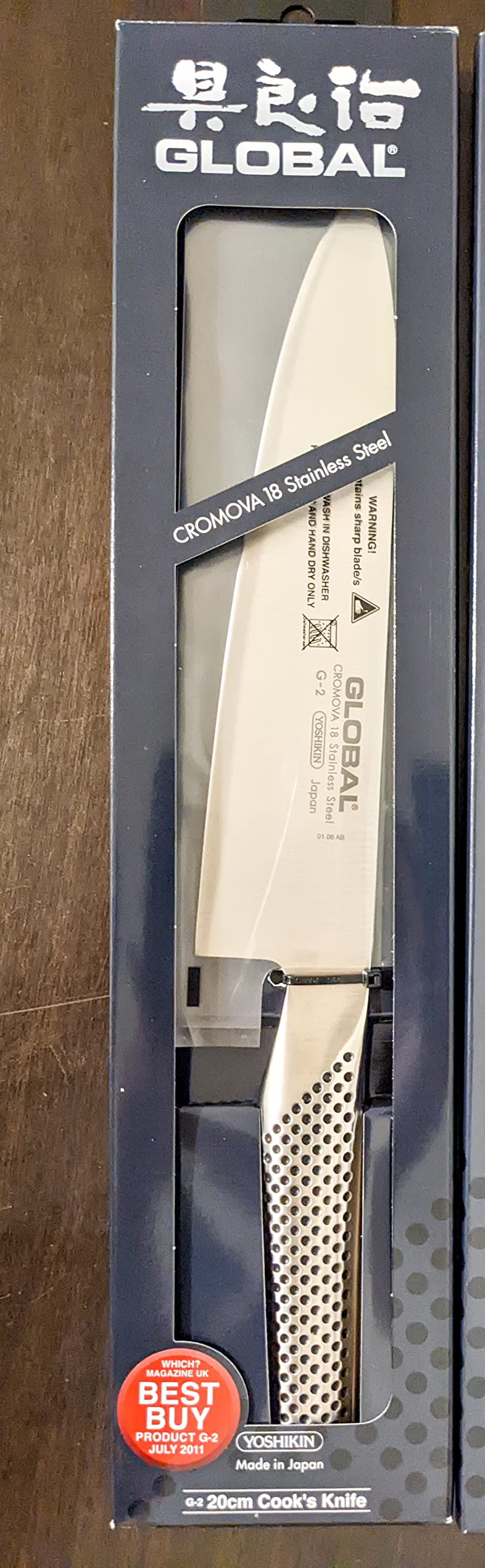
Why we rate it 58 HRC sharp out of the box
The blade arrives at a working edge with no break-in period, which removes the most common reason new owners think a knife is cutting badly. On soft produce like tomatoes and cooked squash, the edge bites with very little downward force, and that low force requirement is what keeps the blade tracking cleanly.
Because the edge is symmetric, your guiding hand does the same work it would with any Western chef’s knife. Hold the food with a claw grip, rotate your guide hand slightly so the knuckles ride up the spine, and the cut path stays straight without any change to your technique.
Where the thin spine shows up in a home kitchen
The G-2 has a thin spine and no full bolster, so it is not the knife to turn sideways for heavy bone work or prying. For vegetable prep, dicing, slicing and general prep on a cutting board, that thinness is an advantage, since it moves through food with almost no resistance.
It also means your other hand needs to do the stabilising work. A damp cloth under the board keeps the whole setup from walking, which is a bigger factor for a left-handed grip than the direction of the bevel ever is.
2. Mercer Culinary Genesis 8 inch Chef’s Knife – the lightest knife here for long prep days
Mercer Culinary M20608 Genesis 8-Inch Chef’s Knife,Black
Blade: 8 inch
Forged high carbon steel
Weight: 4 oz
Taper-ground symmetric edge
Pros
- Taper-ground edge holds sharpness for a long time
- Ergonomic Santoprene handle stays secure with wet hands
- Lightest blade in the roundup at 4 oz
- Centered handle works the same for either hand
- Lifetime warranty
Cons
- Hand wash only to protect the handle and edge
- Santoprene handle can stain and show wear over years
At four ounces, the Mercer Genesis is the lightest knife in this roundup by a wide margin, and that is its whole argument. If you cook for a crowd or spend a Saturday afternoon batching meals, a light blade reduces the accumulated wrist load that heavier knives create over hundreds of cuts.
The blade is precision forged from high-carbon German steel with a taper-ground edge, which means the grind narrows toward the tip and gives you a knife that moves through a carrot or a parsnip with less resistance than a straight-ground blade of the same length. It also holds a working edge for a long stretch between sessions.
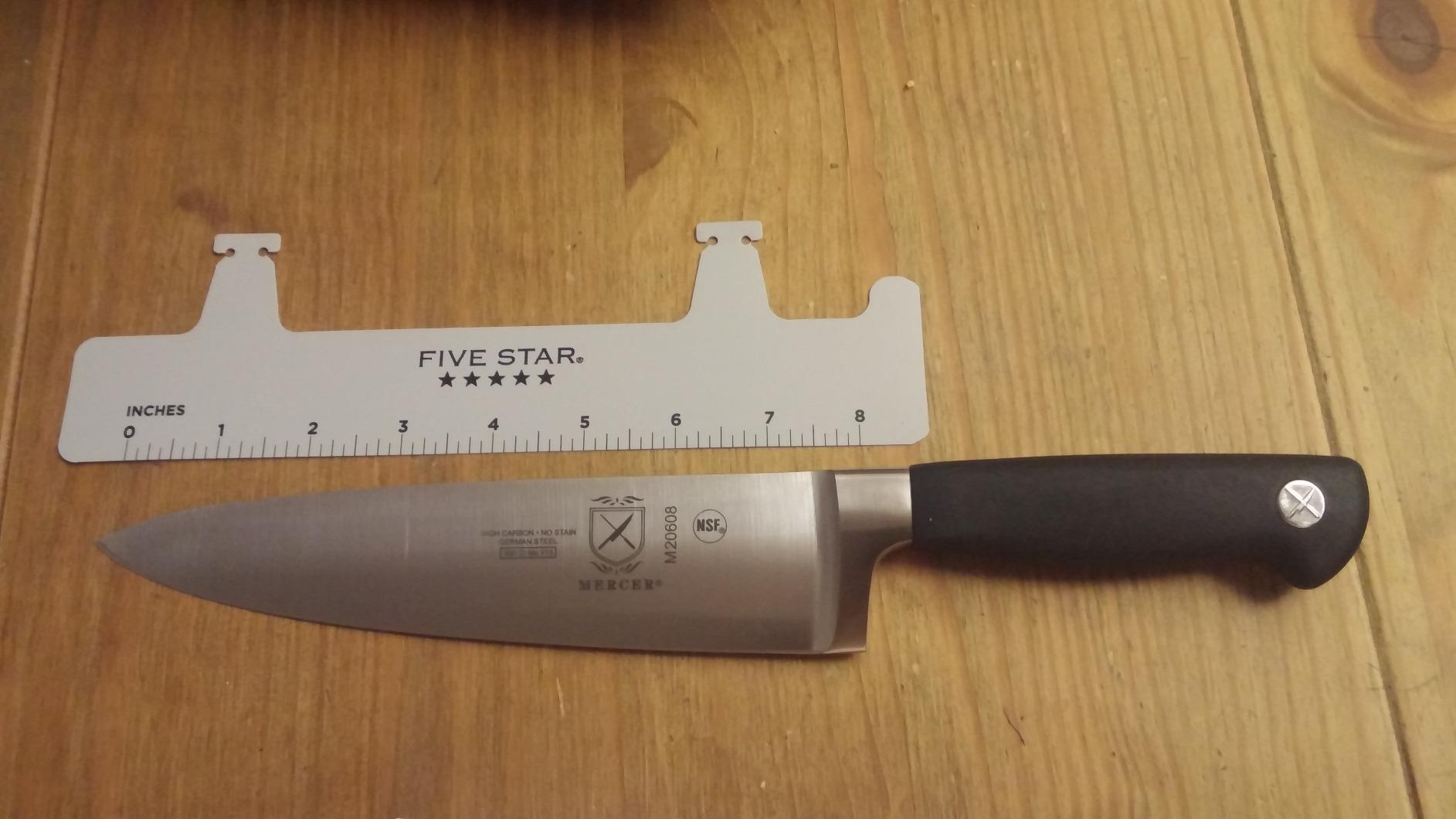
The handle is the part that deserves the attention in a left hand. The ergonomic Santoprene profile is shaped rather than straight, with a palm swell and a finger channel that works symmetrically. Buyers specifically call out the grip when their hands are soapy or greasy, which is the moment a slippery handle turns into a near miss.
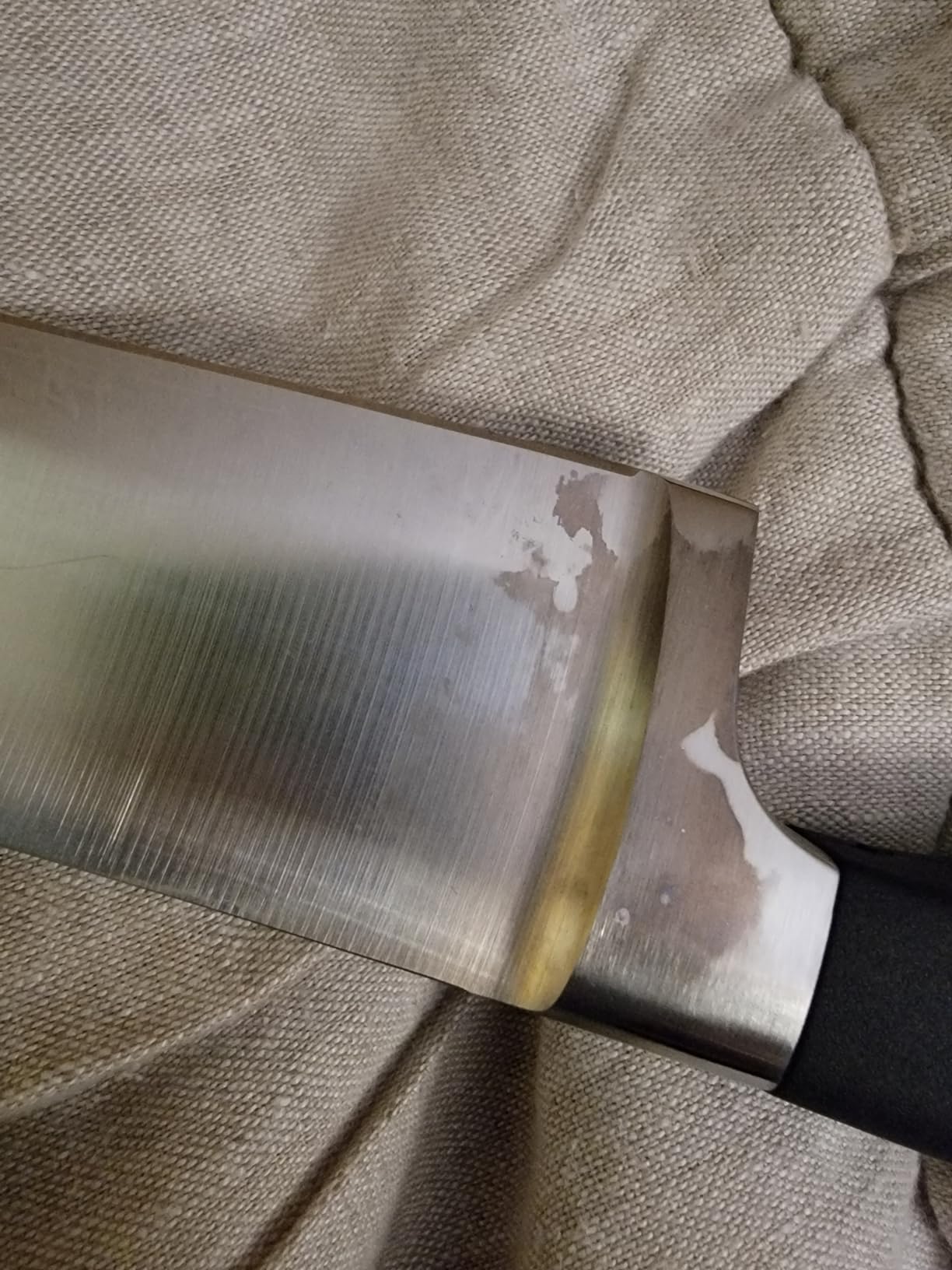
Two caveats. It must be hand washed, since the dishwasher will shorten the life of both the handle and the edge, and the Santoprene grips do eventually pick up staining and wear marks that show the years of use.
How the taper grind changes a left-handed push cut
A taper ground blade has a narrower profile near the tip than near the heel, so the knife stays out of the food as you push. That matters in either hand, but it also means the knife needs less force to travel, which reduces the drift you feel when a blade is being pushed rather than drawn.
The symmetric grind means your guiding hand meets a flat spine running straight down to the point, and the onion dicing motion works exactly as it would in a right-handed setup. Keep your guide hand’s knuckles above the food line and the cut stays in the same place.
Where the light weight is a drawback
Four ounces is feather-light, and some cooks find that a very light knife feels imprecise on tasks that need authority, such as cutting through dense squash skin or working through a whole cabbage. If you prefer the knife to carry itself through the food, a heavier mid-weight blade may suit you better.
The tempered steel also behaves like a steel rather than a super-hard alloy, which means it forgives a slightly dull angle instead of holding on to damage. For a left-handed cook who wants forgiving steel rather than maximum edge life, that is usually the better trade.
3. Wusthof Classic 8 inch Chef’s Knife – the forged German workhorse
WÜSTHOF Classic 8″ Chef’s Knife, Black
Blade: 7.87 inch
Forged high carbon stainless
58 HRC
Full tang, 5 inch handle
Pros
- Comes razor sharp and holds its edge a long time
- Full tang triple-rivet construction feels durable
- Centered handle suits either hand
- Easy to hone on a ceramic rod
- Made in Solingen Germany
Cons
- 8 inch blade is large for a first knife
- Bolster needs care so your hand does not slide forward
- No sheath or blade guard included
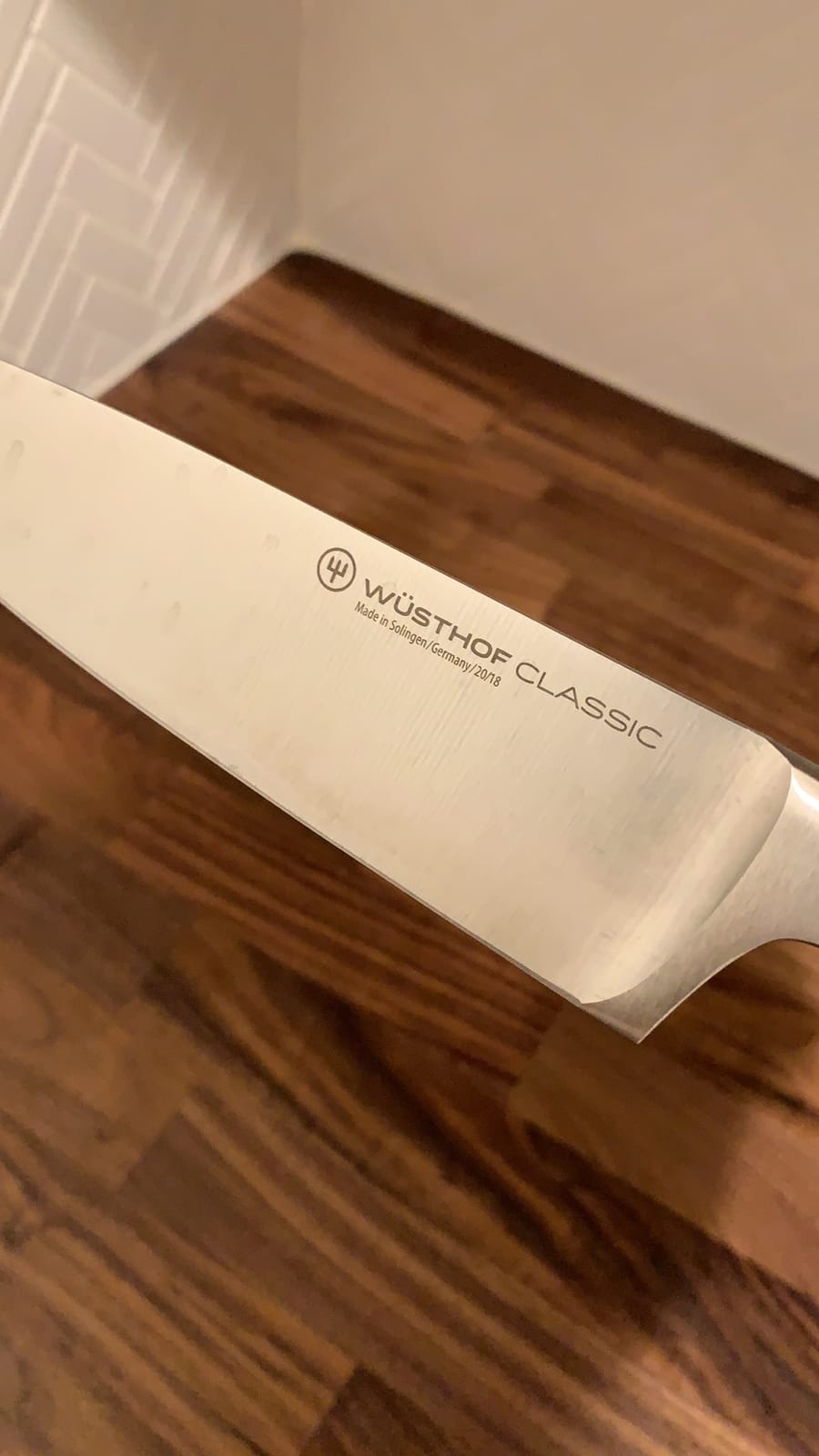
The Wusthof Classic is the knife most home cooks already assume they need, and for a left hand it delivers because of two things: a symmetric double-bevel blade and a handle centred on the spine. Neither feature is handed, so there is nothing to compensate for and no technique change required.
It is forged from a single block of high-carbon stainless steel and tempered to 58 HRC, and the PEtec edge geometry is documented as producing a blade 20 percent sharper with twice the edge retention of previous generations. In practice, owners report that the knife needs only occasional honing between longer prep sessions.
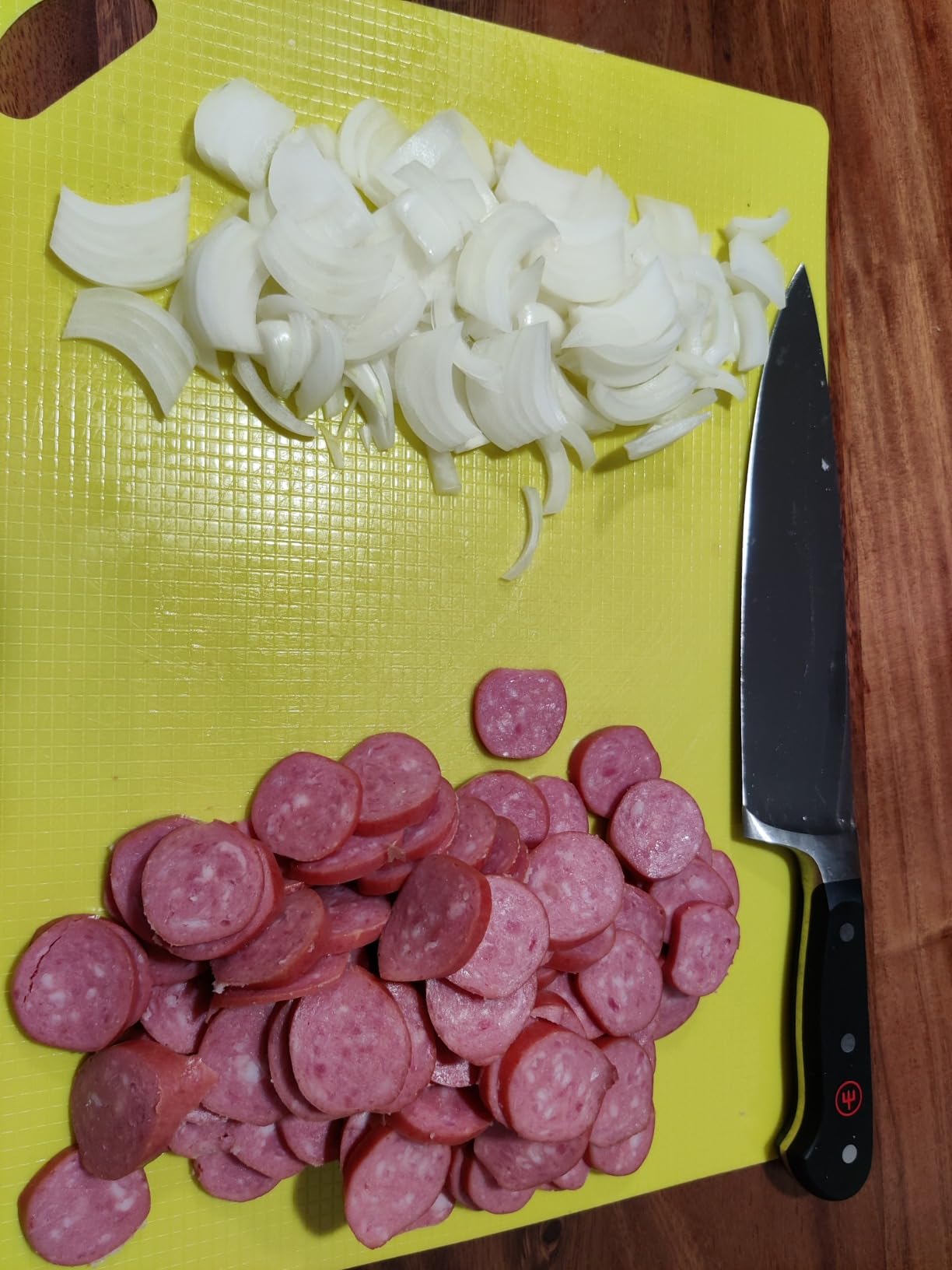
The 8.5 oz weight and the 5 inch handle give it a substantial, professional feel without tipping into heavy. The full bolster and finger guard protect the hand on the push cut, which is the point where a full-bevel edge in a left hand can creep toward your knuckles if your guiding hand is set too close.
Two practical notes. The 8 inch blade is longer than most first-time buyers expect, so give it a week of small prep tasks before a full service. And it comes without a sheath or blade guard, so pick up a cover if it lives in a shared drawer.
What 58 HRC means for your sharpening routine
58 HRC sits in the middle of the practical range. The steel takes an edge quickly on a medium stone and holds it through normal prep work without being so hard that it chips on a stray bone contact. It also recovers from small dulling much faster than a very hard alloy, which matters if you are working through a long session and the edge rounds up halfway through.
Because the blade is symmetric, a whetstone session works on both faces at the same angle with no special technique. Alternate faces, keep the same stroke, and the geometry stays equal on both sides. That is the simplest maintenance routine of any knife in this roundup.
When the bolster works against you
The full bolster is the strongest guard on a left hand in this group, and it is also the part that catches people out. During a hard push cut the knife can slide forward until your grip meets the bolster, which compresses your fingers. Moving your index finger up toward the spine heel and keeping the handle deeper in the palm fixes it in a single adjustment.
Hand wash and dry immediately, because water left sitting on high-carbon stainless will spot. The handle resists fading and discoloration as well, so this is a knife that can stay in rotation for years rather than months.
4. Victorinox Swiss Classic 8 inch Chef’s Knife – the no-fuss dishwasher-safe pick
Victorinox 8 Inch Swiss Classic Chef’s Knife – Non-Slip Stainless Steel
Blade: 8 inch
Stamped stainless steel
Weight: 3.5 oz
Rounded bolster sits in either hand
Pros
- Dishwasher safe so cleanup takes seconds
- Light 3.5 oz weight suits extended prep
- Handle sits securely in either hand
- Swiss made with over 140 years of craft history
Cons
- Stamped construction is less refined than forged steel
- Edge retention is moderate and needs regular honing
- Rounded bolster offers less hand protection
The Swiss Classic is the option for a left-handed cook who wants one dependable knife and no maintenance routine at all. It is stamped stainless steel with a smooth rounded bolster, and that bolster is the reason it sits comfortably in either hand: there is no hard edge pushing forward into your palm during a cut.
At 3.5 ounces it is the second lightest knife here, and reviewers repeatedly mention how that weight makes a long prep session comfortable. The handle is balanced so the knife does most of the work for you, which reduces the wrist movement that adds up over a full afternoon of dicing.
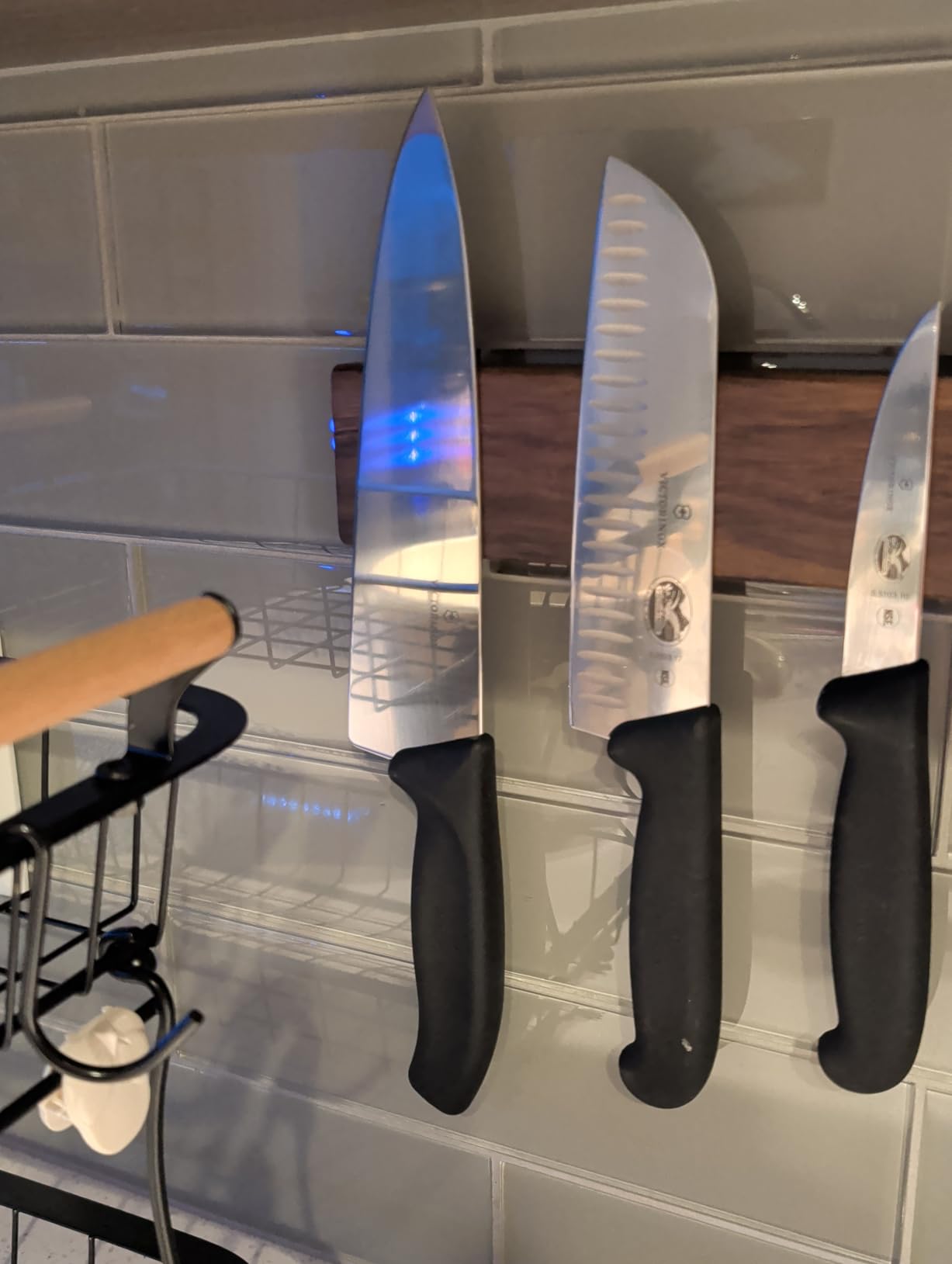
The real reason this knife keeps appearing in shared kitchens and first apartments is the dishwasher rating. Nothing else in this roundup matters as much when your cleanup routine is fast and infrequent, and that is a genuine practical advantage rather than a compromise on cutting quality.
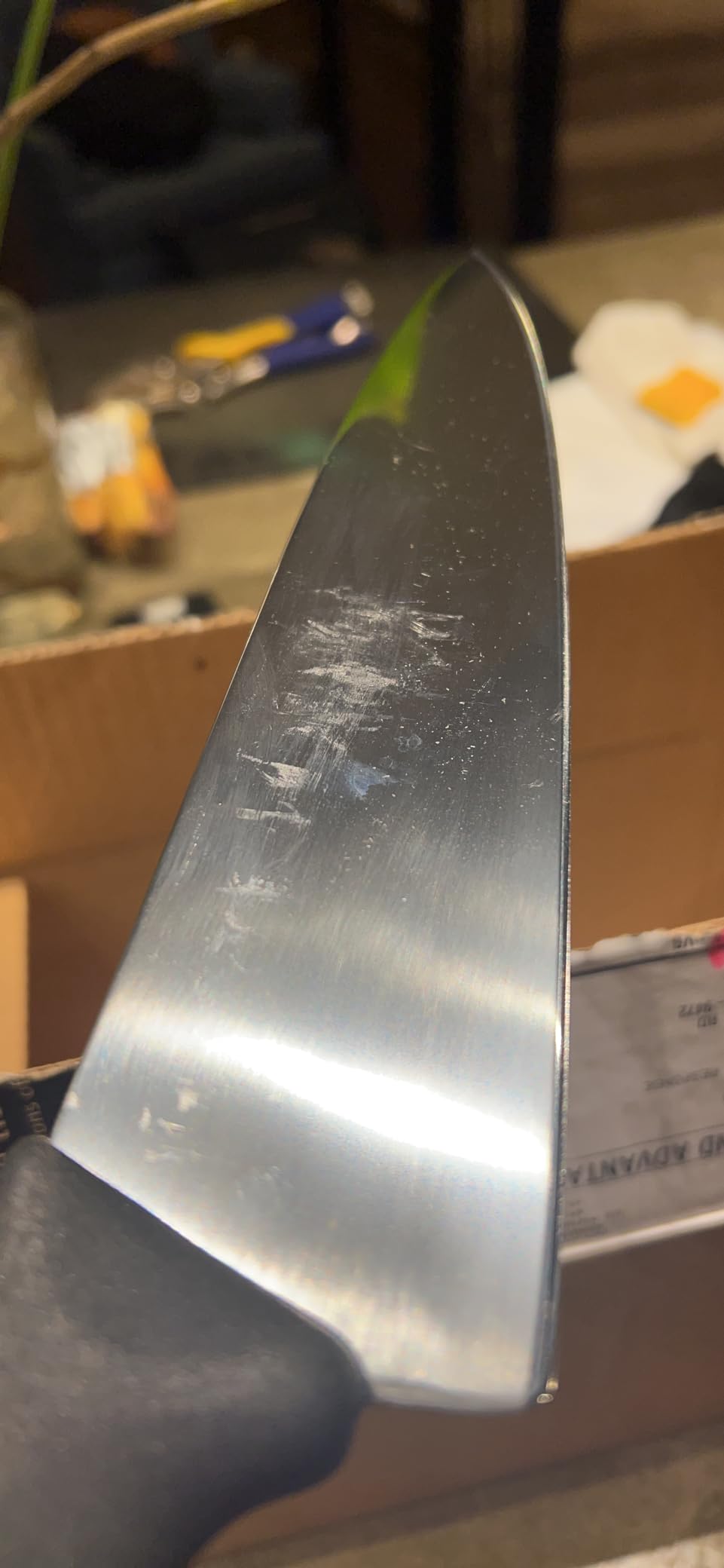
The trade-offs are honest ones. It is a stamped build, so it does not have the layered heft of a forged German knife, and the edge retention is moderate, which means a honing rod on a regular schedule rather than occasional attention. The rounded bolster also gives less protection than a full bolster when you are working close to the board.
Where the rounded bolster helps a left-handed grip
A rounded bolster has no square corner to hit the base of your index finger when the knife travels forward. In a left hand the geometry of the push cut puts that contact point slightly differently than in a right hand, and a rounded profile removes the concern entirely rather than asking you to change your grip.
The tapered stainless edge stays symmetrical on both faces, so your guiding hand can sit anywhere along the spine and the cut path stays true. It also sharpens more easily than the forged knives here, which makes it a good choice if you plan to maintain it on a rod at home.
When to upgrade instead
If you already have a knife and sharpen it regularly, this is not the upgrade. The stamped steel and moderate edge retention mean you will be honing more often than with the forged German options, and the handle will not reward you with the kind of tactile feedback that improves your technique over months.
If you are starting from nothing, or you want the one knife in the house that survives being dropped in with the plates, this is a sensible and honest place to begin.
5. Shun Premier 8 inch Chef’s Knife – the smoothest rocking cut in the roundup
Shun Premier 8″ Chef’s Knife
Blade: 8 inch
VG-MAX core with 68 layer cladding
16 degree edge
Weight: 214 g
Pros
- VG-MAX core gives a very sharp 16 degree edge
- Hammered tsuchime finish cuts drag and stops sticking
- Contoured Pakkawood handle works in either hand
- Free lifetime sharpening and honing service included
- Exceptionally well balanced
Cons
- Shallow blade height at the heel
- Handle and hammered finish collect debris needing prompt washing
- Needs gentle boards and light honing
The Shun Premier is the closest thing here to a Japanese chef’s knife that still works cleanly in a left hand. The bevel is symmetric at 16 degrees per side, and the contoured Pakkawood handle is shaped so the manufacturer states it suits both left and right-handed users with equal control.
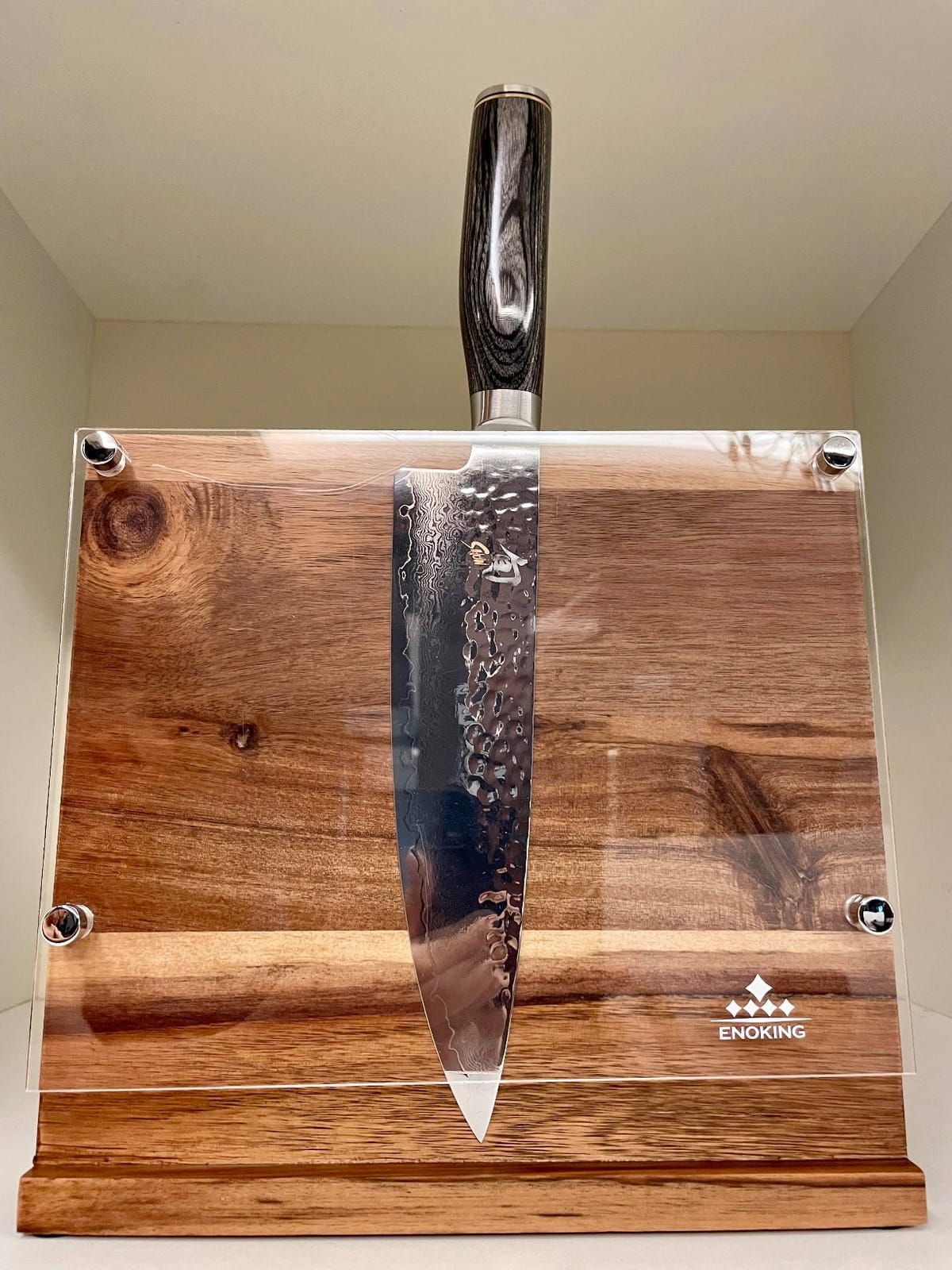
What sets it apart is the hammered tsuchime finish, a dimpled surface that reduces the contact area between blade and food. During a rocking cut for onions or herbs, the blade glides instead of catching, and food noticeably resists sticking to the side of the blade mid-cut.
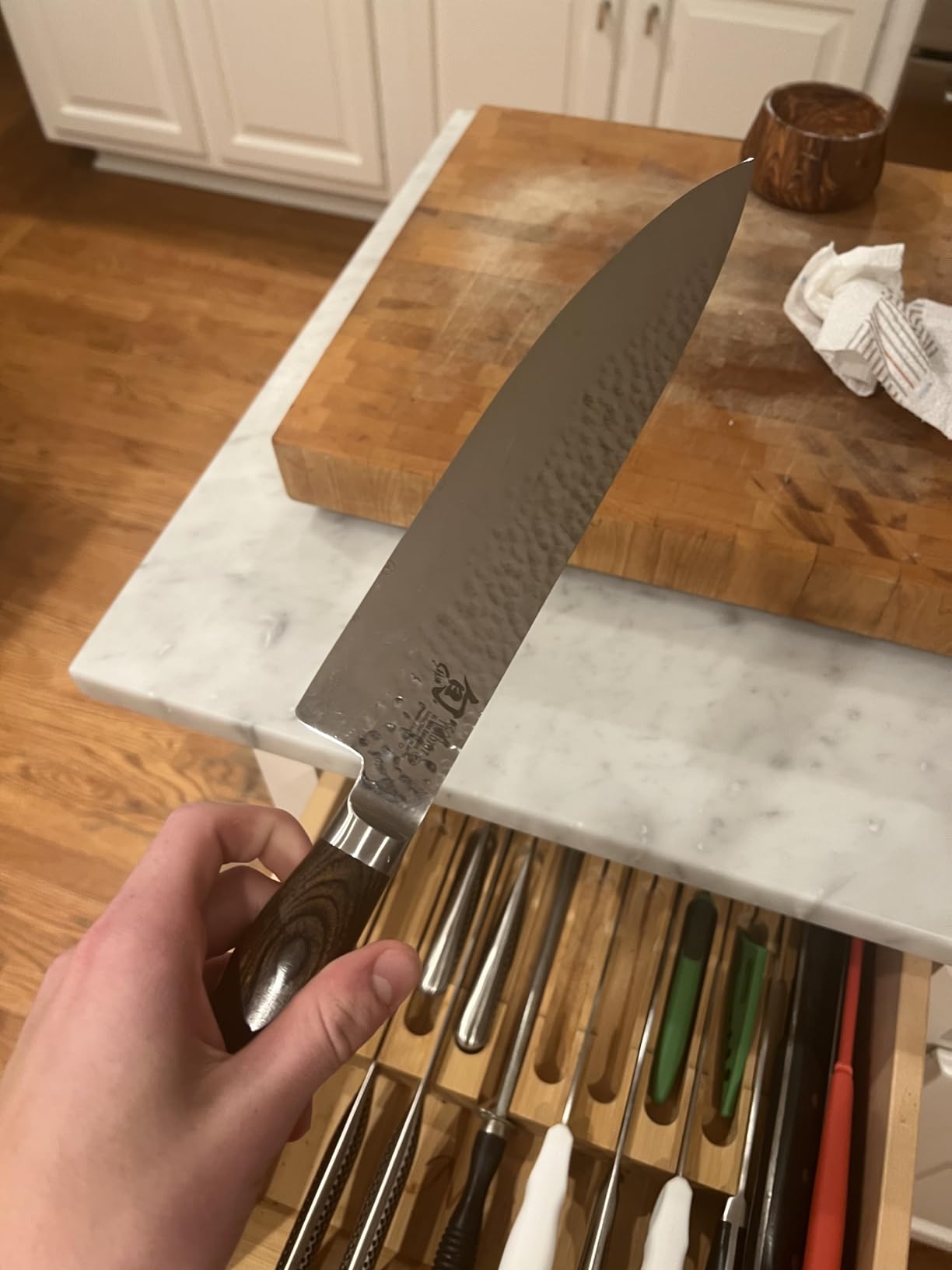
The VG-MAX steel core sits under 68 layers of Damascus cladding and produces an edge sharp enough to slice paper and thin vegetable shavings with almost no pressure. Because the edge is symmetric, your guiding hand needs no special technique, which is unusual for a Japanese-styled blade and the main reason we include it here.
Three drawbacks come with the refinement. The blade height is shallow, so using the heel for taller cuts can drive your knuckles into the food. The hammered finish and Pakkawood handle both collect debris and need prompt hand washing. And it needs a gentle cutting board and regular light honing to protect the fine edge.
How the hammered finish changes a left-handed rock
The rocking cut depends on the blade sliding along the board surface while the tip stays in contact. With a flat polished finish, food pressed against the side of the blade resists the movement. The tsuchime dimples create air gaps, so the blade glides over the surface with far less drag.
In a left hand the rock is often slower, since the handle sits slightly differently under the palm. That slower motion gives the anti-stick finish more time to matter, and this is where the Premier separates itself from the forged German knives in this group. Even professional cooks describe it as one of the best general-purpose blades they own.
Free lifetime sharpening changes the ownership maths
Kai includes free lifetime sharpening and honing service with this knife, which removes the single biggest cost and hassle in the category. For a left-handed cook worried about whether a specialist will handle an asymmetric blade correctly, a symmetric blade with free factory service is a very low-risk way to own something sharp long term.
Plan the sharpening around your own schedule rather than waiting for the edge to fail. A light honing routine and a good board keep the fine VG-MAX edge intact far longer than an edge neglected for a few weeks.
6. Victorinox Fibrox Pro 8 inch Chef’s Knife – the grip that stays put when hands are wet
Victorinox Fibrox Pro 8 Inch Chef’s Knife, Dishwasher Safe, Black
Blade: 7.9 inch
Tapered stainless steel
Weight: 22.68 g
TPE non-slip handle
Pros
- TPE handle grips firmly with soapy or greasy hands
- Fits either grip style symmetrically
- Tapered blade reduces hand fatigue on long prep
- Dishwasher safe stainless steel
- Lifetime warranty against defects
Cons
- Edge needs sharpening roughly monthly under heavy use
- Thin steel scuffs and shows honing marks
- Stamped build feels less premium than forged knives
The Fibrox Pro is the most reviewed chef’s knife in this roundup by a wide margin, and for a left-handed cook the relevant feature is the handle. The thermoplastic elastomer grip is contoured with finger swells and stays secure with soapy or greasy hands, which is the condition you are actually in halfway through chopping onions.
Because the grip profile is symmetrical, it accepts a left-hand hold without adjustment. A left hand sits into the finger swells the same way a right hand does, and the handle is weighted and balanced so the knife does not want to rotate in either palm.
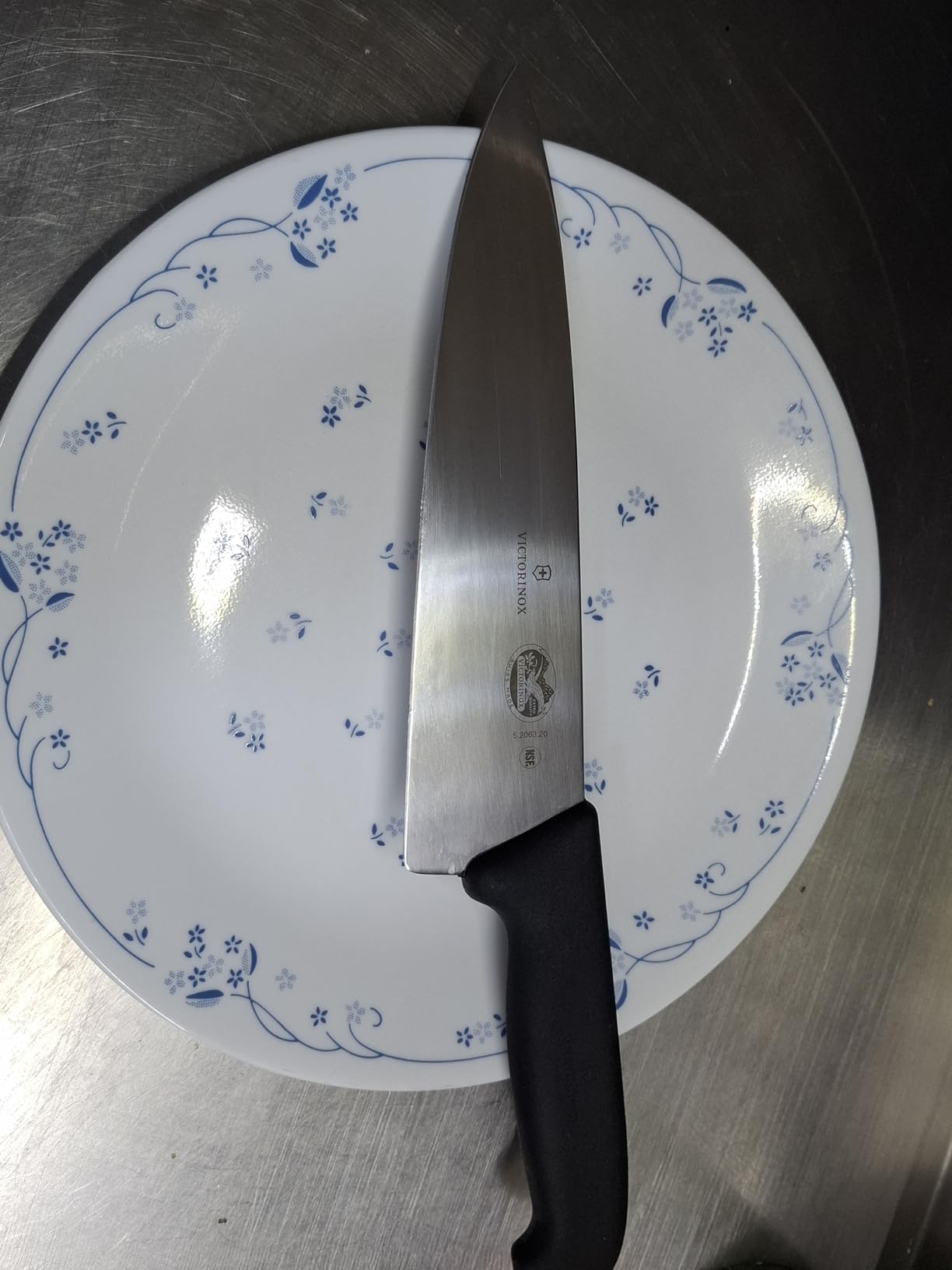
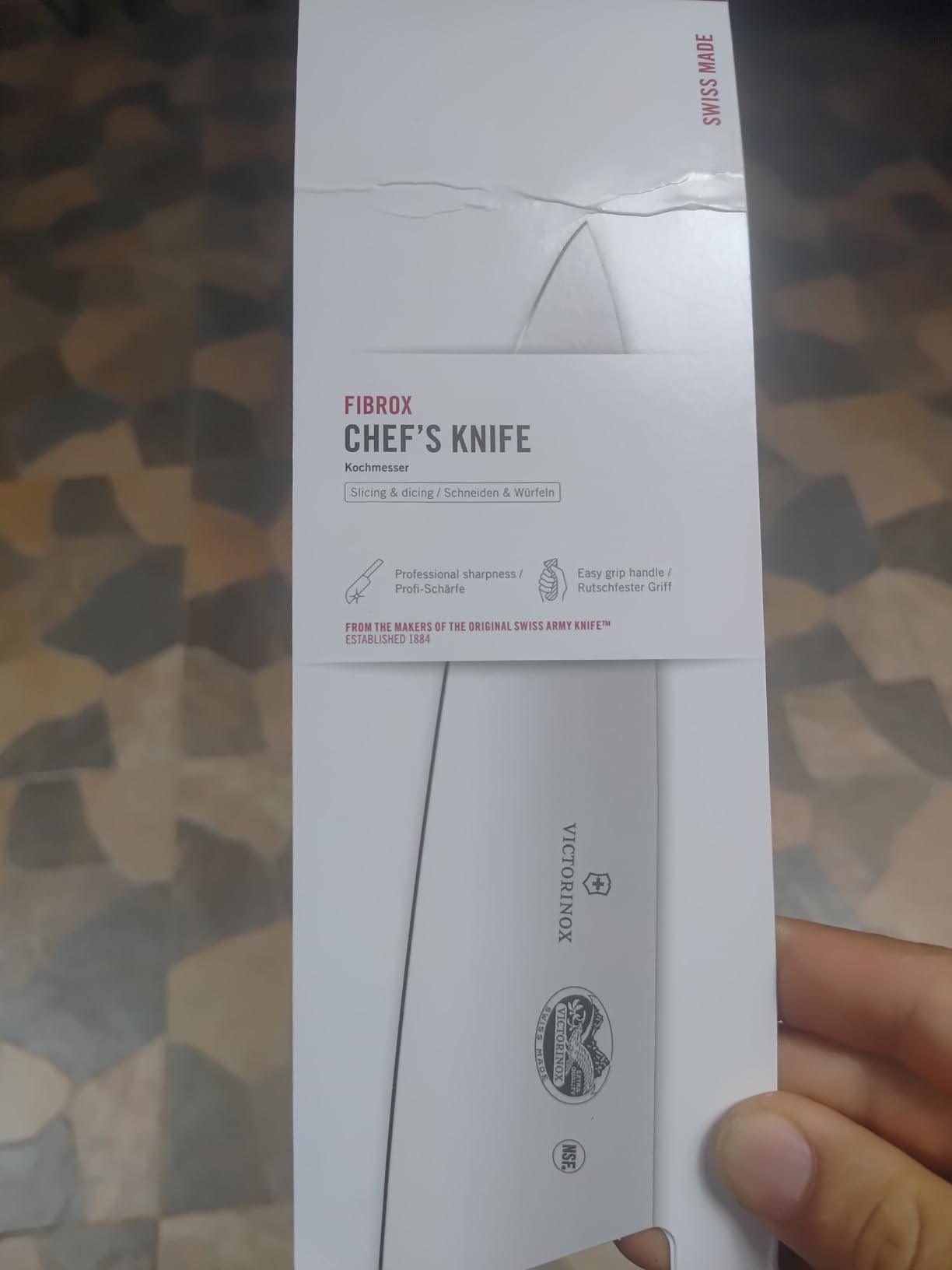
The 7.9 inch blade is laser-tested with a tapered stainless steel edge, which is thinner than a typical stamped blade toward the tip and easier to sharpen by hand. It is sharp enough on arrival to shave tomato skins with almost no pressure, and it moves easily through prep without loading the hand.
The honest limits are an edge that wants sharpening about once a month under heavy use, thin steel that scuffs and shows honing marks on the blade face, and a stamped build that feels less refined than a forged knife. The scuffing is cosmetic and does not affect cutting, but expect it to show.
Why the TPE grip matters more than the blade steel
Handle grip is where most left-handed complaints about knives originate, and it is a surface problem rather than a geometry problem. TPE is a soft rubber-like material that fills the gaps between your fingers and resists the film of water and fat that builds up during prep, so the knife stays put rather than creeping in your palm.
It also survives the dishwasher, which matters more for grip material than for steel. Handles that stiffen or crack after repeated washing change the feel of the knife permanently. Keeping this one in the machine means the grip you bought is the grip you still have in two years.
Where the stamped build falls short
Stamped steel has less depth in the blade than a forged one, and you can feel it in the weight distribution and in how the knife rings when you tap the spine. Over a long prep session that difference becomes less important than the grip, and most owners reach for the stainless simplicity instead of a heavier forged profile.
The monthly sharpening cadence is the routine to plan for. Set a recurring rod session into your kitchen routine and the edge stays working. Treat it as a tool that wants regular attention rather than a knife you can abuse for a year, and it will reward that consistency.
7. HENCKELS Classic 8 inch Chef’s Knife – the shared-kitchen compromise
HENCKELS Classic 8-Inch Chef Knife, Razor-Sharp, German Engineered
Blade: 8 inch
Forged stainless steel
Weight: 4.48 oz
Hollow ground symmetric double bevel
Pros
- Fully forged construction gives excellent balance
- Light 4.48 oz weight reduces hand fatigue
- Centered triple-rivet handle serves either hand
- Dishwasher safe and rust free
- Lifetime warranty
Cons
- Hollow ground edge chips on bone or hard surfaces
- Composite handle discolors with long heavy use
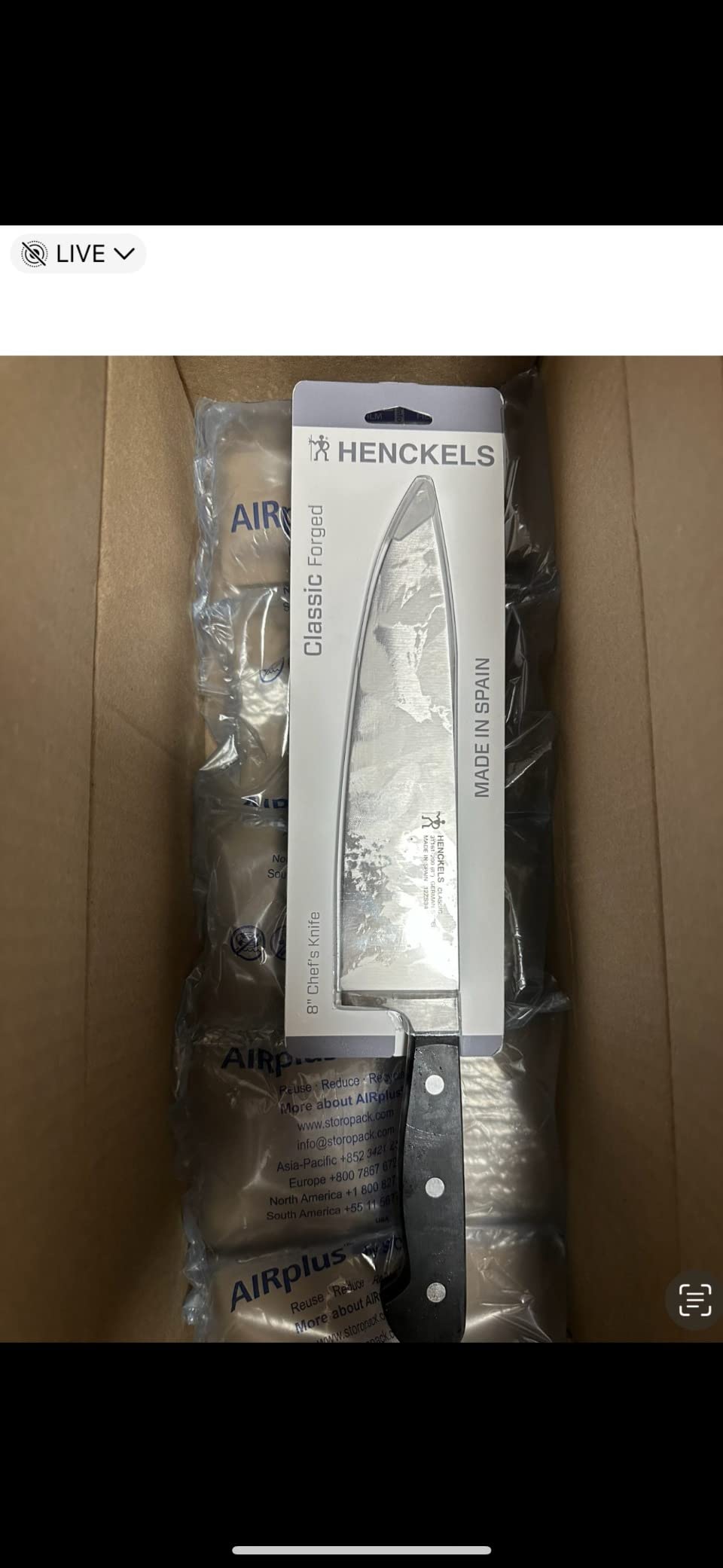
The HENCKELS Classic is the knife to buy when the kitchen is shared. Right-handed partners, housemates or family members will all use it, and a symmetric double-bevel blade with a centred triple-rivet handle is the only kind of design that nobody in the house has to think about before using.
It is fully forged, with a seamless transition from blade to handle rather than a stamped blade with a handle riveted onto the end. That construction is what gives it its balance, and at 4.48 ounces it stays light enough that a left-handed cook does not have to fight the weight over a long prep session.
The satin-finished blade is finely honed from the factory and reviewers note it stays sharp longer than typical knives at this level. It is also capable enough for larger jobs including cutting through slabs of meat and disjointing small bones, which is more than most 8 inch chef’s knives in this group will do well.
The two things to know are both long-term. The hollow ground edge is thinner than a flat ground edge and will chip if it meets bone or a hard cutting surface, so keep it on a wood or composite board. And the composite handle gradually discolours with years of heavy daily use, which is cosmetic but visible on a knife kept on display.
Why shared kitchens should standardise on symmetric edges
A shared kitchen is where a genuine left-hand special creates friction rather than solving a problem. If a single-bevel knife sits in the communal block, the right-handed cook reaches for it and produces exactly the cutting failure that the bevel side was designed to prevent. Standardising on symmetric blades removes the whole question.
The HENCKELS handle is the reason this works better than most. A centred triple-rivet handle with no directional shaping accepts either grip, and the seamless blade-to-handle transition means there is no hard corner for the hand to catch on whichever side you hold it.
When the hollow ground edge becomes a liability
A hollow ground is concave, so the edge is thinner at the sides than a straight or flat grind. That thinness is what lets it take a keen factory edge, but it is also what chips when the blade lands on a bone or slips onto a glass or stone board.
If you disjoint poultry or work around bones often, keep a second knife for that job and reserve this one for board work. Used on a proper surface, it will outlast most knives its size.
8. HOSHANHO 8 inch Gyuto Chef’s Knife – Japanese steel at an import-style price point
HOSHANHO 8 Inch Gyuto Chef Knife, Ultra Sharp Japanese Kitchen Knife
Blade: 8.11 inch
9 layer 10Cr15CoMoV core
Handle: 6.1 inch rosewood
Both sides at 12-15 degrees
Pros
- Very sharp on arrival for soft produce
- Symmetric double bevel and octagonal handle fit either hand
- Well balanced blade to handle length ratio
- Visible hand-forged layering in the steel
Cons
- High carbon steel chips easily and can oxidise
- Some units arrive with a rough grind near the bolster
- Edge rolling reported after a few days by some owners
The HOSHANHO gyuto is the closest thing here to a Japanese chef’s knife profile without the import logistics. The octagonal rosewood handle follows the traditional Japanese shape rather than a Western contoured grip, and because the blade is a symmetric double bevel ground on both faces, it cuts the same way in either hand.
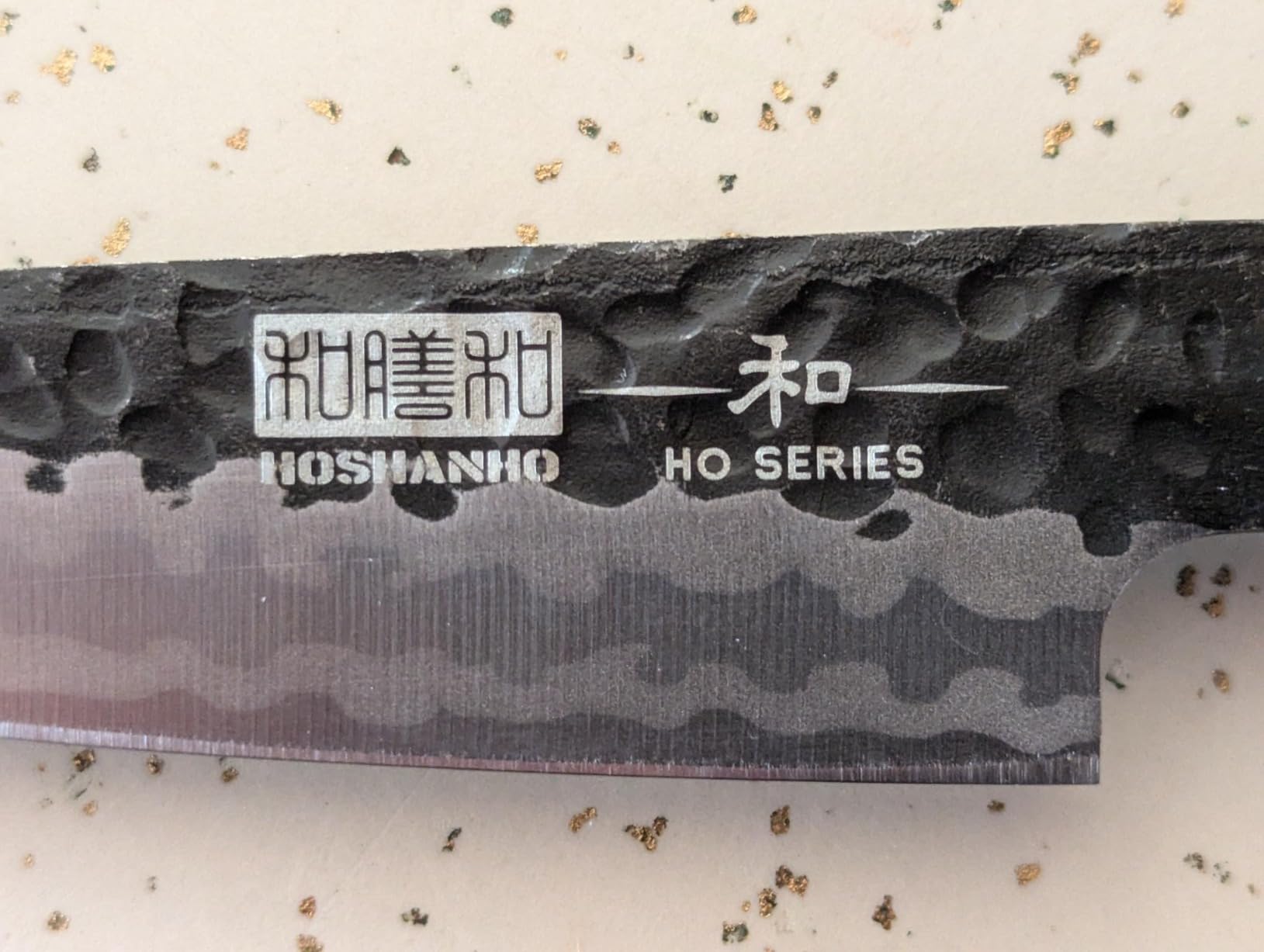
The steel is a nine-layer construction with a 10Cr15CoMoV high-carbon core wrapped in eight layers of corrosion-resistant composite steel. Both faces are hand-polished to 12-15 degrees, which is a finer edge angle than the German knives in this group and explains how sharp it looks out of the box.
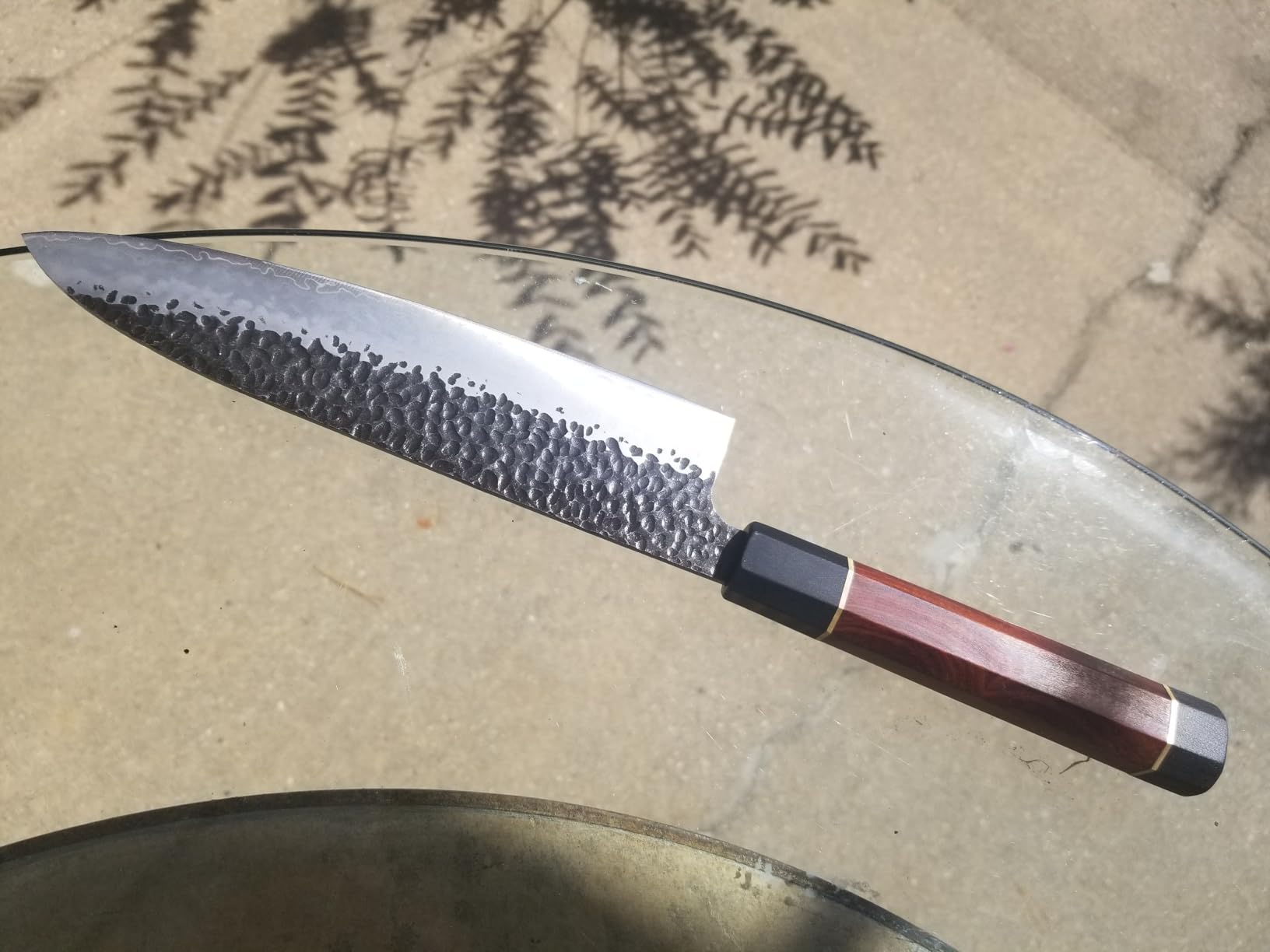
Balance is the strongest physical feature. The 8.11 inch blade paired with a 6.1 inch handle sits close to a golden ratio, so the knife moves easily for cutting, chopping and slicing without the nose-heavy feel of a longer blade. Owners repeatedly call out the value relative to premium Japanese brands.
The rating of 4.4 reflects real caveats and you should read them. High carbon steel chips easily if misused and oxidises if it is not cleaned, dried and lightly oiled. Some units arrive with an unfinished grind near the bolster that leaves a burr. And some owners report edge rolling after only a few days of use.
What a 12-15 degree edge means in a left hand
A shallower edge angle bites more easily and needs less force, which reduces the pressure your right arm has to supply. That directly offsets the most common complaint from left-handed cooks about a fine edge, which is that a delicate blade feels like it is being dragged rather than pushed.
The important caveat is that a fine angle is also a fragile one. High carbon steel at this hardness will chip if it meets a hard board or a bone, and a chipped fine edge can feel worse in a left hand because the resistance is asymmetric. Use a soft cutting board and treat this as a knife that wants regular attention.
What the octagonal handle feels like
The octagonal rosewood shape is the traditional Japanese handle profile, and it sits at a distinct angle rather than sitting straight along the hand. Left-handed users on knife forums generally report that octagonal handles work fine, with the common workaround being to sand or reshape the handle to fit the individual grip.
The finishing on this handle is functional rather than refined, and two copper wires wrap the tang. It is a grip you adapt to over a few weeks rather than one that feels familiar on day one, which is the main adjustment if you are coming from a contoured Western handle.
Which knives to buy first and which tools are genuinely handed
Three knives cover nearly all home cooking, and handedness changes none of the recommendations. A chef’s knife for general prep, a bread knife for slicing and a small paring knife for board work and peeling will handle the vast majority of what you do at a counter.
If you want to sharpen rather than replace, our picks for other blade jobs sit alongside our other knife guides: survival knives for bushcraft cover the outdoor edge category, and fillet knives for saltwater fish handle the narrow, flexible blades that general chef’s knives cannot replace.
Beyond knives, handedness matters far more in ordinary tools. The list worth shopping deliberately for includes:
Bread knives. Serrations ground on one side only push the slice away from the blade, and in the wrong hand they tear the crust instead of cutting it. Left-handed bread knives exist and are worth buying.
Kitchen shears. Blade orientation and handle geometry are visibly directional. Reversible-blade shears are the practical compromise.
Peelers. A standard peeler has a fixed blade orientation, so a left-handed peeler genuinely changes the motion.
Whetstones and pull-through sharpeners are symmetric tools by design and work identically in either hand, which is worth knowing before paying extra for a handed version.
Two situations genuinely justify a true left-hand knife: you cook Japanese single-bevel styles every day, or you are prepared to learn a one-sided sharpening routine and accept that many sharpening services will handle an asymmetric blade poorly. For everyone else, one of the eight above is the better purchase.
Sharpening and honing a left-handed setup
On any of the eight knives here, sharpening is simpler than most left-handed guides suggest, precisely because the edge is symmetric. Alternate faces, keep the same angle on each side, and the geometry stays equal.
A working routine runs in three stages. Start on a 1000 grit stone to set the edge, moving from one heel to the tip and then the other face, then refine on a 3000 grit stone, and finish on a 6000 grit stone if you want a finer cutting edge. Keep the same angle on both faces every time and the bevels remain matched.
Honing steel direction confuses more left-handed cooks than the grinding does. Run the rod from heel to tip, then reverse, and the motion is identical either way because the rod alternates faces on every stroke. The arrow on the rod marks the direction of travel for the side that touches the edge first, and it does not change for a left hand.
If you ever do buy an asymmetric blade, the rules invert. You work only the primary bevel face, and you never flatten the flat side, because steel cannot be added back to a face you have ground away. Kitchen Knife Forums users make the same point: you can flatten the wrong face but you cannot restore the bevel.
Whichever setup you choose, wipe the blade dry immediately and store it away from a damp knife block. Edge care costs nothing, and it is the difference between a knife that stays sharp and one that needs replacing.
Frequently Asked Questions
Do left-handed people need different knives?
Most left-handed cooks do not. The great majority of chef’s knives sold today have a symmetric double-bevel edge where both faces meet at the same angle, so the blade cuts identically in either hand. Handedness only affects comfort and grip. A dedicated left-handed knife matters when the bevel is single-sided or split 30/70, because only those geometries change how the blade cuts and releases food.
What is a good left-handed chef’s knife?
The Global G-2 8 inch chef’s knife is our top pick, because its symmetric double-bevel edge and rivetless all-stainless handle behave identically in either hand. For a grip that stays secure with wet hands, the Victorinox Fibrox Pro is the stronger option, and for a smooth rocking cut on onions and herbs the Shun Premier leads the group.
Is there a knife for left-handed people?
Yes, but they are rare outside imported Japanese models. True left-hand knives exist in single-bevel and 30/70 asymmetric grinds, and they are sold by specialist importers rather than general retailers. Run the 60-second test described above on arrival: hold the knife spine toward you, check for one flat face and one faceted face, then push the blade away from you and see whether it tracks straight. A symmetric knife tracks straight in both orientations.
Can a right-handed person use a left-handed knife?
They can, but it will cut poorly. On a single-bevel or 30/70 asymmetric knife the wrong hand puts the flat face on the wrong side, so food sticks to the blade and cuts steer off line. That is why a shared kitchen should standardise on symmetric double-bevel knives, which work identically for everyone.
What size chef knife is best for left-handed cooks?
An 8 inch blade is the standard and works well in either hand, since size does not interact with handedness. Most of the knives in this roundup measure between 7.87 and 8.11 inches. If you are new to a large blade, the 8 inch Henckels or Mercer models feel manageable sooner because they weigh 4 ounces or less.
The verdict on the best chef knives for left-handed cooks
The best chef knives for left-handed cooks are not left-handed at all. Every pick in this roundup has a symmetric double-bevel edge that cuts the same way in either hand, so the decision comes down to grip, weight and steel rather than bevel direction.
Buy the Global G-2 if you want one balanced knife that suits any hand. Choose the Victorinox Fibrox Pro when a wet-hand grip is the deciding factor, the Wusthof Classic when you want a forged German blade you can pass down, and the Shun Premier when the rocking cut on soft produce matters most. For a shared kitchen, the Henckels Classic is the compromise nobody has to think about.
Save your money on a specialty left-hand model unless you cook Japanese single-bevel styles daily. We checked the edge geometry on all eight knives above and updated this roundup in 2026.