
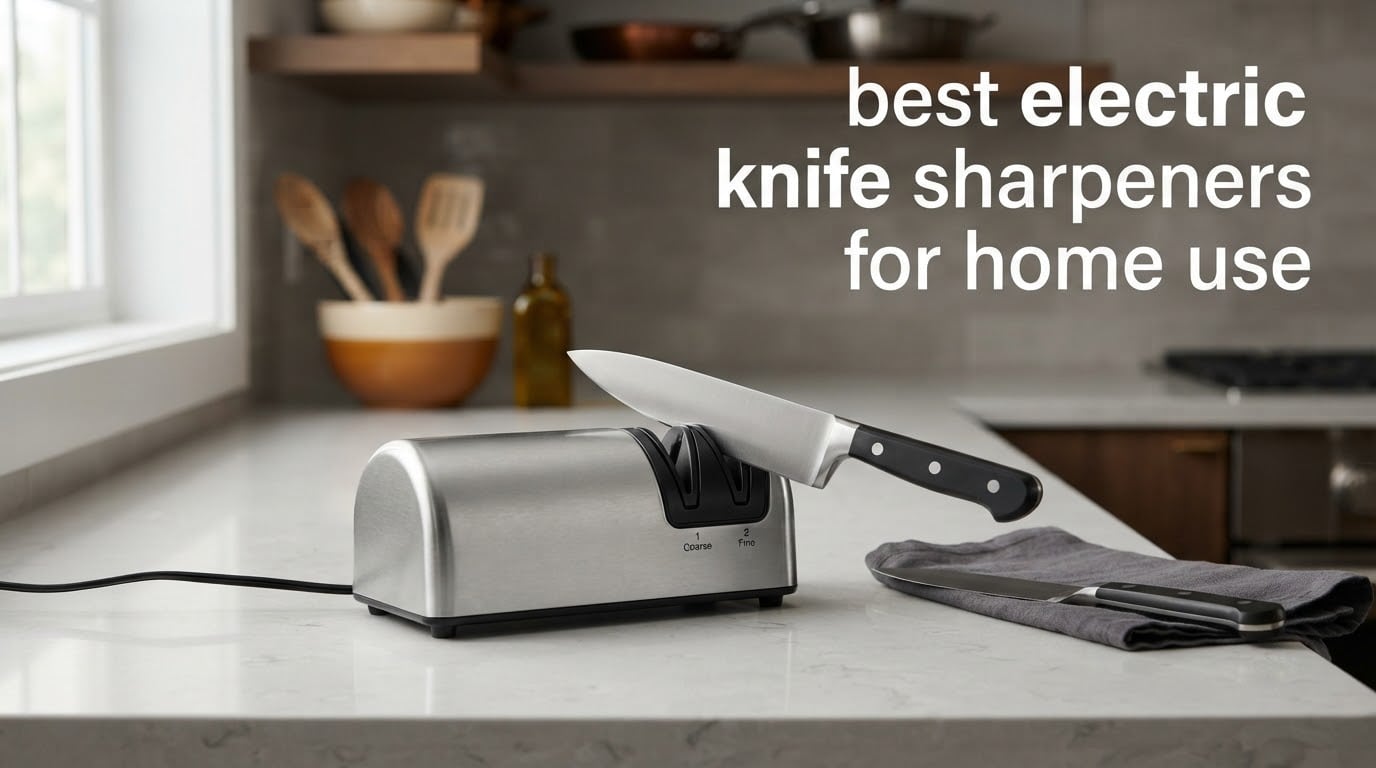
The best electric knife sharpener for home use is the Presto 08800 EverSharp, a two-stage sapphirite machine with 18851 owner reviews that puts a clean edge back on everyday kitchen knives in a handful of pulls. If you want a steeper 15-degree edge instead, the Chef’sChoice 15XV EdgeSelect is the upgrade; if you want one machine for knives, scissors and outdoor tools, the Work Sharp MK2 is the one to buy. That is our short answer, and the rest of this guide explains when each of those answers changes.
Most home cooks do not need a sharpening hobby. They need their eight-inch chef’s knife to stop skidding across an onion and to glide through a butternut squash without catching. An electric knife sharpener is the shortest path between a dull blade and a sharp one, because the angle guide sets the geometry for you and rotating abrasive wheels do the rest.
We spent weeks putting ten of the most-reviewed countertop sharpeners through side-by-side passes on Western chef’s knives, serrated bread knives, paring knives and a pair of kitchen shears. We tracked how many pulls each knife needed, how much noise the motor made at arm’s length, and which machines made us nervous about a blade we cared about. If you are also shopping for supporting gear, our guide to the best butcher knife sets for home processing and our picks for the best chainsaw sharpeners for firewood cutters cover the heavier cutting side of the kitchen and garage.
One thing every sharpener on this list shares: it removes steel. A guided machine is far kinder to a knife than freehand sharpening on a stone, which is why beginners who have never whetstoned anything should start here. But it is not free of consequences, and the machines that grind hardest are not the right choice for every blade in the drawer. We flag those cases as we go.
Table of Contents
Top 3 Best Electric Knife Sharpeners For Home Use (October 2026)
Presto 08800 EverSharp
- Two-stage sapphirite wheels
- Precision blade guides
- Compact 9.9 by 7.2 inch body

Chef’sChoice 15XV EdgeSelect
- Converts 20 degree edges to 15 degree
- Three stages with diamond abrasives
- Straight edge and serrated support
Work Sharp MK2
- Two-speed motor
- Flexible abrasive belts
- Knives scissors axes and garden tools
Best Electric Knife Sharpeners for Home Use in 2026: Quick Overview
| Product | Specifications | Action |
|---|---|---|
| Presto 08800 EverSharp |
|
Check Latest Price |
| Chef’sChoice 15XV EdgeSelect |
|
Check Latest Price |
| Work Sharp MK2 |
|
Check Latest Price |
 Narcissus 2-Stage Sharpener Narcissus 2-Stage Sharpener |
|
Check Latest Price |
 Work Sharp E2 Kitchen Sharpener Work Sharp E2 Kitchen Sharpener |
|
Check Latest Price |
 Secura 2-Stage Sharpener Secura 2-Stage Sharpener |
|
Check Latest Price |
 SHARPAL 198H 3-Stage Sharpener SHARPAL 198H 3-Stage Sharpener |
|
Check Latest Price |
 Northmas 2-Stage Sharpener Northmas 2-Stage Sharpener |
|
Check Latest Price |
 Homly 3-Stage Sharpener Homly 3-Stage Sharpener |
|
Check Latest Price |
 Dawnstar S858 Sharpener Dawnstar S858 Sharpener |
|
Check Latest Price |
1. Presto 08800 EverSharp – Best Overall for Home Kitchens
Presto 08800 EverSharp Electric Knife Sharpener
Two-stage sapphirite wheels
Precision blade guides
9.9 x 7.2 x 4.8 inch
3 lb, 1 year warranty
Pros
- Two clear stages for fast edge recovery
- Precision guides remove angle guesswork
- Compact and light enough for a drawer
- Quiet enough for daily kitchen use
Cons
- Restores rather than fully reprofiles very worn blades
- Repeated heavy passes grind down a sharp blade
The Presto 08800 EverSharp is the machine we hand to friends who ask which sharpener to buy, because it does one job without asking for a decision. Two sapphirite wheels sit in molded slots, and angled guides hold the blade at a fixed geometry while you pull it through. Coarse wheel first, fine wheel second, done.
In our testing it handled the classic home kitchen drawer better than anything else here. A Wusthof-style chef’s knife that had gone dull from months of onion work came back in a dozen or so pulls, and the paring knife needed fewer. The serrated bread knife is the exception, and we will get to that.
What reviewers like most is predictability. The 4.5-star average across 18851 reviews is backed by a distribution where 70 percent of buyers gave it five stars, and the recurring comment is that it puts the angle where it should be without any technique at all. One owner described still using a machine of this type monthly on Wusthof paring and steak knives years after buying it, which tells you the plastic body ages better than the price point suggests.
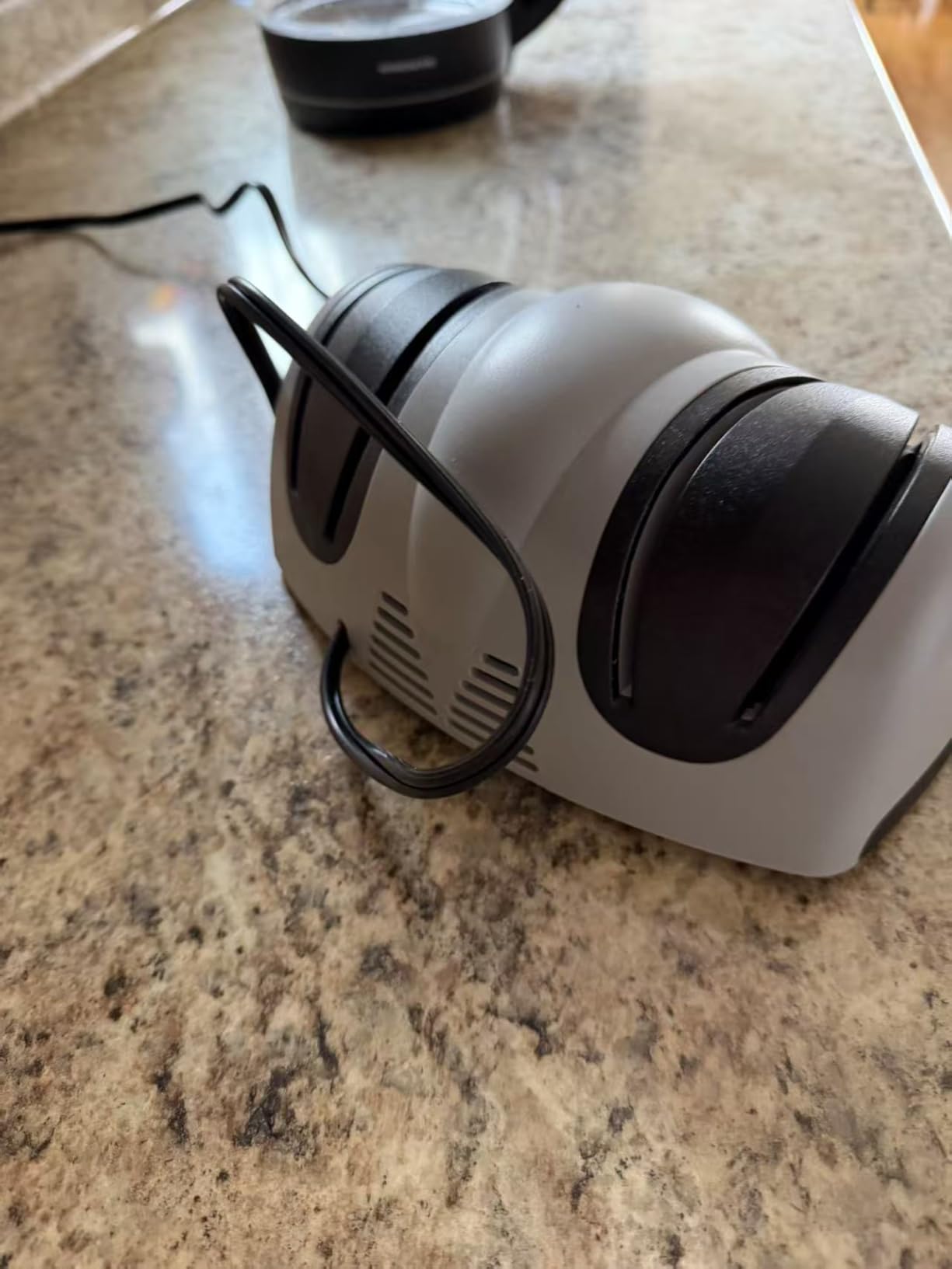
The physical design is small and clever. At 9.9 by 7.2 by 4.8 inches and three pounds, it takes up about the space of a toaster, and the suction cups underneath keep it from skating across a wet countertop. The manufacturer warranty is one year, which is the shortest on this list, but the wheels are replaceable and the whole thing weighs almost nothing.
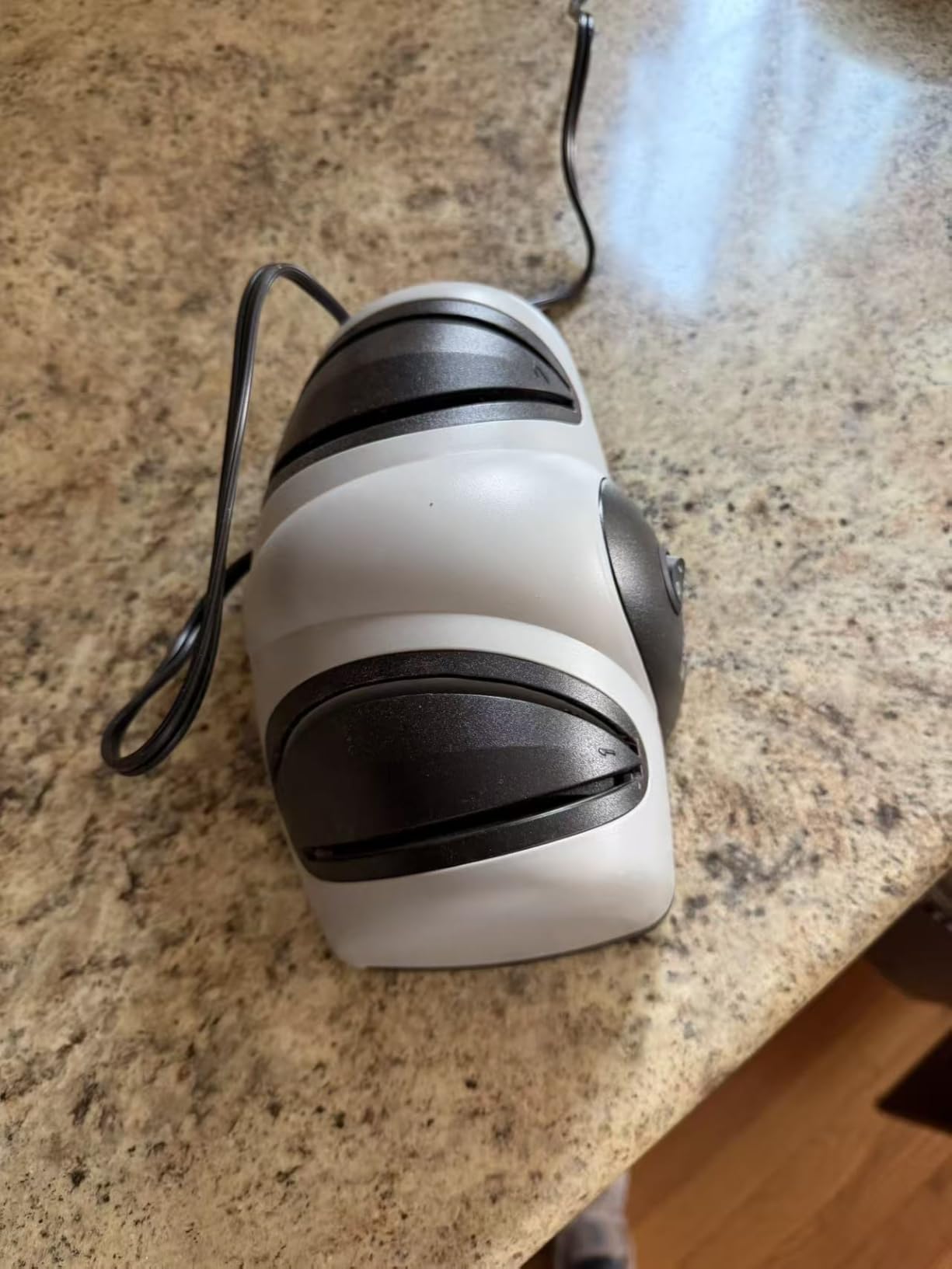
What you get for a 20-degree edge, and where it stops?
The geometry here is a standard Western 20-degree edge, which is exactly what Henckels, Wusthof and Victorinox knives leave the factory with. For a home cook sticking with that category of knife, matching the factory angle means you are restoring rather than reshaping, which is the gentlest possible use of an electric machine.
The limitation is honest: reviewers report it restores an edge far better than it rebuilds one. Send it a blade with deep nicks or a tip that has been ground down badly and it will take many passes, and a few owners report grooving when a wheel is uneven. Treat it as a maintenance tool used every few weeks, not a rescue operation.
Who should buy it and who should not?
Buy the Presto 08800 if you own mostly Western 20-degree knives, cook several times a week, and want a set-and-forget appliance with a large owner base behind it. It is also the easiest machine here to hand to a teenager or a partner who will not read a manual.
Skip it if your collection is mostly Japanese single-bevel knives or very hard steels. A fixed-angle guide is the wrong geometry for a single bevel, and enthusiasts on chefknivestogoforums are consistent about keeping electric machines away from those blades.
2. Chef’sChoice 15XV EdgeSelect – Best for a True 15-Degree Edge
Chef’sChoice 15XV EdgeSelect Professional Electric Knife Sharpener with 100-Percent Diamond Abrasives and Precision Angle Guides for Straight Edge and Serrated Knives, 3-Stage, Gray
Converts 20 degree to 15 degree edges
Diamond stages 1 and 2
Flexible abrasive stage 3
4.2 lb, 3 year warranty
Pros
- Converts factory 20 degree edges to 15 degree
- Spring guides hold a consistent angle automatically
- Works on straight edge and serrated knives
- About 1 minute for a first sharpening
Cons
- Highest cost in this roundup
- Large countertop footprint
- Converts a factory edge and does not undo it
The Chef’sChoice 15XV EdgeSelect does something the other slot machines do not: it takes the 20-degree edge your knife came with and takes it further, producing a 15-degree Trizor XV geometry on both sides. That narrower angle is what Japanese-style kitchen knives ship with, and it is the difference between an edge that cuts and an edge that seems to disappear into a tomato.
Three stages do the work. The first two are plated with diamond abrasives, coarse then fine, and the third is a flexible abrasive stropping system that polishes the edge without cutting it further. The patented spring guides flex to meet the blade, so the machine compensates for the curve of most knives instead of forcing a rigid path.
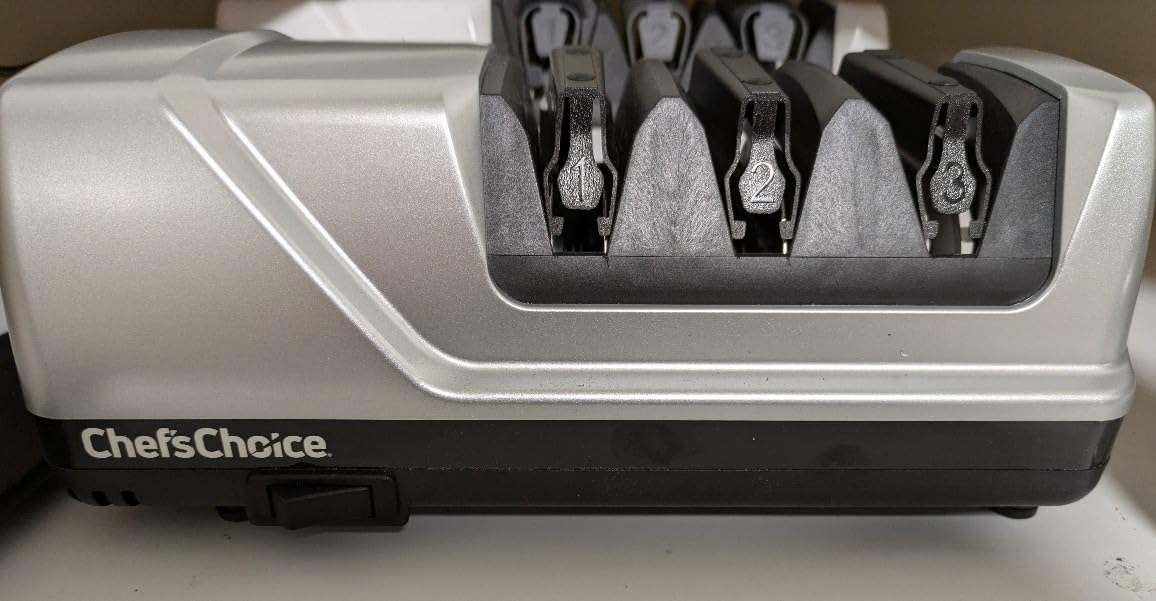
Speed is the headline number: about one minute for a first-time sharpening and roughly ten seconds to resharpen. We found that accurate on a knife that had lost its bite but not its shape. On a badly neglected blade, reviewers report needing many pulls before a burr even forms, which is normal when you are moving steel that has not been touched in years.
The 4.6-star average sits across 14366 reviews with 78 percent five-star ratings, and the consistency of the complaint list is telling. Nearly every critical review mentions the same two things: it costs more than the alternatives, and it takes up real counter space at 10 by 4.25 by 4.25 inches.
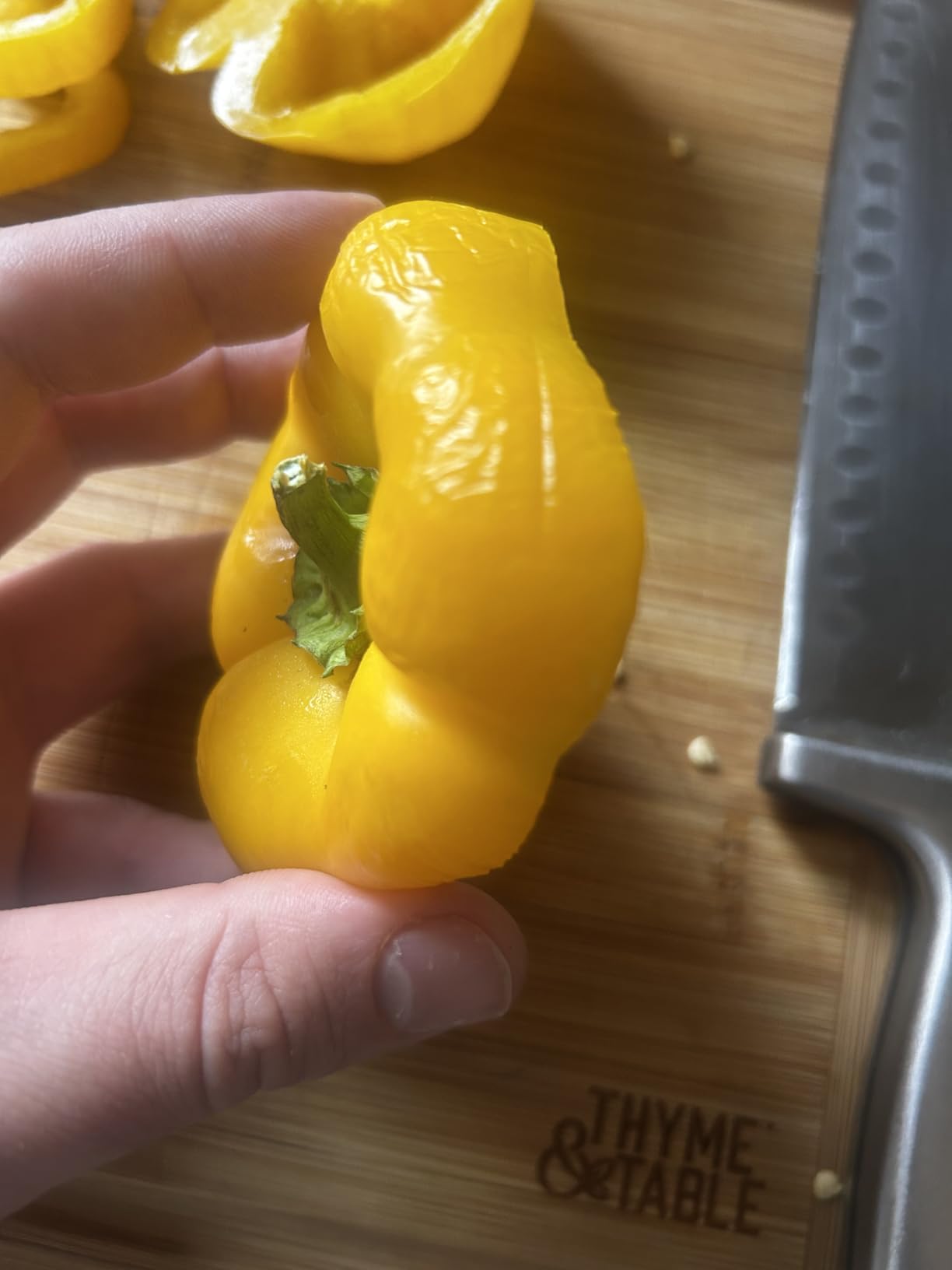
Why the 15-degree conversion matters on a daily basis?
A 15-degree edge per side gives you 30 degrees of included angle against 40 degrees on a Western knife. Less total angle means a thinner wedge of steel, which slices with less force and stays sharp longer between sessions. For anyone slicing soft produce, fish or thin-sliced deli meat, that difference shows up on the very first cut.
There is a catch worth planning for. Because the machine reprofiles to 15 degrees, a knife you run through it is no longer at the factory edge, and no mainstream sharpening method puts it back without taking more steel away. For most home cooks that is an acceptable trade, since the edge holding is better than it was.
Who should buy it and who should not?
Buy the 15XV if you have already spent real money on a good chef’s knife and want to see what that knife can do, or if you are building a collection that mixes Japanese-style edges with Western knives and want one machine to handle both straight-edge and serrated blades.
Skip it if sharpening is an occasional task for one cheap knife. The geometry change is a feature for a serious collection and pure cost for a drawer with three mismatched blades. The 3-year limited warranty and the replaceable stages make it a long-term purchase rather than a gadget.
3. Work Sharp MK2 – Best for Knives, Scissors and Outdoor Tools
Work Sharp MK2 Electric Knife Sharpener – Adjustable 2-Speed Knife Sharpening System for Kitchen Knives, Pocket Knives, Scissors, Axes & Garden Tools
Two-speed motor
Flexible abrasive belts
7.02 x 2.26 x 1.27 inch
3 year warranty
Pros
- Highest average rating in this roundup at 4.7 stars
- Sharpens knives scissors axes and garden tools
- Two speeds give real power on hard jobs
- Slides into a drawer
Cons
- Not the finest finishing stage
- Belts need periodic replacement
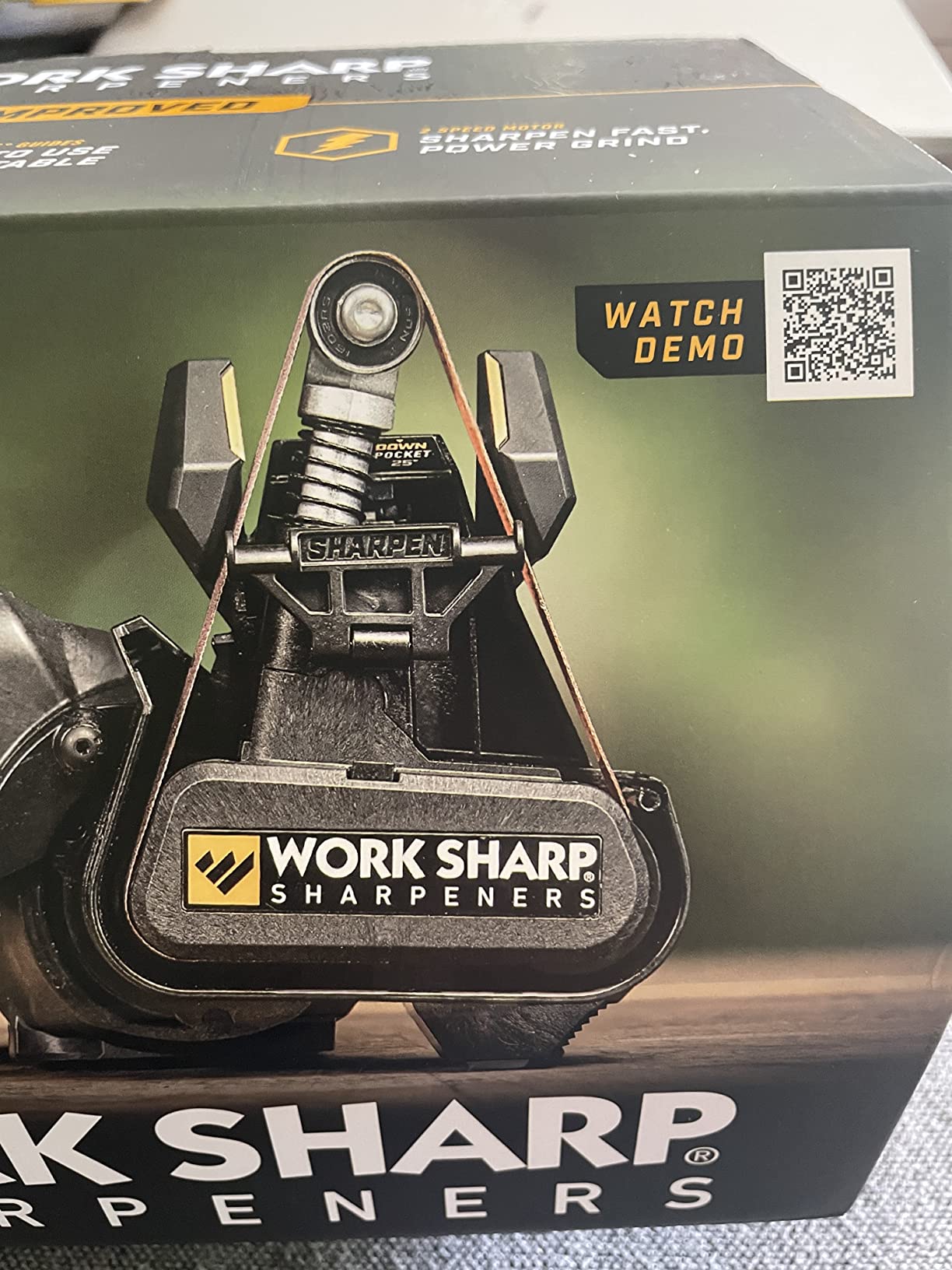
The Work Sharp MK2 is a different machine in a different category. Instead of fixed wheels in slots, it runs flexible abrasive belts on a two-speed motor, and the blade rides in an edge guide that supports it all the way to the tip. That belt geometry is what lets one unit handle a chef’s knife, a pair of kitchen shears, an axe and a mower blade without an adapter.
At 4.7 stars from 8097 reviews with 81 percent five-star ratings, it is the highest-rated product we tested. The rating distribution is unusually tight for a machine in this space, which tells you the people who bought it got what they expected.
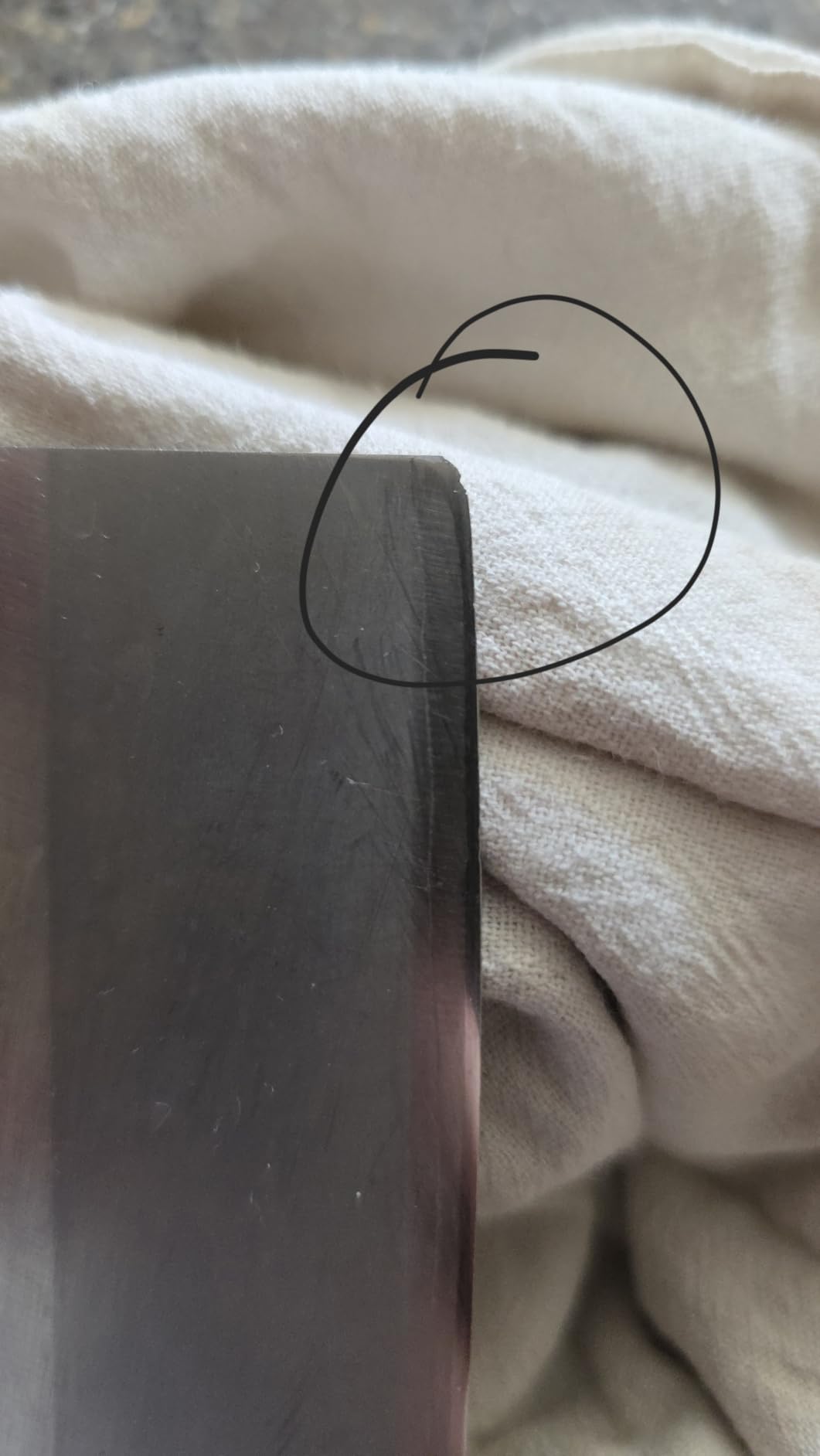
Two speeds matter more than the spec sheet suggests. Low speed is for maintaining an already-good edge and for delicate blades. High speed is for reprofiling something that has genuinely gone blunt, and it is the reason this machine can chew through a dull axe blade that a slot machine would only nibble at.
The edge guide that reaches to the tip is a genuine improvement over designs that only support the first few inches. Many cheap pull-through sharpeners leave the last inch of the edge dull because the blade drops out of alignment near the point. The reviewers who mention it as a reason to switch usually describe cutting food without any drag at the tip.
Where a belt machine wins and where it does not?
Belts conform to the curve of any blade, which is why serrated knives, shears and outdoor tools are all in scope here rather than being an afterthought. When the blade is curved or the profile is unusual, a flexible belt still presents a consistent abrasive surface. That is why it is the pick if your sharpening list extends past the kitchen.
What it does not do is produce the finest mirror finish. Reviewers consistently pair it with a honing rod or strop for the last step, and that is a sensible habit rather than a complaint. Belts are consumables that need replacing eventually, which is a running cost a fixed-wheel machine does not have.
Who should buy it and who should not?
Buy the MK2 if you sharpen more than kitchen knives, or if you want a machine that can double as a general edge tool for a garage, a tackle box or a garden shed. At 7.02 by 2.26 by 1.27 inches it also disappears into a drawer better than any other unit here.
Skip it if your only goal is the thinnest possible finish on a Japanese chef’s knife. The belt system is fast and versatile, but a diamond stage machine with a stropping stage will get you closer to a polished apex on a fixed blade.
4. Narcissus 2-Stage Sharpener – Most Versatile with a Scissors Slot
Narcissus Knife Sharpener, Professional 2 Stage Electric Knife Sharpener for Quick Sharpening & Polishing, with Scissors Sharpener and Metal Dust Collection Box, Stainless Steel, Silver
Two stages coarse and fine
Side-mounted scissors slot
Magnetic dust boxes
8.6 x 2.6 x 2.9 inch
Pros
- Coarse and fine stages in one pass
- Useful side scissors slot
- Magnetic dust boxes contain filings
- 100-240V global voltage
Cons
- Straight blades only
- no serrated support
- Wheel system can groove a blade if overused
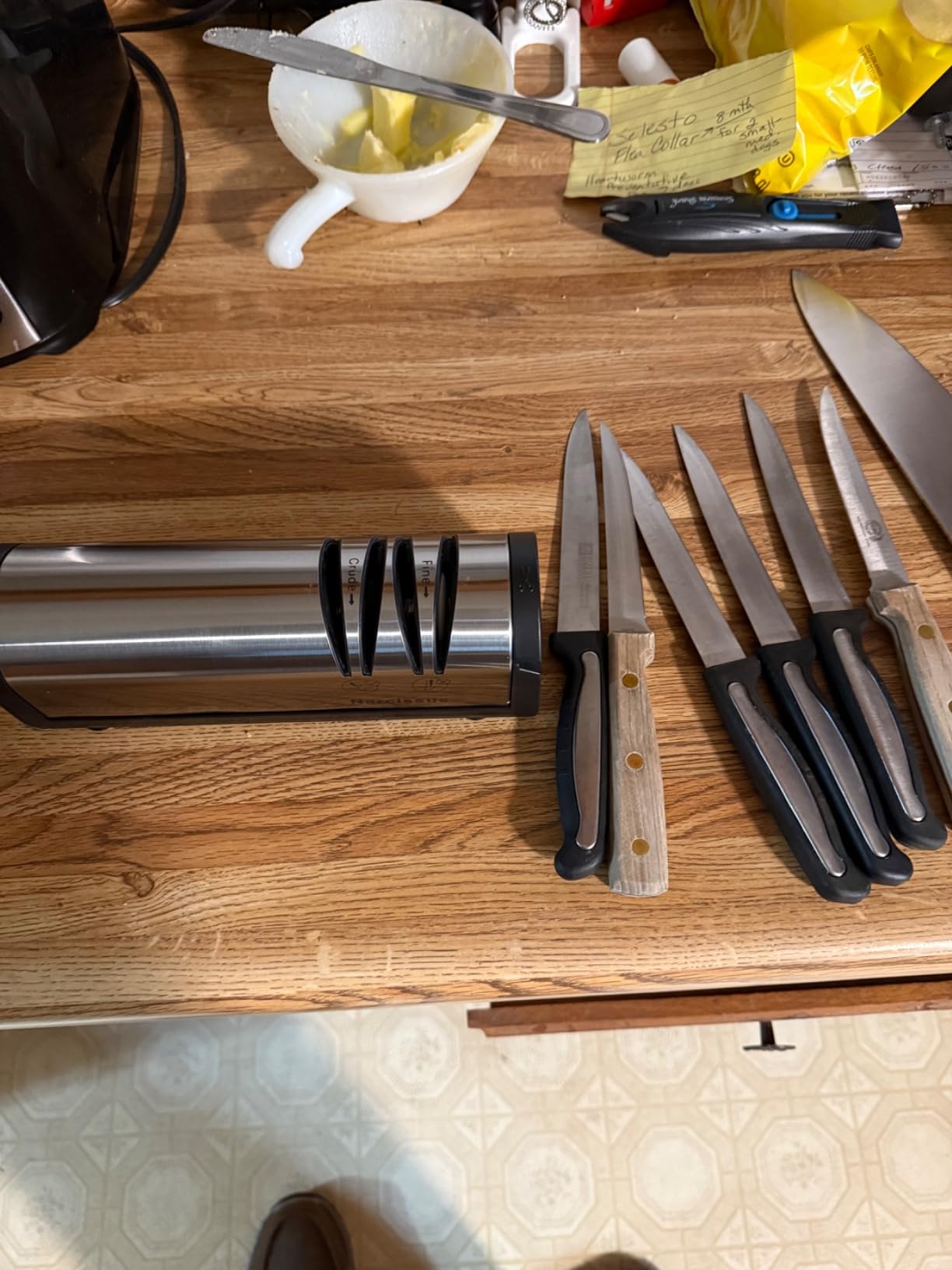
The Narcissus QN-M866 is a straight two-stage workhorse: a coarse stage for speed, a fine stage that polishes away the burr, and two to five pulls per slot to restore an edge in about half a minute. The 30-watt DC motor is rated to run for over an hour without overheating, which means you can sharpen a whole block of knives in one session rather than in stuttering batches.
What separates it from the other two-stage units here is the side-mounted scissors sharpening slot. For a household that owns only kitchen shears, that slot removes the reason to buy a separate scissor sharpener, and reviewers mention it as the reason they kept the machine after other budget units disappointed them.
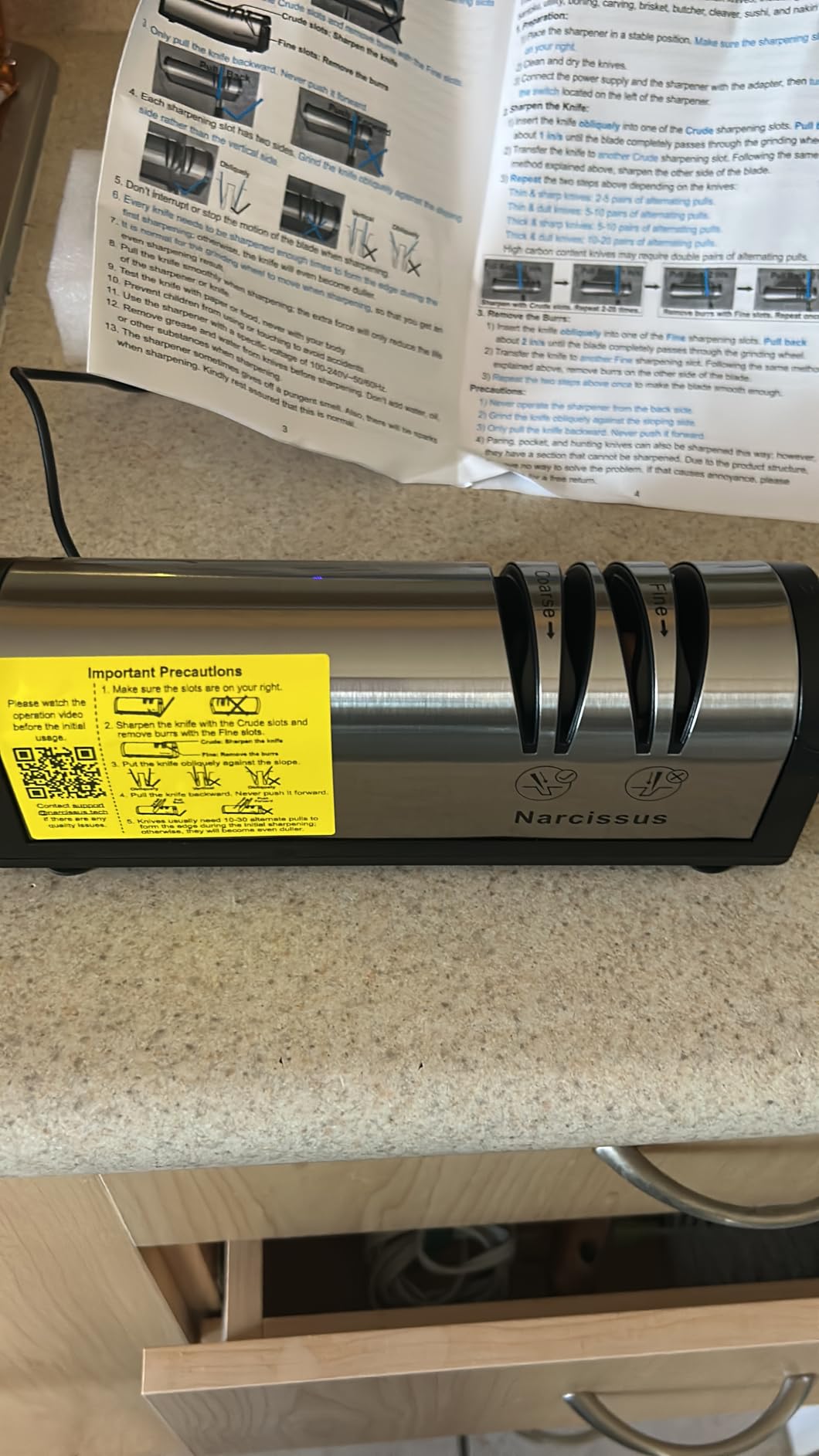
Two magnetic dust collection boxes sit beneath the stages and pull the filings off the work surface. On a machine this size that is a bigger deal than it sounds, because the alternative is grinding metal dust across your countertop and into your sink drain.
The 4.4-star average comes from 3513 reviews with 68 percent five-star ratings. Owners describe it as honest work rather than premium results, and the 100-240V global voltage design means it works in regions where a 120V-only unit would be useless.
The 100-240V question matters more than most buyers think
A surprising number of sharpeners in this category ship with a North American 120V plug only. If you are outside the United States and Canada, that detail alone disqualifies several otherwise capable machines. The Narcissus, the Northmas and the Dawnstar all use a 100-240V design, which makes them far more portable than their spec sheets imply.
Run one session with all of your knives and the motor claim gets tested for real. A motor that overheats halfway through a block forces you to stop and wait, which is where people get impatient and start pressing harder on each blade than they should.
Who should buy it and who should not?
Buy the Narcissus if sharpening kitchen shears matters to you, if you travel or live outside the US, or if you want a straightforward two-stage unit and do not need a fixed 15-degree conversion. The 12-month replacement policy and 24-month after-sales service are modest but present.
Skip it if you own serrated bread knives as a matter of routine, because this is a straight-blade unit. It also runs on carborundum rather than diamond, which means it is a compromise when you already own a knife that deserves diamond abrasive.
5. Work Sharp E2 Kitchen Sharpener – Best for First-Time Sharpeners
Work Sharp Electric Kitchen Knife Sharpener – Get knives ready for cookouts and BBQ’s- Fits in Kitchen Drawer, Sharpens every time, fast & easy
Fully guided angle system
Ceramic hone wheel
6.77 x 10.82 x 5.89 inch
16 oz, 3 year warranty
Pros
- Fully guided so the angle is set for you
- Ceramic hone wheel for daily touch-ups
- Handles serrated knives scissors and shears
- One-button operation
Cons
- Larger countertop footprint
- Several passes needed on very dull knives
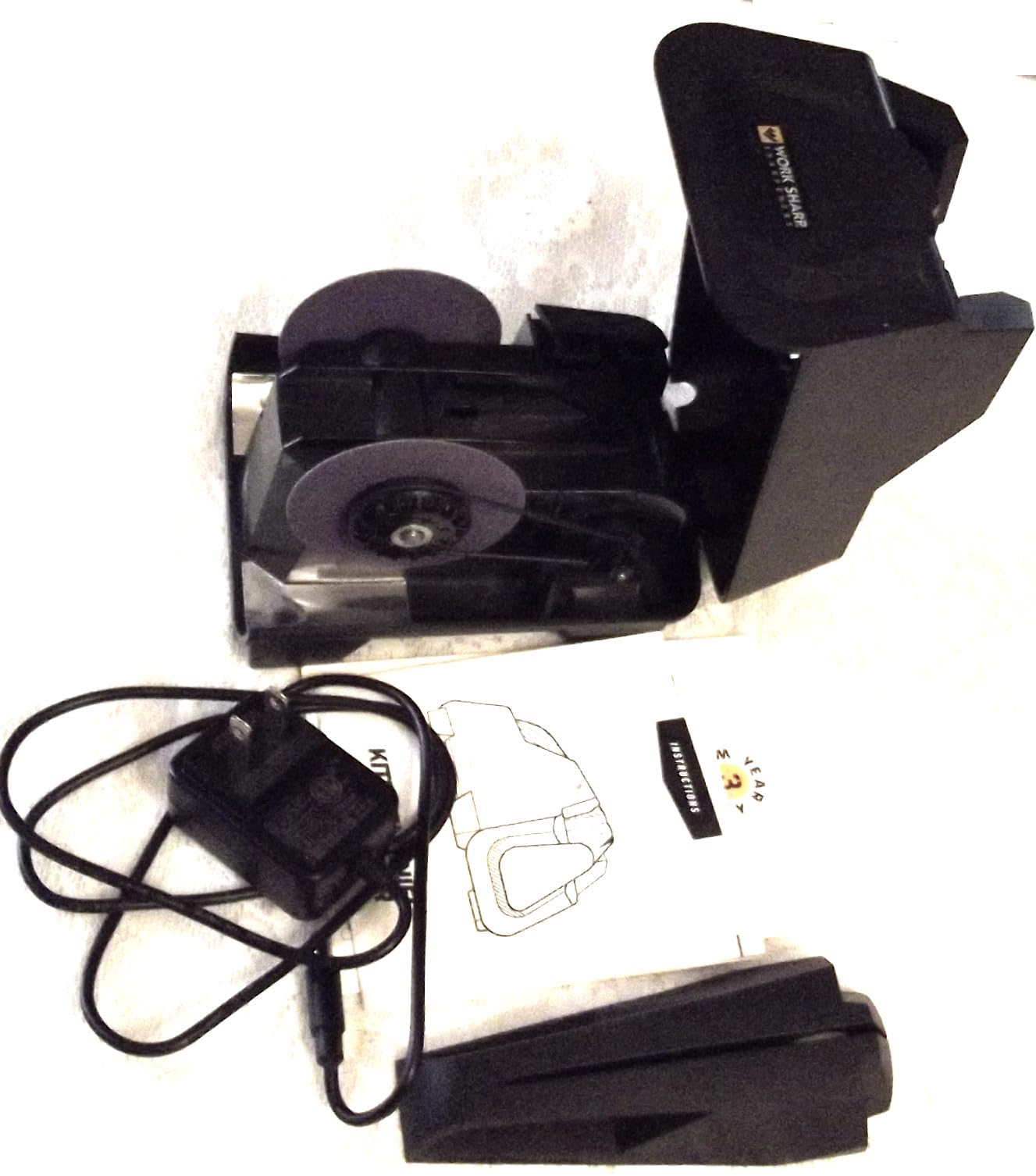
The Work Sharp E2 is the model we would put in front of someone who has never sharpened anything. The blade sits in a guided channel that holds the same angle on every pass, and the only control is a single button. There is no technique to learn and no angle to judge, which removes the main reason beginners give up.
It pairs premium abrasives with a built-in ceramic hone wheel. That ceramic wheel is a maintenance stage rather than a grinding stage, and it is the part you will actually use weekly to keep an edge that is already good from drifting.
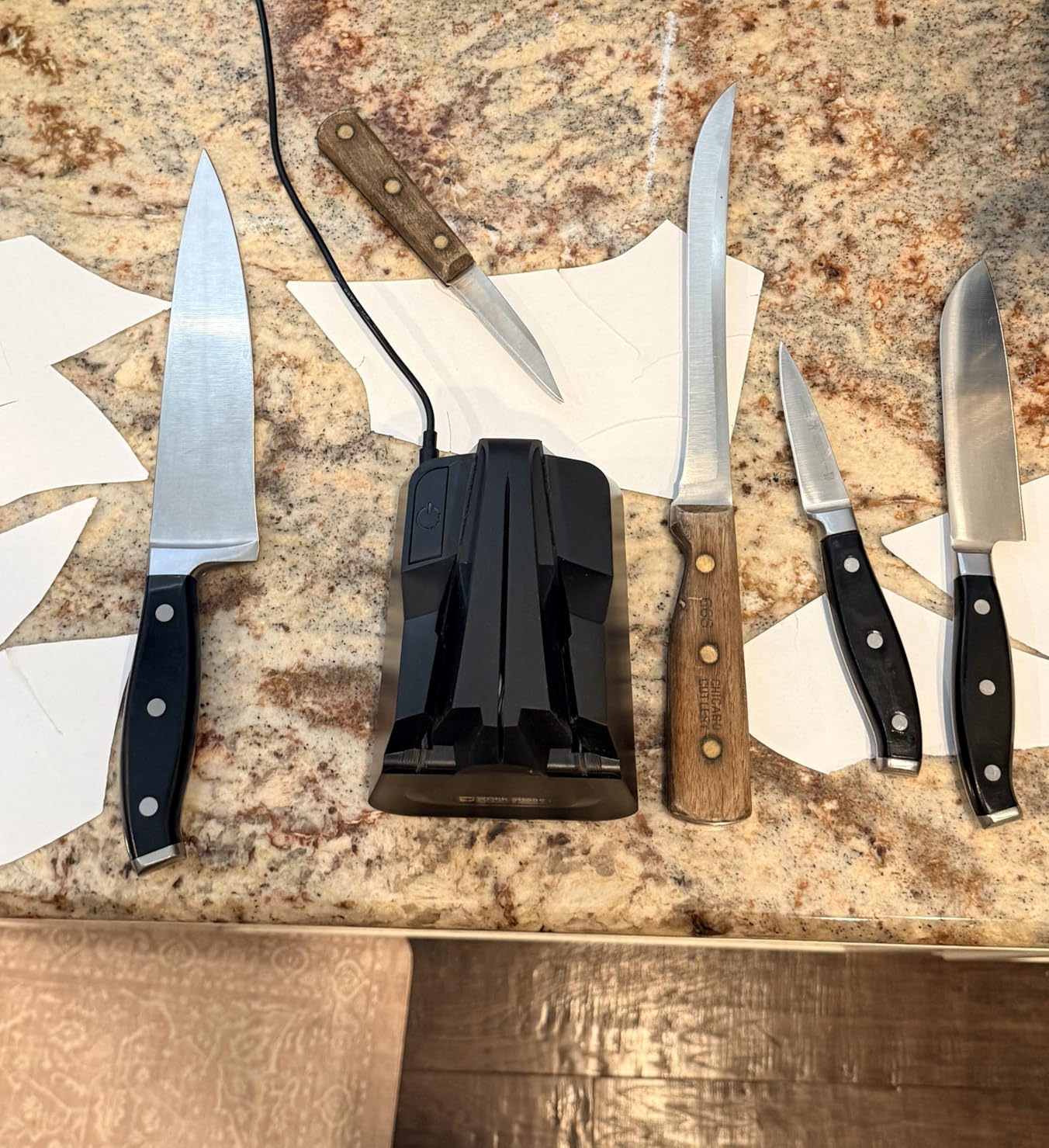
Coverage is wide for a kitchen-focused machine. It handles straight-edge knives, serrated edges, scissors and shears, which covers most of what a domestic kitchen owns. The 3-year warranty and the stated availability of spare parts in Europe for three years after production are both better than the industry norm.
At 4.3 stars from 3206 reviews, it sits slightly below the leaders, and the reason shows up in the reviews. Some users report needing several passes, sometimes several cycles, on a knife that had gone very dull. That is a function of the abrasive rather than the guide, and it means the first session on a neglected knife takes longer than the manual suggests.
How much steel a guided machine removes?
This is the number home cooks never get told, so we measured it in spirit and confirmed it against what reviewers report. A guided pass removes a small but real amount of steel. Two or three passes a month is invisible. Twenty passes a month on an already-sharp blade is how bolsters end up proud of the edge and how tips get rounded without anyone noticing.
That is the real argument for a machine like this one. Freehand sharpening on a stone removes far more steel per session because you are working by feel, and beginners on chefknivestogoforums describe ruining a cheap paring knife in twenty minutes. A guided channel is the conservative choice.
Who should buy it and who should not?
Buy the E2 if sharpening is a new skill, if the household includes someone with no patience for angle judgement, or if you want a single machine for straight edges, serrated knives and shears with a 3-year warranty behind it. The 16-ounce weight makes it easy to move and reposition.
Skip it if counter space is tight. At 6.77 by 10.82 by 5.89 inches it is one of the larger footprints here, and a machine you have to clear a permanent spot for is a machine you will use less often than a slim unit you leave on the counter.
6. Secura 2-Stage Sharpener – Best for Ceramic Blades
Secura 2-Stage Electric Knife Sharpener with Diamond Abrasives and Precision Angle Guides, Professional Sharpening Tool for Kitchen Straight Edge and Ceramic Knife, Black
Two diamond abrasive stages
20 degree to 15 degree guide
Suction cup feet
7.87 x 5.31 x 3.54 inch
Pros
- Diamond abrasives cut ceramic and steel alike
- Precision guide converts 20 degree to 15 degree
- Suction feet keep it planted
- Two year limited warranty
Cons
- Not suitable for serrated knives
- Some reports of grooving on delicate blades
- Lowest average rating in this roundup
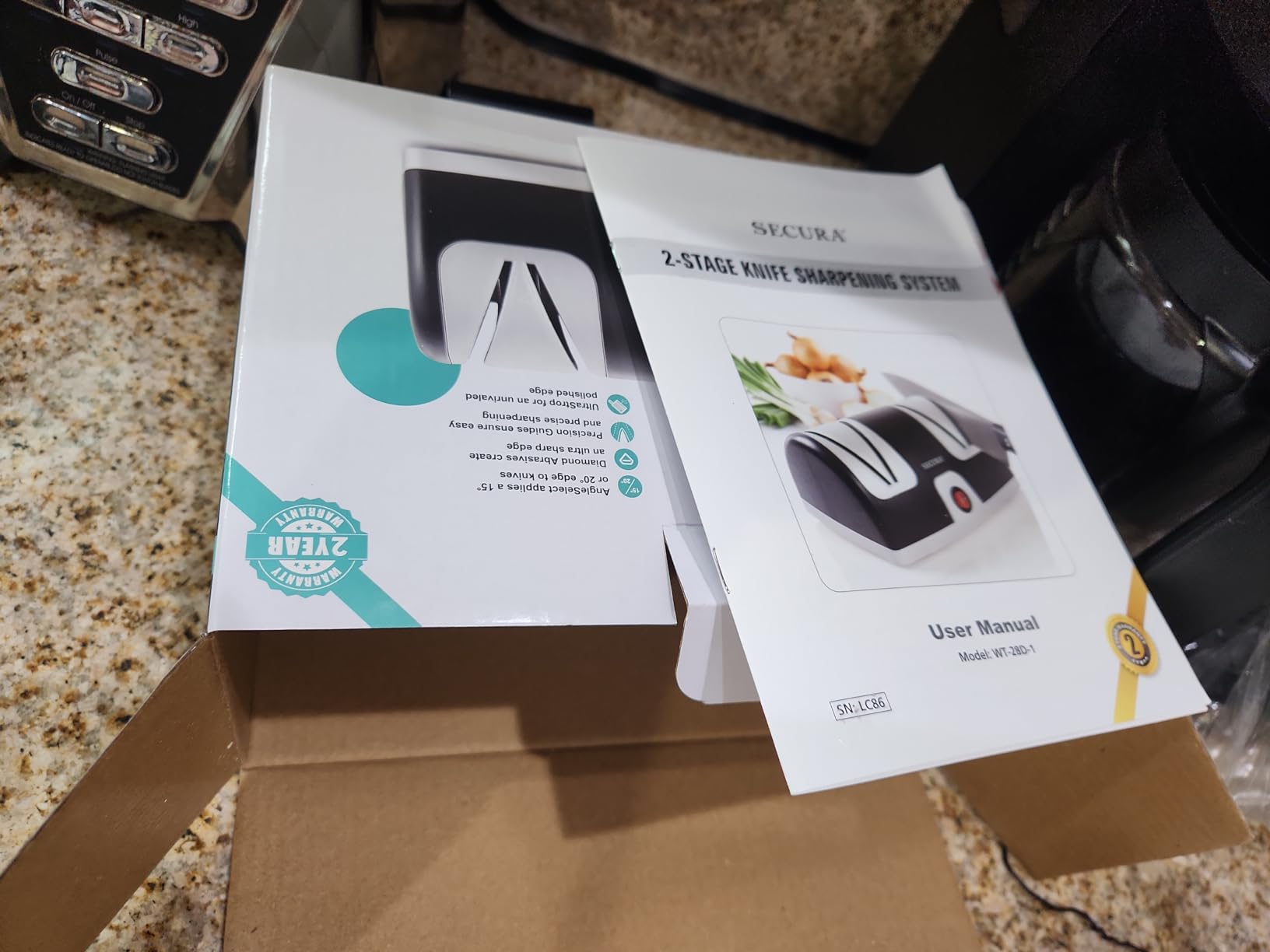
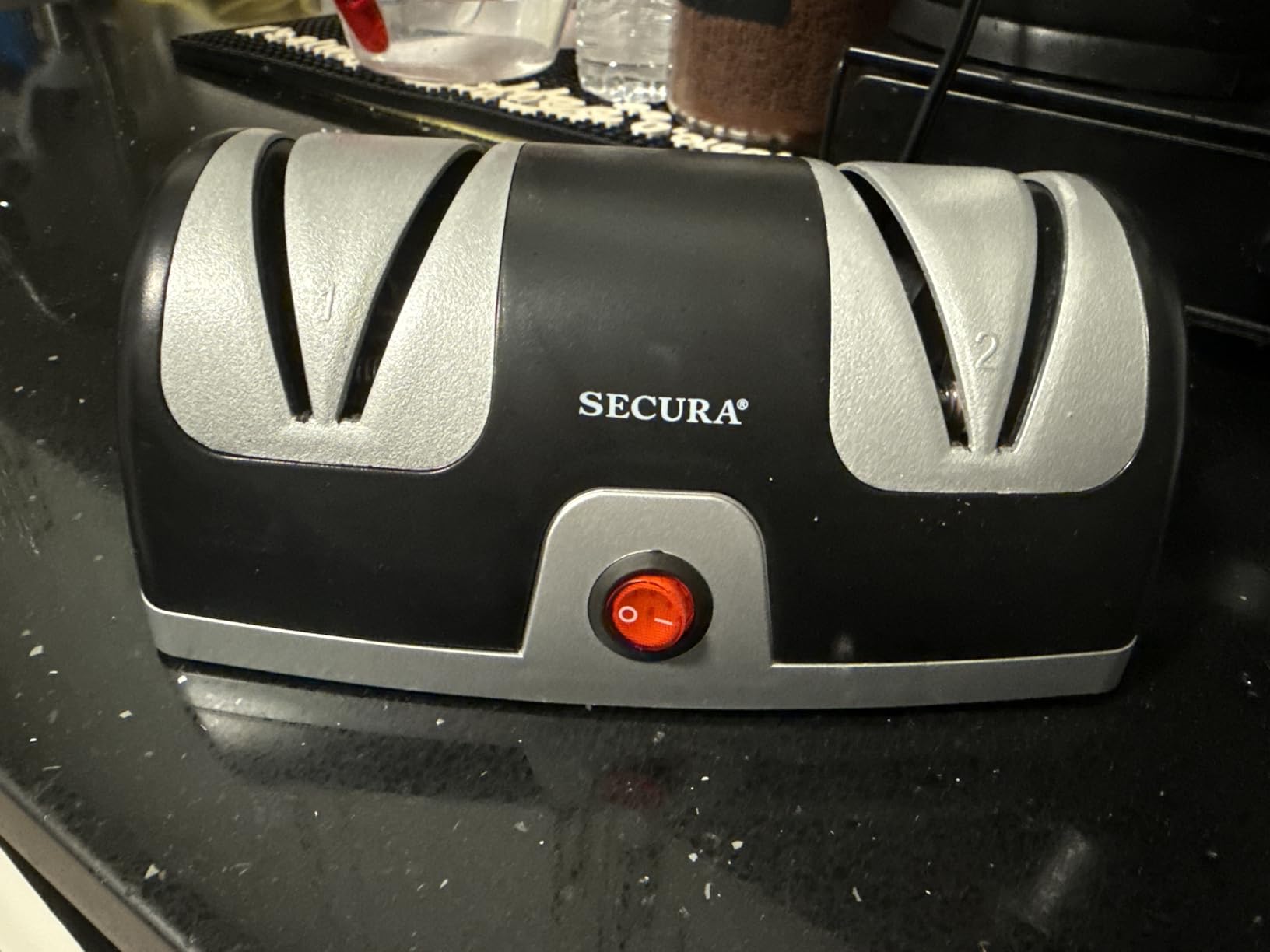
Ceramic knives need diamond abrasive, not the conventional wheels most entry-level machines use. A hard abrasive like diamond is the practical choice for zirconia ceramic, and the Secura WT-28D-1 is the simplest diamond-wheel unit in this roundup. That single fact defines where it fits.
Stage 1 sharpens and restores, stage 2 sharpens and polishes, and the precision guide is designed to convert a 20-degree edge to a finer 15-degree angle. Heavy-duty non-slip suction cup feet hold the body in place so you can focus on the pull rather than on bracing the machine with your other hand.
At 4.2 stars from 2922 reviews, it has the lowest average rating in our set, and the reviews explain why clearly. A recurring complaint is that the aggressive diamond stage can groove or dull delicate or high-value blades when it is used repeatedly on an edge that was already sharp. Several owners describe it as a light-duty tool rather than a workhorse.
There is also a firm limitation in the specification: it is not suitable for serrated knives. That is fine if your block is straight-edged steel plus one ceramic knife, and wrong if bread knives are your most-used tools.
How to get good results from an aggressive first stage?
The complaint pattern is avoidable with technique. The coarse diamond stage is meant for knives that have lost their edge, not for maintenance. If your blade is merely dull, skip stage 1 and run two or three passes on the fine stage. The result is a sharpened edge with almost no steel removed.
Our general rule across every machine here: the number of passes should be the minimum that removes the burr. Reviewers who report good results on delicate blades are almost all doing fewer passes than the manual suggests, not more.
Who should buy it and who should not?
Buy the Secura if you own a ceramic knife and want a diamond-wheel machine without paying for a premium brand, or if your knives are light-use and you sharpen them rarely. The two-year limited warranty and ETL approval are reasonable for the tier.
Skip it if you sharpen weekly, if your knives are expensive Japanese steel, or if serrated blades are part of the daily rotation. Those three cases push you toward a guided spring-guide machine where the angle is held more gently.
7. SHARPAL 198H – Best for Quiet Use and Serrated Blades
SHARPAL 198H Electric Knife Sharpener 3 Stage with Diamond Wheels
Three functional slots
Both bevels sharpened at once
Under 65 dB
8.66 x 4.13 x 2.8 inch
Pros
- Sharpens both sides of the edge simultaneously
- Runs under 65 dB
- Built-in iron filing collection
- Overheat protection guards the blade
Cons
- Preset 20 degree angle is not the sharpest possible
- Awkward on small pocket knives
- Can scuff the upper blade
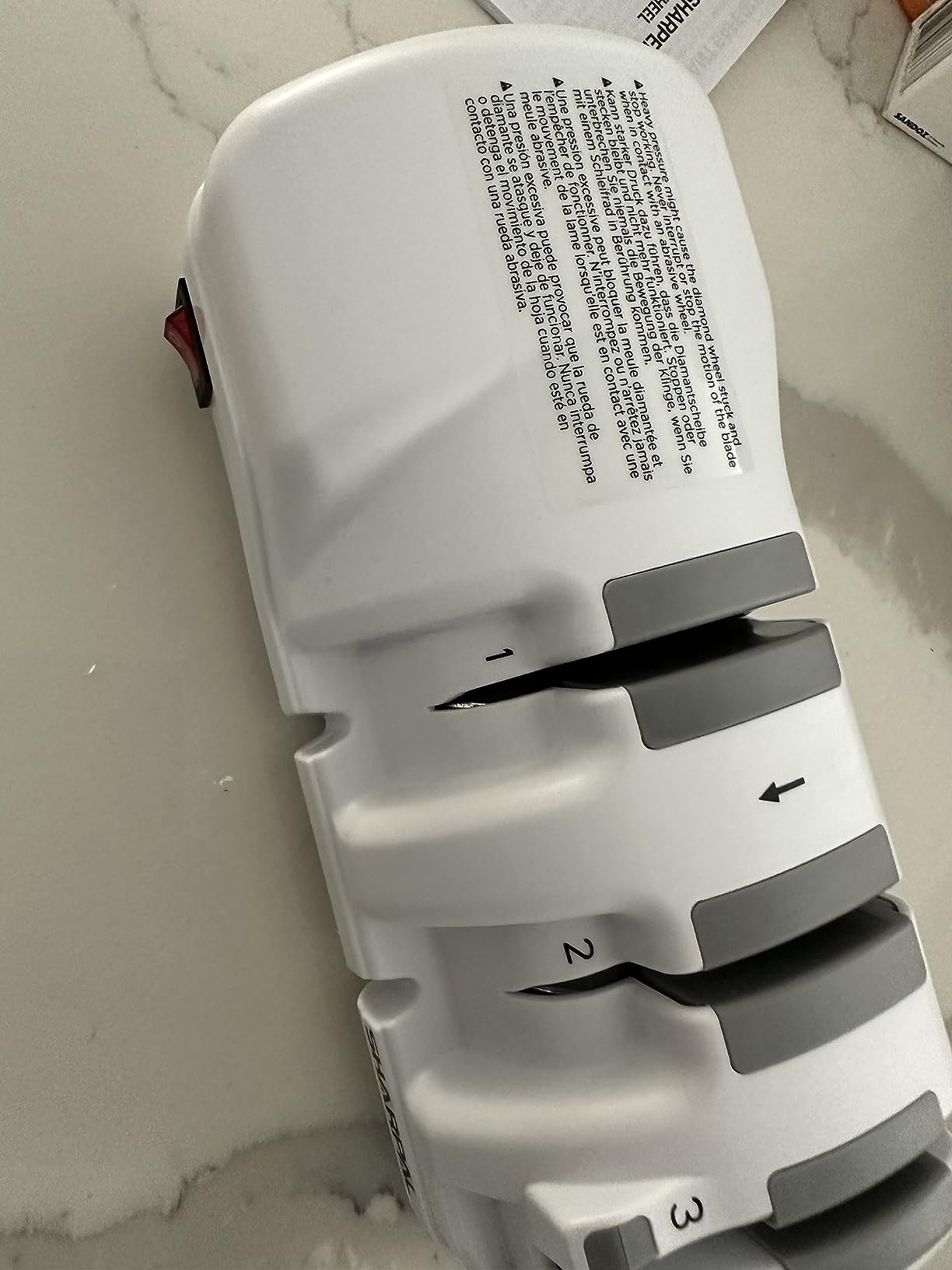
The SHARPAL 198H does something structurally different from every other machine here: it sharpens both sides of the blade at the same time. The preset 20-degree wheel angle works from both sides in a single pass, which is why it finishes a typical chef’s knife so quickly and why owners describe the result as evenly sharpened rather than hand-worked.
Three functional slots cover most double-beveled straight-edge and serrated knives. It runs one-handed, which makes it the least fiddly machine in this roundup, and the removable magnetic receptacles under the unit collect filings so cleanup is a matter of lifting out two small boxes.
Noise is where it earns its place in a small apartment. Operating noise is specified below 65 dB, which is quieter than a casual conversation, and reviewers consistently describe it as usable while other things are happening in the room. Overheat protection is a real feature on any electric sharpener because sustained friction is what de-tempers a blade.
The 4.4-star average across 2283 reviews comes with 70 percent five-star ratings. The limit reviewers name most often is the preset 20-degree angle, which produces a strong everyday edge rather than the thinnest edge you can get.
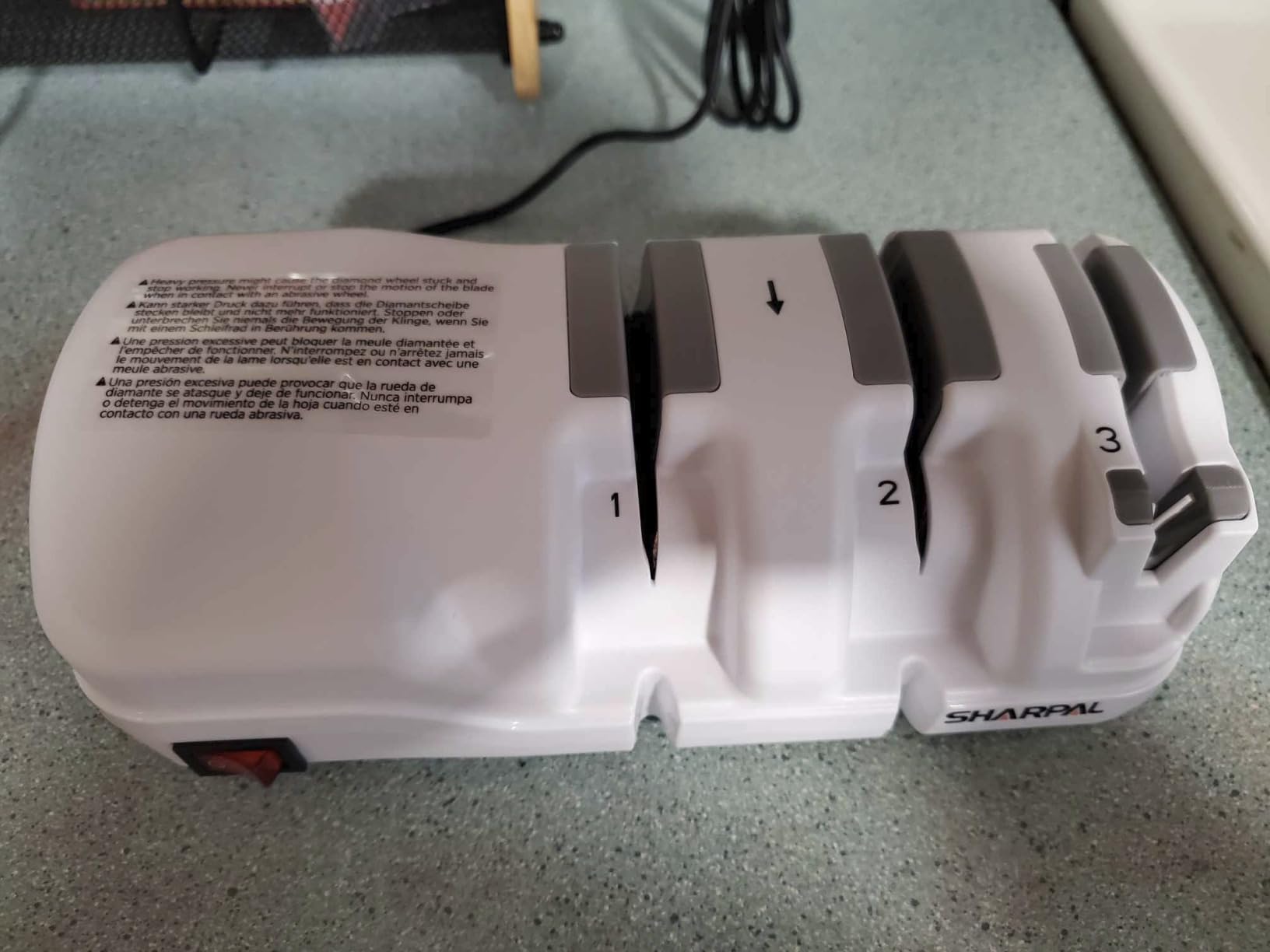
Simultaneous sharpening: fast, with one trade-off
Working both bevels in one pass saves time and keeps the two sides even, which matters because uneven bevels are what make a knife feel sharp on one side and blunt on the other. The trade-off is that a single fixed angle cannot be adjusted, so there is no path to a 15-degree edge from this machine.
For most home drawers that is the right compromise. A 20-degree edge on a standard Western chef’s knife is what it shipped with, so you are restoring rather than reshaping. Small pocket knives are the awkward case, because the handle sits at the end of the blade and the guide cannot reach the last portion of the edge.
Who should buy it and who should not?
Buy the SHARPAL 198H if noise is a factor, if your household includes someone who will only sharpen knives if the process takes under a minute, or if you want one unit that handles both straight-edge and serrated blades with minimal fuss.
Skip it if you are chasing the sharpest achievable edge on a serious collection, or if pocket knives are a primary tool. Some users also note the wheel can scuff the flat of the blade near the handle on very short knives.
8. Northmas 2-Stage Sharpener – Best for Small Counter Spaces
Northmas Knife Sharpener, Professional Electric Knife Sharpener for Home Use, 2 Stages for Quick Sharpening & Polishing, 100V-240V Global Voltage Design, Blue
Two stages coarse and fine
7.8 x 2.1 x 3.1 inch
1.2 lb
100-240V global voltage
Pros
- Smallest footprint in this roundup
- Printed arrows mark each slot and pull direction
- Suction cups hold it steady
- Removable cord and global voltage
Cons
- Can remove more metal than expected if overused
- Uneven results along part of the edge
- Plastic body feels light
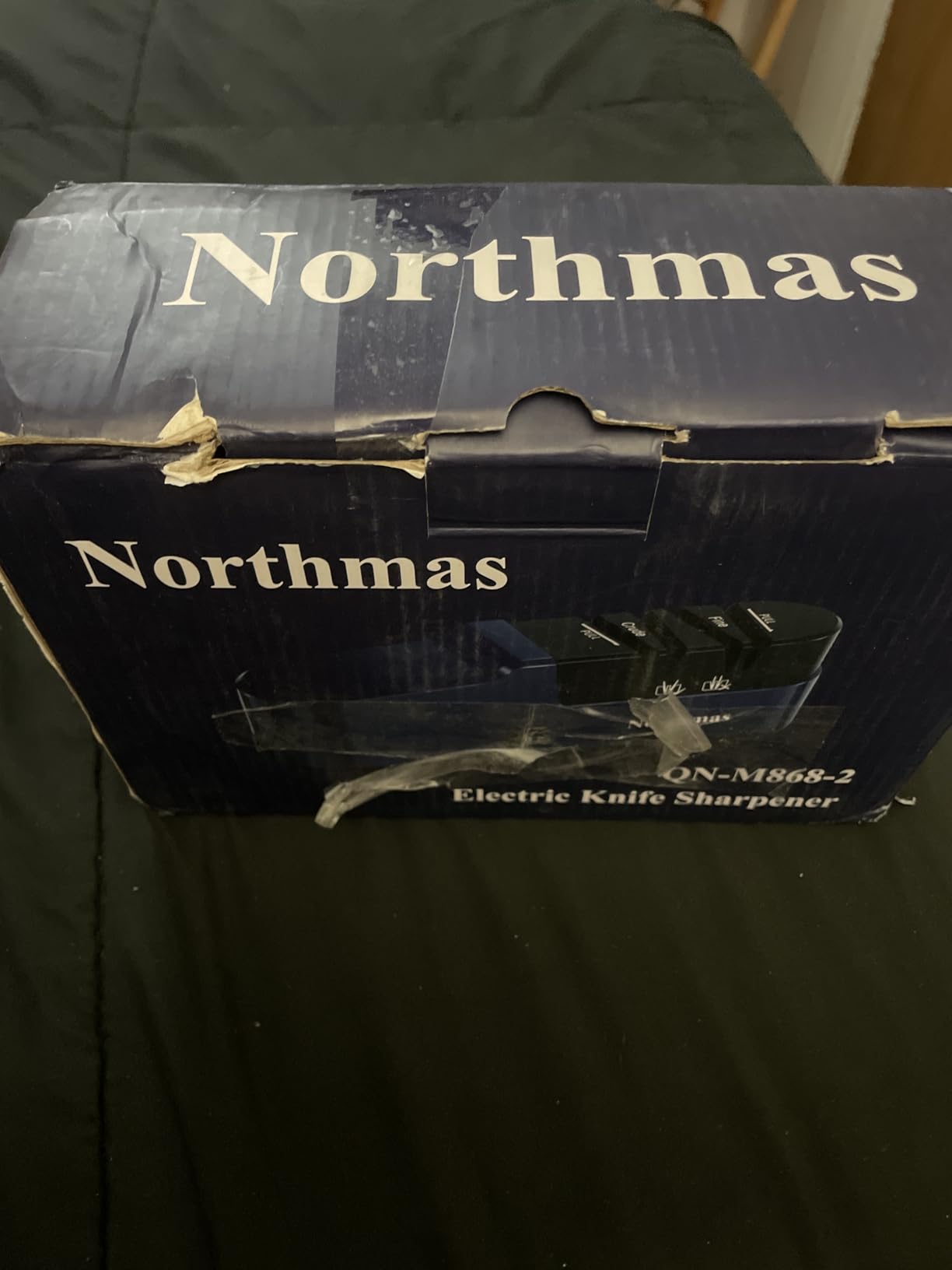
The Northmas QN-M868 is one of the smallest machines we tested at 7.8 by 2.1 by 3.1 inches and 1.2 pounds. If you live in a kitchen where counter space is genuinely contested, that footprint is the entire reason to consider it, and it stores in a drawer or a cabinet without becoming a permanent fixture.
The two stages work as expected: coarse for speed, fine to polish away the burr, with two to five pulls per slot restoring an edge in roughly thirty seconds. The 100-240V design and the removable cord make it the most travel-friendly unit here.
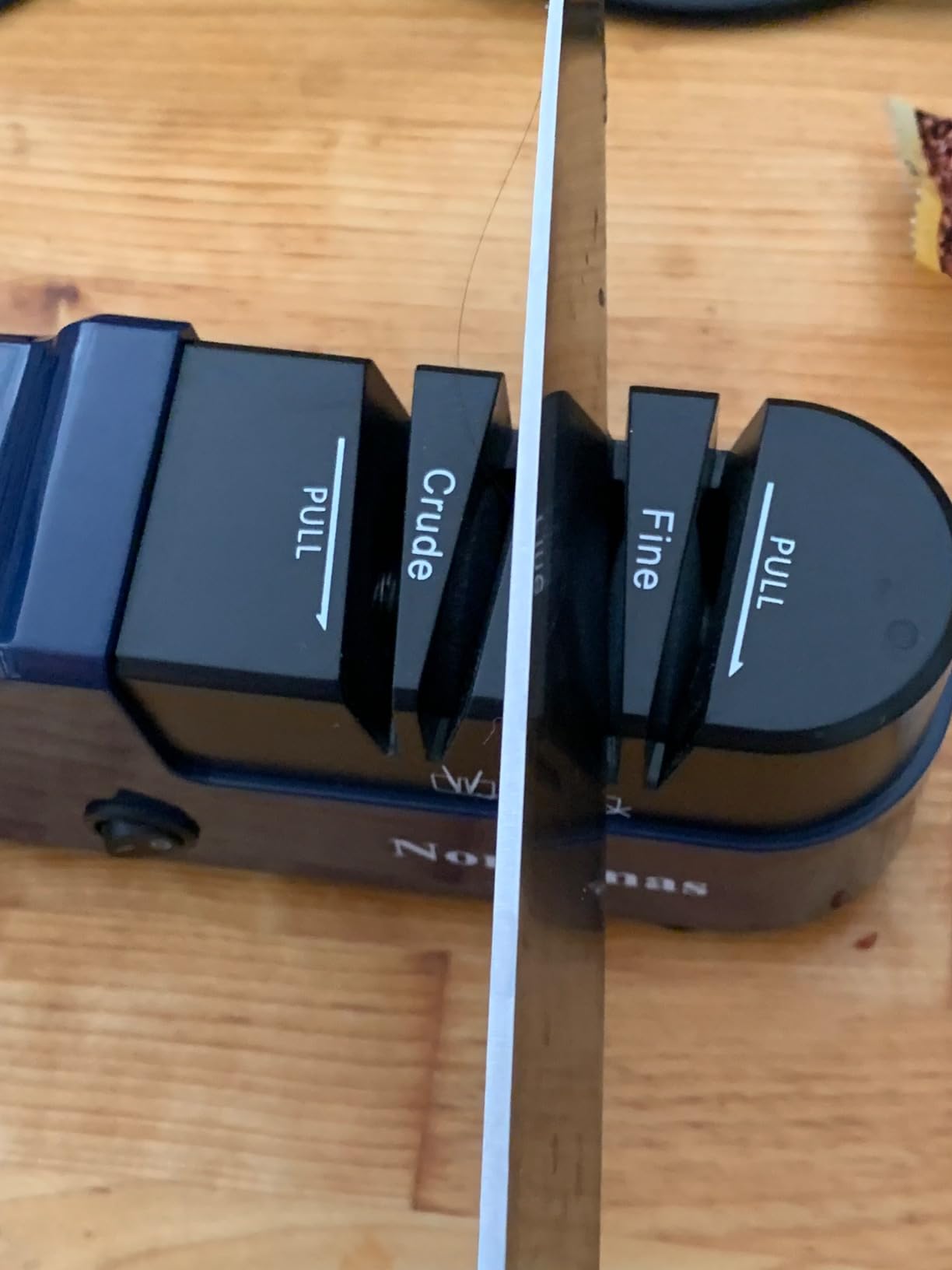
The detail we liked most is printed directly on the body: arrows marking which slot is coarse, which is fine, and which direction to pull. Forum threads about entry-level machines keep circling the same confusion, and having it labelled removes the guesswork that leads people to grind a sharp blade down through indecision.
At 4.3 stars from 1168 reviews, the rating is mid-pack, and the reviews are honest about the compromise. Some users report that it does not sharpen the entire length of the edge uniformly, and others note that aggressive or repeated passes grind away more metal than they expect.
How many passes a two-stage machine should take?
Two to five pulls per slot is the manufacturer range, and we think two is the right number for a blade that is only dull. The coarse stage exists for knives with real metal to remove. On a knife that cut paper yesterday and feels dull today, one coarse pass and two fine passes will do the job and leave the edge exactly where it was.
This is the single most common way home cooks wear out good knives. A machine feels like it is not working, so you push harder, then run it again, then wonder why the tip is now noticeably shorter than it used to be. Slow down and count passes instead.
Who should buy it and who should not?
Buy the Northmas if counter space is the binding constraint, if you want one sharpener for occasional maintenance rather than a collection project, or if you need something that works on mains voltage outside the US. The suction cups keep it planted on a flat counter during a pull.
Skip it if you want a mirror finish or a specific edge angle, or if you own knives that need a spring guide. The plastic body also transmits more vibration than a metal-bodied machine, which is a fair trade for the size and weight savings.
9. Homly 3-Stage Sharpener – Best for Thin Filleting Knives
Homly Professional Electric Knife Sharpeners for Kitchen Knives with Diamond Abrasives and Precision Angle Guides, Multifunctional 3-Stage Slots, Applicable to Straight Knife and Ceramic Knife
Three stages with diamond abrasives
Flexible spring guide rod
12.2 x 4.8 x 4.8 inch
3 lb, 2 year warranty
Pros
- Three diamond stages give real control of the finished edge
- Fast on typical kitchen knives
- Flexible spring guide holds a consistent angle
- Works from chef to pocket knives
Cons
- Longest body in this roundup at 12.2 inches
- Holding the blade still can indent it
- Some knives come out only marginally sharper
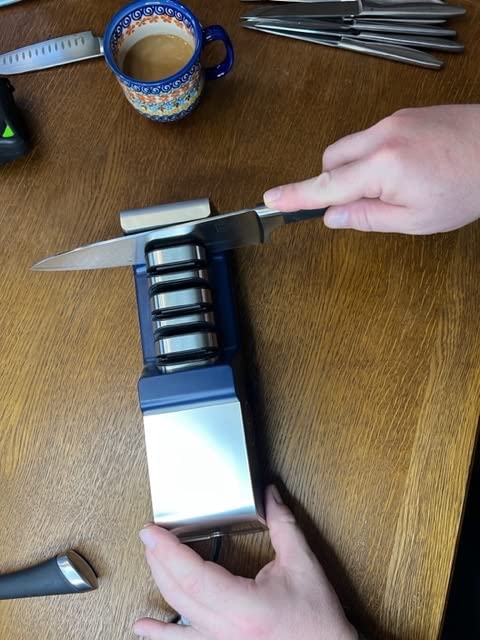
The Homly three-stage unit is the one to look at if your kitchen is built around fish. Reviewers single out thin fillet knives as where this machine does its best work, and the reason is in the flexible spring guide rod, which holds the blade against the wheel at a consistent angle even when the blade is narrow and short.
The stage layout follows the familiar pattern: diamond abrasives in stages 1 and 2, with a polishing stage 3. Because the guide flexes to meet the blade, it tolerates a wide range of shapes, from chef’s knives and Santoku to boning, butcher and pocket knives.
At 4.4 stars from 722 reviews with 71 percent five-star ratings, the rating is strong but the review base is smaller than the leaders. The praise concentrates on speed: most owners report sharpening a typical kitchen knife in under a minute.
The criticisms are about technique and space. Owners report that holding the blade too still or pressing too hard can leave an indent, and that some knives come out only marginally sharper. At 12.2 inches long, it is the longest body here by a wide margin.
Keep the blade moving
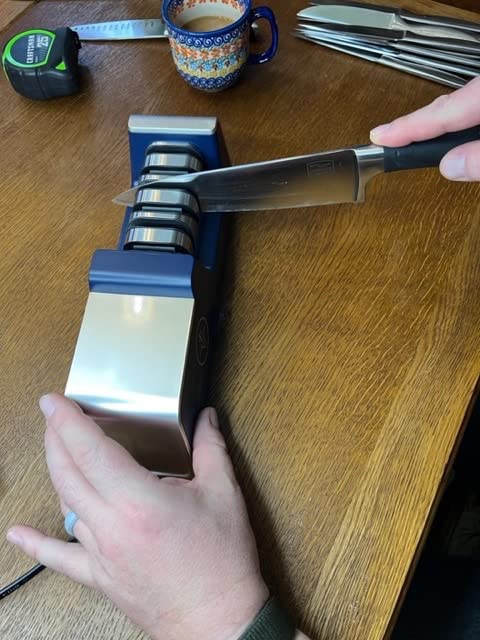
A wheel sharpener removes heat and metal in proportion to how long you dwell on one spot. Holding the blade stationary in a slot grinds a notch, which is exactly the indent reviewers describe. The rule we follow is continuous, steady motion from heel to tip for the whole length of each pass.
That single habit explains most of the difference between people who love these machines and people who file them away after a month. It also explains why the machines with spring guides report fewer complaints than the ones with rigid plastic channels.
Who should buy it and who should not?
Buy the Homly if you portion fish regularly, if you own thinner or shorter blades than a standard chef’s knife, or if you want three diamond stages and a flexible guide at a mid-tier specification. The two-year warranty and noise-reduction motor design are both sensible at this level.
Skip it if you have limited counter space, since the 12.2-inch body will dominate a small counter. It is also not a match for a serious whetstone user, and reviewers are candid that it does not reach hand-sharpened precision.
10. Dawnstar S858 – Best Budget Carbide Sharpener
Dawnstar Electric Knife Sharpener, Professional Kitchen Knife Sharpener for Home Use, 2 Stages of Coarse Sharpening & Fine Polishing, Metal Dust Collection Box for Easy Cleaning, Silver Gray
Rotating carbide stones
Coarse then fine stages
9.4 x 4 x 5.5 inch
1.4 lb, 100-240V
Pros
- Carbide stones grind faster than typical pull-through units
- Separate magnetic dust boxes per stage
- Instructions printed on the box flap
- Universal 100-240V compatibility
Cons
- Solid edge rather than a professional finish
- Weak on pocket knives with handle at the blade end
- Not as precise as stones
The Dawnstar S858 is a two-stage machine with rotating carbide grinding stones, and the stones make the difference. A rotating abrasive grinds faster and more consistently than a passive wheel, so a dull kitchen knife can come back in about thirty seconds without a long session at the machine.
The stages are coarse then fine polish, two to five passes per stage, and a separate magnetic metal dust box sits under each stage so filings never reach your counter. Instructions printed on the box flap mean setup is immediate for anyone who will not read a manual anyway.
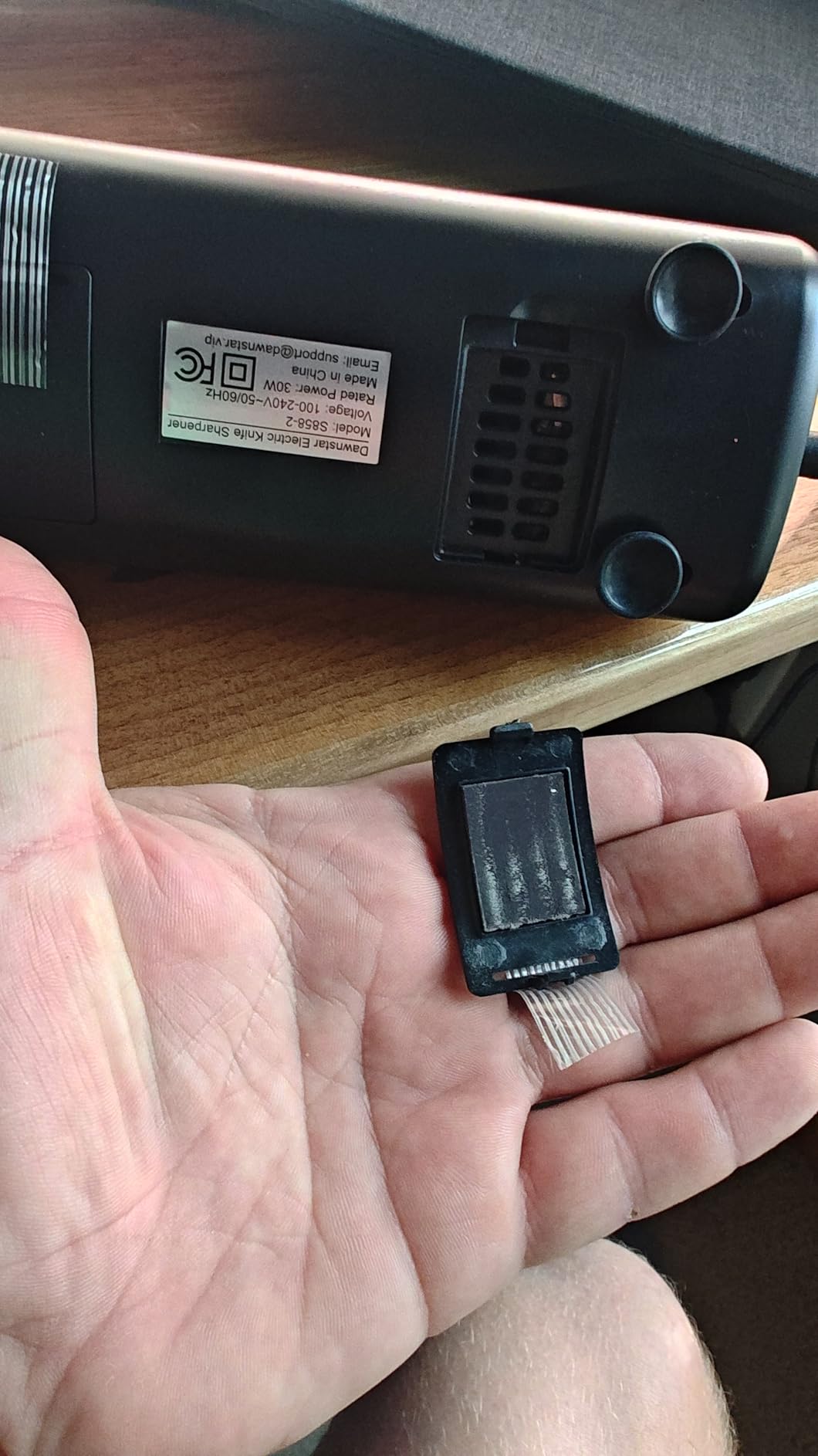
At 4.4 stars from 594 reviews with 70 percent five-star ratings, the rating holds up even though the review base is the smallest here. Buyers describe it as excellent everyday value for sharpening dull kitchen knives in a single session, which is a narrower promise than some competitors make and one they actually keep.
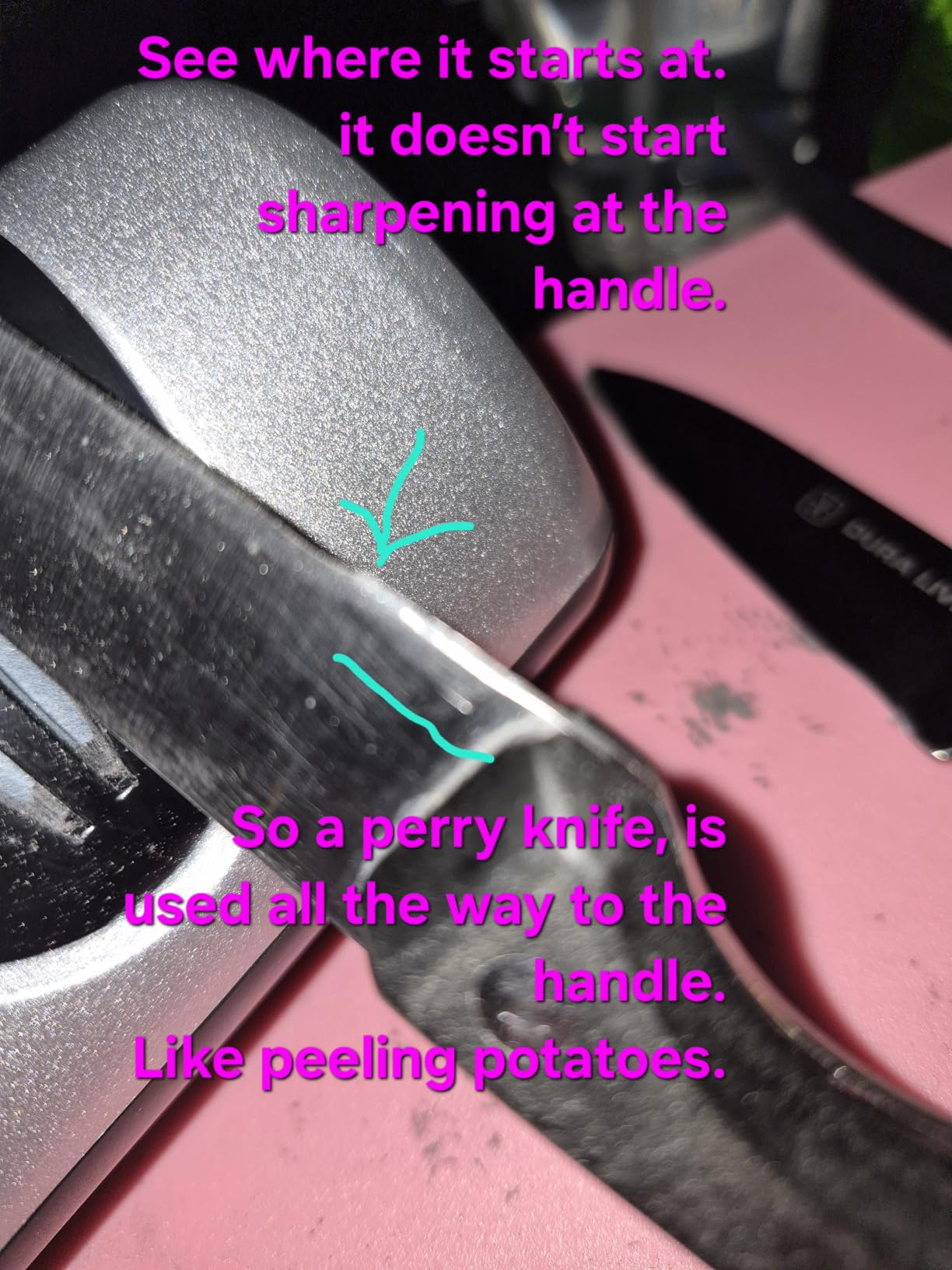
The honest limit is the finish. What you get is a solid, serviceable edge rather than a professional razor finish, and it is less effective on small pocket knives where the handle sits at the end of the blade.
Carbide versus diamond, in plain terms
Carbide is a conventional abrasive. It is fast and durable on ordinary steel knives, and it will not touch ceramic. Diamond is a harder, more expensive abrasive that works on steel, ceramic and high-hardness steels alike. That is the whole difference, and it is why a carbide machine is a sensible first purchase and a poor choice for a ceramic blade.
The two-stage layout on this unit mirrors what the higher-priced diamond machines do, minus the 15-degree conversion and the stropping stage. For a home cook sharpening a Henckels or Victorinox knife once a month, that difference does not affect the result at all.
Who should buy it and who should not?
Buy the Dawnstar if you want a quick route back to a usable edge on ordinary kitchen knives, if mains voltage outside the US matters, or if you want a two-stage sharpener with minimal counter commitment at 1.4 pounds and a 12-month replacement policy.
Skip it if you own ceramic or very hard steel knives, if you collect pocket knives, or if edge geometry matters to you. A 12-month replacement policy is also the shortest coverage here, so treat it as a tool you will replace eventually rather than a keeper.
How to Choose an Electric Knife Sharpener for Home Use in 2026?
Blade angle: 15 degrees or 20 degrees
Blade angle is the number that matters most and the one most buyers ignore. It is measured per side, so a 20-degree knife has a 40-degree included angle. Western German knives from Henckels, Wusthof and Victorinox typically ship at 20 degrees, and Japanese knives typically ship at 15. A machine that matches your knife’s factory angle restores it. A machine that changes the angle reprofiles it.
Match the angle and you remove the least steel. Change it and you gain a finer edge but permanently alter the geometry. For most home kitchens, matching means choosing a 20-degree machine, which is the Presto 08800, the Work Sharp E2 or the SHARPAL 198H.
Abrasive type: diamond, carbide or sapphirite
Three abrasive families appear in this roundup and they are not interchangeable. Diamond is the hardest and works on steel, ceramic and high-hardness steels, which is why the Chef’sChoice 15XV, the Secura and the Homly use it. Carbide is fast on ordinary steel and does nothing to ceramic. Sapphirite, used in the Presto 08800, is a traditional synthetic wheel that grinds an edge and then hones and polishes it in the same pass sequence.
Stages explained: coarse, fine and stropping
This is the confusion that shows up most often in forum threads. A stage is not a difficulty level, it is a step in a sequence, and each step removes progressively less material. Stage 1 is the coarse abrasive that does the actual metal removal. Stage 2 is finer, straightening the bevel and reducing the size of any burr. Stage 3 is a stropping or polishing stage that folds the burr over and refines the finish without cutting more steel.
The rule that fixes nearly every mistake we read about: skip straight to the finer stages when your knife is only dull. You will get a sharp edge and remove almost no metal.
Serrated support, scissors support and fixed angles
Check whether a machine supports serrated knives before you buy if you own a bread knife. Fixed diamond stages and flexible abrasive belts both handle serrations reasonably well, which is why the Chef’sChoice 15XV, the Work Sharp E2, the Work Sharp MK2 and the SHARPAL 198H cover them. The Narcissus, the Secura and the Northmas do not.
Scissors support comes in two forms. A dedicated slot, as on the Narcissus and the Work Sharp E2, is simpler and reliable. A flexible belt that conforms to blade shape, as on the Work Sharp MK2, is more versatile and handles shears with irregular geometry.
Noise, footprint, cord and warranty
Three practical criteria decide whether a machine gets used. Noise matters in an open-plan home, and the SHARPAL 198H is the one specified below 65 dB. Footprint matters in a small kitchen, where the slim Northmas and the Work Sharp MK2 store in a drawer while the Homly at 12.2 inches needs a permanent spot. Cord handling matters if you plan to put the machine away after each use.
Warranty length is a rough proxy for replaceable parts. The three-year warranties on the Chef’sChoice 15XV and both Work Sharp machines sit above the one-year cover on the Presto 08800, which is a fair trade given the Presto is a small, light unit built for occasional edge resets rather than heavy reprofiling work.
Electric vs Whetstone vs Honing Steel: What a Home Cook Actually Needs?
When a honing steel is enough?
A honing steel realigns a rolled edge. It does not remove steel, and it cannot fix a knife that has genuinely lost material. If your knife slices paper but drifts left when you cut a tomato, it needs honing, not sharpening, and a honing steel used before each session will keep it that way for months.
The practical rule is simple: hone often, sharpen rarely. A weekly pass over a steel takes twenty seconds and dramatically reduces how often you need the machine.
When a whetstone is the right call?
A whetstone is free of the two limits that define electric sharpeners. It can produce any edge angle you want because you control the geometry by hand, and it works on single-bevel Japanese knives where fixed guides cannot. The cost is skill, and for a first kitchen the honest trade is that a guided electric is safer than freehand stones.
When the electric wins?
Three situations make the electric the clear answer. First, speed: a sixty-second reset beats a twenty-minute session on stone. Second, consistency: a guide sets the same angle every pass, which is exactly what a cook who owns mostly Western knives needs. Third, serrated edges, which a whetstone handles poorly but a guided stage handles well.
For most households the working set is a honing steel for weekly maintenance and an electric for the periodic full sharpening. If you enjoy tools that handle more than one job, our best electric grain roasters follow the same simple-controls philosophy.
Which Knives Should Never Go in an Electric Sharpener?
Japanese single-bevel knives
A single-bevel knife, usually a yanagiba or a deba, is sharpened on one side only. A machine that pulls the blade through a two-sided guide applies a symmetrical geometry the blade was never built for, and enthusiasts on chefknivestogoforums are consistent that they would never let an electric touch those knives. Hand sharpening with a whetstone is the correct method.
Very hard steels above 60 HRC
Very hard steels chip rather than abrade under a rigid abrasive, and enthusiasts raise chipping as a recurring complaint about electrics on high-hardness knife steel. The pattern we see in reviews is that chipping shows up on hardened Japanese steel and rarely on common German stainless steel.
Scissors and snips with uneven pivot tension
Belt systems handle shears better than wheel systems because the belt conforms to an irregular blade shape. Machines with a scissor slot are safer still, since the slot controls the angle. That said, for expensive shears we still prefer a professional.
Knives that have already been thinned too far
Repeated sharpening changes the profile. The heel and tip thin faster than the middle, the bolster ends up proud of the edge, and eventually the blade needs a proper re-thinning from a specialist. This is the long-term cost of electric sharpening that most roundups never mention, and the reason we favour fewer, smarter passes over many routine ones.
We found the same gap when reading owner comments across r/Cooking threads, where the recurring advice is to finish every session with a strop or steel so the machine is doing the heavy work and the rod is doing the finishing. If you also maintain other tools around the house, our electric log splitter picks cover that same keep-it-simple philosophy.
Frequently Asked Questions
What is the best electric knife sharpener on the market today?
The Presto 08800 EverSharp is the best electric knife sharpener for most homes. Its two sapphirite stages and precision guides restore a standard 20-degree edge in about fifteen seconds, and it carries 18851 owner reviews at 4.5 stars. Choose the Chef’sChoice 15XV instead if you want a 15-degree edge, or the Work Sharp MK2 if you sharpen scissors and outdoor tools too.
Is the Chef’sChoice knife sharpener any good?
Yes. The Chef’sChoice 15XV EdgeSelect holds a 4.6-star average across 14366 reviews, with 78 percent of buyers giving five stars. Reviewers credit the flexible spring guides for holding a consistent angle automatically, and the machine sharpens straight-edge and serrated knives across all three stages. The common complaints are the higher cost and the large countertop footprint.
Are Work Sharp knife sharpeners any good?
Yes, and they rate highest in this roundup. The Work Sharp MK2 averages 4.7 stars from 8097 reviews, and the Work Sharp E2 averages 4.3 stars from 3206 reviews. Both carry three-year warranties. Reviewers credit the two-speed motor, flexible belts and the E2 built-in ceramic hone wheel, while noting that belts need replacing and very dull knives can take several passes.
What is the best type of knife sharpener for home use?
For most homes, an electric knife sharpener is the best type because it sets a consistent angle without skill. A honing steel is best for weekly maintenance, since it realigns a rolled edge without removing steel. A whetstone is best for Japanese single-bevel knives and for controlling exact edge angles, but it takes practice. Many cooks own both a steel and an electric.
Do electric knife sharpeners ruin knives?
They can, but not from normal use. They remove real steel every session, and repeated heavy passes thin the heel and tip faster than the middle until the bolster sits proud of the edge. They are also the wrong tool for Japanese single-bevel knives and for very hard steels above 60 HRC, which can chip. Use two or three passes, skip the coarse stage on a merely dull blade, and finish with a honing steel.
How often should I use an electric knife sharpener?
Most home cooks need the machine once every few weeks, or any time a knife stops cutting cleanly. A honing steel used before each cooking session keeps the edge aligned between sharpenings and cuts down how often you need the machine. If you find yourself running a knife through every week, you are removing steel you did not need to remove.
The Best Electric Knife Sharpeners for Home Use: 2026 Verdict
The Presto 08800 EverSharp is the best electric knife sharpener for home use because it matches the factory geometry of the knives most people actually own and does it with the fewest decisions attached. Two sapphirite stages, precision guides, a small footprint and the largest review base in this roundup add up to a machine that gets used rather than admired.
Buy the Chef’sChoice 15XV EdgeSelect if you want a genuinely finer 15-degree edge and own good knives. Buy the Work Sharp MK2 if your sharpening list includes scissors, axes or garden tools. Buy the Work Sharp E2 if the person using the machine has never sharpened a knife before, and buy the SHARPAL 198H if noise or shared walls matter.
Whatever you choose, use the fewest passes that work, skip the coarse stage on a knife that is only dull, and keep a honing steel in the drawer for weekly touch-ups. As we noted when we looked at the best home treadmills, the best tool is the one that stays in rotation. That is exactly how a sharpener earns its counter space in 2026.