
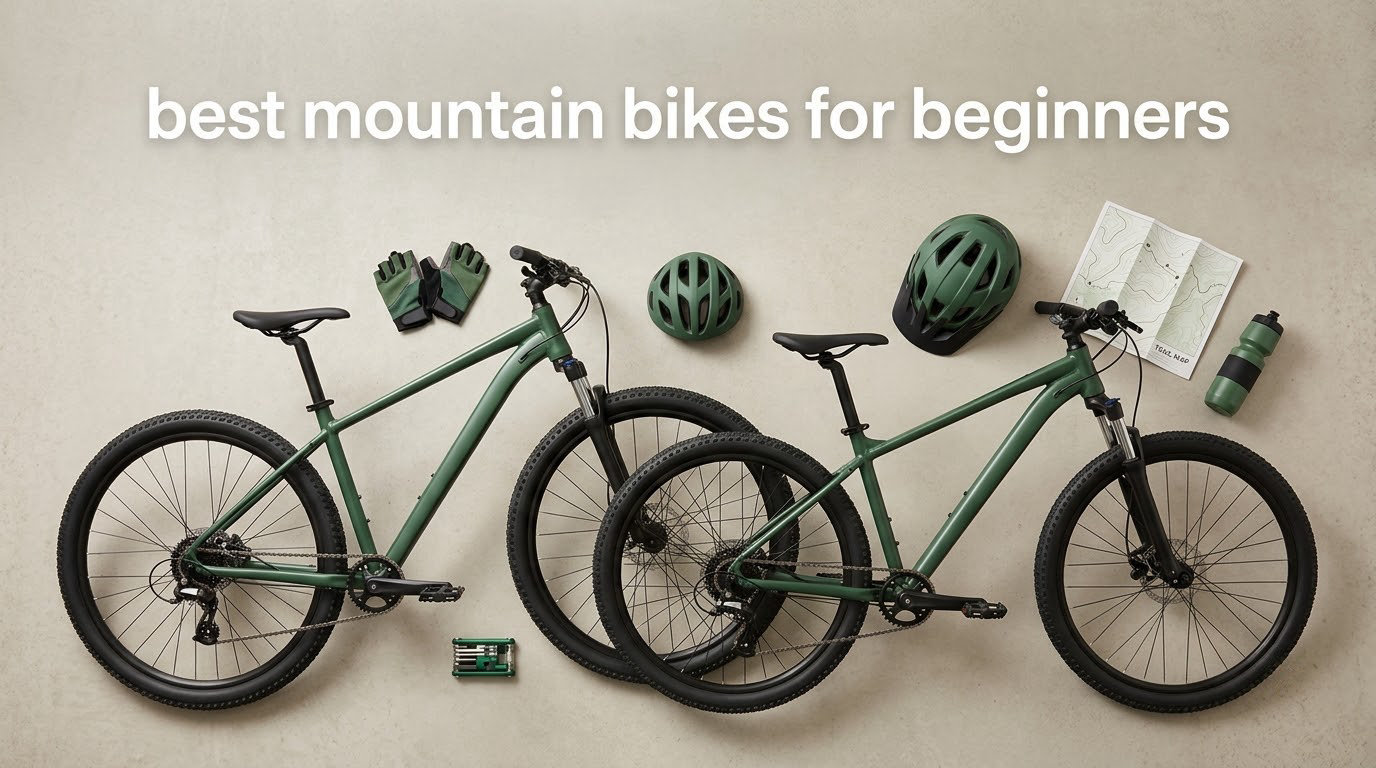
The best mountain bikes for beginners are hardtails with a suspension fork, hydraulic or mechanical disc brakes, and a drivetrain simple enough that you are not shifting constantly on your first ride. After reading through rider reviews and forum threads and weighing frame material, wheel size, gearing and brake type across ten of the most-reviewed entry-level bikes on the market, the Schwinn High Timber comes out on top, with the Schwinn Traxion as the runner-up for riders who want rear suspension.
That sounds obvious until you actually shop for one. The shelf is stacked with bikes that look identical in a photo and differ in ways that only matter after two seasons of riding. The differences are wheel size, whether the fork has damping, how many levers you have to think about, and whether the brakes still work when the trail is wet.
This guide covers ten entry-level mountain bikes for 2026, every one with at least 60 verified owner reviews, so you are reading about bikes people have actually ridden rather than spec sheets alone. We also cover the parts that decide your experience: fit by rider height, a plain-English jargon glossary, the gear you need before your first ride, and what to upgrade first when you outgrow the bike.
Last updated October 2026. We ranked on owner rating and review volume, then weighted the specs that a new rider actually feels on day one.
Table of Contents
Top 3 Best Mountain Bikes For Beginners (October 2026)
Three bikes stand out once you filter out the noise: the one with the deepest pool of owner feedback, the one with the highest owner rating, and the one that fits the widest range of shorter riders.

Schwinn High Timber
- Aluminum frame
- 26-inch wheels
- Fits 5 foot 4 to 6 foot 2
- 21-speed twist shifting
You will see our reasoning for each of these in the individual reviews below, along with where each one falls short.
Best Mountain Bikes for Beginners in 2026: Quick Overview
Here is every bike in the guide with the specs that separate them. Wheel size, drivetrain complexity and brake type tell you more about the riding experience than the brand name does.
| Product | Specifications | Action |
|---|---|---|
| Schwinn High Timber |
|
Check Latest Price |
 WEIZE Mountain Bike 24 26 27.5 WEIZE Mountain Bike 24 26 27.5 |
|
Check Latest Price |
 Schwinn Traxion Schwinn Traxion |
|
Check Latest Price |
 Mongoose Flatrock Mongoose Flatrock |
|
Check Latest Price |
 Ktaxon Mountain Bike 24/26/27.5/29 Ktaxon Mountain Bike 24/26/27.5/29 |
|
Check Latest Price |
 EUROBIKE X1 27 inch EUROBIKE X1 27 inch |
|
Check Latest Price |
 HILAND 26 27.5 29 Inch HILAND 26 27.5 29 Inch |
|
Check Latest Price |
 WEIZE Hardtail 29 Inch WEIZE Hardtail 29 Inch |
|
Check Latest Price |
 AVASTA Earth 26 27.5 AVASTA Earth 26 27.5 |
|
Check Latest Price |
 WEIZE 26 27.5 Trail MTB WEIZE 26 27.5 Trail MTB |
|
Check Latest Price |
Hardtail vs Full Suspension: What Type of Mountain Bike Beginners Should Get?
Buy a hardtail. That is the short answer, and it is the answer the riding community gives consistently when beginners ask.
A hardtail has suspension only at the front. The fork soaks up roots, rocks and washboard sections, and the rear wheel stays firm and predictable. You get a lighter bike, fewer moving parts, cheaper tires and forks, and almost nothing to maintain. For a rider who is new to trails, that simplicity is worth more than comfort.
Full suspension adds a rear shock that moves the frame. It is genuinely more comfortable on rough, rooty ground, and riders with knee or back problems often notice the difference quickly. It is heavier, requires more upkeep, and has more places to wear out. The Schwinn Traxion is the one in this roundup that does it, and we rated it highly because it does it without leaving the beginner range.
The rule we use: pick full suspension if you already know you will be riding technical singletrack every week, or if a joint problem makes hard impacts painful. Pick a hardtail in every other case, including if you are not yet sure you will stick with the sport.
1. Schwinn High Timber – Best Overall Mountain Bike for Beginners
Schwinn High Timber ALX Mountain Bike for Adult Men Women, 26-Inch Wheels, 21-Speeds, Front Suspension, Aluminum Frame, Mechanical Disc Brakes, Red
Aluminum frame
26-inch wheels
Fits riders 5 foot 4 to 6 foot 2
21-speed twist shifting
Disc brakes
Pros
- Lightweight aluminum frame for neighborhood and trail riding
- Alloy crank shifts smoothly with minimal maintenance
- Twist shifters are easy to learn
- Knobby tires hold grip in varied weather
- Quick-release seat post makes fit adjustment instant
Cons
- Arrives 80 percent assembled so setup time and basic tools are needed
- Limited warranty coverage
- Mechanical disc brakes need periodic adjustment
The High Timber is the bike we keep coming back to, and the reason is the review volume rather than any single spec. It carries more than 1500 owner reviews at a 4.0 average, which means the failure patterns are well documented and the praise is consistent: owners like the aluminum frame weight, the simplicity of the twist shifters, and how the knobby tires behave in mixed weather.
We like that the frame is labeled for riders from 5 foot 4 to 6 foot 2. That is an unusually wide published range for a bike at this level, and it means most adults do not need to hunt through size charts before buying.
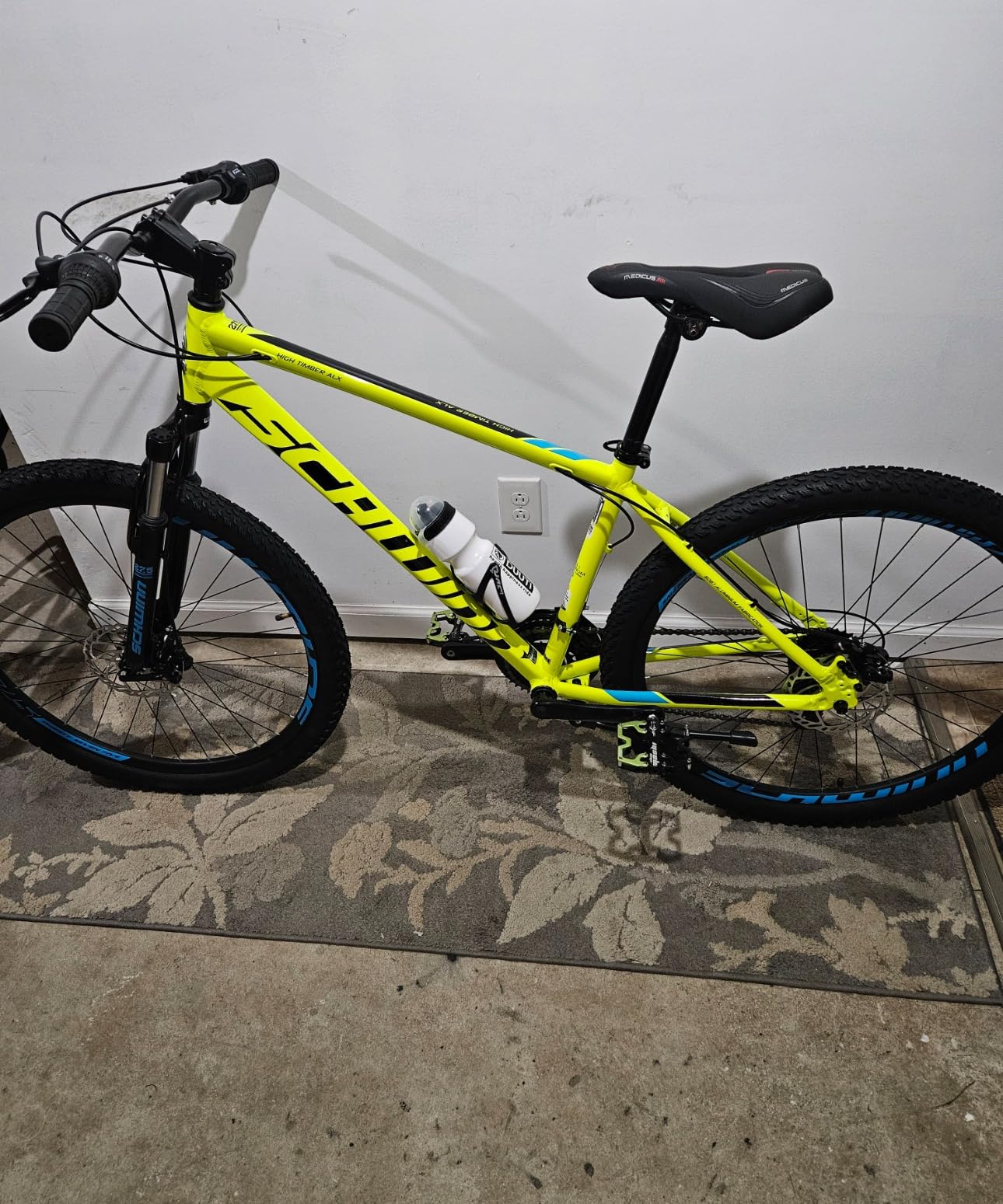
The 21-speed drivetrain uses twist shifters with a rear derailleur, so there is one control on the handlebar and no front ring to think about. For a first bike that is the right amount of gearing, and the alloy crank is the part owners most often praise for running quietly after a few months.
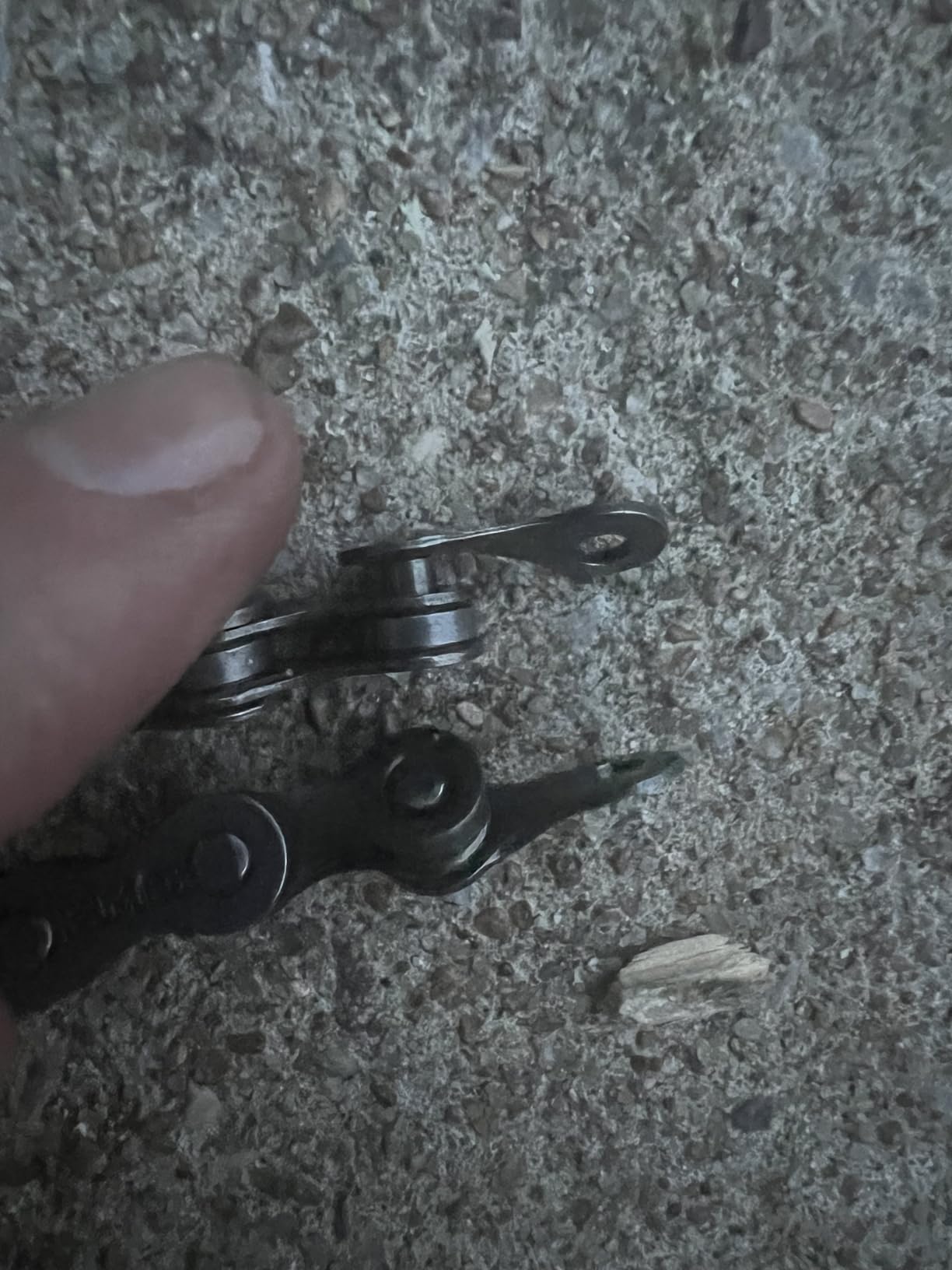
Two things to plan for. The bike arrives 80 percent assembled, so budget an evening and a set of basic tools, and check the brakes and wheel trueness before the first ride. Warranty coverage is also described as limited, which is normal for this category but worth knowing if you plan to ride far from home.
Who the High Timber suits?
It suits anyone moving from a hybrid or a road bike onto gravel paths, rail trails, greenways and beginner loop trails. Owners describe it as a neighborhood-and-trail bike, which is exactly the use case most new riders have in their first season.
It also works as a first bike for a taller teen who needs adult geometry, since the published rider range tops out at 6 foot 2.
Where the High Timber falls short?
It is not a technical trail bike. The 26-inch wheels are more affected by square-edged rocks than 29-inch wheels, and the fork is a basic spring model with limited adjustment. If your local trails are root-heavy or rock garden territory, expect a firmer ride than a bike built for it.
It is also the bike people most often replace tires on within the first year, so budget for that as an early upgrade.
2. WEIZE Mountain Bike 24 26 27.5 – Best for Shorter Riders
WEIZE Adult Mountain Bike,24 inch All-Terrain Bicycles with Dual Full Suspension, Trail Bike 6 Speeds Drivetrain, High-Carbon Steel Frame, Black
High carbon steel frame
24 inch wheels
Low standover height
18-speed
Dual V-brakes
Pros
- Low standover height makes mounting and dismounting easy
- Wide tires resist punctures and abrasion
- Simple V-brakes are easy to learn
- 18-speed drivetrain handles climbs and descents
- Padded seat supports longer rides
Cons
- V-brakes need regular adjustment and weaken in wet conditions
- Steel frame is heavier than aluminum alternatives
- Not built for rough trail terrain
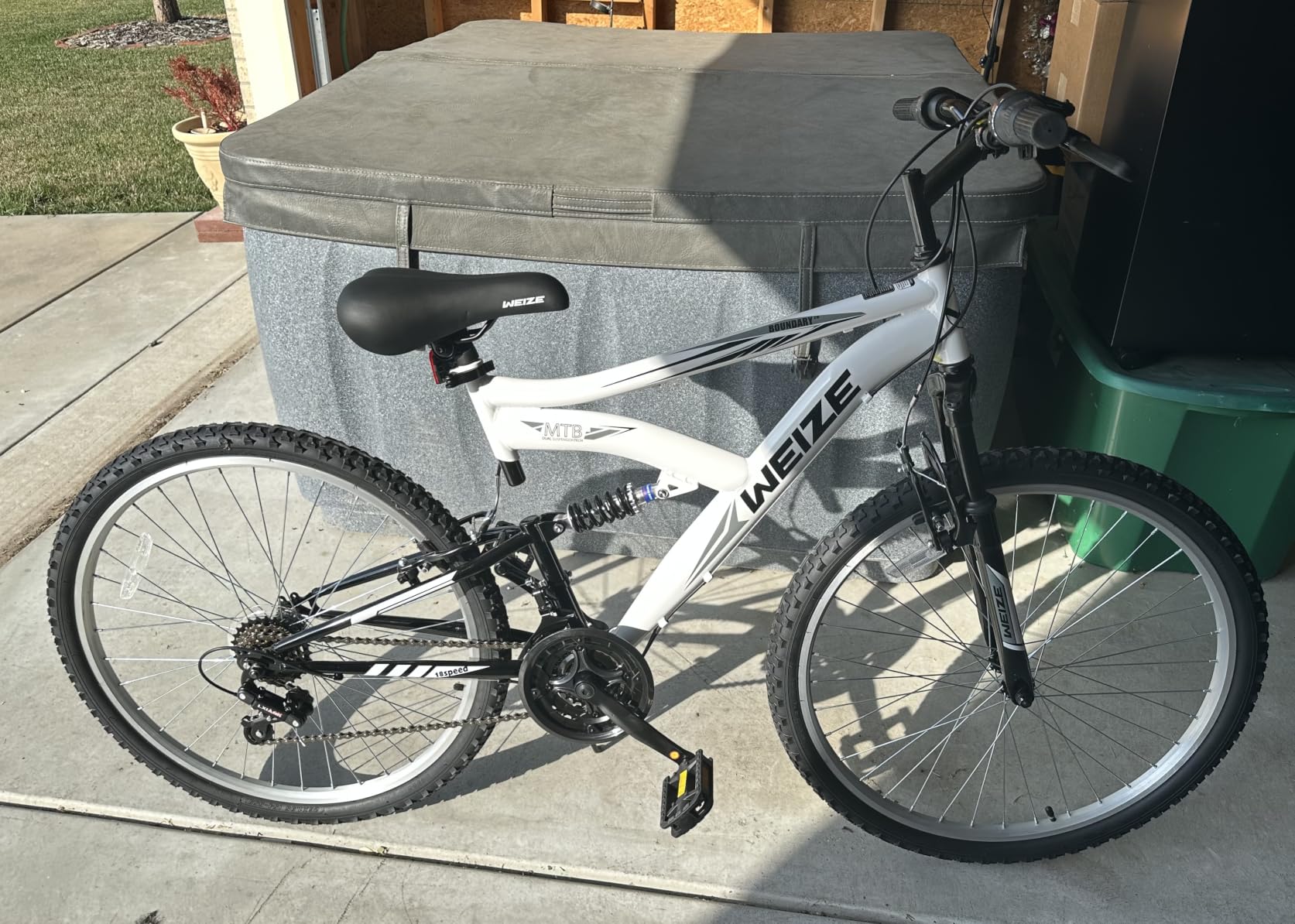
This is the pick for riders in the 4 foot 8 to 5 foot 6 range, and for younger riders moving up from a 20-inch bike. The published sizing starts at 142 centimeters, and the low standover height means you can put a foot down flat on the ground at a stop, which is the single biggest confidence factor for a new rider who keeps putting a foot down mid-trail.
It also has one of the deepest pools of owner feedback in the roundup, with more than 1100 reviews, and the four-star average reflects a bike people are happy with rather than disappointed by.
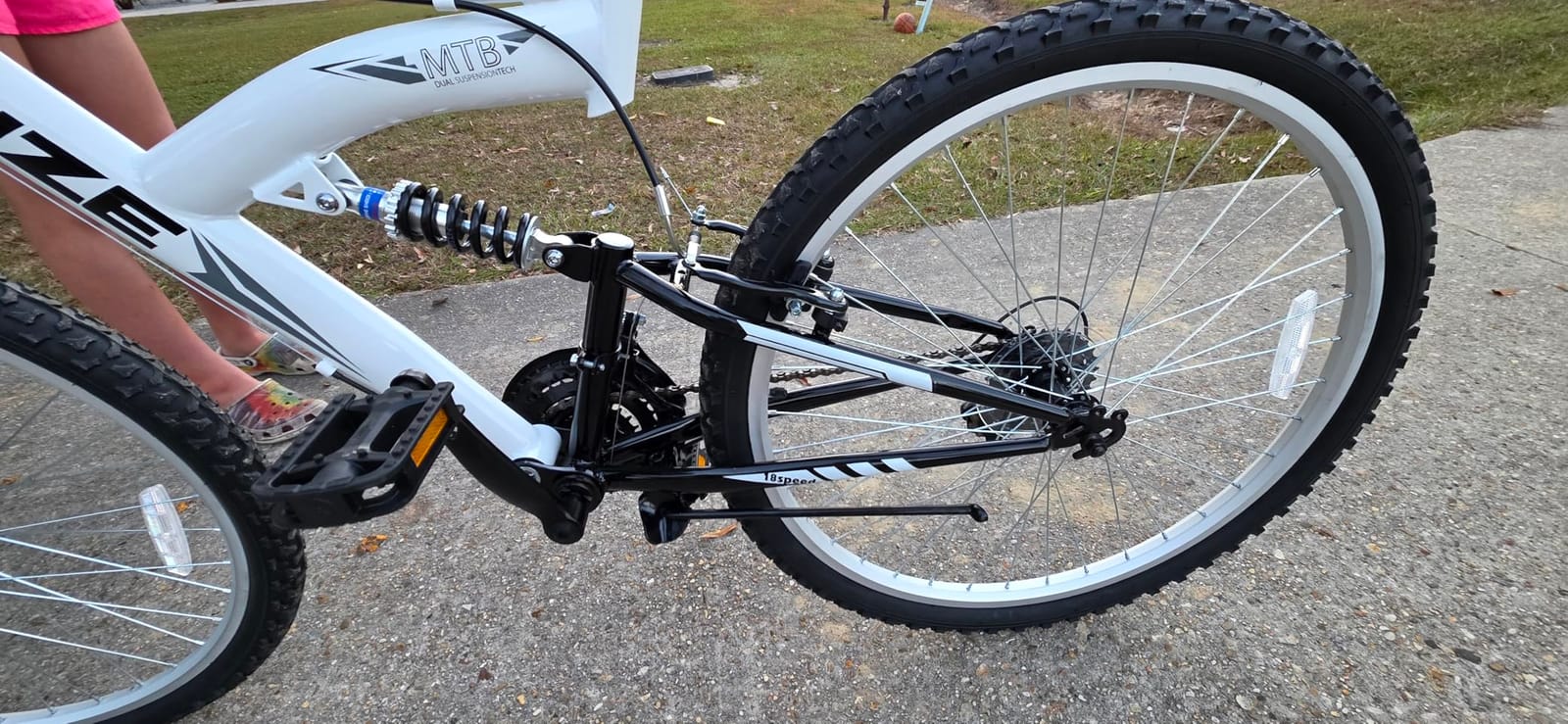
Mechanically it is simple in a way that suits a beginner: 18-speed rear derailleur gearing, dual V-brakes front and rear, and 20 by 2.125 inch tires that owners single out as easy to mount and resistant to abrasion. The padded seat is a genuine comfort upgrade over the narrow race-style saddles that come on cheaper bikes.
The honest drawback is braking. V-brakes work by squeezing the rim, and that means regular adjustment, less stopping power in wet grass and mud, and a brake that feels vague compared with a disc brake. If you ride in a wet climate, weigh that against the frame and sizing benefits carefully.
Who this WEIZE suits?
It suits shorter riders, riders under about 5 foot 6, and anyone who wants the simplest possible first bike on paved paths, gravel paths, and flat dirt tracks. It is a bike you can learn on without thinking about the machine.
It also suits parents buying for a teenager who will grow, because multiple wheel sizes are listed for the same frame family.
Where this WEIZE falls short?
It is not a trail bike in any meaningful sense. The frame is heavy steel, the fork travel is minimal, and rim brakes are the wrong tool for technical descents or mud.
Riders in wet regions report that budget bikes like this feel weak on root and rock sections for exactly these reasons.
Buy it to learn, then move up. Do not buy it as a one-and-done bike.
3. Schwinn Traxion – Best Full Suspension for Beginners
Schwinn Traxion Mountain Bike for Adult Men Women, 29-Inch Wheels, Full Suspension, 24-Speed Shimano Drivetrain, Trigger Shifter, 18-Inch Aluminum Frame, Mechanical Disc Brake, Matte Grey/Neon Green
Aluminum frame with full suspension
29 inch wheels
24-speed Shimano
Mechanical disc brakes
49 pounds
Pros
- Full suspension smooths rough terrain and eases pressure on knees
- 24-speed Shimano drivetrain climbs hills easily
- Mechanical disc brakes work in any weather
- 2.25 inch knobby tires handle rocks and roots
- Only about 45 minutes of assembly
Cons
- Front fork is spring-based with no damping or rebound adjustment
- Heavy at 49 pounds for a bike with suspension
- Supplied saddle is uncomfortable and it is fitted for riders 5 foot 8 and taller
At a 4.4 average across more than 500 reviews, the Traxion has the highest owner rating in this roundup, with roughly two-thirds of ratings landing at five stars. It is also the only full-suspension bike here, which makes it the answer for riders who specifically want rear travel.
Long-term owners report putting thousands of miles on it over rocky roads with no problems, and the comfort story comes up constantly. If your knees or lower back complain about hard impacts, rear suspension is a real tool, not a marketing line.
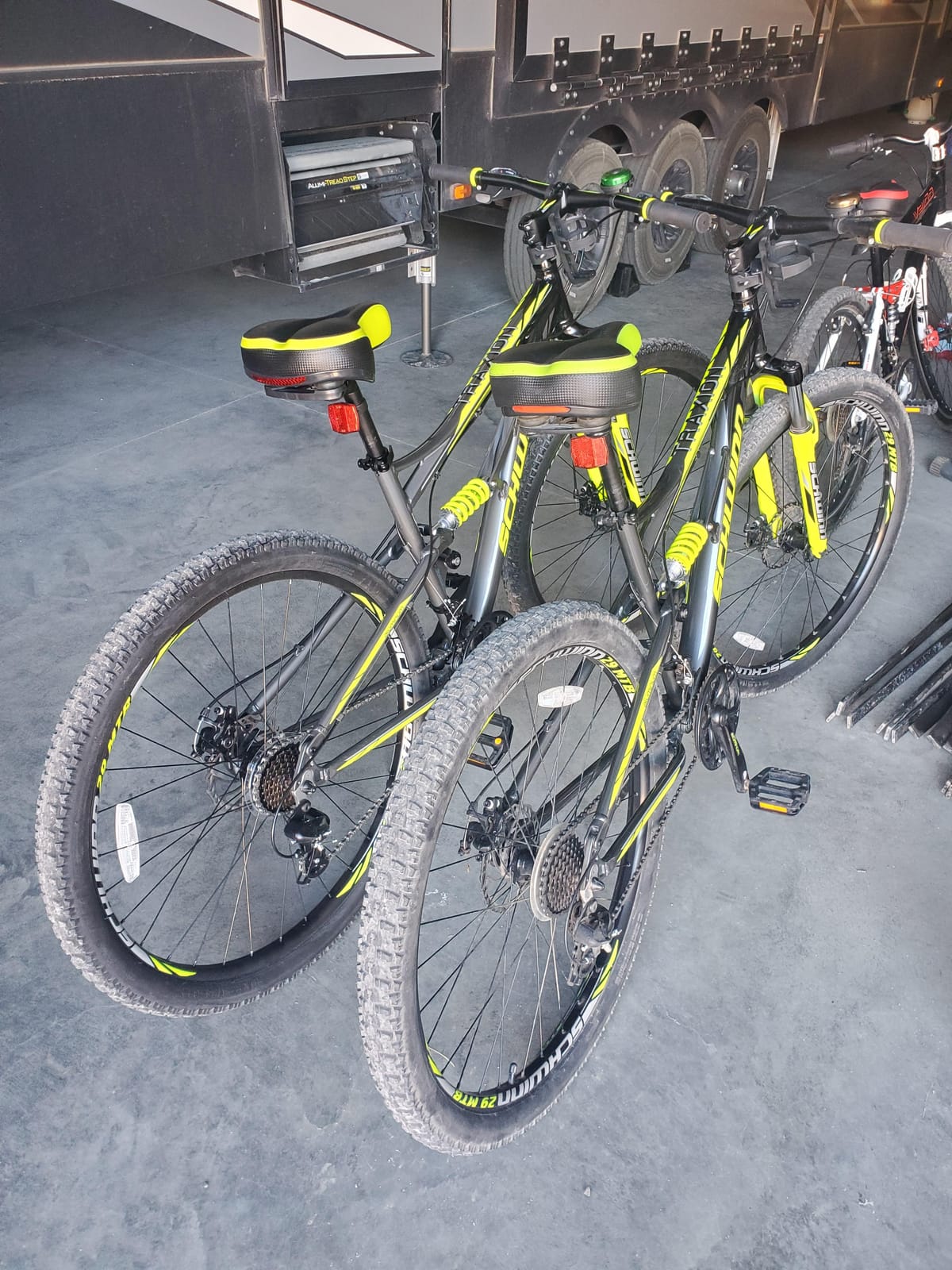
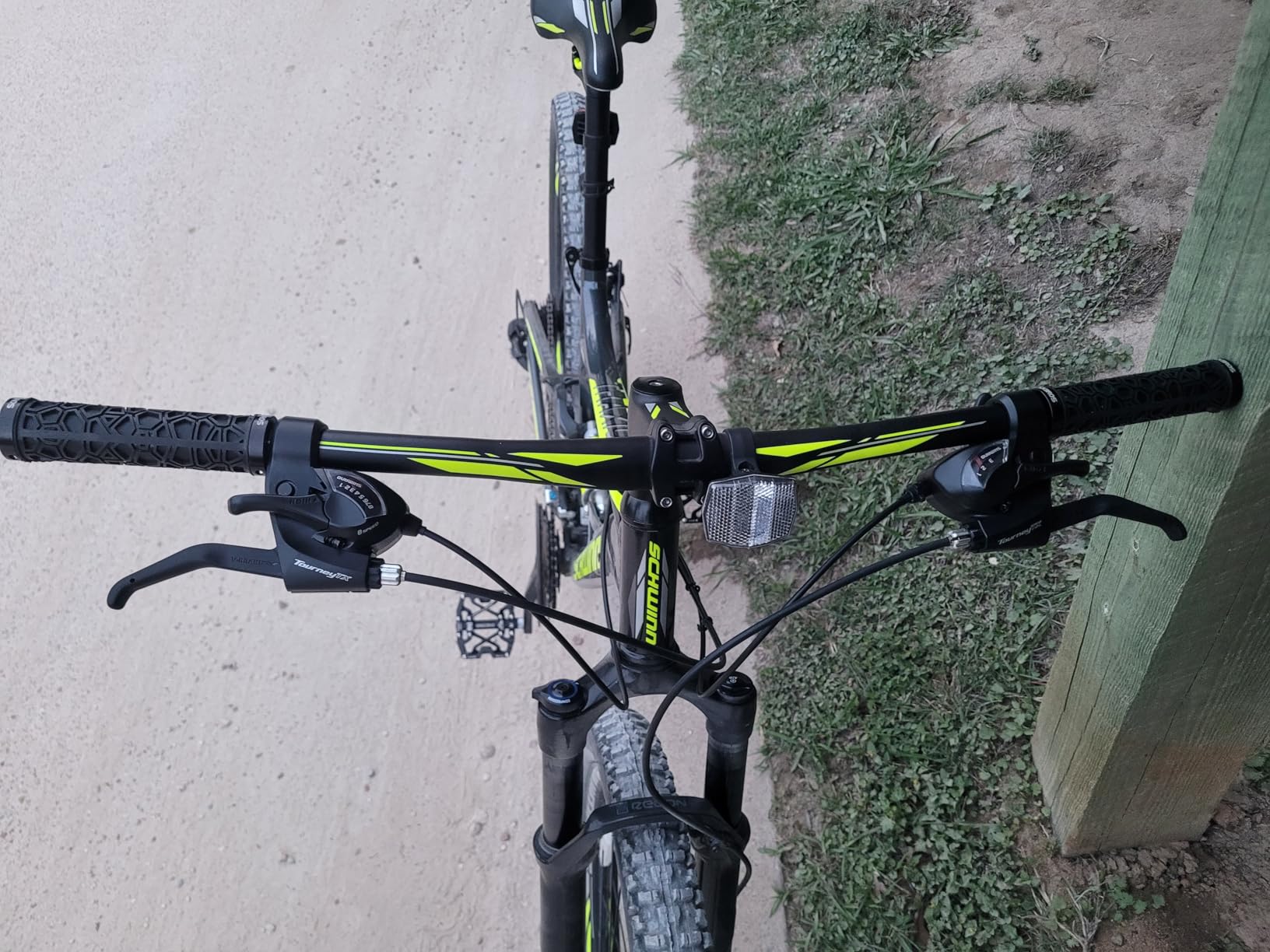
The drivetrain is a 24-speed Shimano setup with front and rear derailleurs and trigger shifters, which gives plenty of range for rolling terrain. Brakes are mechanical discs front and rear, and the 2.25 inch knobby tires on extra-wide double-wall alloy rims take rocks and roots in reasonable stride.
There is a catch, and it is the fork. It is spring-based with no damping, no rebound adjustment and no preload control, so it moves when you hit a bump but does not settle the way a damped fork does. The bike also arrives 80 percent assembled, and some units need brake and derailleur tuning before the first ride.
Who the Traxion suits?
It suits riders from about 5 foot 8 upward who want rear suspension, longer cross-country days on rough ground, or a bike they can grow into for bike park sessions. The published weight and comfort profile make it a solid ride-everything option for adults.
It also suits anyone with joint sensitivity who has been warned away from hardtails by a doctor or a physical therapist.
Where the Traxion falls short?
At 49 pounds it is heavy, and you will feel that on the trail and carrying it up stairs. The undampened front fork undercuts the comfort case for rough terrain, and the supplied saddle is a near-universal complaint among owners.
The frame geometry also suits taller riders better than smaller ones, so riders under 5 foot 8 should check the fit carefully before committing.
4. Mongoose Flatrock – Best Low-Maintenance Hardtail
Mongoose Flatrock Mountain Bike, 26 Inch Bike for Men and Women, 7 Speed, Aluminum Frame, Front Suspension Fork for a Smooth Ride, Twist Shifters, Linear Pull Brakes, Adult and Teen Bicycle
Aluminum hardtail
26 inch wheels
7-speed twist shifting
Linear pull brakes
5-year frame warranty
Pros
- Durable aluminum frame with knobby tires for trail traction
- Suspension fork smooths bumps and uneven ground
- Simple 7-speed drivetrain with twist shifters
- Sized for riders 5 foot 4 to 6 foot 2
- 5-year frame warranty from an established brand
Cons
- Only 7 speeds makes steep climbs harder
- Linear pull brakes are less powerful when wet
- Heavier than typical 26 inch aluminum hardtails
The Flatrock is from a heritage BMX brand, and the appeal is obvious once you ride it: a 7-speed drivetrain means there is almost nothing to shift, and nothing to go wrong. For riders who are intimidated by the number of levers on a modern mountain bike, that is a genuine feature.
It is also a bike that ages well. The warranty covers 5 years on the frame, 1 year on parts and 30 days on wearable parts, and it is the only warranty in this group broken down that precisely.
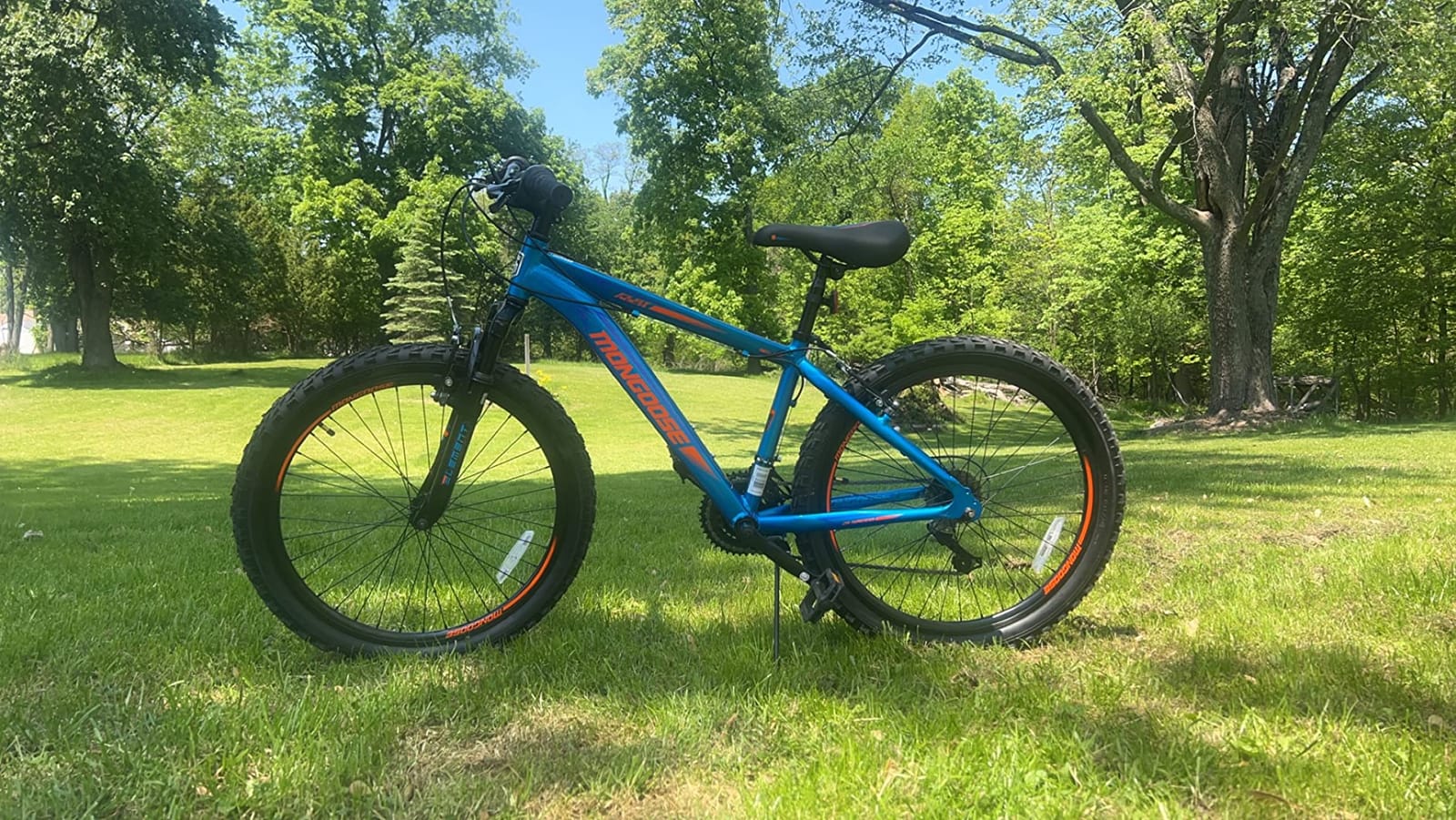
The frame is aluminum with a suspension fork, knobby tires and linear pull brakes, sized for riders from 5 foot 4 to 6 foot 2. It comes as a hardtail, so it is lighter and simpler than the full-suspension alternative here, and the low component count means trail-side fixes are rare.
The tradeoff is range. Seven speeds is enough for flat loops, gravel paths and gentle fire road, but steep climbs will have you shifting to the lowest gear and still grinding. Wet-condition braking is the other weak point, since linear pull brakes lose authority in rain the way V-brakes do.
Who the Flatrock suits?
It suits riders who want the least complicated mountain bike they can own, and anyone riding gravel rail trails, park paths and flat beginner loops rather than technical trails. The 5-year frame warranty also makes it a calm choice for someone who does not want to think about resale.
It works well as a bike you hand down or keep for years without upgrading.
Where the Flatrock falls short?
It is not the bike for hills. If your local terrain has real elevation change, the 7-speed drivetrain will be the limiting factor long before the brakes or the fork are.
Reviewers consistently place it as a light-trail and path option rather than a technical trail bike, and that is the fair way to think about it.
5. Ktaxon Mountain Bike – Best Value Disc Brakes
Ktaxon Mountain Bike 27.5 Inch Men & Women Mountain Bike 21Speed Adult Bike
21-speed drivetrain
Mechanical dual disc brakes
Thickened dual shock-absorption fork
27.5 inch wheels
16 kg
Pros
- Mechanical disc brakes outperform rim brakes at this level
- Assembly takes about 20 minutes with the included video
- Steel frame feels solid without feeling unmanageable
- Shifters and cables work reliably after setup
- Frame is rated for riders up to 264 pounds
Cons
- Front wheel can arrive out of true and cause brake rub
- Some front derailleurs will not enter the lower gears easily
- Customer support is largely automated
- Not intended for rough trail riding or dirt jumping
Disc brakes are the thing that separates this from bikes costing barely more, and the Ktaxon has them front and rear. At a 4.1 average over more than 400 reviews, owners repeatedly call out braking response as the feature that made the biggest difference from the bikes they rode before.
It arrives about 85 percent assembled, and owners report finishing the job in around 20 minutes with the included video guide. That is a much friendlier first-assembly experience than the multi-hour builds some bikes at this level produce.
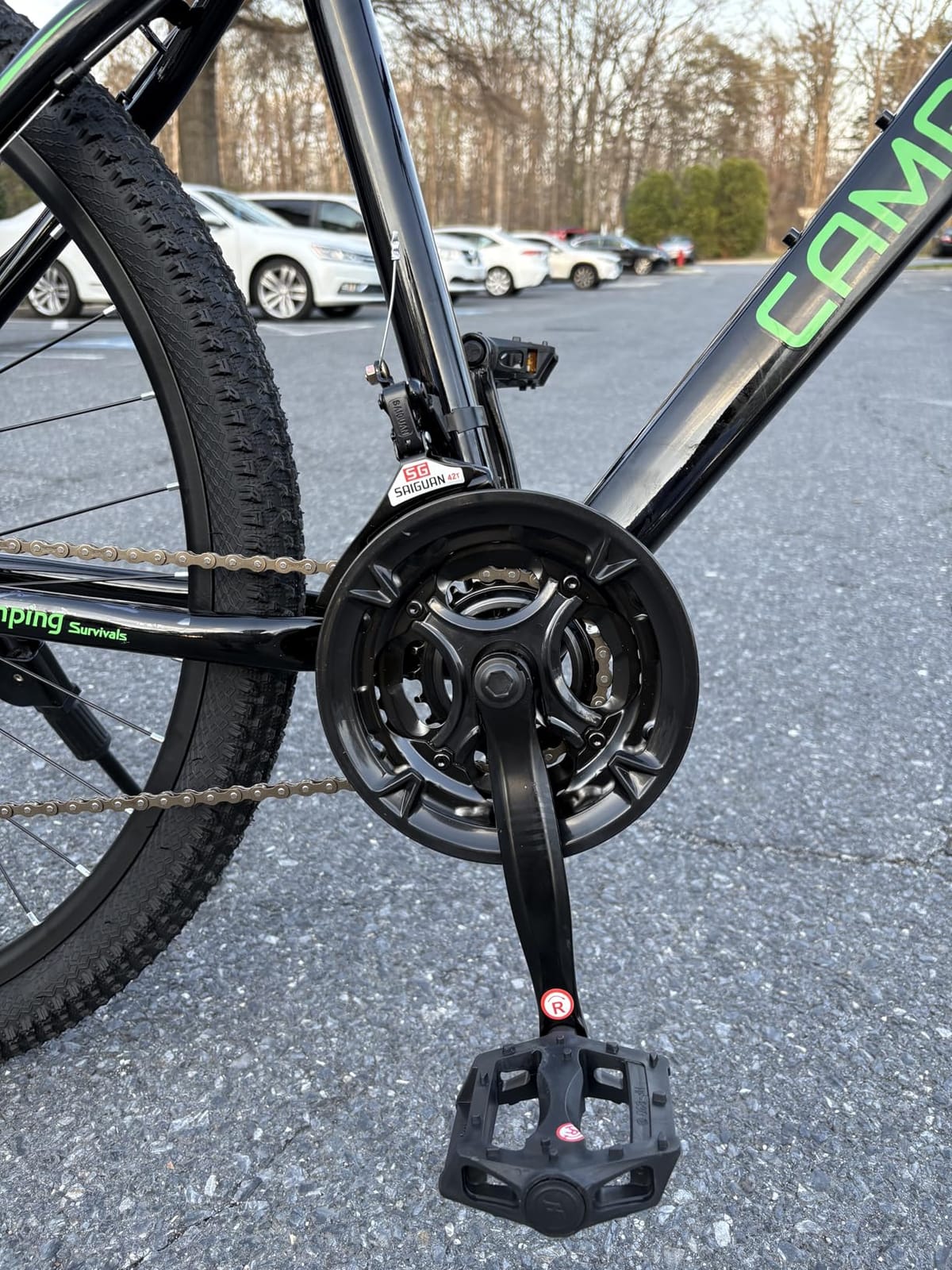
On paper the spec list is sensible: 21-speed transmission, a thickened dual shock-absorption front fork, mechanical dual disc brakes, aluminum alloy wheels, a quick-adjust seat post clamp, and a high carbon steel frame. The frame carries a 16 kg listed weight and a maximum rider recommendation of 264 pounds.
Quality control is the weakness. The most common review theme across the 400-plus reviews is a front wheel arriving out of true, which causes brake rub until a shop trues it. A second recurring theme is a front derailleur that struggles to reach the lowest gears. Neither is fatal, but both need an adjustment before you ride.
Who the Ktaxon suits?
It suits riders who want disc brakes without stepping up to a full-size trail bike, and anyone moving from a commuter who wants to try gravel paths and easy fire roads. The 24 to 29 inch size range makes it a practical choice for households buying more than one bike.
It is also a good pick if you want mechanical disc brakes but do not want to service hydraulic lines.
Where the Ktaxon falls short?
It is explicitly not built for rough trail riding or jumps, and owners say so directly. If your first ambition is a bike park or rooty local trail, this is the wrong tool despite the good brake spec.
Post-sale support is the other limitation, so take the assembly video seriously and check the wheel trueness and derailleur before the first ride.
6. EUROBIKE X1 – Best for Heavier Riders
EUROBIKE X1 21-Speed Mountain Bike, 27.5-Inch Hardtail Mountain Bikes for Men Women, Dual Disc Brakes, Red
Carbon steel frame
Rated to 330 pounds
21-speed front and rear derailleurs
Dual disc brakes
39.5 pounds
Pros
- Frame is rated for riders up to 330 pounds
- Sturdy steel frame and rims hold up to commuting
- Assembly tools included and takes under 20 minutes
- Dual disc brakes give dependable stopping power
- Customer service has replaced faulty units quickly
Cons
- Front suspension is soft and not suitable for hard rocky trails
- Cheap plastic internals in the shifter can break
- Supplied saddle and pedals are uncomfortable
- Wheels and rim decals are low quality
Most entry-level bikes quietly assume a rider below a certain weight, and this one does not. The carbon steel frame is rated for riders up to 330 pounds, which makes it a real option for larger riders who find most entry bikes undersized or flexy.
Owners consistently report that the gears, brakes and frame are sturdy, and the value holds up for commuting and light trail use. The tool kit and riding bag in the box are a nice touch for a first-time assembler.
Assembly is quicker here than most, with owners reporting under 20 minutes using the included tools.
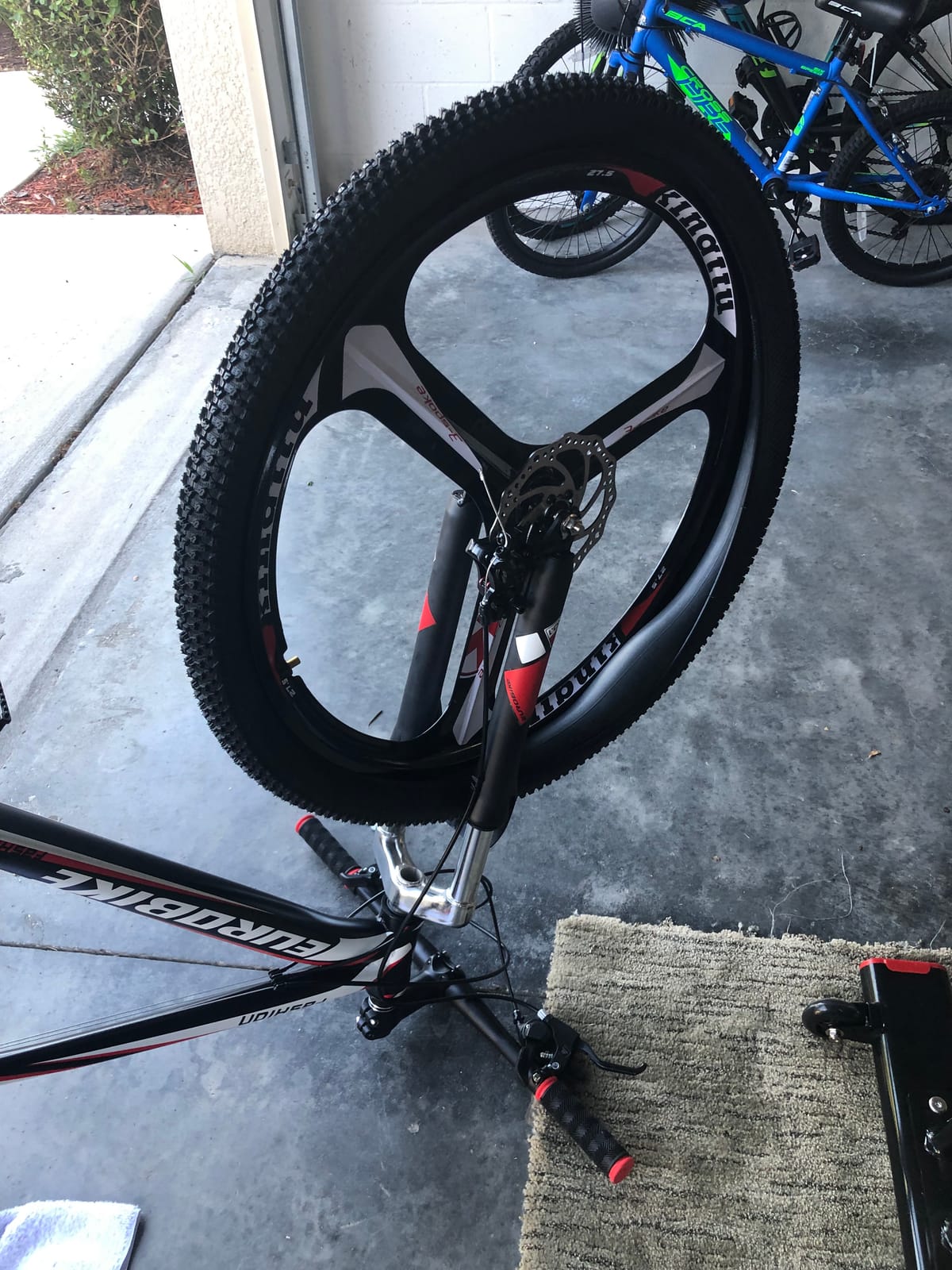
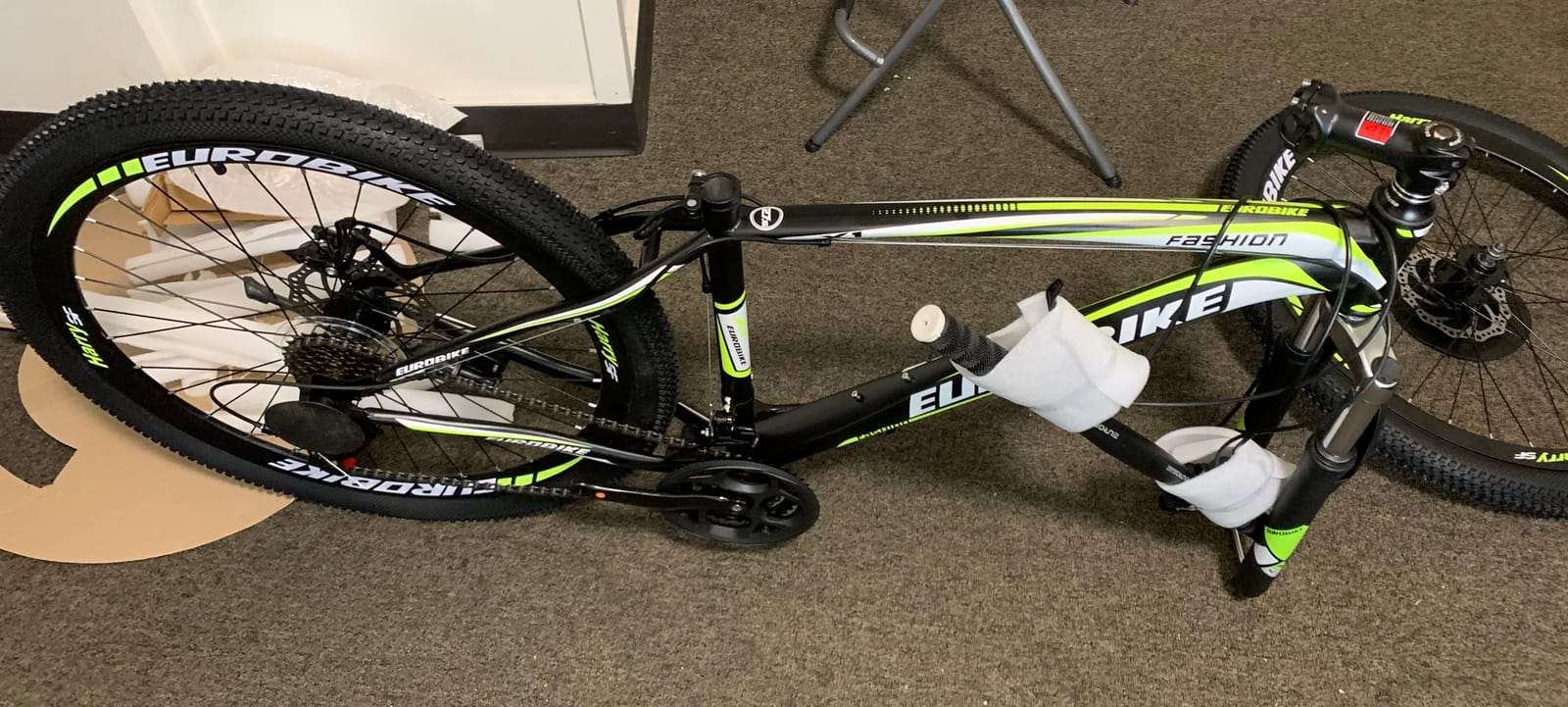
The build is a 21-speed front and rear derailleur drivetrain, dual disc brakes and a front suspension fork, on 27.5 inch wheels with a 27 inch frame. The listed weight is 39.5 pounds, which is honest for a steel bike at this level and worth factoring in if you plan to carry it or lift it into a vehicle regularly.
The soft fork is the recurring complaint. It absorbs chatter but does not hold up on hard rocky trails, so treat this as a bike for gravel, fire roads and neighborhood singletrack rather than technical terrain. Owners also replace the saddle and pedals early, and the plastic internals in the shifter pawl are a known weak point.
Who the EUROBIKE X1 suits?
It suits riders above roughly 250 pounds who have been told that entry-level mountain bikes are not built for them. It also suits commuters who want something sturdy for rough roads and want disc brakes without a hydraulic system to bleed.
If you plan to ride gravel and fire roads more than singletrack, the frame and gearing are a solid match.
Where the EUROBIKE X1 falls short?
Soft suspension and light components limit it on real trails. The cheap internals, low-quality wheels and uncomfortable supplied contact points are all things owners replace, which erodes the value advantage over a bike that arrives complete.
The included pump is also too small to inflate the tires, so plan to buy a real floor pump.
7. HILAND 26 27.5 29 Inch – Best Size Range
HH HILAND 27.5 Inch Mountain Bike, Mens and Womens MTB with 21 Speeds, High-Tensile Steel Frame, V Brake, Hardtail Bicycle for Adults Blue
High carbon steel frame
26, 27.5 and 29 inch options
21-speed drivetrain
V-brakes
90 percent assembled
Pros
- High-tensile steel frame built for adult durability
- Reinforced front fork absorbs bumps on roads and trails
- 21-speed front and rear range is generous
- V-brakes are easy to maintain and adjust
- Suit both city commuting and easy trails
Cons
- V-brakes lose stopping power in wet or muddy conditions
- Steel frame and rims make the bike relatively heavy
- Still needs final adjustment after 90 percent assembly
HILAND publishes the height ranges for each wheel size, which very few brands in this category do, and that is the main reason it is worth your attention. The 26 inch fits riders from 5 foot 4 to 5 foot 9, the 27.5 inch from 5 foot 8 to 6 foot 5, and the 29 inch is aimed at riders over 5 foot 9.
That mapping is exactly the information beginners are missing when they guess at a size, and the listed lifetime warranty is unusual at this level.
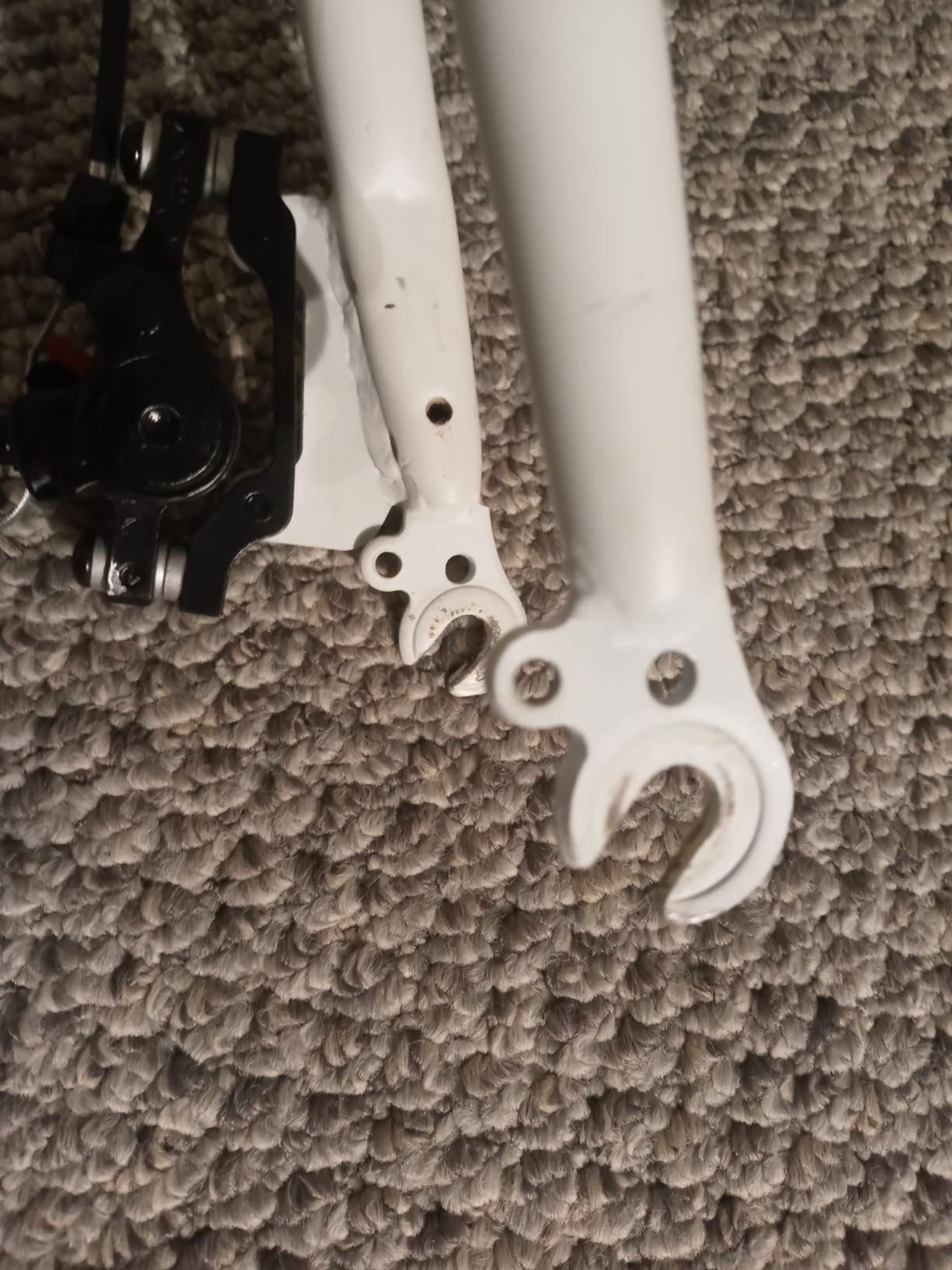
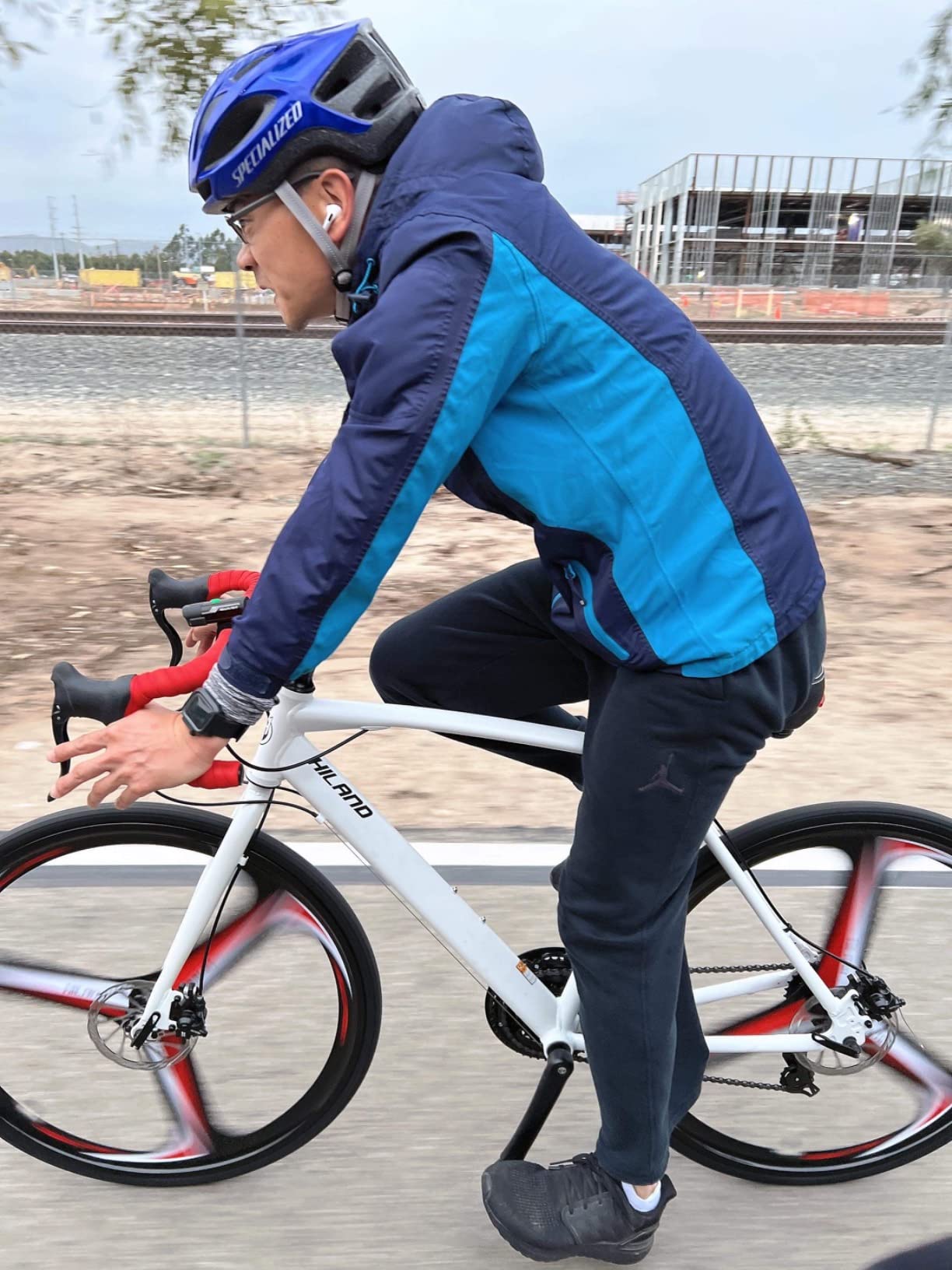
The build is a high carbon steel frame with a reinforced front suspension fork, a 21-speed drivetrain with front and rear derailleurs, and linear pull V-brakes. It arrives 90 percent assembled with tools included, so there is a short finishing job before the first ride.
V-brakes were chosen deliberately here for adjustability and low maintenance, and that is a defensible call for a first bike. The trade-off is real, though: rim brakes lose authority in mud and wet grass, and the steel frame and rims make this a heavier bike to control on loose ground. Riders in wet climates should note that clearly.
Who the HILAND suits?
It suits riders who are between sizes or unsure of their height range, and anyone who wants a single bike family covering a wide spread of adult heights. It also suits commuters adding a bike for rough roads and easy trails without changing riding clothes or technique.
If a bike shop can measure you, bring this one to the fitting and let them check the size chart against your inseam.
Where the HILAND falls short?
Steel weight and rim brakes are the two limits. Neither rules it out for beginners, but both make it a harder bike to control on steep, loose descents than a lighter bike with disc brakes.
It is a path and easy-trail bike that grows with you slowly, not a bike you will want to keep after your skills outpace it.
8. WEIZE Hardtail 29 Inch – Best for Taller Riders
WEIZE Hardtail Mountain Bike 29 Inch MTB Outdoor Cycling Bicycle Men Women
Aluminum frame
29 inch wheels
21-speed Shimano twist shifting
Front suspension
One-year warranty
Pros
- Aluminum frame with modern geometry stays light and responsive
- Shimano 21-speed twist shifting works well on hills and flats
- Knobby tires grip well on loose off-road surfaces
- Front fork absorbs bumps for a controlled ride
- Fits tall riders with owners around 6 foot 3 reporting a good fit
Cons
- Shifting can feel hard and skip gears or miss the top gear
- Front wheel and brakes can arrive misaligned
- Front suspension is stiff rather than plush
- Assembly can take 2 to 3 hours for first-time builders
Twenty-nine inch wheels are the modern default for a reason, and this is the bike in the roundup that delivers them on an aluminum frame with a 21-speed Shimano drivetrain.
Bigger wheels roll over roots and square-edged rocks with less deflection, so the ride feels smoother and less busy than the 26-inch bikes above, particularly on descents. Owners around 6 foot 3 report a good fit, and the published minimum rider height is 64 inches.
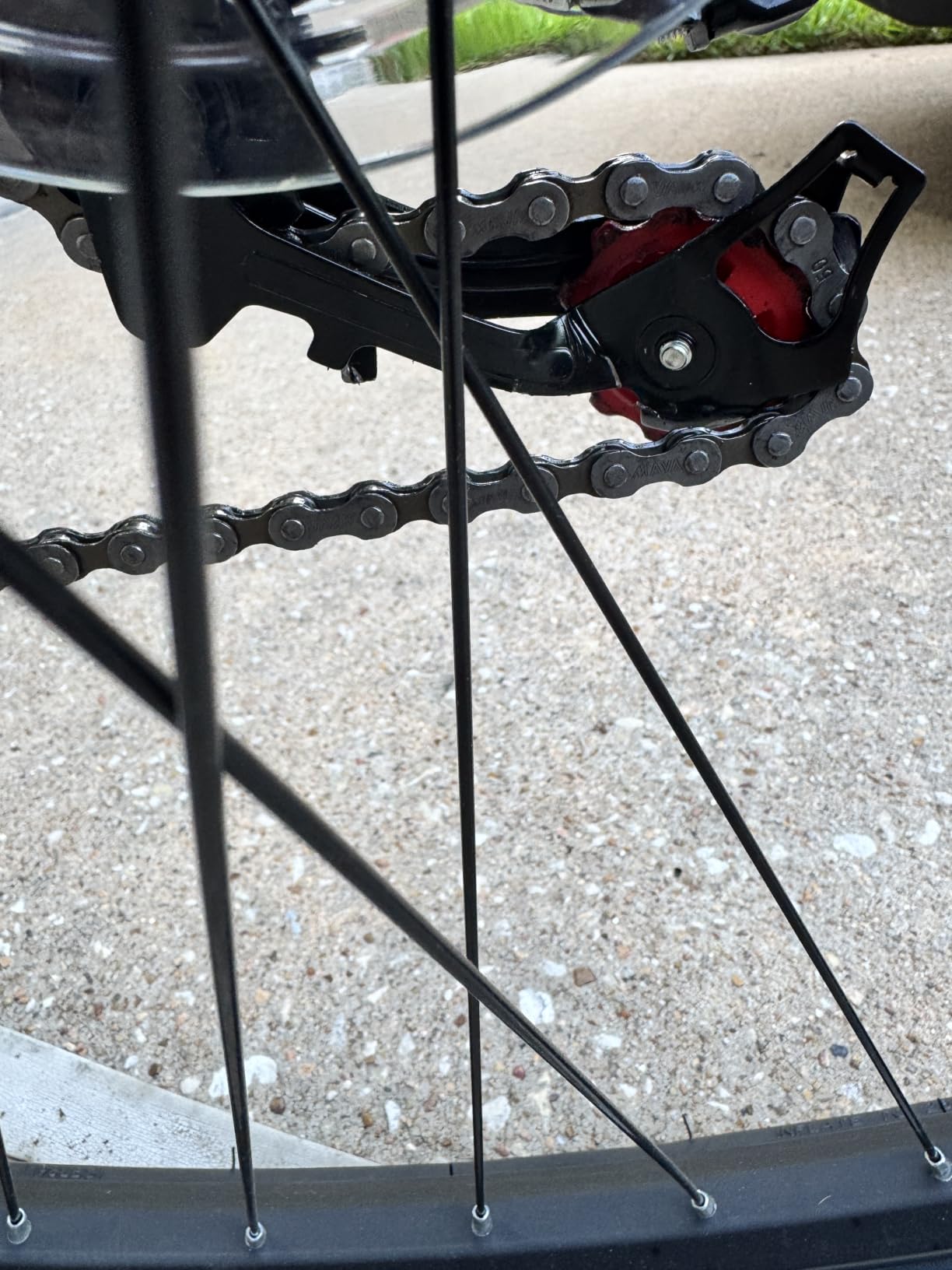
On paper it is one of the better-specified entry bikes: aluminum frame with modern geometry, aluminum double-wall rims, Shimano 21-speed twist shifting, wide knobby tires and a front suspension fork, with a one-year warranty.
Quality control is the story in the reviews. Several owners describe bikes arriving with crooked wheels, miswired brakes or a stripped crank arm after only a few miles, and shifting that skips or will not reach the top gear comes up repeatedly. Plan to spend time on a pre-ride check, and expect a shop visit if something feels off.
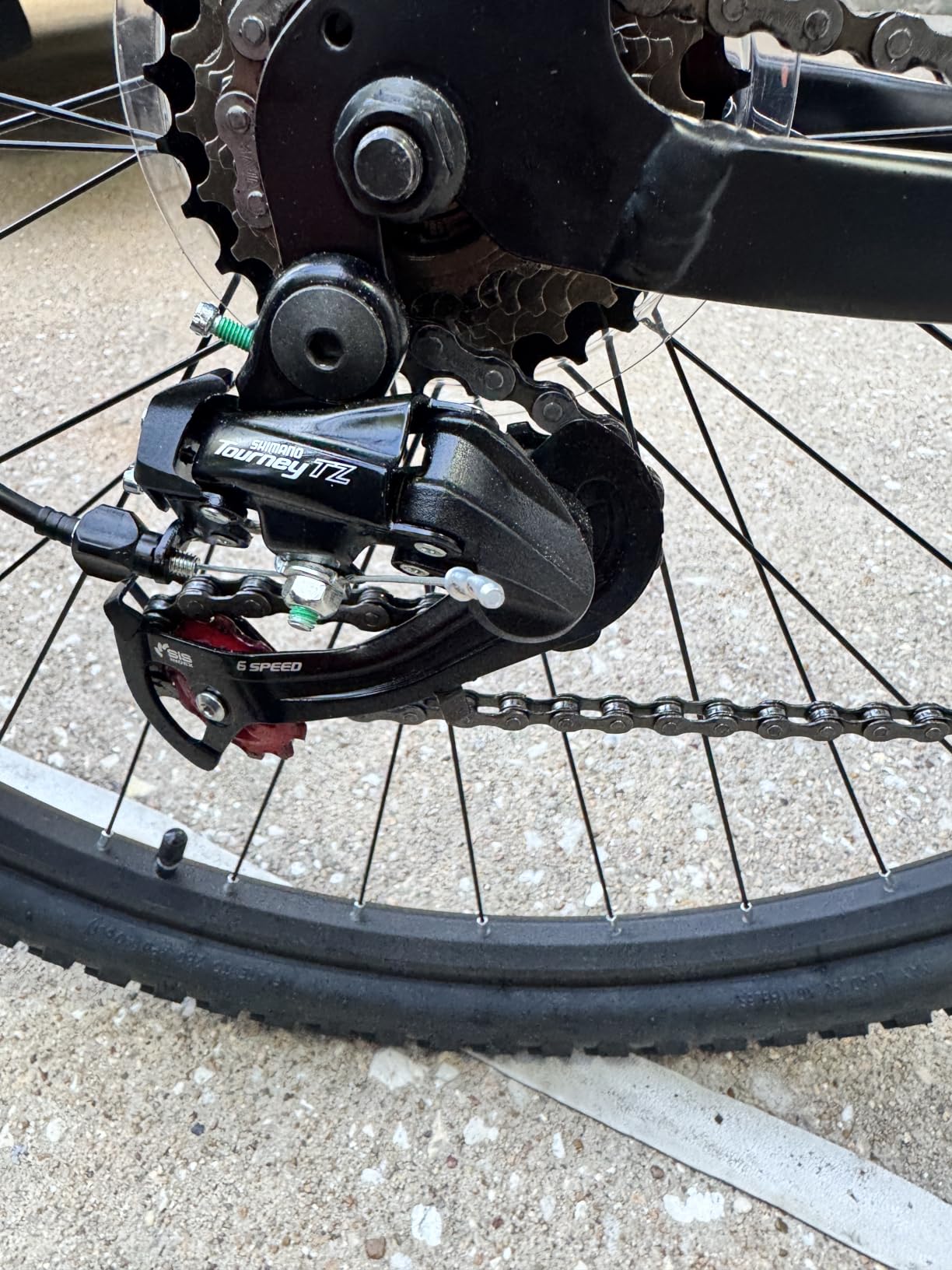
Who this WEIZE suits?
It suits taller riders and teens who want 29-inch wheels without stepping up a tier. It also suits anyone whose local terrain is rough enough that wheel rollover matters more than weight, since the stiffer fork and larger wheels are more stable at speed than a 26-inch bike.
For a rider moving up from a smaller bike, the size jump is a confidence boost on descents.
Where this WEIZE falls short?
Assembly is the biggest hurdle. Owners report 2 to 3 hours for a first-time build, which is a real evening of work before you can even assess the bike.
The stiff fork and the arrival-condition complaints are the other two. It is a bike you should test carefully in the first week, not one to commit to on the spec sheet alone.
9. AVASTA Earth – Best Adjustable Fork
AVASTA 27.5 Inch Mountain Bike MTB for Adult Man Women Male, White
Switchable suspension fork
Aluminum alloy frame and rims
21-speed drivetrain
Disc brakes
75 percent assembled
Pros
- Switchable suspension fork lets the rider tune the ride to the terrain
- Aluminum alloy frame and rims keep weight down while staying strong
- 21-speed derailleur and disc brakes give precise shifting and reliable braking
- Quick-release tires allow easy customization between 26 and 27.5 inch
- Installation video makes setup straightforward
Cons
- Base wheels can be upgraded later for a lighter setup
- Disc brakes need periodic adjustment
- Handlebar seat front wheel and pedals still need fitting
At a 4.2 average, the AVASTA Earth sits just behind the Schwinn Traxion in owner rating, with 69 percent of ratings at five stars across 138 reviews. The reason for that score is a switchable suspension fork, which lets you change how the fork responds rather than living with whatever setting it arrived in.
For a new rider that is a meaningful advantage, because the correct fork feel changes depending on whether you are on a greenway or a loose dirt track. Being able to change it yourself, without a shop visit, is the useful part.
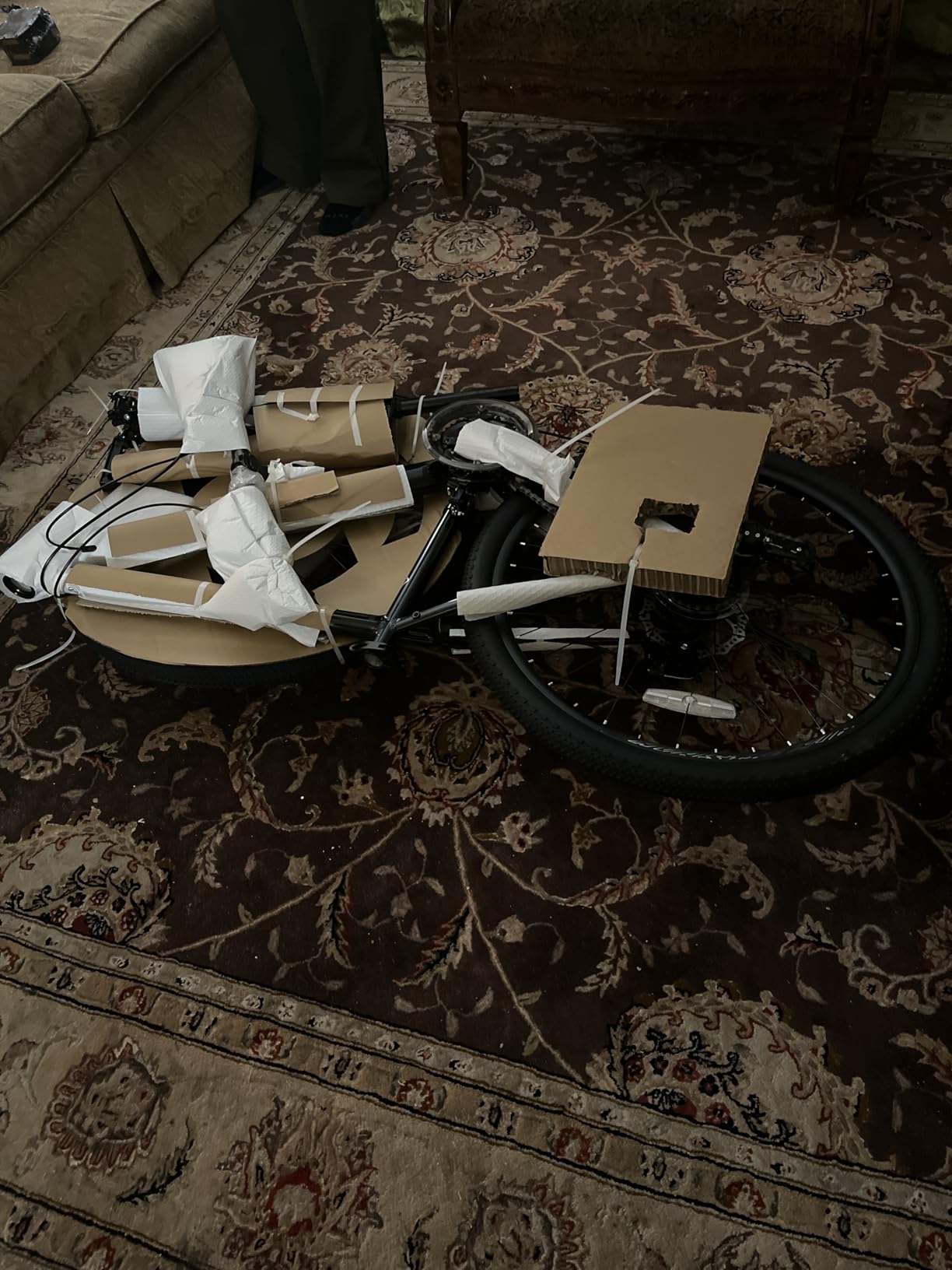
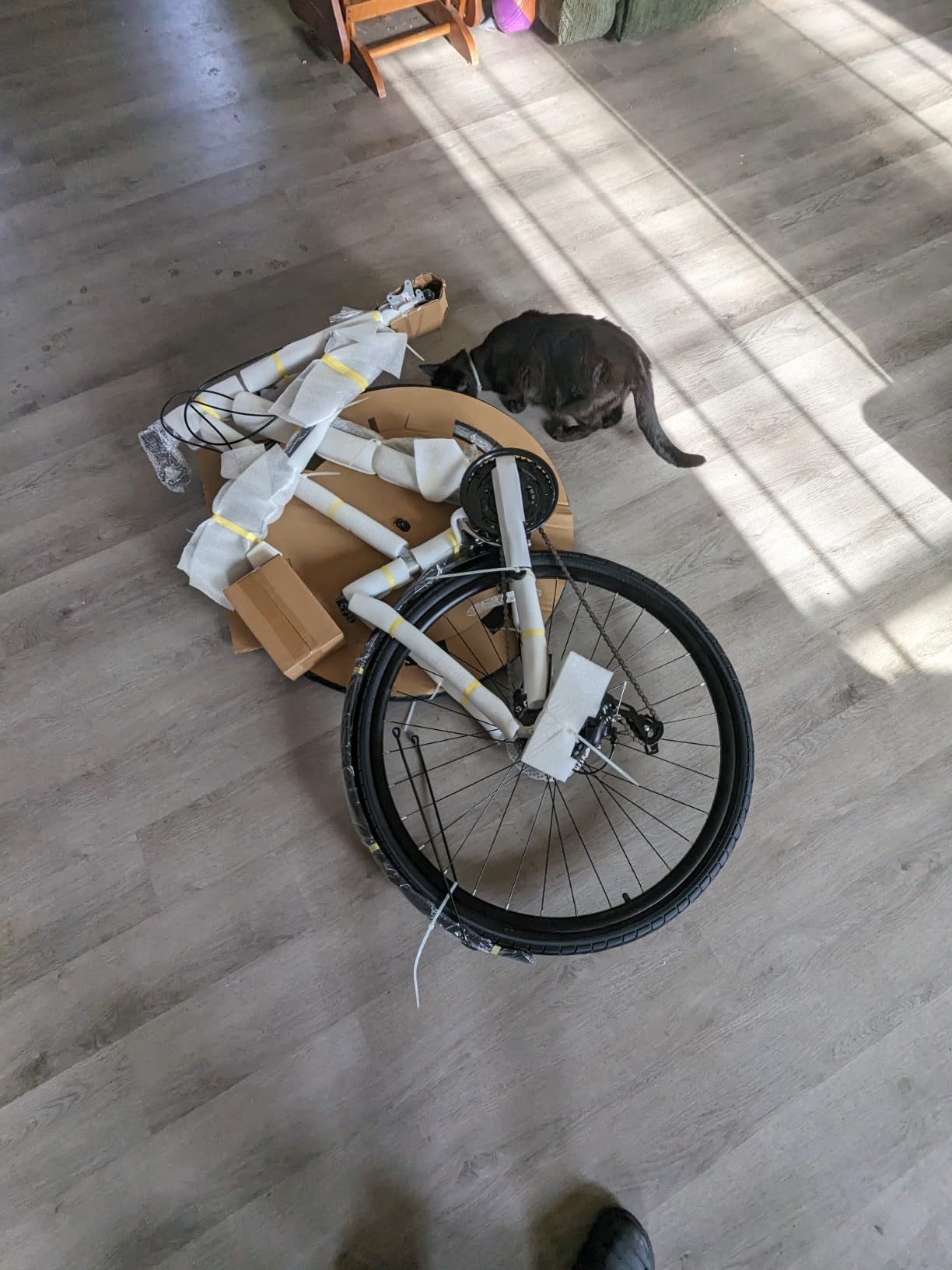
The rest of the build is straightforward and good: an aluminum alloy frame and rims for low weight, a 21-speed derailleur system, disc brakes, and quick-release all-terrain tires offered in 26 by 1.95 inch and 27.5 by 1.95 inch. It arrives 75 percent assembled with an installation video on the product page, so the finishing job is the handlebar, saddle, front wheel and pedals.
Two cautions. Disc brakes on this bike need periodic adjustment, which is normal for mechanical discs. And the base wheel package is a starting point that you can improve, so treat the tire choice as adjustable rather than final.
Who the AVASTA Earth suits?
It suits riders who want to fine-tune the ride without returning to a shop, and anyone whose terrain changes week to week, from paved greenways in summer to soft trails in spring. The quick-release tire swap makes it flexible for mixed surfaces.
It is also a reasonable choice for a rider moving from a hybrid who wants disc brakes on a budget.
Where the AVASTA Earth falls short?
With 138 reviews the long-term record here is thinner than for the Schwinns, so it is worth knowing how much confidence to place in a component choice.
It is also only 75 percent assembled, which is the lowest completion level in the roundup, so build in an extra session.
10. WEIZE 26 27.5 Trail MTB – Most Versatile
WEIZE Mountain Bike 27.5 Inch Adult Bike Trail Bicycle for Men and Women
Aluminum frame
26 or 27.5 inch wheels
21-speed twist shifters
Rear disc and front mechanical disc
85 percent assembled
Pros
- Aluminum frame with disc brakes at an entry-level cost
- Light weight makes the bike easy to handle and carry
- 21-speed twist shifters handle hills and flats
- Front fork absorbs shocks for a smoother ride
- Tools and assembly video included
Cons
- Assembly commonly takes 60 to 90 minutes for first-time builders
- Brakes and derailleurs often arrive unadjusted
- Wheels can arrive crooked and drop the chain
- Post-sale support can be slow to resolve
This is the newest listing in the group, with 60 reviews at a 4.0 average, and the reason it is here is straightforward: an aluminum frame with disc brakes is unusual at the entry level, and owners keep remarking on the build quality for what they paid.
It is the easy-to-handle option in the roundup, which matters more for a first bike than most spec sheets suggest. A bike you can lift over a curb is a bike you will actually ride.
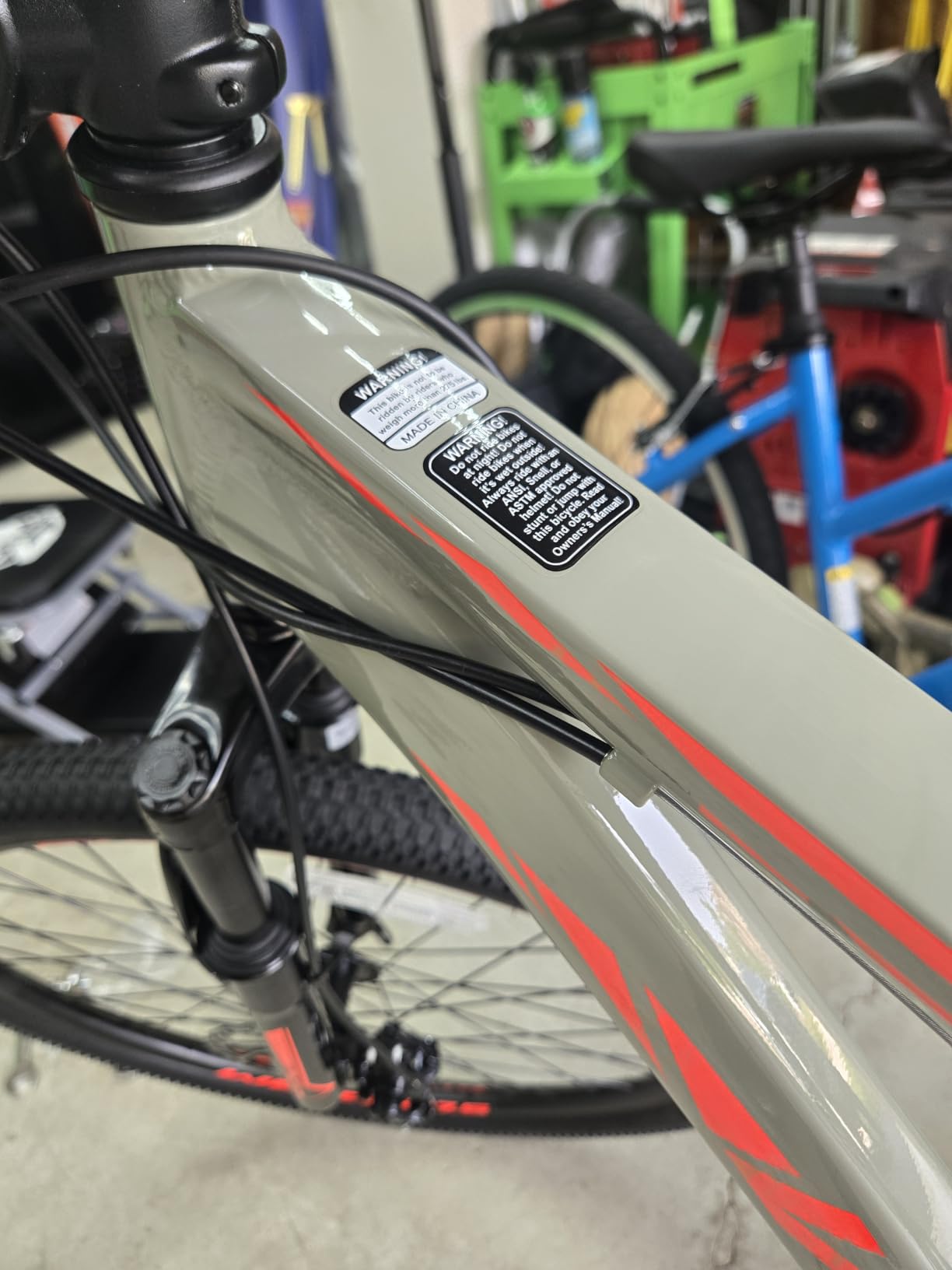
The build is a lightweight aluminum frame in 26 or 27.5 inch wheels, 21-speed twist shifters with front and rear derailleurs, a rear disc brake paired with a front mechanical disc brake, a front suspension fork and an ergonomic comfort saddle. It arrives 85 percent assembled with tools and a video.
The pattern in the reviews is consistent and worth taking seriously. Owners praise the frame and brakes; the one and two-star reviews all focus on factory setup, specifically derailleurs arriving unadjusted and wheels that need truing. A 60 to 90 minute build for a first-timer is the other consistent note.
Who this WEIZE suits?
It suits a first-time rider on a tight budget who wants a light bike with disc brakes rather than a heavy steel bike with rim brakes. Riders who want 26 and 27.5 inch choices from the same model are good matches.
It is a reasonable path-and-trail bike for paved greenways, gravel and easy dirt.
Where this WEIZE falls short?
With only 60 reviews, this is the least proven bike in the roundup, and factory setup is the recurring weak point. Set aside a block of time for assembly and adjustment, and check the brakes and wheel trueness before the first ride.
Saddle and frame geometry are less refined than on the higher-priced brands, so expect an early comfort upgrade.
Mountain Bike Buying Guide for Beginners in 2026
Components matter less than the decisions below. Get these right and a mid-range bike will suit you better than an expensive one that does not fit.
Frame material. Aluminum is the sensible default: light enough to ride uphill, stiff enough to pedal efficiently, and cheap to manufacture. Steel frames are heavier but more forgiving of knocks and flex less noticeably over time. Carbon is lighter still, but it does not appear at beginner price points and a cracked frame is an expensive lesson.
Wheel size. The 26-inch wheel is dated but still sold, and it suits shorter riders. The 27.5 inch is the sweet spot for most adults, especially shorter ones, because it keeps maneuverability. The 29 inch rolls over rough ground best and suits taller riders. Do not agonise over this one; fit to your height and move on.
Drivetrain, and the maths. A 1x system has one chainring at the front and a cassette at the back, so 1×10 means 10 gears total and one lever. A 2×10 has two chainrings and a ten-speed cassette for 20 gears but two levers. A 3×7 is 21 gears across three levers. More gears is not better for a beginner. Riders in mountain biking forums consistently favour a 1x drivetrain because one control means one decision, and the chain is far less likely to drop when the ground gets messy. Among the bikes in this guide, most are 2x, which is workable if your hands are steady, but the simplest option here is the Mongoose Flatrock at 7 speeds.
Brakes. There are three types in this roundup. V-brakes and linear pull brakes squeeze the wheel rim. Mechanical disc brakes squeeze a rotor at the wheel hub. Hydraulic disc brakes push fluid through a line and are the strongest and most consistent option, especially in rain. For a beginner, at minimum you want mechanical discs. A rim brake that fades in a wet meadow is a genuinely bad first experience.
Suspension travel and the 80 rule. Fork travel is the amount the suspension can move, measured in millimetres, and 100mm to 130mm covers most beginner terrain. More travel is not automatically better, because extra travel needs a more advanced frame and skill to control it. The 80 rule says you should ride at about 80 percent of your ability and save the last 20 percent for the moment things go wrong. New riders routinely exceed that on the first descent, and the 80 rule is the habit that keeps a first season fun rather than frightening.
Weight. Below about 35 pounds is easy to lift and carry. Above 40 pounds, as with the full-suspension option here, you will notice it on climbs and stairs. Weight matters more for confidence than for speed, which is why lighter bikes often get recommended to new riders.
Fit and sizing. This is the single most common purchase mistake, and the one no amount of research fixes on its own. A rough starting point: 26-inch wheels generally suit riders from 5 foot 4 to 6 foot 2, 27.5 inch from about 5 foot 3 to 6 foot 3, and 29 inch from about 5 foot 6 upward. Those ranges are brand-specific, and frame size matters more than wheel size. Straddle the bike and check that your inseam leaves a couple of inches of clearance at the top tube, then sit on the saddle and confirm that at least three fingers of leg remain extended at the bottom of the pedal stroke. If you can, do it in a shop, because a test fit beats any chart. Riders repeatedly tell beginners on forums to check fit before worrying about components, and they are right.
Mountain Bike Jargon Glossary for New Riders
None of this is complicated once it is defined, and every term below shows up in the reviews above.
Travel is how far the suspension can move, measured in millimetres. A 120mm fork compresses 12 centimetres over a bump.
Hardtail means suspension at the front only. Full suspension adds a rear shock that moves the frame.
1x, 2x and 3x describe how many chainrings sit at the front, so a 2×10 drivetrain is 20 gears and a 3×7 is 21 gears, but a 1×12 is 12.
Dropper post is a seatpost that lowers the saddle at the push of a button so you can get your weight behind the bike on descents. It is the upgrade new riders feel most and none of these bikes come with one.
Thru-axle versus quick release describes how the wheels attach. A thru-axle clamps the hub solid and is stiffer; a quick release is a lever you can do by hand. Every bike here uses quick release.
Tubeless-ready means the rims accept a tire that seals with sealant instead of an inner tube, which reduces the chance of a pinch flat.
Boost is a wider rear hub standard, and internal cable routing means the brake and gear cables run inside the frame rather than along the outside of it.
What to Buy Before Your First Ride?
A bike is not ride-ready on its own, and no competitor guide covers this, so here is the short list. Buy the helmet first and do not skip it.
A properly fitted helmet, a floor pump with a gauge, a spare tube plus tire levers and a patch kit, a set of flat pedals if the bike comes with plastic ones, and a lock if the bike lives anywhere near a rack or a cafe. Add knee pads for your first bike park day, and good gloves if you will be riding in the cold.
Also budget for the assembly tools these bikes need, and a bike stand or a clear wall to work on. A pedal wrench and a set of Allen keys cover almost every adjustment on the bikes in this guide.
Both are described in more detail in our guides to electric mountain bikes for trail riding and exercise bikes for home workouts.
What to Upgrade First on an Entry-Level Mountain Bike?
Almost every experienced rider in the forum threads we read gives the same answer to the question of what to replace first: tires, then contact points, then brakes, then the fork.
Tires come first because supplied tires are heavy, slow and prone to punctures, and better tires transform a bike more than any other single change. A pair of decent knobbies makes the bike feel like a different machine on roots and wet ground.
Second is the saddle and the pedals. Supplied saddles cause discomfort that riders often blame on their fitness, and flat pedals give you a much better connection to the bike than the small plastic ones that come in the box.
Third is the brakes, if the bike came with rim brakes or basic mechanical discs. Fourth is the fork, and this is the expensive one, so buy it only when you are riding enough to justify it.
A dropper post sits between pedals and brakes on the felt-impact scale. It is the most fun upgrade per dollar for a new rider, because being able to drop the saddle mid-ride changes how confidently you can descend.
Before you upgrade anything, be honest about whether you will still be riding in a year. Hedging with a cheap bike is a reasonable strategy if you are unsure. If you already know you will stick with it, spend more up front and skip the upgrade treadmill.
Frequently Asked Questions
What type of mountain bike should a beginner get?
A beginner should get a hardtail with front suspension, hydraulic or mechanical disc brakes, 27.5 or 29 inch wheels and a simple drivetrain. Full suspension is worth it only if you already ride technical singletrack weekly or a joint problem makes hard impacts painful.
What is the best mountain bike for a beginner?
The Schwinn High Timber is our pick for the best mountain bike for a beginner, based on owner feedback, with more than 1500 owner reviews, an aluminum frame, a suspension fork and 21-speed twist shifting. Riders who want rear suspension should look at the Schwinn Traxion.
What are the best beginner mountain bikes for new riders?
The Schwinn High Timber, the Schwinn Traxion, the WEIZE 24 26 27.5 and the Mongoose Flatrock are the strongest options for new riders. The first two are the best all-round picks, the WEIZE suits shorter riders and the Mongoose is the simplest to run.
Do I need a full suspension bike to start mountain biking?
No. Most beginners are better served by a hardtail, which is lighter, cheaper and simpler to maintain. Full suspension adds real comfort on rough ground, so it makes sense once you know you will ride technical trails regularly or if joint pain is a factor.
How do I know what size mountain bike fits me?
Use the published rider height range for the bike, then test fit in a shop. As a rough guide, 26 inch wheels suit riders from 5 foot 4 to 6 foot 2, 27.5 inch from about 5 foot 3 to 6 foot 3, and 29 inch from about 5 foot 6 upward. Frame size matters more than wheel size.
Final Verdict: The Best Mountain Bikes for Beginners in 2026
The Schwinn High Timber is our pick for the best mountain bikes for beginners, because it combines the deepest owner review history in the group with an aluminum frame, a wide published rider range and a drivetrain simple enough to learn on.
Pick the Schwinn Traxion if you want rear suspension and ride rough ground often. Pick a WEIZE if you are a shorter rider and care most about low standover height. Pick the Mongoose Flatrock if you want the fewest things to go wrong and a long frame warranty.
Whatever you choose, get the fit right before you worry about the components, buy a helmet and a pump before the first ride, and give yourself a season on the 80 rule. If you are still curious about the wider world of two wheels, we cover electric hunting bikes for backcountry trips once the trail habit is set.