
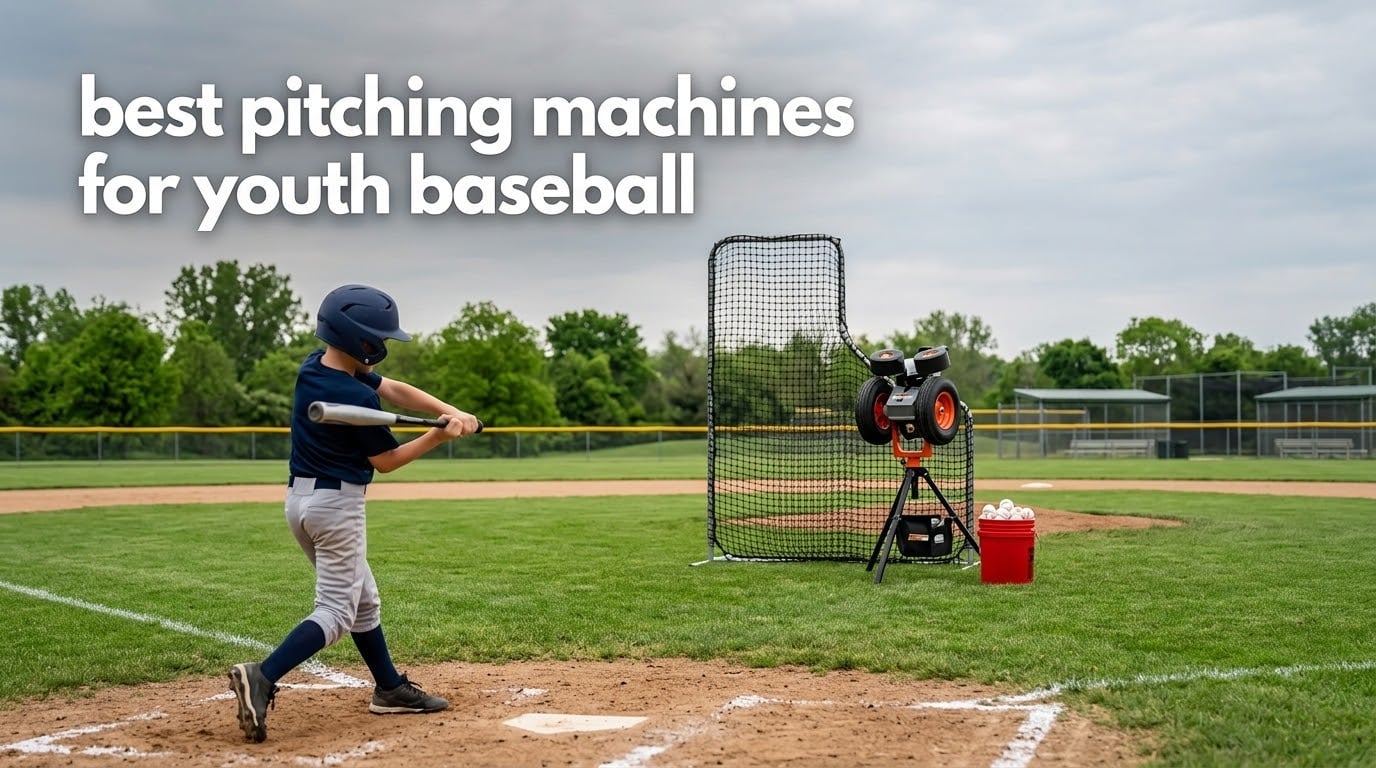
Choosing the best pitching machines for youth baseball is harder than it looks. The category runs from a plastic toy that fires a hollow ball every seven seconds to an all-metal machine with a 10-52 mph range and a 12-ball automatic feeder, and almost nothing in the marketing tells you which of those two things you actually need.
So we built this roundup around what a parent or a volunteer coach has to decide: can the machine keep a nine-year-old occupied for a full season, is it safe to run near children, and will it still throw a strike after the third practice of the week. We compared ten machines across their published specifications, their measured customer ratings, and the failure points that owners keep reporting. Every pick below carries a rating and review count copied straight from its listing, and we name the limitations alongside the strengths.
Last updated for 2026. We update this page as the lineup changes, and every machine here is one a family or club can actually order, not a showroom unit.
One expectation to set early. The machines on this list are hitting tools, not pitching tools. They fix a swing flaw through repetition, and nothing else. You can read more about how coaches balance machine work with tee work and live bullpen in the section near the end.
Table of Contents
What Is the Best Pitching Machine for Youth Baseball?
The best pitching machine for youth baseball is the one whose speed range matches the hitter and whose ball type is safe for that age. For most families, a battery-powered two-wheel machine in the 20-45 mph band covers 6U through 12U and never needs an outlet.
Our picks, in one line each:
Franklin Sports MLB Electronic – the easiest machine for a child to run alone, and the one with by far the most owner feedback behind it.
Louisville Slugger Blue Flame – the best value; throws real baseballs with no power source at all.
Heater Sports Slider Lite 360 – the most affordable option here that throws a genuine curveball and feeds itself.
Heater Sports Heavy-Duty – the choice for a club that runs full team practice and wants a machine to last.
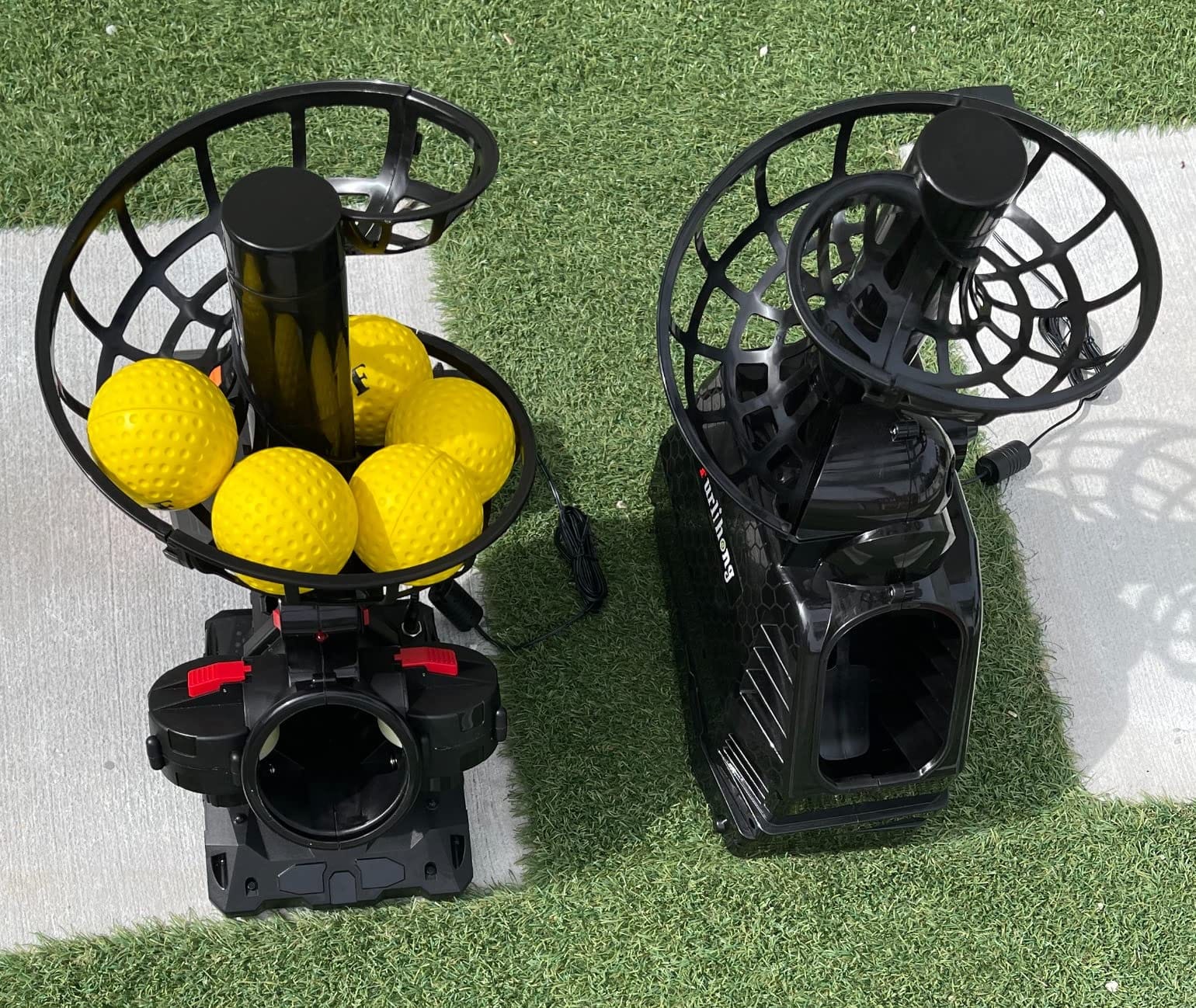
Furlihong 380BH – the best low-risk starter kit for a five or six-year-old.
Top 3 Best Pitching Machines For Youth Baseball (October 2026)
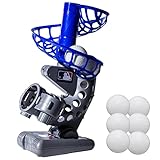
Franklin Sports MLB Electronic
- 7-second auto feed
- 3 adjustable angles
- 6 plastic balls included

Quick Overview: Best Pitching Machines for Youth Baseball in 2026
| Product | Specifications | Action |
|---|---|---|
| Franklin Sports MLB Electronic Pitching Machine |
|
Check Latest Price |
 Louisville Slugger Blue Flame Pitching Machine Louisville Slugger Blue Flame Pitching Machine |
|
Check Latest Price |
 Franklin MLB Superstar 4 in 1 Pitching Machine Franklin MLB Superstar 4 in 1 Pitching Machine |
|
Check Latest Price |
 Franklin Sports MLB Power Pitcher Franklin Sports MLB Power Pitcher |
|
Check Latest Price |
| Heater Sports Slider Lite 360 |
|
Check Latest Price |
 YESMARKS Kids Auto Pitching Machine Set YESMARKS Kids Auto Pitching Machine Set |
|
Check Latest Price |
 Furlihong 380BH Pitching Machine Furlihong 380BH Pitching Machine |
|
Check Latest Price |
 Furlihong 3801BH Upgraded Machine Furlihong 3801BH Upgraded Machine |
|
Check Latest Price |
 PowerNet Launch F-lite PowerNet Launch F-lite |
|
Check Latest Price |
 Heater Sports Heavy-Duty Pitching Machine Heater Sports Heavy-Duty Pitching Machine |
|
Check Latest Price |
1. Franklin Sports MLB Electronic Pitching Machine – Best All-Rounder for a Child Running Practice Alone
Franklin Sports MLB Pitching Machine
7-second auto feed
3 adjustable angles
Plastic body
6 plastic balls included
Pros
- Kids can assemble and run it unassisted
- Battery power works indoors and out
- Adjustable angles vary the swing path
Cons
- Hollow plastic balls break quickly
- Inconsistent location throw to throw
- Only 6 balls included
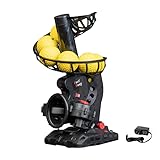
This is the machine we recommend more often than anything else, and the reason is not the specification sheet. It is that a seven-year-old can carry it out, set the angle, drop a ball in and start swinging without an adult standing there. It weighs almost nothing, it runs on batteries, and it feeds on a seven-second interval with a flashing red light that tells the hitter when the ball is coming.
It is also the most reviewed machine in our list by a wide margin, which means its weaknesses are well documented rather than hidden. The included balls are hollow plastic, they feel nothing like a real baseball, and owners report that they crack after a few weeks of use. The launch angle is not repeatable either, so a batter who hits the same spot every swing will see the ball in a different place.
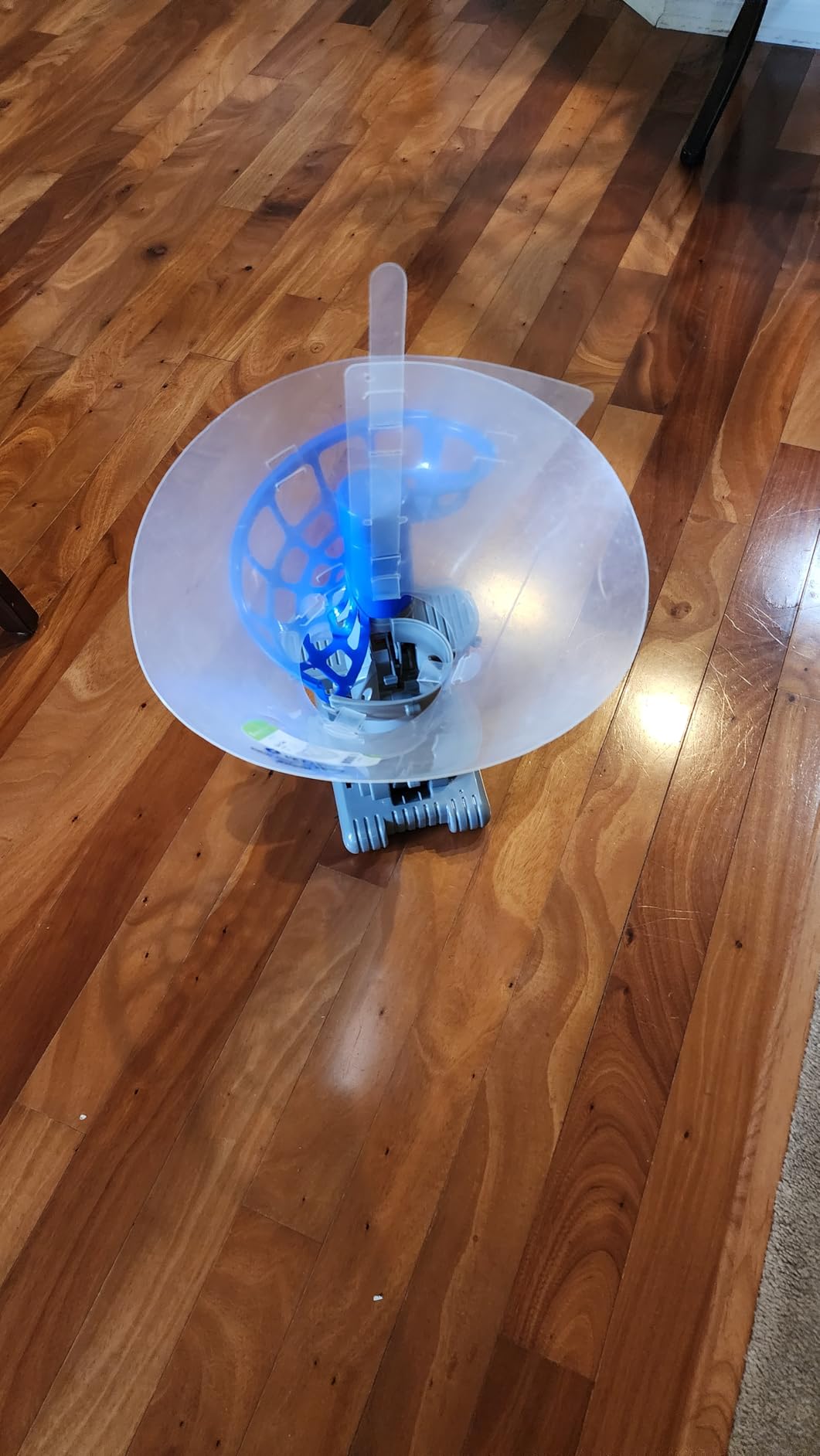
That combination means this is a machine for repetition volume rather than precision. If your goal is getting a nervous beginner to swing at two hundred pitches in a session, it is excellent. If your goal is location work on a specific pitch, look at the Heater options further down, because accuracy is where the plastic tier runs out of road.
Reviewers also note the first one or two pitches after startup come off slow and low while the internal mechanism spins up. In practice that is a non-issue for backyard fun, but it does mean a hitter chasing home runs has to wait a beat before the ball starts carrying.
Is it accurate enough to work on timing?
For swing-path and timing work, yes. A seven-second interval with a visible release light is genuinely useful teaching feedback for a young hitter, because the light removes the guesswork about when to start the swing. For strike-zone work, no. The launch is not repeatable enough to count pitches as strikes or balls, so do not build a count-based drill around it.
What should you buy alongside it?
More balls. Six are included and the shoot holds up to nine, so a session ends almost as soon as it starts if nobody gathers as they go. Compatible plastic balls are the real ongoing cost of this machine, and the lightweight practice balls that come with it are not the same thing. Budget for a bulk pack before the first week of practice rather than the third.
2. Louisville Slugger Blue Flame – Best Value, Throws Real Baseballs With No Power Source
Louisville Slugger Blue Flame Pitching Machine – Manual, Lightweight, Adjustable Speed (18–45 MPH), Throws Baseballs & Softballs
18-45 mph with hard balls
Manual spring mechanism
11.9 lbs
Throws most round balls
Pros
- No electricity or batteries needed
- One adult can carry it to any field
- Throws real baseballs plus softballs and dimple balls
- Angle covers grounders and pop flies
- Metal frame holds up season after season
Cons
- An adult must load and release every pitch
- Front spikes must be anchored or location drifts
- 45 mph ceiling is low for older hitters
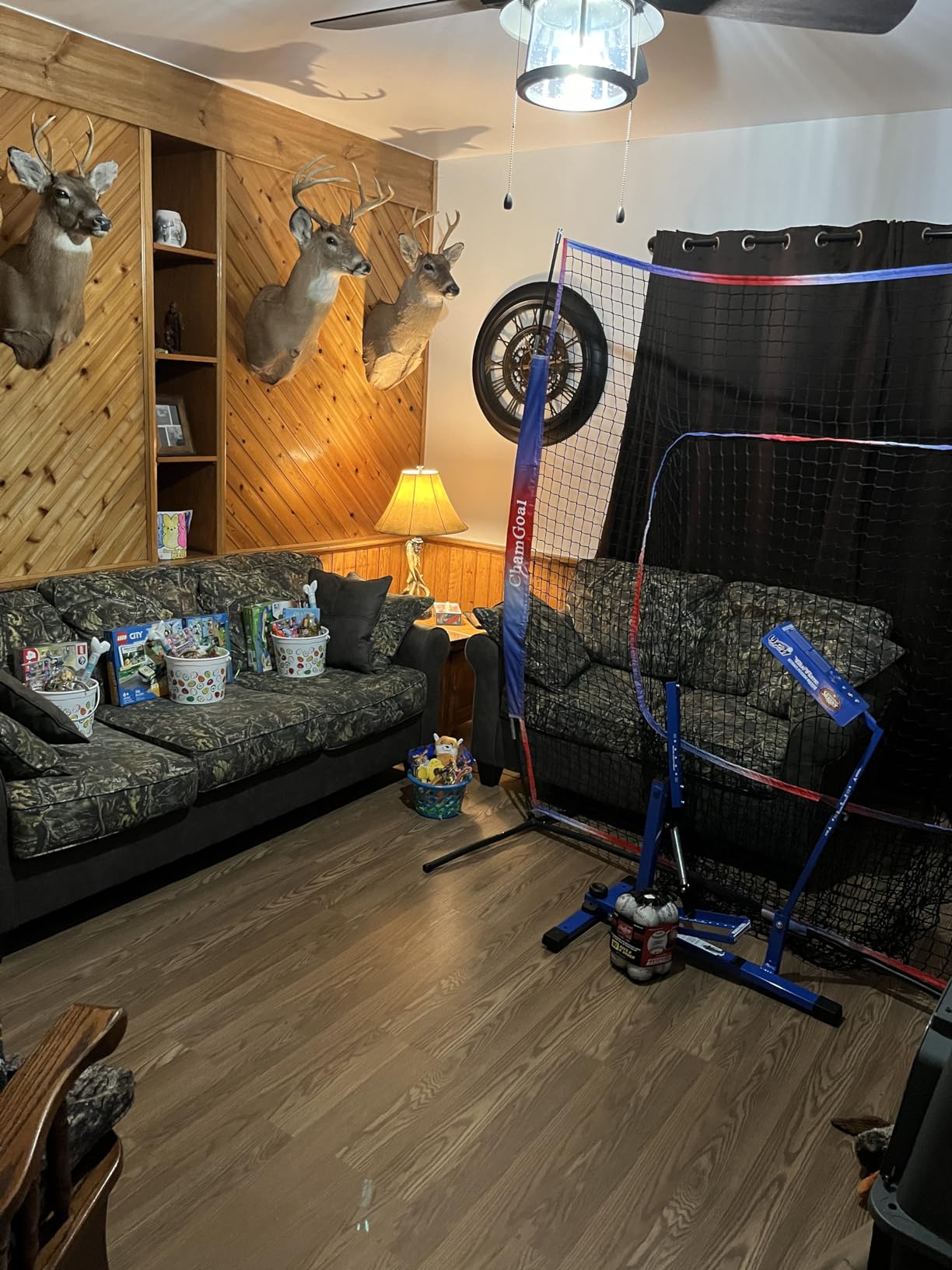
The Blue Flame is the highest-rated machine here at 4.5 stars across more than 3600 ratings, and the reason owners love it is simple: it throws real baseballs at 18 to 45 mph with nothing but a spring and a lever. No outlet, no batteries, no charging overnight. You put it in the car, you anchor the two front spikes into the ground, and you go.
It also accepts nearly anything round. Fast pitch softballs, dimple practice balls, light flight balls, plastic balls, even a soccer or volleyball ball for indoor work. That makes it an adaptable machine for a family that plays both baseball and softball or wants to run fielding drills with the same unit.
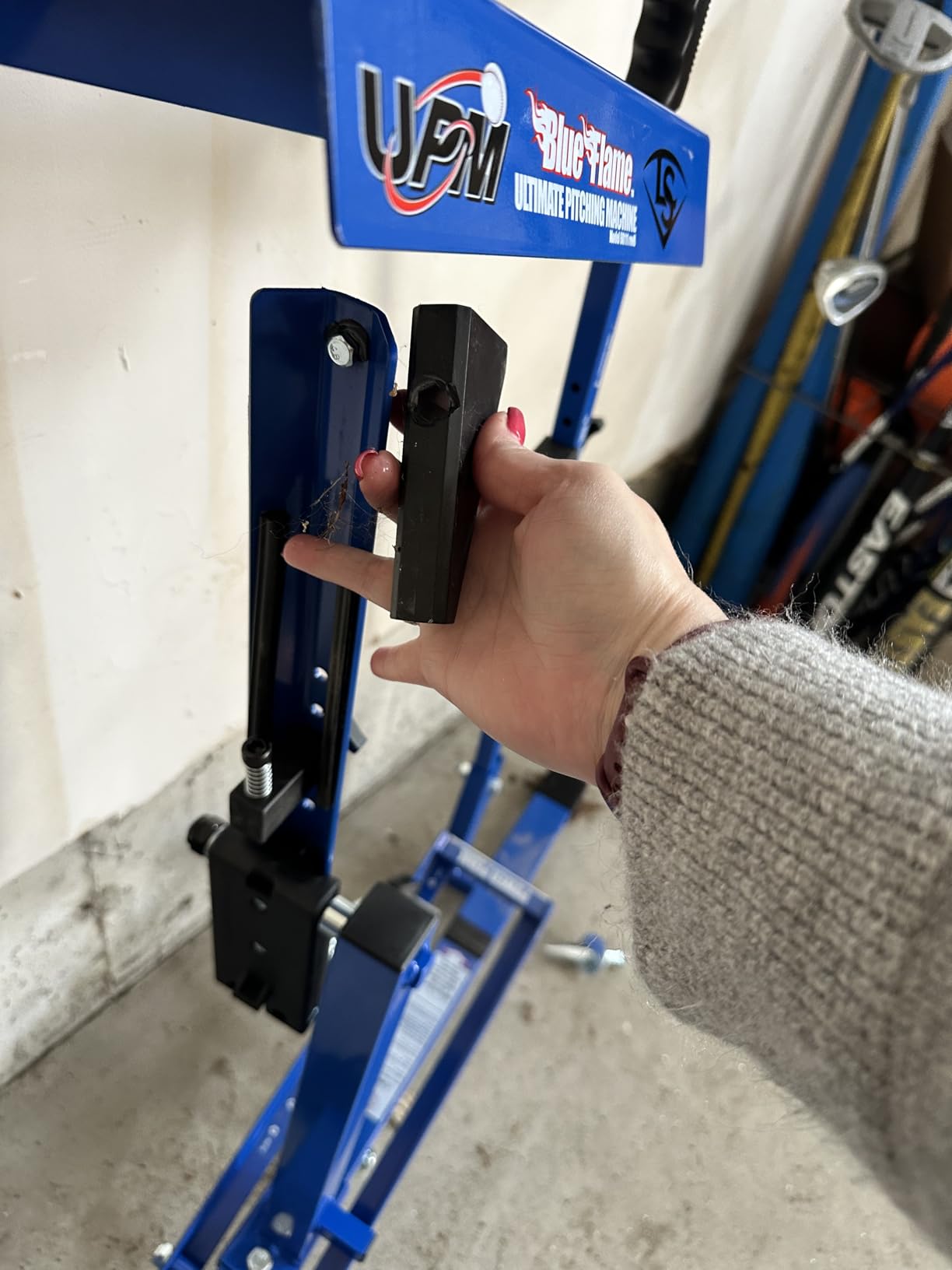
The tradeoff is that it is a fully manual machine. An adult pulls a lever for every single pitch, which means a session is two people, not one. Several owners describe it as mechanical and stable once it is set, but they also describe the first few sessions as a tuning exercise where the speed and height take time to dial in properly.
Two setup details matter more than they look. If the front spikes are not driven into the ground, the pitch location shifts between throws. And the top crossbar has a little side-to-side play that needs squaring up during setup, otherwise the release point wanders left and right.
Will a 12-year-old outgrow it quickly?
Probably. The 45 mph ceiling with a hard ball is right for a 10U or 12U hitter working on timing, and it will feel slow to a 14-year-old or a high school varsity player. Owners who buy it for a younger child often report using it for several seasons, but as a single long-term machine for a growing player it will need replacing eventually.
What are the safety trade-offs of a bare metal machine?
There is no battery, no high-voltage motor and no compressed air, which removes three of the usual household hazards in one design. The parts are exposed metal with no wheel guard, so it belongs at the far end of a field or on a driveway, not in a space where a toddler is running around. Because you anchor the spikes, the frame does not slide when it is struck.
3. Franklin MLB Superstar 4 in 1 – Best for Fielding Drills Alongside Hitting
Franklin MLB Superstar 4 in 1 Pitching Machine
4-in-1 hitting and fielding
Adjustable launch angle
9-ball feeder
5 lbs
Pros
- Covers hitting
- fielding
- grounders and pop flies in one unit
- Angle adjustment widens the drill menu
- Weighs 5 lbs so a child can move it
Cons
- 4 C batteries not included
- Only 6 plastic balls included
- Plastic build limits speed and consistency
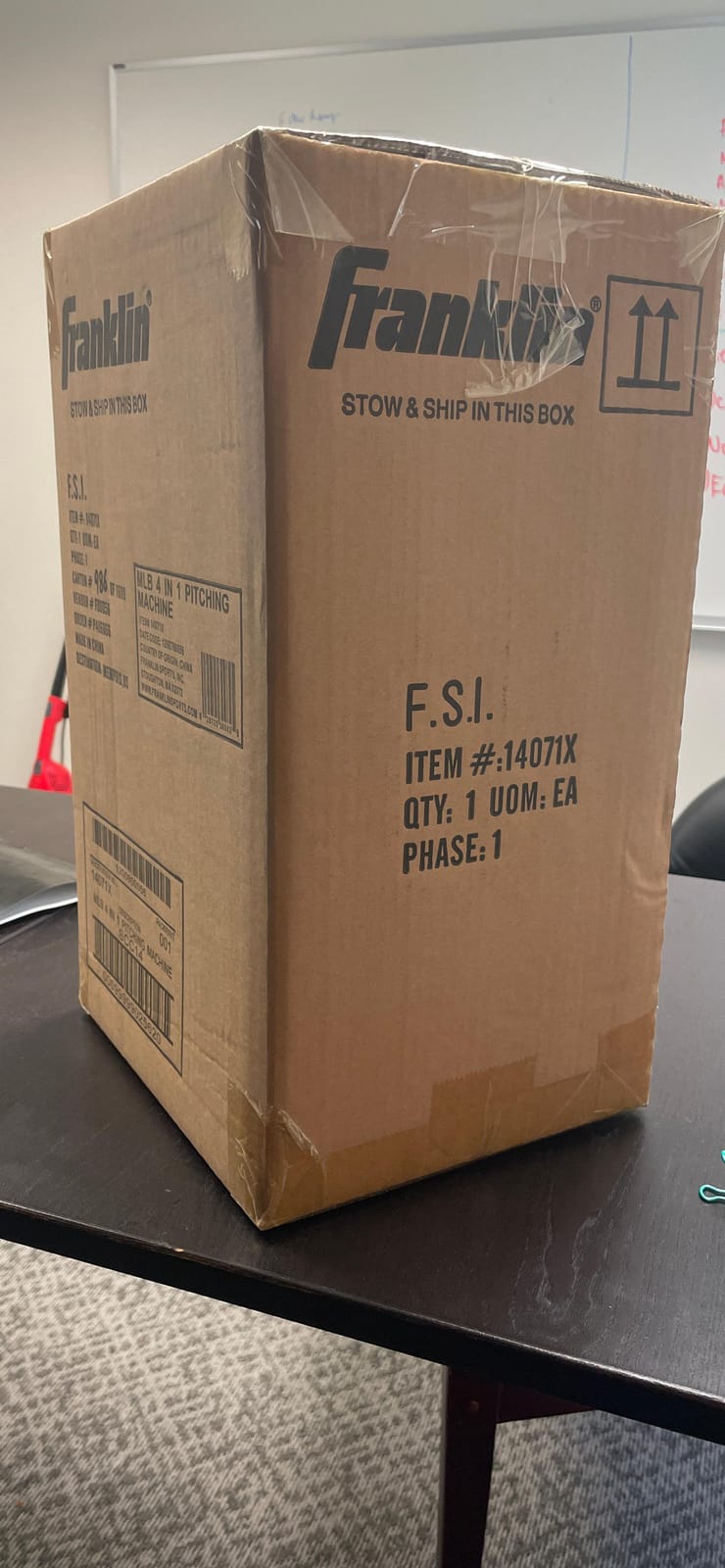
Most machines on this list only throw. This one tilts high enough for a pop fly and low enough for a grounder, which turns a batting session into a short fielding session without anyone dragging a second piece of equipment out of the car. For a coach running a mixed practice with eight kids of different ages, that flexibility is worth more than a speed increase.
It weighs five pounds, the feeder holds up to nine balls, and it pitches on the same seven-second interval as its sibling above. The launch indicator tells the hitter when the ball is going, which is the one feature on a cheap machine that consistently earns praise for swing timing.
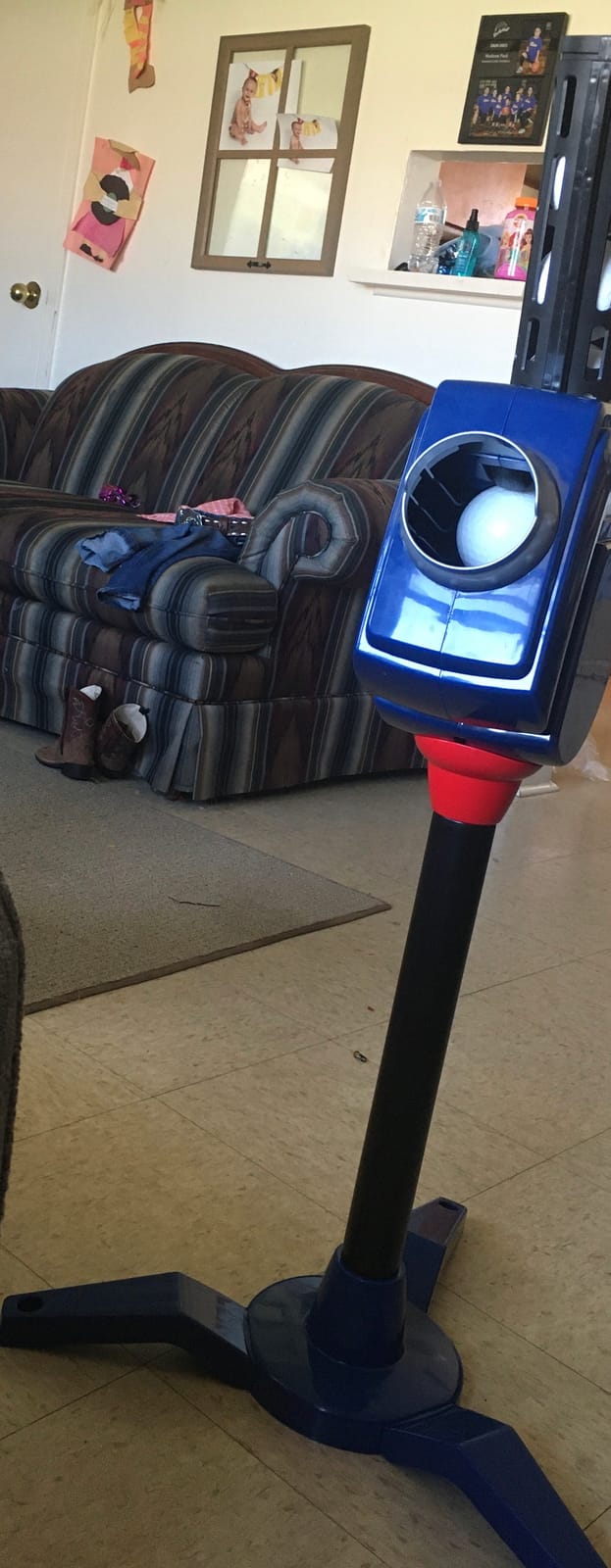
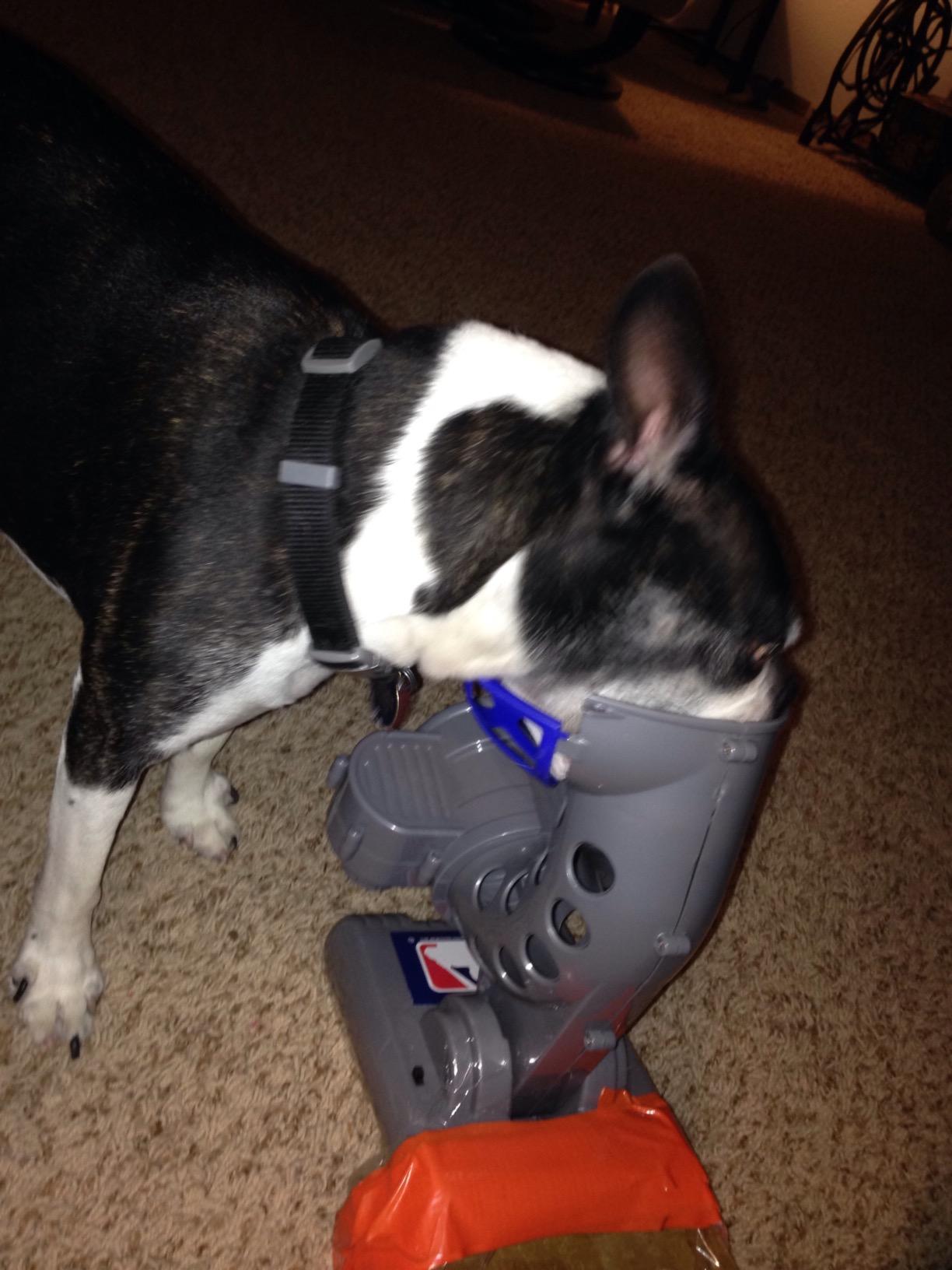
It is a plastic machine, and that shows up in three places. The top speed is modest, the ball flight varies throw to throw, and a hard line drive back into the machine will eventually crack something. Owners also hit the same snag as with the other Franklin units: the four C batteries are not in the box.
None of that is a problem if the goal is grounders, pop-ups and safe batting practice with light plastic balls. It is a problem if you want a nine-year-old facing game-like velocity, because the machine will not get him there.
Is it worth owning alongside a better machine?
Only as a second unit. Because it folds into a closet and weighs five pounds, a club that already has a serious two-wheel machine can add one of these for infield and outfield work at a different end of the field. For a family buying one machine only, a model with a wider speed range is the better single investment.
How long does it last between failures?
It carries a limited warranty period against manufacturer defects. The reported failures on budget machines are almost always motor or gear related, and on this one the plastic gearbox is the part that tends to give up first. Store it dry between sessions and it will outlast a single season for most families.
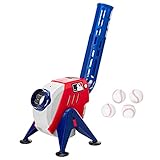
4. Franklin Sports MLB Power Pitcher – Best for Foam-Ball Timing Work With Young Hitters
Franklin Sports MLB Power Pitcher Pitching Machine
10, 15 and 20 mph speeds
Red release light
Foam balls
3 angle positions
Pros
- Three speed settings track a child's progress
- Red light lets hitters time the release
- Foam balls are safer than hard balls
- Quick angle switch for grounders and pop-ups
- 4.5 lbs and folds down for the car
Cons
- 4 C batteries and any AC adapter sold separately
- Only 4 foam balls included
- First pitch after startup falls short
The Power Pitcher is built around the thing young hitters need most, which is a set of three speeds they can grow into: 10, 15 and 20 mph. A seven-year-old starts on the slow setting, and the same machine has headroom for a nine- or ten-year-old. That progression is why we like it more than the fixed-speed plastic units.
The four included foam balls are also the right call at this age. A hollow foam ball at 20 mph is far less likely to sting than a plastic shell, and several owners credit the machine with saving their throwing arm by taking over the repetitive work of feeding swings.
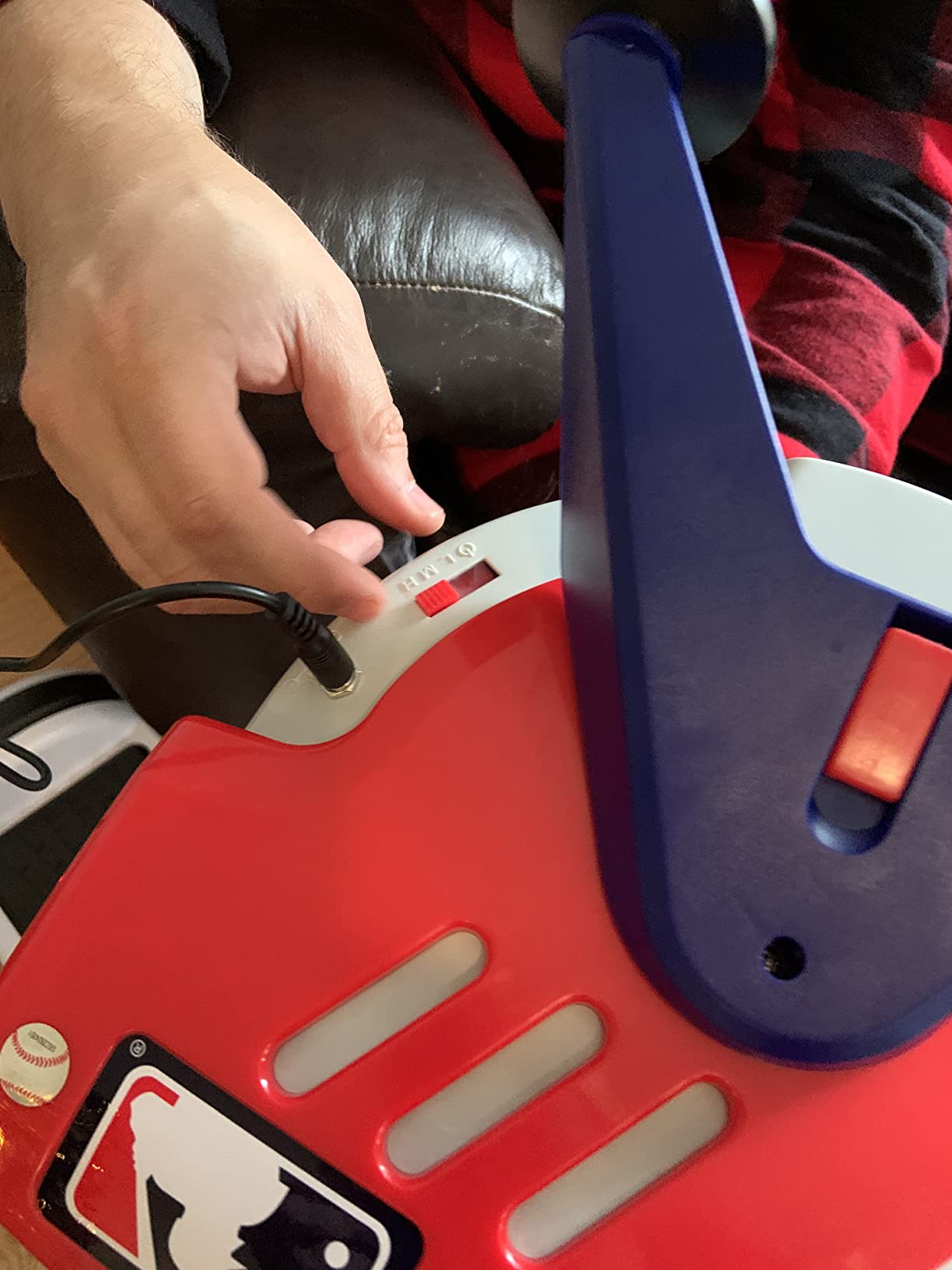
The red release indicator is a small feature that carries a lot of weight in practice. Instead of guessing, the hitter watches the light and starts the swing, which is the correct timing cue coaches spend real time teaching. The three-position angle switch moves between grounders, pop-ups and fly balls in a couple of seconds, so a coach can mix drill types without a long reset.
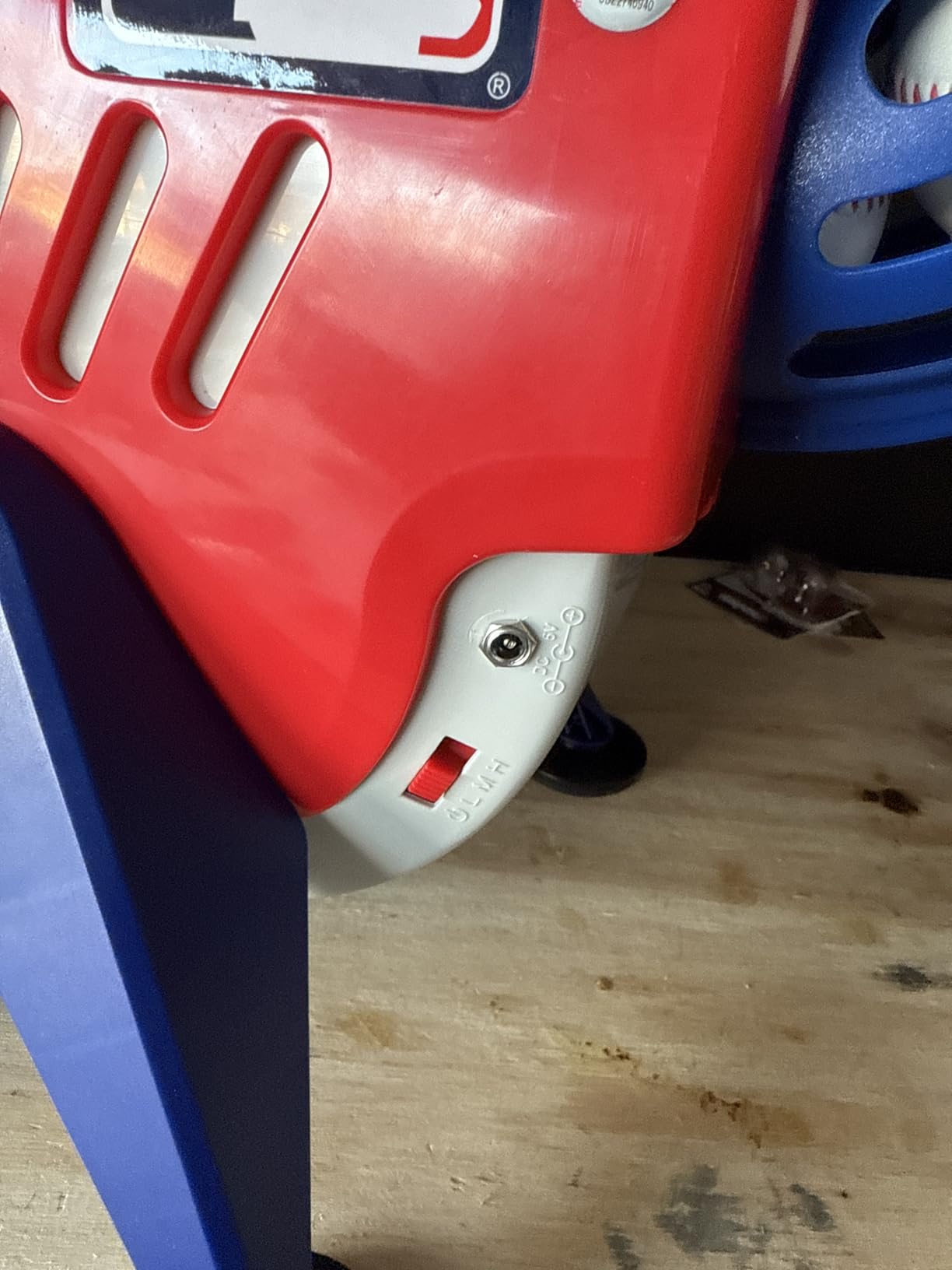
Two things to plan around. The four C batteries are not included, and the A/C adapter is a separate purchase if you want to run it without batteries, which is a reasonable upgrade for indoor garage work. Also, the first ball out after startup does not carry, so let it go and take the second one.
Can it challenge a 10-year-old?
Not on velocity. Twenty miles per hour is a training speed, not a game speed, and a strong 10U hitter will pull that pitch hard every time. What it can do is fix a swing, build a repeatable load, and let a child see two hundred swings in a session without a sore arm, and that is where its value sits.
What is the realistic lifespan?
Good, with a caveat. Most owners report steady use across a season or more. A smaller number have reported motor or gear failure after light use, which is the common pattern with plastic gearboxes in this price band. If it is stored dry and not exposed to sun between seasons, it should be fine.
5. Heater Sports Slider Lite 360 – Best Affordable Machine That Throws a Real Curveball
Heater Sports Slider Lite 360 Baseball Pitching Machine with Automatic Ball Feeder – Accurate 360-Degree Delivery, Durable and Portable Training Tool for All Ages
Fastball and curveball pivot head
Auto ball feeder
Up to 80 mph with lite balls
13 lbs
Pros
- Auto feeder removes manual loading between pitches
- Pivot head throws a genuine curveball
- Accurate in the zone for kids as young as six
- Steel legs keep it stable
Cons
- Only accurate with Heater lite balls
- Drive wheel needs seconds to recover speed
- Height adjustment is coarse
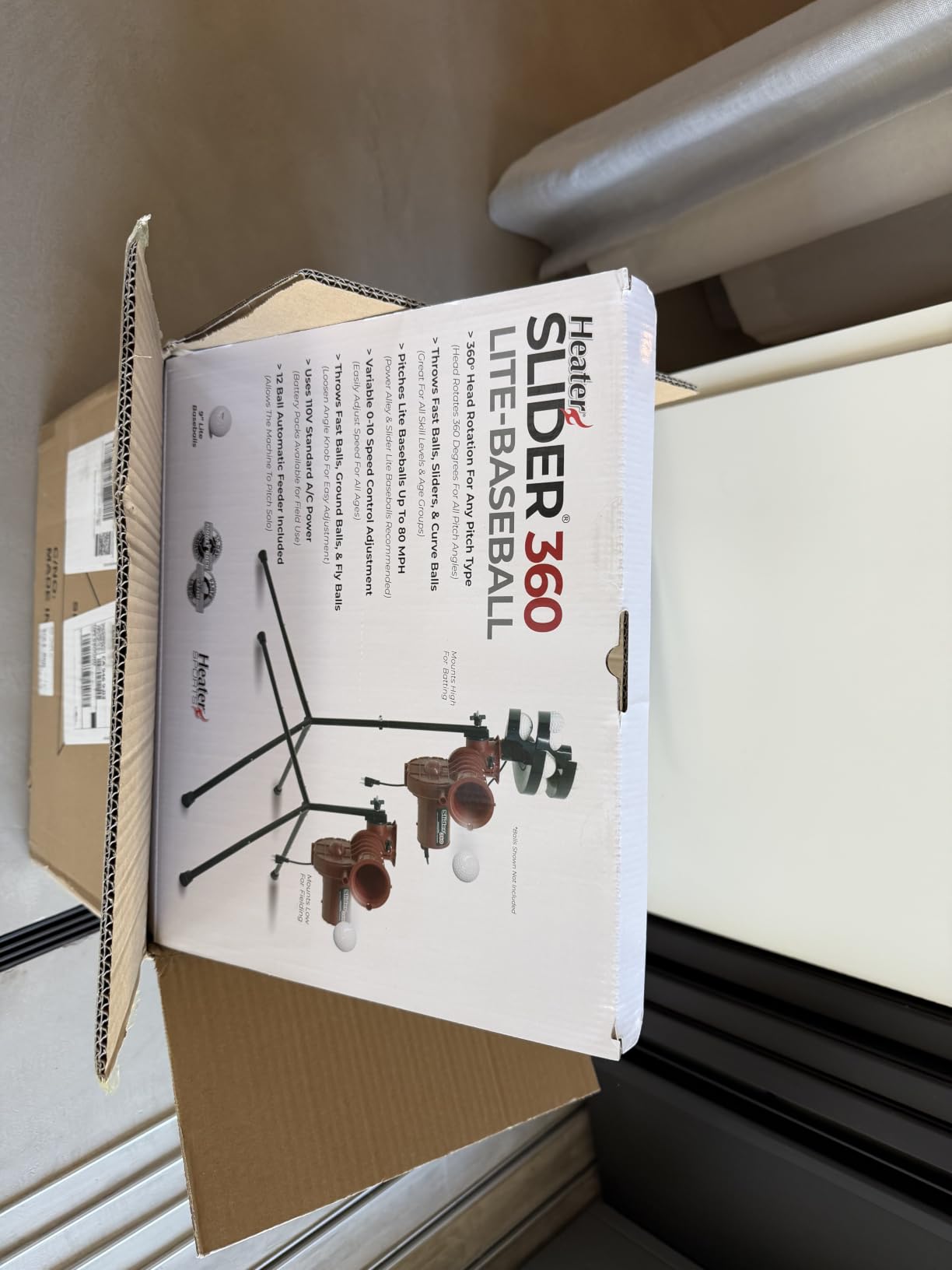
This is the machine to buy when the hitter has already fixed their swing and now needs to see a breaking ball. A pivot head shifts the launch point off center and puts real curve on the ball, which is something no other machine in the affordable tier does. For pitch recognition work on a 10U or 12U hitter facing a pitcher who mixes in a curve, that is the point of the machine.
The automatic ball feeder is the second reason. Once it is loaded, an adult is not needed to trigger each throw, so a single parent can run a full session alone. It throws Heater lite balls at up to 80 mph measured at 46 feet, and the tubular steel legs with rubber tips keep it planted on grass or pavement.
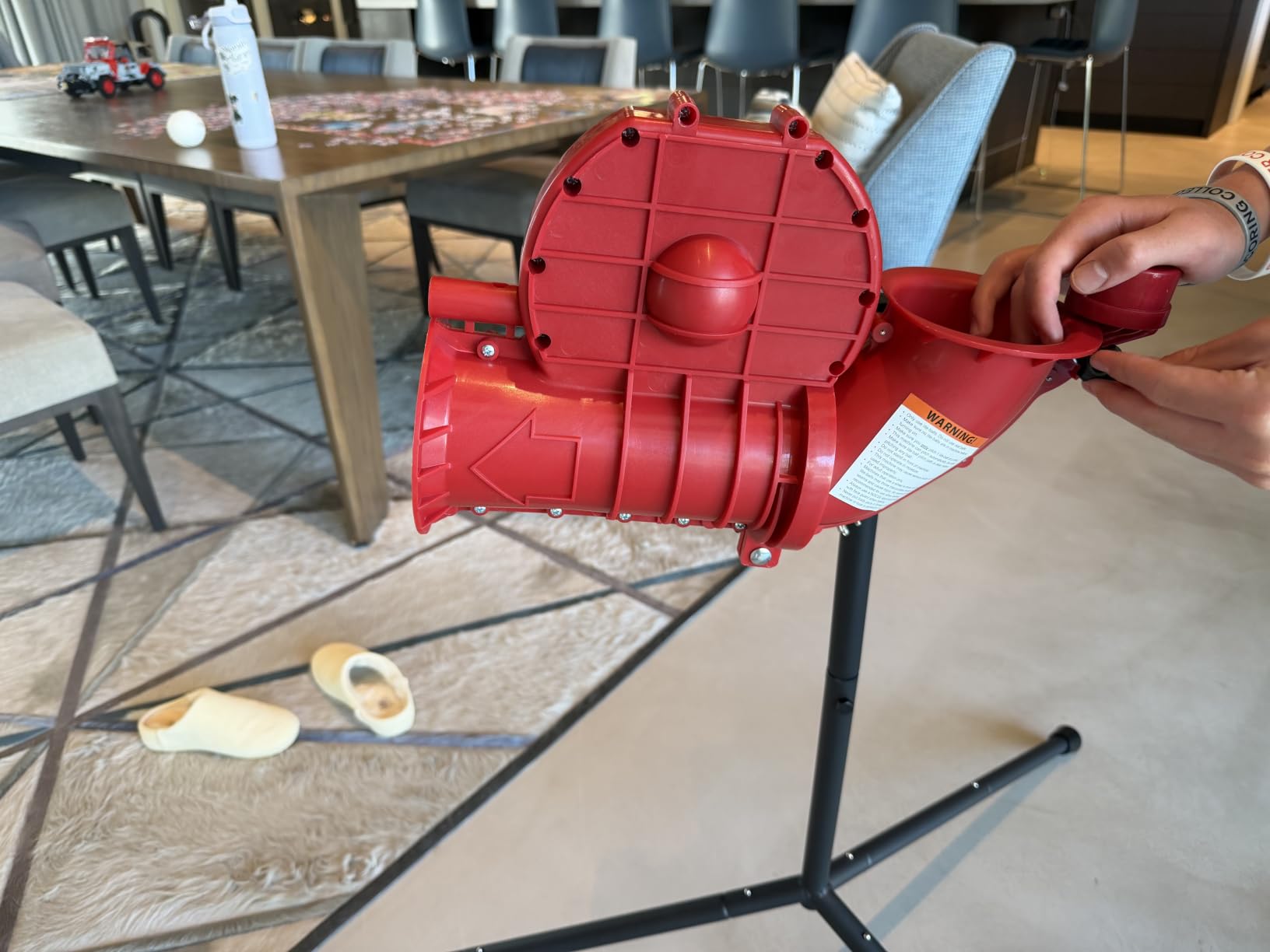
The ball requirement is the catch, and owners are emphatic about it. Feed it Heater Sports white lite balls and it is accurate and consistent. Feed it anything else and the single drive wheel bogs down, the pitch drops, and the accuracy falls apart. Same reason the PowerNet further down lists branded balls as a warranty condition.
You will also notice the wheel needs several seconds to recover between pitches, because there is only one drive wheel. That is not a fault, it is how the machine works, but it means you have to space your throws rather than fire them back to back. The height adjustment is coarse and takes some fiddling to get a consistent release point.
Does a youth hitter really need a curveball?
At 6U and 8U, no. Those hitters are still building a swing, and a moving ball teaches them to chase. At 10U and 12U, increasingly yes, because by then they are facing pitchers with breaking balls and need to recognize and react to them. That is exactly the age band this machine serves best.
How durable is a machine used every day?
Owners running daily practice report it holds up for years on tubular steel legs, and the frame and legs are the parts that take the beating, not the plastic shell. The failure points to watch are the speed control and the shell itself, which can crack if a hard line drive comes back at it. Keep the machine behind the batter rather than in the hitting lane.
6. YESMARKS Kids Auto Pitching Machine Set – Best All-In-One Kit for a First Machine
YESMARKS Kids Auto Baseball Pitching Machine Outdoor Toy Set – Training Equipment & Batting Practice Toys for Youth, Includes 10 Baseballs, Baseball Bat and Sports Bag
Machine, bat, 10 balls and bag
3.4 lbs
4 AA batteries
Ages 5 and up
Pros
- Everything a child needs in one box
- Ten balls cut down pickup time
- 3.4 lbs and breaks down for travel
- Hollow balls and collapsible bat suit young players
- Steady force as the batteries drain
Cons
- Batteries not included
- Light hollow balls do not feel like real baseballs
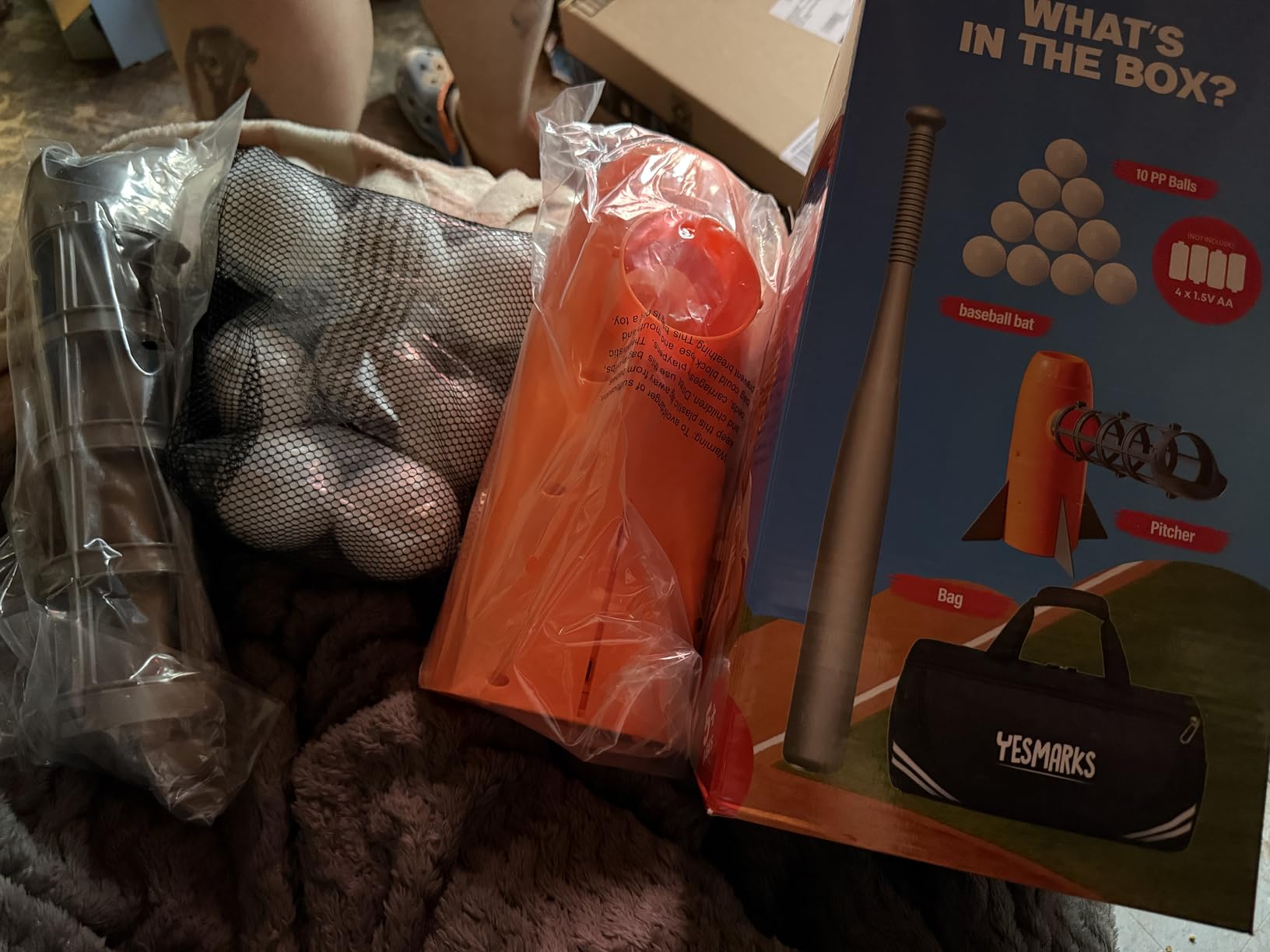
Most parents buying a first machine end up buying the machine, then a bag of balls, then realizing they need a bat for a five-year-old who is still on a tee. This set bundles the launcher, a light plastic bat, ten practice balls and a carry bag in one box, which removes the entire first-trip-to-the-store problem.
It weighs 3.4 pounds and the launcher disassembles for transport, so it moves between a garage, a driveway and a park without asking a second adult for help. Owners also note that the pitch force holds steady as the batteries run down, which is not something you can say for every machine in this roundup.
Be clear-eyed about what it is. The hollow practice balls are noticeably lighter than a real baseball, so the contact feel is different and a hitter who only trains on them will be surprised by the first real pitch. The rocket-shaped launcher also limits pitch variety, so there is one location and one trajectory.
It is rated for kids five and up, which makes it a genuine first machine rather than a toy, but it is a training aid, not a path to game velocity. A family that plans to stay in the sport for three years will outgrow the box eventually.
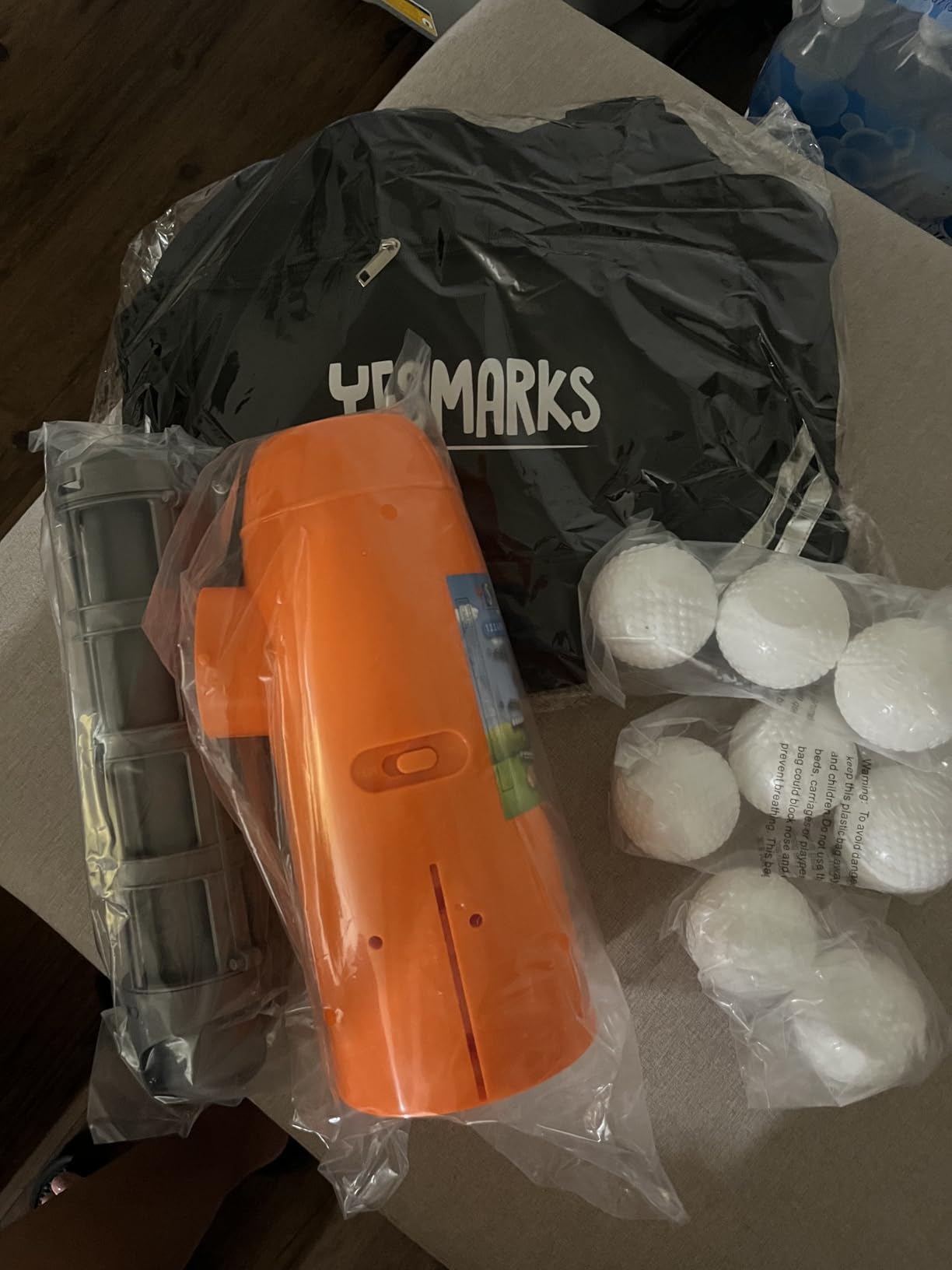
Is a bundled set better value than buying a machine alone?
For a first purchase, yes, because the extras are the things you were going to buy anyway. Once your child is hitting real balls at a real speed, the machine itself is the only part of this package that still matters, and at that point you are shopping in a different tier.
What is the realistic safety profile?
It is one of the safer options in the roundup for a small child. Hollow plastic balls and a collapsible plastic bat remove most of the sting factor, there is no compressed air and no exposed hot motor, and the whole thing weighs less than a bag of groceries. Batteries are still not included, so add those to the first shop.
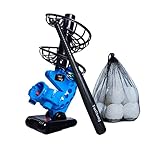
7. Furlihong 380BH – Best Starter Machine for the Youngest Hitters
Furlihong 380BH Baseball Pitching Machine for Kids and Beginner
20 mph with sting-free balls
3 launch angles
20 training balls
2.1 lbs
Pros
- Twenty sting-free balls included
- Three launch angles cover different ages
- 2.1 lbs so a child can reposition it
- Battery power means no cord to trip over
Cons
- 20 mph ceiling cannot challenge older hitters
- Only the supplied Furlihong balls work safely
At 4.3 stars, this rates higher than every other machine here except the Blue Flame, and the number is deserved for what it covers. Twenty sting-free training balls come in the box, and twenty is more than the four or six that come with most of the plastic tier, so a child can work a session without an adult pausing to gather.
It weighs 2.1 pounds, which is lighter than a bag of dog food, and the extendable ball tracks give the child room to load without adult help. The three launch angles let a coach serve a five-year-old and an eight-year-old from the same unit, and the launch indicator plus seven-second interval give the hitter a clear rhythm.
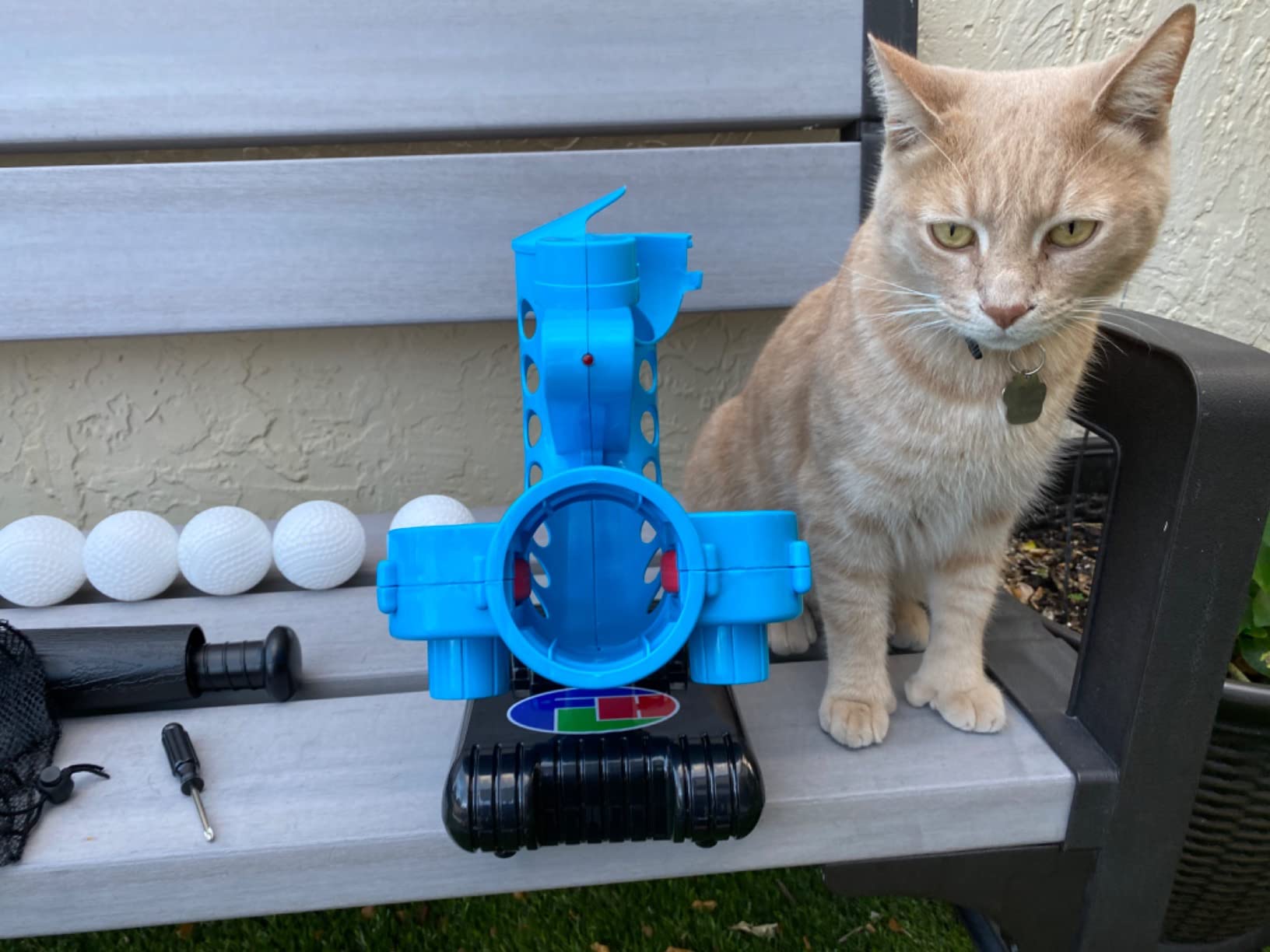
Two constraints decide whether this is the right pick. The top speed is 20 mph with the supplied 0.81 ounce plastic balls, so an older or stronger hitter will pull it out of the park and learn nothing about contact. And the machine is designed around its own balls, which are not regulation weight, so a child who trains only on them will not be prepared for a real baseball.
The sting-free plastic is the deciding advantage at the youngest ages, and it is also the limitation. Nothing in this price band throws a regulation ball at a beginner-safe speed, and this machine is the clearest example of the trade.
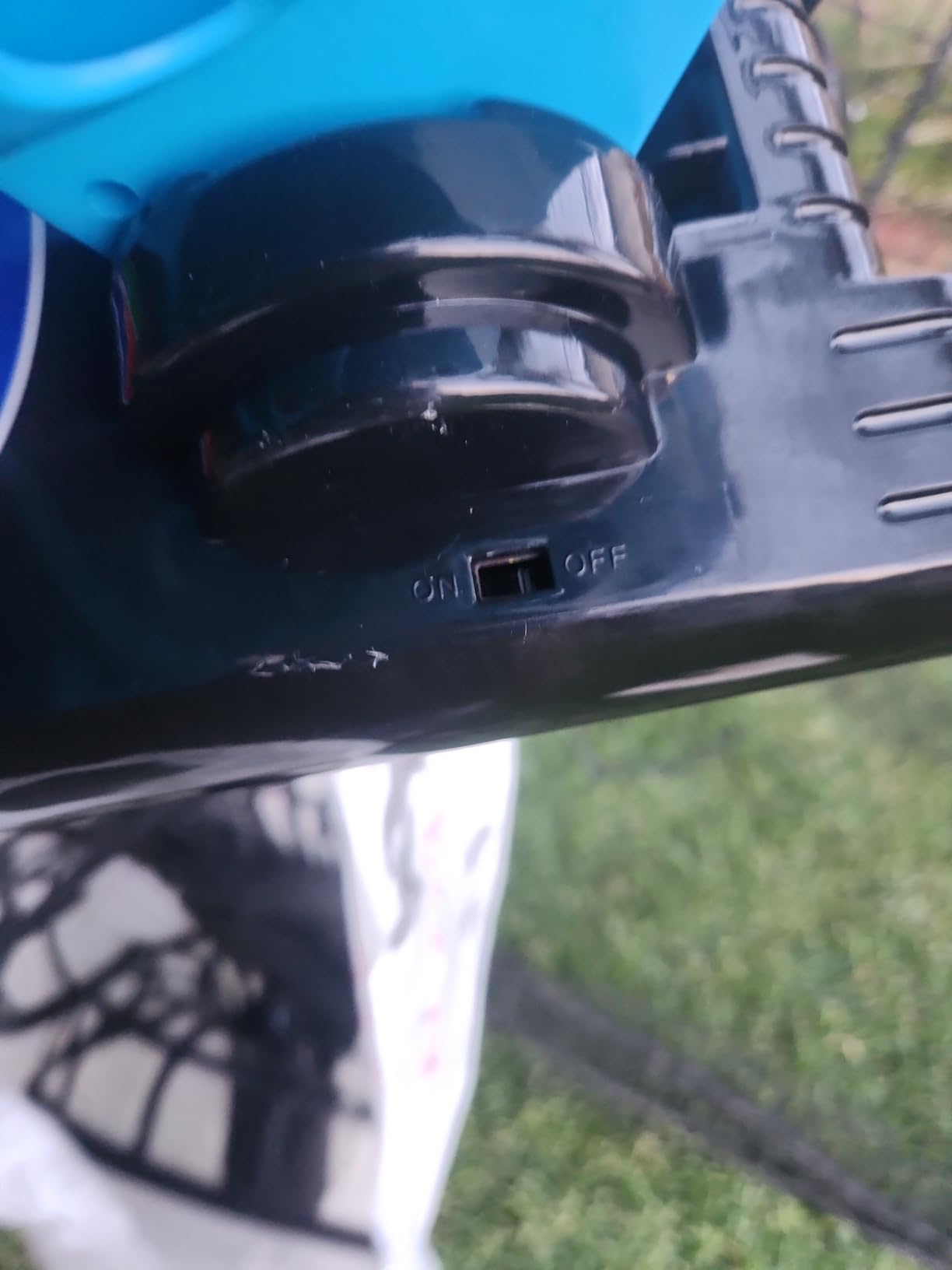
How old is the youngest hitter who can use it?
Around five, with an adult nearby. The sting-free plastic balls are the deciding factor at that age, since a 20 mph hard shell is the part that actually hurts a small child. Keep it in the driveway rather than the yard, and supervise the first few sessions until the child is reliably standing behind the plate rather than chasing the ball.
Will it survive a full season of daily use?
Roughly, yes. It runs on batteries with no cord, so there is nothing to trip over in the yard and no power source to fail. The honest limit is the speed, not the hardware. Plan on this being a two-season machine for a child who is just learning to swing.
8. Furlihong 3801BH – Best for Quiet Indoor Timing Work
Furlihong 3801BH Upgraded Electronic Baseball Pitching Machine for Beginner
Two adjustable wheels
30 mph with dimpled balls
6V AC adapter included
4.5 lbs
Pros
- Two wheels dial in fastball
- curve and slider movement
- Runs on the included 6V adapter or 4 D batteries
- Quiet enough for a garage or living room
- Useful for ready-at-release timing work
Cons
- High and low switch makes little difference
- Very light dimpled balls scatter in wind
This is the upgraded version of the machine above, and the meaningful change is mechanical. It has two independently adjustable wheels, one on each side, which means you can dial in a curve, a slider or a fastball rather than having one trajectory. Several owners specifically credit it with improving their ready-at-release timing, which is the timing problem most youth hitters actually have.
It also comes with a 6V AC adapter, so unlike the battery-only units in this roundup it can run in a garage or a basement without draining a set of D cells halfway through a session. Owners note it is quiet enough to use indoors, which matters for winter work.
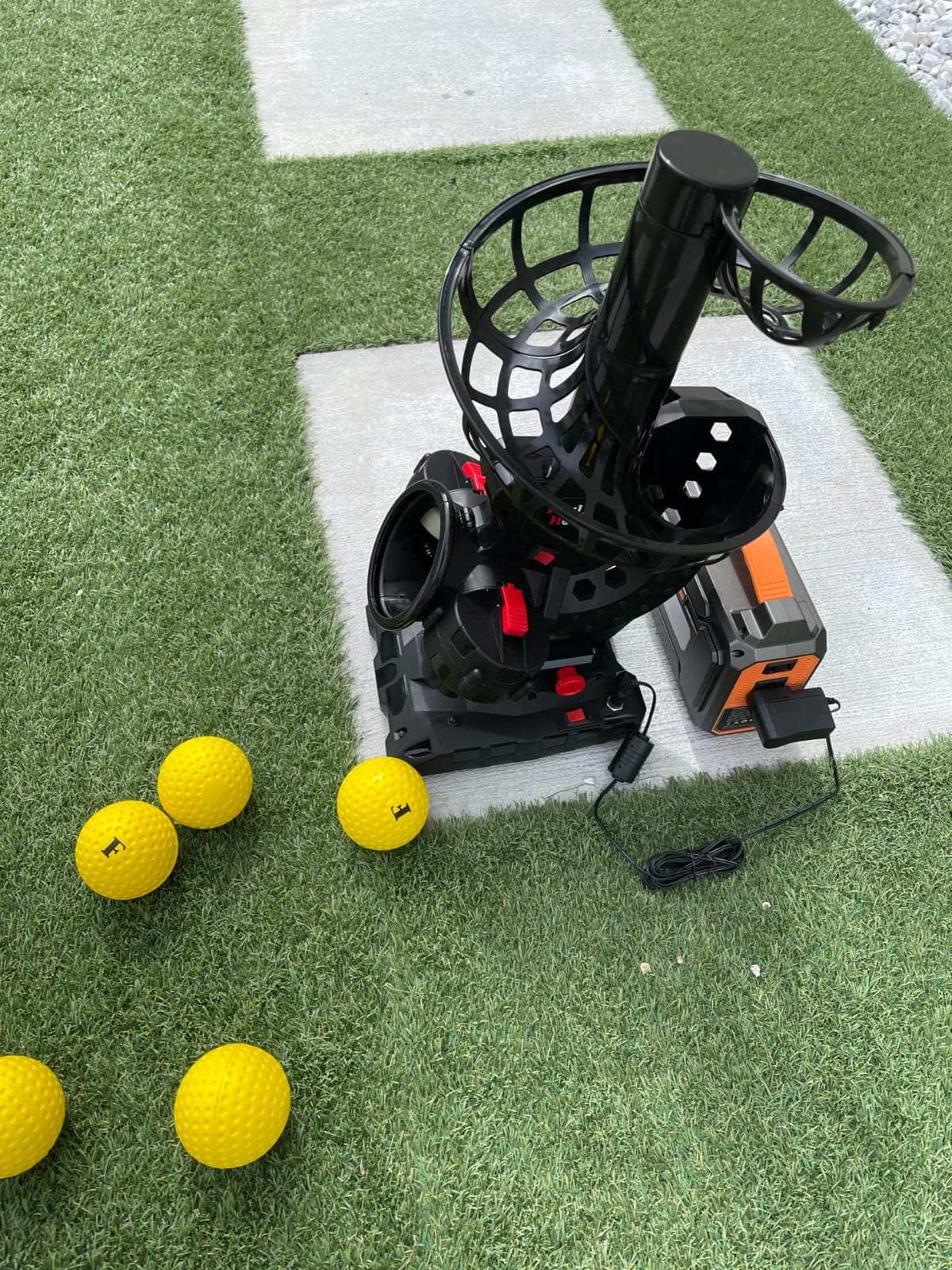
Do check the high and low speed switch before you build a lesson plan around it. A number of owners report that the switch makes little or no practical difference in speed or distance, so treat the machine as a single-speed unit with two wheels rather than a variable-speed one.
The other recurring issue is the ball. The dimpled polyurethane balls are very light, which makes them pleasant to hit indoors but unpredictable outdoors where even a light breeze moves them. And the feed ramp is a thin, cheaply made part, which is the piece most likely to need replacing eventually.
Is it safe to use in a garage with a young child nearby?
It is one of the quieter and lighter options here at 4.5 pounds, it runs on low-voltage power, and it throws soft dimpled plastic rather than hard shells. The main caution is placement. Put the machine well off to the side of the swing path and keep the AC cord along a wall rather than across a walkway, because that cord is the real trip hazard in an indoor setup.
Can it throw real baseballs?
No, and that is the significant limitation for a family with a growing player. The machine is not compatible with regulation baseballs, so the training ball is a dimpled practice ball for the whole of its useful life. That is fine for swing mechanics and timing, and it becomes a real gap the day your child starts facing a hard ball in a game.
9. PowerNet Launch F-lite – Best Two-Sport Machine for a Coach Running Both Baseball and Softball
PowerNet Launch F-lite Baseball & Softball Pitching Machine, Adjustable Height and Angles, Variable Speed Up to 90 MPH, Batting Practice Ball Launcher (F-lite)
40-90 mph at 25 feet across 4 speeds
Swappable tripod legs
12 dimple balls
Pros
- One frame serves baseball and softball
- Four speeds serve a six-year-old to an eleven-year-old
- Quick setup with spare screws included
- Consistent strikes once set
Cons
- Measured speed falls well short of the advertised range
- Only performs properly with branded balls
- No wheels so it is awkward to move
A coach who runs a fall softball program and a spring baseball program only wants to buy one machine, and that is what this one is for. The tripod base legs swap between baseball and softball, so converting it takes a couple of minutes rather than a second machine in the equipment shed.
The four speed settings are the strongest feature in practice. They cover a six-year-old and an eleven-year-old from the same frame, which owners consistently call out as the reason it works for a whole team rather than one age group. It also throws pop flies and line drives, so it handles fielding drills, and the setup is quick with spare screws included in the box.
Now the part that matters, and it is the first thing to check if you are considering this machine. The advertised range is 40 to 90 mph measured at 25 feet, and owners who have put a radar gun on it report the top speed falling well short of that. Treat the four settings as relative levels rather than absolute numbers.
It is also strictly a branded-ball machine. It performs properly only with PowerNet Launch F-lite balls, and the warranty language states that other brands void coverage. Twelve balls are included, six baseballs and six softballs, and adding a bucket of them is part of the ongoing cost rather than an accessory you can skip.
Is it worth buying for a single-sport club?
Only if you coach both. For a baseball-only program the interchangeable legs and softballs are dead weight, and the same money goes further into a dedicated baseball machine with a higher top speed. The four-speed spread and quick setup are what make it valuable, and both apply to a single-sport team too.
How does it handle being moved around a field?
This is its weakest practical point. There are no transport wheels, so moving it across grass means carrying it, and a hard line drive or an off-brand ball can crack the semi-hard plastic body. Set it up once at the start of practice on a stable surface rather than dragging it between drill stations.
10. Heater Sports Heavy-Duty Pitching Machine – Best for Club and Team Practice
Heater Sports Heavy-Duty Baseball Pitching Machine W/Bonus Ball Feeder – Accurate & Adjustable Pitching Machine for Kids, Teens, and Adults | Ideal for Baseball Training and Practice Sessions
All-metal frame
10-52 mph with standard balls
12-ball auto feeder
42.7 lbs
Pros
- All-metal frame feels solid at full speed
- 10-52 mph range grows with the hitter
- 12-ball feeder drops a ball every eight seconds
Cons
- Nearly 43 lbs and awkward for one adult
- Feeder can jam and needs an adult nearby
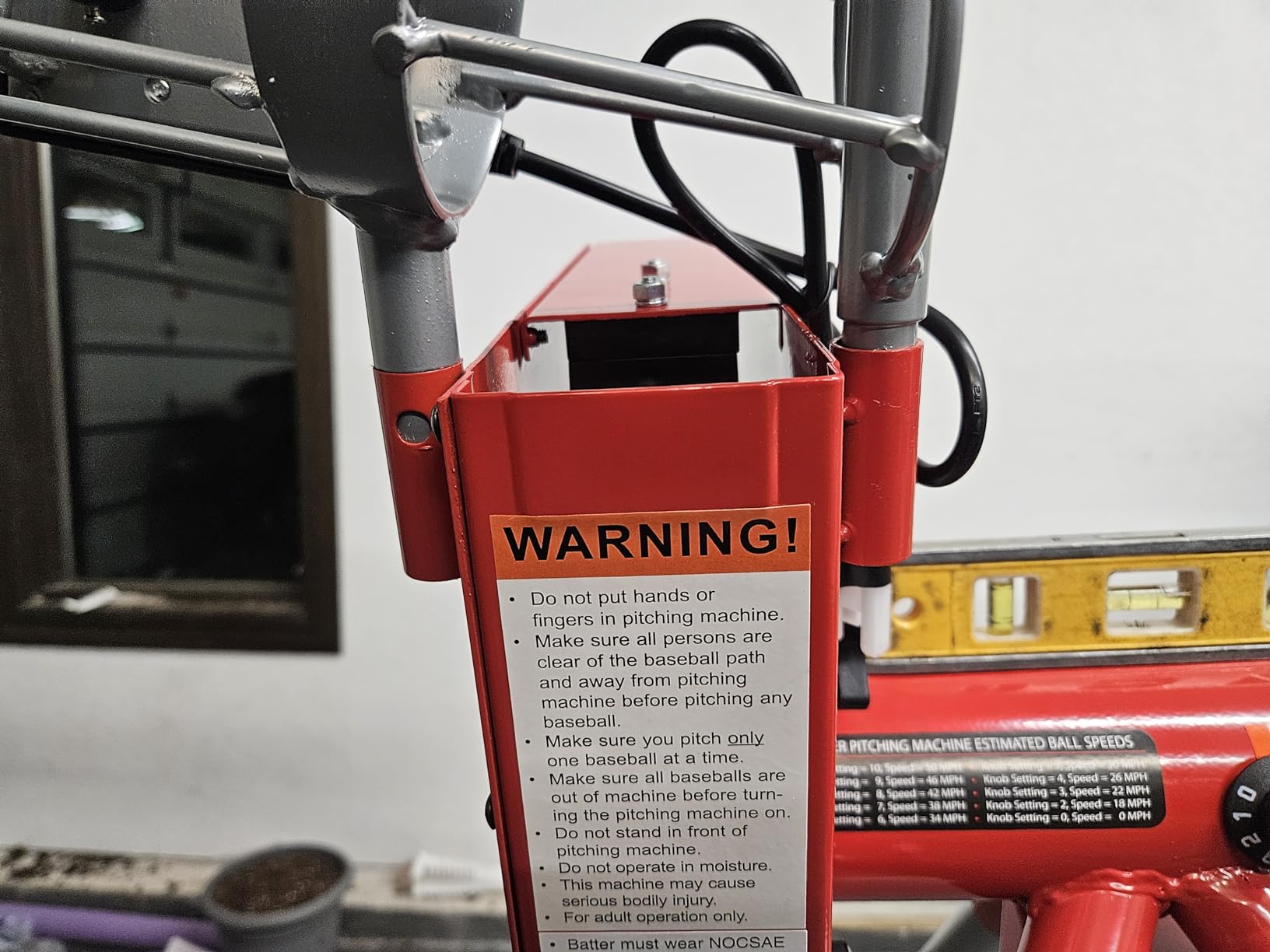
This is the one to buy when a machine has to survive a full season of team practice rather than one family’s weekend sessions. The frame and housing are all metal, it runs a 0-10 speed control covering 10 to 52 mph with standard balls, and it includes a 12-ball automatic feeder that drops one every eight seconds. That range is the reason it can serve a whole roster from 8U up to a high school senior on one machine.
Owners consistently describe the accuracy as good enough to run real hitting work, including grounders, line drives and pop flies, with the pivot head handle adjusted by a knob. Setup takes under ten minutes for most people, and customer service is responsive with replacement parts, which is what you want from a machine that will be used daily.
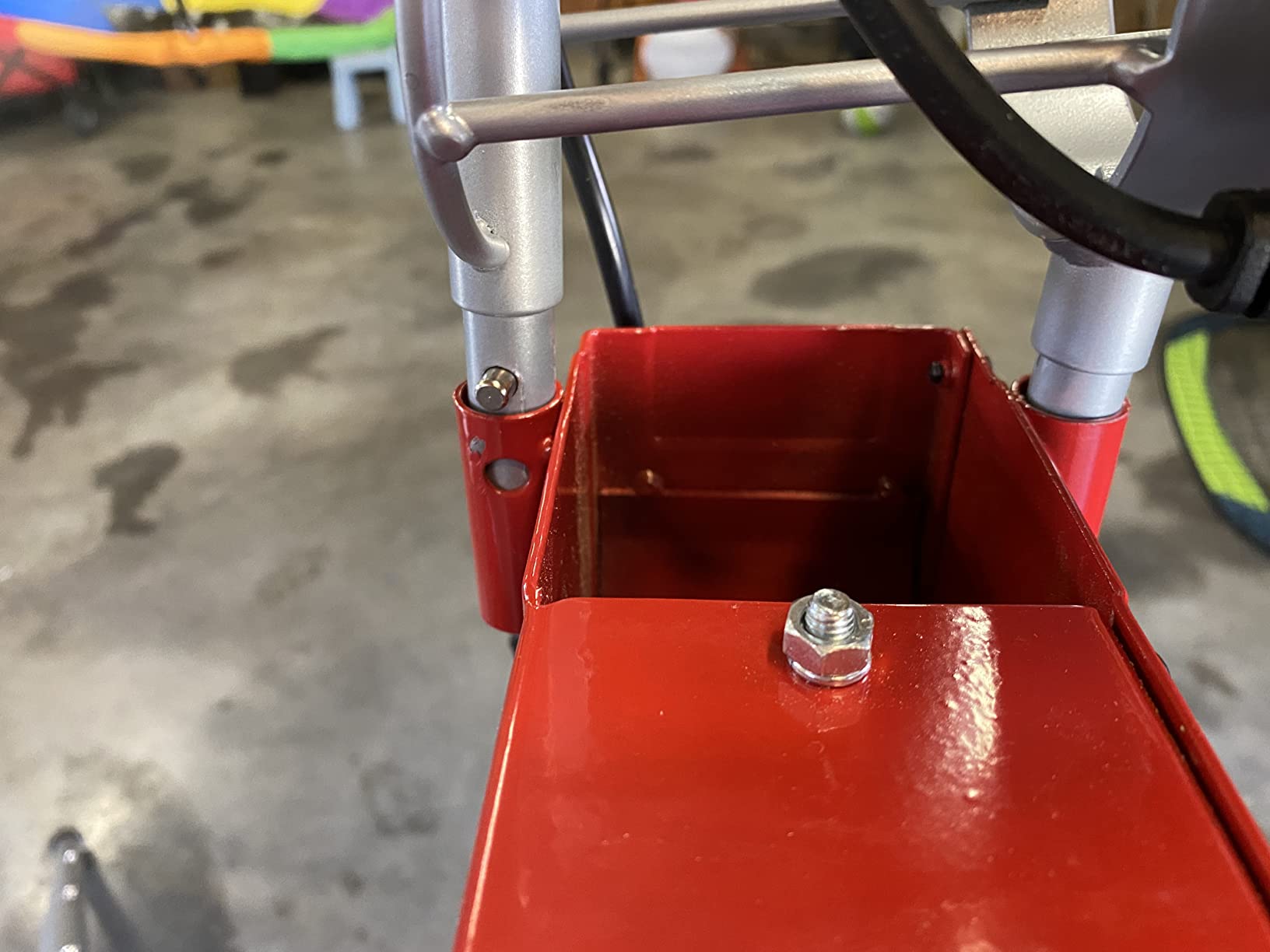
At 42.7 pounds it is not a one-person carry, and that is the first thing to plan around at a field. Two adults will lift it into a pickup bed without thinking about it. One adult will find it awkward, and it is not a machine you want to reposition between drill groups.
A couple of practical notes for field use. Someone should stand near the Heater while it runs, because balls occasionally jam in the feeder. And the throwing wheel arrives deflated, so it has to be pumped before the first use. The wheel also wears unevenly over time, and replacement wheels are expensive relative to the machine price, so treat it as a maintenance item rather than a permanent part.
How long does one of these last?
Longer than anything else in this roundup, because the all-metal frame and housing do not crack when a line drive comes back at them. The wear items are consumables: leather baseballs scuff and degrade in the wheel, synthetic balls wear faster still, and the wheel itself eventually loses roundness. Owners who used Heater machine balls report they stay accurate longer, which slows the whole wear cycle.
Is it overkill for a single family?
Possibly. Unless you have a teenager who is training seriously or you are coaching a squad, the weight and the running cost of machine balls are hard to justify when a mid-tier machine covers the same speed band. For a club with a board budget and a season-long plan, this is the machine that will still be working in five years.
How to Choose a Pitching Machine for Youth Baseball?
Two-wheel, one-wheel and manual machines explained in plain language
Almost every machine in this roundup uses a spinning wheel to grip the ball and fire it through a throwing head. The difference is how many wheels and how much control you get. A single-wheel machine is simpler and cheaper, but the ball can wander because one wheel grips and spins at the same time.
A two-wheel machine separates those jobs, so one wheel sets the speed and the other sets the spin. That is what lets the Furlihong 3801BH throw a real curve.
Manual machines like the Blue Flame skip the motor entirely and use a spring and a lever. They are the least accurate category, but they need no power and they are mechanically simple in a way that survives decades. Pneumatic machines, which burst a ball with a compressed-air pulse rather than a wheel, are the newest category, but none of them are in this lineup.
Match the speed range to your child’s age
Buy for the hitter you have, with a little headroom, and do not buy for the hitter you hope to have in two years. Every machine here has a ceiling, and a parent who buys a 20 mph machine for a ten-year-old will have it working as a batting tee within a season. The one place to spend for headroom is the top of the range, not the machine class, because a wide speed band lets you ramp up as the swing improves.
Ball type decides realism and machine life
Real baseballs give the truest contact and the most realistic flight, and they wear the wheel fastest. Foam and hollow plastic balls are safer and gentler on the machine but do not build real timing, because a light ball arrives slower than a regulation one at the same setting. Dimple balls sit in between and are the standard for a compact machine. Whatever you choose, buy the balls the machine is designed for, because the Heater Slider Lite and the PowerNet Launch F-lite both lose accuracy with off-brand balls and the PowerNet warranty language specifically excludes them.
Power source: batteries, AC adapter, or a field with no outlet
Most youth fields have no outlet near the cage, which rules out anything that only runs on mains power. The practical options are four C or D batteries for a session or two, an internal rechargeable battery for all-day use, and a small inverter or generator for a mains-only machine at a field with no outlet. The manual Blue Flame sidesteps the problem entirely, and the Furlihong 3801BH is the rare machine in this roundup that includes an AC adapter for indoor work.
Safety first: enclosed wheels, cords and distance from the batter
Three rules cover most of it. Keep the machine behind the batter’s box or well off to the side of the swing path, not out in front where a line drive comes back at it. Run the power cord along a wall or fence line rather than across a walkway, because the cord is a far more common trip hazard than the machine. And never leave a child alone with a powered machine that has an exposed drive wheel, which is the case for most of the manual and single-wheel units here.
Budget tiers and what you really need in the box
The category spans from a plastic toy that fires a hollow ball to a commercial metal machine, and buyers who skip the middle tier are the ones who regret it. Below the bottom tier you get 20 mph and light plastic balls. The middle tier is where the two-wheel machines and the auto feeders live, and it is where most families should shop. The top tier is all-metal durability and a wide speed range, which only pays off if the machine will be used daily for multiple seasons.
Whatever tier you buy, count the accessories before you order. Most machines ship with four to six balls and a feeder that holds more, so a bulk ball pack is not optional. A tripod, a ball basket, a rebound net and a radar gun are the other items coaches reach for, and we have covered how those kinds of portable equipment choices work in our guides to portable machines you can move between locations and machines that do a fixed job well.
Pitch Speed by Age: What MPH Does Your Kid Actually Need?
This is the single most common question parents ask, and the answer depends less on age than people expect. A hitter needs to see game-like velocity, and game velocity for a given age group is fairly well defined. Start a notch below the age-group average, because a machine throwing exactly the game speed leaves no room for the hitter to adjust once they get comfortable.
6U and tee-ball age – roughly 25 to 35 mph. Foam or light plastic balls, low speed, work on contact and a level swing path.
8U – roughly 35 to 45 mph. Enough to require a real load, still slow enough that a plastic ball feels right.
10U – roughly 45 to 55 mph. This is where a two-wheel machine starts to earn its cost, and where a curveball becomes useful.
12U – roughly 50 to 60 mph. Add a second machine speed band for location work, and start mixing in breaking balls.
14U and high school – 60 mph and above. At this level you are looking at a metal machine with a wide range and a feeder.
One caveat that trips up almost every comparison: speed ratings are measured at different distances. A number quoted at 46 feet, the distance from the front of the mound to the back of the plate, is not the same pitch as a number quoted at 25 feet, which is the distance from the front of a pitcher’s mound to the front of home plate. A machine rated 80 mph at 46 feet is throwing materially faster than one rated 80 mph at 25 feet. Two of the machines in this roundup state their distance and the rest do not, so read the fine print before you line two machines up side by side and pick a winner.
Backyard and Field Setup for a Youth Pitching Machine
Placement matters more than most buyers expect. A two-wheel machine set up at 55 to 60 feet from the plate throws a pitch that arrives at a real speed and a real angle, which is what a hitter will see in a game. Pull it much closer and every pitch turns into a line drive. Push it back and the hitter is waiting on the ball, which trains patience instead of a swing.
Plan the backstop before the machine. Every machine in this roundup throws balls that carry past a standing batter, so you need a net, a tarp, a fence or an open field. A side net catches foul balls and pulled hits, and a back net keeps balls off the house and the neighbours. Skip the backstop and you will be retrieving balls from a hedge for a year.
For power, test the outlet before you rely on it. Extension cords across a walkway are the most common safety complaint we heard from owners, and wet grass plus mains power is a combination to avoid entirely. A battery machine, a manual machine, or a mains machine on a properly rated outdoor extension lead run along the fence line solves the problem. Getting the machine and its power source to the field is half the job, and the same transport-versus-fixing-it-in-one-place trade-off shows up in our guide to machines built for a single dedicated station.
Indoor use works with the quieter, lighter machines in this roundup, mostly the Furlihong 3801BH and the smaller Franklin units, but only with foam or dimple balls. Leave the hard-ball machines outside, and remember that a garage ceiling is about seven feet, which is exactly the height a rising ball will reach.
Machine Pitching vs Tee Work and Live Bullpen
The most common question from hitting coaches is not which machine to buy. It is how much of a session should come off a machine at all, and the answer from coaches is consistent: balance. The advice repeated across hitting forums was to avoid overdoing any single source, and to rotate between tee work, machine work, soft toss and live pitching over a season.
There is a reason that is the standard advice. Tee work isolates the load and the barrel path. Soft toss trains the timing of a moving ball at a low threat level. Live pitching is the only thing that trains a hitter against a real human being reading what they are doing. A machine replaces the pitcher with consistency, which fixes mechanics, and it removes the pressure of facing a better player while a swing is still being rebuilt.
Expect to phase it out. Coaches often describe a similar pattern, using machines when a player was around eight and switching to coach-pitched bullpen by nine or ten, once the player could handle a live ball. That is not a reason to skip buying a machine, but it is a reason to buy a mid-tier one rather than a commercial unit you will grow out of in a season.
A few drills that work well off a machine: alternate machine pitch with soft toss so the hitter sees the same pitch from two speeds, work a two-strike count by setting the machine to a location instead of the middle, run high-beltline fastballs by tilting the head up, and finish with a set of pulled ground balls by aiming the machine away from the pull side.
Frequently Asked Questions
What is the best pitching machine for youth baseball?
The best pitching machine for youth baseball is the one whose speed range matches the hitter and whose ball type is safe for that age. A two-wheel machine covering roughly 20 to 45 mph serves most 6U to 12U hitters, while a five-year-old needs a lightweight battery unit at about 20 mph and a teenager needs a metal machine with a 50 mph-plus range.
What is the best pitching machine for a 10-year-old?
A 10-year-old is ready for roughly 45 to 55 mph, which is the range where a two-wheel machine starts to make sense. Look for a model with an automatic ball feeder so the hitter can take long sessions without an adult triggering every pitch, and consider one that throws a curveball, because 10U hitters start facing breaking pitches. A foam or dimple ball is still the safer choice at this age.
What is a good baseball throwing machine for kids?
A good machine for kids needs three things: a low enough speed to start at, a safe ball type, and a mechanism a child can run without help. Battery power, a launch indicator light and an adjustable angle cover most of that. Machines that throw only plastic hollow balls are fine for volume practice, but a hitter moving up a level needs either a real baseball or a dimple ball to build realistic timing.
What is the typical pitching speed for an 8-year-old on a pitching machine?
An 8-year-old typically hits in practice against pitches in the 35 to 45 mph range. Set the machine slightly below the top of that band so the hitter has room to progress without a jump. At this age the priority is a repeatable release point and a level swing path, not velocity, so a slow machine that is accurate is better than a fast one that wanders.
How many pitches should a 9U kid see in a session?
A 9U hitter typically benefits from 60 to 100 quality swings in a session, which is roughly 30 to 45 minutes depending on rest between swings. Quality beats volume, so stop when the swing starts to fall apart rather than chasing a number. Rotating between machine work, tee work and live pitching across a week matters more than hitting one source hard in a single session.
Conclusion: Our Top Youth Baseball Pitching Machine Picks
The best pitching machines for youth baseball come down to one question: how old is the hitter and how long do you expect to own it. For a child starting out, the Franklin Sports MLB Electronic and the Furlihong 380BH give you safe, repeatable swings for a season or two at almost no risk. For a hitter who has outgrown the plastic tier, the Heater Sports Slider Lite 360 adds a genuine curveball and an automatic feeder, and the Furlihong 3801BH covers the quiet indoor timing work.
For a family that wants real baseballs and zero power dependency, the Louisville Slugger Blue Flame remains the value pick in this roundup, and owners have kept it running for years for exactly that reason. For a club that will use a machine daily across a whole roster, the all-metal Heater Sports Heavy-Duty with its 10-52 mph range and 12-ball feeder is the one that will still be working long after the cheaper units crack.
Start by matching the machine to the age band in the guide above, buy the balls the machine is designed for, and set it up well away from the batter with a backstop behind the hitter. Updated for 2026, with ratings and review counts pulled from current listings.