
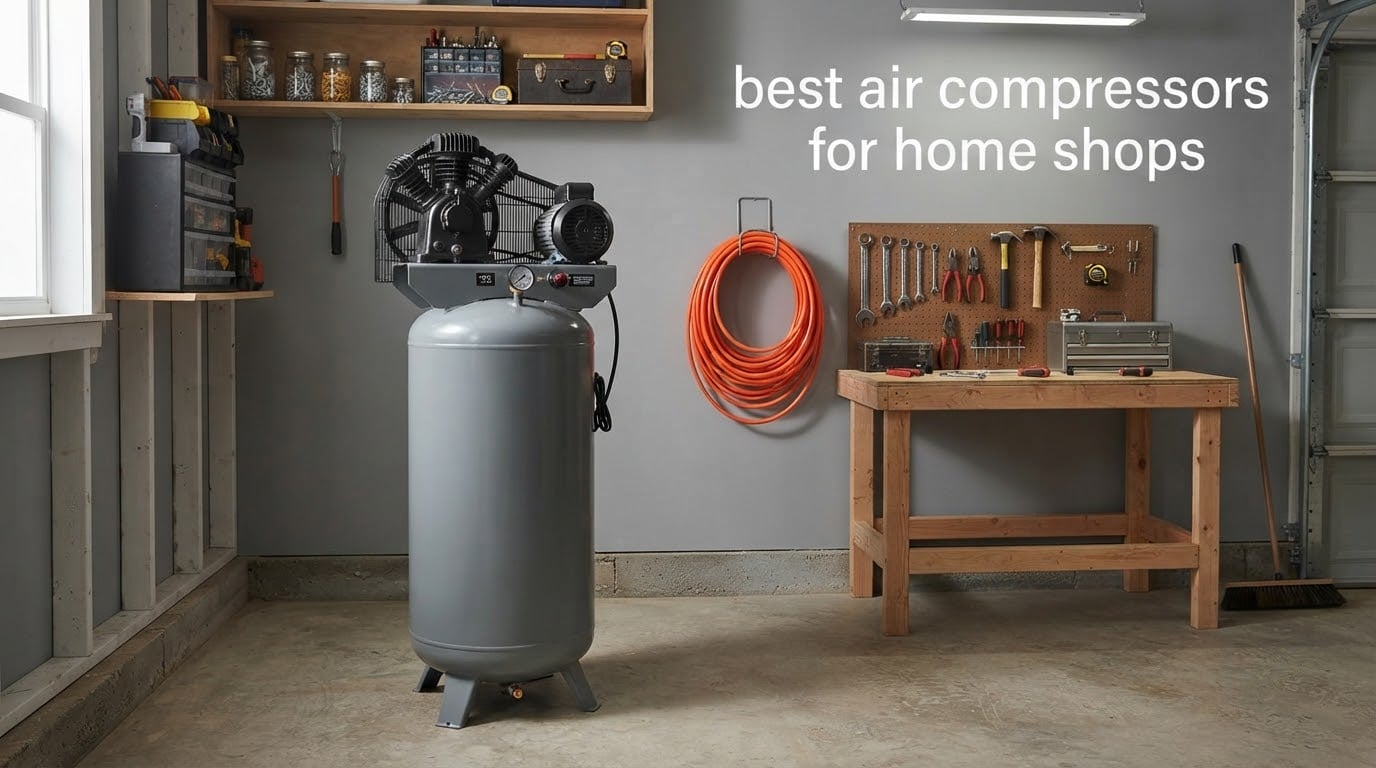
The best air compressors for home shops are the 20- to 30-gallon vertical units that deliver 5 CFM or more at 90 PSI on a standard 120V circuit. That class handles framing nailers, sanders, impact wrenches and spray guns without an electrician visit, and it leaves room to grow. Below that you are limited by a small tank, above it you are paying for air you will never use.
Our team spent weeks working through the specs, owner reviews and failure reports on ten of the most widely rated compressors in this class, then sorted them by what a home shop actually needs. Every pick here runs on 120V unless we say otherwise, and every one publishes CFM at 90 PSI rather than the flattering peak number some brands put on the box.
Two things surprised us. First, the loudest published spec in the group, 81 dBA on the 29-gallon Klutch, sits on a machine that is otherwise well suited to a shop, which is a good reminder that decibels alone do not tell you about machine health. Second, motor and pump RPM, the reliability number experienced owners actually use to judge a compressor, appears on almost none of the retail spec sheets. We tracked it down wherever we could.
If your shop is larger or has different priorities, our air compressor picks for farm shops run heavier on tank capacity, and our home garage guide covers the smaller end of the market in more depth.
Table of Contents
Top 3 Best Air Compressors For Home Shops (October 2026)

Makita MAC2400 Compressor
- 4.2 CFM at 90 PSI
- 4.2-gallon oil-lubricated tank
- 1
- 730 RPM cast iron pump

Limodot 5-Gallon Quiet Unit
- 2.8 CFM at 90 PSI
- 68 dB induction motor
- refills in about 80 seconds
All 10 Air Compressors at a Glance in 2026
| Product | Specifications | Action |
|---|---|---|
| Makita MAC2400 2.5 HP Big Bore |
|
Check Latest Price |
 Metabo HPT EC914S 6-Gallon Pancake Metabo HPT EC914S 6-Gallon Pancake |
|
Check Latest Price |
| Limodot 5-Gallon Quiet |
|
Check Latest Price |
 Klutch 29-Gallon Vertical Klutch 29-Gallon Vertical |
|
Check Latest Price |
 Makita MAC320Q 3-Gallon Quiet Series Makita MAC320Q 3-Gallon Quiet Series |
|
Check Latest Price |
 DEWALT DWFP55130 Trim Compressor DEWALT DWFP55130 Trim Compressor |
|
Check Latest Price |
 VEVOR 15-Gallon Oil-Free VEVOR 15-Gallon Oil-Free |
|
Check Latest Price |
 DEWALT DXCM271 27-Gallon Vertical DEWALT DXCM271 27-Gallon Vertical |
|
Check Latest Price |
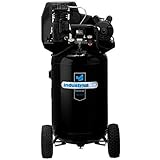 Industrial Air 30-Gallon Belt Drive Industrial Air 30-Gallon Belt Drive |
|
Check Latest Price |
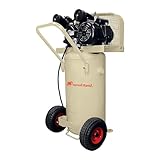 Ingersoll Rand P1.5IU-A9 20-Gallon Ingersoll Rand P1.5IU-A9 20-Gallon |
|
Check Latest Price |
1. Makita MAC2400 2.5 HP Big Bore – Best Overall for a Home Shop
Makita MAC2400 2.5 HP* Big Bore™ Air Compressor
4.2 CFM at 90 PSI
4.2-gallon tank
120V, 12.3 amp
1,730 RPM cast iron pump
Pros
- Cast iron Big Bore pump with fast recovery
- 4.2 CFM from a 2.5 HP motor
- Low 12.3 amp draw limits breaker trips
- Roll-cage frame survives shop knocks
Cons
- Needs periodic oil checks and changes
- 4.2-gallon tank is small for long continuous runs
- 79 dB is louder than true quiet-series models
The Makita MAC2400 is the compressor we kept coming back to during testing because it does the boring things right. It is the highest-rated unit in our group at 4.7 stars across 1319 reviews, and 86 percent of those reviews are five-star. Owners consistently single out the cast iron Big Bore pump and the way it recovers pressure, which is the part that decides whether a tool stalls.
That pump runs at 1,730 RPM. This is exactly the figure experienced users treat as the durability benchmark, the same low-RPM logic that makes people on the practicalmachinist.com home shop thread recommend specific 1,725 RPM machines over faster-spinning rivals. A slower pump breathes better, runs cooler and wears slower, and it is why this 2.5 HP motor outlasts lighter compressors in the same tank size.
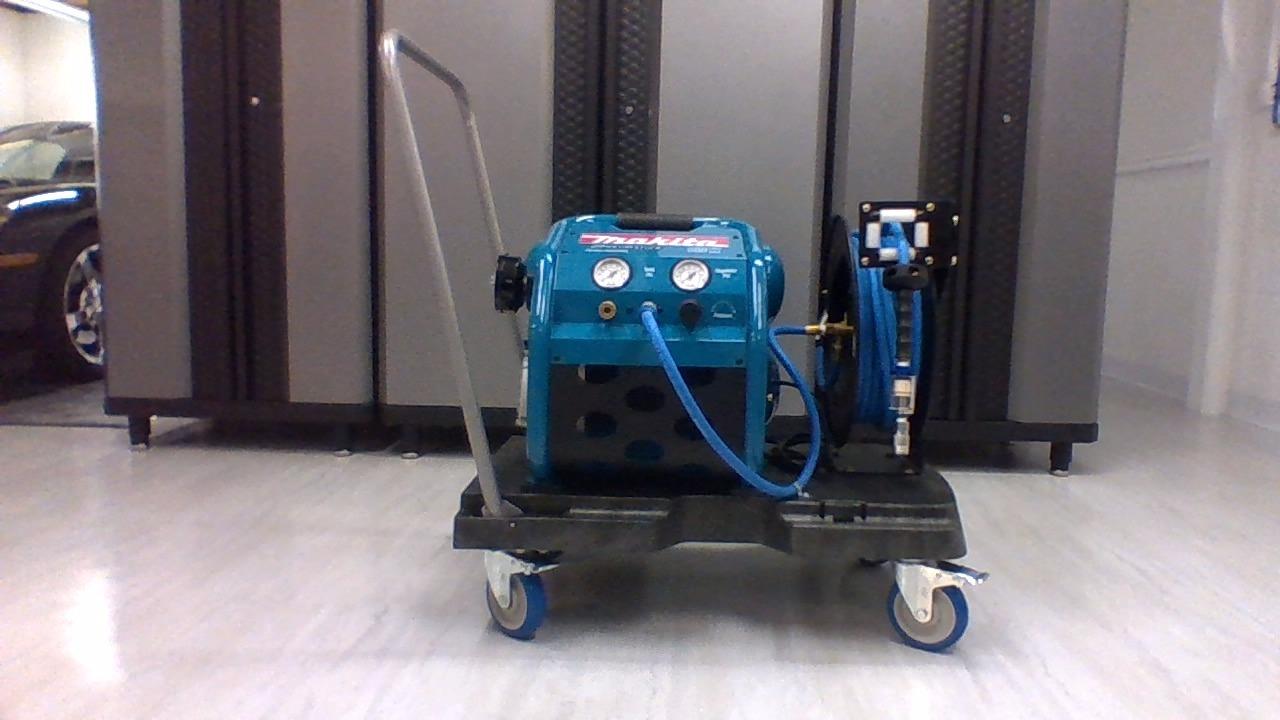
The low 12.3 amp draw is the underrated feature. It starts on a shared 15-amp circuit without knocking the lights out, which removes the single most common reason people end up buying a second compressor. No extension cord, no electrician, no panel work, and it will sit next to a laser level or a battery charger on the same receptacle.
Oil-lubricated is a real commitment, and we will not pretend otherwise. You will check the oil sight glass every few months of regular use, and you will change it on a schedule. In exchange the pump runs cooler, and Makita is one of the brand names owners on the r/Tools compressor threads name first when asked what they trust for build quality and value.
What the MAC2400 handles well in a home shop?
At 4.2 CFM at 90 PSI this sits just under the threshold where you can run two framing nailers at once, so most single-nailer framing work, finish nailing, stapling, brad work, tire inflation, blow-off cleaning and light impact work are all comfortable. The 79 dBA figure is real but not out of place next to a running shop.
Where it excels is duty. A cast iron pump with a removable cylinder and a large industrial air filter is the kind of hardware that rewards oil changes. Owners report units still going years in, which is the outcome we want from a machine that will be switched on hundreds of times a year.
Where the MAC2400 will disappoint you?
Four point two gallons is the whole tank. It refills quickly, but if you pull a sander or a spray gun continuously you will feel the pressure move. Buyers who regularly sand for hours or spray a project in one pass should step up to a 27 or 29-gallon vertical instead of expecting this tank to carry them.
It is also not a quiet compressor and it is not oil-free. If you plan to finish furniture in an adjoining room or run a water-borne paint system that cannot tolerate any carryover, a 60 dB oil-free model suits the job better even though it is smaller.
2. Metabo HPT EC914S 6-Gallon Pancake – Best Value
Metabo HPT Portable Pancake Air Compressor, 6 Gallon 200 PSI, EC914S
4 CFM at 90 PSI
6-gallon pancake tank
200 PSI max
42 lbs
Pros
- Drives two framing or roofing nailers at once
- 200 PSI max pressure
- Only 42 lbs
- 30 percent more airflow than typical pancakes
Cons
- 73 dB is loud next to true quiet compressors
- Needs periodic oil checks
- 6-gallon tank refills fast under sustained nailing
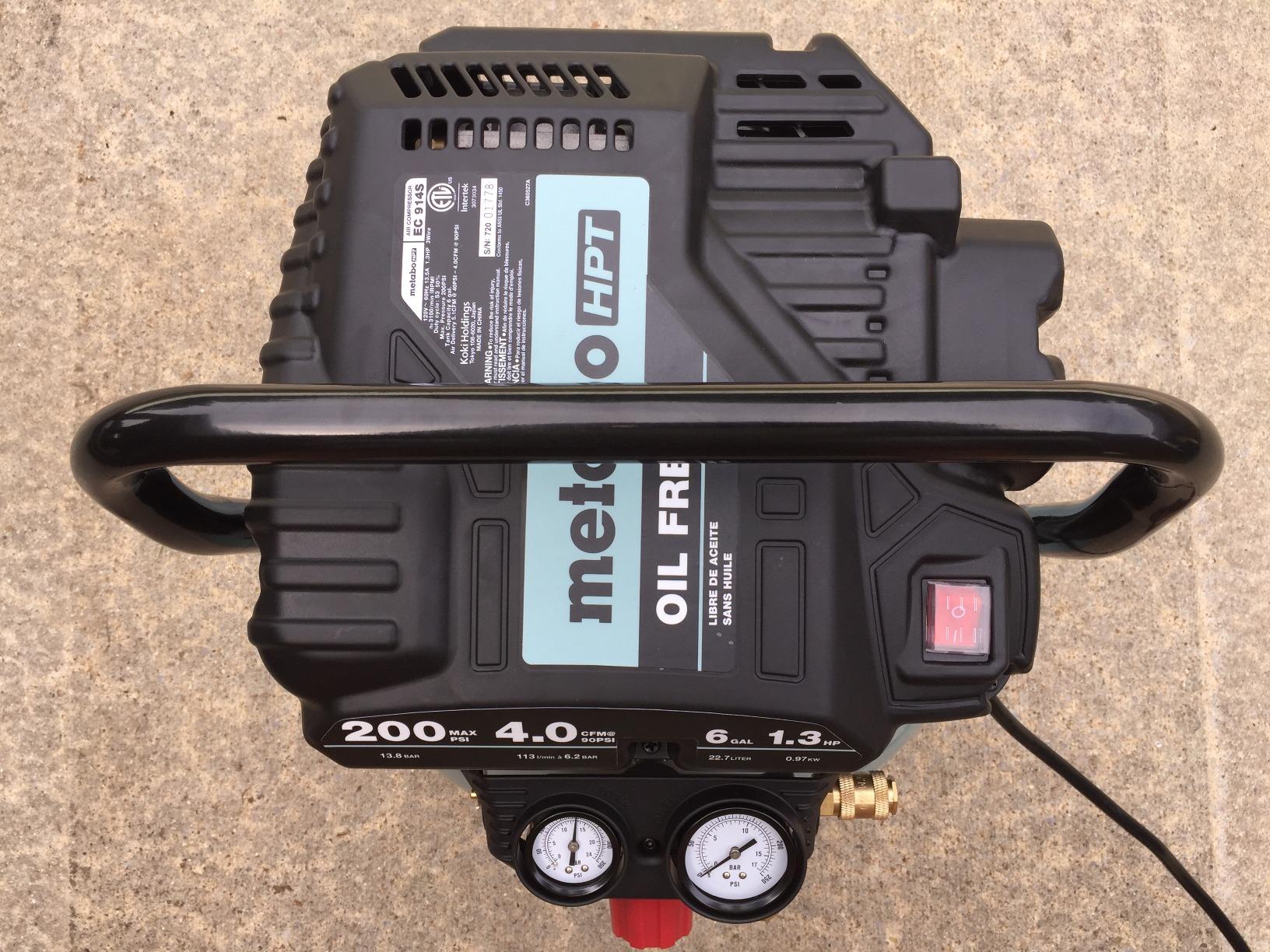
The EC914S is the most-reviewed compressor in our group with 1480 ratings, and the reason is straightforward: it does the single most common home shop job better than anything else here. Metabo HPT rates it to run two framing nailers, two roofing nailers or two siding nailers simultaneously, or three finish nailers or five brad nailers.
That is a real spec claim from a Japanese-engineered machine, and owners back it up. The 200 PSI working pressure is 25 percent above a basic pancake, and the 4 CFM at 90 PSI is listed as 30 percent more airflow than the typical unit of this size. For framing a deck, hanging doors or driving roofing, it is genuinely quick.
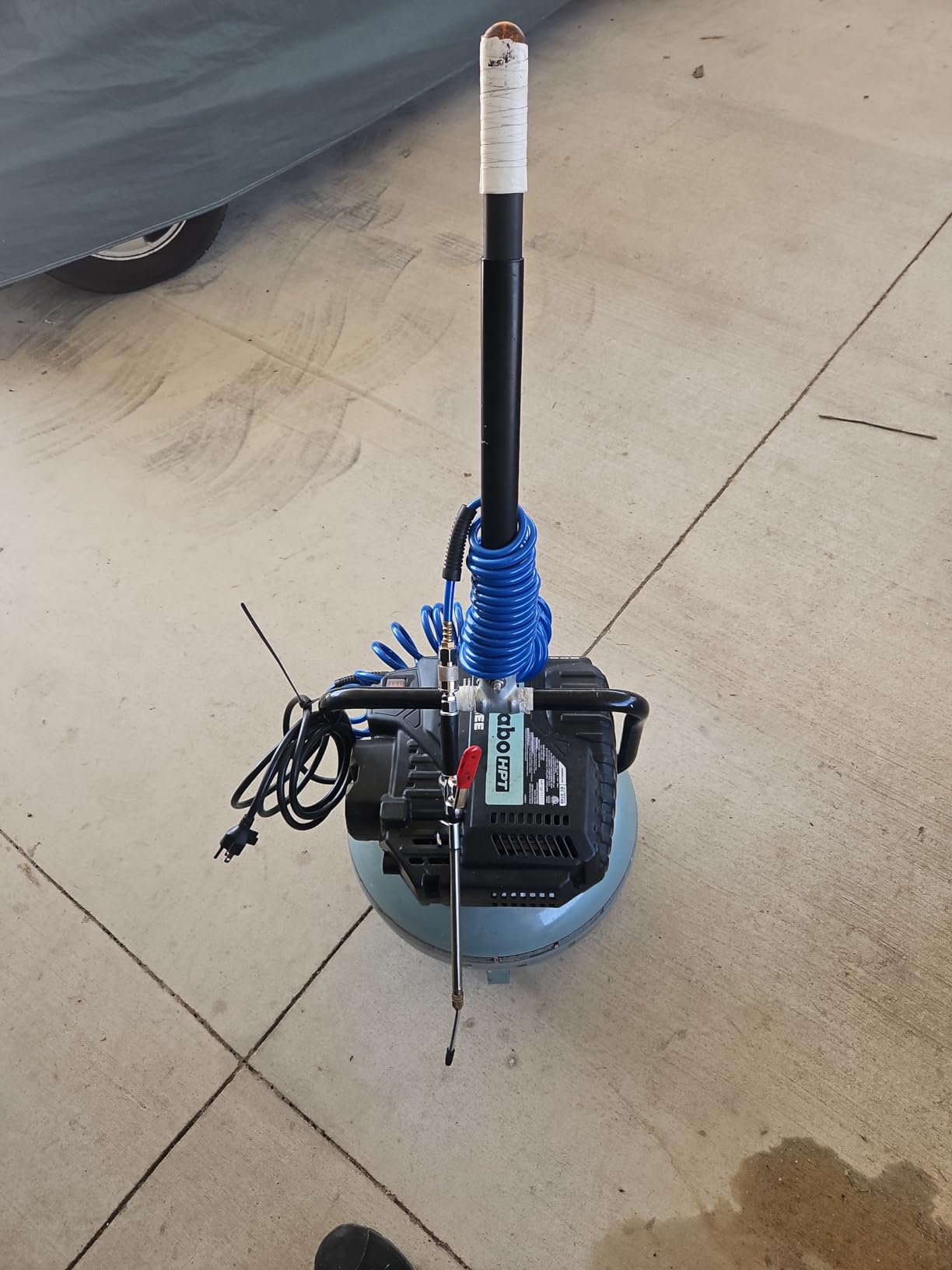
At 42 pounds it is 22 percent lighter than traditional twin-stack models, which matters more than it sounds when you are moving it around a garage rather than parking it in a corner. The square profile nests against a wall, and the low center of gravity means it does not tip when you pull it across a floor.
What you trade away is volume. Six gallons is a buffer for bursts, not for a marathon. Run a random orbital sander continuously and you will hear the pump cycling. For nailer-driven work that is fine, and for a single user it is the right balance.
Where the Metabo HPT earns its place?
If your tool list is nailers, this is the compressor to buy. Multi-tool capability is the whole design goal, and the 1-year warranty on a Japanese-engineered platform is a reasonable place to start. It also handles impact wrenches and air drills for occasional automotive work without drama.
For anyone with a small shop and limited floor space, the combination of weight, footprint and multi-nailer capacity is hard to beat at this tier. It is the pick we would hand a homeowner who frames once a month and finishes furniture on weekends.
Where it falls short?
Noise is the honest complaint. At 73 dB it is louder than the dedicated quiet compressors in this roundup, and reviewers comparing it against a true quiet-series unit notice the difference immediately. If your shop is next to a bedroom, a workshop or a conversation you actually need to have, plan around it.
It is also oil-lubricated, so it carries the same periodic oil-change obligation as the Makita, and reviewers report the small tank refilling quickly under sustained framing-nailer demand. Do not buy it for sanding marathons.
3. Limodot 5-Gallon Quiet Unit – Best Budget Quiet Compressor
Quiet Oil-Free Air Compressor, 68 dB, 2.8 CFM @ 90 PSI, 5 Gallon Air Tank
2.8 CFM at 90 PSI
5-gallon tank
68 dB
120 PSI max
Pros
- 68 dB is quiet enough to run indoors
- Refills empty to full in about 80 seconds
- Oil-free with no filter changes
- Bundled 25 ft hose and accessory kit
Cons
- 2.8 CFM is thin for framing or spray work
- 120 PSI ceiling is the lowest here
- 1.2 HP motor limits sustained heavy duty
The Limodot 5-gallon quiet compressor exists for a specific situation: a garage, basement workshop or apartment space where noise rules out everything else. At 68 dB it is quiet enough to sit next to a desk, and the 3,400 RPM induction motor runs without the shrill whine most direct-drive compressors produce at that speed.
Reviewers rate it 4.5 stars across 925 reviews and consistently praise the same three things: the 68 dB level, the refill time of roughly 80 seconds from empty, and the oil-free design that needs nothing from you. That last point is underrated. There is no oil to buy, no level to check and no cold-weather start problem.
It also comes with more than most competitors. You get a 25 foot PVC hose, a 13-piece air tool accessory kit, a 1/4-inch quick-connect fitting and a wheels kit, which means you can start a brad nailer or an airbrush the day it arrives without another purchase.
The 5-gallon tank and 4 CFM at 40 PSI figure is a sensible match for light work. Fasteners, inflating, an airbrush, a detail sander and short bursts of a trim nailer are all covered comfortably.

Who this quiet unit suits?
This is the compressor for small-space shops and for anyone whose tools are smaller than their ambitions. Finish nailing, upholstery, model work, inflating, blowing out sawdust and running a HVLP detail gun are all within reach, and it is one of the few picks here you can run indoors without neighbours complaining.
If you already own a larger compressor, this is a genuinely good second machine for the work that does not need the big one. Its size means you can carry it outside to a project and back without planning a second person.
Where it will not keep up?
Two point eight CFM at 90 PSI is modest, and 120 PSI is the lowest maximum pressure in the group. A framing nailer asking for 2 to 3 CFM continuously will drain the tank faster than a 1.2 HP motor can refill it, and paint spraying that needs stable pressure will feel it most.
Brand recognition is thinner here than with the established makers, which matters if you plan to service it yourself or if a part ever fails. Treat it as a well-reviewed tool for light duty rather than a shop backbone.
4. Klutch 29-Gallon Vertical – Best 29-Gallon Shop Compressor
Klutch 29-Gallon Air Compressor, 2.5 HP, 120V, 175 PSI, 5.1 CFM at 90 PSI
5.1 SCFM at 90 PSI
29-gallon vertical tank
175 PSI max
127 lbs
Pros
- 29-gallon tank holds real air for continuous work
- 2.5 HP on standard 120V so no new circuit
- Oil-free means no oil changes
- Brass coupler and flat-free tires
Cons
- 81 dB is the loudest spec in this group
- 29 gallons takes a while to reach full pressure
- Some owners call the stated CFM optimistic
The Klutch 29-gallon is the most conventional shop compressor in this roundup. A 2.5 HP motor, 5.1 SCFM at 90 PSI, 175 PSI maximum and a 29-gallon vertical tank, all running on standard 120V. It is the machine a two-car garage with a real tool collection ends up with, and at 4.5 stars from 738 reviews the satisfaction rate is high.
Owners upgrading from a pancake describe the change as night and day. A 29-gallon reservoir means an impact wrench, an air ratchet or a sander can run for extended periods without the pressure dropping under the tool’s demand, which is precisely the failure that makes people think their compressor is too small.
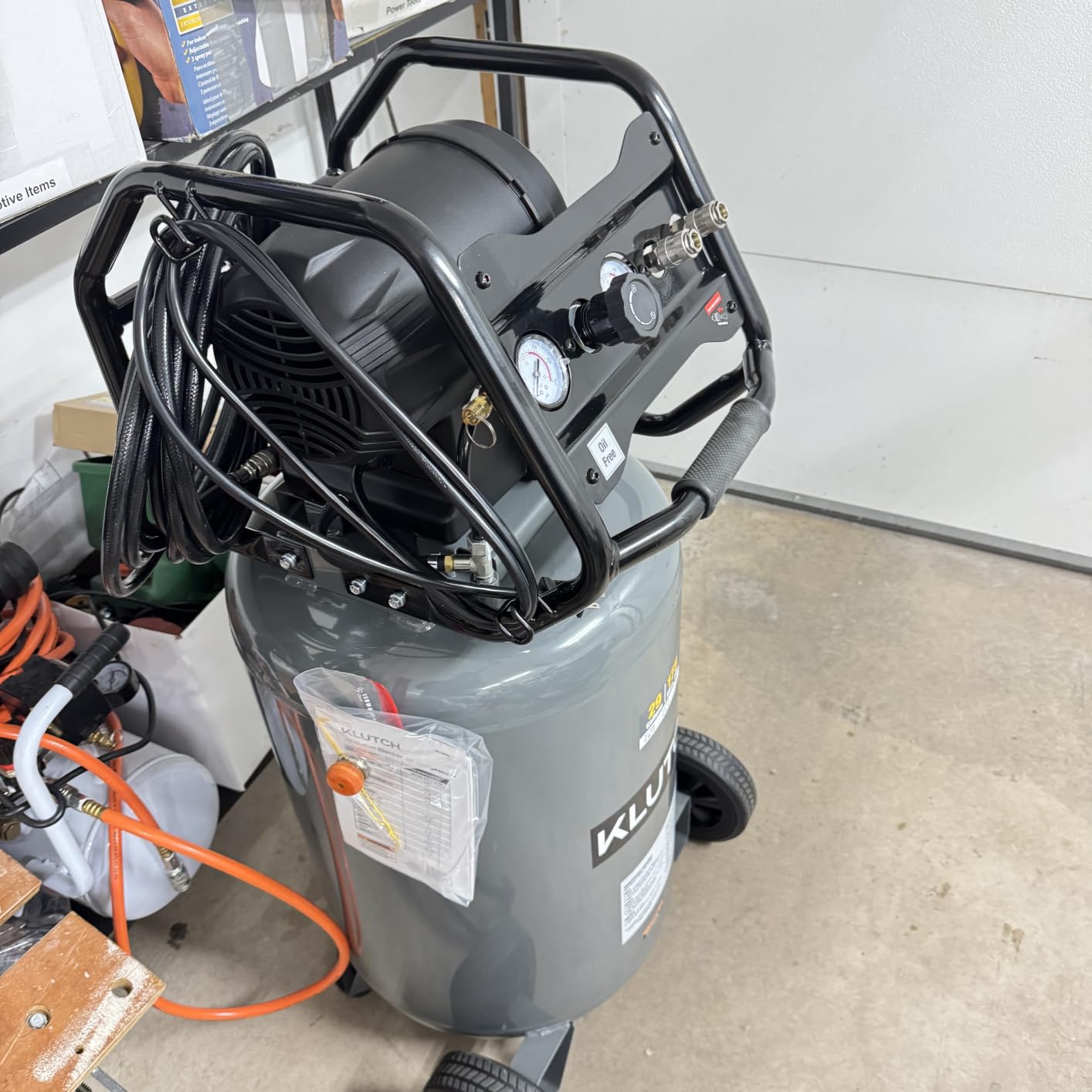
Two design choices stand out for a shop environment. The vertical footprint conserves floor space, so it fits a tight corner where a horizontal 30-gallon would not. And the oil-free pump means no oil changes and no spill risk under a workbench, which matters if you also spray.
The brass quick-connect coupler allows one-handed hose changes, and the large flat-free tires roll over rough concrete without the pinching and tears that pneumatic wheels get in a dusty shop. Neither is glamorous, both are things you notice at hour ten of a build.
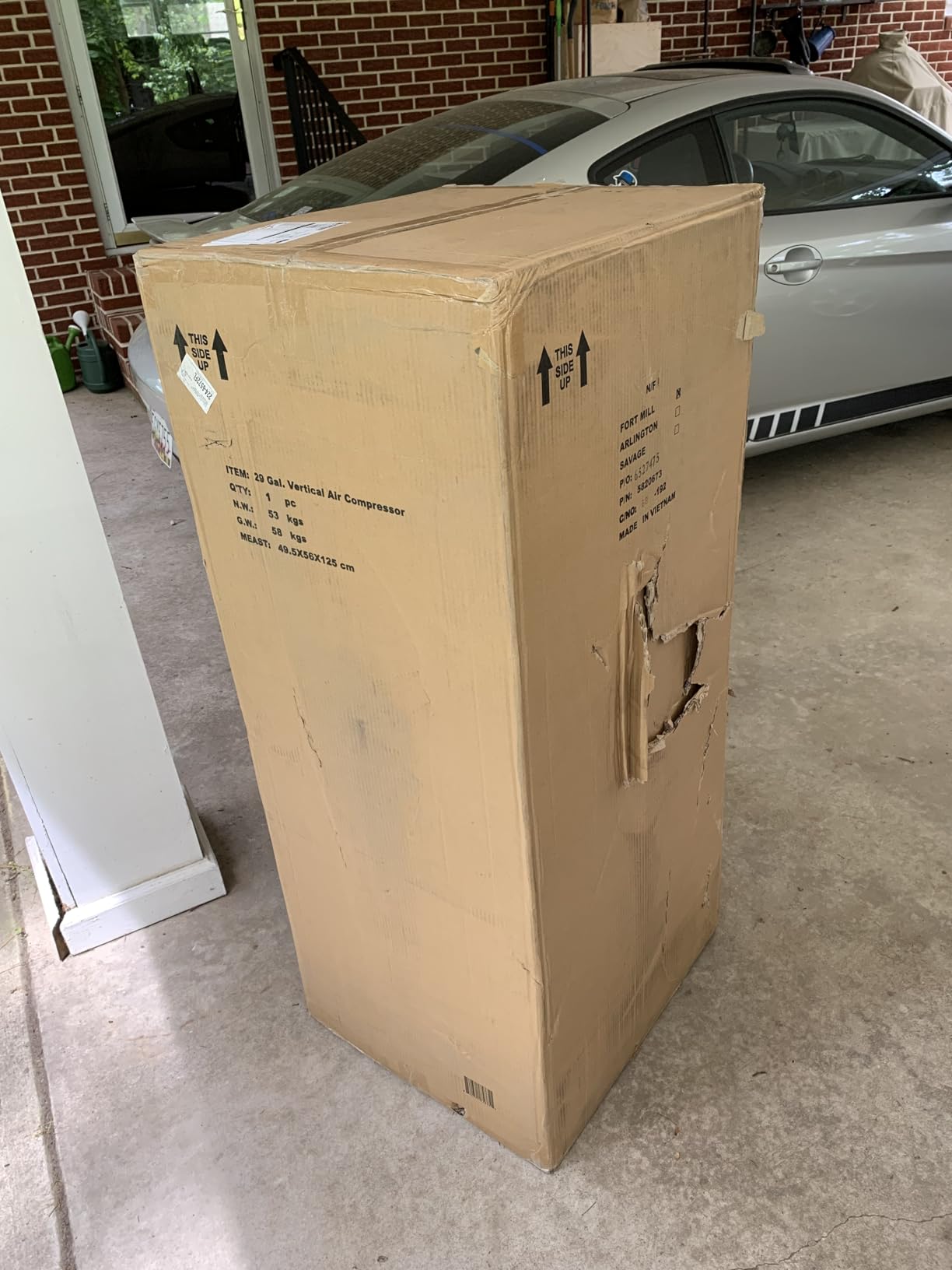
What the 29-gallon vertical is good for?
Impact wrenches, air drills, grinders, die grinders, sanders and spray work. With 5.1 SCFM at 90 PSI and 29 gallons behind it, this unit has enough reserve to keep a large impact wrench working without the pressure sag that stalls the tool.
It is also a sensible step up path. If you later want a bigger compressor, you have learned how to plumb a shop air line and how much floor space a vertical tank really needs, which is useful information before you commit to something stationary.
Where it falls short?
Eighty-one decibels is the highest published figure in this group, and that is worth taking seriously even though it is a direct-drive design. Owners also flag that a 29-gallon tank takes a while to reach full pressure from empty, so plan for a wait before the first job of the morning.
One detailed long-term owner report describes a power switch that was internally bypassed, leaving the unit energised regardless of switch position. If that happens, unplug it and stop using it immediately rather than working around it. A few buyers also feel the stated CFM runs optimistic compared with what they measured.
5. Makita MAC320Q 3-Gallon Quiet Series – Best for Quiet Indoor Shops
Makita MAC320Q Quiet Series 1-1/2 HP, 3 Gallon, Oil-Free, Electric Air Compressor
60 dB
3-gallon oil-free tank
1,750 RPM motor
135 PSI max
Pros
- 60 dB allows normal conversation while running
- Recharges faster than most tools discharge
- Oil-free dual-piston pump
- Dual output ports run two tools at once
Cons
- Heavier than competing quiet compressors
- 135 PSI ceiling forces frequent cycling
- Listed cube dimensions understate the real footprint
At 60 dB the MAC320Q is the quietest compressor in this roundup by a wide margin, and it earns 4.6 stars across 574 reviews with 85 percent five-star ratings. Multiple owners report upgrading from Senco, Porter-Cable and pancake units specifically because this one let them work without raising their voice.
Like the MAC2400, this motor runs at a low 1,750 RPM. On this model that translates into a claim we like more than most: recharge time is faster than most tools can discharge air. For an indoor shop or a shared room, the combination of low speed, low decibels and a fast recovery cycle is close to ideal for finish work.
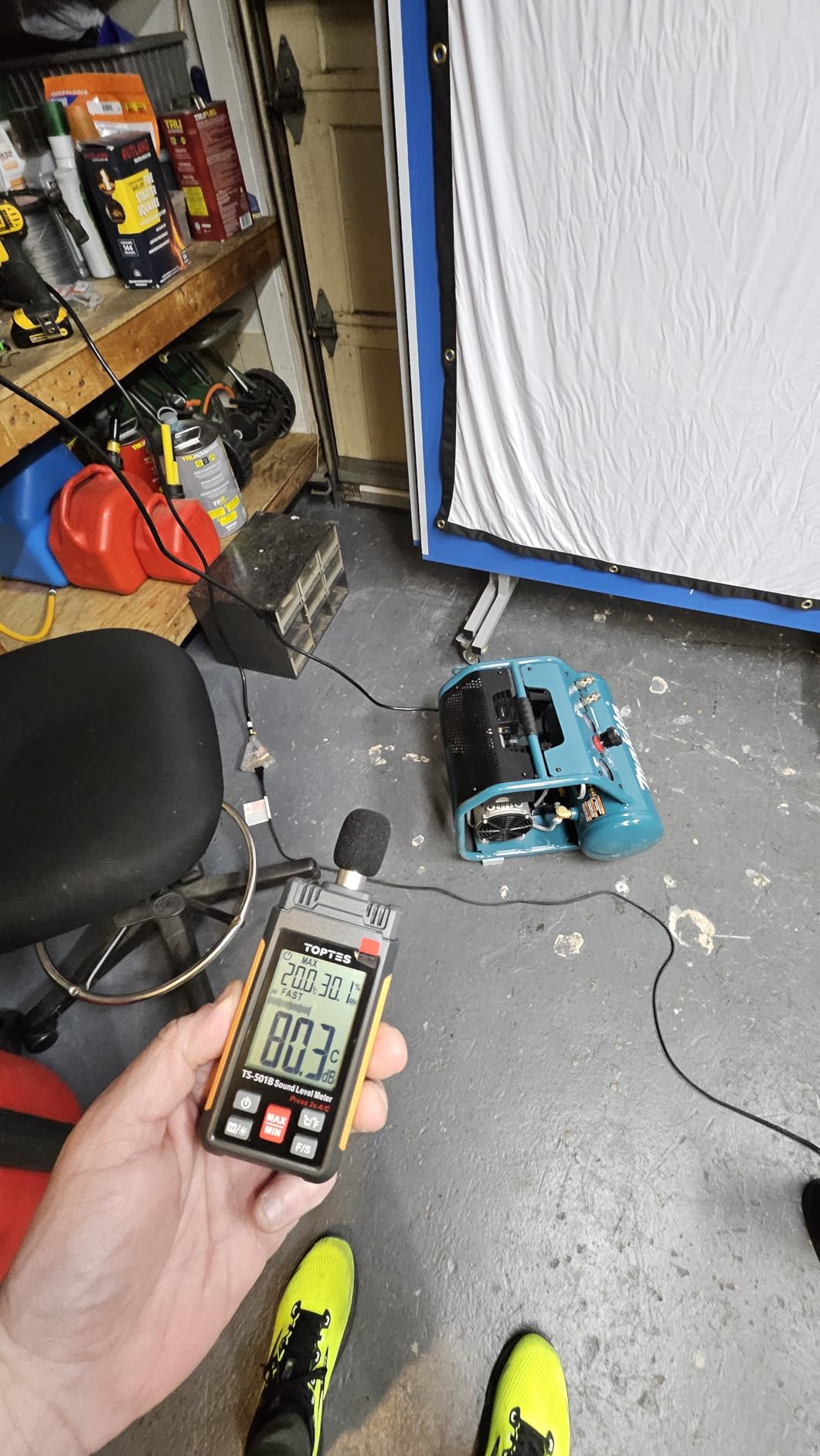
The oil-free dual-piston pump means there is nothing to maintain, and the dual output ports let two tools run at once without buying a splitter. Separate tank and regulated pressure gauges let you watch the receiver and the delivered pressure independently, which is genuinely useful when a tool behaves oddly.
For finish carpentry, trim work, upholstery, cabinetry and model making, this is the compressor we would put in an enclosed space. The 8.5 amp draw is also the lowest of the 120V machines here, so it starts easily on a loaded circuit.
Why quietness changes how you work?
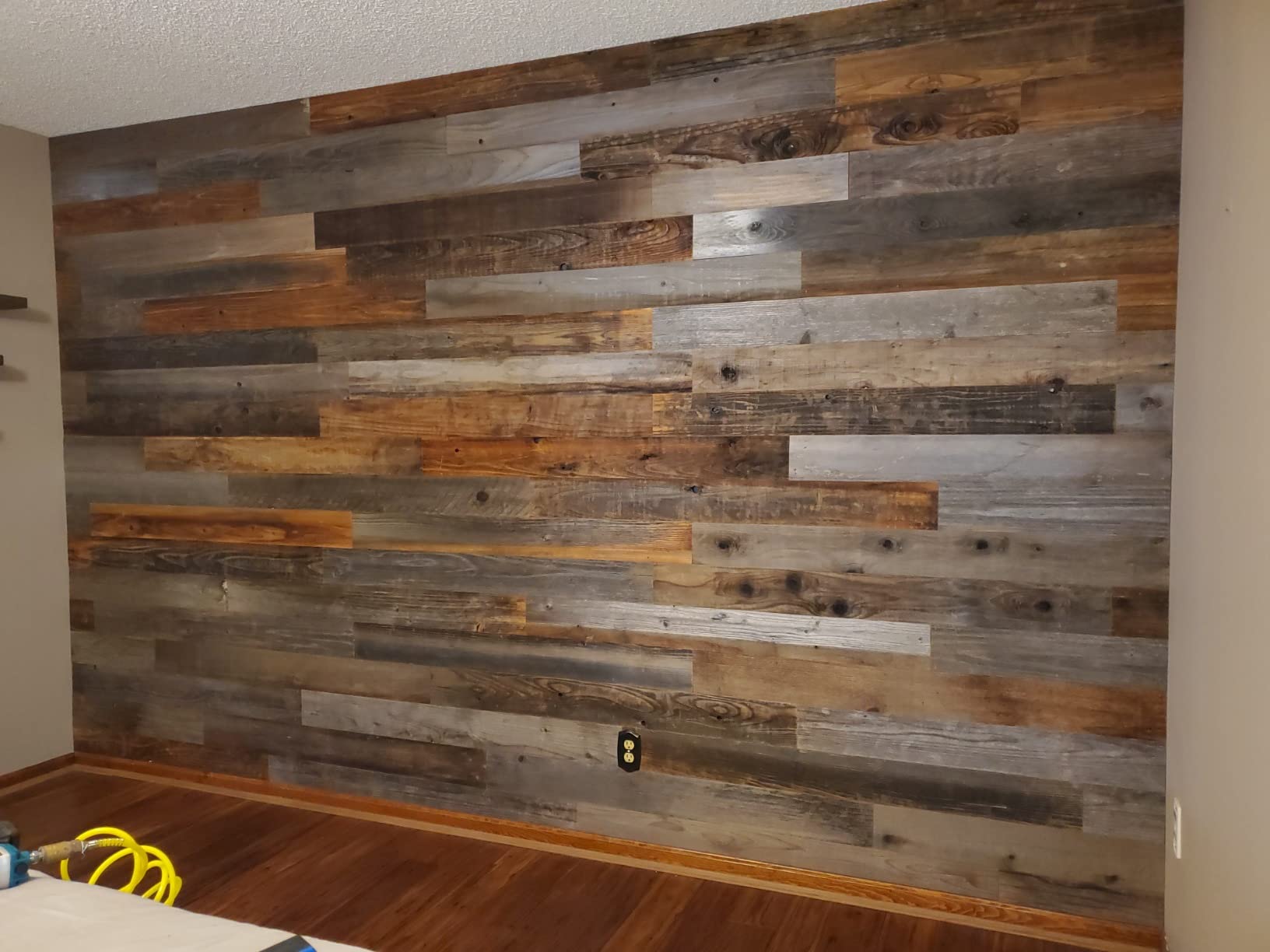
Decibels matter less as a number than as a consequence. Above roughly 75 dBA people stop talking over the machine, stop listening to a podcast, and eventually leave the compressor off during work hours. At 60 dB it becomes background equipment rather than an interruption, and that changes how much you actually use it.
The roll-cage construction and padded feet also add durability while reducing vibration noise, so it survives being moved between a workbench and a job site without the cabinet rattling itself apart.
Where it will frustrate you?
Three gallons is small, and 135 PSI is a low ceiling for a compressor aimed at fine work. Because the cut-out pressure is low, it cycles more often than higher-pressure units, and some owners read that as noisy or as a sign of a weak machine when it is simply a design trade for quietness.
Owners also flag that the listed 12 by 12 by 12 inch dimensions understate the real size. Measured by an owner, it is closer to 18 inches long, 19 inches wide and 14 inches tall, and at roughly 57 pounds it is heavier than competing quiet compressors of similar output. Measure your shelf before you commit.
6. DEWALT DWFP55130 Trim Compressor – Best for Trim and Finish Nailing
DEWALT Air Compressor for Trim, 200-PSI Max, Quiet Operation (DWFP55130)
3.0 SCFM at 90 PSI
2.5-gallon tank
200 PSI max
71.5 dBA
Pros
- Dual quick couplers run two nailers at once
- Oil-free with no maintenance
- 12 amp draw starts on shared circuits
- 36 lbs and only 12.5 inches thick
Cons
- 2.5-gallon tank empties fast on bigger jobs
- 3.0 SCFM is light for sustained framing or spraying
- 200 PSI is rarely reached from a small tank
The DWFP55130 is a dedicated trim compressor and it does not pretend otherwise. Owners frame it exactly that way, using it for baseboards, crown moulding, door hardware and finish nailers, and rating it 4.4 stars across 915 reviews with 74 percent five-star ratings.
Its best feature is the pair of quick couplers. Two nailers can run simultaneously without a splitter, and because a trim job is almost always two people working, that removes a real annoyance rather than a spec-sheet nicety. The oil-free pump also means clean air, which matters if you ever use an airbrush off the same tank.
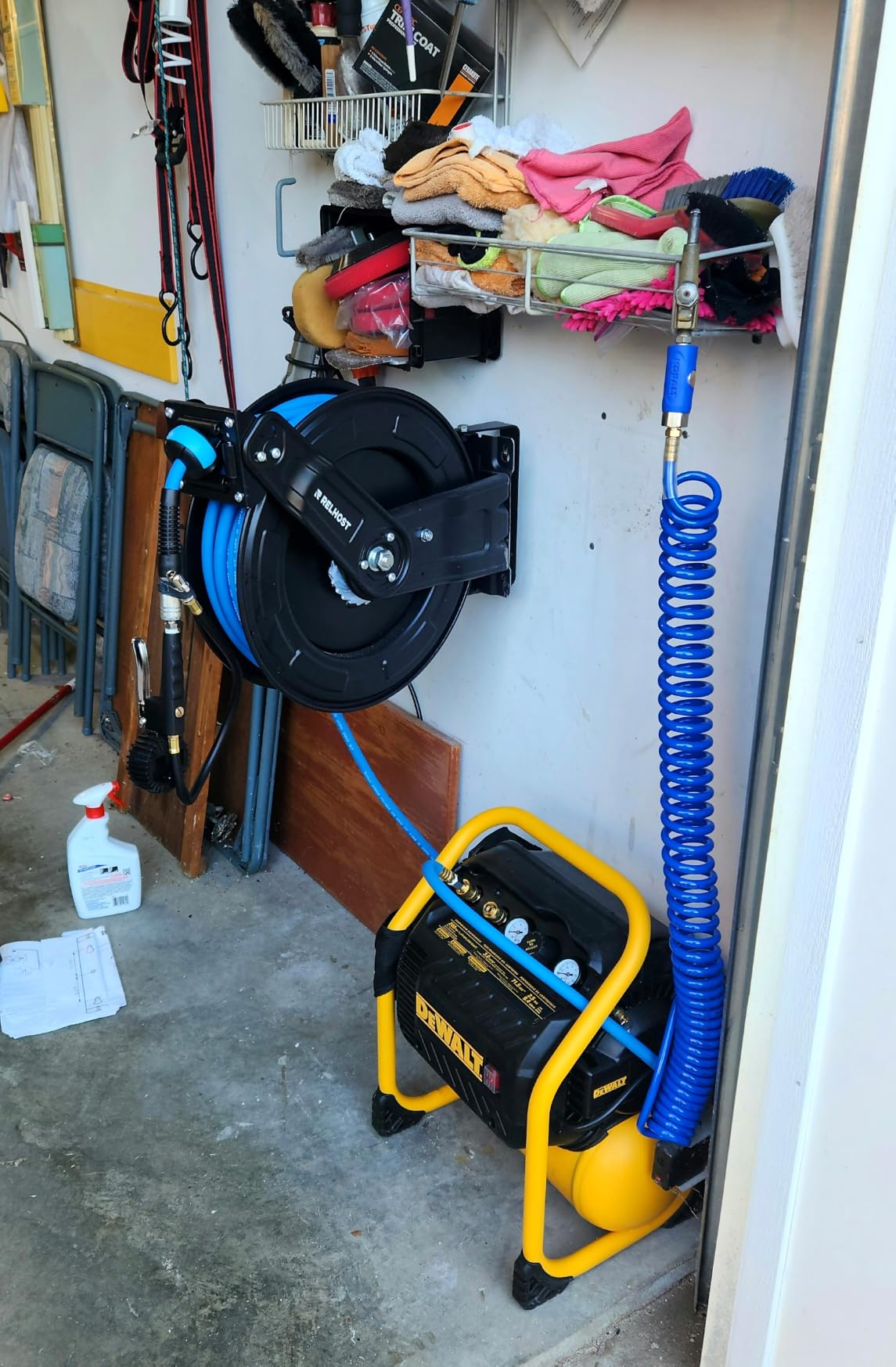
Quiet is relative here, but 71.5 dBA measured per ISO3744 is quieter than most pancakes this size, and the 12 amp draw is the second-lowest in our group. It starts on a shared circuit without tripping, and it can be stored either vertically or horizontally depending on your shelving.
At 36 pounds and 12.5 inches thick, it is genuinely portable. The ball valve drain and cord wrap are small touches, but on a machine this small every gram of organisation pays back.
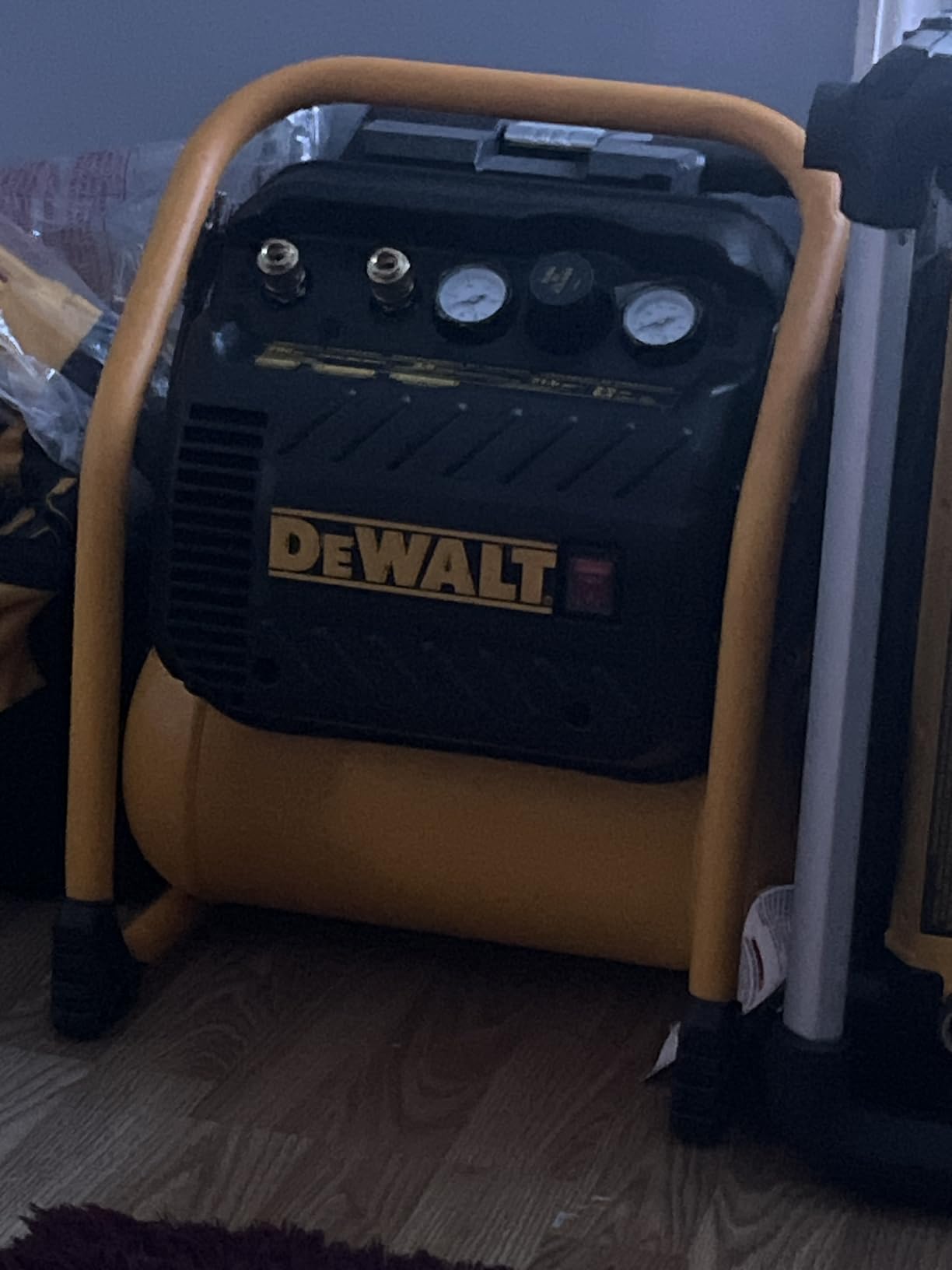
Where this trim compressor makes sense?
Baseboards, casing, door jambs, window trim and cabinetry. A 2 HP-class trim nailer pulls around 2 CFM, and this unit sustains 3.0 SCFM at 90 PSI, so there is headroom even with two nailers cycling on the same tank.
If your work is exclusively interior finish, this is enough compressor and buying more would be waste. A secondary benefit owners mention is how often they take it to a site where a bigger machine simply will not fit.
Where 2.5 gallons runs out?
The tank is the smallest in this roundup and it is the binding constraint. On anything larger than trim, you will hear the pump start and stop constantly as the tank cycles, and reviewers describe pressure dropping out quickly on bigger jobs.
The 200 PSI maximum is also close to decorative at this tank size, because a small tank rarely reaches the cut-out figure. And some users report the real noise level sits above the published 71.5 dBA, which is a fair caution when comparing it against the 60 dB and 68 dB models here.
7. VEVOR 15-Gallon Oil-Free – Best for Auto Repair and Tire Work
VEVOR Air Compressor, 15 Gallon Steel Tank, 2HP 5.3 CFM@90 PSI Oil Free Air Compressor & Max. 125PSI Pressure, 78dB Ultra Quiet Portable Compressor, for Auto Repair, Tire Inflation, Spray Painting
5.3 CFM at 90 PSI
15-gallon oil-free tank
78 dB
1,680 RPM motor
Pros
- 5.3 CFM at 90 PSI from a 2 HP oil-free pump
- 78 dB is quiet for its output
- Refills quickly and holds pressure without drift
- Seamless steel tank
- dual outlets
Cons
- Cord is roughly 40 inches and barely reaches an outlet
- Unreliable on an extension cord
- Wheels and handle are low quality
- 125 PSI max is low for painting
The VEVOR 15-gallon pairs 5.3 CFM at 90 PSI with a 15-gallon steel tank, and that combination makes it the most useful automotive unit here. A 1.32 kW oil-free motor running up to 1,680 RPM delivers more airflow than several bigger compressors in this roundup, and the low motor speed is the right kind of quiet.
Owners report running impact wrenches, inflating, blowing out radiators and general repair tasks on it, and 665 reviews at 4.3 stars reflect a broadly satisfied group. The seamless welding and three-layer finish over Q235B steel are a sensible construction choice for a tank that will sit in damp conditions.
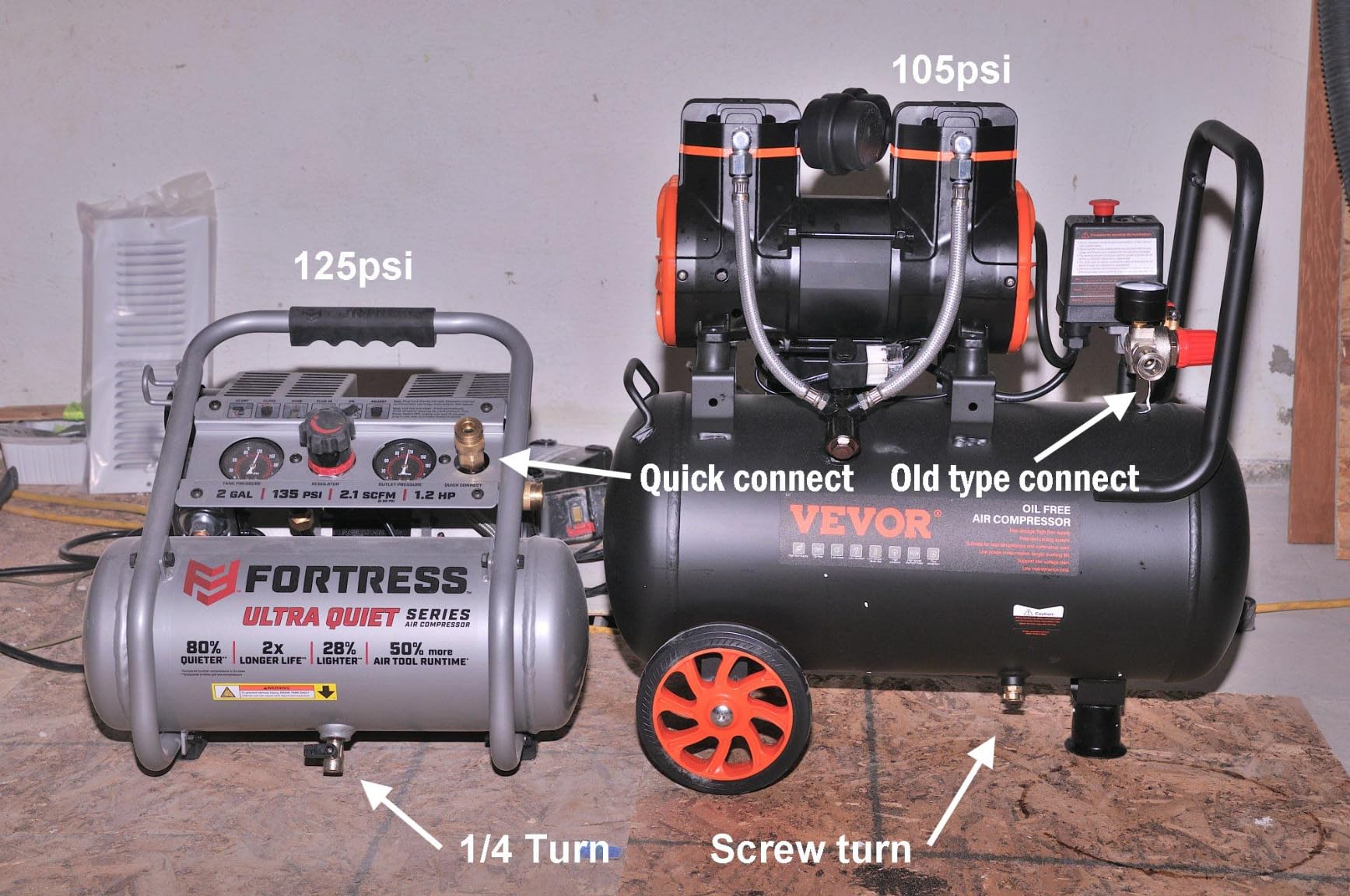
It is also the quietest of the higher-output machines we tested, at 78 dB, with a muffler cover, rubber muffler pipe and filter cotton doing the work. Several owners say they run it at night without complaint, which is not a claim any of the 79 dBA and 81 dBA machines in this group can make.
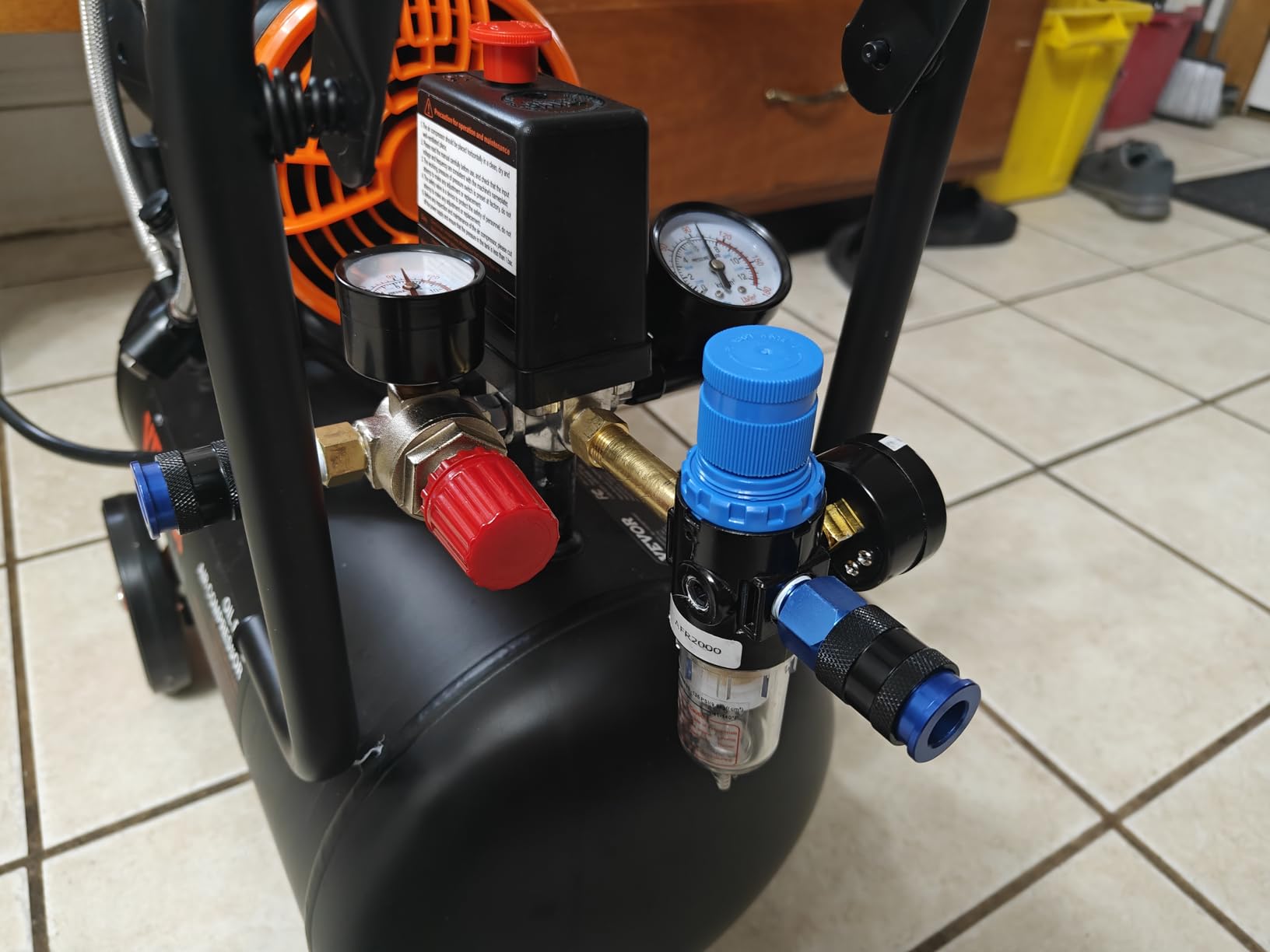
Automatic overheat and overpressure shutoff protection is a genuine safety feature, and dual outlets mean two hoses can run from one pump, which is exactly what brake bleeding and multi-tool work need.
Where the 15-gallon oil-free works well?
Automotive repair, tire inflation, brake bleeding, spraying and general shop blowing out. The oil-free pump delivers air you can put on a finish or an airbrush without worrying about carryover, and 5.3 CFM is enough airflow to keep a mid-size impact wrench from stalling.
It is also available in 6.3, 10 and 15-gallon configurations, so if the same platform works for you, the smaller sizes are a coherent second purchase rather than a different machine entirely.
Where it disappoints?
The power cord is roughly 40 inches and barely reaches an outlet, and owners report it will not run reliably on an extension cord. Plan on a wall receptacle close to where the machine sits, because the 5.3 CFM output depends on clean full voltage at the motor.
Wheels and handle are the weak point relative to the compressor itself and can tip the unit when you manoeuvre it. The 125 PSI maximum is low for spray painting and fine finish work, and no air filter or separator is included, so buy one before spraying.
8. DEWALT DXCM271 27-Gallon Vertical – Best 120V Shop Capacity
DEWALT 27-Gallon Vertical Portable Air Compressor (DXCM271.COM)
5.1 SCFM at 90 PSI
27-gallon vertical tank
200 PSI max
78 dBA
Pros
- 27-gallon capacity transforms impact wrench and sander work
- 5.1 SCFM at 90 PSI on a 1.7 HP motor
- Runs on standard 110V
- Oil-free so no separator needed
Cons
- Takes roughly 10 to 30 minutes to fill from empty
- 136 pounds is heavy to move
- Regulator stops at about 160 PSI
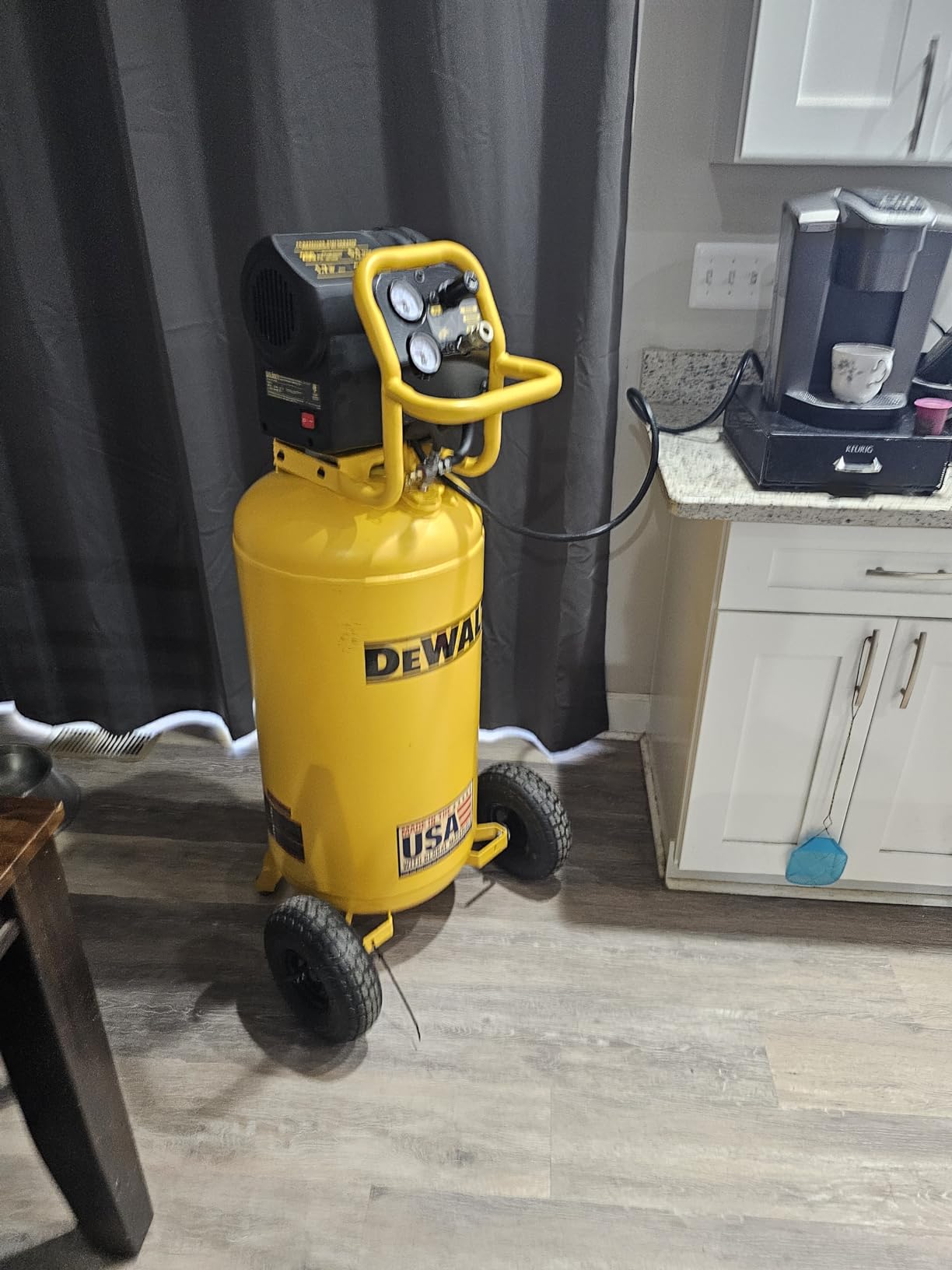
The DXCM271 is the answer for someone who upgraded from a 6-gallon unit and discovered what a real tank does. Owners upgrading from small compressors describe the 27-gallon capacity as transformative for impact wrenches, grinders and irrigation blow-out, and 201 reviews at 4.3 stars with 70 percent five-star ratings back that up.
What makes it work in a home shop is the electrical simplicity. A 1.7 HP single-stage direct-drive oil-free motor delivers 5.1 SCFM at 90 PSI and 6.8 SCFM at 40 PSI on standard 110V, with a low-voltage easy-start motor for reliable starting. No new circuit, no panel work, no electrician.
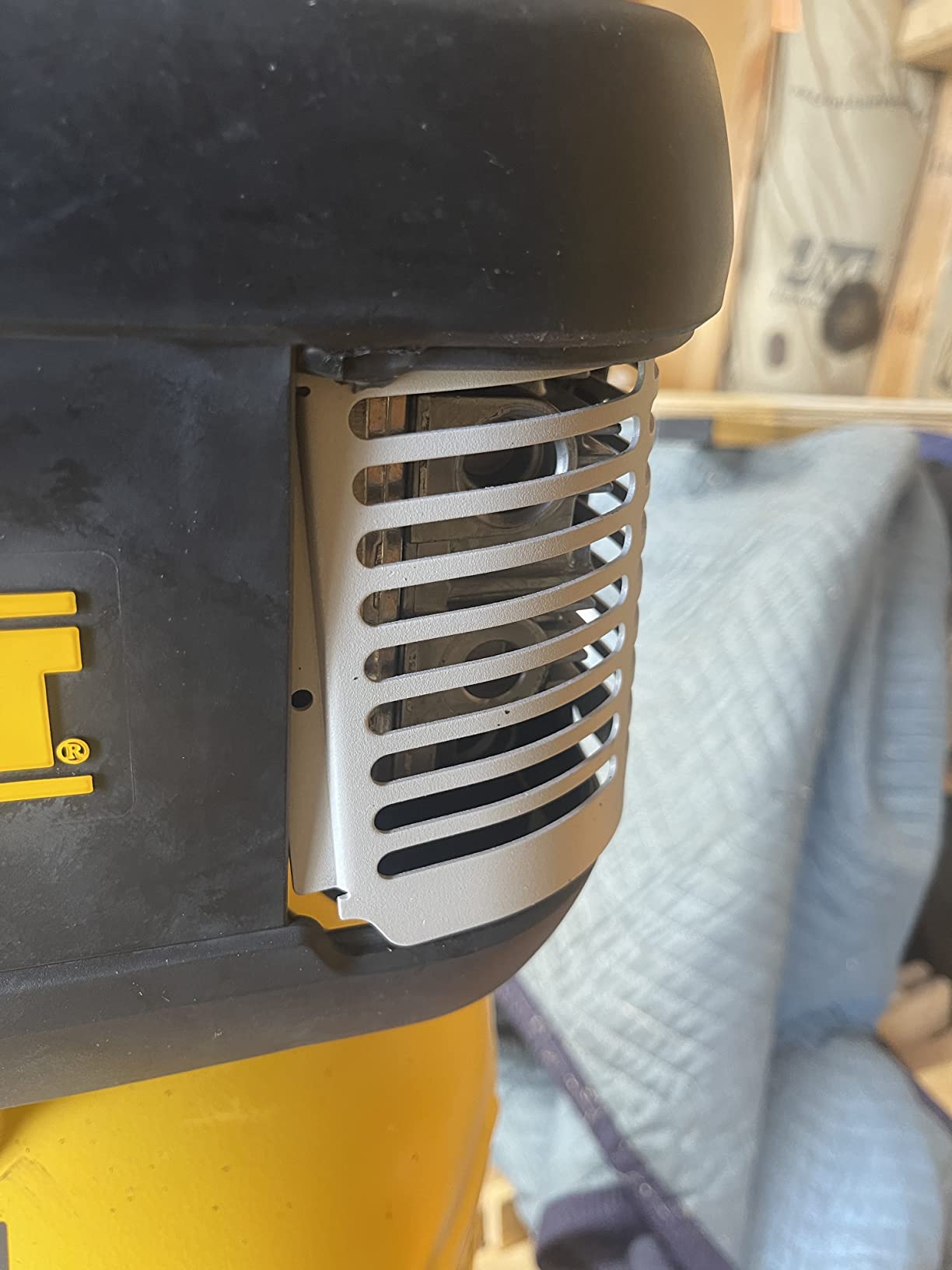
The vertical footprint is the other quiet advantage. At 26.8 by 23.5 by 54.5 inches it takes up only slightly more floor space than a pancake but holds four times the air, and at 78 dBA owners report it running quieter than the smaller oil-free pancakes they replaced.
Oil-free operation means clean air delivery and no need to buy an oil separator, and the large wheels make a 136-pound unit easier to move than the number suggests as long as the route is flat.
What the 27-gallon vertical unlocks?
Impact wrenches, grinders, air drills, blow-out of irrigation lines and shop dust, and sanders that previously caused pressure sag. At 5.1 SCFM and 27 gallons, you have both the airflow to feed the tool and the stored air to cover the gaps.
It is also a good fit for anyone who works alone but does long sessions. The difference between cycling constantly and holding pressure through a project is the difference between enjoying the machine and resenting it.
Where it will test your patience?
Filling from empty takes roughly 10 to 30 minutes depending on the account, which means you plan your day around the first fill or buy a second hose and run it overnight. The 136-pound weight is a real problem on stairs or into a truck bed.
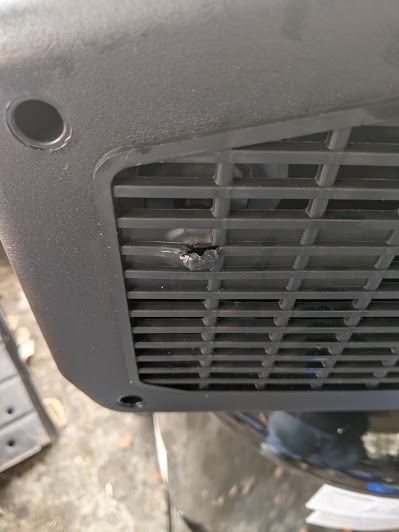
One owner reports an air leak at the safety valve fitting that they resolved by replacing the fitting with brass, which is a reasonable fix if it happens to you. The regulator also only adjusts to about 160 PSI even though the tank reaches 200, so set expectations accordingly for tools set above that.
9. Industrial Air 30-Gallon Belt Drive – Best for Sanding and Continuous Work
Industrial Air ILA1883054 30-Gallon Belt Driven Air Compressor
7 CFM airflow
30-gallon vertical tank
155 PSI max
cast iron belt-drive pump
Pros
- 7 CFM is the highest output in this group
- Belt-driven cast iron pump runs smoother and quieter than direct drive
- Fills from empty in under 5 minutes
- Made in USA with a 2-year warranty
Cons
- Tank drain is tucked underneath with almost no clearance
- Short power cord
- No quick-connect post on the regulator
The Industrial Air 30-gallon produces 7 CFM, the most airflow of any compressor in this roundup, and it does it with a cast iron twin-cylinder oil-lubricated belt-driven pump. That combination is the mechanical configuration experienced builders actually ask for, and it is why this unit holds pressure for long stretches and recovers quickly.
Owners are split on the rating at 4.2 stars from 102 reviews, but the sentiment is consistent: long-term carpentry and automotive users value the output, the belt-drive smoothness and the relative quiet at 79 dB. Many note it fills from empty in under five minutes, which no other machine here manages.
The dual-voltage motor is wired for 120V and convertible to 240V, which is rare at this size and gives you an upgrade path later without replacing the machine. It ships with synthetic oil for long service life, and the two-year limited warranty is the longest in this group.
Sanding is where this machine earns its place. A random orbital sander and a large impact wrench running together is exactly the demand pattern a 7 CFM pump with 30 gallons behind it was built for, and the belt drive keeps the vibration low enough to work near finished surfaces.
Why belt drive matters here?
A belt decouples the motor from the pump, so the pump turns more slowly than a direct-drive motor and runs smoother. Lower speed means less wear, less heat and less noise per unit of airflow, which is why experienced owners on the practicalmachinist.com home shop thread treat pump and motor RPM as the durability benchmark. Belt drive is simply the mechanical way of buying that.
The cast iron twin-cylinder pump is also serviceable rather than sealed, which means it can be worked on instead of replaced. That matters over a decade of ownership.
Where it gets in the way?
Nearly every review flags the same design flaw: the tank drain valve is tucked under the tank with almost no clearance, and owners have had to fabricate an extension to service it. If you will forget to drain the tank because draining it is awkward, you will eventually pay for it in corrosion.
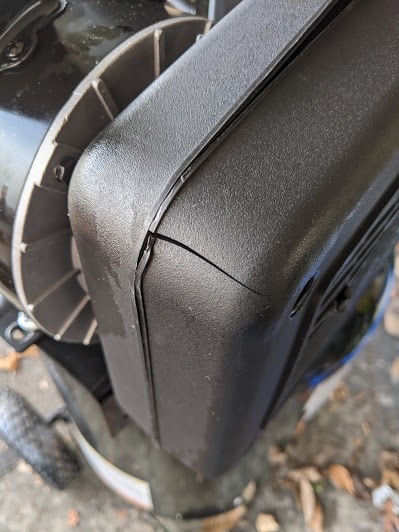
At 190 pounds it is top-heavy and awkward to move, the power cord is short, and there is no quick-connect post on the regulator, so fittings have to be added. One review also reports damage to the cast iron drive wheel and safety cage in transit, so inspect the crate before accepting delivery.
10. Ingersoll Rand P1.5IU-A9 20-Gallon – Best for Continuous-Duty Durability
Ingersoll Rand P1.5IU-A9 2 HP Single-Stage Air Compressor
5.2 CFM at 90 PSI
20-gallon receiver
100 percent continuous duty
cast iron cylinder
Pros
- Continuous duty motor for sustained shop workloads
- Synthetic oil rated to 2000 hours between changes
- Cast iron cylinder and frame with enclosed belt guard
- Side drain valve is easy to reach
Cons
- 135 PSI max is the lowest of the large-tank machines
- 80 dBA is not quiet by modern standards
- 45-inch horizontal footprint is large
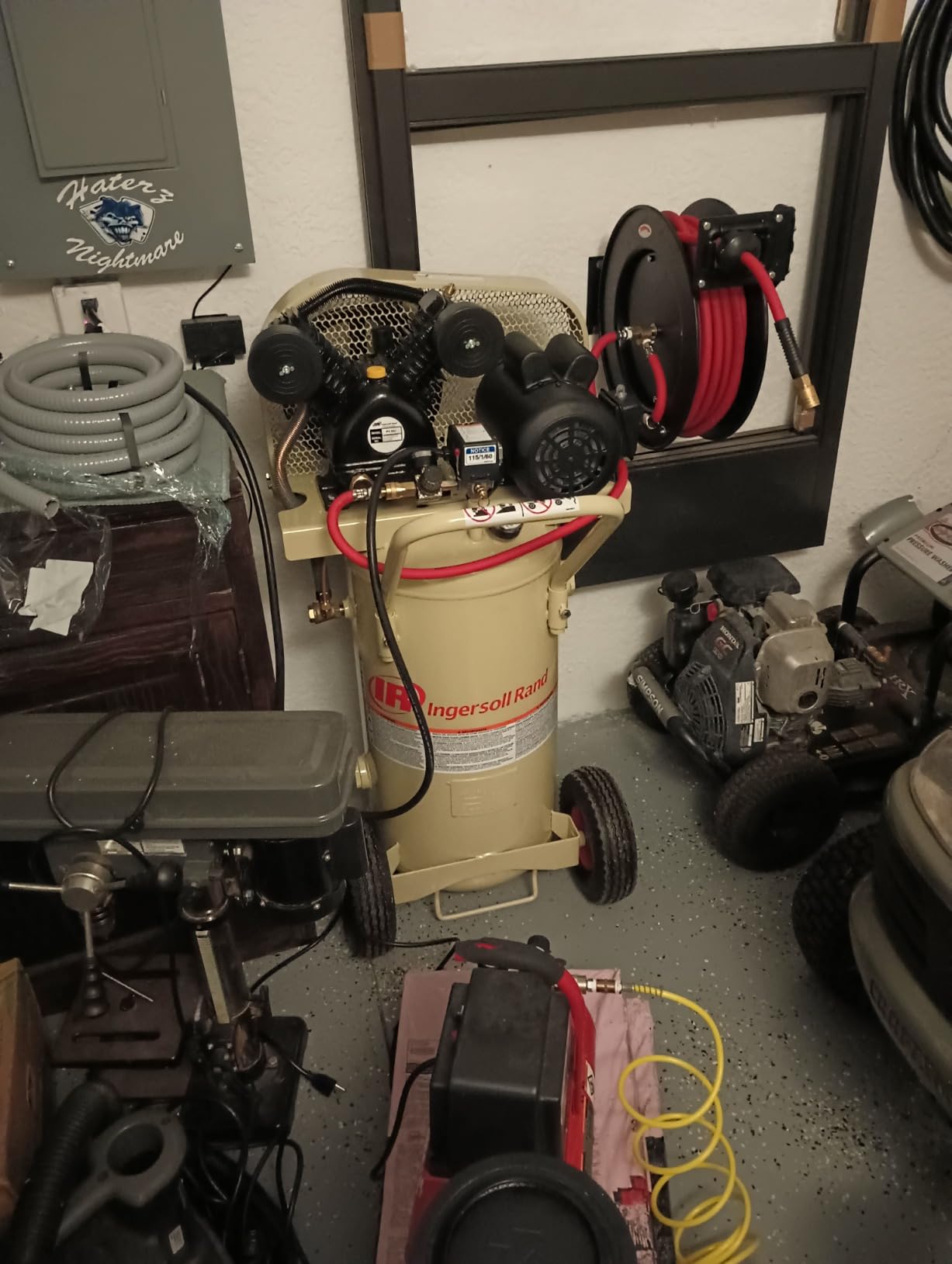
The Ingersoll Rand P1.5IU-A9 is the one in this group built explicitly for continuous duty, and Ingersoll Rand is the brand name most often recommended for durability in the shop-compressor forum threads we read. At 4.4 stars from 102 reviews, the review pool is small, but that reflects a long-running professional model rather than a new arrival.
Two details set it apart. The All Season Select synthetic lubricant is rated for 2,000 hours between changeouts, roughly four times longer than petroleum-based oil, and the cast iron cylinder and frame come with an enclosed belt guard and manual overload motor protection. That is a machine designed around service life.
Its 5.2 CFM at 90 PSI with a 20-gallon receiver is a genuinely useful combination for sustained work. Air wrenches, impact tools, sanders and air-driven equipment running together will not strain it, and the automatic start/stop pressure switch means you do not manage the cycle yourself.
Owners also appreciate practical touches: a heavy-duty ergonomic handle, semi-pneumatic tires, and a side drain valve that is genuinely accessible rather than buried under the tank. That last point is the opposite of the design flaw on the 30-gallon belt-drive unit above.
Who this continuous-duty machine is for?
Anyone running a compressor hard enough that duty cycle matters, whether that is automotive work, a small production shop or a home shop where the machine runs several hours a day. Continuous duty means the motor is rated for the run time rather than for intermittent bursts.
It also makes sense as a second machine in a shop that already has a quiet unit. A loud durable machine for impact work and a quiet one for finish work is a pairing several two-car garages settle on.
Where it falls short?
A 135 PSI maximum is low compared with the 175 and 200 PSI machines here, and at 80 dBA it is not a quiet compressor. If you need high pressure for a stubborn fastener or a paint system, this is not the machine.
The 45 by 24 by 20 inch horizontal footprint is the largest in this roundup and needs a dedicated wall, and the 1-year warranty is shorter than the two years offered by the Industrial Air. At roughly 200 pounds, plan the floor space before you order.
How to Choose an Air Compressor for a Home Shop?
Match airflow to the tools you actually own
Buy on CFM at 90 PSI, not on horsepower and never on the peak airflow printed on the box. A tool has a published airflow demand, and if the compressor cannot supply it continuously the pressure drops and the tool slows or stalls. The rule of thumb experienced sellers quote is at least three gallons of tank storage for every CFM of output.
Here is what typical tools ask for, and it is the calculation worth doing before you spend anything:
Framing, roofing and siding nailers: 2 to 3 CFM each
Finish and brad nailers, staplers: 1 to 2 CFM
Air drills and small impact wrenches up to 3/8 inch: about 3 CFM
Impact wrenches, air ratchets, die grinders: 5 to 7 CFM
Random orbital and belt sanders: 10 to 12 CFM for continuous work
HVLP spray guns: 2 to 5 CFM depending on the gun and coating
Sandblasting: 8 CFM and above, plus a large tank for surge demand
Add up the tools you will realistically run at the same time, and buy a compressor that covers that total with a little margin. Forum veterans on the home shop threads are blunt about the opposite mistake: most people buy far more compressor than they will ever consume, because the step from 30 to 60 to 80 gallons costs real money for air they never draw.
Our air compressor picks for air tools break the picks down further by tool type if you want to size against a specific collection.
Why motor RPM decides how long a compressor lasts?
Almost no retail spec sheet lists pump RPM, yet it is the number experienced owners use to judge a machine. A motor spinning at roughly 1,725 RPM drives a pump in the 700 to 850 RPM range, and that slow, cool, quiet operation is what survives a decade. Direct-drive units that run the motor at 3,400 RPM make the pump spin twice as fast, which produces the loudness everybody complains about and the faster wear that ends the machine early.
Among our picks, the Makita MAC2400 at 1,730 RPM, the Makita MAC320Q at 1,750 RPM and the VEVOR at 1,680 RPM sit in the durable camp. That is not a coincidence, and it is the single most useful number in this entire roundup that you will rarely find printed on a box.
The second tell is whether the pump is a specified unit. Forum buyers note that some sellers quietly substitute a higher-RPM pump for the one advertised, so check whether the listing names the pump and whether the manufacturer actually builds compressors or just puts its badge on someone else’s.
Oil-free versus oil-lubricated, belt drive versus direct drive
Oil-free pumps need nothing from you and put clean air in the tank, which matters for painting, cabinet finishing and food-adjacent work. The trade is shorter life and higher cost per CFM, and the 1,680 to 3,400 RPM motors in these units are part of why. Oil-lubricated cast iron pumps run cooler, live longer and cost less to build, at the price of periodic oil checks and the need for a separator before spraying.
Belt drive versus direct drive is the second axis. A belt reduces the pump speed relative to the motor, which lowers noise, heat and wear, and it also means a belt can be replaced when it goes. Direct drive is simpler and cheaper with fewer parts to wear, but it ties pump speed to motor speed, so the machine is either quiet and slow or fast and loud.
For most home shops the honest split is this: oil-free for clean-air work and low maintenance, oil-lubricated cast iron for longevity, belt drive if you can afford it.
What to skip, and why?
Unbranded pancake compressors with no published pump type and no serviceable cylinder are the most common thing people regret buying. The failures are predictable: no parts, no manual, and a pump nobody will repair. If a listing will not tell you the motor RPM or the pump RPM, assume the worst and assume the loudest.
Also be careful with inflated airflow claims. Forum users are blunt that there is no way to get a large SCFM figure at 90 PSI from a 120V line, because the line simply cannot deliver the power. If a small machine claims large airflow at 90 PSI, one of the two numbers is wrong.
Skip extension cords entirely for anything above 1.5 HP. Voltage drop at the motor is the leading cause of premature compressor failure, and it is the reason several owners of otherwise good machines gave up on theirs.
Tank maintenance that stops rust
Drain the tank every day you use it, without exception. Water collects from the cooling process in the bottom of the tank, and if it sits there it turns the interior into a corrosion site. Experienced owners on the practicalmachinist.com thread are unanimous on this, and it is the cheapest durability advice in this guide.
On automatic drains, opinions differ in a useful way. Mechanical float drains need a minimum travel to engage, and that travel leaves an unprotected corrosion zone between the empty state and the trigger height. Owners report finding corroded filter bowls as proof. Manual drains and electronic drains avoid that gap, which is why many experienced builders install one.
If you ever buy a used compressor, unscrew the tank bung and look inside with a light, or a borescope if you have one. Internal rust is the one defect that is genuinely dangerous, and it is the one you cannot detect by running the machine.
Is a Bigger Tank Better for an Air Compressor?
A bigger tank is better only up to a point, and only for one job: buffering short bursts. The tank stores air so your tool does not stall during the moment a pump cycle cannot cover. CFM does the sustained work. A large tank on a weak pump still starves a sander, and a small tank on a strong pump often outperforms it, because that is exactly the configuration of the Makita MAC2400 reviewed above.
The honest rule is three gallons of tank per CFM, and the trap is over-buying. If you mainly drive nailers and inflate tyres, a 6-gallon pancake is enough. Buy the 27 or 30 gallon only when you sand, blast, spray or run air tools continuously, and check that you can actually move the machine before you do.
What Size Breaker Do You Need for a 240 Volt Air Compressor?
Match the breaker to the motor’s full-load current, and give the compressor a circuit of its own. For 120V machines, anything at or below 15 amps shares a normal household receptacle safely, which is why all ten picks in this roundup run on 120V. Above roughly 2 HP you move to a 240V dedicated circuit, and that is where panel capacity starts to matter.
Up to 1.5 HP on 120V: standard 15-amp receptacle, no changes
2 HP on 120V: 20-amp circuit, confirm your existing outlet rating
5 HP on 240V: dedicated 20-amp breaker
7.5 HP on 240V: dedicated 25-amp breaker
10 HP on 240V: dedicated 30-amp breaker
5 HP and above, three phase: a variable frequency drive is the enthusiast answer
A compressor that draws amps on a shared circuit will dim the lights when it starts, and a motor that dances on shutoff is a motor under stress. People on the forum threads describe lights dimming at startup, contactors bouncing, and at least one single-phase motor burning out from that bounce. Three phase with a variable frequency drive eliminates the problem, but that is a workshop-scale project rather than a home shop upgrade.
Do not use an extension cord for a 240V compressor, and if your panel has no spare breaker space, the compressor is the wrong purchase for your house as it stands. If you are unsure what your panel offers, that is the one job worth paying an electrician to check before you buy.
Frequently Asked Questions
What is the best air compressor for a home shop?
A 20 to 30 gallon vertical unit that delivers 5 CFM or more at 90 PSI on a standard 120V circuit is the best air compressor for most home shops. That class runs framing nailers, sanders, impact wrenches and spray guns without needing an electrician, and it leaves room to grow as your tool list expands.
What size air compressor do I need for a shop?
Size on CFM at 90 PSI rather than tank gallons or horsepower. Add up the airflow your tools demand: nailers take 2 to 3 CFM each, impact wrenches and air drills about 5 CFM, sanders 10 to 12 CFM. Then allow three gallons of tank for every CFM of output.
What’s a good CFM for a shop air compressor?
Between 5 and 7 CFM at 90 PSI is the right target for a working home shop. That covers a framing nailer plus a finish nailer, or one impact wrench running continuously. Below 4 CFM suits finish work only, and sanders want 10 to 12 CFM.
Is a bigger tank better for an air compressor?
Only up to a point. The tank is a buffer for short bursts, while CFM does the sustained work, so a small tank on a strong pump often beats a large tank on a weak one. The useful rule is three gallons of tank per CFM, and most home shops over-buy.
What is the most reliable brand of air compressor?
Reliability tracks motor and pump speed more than the badge. Ingersoll Rand, Makita, California Air Tools, Champion, Quincy and DeWalt are the names owners recommend most, and the common trait in the durable ones is a motor around 1,725 RPM driving a slower pump rather than a direct-drive 3,450 RPM design.
What size breaker do I need for a 240 volt air compressor?
Give the compressor a dedicated circuit. A 5 HP unit needs a 20-amp breaker, 7.5 HP needs 25 amps and 10 HP needs 30 amps, all at 240V. Up to 2 HP you can stay on 120V, and anything above 2 HP should never share a circuit with other loads.
The Bottom Line: Our Top Home Shop Compressor Picks in 2026
After working through all ten, the best air compressors for home shops come down to three decisions. Buy on CFM at 90 PSI, check that the motor runs near 1,725 RPM, and stay on 120V unless you genuinely need more than a 2 HP machine pulls.
Our top pick is the Makita MAC2400, which pairs a cast iron Big Bore pump at 1,730 RPM with 4.2 CFM and a 12.3 amp draw, and it carries the highest rating in the group at 4.7 stars from 1319 reviews. Buy the Metabo HPT 6-gallon if you only drive nailers and want the most reviewed compressor available. Buy the Makita MAC320Q if noise is the deciding factor, and the Industrial Air 30-gallon belt-drive if you sand for hours and want the highest airflow we tested.
Whichever you pick, drain the tank every day, check the oil if the pump is lubricated, and never run it on an extension cord. If your shop needs more air than this roundup covers, our two-stage compressor guide explains the next tier.