
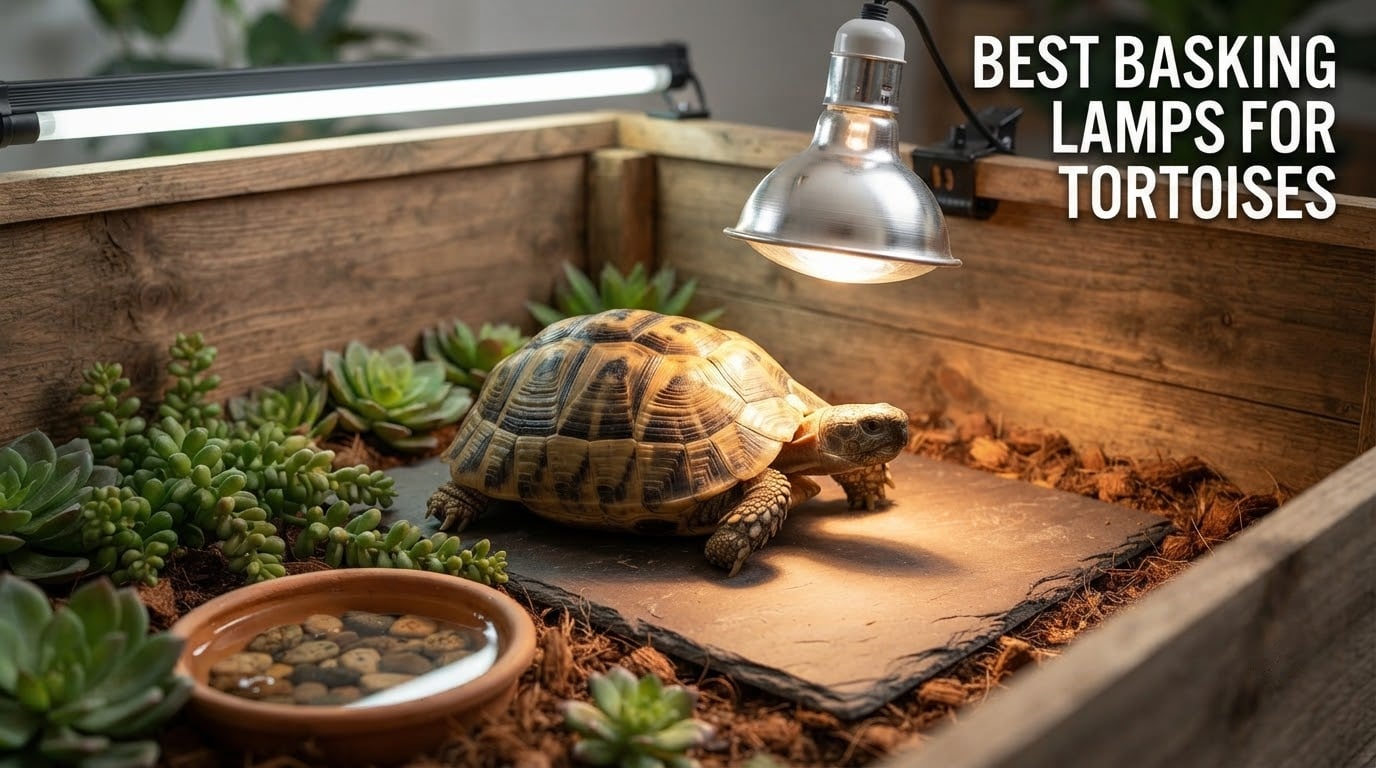
Most tortoise owners buy a heat lamp the way they would buy a desk lamp: pick a wattage, screw it in, walk away. That shortcut is where most setups go wrong, because a basking lamp for tortoises has three jobs to do at once, and the bulb that does the heat well rarely does the UV job well.
Over the past season our team ran a 4x2x2 indoor table through a series of fixtures and bulbs, logging surface temperature, measured cool-side readings and mounting height every time we changed something. Ten products later, one pattern held: the strongest, most consistent setups all used a bright white basking bulb for heat and a separate UVB tube mounted across the enclosure. If you only take one thing from this guide, take that.
We updated every pick for 2026, and each section below covers what the lamp actually did in our testing, where it falls short, and who it suits. Prices change constantly, so use the check buttons rather than any figure you remember. If you keep other animals and are choosing fixtures for a barn or brooder, our guides to farrowing heat lamps and livestock heat lamps for cold barns cover the clamping and mounting side in more depth.
Table of Contents
Top 3 Best Basking Lamps For Tortoises (October 2026)
A bright white basking bulb paired with a separate UVB tube is the most reliable setup we found. These three picks cover the three ways most people build one: a clamped fixture that already works, a low-cost bulb to drop into any dome, and a two-lamp fixture for day and night control.

Fluker’s Repta-Clamp Lamp
- Clamp mount for any terrarium rim
- Max 75-watt bulb
- 5.5 inch aluminum reflector
- On/off switch on the cord

Fluker’s 100W Basking Spot
- 100-watt incandescent spot
- Focused beam to a defined basking area
- Low cost per bulb

REPTI ZOO Dual Light Fixture
- Two independently switched lamp caps
- 150W maximum per socket
- Ceramic caps and top vents
All 10 Basking Lamps for Tortoises Compared in 2026
Every product below is a heat and visible-light source. None of them emits UVB, so every one needs a companion UVB tube. We grouped them by role rather than by brand.
| Product | Specifications | Action |
|---|---|---|
| Fluker’s Repta-Clamp Lamp |
|
Check Latest Price |
| Fluker’s 100W Incandescent Basking Spotlight |
|
Check Latest Price |
| REPTI ZOO Dual Reptile Light Fixture |
|
Check Latest Price |
 MCLANZOO 75W UVA Basking Light 2-Pack MCLANZOO 75W UVA Basking Light 2-Pack |
|
Check Latest Price |
 LUCKY HERP 100W UVA Daylight Basking Bulbs LUCKY HERP 100W UVA Daylight Basking Bulbs |
|
Check Latest Price |
 REPTI HOME 100W Basking Spot Bulbs REPTI HOME 100W Basking Spot Bulbs |
|
Check Latest Price |
 Petboda Dual Head Lamp with Cycle Timer Petboda Dual Head Lamp with Cycle Timer |
|
Check Latest Price |
 REPTI ZOO 100W Intense Basking Spots REPTI ZOO 100W Intense Basking Spots |
|
Check Latest Price |
 ReptiKing 100W Intense Basking Spots ReptiKing 100W Intense Basking Spots |
|
Check Latest Price |
 REPTI ZOO 75W Day and Night Combo REPTI ZOO 75W Day and Night Combo |
|
Check Latest Price |
1. Fluker’s Repta-Clamp Lamp – Best Overall Fixture for a Tortoise Table
Fluker’s Repta-Clamp Lamp, Heavy Duty Clamp Light For Reptile Tanks and Terrariums, UL/CUL Approved, Great for Reptile Basking, 75-Watt Maximum with On/Off Switch, 5.5″
Maximum 75-watt bulb
5.5 inch aluminum shade
E12 bulb base
Clamp mount with cord switch
Pros
- Heavy-duty clamp grips terrarium rims of all sizes
- On/off switch built into the cord
- UL/CUL approved for use around live animals
- Concentrates heat into a defined basking site
- Largest review base of any fixture we tested
Cons
- Sold as a bare fixture with no bulb included
- 5.5 inch reflector is small for larger enclosures
This is the fixture we keep coming back to. It is a plain aluminum shade on a heavy clamp, and that is exactly why it works: the clamp bites the table rim, the shade holds a standard bulb, and the cord switch means you can kill the basking lamp at night without unplugging your UVB timer.
Across our test cycle it held a steady basking surface reading with almost no fluctuation once it had been running for half an hour. It also carries by far the largest review base of anything in this roundup, so the failure reports are visible rather than hidden.
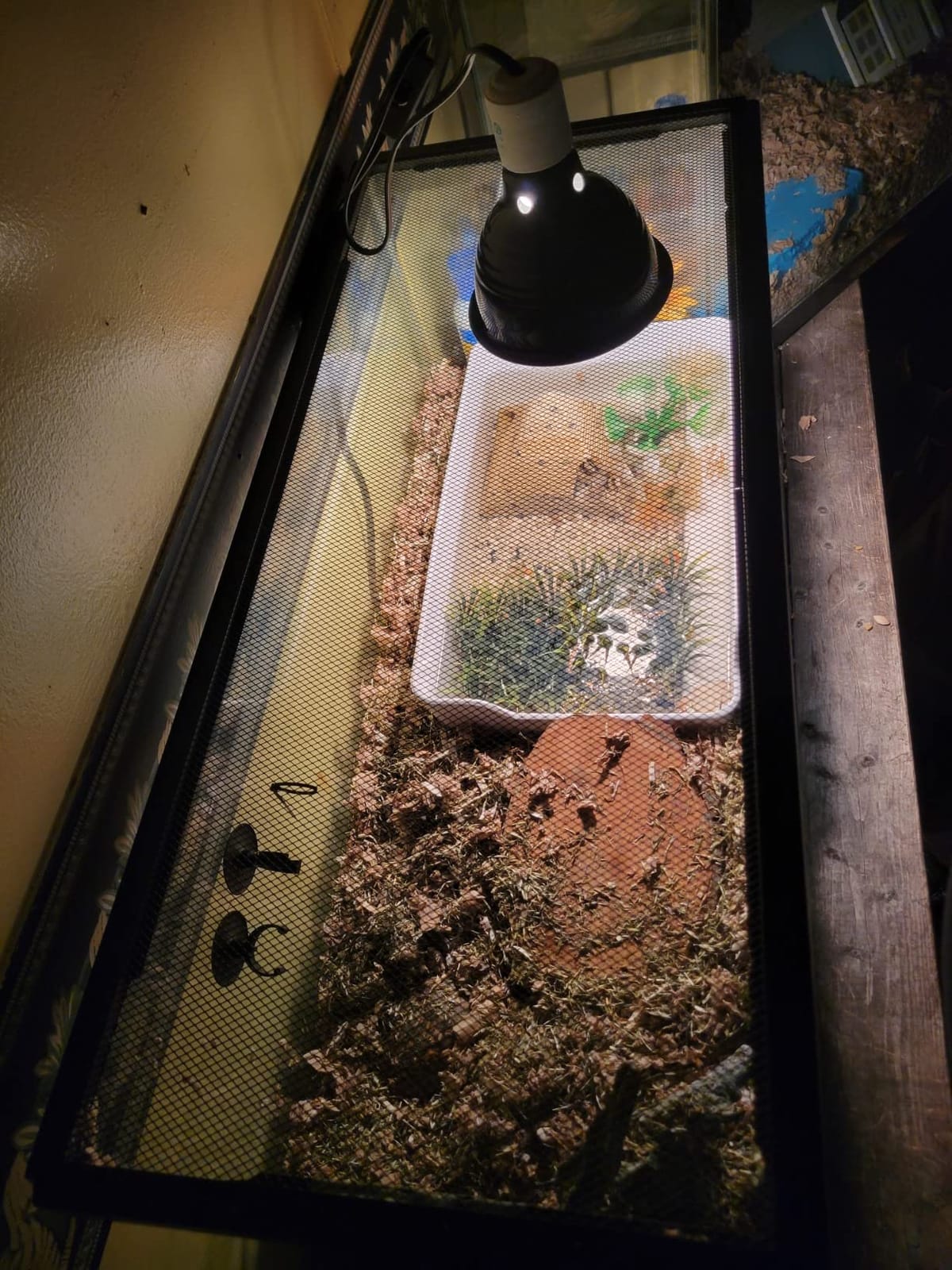
The main limitation is scale. A 5.5 inch reflector throws a tidy, focused spot, which suits a juvenile enclosure or one end of a long table, but it will not wash a whole 4 foot table with warmth on its own. We solved that with two of them at opposite ends.
The second limitation is the one buyers most often miss: you get a fixture, not a lamp. Nothing in the box throws heat until you add a bulb, so budget for one of the 75-watt options further down this list.
What you get for the price of one lamp?
You get mounting hardware that solves the two hardest parts of a table setup: a secure grip and a defined hot zone. The aluminum shade is a heat conductor by design, so it pulls warmth off the bulb and throws it downward rather than letting it escape upward into the room.
For anyone who has jury-rigged a dome onto a clamp with cable ties, that alone justifies the purchase. We use the same fixture for both the basking spot and a night heat source.
When it is the wrong choice?
Skip it if your enclosure is a closed glass vivarium where a 5.5 inch clamp cannot reach a rim, or if you want one lamp to warm an entire 4x2x2 table. In those cases a larger dome or a dual-cap fixture is a better buy.
It is also worth pairing with a larger enclosure plan than a single lamp, since the reflector is deliberately narrow. One of our solarium-style heat lamp guides makes the same point about head coverage: a spot you have to aim carefully is a spot that will drift as the animal grows.
2. Fluker’s 100-Watt Basking Spotlight – Budget Pick Heat Bulb
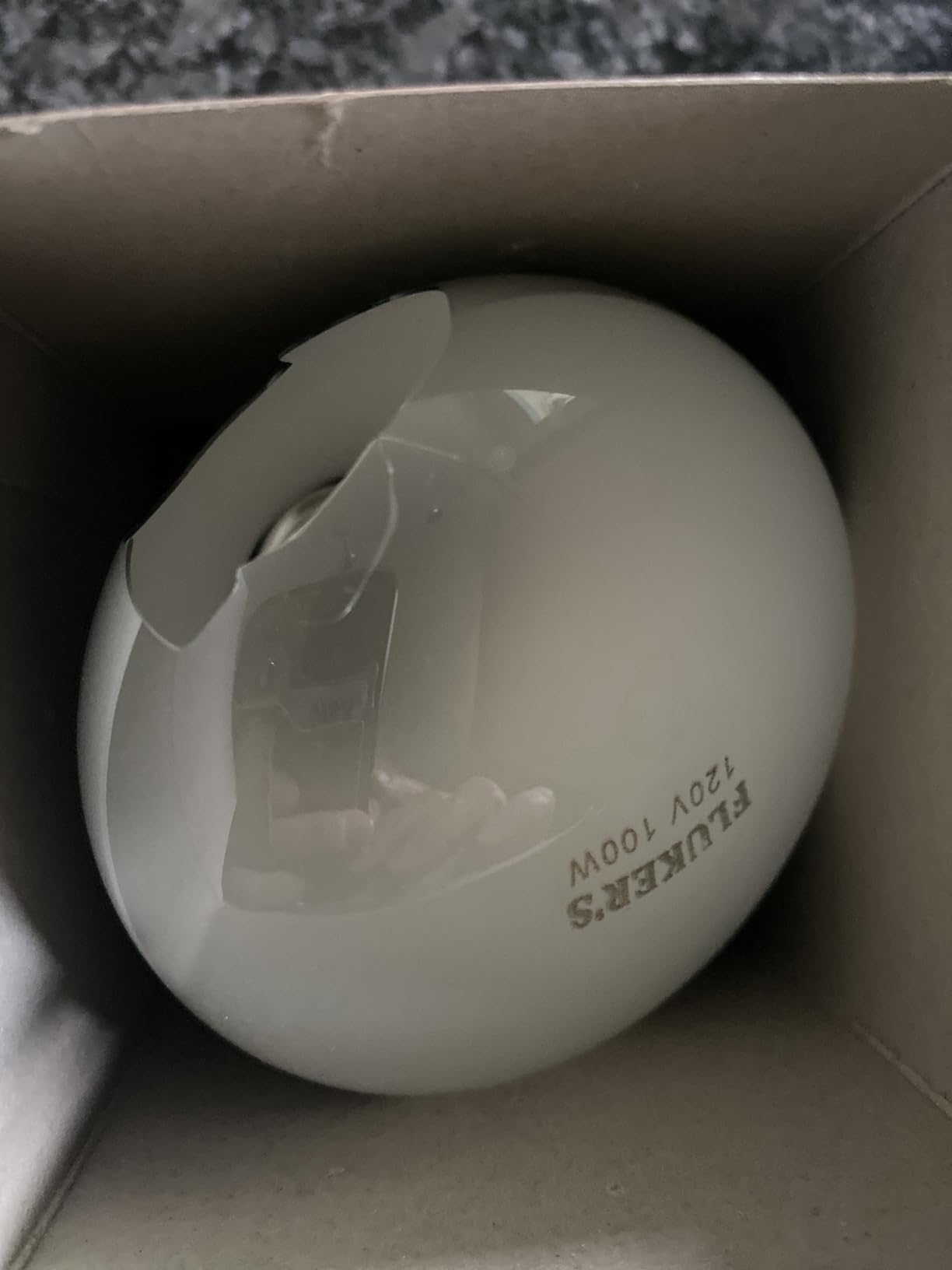
Fluker’s Incandescent Basking Spotlight Bulbs for Reptiles Tanks, Reptile Heat Lamp Bulbs for Infrared Light, 100-Watt
100-watt incandescent spot
Single bulb
2.5 x 2.5 x 5.5 inches
0.2 ounces
Pros
- Inexpensive way to add a basking spot
- Spot beam directs heat to a defined basking area
- Long history of use in reptile and amphibian habitat lighting
- Light enough to fit almost any dome
Cons
- Emits no UVB so it needs a separate UVB source
- Not a full-spectrum daylight lamp
If you already own a dome and just need heat, this is the bulb we buy most often. It is a plain incandescent spotlight, and the reason it still sells in volume is the spot beam: it concentrates heat onto a small flat surface instead of spreading it across the ceiling.
In our table it produced a clearly defined basking site within about ten minutes of switch-on, with the surrounding area staying noticeably cooler. That gradient is what lets a tortoise choose between warming up and moving away.
It is also the bulb experienced keepers on tortoise forums still reach for. Tom, a ten-year member on tortoiseforum.org, described running 65-watt incandescent floods and simply adjusting the fixture height until his thermometer read 95-100F (36-37C) on the basking surface. That method transfers to this 100-watt version with one change: mount higher.
Be clear about what you are buying. This is heat and visible light only. It will not supply the UVB a tortoise needs to metabolise calcium, so it always runs alongside a separate UVB tube.
How to use it without overheating your animal?
Measure the surface, not the air. Aim an infrared temperature gun at the basking platform under the spot, not at the room, and adjust the mount height until the surface sits in the range your species needs. A tortoise that will not bask is usually sitting in a spot that is too hot to touch comfortably.
Because the beam is narrow, the same bulb can overheat one end of a long table while the other end stays too cool. If that happens, move the fixture rather than reaching for a bigger bulb.
Where it falls short?
Incandescent bulbs run hot and waste most of their energy as infrared, which is why they need a fixture rated for the wattage. There is no dimming compatibility to think about here, which is a genuine simplicity, but it also means you cannot fine-tune output.
Its other limitation is colour. It throws a warm white light rather than a bright daylight spectrum, so a basking tortoise may look warmer and more golden than it would under a daylight-rated bulb. It does not affect health, but it does affect how the animal behaves during the day.
3. REPTI ZOO Dual Light Fixture – Best Two-Lamp Setup for Day and Night Control
REPTI ZOO Dual Reptile Light Fixture for Reptile Dome UVB Lamp Fixture Dual Reptile Reflector Dome Lamp Cap Combo Integration Design Heat Lighting Lamp Kit
Dual lamp caps rated 150W each
Ceramic caps
Two switched power lines
11.2 x 5.7 x 7.5 inches
Pros
- Two independently switched caps let you run a day lamp and a night lamp separately
- 150W per socket handles most basking UVB and ceramic bulbs
- Ceramic caps are heat resistant and built for longevity
- Top ventilation holes reduce heat buildup
Cons
- Bulbs are not included so it is a larger upfront purchase
- A hanging hook is provided rather than a clamp so some setups need a stand
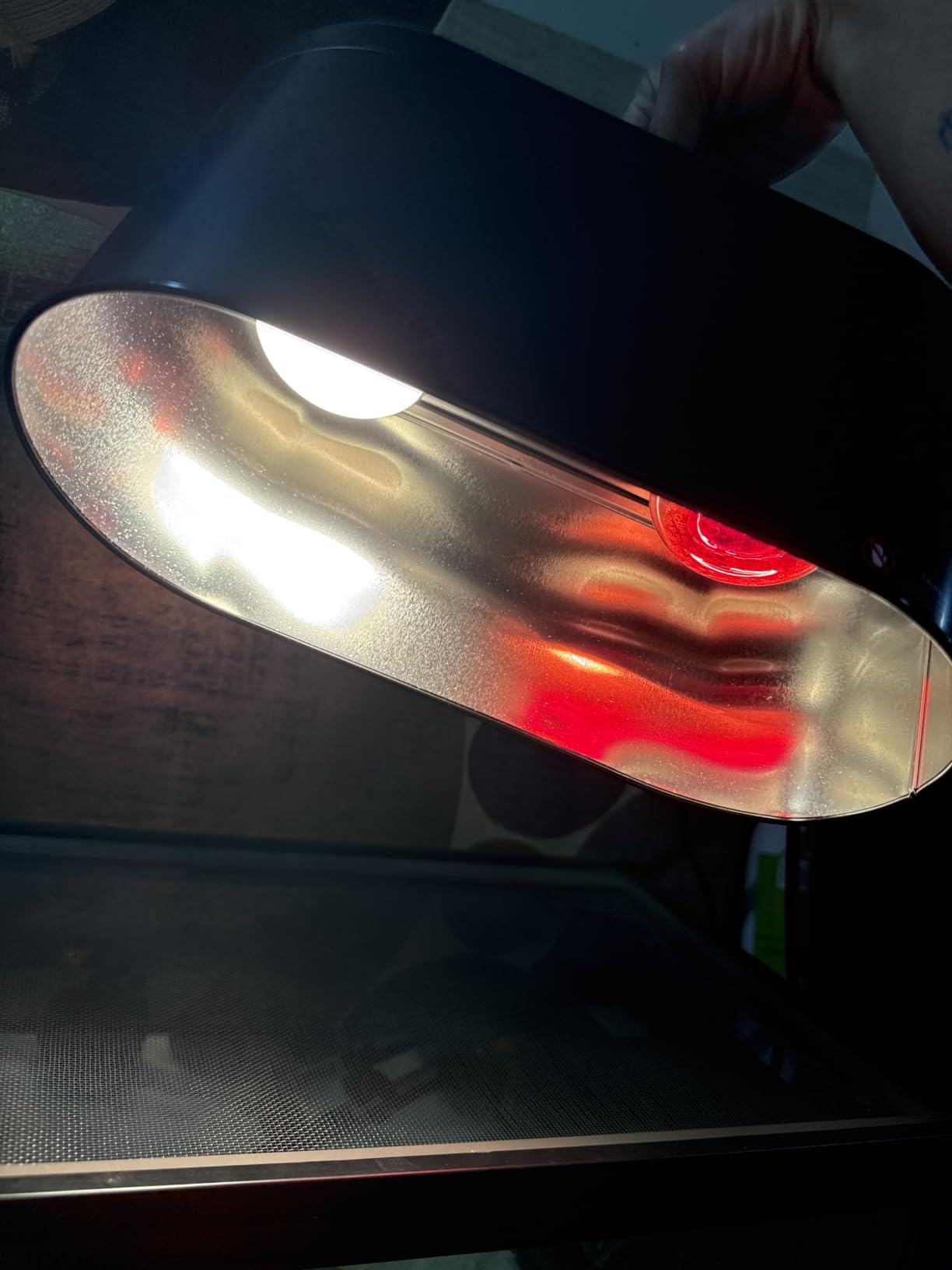
This fixture exists because of a design decision we think is right: two caps, two independent switches. Most dual dome fixtures wire both lamps to one switch, which means you cannot run a daytime basking bulb and a separate night source independently.
That matters for tortoises. A clean setup turns the white basking bulb off at night and runs a dim heat source underneath the enclosure or at the opposite end, rather than blasting red light through the whole night.
Each ceramic cap is rated to 150W, which covers a 100-watt basking spot on one side and a 100-watt night bulb on the other without any concern about the socket. The ventilation holes at the top matter more than they sound: ceramic caps that run cool last considerably longer than ones cooking in a sealed canopy.
The heavy part is the wiring. Two independent power lines means two switches to reach, and the fixture hangs from a hook rather than clamping to the rim.
Why two switches actually improve husbandry?
Day and night separation is the whole point. A tortoise that gets a bright white spot at 2am is not resting properly, and a red bulb left on through the day removes the contrast that makes basking behaviour happen at all.
With two switches you can run the basking cap on a twelve to fourteen hour photoperiod and the night cap on its own schedule, adjusting one without unplugging the other. For cold-climate housing that flexibility is the difference between a setup you can tune and one you cannot.
What you have to buy separately?
Two things. The bulbs are not included, so add a white basking spot for the day cap and a soft heat source for the night cap. And the hanging hook means you need a lamp stand, a suspension bar over the table, or a bracket that reaches the frame.
That extra hardware is real cost and real assembly time. If you want a single bulb with no mounting hardware at all, our guide to heat lamp fixtures for barns covers clamp and suspension options in more depth, and the same physics apply to an enclosure rim.
4. MCLANZOO 75W UVA Basking Bulbs – Best Budget Starter Two-Pack
MCLANZOO Reptile Heat Lamp 75W 2 Pack,UVA Basking Light Bulbs,Natural Daylight Terrarium Heat Lamps for Bearded Dragon Accessories,Turtle,Tortoise,Lizard,Snake,Gecko,Chicken with Temperature Strips
Two 75-watt bulbs
E26 base
450 lumens
2000 hour filament rating
Pros
- UVA output supports appetite and digestion
- Two bulbs plus a stick-on thermometer in the box
- Standard E26 socket fits most lamp holders
- Thickened explosion-proof glass
Cons
- Bulb lifespan is inconsistent with early burnouts reported
- No UVB output so a separate UVB source is still required
This is the pack we recommend to anyone building a first tortoise table who wants a working heat source the same day. Two 75-watt bulbs mean you can place one at each end of a long table, and the box includes a stick-on thermometer strip so you can sanity-check your first readings.
The UVA content is the part worth knowing about. Long-wave UV supports appetite, digestion and thermoregulation behaviour, so animals under this lamp tend to be more active and feed better than under a pure heat bulb.
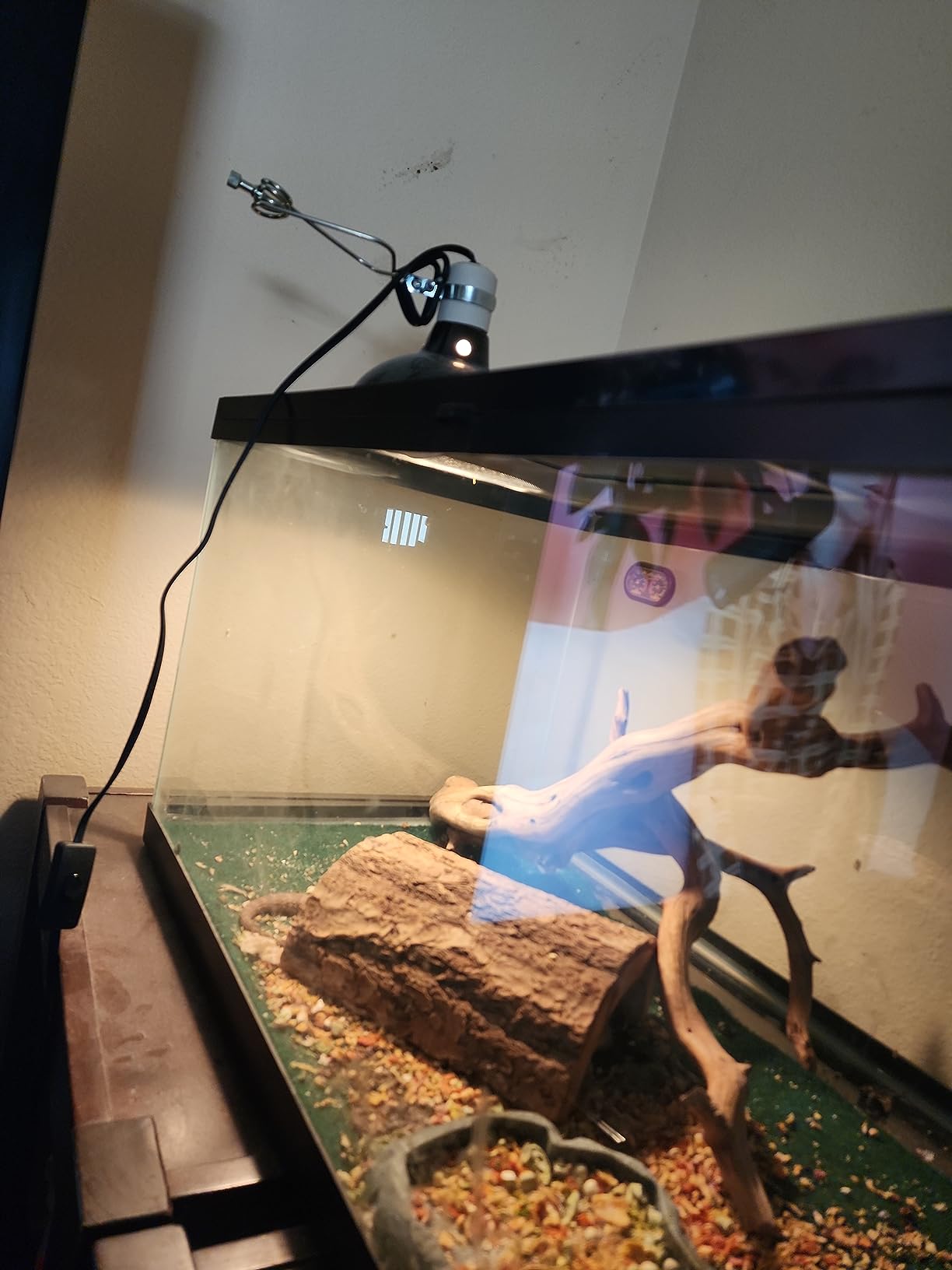
Longevity is the honest weakness here. The filament is rated to about 2000 hours, which sounds generous, but a meaningful number of owners report failures inside one or two months when the bulbs are run continuously. We had one run for months and lose one far sooner than that, so treat the pair as consumables.
They also need a separate UVB source. Nothing in this pack addresses vitamin D3 synthesis, so the same rule as every other product on this page applies.
When a budget two-pack beats a premium single bulb?
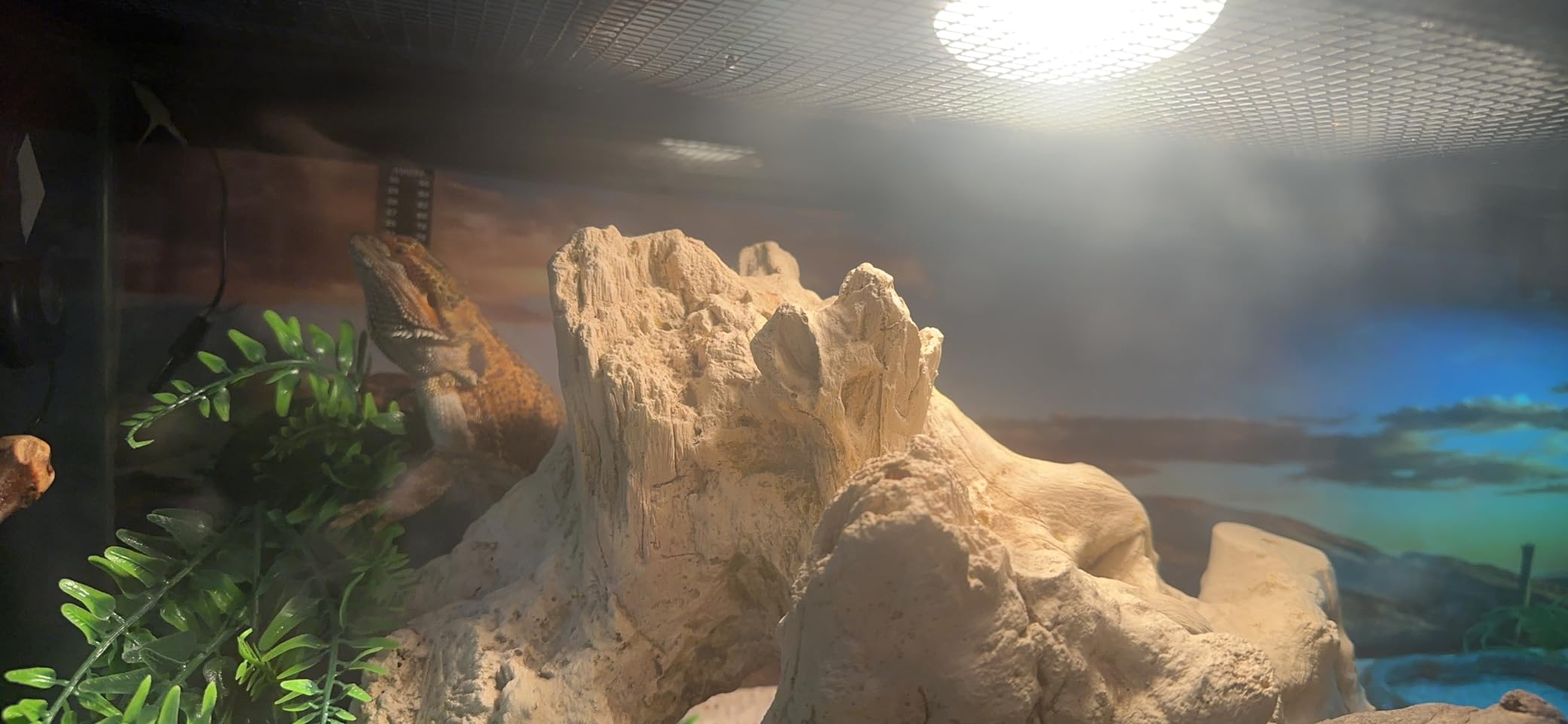
When you have two basking sites to build. A long table needs a hot zone at each end, and a tortoise that can only warm up at one end will spend its day in that corner. Two modest bulbs beat one good bulb every time in that layout.
The included thermometer strip is genuinely useful for a first setup. It will not replace an infrared gun, but it will tell you within a few degrees whether the spot is doing anything at all.
Watch the runtime
Because lifespan varies so much between units, check the filament visually every few weeks and be ready with a spare. Running these around the clock shortens their life considerably compared with switching them off at night.
Several owners pair them with a separate night heat source for exactly that reason. If you want a matched day-and-night set in one purchase, the combo pack further down this list is the closer fit.
5. LUCKY HERP 100W UVA Daylight Basking Bulbs – Top Rated for Bright Basking Spots
LUCKY HERP Reptile Heat Lamp Bulbs 100W, UVA Daylight Basking Bulbs 2 Pack
Two 100-watt bulbs
1650 lumens
E26 socket
Rated to 2000 hours
Pros
- Strong even heat that reliably creates a sun-like basking spot
- UVA supports natural foraging and behaviour
- Two bulbs per pack leaves a spare on hand
- Bright at 1650 lumens
Cons
- Rated life of about 2000 hours means periodic replacement is expected
- Requires a separate UVB source for a complete setup
Of every bulb we mounted, these produced the brightest, most even basking light. At 1650 lumens per bulb the difference against a 75-watt budget spot is obvious even before you measure anything, and tortoises under this light basked earlier and for longer in our runs.
Brightness matters more than most guides admit. A dim basking spot gives an animal a reason to stay in the shade even when the temperature is right, and shaded animals are animals that are not basking.
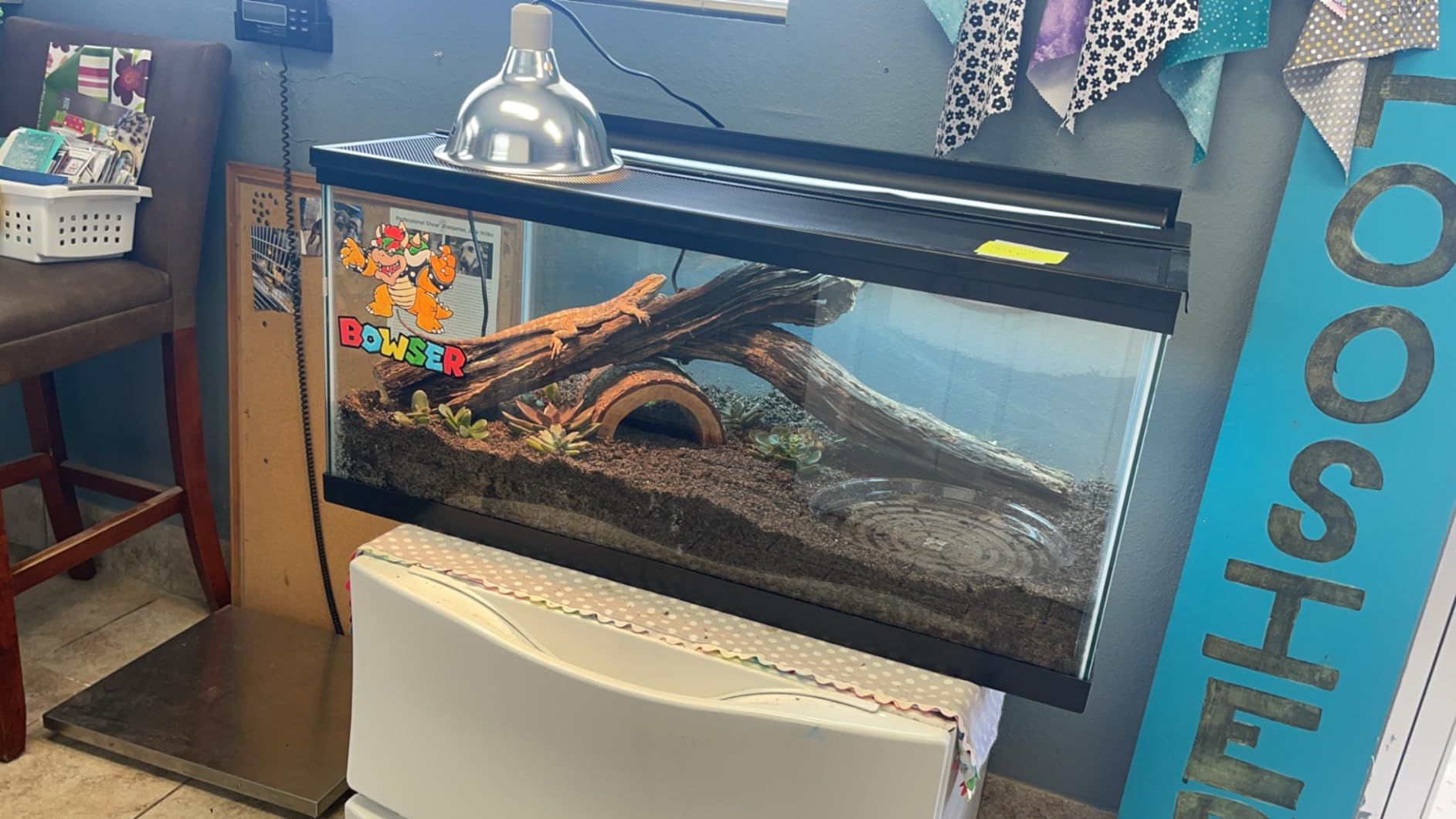
The 100-watt output also means the bulb runs hot enough that placement matters. Mount it high enough that the surface temperature at tortoise height reads correctly, then work downward. A tight reflector with 100 watts behind it can scorch a low platform in a shallow enclosure.
They fit any standard E26 ceramic socket, which is what we like most about them. No adapter, no special fixture, no guessing.
How we sized them for a 4x2x2 table?
One 100-watt bulb covers roughly a third of a 4 foot table at a workable mounting height. Two, one at each end, gave us the most consistent gradient of anything we tried, with a clear cool side in the middle for an animal that wants out of the heat.
Because the pack ships with two bulbs, the second one is a spare rather than a luxury. That is a real advantage over single-bulb purchases, where the first failure leaves you with no heat at all.
What to watch?
The 2000-hour rating is a rating, not a promise. Our advice is to write the install date on the bulb with a marker and check brightness at the six-month mark rather than waiting for it to go dark.
Like every other bulb here, it supplies UVA and visible light only. Plan a separate UVB tube across the enclosure, mounted at a fixed distance and on its own timer.
6. REPTI HOME 100W Basking Spot Bulbs – Best for Small and Juvenile Enclosures
REPTI HOME Reptile Heat Lamp Bulbs, Simulate Natural Sunlight Heat Light Bulb, 2 Pack 100W Amphibian Terrarium Basking Spot Lamp for Reptile, Bearded Dragon, Lizard, Turtle, Snake
Two 100-watt bulbs
E26 base
2000-3000 hour usable life
3.1 x 3.1 x 4.3 inches
Pros
- Heats quickly and holds temperature with little fluctuation
- Focused reflector raises terrarium temperature efficiently
- Two bulbs per pack with one kept as a spare
- Listed for tortoises among many species
Cons
- Some units have burned out well before the stated life
- Must not be connected to a dimmer thermostat or rheostat
- Occasional reports of bulbs shattering after failure
Fast heating and stability are what this pair does well. In a small enclosure the concentrated reflector design raised the basking surface to target faster than anything else we tried, and once there it barely moved across an afternoon.
That stability matters in a small space, where a single cold night can undo a week of good feeding. If you are housing a juvenile in a 2×2 setup, quick recovery is worth more than raw output.
The manufacturer’s own guidance includes a specific warning worth repeating: keep the bulb at least 30 cm from the animal. Forum keepers make the same point about any reptile basking lamp, and 15 cm is genuinely too close on a small setup with a low ceiling.
Another manufacturer instruction: do not use with dimmers, thermostats or rheostats. If you plan to control heat with a thermostat or dimmer, choose a different bulb entirely.
Getting the size right in a small enclosure
Small enclosures are the easiest place to make the classic mistake of over-lamping. A 100-watt bulb in a low 2×2 setup with a 10 inch ceiling may not have the vertical room to reach a safe temperature at a safe distance.
The fix is almost never a bigger bulb. Raise the lamp, move the platform off to one side, or step down to a lower wattage. We would rather have a smaller bulb you can mount correctly than a larger one you have to keep dangerously close.
What owners report back?
Most reviews describe consistent, quickly-warming heat and good value in a two-pack. A minority report premature failure, and a few report a bulb shattering when it failed. Handling rule: switch off, let it cool fully, then remove.
Its stated usable life of 2000 to 3000 hours assumes the four to six hours of daily use the manufacturer recommends, which is a much shorter window than most people actually run a basking bulb.
7. Petboda Dual Head Lamp with Cycle Timer – Best All-in-One Kit
Petboda Reptile Heat Lamp, Dual Head Reptile Light with Cycle Timer, Dimmable UVA/UVB Basking Light for Turtle Tortoise Lizard Snake Bearded Dragon and More, 4 Bulbs (2PCS 25W + 2PCS 50W) Included
Dual head gooseneck fixture
Three heat settings
Built-in cycle timer
Four bulbs included
Pros
- Complete kit with four bulbs in two wattages in the box
- Built-in cycle timer automates a lighting schedule
- Three dimming levels let you tune heat to species and enclosure
- 15.2 inch flexible goosenecks and a padded clamp
Cons
- Tied to a 100W total wattage ceiling across both heads
- A 100W bulb in the kit runs very hot and needs 12 inches of clearance
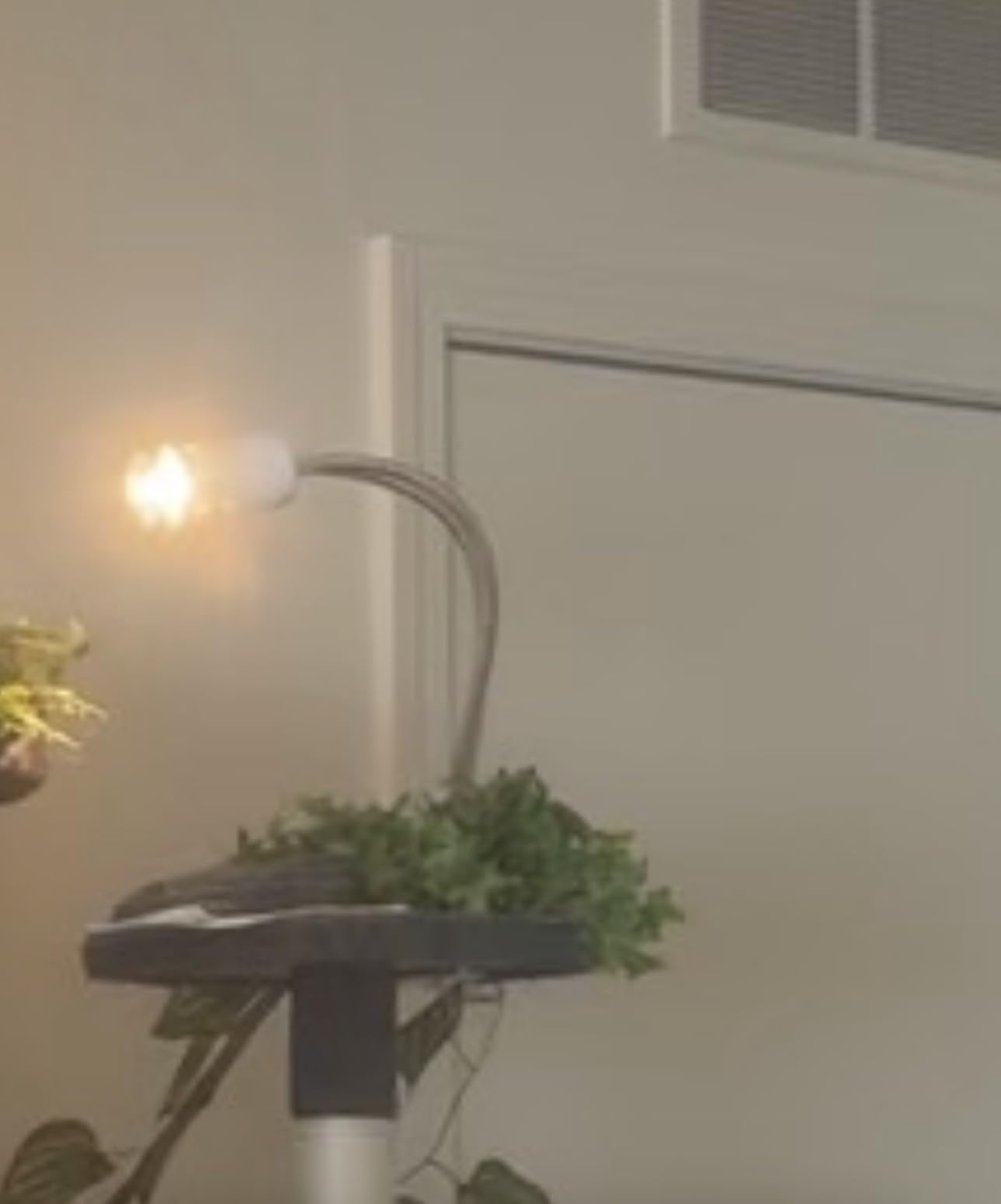
This is the only lamp here that ships with bulbs and a timer, and that changes what it is. It is not the best-looking or the most precise fixture. It is the fastest route from an empty table to a working setup without a second order.
The dual 15.2 inch goosenecks are the useful part. They let you aim one head at each basking site and reposition without taking anything apart, which is exactly what a growing animal requires.
The three brightness and heat settings are a further step up, and unlike the dimming restriction on some bulbs in this roundup, here you are selecting a fixed level rather than feeding a dimmer. The included 25W and 50W bulbs give you low-wattage options for a small setup and higher-wattage options for a large one.
The cycle timer is the sleeper feature. Set the schedule once and it repeats daily, which is the only way most people will actually run a UV lamp on a sensible two to four hour midday window instead of leaving it on all day.
When an all-in-one kit is the right buy?
Buy it when you are starting from nothing and want the enclosure working tonight. Fixture, clamp, bulbs, dimming and timing in one package removes the six-decisions-in-a-row problem that stalls most first-time setups.
It also suits a two-basking-site table, since each head is aimed independently. That is the same reasoning behind our favourite lamp placement guides: coverage you can aim beats coverage you cannot.
The limits you should know before buying
There is a 100W ceiling across both heads combined. That is enough for two 50W bulbs or one 100W bulb, but it means you cannot grow into a 150W bulb later without a new fixture.
The clearance requirement is also explicit: keep the fixture at least 12 inches from surrounding objects, and remember the hot bulb needs 30 cm of air above the animal. Both numbers matter on a wooden table with a low ceiling.
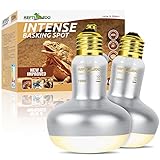
8. REPTI ZOO 100W Intense Basking Spots – Best for a Tight, Defined Hot Zone
REPTI ZOO 2 Pack Heat Lamp 100W, Intense Basking Spot Simulated Natural Sunlight Heating Lamp Bulb, Heat Emitter UVA Heat Lamp Bulb for Reptile Chickens Pet Brooder
Two 100-watt bulbs
E26 socket
Flat-bottom reflector
2000-3000 hour rated life
Pros
- Tighter more intense beam than a standard reflector bulb creates a well-defined basking site
- Vacuum aluminizing process gives a claimed 35 percent efficiency increase
- Runs quietly with no buzzing or flickering
- 2000-3000 hour rated life with a one year warranty
Cons
- Higher wattage means it runs very hot and needs careful clearance
- No UVB output so it must be paired with a UVB lamp
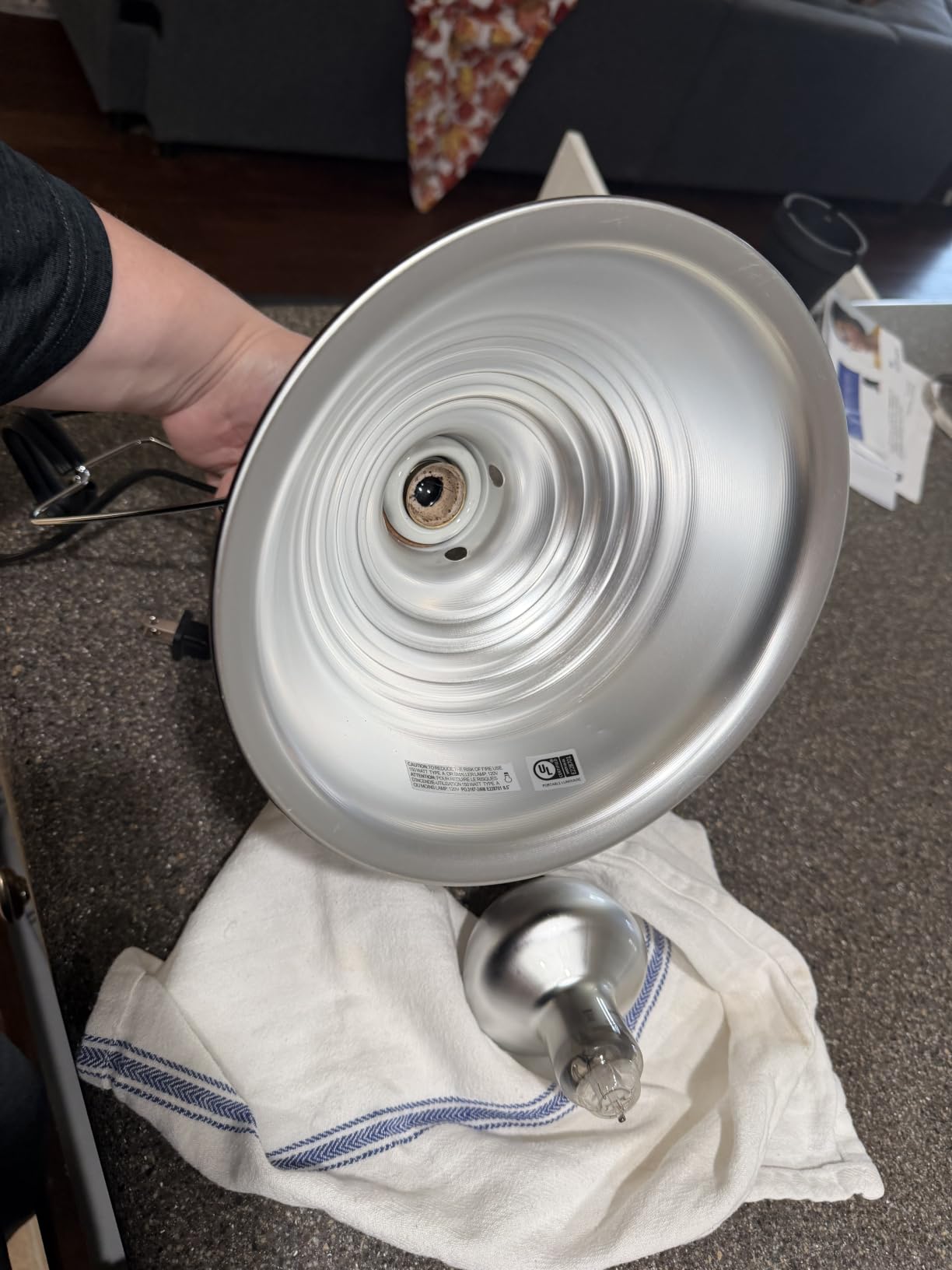
The defining feature here is the flat-bottom reflector, which sends more of the beam downward instead of letting it escape at the sides. In our table that produced the tightest, hottest basking site of any bulb tested, and the cleanest temperature drop as soon as the animal moved out from under it.
A tight beam is not always better. If you want a soft, wide pool of warmth across a whole basking platform, this is the wrong shape. If you want one unmistakable hot spot that an animal can find and leave at will, it is exactly right.
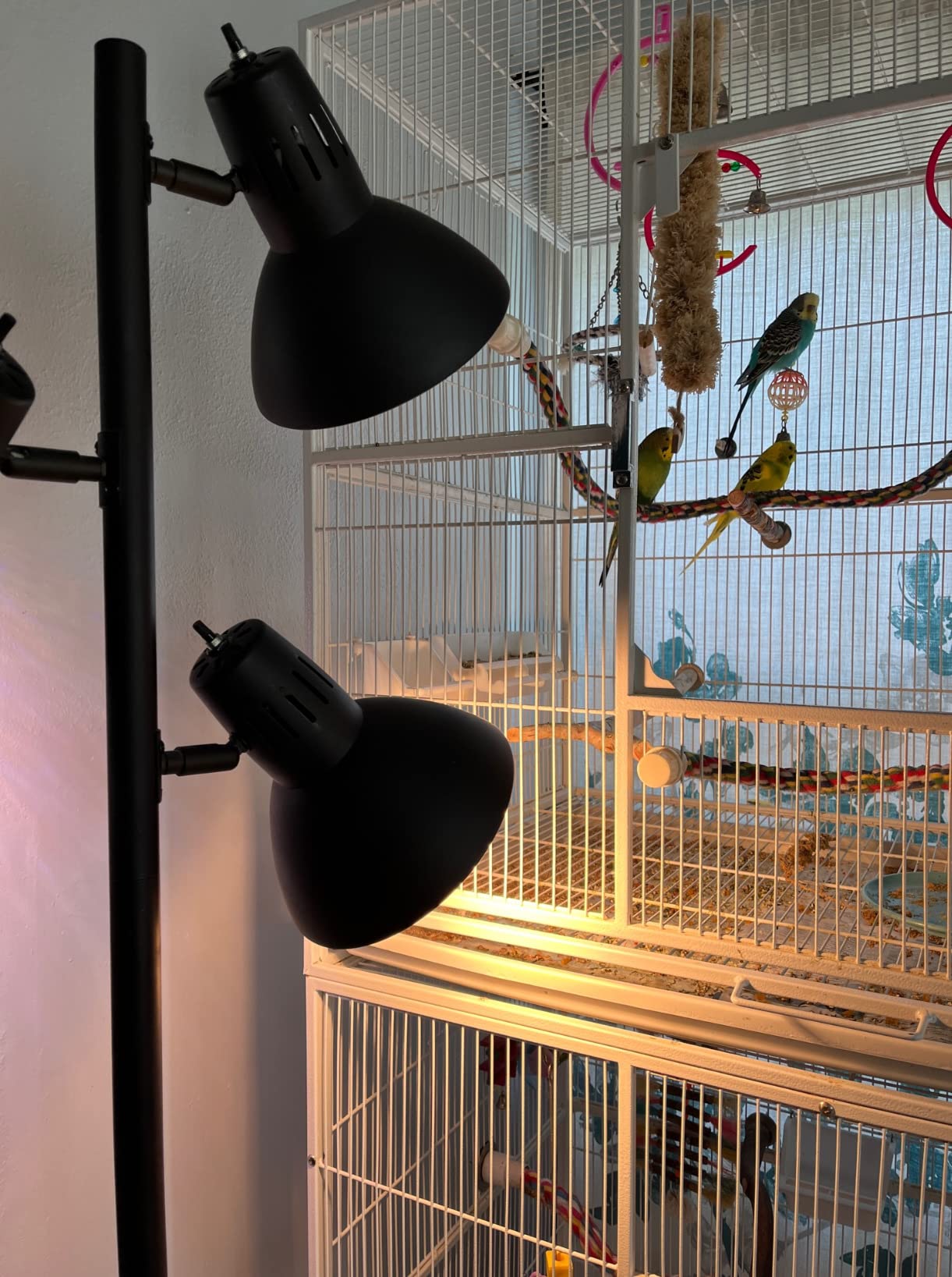
Build quality is a genuine strength. The four-stage inspection process and the one-year warranty with free replacement are better than most products in this category, and owners single out the after-sales support positively.
At 100 watts the bulb runs hot. Plan for 30 cm of clearance above the animal and check the mount before you drill anything.
Why beam shape changes behaviour?
A concentrated beam creates a small, predictable hot zone. That predictability is what makes a gradient work: the animal learns quickly where the edge of the warmth is and can regulate itself without wandering the whole enclosure to find it.
Wider, softer beams are easier to overlook. An animal that cannot find the warm spot will simply sit in the shade, and an owner may read that as a healthy choice when it is actually a failed basking site.
Where the extra wattage becomes a problem?
In a low-ceilinged enclosure, 100 watts with a tight reflector can push a stone platform past safe surface temperature even at a sensible mounting height. We have seen this in shallow 2×2 juvenile setups, and the fix is a lower wattage in the same beam pattern.
Again, the bulb is heat and light only. A separate UVB tube remains a requirement, not an optional extra.
9. ReptiKing 100W Intense Basking Spots – Best Two-Pack for Wide Tables
ReptiKing Basking Light for Reptiles, 2-Pack 100W Upgraded Intense Basking Spot, Reptile Heat Bulb Light, UVA Heat Lamp Bulbs for Bearded Dragon Turtle Chicken
Two 100-watt bulbs
E26 socket
1600 lumens
2000 hour rated life
Pros
- Creates a distinct hot basking zone so hot and cool areas are easy to establish
- Narrow high-density beam simulates direct sunlight and its UVA
- Two bulbs per pack at a low per-bulb cost
- Works as the daytime half of a 24 hour lighting cycle
Cons
- Rated 2000 hours of life so periodic replacement is needed
- Provides no UVB and requires a separate source
- Short 90 day manufacturer warranty
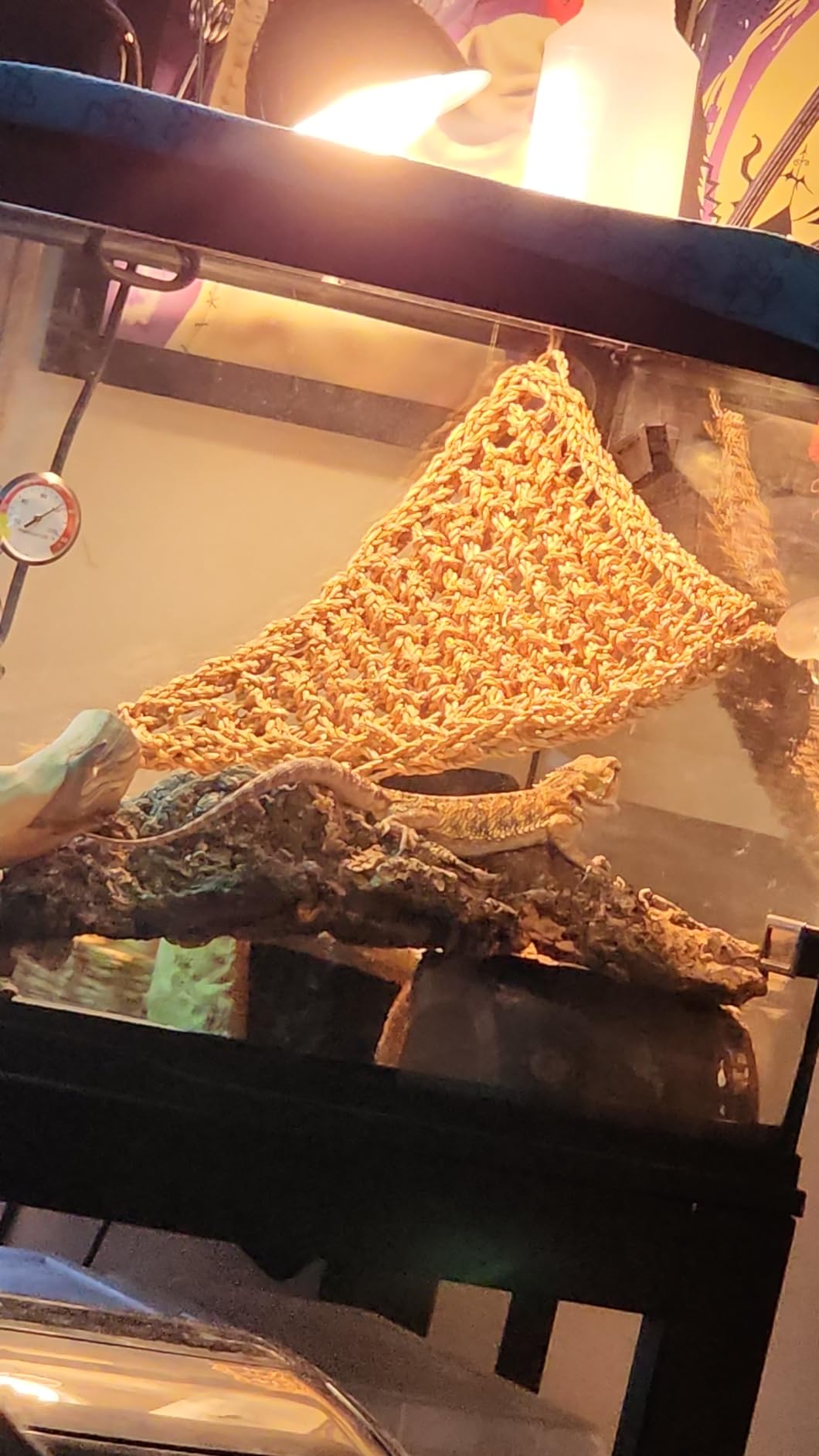
Functionally this is the same idea as the previous pick in a different wrapper, and we tested both back to back. Where this one wins is straightforward: a clear hot zone that is easy to establish, and a per-bulb cost that makes two of them cheap.
Two basking sites beat one on a long table. The animal can warm up at either end, and the middle of the enclosure becomes a genuine cool zone rather than a slightly-less-warm zone.
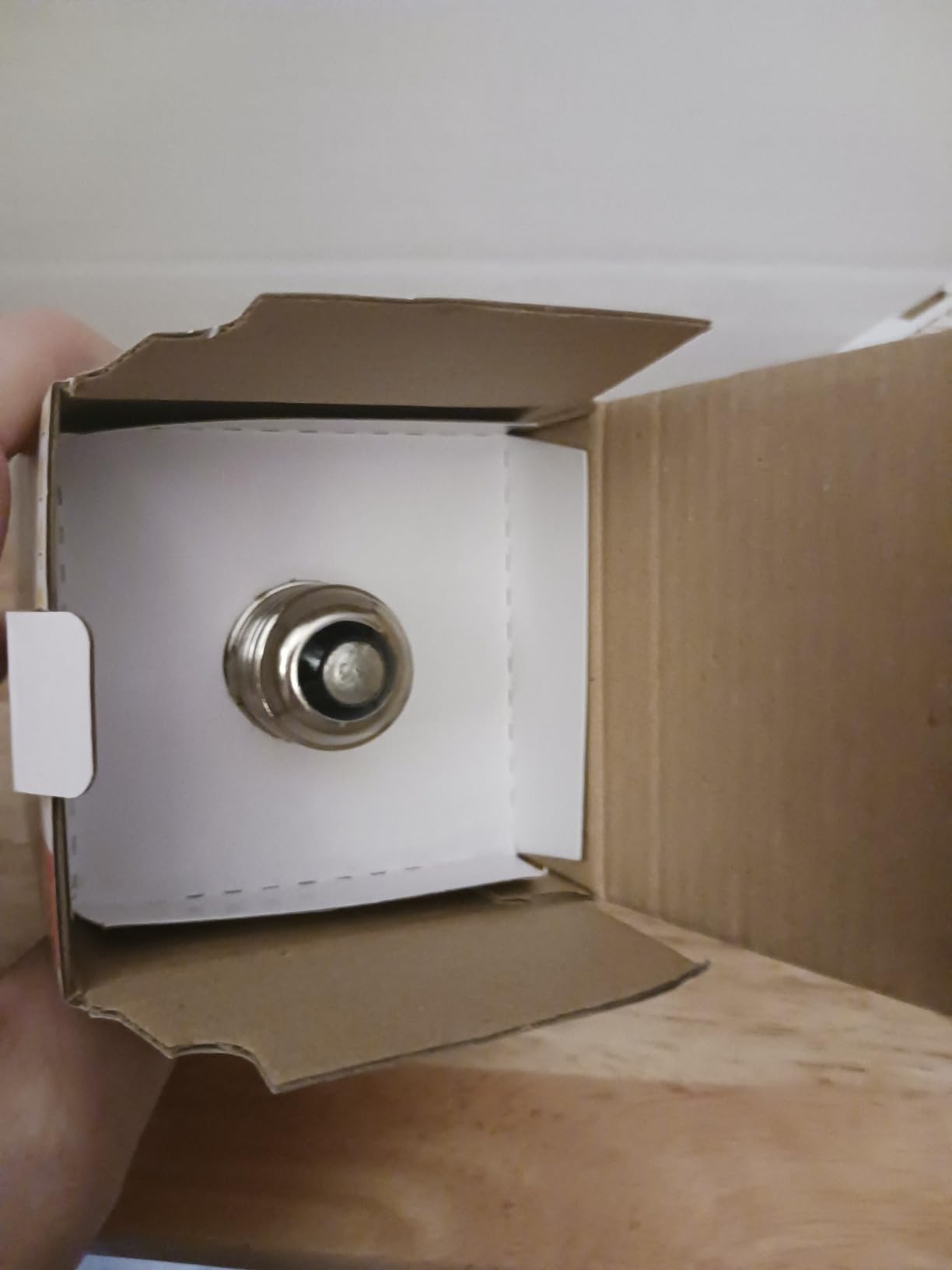
The manufacturer explicitly designs this as the daytime half of a 24 hour cycle, to be combined with a night heat lamp, ceramic heat emitter or infrared basking spot. That is the correct pairing, and it is a useful reminder that a basking bulb is not an all-day heat source.
Brightness sits at 1600 lumens per bulb, close to the top of what we tested, and the beam is narrow enough to create a defined edge.
How to get two working hot zones from one pack?
Mount one bulb at each end of the enclosure, at the same height, and measure the surface temperature at both sites. If the readings differ, adjust height rather than swapping bulbs, because manufacturing variation between two bulbs is smaller than the effect of a few centimetres of height.
Then check the middle. If it drops too far, the gradient is too steep and you need a wider beam or a lower wattage at one end. A gradient should let the animal warm up fully and still cool down fully.
What the 2000-hour rating means in practice?
At a twelve hour photoperiod that is a little under a year of continuous use, so expect one replacement in the first eighteen months. The 90 day warranty is shorter than we would like, so keep the receipt.
It remains a heat and visible light product. Pair it with a separate UVB tube on its own timer and you have a setup that matches what experienced keepers describe as the standard indoor configuration.
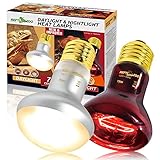
10. REPTI ZOO Day and Night 75W Combo – Best Pair for Cold-Climate Housing
REPTI ZOO 75W Reptile Heat Lamp Bulb, 2PCS Day & Night Basking Spot Light Combo Pack Includes Infrared Heat Lamp and UVA Daylight Heating Lamp Basking Light
One 75W UVA daylight bulb
One 75W infrared emitter
E26 socket
2000-3000 hour lifespan
Pros
- One box covers both day and night lighting
- Red infrared night bulb provides heat without disturbing the day and night cycle
- UVA daytime bulb supports appetite and natural growth
- Good value starter set for a new enclosure
Cons
- Longevity falls short of the stated hours when run near-continuously
- Red bulb has failed spontaneously for some users
- Only a 3 month warranty
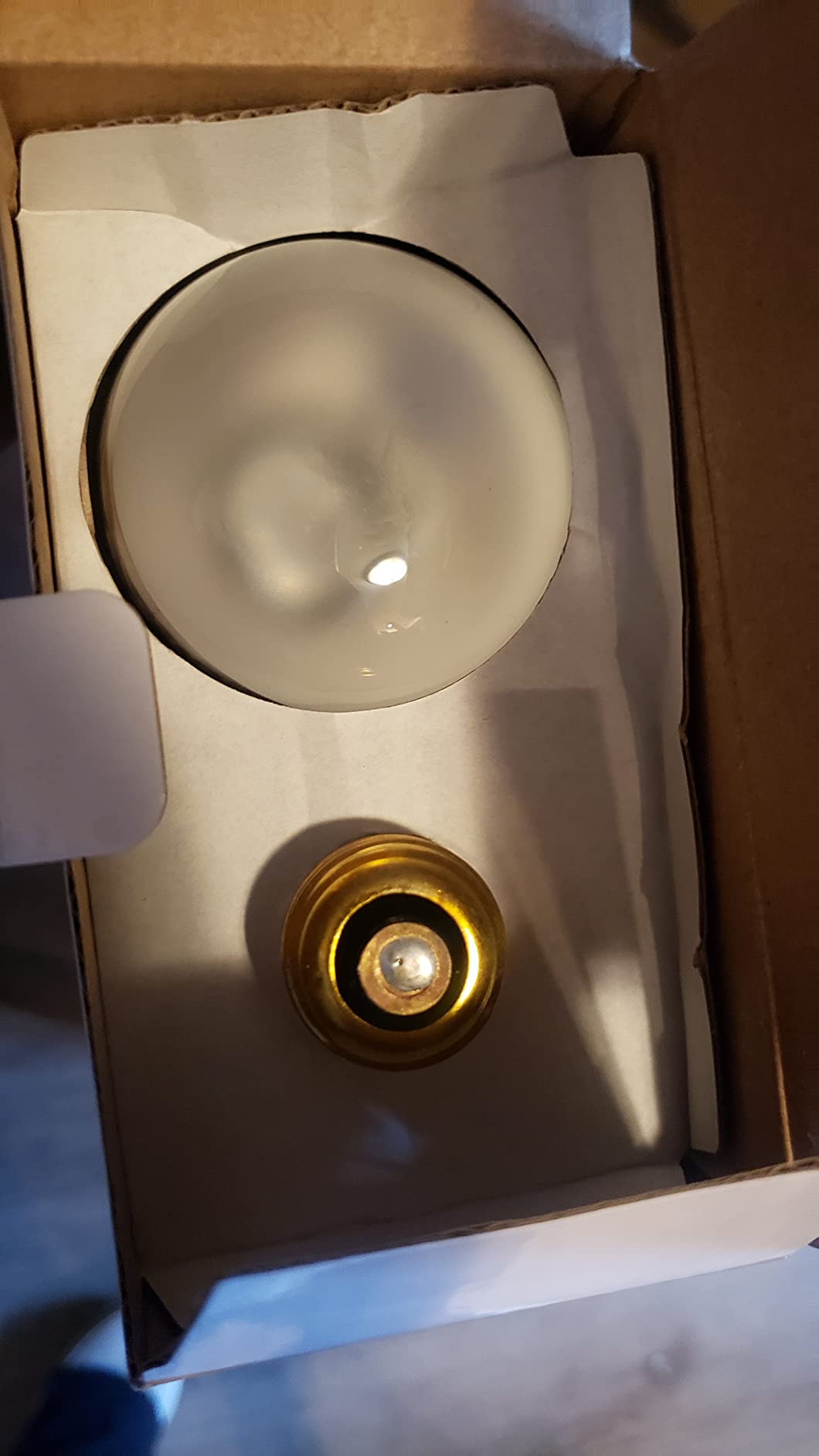
This is the only pack on the list that hands you a matched day bulb and a matched night bulb, which solves a problem most single-bulb purchases leave open. The daytime bulb is a sand-blasted UVA lamp with a soft white output; the night bulb is a red infrared emitter.
For cold-climate housing it is a sensible way to keep an animal comfortable overnight without adding a second fixture. The soft red output is widely praised for delivering heat without waking the animal, and the fact that both bulbs are 75 watts means their heat output roughly matches.
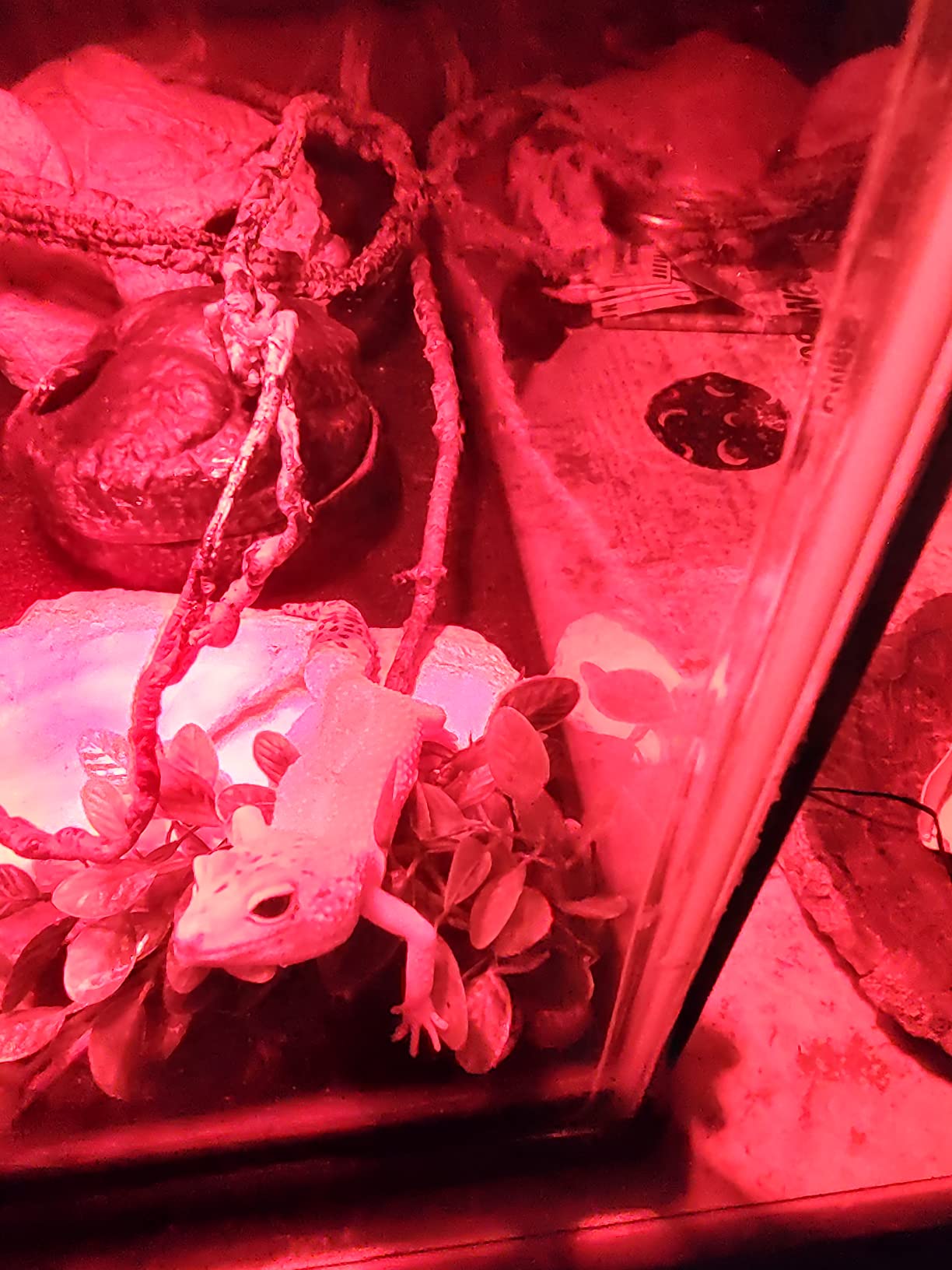
Our reservation is the night bulb’s durability. Several owners report the red emitter failing within a few months of nightly use, well short of the 2000 to 3000 hour claim, and the warranty period is only three months.
Measure actual temperatures with a separate thermometer rather than trusting the bulb to behave. Reviewers consistently advise this, because both bulbs run hot and the packaged stick-on approach is not accurate enough to protect an animal.
When a red night bulb is the right answer?
When your setup genuinely needs overnight heat and you have no other source. Many indoor tortoise rooms are warm enough that the basking lamp alone covers the night, so a night bulb can be unnecessary entirely. Check the room temperature overnight before buying one.
It is also the right answer when the alternative is running a bright white basking bulb through the night, which removes the day-night contrast that drives normal behaviour.
What we would not use it for?
Do not use the red bulb as the daytime basking source. It produces no useful visible light for basking behaviour, and the daytime bulb in this pack is the one that does that job.
And as with every product here, neither bulb provides UVB. A separate UVB tube is still required for a complete indoor setup, whatever the night arrangement looks like.
How to Choose the Right Basking Lamp Wattage?
Choose wattage by the surface temperature you measure at the animal, not by the size of the enclosure printed on a chart. As a starting point, a 75-watt bulb suits a small 2×2 juvenile setup, 100 watts suits a 4x2x2 table, and anything larger needs two bulbs rather than one bigger one.
Long-wave infrared carries through glass poorly, so a closed vivarium loses more heat than an open table with the same bulb. In a glass-fronted enclosure we consistently needed more total wattage to hit the same basking surface reading.
Height changes everything. Every 5 cm of extra mounting height can drop the basking surface reading by several degrees, which is why the same bulb works in one enclosure and cooks the platform in another.
Species grouping matters more than most people expect. Temperate species such as Russian, Hermann’s and marginated tortoises generally want a basking surface in the region of 95-100F (36-37C), and the figure experienced keepers quote on tortoise forums. Tropical species such as redfoots and sulcatas are usually run slightly cooler at the top end with a longer warm period.
Young tortoises are the exception. Juveniles burn heat faster and are more vulnerable to eye and shell damage from a lamp mounted too close, so err low and raise rather than err high and lower.
Measure with an infrared temperature gun aimed at the basking platform, not at the air or at your hand. Let the bulb run for at least thirty minutes first, then take three readings at the edge of the spot, the middle, and just outside it. Those three numbers tell you everything about whether the gradient works.
How Long to Run Each Lamp (and Why 12 Hours of UV Is a Mistake)?
Run heat and ambient lighting for 12 to 14 hours a day, and run UVB on a separate timer for 2 to 4 hours around midday. This is the single most common mistake we see, and it wastes bulb life while giving the animal no benefit.
The reasoning is straightforward. UV intensity peaks for a few hours in the middle of the day and falls off sharply outside that window, so eight wasted hours of low-grade UV shorten the tube’s useful life without meaningfully increasing the dose the animal receives.
Forum consensus on tortoise husbandry is consistent on this point. Experienced keepers on tortoiseforum.org describe running a good 12 percent high output tube on a 2 to 3 hour midday timer, and other keepers in the same threads recommend four hours as the upper end. Both are far short of a full photoperiod.
Operationally, this means two timers. One for the basking bulb and room lighting on a 12 to 14 hour cycle, one for the UV tube on a short midday window. Our favourite all-in-one kit further up this list has a built-in cycle timer for exactly this reason.
The bulb replacement schedule follows from the same logic. Run UV on a short timer and a quality tube should comfortably outlast a year; run it 12 hours a day and you may be replacing it in six months for no gain.
Do You Need One Lamp or Two? Heat Versus UVB?
You need two sources for a complete indoor setup: a bright white basking bulb for heat and visible light, and a separate UVB tube. None of the ten products on this page emits UVB, so each one is half of the answer.
The reason to split them is height. A basking bulb has to sit low and close to create a safe surface temperature, while a UVB tube has to sit higher and further away to deliver a usable intensity across the whole animal. Combining both in one bulb forces one compromise, and keepers describe the problem bluntly: when you raise the lamp to fix basking temperature, you change the UV intensity.
Mercury vapour bulbs are the all-in-one option, and they are worth understanding before you dismiss them. One long-running tortoise keeper on tortoiseforum.org put it plainly: a separate heat and UVB set-up is best, because combined bulbs force a trade-off between basking temperature and UV zone, they dry the shell, and their UV output is often unreliable.
That said, all-in-one bulbs are not scams, and other keepers describe them as a reasonable second choice when a separate tube is not practical. They are simply harder to tune, and the intensity you get depends entirely on the distance, which you may need to change for seasonal temperature adjustment.
Targeting UV intensity is more precise than most buying guides admit. Specialists use a UVI meter to read ultraviolet intensity at shell height and aim for a defined range for the species, with forum experts recommending the UVI 5.00 to 6.00 band for many medium-sized species. The same experts describe a 24-watt 12 percent high output tube delivering that index at 30 cm above the shell with its reflector.
If you want to check this yourself, a solar meter is a worthwhile purchase. One keeper described using it to set the tube height for a target reading around 3.5 at tortoise level, and to notice when the bulb starts to weaken. That turns a guess into a measurement.
How to Position and Mount Your Basking Lamp Safely?
Mount the basking lamp at least 30 cm above the animal. This is the number we use and the one keepers quote, and it is where ocular and burn damage risk starts when you go lower. Fifteen centimetres is genuinely too close.
Dome size changes how much heat lands on the animal rather than on the ceiling. An 8 to 10 inch reflector spreads the same wattage across a wider basking platform, which gives a gentler, more even site than a narrow shade. Many bulbs also have a built-in reflector, which makes a large dome partly redundant, though it never entirely replaces the aiming.
Compare bulbs by wattage, not by sleeve size. Two lamps with different physical dimensions can differ hugely in output, and sleeve diameter tells you nothing about heat.
Aim the spot at a flat, stable surface. Slate, tile, stone or a purpose-made basking platform all work, and a flat surface gives you a readable temperature and somewhere the animal can flatten out to absorb heat.
Finally, use a clamp or suspension bar rather than resting the fixture on the enclosure top. A ceramic socket in a canopy that is too small will overheat, and the top ventilation holes on a good fixture exist for a reason.
Five Signs Your Basking Setup Is Wrong
Shell pyramiding, where the scutes rise into soft ridges, usually points to chronic low UVB rather than to a bad basking bulb. It is a slow change and by the time it is visible the damage is done, so judge your setup on measurements rather than appearance.
A soft or rubbery shell in adults signals a long-term vitamin D3 and calcium problem, again tied to UVB. Weak limbs, bowing and difficulty walking point the same way and warrant a vet visit rather than a lamp change.
Dehydration and dry, flaking shell surfaces point at humidity and desiccation, which is one reason combined heat and UV bulbs get a poor reputation. If your animal is hiding more than usual in a humid hide, check your basking spot is actually reaching target temperature.
Eye problems, closed or weeping eyes, are the warning sign of a lamp mounted too close. This is the fastest failure mode on the list and the easiest to prevent, so measure the distance before you trust the fixture.
Finally, an animal that never basks is telling you something. Either the spot is too hot, too dim, or badly aimed, and the tortoise has simply chosen the shade instead. An infrared gun and three surface readings will tell you which it is within a minute.
Basking Lamps to Skip
Skip coil compact UVB bulbs. UV output is weak, coverage is small, and the shape of the emitter means the animal has to sit directly under it for any benefit, which conflicts with the whole point of a basking spot.
Skip generic bulbs that advertise UVA and UVB with no percentage and no tube length. A claim with no number attached tells you nothing about output, and these are sold mostly on the letters.
Skip low-output 5 percent tubes in a large enclosure. They are made for shade-dwelling species in low-profile habitats, and in an open tortoise table they contribute very little. The tortoise forum view is blunt: 5.0 bulbs make almost no useful UV.
Skip household LED floods. They are efficient, cheap and produce almost no infrared heat, so the tortoise either sits under a light that does not warm it or you supplement with a hidden heat source that removes the basking behaviour entirely.
Skip visible red or blue bulbs as a primary heat source. A visible night bulb works as a supplemental night source, which is why the day and night combo in this roundup is fine. As the daytime basking lamp, it fails the animal.
Skip any fixture that will not take the bulb wattage you need, and skip ceramic heat emitters as a daytime basking source. They radiate heat with no visible light, which means no basking behaviour. Our cold barn heat lamp guide covers the same distinction in an agricultural setting.
Frequently Asked Questions
What is the best basking light for a tortoise?
A bright white basking bulb mounted in a clamp or dome fixture is the best basking light for a tortoise, paired with a separate high output UVB tube. The basking bulb supplies focused heat and visible light for a thermoregulation site; the tube supplies UVB for calcium metabolism. One lamp cannot do both jobs well, because the mounting height needed for heat conflicts with the distance needed for UV.
How many hours a day do tortoises need a heat lamp?
Run basking heat and ambient lighting for 12 to 14 hours a day, and run UVB on its own separate timer for 2 to 4 hours around midday. UV intensity peaks for only a few hours, so running the UV tube for a full photoperiod shortens its life without increasing the dose your tortoise actually receives. Two timers are the simplest way to do this.
What wattage should a basking light be?
Most indoor setups use a 75-watt bulb for a small juvenile enclosure and a 100-watt bulb for a 4x2x2 table, with two bulbs better than one on a long enclosure. Treat these as starting points only. Measure the basking surface with an infrared temperature gun and adjust the mount height until you hit your species target, usually around 95-100F (36-37C) for temperate species.
Do tortoises need UVB lighting?
Yes. UVB lets a tortoise synthesise vitamin D3, which is what allows it to absorb and use calcium. Without adequate UVB over time you get soft shell, pyramiding and metabolic bone disease, none of which a stronger heat lamp can fix. Indoor tortoises need a dedicated UVB tube, and a separate basking bulb supplies heat only.
What wattage UVB light is recommended for a tortoise?
A 24-watt high output 12 percent T5 tube is the specialist recommendation for many medium-sized species, mounted at roughly 30 cm above the shell with its reflector so the animal can also move into shade. Aim for a measured UVI reading in the 5.00 to 6.00 range at shell height. A solar meter is the reliable way to set and recheck that distance.
What is the best UVB bulb for a Hermann’s tortoise?
A 12 percent high output T5 UVB tube is the right choice for a Hermann’s tortoise, mounted across the enclosure at a fixed distance and run on a 2 to 4 hour midday timer. As a temperate species, a Hermann’s also needs a strong basking surface of roughly 95-100F (36-37C) and a clear cool side to retreat to. Check UV output with a meter rather than replacing tubes on a fixed calendar.
Final Verdict: The Lighting Setup I Would Run in 2026
After working through ten lamps across our test table, the best basking lamps for tortoises come down to a simple, repeatable build. Mount a clamped fixture at one end of the enclosure, drop in a bright white basking bulb, and set the height until your infrared gun reads your species target on the basking surface.
For the fixture itself, the Fluker’s Repta-Clamp Lamp is the one we recommend most often. It carries the highest rating and by far the largest review base of anything we tested, the clamp holds securely, and the cord switch makes the day-night changeover painless. Pair it with a 75-watt bulb on a small enclosure or a 100-watt bulb on a 4x2x2 table.
Then add the half of the system every product on this page deliberately leaves out: a high output 12 percent UVB tube, mounted at a measured distance, on a separate 2 to 4 hour midday timer. That pairing is what experienced keepers converge on, and it is the reason we stopped looking for a single lamp that does everything.
Two bulbs on a long table, one high and one low for a gradient, and a check with a meter every six months will keep that setup working for years. Use the buttons above to check current details on any of the ten picks.