
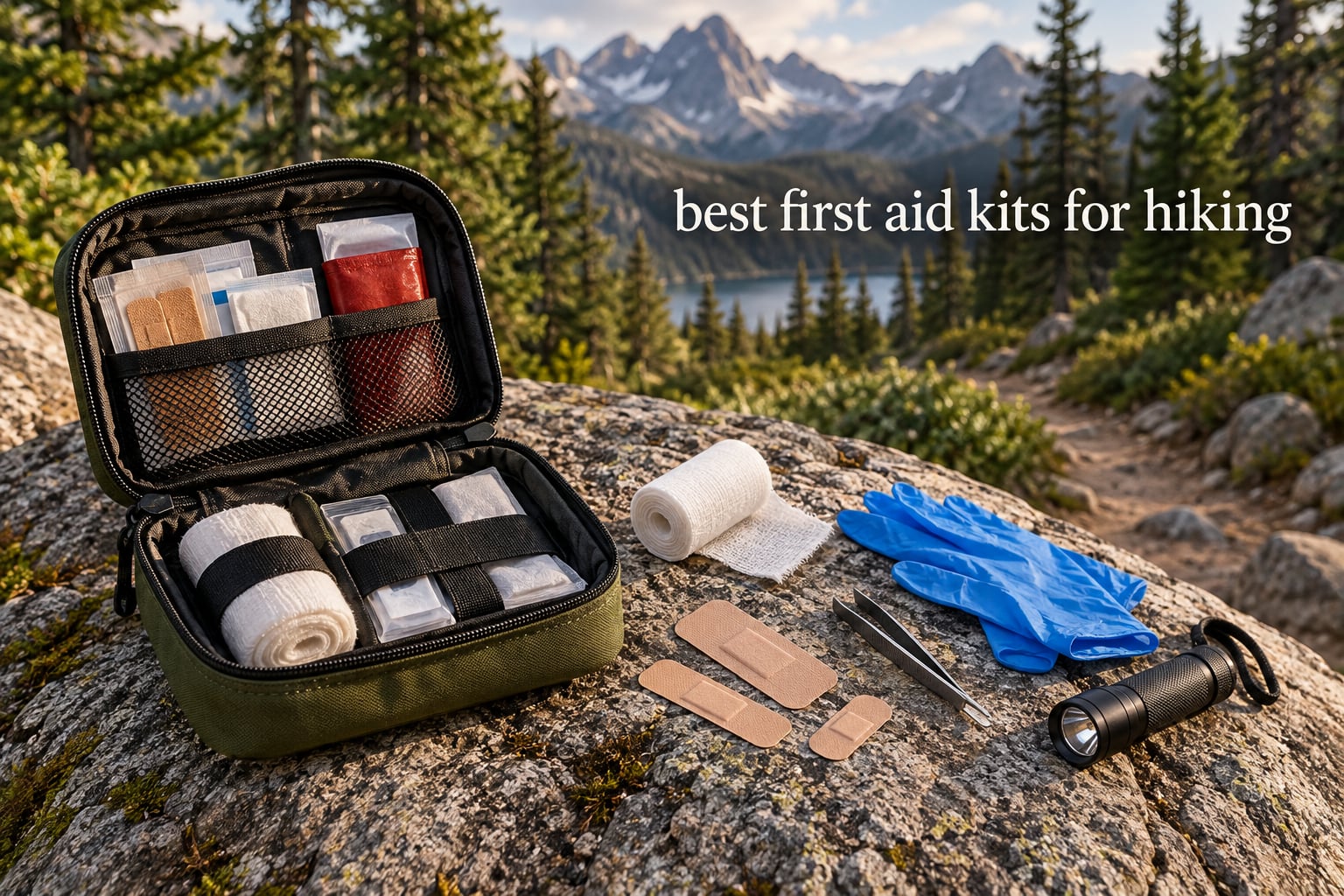
Blisters, rolled ankles, bee stings and the odd granite scrape account for the overwhelming majority of what goes wrong on a hiking trip, and every one of them is cheaper to handle in the field than at the trailhead. The best first aid kits for hiking in 2026 are the ones that match your trip length, your group size and your tolerance for weight, then get trimmed down so the things you actually reach for are the easiest to find. I compared ten kits from the ultralight 3.5-ounce pouch to the 2-pound camp box, opened every one, and sorted them by what they do well rather than by piece count.
Our top pick is the Adventure Medical Kits Ultralight/Watertight .5. It weighs 3.52 ounces, covers up to two people for up to two days, and pairs a reusable waterproof inner bag with die-cut moleskin for blisters. That combination of weight, weather protection and blister care is the sweet spot for most hikers, and it is the kit we keep reaching for on day hikes and short overnights alike.
Below that quick answer you will find all ten kits reviewed in full, a buying guide that ties kit size to trip length and group size, a checklist of the ten essential items every kit should carry, and an honest look at where these products fall short. If your trips are more about livestock or trail riding than foot travel, our guides to horse first aid kits for trail riding and building an equine first aid kit cover similar ground for a very different set of risks.
Table of Contents
Top 3 Best First Aid Kits For Hiking (October 2026)

AMK Ultralight/Watertight .5
- 3.52 oz
- 2 people / 2 days
- waterproof DryFlex inner bag
- die-cut moleskin

RHINO RESCUE 124-Piece Mini
- 124 pieces
- 600D coated oxford
- MOLLE pouch
- survival extras included
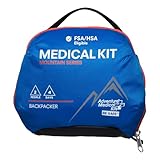
AMK Mountain Backpacker
- 13.4 oz
- 2 people / 4 days
- Easy Care pockets
- wilderness first aid book
All 10 Hiking First Aid Kits Compared in 2026
| Product | Specifications | Action |
|---|---|---|
| Adventure Medical Kits Ultralight/Watertight .5 |
|
Check Latest Price |
| RHINO RESCUE Survival Kit 124 Piece |
|
Check Latest Price |
| Adventure Medical Kits Mountain Backpacker |
|
Check Latest Price |
 Adventure Medical Kits Day Tripper Lite Adventure Medical Kits Day Tripper Lite |
|
Check Latest Price |
 RHINO RESCUE Waterproof Kit 114 Piece RHINO RESCUE Waterproof Kit 114 Piece |
|
Check Latest Price |
 RHINO RESCUE EVA Kit 130 Piece RHINO RESCUE EVA Kit 130 Piece |
|
Check Latest Price |
 EVERLIT Tactical IFAK 180 Piece EVERLIT Tactical IFAK 180 Piece |
|
Check Latest Price |
 SurviveX Small First Aid Kit SurviveX Small First Aid Kit |
|
Check Latest Price |
 SurviveX Large First Aid Kit SurviveX Large First Aid Kit |
|
Check Latest Price |
 EVERLIT Survival Kit 250 Piece EVERLIT Survival Kit 250 Piece |
|
Check Latest Price |
1. Adventure Medical Kits Ultralight/Watertight .5 Review
Adventure Medical Kits Ultralight/Watertight Medical Kit .5, (2 Person)
3.52 oz
2 people and 2 days
Reusable waterproof DryFlex liner
Die-cut moleskin included
Pros
- Genuinely ultralight at 3.52 oz
- Waterproof inner bag keeps gauze dry
- Die-cut moleskins for friction blisters
- Roomier than its size suggests
Cons
- Zipper-bag format has no internal organization
- No trauma pad for serious bleeding
- No wilderness first aid guide
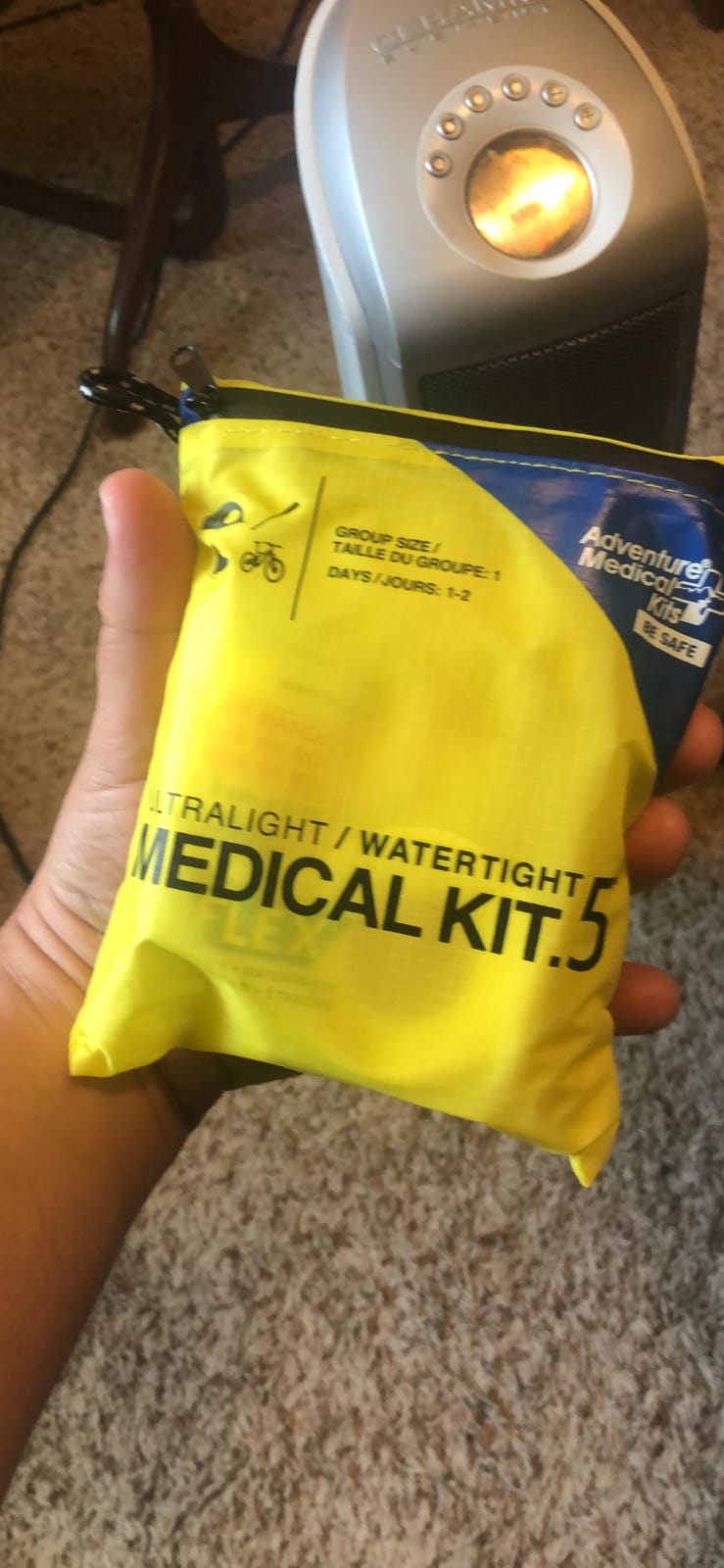
This is the kit I hand to friends who ask me what to carry for a weekend. At 3.52 ounces it disappears into a pack side pocket, and the DryFlex inner bag is the part that earns its place: pull the zipper, clip it to a gear loop and the contents stay dry in rain or a creek crossing.
What surprised me was how much fits in a pouch this small. The inventory covers bandages, gauze, antiseptic wipes, antibiotic ointment, insect sting relief, alcohol swabs, a splinter picker and a safety pin, and reviewers consistently note that it holds more than the compact size suggests. The die-cut moleskins are die-cut, which sounds like marketing until you realize it means they match the shape of the hot spots you actually get.
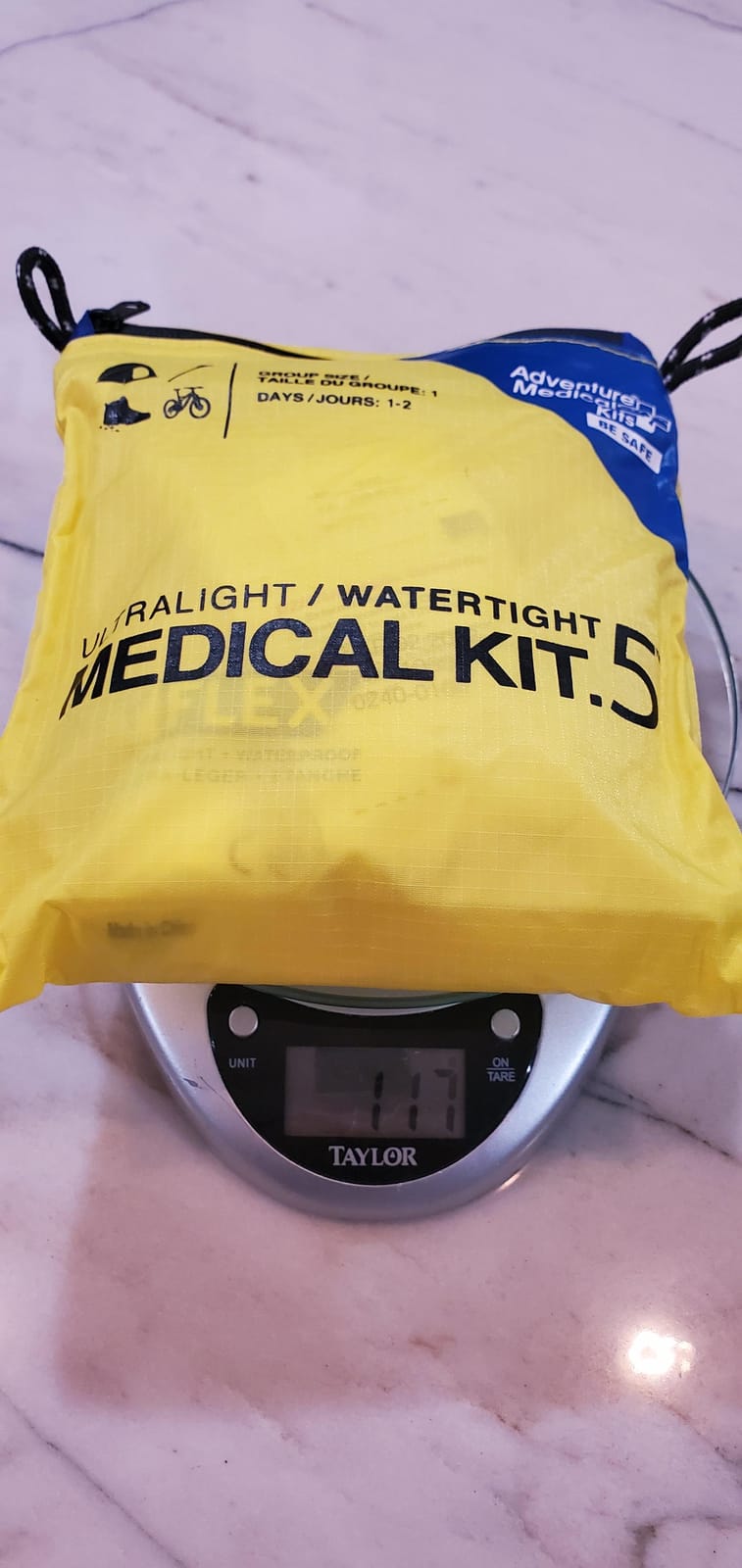
The honest weakness is organization. It is a zip bag, not a compartmented pouch, so when you are fumbling for gauze at dusk you will be tipping the whole thing out. That is a small price at this weight, and it is the trade I would make every time for a solo hiker moving fast.
Second weakness: no trauma pad, so if you want bleeding control for something more than a sliced fingertip, you are adding a piece. Basic wound care only, and no book to consult if you are not sure what you are doing.
Who this kit is built for?
Solo hikers and pairs on day hikes or one- to two-night overnights, especially anyone who hikes in wet conditions or has a history with hotspots. It also works well as an every-day-carry pouch for trail work, since 3.5 ounces never raises a pack-weight argument.
If your trip is three nights or longer, or you are carrying for three or four people, this is undersized by design. The manufacturer rates it at up to two adventurers for up to two days, and that rating is a useful discipline rather than marketing caution.
Where it falls short?
It is wound care and blister care, not trauma care. Anyone hiking above treeline, on technical terrain or in places where a fall could mean a long wait for help should carry a hemostatic gauze or a tourniquet alongside it, because neither is in the box.
Medication in pre-made kits also ages. Check the expiry on the antibiotic ointment and sting relief before your trip and carry your own ibuprofen and antihistamines alongside, which is what experienced hikers report doing.
2. RHINO RESCUE 124-Piece Survival First Aid Kit Review
RHINO RESCUE Survival First Aid Kit for Hiking, Backpacking Ranger Green
124 pieces
600D coated oxford nylon
MOLLE attachment
1 year warranty
Pros
- Highest rated of the group at 4.8 stars
- MOLLE pouch in durable 600D coated oxford
- Over 120 supplies plus 20 survival items
- No assembly required
Cons
- Around 2.2 lb
- far from ultralight
- Survival gadgets add bulk without medical value
- Packaging designs are being updated
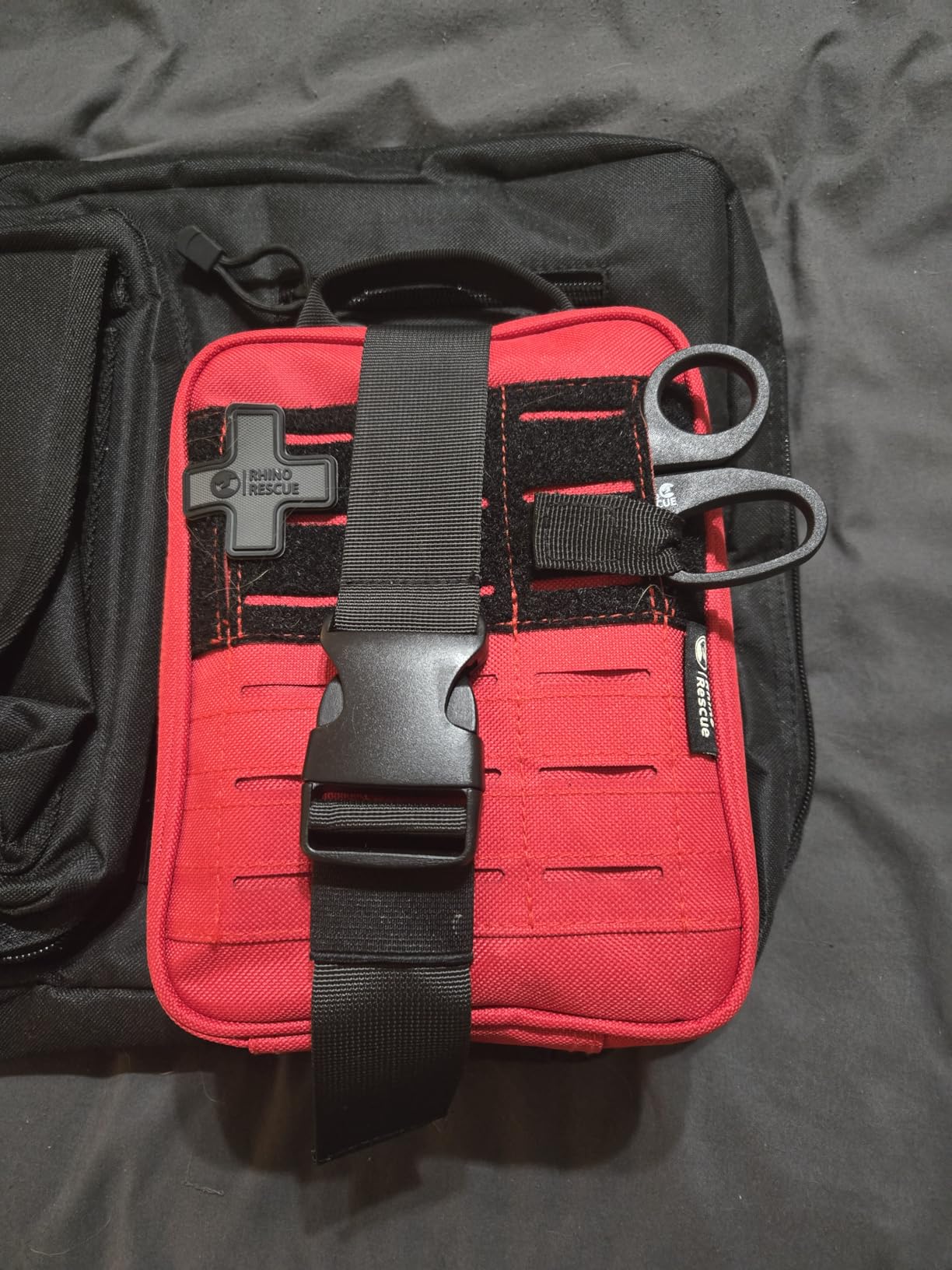
This is the answer to the question hikers ask most often on forums: should I buy a pre-made kit or build my own. If you want one answer without an afternoon of shopping, this is it. It carries 124 pieces, blends over 100 first aid supplies with more than 20 survival essentials, and comes in a mini version of the RHINO RESCUE MOLLE pouch with a one-year warranty.
The build quality is the reason it earns the rating it does. The pouch is 600D coated oxford nylon with double-stitched handles, upgraded zippers and a removable quick-release panel, and the HSA/FSA approval means it can go through a flexible spending account. Owners with 86% five-star ratings tend to describe it as gift-ready rather than minimal.
Where I part ways with most reviewers is weight. The listed specification is 1.01 kg, and owners put the loaded kit at roughly 2.2 pounds. That is a completely different object from the 3.52-ounce pouch above, and you are paying for the difference in survival gadgets that rarely help with a medical emergency.
Two more practical notes. Packaging is being updated, so the label design you see may not match the box that arrives, and survival gadget weight is best trimmed on your own bench before the trip rather than argued with on the trail.
Who this kit is built for?
Hikers who want a complete, ready-made kit and who are carrying gear in a vehicle, a pack or a wall-mounted setup. It is also a strong pick for households that want one kit that covers camping, boating and hiking without a second purchase.
For a fast day hike where every ounce is contested, choose something else. The value here is completeness per dollar, not value per gram.
Where it falls short?
Piece count is a poor proxy for capability. A large share of this kit is survival hardware rather than medical supplies, so if you strip out the gadgets you may be left with a perfectly good medical pouch and a much lower pack weight.
It also does not come with a wilderness first aid reference, which matters more to beginners than the extra survival items do. Pair it with a small field guide or a course before a remote trip.
3. Adventure Medical Kits Mountain Backpacker Review
Adventure Medical Kits Mountain Series, Backpacker Medical Kit – 96 Pieces, blue/orange, one size (0100-1003)
13.4 oz
2 people and 4 days
Easy Care labeled pockets
Wilderness first aid book
Pros
- Clearly labeled zippered compartments
- Strong 96-piece inventory for weekend trips
- Trauma pad and elastic bandage included
- Soft-sided bag expands for personal items
Cons
- Heavier than ultralight rivals at 13.4 oz
- Manual adds weight
- Medications can change without clear notice
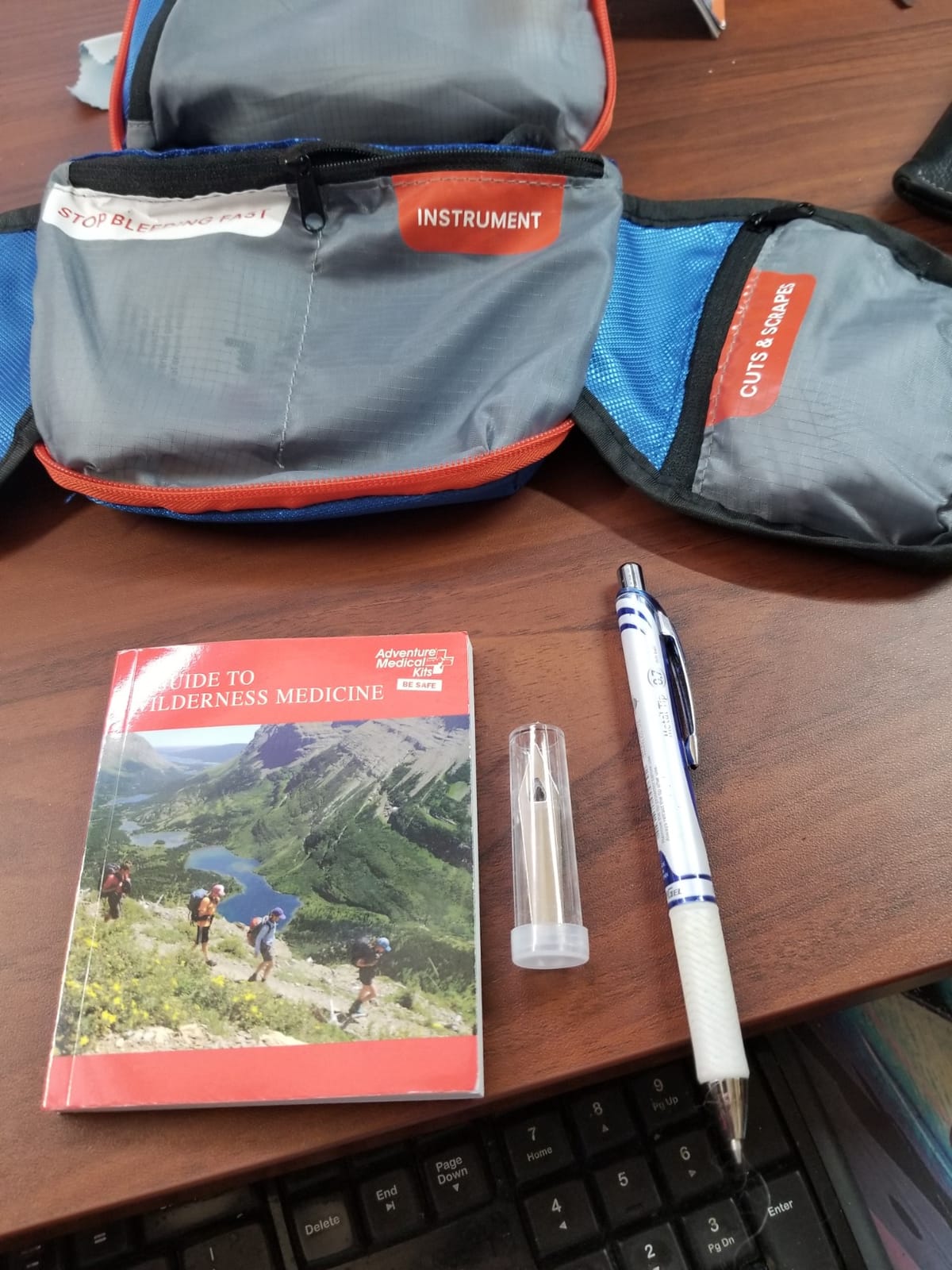
Forum threads about wilderness kits come back to this model more than any other, and the reason is the Easy Care organization system: zippered, clearly labeled pockets inside a water-resistant bag. When you are treating someone at dusk on a ridge, that structure is worth more than another twenty pieces.
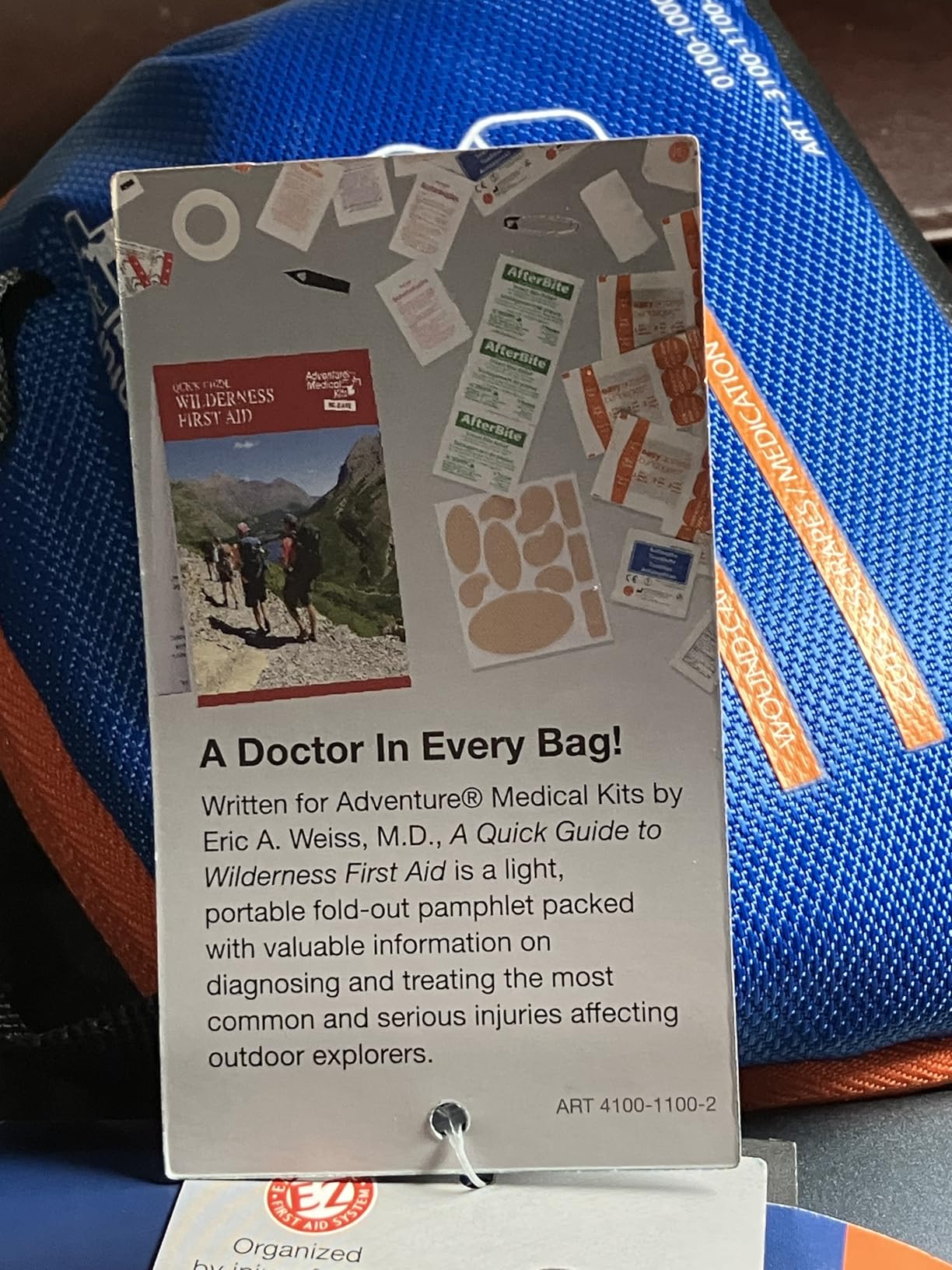
The manufacturer rates it for up to two adventurers over up to four days, which makes it the most sensible pick for a weekend backpacking trip. It includes a trauma pad and an elastic bandage for bleeding control, plus a wilderness first aid book, and the soft-sided coated bottom lets you expand the kit with your own additions.
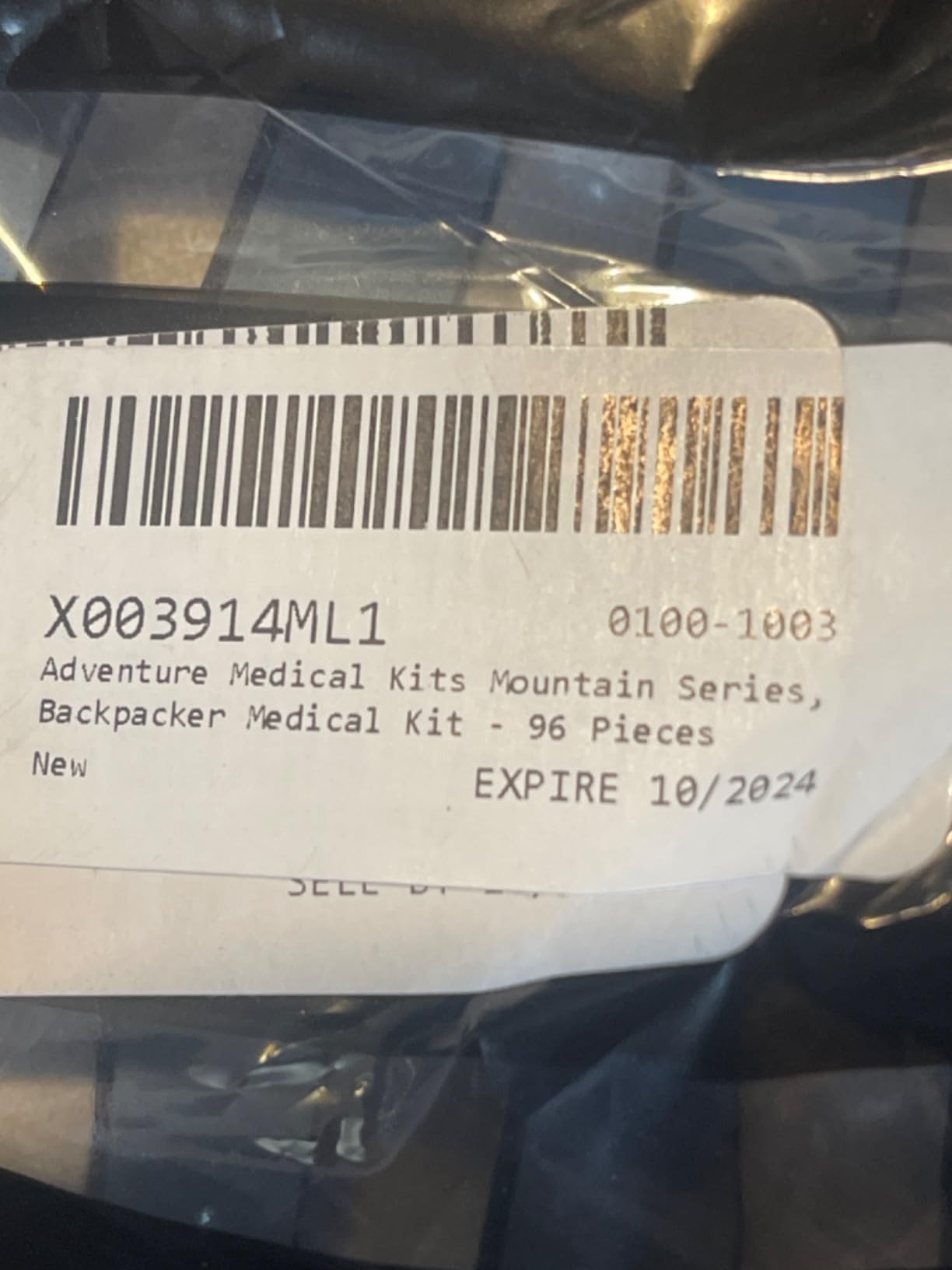
At 13.4 ounces and 7 by 3.75 by 3.75 inches, this is roughly four times the weight of the .5 kit. That is a fair swap for a four-day trip and a poor trade for a loop hike with a trailhead ten minutes from the car.
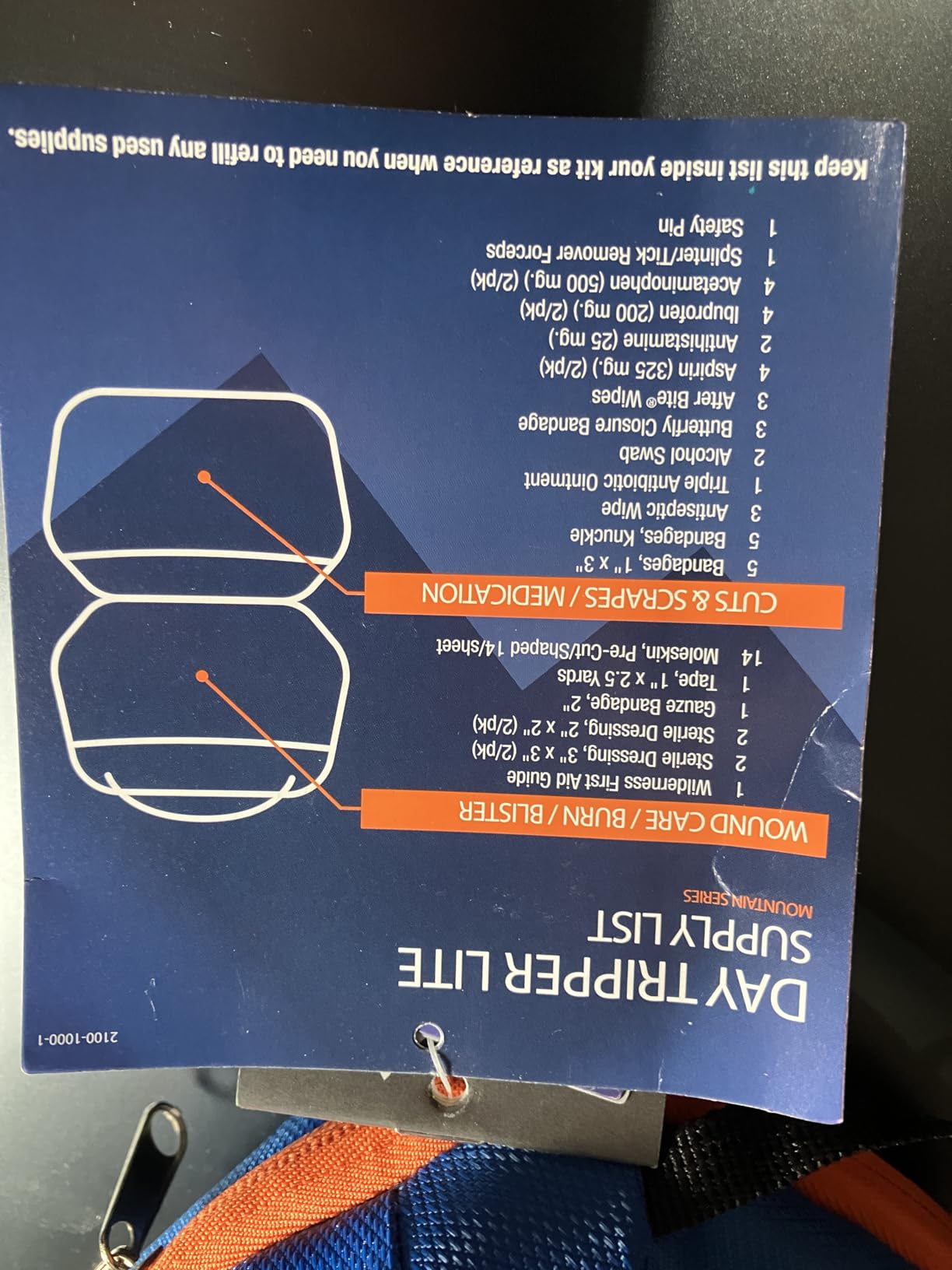
One more thing to check before you rely on it. Reviewers, including people following mainstream travel recommendations, report that the manufacturer swapped acetaminophen for ibuprofen without clear advance disclosure, so read the medication panel rather than assuming the label matches an older version.
Who this kit is built for?
Two people on one to four nights of backpacking, and for anyone who wants to pull a specific item in the dark without dumping the whole kit. It is also the model most often recommended for a hiking-with-kids kit because the labeled pockets survive being searched by a tired parent.
Hikers who carry blister care seriously will want to add Leukotape, which experienced hikers favor over moleskin because it stays put in wet conditions and on hot spots. Stock moleskin wears off sooner than most people expect.
Where it falls short?
It is not built for hunting or professional medical use, and it is not a wilderness response kit for a group beyond two. Groups of three or four on multiple nights belong in a larger capacity bag.
At 13.4 ounces, the wilderness first aid book is a meaningful share of the load for anyone who has taken a course. If you have training, pull it out and carry a lighter reference.
4. Adventure Medical Kits Day Tripper Lite Review
Adventure Medical Kits Mountain Series Medical Kit (Day Tripper Lite) – 59 Pieces, blue/orange, one size (0100-1000)
3.7 oz
2 people and 1 day
QuikClot bleeding gauze
Flexible C-splint
Pros
- Lightest full-featured kit at 3.7 oz
- QuikClot gauze is real bleeding control
- C-splint adds stabilization capability
- Labeled Easy Care pockets at a low weight
Cons
- Capacity too small for multi-day trips
- Lowest rating in the lineup at 4.5
- Light on bandages and moleskin
The Day Tripper Lite is the rare kit that is lighter than most of its competitors and better equipped. At 3.7 ounces and 5 by 2.25 by 2.25 inches, it carries QuikClot gauze for bleeding control and a flexible C-splint for stabilization, which is genuine trauma capability in a tiny package.
It also keeps the Easy Care labeled pocket system, so you inherit the organization that makes the Mountain Backpacker easy to use, at roughly a quarter of the weight. For a day hike where something goes wrong, those two items cover most of what a trail rescue would have treated first.
The rating is the lowest of the ten kits here at 4.5 stars, and the 7% share of three-star reviews points at a specific complaint: stock. Several owners would like more bandages and more moleskin, and at this size you will feel every missing square of tape.
Capacity is the other limit. The stated rating is up to two adventurers for one day, and adding a week of medication plus extra blister care turns this into a different, heavier kit. Day hikes only.
Who this kit is built for?
Day hikers who want trauma capability without the weight. It suits loop hikes, ridge walks, trail running and anywhere the walk is under four hours with a short drive back, and it doubles as a kit for bikes, kayaks and climbing shoes.
It is also a smart top pocket for a larger kit. Carrying one of these for the day and a bigger bag at camp gives you fast access to the items you are most likely to need mid-route.
Where it falls short?
It is a day kit with day kit limits. Anything longer, anything involving a group, and anything requiring real splinting capacity pushes past what the pouch can carry without becoming a different product.
Verify the QuikClot expiry before a big trip. Hemostatic gauze has a shorter usable life than gauze, and an expired packet is worse than no packet because you believe you are covered.
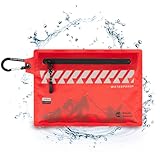
5. RHINO RESCUE Waterproof 114-Piece Kit Review
RHINO RESCUE Waterproof First Aid Kit, 114pc Ultralight Compact Gear
Seam-sealed shell
Waterproof zippers
30 grams empty
114 pieces
Pros
- Seam-sealed construction beats leak-prone stitching
- Top-ranked kit in outdoor first aid
- Clip fits a pack or bicycle
- Empty bag weighs about 30 grams
Cons
- Loaded weight near two-thirds of a pound
- Bag is tight so custom items displace stock
- Clip is the weakest part
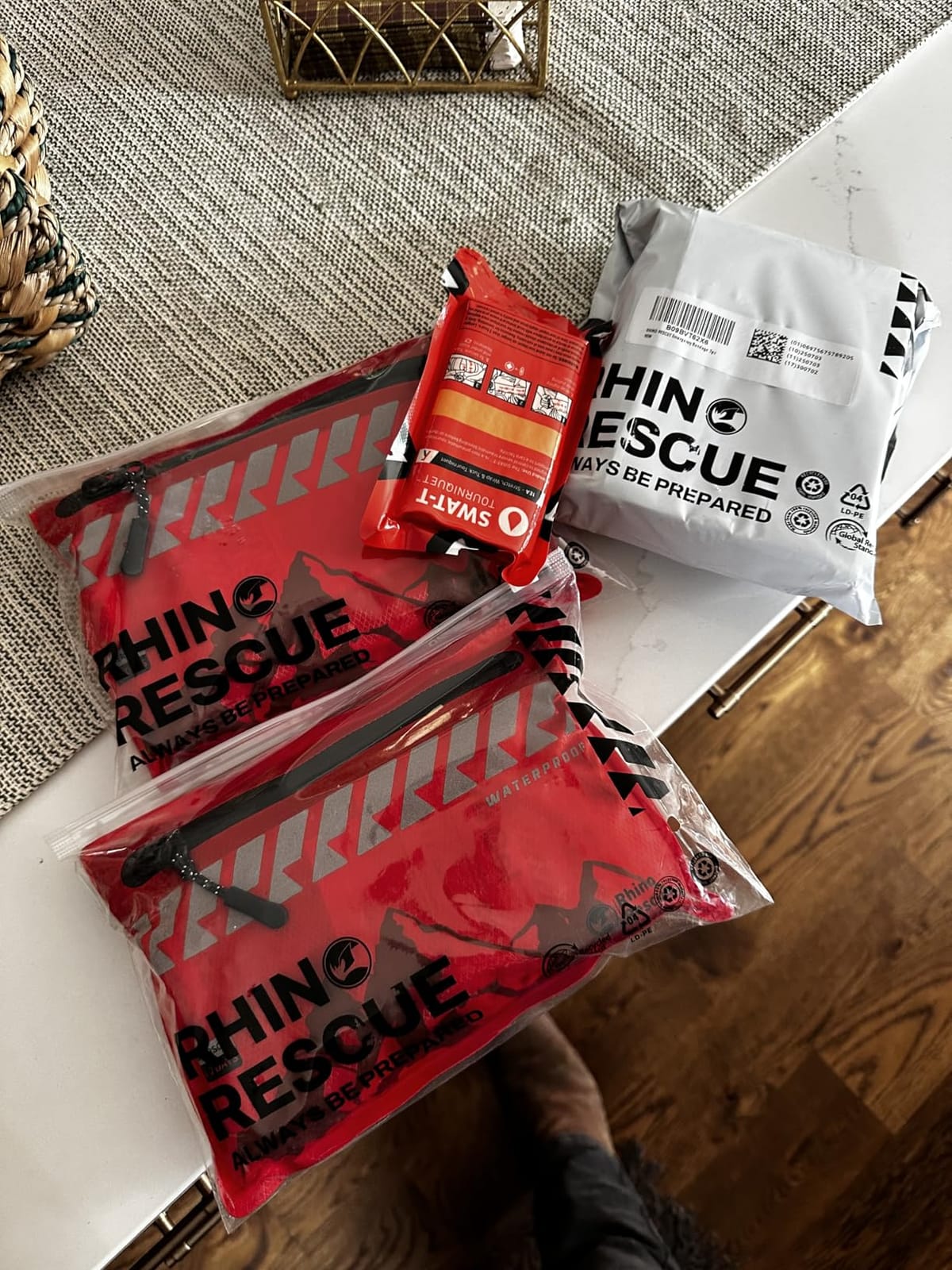
Water is the scenario hikers raise most often, and this kit is engineered around it. Instead of stitched seams that let water creep through the needle holes, it uses seam-sealed fabric and waterproof zippers, which is a different and more expensive way to build a pouch.
It carries 114 essentials covering wounds, cuts, scrapes, burns, colds and blister prevention, plus a whistle and multitool, and the empty bag weighs about 30 grams. The belt clip is the practical bit: it rides on a backpack, a bicycle bar or a glovebox.
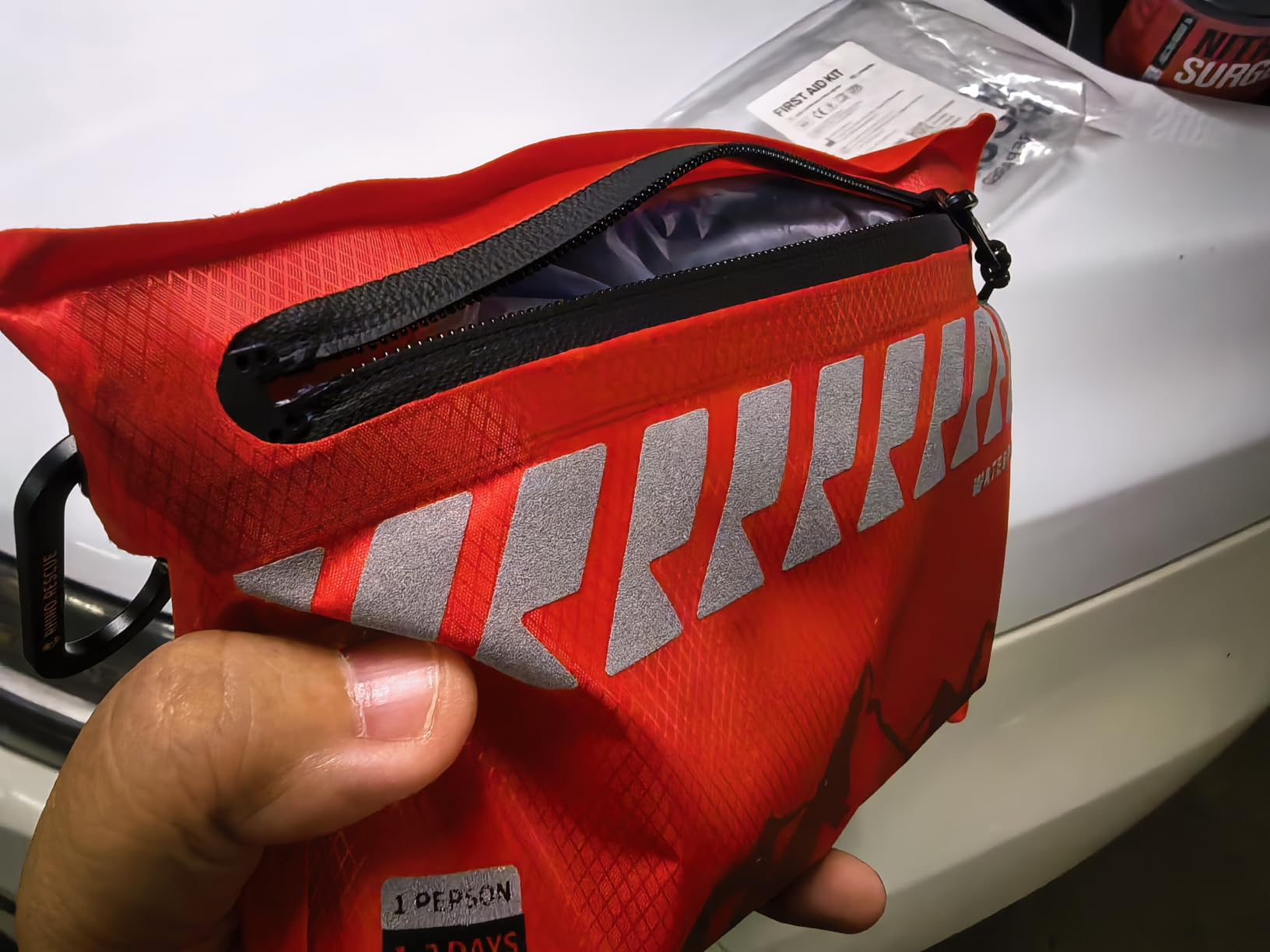
Loaded, it comes to roughly two-thirds of a pound, so this is not an ultralight solution. It is a heavy-weather solution, and for a wet coastal range, a shoulder-season forest or a river corridor, that distinction is the whole point.
Two honest caveats. The bag is tight enough that removing duplicate stock is what creates room for your own medication, and the clip is the least durable component, so do not hang heavy gear from it.
Who this kit is built for?
Rainy climates, river country, kayaking and any trip where the kit will get wet. It also works as an every-carry kit in a vehicle, where the sealed shell protects the contents through a season of temperature swings.
It is listed as number one in first aid kits within sports and outdoors, and reviewers like the bright colours that make it easy to find inside a full pack.
Where it falls short?
One reviewer would not assume the waterproof rating without testing it, and that caution is fair. Sealed seams and waterproof zippers raise the odds considerably, but no bag is a submarine, and a kit that has been submerged should be restocked rather than trusted.
At 231 reviews it has the smallest owner base in this group, so there is less long-term evidence behind the claim than the marketing suggests. Buy it for the construction, not for the star rating.
6. RHINO RESCUE EVA 130-Piece Kit Review
RHINO RESCUE EVA First Aid Kit Small Waterproof Travel Emergency Kit (Red)
1.36 lb
130 pieces
CPR mask included
Rigid EVA shell
Pros
- Rigid shell protects contents and wipes clean
- Curved double-way zipper opens flat
- CPR mask is a real capability
- One-handed opening in a pinch
Cons
- 1.36 lb is too heavy for a day hike
- Owners add extra ointment and tape
- Not a replacement for a home kit
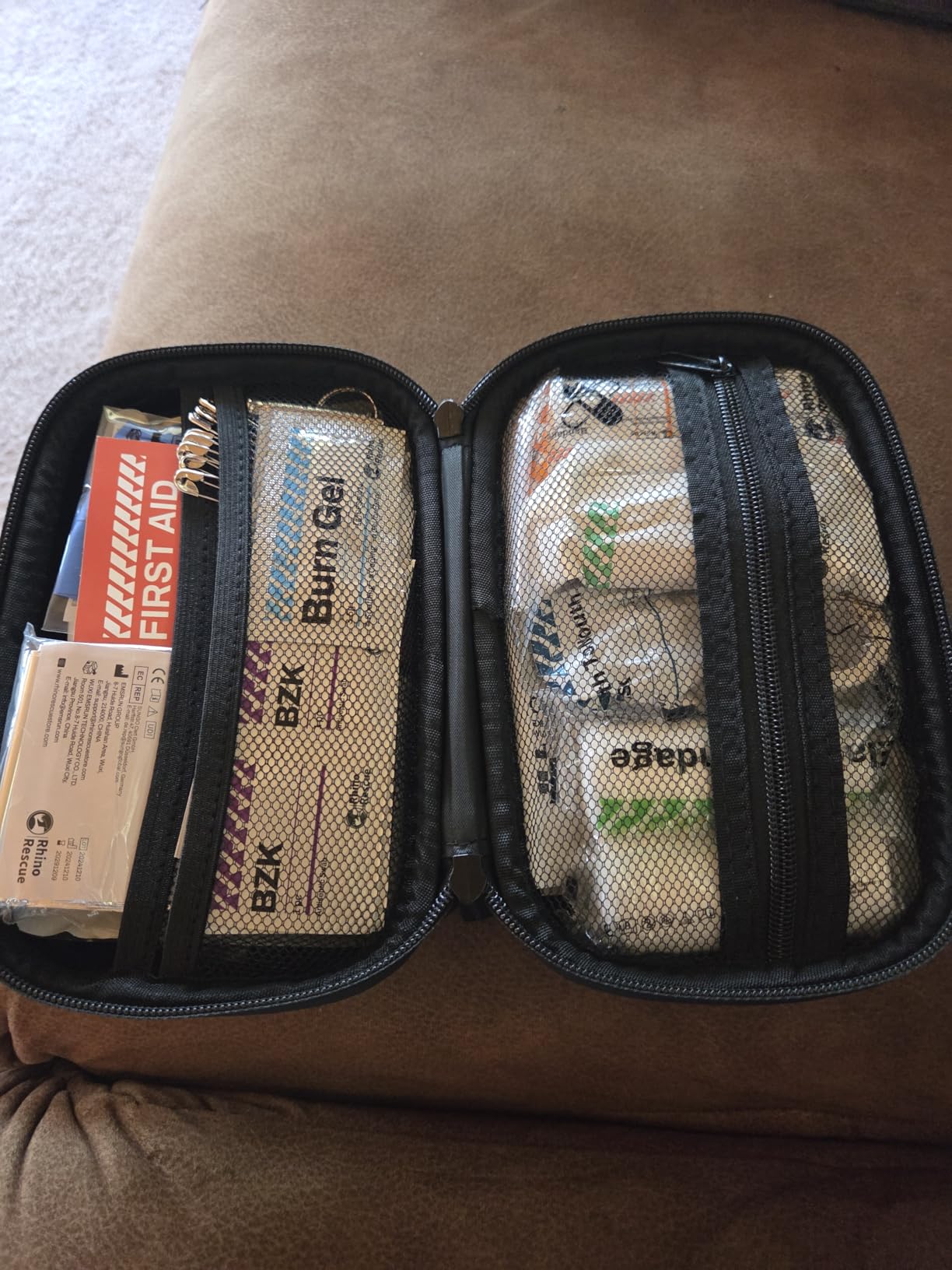
This is a storage-first kit, and that is not an insult. The rigid EVA shell resists crushing in a truck bed or a boat locker, wipes clean after mud, and the curved double-way zipper lets the case open wide and lay flat so you can see everything inside rather than dig through it.
The contents lean toward practical over inflated. It carries 130 emergency essentials and first aid supplies for minor wounds, cuts, scrapes, burns, sprains, colds and blister prevention, and it includes a CPR mask and a first aid guide, which is a more useful inclusion than another six adhesive bandages.
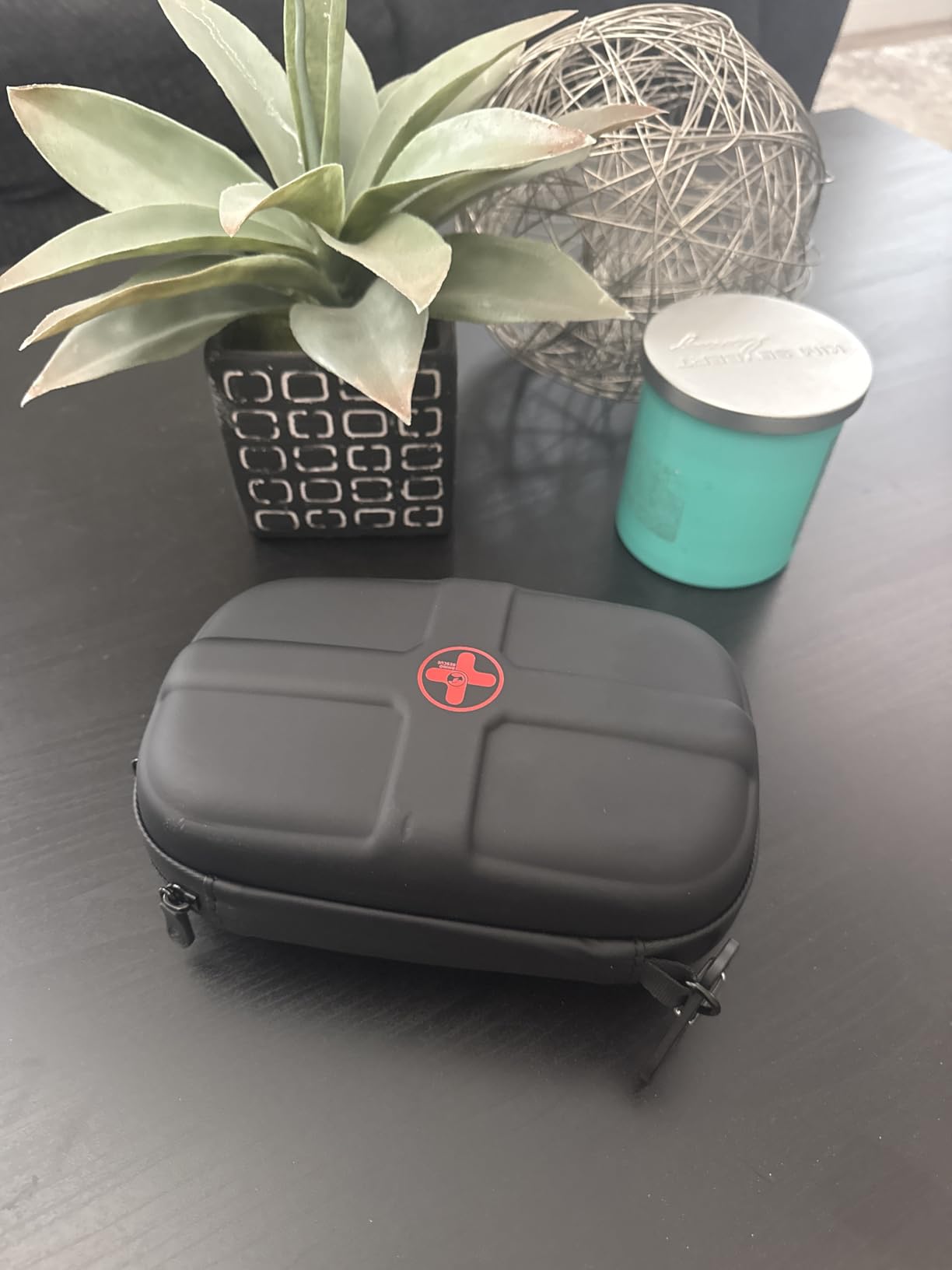
At 1.36 pounds and 8.46 by 5.51 by 3.54 inches, it will not pass a weight audit for a day hike. This is a vehicle, cabin, boat or gym bag kit, and a few owners use it as a small daypack kit if the walk is short.
Reviewers also note they add extra antibiotic ointment, tape and hemostatic powder, which is a reasonable signal that the medical side skews toward minor injuries rather than serious bleeding.
Who this kit is built for?
Anyone who keeps a kit in a vehicle, a boat, a workshop or a gym bag and wants it to survive the environment. The one-handed opening matters more than it sounds when the kit is mounted somewhere awkward or your hands are cold.
If you also carry a small trail kit, these two together cover the full arc: fast access for the trail, organized depth for the vehicle.
Where it falls short?
Rigidity is a trade, not a free win. A soft pouch conforms to a pack and squeezes into a side pocket, while this one holds its shape and consumes the same space no matter what is inside it.
It is not a substitute for a full-size home first aid kit either. The piece count looks large relative to the medical depth, and that is a common feature of this category.
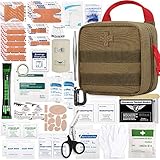
7. EVERLIT 180-Piece Tactical IFAK Review
Everlit 180 Pieces Tactical First Aid Kit IFAK Molle EMT Pouch Outdoor Camping Emergency Kits for for Camping Boat Hunting Hiking Home Car Earthquake and Adventures
1.2 lb
180 pieces
1000D nylon
IFAK and MOLLE pouch
Pros
- 4.8 rating with no one- or two-star reviews
- MOLLE attachment works on pack or vest
- Supplies are practical not filler
- Room to add a tourniquet
Cons
- Square shape uses more pack space
- Glow stick is weak night lighting
- Most owners add QuikClot and steri strips
The EVERLIT tactical kit is the one to buy if your pack has MOLLE webbing and you want the kit mounted outside the lid where you can grab it without opening the pack. It attaches to tactical vests, plate carriers, duty belts and any MOLLE platform, and the pouch is 1000D reinforced water-repellent nylon.
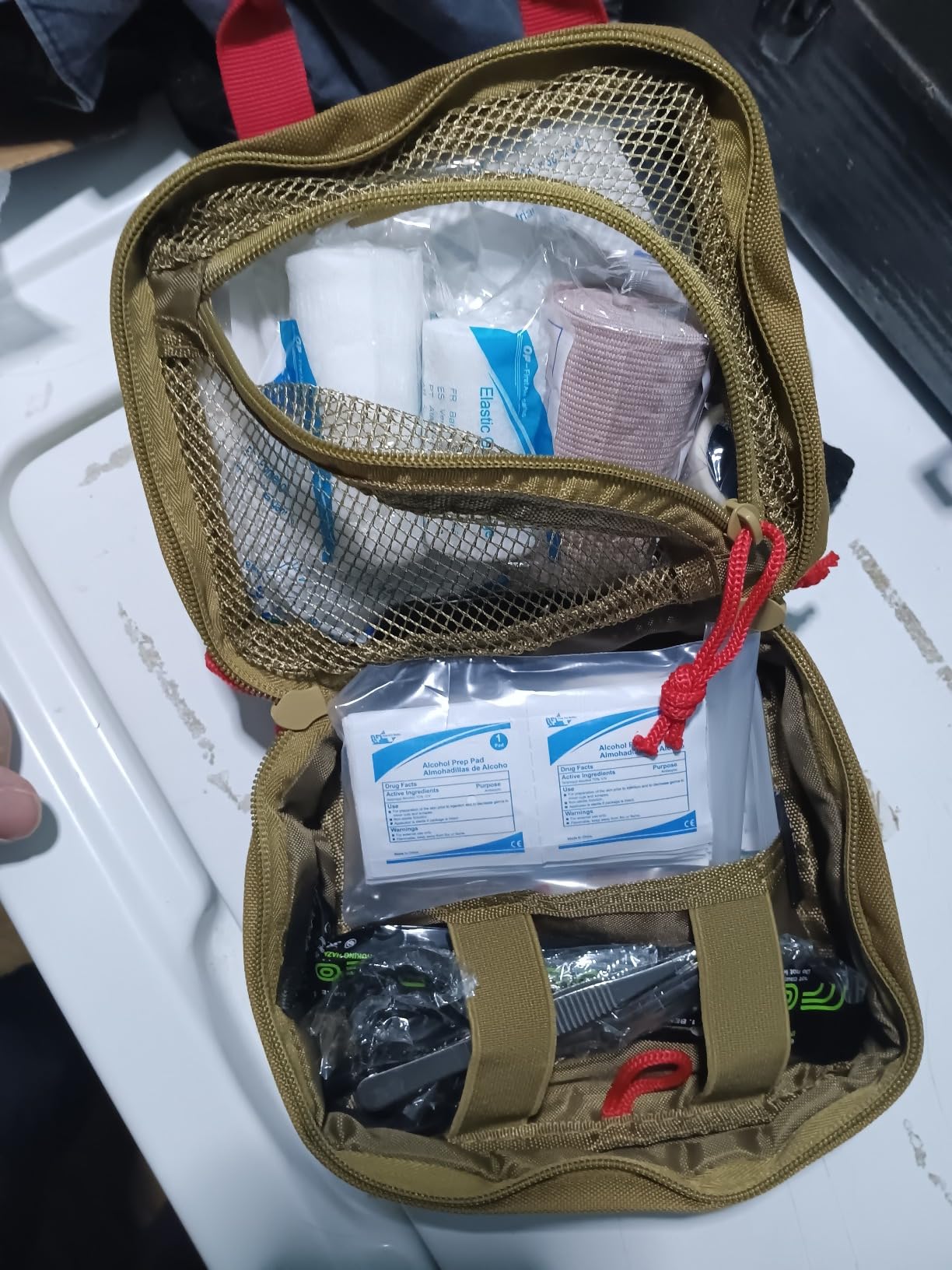
Inside, more than 20 unique medical supplies include a burn dressing, shears, a CPR mask, elastic bandages, eye pads, iodine, gloves and moleskin blister relief, organized into two main pockets with elastic loops. The rating is 4.8 with no one- or two-star reviews in the owner base.
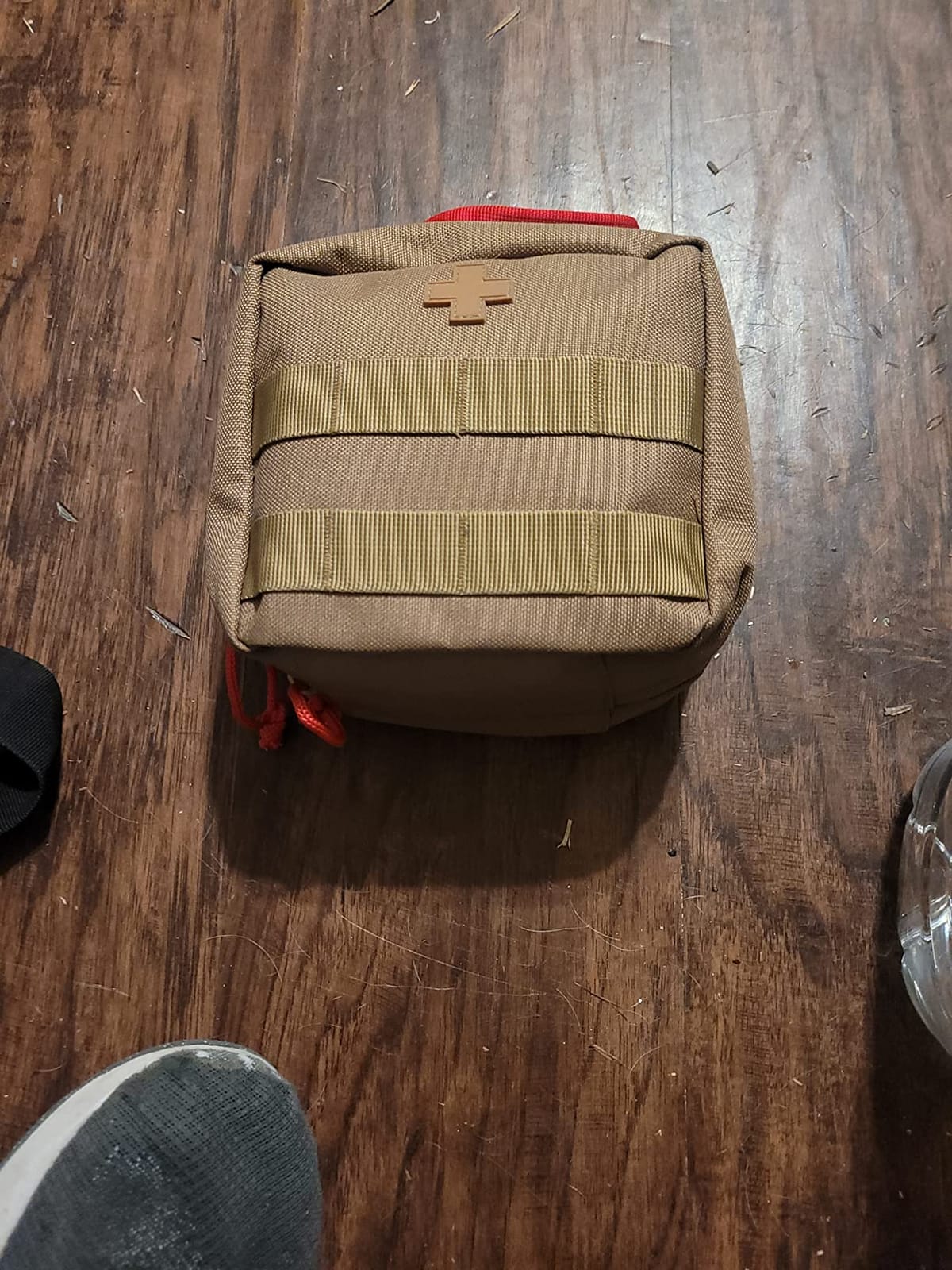
Owners describe it as a strong value starter kit and buy multiples for vehicles and homes, which tells you how it is most often used. Backpackers like the MOLLE compatibility and the bandage quality, and there is still internal room to add a tourniquet and personal items.
Two complaints recur. The square 6 by 6 by 4 inch shape takes more pack space than a slim roll or pouch, and the included glow stick is not a substitute for a small flashlight when you need to work on someone after dark.
Who this kit is built for?
Hikers with tactical or hiking packs that accept MOLLE, plus anyone starting a first aid kit collection for vehicles and homes. The elastic retention loops also make it a good fit for someone who wants items visible rather than buried.
If you do not have a MOLLE platform, this capability is wasted. A soft zip pouch of similar contents will nest into a pack lid more efficiently.
Where it falls short?
It does not include hemostatic gauze, wound closure strips or ice packs, and most owners add those themselves. At 1.2 pounds it is also a heavier way to carry the same medical basics.
Buy it for the attachment and the pouch quality, not for the 180-piece headline, which counts repeats of small items as readily as anything you would actually reach for.
8. SurviveX Small First Aid Kit Review
SurviveX Small First Aid Kit, Emergency Kit for 1-2 People
1.17 lb
1 to 2 people
Color-coded compartments
Non-invasive wound closures
Pros
- Laceration closures are rare in kits this size
- Color-coded labeled compartments
- MOLLE compatible and wall mountable
- FSA and HSA eligible
Cons
- Interior is crowded and slow to rummage
- Owners add hemostatic powder or a tourniquet
- Advanced items go unused for minor injuries
What sets the SurviveX apart is emergency laceration closures, non-invasive zip wound closures that reduce scarring compared with stitches. In a grizzly or talus field, a gash that could end a trip is exactly the kind of thing most kits cannot address, and this one can.
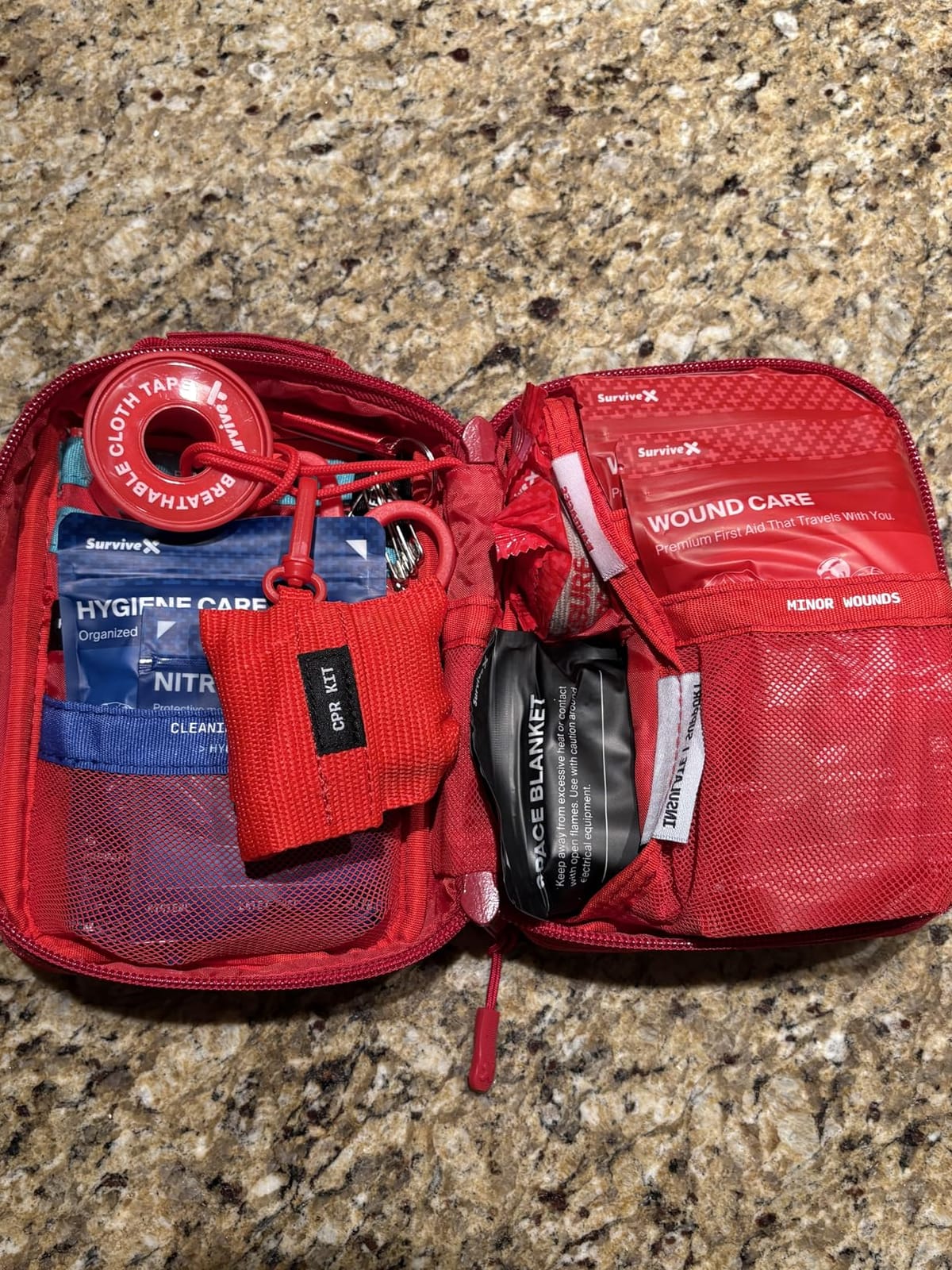
Supplies were selected by first aid experts to cover severe wounds, sprains, fractures, burns, insect bites and hypothermia, then organized by function into color-coded labeled compartments for wounds, hygiene, tools and personal items. That labeling is not cosmetic. It is the difference between grabbing gauze in four seconds and searching a bag in forty.
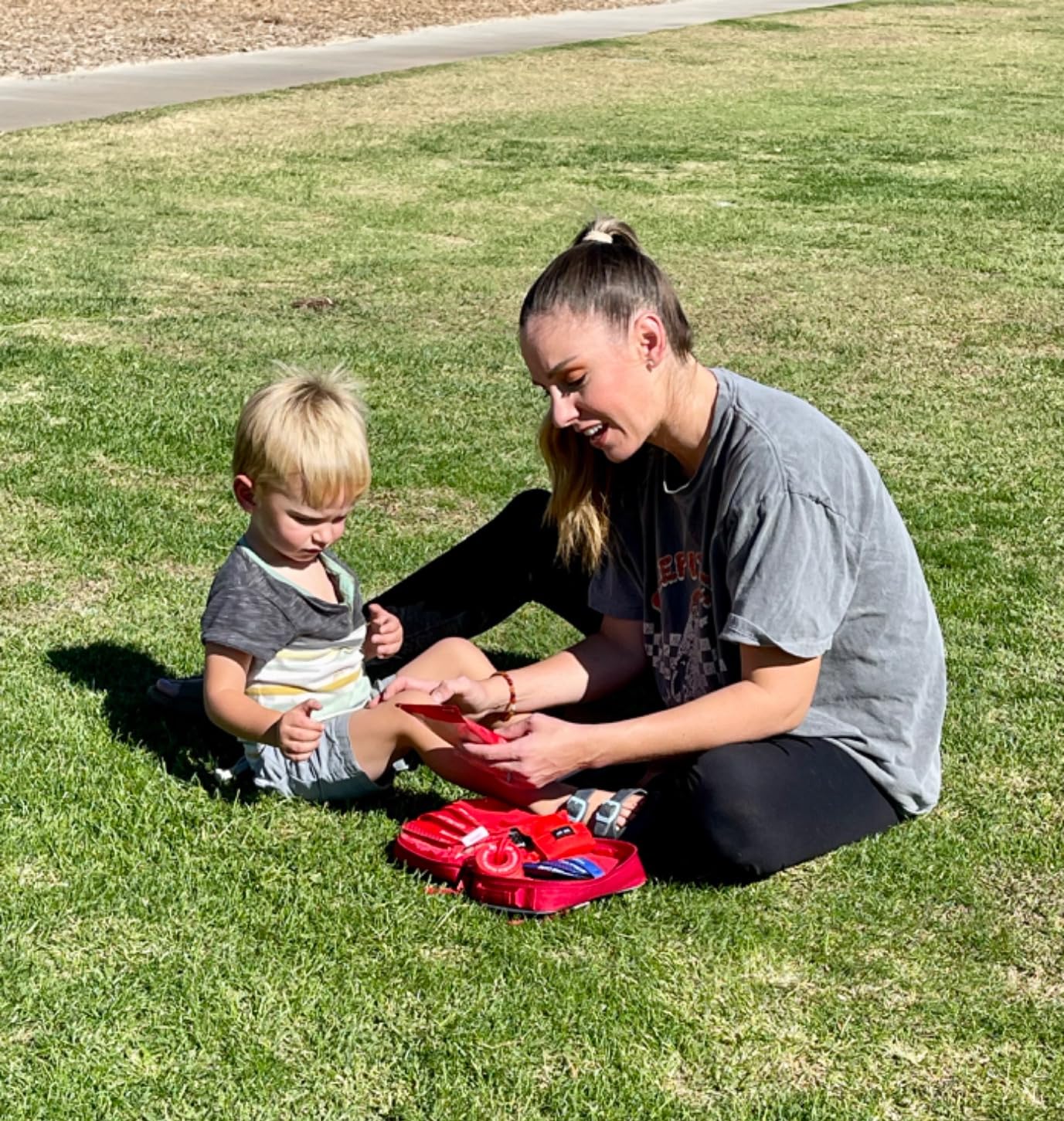
It is also MOLLE compatible and mountable on a backpack, a vehicle or a wall, and it is FSA and HSA eligible, which matters if you buy through a health spending account. One buyer, a medical provider, named it as a kit they trust, and that is worth more than a marketing line.
The recurring complaint is density. Owners report the interior is packed tight enough that pulling a single item takes longer than the promotional photos suggest, and that is the real cost of fitting advanced trauma supplies into a 1.17 pound bag.
Who this kit is built for?
Vehicle and motorcycle medpacks are where the strongest praise comes from, and it works well for solo hikers in places with sharp rock and loose talus. The wound closures also matter for anyone who has had a deep cut open a trip before.
It is rated for one to two people, which makes it a sensible weekend kit for a pair and a reasonable base-camp kit for a solo hiker carrying for several days.
Where it falls short?
Several buyers add hemostatic powder or a tourniquet, so if you are heading somewhere remote, budget for that addition. The advanced wound care also goes unused on a typical minor-injury trip, which is wasted capacity for day hikers.
At 1.17 pounds it is not a fast-pack option, and the crowded interior means it is best opened deliberately rather than one-handed on a slope.
9. SurviveX Large First Aid Kit Review
SurviveX Large First Aid Kit, Emergency Kit for 3-4 People
2.78 lb
3 to 4 people
Color-coded compartments
Professional-grade supplies
Pros
- Sized and stocked for 3 to 4 people
- Same labeled organization as the small kit
- 4.8 rating across 774 reviews
- Suits family trips and base camps
Cons
- 2.78 lb is far too heavy for a day hike
- Much bulkier than a solo ultralight kit
- Advanced items unused in casual settings
Group trips are the use case no competitor serves properly, and this is the clearest answer. It is built for three to four people and covers severe wounds, sprains, fractures, burns, insect bites, fever and hypothermia, with the same non-invasive wound closure system and the same color-coded, function-labeled compartments as the smaller version.
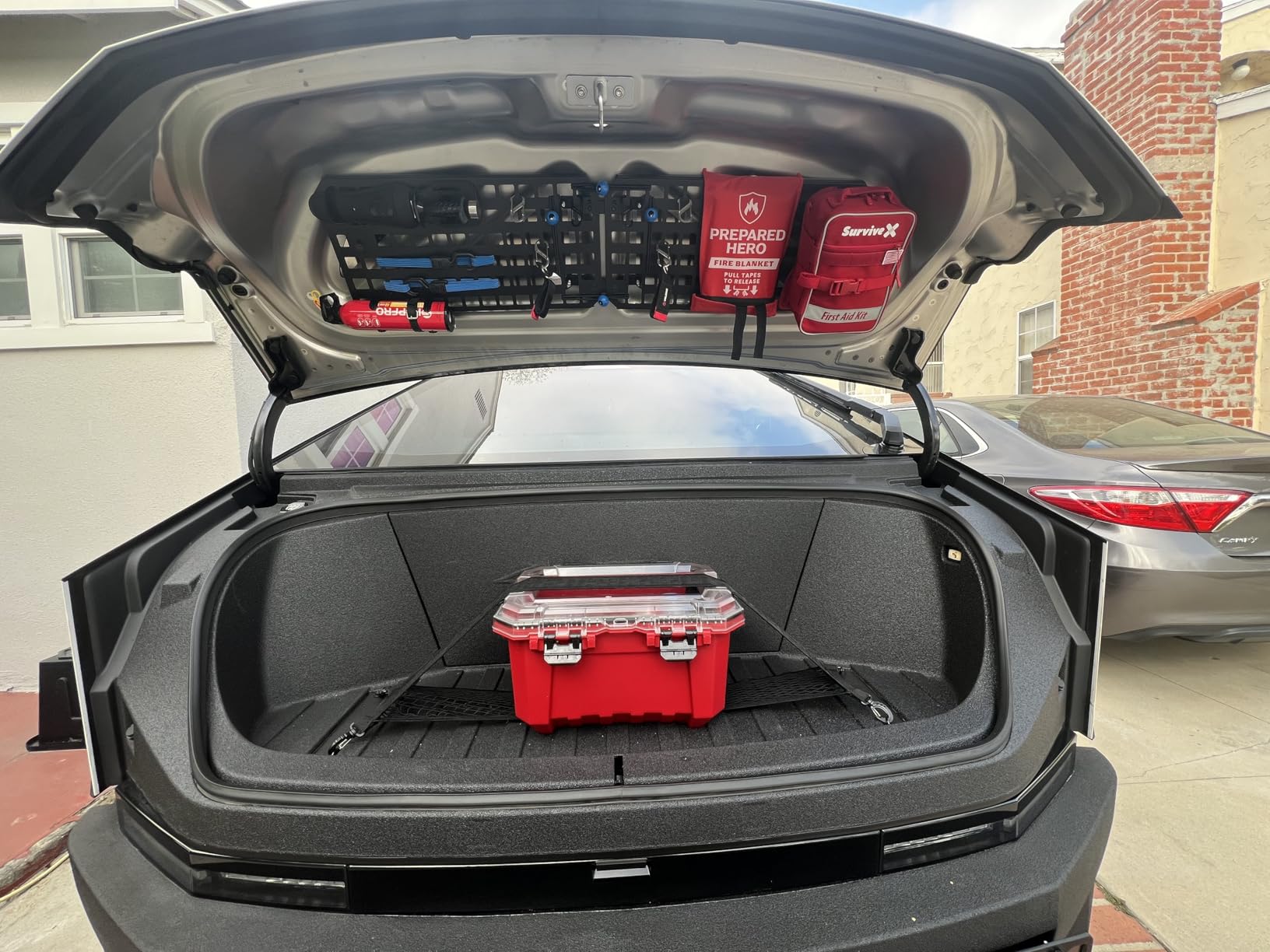
It ranks fourth in camping first aid kits, and at 4.8 stars across 774 reviews it has a substantial owner base. MOLLE compatibility and mounting options for a backpack, a vehicle or a wall mean the same kit works for a family trip and a base camp, and it is FSA and HSA eligible.
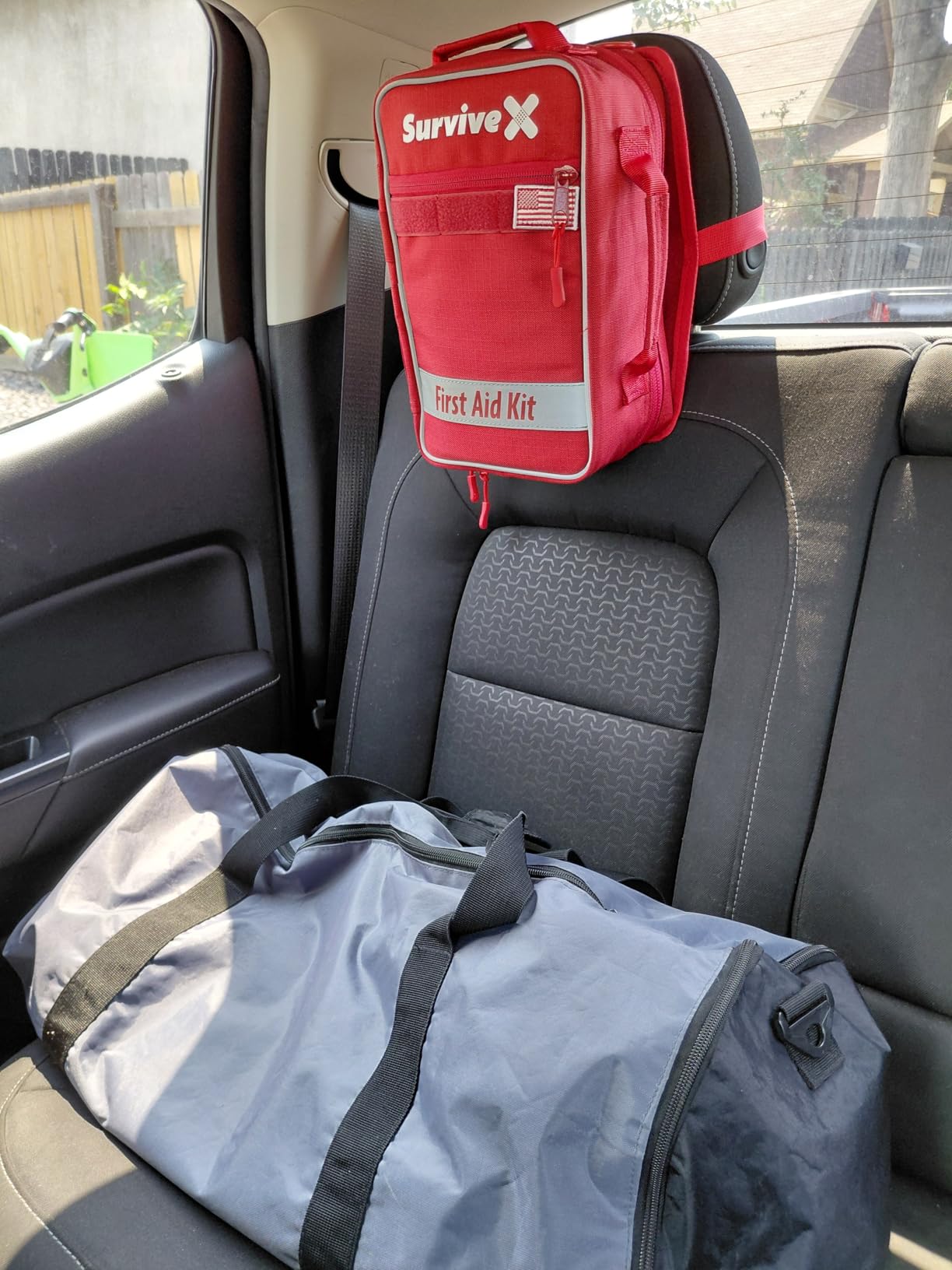
At 2.78 pounds and 7.28 by 6.69 by 10.4 inches, this is a vehicle and cabin kit in practice. Reviewers are clear that it is bought for family, camping and vehicle preparedness rather than fast hiking, and that is a fair description rather than a complaint.
It is also far bulkier than a solo ultralight kit, and much of the advanced wound care goes unused in casual settings. If you are day hiking, none of this capacity is earning its weight.
Who this kit is built for?
Families, friend groups and anyone running a week-long trip from one base. One kit sized for three or four people beats four partial kits, because the supplies you actually need at once, like hemostatic gauze or a splint, are pooled instead of divided.
It is also the natural companion to a small trail kit: carry a day pouch for the route and stage the large kit at camp or in the vehicle.
Where it falls short?
The dominant trade-off is weight and size relative to smaller trail kits. There is no scenario where a single hiker benefits from nearly 3 pounds of kit unless that hiker is also travelling with a group.
Group kits also need a designated owner, because an unlabelled pile of gear in a shared tent is the way supplies go missing. Write names on the compartments or assign one person to the kit.
10. EVERLIT 250-Piece Survival First Aid Kit Review
EVERLIT 250 Pcs Survival First Aid Kit
2 lb
250 pieces
1000D water-resistant nylon
MOLLE EMT pouch
Pros
- Largest review base with nearly 9000 ratings
- 250 pieces plus survival gear
- Durable 1000D MOLLE pouch
- Three large compartments
Cons
- 2 lb is heavy for a single-day hike
- Saber card and paracord add bulk not utility
- Less organized than smaller tactical kits
This kit has by far the largest owner base in the group, close to 9,000 ratings holding steady at 4.7 stars, and that long history is itself a kind of data. Buyers use it for camping, scouting and vehicle preparedness, and it exceeds OSHA guidelines for a family emergency.
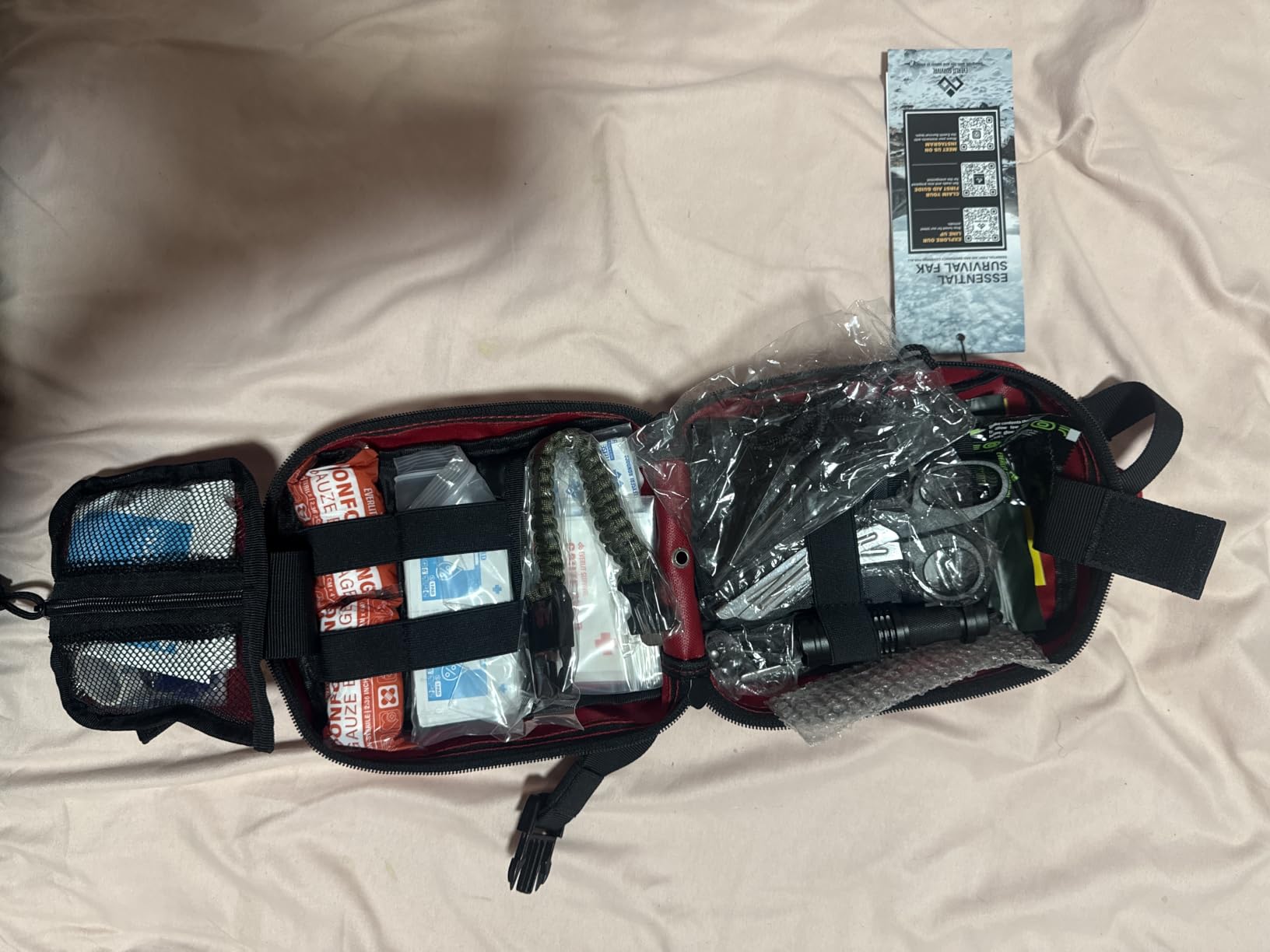
The pouch is a 1000D water-resistant nylon MIL-style EMT pouch measuring 8 by 6.5 by 5 inches with three large compartments, straps, and attachment to any MOLLE system. The survival gear is the differentiator: a mylar space blanket, a 3-mode tactical flashlight, a paracord compass bracelet, a flint, a knife, a saber card, glow sticks and an emergency rain poncho.
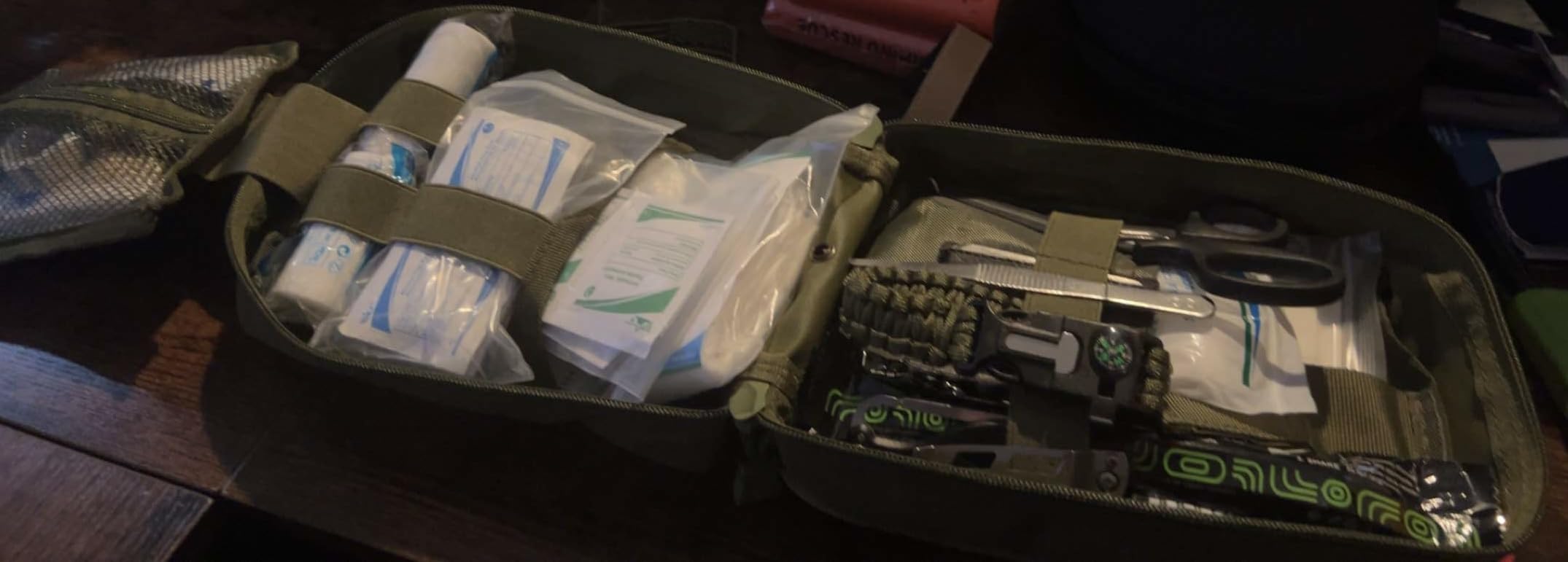
For hiking, the honest read is that a lot of that is dead weight. A saber card and a paracord bracelet contribute bulk rather than medical utility, and the full 2 pound load suits overnight trips or base camps better than a day hike.
Organization is also a step down from the smaller tactical kits here, because three large compartments are fewer, larger spaces rather than labeled pockets. Finding one adhesive bandage in a 250-piece kit is a rummage.
Who this kit is built for?
Vehicle preparedness, bug-out bags, scouting trips and home kits, plus hikers who are away from a trailhead for days and want signalling and shelter gear in the same pouch. It attaches to a backpack, a vest or a vehicle panel.
If you want one kit for the truck, the cabin and the occasional group trip, the breadth here is hard to argue with at this owner base size.
Where it falls short?
Two pounds is the number that keeps it off most day hikers’ lists. Hikers consistently note the full load belongs to overnight trips or base camps, and that is the correct use.
It is also less internally organized than the smaller tactical kits in this roundup, so if quick access matters more than breadth, choose a pouch with labeled compartments and a lower piece count.
How to Choose a Hiking First Aid Kit?
Size the kit to trip length and group size
Every manufacturer rating worth reading is expressed in person-days: two people for two days, two people for four days, three to four people for a week. That number is the most useful sizing spec on the package, and it is more reliable than piece count.
For a day hike with a short drive back, a kit rated for two people and one day is genuinely enough. For a weekend, look for two people and four days, which adds the trauma items you would rather not discover you lack. For a group trip of three or four people, stop splitting supplies and buy one kit rated for the whole party.
Decide how waterproof you actually need
There are three tiers, and hikers routinely confuse them. Water-resistant means a coated shell and a covered zipper, which handles drizzle and a dropped bottle. Watertight means seam-sealed fabric and sealed zippers, which is the only version I trust in sustained rain or creek country. A dry bag adds a third layer and costs you the ability to open the kit quickly.
Match the tier to the climate. If your route is a wet coastal forest, pay for the sealed build. If you are in a dry alpine environment, a water-resistant pouch plus a cheap liner is enough, and the weight saving goes into food.
Decide what you will add before you buy
Every experienced hiker we heard from trims and customizes, and the consensus is that a kit’s value comes from what you add to it rather than from the stock contents. The additions that come up most often are your own ibuprofen, pain relievers and antihistamines, a partial roll of Leukotape, water treatment tablets, and an emergency laceration closure strip.
Leukotape overrules moleskin for anyone who hikes in wet conditions or gets hot spots, because it stays put where moleskin slides off. Water treatment tablets are cheap insurance against a trip that runs longer or a source that is contaminated.
If your group includes children, that changes the list. Pediatric dosing, any prescription medication, and a larger supply of blister care belong in a kit that will be opened by a stressed parent in the dark.
Trim it, and check the dates
Pre-made kits ship with duplicate bandages, oversized shears and large safety pins that most hikers strip out to save weight. People commonly remove the small scissors and duplicate bandages while keeping gauze, tape, blister treatment and medications.
Check expiry dates before every trip, especially on antibiotic ointment, sting relief and hemostatic gauze. Expired medication is not just useless, it is misleading, because you pack lighter believing you are covered.
Organize for one-handed, dark use
Solo hikers have nobody to hold a kit open in the dark, so organization matters more than item count. Clear pockets, elastic retention loops, MOLLE attachment outside the pack lid and a colour scheme you can recognize by touch all solve the same problem.
Our broader guides to building a basic first aid kit for a homestead cover the same principles at a larger scale, and they apply the organization rules even more strictly.
The 10 Essential Items Every Hiking First Aid Kit Should Contain
Strip away the packaging and every capable hiking first aid kit has the same core. These are the ten items we would refuse to leave home without, in the order they matter.
Adhesive bandages in mixed sizes for knuckles, fingers and heels, the three spots that take the most abuse.
Sterile gauze pads and non-adherent dressings for anything deeper than a scrape.
Conforming gauze bandage and adhesive medical tape, because tape fixes almost every wound-care problem.
Antiseptic wipes and triple-antibiotic ointment to clean a wound before you close it.
Blister treatment in moleskin or Leukotape, plus a Leukotape strip for hot spots before they become blisters.
Wound closure strips or butterfly bandages to hold a laceration closed without stitches.
Hemostatic gauze for bleeding that pressure will not stop, the item most low-cost kits omit.
Your own medications including ibuprofen, an antihistamine and anything personal, carried in a labelled bag.
Nitrile gloves, because nobody wants to treat an open wound with bare hands on dirt.
A small rigid tool set of splinter forceps or tweezers, plus safety pins for repairs.
Survival extras such as a mylar blanket, whistle and flashlight belong in a separate emergency layer rather than in the medical pouch. Keeping them apart means you can hand someone the medical kit without handing them a carabiner and a multitool.
Hiking First Aid Kits for Families, Kids and Dogs
A family kit is a different product decision, not just a bigger one. The capacity calculation changes first: two adults and two children is four person-days of supplies, not two, because children get blisters sooner and the treatment takes longer.
Second, dosing replaces gear. Pediatric versions of any medication in the kit, plus a written dosing note in the pocket, matter more than another bandage. Hikers with children on our forums also stress that organized, labeled compartments are the deciding feature, since a parent searching a zip bag in fading light is the worst possible version of that scene.
Dogs change the list again. Hydrogen peroxide, a syringe for flushing punctures, vet contact details for the area you are hiking, and enough gauze for a chewed paw pad are the recurring additions. Our guides to building an equine first aid kit and first aid kits for farm emergencies cover the same thinking for larger animals, and the species-specific logic transfers.
Whichever kit you choose for a group, assign one person to own it. Unlabelled shared gear disappears.
What These Kits Get Wrong?
After opening ten kits, four problems show up repeatedly and none of them appear in the marketing copy.
Expiration dates are the biggest one. Medications and hemostatic gauze have shorter usable lives than the bag around them, and kits get stored in garages and closets for years. Check dates before every trip and treat an expired packet as absent, not as covered.
Piece counts inflate the number. A 250-piece kit and a 59-piece kit can hold a similar amount of what you will actually use. The difference is small adhesive bandages, which nobody needs in bulk.
Waterproofing is often claimed, not tested. Sealed seams and waterproof zippers raise your odds substantially in rain, but reviewers are right to say nobody should assume a kit survives submersion. Restock anything that has been soaked.
Over-packed kits are hard to use in the dark. A dense 130-piece EVA case can be slower to open than a 59-piece pouch with labeled pockets. Speed of access beats raw count for anyone treating a wound after dark.
Frequently Asked Questions
What should you include in a first aid kit for hiking?
Include mixed-size adhesive bandages, sterile gauze and non-adherent dressings, conforming bandage and medical tape, antiseptic wipes and antibiotic ointment, blister treatment such as moleskin or Leukotape, wound closure strips, hemostatic gauze for uncontrolled bleeding, your own medications such as ibuprofen and an antihistamine, nitrile gloves, and a small tool set with tweezers and safety pins. Size the quantities to your group size and trip length rather than the piece count on the box.
How big should my first aid kit be for a day hike?
For a day hike, a kit rated for two people and one day is enough. Look for something in the 3 to 4 ounce range with bandages, antiseptic wipes, blister treatment, tape, gauze and a basic pain reliever. Add a hemostatic gauze and a wound closure strip if you are hiking alone above treeline, and carry your own medication because stock kits often leave it out.
What are the 10 essentials to carry when hiking?
The ten essentials are mixed-size adhesive bandages, sterile gauze pads, conforming gauze bandage with medical tape, antiseptic wipes and antibiotic ointment, blister treatment, wound closure strips, hemostatic gauze, your own medications, nitrile gloves, and a small tool set with tweezers and safety pins. Navigation tools, water, a headlamp, an emergency blanket and a whistle sit alongside these as the rest of your ten essentials.
What is a good lightweight first aid kit for hiking?
A good lightweight hiking first aid kit weighs under 4 ounces and still carries real trauma capability. The two standouts are the Adventure Medical Kits Ultralight Watertight .5 at 3.52 ounces for wound care and blister treatment, and the Day Tripper Lite at 3.7 ounces for bleeding control with QuikClot gauze and a C-splint. Both organize contents in labeled pockets and fit a pack side pocket.
Do I need a waterproof first aid kit for hiking?
You need one if your route crosses creeks, runs through coastal forest or shoulder-season rain is normal. Look for seam-sealed fabric and waterproof zippers rather than a water-resistant coating, and consider a dry bag for sustained wet weather. In dry alpine environments a water-resistant pouch with a cheap liner inside is enough, and the saved weight goes into food.
How do I keep a first aid kit waterproof without a dry bag?
Double up. Put your kit inside a heavy-duty zip bag or a watertight liner, leave a small air gap so the closure can be sealed flat, and keep that inner pouch inside a water-resistant kit bag. Roll the top three times before sealing, then clip the pouch inside your pack or a dry compartment. Replace the liner after any soaking rather than trusting it a second time.
Final Verdict on the Best First Aid Kits for Hiking in 2026
The best first aid kits for hiking in 2026 come down to one honest trade: weight against capability. The Adventure Medical Kits Ultralight/Watertight .5 wins it at 3.52 ounces with a waterproof inner bag and die-cut moleskin, and it is the one we would hand to almost anyone. Solo hikers on rough terrain who need real bleeding control should carry the Day Tripper Lite instead, and anyone heading into wet country should look at the sealed RHINO RESCUE waterproof build.
Buy for your trip length, buy for your group size, then trim the kit at your kitchen table and check every expiry date before you leave. Use the buttons above to compare the current details for each kit, and pack the one that matches your route rather than the one with the biggest number on the box.