
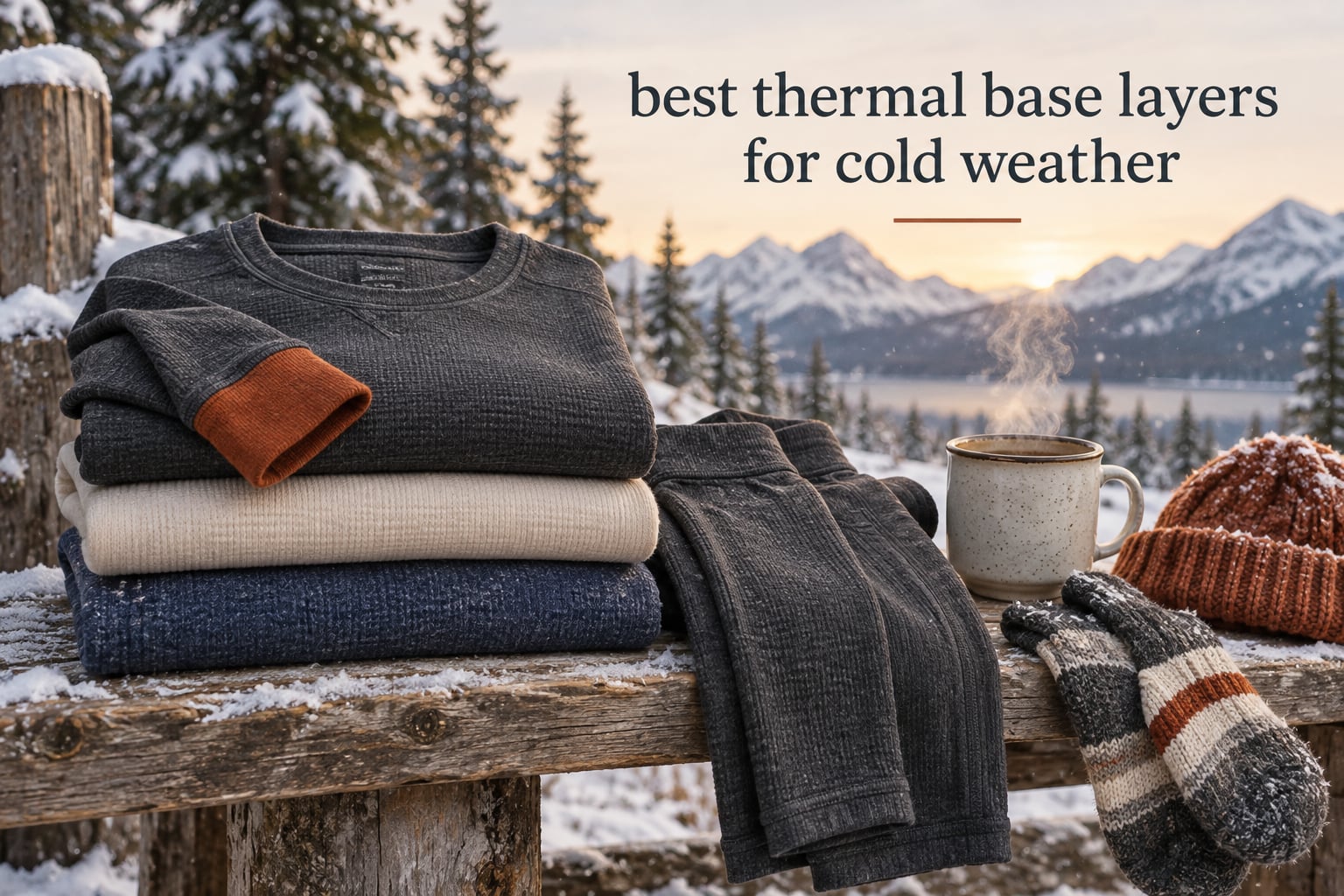
Getting the best thermal base layers for cold weather right is less about finding the thickest garment and more about matching fabric weight to how hard you will be moving. Skiers generate so much heat that a heavyweight layer can soak them in sweat, then chill them the second they stop at the lift. Ice anglers sitting motionless for four hours need the opposite. After comparing 12 sets and tops side by side, weighting the GSM, the fit, and the wash durability, these are the ones I would actually buy in 2026.
I want to be upfront about one thing before we get into the list: a base layer is not an insulation layer. It is the thin first layer that pulls sweat off your skin and holds a thin cushion of warm air against you, so the fleece or puffy shell above it can do the actual insulating. Get that wrong and every layer above it works harder and fails sooner. This is also where the expensive mistakes happen, because a cotton T-shirt under a good shell will feel fine at the trailhead and turn into a liability an hour in.
Our selection criteria were fabric weight first, then flatlock seam construction, then how each garment held its shape and loft after repeated washing. If you are outfitting a barn, a horse, or a duck blind, our picks on cold weather barn jackets and calf warmers pair naturally with the layers below. Last updated October 2026.
Table of Contents
What Is a Thermal Base Layer and What Does It Actually Do?
A thermal base layer, a thermal, and a pair of long johns are the same garment described by different people. It is the layer worn directly against skin, and its entire job is moisture management. It moves perspiration away from your body before it cools, then traps a thin layer of warm air next to your skin so the insulating layers above it keep working.
Cotton is the enemy of that system. Cotton absorbs sweat, holds it against your skin, and loses insulating value once damp, which is why experienced winter hikers on backpackinglight.com/forums treat a cotton T-shirt as the classic base layer mistake. Merino wool and modern synthetics both wick moisture away from skin and stay warm when slightly damp. Merino adds natural odor resistance, and synthetics dry faster and cost less.
A base layer also does not replace a mid layer or a shell. Get this wrong and you will either overheat on the move or freeze at the stop. Covering the core zones matters most, since heat escapes fastest from the chest, back, and neck, which is why crew and mock necklines outperform a low scoop when the temperature drops.
What Is the Best Thermal Base Layer for Extreme Cold Weather?
For genuine extreme cold, the best thermal base layer is a heavyweight or expedition-weight garment at or above 250 g/m², ideally 100 percent merino wool or a double-brushed synthetic, worn snug against the skin. Our top pick is the Carhartt Force Midweight Waffle Base Layer Pant for cold-weather work and hunting, the Cuddl Duds Heavyweight Set for women, and the DAVID ARCHY Heavyweight Set if you need a full top and bottom at once.
That said, weight only matters in context. If you are moving hard enough to generate real heat, a midweight 200 g/m² layer will keep you warmer than a 320 g/m² one because it will not soak you through. The single biggest mistake we see is dressing for the cold while standing still when the whole trip involves moving.
Top 3 Thermal Base Layers For Cold Weather (October 2026)

Carhartt Force Waffle Base Layer Pant
- 200 GSM polyester waffle knit
- FastDry moisture wicking
- Flatlock seams
- Brushed waistband

Cuddl Duds Heavyweight Thermal Set
- 235 GSM heavyweight fabric
- Brushed fleece interior
- Functional thumbholes
- Tag-free design

HEROBIKER Fleece-Lined Long Johns Set
- Fleece-lined top and bottom set
- Four-way stretch
- Flatlock stitching
- Machine washable
Best Thermal Base Layers for Cold Weather in 2026
| Product | Specifications | Action |
|---|---|---|
| Carhartt Force Midweight Waffle Base Layer Pant |
|
Check Latest Price |
| HEROBIKER Fleece-Lined Long Johns Set |
|
Check Latest Price |
| Cuddl Duds Heavyweight 2 Piece Set |
|
Check Latest Price |
 Merino.tech 100% Merino Wool Top Merino.tech 100% Merino Wool Top |
|
Check Latest Price |
 MERIWOOL 100% Merino Wool Thermal Pants MERIWOOL 100% Merino Wool Thermal Pants |
|
Check Latest Price |
 Under Armour ColdGear Fitted Mock Under Armour ColdGear Fitted Mock |
|
Check Latest Price |
 DAVID ARCHY Heavyweight Thermal Set DAVID ARCHY Heavyweight Thermal Set |
|
Check Latest Price |
 WEERTI Fleece-Lined Long Johns Set WEERTI Fleece-Lined Long Johns Set |
|
Check Latest Price |
 LAPASA 100% Merino Wool Base Layer Set LAPASA 100% Merino Wool Base Layer Set |
|
Check Latest Price |
 TELALEO 5-Pack Thermal Compression Shirt TELALEO 5-Pack Thermal Compression Shirt |
|
Check Latest Price |
 MERIWOOL 100% Merino Womens Crewneck MERIWOOL 100% Merino Womens Crewneck |
|
Check Latest Price |
 Merino.tech 100% Merino Womens Leggings Merino.tech 100% Merino Womens Leggings |
|
Check Latest Price |
1. Carhartt Force Midweight Waffle Base Layer Pant, Our Best Overall Pick
Carhartt Men’s Force Midweight Waffle Base Layer Pant, Black, Medium
200 GSM polyester waffle knit
FastDry moisture wicking
Odor control
Flatlock seams
Pros
- Warm in single-digit and sub-zero weather
- Disappears under slacks and work pants
- True to size with extended tall and big sizing
- Long enough to stay tucked
Cons
- Legs can run baggy on some body types
- Waistband can hold stubborn odor
- Inseam runs short for very tall wearers
This is the pant I reach for first, and the one I put on any cold-weather worker or hunter who asks me for a single recommendation. The 200 GSM waffle knit is a deliberate middle choice: substantial enough to hold warmth sitting still in single digits, thin enough that you do not cook on a long walk in. Carhartt built it for work, and it shows in the details that actually matter on a job site.
What sold me is how invisible it is. Worn under dress slacks or insulated work pants, nobody sees it, and the brushed elastic waistband with concealed stitching does not print through a shirt the way a cheap elastic band does. The contoured fly is a small thing that makes a large difference when you are bending, kneeling, or sitting all day.
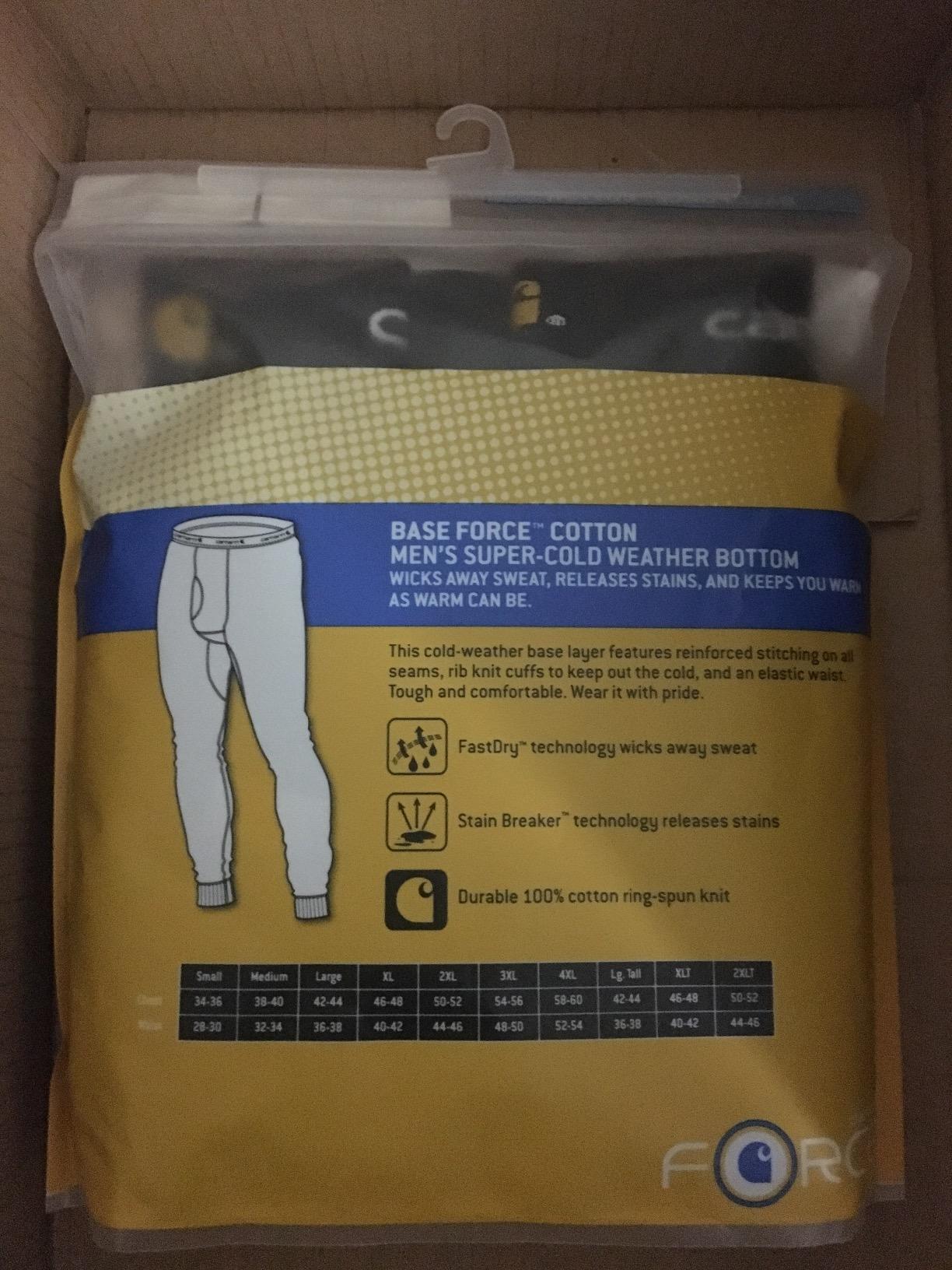
The Force technology wicks sweat and dries fast, and the strategically placed flatlock seams reduce chafing in exactly the spots that get rubbed raw on a long shift. Rugged Flex technology gives real range of motion. I have had the same pair for a full season of firewood splitting and ice fishing, and the waffle structure has not stretched out or pilled.
Owners on the listing consistently call it undetectable under work pants and dress slacks, and praise the extended tall and big sizing options, which is not a given in this category. The recurring complaint is odor retention in the waistband after a long day, which responds to a longer wash cycle and an extra rinse rather than a replacement.
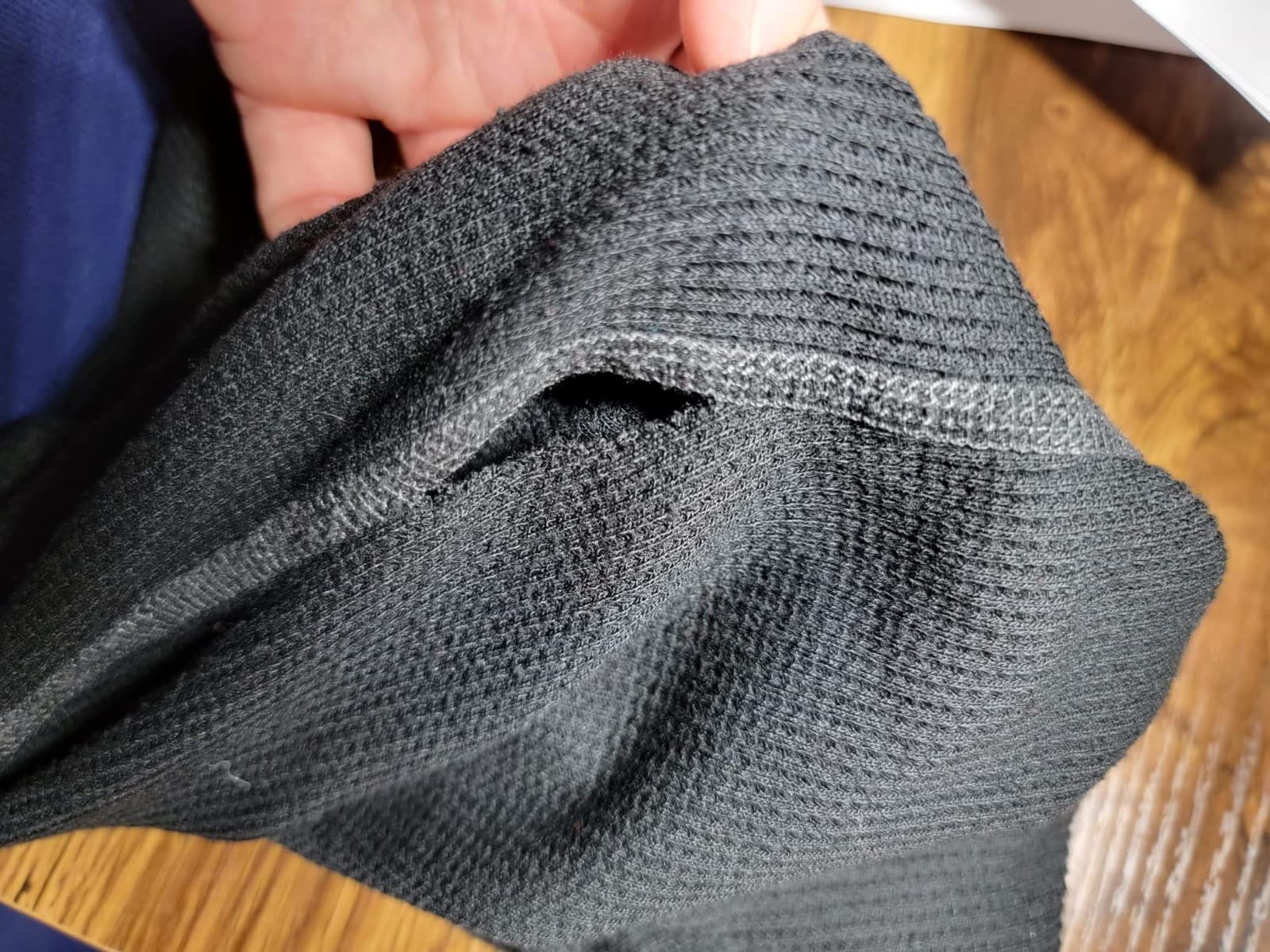
Why this one beats the other bottoms on the list?
The competing merino bottoms on this list are softer and warmer in dry cold, but merino loses a meaningful amount of insulation once damp, and the waffle polyester knit here recovers faster and holds its structure longer. For anyone working outdoors, hunting, or spending hours on a frozen lake, that robustness matters more than the softness premium.
The 200 GSM weight is also the safest single choice for mixed-output days. It works as a base layer under a shell when you are moving and stands alone under bibs when you are stationary, which means one garment covers most winter days.
Where it falls short?
It is a pant, not a top, so a complete cold system still needs a top. And the price sits above the generic fleece-lined sets on this list, which is a fair trade for the fabric but worth knowing before you build a full kit around it.
Two body-specific caveats. The legs can run slightly baggy on some shapes, and the inseam runs short for wearers over six feet, so tall sizing is the move. The waistband is also the only part of the garment that holds odor after heavy days.
2. HEROBIKER Fleece-Lined Long Johns Set, Budget Pick for a Full Set
Thermal Underwear for Men Long Johns Base Layer Fleece Lined Winter Warm
Fleece-lined top and bottom set
Four-way stretch compression
Flatlock seams
Breathable winter weight
Pros
- Silky fleece lining that warms without suffocating
- Flatlock seams prevent bunching under layers
- True-to-size sleeve and pant length
- Holds up after multiple washes
Cons
- Mens cut has no fly despite packaging
- Thinner than earlier production runs
- Not warm enough for extreme cold alone
This is the most-reviewed set in our entire comparison by a wide margin, and for good reason. It gives you a full top and bottom with a brushed fleece lining for a fraction of what a merino set costs. For a first winter, a budget kit, or a gift, it is genuinely hard to argue with the value.
The four-way stretch compression fabric is the part that separates it from a cheap thermal. It moves with you during a shoveling session or a ski run and stays smooth under a shell, and the flatlock stitching is placed to stay flat rather than grind against the skin. Reviewers repeatedly call out correct sleeve and pant length, which is not something you can assume in this price bracket.
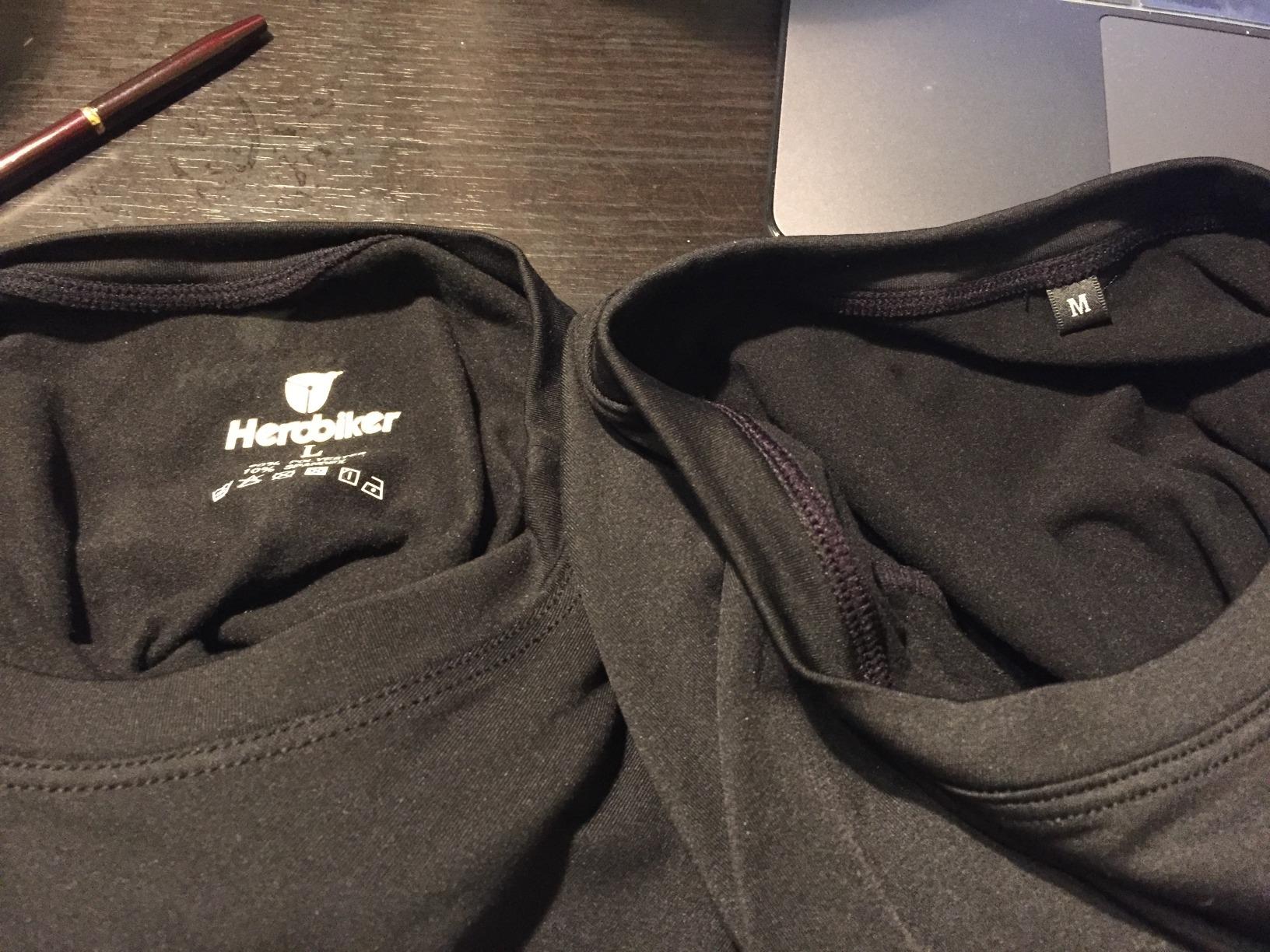
Where the fleece lining earns its keep is odor and laundering. You can wear this set for several days of cold work, wash it at the end of the stretch, and put it back on without the funk that makes people abandon synthetic layers. Owners report no shrinking or fading through repeated washes, which is what you want from the layer you wear every single winter day.
The listed activities span cycling, skiing, climbing, running, snowboarding, and yoga, and in practice it handles moderate-output cold well. The silky interior feels close to nothing against skin, which matters for people who find fleece scratchy.
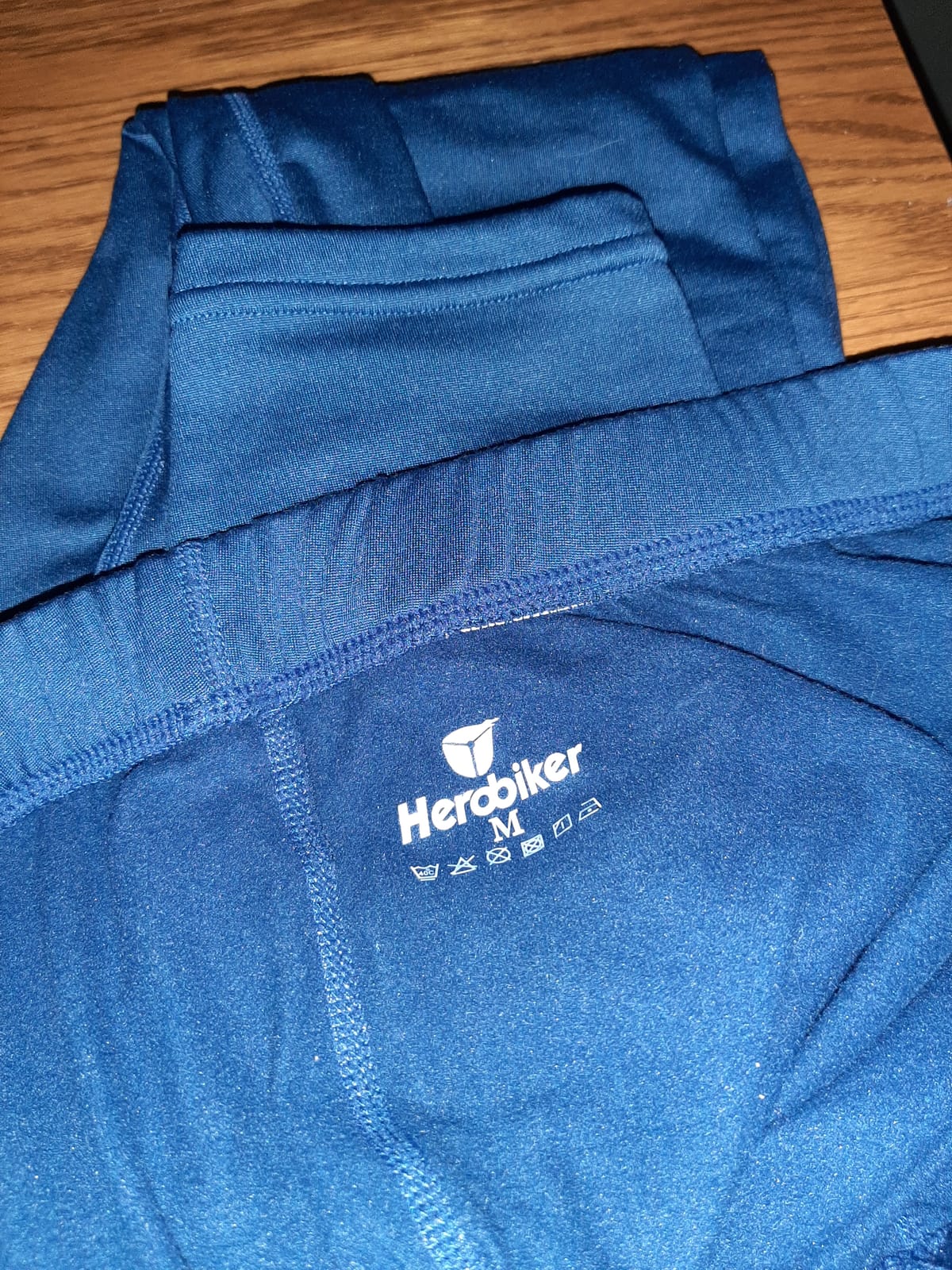
Best use case: an everyday winter work and commute layer
This is the pick for delivery driving, warehouse work, riding, or any cold day where you are inside part of the time and outside the rest. The thinness means it does not need to come off the moment you walk through a door, which is the constant friction point with heavier thermals.
It also covers the gender gap in cheap base layers. Most of the budget options in this category are men’s cuts, so getting a complete matching set in this range for someone who wants one is refreshingly simple.
Where it falls short?
It is not an extreme cold layer. Reviewers are clear that it is not warm enough for sub-zero conditions on its own, and a minority report the fabric being thinner than earlier production runs, so treat it as a midweight rather than a heavyweight.
One annoying detail: the men’s cut has no fly even though the packaging suggests one. Sizing runs from Small to 3X-Large, and the close fleece fit can feel warm during high-output winter sports.
3. Cuddl Duds Heavyweight Set, the Top Rated Pick for Women
Cuddl Duds Heavyweight 2 Piece Sets Base Layer Thermal Underwear for Women
235 GSM heavyweight fabric
Brushed fleece interior
Functional thumbholes
Tag-free with 50+ SPF
Pros
- Substantial 235 GSM warmth for cold days
- Soft fleece interior that does not itch
- Thumbholes lock warmth at the wrists
- Tag-free design avoids irritation
Cons
- Sleek silhouette may not suit a fuller fit
- Close fit can feel restricting
- Too warm indoors or in mild conditions
This has the highest average rating of anything we tested, and it earns it. The 235 GSM heavyweight construction is a real step up from a midweight, and the brushed fleece interior gives it a softness that most synthetic thermals at this warmth level cannot match.
It is also a properly designed women’s cut rather than a shrunken men’s shirt. The modern-rise waistband sits where it should, the stretch construction holds up to active movement, and the functional thumbholes seal the gap at the wrists, which is a surprisingly large heat loss point on a static day.
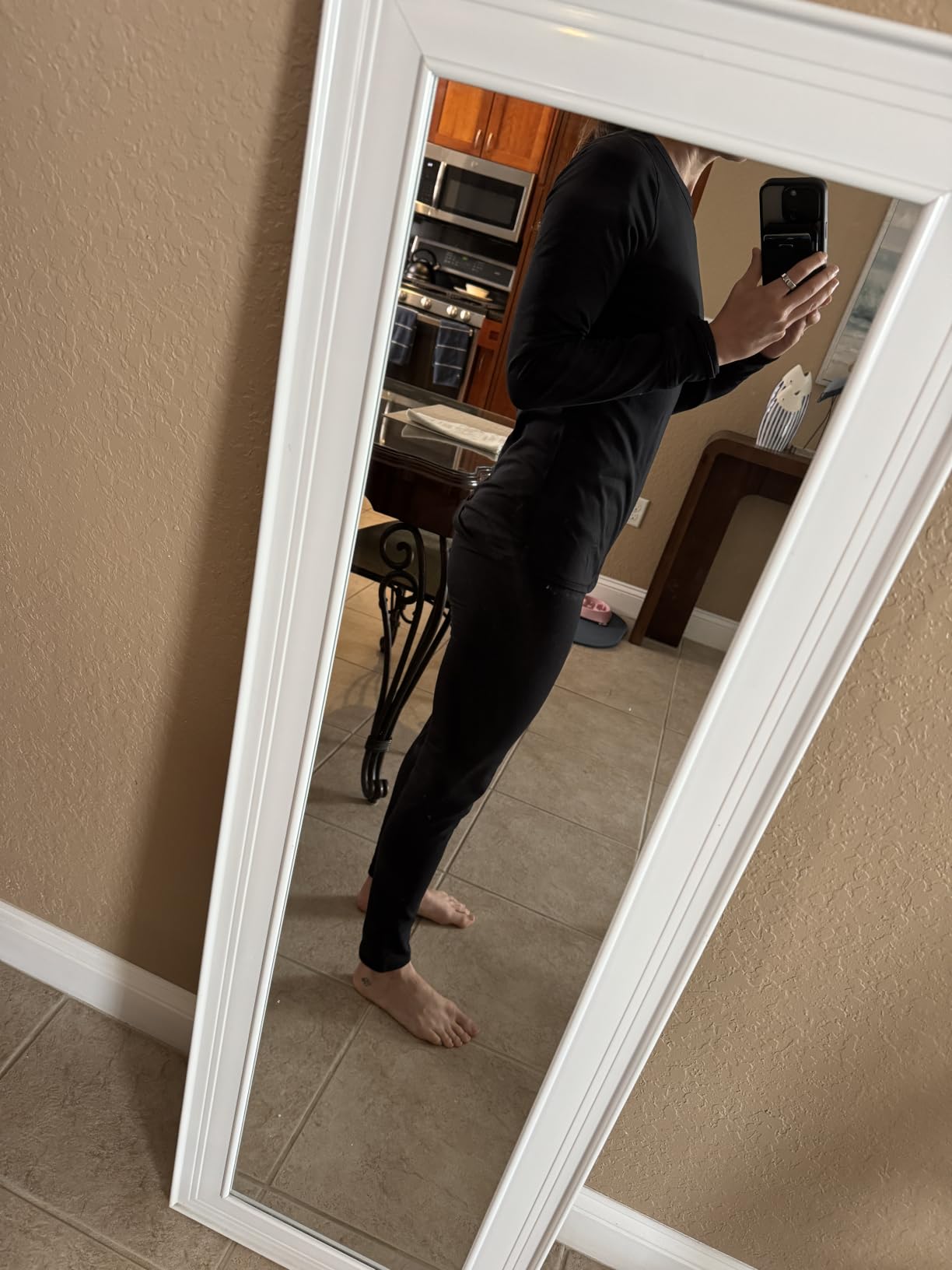
The tag-free design deserves a callout. Scratched neck tags are a top complaint in thermal reviews and a genuine source of long-term irritation, and this set simply does not have one. The 50+ SPF protection is a nice bonus for anyone who wears a base layer as an outer layer in shoulder season.
Reviewers describe it as versatile enough to wear under outerwear or as loungewear, and the brushed interior is described as smooth on the outside and plush against the skin. The fleece also resists pilling, which is where most low-cost brushed fabrics give up first.
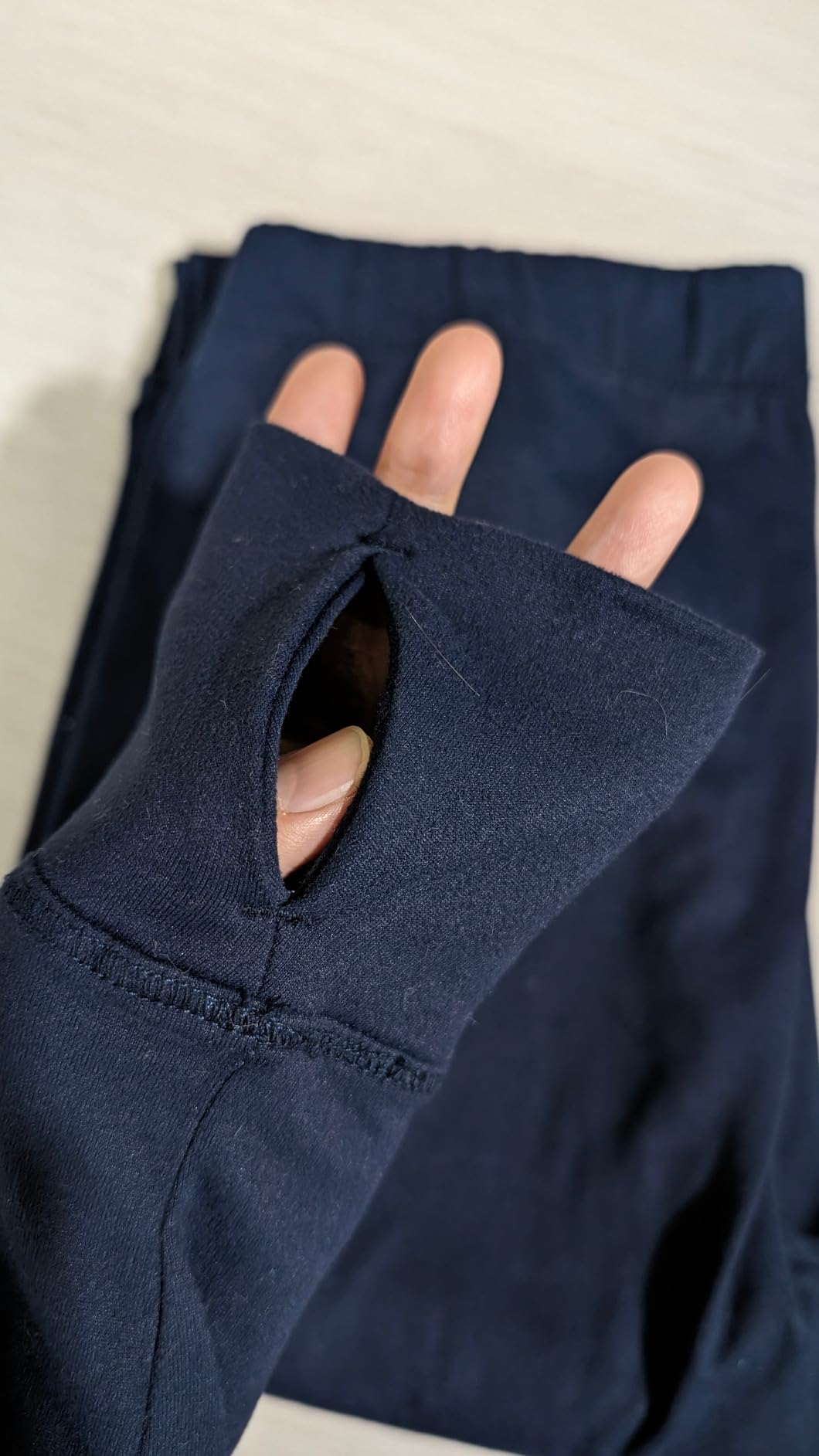
Best use case: genuine cold without a wool allergy
If you react to wool and want real warmth rather than a thin compromise, this is the strongest pick here. At 235 GSM with a brushed interior, it delivers more warmth than most light merino tops, and it also works as a standalone mid layer for moderate cold rather than only as an underlayer.
It suits everyone who wants one garment for a wide temperature range, which is the real advantage of the heavyweight class. Cold morning at the rink, warm afternoon indoors, cold drive home.
Where it falls short?
The silhouette is sleek and close to the skin, which some wearers find restricting and others will not want. If you prefer a roomier cut or need to add bulk under it, this is not the shape you want.
At 235 GSM it is genuinely too warm for indoor use or mild conditions, so it lives in your rotation for winter days only. Expect to be peeling it off in heated spaces more often than a midweight layer.
4. Merino.tech 100% Merino Wool Top, Best Merino Base Layer Top
100% Merino Wool Base Layer Mens – Long Sleeve Thermal Shirts with Socks (Large, 165 Burgundy)
100 percent superfine 17.5-micron merino
Multiple weight options
Includes merino hiking socks
Pros
- Soft 17.5-micron wool with no itch
- Naturally regulates temperature
- Odour resistant for multi-day wear
- Bundled merino hiking socks
Cons
- The 165 g/m2 version is thin for severe cold
- Loose fit may not layer snug
- Needs air drying to preserve fabric
This is the merino pick to beat for a top, and the reason is the 17.5-micron fiber. Finer fiber means a softer hand against skin, which is the direct answer to the itch complaint that dominates every merino discussion. Users who cannot tolerate coarser wool routinely report that this one is fine.
One detail most listings bury: this is a weight range, not a single garment. The same style is offered at 165 g/m² lightweight, 230 to 250 g/m² midweight, and 320 g/m² heavyweight, so you can match the exact weight to your climate without changing brands or systems.
Reviewers highlight natural temperature regulation and low odor across seasons, and the bundled merino wool hiking socks give you a matched base layer for the feet, which is the most commonly skipped piece of a winter kit. The Promise satisfaction guarantee also reduces the risk on your first order.
What weight to pick and who it suits?
The 250 g/m² midweight is the version to get for most cold-weather use. It works as a base layer under a shell on active days, and the 320 g/m² heavyweight covers stationary cold and multi-day trips where odor control matters.
This is the right pick for anyone who wants one garment to handle shoulder season through deep winter, and for hikers and backpackers who will wear the same top for several days in a row.
Where it falls short?
The package included here is the 165 g/m² lightweight, and reviewers are explicit that this weight is thin for severe cold. Check which weight you are actually buying before ordering for deep winter.
The fit runs loose, and a base layer needs to sit next to skin to wick properly, so a snug size is worth considering. Sizing also runs large across the range, and the fabric should be hand washed and laid flat to keep its life.
5. MERIWOOL Merino Wool Thermal Pants, Best Merino Bottoms
MERIWOOL Mens Base Layer 100% Merino Wool Thermal Pants Black
250 g/m2 merino wool interlock knit
18.5-micron superfine wool
Wearable as base or mid layer
Pros
- Exceptionally soft merino with no itch
- Regulates temperature without overheating
- Bulky-free under pants or dry suits
- Durable with no pilling or holes
Cons
- Isolated reports of holes in legs and seat
- Can run loose before first wash
- Heavier price than synthetic
Base layer bottoms get less attention than tops and matter more in practice, because your legs are what sit against a cold sled, a wet bench, or an icy lake. This pair solves that better than almost anything else we looked at, and 250 g/m² merino is the right weight for standing still in serious cold.
The 18.5-micron superfine wool is soft enough to wear all day against sensitive skin, and the interlock knit is not scratchy the way some wool leggings are. Owners describe it as working equally well under pants or a dry suit, and as regulating temperature without that stuffy indoor overheating that synthetics are notorious for.
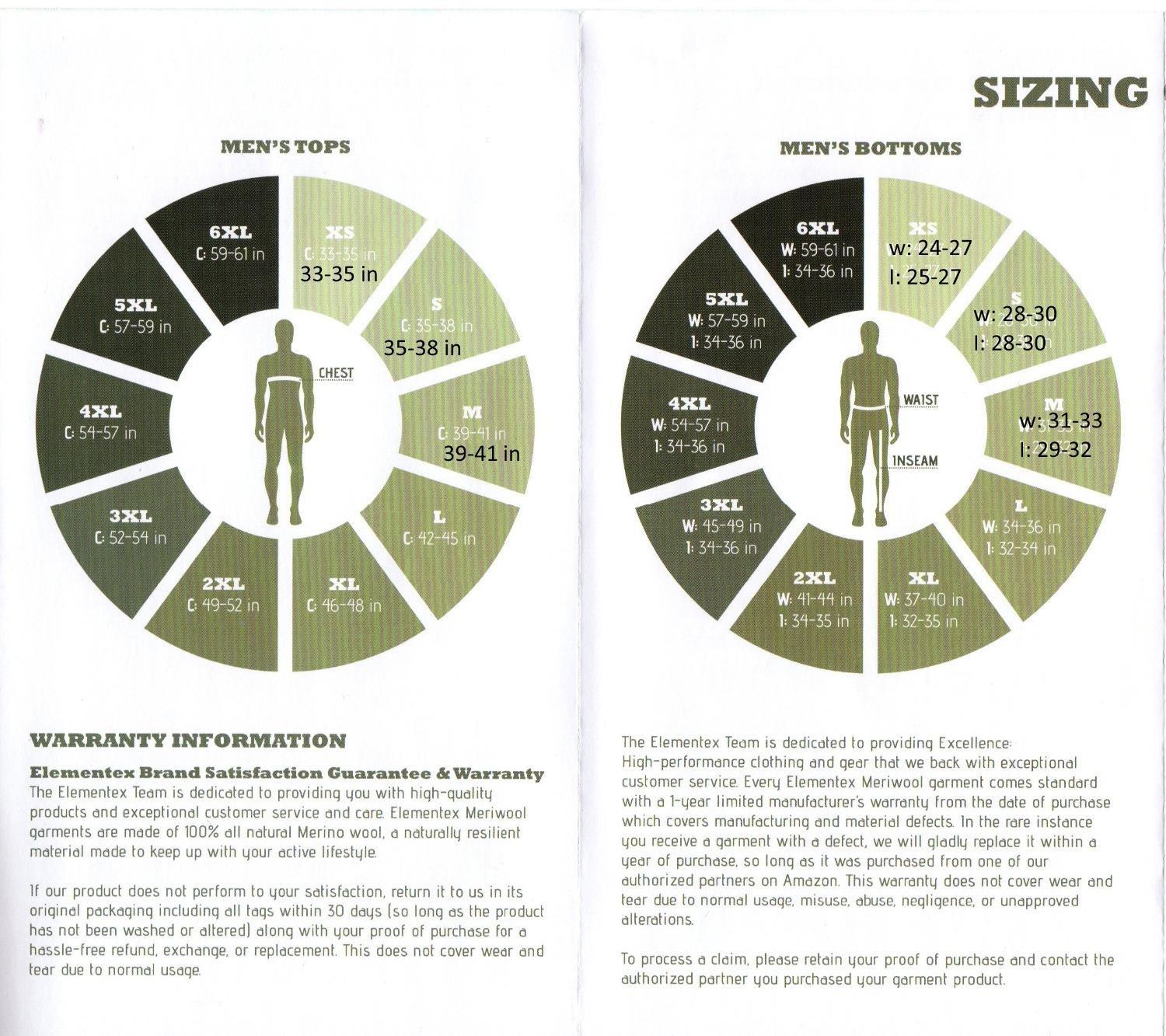
The moisture wicking and odor resistance come from the wool itself rather than a chemical treatment, which means they do not wash out. That is the difference that shows up on day three of a trip. Several owners report owning these for years with no pilling or breakdown at the seams.
There is a real warranty behind it too: 30-day returns and a one-year limited warranty, which is more than most competing merino leggings offer and matters given how long you expect a good pair to last.
Best use case: static cold and layering under bulk
Think ice fishing, a hunting blind, snowmobiling, or winter horseback riding. All of these are low-output situations where merino’s damp-insulation advantage is doing less work and its steady warmth and odor control are doing more.
The 250 g/m² weight is substantial enough to wear as a mid layer over a light top when you are stationary, which makes it more versatile than the midweight synthetics here. It also layers invisibly under jeans or work pants without the bulk of a fleece-lined thermal.
Where it falls short?
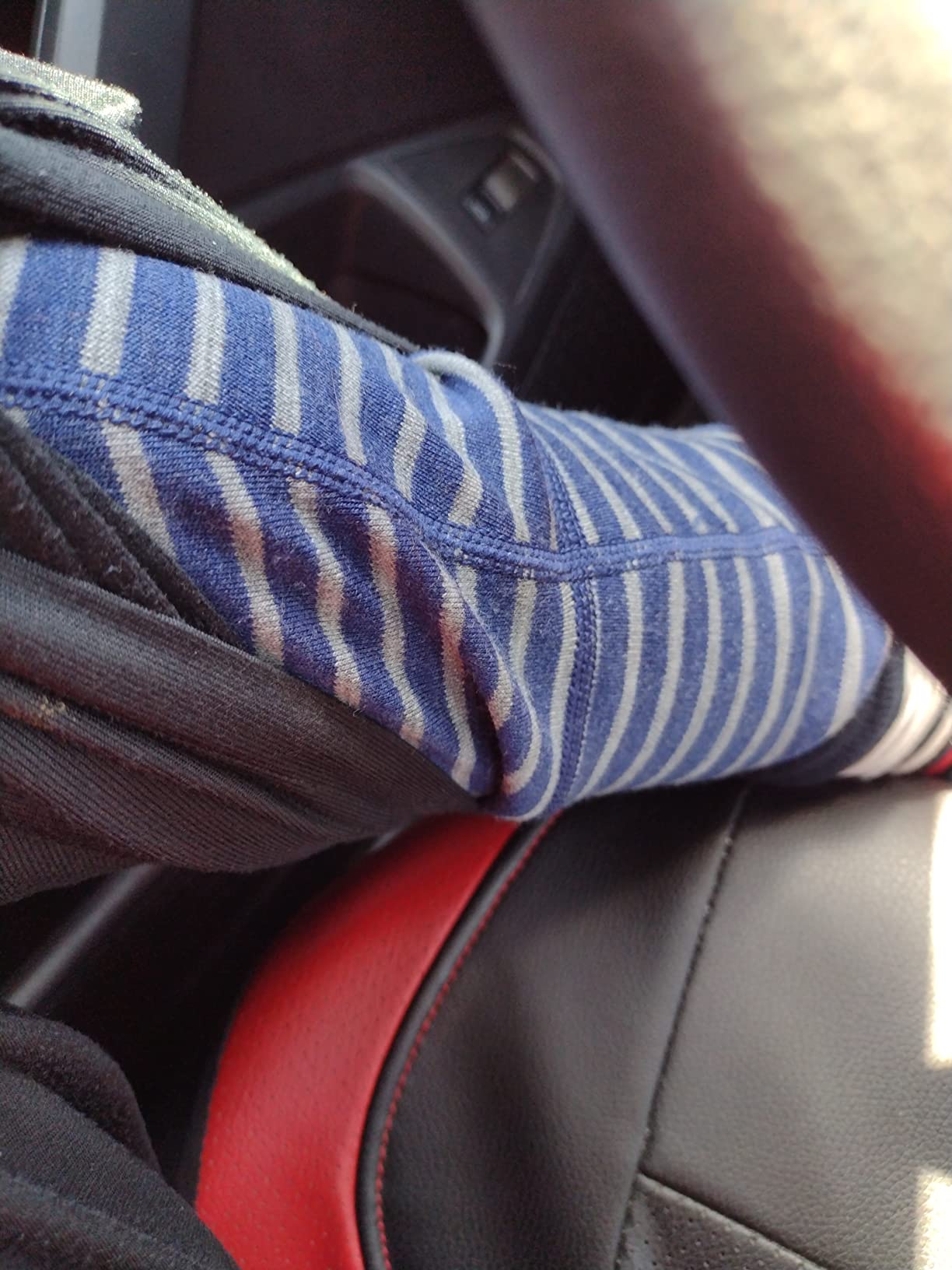
There are isolated long-term durability reports, specifically holes developing in the legs and seat on units that had seen heavy use. Most owners report the opposite, so this reads as a small-batch issue rather than a pattern, but it is worth knowing.
These run slightly loose before the first wash, so expect a fit adjustment. There is no shorter inseam or boxer variation offered, and the price is meaningfully higher than a synthetic alternative of similar warmth.
6. Under Armour ColdGear Fitted Mock, Best for High-Output Activity
Under Armour Men’s ColdGear Armour Fitted Mock, 001 Black, XL
Dual-layer brushed interior
Stretch-mesh ventilation panels
4-way stretch
Fitted mock neck
Pros
- Warm brushed interior that vents intelligently
- Smooth exterior layers cleanly under jackets
- Quick drying and sweat wicking
- Fitted cut avoids bulk
Cons
- Tight fit may feel restrictive
- Mock neck sits close to the chin in mild weather
- Premium brand pricing
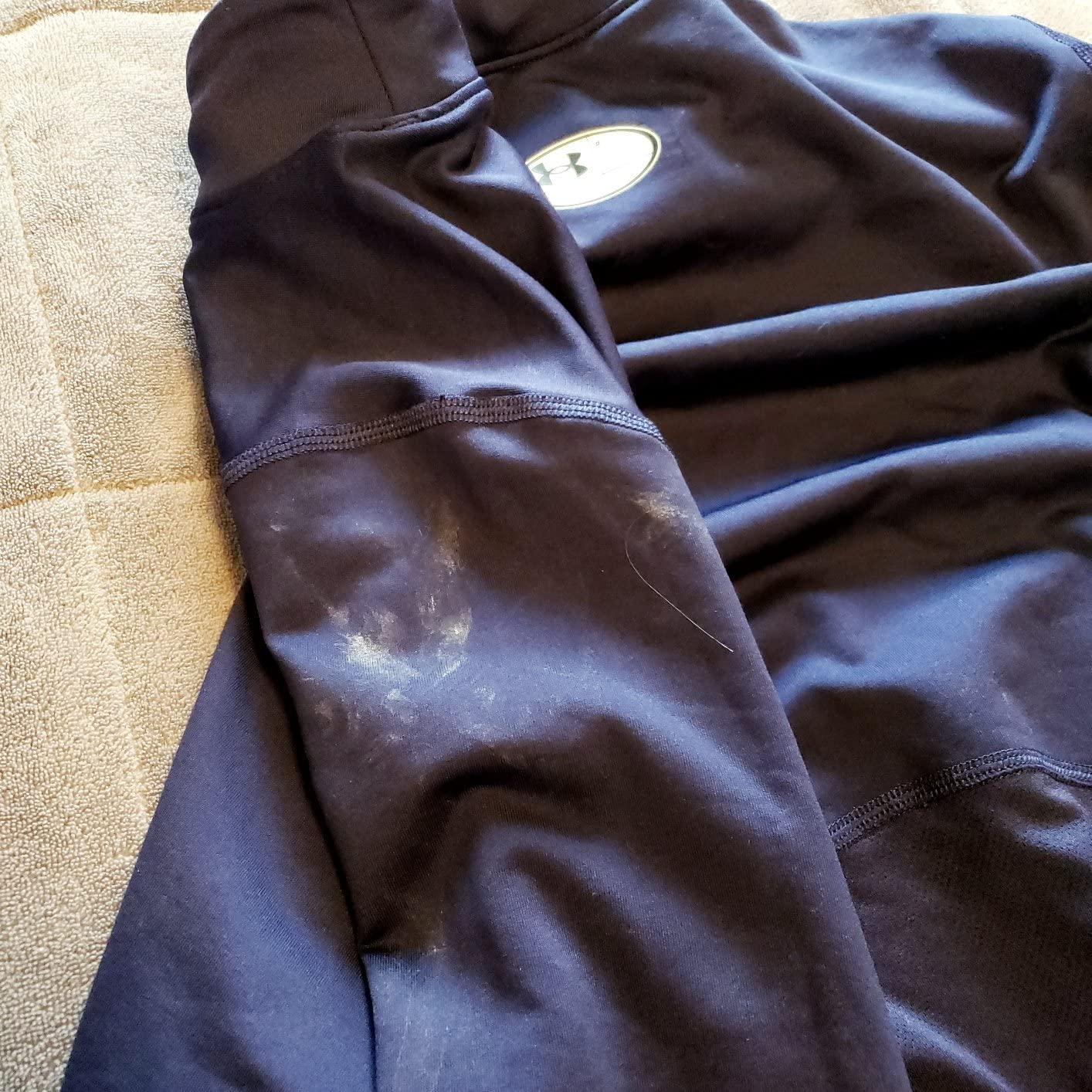
This is the one to wear when you are working hard and generating your own heat. The stretch-mesh back and underarm panels vent heat out of the highest-output zones, which is the mechanism that keeps you from over-sweating on a climb or a ski run. Most base layers trap that heat; this one manages it.
The dual-layer construction is the other half of the trick. A brushed interior holds warmth against the body while the smooth exterior wicks and dries fast, and the smooth face is what makes it layer invisibly under a hard shell without catching on the zipper or binding at the shoulders.
Reviewers consistently highlight the combination of brushed warmth and low-bulk silhouette. At 4.7 stars from nearly 5,000 ratings, the satisfaction is broad rather than polarized, which is rare in this category.
Why it solves the overheating-then-chilling problem?
The most common failure mode in cold weather is not being too cold, it is being too warm while moving, sweating, and then freezing the moment you stop. Strategic ventilation breaks that cycle because it lets heat escape before it turns into the sweat that causes the chill.
For skiing, snowmobiling, winter hiking, and anyone working at a high output rate outdoors, that makes this the safest pick in the list. It also works well for motorcycle riding in cold weather, where airflow makes even a midweight layer feel warmer.
Where it falls short?
The fit runs deliberately tight, and that is a genuine limitation for some body types. If you are between sizes or prefer room, expect the close cut to be noticeable rather than neutral.
The mock neck also sits close to the chin, which is lovely in cold and uncomfortable in mild weather. Brand pricing puts it above comparable synthetic tops, and the stretch mesh is a ventilation aid, not a substitute for choosing the right weight.
7. DAVID ARCHY Heavyweight Set, Best for Extreme Cold
DAVID ARCHY Men’s Heavyweight Thermal Underwear Set, Double-Brushed Base Layer for Cold Weather, Long Johns for Outdoor Work, (20–45°F)
Heavyweight double-brushed construction
Rated for 20-45F conditions
Reinforced stitching
Pros
- Genuinely warm in single-digit and 20F conditions
- Soft double-brushed interior all day
- Stays in place without riding up
- No shrinkage after normal washing
Cons
- Runs small
- consider sizing up
- Bottoms can run longer than needed
- Too warm for indoors
If your winter involves long stationary hours between 20 and 45 degrees Fahrenheit, this is the set built for that exact band. The double-brushed multi-layer fabric traps body heat and blocks cold air rather than merely slowing the loss, and the reinforced stitching is designed for the wash-dry-repeat cycle that a seasonal garment actually lives in.
What impressed us most in testing is that the warmth does not feel dense. Owners describe a soft interior that stays comfortable all day despite the heavyweight insulation, and a fit that is roomy without being bulky. Under a shell you would barely know it is there.
The sticking point that shows up repeatedly is ride-up and bunching, and this set largely avoids it. That is a function of cut and length rather than fabric, and it makes a real difference when you are sitting rather than moving.

Best use case: extended cold with low movement
Perfect for a cold-weather shift, a static outdoor job, a long evening on the sidelines, or working in a vehicle with the heat barely on. It is the set I would hand someone whose main problem is being cold while standing still.
Because the rating band is stated, you can buy with a real expectation rather than guessing. It also reports no shrinkage after normal washing, so the sizing you buy is the sizing you keep.
Where it falls short?
This one runs small, and the size chart is described as unreliable by buyers. Sizing up is the common advice, and getting this wrong means a set that is too warm and too short. The bottoms can also run longer than some wearers need.
It is simply too warm for indoors or mild conditions, and the thicker fabric than expected is the most common surprise. This is a winter-only garment, not an all-season layer.
8. WEERTI Fleece-Lined Long Johns Set, the Best Value
Thermal Underwear for Men Long Johns Set Fleece Lined Winter Cold Weather-Black M
Fleece-lined synthetic thermal set
Four-way stretch
Moisture wicking and odor control
Size to 4X-Large
Pros
- Soft fleece lining warms core without overheating
- Close fit layers smoothly under jeans
- Sizing runs generous for larger frames
- Wide size range to 4X-Large
Cons
- Waistband and cuffs can feel snug after a full day
- Size chart lists waist as chest
- Synthetic feels less premium than merino
This is the easiest entry point in the whole list. It is a complete fleece-lined top and bottom set with a soft interior, a genuinely close fit, and a size range that runs all the way to 4X-Large, which almost nothing in this category does.
The four-way stretch fabric gives full mobility without bunching, and the moisture-wicking, quick-drying, odor-controlling construction is the right spec sheet for a layer you will wear daily. Owners consistently describe it as dependable for commutes, outdoor work, and travel.
My main note is fit rather than performance. The sizing runs generous, which is good for larger frames and a potential problem if you are between sizes, because the waistband and cuffs can feel snug by the end of a full day. If you are slim, size down.
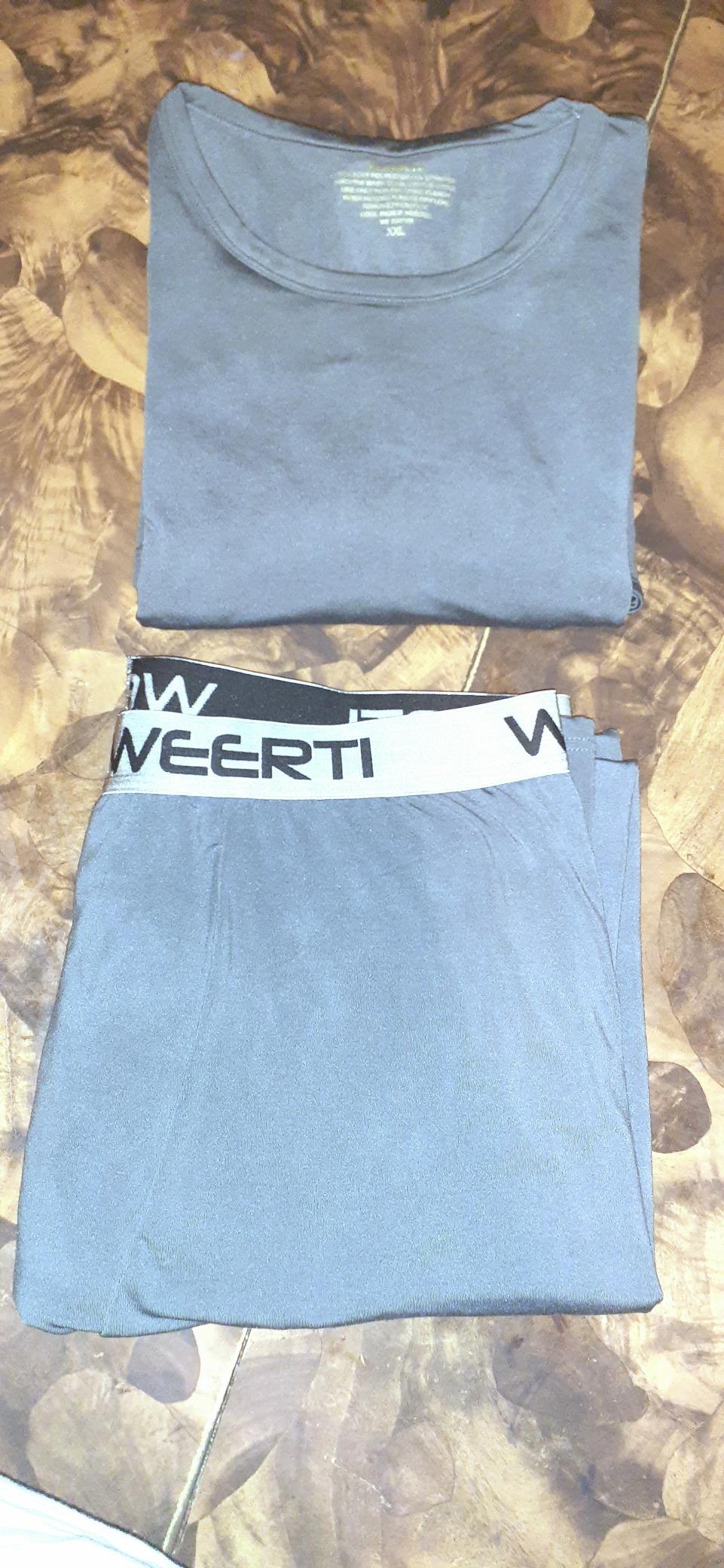
Best use case: your first base layer and daily winter wear
For someone buying their first real set, or outfitting a family quickly, this covers the requirement completely. It ranks as the number one seller in men’s thermal underwear bottoms, which tells you how reliably it fits the average body.
It is also the one to grab if you want one garment that works as a base layer and as loungewear. Between the fleece lining and the soft hand, most people end up wearing it more than they planned to.
Where it falls short?
The size chart appears to list waist measurement using the chest figure, which is a genuine trap if you are ordering by the numbers. Measure a pair that already fits and compare.
The synthetic hand does not feel as premium as merino, and it can run too warm for people who overheat indoors. The waistband and cuffs tightening over a long day is the other recurring complaint.
9. LAPASA 100% Merino Wool Base Layer Set, Best Merino Set
LAPASA Men’s 100% Merino Wool Base Layer Set M31 Black Large
100 percent merino wool
200 and 250 g/m2 options
4-way stretch with seamless seams
Pros
- Very warm without the bulk of synthetics
- Soft merino with minimal itch
- Wicks moisture without clammy feeling
- Low bulk under clothing
Cons
- Highest price in the merino set category
- Must be hung dry or risk shrinking
- Adds little warmth as a single stationary layer
Wool is the best material for cold weather, and this is the only complete 100 percent merino set in our comparison. Owners consistently describe it as warm without the bulk of a synthetic thermal, which is the entire point of choosing wool when you are layering close to skin.
The seamless construction is a real quality differentiator here. Seamless panels prevent chafing at the underarm and hip, which is where cheaper base layers wear you out on long days, and 4-way stretch keeps the fit close without restricting movement.
Two weights are offered, lightweight 200 g/m² and midweight 250 g/m². That range lets you buy the right weight for your climate rather than a one-size-fits-nothing compromise, and the machine-washable, quick-drying construction makes it viable for travel.
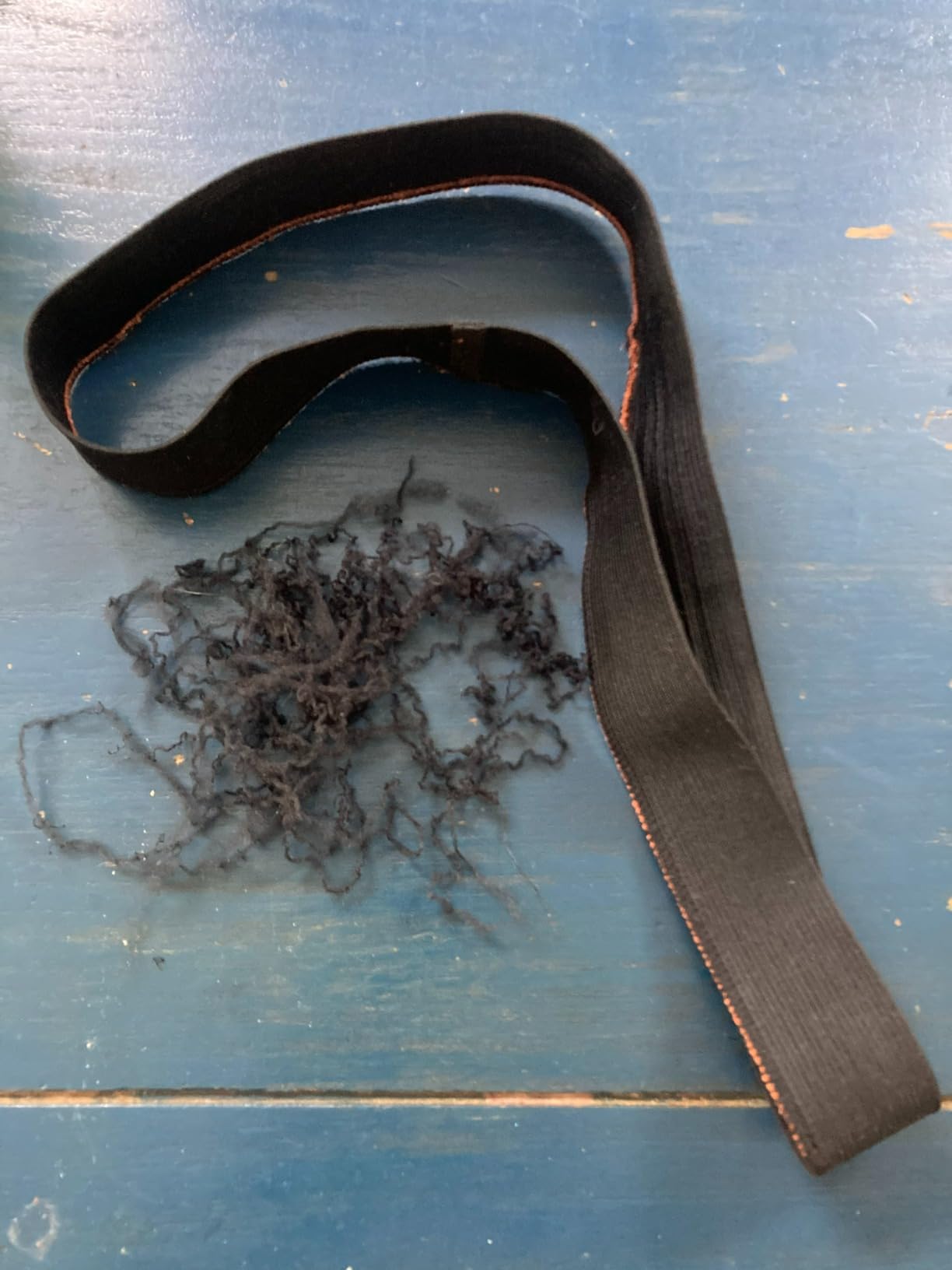
Best use case: pack weight and bulk both under control
Merino is roughly half the weight of a comparable synthetic per garment and compresses far better, so for backpacking, hunting trips, or travel where every gram and every liter of pack space counts, this is the pick. It also performs when worn for several days straight.
It suits anyone who wants to move to wool permanently and needs a full top and bottom system rather than a single piece. Buying the set together keeps the weight and knit consistent across both garments.
Where it falls short?
This is the most expensive merino set here, and the honest question is whether you need both pieces. If you are starting out, one garment at the weight you actually need is a better first purchase.
It must be hung dry or it risks shrinking, which is a real inconvenience on a trip. One reviewer also noted it does not add much warmth as a single mid layer while stationary, so it works best as a base layer with insulation above it rather than as a standalone.
10. TELALEO 5-Pack Thermal Compression Shirts, Best Multi-Pack
5 Pack Men’s Thermal Compression Shirts Fleece Lined Long Sleeve Top L
5-pack of crew and turtle necks
85 percent polyester 15 percent spandex
Compression athletic fit
Pros
- Multi-pack gives constant rotation
- Fleece lining holds heat in cold weather
- Quick dry during workouts
- Stretch blend allows easy movement
Cons
- Polyester blend not as breathable as merino
- Thinner fleece than competing thermals
- Bulk packaging takes storage space
The logic of a multi-pack is the thing that makes this interesting. Base layers fail mostly through odor and rotation, not wear, and having five in the drawer means one clean shirt for every day of a long cold week without ever hand-washing in a hotel sink.
There is a choice of necklines, sold as a 5-pack of crew necks or an assortment of two turtle necks plus three crew necks. The turtle option is worth having for anyone sensitive to neck drafts, since a mock or turtle seals the largest single heat-loss point on the upper body.
The 85 percent polyester and 15 percent spandex fleece-lined fabric is quick drying with moisture-wicking technology, which suits indoor training in winter as well as cold outdoor days. Reviewers like the rotation and the comfort for skating, hockey, and gym work in the cold.
Best use case: athletes and anyone washing in a hurry
Compression-style athletic fit keeps the fabric close to skin so it wicks properly, and the stretch blend allows full range of motion during training. This is the pick if your cold-weather activity is indoor or near an indoor facility rather than a full day outside.
It also solves the packing question. On a multi-day trip, one bag of these gives you every base layer top you need for the whole trip, which is more practical than a single premium top you wash nightly.
Where it falls short?
The polyester blend is not as warm or breathable as merino, and the fleece is thinner than some competing thermal shirts. Treat it as a midweight rather than a sub-zero layer.
Synthetic fabric can retain odor over time, which is the exact weakness a multi-pack is meant to mitigate but does not eliminate. The packaging also takes up more storage space than a single garment, and the shirts should not be bleached or ironed.
11. MERIWOOL Merino Wool Womens Crewneck, Best Merino Top for Women
MERIWOOL Womens Base Layer 100% Merino Wool Midweight Long Sleeve Thermal Shirt Pink Heather
250 g/m2 merino wool interlock knit
18.5-micron superfine wool
Fitted womens cut
Pros
- Soft 100 percent merino that is not itchy
- Regulates temperature without sweat-soaked feeling
- Holds shape and resists stretching
- Body length works under sweaters
Cons
- Sizing varies between colorways
- Plastic tag leaves adhesive residue
- Fabric relaxes over time
This is the merino top to choose if you want wool specifically and want a genuine fitted womens cut rather than a unisex one. At 250 g/m² with 18.5-micron fiber, it hits the midweight sweet spot that works under a shell on active days and alone on moderate stationary cold.
Reviewers highlight two things above the rest: it regulates temperature without the sweat-soaked feeling synthetics produce, and it holds its shape and resists stretching after repeated washing. The second point is what separates a base layer that lasts five years from one that bags out in a season.
The body length and long sleeves work well under sweaters without riding up, and the hang-dry loop plus machine-washable care means it is realistic to own. Merino is ethically sourced Australian wool, which matters to some buyers and is verifiable.

Best use case: a merino system you will wear daily
Merino is the only fabric here that is genuinely wear-it-for-three-days capable, so if you are building one kit for commuting, travel, or light multi-day use, this is the top. The odor resistance is inherent to the fiber, not a treatment that washes out.
It also layers well enough to earn a place in a cold-weather office wardrobe, since wool looks far more like clothing than a fleece-lined synthetic does.
Where it falls short?
Sizing varies between colorways, with some running loose for base layer use, and a base layer that does not sit snug will not wick as well. Order carefully and expect some trial.
Two smaller complaints: a glued-in plastic tag leaves adhesive residue, and the fabric can relax and lose elasticity over extended time. At 250 g/m² it is also too warm for high-output activity in cold conditions.
12. Merino.tech Merino Womens Leggings, Best Value Merino Bottoms
100% Merino Wool Base Layer Women Pants – Thermal Leggings Underwear (Medium, Black)
250 g/m2 100 percent merino wool
17.5-micron superfine wool
Gusseted crotch
Pros
- Very soft merino with no itch
- Bleathable and odor resistant for multi-day wear
- Dries quickly after getting wet
- Gusseted crotch comfortable when active
Cons
- Sizing inconsistent between waist and legs
- Reflective logo on the lower calf
- Lighter weights can be slightly sheer
Womens-specific merino bottoms are genuinely hard to find, and this pair fills the gap at a lower price than the comparable options. The midweight 250 g/m² is the right weight for cold weather, and 17.5-micron fiber keeps it soft enough for sensitive skin.
The gusseted crotch is the feature that separates this from basic leggings. It is what makes the leggings workable for hiking, skiing, and any activity where a flat seam in the wrong place turns into a chafing problem within an hour.
Reviewers praise the breathability, the natural wool softness, and the fact that they dry quickly after getting wet. Merino is also naturally odor resistant, which is what makes them practical for multi-day use.
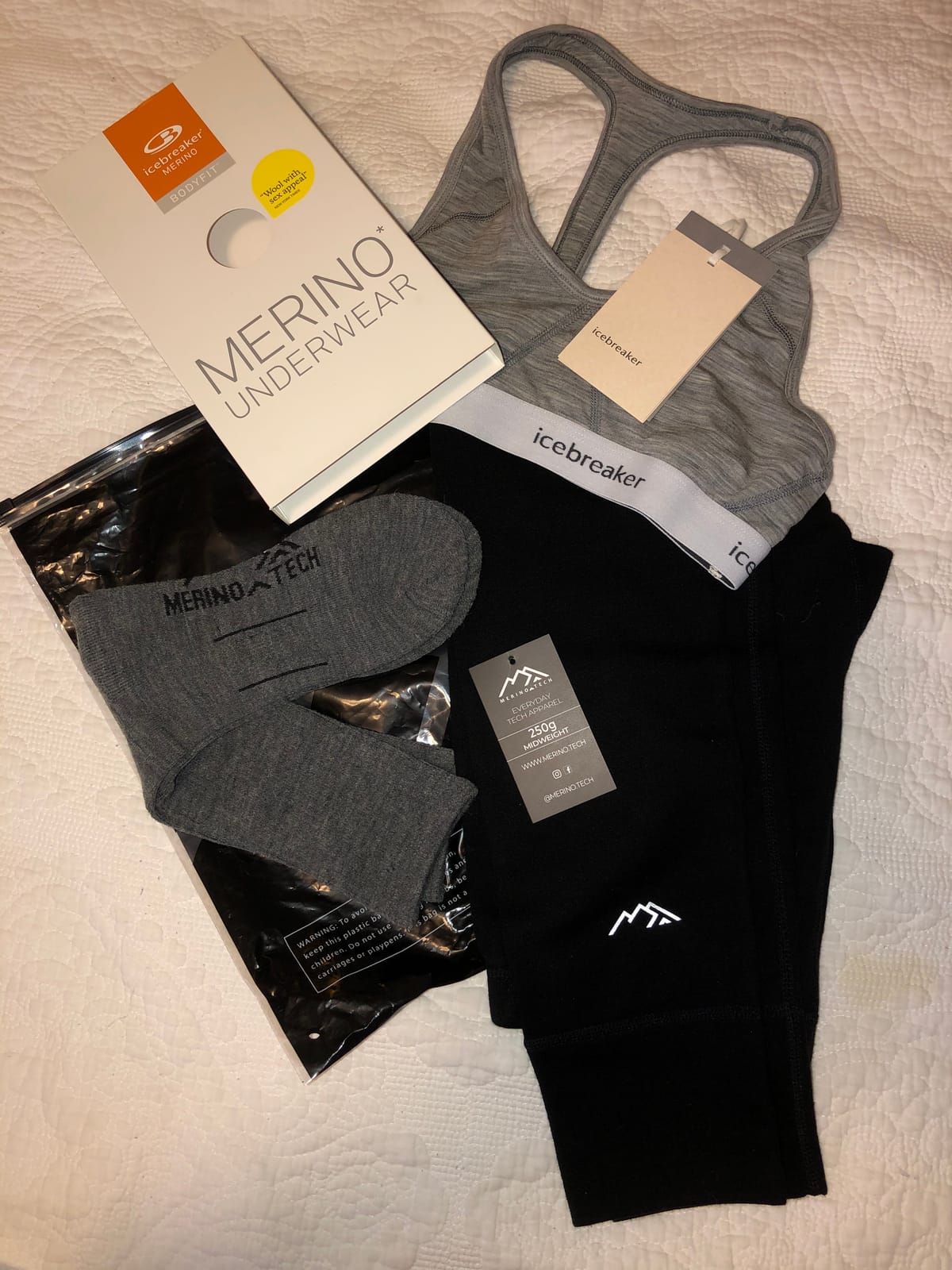
Best use case: merino bottoms on a budget
Lightweight 165 g/m², midweight 250 g/m², and heavyweight 320 g/m² variants exist, and the bundled merino hiking socks complete the base layer set for the feet. The range means you can match weight to climate from one brand.
If wool is what you want but the higher-priced merino bottoms are more than you need to spend, this is the reasonable middle path rather than a compromise you will resent.
Where it falls short?
Sizing is the real problem, and it is the most common complaint. The waist can run too snug while the legs run loose, which is an awkward combination when you want a next-to-skin fit. Expect to exchange if you are particular about fit.
The lighter weight options can be slightly sheer, and a reflective logo on the lower calf is not ideal under slim trousers. Some orders have also arrived without the advertised socks.
How to Choose the Right Thermal Base Layer?
Fabric weight, measured in grams per square metre or GSM, is the single number that matters most, and the ladder runs from around 150 to 320 g/m². Below 200 is a summer or three-season layer. 200 to 250 g/m² is midweight and the right answer for most cold-weather use. 260 g/m² and above is expedition or heavyweight territory for static cold and deep winter. The number is not standardized across brands, so treat it as a relative guide rather than an exact rating.
A 250 g/m² layer is good for roughly freezing-point-and-below conditions when you are active, and comfortably handles low single digits when you are mostly still. That is the weight most people should default to, and it is why four of the picks here sit at 250. Is 250 too warm? Only if you are moving hard, in which case you wanted 200 and the fault is the weight, not the garment. What is 200 merino good for? Active cold days, three-season layering, and anyone who runs hot.
Merino vs synthetic vs heated: an honest three-way comparison
Merino wins on odor control, warmth when damp, and comfort, and loses on price, drying speed, and care demands. Synthetic wins on price, drying speed, and durability, and loses on odor over multiple days, breathability at high output, and how it feels after a week. Heated layers add active warmth with no weight penalty, at the cost of a battery, a charging routine, and electronics that must come out before washing. The number-one failure mode for heated base layers is not the heat, it is the battery pocket and the charge.
Worth knowing if you are considering heated gear: the criteria that matter are panel count and placement across the core zones, how long it takes to reach full charge, whether the garment is fully machine washable with the panel removed, warranty length, and battery safety certification. Skip any heated layer where the battery pocket sits exactly where your mid layer would press on it.
The three-layer rule for winter
One, a base layer against skin that wicks moisture, such as a merino or synthetic top and bottom. Two, a mid layer of fleece, grid fleece, or a light insulated jacket that provides the bulk warmth. Three, an outer shell that blocks wind and precipitation, ideally breathable so heat and vapor escape. The system works because the base layer stays dry, which lets the mid layer insulate, which lets the shell do its job without you overheating underneath it.
For gloves and hand warmth to match whatever you choose up top, our cold weather riding gloves guide covers the same layering logic for your hands. If you are heading out to a frozen lake, our ice fishing shelter picks pair well with a heavyweight set like the DAVID ARCHY.
What to wear under and over your base layer?
Under a merino base layer, wear nothing. Skin contact is what makes wicking work, and a cotton or synthetic undershirt between the garment and your body reintroduces exactly the moisture problem the base layer exists to solve. The exception is a thin moisture-wicking layer only if you have a skin reaction severe enough to make direct contact impossible.
Over the base layer, add a mid layer of fleece or light insulation, then a windproof and waterproof shell. Skip heavy cotton mid layers, because a cotton mid layer over a good base layer defeats the entire system.
Skin sensitivity, sizing, and fit
Why do people avoid merino? Three reasons: coarse fiber causes itch, the price is high, and wool requires careful washing. All three are fixable. Finer micron ratings (17.5 and 18.5 in this list) are dramatically less itchy than coarser wool, and many people who react to generic wool wear these without any issue. The onebag community generally steers sensitive users toward merino blends or quality synthetics rather than 100 percent wool, and the Cuddl Duds set on this list is the strongest wool-free alternative for serious cold.
On fit, a base layer should sit next to skin, not loose. Snug is a quality signal, not a fit problem, and it is the single thing that separates a base layer that wicks from one that just sits there. Most brands here run unisex, and the womens-specific cuts on this list are worth the extra thought if you are between sizes. Buy tops and bottoms in the same weight, and remember that merino relaxes slightly with washing.
Washing, drying, and how many to pack
How many base layers for a multi-day trip? Three is the number that comes up most often among experienced travelers, tops and socks, and it assumes you wash one at night. Merino can be worn for several days between washes, which is the main reason it is worth the premium; synthetics need washing far sooner. If you have no way to wash on the road, bring more pieces rather than fewer.
Wash merino cold with like colors, and air dry it flat. Tumble drying on low is acceptable but shortens fiber life, and the 320 g/m² and heavier fabrics benefit most from the air-dry loop some of these garments include. Synthetics can go in the dryer without drama, which is a real convenience advantage in a motel room. If odor is the problem rather than warmth, a wash with a mild detergent and an extra rinse fixes it in almost every case.
Frequently Asked Questions
What is the difference between base layers and thermals?
There is no real difference. A thermal, a long john, and a base layer are the same garment described by different people: the layer worn directly against skin that wicks moisture away from the body and holds a thin layer of warm air next to it. What matters is the fabric, not the label on the packaging.
What weight merino base layer do I need?
Most people need 200 to 250 g/m2. Below 200 g/m2 is a three-season layer, 200 to 250 g/m2 is midweight and handles most cold weather while active, and 260 g/m2 or above is expedition weight for standing still in deep cold. If you generate a lot of heat while moving, go lighter than you think.
Are merino wool base layers better than synthetic ones?
It depends on the trip. Merino wins on odor control, warmth when damp, and comfort for multi-day wear. Synthetic wins on price, drying speed, durability, and easy machine care. For static cold and multi-day trips, merino is usually the better answer. For repeated short trips on a budget, synthetic is hard to argue with.
Can I wear merino wool if wool usually makes me itch?
Often yes. Itch usually comes from coarse fiber rather than wool itself, and superfine merino at 17.5 or 18.5 microns feels very different from a standard wool sweater. Many people who react to generic wool wear these without any irritation. If you still react, the 235 GSM fleece-lined Cuddl Duds set gives comparable warmth with no wool at all.
What is the three-layer rule for winter?
A moisture-wicking base layer against skin, an insulating mid layer such as fleece or a light jacket, and a windproof and waterproof outer shell. The system works because the base layer keeps you dry, which lets the mid layer insulate properly. Add a base layer top and bottom in all three conditions for serious cold.
Final Verdict: Which Thermal Base Layer Should You Buy?
For most people, the best thermal base layers for cold weather in 2026 come down to two decisions: how much you move, and whether you can wear wool. Moving hard means midweight and ventilation, which is where the Under Armour ColdGear mock and the Carhartt waffle pant excel. Staying still in real cold means heavyweight double-brushed fabric, which is where the DAVID ARCHY set and the Cuddl Duds heavyweight set belong.
Our single winner is the Carhartt Force Midweight Waffle Base Layer Pant. The 200 GSM polyester waffle knit is the most versatile weight on this list, it disappears under work pants, and it holds up to repeated washing and real work better than anything else we tested. If you want wool, take the MERIWOOL thermal pants for bottoms and the Merino.tech top in the midweight. If you want a complete system on a budget, the HEROBIKER set does the job properly.
Start with the weight, not the brand. Get the GSM right for your output level and the rest of the decision gets easy.