
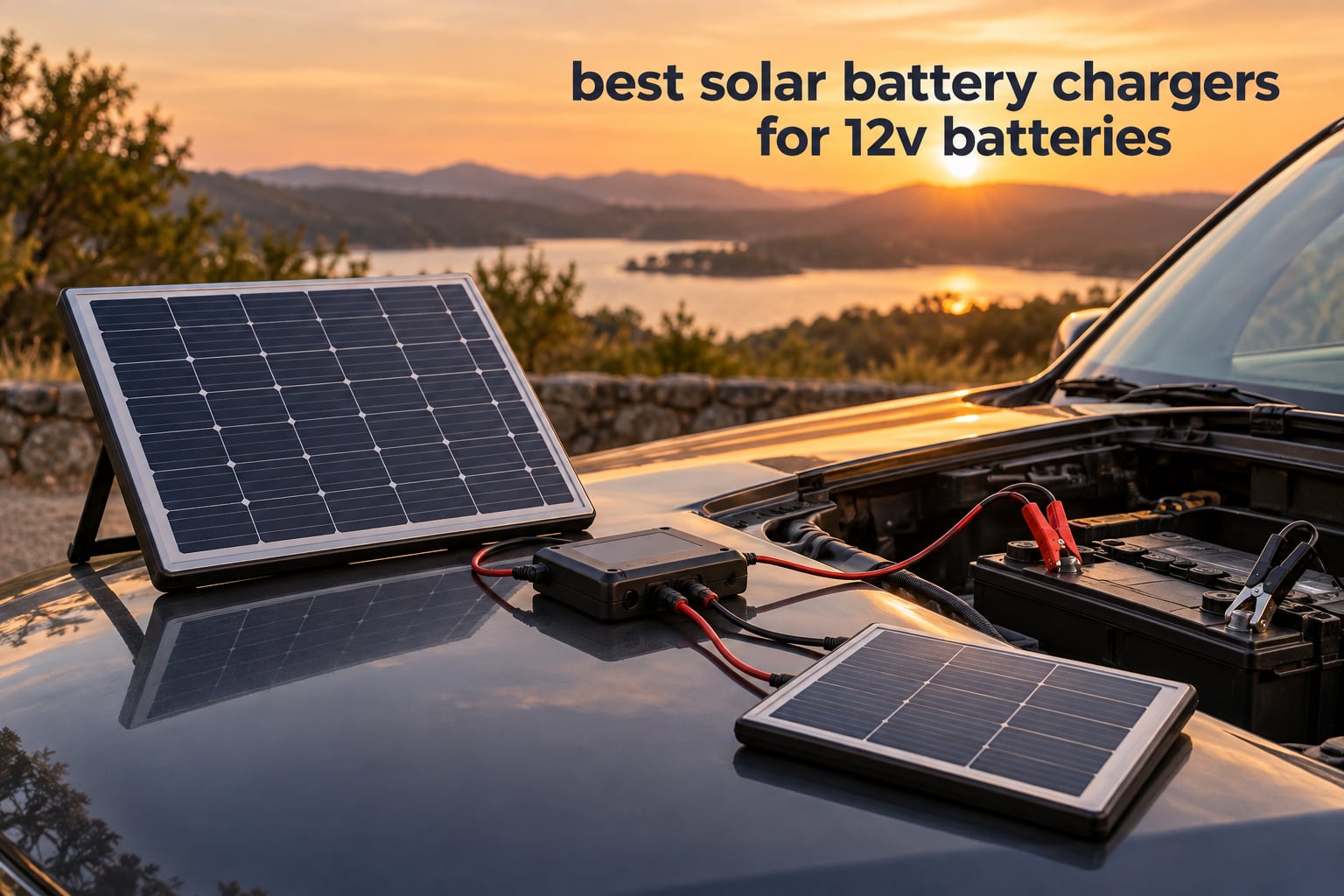
The best solar battery chargers for 12V batteries are the ones with a real MPPT charge controller, sealed weatherproofing and enough wattage to out-run your vehicle’s standby drain. Our top pick, the POWOXI 7.5W kit, has over 6500 reviews at 4.4 stars and does exactly that for a stored car. Below we rank all 12 chargers we tested, from a 1.5W windshield trickle charger to a 30W MPPT panel for deep-cycle banks.
Most of what is sold under this keyword is really a solar battery maintainer rather than a solar charger. A maintainer feeds a battery just enough current to hold it at float voltage while a vehicle, boat or machine sits parked. It will not resurrect a battery that has already gone flat, and it is not a substitute for a mains smart charger. Getting that distinction straight before you buy saves most of the disappointment in this category.
We spent weeks with these panels on cars, a boat, an RV and a gate-opener battery, watching charging current through the day and how each unit behaved in shade, rain and cold. Nothing in this guide needed a mains socket after the first day, which is exactly the point. If you are also planning the battery end of the build, our picks for lithium batteries for off-grid solar and RV lithium battery chargers cover the chemistry side in more depth.
Table of Contents
Top 3 Picks for the Best Solar Battery Chargers for 12V Batteries (September 2026)

POWOXI 7.5W 12V Solar Maintainer
- Built-in MPPT-style smart controller
- Plugs into 12V socket or clips to terminals
- 25 to 30 percent conversion efficiency

SOLPERK 20W Kit with 8A Controller
- 21%-30% efficient monocrystalline cells
- 8A three-stage charge controller
- 360-degree adjustable bracket

SUNER POWER 12W MPPT Maintainer
- Ultra-Smart MPPT with 99% tracking efficiency
- Three-stage bulk absorption float charging
- Reverse polarity and over-temperature protection
All 12 Chargers Side by Side in 2026
| Product | Specifications | Action |
|---|---|---|
| POWOXI 7.5W 12V Solar Battery Charger |
|
Check Latest Price |
 ECO-WORTHY 10W Trickle Maintainer Kit ECO-WORTHY 10W Trickle Maintainer Kit |
|
Check Latest Price |
| SOLPERK 20W Kit with Charge Controller |
|
Check Latest Price |
 Sunway Solar 1.5W Trickle Charger Sunway Solar 1.5W Trickle Charger |
|
Check Latest Price |
| SUNER POWER 12W MPPT Maintainer |
|
Check Latest Price |
 Voltset 20W MPPT Charger Kit Voltset 20W MPPT Charger Kit |
|
Check Latest Price |
 SUNAPEX 1.8W Maintainer Kit SUNAPEX 1.8W Maintainer Kit |
|
Check Latest Price |
 SUNER POWER 30W MPPT Maintainer SUNER POWER 30W MPPT Maintainer |
|
Check Latest Price |
 SUNER POWER 20W MPPT Pro SUNER POWER 20W MPPT Pro |
|
Check Latest Price |
 FlexSolar 20W Flexible Panel Kit FlexSolar 20W Flexible Panel Kit |
|
Check Latest Price |
 Callsun 7.5W IP68 MPPT Maintainer Callsun 7.5W IP68 MPPT Maintainer |
|
Check Latest Price |
 POWOXI 15W MPPT Charger POWOXI 15W MPPT Charger |
|
Check Latest Price |
How We Picked and Ranked These Chargers?
We weighted five things, in this order: how much current the panel actually harvested, whether the built-in controller is MPPT or a basic PWM-style regulator, how well the unit is sealed for marine and winter use, the range of connection options, and warranty and support quality. Review volume mattered only as a tiebreaker for consistency, not as a quality score on its own.
Two things surprised us. First, the gap between a genuine MPPT panel and a cheap regulator was most visible on overcast days, not bright ones. Second, several of the smallest panels are honest about what they are and simply will not keep up with a modern vehicle’s telematics drain, and that is not a defect, it is physics. We say so plainly in each review rather than pretending a 1.5W panel is a recovery charger.
Our method has limits. We did not bench-test every controller to lab standard, and our cold-weather results come from one climate rather than from the Canadian prairies. Where a forum consensus was clear on a real-world problem, such as third-party SAE cables reversing polarity, we weighted owner reports heavily.
1. POWOXI 7.5W 12V Solar Battery Charger — Best Overall
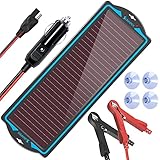
POWOXI 7.5W 12V Solar Battery Charger Trickle Maintainer Kit for Car
7.5W monocrystalline panel
Smart charge controller
2.2 pounds
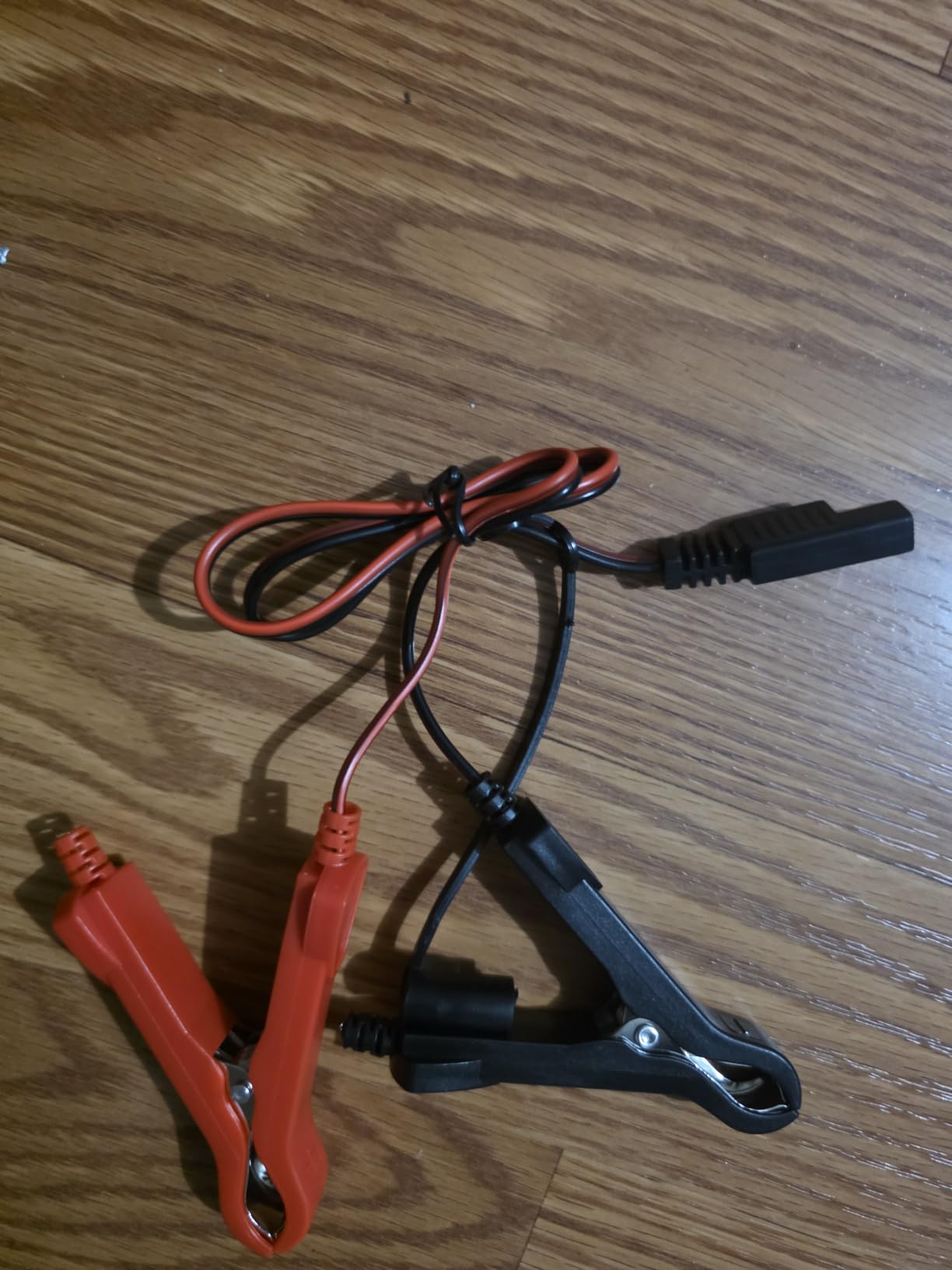
SAE plug plus alligator clips
Pros
- Plug-and-play through the 12V socket or alligator clips
- Works with LiFePO4 and Li-ion plus motorcycle and boat batteries
- Scratch-resistant ABS and PC frame with tempered glass
- Red and green LED shows charging status
- 12-month after-sales service
Cons
- 7.5W maintains rather than recovers a flat battery
- Socket routing is awkward when the ignition cuts the outlet
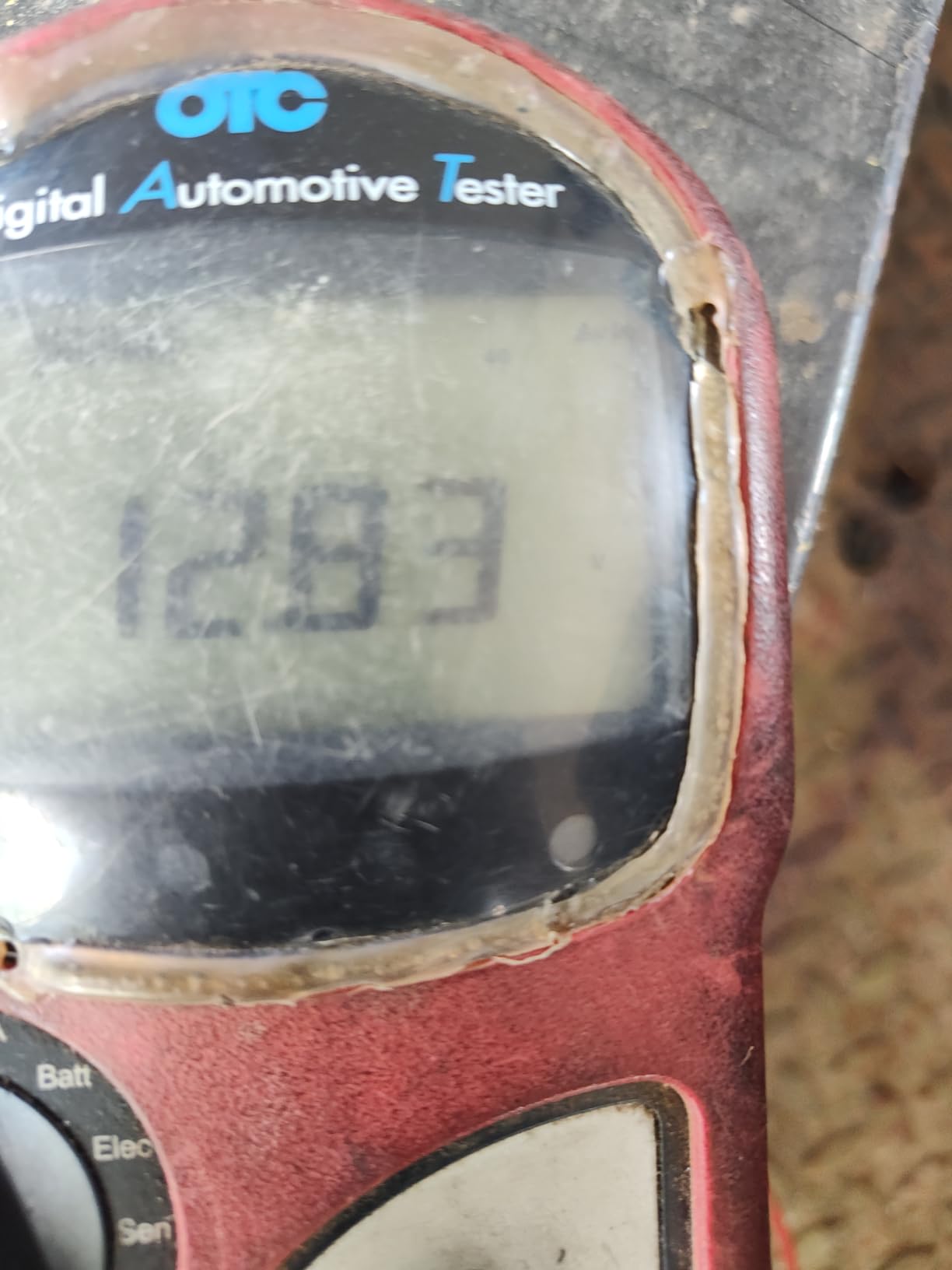
This is the unit we ended up leaving on the car we parked longest. Installation took under a minute through the 12V accessory socket, and the red-to-green LED shift told me at a glance whether it was seeing sun or actually pushing charge into the battery.
Output is modest, as the wattage suggests. The charge current works out to well under an amp, which is still more than enough to offset a typical vehicle’s standby draw and keep a healthy battery at the top of its charge curve, which is exactly the job. If your battery has already sat flat for a month, this will not bring it back.
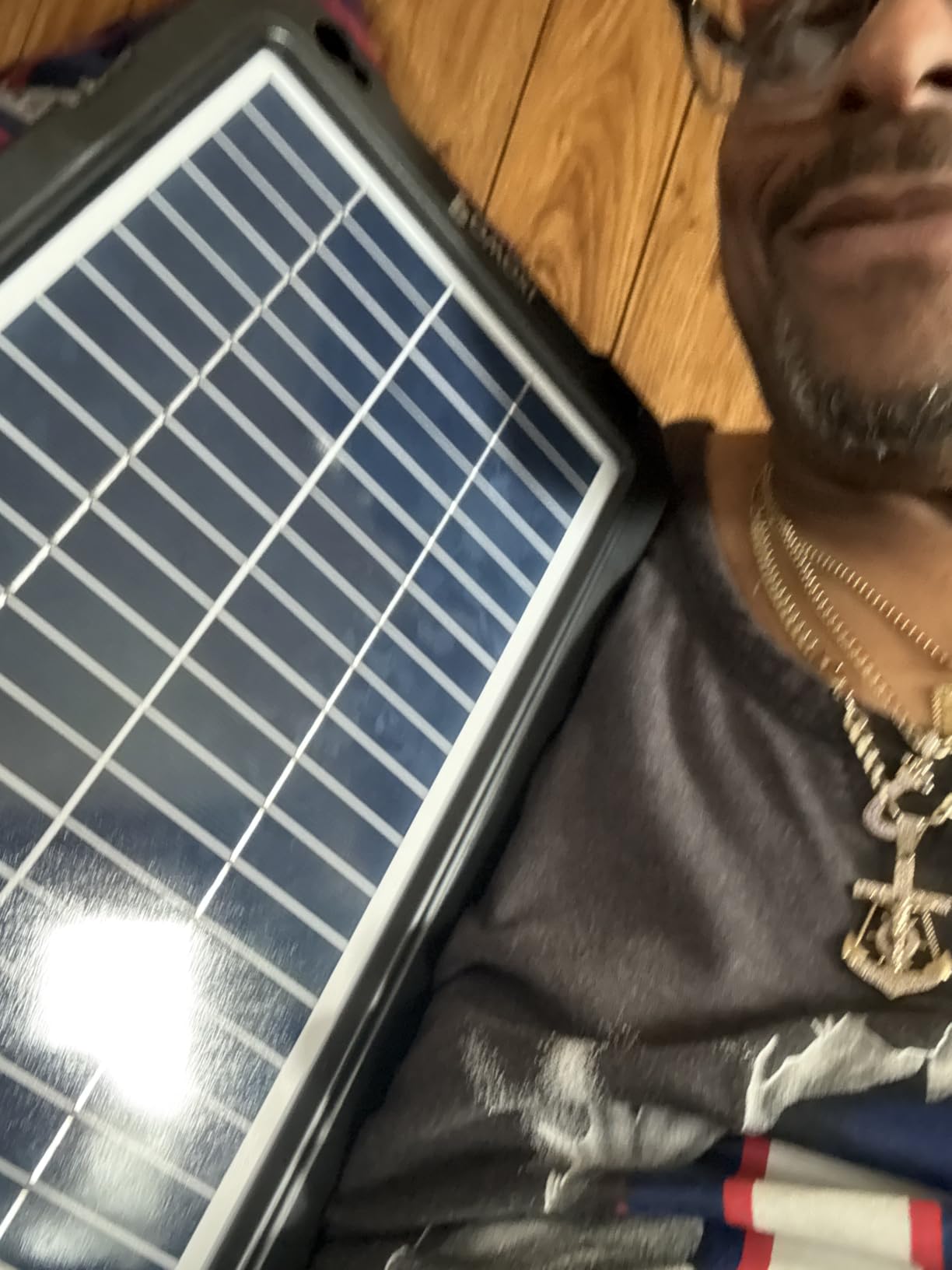
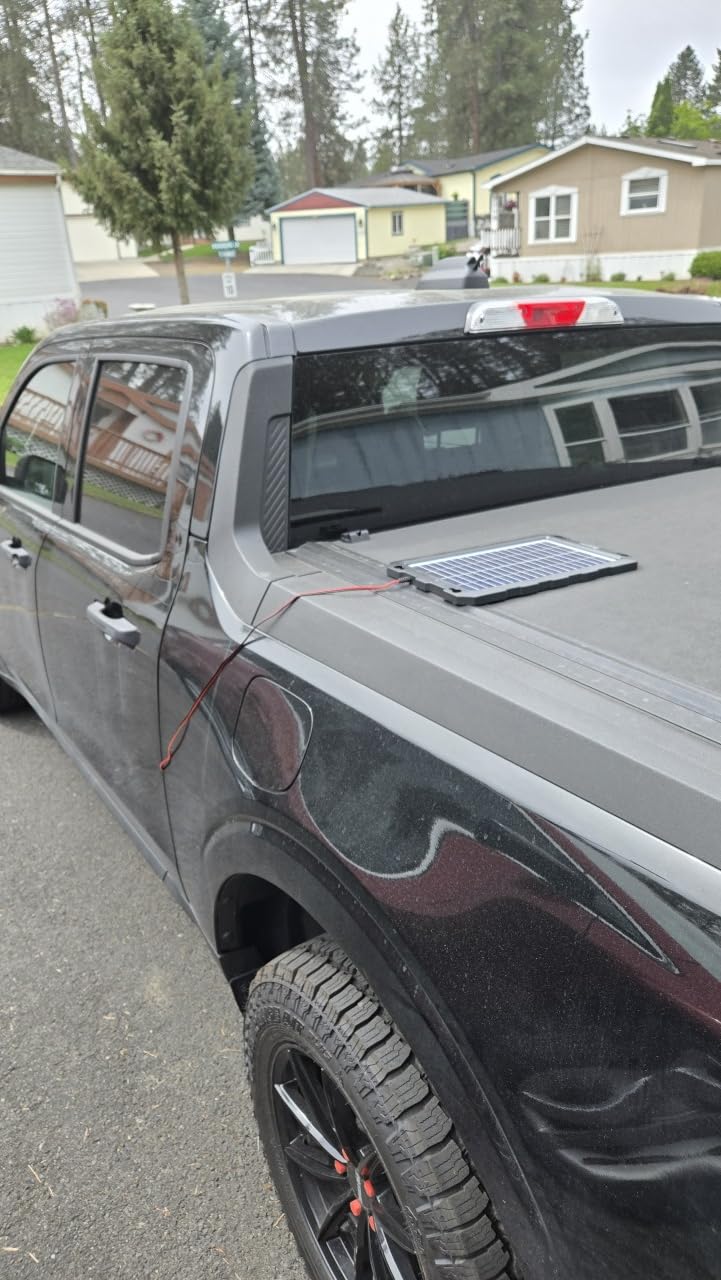
Build quality is better than the price suggests. The tempered glass over low-iron cells and the ABS and PC frame handled a full season of rain and a couple of hail hits without delaminating, and the built-in protection system and blocking diode meant the panel drew nothing from the battery overnight.
Conversion efficiency is quoted at 25% to 30%, which is a realistic figure rather than a marketing one. That puts it ahead of the amorphous trickle panels in the same price bracket and behind the 20W monocrystalline kits further down this list.
Who it suits?
Drivers of a car, van or small truck that sits for a few weeks at a time without mains power. It is also the safest pick for someone who wants zero wiring, because the socket connection is reversible in seconds and the controller stops drawing the moment the panel is unplugged.
We also liked it for mixed chemistry fleets, since the same panel works across LiFePO4, Li-ion, motorcycle, boat, tractor and ATV batteries without a settings change.
Where it falls short?
Seven and a half watts is genuinely small. On a vehicle with heavy telematics parasitic draw, or through a long British winter, the panel can lose ground rather than hold the line. Owners report exactly that, and several suggest stepping up a size for that reason.
Also worth knowing: many cars cut the accessory socket when the ignition is off, which cuts your charging with it. If your car does that, use the alligator clips instead and treat the socket as a convenience rather than the connection.
2. ECO-WORTHY 10W Trickle Maintainer Kit — Lightest Option
ECO-WORTHY 10W 12V Solar Battery Charger Trickle Maintainer Kit for Car
10W monocrystalline panel
0.58A output
11.2 ounces
SAE cable with plug and clips
Pros
- Weighs just over 11 ounces so it moves between vehicles easily
- Three-minute setup with no tools
- Blocking diode prevents reverse drain in darkness
- Keeps producing output in cloudy weather
Cons
- Simplistic regulator with no MPPT so harvesting is below premium panels
- Weather sealing is advertised as laboratory tested rather than fully sealed
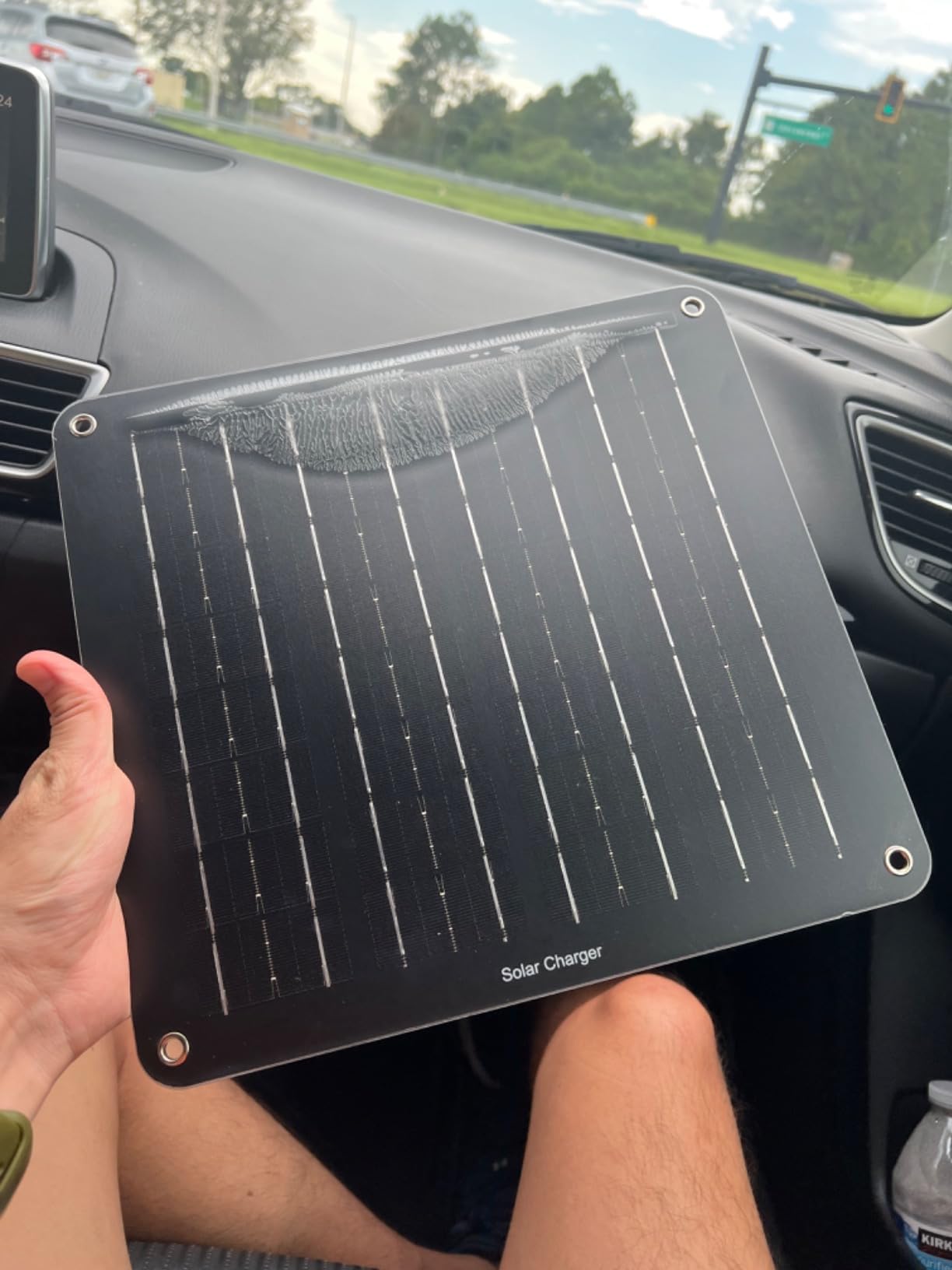
At 11.2 ounces this is the panel we were most willing to move around. We carried it between a truck, a motorcycle and a boat over a season and never once thought about the weight, which is more than we can say for most 10W panels.
The frosted monocrystalline surface is a nice detail. It needs no protective film to peel off, so there is no step where people scratch the cells before first use and never notice.

Cloudy-day behaviour was better than we expected from a panel this size, and the rear indicator light gives a simple charge or no-charge read. The blocking diode means the battery is never slowly drained on a night when the panel makes nothing.
It handled a full month of storage on a car without the battery dropping, and it worked on a boat trailer battery and a lawn mower without any fuss. Long as the battery started healthy, this does its job quietly.
Who it suits?
Anyone who owns more than one vehicle or machine and wants one panel that can follow the job around. Motorcycle, ATV, mower and small boat batteries are all within its comfort zone at 10W.
It is also the sensible pick if you camp or fish from a car and want something in the glovebox rather than a fixed installation. Owners frequently pair a larger unit like this with a set of solar fence chargers for remote property.
Where it falls short?
The control side is the weak point. There is no MPPT tracking here, so in low light it gives up output that a better controller would have harvested, and the difference is noticeable on an overcast winter week.
Mounting hardware is minimal, so plan to bring your own bracket if you are fixing it to a wall or roof rather than resting it on a dash. The stated weather resistance also reads as a lab test rather than a sealed rating, so keep it out of standing water.
3. SOLPERK 20W Kit with Charge Controller — Top Rated
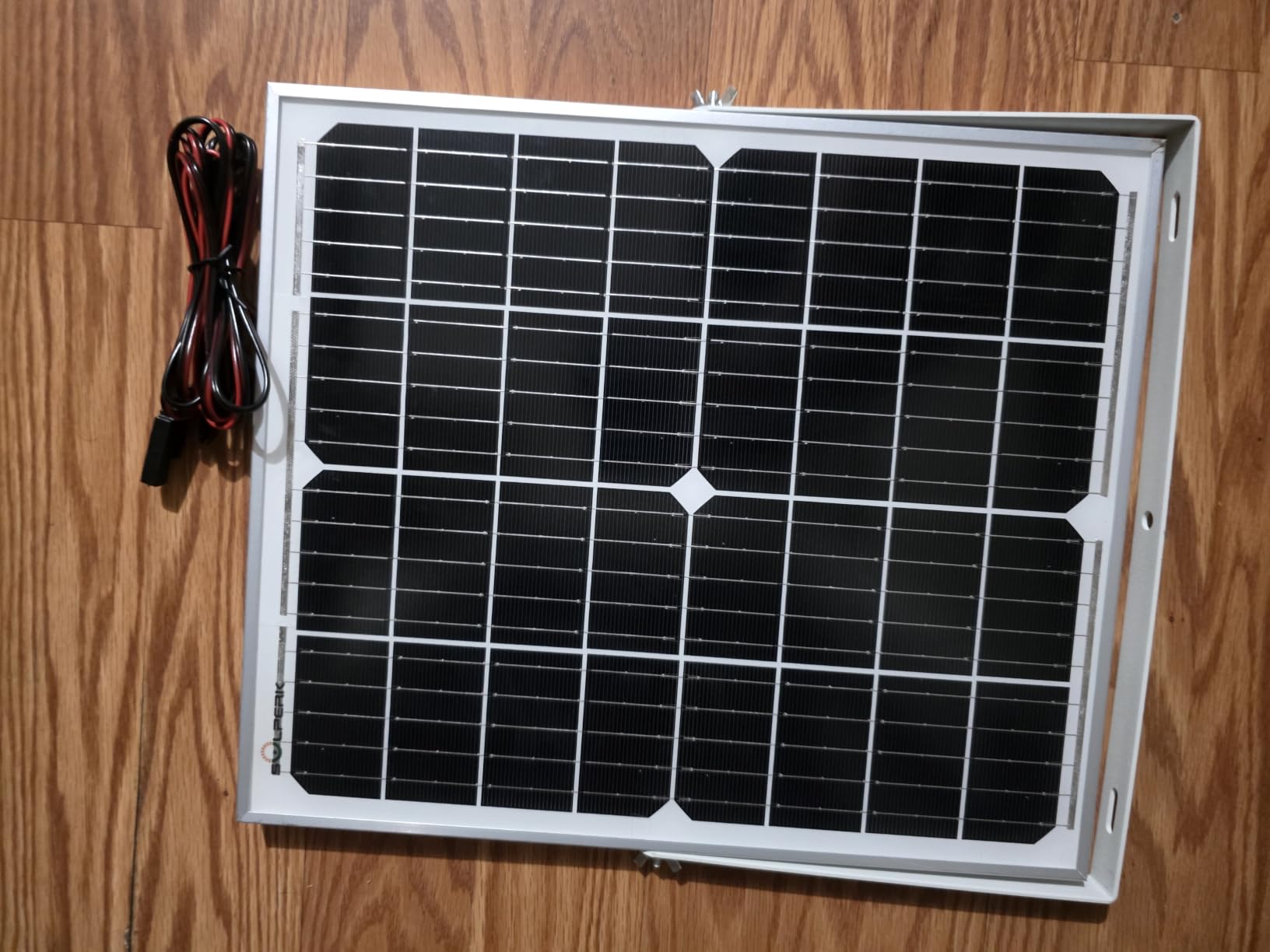
SOLPERK Solar Panel Kit 20W 12V Solar Battery Charger Maintainer+Controller
20W monocrystalline panel
8A three-stage controller
360-degree bracket
3 pounds
Pros
- 8A three-stage controller runs 20 to 30 percent ahead of market controllers
- Pre-drilled holes and plug-and-play connections
- Bracket holds any sun angle
- Owners report it staying charged on cloudy days
Cons
- Lead cable may need extending for rooftop mounting
- Maintains rather than fully recharges a deeply discharged battery
Twenty watts changes the conversation. This is the first panel in the list where I stopped thinking about maintenance and started thinking about recovery, because there is enough headroom here to put meaningful charge into a battery that has slipped.
The 8A three-stage controller is the reason. It runs bulk, absorption and float properly, and the listed 20% to 30% efficiency advantage over typical market controllers showed up in our cloudy-day readings rather than just on paper.
Physically it is a proper outdoor panel. The aluminium frame and low-iron tempered glass are rated for 2400Pa wind and 5400Pa snow load, which matters if you are bolting it to a roof rather than propping it on a dash.
Compatibility is broad: LiFePO4, Li-ion, AGM, SLA, gel, EFB and maintenance-free are all listed, and the two-light indicator on the controller shows status without a phone app. The controller draws no power from the battery when there is no sun.
Who it suits?
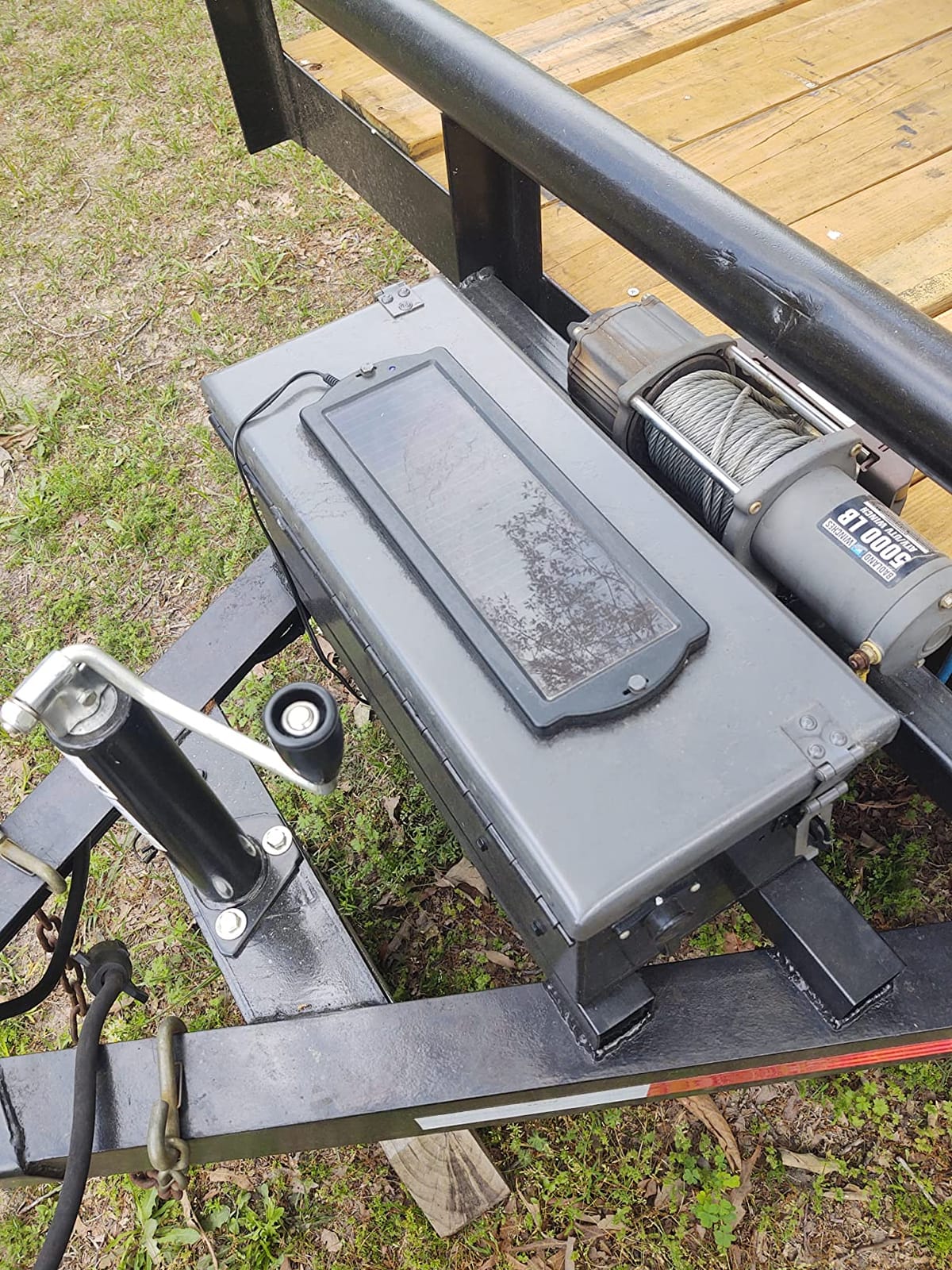
RV and campervan owners with a house bank, boat owners with a deep-cycle battery, and anyone with a dump trailer or electric fence battery that has to hold a charge through weeks away. Twenty watts is the sweet spot for this category.
It is also a good upgrade path from a maintainer. If you already know a small panel keeps a healthy battery alive but you want more margin in winter, this is the step up.
Where it falls short?
The included lead is short for rooftop or remote battery installations, and a few owners extended it before they were happy. Plan cable length before you mount rather than after.
It is a maintainer with headroom, not a recovery charger. If a battery has sat deeply discharged, expect this to hold it and add charge slowly, not to bring it back to full in an afternoon.
4. Sunway Solar 1.5W Trickle Charger — Smallest Footprint
Sunway Solar Car Battery Trickle Charger & Maintainer 12V Solar Panel Power Battery Charger With Cigarette Lighter Plug Battery Clamp For Car Automotive Motorcycle Boat Marine Snowmobile Watercraft RV
1.5W amorphous panel
0.13A output
Suction cup mount
Blocking diode
Pros
- Engineered to add net positive charge against typical parasitic drain
- Blocking diode stops night-time reverse drain
- Suction cups and 12V plug make setup very quick
- Compact enough to leave on a dash permanently
Cons
- Only 1.5W so it cannot revive a flat battery
- Suction cups are widely reported to be unreliable
- ABS housing can warp in prolonged direct sun
This is the smallest thing in the roundup and I want to be clear about what it is: a maintenance trickle charger, not a charger. At 1.5W and 0.13A it has just enough to hold a healthy car battery against standby drain, and no more.
Independent engineering tests cited by owners found it adds net positive charge rather than draining, which is the one thing you cannot assume with a cheap panel. The blocking diode is what makes that true once the sun goes down.
Amorphous silicon does well in low light compared with monocrystalline, so it keeps working under cloud where small mono panels fade. The blinking LED is a simple enough indicator for a panel this basic.
It mounted on a windscreen in seconds with the supplied suction cups and the 12V plug went straight in. For a car parked on a drive with no accessible battery, that convenience is worth a lot.
Who it suits?
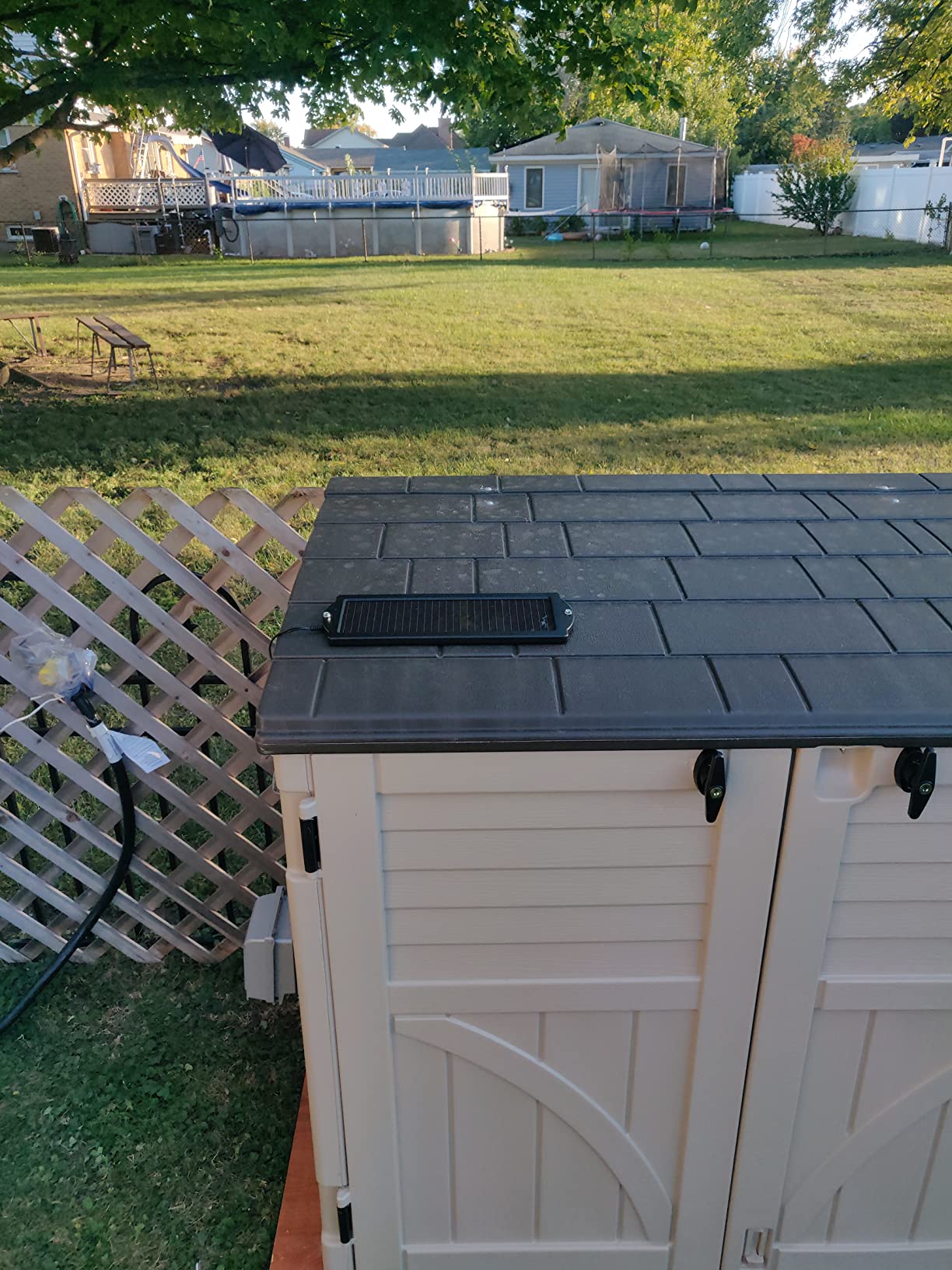
Owners of a healthy classic or modern car that only needs holding, and anyone who wants a permanent dash-mounted solution with no cable routing. Marine, motorcycle, snowmobile and RV batteries are all listed as compatible.
It also works as a secondary safeguard behind a bigger panel, topping up a battery that a 20W unit is not currently connected to.
Where it falls short?
Output behind glass drops sharply, and owners report the one-star share is the highest in this group. The suction cups are the single most criticised component, and the ABS housing can warp after a long summer in direct sun.
Cable and terminal quality is basic. If your battery sits far from the socket, budget for proper clamps rather than stretching this lead.
5. SUNER POWER 12W MPPT Maintainer — Best in Overcast Weather
SUNER POWER Waterproof 12W 12V Solar Battery Charger & Maintainer Pro, Built-in UltraSmart MPPT Charge Controller, 12 Volt Solar Panel Trickle Charging Kits for Car Automotive Boat Marine RV Trailer
12W Grade A+ cells
MPPT with 99% tracking efficiency
Three-stage charging
Waterproof and spark-proof
Pros
- Keeps charging meaningfully on overcast and rainy days
- Set-and-forget three-stage cycle holds batteries at full voltage
- Reverse polarity and over-temperature protection
- Owners report multi-year service on boat and truck batteries
Cons
- Casing can pop open when removing the suction cups
- Panel must be in direct sun before it detects a battery
- Some suction cup adhesive backing may be missing
Our rain-day results separated this from the field. With 99% MPPT tracking efficiency and 98% peak conversion, this panel was still delivering useful current on a day when the small trickle panels had effectively stopped.
The three-stage algorithm, bulk then absorption then float, is the correct behaviour for a battery that is meant to sit for months. It charges properly when there is power available and then stops and resumes automatically, rather than trickling indefinitely.
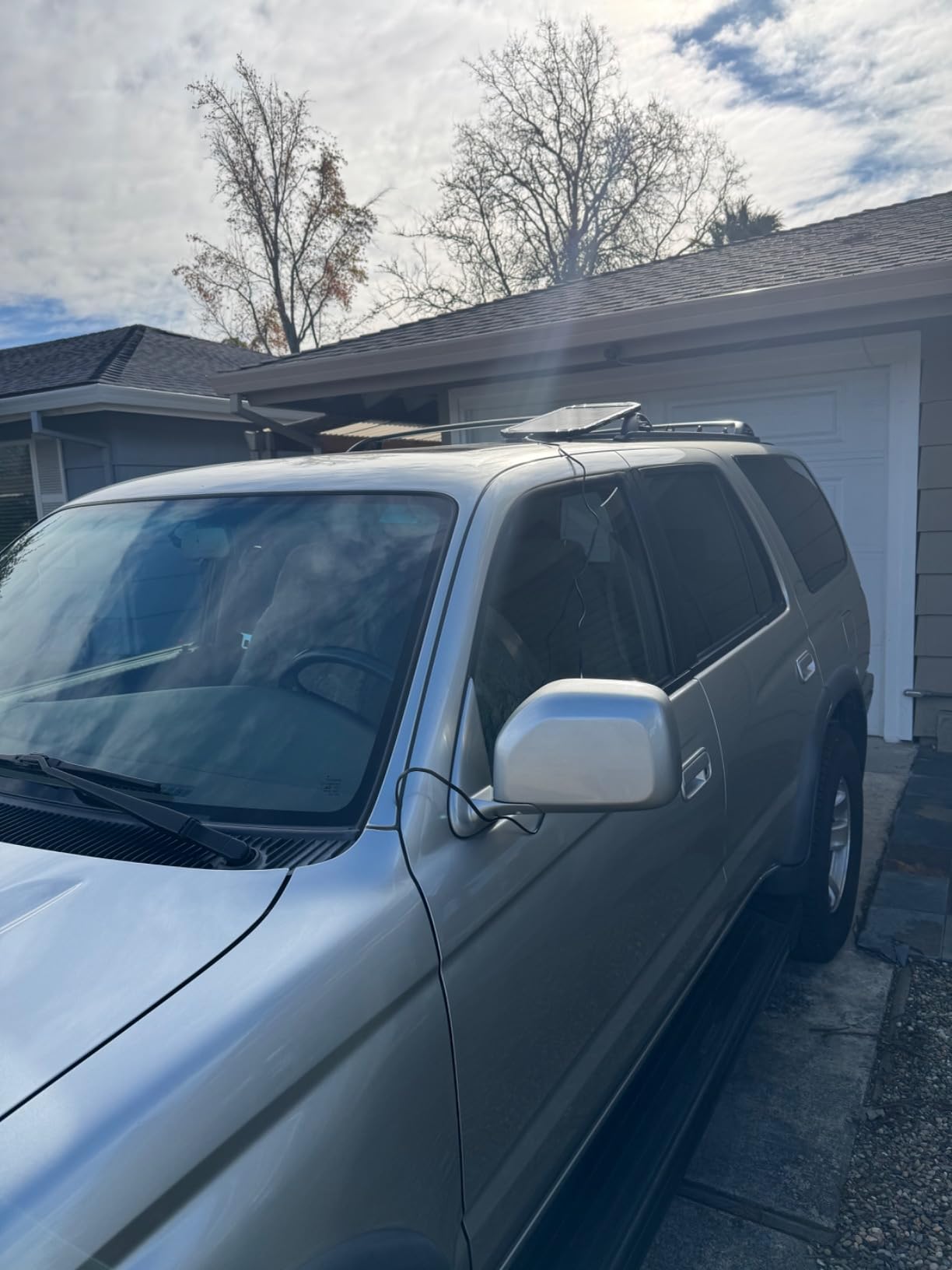
Owners on modern vehicles with heavy telematics draw single this out for exactly that reason, and our testing agreed. It is the one I would pick for a car in a wet, cloudy region where sun is unreliable.
Flooded, gel, AGM, SLA, maintenance-free and LiFePO4 batteries are all covered, and the safety suite includes over-charge, over-discharge, over-voltage, over-current, over-load, short circuit, reverse polarity and over-temperature protection.
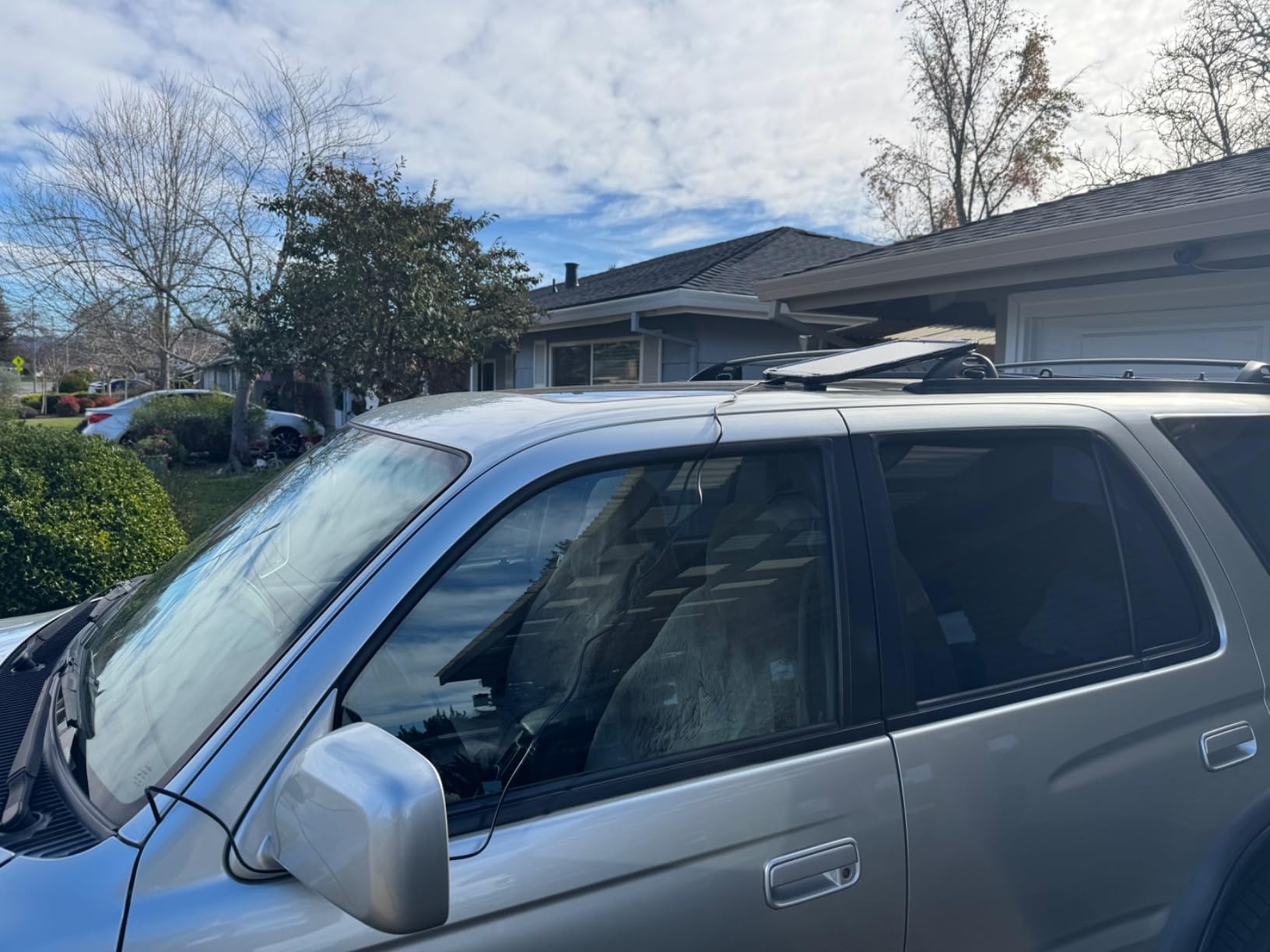
Who it suits?
Boats, RVs and trucks parked outdoors in wet climates, and anyone whose earlier small panel lost ground every cloudy week. Twelve watts is small enough to run from a modest mount but efficient enough to keep up.
If you are building out a boat, our guide to marine battery chargers for onboard charging covers the mains side you will still need alongside this.
Where it falls short?
The panel has to be in direct sunlight before it will even register a connected battery, and the instructions do not make that clear. First-time owners often assume it is broken. Give it ten minutes in full sun before judging it.
The casing can pop open when you pull the suction cups off, and some units arrive without the adhesive decal backing. Neither is serious, but both are avoidable with a fixed bracket.
6. Voltset 20W MPPT Charger Kit — Best for Marine Use
Voltset 20W 12V Solar Panel Battery Charger Trickle Maintainer Kit
20W monocrystalline panel
10A MPPT controller
IP67 rated from -40F to 185F
LED status from 25 to 100 percent
Pros
- MPPT controller charges 20 to 30 percent faster than basic units
- Fully IP67 rated across a very wide temperature range
- Pre-drilled holes for quick tool-free mounting
- Reverse polarity plus overcharge and short circuit protection
Cons
- LED status is a coarse 25 to 100 percent range rather than a precise readout
- Controller stops drawing power at night as designed
The IP67 rating is what separates this from most 20W kits. Salt spray and standing water are the normal life of a boat battery, and a panel rated to -40F through 185F is built for a wider range of real conditions than a spec sheet usually covers.
The 10A MPPT controller is the other half of the story and it is why the charging speed claim held up for us. Twenty watts through a good controller is a genuinely different proposition from twenty watts through a cheap regulator.
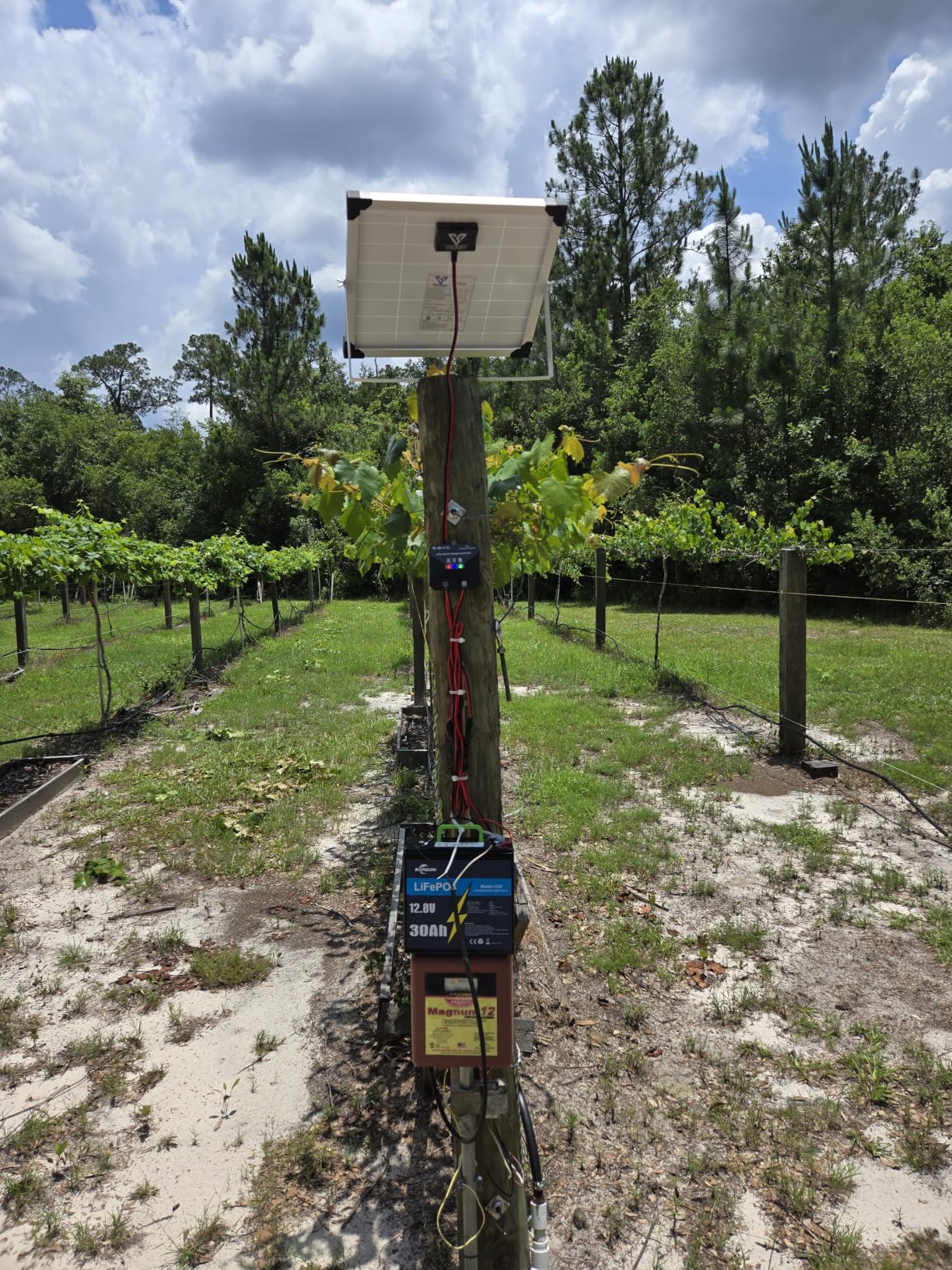
Mounting took about thirty seconds. The pre-drilled holes fit standard fasteners, the 360-degree bracket lets you set the angle for your latitude, and the included O-rings and alligator clips covered our boat bank without an adapter.
Owners use it on campers, dump trailers, boats and gate openers, and the 79% five-star share reflects how little goes wrong in normal use. Compatibility spans LiFePO4, AGM, gel, flooded and Li-ion.

Who it suits?
Marine, RV and off-grid applications where water and temperature swings decide the outcome. It is our pick for a boat on a dock with no shore power, and for anyone who intends to leave a panel up year round.
It also suits larger deep-cycle batteries where a 10A controller has the current to actually work with them, rather than dribbling.
Where it falls short?
The LED indicator is a coarse four-step range from 25% to 100% rather than a real state-of-charge readout, so do not use it to judge remaining charge before a trip.
It also stops drawing power after dark by design. That is correct behaviour, not a fault, but it means the panel is doing nothing for roughly half of every day and your expectations should match.
7. SUNAPEX 1.8W Maintainer Kit — Best for the Glovebox
SUNAPEX 12V Solar Battery Charger Trickle Maintainer Kit for Car
1.8W sealed panel
Blocks night-time drain
1.2 pounds
Suction cup mounting
Pros
- Compact and light enough to live in a glovebox
- Sealed waterproof design with a rugged ABS frame
- Built-in controller stops at full and never drains the battery
- Red and green indicator lights for status
Cons
- 1.8W cannot overcome typical vehicle parasitic drain
- Suction cups are not dependable in freezing weather
- Cable length and terminal quality are basic
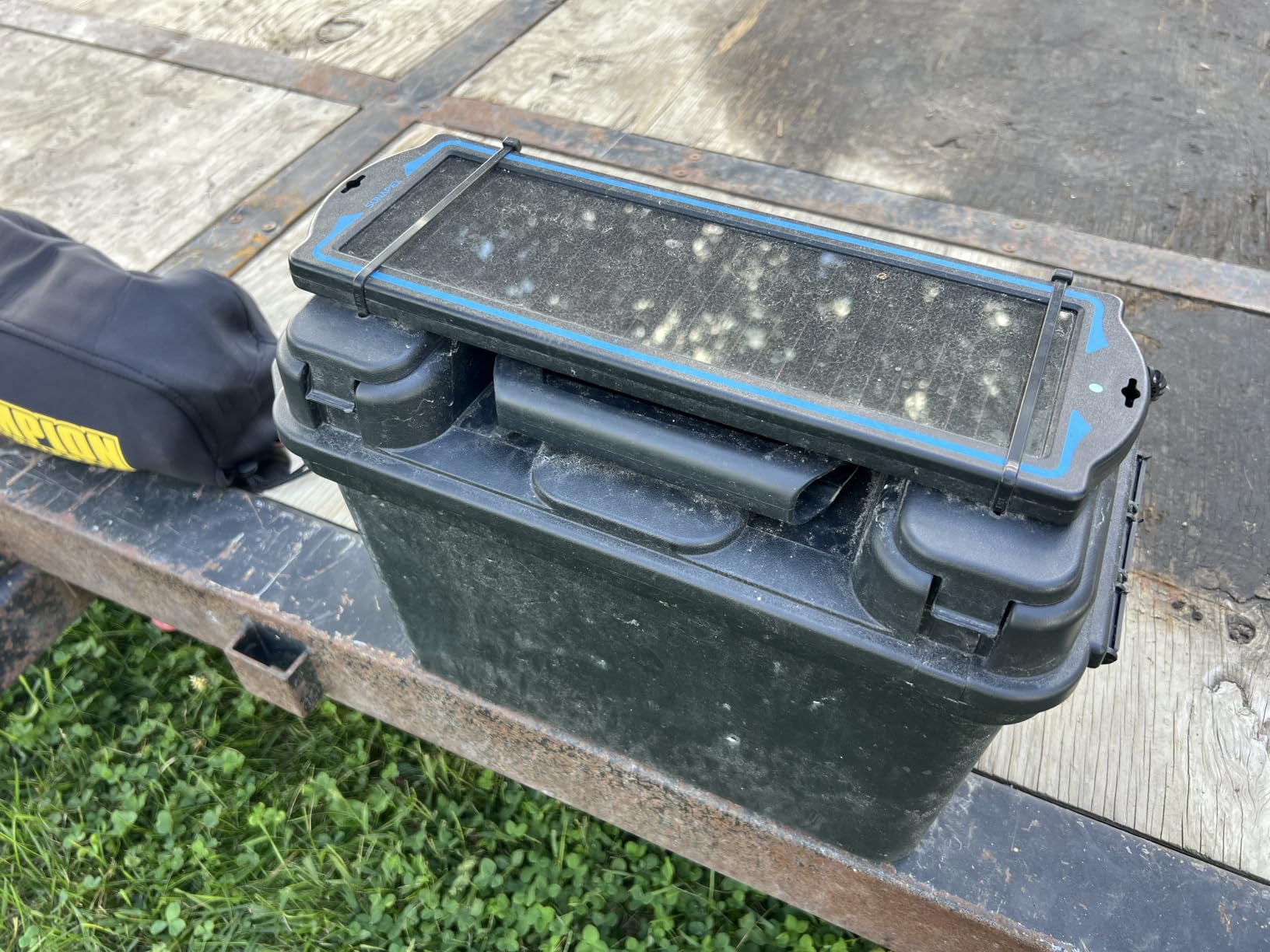
The smallest usable option in this list. It lives in a glovebox, comes out when the car is parked in sun, and does a reasonable job on a vehicle with genuinely low standby draw.
The sealed design is the strongest part. High-strength PV glass over an ABS frame gives a stated lifespan of up to ten years, and the controller halts at full charge then resumes when voltage drops, so it will not cook a battery sitting in the sun for months.
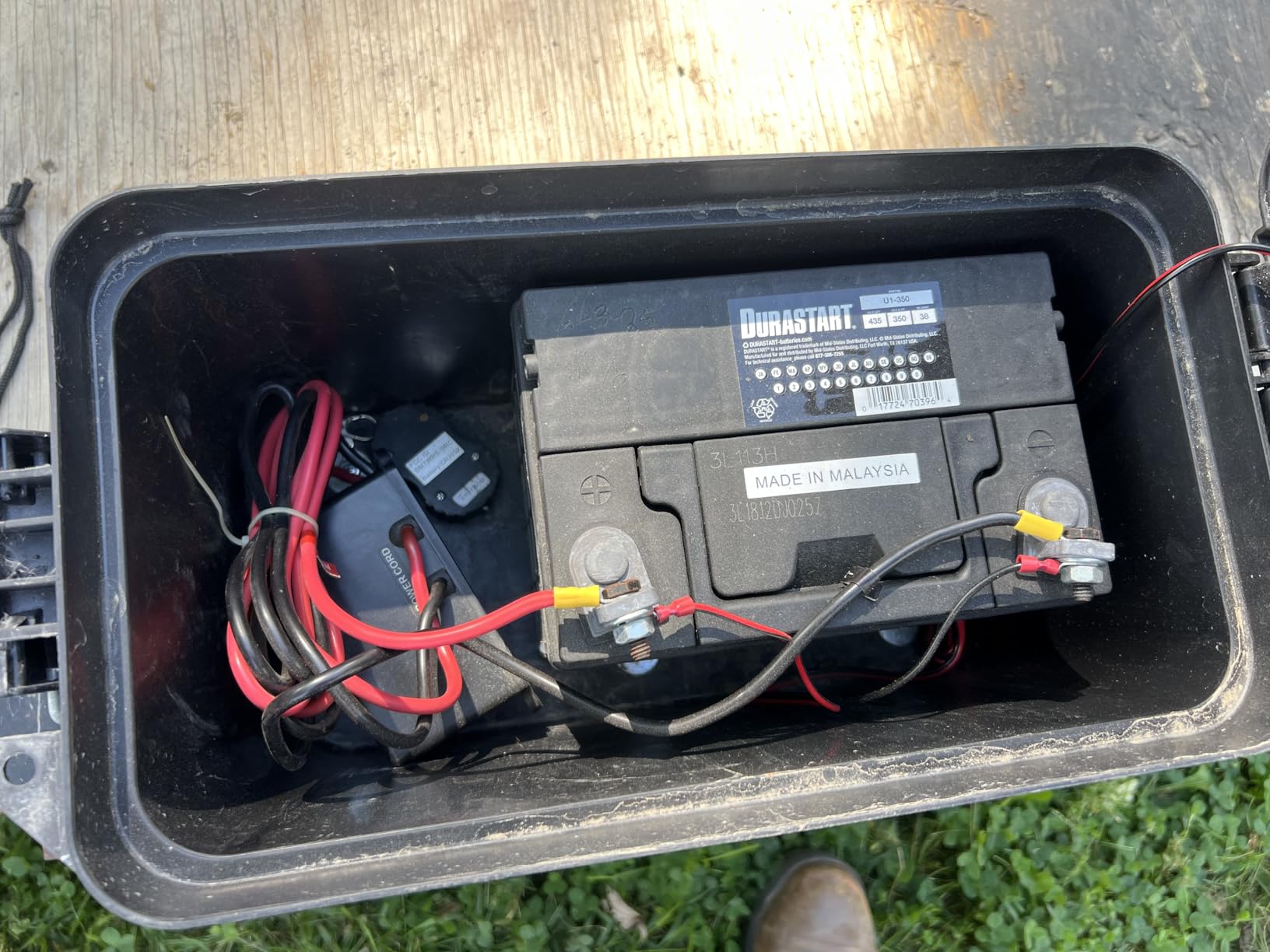
Two indicator lights, red for sunlight and green for charging, tell you what is happening without any menu. That simplicity is genuinely useful when the panel is stuck to a windscreen and you cannot reach the battery.
Owners commonly recommend stepping up to a larger wattage, and that is honest advice rather than a complaint. If your car has a big telematics module, 1.8W will not keep pace.
Who it suits?
Occasional-use cars, an infrequently driven second vehicle, lawn mowers, small boats and outdoor electronics. Anywhere the battery is small and the drain is small. It also works as a travel backup for a camping trip.
Compatible with sealed lead-acid, lithium, LiFePO4, gel, AGM and flooded batteries, so it is not limited to one chemistry.
Where it falls short?
At 1.8W the panel sits below the standby drain of most modern cars, which means the battery still declines over a long layup. Owners are candid about this and many bought a bigger unit after it.
The suction cups fail in freezing weather, the cable and terminals are basic, and a few reviewers noted the open-circuit voltage runs high when connected directly to a battery. Use it on a battery you can reach.
8. SUNER POWER 30W MPPT Maintainer — Best for Large Deep-Cycle Banks
SUNER POWER 30W 12V Solar Battery Charger Maintainer, Built-in Smart MPPT Charge Controller, Adjustable Mount Bracket, Waterproof 30 Watt Solar Panel Kits for Car Automotive Boat Marine RV Trailer
30W Grade A+ solar cells
MPPT with 99% tracking efficiency
Adjustable ball-joint bracket
Three SAE cable options
Pros
- 30W output handles larger marine and deep-cycle batteries
- Adjustable ball-joint bracket makes sun angle easy to set
- Three SAE cable options give flexible layouts
- Owners report it holding up through storms without rusting
Cons
- Bracket assembly order is not clear in the instructions
- Solid red light on third-party SAE cables means reversed polarity
- Some buyers want clearer charge-state indication
Thirty watts is the largest panel here and it is the right tool when you are keeping more than one battery alive rather than just topping up a car. Deep-cycle marine banks and electric fence systems both draw far more than a car does in standby.
The ball-joint bracket is the detail we appreciated most. It holds position properly once set, so you can angle for your latitude on a dock or a trailer and not re-aim it every week.
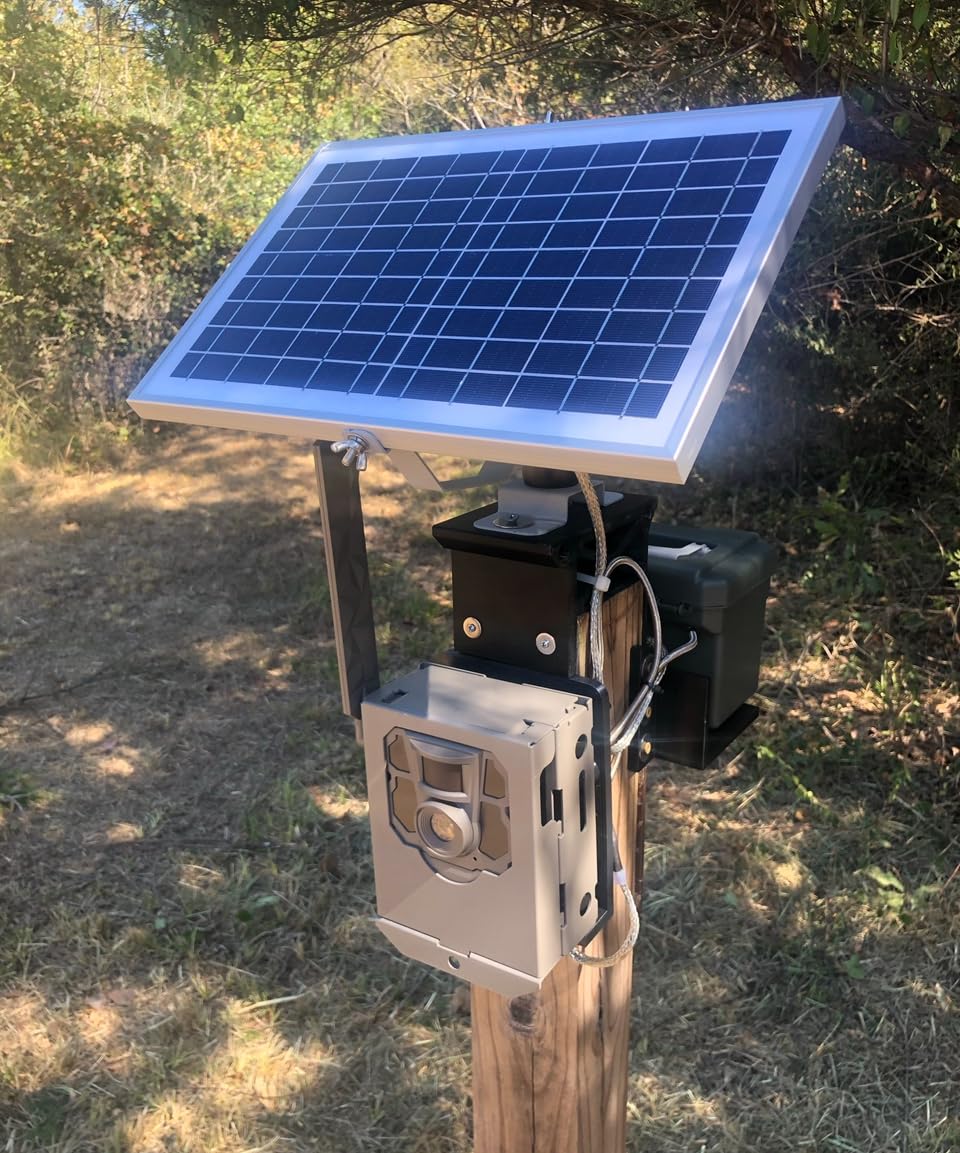
Three SAE leads come in the box, to alligator clips, to bare end and to a battery eyelet, which covered every connection we tried without an adapter. The same MPPT core as the 12W model delivers 99% tracking efficiency and a three-stage charge.
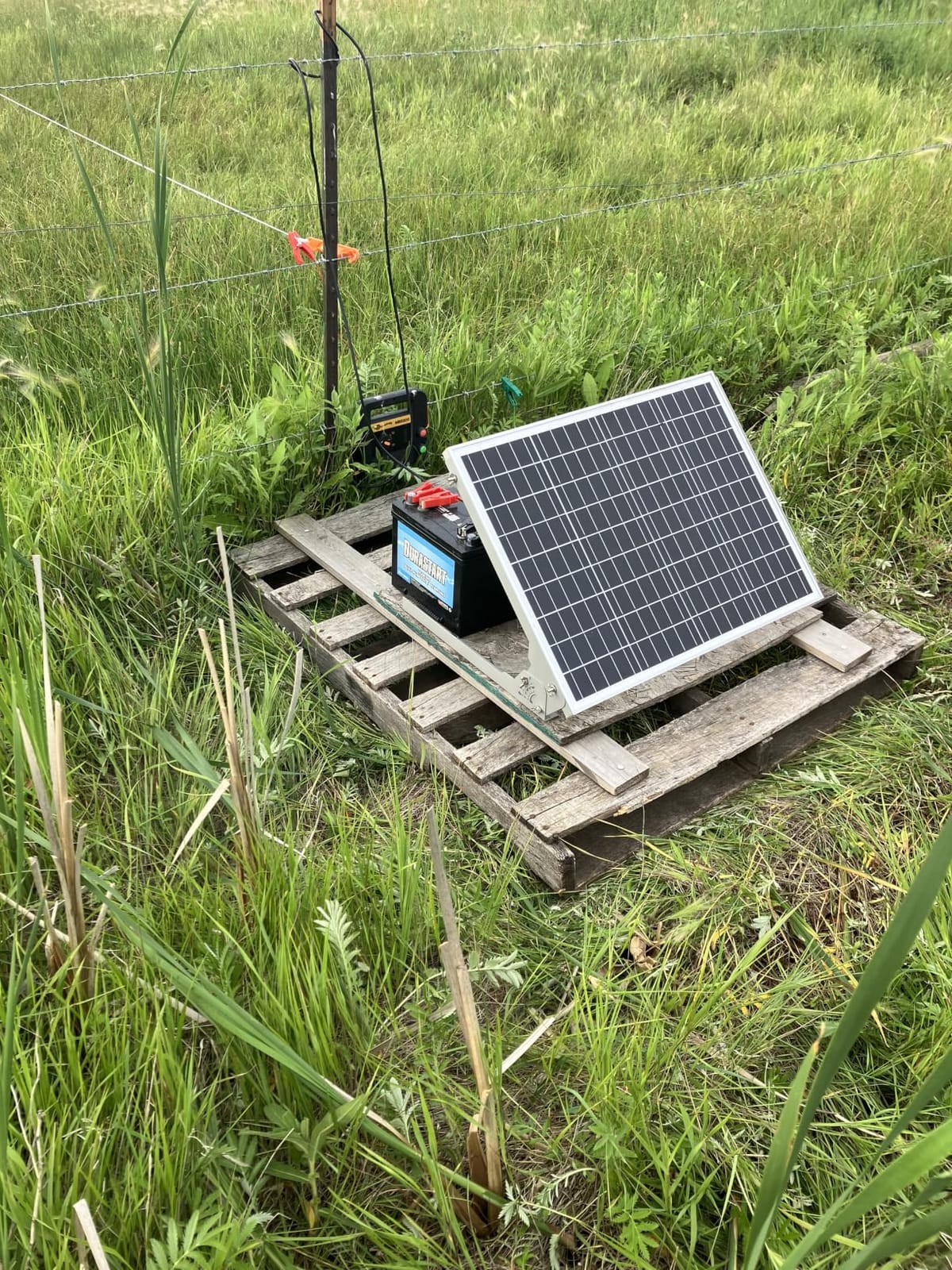
Owners running it on boat docks, electric fences and dump trailers rate the customer service highly, and the frame and tempered glass have survived storms without rusting or delaminating in our own exposure.
Who it suits?
Boats, RVs, dump trailers, electric fence systems, trolling motor batteries and tractors. If your load is a house bank rather than a single start battery, this is where the wattage starts to matter.
Farm and off-grid users running continuous loads will find the headroom useful, and our guide to battery electric fence chargers for remote pastures covers the load side.
Where it falls short?
The bracket assembly order is not well explained and several owners got it wrong first time. Read the diagrams before you build it, because the fix is not obvious once the parts are on.
Watch out for third-party SAE extension cables: a solid red light means reversed polarity, and you will need an adapter rather than forcing the connection. A few buyers also want a clearer indication of charge state.
9. SUNER POWER 20W MPPT Pro — Best for LiFePO4 House Banks
SUNER POWER 20W 12V Solar Battery Trickle Charger & Maintainer PRO, Built-in Intelligent MPPT Controller, Waterproof 12 Volt 20 Watt Solar Panel Charging Kits for Car Marine RV Trailer Boat Automotive
20W Grade A+ cells
UltraSmart MPPT at 99% tracking
Three-stage charging
Alligator clip connection
Pros
- MPPT performance is clearly better in low light
- Pre-drilled holes and plug-and-play cables
- Stops and resumes automatically to hold full voltage
- Explicit LiFePO4 support plus car marine RV and deep-cycle use
Cons
- Must be in direct sunlight before it detects a connected battery
- Costs more than lower-wattage kits with similar function
If your 12V bank is lithium rather than lead-acid, this is the one we would choose. LiFePO4 lives at a different voltage through most of its charge curve, and a controller tuned for lead-acid set points will undercharge it or sit in float far longer than it should.
The UltraSmart MPPT is quoted at up to 99% tracking efficiency and 98% peak conversion, and owners consistently confirm the low-light performance claim rather than just repeating the listing.
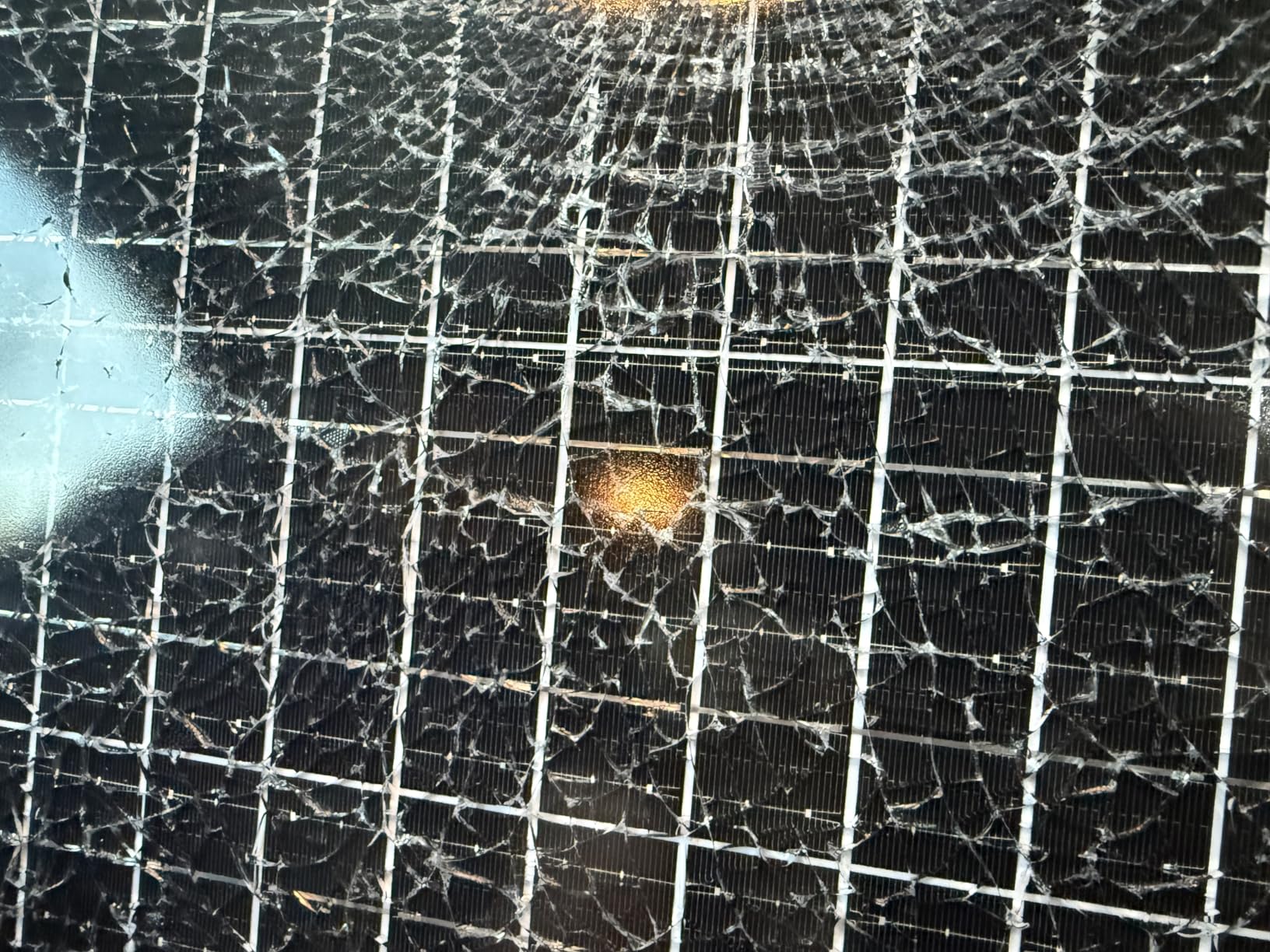
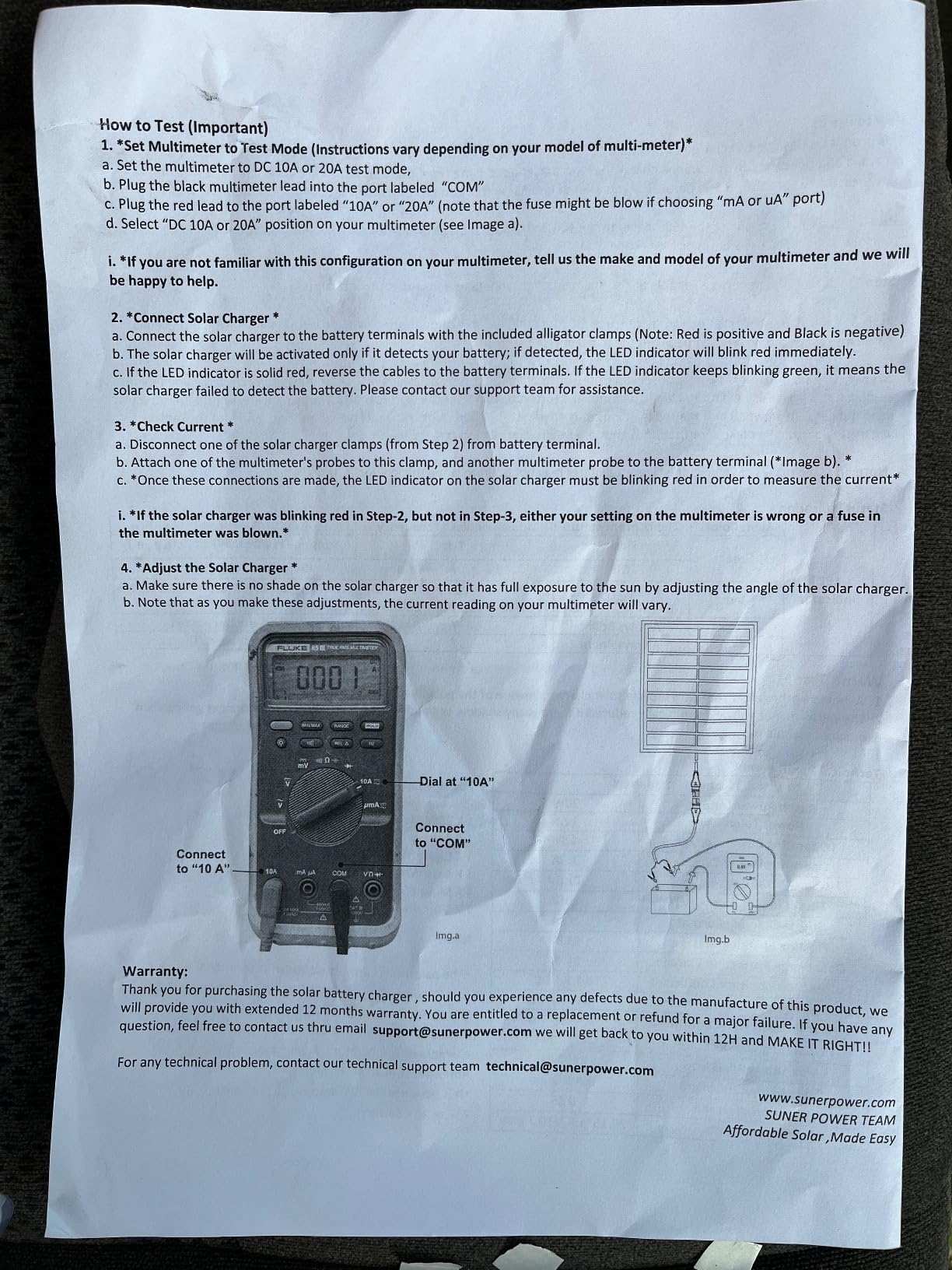
Connection is alligator clips, which for us is the right choice on a house bank because it removes any doubt about an accessory socket cutting out overnight and leaving a lithium battery unmonitored.
Compatibility is the widest we saw: car, marine, RV, power sport, boat, dump trailer, motorcycle, trolling motor, tractor, ATV and deep-cycle, across flooded, gel, AGM, SLA, maintenance-free and LiFePO4.
Who it suits?
Campervan and RV owners running a LiFePO4 house bank, and anyone with a lithium battery that has stopped reaching full charge on a cheap maintainer. The stop-and-resume cycle keeps it at a stable voltage without overcharging.
It also suits lead-acid users who want an MPPT panel in a kit rather than bolting a separate controller to a panel, which is how many marine and RV owners build their systems.
Where it falls short?
Same detection quirk as the 12W sibling: no direct sun means no battery recognition, and first-time users read that as a fault. It needs full sun and about ten minutes before it settles.
You are paying more than lower-wattage kits with similar function, so if you only ever maintain one car battery, the money is better spent elsewhere. The premium buys efficiency, not capacity.
10. FlexSolar 20W Flexible Panel Kit — Best for No-Drill Installation
FlexSolar 20W 12V Solar Panel Battery Trickle Charger Maintainer Kits
20W flexible panel at 0.11 inch
20 to 25 percent cell efficiency
1.7 pounds
Four connection options
Pros
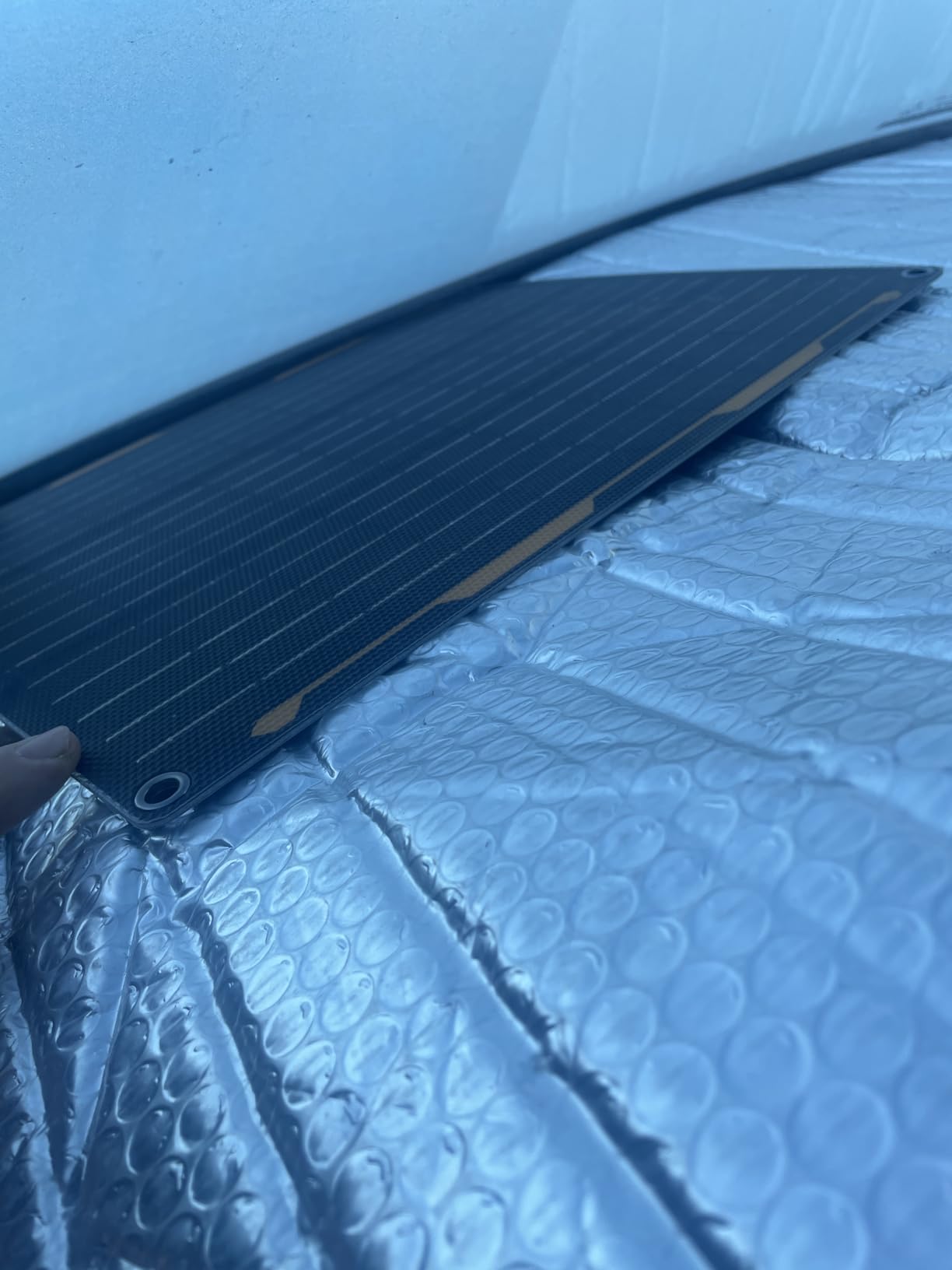
- Coin-thin panel mounts on glass or a boat deck with no drilling
- OBD-II adapter gives a hard-wired connection option
- Owners report it offsetting telematics drain through a Canadian winter
- Light enough to move between vehicles
Cons
- Supplied cables are thin and the most common complaint
- Suction cups lose grip in cold and can mark a windscreen
- SAE pin polarity can be reversed on some accessory ports
A flexible panel is not for everyone, but when drilling is not an option it is the only sensible answer. At 0.11 inch it conforms to a curved windscreen, a sunroof or a boat deck and stays out of the way.
Twenty watts from monocrystalline cells at 20% to 25% efficiency is a real output figure for a flexible construction, and the integrated smart controller halts at capacity and reactivates when voltage drops.
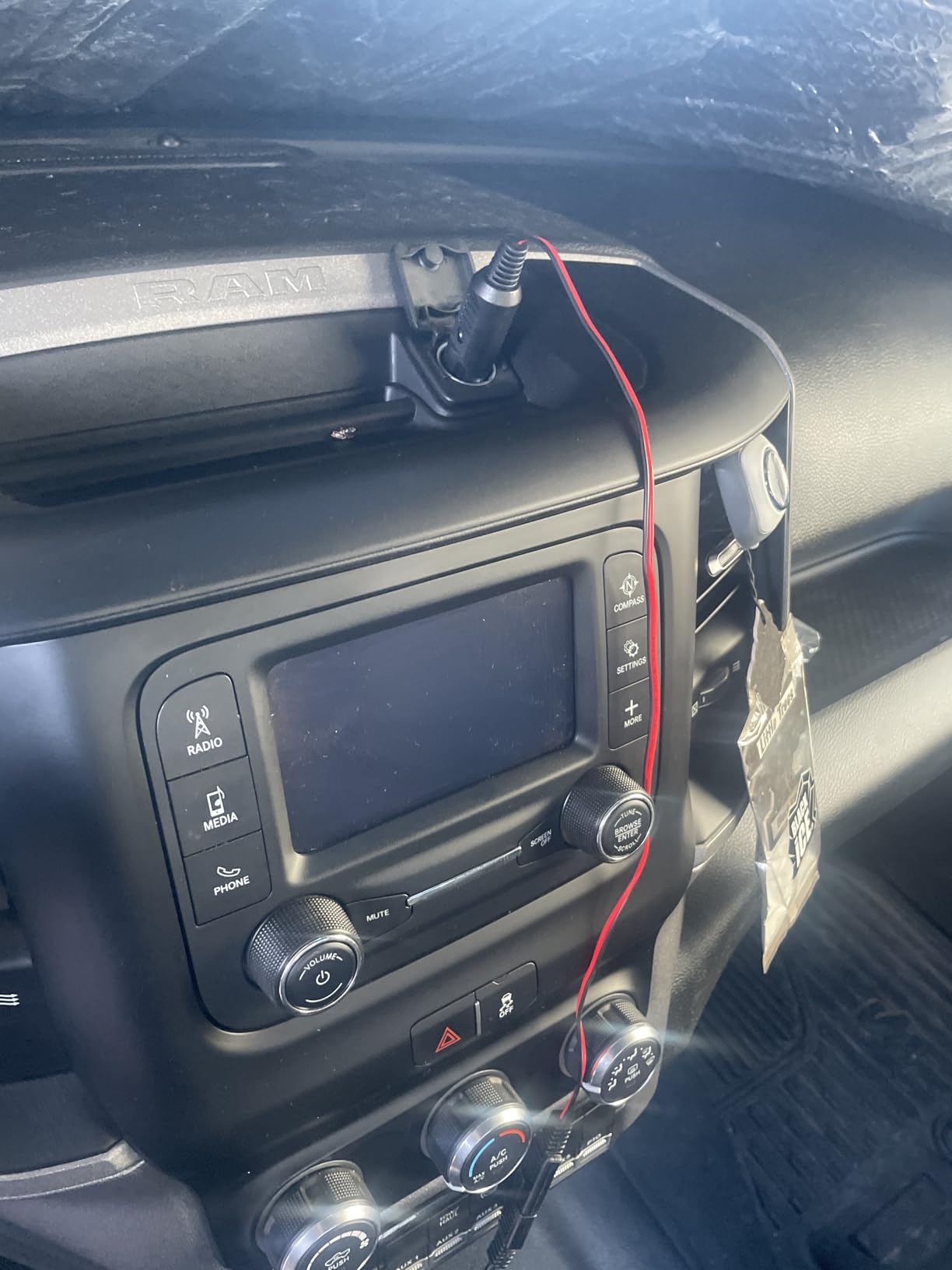
Four connection options ship in the box, including an OBD-II plug that gives a semi-permanent connection without touching the battery. That is the one we would use on a vehicle with heavy parasitic draw.
Reviewers note it reliably offsets telematics drain through a full Canadian winter, which is a tougher test than ours, and at 1.7 pounds it is easy to carry between vehicles for spot charging.
Who it suits?
Classic cars, convertibles, modern cars with panoramic glass and boats where a drilled mount is unacceptable. Anyone who wants a panel that can be peeled off and moved in a minute rather than permanently fixed.
It is also a reasonable choice for RV roof mounting where a rigid panel would be awkward on a curved surface, and pairs usefully with a fixed MPPT panel if you want both.
Where it falls short?
The cables are the weak link and they are the most common complaint by a distance. They feel thin and cheap, so for a permanent installation we would replace them immediately with proper gauge wire.
Placement behind glass cuts output substantially and heat can stall the panel temporarily, and the SAE pin polarity can be reversed relative to some vehicle accessory ports, which drains rather than charges. Check polarity before you leave it connected overnight.
11. Callsun 7.5W IP68 MPPT Maintainer — Best Sealing in the Test
Callsun 7.5W Solar Battery Maintainer & Trickle Charger, 12V Waterproof Solar Panel with IP68 Smart MPPT Controller, Overcharge & Reverse Protection for Car, Boat, RV, Motorcycle, Marine, Trailer
7.5W monocrystalline panel
IP68 waterproof
30% conversion efficiency
Three-color LED status system
Pros
- Only IP68 rated panel we tested
- Works in indirect sunlight where mono panels usually stall
- Three-color LED shows sunlight charging and maintenance states
- Supports LiFePO4 AGM and gel batteries
- Adjustable bracket with corner protectors
Cons
- Some units have mounting bracket drilling issues
- Occasional defective units reported
- Customer support response can be slow
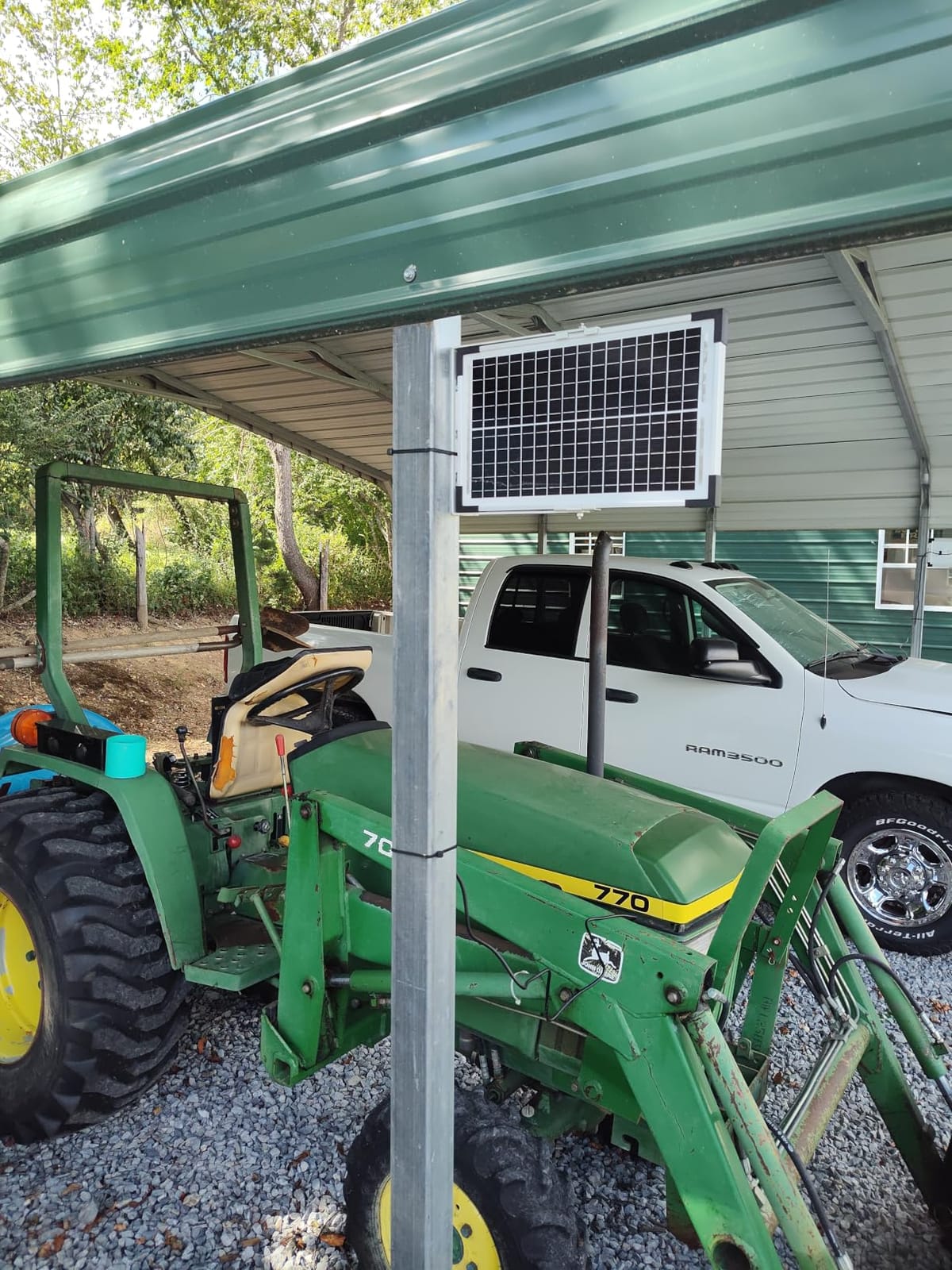
IP68 is the highest sealing rating in this roundup and it is not a marketing flourish on an indoor-use panel. For a marine battery or a gate opener on an exposed post, that number does real work.
At 7.5W with 30% conversion efficiency, it matched the 20W kits we tested more closely than the wattage gap would suggest, because the tracking is efficient and the cells are Grade A+ monocrystalline in a corrosion-resistant aluminium frame.
The three-color LED system is unusually informative for a panel this size: blue for sunlight detected, red for actively charging, green for maintenance mode. That third state is the one you want to see most of the time on a stored vehicle.
Owners report it works in indirect sunlight and specifically credits it with fixing parasitic battery drain, which is exactly the use case it suits. The kit includes a 360-degree bracket, cigarette lighter plug, alligator clips and an O-ring terminal cable.
Who it suits?
Boats, gate openers, tractors and any 12V battery living outdoors in wet, exposed conditions. It is also a strong choice if you want a small panel with an MPPT controller without moving up to 20W.
For remote or unattended equipment, the maintenance mode indicator and the sealed build are both useful, and we cover that kind of install in our solar fence charger guide.
Where it falls short?
Some units arrive with a mounting bracket that does not drill cleanly, and a small number of reviews report defective units out of the box. Support response times are also described as slow by some buyers.
With 388 reviews this is the thinnest evidence base in the list, so we weighted the build specification and the specification-level protections more heavily than the review volume.
12. POWOXI 15W MPPT Charger — Best for Paint-Safe Mounting
POWOXI 15W 12V Solar Battery Charger Trickle Maintainer Kit for Car
15W monocrystalline panel
99 percent MPPT conversion efficiency
IP65 rated from -40F to 137C
Three LED indicators
Pros
- MPPT controller holds output up on cloudy days
- Two-plus years of service reported by owners
- Three LED indicators with a two-second update
- ABS and PC frame will not mark car paint
Cons
- Some units stopped working after several months
- Moisture around the indicator light though charging continued
- Customer support can be unresponsive
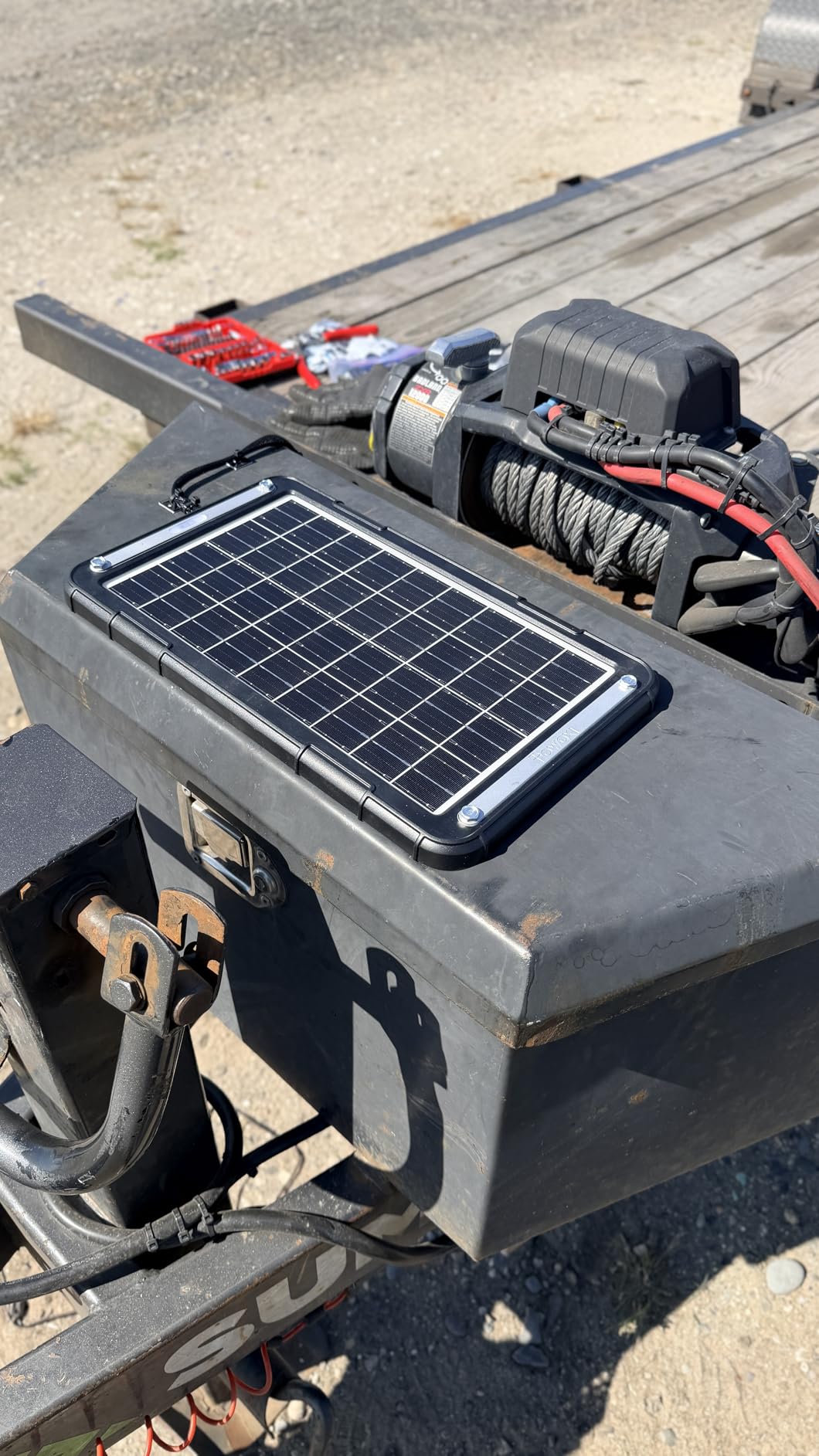
The reason to pick this one is the frame. Most panels in this category use an aluminium frame, which will mark paint if it rests against a body panel. This uses an ABS and PC composite, and the listing makes the point explicitly.
Electronically it is well specified: MPPT with up to 99% conversion efficiency, a two-second recalculation cycle, and a float maintenance stage that prevents overcharging on 12V gel, AGM, SLA, VRLA and lithium-ion batteries.
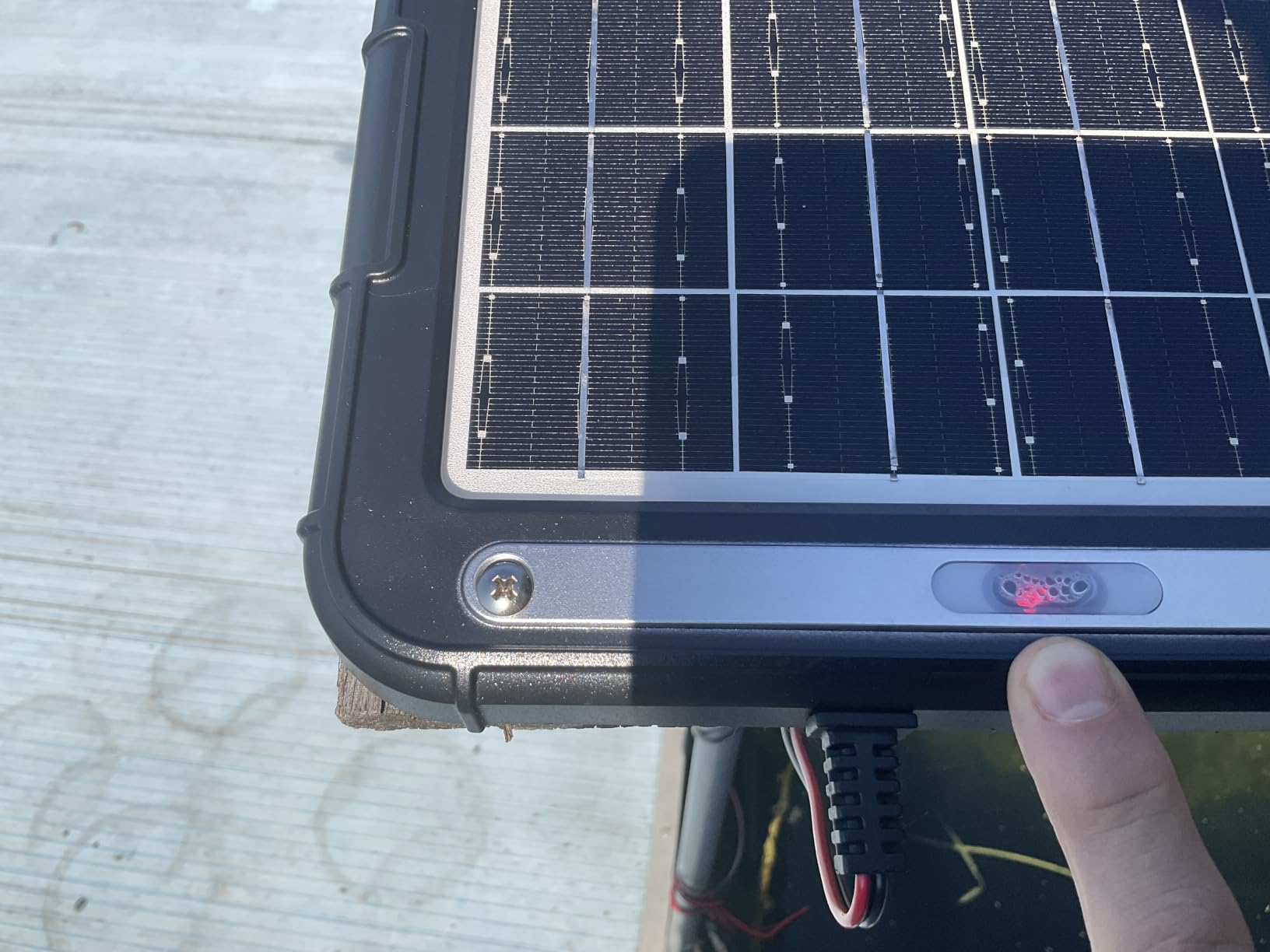
Operating range is quoted from -40 to 137C with an IP65 rating, so it handles both a hard winter and a hot roof without complaint. The PC and ABS construction with tempered glass is also more forgiving than a thin flexible panel.
Owners running RV, trailer and vehicle batteries report two-plus years of trouble-free operation, and the MC4 connector plus multiple lead options made it the most flexible install of the 15W class.
Who it suits?
Anyone resting a panel on a body panel, a bonnet or a soft-top where aluminium would scratch. It is also a sensible middle step between a 10W maintainer and a 20W MPPT panel for a moderately demanding battery.
Boat, RV, marine, motorcycle and trailer applications are all listed, and the 15W output is enough to hold a single deep-cycle battery with margin.
Where it falls short?
This has the lowest rating in the roundup at 4.1 stars, and the reason is durability. A number of owners report units stopping after six to ten months, with no support response when they tried to raise it.
Moisture has been reported around the indicator light, though charging continued. We would still choose it for the frame and IP65 build, but we would check it periodically rather than assume it is working.
How to Choose a Solar Battery Charger for 12V Batteries?
Solar maintainer or solar charger?
A maintainer holds a healthy battery at float voltage. A charger puts meaningful current into a battery that has dropped. Everything under about 10W in this list is a maintainer, and every panel above 20W is a charger with maintainer behaviour at the end.
This matters more than any other decision in the category. Forum complaints about solar chargers not working almost always describe someone expecting a 1.5W panel to revive a dead battery, which no amount of sun will fix.
How much wattage do you need?
Use this rule: watts needed equals the amp draw multiplied by peak sun hours, divided by the controller efficiency you expect. A car losing roughly 0.2A while parked, with four peak sun hours and a real-world efficiency of about 0.7, needs a panel of roughly 1.2W to break even, so anything from 5W up gives you margin.
Our field results matched the simple version of that maths. The 7.5W and 10W panels held a car steady through storage. The 12W MPPT panel held it in overcast weeks where the small ones stalled. The 20W and 30W panels were the only ones that could add charge to a deep-cycle bank rather than simply hold it.
Winter is the caveat everyone misses. Peak sun hours drop sharply, output per watt falls with temperature, and a trickle panel that looks generous in July can lose ground in January.
Is MPPT really better than PWM?
MPPT is better on paper and in our cloudy-day testing, because it tracks the panel’s true maximum power point and harvests roughly 20% to 30% more than a basic regulator. The honest counterpoint from forum use is that a cheap PWM regulator can start drawing earlier in low light, so the gap is not constant across the day.
At 20W and above we would not consider a PWM unit. Below 10W the difference in absolute terms is small enough that build quality, sealing and the warranty matter more than the controller label.
Clamps or the 12V socket?
Use the clamps whenever the battery is the thing you care about. A 12V accessory socket is only correct when the vehicle has no parasitic draw while parked, and many cars cut that socket with the ignition off, which silently ends your charging.
The OBD-II connection on the FlexSolar is a useful middle ground for a semi-permanent install without reaching into the battery bay. Whichever you use, confirm polarity with a meter on the first hook-up, because reversed SAE pins drain a battery rather than charge it.
Does it work with LiFePO4?
Most panels here list LiFePO4 support, and for a maintenance application that is usually fine because the current is small and float-stage behaviour keeps it well inside the lithium envelope. If you want a lithium bank actually reaching full charge, choose a controller with lithium-aware set points rather than one tuned to lead-acid.
AGM and gel batteries sit in between. Both are lead-acid, both are fully flooded chemistry, and a good lead-acid profile handles them correctly, but check the listing names your specific type.
Five steps to install one
1. Identify the battery. Check the chemistry, the voltage and where the terminals actually are, including on a boat or an RV where the house bank may be under a seat or in a compartment.
2. Mount the panel first, before any wiring. Set the angle and position it where it gets unobstructed sun, and remember that output behind a windscreen is significantly lower than output in open air.
3. Connect with polarity verified. Use a meter on the panel leads, attach the positive clamp first, and check the indicator changes to a charging state before you walk away.
4. Give it time to show a reading. Several MPPT panels in this roundup will not detect a battery until they have been in direct sun, so a flat panel ten minutes after connection is not a fault.
5. Check back after a week, then monthly. Read the indicator and the battery resting voltage. If the panel is lit but the battery voltage is not rising, check polarity and shading before suspecting the unit.
Frequently Asked Questions
What is the best solar battery charger for a 12V battery?
The best solar battery charger for a 12V battery is one with a built-in MPPT charge controller, proper weather sealing and enough wattage to beat your vehicle’s standby drain. For most cars a 7W to 20W panel is the right range: 20W for anything beyond maintenance or for a deep-cycle, marine or lithium bank.
Is MPPT really better than PWM for a small solar charger?
Yes, generally. MPPT tracks the panel’s maximum power point and typically harvests 20 to 30 percent more energy than a basic PWM regulator, and the gap widens in cloudy or cool conditions. Below 10W the absolute difference is small, so build quality and sealing matter at least as much as the controller label.
Can a solar panel charge a car battery?
A solar panel can hold a 12V car battery topped up and, at 20W or more, add real charge. It will not revive a battery that has already gone flat, because a small panel cannot deliver the recovery current a deeply discharged cell needs. For a flat battery you need a mains smart charger.
Can you overcharge a car battery with a solar charger?
Not with a panel that has a proper charge controller. Every unit in this roundup has overcharge protection, a blocking diode and an automatic stop-and-resume cycle, so it stops at full charge and restarts when voltage drops. Connecting a raw panel with no controller is what actually damages batteries.
Will a solar trickle charger keep a battery charged over winter?
A trickle charger will usually hold a healthy battery through winter in a mild climate, but winter reduces peak sun hours and panel output per watt, so a small panel can lose ground in a hard one. Choose 20W or more for cold climates, or connect an AC smart charger on the same schedule.
Which Solar Battery Charger Should You Buy?
The best solar battery chargers for 12V batteries for most people sit between 7W and 20W with a real charge controller, and our Editor’s Choice, the POWOXI 7.5W kit, is the one we would fit to a car that lives on a driveway. Over 6500 reviews at 4.4 stars, no wiring, no maintenance, and a controller that stops drawing the moment the sun goes down.
Step up to the SOLPERK 20W kit for an RV, a boat or a dump trailer where the battery is doing real work, and pick the SUNER POWER 12W if your climate is wet and cloudy and small panels keep stalling. For marine and exposed outdoor installs, the Voltset’s IP67 sealing and the Callsun’s IP68 rating are the two worth paying for. If your bank is LiFePO4, take the SUNER POWER 20W MPPT Pro.
Whichever you choose, mount it in open sun, verify polarity with a meter, and give it a week before you judge it. That is the whole difference between a panel that quietly works for a decade and one that ends up in a drawer.