
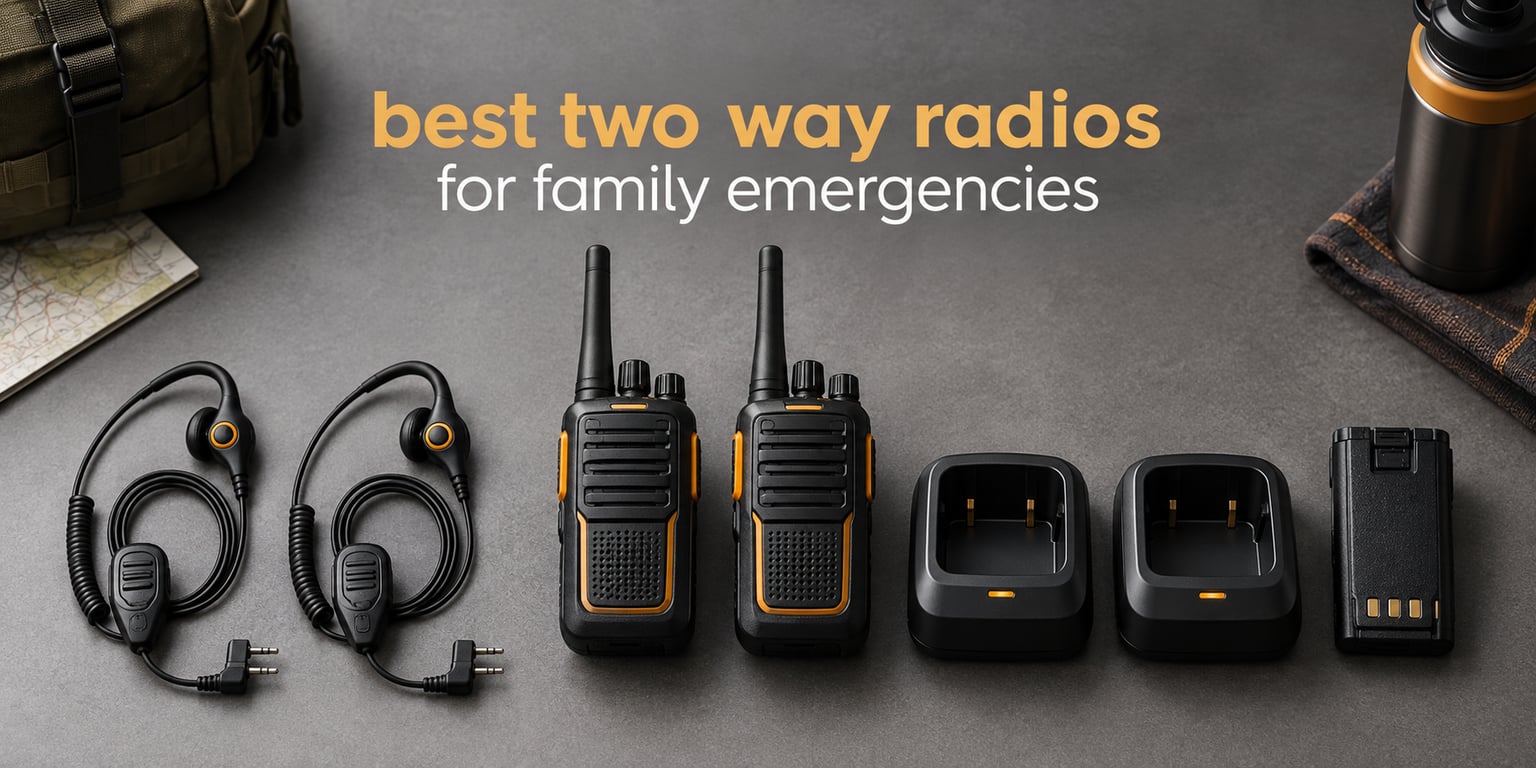
When the power goes out, the cell towers go with it, and every text message your family has been relying on stops working. A two way radio keeps talking anyway, because it runs on its own battery and does not need a tower, a network or a subscription. That single fact is why the best two way radios for family emergencies sit next to the water and the first aid kit rather than in a drawer.
Here is the short version. The Midland GXT1000VP4 is the one most households should buy, with 50 channels, 142 privacy codes, NOAA weather alerts and a GMRS licence that covers everyone in the family on one filing. Families on a tighter budget get the most out of the four-pack budget models. Households with kids, seniors or anyone with a large rural property should read further before choosing.
One warning before we get to the list. Push-to-talk-over-cellular radios are marketed as having unlimited range, and they absolutely do until a storm knocks the nearest tower offline. That is the exact moment you bought the radio for. Every model below transmits on its own power, with no infrastructure in the loop.
We put the twelve strongest options through the same filter: licence clarity, honest range, battery runtime, water resistance, and whether a child or a grandparent can actually work the buttons under stress. Details on how we weighed them are in the buying guide near the end.
Table of Contents
Top 3 Picks for Family Emergencies (September 2026)

Best Two Way Radios for Family Emergencies in 2026
All twelve radios below are compared side by side here, with the licence each one requires and the use case it genuinely fits. Read the licence column first, because it is the one thing you cannot change after the emergency starts.
| Product | Specifications | Action |
|---|---|---|
| Midland GXT1000VP4 GMRS Two-Way Radios with Headsets |
|
Check Latest Price |
 pxton 16-Channel Rechargeable Walkie Talkies 4-Pack pxton 16-Channel Rechargeable Walkie Talkies 4-Pack |
|
Check Latest Price |
 Retevis RT22 Rechargeable Walkie Talkies 4-Pack Retevis RT22 Rechargeable Walkie Talkies 4-Pack |
|
Check Latest Price |
 Midland LXT600VP3 FRS License Free Walkie Talkies Midland LXT600VP3 FRS License Free Walkie Talkies |
|
Check Latest Price |
 Midland T51VP3 X-Talker FRS Walkie Talkies Midland T51VP3 X-Talker FRS Walkie Talkies |
|
Check Latest Price |
 Cobra RX680 Walkie Talkies IP54 Water Resistant Cobra RX680 Walkie Talkies IP54 Water Resistant |
|
Check Latest Price |
 MaxTalker Rechargeable FRS Two-Way Radio 2-Pack MaxTalker Rechargeable FRS Two-Way Radio 2-Pack |
|
Check Latest Price |
 DEWALT DXFRS800 FRS Walkie Talkies IP67 Waterproof DEWALT DXFRS800 FRS Walkie Talkies IP67 Waterproof |
|
Check Latest Price |
 Baofeng UV-5R Upgrade 10W Handheld 2-Pack Baofeng UV-5R Upgrade 10W Handheld 2-Pack |
|
Check Latest Price |
 Retevis RB48 Rugged IP67 FRS Walkie Talkies Retevis RB48 Rugged IP67 FRS Walkie Talkies |
|
Check Latest Price |
 Motorola Solutions T470 Two-Way Radio Two-Pack Motorola Solutions T470 Two-Way Radio Two-Pack |
|
Check Latest Price |
 Motorola Solutions T210 Two-Way Radio Two-Pack Motorola Solutions T210 Two-Way Radio Two-Pack |
|
Check Latest Price |
Which Radio Fits Which Emergency?
Match the radio to the scenario before you match it to the price. Most households end up wanting two different radios, one for the house and one for the car.
Neighbourhood check-ins and school pickup: the Retevis RT22 or the Motorola T210. Light, licence-free, and each person carries one without resenting it.
Car breakdown on a rural road: the Cobra RX680 or the DEWALT DXFRS800. Louder speakers and stronger bodies survive being dropped on tarmac.
Flood evacuation and heavy rain: the Retevis RB48 or the DEWALT DXFRS800. Both carry IP67 sealing, which is the only rating that means something if the radio goes into the water.
Wildfire or long-range property: the Baofeng UV-5R upgrade, if someone in the household will sit the amateur exam. Otherwise the Midland GXT1000VP4 with a GMRS licence.
Multi-day blackout with no charging: the Midland LXT600VP3, because it runs on plain AAA cells. The Midland GXT1000VP4 also accepts AA cells as backup.
Large acreage or farm buildings: our guides on two way radios for large properties and farm communication cover the long-range cases in more depth.
1. Midland GXT1000VP4 — Best Overall for Family Emergencies
Midland GXT1000VP4 GMRS Two-Way Radios with Headsets, Black, 2 Pack
50 GMRS channels and 142 privacy codes
NOAA weather scan and alert
eVOX hands-free
Rechargeable NiMH plus dual AA power
Pros
- 50 channels and 142 privacy codes give a family room to pick a quiet channel
- Rechargeable packs with desktop charger and dual AA backup
- Built-in NOAA weather alert for severe storms
- eVOX hands-free keeps hands on the wheel
- Two headsets in the box for private calls
Cons
- GMRS operation requires a family licence
- Higher power draw means shorter runtime than basic FRS sets
- Keypad lock and ten call tones add controls casual users may fumble
This is the radio we keep coming back to, because it is the only one in the roundup that solves the two things families actually get wrong. First, channel crowding. Fifty channels and 142 privacy codes means you will always find a channel nobody else in the neighbourhood has claimed, which matters enormously when twelve families are all calling for missing children.
Second, the licence. GMRS needs one filing to cover every adult in your household, so there is no per-person paperwork and no argument about who is allowed to transmit. You fill out a single form online, pay the fee once, and put the call sign on the radio. The radios themselves work exactly like the free FRS models, which is why a mixed household can run both without drama.
That combination is why it sits at the top of this list.
The NOAA weather scan is the sleeper feature. It locks onto the strongest local National Weather Service channel and alarms on severe weather, which gives you tornado and flash flood warnings without a phone, a data connection or a subscription. In a blackout that alert is often the first warning a household gets.
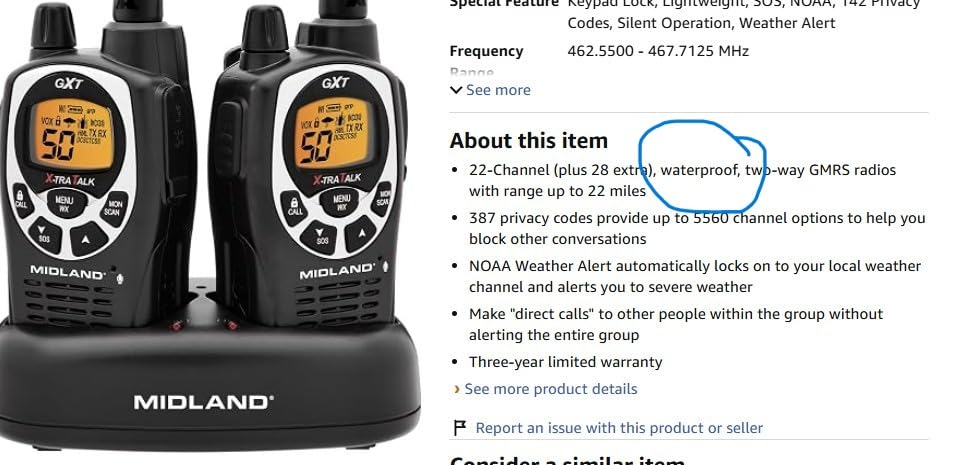
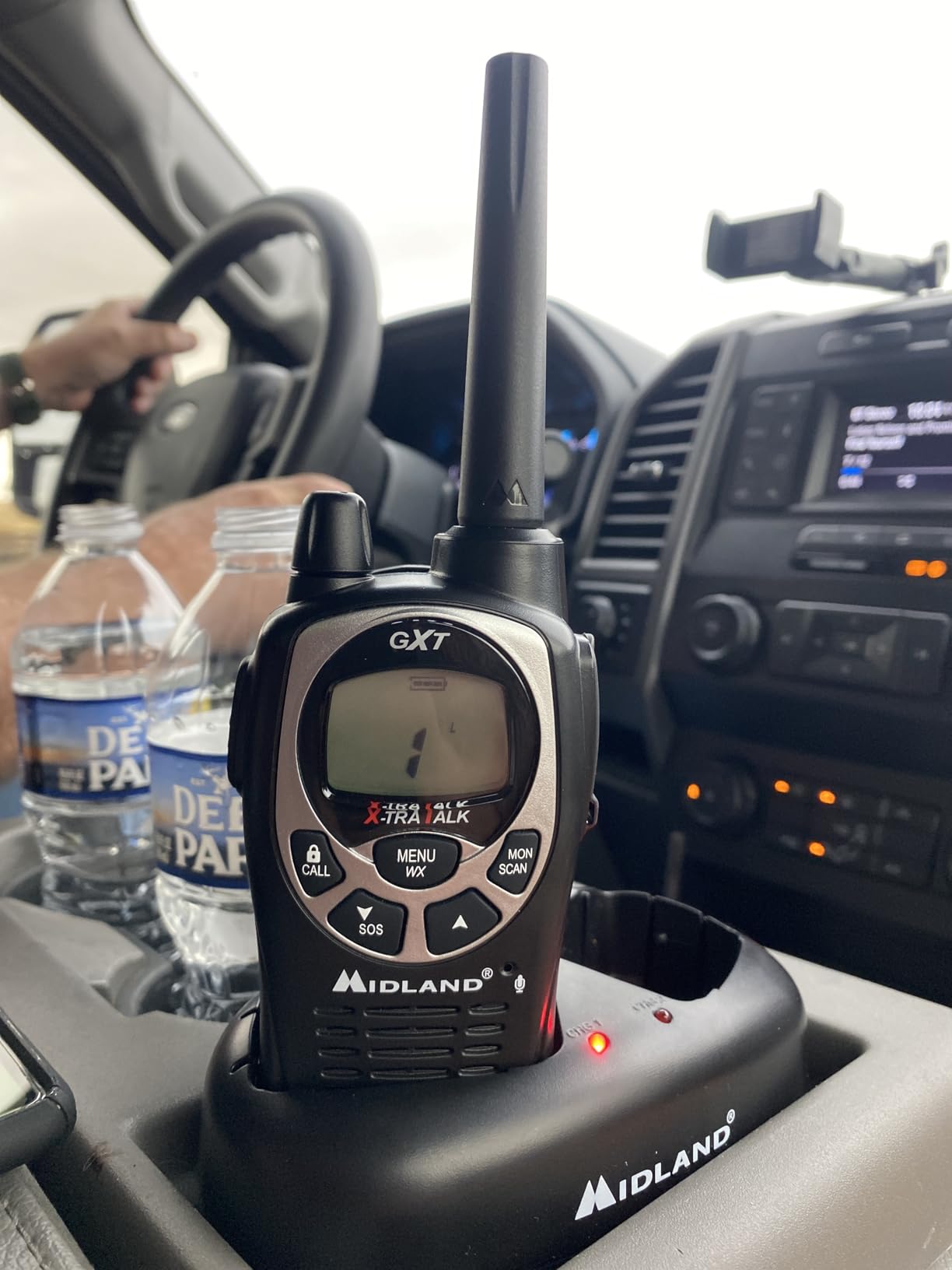
Physically it is a reassuringly ordinary handheld at 4.8 ounces and about 7.9 inches tall, small enough for a coat pocket and light enough for a child to carry without complaining. Dual power means the rechargeable NiMH packs can be swapped for the eight AA cells in the box, which turns a dead pack from an emergency into a nuisance.
Reviewers are consistent about the range claims being the softest part. The stated 36-mile figure assumes open ground with no obstructions, and in suburban or wooded settings people report far less. The honest framing is that you are buying channel flexibility, weather alerting and licence simplicity, not a guaranteed distance.
Who this radio suits?
Households that want one licence covering everyone, live in an area where channel crowding is real, and will actually read a short FCC form. It also works as a camp and road trip radio, since the same licence is valid everywhere in the country.
The two included headsets are more useful than they sound. During an evacuation you do not want the whole neighbourhood hearing which family member lost their medication.
Where it falls short?
It is the heaviest feature load here, and the keypad lock plus ten call tones give non-technical users more ways to press the wrong thing. If your household includes someone who will panic under stress, simpler is better.
Battery life is closer to a working day than a weekend at higher transmit power. Buy a second set of rechargeable packs if the plan involves a multi-day outage.
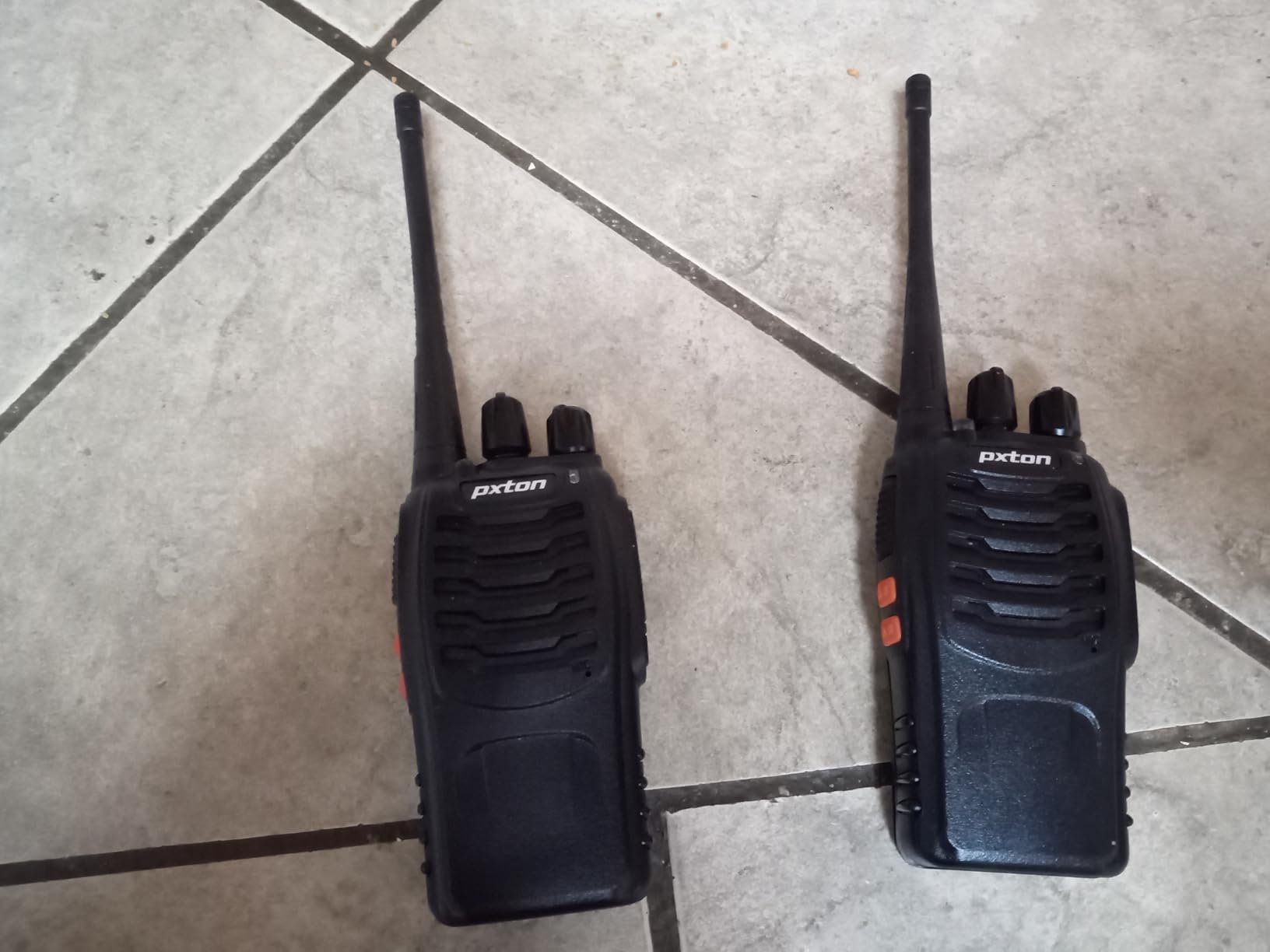
2. pxton 16-Channel Rechargeable Walkie Talkies 4-Pack — Best Value
pxton Walkie Talkies Long Range for Adults with Earpieces,16 Channel Walky Talky Rechargeable Handheld Two Way Radios with Flashlight Li-ion Battery and Charger(4 Pack)
Four radios with earpieces and straps
16 channels and 165 privacy codes
1500mAh Li-ion with four charging docks
8 to 96 hours per charge
Pros
- Four-pack configuration covers a whole family in one purchase
- Long runtime with 1500mAh cells and individual charging docks
- Earpieces
- belt clips and hand straps all in the box
- 16 channels plus 165 codes and channel scanning
- LED flashlight and VOX for travel and campsite use
Cons
- Only 16 channels
- fewer code combinations than premium sets
- Range drops sharply in built-up areas
- Water resistance is unspecified so immersion is not guaranteed
The strongest argument for this pack is arithmetic. Most two-packs force a choice between giving everyone a radio or giving the important people a radio. A four-pack does not, and in an evacuation that difference matters more than any spec on the sheet.
Runtime is the second argument and it is a big one. The 1500mAh lithium cells with dedicated charging stations are rated between 8 and 96 hours depending on use, and reviewers routinely report three or more days of intermittent family use from a single charge. For a household that has lost grid power, that is the difference between a radio and a paperweight.
There is real honesty in the manufacturer copy here, which is rare. It states plainly that range is best in open unobstructed areas and limited in towns and cities by obstacles. We would rather have a listing that tells you that than one claiming a range figure you will never see.
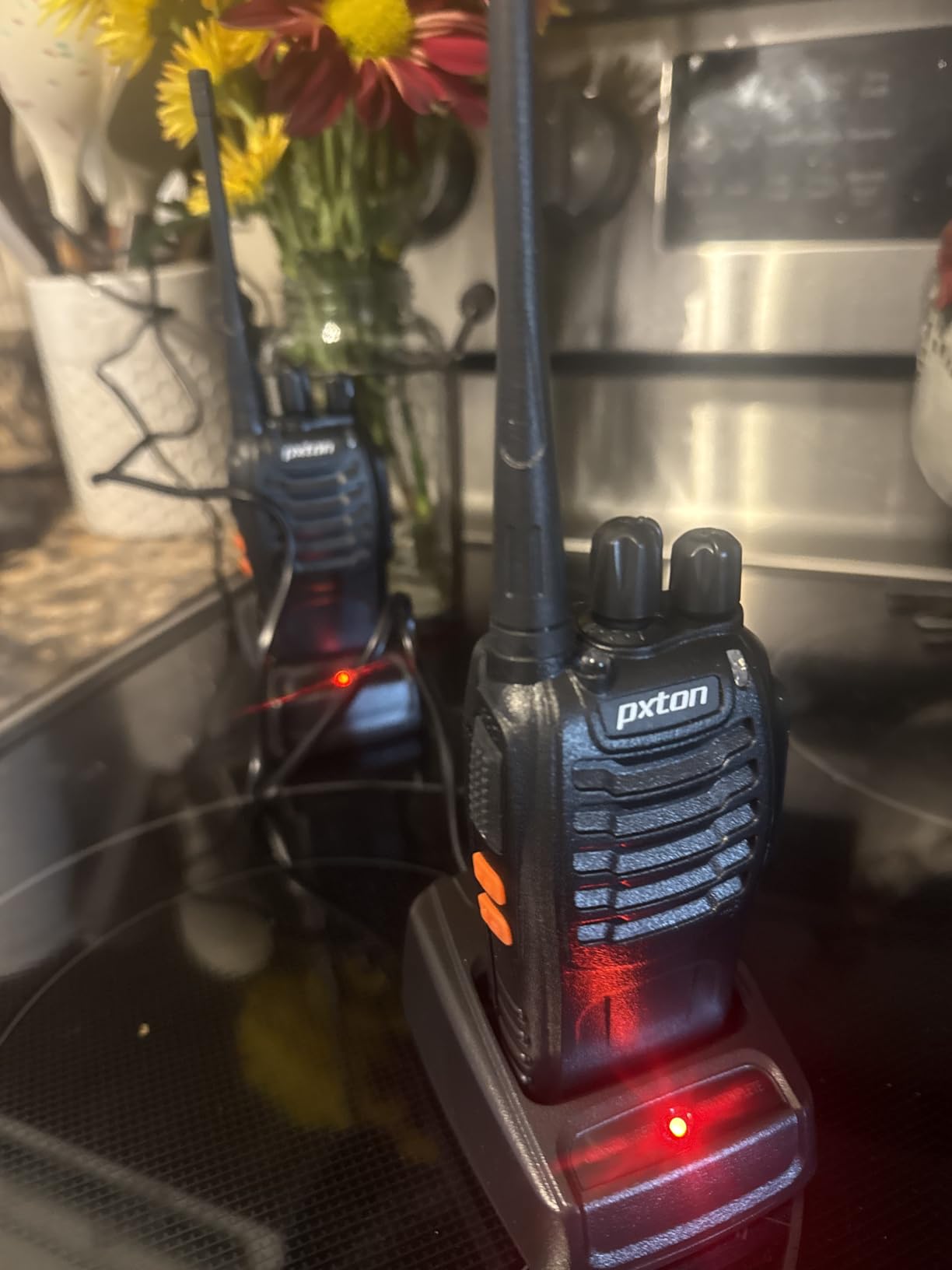
Sixteen channels with 165 privacy codes is fewer combinations than the Midland offers, so this is a radio for one group rather than a whole neighbourhood. The knob-selected channels are easy to read at a glance, which matters when someone is shaking.
VOX hands-free transmission is genuinely useful in a car, and the integrated flashlight covers the most common emergency need most radios have: seeing where you are walking. At 2.8 pounds for the full set of four, it is a sensible thing to split between a go bag and a car boot.
Who this radio suits?
Families with four or more people who need everyone carrying a set, on a budget, without reading a licence form. It is also our pick for school pickup runs and trips to a large park where the group will spread out.
Anyone building a kit for a vehicle, a hiking group or a neighbourhood block watch gets four radios for the price of a typical premium pair.
Where it falls short?
Sixteen channels is tight if a whole street is coordinating, and the water resistance rating is not specified, which means heavy rain and accidental submersion are not covered. Keep it in a zip bag during storms.
The 2-mile stated maximum is the honest figure, and in dense neighbourhoods you will get less. Treat it as a neighbourhood and campsite radio, not a rural one.
3. Retevis RT22 — Best for Kids and Small Hands
Retevis RT22 Rechargeable Walkie Talkies, Long Range 2 Way Radio for Adults
3.8 oz per radio, sized like a smartphone
USB-C charging, 1000mAh battery
16 FRS channels, licence free
VOX and emergency alarm
Pros
- Light and pocket-sized so every family member carries one without bulk
- USB-C charging removes the need for docks or spare cells
- Clear audio with noise reduction across cruise
- campsite and worksite settings
- Charge typically lasts three or more days of intermittent use
- Simple controls with one power and volume knob
Cons
- Arrives with squelch codes preset
- so it will not talk to other brands out of the box
- Not water resistant
- Only 16 channels
- Audio is adequate rather than exceptional
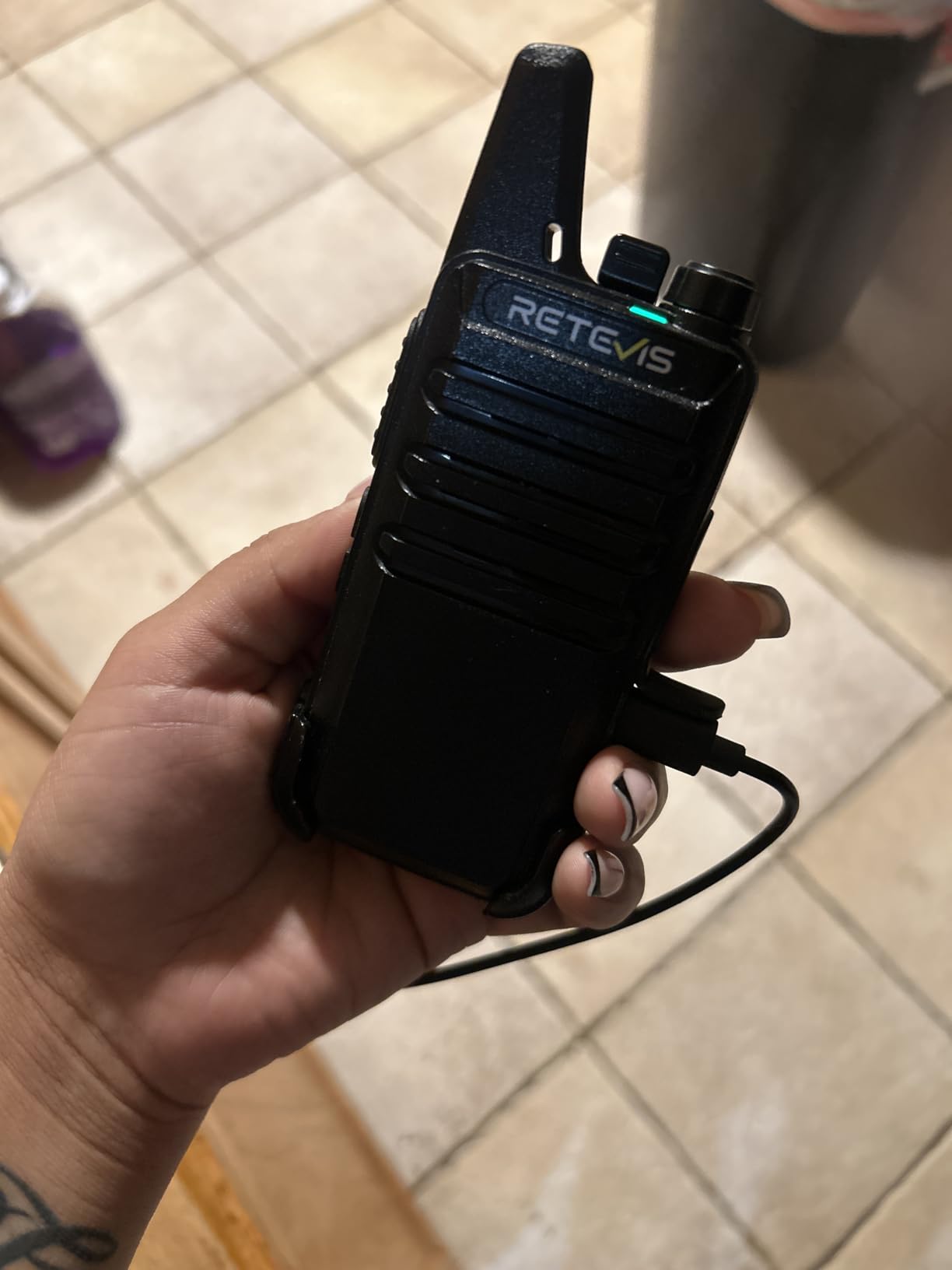
At 3.8 ounces and roughly the height of a smartphone, this is the radio most likely to actually be on a child’s person when you need it. Adults routinely lose bigger handhelts in a coat pocket. A child carrying something that weighs nothing is the whole difference.
USB-C charging removes the single most common kit-building mistake, which is a drawer full of dead proprietary battery packs. There is a 1000mAh cell inside rated at 10 hours of continuous use, and in intermittent family use reviewers report three or more days before a charge is needed.
The single power and volume knob means a child can turn it on and select a channel without an instruction manual. eVOX lets them talk with a walkie-talkie clipped to a backpack rather than in a hand, which is exactly how school pickup and the walk home happen.
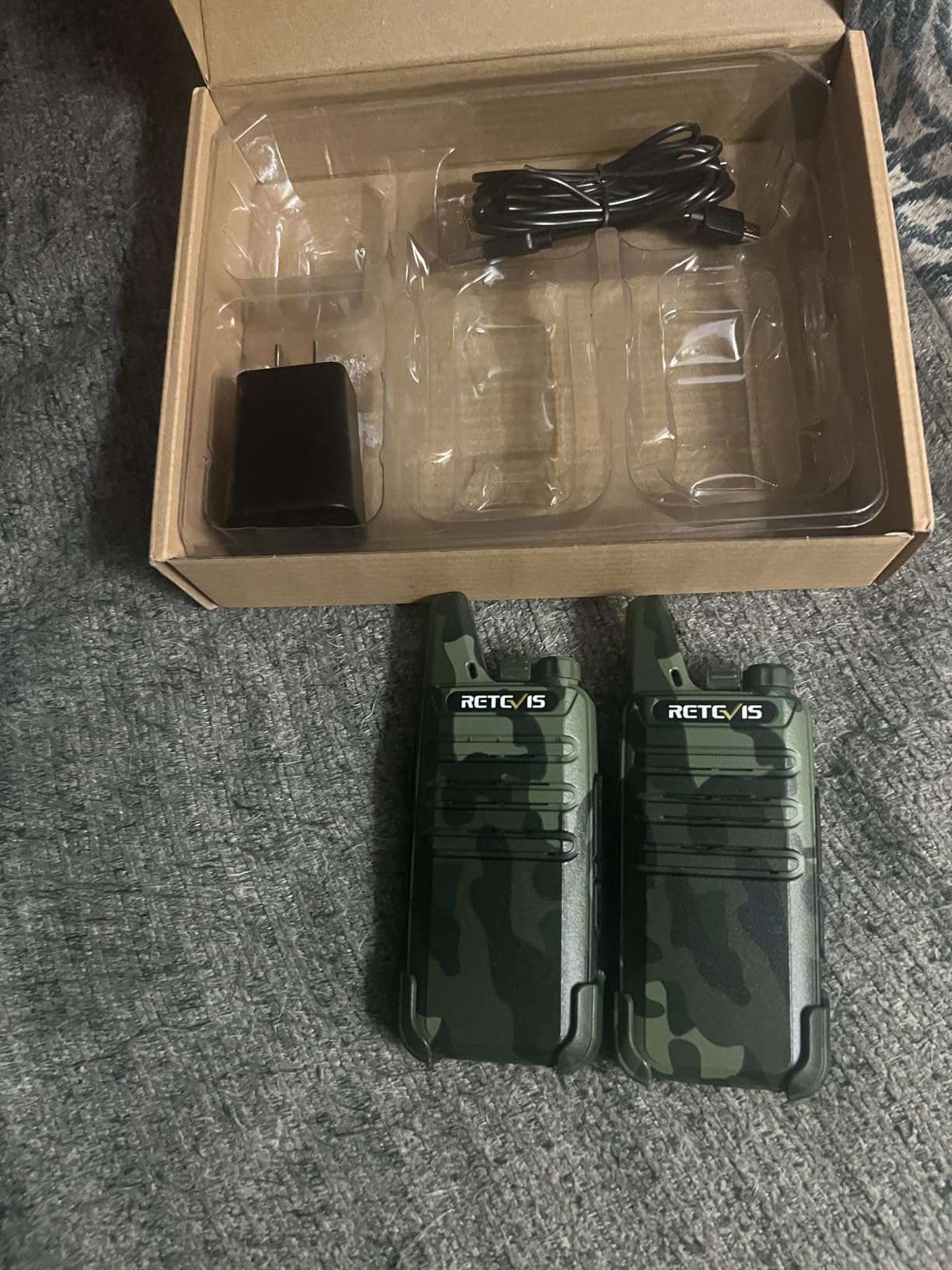
The control layout is deliberately plain, and the noise reduction keeps voices intelligible around traffic and campground noise. An emergency alarm function gives you a way to signal without speaking, which is useful with a frightened child who will not talk into a microphone.
Reviewers also report a set that came back inside after a month outdoors in snow and rain once it had dried out. That is not water resistance, and we would not plan around it, but it is more resilience than the price suggests.
Who this radio suits?
Families with school-age children, anyone who does not want to hand a child a large brick, and households that travel with a lot of USB-C chargers already. It is also comfortable for seniors, at 3.8 ounces and with no menu diving.
If your family already owns other brands of radio, read the limitation below carefully before buying this one. It is the most important limitation in the roundup.
Where it falls short?
The RT22 arrives with a squelch code preset on every channel, and that means it will not interoperate out of the box with other brands. If a grandparent has a Midland and a parent has a Motorola, these three will hear each other but the RT22 will stay silent until someone clears the code in the menu.
It is also not water resistant and offers only 16 channels, so it is a family and travel radio rather than a storm or neighbourhood one.
4. Midland LXT600VP3 — Best for NOAA Weather Alerts on Disposable Batteries
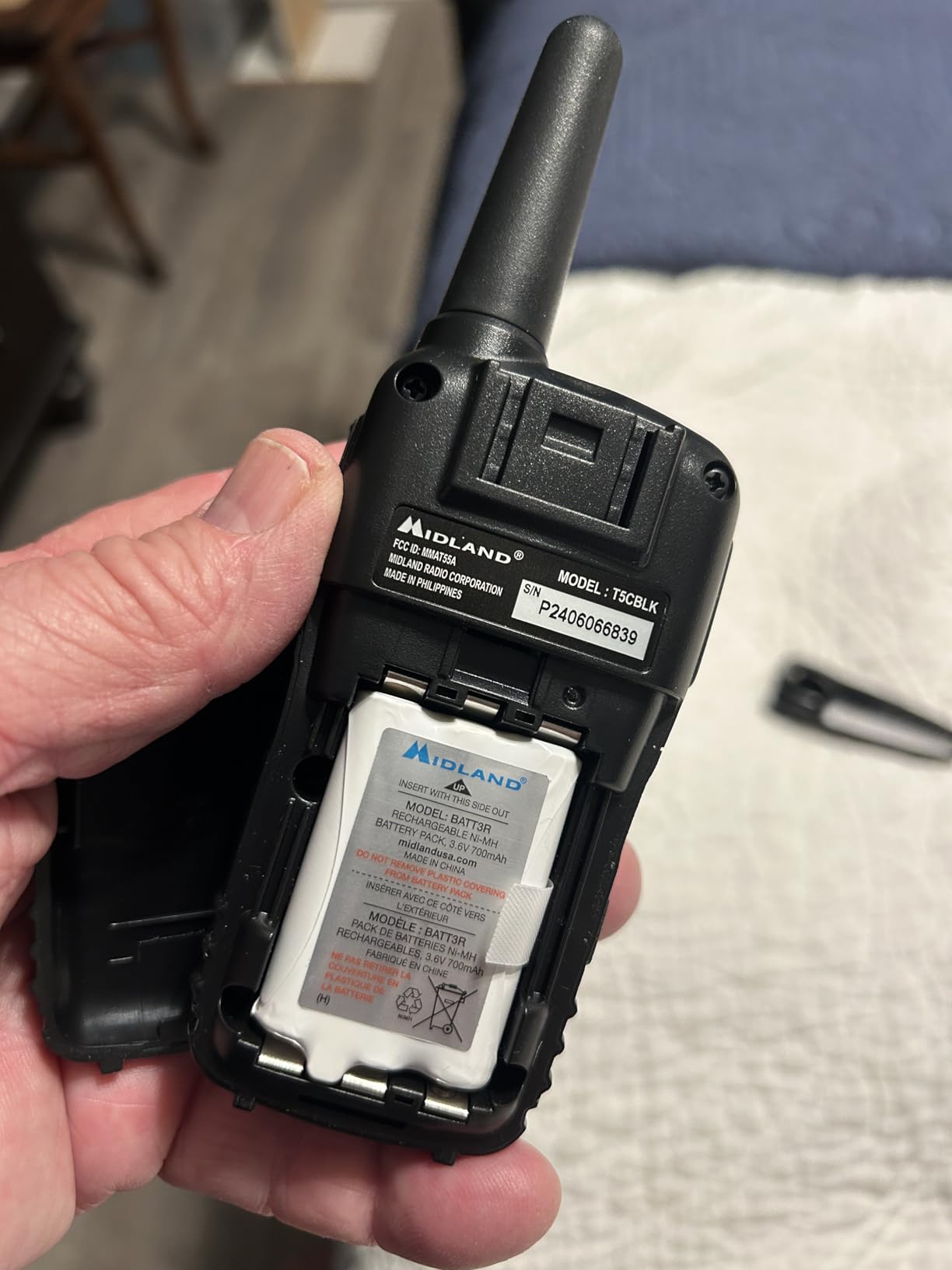
Midland LXT600VP3 FRS License Free Walkie Talkies. Black, 2 Pack
36 FRS channels with channel scan
121 privacy codes for 2662 combinations
NOAA Weather Scan and Alert
Rechargeable pack or 3 AAA batteries
Pros
- Large channel and privacy-code selection for private family channels
- NOAA scan locks onto the strongest weather channel automatically
- Dual power lets you swap to AAA cells when the rechargeable pack runs low
- Silent operation mode for discreet monitoring
- Rechargeable packs and desktop charger included
Cons
- Shortest listed battery life in this roundup at roughly 6 hours
- No water protection (IP00) so rain exposure is a risk
- Stated 30-mile range applies only to unobstructed terrain
- Listings vary between 22 and 36 channels which can confuse setup
For a household with no reliable way to charge anything, the ability to run on three standard AAA cells is the deciding feature. Everyone has a drawer full of AAAs. Nobody has a drawer full of proprietary lithium packs that died two years ago.
The channel count is the highest of the plain FRS models here at 36, with 121 CTCSS privacy codes for up to 2,662 combinations. That is a lot of room to find a channel that avoids local chatter, which matters more than most buyers expect once a neighbourhood starts using them.
NOAA Weather Scan and Alert is automatic. The radio finds the strongest local weather channel on its own and alarms when severe weather broadcasts, so there is no setup step to forget in a panic.
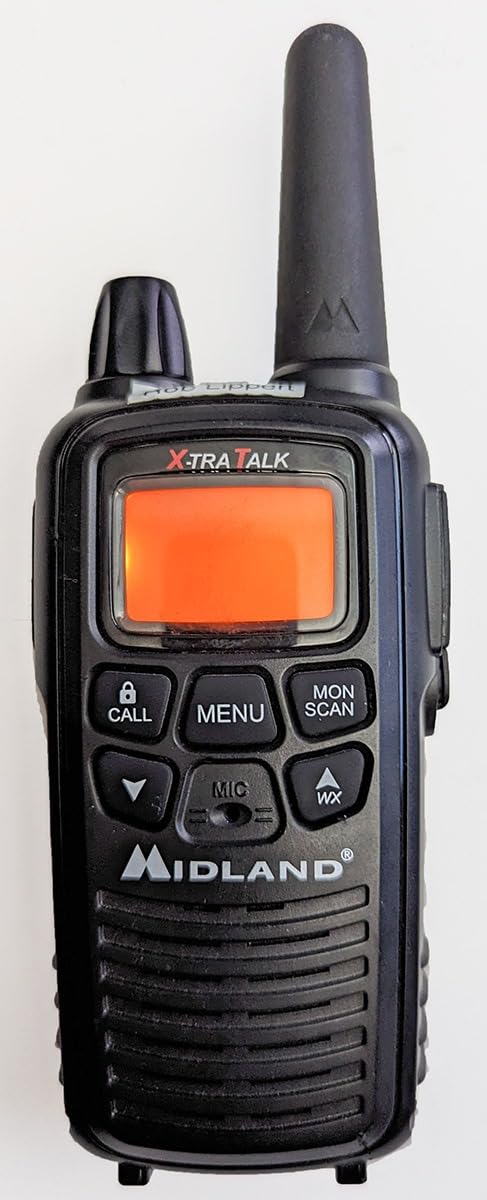
Silent operation is a small feature with an outsized purpose here. Turning off the call tones lets you keep an ear on the weather channel all night without a siren every few minutes, which is how people end up ignoring their own radio.
Reviewers treat this as a long-serving, dependable pair that works in the rain, in snow, and on the trail, with the belt clips and rechargeable packs and desktop charger all in the box.
Who this radio suits?
Households that expect a multi-day outage with nowhere to plug in, and want a licence-free radio they can hand to any visitor, sitter or neighbour without paperwork. Free FRS channels mean no call sign, no filing, nothing to forget.
It is also a good fit for anyone who wants the weather channel without the feature bulk of a GMRS set.
Where it falls short?
Six hours of listed battery life is the shortest in this roundup, and the IP00 rating means this radio should never be the one in the rain. Keep it indoors, in a jacket pocket, or on a desk during weather.
Some listings disagree on the channel count, showing either 22 or 36 depending on the seller. Check what your specific unit reports on power-up before writing the family protocol.
5. Midland T51VP3 X-Talker — Best for First-Time Users
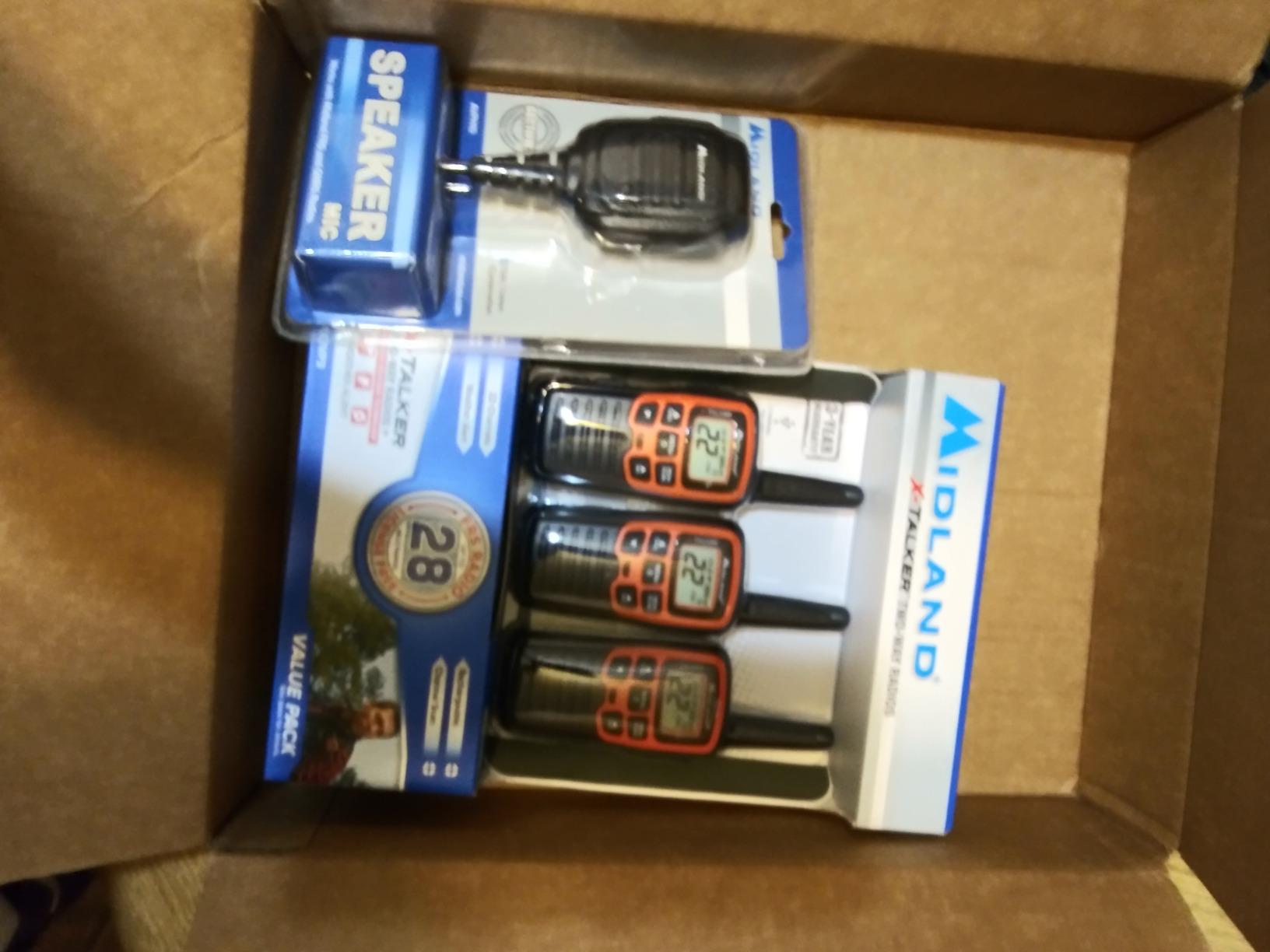
Midland T51VP3 X-Talker FRS Walkie Talkie, Orange, 2 Pack
22 licence-free FRS channels
38 privacy codes for 836 combinations
NOAA weather alerts plus AMBER support
eVOX with 3 sensitivity levels
Pros
- Proven durability over years of field use in all weather conditions
- NOAA weather scan and alerts are genuinely useful in an emergency
- Rechargeable packs hold a charge for days of intermittent use
- eVOX with three sensitivity levels allows hands-free talking
- Compact
- quick to set up
- and channel locking keeps a family on one channel
Cons
- Rechargeable pack capacity degrades after a couple of years
- Advertised 28-mile radius is far beyond real-world range
- Not fully waterproof despite listing wording
- Advanced features take some configuring
The easiest radio here to hand to someone who has never used one. Licence-free FRS, a simple channel knob, and a channel lock that stops anyone in the household wandering off the agreed channel at the worst moment.
That channel lock deserves more credit than it gets. In a family emergency the most common failure is not a dead battery, it is a relative quietly switching to channel 3 while the rest of the group is on channel 7. Locking the channel removes the possibility entirely.
eVOX has three sensitivity levels, which is a detail that matters more than it sounds. Too sensitive and the radio transmits every time it hears a sound, draining the battery and blocking the channel. Three settings let you tune it to a room, a car or a windy trail.
AMBER alert support alongside the NOAA weather scan means the radio will sound for severe weather and for national emergency broadcasts such as civil danger warnings, which are the alerts most relevant after a hurricane makes landfall.
Reviewers describe a rugged, compact radio that has held up for years of field use and that has been reported working for a mile or more through wooded, hilly terrain, which is a much more useful claim than a maximum on a box.
Who this radio suits?
Any household that wants a licence-free radio simple enough to hand to a teenager or a grandparent with no instruction. It works well for neighbourhood coordination where people will be spread across a few blocks.
It is a natural fit as the second radio in a two-tier kit, with a more capable set carried by the adults.
Where it falls short?
The rechargeable packs lose meaningful capacity after roughly two years, and runtime drops to a few hours on ageing cells. Budget for a replacement pack set as part of the kit, not an afterthought.
The 28-mile claim is aspirational. Reviewers report real-world figures of 400 to 600 metres in cities, and the listing wording overstates the water resistance, so plan on keeping it under cover.
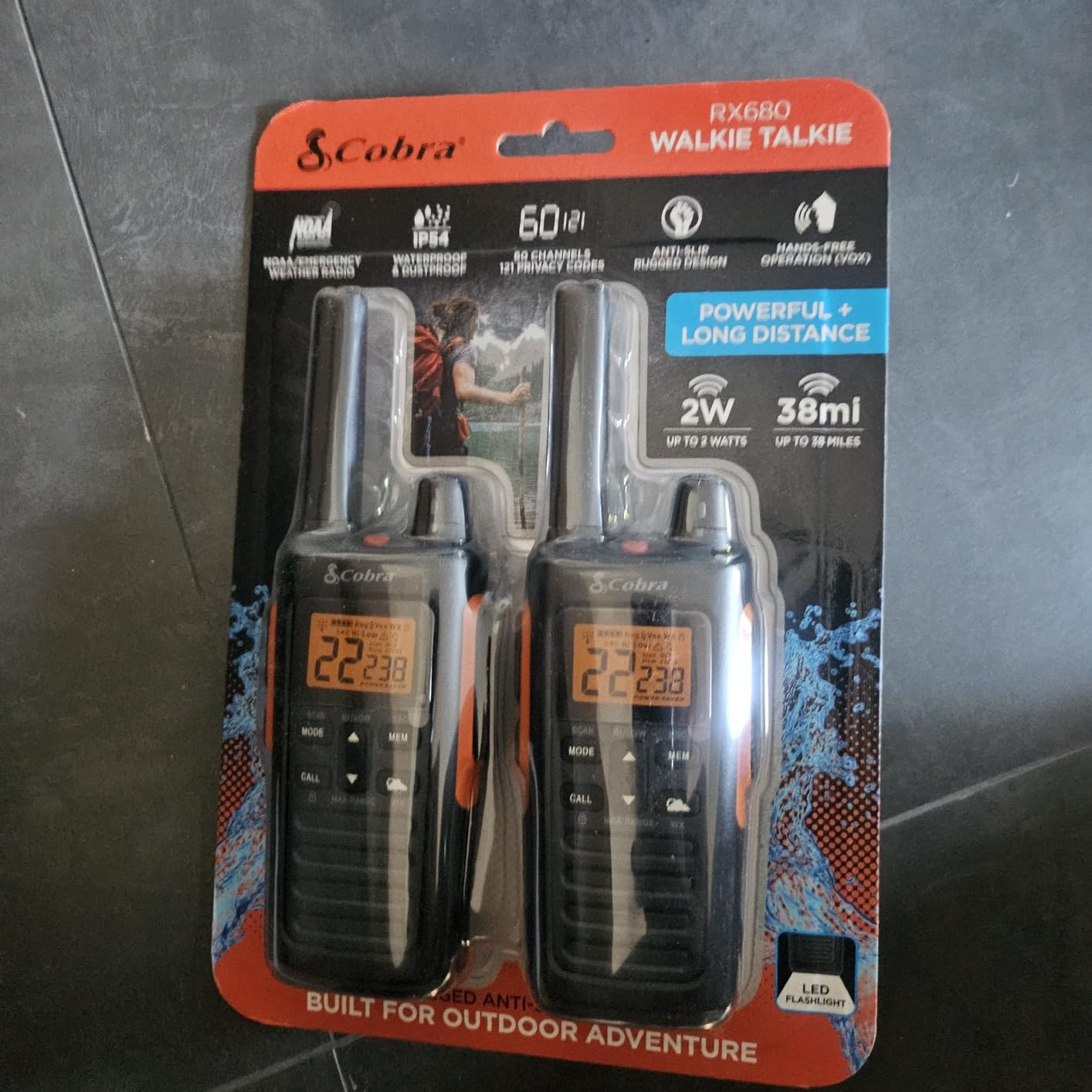
6. Cobra RX680 — Best for Loud Audio and Vehicle Use
Cobra RX680 Walkie Talkies (2-Pack), IP54 Water Resistant Design
60 preset channels
18-hour lithium-ion battery
IP54 splashproof, drop-proof housing
VOX, Vibralert and LED flashlight
Pros
- Volume and on/off live on a dial so the front buttons can be locked after setup
- Lithium-ion batteries run 3 or more days of continuous family use
- Strong
- loud speakers that are easy to hear without holding the radio to your ear
- Durable enough for search-and-rescue style field work
- Works as both FRS and GMRS for more reach than FRS-only sets
Cons
- The advertised 38-mile range is unrealistic
- with real-world figures of 1 to 3 miles
- Advanced features take experimentation to configure
- Charging base uses a USB plug rather than a wall adapter
- One owner reported a unit that stopped transmitting after light use
Put this one in the car. The loud speaker and the dial-based volume control are the two features that matter most when a radio is clipped to a dashboard in a storm and the windows are up, and almost nothing else in this roundup handles both as well.
Sixty preset channels give 22 standard FRS plus 38 pre-programmed channel and privacy code combinations, and the set works on both FRS and GMRS, so a GMRS licence extends your reach without changing hardware. It also carries NOAA weather channels for round-the-clock severe weather updates.
18 hours of stated battery life from the included lithium-ion packs, and owners report three or more days of continuous family use on one charge. That comfortably covers a long storm day without a charger.
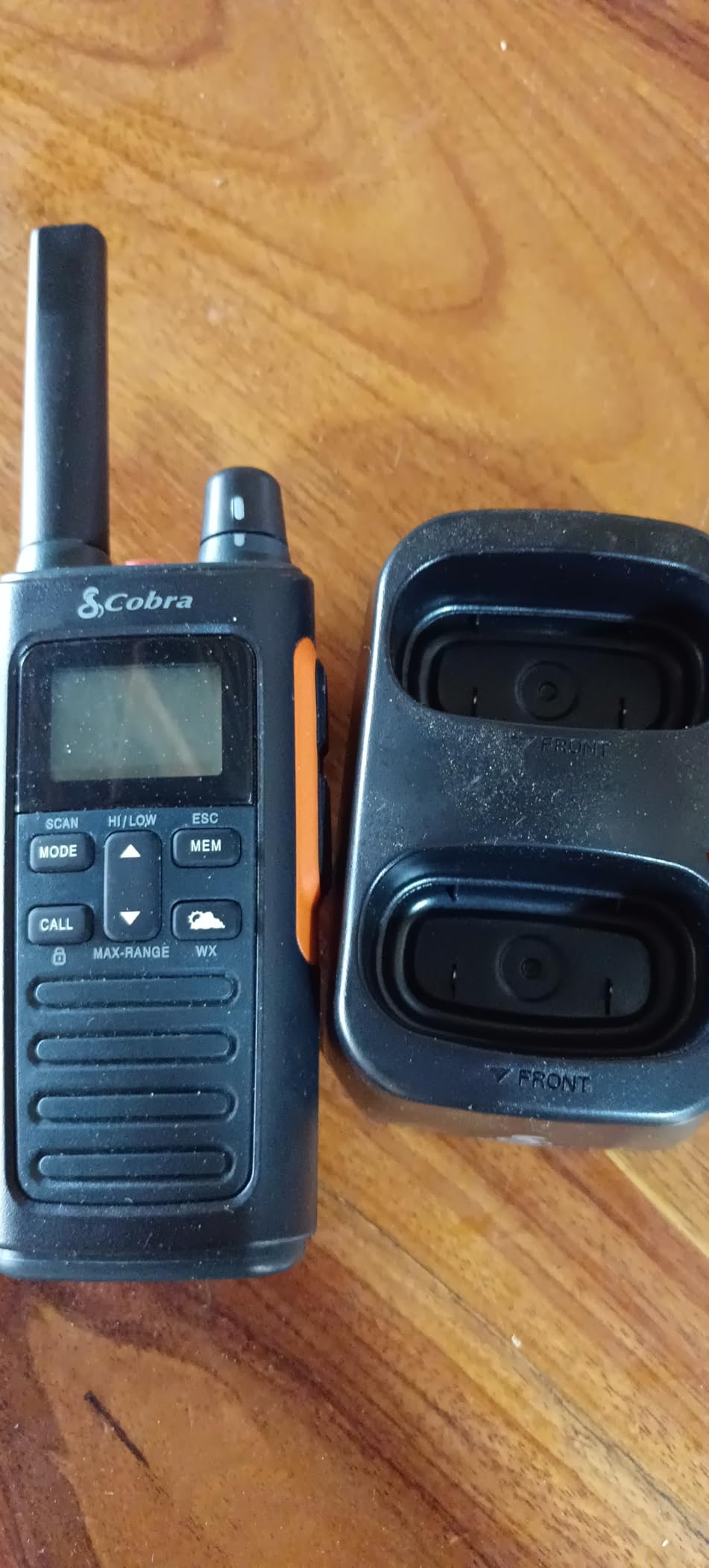
Volume on a dial rather than on a button is an underrated design choice. You can find the right level in the dark, with gloves on, without cycling through nine beeps to get there. Once the front buttons are locked, a radio in a pocket cannot be silenced by a bag.
The Vibralert vibrating alert and the SOS function give you two silent ways to signal. Search-and-rescue volunteers use this model for exactly that reason, and the housing is rated IP54 and drop-proof.
Who this radio suits?
Road trips, breakdowns, RV travel and any household that wants a radio they can hear from another room or another vehicle. It is also the right pick for anyone who will get a GMRS licence and wants the extra reach.
Search-and-rescue volunteers and neighbourhood coordinators who need volume more than portability will like the physical size and the large controls.
Where it falls short?
The 38-mile claim is the single biggest gap between marketing and reality in this roundup, with owners reporting 1 to 3 miles in practice. On the default channel it also picks up other people’s chatter until you move to a quieter one, which can be confusing for a first-time user.
The feature set takes experimentation, the charging base wants a USB plug rather than a wall adapter, and one owner reported a unit that stopped transmitting after light use. Test transmission before you depend on it.
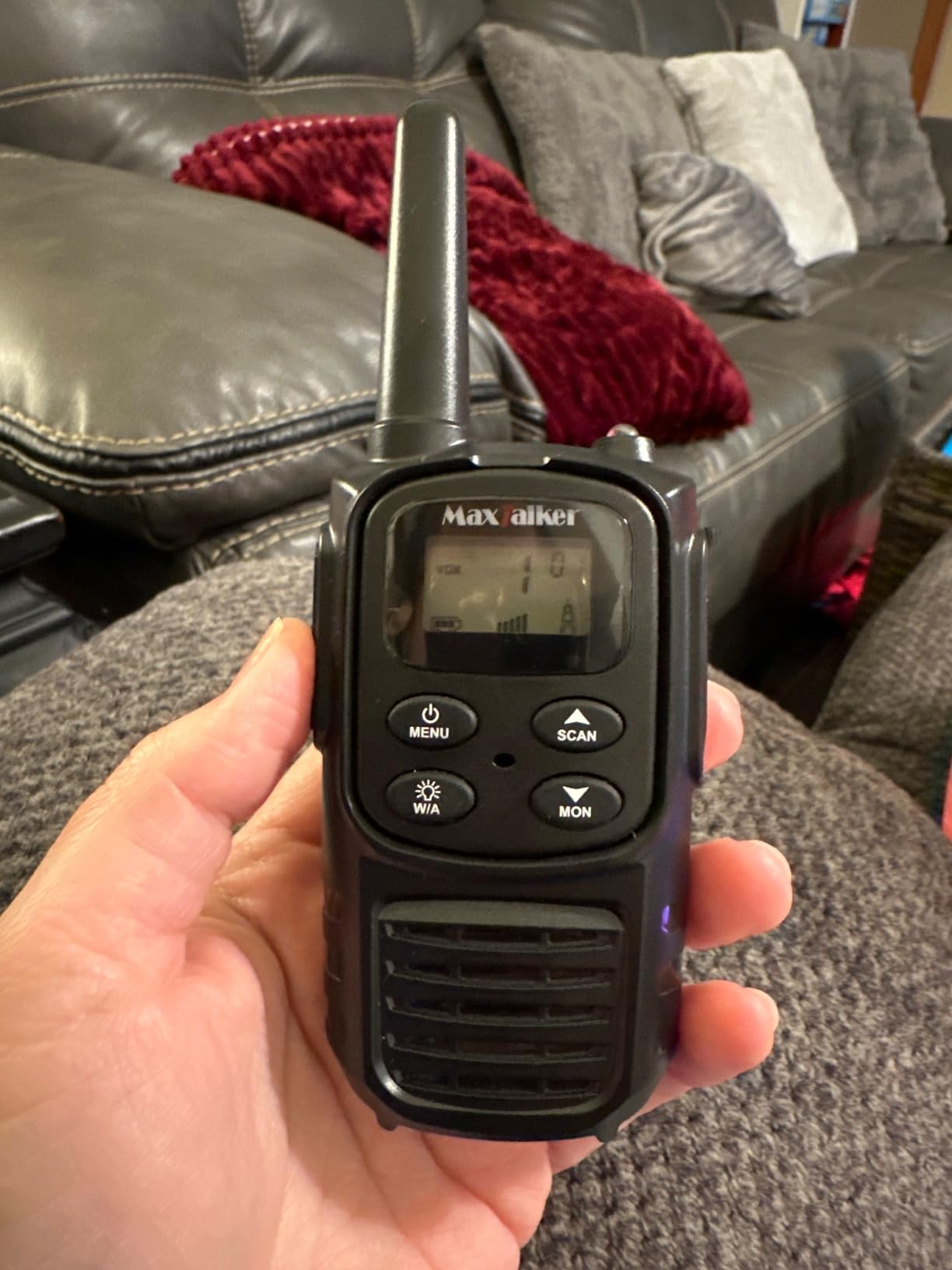
7. MaxTalker Rechargeable FRS Two-Pack — Lowest Cost Option
Walkie Talkies Long Range for Adults, Rechargeable FRS Two-Way Radio, 2Pack
22 FRS channels with 99 CTCSS tones
1200mAh USB-C battery, up to 72 hours standby
NOAA weather scan, VOX and flashlight
Compatible with other brands on matching channel and code
Pros
- Low cost for a rechargeable FRS pair with USB-C charging
- 1200mAh battery gives long standby time for weekend trips
- 2178 channel and privacy-code combinations cut interference on crowded channels
- Works with other brands when on a matching channel and privacy code
- Flashlight and VOX are useful around campsites and on hikes
- NOAA weather scanning adds emergency value
Cons
- Not water resistant so bad-weather durability is limited
- Fewer than 3000 combined channel and code options versus premium models
- No docking charger included
- only USB-C cables
- Thinner long-term review record than the established brands
Interoperability is what separates this one from other budget packs. The 22 FRS channels with 99 CTCSS tones, giving 2,178 combinations, are specified as compatible with any brand on the same channel and code, which is exactly what you need when the family already owns mixed brands.
That single feature removes the most common real household problem. Most walkie talkie failures that look like hardware faults are actually a privacy code mismatch, and a radio that will talk to whatever the family already has is worth more than ten extra channels.
The 1200mAh battery is larger than most at this level, with up to 72 hours of standby and USB-C charging, so there is no proprietary dock to lose. NOAA weather scanning, VOX and an integrated flashlight are all included at no extra cost.
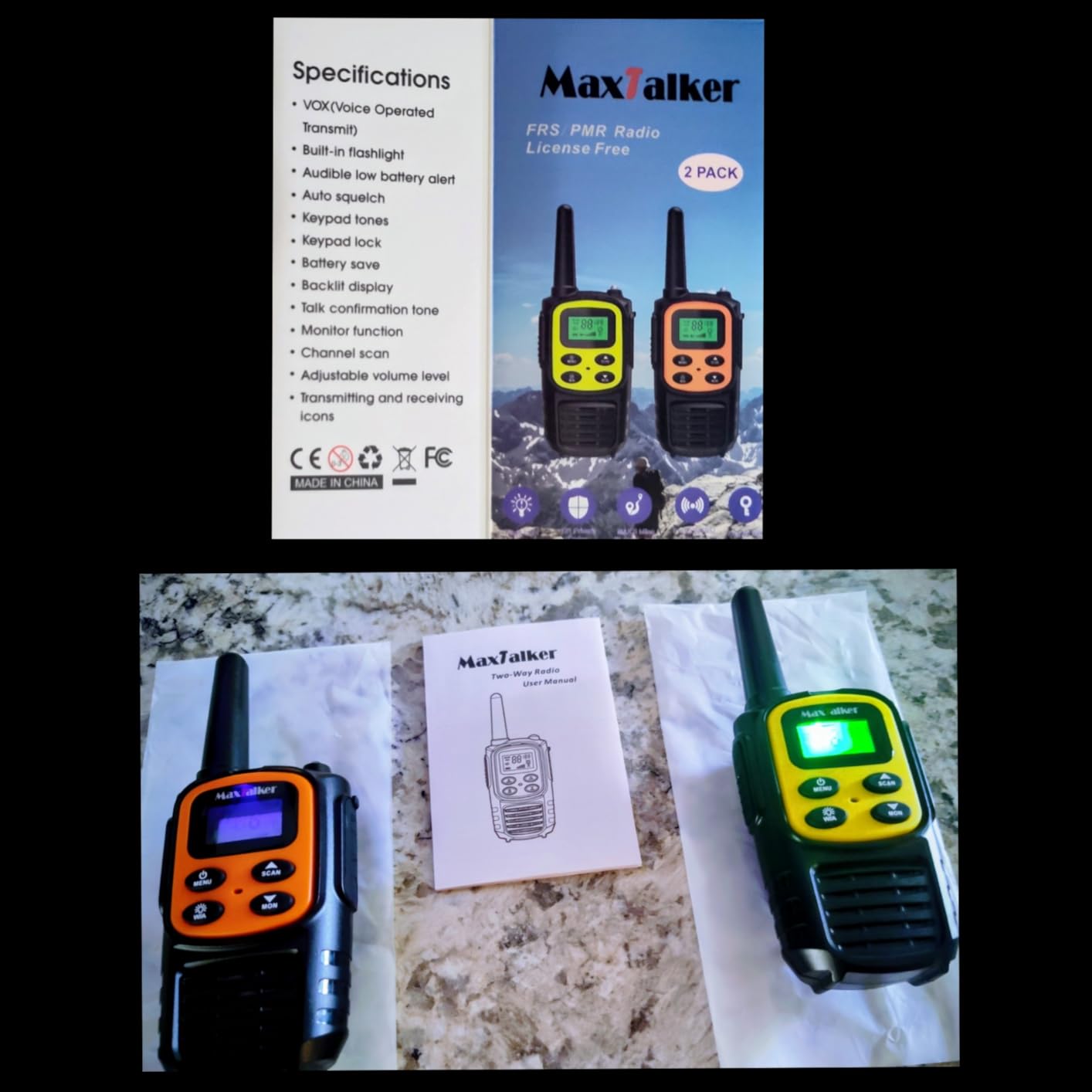
Reviewers highlight the large battery, the cross-brand compatibility, and the built-in flashlight and NOAA scanning as the combination that makes this more than a stopgap. It is positioned as an affordable gift for kids and families, and for weekend trips it does the job without fuss.
The stated range of up to 5 miles in open areas is plausible for rural use, and the manufacturer does at least specify open areas rather than implying it everywhere.
Who this radio suits?
Households that already own radios from several brands and want one set that will actually join the group. It is also a good second set for a cabin, a car, or a go bag where a dropped radio would sting.
For a first emergency kit on a tight budget, the 22 channels, NOAA scanning and USB-C battery cover the essentials without an application process.
Where it falls short?
It is not water resistant, so rain and drop exposure will shorten its life. There is no docking charger, only cables, which means a lost cable is a lost charging capability.
Its review history is thinner than the established brands, and fewer than 3,000 combined channel and code options means slightly more chance of landing on a busy channel in a dense area.
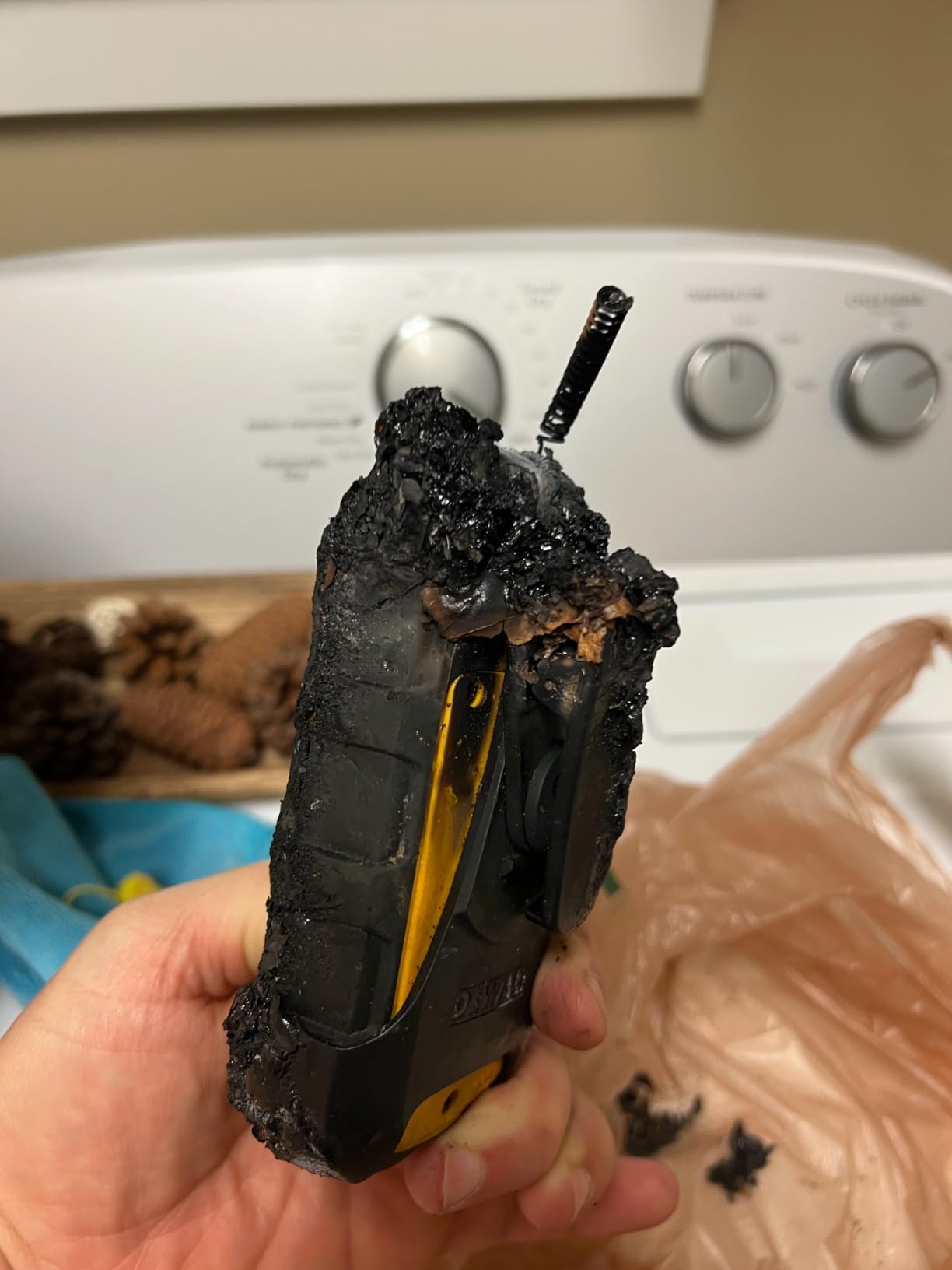
8. DEWALT DXFRS800 — Best for Multi-Story and Concrete Range
DEWALT DXFRS800 FRS Walkie Talkies, 2W, IP67 Waterproof, 2 Pack
2W FRS output for 300000 sq ft or 25 floors
IP67 waterproof and dustproof, 2 meter drop rating
22 channels and 121 privacy codes
18-hour battery with dock and USB-C
Pros
- 2W power holds signal through 25 floors and 300000 sq ft where lighter sets fail
- IP67 sealing survives water spray
- dust and repeated drops
- 18-hour battery plus USB-C charging in a vehicle or from a power bank
- Large stiff call button resists accidental presses in a tool belt
- Owners report identical performance after five years of use
- Dual-port dock keeps both radios ready at once
Cons
- Belt clips are the most common failure point and can snap after a month
- Antenna shrouds can break on a hard drop
- Audio can sound tinny and weak at distance
- Some units reported weak speaker output after around 9 months
Power output is the difference here, and it is not a subtle one. A 2-watt FRS set punches through concrete, steel and floor after floor in a way that the 0.5-watt consumer sets in this roundup simply cannot. If your household is in a dense apartment block, a hospital, a school or a warehouse, this is the radio that works.
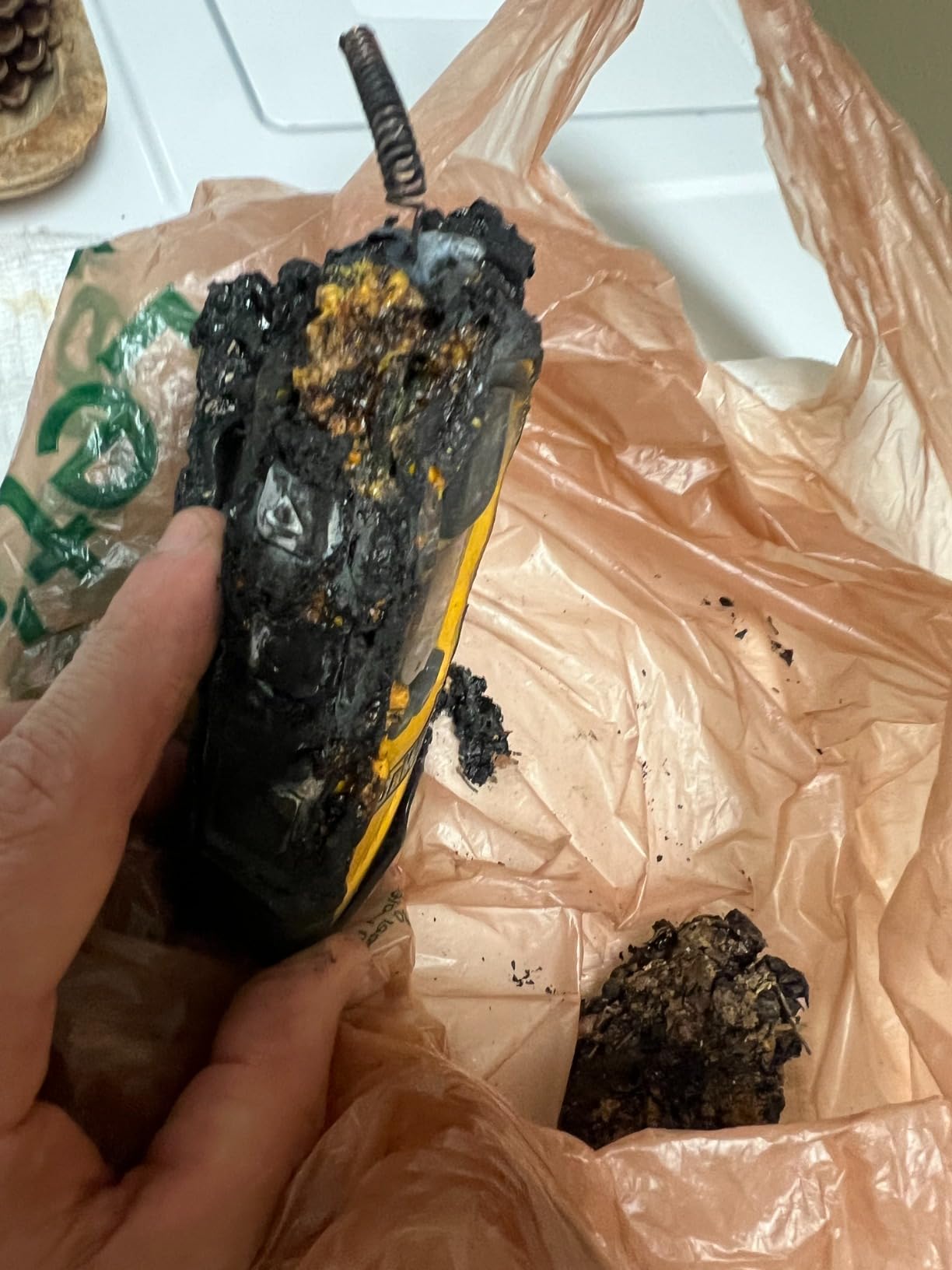
The IP67 rating is the real one, meaning sealed against full water and dust immersion, with a housing rated for drops up to 2 meters. Combined with an 18-hour battery, it is the most genuinely disaster-ready set we looked at.
It also has the highest rating in the roundup, and owners report units performing identically after five years of use. That longevity matters for a kit you buy once and hope to never need.
The deliberately stiff call button is a smart piece of design. On cheaper radios, a radio in a tool belt or a jacket pocket transmits constantly, which blocks the channel for everyone and drains the battery. This one resists accidental presses.
Two holsters and a dual-port dock charger are in the box, so both radios charge at once and neither is unprotected in a bag. The auto-squelch keeps the audio clean in a busy environment.
Who this radio suits?
Families in multi-story buildings, dense urban areas, or anywhere the signal has to survive concrete. It is also a strong choice for flood zones, since IP67 is the rating that means the radio survives being dropped in water.
Anyone who expects to keep one kit for a decade will like the reported five-year track record.
Where it falls short?
The belt clips are the most cited failure point and can snap after as little as a month, which is a good reminder to buy a carabiner or a lanyard. The antenna shrouds can also break on a hard drop onto concrete.
Audio is reported as tinny and weak at distance or in confined spaces, and a few owners saw weak speaker output after around nine months. The stated 2-mile talking range is one of the most conservative maximums in this roundup, which tells you the extra power is for penetration rather than distance.
9. Baofeng UV-5R Upgrade AR-5RM 10W — Best for Households That Get an Amateur Licence
Baofeng Radio Ham Radio Handheld UV-5R Upgrade Long Range Rechargeable AR-5RM 10W NOAA Weather Emergency Tactical Two Way Radio with Programming Cable for Survival Gear Hunting Camping,2 Pack
10W dual-band VHF and UHF
999 storage channels, 1.77 inch color screen
2500mAh battery, USB-C and base charging
NOAA weather receiver and frequency copy
Pros
- 10W output reaches repeaters 20 to 30 miles from an urban apartment
- Reported 1.5 miles of city range on the medium antenna
- NOAA weather reception works out of the box
- Frequency copy plus the CHIRP cable makes channel setup fast
- 2500mAh battery gives 2.5 to 3 days of moderate use
- Deep accessory kit with three antenna lengths and speaker mics
Cons
- Transmission on non-FRS bands requires an amateur radio licence
- Instructions are sparse and the menus take real learning time
- Speaker mic and programming cable connections are fragile
- Supplied antennas are tuned for ham frequencies rather than FRS or GMRS
- Bulky body
- cheap plastic feel
- no water resistance
Anyone who sits the amateur radio exam gets access to a 70-centimetre band that no FRS or GMRS radio can touch, and that band is where repeaters live. Reviewers reach repeaters 20 to 30 miles from an urban apartment with this set, which is a category of capability the rest of this list cannot offer.
Even in the city on the medium antenna, owners report about 1.5 miles of usable range, roughly three times what typical consumer walkie talkies deliver between buildings. For a family separated across a neighbourhood during an evacuation, that is the difference.
The frequency copy function is the feature that saves you an evening. It duplicates frequencies off another radio without going through a complex programming routine, and the included cable works with CHIRP software for anyone who wants more control.
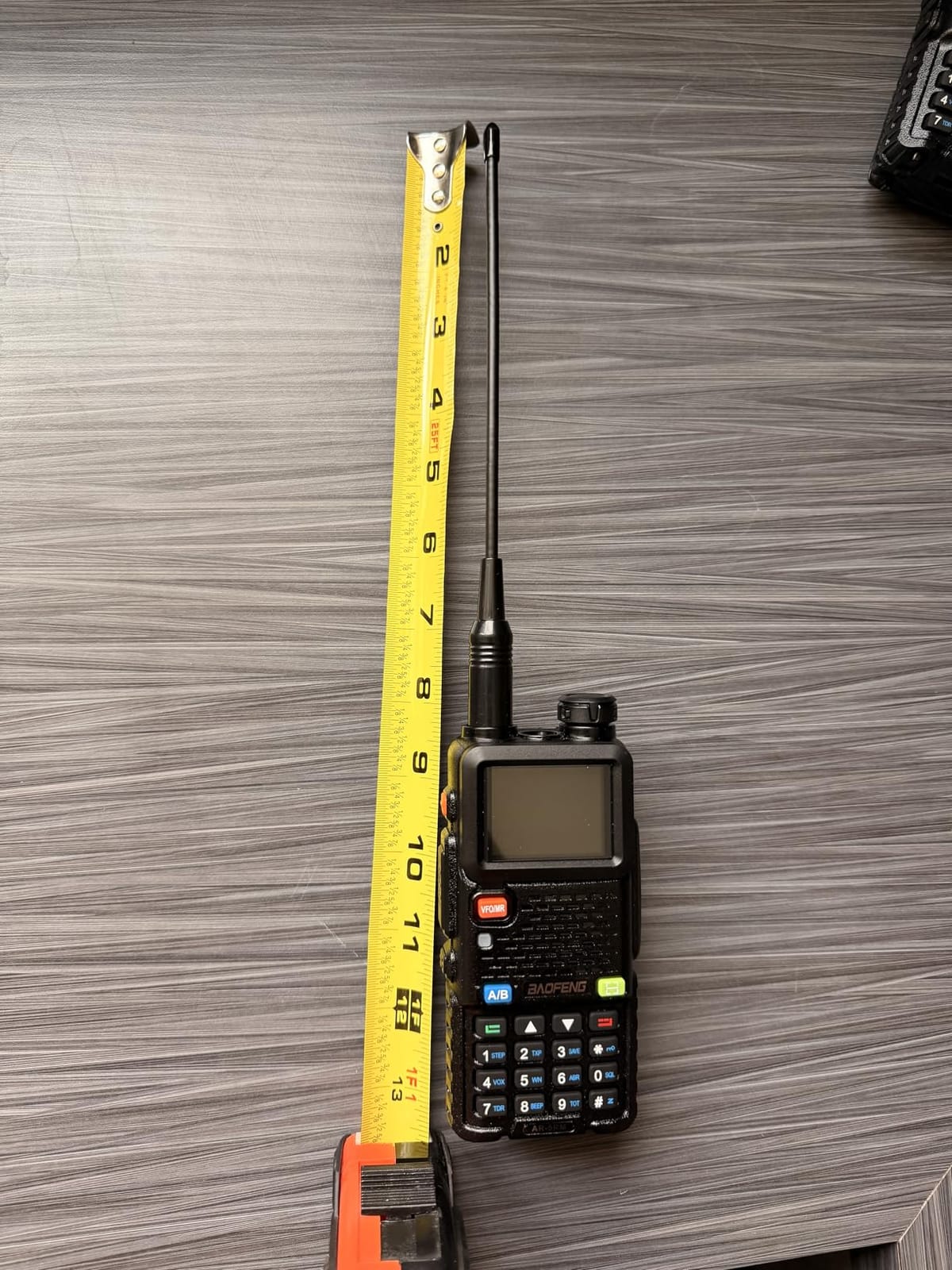
The accessory kit is unusually deep. Three antenna lengths, speaker microphones, earpieces, belt clips, hand straps, and both a USB-C cable and a US base charger, with 2500mAh cells rated at 2.5 to 3 days of moderate use.
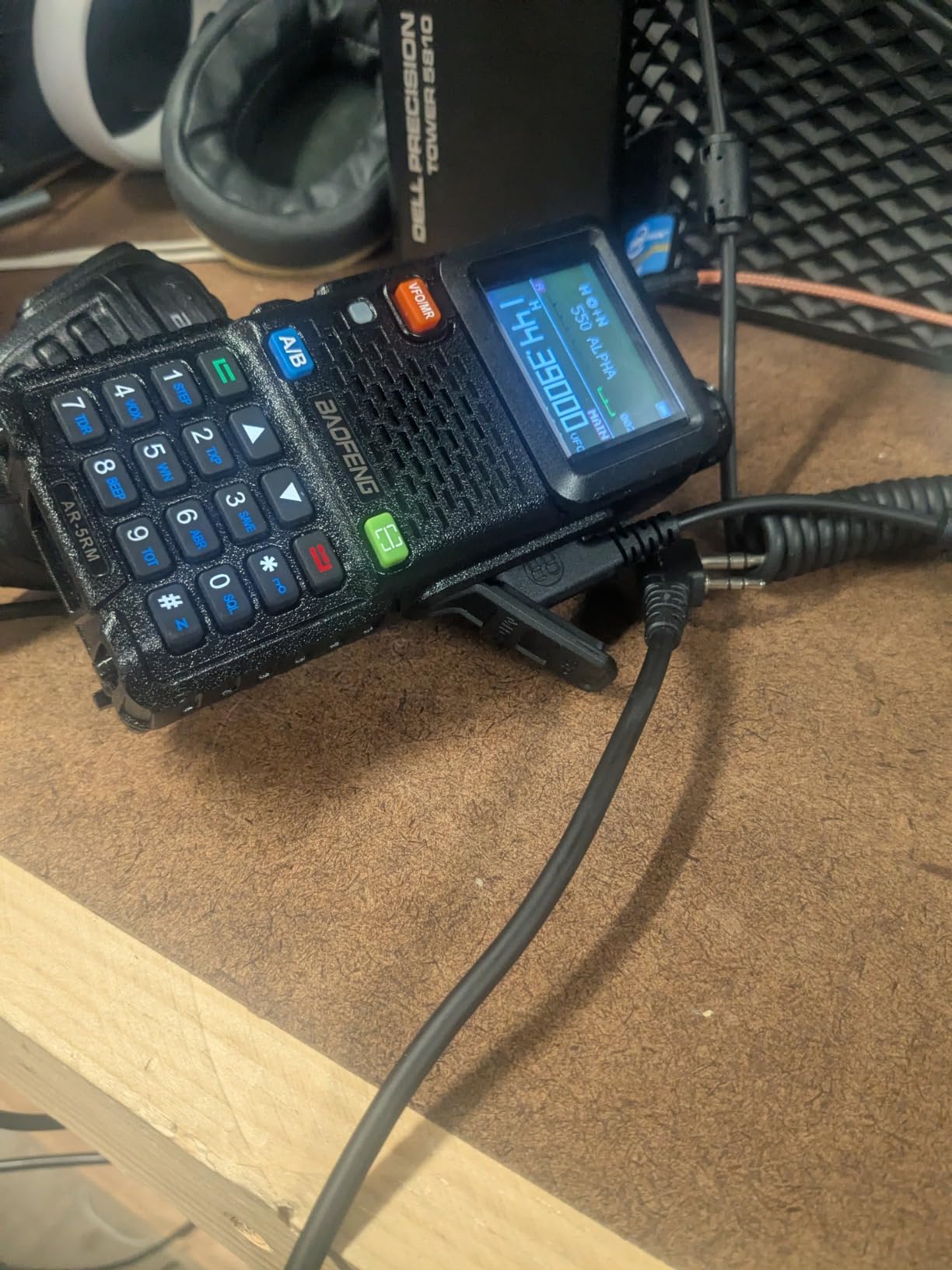
NOAA reception works out of the box and is reported to stay clear and audible in wind, which matters because the built-in flashlight on these radios is bright enough to be genuinely useful at night.
Who this radio suits?
Families with a large rural property, a farm, or a spread-out neighbourhood, who are willing to spend an evening on the amateur exam. Once licensed, the range advantage over every other pick here is not subtle.
Our guides to long-range radios for hunting and radios for large properties cover the antenna and height considerations in more detail.
Where it falls short?
The licence question is real. Transmitting on the amateur bands requires an amateur radio licence, and the supplied antennas are tuned for ham frequencies rather than FRS or GMRS, so this is not a casual drop-in licence-free family radio.
Instructions are sparse, the menu takes real learning time for a first-time buyer, and the speaker mic and programming cable connections are fragile if plugged in while the radio is powered. The body is bulky and the plastic feels cheap, and there is no water resistance.
10. Retevis RB48 — Best for Floods, Drops and Rough Handling
Retevis RB48 FRS Walkie Talkies Long Range,Mil-Standards 810H Two Way Radio
IP67 waterproof, dustproof and floating
MIL-STD-810H tested durability
2000mAh battery up to 20 hours
Dual PTT with glove-friendly buttons
Pros
- IP67 waterproof and floats
- so it survives being dropped in water
- MIL-STD-810H durability testing with 1000 two-meter drops passed
- 2000mAh battery gives the longest runtime here at up to 20 hours
- High-visibility yellow body is easier to find in a bag or in tall grass
- Dual PTT and oversized buttons work well with gloves on
- 5-year warranty on the radio body
Cons
- Heavier and bulkier than most family-oriented FRS sets
- Fewer privacy-code combinations than 121-code models
- Not water resistant at the accessory level so headsets need care
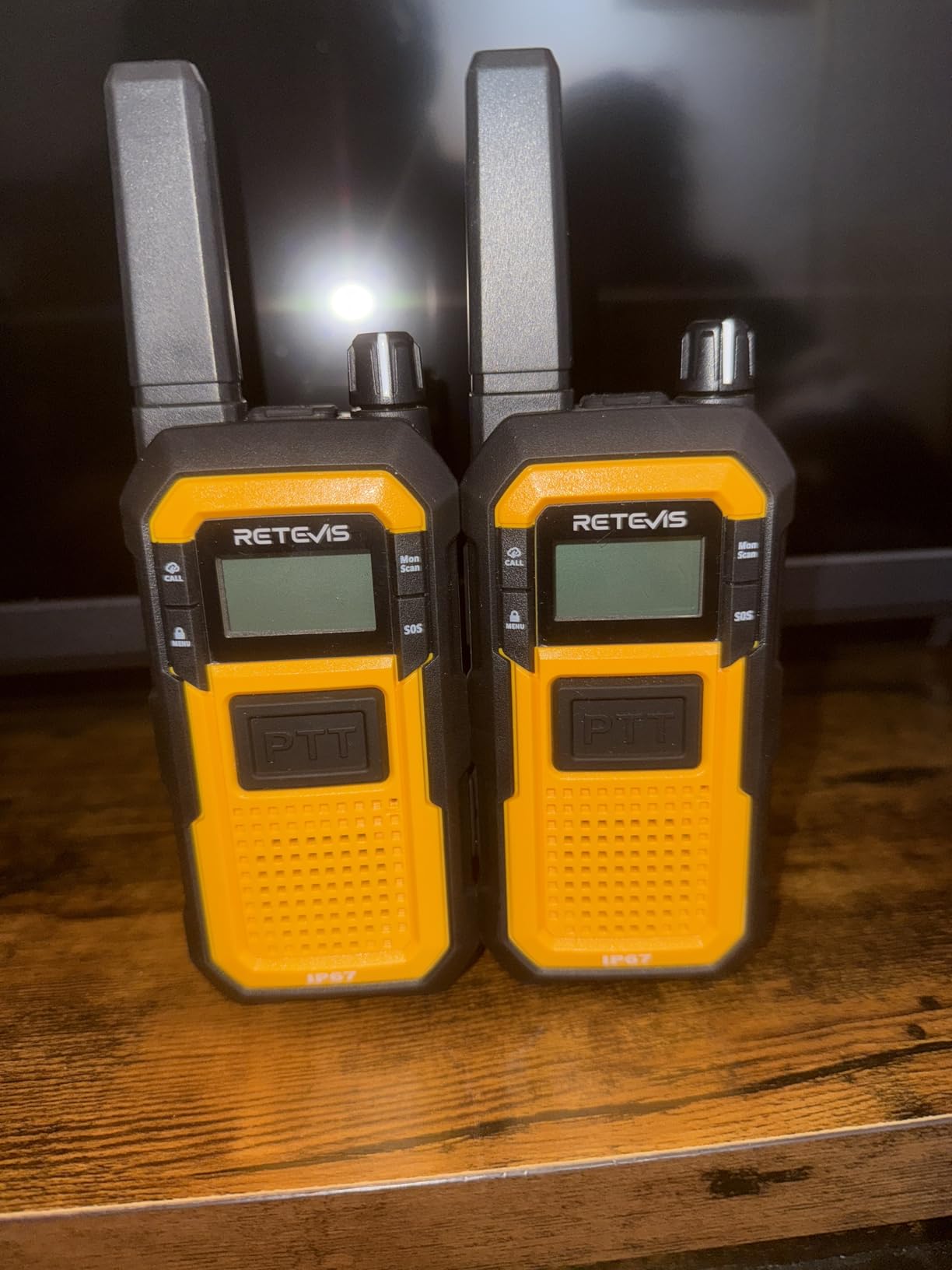
This is the radio to hand to a teenager or a volunteer during a flood. It floats, it carries an IP67 rating, and the high-visibility yellow body can be spotted in mud, moving water or a half-demolished structure when a black radio would be gone.
The runtime is the best in the roundup at up to 20 hours from a 2000mAh cell, and the USB-C charging with a 2-in-1 dock means both radios charge on one lead. For a multi-day evacuation with unreliable power, that is the number that matters most.
MIL-STD-810H testing against drops, dust, vibration, heat and cold, including a passed 1,000-drop test from two meters, is the kind of specification that matters when the gear is being thrown into a vehicle rather than carried carefully.
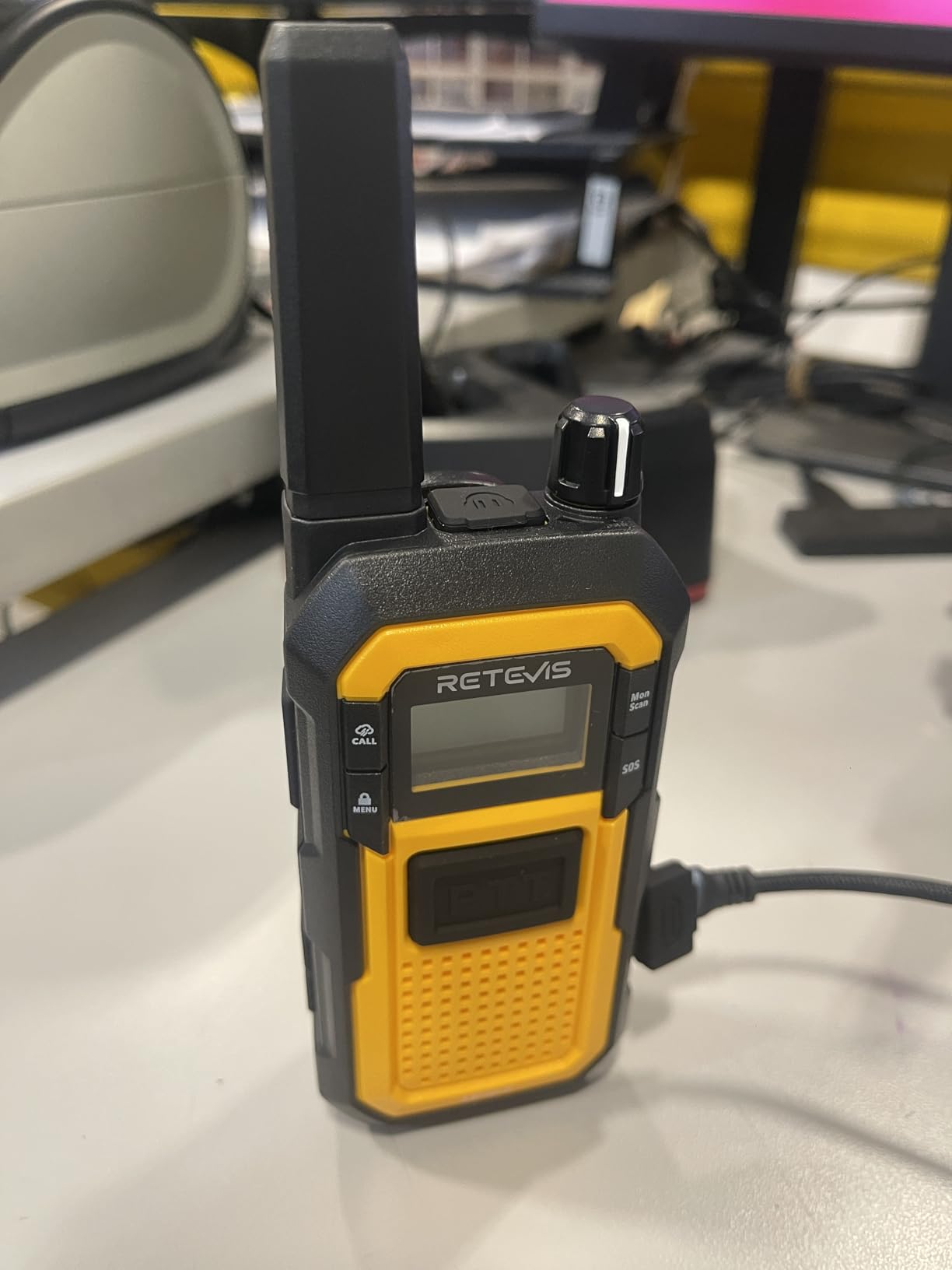
Dual push-to-talk with oversized buttons and silicone covers is a real usability win. The larger of the two buttons transmits at higher power, and both are large enough to find through wet gloves, which is exactly the condition in which a normal radio gets dropped.
NOAA weather alert and vibration alert are both present, and a roger beep gives an audible confirmation that your transmission actually went out, which prevents the double-pressing that clutters a channel during a busy event.
Who this radio suits?
Flood zones, coastal areas, storm cleanup, search volunteers, and any family with a working waterproofing requirement rather than a splash resistance one. The five-year body warranty is the longest in this roundup.
It suits anyone working outdoors in gloves, and the dual power button means a parent can hand the higher-power channel to an adult and the standard one to a child without reprogramming.
Where it falls short?
At 730 grams the set is noticeably heavier and bulkier than the family-oriented models, which matters for a small child carrying it all afternoon. It also offers fewer privacy-code combinations than the 121-code sets here.
Water resistance does not extend to the accessories, so earpieces and headsets need to be kept dry separately.
11. Motorola Solutions T470 — Best for Rural Areas and Poor Cell Coverage
Motorola Solutions T470 Two-Way Radio Black W/Yellow Rechargeable Two Pack
22 channels and 121 privacy codes
NOAA weather alerts, VibraCall and flashlight
IPX4 weather resistance
Dual power NiMH pack or AA, 12 hours
Pros
- Battery lasted a full five-day off-roading trip on moderate use
- Clean low-interference audio with very little crosstalk from other users
- Dual power lets you drop in AA batteries when the rechargeable pack dies
- Flashlight
- VibraCall and NOAA alerts make it practical for emergencies
- Charging cradle plus personalization stickers for labelling each radio
- Works reliably in a rural area where cell coverage is poor
Cons
- Belt clips break easily and are the most cited weak point
- Real-world range is about 1 to 3 miles
- far short of the 35-mile claim
- The long-range PTT button sits close to the short-range one
- Range depends heavily on line of sight
- Uses an older style USB connector rather than USB-C
Where cell coverage is poor and you are kilometres from anyone, the problem is not just the radio, it is knowing the radios will hear each other. Owners using this pair in rural areas report it working reliably in places where phones simply do not have a signal, which is the whole point of the exercise.
Audio quality is a genuine strength here. Reviewers consistently note clean, low-interference sound with very little crosstalk from other users, which matters in a group that is listening for a reply and not for entertainment.
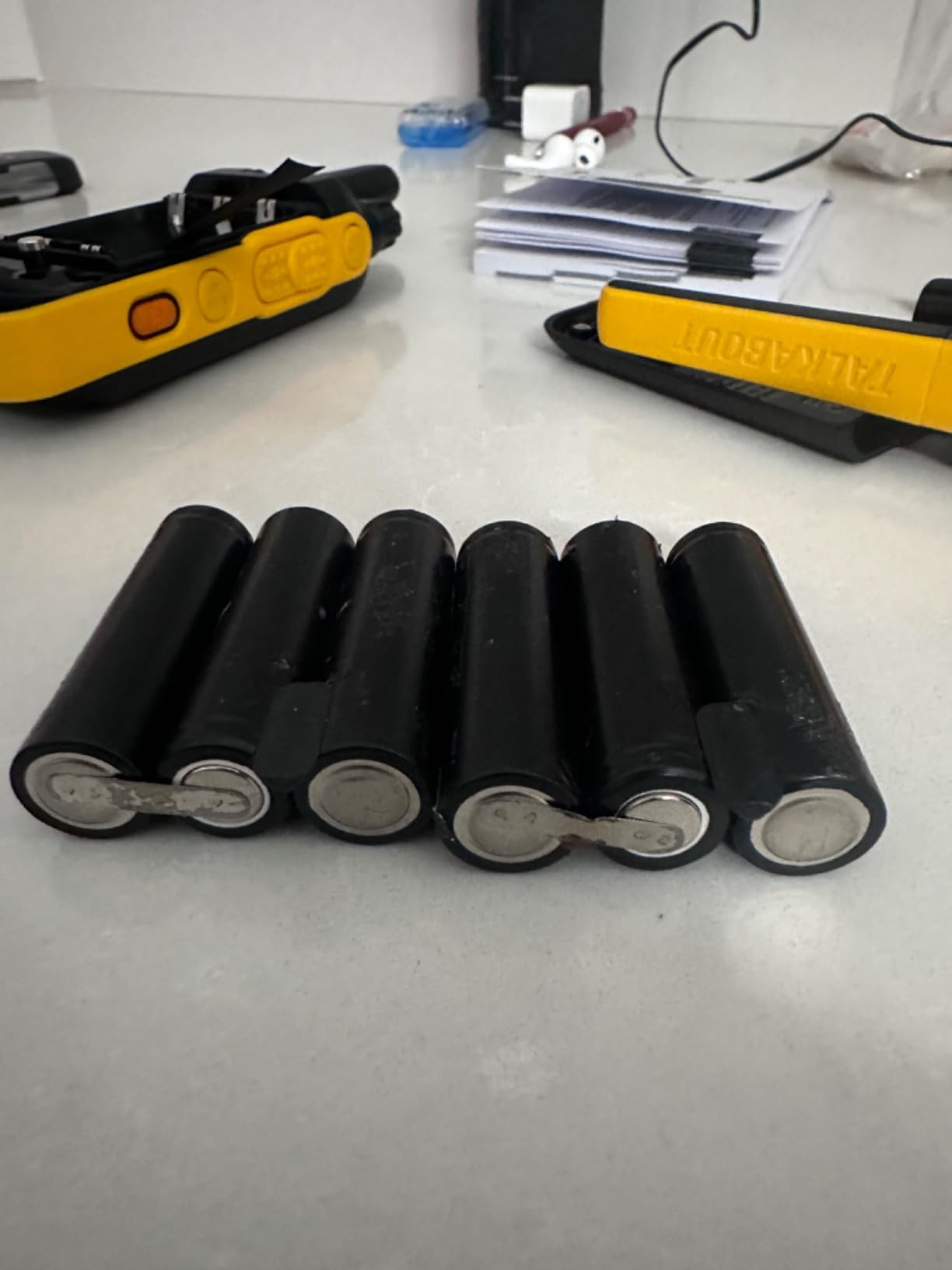
At 6.4 ounces, 12 hours of battery life, and dual power that accepts plain AA cells, this is a well-balanced emergency radio. Reviewers report a battery lasting a full five-day off-roading trip on moderate use.
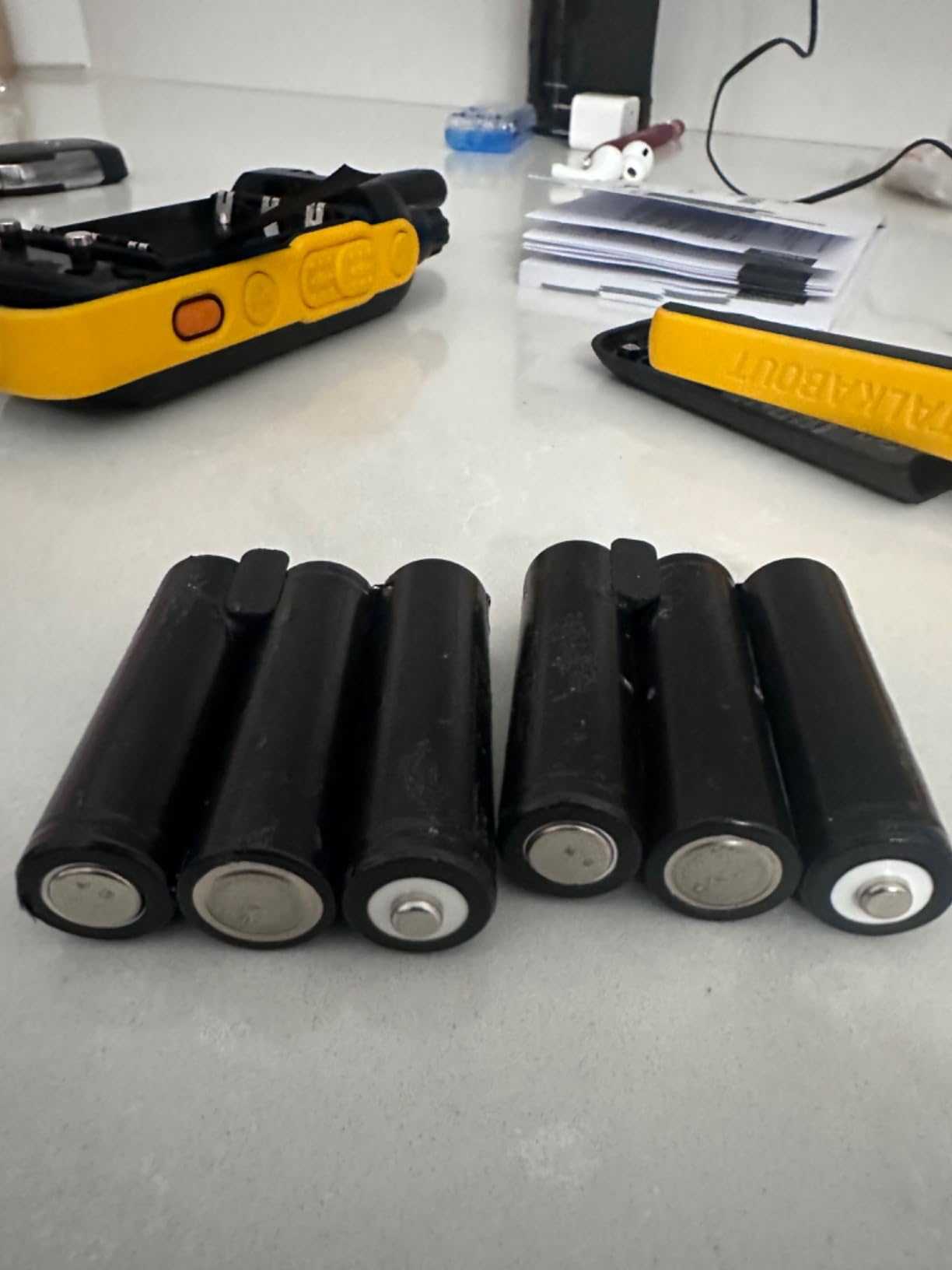
The two boom mic headsets in the box matter more than the packaging suggests. PTT with a boom mic worn under a jacket is how you keep a channel quiet when you do not want a conversation, and it reduces the chance of a relative fumbling a button mid-emergency.
Personalisation stickers are included, sixteen of them, and labelling each radio with a name or role is a cheap trick that prevents the most common household mix-up during an evacuation.
Who this radio suits?
Rural households, farms, hikers, and anyone whose nearest cell tower is far enough away that a phone is not a backup plan. Clean audio also makes it a good choice for volunteers coordinating on the move.
The dual power design suits a household that wants rechargeable packs for normal use and AA cells for the blackout.
Where it falls short?
Belt clips break easily and are the most cited complaint, so plan a carabiner or wrist strap. The 35-mile claim is roughly ten times what owners report, so treat the realistic figure as 1 to 3 miles.
The long-range transmit button sits close to the short-range one and is easy to press by accident, which can surprise people on a shared channel. The charging cradle also uses an older USB connector rather than USB-C.
12. Motorola Solutions T210 — Best for Dark, Cold and Night Use
Motorola Solutions T210 Two-Way Radio Black W/Red Two-Pack
IPX7 waterproofing, 18-hour battery
22 channels and 121 privacy codes
Backlit display
Dual power with USB charging and NOAA alerts
Pros
- Long 18-hour battery life on the included 800mAh pack
- IPX7 waterproofing for rain and water exposure
- Backlit display is easy to read at night or in a dark campsite
- Dual power lets you use AA batteries as backup
- Interoperates with other brands on matching channel and privacy codes
- NOAA weather alerts add readiness at a modest price
- Lightweight at 136 g
- easy for kids to carry
Cons
- No flashlight
- unlike most other models here
- 20-mile stated range is far beyond typical real-world performance
- Costly to fix if a radio is lost or damaged
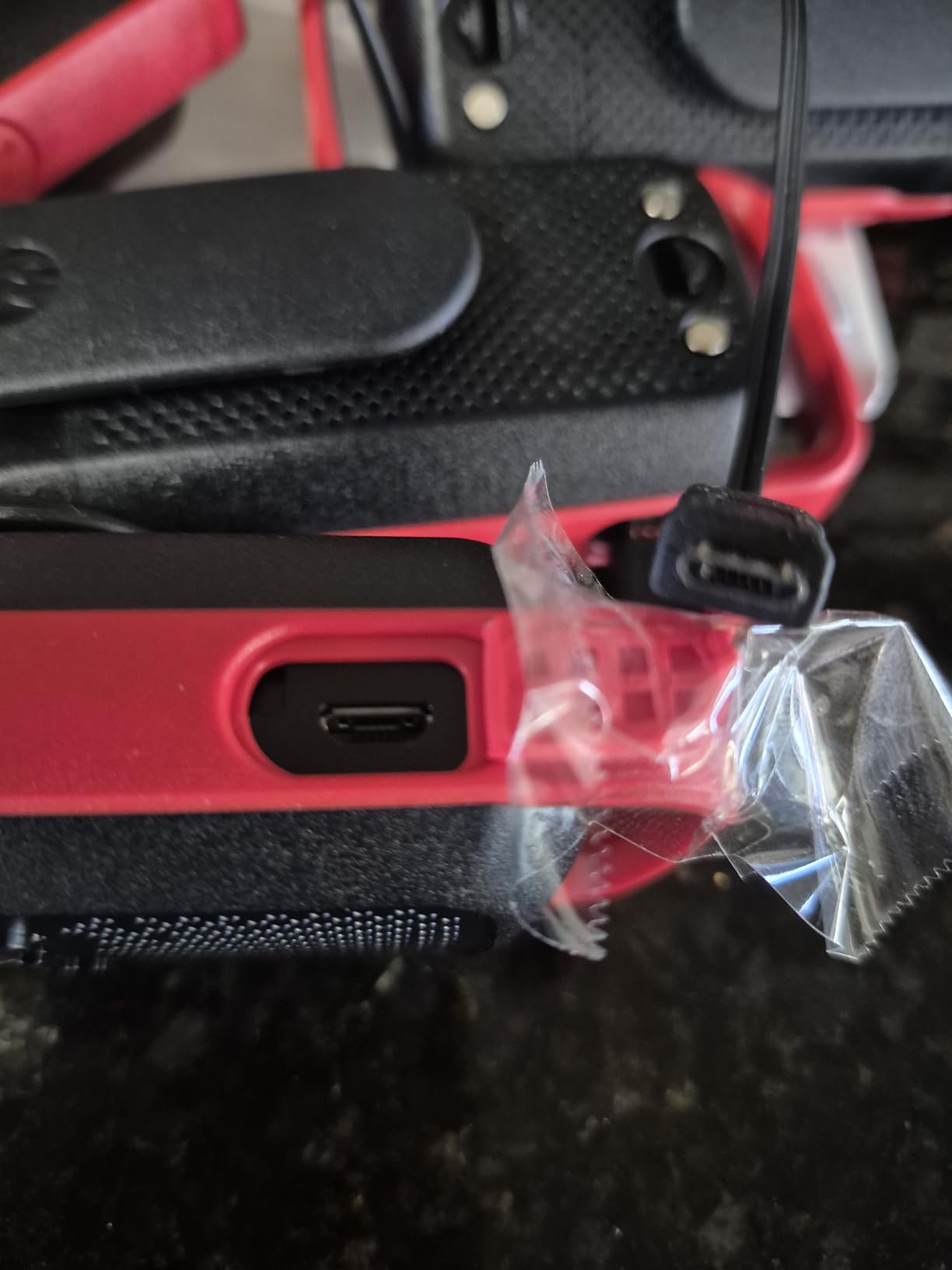
- Included cable uses older micro-USB connectors
- Only 22 channels limits options for very large groups
The backlit display is the feature that earns this radio its place, and it is more important than it sounds. Power cuts happen at night, a car breakdown happens in the dark, and fumbling with an unlit screen in cold rain is how people fail to reach their family. This one is legible in either.
IPX7 waterproofing is a genuine rating here, so rain and water exposure are covered, and dual power means you can drop in AA cells when the 800mAh pack is spent. The stated 18 hours of battery life is a full day of active use.
It interoperates with other brands on a matching channel and privacy code, which matters in a household where the radios were bought over several years rather than all at once.
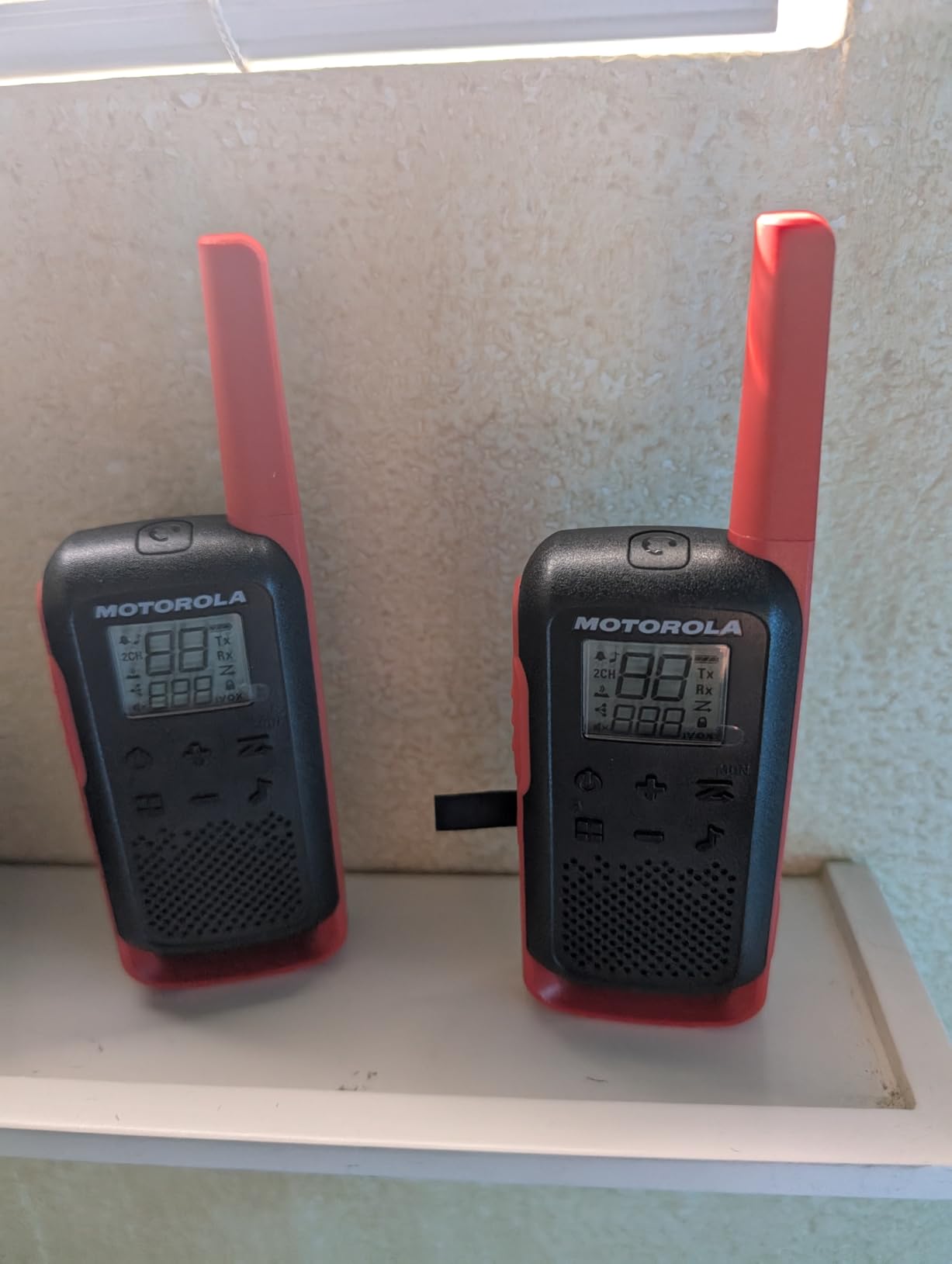
At 136 grams it is one of the lighter sets here and comfortable for a child to wear on a belt or in a pocket. The eight printed channels per side are the simplest channel system in the roundup, with no keypad to navigate under stress.
NOAA weather radio and alerts are included, so a storm warning still reaches a household whose phone is dead, and sixteen personalization stickers let you label each radio by name.
Who this radio suits?
Night-time and winter scenarios, households with a car that has broken down after dark, and families who need something light enough for a child. It is also a good value second set for a neighbour who will check on an elderly resident.
Anyone whose power fails at night and who does not want to depend on a flashlight to read a radio screen will appreciate the display more than any other spec.
Where it falls short?
There is no built-in flashlight, which most rivals in this price bracket include and which is the first thing many families look for in a power outage.
The 20-mile claim is far beyond what owners report, and the included charging cable uses older micro-USB connectors rather than USB-C. Twenty-two channels is a ceiling for a large group, and a lost unit is more expensive to replace than a budget pack would be.
How to Choose a Two Way Radio Your Family Will Actually Use?
Which licence you need, and what it costs in paperwork?
FRS costs nothing and needs nothing. It is capped at 2 watts with a fixed, non-modifiable antenna, and that legal ceiling surprises most buyers who expect a licence-free radio to perform like a licensed one. GMRS costs a one-time fee that covers every adult in a single household, which is why the Midland GXT1000VP4 sits at the top of this list.
Amateur radio requires passing an exam, and it is the only path to the long-range bands and repeaters. Push-to-talk-over-cellular radios need a subscription and, more importantly, a working cell network, which is precisely what fails in the emergency.
CB is legal without a licence at 5 watts, but range is short and interference is common. For a family, the practical order is FRS first, GMRS second, amateur third.
Real-world range versus the number on the box
Every manufacturer in this roundup quotes a maximum range figure, and not one of them reflects what you will actually get. The useful rule of thumb is roughly one mile of real-world range per watt of transmit power in open terrain, which is why the 2-watt DEWALT set punches through buildings while the lighter sets do not.
Then discount hard. In a suburb with houses and trees, expect a fraction of the maximum. In a city, reviewers of these models report 400 to 600 metres. Across open farmland with a hill between you, you will do considerably better than any of the printed figures suggest. Range is a function of the weakest link, and on a cheap handheld the antenna is almost always that link.
Battery chemistry when the power is out
Lithium-ion packs hold far more per gram and recharge from a USB port or a power bank, which is the modern choice. Alkaline cells hold no charge at all, which is the emergency advantage, and only a few radios here accept them.
Count batteries against the length of the outage rather than the length of a call. A three-day event at 18 hours of active use per charge means roughly four full days of intermittent traffic per set, and you still want spares for the units that get dropped. Keep one set of cells per person in the go bag and rotate them weekly.
What the IP ratings actually mean?
IPX4 and IP54 mean protected against splashing water from any direction, which covers rain. IP55 adds protection against water jets. IP67 means sealed against full immersion in one metre of water for 30 minutes, and it is the only rating worth caring about in a flood zone.
A radio described as water resistant without a number has told you nothing. Treat an unnumbered claim as splash protection at best, and treat IP00, as on the Midland LXT600VP3, as no protection whatsoever.
Channels, privacy codes and why two radios stay silent
A privacy code is a sub-audible tone that rides under your voice. Two radios must match on both channel and code to hear each other, and a mismatch produces silence that looks exactly like a broken radio. This is the single most common cause of the complaint that a set does not work.
Set the channel and code once, write it on the radio with a permanent marker, and check it on every handset. The MaxTalker pair here is specified as compatible with other brands on matching settings, and the Motorola T210 says the same, which makes them the safest choices in a mixed-brand household. The Retevis RT22 ships with codes preset, so it will not join a group until someone clears them.
Ergonomics for kids, seniors and gloves
Weight matters more than any spec when the user is a child. At 3.8 ounces, the Retevis RT22 is the radio a nine-year-old will actually keep in a pocket. The Retevis RB48 and the pxton four-pack are noticeably heavier and better suited to adults and volunteers.
For seniors, the deciding factors are a single control knob, a backlit display, and dual PTT buttons that can be pressed with gloves on. For gloved hands, the Retevis RB48 is the clear answer. Look for a lock function so a radio in a bag cannot switch channels mid-emergency, and always add a wrist strap because belt clips are the most common failure point in this roundup.
A 10-Minute Family Radio Drill
A radio nobody has practised with will not work under stress. Ten minutes once a quarter removes almost all of the risk, and it is the part of emergency planning that households reliably skip.
Agree one primary channel and one backup. Write both on every radio and label them. Keep the backup quiet and unused for routine talk.
Match the privacy code on every handset. Do this in person, one radio at a time, until two of them can hold a conversation. Clear any preset codes first.
Set the channel lock on every radio so nobody drifts off protocol.
Pick call signs. Two short words for each person, so a message that gets garbled still identifies who is talking.
Practise the three Cs. Clarity, courtesy, conciseness. Say who you are, keep transmissions under ten seconds, and leave a gap so two people do not talk over each other.
Send one person out of range and confirm a two-way check-in at the agreed interval rather than a single transmission.
Check the batteries and charge everything to full. Do this on the same day, every quarter.
Pair the radio kit with the rest of the plan rather than treating it as the whole plan. Our guides to water storage for emergencies and first aid kits for emergencies cover the two things a radio cannot do for you.
Frequently Asked Questions
What is the best 2-way radio for emergency use?
The Midland GXT1000VP4 is the strongest all-round choice for a household, because one GMRS licence covers every adult in the family and it combines 50 channels, 142 privacy codes, NOAA weather alerts and dual AA backup. If you need no paperwork at all, any of the licence-free FRS sets will work, provided everyone is on the same channel and privacy code.
What is the 3-3-3 rule for radios?
There is no FCC 3-3-3 rule governing family radio use, and the term comes from two unrelated places. It sometimes refers to 47 US Code 333, which requires licensed radio operators to avoid interfering with emergency transmissions, and sometimes to a discredited tower-clearance idea. Neither imposes a limit on how far a handheld radio can transmit.
What type of radio is best for emergency situations?
A licence-free FRS or a GMRS handheld, because both run entirely on their own battery with no tower, network or subscription involved. FRS costs nothing and caps at 2 watts. GMRS costs one household fee and adds power. Amateur radios reach further and can use repeaters, but require a licence and a learning curve.
What radios will work if cell towers are down?
Any radio that transmits on its own power, which means FRS, GMRS, amateur and CB handhelds. They need nothing but a charged battery and an open frequency. Push-to-talk-over-cellular radios do not work in that situation, because they run over the same cell network that failed, which is the main reason to avoid them for emergency use.
How far can a walkie talkie actually reach?
A useful rule is roughly one mile of real-world range per watt of transmit power in open terrain, so a 2-watt set is around two miles in the country. In suburbs expect a fraction of that, and in cities reviewers of these models report 400 to 600 metres. Printed maximums of 30 or 38 miles assume flat, open ground with no obstructions and rarely reflect real use.
What is the most powerful walkie talkie without a licence?
Licence-free FRS radios are capped at 2 watts with a fixed, non-modifiable antenna, and that is the legal ceiling. If you want more power, a single GMRS licence covers your entire household and allows higher output, which is how the Midland GXT1000VP4 in this roundup reaches further than any licence-free model.
The Bottom Line for Family Emergency Radios in 2026
The best two way radios for family emergencies are not the ones with the biggest number on the box. They are the ones your household will still be able to operate in the dark, on a wrong battery, on a channel somebody accidentally changed. Buy one set, agree one channel and one privacy code, and drill it ten minutes a quarter.
For most families the Midland GXT1000VP4 is the right answer, because one GMRS licence covers everyone and 50 channels solve the crowding problem. Tight budgets do well with the pxton four-pack, and households with kids should look at the 3.8-ounce Retevis RT22 while being careful about its preset privacy codes. Flood zones need an IP67 radio, the Retevis RB48 or the DEWALT DXFRS800, and anyone willing to take the amateur exam gets reach nothing else here can match.
Whatever you choose, charge it, label it, and drill it before 2026 gives you a reason to.