
Short answer: the best telescopes for deep sky viewing are large-aperture Dobsonian reflectors, because light-gathering power scales with the square of the aperture, not with magnification. A 10-inch Dobsonian on a simple rocker-box base shows you more galaxies, nebulae and clusters than a computerized scope half the price, and it is far easier to use. Pick the largest aperture you can carry to a dark site and afford to keep in one piece.
That principle drives every pick in this roundup. I have spent years putting these scopes side by side at club nights and dark-site weekends, and the pattern never changes: observers are separated by aperture, not by gear badges. A 5-inch tube on a shaky equatorial mount loses to a steady 6-inch Dobsonian every single time.
One expectation needs setting before we get into specs. Deep sky objects at the eyepiece look grey, white and faintly luminous. They do not look like the glowing red and blue photographs you have seen online. Your eye is a low-light detector, not a color camera, and the faint, extended light of a galaxy or a nebula is far below the threshold where color registers. Once that clicks, a 5-inch Newtonian becomes genuinely rewarding rather than disappointing.
Our team compared these six scopes across aperture tiers, mount types and pointing systems to build this guide. Every rating and review count below comes straight from verified buyer feedback, and every spec is taken from the manufacturer data rather than a marketing page. This list was last checked in September 2026, and we update it whenever the line-up shifts.
Table of Contents
Top 3 Picks for Deep Sky Viewing (September 2026)

Celestron AstroMaster 130EQ
- 130mm aperture
- 650mm focal length
- f/5 optics
- German equatorial mount with slow-motion knobs

Celestron NexStar 8SE
- 8-inch aperture
- 2032mm focal length
- GoTo mount with 40000+ object database
- SkyAlign alignment
Gskyer 130EQ Reflector
- 5.1 inch aperture
- 650mm focal length
- f/5 fast design
- three eyepieces and 3X Barlow included
Best Telescopes for Deep Sky Viewing in 2026: The Full Lineup
| Product | Specifications | Action |
|---|---|---|
| Celestron AstroMaster 130EQ |
|
Check Latest Price |
| Celestron NexStar 8SE |
|
Check Latest Price |
| Gskyer 130EQ Reflector |
|
Check Latest Price |
 MEEZAA 150EQ Newtonian MEEZAA 150EQ Newtonian |
|
Check Latest Price |
 Sky-Watcher Classic 150 Dobsonian Sky-Watcher Classic 150 Dobsonian |
|
Check Latest Price |
 Celestron StarSense Explorer 10 inch Dobsonian Celestron StarSense Explorer 10 inch Dobsonian |
|
Check Latest Price |
1. Celestron AstroMaster 130EQ: The Best Telescope for Deep Sky Viewing Overall
Celestron AstroMaster 130EQ Telescope for Deep-Sky Beginners
130mm aperture
650mm focal length
f/5 focal ratio
German equatorial mount
Pros
- Sharp images from 130mm of aluminum and SiO2 coated optics
- German equatorial mount with RA and declination slow-motion knobs
- Tool-free setup with clear instructions
- Red dot StarPointer finder makes targets easy to acquire
- 10mm and 20mm eyepieces plus astronomy software included
Cons
- Needs periodic collimation of both mirrors
- Included eyepieces are basic and usually get replaced
- Tripod and mount are heavy and awkward to carry in one piece
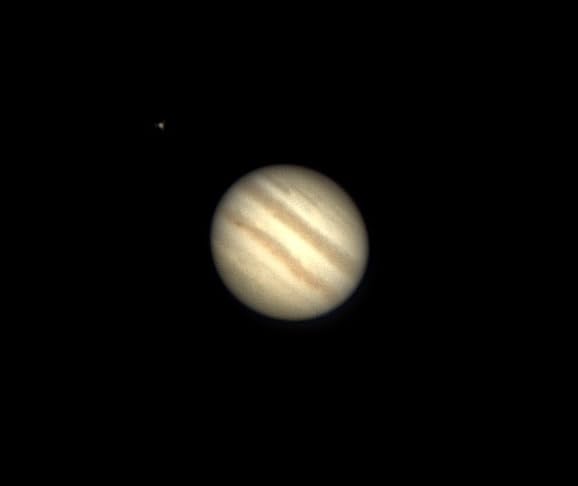
We put the AstroMaster 130EQ through a full observing season and it kept earning its place. A 130mm Newtonian at f/5 on a German equatorial mount is not a sexy specification sheet, but the optics deliver sharp, contrasty views of the Moon, clean bands on Jupiter and a visible ring on Saturn, and the equatorial mount holds a target steady enough for long looks at faint galaxies.
Once the mount is polar aligned, the slow-motion knobs in both axes make manual tracking genuinely pleasant. That matters more than most guides admit. A drifting object is a wasted object, and the 130EQ tracks smoothly enough that you can nudge it and stay on target for a couple of minutes at a time.
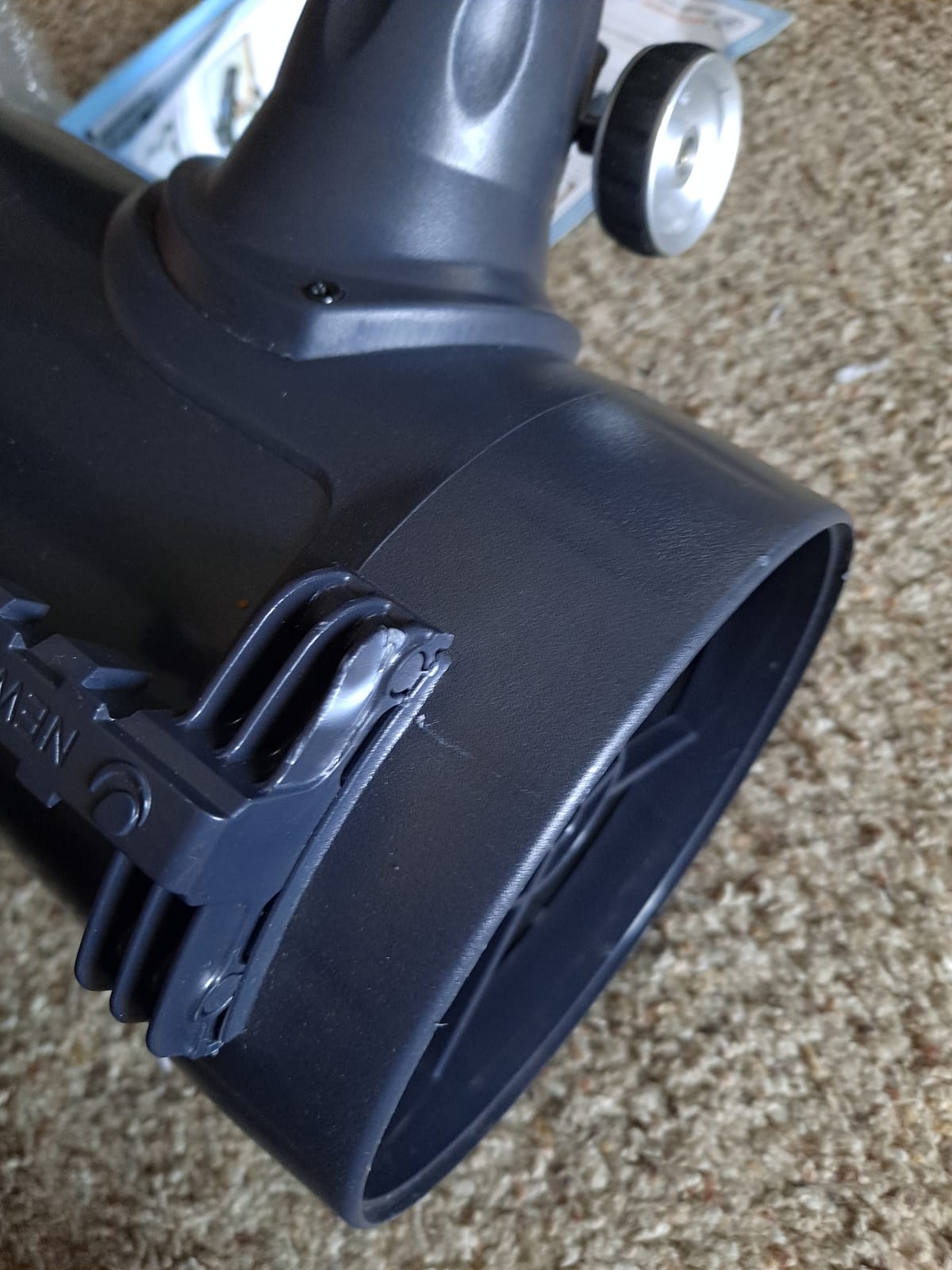
The 20mm eyepiece includes a built-in erect-image corrector, which means you can use the scope for daytime viewing as well. It is not a refractor, but it covers the land-and-sky question that comes up constantly with beginners who want one instrument for both jobs.
Where it struggles is maintenance. A Newtonian needs collimation, and the 130EQ needs it again after every car journey. A laser collimator is practically part of the purchase, not an accessory. Owners who treat that as a ten-minute evening task rather than a crisis are the ones who stay with the scope for years.
Owners also mention the plastic fittings at the tripod-to-mount joint and a latitude adjustment screw that can feel finicky on first setup. Neither is a deal breaker; both are the kind of thing a screwdriver resolves in a minute.

Who the AstroMaster 130EQ suits?
It suits a beginner who wants a real telescope on an equatorial mount without stepping up to a computerized one. The manual tracking is a skill, but a simple one, and the slow-motion knobs make it a forgiving way to learn it. You also get a stable platform for a future Barlow or a 25mm wide-field eyepiece.
It also suits an experienced observer who wants a grab-and-go Newtonian that breaks down fast. At 17 pounds, this is one of the few scopes in the roundup that a single person can carry, set up and pack away without a car boot or a second pair of hands.
Where the AstroMaster 130EQ falls short?
It is not an astrophotography telescope. The mount shakes and the tube has no guiding provisions, so long-exposure imaging is off the table without significant modification. If photography is your real goal, this is the wrong purchase and no eyepiece upgrade will change that.
The bundled 10mm and 20mm eyepieces are the weak link in the package. They are serviceable for a first night, and most owners replace the 10mm within a month. Budget for a wide-field eyepiece in the 25mm to 28mm range as your first accessory purchase, not as a luxury.
2. Celestron NexStar 8SE: Best for Observers Who Hate Losing Targets
Celestron NexStar 8SE Computerized Telescope – Schmidt-Cassegrain
8-inch aperture
2032mm focal length
GoTo alt-az fork mount
24 lb
Pros
- Eight inch aperture in a short compact tube
- GoTo mount with 40000+ object database
- SkyAlign gets you ready using any three bright objects
- Much more portable than an equivalent Newtonian on a Dob base
Cons
- Battery power is required and no power source is included
- Only a single 25mm eyepiece in the box
- Motor noise is noticeable at high magnification
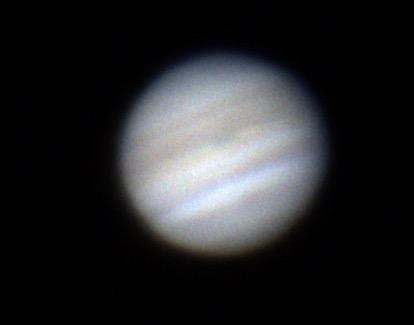
The 8-inch Schmidt-Cassegrain is the only way to get this much aperture into a package you can carry with one hand. The optical tube is under 18 inches long, yet it gathers the light of a much larger Newtonian. Globular clusters start to granulate, the Orion Nebula shows structure, and galaxies that are smudges at 5 inches gain shape.
The GoTo mount is the reason people choose this scope. A database of more than 40000 objects means you can ask for the Ring Nebula after dusk and simply wait for the fork arm to swing over and settle. For observers tired of hunting through finder scope fields, that convenience is worth a lot of money.
SkyAlign makes setup fast. Center any three bright objects in the finder, confirm them on the hand control, and the mount knows where it is. On a clear evening that takes under five minutes, and the motor slews are accurate enough that a target usually lands near the edge of a 25mm field.
The catch is electronics. Power comes from eight AA batteries or an external supply, and neither is in the box. Owners who show up to a session with dead cells learn this the hard way, so budget for a power pack before the first night out.
There is also motor noise. At low magnification you will not notice it, but at high power the fork arm’s whir becomes audible and, in some reports, produces a faint vibration that softens the image slightly. It is a minor trade for what the mount gives you.
Who the NexStar 8SE suits?
It suits a family or a shared scope where several people take turns observing. Handing someone a hand controller and sending them to the Ring Nebula is a better experience than walking a beginner through star-hopping for twenty minutes. It also suits a light-polluted backyard, where GoTo genuinely earns its cost.
It suits an observer with limited transport who still wants a large aperture. The tube and tripod break down into pieces that fit in a hatchback, which is not true of most 8-inch Newtonians.
Where the NexStar 8SE falls short?
One 25mm eyepiece is not a usable set. At 80x magnification on an 8-inch tube, the view is fine, but you will want a 10mm or a small Barlow for smaller targets, and that means buying eyepieces separately. The accessory list is the thinnest in this roundup.
The mount is not an imaging mount. If your interest will drift toward astrophotography, the electronics on this fork are a dead end, and a German equatorial mount with tracking is the direction to go instead. Buy this for looking, not for capturing.
3. Gskyer 130EQ: Best Value for the Same 5-Inch Aperture
Gskyer 130EQ Professional Astronomical Reflector Telescope
5.1 inch aperture
650mm focal length
f/5 focal ratio
30.1 lb assembled
Pros
- All-glass multi-coated optics with a fast f/5 design
- German equatorial mount with slow-motion tracking
- Three eyepieces plus a 3X Barlow in the box
- Bluetooth remote for phone photos without an app
Cons
- 30 lb assembled makes solo transport awkward
- Images past roughly 200X go dim and soft
- Only a one-year warranty
When you put the Gskyer 130EQ and the Celestron AstroMaster side by side, you are comparing two 130mm f/5 Newtonians with the same basic design. The Gskyer wins on the accessory package and loses on weight. Three eyepieces, a 3X Barlow, a finderscope and a Bluetooth remote arrive in the box, and the optics are all-glass with high-transmission multi-coatings.
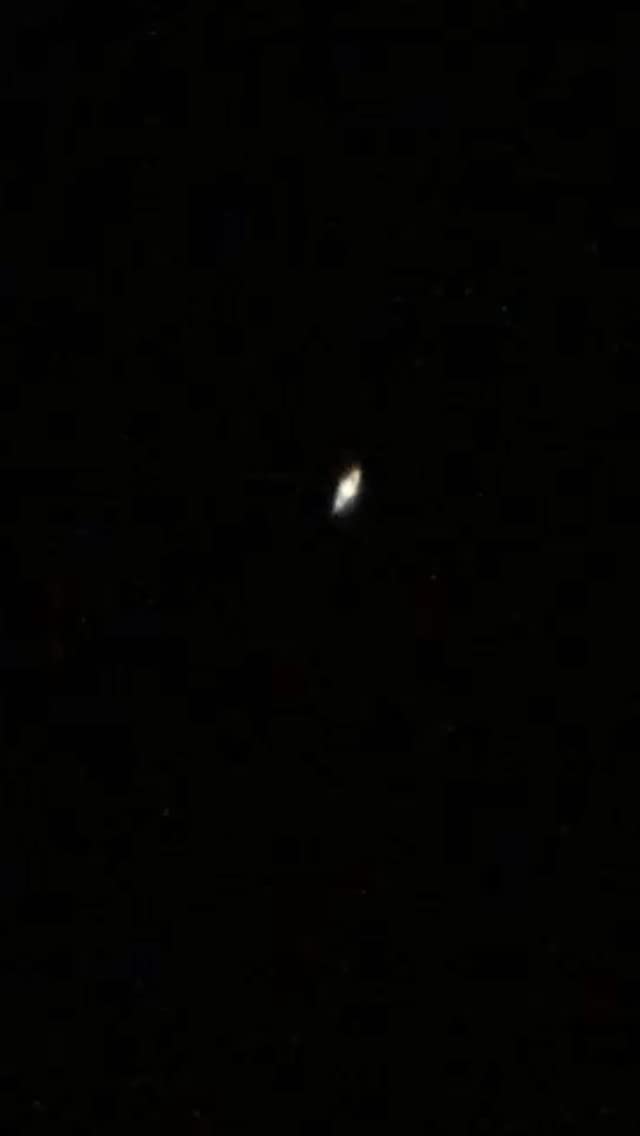
Owners report crisp lunar craters, Jupiter with its moons, Saturn’s rings, and the Pleiades, the Beehive and the Orion Nebula all visible from a suburban backyard. That is a genuinely capable deep-sky package for a first telescope, and the fast f/5 ratio gives wide fields that suit sweeping star clusters.
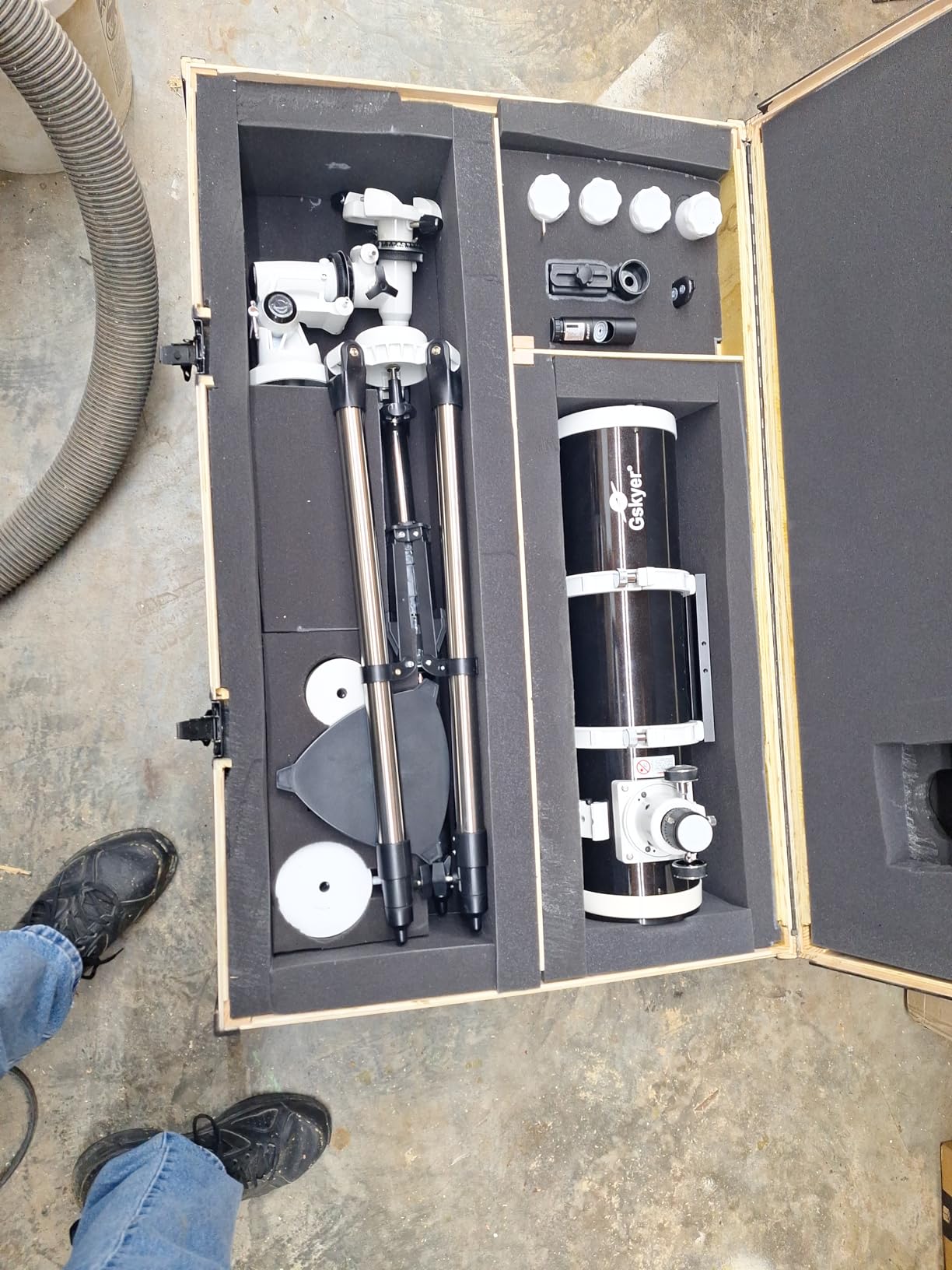
Toothless focusing base is a small design touch that matters more than it sounds. Traditional racks need frequent lubrication and develop play; a smooth toothless base stays consistent, so focus changes stay repeatable across a session. The 24-inch tube is also short enough to manage in a small room.
The 30.1 pound listed weight is the practical problem. Assembled, this is a two-person carry. If you plan to move between a garage and a yard, that is fine. If you want to take it to a dark site away from street lighting, plan for a car and a folding cart.
On magnification, be skeptical of the advertised figure. Reviewers consistently report that images go dim and soft past roughly 200X, which is what the optics predict. For deep sky, you will rarely go past 100X anyway, so this matters less than the headline number suggests.
Who the Gskyer 130EQ suits?
It suits a buyer who wants maximum accessories per pound spent. Everything needed for a first year of observing is in the box, and the Bluetooth remote gives you a quick way to capture the Moon through a phone without downloading an app or learning stacking software.
It also suits someone with a fixed observing spot who does not need to move the scope often. Set it up on a patio, leave it aligned, and the German equatorial mount with slow-motion controls will hold targets for a whole evening.
Where the Gskyer 130EQ falls short?
The weight is the honest weakness, and it is why this does not top the list. A 30 pound Newtonian with a tripod is unwieldy to carry alone, and forum advice consistently warns beginners off buying a large equatorial setup they cannot get to a dark sky.
Newtonian collimation still applies, and the one-year warranty is the shortest coverage in this roundup. Both are manageable. Treat a laser collimator as part of the kit and check the warranty terms before you commit.
4. MEEZAA 150EQ: Most Complete Starter Package
MEEZAA Telescope, 150EQ Newtonian Reflector Telescope for Adults Astronomy Beginners, Professional Astronomical Telescopes with Equatorial Mount, Tripod, Phone Adapter, Moon Filter and Large Carry Bag
150mm aperture
650mm focal length
German equatorial mount
2X Barlow and moon filter included
Pros
- Aperture wide enough to show fainter galaxies under moderate light pollution
- Slow-motion cables and precision dials make tracking straightforward
- Exceptionally complete accessory set including carry bag
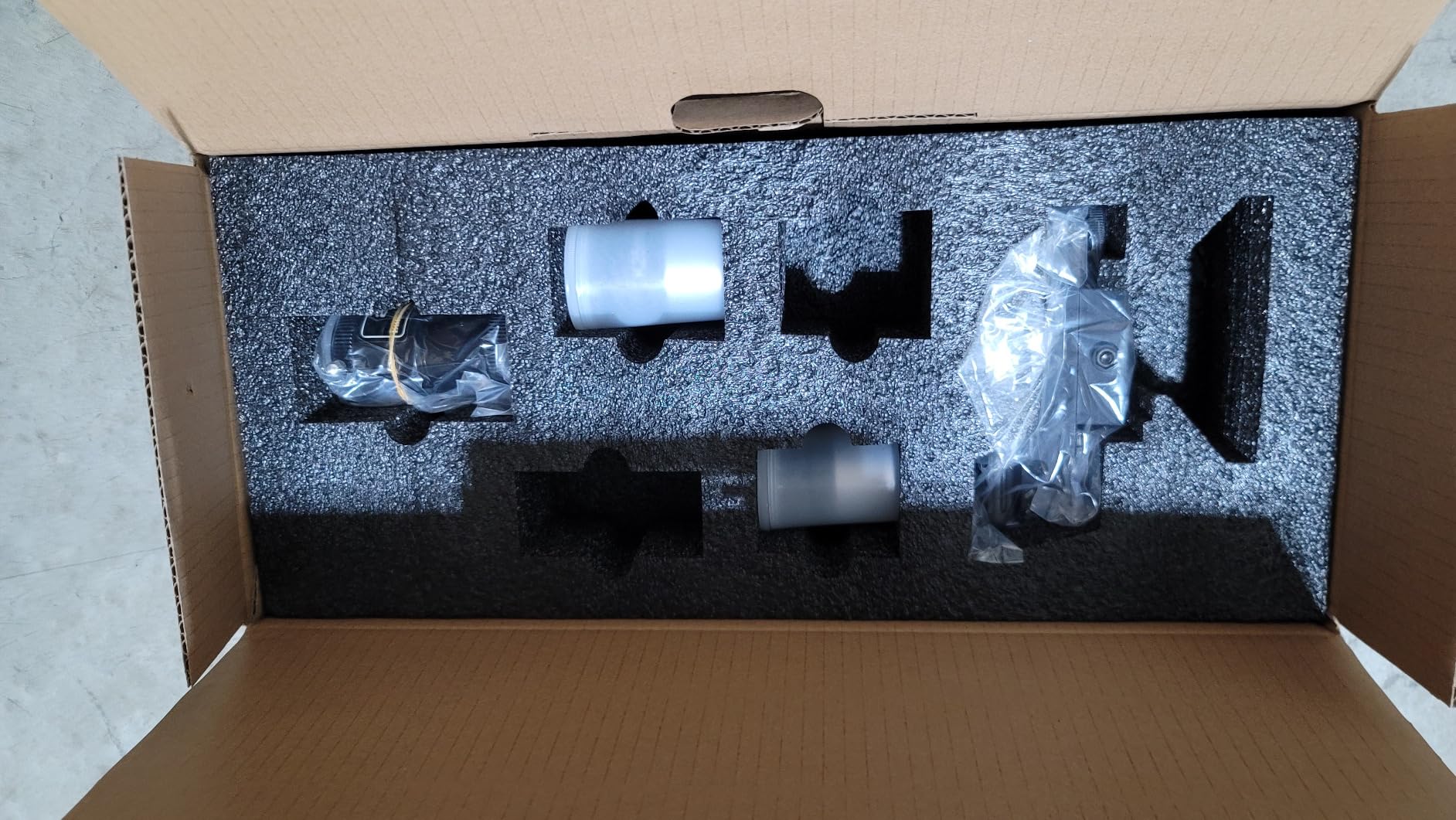
- Packed in a padded box with labeled compartments
Cons
- Some reviewers measured the primary nearer 130mm than advertised
- Included eyepieces are entry level and a common first upgrade
- Altitude adjustment is stiff and slow
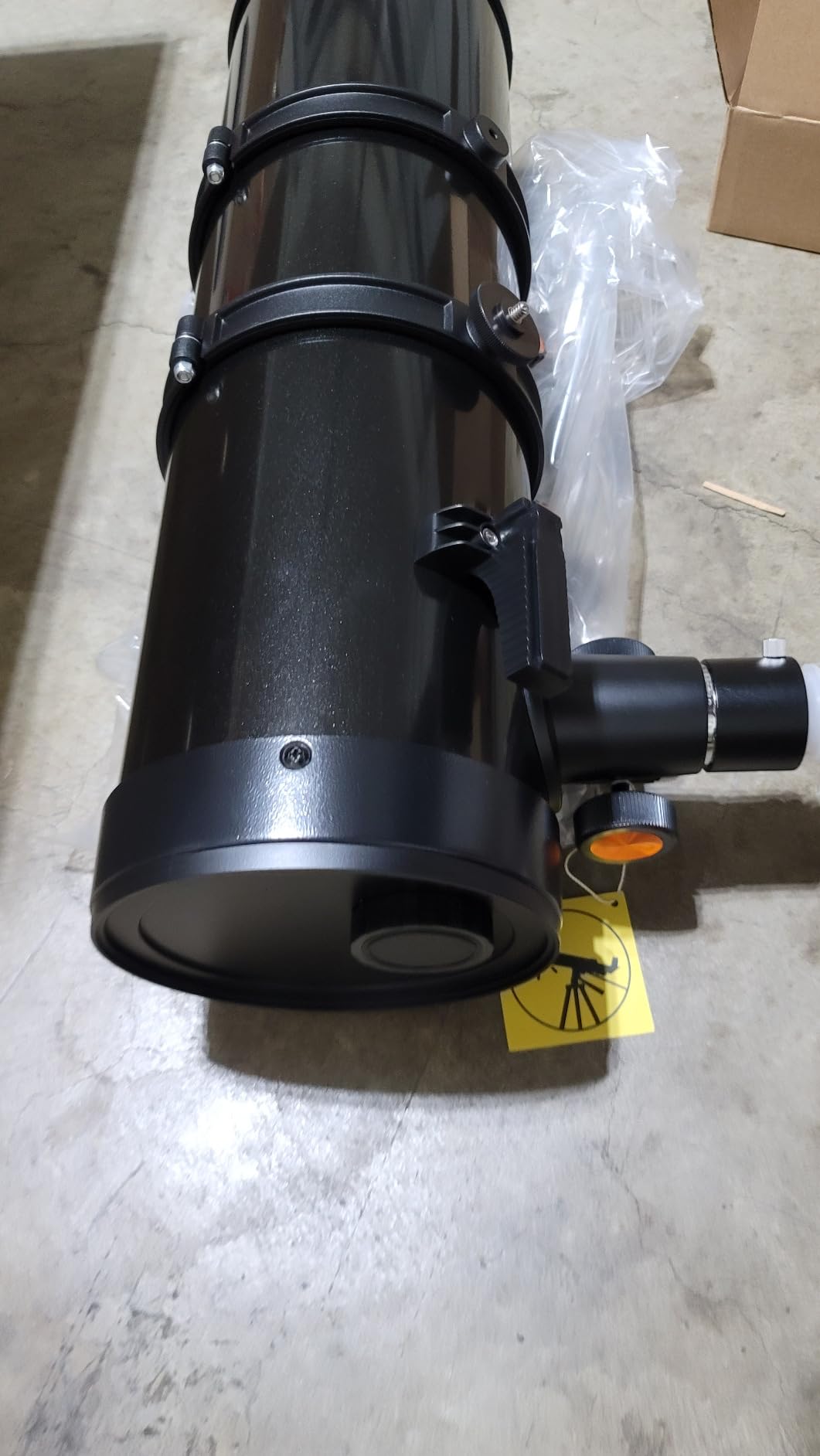
The MEEZAA 150EQ is the most complete package in this roundup, and completeness is genuinely the hardest thing to find on a first telescope. You get two eyepieces, a 2X Barlow, a red dot finder, a moon filter, a phone adapter and a carry bag that fits the whole assembly. Nothing needs buying before the first night except a chair.
Brightness is the headline. A 150mm aperture gathers enough light to hold fainter galaxies and nebulae even under moderate light pollution, which is exactly the situation most buyers are in. Owners mention crisp lunar detail and easy visibility of Jupiter and Saturn alongside the deep-sky targets.
There is one claim we cannot pass along unchallenged. A small but vocal group of buyers measures the primary mirror nearer 130mm rather than the advertised 150mm. We are not going to call a spec unverified because a listing says so. If aperture is the deciding factor for your purchase, check the mirror yourself on arrival with a caliper before you commit to the rest of the setup.
On the mount, the gimbal and slow-motion cables are smooth and the precision dials give real control once the scope is polar aligned. The stainless steel tripod feels solid. The altitude adjustment is stiff, though, and the mass it carries makes that stiffness more noticeable than it would be on a lighter tube.
Assembly is more involved than the packaging implies. It is a larger tube on a full equatorial head, and more than one owner describes the build as a two-person job. Budget an unhurried evening for it rather than expecting a ten-minute setup.
Who the MEEZAA 150EQ suits?
It suits a beginner who wants the longest possible run before the first accessory purchase. Every consumable and extra you would normally add is already in the box, and that shifts a meaningful amount of money into the telescope itself, where it does more for light-gathering.
It suits someone observing from a suburban backyard who cannot realistically travel to a dark site. Between the 150mm aperture and the included moon filter for faint lunar detail, this is a package built for the most common observing conditions people actually have.
Where the MEEZAA 150EQ falls short?
The aperture question deserves a second look. If the mirror measures short, the scope performs like a 130mm, and you have paid for light you do not get. Verify on arrival, and keep the packaging until you have.
Switching eyepieces often knocks the object out of focus, which is normal for a Newtonian with a shallow-depth focuser but irritating when you are hopping between targets. Get used to refocusing after every change, and the included eyepieces are the first thing most owners upgrade anyway.
5. Sky-Watcher Classic 150 Dobsonian: The Steady 6-Inch Aperture
Sky Watcher Sky-Watcher Classic 150 Dobsonian 6-inch Telescope – Solid-Tube – Simple, Traditional Design – Easy to Use, Perfect for Beginners, White (S11600)
6-inch aperture
1200mm focal length
Altazimuth rocker box base
33 lb
Pros
- 94 percent reflective fully multi-coated borosilicate mirrors
- Rock solid stability with no drift from breathing
- Teflon bearings and tension control handles move smoothly
- No alignment procedure
- electronics or batteries to learn
Cons
- Bulky base that smaller users struggle to move
- No GoTo so faint targets need star hopping
- Straight-through finder is useless at the zenith
This is the only true Dobsonian in the roundup, and the difference shows up in the first five minutes. There is no polar alignment, no counterweight, no drifting object. You set the tube on the base, move it, and look. The stability is the real story: a 6-inch Dobsonian on a rocker box does not wobble when you breathe on it, which is exactly the problem that limits equatorial beginner scopes.
The optics are 94 percent reflective fully multi-coated borosilicate mirrors at 1200mm focal length, giving f/8. Astronomy club members describe it as excellent aperture for the money, with views of Saturn’s rings, Jupiter’s bands, the Orion Nebula, the Pleiades and galaxies from city skies. The longer focal ratio also means sharper images at moderate power than a fast Newtonian.
Teflon bearings and the patented tension control handles mean the tube moves smoothly even when it is not perfectly balanced in its cradle. That matters more than it sounds, because a badly balanced Dobsonian is the fastest way to make a beginner quit.
The included 25mm super wide-angle eyepiece delivers a genuinely pleasant field of view, and the 2-inch rack-and-pinion focuser accepts 2-inch eyepieces directly. The 2-inch adapter for 1.25-inch eyepieces confuses a lot of first-time owners, so read that bit carefully before you fight it at 11pm in a field.
Newtonian collimation is the ongoing task, and the plastic secondary-mirror collimation screws can arrive overtight, so check them before your first session. A laser collimator is a worthwhile addition here too.
Who the Sky-Watcher Classic 150 suits?
It suits a buyer who wants a large aperture and refuses to be frightened by a big base. Everything here is simple in the best sense. There is no menu, no alignment star, and nothing to charge, which removes every reason a beginner gives up on their first telescope.
It also suits an observer who wants steady, motionless images of planetary nebulae. An O-III filter threads onto the 2-inch focuser, and the f/8 focal length keeps planetary detail crisp at moderate magnification.
Where the Sky-Watcher Classic 150 falls short?
It is bulky. The tube is over a meter long, the listed weight is 33 pounds, and the base is genuinely difficult for smaller users or anyone with back problems to move. Several one and two-star reviews come from shipping damage or incomplete base deliveries, so inspect the box carefully on arrival.
There is no pointing aid of any kind. Finding faint deep-sky objects means star hopping from a known bright object, and for a complete beginner that is the single biggest barrier in this roundup. The straight-through finder is also close to useless when the tube points at the zenith. If you cannot learn to star hop, look at the Celestron 10-inch Dobsonian instead.
6. Celestron StarSense Explorer 10 Inch Dobsonian: Best for First-Time Buyers With Big Aperture
Celestron StarSense Explorer 10″ App-Enabled Dobsonian Telescope
10-inch aperture
650mm focal length
StarSense app-guided pointing
54.8 lb
Pros
- Ten inch aperture gives vivid views of the Orion Nebula and Andromeda
- App-guided pointing removes the star-hopping learning curve
- Nightly target lists based on your time and location
- 2-inch Crayford focuser with a 32mm eyepiece
Cons
- Heaviest scope in the roundup at nearly 55 lb
- Requires a compatible smartphone and patience to dock
- No motorized tracking so faint targets drift in long views
This is the scope we hand to someone who has never looked through a telescope. A 10-inch Newtonian is a genuinely large instrument, and at 254mm it is a full step above everything else on this list for faint galaxies and nebulae. The Moon shows structure you cannot see in a 5-inch tube, and the Orion Nebula and Andromeda both look vivid rather than theoretical.
What makes it beginner-friendly is not the aperture, it is the pointing. The patented StarSense system docks your smartphone and uses sky recognition to work out where you are, then puts on-screen arrows in front of you until the target is centered. You can also generate a curated list of tonight’s best targets for your location, which removes the decision fatigue of a blank evening.
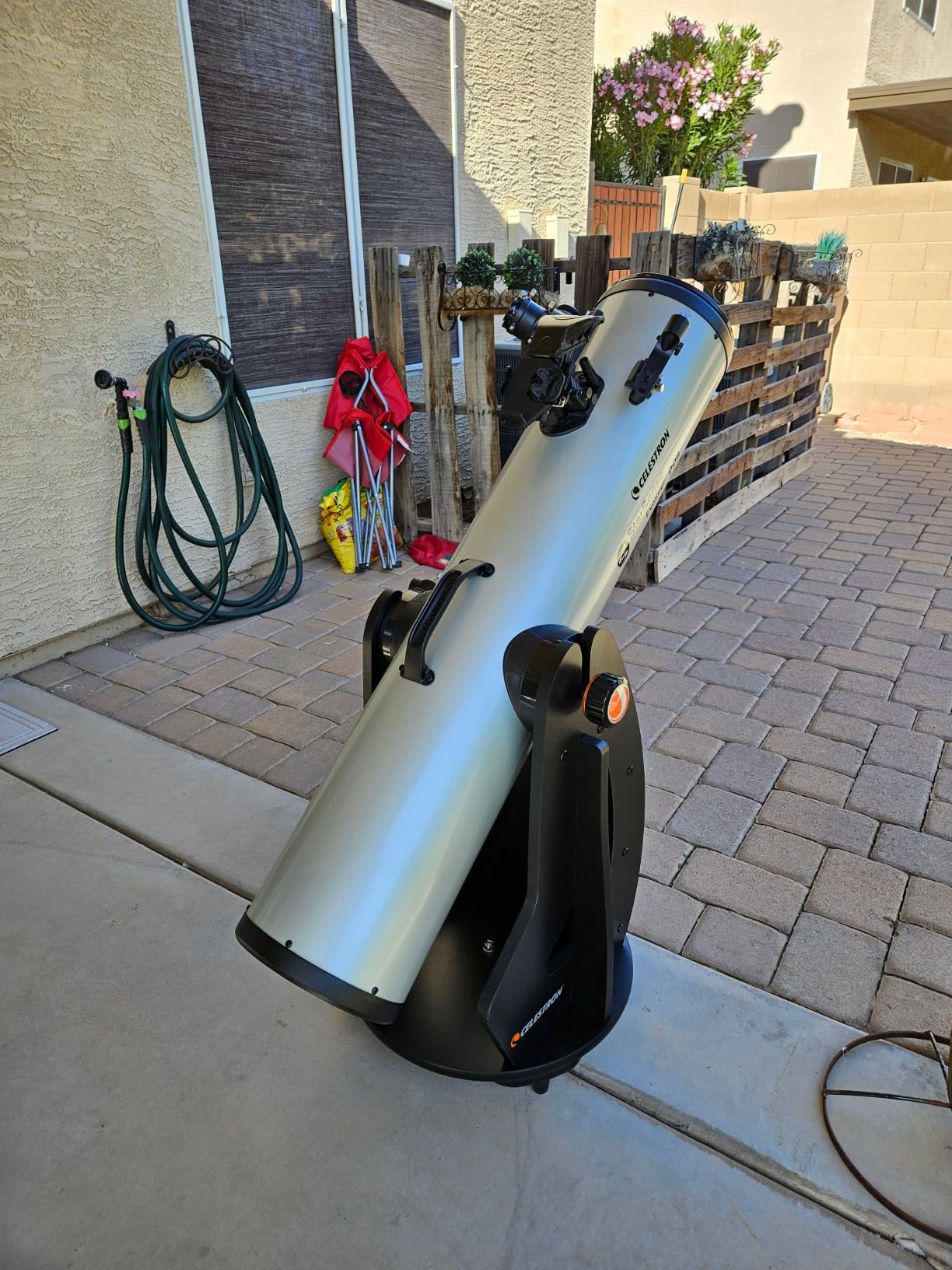
Underneath the app is a proper telescope. The manual alt-azimuth Dobsonian base needs no batteries and has no electronics to service, so nothing about the mount can fail while you are under the stars. The 2-inch Crayford focuser is a real quality upgrade over the rack-and-pinion units on budget Dobsonians, and a 32mm eyepiece is included.
StarBright XLT coatings on the 254mm primary raise throughput, and the listed Dawes limit of 0.46 arc seconds is more than adequate for visual work on double stars and lunar detail. The StarSense dock, unlock code, collimation cap, eyepiece rack and StarPointer red-dot finder all come in the box.
The honest drawback is weight. At nearly 55 pounds, this is the least portable scope here, and the tube and base are large enough that moving them between a room and a yard takes planning. Owners pair it with 2-inch eyepieces and a laser collimator to get the most from the aperture, and that is advice we agree with.
Who the StarSense Explorer 10 Inch suits?
It suits a complete beginner who wants maximum aperture and would otherwise be defeated by star hopping. The app does the pointing, so you spend the first hour of your hobby actually looking at objects instead of reading a star chart in the dark.
It also suits anyone who wants to show a family or a group of guests objects they will remember. Find the target, hand the viewer the eyepiece, move on. Nothing in a manual Dobsonian workflow slows a group down like asking everyone to line up behind a straight-through finder.
Where the StarSense Explorer 10 Inch falls short?
It is heavy, and there is no way around that. If you do not have a vehicle and a clear route to your observing spot, the practical aperture is smaller than the optical one. Some buyers add wheels to the base, which is a reasonable workaround.
There is no motorized tracking, so faint targets drift out of the field during long views at high power. That is the standard trade for a simple alt-azimuth base, and it is why this is a visual deep-sky scope rather than an imaging one. The app workflow also needs a compatible smartphone and some patience to dock and recalibrate if conditions change.
What You Can Actually See at Each Aperture?
Here is the part most roundups skip, and it matters more than any spec sheet. The same target looks meaningfully different at 130mm and at 254mm, and knowing what to expect stops the disappointment that makes people sell a perfectly good telescope after one night.
At 130mm (5 inch) scopes such as the AstroMaster 130EQ and the Gskyer 130EQ: the Pleiades, the Orion Nebula, the Andromeda Galaxy and the Double Cluster all show structure with averted vision. M13 in Hercules looks like a bright fuzzy ball, not a field of resolved stars. The Ring Nebula in Lyra is a small grey smudge that responds dramatically to an O-III filter. This is where most deep-sky observing happens for years, and it is enough.
At 150mm (6 inch): noticeably more. The Orion Nebula’s wings separate from its core, the Andromeda Galaxy grows two dust lanes in good seeing, and the Hercules cluster starts to show graininess at its edges. A 6-inch Dobsonian under a Bortle 7 backyard sky still produces a long list of targets on any clear night.
At 203mm (8 inch) scopes such as the NexStar 8SE: globular clusters begin to granulate at the core, the Dumbbell and Ring planetary nebulae show structural detail without a filter, and galaxies that were featureless ovals show mottling. This is the aperture where galaxy detail becomes an observable rather than a guess.
At 254mm (10 inch) scopes such as the StarSense Explorer: the difference over 8 inches is real but not transformative, which is why we think 10 inches is close to the sweet spot for a visual scope. You gain a noticeable brightness increase across every target, more resolved stars in clusters, and the ability to see fainter objects at lower magnification, which is what visual observers actually need.
Past 12 to 16 inches, gains continue but the tube gets heavy, collimation gets fussier and the base stops fitting through most doors. That is where diminishing returns set in for a casual observer, and where a dedicated dark-site owner with a vehicle earns their setup.
How to Choose: Aperture, Focal Ratio, Mount and Eyepieces?
Aperture is the first and least negotiable filter. Light-gathering power scales with the square of the aperture, so doubling the diameter gives you four times the light. A 6-inch scope does not gather a little more than a 5-inch, it gathers more than twice as much, and that is why every recommendation in this roundup puts a size number before the feature list.
A useful ceiling on magnification is roughly twice the aperture in inches, so a 5-inch scope tops out near 100x and a 10-inch near 200x for genuinely useful views. Beyond that, you are spreading thin light over an empty field. This is also why high advertised magnification numbers are a red flag rather than a selling point.
Which telescope type is best for deep sky? Newtonians on Dobsonian or alt-azimuth bases win because they deliver the largest aperture for the least money and the least maintenance of the major designs. Refractors give sharp, high-contrast images with no collimation and full color, but a 4-inch achromat is far too small for faint galaxies no matter how good the glass. Catadioptric designs like the 8SE pack an 8-inch aperture into a short tube, which is the trade you pay for with a more complex mirror system and a narrow field at low power.
Focal ratio and field of view. A fast f/5 Newtonian gives a wide, immersive field, which suits sweeping the Milky Way and open clusters. A longer f/8 design like the Sky-Watcher Classic 150 gives sharper images at moderate power and a larger exit pupil, which is easier on the eye. Neither is wrong. Faster is not automatically better for visual work.
Mount and pointing. Alt-azimuth bases with smooth bearings are the most stable per pound. German equatorial mounts allow manual tracking and, with a motor, astrophotography, but they introduce vibration and drift that frustrate beginners. GoTo systems solve the finding problem and create a battery problem. If you will not use electronics, buy the simplest thing that moves well. If you truly cannot star hop, the StarSense system is a better middle ground than a full GoTo mount.
Portability. Decide where you will observe before you buy. A fixed backyard means a large Dobsonian is fine. A car-based dark-site trip means weight matters more than aperture, and something under 30 pounds is the practical limit for one person. Our field power guide covers the electricity side of long nights away from mains power, and our plan-ahead comparison is a useful reminder to settle logistics before the hardware.
Eyepieces, and the bundled Plossl problem. Nearly every telescope on this list ships with basic 25mm and 10mm eyepieces, and nearly every owner replaces them. Budget for one good wide-field eyepiece in the low 20s and a 2-inch diagonal if the focuser accepts one. That single upgrade changes the view more than most people expect, particularly on wide fields.
Narrowband filters for visual use. A UHC filter boosts emission nebulae under suburban skies by blocking sodium and mercury lines from street lighting. An O-III filter isolates doubly ionized oxygen, which makes planetary nebulae such as the Dumbbell and the Ring stand out from the background. Neither filter helps much on galaxies, open clusters or reflection nebulae, and both darken the view, so they are for patient observers at faint targets, not for sweeping. For remote power needs on long observing nights, our battery and solar setup guide is worth a look.
Total cost of ownership. No competitor publishes this, so we will. The telescope is the start. Add a good wide-field eyepiece, a laser collimator for any Newtonian, a dew heater or dew shield for humid nights, a red dot finder if one is not included, and a comfortable observing chair. Plan on spending roughly half the telescope cost again on accessories in the first year. Setting up a comfortable observing spot with diffused aeration basics takes less thought than most buyers expect.
What size telescope to see Saturn’s rings? Saturn’s rings need far less aperture than a galaxy, but a bright sky changes everything. Around 3 inches of aperture under dark skies resolves the rings and the Cassini Division; in light-polluted conditions, 6 inches or more is the realistic starting point. The same rule applies to the planets generally, and deep-sky targets need more aperture still.
What is the best telescope for both land and sky viewing? A short-tube refractor on an alt-azimuth mount, or a Newtonian with a 20mm eyepiece that includes an erect-image corrector, which is exactly what the AstroMaster 130EQ in this roundup provides. Long focal lengths inverts the view, so check that an erecting prism or image corrector is included before you point the scope at a building.
Finally, be honest about your own habits. If you will drive to a dark site once a month, weight is irrelevant and aperture is everything. If you will observe from a lit patio, filters and a GoTo or app system are worth more than another inch of glass, because a dark sky is the single biggest upgrade available to anyone.
Frequently Asked Questions
What is the best telescope for viewing deep-sky objects?
A Dobsonian reflector with the largest aperture your budget and your back can carry will show you more deep-sky objects than any other setup at the same price. Light-gathering power scales with the square of the aperture, so a 10-inch Dobsonian outperforms a 6-inch instrument with far more electronics. Look for a smooth alt-azimuth base, at least 25mm of aperture, and a two-inch focuser if possible.
What is the best telescope for sky watching?
It depends on what you want to see. For visual deep-sky work, a Dobsonian of six inches or more is the best value per inch of aperture. For planets, a longer focal ratio and steadier mount help more than raw aperture. For beginners who cannot star hop, a computerized or app-guided mount is worth the premium. A reflector also handles day and night observing if it includes an erect-image corrector.
What size telescope do I need to see galaxies?
A 130mm to 150mm aperture will show the Andromeda Galaxy, the Triangulum Galaxy and several others as clear fuzzy patches with a brighter core. Real structural detail in galaxies, dust lanes and mottling, generally needs eight inches or more. Bigger apertures help further, but past twelve inches the weight and collimation demands reduce the practicality for most observers.
What eyepiece is best for galaxies and nebulae?
A wide-field eyepiece in the 25mm to 28mm range is the most useful first upgrade on almost any telescope, because it shows a large, bright field where extended objects sit comfortably. Add a shorter focal length or a Barlow for smaller targets like planetary nebulae. Nearly every bundled Plossl eyepiece is the weakest link in the package, and replacing it changes the view more than buyers expect.
Do narrowband filters help with visual deep sky observing?
Yes, but only for emission nebulae and planetary nebulae. A UHC filter boosts most bright nebulae from a suburban or light-polluted sky, and an O-III filter makes planetary nebulae such as the Ring and Dumbbell stand out strongly against the background. Neither filter does much for galaxies, open clusters or reflection nebulae, and both darken the image, so they suit patient observers working on faint targets.
Are Dobsonian telescopes good for deep sky objects?
They are the most popular choice among visual deep-sky observers for good reason. There is no alignment procedure, no drifting from a polar axis error and no electronics to fail, and a Dobsonian delivers more aperture per pound than any other design. The trade-offs are bulk, the need to collimate the mirrors periodically, and having no pointing aid at all, so faint objects must be found by star hopping.
The Verdict: Aperture Decides What You See
If you take one thing from this guide, take this: aperture beats magnification, and light-gathering scales with the square of the diameter. Everything else, the mount, the electronics, the accessories, is secondary. When you compare the best telescopes for deep sky viewing, start with the aperture number and work down.
Our Editor’s Choice, the Celestron AstroMaster 130EQ, is the telescope we recommend to most first-time buyers, because it pairs a real 130mm aperture with a stable equatorial mount and slow-motion tracking at a weight you can carry alone. Buy a wide-field eyepiece and a laser collimator with it, budget for both, and the setup will last decades.
If your budget reaches further, jump to the Celestron StarSense Explorer 10 Inch Dobsonian for the largest view and app-guided pointing, or the NexStar 8SE if you want a big aperture in a package one person can move. Where budget is tight, the Sky-Watcher Classic 150 gives you genuine 6-inch Dobsonian optics and nothing to learn but how to look. Read the specs, check the light, and then go find a dark sky.