
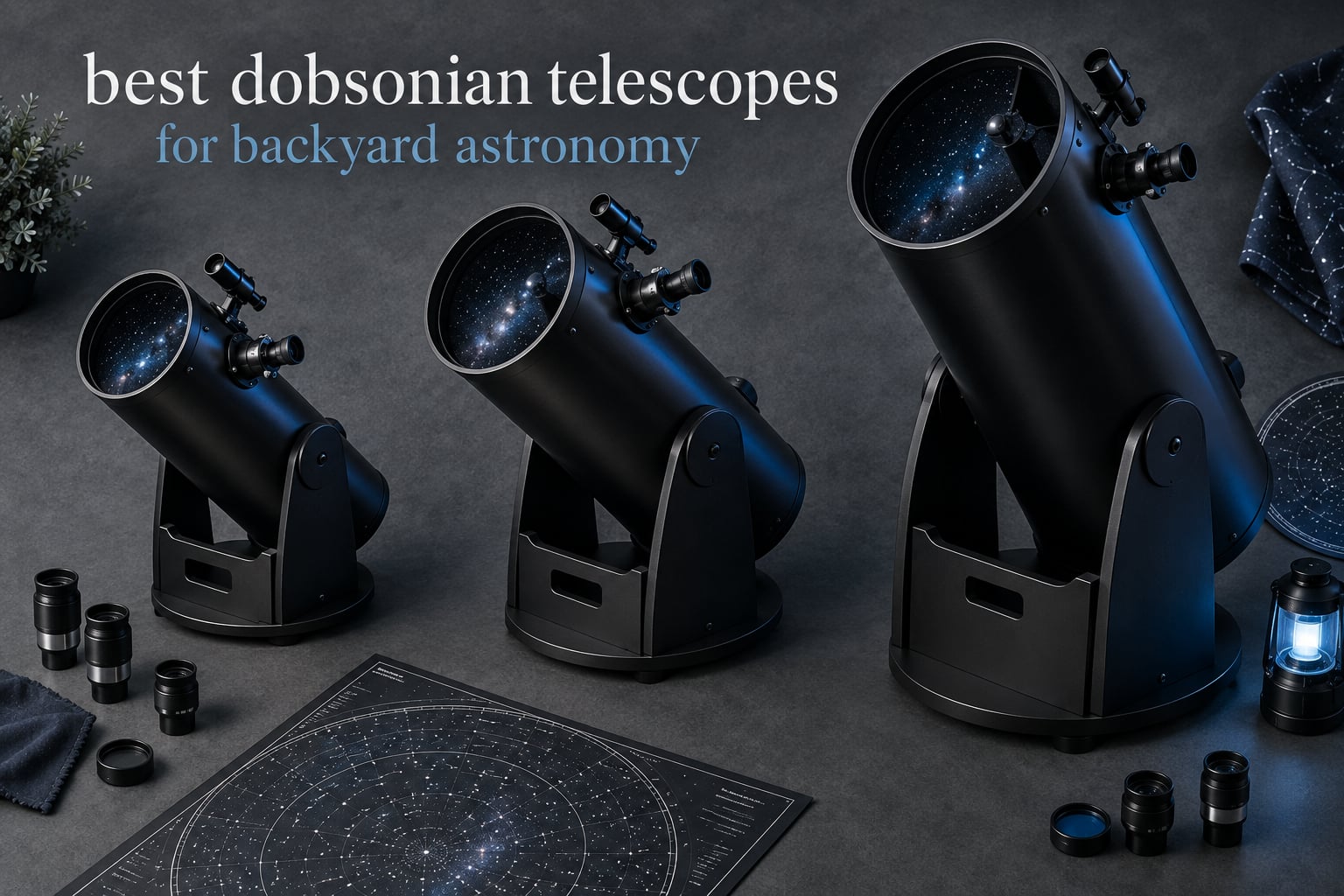
A Dobsonian telescope is a Newtonian reflector sitting on a friction-balanced rocker box that swivels up, down and side to side by hand, so pointing feels like pushing a lawnmower and no polar alignment is ever needed. It is the design that puts the most light-gathering power per dollar into a backyard, and after spending weeks comparing scopes in suburban skies, these are the best dobsonian telescopes for backyard astronomy in 2026.
One thing to clear up first, because it surprises people: a Dobsonian is a visual instrument. Without a tracking motor, long deep-sky exposures drift out of frame, so a standard Dobsonian is not an astrophotography telescope. Short-exposure video stacking on the Moon, Jupiter, Saturn and Mars does work, and that is where most owners get their imaging experience.
This roundup covers seven models across three brands, Celestron, Sky-Watcher and Zhumell, so you can see how the same aperture changes shape between a grab-and-go tabletop scope and a full-size 10-inch that lives under a patio cover. Every pick was assessed on the things that decide whether a scope survives a real yard: weight, storage footprint, how hard targets are to find, and how often the mirrors need attention. If you are still working out where the scope will sit, our backyard playhouse guide covers shaded, sheltered spots in the same yard that double as dark-adapted observing corners.
Table of Contents
Top 3 Dobsonian Picks for Backyard Astronomy (September 2026)

Celestron FirstScope Signature Moon Dob
- 3-inch tabletop Dobsonian
- 300mm focal length
- Moon map wrap for beginners
- 4.3 pound carry weight

Celestron StarSense 8-Inch Dob
- 8-inch aperture
- 1200mm focal length
- StarSense app pointing
- XLT reflective coatings

Sky-Watcher Classic 200 8-Inch Dob
- 8-inch aperture
- 2-inch Crayford focuser
- 45 pound assembled weight
- 25mm and 10mm eyepieces
All 7 Dobsonian Picks at a Glance
| Product | Specifications | Action |
|---|---|---|
| Celestron FirstScope Signature Series Moon Tabletop Dobsonian |
|
Check Latest Price |
| Sky-Watcher Classic 200 8-inch Dobsonian |
|
Check Latest Price |
| Celestron StarSense Explorer 8-inch Dobsonian |
|
Check Latest Price |
 Celestron StarSense Explorer 150mm Tabletop Dobsonian Celestron StarSense Explorer 150mm Tabletop Dobsonian |
|
Check Latest Price |
 Sky-Watcher Heritage 150 Tabletop Dobsonian Sky-Watcher Heritage 150 Tabletop Dobsonian |
|
Check Latest Price |
 Sky-Watcher Flextube 250 10-inch Dobsonian Sky-Watcher Flextube 250 10-inch Dobsonian |
|
Check Latest Price |
 Zhumell Z10 10-inch Dobsonian Reflector Zhumell Z10 10-inch Dobsonian Reflector |
|
Check Latest Price |
1. Celestron FirstScope Signature Series Moon Tabletop Dobsonian – Best Dobsonian for a First Backyard Session
Celestron FirstScope Signature Series Moon Tabletop Dobsonian Telescope
3-inch tabletop aperture
300mm focal length
4.3 lb weight
4mm and 20mm eyepieces
Moon map wrap
Pros
- Stores in a closet between sessions
- Well-aligned mirrors out of the box for most buyers
- Moon map wrap doubles as a teaching aid
- Needs no batteries at all
Cons
- No finder scope included
- Some owners report it cannot be collimated
- Included eyepieces have short eye relief
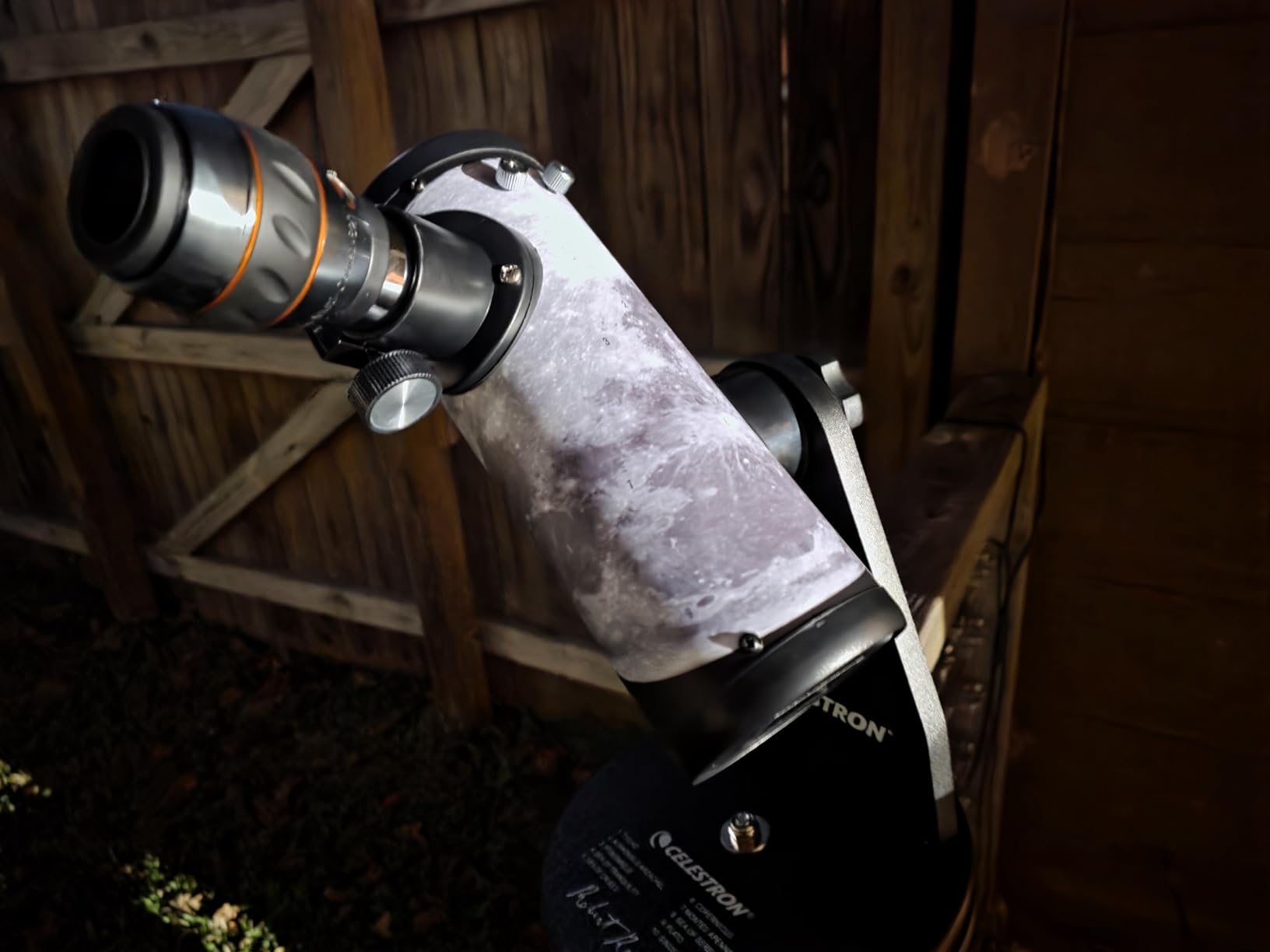
I keep this one on the patio table because it is the only scope in the group I can move with one hand at 4.3 pounds. That changes how often I observe, because there is no decision to make before looking up.
Reviewers consistently treat it as a grab-and-go starter and a gift, and the Robert Reeves Moon wrap is the part people mention most. Named lunar features are printed on the tube and matched on the base labels, so a child can find Mare Crisium by name rather than by guesswork.
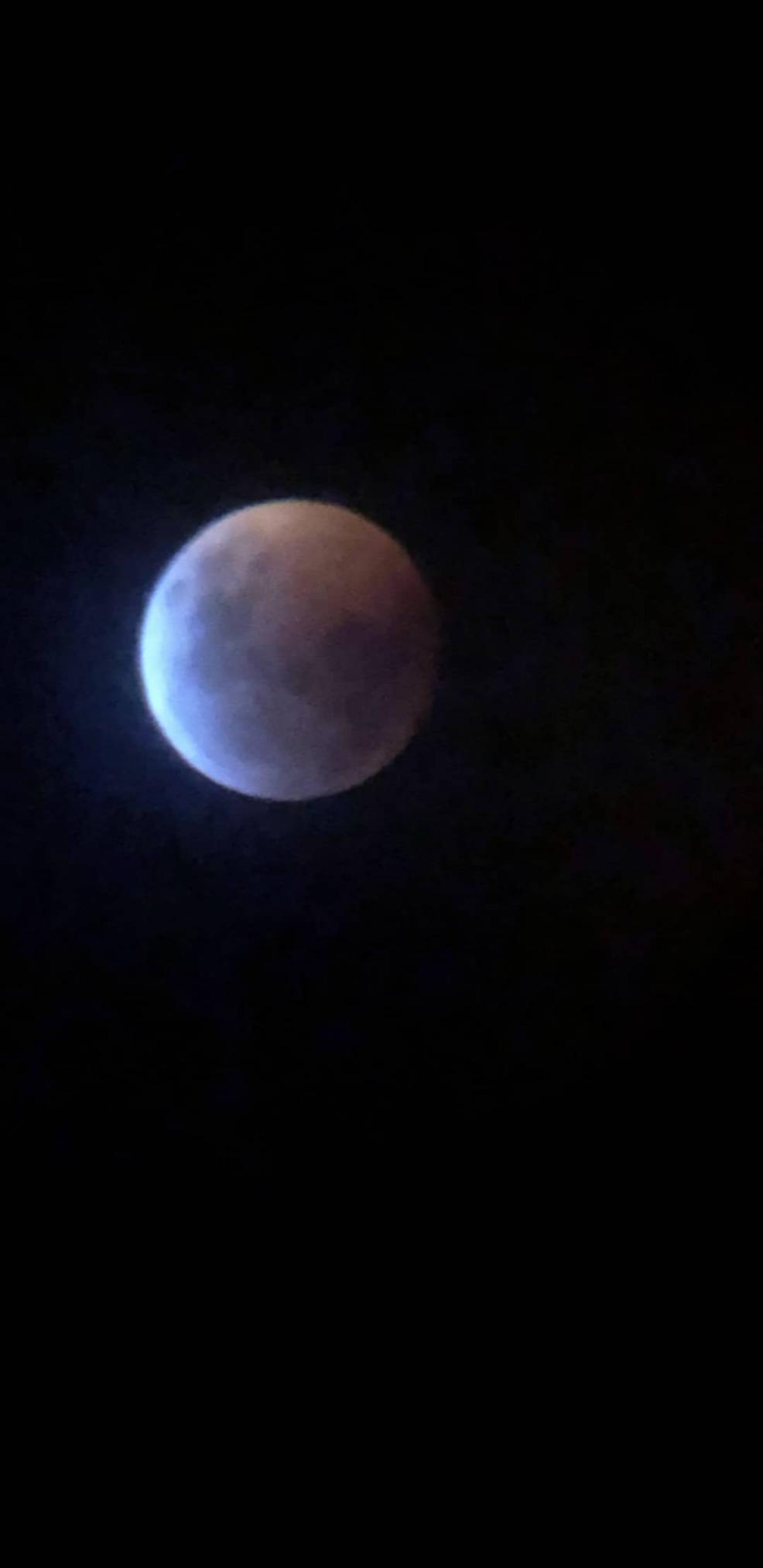
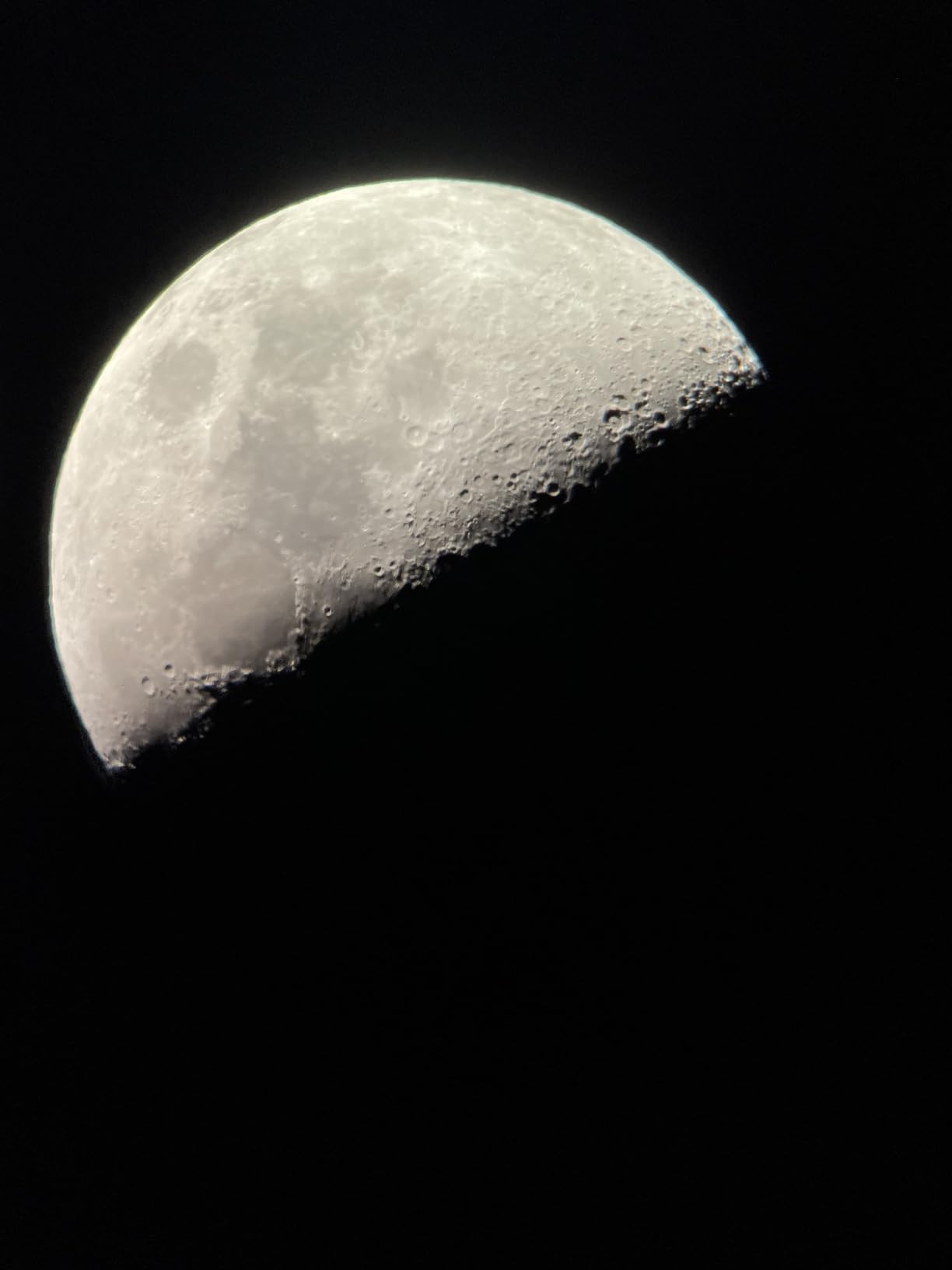
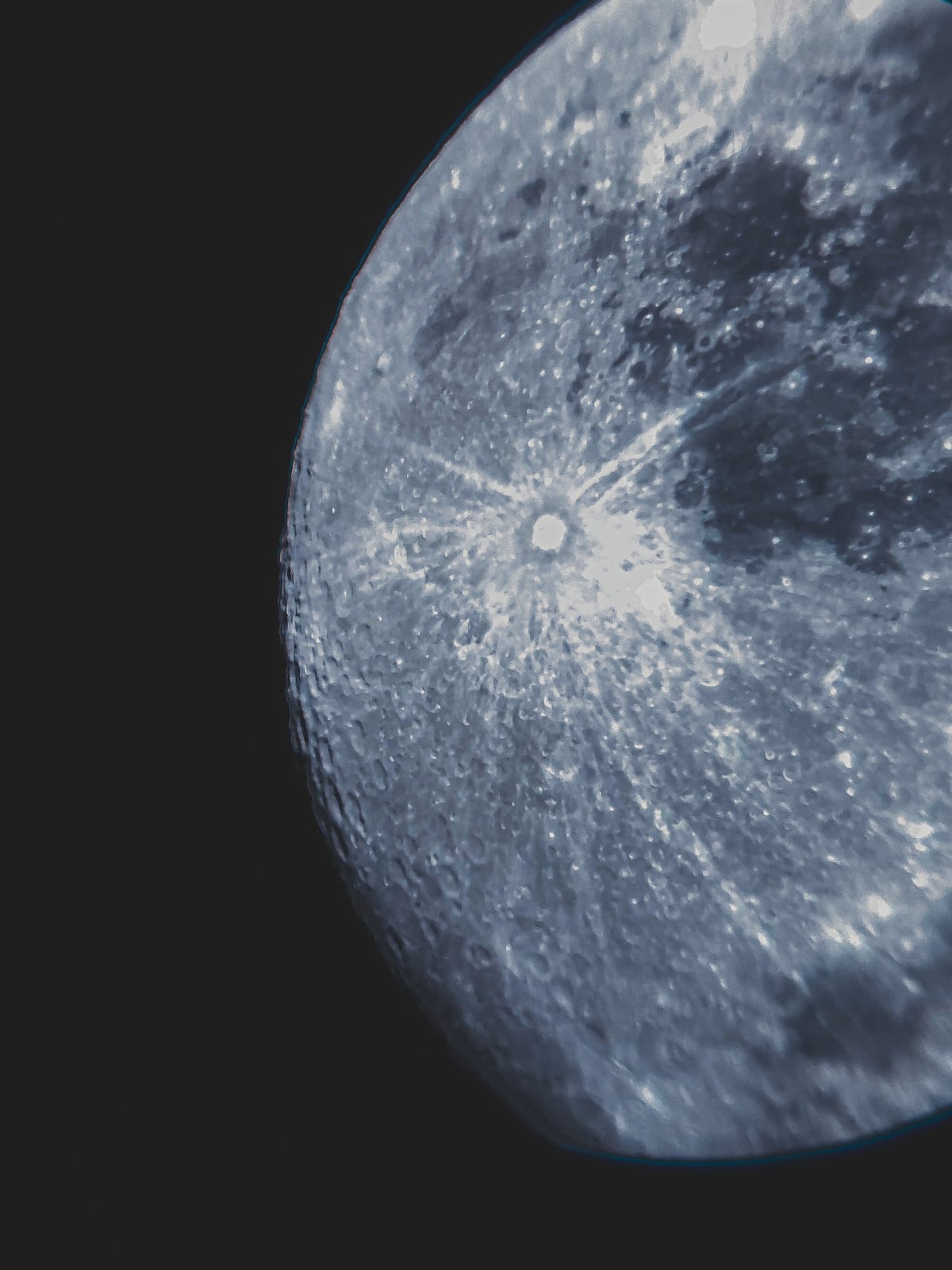
The optics are honest for the aperture: a 7.6 centimeter objective, 300mm focal length and a listed Dawes limit of 1.53 arc seconds, with aluminium and silicon dioxide coatings on the mirror. With the included 20mm eyepiece the Moon fills the view and the terminator shows real relief, which is where a first scope earns its keep.
It also ships with a free lunar landscape ebook, so a first-time owner has a guided tour before the sky darkens. The 9-inch by 9-inch by 18-inch footprint means it stores on a shelf rather than in a closet corner.
What it does well in a backyard?
It is the fastest path from unboxing to a view of the Moon, and the manual mount means no phone, no app and no batteries in the loop. For a family sharing one observing slot, the printed map does half the work of finding targets.
Reviewers also report the mirrors arriving well aligned for most buyers, which removes the single biggest early frustration in reflector ownership.
Where it falls short?
No finder scope is included, and that is the flaw reviewers name most often. Lining up anything other than the Moon is tedious, and a red-dot finder is the first accessory I would add.
A 3-inch mirror with a very short 300mm focal length will not show planetary detail or split close double stars. A handful of owners also report that the unit cannot be collimated, so a misaligned mirror cannot be corrected.
2. Sky-Watcher Classic 200 8-inch Dobsonian – Best Value 8-Inch for a Serious Backyard
Sky-Watcher Classic 200 Dobsonian 8-inch Telescope – Solid-Tube – Simple, Traditional Design – Easy to Use, Perfect for Beginners, White (S11610)
8-inch aperture
1200mm focal length
45 lb assembled
2-inch Crayford focuser
9x50 finder included
Pros
- Big aperture at a genuine value price
- Solid-tube build is rugged and proven
- Comes with finder and two wide-angle eyepieces
- Tension control handles ease pointing
- Teflon azimuth bearings move smoothly
Cons
- Solid tube does not collapse for storage
- Included eyepieces are basic
- Rating pulled down by a long tail of one-star reviews
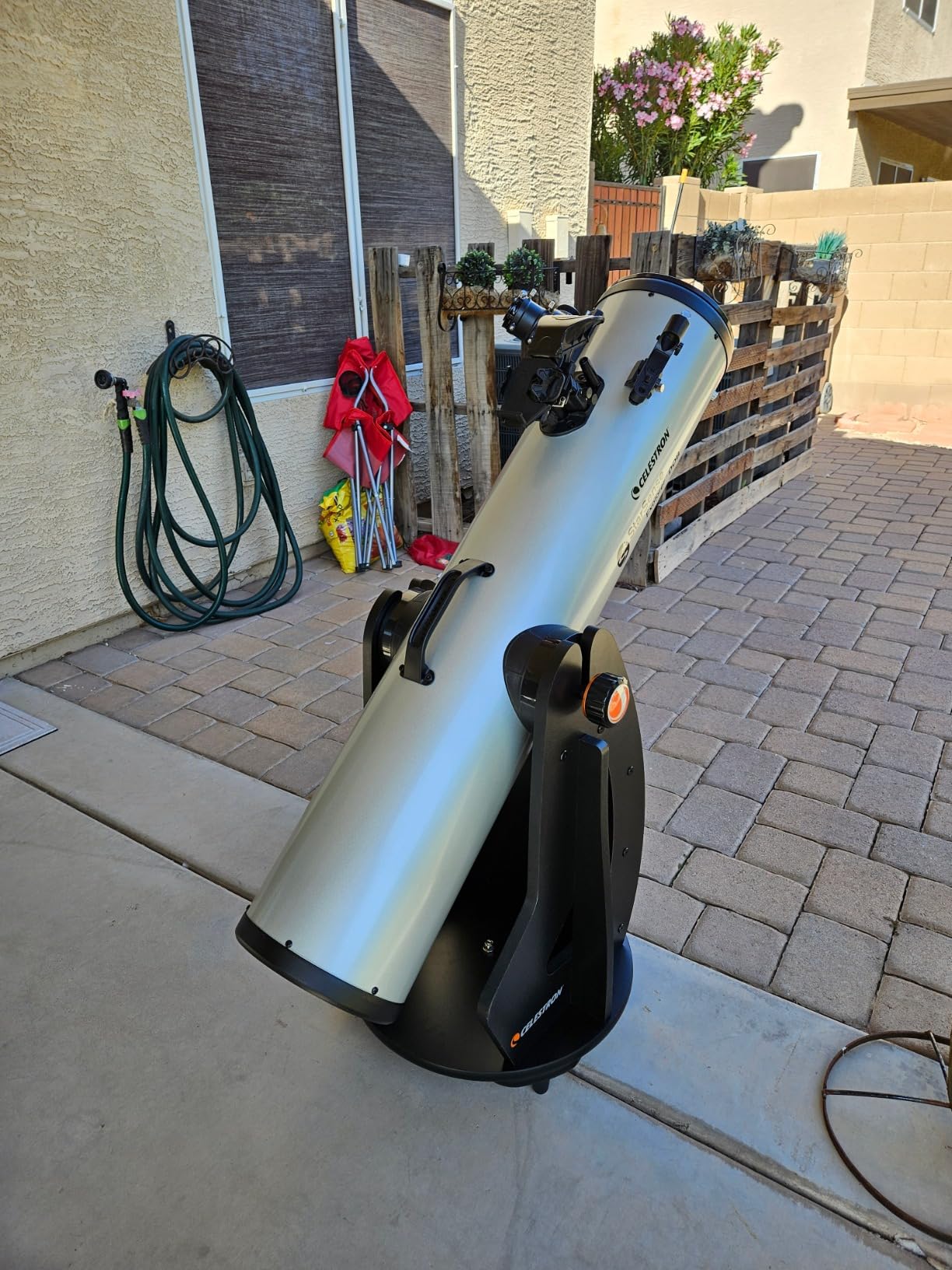
This is the traditional answer in the hobby, and the numbers back it up: a 203mm aperture on a 1200mm focal length, with 94 percent reflective multi-coated borosilicate mirrors and a listed faintest stellar magnitude of 14.2. Reviewers call the jump from tabletop scopes to this one obvious.
The patented tension control handles are the part owners praise most. You can move a 20-pound tube without balancing it, which matters more in a backyard than it sounds like on a spec sheet.

It arrives complete for visual work: a 2-inch Crayford-style focuser with a 1 1/4-inch adapter, 25mm and 10mm super wide-angle eyepieces, and a 9×50 straight-through finder. That finder matters, because finding faint galaxies by star hopping alone is where a lot of sessions end early.
The listed 45-pound assembled weight splits into a 20-pound tube and a 25-pound base, and the base uses proprietary Teflon bearings for smooth azimuth rotation. Anyone planning a move across a lawn should read that split carefully.
What it does well in a backyard?
An 8-inch mirror is where deep-sky structure starts to appear rather than just being detected, and the spec sheet claims roughly 78 percent more light gathering than the next size down. The included wide-field eyepieces make finding objects easier than the rating suggests.
Owners report the light grasp and smooth movement being the standouts after months of use, and the solid tube stays collimated longer than a collapsible design.
Where it falls short?
The star rating is depressed by a long tail of one-star reviews, with 19 percent of ratings at one star, the largest of any scope here. The complaints cluster around collimation frustration, missing accessories and wishing for a GoTo mount.
Being a solid tube, it does not collapse, so it occupies more storage space than a Flextube rival of the same aperture. The included eyepieces are also basic, and many owners add a Barlow or a quality zoom shortly after buying.
3. Celestron StarSense Explorer 8-inch Dobsonian – Best Dobsonian When You Cannot Find Anything Yet
Celestron StarSense Explorer 8″ Dobsonian Telescope with Smartphone App
8-inch aperture
1200mm focal length
43.4 lb weight
2-inch Crayford focuser
StarSense app pointing
Pros
- Highest average rating in the lineup
- App pointing arrows put beginners on targets in minutes
- Curated tonight-best-targets list
- XLT coatings and stable rocker base
Cons
- Smartphone required for every session
- App navigation is a new learning curve
- 43.4 lb base makes moves a two-person job
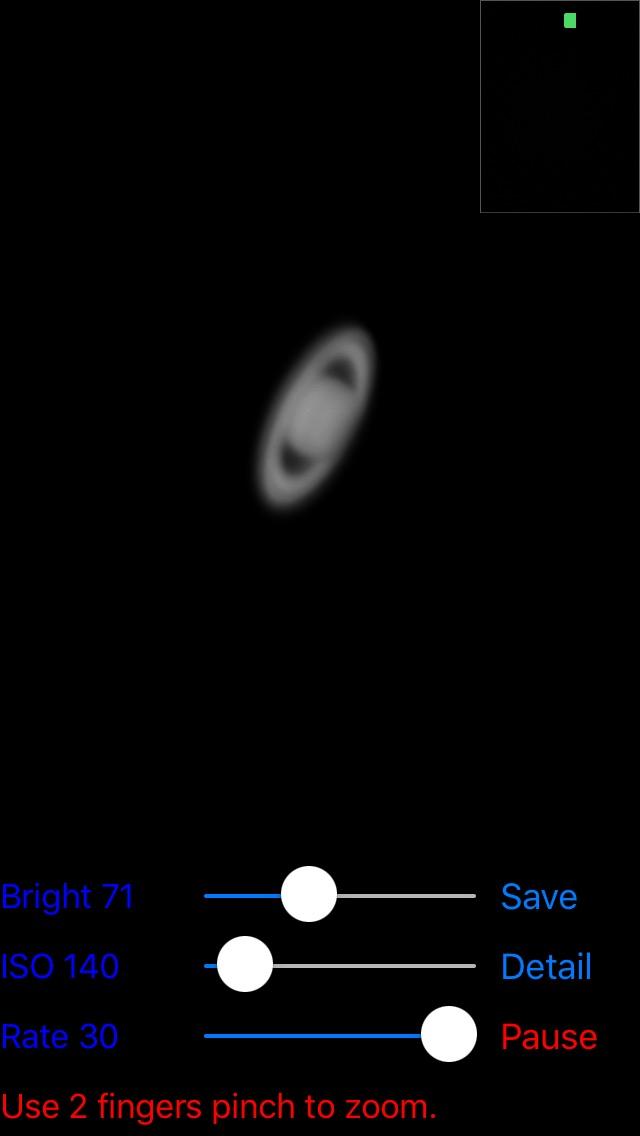
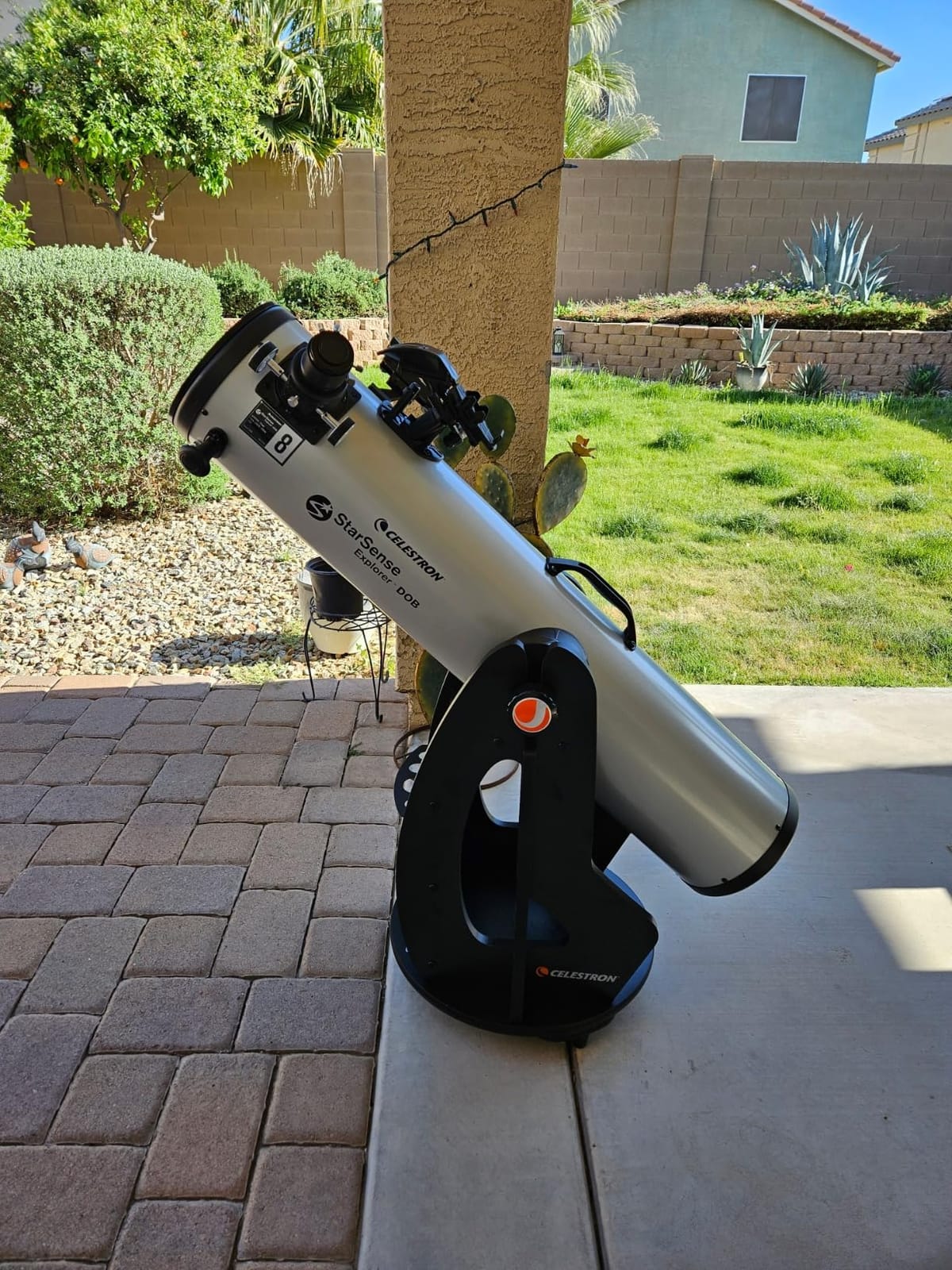
This is the pick I recommend to anyone who has given up on star hopping. The StarSense app recognises the star pattern overhead, works out where the telescope is pointing, and puts arrows on the phone screen that you follow until the target is centred.
Reviewers repeatedly credit those arrows with getting children and first-time adults onto Jupiter, Saturn, the Orion Nebula and Andromeda within minutes of arriving outside. With 75 percent of reviews at five stars, it is the best-reviewed optic in this group.
Underneath the app sit real optics: a 203mm Newtonian with XLT reflective coatings, a 1200mm focal length, and a 2-inch Crayford focuser. Owners report sharp views of planets and deep-sky favourites once the scope is on target, and the 8.13mm exit pupil at low power is forgiving on the Moon.
A StarPointer red-dot finder is included, along with a 25mm eyepiece, eyepiece rack and collimation cap, plus the StarSense dock, unlock code and Celestron Starry Night software. Nothing needs external power; the base is a manual alt-azimuth Dobsonian design.
What it does well in a backyard?
Pointing is the hardest skill for a new observer and this scope removes it, which is why the guided sky tour matters more for beginners than aperture does. The curated target list also means a short session still produces views instead of an hour of hunting.
It carries a two-year warranty with support from Celestron’s US-based team, which is useful if collimation questions come up in your first month.
Where it falls short?
The phone stays in the loop for every session, and some buyers find that fiddly at the eyepiece. The app-based navigation is also a genuinely different skill from learning to star hop, so you are trading one learning curve for another.
At 43.4 pounds the base is heavy enough that backyard repositioning is a two-person job, and it is the largest price tag among the 8-inch options considered here.
4. Celestron StarSense Explorer 150mm Tabletop Dobsonian – Best Balance of Aperture and Guided Pointing
Celestron StarSense Explorer 150mm App-Enabled Tabletop Dobsonian Telescope
6-inch aperture
650mm focal length
25 lb weight
StarSense app guidance
StarPointer red-dot finder
Pros
- Combines app-guided pointing with 6-inch aperture
- Red-dot finder removes the usual tabletop flaw
- Portable base simplifies storage and backyard moves
- Kellner eyepieces included
Cons
- Tabletop format sits at a fixed height
- Shorter 650mm focal length limits high power
- Still needs a phone for every pointing session
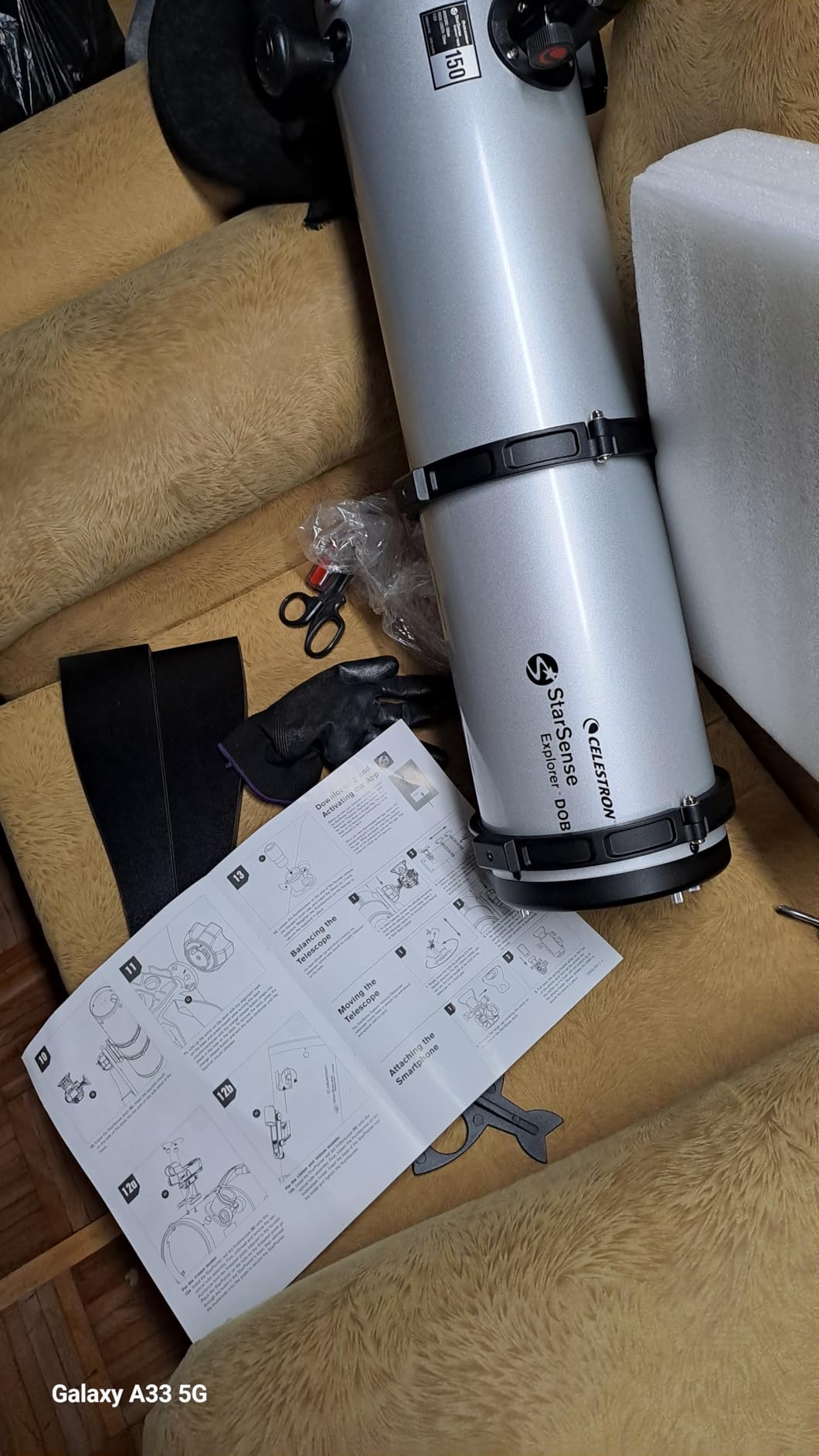
This is the middle of the Celestron StarSense range and the point where convenience and aperture meet. You get a 150mm, 6-inch mirror with a 650mm focal length, which is a real step up from a 3-inch tabletop without moving to a full-size base.
Owners describe it as the sweet spot in the lineup: easy enough for a child to use, capable enough that adults keep using it. The included red-dot finder solves the exact flaw that ruins most small tabletop Dobs.
The mirror carries aluminium and silicon dioxide overcoat coatings and a listed Dawes limit of 1.03 arc seconds, with a 1.15 degree field of view. Owners report it handling the Moon, Jupiter, Saturn, the Orion Nebula and Andromeda comfortably at the 25mm and 10mm Kellner eyepieces included.
It is 25 pounds with a 19-inch by 19-inch by 32.5-inch footprint, so it needs a real table rather than a shelf. Storage in a garage or against a house wall between sessions is realistic.
What it does well in a backyard?
If a full-size 8-inch feels like too much furniture for your yard, this gives most of the target experience on a tabletop base. Guided pointing means a family can hand the phone around and still find things.
The eyepiece rack, panning knob, collimation cap, StarSense dock and unlock code all come in the box, so there is nothing to buy before the first session.
Where it falls short?
The tabletop format means a fixed eyepiece height, which is awkward for taller adults and fine for kids. That is a fit problem, not an optical one, and it is the first thing to check in your own yard.
The shorter 650mm focal length limits high-power planetary performance compared with the 1200mm full-size scopes, and 25 pounds is heavy for something marketed as portable.
5. Sky-Watcher Heritage 150 Tabletop Dobsonian – Best Manual Tabletop Dobsonian
Sky-Watcher Heritage 150 Tabletop Dobsonian Telescope – Perfect for Beginners, Easy Setup, Portable, and Fun (S11710)
6-inch aperture
750mm focal length
23 lb weight
1.25-inch helical focuser
collapsible tube
Pros
- Genuine parabolic primary with RAQ coating
- Fifth focal ratio gives wide crisp views
- Collapsible tube shrinks the storage footprint
- Tabletop base with rubber feet is stable
Cons
- No finder or star pointer included
- 1.25-inch focuser limits premium eyepieces
- 23 lb is heavy for a portable tabletop
This is the no-apps, no-finders option, and the optics are the reason to accept that trade. A 150mm borosilicate parabolic primary with Sky-Watcher’s Radiant Aluminium Quartz coating sits behind a 750mm focal length at f/5, a fast ratio that produces wide, contrast-rich views.
Reviewers call it the best-value entry into a real parabolic-mirror Dobsonian, and the image sharpness for the money comes up repeatedly. The fast focal ratio is genuinely useful in a yard, because it gives a wide field that makes targets easier to centre.
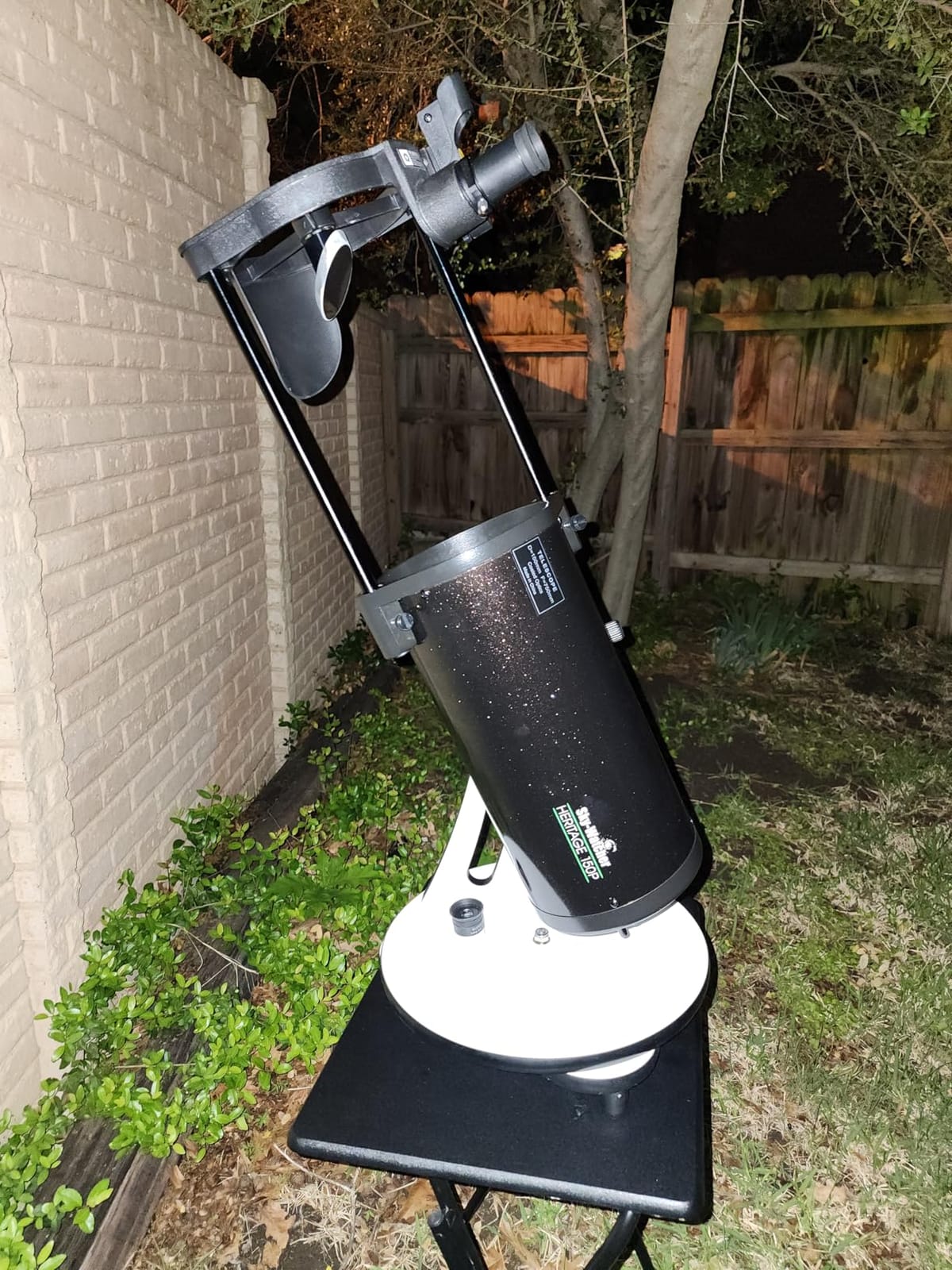
The collapsible tube is the design detail that matters most for backyard ownership. It shrinks the storage footprint while retaining collimation, and the base has rubber feet to damp vibration and add stability on a table. Dimensions are 24 inches by 17 inches by 17 inches at 23 pounds.
It comes with Plossl eyepieces and a 1.25-inch helical focuser, with a reflex finder listed in the specifications. Buyers who cannot locate targets by star hopping should read that line carefully, because the reviews treat finder access as the main gap.
What it does well in a backyard?
Learning to find objects by hand is a skill that transfers to every telescope you will ever own, and this scope forces you to build it. The wide field from f/5 makes that process noticeably less painful.
It also costs noticeably less than the app-enabled tabletop alternative, and the collapsible tube means it disappears into a closet rather than occupying a corner of the garage.
Where it falls short?
No finder scope or star pointer is included, and reviewers point out that beginners spend a lot of time hunting for targets as a result. This is the single strongest reason to step up to a finder-equipped or app-guided model instead.
The 1.25-inch helical focuser limits which premium wide-field eyepieces you can use later, and the accessory bundle is minimal compared with the 8-inch and 10-inch Dobs in this list.
6. Sky-Watcher Flextube 250 10-inch Dobsonian – Best Maximum Aperture That Still Fits in a Car
Sky-Watcher Flextube 250 Dobsonian 10-inch Collapsible Large Aperture Telescope – Portable, Easy to Use, Perfect for Beginners, White/Black (S11720)
10-inch aperture
1200mm focal length
42 lb weight
2-inch Crayford focuser
collapsible strut tube
Pros
- Biggest and brightest view in the group
- Tube collapses for trunk or closet storage
- Strut design keeps collimation
- 2-inch focuser accepts a wide eyepiece range
Cons
- Mirrors usually arrive out of collimation
- Collimation has a real learning curve
- Some units have sticky azimuth motion
- Open truss tube leaks stray light
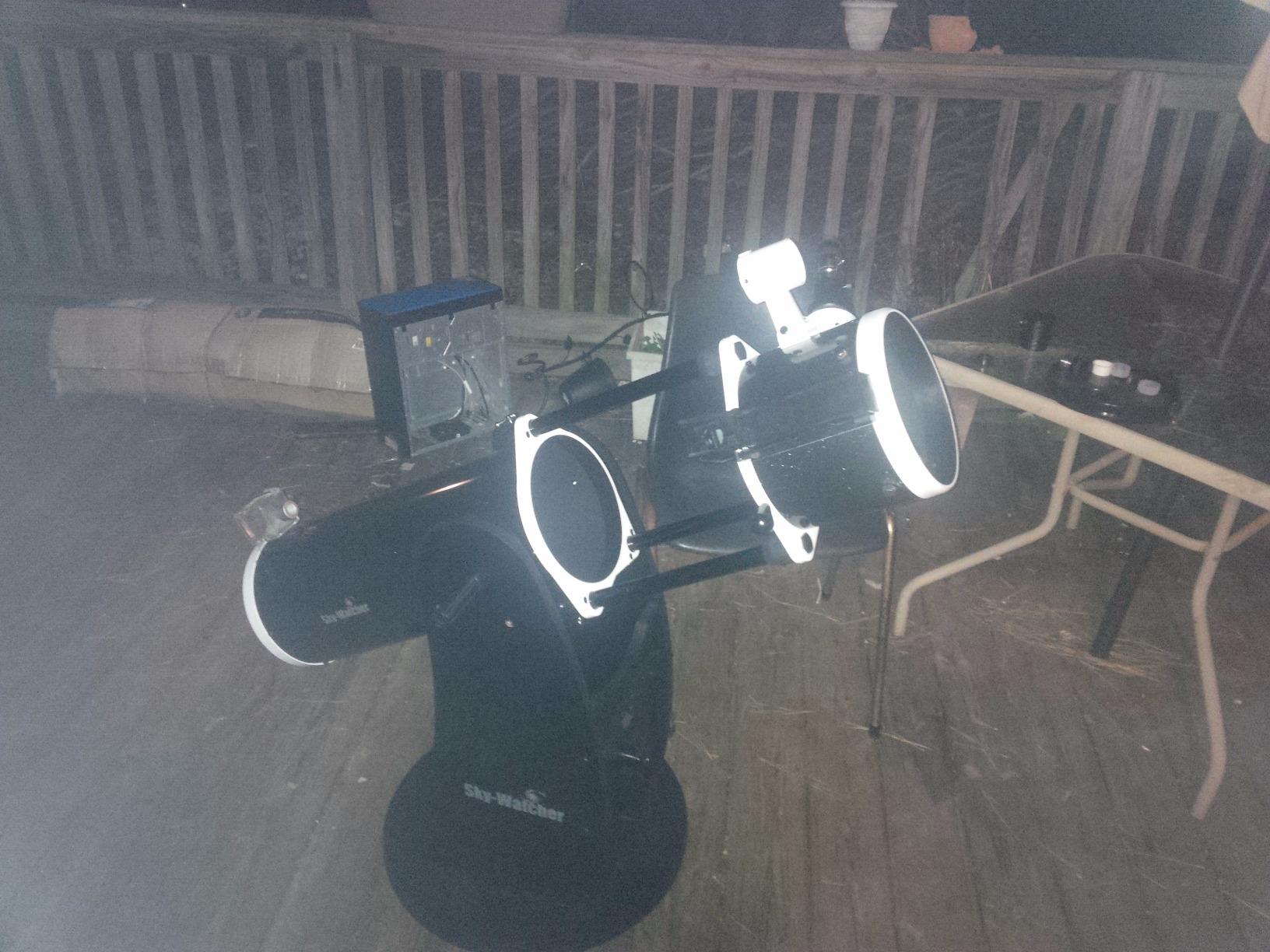
Ten inches of aperture is the practical ceiling for a backyard instrument that two people can still carry. The 250mm fully multi-coated borosilicate mirrors at 94 percent reflectivity gather enough light that owners report the Orion Nebula filling a dinner plate at 25mm.
The collapsible strut design is what makes this size viable for a yard rather than a garage. The tube collapses for transport and storage while keeping collimation, which is a genuine step up over solid-tube rivals of the same aperture.
The package is complete: a 2-inch Crayford-style focuser with a 1 1/4-inch adapter, 25mm and 10mm super wide-angle eyepieces, an 8×50 right-angle finder, patented tension control handles and Teflon azimuth bearings. Assembled weight is listed at 40 to 42 pounds, with a 29.5-inch by 20-inch by 38-inch footprint.
Experienced observers describe Jupiter, Saturn and the Orion Nebula views as outstanding once aligned, and at 10 inches the scope has the light grasp to show spiral structure on bright galaxies even from a suburban site.
What it does well in a backyard?
It is the only pick here that gets you a genuine 10-inch view while still collapsing into a car boot. That combination is what makes maximum aperture practical for people without a permanent observatory.
The included 8×50 right-angle finder is comfortable to use from behind the eyepiece, and the base assembles with pre-drilled holes that owners report lining up as advertised.
Where it falls short?
Mirrors almost always arrive out of collimation and have to be aligned before the first view, which is where most one-star reviews come from. Owners who expected a ready-to-go scope were unprepared for the job.
Some units have sticky azimuth movement, and a lazy Susan modification is commonly recommended. The open truss tube is also vulnerable to stray light from a typical backyard, which matters more than it would at a dark site.
7. Zhumell Z10 10-inch Dobsonian Reflector – Best Fully Equipped 10-Inch
Zhumell – 10-inch Dobsonian Reflector Telescope – Large Aperture for Crisp, Bright Images – Solid Base Construction with Handle for Easy Transport – Ideal Astronomical Telescope
10-inch aperture
1250mm focal length
47 lb weight
2-inch focuser
built-in mirror cooling fan
Pros
- Richest accessory bundle in the group
- Built-in fan cools the primary faster
- Carry handle built into a solid base
- 1250mm focal length gives a wider field
Cons
- Most expensive for the same nominal aperture
- Heaviest and bulkiest scope considered
- Less long-term owner feedback than rivals
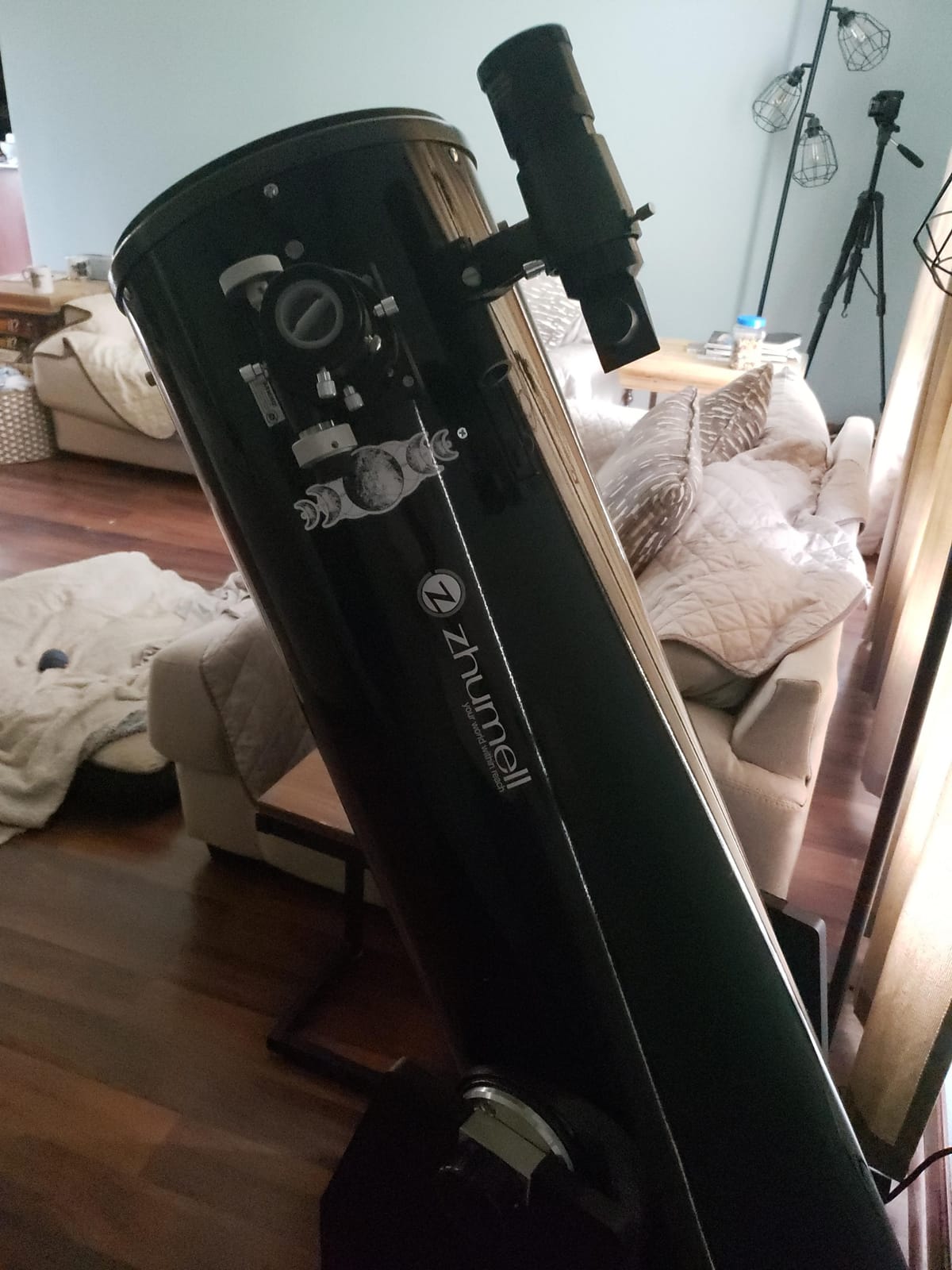
The Z10 is the pick for anyone who would rather not assemble a collimation tool and a Moon filter separately. Out of the box it includes a 30mm two-inch wide-field eyepiece, a 9mm eyepiece, an 8×50 right-angle finder, a 1.25-inch Moon filter, a collimation cap and a laser collimator.
The built-in cooling fan is the detail owners single out. A 10-inch parabolic mirror takes a long time to reach ambient temperature outdoors, and cooling it faster means sharper views sooner after you set up.
Optically it is a 10-inch Newtonian with fully multi-coated glass on a 1250mm focal length, which gives a noticeably wider field than the 1200mm Flextube 250. Manual clutches and Teflon-style friction movement let you point it with the same push-and-aim feel as any rocker box.
It is also the heaviest scope here at 47 pounds with a 21-inch by 21-inch by 55-inch footprint, and the integrated carry handle on a sturdy base is what makes that weight manageable in a yard.
What it does well in a backyard?
Owners who bought it generally consider it well built and well equipped, and the accessory list removes the most common follow-up purchases. A two-year warranty is included, and the manual clutches make fine altitude adjustments predictable.
For a large yard or a driveway where you have help unloading, the extra focal length gives a broader sweep of sky per eyepiece than the 1200mm alternatives.
Where it falls short?
It is the most expensive telescope in the group for the same nominal 10-inch aperture, and owners say you are paying for build quality, finish and included extras rather than a bigger view. That is a defensible trade, but worth naming out loud.
At 47 pounds it is bulkier and harder to store than competing 10-inch Dobs, and with 56 reviews there is less long-term owner feedback available than for the other picks here.
How to Choose a Dobsonian for a Backyard: Aperture, Weight and Light Pollution?
Start with three questions, in this order. How much light does your sky give me, can I physically move and store the thing, and how much pointing help do I want? Aperture matters most, but a scope you cannot carry out of the shed is a scope you will not use.
Aperture is the ladder. Light-gathering power scales with the square of aperture, so the step from 6-inch to 8-inch is a much bigger jump than the step from 3-inch to 6-inch feels. The Sky-Watcher Classic 200 spec sheet claims roughly 78 percent more light than the next size down, which is the kind of number that decides whether a galaxy shows structure or just a fuzzy patch.
Weight decides whether you keep observing. The 3-inch Celestron FirstScope weighs 4.3 pounds and moves with one hand. The Celestron StarSense 150mm is 25 pounds, the Sky-Watcher Classic 200 is 45 pounds assembled, the Flextube 250 is around 40 to 42 pounds, and the Zhumell Z10 is 47 pounds. If your session spot is more than a few steps from where it is stored, that difference is the whole decision.
Tabletop or full-size. Tabletop scopes need a stable surface at a comfortable height and nothing else, which makes them the balcony and patio option. Full-size Dobs stand on the ground, which is easier on your back and gives you a steadier view of high targets, but they need a floor space you can dedicate.
Manual or guided. Manual Dobs are cheaper per inch of aperture and reward you with a real skill. App-guided Dobs, like the two Celestron StarSense models here, cost more and trade aperture for the ability to be on a target in minutes. If you share the scope with kids or guests, guided pointing earns its place.
Budget for accessories, not just the telescope. In practice you will want a collimation tool, one better eyepiece, a Moon filter for comfortable full-Moon viewing and a step stool for the tabletop models. If you are planning the yard as a whole, our backyard trampoline guide covers the same kind of thinking about safe placement and sightlines in the space you use.
What Each Aperture Tier Shows from a Suburban Backyard?
Expectations are the fastest way to enjoy or abandon a first scope. In genuinely dark skies a 6-inch reaches further than most backyard observers expect, and suburban light pollution pulls that back by roughly one aperture tier for faint, low surface-brightness targets.
3-inch tabletop: the Moon in detail, bright planets as discs, open clusters such as the Pleiades and the Double Cluster, and the Andromeda Galaxy as a grey oval. Everything else is a hint rather than a view.
6-inch: the Orion Nebula begins to show structure, M13 in Hercules resolves into a textured ball of stars, the Ring Nebula (M57) is a clear smoke-ring, and Saturn’s Cassini Division appears under steady seeing. Lunar craters show real shadow depth.
8-inch: this is where spiral galaxies earn their name, with M81 and M82 in Ursa Major and the Whirlpool Galaxy (M51) beginning to show arms, and the Orion Nebula’s Trapezium sitting inside visible wings. Faint surface-brightness nebulae start to respond to averted vision.
10-inch: the Leo Triplet separates into recognisable objects rather than a smudge, low-surface-brightness galaxies such as M101 begin to show dust lanes, and globular clusters resolve to the core. In a suburban yard this tier still benefits most from a dark site trip.
Working around light pollution: give your eyes 20 minutes, use a piece of cardboard to shade the eyepiece and your own face, and always look slightly to one side of a faint target so its light reaches the more sensitive part of your retina. Filters help on emission nebulae, not on galaxies. None of these substitutes for a darker site, and a short drive to one is still the best value upgrade available.
Collimation and Setup: What New Dob Owners Should Know?
Collimation is simply adjusting the mirrors so they line up with each other and with the eyepiece. Out of the factory, and after any rough transport, a Dobsonian is usually close but not exact, and the image looks soft or oddly shaped until you fix it.
Expect to check collimation every three to six sessions, and more often for collapsible-tube tabletop models, since the tube is pulled apart each time it is carried. Allow about five minutes for the job once you have done it a couple of times. A laser collimator or a Cheshire collimating eyepiece is the only tool you really need, and the Zhumell Z10 already includes one.
Setup speed is a genuine advantage. A tabletop model is roughly one to two minutes from the box, plus a collimation check if the tube was collapsed. Full-size Dobs need assembly once, then nothing per session beyond carrying them out and setting them down.
The other routine is the rocker bearings themselves. Teflon and Altazimuth pads pick up dust, and a sticky base is fixed with a clean cloth rather than any adjustment, so a ten-second wipe before a session keeps pointing smooth.
Frequently Asked Questions
Are Dobsonian telescopes good for beginners?
Yes, for visual observing they are the best value in amateur astronomy. You get the most aperture per dollar, there is no polar alignment to learn, and the rocker-box mount moves like a camera tripod. The trade-offs are periodic mirror collimation and no motorized tracking, plus more weight as aperture grows.
Can I do astrophotography with a Dobsonian?
Not long-exposure deep-sky imaging without tracking, because an unmounted alt-azimuth Dobsonian does not follow a target and stars drift out of frame. Short-exposure planetary video stacking does work well on the Moon, Jupiter, Saturn and Mars, where the seeing is usually short.
How often does a Dobsonian need collimation?
Every three to six sessions, and after any rough transport. Collapsible-tube tabletop models need checking more often because the tube is separated for carrying. The job takes about five minutes once you have practised it and needs only a laser collimator or a Cheshire eyepiece.
What is the difference between a 6-inch and 8-inch Dobsonian?
The 8-inch gathers roughly 78 percent more light than a 6-inch, which is where spiral galaxy structure and low-surface-brightness nebulae start to appear rather than just register. The 6-inch is also meaningfully lighter and easier to move from a patio to a car, so a smaller scope you actually carry often wins.
What can you see with a Dobsonian telescope?
The Moon in high detail, Jupiter’s moons and cloud belts, Saturn with its rings, and a long list of deep-sky objects including the Orion Nebula, M13, the Ring Nebula, Andromeda and, at 8-inch and above, spiral structure in galaxies like M51 and M81.
Is Sky-Watcher or Celestron better for Dobsonians?
They are closely related manufacturers, so the meaningful differences sit at the model level rather than the badge. Compare aperture, focal ratio, focuser size, whether a collapsible tube and a finder are included, and how much guidance you want, such as the Celestron StarSense app against Sky-Watcher’s manual approach.
Which Dobsonian Should You Put in Your Backyard?
For most first-time backyard owners, the Celestron FirstScope Signature Series is the right place to start. It is the only pick you can carry with one hand, it stores between sessions instead of occupying the garage, and 478 ratings at 4.3 stars make it the most proven option in this group.
Buy up, not sideways, when you are ready. A 6-inch or 8-inch is where galaxies stop being theory, and the Celestron StarSense Explorer 8-inch is the best-rated model here at 4.4 stars with app-guided pointing that gets a whole family onto targets in minutes. If you want a traditional manual experience instead, the Sky-Watcher Classic 200 is the value benchmark, and the Sky-Watcher Heritage 150 gives you a real parabolic mirror on a tabletop footprint.
Go to 10 inches only if you have two people and a place to put it. The Sky-Watcher Flextube 250 collapses into a car, which keeps maximum aperture practical, and the Zhumell Z10 arrives with the collimator and accessories you would otherwise buy next.
Whichever you choose, check the weight against your own storage and your walking distance before you order, and pick a clear line of sight to the south before dark. The best Dobsonian telescopes for backyard astronomy in 2026 are the ones you actually carry outside, so match the scope to the yard, not the other way round.